EP2759931A1 - Downloading and launching an APP on a second device from a first device - Google Patents
Downloading and launching an APP on a second device from a first device Download PDFInfo
- Publication number
- EP2759931A1 EP2759931A1 EP14150416.7A EP14150416A EP2759931A1 EP 2759931 A1 EP2759931 A1 EP 2759931A1 EP 14150416 A EP14150416 A EP 14150416A EP 2759931 A1 EP2759931 A1 EP 2759931A1
- Authority
- EP
- European Patent Office
- Prior art keywords
- app
- companion
- user
- companion app
- recited
- Prior art date
- Legal status (The legal status is an assumption and is not a legal conclusion. Google has not performed a legal analysis and makes no representation as to the accuracy of the status listed.)
- Granted
Links
Images



Classifications
-
- G—PHYSICS
- G06—COMPUTING OR CALCULATING; COUNTING
- G06F—ELECTRIC DIGITAL DATA PROCESSING
- G06F8/00—Arrangements for software engineering
- G06F8/60—Software deployment
- G06F8/61—Installation
-
- G—PHYSICS
- G06—COMPUTING OR CALCULATING; COUNTING
- G06F—ELECTRIC DIGITAL DATA PROCESSING
- G06F9/00—Arrangements for program control, e.g. control units
- G06F9/06—Arrangements for program control, e.g. control units using stored programs, i.e. using an internal store of processing equipment to receive or retain programs
- G06F9/44—Arrangements for executing specific programs
- G06F9/445—Program loading or initiating
Definitions
- An embodiment of the present invention relates generally to software for computing devices and convergence networking of such devices. More specifically, it relates to enabling downloading and executing of software applications on various user devices in the same network.
- Apps that run on non-traditional computing devices, commonly referred to as "apps,” are now quite widespread and known to many users mostly due to their increasingly prevalent use of smartphones, tablets, and other mobile devices. Apps are presently available on a wide range of platforms, including TVs and PCs. Smartphone users frequently download, install and use apps onto their devices. This practice is becoming increasingly popular as well with tablets. Apps are one of the drivers making these mobile devices more and more popular. Finding an app in an app marketplace or app store and then downloading it onto a mobile device is a straightforward procedure and has now become second-hand nature for a lot of users, particularly younger ones.
- Convergence among various devices is becoming more popular, especially among devices on a home network that has a TV.
- Convergence features provide the capability of devices to communicate and, consequently, new mechanisms for deploying apps on other devices within a convergence network would be desirable.
- apps there is an increasing desire to have devices on a local network communicate with each other and share information.
- a companion app that executes on a compatible device having an entirely different platform.
- there may be a Hulu app for the TV and for a smartphone but the user only has the one on her smartphone.
- her experience with Hulu would be better if she could execute the Hulu app for the TV as well.
- One aspect of the invention is a method of using a device to execute an app on another (second) device, for example, using a smartphone having a particular app to execute a companion app on a TV.
- the two devices will typically be in two different classes, that is, have different operating systems, platforms, and the like, but this is not required (e.g., each device can be a smartphone, tablet, or TV).
- the second device is queried by the first device to determine whether there is a compatible or companion app already installed on the second device. If there is, it is then determined whether the companion app is presently running on the second device. If it is not, then a message is displayed on the first device asking whether the user of the first device wants to execute the companion app on the second device.
- the companion app is executed on the second device.
- there may be a message displayed on the second device stating that another user is causing the execution of an app on the second device. For example, a person watching TV will see a message that another user, via her smartphone, is causing the execution of a companion app on the TV. The program or show that the person is watching on TV will not be interrupted.
- Another aspect of the invention is a method of using a first device to execute an app on a second device.
- the first device queries the second device for a compatible app to see if it is already installed.
- the user of the first device is prompted as to whether to install the compatible app on the second device. It is then determined whether to install the compatible app on the second device.
- a request is transmitted to the second device to install the compatible app.
- the compatible app is then downloaded onto the second device.
- One or more embodiments describe the ability of one instance of an app on a first device to identify and verify installation and/or execution of a companion app on a second compatible device where the two devices may have entirely different platforms (e.g., smartphone operating system and TV platform).
- platform may refer to the application runtime environment provided by the TV. It may be described as a layer above the TV operating system that provides both a runtime environment for generic programming instructions as well as the APIs to interface with specific TV functions, services or devices.
- programmers have a choice of programming, for example, in JavaScript or Flash.
- One or more embodiments of the present invention deliver more than a mere "split screen" user experience or simple sharing of an app on the devices where one app is executing on a smartphone and another related app is executing on a TV.
- One or more embodiments describe ways in which the experience for users having their devices on the same network converge in order to improve the user experience with respect to a particular app. In this manner, they deliver an enhanced and efficient means of providing an n-screen experience with the app; ways that provide synergy between devices on the same network.
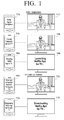
- FIG. 1 is an illustration of a series of displays on two devices connected in a local/home network in accordance with one embodiment.
- the two devices are a smartphone and a TV.
- a smartphone display 102a shows a Netflix app which the user is browsing.
- the device is connected to a home network and is in communication with a TV displaying a TV show 102b.
- the smartphone discovers that the TV has a companion Netflix app and asks the user if he wants to execute the Netflix companion app on the TV in display 104a. During this time the TV still displays the TV show 104b.
- a message as shown in 106b is displayed on the TV ("Launching Netflix App for TV" or something similar). Additional information such as the name of the user who gave permission to launch the app may be displayed or the message may be displayed in a side bar or smaller display area while the TV show continues to be displayed.
- the companion app may not be on the second device but one is available from an app download server or other source on the network.
- a display such as one shown in 108a where the user is asked whether he wants to initiate a download of a companion "Netflix for TV" app onto the TV.
- the TV continues to display a TV show or other image as shown in 108b.
- a display such as 110a on the smartphone indicating that the Netflix for TV app is being downloaded is shown.
- the TV may display a message such as shown in 110b ("Downloading Netflix App for TV") or a similar message.
- the companion app will execute automatically.
- the TV could prompt the user again for confirmation.
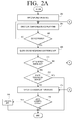
- FIGS. 2A and 2B are flow diagrams of processes for discovering, executing, and downloading a companion app on a second device in accordance with one embodiment of the present invention.
- a user launches an app on a device which has a particular platform and is using the app when the process starts.
- this app is sometimes referred to as the "primary app” (and sometimes referred to as the "first instance” of the app) and the device is referred to as the "first device.”
- the device which may be any device capable of executing an application, is connected to a home/local network.
- the first device discovers a compatible device/platform on the network. This discovery may be done using conventional and suitable protocols such as UPnP, Bon Jour, and the like. A device or platform is compatible if it can execute a companion app to the primary app. At block 206, it is determined whether such a device has been discovered on the network.
- the second device has a software stack that can handle this type of query or request.
- the query is sent using a communication protocol as defined or chosen by the developer. It may be a proprietary communication protocol. If no compatible device is found on the network, the discovery process continues in the background and control goes back to block 204.
- the first device is informed of whether a companion app is already installed on the second device. If a companion app is already on the second device, control goes to block 212. If the companion app is not installed, control goes to block 220 of FIG. 2B . If the app is installed, at block 212 it is determined whether the companion app is presently running on the second device. If it is, the user is already having an enhanced 2-screen, convergence experience with the app and the process ends. If it is not, at block 214, the primary app displays a message on the first device asking the user if he wants to execute the companion app on the second device, such a display is shown in display 104a of FIG. 1 . The code or logic to display this message may be embedded in the primary app presently executing on the first device.
- the first device determines whether the user accepts the offer (i.e., gives permission to execute the companion app on the second device). If the user does not, the process ends. If the user accepts the offer, a message is sent to the second device and the companion app executes at which stage the process ends. Returning to the path where the companion app is already installed on the second device, the user can begin experiencing app and device convergence on two devices.
- the user is prompted as to whether he wants to install a compatible or companion app on the second device, as shown in screen display 108a of FIG. 1 .
- Part of the process here may also involve checking whether the companion app is available for downloading from a server on the network or from an online source for apps, commonly known as an application store.
- the device checks whether the last user selection for the app was to not install (e.g., "Do Not Install"). If so, control goes back to discovery at block 204. If it was not the last selection by the user, control goes to block 220.
- control goes to block 224 where a request is created and transmitted to the second device using the communication means described above.
- the request instructs the second device to initialize downloading of the companion app.
- the companion app is downloaded onto the second device as shown in displays 110a and 110b.
- a device in the local network such as a TV, downloads a specific app according to instructions sent from another device in the network.
- control then goes to block 214 of FIG. 2A . Here the user is asked whether to execute the downloaded app.
- control goes to block 226 where a "do not install” setting is saved as the last user selection. This setting may be checked prior to block 220 where the user is prompted to install the companion app. If this setting indicates that the user previously selected the "do not install” option, he is not prompted again on the same question.
- the process then loops back to block 204 where the discovery process continues. For example, although the user may not want to install the app on the TV, a tablet may now be discoverable on the network and the same process executing in the background on the primary device will occur for this or any new devices. In this case, the user may want to install the companion app on the tablet.
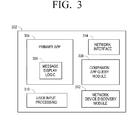
- FIG. 3 is a block diagram showing relevant components and modules in a first device, such as a smartphone, in accordance with one embodiment of the present invention.
- a first device 302 has a primary app 304 as described above.
- primary app 304 may contain logic for displaying messages on the first device, such as "Execute Companion App on TV?” or "Executing Netflix App on TV" and the like.
- the user may provide input to queries by primary app 304 or other modules in device 302. These inputs may be processed by user input processing module 310.
- queries are also made of the second device, such as a TV, for example, to determine whether a companion app exists on the second device, if it does, whether it is executing, and so on.
- First device 302 starts the process of finding a second device and companion app by initiating a discovery process on a local network using a suitable protocol such as UPnP or Bon Jour. This may be performed by network device discovery module 312 or other conventional modules for implementing such protocols. There may also be a network interface component 314 for communicating on the local network.
- a suitable protocol such as UPnP or Bon Jour.
- network device discovery module 312 or other conventional modules for implementing such protocols.
- an application running on one class of devices has awareness of a companion application for a second class of devices (e.g., a TV).
- a device from the first class realizes or becomes aware of the presence of a device from the second class on the same local network and the first device coordinates the download and installation of the companion app enabling communication of the two apps and providing a convergence experience for the user.
- the ability of one instance of an application on a first device to verify an installation of a companion or second instance of the application on a second device is described. Also described is the ability of the first instance on the first device to initiate a download of the companion application on a second device.
- the first and second devices may be any suitable computing device such as smartphones, tablets, TVs, mobile or stationary gaming devices, and PCs.
- the process may begin with a first device, such as a tablet, running a first instance of an app.
- the first device is connected to a local/home network and, in the background, discovers that there is a compatible or suitable second device on the network, such as a TV or PC, and communicates with the second device to exchange data or commands, such as commands relating to a discovery protocol (e.g., UPnP) which allows the first device to discover the second device and find its capabilities, including what apps are installed.
- UPnP a discovery protocol
- the first device then sends a request to the second device to determine whether the second device has a companion or second instance of the (first instance) app running on the first device.
- the second device sends a response to the request to the first device, i.e., whether the second device as the companion app installed or whether the server has it available for download. If the second device does not have the companion app and the server has it available for download, the first instance of the app on the first device displays a message or notification to the user.
- the notification indicates that a companion app is available for the second device and, in the same notification, asks whether the user wants to have the companion app downloaded to the second device from the server or other source.
- the first device issues a command to the second device to download the companion app from the server.
- the second device then initiates a download of the companion app after which the second device has the companion app.
- the first instance of the app initiates the download of a companion instance of the app onto a separate device where all the processes, except seeking permission from the user, execute in the background.
- the user does not need to explicitly connect to and browse an app store or app market.
- the mechanism for executing the processes described above can be embedded in any app in order to promote use of a companion app for a second device.
- app vendors encourage users to install companion apps onto more devices, for which consumers may not have been aware that apps were available. This is most often the case with apps for TVs.
- the second device such as the TV, is likely used more often as an app device. The user is more aware and is more inclined to use convergence apps and have a better user experience with the apps.
- one device is a smartphone and the other device is a TV.
- the smartphone is the device being used by a user and has a primary app (also referred to as a client app) that is executing on the smartphone and the TV, in this illustration, already has an app that is a companion app to the primary app on the smartphone.
- a primary app also referred to as a client app
- the TV already has an app that is a companion app to the primary app on the smartphone.
- the same relationship can be seen in the other direction, that is, the user is watching TV or the user is using (running) an app on the TV and the TV has the primary app and the smartphone already has a companion app to the primary app on the TV.
- the smartphone is running the primary app, and is on the same network as the TV. It discovers that there is a compatible TV in the same network. Here compatible implies it is on the same network and is able to execute apps.
- the smartphone then "pairs" with the TV. If there are other compatible devices, such as other smartphones or PCs, the smartphone carries out the same process with the other devices.
- the smartphone checks via the network whether the TV has a companion app to the app executing on the smartphone. If the TV has a companion app, this fact is transmitted to the smartphone, again via the local network.
- the primary app on the smartphone displays a message to the user telling the user that there is a companion app on the TV and asks whether the user wants to launch the companion app.
- the smartphone issues a command to the TV via network protocol (which may be proprietary) to launch the companion app on the TV.
- the TV launches the companion app.
- the primary app on the smartphone then communicates with the companion app to provide an enhanced, multi-screen user experience with respect to the app.
- an embodiment of the invention introduces a new mechanism for an app on a first device to discover and launch a companion app on a second device.
- This may be described as a peer-to-peer communication over a home/local network as described in FIGS. 2A and 2B .
- It is different from conventional home networking standards because an embodiment of the invention provides a mechanism for proprietary communication between the app on the first device and the companion app on the second device over standard HTTP/HTTPS, UPnP, or other conventional protocols.
- This mechanism shown in blocks 204 to 224, is a direct communication mechanism between two devices over the home network, typically a wireless access point, router, or at least a network switch may be involved.
- the first and second devices could communicate over Bluetooth or Wi-Fi Direct standards which do not require any network infrastructure device. These standard technologies are used to discover and connect to other devices in the home/local network. As a result, embodiments of the present invention can support any device type and are not tied to a specific operating system, platform, or product. The developer can define their own proprietary communication protocol over this standard channel (e.g., using customized JSON, XML messages, and the like).
- An embodiment of the present invention introduces a way to identify a second device on the network and have a first device automatically ask the second device whether it has a companion app.
- the only interaction or communication with the user of the first device that may be needed is a message asking whether the user wants to download or execute a companion app on the second device in order to have a multi-screen app experience. In other embodiments, this is not needed.
- the various embodiments enable a primary app on a first device to identify and discover a second device in the network and a compatible/companion app. This identifying and discovering is done in the background while the first device is on and connected to the network. The user of the first device is given the option of downloading and/or launching the companion app on the second device. In this manner, the user enjoys a rich, immersive app experience on multiple devices.
- the primary computing device in an embodiment of the invention is a TV, but it may be another computing device such as a smart phone, a tablet computer, a mobile device, a PC, and the like.
- FIGS. 4A and 4B illustrate a generic computing system 400, such as a TV, suitable for implementing embodiments of the present invention.
- Some of the devices that can be used in the present invention may have other features or components (such as an internal TV turner or an external STB) that are not shown in FIGS. 4A and 4B and not all the components shown in these figures (e.g., the keyboard) are needed for implementing the present invention.
- FIG. 4A shows one possible physical implementation of a computing system as this term is broadly defined.
- system 400 includes a display or screen 404.
- This display may be in the same housing as system 400. It may also have a keyboard 410 that is shown on display 404 (i.e., a virtual keyboard) or may be a physical component that is part of the device housing. It may have various ports such as HDMI or USB ports (not shown).
- Computer-readable media that may be coupled to device 400 may include USB memory devices and various types of memory chips, sticks, and cards.
- FIG. 4B is an example of a block diagram for computing system 400. Attached to system bus 420 is a variety of subsystems. Processor(s) 422 are coupled to storage devices including memory 424. Memory 424 may include random access memory (RAM) and read-only memory (ROM). As is well known in the art, ROM acts to transfer data and instructions uni-directionally to the CPU and RAM are used typically to transfer data and instructions in a bi-directional manner. Both of these types of memories may include any suitable of the computer-readable media described below. A fixed disk 426 is also coupled bi-directionally to processor 422; it provides additional data storage capacity and may also include any of the computer-readable media described below.
- RAM random access memory
- ROM read-only memory
- Fixed disk 426 may be used to store programs, data and the like and is typically a secondary storage medium that is slower than primary storage. It will be appreciated that the information retained within fixed disk 426, may, in appropriate cases, be incorporated in standard fashion as virtual memory in memory 424.
- Processor 422 is also coupled to a variety of input/output devices such as display 404 and network interface 440.
- an input/output device may be any of: video displays, keyboards, microphones, touch-sensitive displays, tablets, styluses, voice or handwriting recognizers, biometrics readers, or other devices.
- Processor 422 optionally may be coupled to another computer or telecommunications network using network interface 440. With such a network interface, it is contemplated that the CPU might receive information from the network, or might output information to the network in the course of performing the above-described method steps.
- one or more method embodiments of the present invention may execute solely upon processor 422 or may execute over a network such as the Internet in conjunction with a remote processor that shares a portion of the processing.
- one or more embodiments of the present invention further relate to computer storage products with a computer-readable medium that have computer code thereon for performing various computer-implemented operations.
- the media and computer code may be those specially designed and constructed for the purposes of one or more embodiments of the present invention, or they may be of the kind well known and available to those having skill in the computer software arts.
- Examples of computer-readable media include, but are not limited to: magnetic media such as hard disks, floppy disks, and magnetic tape; optical media such as CD-ROMs and holographic devices; magneto-optical media such as floptical disks; and hardware devices that are specially configured to store and execute program code, such as application-specific integrated circuits (ASICs), programmable logic devices (PLDs) and ROM and RAM devices.
- Examples of computer code include machine code, such as produced by a compiler, and files containing higher-level code that are executed by a computer using an interpreter.
- the user experience of application downloading and usage between multiple devices in a network is enhanced by the invention.
- One instance of an app on a first device is able to identify and verify installation and/or execution of a companion app on a second device where the two devices may have entirely different platforms (e.g., smartphone operating system and TV platform).
- the experience for users who have devices on the same network converge in order to improve the user experience with respect to a particular app.
- an enhanced and efficient means of providing an n-screen experience with the app is enabled; ways that provide synergy between devices on the same network.
Landscapes
- Engineering & Computer Science (AREA)
- Software Systems (AREA)
- Theoretical Computer Science (AREA)
- General Engineering & Computer Science (AREA)
- Physics & Mathematics (AREA)
- General Physics & Mathematics (AREA)
- Stored Programmes (AREA)
- Information Transfer Between Computers (AREA)
- User Interface Of Digital Computer (AREA)
Abstract
Description
- An embodiment of the present invention relates generally to software for computing devices and convergence networking of such devices. More specifically, it relates to enabling downloading and executing of software applications on various user devices in the same network.
- Applications that run on non-traditional computing devices, commonly referred to as "apps," are now quite widespread and known to many users mostly due to their increasingly prevalent use of smartphones, tablets, and other mobile devices. Apps are presently available on a wide range of platforms, including TVs and PCs. Smartphone users frequently download, install and use apps onto their devices. This practice is becoming increasingly popular as well with tablets. Apps are one of the drivers making these mobile devices more and more popular. Finding an app in an app marketplace or app store and then downloading it onto a mobile device is a straightforward procedure and has now become second-hand nature for a lot of users, particularly younger ones.
- However, downloading an app onto a TV has not yet caught on among the general public. People do not generally think of executing an app on their TV, even if they have an app on their smartphone and a companion or compatible app is available. Users simply are not aware that there is a similar app available for download on their TV. Or, the user has already downloaded a similar or companion app on their TV but is unaware that the two apps (e.g., on the phone and TV) executing together can provide an enhanced user experience. In instances where a user thinks about executing an app on a TV, she does it by using a remote control and downloads and executes it directly on the TV.
- Convergence among various devices is becoming more popular, especially among devices on a home network that has a TV. Convergence features provide the capability of devices to communicate and, consequently, new mechanisms for deploying apps on other devices within a convergence network would be desirable. There is an increasing desire to have devices on a local network communicate with each other and share information. For example, with apps, there is often a companion app that executes on a compatible device having an entirely different platform. To illustrate, there may be a Hulu app for the TV and for a smartphone, but the user only has the one on her smartphone. However, her experience with Hulu would be better if she could execute the Hulu app for the TV as well. As such, it would be desirable to have two or more companion apps work together with minimal user input to deliver an enhanced user experience for the apps.
- According to the present invention there is provided an apparatus and method as set forth in the appended claims. Other features of the invention will be apparent from the dependent claims, and the description which follows.
- One aspect of the invention is a method of using a device to execute an app on another (second) device, for example, using a smartphone having a particular app to execute a companion app on a TV. The two devices will typically be in two different classes, that is, have different operating systems, platforms, and the like, but this is not required (e.g., each device can be a smartphone, tablet, or TV). The second device is queried by the first device to determine whether there is a compatible or companion app already installed on the second device. If there is, it is then determined whether the companion app is presently running on the second device. If it is not, then a message is displayed on the first device asking whether the user of the first device wants to execute the companion app on the second device. If the user of the first device consents, the companion app is executed on the second device. In one embodiment, there may be a message displayed on the second device stating that another user is causing the execution of an app on the second device. For example, a person watching TV will see a message that another user, via her smartphone, is causing the execution of a companion app on the TV. The program or show that the person is watching on TV will not be interrupted.
- Another aspect of the invention is a method of using a first device to execute an app on a second device. The first device queries the second device for a compatible app to see if it is already installed. The user of the first device is prompted as to whether to install the compatible app on the second device. It is then determined whether to install the compatible app on the second device. A request is transmitted to the second device to install the compatible app. The compatible app is then downloaded onto the second device.
- For a better understanding of the invention, and to show how embodiments of the same may be carried into effect, reference will now be made, by way of example, to the accompanying diagrammatic drawings in which:
-
FIG. 1 is an illustration of a series of displays on two devices connected in a local/home network in accordance with one embodiment; -
FIGS. 2A and2B are flow diagrams of processes for discovering, executing, and downloading a companion app on a second device in accordance with one embodiment of the present invention; -
FIG. 3 is a block diagram showing relevant components and modules in a first device in accordance with one embodiment of the present invention; and -
FIGS. 4A and4B are diagrams of a computing device suitable for implementing one or more embodiments of the present invention. - In the drawings, like reference numerals are sometimes used to designate like structural elements. It should also be appreciated that the depictions in the figures are diagrammatic and not to scale.
- Applications are currently available on a wide range of platforms and devices, including smartphones, tablet devices, mobile gaming devices, computing devices in cars, PCs, and TVs. Users are accustomed to the app download, installation, and usage experience on their handheld and mobile devices, the vast majority of which are smartphones and tablets. Now that convergence features enable communication between all these devices and platforms on a local/home network, new mechanisms described in the various embodiments of the present invention deploy apps among various devices in the convergence network. One example of convergence is allowing the user to launch an app on a TV using a smartphone. The overall goal is that when devices are on the same network, it would be desirable to have synergy among the devices.
- Methods and systems for enhancing the user experience of application downloading and usage between multiple devices in a network are described in the various figures. One or more embodiments describe the ability of one instance of an app on a first device to identify and verify installation and/or execution of a companion app on a second compatible device where the two devices may have entirely different platforms (e.g., smartphone operating system and TV platform). The term platform may refer to the application runtime environment provided by the TV. It may be described as a layer above the TV operating system that provides both a runtime environment for generic programming instructions as well as the APIs to interface with specific TV functions, services or devices. In the TV application platform, programmers have a choice of programming, for example, in JavaScript or Flash. There are also APIs to interface with the TV tuner, infra-red remote, WiFi/Ethernet/Bluetooth adapters, cameras, and the like.
- One or more embodiments of the present invention deliver more than a mere "split screen" user experience or simple sharing of an app on the devices where one app is executing on a smartphone and another related app is executing on a TV. One or more embodiments describe ways in which the experience for users having their devices on the same network converge in order to improve the user experience with respect to a particular app. In this manner, they deliver an enhanced and efficient means of providing an n-screen experience with the app; ways that provide synergy between devices on the same network.
-
FIG. 1 is an illustration of a series of displays on two devices connected in a local/home network in accordance with one embodiment. For illustrative purposes, the two devices are a smartphone and a TV. In a first scenario, asmartphone display 102a shows a Netflix app which the user is browsing. The device is connected to a home network and is in communication with a TV displaying aTV show 102b. The smartphone discovers that the TV has a companion Netflix app and asks the user if he wants to execute the Netflix companion app on the TV indisplay 104a. During this time the TV still displays theTV show 104b. If the smartphone user gives permission to execute the companion Netflix TV app on the TV, in one embodiment a message as shown in 106b is displayed on the TV ("Launching Netflix App for TV..." or something similar). Additional information such as the name of the user who gave permission to launch the app may be displayed or the message may be displayed in a side bar or smaller display area while the TV show continues to be displayed. - In a second scenario, the companion app may not be on the second device but one is available from an app download server or other source on the network. In this case, a display such as one shown in 108a where the user is asked whether he wants to initiate a download of a companion "Netflix for TV" app onto the TV. During this time, the TV continues to display a TV show or other image as shown in 108b. If the user gives permission to download the companion app, a display such as 110a on the smartphone indicating that the Netflix for TV app is being downloaded is shown. The TV may display a message such as shown in 110b ("Downloading Netflix App for TV...") or a similar message. At download completion the companion app will execute automatically. In an alternative embodiment the TV could prompt the user again for confirmation. As these display images show, most of the processes take place in the background, beginning with discovery of the second device to the launching or downloading of the companion app. The only interaction with the user is seeking permission to perform the launching or downloading activity. In another embodiment, these activities may be done automatically without confirmation from the user. This may be preferable for users who always want to have companion apps downloaded or executed on one or more additional devices on the network. In this scenario, the user will automatically have a convergence experience (multi-screen experience) with the app on his devices.
-
FIGS. 2A and2B are flow diagrams of processes for discovering, executing, and downloading a companion app on a second device in accordance with one embodiment of the present invention. Atblock 202, a user launches an app on a device which has a particular platform and is using the app when the process starts. For ease of explanation, this app is sometimes referred to as the "primary app" (and sometimes referred to as the "first instance" of the app) and the device is referred to as the "first device." The device, which may be any device capable of executing an application, is connected to a home/local network. - At
block 204, the first device discovers a compatible device/platform on the network. This discovery may be done using conventional and suitable protocols such as UPnP, Bon Jour, and the like. A device or platform is compatible if it can execute a companion app to the primary app. Atblock 206, it is determined whether such a device has been discovered on the network. - If such a device (the "second device"), such as a TV or tablet, is found on the network, control goes to block 208 where the first device queries the second device whether the second device presently has a companion or compatible app (with respect to the primary app on the first device). The second device has a software stack that can handle this type of query or request. The query is sent using a communication protocol as defined or chosen by the developer. It may be a proprietary communication protocol. If no compatible device is found on the network, the discovery process continues in the background and control goes back to block 204.
- At
block 210, the first device is informed of whether a companion app is already installed on the second device. If a companion app is already on the second device, control goes to block 212. If the companion app is not installed, control goes to block 220 ofFIG. 2B . If the app is installed, atblock 212 it is determined whether the companion app is presently running on the second device. If it is, the user is already having an enhanced 2-screen, convergence experience with the app and the process ends. If it is not, atblock 214, the primary app displays a message on the first device asking the user if he wants to execute the companion app on the second device, such a display is shown indisplay 104a ofFIG. 1 . The code or logic to display this message may be embedded in the primary app presently executing on the first device. - At
block 216, the first device determines whether the user accepts the offer (i.e., gives permission to execute the companion app on the second device). If the user does not, the process ends. If the user accepts the offer, a message is sent to the second device and the companion app executes at which stage the process ends. Returning to the path where the companion app is already installed on the second device, the user can begin experiencing app and device convergence on two devices. - Going back to block 210, if the companion app is not installed on the second device, control goes to block 220 in
FIG. 2B . At this step the user is prompted as to whether he wants to install a compatible or companion app on the second device, as shown inscreen display 108a ofFIG. 1 . Part of the process here may also involve checking whether the companion app is available for downloading from a server on the network or from an online source for apps, commonly known as an application store. Atblock 219, the device checks whether the last user selection for the app was to not install (e.g., "Do Not Install"). If so, control goes back to discovery atblock 204. If it was not the last selection by the user, control goes to block 220. Here, assuming the app is available, the user of the first device is prompted about installing it as shown inblock 220. Atblock 222, it is determined whether the user consents to installing the companion app on the second device. If the user does consent or give permission to have the companion app downloaded onto the second device, control goes to block 224 where a request is created and transmitted to the second device using the communication means described above. The request instructs the second device to initialize downloading of the companion app. At this stage the companion app is downloaded onto the second device as shown indisplays FIG. 2A . Here the user is asked whether to execute the downloaded app. - At
block 222, if the user does not consent to downloading the app, control goes to block 226 where a "do not install" setting is saved as the last user selection. This setting may be checked prior to block 220 where the user is prompted to install the companion app. If this setting indicates that the user previously selected the "do not install" option, he is not prompted again on the same question. The process then loops back to block 204 where the discovery process continues. For example, although the user may not want to install the app on the TV, a tablet may now be discoverable on the network and the same process executing in the background on the primary device will occur for this or any new devices. In this case, the user may want to install the companion app on the tablet. -
FIG. 3 is a block diagram showing relevant components and modules in a first device, such as a smartphone, in accordance with one embodiment of the present invention. Afirst device 302 has aprimary app 304 as described above. In one or more embodiments,primary app 304 may contain logic for displaying messages on the first device, such as "Execute Companion App on TV?" or "Executing Netflix App on TV..." and the like. The user may provide input to queries byprimary app 304 or other modules indevice 302. These inputs may be processed by userinput processing module 310. As described above, queries are also made of the second device, such as a TV, for example, to determine whether a companion app exists on the second device, if it does, whether it is executing, and so on. This may be done by logic in a companionapp query module 308.First device 302 starts the process of finding a second device and companion app by initiating a discovery process on a local network using a suitable protocol such as UPnP or Bon Jour. This may be performed by networkdevice discovery module 312 or other conventional modules for implementing such protocols. There may also be anetwork interface component 314 for communicating on the local network. - Through the processes described above, an application running on one class of devices (e.g., smartphone, tablet, or devices having the same operating system or platform) has awareness of a companion application for a second class of devices (e.g., a TV). A device from the first class realizes or becomes aware of the presence of a device from the second class on the same local network and the first device coordinates the download and installation of the companion app enabling communication of the two apps and providing a convergence experience for the user. Described below are variations of the above embodiments and alternative embodiments. Some of the description may repeat certain aspects of the content in
FIGS. 1 ,2A , and2B but is provided to support the various illustrations. - In one embodiment, the ability of one instance of an application on a first device to verify an installation of a companion or second instance of the application on a second device is described. Also described is the ability of the first instance on the first device to initiate a download of the companion application on a second device. The first and second devices may be any suitable computing device such as smartphones, tablets, TVs, mobile or stationary gaming devices, and PCs. For example, in one example the process may begin with a first device, such as a tablet, running a first instance of an app. The first device is connected to a local/home network and, in the background, discovers that there is a compatible or suitable second device on the network, such as a TV or PC, and communicates with the second device to exchange data or commands, such as commands relating to a discovery protocol (e.g., UPnP) which allows the first device to discover the second device and find its capabilities, including what apps are installed. The first device then sends a request to the second device to determine whether the second device has a companion or second instance of the (first instance) app running on the first device.
- The second device sends a response to the request to the first device, i.e., whether the second device as the companion app installed or whether the server has it available for download. If the second device does not have the companion app and the server has it available for download, the first instance of the app on the first device displays a message or notification to the user. The notification indicates that a companion app is available for the second device and, in the same notification, asks whether the user wants to have the companion app downloaded to the second device from the server or other source.
- If the user gives permission or approval to download the companion app, the first device issues a command to the second device to download the companion app from the server. The second device then initiates a download of the companion app after which the second device has the companion app. The first instance of the app initiates the download of a companion instance of the app onto a separate device where all the processes, except seeking permission from the user, execute in the background. The user does not need to explicitly connect to and browse an app store or app market. The mechanism for executing the processes described above can be embedded in any app in order to promote use of a companion app for a second device.
- In this manner, app vendors encourage users to install companion apps onto more devices, for which consumers may not have been aware that apps were available. This is most often the case with apps for TVs. As a result of the embodiments described herein, the second device, such as the TV, is likely used more often as an app device. The user is more aware and is more inclined to use convergence apps and have a better user experience with the apps.
- To illustrate an embodiment, one device is a smartphone and the other device is a TV. The smartphone is the device being used by a user and has a primary app (also referred to as a client app) that is executing on the smartphone and the TV, in this illustration, already has an app that is a companion app to the primary app on the smartphone. It should be noted that the same relationship can be seen in the other direction, that is, the user is watching TV or the user is using (running) an app on the TV and the TV has the primary app and the smartphone already has a companion app to the primary app on the TV.
- Returning to the illustration, the smartphone is running the primary app, and is on the same network as the TV. It discovers that there is a compatible TV in the same network. Here compatible implies it is on the same network and is able to execute apps. The smartphone then "pairs" with the TV. If there are other compatible devices, such as other smartphones or PCs, the smartphone carries out the same process with the other devices. The smartphone then checks via the network whether the TV has a companion app to the app executing on the smartphone. If the TV has a companion app, this fact is transmitted to the smartphone, again via the local network. The primary app on the smartphone then displays a message to the user telling the user that there is a companion app on the TV and asks whether the user wants to launch the companion app. If the user gives approval, the smartphone issues a command to the TV via network protocol (which may be proprietary) to launch the companion app on the TV. The TV launches the companion app. The primary app on the smartphone then communicates with the companion app to provide an enhanced, multi-screen user experience with respect to the app.
- As described above, an embodiment of the invention introduces a new mechanism for an app on a first device to discover and launch a companion app on a second device. This may be described as a peer-to-peer communication over a home/local network as described in
FIGS. 2A and2B . It is different from conventional home networking standards because an embodiment of the invention provides a mechanism for proprietary communication between the app on the first device and the companion app on the second device over standard HTTP/HTTPS, UPnP, or other conventional protocols. This mechanism, shown inblocks 204 to 224, is a direct communication mechanism between two devices over the home network, typically a wireless access point, router, or at least a network switch may be involved. Alternatively, the first and second devices could communicate over Bluetooth or Wi-Fi Direct standards which do not require any network infrastructure device. These standard technologies are used to discover and connect to other devices in the home/local network. As a result, embodiments of the present invention can support any device type and are not tied to a specific operating system, platform, or product. The developer can define their own proprietary communication protocol over this standard channel (e.g., using customized JSON, XML messages, and the like). - An embodiment of the present invention introduces a way to identify a second device on the network and have a first device automatically ask the second device whether it has a companion app. The only interaction or communication with the user of the first device that may be needed is a message asking whether the user wants to download or execute a companion app on the second device in order to have a multi-screen app experience. In other embodiments, this is not needed.
- The various embodiments enable a primary app on a first device to identify and discover a second device in the network and a compatible/companion app. This identifying and discovering is done in the background while the first device is on and connected to the network. The user of the first device is given the option of downloading and/or launching the companion app on the second device. In this manner, the user enjoys a rich, immersive app experience on multiple devices.
- As noted above, the primary computing device in an embodiment of the invention is a TV, but it may be another computing device such as a smart phone, a tablet computer, a mobile device, a PC, and the like.
FIGS. 4A and4B illustrate ageneric computing system 400, such as a TV, suitable for implementing embodiments of the present invention. Some of the devices that can be used in the present invention may have other features or components (such as an internal TV turner or an external STB) that are not shown inFIGS. 4A and4B and not all the components shown in these figures (e.g., the keyboard) are needed for implementing the present invention. As such,FIG. 4A shows one possible physical implementation of a computing system as this term is broadly defined. - In one embodiment,
system 400 includes a display orscreen 404. This display may be in the same housing assystem 400. It may also have akeyboard 410 that is shown on display 404 (i.e., a virtual keyboard) or may be a physical component that is part of the device housing. It may have various ports such as HDMI or USB ports (not shown). Computer-readable media that may be coupled todevice 400 may include USB memory devices and various types of memory chips, sticks, and cards. -
FIG. 4B is an example of a block diagram forcomputing system 400. Attached tosystem bus 420 is a variety of subsystems. Processor(s) 422 are coupled to storagedevices including memory 424.Memory 424 may include random access memory (RAM) and read-only memory (ROM). As is well known in the art, ROM acts to transfer data and instructions uni-directionally to the CPU and RAM are used typically to transfer data and instructions in a bi-directional manner. Both of these types of memories may include any suitable of the computer-readable media described below. A fixeddisk 426 is also coupled bi-directionally toprocessor 422; it provides additional data storage capacity and may also include any of the computer-readable media described below.Fixed disk 426 may be used to store programs, data and the like and is typically a secondary storage medium that is slower than primary storage. It will be appreciated that the information retained within fixeddisk 426, may, in appropriate cases, be incorporated in standard fashion as virtual memory inmemory 424. -
Processor 422 is also coupled to a variety of input/output devices such asdisplay 404 andnetwork interface 440. In general, an input/output device may be any of: video displays, keyboards, microphones, touch-sensitive displays, tablets, styluses, voice or handwriting recognizers, biometrics readers, or other devices.Processor 422 optionally may be coupled to another computer or telecommunications network usingnetwork interface 440. With such a network interface, it is contemplated that the CPU might receive information from the network, or might output information to the network in the course of performing the above-described method steps. Furthermore, one or more method embodiments of the present invention may execute solely uponprocessor 422 or may execute over a network such as the Internet in conjunction with a remote processor that shares a portion of the processing. - In addition, one or more embodiments of the present invention further relate to computer storage products with a computer-readable medium that have computer code thereon for performing various computer-implemented operations. The media and computer code may be those specially designed and constructed for the purposes of one or more embodiments of the present invention, or they may be of the kind well known and available to those having skill in the computer software arts. Examples of computer-readable media include, but are not limited to: magnetic media such as hard disks, floppy disks, and magnetic tape; optical media such as CD-ROMs and holographic devices; magneto-optical media such as floptical disks; and hardware devices that are specially configured to store and execute program code, such as application-specific integrated circuits (ASICs), programmable logic devices (PLDs) and ROM and RAM devices. Examples of computer code include machine code, such as produced by a compiler, and files containing higher-level code that are executed by a computer using an interpreter.
- Although a few preferred embodiments have been shown and described, it will be appreciated by those skilled in the art that various changes and modifications might be made without departing from the scope of the invention, as defined in the appended claims.
- In summary, the user experience of application downloading and usage between multiple devices in a network is enhanced by the invention. One instance of an app on a first device is able to identify and verify installation and/or execution of a companion app on a second device where the two devices may have entirely different platforms (e.g., smartphone operating system and TV platform). The experience for users who have devices on the same network converge in order to improve the user experience with respect to a particular app. In this manner, an enhanced and efficient means of providing an n-screen experience with the app is enabled; ways that provide synergy between devices on the same network.
- Attention is directed to all papers and documents which are filed concurrently with or previous to this specification in connection with this application and which are open to public inspection with this specification, and the contents of all such papers and documents are incorporated herein by reference.
- All of the features disclosed in this specification (including any accompanying claims, abstract and drawings), and/or all of the steps of any method or process so disclosed, may be combined in any combination, except combinations where at least some of such features and/or steps are mutually exclusive.
- Each feature disclosed in this specification (including any accompanying claims, abstract and drawings) may be replaced by alternative features serving the same, equivalent or similar purpose, unless expressly stated otherwise. Thus, unless expressly stated otherwise, each feature disclosed is one example only of a generic series of equivalent or similar features.
- The invention is not restricted to the details of the foregoing embodiment(s). The invention extends to any novel one, or any novel combination, of the features disclosed in this specification (including any accompanying claims, abstract and drawings), or to any novel one, or any novel combination, of the steps of any method or process so disclosed.
Claims (15)
- A method of using a first device to execute an app on a second device, the method comprising:querying the second device to determine whether there is a companion app installed on the second device;determining if the companion app is installed on the second device;displaying an execution query message on the first device asking whether a user of the first device wants to execute the companion app on the second device; andcausing the companion app to execute on the second device.
- A method as recited in claim 1 further comprising:discovering the second device, wherein the second device is in a different class from the first device.
- A method as recited in claim 1 to 2, further comprising:utilizing a local network to query the second device.
- A method as recited in claim 1 to 3, further comprising:providing a mechanism for proprietary communication between the primary app on the first device and the companion app on the second device over HTTPS.
- A method as recited in claim 1 to 4, further comprising:downloading the companion app on the second device.
- A method as recited in claim 1 to 5, further comprising:causing display of a notification on the second device that the companion app will execute or that downloading is in progress.
- A method as recited in claim 1 to 6, wherein the second device continues to display programming.
- A method as recited in claim 1 to 7 further comprising:causing the automatic launching of the companion app on the second device, wherein said automatic launching does not require confirmation from the user.
- A method as recited in claim 1 to 8 further comprising:determining whether the companion app is running on the second device.
- A method of using a first device to download an app on a second device, the method comprising:querying the second device for a companion app;determining whether the companion app is already installed;prompting a user of the first device to install the companion app on the second device;determining whether to install the companion app on the second device;transmitting a request to the second device to install the companion app ; andinitializing download of the companion app on the second device.
- A method as recited in claim 10 further comprising:obtaining user consent to install the companion app.
- A method as recited in claim 10 to 11 further comprising:determining whether a "do not install" selection was previously selected by other users; anddisabling prompting the user of the first device to install the companion app.
- A method as recited in claim 10 to 12 further comprising:discovering the second device, wherein the second device is in a different class from the first device.
- A method as recited in claim 10 to 13 further comprising:utilizing a local network to query the second device.
- A method as recited in claim 10 to 14 further comprising:causing display of a notification on the second device that the companion app will execute or that downloading is in progress.4
Priority Applications (1)
| Application Number | Priority Date | Filing Date | Title |
|---|---|---|---|
| EP20184977.5A EP3748492B1 (en) | 2013-01-28 | 2014-01-08 | Downloading and launching an app on a second device from a first device |
Applications Claiming Priority (2)
| Application Number | Priority Date | Filing Date | Title |
|---|---|---|---|
| US13/751,821 US11210076B2 (en) | 2013-01-28 | 2013-01-28 | Downloading and launching an app on a second device from a first device |
| KR1020130168267A KR102124510B1 (en) | 2013-01-28 | 2013-12-31 | Methods for downloading an app and executing an app |
Related Child Applications (2)
| Application Number | Title | Priority Date | Filing Date |
|---|---|---|---|
| EP20184977.5A Division-Into EP3748492B1 (en) | 2013-01-28 | 2014-01-08 | Downloading and launching an app on a second device from a first device |
| EP20184977.5A Division EP3748492B1 (en) | 2013-01-28 | 2014-01-08 | Downloading and launching an app on a second device from a first device |
Publications (2)
| Publication Number | Publication Date |
|---|---|
| EP2759931A1 true EP2759931A1 (en) | 2014-07-30 |
| EP2759931B1 EP2759931B1 (en) | 2021-10-27 |
Family
ID=49920166
Family Applications (2)
| Application Number | Title | Priority Date | Filing Date |
|---|---|---|---|
| EP20184977.5A Active EP3748492B1 (en) | 2013-01-28 | 2014-01-08 | Downloading and launching an app on a second device from a first device |
| EP14150416.7A Not-in-force EP2759931B1 (en) | 2013-01-28 | 2014-01-08 | Downloading and launching an APP on a second device from a first device |
Family Applications Before (1)
| Application Number | Title | Priority Date | Filing Date |
|---|---|---|---|
| EP20184977.5A Active EP3748492B1 (en) | 2013-01-28 | 2014-01-08 | Downloading and launching an app on a second device from a first device |
Country Status (1)
| Country | Link |
|---|---|
| EP (2) | EP3748492B1 (en) |
Cited By (4)
| Publication number | Priority date | Publication date | Assignee | Title |
|---|---|---|---|---|
| CN106201484A (en) * | 2016-06-30 | 2016-12-07 | 北京奇虎科技有限公司 | The collocation method of application program, device and terminal unit |
| US10277961B2 (en) | 2015-11-30 | 2019-04-30 | Samsung Electronics, Co., Ltd. | Electronic device, companion device, and method of operating the electronic device |
| EP4152143A4 (en) * | 2020-05-30 | 2023-11-08 | Huawei Technologies Co., Ltd. | Method and apparatus for controlling installation of application |
| EP3500928B1 (en) * | 2017-01-05 | 2024-05-22 | Samsung Electronics Co., Ltd. | Methods and systems for managing application installation |
Families Citing this family (1)
| Publication number | Priority date | Publication date | Assignee | Title |
|---|---|---|---|---|
| CN118377495A (en) * | 2023-01-20 | 2024-07-23 | 华为技术有限公司 | Application installation method and device |
Family Cites Families (1)
| Publication number | Priority date | Publication date | Assignee | Title |
|---|---|---|---|---|
| US8261261B2 (en) * | 2010-09-01 | 2012-09-04 | Google Inc. | Installing a computer program |
-
2014
- 2014-01-08 EP EP20184977.5A patent/EP3748492B1/en active Active
- 2014-01-08 EP EP14150416.7A patent/EP2759931B1/en not_active Not-in-force
Non-Patent Citations (1)
| Title |
|---|
| WIKIPEDIA: "Secure Shell - SSH", EN.WIKIPEDIA.ORG, 26 January 2013 (2013-01-26), pages 1 - 10, XP055106241, Retrieved from the Internet <URL:http://en.wikipedia.org/w/index.php?title=Secure_Shell&oldid=534946081> [retrieved on 20140307] * |
Cited By (4)
| Publication number | Priority date | Publication date | Assignee | Title |
|---|---|---|---|---|
| US10277961B2 (en) | 2015-11-30 | 2019-04-30 | Samsung Electronics, Co., Ltd. | Electronic device, companion device, and method of operating the electronic device |
| CN106201484A (en) * | 2016-06-30 | 2016-12-07 | 北京奇虎科技有限公司 | The collocation method of application program, device and terminal unit |
| EP3500928B1 (en) * | 2017-01-05 | 2024-05-22 | Samsung Electronics Co., Ltd. | Methods and systems for managing application installation |
| EP4152143A4 (en) * | 2020-05-30 | 2023-11-08 | Huawei Technologies Co., Ltd. | Method and apparatus for controlling installation of application |
Also Published As
| Publication number | Publication date |
|---|---|
| EP2759931B1 (en) | 2021-10-27 |
| EP3748492A1 (en) | 2020-12-09 |
| EP3748492B1 (en) | 2022-04-20 |
Similar Documents
| Publication | Publication Date | Title |
|---|---|---|
| US11068249B2 (en) | Downloading and launching an app on a second device from a first device | |
| US10887932B2 (en) | Electronic device and method of registering personal cloud apparatus in user portal server thereof | |
| US8166181B2 (en) | System and method for two way communication and controlling content on a display screen | |
| EP3195634B1 (en) | Transferring application data between devices | |
| EP3189650B1 (en) | Shared session techniques | |
| US9092289B2 (en) | System and method to create and control a software appliance | |
| US20140181916A1 (en) | Electronic device, personal cloud apparatus, personal cloud system and method for registering personal cloud apparatus in user portal server thereof | |
| US9332061B2 (en) | Master device, integrated service management system, and integrated service management method | |
| US20130332524A1 (en) | Data service on a mobile device | |
| WO2022135156A1 (en) | Distributed cross-device collaboration method, and electronic device and communication system | |
| EP3748492B1 (en) | Downloading and launching an app on a second device from a first device | |
| KR20170061675A (en) | Lending target device resources to host device computing environment | |
| CN112860208A (en) | Screen-projection-based software sharing method, device, equipment and storage medium | |
| US20140195582A1 (en) | System and method for providing an inter-application communication framework | |
| CN106027631B (en) | Data transmission method and device | |
| US20200125346A1 (en) | Method, User Equipment, and Application Server for Downloading Application | |
| CN102693152A (en) | Direct service launch on a second display | |
| US9712865B2 (en) | Method, device and system for switching back transferred-for-play digital media content | |
| WO2013192288A1 (en) | Closed network presentation | |
| US9900660B2 (en) | Password protected stream receivers |
Legal Events
| Date | Code | Title | Description |
|---|---|---|---|
| PUAI | Public reference made under article 153(3) epc to a published international application that has entered the european phase |
Free format text: ORIGINAL CODE: 0009012 |
|
| 17P | Request for examination filed |
Effective date: 20140108 |
|
| AK | Designated contracting states |
Kind code of ref document: A1 Designated state(s): AL AT BE BG CH CY CZ DE DK EE ES FI FR GB GR HR HU IE IS IT LI LT LU LV MC MK MT NL NO PL PT RO RS SE SI SK SM TR |
|
| AX | Request for extension of the european patent |
Extension state: BA ME |
|
| R17P | Request for examination filed (corrected) |
Effective date: 20150130 |
|
| RBV | Designated contracting states (corrected) |
Designated state(s): AL AT BE BG CH CY CZ DE DK EE ES FI FR GB GR HR HU IE IS IT LI LT LU LV MC MK MT NL NO PL PT RO RS SE SI SK SM TR |
|
| STAA | Information on the status of an ep patent application or granted ep patent |
Free format text: STATUS: EXAMINATION IS IN PROGRESS |
|
| 17Q | First examination report despatched |
Effective date: 20171109 |
|
| RAP1 | Party data changed (applicant data changed or rights of an application transferred) |
Owner name: SAMSUNG ELECTRONICS CO., LTD. |
|
| GRAP | Despatch of communication of intention to grant a patent |
Free format text: ORIGINAL CODE: EPIDOSNIGR1 |
|
| STAA | Information on the status of an ep patent application or granted ep patent |
Free format text: STATUS: GRANT OF PATENT IS INTENDED |
|
| RIC1 | Information provided on ipc code assigned before grant |
Ipc: G06F 8/61 20180101ALI20210427BHEP Ipc: G06F 9/445 20180101AFI20210427BHEP |
|
| INTG | Intention to grant announced |
Effective date: 20210518 |
|
| GRAS | Grant fee paid |
Free format text: ORIGINAL CODE: EPIDOSNIGR3 |
|
| GRAA | (expected) grant |
Free format text: ORIGINAL CODE: 0009210 |
|
| STAA | Information on the status of an ep patent application or granted ep patent |
Free format text: STATUS: THE PATENT HAS BEEN GRANTED |
|
| AK | Designated contracting states |
Kind code of ref document: B1 Designated state(s): AL AT BE BG CH CY CZ DE DK EE ES FI FR GB GR HR HU IE IS IT LI LT LU LV MC MK MT NL NO PL PT RO RS SE SI SK SM TR |
|
| REG | Reference to a national code |
Ref country code: GB Ref legal event code: FG4D |
|
| REG | Reference to a national code |
Ref country code: CH Ref legal event code: EP |
|
| REG | Reference to a national code |
Ref country code: AT Ref legal event code: REF Ref document number: 1442397 Country of ref document: AT Kind code of ref document: T Effective date: 20211115 |
|
| REG | Reference to a national code |
Ref country code: DE Ref legal event code: R096 Ref document number: 602014080854 Country of ref document: DE |
|
| REG | Reference to a national code |
Ref country code: IE Ref legal event code: FG4D |
|
| REG | Reference to a national code |
Ref country code: LT Ref legal event code: MG9D |
|
| REG | Reference to a national code |
Ref country code: NL Ref legal event code: MP Effective date: 20211027 |
|
| REG | Reference to a national code |
Ref country code: AT Ref legal event code: MK05 Ref document number: 1442397 Country of ref document: AT Kind code of ref document: T Effective date: 20211027 |
|
| PG25 | Lapsed in a contracting state [announced via postgrant information from national office to epo] |
Ref country code: RS Free format text: LAPSE BECAUSE OF FAILURE TO SUBMIT A TRANSLATION OF THE DESCRIPTION OR TO PAY THE FEE WITHIN THE PRESCRIBED TIME-LIMIT Effective date: 20211027 Ref country code: LT Free format text: LAPSE BECAUSE OF FAILURE TO SUBMIT A TRANSLATION OF THE DESCRIPTION OR TO PAY THE FEE WITHIN THE PRESCRIBED TIME-LIMIT Effective date: 20211027 Ref country code: FI Free format text: LAPSE BECAUSE OF FAILURE TO SUBMIT A TRANSLATION OF THE DESCRIPTION OR TO PAY THE FEE WITHIN THE PRESCRIBED TIME-LIMIT Effective date: 20211027 Ref country code: BG Free format text: LAPSE BECAUSE OF FAILURE TO SUBMIT A TRANSLATION OF THE DESCRIPTION OR TO PAY THE FEE WITHIN THE PRESCRIBED TIME-LIMIT Effective date: 20220127 Ref country code: AT Free format text: LAPSE BECAUSE OF FAILURE TO SUBMIT A TRANSLATION OF THE DESCRIPTION OR TO PAY THE FEE WITHIN THE PRESCRIBED TIME-LIMIT Effective date: 20211027 |
|
| PG25 | Lapsed in a contracting state [announced via postgrant information from national office to epo] |
Ref country code: IS Free format text: LAPSE BECAUSE OF FAILURE TO SUBMIT A TRANSLATION OF THE DESCRIPTION OR TO PAY THE FEE WITHIN THE PRESCRIBED TIME-LIMIT Effective date: 20220227 Ref country code: SE Free format text: LAPSE BECAUSE OF FAILURE TO SUBMIT A TRANSLATION OF THE DESCRIPTION OR TO PAY THE FEE WITHIN THE PRESCRIBED TIME-LIMIT Effective date: 20211027 Ref country code: PT Free format text: LAPSE BECAUSE OF FAILURE TO SUBMIT A TRANSLATION OF THE DESCRIPTION OR TO PAY THE FEE WITHIN THE PRESCRIBED TIME-LIMIT Effective date: 20220228 Ref country code: PL Free format text: LAPSE BECAUSE OF FAILURE TO SUBMIT A TRANSLATION OF THE DESCRIPTION OR TO PAY THE FEE WITHIN THE PRESCRIBED TIME-LIMIT Effective date: 20211027 Ref country code: NO Free format text: LAPSE BECAUSE OF FAILURE TO SUBMIT A TRANSLATION OF THE DESCRIPTION OR TO PAY THE FEE WITHIN THE PRESCRIBED TIME-LIMIT Effective date: 20220127 Ref country code: NL Free format text: LAPSE BECAUSE OF FAILURE TO SUBMIT A TRANSLATION OF THE DESCRIPTION OR TO PAY THE FEE WITHIN THE PRESCRIBED TIME-LIMIT Effective date: 20211027 Ref country code: LV Free format text: LAPSE BECAUSE OF FAILURE TO SUBMIT A TRANSLATION OF THE DESCRIPTION OR TO PAY THE FEE WITHIN THE PRESCRIBED TIME-LIMIT Effective date: 20211027 Ref country code: HR Free format text: LAPSE BECAUSE OF FAILURE TO SUBMIT A TRANSLATION OF THE DESCRIPTION OR TO PAY THE FEE WITHIN THE PRESCRIBED TIME-LIMIT Effective date: 20211027 Ref country code: GR Free format text: LAPSE BECAUSE OF FAILURE TO SUBMIT A TRANSLATION OF THE DESCRIPTION OR TO PAY THE FEE WITHIN THE PRESCRIBED TIME-LIMIT Effective date: 20220128 Ref country code: ES Free format text: LAPSE BECAUSE OF FAILURE TO SUBMIT A TRANSLATION OF THE DESCRIPTION OR TO PAY THE FEE WITHIN THE PRESCRIBED TIME-LIMIT Effective date: 20211027 |
|
| REG | Reference to a national code |
Ref country code: DE Ref legal event code: R097 Ref document number: 602014080854 Country of ref document: DE |
|
| PG25 | Lapsed in a contracting state [announced via postgrant information from national office to epo] |
Ref country code: SM Free format text: LAPSE BECAUSE OF FAILURE TO SUBMIT A TRANSLATION OF THE DESCRIPTION OR TO PAY THE FEE WITHIN THE PRESCRIBED TIME-LIMIT Effective date: 20211027 Ref country code: SK Free format text: LAPSE BECAUSE OF FAILURE TO SUBMIT A TRANSLATION OF THE DESCRIPTION OR TO PAY THE FEE WITHIN THE PRESCRIBED TIME-LIMIT Effective date: 20211027 Ref country code: RO Free format text: LAPSE BECAUSE OF FAILURE TO SUBMIT A TRANSLATION OF THE DESCRIPTION OR TO PAY THE FEE WITHIN THE PRESCRIBED TIME-LIMIT Effective date: 20211027 Ref country code: EE Free format text: LAPSE BECAUSE OF FAILURE TO SUBMIT A TRANSLATION OF THE DESCRIPTION OR TO PAY THE FEE WITHIN THE PRESCRIBED TIME-LIMIT Effective date: 20211027 Ref country code: DK Free format text: LAPSE BECAUSE OF FAILURE TO SUBMIT A TRANSLATION OF THE DESCRIPTION OR TO PAY THE FEE WITHIN THE PRESCRIBED TIME-LIMIT Effective date: 20211027 Ref country code: CZ Free format text: LAPSE BECAUSE OF FAILURE TO SUBMIT A TRANSLATION OF THE DESCRIPTION OR TO PAY THE FEE WITHIN THE PRESCRIBED TIME-LIMIT Effective date: 20211027 |
|
| PG25 | Lapsed in a contracting state [announced via postgrant information from national office to epo] |
Ref country code: MC Free format text: LAPSE BECAUSE OF FAILURE TO SUBMIT A TRANSLATION OF THE DESCRIPTION OR TO PAY THE FEE WITHIN THE PRESCRIBED TIME-LIMIT Effective date: 20211027 |
|
| REG | Reference to a national code |
Ref country code: CH Ref legal event code: PL |
|
| PLBE | No opposition filed within time limit |
Free format text: ORIGINAL CODE: 0009261 |
|
| STAA | Information on the status of an ep patent application or granted ep patent |
Free format text: STATUS: NO OPPOSITION FILED WITHIN TIME LIMIT |
|
| REG | Reference to a national code |
Ref country code: BE Ref legal event code: MM Effective date: 20220131 |
|
| 26N | No opposition filed |
Effective date: 20220728 |
|
| PG25 | Lapsed in a contracting state [announced via postgrant information from national office to epo] |
Ref country code: LU Free format text: LAPSE BECAUSE OF NON-PAYMENT OF DUE FEES Effective date: 20220108 Ref country code: AL Free format text: LAPSE BECAUSE OF FAILURE TO SUBMIT A TRANSLATION OF THE DESCRIPTION OR TO PAY THE FEE WITHIN THE PRESCRIBED TIME-LIMIT Effective date: 20211027 |
|
| PG25 | Lapsed in a contracting state [announced via postgrant information from national office to epo] |
Ref country code: SI Free format text: LAPSE BECAUSE OF FAILURE TO SUBMIT A TRANSLATION OF THE DESCRIPTION OR TO PAY THE FEE WITHIN THE PRESCRIBED TIME-LIMIT Effective date: 20211027 Ref country code: FR Free format text: LAPSE BECAUSE OF NON-PAYMENT OF DUE FEES Effective date: 20220131 Ref country code: BE Free format text: LAPSE BECAUSE OF NON-PAYMENT OF DUE FEES Effective date: 20220131 |
|
| PG25 | Lapsed in a contracting state [announced via postgrant information from national office to epo] |
Ref country code: LI Free format text: LAPSE BECAUSE OF NON-PAYMENT OF DUE FEES Effective date: 20220131 Ref country code: CH Free format text: LAPSE BECAUSE OF NON-PAYMENT OF DUE FEES Effective date: 20220131 |
|
| PG25 | Lapsed in a contracting state [announced via postgrant information from national office to epo] |
Ref country code: IE Free format text: LAPSE BECAUSE OF NON-PAYMENT OF DUE FEES Effective date: 20220108 |
|
| PGFP | Annual fee paid to national office [announced via postgrant information from national office to epo] |
Ref country code: GB Payment date: 20221220 Year of fee payment: 10 |
|
| PG25 | Lapsed in a contracting state [announced via postgrant information from national office to epo] |
Ref country code: IT Free format text: LAPSE BECAUSE OF FAILURE TO SUBMIT A TRANSLATION OF THE DESCRIPTION OR TO PAY THE FEE WITHIN THE PRESCRIBED TIME-LIMIT Effective date: 20211027 |
|
| PGFP | Annual fee paid to national office [announced via postgrant information from national office to epo] |
Ref country code: DE Payment date: 20221220 Year of fee payment: 10 |
|
| PG25 | Lapsed in a contracting state [announced via postgrant information from national office to epo] |
Ref country code: HU Free format text: LAPSE BECAUSE OF FAILURE TO SUBMIT A TRANSLATION OF THE DESCRIPTION OR TO PAY THE FEE WITHIN THE PRESCRIBED TIME-LIMIT; INVALID AB INITIO Effective date: 20140108 |
|
| PG25 | Lapsed in a contracting state [announced via postgrant information from national office to epo] |
Ref country code: MK Free format text: LAPSE BECAUSE OF FAILURE TO SUBMIT A TRANSLATION OF THE DESCRIPTION OR TO PAY THE FEE WITHIN THE PRESCRIBED TIME-LIMIT Effective date: 20211027 Ref country code: CY Free format text: LAPSE BECAUSE OF FAILURE TO SUBMIT A TRANSLATION OF THE DESCRIPTION OR TO PAY THE FEE WITHIN THE PRESCRIBED TIME-LIMIT Effective date: 20211027 |
|
| REG | Reference to a national code |
Ref country code: DE Ref legal event code: R119 Ref document number: 602014080854 Country of ref document: DE |
|
| GBPC | Gb: european patent ceased through non-payment of renewal fee |
Effective date: 20240108 |
|
| PG25 | Lapsed in a contracting state [announced via postgrant information from national office to epo] |
Ref country code: MT Free format text: LAPSE BECAUSE OF FAILURE TO SUBMIT A TRANSLATION OF THE DESCRIPTION OR TO PAY THE FEE WITHIN THE PRESCRIBED TIME-LIMIT Effective date: 20211027 |
|
| PG25 | Lapsed in a contracting state [announced via postgrant information from national office to epo] |
Ref country code: DE Free format text: LAPSE BECAUSE OF NON-PAYMENT OF DUE FEES Effective date: 20240801 |
|
| PG25 | Lapsed in a contracting state [announced via postgrant information from national office to epo] |
Ref country code: GB Free format text: LAPSE BECAUSE OF NON-PAYMENT OF DUE FEES Effective date: 20240108 |
|
| PG25 | Lapsed in a contracting state [announced via postgrant information from national office to epo] |
Ref country code: GB Free format text: LAPSE BECAUSE OF NON-PAYMENT OF DUE FEES Effective date: 20240108 Ref country code: DE Free format text: LAPSE BECAUSE OF NON-PAYMENT OF DUE FEES Effective date: 20240801 |
|
| PG25 | Lapsed in a contracting state [announced via postgrant information from national office to epo] |
Ref country code: TR Free format text: LAPSE BECAUSE OF FAILURE TO SUBMIT A TRANSLATION OF THE DESCRIPTION OR TO PAY THE FEE WITHIN THE PRESCRIBED TIME-LIMIT Effective date: 20211027 |