EP2757756A1 - Apparatus and method for reducing transmission delay of HTTP protocol and processing load of HTTP server in wireless communications network - Google Patents
Apparatus and method for reducing transmission delay of HTTP protocol and processing load of HTTP server in wireless communications network Download PDFInfo
- Publication number
- EP2757756A1 EP2757756A1 EP14152111.2A EP14152111A EP2757756A1 EP 2757756 A1 EP2757756 A1 EP 2757756A1 EP 14152111 A EP14152111 A EP 14152111A EP 2757756 A1 EP2757756 A1 EP 2757756A1
- Authority
- EP
- European Patent Office
- Prior art keywords
- http
- client
- server
- address
- http client
- Prior art date
- Legal status (The legal status is an assumption and is not a legal conclusion. Google has not performed a legal analysis and makes no representation as to the accuracy of the status listed.)
- Granted
Links
Images









Classifications
-
- H—ELECTRICITY
- H04—ELECTRIC COMMUNICATION TECHNIQUE
- H04W—WIRELESS COMMUNICATION NETWORKS
- H04W40/00—Communication routing or communication path finding
- H04W40/24—Connectivity information management, e.g. connectivity discovery or connectivity update
-
- H—ELECTRICITY
- H04—ELECTRIC COMMUNICATION TECHNIQUE
- H04L—TRANSMISSION OF DIGITAL INFORMATION, e.g. TELEGRAPHIC COMMUNICATION
- H04L45/00—Routing or path finding of packets in data switching networks
- H04L45/74—Address processing for routing
-
- H—ELECTRICITY
- H04—ELECTRIC COMMUNICATION TECHNIQUE
- H04L—TRANSMISSION OF DIGITAL INFORMATION, e.g. TELEGRAPHIC COMMUNICATION
- H04L47/00—Traffic control in data switching networks
- H04L47/10—Flow control; Congestion control
- H04L47/12—Avoiding congestion; Recovering from congestion
- H04L47/122—Avoiding congestion; Recovering from congestion by diverting traffic away from congested entities
-
- H—ELECTRICITY
- H04—ELECTRIC COMMUNICATION TECHNIQUE
- H04L—TRANSMISSION OF DIGITAL INFORMATION, e.g. TELEGRAPHIC COMMUNICATION
- H04L67/00—Network arrangements or protocols for supporting network services or applications
- H04L67/01—Protocols
- H04L67/02—Protocols based on web technology, e.g. hypertext transfer protocol [HTTP]
-
- H—ELECTRICITY
- H04—ELECTRIC COMMUNICATION TECHNIQUE
- H04L—TRANSMISSION OF DIGITAL INFORMATION, e.g. TELEGRAPHIC COMMUNICATION
- H04L67/00—Network arrangements or protocols for supporting network services or applications
- H04L67/14—Session management
- H04L67/143—Termination or inactivation of sessions, e.g. event-controlled end of session
-
- H—ELECTRICITY
- H04—ELECTRIC COMMUNICATION TECHNIQUE
- H04L—TRANSMISSION OF DIGITAL INFORMATION, e.g. TELEGRAPHIC COMMUNICATION
- H04L67/00—Network arrangements or protocols for supporting network services or applications
- H04L67/14—Session management
- H04L67/143—Termination or inactivation of sessions, e.g. event-controlled end of session
- H04L67/145—Termination or inactivation of sessions, e.g. event-controlled end of session avoiding end of session, e.g. keep-alive, heartbeats, resumption message or wake-up for inactive or interrupted session
-
- H—ELECTRICITY
- H04—ELECTRIC COMMUNICATION TECHNIQUE
- H04L—TRANSMISSION OF DIGITAL INFORMATION, e.g. TELEGRAPHIC COMMUNICATION
- H04L67/00—Network arrangements or protocols for supporting network services or applications
- H04L67/50—Network services
- H04L67/55—Push-based network services
-
- H—ELECTRICITY
- H04—ELECTRIC COMMUNICATION TECHNIQUE
- H04L—TRANSMISSION OF DIGITAL INFORMATION, e.g. TELEGRAPHIC COMMUNICATION
- H04L69/00—Network arrangements, protocols or services independent of the application payload and not provided for in the other groups of this subclass
- H04L69/16—Implementation or adaptation of Internet protocol [IP], of transmission control protocol [TCP] or of user datagram protocol [UDP]
-
- H—ELECTRICITY
- H04—ELECTRIC COMMUNICATION TECHNIQUE
- H04L—TRANSMISSION OF DIGITAL INFORMATION, e.g. TELEGRAPHIC COMMUNICATION
- H04L67/00—Network arrangements or protocols for supporting network services or applications
- H04L67/50—Network services
- H04L67/56—Provisioning of proxy services
- H04L67/565—Conversion or adaptation of application format or content
Definitions
- the present invention relates generally to a wireless communications network, and more particularly, to an apparatus and a method for reducing a transmission delay through use of HyperText Transfer Protocol (HTTP) and a processing load of an HTTP server, in a wireless communications network.
- HTTP HyperText Transfer Protocol
- Wireless communication systems have been developed to provide voice services to users, and have expanded to additionally provide data services.
- wireless communication systems have been further developed in order to provide high-speed data services.
- due resource shortages and user demands for providing a higher speed services a more-advanced wireless communication system is required.
- FIG. 1 illustrates a network structure of a wireless communication technology
- FIG. 1 is a diagram illustrating a communication system in which an Internal Protocol (IP) communication message is transmitted from a mobile communication User Equipment (UE) to a mobile communication that which terminates an IP communication of a corresponding UE.
- IP Internal Protocol
- FIG. 1 depictes as communication network according to a Long Term Evolution (LTE) scheme, which is a 4th Generation communications network, and therefore, a Packet Data Network (PDN) Gateway (PGW) is used in the network.
- LTE Long Term Evolution
- PGW Packet Data Network Gateway
- IP message exchanges performed between a UE 110 and other communication devices using an internet connection are performed through a corresponding PGW 120.
- client software based on a HyperText Transfer Protocol (HTTP) is used, all messages of the corresponding HTTP-based services are processed via the PGW 120.
- HTTP HyperText Transfer Protocol
- An HTTP proxy device 130 is used between the PGW 120 and an HTTP server 140, thereby substantially providing an HTTP service in order to provide an HTTP service having a more advanced performance than performance provided by the mobile communications network.
- the HTTP proxy device 130 improves user satisfaction with respect to the HTTP service by generally providing an improvement in transmission speeds by compressing HTTP traffic, security reinforcement by protecting an HTTP user or an HTTP server from illegal or malicious attacks, and caching, which includes storing frequently-accessed contents of the HTTP server and rapidly transferring the stored contents to the HTTP user.
- FIG. 2 is a diagram illustrating an internal configuration of a conventional HTTP proxy device.
- HTTP clients are connected to one side thereof, and an HTTP server is connected to another side thereof. Since the HTTP proxy device 130 terminates 4-layered communication (e.g. opposite Transmisison Control Protocols (TCPs)), a function of matching a left side of FIG. 2 (i.e., communications with respect to the router 210) and a right side of FIG. 2 (i.e., communications with respect to the HTTP server 140) is needed.
- TCPs Transmisison Control Protocols
- the HTTP proxy device 130 includes a router traffic handler 220 for directing the router 210 to which the HTTP clients are connected, and a server traffic handler 260 for directing the HTTP server 140.
- the HTTP proxy device 130 further includes an HTTP bearer processor 230 for performing the matching operation.
- the HTTP bearer processor 230 stores, in an HTTP session database 250, information regarding a 4-layered connection with the HTTP clients 110 and information regarding a 4-layered connection with the HTTP server 140, in order to correctly match the HTTP clients 110 and the HTTP server 140.
- An HTTP session manager 240 which directs the HTTP bearer processor 230 to match sessions of the HTTP client 110 and the HTTP server 140, operates based on the corresponding information.
- the HTTP session manager 240 performs control operations, such that the HTTP bearer processor 230 correctly matches the sessions of the HTTP client 110 and the HTTP server 140, based on the information of the HTTP session database 250.
- the HTTP server 140 When the HTTP client 110 transmits a plurality of HTTP request messages to the HTTP server 140 through one Transmission Control Protocol (TCP) connection, the HTTP server 140 must transmit HTTP response messages, which are responses to the HTTP request messages, to the HTTP client 110 in the same sequence as the HTTP request messages. However, when generation or transmission of one of the HTTP responses is delayed, transmission of all the following HTTP responses to the HTTP client may be delayed.
- TCP Transmission Control Protocol
- one TCP session is maintained for a long time in order to connect the HTTP client 110 and the HTTP server 140 to each other once and then to reconnect the HTTP client 110 and the HTTP server 140 to each other, such as in a Persistent HTTP mode originally defined in the HTTP standard or an SPeeDY (SPDY) recently proposed as an improved alternative.
- SPDY SPeeDY
- the HTTP client 110 when the HTTP client 110 is not normally performing TCP connection deactivation with the HTTP server 140, the HTTP client 110 must remove the corresponding TCP session by itself In this situation, when a TCP connection between the HTTP client 110 and the HTTP server 140 is abnormally terminated due to instability of wireless connection of a UE in the mobile communications network, or when an IP address is changed by performing a handover through moving the UE, the existing TCP connection is abnormally operated, and therefre, it is difficult for the HTTP server 140 to identify the abnormal operation. Even when a user performs cyclic message transmission/reception to/from the HTTP server 140 and the HTTP client 110 to detect abnormal termination, in order to identify movement of the corresponding UE, wireless traffic is wasted. Further, when the TCP connection, in which the HTTP server 140 is abnormally terminated, is maintained for a predetermined time period, an additional processing load of the server is unnecessarily generated.
- the corresponding HTTP client 110 is a mobile communication UE, and therefore, when the IP address is changed due to a handover in wireless communication, the HTTP server 140 cannot identify the changed IP address. Therefore, when the base station is changed due to movement of the UE in the mobile communications network, the UE may not use the currently-used IP address and may change the IP address thereof.
- AP Access Point
- WLAN Wireless Local Area Network
- PGW Packet Data Network
- LTE Long Term Evolution
- the IP address of the corresponding UE is changed, the TCP connection between the HTTP server 140 and the HTTP client 110 is abnormally terminated, such that the second problem is generated, and therefore, the IP address allocated to the corresponding UE becomes useless. Further, the communication service that was previously being performed is abnormally terminated due to deactivation of a TCP connection with the UE.
- the UE when one TCP session is maintained for a long time, such that the HTTP server 140 transmits a push message to the HTTP client 110, such as when using Persistent HTTP or SPDY as described with respect to the second and third problems herein above, the UE must consistently maintain the IP and the TCP sessions with respect to the HTTP server 140. In this situation, when there is no information to be transmitted or received by the UE in the mobile communications network, a wireless connection is deactivated and an IP is returned, or when monitoring traffic of the corresponding UE indicates that there is no information to be transmitted or received in the mobile communications network, an IP connection is deactivated.
- the HTTP server 140 when the IP of the UE is deactivated, such as in the above-mentioned case, it is impossible for the HTTP server 140 to perform the HTTP push to the corresponding UE.
- the connection may be maintained by cyclically transmitting a message to the UE.
- a wireless data communication connection of the UE since a wireless data communication connection of the UE must be maintained in order to maintain the connection, communication costs of the UE and battery usage increase.
- the IP is consistently allocated to the corresponding UE, even in the mobile communications network, processing and a memory load for maintaining the corresponding IP session are generated.
- An aspect of the present invention is to address the above-mentioned problems and to provide at least the advantages described below.
- Another aspect of the present invention is to improve HTTP, which is a core communication protocol used for providing an internet service.
- a method of managing and controlling wireless connection of a HyperText Transfer Protocol (HTTP) proxy device in a wireless communication network includes receiving one of information indicating a wireless connection deactivation of an HTTP client performing HTTP communication and information indicating a change in an Internet Protocol (IP) address of the HTTP client from a predetermined node of the wireless communication network; and deactivating a connection with an HTTP server if the received information indicates the wireless connection deactivation of an HTTP client performing the HTTP communication; and maintaining a connection with an HTTP server if the received information indicates the change in the Internet Protocol (IP) address of the HTTP client.
- IP Internet Protocol
- an HTTP proxy device for managing and controlling wireless connection in a wireless communication network.
- the HTTP proxy device includes an interface unit that performs communication with a predetermined node located at the wireless communication network; and a controller that performs a control to receive one of information indicating wireless connection deactivation of an HTTP client performing HTTP communication and information indicating a change in an Internet Protocol (IP) address of the HTTP client from the predetermined node and to deactivate a connection with an HTTP server if the received information indicates the wireless connection deactivation of an HTTP client performing the HTTP communication, and maintains a connection with an HTTP server if the received information indicates the change in the Internet Protocol (IP) address of the HTTP client.
- IP Internet Protocol
- LTE Long Term Evolution
- an Envolved Node B which is a base station entity in the LTE system of the present invention, a PGW and an MME, which are entities on a core network, etc. perform according to an embodiment of the present invention may be performed by predetermined entities for other communication systems.
- Another aspect of the present invention is to provide a method and an apparatus for providing a faster response time to a user of a service made based on the HTTP and providing a more improved service than the conventional service while a low load of a Central Processing Unit (CPU)/Memory of a server for providing an HTTP service is used, through an improved HTTP protocol. Further, the present invention allows a user to consistently receive the HTTP service even when wireless communication of a wireless UE is disconnected in a case where the HTTP protocol is used in a wireless communications network.
- CPU Central Processing Unit
- the present invention improves a function of an HTTP proxy device used for improving a performance of the existing HTTP protocol.
- the present invention changes the HTTP protocol.
- the HTTP server, the HTTP client, etc. are changed according to a change of the HTTP protocol.
- a function of the existing mobile communication device is improved in order to improve a performance of the HTTP specialized to the mobile communication.
- an HTTP sequence number (or an HTTP transaction identifier) is included in an HTTP request (message) and an HTTP response (message) as a new field.
- an HTTP client records a number for identifying the corresponding message when transmitting the HTTP request, at an HTTP sequence field, and transmits the number to the HTTP server.
- the HTTP server lets the HTTP response include the HTTP sequence number of the HTTP request corresponding to the HTTP response when generating the HTTP response.
- the HTTP server transmits the HTTP responses to the HTTP client regardless of a sequence of the received HTTP requests.
- the HTTP client receives the HTTP responses received from the HTTP server in the order of arrival, regardless of a sequence of the transmitted HTTP requests.
- an HTTP proxy of a mobile communication network detects IP connection termination of a UE in conjunction with a device (e.g. a PGW of an LTE) which assigns an IP address to the UE, and informs the HTTP server of the detected result.
- a device e.g. a PGW of an LTE
- the HTTP proxy maintains connection with the device which allocates an IP address of the mobile communication UE to identify whether IP connection of the UE is deactivated or not.
- the HTTP proxy instead of the UE performs connection deactivation of the HTTP server connected to the corresponding UE with the corresponding HTTP client.
- the HTTP proxy existing in the mobile communication network detects a change in an IP address of a UE in conjunction with a device which assigns an IP address to the mobile communication terminal and informs the HTTP server of the detected result.
- the UE of the mobile communications network is connected to the HTTP proxy as default to perform communication with the HTTP server.
- the HTTP proxy maintains connection with the device which allocates an IP address of the mobile communication UE, to identify whether an IP address of the UE is changed or not.
- the HTTP proxy ensures that the corresponding change in the IP address influences only a signal exchange between the HTTP client and the HTTP proxy and does not influence a signal exchange between the HTTP proxy and the HTTP server, so that influence on the change in the IP address is not generated between the HTTP client and the HTTP server.
- the HTTP client or the HTTP server which wants the HTTP push transmits/receives an intention indicating "consistently wanting the HTTP" at a time point of setting the HTTP connection.
- the HTTP proxy identifies the intention, so that even when IP connection of the UE is deactivated after this time point, a push by the HTTP proxy is supported.
- the HTTP proxy maintains session information for the corresponding HTTP client.
- a time period for maintaining the session information is permanent or a time value previously defined by the HTTP client or the HTTP server at a time of the HTTP connection.
- IP deactivation of the HTTP client when an HTTP message is transmitted from the HTTP server to the UE, a normal HTTP push message is transmitted to the HTTP proxy, and the HTTP proxy transmit the corresponding HTTP push message to the HTTP client.
- the wireless connection is deactivated so that the HTTP push for the UE not having an IP address is clearly transmitted to the HTTP server.
- An operation after the UE receives the HTTP push is performed according to technologies related to wireless paging among other existing technologies so that the operation is not related to the present invention. Thus, a detailed description of the operation will be omitted.
- FIG. 3 is a diagram illustrating a network structure for supporting the present invention according to an embodiment of the present invention.
- an HTTP proxy device 340 includes a signaling interface (not shown) for transmitting/receiving IP protocol information of a user's UE to/from a PGW 330 of the mobile communications network that is different from the interface described herein with reference to FIGs. 1 -.
- the HTTP proxy device 340 also has a signaling interface (not shown) for transmitting/receiving a signal to/from a Mobility Management Entity (MME) device 320 that manages location information of a mobile communication UE and searches for the mobile communication UE through a paging operation.
- MME Mobility Management Entity
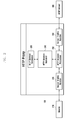
- FIG. 4 is a diagram illustrating an internal structure of an HTTP proxy device that supports a technology according to an embodiment of the present invention.
- the HTTP proxy device 340 includes a PGW traffic handler 410.
- the PGW traffic handler 410 differs from a router traffic handler in that the PGW traffic handler 410 is used for objects for providing functions that are defined in the above-described third and fourth objects and are specialized to the mobile communication.
- the HTTP proxy device 340 further includes a server traffic handler 470 for communicating with an HTTP server 350 is defined as an existing device.
- the HTTP proxy device 340 for the present invention further includes a PGW signal handler 430 for transmitting/receiving IP protocol related information of a wireless UE that is managed by a PGW.
- the PGW signal handler 430 supports the HTTP proxy to access information regarding a release or change of IP information of the UE.
- the HTTP proxy 340 may transmit/receive information regarding wireless connection deactivation, IP address allocation, IP change, etc. of the HTTP client UE 310 to/from the PGW 330 through a corresponding device.
- the evolved HTTP proxy device 340 further includes a UE paging handler 430 for paging processing for transmission of an HTTP push when the HTTP client UE 310 deactivates an IP connection.
- the evolved HTTP proxy device 340 further includes HTTP session manager 440 for, in addition to operations described with respect to the HTTP session manager 240 of FIG. 2 , controlling/managing information of the wireless UE in order to match sessions of the HTTP client 310 and the HTTP server 350 in consideration of a change in IP protocol information of the mobile communication UE Accordingly, the evolved HTTP proxy device 340 further includes an HTTP session processor 450 for processing HTTP traffic, and an HTTP session database 460 for controlling/managing additional information.
- an evolved HTTP proxy according to embodiments of the present invention are not limited to the various components is described above with respect to FIG. 4 .
- an HTTP proxy device may include an interface unit for performing communication with predetermined nodes of a wireless communications network, and a controller for performing other functions of the evolved HTTP proxy.
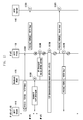
- FIG. 5 is a signal flow diagram illustrating an example of an operation scenario of asynchronous transmission of an HTTP message through a singular TCP session according to an embodiment of the present invention.
- the HTTP client 310 has an IP address #1
- the HTTP proxy 340 has an IP address #2
- the HTTP server 350 has an IP address #3.
- a TCP connection for a session of the HTTP client 310 is previously set between the HTTP client 310 and the HTTP proxy 340 and this TCP connection has a number #A. Meanwhile, the HTTP proxy 340 and the HTTP server 350 have a TCP number #X for the TCP connection of the HTTP client 310.
- a message sequence according to an embodiment of the present invention is described below with reference to FIG. 5 .
- step S520 when the HTTP client 310 transmits an HTTP request #1 (as indicated by HTTP sequence number #1, i.e., "HSEQ ⁇ 1]") to the HTTP server 350, the HTTP proxy 340 initially receives the HTTP request #1.
- step S530 when the HTTP client 310 transmits an HTTP request #2 (as indicated by "HSEQ ⁇ 2]") to the HTTP server 350, the HTTP proxy 340 also initially receives the HTTP request #2.
- the HTTP proxy 340 determines an HTTP sequence number #10 as a new sequence number corresponding to the sequence number #1 of HTTP request #1 transmitted by the HTTP client 310, such that the HTTP proxy server 340 uses the new HTTP sequence number #10 while transmitting, in step S540 the HTTP transmission request of step S520 to the HTTP server 350. More specifically, in step S540, the HTTP proxy 340 transmits the HTTP request #10, into which the determined new HTTP sequence number #10 is inserted, to the HTTP server 350.
- the HTTP proxy 340 determines an HTTP sequence number #20 as a new sequence number correpsonding to the sequence number #2 of HTTP request #2 transmitted by the HTTP client 310, such that the HTTP proxy server 340 uses the new HTTP sequence number #20 while transmitting, in step S550, the HTTP transmission request of step S530 to the HTTP server 350. More specifically, in step S550, the HTTP proxy 340 transmits the HTTP request #20, into which the determined new HTTP sequence number #20 is inserted, to the HTTP server 350.
- step S560 the HTTP proxy 340 receives, from the HTTP server 350, a response to the transmission of step S550 earlier than a response to the transmission of step S540, which is received in step S570.
- step S580 the HTTP proxy 340 transmits, in response to the transmission of step S560, the response to the transmission of step S550 to the HTTP client 310.
- step S590 the HTTP proxy 340 transmits, in response to the transmission of step S570, the response to the transmisison of step S540 to the HTTP client 310.
- the sequence of the transmissions of steps S580 and S590 is based upon the sequence of receipt of the responses from the HTTP server 350 in steps S560 and S570. As shown in FIG. 5 , the HTTP sequence numbers used in steps S580 and S590 are restored to the same numbers used in steps S520 and S530.
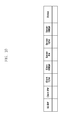
- FIG. 6 illustrates a database structure applied to each message according to an embodiment of the present invention.
- the HTTP proxy 340 uses the database of FIG. 6 in order to match a left session of the HTTP client 310 (i.e., the session coresponding to the left side of FIG. 5 ) and a right session of the HTTP server 350 (i.e., the session corresponding to the right side of FIG. 5 ).
- the HTTP proxy 340 manages the database illustrated in FIG. 6 through the HTTP session database 460 of FIG. 4 .
- a client IP address 610 includes an IP address number of the HTTP client 310.
- a client TCP number 620 includes a TCP port number that the HTTP client 310 uses in order to communicate with the HTTP proxy 340.
- a client HTTP sequence number 630 includes an HTTP sequence number of an HTTP request that the HTTP client 310 transmits to the HTTP server 350 through the HTTP proxy 340.
- a server IP address 640 includes an IP address number of the HTTP server 350.
- a server TCP number 650 includes a TCP port number that the HTTP proxy 340 uses in order to communicate with the HTTP server 350.
- a server HTTP sequence number 660 includes an HTTP sequence number of an HTTP request that the HTTP proxy 340 transmits to the HTTP server 350.
- a status 670 indicates a status of processing an HTTP session.
- this status indicates that the HTTP client 310 has received the HTTP request.
- a status "Wait4Res” indicates that the HTTP request has been transmitted to the HTTP proxy 340.
- a status "ResQueued” indicates that the HTTP proxy 340 has received the HTTP response.
- a status corresponds to "Closed” indicates that the HTTP response is transmitted to the HTTP client 310 and then the HTTP session is terminated.
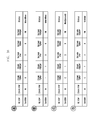
- FIG. 7 illustrates a management process of the database of FIG. 6 with respect to an operation scenario illustrated through the signal flow diagram of FIG. 5 according to an embodiment of the present invention.
- FIG. 7 illustrates a database management status of each of points A, B, C, and D of FIG. 5 .
- the HTTP server 350 is connected to the current HTTP proxy 340 through the TCP #X.
- step B the HTTP requests from step A are matched with corresponding HTTP sequence numbers #10 and #20, respectively, and then the matched HTTP requests are transmitted from the HTTP proxy 340 to the HTTP server 350.
- FIG. 8 is a signal flow diagram illustrating a TCP session deactivation operation scenario with respect to a UE, in which wireless communication is deactivated, to an HTTP server according to an embodiment of the present invention.
- a PGW 820 which is a device that allocates a mobile communication IP, receives information indicating that wireless communication is normally or abnormally deactivated in a UE driving an HTTP client 810
- the PGW may also be referred to as an evolved PGW.
- the PGW 820 informs the HTTP proxy 830 ofthisde-allocation and retrieval, in step S820.
- the HTTP proxy 830 internally records information indicating that an IP of the UE driven by the HTTP client 810 is no longer available. In step S830, the HTTP proxy 830 deactivates the TCP connection with the HTTP server 840 used by the corresponding HTTP client 810.
- the types of statuses illustrated in FIG. 6 may further include "AirClosed” (not shown).
- the "AirClosed” status is defined as a status in which IP of the HTTP Client is deactivated and TCP with the HTTP server is also deactivated.
- FIG. 9 illustrates a management process of a database managed by an HTTP proxy with respect to the operation scenario of FIG. 8 , according to an embodiment of the present invention.
- step A the database stores session information regarding commincations between the HTTP client 810 and the HTTP server 840.
- step B when a wireless connection of the wireless UE is terminated, all IP protocol information of the corresponding wireless UE is deleted, all related TCP connection information is also deleted, and all information is then deleted, in step B.
- FIG. 10 illustrates an expanded structure of the database of FIG. 6 according to an embodiment of the present invention
- the database of FIG. 10 is similar to the database illustrated in FIG. 6 , except that a User Equipment (UE) IDentifier (ID) field is added.
- the UE ID field uses an identifier (e.g. a Media Access Control (MAC) address, an International Machine Equipment Identifier (IMEI), etc.) that can identify the UE in a wireless communications network.
- MAC Media Access Control
- IMEI International Machine Equipment Identifier
- FIG. 11 is a signal flow diagram illustrating an operation scenario at a time of operating an idle handover with respect to a handover according to movement of a wireless UE according to an embodiment of the present invention.
- an HTTP client 1110 performs HTTP communication by using IP#0.
- step S 1120 the UE, within which the HTTP client 1110 is installed, changes a location thereof so that an IP address of the UE is changed._ At this time, a new IP#9 is used instead of the previous IP#0.
- step S1130 the PGW 1120 transmits, to an HTTP proxy 1130, information indicating whether an IP address of the corresponding UE is changed.
- the HTTP proxy 1130 updates the IP address information of the corresponding UE at an HTTP session management table thereof.
- the HTTP proxy 1130 sets a new TCP session between the HTTP proxy 1130 and the HTTP client 1110. At this time, the HTTP proxy 1130 prevents an HTTP server 1140 from identifying the change in the IP information of the UE, by using the set information and the previous information.
- FIG. 12 illustrates an example of a session database of an HTTP proxy 1130 with respect to the operation scenario of FIG. 11 according to an embodiment of the present invention.
- the HTTP client 1110 has a UE ID of 0x1004 and an IP address of #0. Further, the HTTP client 1110 and the HTTP proxy 11130 have a TCP number of #B.
- the HTTP client 1110 performs a handover
- the IP address of the HTTP client 1110 is changed to #9
- the TCP number between the HTTP client 1110 and the HTTP proxy 1130 is changed to #C, in step B.
- the HTTP server 1140 may not identify the handover, and thus information on the HTTP server 1140 is not changed.
- FIG. 13 is a signal flow diagram illustrating a first operation scenario at a time of operating a handover during a session with respect to a handover according to movement of a wireless UE according to an embodiment of the present invention.
- step S1310 the HTTP client 1110 uses IP#0 to transmit an HTTP request to the HTTP proxy 1130.
- step S1320 the HTTP proxy 1130 transmits the HTTP request that has been received from the HTTP client 1110 to the HTTP server 1140.
- step S1330 the UE, within which the HTTP client 1110 is installed, changes a location thereof so that IP address of the UE is changed. At this time, a new IP#9 is used instead of the previous IP#0.
- step S 1340 the PGW 1120 transmits information indicating whether IP address of the corresponding UE is changed to an HTTP proxy 1130.
- the HTTP proxy 1130 updates the IP address information of the mobile UE at an HTTP session management table thereof.
- step S1350 the HTTP proxy 1130 sets a new TCP session between the HTTP client 1110 and the HTTP proxy 1130.
- the HTTP proxy 1130 prevents the HTTP server 1140 in a state from knowing about the change in the IP information of the UE by using the information of step S 1340.
- step S1360 an HTTP response to the HTTP request of step S1320 arrives at the HTTP proxy 1130, from the HTTP server 1140. Thereafter, in step S1370, the HTTP proxy 1130 transmits the response to the HTTP client 1110, based on the new TCP connection of step S1350.
- FIG. 14 illustrates an example of managing a session database of an HTTP proxy with respect to the operation scenario of FIG. 13 according to an embodiment of the present invention.
- step A the HTTP client 1110 uses an IP address of #0 and a TCP connection of #B with respect to communications between the HTTP client 1110 and the HTTP proxy 1130.
- step B the IP address of the HTTP client 1110 is changed to #9, but the TCP connection between the HTTP client 1110 and the HTTP proxy 1130 is blank, since the TCP connection is has not been set yet.
- step C the TCP connection between the HTTP client 1110 and the HTTP proxy 1130 is newly set so that a TCP number in the database is changed to #C. More specifically, in steps A, B, and C, an HTTP request is transmitted to the HTTP server 1140, but since an HTTP response to the HTTP request does not arrive, the status is maintained at "Wait4Res".
- step D the HTTP response is received at the HTTP server 1140 and is transmitted to the HTTP client 1110, and the status is then changed to "Closed".
- FIG. 15 is a signal flow diagram illustrating a second operation scenario at a time of operating a handover during a session with respect to a handover according to movement of a wireless UE according to an embodiment of the present invention.
- step S1510 the HTTP client 1110 uses IP#0 to transmit an HTTP request to the HTTP proxy 1130. Thereafter, in step S 1520, the HTTP proxy 1130 transmits the HTTP request that has been received from the HTTP client 1110 to the HTTP server 1140.
- step S 1530 the UE, within which the HTTP client 1110 is installed, changes a location thereof, so that an IP address of the UE is changed.
- a new IP#9 is used instead of the previous IP#0.
- step S 1540 the PGW 1120 transmits information indicating whether an IP address of the corresponding UE is changed to an HTTP proxy 1130.
- the HTTP proxy 1130 updates the IP address information of the mobile UE at an HTTP session management table thereof.
- step S1550 an HTTP response to the HTTP request of step S1520 arrives at the HTTP proxy 1130 from the HTTP server 1140 and is then stored as a standby status.
- step S1560 the HTTP proxy 1130 sets a new TCP session between the HTTP client 1110 and the HTTP proxy 1130.
- the HTTP proxy 1130 prevents the HTTP server 1140 from knowing about the change in the IP information of the UE by using the information of step 1540.
- step 1570 the HTTP proxy 1130 transmits the response of step S1550 to the HTTP client 1110 based on the newly-set TCP connection.
- FIG. 16 illustrates an example of managing a session database of an HTTP proxy 1130 with respect to the operation scenario of FIG. 15 according to an embodiment of the present invention.
- step A the HTTP client 1110 uses an IP address of #0 and a TCP connection of #B with respect to communications between the HTTP client 1110 and the HTTP proxy 1130.
- step B the IP address of the HTTP client 1110 is changed to #9, but the TCP connection between the HTTP client 1110 and the HTTP proxy 1130 is blank, since the TCP connection has not been set yet.
- step C the TCP connection between the HTTP client 1110 and the HTTP proxy 1130 is identified as newly set TCP connection, so that a TCP number in the database is changed to #C.
- steps A and B an HTTP request is transmitted to the HTTP server 1140, but since an HTTP response to the HTTP request does not arrive, the status is maintained at "Wait4Res".
- step C although the HTTP response arrives, the TCP connection has not beenset between the HTTP client 1110 and the HTTP proxy 1130, so that the HTTP response is stored in the HTTP proxy 1130. Thus, the status of the HTTP session is changed to "ResQueued".
- step D the HTTP response is received at the HTTP server 1140 and is transmitted to the HTTP client 1110, and the status is then changed to "Closed".
- IG. 17 is a signal flow diagram illustrating a third operation scenario at a time of operating a handover during a session with respect to a handover according to movement of a wireless UE according to an embodiment of the present invention.
- step S 1710 the HTTP client 1110 uses IP#0 to transmit an HTTP request to the HTTP proxy 1130. Thereafter, in step S1720, the HTTP proxy 1130 transmits the HTTP request that has been received from the HTTP client 1110 to the HTTP server 1140.
- step S1730 an HTTP response to the HTTP request of step S1720 arrives at the HTTP proxy 1130 from the HTTP server 1140 and is then stored according to a transmission standby status.
- step S 1740 the UE, within which the HTTP client 1110 is installed, changes a location thereof so that an IP address of the UE is changed. At this time, a new IP#9 is used instead of the previous IP#0.
- step S 1750 the PGW 1120 transmits information indicating whether an IP address of the corresponding UE is changed to an HTTP proxy 1130.
- the HTTP proxy 1130 updates the IP address information of the mobile UE at an HTTP session management table thereof.
- step S 1760 the HTTP proxy 1130 newly sets a TCP session between the HTTP client 1110 and the HTTP proxy 1130.
- the HTTP proxy 1130 prevents the HTTP server 1140 from knowing about the change in the IP information of the UE by using the information of step 1750.
- step S 1730 is transmitted to the HTTP client 1110 based on the newly-set TCP connection, in step 1770.
- FIG. 18 illustrates an example of managing a session database of an HTTP proxy 1130 with respect to the operation scenario of FIG. 17 according to an embodiment of the present invention.
- step A the HTTP client 1110 uses an IP address of #0 and a TCP connection of #B with respect to communications between the HTTP client 1110 and the HTTP proxy 1130.
- step B the HTTP response is received from the HTTP server 1140 and is transmitted to the HTTP client 1110, and the status is then changed to "Closed".
- the IP address of the HTTP client 1110 is also changed to #9, and the TCP number is changed to #C.
- FIG 19 is a signal flow diagram illustrating an operation scenario of an HTTP push service for an idle UE according to an embodiment of the present invention
- an HTTP client 1910 returns an IP address to an evolved PGW 1920, while deactivating a wireless channel of a UE being driven.
- the HTTP client 1910 (or the HTTP server 1940) has previously requested support for an HTTP push, or requests support for the HTTP push at a time of connection deactivation.
- the HTTP proxy 1930 receives the HTTP push service support request from a PGW 1920 and stores the request as status information.
- the HTTP proxy 1930 and the HTTP server 1940 use a SPDY protocol.
- step S1930 the HTTP server 1940 transmits an HTTP push transmission request for a UE that does not have an IP, to the HTTP proxy 1930.
- step S1940 the HTTP proxy 1930 sends, to the PGW 1920, a request to perform UE paging and to find a UE by using a UE ID of the UE stored in step S 1920.
- step S1950 the HTTP proxy 1930 transmits a message transmitted from the HTTP server 1940 to the HTTP client 1910.
- steps S1960 to S1990 a process in which a UE acquires a new IP#9 and a new TCP connection #C again through wireless paging by using a paging procedure of a mobile communication system according to the related art is illustrated in steps S1960 to S1990.
- steps S 1960 to S 1990 a further detailed description of steps S 1960 to S 1990 is omitted herein
- step S1995 the HTTP proxy 1930 transmits a message transmitted from the HTTP server 1940 to the HTTP client 1910.
- FIG. 20 illustrates an example of managing a session database of an HTTP proxy with respect to the operation scenario of FIG. 19 according to an embodiment of the present invention.
- step A since a mobile UE, which the HTTP client 1910 operates, performs communication normally, all fields of the database are filled.
- step B the mobile UE deactivates its own wireless connection, so that all the fields of the HTTP client 1910 side become blank.
- the HTTP proxy 1930 maintains communication with the HTTP server 1940. Simultaneously, the HTTP proxy 1930 does not remove HTTP server information and changes the status of the corresponding HTTP session to "PushEnable".
- step C the mobile UE receives the HTTP push while the wireless connection and IP communication of the corresponding UE are deactivated. At this time, the status of the session is changed to "Wait4Push".
- step D the wireless connection is newly restored for the HTTP push, and thus it is noted that all information of the HTTP client 1910 is updated to new information again.
Landscapes
- Engineering & Computer Science (AREA)
- Computer Networks & Wireless Communication (AREA)
- Signal Processing (AREA)
- Health & Medical Sciences (AREA)
- Cardiology (AREA)
- General Health & Medical Sciences (AREA)
- Computer Security & Cryptography (AREA)
- Mobile Radio Communication Systems (AREA)
Abstract
Description
- The present invention relates generally to a wireless communications network, and more particularly, to an apparatus and a method for reducing a transmission delay through use of HyperText Transfer Protocol (HTTP) and a processing load of an HTTP server, in a wireless communications network.
- Wireless communication systems have been developed to provide voice services to users, and have expanded to additionally provide data services. In recent years, wireless communication systems have been further developed in order to provide high-speed data services. However, due resource shortages and user demands for providing a higher speed services, a more-advanced wireless communication system is required.
-
FIG. 1 illustrates a network structure of a wireless communication technology -
FIG. 1 is a diagram illustrating a communication system in which an Internal Protocol (IP) communication message is transmitted from a mobile communication User Equipment (UE) to a mobile communication that which terminates an IP communication of a corresponding UE. -
FIG. 1 , depictes as communication network according to a Long Term Evolution (LTE) scheme, which is a 4th Generation communications network, and therefore, a Packet Data Network (PDN) Gateway (PGW) is used in the network. With respect toFIG. 1 , all IP message exchanges performed between a UE 110 and other communication devices using an internet connection are performed through acorresponding PGW 120. Thus, when client software based on a HyperText Transfer Protocol (HTTP) is used, all messages of the corresponding HTTP-based services are processed via the PGW 120. - An HTTP
proxy device 130 is used between the PGW 120 and anHTTP server 140, thereby substantially providing an HTTP service in order to provide an HTTP service having a more advanced performance than performance provided by the mobile communications network. The HTTPproxy device 130 improves user satisfaction with respect to the HTTP service by generally providing an improvement in transmission speeds by compressing HTTP traffic, security reinforcement by protecting an HTTP user or an HTTP server from illegal or malicious attacks, and caching, which includes storing frequently-accessed contents of the HTTP server and rapidly transferring the stored contents to the HTTP user. -
FIG. 2 is a diagram illustrating an internal configuration of a conventional HTTP proxy device. - Referring to
FIG. 2 , in theHTTP proxy device 130, HTTP clients are connected to one side thereof, and an HTTP server is connected to another side thereof. Since theHTTP proxy device 130 terminates 4-layered communication (e.g. opposite Transmisison Control Protocols (TCPs)), a function of matching a left side ofFIG. 2 (i.e., communications with respect to the router 210) and a right side ofFIG. 2 (i.e., communications with respect to the HTTP server 140) is needed - To this end, the HTTP
proxy device 130 includes arouter traffic handler 220 for directing therouter 210 to which the HTTP clients are connected, and aserver traffic handler 260 for directing theHTTP server 140. The HTTPproxy device 130 further includes anHTTP bearer processor 230 for performing the matching operation. The HTTPbearer processor 230 stores, in anHTTP session database 250, information regarding a 4-layered connection with theHTTP clients 110 and information regarding a 4-layered connection with theHTTP server 140, in order to correctly match theHTTP clients 110 and theHTTP server 140. AnHTTP session manager 240, which directs theHTTP bearer processor 230 to match sessions of theHTTP client 110 and theHTTP server 140, operates based on the corresponding information. - Thus, the
HTTP session manager 240 performs control operations, such that theHTTP bearer processor 230 correctly matches the sessions of theHTTP client 110 and theHTTP server 140, based on the information of theHTTP session database 250. - Several examples problems of the above-mentioned communication systems are described below.
- First, when the HTTP
client 110 transmits a plurality of HTTP request messages to the HTTPserver 140 through one Transmission Control Protocol (TCP) connection, the HTTPserver 140 must transmit HTTP response messages, which are responses to the HTTP request messages, to theHTTP client 110 in the same sequence as the HTTP request messages. However, when generation or transmission of one of the HTTP responses is delayed, transmission of all the following HTTP responses to the HTTP client may be delayed. - Second, one TCP session is maintained for a long time in order to connect the
HTTP client 110 and theHTTP server 140 to each other once and then to reconnect theHTTP client 110 and theHTTP server 140 to each other, such as in a Persistent HTTP mode originally defined in the HTTP standard or an SPeeDY (SPDY) recently proposed as an improved alternative. At this time, when theHTTP client 110 is not normally performing TCP connection deactivation with theHTTP server 140, theHTTP client 110 must remove the corresponding TCP session by itself In this situation, when a TCP connection between theHTTP client 110 and theHTTP server 140 is abnormally terminated due to instability of wireless connection of a UE in the mobile communications network, or when an IP address is changed by performing a handover through moving the UE, the existing TCP connection is abnormally operated, and therefre, it is difficult for theHTTP server 140 to identify the abnormal operation. Even when a user performs cyclic message transmission/reception to/from theHTTP server 140 and theHTTP client 110 to detect abnormal termination, in order to identify movement of the corresponding UE, wireless traffic is wasted. Further, when the TCP connection, in which theHTTP server 140 is abnormally terminated, is maintained for a predetermined time period, an additional processing load of the server is unnecessarily generated. - Third, when one TCP session is maintained for a long time, in order to rapidly reconnect the
HTTP client 110 and theHTTP server 140 to each other, such as with Persistent HTTP or SPDY described with respect to second problem above, thecorresponding HTTP client 110 is a mobile communication UE, and therefore, when the IP address is changed due to a handover in wireless communication, theHTTP server 140 cannot identify the changed IP address. Therefore, when the base station is changed due to movement of the UE in the mobile communications network, the UE may not use the currently-used IP address and may change the IP address thereof. For example, when an Access Point (AP) is changed in a Wireless Local Area Network (WLAN) or a PGW is changed in a Long Term Evolution (LTE) network, when the IP address of the corresponding UE is changed, the TCP connection between theHTTP server 140 and theHTTP client 110 is abnormally terminated, such that the second problem is generated, and therefore, the IP address allocated to the corresponding UE becomes useless. Further, the communication service that was previously being performed is abnormally terminated due to deactivation of a TCP connection with the UE. - Fourth, in the current art, when one TCP session is maintained for a long time, such that the
HTTP server 140 transmits a push message to theHTTP client 110, such as when using Persistent HTTP or SPDY as described with respect to the second and third problems herein above, the UE must consistently maintain the IP and the TCP sessions with respect to theHTTP server 140. In this situation, when there is no information to be transmitted or received by the UE in the mobile communications network, a wireless connection is deactivated and an IP is returned, or when monitoring traffic of the corresponding UE indicates that there is no information to be transmitted or received in the mobile communications network, an IP connection is deactivated. However, when the IP of the UE is deactivated, such as in the above-mentioned case, it is impossible for theHTTP server 140 to perform the HTTP push to the corresponding UE. In order to address above-mentioned problem, the connection may be maintained by cyclically transmitting a message to the UE. However, since a wireless data communication connection of the UE must be maintained in order to maintain the connection, communication costs of the UE and battery usage increase. Further, since the IP is consistently allocated to the corresponding UE, even in the mobile communications network, processing and a memory load for maintaining the corresponding IP session are generated. - An aspect of the present invention is to address the above-mentioned problems and to provide at least the advantages described below. Another aspect of the present invention is to improve HTTP, which is a core communication protocol used for providing an internet service.
- According to an aspect of the present invention, a method of managing and controlling wireless connection of a HyperText Transfer Protocol (HTTP) proxy device in a wireless communication network is provided. The method includes receiving one of information indicating a wireless connection deactivation of an HTTP client performing HTTP communication and information indicating a change in an Internet Protocol (IP) address of the HTTP client from a predetermined node of the wireless communication network; and deactivating a connection with an HTTP server if the received information indicates the wireless connection deactivation of an HTTP client performing the HTTP communication; and maintaining a connection with an HTTP server if the received information indicates the change in the Internet Protocol (IP) address of the HTTP client.
- According to another aspect of the present invention, an HTTP proxy device for managing and controlling wireless connection in a wireless communication network is provided. The HTTP proxy device includes an interface unit that performs communication with a predetermined node located at the wireless communication network; and a controller that performs a control to receive one of information indicating wireless connection deactivation of an HTTP client performing HTTP communication and information indicating a change in an Internet Protocol (IP) address of the HTTP client from the predetermined node and to deactivate a connection with an HTTP server if the received information indicates the wireless connection deactivation of an HTTP client performing the HTTP communication, and maintains a connection with an HTTP server if the received information indicates the change in the Internet Protocol (IP) address of the HTTP client.
- The above and other aspects, features, and advantages of the present invention will be more apparent from the following detailed description taken in conjunction with the accompanying drawings, in which:
-
FIG. 1 is a diagram illustrating a network structure of a wireless communication technology; -
FIG. 2 is a diagram illustrating an internal structure of an HTTP proxy device according to the related art; -
FIG. 3 is a diagram illustrating a network structure for supporting the present invention according to an embodiment of the present invention; -
FIG. 4 is a diagram illustrating an internal structure of anHTTP proxy device 340 for supporting a technology according to an embodiment of the present invention; -
FIG. 5 is a signal flow diagram illustrating an operation process of asynchronous transmission of an HTTP message through a singular TCP session according to an embodiment of the present invention; -
FIG. 6 is a diagram illustrating a database structure applied to each message according to an embodiment of the present invention; -
FIG. 7 is a diagram illustrating a management process of the database ofFIG. 6 with respect to an operation scenario illustrated through the signal flow diagram ofFIG. 5 according to an embodiment of the present invention; -
FIG. 8 is a signal flow diagram illustrating a TCP session deactivation operation scenario with respect to a UE, in which wireless communication is deactivated, to an HTTP server according to an embodiment of the present invention; -
FIG. 9 is a diagram illustrating a management process of a database, which an HTTP proxy manages, with respect to the operation scenario ofFIG. 8 according to an embodiment of the present invention; -
FIG. 10 is a diagram illustrating an expanded structure of the database ofFIG. 6 according to an embodiment of the present invention; -
FIG. 11 is a signal flow diagram illustrating an operation scenario at a time of operating an idle handover with respect to a handover according to movement of a wireless UE according to an embodiment of the present invention; -
FIG. 12 is a diagram illustrating an example of a session database of anHTTP proxy 1130 with respect to the operation scenario ofFIG. 11 according to an embodiment of the present invention; -
FIG. 13 is a signal flow diagram illustrating a first operation scenario at a time of operating a handover during a session with respect to a handover according to movement of a wireless UE according to an embodiment of the present invention; -
FIG. 14 is a diagram illustrating an example of management of a session database of an HTTP proxy with respect to the operation scenario ofFIG. 13 according to an embodiment of the present invention; -
FIG. 15 is a signal flow diagram illustrating a second operation scenario at a time of operating a handover during a session with respect to a handover according to movement of a wireless UE according to an embodiment of the present invention; -
FIG. 16 is a diagram illustrating an example of management of a session database of anHTTP proxy 1130 with respect to the operation scenario ofFIG. 15 according to an embodiment of the present invention; -
FIG. 17 is a signal flow diagram illustrating a third operation scenario at a time of operating a handover during a session with respect to a handover according to movement of a wireless UE according to an embodiment of the present invention; -
FIG. 18 is a diagram illustrating an example of managing a session database of anHTTP proxy 1130 with respect to the operation scenario ofFIG. 17 according to an embodiment of the present invention; -
FIG. 19 is a signal flow diagram illustrating an operation scenario of an HTTP push service for an idle UE according to an embodiment of the present invention; and -
FIG. 20 is a diagram illustrating an example of management of a session database of an HTTP proxy with respect to the operation scenario ofFIG. 19 according to an embodiment of the present invention. - Hereinafter, embodiments of the present invention will be described in detail with reference to the accompanying drawings. The same components or similar in the accompanying drawings may be designated by the same or similar reference numerals. A detailed description of well-known functions and configurations incorporated may be omitted herein when such a description may obscure the subject matter of the present invention.
- The following description of embodiments of the present invention primarily refer to a Long Term Evolution (LTE) system. However, embodiments of the present ivnention are not limited to the LTE system, and embodiments of the present invention may be applied to other communication systems without departing from the scope of the present invention.
- For example, functions that an Envolved Node B (eNB), which is a base station entity in the LTE system of the present invention, a PGW and an MME, which are entities on a core network, etc. perform according to an embodiment of the present invention may be performed by predetermined entities for other communication systems.
- Although the following description refers to a wireless and mobile communications networks, embodiments of the present invention may be also applied to wired communications networks.
- Another aspect of the present invention is to provide a method and an apparatus for providing a faster response time to a user of a service made based on the HTTP and providing a more improved service than the conventional service while a low load of a Central Processing Unit (CPU)/Memory of a server for providing an HTTP service is used, through an improved HTTP protocol. Further, the present invention allows a user to consistently receive the HTTP service even when wireless communication of a wireless UE is disconnected in a case where the HTTP protocol is used in a wireless communications network.
- To this end, the present invention improves a function of an HTTP proxy device used for improving a performance of the existing HTTP protocol. To this end, the present invention changes the HTTP protocol. In addition, the HTTP server, the HTTP client, etc. are changed according to a change of the HTTP protocol. In addition, a function of the existing mobile communication device is improved in order to improve a performance of the HTTP specialized to the mobile communication.
- The following four technologies will be proposed with respect to the solutions of the present invention for solving the above-mentioned problems.
- As a first proposal technology for solving the first problem, an HTTP sequence number (or an HTTP transaction identifier) is included in an HTTP request (message) and an HTTP response (message) as a new field. To this end, an HTTP client records a number for identifying the corresponding message when transmitting the HTTP request, at an HTTP sequence field, and transmits the number to the HTTP server. The HTTP server lets the HTTP response include the HTTP sequence number of the HTTP request corresponding to the HTTP response when generating the HTTP response. The HTTP server transmits the HTTP responses to the HTTP client regardless of a sequence of the received HTTP requests. The HTTP client receives the HTTP responses received from the HTTP server in the order of arrival, regardless of a sequence of the transmitted HTTP requests.
- As a proposal technology for solving the second problem, an HTTP proxy of a mobile communication network detects IP connection termination of a UE in conjunction with a device (e.g. a PGW of an LTE) which assigns an IP address to the UE, and informs the HTTP server of the detected result. To this end, it is assumed that the UE of the mobile communications network is connected to the HTTP proxy as default to perform communication with the HTTP server. The HTTP proxy maintains connection with the device which allocates an IP address of the mobile communication UE to identify whether IP connection of the UE is deactivated or not. When the HTTP communication is impossible due to normal/abnormal IP deactivation of the UE, the HTTP proxy instead of the UE performs connection deactivation of the HTTP server connected to the corresponding UE with the corresponding HTTP client.
- As a proposal technology for solving the third problem, the HTTP proxy existing in the mobile communication network detects a change in an IP address of a UE in conjunction with a device which assigns an IP address to the mobile communication terminal and informs the HTTP server of the detected result. To this end, it is assumed that the UE of the mobile communications network is connected to the HTTP proxy as default to perform communication with the HTTP server. The HTTP proxy maintains connection with the device which allocates an IP address of the mobile communication UE, to identify whether an IP address of the UE is changed or not. When the IP address of the UE is changed, the HTTP proxy ensures that the corresponding change in the IP address influences only a signal exchange between the HTTP client and the HTTP proxy and does not influence a signal exchange between the HTTP proxy and the HTTP server, so that influence on the change in the IP address is not generated between the HTTP client and the HTTP server.
- As a proposal technology for solving the fourth problem, the HTTP client or the HTTP server which wants the HTTP push transmits/receives an intention indicating "consistently wanting the HTTP" at a time point of setting the HTTP connection. The HTTP proxy identifies the intention, so that even when IP connection of the UE is deactivated after this time point, a push by the HTTP proxy is supported. Even after the IP address of the HTTP client is deactivated together with the wireless connection with the HTTP client, the HTTP proxy maintains session information for the corresponding HTTP client. A time period for maintaining the session information is permanent or a time value previously defined by the HTTP client or the HTTP server at a time of the HTTP connection. After IP deactivation of the HTTP client, when an HTTP message is transmitted from the HTTP server to the UE, a normal HTTP push message is transmitted to the HTTP proxy, and the HTTP proxy transmit the corresponding HTTP push message to the HTTP client. Thus, the wireless connection is deactivated so that the HTTP push for the UE not having an IP address is clearly transmitted to the HTTP server. An operation after the UE receives the HTTP push is performed according to technologies related to wireless paging among other existing technologies so that the operation is not related to the present invention. Thus, a detailed description of the operation will be omitted.
-
FIG. 3 is a diagram illustrating a network structure for supporting the present invention according to an embodiment of the present invention. - Referring to
FIG. 3 , anHTTP proxy device 340 according to an embodiment of the present invention includes a signaling interface (not shown) for transmitting/receiving IP protocol information of a user's UE to/from aPGW 330 of the mobile communications network that is different from the interface described herein with reference toFIGs. 1 -. TheHTTP proxy device 340 also has a signaling interface (not shown) for transmitting/receiving a signal to/from a Mobility Management Entity (MME)device 320 that manages location information of a mobile communication UE and searches for the mobile communication UE through a paging operation. -
FIG. 4 is a diagram illustrating an internal structure of an HTTP proxy device that supports a technology according to an embodiment of the present invention. - Referring to
FIGs. 3 and4 , theHTTP proxy device 340 according to an embodiment of the present invention includes aPGW traffic handler 410. ThePGW traffic handler 410 differs from a router traffic handler in that thePGW traffic handler 410 is used for objects for providing functions that are defined in the above-described third and fourth objects and are specialized to the mobile communication. - The
HTTP proxy device 340 further includes aserver traffic handler 470 for communicating with anHTTP server 350 is defined as an existing device.
theHTTP proxy device 340 for the present invention further includes aPGW signal handler 430 for transmitting/receiving IP protocol related information of a wireless UE that is managed by a PGW. For example, thePGW signal handler 430 supports the HTTP proxy to access information regarding a release or change of IP information of the UE. More specifically, theHTTP proxy 340 may transmit/receive information regarding wireless connection deactivation, IP address allocation, IP change, etc. of theHTTP client UE 310 to/from thePGW 330 through a corresponding device. - The evolved
HTTP proxy device 340 further includes aUE paging handler 430 for paging processing for transmission of an HTTP push when theHTTP client UE 310 deactivates an IP connection. The evolvedHTTP proxy device 340 further includesHTTP session manager 440 for, in addition to operations described with respect to theHTTP session manager 240 ofFIG. 2 , controlling/managing information of the wireless UE in order to match sessions of theHTTP client 310 and theHTTP server 350 in consideration of a change in IP protocol information of the mobile communication UE Accordingly, the evolvedHTTP proxy device 340 further includes anHTTP session processor 450 for processing HTTP traffic, and anHTTP session database 460 for controlling/managing additional information. - Meanwhile, an evolved HTTP proxy according to embodiments of the present invention are not limited to the various components is described above with respect to
FIG. 4 . For example, an HTTP proxy device according to an embodiment of the present invention may include an interface unit for performing communication with predetermined nodes of a wireless communications network, and a controller for performing other functions of the evolved HTTP proxy. - Hereinafter, embodiments of the present invention, including embodiments that specifically the four examples problems described in the Backgroudn of the Invention are described in detail.
FIG. 5 is a signal flow diagram illustrating an example of an operation scenario of asynchronous transmission of an HTTP message through a singular TCP session according to an embodiment of the the present invention. - Referring to
FIG. 5 , theHTTP client 310 has anIP address # 1, theHTTP proxy 340 has anIP address # 2, and theHTTP server 350 has anIP address # 3. - In step S510, a TCP connection for a session of the
HTTP client 310 is previously set between theHTTP client 310 and theHTTP proxy 340 and this TCP connection has a number #A. Meanwhile, theHTTP proxy 340 and theHTTP server 350 have a TCP number #X for the TCP connection of theHTTP client 310. - A message sequence according to an embodiment of the present invention is described below with reference to
FIG. 5 . - In step S520, when the
HTTP client 310 transmits an HTTP request #1 (as indicated by HTTPsequence number # 1, i.e., "HSEQ {1]") to theHTTP server 350, theHTTP proxy 340 initially receives theHTTP request # 1. Next, in step S530, when theHTTP client 310 transmits an HTTP request #2 (as indicated by "HSEQ {2]") to theHTTP server 350, theHTTP proxy 340 also initially receives theHTTP request # 2. - Thereafter, the
HTTP proxy 340 determines an HTTPsequence number # 10 as a new sequence number corresponding to thesequence number # 1 ofHTTP request # 1 transmitted by theHTTP client 310, such that theHTTP proxy server 340 uses the new HTTPsequence number # 10 while transmitting, in step S540 the HTTP transmission request of step S520 to theHTTP server 350. More specifically, in step S540, theHTTP proxy 340 transmits theHTTP request # 10, into which the determined new HTTPsequence number # 10 is inserted, to theHTTP server 350. - Next, the
HTTP proxy 340 determines an HTTPsequence number # 20 as a new sequence number correpsonding to thesequence number # 2 ofHTTP request # 2 transmitted by theHTTP client 310, such that theHTTP proxy server 340 uses the new HTTPsequence number # 20 while transmitting, in step S550, the HTTP transmission request of step S530 to theHTTP server 350. More specifically, in step S550, theHTTP proxy 340 transmits theHTTP request # 20, into which the determined new HTTPsequence number # 20 is inserted, to theHTTP server 350. - Thereafter, in step S560, the
HTTP proxy 340 receives, from theHTTP server 350, a response to the transmission of step S550 earlier than a response to the transmission of step S540, which is received in step S570. - Thereafter, in step S580, the
HTTP proxy 340 transmits, in response to the transmission of step S560, the response to the transmission of step S550 to theHTTP client 310. - Next, in step S590, the
HTTP proxy 340 transmits, in response to the transmission of step S570, the response to the transmisison of step S540 to theHTTP client 310. The sequence of the transmissions of steps S580 and S590 is based upon the sequence of receipt of the responses from theHTTP server 350 in steps S560 and S570. As shown inFIG. 5 , the HTTP sequence numbers used in steps S580 and S590 are restored to the same numbers used in steps S520 and S530. -
FIG. 6 illustrates a database structure applied to each message according to an embodiment of the present invention. - In the above-described signal flow diagram of
FIG. 5 , theHTTP proxy 340 uses the database ofFIG. 6 in order to match a left session of the HTTP client 310 (i.e., the session coresponding to the left side ofFIG. 5 ) and a right session of the HTTP server 350 (i.e., the session corresponding to the right side ofFIG. 5 ). TheHTTP proxy 340 manages the database illustrated inFIG. 6 through theHTTP session database 460 ofFIG. 4 . - Hereinafter, each of the fields of the database of
FIG. 6 are described in detail. - A
client IP address 610 includes an IP address number of theHTTP client 310. - A
client TCP number 620 includes a TCP port number that theHTTP client 310 uses in order to communicate with theHTTP proxy 340. - A client
HTTP sequence number 630 includes an HTTP sequence number of an HTTP request that theHTTP client 310 transmits to theHTTP server 350 through theHTTP proxy 340. - A
server IP address 640 includes an IP address number of theHTTP server 350. - A
server TCP number 650 includes a TCP port number that theHTTP proxy 340 uses in order to communicate with theHTTP server 350. - A server
HTTP sequence number 660 includes an HTTP sequence number of an HTTP request that theHTTP proxy 340 transmits to theHTTP server 350. - A
status 670 indicates a status of processing an HTTP session. When the status of theHTTP proxy 340 is "ReqQueued", this status indicates that theHTTP client 310 has received the HTTP request. A status "Wait4Res" indicates that the HTTP request has been transmitted to theHTTP proxy 340. A status "ResQueued", indicates that theHTTP proxy 340 has received the HTTP response. A status corresponds to "Closed" indicates that the HTTP response is transmitted to theHTTP client 310 and then the HTTP session is terminated. -
FIG. 7 illustrates a management process of the database ofFIG. 6 with respect to an operation scenario illustrated through the signal flow diagram ofFIG. 5 according to an embodiment of the present invention. - More specifically,
FIG. 7 illustrates a database management status of each of points A, B, C, and D ofFIG. 5 . - First, in step A, HTTP requests that have HTTP
sequence numbers # 1 and #2, respectively, arrive at theHTTP proxy 340 from theHTTP client 310 through the TCP #A via theIP address # 3 of theHTTP server 350. TheHTTP server 350 is connected to thecurrent HTTP proxy 340 through the TCP #X. - However, since the corresponding message has not yet been transmitted from the
HTTP proxy 340 to theHTTP server 350, the HTTP sequence to be used with respect to theHTTP server 350 has not yet been allocated. - In step B, the HTTP requests from step A are matched with corresponding HTTP sequence numbers #10 and #20, respectively, and then the matched HTTP requests are transmitted from the
HTTP proxy 340 to theHTTP server 350. - Thereafter, when the
HTTP proxy 340 recevies HTTP responses from theHTTP server 350, the status of the corresponding session is changed to "ResQeueued" and other information is not changed, in step C. - Thereafter, when the corresponding HTTP responses are transmitted to the
HTTP client 310 with the HTTPsequence numbers # 1 and #2, respectively, the status of the corresponding session is changed to "Closed" at theHTTP proxy 340, in step D. -
FIG. 8 is a signal flow diagram illustrating a TCP session deactivation operation scenario with respect to a UE, in which wireless communication is deactivated, to an HTTP server according to an embodiment of the present invention. - Referring to
FIG. 8 , first, in step S810, aPGW 820, which is a device that allocates a mobile communication IP, receives information indicating that wireless communication is normally or abnormally deactivated in a UE driving anHTTP client 810 InFIG. 8 , the PGW may also be referred to as an evolved PGW. - Thereafter, since
IP# 0, which has been used by the UE driven by the HTTP client, is no longer allocated to the corresponding UE and is retrieved, thePGW 820 informs theHTTP proxy 830 ofthisde-allocation and retrieval, in step S820. - The
HTTP proxy 830 internally records information indicating that an IP of the UE driven by theHTTP client 810 is no longer available. In step S830, theHTTP proxy 830 deactivates the TCP connection with theHTTP server 840 used by thecorresponding HTTP client 810. - Referring back to
FIG. 6 , the types of statuses illustrated inFIG. 6 may further include "AirClosed" (not shown). The "AirClosed" status is defined as a status in which IP of the HTTP Client is deactivated and TCP with the HTTP server is also deactivated. -
FIG. 9 illustrates a management process of a database managed by an HTTP proxy with respect to the operation scenario ofFIG. 8 , according to an embodiment of the present invention. - Referring to
FIG. 9 , a database management status of each of points A and B illustrated inFIG. 8 are described as follows - First, as illustrated in
FIG. 9 , in step A, the database stores session information regarding commincations between theHTTP client 810 and theHTTP server 840. - However, when a wireless connection of the wireless UE is terminated, all IP protocol information of the corresponding wireless UE is deleted, all related TCP connection information is also deleted, and all information is then deleted, in step B.
-
FIG. 10 illustrates an expanded structure of the database ofFIG. 6 according to an embodiment of the present invention - The database of
FIG. 10 is similar to the database illustrated inFIG. 6 , except that a User Equipment (UE) IDentifier (ID) field is added. The UE ID field uses an identifier (e.g. a Media Access Control (MAC) address, an International Machine Equipment Identifier (IMEI), etc.) that can identify the UE in a wireless communications network. -
FIG. 11 is a signal flow diagram illustrating an operation scenario at a time of operating an idle handover with respect to a handover according to movement of a wireless UE according to an embodiment of the present invention. - Referring to
FIG. 11 , first, in step S1110, anHTTP client 1110 performs HTTP communication by usingIP# 0. - Thereafter, in
step S 1120, the UE, within which theHTTP client 1110 is installed, changes a location thereof so that an IP address of the UE is changed._ At this time, anew IP# 9 is used instead of theprevious IP# 0. - Thereafter, in step S1130, the
PGW 1120 transmits, to anHTTP proxy 1130, information indicating whether an IP address of the corresponding UE is changed. At this time, theHTTP proxy 1130 updates the IP address information of the corresponding UE at an HTTP session management table thereof. - Further, in step S1140, the
HTTP proxy 1130 sets a new TCP session between theHTTP proxy 1130 and theHTTP client 1110. At this time, theHTTP proxy 1130 prevents anHTTP server 1140 from identifying the change in the IP information of the UE, by using the set information and the previous information. -
FIG. 12 illustrates an example of a session database of anHTTP proxy 1130 with respect to the operation scenario ofFIG. 11 according to an embodiment of the present invention. - With reference to
FIG. 12 , a database management status of each of points A and B illustrated inFIG. 11 are described as follows. - Referring to
FIG. 12 , first, in step A, theHTTP client 1110 has a UE ID of 0x1004 and an IP address of #0. Further, theHTTP client 1110 and the HTTP proxy 11130 have a TCP number of #B. - Thereafter, when the
HTTP client 1110 performs a handover, the IP address of theHTTP client 1110 is changed to #9, and the TCP number between theHTTP client 1110 and theHTTP proxy 1130 is changed to #C, in step B. However, theHTTP server 1140 may not identify the handover, and thus information on theHTTP server 1140 is not changed. -
FIG. 13 is a signal flow diagram illustrating a first operation scenario at a time of operating a handover during a session with respect to a handover according to movement of a wireless UE according to an embodiment of the present invention. - Referring to
FIG. 13 , in step S1310, theHTTP client 1110 usesIP# 0 to transmit an HTTP request to theHTTP proxy 1130. Thereafter, in step S1320, theHTTP proxy 1130 transmits the HTTP request that has been received from theHTTP client 1110 to theHTTP server 1140. Thereafter, in step S1330, the UE, within which theHTTP client 1110 is installed, changes a location thereof so that IP address of the UE is changed. At this time, anew IP# 9 is used instead of theprevious IP# 0. - Thereafter, in
step S 1340, thePGW 1120 transmits information indicating whether IP address of the corresponding UE is changed to anHTTP proxy 1130. At this time, theHTTP proxy 1130 updates the IP address information of the mobile UE at an HTTP session management table thereof. - Thereafter, in step S1350, the
HTTP proxy 1130 sets a new TCP session between theHTTP client 1110 and theHTTP proxy 1130. At this time, theHTTP proxy 1130 prevents theHTTP server 1140 in a state from knowing about the change in the IP information of the UE by using the information ofstep S 1340. - Thereafter, in step S1360, an HTTP response to the HTTP request of step S1320 arrives at the
HTTP proxy 1130, from theHTTP server 1140. Thereafter, in step S1370, theHTTP proxy 1130 transmits the response to theHTTP client 1110, based on the new TCP connection of step S1350. -
FIG. 14 illustrates an example of managing a session database of an HTTP proxy with respect to the operation scenario ofFIG. 13 according to an embodiment of the present invention. - With reference toFIG. 14, a database management status of each of points A, B, C, and D illustrated in
FIG. 13 is described as follows. - Referring to
FIG. 14 , first, in step A, theHTTP client 1110 uses an IP address of #0 and a TCP connection of #B with respect to communications between theHTTP client 1110 and theHTTP proxy 1130. - In step B, the IP address of the
HTTP client 1110 is changed to #9, but the TCP connection between theHTTP client 1110 and theHTTP proxy 1130 is blank, since the TCP connection is has not been set yet. - In step C, the TCP connection between the
HTTP client 1110 and theHTTP proxy 1130 is newly set so that a TCP number in the database is changed to #C. More specifically, in steps A, B, and C, an HTTP request is transmitted to theHTTP server 1140, but since an HTTP response to the HTTP request does not arrive, the status is maintained at "Wait4Res". - In step D, the HTTP response is received at the
HTTP server 1140 and is transmitted to theHTTP client 1110, and the status is then changed to "Closed". -
FIG. 15 is a signal flow diagram illustrating a second operation scenario at a time of operating a handover during a session with respect to a handover according to movement of a wireless UE according to an embodiment of the present invention. - Referring to
FIG. 15 , first, in step S1510, theHTTP client 1110 usesIP# 0 to transmit an HTTP request to theHTTP proxy 1130. Thereafter, instep S 1520, theHTTP proxy 1130 transmits the HTTP request that has been received from theHTTP client 1110 to theHTTP server 1140. - Thereafter, in
step S 1530, the UE, within which theHTTP client 1110 is installed, changes a location thereof, so that an IP address of the UE is changed. At this time, anew IP# 9 is used instead of theprevious IP# 0. Thereafter, instep S 1540, thePGW 1120 transmits information indicating whether an IP address of the corresponding UE is changed to anHTTP proxy 1130. At this time, theHTTP proxy 1130 updates the IP address information of the mobile UE at an HTTP session management table thereof. - Meanwhile, in step S1550, an HTTP response to the HTTP request of step S1520 arrives at the
HTTP proxy 1130 from theHTTP server 1140 and is then stored as a standby status. - Thereafter, in step S1560, the
HTTP proxy 1130 sets a new TCP session between theHTTP client 1110 and theHTTP proxy 1130. At this time, theHTTP proxy 1130 prevents theHTTP server 1140 from knowing about the change in the IP information of the UE by using the information ofstep 1540. - Thereafter, in
step 1570, theHTTP proxy 1130 transmits the response of step S1550 to theHTTP client 1110 based on the newly-set TCP connection. -
FIG. 16 illustrates an example of managing a session database of anHTTP proxy 1130 with respect to the operation scenario ofFIG. 15 according to an embodiment of the present invention. - With reference to
FIG. 16 , a database management status of each of points A, B, C, and D illustrated inFIG. 15 is described as follows. - Referring to
FIG. 16 , first, in step A, theHTTP client 1110 uses an IP address of #0 and a TCP connection of #B with respect to communications between theHTTP client 1110 and theHTTP proxy 1130. - In step B, the IP address of the
HTTP client 1110 is changed to #9, but the TCP connection between theHTTP client 1110 and theHTTP proxy 1130 is blank, since the TCP connection has not been set yet. - In step C, the TCP connection between the
HTTP client 1110 and theHTTP proxy 1130 is identified as newly set TCP connection, so that a TCP number in the database is changed to #C. In particular, in steps A and B, an HTTP request is transmitted to theHTTP server 1140, but since an HTTP response to the HTTP request does not arrive, the status is maintained at "Wait4Res". - In step C, although the HTTP response arrives, the TCP connection has not beenset between the
HTTP client 1110 and theHTTP proxy 1130, so that the HTTP response is stored in theHTTP proxy 1130. Thus, the status of the HTTP session is changed to "ResQueued". - In step D, the HTTP response is received at the
HTTP server 1140 and is transmitted to theHTTP client 1110, and the status is then changed to "Closed". - IG. 17 is a signal flow diagram illustrating a third operation scenario at a time of operating a handover during a session with respect to a handover according to movement of a wireless UE according to an embodiment of the present invention.
- Referring to
FIG. 17 , instep S 1710, theHTTP client 1110 usesIP# 0 to transmit an HTTP request to theHTTP proxy 1130. Thereafter, in step S1720, theHTTP proxy 1130 transmits the HTTP request that has been received from theHTTP client 1110 to theHTTP server 1140. - Thereafter, in step S1730, an HTTP response to the HTTP request of step S1720 arrives at the
HTTP proxy 1130 from theHTTP server 1140 and is then stored according to a transmission standby status. - Thereafter, in
step S 1740, the UE, within which theHTTP client 1110 is installed, changes a location thereof so that an IP address of the UE is changed. At this time, anew IP# 9 is used instead of theprevious IP# 0. - Thereafter, in
step S 1750, thePGW 1120 transmits information indicating whether an IP address of the corresponding UE is changed to anHTTP proxy 1130. At this time, theHTTP proxy 1130 updates the IP address information of the mobile UE at an HTTP session management table thereof. - Thereafter, in
step S 1760, theHTTP proxy 1130 newly sets a TCP session between theHTTP client 1110 and theHTTP proxy 1130. At this time, theHTTP proxy 1130 prevents theHTTP server 1140 from knowing about the change in the IP information of the UE by using the information ofstep 1750. - Thereafter, the response of
step S 1730 is transmitted to theHTTP client 1110 based on the newly-set TCP connection, instep 1770. -
FIG. 18 illustrates an example of managing a session database of anHTTP proxy 1130 with respect to the operation scenario ofFIG. 17 according to an embodiment of the present invention. - With reference to
FIG. 18 , a database management status of each of points A and B illustrated inFIG. 17 is described as follows. - Referring to
FIG. 18 , first, in step A, theHTTP client 1110 uses an IP address of #0 and a TCP connection of #B with respect to communications between theHTTP client 1110 and theHTTP proxy 1130. - In step B, the HTTP response is received from the
HTTP server 1140 and is transmitted to theHTTP client 1110, and the status is then changed to "Closed". The IP address of theHTTP client 1110 is also changed to #9, and the TCP number is changed to #C. -
FIG 19 is a signal flow diagram illustrating an operation scenario of an HTTP push service for an idle UE according to an embodiment of the present invention Referring toFIG. 19 , first, in step S1910, anHTTP client 1910 returns an IP address to an evolvedPGW 1920, while deactivating a wireless channel of a UE being driven. However, the HTTP client 1910 (or the HTTP server 1940) has previously requested support for an HTTP push, or requests support for the HTTP push at a time of connection deactivation. - Thereafter, in step S1920, the
HTTP proxy 1930 receives the HTTP push service support request from aPGW 1920 and stores the request as status information. At this time, theHTTP proxy 1930 and theHTTP server 1940 use a SPDY protocol. - Thereafter, in step S1930, the
HTTP server 1940 transmits an HTTP push transmission request for a UE that does not have an IP, to theHTTP proxy 1930. Thereafter, in step S1940, theHTTP proxy 1930 sends, to thePGW 1920, a request to perform UE paging and to find a UE by using a UE ID of the UE stored instep S 1920. - Thereafter, in step S1950, the
HTTP proxy 1930 transmits a message transmitted from theHTTP server 1940 to theHTTP client 1910. - Thereafter, a process in which a UE acquires a
new IP# 9 and a new TCP connection #C again through wireless paging by using a paging procedure of a mobile communication system according to the related art is illustrated in steps S1960 to S1990. To avoid obscuring the subject matter of the present invention, a further detailed description of steps S 1960 toS 1990 is omitted herein - Thereafter, in step S1995, the
HTTP proxy 1930 transmits a message transmitted from theHTTP server 1940 to theHTTP client 1910. -
FIG. 20 illustrates an example of managing a session database of an HTTP proxy with respect to the operation scenario ofFIG. 19 according to an embodiment of the present invention. - Referring to
FIG. 20 , first, in step A, since a mobile UE, which theHTTP client 1910 operates, performs communication normally, all fields of the database are filled. - However, in step B, the mobile UE deactivates its own wireless connection, so that all the fields of the
HTTP client 1910 side become blank. However, since theHTTP client 1910 transmits an HTTP push request to theHTTP proxy 1930 while deactivating wireless connection, theHTTP proxy 1930 maintains communication with theHTTP server 1940. Simultaneously, theHTTP proxy 1930 does not remove HTTP server information and changes the status of the corresponding HTTP session to "PushEnable". - In step C, the mobile UE receives the HTTP push while the wireless connection and IP communication of the corresponding UE are deactivated. At this time, the status of the session is changed to "Wait4Push".
- In step D, the wireless connection is newly restored for the HTTP push, and thus it is noted that all information of the
HTTP client 1910 is updated to new information again. - While the invention has been shown and described with reference to certain embodiments thereof, it will be understood by those skilled in the art that various changes in form and detail may be made therein without departing form the spirit and scope of the invention as defined by the appended claims and their equivalents.
Claims (15)
- A method of managing and controlling wireless connection of a HyperText Transfer Protocol (HTTP) proxy device in a wireless communication network, the method comprising:receiving one of information indicating a wireless connection deactivation of an HTTP client performing HTTP communication and information indicating a change in an Internet Protocol (IP) address of the HTTP client from a predetermined node of the wireless communication network; anddeactivating a connection with an HTTP server if the received information indicates the wireless connection deactivation of an HTTP client performing the HTTP communication; andmaintaining a connection with an HTTP server if the received information indicates the change in the Internet Protocol (IP) address of the HTTP client.
- The method of claim 1, wherein an HTTP sequence number is set for a message that the HTTP proxy device transmits to or receives from the predetermined node of the wireless communication network, according to a message transmission sequence.
- The method of claim 1, further comprising deactivating a Transmission Control Protocol (TCP) connection with the HTTP server used by the HTTP client when the HTTP proxy device receives the information indicating the wireless connection deactivation of the HTTP client.
- The method of claim 1, further comprising
updating, when the HTTP proxy device receives the information indicating a change in an IP address of the HTTP client, IP address information of the HTTP client at an HTTP session management table; and
setting new TCP connection with the HTTP client. - The method of claim 4, further comprising:receiving a message to be transmitted to the HTTP client, by the HTTP server; andtransmitting the message received from the HTTP server to the HTTP client based on the newly-set TCP connection.
- The method of claim 4, wherein the information indicating a change in an IP address of the HTTP client is not transmitted to the HTTP server.
- The method of claim 1, further comprising receiving an HTTP push service support request from the HTTP client when the HTTP proxy device receives the information indicating the wireless connection deactivation of the HTTP client.
- The method of claim 7, further comprising:receiving an HTTP push transmission request for an HTTP client that does not have an IP address, from the HTTP server; andrequesting the predetermined node to perform paging for the HTTP client, and setting a new IP address and TCP connection for the HTTP client.
- The method of claim 7, further comprising maintaining a connection with the HTTP server when deactivating wireless connection with the HTTP client.
- The method of claim 1, wherein the predetermined node is a PDN Gateway (PGW).
- A HyperText Transmission Protocol (HTTP) proxy device for managing and controlling wireless connection in a wireless communication network, the HTTP proxy device comprising:an interface unit that performs communication with a predetermined node located at the wireless communication network; anda controller that performs a control to receive one of information indicating wireless connection deactivation of an HTTP client performing HTTP communication and information indicating a change in an Internet Protocol (IP) address of the HTTP client from the predetermined node and to deactivate a connection with an HTTP server if the received information indicates the wireless connection deactivation of an HTTP client performing the HTTP communication, and maintains a connection with an HTTP server if the received information indicates the change in the Internet Protocol (IP) address of the HTTP client.
- The HTTP proxy device of claim 11, wherein an HTTP sequence number is set for a message that the HTTP proxy device transmits to or receives from the predetermined node of the wireless communication network, according to a message transmission sequence.
- The HTTP proxy device of claim 11, wherein the controller performs a control to deactivate a Transmission Control Protocol (TCP) connection with the HTTP server which the HTTP client has used when the HTTP proxy device receives the information indicating the wireless connection deactivation of the HTTP client.
- The HTTP proxy device of claim 11, wherein the controller performs a control to update IP address information of the HTTP client at an HTTP session management table, and to set new TCP connection with the HTTP client, when the HTTP proxy device receives the information indicating a change in an IP address of the HTTP client.
- The HTTP proxy device of claim 14, wherein the controller controls transmission of a message received from the HTTP server to the HTTP client based on the newly-set TCP connection when the HTTP server receives the message to be transmitted to the HTTP client,
wherein the controller prevents transmission of the information indicating a change in an IP address of the HTTP client to the HTTP server,
wherein the controller receives an HTTP push service support request from the HTTP client when the HTTP proxy device receives the information indicating the wireless connection deactivation of the HTTP client,
wherein the controller requests the predetermined node to perform paging for the HTTP client, and sets a new IP address and TCP connection for the HTTP client, when receiving an HTTP push transmission request for an HTTP client not having an IP address, from the HTTP server,
wherein the controller controls maintenance of a connection with the HTTP server when deactivating wireless connection with the HTTP client,
wherein the predetermined node is a PGW.
Applications Claiming Priority (1)
| Application Number | Priority Date | Filing Date | Title |
|---|---|---|---|
| KR1020130006959A KR102090493B1 (en) | 2013-01-22 | 2013-01-22 | Device and method of HTTP Proxy to reduce the HTTP protocol transmission delay and the HTTP processing load in Mobile Communication Networks |
Publications (2)
| Publication Number | Publication Date |
|---|---|
| EP2757756A1 true EP2757756A1 (en) | 2014-07-23 |
| EP2757756B1 EP2757756B1 (en) | 2019-11-27 |
Family
ID=50028782
Family Applications (1)
| Application Number | Title | Priority Date | Filing Date |
|---|---|---|---|
| EP14152111.2A Active EP2757756B1 (en) | 2013-01-22 | 2014-01-22 | Apparatus and method for reducing transmission delay of HTTP protocol and processing load of HTTP server in wireless communications network |
Country Status (4)
| Country | Link |
|---|---|
| US (1) | US9877264B2 (en) |
| EP (1) | EP2757756B1 (en) |
| KR (1) | KR102090493B1 (en) |
| ES (1) | ES2763416T3 (en) |
Families Citing this family (3)
| Publication number | Priority date | Publication date | Assignee | Title |
|---|---|---|---|---|
| US8099764B2 (en) * | 2007-12-17 | 2012-01-17 | Microsoft Corporation | Secure push and status communication between client and server |
| CN116155880B (en) * | 2022-11-02 | 2026-04-10 | 亿航智能设备有限公司 | An HTTP communication method, apparatus, device and system |
| US11956204B1 (en) * | 2022-12-23 | 2024-04-09 | Plume Design, Inc. | IPv4-in-IPv6 relaying systems and methods to preserve IPv4 public addresses |
Citations (2)
| Publication number | Priority date | Publication date | Assignee | Title |
|---|---|---|---|---|
| US20030218996A1 (en) * | 2001-07-24 | 2003-11-27 | Hiromitsu Sumino | Connection cutting method and associated link cut reporting method |
| US8213915B1 (en) * | 2009-02-12 | 2012-07-03 | Sprint Communications Company, L.P. | HTTP session management |
Family Cites Families (17)
| Publication number | Priority date | Publication date | Assignee | Title |
|---|---|---|---|---|
| US6877036B1 (en) * | 1999-09-24 | 2005-04-05 | Akamba Corporation | System and method for managing connections between a client and a server |
| US6857009B1 (en) * | 1999-10-22 | 2005-02-15 | Nomadix, Inc. | System and method for network access without reconfiguration |
| KR100365137B1 (en) * | 2000-04-17 | 2002-12-16 | 주식회사 케이티프리텔 | System and method for maintaining a mobile internet connection |
| US7003799B2 (en) * | 2001-01-30 | 2006-02-21 | Hewlett-Packard Development Company, L.P. | Secure routable file upload/download across the internet |
| JP4718603B2 (en) * | 2005-06-11 | 2011-07-06 | テレフオンアクチーボラゲット エル エム エリクソン(パブル) | Apparatus and method for selecting a visited network |
| DE602007001679D1 (en) * | 2006-02-24 | 2009-09-03 | France Telecom | METHOD OF SERVER LOAD MANAGEMENT |
| US8180878B2 (en) * | 2006-12-08 | 2012-05-15 | Telefonaktiebolaget Lm Ericsson (Publ) | Methods and apparatuses for terminating an IP multimedia subsystem service when IP address is no longer allocated to the user |
| CN101682724A (en) * | 2007-05-21 | 2010-03-24 | 汤姆逊许可公司 | Method and apparatus for generating electronic service guide |
| US20110219135A1 (en) * | 2008-11-26 | 2011-09-08 | Takeaki Minamizawa | Information processing device, communication address providing system, method and program used for same |
| US8467768B2 (en) * | 2009-02-17 | 2013-06-18 | Lookout, Inc. | System and method for remotely securing or recovering a mobile device |
| WO2011038352A1 (en) * | 2009-09-26 | 2011-03-31 | Cisco Technology, Inc. | Providing offloads in a communication network |
| WO2011071850A2 (en) * | 2009-12-07 | 2011-06-16 | Coach Wei | System and method for website performance optimization and internet traffic processing |
| US8984164B2 (en) * | 2010-11-09 | 2015-03-17 | Usablenet Inc. | Methods for reducing latency in network connections and systems thereof |
| CN103299600B (en) * | 2011-01-04 | 2016-08-10 | 汤姆逊许可公司 | Apparatus and method for transmitting live media content |
| US8862693B2 (en) * | 2011-03-11 | 2014-10-14 | Qualcomm Incorporated | Remote access and administration of device content and configuration using HTTP protocol |
| US9344514B2 (en) * | 2011-10-26 | 2016-05-17 | Viagenie | Method and proxy for transporting IP payloads over a delay-tolerant network (DTN) |
| US10397294B2 (en) * | 2011-12-15 | 2019-08-27 | Dolby Laboratories Licensing Corporation | Bandwidth adaptation for dynamic adaptive transferring of multimedia |
-
2013
- 2013-01-22 KR KR1020130006959A patent/KR102090493B1/en not_active Expired - Fee Related
-
2014
- 2014-01-22 US US14/161,115 patent/US9877264B2/en not_active Expired - Fee Related
- 2014-01-22 ES ES14152111T patent/ES2763416T3/en active Active
- 2014-01-22 EP EP14152111.2A patent/EP2757756B1/en active Active
Patent Citations (2)
| Publication number | Priority date | Publication date | Assignee | Title |
|---|---|---|---|---|
| US20030218996A1 (en) * | 2001-07-24 | 2003-11-27 | Hiromitsu Sumino | Connection cutting method and associated link cut reporting method |
| US8213915B1 (en) * | 2009-02-12 | 2012-07-03 | Sprint Communications Company, L.P. | HTTP session management |
Also Published As
| Publication number | Publication date |
|---|---|
| EP2757756B1 (en) | 2019-11-27 |
| KR20140094306A (en) | 2014-07-30 |
| ES2763416T3 (en) | 2020-05-28 |
| KR102090493B1 (en) | 2020-03-18 |
| US9877264B2 (en) | 2018-01-23 |
| US20140207960A1 (en) | 2014-07-24 |
Similar Documents
| Publication | Publication Date | Title |
|---|---|---|
| CN107979592B (en) | Method and device for sending service request message | |
| CN104272671B (en) | Method and system for connectionless transmission of data packets during uplink and downlink | |
| CN107371215B (en) | Method and device for light connection control | |
| EP3236696B1 (en) | Method for paging user equipment and mobility management entity | |
| KR20090031778A (en) | Method and apparatus for executing policy in wireless communication system | |
| CN115190570B (en) | Methods and corresponding equipment for light-connection control of user equipment | |
| US20130311654A1 (en) | Internet Service Control Method, and Relevant Device and System | |
| US9906450B2 (en) | Method and system for handling error indications | |
| EP3599751B1 (en) | Maintaining internet protocol security tunnels | |
| US10594844B2 (en) | Method and system for wireless network bilateral accelerated transmission | |
| KR102070727B1 (en) | Method and apparatus for tcp communication in wireless communication system | |
| CN104703165A (en) | Wireless access processing method, retransmitting equipment and network controller | |
| EP2757756B1 (en) | Apparatus and method for reducing transmission delay of HTTP protocol and processing load of HTTP server in wireless communications network | |
| EP3379780B1 (en) | Methods and apparatuses for transmitting control message in software defined network-based mobile communication system | |
| US8312339B2 (en) | Apparatuses and methods for controlling automatic repeat request (ARQ) reset in broadband wireless communication system | |
| WO2019196853A1 (en) | Tcp acceleration method and apparatus | |
| CN103458499A (en) | Off-line processing method and equipment | |
| US11956328B1 (en) | Avoiding stuck subscriber sessions on a disaggregated broadband network gateway | |
| CN107295583A (en) | CIOT control methods and equipment on UE | |
| CN108924826B (en) | Data transfer control method and device | |
| JP3682439B2 (en) | Data communication system and method, server device, client device, and program | |
| EP4304250B1 (en) | Communication network arrangement and method for providing a communication service | |
| CN115150363B (en) | IP address updating method, gateway device, gateway down-hanging device and storage medium | |
| WO2025233307A1 (en) | Control device, multi-link device, access point and methods | |
| CN118945215A (en) | Connection migration detection method, device, electronic device and storage medium |
Legal Events
| Date | Code | Title | Description |
|---|---|---|---|
| PUAI | Public reference made under article 153(3) epc to a published international application that has entered the european phase |
Free format text: ORIGINAL CODE: 0009012 |
|
| 17P | Request for examination filed |
Effective date: 20140122 |
|
| AK | Designated contracting states |
Kind code of ref document: A1 Designated state(s): AL AT BE BG CH CY CZ DE DK EE ES FI FR GB GR HR HU IE IS IT LI LT LU LV MC MK MT NL NO PL PT RO RS SE SI SK SM TR |
|
| AX | Request for extension of the european patent |
Extension state: BA ME |
|
| R17P | Request for examination filed (corrected) |
Effective date: 20150123 |
|
| RBV | Designated contracting states (corrected) |
Designated state(s): AL AT BE BG CH CY CZ DE DK EE ES FI FR GB GR HR HU IE IS IT LI LT LU LV MC MK MT NL NO PL PT RO RS SE SI SK SM TR |
|
| STAA | Information on the status of an ep patent application or granted ep patent |
Free format text: STATUS: EXAMINATION IS IN PROGRESS |
|
| 17Q | First examination report despatched |
Effective date: 20180525 |
|
| GRAP | Despatch of communication of intention to grant a patent |
Free format text: ORIGINAL CODE: EPIDOSNIGR1 |
|
| STAA | Information on the status of an ep patent application or granted ep patent |
Free format text: STATUS: GRANT OF PATENT IS INTENDED |
|
| INTG | Intention to grant announced |
Effective date: 20190711 |
|
| GRAS | Grant fee paid |
Free format text: ORIGINAL CODE: EPIDOSNIGR3 |
|
| GRAA | (expected) grant |
Free format text: ORIGINAL CODE: 0009210 |
|
| STAA | Information on the status of an ep patent application or granted ep patent |
Free format text: STATUS: THE PATENT HAS BEEN GRANTED |
|
| AK | Designated contracting states |
Kind code of ref document: B1 Designated state(s): AL AT BE BG CH CY CZ DE DK EE ES FI FR GB GR HR HU IE IS IT LI LT LU LV MC MK MT NL NO PL PT RO RS SE SI SK SM TR |
|
| REG | Reference to a national code |
Ref country code: GB Ref legal event code: FG4D |
|
| REG | Reference to a national code |
Ref country code: CH Ref legal event code: EP |
|
| REG | Reference to a national code |
Ref country code: AT Ref legal event code: REF Ref document number: 1207993 Country of ref document: AT Kind code of ref document: T Effective date: 20191215 |
|
| REG | Reference to a national code |
Ref country code: DE Ref legal event code: R096 Ref document number: 602014057368 Country of ref document: DE |
|
| REG | Reference to a national code |
Ref country code: IE Ref legal event code: FG4D |
|
| REG | Reference to a national code |
Ref country code: NL Ref legal event code: MP Effective date: 20191127 |
|
| REG | Reference to a national code |
Ref country code: LT Ref legal event code: MG4D |
|
| PG25 | Lapsed in a contracting state [announced via postgrant information from national office to epo] |
Ref country code: LT Free format text: LAPSE BECAUSE OF FAILURE TO SUBMIT A TRANSLATION OF THE DESCRIPTION OR TO PAY THE FEE WITHIN THE PRESCRIBED TIME-LIMIT Effective date: 20191127 Ref country code: NL Free format text: LAPSE BECAUSE OF FAILURE TO SUBMIT A TRANSLATION OF THE DESCRIPTION OR TO PAY THE FEE WITHIN THE PRESCRIBED TIME-LIMIT Effective date: 20191127 Ref country code: SE Free format text: LAPSE BECAUSE OF FAILURE TO SUBMIT A TRANSLATION OF THE DESCRIPTION OR TO PAY THE FEE WITHIN THE PRESCRIBED TIME-LIMIT Effective date: 20191127 Ref country code: NO Free format text: LAPSE BECAUSE OF FAILURE TO SUBMIT A TRANSLATION OF THE DESCRIPTION OR TO PAY THE FEE WITHIN THE PRESCRIBED TIME-LIMIT Effective date: 20200227 Ref country code: LV Free format text: LAPSE BECAUSE OF FAILURE TO SUBMIT A TRANSLATION OF THE DESCRIPTION OR TO PAY THE FEE WITHIN THE PRESCRIBED TIME-LIMIT Effective date: 20191127 Ref country code: GR Free format text: LAPSE BECAUSE OF FAILURE TO SUBMIT A TRANSLATION OF THE DESCRIPTION OR TO PAY THE FEE WITHIN THE PRESCRIBED TIME-LIMIT Effective date: 20200228 Ref country code: BG Free format text: LAPSE BECAUSE OF FAILURE TO SUBMIT A TRANSLATION OF THE DESCRIPTION OR TO PAY THE FEE WITHIN THE PRESCRIBED TIME-LIMIT Effective date: 20200227 |
|
| PGFP | Annual fee paid to national office [announced via postgrant information from national office to epo] |
Ref country code: GB Payment date: 20200123 Year of fee payment: 7 Ref country code: FI Payment date: 20200121 Year of fee payment: 7 Ref country code: ES Payment date: 20200207 Year of fee payment: 7 |
|
| REG | Reference to a national code |
Ref country code: ES Ref legal event code: FG2A Ref document number: 2763416 Country of ref document: ES Kind code of ref document: T3 Effective date: 20200528 |
|
| PG25 | Lapsed in a contracting state [announced via postgrant information from national office to epo] |
Ref country code: RS Free format text: LAPSE BECAUSE OF FAILURE TO SUBMIT A TRANSLATION OF THE DESCRIPTION OR TO PAY THE FEE WITHIN THE PRESCRIBED TIME-LIMIT Effective date: 20191127 Ref country code: IS Free format text: LAPSE BECAUSE OF FAILURE TO SUBMIT A TRANSLATION OF THE DESCRIPTION OR TO PAY THE FEE WITHIN THE PRESCRIBED TIME-LIMIT Effective date: 20200327 Ref country code: HR Free format text: LAPSE BECAUSE OF FAILURE TO SUBMIT A TRANSLATION OF THE DESCRIPTION OR TO PAY THE FEE WITHIN THE PRESCRIBED TIME-LIMIT Effective date: 20191127 |
|
| PG25 | Lapsed in a contracting state [announced via postgrant information from national office to epo] |
Ref country code: AL Free format text: LAPSE BECAUSE OF FAILURE TO SUBMIT A TRANSLATION OF THE DESCRIPTION OR TO PAY THE FEE WITHIN THE PRESCRIBED TIME-LIMIT Effective date: 20191127 |
|
| PG25 | Lapsed in a contracting state [announced via postgrant information from national office to epo] |
Ref country code: CZ Free format text: LAPSE BECAUSE OF FAILURE TO SUBMIT A TRANSLATION OF THE DESCRIPTION OR TO PAY THE FEE WITHIN THE PRESCRIBED TIME-LIMIT Effective date: 20191127 Ref country code: RO Free format text: LAPSE BECAUSE OF FAILURE TO SUBMIT A TRANSLATION OF THE DESCRIPTION OR TO PAY THE FEE WITHIN THE PRESCRIBED TIME-LIMIT Effective date: 20191127 Ref country code: PT Free format text: LAPSE BECAUSE OF FAILURE TO SUBMIT A TRANSLATION OF THE DESCRIPTION OR TO PAY THE FEE WITHIN THE PRESCRIBED TIME-LIMIT Effective date: 20200419 Ref country code: DK Free format text: LAPSE BECAUSE OF FAILURE TO SUBMIT A TRANSLATION OF THE DESCRIPTION OR TO PAY THE FEE WITHIN THE PRESCRIBED TIME-LIMIT Effective date: 20191127 Ref country code: EE Free format text: LAPSE BECAUSE OF FAILURE TO SUBMIT A TRANSLATION OF THE DESCRIPTION OR TO PAY THE FEE WITHIN THE PRESCRIBED TIME-LIMIT Effective date: 20191127 |
|
| REG | Reference to a national code |
Ref country code: DE Ref legal event code: R119 Ref document number: 602014057368 Country of ref document: DE |
|
| PG25 | Lapsed in a contracting state [announced via postgrant information from national office to epo] |
Ref country code: MC Free format text: LAPSE BECAUSE OF FAILURE TO SUBMIT A TRANSLATION OF THE DESCRIPTION OR TO PAY THE FEE WITHIN THE PRESCRIBED TIME-LIMIT Effective date: 20191127 Ref country code: SK Free format text: LAPSE BECAUSE OF FAILURE TO SUBMIT A TRANSLATION OF THE DESCRIPTION OR TO PAY THE FEE WITHIN THE PRESCRIBED TIME-LIMIT Effective date: 20191127 Ref country code: SM Free format text: LAPSE BECAUSE OF FAILURE TO SUBMIT A TRANSLATION OF THE DESCRIPTION OR TO PAY THE FEE WITHIN THE PRESCRIBED TIME-LIMIT Effective date: 20191127 |
|
| REG | Reference to a national code |
Ref country code: CH Ref legal event code: PL |
|
| REG | Reference to a national code |
Ref country code: AT Ref legal event code: MK05 Ref document number: 1207993 Country of ref document: AT Kind code of ref document: T Effective date: 20191127 |
|
| PLBE | No opposition filed within time limit |
Free format text: ORIGINAL CODE: 0009261 |
|
| STAA | Information on the status of an ep patent application or granted ep patent |
Free format text: STATUS: NO OPPOSITION FILED WITHIN TIME LIMIT |
|
| REG | Reference to a national code |
Ref country code: BE Ref legal event code: MM Effective date: 20200131 |
|
| PG25 | Lapsed in a contracting state [announced via postgrant information from national office to epo] |
Ref country code: LU Free format text: LAPSE BECAUSE OF NON-PAYMENT OF DUE FEES Effective date: 20200122 Ref country code: DE Free format text: LAPSE BECAUSE OF NON-PAYMENT OF DUE FEES Effective date: 20200801 Ref country code: FR Free format text: LAPSE BECAUSE OF NON-PAYMENT OF DUE FEES Effective date: 20200127 |
|
| 26N | No opposition filed |
Effective date: 20200828 |
|
| PG25 | Lapsed in a contracting state [announced via postgrant information from national office to epo] |
Ref country code: SI Free format text: LAPSE BECAUSE OF FAILURE TO SUBMIT A TRANSLATION OF THE DESCRIPTION OR TO PAY THE FEE WITHIN THE PRESCRIBED TIME-LIMIT Effective date: 20191127 Ref country code: LI Free format text: LAPSE BECAUSE OF NON-PAYMENT OF DUE FEES Effective date: 20200131 Ref country code: PL Free format text: LAPSE BECAUSE OF FAILURE TO SUBMIT A TRANSLATION OF THE DESCRIPTION OR TO PAY THE FEE WITHIN THE PRESCRIBED TIME-LIMIT Effective date: 20191127 Ref country code: AT Free format text: LAPSE BECAUSE OF FAILURE TO SUBMIT A TRANSLATION OF THE DESCRIPTION OR TO PAY THE FEE WITHIN THE PRESCRIBED TIME-LIMIT Effective date: 20191127 Ref country code: CH Free format text: LAPSE BECAUSE OF NON-PAYMENT OF DUE FEES Effective date: 20200131 Ref country code: BE Free format text: LAPSE BECAUSE OF NON-PAYMENT OF DUE FEES Effective date: 20200131 |
|
| PG25 | Lapsed in a contracting state [announced via postgrant information from national office to epo] |
Ref country code: IT Free format text: LAPSE BECAUSE OF FAILURE TO SUBMIT A TRANSLATION OF THE DESCRIPTION OR TO PAY THE FEE WITHIN THE PRESCRIBED TIME-LIMIT Effective date: 20191127 Ref country code: IE Free format text: LAPSE BECAUSE OF NON-PAYMENT OF DUE FEES Effective date: 20200122 |
|
| REG | Reference to a national code |
Ref country code: FI Ref legal event code: MAE |
|
| GBPC | Gb: european patent ceased through non-payment of renewal fee |
Effective date: 20210122 |
|
| PG25 | Lapsed in a contracting state [announced via postgrant information from national office to epo] |
Ref country code: FI Free format text: LAPSE BECAUSE OF NON-PAYMENT OF DUE FEES Effective date: 20210122 |
|
| PG25 | Lapsed in a contracting state [announced via postgrant information from national office to epo] |
Ref country code: GB Free format text: LAPSE BECAUSE OF NON-PAYMENT OF DUE FEES Effective date: 20210122 |
|
| REG | Reference to a national code |
Ref country code: ES Ref legal event code: FD2A Effective date: 20220426 |
|
| PG25 | Lapsed in a contracting state [announced via postgrant information from national office to epo] |
Ref country code: TR Free format text: LAPSE BECAUSE OF FAILURE TO SUBMIT A TRANSLATION OF THE DESCRIPTION OR TO PAY THE FEE WITHIN THE PRESCRIBED TIME-LIMIT Effective date: 20191127 Ref country code: MT Free format text: LAPSE BECAUSE OF FAILURE TO SUBMIT A TRANSLATION OF THE DESCRIPTION OR TO PAY THE FEE WITHIN THE PRESCRIBED TIME-LIMIT Effective date: 20191127 Ref country code: CY Free format text: LAPSE BECAUSE OF FAILURE TO SUBMIT A TRANSLATION OF THE DESCRIPTION OR TO PAY THE FEE WITHIN THE PRESCRIBED TIME-LIMIT Effective date: 20191127 |
|
| PG25 | Lapsed in a contracting state [announced via postgrant information from national office to epo] |
Ref country code: MK Free format text: LAPSE BECAUSE OF FAILURE TO SUBMIT A TRANSLATION OF THE DESCRIPTION OR TO PAY THE FEE WITHIN THE PRESCRIBED TIME-LIMIT Effective date: 20191127 |
|
| PG25 | Lapsed in a contracting state [announced via postgrant information from national office to epo] |
Ref country code: ES Free format text: LAPSE BECAUSE OF NON-PAYMENT OF DUE FEES Effective date: 20210123 |