EP2757473A1 - Dispositif et procédé de contrôle d'affichage pour cockpit par partitionnement - Google Patents
Dispositif et procédé de contrôle d'affichage pour cockpit par partitionnement Download PDFInfo
- Publication number
- EP2757473A1 EP2757473A1 EP13196432.2A EP13196432A EP2757473A1 EP 2757473 A1 EP2757473 A1 EP 2757473A1 EP 13196432 A EP13196432 A EP 13196432A EP 2757473 A1 EP2757473 A1 EP 2757473A1
- Authority
- EP
- European Patent Office
- Prior art keywords
- partition
- service
- execution
- sequence
- module
- Prior art date
- Legal status (The legal status is an assumption and is not a legal conclusion. Google has not performed a legal analysis and makes no representation as to the accuracy of the status listed.)
- Granted
Links
Images

Classifications
-
- G—PHYSICS
- G09—EDUCATION; CRYPTOGRAPHY; DISPLAY; ADVERTISING; SEALS
- G09G—ARRANGEMENTS OR CIRCUITS FOR CONTROL OF INDICATING DEVICES USING STATIC MEANS TO PRESENT VARIABLE INFORMATION
- G09G5/00—Control arrangements or circuits for visual indicators common to cathode-ray tube indicators and other visual indicators
- G09G5/003—Details of a display terminal, the details relating to the control arrangement of the display terminal and to the interfaces thereto
- G09G5/006—Details of the interface to the display terminal
-
- G—PHYSICS
- G06—COMPUTING OR CALCULATING; COUNTING
- G06F—ELECTRIC DIGITAL DATA PROCESSING
- G06F9/00—Arrangements for program control, e.g. control units
- G06F9/06—Arrangements for program control, e.g. control units using stored programs, i.e. using an internal store of processing equipment to receive or retain programs
- G06F9/46—Multiprogramming arrangements
- G06F9/48—Program initiating; Program switching, e.g. by interrupt
- G06F9/4806—Task transfer initiation or dispatching
- G06F9/4843—Task transfer initiation or dispatching by program, e.g. task dispatcher, supervisor, operating system
- G06F9/4881—Scheduling strategies for dispatcher, e.g. round robin, multi-level priority queues
- G06F9/4887—Scheduling strategies for dispatcher, e.g. round robin, multi-level priority queues involving deadlines, e.g. rate based, periodic
Definitions
- the invention relates to the field of aeronautics and in particular that of control and display systems for cockpits.
- CDS Control and Display System
- DU Display Unit
- GPU Graphic Processing Unit
- the GPU used for the DUs comes from components available to the general public such as “Commercial Off The Shelf” or (COTS) according to known anglicism. These components, however, are not natively intended to process data in real time, which is the need for display in cockpits. In fact having a fixed design, some GPU-COTS mechanisms are disabled to ensure deterministic behavior of the systems. In addition, there are limitations on some features, such as graphical partitioning.
- the DUs calculators potentially host multiple partitions.
- a partition or more generally the partitioning (“partitionning" in English) is the function which covers the mechanism for separating portions of a system by leaving sufficient independence / isolation between portions or partitions to allow development assurance levels (DAL) to each partition. Partitioning reduces the effort required for system verification processes.
- DAL development assurance levels
- the present invention relates to a device for monitoring and controlling the performance of graphical services of display unit partitions (DU) in a graphic computing unit (GPU).
- DU display unit partitions
- GPU graphic computing unit
- the invention makes it possible to improve the isolation and the independence between partitions within an on-board GPU graphics unit.
- the present invention contributes to limiting, reducing or even eliminating analyzes and non-regression tests in case of evolution of a partition.
- the present invention improves the safety of 'CDS' systems.
- the present invention is advantageously applicable to aircraft cockpit control and display systems, but it is equally applicable to any critical display environment.
- the device comprises a counter for counting the execution time of said sequence.
- control module comprises a temporal monitoring module for determining the partition running on receipt of said at least one display request.
- the time monitoring module comprises means for calculating the time remaining before the end of the execution of the partition being executed.
- the device further comprises means for stopping the execution of the graphical service.
- control module functions of the control module are performed by a computer program.
- the reception module is coupled to a central processing unit 'CPU' to receive requests for displaying said at least one graphical service.
- the central processing unit executes a sequence of the plurality of partitions in the same order but partition times that may be different.
- the subject of the invention is a GPU graphic processing unit for cockpit which comprises the control and display device in all its variants.
- the invention also relates to a "Display Unit” (DU) which comprises the display control device according to the invention.
- DU Display Unit
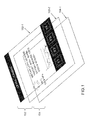
- the figure 1 shows on a simplified example, an association graphics layers for partitions.
- Each graphic layer allows the display of data relating to a graphic service that is requested during the execution of the partition on which it depends.
- Two graphic layers (102-1, 102-2) are associated with a first partition 102, meaning that during the execution of the first partition, a calculation relating to the information to be displayed for the first layer (102-1) is performed to then display this information. Then a calculation relating to the information of the second layer (102-2) is performed to allow the display of the corresponding data.
- a layer (104-1) is associated with a second partition 104 and its contents will be calculated and displayed during the execution of the second partition.
- the device of the invention such as as described in detail later allows to stop this execution and to maintain the time allotted for the execution of the following partitions.
- control device of the invention makes it possible to ensure a maximum execution time for each layer beyond which the execution stops, either normally or by being forced by the device of the invention.
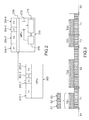
- a calculator includes a CPU module (202) that can execute a plurality of partitions (202-1, 202-2, 202-3, 202-4) according to a given scheduling (P1, P2, P1, P3).
- the CPU unit is coupled to a dedicated computing unit or GPU (204) which receives display commands (or graphics services) for the different partitions of the CPU.
- a dedicated computing unit or GPU (204) which receives display commands (or graphics services) for the different partitions of the CPU.
- a scheduling module (206) allows the execution of the display functions.
- the GPU further includes a configuration table (208) coupled to a monitoring module (210) and a counter (212).
- the GPU is coupled to conventional means to allow the display of the requested graphics services.
- the counter (212) of the GPU arrests on the total value and starts counting the execution time.
- Each partition itself has a slice of time or in English "time slice” which is allocated to it for the execution of the corresponding graphical service or services.
- the service life is (TS1, TS2, TS3, TS4).
- the requested graphical services execute, such as, for example, the services S1, S2 and S3 during the duration TS1.
- the time monitoring unit (210) of the GPU verifies that for each graphical service that is called during the time slice of a partition, there is enough time for the execution of the partition before moving to the next partition. If the remaining time is not sufficient, the execution of the service is stopped and display of the wrong partition is inhibited.
- the method (400) operated within the GPU by the device of the invention is described with reference to the figure 4 , taking as an example the values of the sequence of the figure 3 .
- the method begins for each sequence, when a graphical service request is detected (402) during the execution of a partition. For example, a graphical service request having a required service time of 600 micro-seconds is received at 500 micro-seconds before the completion of the third partition (204-3).
- the method makes it possible to retrieve in the configuration table (208) the information relating to the current sequence, in particular the sequencing of the partitions (P1, P2, P1, P3), the duration of the each partition (TS1, TS2, TS3, TS4) and the time remaining before the end of the sequence (here 10,500 micro-seconds).
- the method makes it possible to determine which partition is currently running (here the 204-3 partition) and then to calculate the remaining time before the end of the execution of this partition (here 500 micro-seconds).
- the method compares the value of the calculated remaining time with respect to the maximum execution time of the called service (ie 500 microseconds with respect to 600 microseconds).
- the present description illustrates a preferred implementation of the invention, but is not limiting.
- An example has been chosen to allow a good understanding of the principles of the invention, and a concrete application, but it is in no way exhaustive and should allow the skilled person to make changes and implementation variants in keeping the same principles.
- the present invention can be implemented from hardware and / or software elements.
Landscapes
- Engineering & Computer Science (AREA)
- Theoretical Computer Science (AREA)
- Software Systems (AREA)
- Physics & Mathematics (AREA)
- General Physics & Mathematics (AREA)
- General Engineering & Computer Science (AREA)
- Computer Hardware Design (AREA)
- Debugging And Monitoring (AREA)
- Digital Computer Display Output (AREA)
Abstract
Description
- L'invention concerne le domaine de l'aéronautique et en particulier celui des systèmes de contrôle et d'affichage pour cockpits.
- La principale interface centralisée fournissant des fonctions d'affichage et de contrôle dans un cockpit d'avion moderne est connue sous le nom de « planche de bord tout écran » ou en anglais « Control and Display System » (CDS). Ce système est composé de calculateurs, unitairement appelé en anglais « Display Unit » ou (DU), pouvant intégrer ou être couplé chacun à une unité de calcul graphique, appelée en anglais « Graphical Processing Unit » ou (GPU), destinée à assurer les capacités d'affichage du DU.
- Généralement, le GPU utilisé pour les DUs provient de composants disponibles grand public tels que les « Commercial Off The Shelf » ou (COTS) selon l'anglicisme connu. Ces composants ne sont cependant pas nativement destinés à traiter des données en temps réel, ce qui est le besoin pour l'affichage dans les cockpits. De fait ayant un design figé, certains mécanismes des GPU-COTS sont désactivés pour assurer un comportement déterministe des systèmes. Par ailleurs des limitations existent sur certaines fonctionnalités, comme le partitionnement graphique.
- Les calculateurs DUs hébergent potentiellement plusieurs partitions. Une partition ou plus généralement le partitionnement (« partitionning » en anglais) est la fonction qui recouvre le mécanisme permettant de séparer des portions d'un système en laissant suffisamment d'indépendance/d'isolation entre les portions ou partitions de manière à autoriser des niveaux d'assurance de développement (« Development Assurance Level » DAL en anglais) pour chaque partition. Le partitionnement permet de réduire les efforts nécessaires pour les procédés de vérification des systèmes.
- Lorsqu'une partition évolue, une analyse d'impact est systématiquement faite. En effet, la conception des calculateurs ne garantit pas nécessairement que les impacts d'une évolution restent contenus à la partition concernée. Si une partition se met à se comporter de façon erronée, elle peut, au niveau de la couche graphique, préempter l'exécution de symboles graphiques des autres partitions, pouvant aller jusqu'à leur perte. L'analyse d'impact procède à des tests dits de « non-régression ». Or de tels tests sont fastidieux, pouvant durer plusieurs mois, ce qui a un impact non négligeable sur le coût global.
- Ainsi, les solutions connues présentant les inconvénients précités, il existe le besoin d'une solution qui s'affranchisse des limitations existantes en proposant un nouveau dispositif et une méthode associée pour contrôler l'affichage graphique pour cockpit.
- La présente invention a pour objet un dispositif de surveillance et de contrôle de l'exécution de services graphiques de partitions d'unité d'affichage (DU) dans une unité de calcul graphique (GPU).
- L'invention permet d'améliorer l'isolation et l'indépendance entre partitions au sein d'une unité de calcul graphique GPU embarquée.
- Avantageusement, la présente invention contribue à limiter, à réduire voire supprimer les analyses et tests de non-régression en cas d'évolution d'une partition.
- Toujours avantageusement, la présente invention améliore la sûreté des systèmes 'CDS'.
- La présente invention s'applique avantageusement aux systèmes de contrôle et d'affichage des cockpits d'avion, mais elle est également applicable à tout environnement d'affichage critique.
- Ainsi, l'invention a pour objet un dispositif de contrôle d'affichage comprenant :
- un module de réception pour recevoir au moins une requête d'affichage d'au moins un service graphique pendant l'exécution d'une séquence d'une pluralité de partitions ;
- un module de configuration couplé au module de réception des requêtes pour définir la durée de la séquence, l'ordre et la durée de chaque partition ; et
- un module de contrôle couplé au module de configuration pour déterminer si la durée d'exécution restante de la partition dont ledit au moins un service graphique dépend est suffisante pour exécuter ou non ledit au moins un service graphique.
- Dans un aspect particulier de l'invention, le dispositif comprend un compteur pour compter le temps d'exécution de ladite séquence.
- Dans un aspect particulier de l'invention, le module de contrôle comprend un module de surveillance temporelle pour déterminer la partition en cours d'exécution à réception de ladite au moins une requête d'affichage.
- Dans un aspect particulier de l'invention, le module de surveillance temporelle comprend des moyens pour calculer le temps restant avant la fin de l'exécution de la partition en cours d'exécution.
- Dans un aspect particulier de l'invention, le dispositif comprend en outre des moyens pour stopper l'exécution du service graphique.
- Avantageusement, les fonctions du module de contrôle sont réalisées par un programme d'ordinateur.
- Dans un aspect particulier de l'invention, le module de réception est couplé à une unité de traitement central 'CPU' pour recevoir les requêtes d'affichage dudit au moins un service graphique.
- Dans un aspect particulier de l'invention, l'unité de traitement central exécute une séquence de la pluralité de partitions dans un même ordre mais de durées de partition pouvant être différentes.
- Dans une implémentation particulière, l'invention a pour objet une unité de traitement graphique 'GPU' pour cockpit qui comprend le dispositif de contrôle et d'affichage dans toutes ses variantes.
- L'invention a également pour objet un procédé de contrôle d'affichage graphique pour cockpit s'exécutant au sein d'une unité de traitement graphique 'GPU' qui comprend les étapes de :
- recevoir une requête d'affichage d'au moins un service graphique pendant l'exécution d'une séquence d'une pluralité de partitions, chaque partition ayant une durée d'exécution définie ;
- identifier la partition dont dépend le service graphique ;
- calculer la durée d'exécution restante de la partition identifiée ;
- déterminer si la durée d'exécution restante est suffisante pour exécuter ledit au moins un service graphique ; et
- exécuter ledit au moins un service graphique ou le stopper.
- L'invention a également pour objet un « Display Unit » (DU) qui comprend le dispositif de contrôle d'affichage selon l'invention.
- D'autres caractéristiques et avantages de l'invention apparaîtront à l'aide de la description qui suit faite en regard des dessins annexés qui représentent :
- La
figure 1 , un exemple d'association de calques graphiques à des partitions ; - La
figure 2 , une représentation schématique du dispositif de l'invention ; - La
figure 3 , un exemple de séquencement de partitions selon les principes de l'invention ; et - La
figure 4 , un logigramme du procédé de contrôle selon les principes de l'invention. - La
figure 1 montre sur un exemple simplifié, une association de calques graphiques pour des partitions. Chaque calque graphique permet l'affichage de données relatives à un service graphique qui est demandé pendant l'exécution de la partition dont il dépend. - Deux calques graphiques (102-1, 102-2) sont associés à une première partition 102, signifiant que lors de l'exécution de la première partition, un calcul relatif aux informations à afficher pour le premier calque (102-1) est effectué pour permettre ensuite l'affichage de ces informations. Puis un calcul relatif aux informations du second calque (102-2) est effectué pour permettre l'affichage des données correspondantes.
- De manière similaire un calque (104-1) est associé à une deuxième partition 104 et son contenu sera calculé et affiché lors de l'exécution de la deuxième partition.
- L'homme de l'art comprendra que l'exemple montré est simplifié pour permettre une bonne compréhension des principes de l'invention, mais que cet exemple illustratif n'est en rien limitatif tant du nombre de calques par partition, que du nombre de partitions elles-mêmes.
- Si lors de l'exécution d'une partition, un comportement erroné ou non attendu se produit, rallongeant alors le temps d'exécution de la partition au sein de l'unité de calcul graphique (GPU), le dispositif de l'invention tel que décrit en détail plus loin permet de stopper cette exécution et de maintenir le temps alloué pour l'exécution de partitions suivantes.
- Par comportement erroné ou non attendu, l'homme du métier comprendra qu'il peut s'agir de demandes d'accès à un service graphique non autorisé ou d'accès à un service autorisé mais contenant des propriétés interdites ou encore d'accès à un service autorisé mais demandé à un moment non autorisé.
- Avantageusement, le dispositif de contrôle de l'invention permet d'assurer un temps maximum d'exécution pour chaque calque au-delà duquel l'exécution s'arrête, soit normalement, soit en étant forcée par le dispositif de l'invention.
- La
figure 2 montre une représentation schématique du dispositif de l'invention. Un calculateur comprend un module CPU (202) qui peut exécuter une pluralité de partitions (202-1, 202-2, 202-3, 202-4) selon un ordonnancement donné (P1, P2, P1, P3). - L'unité CPU est couplée à une unité de calcul dédié ou GPU (204) qui reçoit des ordres d'affichage (ou services graphiques) pour les différentes partitions du CPU.
- Au sein du GPU, un module d'ordonnancement (206) permet l'exécution des fonctions d'affichage. Le GPU comprend en outre, une table de configuration (208) couplée à un module de surveillance (210) et à un compteur (212).
- De manière préférentielle, la table de configuration est une table statique dont le contenu est chargé au démarrage du calculateur. Elle définit au moins :
- la séquence majorante ou référante (« Frame » en anglais), qui fixe l'ordre des partitions dans les séquences à exécuter. Dans l'exemple choisi, l'ordre des partitions (204-1, 204-2, 204-3, 204-4) est (P1, P2, P1, P3) ;
- la durée maximum théorique d'exécution de chaque partition durant la séquence ; et
- la durée maximum de chaque service graphique qui pourra être appelé par une partition, durée aussi dénommée en anglais « Worst Case Execution Time » ou (WCET).
- Bien que non illustré sur la figure, le GPU est couplé à des moyens conventionnels pour permettre l'affichage des services graphiques demandés.
- Il est à noter que l'ordre des partitions au sein du GPU est identique à celui au sein du CPU mais que la durée d'exécution de chaque partition peut être différente.
- Le principe opérationnel du dispositif de l'invention est maintenant décrit en référence à la
figure 3 qui montre une séquence d'exécution de quatre partitions. - Une première partition (204-1) est exécutée pendant une durée maximum théorique de T1=10.000 micro-secondes. La deuxième partition (204-2) s'exécute sur une durée maximum théorique de T2=20.000 micro-secondes. La troisième partition (204-3) a une durée d'exécution maximum de T3=5.000 micro-secondes et la quatrième partition (204-4) a une durée maximum d'exécution de T4=10.000 micro-secondes.
- Ainsi la séquence majorante a une valeur totale 'T' de (T1+T2+T3+T4 = 45.000 micro-secondes) pour l'exemple choisi. Cette valeur est stockée dans la table de configuration (208). Lors du démarrage du GPU, le compteur (212) du GPU s'arme sur la valeur totale et commence le décompte de la durée d'exécution.
- Chaque partition a elle-même une tranche de temps ou en anglais « time slice » qui lui est allouée pour l'exécution du ou des services graphiques correspondants. Ainsi, respectivement pour les partitions 204-1 à 204-4, la durée de service est (TS1, TS2, TS3, TS4).
- Lors de l'exécution d'une partition, les services graphiques demandés s'exécutent, tels que par exemple, les services S1, S2 et S3 pendant la durée TS1.
- A partir des informations de la table de configuration (208) et de la valeur du compteur (212) à un instant 't', l'unité (210) de surveillance temporelle du GPU vérifie que pour chaque service graphique qui est appelé durant la tranche de temps d'une partition, il reste suffisamment de temps pour l'exécution de la partition avant le passage à la partition suivante. Si le temps restant n'est pas suffisant, l'exécution du service est stoppée et l'affichage de la partition erronée est inhibé.
- Le procédé (400) opéré au sein du GPU par le dispositif de l'invention est décrit en référence à la
figure 4 , en prenant pour exemple les valeurs de la séquence de lafigure 3 . - Le procédé débute pour chaque séquence, quand une requête de service graphique est détectée (402) au cours de l'exécution d'une partition. Par exemple, une demande de service graphique ayant un temps de service requis de 600 micro-secondes est reçue à 500 micro-secondes avant la fin de l'exécution de la troisième partition (204-3).
- Le procédé permet dans une étape suivante (404) de lire la valeur courante du compteur (212) : le compteur qui décompte depuis le début de la séquence est ici égal à 10.500 micro-secondes, c'est-à-dire la valeur totale de la séquence (45.000 micro-secondes) moins le temps déjà écoulé, égal à (10.000 + 20.000 + 4500 = 34.500 micro-secondes).
- Puis dans une étape suivante (406), le procédé permet de récupérer dans la table de configuration (208) les informations relatives à la séquence en cours, en particulier le séquencement des partitions (P1, P2, P1, P3), la durée de chaque partition (TS1, TS2, TS3, TS4) et le temps restant avant la fin de la séquence (soit ici 10.500 micro-secondes).
- A l'étape suivante (408), à partir des informations lues dans la table et de la valeur du compteur, le procédé permet de déterminer quelle est la partition en cours d'exécution (ici la partition 204-3) puis de calculer le temps restant avant la fin de l'exécution de cette partition (ici 500 micro-secondes).
- Dans une étape suivante (410), le procédé compare la valeur du temps restant calculé par rapport au temps d'exécution maximum du service appelé (soit 500 micro-secondes par rapport à 600 micro-secondes).
- Si le temps restant est supérieur au temps d'exécution maximum du service, alors à l'étape suivante (412), le service est exécuté.
- Si le temps restant est inférieur au temps d'exécution maximum du service, alors l'exécution est stoppée (414).
- Puis, le procédé retourne à l'étape initiale (402) jusqu'à la fin du déroulement de la séquence.
- Ainsi la présente description illustre une implémentation préférentielle de l'invention, mais n'est pas limitative. Un exemple a été choisi pour permettre une bonne compréhension des principes de l'invention, et une application concrète, mais il n'est en rien exhaustif et doit permettre à l'homme du métier d'apporter des modifications et variantes d'implémentation en gardant les mêmes principes. La présente invention peut s'implémenter à partir d'éléments matériel et/ou logiciel.
Claims (10)
- Un dispositif de contrôle d'affichage pour unité de traitement graphique 'GPU' (204) comprenant:- un module (206) de réception pour recevoir au moins une requête d'affichage d'au moins un service graphique pendant l'exécution d'une séquence d'une pluralité de partitions ;- un module (208) de configuration couplé au module de réception des requêtes pour définir la durée de la séquence, l'ordre et la durée de chaque partition ; et- un module (210, 212) de contrôle couplé au module de configuration pour déterminer si la durée d'exécution restante de la partition dont le ledit au moins un service graphique dépend est suffisante pour exécuter ou non ledit au moins un service graphique.
- Le dispositif selon la revendication 1 dans lequel le module de contrôle comprend un compteur (212) pour compter le temps d'exécution de ladite séquence.
- Le dispositif selon la revendication 1 ou 2 dans lequel le module de contrôle comprend un module (210) de surveillance temporelle pour déterminer la partition en cours d'exécution à réception de ladite au moins une requête d'affichage.
- Le dispositif selon la revendication 3 dans lequel le module de surveillance temporelle comprend des moyens pour calculer le temps restant avant la fin de l'exécution de la partition en cours d'exécution.
- Le dispositif selon l'une quelconque des revendications 1 à 4 comprenant en outre des moyens pour stopper l'exécution du service graphique.
- Le dispositif selon l'une quelconque des revendications 1 à 5 dans lequel les fonctions du module de contrôle sont réalisées par un programme d'ordinateur.
- Le dispositif selon l'une quelconque des revendications 1 à 6 dans lequel le module de réception est couplé à une unité de traitement central 'CPU' (202) pour recevoir les requêtes d'affichage dudit au moins un service graphique.
- Le dispositif selon la revendication 7 dans lequel l'unité de traitement central exécute une séquence de la pluralité de partitions dans un même ordre mais de durées de partition pouvant être différentes.
- Un cockpit comprenant le dispositif selon l'une quelconque des revendications 1 à 8.
- Un procédé de contrôle d'affichage pour cockpit, le procédé s'exécutant au sein d'une unité de traitement graphique 'GPU' et comprenant les étapes de :- recevoir une requête d'affichage d'au moins un service graphique pendant l'exécution d'une séquence d'une pluralité de partitions, chaque partition ayant une durée d'exécution définie ;- identifier la partition dont dépend le service graphique ;- calculer la durée d'exécution restante de la partition identifiée ;- déterminer si la durée d'exécution restante est suffisante pour exécuter ledit au moins un service graphique ; et- exécuter ledit au moins un service graphique ou le stopper.
Applications Claiming Priority (1)
| Application Number | Priority Date | Filing Date | Title |
|---|---|---|---|
| FR1262654A FR3000248B1 (fr) | 2012-12-21 | 2012-12-21 | Dispositif et procede de controle d'affichage pour cockpit par partitionnement |
Publications (2)
| Publication Number | Publication Date |
|---|---|
| EP2757473A1 true EP2757473A1 (fr) | 2014-07-23 |
| EP2757473B1 EP2757473B1 (fr) | 2023-08-02 |
Family
ID=48128489
Family Applications (1)
| Application Number | Title | Priority Date | Filing Date |
|---|---|---|---|
| EP13196432.2A Active EP2757473B1 (fr) | 2012-12-21 | 2013-12-10 | Dispositif et procédé de contrôle d'affichage pour cockpit par partitionnement |
Country Status (4)
| Country | Link |
|---|---|
| US (1) | US20140176582A1 (fr) |
| EP (1) | EP2757473B1 (fr) |
| CA (1) | CA2837483C (fr) |
| FR (1) | FR3000248B1 (fr) |
Family Cites Families (5)
| Publication number | Priority date | Publication date | Assignee | Title |
|---|---|---|---|---|
| US20050132121A1 (en) * | 2003-12-16 | 2005-06-16 | Wind River Systems, Inc. | Partitioned operating system tool |
| US7552442B1 (en) * | 2004-01-27 | 2009-06-23 | Honeywell International Inc. | Military data link integration apparatus and method |
| US7782329B2 (en) * | 2004-12-10 | 2010-08-24 | Rockwell Collins, Inc. | Method and apparatus for protected graphics generation |
| US7526634B1 (en) * | 2005-12-19 | 2009-04-28 | Nvidia Corporation | Counter-based delay of dependent thread group execution |
| US8184118B2 (en) * | 2007-05-01 | 2012-05-22 | Advanced Micro Devices, Inc. | Depth operations |
-
2012
- 2012-12-21 FR FR1262654A patent/FR3000248B1/fr active Active
-
2013
- 2013-12-10 EP EP13196432.2A patent/EP2757473B1/fr active Active
- 2013-12-18 US US14/133,237 patent/US20140176582A1/en not_active Abandoned
- 2013-12-19 CA CA2837483A patent/CA2837483C/fr active Active
Non-Patent Citations (3)
| Title |
|---|
| CRAVEIRO J ET AL: "Architecture, mechanisms and scheduling analysis tool for multicore time-and space-partitioned systems", 1 September 2011 (2011-09-01), pages 23 - 27, XP002712503, ISSN: 1551-3688, Retrieved from the Internet <URL:http://beru.univ-brest.fr/~singhoff/publications/files/craveiro11.pdf> [retrieved on 20130909], DOI: 10.1145/2038617.2038622 * |
| JUSTIN LITTLEFIELD-LAWWILL ET AL: "System considerations for robust time and space partitioning in Integrated Modular Avionics", DIGITAL AVIONICS SYSTEMS CONFERENCE, 2008. DASC 2008. IEEE/AIAA 27TH, IEEE, PISCATAWAY, NJ, USA, 26 October 2008 (2008-10-26), pages 1.B.1 - 1, XP031372532, ISBN: 978-1-4244-2207-4 * |
| LARRY M KINNAN ED - ANONYMOUS: "Application migration from linux prototype to deployable ima platform using arinc 653 and open gl", DIGITAL AVIONICS SYSTEMS CONFERENCE, 2007. DASC '07. IEEE/AIAA 26 TH, IEEE, PI, 1 October 2007 (2007-10-01), pages 6.C.2 - 1, XP031166405, ISBN: 978-1-4244-1107-8 * |
Also Published As
| Publication number | Publication date |
|---|---|
| CA2837483A1 (fr) | 2014-06-21 |
| US20140176582A1 (en) | 2014-06-26 |
| CA2837483C (fr) | 2023-03-21 |
| FR3000248B1 (fr) | 2016-02-05 |
| EP2757473B1 (fr) | 2023-08-02 |
| FR3000248A1 (fr) | 2014-06-27 |
Similar Documents
| Publication | Publication Date | Title |
|---|---|---|
| EP3848805B1 (fr) | Technique de démarrage à chaud pour des fonctions hébergées en nuage | |
| US9098609B2 (en) | Health monitoring of applications in a guest partition | |
| US8943287B1 (en) | Multi-core processor system configured to constrain access rate from memory | |
| EP2987081B1 (fr) | Procédé d'allocation temporelle de tâches permettant une récupération d'erreur deterministe en temps réel | |
| US11243797B2 (en) | Method for operating a control device, control device and computer program product | |
| US20150378782A1 (en) | Scheduling of tasks on idle processors without context switching | |
| US10521257B2 (en) | Method, non-transitory computer readable recording medium, and apparatus for scheduling virtual machine monitor | |
| US9442817B2 (en) | Diagnosis of application server performance problems via thread level pattern analysis | |
| US11088896B2 (en) | Data channel between a client and a restartable service | |
| US20140195683A1 (en) | Predicting resource provisioning times in a computing environment | |
| EP3599552B1 (fr) | Procédé et dispositif électronique d'installation d'applications logicielles avioniques sur une plateforme comprenant un processeur multicoeurs, programme d'ordinateur et système électronique associés | |
| US9612907B2 (en) | Power efficient distribution and execution of tasks upon hardware fault with multiple processors | |
| CN111737088B (zh) | 日志获取方法和装置、电子设备、及介质 | |
| EP2757473B1 (fr) | Dispositif et procédé de contrôle d'affichage pour cockpit par partitionnement | |
| WO2017020762A1 (fr) | Appareil, procédé et programme d'ordinateur permettant d'utiliser des fils secondaires pour aider des fils primaires à exécuter des tâches d'application | |
| US10725839B2 (en) | Helping a hardware accelerator using software | |
| EP3819767B1 (fr) | Procédé et dispositif électronique de surveillance d'une application logicielle avionique via des compteurs d'appel(s) système, programme d'ordinateur et système avionique associés | |
| FR2995706A1 (fr) | Systeme et procede pour commander l'execution d'instructions par un processeur | |
| US8813103B1 (en) | Methods and systems for handling component-object-model communications | |
| FR2956226A1 (fr) | Procede, programme d'ordinateur et dispositif de supervision d'un ordonnanceur pour la gestion du partage de temps de traitement dans un systeme informatique multitache | |
| FR3049375A1 (fr) | Checklists electroniques avec visibilite dynamique d'annotations | |
| US20180342042A1 (en) | Multiple frame buffers for windowless embedded environment | |
| EP3850486A1 (fr) | Procédé et circuit de multiplexage temporel d'accès concurrents à une ressource informatique | |
| FR2908916A1 (fr) | Systeme de traitement d'objets graphiques comportant un gestionnaire graphique securise | |
| EP4104056A1 (fr) | Calculateur électronique, système électronique, procédé de surveillance de l'exécution d'une application et programme d'ordinateur associé |
Legal Events
| Date | Code | Title | Description |
|---|---|---|---|
| PUAI | Public reference made under article 153(3) epc to a published international application that has entered the european phase |
Free format text: ORIGINAL CODE: 0009012 |
|
| 17P | Request for examination filed |
Effective date: 20131210 |
|
| AK | Designated contracting states |
Kind code of ref document: A1 Designated state(s): AL AT BE BG CH CY CZ DE DK EE ES FI FR GB GR HR HU IE IS IT LI LT LU LV MC MK MT NL NO PL PT RO RS SE SI SK SM TR |
|
| AX | Request for extension of the european patent |
Extension state: BA ME |
|
| R17P | Request for examination filed (corrected) |
Effective date: 20150119 |
|
| RBV | Designated contracting states (corrected) |
Designated state(s): AL AT BE BG CH CY CZ DE DK EE ES FI FR GB GR HR HU IE IS IT LI LT LU LV MC MK MT NL NO PL PT RO RS SE SI SK SM TR |
|
| STAA | Information on the status of an ep patent application or granted ep patent |
Free format text: STATUS: EXAMINATION IS IN PROGRESS |
|
| 17Q | First examination report despatched |
Effective date: 20190723 |
|
| GRAP | Despatch of communication of intention to grant a patent |
Free format text: ORIGINAL CODE: EPIDOSNIGR1 |
|
| STAA | Information on the status of an ep patent application or granted ep patent |
Free format text: STATUS: GRANT OF PATENT IS INTENDED |
|
| INTG | Intention to grant announced |
Effective date: 20230421 |
|
| GRAS | Grant fee paid |
Free format text: ORIGINAL CODE: EPIDOSNIGR3 |
|
| GRAA | (expected) grant |
Free format text: ORIGINAL CODE: 0009210 |
|
| STAA | Information on the status of an ep patent application or granted ep patent |
Free format text: STATUS: THE PATENT HAS BEEN GRANTED |
|
| RAP1 | Party data changed (applicant data changed or rights of an application transferred) |
Owner name: SAFRAN ELECTRONICS & DEFENSE |
|
| AK | Designated contracting states |
Kind code of ref document: B1 Designated state(s): AL AT BE BG CH CY CZ DE DK EE ES FI FR GB GR HR HU IE IS IT LI LT LU LV MC MK MT NL NO PL PT RO RS SE SI SK SM TR |
|
| REG | Reference to a national code |
Ref country code: GB Ref legal event code: FG4D Free format text: NOT ENGLISH |
|
| REG | Reference to a national code |
Ref country code: CH Ref legal event code: EP |
|
| REG | Reference to a national code |
Ref country code: DE Ref legal event code: R096 Ref document number: 602013084357 Country of ref document: DE |
|
| REG | Reference to a national code |
Ref country code: IE Ref legal event code: FG4D Free format text: LANGUAGE OF EP DOCUMENT: FRENCH |
|
| REG | Reference to a national code |
Ref country code: LT Ref legal event code: MG9D |
|
| REG | Reference to a national code |
Ref country code: NL Ref legal event code: MP Effective date: 20230802 |
|
| REG | Reference to a national code |
Ref country code: AT Ref legal event code: MK05 Ref document number: 1595568 Country of ref document: AT Kind code of ref document: T Effective date: 20230802 |
|
| PG25 | Lapsed in a contracting state [announced via postgrant information from national office to epo] |
Ref country code: GR Free format text: LAPSE BECAUSE OF FAILURE TO SUBMIT A TRANSLATION OF THE DESCRIPTION OR TO PAY THE FEE WITHIN THE PRESCRIBED TIME-LIMIT Effective date: 20231103 |
|
| PG25 | Lapsed in a contracting state [announced via postgrant information from national office to epo] |
Ref country code: IS Free format text: LAPSE BECAUSE OF FAILURE TO SUBMIT A TRANSLATION OF THE DESCRIPTION OR TO PAY THE FEE WITHIN THE PRESCRIBED TIME-LIMIT Effective date: 20231202 |
|
| PG25 | Lapsed in a contracting state [announced via postgrant information from national office to epo] |
Ref country code: SE Free format text: LAPSE BECAUSE OF FAILURE TO SUBMIT A TRANSLATION OF THE DESCRIPTION OR TO PAY THE FEE WITHIN THE PRESCRIBED TIME-LIMIT Effective date: 20230802 Ref country code: RS Free format text: LAPSE BECAUSE OF FAILURE TO SUBMIT A TRANSLATION OF THE DESCRIPTION OR TO PAY THE FEE WITHIN THE PRESCRIBED TIME-LIMIT Effective date: 20230802 Ref country code: PT Free format text: LAPSE BECAUSE OF FAILURE TO SUBMIT A TRANSLATION OF THE DESCRIPTION OR TO PAY THE FEE WITHIN THE PRESCRIBED TIME-LIMIT Effective date: 20231204 Ref country code: NO Free format text: LAPSE BECAUSE OF FAILURE TO SUBMIT A TRANSLATION OF THE DESCRIPTION OR TO PAY THE FEE WITHIN THE PRESCRIBED TIME-LIMIT Effective date: 20231102 Ref country code: NL Free format text: LAPSE BECAUSE OF FAILURE TO SUBMIT A TRANSLATION OF THE DESCRIPTION OR TO PAY THE FEE WITHIN THE PRESCRIBED TIME-LIMIT Effective date: 20230802 Ref country code: LV Free format text: LAPSE BECAUSE OF FAILURE TO SUBMIT A TRANSLATION OF THE DESCRIPTION OR TO PAY THE FEE WITHIN THE PRESCRIBED TIME-LIMIT Effective date: 20230802 Ref country code: LT Free format text: LAPSE BECAUSE OF FAILURE TO SUBMIT A TRANSLATION OF THE DESCRIPTION OR TO PAY THE FEE WITHIN THE PRESCRIBED TIME-LIMIT Effective date: 20230802 Ref country code: IS Free format text: LAPSE BECAUSE OF FAILURE TO SUBMIT A TRANSLATION OF THE DESCRIPTION OR TO PAY THE FEE WITHIN THE PRESCRIBED TIME-LIMIT Effective date: 20231202 Ref country code: HR Free format text: LAPSE BECAUSE OF FAILURE TO SUBMIT A TRANSLATION OF THE DESCRIPTION OR TO PAY THE FEE WITHIN THE PRESCRIBED TIME-LIMIT Effective date: 20230802 Ref country code: GR Free format text: LAPSE BECAUSE OF FAILURE TO SUBMIT A TRANSLATION OF THE DESCRIPTION OR TO PAY THE FEE WITHIN THE PRESCRIBED TIME-LIMIT Effective date: 20231103 Ref country code: FI Free format text: LAPSE BECAUSE OF FAILURE TO SUBMIT A TRANSLATION OF THE DESCRIPTION OR TO PAY THE FEE WITHIN THE PRESCRIBED TIME-LIMIT Effective date: 20230802 Ref country code: AT Free format text: LAPSE BECAUSE OF FAILURE TO SUBMIT A TRANSLATION OF THE DESCRIPTION OR TO PAY THE FEE WITHIN THE PRESCRIBED TIME-LIMIT Effective date: 20230802 |
|
| PG25 | Lapsed in a contracting state [announced via postgrant information from national office to epo] |
Ref country code: PL Free format text: LAPSE BECAUSE OF FAILURE TO SUBMIT A TRANSLATION OF THE DESCRIPTION OR TO PAY THE FEE WITHIN THE PRESCRIBED TIME-LIMIT Effective date: 20230802 |
|
| PG25 | Lapsed in a contracting state [announced via postgrant information from national office to epo] |
Ref country code: ES Free format text: LAPSE BECAUSE OF FAILURE TO SUBMIT A TRANSLATION OF THE DESCRIPTION OR TO PAY THE FEE WITHIN THE PRESCRIBED TIME-LIMIT Effective date: 20230802 |
|
| PG25 | Lapsed in a contracting state [announced via postgrant information from national office to epo] |
Ref country code: SM Free format text: LAPSE BECAUSE OF FAILURE TO SUBMIT A TRANSLATION OF THE DESCRIPTION OR TO PAY THE FEE WITHIN THE PRESCRIBED TIME-LIMIT Effective date: 20230802 Ref country code: RO Free format text: LAPSE BECAUSE OF FAILURE TO SUBMIT A TRANSLATION OF THE DESCRIPTION OR TO PAY THE FEE WITHIN THE PRESCRIBED TIME-LIMIT Effective date: 20230802 Ref country code: ES Free format text: LAPSE BECAUSE OF FAILURE TO SUBMIT A TRANSLATION OF THE DESCRIPTION OR TO PAY THE FEE WITHIN THE PRESCRIBED TIME-LIMIT Effective date: 20230802 Ref country code: EE Free format text: LAPSE BECAUSE OF FAILURE TO SUBMIT A TRANSLATION OF THE DESCRIPTION OR TO PAY THE FEE WITHIN THE PRESCRIBED TIME-LIMIT Effective date: 20230802 Ref country code: DK Free format text: LAPSE BECAUSE OF FAILURE TO SUBMIT A TRANSLATION OF THE DESCRIPTION OR TO PAY THE FEE WITHIN THE PRESCRIBED TIME-LIMIT Effective date: 20230802 Ref country code: CZ Free format text: LAPSE BECAUSE OF FAILURE TO SUBMIT A TRANSLATION OF THE DESCRIPTION OR TO PAY THE FEE WITHIN THE PRESCRIBED TIME-LIMIT Effective date: 20230802 Ref country code: SK Free format text: LAPSE BECAUSE OF FAILURE TO SUBMIT A TRANSLATION OF THE DESCRIPTION OR TO PAY THE FEE WITHIN THE PRESCRIBED TIME-LIMIT Effective date: 20230802 |
|
| REG | Reference to a national code |
Ref country code: DE Ref legal event code: R097 Ref document number: 602013084357 Country of ref document: DE |
|
| PG25 | Lapsed in a contracting state [announced via postgrant information from national office to epo] |
Ref country code: IT Free format text: LAPSE BECAUSE OF FAILURE TO SUBMIT A TRANSLATION OF THE DESCRIPTION OR TO PAY THE FEE WITHIN THE PRESCRIBED TIME-LIMIT Effective date: 20230802 |
|
| PLBE | No opposition filed within time limit |
Free format text: ORIGINAL CODE: 0009261 |
|
| STAA | Information on the status of an ep patent application or granted ep patent |
Free format text: STATUS: NO OPPOSITION FILED WITHIN TIME LIMIT |
|
| 26N | No opposition filed |
Effective date: 20240503 |
|
| PG25 | Lapsed in a contracting state [announced via postgrant information from national office to epo] |
Ref country code: SI Free format text: LAPSE BECAUSE OF FAILURE TO SUBMIT A TRANSLATION OF THE DESCRIPTION OR TO PAY THE FEE WITHIN THE PRESCRIBED TIME-LIMIT Effective date: 20230802 |
|
| REG | Reference to a national code |
Ref country code: CH Ref legal event code: PL |
|
| PG25 | Lapsed in a contracting state [announced via postgrant information from national office to epo] |
Ref country code: LU Free format text: LAPSE BECAUSE OF NON-PAYMENT OF DUE FEES Effective date: 20231210 |
|
| PG25 | Lapsed in a contracting state [announced via postgrant information from national office to epo] |
Ref country code: MC Free format text: LAPSE BECAUSE OF FAILURE TO SUBMIT A TRANSLATION OF THE DESCRIPTION OR TO PAY THE FEE WITHIN THE PRESCRIBED TIME-LIMIT Effective date: 20230802 |
|
| REG | Reference to a national code |
Ref country code: BE Ref legal event code: MM Effective date: 20231231 |
|
| PG25 | Lapsed in a contracting state [announced via postgrant information from national office to epo] |
Ref country code: MC Free format text: LAPSE BECAUSE OF FAILURE TO SUBMIT A TRANSLATION OF THE DESCRIPTION OR TO PAY THE FEE WITHIN THE PRESCRIBED TIME-LIMIT Effective date: 20230802 Ref country code: LU Free format text: LAPSE BECAUSE OF NON-PAYMENT OF DUE FEES Effective date: 20231210 |
|
| REG | Reference to a national code |
Ref country code: IE Ref legal event code: MM4A |
|
| PG25 | Lapsed in a contracting state [announced via postgrant information from national office to epo] |
Ref country code: IE Free format text: LAPSE BECAUSE OF NON-PAYMENT OF DUE FEES Effective date: 20231210 |
|
| PG25 | Lapsed in a contracting state [announced via postgrant information from national office to epo] |
Ref country code: BE Free format text: LAPSE BECAUSE OF NON-PAYMENT OF DUE FEES Effective date: 20231231 |
|
| PG25 | Lapsed in a contracting state [announced via postgrant information from national office to epo] |
Ref country code: CH Free format text: LAPSE BECAUSE OF NON-PAYMENT OF DUE FEES Effective date: 20231231 |
|
| PG25 | Lapsed in a contracting state [announced via postgrant information from national office to epo] |
Ref country code: IE Free format text: LAPSE BECAUSE OF NON-PAYMENT OF DUE FEES Effective date: 20231210 Ref country code: CH Free format text: LAPSE BECAUSE OF NON-PAYMENT OF DUE FEES Effective date: 20231231 Ref country code: BE Free format text: LAPSE BECAUSE OF NON-PAYMENT OF DUE FEES Effective date: 20231231 |
|
| PG25 | Lapsed in a contracting state [announced via postgrant information from national office to epo] |
Ref country code: BG Free format text: LAPSE BECAUSE OF FAILURE TO SUBMIT A TRANSLATION OF THE DESCRIPTION OR TO PAY THE FEE WITHIN THE PRESCRIBED TIME-LIMIT Effective date: 20230802 |
|
| PG25 | Lapsed in a contracting state [announced via postgrant information from national office to epo] |
Ref country code: BG Free format text: LAPSE BECAUSE OF FAILURE TO SUBMIT A TRANSLATION OF THE DESCRIPTION OR TO PAY THE FEE WITHIN THE PRESCRIBED TIME-LIMIT Effective date: 20230802 |
|
| PG25 | Lapsed in a contracting state [announced via postgrant information from national office to epo] |
Ref country code: CY Free format text: LAPSE BECAUSE OF FAILURE TO SUBMIT A TRANSLATION OF THE DESCRIPTION OR TO PAY THE FEE WITHIN THE PRESCRIBED TIME-LIMIT; INVALID AB INITIO Effective date: 20131210 |
|
| PG25 | Lapsed in a contracting state [announced via postgrant information from national office to epo] |
Ref country code: HU Free format text: LAPSE BECAUSE OF FAILURE TO SUBMIT A TRANSLATION OF THE DESCRIPTION OR TO PAY THE FEE WITHIN THE PRESCRIBED TIME-LIMIT; INVALID AB INITIO Effective date: 20131210 |
|
| PG25 | Lapsed in a contracting state [announced via postgrant information from national office to epo] |
Ref country code: TR Free format text: LAPSE BECAUSE OF FAILURE TO SUBMIT A TRANSLATION OF THE DESCRIPTION OR TO PAY THE FEE WITHIN THE PRESCRIBED TIME-LIMIT Effective date: 20230802 |
|
| PGFP | Annual fee paid to national office [announced via postgrant information from national office to epo] |
Ref country code: GB Payment date: 20251229 Year of fee payment: 13 |
|
| PGFP | Annual fee paid to national office [announced via postgrant information from national office to epo] |
Ref country code: FR Payment date: 20251222 Year of fee payment: 13 |
|
| PGFP | Annual fee paid to national office [announced via postgrant information from national office to epo] |
Ref country code: DE Payment date: 20251222 Year of fee payment: 13 |