EP2756960A1 - Control of ink temperatures for radiant drying - Google Patents
Control of ink temperatures for radiant drying Download PDFInfo
- Publication number
- EP2756960A1 EP2756960A1 EP14151983.5A EP14151983A EP2756960A1 EP 2756960 A1 EP2756960 A1 EP 2756960A1 EP 14151983 A EP14151983 A EP 14151983A EP 2756960 A1 EP2756960 A1 EP 2756960A1
- Authority
- EP
- European Patent Office
- Prior art keywords
- ink
- black ink
- liquid agent
- medium
- areas
- Prior art date
- Legal status (The legal status is an assumption and is not a legal conclusion. Google has not performed a legal analysis and makes no representation as to the accuracy of the status listed.)
- Granted
Links
Images


Classifications
-
- B—PERFORMING OPERATIONS; TRANSPORTING
- B41—PRINTING; LINING MACHINES; TYPEWRITERS; STAMPS
- B41J—TYPEWRITERS; SELECTIVE PRINTING MECHANISMS, i.e. MECHANISMS PRINTING OTHERWISE THAN FROM A FORME; CORRECTION OF TYPOGRAPHICAL ERRORS
- B41J2/00—Typewriters or selective printing mechanisms characterised by the printing or marking process for which they are designed
- B41J2/005—Typewriters or selective printing mechanisms characterised by the printing or marking process for which they are designed characterised by bringing liquid or particles selectively into contact with a printing material
- B41J2/01—Ink jet
- B41J2/21—Ink jet for multi-colour printing
- B41J2/2107—Ink jet for multi-colour printing characterised by the ink properties
- B41J2/2114—Ejecting specialized liquids, e.g. transparent or processing liquids
-
- B—PERFORMING OPERATIONS; TRANSPORTING
- B41—PRINTING; LINING MACHINES; TYPEWRITERS; STAMPS
- B41J—TYPEWRITERS; SELECTIVE PRINTING MECHANISMS, i.e. MECHANISMS PRINTING OTHERWISE THAN FROM A FORME; CORRECTION OF TYPOGRAPHICAL ERRORS
- B41J11/00—Devices or arrangements of selective printing mechanisms, e.g. ink-jet printers or thermal printers, for supporting or handling copy material in sheet or web form
- B41J11/0015—Devices or arrangements of selective printing mechanisms, e.g. ink-jet printers or thermal printers, for supporting or handling copy material in sheet or web form for treating before, during or after printing or for uniform coating or laminating the copy material before or after printing
-
- B—PERFORMING OPERATIONS; TRANSPORTING
- B41—PRINTING; LINING MACHINES; TYPEWRITERS; STAMPS
- B41J—TYPEWRITERS; SELECTIVE PRINTING MECHANISMS, i.e. MECHANISMS PRINTING OTHERWISE THAN FROM A FORME; CORRECTION OF TYPOGRAPHICAL ERRORS
- B41J11/00—Devices or arrangements of selective printing mechanisms, e.g. ink-jet printers or thermal printers, for supporting or handling copy material in sheet or web form
- B41J11/0015—Devices or arrangements of selective printing mechanisms, e.g. ink-jet printers or thermal printers, for supporting or handling copy material in sheet or web form for treating before, during or after printing or for uniform coating or laminating the copy material before or after printing
- B41J11/002—Curing or drying the ink on the copy materials, e.g. by heating or irradiating
- B41J11/0021—Curing or drying the ink on the copy materials, e.g. by heating or irradiating using irradiation
-
- B—PERFORMING OPERATIONS; TRANSPORTING
- B41—PRINTING; LINING MACHINES; TYPEWRITERS; STAMPS
- B41J—TYPEWRITERS; SELECTIVE PRINTING MECHANISMS, i.e. MECHANISMS PRINTING OTHERWISE THAN FROM A FORME; CORRECTION OF TYPOGRAPHICAL ERRORS
- B41J11/00—Devices or arrangements of selective printing mechanisms, e.g. ink-jet printers or thermal printers, for supporting or handling copy material in sheet or web form
- B41J11/0015—Devices or arrangements of selective printing mechanisms, e.g. ink-jet printers or thermal printers, for supporting or handling copy material in sheet or web form for treating before, during or after printing or for uniform coating or laminating the copy material before or after printing
- B41J11/002—Curing or drying the ink on the copy materials, e.g. by heating or irradiating
- B41J11/0021—Curing or drying the ink on the copy materials, e.g. by heating or irradiating using irradiation
- B41J11/00216—Curing or drying the ink on the copy materials, e.g. by heating or irradiating using irradiation using infrared [IR] radiation or microwaves
-
- B—PERFORMING OPERATIONS; TRANSPORTING
- B41—PRINTING; LINING MACHINES; TYPEWRITERS; STAMPS
- B41M—PRINTING, DUPLICATING, MARKING, OR COPYING PROCESSES; COLOUR PRINTING
- B41M7/00—After-treatment of prints, e.g. heating, irradiating, setting of the ink, protection of the printed stock
Definitions
- the invention relates to the field of production printing and, in particular, to radiant drying of ink applied to a medium.
- a production printer is a high-speed printer used for volume printing, such as 100 pages per minute or more.
- the production printers are typically continuous-form printers that print on paper or some other printable medium that is stored on large rolls.
- a production printer typically includes a localized print controller that controls the overall operation of the printing system, and a print engine (sometimes referred to as an "imaging engine” or as a “marking engine”).
- the print engine includes one or more printhead assemblies, with each assembly including a printhead controller and a printhead (or array of printheads).
- An individual printhead includes multiple tiny nozzles (e.g., 360 nozzles per printhead depending on resolution) that are operable to discharge ink as controlled by the printhead controller.
- the printhead array is formed from multiple printheads that are spaced in series along a particular width so that printing may occur across the width of the medium.
- a radiant dryer may be installed downstream from the printhead array.
- the radiant dryer assists in drying the ink on the medium after the medium leaves the printhead array.
- a typical radiant dryer includes an array of lamps that emit light and heat. The light and heat from the lamps helps to dry the ink as the medium passes through the dryer.
- CMYK is a color model that uses four colors of ink: Cyan, Magenta, Yellow, and Key (black).
- Key (K) black ink can cause problems when radiant dryers are installed downstream from a printhead array. The black ink absorbs significantly more radiant energy per volume from the dryer, so it dries faster than the other colors. If the black ink dries too fast, it can begin to burn or scorch on the medium while the other colors are not yet dry. This can unfortunately ruin the printed output on the medium, and can even ignite fires within the dryer.
- Embodiments described herein control the drying of (K) black ink by applying a liquid agent on the medium to areas of K black ink before the medium reaches the radiant dryer.
- the liquid agent adds liquid mass to the K black ink so that the drying rate of the K black ink is reduced within the radiant dryer.
- the areas of K black ink should dry more uniformly with other ink colors (e.g., C, M, and Y) that are also printed on the medium. Thus, the areas of K black ink are less likely to scorch in the radiant dryer before the other colors are sufficiently dry.
- One embodiment comprises an ink tuning system implemented in a printing system.
- the printing system includes a production printer that is operable to print color ink onto a continuous-form medium, and includes a radiant dryer that is operable to dry the ink that is applied to the medium by the production printer.
- the ink tuning system is configured to identify areas of K black ink designated for printing on the medium by the production printer, and to apply a liquid agent to the areas of K black ink.
- the liquid agent increases the liquid mass of the K black ink before the medium enters the radiant dryer. Therefore, the mixture of the K black ink and the liquid agent (referred to as modified K black ink) will take longer to dry than K black ink itself.
- the modified K black ink may thus dry at a substantially similar rate to the other ink colors.
- the ink tuning system includes a reservoir configured to contain the liquid agent, an application mechanism configured to spray the liquid agent onto the medium, and a controller configured to identify the areas of K black ink, and to control the application mechanism to spray the liquid agent from the reservoir onto the areas of K black ink.
- the ink tuning system comprises a printhead assembly installed in the production printer in addition to printhead assemblies used for applying the color ink.
- the liquid agent comprises water, or a solution of water and other humectants such as glycol or glycerin.
- the ink tuning system is further configured to overlay the liquid agent onto the areas of K black ink that were already applied by the production printer.
- the ink tuning system is further configured to underlay the liquid agent onto the medium in the areas of K black ink that will be applied by the production printer.
- the ink tuning system is further configured to adjust the amount of liquid agent to apply to an area of K black ink based on an amount of K black ink applied to the area.
- the ink tuning system is further configured to adjust the amount of liquid agent to apply based on a power level being used within the radiant dryer.
- Another embodiment comprises a method of tuning K black ink in a printing system.
- the method includes identifying areas of K black ink designated for printing on the medium by the production printer, and applying a liquid agent to the areas of K black ink to increase the liquid mass of the K black ink before the medium enters a radiant dryer.
- Another embodiment comprises a production printer comprising a print controller operable to receive a print job, to process the print job to generate bitmaps for each of Cyan (C), Magenta (M), Yellow (Y), and Key (K) black, and to generate an ink tuning bitmap based on the K black bitmap that indicates pixel locations where K black ink will be printed.
- the production printer further includes a print engine operable to receive the C, M, Y, and K black bitmaps from the print controller, and to apply the C, M, Y, and K black ink onto a continuous-form medium based on the C, M, Y, and K black bitmaps.
- the production printer further includes an ink tuning system operable to receive the ink tuning bitmap from the printer controller, and to apply a liquid agent to the medium on the pixel locations where the print engine applies the K black ink.
- the liquid agent increases the liquid mass of the K black ink to lower the temperature of the K black ink when the medium is transferred to a radiant dryer.
- the invention may include other exemplary embodiments described below.
- FIG. 1 illustrates a printing system 100.
- Printing system 100 includes a production printer 102 that is operable to print onto a continuous-form medium 104.
- a production printer is a high-speed printer that is used for volume printing. The printing speed of production printers can reach 200 linear feet per minute or more.
- Printer 102 is able to apply color ink to medium 104, such as Cyan (C), Magenta (M), Yellow (Y), and Key (K) black.
- C Cyan
- M Magenta
- Y Yellow
- K Key
- Printing system 100 also includes a radiant dryer 106.
- Radiant dryer 106 is a unit or module installed in printer 102 or downstream from printer 102. After printer 102 applies ink to medium 104, the ink applied to medium 104 is still wet when it leaves printer 102. Thus, medium 104 travels through radiant dryer 106 where an array of light bulbs (not shown) radiate Near-Infrared (NIR) energy to dry the ink on medium 104.
- NIR Near-Infrared
- K black ink absorbs more radiant energy than the other color inks.
- K black refers to pure K black as opposed to a process black, which is a mixture of K black and other colors. Because K black ink absorbs more radiant energy than the other color inks, the K black ink will reach a higher temperature than the other color inks, and will dry at a faster rate than the other color inks.
- the temperature an ink reaches while drying in radiant dryer 106 is referred to herein as a "drying temperature”.
- the rate at which an ink dries in radiant dryer 106 is referred to herein at a "drying rate”.
- FIG. 2 is a graph illustrating the drying temperatures of different color inks.
- the graph illustrates the drying temperatures of C, M, Y, and K black as a function of lamp power downstream from radiant dryer 106.
- the temperatures would be measured some distance downstream of dryer 106, so the ink temperature can be much higher during the drying process.
- the graph shows that the drying temperatures of C, M, and Y ink tend to increase gradually by the same amount.
- the drying temperatures of C, M, and Y ink are each about 50 degrees Celsius.
- the drying temperatures of K black ink are much higher than the other ink colors.
- the drying temperature of K black ink increases a greater amount than the other color inks.
- the drying temperature of K black ink is about 85 degrees Celsius.
- the K black ink will dry at much higher temperatures than the other ink colors in radiant dryer 106, and will dry at a faster rate.
- K black ink absorbs more radiant energy and dries at a faster rate, there is a risk that the K black ink will burn or scorch on medium 104 when passed through radiant dryer 106.
- printing system 100 is enhanced in the following embodiments to "tune" the K black ink that is printed on medium 104 before it reaches radiant dryer 106.
- a liquid agent e.g., water
- the liquid agent mixes with the K black ink on medium 104 so that the mixture will dry at a lower temperature and at a slower rate than K black ink itself.
- the mixture of K black ink and liquid agent has a drying temperature and drying rate that is closer to the other ink colors. Therefore, the ink colors should dry more uniformly in radiant dryer 106.
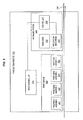
- FIG. 3 is a schematic diagram of production printer 102 in an exemplary embodiment.
- Production printer 102 includes a print controller 310 and a print engine 320.
- Print controller 310 comprises a processing unit that receives a print job from a host system, such as in a Page Description Language (PDL), and translates the print job into a raster image that print engine 320 is able to print.
- the raster image may also be referred to as a bitmap.
- Print engine 320 includes a plurality of printhead assemblies 321-324. Each printhead assembly 321-324 includes an ink reservoir, a printhead controller, and one or more printheads (not shown).
- one of the printhead assemblies is operable to print K black ink
- the other printhead assemblies are operable to print inks of other colors, such as C, M, and Y.
- the printhead controller for each color receives a bitmap from print controller 310, and controls the nozzles of the printhead to spray ink in the pixel locations indicated in the bitmap.
- Production printer 102 in this embodiment also includes an ink tuning system 330.
- Ink tuning system 330 is a unit or module installed in printer 102 (or outside of printer 102) to "tune" the K black ink that is applied to medium 104. The purpose of tuning the K black ink is to lower the drying temperature and/or drying rate of the K black ink before medium 104 reaches radiant dryer 106.
- ink tuning system 330 includes a reservoir 332, an application mechanism 334, and a controller 336.
- Reservoir 332 comprises any container that is able to store a liquid.
- the liquid comprises an aqueous solution that is able to mix with K black ink, which is water-based.
- the aqueous solution is referred to herein as a "liquid agent", because it is able to mix with the K black ink to produce the effect of lower drying temperatures/rates.
- Application mechanism 334 comprises any device that is able to spray or apply the liquid agent onto medium 104.
- Application mechanism 334 may resemble a printhead that is used to spray ink onto medium 104.
- Controller 336 comprises any unit that is able to control where application mechanism 334 sprays the liquid agent onto medium 104. Although controller 336 is shown as a separate element in FIG. 3 , the functions for controller 336 may be performed by print controller 310.
- ink tuning system 330 may be installed as an extra printhead assembly within production printer 102.
- Production printers that print four colors may have a printhead assembly for each color (or a printhead assembly may print multiple colors).
- a printhead assembly may include a reservoir for the K black ink, a printhead (or array of printheads) for spraying the K black ink, and a printhead controller for controlling the printhead based on a bitmap.
- Most production printers allow for many printhead assemblies to be installed. Therefore, an additional printhead assembly may be added to production printer 102 for ink tuning system 330.
- reservoir 332 comprises the reservoir of the additional printhead assembly
- application mechanism 334 comprises a printhead (or array of printheads) of the additional printhead assembly
- controller 336 comprises the printhead controller of the additional printhead assembly (or print controller 310).
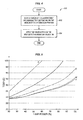
- FIG. 4 is a flow chart illustrating a method 400 of tuning K black ink in an exemplary embodiment.
- the steps of method 400 will be described with reference to ink tuning system 330 in FIG. 3 , although method 400 may be performed in other systems.
- the steps of the flow chart described herein are not all inclusive and may include other steps not shown. The steps may also be performed in an alternative order.
- ink tuning system 330 identifies areas of K black ink that are designated for printing on medium 104 by print engine 320 of production printer 102.
- An area of K black ink is defined as a location or position on medium 104 where K black ink is printed or will be printed.
- an "area" identified by ink tuning system 330 is the area or position where the text characters are printed or will be printed.
- the "area" identified by ink tuning system 330 is the area or position where the image is printed or will be printed.
- the areas identified by ink tuning system 330 are areas where K black only is applied.
- ink tuning system 330 applies the liquid agent on medium 104 to the areas of K black ink.
- the liquid agent applied by ink tuning system 330 mixes with the K black ink to increase the liquid mass of the K black ink.
- Some examples of the liquid agent include water, a solution of water and a humectant such as glycol, or another type of aqueous solution.
- the mixture of the K black ink and the liquid agent is referred to herein as "modified K black ink".
- modified K black ink With the liquid mass of the modified K black ink increased, it will take more radiant energy to cause a phase change in the modified K black ink from a liquid to a vapor. Therefore, the drying rate of the modified K blank ink is reduced. Also, the drying temperature of the modified K black ink will be lower than pure K black ink because of the additional liquid mass.
- FIG. 5 is a graph illustrating the drying temperatures of modified K black ink in an exemplary embodiment.
- the graph illustrates the drying temperatures of C, M, Y, K black, and modified K black as a function of lamp power downstream of radiant dryer 106.
- the drying temperatures of modified K black are lower than the drying temperatures of K black.
- the drying temperature of modified K black ink is about 60 degrees Celsius, while the drying temperature of K black ink is about 85 degrees Celsius.
- the modified K black ink will dry at a slower rate than K black ink itself, and the drying temperature of modified K black ink more closely resembles the drying temperatures of the other ink colors.
- Ink tuning system 330 may apply the liquid agent as an overlay on K black ink that has already been applied on medium 104. For example, a printhead may first apply the K black ink on medium 104, and then ink tuning system 330 may apply the liquid agent on top of the K black ink. Alternatively, ink tuning system 330 may apply the liquid agent as an underlay where K black ink will be applied on medium 104. For example, ink tuning system 330 may first apply the liquid agent on medium 104 in areas where K black ink will be applied, and then a printhead may apply the K black ink on top of the liquid agent.
- Ink tuning system 330 may also vary the amount of liquid agent that is applied to an area of K black ink. In one embodiment, ink tuning system 330 may adjust the amount of liquid agent applied to medium 104 based on an amount of K black ink that is applied or will be applied to an area. For example, if the character "A" is being printed by itself on a page, then ink tuning system 330 may determine that little or no liquid agent needs to be applied to this area because the amount of K black ink used to print this character is low. Even though the character is printed with K black ink, the small amount of ink used to print the character will not absorb a large amount of radiant energy from radiant dryer 106. Thus, the risk of scorching the K black ink for this character is low.
- ink tuning system 330 may determine that a larger amount of liquid agent needs to be applied to this area because the amount of K black ink used to print this image is high.
- the large amount of ink used to print the image will absorb a large amount of radiant energy from radiant dryer 106. Thus, the risk of scorching the K black ink for the image is higher.
- ink tuning system 330 may adjust the amount of liquid agent applied to medium 104 based on a power level being used within radiant dryer 106. For example, if the power levels are lower in radiant dryer 106, then ink tuning system 330 may determine that little or no liquid agent needs to be applied. Looking at FIG. 5 , at power levels between 20-30%, the drying temperature of K black ink is closer to the drying temperatures of C, M, and Y ink. Thus, ink tuning system 330 may determine that little or no liquid agent needs to be applied at these lower power levels. However, if the power levels are higher in radiant dryer 106, then ink tuning system 330 may determine that more liquid agent needs to be applied. Looking again at FIG. 5 , at power levels of 50% or more, the drying temperature of K black ink is much higher than the drying temperatures of C, M, and Y ink. Thus, ink tuning system 330 may determine that more liquid agent needs to be applied at these higher power levels.
- print controller 310 may also be enhanced (see FIG. 3 ) in the following embodiment. As stated above, when print controller 310 receives a print job, it processes the job (i.e., RIPs or rasterizes) to generate bitmaps for each of C, M, Y, and K black. Print controller 310 then sends these bitmaps to print engine 320 for printing. In addition to generating the C, M, Y, and K bitmaps, print controller 310 may also generate an ink tuning bitmap for ink tuning system 330. The ink tuning bitmap indicates areas on a page or sheetside where K black will be printed.
- Print controller 310 may make a copy of the K black bitmap to generate the ink tuning bitmap, or may otherwise process the K black bitmap to generate the ink tuning bitmap.
- Ink tuning system 330 then applies the liquid agent to medium 104 based on the ink tuning bitmap.
- ink tuning system 330 may apply the liquid agent on the pixel locations where print engine 320 applies the K black ink.
- the actual resolution of ink tuning system 330 may depend on desired implementations. For instance, ink tuning system 330 may apply a "pixel" of liquid agent for each pixel of K black ink that is applied or will be applied to medium 104. If ink tuning system 330 is not capable of pixel-level resolution, then ink tuning system 330 may approximate the areas of K black ink on medium 104 based on the ink tuning bitmap.
- the addition of a liquid agent to K black ink changes the liquid content of the K black ink.
- the mixture of K black ink and the liquid agent will dry at a slower rate in radiant dryer 106 than K black ink itself.
- the addition of the liquid agent to the K black ink compensates for the differences in drying rates between K black and the other ink colors. Therefore, the mixture of K black ink and the liquid agent should dry at about the same time as the other ink colors. This substantially reduces the risk that K black ink will burn in radiant dryer 106 while the other ink colors are not yet dry.
- controllers described herein can take the form of an entirely hardware embodiment, an entirely software embodiment or an embodiment containing both hardware and software elements.
- the controllers may be implemented in software, which includes but is not limited to firmware, resident software, microcode, etc.
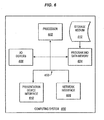
- FIG. 6 illustrates a computing system 600 in an exemplary embodiment.
- the invention can take the form of a computer program product accessible from a computer-usable or computer-readable medium 612 providing program code for use by or in connection with a computer or any instruction execution system.
- a computer-usable or computer readable medium 612 can be any apparatus that can contain, store, communicate, or transport the program for use by or in connection with the instruction execution system, apparatus, or device.
- the medium 612 can be an electronic, magnetic, optical, electromagnetic, infrared, or semiconductor system (or apparatus or device) or a propagation medium.
- Examples of a computer-readable medium 612 include a semiconductor or solid state memory, magnetic tape, a removable computer diskette, a random access memory (RAM), a read-only memory (ROM), a rigid magnetic disk and an optical disk.
- Current examples of optical disks include compact disk - read only memory (CD-ROM), compact disk - read/write (CD-R/W) and DVD.
- a data processing system suitable for storing and/or executing program code will include one or more processors 602 coupled directly or indirectly to memory 604 through a system bus 650.
- the memory 604 can include local memory employed during actual execution of the program code, bulk storage, and cache memories which provide temporary storage of at least some program code in order to reduce the number of times code is retrieved from bulk storage during execution.
- I/O devices 606 can be coupled to the system either directly or through intervening I/O controllers, as can a presentation device interface (I/F) 610.
- I/F presentation device interface
- Network adapters may also be coupled to the system to enable the data processing system to become coupled to other data processing systems, such a through network interfaces 608, or remote printers or storage devices through intervening private or public networks.
- Modems, cable modem and Ethernet cards are just a few of the currently available types of network adapters.
Landscapes
- Health & Medical Sciences (AREA)
- General Health & Medical Sciences (AREA)
- Toxicology (AREA)
- Ink Jet (AREA)
Abstract
Description
- The invention relates to the field of production printing and, in particular, to radiant drying of ink applied to a medium.
- Businesses or other entities having a need for volume printing typically purchase a production printer. A production printer is a high-speed printer used for volume printing, such as 100 pages per minute or more. The production printers are typically continuous-form printers that print on paper or some other printable medium that is stored on large rolls.
- A production printer typically includes a localized print controller that controls the overall operation of the printing system, and a print engine (sometimes referred to as an "imaging engine" or as a "marking engine"). The print engine includes one or more printhead assemblies, with each assembly including a printhead controller and a printhead (or array of printheads). An individual printhead includes multiple tiny nozzles (e.g., 360 nozzles per printhead depending on resolution) that are operable to discharge ink as controlled by the printhead controller. The printhead array is formed from multiple printheads that are spaced in series along a particular width so that printing may occur across the width of the medium.
- When in operation, the printable medium is passed underneath the printhead arrays while the nozzles of the printheads discharge ink at particular intervals to form pixels on the medium. Some of the media used in inkjet printers is better suited to absorb the ink, while others are not. Thus, a radiant dryer may be installed downstream from the printhead array. The radiant dryer assists in drying the ink on the medium after the medium leaves the printhead array. A typical radiant dryer includes an array of lamps that emit light and heat. The light and heat from the lamps helps to dry the ink as the medium passes through the dryer.
- Some production printers are able to print multiple colors, such as CMYK. CMYK is a color model that uses four colors of ink: Cyan, Magenta, Yellow, and Key (black). Key (K) black ink can cause problems when radiant dryers are installed downstream from a printhead array. The black ink absorbs significantly more radiant energy per volume from the dryer, so it dries faster than the other colors. If the black ink dries too fast, it can begin to burn or scorch on the medium while the other colors are not yet dry. This can unfortunately ruin the printed output on the medium, and can even ignite fires within the dryer.
- Embodiments described herein control the drying of (K) black ink by applying a liquid agent on the medium to areas of K black ink before the medium reaches the radiant dryer. The liquid agent adds liquid mass to the K black ink so that the drying rate of the K black ink is reduced within the radiant dryer. The areas of K black ink should dry more uniformly with other ink colors (e.g., C, M, and Y) that are also printed on the medium. Thus, the areas of K black ink are less likely to scorch in the radiant dryer before the other colors are sufficiently dry.
- One embodiment comprises an ink tuning system implemented in a printing system. The printing system includes a production printer that is operable to print color ink onto a continuous-form medium, and includes a radiant dryer that is operable to dry the ink that is applied to the medium by the production printer. The ink tuning system is configured to identify areas of K black ink designated for printing on the medium by the production printer, and to apply a liquid agent to the areas of K black ink. The liquid agent increases the liquid mass of the K black ink before the medium enters the radiant dryer. Therefore, the mixture of the K black ink and the liquid agent (referred to as modified K black ink) will take longer to dry than K black ink itself. The modified K black ink may thus dry at a substantially similar rate to the other ink colors.
- In another embodiment, the ink tuning system includes a reservoir configured to contain the liquid agent, an application mechanism configured to spray the liquid agent onto the medium, and a controller configured to identify the areas of K black ink, and to control the application mechanism to spray the liquid agent from the reservoir onto the areas of K black ink.
- In another embodiment, the ink tuning system comprises a printhead assembly installed in the production printer in addition to printhead assemblies used for applying the color ink.
- In another embodiment, the liquid agent comprises water, or a solution of water and other humectants such as glycol or glycerin.
- In another embodiment, the ink tuning system is further configured to overlay the liquid agent onto the areas of K black ink that were already applied by the production printer.
- In another embodiment, the ink tuning system is further configured to underlay the liquid agent onto the medium in the areas of K black ink that will be applied by the production printer.
- In another embodiment, the ink tuning system is further configured to adjust the amount of liquid agent to apply to an area of K black ink based on an amount of K black ink applied to the area.
- In another embodiment, the ink tuning system is further configured to adjust the amount of liquid agent to apply based on a power level being used within the radiant dryer.
- Another embodiment comprises a method of tuning K black ink in a printing system. The method includes identifying areas of K black ink designated for printing on the medium by the production printer, and applying a liquid agent to the areas of K black ink to increase the liquid mass of the K black ink before the medium enters a radiant dryer.
- Another embodiment comprises a production printer comprising a print controller operable to receive a print job, to process the print job to generate bitmaps for each of Cyan (C), Magenta (M), Yellow (Y), and Key (K) black, and to generate an ink tuning bitmap based on the K black bitmap that indicates pixel locations where K black ink will be printed. The production printer further includes a print engine operable to receive the C, M, Y, and K black bitmaps from the print controller, and to apply the C, M, Y, and K black ink onto a continuous-form medium based on the C, M, Y, and K black bitmaps. The production printer further includes an ink tuning system operable to receive the ink tuning bitmap from the printer controller, and to apply a liquid agent to the medium on the pixel locations where the print engine applies the K black ink. The liquid agent increases the liquid mass of the K black ink to lower the temperature of the K black ink when the medium is transferred to a radiant dryer.
- The invention may include other exemplary embodiments described below.
- Some embodiments of the present invention are now described, by way of example only, and with reference to the accompanying drawings. The same reference number represents the same element or the same type of element on all drawings.
-
FIG. 1 illustrates a printing system. -
FIG. 2 is a graph illustrating the drying temperatures of different color inks. -
FIG. 3 is a schematic diagram of a production printer in an exemplary embodiment. -
FIG. 4 is a flow chart illustrating a method of tuning K black ink in an exemplary embodiment. -
FIG. 5 is a graph illustrating the drying temperatures of modified K black ink in an exemplary embodiment. -
FIG. 6 illustrates a computing system in an exemplary embodiment. - The figures and the following description illustrate specific exemplary embodiments of the invention. It will thus be appreciated that those skilled in the art will be able to devise various arrangements that, although not explicitly described or shown herein, embody the principles of the invention and are included within the scope of the invention. Furthermore, any examples described herein are intended to aid in understanding the principles of the invention, and are to be construed as being without limitation to such specifically recited examples and conditions. As a result, the invention is not limited to the specific embodiments or examples described below, but by the claims and their equivalents.
-
FIG. 1 illustrates aprinting system 100.Printing system 100 includes aproduction printer 102 that is operable to print onto a continuous-form medium 104. A production printer is a high-speed printer that is used for volume printing. The printing speed of production printers can reach 200 linear feet per minute or more.Printer 102 is able to apply color ink tomedium 104, such as Cyan (C), Magenta (M), Yellow (Y), and Key (K) black. -
Printing system 100 also includes aradiant dryer 106.Radiant dryer 106 is a unit or module installed inprinter 102 or downstream fromprinter 102. Afterprinter 102 applies ink tomedium 104, the ink applied tomedium 104 is still wet when it leavesprinter 102. Thus, medium 104 travels throughradiant dryer 106 where an array of light bulbs (not shown) radiate Near-Infrared (NIR) energy to dry the ink onmedium 104. - A problem may occur when medium 104 travels through
radiant dryer 106. K black ink absorbs more radiant energy than the other color inks. When the term "K black" is used herein, it refers to pure K black as opposed to a process black, which is a mixture of K black and other colors. Because K black ink absorbs more radiant energy than the other color inks, the K black ink will reach a higher temperature than the other color inks, and will dry at a faster rate than the other color inks. The temperature an ink reaches while drying inradiant dryer 106 is referred to herein as a "drying temperature". The rate at which an ink dries inradiant dryer 106 is referred to herein at a "drying rate". -
FIG. 2 is a graph illustrating the drying temperatures of different color inks. The graph illustrates the drying temperatures of C, M, Y, and K black as a function of lamp power downstream fromradiant dryer 106. For this graph, the temperatures would be measured some distance downstream ofdryer 106, so the ink temperature can be much higher during the drying process. As the lamp power increases, the graph shows that the drying temperatures of C, M, and Y ink tend to increase gradually by the same amount. For example, at 50% lamp power, the drying temperatures of C, M, and Y ink are each about 50 degrees Celsius. The drying temperatures of K black ink are much higher than the other ink colors. As the lamp power increases, the drying temperature of K black ink increases a greater amount than the other color inks. For example, at 50% lamp power, the drying temperature of K black ink is about 85 degrees Celsius. Thus, the K black ink will dry at much higher temperatures than the other ink colors inradiant dryer 106, and will dry at a faster rate. - Because K black ink absorbs more radiant energy and dries at a faster rate, there is a risk that the K black ink will burn or scorch on
medium 104 when passed throughradiant dryer 106. To prevent this situation,printing system 100 is enhanced in the following embodiments to "tune" the K black ink that is printed onmedium 104 before it reachesradiant dryer 106. As an overview, a liquid agent (e.g., water) is sprayed onmedium 104 in the same or substantially same locations as the K black ink. The liquid agent mixes with the K black ink onmedium 104 so that the mixture will dry at a lower temperature and at a slower rate than K black ink itself. The mixture of K black ink and liquid agent has a drying temperature and drying rate that is closer to the other ink colors. Therefore, the ink colors should dry more uniformly inradiant dryer 106. -
FIG. 3 is a schematic diagram ofproduction printer 102 in an exemplary embodiment.Production printer 102 includes aprint controller 310 and aprint engine 320.Print controller 310 comprises a processing unit that receives a print job from a host system, such as in a Page Description Language (PDL), and translates the print job into a raster image thatprint engine 320 is able to print. The raster image may also be referred to as a bitmap.Print engine 320 includes a plurality of printhead assemblies 321-324. Each printhead assembly 321-324 includes an ink reservoir, a printhead controller, and one or more printheads (not shown). In this embodiment, one of the printhead assemblies is operable to print K black ink, and the other printhead assemblies are operable to print inks of other colors, such as C, M, and Y. The printhead controller for each color receives a bitmap fromprint controller 310, and controls the nozzles of the printhead to spray ink in the pixel locations indicated in the bitmap. -
Production printer 102 in this embodiment also includes anink tuning system 330.Ink tuning system 330 is a unit or module installed in printer 102 (or outside of printer 102) to "tune" the K black ink that is applied tomedium 104. The purpose of tuning the K black ink is to lower the drying temperature and/or drying rate of the K black ink beforemedium 104 reachesradiant dryer 106. In this embodiment,ink tuning system 330 includes areservoir 332, anapplication mechanism 334, and acontroller 336.Reservoir 332 comprises any container that is able to store a liquid. In this embodiment, the liquid comprises an aqueous solution that is able to mix with K black ink, which is water-based. The aqueous solution is referred to herein as a "liquid agent", because it is able to mix with the K black ink to produce the effect of lower drying temperatures/rates.Application mechanism 334 comprises any device that is able to spray or apply the liquid agent ontomedium 104.Application mechanism 334 may resemble a printhead that is used to spray ink ontomedium 104.Controller 336 comprises any unit that is able to control whereapplication mechanism 334 sprays the liquid agent ontomedium 104. Althoughcontroller 336 is shown as a separate element inFIG. 3 , the functions forcontroller 336 may be performed byprint controller 310. - In one exemplary implementation,
ink tuning system 330 may be installed as an extra printhead assembly withinproduction printer 102. Production printers that print four colors may have a printhead assembly for each color (or a printhead assembly may print multiple colors). For instance, for K black, a printhead assembly may include a reservoir for the K black ink, a printhead (or array of printheads) for spraying the K black ink, and a printhead controller for controlling the printhead based on a bitmap. Most production printers allow for many printhead assemblies to be installed. Therefore, an additional printhead assembly may be added toproduction printer 102 forink tuning system 330. For this implementation,reservoir 332 comprises the reservoir of the additional printhead assembly,application mechanism 334 comprises a printhead (or array of printheads) of the additional printhead assembly, andcontroller 336 comprises the printhead controller of the additional printhead assembly (or print controller 310). Implementingink tuning system 330 as an additional printhead assembly is just one embodiment, asink tuning system 330 can be installed in many different ways. -
FIG. 4 is a flow chart illustrating amethod 400 of tuning K black ink in an exemplary embodiment. The steps ofmethod 400 will be described with reference toink tuning system 330 inFIG. 3 , althoughmethod 400 may be performed in other systems. The steps of the flow chart described herein are not all inclusive and may include other steps not shown. The steps may also be performed in an alternative order. - In
step 402,ink tuning system 330 identifies areas of K black ink that are designated for printing onmedium 104 byprint engine 320 ofproduction printer 102. An area of K black ink is defined as a location or position onmedium 104 where K black ink is printed or will be printed. For example, if there is text being printed onmedium 104 with K black ink, then an "area" identified byink tuning system 330 is the area or position where the text characters are printed or will be printed. In another example, if there is an image printed with K black ink, then the "area" identified byink tuning system 330 is the area or position where the image is printed or will be printed. The areas identified byink tuning system 330 are areas where K black only is applied. - In
step 404,ink tuning system 330 applies the liquid agent onmedium 104 to the areas of K black ink. The liquid agent applied byink tuning system 330 mixes with the K black ink to increase the liquid mass of the K black ink. Some examples of the liquid agent include water, a solution of water and a humectant such as glycol, or another type of aqueous solution. The mixture of the K black ink and the liquid agent is referred to herein as "modified K black ink". With the liquid mass of the modified K black ink increased, it will take more radiant energy to cause a phase change in the modified K black ink from a liquid to a vapor. Therefore, the drying rate of the modified K blank ink is reduced. Also, the drying temperature of the modified K black ink will be lower than pure K black ink because of the additional liquid mass. -
FIG. 5 is a graph illustrating the drying temperatures of modified K black ink in an exemplary embodiment. The graph illustrates the drying temperatures of C, M, Y, K black, and modified K black as a function of lamp power downstream ofradiant dryer 106. As is evident inFIG. 5 , the drying temperatures of modified K black are lower than the drying temperatures of K black. For example, at 50% lamp power, the drying temperature of modified K black ink is about 60 degrees Celsius, while the drying temperature of K black ink is about 85 degrees Celsius. Thus, the modified K black ink will dry at a slower rate than K black ink itself, and the drying temperature of modified K black ink more closely resembles the drying temperatures of the other ink colors. -
Ink tuning system 330 may apply the liquid agent as an overlay on K black ink that has already been applied onmedium 104. For example, a printhead may first apply the K black ink onmedium 104, and thenink tuning system 330 may apply the liquid agent on top of the K black ink. Alternatively,ink tuning system 330 may apply the liquid agent as an underlay where K black ink will be applied onmedium 104. For example,ink tuning system 330 may first apply the liquid agent onmedium 104 in areas where K black ink will be applied, and then a printhead may apply the K black ink on top of the liquid agent. -
Ink tuning system 330 may also vary the amount of liquid agent that is applied to an area of K black ink. In one embodiment,ink tuning system 330 may adjust the amount of liquid agent applied to medium 104 based on an amount of K black ink that is applied or will be applied to an area. For example, if the character "A" is being printed by itself on a page, thenink tuning system 330 may determine that little or no liquid agent needs to be applied to this area because the amount of K black ink used to print this character is low. Even though the character is printed with K black ink, the small amount of ink used to print the character will not absorb a large amount of radiant energy fromradiant dryer 106. Thus, the risk of scorching the K black ink for this character is low. Alternatively, if a large image is being printed on a page with K black ink, thenink tuning system 330 may determine that a larger amount of liquid agent needs to be applied to this area because the amount of K black ink used to print this image is high. The large amount of ink used to print the image will absorb a large amount of radiant energy fromradiant dryer 106. Thus, the risk of scorching the K black ink for the image is higher. - In another embodiment,
ink tuning system 330 may adjust the amount of liquid agent applied to medium 104 based on a power level being used withinradiant dryer 106. For example, if the power levels are lower inradiant dryer 106, thenink tuning system 330 may determine that little or no liquid agent needs to be applied. Looking atFIG. 5 , at power levels between 20-30%, the drying temperature of K black ink is closer to the drying temperatures of C, M, and Y ink. Thus,ink tuning system 330 may determine that little or no liquid agent needs to be applied at these lower power levels. However, if the power levels are higher inradiant dryer 106, thenink tuning system 330 may determine that more liquid agent needs to be applied. Looking again atFIG. 5 , at power levels of 50% or more, the drying temperature of K black ink is much higher than the drying temperatures of C, M, and Y ink. Thus,ink tuning system 330 may determine that more liquid agent needs to be applied at these higher power levels. - In order to allow
ink tuning system 330 to identify the areas where K black (only) is printed or will be printed,print controller 310 may also be enhanced (seeFIG. 3 ) in the following embodiment. As stated above, whenprint controller 310 receives a print job, it processes the job (i.e., RIPs or rasterizes) to generate bitmaps for each of C, M, Y, and K black.Print controller 310 then sends these bitmaps toprint engine 320 for printing. In addition to generating the C, M, Y, and K bitmaps,print controller 310 may also generate an ink tuning bitmap forink tuning system 330. The ink tuning bitmap indicates areas on a page or sheetside where K black will be printed.Print controller 310 may make a copy of the K black bitmap to generate the ink tuning bitmap, or may otherwise process the K black bitmap to generate the ink tuning bitmap.Ink tuning system 330 then applies the liquid agent to medium 104 based on the ink tuning bitmap. For example,ink tuning system 330 may apply the liquid agent on the pixel locations whereprint engine 320 applies the K black ink. The actual resolution ofink tuning system 330 may depend on desired implementations. For instance,ink tuning system 330 may apply a "pixel" of liquid agent for each pixel of K black ink that is applied or will be applied tomedium 104. Ifink tuning system 330 is not capable of pixel-level resolution, thenink tuning system 330 may approximate the areas of K black ink onmedium 104 based on the ink tuning bitmap. - In summary, the addition of a liquid agent to K black ink changes the liquid content of the K black ink. With the liquid content changed, the mixture of K black ink and the liquid agent will dry at a slower rate in
radiant dryer 106 than K black ink itself. The addition of the liquid agent to the K black ink compensates for the differences in drying rates between K black and the other ink colors. Therefore, the mixture of K black ink and the liquid agent should dry at about the same time as the other ink colors. This substantially reduces the risk that K black ink will burn inradiant dryer 106 while the other ink colors are not yet dry. - The controllers described herein can take the form of an entirely hardware embodiment, an entirely software embodiment or an embodiment containing both hardware and software elements. In one embodiment, the controllers may be implemented in software, which includes but is not limited to firmware, resident software, microcode, etc.
FIG. 6 illustrates acomputing system 600 in an exemplary embodiment. - Furthermore, the invention can take the form of a computer program product accessible from a computer-usable or computer-
readable medium 612 providing program code for use by or in connection with a computer or any instruction execution system. For the purposes of this description, a computer-usable or computerreadable medium 612 can be any apparatus that can contain, store, communicate, or transport the program for use by or in connection with the instruction execution system, apparatus, or device. - The medium 612 can be an electronic, magnetic, optical, electromagnetic, infrared, or semiconductor system (or apparatus or device) or a propagation medium. Examples of a computer-
readable medium 612 include a semiconductor or solid state memory, magnetic tape, a removable computer diskette, a random access memory (RAM), a read-only memory (ROM), a rigid magnetic disk and an optical disk. Current examples of optical disks include compact disk - read only memory (CD-ROM), compact disk - read/write (CD-R/W) and DVD. - A data processing system suitable for storing and/or executing program code will include one or
more processors 602 coupled directly or indirectly tomemory 604 through asystem bus 650. Thememory 604 can include local memory employed during actual execution of the program code, bulk storage, and cache memories which provide temporary storage of at least some program code in order to reduce the number of times code is retrieved from bulk storage during execution. - Input/output or I/O devices 606 (including but not limited to keyboards, displays, pointing devices, etc.) can be coupled to the system either directly or through intervening I/O controllers, as can a presentation device interface (I/F) 610.
- Network adapters may also be coupled to the system to enable the data processing system to become coupled to other data processing systems, such a through
network interfaces 608, or remote printers or storage devices through intervening private or public networks. Modems, cable modem and Ethernet cards are just a few of the currently available types of network adapters. - Although specific embodiments were described herein, the scope of the invention is not limited to those specific embodiments. The scope of the invention is defined by the following claims and any equivalents thereof.
- The present application is based on and claims the benefit of priority of
US Application No. 13/746, 667 filed on January 22, 2013
Claims (14)
- An apparatus comprising:an ink tuning system (330) implemented in a printing system (100), characterised in that the printing system includes a production printer (102) that is operable to print color ink onto a continuous-form medium (104), and includes a radiant dryer (106) that is operable to dry the ink that is applied to the medium by the production printer;the ink tuning system is configured to identify areas of Key (K) black ink designated for printing on the medium by the production printer, and to apply a liquid agent to the areas of K black ink to increase the liquid mass of the K black ink before the medium enters the radiant dryer so that a mixture of the K black ink and the liquid agent dries at a lower rate.
- The apparatus of claim 1 wherein:the ink tuning system includes:a reservoir (332) configured to contain the liquid agent;an application mechanism (334) configured to spray the liquid agent onto the medium; anda controller (336) configured to identify the areas of K black ink, and to control the application mechanism to spray the liquid agent from the reservoir onto the areas of K black ink.
- The apparatus of claim 1 or 2 wherein:the ink tuning system comprises a printhead assembly installed in the production printer in addition to printhead assemblies used for applying the color ink.
- The apparatus of any one of the preceding claims wherein:the liquid agent comprises a solution of water and a humectant.
- The apparatus of any one of the preceding claims wherein:the ink tuning system is further configured to overlay the liquid agent onto the areas of K black ink that were already applied by the production printer.
- The apparatus of any one of the preceding claims wherein:the ink tuning system is further configured to underlay the liquid agent onto the medium in the areas of K black ink that will be applied by the production printer.
- The apparatus of any one of the preceding claims wherein:the ink tuning system is further configured to adjust the amount of liquid agent to apply to an area of K black ink based on an amount of K black ink applied to the area.
- The apparatus of any one of the preceding claims wherein:the ink tuning system is further configured to adjust the amount of liquid agent to apply based on a power level being used within the radiant dryer.
- A method of tuning Key (K) black ink in a printing system (100), wherein the printing system includes a production printer (102) that is operable to print color ink onto a continuous-form medium (104), and includes a radiant dryer (106) that is operable to dry the ink that is applied to the medium by the production printer, the method comprising:identify areas of K black ink designated for printing on the medium by the production printer; andapplying a liquid agent to the areas of K black ink;characterised in that the liquid agent increases the liquid mass of the K black ink before the medium enters the radiant dryer so that a mixture of the K black ink and the liquid agent dries at a lower rate.
- The method of claim 9 wherein:the liquid agent comprises water or a solution of water and a humectant.
- The method of claim 9 or 10 wherein applying a liquid agent on the medium to the areas of K black ink comprises:overlaying the liquid agent onto the areas of K black ink that were already printed by the production printer.
- The method of any one of claims 9 to 11 wherein applying the liquid agent on the medium to the areas of K black ink comprises:applying the liquid agent onto the medium in the areas of K black ink that will be printed by the production printer.
- The method of any one of claims 9 to 12 further comprising:adjusting the amount of liquid agent to apply to an area of K black ink based on an amount of K black ink applied to the area.
- The method of any one of claims 9 to 13 further comprising:adjusting the amount of liquid agent to apply to an area of K black ink based on a power level being used within the radiant dryer.
Applications Claiming Priority (1)
| Application Number | Priority Date | Filing Date | Title |
|---|---|---|---|
| US13/746,667 US8820914B2 (en) | 2013-01-22 | 2013-01-22 | Control of ink temperatures for radiant drying |
Publications (3)
| Publication Number | Publication Date |
|---|---|
| EP2756960A1 true EP2756960A1 (en) | 2014-07-23 |
| EP2756960B1 EP2756960B1 (en) | 2016-01-20 |
| EP2756960B8 EP2756960B8 (en) | 2016-03-09 |
Family
ID=50000798
Family Applications (1)
| Application Number | Title | Priority Date | Filing Date |
|---|---|---|---|
| EP14151983.5A Not-in-force EP2756960B8 (en) | 2013-01-22 | 2014-01-21 | Control of ink temperatures for radiant drying |
Country Status (2)
| Country | Link |
|---|---|
| US (1) | US8820914B2 (en) |
| EP (1) | EP2756960B8 (en) |
Citations (5)
| Publication number | Priority date | Publication date | Assignee | Title |
|---|---|---|---|---|
| US5570118A (en) * | 1992-11-12 | 1996-10-29 | Xerox Corporation | Color ink-jet printing with fast-and-slow-drying inks |
| US6149327A (en) * | 1999-12-22 | 2000-11-21 | Hewlett-Packard Company | Method and apparatus for determining and controlling inkjet printing drying time |
| US20010020964A1 (en) * | 2000-03-07 | 2001-09-13 | Kouichi Irihara | Ink jet image forming method and ink jet image forming device |
| US20040085423A1 (en) * | 2002-10-29 | 2004-05-06 | Rafael Bronstein | Method and apparatus for curing ink based on image content |
| US20110199416A1 (en) * | 2010-02-17 | 2011-08-18 | Kabushiki Kaisha Toshiba | Image forming apparatus and method of inkjet having humidity adjustment mechanism |
Family Cites Families (7)
| Publication number | Priority date | Publication date | Assignee | Title |
|---|---|---|---|---|
| US6359701B1 (en) | 1997-11-17 | 2002-03-19 | Canon Kabushiki Kaisha | Multi-head printing with differing resolutions |
| US6367923B1 (en) * | 1998-12-24 | 2002-04-09 | Canon Kabushiki Kaisha | Ink-jet printing method, system using an ink and a treating liquid, and ink set |
| DE60116955T2 (en) | 2000-02-17 | 2006-09-14 | Sharp K.K. | Method and apparatus for ink jet imaging |
| JP4328499B2 (en) | 2001-09-17 | 2009-09-09 | キヤノン株式会社 | Inkjet recording apparatus and inkjet recording method |
| WO2006050013A2 (en) | 2004-11-01 | 2006-05-11 | Johnson Polymer, Llc | Fast-drying, radiofrequency-activatable inkjet inks and methods and systems for their use |
| US8152261B2 (en) | 2005-06-10 | 2012-04-10 | Canon Kabushiki Kaisha | Inkjet printing apparatus and inkjet printing method |
| US8173215B2 (en) * | 2009-05-29 | 2012-05-08 | Eastman Kodak Company | Continuous ink jet ink compositions |
-
2013
- 2013-01-22 US US13/746,667 patent/US8820914B2/en not_active Expired - Fee Related
-
2014
- 2014-01-21 EP EP14151983.5A patent/EP2756960B8/en not_active Not-in-force
Patent Citations (5)
| Publication number | Priority date | Publication date | Assignee | Title |
|---|---|---|---|---|
| US5570118A (en) * | 1992-11-12 | 1996-10-29 | Xerox Corporation | Color ink-jet printing with fast-and-slow-drying inks |
| US6149327A (en) * | 1999-12-22 | 2000-11-21 | Hewlett-Packard Company | Method and apparatus for determining and controlling inkjet printing drying time |
| US20010020964A1 (en) * | 2000-03-07 | 2001-09-13 | Kouichi Irihara | Ink jet image forming method and ink jet image forming device |
| US20040085423A1 (en) * | 2002-10-29 | 2004-05-06 | Rafael Bronstein | Method and apparatus for curing ink based on image content |
| US20110199416A1 (en) * | 2010-02-17 | 2011-08-18 | Kabushiki Kaisha Toshiba | Image forming apparatus and method of inkjet having humidity adjustment mechanism |
Also Published As
| Publication number | Publication date |
|---|---|
| EP2756960B8 (en) | 2016-03-09 |
| US8820914B2 (en) | 2014-09-02 |
| US20140204136A1 (en) | 2014-07-24 |
| EP2756960B1 (en) | 2016-01-20 |
Similar Documents
| Publication | Publication Date | Title |
|---|---|---|
| US8833926B1 (en) | Custom flush line generation in printing systems that utilize ink drying limits | |
| US8985756B2 (en) | Dynamic dryer control in printing | |
| KR100430968B1 (en) | Printing apparatus, printing method and recording medium | |
| US9156283B2 (en) | Liquid dispersal in radiant dryers for printing systems | |
| JP6318679B2 (en) | Flash line generation in printing systems using control marks | |
| JP2001030475A (en) | High-speed and high-quality aqueous ink-jet printer to plain paper and printing method | |
| US9440459B1 (en) | System and method for treating surface of media with a digitally addressable dryer array to reduce moisture gradient and media cockle | |
| US20140292843A1 (en) | Deposition of print treatment | |
| US9463649B1 (en) | Ink and media treatment to affect ink spread on media in an inkjet printer | |
| US10787003B2 (en) | Treatment-liquid application device, drying device, and liquid discharge apparatus | |
| EP3024657A1 (en) | Warming printheads during print passes | |
| EP2756960B1 (en) | Control of ink temperatures for radiant drying | |
| CN109795229B (en) | Printing apparatus and printing method | |
| US10160227B2 (en) | Dual and single drop weight printing | |
| US9662879B2 (en) | Method to improve the system stability of inkjet printing systems | |
| US8833925B2 (en) | Radiant drum drier for print media in a printing system | |
| US20140285599A1 (en) | Reduction of ink temperatures in a radiant dryer | |
| US10011109B2 (en) | Image forming apparatus, non-transitory computer readable medium, and image forming method | |
| US20190308422A1 (en) | Drying device, non-transitory computer readable medium for drying and image forming apparatus | |
| US20210229424A1 (en) | Method and apparatus for printhead maintenance | |
| JP6361164B2 (en) | Processing apparatus, processing method, and storage medium | |
| US11446926B2 (en) | Spit energy levels | |
| US10688819B2 (en) | Method and controller for setting a property and/or a quantity of a coating substance for a recording medium | |
| JP2016135577A (en) | Inkjet printing method, and ink jet printer | |
| JP6146893B2 (en) | inkjet printer |
Legal Events
| Date | Code | Title | Description |
|---|---|---|---|
| PUAI | Public reference made under article 153(3) epc to a published international application that has entered the european phase |
Free format text: ORIGINAL CODE: 0009012 |
|
| 17P | Request for examination filed |
Effective date: 20140121 |
|
| AK | Designated contracting states |
Kind code of ref document: A1 Designated state(s): AL AT BE BG CH CY CZ DE DK EE ES FI FR GB GR HR HU IE IS IT LI LT LU LV MC MK MT NL NO PL PT RO RS SE SI SK SM TR |
|
| AX | Request for extension of the european patent |
Extension state: BA ME |
|
| GRAP | Despatch of communication of intention to grant a patent |
Free format text: ORIGINAL CODE: EPIDOSNIGR1 |
|
| RIC1 | Information provided on ipc code assigned before grant |
Ipc: B41M 7/00 20060101AFI20150618BHEP Ipc: B41J 11/00 20060101ALI20150618BHEP Ipc: B41J 2/21 20060101ALI20150618BHEP |
|
| INTG | Intention to grant announced |
Effective date: 20150720 |
|
| GRAS | Grant fee paid |
Free format text: ORIGINAL CODE: EPIDOSNIGR3 |
|
| GRAA | (expected) grant |
Free format text: ORIGINAL CODE: 0009210 |
|
| AK | Designated contracting states |
Kind code of ref document: B1 Designated state(s): AL AT BE BG CH CY CZ DE DK EE ES FI FR GB GR HR HU IE IS IT LI LT LU LV MC MK MT NL NO PL PT RO RS SE SI SK SM TR |
|
| REG | Reference to a national code |
Ref country code: GB Ref legal event code: FG4D |
|
| REG | Reference to a national code |
Ref country code: FR Ref legal event code: PLFP Year of fee payment: 3 |
|
| REG | Reference to a national code |
Ref country code: CH Ref legal event code: EP |
|
| REG | Reference to a national code |
Ref country code: IE Ref legal event code: FG4D |
|
| REG | Reference to a national code |
Ref country code: AT Ref legal event code: REF Ref document number: 771517 Country of ref document: AT Kind code of ref document: T Effective date: 20160215 |
|
| RIN2 | Information on inventor provided after grant (corrected) |
Inventor name: PRICE, DAVID M. Inventor name: BOLAND, STUART J. Inventor name: WALKER, CASEY E. Inventor name: MANCHESTER, WILLIAM EDWARD Inventor name: JOHNSON, SCOTT Inventor name: ERNST, LARRY M. |
|
| REG | Reference to a national code |
Ref country code: DE Ref legal event code: R096 Ref document number: 602014000743 Country of ref document: DE |
|
| REG | Reference to a national code |
Ref country code: NL Ref legal event code: MP Effective date: 20160120 Ref country code: LT Ref legal event code: MG4D |
|
| PG25 | Lapsed in a contracting state [announced via postgrant information from national office to epo] |
Ref country code: BE Free format text: LAPSE BECAUSE OF NON-PAYMENT OF DUE FEES Effective date: 20160131 |
|
| REG | Reference to a national code |
Ref country code: AT Ref legal event code: MK05 Ref document number: 771517 Country of ref document: AT Kind code of ref document: T Effective date: 20160120 |
|
| PG25 | Lapsed in a contracting state [announced via postgrant information from national office to epo] |
Ref country code: NL Free format text: LAPSE BECAUSE OF FAILURE TO SUBMIT A TRANSLATION OF THE DESCRIPTION OR TO PAY THE FEE WITHIN THE PRESCRIBED TIME-LIMIT Effective date: 20160120 |
|
| REG | Reference to a national code |
Ref country code: DE Ref legal event code: R083 Ref document number: 602014000743 Country of ref document: DE |
|
| PG25 | Lapsed in a contracting state [announced via postgrant information from national office to epo] |
Ref country code: ES Free format text: LAPSE BECAUSE OF FAILURE TO SUBMIT A TRANSLATION OF THE DESCRIPTION OR TO PAY THE FEE WITHIN THE PRESCRIBED TIME-LIMIT Effective date: 20160120 Ref country code: IT Free format text: LAPSE BECAUSE OF FAILURE TO SUBMIT A TRANSLATION OF THE DESCRIPTION OR TO PAY THE FEE WITHIN THE PRESCRIBED TIME-LIMIT Effective date: 20160120 Ref country code: GR Free format text: LAPSE BECAUSE OF FAILURE TO SUBMIT A TRANSLATION OF THE DESCRIPTION OR TO PAY THE FEE WITHIN THE PRESCRIBED TIME-LIMIT Effective date: 20160421 Ref country code: FI Free format text: LAPSE BECAUSE OF FAILURE TO SUBMIT A TRANSLATION OF THE DESCRIPTION OR TO PAY THE FEE WITHIN THE PRESCRIBED TIME-LIMIT Effective date: 20160120 Ref country code: HR Free format text: LAPSE BECAUSE OF FAILURE TO SUBMIT A TRANSLATION OF THE DESCRIPTION OR TO PAY THE FEE WITHIN THE PRESCRIBED TIME-LIMIT Effective date: 20160120 Ref country code: NO Free format text: LAPSE BECAUSE OF FAILURE TO SUBMIT A TRANSLATION OF THE DESCRIPTION OR TO PAY THE FEE WITHIN THE PRESCRIBED TIME-LIMIT Effective date: 20160420 |
|
| PG25 | Lapsed in a contracting state [announced via postgrant information from national office to epo] |
Ref country code: PL Free format text: LAPSE BECAUSE OF FAILURE TO SUBMIT A TRANSLATION OF THE DESCRIPTION OR TO PAY THE FEE WITHIN THE PRESCRIBED TIME-LIMIT Effective date: 20160120 Ref country code: PT Free format text: LAPSE BECAUSE OF FAILURE TO SUBMIT A TRANSLATION OF THE DESCRIPTION OR TO PAY THE FEE WITHIN THE PRESCRIBED TIME-LIMIT Effective date: 20160520 Ref country code: RS Free format text: LAPSE BECAUSE OF FAILURE TO SUBMIT A TRANSLATION OF THE DESCRIPTION OR TO PAY THE FEE WITHIN THE PRESCRIBED TIME-LIMIT Effective date: 20160120 Ref country code: SE Free format text: LAPSE BECAUSE OF FAILURE TO SUBMIT A TRANSLATION OF THE DESCRIPTION OR TO PAY THE FEE WITHIN THE PRESCRIBED TIME-LIMIT Effective date: 20160120 Ref country code: IS Free format text: LAPSE BECAUSE OF FAILURE TO SUBMIT A TRANSLATION OF THE DESCRIPTION OR TO PAY THE FEE WITHIN THE PRESCRIBED TIME-LIMIT Effective date: 20160520 Ref country code: LV Free format text: LAPSE BECAUSE OF FAILURE TO SUBMIT A TRANSLATION OF THE DESCRIPTION OR TO PAY THE FEE WITHIN THE PRESCRIBED TIME-LIMIT Effective date: 20160120 Ref country code: AT Free format text: LAPSE BECAUSE OF FAILURE TO SUBMIT A TRANSLATION OF THE DESCRIPTION OR TO PAY THE FEE WITHIN THE PRESCRIBED TIME-LIMIT Effective date: 20160120 Ref country code: LT Free format text: LAPSE BECAUSE OF FAILURE TO SUBMIT A TRANSLATION OF THE DESCRIPTION OR TO PAY THE FEE WITHIN THE PRESCRIBED TIME-LIMIT Effective date: 20160120 |
|
| REG | Reference to a national code |
Ref country code: DE Ref legal event code: R097 Ref document number: 602014000743 Country of ref document: DE |
|
| PG25 | Lapsed in a contracting state [announced via postgrant information from national office to epo] |
Ref country code: EE Free format text: LAPSE BECAUSE OF FAILURE TO SUBMIT A TRANSLATION OF THE DESCRIPTION OR TO PAY THE FEE WITHIN THE PRESCRIBED TIME-LIMIT Effective date: 20160120 Ref country code: DK Free format text: LAPSE BECAUSE OF FAILURE TO SUBMIT A TRANSLATION OF THE DESCRIPTION OR TO PAY THE FEE WITHIN THE PRESCRIBED TIME-LIMIT Effective date: 20160120 Ref country code: MC Free format text: LAPSE BECAUSE OF FAILURE TO SUBMIT A TRANSLATION OF THE DESCRIPTION OR TO PAY THE FEE WITHIN THE PRESCRIBED TIME-LIMIT Effective date: 20160120 |
|
| REG | Reference to a national code |
Ref country code: IE Ref legal event code: MM4A |
|
| PLBE | No opposition filed within time limit |
Free format text: ORIGINAL CODE: 0009261 |
|
| STAA | Information on the status of an ep patent application or granted ep patent |
Free format text: STATUS: NO OPPOSITION FILED WITHIN TIME LIMIT |
|
| PG25 | Lapsed in a contracting state [announced via postgrant information from national office to epo] |
Ref country code: RO Free format text: LAPSE BECAUSE OF FAILURE TO SUBMIT A TRANSLATION OF THE DESCRIPTION OR TO PAY THE FEE WITHIN THE PRESCRIBED TIME-LIMIT Effective date: 20160120 Ref country code: SK Free format text: LAPSE BECAUSE OF FAILURE TO SUBMIT A TRANSLATION OF THE DESCRIPTION OR TO PAY THE FEE WITHIN THE PRESCRIBED TIME-LIMIT Effective date: 20160120 Ref country code: CZ Free format text: LAPSE BECAUSE OF FAILURE TO SUBMIT A TRANSLATION OF THE DESCRIPTION OR TO PAY THE FEE WITHIN THE PRESCRIBED TIME-LIMIT Effective date: 20160120 Ref country code: SM Free format text: LAPSE BECAUSE OF FAILURE TO SUBMIT A TRANSLATION OF THE DESCRIPTION OR TO PAY THE FEE WITHIN THE PRESCRIBED TIME-LIMIT Effective date: 20160120 |
|
| 26N | No opposition filed |
Effective date: 20161021 |
|
| PG25 | Lapsed in a contracting state [announced via postgrant information from national office to epo] |
Ref country code: BE Free format text: LAPSE BECAUSE OF FAILURE TO SUBMIT A TRANSLATION OF THE DESCRIPTION OR TO PAY THE FEE WITHIN THE PRESCRIBED TIME-LIMIT Effective date: 20160120 |
|
| REG | Reference to a national code |
Ref country code: FR Ref legal event code: PLFP Year of fee payment: 4 |
|
| PG25 | Lapsed in a contracting state [announced via postgrant information from national office to epo] |
Ref country code: IE Free format text: LAPSE BECAUSE OF NON-PAYMENT OF DUE FEES Effective date: 20160121 |
|
| PG25 | Lapsed in a contracting state [announced via postgrant information from national office to epo] |
Ref country code: BG Free format text: LAPSE BECAUSE OF FAILURE TO SUBMIT A TRANSLATION OF THE DESCRIPTION OR TO PAY THE FEE WITHIN THE PRESCRIBED TIME-LIMIT Effective date: 20160420 Ref country code: SI Free format text: LAPSE BECAUSE OF FAILURE TO SUBMIT A TRANSLATION OF THE DESCRIPTION OR TO PAY THE FEE WITHIN THE PRESCRIBED TIME-LIMIT Effective date: 20160120 |
|
| PG25 | Lapsed in a contracting state [announced via postgrant information from national office to epo] |
Ref country code: MT Free format text: LAPSE BECAUSE OF FAILURE TO SUBMIT A TRANSLATION OF THE DESCRIPTION OR TO PAY THE FEE WITHIN THE PRESCRIBED TIME-LIMIT Effective date: 20160120 |
|
| REG | Reference to a national code |
Ref country code: CH Ref legal event code: PL |
|
| PG25 | Lapsed in a contracting state [announced via postgrant information from national office to epo] |
Ref country code: LI Free format text: LAPSE BECAUSE OF NON-PAYMENT OF DUE FEES Effective date: 20170131 Ref country code: CH Free format text: LAPSE BECAUSE OF NON-PAYMENT OF DUE FEES Effective date: 20170131 |
|
| REG | Reference to a national code |
Ref country code: FR Ref legal event code: PLFP Year of fee payment: 5 |
|
| PG25 | Lapsed in a contracting state [announced via postgrant information from national office to epo] |
Ref country code: CY Free format text: LAPSE BECAUSE OF FAILURE TO SUBMIT A TRANSLATION OF THE DESCRIPTION OR TO PAY THE FEE WITHIN THE PRESCRIBED TIME-LIMIT Effective date: 20160120 Ref country code: HU Free format text: LAPSE BECAUSE OF FAILURE TO SUBMIT A TRANSLATION OF THE DESCRIPTION OR TO PAY THE FEE WITHIN THE PRESCRIBED TIME-LIMIT; INVALID AB INITIO Effective date: 20140121 |
|
| PG25 | Lapsed in a contracting state [announced via postgrant information from national office to epo] |
Ref country code: LU Free format text: LAPSE BECAUSE OF NON-PAYMENT OF DUE FEES Effective date: 20160121 Ref country code: TR Free format text: LAPSE BECAUSE OF FAILURE TO SUBMIT A TRANSLATION OF THE DESCRIPTION OR TO PAY THE FEE WITHIN THE PRESCRIBED TIME-LIMIT Effective date: 20160120 Ref country code: MT Free format text: LAPSE BECAUSE OF FAILURE TO SUBMIT A TRANSLATION OF THE DESCRIPTION OR TO PAY THE FEE WITHIN THE PRESCRIBED TIME-LIMIT Effective date: 20160131 Ref country code: MK Free format text: LAPSE BECAUSE OF FAILURE TO SUBMIT A TRANSLATION OF THE DESCRIPTION OR TO PAY THE FEE WITHIN THE PRESCRIBED TIME-LIMIT Effective date: 20160120 |
|
| PG25 | Lapsed in a contracting state [announced via postgrant information from national office to epo] |
Ref country code: AL Free format text: LAPSE BECAUSE OF FAILURE TO SUBMIT A TRANSLATION OF THE DESCRIPTION OR TO PAY THE FEE WITHIN THE PRESCRIBED TIME-LIMIT Effective date: 20160120 |
|
| PGFP | Annual fee paid to national office [announced via postgrant information from national office to epo] |
Ref country code: GB Payment date: 20200124 Year of fee payment: 7 Ref country code: DE Payment date: 20200121 Year of fee payment: 7 |
|
| PGFP | Annual fee paid to national office [announced via postgrant information from national office to epo] |
Ref country code: FR Payment date: 20200121 Year of fee payment: 7 |
|
| REG | Reference to a national code |
Ref country code: DE Ref legal event code: R119 Ref document number: 602014000743 Country of ref document: DE |
|
| GBPC | Gb: european patent ceased through non-payment of renewal fee |
Effective date: 20210121 |
|
| PG25 | Lapsed in a contracting state [announced via postgrant information from national office to epo] |
Ref country code: FR Free format text: LAPSE BECAUSE OF NON-PAYMENT OF DUE FEES Effective date: 20210131 |
|
| PG25 | Lapsed in a contracting state [announced via postgrant information from national office to epo] |
Ref country code: DE Free format text: LAPSE BECAUSE OF NON-PAYMENT OF DUE FEES Effective date: 20210803 Ref country code: GB Free format text: LAPSE BECAUSE OF NON-PAYMENT OF DUE FEES Effective date: 20210121 |