EP2753314B1 - Compositions of efavirenz - Google Patents
Compositions of efavirenz Download PDFInfo
- Publication number
- EP2753314B1 EP2753314B1 EP12758881.2A EP12758881A EP2753314B1 EP 2753314 B1 EP2753314 B1 EP 2753314B1 EP 12758881 A EP12758881 A EP 12758881A EP 2753314 B1 EP2753314 B1 EP 2753314B1
- Authority
- EP
- European Patent Office
- Prior art keywords
- efavirenz
- surfactant
- solid
- aqueous dispersion
- nanoparticles
- Prior art date
- Legal status (The legal status is an assumption and is not a legal conclusion. Google has not performed a legal analysis and makes no representation as to the accuracy of the status listed.)
- Not-in-force
Links
Images





Classifications
-
- A—HUMAN NECESSITIES
- A61—MEDICAL OR VETERINARY SCIENCE; HYGIENE
- A61P—SPECIFIC THERAPEUTIC ACTIVITY OF CHEMICAL COMPOUNDS OR MEDICINAL PREPARATIONS
- A61P31/00—Antiinfectives, i.e. antibiotics, antiseptics, chemotherapeutics
- A61P31/12—Antivirals
- A61P31/14—Antivirals for RNA viruses
- A61P31/18—Antivirals for RNA viruses for HIV
-
- A—HUMAN NECESSITIES
- A61—MEDICAL OR VETERINARY SCIENCE; HYGIENE
- A61K—PREPARATIONS FOR MEDICAL, DENTAL OR TOILETRY PURPOSES
- A61K9/00—Medicinal preparations characterised by special physical form
- A61K9/14—Particulate form, e.g. powders, Processes for size reducing of pure drugs or the resulting products, Pure drug nanoparticles
-
- A—HUMAN NECESSITIES
- A61—MEDICAL OR VETERINARY SCIENCE; HYGIENE
- A61K—PREPARATIONS FOR MEDICAL, DENTAL OR TOILETRY PURPOSES
- A61K31/00—Medicinal preparations containing organic active ingredients
- A61K31/33—Heterocyclic compounds
- A61K31/395—Heterocyclic compounds having nitrogen as a ring hetero atom, e.g. guanethidine or rifamycins
- A61K31/535—Heterocyclic compounds having nitrogen as a ring hetero atom, e.g. guanethidine or rifamycins having six-membered rings with at least one nitrogen and one oxygen as the ring hetero atoms, e.g. 1,2-oxazines
- A61K31/536—Heterocyclic compounds having nitrogen as a ring hetero atom, e.g. guanethidine or rifamycins having six-membered rings with at least one nitrogen and one oxygen as the ring hetero atoms, e.g. 1,2-oxazines ortho- or peri-condensed with carbocyclic ring systems
-
- A—HUMAN NECESSITIES
- A61—MEDICAL OR VETERINARY SCIENCE; HYGIENE
- A61K—PREPARATIONS FOR MEDICAL, DENTAL OR TOILETRY PURPOSES
- A61K9/00—Medicinal preparations characterised by special physical form
- A61K9/10—Dispersions; Emulsions
-
- A—HUMAN NECESSITIES
- A61—MEDICAL OR VETERINARY SCIENCE; HYGIENE
- A61K—PREPARATIONS FOR MEDICAL, DENTAL OR TOILETRY PURPOSES
- A61K9/00—Medicinal preparations characterised by special physical form
- A61K9/14—Particulate form, e.g. powders, Processes for size reducing of pure drugs or the resulting products, Pure drug nanoparticles
- A61K9/16—Agglomerates; Granulates; Microbeadlets ; Microspheres; Pellets; Solid products obtained by spray drying, spray freeze drying, spray congealing,(multiple) emulsion solvent evaporation or extraction
- A61K9/1682—Processes
-
- A—HUMAN NECESSITIES
- A61—MEDICAL OR VETERINARY SCIENCE; HYGIENE
- A61K—PREPARATIONS FOR MEDICAL, DENTAL OR TOILETRY PURPOSES
- A61K9/00—Medicinal preparations characterised by special physical form
- A61K9/14—Particulate form, e.g. powders, Processes for size reducing of pure drugs or the resulting products, Pure drug nanoparticles
- A61K9/19—Particulate form, e.g. powders, Processes for size reducing of pure drugs or the resulting products, Pure drug nanoparticles lyophilised, i.e. freeze-dried, solutions or dispersions
-
- A—HUMAN NECESSITIES
- A61—MEDICAL OR VETERINARY SCIENCE; HYGIENE
- A61K—PREPARATIONS FOR MEDICAL, DENTAL OR TOILETRY PURPOSES
- A61K9/00—Medicinal preparations characterised by special physical form
- A61K9/48—Preparations in capsules, e.g. of gelatin, of chocolate
- A61K9/50—Microcapsules having a gas, liquid or semi-solid filling; Solid microparticles or pellets surrounded by a distinct coating layer, e.g. coated microspheres, coated drug crystals
- A61K9/51—Nanocapsules; Nanoparticles
- A61K9/5107—Excipients; Inactive ingredients
- A61K9/513—Organic macromolecular compounds; Dendrimers
- A61K9/5138—Organic macromolecular compounds; Dendrimers obtained by reactions only involving carbon-to-carbon unsaturated bonds, e.g. polyvinyl pyrrolidone, poly(meth)acrylates
-
- A—HUMAN NECESSITIES
- A61—MEDICAL OR VETERINARY SCIENCE; HYGIENE
- A61K—PREPARATIONS FOR MEDICAL, DENTAL OR TOILETRY PURPOSES
- A61K9/00—Medicinal preparations characterised by special physical form
- A61K9/48—Preparations in capsules, e.g. of gelatin, of chocolate
- A61K9/50—Microcapsules having a gas, liquid or semi-solid filling; Solid microparticles or pellets surrounded by a distinct coating layer, e.g. coated microspheres, coated drug crystals
- A61K9/51—Nanocapsules; Nanoparticles
- A61K9/5192—Processes
Definitions
- the present invention relates to compositions of the anti-HIV drug efavirenz that are suitable for pharmaceutical use. More specifically, the present invention relates to a solid composition of efavirenz and, in another aspect, to an aqueous dispersion of efavirenz. The present invention also relates to processes for preparing both the solid composition and the aqueous dispersion, as well as to their use in therapy for the treatment and/or prevention of retroviral infections such as human immunodeficiency virus (HIV).
- HAV human immunodeficiency virus
- HIV Human Immunodeficiency Virus
- AIDS acquired immunodeficiency syndrome
- HIV infection typically occurs through the transfer of bodily fluids, such as blood, semen, vaginal fluid, pre-ejaculate, or breast milk, from one individual to another. HIV may be present within these bodily fluids as either the free virus, or as a virus present within infected immune cells. HIV-1 tends to be the most virulent form of HIV, and is transmitted as a single-stranded enveloped RNA virus which, upon entry into a target cell, is converted into double-stranded DNA by reverse transcription. This DNA may then become integrated into the host's DNA where it can reside in a latent from and avoid detection by the immune system. Alternatively, this DNA may be re-transcribed into RNA genomes and translated to form viral proteins that are released from cells as new virus particles, which can then spread further.
- bodily fluids such as blood, semen, vaginal fluid, pre-ejaculate, or breast milk
- Efavirenz is a non-nucleoside reverse transcriptase inhibitor (NNRTI) that is widely used in highly active antiretroviral therapy (HAART).
- NRTI non-nucleoside reverse transcriptase inhibitor
- the (-)-efavirenz enantiomer is sold commercially under the trade names SustivaTM or StocrinTM. The structure of (-)efavirenz is shown below.
- Efavirenz acts on an intracellular target, so the ability of efavirenz to penetrate into and accumulate within cells is a prerequisite for effective treatment ( Owen and Khoo, Journal of HIV Therapy, 2004, 9(4), 53-57 ).
- One particular problem with the current formulations of efavirenz is that the penetration of the drug into cells is variable and inadequate both within and between patients. As cellular penetration and accumulation of the drug is necessary in order to effectively treat the HIV infected cells, there is a need for formulations of efavirenz that exhibit good levels of cellular accumulation, particularly in immune cells (e.g. macrophages and CD4+ lymphocytes).
- WO 2010/068891 A1 discloses polymer (e.g. PLGA) nanoparticles loaded with combinations of antiretroviral drugs (e.g. efavirenz, lopinavir, and ritonavir).
- antiretroviral drugs e.g. efavirenz, lopinavir, and ritonavir.
- the polymer nanoparticles enter cells, wherein they gradually release the antiretroviral drugs, thereby enhancing drug delivery and longevity of a therapeutically effective drug concentration.
- efavirenz In addition, the distribution of efavirenz throughout the body is also not uniform with current efavirenz formulations, and certain target tissues and sanctuary sites, such as the brain and the testis, can suffer from poor exposure to the drug. This can lead to sub-therapeutic levels of the drug reaching certain tissues, with the consequential effect that HIV infected cells residing in these tissues may not be adequately treated. Furthermore, resistance to efavirenz is becoming an increasing problem ( Goshn et al., AIDS, 2009, 11, 165-173 ) and exposure to sub-therapeutic levels of efavirenz in these tissues increases the risk that efavirenz-resistant strains of HIV can arise and reseed the blood. Resistant strains of HIV are also transmittable meaning that individuals can be newly infected with resistant virus. There is, therefore, a need for formulations that provide an improved distribution of efavirenz throughout the body, and in particular to sanctuary sites for the virus.
- a further problem with current efavirenz formulations is that it is necessary to administer large doses of the drug each day (typically the adult dose is 600 mg per day), along with multiple other anti-HIV drugs. As a consequence, a patient will need to consume a large tablet or capsule of efavirenz, or multiple smaller dosage tablets or capsules, in order to obtain the required dosage. This can inevitably lead to problems with patient compliance.
- efavirenz treatment is also associated with a number of adverse side effects, which represent a major problem for patients, especially over prolonged periods ( Dahri and Ensom, Clin Pharmacokinet, 2007, 46(2), 109-132 ; Letendre et al, Conference Highlights - Neurologic Complications, 2010, 18(2), 45-55 ; Maggi et al, J. Antimicrob. Chemother., 2011, 66, 896-900 ).
- efavirenz there is a need for more effective formulations of efavirenz, which in turn may enable the required dosage of efavirenz to be lowered. Lower doses could have an effect on the number and/or size of the tablets/capsules that need to be consumed by the patient, as well as prevalence of the adverse side effects.
- it is an object of the invention is to provide efavirenz formulations exhibiting good cell penetration and a more optimum and effective distribution throughout the body.
- Another object of the present invention is to provide efavirenz formulations with a high drug loading.
- Another object of the present invention is to provide efavirenz formulations which permits lower overall dosage of efavirenz in HIV treatments.
- a solid efavirenz composition comprising nanoparticles of efavirenz dispersed within a mixture of at least one hydrophilic polymer and at least one surfactant;
- an aqueous dispersion comprising a plurality of nanoparticles dispersed in an aqueous medium, the nanoparticles comprising a core of efavirenz and a coating of at least one hydrophilic polymer and at least one surfactant;
- Both the solid efavirenz composition and the aqueous dispersion of the present invention comprise the efavirenz drug substance in a nanoparticulate form.
- the efavirenz nanoparticles of the present invention provide improved dosage forms of efavirenz, particularly with respect to stability and efficacy.
- the solid efavirenz composition and the aqueous dispersion of the present invention also provide good cell penetration and accumulation, especially in immune cells. In certain embodiments, the level of cell penetration is significantly improved relative to conventional efavirenz formulations.
- the solid efavirenz composition and the aqueous dispersion of the present invention also provide an improved distribution of drug throughout the body and provide higher drug levels in certain target tissues such as the testes and brain.
- nanoparticles of efavirenz also possess low cytotoxicity and compositions with high drug loadings can be prepared.
- nanoparticles in a solid composition can also be advantageous because it provides a more stable form of the drug that is suitable for long term storage.
- the solid composition can be consumed as a solid dosage form when required in certain embodiments of the invention, or, alternatively, they can be dispersed in a suitable aqueous diluent when required to form an aqueous dispersion of the nanoparticles for administration.
- solid compositions of the present invention allow for higher drug loadings than known efavirenz formulations, which enables excipient dosages (e.g. surfactants) and the size of the dosage form to be reduced.
- excipient dosages e.g. surfactants
- the solid compositions of the present invention are ideally suited to personalised medicine regimes, because the solid compositions are substantially homogeneous, meaning that partial doses may be accurately measured. Furthermore, the solid compositions of the present invention are readily dispersible within an aqueous medium to provide stable aqueous dispersions. Such stable aqueous dispersions can themselves be partitioned in a pre-determined manner to provide an accurate liquid dose of efavirenz. Such methods of providing personalised doses are particularly applicable to paediatric administration, since children require lower doses of efavirenz. Moreover, efavirenz doses can be accordingly adapted to suit a patient's weight, age, and other circumstances (such as the stage or severity of the HIV infection).
- an aqueous dispersion obtainable by, obtained by, or directly obtained by dispersing the solid composition of the first aspect in an aqueous medium.
- a pharmaceutical composition comprising a solid composition of the first aspect of the invention, or an aqueous dispersion of the second or third aspects of the invention, and optionally a further pharmaceutically acceptable diluent, carrier, or excipient.
- a solid composition of the first aspect of the invention, a pharmaceutical composition of the fifth aspect of the invention or an aqueous dispersion of the second or third aspects of the invention for use as a medicament there is provided a solid composition of the first aspect of the invention, a pharmaceutical composition of the fifth aspect of the invention or an aqueous dispersion of the second or third aspects of the invention for use as a medicament.
- retroviral infections e.g. HIV
- nanoparticle or “nanoparticulate” is used herein to mean a particle having a size of less than or equal to 1 micron ( ⁇ m).
- efavirenz is used herein to refer to (-)-efavirenz, and includes pharmaceutically acceptable salts and solvates thereof, as well as any polymorphic or amorphous forms thereof.
- references to "preventing” or “prevention” relate to prophylactic treatment and includes preventing or delaying the appearance of clinical symptoms of the state, disorder or condition developing in a human that may be afflicted with or predisposed to the state, disorder or condition but does not yet experience or display clinical or subclinical symptoms of the state, disorder or condition.
- references to "treatment” or “treating” of a state, disorder or condition includes: (1) inhibiting the state, disorder or condition, i.e., arresting, reducing or delaying the development of the disease or a relapse thereof (in case of maintenance treatment) or at least one clinical or subclinical symptom thereof, or (2) relieving or attenuating the disease, i.e. causing regression of the state, disorder or condition or at least one of its clinical or subclinical symptoms.
- a “therapeutically effective amount” means the amount of a compound that, when administered to a mammal for treating a disease, is sufficient to effect such treatment for the disease.
- the “therapeutically effective amount” will vary depending on the compound, the disease and its severity and the age, weight, etc., of the patient to be treated.
- the present invention provides a solid efavirenz composition, comprising nanoparticles of efavirenz dispersed within a mixture of at least one hydrophilic polymer and at least one surfactant;
- nanoparticles of efavirenz drug substance are dispersed within a solid excipient mixture comprising the hydrophilic polymer and the surfactant.
- the solid composition of the present invention may be administered as it is to a patient, or further formulated to provide a pharmaceutical composition in the form of, for example, a tablet, capsule, lozenge, or a dispersible powder or granule formulation.
- the nanoparticles of efavirenz have an average particle size of less than or equal to 1 micron ( ⁇ m). In a particular embodiment, the nanoparticles of efavirenz have an average particle size of between 100 and 1000 nm. In another embodiment, the nanoparticles of efavirenz have an average particle size between 100 and 600 nm.
- the particle size of the nanoparticles may be assessed by any suitable technique known in the art (e.g. laser diffraction, laser scattering, electron microscopy). In an embodiment of the invention, particle size is assessed by dispersing the solid composition in an aqueous medium and determining the particle size with a Zetasizer (Malvern Instruments Ltd).
- the polydispersity of the nanoparticles of efavirenz is less than or equal to 0.8, suitably less than or equal to 0.6, and most suitably less than or equal to 0.5.
- the polydispersity relates to the size of the efavirenz nanoparticles and may be determined by suitable techniques known in the art (e.g. laser diffraction, laser scattering, electron microscopy).
- the polydispersity of particle sizes of the nanoparticles of efavirenz may be suitably assessed with a Malvern Zetasizer (Malvern Instruments Ltd).
- the average zeta potential of the nanoparticles of efavirenz when dispersed in an aqueous medium is between -100 and +100 mV. In another embodiment, the zeta potential of the nanoparticles of efavirenz is between -25 and +25 mV. In another embodiment, the zeta potential of the nanoparticles of efavirenz is between -20 and +20 mV. In general it has been found that zeta potentials of a relatively small magnitude (either positive or negative) allow the nanoparticles to better penetrate into and accumulate within cells. In accordance with the present invention, average zeta potentials can be measured by techniques known in the art, such as using a Zetasizer (Malvern Instruments Ltd).
- the solid composition may comprise particles or granules of larger size, for example, 5 to 30 microns ( ⁇ m) in size, but each particle or granule contain a plurality of nanoparticles of efavirenz dispersed within a mixture of the hydrophilic polymer and surfactant. Furthermore, these larger particles or granules disperse when the solid composition is mixed with an aqueous medium to form discrete nanoparticles of efavirenz.
- the solid composition comprises a single hydrophilic polymer and a single surfactant selected from those listed herein. In an alternative embodiment, the solid composition comprises two or more hydrophilic polymers and/or two or more surfactant selected from those listed herein may be present.
- hydrophilic polymers are suitable for use in pharmaceutical formulations.
- examples of such polymers include:
- Copolymers may be statistical copolymers (also known as a random copolymer), a block copolymer, a graft copolymer or a hyperbranched copolymer. Additional co-monomers may also be present provided that their presence does not effect the water-solubility of the resulting polymeric material.
- homopolymers include poly-vinylalcohol (PVA), poly-acrylic acid, poly-methacrylic acid, poly-acrylamides (such as poly-N-isopropylacrylamide), polymethacrylamide; poly-acrylamines, poly-methyl-acrylamines, (such as polydimethylaminoethylmethacrylate and poly-N-morpholinoethylmethacrylate), polyvinylpyrrolidone (PVP), poly-styrenesulphonate, polyvinylimidazole, polyvinylpyridine, poly-2-ethyl-oxazoline poly-ethyleneimine and ethoxylated derivatives thereof.
- PVA poly-vinylalcohol
- PVA poly-acrylic acid, poly-methacrylic acid, poly-acrylamides (such as poly-N-isopropylacrylamide), polymethacrylamide
- poly-acrylamines poly-methyl-acrylamines, (such as polydimethylamino
- the hydrophilic polymer is polyvinyl alcohol (PVA).
- molecular weight (Mw) or molecular number (Mn) values quoted herein span the range of Mw and Mn values that may be present in the polymer.
- the polyvinyl alcohol has an average molecular weight between 5000 and 200000 Da, suitably with a 75-90% hydrolysis level (i.e. % free hydroxyls). In a particular embodiment, the polyvinyl alcohol has a 75-90% hydrolysis level. In another embodiment, the polyvinyl alcohol has a 75-85% hydrolysis level. In a particular embodiment, the polyvinyl alcohol has an average molecular weight between 9000 and 10000 Da, suitably with an 80% hydrolysis level.
- Surfactants suitable for pharmaceutical use may be:
- Alkoxylated nonionic's especially the PEG/PPG PluronicTM materials
- phenol-ethoxylates especially TRITONTM materials
- alkyl sulphonates especially SDS
- ester surfactants preferably sorbitan esters of the SpanTM and TweenTM types
- cationics especially cetyltrimethylammonium bromide - CTAB
- the surfactant is selected from vitamin-E-polyethylene glycol-succinate (Vit-E-PEG-succinate), Polysorbate 80, and sodium deoxycholate.
- the surfactant is vitamin-E-polyethylene glycol-succinate (Vit-E-PEG-succinate).
- PVA is a particularly suitable hydrophilic polymer where the surfactant is selected from vitamin-E-polyethylene glycol-succinate (Vit-E-PEG-succinate), Polysorbate 80, and sodium deoxycholate.
- PVA is a particularly suitable hydrophilic polymer where the surfactant is vitamin-E-polyethylene glycol-succinate (Vit-E-PEG-succinate).
- PVA combinations are particularly advantageous where the PVA has an average molecular weight between 9000 and 10000 Da, suitably with a 75-85% hydrolysis level.
- the solid composition as defined herein comprises 40 to 90 wt% of efavirenz. In another embodiment, the solid composition comprises 50 to 75 wt% of efavirenz. In another embodiment, the solid composition comprises 60 to 70 wt% of efavirenz.
- the solid compositions of the present invention therefore permit high drug loadings, which keeps the potentially toxic excipients (e.g. surfactants) to a minimum.
- the solid composition comprises 10 to 60 wt% of the hydrophilic polymer and surfactant combined, more suitably 20 to 60 wt%, even more suitably 25 to 50 wt%, most suitably 25 to 40 wt%. In a particular embodiment, the solid composition comprises 25 to 35 wt% of the hydrophilic polymer and surfactant combined.
- the solid composition comprises 5 to 50 wt% of hydrophilic polymer. In another embodiment, the solid composition comprises 10 to 40 wt% of hydrophilic polymer. In another embodiment, the solid composition comprises 15 to 30 wt% of hydrophilic polymer. In a particular embodiment, the solid composition comprises 15 to 25 wt% of hydrophilic polymer.
- the solid composition comprises 1 to 25 wt% of surfactant. In another embodiment, the solid composition comprises 2 to 20 wt% of surfactant. In another embodiment, the solid composition comprises 3 to 10 wt% of surfactant.
- the solid composition comprises the hydrophilic polymer and surfactant in a respective ratio of between 30:1 and 1:10. In a particular embodiment, the solid composition comprises the hydrophilic polymer and surfactant in a respecetive ratio of between 15:1 and 1:2. In another embodiment, the solid composition comprises the hydrophilic polymer and surfactant in a respective ratio of between 10:1 and 2:1. In a particular embodiment, the solid composition comprises the hydrophilic polymer and surfactant in a respective ratio of between 6:1 and 3:1.
- the solid composition comprises:
- the solid composition comprises 11-29 wt% PVA as the hydrophilic polymer, and 1-19 wt% vitamin-E-polyethylene glycol-succinate (Vit-E-PEG-succinate) as the surfactant.
- the solid composition comprises 15-25 wt% PVA as the hydrophilic polymer,and 5-15 wt% vitamin-E-polyethylene glycol-succinate (Vit-E-PEG-succinate) as the surfactant. In a particular embodiment, the solid composition comprises 20-25 wt% PVA as the hydrophilic polymer,and 5-10 wt% vitamin-E-polyethylene glycol-succinate (Vit-E-PEG-succinate) as the surfactant.
- the solid composition comprises 18-22 wt% PVA as the hydrophilic polymer,and 8-12 wt% vitamin-E-polyethylene glycol-succinate (Vit-E-PEG-succinate) as the surfactant.
- such compositions comprise 25 to 35 wt% of the hydrophilic polymer and surfactant combined, more suitably 28 to 32 wt%.
- the solid composition suitably comprises nanoparticles of efavirenz having an average particle size between 300 and 400 nm, and an average zeta potential when dispersed in an aqueous medium between -15mV and -25mV.
- the solid composition comprises 16-29 wt% PVA as the hydrophilic polymer, and 1-14 wt% Polysorbate 80 (e.g. Tween® 80) as the surfactant.
- a composition comprises 25 to 35 wt% of the hydrophilic polymer and surfactant combined.
- the solid composition comprises 11-29 wt% PVA as the hydrophilic polymer, and 1-19 wt% sodium deoxycholate as the surfactant.
- a composition comprises 25 to 35 wt% of the hydrophilic polymer and surfactant combined.
- the above weight percentages relate to the % by weight of a particular constituent as a proportion of the total weight of the solid composition.
- the solid composition may comprise one or more additional excipients, for instance, to further facilitate dispersion or stabilisation of dispersions of the nanoparticles either in a pharmaceutically acceptable diluent or in vivo.
- compositions of the present invention may be prepared by a number of methods well known in the art. Suitable techniques for forming such compositions are described in general terms in Horn and Reiger, Angew. Chem. Int. Ed., 2001, 40, 4330-4361 .
- the solid composition may be prepared by milling a solid form of efavirenz.
- the milling may occur in the presence of the hydrophilic polymer and surfactant, or, alternatively, they may be mixed with the milled drug after the milling step.
- the solid efavirenz compositions of the present invention are prepared by an oil in water emulsion technique whereby the efavirenz is dissolved in the oil phase and the hydrophilic polymer and surfactant are present in the water phase.
- the oil and water solvents are then removed by freeze drying, spray drying or spray granulation to provide a solid composition according to the invention.
- An advantage of the process of the present invention is that the emulsions formed in step (a) are sufficiently homogenous and stable to allow for effective and uniform drying in step (b). Furthermore, the nanoparticles formed are substantially uniform in their physical form (size, shape etc.).
- Step (a) may be performed by methods well-known in the art. Any suitable method for forming the oil in water emulsion defined in step (a) may therefore be used.
- the mixing of the oil and water phases to form the oil in water emulsion may be performed by methods well known in the art.
- the mixing may involve stirring, sonication, homogenisation, or a combination thereof.
- the mixing is facilitated by sonication and/or homogenisation.
- Step (a) may be performed, for example, by using the methods described in WO 2004/011537 A1 (COOPER et al ), which is hereby duly incorporated by reference.
- step (a) comprises:
- the oil phase is provided by dissolving efavirenz in a suitable organic solvent.
- the aqueous phase is provided by dissolving hydrophilic polymer and surfactant in an aqueous medium, preferably in water.
- the aqueous phase may be provided by mixing two separately prepared aqueous solutions of the surfactant and hydrophilic polymer.
- aqueous medium e.g. water
- organic solvent is added before or during mixing step (iii).
- the concentration of efavirenz in the oil in water emulsion is suitably as concentrated as possible to facilitate effective scale-up of the process.
- concentration of efavirenz in the oil phase is suitably 20 mg/ml or higher, more suitably 40 mg/ml or higher, even more suitably greater than 60 mg/ml or higher.
- the concentration of the hydrophilic polymer in the aqueous/water phase is suitably 0.5-50 mg/mL.
- the concentration of the surfactant in the aqueous/water phase emulsion is suitably 0.5 to 50 mg/mL.
- the organic solvent forming the oil phase is (substantially) immiscible with water.
- the organic solvent is aprotic.
- the organic solvent has a boiling point less than 120°C, suitably less than 100°C, suitably less than 90°C.
- the organic solvent is a selected from the Class 2 or 3 solvents listed in the International Conference on Harmonization (ICH) guidelines relating to residual solvents.
- ICH International Conference on Harmonization
- the organic solvent is selected from chloroform, dichloromethane, dichloroethane, tetrachloroethane, cyclohexane, hexane(s), isooctane, dodecane, decane, methylbutyl ketone (MBK), methylcyclohexane, tetrahydrofuran, toluene, xylene, butyl acetate, mineral oil, tert -butylmethyl ether, heptanes(s), isobutyl acetate, isopropyl acetate, methyl acetate, methylethyl ketone, ethyl acetate, ethyl ether, pentane, and propyl acetate, or any suitably combination thereof.
- the organic solvent is selected from chloroform, dichloromethane, methylethylketone (MEK), methylbutylketone (MBK), and ethyl acetate.
- the volume ratio of aqueous phase to oil phase in mixing step (iii) is suitably between 20:1 and 1:1, more suitably between 10:1 and 1:1, and most suitably between 6:1 and 2:1.
- Mixing step (iii) suitably produces a substantially uniform oil in water emulsion.
- mixing may be performed using methods well known in the art.
- mixing step (iii) involves stirring, sonication, homogenisation, or a combination thereof.
- mixing step (iii) involves sonication and/or homogenisation.
- Step (b) may be performed using methods well known in the art.
- step (b) involves freeze drying, spray drying or spray granulation.
- Step (b) may be performed using methods described in WO 2004/011537 A1 (COOPER et al ), the entire contents of which are hereby incorporated by reference.
- step (b) involves freeze drying the oil in water emulsion.
- step (b) may suitably comprise freezing the oil in water emulsion and then removing the solvents under vacuum.
- the freezing of the oil in water emulsion may be performed by externally cooling the oil in water emulsion.
- a vessel containing the oil in water emulsion may be externally cooled, for example, by submerging the vessel in a cooling medium, such as liquid nitrogen.
- the vessel containing the oil in water emulsion may be provided with an external "jacket" through which coolant is circulated to freeze the oil in water emulsion.
- the vessel may comprise an internal element through which coolant is circulated in order to freeze the oil in water emulsion.
- the oil in water emulsion is frozen by being contacted directly with a cooling medium at a temperature effective for freezing the emulsion.
- the cooling medium e.g. liquid nitrogen
- the oil in water emulsion is added to the fluid medium (e.g. liquid nitrogen), suitably in a dropwise manner. This order of addition provides higher purities of final product.
- frozen droplets of the oil in water emulsion may suitably form. Such frozen droplets may suitably be isolated (e.g. under vacuum to remove the fluid medium/liquid nitrogen). The solvent is then suitably removed from the frozen droplets under vacuum. The resulting solid composition is then isolated.
- the present invention provides a process for preparing a solid composition as defined herein, the process comprising:
- the single phase solution comprising the efavirenz, hydrophilic polymer, and surfactant are all dissolved in one solvent or two or more miscible solvents.
- WO 2008/006712 also lists suitable solvents and combinations thereof for forming the single phase solution.
- the single phase solution comprises two or more solvents (e.g. ethanol and water) which together solubilise efavirenz, hydrophilic polymer, and the surfactant.
- the single phase comprises a single solvent, for example ethanol or water. Removing of the one or more solvents from the single phase fluid mixture involves spray drying - again WO 2008/006712 details suitable spray-drying conditions.
- the present invention also provides a solid composition obtainable by, obtained by, or directly obtained by any of the processes described herein.
- the present invention provides an aqueous dispersion, comprising a plurality of nanoparticles dispersed in an aqueous medium, the nanoparticles comprising a core of efavirenz and a coating of at least one hydrophilic polymer and at least one surfactant;
- the present invention also provides an aqueous dispersion, obtainable by, obtained by, or directly obtained by dispersing the solid composition as defined herein in an aqueous medium.
- an aqueous dispersion is prepared immediately prior to use.
- the hydrophilic polymer and/or surfactant When the solid composition is dispersed in the aqueous medium, the hydrophilic polymer and/or surfactant is dissolved within the aqueous medium to release the nanoparticles of efavirenz in a dispersed form.
- the nanoparticles of efavirenz which were formerly dispersed within a solid mixture of the hydrophilic polymer and surfactant, then become dispersed within the aqueous medium in a coated form, whereby the core of efavirenz is coated with the hydrophilic polymer and surfactant.
- Such a coating is thought to impart stability to the nanoparticles, thereby preventing premature coagulation and aggregation.
- the relative amounts (including ratios) of efavirenz, hydrophilic polymer, and surfactant are the same as defined in relation to the solid composition.
- their respective wt% values in the aqueous dispersion as a whole must be adjusted to take account of the aqueous medium.
- the aqueous medium comprises 20 to 99.5 wt% of the total aqueous dispersion.
- the aqueous medium comprises 50 to 98 wt% of the total aqueous dispersion.
- the aqueous medium comprises 70 to 95 wt% of the total aqueous dispersion.
- the remaining proportion of the aqueous dispersion essentially consists of efavirenz, hydrophilic polymer, and surfactant, whose proportions within the aqueous dispersion as a whole are accordingly calculated (and scaled) by reference to the proportions recited in relation to the solid composition.
- the aqueous medium is water.
- the aqueous medium comprises water and one or more additional pharmaceutically acceptable diluents or excipients.
- Aqueous dispersions of the present invention are advantageously stable for prolonged periods, both in terms of chemical stability and the stability of the particles themselves (i.e. with respect to aggregation, coagulation, etc.).
- Aqueous dispersions of the present invention may be considered as pharmaceutical compositions of the present invention.
- Aqueous dispersions of the present invention allow a measured aliquot to be taken therefrom for accurate dosing in a personalised medicine regime.
- the particle size, polydispersity and zeta potential of the nanoparticles of efavirenz in the aqueous dispersion is as defined hereinbefore in relation to the solid composition. It will of course be appreciated that the particle size, polydispersity and zeta potential nanoparticles of efavirenz present in the solid composition are measured by dispersing the solid composition in an aqueous medium to thereby form an aqueous dispersion of the present invention.
- the aqueous dispersion comprises a single hydrophilic polymer and a single surfactant selected from those listed herein. In an alternative embodiment, the aqueous dispersion comprises two or more hydrophilic polymers and/or two or more surfactants selected from those listed herein.
- the aqueous dispersion may be formed by methods well known in the art. For example, efavirenz may be milled in the presence of an aqueous mixture of the hydrophilic polymer and surfactant.
- a process for preparing an aqueous dispersion comprising dispersing a solid efavirenz composition as defined herein in an aqueous medium.
- the aqueous medium is water.
- the aqueous medium comprises water and one or more additional excipients.
- Dispersing the solid composition in the aqueous medium may comprise adding the solid composition to an aqueous medium and suitably agitating the resulting mixture (e.g. by shaking, homogenisation, sonication, stirring, etc.).
- the present invention provides a pharmaceutical composition comprising a solid composition or an aqueous dispersion as defined herein.
- the pharmaceutical compositions of the present invention may further comprise one or more additional pharmaceutically acceptable excipients.
- the solid efavirenz compositions of the invention may be formulated into a form suitable for oral use (for example as tablets, lozenges, hard or soft capsules, or dispersible powders or granules) by techniques known in the art.
- the solid compositions of the invention may be mixed with one or more additional pharmaceutical excipients during this process, such as antiadherants, binders, coatings, enterics, disintegrants, fillers, diluents, flavours, colours, lubricants, glidants, preservatives, sorbents, and sweeteners.
- the pharmaceutical composition is a tablet or capsule comprising the solid efavirenz composition.
- aqueous dispersion of the present invention may be administered as it is or further formulated with one or more additional excipients to provide a dispersion, elixir or syrup that is suitable for a oral use, or a dispersion that is suitable for parenteral administration (for example, a sterile aqueous dispersion for intravenous, subcutaneous, intramuscular, intraperitoneal or intramuscular dosing).
- the pharmaceutical composition is an aqueous dispersion as described herein.
- Such dispersed formulations can be used to accurately measure smaller dosages, such as those suitable for administration to children.
- the pharmaceutical composition is in a form suitable for parenteral delivery, whether via intravenous or intramuscular delivery.
- compositions of the invention may be obtained by conventional procedures, using conventional pharmaceutical excipients, well known in the art.
- compositions of the invention contain a therapeutically effective amount of efavirenz.
- a person skilled in the art will know how to determine and select an appropriate therapeutically effective amount of efavirenz to include in the pharmaceutical compositions of the invention.
- the present invention provides a solid composition or an aqueous dispersion as defined herein for use as a medicament.
- the present invention further provides a solid composition or an aqueous dispersion as defined herein for use in the treatment and/or prevention of retroviral infections (e.g. HIV).
- retroviral infections e.g. HIV
- a solid composition or an aqueous dispersion as defined herein in the manufacture of a medicament for use in the treatment and/or prevention of retroviral infections (e.g. HIV).
- retroviral infections e.g. HIV
- a retroviral infection e.g. HIV
- retrovirus generally refers to an RNA virus capable of self-duplication in a host cell using the reverse transcriptase enzyme to transcribe its RNA genome into DNA. The DNA is then potentially incorporated into the host's genome so that the virus can then replicate thereafter as part of the host's DNA.
- the retroviral infection to be treated or prevented is suitably selected from human immunodeficiency virus (HIV), Alpharetrovirus, Betaretrovirus, Gammaretrovirus, Deltaretrovirus, Epsilonretrovirus, Lentivirus, Spumavirus, Metavirus, Errantvirus, Pseudovirus, Hepadnavirus, and Caulimovirus.
- HAV human immunodeficiency virus
- Alpharetrovirus Alpharetrovirus
- Betaretrovirus Gammaretrovirus
- Deltaretrovirus Deltaretrovirus
- Epsilonretrovirus Epsilonretrovirus
- Lentivirus Epsilonretrovirus
- Spumavirus Epsilonretrovirus
- Metavirus Epsilonretrovirus
- Errantvirus Pseudovirus
- Hepadnavirus Hepadnavirus
- Caulimovirus Caulimovirus
- the retroviral infection to be treated or prevented is the human immunodeficiency virus (HIV), most suitably the human immunodeficiency virus (HIV) type 1.
- HAV human immunodeficiency virus
- compositions, aqueous dispersions, and pharmaceutical compositions of the present invention are suitably used as part of highly active antiretroviral therapy (HAART) in the treatment of human immunodeficiency virus (HIV) type 1.
- HAART highly active antiretroviral therapy
- the solid compositions, aqueous dispersions, and pharmaceutical compositions of the present invention are also suitably used to reduce the risk of or prevent HIV infection developing in subjects exposed to a risk of developing HIV infection.
- Efavirenz the active agent in the solid compositions, aqueous dispersion, and pharmaceutical compositions of the present invention, is an antiretroviral drug which acts allosterically by binding the reverse transcriptase enzyme at a site distinct and distal to the active site, known as the non-nucleoside reverse transcriptase inhibitor (NNRTI) pocket.
- NRTI non-nucleoside reverse transcriptase inhibitor
- the solid composition, aqueous dispersion, and pharmaceutical compositions of the present invention are capable of inhibiting non-nucleoside reverse transcriptase activity.
- the nanoparticles and pharmaceutical compositions of the present invention are suitable for use in antiretroviral therapies and prophylactic treatments.
- a method of inhibiting non-nucleoside reverse transcriptase activity in a cell comprising administering to said cell a solid composition, aqueous dispersion, or pharmaceutical composition as described herein.
- the present invention provides a solid composition, aqueous dispersion, or pharmaceutical composition as defined herein for use in the treatment of a disease or condition associated with non-nucleoside reverse transcriptase activity.
- a solid composition, aqueous dispersion, or pharmaceutical composition as defined herein in the manufacture of a medicament for use in the treatment of a disease or condition associated with non-nucleoside reverse transcriptase activity.
- compositions, aqueous dispersions, and pharmaceutical compositions of the invention may be administered to a subject by any convenient route of administration.
- Routes of administration include, but are not limited to, oral (e.g. by ingestion); buccal; sublingual; transdermal (including, e.g., by a patch, plaster, etc.); transmucosal (including, e.g., by a patch, plaster, etc.); intranasal (e.g., by nasal spray); ocular (e.g., by eyedrops); pulmonary (e.g., by inhalation or insufflation therapy using, e.g., via an aerosol, e.g., through the mouth or nose); rectal (e.g., by suppository or enema); vaginal (e.g., by pessary); parenteral, for example, by injection, including subcutaneous, intradermal, intramuscular, intravenous, infraarterlal, intracardiac, intrathecal, intraspinal, intracapsular, subcapsular, intraorbital, intraperitoneal, intratracheal, sub
- the route of administration is either oral or by implant of a depot or reservoir formulation.
- solid compositions, aqueous dispersions, and pharmaceutical compositions of the invention may be used as a sole medicament in the treatment and/or prevention of a retrovirus infection such as HIV, it is more typical that this agent will be used in combination with one or more additional anti-retroviral and/or anti-microbial agents.
- antiretroviral agents suitable in combination treatments with the formulations and compositions of the present invention include Zidovudine, Zalcitabine, Didanosine, Stavudine, Lamivudine, Abacavir, Combivir (zidovudine + lamivudine), Trizivir (zidovudine + lamivudine + abacavir), Tenofovir, Emtricitabine, Truvada (Tenofovir + Emtricitabine), Epzicom/Kivexa (abacavir + lamivudine), Hydroxyurea, Nevirapine, Delavirdine, Etravirine, Rilpivirine, Atripla (efavirenz + emtricitabine + tenofovir), Indinavir, Ritonavir, Saquinavir, Nelfinavir, Amprenavir, Kaletra (lopinavir + ritonavir), Atazanavir, Fosamprenavir,
- the other suitable antiretroviral agents suitable for use in combination treatments with the formulations and compositions of the present invention include Tenofovir, Lamivudine, Abacavir, Emtricitabine, Zidovudine, Combivir (zidovudine + lamivudine), Truvada (Tenofovir + Emtricitabine), Epzicom/Kivexa (abacavir + lamivudine), Lopinavir, Ritonavir, and Kaletra (lopinavir + ritonavir), or combinations thereof.
- the other antiretroviral agents suitable in combination with formulations and compositions of the present invention are themselves provided as combinations such as:
- an aspect of the invention provides a combination suitable for use in the treatment or prevention of a retrovirus infection, such as HIV, comprising a solid composition, an aqueous dispersion, or a pharmaceutical composition as defined hereinbefore, and one or more other antiretroviral agents.
- the present invention also provides a solid composition, an aqueous dispersion, or a pharmaceutical composition as defined hereinbefore for use in the treatment or prevention of a retrovirus infection, such as HIV, wherein the solid composition, aqueous dispersion, or pharmaceutical composition is administered in combination with one or more other antiretroviral agents.
- a retrovirus infection such as HIV
- the present invention provides a pharmaceutical composition comprising a solid efavirenz composition as defined herein and one or more additional antiretroviral agents.
- the present invention provides a pharmaceutical composition
- a pharmaceutical composition comprising an aqueous dispersion as defined herein which further comprises one or more additional antiretroviral agents.
- Such conjoint treatment may be achieved by way of the simultaneous, sequential or separate dosing of the individual components of the treatment.
- Such combination products employ the formulations or compositions of this invention within the dosage range described hereinbefore and the other pharmaceutically-active agent within its approved dosage range.
- a pharmaceutical composition comprising a solid composition or an aqueous dispersion as defined herein; and one or more other antiretroviral agents.
- the pharmaceutical composition is a single dosage form.
- kits of parts comprising a solid composition as defined herein or pharmaceutical composition comprising the solid composition as defined herein, and a pharmaceutically acceptable aqueous diluent.
- the solid composition or pharmaceutical composition comprising the solid composition as defined herein can be dispersed into the diluent to provide an aqueous dispersion as defined herein. Either the entire dispersion can then be administered, or a proportion of it can be measured and then administered (thereby providing a means of administering different dosages to individual patients).
- Dispersing the solid composition in the aqueous medium may comprise adding the solid composition to an aqueous medium and suitably agitating the resulting mixture (e.g. by shaking, homogenisation, sonication, stirring, etc.).
- the present invention provides a pharmaceutical composition comprising a solid composition or an aqueous dispersion as defined herein.
- the pharmaceutical compositions of the present invention may further comprise one or more additional pharmaceutically acceptable excipients.
- the solid efavirenz compositions of the invention may be formulated into a form suitable for oral use (for example as tablets, lozenges, hard or soft capsules, or dispersible powders or granules) by techniques known in the art.
- the solid compositions of the invention may be mixed with one or more additional pharmaceutical excipients during this process, such as antiadherants, binders, coatings, enterics, disintegrants, fillers, diluents, flavours, colours, lubricants, glidants, preservatives, sorbents, and sweeteners.
- the pharmaceutical composition is a tablet or capsule comprising the solid efavirenz composition.
- aqueous dispersion of the present invention may be administered as it is or further formulated with one or more additional excipients to provide a dispersion, elixir or syrup that is suitable for a oral use, or a dispersion that is suitable for parenteral administration (for example, a sterile aqueous dispersion for intravenous, subcutaneous, intramuscular, intraperitoneal or intramuscular dosing).
- the pharmaceutical composition is an aqueous dispersion as described herein.
- Such dispersed formulations can be used to accurately measure smaller dosages, such as those suitable for administration to children.
- the pharmaceutical composition is in a form suitable for parenteral delivery, whether via intravenous or intramuscular delivery.
- compositions of the invention may be obtained by conventional procedures, using conventional pharmaceutical excipients, well known in the art.
- compositions of the invention contain a therapeutically effective amount of efavirenz.
- a person skilled in the art will know how to determine and select an appropriate therapeutically effective amount of efavirenz to include in the pharmaceutical compositions of the invention.
- the present invention provides a solid composition or an aqueous dispersion as defined herein for use as a medicament.
- the present invention further provides a solid composition or an aqueous dispersion as defined herein for use in the treatment and/or prevention of retroviral infections (e.g. HIV).
- retroviral infections e.g. HIV
- the present invention further provides a use of a solid composition or an aqueous dispersion as defined herein in the manufacture of a medicament for use in the treatment and/or prevention of retroviral infections (e.g. HIV).
- retroviral infections e.g. HIV
- the present invention further provides a method of treating and/or preventing a retroviral infection (e.g. HIV), the method comprising administering a therapeutically effective amount of a solid composition, an aqueous dispersion, or a pharmaceutical composition as defined herein, to a patient suffering from or at risk of suffering from a retroviral infection.
- a retroviral infection e.g. HIV
- retrovirus generally refers to an RNA virus capable of self-duplication in a host cell using the reverse transcriptase enzyme to transcribe its RNA genome into DNA. The DNA is then potentially incorporated into the host's genome so that the virus can then replicate thereafter as part of the host's DNA.
- the retroviral infection to be treated or prevented is suitably selected from human immunodeficiency virus (HIV), Alpharetrovirus, Betaretrovirus, Gammaretrovirus, Deltaretrovirus, Epsilonretrovirus, Lentivirus, Spumavirus, Metavirus, Errantvirus, Pseudovirus, Hepadnavirus, and Caulimovirus.
- HAV human immunodeficiency virus
- Alpharetrovirus Alpharetrovirus
- Betaretrovirus Gammaretrovirus
- Deltaretrovirus Deltaretrovirus
- Epsilonretrovirus Epsilonretrovirus
- Lentivirus Epsilonretrovirus
- Spumavirus Epsilonretrovirus
- Metavirus Epsilonretrovirus
- Errantvirus Pseudovirus
- Hepadnavirus Hepadnavirus
- Caulimovirus Caulimovirus
- the retroviral infection to be treated or prevented is the human immunodeficiency virus (HIV), most suitably the human immunodeficiency virus (HIV) type 1.
- HAV human immunodeficiency virus
- compositions, aqueous dispersions, and pharmaceutical compositions of the present invention are suitably used as part of highly antiretroviral therapy (HAART) in the treatment of human immunodeficiency virus (HIV) type 1.
- HAART highly antiretroviral therapy
- HAV human immunodeficiency virus
- the solid compositions, aqueous dispersions, and pharmaceutical compositions of the present invention are also suitably used to reduce the risk of or prevent HIV infection developing in subjects exposed to a risk of developing HIV infection.
- Efavirenz the active agent in the solid compositions, aqueous dispersion, and pharmaceutical compositions of the present invention, is an antiretroviral drug which acts allosterically by binding the reverse transcriptase enzyme at a site distinct and distal to the active site, known as the non-nucleoside reverse transcriptase inhibitor (NNRTI) pocket.
- NRTI non-nucleoside reverse transcriptase inhibitor
- the solid composition, aqueous dispersion, and pharmaceutical compositions of the present invention are capable of inhibiting non-nucleoside reverse transcriptase activity.
- the nanoparticles and pharmaceutical compositions of the present invention are suitable for use in antiretroviral therapies and prophylactic treatments.
- a method of inhibiting non-nucleoside reverse transcriptase activity in a cell comprising administering to said cell a solid composition, aqueous dispersion, or pharmaceutical composition as described herein.
- the present invention provides a method of inhibiting non-nucleoside reverse transcriptase activity in a human or animal subject in need of such inhibition, the method comprising administering to said subject an effective amount of a solid composition, aqueous dispersion, or pharmaceutical composition as defined herein.
- the present invention provides a solid composition, aqueous dispersion, or pharmaceutical composition as defined herein for use in the treatment of a disease or condition associated with non-nucleoside reverse transcriptase activity.
- the present invention provides the use of a solid composition, aqueous dispersion, or pharmaceutical composition as defined herein in the manufacture of a medicament for use in the treatment of a disease or condition associated with non-nucleoside reverse transcriptase activity.
- compositions, aqueous dispersions, and pharmaceutical compositions of the invention may be administered to a subject by any convenient route of administration.
- Routes of administration include, but are not limited to, oral (e.g. by ingestion); buccal; sublingual; transdermal (including, e.g., by a patch, plaster, etc.); transmucosal (including, e.g., by a patch, plaster, etc.); intranasal (e.g., by nasal spray); ocular (e.g., by eyedrops); pulmonary (e.g., by inhalation or insufflation therapy using, e.g., via an aerosol, e.g., through the mouth or nose); rectal (e.g., by suppository or enema); vaginal (e.g., by pessary); parenteral, for example, by injection, including subcutaneous, intradermal, intramuscular, intravenous, infraarterlal, intracardiac, intrathecal, intraspinal, intracapsular, subcapsular, intraorbital, intraperitoneal, intratracheal, sub
- the route of administration is either oral or by implant of a depot or reservoir formulation.
- solid compositions, aqueous dispersions, and pharmaceutical compositions of the invention may be used as a sole medicament in the treatment and/or prevention of a retrovirus infection such as HIV, it is more typical that this agent will be used in combination with one or more additional anti-retroviral and/or anti-microbial agents.
- antiretroviral agents suitable in combination treatments with the formulations and compositions of the present invention include Zidovudine, Zalcitabine, Didanosine, Stavudine, Lamivudine, Abacavir, Combivir (zidovudine + lamivudine), Trizivir (zidovudine + lamivudine + abacavir), Tenofovir, Emtricitabine, Truvada (Tenofovir + Emtricitabine), Epzicom/Kivexa (abacavir + lamivudine), Hydroxyurea, Nevirapine, Delavirdine, Etravirine, Rilpivirine, Atripla (efavirenz + emtricitabine + tenofovir), Indinavir, Ritonavir, Saquinavir, Nelfinavir, Amprenavir, Kaletra (lopinavir + ritonavir), Atazanavir, Fosamprenavir,
- the other suitable antiretroviral agents suitable for use in combination treatments with the formulations and compositions of the present invention include Tenofovir, Lamivudine, Abacavir, Emtricitabine, Zidovudine, Combivir (zidovudine + lamivudine), Truvada (Tenofovir + Emtricitabine), Epzicom/Kivexa (abacavir + lamivudine), Lopinavir, Ritonavir, and Kaletra (lopinavir + ritonavir), or combinations thereof.
- the other antiretroviral agents suitable in combination with formulations and compositions of the present invention are themselves provided as combinations such as:
- an aspect of the invention provides a combination suitable for use in the treatment or prevention of a retrovirus infection, such as HIV, comprising a solid composition, an aqueous dispersion, or a pharmaceutical composition as defined hereinbefore, and one or more other antiretroviral agents.
- the present invention also provides a solid composition, an aqueous dispersion, or a pharmaceutical composition as defined hereinbefore for use in the treatment or prevention of a retrovirus infection, such as HIV, wherein the solid composition, aqueous dispersion, or pharmaceutical composition is administered in combination with one or more other antiretroviral agents.
- a retrovirus infection such as HIV
- the present invention provides a pharmaceutical composition comprising a solid efavirenz composition as defined herein and one or more additional antiretroviral agents.
- the present invention provides a pharmaceutical composition
- a pharmaceutical composition comprising an aqueous dispersion as defined herein which further comprises one or more additional antiretroviral agents.
- Such conjoint treatment may be achieved by way of the simultaneous, sequential or separate dosing of the individual components of the treatment.
- Such combination products employ the formulations or compositions of this invention within the dosage range described hereinbefore and the other pharmaceutically-active agent within its approved dosage range.
- a pharmaceutical composition comprising a solid composition or an aqueous dispersion as defined herein; and one or more other antiretroviral agents.
- the pharmaceutical composition is a single dosage form.
- the present invention provides a kit of parts comprising a solid composition as defined herein or pharmaceutical composition comprising the solid composition as defined herein, and a pharmaceutically acceptable aqueous diluent.
- the solid composition or pharmaceutical composition comprising the solid composition as defined herein can be dispersed into the diluent to provide an aqueous dispersion as defined herein. Either the entire dispersion can then be administered, or a proportion of it can be measured and then administered (thereby providing a means of administering different dosages to individual patients).
- Example 1 Screening for nanoformulations - 10 Hydrophilic Polymers, 16 Surfactants
- Samples are prepared using a 10 mgml -1 stock solution of efavirenz (A) in chloroform, a 22.5 mgml -1 of polymer (P) and a 22.5 mgml -1 stock solution of surfactant (S).
- Stock solutions are added in the following proportion; 100 ⁇ l (A); 267 ⁇ l (P) and 133 ⁇ l (S), therefore solid mass ratio is; 10% (A), 60% (P) and 30% (S) in an 1:4 oil to water (O/W) mix.
- the mixtures are then emulsified using a probe sonicator (UP400S manufactured by Hielscher (Germany)), fitted with an H3 titanium probe) operated at 20% amplitude for 7 seconds followed by immediate cryogenic freezing.
- URPS probe sonicator
- a matrix of 160 samples (comprised of 10 different polymers and 16 surfactants) was prepared. Once all 160 samples had been prepared, they were lyophilised (Virtis benchtop K) for 42 hours to leave a dry porous product, the samples were then sealed in individual vials until analysis.
- TABLE 1A List of hydrophilic polymers initially screened Polymer MW m/dm ⁇ 3 (22.5 mg/ml) PEG 1k 1000 0.00225 F68 8400 0.000267857 F127 12600 0.000178571 Kollicoat 45000 0.00005 PVA 9500 0.000236842 PVP k30 30000 0.000075 HPC 80000 0.000028125 HPMC 10000 0.000225 Hydrolysed gelatin 1982 0.001135217 NaCMC 90000 0.000025 TABLE 1B - List of 16 Surfactants initially screened Surfactant MW m/dm ⁇ 3 (22.5 mg/ml) Na alginate 155000 1.45161E-05 Na Myristate 250.35 0.008987418 Na Deoxycholate 414.55 0.005427572 Na Caprylate 166.19 0.013538721 Vit E-peg-succinate 1000 0.00225 Sisterna 11 650
- samples were dispersed by addition of 1 ml of water.
- the particle size of the active, organic nanoparticulate dispersion is then measured by dynamic light scattering (DLS) using a Malvern Zetasizer Nano ZS. 3 measurements using automatic measurement optimisation, Malvern Zetasizer software version 6.20 was used for data analysis. The particles were considered hits if the below criteria were met.
- a particle is determined a hit if it complies with the following criteria: Complete dispersion of the sample with no large particles visible, a particle Z-average ⁇ 1000 nm, a polydispersity index (PDI) ⁇ 0.5, a standard deviation between three scans ⁇ 10% from average Z-average and two of the three DLS scans pass the size quality report.
- the size quality report incorporates 12 tests on the reliability of the data recorded and is automatically applied to each measurement by the Malvern Zetasizer software. These tests ensure that the sample is within a size range appropriate for DLS, has a PDI below 1, is within the correct concentration range and that the cumulant and distribution fit are good (i.e. the errors on the data are less than 0.005).
- Table 1C below lists the hits in terms of suitable hydrophilic polymers and surfactants. Table 1C - hits of suitable hydrophilic polymers and surfactants (66 hits in all) Hydrophilic Polymer Surfactant PEG 1K Na Deoxycholate. PEG 1K Na caprylate. PEG 1K Sisterna 16 PEG 1K SDS PEG 1K AOT PEG 1K Tween 20 PEG 1K Tween 80 PEG 1K Brij 58 PEG 1K Hyamine Pluronic F68 Na alginate.
- Pluronic F68 Na caprylate Pluronic F68 Vit E-peg-succinate Pluronic F68 Chremophor EL Pluronic F68 Tween 20 Pluronic F68 Tween 80 Pluronic F68 Hyamine Pluronic F68 CTAB Pluronic F127 Na Deoxycholate Pluronic F127 Na caprylate.
- Pluronic F127 Vit E-peg-succinate Pluronic F127 SDS Pluronic F127 Tween 80 Pluronic F127 CTAB Kollicoat Na alginate. Kollicoat Na Deoxycholate. Kollicoat Na caprylate.
- a further 160 screen was prepared for EFV using a lower quantity of surfactant and a higher proportion of polymer.
- the samples were prepared by the identical method mentioned in Example 1, however ratios employed were 100 ⁇ l (A), 333 ⁇ l (P) and 67 ⁇ l (S), therefore solid mass ratio is; 10% (A), 75% (P) and 15% (S) in an 1:4 oil to water (OW) mix. All other processing, including screening, were the same as described in Example 1.
- the hits, which were determined in accordance with the nanodispersion quality assessment criteria described in Example 1, are listed in Table 2 below.
- Pluronic F68 Na caprylate Pluronic F68 AOT Pluronic F68 Chremophor EL Pluronic F68 Solutol HS Pluronic F68 Hyamine Pluronic F68 CTAB Pluronic F127 Na caprylate.
- Pluronic F127 Tween 80 Pluronic F127 CTAB Kollicoat Na alginate. Kollicoat Na caprylate.
- 14 C radiolabelled efravirenz samples were prepared in order to carry out cell accumulation and transwell (i.e. transcellular permeability) pharmacology studies.
- the samples were prepared based on the hits from the previous two screens (i.e. Example 1 and 2), i.e. 66 hits (65 hits plus one extra) of 60% (P) : 30% (S); and 77 hits of 75% (P) : 15% (S).
- the samples were prepared in triplicate; one cold batch for DLS analysis and two hot batches pharmacology study. Both the cold and hot samples were prepared following the same samples preparations mentioned previously. However, in order to prepare hot actives, 25 ⁇ C of 14C labelled EFV in ethanol was measured out.
- hydrophilic polymers and surfactants were selected based on the hits from the previous screens, focussing particularly on approved excipients appearing on the current FDA CDER list.
- the above 7 hydrophilic polymers and 7 hydrophilic surfactants were also selected based on their ability to provide successful formulations of efavirenz.
- Samples are prepared using a 70 mgml -1 stock solution of efavirenz (A) in chloroform, a 22.5 mgml -1 of polymer (P) and a 22.5 mgml -1 stock solution of surfactant (S). Stock solutions are added in the following proportion; 100 ⁇ l (A); 90 ⁇ l (P) 45 ⁇ l (S) and 265 ⁇ l of water, therefore solid mass ratio is; 70% (A), 20% (P) and 10% (S) in an 1:4 oil to water (O/W) mix. The mixtures are the emulsified using a Covaris S2x for 30 seconds with a duty cycle of 20, an intensity of 10 and 500 cycles/burst in frequency sweeping mode.
- a matrix of 49 samples (comprised of 7 different polymers and 7 surfactants) was prepared. Once all 49 samples had been prepared, they were lyophilised (Virtis benchtop K) for 42 hours to leave a dry porous product, the samples were then sealed in individual vials until analysis.
- FIG.1 shows a 3-D bar chart representing the clear hits in grey, near misses in white with dots, more distant misses in transparent, and non-hits without bars.
- the z-average particle size for each of the hits, near misses, and more distant misses is given on the vertical axis.
- Samples are prepared using a 70 mgml -1 stock solution of efavirenz (A) in chloroform, a 22.5 mgml -1 of polymer (P) and a 22.5 mgml -1 stock solution of surfactant (S). Stock solutions are added in the following proportion; 100 ⁇ l (A), 265 ⁇ l of water, with the volumes of polymer and surfactant solutions shown in the table above. All other preparation was the same as described in Example 5. The samples were then screened in the same manner as Example 5, and again hits are given in grey in FIG. 2 .
- FIG. 2 shows a screen of the 6 hits from Example 5 using variable proportions of polymer/surfactant Table 6B below provides further details of screen, the single hit of the PVA / T-20 combination (which includes 20% surfactant), and a hit for each of the other combinations at a 5% surfactant loading (since lower surfactant quantities are desirable from a toxicity point of view).
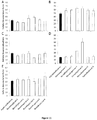
- FIG. 3 shows (a) the z-average particle size (nm) for the original and repeat samples of each of the 4 successful repeat samples; and (b) the average zeta potential (mV) for each of the 4 successful repeat samples.
- Table 6C shows analytical data for the 4 successful repeat samples, specifically the low % surfactant present (5% in all cases), z-average particle size of the original sample, z-average particle size of the repeat sample, average z-average particle size of both original and repeat, % standard deviation (SD) from the average, % surfactant in a further remade sample containing a high % of surfactant (10% in all cases), and the z-average particle size of the further high 10 surfactant sample.
- SD standard deviation
- FIG. 4 shows (a) the z-average particle size (nm) for low surfactant (5%) and high surfactant (10%) samples detailed in Table 6C; and (b) the average zeta potential (mV) for low surfactant (5%) and high surfactant (10%) samples detailed in Table 6C.
- Example 6 From the above data in Example 6, 3 particular polymer/surfactant combinations were selected for further study. The three samples were selected on the basis that they showed good sample-to-sample reproducibility (i.e. a standard deviation below 10%). Further radiolabelled samples were prepared for the combinations of particular interest, namely PVA / Vit-E, PVA / T-80, and PVA / NDC.
- Radiolabelled efavirenz samples were prepared in accordance with Example 4, however, the chloroform solution containing the efavirenz was also dosed with the radiolabelled active to give a tracer concentration of radioactivity for efravirenz samples. The samples were then used for all cellular accumulation and transcellular permeability studies (see Examples 12 and 13).
- Table 7A shows the z-average particle size (nm) and zeta potential (mV) analytical data in relation to original non-radiolabelled samples containing low (5%) and high (10%) surfactant concentrations, and also radiolabelled samples containing low (5%) and high (10%) surfactant concentrations.
- Nanodispersions of the cold (i.e. non-radiolabelled) samples were then analysed over time with respect to their z-average particle size, particle size polydispersity (i.e. diversity of particle sizes), and zeta potential.
- FIG. 5A shows time course measurements made upon nanodispersions of the cold PVA/Vit-E samples (for both 5% and 10% surfactant samples) with respect to their (a) z-average particle size (nm); (b) particle size polydispersity; and (c) average zeta potential (mV), each for PVA/Vit-E samples comprising both 5% (left hand side) and 10% (right hand size) surfactant content.
- FIG. 5B shows time course measurements made upon nanodispersions of the cold PVA/T-80 samples (for both 5% and 10% surfactant samples) with respect to their (a) z-average particle size (nm); (b) particle size polydispersity; and (c) average zeta potential (mV), each for PVA/T-80 samples comprising both 5% (left hand side) and 10% (right hand size) surfactant content.
- FIG. 5C shows time course measurements made upon nanodispersions of the cold PVA/NDC samples (for both 5% and 10% surfactant samples) with respect to their (a) z-average particle size (nm); (b) particle size polydispersity; and (c) average zeta potential (mV), each for PVA/NDC samples comprising both 5% (left hand side) and 10% (right hand size) surfactant content.
- FIGs 5A-5C demonstrate the stability of nanodispersions of efavirenz of the present invention over prolonged time periods.
- FIG. 6 shows the increase in particle z-average with increased efavirenz loading.
- the data shows three lines; crosses are total number of hits including those which failed the DLS size quality criteria; solid triangles are the total hits of those where all data passed DLS criteria (7 in total where all 5 points hit); solid squares are the predicted size based on volume of a sphere. The data for each line is quite consistent with the predicted values.
- Example 9 Cytotoxicity of efavirenz nanodispersions in hepatic, intestinal, monocyte, macrophage and lymphocyte cell lines
- HepG2 (hepatic) and Caco-2 (intestinal) cells were purchased from American Type Tissue Culture (ATCC; USA) and maintained in Dulbecco's modified eagle's medium (DMEM; Sigma; Dorest, Uk) supplemented with 10% fetal bovine serum (FBS; Bio-Whittaker, Berkshire, Uk) for HepG2 and 15% FBS for Caco-2.
- DMEM Dulbecco's modified eagle's medium
- FBS fetal bovine serum
- CEM (lymphocyte) and THP-1 (monocyte) cells were purchased from European Collection of Cell Culture (ECACC; Porton Down, Uk) and grown in RPMI-1640 (Sigma; Dorest, Uk) supplemented with 10% FBS.
- MDM Monocyte Derived Macrophages
- THP-1 cells were activated into macrophage like cells (A-THP-1) by the addition of Phorbol 12-myristate 13 acetate (PMA: Sigma; Dorest, Uk) to final concentration of 10nM in THP-1 culture medium (RPMI-1640 supplemented with 10% FBS). Cells were then incubated at 37°C and 5% CO 2 for 7 days prior to use to allow differentiation from monocyte to macrophage like cells.
- PMA Phorbol 12-myristate 13 acetate
- RPMI-1640 supplemented with 10% FBS
- HepG2, Caco-2, THP-1, CEM and A-THP-1 cells were separately seeded at a density of 2.5 x 10 4 / 100 ⁇ l in their appropriate media into each well of a 96 well plate (NunclonTM, Denmark) and incubated for 24 hours at 37°C and 5% CO 2 . Media was then aspirated and replaced with media containing 0.1, 1, 10, 100, 500 or 1000 ⁇ M, calculated from molarity of efavirenz (145 samples), of each efavirenz dispersion and incubated for a further 24 hours. The same procedure was followed for each individual excipient (23 samples) with concentrations range of 1 ⁇ M to 1M.
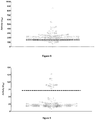
- FIG. 7 provides data in relation to the cytotoxicity of the various 10% drug loaded efavirenz formulations of Examples 1 and 2 in terms of IC 50 ( ⁇ M) across various cell lines. Data for aqueous efavirenz (i.e. non-nanodisperse) are given as dotted horizontal lines. '
- a set of nanodispersions was selected from the various 70% drug loaded efavirenz formulations of Example 5 for further study, details of which are outlined in Table 8 below. All the nanodispersion listed in Table 8 have a drug loading of 70%, and a combined polymer/surfactant loading of 30% (as in Example 5), but the surfactant and surfactant loading is varied in each case. A control aqueous solution is also included for comparative purposes. Table 8 - Details of particular nanodispersions selected for further study.
- Table 9 provides data in relation to the cytotoxicity of the various 70% drug loaded efavirenz formulations listed in Table 8 in terms of IC 50 ( ⁇ M). Table 9 - Cytotoxicity of 70% efavirenz loaded nanodispersions and aqueous efavirenz across various cell lines. Data are given as IC 50 in ⁇ M.
- Example 10 Inhibition of recombinant HIV-1 reverse transcriptase by nanodispersed and aqueous efavirenz.
- HIV-1 reverse transcriptase (RT) inhibition screening was conducted as per manufacturers' instructions (Roche Diagnostics GmbH; Germany). Briefly, for each of the individual nano dispersed EFV formulations, 20 ⁇ l of 1nM stock was added to each well of row B of a 96 well plate ((NunclonTM, Denmark). Doubling dilutions were then preformed using deionised H 2 O to give a range of concentrations from 1nM to 0.0078nM for each sample. 20 ⁇ l of 0.2ng/ ⁇ l HIV-1-RT diluted in lysis buffer was then added to each well.
- reaction mixture consisting of; 46mM Tris-HCI, 266mM potassium chloride, 27.5mM magnesium chloride, 9.2mM DTT, 10 ⁇ M dUTP/dTTP, template/primer hybrid, 750mA 260nm /ml
- reaction mixture consisting of; 46mM Tris-HCI, 266mM potassium chloride, 27.5mM magnesium chloride, 9.2mM DTT, 10 ⁇ M dUTP/dTTP, template/primer hybrid, 750mA 260nm /ml
- Anti-DIG-POD anti-digoxigenin-peroxidase
- FIG. 8 shows activity of 10% loaded efavirenz nanodispersions against recombinant HIV reverse transcriptase. Data for aqueous efavirenz are given as the dotted horizontal line. Again, each circle represents a result for a particular nanodispersion. Data are given as IC 50 in nM.
- Table 10 gives IC 50 values for the 70% drug loaded (table 10) efavirenz nanodispersions (from Table 8) along with the control aqueous solution against the target protein, reverse transcriptase. Data are given as IC 50 in nM. Table 10 - Activity of 70% loaded efavirenz nanodispersions against recombinant HIV reverse transcriptase. Designation IC 50 (nM) Nanodispersion 1 154 Nanodispersion 2 223 Nanodispersion 3 331 Nanodispersion 4 112 Nanodispersion 5 131 Nanodispersion 6 274 Aqueous solution 123
- Example 11 Inhibition of cultured HIV-IIIB bv nanodispersed and aqueous efavirenz in MT4 cells.
- HIVIII B and the human T-cell line, MT4 were supplied by the National Institute for Biological Standards and Control (NIBSC), the Centre for AIDS Reagents (CFAR: Hertfordshire, Uk).
- MT4 cells were grown and routinely maintained in RPMI-1640 (Sigma; Dorest, Uk) supplemented with 10% fetal bovine serum (FBS; Bio-Whittaker, Berkshire, Uk) at 37°C and 5% CO 2 and sub-cultured every 3 days. Cell counts and viability was determined by Trypan Blue exclusion using a disposable plastic haemocytometer (Labtech International Ltd, UK).
- HIVIII B was propagated by passage through MT4 cells in RPMI-1640 and 10% FBS for 12 days and a subsequent multiplicity of infection (MOI) was determined by MTT assay.
- MOI multiplicity of infection
- MT4 cells were dispensed into 50ml falcon tubes and centrifuged at 2000rpm and 4°C for 5 minutes. The supernantant was aspirated and the resulting pellet resuspended to a cell density of 1 x 10 5 / ml in RPMI 1640 supplemented with 10% FBS and 1ml of viral isolate (M.O.I 0.001). After further centrifugation for 5 minutes at 2000rpm, the MT4/HIVIII B pellet was incubated at 37°C and 5% CO 2 for 2 hours.
- the MT4/HIVIII B suspension was centrifuged again at 2000rpm and 4°C for 5 minutes, supernatant aspirated and pellet resuspened RPMI 1640 supplemented with 10% FBS to a cell density of 1 x 10 5 /ml.
- MT4/HIVIII B suspension 100 ⁇ l of MT4/HIVIII B suspension was then added to each well of a flat bottomed 96 well plate (NunclonTM, Denmark) containing each of the individual nano dispersed Efavirenz (EFV) formulations to give a range of final concentrations from 1nM to 0.0078nM. The plate was then incubated for 5 days at 37°C and 5% CO 2 .
- Efavirenz Efavirenz
- FIG. 9 shows activity of 10% loaded efavirenz nanodispersions against recombinant HIV reverse transcriptase.
- Data for aqueous efavirenz are given as the dotted horizontal line. Again, each circle represents a result for a particular nanodispersion.
- Data are given as IC 50 in nM.
- Table 11 Activity of 70% loaded efavirenz nanodispersions against recombinant HIV reverse transcriptase. Data are given as IC 50 in nM.
- Example 12 Cellular Accumulation of nano dispersed EFV compared to their parental, aqueous compounds
- Caco-2 and HepG2 and ATHP-1's were propagated to a cell density of ⁇ 5 x 10 6 cells per well on a 6 well plate (37°C and 5% CO 2 ). The cells were washed x2 with pre-warmed HBSS (37 °C). The cells were incubated for 1 h in the presence of 1ml of HBSS containing 10 ⁇ M EFV containing 0.1 ⁇ Ci of H 3 / C 14 / H 3 labelled drug respectively.
- This culture method is altered for the ATHP-1 cell line as although the experimental procedure for the accumulation is unaltered differentiation from monocyte to MDM (ATHP-1) cells must occur before the protocol is used.
- THP-1 cells containing phorbol-12-myristate 13 acetate (PMA: Sigma; Dorest, Uk) to final concentration of 10nM in medium (RPMI-1640 supplemented with 10% FBS) were seeded at a density of approximately 4 x 10 6 cells per well on a 6 well plate. Cells were then incubated at 37°C and 5% CO 2 for 7 days prior to use to allow differentiation to macrophage like cells. Cellular accumulation of nano dispersed drug was quantified as previously described for Caco-2 and HepG2 cell lines.
- Cellular accumulation was ascertained for each nano-dispersion in THP-1 and CEM cell lines as follows. In brief, cells were harvested at a density of 5 x 10 6 cells per well. Each well was washed x 2 with pre-warmed HBSS (37 °C). To each well, 600 ⁇ l of HBSS containing 10 ⁇ M) EFV, each with 0.1 ⁇ Ci of 3H/ 14C/ 3H labelled drug respectively. After incubation for 1 hr the cells are pelleted by centrifugation (2K rpm, 5 min).
- the 100 ⁇ l of cell lysate is then transferred to a 5ml scintillation vial (Meridian Biotechnologies Ltd; Uk), to each 4 ml of Ultima Gold scintillation fluid was added and scintillation level quantified using a Perkin Elmer 3100TS scintillation counter. Each nano-dispersion was tested in duplicate and scintillation measurements taken in triplicate.
- FIG. 10 shows cellular accumulation ratio (cell-associated drug divided by extracellular drug) of all 10% loaded efavirenz nanodispersions in the studied cell lines. Data for aqueous efavirenz are given as dotted horizontal lines. Again, each circle represents a result for a particular nanodispersion.
- FIGs. 11A-E show cellular accumulation ratio (cell-associated drug divided by extracellular drug) of 70% loaded efavirenz nanodispersions in the studied cell lines, namely (A) HepG2, (B) Caco-2, (C) THP-1, (D) A-THP-1, (E) CEM, with respect to the six nanodispersed efavirenz formulations (detailed in Table 8) and the parental aqueous drug (i.e. non-nanodisperse) sample described in the present example.
- transepithelial electrical resistance (TER) values ⁇ 1300 ⁇ .
- 10 ⁇ M of parental or nanoformulated drug including 0.1 ⁇ Ci radio-labelled drug was added to the apical chamber and samples taken at 1 and 2 hr from the basolateral chamber. Each nano dispersed drug was tested in duplicate.
- FIG. 12 shows apical (gut compartment) to basolateral (blood compartment) transcellular permeability across Caco-2 cell monolayers of 10% loaded efavirenz nanodispersions in the studied cell lines. Data for aqueous efavirenz are given as dotted horizontal lines. Again, each circle represents a result for a particular nanodispersion.
- FIGs. 13A-F show transcellular permeability of 70% efavirenz loaded nanodispersions across Caco-2 cell monolayers relative to aqueous efavirenz. Data are given for apical to basolateral and for basolateral to apical passage of drug. Each of panels A - F respectively represent Nanodispersions 1-6 detailed in Table 8 above.
- Example 14 Pharmacokinetics of efavirenz in rodents administered a nanodispersion versus a conventional formulation.
- Rats were then orally dosed with efavirenz or an efavirenz nanodispersion using a 7cm curved gavarge needle 0.1 ml blood samples were collected via the carotid cannula at the following time points 20',30',45',60', 90',120',180',240', 300'. At the end of the experiment animals were killed using excess of anesthetic. 200 ⁇ l of a 30% Hydrogen peroxide (Sigma-Aldrich, Uk) solution was added to each sample and left for 60 minutes. Finally, 30 ⁇ l of glacial acetic acid was added and the entire sample incubated for a further 15 minutes at 50°C.
- a 30% Hydrogen peroxide Sigma-Aldrich, Uk
- FIG. 14 shows pharmacokinetics of efavirenz and 70%-loaded efavirenz nanodispersion in rats. A demonstrably higher plasma efavirenz concentration was seen for the nanodispersion than for a conventional formulation of efavirenz.
- Nanodispersions have been synthesised that have lower cytotoxicity, that exhibit more potent inhibition of HIV reverse transcriptase, that exhibit more potent inhibition of HIV replication, that accumulate to a higher degree in HIV target cells and that traverse intestinal epithelial cells more rapidly and more completely than aqueous solutions of efavirenz. Furthermore, nanodispersions of efavirenz with favourable pharmacokinetic properties relative to conventional formulation have been generated.
Landscapes
- Health & Medical Sciences (AREA)
- Chemical & Material Sciences (AREA)
- Life Sciences & Earth Sciences (AREA)
- Veterinary Medicine (AREA)
- Medicinal Chemistry (AREA)
- Pharmacology & Pharmacy (AREA)
- Animal Behavior & Ethology (AREA)
- General Health & Medical Sciences (AREA)
- Public Health (AREA)
- Epidemiology (AREA)
- Engineering & Computer Science (AREA)
- Bioinformatics & Cheminformatics (AREA)
- Dispersion Chemistry (AREA)
- Optics & Photonics (AREA)
- Physics & Mathematics (AREA)
- Nanotechnology (AREA)
- Biomedical Technology (AREA)
- Virology (AREA)
- Tropical Medicine & Parasitology (AREA)
- Chemical Kinetics & Catalysis (AREA)
- General Chemical & Material Sciences (AREA)
- Nuclear Medicine, Radiotherapy & Molecular Imaging (AREA)
- Organic Chemistry (AREA)
- Oncology (AREA)
- Communicable Diseases (AREA)
- Molecular Biology (AREA)
- AIDS & HIV (AREA)
- Medicinal Preparation (AREA)
- Pharmaceuticals Containing Other Organic And Inorganic Compounds (AREA)
Description
- The present invention relates to compositions of the anti-HIV drug efavirenz that are suitable for pharmaceutical use. More specifically, the present invention relates to a solid composition of efavirenz and, in another aspect, to an aqueous dispersion of efavirenz. The present invention also relates to processes for preparing both the solid composition and the aqueous dispersion, as well as to their use in therapy for the treatment and/or prevention of retroviral infections such as human immunodeficiency virus (HIV).
- Human Immunodeficiency Virus (HIV) is a major cause of morbidity and mortality in both the developed and the developing world. HIV is a retrovirus that causes acquired immunodeficiency syndrome (AIDS) in humans, which in turn allows life-threatening infections and cancers to thrive as the immune system progressively fails.
- HIV infection typically occurs through the transfer of bodily fluids, such as blood, semen, vaginal fluid, pre-ejaculate, or breast milk, from one individual to another. HIV may be present within these bodily fluids as either the free virus, or as a virus present within infected immune cells. HIV-1 tends to be the most virulent form of HIV, and is transmitted as a single-stranded enveloped RNA virus which, upon entry into a target cell, is converted into double-stranded DNA by reverse transcription. This DNA may then become integrated into the host's DNA where it can reside in a latent from and avoid detection by the immune system. Alternatively, this DNA may be re-transcribed into RNA genomes and translated to form viral proteins that are released from cells as new virus particles, which can then spread further.
- A drug commonly used in the treatment of HIV, and particularly HIV-1, is efavirenz (EFV). Efavirenz is a non-nucleoside reverse transcriptase inhibitor (NNRTI) that is widely used in highly active antiretroviral therapy (HAART). The (-)-efavirenz enantiomer is sold commercially under the trade names Sustiva™ or Stocrin™. The structure of (-)efavirenz is shown below.

- Although efavirenz is effective in prolonging life expectancy in HIV suffers, there are a number of drawbacks associated with the currently available formulations of efavirenz.
- Efavirenz acts on an intracellular target, so the ability of efavirenz to penetrate into and accumulate within cells is a prerequisite for effective treatment (Owen and Khoo, Journal of HIV Therapy, 2004, 9(4), 53-57). One particular problem with the current formulations of efavirenz is that the penetration of the drug into cells is variable and inadequate both within and between patients. As cellular penetration and accumulation of the drug is necessary in order to effectively treat the HIV infected cells, there is a need for formulations of efavirenz that exhibit good levels of cellular accumulation, particularly in immune cells (e.g. macrophages and CD4+ lymphocytes).
-
WO 2010/068891 A1 discloses polymer (e.g. PLGA) nanoparticles loaded with combinations of antiretroviral drugs (e.g. efavirenz, lopinavir, and ritonavir). The polymer nanoparticles enter cells, wherein they gradually release the antiretroviral drugs, thereby enhancing drug delivery and longevity of a therapeutically effective drug concentration. - In addition, the distribution of efavirenz throughout the body is also not uniform with current efavirenz formulations, and certain target tissues and sanctuary sites, such as the brain and the testis, can suffer from poor exposure to the drug. This can lead to sub-therapeutic levels of the drug reaching certain tissues, with the consequential effect that HIV infected cells residing in these tissues may not be adequately treated. Furthermore, resistance to efavirenz is becoming an increasing problem (Goshn et al., AIDS, 2009, 11, 165-173) and exposure to sub-therapeutic levels of efavirenz in these tissues increases the risk that efavirenz-resistant strains of HIV can arise and reseed the blood. Resistant strains of HIV are also transmittable meaning that individuals can be newly infected with resistant virus. There is, therefore, a need for formulations that provide an improved distribution of efavirenz throughout the body, and in particular to sanctuary sites for the virus.
- A further problem with current efavirenz formulations is that it is necessary to administer large doses of the drug each day (typically the adult dose is 600 mg per day), along with multiple other anti-HIV drugs. As a consequence, a patient will need to consume a large tablet or capsule of efavirenz, or multiple smaller dosage tablets or capsules, in order to obtain the required dosage. This can inevitably lead to problems with patient compliance. Furthermore, efavirenz treatment is also associated with a number of adverse side effects, which represent a major problem for patients, especially over prolonged periods (Dahri and Ensom, Clin Pharmacokinet, 2007, 46(2), 109-132; Letendre et al, Conference Highlights - Neurologic Complications, 2010, 18(2), 45-55; Maggi et al, J. Antimicrob. Chemother., 2011, 66, 896-900). For these reasons, there is a need for more effective formulations of efavirenz, which in turn may enable the required dosage of efavirenz to be lowered. Lower doses could have an effect on the number and/or size of the tablets/capsules that need to be consumed by the patient, as well as prevalence of the adverse side effects.
- There is also a need for dosage forms that permit the dosage to be easily varied on a patient-by-patient basis, depending on factors such as the age (including paediatric dosing) and weight of the patient, as well as the severity and stage of the infection.
- It is therefore an object of the present invention to provide improved formulations of efavirenz that address one or more of the drawbacks associated with the current efavirenz formulations.
- In particular, it is an object of the invention is to provide efavirenz formulations exhibiting good cell penetration and a more optimum and effective distribution throughout the body.
- Another object of the present invention is to provide efavirenz formulations with a high drug loading.
- Another object of the present invention is to provide efavirenz formulations which permits lower overall dosage of efavirenz in HIV treatments.
- According to a first aspect of the present invention there is provided a solid efavirenz composition, comprising nanoparticles of efavirenz dispersed within a mixture of at least one hydrophilic polymer and at least one surfactant;
- wherein the hydrophilic polymer is polyvinyl alcohol (PVA); and
- wherein the surfactant is selected from vitamin-E-polyethylene glycol-succinate (Vit-E-PEG-succinate),
polysorbate 80, and sodium deoxycholate. - According to a second aspect of the present invention there is provided an aqueous dispersion, comprising a plurality of nanoparticles dispersed in an aqueous medium, the nanoparticles comprising a core of efavirenz and a coating of at least one hydrophilic polymer and at least one surfactant;
- wherein the hydrophilic polymer is polyvinyl alcohol (PVA); and
- wherein the surfactant is selected from vitamin-E-polyethylene glycol-succinate (Vit-E-PEG-succinate),
polysorbate 80, and sodium deoxycholate. - Both the solid efavirenz composition and the aqueous dispersion of the present invention comprise the efavirenz drug substance in a nanoparticulate form. The efavirenz nanoparticles of the present invention provide improved dosage forms of efavirenz, particularly with respect to stability and efficacy. The solid efavirenz composition and the aqueous dispersion of the present invention also provide good cell penetration and accumulation, especially in immune cells. In certain embodiments, the level of cell penetration is significantly improved relative to conventional efavirenz formulations. The solid efavirenz composition and the aqueous dispersion of the present invention also provide an improved distribution of drug throughout the body and provide higher drug levels in certain target tissues such as the testes and brain. These advantages provide the opportunity for a more effective treatment of HIV and may also enable the required dosage of efavirenz to be reduced.
- The nanoparticles of efavirenz also possess low cytotoxicity and compositions with high drug loadings can be prepared.
- The provision of nanoparticles in a solid composition can also be advantageous because it provides a more stable form of the drug that is suitable for long term storage. Furthermore, the solid composition can be consumed as a solid dosage form when required in certain embodiments of the invention, or, alternatively, they can be dispersed in a suitable aqueous diluent when required to form an aqueous dispersion of the nanoparticles for administration.
- Furthermore, the solid compositions of the present invention allow for higher drug loadings than known efavirenz formulations, which enables excipient dosages (e.g. surfactants) and the size of the dosage form to be reduced.
- Finally, the solid compositions of the present invention are ideally suited to personalised medicine regimes, because the solid compositions are substantially homogeneous, meaning that partial doses may be accurately measured. Furthermore, the solid compositions of the present invention are readily dispersible within an aqueous medium to provide stable aqueous dispersions. Such stable aqueous dispersions can themselves be partitioned in a pre-determined manner to provide an accurate liquid dose of efavirenz. Such methods of providing personalised doses are particularly applicable to paediatric administration, since children require lower doses of efavirenz. Moreover, efavirenz doses can be accordingly adapted to suit a patient's weight, age, and other circumstances (such as the stage or severity of the HIV infection).
- According to a third aspect of the invention, there is provided an aqueous dispersion, obtainable by, obtained by, or directly obtained by dispersing the solid composition of the first aspect in an aqueous medium.
- According to a fourth aspect of the present invention there is provided processes for the preparation of the solid composition of the first aspect.
- According to a fifth aspect of the present invention, there is provided a pharmaceutical composition comprising a solid composition of the first aspect of the invention, or an aqueous dispersion of the second or third aspects of the invention, and optionally a further pharmaceutically acceptable diluent, carrier, or excipient.
- According to a sixth aspect of the present invention, there is provided a solid composition of the first aspect of the invention, a pharmaceutical composition of the fifth aspect of the invention or an aqueous dispersion of the second or third aspects of the invention for use as a medicament.
- According to a seventh aspect of the present invention, there is provided a solid composition of the first aspect of the invention, a pharmaceutical composition of the fifth aspect of the invention or an aqueous dispersion of the second or third aspects of the invention for use in the treatment and/or prevention of retroviral infections (e.g. HIV).
- Features, including optional, suitable and preferred features of any aspect of the invention are, unless otherwise stated, also features, including optional, suitable and preferred features of any other aspect of the invention.
- For a better understanding of the present invention, and to illustrate how embodiments of the same may be put into effect, reference is now made, by way of example, to the following figures in which:
-
FIG.1 is a 3-D bar chart showing the results of a screen of seven hydrophilic polymers with seven surfactants (see Example 5), with the clear "hits" (i.e. compositions satisfying the nanodispersion assessment criteria set out in Example 1) are shown as grey bars, near misses are shown as textured grey bars, more distant misses are shown as transparent bars, and non-hits are shown without bars. -
FIG.2 is a 3-D bar chart showing the results of a further screen of the 6 clear "hits" identified fromFIG. 1 but with different surfactant contents (see Example 6). Again, the clear "hits" are shown as grey bars, near misses are shown as textured grey bars, more distant misses are shown as transparent bars, and non-hits are shown without bars. -
FIG. 3 shows (a) the z-average particle size (nm) for the original and repeat samples of each of the 4 successful repeat samples; and (b) the average zeta potential (mV) for each of the 4 successful repeat samples (see Example 6). -
FIG. 4 shows (a) the z-average particle size (nm) for low surfactant (5%) and high surfactant (10%) samples detailed in Table 6C; and (b) the average zeta potential (mV) for low surfactant (5%) and high surfactant (10%) samples detailed in Table 6C (see Example 6). -
FIG. 5A shows time course measurements made upon nanodispersions of "cold" PVA/Vit-E samples (for both 5% and 10% surfactant samples) with respect to their (a) z-average particle size (nm); (b) particle size polydispersity; and (c) average zeta potential (mV), each for PVA/Vit-E samples comprising both 5% (left hand side) and 10% (right hand size) surfactant content (see Example 7). -
FIG. 5B shows time course measurements made upon nanodispersions of "cold" PVA/T-80 samples (for both 5% and 10% surfactant samples) with respect to their (a) z-average particle size (nm); (b) particle size polydispersity; and (c) average zeta potential (mV), each for PVA/T-80 samples comprising both 5% (left hand side) and 10% (right hand size) surfactant content (see Example 7). -
FIG. 5C shows time course measurements made upon nanodispersions of "cold" PVA/NDC samples (for both 5% and 10% surfactant samples) with respect to their (a) z-average particle size (nm); (b) particle size polydispersity; and (c) average zeta potential (mV), each for PVA/NDC samples comprising both 5% (left hand side) and 10% (right hand size) surfactant content (see Example 7). -
FIG. 6 is a graph showing how z-average particle size increases with increased efavirenz loading (see Example 8). -
FIG. 7 is a scatter chart showing data relating to the cytotoxicity of the various 10% drug loaded efavirenz formulations in terms of IC50 (µM) across various cell lines. Data for aqueous efavirenz (i.e. non-nanodispersed) are given as dotted horizontal lines. Each circle represents a result for a particular nanodispersion (see Example 9). -
FIG. 8 is a scatter chart showing activity of 10% loaded efavirenz nanodispersions against recombinant HIV reverse transcriptase. Data for aqueous efavirenz are given as the dotted horizontal line. Again, each circle represents a result for a particular nanodispersion. Data are given as IC50 in nM (see Example 10). -
FIG. 9 is a scatter chart showing activity of 10% loaded efavirenz nanodispersions against recombinant HIV reverse transcriptase. Data for aqueous efavirenz are given as the dotted horizontal line. Again, each circle represents a result for a particular nanodispersion. Data are given as IC50 in nM (see Example 11). -
FIG. 10 is a scatter chart showing cellular accumulation ratio (cell-associated drug divided by extracellular drug) of all 10% loaded efavirenz nanodispersions in the studied cell lines. Data for aqueous efavirenz are given as dotted horizontal lines. Again, each circle represents a result for a particular nanodispersion (see Example 12). -
FIGs. 11A-E are bar charts showing cellular accumulation ratio (cell-associated drug divided by extracellular drug) of 70% loaded efavirenz nanodispersions in the studied cell lines, namely (A) HepG2, (B) Caco-2, (C) THP-1, (D) A-THP-1, (E) CEM, with respect to the six nanodispersed efavirenz formulations (detailed in Table 8) and the parental aqueous drug (i.e. non-nanodisperse) sample (see Example 12). -
FIG. 12 is a scatter chart showing apical (gut compartment) to basolateral (blood compartment) transcellular permeability across Caco-2 cell monolayers of 10% loaded efavirenz nanodispersions in the studied cell lines. Data for aqueous efavirenz are given as dotted horizontal lines. Again, each circle represents a result for a particular nanodispersion (see Example 13). -
FIGs. 13A-F are a series of graphs showing transcellular permeability of 70% efavirenz loaded nanodispersions across Caco-2 cell monolayers relative to aqueous efavirenz. Data are given for apical to basolateral and for basolateral to apical passage of drug. Each panel (A - F) represent different 70% loaded nanodispersions of efavirenz (see Example 13). -
FIG. 14 shows pharmacokinetics of efavirenz and 70%-loaded efavirenz nanodispersion in rats. A demonstrably higher plasma efavirenz concentration was seen for the nanodispersion than for a conventional formulation of efavirenz. - The term "nanoparticle" or "nanoparticulate" is used herein to mean a particle having a size of less than or equal to 1 micron (µm).
- The term "efavirenz" is used herein to refer to (-)-efavirenz, and includes pharmaceutically acceptable salts and solvates thereof, as well as any polymorphic or amorphous forms thereof.
- It is to be appreciated that references to "preventing" or "prevention" relate to prophylactic treatment and includes preventing or delaying the appearance of clinical symptoms of the state, disorder or condition developing in a human that may be afflicted with or predisposed to the state, disorder or condition but does not yet experience or display clinical or subclinical symptoms of the state, disorder or condition.
- It will be appreciated that references to "treatment" or "treating" of a state, disorder or condition includes: (1) inhibiting the state, disorder or condition, i.e., arresting, reducing or delaying the development of the disease or a relapse thereof (in case of maintenance treatment) or at least one clinical or subclinical symptom thereof, or (2) relieving or attenuating the disease, i.e. causing regression of the state, disorder or condition or at least one of its clinical or subclinical symptoms.
- A "therapeutically effective amount" means the amount of a compound that, when administered to a mammal for treating a disease, is sufficient to effect such treatment for the disease. The "therapeutically effective amount" will vary depending on the compound, the disease and its severity and the age, weight, etc., of the patient to be treated.
- The present invention provides a solid efavirenz composition, comprising nanoparticles of efavirenz dispersed within a mixture of at least one hydrophilic polymer and at least one surfactant;
- wherein the hydrophilic polymer is polyvinyl alcohol (PVA); and
- wherein the surfactant is selected from vitamin-E-polyethylene glycol-succinate (Vit-E-PEG-succinate),
polysorbate 80, and sodium deoxycholate. - The nanoparticles of efavirenz drug substance are dispersed within a solid excipient mixture comprising the hydrophilic polymer and the surfactant.
- The solid composition of the present invention may be administered as it is to a patient, or further formulated to provide a pharmaceutical composition in the form of, for example, a tablet, capsule, lozenge, or a dispersible powder or granule formulation.
- The nanoparticles of efavirenz have an average particle size of less than or equal to 1 micron (µm). In a particular embodiment, the nanoparticles of efavirenz have an average particle size of between 100 and 1000 nm. In another embodiment, the nanoparticles of efavirenz have an average particle size between 100 and 600 nm.
- The particle size of the nanoparticles may be assessed by any suitable technique known in the art (e.g. laser diffraction, laser scattering, electron microscopy). In an embodiment of the invention, particle size is assessed by dispersing the solid composition in an aqueous medium and determining the particle size with a Zetasizer (Malvern Instruments Ltd).
- In an embodiment, the polydispersity of the nanoparticles of efavirenz is less than or equal to 0.8, suitably less than or equal to 0.6, and most suitably less than or equal to 0.5. The polydispersity relates to the size of the efavirenz nanoparticles and may be determined by suitable techniques known in the art (e.g. laser diffraction, laser scattering, electron microscopy). In an embodiment of the present invention, the polydispersity of particle sizes of the nanoparticles of efavirenz may be suitably assessed with a Malvern Zetasizer (Malvern Instruments Ltd).
- In a particular embodiment, the average zeta potential of the nanoparticles of efavirenz when dispersed in an aqueous medium is between -100 and +100 mV. In another embodiment, the zeta potential of the nanoparticles of efavirenz is between -25 and +25 mV. In another embodiment, the zeta potential of the nanoparticles of efavirenz is between -20 and +20 mV. In general it has been found that zeta potentials of a relatively small magnitude (either positive or negative) allow the nanoparticles to better penetrate into and accumulate within cells. In accordance with the present invention, average zeta potentials can be measured by techniques known in the art, such as using a Zetasizer (Malvern Instruments Ltd).
- The solid composition may comprise particles or granules of larger size, for example, 5 to 30 microns (µm) in size, but each particle or granule contain a plurality of nanoparticles of efavirenz dispersed within a mixture of the hydrophilic polymer and surfactant. Furthermore, these larger particles or granules disperse when the solid composition is mixed with an aqueous medium to form discrete nanoparticles of efavirenz.
- In an embodiment, the solid composition comprises a single hydrophilic polymer and a single surfactant selected from those listed herein. In an alternative embodiment, the solid composition comprises two or more hydrophilic polymers and/or two or more surfactant selected from those listed herein may be present.
- A wide range of hydrophilic polymers are suitable for use in pharmaceutical formulations. Examples of such polymers include:
- (a) homo or co-polymers of monomers selected from: vinyl alcohol, acrylic acid, methacrylic acid, acrylamide, methacrylamide, acrylamide aminoalkylacrylates, aminoalkyl-methacrylates, hydroxyethylacrylate, methylpropane sulphonates, hydroxyethylmethylacrylate, vinyl pyrrolidone, vinyl imidazole, vinyl amines, vinyl pyridine, ethyleneglycol, propylene glycol, ethylene oxides, propylene oxides, ethyleneimine, styrenesulphonates, ethyleneglycolacrylates and ethyleneglycol methacrylate;
- (b) polyvinyl alcohol (PVA), a polyvinyl alcohol-polyethylene glycol graft copolymer, a block copolymer of polyoxyethylene and polyoxypropylene, polyethylene glycol, and polyvinylpyrrolidone, or a combination thereof
- (c) cellulose derivatives for example cellulose acetate, methylcellulose, methyl-ethylcellulose, hydroxy-ethylcellulose, hydroxy-ethylmethyl-cellulose, hydroxypropylcellulose (HPC), hydroxy-propylmethylcellulose (HPMC), hydroxy-propylbutylcellulose, ethylhydroxy-ethylcellulose, carboxy-methylcellulose and its salts (eg the sodium salt - SCMC), or carboxy-methylhydroxyethylcellulose and its salts (for example the sodium salt)
- (d) gums such as guar gum, alginate, locust bean gum and xanthan gum
- (e) polysaccharides such as dextran, xyloglucan and gelatin (or hydrolysed gelatin);
- (f) cyclodextrins such as beta-cyclodextrin;
- (g) mixtures thereof.
- Copolymers may be statistical copolymers (also known as a random copolymer), a block copolymer, a graft copolymer or a hyperbranched copolymer. Additional co-monomers may also be present provided that their presence does not effect the water-solubility of the resulting polymeric material.
- Particular examples of homopolymers include poly-vinylalcohol (PVA), poly-acrylic acid, poly-methacrylic acid, poly-acrylamides (such as poly-N-isopropylacrylamide), polymethacrylamide; poly-acrylamines, poly-methyl-acrylamines, (such as polydimethylaminoethylmethacrylate and poly-N-morpholinoethylmethacrylate), polyvinylpyrrolidone (PVP), poly-styrenesulphonate, polyvinylimidazole, polyvinylpyridine, poly-2-ethyl-oxazoline poly-ethyleneimine and ethoxylated derivatives thereof.
- The hydrophilic polymer is polyvinyl alcohol (PVA).
- It shall be appreciated that any molecular weight (Mw) or molecular number (Mn) values quoted herein span the range of Mw and Mn values that may be present in the polymer.
- In a particular embodiment, the polyvinyl alcohol has an average molecular weight between 5000 and 200000 Da, suitably with a 75-90% hydrolysis level (i.e. % free hydroxyls). In a particular embodiment, the polyvinyl alcohol has a 75-90% hydrolysis level. In another embodiment, the polyvinyl alcohol has a 75-85% hydrolysis level. In a particular embodiment, the polyvinyl alcohol has an average molecular weight between 9000 and 10000 Da, suitably with an 80% hydrolysis level.
- Surfactants suitable for pharmaceutical use may be:
- non-ionic (e.g. ethoxylated triglycerides; fatty alcohol ethoxylates; alkylphenol ethoxylates; fatty acid ethoxylates; fatty amide ethoxylates; fatty amine ethoxylates; sorbitan alkanoates; ethylated sorbitan alkanoates; alkyl ethoxylates; Pluronics™; alkyl polyglucosides; stearol ethoxylates; alkyl polyglycosides; sucrose fatty acid esters, anionic, cationic, amphoteric or zwitterionic);
- anionic (e.g. alkylether sulfates; alkylether carboxylates; alkylbenzene sulfonates; alkylether phosphates; dialkyl sulfosuccinates; sarcosinates; alkyl sulfonates; soaps; alkyl sulfates; alkyl carboxylates; alkyl phosphates; paraffin sulfonates; secondary n-alkane sulfonates; alpha-olefin sulfonates; isethionate sulfonates; alginates);
- cationic (e.g. fatty amine salts; fatty diamine salts; quaternary ammonium compounds; phosphonium surfactants; sulfonium surfactants; sulfonxonium surfactants); or
- zwitterionic (e.g. N-alkyl derivatives of amino acids (such as glycine, betaine, aminopropionic acid); imidazoline surfactants; amine oxides; amidobetaines).
- Alkoxylated nonionic's (especially the PEG/PPG Pluronic™ materials), phenol-ethoxylates (especially TRITON™ materials), alkyl sulphonates (especially SDS), ester surfactants (preferably sorbitan esters of the Span™ and Tween™ types) and cationics (especially cetyltrimethylammonium bromide - CTAB) are particularly suitable as surfactants.
- In the present invention, the surfactant is selected from vitamin-E-polyethylene glycol-succinate (Vit-E-PEG-succinate),
Polysorbate 80, and sodium deoxycholate. - In a particular embodiment, the surfactant is vitamin-E-polyethylene glycol-succinate (Vit-E-PEG-succinate).
- PVA is a particularly suitable hydrophilic polymer where the surfactant is selected from vitamin-E-polyethylene glycol-succinate (Vit-E-PEG-succinate),
Polysorbate 80, and sodium deoxycholate. - PVA is a particularly suitable hydrophilic polymer where the surfactant is vitamin-E-polyethylene glycol-succinate (Vit-E-PEG-succinate).
- The above PVA combinations are particularly advantageous where the PVA has an average molecular weight between 9000 and 10000 Da, suitably with a 75-85% hydrolysis level.
- In a particular embodiment, the solid composition as defined herein comprises 40 to 90 wt% of efavirenz. In another embodiment, the solid composition comprises 50 to 75 wt% of efavirenz. In another embodiment, the solid composition comprises 60 to 70 wt% of efavirenz.
- The solid compositions of the present invention therefore permit high drug loadings, which keeps the potentially toxic excipients (e.g. surfactants) to a minimum.
- Suitably, the solid composition comprises 10 to 60 wt% of the hydrophilic polymer and surfactant combined, more suitably 20 to 60 wt%, even more suitably 25 to 50 wt%, most suitably 25 to 40 wt%. In a particular embodiment, the solid composition comprises 25 to 35 wt% of the hydrophilic polymer and surfactant combined.
- In a particular embodiment, the solid composition comprises 5 to 50 wt% of hydrophilic polymer. In another embodiment, the solid composition comprises 10 to 40 wt% of hydrophilic polymer. In another embodiment, the solid composition comprises 15 to 30 wt% of hydrophilic polymer. In a particular embodiment, the solid composition comprises 15 to 25 wt% of hydrophilic polymer.
- In a particular embodiment, the solid composition comprises 1 to 25 wt% of surfactant. In another embodiment, the solid composition comprises 2 to 20 wt% of surfactant. In another embodiment, the solid composition comprises 3 to 10 wt% of surfactant.
- In an embodiment, the solid composition comprises the hydrophilic polymer and surfactant in a respective ratio of between 30:1 and 1:10. In a particular embodiment, the solid composition comprises the hydrophilic polymer and surfactant in a respecetive ratio of between 15:1 and 1:2. In another embodiment, the solid composition comprises the hydrophilic polymer and surfactant in a respective ratio of between 10:1 and 2:1. In a particular embodiment, the solid composition comprises the hydrophilic polymer and surfactant in a respective ratio of between 6:1 and 3:1.
- In a particular embodiment, the solid composition comprises:
- 40 to 80 wt% efavirenz;
- 10 to 40 wt% hydrophilic polymer; and
- 2 to 20 wt% surfactant.
- In another embodiment, the solid composition comprises 11-29 wt% PVA as the hydrophilic polymer, and 1-19 wt% vitamin-E-polyethylene glycol-succinate (Vit-E-PEG-succinate) as the surfactant.
- In a particular embodiment, the solid composition comprises 15-25 wt% PVA as the hydrophilic polymer,and 5-15 wt% vitamin-E-polyethylene glycol-succinate (Vit-E-PEG-succinate) as the surfactant. In a particular embodiment, the solid composition comprises 20-25 wt% PVA as the hydrophilic polymer,and 5-10 wt% vitamin-E-polyethylene glycol-succinate (Vit-E-PEG-succinate) as the surfactant. In a particularly preferred embodiment, the solid composition comprises 18-22 wt% PVA as the hydrophilic polymer,and 8-12 wt% vitamin-E-polyethylene glycol-succinate (Vit-E-PEG-succinate) as the surfactant. Suitably, such compositions comprise 25 to 35 wt% of the hydrophilic polymer and surfactant combined, more suitably 28 to 32 wt%. In such embodiments, the solid composition suitably comprises nanoparticles of efavirenz having an average particle size between 300 and 400 nm, and an average zeta potential when dispersed in an aqueous medium between -15mV and -25mV.
- In a particular embodiment, the solid composition comprises 16-29 wt% PVA as the hydrophilic polymer, and 1-14 wt% Polysorbate 80 (e.g. Tween® 80) as the surfactant. Suitably such a composition comprises 25 to 35 wt% of the hydrophilic polymer and surfactant combined.
- In a particular embodiment, the solid composition comprises 11-29 wt% PVA as the hydrophilic polymer, and 1-19 wt% sodium deoxycholate as the surfactant. Suitably such a composition comprises 25 to 35 wt% of the hydrophilic polymer and surfactant combined.
- Unless otherwise stated, the above weight percentages relate to the % by weight of a particular constituent as a proportion of the total weight of the solid composition.
- The solid composition may comprise one or more additional excipients, for instance, to further facilitate dispersion or stabilisation of dispersions of the nanoparticles either in a pharmaceutically acceptable diluent or in vivo.
- Solid compositions of the present invention may be prepared by a number of methods well known in the art. Suitable techniques for forming such compositions are described in general terms in Horn and Reiger, Angew. Chem. Int. Ed., 2001, 40, 4330-4361.
- For example, the solid composition may be prepared by milling a solid form of efavirenz. The milling may occur in the presence of the hydrophilic polymer and surfactant, or, alternatively, they may be mixed with the milled drug after the milling step.
- However, it is generally preferred that the solid efavirenz compositions of the present invention are prepared by an oil in water emulsion technique whereby the efavirenz is dissolved in the oil phase and the hydrophilic polymer and surfactant are present in the water phase. The oil and water solvents are then removed by freeze drying, spray drying or spray granulation to provide a solid composition according to the invention.
- Thus, in accordance with the present invention, there is provided a process for preparing a solid composition as defined herein, the process comprising:
- (a) preparing an oil in water emulsion comprising:
- an oil phase comprising efavirenz; and
- an aqueous phase comprising a hydrophilic polymer and a surfactant, each as defined herein; and
- (b) removing the oil and water to form the solid composition.
- An advantage of the process of the present invention is that the emulsions formed in step (a) are sufficiently homogenous and stable to allow for effective and uniform drying in step (b). Furthermore, the nanoparticles formed are substantially uniform in their physical form (size, shape etc.).
- Step (a) may be performed by methods well-known in the art. Any suitable method for forming the oil in water emulsion defined in step (a) may therefore be used. In particular, the mixing of the oil and water phases to form the oil in water emulsion may be performed by methods well known in the art. For example, the mixing may involve stirring, sonication, homogenisation, or a combination thereof. In a particular embodiment, the mixing is facilitated by sonication and/or homogenisation.
- Step (a) may be performed, for example, by using the methods described in
WO 2004/011537 A1 (COOPER et al ), which is hereby duly incorporated by reference. - In a particular embodiment, step (a) comprises:
- (i) providing an oil phase comprising efavirenz;
- (ii) providing an aqueous phase comprising the hydrophilic polymer and surfactant; and
- (iii) mixing the oil phase and aqueous phase to produce the oil in water emulsion.
- Suitably, the oil phase is provided by dissolving efavirenz in a suitable organic solvent.
- Suitably, the aqueous phase is provided by dissolving hydrophilic polymer and surfactant in an aqueous medium, preferably in water. Alternatively the aqueous phase may be provided by mixing two separately prepared aqueous solutions of the surfactant and hydrophilic polymer.
- In a particular embodiment, further aqueous medium (e.g. water) or organic solvent is added before or during mixing step (iii).
- The concentration of efavirenz in the oil in water emulsion is suitably as concentrated as possible to facilitate effective scale-up of the process. For example, the concentration of efavirenz in the oil phase is suitably 20 mg/ml or higher, more suitably 40 mg/ml or higher, even more suitably greater than 60 mg/ml or higher.
- The concentration of the hydrophilic polymer in the aqueous/water phase is suitably 0.5-50 mg/mL.
- The concentration of the surfactant in the aqueous/water phase emulsion is suitably 0.5 to 50 mg/mL.
- The organic solvent forming the oil phase is (substantially) immiscible with water. Suitably the organic solvent is aprotic. Suitably the organic solvent has a boiling point less than 120°C, suitably less than 100°C, suitably less than 90°C.
- In a particular embodiment, the organic solvent is a selected from the
Class - In a particular embodiment, the organic solvent is selected from chloroform, dichloromethane, dichloroethane, tetrachloroethane, cyclohexane, hexane(s), isooctane, dodecane, decane, methylbutyl ketone (MBK), methylcyclohexane, tetrahydrofuran, toluene, xylene, butyl acetate, mineral oil, tert-butylmethyl ether, heptanes(s), isobutyl acetate, isopropyl acetate, methyl acetate, methylethyl ketone, ethyl acetate, ethyl ether, pentane, and propyl acetate, or any suitably combination thereof.
- In a particular embodiment, the organic solvent is selected from chloroform, dichloromethane, methylethylketone (MEK), methylbutylketone (MBK), and ethyl acetate.
- The volume ratio of aqueous phase to oil phase in mixing step (iii) is suitably between 20:1 and 1:1, more suitably between 10:1 and 1:1, and most suitably between 6:1 and 2:1.
- Mixing step (iii) suitably produces a substantially uniform oil in water emulsion. As previously indicated, mixing may be performed using methods well known in the art. Suitably, mixing step (iii) involves stirring, sonication, homogenisation, or a combination thereof. In a particular embodiment, mixing step (iii) involves sonication and/or homogenisation.
- Step (b) may be performed using methods well known in the art. Suitably step (b) involves freeze drying, spray drying or spray granulation.
- Step (b) may be performed using methods described in
WO 2004/011537 A1 (COOPER et al ), the entire contents of which are hereby incorporated by reference. - In a particular embodiment, step (b) involves freeze drying the oil in water emulsion. As such, step (b) may suitably comprise freezing the oil in water emulsion and then removing the solvents under vacuum.
- Preferably, the freezing of the oil in water emulsion may be performed by externally cooling the oil in water emulsion. For example, a vessel containing the oil in water emulsion may be externally cooled, for example, by submerging the vessel in a cooling medium, such as liquid nitrogen. Alternatively the vessel containing the oil in water emulsion may be provided with an external "jacket" through which coolant is circulated to freeze the oil in water emulsion. Alternatively the vessel may comprise an internal element through which coolant is circulated in order to freeze the oil in water emulsion.
- In a further alternative, the oil in water emulsion is frozen by being contacted directly with a cooling medium at a temperature effective for freezing the emulsion. In such cases, the cooling medium (e.g. liquid nitrogen) may be added to the oil in water emulsion, or the oil in water emulsion may be added to the cooling medium. In a particular embodiment, the oil in water emulsion is added to the fluid medium (e.g. liquid nitrogen), suitably in a dropwise manner. This order of addition provides higher purities of final product. As such, frozen droplets of the oil in water emulsion may suitably form. Such frozen droplets may suitably be isolated (e.g. under vacuum to remove the fluid medium/liquid nitrogen). The solvent is then suitably removed from the frozen droplets under vacuum. The resulting solid composition is then isolated.
- In an alternative aspect, the present invention provides a process for preparing a solid composition as defined herein, the process comprising:
- preparing a single phase solution comprising efavirenz, a hydrophilic polymer as defined herein, and a surfactant as defined herein, in one or more solvents; and
- spray-drying the mixture to remove the one or more solvents to form the solid composition.
- In this aspect of the invention, the single phase solution comprising the efavirenz, hydrophilic polymer, and surfactant are all dissolved in one solvent or two or more miscible solvents. Such processes are well described in
WO 2008/006712 , the entire contents of which are duly incorporated herein by reference.WO 2008/006712 also lists suitable solvents and combinations thereof for forming the single phase solution. In an embodiment, the single phase solution comprises two or more solvents (e.g. ethanol and water) which together solubilise efavirenz, hydrophilic polymer, and the surfactant. In another embodiment, the single phase comprises a single solvent, for example ethanol or water. Removing of the one or more solvents from the single phase fluid mixture involves spray drying - againWO 2008/006712 details suitable spray-drying conditions. - The present invention also provides a solid composition obtainable by, obtained by, or directly obtained by any of the processes described herein.
- The present invention provides an aqueous dispersion, comprising a plurality of nanoparticles dispersed in an aqueous medium, the nanoparticles comprising a core of efavirenz and a coating of at least one hydrophilic polymer and at least one surfactant;
- wherein the hydrophilic polymer is polyvinyl alcohol (PVA); and
- wherein the surfactant is selected from vitamin-E-polyethylene glycol-succinate (Vit-E-PEG-succinate),
polysorbate 80, and sodium deoxycholate. - The present invention also provides an aqueous dispersion, obtainable by, obtained by, or directly obtained by dispersing the solid composition as defined herein in an aqueous medium. Suitably, an aqueous dispersion is prepared immediately prior to use.
- When the solid composition is dispersed in the aqueous medium, the hydrophilic polymer and/or surfactant is dissolved within the aqueous medium to release the nanoparticles of efavirenz in a dispersed form. The nanoparticles of efavirenz, which were formerly dispersed within a solid mixture of the hydrophilic polymer and surfactant, then become dispersed within the aqueous medium in a coated form, whereby the core of efavirenz is coated with the hydrophilic polymer and surfactant. Such a coating is thought to impart stability to the nanoparticles, thereby preventing premature coagulation and aggregation.
- Suitably the relative amounts (including ratios) of efavirenz, hydrophilic polymer, and surfactant are the same as defined in relation to the solid composition. However, their respective wt% values in the aqueous dispersion as a whole must be adjusted to take account of the aqueous medium. In a particular embodiment, the aqueous medium comprises 20 to 99.5 wt% of the total aqueous dispersion. In a particular embodiment, the aqueous medium comprises 50 to 98 wt% of the total aqueous dispersion. In a particular embodiment, the aqueous medium comprises 70 to 95 wt% of the total aqueous dispersion. Suitably, the remaining proportion of the aqueous dispersion essentially consists of efavirenz, hydrophilic polymer, and surfactant, whose proportions within the aqueous dispersion as a whole are accordingly calculated (and scaled) by reference to the proportions recited in relation to the solid composition.
- In a particular embodiment, the aqueous medium is water. In an alternative embodiment, the aqueous medium comprises water and one or more additional pharmaceutically acceptable diluents or excipients.
- Aqueous dispersions of the present invention are advantageously stable for prolonged periods, both in terms of chemical stability and the stability of the particles themselves (i.e. with respect to aggregation, coagulation, etc.).
- Aqueous dispersions of the present invention may be considered as pharmaceutical compositions of the present invention.
- Aqueous dispersions of the present invention allow a measured aliquot to be taken therefrom for accurate dosing in a personalised medicine regime.
- The particle size, polydispersity and zeta potential of the nanoparticles of efavirenz in the aqueous dispersion is as defined hereinbefore in relation to the solid composition. It will of course be appreciated that the particle size, polydispersity and zeta potential nanoparticles of efavirenz present in the solid composition are measured by dispersing the solid composition in an aqueous medium to thereby form an aqueous dispersion of the present invention.
- In an embodiment, the aqueous dispersion comprises a single hydrophilic polymer and a single surfactant selected from those listed herein. In an alternative embodiment, the aqueous dispersion comprises two or more hydrophilic polymers and/or two or more surfactants selected from those listed herein.
- The aqueous dispersion may be formed by methods well known in the art. For example, efavirenz may be milled in the presence of an aqueous mixture of the hydrophilic polymer and surfactant.
- In a particular aspect of the invention, however, there is provided a process for preparing an aqueous dispersion, comprising dispersing a solid efavirenz composition as defined herein in an aqueous medium.
- In a particular embodiment, the aqueous medium is water. In an alternative embodiment, the aqueous medium comprises water and one or more additional excipients.
- Dispersing the solid composition in the aqueous medium may comprise adding the solid composition to an aqueous medium and suitably agitating the resulting mixture (e.g. by shaking, homogenisation, sonication, stirring, etc.).
- The present invention provides a pharmaceutical composition comprising a solid composition or an aqueous dispersion as defined herein. The pharmaceutical compositions of the present invention may further comprise one or more additional pharmaceutically acceptable excipients.
- The solid efavirenz compositions of the invention may be formulated into a form suitable for oral use (for example as tablets, lozenges, hard or soft capsules, or dispersible powders or granules) by techniques known in the art. As such, the solid compositions of the invention may be mixed with one or more additional pharmaceutical excipients during this process, such as antiadherants, binders, coatings, enterics, disintegrants, fillers, diluents, flavours, colours, lubricants, glidants, preservatives, sorbents, and sweeteners.
- In a particular embodiment, the pharmaceutical composition is a tablet or capsule comprising the solid efavirenz composition.
- The aqueous dispersion of the present invention may be administered as it is or further formulated with one or more additional excipients to provide a dispersion, elixir or syrup that is suitable for a oral use, or a dispersion that is suitable for parenteral administration (for example, a sterile aqueous dispersion for intravenous, subcutaneous, intramuscular, intraperitoneal or intramuscular dosing).
- In a particular embodiment, the pharmaceutical composition is an aqueous dispersion as described herein. Such dispersed formulations can be used to accurately measure smaller dosages, such as those suitable for administration to children.
- In a particular embodiment, the pharmaceutical composition is in a form suitable for parenteral delivery, whether via intravenous or intramuscular delivery.
- It will be appreciated that different pharmaceutical compositions of the invention may be obtained by conventional procedures, using conventional pharmaceutical excipients, well known in the art.
- The pharmaceutical compositions of the invention contain a therapeutically effective amount of efavirenz. A person skilled in the art will know how to determine and select an appropriate therapeutically effective amount of efavirenz to include in the pharmaceutical compositions of the invention.
- The present invention provides a solid composition or an aqueous dispersion as defined herein for use as a medicament.
- The present invention further provides a solid composition or an aqueous dispersion as defined herein for use in the treatment and/or prevention of retroviral infections (e.g. HIV).
- Also disclosed is a use of a solid composition or an aqueous dispersion as defined herein in the manufacture of a medicament for use in the treatment and/or prevention of retroviral infections (e.g. HIV).
- Also disclosed is a method of treating and/or preventing a retroviral infection (e.g. HIV), the method comprising administering a therapeutically effective amount of a solid composition, an aqueous dispersion, or a pharmaceutical composition as defined herein, to a patient suffering from or at risk of suffering from a retroviral infection.
- The term "retrovirus" generally refers to an RNA virus capable of self-duplication in a host cell using the reverse transcriptase enzyme to transcribe its RNA genome into DNA. The DNA is then potentially incorporated into the host's genome so that the virus can then replicate thereafter as part of the host's DNA.
- The retroviral infection to be treated or prevented is suitably selected from human immunodeficiency virus (HIV), Alpharetrovirus, Betaretrovirus, Gammaretrovirus, Deltaretrovirus, Epsilonretrovirus, Lentivirus, Spumavirus, Metavirus, Errantvirus, Pseudovirus, Hepadnavirus, and Caulimovirus.
- In a particular embodiment of the present invention, the retroviral infection to be treated or prevented is the human immunodeficiency virus (HIV), most suitably the human immunodeficiency virus (HIV)
type 1. - The solid compositions, aqueous dispersions, and pharmaceutical compositions of the present invention are suitably used as part of highly active antiretroviral therapy (HAART) in the treatment of human immunodeficiency virus (HIV)
type 1. - The solid compositions, aqueous dispersions, and pharmaceutical compositions of the present invention are also suitably used to reduce the risk of or prevent HIV infection developing in subjects exposed to a risk of developing HIV infection.
- Efavirenz, the active agent in the solid compositions, aqueous dispersion, and pharmaceutical compositions of the present invention, is an antiretroviral drug which acts allosterically by binding the reverse transcriptase enzyme at a site distinct and distal to the active site, known as the non-nucleoside reverse transcriptase inhibitor (NNRTI) pocket. As such, the solid composition, aqueous dispersion, and pharmaceutical compositions of the present invention are capable of inhibiting non-nucleoside reverse transcriptase activity. Moreover, the nanoparticles and pharmaceutical compositions of the present invention are suitable for use in antiretroviral therapies and prophylactic treatments.
- Thus also disclosed is is provided a method of inhibiting non-nucleoside reverse transcriptase activity in a cell (in vivo or in vitro), the method comprising administering to said cell a solid composition, aqueous dispersion, or pharmaceutical composition as described herein.
- Also disclosed is a method of inhibiting non-nucleoside reverse transcriptase activity in a human or animal subject in need of such inhibition, the method comprising administering to said subject an effective amount of a solid composition, aqueous dispersion, or pharmaceutical composition as defined herein.
- In another aspect, the present invention provides a solid composition, aqueous dispersion, or pharmaceutical composition as defined herein for use in the treatment of a disease or condition associated with non-nucleoside reverse transcriptase activity.
- Also disclosed is the use of a solid composition, aqueous dispersion, or pharmaceutical composition as defined herein in the manufacture of a medicament for use in the treatment of a disease or condition associated with non-nucleoside reverse transcriptase activity.
- The solid compositions, aqueous dispersions, and pharmaceutical compositions of the invention may be administered to a subject by any convenient route of administration.
- Routes of administration include, but are not limited to, oral (e.g. by ingestion); buccal; sublingual; transdermal (including, e.g., by a patch, plaster, etc.); transmucosal (including, e.g., by a patch, plaster, etc.); intranasal (e.g., by nasal spray); ocular (e.g., by eyedrops); pulmonary (e.g., by inhalation or insufflation therapy using, e.g., via an aerosol, e.g., through the mouth or nose); rectal (e.g., by suppository or enema); vaginal (e.g., by pessary); parenteral, for example, by injection, including subcutaneous, intradermal, intramuscular, intravenous, infraarterlal, intracardiac, intrathecal, intraspinal, intracapsular, subcapsular, intraorbital, intraperitoneal, intratracheal, subcuticular, intraarticular, subarachnoid, and intrasternal; or by implant of a depot or reservoir, for example, subcutaneously or intramuscularly.
- In a particular embodiment (e.g. in HIV treatments), the route of administration is either oral or by implant of a depot or reservoir formulation.
- Although it is possible that the solid compositions, aqueous dispersions, and pharmaceutical compositions of the invention may be used as a sole medicament in the treatment and/or prevention of a retrovirus infection such as HIV, it is more typical that this agent will be used in combination with one or more additional anti-retroviral and/or anti-microbial agents.
- Other antiretroviral agents suitable in combination treatments with the formulations and compositions of the present invention include Zidovudine, Zalcitabine, Didanosine, Stavudine, Lamivudine, Abacavir, Combivir (zidovudine + lamivudine), Trizivir (zidovudine + lamivudine + abacavir), Tenofovir, Emtricitabine, Truvada (Tenofovir + Emtricitabine), Epzicom/Kivexa (abacavir + lamivudine), Hydroxyurea, Nevirapine, Delavirdine, Etravirine, Rilpivirine, Atripla (efavirenz + emtricitabine + tenofovir), Indinavir, Ritonavir, Saquinavir, Nelfinavir, Amprenavir, Kaletra (lopinavir + ritonavir), Atazanavir, Fosamprenavir, Tipranavir, Darunavir, Enfuvirtide, Maraviroc, Raltegravir, or combinations thereof.
- In a particular embodiment, the other suitable antiretroviral agents suitable for use in combination treatments with the formulations and compositions of the present invention include Tenofovir, Lamivudine, Abacavir, Emtricitabine, Zidovudine, Combivir (zidovudine + lamivudine), Truvada (Tenofovir + Emtricitabine), Epzicom/Kivexa (abacavir + lamivudine), Lopinavir, Ritonavir, and Kaletra (lopinavir + ritonavir), or combinations thereof.
- In particular embodiments, the other antiretroviral agents suitable in combination with formulations and compositions of the present invention are themselves provided as combinations such as:
- Emtricitabine + Tenofovir disoproxil fumarate
- Lamivudine + Stavudine
- Lamivudine + Tenofovir disoproxil fumarate
- Lamivudine + Zidovudine
- Lamivudine + Didanosine.
- Accordingly, an aspect of the invention provides a combination suitable for use in the treatment or prevention of a retrovirus infection, such as HIV, comprising a solid composition, an aqueous dispersion, or a pharmaceutical composition as defined hereinbefore, and one or more other antiretroviral agents.
- The present invention also provides a solid composition, an aqueous dispersion, or a pharmaceutical composition as defined hereinbefore for use in the treatment or prevention of a retrovirus infection, such as HIV, wherein the solid composition, aqueous dispersion, or pharmaceutical composition is administered in combination with one or more other antiretroviral agents.
- In a further aspect, the present invention provides a pharmaceutical composition comprising a solid efavirenz composition as defined herein and one or more additional antiretroviral agents.
- In a further aspect, the present invention provides a pharmaceutical composition comprising an aqueous dispersion as defined herein which further comprises one or more additional antiretroviral agents.
- Herein, where the term "combination" is used it is to be understood that this refers to simultaneous, separate or sequential administration. In one aspect of the invention "combination" refers to simultaneous administration. In another aspect of the invention "combination" refers to separate administration. In a further aspect of the invention "combination" refers to sequential administration. Where the administration is sequential or separate, the delay in administering the second component should not be such as to lose the beneficial effect of the combination.
- Such conjoint treatment may be achieved by way of the simultaneous, sequential or separate dosing of the individual components of the treatment. Such combination products employ the formulations or compositions of this invention within the dosage range described hereinbefore and the other pharmaceutically-active agent within its approved dosage range.
- In a further aspect of the invention, there is provided a pharmaceutical composition comprising a solid composition or an aqueous dispersion as defined herein; and one or more other antiretroviral agents. In a particular embodiment, the pharmaceutical composition is a single dosage form.
- Also disclosed is a kit of parts comprising a solid composition as defined herein or pharmaceutical composition comprising the solid composition as defined herein, and a pharmaceutically acceptable aqueous diluent.
- The solid composition or pharmaceutical composition comprising the solid composition as defined herein can be dispersed into the diluent to provide an aqueous dispersion as defined herein. Either the entire dispersion can then be administered, or a proportion of it can be measured and then administered (thereby providing a means of administering different dosages to individual patients).
- Dispersing the solid composition in the aqueous medium may comprise adding the solid composition to an aqueous medium and suitably agitating the resulting mixture (e.g. by shaking, homogenisation, sonication, stirring, etc.).
- The present invention provides a pharmaceutical composition comprising a solid composition or an aqueous dispersion as defined herein. The pharmaceutical compositions of the present invention may further comprise one or more additional pharmaceutically acceptable excipients.
- The solid efavirenz compositions of the invention may be formulated into a form suitable for oral use (for example as tablets, lozenges, hard or soft capsules, or dispersible powders or granules) by techniques known in the art. As such, the solid compositions of the invention may be mixed with one or more additional pharmaceutical excipients during this process, such as antiadherants, binders, coatings, enterics, disintegrants, fillers, diluents, flavours, colours, lubricants, glidants, preservatives, sorbents, and sweeteners.
- In a particular embodiment, the pharmaceutical composition is a tablet or capsule comprising the solid efavirenz composition.
- The aqueous dispersion of the present invention may be administered as it is or further formulated with one or more additional excipients to provide a dispersion, elixir or syrup that is suitable for a oral use, or a dispersion that is suitable for parenteral administration (for example, a sterile aqueous dispersion for intravenous, subcutaneous, intramuscular, intraperitoneal or intramuscular dosing).
- In a particular embodiment, the pharmaceutical composition is an aqueous dispersion as described herein. Such dispersed formulations can be used to accurately measure smaller dosages, such as those suitable for administration to children.
- In a particular embodiment, the pharmaceutical composition is in a form suitable for parenteral delivery, whether via intravenous or intramuscular delivery.
- It will be appreciated that different pharmaceutical compositions of the invention may be obtained by conventional procedures, using conventional pharmaceutical excipients, well known in the art.
- The pharmaceutical compositions of the invention contain a therapeutically effective amount of efavirenz. A person skilled in the art will know how to determine and select an appropriate therapeutically effective amount of efavirenz to include in the pharmaceutical compositions of the invention.
- The present invention provides a solid composition or an aqueous dispersion as defined herein for use as a medicament.
- The present invention further provides a solid composition or an aqueous dispersion as defined herein for use in the treatment and/or prevention of retroviral infections (e.g. HIV).
- The present invention further provides a use of a solid composition or an aqueous dispersion as defined herein in the manufacture of a medicament for use in the treatment and/or prevention of retroviral infections (e.g. HIV).
- The present invention further provides a method of treating and/or preventing a retroviral infection (e.g. HIV), the method comprising administering a therapeutically effective amount of a solid composition, an aqueous dispersion, or a pharmaceutical composition as defined herein, to a patient suffering from or at risk of suffering from a retroviral infection.
- The term "retrovirus" generally refers to an RNA virus capable of self-duplication in a host cell using the reverse transcriptase enzyme to transcribe its RNA genome into DNA. The DNA is then potentially incorporated into the host's genome so that the virus can then replicate thereafter as part of the host's DNA.
- The retroviral infection to be treated or prevented is suitably selected from human immunodeficiency virus (HIV), Alpharetrovirus, Betaretrovirus, Gammaretrovirus, Deltaretrovirus, Epsilonretrovirus, Lentivirus, Spumavirus, Metavirus, Errantvirus, Pseudovirus, Hepadnavirus, and Caulimovirus.
- In a particular embodiment of the present invention, the retroviral infection to be treated or prevented is the human immunodeficiency virus (HIV), most suitably the human immunodeficiency virus (HIV)
type 1. - The solid compositions, aqueous dispersions, and pharmaceutical compositions of the present invention are suitably used as part of highly antiretroviral therapy (HAART) in the treatment of human immunodeficiency virus (HIV)
type 1. - The solid compositions, aqueous dispersions, and pharmaceutical compositions of the present invention are also suitably used to reduce the risk of or prevent HIV infection developing in subjects exposed to a risk of developing HIV infection.
- Efavirenz, the active agent in the solid compositions, aqueous dispersion, and pharmaceutical compositions of the present invention, is an antiretroviral drug which acts allosterically by binding the reverse transcriptase enzyme at a site distinct and distal to the active site, known as the non-nucleoside reverse transcriptase inhibitor (NNRTI) pocket. As such, the solid composition, aqueous dispersion, and pharmaceutical compositions of the present invention are capable of inhibiting non-nucleoside reverse transcriptase activity. Moreover, the nanoparticles and pharmaceutical compositions of the present invention are suitable for use in antiretroviral therapies and prophylactic treatments.
- Thus in another aspect of the invention there is provided a method of inhibiting non-nucleoside reverse transcriptase activity in a cell (in vivo or in vitro), the method comprising administering to said cell a solid composition, aqueous dispersion, or pharmaceutical composition as described herein.
- In another aspect, the present invention provides a method of inhibiting non-nucleoside reverse transcriptase activity in a human or animal subject in need of such inhibition, the method comprising administering to said subject an effective amount of a solid composition, aqueous dispersion, or pharmaceutical composition as defined herein.
- In another aspect, the present invention provides a solid composition, aqueous dispersion, or pharmaceutical composition as defined herein for use in the treatment of a disease or condition associated with non-nucleoside reverse transcriptase activity.
- In another aspect, the present invention provides the use of a solid composition, aqueous dispersion, or pharmaceutical composition as defined herein in the manufacture of a medicament for use in the treatment of a disease or condition associated with non-nucleoside reverse transcriptase activity.
- The solid compositions, aqueous dispersions, and pharmaceutical compositions of the invention may be administered to a subject by any convenient route of administration.
- Routes of administration include, but are not limited to, oral (e.g. by ingestion); buccal; sublingual; transdermal (including, e.g., by a patch, plaster, etc.); transmucosal (including, e.g., by a patch, plaster, etc.); intranasal (e.g., by nasal spray); ocular (e.g., by eyedrops); pulmonary (e.g., by inhalation or insufflation therapy using, e.g., via an aerosol, e.g., through the mouth or nose); rectal (e.g., by suppository or enema); vaginal (e.g., by pessary); parenteral, for example, by injection, including subcutaneous, intradermal, intramuscular, intravenous, infraarterlal, intracardiac, intrathecal, intraspinal, intracapsular, subcapsular, intraorbital, intraperitoneal, intratracheal, subcuticular, intraarticular, subarachnoid, and intrasternal; or by implant of a depot or reservoir, for example, subcutaneously or intramuscularly.
- In a particular embodiment (e.g. in HIV treatments), the route of administration is either oral or by implant of a depot or reservoir formulation.
- Although it is possible that the solid compositions, aqueous dispersions, and pharmaceutical compositions of the invention may be used as a sole medicament in the treatment and/or prevention of a retrovirus infection such as HIV, it is more typical that this agent will be used in combination with one or more additional anti-retroviral and/or anti-microbial agents.
- Other antiretroviral agents suitable in combination treatments with the formulations and compositions of the present invention include Zidovudine, Zalcitabine, Didanosine, Stavudine, Lamivudine, Abacavir, Combivir (zidovudine + lamivudine), Trizivir (zidovudine + lamivudine + abacavir), Tenofovir, Emtricitabine, Truvada (Tenofovir + Emtricitabine), Epzicom/Kivexa (abacavir + lamivudine), Hydroxyurea, Nevirapine, Delavirdine, Etravirine, Rilpivirine, Atripla (efavirenz + emtricitabine + tenofovir), Indinavir, Ritonavir, Saquinavir, Nelfinavir, Amprenavir, Kaletra (lopinavir + ritonavir), Atazanavir, Fosamprenavir, Tipranavir, Darunavir, Enfuvirtide, Maraviroc, Raltegravir, or combinations thereof.
- In a particular embodiment, the other suitable antiretroviral agents suitable for use in combination treatments with the formulations and compositions of the present invention include Tenofovir, Lamivudine, Abacavir, Emtricitabine, Zidovudine, Combivir (zidovudine + lamivudine), Truvada (Tenofovir + Emtricitabine), Epzicom/Kivexa (abacavir + lamivudine), Lopinavir, Ritonavir, and Kaletra (lopinavir + ritonavir), or combinations thereof.
- In particular embodiments, the other antiretroviral agents suitable in combination with formulations and compositions of the present invention are themselves provided as combinations such as:
- Emtricitabine + Tenofovir disoproxil fumarate
- Lamivudine + Stavudine
- Lamivudine + Tenofovir disoproxil fumarate
- Lamivudine + Zidovudine
- Lamivudine + Didanosine.
- Accordingly, an aspect of the invention provides a combination suitable for use in the treatment or prevention of a retrovirus infection, such as HIV, comprising a solid composition, an aqueous dispersion, or a pharmaceutical composition as defined hereinbefore, and one or more other antiretroviral agents.
- The present invention also provides a solid composition, an aqueous dispersion, or a pharmaceutical composition as defined hereinbefore for use in the treatment or prevention of a retrovirus infection, such as HIV, wherein the solid composition, aqueous dispersion, or pharmaceutical composition is administered in combination with one or more other antiretroviral agents.
- In a further aspect, the present invention provides a pharmaceutical composition comprising a solid efavirenz composition as defined herein and one or more additional antiretroviral agents.
- In a further aspect, the present invention provides a pharmaceutical composition comprising an aqueous dispersion as defined herein which further comprises one or more additional antiretroviral agents.
- Herein, where the term "combination" is used it is to be understood that this refers to simultaneous, separate or sequential administration. In one aspect of the invention "combination" refers to simultaneous administration. In another aspect of the invention "combination" refers to separate administration. In a further aspect of the invention "combination" refers to sequential administration. Where the administration is sequential or separate, the delay in administering the second component should not be such as to lose the beneficial effect of the combination.
- Such conjoint treatment may be achieved by way of the simultaneous, sequential or separate dosing of the individual components of the treatment. Such combination products employ the formulations or compositions of this invention within the dosage range described hereinbefore and the other pharmaceutically-active agent within its approved dosage range.
- In a further aspect of the invention, there is provided a pharmaceutical composition comprising a solid composition or an aqueous dispersion as defined herein; and one or more other antiretroviral agents. In a particular embodiment, the pharmaceutical composition is a single dosage form.
- The present invention provides a kit of parts comprising a solid composition as defined herein or pharmaceutical composition comprising the solid composition as defined herein, and a pharmaceutically acceptable aqueous diluent.
- The solid composition or pharmaceutical composition comprising the solid composition as defined herein can be dispersed into the diluent to provide an aqueous dispersion as defined herein. Either the entire dispersion can then be administered, or a proportion of it can be measured and then administered (thereby providing a means of administering different dosages to individual patients).
- All materials were purchased and used without further purification from Sigma-Aldrich unless specified otherwise.
- Samples are prepared using a 10 mgml-1 stock solution of efavirenz (A) in chloroform, a 22.5 mgml-1 of polymer (P) and a 22.5 mgml-1 stock solution of surfactant (S). Stock solutions are added in the following proportion; 100 µl (A); 267 µl (P) and 133 µl (S), therefore solid mass ratio is; 10% (A), 60% (P) and 30% (S) in an 1:4 oil to water (O/W) mix. The mixtures are then emulsified using a probe sonicator (UP400S manufactured by Hielscher (Germany)), fitted with an H3 titanium probe) operated at 20% amplitude for 7 seconds followed by immediate cryogenic freezing.
- A matrix of 160 samples (comprised of 10 different polymers and 16 surfactants) was prepared. Once all 160 samples had been prepared, they were lyophilised (Virtis benchtop K) for 42 hours to leave a dry porous product, the samples were then sealed in individual vials until analysis.
- The polymers and surfactants employed in this screen are detailed in Table 1A and Table 1B below:
TABLE 1A - List of hydrophilic polymers initially screened Polymer MW m/dm^3 (22.5 mg/ml) PEG 1k 1000 0.00225 F68 8400 0.000267857 F127 12600 0.000178571 Kollicoat 45000 0.00005 PVA 9500 0.000236842 PVP k30 30000 0.000075 HPC 80000 0.000028125 HPMC 10000 0.000225 Hydrolysed gelatin 1982 0.001135217 NaCMC 90000 0.000025 TABLE 1B - List of 16 Surfactants initially screened Surfactant MW m/dm^3 (22.5 mg/ml) Na alginate 155000 1.45161E-05 Na Myristate 250.35 0.008987418 Na Deoxycholate 414.55 0.005427572 Na Caprylate 166.19 0.013538721 Vit E-peg- succinate 1000 0.00225 Sisterna 11 650 0.003461538 Sisterna 16650 0.003461538 SDS 288.38 0.007802205 AOT 444.56 0.005061184 Chremophor EL 2500 0.0009 Solutol HS 344.53 0.006530636 Tween 201227 0.001833741 Tween 801300 0.001730769 Brij 58 1123.52 0.002002635 Hyamine 448.08 0.005021425 CTAB 364.46 0.006173517 - Immediately prior to analysis, samples were dispersed by addition of 1 ml of water. The particle size of the active, organic nanoparticulate dispersion is then measured by dynamic light scattering (DLS) using a Malvern Zetasizer Nano ZS. 3 measurements using automatic measurement optimisation, Malvern Zetasizer software version 6.20 was used for data analysis. The particles were considered hits if the below criteria were met.
- A particle is determined a hit if it complies with the following criteria: Complete dispersion of the sample with no large particles visible, a particle Z-average <1000 nm, a polydispersity index (PDI) <0.5, a standard deviation between three scans <10% from average Z-average and two of the three DLS scans pass the size quality report. The size quality report incorporates 12 tests on the reliability of the data recorded and is automatically applied to each measurement by the Malvern Zetasizer software. These tests ensure that the sample is within a size range appropriate for DLS, has a PDI below 1, is within the correct concentration range and that the cumulant and distribution fit are good (i.e. the errors on the data are less than 0.005).
- Table 1C below lists the hits in terms of suitable hydrophilic polymers and surfactants.
Table 1C - hits of suitable hydrophilic polymers and surfactants (66 hits in all) Hydrophilic Polymer Surfactant PEG 1K Na Deoxycholate. PEG 1K Na caprylate. PEG 1K Sisterna 16 PEG 1K SDS PEG 1K AOT PEG 1K Tween 20 PEG 1K Tween 80 PEG 1K Brij 58 PEG 1K Hyamine Pluronic F68 Na alginate. Pluronic F68 Na caprylate Pluronic F68 Vit E-peg-succinate Pluronic F68 Chremophor EL Pluronic F68 Tween 20 Pluronic F68 Tween 80 Pluronic F68 Hyamine Pluronic F68 CTAB Pluronic F127 Na Deoxycholate Pluronic F127 Na caprylate. Pluronic F127 Vit E-peg-succinate Pluronic F127 SDS Pluronic F127 Tween 80 Pluronic F127 CTAB Kollicoat Na alginate. Kollicoat Na Deoxycholate. Kollicoat Na caprylate. Kollicoat Vit E-peg-succinate Kollicoat Sisterna 11 Kollicoat Sisterna 16 Kollicoat AOT Kollicoat Tween 20 Kollicoat Tween 80 Kollicoat Brij 58 Kollicoat Hyamine Kollicoat CTAB PVA Na Deoxycholate. PVA Sisterna 11 PVA Tween 20 PVA Tween 80 PVA Hyamine PVA CTAB PVP 30K Vit E-peg-succinate PVP 30K Chremophor EL PVP 30K Solutol HS PVP 30K Tween 20 PVP 30K Tween 80 PVP 30K Brij 58 PVP 30K Hyamine PVP 30K CTAB HPMC Vit E-peg-succinate HPMC Solutol HS HPMC Tween 20 HPMC Tween 80 HPMC Brij 58 HPMC Hyamine HPMC CTAB Hydrolysed gelatine Na Deoxycholate Hydrolysed gelatine Na caprylate. Hydrolysed gelatine Chremophor EL Hydrolysed gelatine Solutol HS Hydrolysed gelatine Tween 20 Hydrolysed gelatine Tween 80 Hydrolysed gelatine Brij 58 Hydrolysed gelatine Hyamine NaCMC Tween 20 NaCMC Brij 58 - A further 160 screen was prepared for EFV using a lower quantity of surfactant and a higher proportion of polymer. The samples were prepared by the identical method mentioned in Example 1, however ratios employed were 100 µl (A), 333 µl (P) and 67 µl (S), therefore solid mass ratio is; 10% (A), 75% (P) and 15% (S) in an 1:4 oil to water (OW) mix. All other processing, including screening, were the same as described in Example 1. The hits, which were determined in accordance with the nanodispersion quality assessment criteria described in Example 1, are listed in Table 2 below.
Table 2 - hits of suitable hydrophilic polymers and surfactants (77 hits in all) Hydrophilic Polymer Surfactant PEG 1K Na alginate PEG 1K Na Deoxycholate. PEG 1K Na caprylate. PEG 1K Sisterna 16 PEG 1K SDS PEG 1K AOT PEG 1K Chremophor EL PEG 1K Solutol HS PEG 1K Tween 20 PEG 1K Tween 80 PEG 1K Brij 58 PEG 1K Hyamine Pluronic F68 Na alginate. Pluronic F68 Na caprylate Pluronic F68 AOT Pluronic F68 Chremophor EL Pluronic F68 Solutol HS Pluronic F68 Hyamine Pluronic F68 CTAB Pluronic F127 Na caprylate. Pluronic F127 Vit E-peg-succinate Pluronic F127 Tween 20 Pluronic F127 Tween 80 Pluronic F127 CTAB Kollicoat Na alginate. Kollicoat Na caprylate. Kollicoat Vit E-peg-succinate Kollicoat Sisterna 11 Kollicoat Sisterna 16 Kollicoat SDS Kollicoat AOT Kollicoat Chremophor EL Kollicoat Solutol HS Kollicoat Tween 20 Kollicoat Tween 80 Kollicoat Brij 58 Kollicoat Hyamine Kollicoat CTAB PVA Na alginate PVA Na caprylate PVA Sisterna 11 PVA Chremophor EL PVA Solutol HS PVA Tween 20 PVA Tween 80 PVA hyamine PVP 30K Na caprylate PVP 30K Vit E-peg-succinate PVP 30K AOT PVP 30K Chremophor EL PVP 30K Solutol HS PVP 30K Tween 20 PVP 30K Tween 80 PVP 30K Brij 58 PVP 30K hyamine PVP 30K CTAB HPMC Vit E-peg-succinate HPMC AOT HPMC Chremophor EL HPMC Solutol HS HPMC Tween 20 HPMC Tween 80 HPMC Brij 58 HPMC Hyamine HPMC CTAB Hydrolysed gelatine Na Deoxycholate Hydrolysed gelatine Na caprylate. Hydrolysed gelatine Vit E-peg-succinate Hydrolysed gelatine SDS Hydrolysed gelatine Chremophor EL Hydrolysed gelatine Solutol HS Hydrolysed gelatine Tween 20 Hydrolysed gelatine Brij 58 Hydrolysed gelatine Hyamine NaCMC Vit E-peg-succinate NaCMC Chremophor EL NaCMC Brij 58 - 'Hits' (i.e. those listed under Examples 1 and 2 in Tables 1C and 2) from the previous screen were remade in accordance with the procedures described in Example 1 in replicate (one sample to be characterised by DLS and zeta potential analysis, with an additional sample for each biological assay to be carried out).
- 14C radiolabelled efravirenz samples were prepared in order to carry out cell accumulation and transwell (i.e. transcellular permeability) pharmacology studies. The samples were prepared based on the hits from the previous two screens (i.e. Example 1 and 2), i.e. 66 hits (65 hits plus one extra) of 60% (P) : 30% (S); and 77 hits of 75% (P) : 15% (S). The samples were prepared in triplicate; one cold batch for DLS analysis and two hot batches pharmacology study. Both the cold and hot samples were prepared following the same samples preparations mentioned previously. However, in order to prepare hot actives, 25 µC of 14C labelled EFV in ethanol was measured out. The solvent was allowed to evaporate away and the stock solution of cold EFV was added to the remaining solid. i.e. 286 mg in 28.6 ml of chloroform ((2x66)+(2x77) in 286 x 100 µl chloroform). The cold batches were then studied via DLS to determine both z-average and zeta potential.
- Samples were prepared containing a higher loading of efavirenz, using the hydrophilic polymers and surfactants listed below in Table 5A.
Table 5A - Hydrophilic polymers and surfactants employed Hydrophilic Polymer Surfactant PEG 1k Na Deoxycholate F68 Vit E-peg-succinate F127 AOT Kollicoat Solutol HS PVA Tween 20 PVP k30 Tween 80 HPMC Hyamine - The hydrophilic polymers and surfactants were selected based on the hits from the previous screens, focussing particularly on approved excipients appearing on the current FDA CDER list. The above 7 hydrophilic polymers and 7 hydrophilic surfactants were also selected based on their ability to provide successful formulations of efavirenz.
- Samples are prepared using a 70 mgml-1 stock solution of efavirenz (A) in chloroform, a 22.5 mgml-1 of polymer (P) and a 22.5 mgml-1 stock solution of surfactant (S). Stock solutions are added in the following proportion; 100 µl (A); 90 µl (P) 45 µl (S) and 265 µl of water, therefore solid mass ratio is; 70% (A), 20% (P) and 10% (S) in an 1:4 oil to water (O/W) mix. The mixtures are the emulsified using a Covaris S2x for 30 seconds with a duty cycle of 20, an intensity of 10 and 500 cycles/burst in frequency sweeping mode. After which, the samples were immediately cryogenically frozen. A matrix of 49 samples (comprised of 7 different polymers and 7 surfactants) was prepared. Once all 49 samples had been prepared, they were lyophilised (Virtis benchtop K) for 42 hours to leave a dry porous product, the samples were then sealed in individual vials until analysis.
- Immediately prior to analysis samples were dispersed by addition of 3.5 ml of water. All analysis was carried out in the same way as described earlier in Example 1.
-
FIG.1 shows a 3-D bar chart representing the clear hits in grey, near misses in white with dots, more distant misses in transparent, and non-hits without bars. The z-average particle size for each of the hits, near misses, and more distant misses is given on the vertical axis. - The formulation space around 'hits' (i.e. grey bars) from the high loading screen of Example 5 was further investigated. Here, the surfactant to polymer ratio was varied at four levels shown in table 6A below.
Table 6A - Table showing variation in polymer/surfactant ratio Polymer (%) Surfactant (%) Polymer solution volume (µl) Surfactant solution volume (µl) 25 5 112.5 22.5 20 10 90 45 15 15 67.5 67.5 10 20 45 90 - Samples are prepared using a 70 mgml-1 stock solution of efavirenz (A) in chloroform, a 22.5 mgml-1 of polymer (P) and a 22.5 mgml-1 stock solution of surfactant (S). Stock solutions are added in the following proportion; 100 µl (A), 265 µl of water, with the volumes of polymer and surfactant solutions shown in the table above. All other preparation was the same as described in Example 5. The samples were then screened in the same manner as Example 5, and again hits are given in grey in
FIG. 2 . -
FIG. 2 shows a screen of the 6 hits from Example 5 using variable proportions of polymer/surfactant
Table 6B below provides further details of screen, the single hit of the PVA / T-20 combination (which includes 20% surfactant), and a hit for each of the other combinations at a 5% surfactant loading (since lower surfactant quantities are desirable from a toxicity point of view).Table 6B - Details of 6 hits from the Example 6 screening experiments % Surfactant Z-Av Original Z-Av Repeat Z-Av AV SD % from AV Re-Made PVA / Vit E 5% 306.3 338.0 322.2 7.0 10% S PVA / T-20 20% 511.8 N - PVA / T-80 5% 370.3 378.5 374.4 1.5 10% S PVA / Hyamine 5% 430.5 509.0 469.7 11.8 10% S Kollicoat/ NDC 5% 566.6 N - PVA / NDC 5% 548.4 520.4 534.4 3.7 10% S [N = sample did not disperse, so size data not collected] - As can be seen from Table 6A, two of the repeat samples, namely PVA / T-20 and Kollicoat / NDC, did not quite meet the above-described screening criteria, and therefore only 4 of the successful repeats were used for further experimentation.
-
FIG. 3 shows (a) the z-average particle size (nm) for the original and repeat samples of each of the 4 successful repeat samples; and (b) the average zeta potential (mV) for each of the 4 successful repeat samples. - Table 6C shows analytical data for the 4 successful repeat samples, specifically the low % surfactant present (5% in all cases), z-average particle size of the original sample, z-average particle size of the repeat sample, average z-average particle size of both original and repeat, % standard deviation (SD) from the average, % surfactant in a further remade sample containing a high % of surfactant (10% in all cases), and the z-average particle size of the further high 10 surfactant sample.
Table 6C - analytical data for the 4 successful repeat samples Low % Surfactant Z-Av Original Z-Av Repeat Z-Av AV SD % from AV High % Surfactant Av PVA / Vit E 5% 306.3 338.0 322.2 7.0 10% S 292.9333 PVA / T-80 5% 370.3 378.5 374.4 1.5 10% S 298.1667 PVA / Hyamine 5% 430.5 509.0 469.7 11.8 10% S 426.9333 PVA / NDC 5% 548.4 520.4 534.4 3.7 10% S 526.4333 -
FIG. 4 shows (a) the z-average particle size (nm) for low surfactant (5%) and high surfactant (10%) samples detailed in Table 6C; and (b) the average zeta potential (mV) for low surfactant (5%) and high surfactant (10%) samples detailed in Table 6C. - From the above data in Example 6, 3 particular polymer/surfactant combinations were selected for further study. The three samples were selected on the basis that they showed good sample-to-sample reproducibility (i.e. a standard deviation below 10%). Further radiolabelled samples were prepared for the combinations of particular interest, namely PVA / Vit-E, PVA / T-80, and PVA / NDC.
- Radiolabelled efavirenz samples were prepared in accordance with Example 4, however, the chloroform solution containing the efavirenz was also dosed with the radiolabelled active to give a tracer concentration of radioactivity for efravirenz samples. The samples were then used for all cellular accumulation and transcellular permeability studies (see Examples 12 and 13).
- Table 7A shows the z-average particle size (nm) and zeta potential (mV) analytical data in relation to original non-radiolabelled samples containing low (5%) and high (10%) surfactant concentrations, and also radiolabelled samples containing low (5%) and high (10%) surfactant concentrations.
Table 7A - analytical data for non-radiolabelled (original) and radiolabelled samples Original Samples Radiolabelled Samples EFV 5 % Surfactant 10 % Surfactant 5 % Surfactant 10% Surfactant Z-Av Zeta Z-Av Zeta Z-Av Zeta Z-Av Zeta PVA / Vit-E 322.2 -22.1333 292.9 -20.4 363.2 -19.5 346.4 -21.1 PVA / T-80 374.4 -16.5667 298.2 -23 343.3 -16.1 385 -25.1 PVA / NDC 534.4 -17.7667 526.4 -15.0667 578.4 -20.2 765.9 -19.9 - Nanodispersions of the cold (i.e. non-radiolabelled) samples were then analysed over time with respect to their z-average particle size, particle size polydispersity (i.e. diversity of particle sizes), and zeta potential.
-
FIG. 5A shows time course measurements made upon nanodispersions of the cold PVA/Vit-E samples (for both 5% and 10% surfactant samples) with respect to their (a) z-average particle size (nm); (b) particle size polydispersity; and (c) average zeta potential (mV), each for PVA/Vit-E samples comprising both 5% (left hand side) and 10% (right hand size) surfactant content. -
FIG. 5B shows time course measurements made upon nanodispersions of the cold PVA/T-80 samples (for both 5% and 10% surfactant samples) with respect to their (a) z-average particle size (nm); (b) particle size polydispersity; and (c) average zeta potential (mV), each for PVA/T-80 samples comprising both 5% (left hand side) and 10% (right hand size) surfactant content. -
FIG. 5C shows time course measurements made upon nanodispersions of the cold PVA/NDC samples (for both 5% and 10% surfactant samples) with respect to their (a) z-average particle size (nm); (b) particle size polydispersity; and (c) average zeta potential (mV), each for PVA/NDC samples comprising both 5% (left hand side) and 10% (right hand size) surfactant content. -
FIGs 5A-5C demonstrate the stability of nanodispersions of efavirenz of the present invention over prolonged time periods. - A study to measure the observed variation in particle size was carried out by preparing samples were by addition of 100 µl efavirenz solutions of increased concentrations, thereby increasing active loading. The oil to water ratio remained 1:4 throughout. The efavirenz concentrations used were 10, 20, 30 40 and 50 mgml-1, to which were added to 267 µl of polymer solution and 133 µl surfactant solution (each 22.5 mgml-1). Therefore, for each set of exipients, 5 points are measured. Excipients were chosen due to their good reproducibility qualities. Polymers; Peg 1k, Kollicoat, PVA and Hydrolysed gelatine (H-Gel); Surfactants; NDC, T-20, Brij 58, Hyamine. Therefore 16 formulations in total (4 x 4 combinations of polymer and surfactant), each with 5 active concentration points.
-
FIG. 6 below shows the increase in particle z-average with increased efavirenz loading. The data shows three lines; crosses are total number of hits including those which failed the DLS size quality criteria; solid triangles are the total hits of those where all data passed DLS criteria (7 in total where all 5 points hit); solid squares are the predicted size based on volume of a sphere. The data for each line is quite consistent with the predicted values. - HepG2 (hepatic) and Caco-2 (intestinal) cells were purchased from American Type Tissue Culture (ATCC; USA) and maintained in Dulbecco's modified eagle's medium (DMEM; Sigma; Dorest, Uk) supplemented with 10% fetal bovine serum (FBS; Bio-Whittaker, Berkshire, Uk) for HepG2 and 15% FBS for Caco-2. CEM (lymphocyte) and THP-1 (monocyte) cells were purchased from European Collection of Cell Culture (ECACC; Porton Down, Uk) and grown in RPMI-1640 (Sigma; Dorest, Uk) supplemented with 10% FBS. All cell lines were incubated at 37 °C and 5% CO2 and for adherent cells (HepG2 and Caco-2) were routinely sub-cultured every 4 days when 95% confluent. Suspension cells (CEM and THP-1) were routinely sub-cultured when a density of 1 x 10⁶cells/ml was achieved. Cell count and viability was determined by Trypan Blue exclusion assay.
- THP-1 cells were activated into macrophage like cells (A-THP-1) by the addition of Phorbol 12-
myristate 13 acetate (PMA: Sigma; Dorest, Uk) to final concentration of 10nM in THP-1 culture medium (RPMI-1640 supplemented with 10% FBS). Cells were then incubated at 37°C and 5% CO2 for 7 days prior to use to allow differentiation from monocyte to macrophage like cells. - HepG2, Caco-2, THP-1, CEM and A-THP-1 cells were separately seeded at a density of 2.5 x 10⁴ / 100 µl in their appropriate media into each well of a 96 well plate (Nunclon™, Denmark) and incubated for 24 hours at 37°C and 5% CO2. Media was then aspirated and replaced with media containing 0.1, 1, 10, 100, 500 or 1000µM, calculated from molarity of efavirenz (145 samples), of each efavirenz dispersion and incubated for a further 24 hours. The same procedure was followed for each individual excipient (23 samples) with concentrations range of 1µM to 1M.
- Prior to starting viability assays, all reagents were made fresh and in accordance to manufacturer's instructions and allowed to equilibrate to room temperature immediately before use. After 24 hours incubation, 96 well plates were removed from the incubator and the plate and its contents allowed too equilibrate to room temperature for approximately 30 minutes. After 30 minutes, 80µl of media was aspirated from each individual well and 20µl CellTiter-Glo® Reagent (Promega, UK) was added to the remaining media and cells. The contents were then mixed for 2 minutes on an orbital shaker to induce cell lysis. The plate was then further incubated at room temperature for 10 minutes to stabilise luminescent signal. Luminescence was then measured using a Tecan Genios plate reader (Tecan; Austria).
-
FIG. 7 provides data in relation to the cytotoxicity of the various 10% drug loaded efavirenz formulations of Examples 1 and 2 in terms of IC50 (µM) across various cell lines. Data for aqueous efavirenz (i.e. non-nanodisperse) are given as dotted horizontal lines. ' - A set of nanodispersions was selected from the various 70% drug loaded efavirenz formulations of Example 5 for further study, details of which are outlined in Table 8 below. All the nanodispersion listed in Table 8 have a drug loading of 70%, and a combined polymer/surfactant loading of 30% (as in Example 5), but the surfactant and surfactant loading is varied in each case. A control aqueous solution is also included for comparative purposes.
Table 8 - Details of particular nanodispersions selected for further study. Designation Polymer Surfactant %Surfactant Particle size (Z-av) Zeta potential (mV) Nanodispersion 1PVA Vit E 5% 363 -20 Nanodispersion 2PVA T80 5% 343 -16 Nanodispersion 3PVA NDC 5% 578 -20 Nanodispersion 4PVA Vit E 10% 346 -21 Nanodispersion 5PVA T80 10% 385 -25 Nanodispersion 6PVA NDC 10% 766 -20 Aq. Solution (control) n/a n/a n/a n/a n/a - Table 9 provides data in relation to the cytotoxicity of the various 70% drug loaded efavirenz formulations listed in Table 8 in terms of IC50 (µM).
Table 9 - Cytotoxicity of 70% efavirenz loaded nanodispersions and aqueous efavirenz across various cell lines. Data are given as IC 50 in µM. Cell line Designation HepG2 Caco-2 THP-1 A-THP-1 CEM Nanodispersion 1 90 121 71 148 169 Nanodispersion 296 111 93 92 177 Nanodispersion 3 61 47 48 50 73 Nanodispersion 467 98 65 112 139 Nanodispersion 572 96 81 87 155 Nanodispersion 6 43 39 33 43 80 Aqueous solution 33 39 29 29 40 - In summary, the large majority of the 10% loaded nanodispersions were less cytotoxic than equivalent concentrations of aqueous efavirenz. For 70% loaded efavirenz nanodispersions, all were less cytotoxic than aqueous efavirenz in the studied cell systems.
- HIV-1 reverse transcriptase (RT) inhibition screening was conducted as per manufacturers' instructions (Roche Diagnostics GmbH; Germany). Briefly, for each of the individual nano dispersed EFV formulations, 20µl of 1nM stock was added to each well of row B of a 96 well plate ((Nunclon™, Denmark). Doubling dilutions were then preformed using deionised H2O to give a range of concentrations from 1nM to 0.0078nM for each sample. 20µl of 0.2ng/µl HIV-1-RT diluted in lysis buffer was then added to each well. 20µl of reaction mixture (consisting of; 46mM Tris-HCI, 266mM potassium chloride, 27.5mM magnesium chloride, 9.2mM DTT, 10µM dUTP/dTTP, template/primer hybrid, 750mA260nm/ml) was added to each well containing EFV sample and the plate incubated for 60 minutes at 37°C. The entire sample (60µl) was then transferred into microplate modules and incubated for a further 60 minutes at 37°C. The samples were then aspirated and washed x5 with 250µl of wash buffer. After the final aspiration, 200µl of reconstituted anti-digoxigenin-peroxidase (Anti-DIG-POD) polyclonal antibody (200mU/ml final concentration) was added to all wells and the plate returned to the incubator for a further 60 minutes at 37°C. The samples were aspirated and washed x5 with wash buffer. Finally, after the final wash buffer was aspirated, 200µl of ABTS substrate was added to each well and the plate incubated at room temperature for 15 minutes. Absorbance was then measured at 405nm using FLUOstar Omega microplate reader (BMG Labtech, Uk).
- The above procedure allowed for determination of the activity of the 10% drug loaded (
FIG. 8 ) efavirenz nanodispersions (from Examples 1 and 2) and 70% drug loaded (Table 10) efavirenz nanodispersions (from Table 8) against the target protein, reverse transcriptase. -
FIG. 8 shows activity of 10% loaded efavirenz nanodispersions against recombinant HIV reverse transcriptase. Data for aqueous efavirenz are given as the dotted horizontal line. Again, each circle represents a result for a particular nanodispersion. Data are given as IC50 in nM. - Table 10 gives IC50 values for the 70% drug loaded (table 10) efavirenz nanodispersions (from Table 8) along with the control aqueous solution against the target protein, reverse transcriptase. Data are given as IC50 in nM.
Table 10 - Activity of 70% loaded efavirenz nanodispersions against recombinant HIV reverse transcriptase. Designation IC50 (nM) Nanodispersion 1154 Nanodispersion 2223 Nanodispersion 3331 Nanodispersion 4112 Nanodispersion 5131 Nanodispersion 6274 Aqueous solution 123 - In summary, most of the 10% loaded nanodispersions exhibited equivalent activity to aqueous efavirenz for inhibition of recombinant HIV reverse transcriptase. 18 of the 145 10% loaded nanodispersions were more potent inhibitors. For 70% loaded efavirenz nanodispersions, all were able to inhibit recombinant reverse transcriptase within the nM range. 3 of the 6 70% loaded nanodispersions exhibited equivalent or better activity against recombinant HIV reverse transcriptase. Data should be interpreted in light of this being a cell-free assay.
- HIVIIIB and the human T-cell line, MT4, were supplied by the National Institute for Biological Standards and Control (NIBSC), the Centre for AIDS Reagents (CFAR: Hertfordshire, Uk). MT4 cells were grown and routinely maintained in RPMI-1640 (Sigma; Dorest, Uk) supplemented with 10% fetal bovine serum (FBS; Bio-Whittaker, Berkshire, Uk) at 37°C and 5% CO2 and sub-cultured every 3 days. Cell counts and viability was determined by Trypan Blue exclusion using a disposable plastic haemocytometer (Labtech International Ltd, UK). HIVIIIB was propagated by passage through MT4 cells in RPMI-1640 and 10% FBS for 12 days and a subsequent multiplicity of infection (MOI) was determined by MTT assay.
- MT4 cells were dispensed into 50ml falcon tubes and centrifuged at 2000rpm and 4°C for 5 minutes. The supernantant was aspirated and the resulting pellet resuspended to a cell density of 1 x 10⁵/ ml in RPMI 1640 supplemented with 10% FBS and 1ml of viral isolate (M.O.I 0.001). After further centrifugation for 5 minutes at 2000rpm, the MT4/HIVIIIB pellet was incubated at 37°C and 5% CO2 for 2 hours. Following incubation, the MT4/HIVIIIB suspension was centrifuged again at 2000rpm and 4°C for 5 minutes, supernatant aspirated and pellet resuspened RPMI 1640 supplemented with 10% FBS to a cell density of 1 x 10⁵/ml.
- 100µl of MT4/HIVIIIB suspension was then added to each well of a flat bottomed 96 well plate (Nunclon™, Denmark) containing each of the individual nano dispersed Efavirenz (EFV) formulations to give a range of final concentrations from 1nM to 0.0078nM. The plate was then incubated for 5 days at 37°C and 5% CO2.
- Following incubation for 5 days of MT4/HIVIIIB with nano formulated EFV at 37°C and 5% CO2. 20µl of 5mg Thiazolyl Blue Tetrazolium (Sigma, Uk) per ml of Hanks balanced salt solution (HBSS: Sigma, Uk) was added to each well and then further incubated for 2 hours at 37°C and 5% CO2. 100µl of lysis buffer containing 50%v/v dimethylformahyde (Sigma, Uk) and 20%v/v sodium dodecyl sulphate (Sigma, Uk) and incubate again for 24 hours. Absorbance was read at 570nm on a plate reader (Tecan Magellan, Austria).
- The above procedures allowed for determination of the activity of the 10% drug loaded (
figure 9 ) and 70% drug loaded (table 11) efavirenz nanodispersions against cultured HIV virus. -
FIG. 9 shows activity of 10% loaded efavirenz nanodispersions against recombinant HIV reverse transcriptase. Data for aqueous efavirenz are given as the dotted horizontal line. Again, each circle represents a result for a particular nanodispersion. Data are given as IC50 in nM.Table 11 - Activity of 70% loaded efavirenz nanodispersions against recombinant HIV reverse transcriptase. Data are given as IC 50 in nM. Designation IC50 (nM) Nanodispersion 142 Nanodispersion 225 Nanodispersion 355 Nanodispersion 416 Nanodispersion 522 Nanodispersion 676 Aqueous solution 71 - In summary, most of the 10% loaded nanodispersions exhibited equivalent activity higher than that of aqueous efavirenz for inhibition of HIVIIIB. 127 of the 145 10% loaded nanodispersions were more potent than aqueous efavirenz. For 70% loaded efavirenz nanodispersions, all were able to inhibit recombinant reverse transcriptase within the nM range and all 7 exhibited equivalent or better activity against recombinant HIV reverse transcriptase. Data should be interpreted in light of this being a cell-based assay (see example 13 for impact of nanoformulation on cellular accumulation).
- Cellular accumulation of nano dispersed EFV was quantified in adherent cell lines, Caco-2 and HepG2 and ATHP-1's as follows. Caco-2/HepG2 were propagated to a cell density of ∼ 5 x 10⁶ cells per well on a 6 well plate (37°C and 5% CO2). The cells were washed x2 with pre-warmed HBSS (37 °C). The cells were incubated for 1 h in the presence of 1ml of HBSS containing 10 µM EFV containing 0.1 µCi of H3/ C14/ H3 labelled drug respectively. After 1 hr, an extracellular sample was taken from supernatant (100 µl) and added into a 5ml scintillation vial (Meridian Biotechnologies Ltd; Uk). The supernatant containing drug was aspirated from the well and cells washed x2 in ice cold HBSS. The ice cold HBSS was aspirated and the addition of 500 µl of tap water to lyse the cells. The cellular debris plates (6 well) were stored overnight at -20 °C to aid lysis. The 500 µl of tap water was then used to pipette away cell debris from the well base and added to a 5ml scintillation vial (Meridian Biotechnologies Ltd; Uk). To each 5 ml vial, 4 ml of Ultima Gold scintillation fluid was added and scintillation level quantified using a Perkin Elmeer 3100TS scintillation counter. Each nano-dispersion was tested in duplicate and scintillation measurements taken in triplicate.
- This culture method is altered for the ATHP-1 cell line as although the experimental procedure for the accumulation is unaltered differentiation from monocyte to MDM (ATHP-1) cells must occur before the protocol is used. In brief, THP-1 cells, containing phorbol-12-
myristate 13 acetate (PMA: Sigma; Dorest, Uk) to final concentration of 10nM in medium (RPMI-1640 supplemented with 10% FBS) were seeded at a density of approximately 4 x 10⁶ cells per well on a 6 well plate. Cells were then incubated at 37°C and 5% CO2 for 7 days prior to use to allow differentiation to macrophage like cells. Cellular accumulation of nano dispersed drug was quantified as previously described for Caco-2 and HepG2 cell lines. - Cellular accumulation was ascertained for each nano-dispersion in THP-1 and CEM cell lines as follows. In brief, cells were harvested at a density of 5 x 10⁶ cells per well. Each well was washed x 2 with pre-warmed HBSS (37 °C). To each well, 600 µl of HBSS containing 10 µM) EFV, each with 0.1 µCi of 3H/ 14C/ 3H labelled drug respectively. After incubation for 1 hr the cells are pelleted by centrifugation (2K rpm, 5 min). After 1 hr, an extracellular sample was taken from supernatant (100 µl) and added into a 5ml scintillation vial (Meridian Biotechnologies Ltd; Uk). The supernatant containing drug was aspirated from the well and cells washed x2 in ice cold HBSS. The ice cold HBSS was aspirated and the addition of 100 µl of tap water to lyse the cells. The 100 µl of cell lysate is then transferred to a 5ml scintillation vial (Meridian Biotechnologies Ltd; Uk), to each 4 ml of Ultima Gold scintillation fluid was added and scintillation level quantified using a Perkin Elmer 3100TS scintillation counter. Each nano-dispersion was tested in duplicate and scintillation measurements taken in triplicate.
-
FIG. 10 shows cellular accumulation ratio (cell-associated drug divided by extracellular drug) of all 10% loaded efavirenz nanodispersions in the studied cell lines. Data for aqueous efavirenz are given as dotted horizontal lines. Again, each circle represents a result for a particular nanodispersion. -
FIGs. 11A-E show cellular accumulation ratio (cell-associated drug divided by extracellular drug) of 70% loaded efavirenz nanodispersions in the studied cell lines, namely (A) HepG2, (B) Caco-2, (C) THP-1, (D) A-THP-1, (E) CEM, with respect to the six nanodispersed efavirenz formulations (detailed in Table 8) and the parental aqueous drug (i.e. non-nanodisperse) sample described in the present example. - In summary, 10% loaded nanodispersions which exhibit higher cellular penetration into all cell types studied have been synthesised and characterised. In addition, 70% loaded nanodispersions with favourable penetration into these cell types (particularly immune cells) have been identified.
- For transcellular permeability studies to identify 10% and 70% drug loaded nanodispersion candidates, modelling systemic circulation uptake, Caco-2 cells were propagated to a monolayer over a 21 day period, yielding transepithelial electrical resistance (TER) values of ∼ 1300 Ω. For evaluation of 10% loaded nanoparticles, 10 µM of parental or nanoformulated drug (including 0.1 µCi radio-labelled drug) was added to the apical chamber and samples taken at 1 and 2 hr from the basolateral chamber. Each nano dispersed drug was tested in duplicate. For evaluation of 70% loaded nanodispersions, 10 µM of parental or nanoformulated drug (including 0.1 µCi radio-labelled drug) was added to the apical chamber of 4 wells and the basolateral chamber of 4 wells to quantify transport in both apical to basolateral and basolateral to apical direction and sampled on an hourly basis over a 4 h time period. Apparent permeability coefficient was determined by the amount of compound transported using the following equation: Papp = (dQ/dt) (1/(AC0 ). Where (dQ/dt) is the amount per time (nmol. sec-1), A is the surface area of the filter and C0 is the starting concentration of the donor chamber (10 µM).
-
FIG. 12 shows apical (gut compartment) to basolateral (blood compartment) transcellular permeability across Caco-2 cell monolayers of 10% loaded efavirenz nanodispersions in the studied cell lines. Data for aqueous efavirenz are given as dotted horizontal lines. Again, each circle represents a result for a particular nanodispersion. -
FIGs. 13A-F show transcellular permeability of 70% efavirenz loaded nanodispersions across Caco-2 cell monolayers relative to aqueous efavirenz. Data are given for apical to basolateral and for basolateral to apical passage of drug. Each of panels A - F respectively represent Nanodispersions 1-6 detailed in Table 8 above. - Adult male Wistar rats, (250 -350g) were terminally anesthetized with 14% urethane in 0.9% saline (1ml /100g body weight i.p) and cannulated via the trachea and carotid artery. A pre dose blood sample 0.1 ml was collected into a heparinised Eppendorf vial and centrifuged at 10,000 rpm for 5 minutes. The plasma layer was then removed and stored at -20C. Rats were then orally dosed with efavirenz or an efavirenz nanodispersion using a 7cm curved gavarge needle 0.1 ml blood samples were collected via the carotid cannula at the following time points 20',30',45',60', 90',120',180',240', 300'. At the end of the experiment animals were killed using excess of anesthetic. 200µl of a 30% Hydrogen peroxide (Sigma-Aldrich, Uk) solution was added to each sample and left for 60 minutes. Finally, 30µl of glacial acetic acid was added and the entire sample incubated for a further 15 minutes at 50°C. 4ml of Ultima Gold (PerkinElmer, Uk) scintillation fluid was added, sample mixed vigorously, and the radioactivity in Disintegrations per Minute (dpm) was counted using a 3100 TR liquid scintillation counter (IsoTech, Uk). Plasma concentrations of efavirenz were then calculated from the dpm.
-
FIG. 14 shows pharmacokinetics of efavirenz and 70%-loaded efavirenz nanodispersion in rats. A demonstrably higher plasma efavirenz concentration was seen for the nanodispersion than for a conventional formulation of efavirenz. - The efavirenz formulations of the present invention are hereby shown to form stable nanodispersions with a number of favourable pharmacological properties. Nanodispersions have been synthesised that have lower cytotoxicity, that exhibit more potent inhibition of HIV reverse transcriptase, that exhibit more potent inhibition of HIV replication, that accumulate to a higher degree in HIV target cells and that traverse intestinal epithelial cells more rapidly and more completely than aqueous solutions of efavirenz. Furthermore, nanodispersions of efavirenz with favourable pharmacokinetic properties relative to conventional formulation have been generated.
-
- Na alginate = sodium alginate
- Na Myristate = sodium myristate
- Na Deoxycholate = sodium deoxycholate
- Na Caprylate = sodium caprylate
- Vit E-peg-succinate = D-α-
Tocopherol polyethylene glycol 1000 succinate - Sisterna 11 = Sisterna SP50
-
Sisterna 16 = Sisterna PS750 - SDS = Sodium dodecyl sulphate
- AOT = Dioctyl sodium sulfosuccinate
- Solutol HS =
Solutol HS 15 - Hyamine =_Benzethonium chloride
- CTAB = Cetrimonium bromide
- PEG = polyethylene glycol
- Kollicoat = Kollicoat Protect (trade name)
- PVA = Polyvinyl acetate
- PVP = Polyvinylpyrrolidone
- HPMC = Hydroxypropyl methylcellulose
- NaCMC = sodium carboxymethylcellulose
Claims (14)
- A solid efavirenz composition, comprising nanoparticles of efavirenz dispersed within a mixture of at least one hydrophilic polymer and at least one surfactant;
wherein the hydrophilic polymer is PVA and the surfactant is selected from vitamin E polyethylene glycol succinate, polysorbate 80, and sodium deoxycholate. - A solid efavirenz composition according to claim 1:(a) wherein the nanoparticles of efavirenz have an average particle size of less than or equal to 1 micron (µm), preferably wherein the nanoparticles of efavirenz have an average particle size between 100 and 600 nm; and/or(b) wherein the polydispersity of the nanoparticles of efavirenz is less than or equal to 0.8.
- A solid efavirenz composition according to claim 1, wherein the hydrophilic polymer is PVA and the surfactant is vitamin-E-polyethylene glycol-succinate (Vit-E-PEG-succinate), and wherein the composition comprises:60-80% efavirenz;15-25 wt% PVA; and5-15 wt% vitamin-E-polyethylene glycol-succinate (Vit-E-PEG-succinate).
- A pharmaceutical composition in a solid dosage form comprising a solid composition according to any one of claims 1 to 3, and optionally one or more additional pharmaceutically acceptable excipients.
- A process for preparing a solid composition according to any one of claims 1 to 3, the process comprising:(a) preparing an oil in water emulsion comprising:- an oil phase comprising efavirenz; and- an aqueous phase comprising a hydrophilic polymer and a surfactant, each as defined in claim 1; and(b) removing the oil and water to form the solid composition.
- A process for preparing a solid composition according to any one of claims 1 to 3, the process comprising:preparing a single phase solution comprising efavirenz, a hydrophilic polymer as defined in claim 1, and a surfactant as defined in claim 1, in one or more solvents; andspray-drying the mixture to remove the one or more solvents to form the solid composition.
- An aqueous dispersion, comprising a plurality of nanoparticles dispersed in an aqueous medium, the nanoparticles comprising a core of efavirenz and a coating of at least one hydrophilic polymer and at least one surfactant;
wherein the hydrophilic polymer is PVA and the surfactant is selected from vitamin E polyethylene glycol succinate, polysorbate 80, and sodium deoxycholate . - An aqueous dispersion according to claim 7, wherein the nanoparticles of efavirenz have an average particle size of less than or equal to 1 micron (µm), preferably wherein the nanoparticles of efavirenz have an average particle size between 100 and 600 nm.
- An aqueous dispersion according to claim 7 or 8, wherein the average zeta potential of the nanoparticles of efavirenz when dispersed in an aqueous medium is between -100 and +100 mV.
- A process for preparing an aqueous dispersion according to any one of claims 7 to 9, comprising dispersing a solid efavirenz composition as defined herein in any one of claims 1 to 3 in an aqueous medium.
- A pharmaceutical composition comprising an aqueous dispersion as claim in any one of claims 7 to 9 and optionally one or more additional pharmaceutically acceptable excipients.
- A solid composition according to any one of claims 1 to 3, a pharmaceutical composition according to claim 4 or claim 11, or an aqueous dispersion according to any one of claims 7 to 9, for use as a medicament.
- A solid composition according to any one of claims 1 to 3, a pharmaceutical composition according to claim 4 or claim 11, or an aqueous dispersion according to any one of claims 7 to 9, for use in the treatment and/or prevention of retroviral infections (e.g. HIV).
- A solid composition according to any one of claims 1 to 3, a pharmaceutical composition according to claim 4 or claim 11, or an aqueous dispersion according to any one of claims 7 to 9, for use in the treatment or prevention of a retrovirus infection, such as HIV, wherein the solid composition, aqueous dispersion, or pharmaceutical composition is administered in combination with one or more other antiretroviral agents.
Applications Claiming Priority (2)
| Application Number | Priority Date | Filing Date | Title |
|---|---|---|---|
| GBGB1115633.8A GB201115633D0 (en) | 2011-09-09 | 2011-09-09 | Compositions of efavirenz |
| PCT/GB2012/052208 WO2013034925A1 (en) | 2011-09-09 | 2012-09-07 | Compositions of efavirenz |
Publications (2)
| Publication Number | Publication Date |
|---|---|
| EP2753314A1 EP2753314A1 (en) | 2014-07-16 |
| EP2753314B1 true EP2753314B1 (en) | 2020-12-30 |
Family
ID=44908338
Family Applications (1)
| Application Number | Title | Priority Date | Filing Date |
|---|---|---|---|
| EP12758881.2A Not-in-force EP2753314B1 (en) | 2011-09-09 | 2012-09-07 | Compositions of efavirenz |
Country Status (5)
| Country | Link |
|---|---|
| US (1) | US9498438B2 (en) |
| EP (1) | EP2753314B1 (en) |
| GB (1) | GB201115633D0 (en) |
| WO (1) | WO2013034925A1 (en) |
| ZA (1) | ZA201402166B (en) |
Families Citing this family (4)
| Publication number | Priority date | Publication date | Assignee | Title |
|---|---|---|---|---|
| US11498933B2 (en) | 2017-03-31 | 2022-11-15 | The John Hopkins University | Prodrug compositions |
| CN113440529B (en) * | 2020-03-25 | 2023-11-14 | 江苏恒瑞医药股份有限公司 | Injectable pharmaceutical composition and preparation method thereof |
| CN113274395A (en) * | 2021-04-16 | 2021-08-20 | 蓝龙药业(北京)有限公司 | Application of efavirenz in preparation of medicine for treating prostate cancer |
| CN114404377B (en) * | 2022-01-10 | 2023-07-25 | 安徽贝克生物制药有限公司 | Abacavir, lamivudine and efavirenz compound tablet and preparation method thereof |
Family Cites Families (14)
| Publication number | Priority date | Publication date | Assignee | Title |
|---|---|---|---|---|
| GB2399084B (en) | 2002-07-30 | 2007-01-31 | Univ Liverpool | Porous beads and method of production thereof |
| US20070190124A1 (en) | 2004-06-07 | 2007-08-16 | Jie Zhang | Two or more solidifying agent-containing compositions and methods for dermal delivery of drugs |
| WO2006039268A2 (en) * | 2004-09-30 | 2006-04-13 | Eastman Chemical Company | Pharmaceutical formulations containing vitamin e tpgs molecules that solubilize lipophilic drugs without significant efflux inhibition, and use of such formulations |
| CN101272848B (en) * | 2005-07-28 | 2013-03-13 | Isp投资有限公司 | Process for improving properties of spray-dried powder and granular materials, and products produced therefrom |
| JP2009519958A (en) | 2005-12-14 | 2009-05-21 | ザーズ, インコーポレイテッド | Fluxable compositions and methods for skin delivery of drugs |
| GB0613925D0 (en) | 2006-07-13 | 2006-08-23 | Unilever Plc | Improvements relating to nanodispersions |
| WO2008130529A1 (en) * | 2007-04-16 | 2008-10-30 | University Of Toledo | Hybrid biomimetic particles, methods of making same and uses therefor |
| KR20100102646A (en) * | 2007-12-11 | 2010-09-24 | 가부시키가이샤 사이토파스파인더 | Carboxamide compounds and their use as chemokine receptor agonists |
| WO2009081287A2 (en) * | 2007-12-21 | 2009-07-02 | University Of Guelph | Polysaccharide nanoparticles |
| US8318817B2 (en) * | 2008-07-21 | 2012-11-27 | Otonomy, Inc. | Controlled release antimicrobial compositions and methods for the treatment of otic disorders |
| US8846096B2 (en) * | 2008-12-12 | 2014-09-30 | Creighton University | Nanoparticles and methods of use |
| WO2010125572A1 (en) | 2009-04-29 | 2010-11-04 | Hetero Research Foundation | Compressed tablets and capsules containing efavirenz |
| GB201006038D0 (en) | 2010-04-12 | 2010-05-26 | Unilever Plc | Improvements relating to antiviral compositions |
| BR112012026843A2 (en) * | 2010-04-20 | 2016-07-12 | Cipla Ltd | composition, pharmaceutical composition, process for preparing a pharmaceutical composition, use of a composition and method for treating HIV |
-
2011
- 2011-09-09 GB GBGB1115633.8A patent/GB201115633D0/en not_active Ceased
-
2012
- 2012-09-07 WO PCT/GB2012/052208 patent/WO2013034925A1/en not_active Ceased
- 2012-09-07 EP EP12758881.2A patent/EP2753314B1/en not_active Not-in-force
- 2012-09-07 US US14/343,203 patent/US9498438B2/en not_active Expired - Fee Related
-
2014
- 2014-03-24 ZA ZA2014/02166A patent/ZA201402166B/en unknown
Non-Patent Citations (1)
| Title |
|---|
| None * |
Also Published As
| Publication number | Publication date |
|---|---|
| WO2013034925A1 (en) | 2013-03-14 |
| US9498438B2 (en) | 2016-11-22 |
| EP2753314A1 (en) | 2014-07-16 |
| ZA201402166B (en) | 2015-12-23 |
| GB201115633D0 (en) | 2011-10-26 |
| US20140220140A1 (en) | 2014-08-07 |
Similar Documents
| Publication | Publication Date | Title |
|---|---|---|
| EP2753308B1 (en) | Compositions of lopinavir and ritonavir | |
| US20230128622A1 (en) | Novel formulation of meloxicam | |
| Chiappetta et al. | Synergistic encapsulation of the anti-HIV agent efavirenz within mixed poloxamine/poloxamer polymeric micelles | |
| US10172828B2 (en) | Formulation of indomethacin | |
| US20160008281A1 (en) | Antiviral compositions | |
| WO2010068899A1 (en) | Nanoparticles comprising combinations of antiretroviral agents and use thereof | |
| EP2753307B1 (en) | Compositions of lopinavir | |
| US9498438B2 (en) | Compositions of efavirenz | |
| Li et al. | A nanoparticle-encapsulated non-nucleoside reverse-transcriptase inhibitor with enhanced anti-HIV-1 activity and prolonged circulation time in plasma | |
| US20190269662A1 (en) | Solid compositions of actives, processes for preparing same and uses of such solid compositions | |
| Chaudhary et al. | Inhalable N-Acetylcysteine loaded PLGA composites for Tuberculosis: In Vitro Aersolization and Efficacy Studies | |
| AU2014202776B2 (en) | A Novel Formulation of Indomethacin | |
| Bhavsar et al. | Lipospheres of antiretroviral protease inhibitors: an approach for better treatment of drug resistant parasites and HIV-Malaria co-infection | |
| AU2014203359A1 (en) | A Novel Formulation of Meloxicam |
Legal Events
| Date | Code | Title | Description |
|---|---|---|---|
| PUAI | Public reference made under article 153(3) epc to a published international application that has entered the european phase |
Free format text: ORIGINAL CODE: 0009012 |
|
| 17P | Request for examination filed |
Effective date: 20140312 |
|
| AK | Designated contracting states |
Kind code of ref document: A1 Designated state(s): AL AT BE BG CH CY CZ DE DK EE ES FI FR GB GR HR HU IE IS IT LI LT LU LV MC MK MT NL NO PL PT RO RS SE SI SK SM TR |
|
| DAX | Request for extension of the european patent (deleted) | ||
| 17Q | First examination report despatched |
Effective date: 20150827 |
|
| STAA | Information on the status of an ep patent application or granted ep patent |
Free format text: STATUS: EXAMINATION IS IN PROGRESS |
|
| REG | Reference to a national code |
Ref country code: DE Ref legal event code: R079 Ref document number: 602012073947 Country of ref document: DE Free format text: PREVIOUS MAIN CLASS: A61K0009510000 Ipc: A61K0009190000 |
|
| GRAP | Despatch of communication of intention to grant a patent |
Free format text: ORIGINAL CODE: EPIDOSNIGR1 |
|
| STAA | Information on the status of an ep patent application or granted ep patent |
Free format text: STATUS: GRANT OF PATENT IS INTENDED |
|
| RIC1 | Information provided on ipc code assigned before grant |
Ipc: A61K 9/51 20060101ALI20200623BHEP Ipc: A61P 31/18 20060101ALI20200623BHEP Ipc: A61K 9/10 20060101ALI20200623BHEP Ipc: A61K 9/19 20060101AFI20200623BHEP Ipc: A61K 31/536 20060101ALI20200623BHEP |
|
| INTG | Intention to grant announced |
Effective date: 20200714 |
|
| GRAS | Grant fee paid |
Free format text: ORIGINAL CODE: EPIDOSNIGR3 |
|
| GRAA | (expected) grant |
Free format text: ORIGINAL CODE: 0009210 |
|
| STAA | Information on the status of an ep patent application or granted ep patent |
Free format text: STATUS: THE PATENT HAS BEEN GRANTED |
|
| AK | Designated contracting states |
Kind code of ref document: B1 Designated state(s): AL AT BE BG CH CY CZ DE DK EE ES FI FR GB GR HR HU IE IS IT LI LT LU LV MC MK MT NL NO PL PT RO RS SE SI SK SM TR |
|
| REG | Reference to a national code |
Ref country code: GB Ref legal event code: FG4D |
|
| REG | Reference to a national code |
Ref country code: DE Ref legal event code: R096 Ref document number: 602012073947 Country of ref document: DE |
|
| REG | Reference to a national code |
Ref country code: AT Ref legal event code: REF Ref document number: 1349221 Country of ref document: AT Kind code of ref document: T Effective date: 20210115 |
|
| REG | Reference to a national code |
Ref country code: IE Ref legal event code: FG4D |
|
| PG25 | Lapsed in a contracting state [announced via postgrant information from national office to epo] |
Ref country code: GR Free format text: LAPSE BECAUSE OF FAILURE TO SUBMIT A TRANSLATION OF THE DESCRIPTION OR TO PAY THE FEE WITHIN THE PRESCRIBED TIME-LIMIT Effective date: 20210331 Ref country code: RS Free format text: LAPSE BECAUSE OF FAILURE TO SUBMIT A TRANSLATION OF THE DESCRIPTION OR TO PAY THE FEE WITHIN THE PRESCRIBED TIME-LIMIT Effective date: 20201230 Ref country code: FI Free format text: LAPSE BECAUSE OF FAILURE TO SUBMIT A TRANSLATION OF THE DESCRIPTION OR TO PAY THE FEE WITHIN THE PRESCRIBED TIME-LIMIT Effective date: 20201230 Ref country code: NO Free format text: LAPSE BECAUSE OF FAILURE TO SUBMIT A TRANSLATION OF THE DESCRIPTION OR TO PAY THE FEE WITHIN THE PRESCRIBED TIME-LIMIT Effective date: 20210330 |
|
| REG | Reference to a national code |
Ref country code: AT Ref legal event code: MK05 Ref document number: 1349221 Country of ref document: AT Kind code of ref document: T Effective date: 20201230 |
|
| PG25 | Lapsed in a contracting state [announced via postgrant information from national office to epo] |
Ref country code: BG Free format text: LAPSE BECAUSE OF FAILURE TO SUBMIT A TRANSLATION OF THE DESCRIPTION OR TO PAY THE FEE WITHIN THE PRESCRIBED TIME-LIMIT Effective date: 20210330 Ref country code: LV Free format text: LAPSE BECAUSE OF FAILURE TO SUBMIT A TRANSLATION OF THE DESCRIPTION OR TO PAY THE FEE WITHIN THE PRESCRIBED TIME-LIMIT Effective date: 20201230 Ref country code: SE Free format text: LAPSE BECAUSE OF FAILURE TO SUBMIT A TRANSLATION OF THE DESCRIPTION OR TO PAY THE FEE WITHIN THE PRESCRIBED TIME-LIMIT Effective date: 20201230 |
|
| REG | Reference to a national code |
Ref country code: NL Ref legal event code: MP Effective date: 20201230 |
|
| PG25 | Lapsed in a contracting state [announced via postgrant information from national office to epo] |
Ref country code: HR Free format text: LAPSE BECAUSE OF FAILURE TO SUBMIT A TRANSLATION OF THE DESCRIPTION OR TO PAY THE FEE WITHIN THE PRESCRIBED TIME-LIMIT Effective date: 20201230 |
|
| REG | Reference to a national code |
Ref country code: LT Ref legal event code: MG9D |
|
| PG25 | Lapsed in a contracting state [announced via postgrant information from national office to epo] |
Ref country code: CZ Free format text: LAPSE BECAUSE OF FAILURE TO SUBMIT A TRANSLATION OF THE DESCRIPTION OR TO PAY THE FEE WITHIN THE PRESCRIBED TIME-LIMIT Effective date: 20201230 Ref country code: EE Free format text: LAPSE BECAUSE OF FAILURE TO SUBMIT A TRANSLATION OF THE DESCRIPTION OR TO PAY THE FEE WITHIN THE PRESCRIBED TIME-LIMIT Effective date: 20201230 Ref country code: NL Free format text: LAPSE BECAUSE OF FAILURE TO SUBMIT A TRANSLATION OF THE DESCRIPTION OR TO PAY THE FEE WITHIN THE PRESCRIBED TIME-LIMIT Effective date: 20201230 Ref country code: SK Free format text: LAPSE BECAUSE OF FAILURE TO SUBMIT A TRANSLATION OF THE DESCRIPTION OR TO PAY THE FEE WITHIN THE PRESCRIBED TIME-LIMIT Effective date: 20201230 Ref country code: RO Free format text: LAPSE BECAUSE OF FAILURE TO SUBMIT A TRANSLATION OF THE DESCRIPTION OR TO PAY THE FEE WITHIN THE PRESCRIBED TIME-LIMIT Effective date: 20201230 Ref country code: PT Free format text: LAPSE BECAUSE OF FAILURE TO SUBMIT A TRANSLATION OF THE DESCRIPTION OR TO PAY THE FEE WITHIN THE PRESCRIBED TIME-LIMIT Effective date: 20210430 Ref country code: LT Free format text: LAPSE BECAUSE OF FAILURE TO SUBMIT A TRANSLATION OF THE DESCRIPTION OR TO PAY THE FEE WITHIN THE PRESCRIBED TIME-LIMIT Effective date: 20201230 |
|
| PG25 | Lapsed in a contracting state [announced via postgrant information from national office to epo] |
Ref country code: AT Free format text: LAPSE BECAUSE OF FAILURE TO SUBMIT A TRANSLATION OF THE DESCRIPTION OR TO PAY THE FEE WITHIN THE PRESCRIBED TIME-LIMIT Effective date: 20201230 Ref country code: PL Free format text: LAPSE BECAUSE OF FAILURE TO SUBMIT A TRANSLATION OF THE DESCRIPTION OR TO PAY THE FEE WITHIN THE PRESCRIBED TIME-LIMIT Effective date: 20201230 |
|
| PG25 | Lapsed in a contracting state [announced via postgrant information from national office to epo] |
Ref country code: IS Free format text: LAPSE BECAUSE OF FAILURE TO SUBMIT A TRANSLATION OF THE DESCRIPTION OR TO PAY THE FEE WITHIN THE PRESCRIBED TIME-LIMIT Effective date: 20210430 |
|
| REG | Reference to a national code |
Ref country code: DE Ref legal event code: R097 Ref document number: 602012073947 Country of ref document: DE |
|
| PG25 | Lapsed in a contracting state [announced via postgrant information from national office to epo] |
Ref country code: IT Free format text: LAPSE BECAUSE OF FAILURE TO SUBMIT A TRANSLATION OF THE DESCRIPTION OR TO PAY THE FEE WITHIN THE PRESCRIBED TIME-LIMIT Effective date: 20201230 Ref country code: AL Free format text: LAPSE BECAUSE OF FAILURE TO SUBMIT A TRANSLATION OF THE DESCRIPTION OR TO PAY THE FEE WITHIN THE PRESCRIBED TIME-LIMIT Effective date: 20201230 |
|
| PLBE | No opposition filed within time limit |
Free format text: ORIGINAL CODE: 0009261 |
|
| STAA | Information on the status of an ep patent application or granted ep patent |
Free format text: STATUS: NO OPPOSITION FILED WITHIN TIME LIMIT |
|
| PG25 | Lapsed in a contracting state [announced via postgrant information from national office to epo] |
Ref country code: DK Free format text: LAPSE BECAUSE OF FAILURE TO SUBMIT A TRANSLATION OF THE DESCRIPTION OR TO PAY THE FEE WITHIN THE PRESCRIBED TIME-LIMIT Effective date: 20201230 Ref country code: ES Free format text: LAPSE BECAUSE OF FAILURE TO SUBMIT A TRANSLATION OF THE DESCRIPTION OR TO PAY THE FEE WITHIN THE PRESCRIBED TIME-LIMIT Effective date: 20201230 |
|
| 26N | No opposition filed |
Effective date: 20211001 |
|
| PGFP | Annual fee paid to national office [announced via postgrant information from national office to epo] |
Ref country code: DE Payment date: 20211020 Year of fee payment: 10 Ref country code: GB Payment date: 20211006 Year of fee payment: 10 |
|
| PG25 | Lapsed in a contracting state [announced via postgrant information from national office to epo] |
Ref country code: SI Free format text: LAPSE BECAUSE OF FAILURE TO SUBMIT A TRANSLATION OF THE DESCRIPTION OR TO PAY THE FEE WITHIN THE PRESCRIBED TIME-LIMIT Effective date: 20201230 |
|
| PGFP | Annual fee paid to national office [announced via postgrant information from national office to epo] |
Ref country code: FR Payment date: 20211018 Year of fee payment: 10 |
|
| REG | Reference to a national code |
Ref country code: CH Ref legal event code: PL |
|
| REG | Reference to a national code |
Ref country code: BE Ref legal event code: MM Effective date: 20210930 |
|
| PG25 | Lapsed in a contracting state [announced via postgrant information from national office to epo] |
Ref country code: IS Free format text: LAPSE BECAUSE OF FAILURE TO SUBMIT A TRANSLATION OF THE DESCRIPTION OR TO PAY THE FEE WITHIN THE PRESCRIBED TIME-LIMIT Effective date: 20210430 Ref country code: MC Free format text: LAPSE BECAUSE OF FAILURE TO SUBMIT A TRANSLATION OF THE DESCRIPTION OR TO PAY THE FEE WITHIN THE PRESCRIBED TIME-LIMIT Effective date: 20201230 |
|
| PG25 | Lapsed in a contracting state [announced via postgrant information from national office to epo] |
Ref country code: LU Free format text: LAPSE BECAUSE OF NON-PAYMENT OF DUE FEES Effective date: 20210907 Ref country code: IE Free format text: LAPSE BECAUSE OF NON-PAYMENT OF DUE FEES Effective date: 20210907 Ref country code: BE Free format text: LAPSE BECAUSE OF NON-PAYMENT OF DUE FEES Effective date: 20210930 |
|
| PG25 | Lapsed in a contracting state [announced via postgrant information from national office to epo] |
Ref country code: LI Free format text: LAPSE BECAUSE OF NON-PAYMENT OF DUE FEES Effective date: 20210930 Ref country code: CH Free format text: LAPSE BECAUSE OF NON-PAYMENT OF DUE FEES Effective date: 20210930 |
|
| REG | Reference to a national code |
Ref country code: DE Ref legal event code: R119 Ref document number: 602012073947 Country of ref document: DE |
|
| GBPC | Gb: european patent ceased through non-payment of renewal fee |
Effective date: 20220907 |
|
| PG25 | Lapsed in a contracting state [announced via postgrant information from national office to epo] |
Ref country code: HU Free format text: LAPSE BECAUSE OF FAILURE TO SUBMIT A TRANSLATION OF THE DESCRIPTION OR TO PAY THE FEE WITHIN THE PRESCRIBED TIME-LIMIT; INVALID AB INITIO Effective date: 20120907 Ref country code: CY Free format text: LAPSE BECAUSE OF FAILURE TO SUBMIT A TRANSLATION OF THE DESCRIPTION OR TO PAY THE FEE WITHIN THE PRESCRIBED TIME-LIMIT Effective date: 20201230 |
|
| PG25 | Lapsed in a contracting state [announced via postgrant information from national office to epo] |
Ref country code: SM Free format text: LAPSE BECAUSE OF FAILURE TO SUBMIT A TRANSLATION OF THE DESCRIPTION OR TO PAY THE FEE WITHIN THE PRESCRIBED TIME-LIMIT Effective date: 20201230 Ref country code: FR Free format text: LAPSE BECAUSE OF NON-PAYMENT OF DUE FEES Effective date: 20220930 Ref country code: DE Free format text: LAPSE BECAUSE OF NON-PAYMENT OF DUE FEES Effective date: 20230401 |
|
| PG25 | Lapsed in a contracting state [announced via postgrant information from national office to epo] |
Ref country code: GB Free format text: LAPSE BECAUSE OF NON-PAYMENT OF DUE FEES Effective date: 20220907 |
|
| PG25 | Lapsed in a contracting state [announced via postgrant information from national office to epo] |
Ref country code: MK Free format text: LAPSE BECAUSE OF FAILURE TO SUBMIT A TRANSLATION OF THE DESCRIPTION OR TO PAY THE FEE WITHIN THE PRESCRIBED TIME-LIMIT Effective date: 20201230 |
|
| PG25 | Lapsed in a contracting state [announced via postgrant information from national office to epo] |
Ref country code: MT Free format text: LAPSE BECAUSE OF FAILURE TO SUBMIT A TRANSLATION OF THE DESCRIPTION OR TO PAY THE FEE WITHIN THE PRESCRIBED TIME-LIMIT Effective date: 20201230 |
|
| PG25 | Lapsed in a contracting state [announced via postgrant information from national office to epo] |
Ref country code: TR Free format text: LAPSE BECAUSE OF FAILURE TO SUBMIT A TRANSLATION OF THE DESCRIPTION OR TO PAY THE FEE WITHIN THE PRESCRIBED TIME-LIMIT Effective date: 20201230 |