EP2752201A1 - C-terminal HSP90 inhibitors to treat pituitary adenomas - Google Patents
C-terminal HSP90 inhibitors to treat pituitary adenomas Download PDFInfo
- Publication number
- EP2752201A1 EP2752201A1 EP13150314.6A EP13150314A EP2752201A1 EP 2752201 A1 EP2752201 A1 EP 2752201A1 EP 13150314 A EP13150314 A EP 13150314A EP 2752201 A1 EP2752201 A1 EP 2752201A1
- Authority
- EP
- European Patent Office
- Prior art keywords
- pituitary adenomas
- acid
- treatment
- pituitary
- adenomas
- Prior art date
- Legal status (The legal status is an assumption and is not a legal conclusion. Google has not performed a legal analysis and makes no representation as to the accuracy of the status listed.)
- Withdrawn
Links
- 0 *[C@](C([C@@](C(CO)O*)OC(OC(CO)[C@]1O)=C(*)C1O)O)O Chemical compound *[C@](C([C@@](C(CO)O*)OC(OC(CO)[C@]1O)=C(*)C1O)O)O 0.000 description 2
Images




Classifications
-
- A—HUMAN NECESSITIES
- A61—MEDICAL OR VETERINARY SCIENCE; HYGIENE
- A61K—PREPARATIONS FOR MEDICAL, DENTAL OR TOILETRY PURPOSES
- A61K31/00—Medicinal preparations containing organic active ingredients
- A61K31/33—Heterocyclic compounds
- A61K31/335—Heterocyclic compounds having oxygen as the only ring hetero atom, e.g. fungichromin
- A61K31/357—Heterocyclic compounds having oxygen as the only ring hetero atom, e.g. fungichromin having two or more oxygen atoms in the same ring, e.g. crown ethers, guanadrel
-
- A—HUMAN NECESSITIES
- A61—MEDICAL OR VETERINARY SCIENCE; HYGIENE
- A61K—PREPARATIONS FOR MEDICAL, DENTAL OR TOILETRY PURPOSES
- A61K31/00—Medicinal preparations containing organic active ingredients
- A61K31/56—Compounds containing cyclopenta[a]hydrophenanthrene ring systems; Derivatives thereof, e.g. steroids
- A61K31/57—Compounds containing cyclopenta[a]hydrophenanthrene ring systems; Derivatives thereof, e.g. steroids substituted in position 17 beta by a chain of two carbon atoms, e.g. pregnane or progesterone
- A61K31/573—Compounds containing cyclopenta[a]hydrophenanthrene ring systems; Derivatives thereof, e.g. steroids substituted in position 17 beta by a chain of two carbon atoms, e.g. pregnane or progesterone substituted in position 21, e.g. cortisone, dexamethasone, prednisone or aldosterone
-
- A—HUMAN NECESSITIES
- A61—MEDICAL OR VETERINARY SCIENCE; HYGIENE
- A61K—PREPARATIONS FOR MEDICAL, DENTAL OR TOILETRY PURPOSES
- A61K31/00—Medicinal preparations containing organic active ingredients
- A61K31/70—Carbohydrates; Sugars; Derivatives thereof
- A61K31/7042—Compounds having saccharide radicals and heterocyclic rings
- A61K31/7048—Compounds having saccharide radicals and heterocyclic rings having oxygen as a ring hetero atom, e.g. leucoglucosan, hesperidin, erythromycin, nystatin, digitoxin or digoxin
-
- A—HUMAN NECESSITIES
- A61—MEDICAL OR VETERINARY SCIENCE; HYGIENE
- A61K—PREPARATIONS FOR MEDICAL, DENTAL OR TOILETRY PURPOSES
- A61K36/00—Medicinal preparations of undetermined constitution containing material from algae, lichens, fungi or plants, or derivatives thereof, e.g. traditional herbal medicines
- A61K36/18—Magnoliophyta (angiosperms)
- A61K36/185—Magnoliopsida (dicotyledons)
- A61K36/28—Asteraceae or Compositae (Aster or Sunflower family), e.g. chamomile, feverfew, yarrow or echinacea
-
- A—HUMAN NECESSITIES
- A61—MEDICAL OR VETERINARY SCIENCE; HYGIENE
- A61K—PREPARATIONS FOR MEDICAL, DENTAL OR TOILETRY PURPOSES
- A61K45/00—Medicinal preparations containing active ingredients not provided for in groups A61K31/00 - A61K41/00
- A61K45/06—Mixtures of active ingredients without chemical characterisation, e.g. antiphlogistics and cardiaca
-
- A—HUMAN NECESSITIES
- A61—MEDICAL OR VETERINARY SCIENCE; HYGIENE
- A61P—SPECIFIC THERAPEUTIC ACTIVITY OF CHEMICAL COMPOUNDS OR MEDICINAL PREPARATIONS
- A61P35/00—Antineoplastic agents
-
- C—CHEMISTRY; METALLURGY
- C07—ORGANIC CHEMISTRY
- C07D—HETEROCYCLIC COMPOUNDS
- C07D407/00—Heterocyclic compounds containing two or more hetero rings, at least one ring having oxygen atoms as the only ring hetero atoms, not provided for by group C07D405/00
- C07D407/02—Heterocyclic compounds containing two or more hetero rings, at least one ring having oxygen atoms as the only ring hetero atoms, not provided for by group C07D405/00 containing two hetero rings
- C07D407/04—Heterocyclic compounds containing two or more hetero rings, at least one ring having oxygen atoms as the only ring hetero atoms, not provided for by group C07D405/00 containing two hetero rings directly linked by a ring-member-to-ring-member bond
Definitions
- the present invention relates to C-terminal HSP90 inhibitors, like silibinin and its derivatives, stereoisomeric forms, prodrugs, solvates, hydrates and/or pharmaceutically acceptable salts of these compounds as well as pharmaceutical compositions containing at least one of these compounds together with pharmaceutically acceptable carrier, excipient and/or diluents. Said compounds and its compositions have been identified as useful for the treatment of pituitary adenomas.
- Pituitary tumors also called pituitary adenomas, develop in the pituitary gland and are usually benign but in some cases invade surrounding tissues and metastasize ( Heaney A.P. and Melmed S. Nature Reviews Cancer 4:285-295, 2004 ).
- Symptoms caused by pressure from a larger pituitary tumor may include: visual field defects due to pressure on the optic nerve, increased intracranial pressure, headaches, and problems with the sense of smell.
- Some pituitary tumors produce increased levels of pituitary hormones which causes different symptoms.
- Pituitary tumors are classified into different types according to the hormones they produce or the absence of hormone production.
- Corticotroph pituitary adenomas are also called “ACTH-secreting pituitary adenomas”, “Cushing's disease”, or “pituitary-dependent Cushing's syndrome”. Corticotroph pituitary adenomas produce high amounts of ACTH and increase cortisol levels in the blood. This results in high blood pressure, high cholesterol, weight gain or central obesity, thinning of the skin, striae, and depression. Beside humans, Cushing's disease is very frequent in dogs and horses.
- Cushing's disease is not to be confused with Cushing's syndrome, which is originated in the adrenal gland or produced by therapeutic treatments with synthetic corticosteroids.
- Cushing's syndrome presents normal or low (suppressed) ACTH levels.
- Pituitary tumors and adrenal tumors are, therefore, different clinical entities, they are characterized by different symptoms, they can be differentially diagnosed and they are treated differently.
- Some cases of Cushing's syndrome are treated by surgical resection of both adrenal glands to eliminate endogenous glucocorticoids. The resulting lack of cortisol negative feedback may cause corticotroph tumors in the pituitary to grow unchecked. This type of corticotroph adenoma induced by adrenalectomy secretes high amounts of ACTH and MSH and is called Nelson's syndrome.
- Prolactin-producing pituitary tumors are also called prolactinomas or lactotroph adenomas and its symptoms are galactorrhea, amenorrhea, hypogonadism, infertility and impotence.
- Growth hormone-producing pituitary tumors are also called somatotroph adenomas and produce gigantism or acromegaly, severe headache, heart hypertrophy, hypertension, and diabetes mellitus.
- Thyroid-stimulating hormone-producing tumors secrete TSH and are also called thyrotroph adenomas, which either remain asymptomatic or produce hyperthyroidism.
- Pituitary adenomas that do not secrete significant amounts of pituitary hormones are called non-functioning pituitary adenomas or null cell adenomas and cause only symptoms by pressure or invasion.
- Some treatments like the dopamine D2 receptor agonists bromocriptine, cabergoline, or quinagolide are effective only in some cases, mainly in prolactin-secreting pituitary adenomas.
- Somatostatin analogs like octreotide and pasireotide are also partially effective in some cases, mainly in somatotroph and corticotroph pituitary adenomas ( Batista D.L. et al., Journal of Clinical Endocrinology and Metabolism 91:4482-4488, 2006 ; Petersen, S. et al., Journal of Clinical Endocrinology and Metabolism 95:2781-2789, 2010 ; Feelders, R.A. et al., New England Journal of Medicine 362:1846-1848, 2010 ; Boscaro M.
- corticotroph pituitary adenomas such as the PPAR-gamma receptor agonist rosiglitazone ( Heaney A.P. et al., Nature Medicine 8:1281-1287, 2002 ). Rosiglitazone, might increase the risk of cardiovascular disease and bone fractures that are of particular concern in patients with pituitary adenomas, specially corticotroph adenomas that induce osteoporosis.
- Retinoic acid has been studied in animals but it has not been tested in human patients due to concerns about its possible side effects ( Paez-Pereda M. et al., Journal of Clinical Investigation 108-1123-1131, 2001 ).
- Glucocorticoid receptor antagonists such as mifepristone might be used to reduce the symptoms of the high glucocorticoid levels induced by corticotroph tumors ( André Ulmann et al.: WO2009/050136 ).
- GR antagonists do not reduce corticotroph tumor proliferation or ACTH secretion and have side effects such as abdominal pain, uterine cramping, and vaginal bleeding.
- there is no effective pharmacological treatment for pituitary adenomas that reduces tumor cell proliferation and hormone secretion without producing serious side effects.
- many patients with pituitary tumors, in particular corticotroph pituitary adenomas remain without an efficacious treatment.
- This invention provides new methods for treating pituitary adenomas with pharmaceutical compositions containing HSP90 inhibitors that bind to the C-terminal domain of HSP90, in particular silibinin or extracts of milk thistle (Silybum marianum) that contain silibinin or its derivatives, for example silymarin and novobiocin.
- HSP90 inhibitors that bind to the C-terminal domain of HSP90
- silibinin or extracts of milk thistle Silybum marianum
- HSP90 inhibitors that bind to the C-terminal domain can be used, alone or in combination with other drugs, to treat pituitary tumors, in particular corticotroph pituitary adenomas, also called ACTH-secreting pituitary adenoma or Cushing's disease.
- the present invention relates to C-terminal HSP90 inhibitors for the use in treatment of pituitary adenomas.
- Suitable C-terminal HSP90 inhibitors for the use in treatment of pituitary adenomas are for example silibinin, novobiocin, chlorobiocin or coumermycin A1 and silibinin derivatives as represented by the general formula (I).
- the present invention relates to compounds of the general formula (I) wherein R 1 , R 2 , R 3 , R 4 , R 6 , R 7 and R 8 represent independently of each other -H, -OH, -OCH 3 , or -OC 2 H 5 ; R 5 represents -H, or -OR 9 ; R 9 represents -H, -CH 3 , -C 2 H 5 , - ⁇ Glc, - ⁇ Gal, - ⁇ Mal, or - ⁇ Lac; and enantiomers, stereoisomeric forms, mixtures of enantiomers, diastereomers, mixtures of diastereomers, hydrates, solvates, acid salt forms, tautomers, and racemates of the above mentioned compounds and pharmaceutically acceptable salts thereof for the use in the treatment of pituitary adenomas.
- Further embodiment of the present invention is use of at least one compound of general formula (I) or (II) in the manufacture of a medicament for the treatment of pituitary adenomas.
- the pituitary adenoma of the present invention may be selected from the group comprising or consisting of: corticotroph pituitary adenomas (also called ACTH-secreting pituitary adenomas, Cushing's disease or pituitary-dependent Cushing's syndrome), lactotroph adenomas, somatotroph adenomas, thyrotroph adenomas, gonadotrophic adenomas, and null cell adenomas. Among them corticotroph pituitary adenomas are especially preferred.
- Another embodiment of the present invention is a combination of at least one compound of general formula (I) or (II) and at least one other active agent for the use in treating pituitary adenomas.
- the at least one active agent for the use in treating pituitary adenomas is preferred selected from the group comprising or consisting of ketoconazole, octreotide, pasireotide, mifepristone, retinoic acid, rosiglitazone, cabergoline and bromocriptine.
- Further embodiment of the present invention is use of said combination of at least one compound of general formula (I) or (II) and at least one other active agent in the manufacture of a medicament for the treatment of pituitary adenomas.
- composition comprises at least one compound of general formula (I) or (II) as an active agent, together with at least one other active agent, carrier, excipient and/or diluent.
- Preferred pharmaceutical compositions comprise at least one other active agent which is selected from the group comprising or consisting of ketoconazole, octreotide, pasireotide, mifepristone, retinoic acid, rosiglitazone, cabergoline and bromocriptine.
- Said pharmaceutical composition is suitable for use in the treatment of pituitary adenomas.
- the further embodiment of the present invention is a plant extract from Silybum marianum containing at least one compound of general formula (I) or (II) for the treatment of pituitary adenomas.
- One known extract used in medicine is silymarin; a flavonolignane complex consisting of silibinin A and B/silybin/silymarin I, isosilibinin A and B, silicristin/silymarin II, and silidianin.
- HSP90 heat shock protein 90
- HSP90 heat shock protein 90
- Heat shock proteins are among the most highly expressed cellular proteins across all species. As their name implies, heat shock proteins protect cells when stressed by elevated temperatures. They account for 1 - 2 % of total protein in unstressed cells. However, when cells are heated, the fraction of heat shock proteins increases to 4 - 6 % of cellular proteins. HSP90 is one of the most common of the heat-related proteins. The “90" comes from the fact that it weighs roughly 90 kDa.
- Hsp90 exists as a homodimer and consists of three highly conserved domains: a highly conserved N-terminal domain (NTD) of 25 kDa (amino acids 9 to 232 in the human HSP90-alpha sequence), a middle domain (MD) of 35 kDa and a C-terminal domain (CTD) of 12 kDa (amino acids 629 to 731 in the human HSP90-alpha sequence).
- NTD N-terminal domain
- MD middle domain
- CTD C-terminal domain
- N-Terminal domain shows high homology not only among members of the Hsp90 chaperone family but also to members of the ATPase/kinase GHKL (Gyrase, Hsp90, Histidine Kinase, MutL) superfamily.
- the N-terminal domain contains an ATP-binding site that also binds the natural products, geldanamycin (GDA) and radicicol.
- GDA geldanamycin
- Some Hsp90 functions depend upon the ability of the N-terminal domain to bind and hydrolyze ATP.
- the middle domain exhibits high affinity for co-chaperones as well as client proteins. Structural and functional analyses have demonstrated that the middle domain of Hsp90 contains a catalytic loop which may serve as an acceptor for the ⁇ -phosphate of ATP, when it is bound to the N-terminus.
- the C-Terminal domain has a second ATP-binding site.
- the Hsp90 C-terminal domain is known to display chaperone activity independent of the N-terminus, as well as mediate dimerization and oligimerization of Hsp90 monomeric species.
- the C-terminus of Hsp90 contains a conserved pentapeptide sequence (Met-Glu-Glu-Val-Asp) that is recognized by co-chaperones.
- the co-chaperones that recognize this sequence all contain multiple copies of the tetratricopeptide repeat (TPR), a 34 amino acid sequence that elicits specific binding to Hsp90. This sequence, though conserved, has been reported as dispensable for activity
- HSP90 The functions of HSP90 include assisting in protein folding, stabilizing various proteins such as steroid receptors, and aiding in protein degradation.
- HSP90-dependent client proteins of which HER2, Src family kinases, Raf, PLK, RIP, Akt, telomerase and Met are directly associated with the six hallmarks of cancer. Consequently, inhibition of the HSP90 folding machinery provides a combinatorial approach towards the disruption of multiple signaling nodes that are critical for malignant cell growth and proliferation. That is why HSP90 inhibitors are investigated as anti-cancer drugs.
- Inhibitors of the chaperone protein Hsp90 have been found to have effects in HER2-positive metastatic breast cancer, multiple myeloma, leukemia, and non-small-cell lung cancer ( Trepel et al. Nature Reviews Cancer 10:537-549, 2010 ). However, these compounds were not efficacious in, for example, prostate cancer ( Heath E.I. et al., Clinical Cancer Research 14:7940-7946 ). Therefore, no prediction can be made a priori about the effects of HSP90 inhibitors on other tumor types.
- HSP90 inhibitors belong into two clearly defined groups: the ones that bind to the N-terminal domain (amino acids 9 to 232 in the human HSP90-alpha sequence), and the ones that bind to the C-terminal domain (amino acids 629 to 731 in the human HSP90-alpha sequence; Whitesell L. and Lindquist SL. Nature Reviews Cancer 5:761-772, 2005 ; Zhang H. and Burrows F. Journal of Molecular Medicine 82:488-499, 2004 ).
- ansamycin derivatives such as geldanamycin, 17-AAG, and 17-DMAG
- macrolides such as radicicol
- purine derivatives such as CCT018159.
- C-terminal HSP90 inhibitor refers to all inhibitors of HSP90 which bind to the C-terminal domain of HSP90.
- C-terminal HSP90 inhibitors induce a distinct conformation of HSP90 that alters HSP90 dimerization and client interactions.
- novobiocin, silibinin (also called silybin) novobiocin, silibinin (also called silybin), and their derivatives ( Yun B-G, et al., Biochemistry 43:8217-8229, 2004 ; Kusuma B.R. et al., Bioorganic & Medicinal Chemistry Letters 21:7170-7174, 2011 ; Kusuma B.R. et al., J. Med. Chem.
- one aspect of the present invention refers to silibinin and novobiocin for the use in treatment of pituitary adenomas.
- Silibinin also known as silybin or silibin, is the major active constituent of silymarin, a standardized extract of the silybum marianum (also called milk thistle) seeds containing mixture of flavonolignans consisting of among others of silibinin, isosilibinin, silicristin and silidianin.
- Silibinin itself is mixture of two diastereomers silibinin A and silibinin B in approximately equimolar ratio (scheme 1).
- silibinin The IUPAC name of silibinin is (2R,3R)-3,5,7-trihydroxy-2-[(2R,3R)-3-(4-hydroxy-3-methoxyphenyl)-2-(hydroxymethyl)-2,3-dihydrobenzo[b][1,4]dioxin-6-yl]chroman-4-one. Hydroxy groups of silibinin can be easily acetylated or gylcosylated, for example, by glucose, galactose, maltose and lactose.
- an extract of Silybum marianum has the main active flavonoids, i.e. silybin, isosilybin, silychristin, silydianin and taxifolin.
- the maximum yields of taxifolin, silychristin, silydianin, silibinin A and silibinin B in ethanol were 0.6, 4.0, 0.4, 4.0 and 7.0 mg/g of defatted seed, respectively. If silibinin A is the diastereoisomer of choice methanol would be the preferred extraction solvent because it yields the highest silibinin A to silibinin B ratio.
- Lipid removal is an important extraction step, because defatted material yields twice the silymarin concentration. As an alternative extraction solvent hot water can be used.
- Silymarin isolated from Silybum marianum is a mixture of three isomers: silybin, silydianin and silychristin.
- Silibinin has shown effects in some animal models of prostate cancer, pancreas carcinoma, hepatocellular carcinoma, cervical cancer, and skin tumors ( Gazák R. et al., Current Medicinal Chemistry 14:315-338, 2007 ). It might also be useful for the prevention of the development of bladder tumors. However, it did not show therapeutic effects in some models of pulmonary adenoma. Therefore, no prediction can be made a priori about the effects of silibinin on other tumor types.
- Silibinin has been found to modulate in vitro glucocorticoid secretion in adrenal tumor cells (also called Cushing's syndrome but clearly different from pituitary-derived Cushing's disease or corticotroph adenoma).
- adrenal tumor cells also called Cushing's syndrome but clearly different from pituitary-derived Cushing's disease or corticotroph adenoma.
- silibinin potentiates the effects of ACTH ( Rácz K. et al., J Endocrinol. 124:341-5, 1990 ). This effect would not be desirable in patients with corticotroph adenomas that secrete abnormally high levels of ACTH. Therefore, the person skilled in the art would assume that silibinin would have a detrimental effect on patients with corticotroph adenomas instead of the desired therapeutic effect that would rather involve the inhibition of ACTH and its effects.
- Novobiocin also known as albamycin or cathomycin, is an aminocoumarin antibiotic that is produced by the actinomycete Streptomyces niveus.
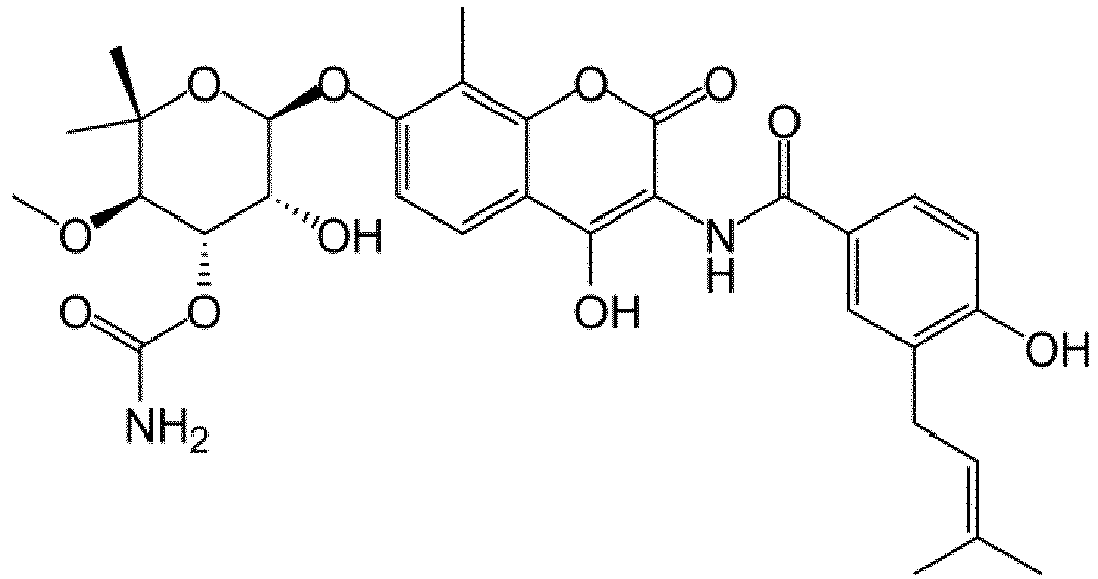
- the iupac name of novobiocin is: 4-Hydroxy-3-[4-hydroxy-3-(3-methylbut-2-enyl)benzamido]-8-methylcoumarin-7-yl 3-O-carbamoyl-5,5-di-C-methyl- ⁇ -I-lyxofuranoside and the structural chemical formula is as follows:
- HSP90 inhibitors have anti-proliferative effects in other tumor types that express HSP90. Therefore, based on this new protein expression results, it is predicted that HSP90 inhibitors would reduce the proliferation of pituitary tumor cells, in particular corticotroph adenomas.
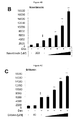
- the present invention discloses that the HSP90 inhibitors 17-AAG, silibinin, and novobiocin strongly inhibit the proliferation of the corticotroph tumor cell line AtT-20 ( Figure 2 ).
- One preferred embodiment is therefore a C-terminal HSP90 inhibitor for use in the treatment of corticotrophic adenoma.
- HSP90 inhibitors that bind to the N-terminal domain such as 17-AAG induced the degradation of the GR (glucocorticoid receptor) protein
- C-terminal HSP90 inhibitors such as novobiocin and silibinin did not produce this effect ( Figure 3 ).
- novobiocin and silibinin increased the transcriptional activity of GR, whereas 17-AAG inhibited this activity ( Figure 4 ).
- AtT-20 cells were incubated in the presence of the synthetic glucocorticoid dexamethasone. Under these conditions, only silibinin reduced ACTH production while 17-AAG had no effect ( Figure 5 ), which is in line with our observation of higher GR activity only under silibinin treatment. Silibinin also increases the inhibition of ACTH secretion produced by sub-optimal concentrations of the somatostatin analog octreotide in AtT-20 cells ( Figure 6 ).
- the present invention is based on the findings that only C-terminal HSP90 inhibitors such as silibinin, novobiocin, and their derivates can reduce ACTH in patients with Cushing's disease but not the conventional N-terminal HSP90 inhibitors such as 17-AAG.
- C-terminal HSP90 inhibitors in particular substances of the silibinin and novobiocin families as represented by the compounds of general formula (I), (II), can be used to treat pituitary tumors, in particular Cushing's disease, in human patients, dogs, and horses.
- a combination of at least one compound of general formula (I) or (II) and at least one other active agent can be used for treating pituitary adenomas.
- the at least one other active agent for treating pituitary adenomas is selected from the group comprising or consisting of ketoconazole, somatostatin, analogues of somatostatin, octreotide, pasireotide, lanreotide, vapreotide, GR antagonists like mifepristone, retinoic acid, rosiglitazone, and dopamine agonists like cabergoline and bromocriptine.
- the present invention also comprises pharmaceutically acceptable salts of the compounds according to the general formula (I) or (II), all stereoisomeric forms of the compounds according to the general formula (I) or (II) as well as solvates, especially hydrates or prodrugs thereof.
- the compounds of the general formula (I) or (II) of the present invention may form salts with organic or inorganic acids or bases.
- suitable acids for such acid addition salt formation are hydrochloric acid, hydrobromic acid, sulfuric acid, phosphoric acid, acetic acid, citric acid, oxalic acid, malonic acid, salicylic acid, p-aminosalicylic acid, malic acid, fumaric acid, succinic acid, ascorbic acid, maleic acid, sulfonic acid, phosphonic acid, perchloric acid, nitric acid, formic acid, propionic acid, gluconic acid, lactic acid, tartaric acid, hydroxymaleic acid, pyruvic acid, phenylacetic acid, benzoic acid, p-aminobenzoic acid, p-hydroxybenzoic acid, methanesulfonic acid, ethanesulfonic acid, nitrous acid, hydroxyethanesulfonic acid, ethylenesulfonic
- salts could also be formed with inorganic or organic bases.
- suitable inorganic or organic bases are, for example, NaOH, KOH, NH 4 OH, tetraalkylammonium hydroxide, lysine or arginine and the like.
- Salts may be prepared in a conventional manner using methods well known in the art, for example by treatment of a solution of the compound of the general formula (I) or (II) with a solution of an acid, selected out of the group mentioned above.
- Some of the compounds of the general formula (I) or (II) of the present invention may be crystallised or recrystallised from solvents such as aqueous and organic solvents. In such cases solvates may be formed.
- This invention includes within its scope stoichiometric solvates including hydrates as well as compounds (I) or (II) containing variable amounts of water that may be produced by processes such as lyophilisation.
- the compounds of the general formula (I) or (II) exist in the form of optical isomers, i.e. enantiomers and mixtures of said isomers in all ratios, e.g. racemic mixtures.
- the invention includes all such forms, in particular the pure isomeric forms or enantiomeric forms.
- the different isomeric forms may be separated or resolved one from the other by conventional methods, or any given isomer may be obtained by conventional synthetic methods or by stereospecific or asymmetric syntheses.
- a compound according to the general formula (I) or (II) contains an alkene moiety, the alkene can be presented as a cis or trans isomer or a mixture thereof.
- an isomeric form of a compound of the invention When an isomeric form of a compound of the invention is provided substantially free of other isomers, it will preferably contain less than 5% w/w, more preferably less than 2% w/w and especially less than 1% w/w of the other isomer(s).
- the above-mentioned compounds according to the general formula (I) or (II) as well as the pharmaceutical compositions comprising said compounds according to the general formula (I) or (II) are useful for the treatment of pituitary adenomas.
- the compounds according to the general formula (I) or (II) of the present invention can be used for treatment of pituitary adenomas or for the preparation of a pharmaceutical formulation for prophylaxis and treatment of pituitary adenomas.
- compositions comprising at least one compound according to the general formula (I) or (II) of the present invention as active ingredient, together with at least one other active agent, carrier, excipient and/or diluents.
- the at least one other active agent is preferably selected from the group comprising or consisting of ketoconazole, somatostatin analogs like somatostatin, octreotide, pasireotide, lanreotide, vapreotide, GR antagonists like mifepristone, retinoic acid, rosiglitazone, and dopamine agonists like cabergoline or bromocriptine.
- the at least one other active agent is selected from the group comprising or consisting of ketoconazole, octreotide, pasireotide, mifepristone, retinoic acid, rosiglitazone, cabergoline or bromocriptine.
- the pharmaceutical compositions of the present invention can be prepared in a conventional solid or liquid carrier or diluent and a conventional pharmaceutically-made adjuvant at suitable dosage level in a known way.
- the preferred preparations are adapted for oral application.
- These administration forms include, for example, pills, tablets, film tablets, coated tablets, capsules, powders and deposits.
- the present invention also includes pharmaceutical preparations for parenteral application, including dermal, intradermal, intragastral, intracutan, intravasal, intravenous, intramuscular, intraperitoneal, intranasal, intravaginal, intrabuccal, percutan, rectal, subcutaneous, sublingual, topical, or transdermal application, which preparations in addition to typical vehicles and/or diluents contain at least one compound according to the general formula (I) or (II) and/or a pharmaceutical acceptable salt thereof as active ingredient for use in the treatment of pituitary adenomas.
- compositions according to the present invention containing at least one compound according to the general formula (I) or (II), and/or a pharmaceutical acceptable salt thereof as active ingredient will typically be administered together with suitable carrier materials selected with respect to the intended form of administration, i.e. for oral administration in the form of tablets, capsules (either solid filled, semi-solid filled or liquid filled), powders for constitution, extrudates, deposits, gels, elixirs, dispersable granules, syrups, suspensions, and the like, and consistent with conventional pharmaceutical practices.
- suitable carrier materials selected with respect to the intended form of administration, i.e. for oral administration in the form of tablets, capsules (either solid filled, semi-solid filled or liquid filled), powders for constitution, extrudates, deposits, gels, elixirs, dispersable granules, syrups, suspensions, and the like, and consistent with conventional pharmaceutical practices.
- the active drug component may be combined with any oral non-toxic pharmaceutically acceptable carrier, preferably with an inert carrier like lactose, starch, sucrose, cellulose, magnesium stearate, dicalcium phosphate, calcium sulfate, talc, mannitol, ethyl alcohol (liquid filled capsules) and the like.
- suitable binders, lubricants, disintegrating agents and coloring agents may also be incorporated into the tablet or capsule.
- Powders and tablets may contain about 5 to about 95 weight % of the compound (I) or (II) and/or the respective pharmaceutically active salt as active ingredient.
- Suitable binders include starch, gelatin, natural sugars, corn sweeteners, natural and synthetic gums such as acacia, sodium alginate, carboxymethylcellulose, polyethylene glycol and waxes.
- suitable lubricants there may be mentioned boric acid, sodium benzoate, sodium acetate, sodium chloride, and the like.
- Suitable disintegrants include starch, methylcellulose, guar gum, and the like. Sweetening and flavoring agents as well as preservatives may also be included, where appropriate. The disintegrants, diluents, lubricants, binders etc. are discussed in more detail below.
- compositions may be formulated in sustained release form to provide the rate controlled release of any one or more of the components or active ingredients to optimise the therapeutic effect(s), e.g. antihistaminic activity and the like.
- Suitable dosage forms for sustained release include tablets having layers of varying disintegration rates or controlled release polymeric matrices impregnated with the active components and shaped in tablet form or capsules containing such impregnated or encapsulated porous polymeric matrices.
- Liquid form preparations include solutions, suspensions, and emulsions. As an example, there may be mentioned water or water/propylene glycol solutions for parenteral injections or addition of sweeteners and opacifiers for oral solutions, suspensions, and emulsions. Liquid form preparations may also include solutions for intranasal administration. Aerosol preparations suitable for inhalation may include solutions and solids in powder form, which may be present in combination with a pharmaceutically acceptable carrier such as an inert, compressed gas, e.g. nitrogen.
- a pharmaceutically acceptable carrier such as an inert, compressed gas, e.g. nitrogen.
- a low melting fat or wax such as a mixture of fatty acid glycerides like cocoa butter is melted first, and the active ingredient is then dispersed homogeneously therein e.g. by stirring. The molten, homogeneous mixture is then poured into conveniently sized moulds, allowed to cool, and thereby solidified.
- solid form preparations which are intended to be converted, shortly before use, to liquid form preparations for either oral or parenteral administration.
- liquid forms include solutions, suspensions, and emulsions.
- the compounds according to the general formula (I) or (II) may also be delivered transdermally.
- the transdermal compositions may have the form of a cream, a lotion, an aerosol and/or an emulsion and may be included in a transdermal patch of the matrix or reservoir type as is known in the art for this purpose.
- capsule refers to a specific container or enclosure made e.g. of methyl cellulose, polyvinyl alcohols, or denatured gelatins or starch for holding or containing compositions comprising the active ingredient(s).
- Capsules with hard shells are typically made of blended of relatively high gel strength gelatins from bones or pork skin.
- the capsule itself may contain small amounts of dyes, opaquing agents, plasticisers and/or preservatives.
- Under tablet a compressed or moulded solid dosage form is understood which comprises the active ingredients with suitable diluents.
- the tablet may be prepared by compression of mixtures or granulations obtained by wet granulation, dry granulation, or by compaction well known to a person of ordinary skill in the art.
- Oral gels refer to the active ingredients dispersed or solubilised in a hydrophilic semi-solid matrix.
- Powders for constitution refers to powder blends containing the active ingredients and suitable diluents which can be suspended e.g. in water or in juice.
- Suitable diluents are substances that usually make up the major portion of the composition or dosage form. Suitable diluents include sugars such as lactose, sucrose, mannitol, and sorbitol, starches derived from wheat, corn rice, and potato, and celluloses such as microcrystalline cellulose.
- the amount of diluent in the composition can range from about 5 to about 95 % by weight of the total composition, preferably from about 25 to about 75 weight %, and more preferably from about 30 to about 60 weight %.
- disintegrants refers to materials added to the composition to support break apart (disintegrate) and release the pharmaceutically active ingredients of a medicament.
- Suitable disintegrants include starches, "cold water soluble" modified starches such as sodium carboxymethyl starch, natural and synthetic gums such as locust bean, karaya, guar, tragacanth and agar, cellulose derivatives such as methylcellulose and sodium carboxymethylcellulose, microcrystalline celluloses, and cross-linked microcrystalline celluloses such as sodium croscaramellose, alginates such as alginic acid and sodium alginate, clays such as bentonites, and effervescent mixtures.
- the amount of disintegrant in the composition may range from about 2 to about 20 weight % of the composition, more preferably from about 5 to about 10 weight %.
- Binders are substances which bind or "glue” together powder particles and make them cohesive by forming granules, thus serving as the "adhesive" in the formulation. Binders add cohesive strength already available in the diluent or bulking agent. Suitable binders include sugars such as sucrose, starches derived from wheat corn rice and potato, natural gums such as acacia, gelatin and tragacanth, derivatives of seaweed such as alginic acid, sodium alginate and ammonium calcium alginate, cellulose materials such as methylcellulose, sodium carboxymethylcellulose and hydroxypropylmethylcellulose, polyvinylpyrrolidone, and inorganic compounds such as magnesium aluminum silicate. The amount of binder in the composition may range from about 2 to about 20 weight % of the composition, preferably from about 3 to about 10 weight %, and more preferably from about 3 to about 6 weight %.
- Lubricants refer to a class of substances which are added to the dosage form to enable the tablet granules etc. after being compressed to release from the mould or die by reducing friction or wear.
- Suitable lubricants include metallic stearates such as magnesium stearate, calcium stearate, or potassium stearate, stearic acid, high melting point waxes, and other water soluble lubricants such as sodium chloride, sodium benzoate, sodium acetate, sodium oleate, polyethylene glycols and D,L-leucine. Lubricants are usually added at the very last step before compression, since they must be present at the surface of the granules.
- the amount of lubricant in the composition may range from about 0.2 to about 5 weight % of the composition, preferably from about 0.5 to about 2 weight %, and more preferably from about 0.3 to about 1.5 weight % of the composition.
- Glidents are materials that prevent caking of the components of the pharmaceutical composition and improve the flow characteristics of granulate so that flow is smooth and uniform.
- Suitable glidents include silicon dioxide and talc.
- the amount of glident in the composition may range from about 0.1 to about 5 weight % of the final composition, preferably from about 0.5 to about 2 weight %.
- Coloring agents are excipients that provide coloration to the composition or the dosage form. Such excipients can include food grade dyes adsorbed onto a suitable adsorbent such as clay or aluminum oxide.
- the amount of the coloring agent may vary from about 0.1 to about 5 weight % of the composition, preferably from about 0.1 to about 1 weight %.
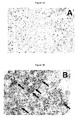
- the immunohistochemical detection of HSP90 was performed with the streptavidin-biotin-peroxidase complex method on normal human pituitaries taken from autopsy samples of healthy subjects after accidental death and on tumor biopsies taken during trans-sphenoidal surgery from patients with Cushing's disease.
- the tissue samples were immediately frozen on dry ice and cut into histological sections. After hydration, primary antibodies directed against HSP90-alpha (Epitomics) were applied to the sections in a dilution 1:200. Then, the sections were washed and a secondary, anti-rabbit biotinylated antibody was applied.
- the antibodies were visualized with the ABC-complex and 3,3'-diaminobenzidine, producing a brown color.
- the slides were counterstained with toluidine-blue to visualize the cell nuclei.
- WST-1 proliferation assay (Roche Applied Science). This assay measures the activity of the mitochondrial succinate dehydrogenase. After 4 days of treatment with different HSP90 inhibitors, the WST-1 reagent was added to AtT-20 cell cultures in 96-well plates to a final dilution of 1:10. The cells were incubated for 2 hours and then the absorbance of the reaction product was measured with an ELISA reader at 440 nm, following the manufacturer's instructions.
- Example 03 Western Blot - evaluation of the induction of GR degradation
- AtT-20 cells in 6-well plates were treated with different HSP90 inhibitors for the times indicated in each experiment.
- cell lysates were prepared in lysis buffer supplemented with protease and phosphatase inhibitor cocktail (Roche). Samples of the lysates were separated by PAGE and blotted onto membranes using standard western blot procedures with gels and buffers from Invitrogen. After blocking the membranes with 5% non-fat dry milk, primary antibodies against GR (H-300, Santa Cruz), Cdk1 ( BD Transduction Laboratories), and actin ( Cell Signalling) were added. Anti-mouse and anti-rabbit horseradish peroxidase-conjugated secondary antibodies were used to detect the primary antibodies. The detection was carried out using Lumilight (Roche) or ECL-Plus (Thermo Scientific).
- AtT-20 cells (3 x 10 5 ) were transfected for 3 hours with 1 ⁇ g of the MTV-Luc reporter plasmid in 6-well plates.
- Cell transfection was performed with SuperFect (Qiagen GmbH). After an overnight incubation in culture medium with 10% fetal calf serum, the cells were treated with different HSP90 inhibitors in combination with dexamethasone. Luciferase activity in cell lysates was measured with a Berthold luminometer after addition of luciferin and ATP. Transfection efficiency was determined using the Rous sarcoma virus- ⁇ -gal construct. Data are expressed as the ratio of luciferase activity to ⁇ -gal activity.
- AtT-20 cells were seeded in 96-well plates in cell culture medium containing dexamethasone to mimic the high glucocorticoid concentration in the blood of patients with Cushing's disease.
- the cultures were treated with different HSP90 inhibitors or octreotide, as indicated in the figures.
- the cell culture supernatants were collected and frozen.
- ACTH secreted into the cell culture medium was measured by radio-immunoassay (RIA) in comparison with known amounts of ACTH standards diluted in the same medium.
- the RIA was performed using a N-terminal-specific anti-ACTH antibody and ACTH was labeled with I 125 .
- the bound and free fractions were separated by centrifugation with charcoal and the radioactivity was measured in a beta-counter.
Landscapes
- Health & Medical Sciences (AREA)
- Chemical & Material Sciences (AREA)
- Life Sciences & Earth Sciences (AREA)
- Medicinal Chemistry (AREA)
- Pharmacology & Pharmacy (AREA)
- Animal Behavior & Ethology (AREA)
- General Health & Medical Sciences (AREA)
- Public Health (AREA)
- Veterinary Medicine (AREA)
- Epidemiology (AREA)
- Organic Chemistry (AREA)
- Natural Medicines & Medicinal Plants (AREA)
- Molecular Biology (AREA)
- Microbiology (AREA)
- Alternative & Traditional Medicine (AREA)
- Biotechnology (AREA)
- Botany (AREA)
- Medical Informatics (AREA)
- Engineering & Computer Science (AREA)
- Mycology (AREA)
- Chemical Kinetics & Catalysis (AREA)
- General Chemical & Material Sciences (AREA)
- Nuclear Medicine, Radiotherapy & Molecular Imaging (AREA)
- Pharmaceuticals Containing Other Organic And Inorganic Compounds (AREA)
- Medicines That Contain Protein Lipid Enzymes And Other Medicines (AREA)
Abstract
The present invention relates to C-terminal HSP90 inhibitors, like silibinin and its derivatives, stereoisomeric forms, prodrugs, solvates, hydrates and/or pharmaceutically acceptable salts of these compounds as well as pharmaceutical compositions containing at least one of these compounds together with pharmaceutically acceptable carrier, excipient and/or diluents. Said compounds and its compositions have been identified as useful for the treatment of pituitary adenomas.
Description
- The present invention relates to C-terminal HSP90 inhibitors, like silibinin and its derivatives, stereoisomeric forms, prodrugs, solvates, hydrates and/or pharmaceutically acceptable salts of these compounds as well as pharmaceutical compositions containing at least one of these compounds together with pharmaceutically acceptable carrier, excipient and/or diluents. Said compounds and its compositions have been identified as useful for the treatment of pituitary adenomas.
- Pituitary tumors, also called pituitary adenomas, develop in the pituitary gland and are usually benign but in some cases invade surrounding tissues and metastasize (Heaney A.P. and Melmed S. Nature Reviews Cancer 4:285-295, 2004). Symptoms caused by pressure from a larger pituitary tumor may include: visual field defects due to pressure on the optic nerve, increased intracranial pressure, headaches, and problems with the sense of smell. Some pituitary tumors produce increased levels of pituitary hormones which causes different symptoms. Pituitary tumors are classified into different types according to the hormones they produce or the absence of hormone production.
- Corticotroph pituitary adenomas are also called "ACTH-secreting pituitary adenomas", "Cushing's disease", or "pituitary-dependent Cushing's syndrome". Corticotroph pituitary adenomas produce high amounts of ACTH and increase cortisol levels in the blood. This results in high blood pressure, high cholesterol, weight gain or central obesity, thinning of the skin, striae, and depression. Beside humans, Cushing's disease is very frequent in dogs and horses.
- Cushing's disease is not to be confused with Cushing's syndrome, which is originated in the adrenal gland or produced by therapeutic treatments with synthetic corticosteroids. In contrast to Cushing's disease, Cushing's syndrome presents normal or low (suppressed) ACTH levels. Pituitary tumors and adrenal tumors are, therefore, different clinical entities, they are characterized by different symptoms, they can be differentially diagnosed and they are treated differently. Some cases of Cushing's syndrome are treated by surgical resection of both adrenal glands to eliminate endogenous glucocorticoids. The resulting lack of cortisol negative feedback may cause corticotroph tumors in the pituitary to grow unchecked. This type of corticotroph adenoma induced by adrenalectomy secretes high amounts of ACTH and MSH and is called Nelson's syndrome.
- Prolactin-producing pituitary tumors are also called prolactinomas or lactotroph adenomas and its symptoms are galactorrhea, amenorrhea, hypogonadism, infertility and impotence.
- Growth hormone-producing pituitary tumors are also called somatotroph adenomas and produce gigantism or acromegaly, severe headache, heart hypertrophy, hypertension, and diabetes mellitus.
- Thyroid-stimulating hormone-producing tumors secrete TSH and are also called thyrotroph adenomas, which either remain asymptomatic or produce hyperthyroidism.
- Pituitary adenomas that do not secrete significant amounts of pituitary hormones are called non-functioning pituitary adenomas or null cell adenomas and cause only symptoms by pressure or invasion.
- Pituitary adenomas are usually removed by surgery but this approach is not always successful. In many cases, only an incomplete resection is achieved and the tumors recur. Radiation therapy is also performed in some cases but produces side effects and the success of the treatment is low.
- Some treatments like the dopamine D2 receptor agonists bromocriptine, cabergoline, or quinagolide are effective only in some cases, mainly in prolactin-secreting pituitary adenomas.
- Somatostatin analogs like octreotide and pasireotide (also called Som230) are also partially effective in some cases, mainly in somatotroph and corticotroph pituitary adenomas (Batista D.L. et al., Journal of Clinical Endocrinology and Metabolism 91:4482-4488, 2006; Petersen, S. et al., Journal of Clinical Endocrinology and Metabolism 95:2781-2789, 2010; Feelders, R.A. et al., New England Journal of Medicine 362:1846-1848, 2010; Boscaro M. et al., Journal of Clinical Endocrinology and Metabolism 94:115-122, 2009). However, pasireotide frequently induces severe hyperglycemia and other side effects in patients with Cushing's disease (Kvols L.K. et al, Endocr Relat Cancer 19:657-66, 2012).
- Some experimental treatments have been proposed for corticotroph pituitary adenomas such as the PPAR-gamma receptor agonist rosiglitazone (Heaney A.P. et al., Nature Medicine 8:1281-1287, 2002). Rosiglitazone, might increase the risk of cardiovascular disease and bone fractures that are of particular concern in patients with pituitary adenomas, specially corticotroph adenomas that induce osteoporosis. Retinoic acid has been studied in animals but it has not been tested in human patients due to concerns about its possible side effects (Paez-Pereda M. et al., Journal of Clinical Investigation 108-1123-1131, 2001). It might cause dyspnea, fever, weight gain, and peripheral edema. Glucocorticoid receptor antagonists such as mifepristone might be used to reduce the symptoms of the high glucocorticoid levels induced by corticotroph tumors (
André Ulmann et al.: WO2009/050136 ). However, GR antagonists do not reduce corticotroph tumor proliferation or ACTH secretion and have side effects such as abdominal pain, uterine cramping, and vaginal bleeding. In conclusion, there is no effective pharmacological treatment for pituitary adenomas that reduces tumor cell proliferation and hormone secretion without producing serious side effects. As a result, many patients with pituitary tumors, in particular corticotroph pituitary adenomas, remain without an efficacious treatment. - It is the objective of the present invention to provide compounds and/or pharmaceutically acceptable salts thereof which can be used as pharmaceutically active agents for the treatment of pituitary adenomas as well as compositions comprising at least one of those compounds and/or pharmaceutically acceptable salts thereof as pharmaceutically active ingredients.
- The objective of the present invention is solved by the teaching of the independent claims. Further advantageous features, aspects and details of the invention are evident from the dependent claims, the description, the figures, and the examples of the present application.
- This invention provides new methods for treating pituitary adenomas with pharmaceutical compositions containing HSP90 inhibitors that bind to the C-terminal domain of HSP90, in particular silibinin or extracts of milk thistle (Silybum marianum) that contain silibinin or its derivatives, for example silymarin and novobiocin. In contrast to the conventional Hsp90 inhibitors that bind to the N-terminal domain, for example 17-AAG, only C-terminal binding inhibitors such as silibinin or novobiocin increases the activity of the glucocorticoid receptor (GR) and reduces ACTH production in pituitary tumor cells. Therefore, HSP90 inhibitors that bind to the C-terminal domain can be used, alone or in combination with other drugs, to treat pituitary tumors, in particular corticotroph pituitary adenomas, also called ACTH-secreting pituitary adenoma or Cushing's disease.
- Accordingly the present invention relates to C-terminal HSP90 inhibitors for the use in treatment of pituitary adenomas. Suitable C-terminal HSP90 inhibitors for the use in treatment of pituitary adenomas are for example silibinin, novobiocin, chlorobiocin or coumermycin A1 and silibinin derivatives as represented by the general formula (I).
- Furthermore, the present invention relates to compounds of the general formula (I)

R1, R2, R3, R4, R6, R7 and R8 represent independently of each other -H, -OH, -OCH3, or -OC2H5;
R5 represents -H, or -OR9;
R9 represents -H, -CH3, -C2H5, -βGlc, -βGal, -βMal, or -βLac;
and enantiomers, stereoisomeric forms, mixtures of enantiomers, diastereomers, mixtures of diastereomers, hydrates, solvates, acid salt forms, tautomers, and racemates of the above mentioned compounds and pharmaceutically acceptable salts thereof for the use in the treatment of pituitary adenomas. - Preferred is a compound of the following formula (II)
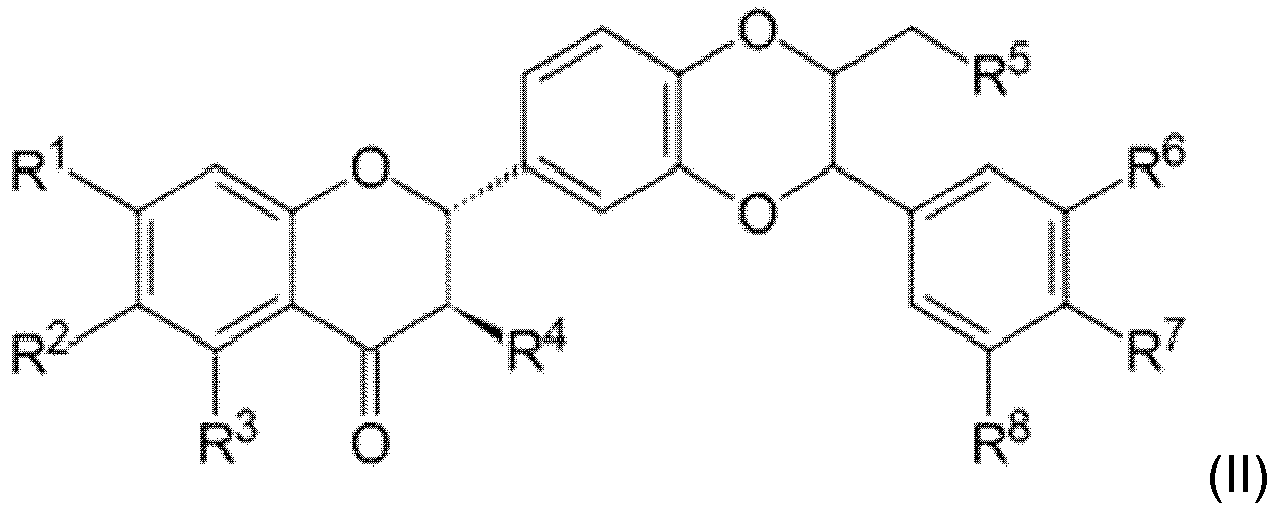
R1, R3, R4, R5 and R7 represent -OH;
R2 and R8 represent -H;
R5 represents -OR9;
R6 represents - CH3;
R9 represents -H, -CH3, -C2H5, -βGlc, -βGal, -βMal, or -βLac;
and diastereomers, mixtures of diastereomers, hydrates, solvates, acid salt forms of the above mentioned compounds and pharmaceutically acceptable salts thereof for the use in the treatment of pituitary adenomas. - The abbreviations used herein have the following meanings:
- βGlc = β-Glucosyl =

- βGal = β-Galactosyl =
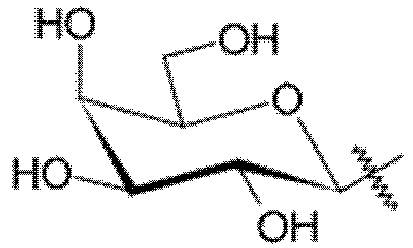
- βMal = β-Maltosyl =

- βLac = β-Lactosyl =

- Further embodiment of the present invention is use of at least one compound of general formula (I) or (II) in the manufacture of a medicament for the treatment of pituitary adenomas.
- The pituitary adenoma of the present invention may be selected from the group comprising or consisting of: corticotroph pituitary adenomas (also called ACTH-secreting pituitary adenomas, Cushing's disease or pituitary-dependent Cushing's syndrome), lactotroph adenomas, somatotroph adenomas, thyrotroph adenomas, gonadotrophic adenomas, and null cell adenomas. Among them corticotroph pituitary adenomas are especially preferred.
- Another embodiment of the present invention is a combination of at least one compound of general formula (I) or (II) and at least one other active agent for the use in treating pituitary adenomas.
- In said combination the at least one active agent for the use in treating pituitary adenomas is preferred selected from the group comprising or consisting of ketoconazole, octreotide, pasireotide, mifepristone, retinoic acid, rosiglitazone, cabergoline and bromocriptine.
- Further embodiment of the present invention is use of said combination of at least one compound of general formula (I) or (II) and at least one other active agent in the manufacture of a medicament for the treatment of pituitary adenomas.
- In other embodiment of the present invention pharmaceutical composition comprises at least one compound of general formula (I) or (II) as an active agent, together with at least one other active agent, carrier, excipient and/or diluent.
- Preferred pharmaceutical compositions comprise at least one other active agent which is selected from the group comprising or consisting of ketoconazole, octreotide, pasireotide, mifepristone, retinoic acid, rosiglitazone, cabergoline and bromocriptine.
- Said pharmaceutical composition is suitable for use in the treatment of pituitary adenomas.
- The further embodiment of the present invention is a plant extract from Silybum marianum containing at least one compound of general formula (I) or (II) for the treatment of pituitary adenomas. One known extract used in medicine is silymarin; a flavonolignane complex consisting of silibinin A and B/silybin/silymarin I, isosilibinin A and B, silicristin/silymarin II, and silidianin.
- HSP90 (heat shock protein 90) is a molecular chaperone and is one of the most abundant proteins expressed in cells. It is a member of the heat shock protein family, which is upregulated in response to stress.
- Heat shock proteins, as a class, are among the most highly expressed cellular proteins across all species. As their name implies, heat shock proteins protect cells when stressed by elevated temperatures. They account for 1 - 2 % of total protein in unstressed cells. However, when cells are heated, the fraction of heat shock proteins increases to 4 - 6 % of cellular proteins. HSP90 is one of the most common of the heat-related proteins. The "90" comes from the fact that it weighs roughly 90 kDa.
- In humans, Hsp90 exists as a homodimer and consists of three highly conserved domains: a highly conserved N-terminal domain (NTD) of 25 kDa (amino acids 9 to 232 in the human HSP90-alpha sequence), a middle domain (MD) of 35 kDa and a C-terminal domain (CTD) of 12 kDa (amino acids 629 to 731 in the human HSP90-alpha sequence).
- N-Terminal domain shows high homology not only among members of the Hsp90 chaperone family but also to members of the ATPase/kinase GHKL (Gyrase, Hsp90, Histidine Kinase, MutL) superfamily. The N-terminal domain contains an ATP-binding site that also binds the natural products, geldanamycin (GDA) and radicicol. Some Hsp90 functions depend upon the ability of the N-terminal domain to bind and hydrolyze ATP.
- The middle domain exhibits high affinity for co-chaperones as well as client proteins. Structural and functional analyses have demonstrated that the middle domain of Hsp90 contains a catalytic loop which may serve as an acceptor for the γ-phosphate of ATP, when it is bound to the N-terminus.
- The C-Terminal domain has a second ATP-binding site. The Hsp90 C-terminal domain is known to display chaperone activity independent of the N-terminus, as well as mediate dimerization and oligimerization of Hsp90 monomeric species. Structurally, the C-terminus of Hsp90 contains a conserved pentapeptide sequence (Met-Glu-Glu-Val-Asp) that is recognized by co-chaperones. The co-chaperones that recognize this sequence all contain multiple copies of the tetratricopeptide repeat (TPR), a 34 amino acid sequence that elicits specific binding to Hsp90. This sequence, though conserved, has been reported as dispensable for activity
- The functions of HSP90 include assisting in protein folding, stabilizing various proteins such as steroid receptors, and aiding in protein degradation. To date, more than 200 HSP90-dependent client proteins have been discovered, of which HER2, Src family kinases, Raf, PLK, RIP, Akt, telomerase and Met are directly associated with the six hallmarks of cancer. Consequently, inhibition of the HSP90 folding machinery provides a combinatorial approach towards the disruption of multiple signaling nodes that are critical for malignant cell growth and proliferation. That is why HSP90 inhibitors are investigated as anti-cancer drugs.
- Inhibitors of the chaperone protein Hsp90 have been found to have effects in HER2-positive metastatic breast cancer, multiple myeloma, leukemia, and non-small-cell lung cancer (Trepel et al. Nature Reviews Cancer 10:537-549, 2010). However, these compounds were not efficacious in, for example, prostate cancer (Heath E.I. et al., Clinical Cancer Research 14:7940-7946). Therefore, no prediction can be made a priori about the effects of HSP90 inhibitors on other tumor types.
- HSP90 inhibitors belong into two clearly defined groups: the ones that bind to the N-terminal domain (amino acids 9 to 232 in the human HSP90-alpha sequence), and the ones that bind to the C-terminal domain (amino acids 629 to 731 in the human HSP90-alpha sequence; Whitesell L. and Lindquist SL. Nature Reviews Cancer 5:761-772, 2005; Zhang H. and Burrows F. Journal of Molecular Medicine 82:488-499, 2004). Among the first group are ansamycin derivatives such as geldanamycin, 17-AAG, and 17-DMAG; macrolides such as radicicol, and purine derivatives such as CCT018159.
- The term "C-terminal HSP90 inhibitor" as used herein refers to all inhibitors of HSP90 which bind to the C-terminal domain of HSP90. In addition, C-terminal HSP90 inhibitors induce a distinct conformation of HSP90 that alters HSP90 dimerization and client interactions. Among the C-terminal HSP90 inhibitors novobiocin, silibinin (also called silybin), and their derivatives (Yun B-G, et al., Biochemistry 43:8217-8229, 2004; Kusuma B.R. et al., Bioorganic & Medicinal Chemistry Letters 21:7170-7174, 2011; Kusuma B.R. et al., J. Med. Chem. 55:5797-5812, 2012; Eskew J.D. et al., BMC Cancer 11:468, 2011; Cohen S.M. et al., Ann. Surg. Oncol. 19:S483-S490, 2012; Zhao H. et al., Bioorganic & Medicinal Chemistry Letters 21:2659-2664, 2011) are especially preferred.
- Therefore one aspect of the present invention refers to silibinin and novobiocin for the use in treatment of pituitary adenomas.
- Silibinin, also known as silybin or silibin, is the major active constituent of silymarin, a standardized extract of the silybum marianum (also called milk thistle) seeds containing mixture of flavonolignans consisting of among others of silibinin, isosilibinin, silicristin and silidianin. Silibinin itself is mixture of two diastereomers silibinin A and silibinin B in approximately equimolar ratio (scheme 1). The IUPAC name of silibinin is (2R,3R)-3,5,7-trihydroxy-2-[(2R,3R)-3-(4-hydroxy-3-methoxyphenyl)-2-(hydroxymethyl)-2,3-dihydrobenzo[b][1,4]dioxin-6-yl]chroman-4-one. Hydroxy groups of silibinin can be easily acetylated or gylcosylated, for example, by glucose, galactose, maltose and lactose.
- Generally an extract of Silybum marianum has the main active flavonoids, i.e. silybin, isosilybin, silychristin, silydianin and taxifolin. The maximum yields of taxifolin, silychristin, silydianin, silibinin A and silibinin B in ethanol were 0.6, 4.0, 0.4, 4.0 and 7.0 mg/g of defatted seed, respectively. If silibinin A is the diastereoisomer of choice methanol would be the preferred extraction solvent because it yields the highest silibinin A to silibinin B ratio. Lipid removal is an important extraction step, because defatted material yields twice the silymarin concentration. As an alternative extraction solvent hot water can be used.
- Silymarin isolated from Silybum marianum, is a mixture of three isomers: silybin, silydianin and silychristin.


- Silibinin has shown effects in some animal models of prostate cancer, pancreas carcinoma, hepatocellular carcinoma, cervical cancer, and skin tumors (Gazák R. et al., Current Medicinal Chemistry 14:315-338, 2007). It might also be useful for the prevention of the development of bladder tumors. However, it did not show therapeutic effects in some models of pulmonary adenoma. Therefore, no prediction can be made a priori about the effects of silibinin on other tumor types.
- Silibinin has been found to modulate in vitro glucocorticoid secretion in adrenal tumor cells (also called Cushing's syndrome but clearly different from pituitary-derived Cushing's disease or corticotroph adenoma). However, in adrenal cells, silibinin potentiates the effects of ACTH (Rácz K. et al., J Endocrinol. 124:341-5, 1990). This effect would not be desirable in patients with corticotroph adenomas that secrete abnormally high levels of ACTH. Therefore, the person skilled in the art would assume that silibinin would have a detrimental effect on patients with corticotroph adenomas instead of the desired therapeutic effect that would rather involve the inhibition of ACTH and its effects.
- Novobiocin, also known as albamycin or cathomycin, is an aminocoumarin antibiotic that is produced by the actinomycete Streptomyces niveus. The iupac name of novobiocin is: 4-Hydroxy-3-[4-hydroxy-3-(3-methylbut-2-enyl)benzamido]-8-methylcoumarin-7-yl 3-O-carbamoyl-5,5-di-C-methyl-α-I-lyxofuranoside and the structural chemical formula is as follows:
- Surprisingly, in the present invention high levels of expression of the HSP90 protein in human corticotroph adenomas was found as compared to the normal pituitary gland (
Figure 1 ). HSP90 inhibitors have anti-proliferative effects in other tumor types that express HSP90. Therefore, based on this new protein expression results, it is predicted that HSP90 inhibitors would reduce the proliferation of pituitary tumor cells, in particular corticotroph adenomas. In fact, the present invention discloses that the HSP90 inhibitors 17-AAG, silibinin, and novobiocin strongly inhibit the proliferation of the corticotroph tumor cell line AtT-20 (Figure 2 ). One preferred embodiment is therefore a C-terminal HSP90 inhibitor for use in the treatment of corticotrophic adenoma. - Surprisingly, only the HSP90 inhibitors that bind to the N-terminal domain such as 17-AAG induced the degradation of the GR (glucocorticoid receptor) protein, while C-terminal HSP90 inhibitors such as novobiocin and silibinin did not produce this effect (
Figure 3 ). In addition, only novobiocin and silibinin increased the transcriptional activity of GR, whereas 17-AAG inhibited this activity (Figure 4 ). - These results show for the first time a sharp contrast between N-terminal and C-terminal HSP90 inhibitors as regards their effects on GR stability and activity, which is particularly relevant for the treatment of Cushing's disease that presents high glucocorticoid levels and partial glucocorticoid resistance.
- To mimic the high levels of the glucocorticoid cortisol that is present in patients with Cushing's disease, AtT-20 cells were incubated in the presence of the synthetic glucocorticoid dexamethasone. Under these conditions, only silibinin reduced ACTH production while 17-AAG had no effect (
Figure 5 ), which is in line with our observation of higher GR activity only under silibinin treatment. Silibinin also increases the inhibition of ACTH secretion produced by sub-optimal concentrations of the somatostatin analog octreotide in AtT-20 cells (Figure 6 ). - The present invention is based on the findings that only C-terminal HSP90 inhibitors such as silibinin, novobiocin, and their derivates can reduce ACTH in patients with Cushing's disease but not the conventional N-terminal HSP90 inhibitors such as 17-AAG.
- These results could not have been predicted based on the previously known effects of conventional HSP90 inhibitors on other tumor types. Based on these surprising effects, it is clear that C-terminal HSP90 inhibitors, in particular substances of the silibinin and novobiocin families as represented by the compounds of general formula (I), (II), can be used to treat pituitary tumors, in particular Cushing's disease, in human patients, dogs, and horses.
- Furthermore, a combination of at least one compound of general formula (I) or (II) and at least one other active agent can be used for treating pituitary adenomas.
- It is preferred that in said combination the at least one other active agent for treating pituitary adenomas is selected from the group comprising or consisting of ketoconazole, somatostatin, analogues of somatostatin, octreotide, pasireotide, lanreotide, vapreotide, GR antagonists like mifepristone, retinoic acid, rosiglitazone, and dopamine agonists like cabergoline and bromocriptine.
- The present invention also comprises pharmaceutically acceptable salts of the compounds according to the general formula (I) or (II), all stereoisomeric forms of the compounds according to the general formula (I) or (II) as well as solvates, especially hydrates or prodrugs thereof.
- The compounds of the general formula (I) or (II) of the present invention may form salts with organic or inorganic acids or bases. Examples of suitable acids for such acid addition salt formation are hydrochloric acid, hydrobromic acid, sulfuric acid, phosphoric acid, acetic acid, citric acid, oxalic acid, malonic acid, salicylic acid, p-aminosalicylic acid, malic acid, fumaric acid, succinic acid, ascorbic acid, maleic acid, sulfonic acid, phosphonic acid, perchloric acid, nitric acid, formic acid, propionic acid, gluconic acid, lactic acid, tartaric acid, hydroxymaleic acid, pyruvic acid, phenylacetic acid, benzoic acid, p-aminobenzoic acid, p-hydroxybenzoic acid, methanesulfonic acid, ethanesulfonic acid, nitrous acid, hydroxyethanesulfonic acid, ethylenesulfonic acid, p-toluenesulfonic acid, naphthylsulfonic acid, sulfanilic acid, camphorsulfonic acid, china acid, mandelic acid, o-methylmandelic acid, hydrogen-benzenesulfonic acid, picric acid, adipic acid, d-o-tolyltartaric acid, tartronic acid, (o, m, p)-toluic acid, naphthylamine sulfonic acid, and other mineral or carboxylic acids well known to those skilled in the art. The salts are prepared by contacting the free base form with a sufficient amount of the desired acid to produce a salt in the conventional manner.
- In the case the inventive compounds of the general formula (I) or (II) bear acidic groups, salts could also be formed with inorganic or organic bases. Examples for suitable inorganic or organic bases are, for example, NaOH, KOH, NH4OH, tetraalkylammonium hydroxide, lysine or arginine and the like. Salts may be prepared in a conventional manner using methods well known in the art, for example by treatment of a solution of the compound of the general formula (I) or (II) with a solution of an acid, selected out of the group mentioned above.
- Some of the compounds of the general formula (I) or (II) of the present invention may be crystallised or recrystallised from solvents such as aqueous and organic solvents. In such cases solvates may be formed. This invention includes within its scope stoichiometric solvates including hydrates as well as compounds (I) or (II) containing variable amounts of water that may be produced by processes such as lyophilisation.
- The compounds of the general formula (I) or (II) exist in the form of optical isomers, i.e. enantiomers and mixtures of said isomers in all ratios, e.g. racemic mixtures. The invention includes all such forms, in particular the pure isomeric forms or enantiomeric forms. The different isomeric forms may be separated or resolved one from the other by conventional methods, or any given isomer may be obtained by conventional synthetic methods or by stereospecific or asymmetric syntheses. Where a compound according to the general formula (I) or (II) contains an alkene moiety, the alkene can be presented as a cis or trans isomer or a mixture thereof. When an isomeric form of a compound of the invention is provided substantially free of other isomers, it will preferably contain less than 5% w/w, more preferably less than 2% w/w and especially less than 1% w/w of the other isomer(s).
- Surprisingly it was found that the above-mentioned compounds according to the general formula (I) or (II) as well as the pharmaceutical compositions comprising said compounds according to the general formula (I) or (II) are useful for the treatment of pituitary adenomas. Thus, the compounds according to the general formula (I) or (II) of the present invention can be used for treatment of pituitary adenomas or for the preparation of a pharmaceutical formulation for prophylaxis and treatment of pituitary adenomas.
- Therefore, another aspect of the present invention is directed to pharmaceutical compositions comprising at least one compound according to the general formula (I) or (II) of the present invention as active ingredient, together with at least one other active agent, carrier, excipient and/or diluents.
- In said compositions the at least one other active agent is preferably selected from the group comprising or consisting of ketoconazole, somatostatin analogs like somatostatin, octreotide, pasireotide, lanreotide, vapreotide, GR antagonists like mifepristone, retinoic acid, rosiglitazone, and dopamine agonists like cabergoline or bromocriptine.
- Preferred, in said compositions the at least one other active agent is selected from the group comprising or consisting of ketoconazole, octreotide, pasireotide, mifepristone, retinoic acid, rosiglitazone, cabergoline or bromocriptine.
The pharmaceutical compositions of the present invention can be prepared in a conventional solid or liquid carrier or diluent and a conventional pharmaceutically-made adjuvant at suitable dosage level in a known way. The preferred preparations are adapted for oral application. These administration forms include, for example, pills, tablets, film tablets, coated tablets, capsules, powders and deposits. - Furthermore, the present invention also includes pharmaceutical preparations for parenteral application, including dermal, intradermal, intragastral, intracutan, intravasal, intravenous, intramuscular, intraperitoneal, intranasal, intravaginal, intrabuccal, percutan, rectal, subcutaneous, sublingual, topical, or transdermal application, which preparations in addition to typical vehicles and/or diluents contain at least one compound according to the general formula (I) or (II) and/or a pharmaceutical acceptable salt thereof as active ingredient for use in the treatment of pituitary adenomas.
- The pharmaceutical compositions according to the present invention containing at least one compound according to the general formula (I) or (II), and/or a pharmaceutical acceptable salt thereof as active ingredient will typically be administered together with suitable carrier materials selected with respect to the intended form of administration, i.e. for oral administration in the form of tablets, capsules (either solid filled, semi-solid filled or liquid filled), powders for constitution, extrudates, deposits, gels, elixirs, dispersable granules, syrups, suspensions, and the like, and consistent with conventional pharmaceutical practices. For example, for oral administration in the form of tablets or capsules, the active drug component may be combined with any oral non-toxic pharmaceutically acceptable carrier, preferably with an inert carrier like lactose, starch, sucrose, cellulose, magnesium stearate, dicalcium phosphate, calcium sulfate, talc, mannitol, ethyl alcohol (liquid filled capsules) and the like. Moreover, suitable binders, lubricants, disintegrating agents and coloring agents may also be incorporated into the tablet or capsule. Powders and tablets may contain about 5 to about 95 weight % of the compound (I) or (II) and/or the respective pharmaceutically active salt as active ingredient.
- Suitable binders include starch, gelatin, natural sugars, corn sweeteners, natural and synthetic gums such as acacia, sodium alginate, carboxymethylcellulose, polyethylene glycol and waxes. Among suitable lubricants there may be mentioned boric acid, sodium benzoate, sodium acetate, sodium chloride, and the like. Suitable disintegrants include starch, methylcellulose, guar gum, and the like. Sweetening and flavoring agents as well as preservatives may also be included, where appropriate. The disintegrants, diluents, lubricants, binders etc. are discussed in more detail below.
- Moreover, the pharmaceutical compositions may be formulated in sustained release form to provide the rate controlled release of any one or more of the components or active ingredients to optimise the therapeutic effect(s), e.g. antihistaminic activity and the like. Suitable dosage forms for sustained release include tablets having layers of varying disintegration rates or controlled release polymeric matrices impregnated with the active components and shaped in tablet form or capsules containing such impregnated or encapsulated porous polymeric matrices.
- Liquid form preparations include solutions, suspensions, and emulsions. As an example, there may be mentioned water or water/propylene glycol solutions for parenteral injections or addition of sweeteners and opacifiers for oral solutions, suspensions, and emulsions. Liquid form preparations may also include solutions for intranasal administration. Aerosol preparations suitable for inhalation may include solutions and solids in powder form, which may be present in combination with a pharmaceutically acceptable carrier such as an inert, compressed gas, e.g. nitrogen.
- For preparing suppositories, a low melting fat or wax, such as a mixture of fatty acid glycerides like cocoa butter is melted first, and the active ingredient is then dispersed homogeneously therein e.g. by stirring. The molten, homogeneous mixture is then poured into conveniently sized moulds, allowed to cool, and thereby solidified.
- Also included are solid form preparations which are intended to be converted, shortly before use, to liquid form preparations for either oral or parenteral administration. Such liquid forms include solutions, suspensions, and emulsions.
- The compounds according to the general formula (I) or (II) may also be delivered transdermally. The transdermal compositions may have the form of a cream, a lotion, an aerosol and/or an emulsion and may be included in a transdermal patch of the matrix or reservoir type as is known in the art for this purpose.
- The term capsule as recited herein refers to a specific container or enclosure made e.g. of methyl cellulose, polyvinyl alcohols, or denatured gelatins or starch for holding or containing compositions comprising the active ingredient(s). Capsules with hard shells are typically made of blended of relatively high gel strength gelatins from bones or pork skin. The capsule itself may contain small amounts of dyes, opaquing agents, plasticisers and/or preservatives. Under tablet a compressed or moulded solid dosage form is understood which comprises the active ingredients with suitable diluents. The tablet may be prepared by compression of mixtures or granulations obtained by wet granulation, dry granulation, or by compaction well known to a person of ordinary skill in the art.
- Oral gels refer to the active ingredients dispersed or solubilised in a hydrophilic semi-solid matrix. Powders for constitution refers to powder blends containing the active ingredients and suitable diluents which can be suspended e.g. in water or in juice.
- Suitable diluents are substances that usually make up the major portion of the composition or dosage form. Suitable diluents include sugars such as lactose, sucrose, mannitol, and sorbitol, starches derived from wheat, corn rice, and potato, and celluloses such as microcrystalline cellulose. The amount of diluent in the composition can range from about 5 to about 95 % by weight of the total composition, preferably from about 25 to about 75 weight %, and more preferably from about 30 to about 60 weight %.
- The term disintegrants refers to materials added to the composition to support break apart (disintegrate) and release the pharmaceutically active ingredients of a medicament. Suitable disintegrants include starches, "cold water soluble" modified starches such as sodium carboxymethyl starch, natural and synthetic gums such as locust bean, karaya, guar, tragacanth and agar, cellulose derivatives such as methylcellulose and sodium carboxymethylcellulose, microcrystalline celluloses, and cross-linked microcrystalline celluloses such as sodium croscaramellose, alginates such as alginic acid and sodium alginate, clays such as bentonites, and effervescent mixtures. The amount of disintegrant in the composition may range from about 2 to about 20 weight % of the composition, more preferably from about 5 to about 10 weight %.
- Binders are substances which bind or "glue" together powder particles and make them cohesive by forming granules, thus serving as the "adhesive" in the formulation. Binders add cohesive strength already available in the diluent or bulking agent. Suitable binders include sugars such as sucrose, starches derived from wheat corn rice and potato, natural gums such as acacia, gelatin and tragacanth, derivatives of seaweed such as alginic acid, sodium alginate and ammonium calcium alginate, cellulose materials such as methylcellulose, sodium carboxymethylcellulose and hydroxypropylmethylcellulose, polyvinylpyrrolidone, and inorganic compounds such as magnesium aluminum silicate. The amount of binder in the composition may range from about 2 to about 20 weight % of the composition, preferably from about 3 to about 10 weight %, and more preferably from about 3 to about 6 weight %.
- Lubricants refer to a class of substances which are added to the dosage form to enable the tablet granules etc. after being compressed to release from the mould or die by reducing friction or wear. Suitable lubricants include metallic stearates such as magnesium stearate, calcium stearate, or potassium stearate, stearic acid, high melting point waxes, and other water soluble lubricants such as sodium chloride, sodium benzoate, sodium acetate, sodium oleate, polyethylene glycols and D,L-leucine. Lubricants are usually added at the very last step before compression, since they must be present at the surface of the granules. The amount of lubricant in the composition may range from about 0.2 to about 5 weight % of the composition, preferably from about 0.5 to about 2 weight %, and more preferably from about 0.3 to about 1.5 weight % of the composition.
- Glidents are materials that prevent caking of the components of the pharmaceutical composition and improve the flow characteristics of granulate so that flow is smooth and uniform. Suitable glidents include silicon dioxide and talc. The amount of glident in the composition may range from about 0.1 to about 5 weight % of the final composition, preferably from about 0.5 to about 2 weight %.
- Coloring agents are excipients that provide coloration to the composition or the dosage form. Such excipients can include food grade dyes adsorbed onto a suitable adsorbent such as clay or aluminum oxide. The amount of the coloring agent may vary from about 0.1 to about 5 weight % of the composition, preferably from about 0.1 to about 1 weight %.
-
- Figure 1:
- HSP90 protein expression detected by immunohistochemistry. A, representative example of human normal pituitary tissue (n=6) shows only nuclear counterstaining. B, representative example of corticotroph adenoma (n=14) shows a dark cytoplasmic signal (arrows) that indicates high HSP90 expression.
- Figure 2:
- HSP90 inhibitors reduce the proliferation of corticotroph adenoma cells. AtT-20 cells were treated for 96 hours with different doses of (A) 17-AAG, (B) silibinin, or (C) novobiocin. At the end of the treatment, cell proliferation was measured with the WST-1 assay. *, p<0,01 as compared to the vehicle, which was considered as 100%.
- Figure 3:
- N-terminal HSP90 inhibitors induce GR degradation. AtT-20 cells were treated with (A) 17-AAG, (B) silibinin, or (C) novobiocin. At the end of the treatment, the GR , Cdk1 and actin proteins were detected by Western blot. The three substances induce degradation of Cdk1 while only the N-terminal HSP90 inhibitor 17-AAG induces GR degradation.
- Figure 4:
- C-terminal HSP90 inhibitors increase GR activity in corticotroph adenoma cells. AtT-20 cells were treated for 72 hours with different doses of (A) 17-AAG, (B) silibinin, or (C) novobiocin. At the end of the treatment, GR activity was measured by transfection of the reporter construct MTV-luc. Triangles indicate increasing concentrations of the correspondent HSP90 inhibitor. *, p<0,01 as compared to the vehicle.
- Figure 5:
- C-terminal HSP90 inhibitors reduce ACTH secretion in corticotroph adenoma cells in the presence of glucocorticoids. AtT-20 cells were treated for 48 hours with the glucocorticoid dexamethasone (100nM) plus different doses of 17-AAG or silibinin, as indicated in the figure. At the end of the treatment, ACTH was measured by RIA. A, 17-AAG has no effect on ACTH secretion. B, Silibinin inhibits ACTH secretion. *, p<0,01 as compared to control.
- Figure 6:
- Silibinin reduces ACTH production in corticotroph adenoma cells in combination with sub-optimal concentrations of the somatostatin analog octreotide. AtT-20 cells were treated for 72 hours with 10 uM silibinin in combination with different doses of octreotide, as indicated in the figure. At the end of the treatment, supernatants were collected, and ACTH was measured by RIA. *, p<0,01 as compared to the correspondent concentration of octreotide alone.
- Abbreviations used in the present description have the following meanings:
- 17-AAG (17-N-Allylamino-17-demethoxygeldanamycin), 17-DMAG (17-Dimethylaminoethylamino-17-demethoxygeldanamycin), Asp (aspartic acid), Glu (glutamic acid), Met (methionine), Val (valine). ACTH (Adrenocorticotropic hormone), CCT018159 (4-[4-(2,3-Dihydro-1,4-benzodioxin-6-yl)-5-methyl-1H-pyrazol-3-yl]-6-ethyl-1 ,3-benzene diol), GR (glucocorticoid receptor).
- The immunohistochemical detection of HSP90 was performed with the streptavidin-biotin-peroxidase complex method on normal human pituitaries taken from autopsy samples of healthy subjects after accidental death and on tumor biopsies taken during trans-sphenoidal surgery from patients with Cushing's disease. The tissue samples were immediately frozen on dry ice and cut into histological sections. After hydration, primary antibodies directed against HSP90-alpha (Epitomics) were applied to the sections in a dilution 1:200. Then, the sections were washed and a secondary, anti-rabbit biotinylated antibody was applied. The antibodies were visualized with the ABC-complex and 3,3'-diaminobenzidine, producing a brown color. The slides were counterstained with toluidine-blue to visualize the cell nuclei.
- Cell proliferation was measured with the WST-1 proliferation assay (Roche Applied Science). This assay measures the activity of the mitochondrial succinate dehydrogenase. After 4 days of treatment with different HSP90 inhibitors, the WST-1 reagent was added to AtT-20 cell cultures in 96-well plates to a final dilution of 1:10. The cells were incubated for 2 hours and then the absorbance of the reaction product was measured with an ELISA reader at 440 nm, following the manufacturer's instructions.
- AtT-20 cells in 6-well plates were treated with different HSP90 inhibitors for the times indicated in each experiment. At the end of the treatment, cell lysates were prepared in lysis buffer supplemented with protease and phosphatase inhibitor cocktail (Roche). Samples of the lysates were separated by PAGE and blotted onto membranes using standard western blot procedures with gels and buffers from Invitrogen. After blocking the membranes with 5% non-fat dry milk, primary antibodies against GR (H-300, Santa Cruz), Cdk1 ( BD Transduction Laboratories), and actin ( Cell Signalling) were added. Anti-mouse and anti-rabbit horseradish peroxidase-conjugated secondary antibodies were used to detect the primary antibodies. The detection was carried out using Lumilight (Roche) or ECL-Plus (Thermo Scientific).
- AtT-20 cells (3 x 10⁵) were transfected for 3 hours with 1 µg of the MTV-Luc reporter plasmid in 6-well plates. Cell transfection was performed with SuperFect (Qiagen GmbH). After an overnight incubation in culture medium with 10% fetal calf serum, the cells were treated with different HSP90 inhibitors in combination with dexamethasone. Luciferase activity in cell lysates was measured with a Berthold luminometer after addition of luciferin and ATP. Transfection efficiency was determined using the Rous sarcoma virus-β-gal construct. Data are expressed as the ratio of luciferase activity to β-gal activity.
- AtT-20 cells were seeded in 96-well plates in cell culture medium containing dexamethasone to mimic the high glucocorticoid concentration in the blood of patients with Cushing's disease. The cultures were treated with different HSP90 inhibitors or octreotide, as indicated in the figures. At the end of the treatment, the cell culture supernatants were collected and frozen. ACTH secreted into the cell culture medium was measured by radio-immunoassay (RIA) in comparison with known amounts of ACTH standards diluted in the same medium. The RIA was performed using a N-terminal-specific anti-ACTH antibody and ACTH was labeled with I125. The bound and free fractions were separated by centrifugation with charcoal and the radioactivity was measured in a beta-counter.
Claims (10)
- C-terminal HSP90 inhibitors for the use in treatment of pituitary adenomas.
- C-terminal HSP90 inhibitor of the general formula (I)

R1, R2, R3, R4, R6, R7 and R8 represent independently of each other -H, -OH, -OCH3, or -OC2H5; and
R5 represents -H, or -OR9;
R9 represents -H, -CH3, -C2H5, -βGlc, -βGal, -βMal, or -βLac;
and enantiomers, stereoisomeric forms, mixtures of enantiomers, diastereomers, mixtures of diastereomers, hydrates, solvates, acid salt forms, tautomers, and racemates of the above mentioned compounds and pharmaceutically acceptable salts thereof for the use in treatment of pituitary adenomas. - C-terminal HSP90 inhibitor according to claim 2 of the following formula (II)

R1, R3, R4, R5 and R7 represent -OH;
R2 and R8 represent -H;
R5 represents -OR9;
R6 represents - CH3;
R9 represents -H, -CH3, -C2H5, -βGlc, -βGal, -βMal, -βLac;
and diastereomers, mixtures of diastereomers, hydrates, solvates, acid salt forms of the above mentioned compounds and pharmaceutically acceptable salts thereof for the use in treatment of pituitary adenomas. - Silibinin or novobiocin for the use in treatment of pituitary adenomas.
- C-terminal HSP90 inhibitor according to any one of claims 1 - 4, wherein the pituitary adenoma is a corticotrophic adenoma.
- Combination of at least one compound according to any one of claims 1 - 5 and at least one other active agent for the use in treating pituitary adenomas.
- Combination according to claim 6, wherein the at least one active agent for the use in treating pituitary adenomas is selected from the group consisting of ketoconazole, octreotide, pasireotide, mifepristone, retinoic acid, rosiglitazone, cabergoline and bromocriptine.
- Pharmaceutical composition comprising at least one compound of general formula (I) or (II) as an active agent, together with at least one other active agent, carrier, excipient and/or diluent for the use in treatment of pituitary adenomas.
- Pharmaceutical composition according to claim 8, wherein the at least one other active agent is selected from the group consisting of ketoconazole, octreotide, pasireotide, mifepristone, retinoic acid, rosiglitazone, cabergoline and bromocriptine.
- Plant extract from Silybum marianum containing at least one compound of general formula (I) or (II) for the use in treatment of pituitary adenomas.
Priority Applications (11)
| Application Number | Priority Date | Filing Date | Title |
|---|---|---|---|
| EP13150314.6A EP2752201A1 (en) | 2013-01-04 | 2013-01-04 | C-terminal HSP90 inhibitors to treat pituitary adenomas |
| PT147008031T PT2941271T (en) | 2013-01-04 | 2014-01-04 | C-terminal hsp90 inhibitors to treat pituitary adenomas |
| SI201431893T SI2941271T1 (en) | 2013-01-04 | 2014-01-04 | C-terminal HSP90 inhibitors for the treatment of pituitary adenomas |
| PL14700803T PL2941271T3 (en) | 2013-01-04 | 2014-01-04 | C-terminal hsp90 inhibitors to treat pituitary adenomas |
| PCT/EP2014/000033 WO2014106623A1 (en) | 2013-01-04 | 2014-01-04 | C-terminal hsp90 inhibitors to treat pituitary adenomas |
| SM20210714T SMT202100714T1 (en) | 2013-01-04 | 2014-01-04 | C-terminal hsp90 inhibitors to treat pituitary adenomas |
| DK14700803.1T DK2941271T3 (en) | 2013-01-04 | 2014-01-04 | C-TERMINAL HSP90 INHIBITORS FOR THE TREATMENT OF HYPHOPYSE ADENOMERS |
| EP14700803.1A EP2941271B1 (en) | 2013-01-04 | 2014-01-04 | C-terminal hsp90 inhibitors to treat pituitary adenomas |
| ES14700803T ES2897048T3 (en) | 2013-01-04 | 2014-01-04 | Inhibitors of the C-terminal end of HSP90 to treat pituitary adenomas |
| HUE14700803A HUE057286T2 (en) | 2013-01-04 | 2014-01-04 | C-terminal HSP90 inhibitors for the treatment of pituitary adenomas |
| US14/758,888 US9877947B2 (en) | 2013-01-04 | 2014-01-04 | C-terminal HSP90 inhibitors to treat pituitary adenomas |
Applications Claiming Priority (1)
| Application Number | Priority Date | Filing Date | Title |
|---|---|---|---|
| EP13150314.6A EP2752201A1 (en) | 2013-01-04 | 2013-01-04 | C-terminal HSP90 inhibitors to treat pituitary adenomas |
Publications (1)
| Publication Number | Publication Date |
|---|---|
| EP2752201A1 true EP2752201A1 (en) | 2014-07-09 |
Family
ID=47469825
Family Applications (2)
| Application Number | Title | Priority Date | Filing Date |
|---|---|---|---|
| EP13150314.6A Withdrawn EP2752201A1 (en) | 2013-01-04 | 2013-01-04 | C-terminal HSP90 inhibitors to treat pituitary adenomas |
| EP14700803.1A Active EP2941271B1 (en) | 2013-01-04 | 2014-01-04 | C-terminal hsp90 inhibitors to treat pituitary adenomas |
Family Applications After (1)
| Application Number | Title | Priority Date | Filing Date |
|---|---|---|---|
| EP14700803.1A Active EP2941271B1 (en) | 2013-01-04 | 2014-01-04 | C-terminal hsp90 inhibitors to treat pituitary adenomas |
Country Status (10)
| Country | Link |
|---|---|
| US (1) | US9877947B2 (en) |
| EP (2) | EP2752201A1 (en) |
| DK (1) | DK2941271T3 (en) |
| ES (1) | ES2897048T3 (en) |
| HU (1) | HUE057286T2 (en) |
| PL (1) | PL2941271T3 (en) |
| PT (1) | PT2941271T (en) |
| SI (1) | SI2941271T1 (en) |
| SM (1) | SMT202100714T1 (en) |
| WO (1) | WO2014106623A1 (en) |
Families Citing this family (1)
| Publication number | Priority date | Publication date | Assignee | Title |
|---|---|---|---|---|
| US11564970B2 (en) | 2017-10-09 | 2023-01-31 | The Broad Institute, Inc. | Compositions and methods for combinatorial drug discovery in nanoliter droplets |
Citations (5)
| Publication number | Priority date | Publication date | Assignee | Title |
|---|---|---|---|---|
| WO2007109620A2 (en) * | 2006-03-17 | 2007-09-27 | San Diego State University Foundation | Macrocyclic peptides and methods for making and using them |
| WO2008053319A1 (en) * | 2006-10-30 | 2008-05-08 | Pfizer Products Inc. | Amide resorcinol compounds |
| WO2009050136A2 (en) | 2007-10-17 | 2009-04-23 | Laboratoire Hra Pharma | Glucocorticoid receptor antagonists such as mifepristone for treating cushing' s syndrome |
| US20100093696A1 (en) * | 2007-02-06 | 2010-04-15 | Pfizer Inc. | 2-amino pyrimidine compounds |
| US20100129829A1 (en) * | 2006-11-27 | 2010-05-27 | University Of Maryland Balitmore | Use of plasma hsp90 related to malignancy |
Family Cites Families (4)
| Publication number | Priority date | Publication date | Assignee | Title |
|---|---|---|---|---|
| IT1274549B (en) | 1995-05-23 | 1997-07-17 | Indena Spa | USE OF FLAVANOLIGNANI FOR THE PREPARATION OF MEDICATIONS FOR ANTI-PROLIFERATIVE ACTIVITY IN CANCER OF THE UTERUS, OVARIAN AND BREAST |
| AU2005301957B2 (en) * | 2004-11-03 | 2012-02-23 | Department Of Health And Human Services | Novobiocin analogues as anticancer agents |
| WO2008058319A1 (en) | 2006-11-17 | 2008-05-22 | Neil Motyer | Device for carrying the load of injured soft tissue |
| IT1400117B1 (en) | 2010-05-21 | 2013-05-17 | Drn S R L | ANTIOXIDANT COMPOSITION FOR THE REDUCTION OF OXIDATIVE STRESS OF DOGS. |
-
2013
- 2013-01-04 EP EP13150314.6A patent/EP2752201A1/en not_active Withdrawn
-
2014
- 2014-01-04 ES ES14700803T patent/ES2897048T3/en active Active
- 2014-01-04 PT PT147008031T patent/PT2941271T/en unknown
- 2014-01-04 HU HUE14700803A patent/HUE057286T2/en unknown
- 2014-01-04 SM SM20210714T patent/SMT202100714T1/en unknown
- 2014-01-04 SI SI201431893T patent/SI2941271T1/en unknown
- 2014-01-04 DK DK14700803.1T patent/DK2941271T3/en active
- 2014-01-04 US US14/758,888 patent/US9877947B2/en active Active
- 2014-01-04 WO PCT/EP2014/000033 patent/WO2014106623A1/en not_active Ceased
- 2014-01-04 PL PL14700803T patent/PL2941271T3/en unknown
- 2014-01-04 EP EP14700803.1A patent/EP2941271B1/en active Active
Patent Citations (5)
| Publication number | Priority date | Publication date | Assignee | Title |
|---|---|---|---|---|
| WO2007109620A2 (en) * | 2006-03-17 | 2007-09-27 | San Diego State University Foundation | Macrocyclic peptides and methods for making and using them |
| WO2008053319A1 (en) * | 2006-10-30 | 2008-05-08 | Pfizer Products Inc. | Amide resorcinol compounds |
| US20100129829A1 (en) * | 2006-11-27 | 2010-05-27 | University Of Maryland Balitmore | Use of plasma hsp90 related to malignancy |
| US20100093696A1 (en) * | 2007-02-06 | 2010-04-15 | Pfizer Inc. | 2-amino pyrimidine compounds |
| WO2009050136A2 (en) | 2007-10-17 | 2009-04-23 | Laboratoire Hra Pharma | Glucocorticoid receptor antagonists such as mifepristone for treating cushing' s syndrome |
Non-Patent Citations (22)
| Title |
|---|
| BATISTA D.L. ET AL., JOURNAL OF CLINICAL ENDOCRINOLOGY AND METABOLISM, vol. 91, 2006, pages 4482 - 4488 |
| BOSCARO M. ET AL., JOURNAL OF CLINICAL ENDOCRINOLOGY AND METABOLISM, vol. 94, 2009, pages 115 - 122 |
| COHEN S.M. ET AL., ANN. SURG. ONCOL., vol. 19, 2012, pages S483 - S490 |
| ESKEW J.D. ET AL., BMC CANCER, vol. 11, 2011, pages 468 |
| FEELDERS, R.A. ET AL., NEW ENGLAND JOURNAL OF MEDICINE, vol. 362, 2010, pages 1846 - 1848 |
| GAZAK R. ET AL., CURRENT MEDICINAL CHEMISTRY, vol. 14, 2007, pages 315 - 338 |
| HEANEY A.P. ET AL., NATURE MEDICINE, vol. 8, 2002, pages 1281 - 1287 |
| HEANEY A.P.; MELMED S., NATURE REVIEWS CANCER, vol. 4, 2004, pages 285 - 295 |
| HEATH E.I. ET AL., CLINICAL CANCER RESEARCH, vol. 14, pages 7940 - 7946 |
| HUIPING ZHAO ET AL: "Identification and initial SAR of silybin: An Hsp90 inhibitor", BIOORGANIC & MEDICINAL CHEMISTRY LETTERS, vol. 21, no. 9, 1 May 2011 (2011-05-01), pages 2659 - 2664, XP055062345, ISSN: 0960-894X, DOI: 10.1016/j.bmcl.2010.12.088 * |
| KUSUMA B.R. ET AL., BIOORGANIC & MEDICINAL CHEMISTRY LETTERS, vol. 21, 2011, pages 7170 - 7174 |
| KUSUMA B.R. ET AL., J. MED. CHEM., vol. 55, 2012, pages 5797 - 5812 |
| KVOLS L.K. ET AL., ENDOCR RELAT CANCER, vol. 19, 2012, pages 657 - 66 |
| PAEZ-PEREDA M. ET AL., JOURNAL OF CLINICAL INVESTIGATION, vol. 108, 2001, pages 1123 - 1131 |
| PETERSEN, S. ET AL., JOURNAL OF CLINICAL ENDOCRINOLOGY AND METABOLISM, vol. 95, 2010, pages 2781 - 2789 |
| RACZ K ET AL: "An antioxidant drug, silibinin, modulates steroid secretion in human pathological adrenocortical cells", JOURNAL OF ENDOCRINOLOGY 1990 GB, vol. 124, no. 2, 1990, pages 341 - 345, XP009169481, ISSN: 0022-0795 * |
| RACZ K. ET AL., J ENDOCRINOL., vol. 124, 1990, pages 341 - 5 |
| TREPEL ET AL., NATURE REVIEWS CANCER, vol. 10, 2010, pages 537 - 549 |
| WHITESELL L.; LINDQUIST SL., NATURE REVIEWS CANCER, vol. 5, 2005, pages 761 - 772 |
| YUN B-G ET AL., BIOCHEMISTRY, vol. 43, 2004, pages 8217 - 8229 |
| ZHANG H.; BURROWS F., JOURNAL OF MOLECULAR MEDICINE, vol. 82, 2004, pages 488 - 499 |
| ZHAO H. ET AL., BIOORGANIC & MEDICINAL CHEMISTRY LETTERS, vol. 21, 2011, pages 2659 - 2664 |
Also Published As
| Publication number | Publication date |
|---|---|
| ES2897048T3 (en) | 2022-02-28 |
| SMT202100714T1 (en) | 2022-01-10 |
| SI2941271T1 (en) | 2022-01-31 |
| DK2941271T3 (en) | 2021-10-18 |
| EP2941271A1 (en) | 2015-11-11 |
| US9877947B2 (en) | 2018-01-30 |
| PL2941271T3 (en) | 2022-01-03 |
| EP2941271B1 (en) | 2021-08-18 |
| HUE057286T2 (en) | 2022-05-28 |
| US20150335613A1 (en) | 2015-11-26 |
| PT2941271T (en) | 2021-11-11 |
| WO2014106623A1 (en) | 2014-07-10 |
Similar Documents
| Publication | Publication Date | Title |
|---|---|---|
| EP4114391B1 (en) | Compositions for use in a method of treating an estrogen receptor associated cancer | |
| US8252835B2 (en) | Compounds and methods for treating estrogen receptor-related diseases | |
| US12319684B2 (en) | Agonists of the apelin receptor and methods of use thereof | |
| US9090583B2 (en) | Benzopyrone estrogen receptor regulator | |
| US11673873B2 (en) | Apelin receptor agonists and methods of use thereof | |
| KR100748294B1 (en) | Propane-1,3-dione derivatives | |
| EP2803665B1 (en) | Synthesis of polyhydroxy benzopyran ketone compound and anti-tumor effect thereof | |
| JP2010530880A (en) | Liquiritigenin and derivatives as selective estrogen receptor beta agonists | |
| WO2009129372A1 (en) | Compounds and methods for treating estrogen receptor-related diseases | |
| KR20150038085A (en) | A method of treating androgen receptor(ar)-positive breast cancers with selective androgen receptor modulator(sarms) | |
| JPWO2007020888A1 (en) | Brain / nerve cell protective agent and sleep disorder therapeutic agent | |
| Gao et al. | Asperosaponin VI promotes progesterone receptor expression in decidual cells via the notch signaling pathway | |
| EP2941271B1 (en) | C-terminal hsp90 inhibitors to treat pituitary adenomas | |
| US9669004B2 (en) | Daidzein analogs as treatment for cancer | |
| CN108685916B (en) | Use of thiazolidinediones for dual-target treatment of pituitary growth hormone adenoma | |
| Abderrahman et al. | Steroid receptors in breast cancer | |
| KR101413830B1 (en) | Composition for anti-obesity and/or anti-diabete comprising 3-hydroxychromone derivative | |
| HK40081119A (en) | Compositions for use in a method of treating an estrogen receptor associated cancer | |
| HK40081119B (en) | Compositions for use in a method of treating an estrogen receptor associated cancer | |
| US20030158169A1 (en) | Method of treating hemorrhagic shock or systemic inflammatory response syndrome | |
| KR20150012788A (en) | Composition for preventing or treating Peyronie's disease containing imidazopyridine derivative with phosphotidylinostiol-3-kinase inhibitory activity | |
| WO2017152570A1 (en) | Novel gvs compound and use thereof |
Legal Events
| Date | Code | Title | Description |
|---|---|---|---|
| 17P | Request for examination filed |
Effective date: 20130104 |
|
| AK | Designated contracting states |
Kind code of ref document: A1 Designated state(s): AL AT BE BG CH CY CZ DE DK EE ES FI FR GB GR HR HU IE IS IT LI LT LU LV MC MK MT NL NO PL PT RO RS SE SI SK SM TR |
|
| AX | Request for extension of the european patent |
Extension state: BA ME |
|
| PUAI | Public reference made under article 153(3) epc to a published international application that has entered the european phase |
Free format text: ORIGINAL CODE: 0009012 |
|
| STAA | Information on the status of an ep patent application or granted ep patent |
Free format text: STATUS: THE APPLICATION IS DEEMED TO BE WITHDRAWN |
|
| 18D | Application deemed to be withdrawn |
Effective date: 20150110 |