EP2751716B1 - Method for data maintenance - Google Patents
Method for data maintenance Download PDFInfo
- Publication number
- EP2751716B1 EP2751716B1 EP12753954.2A EP12753954A EP2751716B1 EP 2751716 B1 EP2751716 B1 EP 2751716B1 EP 12753954 A EP12753954 A EP 12753954A EP 2751716 B1 EP2751716 B1 EP 2751716B1
- Authority
- EP
- European Patent Office
- Prior art keywords
- data item
- data
- storage
- storage nodes
- api
- Prior art date
- Legal status (The legal status is an assumption and is not a legal conclusion. Google has not performed a legal analysis and makes no representation as to the accuracy of the status listed.)
- Active
Links
Images





Classifications
-
- G—PHYSICS
- G06—COMPUTING OR CALCULATING; COUNTING
- G06F—ELECTRIC DIGITAL DATA PROCESSING
- G06F16/00—Information retrieval; Database structures therefor; File system structures therefor
- G06F16/20—Information retrieval; Database structures therefor; File system structures therefor of structured data, e.g. relational data
- G06F16/28—Databases characterised by their database models, e.g. relational or object models
- G06F16/284—Relational databases
- G06F16/285—Clustering or classification
-
- G—PHYSICS
- G06—COMPUTING OR CALCULATING; COUNTING
- G06F—ELECTRIC DIGITAL DATA PROCESSING
- G06F16/00—Information retrieval; Database structures therefor; File system structures therefor
- G06F16/10—File systems; File servers
- G06F16/18—File system types
- G06F16/182—Distributed file systems
-
- G—PHYSICS
- G06—COMPUTING OR CALCULATING; COUNTING
- G06F—ELECTRIC DIGITAL DATA PROCESSING
- G06F16/00—Information retrieval; Database structures therefor; File system structures therefor
- G06F16/10—File systems; File servers
- G06F16/18—File system types
- G06F16/182—Distributed file systems
- G06F16/1834—Distributed file systems implemented based on peer-to-peer networks, e.g. gnutella
-
- G—PHYSICS
- G06—COMPUTING OR CALCULATING; COUNTING
- G06F—ELECTRIC DIGITAL DATA PROCESSING
- G06F16/00—Information retrieval; Database structures therefor; File system structures therefor
- G06F16/10—File systems; File servers
- G06F16/18—File system types
- G06F16/182—Distributed file systems
- G06F16/184—Distributed file systems implemented as replicated file system
-
- G—PHYSICS
- G06—COMPUTING OR CALCULATING; COUNTING
- G06F—ELECTRIC DIGITAL DATA PROCESSING
- G06F16/00—Information retrieval; Database structures therefor; File system structures therefor
- G06F16/20—Information retrieval; Database structures therefor; File system structures therefor of structured data, e.g. relational data
- G06F16/22—Indexing; Data structures therefor; Storage structures
-
- G—PHYSICS
- G06—COMPUTING OR CALCULATING; COUNTING
- G06F—ELECTRIC DIGITAL DATA PROCESSING
- G06F9/00—Arrangements for program control, e.g. control units
- G06F9/06—Arrangements for program control, e.g. control units using stored programs, i.e. using an internal store of processing equipment to receive or retain programs
- G06F9/46—Multiprogramming arrangements
- G06F9/54—Interprogram communication
-
- H—ELECTRICITY
- H04—ELECTRIC COMMUNICATION TECHNIQUE
- H04L—TRANSMISSION OF DIGITAL INFORMATION, e.g. TELEGRAPHIC COMMUNICATION
- H04L41/00—Arrangements for maintenance, administration or management of data switching networks, e.g. of packet switching networks
- H04L41/02—Standardisation; Integration
- H04L41/0213—Standardised network management protocols, e.g. simple network management protocol [SNMP]
Definitions
- the present disclosure relates to an apparatus and method for accessing, writing and deleting data in a data storage system comprising a plurality of data storage nodes, the methods may be employed in a server and/or in a storage node in the data storage system.
- the disclosure further relates to storage nodes or servers that may be capable of carrying out such methods.
- WO 2010/046393 A2 discloses a distributed storage system comprising a plurality of storage nodes. Using unicast and multicast transmission, a server application may read and write data in the storage system.
- the present disclosure is related to a distributed data storage system comprising a plurality of storage nodes.
- An example structure of the system and the context in which it may be used is outlined in Fig 1 .
- a user computer 1 may access, for example via the Internet 3, an application 5 running on a server 7.
- the user context as illustrated here, may be therefore a client-server configuration.
- the data storage system to be disclosed may be useful also in other configurations, for example utilizing other communication methods.
- two applications 5, 9 may run on the server 7. Of course however, any number of applications may be running on server 7.
- Each application may have an API (Application Programming Interface) 11 which may provide an interface in relation to the distributed data storage system 13 and may support requests, typically write and read requests, from the applications running on the server.
- Data may be read and written to the storage system using the methods described in detail in U.S. Patent Application No. 13/125,524, filed April 21, 2011 , the contents of which are hereby incorporated by reference herein. Methods of reading and writing of data therefore may not be further elaborated upon in detail herein. From an application's point of view, reading or writing information from/to the data storage system 13 may appear to be the same as using any other type of storage solution, for instance a file server or a hard drive.
- API Application Programming Interface
- Each API 11 may communicate with storage nodes 15 in the data storage system 13, and the storage nodes may communicate with each other.
- one or more of the storage nodes 15 may include an API 23 for supporting requests as disclosed above. These communications may be based on TCP (Transmission Control Protocol) and UDP (User Datagram Protocol). Other communication protocols may also be utilized.
- TCP Transmission Control Protocol
- UDP User Datagram Protocol
- the components of the distributed data storage system may be the storage nodes 15 and the APIs 11 in the server 7 which may access the storage nodes 15.
- the present disclosure may be described in relation to methods carried out in the server 7 and in the storage nodes 15. Those methods may be primarily be implemented as combination software/hardware implementations which are executed on the server and the storage nodes, respectively.
- the operations of the server and /or storage nodes may together determine the operation and the properties of the overall distributed data storage system.
- server 7 is illustrated as a member of the storage system 13 which is separate from the storage nodes 15 it should be noted that the server 7 may be a storage node including server functionality.
- the storage node 15 may typically be implemented by a file server which is provided with a number of functional blocks.
- the storage node may thus include a storage medium 17, which for example may include a number of internal (e.g. connected via Integrated Drive Electronics (IDE), Serial Advanced Technology Attachment (SATA), and/or the like) or external hard drives (e.g. connected via Universal Serial Bus (USB), Firewire, Bluetooth, and/or the like), optionally configured as a RAID (Redundant Array of Independent Disk) system.
- IDE Integrated Drive Electronics
- SATA Serial Advanced Technology Attachment
- USB Universal Serial Bus
- Firewire Firewire
- Bluetooth Bluetooth
- RAID Redundant Array of Independent Disk
- Each storage node 15 may contain a node list including the IP addresses of all storage nodes in its set or group of storage nodes.
- the number of storage nodes in a group may vary from a few to hundreds or thousands of storage nodes.
- the storage medium 17 may store one or more data items 19, 21 in the form of collection objects 19 or payload data in the form of data files 21.
- a collection object 19 may include a set of references.
- a reference may be a reference to one or more data files stored in the storage system, e.g. data files 21.
- a reference may also be a reference to another collection object 19 stored in the storage system.
- a reference may include a pointer (e.g. a memory address) to a storage location of a storage node 15.
- a reference may include an identifier of the collection object or data file referred to.
- the collection object 19 may be used for implementing a structured layer in the storage system.
- Data files 21 referenced in the collection object 19 may in such an implementation represent data files stored in the structure.
- Additional collection objects 19 referenced in the collection object 19 may in such an implementation represent subdirectories stored in the directory.
- a collection object 19 may be implemented as a data object having a predetermined format.
- the data object may be a special file in the file system of the storage medium 17 in the sense that it may be a binary file to be interpreted by the API.
- the data object may be a standard data file in the file system of the storage medium 17; the data object may e.g. be a plain text file indicating the referenced collection objects 19 and/or data files 21.
- a data object may be readable using the same routines of the file system as the data files 21.
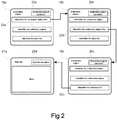
- Fig 2 schematically illustrates a collection object 19a according to one example.
- the collection object 19a may have an associated collection object identifier 20a.
- the identifier 20a may for instance be a Universally Unique Identifier (UUID).
- UUID Universally Unique Identifier
- the collection object identifier 20a may be included in a header of the collection object 19a.
- the collection object identifier 20a may be stored in a register maintained at the storage node 15, for example rather than being included in the collection object 19a.
- thee UUID and/or the register maintained at storage node 15 may associate the collection object 19a with the collection object identifier 20a, e.g. by pointing out the memory address where the collection object 19a is to be found.
- the collection object 19a may form a first data item which is identified by a first unique key.
- the collection object 19a may include a field 22a with an identifier 20b of another collection object 19b, e.g. in the form of a string.
- the collection object 19a may include a reference to the collection object 19b.
- the collection object 19b may be stored on the same storage node as the collection object 19a or on another storage node than the collection object 19a.
- the storage system may use the identifier 20b in the field 22a to locate and access the collection object 19b.
- the collection object 19b may form a second data item which is identified by a second unique key.
- the data item identifiers 20a-d may include two data elements.
- the first data element 30 may be a cluster ID 31 that may identify the cluster where the data item (collection object 19a-c or data file 21a) is located.
- the cluster address may be a multicast address 32.
- the multicast address 32 may be utilized by the API to send a request for a data item to a specific cluster.
- the second data element 33 may be a data item ID 34 formed by a unique number 35 that identifies the data item 19a-d inside the cluster.
- the unique number 35 may be a number of with a defined length, e.g. 128 bits, or the length may vary.
- the unique number 35 may include a large number of bits, enabling a large number of data items to be uniquely identified within the cluster.
- a collection element in one cluster may reference another collection element or data file in another cluster.
- the first and second unique key may include a cluster address pointing out a subset of the storage nodes within the system, and a data item identifier identifying a data item within the subset of storage nodes.
- the server 7 may for example include a register indicating a storage node 15 storing the collection object (e.g. collection object 19a) associated with a specific identifier (e.g. identifier 20a).
- the collection object 19a may be located using the read method disclosed in U.S. Patent Application No. 13/125,524 .
- the server 7 or a storage node 15 may send a multicast message to the plurality of storage nodes 15.
- the multicast message may include the identifier 20a of the desired collection object 19a.
- Each storage node 15, in response to receiving the multicast message, may scan its storage medium 17 for a collection object having said identifier.
- the storage node 15 may respond and indicate that it stores the object sought-after to the originator of the multicast message.
- the collection object 19a may then be accessed by means of a unicast request sent to a responding storage node 15 storing the collection object 19a.
- multicast communication may be used to communicate simultaneously with a plurality of storage nodes.
- a multicast or IP multicast is here meant a point-to-multipoint communication which may be accomplished by sending a message to an IP address which may be reserved for multicast applications.
- a message for example a request, may be sent to such an IP address (e.g. 244.0.0.1), and a number of recipient servers may be registered as subscribers to that IP address.
- Each of the recipient servers may have its own IP address.
- the switch in the network receives the message directed to 244.0.0.1, the switch may forward the message to the IP addresses of each server registered as a subscriber.
- a single server may be registered as a subscriber to a multicast address, in which case a point-to-point, communication may be achieved.
- a communication may nevertheless be considered a multicast communication since a multicast scheme is employed.
- unicast communication may refer to a communication with a single recipient.
- a unicast communication may be initiated by a party of the network and may be directed to a single specific recipient.
- the collection object 19b may include a field 22b with an identifier 20c of a third collection object 19c.
- the collection object 19c may include a field 22c with an identifier 20d of a data file 21a.
- anyone of the collection objects 19a-c (or, for example, each of the collection objects 19a-c) may represent a second data item including a reference to third data item, and the data file 21a may represent a second data item including payload data, for example an image.
- the collection object 19a may represent a root directory 19a of the storage system.
- the collection object 19b may represent a subdirectory 19b of the root directory 19a.
- the collection object 19c may represent a subdirectory of the subdirectory 19b.
- the data file 21a may represent a data file stored in the subdirectory 19c.
- the collection objects 19a-c may thus define a hierarchical storage structure. The structure may be referred to as a directory tree.
- a method for parsing a directory structure in order to access a file 19, 21 stored in a storage node 15 may be disclosed.
- the starting point of the directory structure may be a predefined root key.
- any of the storage nodes 15 may include a root key. This key may be stored outside of the storage cluster and may be used to identify the first data item (e.g. collection object 19a) in the directory structure.
- a storage cluster may have multiple root keys that enable the user to have multiple individual directory structures stored within the same storage cluster.
- the directory structures may span over several storage clusters.
- the root key may be stored together with external information describing the directory structure stored within the cluster.
- the server 7 may receive the root key, which may identify the first data item 19, 21 and may pass the unique identifier to identify the file within the storage system to the API 11.
- the API 23 may be implemented in a storage node 15, wherein the root key may be received in the storage node 15 rather than in the server 7.
- the API 11 in the server 7 may multicast a request for the data item (e.g. the collection object 19a) identified by the root key to storage nodes 15a-e in the storage system, or to a subset of the nodes.
- the multicast message may be sent to a specific cluster, for example using the data item identifier configuration disclosed in relation to Fig 3 .
- the data item (e.g. the collection object 19a) identified by the root key may be a special data item in the sense that it may include additional metadata which may be used by the system. Examples of such data may be information regarding access permissions to the items in the directory structure, information where to store certain data items (e.g. on a storage node with quick access such as an Solid State Drive (SSD)), and the like.
- SSD Solid State Drive
- storage node 15a-e in response to receiving the multicast message, may scan their respective storage mediums 17 in an attempt to locate the data item identified by the data item ID 34 in the root key.
- nodes 15b and 15e locate the data item identified by the data item ID 34.
- the nodes 15b, 15e that find the data item may reply with information about what other nodes 15b, 15d, 15e may contain the data item and the current execution load (e.g. how busy the nodes are, how many request the nodes received, how much free space is on the node, etc.) in the node 15b, 15e.
- the current execution load e.g. how busy the nodes are, how many request the nodes received, how much free space is on the node, etc.
- the requested data item may be stored in a plurality of storage nodes 15b, 15d, 15e, wherein the API may collect the information received from the nodes 15b, 15d, 15e and may wait until it has received answers from more than 50% of the listed storage nodes 15b, 15d, 15e that contains the data item before it may make a decision on which one to select for the retrieval of the data item.
- the decision may be based on which node that has the lowest execution load.
- the API 11 may send a unicast request for the specific file to the chosen storage node.
- the chosen storage node For purposes of illustration it may be assumed store node 15b is chosen.
- API 11 may retrieve the data item from the storage node 15b.
- the API 11 may maintain a list of all storage nodes 15b, 15d, 15e that store copies of the file in the event of a read or communication failure with the selected node 15b. If an error occurs the API 11 may transparently select the next best node in the list and continues the read operation.
- the API may interpret the content of the retrieved data item. If the directory structure comprises additional levels the retrieved data item may be a collection object 19b. If so, the API 11 may read the field 22b which may include an identifier 20b referring to another collection object 19c in the directory structure. For example, the API may retrieve the unique key, i.e. the identifier 20b, identifying the second data item, e.g. the collection object 19b, from the received first data item, e.g. the collection object 19a. The process may then return to block 41 and may continue parsing the directory structure. Thus, both the first and second request may be sent from an application programming interface, API. The process may continue until the last object in the directory structure has been identified and retrieved, e.g. the data file 21a whereupon the process may end at 46. In another example, the API 11 may send an update request to the identified object, e.g. a command to alter or concatenate data in the data item corresponding to the object in the directory structure.
- the data file 21 is located in the root of the directory structure. In such a case the process may be looped a single time, since the first retrieved collection object 19a may contain a reference to the data file 21a. It is emphasized that the retrieved collection object in addition to including the reference to the data file 21a may also include references to other data items, such as collection object 19b.
- a method may implemented in a data storage system including data storage nodes interconnected by means of a communications network for accessing file.
- the method may include sending a request for a first data item 19, 21, (e.g. collection object 19a), to a plurality of storage nodes 15a-e.
- the first data item may include a reference to a second data item (e.g. data file 21a or collection object 19b), stored in the storage system.
- the method may include receiving the first data item from at least one storage node 15b, and sending a request for the second data item to the plurality of storage nodes 15a-e based on the reference included in the first data item.
- the API may recursively read and interpret referenced envelopes to resolve a path in a directory structure.
- the API may identify an unstructured key that represents a file in the structured path.
- a user accessing the storage system may want to resolve the path: "/Documents/Sample_Pictures/Blue_Hills.jpg".
- collection object 19a may represent the root key "/" (identified by the unique key 20a) and the identifier 22a may include a reference to collection object 19b representing the folder "Documents/" (identified by the unique key 20b).
- the identifier 22b in the collection object 19b may include a reference to collection object 19c representing the folder "Sample_Pictures/”.
- the identifier 22c in the collection object 19c may include a reference to the data file 21a comprising the payload data for the file "Blue_Hills.jpg".
- a method for parsing a directory structure in order to create a file 19, 21 in a storage node 15 is disclosed.
- the starting point of the directory structure is a predefined root key.
- the root key may be an arbitrary key, and there may be many root keys throughout the system. This key may be stored outside of the storage cluster and may be used to identify the first data item (e.g. collection object 19a) in the directory structure.
- the server 7 may receive the root key, and may pass the unique identifier to identify the file within the storage system to the API.
- the API 11 may resolve the path to the desired data item according to the method above.
- the API 11 in the server 7 may multicast a request for storing the data item (e.g. the collection object 19c) including the identifier to all storage nodes 15a-e in the storage system, or to a subset of the nodes, e.g. within a specific cluster, for example using the data item identifier configuration disclosed in relation to Fig 3 .
- the data item e.g. the collection object 19c
- storage nodes 15 a-e in response to receiving the multicast message, may verify that the data item ID 34 is not already in use.
- a storage node which 15 a-e that fails to find an existing file with that specific identifier may reply with an acknowledgment that may indicate: free storage space on the storage node, an indication of the age of the hardware that the storage node is running on, current CPU load and/or the geographical position of the storage node 15 a-e in the form of latitude, longitude and altitude or the like.
- the API 11 may select three storage nodes (e.g. storage nodes 15a, 15b and 15e) based on the data returned from storage nodes that responded to the multicast request. When the three most suitable nodes have been selected the API 11 may send a request to the three nodes simultaneously to store the data item. If an error occurs during the transfer of the data item to one of the selected nodes 15a, 15b, 15e, the operation continues, for example as long as more than 50% of the selected nodes are operational.
- three storage nodes e.g. storage nodes 15a, 15b and 15e
- the identifier field 22b in the data item one level higher up in the directory structure may be updated with a reference to the stored data item (e.g. the collection object 19c), either by retrieving the first data item according to the read method according to the above or by accessing the first data item directly, for example if the server has cached the identifier of the first data item.
- the method above may be supplemented with the act of, prior to storing the data item, retrieving the first data item in case the communication with all storage nodes should be lost after the data item has been stored but before the first data item is updated.
- the API may resume the update procedure once the communication with the storage nodes is resumed.
- a method may be implemented in various devices within a data storage system including data storage nodes interconnected by means of a communications network.
- the method may include storing a first data item in at least one storage node, and updating a second data item, stored in at least one storage node, by adding a reference to the first data item in the second data item.
- a method for parsing a directory structure in order to delete a file 19, 21 in a storage node 15 is disclosed.
- the starting point of the directory structure may be a predefined but arbitrary root key. This key may be stored outside of the storage cluster and may be used to identify the first data item (e.g. collection object 19a) in the directory structure.
- the server 7 may receive the root key and may pass the unique identifier to identify the file within the storage system to the API.
- the API 11 may resolve the path to the desired data item according to the method above.
- the API 11 in the server 7 may multicast a query regarding the location of the data item (e.g. the collection object 19c) including the identifier to storage nodes 15a-e in the storage system, or to a subset of the nodes, e.g. within a specific cluster, for example using the data item identifier configuration disclosed in relation to Fig 3 .
- the location of the data item e.g. the collection object 19c
- the API 11 in the server 7 may multicast a query regarding the location of the data item (e.g. the collection object 19c) including the identifier to storage nodes 15a-e in the storage system, or to a subset of the nodes, e.g. within a specific cluster, for example using the data item identifier configuration disclosed in relation to Fig 3 .
- storage nodes 15 a-e in response to receiving the multicast message, may scan their respective storage medium 17 to locate data item identified by the data item ID 34.
- the nodes that locate the data item may reply with information regarding other nodes that may store the data item and the current execution load in the node.
- the requested data item may be stored in a plurality of storage nodes.
- the API may collect the information received from the nodes and may wait until it has received answers from more than 50% of the listed storage nodes that contains the data item before making a decision on which nodes to select for the deletion of the data item.
- the API 11 may send a unicast request to delete the specific file (e.g.. the collection object 19c) to the chosen storage nodes.
- the specific file e.g.. the collection object 19c
- the identifier field 22b in a data item one level higher in the directory structure may be updated by deleting the reference to the deleted data item (e.g. the collection object 19c).
- the update may occur by retrieving the first data item according to the read method described above and/or by accessing the first data item directly, for example if the server cached the identifier of the first data item.
- the delete operation may be expressed as the method disclosed in relation to Fig 4 with the addition of i) deleting the first data item, and ii) updating the second data item by deleting the reference to the first data item.
- a data deletion method may be implemented in a data storage system including data storage nodes interconnected by means of a communications network.
- the method may include deleting a first data item stored in at least one storage node.
- the method may also include updating a second data item, stored in at least one storage node, by deleting a reference to the first data item in the second data item.
- the collection objects 19 may be handle and maintained in manner similar to data files. This may allow the data to be stored in a flat storage structure, e.g. without any subdirectories or within a single directory.
- a virtual hierarchical storage structure may be created by adding collection objects 19 including references to other collection objects 19 and/or data files 21. It even allows the same data to be organized in several different virtual hierarchical storage structures by using different sets of collection objects 19.
- some or all information stored in the storage system may be stored redundantly in the storage system.
- the collection objects 19a-c and the data file 21a may be stored at two or more storage nodes 15. Each instance of a collection object or data file may be associated with the same identifier.
- the above-described read method may result in a response from each storage node storing the collection object.
- a redundantly stored collection object may thus be retrieved from either one of or all of the storage nodes storing the collection object.
Landscapes
- Engineering & Computer Science (AREA)
- Theoretical Computer Science (AREA)
- Databases & Information Systems (AREA)
- Physics & Mathematics (AREA)
- General Engineering & Computer Science (AREA)
- General Physics & Mathematics (AREA)
- Data Mining & Analysis (AREA)
- Software Systems (AREA)
- Computer Networks & Wireless Communication (AREA)
- Signal Processing (AREA)
- Information Retrieval, Db Structures And Fs Structures Therefor (AREA)
Description
- The present disclosure relates to an apparatus and method for accessing, writing and deleting data in a data storage system comprising a plurality of data storage nodes, the methods may be employed in a server and/or in a storage node in the data storage system. The disclosure further relates to storage nodes or servers that may be capable of carrying out such methods.
- Such a method is disclosed in
US Patent Publication No. 2005/0246393 A1 . This method is disclosed for a system that may use a plurality of storage centers at geographically disparate locations. Distributed object storage managers may be included to maintain information regarding stored data. One problem associated with such a system is how to accomplish simple and yet robust and reliable maintenance of data. - Moreover,
WO 2010/046393 A2 discloses a distributed storage system comprising a plurality of storage nodes. Using unicast and multicast transmission, a server application may read and write data in the storage system. - The invention is defined by the claims.
- Generally, all terms used in the claims are to be interpreted according to their ordinary meaning in the technical field, unless explicitly defined otherwise herein. All references to "a/an/the [element, device, component, means, step, etc.]" are to be interpreted openly as referring to at least one instance of said element, device, component, means, step, etc., unless explicitly stated otherwise. The steps of any method disclosed herein do not have to be performed in the exact order disclosed, unless explicitly stated.
- The above, as well as additional objects, features and advantages of the disclosed examples may be better understood through the following illustrative and non-limiting detailed description, with reference to the appended drawings, where the same reference numerals may be used for similar elements.
-
Fig 1 is a schematic view of an example storage system. -
Fig 2 is an example schematic block diagram of a number of data items stored in the storage system. -
Fig 3 is a schematic block diagram of an example data item identifier. -
Fig 4 is a schematic block diagram of an example method for retrieving data. -
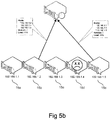
Fig 5a-c are illustrations of example communications between different entities in the storage system. -
Fig 6 is a schematic block diagram of an example method for storing data. -
Fig 7 is a schematic block diagram of an example method for deleting data. - Detailed examples of the disclosed methods and systems may be described with reference to the drawings. The present disclosure is related to a distributed data storage system comprising a plurality of storage nodes. An example structure of the system and the context in which it may be used is outlined in
Fig 1 . - A
user computer 1 may access, for example via the Internet 3, anapplication 5 running on aserver 7. The user context, as illustrated here, may be therefore a client-server configuration. However, it should be noted that the data storage system to be disclosed may be useful also in other configurations, for example utilizing other communication methods. - In the illustrated case, two
applications server 7. Of course however, any number of applications may be running onserver 7. Each application may have an API (Application Programming Interface) 11 which may provide an interface in relation to the distributeddata storage system 13 and may support requests, typically write and read requests, from the applications running on the server. Data may be read and written to the storage system using the methods described in detail inU.S. Patent Application No. 13/125,524, filed April 21, 2011 data storage system 13 may appear to be the same as using any other type of storage solution, for instance a file server or a hard drive. - Each
API 11 may communicate withstorage nodes 15 in thedata storage system 13, and the storage nodes may communicate with each other. Alternatively, or additionally, one or more of thestorage nodes 15 may include anAPI 23 for supporting requests as disclosed above. These communications may be based on TCP (Transmission Control Protocol) and UDP (User Datagram Protocol). Other communication protocols may also be utilized. - The components of the distributed data storage system may be the
storage nodes 15 and theAPIs 11 in theserver 7 which may access thestorage nodes 15. The present disclosure may be described in relation to methods carried out in theserver 7 and in thestorage nodes 15. Those methods may be primarily be implemented as combination software/hardware implementations which are executed on the server and the storage nodes, respectively. The operations of the server and /or storage nodes may together determine the operation and the properties of the overall distributed data storage system. - Although in
Fig 1 theserver 7 is illustrated as a member of thestorage system 13 which is separate from thestorage nodes 15 it should be noted that theserver 7 may be a storage node including server functionality. - The
storage node 15 may typically be implemented by a file server which is provided with a number of functional blocks. The storage node may thus include astorage medium 17, which for example may include a number of internal (e.g. connected via Integrated Drive Electronics (IDE), Serial Advanced Technology Attachment (SATA), and/or the like) or external hard drives (e.g. connected via Universal Serial Bus (USB), Firewire, Bluetooth, and/or the like), optionally configured as a RAID (Redundant Array of Independent Disk) system. Other types of storage media are however conceivable as well. - Each
storage node 15 may contain a node list including the IP addresses of all storage nodes in its set or group of storage nodes. The number of storage nodes in a group may vary from a few to hundreds or thousands of storage nodes. - The
storage medium 17 may store one ormore data items collection objects 19 or payload data in the form ofdata files 21. Acollection object 19 may include a set of references. A reference may be a reference to one or more data files stored in the storage system,e.g. data files 21. A reference may also be a reference to anothercollection object 19 stored in the storage system. A reference may include a pointer (e.g. a memory address) to a storage location of astorage node 15. A reference may include an identifier of the collection object or data file referred to. - As will be disclosed in more detail below, the
collection object 19 may be used for implementing a structured layer in the storage system.Data files 21 referenced in thecollection object 19 may in such an implementation represent data files stored in the structure.Additional collection objects 19 referenced in thecollection object 19 may in such an implementation represent subdirectories stored in the directory. - A
collection object 19 may be implemented as a data object having a predetermined format. The data object may be a special file in the file system of thestorage medium 17 in the sense that it may be a binary file to be interpreted by the API. In an example, the data object may be a standard data file in the file system of thestorage medium 17; the data object may e.g. be a plain text file indicating the referencedcollection objects 19 and/ordata files 21. A data object may be readable using the same routines of the file system as thedata files 21. -
Fig 2 schematically illustrates acollection object 19a according to one example. Thecollection object 19a may have an associatedcollection object identifier 20a. Theidentifier 20a may for instance be a Universally Unique Identifier (UUID). Thecollection object identifier 20a may be included in a header of thecollection object 19a. However, thecollection object identifier 20a may be stored in a register maintained at thestorage node 15, for example rather than being included in thecollection object 19a. In an example, thee UUID and/or the register maintained atstorage node 15 may associate thecollection object 19a with thecollection object identifier 20a, e.g. by pointing out the memory address where thecollection object 19a is to be found. Thus, thecollection object 19a may form a first data item which is identified by a first unique key. - The
collection object 19a may include afield 22a with anidentifier 20b of anothercollection object 19b, e.g. in the form of a string. Thecollection object 19a may include a reference to thecollection object 19b. Thecollection object 19b may be stored on the same storage node as thecollection object 19a or on another storage node than thecollection object 19a. The storage system may use theidentifier 20b in thefield 22a to locate and access thecollection object 19b. Thus, thecollection object 19b may form a second data item which is identified by a second unique key. - In one example in order to implement large storage systems spanning over multiple networks, the
data item identifiers 20a-d may include two data elements. With reference toFig 3 , thefirst data element 30 may be acluster ID 31 that may identify the cluster where the data item (collection object 19a-c ordata file 21a) is located. The cluster address may be amulticast address 32. Themulticast address 32 may be utilized by the API to send a request for a data item to a specific cluster. Thesecond data element 33 may be adata item ID 34 formed by aunique number 35 that identifies thedata item 19a-d inside the cluster. Theunique number 35 may be a number of with a defined length, e.g. 128 bits, or the length may vary. Theunique number 35 may include a large number of bits, enabling a large number of data items to be uniquely identified within the cluster. By this arrangement a collection element in one cluster may reference another collection element or data file in another cluster. In other words, the first and second unique key may include a cluster address pointing out a subset of the storage nodes within the system, and a data item identifier identifying a data item within the subset of storage nodes. - Referring back to
Figs 1 and2 , theserver 7 may for example include a register indicating astorage node 15 storing the collection object (e.g. collection object 19a) associated with a specific identifier (e.g. identifier 20a). In another example, thecollection object 19a may be located using the read method disclosed inU.S. Patent Application No. 13/125,524 . Briefly, according to this read method theserver 7 or astorage node 15 may send a multicast message to the plurality ofstorage nodes 15. The multicast message may include theidentifier 20a of the desiredcollection object 19a. Eachstorage node 15, in response to receiving the multicast message, may scan itsstorage medium 17 for a collection object having said identifier. If found, thestorage node 15 may respond and indicate that it stores the object sought-after to the originator of the multicast message. Thecollection object 19a may then be accessed by means of a unicast request sent to a respondingstorage node 15 storing thecollection object 19a. - According to the present example multicast communication may be used to communicate simultaneously with a plurality of storage nodes. By a multicast or IP multicast is here meant a point-to-multipoint communication which may be accomplished by sending a message to an IP address which may be reserved for multicast applications. For example, a message, for example a request, may be sent to such an IP address (e.g. 244.0.0.1), and a number of recipient servers may be registered as subscribers to that IP address. Each of the recipient servers may have its own IP address. When a switch in the network receives the message directed to 244.0.0.1, the switch may forward the message to the IP addresses of each server registered as a subscriber.
- In principle, a single server may be registered as a subscriber to a multicast address, in which case a point-to-point, communication may be achieved. However, in the context of this disclosure, such a communication may nevertheless be considered a multicast communication since a multicast scheme is employed.
- According to the present example unicast communication may refer to a communication with a single recipient. A unicast communication may be initiated by a party of the network and may be directed to a single specific recipient.
- In addition to the
collection object 19a, thecollection object 19b may include afield 22b with anidentifier 20c of athird collection object 19c. Thecollection object 19c may include afield 22c with anidentifier 20d of adata file 21a. In other words, anyone of the collection objects 19a-c (or, for example, each of the collection objects 19a-c) may represent a second data item including a reference to third data item, and thedata file 21a may represent a second data item including payload data, for example an image. - By appointing the
collection object 19a as a root collection object, thecollection object 19a may represent aroot directory 19a of the storage system. Analogously thecollection object 19b may represent asubdirectory 19b of theroot directory 19a. Thecollection object 19c may represent a subdirectory of thesubdirectory 19b. Thedata file 21a may represent a data file stored in thesubdirectory 19c. The collection objects 19a-c may thus define a hierarchical storage structure. The structure may be referred to as a directory tree. - With reference to
Figs 4 and5a-c , a method for parsing a directory structure in order to access afile storage node 15 may be disclosed. - The starting point of the directory structure may be a predefined root key. For example, any of the
storage nodes 15 may include a root key. This key may be stored outside of the storage cluster and may be used to identify the first data item (e.g. collection object 19a) in the directory structure. A storage cluster may have multiple root keys that enable the user to have multiple individual directory structures stored within the same storage cluster. The directory structures may span over several storage clusters. The root key may be stored together with external information describing the directory structure stored within the cluster. - In
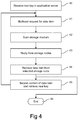
block 40, theserver 7 may receive the root key, which may identify thefirst data item API 11. In an example, theAPI 23 may be implemented in astorage node 15, wherein the root key may be received in thestorage node 15 rather than in theserver 7. - In
block 41, theAPI 11 in theserver 7 may multicast a request for the data item (e.g. thecollection object 19a) identified by the root key tostorage nodes 15a-e in the storage system, or to a subset of the nodes. For example, the multicast message may be sent to a specific cluster, for example using the data item identifier configuration disclosed in relation toFig 3 . According to one example the data item (e.g. thecollection object 19a) identified by the root key may be a special data item in the sense that it may include additional metadata which may be used by the system. Examples of such data may be information regarding access permissions to the items in the directory structure, information where to store certain data items (e.g. on a storage node with quick access such as an Solid State Drive (SSD)), and the like. - In
block 42,storage node 15a-e, in response to receiving the multicast message, may scan theirrespective storage mediums 17 in an attempt to locate the data item identified by thedata item ID 34 in the root key. - For purposes of illustration, it may be assumed in this example that
nodes data item ID 34. Inblock 43, thenodes other nodes node storage nodes nodes storage nodes - In
block 44 theAPI 11 may send a unicast request for the specific file to the chosen storage node. In this example, for purposes of illustration it may be assumedstore node 15b is chosen.API 11 may retrieve the data item from thestorage node 15b. TheAPI 11 may maintain a list of allstorage nodes node 15b. If an error occurs theAPI 11 may transparently select the next best node in the list and continues the read operation. - In
block 45 the API may interpret the content of the retrieved data item. If the directory structure comprises additional levels the retrieved data item may be acollection object 19b. If so, theAPI 11 may read thefield 22b which may include anidentifier 20b referring to anothercollection object 19c in the directory structure. For example, the API may retrieve the unique key, i.e. theidentifier 20b, identifying the second data item, e.g. thecollection object 19b, from the received first data item, e.g. thecollection object 19a. The process may then return to block 41 and may continue parsing the directory structure. Thus, both the first and second request may be sent from an application programming interface, API. The process may continue until the last object in the directory structure has been identified and retrieved, e.g. the data file 21a whereupon the process may end at 46. In another example, theAPI 11 may send an update request to the identified object, e.g. a command to alter or concatenate data in the data item corresponding to the object in the directory structure. - As an example, it may be that the data file 21 is located in the root of the directory structure. In such a case the process may be looped a single time, since the first retrieved
collection object 19a may contain a reference to thedata file 21a. It is emphasized that the retrieved collection object in addition to including the reference to thedata file 21a may also include references to other data items, such ascollection object 19b. - Thus, according to the above, a method may implemented in a data storage system including data storage nodes interconnected by means of a communications network for accessing file. The method may include sending a request for a
first data item e.g. collection object 19a), to a plurality ofstorage nodes 15a-e. The first data item may include a reference to a second data item (e.g. data file 21a orcollection object 19b), stored in the storage system. The method may include receiving the first data item from at least onestorage node 15b, and sending a request for the second data item to the plurality ofstorage nodes 15a-e based on the reference included in the first data item. - As an illustrative example, with reference to
Fig 2 , the API may recursively read and interpret referenced envelopes to resolve a path in a directory structure. For example, the API may identify an unstructured key that represents a file in the structured path. For example, a user accessing the storage system may want to resolve the path:
"/Documents/Sample_Pictures/Blue_Hills.jpg". - In
Fig 2 ,collection object 19a may represent the root key "/" (identified by the unique key 20a) and theidentifier 22a may include a reference tocollection object 19b representing the folder "Documents/" (identified by the unique key 20b). Theidentifier 22b in thecollection object 19b may include a reference tocollection object 19c representing the folder "Sample_Pictures/". Finally, theidentifier 22c in thecollection object 19c may include a reference to the data file 21a comprising the payload data for the file "Blue_Hills.jpg". Thus, by recursively reading the references in the collection objects a virtual file structure may be created in an unstructured storage system. - With reference to
Figs 6 and5a-c , a method for parsing a directory structure in order to create afile storage node 15 is disclosed. - similarly to the system discloses in
Fig 4 , the starting point of the directory structure is a predefined root key. The root key may be an arbitrary key, and there may be many root keys throughout the system. This key may be stored outside of the storage cluster and may be used to identify the first data item (e.g. collection object 19a) in the directory structure. - In
block 60, theserver 7 may receive the root key, and may pass the unique identifier to identify the file within the storage system to the API. - In
block 61, theAPI 11 may resolve the path to the desired data item according to the method above. - In
block 63, theAPI 11 in theserver 7 may multicast a request for storing the data item (e.g. thecollection object 19c) including the identifier to allstorage nodes 15a-e in the storage system, or to a subset of the nodes, e.g. within a specific cluster, for example using the data item identifier configuration disclosed in relation toFig 3 . - In
block 63,storage nodes 15 a-e, in response to receiving the multicast message, may verify that thedata item ID 34 is not already in use. - In
block 64, a storage node which 15 a-e that fails to find an existing file with that specific identifier may reply with an acknowledgment that may indicate: free storage space on the storage node, an indication of the age of the hardware that the storage node is running on, current CPU load and/or the geographical position of thestorage node 15 a-e in the form of latitude, longitude and altitude or the like. - In
block 65 theAPI 11 may select three storage nodes (e.g. storage nodes API 11 may send a request to the three nodes simultaneously to store the data item. If an error occurs during the transfer of the data item to one of the selectednodes - In
block 66 theidentifier field 22b in the data item one level higher up in the directory structure (e.g. the first data item - thecollection object 19b) may be updated with a reference to the stored data item (e.g. thecollection object 19c), either by retrieving the first data item according to the read method according to the above or by accessing the first data item directly, for example if the server has cached the identifier of the first data item. - In order to increase the data integrity in the system the method above may be supplemented with the act of, prior to storing the data item, retrieving the first data item in case the communication with all storage nodes should be lost after the data item has been stored but before the first data item is updated. By this procedure the API may resume the update procedure once the communication with the storage nodes is resumed.
- Thus, according to the above, a method may be implemented in various devices within a data storage system including data storage nodes interconnected by means of a communications network. The method may include storing a first data item in at least one storage node, and updating a second data item, stored in at least one storage node, by adding a reference to the first data item in the second data item.
- With reference to
Figs 7 and5a-c , a method for parsing a directory structure in order to delete afile storage node 15 is disclosed. - In similarity to the disclosure in relation to
Fig 4 , the starting point of the directory structure may be a predefined but arbitrary root key. This key may be stored outside of the storage cluster and may be used to identify the first data item (e.g. collection object 19a) in the directory structure. - In
block 70, theserver 7 may receive the root key and may pass the unique identifier to identify the file within the storage system to the API. - In
block 71, theAPI 11 may resolve the path to the desired data item according to the method above. - In
block 72, theAPI 11 in theserver 7 may multicast a query regarding the location of the data item (e.g. thecollection object 19c) including the identifier tostorage nodes 15a-e in the storage system, or to a subset of the nodes, e.g. within a specific cluster, for example using the data item identifier configuration disclosed in relation toFig 3 . - In
block 73,storage nodes 15 a-e, in response to receiving the multicast message, may scan theirrespective storage medium 17 to locate data item identified by thedata item ID 34. - In
block 74, the nodes that locate the data item may reply with information regarding other nodes that may store the data item and the current execution load in the node. The requested data item may be stored in a plurality of storage nodes. The API may collect the information received from the nodes and may wait until it has received answers from more than 50% of the listed storage nodes that contains the data item before making a decision on which nodes to select for the deletion of the data item. - In
block 75 theAPI 11 may send a unicast request to delete the specific file (e.g.. thecollection object 19c) to the chosen storage nodes. - In
block 76 theidentifier field 22b in a data item one level higher in the directory structure (e.g. thecollection object 19b) may be updated by deleting the reference to the deleted data item (e.g. thecollection object 19c). The update may occur by retrieving the first data item according to the read method described above and/or by accessing the first data item directly, for example if the server cached the identifier of the first data item. In the case where the data item to be deleted is located a number of levels down in the directory structure, the delete operation may be expressed as the method disclosed in relation toFig 4 with the addition of i) deleting the first data item, and ii) updating the second data item by deleting the reference to the first data item. - Thus, a data deletion method may be implemented in a data storage system including data storage nodes interconnected by means of a communications network. The method may include deleting a first data item stored in at least one storage node. The method may also include updating a second data item, stored in at least one storage node, by deleting a reference to the first data item in the second data item.
- The collection objects 19 may be handle and maintained in manner similar to data files. This may allow the data to be stored in a flat storage structure, e.g. without any subdirectories or within a single directory. A virtual hierarchical storage structure may be created by adding collection objects 19 including references to other collection objects 19 and/or data files 21. It even allows the same data to be organized in several different virtual hierarchical storage structures by using different sets of collection objects 19.
- For data security reasons, some or all information stored in the storage system (e.g. the collection objects 19 and/or the data files 21) may be stored redundantly in the storage system. The collection objects 19a-c and the
data file 21a may be stored at two ormore storage nodes 15. Each instance of a collection object or data file may be associated with the same identifier. In such a case, the above-described read method may result in a response from each storage node storing the collection object. A redundantly stored collection object may thus be retrieved from either one of or all of the storage nodes storing the collection object.
Claims (9)
- A method for maintaining data in a data storage system, the data storage system including data storage nodes (15) interconnected by means of a communications network, the method characterized by:sending (41) a request by multicast for a first data item to at least one of the plurality of storage nodes, said first data item including a reference to a second data item stored in the storage system, the reference comprising a second unique key associated with the second data item;receiving (43) the first data item from at least one storage node of the plurality of storage nodes; andsending (41) a request by multicast for the second data item to a subset of the plurality of storage nodes, wherein the subset is determined based on the reference included in the first data item,wherein the first data item is associated with a first unique key, and each of the first and second unique keys comprising a cluster address and a data item identifier, wherein the cluster address identifies a subset of said storage nodes within the system, the data item identifier, being a Universally Unique Identifier, UUID, identifies the associated data item stored on the subset of storage nodes, and the second data item is identified based on the second unique key from the received first data item.
- The method according to claim I, further comprising sending the first and second request from an application programming interface, API.
- The method according to claim 2, wherein the API is implemented on a server in communication with the storage system.
- The method according to claim 2, wherein the API is implemented on a storagenode within the storage system.
- The method according to claim 2, wherein the first data item is received at the API, and the first unique key is identified in the API.
- The method according to claim 1, wherein the second data item includes a reference to a third data item.
- The method according to claim I, wherein the second data item includes payload data.
- The method according to claim 7, wherein the pay load data is an image file.
- A data storage node in a data storage system that includes other data storage nodes interconnected via a communications network, the data storage node characterized by:a communication interface configured to communicate via the communications network; anda communication interface configured to communicate via the communications network;an application programming interface, API, (23) configured to:send a request by multicast for a first data item to a plurality of storage nodes via the communications interface,receive the first data item from at least one storage node of the plurality of storage nodes via the communications interface, said first data item including a reference to a second data item stored in the storage system, the reference comprising a second unique key associated with the second data item,determine a subset of the plurality of storage nodes to send a request for the second data item based on the reference included in the first data item, andsend the request by multicast for the second data item to the subset of the plurality of storage nodes,wherein the first data item is associated with a first unique key, each of the first and second unique keys comprising a cluster address and a data item identifier, wherein the cluster address identifies a subset of said storage nodes within the system, the data item identifier, being a Universally Unique Identifier, UUID, identifies the associated data item stored on the subset of storage nodes, and the second data item is identified based on the second unique key from the received first data item.
Applications Claiming Priority (2)
| Application Number | Priority Date | Filing Date | Title |
|---|---|---|---|
| US13/224,415 US8645978B2 (en) | 2011-09-02 | 2011-09-02 | Method for data maintenance |
| PCT/EP2012/066739 WO2013030217A1 (en) | 2011-09-02 | 2012-08-29 | Method for data maintenance |
Publications (2)
| Publication Number | Publication Date |
|---|---|
| EP2751716A1 EP2751716A1 (en) | 2014-07-09 |
| EP2751716B1 true EP2751716B1 (en) | 2018-09-26 |
Family
ID=46796569
Family Applications (1)
| Application Number | Title | Priority Date | Filing Date |
|---|---|---|---|
| EP12753954.2A Active EP2751716B1 (en) | 2011-09-02 | 2012-08-29 | Method for data maintenance |
Country Status (12)
| Country | Link |
|---|---|
| US (7) | US8645978B2 (en) |
| EP (1) | EP2751716B1 (en) |
| JP (1) | JP5967673B2 (en) |
| KR (1) | KR101948956B1 (en) |
| CN (1) | CN103858124B (en) |
| CA (1) | CA2846693A1 (en) |
| DK (1) | DK2751716T3 (en) |
| EA (1) | EA201490443A1 (en) |
| ES (1) | ES2699260T3 (en) |
| HU (1) | HUE040456T2 (en) |
| IL (2) | IL231102A (en) |
| WO (1) | WO2013030217A1 (en) |
Families Citing this family (14)
| Publication number | Priority date | Publication date | Assignee | Title |
|---|---|---|---|---|
| SE533007C2 (en) | 2008-10-24 | 2010-06-08 | Ilt Productions Ab | Distributed data storage |
| US8650365B2 (en) | 2011-09-02 | 2014-02-11 | Compuverde Ab | Method and device for maintaining data in a data storage system comprising a plurality of data storage nodes |
| US8874835B1 (en) | 2014-01-16 | 2014-10-28 | Pure Storage, Inc. | Data placement based on data properties in a tiered storage device system |
| US9082512B1 (en) | 2014-08-07 | 2015-07-14 | Pure Storage, Inc. | Die-level monitoring in a storage cluster |
| US9558069B2 (en) * | 2014-08-07 | 2017-01-31 | Pure Storage, Inc. | Failure mapping in a storage array |
| US9766972B2 (en) | 2014-08-07 | 2017-09-19 | Pure Storage, Inc. | Masking defective bits in a storage array |
| US10983859B2 (en) | 2014-08-07 | 2021-04-20 | Pure Storage, Inc. | Adjustable error correction based on memory health in a storage unit |
| TWI567550B (en) * | 2015-03-04 | 2017-01-21 | 慧榮科技股份有限公司 | Data storage device and data maintenance method thereof |
| CN105938419B (en) | 2015-03-04 | 2019-05-14 | 慧荣科技股份有限公司 | Data storage device and data maintenance method thereof |
| US9672905B1 (en) | 2016-07-22 | 2017-06-06 | Pure Storage, Inc. | Optimize data protection layouts based on distributed flash wear leveling |
| FR3065605A1 (en) * | 2017-04-19 | 2018-10-26 | Orange | COMMUNICATION SYSTEM AND METHOD |
| CN107403105B (en) * | 2017-06-30 | 2020-09-04 | 华为技术有限公司 | Permission setting method and device for file system |
| US10834190B2 (en) | 2018-01-18 | 2020-11-10 | Portworx, Inc. | Provisioning of clustered containerized applications |
| TWI857782B (en) * | 2023-09-18 | 2024-10-01 | 和碩聯合科技股份有限公司 | Electronic device and method for updating firmware |
Family Cites Families (245)
| Publication number | Priority date | Publication date | Assignee | Title |
|---|---|---|---|---|
| US3707707A (en) | 1970-11-12 | 1972-12-26 | Cipher Data Prod | Digital cassette magnetic tape recorder and reproducer |
| JP3139884B2 (en) | 1993-06-14 | 2001-03-05 | 株式会社東芝 | Multi-element processing system |
| US5713017A (en) * | 1995-06-07 | 1998-01-27 | International Business Machines Corporation | Dual counter consistency control for fault tolerant network file servers |
| JPH103421A (en) | 1995-11-20 | 1998-01-06 | Matsushita Electric Ind Co Ltd | Virtual file management system |
| US5787247A (en) | 1996-07-12 | 1998-07-28 | Microsoft Corporation | Replica administration without data loss in a store and forward replication enterprise |
| US5924094A (en) | 1996-11-01 | 1999-07-13 | Current Network Technologies Corporation | Independent distributed database system |
| US6021118A (en) | 1997-02-10 | 2000-02-01 | Lucent Techologies Inc. | Synchronization methods for distributed processing systems having replicated data |
| US6003065A (en) * | 1997-04-24 | 1999-12-14 | Sun Microsystems, Inc. | Method and system for distributed processing of applications on host and peripheral devices |
| US6101508A (en) * | 1997-08-01 | 2000-08-08 | Hewlett-Packard Company | Clustered file management for network resources |
| US6259701B1 (en) * | 1997-09-11 | 2001-07-10 | At&T Corp. | Method and system for a unicast endpoint client to access a multicast internet protocol (IP) session |
| US6055543A (en) | 1997-11-21 | 2000-04-25 | Verano | File wrapper containing cataloging information for content searching across multiple platforms |
| ATE239946T1 (en) | 1998-01-23 | 2003-05-15 | Emc Corp | NETWORK ACCESS TO CONTENT ADDRESSABLE DATA |
| JPH11249874A (en) | 1998-02-27 | 1999-09-17 | Toshiba Corp | Computer system, synchronous processing method and recording medium in the system |
| US6510162B1 (en) * | 1998-05-27 | 2003-01-21 | 3Com Corporation | System and method for managing channel usage in a data over cable system |
| WO2000021075A1 (en) * | 1998-10-02 | 2000-04-13 | International Business Machines Corporation | System and method for providing network coordinated conversational services |
| JP4146983B2 (en) * | 1999-02-26 | 2008-09-10 | インターナショナル・ビジネス・マシーンズ・コーポレーション | Process method and data processing system for calling method of server object |
| US6658016B1 (en) * | 1999-03-05 | 2003-12-02 | Broadcom Corporation | Packet switching fabric having a segmented ring with token based resource control protocol and output queuing control |
| US7774469B2 (en) | 1999-03-26 | 2010-08-10 | Massa Michael T | Consistent cluster operational data in a server cluster using a quorum of replicas |
| US6389432B1 (en) | 1999-04-05 | 2002-05-14 | Auspex Systems, Inc. | Intelligent virtual volume access |
| JP2000322292A (en) | 1999-05-10 | 2000-11-24 | Nec Corp | Cluster type data server system and data storage method |
| US6952741B1 (en) * | 1999-06-30 | 2005-10-04 | Computer Sciences Corporation | System and method for synchronizing copies of data in a computer system |
| US7634453B1 (en) | 1999-08-13 | 2009-12-15 | Storage Technology Corporation | Distributed file data location |
| US6976165B1 (en) | 1999-09-07 | 2005-12-13 | Emc Corporation | System and method for secure storage, transfer and retrieval of content addressable information |
| US7934251B2 (en) | 1999-12-02 | 2011-04-26 | Western Digital Technologies, Inc. | Managed peer-to-peer applications, systems and methods for distributed data access and storage |
| US6499090B1 (en) | 1999-12-28 | 2002-12-24 | Intel Corporation | Prioritized bus request scheduling mechanism for processing devices |
| US6546388B1 (en) | 2000-01-14 | 2003-04-08 | International Business Machines Corporation | Metadata search results ranking system |
| US6542972B2 (en) | 2000-01-31 | 2003-04-01 | Commvault Systems, Inc. | Logical view and access to physical storage in modular data and storage management system |
| US6738766B2 (en) | 2000-02-02 | 2004-05-18 | Doongo Technologies, Inc. | Apparatus and methods for providing personalized application search results for wireless devices based on user profiles |
| US7506034B2 (en) | 2000-03-03 | 2009-03-17 | Intel Corporation | Methods and apparatus for off loading content servers through direct file transfer from a storage center to an end-user |
| US6952737B1 (en) | 2000-03-03 | 2005-10-04 | Intel Corporation | Method and apparatus for accessing remote storage in a distributed storage cluster architecture |
| US7281168B1 (en) * | 2000-03-03 | 2007-10-09 | Intel Corporation | Failover architecture for local devices that access remote storage |
| US6470420B1 (en) | 2000-03-31 | 2002-10-22 | Western Digital Ventures, Inc. | Method for designating one of a plurality of addressable storage devices to process a data transfer request |
| AU2001259402A1 (en) | 2000-05-02 | 2001-11-12 | Sun Microsystems, Inc. | Cluster membership monitor |
| US6728716B1 (en) * | 2000-05-16 | 2004-04-27 | International Business Machines Corporation | Client-server filter computing system supporting relational database records and linked external files operable for distributed file system |
| WO2002001410A1 (en) * | 2000-06-26 | 2002-01-03 | International Business Machines Corporation | Data management application programming interface for a parallel file system |
| US6826564B2 (en) | 2000-07-10 | 2004-11-30 | Fastforward Networks | Scalable and programmable query distribution and collection in a network of queryable devices |
| US6732237B1 (en) | 2000-08-29 | 2004-05-04 | Oracle International Corporation | Multi-tier caching system |
| US7406484B1 (en) | 2000-09-12 | 2008-07-29 | Tbrix, Inc. | Storage allocation in a distributed segmented file system |
| US20040236798A1 (en) | 2001-09-11 | 2004-11-25 | Sudhir Srinivasan | Migration of control in a distributed segmented file system |
| US6782389B1 (en) | 2000-09-12 | 2004-08-24 | Ibrix, Inc. | Distributing files across multiple, permissibly heterogeneous, storage devices |
| EP1364510B1 (en) | 2000-10-26 | 2007-12-12 | Prismedia Networks, Inc. | Method and system for managing distributed content and related metadata |
| US6970939B2 (en) * | 2000-10-26 | 2005-11-29 | Intel Corporation | Method and apparatus for large payload distribution in a network |
| SE520129C2 (en) * | 2000-10-27 | 2003-05-27 | Terraplay Systems Ab | Communication infrastructure device in and a computer-readable software product for a multi-user application data processing system |
| US6985956B2 (en) | 2000-11-02 | 2006-01-10 | Sun Microsystems, Inc. | Switching system |
| AU2002232411A1 (en) | 2000-11-28 | 2002-06-11 | Gregory L. Gingerich | A method and system for software and hardware multiplicity |
| US7165096B2 (en) | 2000-12-22 | 2007-01-16 | Data Plow, Inc. | Storage area network file system |
| EP1349978A1 (en) | 2000-12-27 | 2003-10-08 | BSH Bosch und Siemens Hausgeräte GmbH | Method and device for desiccating articles of clothing |
| US7266556B1 (en) | 2000-12-29 | 2007-09-04 | Intel Corporation | Failover architecture for a distributed storage system |
| US20020124137A1 (en) * | 2001-01-29 | 2002-09-05 | Ulrich Thomas R. | Enhancing disk array performance via variable parity based load balancing |
| US6768871B2 (en) | 2001-01-30 | 2004-07-27 | The Regents Of The University Of California | Optical layer multicasting using a multicast switch to effect survivability and security |
| US6865603B2 (en) | 2001-01-31 | 2005-03-08 | Hewlett-Packard Development Company, L.P. | Correcting for network address changes |
| US7069295B2 (en) | 2001-02-14 | 2006-06-27 | The Escher Group, Ltd. | Peer-to-peer enterprise storage |
| US20020156912A1 (en) | 2001-02-15 | 2002-10-24 | Hurst John T. | Programming content distribution |
| US7062490B2 (en) | 2001-03-26 | 2006-06-13 | Microsoft Corporation | Serverless distributed file system |
| US6839815B2 (en) | 2001-05-07 | 2005-01-04 | Hitachi, Ltd. | System and method for storage on demand service in a global SAN environment |
| US6918013B2 (en) | 2001-07-16 | 2005-07-12 | Bea Systems, Inc. | System and method for flushing bean cache |
| US7039622B2 (en) | 2001-09-12 | 2006-05-02 | Sas Institute Inc. | Computer-implemented knowledge repository interface system and method |
| US7054867B2 (en) | 2001-09-18 | 2006-05-30 | Skyris Networks, Inc. | Systems, methods and programming for routing and indexing globally addressable objects and associated business models |
| GB2381427A (en) | 2001-10-27 | 2003-04-30 | Hewlett Packard Co | Spanning tree in peer to peer networks |
| US7975016B2 (en) | 2001-10-29 | 2011-07-05 | Oracle America, Inc. | Method to manage high availability equipments |
| US7257308B2 (en) * | 2001-12-06 | 2007-08-14 | Scientific-Atlanta, Inc. | Converting time-shift buffering for personal video recording into permanent recordings |
| US7054910B1 (en) | 2001-12-20 | 2006-05-30 | Emc Corporation | Data replication facility for distributed computing environments |
| US6917941B2 (en) | 2001-12-28 | 2005-07-12 | Channel Intelligence, Inc. | Method and apparatus for creation and maintenance of database structure |
| JP4202026B2 (en) | 2002-01-31 | 2008-12-24 | 株式会社アンソナ | Storage system and storage device |
| US7640547B2 (en) * | 2002-02-08 | 2009-12-29 | Jpmorgan Chase & Co. | System and method for allocating computing resources of a distributed computing system |
| US7243103B2 (en) | 2002-02-14 | 2007-07-10 | The Escher Group, Ltd. | Peer to peer enterprise storage system with lexical recovery sub-system |
| JP4198920B2 (en) | 2002-02-26 | 2008-12-17 | エイディシーテクノロジー株式会社 | Backup system, backup program and backup method |
| US7020665B2 (en) | 2002-03-07 | 2006-03-28 | Microsoft Corporation | File availability in distributed file storage systems |
| JP2003271316A (en) | 2002-03-14 | 2003-09-26 | Hitachi Ltd | Storage system, its operation program and its operation method, information processing terminal and its operation program, data management system |
| US7257645B2 (en) | 2002-05-01 | 2007-08-14 | Bea Systems, Inc. | System and method for storing large messages |
| US7305585B2 (en) | 2002-05-23 | 2007-12-04 | Exludus Technologies Inc. | Asynchronous and autonomous data replication |
| US7574488B2 (en) * | 2002-05-31 | 2009-08-11 | Hitachi, Ltd. | Method and apparatus for peer-to-peer file sharing |
| US6732171B2 (en) | 2002-05-31 | 2004-05-04 | Lefthand Networks, Inc. | Distributed network storage system with virtualization |
| US20030233455A1 (en) | 2002-06-14 | 2003-12-18 | Mike Leber | Distributed file sharing system |
| US7631313B2 (en) | 2002-06-17 | 2009-12-08 | David Mayhew | System and method for transferring data |
| US8060598B1 (en) | 2002-07-01 | 2011-11-15 | Sprint Communications Company L.P. | Computer network multicasting traffic monitoring and compensation |
| JP4240930B2 (en) | 2002-07-15 | 2009-03-18 | 株式会社日立製作所 | Method and apparatus for unifying temporary transmission of multiple network storages |
| CN1221898C (en) * | 2002-08-13 | 2005-10-05 | 国际商业机器公司 | System and method for updating network proxy cache server object |
| DE10237875A1 (en) | 2002-08-19 | 2004-03-04 | Siemens Ag | Device, in particular automation device, with a file directory structure stored in a file |
| AU2003278779A1 (en) | 2002-09-10 | 2004-04-30 | Exagrid Systems, Inc. | Primary and remote data backup with nodal failover |
| US7206836B2 (en) | 2002-09-23 | 2007-04-17 | Sun Microsystems, Inc. | System and method for reforming a distributed data system cluster after temporary node failures or restarts |
| US7146499B2 (en) | 2002-09-30 | 2006-12-05 | International Business Machines Corporation | Security system for replicated storage devices on computer networks |
| US7774325B2 (en) | 2002-10-17 | 2010-08-10 | Intel Corporation | Distributed network attached storage system |
| US20060031439A1 (en) | 2002-10-29 | 2006-02-09 | Saffre Fabrice T | Method and apparatus for network management |
| US7328243B2 (en) | 2002-10-31 | 2008-02-05 | Sun Microsystems, Inc. | Collaborative content coherence using mobile agents in peer-to-peer networks |
| US7565419B1 (en) | 2002-11-22 | 2009-07-21 | Symantec Operating Corporation | Conflict resolution in a peer to peer network |
| US20040139167A1 (en) | 2002-12-06 | 2004-07-15 | Andiamo Systems Inc., A Delaware Corporation | Apparatus and method for a scalable network attach storage system |
| US7624158B2 (en) | 2003-01-14 | 2009-11-24 | Eycast Inc. | Method and apparatus for transmission and storage of digital medical data |
| US7320009B1 (en) | 2003-03-28 | 2008-01-15 | Novell, Inc. | Methods and systems for file replication utilizing differences between versions of files |
| US7328256B2 (en) | 2003-06-02 | 2008-02-05 | Apple Inc. | Method and apparatus for distributing computer files across a network to multiple clients |
| US20040260775A1 (en) | 2003-06-20 | 2004-12-23 | Xerox Corporation | System and method for sending messages |
| US7694086B1 (en) | 2003-06-30 | 2010-04-06 | Symantec Operating Corporation | Method and system for incremental backup of data volumes |
| US7523217B2 (en) | 2003-07-15 | 2009-04-21 | Hewlett-Packard Development Company, L.P. | System and method having improved efficiency and reliability for distributing a file among a plurality of recipients |
| US20050015461A1 (en) | 2003-07-17 | 2005-01-20 | Bruno Richard | Distributed file system |
| JP2005044003A (en) * | 2003-07-23 | 2005-02-17 | Fujitsu Ltd | Authentication apparatus, method, and program |
| US6983429B2 (en) | 2003-09-30 | 2006-01-03 | Bull Hn Information Systems Inc. | Formal proof methods for analyzing circuit loading problems under operating conditions |
| US20130097302A9 (en) | 2003-10-01 | 2013-04-18 | Robert Khedouri | Audio visual player apparatus and system and method of content distribution using the same |
| US7340510B1 (en) | 2003-11-18 | 2008-03-04 | Cisco Technology, Inc. | Content delivery network (CDN) replication status reporter |
| US7376945B1 (en) | 2003-12-02 | 2008-05-20 | Cisco Technology, Inc. | Software change modeling for network devices |
| US7039661B1 (en) | 2003-12-29 | 2006-05-02 | Veritas Operating Corporation | Coordinated dirty block tracking |
| US7822711B1 (en) | 2003-12-31 | 2010-10-26 | Symantec Operating Corporation | Conflict resolution for a distributed file sharing system |
| US7383463B2 (en) | 2004-02-04 | 2008-06-03 | Emc Corporation | Internet protocol based disaster recovery of a server |
| US7385978B1 (en) | 2004-02-19 | 2008-06-10 | Cisco Technology, Inc. | Method and apparatus for reliable multicast distribution |
| US9160571B2 (en) | 2004-03-11 | 2015-10-13 | Hewlett-Packard Development Company, L.P. | Requesting a service from a multicast network |
| JP4448719B2 (en) | 2004-03-19 | 2010-04-14 | 株式会社日立製作所 | Storage system |
| US7503052B2 (en) * | 2004-04-14 | 2009-03-10 | Microsoft Corporation | Asynchronous database API |
| US20060023969A1 (en) | 2004-04-30 | 2006-02-02 | Lara Eyal D | Collaboration and multimedia authoring |
| DE602005005471T2 (en) | 2004-05-18 | 2008-07-03 | British Telecommunications P.L.C. | PEER-TO-PEER NETWORKS |
| US7433898B1 (en) | 2004-06-01 | 2008-10-07 | Sanbolic, Inc. | Methods and apparatus for shared storage journaling |
| US7634566B2 (en) | 2004-06-03 | 2009-12-15 | Cisco Technology, Inc. | Arrangement in a network for passing control of distributed data between network nodes for optimized client access based on locality |
| US7873650B1 (en) | 2004-06-11 | 2011-01-18 | Seisint, Inc. | System and method for distributing data in a parallel processing system |
| US20050278552A1 (en) | 2004-06-14 | 2005-12-15 | Vincent Delisle | Secure virtual account |
| US20060031230A1 (en) | 2004-07-21 | 2006-02-09 | Kumar Sinha M | Data storage systems |
| US20060047776A1 (en) | 2004-08-31 | 2006-03-02 | Chieng Stephen S | Automated failover in a cluster of geographically dispersed server nodes using data replication over a long distance communication link |
| US20060080574A1 (en) | 2004-10-08 | 2006-04-13 | Yasushi Saito | Redundant data storage reconfiguration |
| US8090776B2 (en) | 2004-11-01 | 2012-01-03 | Microsoft Corporation | Dynamic content change notification |
| JP4222295B2 (en) | 2004-11-19 | 2009-02-12 | パナソニック株式会社 | Video server and video distribution system using the same |
| US7631023B1 (en) | 2004-11-24 | 2009-12-08 | Symantec Operating Corporation | Performance-adjusted data allocation in a multi-device file system |
| JP4451293B2 (en) | 2004-12-10 | 2010-04-14 | 株式会社日立製作所 | Network storage system of cluster configuration sharing name space and control method thereof |
| US7320088B1 (en) | 2004-12-28 | 2008-01-15 | Veritas Operating Corporation | System and method to automate replication in a clustered environment |
| US8229985B2 (en) * | 2005-02-07 | 2012-07-24 | Cisco Technology, Inc. | Arrangement for a distributed file system having data objects mapped independent of any data object attribute |
| JP4843976B2 (en) | 2005-03-25 | 2011-12-21 | 日本電気株式会社 | Replication systems and methods |
| US7454426B2 (en) | 2005-04-12 | 2008-11-18 | International Business Machines Corporation | Referential integrity across a distributed directory |
| US7631016B2 (en) | 2005-05-04 | 2009-12-08 | Oracle International Corporation | Providing the latest version of a data item from an N-replica set |
| WO2006124911A2 (en) | 2005-05-18 | 2006-11-23 | Ibrix, Inc. | Balanced computer architecture |
| EP2244443A1 (en) * | 2005-06-09 | 2010-10-27 | Whirlpool Corporation | Software architecture system and method for communication with, and mangement of, at least one component within a household appliance |
| US7523146B2 (en) | 2005-06-21 | 2009-04-21 | Apple Inc. | Apparatus and method for peer-to-peer N-way synchronization in a decentralized environment |
| US8401997B1 (en) | 2005-06-30 | 2013-03-19 | Symantec Operating Corporation | System and method for replication using consistency interval markers in a distributed storage environment |
| US7631045B2 (en) * | 2005-07-14 | 2009-12-08 | Yahoo! Inc. | Content router asynchronous exchange |
| US7574443B2 (en) | 2005-07-25 | 2009-08-11 | Parascale, Inc. | Scalable clustered storage system |
| US9305011B2 (en) | 2005-07-27 | 2016-04-05 | Hitachi Data Systems Corporation | Method for improving mean time to data loss (MTDL) in a fixed content distributed data storage |
| US20070028291A1 (en) | 2005-07-29 | 2007-02-01 | Bit 9, Inc. | Parametric content control in a network security system |
| US7568069B2 (en) * | 2005-07-29 | 2009-07-28 | Lsi Corporation | Method for creating a large-scale storage array system out of multiple mid-range storage arrays |
| JP4747733B2 (en) | 2005-08-22 | 2011-08-17 | ブラザー工業株式会社 | Node device, shared information update processing program, shared information update method, and information sharing system |
| US20070055703A1 (en) * | 2005-09-07 | 2007-03-08 | Eyal Zimran | Namespace server using referral protocols |
| US9996413B2 (en) | 2007-10-09 | 2018-06-12 | International Business Machines Corporation | Ensuring data integrity on a dispersed storage grid |
| US7558859B2 (en) | 2005-10-17 | 2009-07-07 | Microsoft Corporation | Peer-to-peer auction based data distribution |
| US7788303B2 (en) | 2005-10-21 | 2010-08-31 | Isilon Systems, Inc. | Systems and methods for distributed system scanning |
| CA2627436A1 (en) | 2005-11-04 | 2007-05-18 | Thomson Licensing | Method and apparatus for managing media storage devices |
| CA2631098C (en) | 2005-11-23 | 2013-06-25 | Envisionit Llc | Message broadcasting admission control system and method |
| EP1798934A1 (en) | 2005-12-13 | 2007-06-20 | Deutsche Thomson-Brandt Gmbh | Method and apparatus for organizing nodes in a network |
| US7647329B1 (en) | 2005-12-29 | 2010-01-12 | Amazon Technologies, Inc. | Keymap service architecture for a distributed storage system |
| US7716180B2 (en) | 2005-12-29 | 2010-05-11 | Amazon Technologies, Inc. | Distributed storage system with web services client interface |
| US20070179981A1 (en) * | 2006-01-31 | 2007-08-02 | International Business Machines Corporation | Efficient data management in a cluster file system |
| US7546484B2 (en) | 2006-02-08 | 2009-06-09 | Microsoft Corporation | Managing backup solutions with light-weight storage nodes |
| US7623474B2 (en) * | 2006-02-14 | 2009-11-24 | Cisco Technology, Inc. | Techniques for distributing information using multicast subsets |
| US8185576B2 (en) | 2006-03-14 | 2012-05-22 | Altnet, Inc. | Filter for a distributed network |
| US7778183B2 (en) | 2006-03-31 | 2010-08-17 | International Business Machines Corporation | Data replica selector |
| US7480817B2 (en) | 2006-03-31 | 2009-01-20 | International Business Machines Corporation | Method for replicating data based on probability of concurrent failure |
| US20070288638A1 (en) | 2006-04-03 | 2007-12-13 | British Columbia, University Of | Methods and distributed systems for data location and delivery |
| WO2007115317A2 (en) | 2006-04-04 | 2007-10-11 | Permabit, Inc | Storage assignment and erasure coding technique for scalable and fault tolerant storage system |
| US20070255763A1 (en) | 2006-04-27 | 2007-11-01 | International Business Machines Corporation | Database replication method and system |
| US20080126357A1 (en) | 2006-05-04 | 2008-05-29 | Wambo, Inc. | Distributed file storage and transmission system |
| US8255420B2 (en) | 2006-05-23 | 2012-08-28 | Noryan Holding Corporation | Distributed storage |
| WO2007134918A1 (en) | 2006-05-23 | 2007-11-29 | Noryan Holding Corporation | Distributed storage |
| US8117155B2 (en) | 2006-06-30 | 2012-02-14 | Microsoft Corporation | Collection-based object replication |
| US20080005195A1 (en) | 2006-06-30 | 2008-01-03 | Microsoft Corporation | Versioning synchronization for mass p2p file sharing |
| US7546486B2 (en) | 2006-08-28 | 2009-06-09 | Bycast Inc. | Scalable distributed object management in a distributed fixed content storage system |
| US20080077635A1 (en) | 2006-09-22 | 2008-03-27 | Digital Bazaar, Inc. | Highly Available Clustered Storage Network |
| US7840992B1 (en) | 2006-09-28 | 2010-11-23 | Emc Corporation | System and method for environmentally aware data protection |
| US7680048B2 (en) | 2006-10-06 | 2010-03-16 | International Business Machiens Corporation | Method and apparatus for routing data in an inter-nodal communications lattice of a massively parallel computer system by dynamically adjusting local routing strategies |
| US8176265B2 (en) | 2006-10-30 | 2012-05-08 | Nvidia Corporation | Shared single-access memory with management of multiple parallel requests |
| US8094585B2 (en) | 2006-10-31 | 2012-01-10 | International Business Machines Corporation | Membership management of network nodes |
| US8555335B2 (en) | 2006-11-01 | 2013-10-08 | Microsoft Corporation | Securing distributed application information delivery |
| US8190561B1 (en) | 2006-12-06 | 2012-05-29 | At&T Mobility Ii Llc | LDAP replication priority queuing mechanism |
| US7590672B2 (en) | 2006-12-11 | 2009-09-15 | Bycast Inc. | Identification of fixed content objects in a distributed fixed content storage system |
| GB2445986A (en) | 2007-01-17 | 2008-07-30 | Connect Spot Ltd | Database Update Systems for Wireless communications Systems |
| US9026628B2 (en) | 2007-01-22 | 2015-05-05 | Xerox Corporation | Two-level structured overlay design for cluster management in a peer-to-peer network |
| US8255736B2 (en) | 2007-02-22 | 2012-08-28 | Telefonaktiebolaget Lm Ericsson (Publ) | Consistent and fault tolerant distributed hash table (DHT) overlay network |
| US8635691B2 (en) | 2007-03-02 | 2014-01-21 | 403 Labs, Llc | Sensitive data scanner |
| US7584294B2 (en) | 2007-03-12 | 2009-09-01 | Citrix Systems, Inc. | Systems and methods for prefetching objects for caching using QOS |
| JP2008234445A (en) | 2007-03-22 | 2008-10-02 | Brother Ind Ltd | Distributed content storage system, duplicate data acquisition method, node device, and node processing program |
| US8150800B2 (en) | 2007-03-28 | 2012-04-03 | Netapp, Inc. | Advanced clock synchronization technique |
| JP2008250773A (en) | 2007-03-30 | 2008-10-16 | Brother Ind Ltd | Information distribution system, management device program, and information processing device program |
| JP4696089B2 (en) | 2007-03-30 | 2011-06-08 | 三菱電機インフォメーションシステムズ株式会社 | Distributed storage system |
| TWI483584B (en) | 2007-06-04 | 2015-05-01 | Graco Minnesota Inc | Distributed monitoring and control fluid handling system |
| US7676704B2 (en) | 2007-06-29 | 2010-03-09 | Symantec Corporation | Resource management for scalable file system recovery |
| US8120127B2 (en) | 2007-08-03 | 2012-02-21 | Nec Corporation | Magnetic random access memory and method of manufacturing the same |
| US8332375B2 (en) | 2007-08-29 | 2012-12-11 | Nirvanix, Inc. | Method and system for moving requested files from one storage location to another |
| US8156117B2 (en) | 2007-09-03 | 2012-04-10 | Obschestvo S Ogranichennoi Otvetstvennostiyu “Meralabs” | Method and system for storing, searching and retrieving information based on semistructured and de-centralized data sets |
| US8533256B2 (en) | 2007-10-09 | 2013-09-10 | Cleversafe, Inc. | Object interface to a dispersed data storage network |
| US8185614B2 (en) | 2007-10-09 | 2012-05-22 | Cleversafe, Inc. | Systems, methods, and apparatus for identifying accessible dispersed digital storage vaults utilizing a centralized registry |
| US7913030B2 (en) | 2007-12-28 | 2011-03-22 | Sandisk Il Ltd. | Storage device with transaction logging capability |
| US7979662B2 (en) | 2007-12-28 | 2011-07-12 | Sandisk Il Ltd. | Storage device with transaction indexing capability |
| US7899850B2 (en) | 2008-02-22 | 2011-03-01 | Bycast, Inc. | Relational objects for the optimized management of fixed-content storage systems |
| US20090228669A1 (en) | 2008-03-10 | 2009-09-10 | Microsoft Corporation | Storage Device Optimization Using File Characteristics |
| WO2009120301A2 (en) | 2008-03-25 | 2009-10-01 | Square Products Corporation | System and method for simultaneous media presentation |
| US8577957B2 (en) | 2008-04-01 | 2013-11-05 | Litl Llc | System and method for streamlining user interaction with electronic content |
| JP2009259007A (en) | 2008-04-17 | 2009-11-05 | Nippon Telegr & Teleph Corp <Ntt> | Distributed storage method, distributed storage system and distributed storage device |
| TWI476610B (en) | 2008-04-29 | 2015-03-11 | Maxiscale Inc | Peer-to-peer redundant file server system and methods |
| US20100010975A1 (en) * | 2008-07-10 | 2010-01-14 | Morris Robert P | Methods And Systems For Resolving A Query Region To A Network Identifier |
| US8458128B2 (en) | 2008-08-26 | 2013-06-04 | Microsoft Corporation | Minimal extensions required for multi-master offline and collaboration for devices and web services |
| US8255430B2 (en) * | 2008-08-26 | 2012-08-28 | Caringo, Inc. | Shared namespace for storage clusters |
| US9390102B2 (en) | 2008-09-29 | 2016-07-12 | Oracle International Corporation | Client application program interface for network-attached storage system |
| EP2350854B1 (en) | 2008-10-17 | 2018-12-05 | Ericsson AB | Method and apparatus for efficient http data streaming |
| US9781148B2 (en) | 2008-10-21 | 2017-10-03 | Lookout, Inc. | Methods and systems for sharing risk responses between collections of mobile communications devices |
| US8347386B2 (en) | 2008-10-21 | 2013-01-01 | Lookout, Inc. | System and method for server-coupled malware prevention |
| US8443062B2 (en) | 2008-10-23 | 2013-05-14 | Microsoft Corporation | Quorum based transactionally consistent membership management in distributed storage systems |
| SE533007C2 (en) | 2008-10-24 | 2010-06-08 | Ilt Productions Ab | Distributed data storage |
| US8898236B2 (en) | 2008-10-31 | 2014-11-25 | Netapp, Inc. | Automated conversion of versioned data collections |
| KR101285113B1 (en) | 2008-10-31 | 2013-07-17 | 에스케이플래닛 주식회사 | A system, a method, a service server, a mobile terminal and a storage means for contents transmission |
| US8561052B2 (en) | 2008-12-08 | 2013-10-15 | Harris Corporation | Communications device with a plurality of processors and compatibility synchronization module for processor upgrades and related method |
| WO2010080533A2 (en) | 2008-12-18 | 2010-07-15 | Bizanga Ltd. | Multipurpose storage system based upon a distributed hashing mechanism with transactional support and failover capability |
| US20100185693A1 (en) | 2009-01-20 | 2010-07-22 | Murty Venkataesh V | Methods and apparatus for creating an audit trail |
| US8832023B2 (en) | 2009-01-30 | 2014-09-09 | Apple Inc. | System for managing distributed assets and metadata |
| US9368716B2 (en) | 2009-02-02 | 2016-06-14 | Qualcomm Incorporated | Magnetic tunnel junction (MTJ) storage element and spin transfer torque magnetoresistive random access memory (STT-MRAM) cells having an MTJ |
| US8533151B2 (en) | 2009-05-26 | 2013-09-10 | Microsoft Corporation | Generating a local copy of a virtualized application package from a local installation |
| US8165122B2 (en) | 2009-05-26 | 2012-04-24 | Alcatel Lucent | System and method for converting unicast client requests into multicast client requests |
| US20130254314A1 (en) | 2009-06-09 | 2013-09-26 | Edmond K. Chow | Digital content delivery |
| US10108492B2 (en) | 2009-07-30 | 2018-10-23 | International Business Machines Corporation | Rebuilding data stored in a dispersed storage network |
| US9189244B2 (en) | 2009-08-18 | 2015-11-17 | Adobe Systems Incorporated | Methods and systems for managing data service specifications |
| US20110047413A1 (en) | 2009-08-20 | 2011-02-24 | Mcgill Robert E | Methods and devices for detecting service failures and maintaining computing services using a resilient intelligent client computer |
| US8745170B2 (en) | 2009-08-27 | 2014-06-03 | Apple Inc. | Dynamic file streaming |
| US8554993B2 (en) | 2009-09-21 | 2013-10-08 | Translattice, Inc. | Distributed content storage and retrieval |
| US8745342B2 (en) | 2009-09-24 | 2014-06-03 | Hitachi Ltd. | Computer system for controlling backups using wide area network |
| US8620879B2 (en) | 2009-10-13 | 2013-12-31 | Google Inc. | Cloud based file storage service |
| CN101710339B (en) * | 2009-11-20 | 2012-02-01 | 中国科学院计算技术研究所 | Method and system for controlling data storage in cluster file system and method for creating file |
| US8190578B2 (en) | 2009-12-17 | 2012-05-29 | International Business Machines Corporation | Migration of versioned data between configuration management systems |
| US9135268B2 (en) | 2009-12-30 | 2015-09-15 | Symantec Corporation | Locating the latest version of replicated data files |
| US8578205B2 (en) * | 2010-03-15 | 2013-11-05 | Cleversafe, Inc. | Requesting cloud data storage |
| CN102985911B (en) | 2010-03-16 | 2016-07-06 | 科派恩股份有限公司 | Telescopic in height and distributed data de-duplication |
| US20110238909A1 (en) * | 2010-03-29 | 2011-09-29 | Pankaj Kumar | Multicasting Write Requests To Multiple Storage Controllers |
| EP2712149B1 (en) | 2010-04-23 | 2019-10-30 | Compuverde AB | Distributed data storage |
| US8234372B2 (en) * | 2010-05-05 | 2012-07-31 | Go Daddy Operating Company, LLC | Writing a file to a cloud storage solution |
| US9357328B1 (en) | 2010-06-15 | 2016-05-31 | Thales Avionics, Inc. | Systems and methods for distributing content using attributes |
| EP2587476A1 (en) | 2010-06-22 | 2013-05-01 | Sony Computer Entertainment Inc. | Information processing device |
| CN101909058B (en) | 2010-07-30 | 2013-01-16 | 天维讯达无线电设备检测(北京)有限责任公司 | Platform authentication strategy management method and system suitable for credible connecting architecture |
| GB2486393B (en) | 2010-09-08 | 2016-12-28 | Saffron Digital Ltd | Delivering a file from a content provider to a client |
| US9253199B2 (en) | 2010-09-09 | 2016-02-02 | Red Hat, Inc. | Verifying authenticity of a sender of an electronic message sent to a recipient using message salt |
| US8504758B1 (en) | 2010-09-21 | 2013-08-06 | Amazon Technologies, Inc. | System and method for logical deletion of stored data objects |
| US8660986B2 (en) | 2010-10-27 | 2014-02-25 | Microsoft Corporation | Preserving user intent in merging ordered objects |
| WO2012061678A1 (en) | 2010-11-05 | 2012-05-10 | Interdigital Patent Holdings, Inc. | Device validation, distress indication, and remediation |
| US9471593B1 (en) | 2010-12-30 | 2016-10-18 | Emc Corporation | Method and apparatus for ensuring consistent ordering of writes in a distributed database storage system |
| US8949828B2 (en) * | 2011-01-11 | 2015-02-03 | International Business Machines Corporation | Single point, scalable data synchronization for management of a virtual input/output server cluster |
| US9020996B2 (en) * | 2011-06-24 | 2015-04-28 | Stephen P. LORD | Synthetic view |
| US9268665B2 (en) | 2011-07-26 | 2016-02-23 | Trimble Navigation Limited | System and method for identifying fault prone computer code files |
| US9021053B2 (en) | 2011-09-02 | 2015-04-28 | Compuverde Ab | Method and device for writing data to a data storage system comprising a plurality of data storage nodes |
| US9225780B2 (en) | 2012-02-24 | 2015-12-29 | Xyratex Technology Limited | Data integrity in a networked storage system |
| US20130268632A1 (en) | 2012-04-05 | 2013-10-10 | Canon Kabushiki Kaisha | Server assisted authenticated device |
| US9256765B2 (en) | 2012-06-29 | 2016-02-09 | Kip Sign P1 Lp | System and method for identifying software changes |
| US9344521B2 (en) | 2012-12-13 | 2016-05-17 | Red Hat, Inc. | Pluggable infrastructure for cloud provider selection |
| US9367448B1 (en) | 2013-06-04 | 2016-06-14 | Emc Corporation | Method and system for determining data integrity for garbage collection of data storage systems |
| US20150288659A1 (en) | 2014-04-03 | 2015-10-08 | Bitdefender IPR Management Ltd. | Systems and Methods for Mutual Integrity Attestation Between A Network Endpoint And A Network Appliance |
| CN105978981B (en) * | 2016-05-19 | 2019-09-24 | 北京春鸿科技有限公司 | The linear expansion method and system of data backup based on publicly-owned cloud storage account |
| US20210064486A1 (en) * | 2019-08-28 | 2021-03-04 | Commvault Systems, Inc. | Access arbitration to a shared cache storage area in a data storage management system for live browse, file indexing, backup and/or restore operations |
-
2011
- 2011-09-02 US US13/224,415 patent/US8645978B2/en not_active Expired - Fee Related
-
2012
- 2012-08-29 HU HUE12753954A patent/HUE040456T2/en unknown
- 2012-08-29 EP EP12753954.2A patent/EP2751716B1/en active Active
- 2012-08-29 KR KR1020147008476A patent/KR101948956B1/en not_active Expired - Fee Related
- 2012-08-29 CA CA2846693A patent/CA2846693A1/en not_active Abandoned
- 2012-08-29 ES ES12753954T patent/ES2699260T3/en active Active
- 2012-08-29 JP JP2014527640A patent/JP5967673B2/en active Active
- 2012-08-29 DK DK12753954.2T patent/DK2751716T3/en active
- 2012-08-29 CN CN201280048951.5A patent/CN103858124B/en active Active
- 2012-08-29 EA EA201490443A patent/EA201490443A1/en unknown
- 2012-08-29 WO PCT/EP2012/066739 patent/WO2013030217A1/en not_active Ceased
-
2013
- 2013-12-05 US US14/098,021 patent/US9305012B2/en not_active Expired - Fee Related
-
2014
- 2014-02-24 IL IL231102A patent/IL231102A/en active IP Right Grant
-
2016
- 2016-01-15 US US14/997,098 patent/US9965542B2/en not_active Expired - Fee Related
-
2017
- 2017-01-01 IL IL249886A patent/IL249886B/en not_active IP Right Cessation
-
2018
- 2018-03-30 US US15/941,774 patent/US10430443B2/en active Active
-
2019
- 2019-05-13 US US16/410,716 patent/US10769177B1/en active Active
-
2020
- 2020-08-05 US US16/985,396 patent/US11372897B1/en active Active
-
2022
- 2022-05-26 US US17/825,658 patent/US20220284046A1/en not_active Abandoned
Non-Patent Citations (1)
| Title |
|---|
| ANONYMOUS: "Universally unique identifier - Wikipedia, the free encyclopedia", 24 August 2011 (2011-08-24), pages 1 - 9, XP055087095, Retrieved from the Internet <URL:http://en.wikipedia.org/w/index.php?title=Universally_unique_identifier&oldid=446415422> [retrieved on 20131107] * |
Also Published As
| Publication number | Publication date |
|---|---|
| KR101948956B1 (en) | 2019-04-22 |
| CN103858124B (en) | 2018-06-29 |
| US10430443B2 (en) | 2019-10-01 |
| US20220284046A1 (en) | 2022-09-08 |
| US9305012B2 (en) | 2016-04-05 |
| KR20140094506A (en) | 2014-07-30 |
| US8645978B2 (en) | 2014-02-04 |
| IL231102A0 (en) | 2014-04-30 |
| EP2751716A1 (en) | 2014-07-09 |
| ES2699260T3 (en) | 2019-02-08 |
| US9965542B2 (en) | 2018-05-08 |
| US10769177B1 (en) | 2020-09-08 |
| WO2013030217A1 (en) | 2013-03-07 |
| JP5967673B2 (en) | 2016-08-10 |
| US20180225358A1 (en) | 2018-08-09 |
| US20130061252A1 (en) | 2013-03-07 |
| JP2014529814A (en) | 2014-11-13 |
| HUE040456T2 (en) | 2019-03-28 |
| US20140095559A1 (en) | 2014-04-03 |
| US11372897B1 (en) | 2022-06-28 |
| IL231102A (en) | 2017-01-31 |
| EA201490443A1 (en) | 2014-08-29 |
| IL249886B (en) | 2019-01-31 |
| US20160232225A1 (en) | 2016-08-11 |
| CN103858124A (en) | 2014-06-11 |
| IL249886A0 (en) | 2017-03-30 |
| DK2751716T3 (en) | 2018-12-03 |
| CA2846693A1 (en) | 2013-03-07 |
Similar Documents
| Publication | Publication Date | Title |
|---|---|---|
| US20220284046A1 (en) | Application Programming Interface-based Writing of Data to a Directory of a File Structure Layer of a Data Storage System | |
| US10649827B2 (en) | Two level addressing in storage clusters | |
| US8843454B2 (en) | Elimination of duplicate objects in storage clusters | |
| KR101635238B1 (en) | Distributed data storage | |
| CN111435286A (en) | Data storage method, device and system | |
| US8997124B2 (en) | Method for updating data in a distributed data storage system | |
| US9626378B2 (en) | Method for handling requests in a storage system and a storage node for a storage system | |
| CN111212138A (en) | Cross-site storage system and data information access method |
Legal Events
| Date | Code | Title | Description |
|---|---|---|---|
| PUAI | Public reference made under article 153(3) epc to a published international application that has entered the european phase |
Free format text: ORIGINAL CODE: 0009012 |
|
| 17P | Request for examination filed |
Effective date: 20140320 |
|
| AK | Designated contracting states |
Kind code of ref document: A1 Designated state(s): AL AT BE BG CH CY CZ DE DK EE ES FI FR GB GR HR HU IE IS IT LI LT LU LV MC MK MT NL NO PL PT RO RS SE SI SK SM TR |
|
| DAX | Request for extension of the european patent (deleted) | ||
| STAA | Information on the status of an ep patent application or granted ep patent |
Free format text: STATUS: EXAMINATION IS IN PROGRESS |
|
| 17Q | First examination report despatched |
Effective date: 20170714 |
|
| GRAP | Despatch of communication of intention to grant a patent |
Free format text: ORIGINAL CODE: EPIDOSNIGR1 |
|
| STAA | Information on the status of an ep patent application or granted ep patent |
Free format text: STATUS: GRANT OF PATENT IS INTENDED |
|
| INTG | Intention to grant announced |
Effective date: 20180507 |
|
| GRAS | Grant fee paid |
Free format text: ORIGINAL CODE: EPIDOSNIGR3 |
|
| GRAA | (expected) grant |
Free format text: ORIGINAL CODE: 0009210 |
|
| STAA | Information on the status of an ep patent application or granted ep patent |
Free format text: STATUS: THE PATENT HAS BEEN GRANTED |
|
| AK | Designated contracting states |
Kind code of ref document: B1 Designated state(s): AL AT BE BG CH CY CZ DE DK EE ES FI FR GB GR HR HU IE IS IT LI LT LU LV MC MK MT NL NO PL PT RO RS SE SI SK SM TR |
|
| REG | Reference to a national code |
Ref country code: GB Ref legal event code: FG4D |
|
| REG | Reference to a national code |
Ref country code: CH Ref legal event code: EP |
|
| REG | Reference to a national code |
Ref country code: AT Ref legal event code: REF Ref document number: 1046859 Country of ref document: AT Kind code of ref document: T Effective date: 20181015 |
|
| REG | Reference to a national code |
Ref country code: IE Ref legal event code: FG4D |
|
| REG | Reference to a national code |
Ref country code: DE Ref legal event code: R096 Ref document number: 602012051526 Country of ref document: DE |
|
| REG | Reference to a national code |
Ref country code: CH Ref legal event code: NV Representative=s name: WEINMANN ZIMMERLI, CH |
|
| REG | Reference to a national code |
Ref country code: NL Ref legal event code: FP |
|
| REG | Reference to a national code |
Ref country code: DE Ref legal event code: R079 Ref document number: 602012051526 Country of ref document: DE Free format text: PREVIOUS MAIN CLASS: G06F0017300000 Ipc: G06F0016000000 |
|
| REG | Reference to a national code |
Ref country code: DK Ref legal event code: T3 Effective date: 20181128 |
|
| REG | Reference to a national code |
Ref country code: SE Ref legal event code: TRGR |
|
| PG25 | Lapsed in a contracting state [announced via postgrant information from national office to epo] |
Ref country code: LT Free format text: LAPSE BECAUSE OF FAILURE TO SUBMIT A TRANSLATION OF THE DESCRIPTION OR TO PAY THE FEE WITHIN THE PRESCRIBED TIME-LIMIT Effective date: 20180926 Ref country code: RS Free format text: LAPSE BECAUSE OF FAILURE TO SUBMIT A TRANSLATION OF THE DESCRIPTION OR TO PAY THE FEE WITHIN THE PRESCRIBED TIME-LIMIT Effective date: 20180926 Ref country code: NO Free format text: LAPSE BECAUSE OF FAILURE TO SUBMIT A TRANSLATION OF THE DESCRIPTION OR TO PAY THE FEE WITHIN THE PRESCRIBED TIME-LIMIT Effective date: 20181226 Ref country code: GR Free format text: LAPSE BECAUSE OF FAILURE TO SUBMIT A TRANSLATION OF THE DESCRIPTION OR TO PAY THE FEE WITHIN THE PRESCRIBED TIME-LIMIT Effective date: 20181227 |
|
| REG | Reference to a national code |
Ref country code: ES Ref legal event code: FG2A Ref document number: 2699260 Country of ref document: ES Kind code of ref document: T3 Effective date: 20190208 |
|
| REG | Reference to a national code |
Ref country code: LT Ref legal event code: MG4D |
|
| PG25 | Lapsed in a contracting state [announced via postgrant information from national office to epo] |
Ref country code: AL Free format text: LAPSE BECAUSE OF FAILURE TO SUBMIT A TRANSLATION OF THE DESCRIPTION OR TO PAY THE FEE WITHIN THE PRESCRIBED TIME-LIMIT Effective date: 20180926 Ref country code: LV Free format text: LAPSE BECAUSE OF FAILURE TO SUBMIT A TRANSLATION OF THE DESCRIPTION OR TO PAY THE FEE WITHIN THE PRESCRIBED TIME-LIMIT Effective date: 20180926 Ref country code: HR Free format text: LAPSE BECAUSE OF FAILURE TO SUBMIT A TRANSLATION OF THE DESCRIPTION OR TO PAY THE FEE WITHIN THE PRESCRIBED TIME-LIMIT Effective date: 20180926 |
|
| REG | Reference to a national code |
Ref country code: AT Ref legal event code: MK05 Ref document number: 1046859 Country of ref document: AT Kind code of ref document: T Effective date: 20180926 |
|
| REG | Reference to a national code |
Ref country code: HU Ref legal event code: AG4A Ref document number: E040456 Country of ref document: HU |
|
| PG25 | Lapsed in a contracting state [announced via postgrant information from national office to epo] |
Ref country code: IS Free format text: LAPSE BECAUSE OF FAILURE TO SUBMIT A TRANSLATION OF THE DESCRIPTION OR TO PAY THE FEE WITHIN THE PRESCRIBED TIME-LIMIT Effective date: 20190126 Ref country code: EE Free format text: LAPSE BECAUSE OF FAILURE TO SUBMIT A TRANSLATION OF THE DESCRIPTION OR TO PAY THE FEE WITHIN THE PRESCRIBED TIME-LIMIT Effective date: 20180926 Ref country code: PL Free format text: LAPSE BECAUSE OF FAILURE TO SUBMIT A TRANSLATION OF THE DESCRIPTION OR TO PAY THE FEE WITHIN THE PRESCRIBED TIME-LIMIT Effective date: 20180926 Ref country code: RO Free format text: LAPSE BECAUSE OF FAILURE TO SUBMIT A TRANSLATION OF THE DESCRIPTION OR TO PAY THE FEE WITHIN THE PRESCRIBED TIME-LIMIT Effective date: 20180926 Ref country code: CZ Free format text: LAPSE BECAUSE OF FAILURE TO SUBMIT A TRANSLATION OF THE DESCRIPTION OR TO PAY THE FEE WITHIN THE PRESCRIBED TIME-LIMIT Effective date: 20180926 Ref country code: AT Free format text: LAPSE BECAUSE OF FAILURE TO SUBMIT A TRANSLATION OF THE DESCRIPTION OR TO PAY THE FEE WITHIN THE PRESCRIBED TIME-LIMIT Effective date: 20180926 |
|
| PG25 | Lapsed in a contracting state [announced via postgrant information from national office to epo] |
Ref country code: SM Free format text: LAPSE BECAUSE OF FAILURE TO SUBMIT A TRANSLATION OF THE DESCRIPTION OR TO PAY THE FEE WITHIN THE PRESCRIBED TIME-LIMIT Effective date: 20180926 Ref country code: PT Free format text: LAPSE BECAUSE OF FAILURE TO SUBMIT A TRANSLATION OF THE DESCRIPTION OR TO PAY THE FEE WITHIN THE PRESCRIBED TIME-LIMIT Effective date: 20190126 Ref country code: SK Free format text: LAPSE BECAUSE OF FAILURE TO SUBMIT A TRANSLATION OF THE DESCRIPTION OR TO PAY THE FEE WITHIN THE PRESCRIBED TIME-LIMIT Effective date: 20180926 |
|
| REG | Reference to a national code |
Ref country code: DE Ref legal event code: R097 Ref document number: 602012051526 Country of ref document: DE |
|
| PLBE | No opposition filed within time limit |
Free format text: ORIGINAL CODE: 0009261 |
|
| STAA | Information on the status of an ep patent application or granted ep patent |
Free format text: STATUS: NO OPPOSITION FILED WITHIN TIME LIMIT |
|
| 26N | No opposition filed |
Effective date: 20190627 |
|
| PG25 | Lapsed in a contracting state [announced via postgrant information from national office to epo] |
Ref country code: SI Free format text: LAPSE BECAUSE OF FAILURE TO SUBMIT A TRANSLATION OF THE DESCRIPTION OR TO PAY THE FEE WITHIN THE PRESCRIBED TIME-LIMIT Effective date: 20180926 |
|
| PGFP | Annual fee paid to national office [announced via postgrant information from national office to epo] |
Ref country code: SE Payment date: 20190826 Year of fee payment: 8 |
|
| PGFP | Annual fee paid to national office [announced via postgrant information from national office to epo] |
Ref country code: GB Payment date: 20190829 Year of fee payment: 8 |
|
| REG | Reference to a national code |
Ref country code: FI Ref legal event code: MAE |
|
| PG25 | Lapsed in a contracting state [announced via postgrant information from national office to epo] |
Ref country code: TR Free format text: LAPSE BECAUSE OF FAILURE TO SUBMIT A TRANSLATION OF THE DESCRIPTION OR TO PAY THE FEE WITHIN THE PRESCRIBED TIME-LIMIT Effective date: 20180926 |
|
| REG | Reference to a national code |
Ref country code: DK Ref legal event code: EBP Effective date: 20190831 |
|
| REG | Reference to a national code |
Ref country code: NL Ref legal event code: MM Effective date: 20190901 |
|
| PG25 | Lapsed in a contracting state [announced via postgrant information from national office to epo] |
Ref country code: HU Free format text: LAPSE BECAUSE OF NON-PAYMENT OF DUE FEES Effective date: 20190830 Ref country code: FI Free format text: LAPSE BECAUSE OF NON-PAYMENT OF DUE FEES Effective date: 20190829 Ref country code: BG Free format text: LAPSE BECAUSE OF NON-PAYMENT OF DUE FEES Effective date: 20200229 |
|
| PG25 | Lapsed in a contracting state [announced via postgrant information from national office to epo] |
Ref country code: LI Free format text: LAPSE BECAUSE OF NON-PAYMENT OF DUE FEES Effective date: 20190831 Ref country code: CH Free format text: LAPSE BECAUSE OF NON-PAYMENT OF DUE FEES Effective date: 20190831 Ref country code: MC Free format text: LAPSE BECAUSE OF FAILURE TO SUBMIT A TRANSLATION OF THE DESCRIPTION OR TO PAY THE FEE WITHIN THE PRESCRIBED TIME-LIMIT Effective date: 20180926 Ref country code: LU Free format text: LAPSE BECAUSE OF NON-PAYMENT OF DUE FEES Effective date: 20190829 |
|
| REG | Reference to a national code |
Ref country code: BE Ref legal event code: MM Effective date: 20190831 |
|
| PG25 | Lapsed in a contracting state [announced via postgrant information from national office to epo] |
Ref country code: DK Free format text: LAPSE BECAUSE OF NON-PAYMENT OF DUE FEES Effective date: 20190831 Ref country code: IE Free format text: LAPSE BECAUSE OF NON-PAYMENT OF DUE FEES Effective date: 20190829 Ref country code: NL Free format text: LAPSE BECAUSE OF NON-PAYMENT OF DUE FEES Effective date: 20190901 Ref country code: FR Free format text: LAPSE BECAUSE OF NON-PAYMENT OF DUE FEES Effective date: 20190831 |
|
| PG25 | Lapsed in a contracting state [announced via postgrant information from national office to epo] |
Ref country code: BE Free format text: LAPSE BECAUSE OF NON-PAYMENT OF DUE FEES Effective date: 20190831 Ref country code: IT Free format text: LAPSE BECAUSE OF NON-PAYMENT OF DUE FEES Effective date: 20190829 |
|
| REG | Reference to a national code |
Ref country code: ES Ref legal event code: FD2A Effective date: 20210107 |
|
| PG25 | Lapsed in a contracting state [announced via postgrant information from national office to epo] |
Ref country code: ES Free format text: LAPSE BECAUSE OF NON-PAYMENT OF DUE FEES Effective date: 20190830 |
|
| REG | Reference to a national code |
Ref country code: SE Ref legal event code: EUG |
|
| GBPC | Gb: european patent ceased through non-payment of renewal fee |
Effective date: 20200829 |
|
| PG25 | Lapsed in a contracting state [announced via postgrant information from national office to epo] |
Ref country code: CY Free format text: LAPSE BECAUSE OF FAILURE TO SUBMIT A TRANSLATION OF THE DESCRIPTION OR TO PAY THE FEE WITHIN THE PRESCRIBED TIME-LIMIT Effective date: 20180926 Ref country code: SE Free format text: LAPSE BECAUSE OF NON-PAYMENT OF DUE FEES Effective date: 20200830 |
|
| PG25 | Lapsed in a contracting state [announced via postgrant information from national office to epo] |
Ref country code: MT Free format text: LAPSE BECAUSE OF FAILURE TO SUBMIT A TRANSLATION OF THE DESCRIPTION OR TO PAY THE FEE WITHIN THE PRESCRIBED TIME-LIMIT Effective date: 20180926 |
|
| PG25 | Lapsed in a contracting state [announced via postgrant information from national office to epo] |
Ref country code: GB Free format text: LAPSE BECAUSE OF NON-PAYMENT OF DUE FEES Effective date: 20200829 |
|
| PG25 | Lapsed in a contracting state [announced via postgrant information from national office to epo] |
Ref country code: MK Free format text: LAPSE BECAUSE OF FAILURE TO SUBMIT A TRANSLATION OF THE DESCRIPTION OR TO PAY THE FEE WITHIN THE PRESCRIBED TIME-LIMIT Effective date: 20180926 |
|
| P01 | Opt-out of the competence of the unified patent court (upc) registered |
Effective date: 20230426 |
|
| PGFP | Annual fee paid to national office [announced via postgrant information from national office to epo] |
Ref country code: DE Payment date: 20250827 Year of fee payment: 14 |