EP2751056B1 - A process for the production of olefins and use thereof - Google Patents
A process for the production of olefins and use thereof Download PDFInfo
- Publication number
- EP2751056B1 EP2751056B1 EP12827345.5A EP12827345A EP2751056B1 EP 2751056 B1 EP2751056 B1 EP 2751056B1 EP 12827345 A EP12827345 A EP 12827345A EP 2751056 B1 EP2751056 B1 EP 2751056B1
- Authority
- EP
- European Patent Office
- Prior art keywords
- reaction
- ionic liquid
- recited
- temperature
- light alcohols
- Prior art date
- Legal status (The legal status is an assumption and is not a legal conclusion. Google has not performed a legal analysis and makes no representation as to the accuracy of the status listed.)
- Active
Links
Images

Classifications
-
- C—CHEMISTRY; METALLURGY
- C07—ORGANIC CHEMISTRY
- C07C—ACYCLIC OR CARBOCYCLIC COMPOUNDS
- C07C1/00—Preparation of hydrocarbons from one or more compounds, none of them being a hydrocarbon
- C07C1/20—Preparation of hydrocarbons from one or more compounds, none of them being a hydrocarbon starting from organic compounds containing only oxygen atoms as heteroatoms
- C07C1/24—Preparation of hydrocarbons from one or more compounds, none of them being a hydrocarbon starting from organic compounds containing only oxygen atoms as heteroatoms by elimination of water
-
- C—CHEMISTRY; METALLURGY
- C07—ORGANIC CHEMISTRY
- C07C—ACYCLIC OR CARBOCYCLIC COMPOUNDS
- C07C29/00—Preparation of compounds having hydroxy or O-metal groups bound to a carbon atom not belonging to a six-membered aromatic ring
- C07C29/03—Preparation of compounds having hydroxy or O-metal groups bound to a carbon atom not belonging to a six-membered aromatic ring by addition of hydroxy groups to unsaturated carbon-to-carbon bonds, e.g. with the aid of H2O2
- C07C29/04—Preparation of compounds having hydroxy or O-metal groups bound to a carbon atom not belonging to a six-membered aromatic ring by addition of hydroxy groups to unsaturated carbon-to-carbon bonds, e.g. with the aid of H2O2 by hydration of carbon-to-carbon double bonds
-
- C—CHEMISTRY; METALLURGY
- C07—ORGANIC CHEMISTRY
- C07C—ACYCLIC OR CARBOCYCLIC COMPOUNDS
- C07C6/00—Preparation of hydrocarbons from hydrocarbons containing a different number of carbon atoms by redistribution reactions
- C07C6/02—Metathesis reactions at an unsaturated carbon-to-carbon bond
- C07C6/04—Metathesis reactions at an unsaturated carbon-to-carbon bond at a carbon-to-carbon double bond
-
- C—CHEMISTRY; METALLURGY
- C07—ORGANIC CHEMISTRY
- C07C—ACYCLIC OR CARBOCYCLIC COMPOUNDS
- C07C2531/00—Catalysts comprising hydrides, coordination complexes or organic compounds
- C07C2531/02—Catalysts comprising hydrides, coordination complexes or organic compounds containing organic compounds or metal hydrides
-
- C—CHEMISTRY; METALLURGY
- C07—ORGANIC CHEMISTRY
- C07C—ACYCLIC OR CARBOCYCLIC COMPOUNDS
- C07C2531/00—Catalysts comprising hydrides, coordination complexes or organic compounds
- C07C2531/02—Catalysts comprising hydrides, coordination complexes or organic compounds containing organic compounds or metal hydrides
- C07C2531/12—Catalysts comprising hydrides, coordination complexes or organic compounds containing organic compounds or metal hydrides containing organo-metallic compounds or metal hydrides
- C07C2531/14—Catalysts comprising hydrides, coordination complexes or organic compounds containing organic compounds or metal hydrides containing organo-metallic compounds or metal hydrides of aluminium or boron
-
- Y—GENERAL TAGGING OF NEW TECHNOLOGICAL DEVELOPMENTS; GENERAL TAGGING OF CROSS-SECTIONAL TECHNOLOGIES SPANNING OVER SEVERAL SECTIONS OF THE IPC; TECHNICAL SUBJECTS COVERED BY FORMER USPC CROSS-REFERENCE ART COLLECTIONS [XRACs] AND DIGESTS
- Y02—TECHNOLOGIES OR APPLICATIONS FOR MITIGATION OR ADAPTATION AGAINST CLIMATE CHANGE
- Y02P—CLIMATE CHANGE MITIGATION TECHNOLOGIES IN THE PRODUCTION OR PROCESSING OF GOODS
- Y02P30/00—Technologies relating to oil refining and petrochemical industry
- Y02P30/20—Technologies relating to oil refining and petrochemical industry using bio-feedstock
-
- Y—GENERAL TAGGING OF NEW TECHNOLOGICAL DEVELOPMENTS; GENERAL TAGGING OF CROSS-SECTIONAL TECHNOLOGIES SPANNING OVER SEVERAL SECTIONS OF THE IPC; TECHNICAL SUBJECTS COVERED BY FORMER USPC CROSS-REFERENCE ART COLLECTIONS [XRACs] AND DIGESTS
- Y02—TECHNOLOGIES OR APPLICATIONS FOR MITIGATION OR ADAPTATION AGAINST CLIMATE CHANGE
- Y02P—CLIMATE CHANGE MITIGATION TECHNOLOGIES IN THE PRODUCTION OR PROCESSING OF GOODS
- Y02P30/00—Technologies relating to oil refining and petrochemical industry
- Y02P30/40—Ethylene production
Definitions
- the present invention relates to a process for the production of olefins by dehydrating light alcohols using ionic liquids as an acidic medium.
- Ethylene is one of the main base products used in the petrochemicals industry, and it is used in the synthesis of products of great importance such as polyethylene, ethylene oxide, and many other products, either or not deemed to constitute commodities.
- ethylene is produced by way of thermal cracking of naphtha. This is a widely used process, both optimized and profitable, which however is hindered by the conceptual question of the use of petroleum in large amounts, being that this raw material is in itself a finite resource.
- Such processes in industrial use, usually employ acid catalysts such as ⁇ -Al 2 O 3 and zeolite HZSM-5.
- acid catalysts such as ⁇ -Al 2 O 3 and zeolite HZSM-5.
- the Al 2 O 3 requires higher reaction temperatures (between 400 and 500°C), while the use of zeolites of the HZSM-5 type allows the use of lower temperatures.
- Various other catalysts such as silica-alumina, metal oxide, supported phosphoric acid and phosphate, may be used.
- the same acidity that facilitates the dehydration reaction leads to the formation of coke deposits and to the corresponding deactivation of the catalysts, thereby entailing an increase in operating costs inherent to the reactivation of these catalysts, or still worse, the substitution thereof.
- the presence of water in the starting ethanol reduces the deactivation caused by formation of coke, but increases the consumption of power and leads to the dealumination of the zeolites at high temperatures.
- the technical problem to be solved by the present invention is related to the high temperature that is required in the prior art processes to achieve the conversion of the alcohol to olefin.
- the ionic liquids based on imidazole are liquid organic compounds that have drawn much attention, both scientifically and technologically, due to their very peculiar properties, such as high stability, low (or null) volatility, different solubility with polar and non-polar compounds, high ionic and electrical conductivity, etc.
- high acidity evidenced by some of these materials Such is the case in the olefin alkylation reactions.
- U.S. Patent No. 7,208,605 relates to the use of an IL [ionic liquid] with an appended acidic group for general or specific acid catalysis, either as a pure material, or as a solution in another ionic liquid or molecular solvent.
- Such reactions include, but are not limited to, Fischer esterification, pinnacol rearrangement, alcohol dehydration, rearrangements, isomerizations, Friedel-Crafts alkylation and acylation, or aromatic nitration.
- US2009/0062571 discloses a process for dehydrating alcohols, polyalcohols and alcoholates having at least one CH group in the ⁇ position for the production of alkenes and ethers with ionic liquid.
- ionic liquids used are the imidazole derivatives.
- the document teaches a process for the dehydration of alcohols in order to produce alkenes, there are only used higher alcohols in the process.
- the document does not suggest the use of ionic liquids for the dehydration of light alcohols in order to produce alkenes. It is known that the dehydration of light alcohols is rendered difficult by chemical factors (reactivity and kinetics).
- US2009/0118558 discloses a process for dehydrating alcohols, for the purpose of producing olefins and/or ethers using an ionic liquid.
- the dehydration reactions occur at a temperature of 100 to 400°C.
- the ionic liquid used may be derived from imidazole.
- the process takes place at high temperatures, resulting in heavy energy costs.
- the process exhibits low selectivity for ethylene and formation of ether, and the conversion to ethylene mentioned in the examples is up to 12%.
- One disadvantage of this process is the fact that there is an additional step where the water needs to be condensed out from the olefin and/or ether product.
- the object of the present invention consists in the provision of a process for the dehydration of light alcohols intended for the production of olefins, with low generation of byproducts and reduced energy consumption, in addition to requiring a simple system for purifying the olefin having been generated, without requiring the addition of acids or other solvents in reaction.
- the process of dehydration of light alcohols is conducted at low temperature, thereby achieving high selectivity to olefins and requiring a purification process that is simple, due to the low rate of formation of impurities such as CO, H 2 , acetaldehyde and CO 2 .
- Such olefins can be used for example, in the production of polymers and other monomers, such as ethylene glycol. It is a further possible to use such olefins for the production of propylene.
- the light alcohols have 2 to 8 carbon atoms.
- the light alcohols of the present invention have 2 to 4 carbon atoms, more preferentially from 2 to 3 carbon atoms.
- the light alcohols may originate from sugarcane, corn, beetroot, and biomass, among others.
- the ionic liquids are organic compounds of formula R 1 ImR 2 .X, wherein R 1 is an alkyl group with 1 to 20 carbon atoms, R 2 is an alkyl group containing from 1 to 10 carbon atoms, Im is the imidazole ring (C 3 N 2 H 3 ) and X is an anion selected from the group consisting of [HSO 4 ] - , [SO 4 ] -2 , [NO 3 ] - , [BF 4 ] - , [(R F )BF 3 ] - , [(R F ) 2 BF 2 ] - , [(R F ) 3 BF] - , [(R F ) 4 B] - , [B(CN) 4 ] - , [PO 4 ] -3 , [HPO 4 ] -2 , [H 2 PO 4 ] - , [alkyl-OPO 3 ] -2 , [(alkyl-O) 2 PO 2 ]
- the anion X of the ionic liquid is devoid of sulfur atoms.
- the dehydration reaction of light alcohols of the present invention occurs at a temperature of up to 150°C.
- the reaction occurs at a temperature in the range of 30 to 100°C, more preferably between 60 and 100°C.
- the dehydration reaction of light alcohols occurs at a pressure of 1 to 20 bar (1MPa to 20MPa).
- the independent process used to remove the water from the reaction can be by adsorption, distillation, evaporation or any other process
- the process for the production of olefins comprises the following steps, without however being restricted thereto:
- the ionic liquid may be directly conveyed to the reactor la or may be added to the returning stream of purified ionic liquid 1b.
- the process for the production of olefins according to the present invention comprises the following steps, without being restricted thereto:
- the ionic liquid may be conveyed directly to the reactor 1a or may be added to the returning stream of the purified ionic liquid 1b;
- the process for the production of olefins comprises the following steps:
- the reaction of dehydration of alcohols may be conducted under heating to compensate the energy withdrawn by the endothermic dehydration reaction.
- This heating may be provided in several forms, for example, by heating the reactor, by heating the ionic liquid 1a to a temperature above the temperature of reaction, heating of the ionic liquid stream that passes the water separation step, or a combination of these, without being restricted thereto.
- the present invention presents the following advantages: Production of olefins from the dehydration of light alcohols;
- the olefins obtained in the present invention may be useful in the industries of polymers, ethylene glycol, monoethylene glycol, among other products. Furthermore, the olefins obtained in the present invention can be used for the production of propylene.
- Table 1 shows the following results obtained: Table 1 - Results of the production of olefins from light alcohols. Reaction Time (h) Temp. (°C) EtOH Ionic Liquid Conversion (%) Remarks (g) (mol) Type (g) (mol) 1 0.5 81 2.7 0.059 BMI.BF 4 13.1 0.059 69 With stirring 2 0.5 80 2.2 0.049 BMI.BF 4 11.0 0.049 40 Without stirring
- Table 2 shows the following results obtained: Table 2 - Results of the production of olefins from light alcohols. Reaction Time (h) Temp. (°C) EtOH Ionic Liquid Conversion (%) Remarks (g) (mol) Type (g) (mol) 4 0.5 79 - - BMI.Cl 0 With stirring
- a distillation system was coupled.
- the ethanol feed was made in continuous flow and varied from 0.1 to 0.5 g/min.
- the temperature employed in the system was varied between 120 to 180°C.
- the reactor was filled with ranching rings, thus replacing the magnetic stirring.
- the ionic liquid used in the experiments was methyl-butyl-imidazole tetrafluoroborate (BMI.BF4).
- the reactions of experiments 1-10 were performed according to the initial reaction system at atmospheric pressure by magnetic stirring, under reflux for time 30 minutes with addition of ethanol per batch.
- the first five experiments (1-5) were performed at a temperature of 80°C and the remaining experiments (6-10) performed at a temperature of 100°C. After the ethylene gas formation was stopped, distillation of the residual liquid was carried out to quantify the conversion reaction of ethanol.
- Reactions 11-13 were heated to 120°C and the reactions 14-16 were heated at 150°C; the reaction 17 was heated at 180°C.
- the reactor was heated using a heating mantle collar with internal control temperature using a thermocouple. Addition of ethanol in the reactor was made in continuous flow with the aid of a properly calibrated metering pump at a rate of addition of ethanol (g/min) as described in the table above. After the prescribed reaction time, as shown in the table above, the final weighing of all the reaction system was performed to quantify the conversion of ethanol.
Landscapes
- Chemical & Material Sciences (AREA)
- Organic Chemistry (AREA)
- Chemical Kinetics & Catalysis (AREA)
- Organic Low-Molecular-Weight Compounds And Preparation Thereof (AREA)
Description
- The present invention relates to a process for the production of olefins by dehydrating light alcohols using ionic liquids as an acidic medium.
- Ethylene is one of the main base products used in the petrochemicals industry, and it is used in the synthesis of products of great importance such as polyethylene, ethylene oxide, and many other products, either or not deemed to constitute commodities.
- As a classical means of obtainment, ethylene is produced by way of thermal cracking of naphtha. This is a widely used process, both optimized and profitable, which however is hindered by the conceptual question of the use of petroleum in large amounts, being that this raw material is in itself a finite resource.
- The replacement of petroleum with materials originating from renewable sources constitutes an essential point in the structuring of a new productive chain that may be environmentally sustainable. It is precisely within this context that there arise alternative methods for the production of ethylene, using sustainable obtainment means, in the so-called "green ethylene" line. One of these alternatives, which has proven to be quite successful to date, comprises the dehydration of ethanol obtained from the fermentation of natural carbohydrates, particularly the ethanol originated from the fermentation of sugarcane. The dehydration of this ethanol, also known as bio-ethanol, is a process that derives benefits from its high yield, the presence of a low amount of byproducts, the use of starting materials that are widely available and inexpensive, in addition to producing as a result a net reduction in the production of CO2 that is emitted to the environment.
- The processes used to transform bio-ethanol into ethylene constitute an industrially attractive course for the manufacture of "green ethylene," thus denominated due to using renewable sources, without requiring the consumption of petroleum derivatives.
- Such processes, in industrial use, usually employ acid catalysts such as γ-Al2O3 and zeolite HZSM-5. Usually, the Al2O3 requires higher reaction temperatures (between 400 and 500°C), while the use of zeolites of the HZSM-5 type allows the use of lower temperatures. Various other catalysts, such as silica-alumina, metal oxide, supported phosphoric acid and phosphate, may be used. However, the same acidity that facilitates the dehydration reaction leads to the formation of coke deposits and to the corresponding deactivation of the catalysts, thereby entailing an increase in operating costs inherent to the reactivation of these catalysts, or still worse, the substitution thereof. The presence of water in the starting ethanol reduces the deactivation caused by formation of coke, but increases the consumption of power and leads to the dealumination of the zeolites at high temperatures. The technical problem to be solved by the present invention is related to the high temperature that is required in the prior art processes to achieve the conversion of the alcohol to olefin.
- Many studies have been conducted in terms of the research of alternative dehydration processes, and in this context there may be cited the use of carbon-based materials, in the presence of acids, with the surfaces thereof treated with oxidizers such as (NH4)2S2O8 and HNO3. Considerable improvements have been obtained with the treatment of various supports with sulfuric acid and phosphoric acid, however with the disadvantages brought about by significant limitations inherent to the high temperature of reaction and the intrinsic instability of the ethylene having been produced, of the byproducts in the production thereof, in the presence of such acid catalysts. This occurs due to the fact that with the use of sulfuric acid and phosphoric acid there is obtained a high selectivity for ether and a low selectivity for olefin.
- As alternatives to the already known dehydration process, there arose dehydration processes using ionic liquids.
- The ionic liquids based on imidazole are liquid organic compounds that have drawn much attention, both scientifically and technologically, due to their very peculiar properties, such as high stability, low (or null) volatility, different solubility with polar and non-polar compounds, high ionic and electrical conductivity, etc. In addition to these properties, that have found a role to ionic liquids as new solvents in various industrial processes, there may be further cited the high acidity evidenced by some of these materials. Such is the case in the olefin alkylation reactions.
-
U.S. Patent No. 7,208,605 relates to the use of an IL [ionic liquid] with an appended acidic group for general or specific acid catalysis, either as a pure material, or as a solution in another ionic liquid or molecular solvent. Such reactions include, but are not limited to, Fischer esterification, pinnacol rearrangement, alcohol dehydration, rearrangements, isomerizations, Friedel-Crafts alkylation and acylation, or aromatic nitration. -
US2009/0062571 discloses a process for dehydrating alcohols, polyalcohols and alcoholates having at least one CH group in the α position for the production of alkenes and ethers with ionic liquid. Among the ionic liquids used are the imidazole derivatives. Notwithstanding that the document teaches a process for the dehydration of alcohols in order to produce alkenes, there are only used higher alcohols in the process. The document does not suggest the use of ionic liquids for the dehydration of light alcohols in order to produce alkenes. It is known that the dehydration of light alcohols is rendered difficult by chemical factors (reactivity and kinetics). - The Chinese paper Dehydration of Ethanol Catalyzed by Acidic Ionic Liquid, of Gong Shengmin et al., (http://en.cnki.com.cn/Article_en/CJFDTOTAL-SYHG200901011.htm) discusses the dehydration of ethanol catalyzed by an acid ionic liquid. The document discloses the use of the ionic liquid 1-(4-sulphonic acid) butyl-3-methylimidazole hydrogen sulfate and sulfuric acid. The document discloses that the dehydration reaction occurs at a temperature that varies between 120 and 220°C, a high temperature that results in a considerable energy spending and impacts in olefin selectivity. Furthermore, the use of sulfuric acid is undesirable due to corrosion and its affinity for water, rendering difficult the separation of the water generated in the reaction. The use of ionic liquids comprising sulfur in their compositions is extremely undesirable due to the possible contamination of the resulting olefin.
-
US2009/0118558 discloses a process for dehydrating alcohols, for the purpose of producing olefins and/or ethers using an ionic liquid. The dehydration reactions occur at a temperature of 100 to 400°C. The ionic liquid used may be derived from imidazole. Also in this case, the process takes place at high temperatures, resulting in heavy energy costs. Furthermore, the process exhibits low selectivity for ethylene and formation of ether, and the conversion to ethylene mentioned in the examples is up to 12%. One disadvantage of this process is the fact that there is an additional step where the water needs to be condensed out from the olefin and/or ether product. - None of the above documents have mentioned high selectivity for producing olefins from light alcohols.
- Therefore, in light of the problems presented in the prior art, the object of the present invention consists in the provision of a process for the dehydration of light alcohols intended for the production of olefins, with low generation of byproducts and reduced energy consumption, in addition to requiring a simple system for purifying the olefin having been generated, without requiring the addition of acids or other solvents in reaction. The process of dehydration of light alcohols is conducted at low temperature, thereby achieving high selectivity to olefins and requiring a purification process that is simple, due to the low rate of formation of impurities such as CO, H2, acetaldehyde and CO2.
- The invention is defined in the claims. Herein is described a process for the production of olefins from the dehydration of one or more light alcohols, using ionic liquids, characterized by occurring at low temperature and comprising the following steps:
- a) contacting a stream containing at least 50% of one or more light alcohols with at least one ionic liquid, where the stream may be a liquid stream or a vapor stream, to thereby generate the equivalent olefins;
- b) conveying the stream containing the obtained olefins to a purification step;
- c) removing the water from the reaction medium; and
- d) optionally, recycling the stream containing residual alcohol and ether to the reactor.
- Such olefins can be used for example, in the production of polymers and other monomers, such as ethylene glycol. It is a further possible to use such olefins for the production of propylene.
-
-
Figure 1 depicts a block diagram of the process for the production of olefins according to the present invention. -
Figure 2 depicts the block diagram of the process for the production of olefins, wherein the purification step is comprised of two steps. -
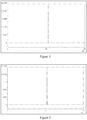
Figure 3 depicts gas chromatography analysis - ethylene standard (retention time: 10.5 min.). -
Figure 4 depicts gas chromatography analysis - ethylene produced (retention time: 10.4 min.). - Herein is described a process for the production of olefins from the dehydration of light alcohols using ionic liquids, characterized by occurring at low temperature and comprising the following steps:
- a) contacting a stream containing at least 50% of one or more light alcohols with at least one ionic liquid, wherein said stream may be a liquid stream or a vapor stream, to thereby generate the equivalent olefins;
- b) conveying the stream containing the obtained olefins to a purification step;
- c) removing the water from the reaction medium by an independent process;
- d) optionally, recycling the stream containing residual alcohol and ether to the reactor.
- The light alcohols have 2 to 8 carbon atoms. Preferentially, the light alcohols of the present invention have 2 to 4 carbon atoms, more preferentially from 2 to 3 carbon atoms.
- Furthermore, the light alcohols may originate from sugarcane, corn, beetroot, and biomass, among others.
- The ionic liquids are organic compounds of formula R1ImR2.X, wherein R1 is an alkyl group with 1 to 20 carbon atoms, R2 is an alkyl group containing from 1 to 10 carbon atoms, Im is the imidazole ring (C3N2H3) and X is an anion selected from the group consisting of [HSO4]-, [SO4]-2, [NO3]-, [BF4]-, [(R F )BF3]-, [(R F )2BF2]-, [(R F )3BF]-, [(R F )4B]-, [B(CN)4]-, [PO4]-3, [HPO4]-2, [H2PO4]-, [alkyl-OPO3]-2, [(alkyl-O)2PO2]-, [alkyl-PO3]-, [R F PO3]-, [(alkyl)2PO2]-, [(R F )2PO2]-, [R F SO3]-, [alkyl-SO3]-, [aryl-SO3]-, [alkyl-OSO3]-, [R F C(O)O]-, [(R F SO2)2N]-, {[(R F )2P(O)]2N}-, Cl- and/or Br-.
- Preferably, the anion X of the ionic liquid is devoid of sulfur atoms.
- The dehydration reaction of light alcohols of the present invention occurs at a temperature of up to 150°C. Preferably, the reaction occurs at a temperature in the range of 30 to 100°C, more preferably between 60 and 100°C.
- The dehydration reaction of light alcohols occurs at a pressure of 1 to 20 bar (1MPa to 20MPa).
- The independent process used to remove the water from the reaction can be by adsorption, distillation, evaporation or any other process
- In a preferred modality, as depicted in
Figure 1 , the process for the production of olefins comprises the following steps, without however being restricted thereto: - a) A stream containing the alcohol (or mixture of alcohols) 2 is contacted with an ionic liquid in a reactor A.
- b) The olefin-
rich phase 3 formed in the reaction is conveyed to a purification step B wherein theolefins 4 at a level of purity adequate for the subsequent application are separated from theimpurities 5. - c) A part of the ionic liquid-
rich phase 6 is conveyed to a separation section C wherein is provided the separation of the water formed by thereaction 7, returning the purifiedionic liquid 8 to the reactor A. - The ionic liquid may be directly conveyed to the reactor la or may be added to the returning stream of purified
ionic liquid 1b. - In a second preferred embodiment of the present invention, as depicted in
Figure 2 , the process for the production of olefins according to the present invention comprises the following steps, without being restricted thereto: - a) A stream containing alcohol (or a mixture of alcohols) 2 is contacted with an ionic liquid in a reactor A;
- b) The olefin-
rich phase 3 formed in the reaction is conveyed to a purification step B1, wherein a stream containing the unreacted alcohol and theether 10 is separated from the olefin-containing phase 9 and is conveyed to the reactor A, in order to enhance the conversion of the alcohol; - c) The remaining stream 9 is conveyed to a second purification step B2 wherein the
olefin 4 at a level of purity adequate for the subsequent application is separated from the impurities 5a; - d) A part of the
ionic liquid 6 is conveyed to a separation section C wherein is provided the separation of the water formed by thereaction 7, returning theionic liquid 8 to the reactor A. - The ionic liquid may be conveyed directly to the
reactor 1a or may be added to the returning stream of the purifiedionic liquid 1b; - Optionally, prior to the dehydration of the light alcohols with an ionic liquid, the process for the production of olefins comprises the following steps:
- i. preheating of the stream that contains alcohol(s) up to a temperature close to or higher than the reaction temperature;
- ii. preheating of the stream of ionic liquid up to a temperature close to or higher than the reaction temperature.
- Preferably, the reaction of dehydration of alcohols may be conducted under heating to compensate the energy withdrawn by the endothermic dehydration reaction. This heating may be provided in several forms, for example, by heating the reactor, by heating the
ionic liquid 1a to a temperature above the temperature of reaction, heating of the ionic liquid stream that passes the water separation step, or a combination of these, without being restricted thereto. - By means of the process disclosed in the present invention, there is reached a conversion of alcohol of at least 12%, preferably at least 20%, more preferably at least 50%, and even more preferably at least 75%. That is, by means of the present invention it is possible to achieve a high conversion of alcohol into olefins.
- Thus, the present invention presents the following advantages:
Production of olefins from the dehydration of light alcohols; - Production of olefins with selectivity levels above 80%, which may reach values higher than 90% and even higher than 99% ;
- Low energy consumption due to the fact of there being used mild conditions of temperature and pressure;
- High conversion of alcohols into olefins;
- Low formation of byproducts, simplifying the purification step.
- The use of acid for the reaction of dehydration of the alcohols is not necessary, and therefore acid corrosion problems are avoided and the withdrawal of water from the reaction is rendered easier;
- It is not necessary to use ionic liquids containing sulfur, thereby avoiding the contamination of the olefins thus obtained.
- The olefins obtained in the present invention may be useful in the industries of polymers, ethylene glycol, monoethylene glycol, among other products. Furthermore, the olefins obtained in the present invention can be used for the production of propylene.
- Experiments were conducted at atmospheric pressure, in a glass reactor equipped with a reflux condenser and heating means. In the reactor, in the first experiment there are mixed ethanol and an ionic liquid, methyl-butyl-imidazole tetrafluoroborate (BMI.BF4). The reactor is heated and there immediately starts to be issued ethylene, which was identified using gas chromatography, by means of comparison with a pure pattern. The formed gaseous stream had a purity of up to 99% of ethylene.
- After a certain time further generation of ethylene in the reaction ceases to occur; after 30 minutes, the final weighing and determination of the consumption of ethanol proceeds.
- Table 1 shows the following results obtained:
Table 1 - Results of the production of olefins from light alcohols. Reaction Time (h) Temp. (°C) EtOH Ionic Liquid Conversion (%) Remarks (g) (mol) Type (g) (mol) 1 0.5 81 2.7 0.059 BMI.BF4 13.1 0.059 69 With stirring 2 0.5 80 2.2 0.049 BMI.BF4 11.0 0.049 40 Without stirring - In a second experiment - comparative example - there are mixed ethanol and methyl-butyl-imidazole chloride (BMI.Cl) at the same conditions of the process and no conversion was observed.
- Table 2 shows the following results obtained:
Table 2 - Results of the production of olefins from light alcohols. Reaction Time (h) Temp. (°C) EtOH Ionic Liquid Conversion (%) Remarks (g) (mol) Type (g) (mol) 4 0.5 79 - - BMI.Cl 0 With stirring - In order to study the reaction of ethanol dehydration, additional experiments were performed to test the ethanol dehydration with variable temperature, reaction time and feeding of ethanol in batch or continuous processes. All tests were performed in a glass reactor at atmospheric pressure.
- Initially, the tests were performed under two different temperatures (80 and 100°C) by stirring under reflux and feeding the ethanol in batch. After the reaction was completed, the distillation of the residual liquid was carried out to quantify the reaction conversion.
- Secondly, in order to prevent the retention of water formed during the reaction, a distillation system was coupled. The ethanol feed was made in continuous flow and varied from 0.1 to 0.5 g/min. The temperature employed in the system was varied between 120 to 180°C. The reactor was filled with ranching rings, thus replacing the magnetic stirring.
- Another series of experiments was performed to monitor the weight loss during the reaction. The reaction conditions were varied by feeding the ethanol in batch and by varying the temperature between 80 to 120°C.
- The conversion of ethanol was measured by weight loss, according to the formula:

- The ionic liquid used in the experiments was methyl-butyl-imidazole tetrafluoroborate (BMI.BF4).
- The conversion results obtained for the dehydration of ethanol and the reaction conditions are shown in Table 3.
Table 3 - Experimental results from the dehydration of ethanol Reaction Temperature °C Ionic Liquid Mass (g) Ethanol addition rate (g/min) Ethanol/Ionic Liquid Relation (%) Time (h) Conversion (%) Reaction with ethanol addition by batch + reflow system 1 80 13 - 7 0.5 46 2 80 13 - 11 0.5 27 3 80 13 - 15 0.5 19 4 80 13 - 18 0.5 17 5 80 13 - 37 0.5 4 6 100 13 - 7 0.5 78 7 100 13 - 11 0.5 58 8 100 13 - 15 0.5 37 9 100 13 - 18 0.5 20 10 100 13 - 37 0.5 8 Reaction Temperature °C Ionic Liquid Mass (g) Ethanol addition rate (g/min) Ethanol/Ionic Liquid Relation (%) Time (h) Conversion (%) Reaction with ethanol continuous flow 11 120 70 0.51 - 2.0 10 12 120 70 0.22 - 2.0 12 13 120 70 0.11 - 2.4 12 14 150 70 0.52 - 2.5 9 15 150 70 0.22 - 2.5 10 16 150 70 0.13 - 2.1 21 17 180 70 0.14 - 3.0 29 Reaction Temperature °C Ionic Liquid Mass (g) Ethanol addition rate (g/min) Ethanol/Ionic Liquid Relation (%) Time (h) Conversion (%) Reaction with weigh loss minoriting - ethanol addition by batch 18 80 70 - 7 2.0 10 19 80 - 120 70 - 7 2.0 50 - The reactions of experiments 1-10 were performed according to the initial reaction system at atmospheric pressure by magnetic stirring, under reflux for time 30 minutes with addition of ethanol per batch. The first five experiments (1-5) were performed at a temperature of 80°C and the remaining experiments (6-10) performed at a temperature of 100°C. After the ethylene gas formation was stopped, distillation of the residual liquid was carried out to quantify the conversion reaction of ethanol.
- Experiments 11-17 were conducted in order to observe the variation in the rate of addition of ethanol and the influence of temperature. Therefore experiments were performed varying the flow between about 0.5 to 0.1 g/min with three different temperatures; 120, 150 and 180°C.
- Reactions 11-13 were heated to 120°C and the reactions 14-16 were heated at 150°C; the reaction 17 was heated at 180°C.
- The experiments were performed at atmospheric pressure reactor, without stirring, using ranching rings. Continuous distillation was carried out in this reaction system by using a set of three distillation traps interconnected to one another by means of glass tubes, which are kept cooled in an ice water bath. A bubbler was connected at the end of the third distillation trap to detect the exit of ethylene gas.
- The reactor was heated using a heating mantle collar with internal control temperature using a thermocouple. Addition of ethanol in the reactor was made in continuous flow with the aid of a properly calibrated metering pump at a rate of addition of ethanol (g/min) as described in the table above. After the prescribed reaction time, as shown in the table above, the final weighing of all the reaction system was performed to quantify the conversion of ethanol.
- For the batch addition of ethanol experiments 18 and 19, the weight loss was monitored with an analytical balance, isolated from atmospheric air by an acrylic box. The reaction system for experiments 18 and 19 had only one distillation trap instead of three distillation trap that were used in reaction 11 to 17. The temperature was maintained constantly at 80°C for the reaction 18; the temperature for the reaction 19 was slowly increased from 80°C to 120°C.
Claims (13)
- A process for the production of olefins, characterized by contacting a stream containing at least 50 % by weight of one or more light alcohols with at least one ionic liquid, without the use of acid, in a reactor;
wherein the reaction of the stream containing light alcohols with the at least one ionic liquid occurs at a temperature within the range of 30 to 180 °C and at a pressure of from 1 MPa to 20 MPa;
wherein the said light alcohols contain 2 carbon atoms; and
wherein the at least one ionic liquid is an organic compound of formula R1ImR2.X, wherein R1 is an alkyl group comprising from 1 to 20 carbon atoms, R2 is an alkyl group comprising from 1 to 10 carbon atoms, Im is the imidazole ring (C3N2H3) and X is an anion selected from the group consisting in [NO3]-, [BF4]-, [(R F )BF3]-, [(R F )2BF2]-, [(R F )3BF]-, [(R F )4B]-, [B(CN)4]-, [PO4]3-, [alkyl-OPO3]2-, [(alkyl-O)2PO2]-, [alkyl-PO3]-, [R F PO3]-, [(alkyl)2PO2]-, [(R F )2PO2]-, [R F SO3]-, [alkyl-SO3]-, [aryl-SO3]-, [alkyl-OSO3]-, [R F C(O)O]-, [(R F SO2)2N]-, {[(R F )2P(O)]2N}-, Cl- and/or Br-. - The process as recited in claim 1, characterized by further comprising conveying the olefin-rich stream having been obtained by a purification step.
- The process as recited in claim 1, characterized by further comprising a step of removing the water from the reaction medium.
- The process as recited in claim 1, characterized by further comprising a step of preheating of the alcohol-rich stream up to a temperature close to the reaction temperature.
- The process as recited in claim 1, characterized by further comprising a step of preheating of the ionic liquid stream up to a temperature close to the reaction temperature.
- The process as recited in claim 1, characterized by further comprising a step of recycling the stream containing residual alcohol and ether to the reactor.
- The process as recited in claim 1, characterized in that the reaction of the light alcohols-rich stream with the at least one ionic liquid occurs at a temperature within the range of 30 to 150 °C.
- The process as recited in claim 7, characterized in that the reaction of the light alcohols-rich stream with the at least one ionic liquid occurs at a temperature within the range of 30 to 100 °C
- The process as recited in claim 7, characterized in that the reaction of the light alcohols-rich stream with the at least one ionic liquid occurs at a temperature within the range of 60 to 100 °C.
- The process as recited in claim 1, characterized in that the anion X of the ionic liquid is devoid of sulfur atoms.
- The process as recited in claim 1, characterized in that the reaction of the stream containing one or more light alcohols with the at least one ionic liquid is conducted by heating.
- The process as recited in claim 1, characterized in that the light alcohols originate from sugarcane, corn, beetroot or biomass.
- The process as recited in claim 1, wherein greater than 12 % of the light alcohols are converted to olefins, preferably at least 20 %, more preferably at least 50%, and even more preferably at least 75%.
Priority Applications (1)
| Application Number | Priority Date | Filing Date | Title |
|---|---|---|---|
| EP18188847.0A EP3453695B1 (en) | 2011-08-30 | 2012-08-30 | A process for the production of olefins and use thereof |
Applications Claiming Priority (2)
| Application Number | Priority Date | Filing Date | Title |
|---|---|---|---|
| US201161529028P | 2011-08-30 | 2011-08-30 | |
| PCT/IB2012/002201 WO2013030677A2 (en) | 2011-08-30 | 2012-08-30 | A process for the production of olefins and use thereof |
Related Child Applications (2)
| Application Number | Title | Priority Date | Filing Date |
|---|---|---|---|
| EP18188847.0A Division EP3453695B1 (en) | 2011-08-30 | 2012-08-30 | A process for the production of olefins and use thereof |
| EP18188847.0A Division-Into EP3453695B1 (en) | 2011-08-30 | 2012-08-30 | A process for the production of olefins and use thereof |
Publications (3)
| Publication Number | Publication Date |
|---|---|
| EP2751056A2 EP2751056A2 (en) | 2014-07-09 |
| EP2751056A4 EP2751056A4 (en) | 2015-04-08 |
| EP2751056B1 true EP2751056B1 (en) | 2018-09-19 |
Family
ID=47756986
Family Applications (2)
| Application Number | Title | Priority Date | Filing Date |
|---|---|---|---|
| EP12827345.5A Active EP2751056B1 (en) | 2011-08-30 | 2012-08-30 | A process for the production of olefins and use thereof |
| EP18188847.0A Active EP3453695B1 (en) | 2011-08-30 | 2012-08-30 | A process for the production of olefins and use thereof |
Family Applications After (1)
| Application Number | Title | Priority Date | Filing Date |
|---|---|---|---|
| EP18188847.0A Active EP3453695B1 (en) | 2011-08-30 | 2012-08-30 | A process for the production of olefins and use thereof |
Country Status (4)
| Country | Link |
|---|---|
| US (1) | US9181143B2 (en) |
| EP (2) | EP2751056B1 (en) |
| BR (1) | BR112014004930B1 (en) |
| WO (1) | WO2013030677A2 (en) |
Families Citing this family (24)
| Publication number | Priority date | Publication date | Assignee | Title |
|---|---|---|---|---|
| US9238193B2 (en) | 2013-07-23 | 2016-01-19 | Chevron Phillips Chemical Company Lp | Separations with ionic liquid solvents |
| US10227274B2 (en) | 2013-07-23 | 2019-03-12 | Chevron Phillips Chemical Company Lp | Separations with ionic liquid solvents |
| WO2019202406A1 (en) | 2018-04-16 | 2019-10-24 | Braskem S.A. | Bio-based elastomeric eva compositions and articles and methods thereof |
| CN112204090B (en) | 2018-04-16 | 2024-03-15 | 布拉斯科有限公司 | Bio-based EVA compositions and articles and methods thereof |
| WO2020028699A1 (en) | 2018-08-01 | 2020-02-06 | Braskem America, Inc. | Thermoplastic compositions having improved toughness, articles therefrom and methods thereof |
| BR112021004351A2 (en) | 2018-09-07 | 2021-05-25 | Braskem S.A. | composite polymer composition, article, and method |
| WO2020165660A1 (en) | 2019-02-14 | 2020-08-20 | Braskem S.A. | Hot melt adhesive films comprising biobased eva, methods and articles thereof |
| WO2020183248A1 (en) | 2019-03-14 | 2020-09-17 | Braskem S.A. | Extrusion coating resin from tubular reactor |
| EP3973028B1 (en) | 2019-05-20 | 2026-03-04 | Braskem S.A. | Hot melt adhesive compositions comprising biobased eva, methods and articles thereof |
| EP4028457A1 (en) | 2019-09-11 | 2022-07-20 | Braskem, S.A. | Very soft eva foam and methods thereof |
| US11905396B2 (en) | 2019-09-30 | 2024-02-20 | Enlightened Product Solutions, LLC | Renewably-sourced biodegradable polyolefin packaging, utensils, and containers |
| US20240149517A1 (en) * | 2019-10-15 | 2024-05-09 | Braskem S.A. | Blow molded articles incorporating post-consumer resin and methods thereof |
| JP2022553228A (en) | 2019-10-15 | 2022-12-22 | ブラスケム・エス・エー | Bio-based EVA compositions and articles and methods thereof |
| BR112022007325A2 (en) | 2019-10-15 | 2022-07-05 | Braskem Sa | SHRINK FILM, METHOD FOR PREPARING SHRINK FILM, AND, USE OF AN ETHYLENE-BASED POLYMER COMPOSITION |
| MX2022004892A (en) | 2019-10-22 | 2022-08-10 | Braskem Sa | Multilayer structures, stand-up pouches, and methods thereof. |
| BR102020005833A2 (en) | 2020-03-24 | 2021-10-05 | Braskem S.A. | WASTE DISPOSAL EQUIPMENT AND METHOD OF PRODUCTION OF WASTE DISPOSAL EQUIPMENT |
| BR112023002053A2 (en) | 2020-08-06 | 2023-05-02 | Braskem Sa | COMPOSITION, ARTICLE AND PROCESS FOR PRODUCING A COMPOSITION |
| US20220106454A1 (en) | 2020-10-02 | 2022-04-07 | Braskem S.A. | Ultrasoft eva foam formulation and methods thereof |
| EP4225844A1 (en) | 2020-10-07 | 2023-08-16 | Braskem S.A. | Eva compositions for footwear |
| WO2022112848A1 (en) | 2020-11-27 | 2022-06-02 | Braskem S.A. | Biocompatible low impact co2 emission polymer compositions, pharmaceutical articles and methods of preparing same |
| US20230092207A1 (en) | 2021-09-10 | 2023-03-23 | Braskem S.A. | Polyethylene-based composition and biaxially oriented polyethylene-based articles |
| US20240131829A1 (en) | 2022-10-18 | 2024-04-25 | Braskem S.A. | High-barrier multilayer film and packaging container made therefrom |
| CN121511275A (en) | 2023-06-13 | 2026-02-10 | 布拉斯科有限公司 | Soft EVA polymer compositions and articles thereof and their preparation methods |
| WO2025132861A1 (en) | 2023-12-21 | 2025-06-26 | ARLANXEO High Performance Elastomers (Changzhou) Co., Ltd. | Polyolefin polymers with low content of volatiles |
Family Cites Families (7)
| Publication number | Priority date | Publication date | Assignee | Title |
|---|---|---|---|---|
| ES2183610T3 (en) * | 1998-09-03 | 2003-03-16 | Dow Global Technologies Inc | SYNTHESIS AND REGENERATION ON LINE OF A CATALYST USED IN AUTOTHERMAL OXIDATION. |
| KR100989299B1 (en) | 2002-04-05 | 2010-10-22 | 유니버시티 오브 사우스 앨라배마 | Functionalized ionic liquids, and methods of use thereof |
| WO2007012825A1 (en) * | 2005-07-27 | 2007-02-01 | Bp P.L.C. | Dehydration process |
| DE102005036457A1 (en) | 2005-08-03 | 2007-02-08 | Merck Patent Gmbh | Dehydration of alcohols to alkenes |
| EP1790627A1 (en) * | 2005-11-29 | 2007-05-30 | BP Chemicals Limited | Process for producing olefins |
| US20110046426A1 (en) * | 2009-08-18 | 2011-02-24 | Hampden-Sydney College | Method for continuous conversion of methanol to higher hydrocarbons and catalyst used therein |
| CN102666807B (en) * | 2009-11-10 | 2016-01-20 | 国际壳牌研究有限公司 | For the production of the method for alkene |
-
2012
- 2012-08-30 EP EP12827345.5A patent/EP2751056B1/en active Active
- 2012-08-30 EP EP18188847.0A patent/EP3453695B1/en active Active
- 2012-08-30 US US14/241,323 patent/US9181143B2/en active Active
- 2012-08-30 BR BR112014004930-0A patent/BR112014004930B1/en active IP Right Grant
- 2012-08-30 WO PCT/IB2012/002201 patent/WO2013030677A2/en not_active Ceased
Non-Patent Citations (1)
| Title |
|---|
| None * |
Also Published As
| Publication number | Publication date |
|---|---|
| US20150087866A1 (en) | 2015-03-26 |
| WO2013030677A3 (en) | 2013-07-11 |
| EP2751056A4 (en) | 2015-04-08 |
| BR112014004930A2 (en) | 2017-04-18 |
| BR112014004930B1 (en) | 2020-02-18 |
| EP3453695B1 (en) | 2021-03-24 |
| WO2013030677A2 (en) | 2013-03-07 |
| EP2751056A2 (en) | 2014-07-09 |
| US9181143B2 (en) | 2015-11-10 |
| EP3453695A1 (en) | 2019-03-13 |
Similar Documents
| Publication | Publication Date | Title |
|---|---|---|
| EP3453695B1 (en) | A process for the production of olefins and use thereof | |
| CN104640836B (en) | Use the method that reactive distillation prepares glycol ester | |
| KR20190019060A (en) | A process for producing isopropyl alcohol and a process for producing isopropyl alcohol | |
| CN106414385B (en) | γ, δ-unsaturated alcohol manufacturing method | |
| US6518474B1 (en) | Process for producing isobutylene from tertiary butyl alcohol | |
| EP1790627A1 (en) | Process for producing olefins | |
| EP2279156A1 (en) | Diisobutylene process | |
| CN111056913A (en) | Continuous production method of 1, 1, 1, 3-tetrachloropropane | |
| KR102486605B1 (en) | Method for producing conjugated diene | |
| KR101529828B1 (en) | Method for preparing dimethyolalkanal | |
| CN101648888B (en) | Method for preparing acetonitrile | |
| KR20160006720A (en) | Process for continuously preparing di-c1-3-alkyl succinates | |
| CN106946819B (en) | Selective method for converting levulinic acid to gamma-valerolactone | |
| CN103998407A (en) | Method for preparing a mixture of alcohols | |
| CN116507603B (en) | Process for the preparation of 1, 2-propanediol | |
| KR101340777B1 (en) | Process for preparing dimethyl ether | |
| CN100543001C (en) | The preparation method of 2,5-norbornadiene | |
| CN101402549B (en) | Improved process for producing low carbon alcohol with direct hydration of light olefins | |
| JP5798871B2 (en) | Method for producing isoprene | |
| JP2013522288A (en) | Method for producing alkene compound | |
| CN103694091B (en) | A kind of citral preparation and refining method | |
| CN111039743B (en) | Method for isomerizing isopropyl toluene by using solid catalyst | |
| JP4779294B2 (en) | Method for producing alcohol | |
| KR102325331B1 (en) | Method for isobutylene from tert-butanol | |
| KR20120035368A (en) | METHOD FOR PREPARING α,β-UNSATURATED ALDEHYDE |
Legal Events
| Date | Code | Title | Description |
|---|---|---|---|
| PUAI | Public reference made under article 153(3) epc to a published international application that has entered the european phase |
Free format text: ORIGINAL CODE: 0009012 |
|
| 17P | Request for examination filed |
Effective date: 20140226 |
|
| AK | Designated contracting states |
Kind code of ref document: A2 Designated state(s): AL AT BE BG CH CY CZ DE DK EE ES FI FR GB GR HR HU IE IS IT LI LT LU LV MC MK MT NL NO PL PT RO RS SE SI SK SM TR |
|
| DAX | Request for extension of the european patent (deleted) | ||
| A4 | Supplementary search report drawn up and despatched |
Effective date: 20150310 |
|
| RIC1 | Information provided on ipc code assigned before grant |
Ipc: C07C 11/04 20060101ALI20150304BHEP Ipc: C07C 1/24 20060101ALI20150304BHEP Ipc: C07C 1/20 20060101AFI20150304BHEP |
|
| STAA | Information on the status of an ep patent application or granted ep patent |
Free format text: STATUS: EXAMINATION IS IN PROGRESS |
|
| 17Q | First examination report despatched |
Effective date: 20170607 |
|
| GRAP | Despatch of communication of intention to grant a patent |
Free format text: ORIGINAL CODE: EPIDOSNIGR1 |
|
| STAA | Information on the status of an ep patent application or granted ep patent |
Free format text: STATUS: GRANT OF PATENT IS INTENDED |
|
| INTG | Intention to grant announced |
Effective date: 20180413 |
|
| RIN1 | Information on inventor provided before grant (corrected) |
Inventor name: DE SOUZA, ROBERTO FERNANDO Inventor name: DO CARMO, ROBERTO WERNECK Inventor name: MARTINS, ANDRIELI DIAS Inventor name: CASSINELLI, LUIS FERNANDO DAGNONE Inventor name: DE ANDRADE COUTINHO, PAULO LUIZ Inventor name: ROZA, LUIZA Inventor name: COMIN, EDSON Inventor name: MIGNONI, MARCELO |
|
| GRAS | Grant fee paid |
Free format text: ORIGINAL CODE: EPIDOSNIGR3 |
|
| GRAA | (expected) grant |
Free format text: ORIGINAL CODE: 0009210 |
|
| STAA | Information on the status of an ep patent application or granted ep patent |
Free format text: STATUS: THE PATENT HAS BEEN GRANTED |
|
| AK | Designated contracting states |
Kind code of ref document: B1 Designated state(s): AL AT BE BG CH CY CZ DE DK EE ES FI FR GB GR HR HU IE IS IT LI LT LU LV MC MK MT NL NO PL PT RO RS SE SI SK SM TR |
|
| REG | Reference to a national code |
Ref country code: GB Ref legal event code: FG4D |
|
| REG | Reference to a national code |
Ref country code: CH Ref legal event code: EP |
|
| REG | Reference to a national code |
Ref country code: AT Ref legal event code: REF Ref document number: 1043061 Country of ref document: AT Kind code of ref document: T Effective date: 20181015 |
|
| REG | Reference to a national code |
Ref country code: IE Ref legal event code: FG4D |
|
| REG | Reference to a national code |
Ref country code: DE Ref legal event code: R096 Ref document number: 602012051372 Country of ref document: DE |
|
| REG | Reference to a national code |
Ref country code: NL Ref legal event code: FP |
|
| PG25 | Lapsed in a contracting state [announced via postgrant information from national office to epo] |
Ref country code: LT Free format text: LAPSE BECAUSE OF FAILURE TO SUBMIT A TRANSLATION OF THE DESCRIPTION OR TO PAY THE FEE WITHIN THE PRESCRIBED TIME-LIMIT Effective date: 20180919 Ref country code: GR Free format text: LAPSE BECAUSE OF FAILURE TO SUBMIT A TRANSLATION OF THE DESCRIPTION OR TO PAY THE FEE WITHIN THE PRESCRIBED TIME-LIMIT Effective date: 20181220 Ref country code: BG Free format text: LAPSE BECAUSE OF FAILURE TO SUBMIT A TRANSLATION OF THE DESCRIPTION OR TO PAY THE FEE WITHIN THE PRESCRIBED TIME-LIMIT Effective date: 20181219 Ref country code: SE Free format text: LAPSE BECAUSE OF FAILURE TO SUBMIT A TRANSLATION OF THE DESCRIPTION OR TO PAY THE FEE WITHIN THE PRESCRIBED TIME-LIMIT Effective date: 20180919 Ref country code: NO Free format text: LAPSE BECAUSE OF FAILURE TO SUBMIT A TRANSLATION OF THE DESCRIPTION OR TO PAY THE FEE WITHIN THE PRESCRIBED TIME-LIMIT Effective date: 20181219 Ref country code: RS Free format text: LAPSE BECAUSE OF FAILURE TO SUBMIT A TRANSLATION OF THE DESCRIPTION OR TO PAY THE FEE WITHIN THE PRESCRIBED TIME-LIMIT Effective date: 20180919 Ref country code: FI Free format text: LAPSE BECAUSE OF FAILURE TO SUBMIT A TRANSLATION OF THE DESCRIPTION OR TO PAY THE FEE WITHIN THE PRESCRIBED TIME-LIMIT Effective date: 20180919 |
|
| REG | Reference to a national code |
Ref country code: LT Ref legal event code: MG4D |
|
| PG25 | Lapsed in a contracting state [announced via postgrant information from national office to epo] |
Ref country code: LV Free format text: LAPSE BECAUSE OF FAILURE TO SUBMIT A TRANSLATION OF THE DESCRIPTION OR TO PAY THE FEE WITHIN THE PRESCRIBED TIME-LIMIT Effective date: 20180919 Ref country code: AL Free format text: LAPSE BECAUSE OF FAILURE TO SUBMIT A TRANSLATION OF THE DESCRIPTION OR TO PAY THE FEE WITHIN THE PRESCRIBED TIME-LIMIT Effective date: 20180919 Ref country code: HR Free format text: LAPSE BECAUSE OF FAILURE TO SUBMIT A TRANSLATION OF THE DESCRIPTION OR TO PAY THE FEE WITHIN THE PRESCRIBED TIME-LIMIT Effective date: 20180919 |
|
| REG | Reference to a national code |
Ref country code: AT Ref legal event code: MK05 Ref document number: 1043061 Country of ref document: AT Kind code of ref document: T Effective date: 20180919 |
|
| PG25 | Lapsed in a contracting state [announced via postgrant information from national office to epo] |
Ref country code: IS Free format text: LAPSE BECAUSE OF FAILURE TO SUBMIT A TRANSLATION OF THE DESCRIPTION OR TO PAY THE FEE WITHIN THE PRESCRIBED TIME-LIMIT Effective date: 20190119 Ref country code: AT Free format text: LAPSE BECAUSE OF FAILURE TO SUBMIT A TRANSLATION OF THE DESCRIPTION OR TO PAY THE FEE WITHIN THE PRESCRIBED TIME-LIMIT Effective date: 20180919 Ref country code: EE Free format text: LAPSE BECAUSE OF FAILURE TO SUBMIT A TRANSLATION OF THE DESCRIPTION OR TO PAY THE FEE WITHIN THE PRESCRIBED TIME-LIMIT Effective date: 20180919 Ref country code: IT Free format text: LAPSE BECAUSE OF FAILURE TO SUBMIT A TRANSLATION OF THE DESCRIPTION OR TO PAY THE FEE WITHIN THE PRESCRIBED TIME-LIMIT Effective date: 20180919 Ref country code: RO Free format text: LAPSE BECAUSE OF FAILURE TO SUBMIT A TRANSLATION OF THE DESCRIPTION OR TO PAY THE FEE WITHIN THE PRESCRIBED TIME-LIMIT Effective date: 20180919 Ref country code: CZ Free format text: LAPSE BECAUSE OF FAILURE TO SUBMIT A TRANSLATION OF THE DESCRIPTION OR TO PAY THE FEE WITHIN THE PRESCRIBED TIME-LIMIT Effective date: 20180919 Ref country code: PL Free format text: LAPSE BECAUSE OF FAILURE TO SUBMIT A TRANSLATION OF THE DESCRIPTION OR TO PAY THE FEE WITHIN THE PRESCRIBED TIME-LIMIT Effective date: 20180919 Ref country code: ES Free format text: LAPSE BECAUSE OF FAILURE TO SUBMIT A TRANSLATION OF THE DESCRIPTION OR TO PAY THE FEE WITHIN THE PRESCRIBED TIME-LIMIT Effective date: 20180919 |
|
| PG25 | Lapsed in a contracting state [announced via postgrant information from national office to epo] |
Ref country code: SM Free format text: LAPSE BECAUSE OF FAILURE TO SUBMIT A TRANSLATION OF THE DESCRIPTION OR TO PAY THE FEE WITHIN THE PRESCRIBED TIME-LIMIT Effective date: 20180919 Ref country code: PT Free format text: LAPSE BECAUSE OF FAILURE TO SUBMIT A TRANSLATION OF THE DESCRIPTION OR TO PAY THE FEE WITHIN THE PRESCRIBED TIME-LIMIT Effective date: 20190119 Ref country code: SK Free format text: LAPSE BECAUSE OF FAILURE TO SUBMIT A TRANSLATION OF THE DESCRIPTION OR TO PAY THE FEE WITHIN THE PRESCRIBED TIME-LIMIT Effective date: 20180919 |
|
| REG | Reference to a national code |
Ref country code: DE Ref legal event code: R097 Ref document number: 602012051372 Country of ref document: DE |
|
| PLBE | No opposition filed within time limit |
Free format text: ORIGINAL CODE: 0009261 |
|
| STAA | Information on the status of an ep patent application or granted ep patent |
Free format text: STATUS: NO OPPOSITION FILED WITHIN TIME LIMIT |
|
| PG25 | Lapsed in a contracting state [announced via postgrant information from national office to epo] |
Ref country code: DK Free format text: LAPSE BECAUSE OF FAILURE TO SUBMIT A TRANSLATION OF THE DESCRIPTION OR TO PAY THE FEE WITHIN THE PRESCRIBED TIME-LIMIT Effective date: 20180919 |
|
| 26N | No opposition filed |
Effective date: 20190620 |
|
| PG25 | Lapsed in a contracting state [announced via postgrant information from national office to epo] |
Ref country code: SI Free format text: LAPSE BECAUSE OF FAILURE TO SUBMIT A TRANSLATION OF THE DESCRIPTION OR TO PAY THE FEE WITHIN THE PRESCRIBED TIME-LIMIT Effective date: 20180919 |
|
| PG25 | Lapsed in a contracting state [announced via postgrant information from national office to epo] |
Ref country code: TR Free format text: LAPSE BECAUSE OF FAILURE TO SUBMIT A TRANSLATION OF THE DESCRIPTION OR TO PAY THE FEE WITHIN THE PRESCRIBED TIME-LIMIT Effective date: 20180919 |
|
| PG25 | Lapsed in a contracting state [announced via postgrant information from national office to epo] |
Ref country code: CH Free format text: LAPSE BECAUSE OF NON-PAYMENT OF DUE FEES Effective date: 20190831 Ref country code: LU Free format text: LAPSE BECAUSE OF NON-PAYMENT OF DUE FEES Effective date: 20190830 Ref country code: LI Free format text: LAPSE BECAUSE OF NON-PAYMENT OF DUE FEES Effective date: 20190831 Ref country code: MC Free format text: LAPSE BECAUSE OF FAILURE TO SUBMIT A TRANSLATION OF THE DESCRIPTION OR TO PAY THE FEE WITHIN THE PRESCRIBED TIME-LIMIT Effective date: 20180919 |
|
| PG25 | Lapsed in a contracting state [announced via postgrant information from national office to epo] |
Ref country code: IE Free format text: LAPSE BECAUSE OF NON-PAYMENT OF DUE FEES Effective date: 20190830 |
|
| PGFP | Annual fee paid to national office [announced via postgrant information from national office to epo] |
Ref country code: NL Payment date: 20200929 Year of fee payment: 9 Ref country code: FR Payment date: 20200924 Year of fee payment: 9 Ref country code: GB Payment date: 20200916 Year of fee payment: 9 |
|
| PG25 | Lapsed in a contracting state [announced via postgrant information from national office to epo] |
Ref country code: CY Free format text: LAPSE BECAUSE OF FAILURE TO SUBMIT A TRANSLATION OF THE DESCRIPTION OR TO PAY THE FEE WITHIN THE PRESCRIBED TIME-LIMIT Effective date: 20180919 |
|
| PG25 | Lapsed in a contracting state [announced via postgrant information from national office to epo] |
Ref country code: MT Free format text: LAPSE BECAUSE OF FAILURE TO SUBMIT A TRANSLATION OF THE DESCRIPTION OR TO PAY THE FEE WITHIN THE PRESCRIBED TIME-LIMIT Effective date: 20180919 Ref country code: HU Free format text: LAPSE BECAUSE OF FAILURE TO SUBMIT A TRANSLATION OF THE DESCRIPTION OR TO PAY THE FEE WITHIN THE PRESCRIBED TIME-LIMIT; INVALID AB INITIO Effective date: 20120830 |
|
| REG | Reference to a national code |
Ref country code: NL Ref legal event code: MM Effective date: 20210901 |
|
| GBPC | Gb: european patent ceased through non-payment of renewal fee |
Effective date: 20210830 |
|
| PG25 | Lapsed in a contracting state [announced via postgrant information from national office to epo] |
Ref country code: NL Free format text: LAPSE BECAUSE OF NON-PAYMENT OF DUE FEES Effective date: 20210901 Ref country code: MK Free format text: LAPSE BECAUSE OF FAILURE TO SUBMIT A TRANSLATION OF THE DESCRIPTION OR TO PAY THE FEE WITHIN THE PRESCRIBED TIME-LIMIT Effective date: 20180919 |
|
| PG25 | Lapsed in a contracting state [announced via postgrant information from national office to epo] |
Ref country code: GB Free format text: LAPSE BECAUSE OF NON-PAYMENT OF DUE FEES Effective date: 20210830 Ref country code: FR Free format text: LAPSE BECAUSE OF NON-PAYMENT OF DUE FEES Effective date: 20210831 |
|
| PGFP | Annual fee paid to national office [announced via postgrant information from national office to epo] |
Ref country code: DE Payment date: 20240723 Year of fee payment: 13 |
|
| PGFP | Annual fee paid to national office [announced via postgrant information from national office to epo] |
Ref country code: BE Payment date: 20240816 Year of fee payment: 13 |
|
| REG | Reference to a national code |
Ref country code: DE Ref legal event code: R119 Ref document number: 602012051372 Country of ref document: DE |