EP2749643A1 - Novel bacterial iodoperoxidases from Zobellia galactanivorans, methods of preparation and uses thereof - Google Patents
Novel bacterial iodoperoxidases from Zobellia galactanivorans, methods of preparation and uses thereof Download PDFInfo
- Publication number
- EP2749643A1 EP2749643A1 EP12306718.3A EP12306718A EP2749643A1 EP 2749643 A1 EP2749643 A1 EP 2749643A1 EP 12306718 A EP12306718 A EP 12306718A EP 2749643 A1 EP2749643 A1 EP 2749643A1
- Authority
- EP
- European Patent Office
- Prior art keywords
- seq
- iodoperoxidase
- sequence
- nucleic acid
- sequences
- Prior art date
- Legal status (The legal status is an assumption and is not a legal conclusion. Google has not performed a legal analysis and makes no representation as to the accuracy of the status listed.)
- Withdrawn
Links
- 238000000034 method Methods 0.000 title claims abstract description 27
- 241000893379 Zobellia galactanivorans Species 0.000 title claims abstract description 26
- 230000001580 bacterial effect Effects 0.000 title description 3
- 150000007523 nucleic acids Chemical class 0.000 claims abstract description 75
- 108020004707 nucleic acids Proteins 0.000 claims abstract description 66
- 102000039446 nucleic acids Human genes 0.000 claims abstract description 66
- 210000004027 cell Anatomy 0.000 claims description 41
- 125000003275 alpha amino acid group Chemical group 0.000 claims description 37
- 239000013598 vector Substances 0.000 claims description 31
- 239000012634 fragment Substances 0.000 claims description 19
- 150000002894 organic compounds Chemical class 0.000 claims description 17
- 230000000295 complement effect Effects 0.000 claims description 11
- -1 antioxydants Substances 0.000 claims description 10
- 150000001875 compounds Chemical class 0.000 claims description 8
- 239000013604 expression vector Substances 0.000 claims description 8
- 238000004519 manufacturing process Methods 0.000 claims description 8
- 238000003259 recombinant expression Methods 0.000 claims description 7
- XLYOFNOQVPJJNP-UHFFFAOYSA-N water Substances O XLYOFNOQVPJJNP-UHFFFAOYSA-N 0.000 claims description 7
- 238000010367 cloning Methods 0.000 claims description 6
- 239000000126 substance Substances 0.000 claims description 6
- 239000003242 anti bacterial agent Substances 0.000 claims description 4
- 229940088710 antibiotic agent Drugs 0.000 claims description 4
- 210000003527 eukaryotic cell Anatomy 0.000 claims description 4
- 239000000853 adhesive Substances 0.000 claims description 3
- 230000001070 adhesive effect Effects 0.000 claims description 3
- 239000002872 contrast media Substances 0.000 claims description 3
- 239000000645 desinfectant Substances 0.000 claims description 3
- 239000000543 intermediate Substances 0.000 claims description 3
- 239000000575 pesticide Substances 0.000 claims description 3
- 238000003786 synthesis reaction Methods 0.000 claims description 3
- 230000003115 biocidal effect Effects 0.000 claims description 2
- 229940079593 drug Drugs 0.000 claims description 2
- 239000003814 drug Substances 0.000 claims description 2
- 238000011065 in-situ storage Methods 0.000 claims description 2
- 230000002083 iodinating effect Effects 0.000 claims description 2
- PNDPGZBMCMUPRI-UHFFFAOYSA-N iodine Chemical compound II PNDPGZBMCMUPRI-UHFFFAOYSA-N 0.000 claims description 2
- 235000015097 nutrients Nutrition 0.000 claims description 2
- 210000001236 prokaryotic cell Anatomy 0.000 claims description 2
- 230000001131 transforming effect Effects 0.000 claims description 2
- 239000013599 cloning vector Substances 0.000 claims 1
- 102000004190 Enzymes Human genes 0.000 abstract description 33
- 108090000790 Enzymes Proteins 0.000 abstract description 33
- 239000002537 cosmetic Substances 0.000 abstract description 3
- 235000013305 food Nutrition 0.000 abstract description 3
- 108090000623 proteins and genes Proteins 0.000 description 56
- 235000018102 proteins Nutrition 0.000 description 51
- 102000004169 proteins and genes Human genes 0.000 description 51
- 235000001014 amino acid Nutrition 0.000 description 36
- 229940088598 enzyme Drugs 0.000 description 32
- 229940024606 amino acid Drugs 0.000 description 31
- 239000002773 nucleotide Substances 0.000 description 29
- 125000003729 nucleotide group Chemical group 0.000 description 29
- 150000001413 amino acids Chemical class 0.000 description 27
- 230000000694 effects Effects 0.000 description 26
- XMBWDFGMSWQBCA-UHFFFAOYSA-N hydrogen iodide Chemical compound I XMBWDFGMSWQBCA-UHFFFAOYSA-N 0.000 description 16
- 108010076504 Protein Sorting Signals Proteins 0.000 description 15
- 238000000746 purification Methods 0.000 description 15
- 108020004705 Codon Proteins 0.000 description 13
- FAPWRFPIFSIZLT-UHFFFAOYSA-M Sodium chloride Chemical compound [Na+].[Cl-] FAPWRFPIFSIZLT-UHFFFAOYSA-M 0.000 description 12
- 230000004071 biological effect Effects 0.000 description 10
- NLKNQRATVPKPDG-UHFFFAOYSA-M potassium iodide Substances [K+].[I-] NLKNQRATVPKPDG-UHFFFAOYSA-M 0.000 description 10
- 108020004414 DNA Proteins 0.000 description 9
- 230000014509 gene expression Effects 0.000 description 9
- RAXXELZNTBOGNW-UHFFFAOYSA-N imidazole Natural products C1=CNC=N1 RAXXELZNTBOGNW-UHFFFAOYSA-N 0.000 description 9
- 125000000539 amino acid group Chemical group 0.000 description 8
- 108090000765 processed proteins & peptides Proteins 0.000 description 8
- PRZSXZWFJHEZBJ-UHFFFAOYSA-N thymol blue Chemical compound C1=C(O)C(C(C)C)=CC(C2(C3=CC=CC=C3S(=O)(=O)O2)C=2C(=CC(O)=C(C(C)C)C=2)C)=C1C PRZSXZWFJHEZBJ-UHFFFAOYSA-N 0.000 description 8
- 241000894006 Bacteria Species 0.000 description 7
- HNDVDQJCIGZPNO-YFKPBYRVSA-N L-histidine Chemical compound OC(=O)[C@@H](N)CC1=CN=CN1 HNDVDQJCIGZPNO-YFKPBYRVSA-N 0.000 description 7
- 108091028043 Nucleic acid sequence Proteins 0.000 description 7
- 239000000872 buffer Substances 0.000 description 7
- 239000000499 gel Substances 0.000 description 7
- HNDVDQJCIGZPNO-UHFFFAOYSA-N histidine Natural products OC(=O)C(N)CC1=CN=CN1 HNDVDQJCIGZPNO-UHFFFAOYSA-N 0.000 description 7
- OKJPEAGHQZHRQV-UHFFFAOYSA-N iodoform Chemical compound IC(I)I OKJPEAGHQZHRQV-UHFFFAOYSA-N 0.000 description 7
- 239000000203 mixture Substances 0.000 description 7
- 238000003752 polymerase chain reaction Methods 0.000 description 7
- 108010073997 Bromide peroxidase Proteins 0.000 description 6
- 108010035722 Chloride peroxidase Proteins 0.000 description 6
- 108091035707 Consensus sequence Proteins 0.000 description 6
- 241000588724 Escherichia coli Species 0.000 description 6
- DHMQDGOQFOQNFH-UHFFFAOYSA-N Glycine Chemical compound NCC(O)=O DHMQDGOQFOQNFH-UHFFFAOYSA-N 0.000 description 6
- MHAJPDPJQMAIIY-UHFFFAOYSA-N Hydrogen peroxide Chemical compound OO MHAJPDPJQMAIIY-UHFFFAOYSA-N 0.000 description 6
- 238000003556 assay Methods 0.000 description 6
- 238000002296 dynamic light scattering Methods 0.000 description 6
- 102000004196 processed proteins & peptides Human genes 0.000 description 6
- 239000011780 sodium chloride Substances 0.000 description 6
- LSGOVYNHVSXFFJ-UHFFFAOYSA-N vanadate(3-) Chemical compound [O-][V]([O-])([O-])=O LSGOVYNHVSXFFJ-UHFFFAOYSA-N 0.000 description 6
- 238000004458 analytical method Methods 0.000 description 5
- 238000004587 chromatography analysis Methods 0.000 description 5
- 230000002255 enzymatic effect Effects 0.000 description 5
- 230000006870 function Effects 0.000 description 5
- 239000002609 medium Substances 0.000 description 5
- 229930182817 methionine Natural products 0.000 description 5
- 229920001184 polypeptide Polymers 0.000 description 5
- 238000001742 protein purification Methods 0.000 description 5
- QKNYBSVHEMOAJP-UHFFFAOYSA-N 2-amino-2-(hydroxymethyl)propane-1,3-diol;hydron;chloride Chemical compound Cl.OCC(N)(CO)CO QKNYBSVHEMOAJP-UHFFFAOYSA-N 0.000 description 4
- 241001537312 Curvularia inaequalis Species 0.000 description 4
- IAZDPXIOMUYVGZ-UHFFFAOYSA-N Dimethylsulphoxide Chemical compound CS(C)=O IAZDPXIOMUYVGZ-UHFFFAOYSA-N 0.000 description 4
- 241000196324 Embryophyta Species 0.000 description 4
- 102000007056 Recombinant Fusion Proteins Human genes 0.000 description 4
- 108010008281 Recombinant Fusion Proteins Proteins 0.000 description 4
- 108091081024 Start codon Proteins 0.000 description 4
- WFDIJRYMOXRFFG-UHFFFAOYSA-N acetic acid anhydride Natural products CC(=O)OC(C)=O WFDIJRYMOXRFFG-UHFFFAOYSA-N 0.000 description 4
- 230000008827 biological function Effects 0.000 description 4
- 238000006243 chemical reaction Methods 0.000 description 4
- 230000000875 corresponding effect Effects 0.000 description 4
- 230000026045 iodination Effects 0.000 description 4
- 238000006192 iodination reaction Methods 0.000 description 4
- INQOMBQAUSQDDS-UHFFFAOYSA-N iodomethane Chemical compound IC INQOMBQAUSQDDS-UHFFFAOYSA-N 0.000 description 4
- 239000000463 material Substances 0.000 description 4
- 230000035772 mutation Effects 0.000 description 4
- 230000002018 overexpression Effects 0.000 description 4
- 230000003647 oxidation Effects 0.000 description 4
- 238000007254 oxidation reaction Methods 0.000 description 4
- 230000001590 oxidative effect Effects 0.000 description 4
- 229920001339 phlorotannin Polymers 0.000 description 4
- IOLCXVTUBQKXJR-UHFFFAOYSA-M potassium bromide Chemical compound [K+].[Br-] IOLCXVTUBQKXJR-UHFFFAOYSA-M 0.000 description 4
- MTCFGRXMJLQNBG-REOHCLBHSA-N (2S)-2-Amino-3-hydroxypropansäure Chemical compound OC[C@H](N)C(O)=O MTCFGRXMJLQNBG-REOHCLBHSA-N 0.000 description 3
- DCXYFEDJOCDNAF-UHFFFAOYSA-N Asparagine Natural products OC(=O)C(N)CC(N)=O DCXYFEDJOCDNAF-UHFFFAOYSA-N 0.000 description 3
- 239000004471 Glycine Substances 0.000 description 3
- 108010093488 His-His-His-His-His-His Proteins 0.000 description 3
- XUJNEKJLAYXESH-REOHCLBHSA-N L-Cysteine Chemical compound SC[C@H](N)C(O)=O XUJNEKJLAYXESH-REOHCLBHSA-N 0.000 description 3
- QNAYBMKLOCPYGJ-REOHCLBHSA-N L-alanine Chemical compound C[C@H](N)C(O)=O QNAYBMKLOCPYGJ-REOHCLBHSA-N 0.000 description 3
- DCXYFEDJOCDNAF-REOHCLBHSA-N L-asparagine Chemical compound OC(=O)[C@@H](N)CC(N)=O DCXYFEDJOCDNAF-REOHCLBHSA-N 0.000 description 3
- 241001598113 Laminaria digitata Species 0.000 description 3
- 241001465754 Metazoa Species 0.000 description 3
- 229920002684 Sepharose Polymers 0.000 description 3
- MTCFGRXMJLQNBG-UHFFFAOYSA-N Serine Natural products OCC(N)C(O)=O MTCFGRXMJLQNBG-UHFFFAOYSA-N 0.000 description 3
- 235000004279 alanine Nutrition 0.000 description 3
- 229960003767 alanine Drugs 0.000 description 3
- AVKUERGKIZMTKX-NJBDSQKTSA-N ampicillin Chemical compound C1([C@@H](N)C(=O)N[C@H]2[C@H]3SC([C@@H](N3C2=O)C(O)=O)(C)C)=CC=CC=C1 AVKUERGKIZMTKX-NJBDSQKTSA-N 0.000 description 3
- 235000009582 asparagine Nutrition 0.000 description 3
- 229960001230 asparagine Drugs 0.000 description 3
- 210000004899 c-terminal region Anatomy 0.000 description 3
- 230000003197 catalytic effect Effects 0.000 description 3
- 238000005119 centrifugation Methods 0.000 description 3
- 239000003795 chemical substances by application Substances 0.000 description 3
- 238000007796 conventional method Methods 0.000 description 3
- 235000018417 cysteine Nutrition 0.000 description 3
- 229960002433 cysteine Drugs 0.000 description 3
- XUJNEKJLAYXESH-UHFFFAOYSA-N cysteine Natural products SCC(N)C(O)=O XUJNEKJLAYXESH-UHFFFAOYSA-N 0.000 description 3
- 238000002474 experimental method Methods 0.000 description 3
- 150000004820 halides Chemical class 0.000 description 3
- 238000009396 hybridization Methods 0.000 description 3
- 238000002955 isolation Methods 0.000 description 3
- 238000005259 measurement Methods 0.000 description 3
- 229920002401 polyacrylamide Polymers 0.000 description 3
- 239000011347 resin Substances 0.000 description 3
- 229920005989 resin Polymers 0.000 description 3
- 230000000717 retained effect Effects 0.000 description 3
- 239000000523 sample Substances 0.000 description 3
- 235000004400 serine Nutrition 0.000 description 3
- 229960001153 serine Drugs 0.000 description 3
- 238000002741 site-directed mutagenesis Methods 0.000 description 3
- 238000013518 transcription Methods 0.000 description 3
- 230000035897 transcription Effects 0.000 description 3
- QTBSBXVTEAMEQO-UHFFFAOYSA-N Acetic acid Chemical compound CC(O)=O QTBSBXVTEAMEQO-UHFFFAOYSA-N 0.000 description 2
- QGZKDVFQNNGYKY-UHFFFAOYSA-N Ammonia Chemical compound N QGZKDVFQNNGYKY-UHFFFAOYSA-N 0.000 description 2
- CPELXLSAUQHCOX-UHFFFAOYSA-M Bromide Chemical compound [Br-] CPELXLSAUQHCOX-UHFFFAOYSA-M 0.000 description 2
- 102000053602 DNA Human genes 0.000 description 2
- 241000238631 Hexapoda Species 0.000 description 2
- ONIBWKKTOPOVIA-BYPYZUCNSA-N L-Proline Chemical compound OC(=O)[C@@H]1CCCN1 ONIBWKKTOPOVIA-BYPYZUCNSA-N 0.000 description 2
- AYFVYJQAPQTCCC-GBXIJSLDSA-N L-threonine Chemical compound C[C@@H](O)[C@H](N)C(O)=O AYFVYJQAPQTCCC-GBXIJSLDSA-N 0.000 description 2
- OUYCCCASQSFEME-QMMMGPOBSA-N L-tyrosine Chemical compound OC(=O)[C@@H](N)CC1=CC=C(O)C=C1 OUYCCCASQSFEME-QMMMGPOBSA-N 0.000 description 2
- KZSNJWFQEVHDMF-BYPYZUCNSA-N L-valine Chemical compound CC(C)[C@H](N)C(O)=O KZSNJWFQEVHDMF-BYPYZUCNSA-N 0.000 description 2
- CSNNHWWHGAXBCP-UHFFFAOYSA-L Magnesium sulfate Chemical compound [Mg+2].[O-][S+2]([O-])([O-])[O-] CSNNHWWHGAXBCP-UHFFFAOYSA-L 0.000 description 2
- 108091005804 Peptidases Proteins 0.000 description 2
- 108010002747 Pfu DNA polymerase Proteins 0.000 description 2
- WCUXLLCKKVVCTQ-UHFFFAOYSA-M Potassium chloride Chemical compound [Cl-].[K+] WCUXLLCKKVVCTQ-UHFFFAOYSA-M 0.000 description 2
- ONIBWKKTOPOVIA-UHFFFAOYSA-N Proline Natural products OC(=O)C1CCCN1 ONIBWKKTOPOVIA-UHFFFAOYSA-N 0.000 description 2
- 239000004365 Protease Substances 0.000 description 2
- 102100037486 Reverse transcriptase/ribonuclease H Human genes 0.000 description 2
- AYFVYJQAPQTCCC-UHFFFAOYSA-N Threonine Natural products CC(O)C(N)C(O)=O AYFVYJQAPQTCCC-UHFFFAOYSA-N 0.000 description 2
- 239000004473 Threonine Substances 0.000 description 2
- KZSNJWFQEVHDMF-UHFFFAOYSA-N Valine Natural products CC(C)C(N)C(O)=O KZSNJWFQEVHDMF-UHFFFAOYSA-N 0.000 description 2
- MZVQCMJNVPIDEA-UHFFFAOYSA-N [CH2]CN(CC)CC Chemical compound [CH2]CN(CC)CC MZVQCMJNVPIDEA-UHFFFAOYSA-N 0.000 description 2
- 238000007792 addition Methods 0.000 description 2
- 238000001042 affinity chromatography Methods 0.000 description 2
- 229960000723 ampicillin Drugs 0.000 description 2
- 230000003321 amplification Effects 0.000 description 2
- 229910052799 carbon Inorganic materials 0.000 description 2
- 239000000356 contaminant Substances 0.000 description 2
- NKLPQNGYXWVELD-UHFFFAOYSA-M coomassie brilliant blue Chemical compound [Na+].C1=CC(OCC)=CC=C1NC1=CC=C(C(=C2C=CC(C=C2)=[N+](CC)CC=2C=C(C=CC=2)S([O-])(=O)=O)C=2C=CC(=CC=2)N(CC)CC=2C=C(C=CC=2)S([O-])(=O)=O)C=C1 NKLPQNGYXWVELD-UHFFFAOYSA-M 0.000 description 2
- NZZFYRREKKOMAT-UHFFFAOYSA-N diiodomethane Chemical compound ICI NZZFYRREKKOMAT-UHFFFAOYSA-N 0.000 description 2
- 238000001962 electrophoresis Methods 0.000 description 2
- 239000003344 environmental pollutant Substances 0.000 description 2
- 238000001502 gel electrophoresis Methods 0.000 description 2
- 229960002449 glycine Drugs 0.000 description 2
- 239000001963 growth medium Substances 0.000 description 2
- 239000012535 impurity Substances 0.000 description 2
- 238000002844 melting Methods 0.000 description 2
- 230000008018 melting Effects 0.000 description 2
- 230000007935 neutral effect Effects 0.000 description 2
- 238000003199 nucleic acid amplification method Methods 0.000 description 2
- 239000003960 organic solvent Substances 0.000 description 2
- 150000002989 phenols Chemical class 0.000 description 2
- 239000013612 plasmid Substances 0.000 description 2
- 231100000719 pollutant Toxicity 0.000 description 2
- 238000002264 polyacrylamide gel electrophoresis Methods 0.000 description 2
- 238000012545 processing Methods 0.000 description 2
- 239000000047 product Substances 0.000 description 2
- 235000013930 proline Nutrition 0.000 description 2
- 229960002429 proline Drugs 0.000 description 2
- 230000010076 replication Effects 0.000 description 2
- 108091008146 restriction endonucleases Proteins 0.000 description 2
- 238000012163 sequencing technique Methods 0.000 description 2
- 239000007787 solid Substances 0.000 description 2
- 238000006467 substitution reaction Methods 0.000 description 2
- 239000006228 supernatant Substances 0.000 description 2
- 235000008521 threonine Nutrition 0.000 description 2
- 229960002898 threonine Drugs 0.000 description 2
- 238000001890 transfection Methods 0.000 description 2
- 238000013519 translation Methods 0.000 description 2
- OUYCCCASQSFEME-UHFFFAOYSA-N tyrosine Natural products OC(=O)C(N)CC1=CC=C(O)C=C1 OUYCCCASQSFEME-UHFFFAOYSA-N 0.000 description 2
- 229960004441 tyrosine Drugs 0.000 description 2
- 235000002374 tyrosine Nutrition 0.000 description 2
- 238000000108 ultra-filtration Methods 0.000 description 2
- 239000004474 valine Substances 0.000 description 2
- 229960004295 valine Drugs 0.000 description 2
- 235000014393 valine Nutrition 0.000 description 2
- 108010016350 vanadium chloroperoxidase Proteins 0.000 description 2
- 238000005406 washing Methods 0.000 description 2
- 108091032973 (ribonucleotides)n+m Proteins 0.000 description 1
- NYPYHUZRZVSYKL-UHFFFAOYSA-N -3,5-Diiodotyrosine Natural products OC(=O)C(N)CC1=CC(I)=C(O)C(I)=C1 NYPYHUZRZVSYKL-UHFFFAOYSA-N 0.000 description 1
- WXLJJIHGDBUBJM-UHFFFAOYSA-N 1,3,5-triiodobenzene Chemical compound IC1=CC(I)=CC(I)=C1 WXLJJIHGDBUBJM-UHFFFAOYSA-N 0.000 description 1
- JKMHFZQWWAIEOD-UHFFFAOYSA-N 2-[4-(2-hydroxyethyl)piperazin-1-yl]ethanesulfonic acid Chemical compound OCC[NH+]1CCN(CCS([O-])(=O)=O)CC1 JKMHFZQWWAIEOD-UHFFFAOYSA-N 0.000 description 1
- JRBJSXQPQWSCCF-UHFFFAOYSA-N 3,3'-Dimethoxybenzidine Chemical compound C1=C(N)C(OC)=CC(C=2C=C(OC)C(N)=CC=2)=C1 JRBJSXQPQWSCCF-UHFFFAOYSA-N 0.000 description 1
- KIDHWUMEKHTRRR-UHFFFAOYSA-N 3,4-dibromo-2-iodophenol Chemical compound OC1=CC=C(Br)C(Br)=C1I KIDHWUMEKHTRRR-UHFFFAOYSA-N 0.000 description 1
- NYPYHUZRZVSYKL-ZETCQYMHSA-N 3,5-diiodo-L-tyrosine Chemical compound OC(=O)[C@@H](N)CC1=CC(I)=C(O)C(I)=C1 NYPYHUZRZVSYKL-ZETCQYMHSA-N 0.000 description 1
- UQTZMGFTRHFAAM-ZETCQYMHSA-N 3-iodo-L-tyrosine Chemical compound OC(=O)[C@@H](N)CC1=CC=C(O)C(I)=C1 UQTZMGFTRHFAAM-ZETCQYMHSA-N 0.000 description 1
- QFVHZQCOUORWEI-UHFFFAOYSA-N 4-[(4-anilino-5-sulfonaphthalen-1-yl)diazenyl]-5-hydroxynaphthalene-2,7-disulfonic acid Chemical compound C=12C(O)=CC(S(O)(=O)=O)=CC2=CC(S(O)(=O)=O)=CC=1N=NC(C1=CC=CC(=C11)S(O)(=O)=O)=CC=C1NC1=CC=CC=C1 QFVHZQCOUORWEI-UHFFFAOYSA-N 0.000 description 1
- UHPMCKVQTMMPCG-UHFFFAOYSA-N 5,8-dihydroxy-2-methoxy-6-methyl-7-(2-oxopropyl)naphthalene-1,4-dione Chemical compound CC1=C(CC(C)=O)C(O)=C2C(=O)C(OC)=CC(=O)C2=C1O UHPMCKVQTMMPCG-UHFFFAOYSA-N 0.000 description 1
- ZCYVEMRRCGMTRW-UHFFFAOYSA-N 7553-56-2 Chemical compound [I] ZCYVEMRRCGMTRW-UHFFFAOYSA-N 0.000 description 1
- 108091093088 Amplicon Proteins 0.000 description 1
- 239000004475 Arginine Substances 0.000 description 1
- 241000186063 Arthrobacter Species 0.000 description 1
- 241000512259 Ascophyllum nodosum Species 0.000 description 1
- 241000228212 Aspergillus Species 0.000 description 1
- 241000193830 Bacillus <bacterium> Species 0.000 description 1
- 241000255789 Bombyx mori Species 0.000 description 1
- 241000283690 Bos taurus Species 0.000 description 1
- 241000186146 Brevibacterium Species 0.000 description 1
- 239000012619 Butyl Sepharose® Substances 0.000 description 1
- 102100021935 C-C motif chemokine 26 Human genes 0.000 description 1
- OKTJSMMVPCPJKN-UHFFFAOYSA-N Carbon Chemical compound [C] OKTJSMMVPCPJKN-UHFFFAOYSA-N 0.000 description 1
- VEXZGXHMUGYJMC-UHFFFAOYSA-M Chloride anion Chemical compound [Cl-] VEXZGXHMUGYJMC-UHFFFAOYSA-M 0.000 description 1
- 241001491621 Corallina officinalis Species 0.000 description 1
- 241001312951 Corallina pilulifera Species 0.000 description 1
- 241000186216 Corynebacterium Species 0.000 description 1
- 241000195493 Cryptophyta Species 0.000 description 1
- XUIIKFGFIJCVMT-GFCCVEGCSA-N D-thyroxine Chemical compound IC1=CC(C[C@@H](N)C(O)=O)=CC(I)=C1OC1=CC(I)=C(O)C(I)=C1 XUIIKFGFIJCVMT-GFCCVEGCSA-N 0.000 description 1
- 229920002271 DEAE-Sepharose Polymers 0.000 description 1
- 102000007260 Deoxyribonuclease I Human genes 0.000 description 1
- 108010008532 Deoxyribonuclease I Proteins 0.000 description 1
- 229920002307 Dextran Polymers 0.000 description 1
- 229920002138 Eckol Polymers 0.000 description 1
- 241000588698 Erwinia Species 0.000 description 1
- 241000588722 Escherichia Species 0.000 description 1
- 241000620209 Escherichia coli DH5[alpha] Species 0.000 description 1
- 241000192125 Firmicutes Species 0.000 description 1
- 229930189724 Fucophlorethol Natural products 0.000 description 1
- 229920000966 Fucophlorethol A Polymers 0.000 description 1
- 241000195478 Fucus distichus Species 0.000 description 1
- 241000233866 Fungi Species 0.000 description 1
- 241000223218 Fusarium Species 0.000 description 1
- 108700028146 Genetic Enhancer Elements Proteins 0.000 description 1
- WQZGKKKJIJFFOK-GASJEMHNSA-N Glucose Natural products OC[C@H]1OC(O)[C@H](O)[C@@H](O)[C@@H]1O WQZGKKKJIJFFOK-GASJEMHNSA-N 0.000 description 1
- WHUUTDBJXJRKMK-UHFFFAOYSA-N Glutamic acid Natural products OC(=O)C(N)CCC(O)=O WHUUTDBJXJRKMK-UHFFFAOYSA-N 0.000 description 1
- 101000897493 Homo sapiens C-C motif chemokine 26 Proteins 0.000 description 1
- AMDBBAQNWSUWGN-UHFFFAOYSA-N Ioversol Chemical compound OCCN(C(=O)CO)C1=C(I)C(C(=O)NCC(O)CO)=C(I)C(C(=O)NCC(O)CO)=C1I AMDBBAQNWSUWGN-UHFFFAOYSA-N 0.000 description 1
- ODKSFYDXXFIFQN-BYPYZUCNSA-P L-argininium(2+) Chemical compound NC(=[NH2+])NCCC[C@H]([NH3+])C(O)=O ODKSFYDXXFIFQN-BYPYZUCNSA-P 0.000 description 1
- CKLJMWTZIZZHCS-REOHCLBHSA-N L-aspartic acid Chemical compound OC(=O)[C@@H](N)CC(O)=O CKLJMWTZIZZHCS-REOHCLBHSA-N 0.000 description 1
- WHUUTDBJXJRKMK-VKHMYHEASA-N L-glutamic acid Chemical compound OC(=O)[C@@H](N)CCC(O)=O WHUUTDBJXJRKMK-VKHMYHEASA-N 0.000 description 1
- ZDXPYRJPNDTMRX-VKHMYHEASA-N L-glutamine Chemical compound OC(=O)[C@@H](N)CCC(N)=O ZDXPYRJPNDTMRX-VKHMYHEASA-N 0.000 description 1
- AGPKZVBTJJNPAG-WHFBIAKZSA-N L-isoleucine Chemical compound CC[C@H](C)[C@H](N)C(O)=O AGPKZVBTJJNPAG-WHFBIAKZSA-N 0.000 description 1
- ROHFNLRQFUQHCH-YFKPBYRVSA-N L-leucine Chemical compound CC(C)C[C@H](N)C(O)=O ROHFNLRQFUQHCH-YFKPBYRVSA-N 0.000 description 1
- KDXKERNSBIXSRK-YFKPBYRVSA-N L-lysine Chemical compound NCCCC[C@H](N)C(O)=O KDXKERNSBIXSRK-YFKPBYRVSA-N 0.000 description 1
- FFEARJCKVFRZRR-BYPYZUCNSA-N L-methionine Chemical compound CSCC[C@H](N)C(O)=O FFEARJCKVFRZRR-BYPYZUCNSA-N 0.000 description 1
- COLNVLDHVKWLRT-QMMMGPOBSA-N L-phenylalanine Chemical compound OC(=O)[C@@H](N)CC1=CC=CC=C1 COLNVLDHVKWLRT-QMMMGPOBSA-N 0.000 description 1
- QIVBCDIJIAJPQS-VIFPVBQESA-N L-tryptophane Chemical compound C1=CC=C2C(C[C@H](N)C(O)=O)=CNC2=C1 QIVBCDIJIAJPQS-VIFPVBQESA-N 0.000 description 1
- GUBGYTABKSRVRQ-QKKXKWKRSA-N Lactose Natural products OC[C@H]1O[C@@H](O[C@H]2[C@H](O)[C@@H](O)C(O)O[C@@H]2CO)[C@H](O)[C@@H](O)[C@H]1O GUBGYTABKSRVRQ-QKKXKWKRSA-N 0.000 description 1
- ROHFNLRQFUQHCH-UHFFFAOYSA-N Leucine Natural products CC(C)CC(N)C(O)=O ROHFNLRQFUQHCH-UHFFFAOYSA-N 0.000 description 1
- KDXKERNSBIXSRK-UHFFFAOYSA-N Lysine Natural products NCCCCC(N)C(O)=O KDXKERNSBIXSRK-UHFFFAOYSA-N 0.000 description 1
- 239000004472 Lysine Substances 0.000 description 1
- 241000589323 Methylobacterium Species 0.000 description 1
- 102000016943 Muramidase Human genes 0.000 description 1
- 108010014251 Muramidase Proteins 0.000 description 1
- 108010062010 N-Acetylmuramoyl-L-alanine Amidase Proteins 0.000 description 1
- 241000221960 Neurospora Species 0.000 description 1
- 108091034117 Oligonucleotide Proteins 0.000 description 1
- 108010038807 Oligopeptides Proteins 0.000 description 1
- 102000015636 Oligopeptides Human genes 0.000 description 1
- 241000589516 Pseudomonas Species 0.000 description 1
- 241000191025 Rhodobacter Species 0.000 description 1
- 241000235070 Saccharomyces Species 0.000 description 1
- 240000004808 Saccharomyces cerevisiae Species 0.000 description 1
- 241000607142 Salmonella Species 0.000 description 1
- 241000607720 Serratia Species 0.000 description 1
- 108020004682 Single-Stranded DNA Proteins 0.000 description 1
- 241000187747 Streptomyces Species 0.000 description 1
- 108090000190 Thrombin Proteins 0.000 description 1
- 241000223259 Trichoderma Species 0.000 description 1
- 102000004142 Trypsin Human genes 0.000 description 1
- 108090000631 Trypsin Proteins 0.000 description 1
- QIVBCDIJIAJPQS-UHFFFAOYSA-N Tryptophan Natural products C1=CC=C2C(CC(N)C(O)=O)=CNC2=C1 QIVBCDIJIAJPQS-UHFFFAOYSA-N 0.000 description 1
- 239000006035 Tryptophane Substances 0.000 description 1
- 241000172243 Zobellia Species 0.000 description 1
- 241000588901 Zymomonas Species 0.000 description 1
- 238000002835 absorbance Methods 0.000 description 1
- 239000000370 acceptor Substances 0.000 description 1
- 125000002777 acetyl group Chemical group [H]C([H])([H])C(*)=O 0.000 description 1
- 230000002378 acidificating effect Effects 0.000 description 1
- 238000005377 adsorption chromatography Methods 0.000 description 1
- 238000001261 affinity purification Methods 0.000 description 1
- YVPYQUNUQOZFHG-UHFFFAOYSA-N amidotrizoic acid Chemical compound CC(=O)NC1=C(I)C(NC(C)=O)=C(I)C(C(O)=O)=C1I YVPYQUNUQOZFHG-UHFFFAOYSA-N 0.000 description 1
- 150000001412 amines Chemical class 0.000 description 1
- 229910021529 ammonia Inorganic materials 0.000 description 1
- BFNBIHQBYMNNAN-UHFFFAOYSA-N ammonium sulfate Chemical compound N.N.OS(O)(=O)=O BFNBIHQBYMNNAN-UHFFFAOYSA-N 0.000 description 1
- 229910052921 ammonium sulfate Inorganic materials 0.000 description 1
- 239000001166 ammonium sulphate Substances 0.000 description 1
- 235000011130 ammonium sulphate Nutrition 0.000 description 1
- 210000004102 animal cell Anatomy 0.000 description 1
- 125000000129 anionic group Chemical group 0.000 description 1
- 230000003373 anti-fouling effect Effects 0.000 description 1
- ODKSFYDXXFIFQN-UHFFFAOYSA-N arginine Natural products OC(=O)C(N)CCCNC(N)=N ODKSFYDXXFIFQN-UHFFFAOYSA-N 0.000 description 1
- 238000013528 artificial neural network Methods 0.000 description 1
- 235000003704 aspartic acid Nutrition 0.000 description 1
- OQFSQFPPLPISGP-UHFFFAOYSA-N beta-carboxyaspartic acid Natural products OC(=O)C(N)C(C(O)=O)C(O)=O OQFSQFPPLPISGP-UHFFFAOYSA-N 0.000 description 1
- 230000003851 biochemical process Effects 0.000 description 1
- 230000036983 biotransformation Effects 0.000 description 1
- TUDWMIUPYRKEFN-UHFFFAOYSA-N bromoiodomethane Chemical compound BrCI TUDWMIUPYRKEFN-UHFFFAOYSA-N 0.000 description 1
- KMGBZBJJOKUPIA-UHFFFAOYSA-N butyl iodide Chemical compound CCCCI KMGBZBJJOKUPIA-UHFFFAOYSA-N 0.000 description 1
- 239000001506 calcium phosphate Substances 0.000 description 1
- 229910000389 calcium phosphate Inorganic materials 0.000 description 1
- 235000011010 calcium phosphates Nutrition 0.000 description 1
- 150000001735 carboxylic acids Chemical class 0.000 description 1
- 125000002091 cationic group Chemical group 0.000 description 1
- 238000012512 characterization method Methods 0.000 description 1
- 238000011098 chromatofocusing Methods 0.000 description 1
- 238000003776 cleavage reaction Methods 0.000 description 1
- 238000007398 colorimetric assay Methods 0.000 description 1
- 230000000052 comparative effect Effects 0.000 description 1
- 239000002299 complementary DNA Substances 0.000 description 1
- 230000002596 correlated effect Effects 0.000 description 1
- 238000004132 cross linking Methods 0.000 description 1
- 210000004748 cultured cell Anatomy 0.000 description 1
- 230000001351 cycling effect Effects 0.000 description 1
- 230000007123 defense Effects 0.000 description 1
- 238000012217 deletion Methods 0.000 description 1
- 230000037430 deletion Effects 0.000 description 1
- 230000001419 dependent effect Effects 0.000 description 1
- 238000011033 desalting Methods 0.000 description 1
- 238000001514 detection method Methods 0.000 description 1
- 229960005423 diatrizoate Drugs 0.000 description 1
- 235000014113 dietary fatty acids Nutrition 0.000 description 1
- 229960000415 diiodotyrosine Drugs 0.000 description 1
- 238000009826 distribution Methods 0.000 description 1
- 229930193881 eiseniaiodide Natural products 0.000 description 1
- 238000004520 electroporation Methods 0.000 description 1
- 238000010828 elution Methods 0.000 description 1
- 230000001747 exhibiting effect Effects 0.000 description 1
- 229930195729 fatty acid Natural products 0.000 description 1
- 239000000194 fatty acid Substances 0.000 description 1
- 150000004665 fatty acids Chemical class 0.000 description 1
- 238000002594 fluoroscopy Methods 0.000 description 1
- 238000002523 gelfiltration Methods 0.000 description 1
- 230000002068 genetic effect Effects 0.000 description 1
- 239000008103 glucose Substances 0.000 description 1
- 235000013922 glutamic acid Nutrition 0.000 description 1
- 239000004220 glutamic acid Substances 0.000 description 1
- ZDXPYRJPNDTMRX-UHFFFAOYSA-N glutamine Natural products OC(=O)C(N)CCC(N)=O ZDXPYRJPNDTMRX-UHFFFAOYSA-N 0.000 description 1
- 235000004554 glutamine Nutrition 0.000 description 1
- 229960002743 glutamine Drugs 0.000 description 1
- 125000003147 glycosyl group Chemical group 0.000 description 1
- 150000008282 halocarbons Chemical class 0.000 description 1
- 229910052736 halogen Inorganic materials 0.000 description 1
- 150000002367 halogens Chemical class 0.000 description 1
- 238000010438 heat treatment Methods 0.000 description 1
- XLYOFNOQVPJJNP-ZSJDYOACSA-N heavy water Substances [2H]O[2H] XLYOFNOQVPJJNP-ZSJDYOACSA-N 0.000 description 1
- 238000004128 high performance liquid chromatography Methods 0.000 description 1
- 150000002430 hydrocarbons Chemical class 0.000 description 1
- 230000002209 hydrophobic effect Effects 0.000 description 1
- 230000002401 inhibitory effect Effects 0.000 description 1
- 238000003780 insertion Methods 0.000 description 1
- 230000037431 insertion Effects 0.000 description 1
- 229910052740 iodine Inorganic materials 0.000 description 1
- 239000011630 iodine Substances 0.000 description 1
- 229960004359 iodixanol Drugs 0.000 description 1
- NBQNWMBBSKPBAY-UHFFFAOYSA-N iodixanol Chemical compound IC=1C(C(=O)NCC(O)CO)=C(I)C(C(=O)NCC(O)CO)=C(I)C=1N(C(=O)C)CC(O)CN(C(C)=O)C1=C(I)C(C(=O)NCC(O)CO)=C(I)C(C(=O)NCC(O)CO)=C1I NBQNWMBBSKPBAY-UHFFFAOYSA-N 0.000 description 1
- HVTICUPFWKNHNG-UHFFFAOYSA-N iodoethane Chemical compound CCI HVTICUPFWKNHNG-UHFFFAOYSA-N 0.000 description 1
- 229960001025 iohexol Drugs 0.000 description 1
- NTHXOOBQLCIOLC-UHFFFAOYSA-N iohexol Chemical compound OCC(O)CN(C(=O)C)C1=C(I)C(C(=O)NCC(O)CO)=C(I)C(C(=O)NCC(O)CO)=C1I NTHXOOBQLCIOLC-UHFFFAOYSA-N 0.000 description 1
- 238000004255 ion exchange chromatography Methods 0.000 description 1
- 150000002500 ions Chemical class 0.000 description 1
- 229960004647 iopamidol Drugs 0.000 description 1
- XQZXYNRDCRIARQ-LURJTMIESA-N iopamidol Chemical compound C[C@H](O)C(=O)NC1=C(I)C(C(=O)NC(CO)CO)=C(I)C(C(=O)NC(CO)CO)=C1I XQZXYNRDCRIARQ-LURJTMIESA-N 0.000 description 1
- 229960002603 iopromide Drugs 0.000 description 1
- DGAIEPBNLOQYER-UHFFFAOYSA-N iopromide Chemical compound COCC(=O)NC1=C(I)C(C(=O)NCC(O)CO)=C(I)C(C(=O)N(C)CC(O)CO)=C1I DGAIEPBNLOQYER-UHFFFAOYSA-N 0.000 description 1
- 229960004537 ioversol Drugs 0.000 description 1
- 229940029407 ioxaglate Drugs 0.000 description 1
- TYYBFXNZMFNZJT-UHFFFAOYSA-N ioxaglic acid Chemical compound CNC(=O)C1=C(I)C(N(C)C(C)=O)=C(I)C(C(=O)NCC(=O)NC=2C(=C(C(=O)NCCO)C(I)=C(C(O)=O)C=2I)I)=C1I TYYBFXNZMFNZJT-UHFFFAOYSA-N 0.000 description 1
- 229960002611 ioxilan Drugs 0.000 description 1
- UUMLTINZBQPNGF-UHFFFAOYSA-N ioxilan Chemical compound OCC(O)CN(C(=O)C)C1=C(I)C(C(=O)NCCO)=C(I)C(C(=O)NCC(O)CO)=C1I UUMLTINZBQPNGF-UHFFFAOYSA-N 0.000 description 1
- 238000001155 isoelectric focusing Methods 0.000 description 1
- 229960000310 isoleucine Drugs 0.000 description 1
- AGPKZVBTJJNPAG-UHFFFAOYSA-N isoleucine Natural products CCC(C)C(N)C(O)=O AGPKZVBTJJNPAG-UHFFFAOYSA-N 0.000 description 1
- BPHPUYQFMNQIOC-NXRLNHOXSA-N isopropyl beta-D-thiogalactopyranoside Chemical compound CC(C)S[C@@H]1O[C@H](CO)[C@H](O)[C@H](O)[C@H]1O BPHPUYQFMNQIOC-NXRLNHOXSA-N 0.000 description 1
- 239000008101 lactose Substances 0.000 description 1
- 125000003473 lipid group Chemical group 0.000 description 1
- 238000001638 lipofection Methods 0.000 description 1
- 239000007788 liquid Substances 0.000 description 1
- 239000006166 lysate Substances 0.000 description 1
- 239000012139 lysis buffer Substances 0.000 description 1
- 229960000274 lysozyme Drugs 0.000 description 1
- 239000004325 lysozyme Substances 0.000 description 1
- 235000010335 lysozyme Nutrition 0.000 description 1
- 229910052943 magnesium sulfate Inorganic materials 0.000 description 1
- 239000003550 marker Substances 0.000 description 1
- 239000012528 membrane Substances 0.000 description 1
- 230000001035 methylating effect Effects 0.000 description 1
- GGGDNPWHMNJRFN-UHFFFAOYSA-N metrizoic acid Chemical compound CC(=O)N(C)C1=C(I)C(NC(C)=O)=C(I)C(C(O)=O)=C1I GGGDNPWHMNJRFN-UHFFFAOYSA-N 0.000 description 1
- 229960004712 metrizoic acid Drugs 0.000 description 1
- 238000009629 microbiological culture Methods 0.000 description 1
- 238000000520 microinjection Methods 0.000 description 1
- 238000002156 mixing Methods 0.000 description 1
- 230000004048 modification Effects 0.000 description 1
- 238000012986 modification Methods 0.000 description 1
- 239000006919 modified lb Substances 0.000 description 1
- 238000002703 mutagenesis Methods 0.000 description 1
- 231100000350 mutagenesis Toxicity 0.000 description 1
- PVWOIHVRPOBWPI-UHFFFAOYSA-N n-propyl iodide Chemical compound CCCI PVWOIHVRPOBWPI-UHFFFAOYSA-N 0.000 description 1
- 239000005445 natural material Substances 0.000 description 1
- 239000013642 negative control Substances 0.000 description 1
- 230000000269 nucleophilic effect Effects 0.000 description 1
- 210000003463 organelle Anatomy 0.000 description 1
- 210000000496 pancreas Anatomy 0.000 description 1
- 239000008188 pellet Substances 0.000 description 1
- 239000000546 pharmaceutical excipient Substances 0.000 description 1
- 125000001997 phenyl group Chemical group [H]C1=C([H])C([H])=C(*)C([H])=C1[H] 0.000 description 1
- COLNVLDHVKWLRT-UHFFFAOYSA-N phenylalanine Natural products OC(=O)C(N)CC1=CC=CC=C1 COLNVLDHVKWLRT-UHFFFAOYSA-N 0.000 description 1
- 229930182676 phlorotannins Natural products 0.000 description 1
- 239000008363 phosphate buffer Substances 0.000 description 1
- 125000002467 phosphate group Chemical group [H]OP(=O)(O[H])O[*] 0.000 description 1
- 239000013600 plasmid vector Substances 0.000 description 1
- 229920000642 polymer Polymers 0.000 description 1
- 108091033319 polynucleotide Proteins 0.000 description 1
- 102000040430 polynucleotide Human genes 0.000 description 1
- 239000002157 polynucleotide Substances 0.000 description 1
- 230000004481 post-translational protein modification Effects 0.000 description 1
- 239000001103 potassium chloride Substances 0.000 description 1
- 235000011164 potassium chloride Nutrition 0.000 description 1
- 239000008057 potassium phosphate buffer Substances 0.000 description 1
- 238000001556 precipitation Methods 0.000 description 1
- 239000002243 precursor Substances 0.000 description 1
- 230000004952 protein activity Effects 0.000 description 1
- 238000002731 protein assay Methods 0.000 description 1
- 239000012521 purified sample Substances 0.000 description 1
- 230000002285 radioactive effect Effects 0.000 description 1
- 238000002708 random mutagenesis Methods 0.000 description 1
- 239000011541 reaction mixture Substances 0.000 description 1
- 238000010188 recombinant method Methods 0.000 description 1
- 230000006798 recombination Effects 0.000 description 1
- 238000004007 reversed phase HPLC Methods 0.000 description 1
- 230000002441 reversible effect Effects 0.000 description 1
- 239000012266 salt solution Substances 0.000 description 1
- 238000005185 salting out Methods 0.000 description 1
- 230000007017 scission Effects 0.000 description 1
- 238000000926 separation method Methods 0.000 description 1
- 238000002864 sequence alignment Methods 0.000 description 1
- 230000011664 signaling Effects 0.000 description 1
- 238000002415 sodium dodecyl sulfate polyacrylamide gel electrophoresis Methods 0.000 description 1
- 238000005063 solubilization Methods 0.000 description 1
- 230000007928 solubilization Effects 0.000 description 1
- 238000000638 solvent extraction Methods 0.000 description 1
- 230000006641 stabilisation Effects 0.000 description 1
- 238000011105 stabilization Methods 0.000 description 1
- 239000003381 stabilizer Substances 0.000 description 1
- 239000007858 starting material Substances 0.000 description 1
- 239000011550 stock solution Substances 0.000 description 1
- 239000000725 suspension Substances 0.000 description 1
- 238000010189 synthetic method Methods 0.000 description 1
- 150000003505 terpenes Chemical class 0.000 description 1
- 235000007586 terpenes Nutrition 0.000 description 1
- 229960004072 thrombin Drugs 0.000 description 1
- 229940034208 thyroxine Drugs 0.000 description 1
- XUIIKFGFIJCVMT-UHFFFAOYSA-N thyroxine-binding globulin Natural products IC1=CC(CC([NH3+])C([O-])=O)=CC(I)=C1OC1=CC(I)=C(O)C(I)=C1 XUIIKFGFIJCVMT-UHFFFAOYSA-N 0.000 description 1
- QORWJWZARLRLPR-UHFFFAOYSA-H tricalcium bis(phosphate) Chemical compound [Ca+2].[Ca+2].[Ca+2].[O-]P([O-])([O-])=O.[O-]P([O-])([O-])=O QORWJWZARLRLPR-UHFFFAOYSA-H 0.000 description 1
- 239000012588 trypsin Substances 0.000 description 1
- 229960004799 tryptophan Drugs 0.000 description 1
- 235000017103 tryptophane Nutrition 0.000 description 1
- 241000701161 unidentified adenovirus Species 0.000 description 1
- 241000701447 unidentified baculovirus Species 0.000 description 1
- 241001430294 unidentified retrovirus Species 0.000 description 1
- 229910052720 vanadium Inorganic materials 0.000 description 1
- LEONUFNNVUYDNQ-UHFFFAOYSA-N vanadium atom Chemical compound [V] LEONUFNNVUYDNQ-UHFFFAOYSA-N 0.000 description 1
- 239000013603 viral vector Substances 0.000 description 1
- 238000011179 visual inspection Methods 0.000 description 1
- DGVVWUTYPXICAM-UHFFFAOYSA-N β‐Mercaptoethanol Chemical compound OCCS DGVVWUTYPXICAM-UHFFFAOYSA-N 0.000 description 1
Images



Classifications
-
- C—CHEMISTRY; METALLURGY
- C12—BIOCHEMISTRY; BEER; SPIRITS; WINE; VINEGAR; MICROBIOLOGY; ENZYMOLOGY; MUTATION OR GENETIC ENGINEERING
- C12N—MICROORGANISMS OR ENZYMES; COMPOSITIONS THEREOF; PROPAGATING, PRESERVING, OR MAINTAINING MICROORGANISMS; MUTATION OR GENETIC ENGINEERING; CULTURE MEDIA
- C12N9/00—Enzymes; Proenzymes; Compositions thereof; Processes for preparing, activating, inhibiting, separating or purifying enzymes
- C12N9/0004—Oxidoreductases (1.)
- C12N9/0065—Oxidoreductases (1.) acting on hydrogen peroxide as acceptor (1.11)
-
- C—CHEMISTRY; METALLURGY
- C12—BIOCHEMISTRY; BEER; SPIRITS; WINE; VINEGAR; MICROBIOLOGY; ENZYMOLOGY; MUTATION OR GENETIC ENGINEERING
- C12Y—ENZYMES
- C12Y111/00—Oxidoreductases acting on a peroxide as acceptor (1.11)
- C12Y111/01—Peroxidases (1.11.1)
- C12Y111/01008—Iodide peroxidase (1.11.1.8)
Definitions
- the present invention relates to the technical field of halide oxidation during chemical or biochemical processes, using haloperoxidases.
- the present invention relates to iodide oxidation, using specific and efficient iodoperoxidases from the bacteria Zobellia galactanivorans, isolated nucleic acids encoding same, as well as methods for preparing these enzymes.
- the present invention is directed to the use of such iodoperoxidases in a wide range of industrial, pharmaceutical, medical, cosmetics, and ecological applications, as well as in the food industry.
- Halogenated compounds are abundantly found in nature, and play various biological functions when produced by an organism, ranging from chemical defense to signaling molecules. Most organisms capable of incorporating halogens into organic compounds are of marine origin, such as algae and bacteria, and have evolved such capacity thanks to specific enzymes, namely, haloperoxidases.
- Haloperoxidases catalyze, in the presence of hydrogen peroxide, the oxidation of halides according to the following reaction: H 2 O 2 + X - + H + ⁇ H 2 O + HOX wherein X - represents a halide ion and is Cl - or Br - or I - .
- X - represents a halide ion and is Cl - or Br - or I - .
- a variety of halocarbons can subsequently be generated if the appropriate nucleophilic acceptors are present.
- haloperoxidases are named according to the most electronegative halide that they can oxidize: chloroperoxidases (CPOs) can catalyze the oxidation of chloride as well as of bromide and iodide, bromoperoxidases (BPOs) react with bromide and iodide, whereas iodoperoxidases (IPOs) are the most specific as they only react with iodide.
- CPOs chloroperoxidases
- BPOs bromoperoxidases
- IPs iodoperoxidases
- HPOs vanadium-dependant HPOs
- vHPOs vanadium-dependant HPOs
- the present inventors discovered a novel vanadium-dependant haloperoxidase from Zobellia galactanivorans, which, despite a low amino acid sequence identity with ZgvIPO1 ( ⁇ 48%), is also capable of specifically oxidizing iodide, with similar affinity and catalytic constants (i.e., K M and K cat , respectively). Even more surprisingly, this novel iodoperoxidase shows a higher tolerance to increased concentrations of iodide than ZgvIPO1. This advantageous property is particularly desirable in industrial applications which require the processing of highly concentrated iodide.
- the present inventors further identified key amino acid residues involved in the biological activity of this novel iodoperoxidase.
- the present invention thus provides for the first time a novel iodoperoxidase isolated from Zobellia galactanivorans with improved resistance to high concentrations of iodide, functional fragments and functional variants thereof.
- the present invention provides novel vanadium-dependant iodoperoxidases (vIPOs) of Zobellia galactanivorans (ZgvIPOs), said enzymes having highly specific and highly efficient activities for oxidizing iodide.
- vIPOs vanadium-dependant iodoperoxidases
- ZgvIPOs Zobellia galactanivorans
- the terms "activity”, “function”, “biological activity”, and “biological function” are equivalent and have to be understood as it is well known in the art.
- an activity is enzymatic. That is, in the context of the invention, the activity exhibited by the proteins of the invention is one of a iodoperoxidase, such as described above, and can be detected according to the protocol described in paragraph I.4 of the examples below, and/or measured according to the protocol based on the iodination of thymol blue described by Verhaeghe et al. (2008).
- a first aspect of the invention relates to an isolated iodoperoxidase (IPO) of Zobellia galactanivorans, wherein said iodoperoxidase is selected from a iodoperoxidase comprising at least one sequence selected from the sequences SEQ ID N°1, SEQ ID N°3, SEQ ID N°5, and functional fragments and functional variants thereof.
- IP isolated iodoperoxidase
- an IPO according to the invention can contain a signal peptide sequence useful for expression of said enzyme in a host cell, such as the putative native signal peptide sequence of ZgvIPO2 of sequence MKRLSRFIIVCTVLMVSCGTNHDKERL (SEQ ID N°7; such as IPO of sequence SEQ ID N°3), or a protein purification tag, such as a histidine tag (e.g. of sequence SEQ ID N°9: MRGSHHHHHHGSAC; such as IPO of sequence SEQ ID N°5), in the N-terminal extremity and/or C-terminal extremity of said IPO.
- a signal peptide sequence useful for expression of said enzyme in a host cell such as the putative native signal peptide sequence of ZgvIPO2 of sequence MKRLSRFIIVCTVLMVSCGTNHDKERL (SEQ ID N°7; such as IPO of sequence SEQ ID N°3), or a protein purification tag, such as a histidine tag (e.g. of
- the isolated IPO of Z.galactanivorans according to the present invention is selected from a iodoperoxidase consisting of a sequence selected from:
- isolated it is meant free from its natural environment. More precisely, by “isolated”, it is meant at least partially purified away from other components. Preferably, “isolated” means that at least one order of magnitude of purification is achieved, preferably two or three orders of magnitude, and most preferably four or five orders of magnitude of purification of the starting material or of the natural material. Thus, the term “isolated” as utilized herein does not necessarily mean that the material of interest is 100% purified and that said material thus excludes any other material.
- an isolated iodoperoxidase of Z . galactanivorans refers to a proteinaceous composition comprising an IPO extracted from Z. galactanivorans cells or from recombinant host cells expressing an IPO of Z. galactanivorans, wherein said iodoperoxidase is purified to any degree relative to its naturally-obtainable state, i.e., is free from its natural environment.
- the IPO protein from Z.galactanivorans may then be used as described below.
- protein refers to a sequence of amino acids or residues having no specific length.
- peptides, oligopeptides, polypeptides and proteins are encompassed by this definition.
- polypeptides having undergone post-translational modifications such as polypeptides having covalent attachment of glycosyl groups, acetyl groups, phosphate groups, lipid groups, and the like.
- protein protein
- peptide and “polypeptide” are used interchangeably to refer to an "amino acid sequence”.
- amino acid sequence is preferably that of an enzyme and, more preferably, that of an IPO, such as defined above.
- functional fragments of an amino acid sequence of reference having a biological activity of interest it is meant parts of this amino acid sequence of reference, said parts comprising at least all the regions essential for exhibiting the biological activity of the amino acid sequence of reference. These parts of sequences can be of various lengths, provided the biological activity of the amino acid sequence of reference is retained by said parts.
- the iodoperoxidase activity of the functional fragments can be detected and/or measured as described above.
- nucleic acid of reference encoding a protein having a biological function of interest.
- a variant of a protein may be a naturally-occurring variant or a non-naturally occurring variant.
- Such non-naturally occurring variants of the reference protein can be made, for example, by mutagenesis techniques on the encoding nucleic acids, such as random mutagenesis or site-directed mutagenesis. More preferably, said non-naturally occurring variants are generated by site-directed mutagenesis.
- Structural differences may be limited in such a way that the amino acid sequence of reference and the amino acid sequence of the variant may be closely similar overall, and identical in many regions.
- Structural differences may result from conservative or non-conservative amino acid mutations such as substitutions, deletions and/or additions between the amino acid sequence of reference and the variant; variant(s) of which the sequence(s) is mutated can thus be referred herein as "mutant(s)".
- variant(s) of which the sequence(s) is mutated can thus be referred herein as "mutant(s)".
- the only proviso is that, even if some amino acids are substituted, deleted and/or added, the biological activity of the amino acid sequence of reference is retained by the variant, that is to say in the context of the present invention, the variant retains a iodoperoxidase activity, as defined above.
- the activity of said variant may however differ in its efficiency of iodination compared to the activity of the amino acid sequence of reference.
- amino acids classifications such as classifications based on mutation matrices (e.g. PAM, BLOSUM) or based on the physical, chemical and structural properties of amino acids (e.g. Taylor, 1986; Livingstone et al., 1993).
- amino acids can be classified according to the nature and size of their side chains, namely the non-polar and neutral amino acids alanine, glycine, isoleucine, leucine, methionine, phenylalanine, proline and valine; the polar and neutral amino acids asparagine, cysteine, glutamine, serine, threonine, tryptophane, and tyrosine; the acidic and polar amino acids aspartic acid and glutamic acid; the basic and polar amino-acids arginine, histidine and lysine; the small amino acids proline, asparagine, serine, alanine, glycine, threonine, cysteine and valine; and the tiny amino acids alanine, glycine, cysteine and serine.
- the non-polar and neutral amino acids alanine, glycine, isoleucine, leucine, methionine, phenylalanine, proline and valine
- “Functional variants” or “functional mutants” of an amino acid sequence of reference include, but are not limited to, amino acid sequences which are at least 95% identical after alignment to the amino acid sequence of reference having a biological activity of interest. These variants can also have 96%, 97%, 98%, 99%, and 99,999% sequence identity to said amino acid sequence of reference. Identity between amino acid sequences can be determined as described below, such as based on a global homology alignment of said amino acid sequences.
- Identity between amino acid or nucleic acid sequences can be determined by comparing a position in each of the sequences which may be aligned for the purposes of comparison. When a position in the compared sequences is occupied by the same amino acid or nucleotide, then the sequences are identical at that position.
- a degree of identity between amino acid sequences is a function of the number of identical amino acid sequences that are shared between these sequences.
- a degree of sequence identity between nucleic acids is a function of the number of identical nucleotides at positions shared by these sequences.
- the sequences are aligned for optimal comparison. For example, gaps can be introduced in the sequence of a first amino acid sequence or a first nucleic acid sequence for optimal alignment with the second amino acid sequence or second nucleic acid sequence.
- the amino acid residues or nucleotides at corresponding amino acid positions or nucleotide positions are then compared. When a position in the first sequence is occupied by the same amino acid residue or nucleotide as the corresponding position in the second sequence, the molecules are identical at that position.
- sequences can be of the same length or may be of different lengths.
- Optimal alignment of sequences may be conducted by a global homology alignment (i.e. an alignment of all amino acids or nucleotides of each sequence to be compared), such as by the global homology alignment algorithm of Needleman and Wunsch (1972), by computerized implementations of this algorithm or by visual inspection.
- the best alignment i.e., resulting in the highest percentage of identity between the compared sequences generated by the various methods is selected.
- the percentage of sequence identity is calculated by comparing two optimally aligned sequences, determining the number of positions at which the identical amino acid or nucleotide occurs in both sequences to yield the number of matched positions, dividing the number of matched positions by the total number of positions and multiplying the result by 100 to yield the percentage of sequence identity.
- the functional variant comprises at least one sequence selected from the sequences SEQ ID N°1, SEQ ID N°3 and SEQ ID N°5, said sequences being mutated at at least one amino acid position selected from the amino acid positions:
- the functional variant according to the invention comprises at least one sequence selected from the sequences SEQ ID N°1, SEQ ID N°3 and SEQ ID N°5, said sequences being mutated at at least one amino acid position selected from the amino acid positions:
- Functional variants according to the invention include, without limitation, functional variants comprising at least one sequence selected from the consensus sequences SEQ ID N°13, SEQ ID N°15, SEQ ID N°17, and functional fragments thereof.
- said functional variants of the invention are selected from functional variants consisting of a sequence selected from the consensus sequences:
- Consensus sequence it is meant herein the sequence of a series of related amino acid sequences that reflects the most common choice of amino acid residues at each position. The above definition can be applied mutatis mutandis to a “consensus sequence” of a nucleic acid of reference.
- Examples of functional variants according to the invention include, without limitation, functional variants comprising at least one sequence selected from the sequences SEQ ID N°19, SEQ ID N°21, SEQ ID N°23, SEQ ID N°25, SEQ ID N°27, SEQ ID N°29, SEQ ID N°31, SEQ ID N°33, SEQ ID N°35, SEQ ID N°37, SEQ ID N°39, SEQ ID N°41, SEQ ID N°43, SEQ ID N°45, SEQ ID N°47, SEQ ID N°49, SEQ ID N°51 and SEQ ID N°53, and functional fragments thereof.
- sequence selected from the sequences SEQ ID N°19, SEQ ID N°21, SEQ ID N°23, SEQ ID N°25, SEQ ID N°27, SEQ ID N°29, SEQ ID N°31, SEQ ID N°33, SEQ ID N°35, SEQ ID N°37, SEQ ID N°39, SEQ ID N°41, SEQ ID N°43, SEQ ID N°45, SEQ ID N°47, SEQ ID N°49, SEQ ID N°51 and SEQ ID N°53 further comprises:
- An isolated IPO according to the present invention is preferably encoded by a nucleic acid comprising at least one sequence selected from the sequences SEQ ID N°2, SEQ ID N°4, SEQ ID N°6, functional fragments and functional variants thereof, and complementary sequences thereof.
- a nucleic acid according to the invention can contain a nucleotide sequence encoding a signal peptide sequence useful for expression of said enzyme in a host cell, such as the putative native signal peptide sequence of ZgvIPO2 of sequence ATGAAGCGATTAAGTAGGTTTATTATCGTATGTACGGT GCTTATGGTATCCTGTGGAACAAATCACGACAAAGAGCGGTTA (SEQ ID N°8; such as the IPO sequence SEQ ID N°4), or a nucleotide sequence encoding a protein purification tag, such as a histidine tag (SEQ ID N°10; such as the IPO sequence SEQ ID N°6), in the 5' and/or 3' termini of the selected sequence.
- a signal peptide sequence useful for expression of said enzyme in a host cell such as the putative native signal peptide sequence of ZgvIPO2 of sequence ATGAAGCGATTAAGTAGGTTTATTATCGTATGTACGGT GCTTATGGTATCCTGTGGAACAAA
- the isolated IPO of Z.galactanivorans according to the present invention is encoded by a nucleic acid consisting of a sequence selected from:
- Start codons include, but are not limited to, the codons (or trinucleotides, or triplets) ATG, AUG, TTG, UUG, GTG, GUG, CTG and CUG, and can be selected by the person skilled in the art based on the host cell wherein said nucleic acid will be translated.
- Stop codons include, but are not limited to, the codons TAG, UAG, TAA, UAA, TGA and UGA and can be selected by the person skilled in the art based on the host cell wherein said nucleic acid will be translated.
- nucleic acid » or « nucleotide sequence » are used interchangeably, and refer to a precise succession of natural nucleotides (namely, A, T, G, C and U) or non-natural nucleotides, corresponding to a single-stranded or double-stranded DNA such as a cDNA, a genomic DNA, or a plasmidic DNA, and the transcription product of said DNA, such as an RNA.
- oligonucleotide preferably refers to a nucleic acid of less than 50 nucleotides in length
- polynucleotide preferably refers to a nucleic acid of greater than 50 nucleotides in length.
- nucleotide sequences of the present invention may be prepared by any known method including, but not limited to, any synthetic method, any recombinant method, any ex vivo generation method and the like, as well as combinations thereof.
- complementary means that, for example, each nucleotide of a first nucleic acid sequence is paired with the complementary base of a second nucleic acid sequence whose orientation is reversed.
- Complementary nucleotides are A and T (or A and U) or C and G.
- “Variants” of nucleic acid according to the present invention include, but are not limited to, nucleic acid sequences which are at least 95% identical after alignment to the reference nucleic acid encoding the reference protein. These variants can also have 96%, 97%, 98%, 99%, and 99,999% sequence identity to the nucleic acid encoding the reference protein. Identity between nucleic acid sequences can be determined as defined above.
- Nucleotide changes present in a nucleic acid variant may be silent, which means that these changes do not alter the amino acid sequence encoded by the reference nucleic acid.
- nucleic acid variants are "functional", that is to say they encode amino acid sequences having a biological activity of interest as defined above.
- Functional variants of nucleic acids according to the invention include, without limitation, functional variants comprising at least one sequence selected from the consensus sequences SEQ ID N°14, SEQ ID N°16, SEQ ID N°18, and functional fragments and complementary sequences thereof.
- said functional variants of the invention are selected from functional variants consisting of a sequence selected from the consensus sequences:
- Examples of functional variants of nucleic acids according to the invention include, without limitation, functional variants comprising at least one sequence selected from the sequences SEQ ID N°20, SEQ ID N°22, SEQ ID N°24, SEQ ID N°26, SEQ ID N°28, SEQ ID N°30, SEQ ID N°32, SEQ ID N°34, SEQ ID N°36, SEQ ID N°38, SEQ ID N°40, SEQ ID N°42, SEQ ID N°44, SEQ ID N°46, SEQ ID N°48, SEQ ID N°50, SEQ ID N°52 and SEQ ID N°54, and functional fragments thereof and complementary sequences thereof.
- sequence selected from the sequences SEQ ID N°20, SEQ ID N°22, SEQ ID N°24, SEQ ID N°26, SEQ ID N°28, SEQ ID N°30, SEQ ID N°32, SEQ ID N°34, SEQ ID N°36, SEQ ID N°38, SEQ ID N°40, SEQ ID N°42, SEQ ID N°44, SEQ ID N°46, SEQ ID N°48, SEQ ID N°50, SEQ ID N°52 and SEQ ID N°54 further comprises:
- nucleic acids which can hybridize to said nucleic acid of reference.
- Hybridizing nucleic acids can be useful as probes or primers, for example.
- hybridizing nucleic acids may be at least 10 nucleotides in length or preferably, at least 17 nucleotides in length. They may also be at least 25 or at least 50 nucleotides in length.
- hybridizing nucleic acids will preferably hybridize to the nucleic acid of reference under stringent hybridization conditions.
- stringent hybridization conditions is where attempted hybridization is carried out at a temperature of from about 35°C to about 65°C using a salt solution which is about 0.9 molar.
- the skilled person will be able to vary such conditions appropriate in order to take into account variables such as probe length, base composition, type of ions present, etc.
- hydridizing nucleic acids include, but are not limited to, the nucleic acids of sequence SEQ ID N°11 and SEQ ID N°12.
- nucleic acids disclosed herein are advantageously comprised in a recombinant vector.
- vector and "plasmid” herein relate to the same tool which is useful for performing procedures of molecular biology and genetic recombination. Such tool is commonly used and very well known in the art.
- a nucleic acid of interest can thus be inserted into a vector capable of replication in order to amplify said nucleic acid, or to express the protein encoded by said nucleic acid.
- These vectors are better known as “cloning vectors” (to amplify a nucleic acid) or "expression vectors” (to express a protein), and are publicly available.
- Such vectors include, without limitation, plasmid vectors, cosmids, YACS, viral vectors (adenovirus, retrovirus, EBV episome), and phage vectors.
- the above-mentioned vectors are said to be recombinant in that they are not found in nature combined to said nucleic acid of interest.
- nucleic acid is inserted into one or more restriction endonuclease site(s) using appropriate techniques known in the art, e.g. via ligation (see, for example, the techniques described in Sambrook et al., 2001; Ausubel et al., 2011).
- Nucleotide sequences allowing the transcription of said nucleic acid, the expression and/or purification of the protein encoded by said nucleic acid are preferably also contained in the recombinant vector of the invention.
- sequences include, generally and without limitation, at least one sequence selected from one or more signal peptide sequence(s), an origin of replication, one or more gene(s) marker(s) selection, an enhancer element, a promoter, a transcription terminator, and possibly a sequence allowing purification of a protein.
- the insertion of such sequences in said vector can be done via standard ligation techniques known to those skilled in the art, such as mentioned above. It is additionally known to those skilled in the art that, depending on the nucleotide sequences present in the vector, said vector can replicate in different host cells, and/or the protein encoded by said nucleic acid can be expressed in different host cells.
- the recombinant vector is advantageously comprised in a recombinant host cell, such as a prokaryotic or a eukaryotic cell.
- a host cell can be used interchangeably, and refer to a prokaryotic or a eukaryotic cell in which the recombinant vector of the invention can be introduced, such as to amplify the nucleic acid as described above, and/or to express the protein encoded by said nucleic acid.
- a host cell may be "transfected” or “transformed” by a process known to those skilled in the art by which said vector is transferred or introduced into the host cell. Examples of such methods include, without limitation, electroporation, lipofection, calcium phosphate transfection, transfection using DEAE dextran, microinjection, and biolistics.
- the choice of the host cell can be correlated to the choice of said vector, depending on the selected use, namely the cloning of the nucleic acid or the expression of the protein encoded by said nucleic acid.
- the skilled person will be able to choose the appropriate host cell among the many cell lines that are publicly available, notably via the American Type Culture Collection (ATCC) (www.ATCC.org).
- ATCC American Type Culture Collection
- prokaryotic cells include, without limitation, bacteria such as Gram-negative bacteria of the genus Escherichia (e.g. E . coli RR1, LE392, B, X1776, W3110, DH5 alpha, JM109, KC8, BL21), Serratia Pseudomonas, Erwinia Methylobacterium, Rhodobacter, Salmonella and Zymomonas, and Gram positive bacteria of the genus Corynebacterium, Brevibacterium, Bacillus, Arthrobacter, and Streptomyces.
- bacteria such as Gram-negative bacteria of the genus Escherichia (e.g. E . coli RR1, LE392, B, X1776, W3110, DH5 alpha, JM109, KC8, BL21), Serratia Pseudomonas, Erwinia Methylobacterium, Rhodobacter, Salmonella and Zymomonas, and Gram
- Examples of eukaryotic cells include, without limitation, cells isolated from fungi, plants, and animals. Such cells notably include, yeasts of the genus Saccharomyces, cells of the fungi Aspergillus, Neurospora, Fusarium and Trichoderma, animal cells such as HEK293 cells, NIH3T3, Jurkat, MEF, Vero, HeLa, CHO, W138, BHK, COS-7, MDCK, C127, Saos, PC12, HKG, and insect cells Sf9, Sf21, Hi FiveTM or of Bombyx mori. The use of insect cells is particularly described in the manual " Baculovirus Expression Vectors: A Laboratory Manual", David R. O'Reilly et al. Oxford University Press, USA (1993 ).
- the present invention concerns an isolated nucleic acid encoding a iodoperoxidase of Z.galactanivorans, such as defined above.
- said nucleic acid comprises at least one sequence selected from the sequences SEQ ID N°2, SEQ ID N°4, SEQ ID N°6, functional fragments and functional variants thereof, and complementary sequences thereof.
- a nucleic acid according to the invention can contain a nucleotide sequence encoding a signal peptide sequence useful for expression of said enzyme in a host cell, such as the putative native signal peptide sequence of ZgvIPO2 of sequence ATGAAGCGATTAAGTAGGTTTATTATCGTATGTACGG TGCTTATGGTATCCTGTGGAACAAATCACGACAAAGAGCGGTTA (SEQ ID N°8; such as the IPO sequence SEQ ID N°4), or a nucleotide sequence encoding a protein purification tag, such as a histidine tag (SEQ ID N°10; such as the IPO sequence SEQ ID N°6), in the 5' and/or 3' termini said selected sequence.
- a signal peptide sequence useful for expression of said enzyme in a host cell such as the putative native signal peptide sequence of ZgvIPO2 of sequence ATGAAGCGATTAAGTAGGTTTATTATCGTATGTACGG TGCTTATGGTATCCTGTGGAACA
- said nucleic acid consists of a sequence selected from the sequences:
- isolated means that a nucleic acid has been removed from its original environment in which it is naturally present. Indeed, a nucleic acid, when present in a plant, bacteria or animal in its naturally state, is not considered to be isolated, whereas the same nucleic acid, when separated from the adjacent nucleic acid sequences in which it is naturally inserted in the genome of said plant, bacteria or animal, is considered as being “isolated”.
- isolated is not meant to exclude artificial or synthetic mixtures with other compounds, or the presence of impurities which do not interfere with the biological activity and which may be present, for example, due to incomplete purification, addition of stabilizers or mixtures with pharmaceutically acceptable excipients and the like.
- a recombinant vector comprising an isolated nucleic acid encoding a iodoperoxidase of Z.galactanivorans, and a recombinant host cell comprising said recombinant vector, both as defined above, are also encompassed as further aspects of the present invention.
- the invention is related to a method for obtaining an isolated iodoperoxidase of Z.galactanivorans, such as defined above.
- Such method comprises at least the steps of:
- the recombinant vector used in steps a) and b) and the host cell used in steps b) and c) are as defined above.
- the iodoperoxidase of step c) can be obtained by recovering said enzyme from the host cells if the IPO is expressed intracellularly, and/or from the culture medium in which the host cells are cultured if the IPO is expressed extracellularly.
- the iodoperoxidase obtained in step c) can be advantageously purified, in a further step of said method, defined as step d).
- said purification step allows the obtention of a 100%-purified or almost 100%-purified protein.
- the host cell as described above is cultured in a suitable culture medium under conditions permitting the expression of the nucleic acid, and thus of the iodoperoxidase.
- a suitable culture medium under conditions permitting the expression of the nucleic acid, and thus of the iodoperoxidase.
- the skilled person in the art may use any conventional method allowing the isolation and/or purification of said enzyme. For example, if the protein was expressed in a dissolved form in host cells, the latter are recovered by centrifugation and suspended in a buffer, then a cell-free extract is obtained by destroying cells through example of an ultrasonic homogenizer. From the supernatant obtained by centrifugation of this extract, a purified sample can be obtained using a conventional method or combination of conventional methods to isolate and purify the protein of the invention.
- chromatographic methods such as ion exchange chromatography (anionic, using for example a resin such as diethylaminoethyl (DEAE) Sepharose; or cationic, by using for example a resin such as S-Sepharose (Pharmacia), hydrophobic chromatography (using for example a resin such as butyl sepharose or phenyl sepharose), affinity chromatography using antibodies, adsorption chromatography, chromatofocusing, high performance liquid chromatography (HPLC) and reversed phase HPLC.
- ion exchange chromatography anionic, using for example a resin such as diethylaminoethyl (DEAE) Sepharose
- cationic by using for example a resin such as S-Sepharose (Pharmacia)
- hydrophobic chromatography using for example a resin such as butyl sepharose or phenyl sepharose
- affinity chromatography using antibodies
- HPLC high performance liquid chromatography
- nucleotide sequence allowing purification of the protein such as a histidine tag
- the protein produced can be recovered by cleavage of said sequence through a specific protease (thrombin, trypsin, protease TEV, etc).
- one or more substeps can be performed and include, without limitation, the binding of the obtained iodoperoxidase on a solid support, such as a chromatography column, a washing step, and an elution step. Said substeps can be repeated in order to achieve a 100% or almost 100% purification of the isolated protein.
- the iodoperoxidase obtained in step d) is solubilized in a further step of said method defined as step e), preferably in a buffer containing NaCl. More preferably, said solubilization step allows the obtention of a fully folded and functional protein.
- the present invention is directed to uses of an isolated iodoperoxidase of Z.galactanivorans.
- This enzyme can be used in a number of industrial, pharmaceutical, medical, cosmetics and ecological applications, as well as in the food industry.
- the IPO of the invention can suitably be used for any purpose to which prior art haloperoxidases have been used, and more specifically wherein iodide is used.
- the IPO according to the present invention is useful for obtaining iodinated organic compounds of interest by iodinating non-iodinated organic compounds.
- organic compounds refer to gaseous, liquid, or solid chemical compounds whose molecules contain carbon.
- RH non-iodinated organic compounds
- said iodinated organic compounds of interest include, without limitation, active organic compounds and chemical intermediates used during organic chemical synthesis.
- Said active organic compounds include, without limitation, desinfectants, nutrients, pesticides, drugs, antibiotics, advantageously plant antibiotics, antioxydants, adhesives, and radiocontrast agents.
- iodinated compounds of interest include, but are not limited to, phenolic compounds (e.g.mono-,di-,tri-,tetra-iodophloroglucinol, dibromoiodophénol and polymers thereof, as well as iodinated phlorotannins such as iodinated fuhalols, phlorethols, fucols, fucophlorethols, eckols and carmalols), volatile hydrocarbon compounds (e.g.
- iodoform iodomethane, diiodomethane, bromoiodomethane, iodoethane, iodopropane, iodobutane, etc
- terpenes amino-acids derivatives (e.g. mono-and diiodotyrosine, which are thyroxine precursors) and fatty acids derivatives (e.g. eiseniaiodides).
- iodomethane, diiodomethane, iodoform can be used as desinfectants or pesticides.
- Iodomethane also known as methyl iodide, can additionally be used as a chemical intermediate during organic chemical synthesis, notably for methylating other compounds such as phenols, carboxylic acids, ammonia and derived amines, and for the industrial-scale production of acetic acid and acetic anhydride.
- radiocontrast agents include, but are not limited to, 1,3,5-triiodobenzène and derivatives thereof, such as the ionic agents diatrizoate, metrizoate and ioxaglate, and the non-ionic agents ioversol, iopamidol, iohexol, ioxilan, iopromide and iodixanol.
- Such agents can be used for X-Ray imagery, such as fluoroscopy.
- the IPO of the invention can be used to produce adhesives, useful for example in band-aids, due to the capacity of the enzyme to catalyze oxidative cross-linking of natural organic compounds.
- the above-defined IPO can be used for trapping iodine, preferably during bioremediation such as water treatment.
- bioremediation it is meant herein the removal of pollutants via a biological molecule, i.e., an enzyme.
- Radioactive iodine can be cited as an example of pollutant in the above context.
- the IPO of Z. galactanivorans can be used for the in situ production of antibiotic compounds, for example in antifouling treatment of boats.
- the type strain Dsij T of Zobellia galactanivorans was isolated from a red alga (Barbeyron et al. 2001) and grown in ZoBell medium 2216E (ZoBell, 1941) at 20 °C.
- the genomic DNA was isolated as described by Barbeyron et al. (2001) and fully sequenced.
- the Z . galactinovorans genomic DNA was used as a template for polymerase chain reaction (PCR) amplification of the ZgvIPO2 gene fragment, using the primers of sequence SEQ ID N°11 (forward primer of sequence 5' ACCATCACGGATCCGCATGCGATACGTATTTTGAAGGCGGTTTGTC 3', comprising the Sph I restriction site), and SEQ ID N°12 (reverse primer of sequence 5' GCAGGTCGACCCGGGGTACCTCAATGCTCCTTTCTTAATCGC TCG 3', comprising the Kpn I restriction site).
- SEQ ID N°11 forward primer of sequence 5' ACCATCACGGATCCGCATGCGATACGTATTTTGAAGGCGGTTTGTC 3', comprising the Sph I restriction site
- SEQ ID N°12 reverse primer of sequence 5' GCAGGTCGACCCGGGGTACCTCAATGCTCCTTTCTTAATCGC TCG 3', comprising the Kpn I restriction site
- the PCR was performed using Pfu DNA polymerase, according to the Manufacturer's protocol (Promega) and the PCR product was cloned using a medium throughput cloning program described in Groisillier et al. (2010).
- the PCR reaction contained 1 ⁇ L of Z. galactinovorans genomic DNA, 5 ⁇ L of each primer (10 ⁇ M each), 1 ⁇ L dNTPs (10 mM), 5 ⁇ L reaction 10x buffer with MgSO 4 , 3 ⁇ L Pfu DNA polymerase, and 35 ⁇ L of PCR grade water.
- the cycling conditions were 96°C for 2 minutes, followed by 35 cycles of 96°C for 15s, 60°C for 30s, and 72°C for 6 minutes, terminating at 72°C for 4 minutes.
- a 1326 bp PCR amplicon was then digested by the Sph I and Kpn I restrictions enzymes and cloned into the pQE80L vector (Qiagen) digested by the same restriction enzymes.
- This expression vector generates a hexa-histidine tail at the N-terminal of recombinant protein, without modifying the recombinant protein activity.
- This cloning resulted in a gene encoding the ZgvIPO2 protein, without the first 27 amino-acids coding for the putative signal peptide, flanked by an N-terminal hexa-histidine tag.
- the pQE80L ZgvIPO2 vector was first introduced into Escherichia coli DH5 ⁇ , for standard plasmid amplification and sequencing of both strands of the gene was carried out using the ABI Prism 3100 genetic analyzer (Applied Biosystems, CA, USA).
- the pQE80L ZgvIPO2 vector was then transformed into E.coli BL21-CodonPlus (DE3)-RIPL (Novagen, Darmstadt, Germany), for overexpression of the enzyme.
- the recombinant bacteria were grown several hours at 37°C until the OD600 reaches 1.4.
- the culture was then supplemented with 500mL of cold LB medium, 100 ⁇ g/mL ampicilline, 0.5mM IPTG, 0.6% lactose and 50mM Hepes pH7.5 to induce the production of the ZgvIPO2 enzyme.
- the E.coli cultured cells were left again for 20h at 20°C for production of ZgvIPO2, and then pelleted by centrifugation (at 4000 g for 5 minutes) and frozen at -80°C prior to purification.
- the bacterial pellet was suspended in 10mL of lysis buffer (Tris-HCl pH7.5 50mM, 200 mM NaCl) in presence of 1mg/mL of Lysozyme and about 0.25mg/mL of DNase I from bovine pancreas (Sigma Aldrich), and kept on ice during 1h. The suspension was subsequently lysed with a French Press machine. The lysate was then ultra-centrifuged for 1h30min at 30,000 g prior to chromatography separation.
- lysis buffer Tris-HCl pH7.5 50mM, 200 mM NaCl
- the resulting supernatant was collected and filtered through a 45 ⁇ m filter mm transferred to a Ni-sepharose column.
- the extract was fractionated by IMAC affinity using an ⁇ KTA-purifier (GE Healthcare, USA).
- buffer A Tris-HCl pH7.5 50mM; 200mM NaCl; 50mM imidazole
- the proteins were eluted using a gradient protocol of 50mM to 500mM imidazole by mixing buffer A and buffer B (Tris-HCl pH7.5 50mM; 200mM NaCl; 500mM imidazole).
- a gel electrophoresis of the eluted proteic fractions was carried out using 9% polyacrylamide slab gels according to Laemmli (1970). SDS-samples, containing ⁇ -mercaptoethanol, were heated at 90°C for 5 min to denature the proteins. The protein samples were then electrophoresed along with a protein molecular mass standard (Precision Plus ProteinTM Standards, Bio-Rad Laboratories, Marnes La Coquette, France) and the resulting gel was stained with Coomassie brilliant blue R-250 to reveal the presence of the proteins.
- a protein molecular mass standard Precision Plus ProteinTM Standards, Bio-Rad Laboratories, Marnes La Coquette, France
- the fractions of interest were then concentrated to a volume of 1mL by ultrafiltration on a CentriPrep Centrifugal Filter Unit 10 kDa (Millipore).
- the concentrated fraction was dialyzed against 1 liter of final buffer (Tris HCl pH7.5 50mM, 200mM NaCl) using a membrane with a 10 kDa cutoff.
- the purity of the enzyme was checked by dynamic light scattering.
- Haloperoxidase activities were detected on non-denaturing electrophoresis gels, soaked with 100 mM potassium phosphate buffer, pH 7.4, in the presence of 0.1 mM o-dianisidine, 0.45 mM H 2 O 2 , and 10 mM potassium iodide, potassium bromide, or potassium chloride in order to reveal iodoperoxidase, bromoperoxidase or chloroperoxidase activities, respectively (Jordan and Vilter, 1990).
- Such method allows identifying the specific enzymatic activity of the purified recombinant ZgvIPO2.
- a spectrophotometric assay to measure the iodoperoxidase activity of the recombinant ZgvIPO2 was carried out, according to the protocol based on the iodination of Thymol Blue (TB) described by Verhaeghe et al. (Anal. Biochem., 2008 ).
- the enzymatic kinetics parameters of the recombinant ZgvIPO2 were directly compared to the recombinant iodoperoxidase ZgvIPO1 of Zobellia galactanivorans.
- the assays were carried out as follows: to the reaction mixture, consisting of phosphate buffer (110 mM final, pH 7.2), TB (100 ⁇ M final), KI (80 ⁇ M to 20 mM final) and H 2 O 2 (0.35 mM final), was added the purified ZgvIPO1 and ZgvIPO2 enzymes and the final concentrations of proteins was 9.1 ⁇ g/mL and 8.6 ⁇ g/mL, respectively.
- thermostability comparison between ZgvIPOI and ZgvIPO2 recombinant enzymes were analyzed by dynamic light scattering (DLS) measurements from 10 to 65°C. Heating rate was 1°C/4 min. Before measurements, the proteins were centrifuged 1 hour at 13,000 g and 4°C. The sample (120 ⁇ L) was transferred to a specific cell. A protein concentration of 1 mg/mL was used. A series of 4 measurements each 1°C was conducted using a Malvern Zetasizer S (Malvern Instruments, UK) with 2 minutes of waiting for a stabilization of the temperature. A green laser (532 nm) was used as the source.
- DLS dynamic light scattering
- the scattered light was collected at a fixed angle of 90° and its output data were processed with the program DTS v4.10 by multiple narrow modes, to obtain hydrodynamic radius (Rh) distributions at each temperature.
- V i the experimental initial velocities
- Each mutant is subsequently cloned for recombinant expression into the pQE80L vector, according to the same procedure as described above.
- the annotation of the ZgvIPO2 gene on the Z. galactanivorans genome revealed a 1326 bp sequence (SEQ ID N°4), coding for a protein sequence of 441 amino acids (SEQ ID N°3).
- the signal peptide was predicted using SIGNALP v.2.0 using both Neural Networks and Hidden Markov models (Nielsen et al., 1999) and was identified as the sequence MKRLSRFIIVCTVLMVSCGTNHDKERL (SEQ ID N°7).
- the resulting cloned sequence is of sequence SEQ ID N°2 and comprises the stop codon TGA in the 3' extremity of said sequence, and codes for the amino acid sequence SEQ ID N°1.
- the pQE80L vector carries a hexa-Histidine Tag of sequence SEQ ID N°10 in 5' of sequence SEQ ID N°2 for affinity purification of the protein, without the complete putative signal peptide sequence of the native protein.
- the high production yield was estimated to be of about 50 to 100 mg of recombinant protein per 1 L of microbial culture, and can thus support industrial scale production.
- the protein was fully soluble in presence of 200 mM NaCl, and thus no refolding was necessary.
- the in gel activity assay revealed a strict iodoperoxidase activity of the ZgvIPO2 enzyme, as shown by Figure 2 where major bands were detected only in the presence of iodide. Neither chloroperoxidase nor bromoperodixase activities were detected.
- the ZgvIPO2 specific activity showed typical Michaelis-Menten kinetics as function of iodide in the initial part of the curve, but started to decrease at 4 mM of KI ( Figure 3A ).
- Thymol Blue assays were further investigated in presence of KBr but no bromoperoxidase activity was detected for the recombinant ZgvIPO2 enzyme.
- the Lineweaver-Burk analysis at fixed levels of iodide from 0.125 to 4 mM revealed alike K M I- of 0.2 mM, and a k cat of 0.96 s -1 for both enzymes (Table 1).
- the ZgvIPO2 protein was shown to share only 48% of overall amino acid sequence identity with the ZgvIPO1 protein ( Figure 4 ), which was nevertheless sufficient to generate a homology structural model.
- the structure of the chloroperoxidase of Curvularia inaequalis (CivCPO, PDB accession number # 1VNC) was used as a template to resolve the 3D structures of the ZgvIPO2 and ZgvIPO1 enzymes, which were subsequently overimposed on each other ( Figure 5A ). This modelisation showed that thirteen of the 14 alpha-helices present in ZgvIPO1 are well-positioned in ZgvIPO2 model.
Landscapes
- Chemical & Material Sciences (AREA)
- Life Sciences & Earth Sciences (AREA)
- Organic Chemistry (AREA)
- Health & Medical Sciences (AREA)
- Zoology (AREA)
- Engineering & Computer Science (AREA)
- Bioinformatics & Cheminformatics (AREA)
- Genetics & Genomics (AREA)
- Wood Science & Technology (AREA)
- General Health & Medical Sciences (AREA)
- General Engineering & Computer Science (AREA)
- Biochemistry (AREA)
- Molecular Biology (AREA)
- Microbiology (AREA)
- Biotechnology (AREA)
- Biomedical Technology (AREA)
- Medicinal Chemistry (AREA)
- Micro-Organisms Or Cultivation Processes Thereof (AREA)
- Enzymes And Modification Thereof (AREA)
Abstract
The present invention concerns novel iodoperoxidases from Zobellia galactanivorans, isolated nucleic acids encoding same, as well as methods for preparing these enzymes.
Moreover, the invention is also directed to the use of such iodoperoxidases in a wide range of industrial, pharmaceutical, medical, cosmetics, and ecological applications, as well as in the food industry.
Description
- The present invention relates to the technical field of halide oxidation during chemical or biochemical processes, using haloperoxidases.
- More specifically, the present invention relates to iodide oxidation, using specific and efficient iodoperoxidases from the bacteria Zobellia galactanivorans, isolated nucleic acids encoding same, as well as methods for preparing these enzymes.
- Moreover, the present invention is directed to the use of such iodoperoxidases in a wide range of industrial, pharmaceutical, medical, cosmetics, and ecological applications, as well as in the food industry.
- Halogenated compounds are abundantly found in nature, and play various biological functions when produced by an organism, ranging from chemical defense to signaling molecules. Most organisms capable of incorporating halogens into organic compounds are of marine origin, such as algae and bacteria, and have evolved such capacity thanks to specific enzymes, namely, haloperoxidases.
- Haloperoxidases (or HPOs) catalyze, in the presence of hydrogen peroxide, the oxidation of halides according to the following reaction:
H2O2 + X- + H+ → H2O + HOX
wherein X- represents a halide ion and is Cl- or Br- or I-. A variety of halocarbons can subsequently be generated if the appropriate nucleophilic acceptors are present. - Said haloperoxidases are named according to the most electronegative halide that they can oxidize: chloroperoxidases (CPOs) can catalyze the oxidation of chloride as well as of bromide and iodide, bromoperoxidases (BPOs) react with bromide and iodide, whereas iodoperoxidases (IPOs) are the most specific as they only react with iodide.
- Of particular interest is a specific subclass of HPOs that binds a vanadate ion, better known as vanadium-dependant HPOs (or vHPOs): the ability of these enzymes to halogenate a broad range of organic compounds of both commercial and pharmaceutical interest, as well as their high stability towards high temperatures, oxidative conditions and in the presence of organic solvents, make them good candidates for use in industrial biotransformations (Vilter, 1995; Butler et al., 2001).
- These properties have elicited detailed structural and mechanistic studies on several vHPOs, namely the CPO from the fungus Curvularia inaequalis (Messerschmidt and Wever, 1996), the BPOs from the red algae Corallina pilulifera (Shimonishi et al., 1998; Ohshiro et al., 2002) and Corallina officinalis (Isupov et al., 2000; Carter et al., 2002) or from the fucalean brown algae Fucus distichus (Vreeland et al., 1998) and Ascophyllum nodosum (Weyand et al., 1999), as well as the IPOs from Laminaria digitata (Colin et al., 2005).
- International Patent Application
PCT/IB2003/006405 WO2004/078976 , describes new bromo- and iodoperoxidases isolated from the brown algae Laminaria digitata. However,WO2004/078976 provides only isolation and subsequent purification of IPOs from the algal sporophytes in order to characterize their biochemical properties and specific activities. Recombinant expression of the IPOs from L.digitata has not been demonstrated. - International Patent Application
PCT/EP2012/063144 - Surprisingly, the present inventors discovered a novel vanadium-dependant haloperoxidase from Zobellia galactanivorans, which, despite a low amino acid sequence identity with ZgvIPO1 (∼48%), is also capable of specifically oxidizing iodide, with similar affinity and catalytic constants (i.e., KM and Kcat, respectively). Even more surprisingly, this novel iodoperoxidase shows a higher tolerance to increased concentrations of iodide than ZgvIPO1. This advantageous property is particularly desirable in industrial applications which require the processing of highly concentrated iodide.
- The present inventors further identified key amino acid residues involved in the biological activity of this novel iodoperoxidase.
- The present invention thus provides for the first time a novel iodoperoxidase isolated from Zobellia galactanivorans with improved resistance to high concentrations of iodide, functional fragments and functional variants thereof.
- More precisely, the present invention provides novel vanadium-dependant iodoperoxidases (vIPOs) of Zobellia galactanivorans (ZgvIPOs), said enzymes having highly specific and highly efficient activities for oxidizing iodide.
- In the context of the invention, the terms "activity", "function", "biological activity", and "biological function" are equivalent and have to be understood as it is well known in the art. Preferably, such an activity is enzymatic. That is, in the context of the invention, the activity exhibited by the proteins of the invention is one of a iodoperoxidase, such as described above, and can be detected according to the protocol described in paragraph I.4 of the examples below, and/or measured according to the protocol based on the iodination of thymol blue described by Verhaeghe et al. (2008).
- A first aspect of the invention relates to an isolated iodoperoxidase (IPO) of Zobellia galactanivorans, wherein said iodoperoxidase is selected from a iodoperoxidase comprising at least one sequence selected from the sequences SEQ ID N°1, SEQ ID N°3, SEQ ID N°5, and functional fragments and functional variants thereof.
- Preferably, an IPO according to the invention can contain a signal peptide sequence useful for expression of said enzyme in a host cell, such as the putative native signal peptide sequence of ZgvIPO2 of sequence MKRLSRFIIVCTVLMVSCGTNHDKERL (SEQ ID N°7; such as IPO of sequence SEQ ID N°3), or a protein purification tag, such as a histidine tag (e.g. of sequence SEQ ID N°9: MRGSHHHHHHGSAC; such as IPO of sequence SEQ ID N°5), in the N-terminal extremity and/or C-terminal extremity of said IPO.
- Yet preferably, the isolated IPO of Z.galactanivorans according to the present invention is selected from a iodoperoxidase consisting of a sequence selected from:
- SEQ ID N°1, wherein a methionin amino-acid can be further present as a translation start signal in the N-terminal extremity of said SEQ ID N°1,
- SEQ ID N°3,
- SEQ ID N°5,
- By "isolated", it is meant free from its natural environment. More precisely, by "isolated", it is meant at least partially purified away from other components. Preferably, "isolated" means that at least one order of magnitude of purification is achieved, preferably two or three orders of magnitude, and most preferably four or five orders of magnitude of purification of the starting material or of the natural material. Thus, the term "isolated" as utilized herein does not necessarily mean that the material of interest is 100% purified and that said material thus excludes any other material.
- Preferably, "an isolated iodoperoxidase of Z. galactanivorans" (ZgIPO) refers to a proteinaceous composition comprising an IPO extracted from Z. galactanivorans cells or from recombinant host cells expressing an IPO of Z. galactanivorans, wherein said iodoperoxidase is purified to any degree relative to its naturally-obtainable state, i.e., is free from its natural environment. This does not mean in all cases that the isolated ZgIPO is free from any other compounds or impurities, provided the enzyme activity is the only one to be retained by the composition, as may be assessed, for example, by the protein assays described in paragraph I.4 of the examples below, or as would be known to one of ordinary skill in the art for the desired IPO. Substantially pure compositions of at least about 90 to 95% homogeneity are preferred, and 98 to 99% or more homogeneity are yet preferred.
- Methods for obtaining said iodoperoxidase are described below.
- Once purified, partially or to homogeneity, the IPO protein from Z.galactanivorans may then be used as described below.
- The terms "protein", "peptide" and "polypeptide" refer to a sequence of amino acids or residues having no specific length. Thus, peptides, oligopeptides, polypeptides and proteins are encompassed by this definition. Also covered by this definition, are polypeptides having undergone post-translational modifications such as polypeptides having covalent attachment of glycosyl groups, acetyl groups, phosphate groups, lipid groups, and the like.
- In other words, in the context of the invention, the terms "protein", "peptide" and "polypeptide" are used interchangeably to refer to an "amino acid sequence". Such sequence is preferably that of an enzyme and, more preferably, that of an IPO, such as defined above.
- By "functional fragments" of an amino acid sequence of reference having a biological activity of interest, it is meant parts of this amino acid sequence of reference, said parts comprising at least all the regions essential for exhibiting the biological activity of the amino acid sequence of reference. These parts of sequences can be of various lengths, provided the biological activity of the amino acid sequence of reference is retained by said parts. In the context of the invention, the iodoperoxidase activity of the functional fragments can be detected and/or measured as described above.
- The above definition can be applied mutatis mutandis to "functional fragments" of a nucleic acid of reference, said nucleic acid of reference encoding a protein having a biological function of interest.
- By "functional variants" of an amino acid sequence of reference having a biological activity of interest (as defined above), it is meant proteins that structurally differ from the amino acid sequence of reference but that generally retain all the essential functional characteristics of said amino acid sequence of reference. A variant of a protein may be a naturally-occurring variant or a non-naturally occurring variant. Such non-naturally occurring variants of the reference protein can be made, for example, by mutagenesis techniques on the encoding nucleic acids, such as random mutagenesis or site-directed mutagenesis. More preferably, said non-naturally occurring variants are generated by site-directed mutagenesis.
- Structural differences may be limited in such a way that the amino acid sequence of reference and the amino acid sequence of the variant may be closely similar overall, and identical in many regions.
- Structural differences may result from conservative or non-conservative amino acid mutations such as substitutions, deletions and/or additions between the amino acid sequence of reference and the variant; variant(s) of which the sequence(s) is mutated can thus be referred herein as "mutant(s)". The only proviso is that, even if some amino acids are substituted, deleted and/or added, the biological activity of the amino acid sequence of reference is retained by the variant, that is to say in the context of the present invention, the variant retains a iodoperoxidase activity, as defined above. The activity of said variant may however differ in its efficiency of iodination compared to the activity of the amino acid sequence of reference. In order to identify mutations which help to retain a biological function of interest, one skilled in the art may refer to well-known amino acids classifications, such as classifications based on mutation matrices (e.g. PAM, BLOSUM) or based on the physical, chemical and structural properties of amino acids (e.g. Taylor, 1986; Livingstone et al., 1993). For example, amino acids can be classified according to the nature and size of their side chains, namely the non-polar and neutral amino acids alanine, glycine, isoleucine, leucine, methionine, phenylalanine, proline and valine; the polar and neutral amino acids asparagine, cysteine, glutamine, serine, threonine, tryptophane, and tyrosine; the acidic and polar amino acids aspartic acid and glutamic acid; the basic and polar amino-acids arginine, histidine and lysine; the small amino acids proline, asparagine, serine, alanine, glycine, threonine, cysteine and valine; and the tiny amino acids alanine, glycine, cysteine and serine. Therefore, some amino acids can be interchanged for one another belonging to the same class, while maintaining the properties provided by the amino acids of the sequence of reference. It is understood that to achieve these changes, the skilled person may use codons (triplets of nucleotides or trinucleotides) that are functionally equivalent, that is to say codons that encode the same amino acids, or biologically equivalent amino acids. Additionally, should the person skilled in the art wish to optimize the expression of the proteins of the invention, it can refer to the referenced database on the website http://www.kazusa.or.jp/codon/, which lists the best use of these codons in various organisms and organelles.
- "Functional variants" or "functional mutants" of an amino acid sequence of reference according to the present invention include, but are not limited to, amino acid sequences which are at least 95% identical after alignment to the amino acid sequence of reference having a biological activity of interest. These variants can also have 96%, 97%, 98%, 99%, and 99,999% sequence identity to said amino acid sequence of reference. Identity between amino acid sequences can be determined as described below, such as based on a global homology alignment of said amino acid sequences.
- Identity between amino acid or nucleic acid sequences can be determined by comparing a position in each of the sequences which may be aligned for the purposes of comparison. When a position in the compared sequences is occupied by the same amino acid or nucleotide, then the sequences are identical at that position. A degree of identity between amino acid sequences is a function of the number of identical amino acid sequences that are shared between these sequences. A degree of sequence identity between nucleic acids is a function of the number of identical nucleotides at positions shared by these sequences.
- To determine the percentage of identity between two amino acid sequences or two nucleic acid sequences, the sequences are aligned for optimal comparison. For example, gaps can be introduced in the sequence of a first amino acid sequence or a first nucleic acid sequence for optimal alignment with the second amino acid sequence or second nucleic acid sequence. The amino acid residues or nucleotides at corresponding amino acid positions or nucleotide positions are then compared. When a position in the first sequence is occupied by the same amino acid residue or nucleotide as the corresponding position in the second sequence, the molecules are identical at that position.
- The percentage of identity between the two sequences is a function of the number of identical positions shared by the sequences. Hence % identity = number of identical positions / total number of overlapping
positions X 100. - In this comparison, the sequences can be of the same length or may be of different lengths.
- Optimal alignment of sequences may be conducted by a global homology alignment (i.e. an alignment of all amino acids or nucleotides of each sequence to be compared), such as by the global homology alignment algorithm of Needleman and Wunsch (1972), by computerized implementations of this algorithm or by visual inspection. The best alignment (i.e., resulting in the highest percentage of identity between the compared sequences) generated by the various methods is selected.
- In other words, the percentage of sequence identity is calculated by comparing two optimally aligned sequences, determining the number of positions at which the identical amino acid or nucleotide occurs in both sequences to yield the number of matched positions, dividing the number of matched positions by the total number of positions and multiplying the result by 100 to yield the percentage of sequence identity.
- According to a preferred embodiment of the present invention, the functional variant comprises at least one sequence selected from the sequences SEQ ID N°1, SEQ ID N°3 and SEQ ID N°5, said sequences being mutated at at least one amino acid position selected from the amino acid positions:
- 234, 237, 244, 291, 292, 293, 295, 302, 324, 329, 330 and 381 of sequence SEQ ID N°1, and combinations thereof;
- 261, 264, 271, 318, 319, 320, 322, 329, 351, 356, 357 and 408 of sequence SEQ ID N°3, and combinations thereof; and
- 248, 251, 258, 305, 306, 307, 309, 316, 338, 343, 344 and 395 of sequence SEQ ID N°5, and combinations thereof.
- More preferably, the functional variant according to the invention comprises at least one sequence selected from the sequences SEQ ID N°1, SEQ ID N°3 and SEQ ID N°5, said sequences being mutated at at least one amino acid position selected from the amino acid positions:
- 234 and 324 of sequence SEQ ID N°1, and combination thereof;
- 261 and 351 of sequence SEQ ID N°3, and combination thereof; and
- 248 and 338 of sequence SEQ ID N°5, and combination thereof.
- Functional variants according to the invention, include, without limitation, functional variants comprising at least one sequence selected from the consensus sequences SEQ ID N°13, SEQ ID N°15, SEQ ID N°17, and functional fragments thereof.
- Preferably, said functional variants of the invention are selected from functional variants consisting of a sequence selected from the consensus sequences:
- SEQ ID N°13, wherein a methionin amino-acid can be further present as a translation start signal in the N-terminal extremity of said SEQ ID N°13,
- SEQ ID N°15,
- SEQ ID N°17,
- By "consensus sequence", it is meant herein the sequence of a series of related amino acid sequences that reflects the most common choice of amino acid residues at each position. The above definition can be applied mutatis mutandis to a "consensus sequence" of a nucleic acid of reference.
- Examples of functional variants according to the invention, include, without limitation, functional variants comprising at least one sequence selected from the sequences SEQ ID N°19, SEQ ID N°21, SEQ ID N°23, SEQ ID N°25, SEQ ID N°27, SEQ ID N°29, SEQ ID N°31, SEQ ID N°33, SEQ ID N°35, SEQ ID N°37, SEQ ID N°39, SEQ ID N°41, SEQ ID N°43, SEQ ID N°45, SEQ ID N°47, SEQ ID N°49, SEQ ID N°51 and SEQ ID N°53, and functional fragments thereof.
- Preferably, the sequence selected from the sequences SEQ ID N°19, SEQ ID N°21, SEQ ID N°23, SEQ ID N°25, SEQ ID N°27, SEQ ID N°29, SEQ ID N°31, SEQ ID N°33, SEQ ID N°35, SEQ ID N°37, SEQ ID N°39, SEQ ID N°41, SEQ ID N°43, SEQ ID N°45, SEQ ID N°47, SEQ ID N°49, SEQ ID N°51 and SEQ ID N°53 further comprises:
- a methionin amino acid in the N-terminal extremity of said selected sequence;
- a signal peptide sequence useful for expression of said functional variants in a host cell, such as the putative native signal peptide sequence of ZgvIPO2 of sequence MKRLSRFIIVCTVLMVSCGTNHDKERL (SEQ ID N°7) in the N-terminal extremity of said selected sequence; and/or
- a protein purification tag, such as a histidine tag (e.g. of sequence SEQ ID N°9: MRGSHHHHHHGSAC) in the N-terminal extremity and/or C-terminal extremity of said selected sequence.
- An isolated IPO according to the present invention is preferably encoded by a nucleic acid comprising at least one sequence selected from the sequences SEQ ID N°2, SEQ ID N°4, SEQ ID N°6, functional fragments and functional variants thereof, and complementary sequences thereof.
- A nucleic acid according to the invention can contain a nucleotide sequence encoding a signal peptide sequence useful for expression of said enzyme in a host cell, such as the putative native signal peptide sequence of ZgvIPO2 of sequence ATGAAGCGATTAAGTAGGTTTATTATCGTATGTACGGT GCTTATGGTATCCTGTGGAACAAATCACGACAAAGAGCGGTTA (SEQ ID N°8; such as the IPO sequence SEQ ID N°4), or a nucleotide sequence encoding a protein purification tag, such as a histidine tag (SEQ ID N°10; such as the IPO sequence SEQ ID N°6), in the 5' and/or 3' termini of the selected sequence.
- Preferably, the isolated IPO of Z.galactanivorans according to the present invention is encoded by a nucleic acid consisting of a sequence selected from:
- SEQ ID N°2, wherein a start codon can be further present in the 5' extremity and a stop codon can be further present in the 3' extremity of said SEQ ID N°2,
- SEQ ID N°4,
- SEQ ID N°6,
- Start codons include, but are not limited to, the codons (or trinucleotides, or triplets) ATG, AUG, TTG, UUG, GTG, GUG, CTG and CUG, and can be selected by the person skilled in the art based on the host cell wherein said nucleic acid will be translated. Stop codons include, but are not limited to, the codons TAG, UAG, TAA, UAA, TGA and UGA and can be selected by the person skilled in the art based on the host cell wherein said nucleic acid will be translated.
- As used herein, the terms « nucleic acid » or « nucleotide sequence » are used interchangeably, and refer to a precise succession of natural nucleotides (namely, A, T, G, C and U) or non-natural nucleotides, corresponding to a single-stranded or double-stranded DNA such as a cDNA, a genomic DNA, or a plasmidic DNA, and the transcription product of said DNA, such as an RNA. According to the invention, the term "oligonucleotide" preferably refers to a nucleic acid of less than 50 nucleotides in length, while the term "polynucleotide" preferably refers to a nucleic acid of greater than 50 nucleotides in length.
- The nucleotide sequences of the present invention may be prepared by any known method including, but not limited to, any synthetic method, any recombinant method, any ex vivo generation method and the like, as well as combinations thereof.
- As used herein, the term "complementary" means that, for example, each nucleotide of a first nucleic acid sequence is paired with the complementary base of a second nucleic acid sequence whose orientation is reversed. Complementary nucleotides are A and T (or A and U) or C and G.
- "Variants" of nucleic acid according to the present invention include, but are not limited to, nucleic acid sequences which are at least 95% identical after alignment to the reference nucleic acid encoding the reference protein. These variants can also have 96%, 97%, 98%, 99%, and 99,999% sequence identity to the nucleic acid encoding the reference protein. Identity between nucleic acid sequences can be determined as defined above.
- Nucleotide changes present in a nucleic acid variant may be silent, which means that these changes do not alter the amino acid sequence encoded by the reference nucleic acid.
- In the context of the present invention, the nucleic acid variants are "functional", that is to say they encode amino acid sequences having a biological activity of interest as defined above.
- Functional variants of nucleic acids according to the invention, include, without limitation, functional variants comprising at least one sequence selected from the consensus sequences SEQ ID N°14, SEQ ID N°16, SEQ ID N°18, and functional fragments and complementary sequences thereof.
- Preferably, said functional variants of the invention are selected from functional variants consisting of a sequence selected from the consensus sequences:
- SEQ ID N°14, wherein a start codon can be further present in the 5' termini and a stop codon can be further present in the 3' termini of said SEQ ID N°14,
- SEQ ID N°16,
- SEQ ID N°18,
- Examples of functional variants of nucleic acids according to the invention, include, without limitation, functional variants comprising at least one sequence selected from the sequences SEQ ID N°20, SEQ ID N°22, SEQ ID N°24, SEQ ID N°26, SEQ ID N°28, SEQ ID N°30, SEQ ID N°32, SEQ ID N°34, SEQ ID N°36, SEQ ID N°38, SEQ ID N°40, SEQ ID N°42, SEQ ID N°44, SEQ ID N°46, SEQ ID N°48, SEQ ID N°50, SEQ ID N°52 and SEQ ID N°54, and functional fragments thereof and complementary sequences thereof.
- Preferably, the sequence selected from the sequences SEQ ID N°20, SEQ ID N°22, SEQ ID N°24, SEQ ID N°26, SEQ ID N°28, SEQ ID N°30, SEQ ID N°32, SEQ ID N°34, SEQ ID N°36, SEQ ID N°38, SEQ ID N°40, SEQ ID N°42, SEQ ID N°44, SEQ ID N°46, SEQ ID N°48, SEQ ID N°50, SEQ ID N°52 and SEQ ID N°54 further comprises:
- a codon encoding a methionin amino acid in the 5' termini of said selected sequence ;
- a nucleotide sequence encoding a signal peptide sequence useful for expression of said functional variants in a host cell, such as the putative native signal peptide sequence of ZgvIPO2 of sequence ATGAAGCGATTAAGTAGGTTTATTATCGTATGTACGGTGCTTATGGT ATCCTGTGGAACAAATCACGACAAAGAGCGGTTA (SEQ ID N°8) in the 5' termini of said selected sequence; and/ or
- a nucleotide sequence encoding a protein purification tag, such as a histidine tag (SEQ ID N°10) in the 5' and/or 3' termini of said selected sequence.
- Also encompassed by the term "variants" of a nucleic acid of reference, are nucleic acids which can hybridize to said nucleic acid of reference. Hybridizing nucleic acids can be useful as probes or primers, for example.
- For instance, such hybridizing nucleic acids may be at least 10 nucleotides in length or preferably, at least 17 nucleotides in length. They may also be at least 25 or at least 50 nucleotides in length.
- In the context of the present invention, hybridizing nucleic acids will preferably hybridize to the nucleic acid of reference under stringent hybridization conditions. One example of stringent hybridization conditions is where attempted hybridization is carried out at a temperature of from about 35°C to about 65°C using a salt solution which is about 0.9 molar. However, the skilled person will be able to vary such conditions appropriate in order to take into account variables such as probe length, base composition, type of ions present, etc.
- Examples of hydridizing nucleic acids include, but are not limited to, the nucleic acids of sequence SEQ ID N°11 and SEQ ID N°12.
- The nucleic acids disclosed herein are advantageously comprised in a recombinant vector.
- The terms "vector", and "plasmid" herein relate to the same tool which is useful for performing procedures of molecular biology and genetic recombination. Such tool is commonly used and very well known in the art. A nucleic acid of interest can thus be inserted into a vector capable of replication in order to amplify said nucleic acid, or to express the protein encoded by said nucleic acid. These vectors are better known as "cloning vectors" (to amplify a nucleic acid) or "expression vectors" (to express a protein), and are publicly available. Such vectors include, without limitation, plasmid vectors, cosmids, YACS, viral vectors (adenovirus, retrovirus, EBV episome), and phage vectors. In particular, the above-mentioned vectors are said to be recombinant in that they are not found in nature combined to said nucleic acid of interest.
- Methods for inserting a nucleic acid into such vectors are known to those skilled in the art. Generally, a nucleic acid is inserted into one or more restriction endonuclease site(s) using appropriate techniques known in the art, e.g. via ligation (see, for example, the techniques described in Sambrook et al., 2001; Ausubel et al., 2011). Nucleotide sequences allowing the transcription of said nucleic acid, the expression and/or purification of the protein encoded by said nucleic acid are preferably also contained in the recombinant vector of the invention. These sequences include, generally and without limitation, at least one sequence selected from one or more signal peptide sequence(s), an origin of replication, one or more gene(s) marker(s) selection, an enhancer element, a promoter, a transcription terminator, and possibly a sequence allowing purification of a protein. The insertion of such sequences in said vector can be done via standard ligation techniques known to those skilled in the art, such as mentioned above. It is additionally known to those skilled in the art that, depending on the nucleotide sequences present in the vector, said vector can replicate in different host cells, and/or the protein encoded by said nucleic acid can be expressed in different host cells.
- The recombinant vector is advantageously comprised in a recombinant host cell, such as a prokaryotic or a eukaryotic cell.
- As used herein, the terms "host cell", "cell" and "cell line", can be used interchangeably, and refer to a prokaryotic or a eukaryotic cell in which the recombinant vector of the invention can be introduced, such as to amplify the nucleic acid as described above, and/or to express the protein encoded by said nucleic acid. To this end, a host cell may be "transfected" or "transformed" by a process known to those skilled in the art by which said vector is transferred or introduced into the host cell. Examples of such methods include, without limitation, electroporation, lipofection, calcium phosphate transfection, transfection using DEAE dextran, microinjection, and biolistics.
- The choice of the host cell can be correlated to the choice of said vector, depending on the selected use, namely the cloning of the nucleic acid or the expression of the protein encoded by said nucleic acid. The skilled person will be able to choose the appropriate host cell among the many cell lines that are publicly available, notably via the American Type Culture Collection (ATCC) (www.ATCC.org).
- Examples of prokaryotic cells include, without limitation, bacteria such as Gram-negative bacteria of the genus Escherichia (e.g. E. coli RR1, LE392, B, X1776, W3110, DH5 alpha, JM109, KC8, BL21), Serratia Pseudomonas, Erwinia Methylobacterium, Rhodobacter, Salmonella and Zymomonas, and Gram positive bacteria of the genus Corynebacterium, Brevibacterium, Bacillus, Arthrobacter, and Streptomyces.
- Examples of eukaryotic cells include, without limitation, cells isolated from fungi, plants, and animals. Such cells notably include, yeasts of the genus Saccharomyces, cells of the fungi Aspergillus, Neurospora, Fusarium and Trichoderma, animal cells such as HEK293 cells, NIH3T3, Jurkat, MEF, Vero, HeLa, CHO, W138, BHK, COS-7, MDCK, C127, Saos, PC12, HKG, and insect cells Sf9, Sf21, Hi Five™ or of Bombyx mori. The use of insect cells is particularly described in the manual " Baculovirus Expression Vectors: A Laboratory Manual", David R. O'Reilly et al. Oxford University Press, USA (1993).
- In a second aspect of the invention, the present invention concerns an isolated nucleic acid encoding a iodoperoxidase of Z.galactanivorans, such as defined above.
- Preferably, said nucleic acid comprises at least one sequence selected from the sequences SEQ ID N°2, SEQ ID N°4, SEQ ID N°6, functional fragments and functional variants thereof, and complementary sequences thereof.
- A nucleic acid according to the invention can contain a nucleotide sequence encoding a signal peptide sequence useful for expression of said enzyme in a host cell, such as the putative native signal peptide sequence of ZgvIPO2 of sequence ATGAAGCGATTAAGTAGGTTTATTATCGTATGTACGG TGCTTATGGTATCCTGTGGAACAAATCACGACAAAGAGCGGTTA (SEQ ID N°8; such as the IPO sequence SEQ ID N°4), or a nucleotide sequence encoding a protein purification tag, such as a histidine tag (SEQ ID N°10; such as the IPO sequence SEQ ID N°6), in the 5' and/or 3' termini said selected sequence.
- Preferably, said nucleic acid consists of a sequence selected from the sequences:
- SEQ ID N°2, wherein a start codon can be further present in the 5' extremity and a stop codon can be further present in the 3' extremity of said SEQ ID N°2,
- SEQ ID N°4,
- SEQ ID N°6,
- Definitions of nucleic acids, start and stop codons, have been provided above.
- The term "isolated" as used herein means that a nucleic acid has been removed from its original environment in which it is naturally present. Indeed, a nucleic acid, when present in a plant, bacteria or animal in its naturally state, is not considered to be isolated, whereas the same nucleic acid, when separated from the adjacent nucleic acid sequences in which it is naturally inserted in the genome of said plant, bacteria or animal, is considered as being "isolated".
- The term "isolated" is not meant to exclude artificial or synthetic mixtures with other compounds, or the presence of impurities which do not interfere with the biological activity and which may be present, for example, due to incomplete purification, addition of stabilizers or mixtures with pharmaceutically acceptable excipients and the like.
- Functional variants of said nucleic acids have also been described herein above.
- A recombinant vector comprising an isolated nucleic acid encoding a iodoperoxidase of Z.galactanivorans, and a recombinant host cell comprising said recombinant vector, both as defined above, are also encompassed as further aspects of the present invention.
- According to yet a further aspect, the invention is related to a method for obtaining an isolated iodoperoxidase of Z.galactanivorans, such as defined above.
- Such method comprises at least the steps of:
- a) cloning an isolated nucleic acid as defined above, into a recombinant expression vector ;
- b) transforming a host cell with said recombinant expression vector ; and
- c) expressing said isolated nucleic acid from the recombinant host cell obtained in step b), so as to obtain said iodoperoxidase.
- The recombinant vector used in steps a) and b) and the host cell used in steps b) and c) are as defined above.
- In particular, the iodoperoxidase of step c) can be obtained by recovering said enzyme from the host cells if the IPO is expressed intracellularly, and/or from the culture medium in which the host cells are cultured if the IPO is expressed extracellularly.
- The iodoperoxidase obtained in step c) can be advantageously purified, in a further step of said method, defined as step d). Preferably, said purification step allows the obtention of a 100%-purified or almost 100%-purified protein.
- According to an embodiment of the method of the invention, the host cell as described above is cultured in a suitable culture medium under conditions permitting the expression of the nucleic acid, and thus of the iodoperoxidase. The skilled person in the art may use any conventional method allowing the isolation and/or purification of said enzyme. For example, if the protein was expressed in a dissolved form in host cells, the latter are recovered by centrifugation and suspended in a buffer, then a cell-free extract is obtained by destroying cells through example of an ultrasonic homogenizer. From the supernatant obtained by centrifugation of this extract, a purified sample can be obtained using a conventional method or combination of conventional methods to isolate and purify the protein of the invention. These methods include, without limitation, solvent extraction, salting out with ammonium sulphate, desalting, precipitation with organic solvent, gel filtration, preparative electrophoresis, isoelectric focusing, ultrafiltration, various chromatographic methods such as ion exchange chromatography (anionic, using for example a resin such as diethylaminoethyl (DEAE) Sepharose; or cationic, by using for example a resin such as S-Sepharose (Pharmacia), hydrophobic chromatography (using for example a resin such as butyl sepharose or phenyl sepharose), affinity chromatography using antibodies, adsorption chromatography, chromatofocusing, high performance liquid chromatography (HPLC) and reversed phase HPLC.
- Moreover, if a nucleotide sequence allowing purification of the protein, such as a histidine tag, is present in the recombinant vector or in the nucleic acid of the invention, as described above, the protein produced can be recovered by cleavage of said sequence through a specific protease (thrombin, trypsin, protease TEV, etc).
- In the case where a chromatographic method is used in step d), one or more substeps can be performed and include, without limitation, the binding of the obtained iodoperoxidase on a solid support, such as a chromatography column, a washing step, and an elution step. Said substeps can be repeated in order to achieve a 100% or almost 100% purification of the isolated protein.
- According to another advantageous embodiment, the iodoperoxidase obtained in step d) is solubilized in a further step of said method defined as step e), preferably in a buffer containing NaCl. More preferably, said solubilization step allows the obtention of a fully folded and functional protein.
- An example of a method allowing the obtention of an isolated iodoperoxidase of Z.galactanivorans is described in paragraphs I.1 to 1.3 of the examples below.
- In another aspect, the present invention is directed to uses of an isolated iodoperoxidase of Z.galactanivorans.
- This enzyme can be used in a number of industrial, pharmaceutical, medical, cosmetics and ecological applications, as well as in the food industry.
- Indeed, the IPO of the invention can suitably be used for any purpose to which prior art haloperoxidases have been used, and more specifically wherein iodide is used.
- In one embodiment, the IPO according to the present invention is useful for obtaining iodinated organic compounds of interest by iodinating non-iodinated organic compounds.
- As used herein, the terms "organic compounds" refer to gaseous, liquid, or solid chemical compounds whose molecules contain carbon.
- An example of iodination of non-iodinated organic compounds (RH) is as follows, using the iodoperoxidase of the invention:
I- + H2O2 + RH + H+ → RI + 2H2O
wherein RI represents a iodinated organic compound. - More particularly, said iodinated organic compounds of interest include, without limitation, active organic compounds and chemical intermediates used during organic chemical synthesis. Said active organic compounds include, without limitation, desinfectants, nutrients, pesticides, drugs, antibiotics, advantageously plant antibiotics, antioxydants, adhesives, and radiocontrast agents.
- Examples of iodinated compounds of interest have been reviewed by La Barre et al. (2010), and include, but are not limited to, phenolic compounds (e.g.mono-,di-,tri-,tetra-iodophloroglucinol, dibromoiodophénol and polymers thereof, as well as iodinated phlorotannins such as iodinated fuhalols, phlorethols, fucols, fucophlorethols, eckols and carmalols), volatile hydrocarbon compounds (e.g. iodoform, iodomethane, diiodomethane, bromoiodomethane, iodoethane, iodopropane, iodobutane, etc), terpenes, amino-acids derivatives (e.g. mono-and diiodotyrosine, which are thyroxine precursors) and fatty acids derivatives (e.g. eiseniaiodides).
- More specifically, iodomethane, diiodomethane, iodoform can be used as desinfectants or pesticides. Iodomethane, also known as methyl iodide, can additionally be used as a chemical intermediate during organic chemical synthesis, notably for methylating other compounds such as phenols, carboxylic acids, ammonia and derived amines, and for the industrial-scale production of acetic acid and acetic anhydride.
- Examples of radiocontrast agents according to the invention include, but are not limited to, 1,3,5-triiodobenzène and derivatives thereof, such as the ionic agents diatrizoate, metrizoate and ioxaglate, and the non-ionic agents ioversol, iopamidol, iohexol, ioxilan, iopromide and iodixanol.
Such agents can be used for X-Ray imagery, such as fluoroscopy. - Additionally, the IPO of the invention can be used to produce adhesives, useful for example in band-aids, due to the capacity of the enzyme to catalyze oxidative cross-linking of natural organic compounds.
- In another embodiment, the above-defined IPO can be used for trapping iodine, preferably during bioremediation such as water treatment.
- By "bioremediation", it is meant herein the removal of pollutants via a biological molecule, i.e., an enzyme. Radioactive iodine can be cited as an example of pollutant in the above context.
- In yet another embodiment, the IPO of Z. galactanivorans can be used for the in situ production of antibiotic compounds, for example in antifouling treatment of boats.
- The present invention is illustrated, while not being limited, by the following figures.
-
FIG.1 . Polyacrylamide gel electrophoresis analysis of the eluted fractions of ZgvIPO2 obtained after purification by affinity chromatography. The SDS-PAGE gel was stained with Coomassie brilliant blue R-250 to reveal the presence of the eluted proteins. ZgvIPO2 indicates the presence of the overexpressed iodoperoxidase enzyme. Lanes A2 to C10: eluted protein fractions, M: Precision Plus Protein™ Standards (Bio-Rad Laboratories) -
FIG.2 . In-gel haloperoxidase assay of the purified recombinant ZgvIPO2 under non-denaturing PAGE. Polyacrylamide gels were loaded with MilliQ water as a negative control, and with 1 µL of the purified recombinant ZgvIPO2 enzyme and subsequently stained for chloroperoxidase activity (CPO lanes), bromoperoxidase activity (BPO lanes), and for iodoperoxidase activity (IPO lanes). -
FIG.3 . Comparative steady-state analysis of the respective activity of the recombinant vanadium-dependent iodoperoxidases 1 (ZgvIPO1) and 2 (ZgvIPO2) from Zobellia galactanivorans using the Thymol Blue colorimetric assay (Verhaeghe et al. 2008). Mean curves of vi were reported against A) 0.125 mM to 4 mM of KI for the determination of KM and kcat parameters, and B) 0.5 mM to 20 mM of KI for showing the inhibitory effect of a high I- concentration on iodoperoxidase activity. -
FIG.4 . Multiple amino acid sequence alignment of vIPO1 and vIPO2 enzymes from Zobellia galactinovorans and of the vanadium-chloroperoxidase enzyme of Curvularia inaequalis based on three dimensional structure features (CivCPO, PDB accession # 1VNC) (protein homology detection by HMM-HMM comparison using the HHpred server).Putative important amino acid residues for catalytic activity are shown with distinctive signs (-: supplementary loop in the entrance of the active site; ●: amino acid residues belonging either to the supplementary loop present in the entrance of the active site of ZgvIPO2, or to the second coordination sphere of the vanadate cofactor; ★: amino acid residues of the first coordination sphere of the vanadate cofactor). -
FIG.5 . Homology model of the ZgvIPO2 overimposed to the structure of the ZgvIPO1 protein. 5A: Full view. 5B: Active site view. ZgvIPO1 and ZgvIPO2 secondary structures (alpha-helices, beta-strands and loops) with their active site residues. The additional loops in the ZgvIPOs structure are represented in black for ZgvIPO1 and in light grey for ZgvIPO2. The vanadate position is shown by V04. - The present invention will be better understood in the light of the following detailed description of experiments, including examples. Nevertheless, the skilled artisan will appreciate that this detailed description is not limitative and that various modifications, substitutions, omissions, and changes may be made without departing from the scope of the invention.
- The type strain DsijT of Zobellia galactanivorans was isolated from a red alga (Barbeyron et al. 2001) and grown in ZoBell medium 2216E (ZoBell, 1941) at 20 °C. The genomic DNA was isolated as described by Barbeyron et al. (2001) and fully sequenced.
- The Z. galactinovorans genomic DNA was used as a template for polymerase chain reaction (PCR) amplification of the ZgvIPO2 gene fragment, using the primers of sequence SEQ ID N°11 (forward primer of sequence 5' ACCATCACGGATCCGCATGCGATACGTATTTTGAAGGCGGTTTGTC 3', comprising the SphI restriction site), and SEQ ID N°12 (reverse primer of sequence 5' GCAGGTCGACCCGGGGTACCTCAATGCTCCTTTCTTAATCGC TCG 3', comprising the KpnI restriction site).
- The PCR was performed using Pfu DNA polymerase, according to the Manufacturer's protocol (Promega) and the PCR product was cloned using a medium throughput cloning program described in Groisillier et al. (2010).
- Briefly, the PCR reaction contained 1 µL of Z. galactinovorans genomic DNA, 5 µL of each primer (10 µM each), 1 µL dNTPs (10 mM), 5 µL reaction 10x buffer with MgSO4, 3 µL Pfu DNA polymerase, and 35 µL of PCR grade water. The cycling conditions were 96°C for 2 minutes, followed by 35 cycles of 96°C for 15s, 60°C for 30s, and 72°C for 6 minutes, terminating at 72°C for 4 minutes. A 1326 bp PCR amplicon was then digested by the SphI and KpnI restrictions enzymes and cloned into the pQE80L vector (Qiagen) digested by the same restriction enzymes. This expression vector generates a hexa-histidine tail at the N-terminal of recombinant protein, without modifying the recombinant protein activity. This cloning resulted in a gene encoding the ZgvIPO2 protein, without the first 27 amino-acids coding for the putative signal peptide, flanked by an N-terminal hexa-histidine tag. The pQE80L ZgvIPO2 vector was first introduced into Escherichia coli DH5α, for standard plasmid amplification and sequencing of both strands of the gene was carried out using the ABI Prism 3100 genetic analyzer (Applied Biosystems, CA, USA).
- The pQE80L ZgvIPO2 vector was then transformed into E.coli BL21-CodonPlus (DE3)-RIPL (Novagen, Darmstadt, Germany), for overexpression of the enzyme.
- Briefly, a 3 mL overnight preculture of a transformed bacteria clone, preselected for its resistance to Ampicillin, was used to inoculate a 500 mL culture of the graffinity medium consisting in a modified LB medium containing 0,5% glucose and 100 µg/mL of Ampicillin. The recombinant bacteria were grown several hours at 37°C until the OD600 reaches 1.4. The culture was then supplemented with 500mL of cold LB medium, 100µg/mL ampicilline, 0.5mM IPTG, 0.6% lactose and 50mM Hepes pH7.5 to induce the production of the ZgvIPO2 enzyme. The E.coli cultured cells were left again for 20h at 20°C for production of ZgvIPO2, and then pelleted by centrifugation (at 4000 g for 5 minutes) and frozen at -80°C prior to purification.
- The bacterial pellet was suspended in 10mL of lysis buffer (Tris-HCl pH7.5 50mM, 200 mM NaCl) in presence of 1mg/mL of Lysozyme and about 0.25mg/mL of DNase I from bovine pancreas (Sigma Aldrich), and kept on ice during 1h. The suspension was subsequently lysed with a French Press machine. The lysate was then ultra-centrifuged for 1h30min at 30,000 g prior to chromatography separation.
- The resulting supernatant was collected and filtered through a 45µm filter mm transferred to a Ni-sepharose column. The extract was fractionated by IMAC affinity using an ÄKTA-purifier (GE Healthcare, USA). After a wash step with buffer A (Tris-HCl pH7.5 50mM; 200mM NaCl; 50mM imidazole), the proteins were eluted using a gradient protocol of 50mM to 500mM imidazole by mixing buffer A and buffer B (Tris-HCl pH7.5 50mM; 200mM NaCl; 500mM imidazole).
- A gel electrophoresis of the eluted proteic fractions was carried out using 9% polyacrylamide slab gels according to Laemmli (1970). SDS-samples, containing β-mercaptoethanol, were heated at 90°C for 5 min to denature the proteins. The protein samples were then electrophoresed along with a protein molecular mass standard (Precision Plus Protein™ Standards, Bio-Rad Laboratories, Marnes La Coquette, France) and the resulting gel was stained with Coomassie brilliant blue R-250 to reveal the presence of the proteins.
- The fractions of interest were then concentrated to a volume of 1mL by ultrafiltration on a CentriPrep
Centrifugal Filter Unit 10 kDa (Millipore). The concentrated fraction was dialyzed against 1 liter of final buffer (Tris HCl pH7.5 50mM, 200mM NaCl) using a membrane with a 10 kDa cutoff. The purity of the enzyme was checked by dynamic light scattering. - Haloperoxidase activities were detected on non-denaturing electrophoresis gels, soaked with 100 mM potassium phosphate buffer, pH 7.4, in the presence of 0.1 mM o-dianisidine, 0.45 mM H2O2, and 10 mM potassium iodide, potassium bromide, or potassium chloride in order to reveal iodoperoxidase, bromoperoxidase or chloroperoxidase activities, respectively (Jordan and Vilter, 1990).
- Such method allows identifying the specific enzymatic activity of the purified recombinant ZgvIPO2.
- A spectrophotometric assay to measure the iodoperoxidase activity of the recombinant ZgvIPO2 was carried out, according to the protocol based on the iodination of Thymol Blue (TB) described by Verhaeghe et al. (Anal. Biochem., 2008).
- All reactions were performed in quadruplicate at 20°C in 250 µL, in a 96-wells microplate (Greiner UV-Star 96 well plate, M3812). The stock solution of TB was prepared in H2O/dimethylsulfoxide (DMSO) (49:1).
- The enzymatic kinetics parameters of the recombinant ZgvIPO2 were directly compared to the recombinant iodoperoxidase ZgvIPO1 of Zobellia galactanivorans. The assays were carried out as follows: to the reaction mixture, consisting of phosphate buffer (110 mM final, pH 7.2), TB (100 µM final), KI (80 µM to 20 mM final) and H2O2 (0.35 mM final), was added the purified ZgvIPO1 and ZgvIPO2 enzymes and the final concentrations of proteins was 9.1 µg/mL and 8.6 µg/mL, respectively. The iodoperoxidase activity was evaluated by measuring the absorbance of the resulting mixture at 620 nm on a Spectrophotometer SAFIRE II (Tecan, Austria) for 30 min. Each experiment was performed in quadruplicate. A620 values were then converted to millimolars of diiodothymolsulfonphthalein (TBI2) using the equation [CTBI2] = A620/ (40.3 mM-1.cm-1 x 0.71 cm).
- For the determination of KM and kcat parameters, the experimental initial velocities vi (0 -112 s and [KI]
range 0. 125 to 0.5 mM) were expressed in mM of I- converted per minute and the Lineweaver-Burk plots were used to calculate the kinetic parameters KM I- and Vmax. kcat values were obtained from kcat = Vmax/Et, where Et is the final concentration of ZgvIPO1 and ZgvIPO2 (MW ZgvIPO1 = 49,404 g.mol-1 and MWZgvIPO2 = 50,500 g.mol-1). For full definitions of KM, kcat, Vmax.and vi of an enzyme, please see the well-known reference Berg et al. (Biochemistry; 5th edition, 2002). - For thermostability comparison between ZgvIPOI and ZgvIPO2, recombinant enzymes were analyzed by dynamic light scattering (DLS) measurements from 10 to 65°C. Heating rate was 1°C/4 min. Before measurements, the proteins were centrifuged 1 hour at 13,000 g and 4°C. The sample (120 µL) was transferred to a specific cell. A protein concentration of 1 mg/mL was used. A series of 4 measurements each 1°C was conducted using a Malvern Zetasizer S (Malvern Instruments, UK) with 2 minutes of waiting for a stabilization of the temperature. A green laser (532 nm) was used as the source. The scattered light was collected at a fixed angle of 90° and its output data were processed with the program DTS v4.10 by multiple narrow modes, to obtain hydrodynamic radius (Rh) distributions at each temperature. The melting temperatures (Tm), corresponding to the temperature where protein start to be denatured, were determined by automatically by the program DTS v4.10.
- For the determination of kinetics parameters (Km and kcat values of iodide), the experimental initial velocities (Vi) expressed in millimolars of iodine-converted per minute, were averaged and fitted to the Michaelis-Menten equation.
- First, an amino acid alignment of the two protein sequences of ZgvIPO1 and ZgvIPO2 with the protein sequence of the vanadium-chloroperoxidase of Curvularia inaequalis (CivCPO) was constructed based on structural features of ZgvIPO1 and CivCPO, by using the Hhpred server of the Max Planck Institute (http://toolkit.tuebingen.mpg.de/hhpred). This alignment was used to generate a homology model of ZgvIPO2 in comparison to the CivCPO template on the "Swiss Model" server (http://swissmodel.expasy.org/). The overimposition of this model and the structural coordinates of ZgvIPO1 was subsequently realized using the program UCSF Chimera v1.6.2. (University of California).
- In order to generate various amino acid mutants derived from ZgvIPO2, the following mutations as well as combinations thereof are introduced by site-directed mutagenesis into the sequence SEQ ID N°3 of ZgvIPO2: N261A, N261 S, N261 F, H264A, Y271A, Y271 F, C318A, C318S, W319R, D320K, D320Y, K322R, R329K, R329A, F351 H, S356T, R408K and R408A.
- Each mutant is subsequently cloned for recombinant expression into the pQE80L vector, according to the same procedure as described above.
- The annotation of the ZgvIPO2 gene on the Z. galactanivorans genome revealed a 1326 bp sequence (SEQ ID N°4), coding for a protein sequence of 441 amino acids (SEQ ID N°3). The signal peptide was predicted using SIGNALP v.2.0 using both Neural Networks and Hidden Markov models (Nielsen et al., 1999) and was identified as the sequence MKRLSRFIIVCTVLMVSCGTNHDKERL (SEQ ID N°7).
- The nucleotide sequence of ZgvIPO2, minus the first 81 nucleotides of the 5' end of the sequence coding for the above putative signal peptide, was subsequently cloned in the expression vector pQE80L for production and characterization of the enzyme. The resulting cloned sequence is of sequence SEQ ID N°2 and comprises the stop codon TGA in the 3' extremity of said sequence, and codes for the amino acid sequence SEQ ID N°1. The pQE80L vector carries a hexa-Histidine Tag of sequence SEQ ID N°10 in 5' of sequence SEQ ID N°2 for affinity purification of the protein, without the complete putative signal peptide sequence of the native protein.
- Following overexpression and purification of ZgvIPO2 in E. coli, a recombinant protein with the expected size of about 50 kDa was produced, as shown by the gel electrophoresis stained with Coomassie blue of the purified eluted fractions (see
Figure 1 ). A contaminant protein of about 25 kDa was also present in the fractions A10 to B4. As a consequence, only the fractions B6 to C6, devoid of the other contaminant protein, were further concentrated and purified. - The high production yield was estimated to be of about 50 to 100 mg of recombinant protein per 1 L of microbial culture, and can thus support industrial scale production. The protein was fully soluble in presence of 200 mM NaCl, and thus no refolding was necessary.
- The in gel activity assay, under non-denaturing conditions, revealed a strict iodoperoxidase activity of the ZgvIPO2 enzyme, as shown by
Figure 2 where major bands were detected only in the presence of iodide. Neither chloroperoxidase nor bromoperodixase activities were detected. - The ZgvIPO2 specific activity showed typical Michaelis-Menten kinetics as function of iodide in the initial part of the curve, but started to decrease at 4 mM of KI (
Figure 3A ). Thymol Blue assays were further investigated in presence of KBr but no bromoperoxidase activity was detected for the recombinant ZgvIPO2 enzyme. The Lineweaver-Burk analysis at fixed levels of iodide from 0.125 to 4 mM revealed alike KM I- of 0.2 mM, and a kcat of 0.96 s-1 for both enzymes (Table 1). However, ZgvIPO2 showed a stronger resistance to high concentration of KI (up to 4 mM), while ZgvIPO1 was inhibited above 0.5 mM KI (Figure 3B ): this advantageous property might be particularly desirable in industrial applications which require the processing of highly concentrated iodide.Table 1. Kinetic parameters using Thymol Blue assay and melting temperature (Tm) values determined by dynamic light scattering (DLS) analysis of recombinant purified ZgvIPO1 and ZgvIPO2. Iodide kinetics DLS analysis KM I- kcat I- kcat I-/K M I- Tm Enzyme (mM) (s-1) (s-1.mM-1) (°C) ZgvIPO1 0.22 ±0.01 1.98±0.05 9.14 42 ZgvIPO2 0.22 ±0.02 2.04±0.08 9.32 36 - The ZgvIPO2 protein was shown to share only 48% of overall amino acid sequence identity with the ZgvIPO1 protein (
Figure 4 ), which was nevertheless sufficient to generate a homology structural model. The structure of the chloroperoxidase of Curvularia inaequalis (CivCPO, PDB accession number # 1VNC) was used as a template to resolve the 3D structures of the ZgvIPO2 and ZgvIPO1 enzymes, which were subsequently overimposed on each other (Figure 5A ). This modelisation showed that thirteen of the 14 alpha-helices present in ZgvIPO1 are well-positioned in ZgvIPO2 model. Similarly, the nine amino acids of the active site appeared to be all conserved both in nature of amino acid residue and in position (Figure 5B , based). An additional loop was also present at the entrance of the catalytic site where the tyrosine Y263 was replaced by an asparagine N261 in ZgvIPO2 (Figure 5B , based on sequence SEQ ID N°3 of ZgvIPO2). - This modelisation further showed that the vanadate binding site of ZgvIPO2 is situated at the N-terminal of helix 13 at the SGH motif of the sequence SEQ ID N°3. The vanadate cofactor was covalently bond to the Nε2 of His414, a residue conserved in all vHPO sequences. Residues of the first coordination sphere of vanadate were shown to be Trp319 and Lys322 in the C-terminal part of helix 11, Arg329, Ser356, Gly357 and His358 in the N-terminal part of helix 13, Phe351 and Arg408 in
helix 15 and His414. -
- Vilter, H. (1995) in Metal ions in biological systems (Sigel, H., and Sigel, A., eds) Vol. 31, pp. 325-362, Marcel Dekker, Inc., New York, Basel, Hong Kong.
- Butler, A., Carter, J. N., and Simpson, M. T. (2001) in Handbook on Metalloproteins (Bertini, I., Sigel, A., and Sigel, H., eds), pp. 153-179, Marcel Dekker, Inc., New York, Basel.
- Messerschmidt, A., and Wever, R. (1996) Proceedings of the National Academy of Sciences of the U.S. 93, 392-396.
- Shimonishi, M., Kuwamoto, S., Inoue, H., Wever, R., Ohshiro, T., Izumi, Y., and Tanabe, T. (1998) FEBS letters 428, 105-110.
- Ohshiro, T., Hemrika, W., Aibara, T., Wever, R., and Izumi, Y. (2002) .
- Isupov, M. N., Dalby, A. R., Brindley, A. A., Izumi, Y., Tanabe, T., Murshudov, G. N., and Littlechild, J. A. (2000) J. Mol. Biol. 299, 1035-1049
- Carter, J. N., Beatty, K. E., Simpson, M. T., and Butler, A. (2002) Journal of Inorganic Biochemistry 91, 59-69.
- Vreeland, V., Ng, K. L., and Epstein, L. (1998) Molecular Biology of the Cell 9, 1043.
- Weyand, M., Hecht, H., Kiess, M., Liaud, M., Vilter, H., and Schomburg, D. (1999). J Mol Biol. 293(3):595-611.
- Colin, C., Leblanc, C., Michel, G., Wagner, E., Leize-Wagner, E., Van Dorsselaer, A. and Potin, P. (2005). J. Biol. Inorg. Chem. 10,156-166.
- Verhaeghe, E., Buisson, D., Zekri, E., Leblanc, C., Potin, P., and Ambroise, Y. (2008). Anal Biochem. 379(1):60-65.
- Taylor, W.R. (1986). J Theor Biol., 119(2):205-18.
- Livingstone, C.D., and Barton, G.J. (1993). Comput. Appl. Biosci., 9(6):745-56
- Smith and Waterman (1981) J. Theor. Biol., 91(2), 370-380.
- Needleman and Wunsch (1972) J. Mol. Biol. 48(3), 443-453.
- Pearson and Lipman (1988) PNAS USA 85(5), 2444-2448.
- Altschul, S.F., Gish, W., Miller, W., Myers, E.W., and Lipman, D.J. (1990). J Mol Biol , 215(3), 403-410.
- Sambrook et al. (2001). Molecular Cloning: A Laboratory Manual, Cold Spring Harbor Laboratory Press; 3rd edition.
- Ausubel et al. (2011). Current Protocols in Molecular Biology, John Wiley & Sons. O'Reilly, D.R. et al. (1993). "Baculovirus Expression Vectors: A Laboratory Manual", Oxford University Press, USA.
- La Barre, S., Potin, P., Leblanc, C., and Delage L. (2010). Mar. Drugs 8(4), 988-1010.
- Barbeyron, T., L'Haridon, S., Corre, E., Kloareg, B., and Potin, P. (2001). Int J Syst Evol Microbiol., 51(Pt 3):985-97.
- ZoBell, C. (1941). J. Mar. Res. 4 : 42-75.
- Altschul, S.F., Madden, T.L., Schaffer, A.A., Zhang, J., Zhang, Z., Miller, W., and Lipman, D.J. (1997). Nucleic Acids Res., 25: 3389-3402.
- Groisillier, A Herve, C., Jeudy, A., Rebuffet, E., Pluchon, P.F., Chevolot, Y., Flament, D., Geslin, C., Morgado, I.M., Power, D., Branno, M., Moreau, H., Michel, G., Boyen, C. and Czjzek, M. (2010). Cell Factories, 9:45.
- Studier (2005). Protein Expr Purif, 41:207-234.
- Jordan, P. and Vilter, H. (1990). Electrophoresis, 11(8): 653-655.
- Berg, J.M., Tymoczko J.L., and Stryer L.(2002). Biochemistry. 5th edition. New York: W. H. Freeman.
- Nielsen, H., Brunak, S., and von Heijne, G. (1999). Protein Eng., 12: 3-9.


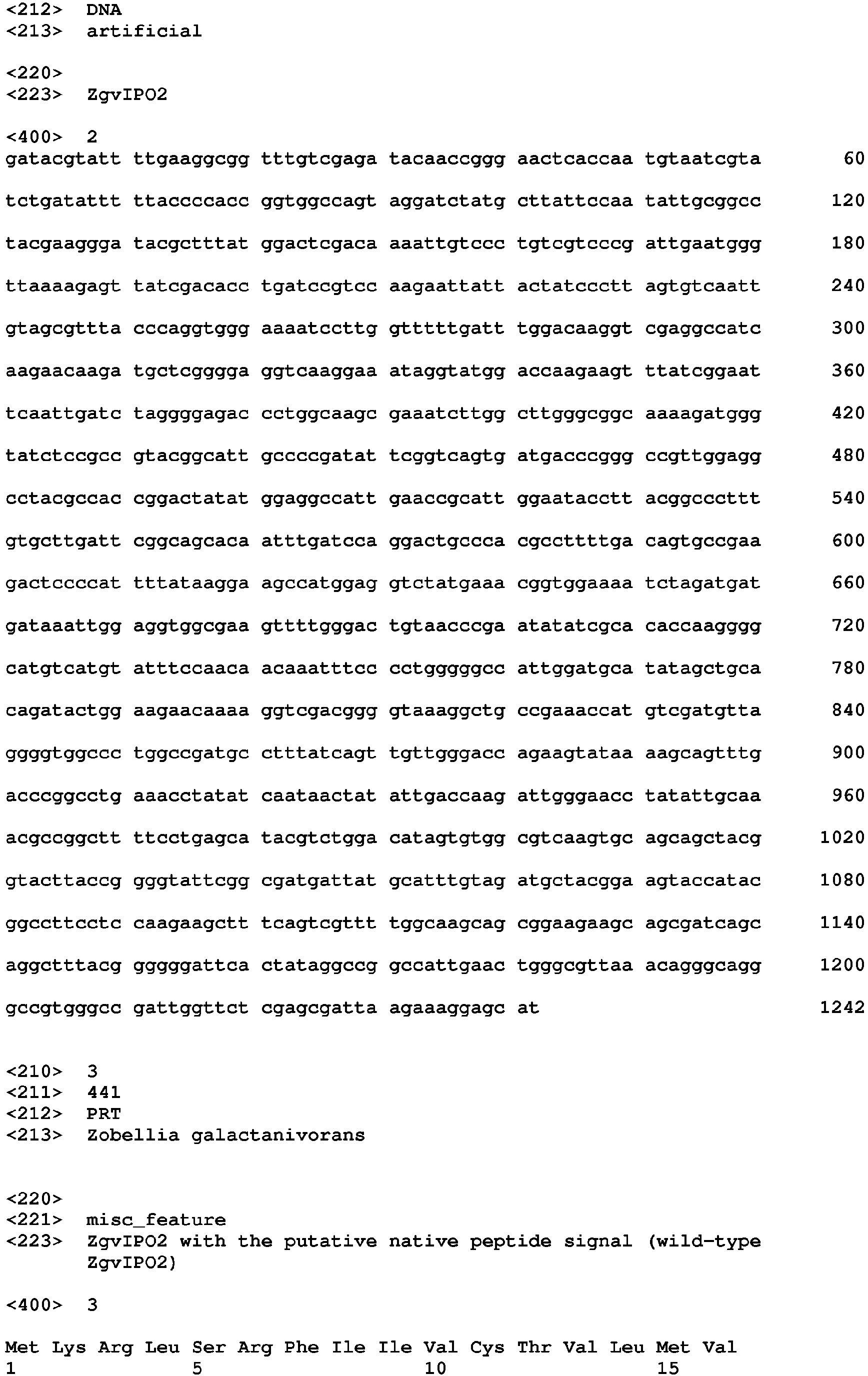


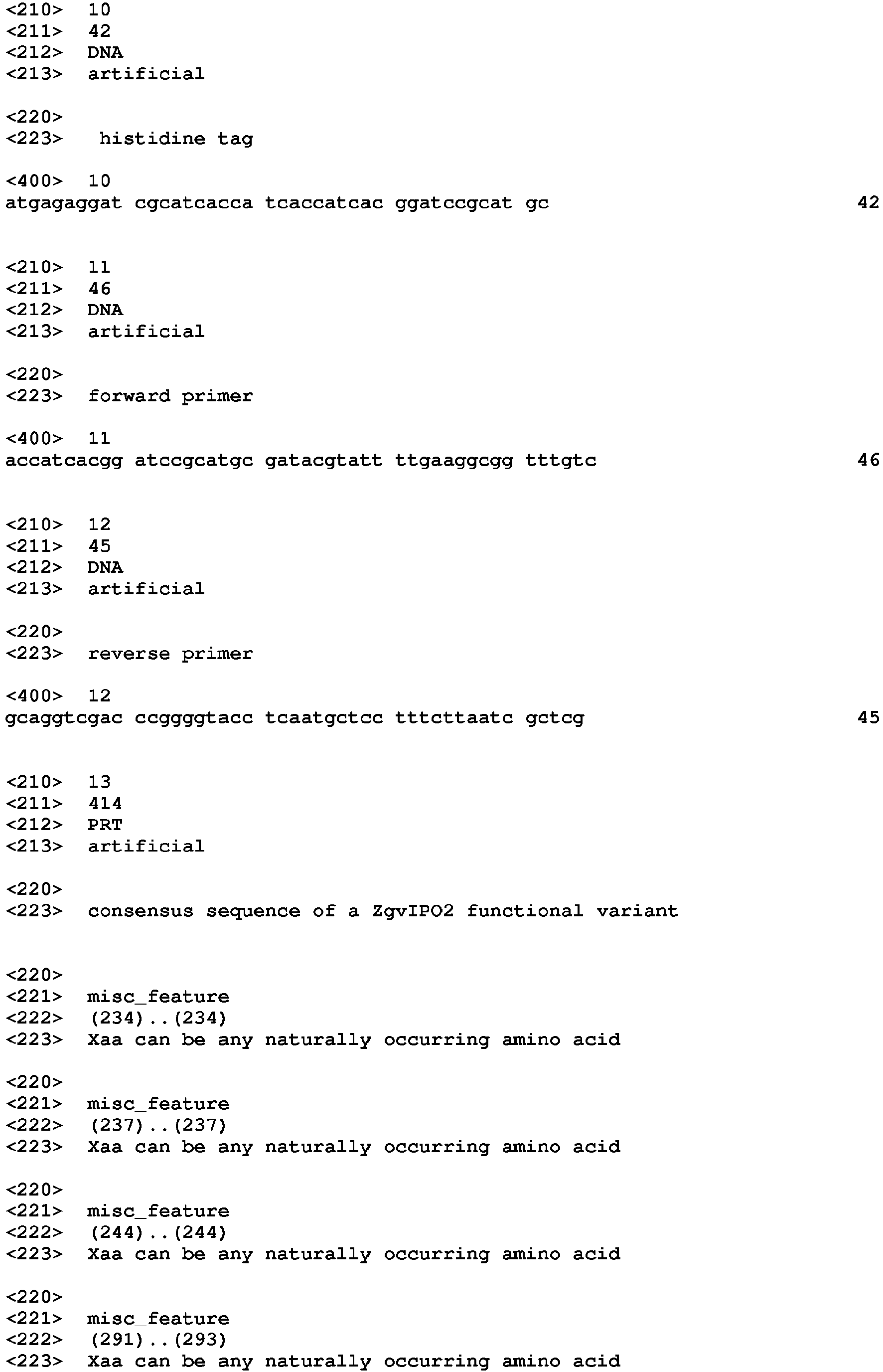


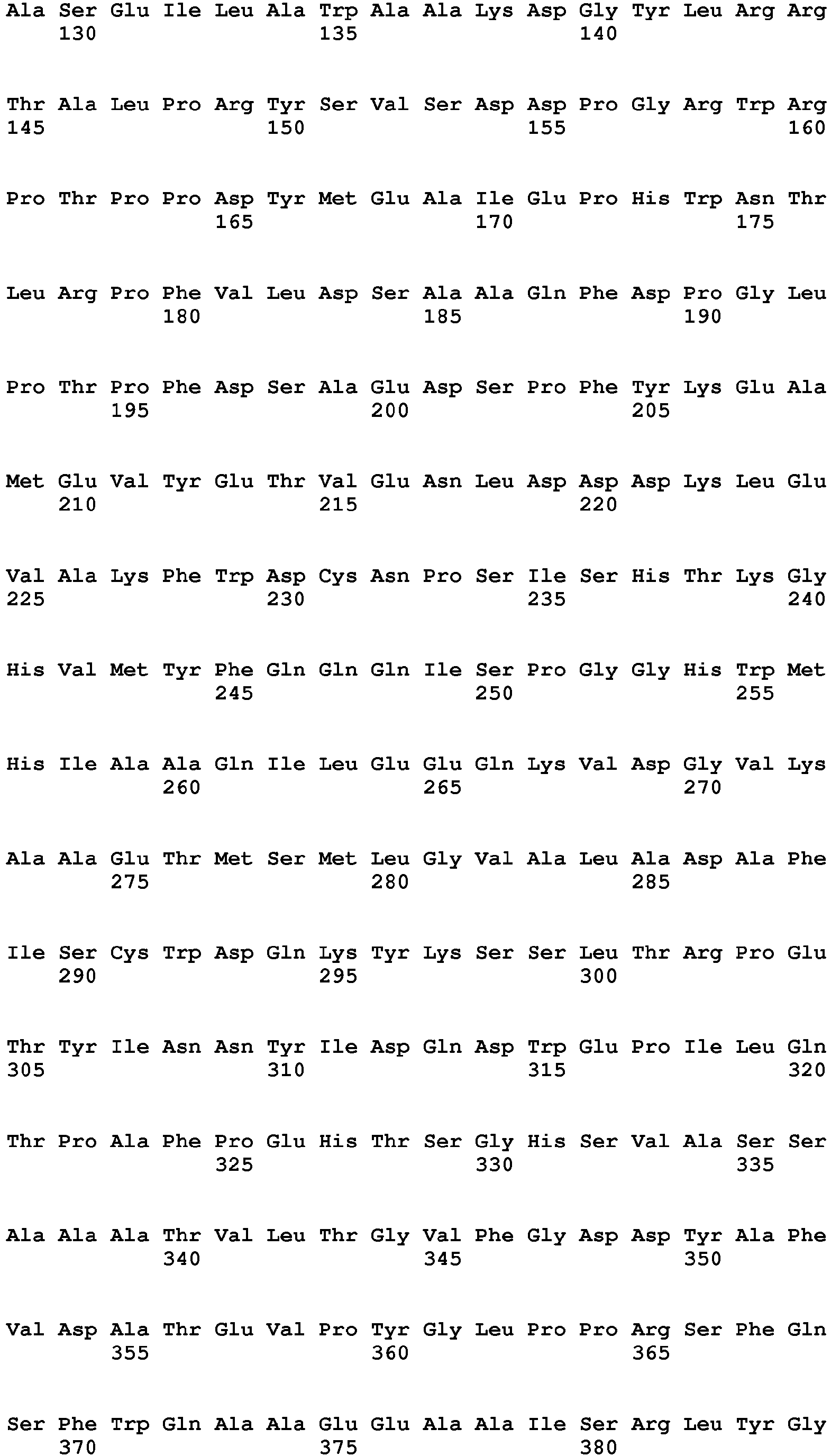


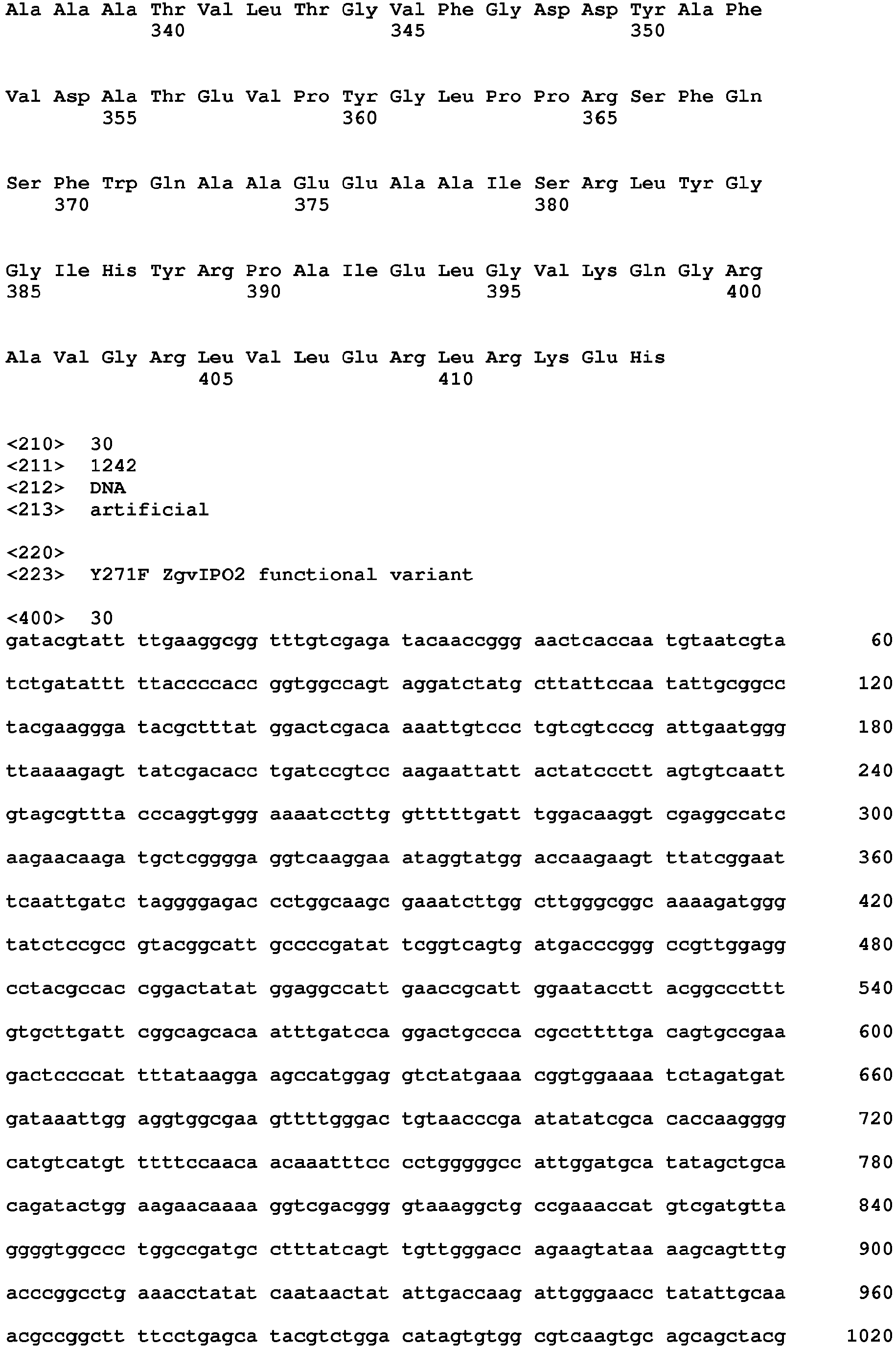


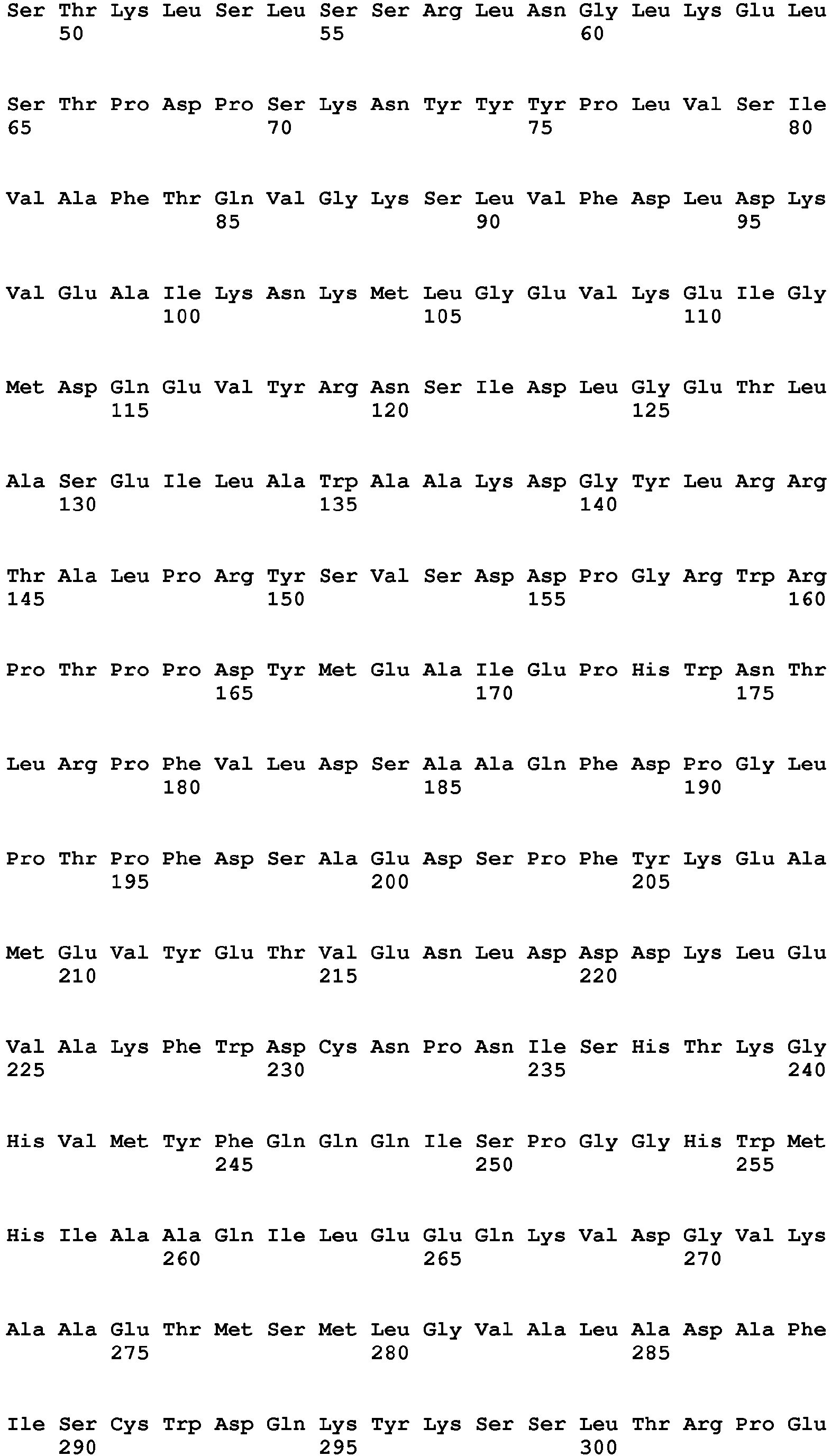


Claims (14)
- An isolated iodoperoxidase of Zobellia galactanivorans, wherein said iodoperoxidase is selected from a iodoperoxidase comprising at least one sequence selected from the sequences SEQ ID N°1, SEQ ID N°3, SEQ ID N°5, and functional fragments and functional variants thereof.
- The isolated iodoperoxidase according to claim 1, wherein said iodoperoxidase is a functional variant comprising at least one sequence selected from the sequences SEQ ID N°1, SEQ ID N°3, SEQ ID N°5, said sequences being mutated at at least one amino acid position selected from the amino acid positions:- 234, 237, 244, 291, 292, 293, 295, 302, 324, 329, 330, and 381 of sequence SEQ ID N°1, and combinations thereof;- 261, 264, 271, 318, 319, 320, 322, 329, 351, 356, 357, and 408 of sequence SEQ ID N°3, and combinations thereof; and- 248, 251, 258, 305, 306, 307, 309, 316, 338, 343, 344, and 395 of sequence SEQ ID N°5, and combinations thereof.
- An isolated nucleic acid encoding a iodoperoxidase of Zobellia galactanivorans according to claim 1 to 2, wherein said nucleic acid comprises at least one sequence selected from the sequences SEQ ID N°2, SEQ ID N°4, SEQ ID N°6, functional fragments and functional variants thereof, and complementary sequences thereof.
- A recombinant vector comprising an isolated nucleic acid according to claim 3.
- The recombinant vector according to claim 4, wherein said vector is a cloning vector or an expressing vector.
- A recombinant host cell comprising a recombinant vector according to claim 4 or 5.
- The recombinant host cell according to claim 6, wherein said cell is a prokaryotic cell or a eukaryotic cell.
- A method for obtaining a iodoperoxidase according to claim 1 or 2, comprising at least the steps of:a) cloning an isolated nucleic acid according to claim 3, into a recombinant expression vector ;b) transforming a host cell with said recombinant expression vector ;c) expressing said isolated nucleic acid from the recombinant host cell obtained in step b), so as to obtain said iodoperoxidase.
- The method according to claim 8, wherein said method further comprises the step d) of purifying said iodoperoxidase.
- Use of an isolated iodoperoxidase according to claim 1 or 2 for obtaining iodinated organic compounds of interest by iodinating non-iodinated organic compounds.
- Use according to claim 10, wherein the iodinated organic compounds of interest are active organic compounds selected from desinfectants, nutrients, pesticides, drugs, antibiotics, advantageously plant antibiotics, antioxydants, adhesives, and radiocontrast agents.
- Use according to claim 10, wherein the iodinated organic compounds of interest are chemical intermediates used during organic chemical synthesis.
- Use of an isolated iodoperoxidase according to claim 1 or 2 for trapping iodine, preferably during bioremediation such as water treatment.
- Use of an isolated iodoperoxidase according to claim 1 or 2 for the in situ production of antibiotic compounds.
Priority Applications (1)
| Application Number | Priority Date | Filing Date | Title |
|---|---|---|---|
| EP12306718.3A EP2749643A1 (en) | 2012-12-31 | 2012-12-31 | Novel bacterial iodoperoxidases from Zobellia galactanivorans, methods of preparation and uses thereof |
Applications Claiming Priority (1)
| Application Number | Priority Date | Filing Date | Title |
|---|---|---|---|
| EP12306718.3A EP2749643A1 (en) | 2012-12-31 | 2012-12-31 | Novel bacterial iodoperoxidases from Zobellia galactanivorans, methods of preparation and uses thereof |
Publications (1)
| Publication Number | Publication Date |
|---|---|
| EP2749643A1 true EP2749643A1 (en) | 2014-07-02 |
Family
ID=47471629
Family Applications (1)
| Application Number | Title | Priority Date | Filing Date |
|---|---|---|---|
| EP12306718.3A Withdrawn EP2749643A1 (en) | 2012-12-31 | 2012-12-31 | Novel bacterial iodoperoxidases from Zobellia galactanivorans, methods of preparation and uses thereof |
Country Status (1)
| Country | Link |
|---|---|
| EP (1) | EP2749643A1 (en) |
Cited By (1)
| Publication number | Priority date | Publication date | Assignee | Title |
|---|---|---|---|---|
| CN110607266A (en) * | 2019-10-21 | 2019-12-24 | 福州大学 | Flavobacterium producing alginate lyase and its application |
Citations (1)
| Publication number | Priority date | Publication date | Assignee | Title |
|---|---|---|---|---|
| WO2004078976A1 (en) | 2003-03-04 | 2004-09-16 | Centre National De La Recherche Scientifique (Cnrs) | Vanadium haloperoxidases from the brown alga laminaria digitata and uses thereof |
-
2012
- 2012-12-31 EP EP12306718.3A patent/EP2749643A1/en not_active Withdrawn
Patent Citations (1)
| Publication number | Priority date | Publication date | Assignee | Title |
|---|---|---|---|---|
| WO2004078976A1 (en) | 2003-03-04 | 2004-09-16 | Centre National De La Recherche Scientifique (Cnrs) | Vanadium haloperoxidases from the brown alga laminaria digitata and uses thereof |
Non-Patent Citations (34)
| Title |
|---|
| ALTSCHUL, S.F.; GISH, W.; MILLER, W.; MYERS, E.W.; LIPMAN, D.J., J MOL BIOL, vol. 215, no. 3, 1990, pages 403 - 410 |
| ALTSCHUL, S.F.; MADDEN, T.L.; SCHAFFER, A.A.; ZHANG, J.; ZHANG, Z.; MILLER, W.; LIPMAN, D.J., NUCLEIC ACIDS RES., vol. 25, 1997, pages 3389 - 3402 |
| AUSUBEL ET AL.: "Current Protocols in Molecular Biology", 2011, JOHN WILEY & SONS |
| BARBEYRON, T.; L'HARIDON, S.; CORRE, E.; KLOAREG, B.; POTIN, P., INT J SYST EVOL MICROBIOL., vol. 51, no. 3, 2001, pages 985 - 97 |
| BERG ET AL.: "Biochemistry; 5th edition,", 2002 |
| BERG, J.M.; TYMOCZKO J.L.; STRYER L.: "Biochemistry. 5th edition.", 2002, W. H. FREEMAN |
| BUTLER, A.; CARTER, J. N.; SIMPSON, M. T.: "Handbook on Metalloproteins", 2001, MARCEL DEKKER, INC., pages: 153 - 179 |
| CARTER, J. N.; BEATTY, K. E.; SIMPSON, M. T.; BUTLER, A., JOURNAL OF INORGANIC BIOCHEMISTRY, vol. 91, 2002, pages 59 - 69 |
| COLIN, C.; LEBLANC, C.; MICHEL, G.; WAGNER, E.; LEIZE-WAGNER, E.; VAN DORSSELAER, A.; POTIN, P., J. BIOL. INORG. CHEM., vol. 10, 2005, pages 156 - 166 |
| DATABASE UniProt [Online] 19 October 2011 (2011-10-19), "SubName: Full=Vanadium-dependent haloperoxidase; EC=1.11.1.-;", XP002693856, retrieved from EBI accession no. UNIPROT:G0LBK6 Database accession no. G0LBK6 * |
| DAVID R. O'REILLY ET AL.: "Baculovirus Expression Vectors: A Laboratory Manuaf", 1993, OXFORD UNIVERSITY PRESS |
| GROISILLIER, A HERVE, C.; JEUDY, A.; REBUFFET, E.; PLUCHON, P.F; CHEVOLOT, Y.; FLAMENT, D.; GESLIN, C.; MORGADO, I.M.; POWER, D.;, CELL FACTORIES, vol. 9, 2010, pages 45 |
| ISUPOV, M. N.; DALBY, A. R.; BRINDLEY, A. A.; IZUMI, Y.; TANABE, T.; MURSHUDOV, G. N.; LITTLECHILD, J. A., J. MOL. BIOL., vol. 299, 2000, pages 1035 - 1049 |
| JORDAN, P.; VILTER, H., ELECTROPHORESIS, vol. 11, no. 8, 1990, pages 653 - 655 |
| LA BARRE, S.; POTIN, P.; LEBLANC, C.; DELAGE L., MAR. DRUGS, vol. 8, no. 4, 2010, pages 988 - 1010 |
| LIVINGSTONE, C.D.; BARTON, G.J., COMPUT. APPL. BIOSCI., vol. 9, no. 6, 1993, pages 745 - 56 |
| MESSERSCHMIDT, A.; WEVER, R., PROCEEDINGS OF THE NATIONAL ACADEMY OF SCIENCES OF THE U.S., vol. 93, 1996, pages 392 - 396 |
| NEEDLEMAN; WUNSCH, J. MOL. BIOL., vol. 48, no. 3, 1972, pages 443 - 453 |
| NIELSEN, H.; BRUNAK, S.; VON HEIJNE, G., PROTEIN ENG., vol. 12, 1999, pages 3 - 9 |
| OHSHIRO, T.; HEMRIKA, W.; AIBARA, T.; WEVER, R.; IZUMI, Y., PHYTOCHEMISTRY, vol. 60, 2002, pages 595 - 601 |
| O'REILLY, D.R. ET AL.: "Baculovirus Expression Vectors: A Laboratory Manuaf", 1993, OXFORD UNIVERSITY PRESS |
| PEARSON; LIPMAN, PNAS, vol. 85, no. 5, 1988, pages 2444 - 2448 |
| REBUFFET ET AL: "Etude structurale et fonctionnelle de glycoside hydrolases et d'une iodo-péroxydase de la flavobactérie marine Zobellia galactanivorans, impliquées dans l'interaction avec les algues", THESIS,, 18 October 2011 (2011-10-18), pages 1 - 203, XP009153961 * |
| SAMBROOK ET AL.: "Molecular Cloning: A Laboratory Manual", 2001, COLD SPRING HARBOR LABORATORY PRESS |
| SHIMONISHI, M.; KUWAMOTO, S.; INOUE, H.; WEVER, R.; OHSHIRO, T.; IZUMI, Y.; TANABE, T., FEBS LETTERS, vol. 428, 1998, pages 105 - 110 |
| SMITH; WATERMAN, J. THEOR. BIOL., vol. 91, no. 2, 1981, pages 370 - 380 |
| STUDIER, PROTEIN EXPR PURIF, vol. 41, 2005, pages 207 - 234 |
| TAYLOR, W.R., J THEOR BIOL., vol. 119, no. 2, 1986, pages 205 - 18 |
| VERHAEGHE ET AL., ANAL. BIOCHEM., 2008 |
| VERHAEGHE, E.; BUISSON, D.; ZEKRI, E.; LEBLANC, C.; POTIN, P.; AMBROISE, Y., ANAL BIOCHEM., vol. 379, no. 1, 2008, pages 60 - 65 |
| VILTER, H.: "Metal ions in biological systems", vol. 31, 1995, MARCEL DEKKER, INC., pages: 325 - 362 |
| VREELAND, V.; NG, K. L.; EPSTEIN, L., MOLECULAR BIOLOGY OF THE CELL, vol. 9, 1998, pages 1043 |
| WEYAND, M.; HECHT, H.; KIESS, M.; LIAUD, M.; VILTER, H.; SCHOMBURG, D., J MOL BIOL., vol. 293, no. 3, 1999, pages 595 - 611 |
| ZOBELL, C., J. MAR. RES., vol. 4, 1941, pages 42 - 75 |
Cited By (2)
| Publication number | Priority date | Publication date | Assignee | Title |
|---|---|---|---|---|
| CN110607266A (en) * | 2019-10-21 | 2019-12-24 | 福州大学 | Flavobacterium producing alginate lyase and its application |
| CN110607266B (en) * | 2019-10-21 | 2021-06-01 | 福州大学 | Flavobacterium producing alginate lyase and its application |
Similar Documents
| Publication | Publication Date | Title |
|---|---|---|
| JP6868662B2 (en) | Hemoglobin A1c measurement method and measurement kit | |
| Moreira et al. | Molecular characterisation of a versatile peroxidase from a Bjerkandera strain | |
| KR102298651B1 (en) | PETase Varient Having PET Decomposition Activity at High Temperature | |
| Carter et al. | Reactivity of recombinant and mutant vanadium bromoperoxidase from the red alga Corallina officinalis | |
| DK2601291T3 (en) | new glucose oxidase | |
| EP3132027B1 (en) | Laccase variants with improved properties | |
| Nasoohi et al. | Enhancement of catalysis and functional expression of a bacterial laccase by single amino acid replacement | |
| US20170335298A1 (en) | Multi-domain enzymes having cutinase activity, compositions comprising same and uses thereof | |
| KR100986161B1 (en) | Novel Esterase Derived from Tidal Flat Metagenome and Method for Preparing the Same | |
| Kaneko et al. | cDNA cloning and characterization of vanadium-dependent bromoperoxidases from the red alga Laurencia nipponica | |
| KR102390400B1 (en) | HbA1c measurement method using amadoriase acting on glycated peptides | |
| CN103074309A (en) | L-alanine dehydrogenase mutant zymoprotein and preparation method thereof | |
| Shehu et al. | Functional role of Tyr12 in the catalytic activity of novel zeta-like glutathione S-transferase from Acidovorax sp. KKS102 | |
| JPWO2012036241A1 (en) | Novel extracellular secretory nuclease | |
| EP2729565B1 (en) | Bacterial iodoperoxidases from zobellia galactanivorans, methods of preparation and uses thereof | |
| CN113025596B (en) | Methanol-tolerant lipase | |
| Lu et al. | The N-terminal α-helix domain of Pseudomonas aeruginosa lipoxygenase is required for its soluble expression in Escherichia coli but not for catalysis | |
| US20090047705A1 (en) | Microorganism-derived psychrophilic endonuclease | |
| EP1454986A1 (en) | Vanadium haloperoxidases from the brown alga Laminaria digitata and uses thereof | |
| KR101424334B1 (en) | Mutant of Peroxidase Polypeptide, Nucleic acid molecule coding the same, Vector comprising the Nucleic acid molecule, Transformant transformed by the vector, Preparation method of the transformant, and Preparation method of the Mutant of Peroxidase Polypeptide | |
| China et al. | Effect of attaching hydrophilic oligopeptides to the C-terminus of organic solvent-tolerant metal-free bromoperoxidase BPO-A1 from Streptomyces aureofaciens on organic solvent-stability | |
| Ziska et al. | Expression of Mesophilic-alkali-stable Catalase Hydroperoxidase II from Staphylococcus equorum in Escherichia coli BL21 (DE3) | |
| CN106554945B (en) | A kind of fructosyl peptide oxidase that thermal stability is high and its encoding gene and purposes | |
| EP4633655A1 (en) | Artificial bifunctional enzyme comprising a myeloperoxidase activity and a glucose oxidase activity and applications thereof | |
| Lien | Heterologous expression and purification of the manganese (II) oxidizing peroxidase of α-proteobacterium Erythrobacter sp. SD21 |
Legal Events
| Date | Code | Title | Description |
|---|---|---|---|
| 17P | Request for examination filed |
Effective date: 20121231 |
|
| AK | Designated contracting states |
Kind code of ref document: A1 Designated state(s): AL AT BE BG CH CY CZ DE DK EE ES FI FR GB GR HR HU IE IS IT LI LT LU LV MC MK MT NL NO PL PT RO RS SE SI SK SM TR |
|
| AX | Request for extension of the european patent |
Extension state: BA ME |
|
| PUAI | Public reference made under article 153(3) epc to a published international application that has entered the european phase |
Free format text: ORIGINAL CODE: 0009012 |
|
| STAA | Information on the status of an ep patent application or granted ep patent |
Free format text: STATUS: THE APPLICATION IS DEEMED TO BE WITHDRAWN |
|
| 18D | Application deemed to be withdrawn |
Effective date: 20150106 |