EP2748300B1 - Enzyme producing bacillus strains - Google Patents
Enzyme producing bacillus strains Download PDFInfo
- Publication number
- EP2748300B1 EP2748300B1 EP12753898.1A EP12753898A EP2748300B1 EP 2748300 B1 EP2748300 B1 EP 2748300B1 EP 12753898 A EP12753898 A EP 12753898A EP 2748300 B1 EP2748300 B1 EP 2748300B1
- Authority
- EP
- European Patent Office
- Prior art keywords
- strain
- bacillus
- bacillus subtilis
- animal
- manure
- Prior art date
- Legal status (The legal status is an assumption and is not a legal conclusion. Google has not performed a legal analysis and makes no representation as to the accuracy of the status listed.)
- Active
Links
Images



Classifications
-
- A—HUMAN NECESSITIES
- A23—FOODS OR FOODSTUFFS; TREATMENT THEREOF, NOT COVERED BY OTHER CLASSES
- A23K—FODDER
- A23K20/00—Accessory food factors for animal feeding-stuffs
- A23K20/10—Organic substances
-
- C—CHEMISTRY; METALLURGY
- C12—BIOCHEMISTRY; BEER; SPIRITS; WINE; VINEGAR; MICROBIOLOGY; ENZYMOLOGY; MUTATION OR GENETIC ENGINEERING
- C12N—MICROORGANISMS OR ENZYMES; COMPOSITIONS THEREOF; PROPAGATING, PRESERVING, OR MAINTAINING MICROORGANISMS; MUTATION OR GENETIC ENGINEERING; CULTURE MEDIA
- C12N1/00—Microorganisms; Compositions thereof; Processes of propagating, maintaining or preserving microorganisms or compositions thereof; Processes of preparing or isolating a composition containing a microorganism; Culture media therefor
- C12N1/20—Bacteria; Culture media therefor
- C12N1/205—Bacterial isolates
-
- C—CHEMISTRY; METALLURGY
- C12—BIOCHEMISTRY; BEER; SPIRITS; WINE; VINEGAR; MICROBIOLOGY; ENZYMOLOGY; MUTATION OR GENETIC ENGINEERING
- C12N—MICROORGANISMS OR ENZYMES; COMPOSITIONS THEREOF; PROPAGATING, PRESERVING, OR MAINTAINING MICROORGANISMS; MUTATION OR GENETIC ENGINEERING; CULTURE MEDIA
- C12N1/00—Microorganisms; Compositions thereof; Processes of propagating, maintaining or preserving microorganisms or compositions thereof; Processes of preparing or isolating a composition containing a microorganism; Culture media therefor
- C12N1/20—Bacteria; Culture media therefor
-
- A—HUMAN NECESSITIES
- A23—FOODS OR FOODSTUFFS; TREATMENT THEREOF, NOT COVERED BY OTHER CLASSES
- A23K—FODDER
- A23K10/00—Animal feeding-stuffs
- A23K10/10—Animal feeding-stuffs obtained by microbiological or biochemical processes
- A23K10/16—Addition of microorganisms or extracts thereof, e.g. single-cell proteins, to feeding-stuff compositions
- A23K10/18—Addition of microorganisms or extracts thereof, e.g. single-cell proteins, to feeding-stuff compositions of live microorganisms
-
- A—HUMAN NECESSITIES
- A23—FOODS OR FOODSTUFFS; TREATMENT THEREOF, NOT COVERED BY OTHER CLASSES
- A23K—FODDER
- A23K50/00—Feeding-stuffs specially adapted for particular animals
- A23K50/30—Feeding-stuffs specially adapted for particular animals for swines
-
- A—HUMAN NECESSITIES
- A23—FOODS OR FOODSTUFFS; TREATMENT THEREOF, NOT COVERED BY OTHER CLASSES
- A23K—FODDER
- A23K50/00—Feeding-stuffs specially adapted for particular animals
- A23K50/70—Feeding-stuffs specially adapted for particular animals for birds
- A23K50/75—Feeding-stuffs specially adapted for particular animals for birds for poultry
-
- A—HUMAN NECESSITIES
- A61—MEDICAL OR VETERINARY SCIENCE; HYGIENE
- A61K—PREPARATIONS FOR MEDICAL, DENTAL OR TOILETRY PURPOSES
- A61K35/00—Medicinal preparations containing materials or reaction products thereof with undetermined constitution
- A61K35/66—Microorganisms or materials therefrom
- A61K35/74—Bacteria
-
- C—CHEMISTRY; METALLURGY
- C12—BIOCHEMISTRY; BEER; SPIRITS; WINE; VINEGAR; MICROBIOLOGY; ENZYMOLOGY; MUTATION OR GENETIC ENGINEERING
- C12R—INDEXING SCHEME ASSOCIATED WITH SUBCLASSES C12C - C12Q, RELATING TO MICROORGANISMS
- C12R2001/00—Microorganisms ; Processes using microorganisms
- C12R2001/01—Bacteria or Actinomycetales ; using bacteria or Actinomycetales
- C12R2001/07—Bacillus
-
- C—CHEMISTRY; METALLURGY
- C12—BIOCHEMISTRY; BEER; SPIRITS; WINE; VINEGAR; MICROBIOLOGY; ENZYMOLOGY; MUTATION OR GENETIC ENGINEERING
- C12R—INDEXING SCHEME ASSOCIATED WITH SUBCLASSES C12C - C12Q, RELATING TO MICROORGANISMS
- C12R2001/00—Microorganisms ; Processes using microorganisms
- C12R2001/01—Bacteria or Actinomycetales ; using bacteria or Actinomycetales
- C12R2001/07—Bacillus
- C12R2001/125—Bacillus subtilis ; Hay bacillus; Grass bacillus
Definitions
- the disclosure relates to Bacillus strains producing enzymes that provide benefits to animals and methods of using these strains. In one embodiment, the disclosure relates to methods of improving growth performance of an animal. In another embodiment, the disclosure relates to a direct fed microbial, and feed for an animal supplemented with a direct fed microbial.
- DDGS DDGS
- alterations in nutrient digestibility as a result of adding DDGS with a high fiber content have implications for swine manure handling, storage, and decomposition.
- the commercial swine industry has indicated that manure holding capacity is less in anaerobic deep-pit swine manure storage units, and that the manure from pigs fed high level of DDGS has more solids accumulation, as well as ammonia, methane, and hydrogen sulfide gas emissions.
- the disclosure relates to enzyme producing Bacillus strains.
- the strains are Bacillus subtilis.
- the strains are Bacillus pumilus.
- the B. subtilis strain(s) is (are) Bacillus subtilis AGTP BS3BP5, Bacillus subtilis AGTP BS442, Bacillus subtilis AGTP BS521, Bacillus subtilis AGTP BS918, Bacillus subtilis AGTP BS1013, and Bacillus subtilis AGTP BS1069, and Bacillus subtilis AGTP 944, and strains having all the characteristics thereof, any derivative or variant thereof, and mixtures thereof.
- the B. pumilus strain(s) is Bacillus pumilus AGTP BS 1068.
- the disclosure relates to methods comprising administering an effective amount of enzyme producing strain(s), one or more combination(s) of the strain(s), one or more supernatant(s) from a culture of the strain(s), feed including one or more strain(s) or mixtures thereof to a an animal, wherein the administration improves at least one of the following body weight, average daily gain, average daily feed intake, feed efficiency, carcass characteristics, nutrient digestibility and manure waste problems.
- the enzyme producing strains can be administered to an animal to improve at least one of the breakdown of complex dietary components, manure waste problems, the efficiency of production, carcass characteristics, and performance when feeding high levels of DDGS.
- One or more enzyme producing strain(s) is (are) may be administered as a direct-fed microbial (DFM).
- a direct-fed microbial includes one or more Bacillus strain(s).
- the enzyme producing strain(s) is (are) effective at degrading otherwise indigestible feedstuffs such as DDGS. This allows increased nutrient availability, resulting in an improved animal growth response. Additionally, enzyme producing strain(s) abate(s) manure associated odors, thereby improving operational environment air quality. Odor reduction may be by reducing volatile fatty acids, ammonia, and/or methane and hydrogen sulfide gas production.
- the description relates to a method comprising administering an effective amount of the enzyme producing strain(s), one or more combination(s) of the strain(s), one or more supernatant(s) from a culture of the strain(s), feed including one or more strain(s) or mixtures thereof to a swine in an effective amount to improve the manure storage unit.
- the swine manure storage unit may be a manure pit.
- the administration improves at least one of the following: less incidence of foaming, less accumulation of solids, and less nitrogen, sulfur, phosphorus, fiber-bound nitrogen, total protein, fat, and fiber content when compared to a control manure pit.
- the enzyme producing strain(s) may be directly applied to a manure storage unit, such as a manure pit. Improvements resulting from contacting the enzyme producing strain(s) directly to a manure storage unit include at least one of less incidence of foaming, less accumulation of solids, and less nitrogen, sulfur, phosphorus, fiber-bound nitrogen, total protein, fat, and fiber content than control manure pits.
- the description relates to a method of altering volatile fatty acid composition in a manure pit comprising administering an effective amount of enzyme producing strain(s), one or more combination(s) of the strain(s), one or more supernatant(s) from a culture of the strain(s), feed including one or more strain(s) or mixtures thereof to animals whose manure is stored in the manure pit.
- the enzyme producing strains can be contacted directly to the manure pit.
- the description relates to a method of altering gas emissions that accumulate in a room housing an animal comprising administering enzyme producing strain(s), one or more combination(s) of the strain(s), one or more supernatant(s) from a culture of the strain(s), feed including one or more strain(s) or mixtures thereof to animals in an effective amount to reduce gas emissions.
- Also described herein are methods for alleviating an inflammatory response comprising administering enzyme producing strain(s), one or more combination(s) of the strain(s), one or more supernatant(s) from a culture of the strain(s), feed including one or more strain(s) or mixtures thereof to animals in an effective amount to alleviate the inflammatory response.
- administer is meant the action of introducing at least one strain and/or supernatant from a culture of at least one strain described herein into the animal's gastrointestinal tract. More particularly, this administration is an administration by oral route. This administration can in particular be carried out by supplementing the feed intended for the animal with the at least one strain, the thus supplemented feed then being ingested by the animal. The administration can also be carried out using a stomach tube or any other way to make it possible to directly introduce the at least one strain into the animal's gastrointestinal tract.
- At least one strain is meant a single strain but also mixtures of strains comprising at least two strains of bacteria.
- a mixture of at least two strains is meant a mixture of two, three, four, five, six or even more strains.
- the proportions can vary from 1% to 99%.
- the proportion of a strain used in the mixture is at least 5%, 10%, 15%, 20%, 25%, 30%, 35%, 40%, 45%, 50%, 55%, 60%, 65%, 70%, 75%, 80%, 85%, 90%, or 95%.
- Other embodiments of a mixture of strains are from 25% to 75%. Additional embodiments of a mixture of strains are approximately 50% for each strain.
- the strains can be present in substantially equal proportions in the mixture or in different proportions.
- contacting is meant the action of bringing at least one strain and/or supernatant from a culture of at least one strain described herein into close proximity with a substrate, container, or substance, which includes but is not limited to a manure storage unit.
- the manure storage unit is a manure pit.
- Contacting can be through a direct or indirect manner.
- contacting includes applying, spraying, inoculating, dispersing dispensing, pouring, and other like terms.
- an effective amount is meant a quantity of strain and/or supernatant sufficient to allow improvement in at least one of the following: the efficiency of animal production, carcass characteristics, growth performance of an animal, growth performance when feeding high levels of DDGS to an animal, nutrient digestibility, breakdown of complex dietary components, poultry growth performance, pig growth performance, feed efficiency, average daily gain, average daily feed intake, body weight gain:feed or feed:gain intake, and morality.
- effective amount is meant a quantity of strain and/or supernatant sufficient to allow improvement in at least one of the following: manure waste problems, the amount of foaming in a manure storage unit, the microbial ecology of a manure storage unit, the amount of volatile fatty acids in a manure storage unit, the amount of gas production in a room housing animals or a manure storage unit, including but not limited to methane and hydrogen sulfide.
- "effective amount” is meant a quantity of strain and/or supernatant sufficient to allow improvement in at least one of the following: the expression of a gene involved in the inflammatory response, the expression of a protein involved in the inflammatory response, and the activity of a protein involved in the inflammatory response.
- performance refers to the growth of an animal, such as a pig or poultry, measured by one or more of the following parameters: average daily gain (ADG), weight, scours, mortality, feed conversion, which includes both feed:gain and gain:feed, and feed intake.
- ADG average daily gain
- weight weight
- scours scours
- mortality scours
- feed conversion which includes both feed:gain and gain:feed
- feed intake feed intake
- improvement in performance or “improved performance” as used herein, refers to an improvement in at least one of the parameters listed under the performance definition.
- a "variant" has at least 80% identity of genetic sequences with the disclosed strains using random amplified polymorphic DNA polymerase chain reaction (RAPD-PCR) analysis.
- the degree of identity of genetic sequences can vary.
- the variant has at least 85%, 90%, 95%, 96%, 97%, 98%, or 99% identity of genetic sequences with the disclosed strains using RAPD-PCR analysis.
- Six primers that can be used for RAPD-PCR analysis include the following: Primer 1 (5'-GGTGCGGGAA-3') (SEQ ID NO.1); PRIMER 2 (5'-GTTTCGCTCC-3') (SEQ ID NO.
- RAPD analysis can be performed using Ready-to-GoTM RAPD Analysis Beads (Amersham Biosciences, Sweden), which are designed as pre-mixed, pre-dispensed reactions for performing RAPD analysis.
- Bacillus strains have enzymatic activity(ies) that break down fiber(s), lipid(s), carbohydrate(s), and protein(s). These strain(s) is (are) referred to herein as "enzyme producing strain(s)," “Bacillus strain(s),” or “strain(s).”
- the enzymatic activity(ies) is (are) cellulase, ⁇ -amylase, xylanase, esterase, casein protease, corn starch amylase, ⁇ -mannanase, lipase, and/or protease, e.g., zeinase and soy protease.
- the inventors have found that certain microorganisms can be used to address the challenging components in dried distillers grains with solubles (DDGS).
- enzyme producing strains can improve at least one of the following: (1) breakdown of complex dietary components, (2) manure waste problems; (3) the efficiency of animal production; (4) animal carcass characteristics; and (5) growth performance an animal. Also described herein are effects on an inflammatory response.
- Enzyme producing strains include Bacillus strains, including, but not limited to, B. subtilis, B. licheniformis, B. pumilus, B. coagulans, B. amyloliquefaciens, B. stearothermophilus, B. brevis, B. alkalophilus, B. clausii, B. halodurans, B. megaterium, B. circulans, B. lautus, B. thuringiensis and B. lentus strains, and strains having all the characteristics thereof, any derivative or variant thereof, and mixtures thereof.
- the B. subtilis strain(s) is (are) Bacillus subtilis AGTP BS3BP5, Bacillus subtilis AGTP BS442, Bacillus subtilis AGTP BS521, Bacillus subtilis AGTP BS918, Bacillus subtilis AGTP BS1013, and Bacillus subtilis AGTP BS1069, and Bacillus subtilis AGTP 944, and strains having all the characteristics thereof, any derivative or variant thereof, and mixtures thereof.
- the B. pumilus strain(s) is Bacillus pumilus AGTP BS 1068.
- the enzyme producing strains have enzymatic activity(ies) including but not limited to cellulase, ⁇ -amylase, xylanase, esterase, casein protease, corn starch amylase, ⁇ -mannanase, lipase, and/or protease, e.g., zeinase and soy protease.
- enzymatic activity(ies) including but not limited to cellulase, ⁇ -amylase, xylanase, esterase, casein protease, corn starch amylase, ⁇ -mannanase, lipase, and/or protease, e.g., zeinase and soy protease.
- more than one of the strain(s) described herein is (are) combined.
- Bacillus derivative or variant is also included and is useful in the methods described and claimed herein.
- strains having all the characteristics of Bacillus subtilis AGTP BS3BP5, Bacillus subtilis AGTP BS442, Bacillus subtilis AGTP BS521, Bacillus subtilis AGTP BS918, Bacillus subtilis AGTP BS1013, Bacillus subtilis AGTP BS1069, Bacillus subtilis AGTP 944 and Bacillus pumilus AGTP BS 1068 are also included and are useful in the methods described and claimed herein.
- any derivative or variant of Bacillus subtilis AGTP BS3BP5, Bacillus subtilis AGTP BS442, Bacillus subtilis AGTP BS521, Bacillus subtilis AGTP BS918, Bacillus subtilis AGTP BS1013, Bacillus subtilis AGTP BS1069, Bacillus subtilis AGTP 944, and Bacillus pumilus AGTP BS 1068 are also included and are useful in the methods described and claimed herein.
- the enzyme producing strain(s) is (are) used in combination.
- the enzyme producing strains can be used in combination with bacterial strains from the Bacillus genus, and other bacterial strains from a different genus.
- the enzyme producing strain(s) and methods provided herein improve one or more of the following: the breakdown of complex dietary components, manure waste problems, the efficiency of production, carcass characteristics, and performance when feeding high levels of DDGS when compared to a control.
- Manure waste problems include, but are not limited to, undesirable manure nutrient and microbial composition, and undesirable gas emissions from the manure storage units, such as manure pits.
- An improvement in manure waste problems include, but are not limited to, at least one of (1) less nutrients accumulated in the manure, (2) shift manure microbial communities to favorable populations for solids breakdown, and (3) a decrease in ammonia, methane, and hydrogen sulfide gas emissions.
- An improvement in carcass characteristics can be measured by at least one of increased percent lean yield and dressing percentage, and decreased fat iodine values. Performance can be measured by average daily gain, average daily feed intake, and feed required per unit of gain, and other measurements known in the art.
- the enzyme producing strain(s) When ingested, the enzyme producing strain(s) produce(s) enzymes. In some embodiments, the enzyme producing strain(s) produce(s) enzymes in vivo. In other embodiments, the enzyme producing strain(s) survive(s) in the manure of animals to which the strain are administered and produce(s) enzymes in the excreted manure.
- Bacillus strains are produced by fermentation of the bacterial strains. Fermentation can be started by scaling-up a seed culture. This involves repeatedly and aseptically transferring the culture to a larger and larger volume to serve as the inoculum for the fermentation, which is carried out in large stainless steel fermentors in medium containing proteins, carbohydrates, and minerals necessary for optimal growth.
- a nonlimiting exemplary medium is TSB.
- CFU or colony forming unit is the viable cell count of a sample resulting from standard microbiological plating methods. The term is derived from the fact that a single cell when plated on appropriate medium will grow and become a viable colony in the agar medium. Since multiple cells may give rise to one visible colony, the term colony forming unit is a more useful unit measurement than cell number.
- each Bacillus strain is fermented between a 5 x 10 8 CFU/ml level to about a 4 x 10 9 CFU/ml level. In at least one embodiment, a level of 2 x 10 9 CFU/ml is used.
- the bacteria are harvested by centrifugation, and the supernatant is removed. The supernatant can be used in the methods described herein.
- the bacteria are pelleted. In at least some embodiments, the bacteria are freeze-dried. In at least some embodiments, the bacteria are mixed with a carrier. However, it is not necessary to freeze-dry the Bacillus before using them.
- the strains can also be used with or without preservatives, and in concentrated, unconcentrated, or diluted form.
- a composition including one or more strain(s) described herein is provided.
- the composition can be fed to an animal as a direct-fed microbial (DFM).
- DFM direct-fed microbial
- One or more carrier(s) or other ingredients can be added to the DFM.
- the DFM may be presented in various physical forms, for example, as a top dress, as a water soluble concentrate for use as a liquid drench or to be added to a milk replacer, gelatin capsule, or gels.
- freeze-dried bacteria fermentation product is added to a carrier, such as whey, maltodextrin, sucrose, dextrose, limestone (calcium carbonate), rice hulls, yeast culture, dried starch, and/or sodium silico aluminate.
- freeze-dried bacteria fermentation product is added to a water soluble carrier, such as whey, maltodextrin, sucrose, dextrose, dried starch, sodium silico aluminate, and a liquid is added to form the drench or the supplement is added to milk or a milk replacer.
- a water soluble carrier such as whey, maltodextrin, sucrose, dextrose, dried starch, sodium silico aluminate
- a liquid is added to form the drench or the supplement is added to milk or a milk replacer.
- freeze-dried bacteria fermentation product is added to a carrier, such as whey, maltodextrin, sugar, limestone (calcium carbonate), rice hulls, yeast culture dried starch, and/or sodium silico aluminate.
- the bacteria and carrier are enclosed in a degradable gelatin capsule.
- freeze-dried bacteria fermentation product is added to a carrier, such as vegetable oil, sucrose, silicon dioxide, polysorbate 80, propylene glycol, butylated hydroxyanisole, citric acid, ethoxyquin, and/or artificial coloring to form the gel.
- a carrier such as vegetable oil, sucrose, silicon dioxide, polysorbate 80, propylene glycol, butylated hydroxyanisole, citric acid, ethoxyquin, and/or artificial coloring to form the gel.
- the strain(s) may optionally be admixed with a dry formulation of additives including but not limited to growth substrates, enzymes, sugars, carbohydrates, extracts and growth promoting micro-ingredients.
- the sugars could include the following: lactose; maltose; dextrose; malto-dextrin; glucose; fructose; mannose; tagatose; sorbose; raffinose; and galactose.
- the sugars range from 50-95%, either individually or in combination.
- the extracts could include yeast or dried yeast fermentation solubles ranging from 5-50%.
- the growth substrates could include: trypticase, ranging from 5-25%; sodium lactate, ranging from 5-30%; and, Tween 80, ranging from 1-5%.
- the carbohydrates could include mannitol, sorbitol, adonitol and arabitol. The carbohydrates range from 5-50% individually or in combination.
- the micro-ingredients could include the following: calcium carbonate, ranging from 0.5-5.0%; calcium chloride, ranging from 0.5-5.0%; dipotassium phosphate, ranging from 0.5-5.0%; calcium phosphate, ranging from 0.5-5.0%; manganese proteinate, ranging from 0.25-1.00%; and, manganese, ranging from 0.25-1.0%.
- the culture(s) and carrier(s) (where used) can be added to a ribbon or paddle mixer and mixed for about 15 minutes, although the timing can be increased or decreased.
- the components are blended such that a uniform mixture of the cultures and carriers result.
- the final product is preferably a dry, flowable powder.
- the strain(s) can then be added to animal feed or a feed premix, added to an animal's water, or administered in other ways known in the art.
- a feed for an animal can be supplemented with one or more strain(s) described herein or with a composition described herein.
- the DFM provided herein can be administered, for example, as the strain-containing culture solution, the strain-producing supernatant, or the bacterial product of a culture solution.
- Administration of a DFM provided herein to an animal can increase the performance of the animal.
- administration of a DFM provided herein to an animal can increase the average daily feed intake (ADFI), average daily gain (ADG), or feed efficiency (gain:feed; G:F or feed:gain; F:G) (collectively, "performance metrics").
- ADFI average daily feed intake
- ADG average daily gain
- F:G feed efficiency
- performance metrics One or more than one of these performance metrics may be improved.
- the DFM may be administered to the animal in one of many ways.
- the strain(s) can be administered in a solid form as a veterinary pharmaceutical, may be distributed in an excipient, preferably water, and directly fed to the animal, may be physically mixed with feed material in a dry form, or the strain(s) may be formed into a solution and thereafter sprayed onto feed material.
- the method of administration of the strain(s) to the animal is considered to be within the skill of the artisan.
- the strains can be administered in an effective amount to animals.
- the disclosure relates to a method comprising administering to an animal an effective amount of the enzyme producing strain(s), one or more combination(s) of the strain(s), one or more supernatant(s) from a culture of the strain(s), or feed including one or more strain(s) or mixtures thereof.
- the animal is a pig.
- the animal is poultry.
- the animal is a ruminant.
- Administration of one or more enzyme producing strain(s) to animals is accomplished by any convenient method, including adding the strains to the animals' drinking water, to their feed, or to the bedding, or by direct oral insertion, such as by an aerosol or by injection.
- administration of one or more enzyme producing strains is by spraying the animal with the enzyme producing strains.
- the animal can clean or preen and ingest the enzyme producing strains.
- the Bacillus strains are administered as spores.
- animal includes but is not limited to human, mammal, amphibian, bird, reptile, swine, pigs, cows, cattle, goats, horses, sheep, poultry, and other animals kept or raised on a farm or ranch, sheep, big-horn sheep, buffalo, antelope, oxen, donkey, mule, deer, elk, caribou, water buffalo, camel, llama, alpaca, rabbit, mouse, rat, guinea pig, hamster, ferret, dog, cat, and other pets, primate, monkey, ape, and gorilla.
- the animals are birds of different ages, such as starters, growers and finishers.
- the animals are poultry and exotic fowl, including, but not limited to, chicks, turkey poults, goslings, ducklings, guinea keets, pullets, hens, roosters (also known as cocks), cockerels, and capons.
- the animals are pigs, including, but not limited to, nursery pigs, breeding stock, sows, gilts, boars, lactation-phase piglets, and finishing pigs.
- the strain(s) can be fed to a sow during the lactation period, although the strain(s) can be fed for different durations and at different times.
- the strain(s) is(are) administered to piglets by feeding the strain(s) to a gilt or sow. It is believed that the transfer to the piglets from the sow is accomplished via the fecal-oral route and/or via other routes.
- the enzyme producing strains can be administered to an animal to improve at least one of nutrient digestibility, swine growth performances, poultry growth performance responses, feed efficiency (gain:feed or feed:gain), body weight, feed intake, average daily gain, average daily feed intake, the breakdown of complex dietary components, the efficiency of poultry production, the efficiency of swine production, and mortality.
- feed efficiency gain:feed or feed:gain
- body weight feed intake
- average daily gain average daily feed intake
- the breakdown of complex dietary components the efficiency of poultry production
- the efficiency of swine production and mortality.
- the amount of improvement can be measured as described herein or by other methods known in the art. These effective amounts can be administered to the animal by providing ad libitum access to feed containing the DFM.
- the DFM can also be administered in one or more doses.
- the improvement is by at least 1-5%, 5-10%, 10-15%, 15-20%, 20-25%, 25-30%, 30-35%, 35-40%, 40-45%, 45-50%, 50-55%, 55-60%, 60-65%, 65-70%, 70-75%, 75-80%, 80-85%, 85-90%, 90-95%, 96%, 97%, 98%, 99%, or greater than 99% as compared to an untreated control.
- the improvement in these measurements in an animal to which the strain(s) is/are administered is at least 1%, 2%, 3%, 4%, 5%, 6%, 7%, 8%, 9%, 10%, 11%, 12%, 13%, 14%, 15%, 16%, 17%, 18%, 19%, 20%, 21%, 22%, 23%, 24%, 25%, 26%, 27%, 28%, 29%, 30%, 31%, 32%, 33%, 34%, 35%, 36%, 37%, 38%, 39%, 40%, 41%, 42%, 43%, 44%, 45%, 46%, 47%, 48%, 49%, 50%, 51%, 52%, 53%, 54%, 55%, 56%, 57%, 58%, 59%, 60%, 61%, 62%, 63%, 64%, 65%, 66%, 67%, 68%, 69%, 70%, 71%, 72%, 73%, 74%, 75%, 76%, 77%, 78%, 7
- the improvement in these measurements in an animal to which the strain(s) is/are administered is 2-8% compared to a control animal. In certain other embodiments, the improvement in these measurements in an animal to which the strain(s) is/are administered is at least 8% compared to a control animal.
- a control animal is an animal that has not been administered the enzyme producing strains.
- This effective amount can be administered to the animal in one or more doses.
- the one or more Bacillus strain(s) is(are) added to an animal's feed at a rate of at least 1 x 10 4 CFU/animal/day.
- the administration improves at least one of nutrient digestibility, growth performance responses, e.g., feed efficiency, the breakdown of complex dietary components, the efficiency of production, body weight gain, feed intake, and mortality.
- growth performance responses e.g., feed efficiency, the breakdown of complex dietary components, the efficiency of production, body weight gain, feed intake, and mortality.
- the strain(s) is/are administered at about 1 x 10 5 CFU/animal/day to about 1 x 10 11 CFU/animal/day.
- the animal is a swine. In another embodiment, the animal is poultry.
- the method is used when the animal is fed high levels of dried distillers grains with solubles (DDGS).
- DDGS dried distillers grains with solubles
- the high levels of DDGS can be a rate of over 10% of the animal's diet.
- the high levels of DDGS can also be a rate of over 30% of the animal's diet.
- the effective amount of at least one strain of bacterium is administered to an animal by supplementing a feed intended for the animal with the effective amount of at least one strain of bacterium.
- supplying means the action of incorporating the effective amount of bacteria provided herein directly into the feed intended for the animal.
- the animal when feeding, ingests the bacteria provided herein.
- the enzyme producing strains can be administered as a single strain or as multiple strains. Supernatant of one or more enzyme producing strains can be administered to an animal. When ingested, the enzyme producing strains produce enzymes.
- one or more enzyme producing strain(s) is (are) fed to swine.
- the one or more enzyme producing strain(s) address(es) the challenging components in dried distillers grains with solubles (DDGS).
- the enzyme producing strain(s) is(are) added to animal feed at a rate of 1 x 10 3 , 1 x 10 4 , 1 x 10 5 , 1 x 10 6 , 1 x 10 7 , 1 x 10 8 , 1 x 10 9 , 1 x 10 10 , 1 x 10 11 , 1 x 10 12 , 1 x 10 13 and greater than 1 x 10 13 CFU per gram of animal feed.
- the enzyme producing strain(s) is(are) added to animal feed at a rate of 1 x 10 3 , 1 x 10 4 , 1 x 10 5 , 1 x 10 6 , 1 x 10 7 , 1 x 10 8 , 1 x 10 9 , 1 x 10 10 , 1 x 10 11 , 1 x 10 12 , 1 x 10 13 and greater than 1 x 10 13 CFU per animal per day.
- the one or more Bacillus strain(s) is(are) added to pigs' feed at a rate of about 3.75 x 10 5 CFU per gram of feed. It(they) can also be fed at about 1 x 10 4 to about 1 x 10 11 CFU/animal/day. In some embodiments, the one or more Bacillus strain(s) is(are) fed at about 1 x 10 8 CFU/animal/day.
- the one or more Bacillus strain(s) is(are) fed at about 5 x 10 9 CFU/hd/day.
- the one or more Bacillus strain(s) is(are) added to feed at about 1 x 10 4 CFU/g feed to about 1 x 10 10 CFU/g feed. In at least some embodiments, the one or more Bacillus strain(s) is fed at about 1 x 10 5 CFU/bird/day to about 1 x 10 8 CFU/bird/day.
- a feed for an animal comprises at least one strain of bacterium described herein.
- feed is supplemented with an effective amount of at least one strain of bacterium.
- supplying means the action of incorporating the effective amount of bacteria provided herein directly into the feed intended for the animal.
- the animal when feeding, ingests the bacteria provided herein.
- the feed material When used in combination with a feed material, for monogastric diets, the feed material can include corn, soybean meal, byproducts like distillers dried grains with solubles (DDGS), and vitamin/mineral supplement.
- the feed material for ruminants can be grain or hay or silage or grass, or combinations thereof. Included amongst such feed materials are corn, dried grain, alfalfa, any feed ingredients and food or feed industry by-products as well as bio fuel industry by-products and corn meal and mixtures thereof. Other feed materials can also be used.
- the time of administration can vary so long as an improvement is shown in one or more of the following: (1) breakdown of complex dietary components, (2) nutrient digestibility, (3) manure waste problems, (4) the efficiency of production, (5) carcass characteristics, (6) growth performance, (7) growth performance when feeding high levels of DDGS, (8) poultry growth performance responses, (9) swine growth performance responses, (10) the efficiency of poultry production, (11) the efficiency of swine production, (12) body weight gain, (13) feed intake, (14) feed efficiency, and (15) mortality. Administration is possible at any time with or without feed. However, the bacterium is preferably administered with or immediately before feed.
- the disclosure relates to a method for improving growth performance of an animal comprising using one or more enzyme producing strains or supernatants therefrom to improve the growth performance of the animal relative to an animal that has not been administered the enzyme producing strains.
- the animal is a pig.
- the animal is poultry.
- the animal is a ruminant.
- growth performance includes but is not limited to nutrient digestibility, poultry growth performance responses, pig growth performance responses, feed efficiency, the breakdown of complex dietary components, average daily gain, averaging daily feed intake, body weight gain, feed intake, carcass characteristics and mortality.
- the methods disclosed herein are used to improve the growth performance of an animal fed an animal feed comprising DDGS.
- the improvement in growth performance is by at least 1-5%, 5-10%, 10-15%, 15-20%, 20-25%, 25-30%, 30-35%, 35-40%, 40-45%, 45-50%, 50-55%, 55-60%, 60-65%, 65-70%, 70-75%, 75-80%, 80-85%, 85-90%, 90-95%, 96%, 97%, 98%, 99%, or greater than 99% as compared to an untreated control.
- the improvement in growth performance of an animal to which the strain(s) is/are administered is at least 1%, 2%, 3%, 4%, 5%, 6%, 7%, 8%, 9%, 10%, 11%, 12%, 13%, 14%, 15%, 16%, 17%, 18%, 19%, 20%, 21%, 22%, 23%, 24%, 25%, 26%, 27%, 28%, 29%, 30%, 31%, 32%, 33%, 34%, 35%, 36%, 37%, 38%, 39%, 40%, 41%, 42%, 43%, 44%, 45%, 46%, 47%, 48%, 49%, 50%, 51%, 52%, 53%, 54%, 55%, 56%, 57%, 58%, 59%, 60%, 61%, 62%, 63%, 64%, 65%, 66%, 67%, 68%, 69%, 70%, 71%, 72%, 73%, 74%, 75%, 76%, 77%, 78%, 7
- the enzyme producing strains for improving growth performance of an animal comprise a Bacillus strain.
- the Bacillus strain is Bacillus subtilis.
- the Bacillus strain is Bacillus pumilus.
- the enzyme producing strains for improving growth performance include but are not limited to Bacillus subtilis AGTP BS3BP5, Bacillus subtilis AGTP BS442, Bacillus subtilis AGTP BS521, Bacillus subtilis AGTP BS918, Bacillus subtilis AGTP BS1013, and Bacillus subtilis AGTP BS1069, Bacillus subtilis AGTP 944 and Bacillus pumilus AGTP BS 1068.
- the enzyme producing strain(s) for improving growth performance of an animal may be administered as a single strain, one or more combination(s) of the strain(s), one or more supernatant(s) from a culture of the strain(s), feed including one or more strain(s) or mixtures thereof.
- the disclosure relates to a method of increasing digestibility of an animal feed comprising administering an enzyme producing strain to an animal in an amount effective to increase the digestibility of an animal feed as compared to an animal not administered the enzyme producing strain.
- the method further comprises measuring the amount of nutrients accumulated in a manure pit from the animal administered the enzyme producing strain and comparing these amount of nutrients to the amount of nutrients in a manure pit from an animal not administered the enzyme-producing strain.
- the animal feed comprises DDGS.
- the disclosure relates to a method of increasing digestibility of an animal feed comprising administering an animal a feed supplemented with an enzyme producing strain in an amount effective to increase the digestibility of the animal feed as compared to an animal not administered the enzyme producing strain.
- methods for improving growth performance of an animal comprise administering an enzyme producing strain to an animal, and reducing the amount of undigested nutrients by the animal as compared to an animal that was not administered the enzyme producing strain.
- methods for improving growth performance of an animal comprise reducing the amount of undigested nutrients by an animal by administering an enzyme producing strain to the animal as compared to an animal that was not administered the enzyme producing strain.
- methods for improving growth performance of an animal comprise administering an enzyme producing strain to an animal, measuring the amount of nutrients accumulated in a manure pit from the animal administered the enzyme producing strain, and comparing the amount of nutrients in the manure pit from an animal administered the enzyme producing strains to the amount of nutrients in a second manure pit from an animal not administered the enzyme-producing strain.
- digestibility of an animal feed can be measured by the amount of nutrients in a manure pit. Any nutrient can be measured from the manure pit including but not limited to dry matter, ash, total nitrogen, ammonium nitrogen, phosphorpus and calcium.
- the enzyme producing strain(s) for improving nutrient digestibility may be administered as a single strain, one or more combination(s) of the strain(s), one or more supernatant(s) from a culture of the strain(s), feed including one or more strain(s) or mixtures thereof.
- the disclosure relates to a method of increasing poultry growth performance comprising administering an enzyme producing strain to poultry in an amount effective to increase the growth performance of the poultry as compared to poultry not administered the enzyme producing strain.
- the methods disclosed herein can be used to improve growth performance regardless of the feed or the diet of the poultry.
- the disclosure relates to a method of increasing growth performance in poultry fed a high fibrous by-product diet comprising administering an enzyme producing strain to a poultry, which are fed a high fibrous by-product diet, in an amount effective to increase the growth performance of the poultry as compared to poultry not administered the enzyme producing strain.
- the disclosure relates to a method of increasing the average daily gain in poultry comprising administering an enzyme producing strain to poultry in an amount effective to increase the average daily gain of the poultry as compared to poultry not administered the enzyme producing strain.
- the disclosure relates to a method of increasing the average daily feed intake in poultry comprising administering an enzyme producing strain to poultry in an amount effective to increase the average daily feed intake as compared to poultry not administered the enzyme producing strain.
- the disclosure relates to a method of improving feed efficiency of an animal feed in poultry comprising administering to poultry an animal feed supplemented with an enzyme producing strain in an amount effective to increase the feed efficiency in poultry as compared to poultry not administered the enzyme producing strain.
- the disclosure relates to a method of improving carcass characteristics comprising administering an enzyme producing strain to poultry in an amount effective to improve the carcass characteristics of the poultry as compared to poultry not administered the enzyme producing strain.
- Carcass characteristics that can be improved include but are not limited to fat depth, organ weights, breast characteristics, dressed weight, carcass grade, and carcass value.
- the measured value of the carcass characteristics may be increased or decreased.
- the measured value of one or more of the following carcass characteristics is increased: fat depth, organ weights, breast characteristics, dressed weight, carcass grade, and carcass value.
- the measured value of one or more of the following carcass characteristics is decreased: fat depth, organ weights, breast characteristics, dressed weight, carcass grade, and carcass value.
- the disclosure relates to a method of reducing mortality in poultry comprising administering an enzyme producing strain to poultry in an amount effective to reduce mortality of said poultry as compared to poultry not administered the enzyme producing strain.
- the disclosure relates to a method of improving lignin digestibility comprising administering an enzyme producing strain to poultry in an amount effective to improve lignin digestibility as compared to poultry not administered the enzyme producing strain.
- the disclosure relates to a method of improving lignin digestibility in high fibrous diets comprising administering an enzyme producing strain to poultry in an amount effective to improve lignin digestibility of the high fibrous diets as compared to poultry not administered the enzyme producing strain.
- the high fibrous diets comprise by-product based diets.
- the diet comprises DDGS.
- the disclosure relates to a method of improving apparent ileal digestibility comprising administering an enzyme producing strain to poultry in an amount effective to improve apparent ileal digestibility as compared to poultry not administered the enzyme producing strain.
- the disclosure relates to a method of improving apparent total tract digestibility comprising administering an enzyme producing strain to poultry in an amount effective to improve apparent total tract digestibility as compared to poultry not administered the enzyme producing strain.
- the disclosure relates to a method of lowering the pH of ileal digesta comprising administering an enzyme producing strain to poultry in an amount effective to lower the pH of ileal digesta as compared to poultry not administered the enzyme producing strain.
- the methods recited above further comprise administering a feed supplemented with an enzyme producing strain.
- the enzyme producing strain(s) for improving poultry growth performance may be administered as a single strain, one or more combination(s) of the strain(s), one or more supernatant(s) from a culture of the strain(s), feed including one or more strain(s) or mixtures thereof.
- the disclosure relates to a method of increasing growth performance of a pig comprising administering an enzyme producing strain to a pig in an amount effective to increase the growth performance of the pig as compared to a pig not administered the enzyme producing strain.
- the methods disclosed herein can be used to improve growth performance regardless of the feed or the diet of the pig.
- the disclosure relates to a method of increasing growth performance in a pig fed a high fibrous by-product diet comprising administering an enzyme producing strain to a pig, which is fed a high fibrous by-product diet, in an amount effective to increase the growth performance of the pig as compared to a pig not administered the enzyme producing strain.
- the disclosure relates to a method of increasing the average daily gain in a pig comprising administering an enzyme producing strain to a pig in an amount effective to increase the average daily gain of the pig as compared to a pig not administered the enzyme producing strain.
- the disclosure relates to a method of increasing the average daily feed intake in a pig comprising administering an enzyme producing strain to a pig in an amount effective to increase the average daily feed intake as compared to a pig not administered the enzyme producing strain.
- the disclosure relates to a method of improving feed efficiency of animal feed in a pig comprising administering to a pig an animal feed supplemented with an enzyme producing strain in an amount effective to increase the feed efficiency in the pig as compared to a pig not administered the enzyme producing strain.
- the disclosure relates to a method of improving carcass characteristics of a pig comprising administering an enzyme producing strain to a pig in an amount effective to improve the carcass characteristics of the pig as compared to a pig not administered the enzyme producing strain.
- Carcass characteristics that can be improved include but are not limited to fat depth, loin depth; percent lean meat; hot carcass weight, organ weights, carcass grade, and carcass value.
- the measured value of the carcass characteristics may be increased or decreased.
- the measured value of one or more of the following carcass characteristics is increased: fat depth, loin depth; percent lean meat; hot carcass weight, organ weights, carcass grade, and carcass value.
- the measured value of one or more of the following carcass characteristics is decreased: fat depth, loin depth; percent lean meat; hot carcass weight, organ weights, carcass grade, and carcass value.
- the disclosure relates to a method of reducing mortality rate in pigs comprising administering an enzyme producing strain to pigs in an amount effective to reduce mortality of said pigs as compared to pigs not administered the enzyme producing strain.
- the disclosure relates to a method of improving lignin digestibility comprising administering an enzyme producing strain to a pig in an amount effective to improve lignin digestibility as compared to a pig not administered the enzyme producing strain.
- the disclosure relates to a method of improving lignin digestibility in high fibrous diets comprising administering an enzyme producing strain to a pig in an amount effective to improve lignin digestibility of the high fibrous diets as compared to a pig not administered the enzyme producing strain.
- the high fibrous diets comprise by-product based diets.
- the diet comprises DDGS.
- the disclosure relates to a method of improving apparent ileal digestibility comprising administering an enzyme producing strain to a pig in an amount effective to improve apparent ileal digestibility in the pig as compared to a pig not administered the enzyme producing strain.
- the disclosure relates to a method of improving apparent total tract digestibility comprising administering an enzyme producing strain to a pig in an amount effective to improve apparent total tract digestibility in the pig as compared to a pig not administered the enzyme producing strain.
- the disclosure relates to a method of lowering the pH of ileal digesta comprising administering an enzyme producing strain to a pig in an amount effective to lower the pH of ileal digesta in the pig as compared to a pig not administered the enzyme producing strain.
- the methods recited above further comprise administering a feed supplemented with an enzyme producing strain.
- the enzyme producing strains in the methods recited above related to pig growth performance is a composition comprising Bacillus subtilis strains AGTP BS918 (NRRL B-50508), AGTP BS1013 (NRRL B-50509) and AGTP BS3BP5 (NRRL B-50510).
- the enzyme producing strain(s) for improving pig growth performance may be administered as a single strain, one or more combination(s) of the strain(s), one or more supernatant(s) from a culture of the strain(s), feed including one or more strain(s) or mixtures thereof.
- the disclosure relates to a method for improving manure storage units comprising administering enzyme producing strain(s), one or more combination(s) of the strain(s), one or more supernatant(s) from a culture of the strain(s), feed including one or more strain(s) or mixtures thereof an animal in an effective amount to improve the manure storage unit.
- the animal is a pig.
- the manure storage unit is a manure pit.
- the disclosure relates to a method for improving air quality in a room housing an animal comprising administering enzyme producing strain(s), one or more combination(s) of the strain(s), one or more supernatant(s) from a culture of the strain(s), feed including one or more strain(s) or mixtures thereof to an animal in an effective amount to improve the air quality in the room.
- improving air quality comprises abating odors in the room.
- improving air quality comprises reducing production of one or more of the following: volatile fatty acids, ammonia, methane, or hydrogen sulfide.
- the administration improves at least one of the following: less incidence of foaming, less accumulation of solids, and less nitrogen, sulfur, phosphorus, fiber-bound nitrogen, total protein, fat, and fiber content when compared to a control manure pit.
- the enzyme producing strains for improving manure storage units comprise a Bacillus strain.
- the Bacillus strain is Bacillus subtilis.
- the Bacillus strain is Bacillus pumilus.
- the enzyme producing strains for improving a manure storage unit include but are not limited to Bacillus subtilis AGTP BS3BP5, Bacillus subtilis AGTP BS442, Bacillus subtilis AGTP BS521, Bacillus subtilis AGTP BS918, Bacillus subtilis AGTP BS1013, and Bacillus subtilis AGTP BS1069, Bacillus subtilis AGTP 944and Bacillus pumilus AGTP BS 1068.
- the disclosure relates to a method for improving a manure storage unit comprising contacting enzyme producing strain(s), one or more combination(s) of the strain(s), one or more supernatant(s) from a culture of the strain(s), compositions including one or more strain(s) or mixtures thereof directly to a manure storage unit, such as a manure pit.
- Improvements resulting from contacting the enzyme producing strain(s) directly to a manure storage unit include at least one of less incidence of foaming, less accumulation of solids, and less nitrogen, sulfur, phosphorus, fiber-bound nitrogen, total protein, fat, and fiber content than control manure pits.
- the methods described above can be used to improve manure waste problems, which include but are not limited to foaming in the manure pit, accumulation of solids, increases in (a) nitrogen, (b) sulfur, (c) phosphorus, (d) fiber-bound nitrogen,(e) total protein, (f) fat, and (g) fiber content.
- the disclosure relates to a method for controlling or reducing foam in a manure storage unit comprising administering an effective amount of enzyme producing strain(s), one or more combination(s) of the strain(s), one or more supernatant(s) from a culture of the strain(s), feed including one or more strain(s) or mixtures thereof to an animal in an effective amount to control or reduce the amount of foam in a manure storage unit as compared to a manure storage unit where animals were not administered the enzyme producing strains.
- the foam: liquid ratio of the manure storage unit is reduced.
- the disclosure relates to a method for controlling or reducing foam in a storage pit comprising contacting enzyme producing strain(s), one or more combination(s) of the strain(s), one or more supernatant(s) from a culture of the strain(s), compositions including one or more strain(s) or mixtures thereof directly to a manure storage pit in an effective amount to control reduce the foam in a manure storage pit as compared to a manure storage pit without the enzyme producing strains.
- the foam: liquid ratio of the manure storage unit is reduced.
- the amount of foam in a manure storage unit is associated with the amount of solids in the manure storage unit.
- Manure storage units with a higher percentage of solids generally have greater foam: liquid ratio, and hence more foam.
- the disclosure relates to a method for controlling or reducing foam in a manure storage unit comprising administering an effective amount of enzyme producing strain(s), one or more combination(s) of the strain(s), one or more supernatant(s) from a culture of the strain(s), feed including one or more strain(s) or mixtures thereof to an animal in an effective amount to reduce the amount of solids, and thereby reduce the amount of foam, in a manure storage unit as compared to a manure storage unit where animals were not administered the enzyme producing strains.
- the foam: liquid ratio of the manure storage unit is reduced.
- the disclosure relates to a method for controlling or reducing foam in a manure storage unit comprising contacting enzyme producing strain(s), one or more combination(s) of the strain(s), one or more supernatant(s) from a culture of the strain(s), compositions including one or more strain(s) or mixtures thereof directly to a manure storage unit in an effective amount to reduce the amount of solids in the manure storage unit as compared to a manure storage unit without the enzyme producing strains.
- the foam: liquid ratio of the manure storage unit is reduced.
- the disclosure relates to a method for altering a microbial ecology in a manure storage unit comprising administering enzyme producing strain(s), one or more combination(s) of the strain(s), one or more supernatant(s) from a culture of the strain(s), feed including one or more strain(s) or mixtures thereof to a an animal in an effective amount to alter the microbial ecology in the manure storage unit as compared to a manure storage unit where animals were not administered the enzyme producing strains.
- the disclosure relates to a method for altering a microbial ecology in a manure storage unit comprising contacting enzyme producing strain(s), one or more combination(s) of the strain(s), one or more supernatant(s) from a culture of the strain(s), compositions including one or more strain(s) or mixtures thereof directly to the manure storage unit in an effective amount to alter the microbial ecology in the manure storage unit as compared to a manure storage unit where the enzyme producing strains were not used.
- enzyme producing strains can alter, either directly or indirectly, the microbial ecology in a manure storage unit and cause an increase in the population of certain bacterial species and a decrease in the population of other bacterial species.
- Bacterial species that can be altered, either directly or indirectly, by the enzyme producing strains include but are not limited to methanogens, bacteroides, Clostridium cluster I, clostridium cluster IV, clostridium cluster XIVa, and sulfate reducing bacteria.
- the enzyme producing strains have the ability to shift nutrient utilization by the microbial population and subsequently alter the microbial ecology such that aggregated foaming incidents are alleviated, either by lessening gas production available to be trapped in the foam matrix, altering the availability of molecular compounds making up the foam matrix, or directly inhibiting the growth of bacteria associated with foaming incidents.
- the disclosure relates to a method for altering volatile fatty acid composition in manure comprising administering an enzyme producing strain to an animal in an effective amount to alter fatty acid composition in manure from said animal as compared to manure from a second animal not administered an enzyme producing strain.
- altering fatty acid composition may result in an increase in certain fatty acids and a decrease in other fatty acids.
- altering fatty acid compositions may occur in a direct or indirect manner.
- the disclosure relates to a method for altering volatile fatty acid composition in a manure storage unit comprising administering an enzyme producing strain to an animal in an effective amount to alter the fatty acid composition in manure from said animal that is stored in said manure storage unit as compared manure from a second animal not administered an enzyme producing strain.
- the animal is a pig.
- the manure storage unit is a manure pit.
- the disclosure relates to a method for altering volatile fatty acid composition in a manure storage unit comprising administering an enzyme producing strain to an animal; measuring the amount of volatile fatty acid in manure from the animal fed the enzyme producing strains; and adjusting the concentration of enzyme producing strain fed to the animal to achieve a desired volatile fatty acid concentration in the manure stored in the manure pit.
- the disclosure relates to a method for altering volatile fatty acid composition in a manure storage unit comprising contacting an enzyme producing strain directly to the manure storage unit in an effective amount to alter fatty acid composition in the manure storage unit as compared to a manure storage unit without an enzyme producing strain.
- the volatile fatty acids that can be altered by the methods disclosed herein include but are not limited to acetate, propionate, butyrate, I-butyrate, 4-methyl-valerate.
- methods disclosed herein increase the fatty acid butyrate in the manure.
- the methods disclosed herein decrease the fatty acid 4-methyl-valerte in the manure.
- total volatile fatty acids can be altered.
- methods disclosed herein reduce total volatile fatty acids in the manure.
- the disclosure relates to a method for altering gas emissions comprising administering an enzyme producing strain to an animal in an effective amount to alter gas emissions as compared to an animal not administered an enzyme producing strain.
- altering gas emissions may result in an increase in certain gas emissions and a decrease in other gas emissions.
- altering gas emissions may occur in a direct or indirect manner.
- the enzyme producing strains for altering gas emissions comprise a Bacillus strain.
- the Bacillus strain is Bacillus subtilis.
- the Bacillus strain is Bacillus pumilus.
- enzyme producing strains for altering gas emissions include but are not limited to Bacillus subtilis AGTP BS3BP5, Bacillus subtilis AGTP BS442, Bacillus subtilis AGTP BS521, Bacillus subtilis AGTP BS918, Bacillus subtilis AGTP BS1013, and Bacillus subtilis AGTP BS1069, Bacillus subtilis AGTP 944 and Bacillus pumilus AGTP BS 1068.
- the enzyme producing strain(s) for altering gas emissions may be administered as a single strain, one or more combination(s) of the strain(s), one or more supernatant(s) from a culture of the strain(s), feed including one or more strain(s) or mixtures thereof.
- Gases that can be altered by the enzyme producing strains include but are not limited to ammonia, carbon dioxide, methane, and hydrogen sulfide.
- the disclosure relates to a to a method for altering gas emissions in a room housing an animal comprising administering an enzyme producing strain to an animal in an effective amount to alter gas emissions in the room as compared to a room housing animals that were not administered the enzyme producing strains.
- the animal is a pig.
- the room is located in a barn.
- methane and hydrogen sulfide gas emissions are reduced in the room housing animals that were administered the enzyme producing strains.
- the disclosure relates to a method for altering gas emissions in a room housing animals comprising administering an enzyme producing strain to an animal in an effective amount to alter gas emissions in the room housing the animal; and measuring the amount of gas in the room.
- the disclosure relates to a method for altering gas emissions in a manure storage unit comprising administering an enzyme producing strain to an animal in an effective amount to alter gas emissions in the manure storage unit as compared to a manure storage unit with manure from animals that were not administered the enzyme producing strains.
- the animal is a pig.
- the manure storage unit is a manure pit.
- the disclosure relates to a method for altering gas emissions in a manure storage unit comprising contacting an enzyme producing strain directly to the manure storage unit in an effective amount to alter gas emissions as compared to a manure storage unit without the enzyme producing strains.
- the animal is a pig.
- the manure storage unit is a manure pit.
- methane and hydrogen sulfide gas emissions are reduced.
- Also described herein is a method of alleviating inflammatory effects in an animal comprising administering an enzyme producing strain to the animal in an amount effective to alleviate or inhibit the inflammatory response.
- the animal is a mammal.
- the animal is poultry.
- the animal is a chicken.
- the animal is a pig.
- the enzyme producing strains can alleviate or inhibit the inflammatory response from 2-5%, 5-10%, 10-15%, 15-20%, 20-25%, 25-30%, 30-35%, 35-40%, 40-45%, 45-50%, 50-55%, 55-60%, 60-65%, 65-70%, 70-75%, 75-80%, 80-85%, 85-90%, 90-95%, and greater than 95% as compared to a reference control (e.g., an agent with no anti-inflammatory properties, such as a buffered saline or a strain with no anti-inflammatory properties).
- a reference control e.g., an agent with no anti-inflammatory properties, such as a buffered saline or a strain with no anti-inflammatory properties.
- the enzyme producing strains for alleviating inflammatory effects in an animal comprise a Bacillus strain.
- the Bacillus strain is Bacillus subtilis.
- the Bacillus strain is Bacillus pumilus.
- the enzyme producing strains for alleviating inflammatory effects in an animal comprise Bacillus subtilis AGTP BS3BP5, Bacillus subtilis AGTP BS442, Bacillus subtilis AGTP BS521, Bacillus subtilis AGTP BS918, Bacillus subtilis AGTP BS1013, and Bacillus subtilis AGTP BS1069, Bacillus subtilis AGTP 944and Bacillus pumilus AGTP BS 1068.
- the enzyme producing strains for alleviating inflammatory effects in an animal is a composition comprising Bacillus subtilis AGTP BS1013, Bacillus subtilis AGTP BS3BP5, and Bacillus subtilis AGTP 944.
- the enzyme producing strains can alleviate or inhibit the inflammatory response by reducing the expression of genes involved in the inflammatory response.
- the enzyme producing strains can reduce the expression of a gene from 2-5%, 5-10%, 10-15%, 15-20%, 20-25%, 25-30%, 30-35%, 35-40%, 40-45%, 45-50%, 50-55%, 55-60%, 60-65%, 65-70%, 70-75%, 75-80%, 80-85%, 85-90%, 90-95%, and greater than 95% as compared to a reference control (e.g., an agent with no anti-inflammatory properties, such as a buffered saline or a strain with no anti-inflammatory properties).
- a reference control e.g., an agent with no anti-inflammatory properties, such as a buffered saline or a strain with no anti-inflammatory properties.
- the enzyme producing strains can alleviate or inhibit the inflammatory response by reducing the expression of a protein involved in the inflammatory response.
- the enzyme producing strains can alleviate or inhibit the inflammatory response by reducing the activity of a protein involved in the inflammatory response.
- the enzyme producing strains can reduce the expression or activity of a protein from 2-5%, 5-10%, 10-15%, 15-20%, 20-25%, 25-30%, 30-35%, 35-40%, 40-45%, 45-50%, 50-55%, 55-60%, 60-65%, 65-70%, 70-75%, 75-80%, 80-85%, 85-90%, 90-95%, and greater than 95% as compared to a reference control (e.g., an agent with no anti-inflammatory properties, such as a buffered saline or a strain with no anti-inflammatory properties).
- a reference control e.g., an agent with no anti-inflammatory properties, such as a buffered saline or a strain with no anti-inflammatory properties.
- enzyme producing strains can reduce expression of a gene or reduce activity of a protein involved in any pathway involved in the inflammatory response including but not limited to adhesion-extravasation-migration; apoptosis signaling; calcium signaling; complement cascade; cytokines, and cytokine signaling; eicosanoid synthesis and signaling; glucocorticoid/PPAR signaling; G-protein coupled receptor signaling; innate pathogen detection; leukocyte signaling; MAPK signaling; natural killer cell signaling; NK-kappa B signaling; antigen presentation; PI3K/AKT signaling; ROS/glutathione/cytotoxic granules; and TNF superfamily and signaling.
- adhesion-extravasation-migration apoptosis signaling
- calcium signaling complement cascade
- cytokines, and cytokine signaling eicosanoid synthesis and signaling
- glucocorticoid/PPAR signaling G-protein coupled
- the enzyme producing strains can reduce the activity of or expression of cytokines including but not limited to interleukins, interferons, tumor necrosis factor, erythropoietin, Tpo, Fit-3L, SCF, M-CSF, and MSP.
- cytokines including but not limited to interleukins, interferons, tumor necrosis factor, erythropoietin, Tpo, Fit-3L, SCF, M-CSF, and MSP.
- interleukins include but are not limited to interleukin (IL) -1, IL-1 ⁇ , IL-1-like, IL- ⁇ , IL-1RA, IL-2, IL-3, IL-4, IL-5, IL-6, IL-6-like, IL-7, IL-8, IL-9, IL-10, IL-10-like, IL-11, IL-12, IL-13, IL-14, IL-15, IL-16, IL-17, IL-18, IL-19, IL-20, IL-21, IL-22, GM-CSF, and OSM.
- IL interleukin
- interferons include but are not limited to IFN- ⁇ , IFN- ⁇ , and IFN-gamma.
- tumor necrosis factor includes but is not limited to CD154, LT- ⁇ , TNF- ⁇ , TNF- ⁇ , TGF- ⁇ 1, TGF- ⁇ 2, TGF- ⁇ 3, 4-1BBL, APRIL, CD70, CD153, CD178, GITRL, LIGHT, OX40L, TALL-1, TRAIL, TWEAK, and TRANCE.
- the enzyme producing strains can be used to reduce the activity of or reduce the expression of chemokines including but not limited to C chemokines, CC chemokines, CXC chemokines, and CXC3 chemokines.
- C chemokines include but are not limited to XCL1, and XCL2.
- CC chemokines include but are not limited to CCL1, CCL 2, CCL 3, CCL 4, CCL 5, CCL 6, CCL 7, CCL 8, CCL 9, CCL 10, CCL 11, CCL 12, CCL 13, CCL 14, CCL 15, CCL 16, CCL 17, CCL 18, CCL 19, CCL 20, CCL 21, CCL 22, CCL 23, CCL 24, CCL 25, CCL 26, CCL 27, and CCL 28.
- CXC chemokines include but are not limited to CXCL1, CXCL2, CXCL3, CXCL4, CXCL5, CXCL6, CXCL7, CXCL8, CXCL9, CXCL10, CXCL11, CXCL12, CXCL13, and CXCL14.
- the enzyme producing strain(s) that are envisaged for alleviating an inflammatory response may be administered as a single strain, one or more combination(s) of the strain(s), one or more supernatant(s) from a culture of the strain(s), feed including one or more strain(s) or mixtures thereof.
- Agricultural and environmental waste samples were collected from diverse source locations over a period of several years. Upon arrival, all samples were diluted in a 1% peptone solution, spore treated for 35 minutes at 65°C and serially diluted onto tryptic soy agar plates (BD Difco, Franklin Lakes, NJ). Following incubation at 32°C for 48 hours, growth of diverse unknown environmental colonies were cultured from the plates into tryptic soy broth (TSB), similarly re-incubated and stored frozen at -85°C for later analysis.
- TTB tryptic soy broth
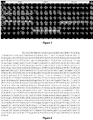
- Bacillus subtilis AGTP BS3BP5 Figures 1 & 2
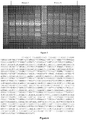
- Bacillus subtilis AGTP BS442 Figures 3 & 4
- Bacillus subtilis AGTP BS521 Figures 5 & 6
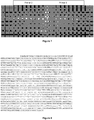
- Bacillus subtilis AGTP BS918 Figures 7 & 8
- Bacillus subtilis AGTP BS1013 Figures 9 & 10
- Bacillus pumilus AGTP BS 1068 Figures 11 & 12
- Bacillus subtilis AGTP BS1069 Figures 13 & 14
- Bacillus subtilis AGTP 944 Figures 15-18
- Bacillus pumilus KX11-1 Figures 19-21 ).
- Table 1- Media components used to assay the enzymatic activities illustrated by substrate utilization properties of environmentally derived Bacillus. Plate Assay Media Composition Extra Visualization Requirements ⁇ -Amylase Nutrient Agar, 2% Corn Starch .05% Iodine Stain Solution Soy Protease Nutrient agar, 2% Purified Soy Protein None; Measure Zone of Clearing in opaque media Cellulase 0.1% Ammonium Sulfate, 0.1% Potassium Phosphate Dibasic, 0.1% Yeast Extract, 1.0% Polypeptone,1.5% Agar, 0.75% Carboxymethyl Cellulose (CMC) 30 minute 0.05% Congo Red Dye stain, follwed by 1M NaCl rinse.
- CMC Carboxymethyl Cellulose
- Esterase/Lipase 1.0% Polypeptone, 1.5% Agar, 0.5% Yeast Extract, 1.5% Tween 80, 1.5% Tributyrin, 0.01% Victoria Blue B Dye (filtered). None; Measure Zone of Clearing in opaque media Zeinase Nutrient Agar, 2% Purified Zein, solubilized in 70% methanol None; Measure Zone of Clearing in opaque media Xylanase Nutrient Agar, 2% Xylan None; Measure Zone of Clearing in opaque media Table 2. Summary of direct fed microbial candidate strain enzymatic activity.
- the three Microsource® S Bacillus strains ( B. subtilis 27 (BS 27), B. licheniformis (previously thought to be B. amyloliquefaciens ) 842, and B. licheniformis 21 (Bl 21)) were picked from individual library freezer stocks and incubated in 0.5ml TSB at 32°C for 24 hours in an orbital shaking incubator, with speed set to 130 (Gyromax 737R). High-throughput screening of these product strains was performed by replicate spot plating of 2 microliters liquid culture onto 15.0ml of various substrate media types of interest in 100x100x15mm grid plates.
- Cellulase, soy protease, and esterase/lipase activities were determined based on specific substrate utilization by the individual strains.
- Media components used to assay the substrate utilization properties from enzymatic activity of the environmentally derived strains are described in Table 3. Assay plates were left to dry for 30 minutes following culture application, and then incubated at 32°C for 24 hours. Enzymatic activities for each strain were determined by measuring the zone of substrate degradation in millimeters, as indicated by clearing of the surrounding edge of colony growth. Mean values from replicate plates were recorded and compared to the values derived from the novel Bacillus strains identified in Example 1 (Table 4).
- a pig feeding trial was conducted to assess the effects of a Bacillus -based direct-fed microbial (DFM) feed additive on body weight gain, feed intake, and feed efficiency of grower-finisher pigs.
- Approximately 180 pigs (Monsanto Choice Genetics GPK 35 females mated to EB Ultra sires) were blocked into three weight blocks by initial body weight and penned in groups of 5 pigs/pen at the completion of the nursery period. Pigs were moved to a wean-to-finish facility and housed 5 pigs/pen in totally slatted pens (1.52 m x 3.05 m) equipped a single-hole feeder, and wean-to-finish cup waterers. Initial minimum ambient room temperature was maintained at approximately 78°F. During the finishing phase, minimum temperature was further reduced to 70° F. Feed and water were available freely throughout the study.
- DFM direct-fed microbial
- One of two dietary treatments were assigned to each pen (18 pens/treatment) within each block, and administered during Phase 1 (50 to 90 lbs), Phase 2 (90 to 130 lbs), Phase 3 (130 to 180 lbs), Phase 4 (180 to 230 lbs) and Phase 5 (230 lbs to market at approximately 270 lbs).
- the two dietary treatments consisted of a basal control diet devoid of DFM 3BP5 and the basal diet with DFM 3BP5 in a five phase grower-finisher pig study. Diets were formulated to meet or exceed NRC (1988) requirements and consisted predominately of corn, soybean meal, and DDGS at 47%, 18.6%, and 30% of the diet, respectively.
- Strain Bacillus subtilis AGTP BS3BP5 was added to the diet at 7.3 x 10 7 CFU/kg feed and supplied approximately 1 x 10 8 CFU/head/day based on average daily feed intake (ADFI). Data collected were average daily gain, average daily feed intake, and feed required per unit of gain during each of the five growing-finishing phases. Pigs were removed from the study when the average pig weight of the entire barn reached approximately 270 lbs.
- Performance data were analyzed as a randomized complete block design with pen as the experimental unit and blocks based on initial body weight. Analysis of variance was performed using the GLM procedures of SAS (SAS Institute, Inc., Cary, NC).
- Pigs fed diets containing strain Bacillus subtilis AGTP BS3BP5 had greater (P ⁇ 0.01) average daily gain (ADG) and gain:feed during the Phase 1 growing period and tended (P ⁇ 0.08) to have greater ADG and gain:feed in the combined Phase 1 and Phase 2 periods compared to pigs fed the control diet (Table 5).
- the increase in ADG during the first growing period resulted in pigs fed strain Bacillus subtilis AGTP BS3BP5 having greater (P ⁇ 0.01) body weight at the end of the Phase 1 period compared to pigs fed the control diet.
- Table 5 Growth performance responses of pigs fed Bacillus subtilis AGTP 3BP5 compared to pigs fed control diets.
- a pig feeding trial was conducted to assess the effects of a Bacillus- based direct-fed microbial (DFM) administered in the diet to grower-finisher pigs on growth performance responses (average daily gain (ADG), average daily feed intake (ADFI), and gain:feed), carcass yield and quality measurements, manure nutrient composition, microbial composition of manure pit, and gas emissions (ammonia, methane, and hydrogen sulfide) from the manure pit.
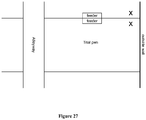
- a total of 720 pigs (Yorkshire-Landrace x Duroc genotype) were housed in 12 rooms with 12 pens/room and 5 pigs/pen. Each room contained two manure pits with capacity to store manure for an entire wean-to-finish period.
- Each manure pit is located under 6 pens with a wall under the central walkway dividing the two pits in each room.
- Each of the twelve rooms was equipped to monitor gas emissions from each independently ventilated room. Pigs were weaned and placed in pens prior to the start of the study and began to receive experimental test feed when they had reached an average body weight of 29.5 kg. Pigs were fed for five feeding phases lasting three weeks each, and ending when pigs reached an average slaughter weight of 120 kg.
- Bacillus strains strains BS1013, BS918, and BS3BP5
- Diets were formulated to meet or exceed NRC (1988) requirements and consisted predominately of corn, soybean meal, and DDGS at 50%, 20%, and 30% of the diet, respectively.
- the three strains in the Bacillus combination DFM were equally represented in the experimental test material that contained 1.47 x 10 8 CFU of the DFM per gram of material.
- the Bacillus combination DFM was added to the diet at 7.3 x 10 7 CFU/kg feed and supplied approximately 1 x 10 8 CFU/head/day based on average daily feed intake.
- Pig performance measures were determined at the end of each feeding phase. These data were represented by 72 replicates/treatment). Manure pits were vacuum sampled at week 0 (initially and prior to pigs receiving treatment), week 9, and week 15 and proximate analysis was performed on the nutrients contained in the swine manure waste (12 replicates/treatment). A subsample on each day was also obtained to determine volatile fatty acid content and microbial community analysis (12 replicates/treatment). Furthermore, at the week 15 sampling at the end of the trial, pits were emptied into a mixing container to homogenize the entire manure pit contents, determine manure pit volume and to sample for nutrient analysis.
- ADG average daily gain
- ADFI average daily feed intake
- a study will be conducted to assess the efficacy of a Bacillus- based swine manure pit additive on solids accumulation, nutrient composition, and manure foaming characteristics. Multiple production sites will be identified that contain at least three barns with separate manure handling and storage units. Manure pits at each site will be treated with a Bacillus- based additive at two doses and one manure pit will be left untreated. The low dose pit treatment will be added to one manure pit on each production site in 500 g of test material per 100,000 gallons of manure formulated to contain 4 x 10 10 CFU per gram of test material.
- the high dose treatment will be added to a different manure pit from the low dose at each production site in 500 g of test material per 100,000 gallons of manure formulated to contain 1 x 10 11 CFU per gram of test material.
- the third manure pit on each site will be left untreated as a control.
- Samples will be obtained from each manure pit at each production site on test initially prior to any treatment and periodically (approximately once every month) over a three to six month period. Data from manure pits will be collected to assess the incidence of foaming and manure samples will be analyzed to assess solids accumulation and nutrient composition. Expectations are that treated swine manure pits will have less incidence of foaming, less accumulation of solids, and less nitrogen, sulfur, phosphorus, fiber-bound nitrogen, total protein, fat, and fiber content than control manure pits.
- Poultry Feeding Trial Demonstrating Improved Growth Performance in Response to Bacillus Strain Combinations Added to Poultry Diets.
- Poultry feeding trials will be conducted to assess the effects of a Bacillus- based direct-fed microbial (DFM) feed additive on body weight gain, feed intake, feed efficiency and mortality of turkeys, broilers, and layers.
- Dietary treatments may consist of several combinations of Bacillus strains administered as a DFM and experimental DFM treatments combined with enzymes, compared to a relative control group of birds.
- Bacillus DFM treatments will be added to the diet at 1.5 x 10 5 CFU/g feed and supplied approximately 1 x 10 7 to 5 x 10 7 CFU/head/day based on average daily feed intake of various production systems (turkeys, broilers, layers).
- Diets will consist of corn-soybean meal-DDGS based diets. Energy and all other nutrient levels will be formulated to meet or exceed the requirements of the test birds. Diets will be fed for an approximate 42-day test period and will be fed in three feeding phases: starter (dl-20) and grower (d 21-38) and finisher (d38-42). Diets will be pelleted (approximately 75°C), and starter feed will be crumbled.
- Body weight, body weight gain, feed intake, FCR, FCE and mortality will be analyzed by analysis of variance (ANOVA) and least significant difference tests.
- the data will support efficacy of the DFM treatment(s). Specifically, it is expected that the DFM treatment will increase percent lean yield and dressing percentage, shift gastrointestinal microbial communities to favorable populations for nutrient utilization, and improve the efficiency of bird growth, and improve egg case weights.
- a total of 444 pigs (200 barrows and 244 gilts) were used in a 15-wk grow-finish study to investigate the use of a Bacillus direct-fed microbial supplement on growth performance, carcass measurements, manure pit characteristics and gas emissions.
- Pigs were housed in an environmentally controlled barn, which contained 12 identical rooms with 12 pens per room. Two manure pits were contained in each of under each of the 12 rooms with 6 pens over each manure pit. Prior to the start of the experiment, manure pits were thoroughly cleaned. Manure pits were then charged with a small amount of water ( ⁇ 600 gallons).
- Pigs allocated to test were weaned, blocked by body weight and sex, and randomly assigned to dietary treatments (Control and Bacillus DFM) with 4-5 pigs per pen (2-3 barrows and 2-3 gilts per pen). Prior to the start of dietary treatments, pigs were fed an adjustment diet for two weeks to seed the pits with manure. Pigs were then fed either a control diet or the control diet with Bacillus DFM supplementation.
- the Bacillus DFM microbial consisted of equal proportions of Bacillus subtilis strains AGTP BS918 (NRRL B-50508), AGTP BS1013 (NRRL B-50509) and AGTP BS3BP5 (NRRL B-50510) adding up to a guaranteed 3.0 x 10 8 cfu/g of DFM product, and included at a rate of 1 lb/ton in feed resulting in a concentration of 1.5 x 10 5 cfu/g in feed.
- Dietary treatments were maintained throughout the experiment, but diets were adjusted every three weeks to better meet the nutritional needs of the pigs, resulting in 5 dietary phases (3 grower phases, 2 finisher phases) formulated to meet or exceed the nutrient requirements of pigs at each production stage in each of the five phases (NRC, 1998). Diet formulations were based on corn and soybean meal with varying levels of corn-based dried distillers grains with solubles (DDGS) over the five phases. Specifically, diets for grower Phases 1, 2, and 3 were formulated to contain 25% DDGS, the finisher Phase 4 diet contained 20% DDGS, and the second finisher Phase 5 diet contained 10% DDGS.
- DDGS corn-based dried distillers grains with solubles
- Manure pits were sampled at the start and end of each of the grower and finisher phases using a vacuum core sampler designed with a vacuum pump connected to two vacuum flasks with clear plastic tubing with a hard plastic core sampler end. Core samples of the manure pit were obtained by sampling four locations under every pen over each pit on test. Manure pit sampling locations relative to the pen included: (1) beneath the center of the pen; (2) under the pen waterer; (3) under the front of the pen feeder; and (4) beneath the far corner of the pen opposite the feeder. Manure contents were analyzed for total N, ammonium N, dry matter (DM), ash content, Ca and P (AOAC 2007).
- the supernatant was filtered (0.22 ⁇ m) and analyzed for acetic acid, propionic acid, butyric acid, I-butyric acid, I-valeric acid, valeric acid, 4-methylvalerate using a Waters 2695 separation module (Waters Corp., Milford, MA) equipped with a 300 X 7.8 mm Aminex HPX-87H column (Biorad Laboratories, Inc., Hercules, CA).
- An isocratic method was applied with a mobile phase solvent consisting of 16.8 mM phosphoric acid in water/acetonitrile (98:2, v/v) at 0.85 mL/min flow rate and 65 °C column temperature. All analytes were detected with a 2996 PDA detector (Waters) at 211 nm absorption.
- Pen was the experimental unit for growth performance and carcass data
- pit was the experimental unit for excretion and VFA data
- room was the experimental unit for gas emission data.
- Pigs averaged 64.5 lb at the start of the experiment and weighed an average of 257.1 lb after 15 wk of feeding. Pigs fed the diet containing the supplemental DFM were 4 lb heavier (P 0.10) at the end of the experiment compared to control fed pigs (Table 7). This response resulted from faster growth when pigs were fed the DFM supplement compared to control pigs (2.01 vs. 1.93 lb/d, respectively; P ⁇ .03; Table 8). Average daily feed intake (ADFI) was unaffected by dietary treatment (Table 9).
- DFM direct-fed microbial
- DFM direct-fed microbial
- VFA Total volatile fatty acids
- VFA Volatile Fatty Acid
- Dietary Treatment Control DFM SEM P-value Acetate 15.46 15.09 0.74 0.724 Propionate 6.92 5.79 0.50 0.120 Butyrate 2.89 4.06 0.42 0.062 I-Butyrate 1.54 1.19 0.11 0.042 4-Methyl-Valerate 16.29 11.66 1.61 0.053 Total VFA 45.71 40.18 1.52 0.017 1 Data in ppm dry matter weighted by body weight gain.
- Diets were formulated to simulate standard commercial diets with excess crude protein but limited energy. Except for the first 6 weeks of trial, no antibiotic growth promoters were fed. Treatment consisted of direct-fed microbial (DFM) supplementation compared to control diet without DFM.
- the direct-fed microbial consisted of equal proportions of Bacillus subtilis strains AGTP BS918 (NRRL B-50508), AGTP BS1013 (NRRL B-50509) and AGTP BS3BP5 (NRRL B-50510) summing to a guaranteed 3.0 x 10 8 cfu/g of DFM product, included at a rate of 1 lb/ton in feed, resulting in a concentration of 1.5 x 10 5 cfu/g in the diet.
- DFM direct-fed microbial
- Average daily gain of pigs fed the DFM was greater (P ⁇ 0.05) from d 0 to 14 and d 14 to 28 of the trial compared to control pigs (Table 18), which resulted in a greater (P ⁇ 0.05) body weight of DFM supplemented pigs on d14 and d 28 of the study (Table 19).
- Table 18 Average daily gain (adg) over the duration of the study.
- Table 19 Pig body weight (lb) and percent health loss (mortality and culls) throughout the duration of the study.
- Table 20 Average daily feed intake (adfi) over the duration of the study.
- Table 20b Feed conversion (feed:gain, fg) over the duration of the study.
- Direct-fed microbial supplementation resulted in greater (P ⁇ 0.10) ADG and ADFI during the early grower phase (d 42 to 63 of the trial).
- the improved ADG response with DFM treatment from d 84 to 105 and lack of ADFI response resulted in improved (P ⁇ 0.01) feed conversion during this period.
- the grower as well as the finisher phase diets contained 35 % cDDGS and 15 % wheat middlings replacing corn in the diet (Table 21). Diets were formulated to simulate standard commercial diets with limited crude protein and energy. Table 21 . Feeding phases and diet composition.
- Control DFM SEM P-value fg0-14 1.599 1.455 0.045 0.027 fg14-28 1.360 1.389 0.015 0.191 fg28-42 1.674 1.656 0.011 0.267 fg0-42 1.537 ) 1.520 0.008 0.134 fg42-63 2.020 2.015 0.009 0.707 fg63-84 2.311 2.336 0.016 0.267 fg42-84 2.177 2.187 0.009 0.445 fg0-84 1.960 1.957 0.007 0.797 fg84-105 2.740 2.677 0.025 0.081 fg42-105 2.376 2.361 0.010 0.294 1 SEM standard error of the mean.
- a total of 480 pigs (initial body weight: approximately 6.0 kg) were weaned at 21 days of age and penned 10 pigs/pen in an environmentally controlled nursery pig facility. Pigs were placed on test from 21 days of age to 63 days of age and fed a two phase feeding program with diets formulated based on corn, soybean meal, and 40% corn DDGS (Table 23) and to meet the nutrient requirements of pigs at each of the two production phases (Table 24). Table 23. Basal diet composition of Phase 1 and 2 nursery pig diets.
- Phase 1 (15 to 25 lb) Phase 2 (25 to 45 lb) Dry Matter % 89.73 89.45 DE - kcal/lb. 1604.2 1603.43 ME - kcal/lb. 1520.6 1523.19 NE - kcal/lb. 1078 1078.46 Crude Protein % 24.47 23.18 Lys % 1.45 1.31 Thr % 0.91 0.82 Met % 0.52 0.45 Met+Cys% 0.84 0.77 Trp % 0.24 0.22 Calcium % 0.74 0.64 Phos.% - total 0.63 0.55 Phos.% - available 0.33 0.25 Phos.% - digestible 0.32 0.25
- DFM direct-fed microbial
- the direct-fed microbial consisted of equal proportions of Bacillus subtilis strains AGTP BS918 (NRRL B-50508), AGTP BS1013 (NRRL B-50509) and AGTP BS3BP5 (NRRL B-50510) summing to a guaranteed 3.0 x 10 8 cfu/g of DFM product, included at a rate of 0.5 or 1.0 lb/ton of feed resulting in a concentration of 7.5 x 10 4 cfu/g or 1.5 x 10 5 cfu/g in the diet, respectively.
- Pig body weight gain and pen feed intake were determined on d 21 and d 42 of the trial to calculate feed efficiency as gain:feed. Feed efficiency may also be calculated as feed:gain. Table 25 .
- Dietary treatments and DFM inclusion rates Treatment Diet Processing condition 1 DFM Inclusion rate, lb/ton Phyzyme XP, FTU/kg 2 T-1 Control mash 0.0 500 T-2 Control + DFM Mash 0.5 500 T-3 Control + DFM Mash 1.0 500 1 Diets were processed as mash, unpelleted feed. 2 All diets contained 500 FTU/kg feed of Phytase.
- Table 26 Body weight and feed efficiency of nursery pigs fed high-fibre-based diets supplemented with a Bacillus DFM at two inclusion levels in the diet.
- a digestibility study was conducted on growing pigs to measure the effects of a Bacillus direct-fed microbial (DFM) on ileal and total tract digestibilities of energy and nutrients in diets containing 40% corn dried distillers grains including solubles (DDGS).
- DFM Bacillus direct-fed microbial
- Twenty four pigs (initial BW: approximately 25 kg) originating from the matings of G-Performer boars to F-25 females (Genetiporc, Alexandria, MN) were surgically equipped with a T-cannula in the distal ileum. Following surgeries, pigs were allowed 21 d to recuperate.
- a standard corn-soybean meal based diet was provided on an ad libitum basis during this period.
- pigs were allotted to two dietary treatments consisting of a control basal diet and a Bacillus DFM. Pigs were housed in individual pens (1.2 ⁇ 1.5 m) in an environmentally controlled room. Each pen was equipped with a feeder and a nipple drinker and had fully slatted concrete floors
- the experimental basal diet was formulated based on corn, soybean meal, and 40% corn DDGS (Table 27).
- the dietary treatments were: (1) a basal diet with no DFM ; or (2) the basal diet with 0.05% DFM added at the expense of cornstarch.
- the direct-fed microbial consisted of equal proportions of Bacillus subtilis strains AGTP BS918 (NRRL B-50508), AGTP BS1013 (NRRL B-50509) and AGTP BS3BP5 (NRRL B-50510) summing to a guaranteed 3.0 x 10 8 cfu/g of DFM product, included at a rate of 1.0 lb/ton of feed resulting in a concentration of 1.5 x 10 5 cfu/g in the diet.
- the vitamin-micromineral premix provided the following quantities of vitamins and minerals per kilogram of complete diet: Vitamin A, 10,990 IU; vitamin D 3 , 1,648 IU; vitamin E, 55 IU; vitamin K, 4.4 mg; thiamin, 3.3 mg; riboflavin, 9.9 mg; pyridoxine, 3.3 mg; vitamin B 12 , 0.044 mg; D-pantothenic acid, 33 mg; niacin, 55 mg; folic acid, 1.1 mg; biotin, 0.17 mg; Cu, 16 mg as copper sulfate; Fe, 165 mg as iron sulfate; I, 0.36 mg as potassium iodate; Mn, 44 mg as manganese sulfate; Se, 0.3 mg as sodium selenite; Zn, 165 mg as zinc oxide.
- Titanium dioxide was used as an indigestible marker in all diets.
- the diets were fed to the 12 pigs, providing 6 pigs per diet for 17 days. Pigs were allowed ad libitum intake of diets and water throughout the experiment.
- pens fed diets without DFM were fed first followed by DFM-treated pens. After feeding each treatment, feed delivery carts were completely cleaned. Pigs fed diets without DFM were also weighed and collected first before pigs fed DFM-containing diets.
- Fecal samples were collected on d 12 via grab sampling and ileal samples were collected on d 13 and 14. Ileal samples were collected continuously for 9 h starting at 0800 on each collection day. Cannulas were opened and 225-mL plastic bags were attached to the cannula barrel using cable ties, which allowed digesta to flow from the cannula to the bag. Bags were changed whenever filled with digesta or at least once every 30 min. The pH in the digesta was measured in the first bag collected after 0900, 1100, 1300 and 1500 on each collection day. Following the final ileal collection, pigs were fed their respective experimental diets for 3 additional days. The morning meal (at 0700) that is fed on the day following the last ileal collection contained a green marker. During the following 36 h, ileal digesta and feces were scored every 30 min from all pigs, and the first time the marker appears at any of these sites were recorded and used as a measure of rate of passage for this particular diet.
- the chicken macrophage cell line HD11 was used to determine the inflammatory response to LPS and determine the potential of direct-fed microbial Bacillus strains to alleviate inflammation associated with a gram negative bacterial infection.
- Bacillus strains were screened in a cell culture assay to determine changes in inflammatory cytokine gene expression responses to LPS and each of the Bacillus strains (Bacillus subtilis AGTP BS1013 (NRRL B-50509), Bacillus subtilis AGTP BS3BP5 (NRRL B-50510), and Bacillus subtilis AGTP BS944 (NRRL B-50548).
- HD11 cells were incubated either: (1) alone (unstimulated); (2) with LPS,; (3) with each Bacillus strain, and (4) with LPS + Bacillus strain.
- the plate template design is illustrated in Figure 22 .
- HD11 cells were grown to confluence and plated in 24-well tissue culture plates with antibiotic free Roswell Park Memorial Institute 1640 (RPMI) media containing 10% fetal bovine serum (FBS; Atlanta Biologicals, Inc., Lawrenceville, GA). Once confluent, media was removed and the treatments were administered in antibiotic free media and were then incubated for 1 hour at 41°C. After the incubation, cells were washed twice with PBS and were incubated in 380 ⁇ L TRIzol (Invitrogen, Life Technologies Corp., Carlsbad, CA) for 5 minutes. Samples were removed from plates, placed in 2 mL microcentrifuge tubes, snap frozen, and stored at -80°C until RNA isolation.
- RPMI Roswell Park Memorial Institute 1640
- RNA cleanup was done using the RNeasy mini kit (Qiagen, Inc., Valencia, CA) and DNase digestion was done using the RNase-Free DNase kit (Qiagen).
- cDNA was synthesized using the qScript cDNA SuperMix (VWR, Radnor, PA) immediately following the RNA isolation.
- IL-1 ⁇ F 5'-AGGTCAACATCGCCACCTAC-3' (SEQ ID NO.7) 196 R: 5'-CAACGGGACGGTAATGAAAC-3' (SEQ ID NO.8) IL-8 F: 5'-GCTCTGTCGCAAGGTAGGAC-3' (SEQ ID NO.9) 231 R: 5'-GGCCATAAGTGCCTTTACGA-3' (SEQ ID NO. 10) ⁇ -actin F: 5'- ATGAAGCCCAGAGCAAAAGA-3' (SEQ ID NO. 11) 223 R: 5'-GGGGTGTTGAAGGTCTCAAA-3' (SEQ ID NO. 12)
- Lipopolysaccharide challenge in the HD11 chicken macrophage cell line resulted in an increase (P ⁇ 0.01) in gene expression of the inflammatory cytokines, Interleukin (IL)-1 ⁇ and IL-8, compared to unstimulated HD11 cells ( Figure 23 ).
- P ⁇ 0.01 the gene expression of the inflammatory cytokines, IL-1 ⁇ and IL-8, resulting from the administration of LPS alone and was more similar to the gene expression profile of unstimulated HD11 cells.
- Bacillus DFM strains demonstrate the efficacy of Bacillus DFM strains for alleviating inflammation associated with a bacterial infection, and their effectiveness in avian species.
- the Bacillus DFM strains can be used to alleviate macrophage inflammation.
- the Bacillus DFM strains can be used to alleviate gram negative bacterial infections, and the effects of these bacterial infections.
- the rat intestinal epithelial cell line IEC-6 was used to determine the inflammatory response to LPS and determine the potential of direct-fed microbial Bacillus strains to alleviate inflammation associated with a gram negative bacterial infection.
- Bacillus strains were screened in a cell culture assay to determine changes in inflammatory cytokine gene expression responses to LPS and each of the Bacillus strains (Bacillus subtilis AGTP BS1013 (NRRL B-50509), Bacillus subtilis AGTP BS3BP5 (NRRL B-50510), and Bacillus subtilis AGTP BS944 (NRRL B-50548), Bacillus subtilis AGTP BS1069 (NRRL B-50544), Bacillus subtilis AGTP BS 442 (NRRL B-50542), Bacillus subtilis AGTP BS521 (NRRL B-50545), and Bacillus subtilis AGTP BS918 (NRRL B-50508)). Additional Bacillus strains could be used including but not limited to Bacillus pumil
- IEC-6 cells were incubated either: (1) alone (unstimulated); (2) with LPS; (3) with each DFM Bacillus strain, and (4) with LPS + Bacillus strain.
- the plate template design is illustrated in Figure 24 .
- IEC-6 cells were grown to confluence and plated in 24-well tissue culture plates with Dulbecco's Modified Eagle's Medium (DMEM) (Invitrogen, Life Technologies Corp., Carlsbad, CA) containing 10% FBS (Atlanta Biologicals, Inc., Lawrenceville, GA) and 1% antibiotic-antimycotic (Atlanta Biologicals). Once the plates were confluent, IEC-6 cells were washed three times with phosphate buffered saline (PBS). The treatments were administered in antibiotic free media and were then incubated for 1 hour at 37°C. After the incubation, cells were washed twice with PBS and were incubated in 380 ⁇ L TRIzol (Invitrogen) for 5 minutes.
- DMEM Dulbecco's Modified Eagle's Medium
- RNA isolation was done using the RNeasy mini kit (Qiagen, Inc., Valencia, CA) and DNase digestion was done using the RNase-Free DNase kit (Qiagen).
- cDNA was synthesized using the qScript cDNA SuperMix (VWR, Radnor, PA) immediately following the RNA isolation.
- Lipopolysaccharide challenge in the IEC-6 rat intestinal epithelial cell line resulted in an increase (P ⁇ 0.01) in gene expression of the inflammatory cytokine, TNF- ⁇ , compared to unstimulated IEC-6 cells ( Figure 25 ).
- Bacillus strains BS1013 and BS1069 decreased (P ⁇ 0.10) the gene expression of TNF- ⁇ resulting from the administration of LPS alone when in either spore or vegetative states.
- Bacillus strains BS3BP5, BS442, and BS521 also decreased (P ⁇ 0.10) the gene expression of TNF- ⁇ resulting from the administration of LPS alone, but only when in spore form.
- Bacillus strain BS918 decreased (P ⁇ 0.10) the gene expression of TNF- ⁇ resulting from the administration of LPS alone, but only in its vegetative form.
- Bacillus DFM strains demonstrate the efficacy of Bacillus DFM strains for alleviating inflammation associated with a bacterial infection, and their effectiveness in a mammalian species.
- the Bacillus DFM strains can be used to alleviate macrophage inflammation.
- the Bacillus DFM strains can be used to alleviate gram negative bacterial infections, and the effects of these bacterial infections.
- Deep swine manure pit systems are common in the US Midwest and have high potential for foaming. This is believed to be the result of the steadily increasing inclusion of fibrous by-products in swine feed and the resulting shifts in microbial ecology and fermentation characteristics in the stored manure.
- the efficacy of a three-strain Bacillus DFM was assessed to determine if its application in swine manure pits could positively alter the manure pit microbial fermentation profile and provide a tool for pit foam control.
- Five production sites each with three identical grow-finish barns (1400 head each) over individual deep pit systems were selected for evaluation. All sites were traditionally at high risk for foam production based on high inclusion levels of dried distillers grains containing solubles (DDGS) and other fibrous by-product ingredients in diets and from past historical incidences of foaming.
- DDGS dried distillers grains containing solubles
- Bacillus strains can be used including but not limited to Bacillus subtilis AGTP BS442, Bacillus subtilis AGTP BS521, and Bacillus subtilis AGTP BS1069, and Bacillus subtilis AGTP 944, Bacillus pumilus AGTP BS 1068 and Bacillus pumilus KX11-1.
- the Bacillus pit inoculant was applied at a rate of 5.3 x 10 4 cfu/mL manure to be equivalent to the inoculation rate if fed to the animal at 1.5 x 10 5 cfu/g of feed and a 2.5-fold increased dose (2.5X) applied to the manure pit at a rate of 1.3 x 10 6 cfu/mL manure.
- LSD Least Square Difference
- Foam:liquid ratio was also reduced (P ⁇ 0.10) with Bacillus inoculant at either application rate compared to control pits, when values were averaged over all three sampling points in the course of the 170 day trial (Table 34). Data indicate that the higher inclusion rate of the Bacillus inoculant resulted in more consistent reduction of foam over the course of the study ( Figure 26 ).
- Bacillus strains can be used including but not limited to Bacillus subtilis AGTP BS442, Bacillus subtilis AGTP BS521, and Bacillus subtilis AGTP BS1069, and Bacillus subtilis AGTP 944, Bacillus pumilus AGTP BS 1068 and Bacillus pumilus KX11-1.
- the Bacillus product was tested at three production sites for one 60 day period to determine if it could improve manure management characteristics above the effect from MicroSource S® administration in the swine feed.
- Each site consisted of two identical rooms with individual manure pits and a capacity for 2250 market hogs. Per site, one barn was used as untreated control whereas the other barn received Bacillus pit treatment. For treated pits, Bacillus product inclusion rate was based on manure volume, with an application rate of 5.3 x 10 4 cfu/mL manure.
- Initial volume of the swine manure pits on test was estimated to be 120,000 gallons of manure, therefore a total of 2.4 x 10 13 cfu of Bacillus product was applied directly to the pit.
- Control and treatment pits were sampled before and 60 days after Bacillus product application. Sampling over the entire pit depth was accomplished using a 1' PVC pipe fitted with a ball valve to trap the sample. Test indicator of improved manure characteristics was determined to be reduced % solids after 60 days of treatment.
- One-tailed Jonckheere-Terpstra non-parametric test with exact statistics and significance level ⁇ 0.10 was performed using SPSS statistical software (v. 17.0, IBM Corp., Armonk, NY), to analyze difference between % solids before and after treatment application testing the mean differences.
- DFM MicroSource S®
- the basal diet was formulated to contain 50% by-product (35% DDGS and 15% wheat middlings; Table 36). Phytase (500 FTU/kg) was added to all diets.
- the novel Bacillus DFM consisted of equal proportions of Bacillus subtilis strains AGTP BS918 (NRRL B-50508), AGTP BS1013 (NRRL B-50509) and AGTP BS3BP5 (NRRL B-50510) summing to a guaranteed 3.0 x 10 8 cfu/g of DFM product, included at a rate of 0.25 lb/ton of feed resulting in a concentration of 3.75 x 10 4 cfu/g in the diet.
- Bacillus strains can be used including but not limited to Bacillus subtilis AGTP BS442, Bacillus subtilis AGTP BS521, and Bacillus subtilis AGTP BS1069, and Bacillus subtilis AGTP 944, Bacillus pumilus AGTP BS 1068 and Bacillus pumilus KX11-1. Table 36.
- Basal diets Compositions Ingredients, % Corn, % 26.510 DDGS, % 35.00 Wheat middlings 15.00 SBM, 48 % 19.00 HP DDG 0.00 Soy bean oil 1.00 Corn starch 1.00 Limestone 1.25 DCP 0.00 Lysine HCL 0.45 DL-Met 0.04 L-Threonine 0.03 L-Tryptophan 0.00 Salt 0.40 Vit min-mix 0.30 Phytase 0.02 Total 100.00 Calculated composition, % ME, kcal/kg 3315 CP 23.20 Dig Lys 1.17 Dig Met 0.39 Dig M+C 0.74 Dig Thr 0.73 Dig Tryp 0.20 Ca 0.63 Total P 0.61 Dig P 0.35
- MicroSource S® was included in the diet at 1 lb/ton of feed, resulting in 7.5 x 10 4 cfu/g in the diet.
- Pig body weight gain and pen feed intake were determined on d21 and d 42 of the trial, and average daily gain (ADG), average daily feed intake(ADFI), and gain:feed (G:F) were calculated.
- ADG average daily gain
- ADFI average daily feed intake
- G:F gain:feed
- Pigs fed diets supplemented with the novel Bacillus DFM had greater ADG from d 0 to 21 of the trial than pigs fed the control diets or diets supplemented with the commercial DFM, Microsource S® (Table 37). This increase in daily gain tended to result in greater (P ⁇ 0.10) body weight in pigs fed the novel Bacillus DFM on d 21 of the study compared to the other two treatments. These data indicate that the novel Bacillus DFM improves body weight gain in growing pigs compared to an existing commercial Bacillus -based DFM (MicroSource S®). Table 37. Growth performance of pigs fed a novel Bacillus DFM compared to MicroSource S®.
- the fibrolytic degrading enzyme activities of several Bacillus subtilis and Bacillus pumilus strains are reported in Table 39. All strains exhibit degrading activity against at least two of the three fibrous substrates evaluated. These data indicate that these novel Bacillus strains have enzyme degrading capacity against cellulose, xylan, and ⁇ -mannose. Table 39. Cellulase, xylanase, and ⁇ -mannanase activities of Bacillus strains.
- CMCase Cellulase
- Xylanase ⁇ -Mannanase BS3BP5 3.3 3.0 N/A BS442 1.8 2.5 2.0 BS521 6.0 4.0 2.0 BS918 4.0 5.5 3.3 BS1013 6.5 4.0 2.5 BP1068 3.0 6.0 4.5 BS1069 4.0 4.0 2.5 BS944 6.5 3.5
- Bacillus strains can be used including but not limited to Bacillus subtilis AGTP BS442, Bacillus subtilis AGTP BS521, and Bacillus subtilis AGTP BS1069, and Bacillus subtilis AGTP 944, Bacillus pumilus AGTP BS 1068 and Bacillus pumilus KX11-1. Table 40. Feeding phases and diet composition.
- a 16 in 2 area of the facility flooring was swabbed using a pre-moistened sterile swab (PocketSwab Plus, Charm Sciences, Lawrence, MA). The sample area was passed 10 times for each swab and analyzed in triplicate. Within 15 seconds following the swabbing procedure, the swab was placed in LUMT Bioluminescence reader (Charm Sciences, Lawrence, MA). The resulting relative light unit (RLU) values were recorded and averaged by pen before statistical analysis.
Landscapes
- Life Sciences & Earth Sciences (AREA)
- Chemical & Material Sciences (AREA)
- Engineering & Computer Science (AREA)
- Health & Medical Sciences (AREA)
- Zoology (AREA)
- Polymers & Plastics (AREA)
- Microbiology (AREA)
- Biotechnology (AREA)
- Organic Chemistry (AREA)
- Bioinformatics & Cheminformatics (AREA)
- Genetics & Genomics (AREA)
- Wood Science & Technology (AREA)
- Biochemistry (AREA)
- Food Science & Technology (AREA)
- Animal Husbandry (AREA)
- Biomedical Technology (AREA)
- Birds (AREA)
- General Health & Medical Sciences (AREA)
- Medicinal Chemistry (AREA)
- General Engineering & Computer Science (AREA)
- Virology (AREA)
- Tropical Medicine & Parasitology (AREA)
- Molecular Biology (AREA)
- Physiology (AREA)
- Mycology (AREA)
- Pharmacology & Pharmacy (AREA)
- Epidemiology (AREA)
- Animal Behavior & Ethology (AREA)
- Public Health (AREA)
- Veterinary Medicine (AREA)
- Fodder In General (AREA)
- Micro-Organisms Or Cultivation Processes Thereof (AREA)
- Enzymes And Modification Thereof (AREA)
Description
- Complete bibliographic citations of the references referred to herein by the first author's last name in parentheses can be found in the Bibliography section, immediately preceding the claims.
- The disclosure relates to Bacillus strains producing enzymes that provide benefits to animals and methods of using these strains. In one embodiment, the disclosure relates to methods of improving growth performance of an animal. In another embodiment, the disclosure relates to a direct fed microbial, and feed for an animal supplemented with a direct fed microbial.
- The global swine industry has seen increased feeding of by-products (dried distillers grains with solubles (DDGS), wheat midds, etc.) initially from 0-10% to the current extremes of 30-60%. These diet cost savings have been a great opportunity for industry to save on feed input costs, but come with a set of challenges as well. The fermentation process to extract ethanol from corn removes almost all of the starch, leaving the resulting DDGS feed by-product containing approximately 40% fiber. This higher fiber content relative to corn results in reduced dry matter digestibility and approximately 10 percentage units less digestibility of most amino acids in DDGS compared to corn (Stein and Shurson, 2009).
- Consequently the inclusion of DDGS in livestock diets can have negative impacts on animal growth performance and carcass characteristics. In addition to the negative effects on animal growth and carcass quality, alterations in nutrient digestibility as a result of adding DDGS with a high fiber content have implications for swine manure handling, storage, and decomposition. The commercial swine industry has indicated that manure holding capacity is less in anaerobic deep-pit swine manure storage units, and that the manure from pigs fed high level of DDGS has more solids accumulation, as well as ammonia, methane, and hydrogen sulfide gas emissions.
- In view of the foregoing, it would be desirable to provide Bacillus strains producing enzymes that provide benefits to animals and methods of using these strains.
- The disclosure relates to enzyme producing Bacillus strains. In one embodiment, the strains are Bacillus subtilis. In another embodiment, the strains are Bacillus pumilus.
- In at least some embodiments, the B. subtilis strain(s) is (are) Bacillus subtilis AGTP BS3BP5, Bacillus subtilis AGTP BS442, Bacillus subtilis AGTP BS521, Bacillus subtilis AGTP BS918, Bacillus subtilis AGTP BS1013, and Bacillus subtilis AGTP BS1069, and Bacillus subtilis
AGTP 944, and strains having all the characteristics thereof, any derivative or variant thereof, and mixtures thereof. In some embodiments, the B. pumilus strain(s) is Bacillus pumilus AGTP BS 1068. - In one embodiment, the disclosure relates to methods comprising administering an effective amount of enzyme producing strain(s), one or more combination(s) of the strain(s), one or more supernatant(s) from a culture of the strain(s), feed including one or more strain(s) or mixtures thereof to a an animal, wherein the administration improves at least one of the following body weight, average daily gain, average daily feed intake, feed efficiency, carcass characteristics, nutrient digestibility and manure waste problems.
- As described herein, the enzyme producing strains can be administered to an animal to improve at least one of the breakdown of complex dietary components, manure waste problems, the efficiency of production, carcass characteristics, and performance when feeding high levels of DDGS.
- One or more enzyme producing strain(s) is (are) may be administered as a direct-fed microbial (DFM). A direct-fed microbial includes one or more Bacillus strain(s). The enzyme producing strain(s) is (are) effective at degrading otherwise indigestible feedstuffs such as DDGS. This allows increased nutrient availability, resulting in an improved animal growth response. Additionally, enzyme producing strain(s) abate(s) manure associated odors, thereby improving operational environment air quality. Odor reduction may be by reducing volatile fatty acids, ammonia, and/or methane and hydrogen sulfide gas production.
- The description relates to a method comprising administering an effective amount of the enzyme producing strain(s), one or more combination(s) of the strain(s), one or more supernatant(s) from a culture of the strain(s), feed including one or more strain(s) or mixtures thereof to a swine in an effective amount to improve the manure storage unit. The swine manure storage unit may be a manure pit. The administration improves at least one of the following: less incidence of foaming, less accumulation of solids, and less nitrogen, sulfur, phosphorus, fiber-bound nitrogen, total protein, fat, and fiber content when compared to a control manure pit.
- The enzyme producing strain(s) may be directly applied to a manure storage unit, such as a manure pit. Improvements resulting from contacting the enzyme producing strain(s) directly to a manure storage unit include at least one of less incidence of foaming, less accumulation of solids, and less nitrogen, sulfur, phosphorus, fiber-bound nitrogen, total protein, fat, and fiber content than control manure pits.
- The description relates to a method of altering volatile fatty acid composition in a manure pit comprising administering an effective amount of enzyme producing strain(s), one or more combination(s) of the strain(s), one or more supernatant(s) from a culture of the strain(s), feed including one or more strain(s) or mixtures thereof to animals whose manure is stored in the manure pit. The enzyme producing strains can be contacted directly to the manure pit.
- The description relates to a method of altering gas emissions that accumulate in a room housing an animal comprising administering enzyme producing strain(s), one or more combination(s) of the strain(s), one or more supernatant(s) from a culture of the strain(s), feed including one or more strain(s) or mixtures thereof to animals in an effective amount to reduce gas emissions.
- Also described herein are methods for alleviating an inflammatory response comprising administering enzyme producing strain(s), one or more combination(s) of the strain(s), one or more supernatant(s) from a culture of the strain(s), feed including one or more strain(s) or mixtures thereof to animals in an effective amount to alleviate the inflammatory response.
- Exemplary embodiments of the invention are illustrated in the accompanying drawings; wherein
Figures 19 to 21 relate to a Bacillus strain that does not fall within the scope of the presently claimed invention. -
Figure 1 is a photograph of a gel showing a RAPD PCR profile of Bacillus subtilis AGTP BS3BP5. -
Figure 2 is a partial 16S rDNA sequence of Bacillus subtilis AGTP BS3BP5. -
Figure 3 is a photograph of a gel showing a RAPD PCR profile of Bacillus subtilis AGTP BS442. -
Figure 4 is a partial 16S rDNA sequence of Bacillus subtilis AGTP BS442. -
Figure 5 is a photograph of a gel showing a RAPD PCR profile of Bacillus subtilis AGTP BS521. -
Figure 6 is a partial 16S rDNA sequence of Bacillus subtilis AGTP BS521. -
Figure 7 is a photograph of a gel showing a RAPD PCR profile of Bacillus subtilis AGTP BS918. -
Figure 8 is a partial 16S rDNA sequence of Bacillus subtilis AGTP BS918. -
Figure 9 is a photograph of a gel showing a RAPD PCR profile of Bacillus subtilis AGTP BS1013. -
Figure 10 is a partial 16S rDNA sequence of Bacillus subtilis AGTP BS1013. -
Figure 11 is a photograph of a gel showing a RAPD PCR profile of Bacillus pumilus AGTP BS 1068. -
Figure 12 is a partial 16S rDNA sequence of Bacillus pumilus AGTP BS 1068. -
Figure 13 is a photograph of a gel showing a RAPD PCR profile of Bacillus subtilis AGTP BS1069. -
Figure 14 is a partial 16S rDNA sequence of Bacillus subtilis AGTP BS1069. -
Figure 15 is a photograph of a gel showing a RAPD PCR profile of Bacillus subtilisAGTP 944. -
Figure 16 is a photograph of a gel showing a RAPD PCR profile of Bacillus subtilisAGTP 944. -
Figure 17 is a photograph of a gel showing a RAPD PCR profile of Bacillus subtilisAGTP 944. -
Figure 18 is the partial 16S rDNA sequence of Bacillus subtilisAGTP 944. -
Figure 19 is a photograph of a gel showing a RAPD PCR profile of Bacillus pumilus KX11-1. -
Figure 20 is a photograph of a gel showing a RAPD PCR profile of Bacillus pumilus KX11-1. -
Figure 21 is the partial 16S rDNA sequence of Bacillus pumilus KX11-1. -
Figure 22 is a representative schematic of a cell culture plate design for screening Bacillus strains for anti-inflammatory effects. LPS was used to induce the inflammatory response but any agent that induces the inflammatory response may be used. -
Figure 23 is a bar graph depicting the anti-inflammatory effects of Bacillus strains as shown in a representative macrophage cell line (chicken HD11). The agent used to induce the inflammatory response was LPS. The effects on IL-1β gene expression are shown by the white bars (P < 0.01). The effects on IL-8 gene expression are shown by the black bars (P < 0.01). Differing letters (a, b, c) indicate means differ statistically (P < 0.01). -
Figure 24 is a representative schematic of a plate design for cell culture screening for a candidate direct-fed microbial. LPS was used as the agent to induce the inflammatory response. -
Figure 25 is a bar graph depicting the anti-inflammatory effects of Bacillus strains in a mammalian cell line (rat intestinal epithelial cell line (IEC-6)). LPS was used to induce the inflammatory response. Tumor necrosis factor-α (TNF-α) gene expression was measured. Differing letters (a or b) indicate means differ statistically (P < 0.10). -
Figure 26 is a line graph showing foam characteristics in a pit over 3 samplings within 170 day trial period. -
Figure 27 is a representative schematic of a BioLuminescence measure in each pen in the area marked with an "x." - Before explaining embodiments of the invention in detail, it is to be understood that the invention is not limited in its application to the details of construction and the arrangement of the components set forth in the following description or illustrated in the drawings; the invention being defined by the claims. The invention is capable of other embodiments or being practiced or carried out in various ways. Also, it is to be understood that the phraseology and terminology employed herein is for the purpose of description and should not be regarded as limiting.
- The organizational framework of this disclosure should not limit any embodiments or elements within the disclosure. It is intended that elements and applications recited within one embodiment, can be applied to other embodiments within the disclosure.
- The numerical ranges in this disclosure are approximate, and thus may include values outside of the range unless otherwise indicated. Numerical ranges include all values from and including the lower and the upper values, in increments of one unit, provided that there is a separation of at least two units between any lower value and any higher value. As an example, if a compositional, physical or other property, such as, for example, molecular weight, viscosity, etc., is from 100 to 1,000, it is intended that all individual values, such as 100, 101, 102, etc., and sub ranges, such as 100 to 144, 155 to 170, 197 to 200, etc., are expressly enumerated. For ranges containing values which are less than one or containing fractional numbers greater than one (e.g., 1.1, 1.5, etc.), one unit is considered to be 0.0001, 0.001, 0.01 or 0.1, as appropriate. For ranges containing single digit numbers less than ten (e.g., 1 to 5), one unit is typically considered to be 0.1. These are only examples of what is specifically intended, and all possible combinations of numerical values between the lowest value and the highest value enumerated, are to be considered to be expressly stated in this disclosure. Numerical ranges are provided within this disclosure for, among other things, relative amounts of components in a mixture, and various temperature and other parameter ranges recited in the methods.
- By "administer," is meant the action of introducing at least one strain and/or supernatant from a culture of at least one strain described herein into the animal's gastrointestinal tract. More particularly, this administration is an administration by oral route. This administration can in particular be carried out by supplementing the feed intended for the animal with the at least one strain, the thus supplemented feed then being ingested by the animal. The administration can also be carried out using a stomach tube or any other way to make it possible to directly introduce the at least one strain into the animal's gastrointestinal tract.
- By "at least one strain," is meant a single strain but also mixtures of strains comprising at least two strains of bacteria. By "a mixture of at least two strains," is meant a mixture of two, three, four, five, six or even more strains. In some embodiments of a mixture of strains, the proportions can vary from 1% to 99%. In certain embodiments, the proportion of a strain used in the mixture is at least 5%, 10%, 15%, 20%, 25%, 30%, 35%, 40%, 45%, 50%, 55%, 60%, 65%, 70%, 75%, 80%, 85%, 90%, or 95%. Other embodiments of a mixture of strains are from 25% to 75%. Additional embodiments of a mixture of strains are approximately 50% for each strain. When a mixture comprises more than two strains, the strains can be present in substantially equal proportions in the mixture or in different proportions.
- By "contacting," is meant the action of bringing at least one strain and/or supernatant from a culture of at least one strain described herein into close proximity with a substrate, container, or substance, which includes but is not limited to a manure storage unit. In some embodiments, the manure storage unit is a manure pit. Contacting can be through a direct or indirect manner. As used herein, contacting includes applying, spraying, inoculating, dispersing dispensing, pouring, and other like terms.
- By "effective amount," is meant a quantity of strain and/or supernatant sufficient to allow improvement in at least one of the following: the efficiency of animal production, carcass characteristics, growth performance of an animal, growth performance when feeding high levels of DDGS to an animal, nutrient digestibility, breakdown of complex dietary components, poultry growth performance, pig growth performance, feed efficiency, average daily gain, average daily feed intake, body weight gain:feed or feed:gain intake, and morality.
- In other embodiments, "effective amount" is meant a quantity of strain and/or supernatant sufficient to allow improvement in at least one of the following: manure waste problems, the amount of foaming in a manure storage unit, the microbial ecology of a manure storage unit, the amount of volatile fatty acids in a manure storage unit, the amount of gas production in a room housing animals or a manure storage unit, including but not limited to methane and hydrogen sulfide.
- In another embodiment, "effective amount" is meant a quantity of strain and/or supernatant sufficient to allow improvement in at least one of the following: the expression of a gene involved in the inflammatory response, the expression of a protein involved in the inflammatory response, and the activity of a protein involved in the inflammatory response.
- As used herein, "performance" refers to the growth of an animal, such as a pig or poultry, measured by one or more of the following parameters: average daily gain (ADG), weight, scours, mortality, feed conversion, which includes both feed:gain and gain:feed, and feed intake. "An improvement in performance" or "improved performance" as used herein, refers to an improvement in at least one of the parameters listed under the performance definition.
- As used herein, a "variant" has at least 80% identity of genetic sequences with the disclosed strains using random amplified polymorphic DNA polymerase chain reaction (RAPD-PCR) analysis. The degree of identity of genetic sequences can vary. In some embodiments, the variant has at least 85%, 90%, 95%, 96%, 97%, 98%, or 99% identity of genetic sequences with the disclosed strains using RAPD-PCR analysis. Six primers that can be used for RAPD-PCR analysis include the following: Primer 1 (5'-GGTGCGGGAA-3') (SEQ ID NO.1); PRIMER 2 (5'-GTTTCGCTCC-3') (SEQ ID NO. 2); PRIMER 3 (5'-GTAGACCCGT-3') (SEQ ID NO.3); PRIMER 4 (5'-AAGAGCCCGT-3') (SEQ ID NO.4); PRIMER 5 (5'-AACGCGCAAC-3') (SEQ ID NO. 5); and PRIMER 6 (5'-CCCGTCAGCA-3') (SEQ ID NO.6). RAPD analysis can be performed using Ready-to-Go™ RAPD Analysis Beads (Amersham Biosciences, Sweden), which are designed as pre-mixed, pre-dispensed reactions for performing RAPD analysis.
- The inventors have found that certain Bacillus strains have enzymatic activity(ies) that break down fiber(s), lipid(s), carbohydrate(s), and protein(s). These strain(s) is (are) referred to herein as "enzyme producing strain(s)," "Bacillus strain(s)," or "strain(s)." In some embodiments, the enzymatic activity(ies) is (are) cellulase, α-amylase, xylanase, esterase, casein protease, corn starch amylase, β-mannanase, lipase, and/or protease, e.g., zeinase and soy protease.
- The inventors have found that certain microorganisms can be used to address the challenging components in dried distillers grains with solubles (DDGS).
- The inventors also have found that enzyme producing strains can improve at least one of the following: (1) breakdown of complex dietary components, (2) manure waste problems; (3) the efficiency of animal production; (4) animal carcass characteristics; and (5) growth performance an animal. Also described herein are effects on an inflammatory response.
- Enzyme producing strains include Bacillus strains, including, but not limited to, B. subtilis, B. licheniformis, B. pumilus, B. coagulans, B. amyloliquefaciens, B. stearothermophilus, B. brevis, B. alkalophilus, B. clausii, B. halodurans, B. megaterium, B. circulans, B. lautus, B. thuringiensis and B. lentus strains, and strains having all the characteristics thereof, any derivative or variant thereof, and mixtures thereof.
- In at least some embodiments, the B. subtilis strain(s) is (are) Bacillus subtilis AGTP BS3BP5, Bacillus subtilis AGTP BS442, Bacillus subtilis AGTP BS521, Bacillus subtilis AGTP BS918, Bacillus subtilis AGTP BS1013, and Bacillus subtilis AGTP BS1069, and
Bacillus subtilis AGTP 944, and strains having all the characteristics thereof, any derivative or variant thereof, and mixtures thereof. In some embodiments, the B. pumilus strain(s) is Bacillus pumilus AGTP BS 1068. - These strains were deposited by Danisco USA, Inc. of Waukesha, Wisconsin at the Agricultural Research Service Culture Collection (NRRL), 1815 North University Street, Peoria, Ill., 61604. The dates of original deposits and accession numbers are as follows: Bacillus subtilis AGTP BS3BP5, May 13, 2011 (NRRL B-50510), Bacillus subtilis AGTP BS442, August 4, 2011 (NRRL B-50542), Bacillus subtilis AGTP BS521, August 4, 2011 (NRRL B-50545), Bacillus subtilis AGTP BS918, May 13, 2011 (NRRL B-50508), Bacillus subtilis AGTP BS1013, May 13, 2011 (NRRL B-50509), Bacillus subtilis AGTP BS1069, August 4, 2011 (NRRL B-50544),
Bacillus subtilis AGTP 944, August 11, 2011 (NRRL B-50548) and Bacillus pumilus AGTP BS 1068, August 4, 2011 (NRRL B-50543),. All of the deposits were made under the provisions of the Budapest Treaty on the International Recognition of the Deposit of Microorganisms for the Purposes of Patent Procedure. - In some embodiments, the enzyme producing strains have enzymatic activity(ies) including but not limited to cellulase, α-amylase, xylanase, esterase, casein protease, corn starch amylase, β-mannanase, lipase, and/or protease, e.g., zeinase and soy protease.
- In at least some embodiments, more than one of the strain(s) described herein is (are) combined.
- Any Bacillus derivative or variant is also included and is useful in the methods described and claimed herein. In some embodiments, strains having all the characteristics of Bacillus subtilis AGTP BS3BP5, Bacillus subtilis AGTP BS442, Bacillus subtilis AGTP BS521, Bacillus subtilis AGTP BS918, Bacillus subtilis AGTP BS1013, Bacillus subtilis AGTP BS1069,
Bacillus subtilis AGTP 944 and Bacillus pumilus AGTP BS 1068 are also included and are useful in the methods described and claimed herein. - In certain embodiments, any derivative or variant of Bacillus subtilis AGTP BS3BP5, Bacillus subtilis AGTP BS442, Bacillus subtilis AGTP BS521, Bacillus subtilis AGTP BS918, Bacillus subtilis AGTP BS1013, Bacillus subtilis AGTP BS1069,
Bacillus subtilis AGTP 944, and Bacillus pumilus AGTP BS 1068are also included and are useful in the methods described and claimed herein. - In at least some embodiments, the enzyme producing strain(s) is (are) used in combination. In one embodiment, the enzyme producing strains can be used in combination with bacterial strains from the Bacillus genus, and other bacterial strains from a different genus.
- In at least some embodiments, the enzyme producing strain(s) and methods provided herein improve one or more of the following: the breakdown of complex dietary components, manure waste problems, the efficiency of production, carcass characteristics, and performance when feeding high levels of DDGS when compared to a control.
- Manure waste problems include, but are not limited to, undesirable manure nutrient and microbial composition, and undesirable gas emissions from the manure storage units, such as manure pits. An improvement in manure waste problems include, but are not limited to, at least one of (1) less nutrients accumulated in the manure, (2) shift manure microbial communities to favorable populations for solids breakdown, and (3) a decrease in ammonia, methane, and hydrogen sulfide gas emissions.
- An improvement in carcass characteristics can be measured by at least one of increased percent lean yield and dressing percentage, and decreased fat iodine values. Performance can be measured by average daily gain, average daily feed intake, and feed required per unit of gain, and other measurements known in the art.
- When ingested, the enzyme producing strain(s) produce(s) enzymes. In some embodiments, the enzyme producing strain(s) produce(s) enzymes in vivo. In other embodiments, the enzyme producing strain(s) survive(s) in the manure of animals to which the strain are administered and produce(s) enzymes in the excreted manure.
- Bacillus strains are produced by fermentation of the bacterial strains. Fermentation can be started by scaling-up a seed culture. This involves repeatedly and aseptically transferring the culture to a larger and larger volume to serve as the inoculum for the fermentation, which is carried out in large stainless steel fermentors in medium containing proteins, carbohydrates, and minerals necessary for optimal growth. A nonlimiting exemplary medium is TSB. After the inoculum is added to the fermentation vessel, the temperature and agitation are controlled to allow maximum growth. Once the culture reaches a maximum population density, the culture is harvested by separating the cells from the fermentation medium. This is commonly done by centrifugation.
- The count of the culture can then be determined. CFU or colony forming unit is the viable cell count of a sample resulting from standard microbiological plating methods. The term is derived from the fact that a single cell when plated on appropriate medium will grow and become a viable colony in the agar medium. Since multiple cells may give rise to one visible colony, the term colony forming unit is a more useful unit measurement than cell number.
- In one embodiment, each Bacillus strain is fermented between a 5 x 10⁸ CFU/ml level to about a 4 x 10⁹ CFU/ml level. In at least one embodiment, a level of 2 x 10⁹ CFU/ml is used. The bacteria are harvested by centrifugation, and the supernatant is removed. The supernatant can be used in the methods described herein. In at least some embodiments, the bacteria are pelleted. In at least some embodiments, the bacteria are freeze-dried. In at least some embodiments, the bacteria are mixed with a carrier. However, it is not necessary to freeze-dry the Bacillus before using them. The strains can also be used with or without preservatives, and in concentrated, unconcentrated, or diluted form.
- A composition including one or more strain(s) described herein is provided. The composition can be fed to an animal as a direct-fed microbial (DFM). One or more carrier(s) or other ingredients can be added to the DFM. The DFM may be presented in various physical forms, for example, as a top dress, as a water soluble concentrate for use as a liquid drench or to be added to a milk replacer, gelatin capsule, or gels. In one embodiment of the top dress form, freeze-dried bacteria fermentation product is added to a carrier, such as whey, maltodextrin, sucrose, dextrose, limestone (calcium carbonate), rice hulls, yeast culture, dried starch, and/or sodium silico aluminate. In one embodiment of the water soluble concentrate for a liquid drench or milk replacer supplement, freeze-dried bacteria fermentation product is added to a water soluble carrier, such as whey, maltodextrin, sucrose, dextrose, dried starch, sodium silico aluminate, and a liquid is added to form the drench or the supplement is added to milk or a milk replacer. In one embodiment of the gelatin capsule form, freeze-dried bacteria fermentation product is added to a carrier, such as whey, maltodextrin, sugar, limestone (calcium carbonate), rice hulls, yeast culture dried starch, and/or sodium silico aluminate. In one embodiment, the bacteria and carrier are enclosed in a degradable gelatin capsule. In one embodiment of the gels form, freeze-dried bacteria fermentation product is added to a carrier, such as vegetable oil, sucrose, silicon dioxide, polysorbate 80, propylene glycol, butylated hydroxyanisole, citric acid, ethoxyquin, and/or artificial coloring to form the gel.
- The strain(s) may optionally be admixed with a dry formulation of additives including but not limited to growth substrates, enzymes, sugars, carbohydrates, extracts and growth promoting micro-ingredients. The sugars could include the following: lactose; maltose; dextrose; malto-dextrin; glucose; fructose; mannose; tagatose; sorbose; raffinose; and galactose. The sugars range from 50-95%, either individually or in combination. The extracts could include yeast or dried yeast fermentation solubles ranging from 5-50%. The growth substrates could include: trypticase, ranging from 5-25%; sodium lactate, ranging from 5-30%; and, Tween 80, ranging from 1-5%. The carbohydrates could include mannitol, sorbitol, adonitol and arabitol. The carbohydrates range from 5-50% individually or in combination. The micro-ingredients could include the following: calcium carbonate, ranging from 0.5-5.0%; calcium chloride, ranging from 0.5-5.0%; dipotassium phosphate, ranging from 0.5-5.0%; calcium phosphate, ranging from 0.5-5.0%; manganese proteinate, ranging from 0.25-1.00%; and, manganese, ranging from 0.25-1.0%.
- To prepare DFMs described herein, the culture(s) and carrier(s) (where used) can be added to a ribbon or paddle mixer and mixed for about 15 minutes, although the timing can be increased or decreased. The components are blended such that a uniform mixture of the cultures and carriers result. The final product is preferably a dry, flowable powder. The strain(s) can then be added to animal feed or a feed premix, added to an animal's water, or administered in other ways known in the art. A feed for an animal can be supplemented with one or more strain(s) described herein or with a composition described herein.
- The DFM provided herein can be administered, for example, as the strain-containing culture solution, the strain-producing supernatant, or the bacterial product of a culture solution.
- Administration of a DFM provided herein to an animal can increase the performance of the animal. In one embodiment, administration of a DFM provided herein to an animal can increase the average daily feed intake (ADFI), average daily gain (ADG), or feed efficiency (gain:feed; G:F or feed:gain; F:G) (collectively, "performance metrics"). One or more than one of these performance metrics may be improved.
- The DFM may be administered to the animal in one of many ways. For example, the strain(s) can be administered in a solid form as a veterinary pharmaceutical, may be distributed in an excipient, preferably water, and directly fed to the animal, may be physically mixed with feed material in a dry form, or the strain(s) may be formed into a solution and thereafter sprayed onto feed material. The method of administration of the strain(s) to the animal is considered to be within the skill of the artisan.
- In one embodiment, the strains can be administered in an effective amount to animals. In at least some embodiments, the disclosure relates to a method comprising administering to an animal an effective amount of the enzyme producing strain(s), one or more combination(s) of the strain(s), one or more supernatant(s) from a culture of the strain(s), or feed including one or more strain(s) or mixtures thereof. In one embodiment, the animal is a pig. In another embodiment, the animal is poultry. In yet another embodiment, the animal is a ruminant.
- Administration of one or more enzyme producing strain(s) to animals is accomplished by any convenient method, including adding the strains to the animals' drinking water, to their feed, or to the bedding, or by direct oral insertion, such as by an aerosol or by injection.
- In another embodiment, administration of one or more enzyme producing strains is by spraying the animal with the enzyme producing strains. The animal can clean or preen and ingest the enzyme producing strains.
- In one embodiment, the Bacillus strains are administered as spores.
- As used herein, the term "animal" includes but is not limited to human, mammal, amphibian, bird, reptile, swine, pigs, cows, cattle, goats, horses, sheep, poultry, and other animals kept or raised on a farm or ranch, sheep, big-horn sheep, buffalo, antelope, oxen, donkey, mule, deer, elk, caribou, water buffalo, camel, llama, alpaca, rabbit, mouse, rat, guinea pig, hamster, ferret, dog, cat, and other pets, primate, monkey, ape, and gorilla.
- In some embodiments, the animals are birds of different ages, such as starters, growers and finishers. In certain embodiments, the animals are poultry and exotic fowl, including, but not limited to, chicks, turkey poults, goslings, ducklings, guinea keets, pullets, hens, roosters (also known as cocks), cockerels, and capons.
- In some embodiments, the animals are pigs, including, but not limited to, nursery pigs, breeding stock, sows, gilts, boars, lactation-phase piglets, and finishing pigs. The strain(s) can be fed to a sow during the lactation period, although the strain(s) can be fed for different durations and at different times. In certain embodiments, the strain(s) is(are) administered to piglets by feeding the strain(s) to a gilt or sow. It is believed that the transfer to the piglets from the sow is accomplished via the fecal-oral route and/or via other routes.
- The enzyme producing strains can be administered to an animal to improve at least one of nutrient digestibility, swine growth performances, poultry growth performance responses, feed efficiency (gain:feed or feed:gain), body weight, feed intake, average daily gain, average daily feed intake, the breakdown of complex dietary components, the efficiency of poultry production, the efficiency of swine production, and mortality. These benefits can be particularly useful when diets containing high levels of DDGS are fed. Initially, DDGS was from 0% to 10% of the animal's diet. Currently, DGGS is from 30% to 60%.
- The amount of improvement can be measured as described herein or by other methods known in the art. These effective amounts can be administered to the animal by providing ad libitum access to feed containing the DFM. The DFM can also be administered in one or more doses.
- In certain embodiments, the improvement is by at least 1-5%, 5-10%, 10-15%, 15-20%, 20-25%, 25-30%, 30-35%, 35-40%, 40-45%, 45-50%, 50-55%, 55-60%, 60-65%, 65-70%, 70-75%, 75-80%, 80-85%, 85-90%, 90-95%, 96%, 97%, 98%, 99%, or greater than 99% as compared to an untreated control.
- In at least some embodiments, the improvement in these measurements in an animal to which the strain(s) is/are administered is at least 1%, 2%, 3%, 4%, 5%, 6%, 7%, 8%, 9%, 10%, 11%, 12%, 13%, 14%, 15%, 16%, 17%, 18%, 19%, 20%, 21%, 22%, 23%, 24%, 25%, 26%, 27%, 28%, 29%, 30%, 31%, 32%, 33%, 34%, 35%, 36%, 37%, 38%, 39%, 40%, 41%, 42%, 43%, 44%, 45%, 46%, 47%, 48%, 49%, 50%, 51%, 52%, 53%, 54%, 55%, 56%, 57%, 58%, 59%, 60%, 61%, 62%, 63%, 64%, 65%, 66%, 67%, 68%, 69%, 70%, 71%, 72%, 73%, 74%, 75%, 76%, 77%, 78%, 79%, 80%, 81%, 82%, 83%, 84%, 85%, 86%, 87%, 88%, 89%, 90%, 91%, 92%, 93%, 94%, 95%, 96%, 97%, 98, 99%, and greater than 99% compared to a control animal.
- In other embodiments, the improvement in these measurements in an animal to which the strain(s) is/are administered is 2-8% compared to a control animal. In certain other embodiments, the improvement in these measurements in an animal to which the strain(s) is/are administered is at least 8% compared to a control animal.
- In some embodiments, a control animal is an animal that has not been administered the enzyme producing strains.
- This effective amount can be administered to the animal in one or more doses. In some embodiments, the one or more Bacillus strain(s) is(are) added to an animal's feed at a rate of at least 1 x 10⁴ CFU/animal/day.
- In one embodiment, the administration improves at least one of nutrient digestibility, growth performance responses, e.g., feed efficiency, the breakdown of complex dietary components, the efficiency of production, body weight gain, feed intake, and mortality.
- In certain embodiments of the method, the strain(s) is/are administered at about 1 x 10⁵ CFU/animal/day to about 1 x 10¹¹ CFU/animal/day. In some embodiments, the animal is a swine. In another embodiment, the animal is poultry.
- In at least some embodiments, the method is used when the animal is fed high levels of dried distillers grains with solubles (DDGS). The high levels of DDGS can be a rate of over 10% of the animal's diet. The high levels of DDGS can also be a rate of over 30% of the animal's diet.
- In at least some embodiments, the effective amount of at least one strain of bacterium is administered to an animal by supplementing a feed intended for the animal with the effective amount of at least one strain of bacterium. As used herein, "supplementing," means the action of incorporating the effective amount of bacteria provided herein directly into the feed intended for the animal. Thus, the animal, when feeding, ingests the bacteria provided herein.
- The enzyme producing strains can be administered as a single strain or as multiple strains. Supernatant of one or more enzyme producing strains can be administered to an animal. When ingested, the enzyme producing strains produce enzymes.
- In certain embodiments, one or more enzyme producing strain(s) is (are) fed to swine. The one or more enzyme producing strain(s) address(es) the challenging components in dried distillers grains with solubles (DDGS).
- In one embodiment, the enzyme producing strain(s) is(are) added to animal feed at a rate of 1 x 10³, 1 x 10⁴, 1 x 10⁵, 1 x 10⁶, 1 x 10⁷, 1 x 10⁸, 1 x 10⁹, 1 x 10¹⁰, 1 x 10¹¹, 1 x 10¹², 1 x 10¹³ and greater than 1 x 10¹³ CFU per gram of animal feed.
- In another embodiment, the enzyme producing strain(s) is(are) added to animal feed at a rate of 1 x 10³, 1 x 10⁴, 1 x 10⁵, 1 x 10⁶, 1 x 10⁷, 1 x 10⁸, 1 x 10⁹, 1 x 10¹⁰, 1 x 10¹¹, 1 x 10¹², 1 x 10¹³ and greater than 1 x 10¹³ CFU per animal per day.
- In one embodiment, the one or more Bacillus strain(s) is(are) added to pigs' feed at a rate of about 3.75 x 10⁵ CFU per gram of feed. It(they) can also be fed at about 1 x 10⁴ to about 1 x 10¹¹ CFU/animal/day. In some embodiments, the one or more Bacillus strain(s) is(are) fed at about 1 x 10⁸ CFU/animal/day.
- For ruminants, the one or more Bacillus strain(s) is(are) fed at about 5 x 10⁹ CFU/hd/day.
- For poultry, the one or more Bacillus strain(s) is(are) added to feed at about 1 x 10⁴ CFU/g feed to about 1 x 10¹⁰ CFU/g feed. In at least some embodiments, the one or more Bacillus strain(s) is fed at about 1 x 10⁵ CFU/bird/day to about 1 x 10⁸ CFU/bird/day.
- In another embodiment, a feed for an animal comprises at least one strain of bacterium described herein. In at least some embodiments, feed is supplemented with an effective amount of at least one strain of bacterium. As used herein, "supplementing," means the action of incorporating the effective amount of bacteria provided herein directly into the feed intended for the animal. Thus, the animal, when feeding, ingests the bacteria provided herein.
- When used in combination with a feed material, for monogastric diets, the feed material can include corn, soybean meal, byproducts like distillers dried grains with solubles (DDGS), and vitamin/mineral supplement. The feed material for ruminants can be grain or hay or silage or grass, or combinations thereof. Included amongst such feed materials are corn, dried grain, alfalfa, any feed ingredients and food or feed industry by-products as well as bio fuel industry by-products and corn meal and mixtures thereof. Other feed materials can also be used.
- The time of administration can vary so long as an improvement is shown in one or more of the following: (1) breakdown of complex dietary components, (2) nutrient digestibility, (3) manure waste problems, (4) the efficiency of production, (5) carcass characteristics, (6) growth performance, (7) growth performance when feeding high levels of DDGS, (8) poultry growth performance responses, (9) swine growth performance responses, (10) the efficiency of poultry production, (11) the efficiency of swine production, (12) body weight gain, (13) feed intake, (14) feed efficiency, and (15) mortality. Administration is possible at any time with or without feed. However, the bacterium is preferably administered with or immediately before feed.
- In one embodiment, the disclosure relates to a method for improving growth performance of an animal comprising using one or more enzyme producing strains or supernatants therefrom to improve the growth performance of the animal relative to an animal that has not been administered the enzyme producing strains. In one embodiment, the animal is a pig. In another embodiment, the animal is poultry. In another embodiment, the animal is a ruminant.
- In one embodiment, growth performance includes but is not limited to nutrient digestibility, poultry growth performance responses, pig growth performance responses, feed efficiency, the breakdown of complex dietary components, average daily gain, averaging daily feed intake, body weight gain, feed intake, carcass characteristics and mortality. In yet another embodiment, the methods disclosed herein are used to improve the growth performance of an animal fed an animal feed comprising DDGS.
- In certain embodiments, the improvement in growth performance is by at least 1-5%, 5-10%, 10-15%, 15-20%, 20-25%, 25-30%, 30-35%, 35-40%, 40-45%, 45-50%, 50-55%, 55-60%, 60-65%, 65-70%, 70-75%, 75-80%, 80-85%, 85-90%, 90-95%, 96%, 97%, 98%, 99%, or greater than 99% as compared to an untreated control.
- In at least some embodiments, the improvement in growth performance of an animal to which the strain(s) is/are administered is at least 1%, 2%, 3%, 4%, 5%, 6%, 7%, 8%, 9%, 10%, 11%, 12%, 13%, 14%, 15%, 16%, 17%, 18%, 19%, 20%, 21%, 22%, 23%, 24%, 25%, 26%, 27%, 28%, 29%, 30%, 31%, 32%, 33%, 34%, 35%, 36%, 37%, 38%, 39%, 40%, 41%, 42%, 43%, 44%, 45%, 46%, 47%, 48%, 49%, 50%, 51%, 52%, 53%, 54%, 55%, 56%, 57%, 58%, 59%, 60%, 61%, 62%, 63%, 64%, 65%, 66%, 67%, 68%, 69%, 70%, 71%, 72%, 73%, 74%, 75%, 76%, 77%, 78%, 79%, 80%, 81%, 82%, 83%, 84%, 85%, 86%, 87%, 88%, 89%, 90%, 91%, 92%, 93%, 94%, 95%, 96%, 97%, 98, 99%, and greater than 99% compared to a control animal.
- In one embodiment, the enzyme producing strains for improving growth performance of an animal comprise a Bacillus strain. In one embodiment, the Bacillus strain is Bacillus subtilis. In another embodiment, the Bacillus strain is Bacillus pumilus.
- In another embodiment, the enzyme producing strains for improving growth performance include but are not limited to Bacillus subtilis AGTP BS3BP5, Bacillus subtilis AGTP BS442, Bacillus subtilis AGTP BS521, Bacillus subtilis AGTP BS918, Bacillus subtilis AGTP BS1013, and Bacillus subtilis AGTP BS1069,
Bacillus subtilis AGTP 944 and Bacillus pumilus AGTP BS 1068. - The enzyme producing strain(s) for improving growth performance of an animal may be administered as a single strain, one or more combination(s) of the strain(s), one or more supernatant(s) from a culture of the strain(s), feed including one or more strain(s) or mixtures thereof.
- In yet another embodiment, the disclosure relates to a method of increasing digestibility of an animal feed comprising administering an enzyme producing strain to an animal in an amount effective to increase the digestibility of an animal feed as compared to an animal not administered the enzyme producing strain. In another embodiment, the method further comprises measuring the amount of nutrients accumulated in a manure pit from the animal administered the enzyme producing strain and comparing these amount of nutrients to the amount of nutrients in a manure pit from an animal not administered the enzyme-producing strain. In yet another embodiment, the animal feed comprises DDGS.
- In yet another embodiment, the disclosure relates to a method of increasing digestibility of an animal feed comprising administering an animal a feed supplemented with an enzyme producing strain in an amount effective to increase the digestibility of the animal feed as compared to an animal not administered the enzyme producing strain.
- In one embodiment, methods for improving growth performance of an animal comprise administering an enzyme producing strain to an animal, and reducing the amount of undigested nutrients by the animal as compared to an animal that was not administered the enzyme producing strain.
- In another embodiment, methods for improving growth performance of an animal comprise reducing the amount of undigested nutrients by an animal by administering an enzyme producing strain to the animal as compared to an animal that was not administered the enzyme producing strain.
- In another embodiment, methods for improving growth performance of an animal comprise administering an enzyme producing strain to an animal, measuring the amount of nutrients accumulated in a manure pit from the animal administered the enzyme producing strain, and comparing the amount of nutrients in the manure pit from an animal administered the enzyme producing strains to the amount of nutrients in a second manure pit from an animal not administered the enzyme-producing strain.
- In one embodiment, digestibility of an animal feed can be measured by the amount of nutrients in a manure pit. Any nutrient can be measured from the manure pit including but not limited to dry matter, ash, total nitrogen, ammonium nitrogen, phosphorpus and calcium.
- The enzyme producing strain(s) for improving nutrient digestibility may be administered as a single strain, one or more combination(s) of the strain(s), one or more supernatant(s) from a culture of the strain(s), feed including one or more strain(s) or mixtures thereof.
- In one embodiment, the disclosure relates to a method of increasing poultry growth performance comprising administering an enzyme producing strain to poultry in an amount effective to increase the growth performance of the poultry as compared to poultry not administered the enzyme producing strain. The methods disclosed herein can be used to improve growth performance regardless of the feed or the diet of the poultry.
- In one embodiment, the disclosure relates to a method of increasing growth performance in poultry fed a high fibrous by-product diet comprising administering an enzyme producing strain to a poultry, which are fed a high fibrous by-product diet, in an amount effective to increase the growth performance of the poultry as compared to poultry not administered the enzyme producing strain.
- In another embodiment, the disclosure relates to a method of increasing the average daily gain in poultry comprising administering an enzyme producing strain to poultry in an amount effective to increase the average daily gain of the poultry as compared to poultry not administered the enzyme producing strain.
- In another embodiment, the disclosure relates to a method of increasing the average daily feed intake in poultry comprising administering an enzyme producing strain to poultry in an amount effective to increase the average daily feed intake as compared to poultry not administered the enzyme producing strain.
- In another embodiment, the disclosure relates to a method of improving feed efficiency of an animal feed in poultry comprising administering to poultry an animal feed supplemented with an enzyme producing strain in an amount effective to increase the feed efficiency in poultry as compared to poultry not administered the enzyme producing strain.
- In yet another embodiment, the disclosure relates to a method of improving carcass characteristics comprising administering an enzyme producing strain to poultry in an amount effective to improve the carcass characteristics of the poultry as compared to poultry not administered the enzyme producing strain. Carcass characteristics that can be improved include but are not limited to fat depth, organ weights, breast characteristics, dressed weight, carcass grade, and carcass value.
- In one embodiment, the measured value of the carcass characteristics may be increased or decreased.
- In yet another embodiment, the measured value of one or more of the following carcass characteristics is increased: fat depth, organ weights, breast characteristics, dressed weight, carcass grade, and carcass value.
- In still another embodiment, the measured value of one or more of the following carcass characteristics is decreased: fat depth, organ weights, breast characteristics, dressed weight, carcass grade, and carcass value.
- In still another embodiment, the disclosure relates to a method of reducing mortality in poultry comprising administering an enzyme producing strain to poultry in an amount effective to reduce mortality of said poultry as compared to poultry not administered the enzyme producing strain.
- In another embodiment, the disclosure relates to a method of improving lignin digestibility comprising administering an enzyme producing strain to poultry in an amount effective to improve lignin digestibility as compared to poultry not administered the enzyme producing strain.
- In another embodiment, the disclosure relates to a method of improving lignin digestibility in high fibrous diets comprising administering an enzyme producing strain to poultry in an amount effective to improve lignin digestibility of the high fibrous diets as compared to poultry not administered the enzyme producing strain. In another embodiment, the high fibrous diets comprise by-product based diets. In yet another embodiment, the diet comprises DDGS.
- In another embodiment, the disclosure relates to a method of improving apparent ileal digestibility comprising administering an enzyme producing strain to poultry in an amount effective to improve apparent ileal digestibility as compared to poultry not administered the enzyme producing strain.
- In yet another embodiment, the disclosure relates to a method of improving apparent total tract digestibility comprising administering an enzyme producing strain to poultry in an amount effective to improve apparent total tract digestibility as compared to poultry not administered the enzyme producing strain.
- In still another embodiment, the disclosure relates to a method of lowering the pH of ileal digesta comprising administering an enzyme producing strain to poultry in an amount effective to lower the pH of ileal digesta as compared to poultry not administered the enzyme producing strain.
- In still another embodiment, the methods recited above further comprise administering a feed supplemented with an enzyme producing strain.
- The enzyme producing strain(s) for improving poultry growth performance may be administered as a single strain, one or more combination(s) of the strain(s), one or more supernatant(s) from a culture of the strain(s), feed including one or more strain(s) or mixtures thereof.
- In one embodiment, the disclosure relates to a method of increasing growth performance of a pig comprising administering an enzyme producing strain to a pig in an amount effective to increase the growth performance of the pig as compared to a pig not administered the enzyme producing strain. The methods disclosed herein can be used to improve growth performance regardless of the feed or the diet of the pig.
- In one embodiment, the disclosure relates to a method of increasing growth performance in a pig fed a high fibrous by-product diet comprising administering an enzyme producing strain to a pig, which is fed a high fibrous by-product diet, in an amount effective to increase the growth performance of the pig as compared to a pig not administered the enzyme producing strain.
- In another embodiment, the disclosure relates to a method of increasing the average daily gain in a pig comprising administering an enzyme producing strain to a pig in an amount effective to increase the average daily gain of the pig as compared to a pig not administered the enzyme producing strain.
- In another embodiment, the disclosure relates to a method of increasing the average daily feed intake in a pig comprising administering an enzyme producing strain to a pig in an amount effective to increase the average daily feed intake as compared to a pig not administered the enzyme producing strain.
- In another embodiment, the disclosure relates to a method of improving feed efficiency of animal feed in a pig comprising administering to a pig an animal feed supplemented with an enzyme producing strain in an amount effective to increase the feed efficiency in the pig as compared to a pig not administered the enzyme producing strain.
- In yet another embodiment, the disclosure relates to a method of improving carcass characteristics of a pig comprising administering an enzyme producing strain to a pig in an amount effective to improve the carcass characteristics of the pig as compared to a pig not administered the enzyme producing strain. Carcass characteristics that can be improved include but are not limited to fat depth, loin depth; percent lean meat; hot carcass weight, organ weights, carcass grade, and carcass value.
- In one embodiment, the measured value of the carcass characteristics may be increased or decreased.
- In yet another embodiment, the measured value of one or more of the following carcass characteristics is increased: fat depth, loin depth; percent lean meat; hot carcass weight, organ weights, carcass grade, and carcass value.
- In still another embodiment, the measured value of one or more of the following carcass characteristics is decreased: fat depth, loin depth; percent lean meat; hot carcass weight, organ weights, carcass grade, and carcass value.
- In still another embodiment, the disclosure relates to a method of reducing mortality rate in pigs comprising administering an enzyme producing strain to pigs in an amount effective to reduce mortality of said pigs as compared to pigs not administered the enzyme producing strain.
- In another embodiment, the disclosure relates to a method of improving lignin digestibility comprising administering an enzyme producing strain to a pig in an amount effective to improve lignin digestibility as compared to a pig not administered the enzyme producing strain.
- In another embodiment, the disclosure relates to a method of improving lignin digestibility in high fibrous diets comprising administering an enzyme producing strain to a pig in an amount effective to improve lignin digestibility of the high fibrous diets as compared to a pig not administered the enzyme producing strain. In another embodiment, the high fibrous diets comprise by-product based diets. In yet another embodiment, the diet comprises DDGS.
- In another embodiment, the disclosure relates to a method of improving apparent ileal digestibility comprising administering an enzyme producing strain to a pig in an amount effective to improve apparent ileal digestibility in the pig as compared to a pig not administered the enzyme producing strain.
- In yet another embodiment, the disclosure relates to a method of improving apparent total tract digestibility comprising administering an enzyme producing strain to a pig in an amount effective to improve apparent total tract digestibility in the pig as compared to a pig not administered the enzyme producing strain.
- In still another embodiment, the disclosure relates to a method of lowering the pH of ileal digesta comprising administering an enzyme producing strain to a pig in an amount effective to lower the pH of ileal digesta in the pig as compared to a pig not administered the enzyme producing strain.
- In still another embodiment, the methods recited above further comprise administering a feed supplemented with an enzyme producing strain.
- In another embodiment, the enzyme producing strains in the methods recited above related to pig growth performance is a composition comprising Bacillus subtilis strains AGTP BS918 (NRRL B-50508), AGTP BS1013 (NRRL B-50509) and AGTP BS3BP5 (NRRL B-50510).
- The enzyme producing strain(s) for improving pig growth performance may be administered as a single strain, one or more combination(s) of the strain(s), one or more supernatant(s) from a culture of the strain(s), feed including one or more strain(s) or mixtures thereof.
- In one embodiment, the disclosure relates to a method for improving manure storage units comprising administering enzyme producing strain(s), one or more combination(s) of the strain(s), one or more supernatant(s) from a culture of the strain(s), feed including one or more strain(s) or mixtures thereof an animal in an effective amount to improve the manure storage unit. In one embodiment, the animal is a pig. In certain embodiments, the manure storage unit is a manure pit.
- In still another embodiment, the disclosure relates to a method for improving air quality in a room housing an animal comprising administering enzyme producing strain(s), one or more combination(s) of the strain(s), one or more supernatant(s) from a culture of the strain(s), feed including one or more strain(s) or mixtures thereof to an animal in an effective amount to improve the air quality in the room. In one embodiment, improving air quality comprises abating odors in the room. In another embodiment, improving air quality comprises reducing production of one or more of the following: volatile fatty acids, ammonia, methane, or hydrogen sulfide.
- In at least some embodiments, the administration improves at least one of the following: less incidence of foaming, less accumulation of solids, and less nitrogen, sulfur, phosphorus, fiber-bound nitrogen, total protein, fat, and fiber content when compared to a control manure pit.
- In one embodiment, the enzyme producing strains for improving manure storage units comprise a Bacillus strain. In one embodiment, the Bacillus strain is Bacillus subtilis. In another embodiment, the Bacillus strain is Bacillus pumilus.
- In another embodiment, the enzyme producing strains for improving a manure storage unit include but are not limited to Bacillus subtilis AGTP BS3BP5, Bacillus subtilis AGTP BS442, Bacillus subtilis AGTP BS521, Bacillus subtilis AGTP BS918, Bacillus subtilis AGTP BS1013, and Bacillus subtilis AGTP BS1069, Bacillus subtilis AGTP 944and Bacillus pumilus AGTP BS 1068.
- In another embodiment, the disclosure relates to a method for improving a manure storage unit comprising contacting enzyme producing strain(s), one or more combination(s) of the strain(s), one or more supernatant(s) from a culture of the strain(s), compositions including one or more strain(s) or mixtures thereof directly to a manure storage unit, such as a manure pit. Improvements resulting from contacting the enzyme producing strain(s) directly to a manure storage unit include at least one of less incidence of foaming, less accumulation of solids, and less nitrogen, sulfur, phosphorus, fiber-bound nitrogen, total protein, fat, and fiber content than control manure pits.
- In another embodiment, the methods described above can be used to improve manure waste problems, which include but are not limited to foaming in the manure pit, accumulation of solids, increases in (a) nitrogen, (b) sulfur, (c) phosphorus, (d) fiber-bound nitrogen,(e) total protein, (f) fat, and (g) fiber content.
- In another embodiment, the disclosure relates to a method for controlling or reducing foam in a manure storage unit comprising administering an effective amount of enzyme producing strain(s), one or more combination(s) of the strain(s), one or more supernatant(s) from a culture of the strain(s), feed including one or more strain(s) or mixtures thereof to an animal in an effective amount to control or reduce the amount of foam in a manure storage unit as compared to a manure storage unit where animals were not administered the enzyme producing strains. In yet another embodiment, the foam: liquid ratio of the manure storage unit is reduced.
- In another embodiment, the disclosure relates to a method for controlling or reducing foam in a storage pit comprising contacting enzyme producing strain(s), one or more combination(s) of the strain(s), one or more supernatant(s) from a culture of the strain(s), compositions including one or more strain(s) or mixtures thereof directly to a manure storage pit in an effective amount to control reduce the foam in a manure storage pit as compared to a manure storage pit without the enzyme producing strains. In another embodiment, the foam: liquid ratio of the manure storage unit is reduced.
- The amount of foam in a manure storage unit is associated with the amount of solids in the manure storage unit. Manure storage units with a higher percentage of solids generally have greater foam: liquid ratio, and hence more foam.
- In another embodiment, the disclosure relates to a method for controlling or reducing foam in a manure storage unit comprising administering an effective amount of enzyme producing strain(s), one or more combination(s) of the strain(s), one or more supernatant(s) from a culture of the strain(s), feed including one or more strain(s) or mixtures thereof to an animal in an effective amount to reduce the amount of solids, and thereby reduce the amount of foam, in a manure storage unit as compared to a manure storage unit where animals were not administered the enzyme producing strains. In yet another embodiment, the foam: liquid ratio of the manure storage unit is reduced.
- In another embodiment, the disclosure relates to a method for controlling or reducing foam in a manure storage unit comprising contacting enzyme producing strain(s), one or more combination(s) of the strain(s), one or more supernatant(s) from a culture of the strain(s), compositions including one or more strain(s) or mixtures thereof directly to a manure storage unit in an effective amount to reduce the amount of solids in the manure storage unit as compared to a manure storage unit without the enzyme producing strains. In another embodiment, the foam: liquid ratio of the manure storage unit is reduced.
- In one embodiment, the disclosure relates to a method for altering a microbial ecology in a manure storage unit comprising administering enzyme producing strain(s), one or more combination(s) of the strain(s), one or more supernatant(s) from a culture of the strain(s), feed including one or more strain(s) or mixtures thereof to a an animal in an effective amount to alter the microbial ecology in the manure storage unit as compared to a manure storage unit where animals were not administered the enzyme producing strains.
- In another embodiment, the disclosure relates to a method for altering a microbial ecology in a manure storage unit comprising contacting enzyme producing strain(s), one or more combination(s) of the strain(s), one or more supernatant(s) from a culture of the strain(s), compositions including one or more strain(s) or mixtures thereof directly to the manure storage unit in an effective amount to alter the microbial ecology in the manure storage unit as compared to a manure storage unit where the enzyme producing strains were not used.
- In one embodiment, enzyme producing strains can alter, either directly or indirectly, the microbial ecology in a manure storage unit and cause an increase in the population of certain bacterial species and a decrease in the population of other bacterial species. Bacterial species that can be altered, either directly or indirectly, by the enzyme producing strains include but are not limited to methanogens, bacteroides, Clostridium cluster I, clostridium cluster IV, clostridium cluster XIVa, and sulfate reducing bacteria.
- In one embodiment, the enzyme producing strains have the ability to shift nutrient utilization by the microbial population and subsequently alter the microbial ecology such that aggregated foaming incidents are alleviated, either by lessening gas production available to be trapped in the foam matrix, altering the availability of molecular compounds making up the foam matrix, or directly inhibiting the growth of bacteria associated with foaming incidents.
- In one embodiment, the disclosure relates to a method for altering volatile fatty acid composition in manure comprising administering an enzyme producing strain to an animal in an effective amount to alter fatty acid composition in manure from said animal as compared to manure from a second animal not administered an enzyme producing strain. In one embodiment, altering fatty acid composition may result in an increase in certain fatty acids and a decrease in other fatty acids. In another embodiment, altering fatty acid compositions may occur in a direct or indirect manner.
- In one embodiment, the disclosure relates to a method for altering volatile fatty acid composition in a manure storage unit comprising administering an enzyme producing strain to an animal in an effective amount to alter the fatty acid composition in manure from said animal that is stored in said manure storage unit as compared manure from a second animal not administered an enzyme producing strain. In one embodiment, the animal is a pig. In another embodiment, the manure storage unit is a manure pit.
- In still another embodiment, the disclosure relates to a method for altering volatile fatty acid composition in a manure storage unit comprising administering an enzyme producing strain to an animal; measuring the amount of volatile fatty acid in manure from the animal fed the enzyme producing strains; and adjusting the concentration of enzyme producing strain fed to the animal to achieve a desired volatile fatty acid concentration in the manure stored in the manure pit.
- In yet another embodiment, the disclosure relates to a method for altering volatile fatty acid composition in a manure storage unit comprising contacting an enzyme producing strain directly to the manure storage unit in an effective amount to alter fatty acid composition in the manure storage unit as compared to a manure storage unit without an enzyme producing strain.
- In another embodiment, the volatile fatty acids that can be altered by the methods disclosed herein include but are not limited to acetate, propionate, butyrate, I-butyrate, 4-methyl-valerate. In another embodiment, methods disclosed herein increase the fatty acid butyrate in the manure. In still another embodiment, the methods disclosed herein decrease the fatty acid 4-methyl-valerte in the manure.
- In another embodiment, total volatile fatty acids can be altered. In another embodiment, methods disclosed herein reduce total volatile fatty acids in the manure.
- In one embodiment, the disclosure relates to a method for altering gas emissions comprising administering an enzyme producing strain to an animal in an effective amount to alter gas emissions as compared to an animal not administered an enzyme producing strain. In one embodiment, altering gas emissions may result in an increase in certain gas emissions and a decrease in other gas emissions. In another embodiment, altering gas emissions may occur in a direct or indirect manner.
- In one embodiment, the enzyme producing strains for altering gas emissions comprise a Bacillus strain. In one embodiment, the Bacillus strain is Bacillus subtilis. In another embodiment, the Bacillus strain is Bacillus pumilus.
- In another embodiment, enzyme producing strains for altering gas emissions include but are not limited to Bacillus subtilis AGTP BS3BP5, Bacillus subtilis AGTP BS442, Bacillus subtilis AGTP BS521, Bacillus subtilis AGTP BS918, Bacillus subtilis AGTP BS1013, and Bacillus subtilis AGTP BS1069,
Bacillus subtilis AGTP 944 and Bacillus pumilus AGTP BS 1068. - The enzyme producing strain(s) for altering gas emissions may be administered as a single strain, one or more combination(s) of the strain(s), one or more supernatant(s) from a culture of the strain(s), feed including one or more strain(s) or mixtures thereof.
- Gases that can be altered by the enzyme producing strains include but are not limited to ammonia, carbon dioxide, methane, and hydrogen sulfide.
- In another embodiment, the disclosure relates to a to a method for altering gas emissions in a room housing an animal comprising administering an enzyme producing strain to an animal in an effective amount to alter gas emissions in the room as compared to a room housing animals that were not administered the enzyme producing strains. In one embodiment, the animal is a pig. In another embodiment, the room is located in a barn. In one embodiment, methane and hydrogen sulfide gas emissions are reduced in the room housing animals that were administered the enzyme producing strains.
- In another embodiment, the disclosure relates to a method for altering gas emissions in a room housing animals comprising administering an enzyme producing strain to an animal in an effective amount to alter gas emissions in the room housing the animal; and measuring the amount of gas in the room.
- In another embodiment, the disclosure relates to a method for altering gas emissions in a manure storage unit comprising administering an enzyme producing strain to an animal in an effective amount to alter gas emissions in the manure storage unit as compared to a manure storage unit with manure from animals that were not administered the enzyme producing strains. In one embodiment, the animal is a pig. In another embodiment, the manure storage unit is a manure pit.
- In another embodiment, the disclosure relates to a method for altering gas emissions in a manure storage unit comprising contacting an enzyme producing strain directly to the manure storage unit in an effective amount to alter gas emissions as compared to a manure storage unit without the enzyme producing strains. In one embodiment, the animal is a pig. In another embodiment, the manure storage unit is a manure pit.
- In one embodiment, methane and hydrogen sulfide gas emissions are reduced.
- Also described herein is a method of alleviating inflammatory effects in an animal comprising administering an enzyme producing strain to the animal in an amount effective to alleviate or inhibit the inflammatory response. In one example, the animal is a mammal. In another example, the animal is poultry. In another example, the animal is a chicken. In still another example, the animal is a pig.
- The enzyme producing strains can alleviate or inhibit the inflammatory response from 2-5%, 5-10%, 10-15%, 15-20%, 20-25%, 25-30%, 30-35%, 35-40%, 40-45%, 45-50%, 50-55%, 55-60%, 60-65%, 65-70%, 70-75%, 75-80%, 80-85%, 85-90%, 90-95%, and greater than 95% as compared to a reference control (e.g., an agent with no anti-inflammatory properties, such as a buffered saline or a strain with no anti-inflammatory properties).
- In one example, the enzyme producing strains for alleviating inflammatory effects in an animal comprise a Bacillus strain. In one example, the Bacillus strain is Bacillus subtilis. In another example, the Bacillus strain is Bacillus pumilus.
- In another example, the enzyme producing strains for alleviating inflammatory effects in an animal comprise Bacillus subtilis AGTP BS3BP5, Bacillus subtilis AGTP BS442, Bacillus subtilis AGTP BS521, Bacillus subtilis AGTP BS918, Bacillus subtilis AGTP BS1013, and Bacillus subtilis AGTP BS1069, Bacillus subtilis AGTP 944and Bacillus pumilus AGTP BS 1068.
- In another example, the enzyme producing strains for alleviating inflammatory effects in an animal is a composition comprising Bacillus subtilis AGTP BS1013, Bacillus subtilis AGTP BS3BP5, and
Bacillus subtilis AGTP 944. - The enzyme producing strains can alleviate or inhibit the inflammatory response by reducing the expression of genes involved in the inflammatory response. In one example, the enzyme producing strains can reduce the expression of a gene from 2-5%, 5-10%, 10-15%, 15-20%, 20-25%, 25-30%, 30-35%, 35-40%, 40-45%, 45-50%, 50-55%, 55-60%, 60-65%, 65-70%, 70-75%, 75-80%, 80-85%, 85-90%, 90-95%, and greater than 95% as compared to a reference control (e.g., an agent with no anti-inflammatory properties, such as a buffered saline or a strain with no anti-inflammatory properties).
- In another example, the enzyme producing strains can alleviate or inhibit the inflammatory response by reducing the expression of a protein involved in the inflammatory response.
- In still another example, the enzyme producing strains can alleviate or inhibit the inflammatory response by reducing the activity of a protein involved in the inflammatory response.
- In another example, the enzyme producing strains can reduce the expression or activity of a protein from 2-5%, 5-10%, 10-15%, 15-20%, 20-25%, 25-30%, 30-35%, 35-40%, 40-45%, 45-50%, 50-55%, 55-60%, 60-65%, 65-70%, 70-75%, 75-80%, 80-85%, 85-90%, 90-95%, and greater than 95% as compared to a reference control (e.g., an agent with no anti-inflammatory properties, such as a buffered saline or a strain with no anti-inflammatory properties).
- In another example, enzyme producing strains can reduce expression of a gene or reduce activity of a protein involved in any pathway involved in the inflammatory response including but not limited to adhesion-extravasation-migration; apoptosis signaling; calcium signaling; complement cascade; cytokines, and cytokine signaling; eicosanoid synthesis and signaling; glucocorticoid/PPAR signaling; G-protein coupled receptor signaling; innate pathogen detection; leukocyte signaling; MAPK signaling; natural killer cell signaling; NK-kappa B signaling; antigen presentation; PI3K/AKT signaling; ROS/glutathione/cytotoxic granules; and TNF superfamily and signaling.
- In one example, the enzyme producing strains can reduce the activity of or expression of cytokines including but not limited to interleukins, interferons, tumor necrosis factor, erythropoietin, Tpo, Fit-3L, SCF, M-CSF, and MSP.
- In one example, interleukins include but are not limited to interleukin (IL) -1, IL-1α, IL-1-like, IL-β, IL-1RA, IL-2, IL-3, IL-4, IL-5, IL-6, IL-6-like, IL-7, IL-8, IL-9, IL-10, IL-10-like, IL-11, IL-12, IL-13, IL-14, IL-15, IL-16, IL-17, IL-18, IL-19, IL-20, IL-21, IL-22, GM-CSF, and OSM.
- In another example, interferons include but are not limited to IFN-α, IFN-β, and IFN-gamma.
- In another example, tumor necrosis factor includes but is not limited to CD154, LT-β, TNF-α, TNF-β, TGF-β1, TGF-β2, TGF-β3, 4-1BBL, APRIL, CD70, CD153, CD178, GITRL, LIGHT, OX40L, TALL-1, TRAIL, TWEAK, and TRANCE.
- In another example, the enzyme producing strains can be used to reduce the activity of or reduce the expression of chemokines including but not limited to C chemokines, CC chemokines, CXC chemokines, and CXC3 chemokines.
- In one example, C chemokines include but are not limited to XCL1, and XCL2.
- In another example, CC chemokines include but are not limited to CCL1,
CCL 2,CCL 3,CCL 4,CCL 5,CCL 6,CCL 7,CCL 8,CCL 9,CCL 10,CCL 11,CCL 12,CCL 13,CCL 14,CCL 15,CCL 16,CCL 17,CCL 18,CCL 19,CCL 20,CCL 21,CCL 22,CCL 23,CCL 24, CCL 25, CCL 26, CCL 27, and CCL 28. - In another example, CXC chemokines include but are not limited to CXCL1, CXCL2, CXCL3, CXCL4, CXCL5, CXCL6, CXCL7, CXCL8, CXCL9, CXCL10, CXCL11, CXCL12, CXCL13, and CXCL14.
- The enzyme producing strain(s) that are envisaged for alleviating an inflammatory response may be administered as a single strain, one or more combination(s) of the strain(s), one or more supernatant(s) from a culture of the strain(s), feed including one or more strain(s) or mixtures thereof.
- Strains, methods and compositions disclosed herein can be further described by the number paragraphs.
- 1. An isolated Bacillus strain having enzymatic activity.
- 2. The strain of
paragraph 1, wherein the enzymatic activity is selected from the group consisting of cellulase activity, α-amylase activity, xylanase activity, esterase, β-mannanase, lipase activity, protease activity, and combinations thereof. - 3. The strain of any of the preceding paragraphs, wherein the enzymatic activity is selected from the group consisting of zeinase activity and soy protease activity, and combinations thereof.
- 4. The strain of any of the preceding paragraphs, wherein, when the strain is administered to an animal, the strain provides a non-therapeutic improvement in at least one of the breakdown of complex dietary components, manure waste problems, the efficiency of swine production, carcass characteristics, and swine performance when feeding high levels of DDGS as compared to a control animal.
- 5. The strain of any of the preceding paragraphs, wherein, when the strain is administered to an animal, the strain provides a non-therapeutic improvement in at least one of the breakdown of complex dietary components, manure waste problems, the efficiency of swine production, carcass characteristics, and swine performance when feeding high levels of DDGS by at least 2% compared to a control animal.
- 6. The strain of any of the preceding paragraphs, wherein, when the strain is administered to an animal, the strain provides a non-therapeutic improvement in at least one of the following: body weight, average daily gain, average daily feed intake, feed efficiency, carcass characteristics, nutrient digestibility and manure waste problems as compared to a control animal.
- 7. The strain of any of the preceding paragraphs, wherein, when the strain is administered to an animal, the strain provides a non-therapeutic improvement in at least one of the following: body weight, average daily gain, average daily feed intake, feed efficiency, carcass characteristics, nutrient digestibility and manure waste problems by at least 2% compared to a control.
- 8. The strain of any of the preceding paragraphs, wherein the strain is selected from the group consisting of the species B. subtilis and B. pumilus, strains having all the characteristics thereof, any derivative or variant thereof, and mixtures thereof.
- 9. The strain of any of the preceding paragraphs, wherein the strain(s) is(are) selected from the group consisting of Bacillus subtilis AGTP BS3BP5 (NRRL B-50510), Bacillus subtilis AGTP BS442 (NRRL B-50542), Bacillus subtilis AGTP BS521 (NRRL B-50545), Bacillus subtilis AGTP BS918 (NRRL B-50508), Bacillus subtilis AGTP BS1013 (NRRL B-50509), Bacillus subtilis AGTP BS1069 (NRRL B-50544), Bacillus subtilis AGTP 944 (NRRL B-50548), Bacillus pumilus AGTP BS 1068 (NRRL B-50543), and Bacillus pumilus KX11-1 (NRRL B-50546), and strains having all the characteristics thereof and any derivative or variant thereof, and mixtures thereof.
- 10. The strain of any of the preceding paragraphs, wherein the strain(s) is(are) selected from the group consisting of Bacillus subtilis AGTP BS3BP5 (NRRL B-50510), Bacillus subtilis AGTP BS442 (NRRL B-50542), Bacillus subtilis AGTP BS521 (NRRL B-50545), Bacillus subtilis AGTP BS918 (NRRL B-50508), Bacillus subtilis AGTP BS1013 (NRRL B-50509), Bacillus subtilis AGTP BS1069 (NRRL B-50544), Bacillus subtilis AGTP 944 (NRRL B-50548), Bacillus pumilus AGTP BS 1068 (NRRL B-50543), and Bacillus pumilus KX11-1 (NRRL B-50546) any derivative or variant thereof, and mixtures thereof.
- 11. The strain of any of the preceding paragraphs, wherein the Bacillus strain is Bacillus subtilis AGTP BS3BP5 (NRRL B-50510).
- 12. The strain of any of the preceding paragraphs, wherein the Bacillus strain is Bacillus subtilis AGTP BS442 (NRRL B-50542).
- 13. The strain of any of the preceding paragraphs, wherein the Bacillus strain is Bacillus subtilis AGTP BS521 (NRRL B-50545).
- 14. The strain of any of the preceding paragraphs, wherein the Bacillus strain is Bacillus subtilis AGTP BS918 (NRRL B-50508).
- 15. The strain of any of the preceding paragraphs, wherein the Bacillus strain is Bacillus subtilis AGTP BS1013 (NRRL B-50509).
- 16. The strain of any of the preceding paragraphs, wherein the Bacillus strain is Bacillus pumilus AGTP BS 1068 (NRRL B-50543).
- 17. The strain of any of the preceding paragraphs, wherein the Bacillus strain is Bacillus subtilis AGTP BS1069 (NRRL B-50544).
- 18. The strain of any of the preceding paragraphs, wherein the Bacillus strain is Bacillus subtilis AGTP 944 (NRRL B-50548).
- 19. The strain of any of the preceding paragraphs, wherein the Bacillus strain is Bacillus pumilus KX11-1 (NRRL B-50546).
- 20. A composition comprising supernatant from one or more culture(s) of one or more strain(s) according to any one of paragraphs 1-19, and mixtures thereof.
- 21. A composition comprising one or more strain(s) according to any one of paragraphs 1-19, and mixtures thereof.
- 22. The composition of
paragraphs - 23. The composition of
paragraphs - 24. A feed for an animal, wherein the feed is supplemented with the isolated strain(s) according to any one of paragraphs 1-19 or with the composition(s) according to any one of paragraphs 20-23 or mixtures thereof.
- 25. A non-therapeutic method comprising the step of administering to an animal an effective amount of the strain(s) according to any one of paragraphs 1-19 or the composition(s) according to any one of paragraphs 20-23, the feed according to
paragraph 24 or mixtures thereof, wherein administration enzymatically breaks down at least one of fiber, protein, carbohydrate, and lipid in a diet fed to the animal when feeding high levels of DDGS to the animal. - 26. A non-therapeutic method comprising the step of administering to an animal an effective amount of the strain(s) according to any one of paragraphs 1-19, the composition(s) according to any one of paragraphs 20-23, the feed according to
paragraph 24, or mixtures thereof, wherein the administration improves at least one of the breakdown of complex dietary components, manure waste problems, the efficiency of swine production, carcass characteristics, and swine performance. - 27. A non-therapeutic method comprising the step of administering to an animal an effective amount of the strain(s) according to any one of paragraphs 1-19, the composition(s) according to any one of paragraphs 20-23, the feed according to
paragraph 24, or mixtures thereof, wherein the administration improves at least one of the following body weight, average daily gain, average daily feed intake, feed efficiency, carcass characteristics, nutrient digestibility and manure waste problems as compared to a control animal. - 28. A non-therapeutic method comprising the step of administering to poultry an effective amount of the strain(s) according to any one of paragraphs 1-19, the composition(s) according to any one of paragraphs 20-23, the feed according to
paragraph 24, or mixtures thereof, wherein the administration improves at least one of the following body weight, average daily gain, average daily feed intake, feed efficiency, carcass characteristics, nutrient digestibility and manure waste problems as compared to a control animal. - 29. A non-therapeutic method comprising the step of administering to a pig an effective amount of the strain(s) according to any one of paragraphs 1-19, the composition(s) according to any one of paragraphs 20-23, the feed according to
paragraph 24, or mixtures thereof, wherein the administration improves at least one of the following body weight, average daily gain, average daily feed intake, feed efficiency, carcass characteristics, nutrient digestibility and manure waste problems as compared to a control animal. - 30. The non-therapeutic method of paragraphs 25-29, wherein the composition is the composition of
paragraph - 31. The non-therapeutic method of any one of paragraphs 25-30, wherein the strain(s) is/are administered at about 1 x 10⁵ to about 1 x 10¹¹ CFU/animal/day.
- 32. The non-therapeutic method of any one of paragraphs 25-27, and 29-31, wherein the animal is a swine.
- 33. The non-therapeutic method of any one of paragraphs 25-32, wherein the animal is fed high levels of dried distillers grains with solubles (DDGS).
- 34. The non-therapeutic method of any one of paragraphs 25-33, wherein the animal is fed dried distillers grains with solubles (DDGS) at a rate of over 10% of the animal's diet.
- 35. The non-therapeutic method of any one of paragraphs 25-34, wherein the animal is fed dried distillers grains with solubles (DDGS) at a rate of over 30% of the animal's diet.
- 36. A non-therapeutic method comprising the step of administering an effective amount of the strain(s) according to any one of paragraphs 1-19 or with the composition(s) according to any one of paragraphs 20-23 to a swine manure storage unit.
- 37. The non-therapeutic method of paragraph 36, wherein the swine manure storage unit is a manure pit.
- 38. The non-therapeutic method of paragraph 36 or 37, further comprising improving at least one of the following: less incidence of foaming, less accumulation of solids, and less nitrogen, sulfur, phosphorus, fiber-bound nitrogen, total protein, fat, and fiber content when compared to a control manure pit.
- 39. A method of forming a composition, the method comprising: (a) growing, in a liquid broth, a culture including one of the isolated strain(s) according to any one of paragraphs 1-19; and (b) separating the strain from the liquid broth.
- 40. The method of paragraph 39, further comprising freeze drying the isolated strain and adding the freeze-dried strain to a carrier.
- 41. The method of paragraph 39 or 40, further comprising retaining the liquid broth after the strain has been separated from it to generate a supernatant.
- 42. A non-therapeutic method for improving growth performance of an animal comprising administering to an animal an effective amount of the strain(s) according to any one of paragraphs 1-19, the composition(s) according to any one of paragraphs 20-23, the feed according to
paragraph 24, or mixtures thereof as compared to a control animal. - 43. The non-therapeutic method of paragraph 42 wherein the administration improves at least one of the following body weight, average daily gain, average daily feed intake, feed efficiency, carcass characteristics, nutrient digestibility and manure waste problems.
- 44. A non-therapeutic method for improving manure storage units comprising administering to an animal an effective amount of the strain(s) according to any one of paragraphs 1-19, the composition(s) according to any one of paragraphs 20-23, the feed according to
paragraph 24, or mixtures thereof in an effective amount to improve the manure storage unit as compared to the manure from an control animal, which is stored in a second manure storage unit. - 45. A non-therapeutic method for improving manure storage units comprising contacting an effective amount of the strain(s) according to any one of paragraphs 1-19, the composition(s) according to any one of paragraphs 20-23, the feed according to
paragraph 24, or mixtures thereof directly to the manure storage unit. - 46. The non-therapeutic method of paragraphs 44 or 45 wherein improvements include at least one of the following: less incidence of foaming, less accumulation of solids, and less nitrogen, sulfur, phosphorus, fiber-bound nitrogen, total protein, fat, and fiber content than control manure pits.
- 47. A non-therapeutic method of controlling or reducing foam in a manure pit comprising administering an effective amount of the strain(s) according to any one of paragraphs 1-19, the composition(s) according to any one of paragraphs 20-23, the feed according to
paragraph 24, or mixtures thereof to animals whose manure is stored in the manure pit. - 48. A non-therapeutic method of controlling or reducing foam in a manure pit comprising contacting an effective amount of the strain(s) according to any one of paragraphs 1-19, the composition(s) according to any one of paragraphs 20-23, the feed according to
paragraph 24, or mixtures thereof directly to the manure pit. - 49. A non-therapeutic method of altering the microbial ecology in a manure pit comprising administering an effective amount of the strain(s) according to any one of paragraphs 1-19, the composition(s) according to any one of paragraphs 20-23, the feed according to
paragraph 24, or mixtures thereof to animals whose manure is stored in the manure pit. - 50. A non-therapeutic method of altering the microbial ecology in a manure pit comprising contacting an effective amount of the strain(s) according to any one of paragraphs 1-19, the composition(s) according to any one of paragraphs 20-23, the feed according to
paragraph 24, or mixtures thereof directly to the manure pit. - 51. A non-therapeutic method of altering volatile fatty acid composition in a manure pit comprising administering an effective amount of the strain(s) according to any one of paragraphs 1-19, the composition(s) according to any one ofparagraphs 20-23, the feed according to
paragraph 24, or mixtures thereof to animals whose manure is stored in the manure pit. - 52. A method of altering volatile fatty acid composition in a manure pit comprising contacting an effective amount of the strain(s) according to any one of paragraphs 1-19, the composition(s) according to any one ofparagraphs 20-23, the feed according to
paragraph 24, or mixtures thereof directly to the manure pit. - 53. A non-therapeutic method of altering gas emissions in a room housing an animal comprising administering an effective amount of the strain(s) according to any one of paragraphs 1-19, the composition(s) according to any one of paragraphs 20-23, the feed according to
paragraph 24, or mixtures thereof to animals in an effective amount to reduce gas emissions. - 54. A non-therapeutic method of altering gas emissions in a manure storage unit comprising administering an effective amount of the strain(s) according to any one of paragraphs 1-19, the composition(s) according to any one of paragraphs 20-23, the feed according to
paragraph 24, or mixtures thereof to animals in an effective amount to reduce gas emissions. - 55. A method of altering gas emissions in a manure storage unit comprising contacting an effective amount of the strain(s) according to any one of paragraphs 1-19, the composition(s) according to any one ofparagraphs 20-23, the feed according to
paragraph 24, or mixtures thereof directly to the manure storage unit in an effective amount to reduce gas emissions. - 56. In an non-claimed embodiment, a strain(s) according to any one of paragraphs 1-19, the composition(s) according to any one of paragraphs 20-23, the feed according to
paragraph 24, or mixtures thereof for use in a method of alleviating an inflammatory response in animals by administering an effective amount to alleviate the inflammatory response. - 57. An isolated strain according to paragraphs 1-19 or composition according to paragraphs 20-23 or a feed according to
paragraph 24 for use as a medicament to improve at least one of the breakdown of complex dietary components, manure waste problems, the efficiency of swine production, carcass characteristics, and swine performance when feeding high levels of DDGS. - 58. Use of isolated strain according to paragraphs 1-19 or composition according to paragraphs 20-23 or a feed according to
paragraph 24 in preparation of a medicament to provide on or more enzymes(s). - 60. An isolated strain of Bacillus described in paragraphs 1-19 for use in improving the breakdown of complex dietary components, manure waste problems, the efficiency of swine production, carcass characteristics, and swine performance when feeding high levels of DDGS.
- 61. Use of isolated strain of Bacillus described in paragraphs 1-19 in preparation of a medicament to providing enzymatic activity.
- 62. Use of isolated strain of Bacillus described in paragraphs 1-19 in preparation of a medicament to improve at least one of the breakdown of complex dietary components, manure waste problems, the efficiency of swine production, carcass characteristics, and swine performance when feeding high levels of DDGS.
- The following Examples are provided for illustrative purposes only. The Examples are included herein solely to aid in a more complete understanding of the presently described invention. The Examples do not limit the scope of the invention described or claimed herein in any fashion.
- Agricultural and environmental waste samples were collected from diverse source locations over a period of several years. Upon arrival, all samples were diluted in a 1% peptone solution, spore treated for 35 minutes at 65°C and serially diluted onto tryptic soy agar plates (BD Difco, Franklin Lakes, NJ). Following incubation at 32°C for 48 hours, growth of diverse unknown environmental colonies were cultured from the plates into tryptic soy broth (TSB), similarly re-incubated and stored frozen at -85°C for later analysis.
- Approximately 4000 presumptive Bacillus isolates of environmental origin were collected and screened for their ability to degrade a variety of substrates of interest. Environmental cultures were picked from library freezer stocks and incubated in 0.5ml TSB at 32°C for 24 hours in an orbital shaking incubator, with speed set to 130 (Gyromax 737R). High-throughput screening of these test strains was performed by replicate spot plating of 2 microliters liquid culture onto 15.0ml of various substrate media types of interest in 100x100x15mm grid plates. Cellulase, α-amylase, zeinase, soy protease, esterase, lipase, and xylanase activities were determined based on specific substrate utilization by the individual strains. Media components used to assay the substrate utilization properties from enzymatic activity of the environmentally derived strains are described in Table 1. Assay plates were left to dry for 30 minutes following culture application, and then incubated at 32°C for 24 hours. Enzymatic activities for each strain were determined by measuring the zone of substrate degradation in millimeters, as indicated by clearing of the surrounding edge of colony growth. Mean values from replicate plates were recorded.
- Nine strains were selected from the approximately 4000 screened as candidate direct-fed microbial strains demonstrating a range of substrate activities representing the top 10% and the top 2% of enzyme activities of all the strains screened (Table 2). Based on their ability to utilize or degrade an array of relevant substrates associated with the inclusion of DDGs in feedstuffs, nine isolates were chosen as candidates for one or more direct-fed microbial(s) (DFM(s)). RAPD PCR profiles and partial 16S rDNA sequences of each strain were determined. Genus and presumptive species determination of each was made by amplifying 16S rDNA using an 8F and 1541R primer set. Purified PCR products were sequenced from both forward and reverse ends, and a contiguous sequence generated using a CAP3 assembly program. The nine selected strains are: Bacillus subtilis AGTP BS3BP5 (
Figures 1 & 2 ), Bacillus subtilis AGTP BS442 (Figures 3 & 4 ), Bacillus subtilis AGTP BS521 (Figures 5 & 6 ), Bacillus subtilis AGTP BS918 (Figures 7 & 8 ), Bacillus subtilis AGTP BS1013 (Figures 9 & 10 ), Bacillus pumilus AGTP BS 1068 (Figures 11 & 12 ), Bacillus subtilis AGTP BS1069 (Figures 13 & 14 ),Bacillus subtilis AGTP 944, (Figures 15-18 ), and Bacillus pumilus KX11-1 (Figures 19-21 ).Table 1- Media components used to assay the enzymatic activities illustrated by substrate utilization properties of environmentally derived Bacillus. Plate Assay Media Composition Extra Visualization Requirements α-Amylase Nutrient Agar, 2% Corn Starch .05% Iodine Stain Solution Soy Protease Nutrient agar, 2% Purified Soy Protein None; Measure Zone of Clearing in opaque media Cellulase 0.1% Ammonium Sulfate, 0.1% Potassium Phosphate Dibasic, 0.1% Yeast Extract, 1.0% Polypeptone,1.5% Agar, 0.75% Carboxymethyl Cellulose (CMC) 30 minute 0.05% Congo Red Dye stain, follwed by 1M NaCl rinse. Esterase/Lipase 1.0% Polypeptone, 1.5% Agar, 0.5% Yeast Extract, 1.5% Tween 80, 1.5% Tributyrin, 0.01% Victoria Blue B Dye (filtered). None; Measure Zone of Clearing in opaque media Zeinase Nutrient Agar, 2% Purified Zein, solubilized in 70% methanol None; Measure Zone of Clearing in opaque media Xylanase Nutrient Agar, 2% Xylan None; Measure Zone of Clearing in opaque media Table 2. Summary of direct fed microbial candidate strain enzymatic activity.a Isolate Numberb CMCase (Cellulase) Esterase Corn Starch Amylase Soy Protease Zein Protease Xylanase BS442 1.67 3.921 0.92 2.00 3.00 2.50 BS521 7.001 2.002 1.00 1.75 3.692 4.00 BS918 3.25 3.251 0.50 4.001 5.001 5.50 BS1013 6.501 2.002 2.502 2.752 4.382 4.00 BP1068 3.00 0.50 4.001 4.001 4.252 6.00 BS1069 4.002 0.50 2.002 4.001 5.001 4.00 BS9444 6.5 2.25 3.25 0.50 4.50 3.5 KX11-1** 2.5 ---- --- 2.00 --- 5 BS3BP5 3.25 2.582 2.002 1.50 4.001 3.00 a Values represent the zone of substrate degradation in millimeters (mm), as indicated by clearing of the surrounding edge of colony growth for each strain.
b For strain isolate designations, BS=Bacillus subtilis; BP=Bacillus pumilus
1 Values represent the top 2% of enzymatic activity in the specific class of all 4000 strains screened.
2 Values represent the top 10% of enzymatic activity in the specific class of all 4000 strains screened.
**strain not within the scope of the presently claimed invention. - The three Microsource® S Bacillus strains (B. subtilis 27 (BS 27), B. licheniformis (previously thought to be B. amyloliquefaciens) 842, and B. licheniformis 21 (Bl 21)) were picked from individual library freezer stocks and incubated in 0.5ml TSB at 32°C for 24 hours in an orbital shaking incubator, with speed set to 130 (Gyromax 737R). High-throughput screening of these product strains was performed by replicate spot plating of 2 microliters liquid culture onto 15.0ml of various substrate media types of interest in 100x100x15mm grid plates. Cellulase, soy protease, and esterase/lipase activities were determined based on specific substrate utilization by the individual strains. Media components used to assay the substrate utilization properties from enzymatic activity of the environmentally derived strains are described in Table 3. Assay plates were left to dry for 30 minutes following culture application, and then incubated at 32°C for 24 hours. Enzymatic activities for each strain were determined by measuring the zone of substrate degradation in millimeters, as indicated by clearing of the surrounding edge of colony growth. Mean values from replicate plates were recorded and compared to the values derived from the novel Bacillus strains identified in Example 1 (Table 4). Only one strain of the three Microsource® S Bacillus strains demonstrated any substantial enzymatic activity when compared to the novel Bacillus strains selected for their substrate degradation activity; this was exemplified by the soy protease activity of Microsource® S Bacillus subtilis strain BS27.
Table 3- Media components used to assay the enzymatic activities illustrated by substrate utilization properties of environmentally derived Bacillus. Plate Assay Media Composition Extra Visualization Requirements Soy Protease Nutrient agar, 2% Purified Soy Protein None; Measure Zone of Clearing in opaque media Cellulase 0.1% Ammonium Sulfate, 0.1% Potassium Phosphate Dibasic, 0.1% Yeast Extract, 1.0% Polypeptone,1.5% Agar, 0.75% Carboxymethyl Cellulose (CMC) 30 minute 0.05% Congo Red Dye stain, follwed by 1M NaCl rinse. Esterase/Lipase 1.0% Polypeptone, 1.5% Agar, 0.5% Yeast Extract, 1.5% Tween 80, 1.5% Tributyrin, 0.01% Victoria Blue B Dye (filtered). None; Measure Zone of Clearing in opaque media Table 4. Enzymatic activity of Microsource® S Bacillus product strains compared to novel Bacillus strains selected for enhanced substrate degradation.a Isolate Name CMCase (Cellulase) Esterase Soy Protease MicroSource® S product strains BS27 0.00 0.60 2.502 BL21 0.30 0.50 0.80 BL842 0.00 0.30 0.00 BS3BP5 3.25 2.582 1.50 BS442 1.67 3.921 2.00 BS521 7.001 2.002 1.75 BS918 3.25 3.251 4.001 BS1013 6.501 2.002 2.752 BP1068 3.00 0.50 4.001 BS1069 4.002 0.50 4.001 a Values represent the zone of substrate degradation in millimeters (mm), as indicated by clearing of the surrounding edge of colony growth for each strain.
1 Values represent the top 2% of enzymatic activity in the specific class of all 4000 strains screened.
2 Values represent the top 10% of enzymatic activity in the specific class of all 4000 strains screened. - A pig feeding trial was conducted to assess the effects of a Bacillus-based direct-fed microbial (DFM) feed additive on body weight gain, feed intake, and feed efficiency of grower-finisher pigs. Approximately 180 pigs (Monsanto Choice Genetics GPK 35 females mated to EB Ultra sires) were blocked into three weight blocks by initial body weight and penned in groups of 5 pigs/pen at the completion of the nursery period. Pigs were moved to a wean-to-finish facility and housed 5 pigs/pen in totally slatted pens (1.52 m x 3.05 m) equipped a single-hole feeder, and wean-to-finish cup waterers. Initial minimum ambient room temperature was maintained at approximately 78°F. During the finishing phase, minimum temperature was further reduced to 70° F. Feed and water were available freely throughout the study.
- One of two dietary treatments were assigned to each pen (18 pens/treatment) within each block, and administered during Phase 1 (50 to 90 lbs), Phase 2 (90 to 130 lbs), Phase 3 (130 to 180 lbs), Phase 4 (180 to 230 lbs) and Phase 5 (230 lbs to market at approximately 270 lbs). The two dietary treatments consisted of a basal control diet devoid of DFM 3BP5 and the basal diet with DFM 3BP5 in a five phase grower-finisher pig study. Diets were formulated to meet or exceed NRC (1988) requirements and consisted predominately of corn, soybean meal, and DDGS at 47%, 18.6%, and 30% of the diet, respectively. Strain Bacillus subtilis AGTP BS3BP5 was added to the diet at 7.3 x 10⁷ CFU/kg feed and supplied approximately 1 x 10⁸ CFU/head/day based on average daily feed intake (ADFI). Data collected were average daily gain, average daily feed intake, and feed required per unit of gain during each of the five growing-finishing phases. Pigs were removed from the study when the average pig weight of the entire barn reached approximately 270 lbs.
- Performance data were analyzed as a randomized complete block design with pen as the experimental unit and blocks based on initial body weight. Analysis of variance was performed using the GLM procedures of SAS (SAS Institute, Inc., Cary, NC).
- Pigs fed diets containing strain Bacillus subtilis AGTP BS3BP5 had greater (P < 0.01) average daily gain (ADG) and gain:feed during the
Phase 1 growing period and tended (P < 0.08) to have greater ADG and gain:feed in the combinedPhase 1 andPhase 2 periods compared to pigs fed the control diet (Table 5). The increase in ADG during the first growing period resulted in pigs fed strain Bacillus subtilis AGTP BS3BP5 having greater (P < 0.01) body weight at the end of thePhase 1 period compared to pigs fed the control diet.Table 5. Growth performance responses of pigs fed Bacillus subtilis AGTP 3BP5 compared to pigs fed control diets. Treatment Trait Control 3BP5 SE1 P-value ADG, g Phase 1 704 766 10 < 0.01 Phase 21020 1017 19 0.92 Phase 1-2 861 890 11 0.08 Phase 31114 1103 18 0.68 Phase 1-3 942 958 8 0.15 Phase 4983 959 28 0.55 Phase 1-4 952 958 9 0.67 Phase 5881 858 19 0.39 Phase 1-5 939 939 8 0.97 ADFI, kg Phase 1 1.571 1.604 0.028 0.42 Phase 22.591 2.562 0.042 0.64 Phase 1-2 2.074 2.077 0.032 0.95 Phase 33.331 3.291 0.033 0.41 Phase 1-3 2.475 2.464 0.029 0.80 Phase 43.120 3.130 0.055 0.90 Phase 1-4 2.640 2.647 0.032 0.94 Phase 53.503 3.426 0.049 0.28 Phase 1-5 2.801 2.788 0.032 0.78 Gain:feed Phase 10.445 0.477 0.008 < 0.01 Phase 20.393 0.396 0.006 0.67 Phase 1-2 0.413 0.428 0.005 0.07 Phase 30.333 0.336 0.007 0.75 Phase 1-3 0.379 0.388 0.005 0.14 Phase 40.314 0.306 0.005 0.30 Phase 1-4 0.359 0.363 0.003 0.32 Phase 50.252 0.250 0.005 0.77 Phase 1-5 0.334 0.337 0.002 0.45 Weight, kg Initial 24.85 24.71 0.04 0.02 Phase 139.63 40.80 0.22 < 0.01 Phase 261.07 62.14 0.49 0.13 Phase 383.40 84.21 0.56 0.31 Phase 4105.04 105.30 0.86 0.83 Phase 5123.04 122.46 0.88 0.65 1SE = standard error - A pig feeding trial was conducted to assess the effects of a Bacillus-based direct-fed microbial (DFM) administered in the diet to grower-finisher pigs on growth performance responses (average daily gain (ADG), average daily feed intake (ADFI), and gain:feed), carcass yield and quality measurements, manure nutrient composition, microbial composition of manure pit, and gas emissions (ammonia, methane, and hydrogen sulfide) from the manure pit. A total of 720 pigs (Yorkshire-Landrace x Duroc genotype) were housed in 12 rooms with 12 pens/room and 5 pigs/pen. Each room contained two manure pits with capacity to store manure for an entire wean-to-finish period. Each manure pit is located under 6 pens with a wall under the central walkway dividing the two pits in each room. Each of the twelve rooms was equipped to monitor gas emissions from each independently ventilated room. Pigs were weaned and placed in pens prior to the start of the study and began to receive experimental test feed when they had reached an average body weight of 29.5 kg. Pigs were fed for five feeding phases lasting three weeks each, and ending when pigs reached an average slaughter weight of 120 kg.
- Two dietary treatments were administered to pigs on trial, consisting of a control diet and a diet supplemented with a combination of Bacillus strains (strains BS1013, BS918, and BS3BP5). Diets were formulated to meet or exceed NRC (1988) requirements and consisted predominately of corn, soybean meal, and DDGS at 50%, 20%, and 30% of the diet, respectively. The three strains in the Bacillus combination DFM were equally represented in the experimental test material that contained 1.47 x 10⁸ CFU of the DFM per gram of material. The Bacillus combination DFM was added to the diet at 7.3 x 10⁷ CFU/kg feed and supplied approximately 1 x 10⁸ CFU/head/day based on average daily feed intake.
- Pig performance measures (average daily gain (ADG), average daily feed intake (ADFI), gain:feed) were determined at the end of each feeding phase. These data were represented by 72 replicates/treatment). Manure pits were vacuum sampled at week 0 (initially and prior to pigs receiving treatment),
week 9, andweek 15 and proximate analysis was performed on the nutrients contained in the swine manure waste (12 replicates/treatment). A subsample on each day was also obtained to determine volatile fatty acid content and microbial community analysis (12 replicates/treatment). Furthermore, at theweek 15 sampling at the end of the trial, pits were emptied into a mixing container to homogenize the entire manure pit contents, determine manure pit volume and to sample for nutrient analysis. Gas emissions were measured in each room to determine ammonia, methane, and hydrogen sulfide gas production (6 replicates/treatment). At the end of the study, pigs were sent to a commercial slaughter facility and carcass data such as percent lean yield, dressing percentage, and iodine value were collected (72 replicates/treatment). - Referring now to Table 6, preliminary performance data from the study indicate that pigs fed the Bacillus combination DFM had greater (P ≤ 0.05) ADG and gain: feed during the last phase of the trial. Furthermore, pigs fed the DFM tended (P = 0.15) to weigh 4.4 lb more at the end of the trial than pigs fed the control diet. Data analysis on carcass characteristics, manure nutrient and microbial composition, and gas emissions from the manure storage units including, but not limited to, manure pits have not yet been completed, but expectations are that the DFM treatment will increase percent lean yield and dressing percentage, decrease fat iodine values, result in less nutrients accumulated in the manure, shift manure microbial communities to favorable populations for solids breakdown, and decrease ammonia, methane, and hydrogen sulfide gas emissions.
Table 6. Effect of a three-strain combination Bacillus DFM administered as a dietary supplement on grower-finisher pig growth performance responses compared to pigs fed a control diet. * Diet Item CTL DFM MSE1 P-Value ADG, lb Phase 1 (wk 1-3) 1.81 1.82 0.104 0.71 Phase 2 (wk 3-6) 1.67 1.70 0.165 0.51 Phase 3 (wk 6-9) 1.93 1.95 0.127 0.58 Phase 4 (wk9-12) 1.98 2.01 0.172 0.64 Phase 5 (wk 12-15) 1.88 1.99 0.190 0.054 ADFI, lb Phase 1 (wk 1-3) 3.71 3.7 0.230 0.87 Phase 2 (wk 3-6) 4.61 4.56 0.385 0.65 Phase 3 (wk 6-9) 5.75 5.75 0.391 0.95 Phase 4 (wk9-12) 6.52 6.58 0.506 0.64 Phase 5 (wk 12-15) 6.68 6.71 0.611 0.87 Gain:Feed Phase 1 (wk 1-3) 0.493 0.495 0.023 0.742 Phase 2 (wk 3-6) 0.362 0.378 0.035 0.127 Phase 3 (wk 6-9) 0.343 0.337 0.025 0.369 Phase 4 (wk9-12) 0.305 0.307 0.024 0.780 Phase 5 (wk 12-15) 0.282 0.298 0.021 0.011 Body Weight, lb Initial 63.7 63.9 1.06 0.48 Week 9175.5 177.0 6.10 0.38 Week 15258.5 262.9 10.51 0.15 *Data are the means of 24 pens/treatment.
1 MSE = means standard error - A study will be conducted to assess the efficacy of a Bacillus-based swine manure pit additive on solids accumulation, nutrient composition, and manure foaming characteristics. Multiple production sites will be identified that contain at least three barns with separate manure handling and storage units. Manure pits at each site will be treated with a Bacillus-based additive at two doses and one manure pit will be left untreated. The low dose pit treatment will be added to one manure pit on each production site in 500 g of test material per 100,000 gallons of manure formulated to contain 4 x 10¹⁰ CFU per gram of test material. The high dose treatment will be added to a different manure pit from the low dose at each production site in 500 g of test material per 100,000 gallons of manure formulated to contain 1 x 10¹¹ CFU per gram of test material. The third manure pit on each site will be left untreated as a control.
- Samples will be obtained from each manure pit at each production site on test initially prior to any treatment and periodically (approximately once every month) over a three to six month period. Data from manure pits will be collected to assess the incidence of foaming and manure samples will be analyzed to assess solids accumulation and nutrient composition. Expectations are that treated swine manure pits will have less incidence of foaming, less accumulation of solids, and less nitrogen, sulfur, phosphorus, fiber-bound nitrogen, total protein, fat, and fiber content than control manure pits.
- Poultry feeding trials will be conducted to assess the effects of a Bacillus-based direct-fed microbial (DFM) feed additive on body weight gain, feed intake, feed efficiency and mortality of turkeys, broilers, and layers. In these studies, approximately 22 birds per treatment replicate will be randomly assigned to dietary treatments. Dietary treatments may consist of several combinations of Bacillus strains administered as a DFM and experimental DFM treatments combined with enzymes, compared to a relative control group of birds. Bacillus DFM treatments will be added to the diet at 1.5 x 10⁵ CFU/g feed and supplied approximately 1 x 10⁷ to 5 x 10⁷ CFU/head/day based on average daily feed intake of various production systems (turkeys, broilers, layers). Diets will consist of corn-soybean meal-DDGS based diets. Energy and all other nutrient levels will be formulated to meet or exceed the requirements of the test birds. Diets will be fed for an approximate 42-day test period and will be fed in three feeding phases: starter (dl-20) and grower (d 21-38) and finisher (d38-42). Diets will be pelleted (approximately 75°C), and starter feed will be crumbled.
- Data from the treated groups will be compared with those of their relevant control group using the appropriate statistical tests. Body weight, body weight gain, feed intake, FCR, FCE and mortality will be analyzed by analysis of variance (ANOVA) and least significant difference tests.
- When completed, it is expected that the data will support efficacy of the DFM treatment(s). Specifically, it is expected that the DFM treatment will increase percent lean yield and dressing percentage, shift gastrointestinal microbial communities to favorable populations for nutrient utilization, and improve the efficiency of bird growth, and improve egg case weights.
- A total of 444 pigs (200 barrows and 244 gilts) were used in a 15-wk grow-finish study to investigate the use of a Bacillus direct-fed microbial supplement on growth performance, carcass measurements, manure pit characteristics and gas emissions. Pigs were housed in an environmentally controlled barn, which contained 12 identical rooms with 12 pens per room. Two manure pits were contained in each of under each of the 12 rooms with 6 pens over each manure pit. Prior to the start of the experiment, manure pits were thoroughly cleaned. Manure pits were then charged with a small amount of water (∼600 gallons).
- Pigs allocated to test were weaned, blocked by body weight and sex, and randomly assigned to dietary treatments (Control and Bacillus DFM) with 4-5 pigs per pen (2-3 barrows and 2-3 gilts per pen). Prior to the start of dietary treatments, pigs were fed an adjustment diet for two weeks to seed the pits with manure. Pigs were then fed either a control diet or the control diet with Bacillus DFM supplementation. The Bacillus DFM microbial consisted of equal proportions of Bacillus subtilis strains AGTP BS918 (NRRL B-50508), AGTP BS1013 (NRRL B-50509) and AGTP BS3BP5 (NRRL B-50510) adding up to a guaranteed 3.0 x 10⁸ cfu/g of DFM product, and included at a rate of 1 lb/ton in feed resulting in a concentration of 1.5 x 10⁵ cfu/g in feed.
- Dietary treatments were maintained throughout the experiment, but diets were adjusted every three weeks to better meet the nutritional needs of the pigs, resulting in 5 dietary phases (3 grower phases, 2 finisher phases) formulated to meet or exceed the nutrient requirements of pigs at each production stage in each of the five phases (NRC, 1998). Diet formulations were based on corn and soybean meal with varying levels of corn-based dried distillers grains with solubles (DDGS) over the five phases. Specifically, diets for
grower Phases finisher Phase 4 diet contained 20% DDGS, and thesecond finisher Phase 5 diet contained 10% DDGS. - Pig body weight and pen feed intake were recorded every three weeks at the end of each phase. Manure pits were sampled at the start and end of each of the grower and finisher phases using a vacuum core sampler designed with a vacuum pump connected to two vacuum flasks with clear plastic tubing with a hard plastic core sampler end. Core samples of the manure pit were obtained by sampling four locations under every pen over each pit on test. Manure pit sampling locations relative to the pen included: (1) beneath the center of the pen; (2) under the pen waterer; (3) under the front of the pen feeder; and (4) beneath the far corner of the pen opposite the feeder. Manure contents were analyzed for total N, ammonium N, dry matter (DM), ash content, Ca and P (AOAC 2007). Throughout the experiment, gas concentrations in the pit air plenum and in front of the wall exhaust fan were monitored using continuous real time measuring equipment. These data were combined with ventilation rates to determine emission rates per room per day for ammonia, methane, and hydrogen sulfide gas. These data were expressed as grams of gas per pound of pig body weight gain. Methane and hydrogen sulfate concentrations were also measured for 10 consecutive days (days 70 - 80 for CH4, days 80 - 90 for H2S) and averaged on a room basis for total gas production analysis (n = 12).
- Pit samples were analyzed for nutrient (AOAC 2007) and volatile fatty acid (VFA) composition. For high pressure liquid chromatography (HPLC) detection of volatile fatty acids, 10 mL of each sample was aliquoted into 15 mL falcon tubes and stored at - 20 °C until HPLC analysis. After thawing, samples were centrifuged at 16.1 rad for 15 minutes. One milliliter (1 mL) of supernatant was diluted in 9 mL of 16.8 mM phosphoric acid in water/acetonitrile (98:2, v/v). Diluted supernatant was vortexed for 10 seconds and then centrifuged at 16.1 rad for 15 minutes. The supernatant was filtered (0.22 µm) and analyzed for acetic acid, propionic acid, butyric acid, I-butyric acid, I-valeric acid, valeric acid, 4-methylvalerate using a Waters 2695 separation module (Waters Corp., Milford, MA) equipped with a 300 X 7.8 mm Aminex HPX-87H column (Biorad Laboratories, Inc., Hercules, CA). An isocratic method was applied with a mobile phase solvent consisting of 16.8 mM phosphoric acid in water/acetonitrile (98:2, v/v) at 0.85 mL/min flow rate and 65 °C column temperature. All analytes were detected with a 2996 PDA detector (Waters) at 211 nm absorption.
- Data were analyzed using the General Linear Model procedure of SAS to test for treatment and replicate differences. Pen was the experimental unit for growth performance and carcass data, pit was the experimental unit for excretion and VFA data and room was the experimental unit for gas emission data.
- Pigs averaged 64.5 lb at the start of the experiment and weighed an average of 257.1 lb after 15 wk of feeding. Pigs fed the diet containing the supplemental DFM were 4 lb heavier (P = 0.10) at the end of the experiment compared to control fed pigs (Table 7). This response resulted from faster growth when pigs were fed the DFM supplement compared to control pigs (2.01 vs. 1.93 lb/d, respectively; P < .03; Table 8). Average daily feed intake (ADFI) was unaffected by dietary treatment (Table 9). This lack of response difference between treatments for feed intake, coupled with greater average daily gain in pigs treated with the DFM, resulted in improved (P < 0.08) feed efficiency during the two finisher phases (
Phase 4 and 5) and in the overall 15-week trial when pigs were fed the DFM supplemented diet compared to pigs fed the control diet. (Table 10).Table 7. Effects of dietary Bacillus direct-fed microbial (DFM) supplementation on pig body weight. Diet Item CTL DFM MSE P value Body Weight, lb Initial 64.30 64.73 1.21 0.17 wk 397.96 98.74 2.96 0.20 wk 6132.44 132.95 5.96 0.68 wk 9172.07 172.6 7.74 0.74 wk 12 212.82 215.51 10.14 0.20 wk 15 255.05 259.13 12.17 0.10 Table 8. Effects of dietary Bacillus direct-fed microbial (DFM) supplementation on average daily gain (ADG). Diet Item CTL DFM MSE P value ADG, lb wk 0-3 1.72 1.74 0.129 0.39 wk 3-6 1.64 1.63 0.224 0.78 wk 0-6 1.68 1.68 0.145 0.90 wk 6-9 1.89 1.89 0.182 0.98 wk 0-9 1.75 1.75 0.123 0.91 wk 9-12 1.94 2.04 0.327 0.13 wk 0-12 1.8 2.01 0.119 0.25 wk 6-12 1.91 1.97 0.198 0.20 wk 12-15 1.92 1.98 0.292 0.30 wk 0-15 1.82 1.86 0.114 0.13 wk 9-15 1.93 2.01 0.176 0.03 Table 9. Effects of dietary Bacillus direct-fed microbial (DFM) supplementation on average daily feed intake (ADFI). Diet Item CTL DFM MSE P value ADFI, lb wk 0-3 3.28 3.31 0.243 0.55 wk 3-6 4.56 4.46 0.432 0.24 wk 0-6 3.93 3.9 0.292 0.64 wk 6-9 5.51 5.49 0.528 0.88 wk 0-9 4.46 4.44 0.336 0.86 wk 9-12 6.41 6.21 0.75 0.21 wk 0-12 4.94 4.89 0.393 0.52 wk 6-12 5.96 5.85 0.591 0.38 wk 12-15 6.65 6.78 0.646 0.325 wk 0-15 5.29 5.28 0.395 0.9 wk 9-15 6.53 6.5 0.6 0.82 Table 10. Effects of dietary Bacillus direct-fed microbial (DFM) supplementation on feed efficiency (lb body weight gain per lb of feed consumed). Diet Item CTL DFM MSE P value Gain:Feed wk 0-3 0.536 0.535 0.036 0.86 wk 3-6 0.360 0.368 0.039 0.32 wk 0-6 0.430 0.435 0.030 0.45 wk 6-9 0.345 0.347 0.032 0.80 wk 0-9 0.396 0.398 0.024 0.68 wk 9-12 0.306 0.337 0.066 0.03 wk 0-12 0.367 0.377 0.028 0.06 wk 6-12 0.324 0.340 0.040 0.05 wk 12-15 0.289 0.293 0.036 0.55 wk 0-15 0.347 0.355 0.022 0.08 wk 9-15 0.297 0.311 0.028 0.01 - Hot carcass weights were 4.5 lb heavier (P < 0.01) for pigs fed DFM supplemented diets compared to control fed pigs (Table 11). Furthermore, carcass grade premiums tended to be higher (P = 0.15) when pigs were supplemented with the DFM. The observed increase in carcass weight from DFM supplementation resulted in $0.39 more carcass value compared to control carcasses.
Table 11. Effects of dietary Bacillus direct-fed microbial (DFM) supplementation on carcass characteristics. Diet Item CTL DFM MSE P value Carcass Characteristics Fat Depth, in 0.92 0.93 0.11 0.69 Loin Depth,in 2.94 2.92 0.09 0.34 Lean, % 54.9 54.77 0.86 0.45 Hot Carcass Wt, lb 202.7 207.2 7.84 0.01 Carcass Grade Premium 5.41 5.70 0.96 0.15 Carcass Value ($/cwt) 94.44 94.83 1.58 0.23 - Manure nutrient values measured from samples obtained throughout the trial period are reported in Table 12. Dry matter (P =0.20), ash (P = 0.11), and ammonium nitrogen (P = 0.15) tended to be reduced in manure pits associated with pigs fed the Bacillus DFM compared to control pigs. Bacillus DFM supplementation decreased
dry matter 7%, ash by 8%, and ammonium nitrogen by 5% in manure from treated pigs compared to control. The observed reductions in dry matter and ash excretion may be attributable to improvements in feed efficiency.Table 12. Effects of dietary Bacillus direct-fed microbial (DFM) supplementation on nutrient accumulation in the manure pit (g/lb of body weight gain) over the total trial. Diet Item CTL DFM MSE P value Overall DM 296.8 276.4 36.31 0.20 Ash 55.06 50.79 5.89 0.11 Total N 19.25 18.98 2.82 0.83 Ammonium N 14.71 13.94 1.21 0.15 P 5.65 5.29 0.73 0.26 Ca 8.50 8.03 2.09 0.63 - The lack of difference in total nitrogen excretion in manure between treatments suggests that the observed reductions in ammonia nitrogen from the DFM treatment is a result of shifts in the microbial ecology and activity in manure pits associated with DFM treatment compared to control. When expressed as grams per pound of pig body weight, methane gas emissions tended to be reduced (P = 0.16; 17% reduction) when pigs were fed the DFM supplemented diets (Table 13). Hydrogen sulfide gas emissions, expressed as grams per pound of pig body weight, were not significantly different from control, but were decreased by 10% when pigs were fed the DFM supplemented diets. Ammonia emissions were numerically lower for DFM fed pigs at all time points. Total methane and hydrogen sulfide gas emissions (grams/day) were reduced (P = 0.08) by 14% and 19%, respectively in rooms housing the DFM supplemented pigs compared to control pigs (Table 14).
Table 13. Effects of dietary Bacillus direct-fed microbial (DFM) supplementation on environmental gas emissions (g/lb of BW gain). Diet Item CTL DFM MSE P value Overall NH3 4.31 4.14 0.821 0.74 CO2 1.36 1.37 0.137 0.97 CH4 8.07 6.72 1.43 0.16 H2S 0.61 0.55 0.133 0.51 Table 14. Effects of dietary DFM supplementation on average methane (CH4) and hydrogen sulfide (H2S) gas emissions. 1 Dietary treatment Emissions Control Test DFM SEM P-value Methane (CH4) 1072.8 922.6 47.1 0.086 Hydrogen sulfide (H2S) 95.3 77.3 7.8 0.149 1 Data in g/day; SEM=standard error of the mean. - Total volatile fatty acids (VFA) were reduced (P = 0.01) in manure from pigs fed the Bacillus DFM supplemented diets compared to manure from control pigs (Table 15). Specifically, this reduction was the result of less production of 1-butyrate (P = 0.04), 4-methly-valerate (P = 0.05), and propionate (P = 0.12) during the anaerobic microbial fermentation in the manure. Conversely, DFM supplementation resulted in increased (P = 0.06) butyrate production.
Table 15. Effects of dietary DFM supplementation on manure volatile fatty acid (VFA) composition. 1 Volatile Fatty Acid (VFA) Dietary Treatment Control DFM SEM P-value Acetate 15.46 15.09 0.74 0.724 Propionate 6.92 5.79 0.50 0.120 Butyrate 2.89 4.06 0.42 0.062 I-Butyrate 1.54 1.19 0.11 0.042 4-Methyl-Valerate 16.29 11.66 1.61 0.053 Total VFA 45.71 40.18 1.52 0.017 1Data in ppm dry matter weighted by body weight gain. - Data from this experiment indicates that feeding pigs diets supplemented with this Bacillus DFM during the growing and finishing production phases results in improved growth rate, feed efficiency, and final hot carcass weight. Supplementation with the DFM also can reduce dry matter, ash, and ammonium N in the manure pit. Furthermore, reductions in methane and hydrogen sulfide emissions from stored swine manure were evident when the Bacillus DFM was supplemented to pig diets.
- Manure pit samples were obtained from the 15-week grow-finish study described in Example 7. Manure samples for microbial analysis were collected at the end of the trial as described previously in Example 7, from each of the two individual pits per room and analyzed individually resulting in a total of 24 observations. Methane producing archaea (Spence et al., 2008) and bacterial groups of interest were enumerated via quantitative polymerase chain reaction (qPCR) analysis (Metzler-Zebeli et al., 2010, Yu et al., 2005). Data were analyzed using one-way ANOVA via Proc Mixed procedure of SAS (v. 9.1.3, SAS Institute, Inc., Cary, NC) with significance level α = 0.10. Trends were declared for 0.20 ≥ P > 0.10.
- The addition of the Bacillus DFM to swine diets resulted in shifts in microbial populations in stored swine manure. The proteolytic Clostridium cluster I group of bacteria was reduced (P < 0.01) in stored manure resulting from pigs fed the DFM compared to manure from control pigs (Table 16). Administration of the Bacillus DFM to pigs resulted in an increase in the fibrolytic Clostridium cluster XIVa (P = 0.09) associated with butyrate production. This increase in Clostridium cluster XIVa supports the observed increase in butyrate production associated with the DFM treatment, as reported in Table 15 in Example 7. Bacteroides and Prevotella species, producing a wide variety of VFA, were significantly reduced (P = 0.08) in manure from pigs supplemented with the DFM. Methanogens tended to be reduced (P = 0.13) in the stored manure from pigs fed the Bacillus DFM compared to manure from control pigs, and sulfate reducing bacteria were numerically decreased. The observed reductions in these archaea and sulfate reducing bacteria support the observed decreases in methane and hydrogen sulfide gas production with DFM supplementation documented in Table 13 and Table 14 in Example 7.
Table 16. Effects of dietary Bacillus direct-fed microbial (DFM) supplementation on microbial populations in stored swine manure. 1 Dietary treatment Microorganism group Control DFM SEM P-value Methanogens (Archaea) 0.181 0.103 0.03 0.132 Bacteroides / Prevotella 1.193 0.626 0.19 0.083 Clostridium cluster I 0.386 0.079 0.04 0.002 Clostridium cluster IV 2.551 1.200 0.62 0.176 Clostridium cluster XIVa 3.525 4.835 0.47 0.097 Sulfate-reducing bacteria 0.027 0.017 0.01 0.379 1 Data in Δct relative to total bacteria and adjusted for manure dry matter (DM) and weighted by body weight gain; SEM=standard error of the mean. - To determine the growth performance of pigs fed commercial corn-soy based diets with increasing amounts of by-product, a wean-to-finish study was conducted. A total of 1024 pigs were weaned at approximately 3 weeks of age, separated by gender and weight category, distributed over 32 pens on trial and phase fed for 105 days. Pigs were weighed every two weeks during the initial three nursery phases. Initial phase diets contained up to 20 % corn distiller's grains and solubles (cDDGS). Pigs were continued on two grower phases and one finisher phase lasting 21 days each. The two grower as well as the finisher phase diets contained 35 % cDDGS and 15 % wheat middlings replacing corn in the diet (Table 17).
Table 17. Feeding phases and diet composition. 1 Phase --> 1) Early Initial 2) Late Initial 3) Early Grower 4) Late Grower 5) Early Finish Duration (Days) --> 0 - 28 28 - 42 42 - 63 63 - 84 84 - 105 Ingredient (%) Corn 53.1 48.6 28.2 31.9 35.4 SBM (46.5% CP) 25.0 27.2 18.2 14.5 11.3 Spray dried whey 10.0 0.0 0.0 0.0 0.0 Sel. menh. fishmeal 4.5 0.0 0.0 0.0 0.0 cDDGS 0.0 20.0 35.0 35.0 35.0 Wheat Midds 0.0 0.0 15.0 15.0 15.0 Fat 3.000 1.000 1.000 1.000 1.000 MCP (21% P) 1.200 0.800 0.000 0.000 0.000 Limestone (CaCO2) 0.800 1.115 1.475 1.470 1.450 Salt 0.350 0.350 0.350 0.350 0.350 Vitamin premix 0.150 0.150 0.090 0.090 0.075 Mineral premix 0.125 0.125 0.125 0.125 0.085 Lysine HCl 0.150 0.450 0.470 0.400 0.350 DL-Methionine 0.050 0.075 0.000 0.000 0.000 L-Threonine 0.250 0.100 0.055 0.020 0.000 Phyzyme 2500TPT 0.020 0.020 0.020 0.020 0.020 ZincOxide 0.350 0.000 0.000 0.000 0.000 Mecadox 2.5 1.000 0.500 0.000 0.000 0.000 1 SBM, soybean meal; CP, crude protein; cDDGS, corn dried distiller's grains with solubles with ∼ 10% oil content; treatment included to the expense of corn. - Diets were formulated to simulate standard commercial diets with excess crude protein but limited energy. Except for the first 6 weeks of trial, no antibiotic growth promoters were fed. Treatment consisted of direct-fed microbial (DFM) supplementation compared to control diet without DFM. The direct-fed microbial consisted of equal proportions of Bacillus subtilis strains AGTP BS918 (NRRL B-50508), AGTP BS1013 (NRRL B-50509) and AGTP BS3BP5 (NRRL B-50510) summing to a guaranteed 3.0 x 10⁸ cfu/g of DFM product, included at a rate of 1 lb/ton in feed, resulting in a concentration of 1.5 x 10⁵ cfu/g in the diet. Growth performance and losses were analyzed using Proc Mixed procedure of SAS (v. 9.1.3, SAS Institute, Inc., Cary, NC) with significance level α = 0.10. Trends were declared for 0.15 ≥ P > 0.10. Data was blocked for gender and weight category and balanced for initial weight.
- Average daily gain of pigs fed the DFM was greater (P < 0.05) from d 0 to 14 and
d 14 to 28 of the trial compared to control pigs (Table 18), which resulted in a greater (P < 0.05) body weight of DFM supplemented pigs on d14 and d 28 of the study (Table 19). This increase in body weight gain exhibited by the DFM supplemented pigs was a result of greater (P < 0.10) average daily feed intake during the d 0 to 14 and d 0 14 to 28 periods (Table 20). Feed efficiency was also improved (P = 0.03) during the first two week period of the trial (Table 20b).Table 18. Average daily gain (adg) over the duration of the study. Control DFM SEM P-Value adg0-14 0.419 0.474 0.012 0.003 adg14-28 1.067 1.133 0.022 0.041 adg28-42 1.414 1.370 0.022 0.169 adg0-42 0.967 0.992 0.016 0.268 adg42-63 1.798 1.837 0.016 0.097 adg63-84 1.996 1.964 0.024 0.335 adg42-84 1.897 1.900 0.012 0.857 adg0-84 1.432 1.446 0.013 0.432 adg84-105 1.994 2.045 0.016 0.027 adg42-105 1.447 1.461 0.007 0.150 adg0-105 1.287 1.305 0.009 0.143 1 SEM=standard error of the mean. Table 19. Pig body weight (lb) and percent health loss (mortality and culls) throughout the duration of the study. Control DFM SEM1 P-Value d0 13.46 13.57 0.19 0.699 d14 19.38 20.23 0.29 0.051 d28 34.32 36.09 0.54 0.027 d42 54.11 55.27 0.79 0.308 d63 91.87 93.84 0.96 0.155 d84 133.80 135.08 1.19 0.447 d105 175.67 178.03 1.18 0.167 % mortality 2.95 1.37 0.61 0.076 1 SEM=standard error of the mean. Table 20. Average daily feed intake (adfi) over the duration of the study. Control DFM SEM P-Value adfi0-14 0.624 0.671 0.013 0.017 adfi14-28 1.634 1.726 0.038 0.102 adfi28-42 2.544 2.510 0.045 0.600 adfi0-42 1.601 1.636 0.028 0.385 adfi42-63 3.747 3.873 0.049 0.077 adfi63-84 5.061 5.044 0.053 0.823 adfi42-84 4.404 4.459 0.043 0.373 adfi0-84 3.002 3.047 0.032 0.322 adfi84-105 6.191 6.099 0.048 0.180 adfi42-105 3.750 3.754 0.028 0.912 adfi0-105 3.034 3.048 0.026 0.691 1 SEM=standard error of the mean. Table 20b. Feed conversion (feed:gain, fg) over the duration of the study. Control DFM SEM P-Value fg0-14 1.499 1.424 0.024 0.038 fg14-28 1.533 1.524 0.021 0.769 fg28-42 1.801 1.831 0.019 0.255 fg0-42 1.611 1.593 0.010 0.235 fg42-63 2.082 2.108 0.022 0.408 fg63-84 2.539 2.571 0.032 0.486 fg42-84 2.311 2.340 0.018 0.258 fg0-84 1.961 1.966 0.011 0.721 fg84-105 3.107 2.982 0.031 0.008 fg42-105 1.932 1.915 0.013 0.369 fg0-105 1.825 1.808 0.010 0.222 1 SEM=standard error of the mean. - Direct-fed microbial supplementation resulted in greater (P < 0.10) ADG and ADFI during the early grower phase (d 42 to 63 of the trial). During the finisher phase of the trial, ADG was greater (P = 0.02) from d 84 to 105 when pigs were fed diets supplemented with the DFM compared to control pigs, and tended to be greater (P = 0.14) for the overall d 0 to 105 time period. The improved ADG response with DFM treatment from d 84 to 105 and lack of ADFI response, resulted in improved (P < 0.01) feed conversion during this period. The improvements in ADG from DFM supplementation throughout the trial resulted in about a 3 pound heavier pig at the end of the study (d 105) compared to control pigs (Table 19). Furthermore, health losses due to mortality and culls as a result of flu, Streptococcus suis infection, etc. were reduced (P = 0.07; Table 19).
- The effect of a Bacillus direct-fed microbial on the efficiency of feed utilization by pigs, which are reared in a wean-to-finish facility, was assessed. A total of 2160 pigs were weaned at approximately 3 weeks of age, separated by gender, balanced for initial weight, and distributed over 68 pens in two rooms at the same site on trial. Animals were phase fed for 105 days. Pigs were weighed every two weeks during the initial nursery phase lasting until day 42, post-weaning. Initial phase diets contained up to 20 % corn distiller's grains and solubles (cDDGS). Pigs were continued on trial through two grower phases and one finisher phase, each 21 days. The grower as well as the finisher phase diets contained 35 % cDDGS and 15 % wheat middlings replacing corn in the diet (Table 21). Diets were formulated to simulate standard commercial diets with limited crude protein and energy.
Table 21. Feeding phases and diet composition. 1 Phase --> 1) Early Initial 2) Late Initial 3) Early Grower 4) Late Grower 5) Early Finish Duration (days) --> 0 - 28 28 - 42 42 - 63 63 - 84 84 - 105 Ingredient (%) Corn 46.5 49.6 36.7 39.6 41.5 SBM (46.5% CP) 37.0 27.0 10.0 7.0 5.0 Spray dried whey 10.0 - - - - Spray dried plasma 2.2 - - - - cDDGS - 20.0 35.0 35.0 35.0 Wheat Midds - - 15.0 15.0 15.0 Fat 2.000 1.000 1.000 1.000 1.000 MCP (21% P) 0.800 - - - - Limestone (CaCO2) 0.800 1.000 1.350 1.350 1.350 Salt 0.350 0.350 0.350 0.350 0.350 Vitamin premix 0.150 0.150 0.090 0.090 0.075 Mineral premix 0.125 0.125 0.125 0.125 0.085 Lysine HCl - 0.250 0.350 0.450 0.550 DL-Methionine 0.080 0.060 0.020 0.010 0.030 L-Threonine - 0.100 0.020 0.060 0.100 ZincOxide 0.350 - - - - Mecadox 2.5 0.400 0.400 - - - TOTAL 100.0 100.0 100.0 100.0 100.0 1SBM, soybean meal; CP, crude protein; cDDGS, corn dried distiller's grains with solubles with ∼ 10% oil; treatment included to the expense of corn. - With the exception of the first 6 weeks of trial, no antibiotic growth promoters were fed. Treatments consisted of direct-fed microbial (DFM) supplementation compared to a control diet without DFM. The direct-fed microbial consisted of equal proportions of Bacillus subtilis strains AGTP BS918 (NRRL B-50508), AGTP BS1013 (NRRL B-50509) and AGTP BS3BP5 (NRRL B-50510) summing to a guaranteed 3.0 x 10⁸ cfu/g of DFM product, included at a rate of 1 lb/ton in feed, resulting in a concentration of 1.5 x 10⁵ cfu/g in the diet. Feed conversion was analyzed using Proc Mixed procedure of SAS (v. 9.1.3, SAS Institute, Inc., Cary, NC) with significance level α = 0.10. Trends were declared for 0.15 ≥ P > 0.10. Data were blocked for room and gender for analysis.
- Less (P = 0.02) feed was required per pound of body weight gain from d 0 to 14 of the trial when pigs were fed diets containing the Bacillus DFM supplement, and this feed efficiency response tended (P = 0.13) to be evident over the entire nursery phase from d 0 to 42 of the study. (Table 22). Direct-fed microbial supplementation also improved (P = 0.08) feed efficiency during the finishing phase (d 84 to 105).
Table 22. Feed conversion (feed: gain, fg) over the duration of the study. Control DFM SEM P-value fg0-14 1.599 1.455 0.045 0.027 fg14-28 1.360 1.389 0.015 0.191 fg28-42 1.674 1.656 0.011 0.267 fg0-42 1.537) 1.520 0.008 0.134 fg42-63 2.020 2.015 0.009 0.707 fg63-84 2.311 2.336 0.016 0.267 fg42-84 2.177 2.187 0.009 0.445 fg0-84 1.960 1.957 0.007 0.797 fg84-105 2.740 2.677 0.025 0.081 fg42-105 2.376 2.361 0.010 0.294 1 SEM=standard error of the mean. - A total of 480 pigs (initial body weight: approximately 6.0 kg) were weaned at 21 days of age and penned 10 pigs/pen in an environmentally controlled nursery pig facility. Pigs were placed on test from 21 days of age to 63 days of age and fed a two phase feeding program with diets formulated based on corn, soybean meal, and 40% corn DDGS (Table 23) and to meet the nutrient requirements of pigs at each of the two production phases (Table 24).
Table 23. Basal diet composition of Phase Nursery Diet: NC - Nursery 1NC - Nursery 2Body Weight, lb 15 to 25 25 to 45 Ingredient, % in diet Corn, yellow dent 38.66 43.76 Corn DDGS 20 20 Soybean meal, 46.5% CP 27.2 27.2 Wheat middlings, <9.5 % fi 5 5 Fish meal, menhaden 2 0 Whey, dried 3 0 Choice white grease 1 1 Dicalcium phosphate 18.5% 0.4 0.35 Limestone 1.08 1.16 Salt 0.3 0.3 NSNG Nursery Vit. Premix 0.5 0.5 L-lysine HCl 0.53 0.48 DL-methionine 0.16 0.12 L-threonine 0.17 0.13 L-tryptophan 0.01 0.01 Table 24. Calculated composition of basal diets, %. Phase 1 (15 to 25 lb) Phase 2 (25 to 45 lb) Dry Matter % 89.73 89.45 DE - kcal/lb. 1604.2 1603.43 ME - kcal/lb. 1520.6 1523.19 NE - kcal/lb. 1078 1078.46 Crude Protein % 24.47 23.18 Lys % 1.45 1.31 Thr % 0.91 0.82 Met % 0.52 0.45 Met+Cys% 0.84 0.77 Trp % 0.24 0.22 Calcium % 0.74 0.64 Phos.% - total 0.63 0.55 Phos.% - available 0.33 0.25 Phos.% - digestible 0.32 0.25 - All diets contained phytase (500 FTU/kg feed). One of three dietary treatments was randomly assigned to pens such that each treatment was represented by eight replicate pens. Treatments consisted of direct-fed microbial (DFM) supplementation at two levels of inclusion (0.5 and 1.0 lb/ton of feed) compared to a control diet without the DFM supplement (Table 25).
- The direct-fed microbial consisted of equal proportions of Bacillus subtilis strains AGTP BS918 (NRRL B-50508), AGTP BS1013 (NRRL B-50509) and AGTP BS3BP5 (NRRL B-50510) summing to a guaranteed 3.0 x 10⁸ cfu/g of DFM product, included at a rate of 0.5 or 1.0 lb/ton of feed resulting in a concentration of 7.5 x 10⁴ cfu/g or 1.5 x 10⁵ cfu/g in the diet, respectively. Pig body weight gain and pen feed intake were determined on
d 21 and d 42 of the trial to calculate feed efficiency as gain:feed. Feed efficiency may also be calculated as feed:gain.Table 25. Dietary treatments and DFM inclusion rates Treatment Diet Processing condition1 DFM Inclusion rate, lb/ton Phyzyme XP, FTU/kg2 T-1 Control mash 0.0 500 T-2 Control + DFM Mash 0.5 500 T-3 Control + DFM Mash 1.0 500 1 Diets were processed as mash, unpelleted feed.
2 All diets contained 500 FTU/kg feed of Phytase. - Pigs fed the Bacillus DFM treated diets had greater (P = 0.03) body weight gain per unit of feed intake compared to the pigs fed the control diet during the early nursery phase (d 0 to 21, post-weaning; Table 26).
Table 26. Body weight and feed efficiency of nursery pigs fed high-fibre-based diets supplemented with a Bacillus DFM at two inclusion levels in the diet. Phytase, FTU/kg 500 500 500 Bacillus DFM, lb/ton 0 0.5 1.0 Diet 1 3 4 Body weight, kg SEM P value Initial 6.79 6.79 6.79 0.021 0.378 day 2111.60 11.92 11.93 0.135 0.270 day 42 26.0 26.7 26.5 0.38 0.482 Gain:Feed day 0_21 0.656b 0.721a 0.729a 0.0192 0.039 day 21_42 0.655 0.661 0.641 0.0124 0.808 day 0_42 0.651 0.675 0.662 0.0106 0.286 N, Pens*/ Diet 8 8 8 *Pigs per pen=10 - A digestibility study was conducted on growing pigs to measure the effects of a Bacillus direct-fed microbial (DFM) on ileal and total tract digestibilities of energy and nutrients in diets containing 40% corn dried distillers grains including solubles (DDGS). Twenty four pigs (initial BW: approximately 25 kg) originating from the matings of G-Performer boars to F-25 females (Genetiporc, Alexandria, MN) were surgically equipped with a T-cannula in the distal ileum. Following surgeries, pigs were allowed 21 d to recuperate. A standard corn-soybean meal based diet was provided on an ad libitum basis during this period. Three weeks after surgery, pigs were allotted to two dietary treatments consisting of a control basal diet and a Bacillus DFM. Pigs were housed in individual pens (1.2 × 1.5 m) in an environmentally controlled room. Each pen was equipped with a feeder and a nipple drinker and had fully slatted concrete floors
- The experimental basal diet was formulated based on corn, soybean meal, and 40% corn DDGS (Table 27). The dietary treatments were: (1) a basal diet with no DFM ; or (2) the basal diet with 0.05% DFM added at the expense of cornstarch. The direct-fed microbial consisted of equal proportions of Bacillus subtilis strains AGTP BS918 (NRRL B-50508), AGTP BS1013 (NRRL B-50509) and AGTP BS3BP5 (NRRL B-50510) summing to a guaranteed 3.0 x 10⁸ cfu/g of DFM product, included at a rate of 1.0 lb/ton of feed resulting in a concentration of 1.5 x 10⁵ cfu/g in the diet. All diets were formulated to meet or exceed the nutrient requirements for growing pigs (NRC, 1998).
Table 27. Composition of experimental basal diet1 Ingredient, % Corn 32.60 DDGS 40.00 Wheat middlings 10.00 SBM, 48% CP 14.00 Cornstarch 0.60 Limestone 1.30 Lysine HCl 0.40 Salt 0.40 Titanium dioxide 0.40 Vitamin-mineral premix3 0.30 Total 100.00 Calculated composition, % CP (N × 6.25) 21.9 ME, kcal/kg 3,295 SID Lys 1.19 ADF 8.7 NDF 14.9 Ca 0.64 Total P 0.59 Digestible P 0.29 1Direct-fed microbial treatment was added at 0.05% of the diet at the expense of cornstarch.
3The vitamin-micromineral premix provided the following quantities of vitamins and minerals per kilogram of complete diet: Vitamin A, 10,990 IU; vitamin D3, 1,648 IU; vitamin E, 55 IU; vitamin K, 4.4 mg; thiamin, 3.3 mg; riboflavin, 9.9 mg; pyridoxine, 3.3 mg; vitamin B12, 0.044 mg; D-pantothenic acid, 33 mg; niacin, 55 mg; folic acid, 1.1 mg; biotin, 0.17 mg; Cu, 16 mg as copper sulfate; Fe, 165 mg as iron sulfate; I, 0.36 mg as potassium iodate; Mn, 44 mg as manganese sulfate; Se, 0.3 mg as sodium selenite; Zn, 165 mg as zinc oxide. - Titanium dioxide was used as an indigestible marker in all diets. The diets were fed to the 12 pigs, providing 6 pigs per diet for 17 days. Pigs were allowed ad libitum intake of diets and water throughout the experiment. To minimize cross contamination of control pens with DFM, pens fed diets without DFM were fed first followed by DFM-treated pens. After feeding each treatment, feed delivery carts were completely cleaned. Pigs fed diets without DFM were also weighed and collected first before pigs fed DFM-containing diets.
- Fecal samples were collected on
d 12 via grab sampling and ileal samples were collected ond - At the conclusion of the experiment, samples were thawed and mixed within animal and diet and a sub-sample was collected for chemical analysis. All samples were lyophilized and ground prior to analysis. All samples were also analyzed for dry matter (DM), acid detergent fiber (ADF), neutral detergent fiber (NDF), and lignin. Values for apparent ileal (AID) and total tract (ATTD) digestibility of nutrients were calculated as described previously (Stein et al., 2007). Homogeneity of variances was confirmed and outliers were tested using the UNIVARIATE procedure (SAS Institute Inc., Cary, NC). No outliers were detected. Data were analyzed using the MIXED procedure. The model included dietary treatment as fixed effect whereas pig was the random effect. Least square means were calculated for each independent variable. The pig was the experimental unit for all calculations, and the α level used to determine significance and tendencies between means was 0.05 and ≤ 0.10, respectively.
- Ileal pH was lower (P = 0.03) in pigs fed the diet containing the Bacillus DFM compared to the ileal pH of control pigs (Table 28). Rate of passage and fecal pH were not affected by dietary treatment. Although ADF and NDF were not affected, the addition of the Bacillus DFM to the diet resulted in improved (P < 0.03) AID (Table 29) and ATTD (Table 30) of lignin compared to the control diet.
- These data indicate the Bacillus DFM lowers the pH of ileal digesta and improves the digestibility of lignin in high fibrous, by-product based diets.
Table 28. Effect of Bacillus DFM on pH and rate of passage of ileal digesta and feces in growing pigs fed corn-soybean meal diets containing 40% DDGS1 Item Control Bacillus DFM SEM P value pH IIeal digesta 6.78 6.64 0.04 0.03 Feces 6.05 6.14 0.08 0.48 Rate of passage, h IIeal digesta 5.29 4.82 0.25 0.19 Feces 30.67 29.29 1.03 0.36 Table 29. Effect of Bacillus DFM on apparent ileal digestibility (AID, %) of fibrous nutrients in growing pigs fed corn-soybean meal diets containing 40% DDGS1 Control Bacillus DFM SEM P value ADF 10.0 6.5 2.6 0.35 NDF 25.4 19.7 2.7 0.80 Lignin 30.9 37.0 1.8 0.02 1Data are least squares means of 6 observations for all treatments. Table 30. Effect of Bacillus DFM on apparent total tract digestibility (ATTD, %) of fibrous nutrients in growing pigs fed corn-soybean meal diets containing 40% DDGS1 Control Bacillus DFM SEM P value ADF 32.4 32.8 2.5 0.92 NDF 42.2 39.3 2.3 0.39 Lignin 10.4 28.5 3.0 < 0.001 1Data are least squares means of 6 observations for all treatments. - The chicken macrophage cell line HD11 was used to determine the inflammatory response to LPS and determine the potential of direct-fed microbial Bacillus strains to alleviate inflammation associated with a gram negative bacterial infection. Bacillus strains were screened in a cell culture assay to determine changes in inflammatory cytokine gene expression responses to LPS and each of the Bacillus strains (Bacillus subtilis AGTP BS1013 (NRRL B-50509), Bacillus subtilis AGTP BS3BP5 (NRRL B-50510), and Bacillus subtilis AGTP BS944 (NRRL B-50548).
- HD11 cells were incubated either: (1) alone (unstimulated); (2) with LPS,; (3) with each Bacillus strain, and (4) with LPS + Bacillus strain. The plate template design is illustrated in
Figure 22 . - HD11 cells were grown to confluence and plated in 24-well tissue culture plates with antibiotic free Roswell Park Memorial Institute 1640 (RPMI) media containing 10% fetal bovine serum (FBS; Atlanta Biologicals, Inc., Lawrenceville, GA). Once confluent, media was removed and the treatments were administered in antibiotic free media and were then incubated for 1 hour at 41°C. After the incubation, cells were washed twice with PBS and were incubated in 380 µL TRIzol (Invitrogen, Life Technologies Corp., Carlsbad, CA) for 5 minutes. Samples were removed from plates, placed in 2 mL microcentrifuge tubes, snap frozen, and stored at -80°C until RNA isolation. To separate RNA from the organic phase, 2 ml heavy phase lock gel tubes were used (Five Prime, Inc., Gaithersburg, MD). RNA cleanup was done using the RNeasy mini kit (Qiagen, Inc., Valencia, CA) and DNase digestion was done using the RNase-Free DNase kit (Qiagen). cDNA was synthesized using the qScript cDNA SuperMix (VWR, Radnor, PA) immediately following the RNA isolation.
- Real-time PCR was used to determine gene expression of the HD11 cells using primer sets displayed in Table 31. β-actin was used as a reference gene. One-way ANOVA was performed using Proc Mixed procedure of SAS (v. 9.1.3, SAS Institute, Inc., Cary, NC). Means were separated by Student-Newman-Keuls test, significance level α = 0.10.
Table 31. Chicken specific primer sets used in screening assay Primer Name Primer Sequence PCR Product (bp) IL-1β F: 5'-AGGTCAACATCGCCACCTAC-3' (SEQ ID NO.7) 196 R: 5'-CAACGGGACGGTAATGAAAC-3' (SEQ ID NO.8) IL-8 F: 5'-GCTCTGTCGCAAGGTAGGAC-3' (SEQ ID NO.9) 231 R: 5'-GGCCATAAGTGCCTTTACGA-3' (SEQ ID NO. 10) β-actin F: 5'- ATGAAGCCCAGAGCAAAAGA-3' (SEQ ID NO. 11) 223 R: 5'-GGGGTGTTGAAGGTCTCAAA-3' (SEQ ID NO. 12) - Lipopolysaccharide challenge in the HD11 chicken macrophage cell line resulted in an increase (P < 0.01) in gene expression of the inflammatory cytokines, Interleukin (IL)-1β and IL-8, compared to unstimulated HD11 cells (
Figure 23 ). When strain AGTP BS1013 was added to the HD11 cells with LPS in spore state, this Bacillus strain decreased (P < 0.01) the gene expression of the inflammatory cytokines, IL-1 β and IL-8, resulting from the administration of LPS alone and was more similar to the gene expression profile of unstimulated HD11 cells. Furthermore, chicken cell response to LPS in presence of vegetative Bacillus strain BS1013 was numerically lower, as were Bacillus strain AGTP BS3BP5 in spore state, and the spores and vegetative cells of Bacillus strain AGTP BS944. - These data demonstrate the efficacy of Bacillus DFM strains for alleviating inflammation associated with a bacterial infection, and their effectiveness in avian species. The Bacillus DFM strains can be used to alleviate macrophage inflammation. In addition, the Bacillus DFM strains can be used to alleviate gram negative bacterial infections, and the effects of these bacterial infections.
- The rat intestinal epithelial cell line IEC-6 was used to determine the inflammatory response to LPS and determine the potential of direct-fed microbial Bacillus strains to alleviate inflammation associated with a gram negative bacterial infection. Bacillus strains were screened in a cell culture assay to determine changes in inflammatory cytokine gene expression responses to LPS and each of the Bacillus strains (Bacillus subtilis AGTP BS1013 (NRRL B-50509), Bacillus subtilis AGTP BS3BP5 (NRRL B-50510), and Bacillus subtilis AGTP BS944 (NRRL B-50548), Bacillus subtilis AGTP BS1069 (NRRL B-50544), Bacillus subtilis AGTP BS 442 (NRRL B-50542), Bacillus subtilis AGTP BS521 (NRRL B-50545), and Bacillus subtilis AGTP BS918 (NRRL B-50508)). Additional Bacillus strains could be used including but not limited to Bacillus pumilus AGTP BS 1068, (NRRL B-50543) and Bacillus pumilus KX11-1 (NRRL B-50546).
- IEC-6 cells were incubated either: (1) alone (unstimulated); (2) with LPS; (3) with each DFM Bacillus strain, and (4) with LPS + Bacillus strain. The plate template design is illustrated in
Figure 24 . - IEC-6 cells were grown to confluence and plated in 24-well tissue culture plates with Dulbecco's Modified Eagle's Medium (DMEM) (Invitrogen, Life Technologies Corp., Carlsbad, CA) containing 10% FBS (Atlanta Biologicals, Inc., Lawrenceville, GA) and 1% antibiotic-antimycotic (Atlanta Biologicals). Once the plates were confluent, IEC-6 cells were washed three times with phosphate buffered saline (PBS). The treatments were administered in antibiotic free media and were then incubated for 1 hour at 37°C. After the incubation, cells were washed twice with PBS and were incubated in 380 µL TRIzol (Invitrogen) for 5 minutes.
- Samples were removed from plates, placed in 2 mL microcentrifuge tubes, snap frozen, and stored at -80°C until RNA isolation. To separate RNA from the organic phase, 2 ml heavy phase lock gel tubes were used (Five Prime, Inc., Gaithersburg, MD). RNA cleanup was done using the RNeasy mini kit (Qiagen, Inc., Valencia, CA) and DNase digestion was done using the RNase-Free DNase kit (Qiagen). cDNA was synthesized using the qScript cDNA SuperMix (VWR, Radnor, PA) immediately following the RNA isolation.
- Real-time PCR was used to determine gene expression of the IEC-6 cells using primer sets displayed in Table 32. β-actin was used as a reference gene. One-way ANOVA was performed using Proc Mixed procedure of SAS (v. 9.1.3, SAS Institute, Inc., Cary, NC). Means were separated by Student-Newman-Keuls test, significance level α = 0.10.
Table 32. Rat specific primer sets used in screening assay. Primer Name Primer Sequence PCR Product (bp) TNF-α F: 5'-GGCAGCCTTGTCCCTTGAAGAG-3' (SEQ ID NO. 13) 171 R: 5'-GTAGCCCACGTCGTAGCAAACC-3' (SE ID NO. 14) β-actin F: 5'-TGACGAGGCCCAGAGCAAGA-3' (SEQ ID NO. 15) 331 R: 5'-ATGGGCACAGTGTGGGTGAC-3' (SEQ ID NO. 16) - Lipopolysaccharide challenge in the IEC-6 rat intestinal epithelial cell line resulted in an increase (P < 0.01) in gene expression of the inflammatory cytokine, TNF-α, compared to unstimulated IEC-6 cells (
Figure 25 ). Bacillus strains BS1013 and BS1069 decreased (P < 0.10) the gene expression of TNF-α resulting from the administration of LPS alone when in either spore or vegetative states. Bacillus strains BS3BP5, BS442, and BS521 also decreased (P < 0.10) the gene expression of TNF-α resulting from the administration of LPS alone, but only when in spore form. Conversely, Bacillus strain BS918 decreased (P < 0.10) the gene expression of TNF-α resulting from the administration of LPS alone, but only in its vegetative form. - These data demonstrate the efficacy of Bacillus DFM strains for alleviating inflammation associated with a bacterial infection, and their effectiveness in a mammalian species. The Bacillus DFM strains can be used to alleviate macrophage inflammation. In addition, the Bacillus DFM strains can be used to alleviate gram negative bacterial infections, and the effects of these bacterial infections.
- Deep swine manure pit systems are common in the US Midwest and have high potential for foaming. This is believed to be the result of the steadily increasing inclusion of fibrous by-products in swine feed and the resulting shifts in microbial ecology and fermentation characteristics in the stored manure. The efficacy of a three-strain Bacillus DFM was assessed to determine if its application in swine manure pits could positively alter the manure pit microbial fermentation profile and provide a tool for pit foam control. Five production sites each with three identical grow-finish barns (1400 head each) over individual deep pit systems were selected for evaluation. All sites were traditionally at high risk for foam production based on high inclusion levels of dried distillers grains containing solubles (DDGS) and other fibrous by-product ingredients in diets and from past historical incidences of foaming.
- For each of the 3 pits per site, a baseline sampling was established prior to trial start using a 1' PVC pipe fitted with a ball valve to trap the sample. For each sampling, liquid depth and foam depth were measured and liquid: foam ratio calculated to accommodate varying pit volumes throughout the duration of the study since pit volumes varied tremendously after 21 day sampling. The tested product consisted of equal proportions of strains AGTP BS918 (NRRL B-50508), AGTP BS1013 (NRRL B-50509) and AGTP BS3BP5 (NRRL B-50510) as for examples 9 and 10. Other Bacillus strains can be used including but not limited to Bacillus subtilis AGTP BS442, Bacillus subtilis AGTP BS521, and Bacillus subtilis AGTP BS1069, and
Bacillus subtilis AGTP 944, Bacillus pumilus AGTP BS 1068 and Bacillus pumilus KX11-1. - Two Bacillus product inclusion rates were applied directly to the manure pit and tested against untreated control pits. The Bacillus pit inoculant was applied at a rate of 5.3 x 10⁴ cfu/mL manure to be equivalent to the inoculation rate if fed to the animal at 1.5 x 10⁵ cfu/g of feed and a 2.5-fold increased dose (2.5X) applied to the manure pit at a rate of 1.3 x 10⁶ cfu/mL manure. The Bacillus product was re-applied every 60 days over the complete trial duration of 170 days. Data were analyzed using one-way ANOVA via Proc Mixed procedure of SAS (v. 9.1.3, SAS Institute, Inc., Cary, NC) with repeated measures for detection over time. Significance level α = 0.10, averages were separated using Least Square Difference (LSD) test.
- There was no difference in foam depth, liquid depth, or foam:liquid ratio between the pits at the sites identified for the test (Table 33). However, three weeks after the treatment applications, foam depth was decreased (P = 0.03) in pits treated with the Bacillus pit inoculant at either application rate compared to the untreated pits. Liquid depth did not differ between the three treatments three weeks after application of the Bacillus pit inoculant, resulting in a decrease (P = 0.01) foam:liquid ratio when the Bacillus pit inoculant was applied at either application rate compared to untreated pits. Foam:liquid ratio was also reduced (P < 0.10) with Bacillus inoculant at either application rate compared to control pits, when values were averaged over all three sampling points in the course of the 170 day trial (Table 34). Data indicate that the higher inclusion rate of the Bacillus inoculant resulted in more consistent reduction of foam over the course of the study (
Figure 26 ). - These data indicate that the use of a three-strain Bacillus inoculant applied directly to deep pit swine manure storage facilities controls accumulation of foam.
Table 33. Comparison of foam characteristics between baseline and 21 day sampling averaged over 5 sites on trial. before application Day 21 after 1st application Pit Treatment foam depth (ft) liquid depth (ft) foam:liquid foam depth (ft) liquid depth (ft) foam:liquid Control 0.41 1.94 0.21 1.16 b 2.92 0.26 b 1.0x Bacillus 0.22 1.83 0.12 0.70 a 2.87 0.14 a 2.5x Bacillus 0.17 2.08 0.09 0.60 a 2.99 0.13 a P-value 0.378 0.856 0.311 0.031 0.945 0.011 SEM 1 0.08 0.09 0.04 0.10 0.14 0.02 a, b averages with differing superscripts were significantly different (P ≤ 0.10), means were separated using LSD; 1 SEM, standard error of the mean. Table 34. Comparison of foam characteristics averaged over 3 samplings within 170 day trial period. Pit Treatment Average Foam:Liquid Control 0.23 b 1.0x Bacillus 0.15 a 2.5x Bacillus 0.10 a P-value 0.049 SEM1 0.03 a, b averages with differing superscripts were significantly different (P ≤ 0.10), means were separated using LSD; 1SEM, standard error of the mean. - To compare the efficacy of a three strain Bacillus pit product containing strains AGTP BS918 (NRRL B-50508), AGTP BS1013 (NRRL B-50509) and AGTP BS3BP5 (NRRL B-50510) in equal proportions to a current commercial swine manure waste treatment product (MicroSource S®; DSM), the three-strain Bacillus product was directly applied to the manure pits of three commercial production sites in the US Midwest that were currently feeding MicroSource S®. Other Bacillus strains can be used including but not limited to Bacillus subtilis AGTP BS442, Bacillus subtilis AGTP BS521, and Bacillus subtilis AGTP BS1069, and
Bacillus subtilis AGTP 944, Bacillus pumilus AGTP BS 1068 and Bacillus pumilus KX11-1. - The Bacillus product was tested at three production sites for one 60 day period to determine if it could improve manure management characteristics above the effect from MicroSource S® administration in the swine feed. Each site consisted of two identical rooms with individual manure pits and a capacity for 2250 market hogs. Per site, one barn was used as untreated control whereas the other barn received Bacillus pit treatment. For treated pits, Bacillus product inclusion rate was based on manure volume, with an application rate of 5.3 x 10⁴ cfu/mL manure. Initial volume of the swine manure pits on test was estimated to be 120,000 gallons of manure, therefore a total of 2.4 x 10¹³ cfu of Bacillus product was applied directly to the pit.
- Control and treatment pits were sampled before and 60 days after Bacillus product application. Sampling over the entire pit depth was accomplished using a 1' PVC pipe fitted with a ball valve to trap the sample. Test indicator of improved manure characteristics was determined to be reduced % solids after 60 days of treatment. One-tailed Jonckheere-Terpstra non-parametric test with exact statistics and significance level α = 0.10 was performed using SPSS statistical software (v. 17.0, IBM Corp., Armonk, NY), to analyze difference between % solids before and after treatment application testing the mean differences.
- There was no difference on average manure solids between any of the sites on test, in which MicroSource S® was included as standard operating procedure in all (Table 35). However, there was a 24.3% reduction (P = 0.10) in solids over the 3 sites monitored when the three-strain Bacillus inoculant was added to the manure pit. These data indicate that application of the three-strain Bacillus inoculant improves manure management characteristics as indicated by reduction in percent solids beyond the MicroSource S® commercial product.
Table 35. Solid reduction after 60 days past Bacillus pit product application to treatment manure pits compared to control manure pit at the same production site. Site - Barn Treatment Solids (%) % difference (before vs. after) before application 60 days after application 1 - North Control 9.58 10.02 +4.6 1 - South Bacillus 10.21 5.70 -44.2 2 - North Control 7.03 7.68 +9.3 2 - South Bacillus 8.31 8.35 +0.5 3 - North Control 8.44 7.27 -13.9 3 - South Bacillus 7.26 5.14 -29.2 Average Control +/-0.0 a Bacillus -24.3 b P-value (SEM1) 0.100 (8.60) 1 SEM, Standard error of the mean. - A study was conducted to compare the efficacy of a novel three-strain Bacillus DFM and MicroSource S® (DSM) for improving growth performance of growing pigs. A total of 144 pigs (initial body weight: approximately 23 kg) were placed on test and penned in 36 pens with four pigs/pen in an environmentally controlled grower pig facility. One of three dietary treatments was assigned to each pen (12 replicates/treatment) and fed for the 6-week duration of the study. Treatments consisted of a control basal diet, a three-strain Bacillus direct-fed microbial (DFM), and MicroSource S® (DSM), which is a Bacillus-based commercial swine waste treatment DFM.
- The basal diet was formulated to contain 50% by-product (35% DDGS and 15% wheat middlings; Table 36). Phytase (500 FTU/kg) was added to all diets. The novel Bacillus DFM consisted of equal proportions of Bacillus subtilis strains AGTP BS918 (NRRL B-50508), AGTP BS1013 (NRRL B-50509) and AGTP BS3BP5 (NRRL B-50510) summing to a guaranteed 3.0 x 10⁸ cfu/g of DFM product, included at a rate of 0.25 lb/ton of feed resulting in a concentration of 3.75 x 10⁴ cfu/g in the diet. Other Bacillus strains can be used including but not limited to Bacillus subtilis AGTP BS442, Bacillus subtilis AGTP BS521, and Bacillus subtilis AGTP BS1069, and
Bacillus subtilis AGTP 944, Bacillus pumilus AGTP BS 1068 and Bacillus pumilus KX11-1.Table 36. Basal diets Compositions Ingredients, % Corn, % 26.510 DDGS, % 35.00 Wheat middlings 15.00 SBM, 48 % 19.00 HP DDG 0.00 Soy bean oil 1.00 Corn starch 1.00 Limestone 1.25 DCP 0.00 Lysine HCL 0.45 DL-Met 0.04 L-Threonine 0.03 L-Tryptophan 0.00 Salt 0.40 Vit min-mix 0.30 Phytase 0.02 Total 100.00 Calculated composition, % ME, kcal/kg 3315 CP 23.20 Dig Lys 1.17 Dig Met 0.39 Dig M+C 0.74 Dig Thr 0.73 Dig Tryp 0.20 Ca 0.63 Total P 0.61 Dig P 0.35 - MicroSource S® was included in the diet at 1 lb/ton of feed, resulting in 7.5 x 10⁴ cfu/g in the diet. Pig body weight gain and pen feed intake were determined on d21 and d 42 of the trial, and average daily gain (ADG), average daily feed intake(ADFI), and gain:feed (G:F) were calculated.
- Pigs fed diets supplemented with the novel Bacillus DFM had greater ADG from d 0 to 21 of the trial than pigs fed the control diets or diets supplemented with the commercial DFM, Microsource S® (Table 37). This increase in daily gain tended to result in greater (P < 0.10) body weight in pigs fed the novel Bacillus DFM on
d 21 of the study compared to the other two treatments. These data indicate that the novel Bacillus DFM improves body weight gain in growing pigs compared to an existing commercial Bacillus-based DFM (MicroSource S®).Table 37. Growth performance of pigs fed a novel Bacillus DFM compared to MicroSource S®. Diet Item Control Bacillus DFM Microsource S® SEM P-value d 0-21 Initial BW, kg 23.89 23.87 23.77 1.04 0.6317 ADG, kg 0.77b 0.82a 0.77b 0.02 0.0435 ADFI, kg 1.47 1.53 1.43 0.05 0.0640 G:F, kg/kg 0.53 0.54 0.54 0.02 0.1602 Final BW, kg 40.09d 41.09c 39.94d 1.19 0.0673 d 21-42 ADG, kg 0.96 0.94 0.88 0.04 0.4593 ADFI, kg 1.45 1.38 1.23 0.12 0.5022 G:F, kg/kg 0.66 0.69 0.75 0.05 0.6712 Final BW, kg 60.17 60.75 58.32 1.64 0.2348 a.bMeans without common superscripts are different, P < 0.05.
c,dMeans without common superscripts are different, P < 0.10. - In vitro assays were conducted to test for enzyme activity of novel Bacillus strains against fibrous feed substrates commonly found in feed ingredients used to formulate swine and poultry diets. High-throughput screening of these test strains was performed by replicate spot plating of 2 microliters liquid culture onto 15.0ml of various substrate media types of interest in 100x100x15mm grid plates. Cellulase, xylanase, and β-mannanase activities were determined based on specific substrate utilization by the individual strains.
- Media components used to assay the substrate utilization properties from enzymatic activity of the environmentally derived strains are described in Table 38. Assay plates were left to dry for 30 minutes following culture application, and then incubated at 32°C for 24 hours. Enzymatic activities for each strain were determined by measuring the zone of substrate degradation in millimeters, as indicated by clearing of the surrounding edge of colony growth. Mean values from replicate plates were recorded.
Table 38. Media components used to assay the enzymatic activities illustrated by substrate utilization properties of environmentally derived Bacillus. Plate Assay Media Composition Extra Visualization Requirements Cellulase 0.1% Ammonium Sulfate, 0.1% Potassium Phosphate Dibasic, 0.1% Yeast Extract, 1.0% Polypeptone, 1.5% Agar, 0.75% Carboxymethyl Cellulose (CMC) 30 minute 0.05% Congo Red Dye stain, follwed by 1M NaCl rinse. Xylanase Nutrient Agar, 2% Xylan None; Measure Zone of Clearing in opaque media β-Mannanase Nutrient Agar, 0.6% Locust Bean Gum 0.05% Iodine Stain Solution - The fibrolytic degrading enzyme activities of several Bacillus subtilis and Bacillus pumilus strains are reported in Table 39. All strains exhibit degrading activity against at least two of the three fibrous substrates evaluated. These data indicate that these novel Bacillus strains have enzyme degrading capacity against cellulose, xylan, and β-mannose.
Table 39. Cellulase, xylanase, and β-mannanase activities of Bacillus strains. Isolate Name CMCase (Cellulase) Xylanase β-Mannanase BS3BP5 3.3 3.0 N/A BS442 1.8 2.5 2.0 BS521 6.0 4.0 2.0 BS918 4.0 5.5 3.3 BS1013 6.5 4.0 2.5 BP1068 3.0 6.0 4.5 BS1069 4.0 4.0 2.5 BS944 6.5 3.5 1.0 KXII-1** 2.5 5.0 N/A ** strain not within the scope of the presently claimed invention. - To determine the growth performance of pigs fed commercial corn-soy based diets with increasing amounts of by-product, a grow-to-finish study was conducted. A total of 1040 pigs were weaned at approximately 3 weeks of age and weaned using standard commercial starter diet. Animals were separated by gender, distributed over 40 pens on trial and phase fed. From day 42 on, a direct-fed microbial consisting of equal proportions of Bacillus subtilis strains AGTP BS918 (NRRL B-50508), AGTP BS1013 (NRRL B-50509) and AGTP BS3BP5 (NRRL B-50510) summing to a guaranteed 3.0 x 10⁸ cfu/g of DFM product, was included at a rate of 1 lb/ton in feed, resulting in a concentration of 1.5 x 10⁵ cfu/g in the diet (Table 40). Other Bacillus strains can be used including but not limited to Bacillus subtilis AGTP BS442, Bacillus subtilis AGTP BS521, and Bacillus subtilis AGTP BS1069, and
Bacillus subtilis AGTP 944, Bacillus pumilus AGTP BS 1068 and Bacillus pumilus KX11-1.Table 40. Feeding phases and diet composition.1 Phase --> 3) Early Grower 4) Late Grower 5) Early Finish 6) Mid Finish 7) Late Finish 8) With-drawal Duration (Days) --> 42-63 63 - 84 84 - 105 105-126 126 - 151 151+ Ingredient (%) Corn 28.2 31.9 35.4 37.4 41.0 71.5 SBM (46.5% CP) 18.2 14.5 11.3 9.4 5.8 6.0 Spray dried whey 0.0 0.0 0.0 0.0 0.0 0.0 Sel. menh. fishmeal 0.0 0.0 0.0 0.0 0.0 0.0 cDDGS 35.0 35.0 35.0 35.0 35.0 20.0 Wheat Midds 15.0 15.0 15.0 15.0 15.0 0.0 Fat 1.000 1.000 1.000 1.000 1.000 0.050 MCP (21% P) 0.000 0.000 0.000 0.000 0.000 0.550 Limestone (CaCO2) 1.475 1.470 1.450 1.415 1.400 1.150 Salt 0.350 0.350 0.350 0.350 0.350 0.300 Vitamin premix 0.090 0.090 0.075 0.150 0.150 0.150 Mineral premix 0.125 0.125 0.085 0.150 0.150 0.150 Lysine HCl 0.470 0.400 0.350 0.200 0.200 0.150 DL-Methionine 0.000 0.000 0.000 0.000 0.000 0.000 L-Threonine 0.055 0.020 0.000 0.000 0.000 0.000 Phyzyme 2500TPT 0.020 0.020 0.020 0.020 0.020 0.020 1 SBM, soybean meal; CP, crude protein; cDDGS, corn dried distiller's grains with solubles with ∼ 10% oil content; treatment included to the expense of corn. - After animal load-out, washing and 24 hour air drying of the facility, residual bacterial load was determined as indicator for pen cleanliness. Samples were collected in the laying area in the back of each pen in the corner closest to the feeder, approximately 1 foot from side and end panel (
Figure 27 ). - A 16 in2 area of the facility flooring was swabbed using a pre-moistened sterile swab (PocketSwab Plus, Charm Sciences, Lawrence, MA). The sample area was passed 10 times for each swab and analyzed in triplicate. Within 15 seconds following the swabbing procedure, the swab was placed in LUMT Bioluminescence reader (Charm Sciences, Lawrence, MA). The resulting relative light unit (RLU) values were recorded and averaged by pen before statistical analysis.
- Data was analyzed using NPAR1WAY procedure of SAS (v. 9.1.3, SAS Institute, Inc., Cary, NC) with significance level α = 0.05. Data indicated significantly reduced (P < 0.05) bacterial load in pens fed diets containing DFM compared with control diets after pen load-out, washing and drying (Table 41).
Table 41. Comparison of relative light unit (RLU) indicating residual bacterial load in commercial pens fed control diets or diets with direct-fed microbial (DFM) inclusion after washing and air-drying of barn. Treatment RLU Control 558,324 b DFM 421,388 a P-value 0.025 SEM1 39,231 a, b averages with differing superscripts were significantly different (P ≤ 0.05); 1 SEM, standard error of the mean. - Although specific embodiments have been illustrated and described herein, it will be appreciated by those of ordinary skill in the art that any arrangement that is calculated to achieve the same purpose may be substituted for the specific embodiments shown. This application is intended to cover any adaptations or variations that operate according to the principles of the invention as described. Therefore, it is intended that this invention be limited only by the claims.
- Association of Analytical Chemists (AOAC) (2007). Official methods of analysis, 18th ed. AOAC, Washington, D.C.
- Liu K. 2011. Chemical composition of distillers grains, a review. J. Agric. Food CheM 59:1508-1526.
- Metzler-Zebeli, B. U., Hooda, S., Pieper, R., Zijlstra, R. T., Van Kessel, A. G., Mosenthin, R. and G. Gänzle (2010). Polysaccharides Modulate Bacterial Microbiota, Pathways for Butyrate Production, and Abundance of Pathogenic Escherichia coli in the Pig Gastrointestinal Tract; J Appl Env Microbiol 76(11), 3692-3701.
- NRC. 1998. Nutrient Requirements of Swine. 10th rev. ed. Natl. Acad. Press, Washington, DC.
- Stein, H. H. and G. C. Shurson. 2009. The use and application of distillers dried grains with solubles in swine diets. J. Anim. Sci. 87:1292-1303.
- Stein, H. H., B. Seve, M. F. Fuller, P. J. Moughan, and C. F. M. de Lange. 2007. Invited review: Amino acid bioavailability and digestibility in pig feed ingredients: Terminology and application. J. Anim. Sci. 85:172-180.
- Spence, C., Whitehead, T. R. and M. A. Cotta (2008). Development and comparison of SYBR Green quantitative real-time PCR assays for detection and enumeration of sulfate reducing bacteria in stored swine manure. J Appl Microbiol 105, 2143-2152.
- Yegani M., and D. R. Korver. 2008. Factors affecting intestinal health in poultry. Poult. Sci 87:2052-2063.
- Yu, Y., Lee, C., Kim, J. and S. Hwang (2005). Group-Specific Primer and Probe Sets to Detect Methanogenic Communities Using Quantitative Real-Time Polymerase Chain Reaction. Biotechnol Bioeng 89, 670-679.
Claims (17)
- An isolated Bacillus strain having enzymatic activity selected from the group consisting of: Bacillus subtilis AGTP BS3BP5 deposited under NRRL B-50510, Bacillus subtilis AGTP BS442 deposited under NRRL B-50542, Bacillus subtilis AGTP BS521 deposited under NRRL B-50545, Bacillus subtilis AGTP BS918 deposited under NRRL B-50508, Bacillus subtilis AGTP BS1013 deposited under NRRL B-50509, Bacillus subtilis AGTP BS1069 deposited under NRRL B-50544, Bacillus subtilis AGTP 944 deposited under NRRL B-50548 and Bacillus pumilus AGTP BS 1068 deposited under NRRL B-50543.
- A composition comprising supernatant obtained by centrifugation of one or more culture(s) of one or more strain(s) of Claim 1.
- A composition comprising two or more strains of Claim 1.
- The composition of Claim 2 comprising Bacillus subtilis AGTP BS3BP5 deposited under NRRL B-50510, Bacillus subtilis AGTP BS944 deposited under NRRL B-50548, and Bacillus subtilis AGTP BS1013 deposited under NRRL B-50509.
- A composition comprising Bacillus subtilis AGTP BS3BP5 deposited under NRRL B-50510, Bacillus subtilis AGTP BS918 deposited under NRRL B-50508, and Bacillus subtilis AGTP BS1013 deposited under NRRL B-50509.
- A feed for an animal, wherein the feed is supplemented with Bacillus subtilis AGTP BS3BP5 deposited under NRRL B-50510, Bacillus subtilis AGTP BS918 deposited under NRRL B-50508, and Bacillus subtilis AGTP BS1013 deposited under NRRL B-50509.
- Use of a strain of Claim 1 for administration to an animal, wherein, when the strain is administered to an animal, the strain provides a non-therapeutic improvement in at least one of the following: body weight, average daily gain, average daily feed intake, feed efficiency, carcass characteristics, nutrient digestibility and manure waste problems compared to a control animal.
- Use of a strain of Claim 1 for administration to an animal, wherein, when the strain is administered to an animal, the strain provides a non-therapeutic improvement in at least one of the following: body weight, average daily gain, average daily feed intake, feed efficiency, carcass characteristics, nutrient digestibility and manure waste problems by at least 2% compared to a control animal.
- Use of a strain of Claim 7, wherein the animal is poultry or pig.
- The strain of Claim 1, wherein the Bacillus strain is Bacillus subtilis AGTP BS3BP5 deposited under NRRL B-50510.
- The strain of Claim 1, wherein the Bacillus strain is Bacillus subtilis AGTP BS442 deposited under NRRL B-50542.
- The strain of Claim 1, wherein the Bacillus strain is Bacillus subtilis AGTP BS521 deposited under NRRL B-50545.
- The strain of Claim 1, wherein the Bacillus strain is Bacillus subtilis AGTP BS918 deposited under NRRL B-50508.
- The strain of Claim 1, wherein the Bacillus strain is Bacillus subtilis AGTP BS1013 deposited under NRRL B-50509.
- The strain of Claim 1, wherein the Bacillus strain is Bacillus subtilis AGTP BS 1068 deposited under NRRL B-50543.
- The strain of Claim 1, wherein the Bacillus strain is Bacillus subtilis AGTP BS1069 deposited under NRRL B-50544.
- The strain of Claim 1, wherein the Bacillus strain is Bacillus subtilis AGTP 944 deposited under NRRL B-50548.
Priority Applications (1)
| Application Number | Priority Date | Filing Date | Title |
|---|---|---|---|
| PL12753898T PL2748300T3 (en) | 2011-08-24 | 2012-08-24 | Enzyme producing bacillus strains |
Applications Claiming Priority (3)
| Application Number | Priority Date | Filing Date | Title |
|---|---|---|---|
| US201161526881P | 2011-08-24 | 2011-08-24 | |
| US201161527371P | 2011-08-25 | 2011-08-25 | |
| PCT/US2012/052360 WO2013029013A1 (en) | 2011-08-24 | 2012-08-24 | Enzyme producing bacillus strains |
Publications (2)
| Publication Number | Publication Date |
|---|---|
| EP2748300A1 EP2748300A1 (en) | 2014-07-02 |
| EP2748300B1 true EP2748300B1 (en) | 2018-09-19 |
Family
ID=46785824
Family Applications (1)
| Application Number | Title | Priority Date | Filing Date |
|---|---|---|---|
| EP12753898.1A Active EP2748300B1 (en) | 2011-08-24 | 2012-08-24 | Enzyme producing bacillus strains |
Country Status (10)
| Country | Link |
|---|---|
| US (2) | US9089151B2 (en) |
| EP (1) | EP2748300B1 (en) |
| CN (2) | CN107418908B (en) |
| BR (1) | BR112014003950B1 (en) |
| CA (1) | CA2845576C (en) |
| DK (1) | DK2748300T3 (en) |
| ES (1) | ES2702230T3 (en) |
| PL (1) | PL2748300T3 (en) |
| RU (1) | RU2014119583A (en) |
| WO (1) | WO2013029013A1 (en) |
Families Citing this family (69)
| Publication number | Priority date | Publication date | Assignee | Title |
|---|---|---|---|---|
| WO2016083481A1 (en) * | 2014-11-26 | 2016-06-02 | Dupont Nutrition Biosciences Aps | Strains and methods for energy partitioning in ruminants |
| AU2009322439B2 (en) * | 2008-12-02 | 2012-04-26 | Dupont Nutrition Biosciences Aps | Strains and methods for improving ruminant health and/or performance |
| BR112014003950B1 (en) | 2011-08-24 | 2022-01-11 | Dupont Nutrition Biosciences Aps. | USE OF ISOLATED ENZYME-PRODUCING STRAPS OF BACILLUS AND AN ANIMAL FEEDING |
| CA2858765C (en) * | 2011-12-19 | 2020-01-14 | Deinove | Ingredients for animal feed compositions |
| WO2013155468A2 (en) * | 2012-04-12 | 2013-10-17 | Dupont Nutrition Biosciences Aps | Microbial strains and their use in animals |
| US10006073B2 (en) * | 2013-05-24 | 2018-06-26 | Chr, Hansen A/S | Use of Bacillus composition for increasing the amount of available sugars in animal feed |
| RU2542486C1 (en) * | 2013-09-23 | 2015-02-20 | Федеральное государственное бюджетное учреждение науки Институт цитологии и генетики Сибирского отделения Российской академии наук (ИЦиг СО РАН) | STRAIN OF Esherichia coli EX pQE30 BACTERIUM, PRODUCER OF ENDOXYLANASE OF Geobacillus stearothermophillus 22 BACTERIUM |
| WO2015091770A1 (en) * | 2013-12-18 | 2015-06-25 | Waterford Institute Of Technology | The efficacy and safety of a marine-derived bacillus strain for use as an in-feed probiotic for newly weaned pigs |
| WO2015092549A2 (en) * | 2013-12-18 | 2015-06-25 | Dupont Nutrition Biosciences Aps | Biologicals for plants |
| WO2015175667A1 (en) * | 2014-05-13 | 2015-11-19 | Microbial Discovery Group, Llc | Direct-fed microbials and methods of their use |
| WO2016060935A2 (en) * | 2014-10-08 | 2016-04-21 | Novozymes A/S | Compositions and methods of improving the digestibility of animal feed |
| BR112017015623B1 (en) | 2015-01-23 | 2022-05-31 | Novozymes A/S | Animal feed or animal feed additive or feed premix, method for improving one or more parameters of an animal's performance and for feeding an animal, and, use of a strain of bacillus |
| PL3261653T3 (en) | 2015-01-23 | 2020-03-31 | Novozymes A/S | Bacillus subtilis subspecies |
| FI3247788T3 (en) | 2015-01-23 | 2023-08-18 | Novozymes As | Bacillus strains improving health and performance of production animals |
| CN105062916B (en) * | 2015-07-22 | 2017-12-12 | 江南大学 | Application of one bacillus coagulans on lifting laying hen egg yield |
| CN104974967B (en) * | 2015-07-22 | 2018-04-17 | 江南大学 | One bacillus pumilus and its child care piglet compound micro-ecological preparation |
| EP3350311A1 (en) | 2015-09-14 | 2018-07-25 | Agri-King, Inc. | Bacteria and enzymes produced therefrom and methods of using same |
| US10201574B1 (en) | 2015-09-16 | 2019-02-12 | Church & Dwight Co., Inc. | Methods of microbial treatment of poultry |
| CN121533465A (en) * | 2015-11-09 | 2026-02-17 | 国际N&H丹麦有限公司 | Feed additive composition |
| WO2017081105A1 (en) * | 2015-11-09 | 2017-05-18 | Institute Of Genetics And Developmental Biology, Chinese Academy Of Sciences | Bacillus strains and agents with beneficial properties |
| US12157690B2 (en) | 2015-12-09 | 2024-12-03 | Microbial Discovery Group Llc | Cold temperature-resistant microbials and methods of their use |
| CN106922951A (en) * | 2015-12-30 | 2017-07-07 | 联发生物科技股份有限公司 | Feed additive microbial inoculum, preparation method thereof and strain screening method |
| CA3016203C (en) | 2016-02-29 | 2024-06-11 | Microbial Discovery Group, Llc | Direct-fed microbials |
| KR101808847B1 (en) * | 2016-03-28 | 2017-12-13 | 재단법인 발효미생물산업진흥원 | Bacillus subtilis strain having enzyme activity, ammonia and hydrogen sulfide odor removal activity and uses thereof |
| US11298383B2 (en) | 2016-05-20 | 2022-04-12 | Church & Dwight Co., Inc. | Lactobacillus and bacillus based direct fed microbial treatment for poultry and method of use |
| US10835561B2 (en) | 2016-05-25 | 2020-11-17 | Church & Dwight Co., Inc. | Bacillus compositions and methods of use with ruminants |
| EP3825399A1 (en) | 2016-06-30 | 2021-05-26 | Danisco US Inc. | Aspartic proteases |
| ES2961813T3 (en) | 2016-12-16 | 2024-03-14 | Dupont Nutrition Biosci Aps | Bacillus-based components to inhibit or delay the growth of Enterococcus ssp. in animals |
| EP4644560A3 (en) | 2016-12-21 | 2026-04-08 | International N&H Denmark ApS | Methods of using thermostable serine proteases |
| WO2018169780A1 (en) | 2017-03-15 | 2018-09-20 | Dupont Nutrition Biosciences Aps | Methods of using an archaeal serine protease |
| WO2018169784A1 (en) | 2017-03-15 | 2018-09-20 | Dupont Nutrition Biosciences Aps | Trypsin-like serine proteases and uses thereof cross-reference to related application |
| CN110621778A (en) | 2017-03-15 | 2019-12-27 | 丹尼斯科美国公司 | Trypsin-like serine protease and uses thereof |
| CN107058181B (en) * | 2017-04-13 | 2020-07-28 | 中国农业科学院特产研究所 | Bacillus subtilis and separation method and application thereof |
| US11622569B2 (en) | 2017-07-24 | 2023-04-11 | Church & Dwight Co., Inc. | Bacillus microbial terroir for pathogen control in swine |
| MX2020001687A (en) * | 2017-08-23 | 2020-07-13 | Novozymes As | Direct fed microbials for improving the general condition and health of fish. |
| US12005087B2 (en) * | 2017-09-25 | 2024-06-11 | Deerland Enzymes, Inc. | Probiotic (Bacillus subtilis) supplementation for improvement of body composition in female athletes |
| EP3762000B1 (en) | 2018-03-06 | 2024-10-02 | International N&H Denmark ApS | Use of direct- fed microbials in preventing and/or treating e. coli-based infections in animals |
| BR112021000116A2 (en) | 2018-07-06 | 2021-04-06 | Dupont Nutrition Biosciences Aps | FOOD ADDITIVES CONTAINING XYLANASE FOR CEREAL-BASED ANIMAL FOOD |
| CN109161498B (en) * | 2018-08-28 | 2020-11-06 | 华中农业大学 | Bacillus subtilis M406 and application thereof in preparation of bacteriocin and cellulase |
| CN113286510B (en) | 2018-09-28 | 2023-09-08 | 微生物发现集团有限责任公司 | Microorganisms for plant pathogen suppression |
| WO2020072578A1 (en) | 2018-10-02 | 2020-04-09 | Microbial Discovery Group, Llc | Microbials for animals |
| US20210315952A1 (en) * | 2018-10-09 | 2021-10-14 | Locus Ip Company, Llc | Compositions and Methods for Reducing Atmospheric Methane and Nitrous Oxide Emissions |
| JP7569523B2 (en) | 2018-11-20 | 2024-10-18 | インターナショナル エヌアンドエイチ デンマーク エーピーエス | Modified robust high Tm-phytase clade-group polypeptides and fragments thereof |
| AU2018344097B1 (en) * | 2018-12-14 | 2020-04-30 | ProAgni Pty Ltd | Animal feed composition |
| US20200236971A1 (en) * | 2019-01-29 | 2020-07-30 | Bond Pet Foods, Inc. | Compositions and methods for producing recombinant animal proteins in prokaryotic organisms for use in food and feed |
| WO2020179999A1 (en) * | 2019-03-07 | 2020-09-10 | 씨제이제일제당(주) | Bacillus subtilis cjbs303 and composition comprising same |
| KR102299266B1 (en) * | 2019-03-07 | 2021-09-08 | 씨제이제일제당 주식회사 | Bacillus subtilis CJBS303 and composition comprising the same |
| BR112021020454A2 (en) | 2019-04-12 | 2021-12-14 | Locus Ip Co Llc | Improved pasture treatments for carbon sequestration and reduction of greenhouse gas emissions produced by livestock |
| MX2022000355A (en) | 2019-07-09 | 2022-03-17 | Dupont Nutrition Biosci Aps | Fat coated particulate enzyme compositions. |
| BR112022003209A8 (en) | 2019-08-22 | 2024-02-06 | Microbial Discovery Group Llc | Method of feeding an animal, commercial packaging, food additive for an animal feed, additive for an animal's drinking water, animal feed composition, and use of an additive comprising an isolated bacillus strain |
| WO2021046073A1 (en) | 2019-09-05 | 2021-03-11 | Dupont Nutrition Biosciences Aps | Feed composition |
| WO2021102238A1 (en) | 2019-11-20 | 2021-05-27 | Dupont Nutrition Biosciences Aps | Thermostable phytase variants |
| CN115103602B (en) | 2019-12-19 | 2025-02-28 | 国际N&H丹麦有限公司 | Diet formulations |
| CA3164679A1 (en) * | 2020-01-17 | 2021-07-22 | Matthew Bryon BIGGS | Compositions and methods for controlling undesirable microbes and improving animal health |
| CA3167573A1 (en) * | 2020-02-11 | 2021-08-19 | Locus Ip Company, Llc | Methods and compositions for reducing deleterious enteric atmospheric gases in livestock |
| WO2021173974A1 (en) | 2020-02-28 | 2021-09-02 | Dupont Nutrition Biosciences Aps | Feed compositions |
| JP2023533224A (en) * | 2020-06-30 | 2023-08-02 | ローカス ソリューションズ アイピーシーオー,エルエルシー | Improved feed block supplements for livestock health and methane reduction |
| CA3192214A1 (en) | 2020-08-21 | 2022-02-24 | Microbial Discovery Group, Llc | Microbial strains and antibiotics |
| BR112023003047A2 (en) | 2020-08-21 | 2023-03-21 | Microbial Discovery Group Llc | MICROBIALS AND ANTIBIOTICS |
| MX2023006676A (en) | 2020-12-09 | 2023-07-04 | Purina Animal Nutrition Llc | Feed compositions and methods for inhibiting focal ulcerative dermatitis. |
| CN112625972A (en) * | 2021-01-05 | 2021-04-09 | 深圳市善成生物技术有限公司 | Bacillus amyloliquefaciens and fermentation product and application thereof |
| CA3208198A1 (en) * | 2021-03-20 | 2022-09-29 | Paul Zorner | Holistic and environmentally-friendly systems for crop, soil, water and livestock management |
| WO2023069530A1 (en) * | 2021-10-19 | 2023-04-27 | Raison, Llp | Microbial compositions and methods for reducing methane emissions |
| CA3253394A1 (en) | 2022-05-17 | 2023-11-23 | International N&H Denmark Aps | Feed additive comprising enzyme combinations |
| WO2023239344A1 (en) * | 2022-06-06 | 2023-12-14 | Hydrogreen, Inc. | Hydroponically sprouted cereal grains for reducing enteric methane, feedlot characteristics, and nutrient digestibility of beef cattle |
| EP4683519A1 (en) * | 2023-03-22 | 2026-01-28 | BiomEdit, Inc. | Probiotics to reduce greenhouse gas emissions in cattle |
| WO2024226643A1 (en) | 2023-04-25 | 2024-10-31 | International N&H Denmark Aps | Animal diet comprising phytase, thereby obviating the need for mineral supplementation |
| CN116536195B (en) * | 2023-04-26 | 2024-11-22 | 福建省农业科学院资源环境与土壤肥料研究所 | Bacillus clausii and its application in preparing organic microbial fertilizer |
| WO2025059013A1 (en) | 2023-09-11 | 2025-03-20 | International N&H Denmark Aps | Bacillus-based components for inhibiting or delaying the growth of enterococcus spp. in animals |
Family Cites Families (119)
| Publication number | Priority date | Publication date | Assignee | Title |
|---|---|---|---|---|
| US2942977A (en) | 1954-04-16 | 1960-06-28 | James C Lewis | Preparation of growth factors |
| US2906622A (en) | 1954-04-16 | 1959-09-29 | James C Lewis | Production of growth stimulating agents |
| US3892846A (en) | 1970-06-19 | 1975-07-01 | Allied Chem | Animal litter resistant to ammonia odor formation |
| JPS5310129B2 (en) | 1972-05-29 | 1978-04-11 | ||
| DE2253426A1 (en) | 1972-10-31 | 1974-05-30 | Maizena Gmbh | Ruminant feed of high propionate and acetate content - by culturing Propionibacterium in corn steep liquor/ammonia nutrient medium |
| US3984575A (en) | 1974-02-06 | 1976-10-05 | Microlife Technics, Inc. | Bacterial compositions for changing the digestive system bacteria in animals |
| US4288545A (en) * | 1979-01-17 | 1981-09-08 | Sybron Corporation | Microbiological process for removing oleaginous material from wastewater and microbiological combination capable of same |
| US4449968A (en) | 1981-03-09 | 1984-05-22 | Select Laboratories, Inc. | Poultry vaccination system |
| US4394399A (en) | 1981-06-25 | 1983-07-19 | The Quaker Oats Company | Low calorie table syrup product |
| JPS5911177A (en) | 1982-07-12 | 1984-01-20 | Seikenkai | Novel lactobacillus |
| US4591499A (en) | 1984-01-20 | 1986-05-27 | J. B. Lima, Inc. | Method for treatment and prevention of mastitis |
| US5139777A (en) | 1984-08-15 | 1992-08-18 | Richter Cedeon Vegveszeti | Composition and method for improving the efficiency of ruminant feed utilization |
| EP0203586A3 (en) | 1985-05-29 | 1988-03-09 | Pioneer Hi-Bred International | A composition for treating gastrointestinal disease in animals |
| US4655794A (en) * | 1986-03-20 | 1987-04-07 | Sybron Chemicals Holdings Inc. | Liquid cleaner containing viable microorganisms |
| US4850997A (en) | 1987-01-23 | 1989-07-25 | Keevet Laboratories, Inc. | Spray vaccinator apparatus |
| JPS63209580A (en) | 1987-02-25 | 1988-08-31 | Karupisu Shokuhin Kogyo Kk | Bacillus subtilis c-3102 |
| US5413960A (en) | 1987-05-01 | 1995-05-09 | Biogaia Ab | Antibiotic reuterin |
| US4820531A (en) | 1987-10-22 | 1989-04-11 | Pioneer Hi-Bred International | Bacterial treatment to preserve hay quality by addition of microorganisms of the genus bacillus |
| US4882059A (en) * | 1987-11-25 | 1989-11-21 | General Environmental Science | Solubilization of organic materials in wastewater treatment |
| FR2630888B1 (en) | 1988-05-09 | 1991-08-30 | Guyomarch Nutrition Animale | PROCESS FOR INCREASING THE PRODUCTIVITY OF SOWS |
| US4910024A (en) | 1988-07-05 | 1990-03-20 | Micro Chemical, Inc. | Method and apparatus for administering live bacteria as feed additives to livestock and poultry |
| US5068104A (en) | 1988-08-01 | 1991-11-26 | A. H. Robins Company Incorporated | Live vaccine for coccidiosis utilizing coccidial sporozoites |
| EP0416892B2 (en) | 1989-09-05 | 1998-10-21 | Ajinomoto Co., Inc. | Agents for the prevention and treatment of diarrhoea |
| US5140949A (en) | 1989-09-19 | 1992-08-25 | Mobil Oil Corporation | Zeolite-clay composition and uses thereof |
| US4981705A (en) | 1989-11-06 | 1991-01-01 | Pioneer Hi-Bred International, Inc. | Bacterial treatment to preserve silage |
| US5296221A (en) | 1990-01-31 | 1994-03-22 | Sani-Ei Sucrochemical Co., Ltd. | Lactobacillus johnsonii ferm bp-2680 lactic acid bacteria preparations using the same and a process of manufacturing the preparations |
| JPH0732702B2 (en) | 1990-02-23 | 1995-04-12 | 雪印乳業株式会社 | Novel lactic acid bacterium, antibacterial substance produced by the lactic acid bacterium, fermented milk starter containing the lactic acid bacterium, and method for producing fermented milk using the same |
| US5026647A (en) | 1990-05-03 | 1991-06-25 | Pioneer Hi-Bred International, Inc. | Selective medium for propionibacterium growth |
| US5262187A (en) | 1990-06-28 | 1993-11-16 | The Pillsbury Company | Low-fat cereal-grain food composition |
| US5705152A (en) | 1990-10-26 | 1998-01-06 | Interprise Limited | Antimicrobial composition |
| US5478559A (en) | 1991-01-15 | 1995-12-26 | National Federation Of Agricultural Cooperative Associations | Method and composition for increasing body weight and stimulating immune systems |
| US5314700A (en) | 1991-01-28 | 1994-05-24 | Ethyl Corporation | Poultry feed component |
| US5186962A (en) | 1991-03-12 | 1993-02-16 | Board Of Regents Of The University Of Nebraska | Composition and method for inhibiting pathogens and spoilage organisms in foods |
| GB9200891D0 (en) | 1992-01-16 | 1992-03-11 | Mann Stephen P | Formulation of microorganisms |
| US6120810A (en) | 1992-03-30 | 2000-09-19 | Oklahoma State University | Bacterial composition to reduce the toxic effects of high nitrate consumption in livestock |
| US5449619A (en) * | 1992-04-16 | 1995-09-12 | Sybron Chemical Holdings, Inc. | Drain opener formulation |
| US5311841A (en) | 1992-07-10 | 1994-05-17 | Thaxton J Paul | Administration of medicaments of poultry |
| US5501857A (en) | 1992-07-24 | 1996-03-26 | Midwestern Bio-Ag Products & Services, Inc. | Oral nutritional and dietary composition |
| US5478557A (en) | 1992-07-29 | 1995-12-26 | The United States Of America, As Represented By The Secretary Of Agriculture | Probiotic for control of salmonella |
| US5840318A (en) | 1993-05-11 | 1998-11-24 | Immunom Technologies, Inc. | Methods and compositions for modulating immune systems of animals |
| TW323222B (en) | 1993-12-27 | 1997-12-21 | Hayashibara Biochem Lab | |
| AUPM627594A0 (en) | 1994-06-16 | 1994-07-07 | Willis, Gregory Lynn Dr | Animal bedding material |
| US6221381B1 (en) | 1994-06-28 | 2001-04-24 | The University Of British Columbia | Enhancing milk production by adding to feed a nonionic surfactant coated on a carrier |
| AUPM823094A0 (en) | 1994-09-16 | 1994-10-13 | Goodman Fielder Limited | Probiotic compositions |
| US5507250A (en) | 1994-10-18 | 1996-04-16 | Malireddy S. Reddy | Odor inhibiting pet litter |
| US5725853A (en) | 1994-10-18 | 1998-03-10 | Pioneer Hi-Bred International, Inc. | 4 strain direct-fed microbial |
| US5534271A (en) | 1994-11-16 | 1996-07-09 | Nutrition Physiology | Process for improving the utilization of feedstuffs by ruminants |
| US5529793A (en) | 1994-11-16 | 1996-06-25 | Nutrition Physiology Corporation | Compositions for improving the utilization of feedstuffs by ruminants |
| GB9500863D0 (en) | 1995-01-17 | 1995-03-08 | Grampian Pharm Ltd | Medicated animal foodstuffs |
| CN1083279C (en) | 1995-02-21 | 2002-04-24 | 李荣丰 | Gel form of a vaccine |
| US5674495A (en) | 1995-02-27 | 1997-10-07 | Purdue Research Foundation | Alginate-based vaccine compositions |
| US5830993A (en) | 1995-04-10 | 1998-11-03 | Kansas State University Research Foundation | Synthetic antimicrobial peptide |
| IES70514B2 (en) | 1995-04-12 | 1996-12-11 | Teagasc Agric Food Dev Authori | Bacteriocins |
| US5976580A (en) | 1995-06-07 | 1999-11-02 | Novus International, Inc. | Nutrient formulation and process for enhancing the health, livability, cumulative weight gain or feed efficiency in poultry and other animals |
| US5785990A (en) | 1995-07-10 | 1998-07-28 | Merrick's, Inc. | Feed fortifier and enhancer for preruminant calves and method of using same |
| NZ299401A (en) | 1995-09-20 | 1997-09-22 | Hayashibara Biochem Lab | Fermented animal-feed made from soybean and wheat splinter and subjected to lactic acid fermentation to decompose phytin |
| US5703040A (en) | 1995-11-22 | 1997-12-30 | Kansas State University Research Foundation | Broad spectrum antibiotic peptide |
| AU720405B2 (en) | 1996-02-16 | 2000-06-01 | Regents Of The University Of California, The | Antimicrobial peptides and methods of use |
| US5795602A (en) | 1996-04-12 | 1998-08-18 | Cargill, Incorporated | Milk enhancer and milk feed composition |
| US5876990A (en) | 1996-10-22 | 1999-03-02 | Reddy; Malireddy S. | Biochemical media system for reducing pollution |
| US5910306A (en) | 1996-11-14 | 1999-06-08 | The United States Of America As Represented By The Secretary Of The Army | Transdermal delivery system for antigen |
| US5980898A (en) | 1996-11-14 | 1999-11-09 | The United States Of America As Represented By The U.S. Army Medical Research & Material Command | Adjuvant for transcutaneous immunization |
| US20040047872A1 (en) | 1996-11-14 | 2004-03-11 | The Government Of The United States, As Represented By The Secretary Of The Army | Indicators for monitoring the technique of transcutaneous immunization |
| US6797276B1 (en) | 1996-11-14 | 2004-09-28 | The United States Of America As Represented By The Secretary Of The Army | Use of penetration enhancers and barrier disruption agents to enhance the transcutaneous immune response |
| US6132710A (en) | 1997-03-17 | 2000-10-17 | Probiotix, Inc. | Preventing/treating neonatal NEC by administering lactobacillus salivarius and lactobacillus plantarum or a combination thereof |
| JP3028214B2 (en) | 1997-06-03 | 2000-04-04 | カルピス株式会社 | How to administer live birds |
| US6896883B2 (en) | 1997-07-22 | 2005-05-24 | Cornell Research Foundation, Inc. | Biocontrol for plants with Bacillus subtilis, Pseudomonas putida, and Sporobolomyces roseus |
| US5965128A (en) | 1997-08-13 | 1999-10-12 | University Of Georgia Research Foundation Inc. | Control of enterohemorrhagic E. coli 0157:H7 in cattle by probiotic bacteria and specific strains of E. coli |
| CA2213385A1 (en) | 1997-08-20 | 1999-02-20 | Eng-Hong Lee | Method of protecting against coccidiosis infections in poultry |
| US6221650B1 (en) | 1997-08-25 | 2001-04-24 | Agtech Products, Inc. | Waste treatment with a combination of denitrifying propionibacterium acidipropionici and protease-producing bacillus |
| US5945333A (en) | 1997-08-26 | 1999-08-31 | Ag Tech Products, Inc. | Biological poultry litter treatment composition and its use |
| US5879719A (en) | 1997-08-28 | 1999-03-09 | Midwest Zoological Research, Inc. | Process for control, elimination or inhibition of salmonellae in reptiles and/or amphibians |
| SE511025C2 (en) | 1997-10-03 | 1999-07-26 | Probi Ab | Horse feed product comprising Lactobacillus plantarum JI: 1 and Lactobacillus plantarum JI: 1 and use thereof |
| US6455063B1 (en) | 1998-04-17 | 2002-09-24 | The Board Of Regents For Oklahoma State University | Propionibacterium P-63 for use in direct fed microbials for animal feeds |
| FR2778187B1 (en) | 1998-04-30 | 2001-06-22 | Sanofi Elf | METHOD FOR SELECTING BACTERIAL STRAINS |
| US6461607B1 (en) | 1998-08-24 | 2002-10-08 | Ganeden Biotech, Inc. | Probiotic, lactic acid-producing bacteria and uses thereof |
| US6156355A (en) | 1998-11-02 | 2000-12-05 | Star-Kist Foods, Inc. | Breed-specific canine food formulations |
| US6207210B1 (en) | 1998-12-15 | 2001-03-27 | Fredric G. Bender | Broad-range antibacterial composition and process of applying to food surfaces |
| US6177012B1 (en) * | 1999-04-14 | 2001-01-23 | Roebic Laboratories, Inc. | Enzyme-producing strain of bacillus bacteria |
| US20040170617A1 (en) | 2000-06-05 | 2004-09-02 | Finegold Sydney M. | Method of treating diseases associated with abnormal gastrointestinal flora |
| US6608222B2 (en) | 2000-11-21 | 2003-08-19 | Alpha Food Ingredients, Inc. | Bioactive conjugated linoleic acid glycerides and method of use |
| US20020104485A1 (en) | 2000-12-11 | 2002-08-08 | Ms Bioscience | Method and apparatus for dispensing a liquid like gel or the like which may be used to treat dehydration in animals such as chicks and which may be used to carry other biological substances, for example, vaccines, nutrients, antibiotics and the like for other treatment purposes |
| US20030021874A1 (en) | 2001-07-02 | 2003-01-30 | The Procter & Gamble Co. | Stabilized compositions and processes of their preparation |
| US20030099624A1 (en) | 2001-07-05 | 2003-05-29 | Microbes, Inc. | Administering bacilus laterosporus to increase poultry feed conversion and weight gain |
| US6951643B2 (en) | 2001-07-24 | 2005-10-04 | Oklahoma State University | Direct-fed microbial |
| EP2336294A3 (en) | 2002-07-22 | 2014-07-02 | Agtech Products, Inc. | Lactobacillus strains and uses therefor |
| US7141255B2 (en) | 2002-11-01 | 2006-11-28 | Mattel, Inc. | Food formulations |
| US6910446B2 (en) | 2002-11-13 | 2005-06-28 | Merial Limited | Vaccine spray system |
| US7247299B2 (en) | 2002-11-27 | 2007-07-24 | Kemin Industries, Inc. | Antimicrobial compounds from Bacillus subtilis for use against animal and human pathogens |
| US6814872B2 (en) | 2002-12-03 | 2004-11-09 | General Electric Company | Controller and method for controlling regeneration of a water softener |
| EP1569687B1 (en) | 2002-12-09 | 2010-10-06 | University Of Georgia Research Foundation, Inc. | Coccidial vaccine and methods of making and using same |
| WO2004104175A2 (en) | 2003-05-14 | 2004-12-02 | University Of Georgia Research Foundation, Inc. | Probiotic bacteria and methods |
| US7384628B2 (en) | 2003-06-23 | 2008-06-10 | Agtech Products, Inc. | Lactic acid bacteria and its use in direct-fed microbials |
| CA2537725A1 (en) | 2003-09-03 | 2005-03-31 | Intralytix, Inc. | Method for vaccination of poultry by bacteriophage lysate |
| US7700094B1 (en) * | 2003-09-23 | 2010-04-20 | Pioneer Hi-Bred International, Inc. | Acetyl esterase producing strains and methods of using same |
| CA2738682A1 (en) | 2004-04-15 | 2005-10-15 | Eng-Hong Lee | Soft gel delivery system for treating poultry |
| US7618640B2 (en) | 2004-05-14 | 2009-11-17 | Agtech Products, Inc. | Method and composition for reducing E. coli disease and enhancing performance |
| US8802171B2 (en) | 2004-05-25 | 2014-08-12 | James B. Watson | Live organism product |
| CN100419071C (en) * | 2004-10-26 | 2008-09-17 | 中国农业大学 | Bacillus capable of high protease production and use thereof |
| ATE525457T1 (en) | 2004-12-06 | 2011-10-15 | Sage Biosciences Inc | METHOD FOR CULTIVATION OF BACTERIA FOR DELIVERING BIOACTIVE COMPOUNDS TO THE INTESTINUM OF RUMINANTS |
| US20080195064A1 (en) | 2005-01-26 | 2008-08-14 | Correa Rafael S | Vaccine Spraying Apparatus for Newborn Chicks |
| US20070048432A1 (en) | 2005-08-25 | 2007-03-01 | Archer-Daniels-Midland Company | Use of dextrin in animal feeds |
| US7754469B2 (en) | 2005-11-30 | 2010-07-13 | Agtech Products, Inc | Microorganisms and methods for treating poultry |
| US20080299113A1 (en) | 2005-12-19 | 2008-12-04 | Arnold Lee D | Combined treatment with and composition of 6,6-bicyclic ring substituted heterobicyclic protein kinase inhibitor and anti-cancer agents |
| US7754234B2 (en) | 2006-07-12 | 2010-07-13 | Jones Thomas L | Composition and method of treating a sore throat |
| CN101244088A (en) * | 2007-02-13 | 2008-08-20 | 丁之铨 | Disease-resistant microorganism preparation special for chicken |
| CA2694869C (en) | 2007-08-01 | 2016-11-29 | Jianhua Gong | Bacterial isolate and methods for detoxification of trichothecene mycotoxins |
| US8021654B2 (en) | 2008-03-14 | 2011-09-20 | Danisco A/S | Methods of treating pigs with Bacillus strains |
| CA2721180C (en) | 2008-04-17 | 2016-10-11 | Danisco A/S | Bacillus strains useful for animal odor control |
| WO2009142755A2 (en) | 2008-05-22 | 2009-11-26 | Marical, Inc. | Methods of nourishing animals |
| PL2348880T3 (en) * | 2008-09-17 | 2015-04-30 | Bayer Cropscience Lp | Method for using a bacillus subtilis strain to enhance animal health |
| AU2009322439B2 (en) | 2008-12-02 | 2012-04-26 | Dupont Nutrition Biosciences Aps | Strains and methods for improving ruminant health and/or performance |
| EP2376660A4 (en) | 2009-01-12 | 2012-11-21 | Dupont Nutrition Biosci Aps | LACTIC ACID BACTERIA AND THEIR USE IN MICROBIAL COMPOSITIONS FOR DIRECT FEEDING FOR PIGS |
| WO2010139726A1 (en) * | 2009-06-02 | 2010-12-09 | Dsm Ip Assets B.V. | Reduction of odor gases from animal manure using a combination of direct fed microbials and essential oils |
| WO2011011872A1 (en) | 2009-07-28 | 2011-02-03 | Merck Frosst Canada Ltd. | Novel spiro compounds useful as inhibitors of stearoyl-coenzyme a delta-9 desaturase |
| WO2012149159A1 (en) | 2011-04-26 | 2012-11-01 | Danisco A/S | Methane reducing strains and methods of use |
| WO2013026033A2 (en) | 2011-08-18 | 2013-02-21 | Dupont Nutrition Biosciences Aps | Strains and methods useful for mycotoxins |
| BR112014003950B1 (en) | 2011-08-24 | 2022-01-11 | Dupont Nutrition Biosciences Aps. | USE OF ISOLATED ENZYME-PRODUCING STRAPS OF BACILLUS AND AN ANIMAL FEEDING |
| GB201213801D0 (en) * | 2012-08-03 | 2012-09-12 | Dupont Nutrition Biosci Aps | Feed additive composition |
-
2012
- 2012-08-24 BR BR112014003950-0A patent/BR112014003950B1/en active IP Right Grant
- 2012-08-24 CN CN201710267185.6A patent/CN107418908B/en active Active
- 2012-08-24 ES ES12753898T patent/ES2702230T3/en active Active
- 2012-08-24 PL PL12753898T patent/PL2748300T3/en unknown
- 2012-08-24 EP EP12753898.1A patent/EP2748300B1/en active Active
- 2012-08-24 CA CA2845576A patent/CA2845576C/en active Active
- 2012-08-24 WO PCT/US2012/052360 patent/WO2013029013A1/en not_active Ceased
- 2012-08-24 RU RU2014119583/10A patent/RU2014119583A/en not_active Application Discontinuation
- 2012-08-24 US US13/594,594 patent/US9089151B2/en active Active
- 2012-08-24 DK DK12753898.1T patent/DK2748300T3/en active
- 2012-08-24 CN CN201280052430.7A patent/CN103930540B/en active Active
-
2015
- 2015-02-10 US US14/618,151 patent/US10058110B2/en active Active
Non-Patent Citations (1)
| Title |
|---|
| WOLF M ET AL: "GENES ENCODING XYLAN AND BETA-GLUCAN HYDROLYSING ENZYMES IN BACILLUS SUBTILIS: CHARACTERIZATION, MAPPING AND CONSTRUCTION OF STRAINS DEFICIENT IN LICHENASE, CELLULASE AND XYLANASE", MICROBIOLOGY, SOCIETY FOR GENERAL MICROBIOLOGY, READING, GB, vol. 141, no. 2, 1 January 1995 (1995-01-01), pages 281 - 290, XP000965468, ISSN: 1350-0872 * |
Also Published As
| Publication number | Publication date |
|---|---|
| CN103930540B (en) | 2017-05-17 |
| BR112014003950B1 (en) | 2022-01-11 |
| US10058110B2 (en) | 2018-08-28 |
| ES2702230T3 (en) | 2019-02-28 |
| RU2014119583A (en) | 2015-11-20 |
| CA2845576A1 (en) | 2013-02-28 |
| US20130064927A1 (en) | 2013-03-14 |
| CN103930540A (en) | 2014-07-16 |
| WO2013029013A8 (en) | 2017-09-28 |
| US9089151B2 (en) | 2015-07-28 |
| BR112014003950A2 (en) | 2020-10-27 |
| DK2748300T3 (en) | 2019-01-14 |
| EP2748300A1 (en) | 2014-07-02 |
| US20150230498A1 (en) | 2015-08-20 |
| CA2845576C (en) | 2020-09-15 |
| PL2748300T3 (en) | 2019-05-31 |
| CN107418908A (en) | 2017-12-01 |
| CN107418908B (en) | 2021-01-08 |
| WO2013029013A1 (en) | 2013-02-28 |
Similar Documents
| Publication | Publication Date | Title |
|---|---|---|
| US10058110B2 (en) | Enzyme producing bacillus strains | |
| US20240389620A1 (en) | Feed additive composition | |
| US12364719B2 (en) | Bacillus subtilis strains improving animal performance parameters | |
| US12478080B2 (en) | Direct-fed microbials and methods of their use | |
| US11607434B2 (en) | Bacillus compositions and methods of use with ruminants | |
| EP3860630B1 (en) | Probiotic bacillus spp. for farm animals | |
| US11944656B2 (en) | Microbials for feed | |
| US20150250831A1 (en) | Methods of treating pigs with bacillus strains | |
| JP2023510910A (en) | Compositions and methods for controlling unwanted microorganisms and improving animal health | |
| US20240358770A1 (en) | Methods of treating pododermatitis | |
| WO2024112863A1 (en) | Compositions and methods to increase feed efficiency in animals | |
| Klotz | Alteration to Gastrointestinal Microbial Communities Associated with Increasing Fiber Digestibility | |
| BR112018074133B1 (en) | Bacillus compositions useful in the control of Clostridium |
Legal Events
| Date | Code | Title | Description |
|---|---|---|---|
| PUAI | Public reference made under article 153(3) epc to a published international application that has entered the european phase |
Free format text: ORIGINAL CODE: 0009012 |
|
| 17P | Request for examination filed |
Effective date: 20140313 |
|
| AK | Designated contracting states |
Kind code of ref document: A1 Designated state(s): AL AT BE BG CH CY CZ DE DK EE ES FI FR GB GR HR HU IE IS IT LI LT LU LV MC MK MT NL NO PL PT RO RS SE SI SK SM TR |
|
| DAX | Request for extension of the european patent (deleted) | ||
| 17Q | First examination report despatched |
Effective date: 20141125 |
|
| RAP1 | Party data changed (applicant data changed or rights of an application transferred) |
Owner name: DUPONT NUTRITION BIOSCIENCES APS |
|
| STAA | Information on the status of an ep patent application or granted ep patent |
Free format text: STATUS: EXAMINATION IS IN PROGRESS |
|
| GRAP | Despatch of communication of intention to grant a patent |
Free format text: ORIGINAL CODE: EPIDOSNIGR1 |
|
| STAA | Information on the status of an ep patent application or granted ep patent |
Free format text: STATUS: GRANT OF PATENT IS INTENDED |
|
| INTG | Intention to grant announced |
Effective date: 20170810 |
|
| GRAJ | Information related to disapproval of communication of intention to grant by the applicant or resumption of examination proceedings by the epo deleted |
Free format text: ORIGINAL CODE: EPIDOSDIGR1 |
|
| STAA | Information on the status of an ep patent application or granted ep patent |
Free format text: STATUS: EXAMINATION IS IN PROGRESS |
|
| INTC | Intention to grant announced (deleted) | ||
| GRAP | Despatch of communication of intention to grant a patent |
Free format text: ORIGINAL CODE: EPIDOSNIGR1 |
|
| STAA | Information on the status of an ep patent application or granted ep patent |
Free format text: STATUS: GRANT OF PATENT IS INTENDED |
|
| INTG | Intention to grant announced |
Effective date: 20180313 |
|
| RIN1 | Information on inventor provided before grant (corrected) |
Inventor name: SIRAGUSA, GREG Inventor name: DAVIS, MARI, ELLEN Inventor name: NEUMANN, ANTHONY Inventor name: SAWALL, JUSTIN Inventor name: ROMERO, LUIS |
|
| GRAS | Grant fee paid |
Free format text: ORIGINAL CODE: EPIDOSNIGR3 |
|
| GRAA | (expected) grant |
Free format text: ORIGINAL CODE: 0009210 |
|
| STAA | Information on the status of an ep patent application or granted ep patent |
Free format text: STATUS: THE PATENT HAS BEEN GRANTED |
|
| AK | Designated contracting states |
Kind code of ref document: B1 Designated state(s): AL AT BE BG CH CY CZ DE DK EE ES FI FR GB GR HR HU IE IS IT LI LT LU LV MC MK MT NL NO PL PT RO RS SE SI SK SM TR |
|
| REG | Reference to a national code |
Ref country code: GB Ref legal event code: FG4D |
|
| REG | Reference to a national code |
Ref country code: CH Ref legal event code: EP |
|
| REG | Reference to a national code |
Ref country code: DE Ref legal event code: R096 Ref document number: 602012051298 Country of ref document: DE |
|
| REG | Reference to a national code |
Ref country code: AT Ref legal event code: REF Ref document number: 1043285 Country of ref document: AT Kind code of ref document: T Effective date: 20181015 |
|
| REG | Reference to a national code |
Ref country code: IE Ref legal event code: FG4D |
|
| REG | Reference to a national code |
Ref country code: NL Ref legal event code: FP |
|
| REG | Reference to a national code |
Ref country code: DK Ref legal event code: T3 Effective date: 20190106 |
|
| REG | Reference to a national code |
Ref country code: SE Ref legal event code: TRGR |
|
| PG25 | Lapsed in a contracting state [announced via postgrant information from national office to epo] |
Ref country code: RS Free format text: LAPSE BECAUSE OF FAILURE TO SUBMIT A TRANSLATION OF THE DESCRIPTION OR TO PAY THE FEE WITHIN THE PRESCRIBED TIME-LIMIT Effective date: 20180919 Ref country code: LT Free format text: LAPSE BECAUSE OF FAILURE TO SUBMIT A TRANSLATION OF THE DESCRIPTION OR TO PAY THE FEE WITHIN THE PRESCRIBED TIME-LIMIT Effective date: 20180919 Ref country code: GR Free format text: LAPSE BECAUSE OF FAILURE TO SUBMIT A TRANSLATION OF THE DESCRIPTION OR TO PAY THE FEE WITHIN THE PRESCRIBED TIME-LIMIT Effective date: 20181220 Ref country code: BG Free format text: LAPSE BECAUSE OF FAILURE TO SUBMIT A TRANSLATION OF THE DESCRIPTION OR TO PAY THE FEE WITHIN THE PRESCRIBED TIME-LIMIT Effective date: 20181219 Ref country code: NO Free format text: LAPSE BECAUSE OF FAILURE TO SUBMIT A TRANSLATION OF THE DESCRIPTION OR TO PAY THE FEE WITHIN THE PRESCRIBED TIME-LIMIT Effective date: 20181219 |
|
| REG | Reference to a national code |
Ref country code: LT Ref legal event code: MG4D |
|
| PG25 | Lapsed in a contracting state [announced via postgrant information from national office to epo] |
Ref country code: HR Free format text: LAPSE BECAUSE OF FAILURE TO SUBMIT A TRANSLATION OF THE DESCRIPTION OR TO PAY THE FEE WITHIN THE PRESCRIBED TIME-LIMIT Effective date: 20180919 Ref country code: LV Free format text: LAPSE BECAUSE OF FAILURE TO SUBMIT A TRANSLATION OF THE DESCRIPTION OR TO PAY THE FEE WITHIN THE PRESCRIBED TIME-LIMIT Effective date: 20180919 Ref country code: AL Free format text: LAPSE BECAUSE OF FAILURE TO SUBMIT A TRANSLATION OF THE DESCRIPTION OR TO PAY THE FEE WITHIN THE PRESCRIBED TIME-LIMIT Effective date: 20180919 |
|
| REG | Reference to a national code |
Ref country code: ES Ref legal event code: FG2A Ref document number: 2702230 Country of ref document: ES Kind code of ref document: T3 Effective date: 20190228 |
|
| REG | Reference to a national code |
Ref country code: AT Ref legal event code: MK05 Ref document number: 1043285 Country of ref document: AT Kind code of ref document: T Effective date: 20180919 |
|
| PG25 | Lapsed in a contracting state [announced via postgrant information from national office to epo] |
Ref country code: RO Free format text: LAPSE BECAUSE OF FAILURE TO SUBMIT A TRANSLATION OF THE DESCRIPTION OR TO PAY THE FEE WITHIN THE PRESCRIBED TIME-LIMIT Effective date: 20180919 Ref country code: CZ Free format text: LAPSE BECAUSE OF FAILURE TO SUBMIT A TRANSLATION OF THE DESCRIPTION OR TO PAY THE FEE WITHIN THE PRESCRIBED TIME-LIMIT Effective date: 20180919 Ref country code: IS Free format text: LAPSE BECAUSE OF FAILURE TO SUBMIT A TRANSLATION OF THE DESCRIPTION OR TO PAY THE FEE WITHIN THE PRESCRIBED TIME-LIMIT Effective date: 20190119 Ref country code: AT Free format text: LAPSE BECAUSE OF FAILURE TO SUBMIT A TRANSLATION OF THE DESCRIPTION OR TO PAY THE FEE WITHIN THE PRESCRIBED TIME-LIMIT Effective date: 20180919 Ref country code: EE Free format text: LAPSE BECAUSE OF FAILURE TO SUBMIT A TRANSLATION OF THE DESCRIPTION OR TO PAY THE FEE WITHIN THE PRESCRIBED TIME-LIMIT Effective date: 20180919 |
|
| PG25 | Lapsed in a contracting state [announced via postgrant information from national office to epo] |
Ref country code: SK Free format text: LAPSE BECAUSE OF FAILURE TO SUBMIT A TRANSLATION OF THE DESCRIPTION OR TO PAY THE FEE WITHIN THE PRESCRIBED TIME-LIMIT Effective date: 20180919 Ref country code: PT Free format text: LAPSE BECAUSE OF FAILURE TO SUBMIT A TRANSLATION OF THE DESCRIPTION OR TO PAY THE FEE WITHIN THE PRESCRIBED TIME-LIMIT Effective date: 20190119 Ref country code: SM Free format text: LAPSE BECAUSE OF FAILURE TO SUBMIT A TRANSLATION OF THE DESCRIPTION OR TO PAY THE FEE WITHIN THE PRESCRIBED TIME-LIMIT Effective date: 20180919 |
|
| REG | Reference to a national code |
Ref country code: DE Ref legal event code: R097 Ref document number: 602012051298 Country of ref document: DE |
|
| PLBE | No opposition filed within time limit |
Free format text: ORIGINAL CODE: 0009261 |
|
| STAA | Information on the status of an ep patent application or granted ep patent |
Free format text: STATUS: NO OPPOSITION FILED WITHIN TIME LIMIT |
|
| 26N | No opposition filed |
Effective date: 20190620 |
|
| PG25 | Lapsed in a contracting state [announced via postgrant information from national office to epo] |
Ref country code: SI Free format text: LAPSE BECAUSE OF FAILURE TO SUBMIT A TRANSLATION OF THE DESCRIPTION OR TO PAY THE FEE WITHIN THE PRESCRIBED TIME-LIMIT Effective date: 20180919 |
|
| PG25 | Lapsed in a contracting state [announced via postgrant information from national office to epo] |
Ref country code: TR Free format text: LAPSE BECAUSE OF FAILURE TO SUBMIT A TRANSLATION OF THE DESCRIPTION OR TO PAY THE FEE WITHIN THE PRESCRIBED TIME-LIMIT Effective date: 20180919 |
|
| PG25 | Lapsed in a contracting state [announced via postgrant information from national office to epo] |
Ref country code: CH Free format text: LAPSE BECAUSE OF NON-PAYMENT OF DUE FEES Effective date: 20190831 Ref country code: LU Free format text: LAPSE BECAUSE OF NON-PAYMENT OF DUE FEES Effective date: 20190824 Ref country code: LI Free format text: LAPSE BECAUSE OF NON-PAYMENT OF DUE FEES Effective date: 20190831 Ref country code: MC Free format text: LAPSE BECAUSE OF FAILURE TO SUBMIT A TRANSLATION OF THE DESCRIPTION OR TO PAY THE FEE WITHIN THE PRESCRIBED TIME-LIMIT Effective date: 20180919 |
|
| REG | Reference to a national code |
Ref country code: BE Ref legal event code: MM Effective date: 20190831 |
|
| PG25 | Lapsed in a contracting state [announced via postgrant information from national office to epo] |
Ref country code: IE Free format text: LAPSE BECAUSE OF NON-PAYMENT OF DUE FEES Effective date: 20190824 |
|
| PG25 | Lapsed in a contracting state [announced via postgrant information from national office to epo] |
Ref country code: BE Free format text: LAPSE BECAUSE OF NON-PAYMENT OF DUE FEES Effective date: 20190831 |
|
| PG25 | Lapsed in a contracting state [announced via postgrant information from national office to epo] |
Ref country code: CY Free format text: LAPSE BECAUSE OF FAILURE TO SUBMIT A TRANSLATION OF THE DESCRIPTION OR TO PAY THE FEE WITHIN THE PRESCRIBED TIME-LIMIT Effective date: 20180919 |
|
| PG25 | Lapsed in a contracting state [announced via postgrant information from national office to epo] |
Ref country code: HU Free format text: LAPSE BECAUSE OF FAILURE TO SUBMIT A TRANSLATION OF THE DESCRIPTION OR TO PAY THE FEE WITHIN THE PRESCRIBED TIME-LIMIT; INVALID AB INITIO Effective date: 20120824 Ref country code: MT Free format text: LAPSE BECAUSE OF FAILURE TO SUBMIT A TRANSLATION OF THE DESCRIPTION OR TO PAY THE FEE WITHIN THE PRESCRIBED TIME-LIMIT Effective date: 20180919 |
|
| PG25 | Lapsed in a contracting state [announced via postgrant information from national office to epo] |
Ref country code: MK Free format text: LAPSE BECAUSE OF FAILURE TO SUBMIT A TRANSLATION OF THE DESCRIPTION OR TO PAY THE FEE WITHIN THE PRESCRIBED TIME-LIMIT Effective date: 20180919 |
|
| P01 | Opt-out of the competence of the unified patent court (upc) registered |
Effective date: 20230530 |
|
| REG | Reference to a national code |
Ref country code: NL Ref legal event code: HC Owner name: INTERNATIONAL N&H DENMARK APS; DK Free format text: DETAILS ASSIGNMENT: CHANGE OF OWNER(S), CHANGE OF OWNER(S) NAME; FORMER OWNER NAME: DUPONT NUTRITION BIOSCIENCES APS Effective date: 20240603 |
|
| REG | Reference to a national code |
Ref country code: ES Ref legal event code: PC2A Owner name: INTERNATIONAL N&H DENMARK APS Effective date: 20241021 |
|
| REG | Reference to a national code |
Ref country code: DE Ref legal event code: R081 Ref document number: 602012051298 Country of ref document: DE Owner name: INTERNATIONAL N&H DENMARK APS, DK Free format text: FORMER OWNER: DUPONT NUTRITION BIOSCIENCES APS, KONGENS LYNGBY, DK Ref country code: DE Ref legal event code: R081 Ref document number: 602012051298 Country of ref document: DE Owner name: INTERNATIONAL N&H DENMARK APS, DK Free format text: FORMER OWNER: DUPONT NUTRITION BIOSCIENCES APS, COPENHAGEN, DK |
|
| PGFP | Annual fee paid to national office [announced via postgrant information from national office to epo] |
Ref country code: NL Payment date: 20250704 Year of fee payment: 14 |
|
| PGFP | Annual fee paid to national office [announced via postgrant information from national office to epo] |
Ref country code: FI Payment date: 20250814 Year of fee payment: 14 Ref country code: ES Payment date: 20250903 Year of fee payment: 14 |
|
| PGFP | Annual fee paid to national office [announced via postgrant information from national office to epo] |
Ref country code: DE Payment date: 20250702 Year of fee payment: 14 Ref country code: DK Payment date: 20250814 Year of fee payment: 14 |
|
| PGFP | Annual fee paid to national office [announced via postgrant information from national office to epo] |
Ref country code: PL Payment date: 20250714 Year of fee payment: 14 Ref country code: IT Payment date: 20250722 Year of fee payment: 14 |
|
| PGFP | Annual fee paid to national office [announced via postgrant information from national office to epo] |
Ref country code: GB Payment date: 20250703 Year of fee payment: 14 |
|
| PGFP | Annual fee paid to national office [announced via postgrant information from national office to epo] |
Ref country code: FR Payment date: 20250703 Year of fee payment: 14 |
|
| PGFP | Annual fee paid to national office [announced via postgrant information from national office to epo] |
Ref country code: SE Payment date: 20250702 Year of fee payment: 14 |