EP2746914A2 - Electronic device and method for editing windows - Google Patents
Electronic device and method for editing windows Download PDFInfo
- Publication number
- EP2746914A2 EP2746914A2 EP13198632.5A EP13198632A EP2746914A2 EP 2746914 A2 EP2746914 A2 EP 2746914A2 EP 13198632 A EP13198632 A EP 13198632A EP 2746914 A2 EP2746914 A2 EP 2746914A2
- Authority
- EP
- European Patent Office
- Prior art keywords
- window
- instruction
- editing signal
- association
- canceling
- Prior art date
- Legal status (The legal status is an assumption and is not a legal conclusion. Google has not performed a legal analysis and makes no representation as to the accuracy of the status listed.)
- Withdrawn
Links
Images


Classifications
-
- G—PHYSICS
- G06—COMPUTING OR CALCULATING; COUNTING
- G06F—ELECTRIC DIGITAL DATA PROCESSING
- G06F3/00—Input arrangements for transferring data to be processed into a form capable of being handled by the computer; Output arrangements for transferring data from processing unit to output unit, e.g. interface arrangements
- G06F3/01—Input arrangements or combined input and output arrangements for interaction between user and computer
- G06F3/048—Interaction techniques based on graphical user interfaces [GUI]
- G06F3/0481—Interaction techniques based on graphical user interfaces [GUI] based on specific properties of the displayed interaction object or a metaphor-based environment, e.g. interaction with desktop elements like windows or icons, or assisted by a cursor's changing behaviour or appearance
-
- G—PHYSICS
- G06—COMPUTING OR CALCULATING; COUNTING
- G06F—ELECTRIC DIGITAL DATA PROCESSING
- G06F9/00—Arrangements for program control, e.g. control units
- G06F9/06—Arrangements for program control, e.g. control units using stored programs, i.e. using an internal store of processing equipment to receive or retain programs
- G06F9/44—Arrangements for executing specific programs
- G06F9/451—Execution arrangements for user interfaces
Definitions
- Embodiments of the present disclosure relate to windows management technology, and more particularly to an electronic device and a method for editing windows.
- a plurality of electronic devices include at least a display device. Many display device supports multiple windows. A window may cover other windows displayed on the display device. When a user wants to edit a window being covered by other windows, the user has to move the window and put the window above other windows, which is inconvenient and time-consuming.
- an electronic device includes a processor; and a computer program product that stores one or more programs, which comprise instructions which when executed by the processor of the electronic device, performs operations of: detecting whether an editing signal inputted by a user corresponds to instructions stored in the storage system when a window is selected, wherein the instruction comprises an association instruction and a canceling instruction; associating the association instruction to the selected window when the editing signal corresponds to the association instruction; canceling an association between a window and the association instruction when the editing signal corresponds to the canceling instruction; inputting the editing signal to the selected window when the editing signal does not correspond to the instructions and the association instruction has not been associated with the window; and inputting the editing signal to the window associated with the association instruction when the editing signal does not correspond to the instructions.
- the editing system 10 includes a plurality of function modules, such as a first receiving module 100, a second receiving module 101, a searching module 102, a first detection module 103, an association module 104, a canceling module 105, a second detection module 106, a first input module 107 and a second input module 108.
- the modules 100-108 include computerized code in the form of one or more programs that are stored in the storage system 14.
- the computerized code includes instructions that are executed by the processor 13, to provide functions of the editing system 10. Detailed functions of the modules 100-108 are given in reference to FIG. 3 .
- FIG. 3 is a flowchart of one embodiment of a method for editing windows. Depending on the embodiment, additional steps may be added, others removed, and the ordering of the steps may be changed.
- the first receiving module 100 receives a window selected by a user and displays the selected window on the display device 12.
- the window can be a text editing window, a webpage inputting window, or a program editing window, for example.
- the selected window is displayed on the display device 12. The other windows are covered by the selected window.
- the second receiving module 101 receives an editing signal via the input device 11.
- the editing signal may be activated by the user via the keyboard.
- the editing signal may be for editing text contents to a text window, or for typing a website address on a web page window.
- step S32 the searching module 102 detects whether the editing signal corresponds to the instructions stored in the storage system 14. When the editing signal corresponds to the instructions, step S33 is implemented. When the editing signal does not correspond to the instructions, step S36 is implemented.
- step S33 the first detection module 103 detects whether the editing signal corresponds to the association instruction or the canceling instruction.
- step S34 is implemented.
- step S35 is implemented.
- step S34 the association module 104 associates the association instruction to the selected window and marks the selected window.
- the association module 104 marks the association instruction to present that the association instruction has been associated with the selected window. Then the procedure ends.
- step S35 the canceling module 105 cancels the association between a window and the association instruction.
- the canceling module 105 also cancels the mark of the window. Then the procedure ends.
- the window may be the selected window or other windows which have been opened.
- step S36 the second detection module 106 detects whether the instruction stored in the storage system 14 has been associated with another window.
- step S37 is implemented.
- step S38 is implemented.
- step S37 the first input module 107 inputs the editing signal to the selected window. For example, if the editing signal is for editing text, the first input module 107 inputs the edited text on the selected window. Then the procedure ends.
- step S38 the second input module 108 inputs the editing signal to the window associated with the instruction corresponding to the editing signal.
- a window B is covered by a window A.
- contents corresponding to the editing signal are inputted to the window B.
Landscapes
- Engineering & Computer Science (AREA)
- Theoretical Computer Science (AREA)
- General Engineering & Computer Science (AREA)
- Software Systems (AREA)
- Human Computer Interaction (AREA)
- Physics & Mathematics (AREA)
- General Physics & Mathematics (AREA)
- User Interface Of Digital Computer (AREA)
- Digital Computer Display Output (AREA)
- Controls And Circuits For Display Device (AREA)
Abstract
Description
- Embodiments of the present disclosure relate to windows management technology, and more particularly to an electronic device and a method for editing windows.
- A plurality of electronic devices include at least a display device. Many display device supports multiple windows. A window may cover other windows displayed on the display device. When a user wants to edit a window being covered by other windows, the user has to move the window and put the window above other windows, which is inconvenient and time-consuming.
- According to one aspect of the disclosure, an electronic device is provided. The electronic device includes a processor; and a computer program product that stores one or more programs, which comprise instructions which when executed by the processor of the electronic device, performs operations of: detecting whether an editing signal inputted by a user corresponds to instructions stored in the storage system when a window is selected, wherein the instruction comprises an association instruction and a canceling instruction; associating the association instruction to the selected window when the editing signal corresponds to the association instruction; canceling an association between a window and the association instruction when the editing signal corresponds to the canceling instruction; inputting the editing signal to the selected window when the editing signal does not correspond to the instructions and the association instruction has not been associated with the window; and inputting the editing signal to the window associated with the association instruction when the editing signal does not correspond to the instructions.
- Embodiments of the invention are described, by way of example only, with reference to the accompanying drawings, in which:
-
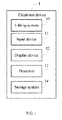
FIG. 1 is a block diagram of one embodiment of an electronic device including an editing system. -
FIG. 2 is a block diagram of one embodiment of function modules of the editing system inFIG. 1 . -
FIG. 3 is a flowchart of one embodiment of a method for windows editing. - As shown in
FIG. 2 , theediting system 10 includes a plurality of function modules, such as afirst receiving module 100, asecond receiving module 101, asearching module 102, afirst detection module 103, anassociation module 104, acanceling module 105, asecond detection module 106, afirst input module 107 and asecond input module 108. The modules 100-108 include computerized code in the form of one or more programs that are stored in thestorage system 14. The computerized code includes instructions that are executed by theprocessor 13, to provide functions of theediting system 10. Detailed functions of the modules 100-108 are given in reference toFIG. 3 . -
FIG. 3 is a flowchart of one embodiment of a method for editing windows. Depending on the embodiment, additional steps may be added, others removed, and the ordering of the steps may be changed. - In step S30, the
first receiving module 100 receives a window selected by a user and displays the selected window on thedisplay device 12. The window can be a text editing window, a webpage inputting window, or a program editing window, for example. When there are a plurality of windows opened by the user and the user selects a window, the selected window is displayed on thedisplay device 12. The other windows are covered by the selected window. - In step S31, the
second receiving module 101 receives an editing signal via the input device 11. For example, the editing signal may be activated by the user via the keyboard. The editing signal may be for editing text contents to a text window, or for typing a website address on a web page window. - In step S32, the
searching module 102 detects whether the editing signal corresponds to the instructions stored in thestorage system 14. When the editing signal corresponds to the instructions, step S33 is implemented. When the editing signal does not correspond to the instructions, step S36 is implemented. - In step S33, the
first detection module 103 detects whether the editing signal corresponds to the association instruction or the canceling instruction. When the editing signal corresponds to the association instruction, step S34 is implemented. When the editing signal corresponds to the canceling instruction, step S35 is implemented. - In step S34, the
association module 104 associates the association instruction to the selected window and marks the selected window. Theassociation module 104 marks the association instruction to present that the association instruction has been associated with the selected window. Then the procedure ends. - In step S35, the canceling
module 105 cancels the association between a window and the association instruction. The cancelingmodule 105 also cancels the mark of the window. Then the procedure ends. The window may be the selected window or other windows which have been opened. - In step S36, the
second detection module 106 detects whether the instruction stored in thestorage system 14 has been associated with another window. When the instruction has not been associated with another window, step S37 is implemented. When the instruction has been associated with another window, step S38 is implemented. - In step S37, the
first input module 107 inputs the editing signal to the selected window. For example, if the editing signal is for editing text, thefirst input module 107 inputs the edited text on the selected window. Then the procedure ends. - In step S38, the
second input module 108 inputs the editing signal to the window associated with the instruction corresponding to the editing signal. For example, a window B is covered by a window A. When the user inputs an editing signal via the input device 11 and the window B is selected, contents corresponding to the editing signal are inputted to the window B. - It should be emphasized that the above-described embodiments of the present disclosure, particularly, any embodiments, are merely possible examples of implementations, merely set forth for a clear understanding of the principles of the disclosure. Many variations and modifications may be made to the above-described embodiment(s) of the disclosure without departing substantially from the spirit and principles of the disclosure. All such modifications and variations are intended to be included herein within the scope of this disclosure and the present disclosure and protected by the following claims.
Claims (12)
- An electronic device, comprising:a processor; anda computer program product that stores one or more programs, which comprise instructions which when executed by the processor of the electronic device, performs operations of:(a) detecting whether an editing signal inputted by a user corresponds to instructions stored in the storage system when a window is selected, wherein the instruction comprises an association instruction and a canceling instruction;(b) associating the association instruction to the selected window when the editing signal corresponds to the association instruction;(c) canceling an association between a window and the association instruction when the editing signal corresponds to the canceling instruction;(d) inputting the editing signal to the selected window when the editing signal does not correspond to the instructions and the association instruction has not been associated with the window; and(e) inputting the editing signal to the window associated with the association instruction when the editing signal does not correspond to the instructions.
- The electronic device as claimed in claim 1, wherein operation (b) further comprises:marking the selected window and the association instruction stored in the storage system.
- The electronic device as claimed in claim 1 or 2, wherein operation (c) further comprises: canceling the mark of the window which has been marked.
- The electronic device as claimed in claim 1, 2 or 3, wherein the selected window covers other windows displayed on a display device of the electronic device.
- A method being executed by a processor of an electronic device, comprising steps:(a) detecting whether an editing signal inputted by a user corresponds to instructions stored in the storage system when a window is selected, wherein the instruction comprises an association instruction and a canceling instruction;(b) associating the association instruction to the selected window when the editing signal corresponds to the association instruction;(c) canceling an association between a window and the association instruction when the editing signal corresponds to the canceling instruction;(d) inputting the editing signal to the selected window when the editing signal does not correspond to the instructions and the association instruction has not been associated with the window; and(e) inputting the editing signal to the window associated with the association instruction when the editing signal does not correspond to the instructions.
- The method as claimed in claim 5, wherein operation (b) further comprises:marking the selected window and the association instruction stored in the storage system.
- The method as claimed in claim 5 or 6, wherein step (c) further comprises:canceling the mark of the window which has been marked.
- The method as claimed in claim 5, 6 or 7, wherein the selected window covers other windows displayed on a display device of the electronic device.
- A computer program product having stored thereon instructions that, when executed by a processor of an electronic device, cause the processor to perform operations of:(a) detecting whether an editing signal inputted by a user corresponds to instructions stored in the storage system when a window is selected, wherein the instruction comprises an association instruction and a canceling instruction;(b) associating the association instruction to the selected window when the editing signal corresponds to the association instruction;(c) canceling an association between a window and the association instruction when the editing signal corresponds to the canceling instruction;(d) inputting the editing signal to the selected window when the editing signal does not correspond to the instructions and the association instruction has not been associated with the window; and(e) inputting the editing signal to the window associated with the association instruction when the editing signal does not correspond to the instructions.
- The computer program product as claimed in claim 9, wherein operation (b) further comprises:marking the selected window and the association instruction stored in the storage system.
- The computer program product as claimed in claim 9 or 10, wherein operation (c) further comprises:canceling the mark of the window which has been marked.
- The computer program product as claimed in claim 9, 10 or 11, wherein the selected window covers other windows displayed on a display device of the electronic device.
Applications Claiming Priority (1)
| Application Number | Priority Date | Filing Date | Title |
|---|---|---|---|
| TW101148551A TW201426491A (en) | 2012-12-20 | 2012-12-20 | System and method for editing windows |
Publications (2)
| Publication Number | Publication Date |
|---|---|
| EP2746914A2 true EP2746914A2 (en) | 2014-06-25 |
| EP2746914A3 EP2746914A3 (en) | 2014-10-22 |
Family
ID=49958181
Family Applications (1)
| Application Number | Title | Priority Date | Filing Date |
|---|---|---|---|
| EP13198632.5A Withdrawn EP2746914A3 (en) | 2012-12-20 | 2013-12-19 | Electronic device and method for editing windows |
Country Status (4)
| Country | Link |
|---|---|
| US (1) | US20140181729A1 (en) |
| EP (1) | EP2746914A3 (en) |
| JP (1) | JP2014123373A (en) |
| TW (1) | TW201426491A (en) |
Families Citing this family (1)
| Publication number | Priority date | Publication date | Assignee | Title |
|---|---|---|---|---|
| US9628966B2 (en) * | 2014-08-19 | 2017-04-18 | Xiaomi Inc. | Method and device for sending message |
Family Cites Families (5)
| Publication number | Priority date | Publication date | Assignee | Title |
|---|---|---|---|---|
| JPH0219917A (en) * | 1988-07-08 | 1990-01-23 | Pfu Ltd | Multi-window control method and information processor |
| JPH0386447U (en) * | 1989-12-22 | 1991-09-02 | ||
| JP2001236159A (en) * | 2000-02-25 | 2001-08-31 | Mitsubishi Electric Corp | Multi-window control system |
| US7539795B2 (en) * | 2006-01-30 | 2009-05-26 | Nokia Corporation | Methods and apparatus for implementing dynamic shortcuts both for rapidly accessing web content and application program windows and for establishing context-based user environments |
| JP5306303B2 (en) * | 2010-09-30 | 2013-10-02 | 株式会社東芝 | Display control device, display control program, and display control method |
-
2012
- 2012-12-20 TW TW101148551A patent/TW201426491A/en unknown
-
2013
- 2013-12-06 US US14/098,578 patent/US20140181729A1/en not_active Abandoned
- 2013-12-19 EP EP13198632.5A patent/EP2746914A3/en not_active Withdrawn
- 2013-12-20 JP JP2013263556A patent/JP2014123373A/en active Pending
Non-Patent Citations (1)
| Title |
|---|
| None |
Also Published As
| Publication number | Publication date |
|---|---|
| JP2014123373A (en) | 2014-07-03 |
| US20140181729A1 (en) | 2014-06-26 |
| TW201426491A (en) | 2014-07-01 |
| EP2746914A3 (en) | 2014-10-22 |
Similar Documents
| Publication | Publication Date | Title |
|---|---|---|
| JP5956725B2 (en) | Method, device, and computer program product for providing context-aware help content | |
| US8910087B2 (en) | Method and electronic device capable of searching and displaying selected text | |
| US9558166B2 (en) | Device and method for image search using one or more selected words | |
| EP2521052A1 (en) | Handheld electronic device and method for calibrating input of webpage address | |
| US11222081B2 (en) | Off-line electronic documentation solutions | |
| US20140321751A1 (en) | Character input apparatus and method | |
| KR101889631B1 (en) | Device for assisting creation of sequence program | |
| US20150363377A1 (en) | Information processing device, display method, and computer-readable, non-transitory medium | |
| RU2013108942A (en) | COMPUTER DEVICE WITH IMPROVED CHOICE OF FUNCTIONS AND METHOD | |
| US10275439B2 (en) | Information processing device, display method and control program | |
| JP2017033361A (en) | Document associating device, document associating system, and program | |
| US9372558B2 (en) | Setting vibration portions in pieces of electronic data that are displayable on a display device | |
| US8769472B1 (en) | Computing device and method for checking signal transmission line | |
| US20160299880A1 (en) | Method and device for updating web page | |
| EP3276472A1 (en) | Browsing assistance method for electronic book, and browsing assistance program | |
| KR20120054921A (en) | Apparatus and method for providing electronic book service | |
| CN118364788B (en) | Information interaction method, device, equipment and storage medium | |
| US20170192985A1 (en) | Decorating webpage links with a user-specified indicator | |
| US10055395B2 (en) | Method for editing object with motion input and electronic device thereof | |
| US9176937B2 (en) | Ensuring user interface specification accurately describes user interface after updates to user interface | |
| US20140372878A1 (en) | Text editing system and method | |
| US8918405B2 (en) | Auto suggestion tool | |
| US20140181729A1 (en) | Electronic device and method for editing windows | |
| JP6536007B2 (en) | Information processing apparatus, control method and program thereof | |
| US20160300325A1 (en) | Electronic apparatus, method of controlling electronic apparatus and non-transitory storage medium |
Legal Events
| Date | Code | Title | Description |
|---|---|---|---|
| PUAI | Public reference made under article 153(3) epc to a published international application that has entered the european phase |
Free format text: ORIGINAL CODE: 0009012 |
|
| 17P | Request for examination filed |
Effective date: 20131219 |
|
| AK | Designated contracting states |
Kind code of ref document: A2 Designated state(s): AL AT BE BG CH CY CZ DE DK EE ES FI FR GB GR HR HU IE IS IT LI LT LU LV MC MK MT NL NO PL PT RO RS SE SI SK SM TR |
|
| AX | Request for extension of the european patent |
Extension state: BA ME |
|
| PUAL | Search report despatched |
Free format text: ORIGINAL CODE: 0009013 |
|
| AK | Designated contracting states |
Kind code of ref document: A3 Designated state(s): AL AT BE BG CH CY CZ DE DK EE ES FI FR GB GR HR HU IE IS IT LI LT LU LV MC MK MT NL NO PL PT RO RS SE SI SK SM TR |
|
| AX | Request for extension of the european patent |
Extension state: BA ME |
|
| RIC1 | Information provided on ipc code assigned before grant |
Ipc: G06F 3/0481 20130101AFI20140915BHEP Ipc: G06F 9/44 20060101ALI20140915BHEP |
|
| STAA | Information on the status of an ep patent application or granted ep patent |
Free format text: STATUS: THE APPLICATION IS DEEMED TO BE WITHDRAWN |
|
| 18D | Application deemed to be withdrawn |
Effective date: 20150423 |