EP2746284A1 - Salt and polymorph of pyrazolopyrimidinone compound and drug composition, preparation method and use thereof - Google Patents
Salt and polymorph of pyrazolopyrimidinone compound and drug composition, preparation method and use thereof Download PDFInfo
- Publication number
- EP2746284A1 EP2746284A1 EP12823704.7A EP12823704A EP2746284A1 EP 2746284 A1 EP2746284 A1 EP 2746284A1 EP 12823704 A EP12823704 A EP 12823704A EP 2746284 A1 EP2746284 A1 EP 2746284A1
- Authority
- EP
- European Patent Office
- Prior art keywords
- acid
- compound
- methyl
- crystalline form
- solution
- Prior art date
- Legal status (The legal status is an assumption and is not a legal conclusion. Google has not performed a legal analysis and makes no representation as to the accuracy of the status listed.)
- Granted
Links
- 150000003839 salts Chemical class 0.000 title claims abstract description 73
- 238000002360 preparation method Methods 0.000 title claims abstract description 59
- 239000003814 drug Substances 0.000 title claims description 13
- 239000000203 mixture Substances 0.000 title description 29
- 229940079593 drug Drugs 0.000 title description 6
- -1 pyrazolopyrimidinone compound Chemical class 0.000 title description 2
- 150000001875 compounds Chemical class 0.000 claims abstract description 143
- VZCYOOQTPOCHFL-UHFFFAOYSA-N trans-butenedioic acid Natural products OC(=O)C=CC(O)=O VZCYOOQTPOCHFL-UHFFFAOYSA-N 0.000 claims abstract description 82
- VZCYOOQTPOCHFL-UPHRSURJSA-N maleic acid Chemical compound OC(=O)\C=C/C(O)=O VZCYOOQTPOCHFL-UPHRSURJSA-N 0.000 claims abstract description 80
- VEXZGXHMUGYJMC-UHFFFAOYSA-N Hydrochloric acid Chemical compound Cl VEXZGXHMUGYJMC-UHFFFAOYSA-N 0.000 claims abstract description 78
- 239000013078 crystal Substances 0.000 claims abstract description 46
- AFVFQIVMOAPDHO-UHFFFAOYSA-N Methanesulfonic acid Chemical compound CS(O)(=O)=O AFVFQIVMOAPDHO-UHFFFAOYSA-N 0.000 claims abstract description 34
- 238000000034 method Methods 0.000 claims abstract description 30
- OFOBLEOULBTSOW-UHFFFAOYSA-N Propanedioic acid Natural products OC(=O)CC(O)=O OFOBLEOULBTSOW-UHFFFAOYSA-N 0.000 claims abstract description 20
- KDYFGRWQOYBRFD-UHFFFAOYSA-N Succinic acid Natural products OC(=O)CCC(O)=O KDYFGRWQOYBRFD-UHFFFAOYSA-N 0.000 claims abstract description 18
- 239000011976 maleic acid Substances 0.000 claims abstract description 16
- 239000012453 solvate Substances 0.000 claims abstract description 16
- 239000008194 pharmaceutical composition Substances 0.000 claims abstract description 14
- 229940098779 methanesulfonic acid Drugs 0.000 claims abstract description 9
- KDYFGRWQOYBRFD-NUQCWPJISA-N butanedioic acid Chemical compound O[14C](=O)CC[14C](O)=O KDYFGRWQOYBRFD-NUQCWPJISA-N 0.000 claims abstract description 8
- 150000007524 organic acids Chemical group 0.000 claims abstract description 5
- 150000007522 mineralic acids Chemical group 0.000 claims abstract description 4
- ONCCWDRMOZMNSM-FBCQKBJTSA-N compound Z Chemical compound N1=C2C(=O)NC(N)=NC2=NC=C1C(=O)[C@H]1OP(O)(=O)OC[C@H]1O ONCCWDRMOZMNSM-FBCQKBJTSA-N 0.000 claims description 159
- 125000004397 aminosulfonyl group Chemical group NS(=O)(=O)* 0.000 claims description 74
- 125000001495 ethyl group Chemical group [H]C([H])([H])C([H])([H])* 0.000 claims description 74
- 125000001997 phenyl group Chemical group [H]C1=C([H])C([H])=C(*)C([H])=C1[H] 0.000 claims description 72
- 238000000634 powder X-ray diffraction Methods 0.000 claims description 62
- 239000000243 solution Substances 0.000 claims description 59
- 239000002904 solvent Substances 0.000 claims description 46
- LFQSCWFLJHTTHZ-UHFFFAOYSA-N Ethanol Chemical compound CCO LFQSCWFLJHTTHZ-UHFFFAOYSA-N 0.000 claims description 42
- 239000007787 solid Substances 0.000 claims description 42
- XEKOWRVHYACXOJ-UHFFFAOYSA-N Ethyl acetate Chemical group CCOC(C)=O XEKOWRVHYACXOJ-UHFFFAOYSA-N 0.000 claims description 27
- XLYOFNOQVPJJNP-UHFFFAOYSA-N water Substances O XLYOFNOQVPJJNP-UHFFFAOYSA-N 0.000 claims description 26
- 239000002253 acid Substances 0.000 claims description 25
- WEVYAHXRMPXWCK-UHFFFAOYSA-N Acetonitrile Chemical compound CC#N WEVYAHXRMPXWCK-UHFFFAOYSA-N 0.000 claims description 24
- KRKNYBCHXYNGOX-UHFFFAOYSA-N citric acid Chemical compound OC(=O)CC(O)(C(O)=O)CC(O)=O KRKNYBCHXYNGOX-UHFFFAOYSA-N 0.000 claims description 24
- CSCPPACGZOOCGX-UHFFFAOYSA-N Acetone Chemical compound CC(C)=O CSCPPACGZOOCGX-UHFFFAOYSA-N 0.000 claims description 18
- YXFVVABEGXRONW-UHFFFAOYSA-N Toluene Chemical compound CC1=CC=CC=C1 YXFVVABEGXRONW-UHFFFAOYSA-N 0.000 claims description 15
- 238000010438 heat treatment Methods 0.000 claims description 15
- RTZKZFJDLAIYFH-UHFFFAOYSA-N Diethyl ether Chemical compound CCOCC RTZKZFJDLAIYFH-UHFFFAOYSA-N 0.000 claims description 14
- QAOWNCQODCNURD-UHFFFAOYSA-N Sulfuric acid Chemical compound OS(O)(=O)=O QAOWNCQODCNURD-UHFFFAOYSA-N 0.000 claims description 13
- QTBSBXVTEAMEQO-UHFFFAOYSA-N Acetic acid Chemical compound CC(O)=O QTBSBXVTEAMEQO-UHFFFAOYSA-N 0.000 claims description 12
- YMWUJEATGCHHMB-UHFFFAOYSA-N Dichloromethane Chemical compound ClCCl YMWUJEATGCHHMB-UHFFFAOYSA-N 0.000 claims description 12
- OKTJSMMVPCPJKN-UHFFFAOYSA-N Carbon Chemical compound [C] OKTJSMMVPCPJKN-UHFFFAOYSA-N 0.000 claims description 11
- 101100189582 Dictyostelium discoideum pdeD gene Proteins 0.000 claims description 11
- 101150098694 PDE5A gene Proteins 0.000 claims description 11
- 102100029175 cGMP-specific 3',5'-cyclic phosphodiesterase Human genes 0.000 claims description 11
- 229910052799 carbon Inorganic materials 0.000 claims description 11
- 201000001881 impotence Diseases 0.000 claims description 11
- 239000002244 precipitate Substances 0.000 claims description 11
- XTHFKEDIFFGKHM-UHFFFAOYSA-N Dimethoxyethane Chemical compound COCCOC XTHFKEDIFFGKHM-UHFFFAOYSA-N 0.000 claims description 10
- 208000010228 Erectile Dysfunction Diseases 0.000 claims description 10
- KFZMGEQAYNKOFK-UHFFFAOYSA-N Isopropanol Chemical compound CC(C)O KFZMGEQAYNKOFK-UHFFFAOYSA-N 0.000 claims description 10
- 208000037265 diseases, disorders, signs and symptoms Diseases 0.000 claims description 10
- 239000011259 mixed solution Substances 0.000 claims description 10
- 235000015165 citric acid Nutrition 0.000 claims description 8
- XBDQKXXYIPTUBI-UHFFFAOYSA-N dimethylselenoniopropionate Natural products CCC(O)=O XBDQKXXYIPTUBI-UHFFFAOYSA-N 0.000 claims description 8
- 201000010099 disease Diseases 0.000 claims description 8
- XOAAWQZATWQOTB-UHFFFAOYSA-N taurine Chemical compound NCCS(O)(=O)=O XOAAWQZATWQOTB-UHFFFAOYSA-N 0.000 claims description 8
- 239000000706 filtrate Substances 0.000 claims description 7
- UHOVQNZJYSORNB-UHFFFAOYSA-N Benzene Chemical compound C1=CC=CC=C1 UHOVQNZJYSORNB-UHFFFAOYSA-N 0.000 claims description 6
- 102000004190 Enzymes Human genes 0.000 claims description 6
- 108090000790 Enzymes Proteins 0.000 claims description 6
- LYCAIKOWRPUZTN-UHFFFAOYSA-N Ethylene glycol Chemical compound OCCO LYCAIKOWRPUZTN-UHFFFAOYSA-N 0.000 claims description 6
- OKKJLVBELUTLKV-UHFFFAOYSA-N Methanol Chemical compound OC OKKJLVBELUTLKV-UHFFFAOYSA-N 0.000 claims description 6
- GRYLNZFGIOXLOG-UHFFFAOYSA-N Nitric acid Chemical compound O[N+]([O-])=O GRYLNZFGIOXLOG-UHFFFAOYSA-N 0.000 claims description 6
- MUBZPKHOEPUJKR-UHFFFAOYSA-N Oxalic acid Chemical compound OC(=O)C(O)=O MUBZPKHOEPUJKR-UHFFFAOYSA-N 0.000 claims description 6
- DNIAPMSPPWPWGF-UHFFFAOYSA-N Propylene glycol Chemical compound CC(O)CO DNIAPMSPPWPWGF-UHFFFAOYSA-N 0.000 claims description 6
- 229910017604 nitric acid Inorganic materials 0.000 claims description 6
- 230000001376 precipitating effect Effects 0.000 claims description 6
- 238000003756 stirring Methods 0.000 claims description 6
- ZWEHNKRNPOVVGH-UHFFFAOYSA-N 2-Butanone Chemical compound CCC(C)=O ZWEHNKRNPOVVGH-UHFFFAOYSA-N 0.000 claims description 4
- CIWBSHSKHKDKBQ-JLAZNSOCSA-N Ascorbic acid Chemical compound OC[C@H](O)[C@H]1OC(=O)C(O)=C1O CIWBSHSKHKDKBQ-JLAZNSOCSA-N 0.000 claims description 4
- RGHNJXZEOKUKBD-SQOUGZDYSA-N D-gluconic acid Chemical compound OC[C@@H](O)[C@@H](O)[C@H](O)[C@@H](O)C(O)=O RGHNJXZEOKUKBD-SQOUGZDYSA-N 0.000 claims description 4
- VZCYOOQTPOCHFL-OWOJBTEDSA-N Fumaric acid Chemical compound OC(=O)\C=C\C(O)=O VZCYOOQTPOCHFL-OWOJBTEDSA-N 0.000 claims description 4
- LRHPLDYGYMQRHN-UHFFFAOYSA-N N-Butanol Chemical compound CCCCO LRHPLDYGYMQRHN-UHFFFAOYSA-N 0.000 claims description 4
- IMNFDUFMRHMDMM-UHFFFAOYSA-N N-Heptane Chemical compound CCCCCCC IMNFDUFMRHMDMM-UHFFFAOYSA-N 0.000 claims description 4
- OFBQJSOFQDEBGM-UHFFFAOYSA-N Pentane Chemical compound CCCCC OFBQJSOFQDEBGM-UHFFFAOYSA-N 0.000 claims description 4
- NBIIXXVUZAFLBC-UHFFFAOYSA-N Phosphoric acid Chemical compound OP(O)(O)=O NBIIXXVUZAFLBC-UHFFFAOYSA-N 0.000 claims description 4
- XBDQKXXYIPTUBI-UHFFFAOYSA-M Propionate Chemical compound CCC([O-])=O XBDQKXXYIPTUBI-UHFFFAOYSA-M 0.000 claims description 4
- WYURNTSHIVDZCO-UHFFFAOYSA-N Tetrahydrofuran Chemical compound C1CCOC1 WYURNTSHIVDZCO-UHFFFAOYSA-N 0.000 claims description 4
- DTQVDTLACAAQTR-UHFFFAOYSA-N Trifluoroacetic acid Chemical compound OC(=O)C(F)(F)F DTQVDTLACAAQTR-UHFFFAOYSA-N 0.000 claims description 4
- 235000011054 acetic acid Nutrition 0.000 claims description 4
- 239000003125 aqueous solvent Substances 0.000 claims description 4
- WPYMKLBDIGXBTP-UHFFFAOYSA-N benzoic acid Chemical compound OC(=O)C1=CC=CC=C1 WPYMKLBDIGXBTP-UHFFFAOYSA-N 0.000 claims description 4
- NMJJFJNHVMGPGM-UHFFFAOYSA-N butyl formate Chemical compound CCCCOC=O NMJJFJNHVMGPGM-UHFFFAOYSA-N 0.000 claims description 4
- MVPPADPHJFYWMZ-UHFFFAOYSA-N chlorobenzene Chemical compound ClC1=CC=CC=C1 MVPPADPHJFYWMZ-UHFFFAOYSA-N 0.000 claims description 4
- 238000001816 cooling Methods 0.000 claims description 4
- LNTHITQWFMADLM-UHFFFAOYSA-N gallic acid Chemical compound OC(=O)C1=CC(O)=C(O)C(O)=C1 LNTHITQWFMADLM-UHFFFAOYSA-N 0.000 claims description 4
- SUMDYPCJJOFFON-UHFFFAOYSA-N isethionic acid Chemical compound OCCS(O)(=O)=O SUMDYPCJJOFFON-UHFFFAOYSA-N 0.000 claims description 4
- JVTAAEKCZFNVCJ-UHFFFAOYSA-N lactic acid Chemical compound CC(O)C(O)=O JVTAAEKCZFNVCJ-UHFFFAOYSA-N 0.000 claims description 4
- BDAGIHXWWSANSR-UHFFFAOYSA-N methanoic acid Natural products OC=O BDAGIHXWWSANSR-UHFFFAOYSA-N 0.000 claims description 4
- TZIHFWKZFHZASV-UHFFFAOYSA-N methyl formate Chemical compound COC=O TZIHFWKZFHZASV-UHFFFAOYSA-N 0.000 claims description 4
- VLKZOEOYAKHREP-UHFFFAOYSA-N n-Hexane Chemical compound CCCCCC VLKZOEOYAKHREP-UHFFFAOYSA-N 0.000 claims description 4
- XTEGVFVZDVNBPF-UHFFFAOYSA-N naphthalene-1,5-disulfonic acid Chemical compound C1=CC=C2C(S(=O)(=O)O)=CC=CC2=C1S(O)(=O)=O XTEGVFVZDVNBPF-UHFFFAOYSA-N 0.000 claims description 4
- FDPIMTJIUBPUKL-UHFFFAOYSA-N pentan-3-one Chemical compound CCC(=O)CC FDPIMTJIUBPUKL-UHFFFAOYSA-N 0.000 claims description 4
- VLTRZXGMWDSKGL-UHFFFAOYSA-N perchloric acid Chemical compound OCl(=O)(=O)=O VLTRZXGMWDSKGL-UHFFFAOYSA-N 0.000 claims description 4
- 239000003208 petroleum Substances 0.000 claims description 4
- XNGIFLGASWRNHJ-UHFFFAOYSA-N phthalic acid Chemical compound OC(=O)C1=CC=CC=C1C(O)=O XNGIFLGASWRNHJ-UHFFFAOYSA-N 0.000 claims description 4
- 235000019260 propionic acid Nutrition 0.000 claims description 4
- IUVKMZGDUIUOCP-BTNSXGMBSA-N quinbolone Chemical compound O([C@H]1CC[C@H]2[C@H]3[C@@H]([C@]4(C=CC(=O)C=C4CC3)C)CC[C@@]21C)C1=CCCC1 IUVKMZGDUIUOCP-BTNSXGMBSA-N 0.000 claims description 4
- YGSDEFSMJLZEOE-UHFFFAOYSA-N salicylic acid Chemical compound OC(=O)C1=CC=CC=C1O YGSDEFSMJLZEOE-UHFFFAOYSA-N 0.000 claims description 4
- 229960003080 taurine Drugs 0.000 claims description 4
- VZGDMQKNWNREIO-UHFFFAOYSA-N tetrachloromethane Chemical compound ClC(Cl)(Cl)Cl VZGDMQKNWNREIO-UHFFFAOYSA-N 0.000 claims description 4
- SECXISVLQFMRJM-UHFFFAOYSA-N N-Methylpyrrolidone Chemical compound CN1CCCC1=O SECXISVLQFMRJM-UHFFFAOYSA-N 0.000 claims description 3
- QBYIENPQHBMVBV-HFEGYEGKSA-N (2R)-2-hydroxy-2-phenylacetic acid Chemical compound O[C@@H](C(O)=O)c1ccccc1.O[C@@H](C(O)=O)c1ccccc1 QBYIENPQHBMVBV-HFEGYEGKSA-N 0.000 claims description 2
- MIOPJNTWMNEORI-GMSGAONNSA-N (S)-camphorsulfonic acid Chemical compound C1C[C@@]2(CS(O)(=O)=O)C(=O)C[C@@H]1C2(C)C MIOPJNTWMNEORI-GMSGAONNSA-N 0.000 claims description 2
- BJEPYKJPYRNKOW-REOHCLBHSA-N (S)-malic acid Chemical compound OC(=O)[C@@H](O)CC(O)=O BJEPYKJPYRNKOW-REOHCLBHSA-N 0.000 claims description 2
- WBYWAXJHAXSJNI-VOTSOKGWSA-M .beta-Phenylacrylic acid Natural products [O-]C(=O)\C=C\C1=CC=CC=C1 WBYWAXJHAXSJNI-VOTSOKGWSA-M 0.000 claims description 2
- LZDKZFUFMNSQCJ-UHFFFAOYSA-N 1,2-diethoxyethane Chemical compound CCOCCOCC LZDKZFUFMNSQCJ-UHFFFAOYSA-N 0.000 claims description 2
- LEEANUDEDHYDTG-UHFFFAOYSA-N 1,2-dimethoxypropane Chemical compound COCC(C)OC LEEANUDEDHYDTG-UHFFFAOYSA-N 0.000 claims description 2
- RYHBNJHYFVUHQT-UHFFFAOYSA-N 1,4-Dioxane Chemical compound C1COCCO1 RYHBNJHYFVUHQT-UHFFFAOYSA-N 0.000 claims description 2
- OCJBOOLMMGQPQU-UHFFFAOYSA-N 1,4-dichlorobenzene Chemical compound ClC1=CC=C(Cl)C=C1 OCJBOOLMMGQPQU-UHFFFAOYSA-N 0.000 claims description 2
- JOLQKTGDSGKSKJ-UHFFFAOYSA-N 1-ethoxypropan-2-ol Chemical compound CCOCC(C)O JOLQKTGDSGKSKJ-UHFFFAOYSA-N 0.000 claims description 2
- ARXJGSRGQADJSQ-UHFFFAOYSA-N 1-methoxypropan-2-ol Chemical compound COCC(C)O ARXJGSRGQADJSQ-UHFFFAOYSA-N 0.000 claims description 2
- XNWFRZJHXBZDAG-UHFFFAOYSA-N 2-METHOXYETHANOL Chemical compound COCCO XNWFRZJHXBZDAG-UHFFFAOYSA-N 0.000 claims description 2
- LBLYYCQCTBFVLH-UHFFFAOYSA-N 2-Methylbenzenesulfonic acid Chemical compound CC1=CC=CC=C1S(O)(=O)=O LBLYYCQCTBFVLH-UHFFFAOYSA-N 0.000 claims description 2
- ZNQVEEAIQZEUHB-UHFFFAOYSA-N 2-ethoxyethanol Chemical compound CCOCCO ZNQVEEAIQZEUHB-UHFFFAOYSA-N 0.000 claims description 2
- YEYKMVJDLWJFOA-UHFFFAOYSA-N 2-propoxyethanol Chemical compound CCCOCCO YEYKMVJDLWJFOA-UHFFFAOYSA-N 0.000 claims description 2
- BMYNFMYTOJXKLE-UHFFFAOYSA-N 3-azaniumyl-2-hydroxypropanoate Chemical compound NCC(O)C(O)=O BMYNFMYTOJXKLE-UHFFFAOYSA-N 0.000 claims description 2
- ZURRKVIQUKNLHF-UHFFFAOYSA-N 4,7,7-trimethylbicyclo[2.2.1]heptane-3-carboxylic acid Chemical compound C1CC2(C)C(C(O)=O)CC1C2(C)C ZURRKVIQUKNLHF-UHFFFAOYSA-N 0.000 claims description 2
- OSWFIVFLDKOXQC-UHFFFAOYSA-N 4-(3-methoxyphenyl)aniline Chemical compound COC1=CC=CC(C=2C=CC(N)=CC=2)=C1 OSWFIVFLDKOXQC-UHFFFAOYSA-N 0.000 claims description 2
- BSYNRYMUTXBXSQ-FOQJRBATSA-N 59096-14-9 Chemical compound CC(=O)OC1=CC=CC=C1[14C](O)=O BSYNRYMUTXBXSQ-FOQJRBATSA-N 0.000 claims description 2
- 206010002388 Angina unstable Diseases 0.000 claims description 2
- 201000001320 Atherosclerosis Diseases 0.000 claims description 2
- 206010004446 Benign prostatic hyperplasia Diseases 0.000 claims description 2
- 239000005711 Benzoic acid Substances 0.000 claims description 2
- 206010071445 Bladder outlet obstruction Diseases 0.000 claims description 2
- DKPFZGUDAPQIHT-UHFFFAOYSA-N Butyl acetate Natural products CCCCOC(C)=O DKPFZGUDAPQIHT-UHFFFAOYSA-N 0.000 claims description 2
- FERIUCNNQQJTOY-UHFFFAOYSA-M Butyrate Chemical compound CCCC([O-])=O FERIUCNNQQJTOY-UHFFFAOYSA-M 0.000 claims description 2
- 206010007559 Cardiac failure congestive Diseases 0.000 claims description 2
- WBYWAXJHAXSJNI-SREVYHEPSA-N Cinnamic acid Chemical compound OC(=O)\C=C/C1=CC=CC=C1 WBYWAXJHAXSJNI-SREVYHEPSA-N 0.000 claims description 2
- ZZZCUOFIHGPKAK-UHFFFAOYSA-N D-erythro-ascorbic acid Natural products OCC1OC(=O)C(O)=C1O ZZZCUOFIHGPKAK-UHFFFAOYSA-N 0.000 claims description 2
- RGHNJXZEOKUKBD-UHFFFAOYSA-N D-gluconic acid Natural products OCC(O)C(O)C(O)C(O)C(O)=O RGHNJXZEOKUKBD-UHFFFAOYSA-N 0.000 claims description 2
- FEWJPZIEWOKRBE-JCYAYHJZSA-N Dextrotartaric acid Chemical compound OC(=O)[C@H](O)[C@@H](O)C(O)=O FEWJPZIEWOKRBE-JCYAYHJZSA-N 0.000 claims description 2
- ZAFNJMIOTHYJRJ-UHFFFAOYSA-N Diisopropyl ether Chemical compound CC(C)OC(C)C ZAFNJMIOTHYJRJ-UHFFFAOYSA-N 0.000 claims description 2
- 208000005171 Dysmenorrhea Diseases 0.000 claims description 2
- 206010013935 Dysmenorrhoea Diseases 0.000 claims description 2
- 206010057671 Female sexual dysfunction Diseases 0.000 claims description 2
- 208000010412 Glaucoma Diseases 0.000 claims description 2
- WHUUTDBJXJRKMK-UHFFFAOYSA-N Glutamic acid Natural products OC(=O)C(N)CCC(O)=O WHUUTDBJXJRKMK-UHFFFAOYSA-N 0.000 claims description 2
- 206010019280 Heart failures Diseases 0.000 claims description 2
- 206010020772 Hypertension Diseases 0.000 claims description 2
- 206010021639 Incontinence Diseases 0.000 claims description 2
- CKLJMWTZIZZHCS-REOHCLBHSA-N L-aspartic acid Chemical compound OC(=O)[C@@H](N)CC(O)=O CKLJMWTZIZZHCS-REOHCLBHSA-N 0.000 claims description 2
- WHUUTDBJXJRKMK-VKHMYHEASA-N L-glutamic acid Chemical compound OC(=O)[C@@H](N)CCC(O)=O WHUUTDBJXJRKMK-VKHMYHEASA-N 0.000 claims description 2
- CTQNGGLPUBDAKN-UHFFFAOYSA-N O-Xylene Chemical compound CC1=CC=CC=C1C CTQNGGLPUBDAKN-UHFFFAOYSA-N 0.000 claims description 2
- 208000018262 Peripheral vascular disease Diseases 0.000 claims description 2
- 208000005107 Premature Birth Diseases 0.000 claims description 2
- 206010036590 Premature baby Diseases 0.000 claims description 2
- 201000001068 Prinzmetal angina Diseases 0.000 claims description 2
- 208000004403 Prostatic Hyperplasia Diseases 0.000 claims description 2
- IWYDHOAUDWTVEP-UHFFFAOYSA-N R-2-phenyl-2-hydroxyacetic acid Natural products OC(=O)C(O)C1=CC=CC=C1 IWYDHOAUDWTVEP-UHFFFAOYSA-N 0.000 claims description 2
- 208000003782 Raynaud disease Diseases 0.000 claims description 2
- 208000012322 Raynaud phenomenon Diseases 0.000 claims description 2
- 208000001647 Renal Insufficiency Diseases 0.000 claims description 2
- 206010039085 Rhinitis allergic Diseases 0.000 claims description 2
- 208000006011 Stroke Diseases 0.000 claims description 2
- FEWJPZIEWOKRBE-UHFFFAOYSA-N Tartaric acid Natural products [H+].[H+].[O-]C(=O)C(O)C(O)C([O-])=O FEWJPZIEWOKRBE-UHFFFAOYSA-N 0.000 claims description 2
- 208000007814 Unstable Angina Diseases 0.000 claims description 2
- 208000003800 Urinary Bladder Neck Obstruction Diseases 0.000 claims description 2
- 229930003268 Vitamin C Natural products 0.000 claims description 2
- KXKVLQRXCPHEJC-UHFFFAOYSA-N acetic acid trimethyl ester Natural products COC(C)=O KXKVLQRXCPHEJC-UHFFFAOYSA-N 0.000 claims description 2
- 201000009961 allergic asthma Diseases 0.000 claims description 2
- 201000010105 allergic rhinitis Diseases 0.000 claims description 2
- BJEPYKJPYRNKOW-UHFFFAOYSA-N alpha-hydroxysuccinic acid Natural products OC(=O)C(O)CC(O)=O BJEPYKJPYRNKOW-UHFFFAOYSA-N 0.000 claims description 2
- 229910000147 aluminium phosphate Inorganic materials 0.000 claims description 2
- 235000003704 aspartic acid Nutrition 0.000 claims description 2
- 229960005261 aspartic acid Drugs 0.000 claims description 2
- 208000006673 asthma Diseases 0.000 claims description 2
- SRSXLGNVWSONIS-UHFFFAOYSA-N benzenesulfonic acid Chemical compound OS(=O)(=O)C1=CC=CC=C1 SRSXLGNVWSONIS-UHFFFAOYSA-N 0.000 claims description 2
- 229940092714 benzenesulfonic acid Drugs 0.000 claims description 2
- 235000010233 benzoic acid Nutrition 0.000 claims description 2
- OQFSQFPPLPISGP-UHFFFAOYSA-N beta-carboxyaspartic acid Natural products OC(=O)C(N)C(C(O)=O)C(O)=O OQFSQFPPLPISGP-UHFFFAOYSA-N 0.000 claims description 2
- 206010006451 bronchitis Diseases 0.000 claims description 2
- 208000023819 chronic asthma Diseases 0.000 claims description 2
- 229930016911 cinnamic acid Natural products 0.000 claims description 2
- 235000013985 cinnamic acid Nutrition 0.000 claims description 2
- 229940117389 dichlorobenzene Drugs 0.000 claims description 2
- SBZXBUIDTXKZTM-UHFFFAOYSA-N diglyme Chemical compound COCCOCCOC SBZXBUIDTXKZTM-UHFFFAOYSA-N 0.000 claims description 2
- POLCUAVZOMRGSN-UHFFFAOYSA-N dipropyl ether Chemical compound CCCOCCC POLCUAVZOMRGSN-UHFFFAOYSA-N 0.000 claims description 2
- 208000035475 disorder Diseases 0.000 claims description 2
- BEFDCLMNVWHSGT-UHFFFAOYSA-N ethenylcyclopentane Chemical compound C=CC1CCCC1 BEFDCLMNVWHSGT-UHFFFAOYSA-N 0.000 claims description 2
- 235000019253 formic acid Nutrition 0.000 claims description 2
- WBJINCZRORDGAQ-UHFFFAOYSA-N formic acid ethyl ester Natural products CCOC=O WBJINCZRORDGAQ-UHFFFAOYSA-N 0.000 claims description 2
- 239000001530 fumaric acid Substances 0.000 claims description 2
- 235000011087 fumaric acid Nutrition 0.000 claims description 2
- 229940074391 gallic acid Drugs 0.000 claims description 2
- 235000004515 gallic acid Nutrition 0.000 claims description 2
- 239000000174 gluconic acid Substances 0.000 claims description 2
- 235000012208 gluconic acid Nutrition 0.000 claims description 2
- 229950006191 gluconic acid Drugs 0.000 claims description 2
- 239000004220 glutamic acid Substances 0.000 claims description 2
- 235000013922 glutamic acid Nutrition 0.000 claims description 2
- 229960002989 glutamic acid Drugs 0.000 claims description 2
- FUZZWVXGSFPDMH-UHFFFAOYSA-N hexanoic acid Chemical compound CCCCCC(O)=O FUZZWVXGSFPDMH-UHFFFAOYSA-N 0.000 claims description 2
- XMBWDFGMSWQBCA-UHFFFAOYSA-N hydrogen iodide Chemical compound I XMBWDFGMSWQBCA-UHFFFAOYSA-N 0.000 claims description 2
- 229940071870 hydroiodic acid Drugs 0.000 claims description 2
- 208000027866 inflammatory disease Diseases 0.000 claims description 2
- 201000004332 intermediate coronary syndrome Diseases 0.000 claims description 2
- 201000006370 kidney failure Diseases 0.000 claims description 2
- 239000004310 lactic acid Substances 0.000 claims description 2
- 235000014655 lactic acid Nutrition 0.000 claims description 2
- 229960000448 lactic acid Drugs 0.000 claims description 2
- 239000001630 malic acid Substances 0.000 claims description 2
- 229940099690 malic acid Drugs 0.000 claims description 2
- 235000011090 malic acid Nutrition 0.000 claims description 2
- 229960002510 mandelic acid Drugs 0.000 claims description 2
- WBYWAXJHAXSJNI-UHFFFAOYSA-N methyl p-hydroxycinnamate Natural products OC(=O)C=CC1=CC=CC=C1 WBYWAXJHAXSJNI-UHFFFAOYSA-N 0.000 claims description 2
- YKYONYBAUNKHLG-UHFFFAOYSA-N n-Propyl acetate Natural products CCCOC(C)=O YKYONYBAUNKHLG-UHFFFAOYSA-N 0.000 claims description 2
- PSZYNBSKGUBXEH-UHFFFAOYSA-N naphthalene-1-sulfonic acid Chemical compound C1=CC=C2C(S(=O)(=O)O)=CC=CC2=C1 PSZYNBSKGUBXEH-UHFFFAOYSA-N 0.000 claims description 2
- 235000006408 oxalic acid Nutrition 0.000 claims description 2
- FJKROLUGYXJWQN-UHFFFAOYSA-N papa-hydroxy-benzoic acid Natural products OC(=O)C1=CC=C(O)C=C1 FJKROLUGYXJWQN-UHFFFAOYSA-N 0.000 claims description 2
- 230000002265 prevention Effects 0.000 claims description 2
- BDERNNFJNOPAEC-UHFFFAOYSA-N propan-1-ol Chemical compound CCCO BDERNNFJNOPAEC-UHFFFAOYSA-N 0.000 claims description 2
- FVSKHRXBFJPNKK-UHFFFAOYSA-N propionitrile Chemical compound CCC#N FVSKHRXBFJPNKK-UHFFFAOYSA-N 0.000 claims description 2
- 229940090181 propyl acetate Drugs 0.000 claims description 2
- 208000002815 pulmonary hypertension Diseases 0.000 claims description 2
- 229960004889 salicylic acid Drugs 0.000 claims description 2
- 239000004334 sorbic acid Substances 0.000 claims description 2
- 235000010199 sorbic acid Nutrition 0.000 claims description 2
- 229940075582 sorbic acid Drugs 0.000 claims description 2
- 239000011975 tartaric acid Substances 0.000 claims description 2
- 235000002906 tartaric acid Nutrition 0.000 claims description 2
- YLQBMQCUIZJEEH-UHFFFAOYSA-N tetrahydrofuran Natural products C=1C=COC=1 YLQBMQCUIZJEEH-UHFFFAOYSA-N 0.000 claims description 2
- NQPDZGIKBAWPEJ-UHFFFAOYSA-N valeric acid Chemical compound CCCCC(O)=O NQPDZGIKBAWPEJ-UHFFFAOYSA-N 0.000 claims description 2
- 239000011718 vitamin C Substances 0.000 claims description 2
- 235000019154 vitamin C Nutrition 0.000 claims description 2
- 239000008096 xylene Substances 0.000 claims description 2
- 238000002441 X-ray diffraction Methods 0.000 claims 7
- LXXQZQRSAHHWJX-UHFFFAOYSA-N chloroform 1,2-dichloroethane Chemical compound C(Cl)(Cl)Cl.ClCCCl.C(CCl)Cl LXXQZQRSAHHWJX-UHFFFAOYSA-N 0.000 claims 1
- 239000000825 pharmaceutical preparation Substances 0.000 abstract description 7
- 239000002552 dosage form Substances 0.000 abstract description 5
- 238000002288 cocrystallisation Methods 0.000 abstract description 2
- DOTPSQVYOBAWPQ-UHFFFAOYSA-N pyrazolo[4,3-d]pyrimidin-3-one Chemical class N1=CN=C2C(=O)N=NC2=C1 DOTPSQVYOBAWPQ-UHFFFAOYSA-N 0.000 abstract 2
- 150000007514 bases Chemical class 0.000 description 24
- 239000000047 product Substances 0.000 description 24
- KDYFGRWQOYBRFD-UHFFFAOYSA-L succinate(2-) Chemical compound [O-]C(=O)CCC([O-])=O KDYFGRWQOYBRFD-UHFFFAOYSA-L 0.000 description 18
- 241000700159 Rattus Species 0.000 description 16
- 230000000694 effects Effects 0.000 description 16
- HQKMJHAJHXVSDF-UHFFFAOYSA-L magnesium stearate Chemical compound [Mg+2].CCCCCCCCCCCCCCCCCC([O-])=O.CCCCCCCCCCCCCCCCCC([O-])=O HQKMJHAJHXVSDF-UHFFFAOYSA-L 0.000 description 10
- 238000001556 precipitation Methods 0.000 description 10
- BNRNXUUZRGQAQC-UHFFFAOYSA-N sildenafil Chemical compound CCCC1=NN(C)C(C(N2)=O)=C1N=C2C(C(=CC=1)OCC)=CC=1S(=O)(=O)N1CCN(C)CC1 BNRNXUUZRGQAQC-UHFFFAOYSA-N 0.000 description 10
- HEDRZPFGACZZDS-MICDWDOJSA-N Trichloro(2H)methane Chemical compound [2H]C(Cl)(Cl)Cl HEDRZPFGACZZDS-MICDWDOJSA-N 0.000 description 9
- 238000012512 characterization method Methods 0.000 description 9
- 239000012046 mixed solvent Substances 0.000 description 9
- 239000003826 tablet Substances 0.000 description 9
- KRKNYBCHXYNGOX-UHFFFAOYSA-K Citrate Chemical compound [O-]C(=O)CC(O)(CC([O-])=O)C([O-])=O KRKNYBCHXYNGOX-UHFFFAOYSA-K 0.000 description 8
- 230000004872 arterial blood pressure Effects 0.000 description 8
- 238000000921 elemental analysis Methods 0.000 description 8
- 206010064911 Pulmonary arterial hypertension Diseases 0.000 description 7
- 238000001228 spectrum Methods 0.000 description 7
- 239000000126 substance Substances 0.000 description 7
- 229920002472 Starch Polymers 0.000 description 6
- 239000002775 capsule Substances 0.000 description 6
- 238000004455 differential thermal analysis Methods 0.000 description 6
- 238000001727 in vivo Methods 0.000 description 6
- 239000002245 particle Substances 0.000 description 6
- 230000002829 reductive effect Effects 0.000 description 6
- 238000010992 reflux Methods 0.000 description 6
- 239000008107 starch Substances 0.000 description 6
- 235000019698 starch Nutrition 0.000 description 6
- 238000005160 1H NMR spectroscopy Methods 0.000 description 5
- 238000000338 in vitro Methods 0.000 description 5
- 235000019359 magnesium stearate Nutrition 0.000 description 5
- 229960003310 sildenafil Drugs 0.000 description 5
- 239000001384 succinic acid Substances 0.000 description 5
- 239000000725 suspension Substances 0.000 description 5
- GUBGYTABKSRVRQ-QKKXKWKRSA-N Lactose Natural products OC[C@H]1O[C@@H](O[C@H]2[C@H](O)[C@@H](O)C(O)O[C@@H]2CO)[C@H](O)[C@@H](O)[C@H]1O GUBGYTABKSRVRQ-QKKXKWKRSA-N 0.000 description 4
- 239000004480 active ingredient Substances 0.000 description 4
- 230000001856 erectile effect Effects 0.000 description 4
- 238000002474 experimental method Methods 0.000 description 4
- 239000011521 glass Substances 0.000 description 4
- 239000008101 lactose Substances 0.000 description 4
- 238000004519 manufacturing process Methods 0.000 description 4
- 238000002844 melting Methods 0.000 description 4
- 230000008018 melting Effects 0.000 description 4
- 210000005036 nerve Anatomy 0.000 description 4
- 238000012360 testing method Methods 0.000 description 4
- 229920000168 Microcrystalline cellulose Polymers 0.000 description 3
- 238000010521 absorption reaction Methods 0.000 description 3
- 239000007853 buffer solution Substances 0.000 description 3
- 239000003153 chemical reaction reagent Substances 0.000 description 3
- 238000009472 formulation Methods 0.000 description 3
- 235000019813 microcrystalline cellulose Nutrition 0.000 description 3
- 239000008108 microcrystalline cellulose Substances 0.000 description 3
- 229940016286 microcrystalline cellulose Drugs 0.000 description 3
- 239000000546 pharmaceutical excipient Substances 0.000 description 3
- 230000000704 physical effect Effects 0.000 description 3
- 210000001147 pulmonary artery Anatomy 0.000 description 3
- 230000002685 pulmonary effect Effects 0.000 description 3
- 238000005303 weighing Methods 0.000 description 3
- GUBGYTABKSRVRQ-XLOQQCSPSA-N Alpha-Lactose Chemical compound O[C@@H]1[C@@H](O)[C@@H](O)[C@@H](CO)O[C@H]1O[C@@H]1[C@@H](CO)O[C@H](O)[C@H](O)[C@H]1O GUBGYTABKSRVRQ-XLOQQCSPSA-N 0.000 description 2
- 241000282421 Canidae Species 0.000 description 2
- 241000282465 Canis Species 0.000 description 2
- HEDRZPFGACZZDS-UHFFFAOYSA-N Chloroform Chemical compound ClC(Cl)Cl HEDRZPFGACZZDS-UHFFFAOYSA-N 0.000 description 2
- 108010044467 Isoenzymes Proteins 0.000 description 2
- 241001465754 Metazoa Species 0.000 description 2
- QAOWNCQODCNURD-UHFFFAOYSA-L Sulfate Chemical compound [O-]S([O-])(=O)=O QAOWNCQODCNURD-UHFFFAOYSA-L 0.000 description 2
- 150000001298 alcohols Chemical class 0.000 description 2
- 239000011230 binding agent Substances 0.000 description 2
- 238000006243 chemical reaction Methods 0.000 description 2
- 238000002425 crystallisation Methods 0.000 description 2
- 230000008025 crystallization Effects 0.000 description 2
- 239000003085 diluting agent Substances 0.000 description 2
- 210000001198 duodenum Anatomy 0.000 description 2
- 239000002532 enzyme inhibitor Substances 0.000 description 2
- 150000002148 esters Chemical class 0.000 description 2
- 150000002170 ethers Chemical class 0.000 description 2
- 238000004128 high performance liquid chromatography Methods 0.000 description 2
- 229930195733 hydrocarbon Natural products 0.000 description 2
- 150000002430 hydrocarbons Chemical class 0.000 description 2
- 230000002401 inhibitory effect Effects 0.000 description 2
- 238000001990 intravenous administration Methods 0.000 description 2
- 150000002576 ketones Chemical class 0.000 description 2
- 238000011068 loading method Methods 0.000 description 2
- 239000000463 material Substances 0.000 description 2
- 230000004526 pharmaceutical effect Effects 0.000 description 2
- 239000001267 polyvinylpyrrolidone Substances 0.000 description 2
- 229920000036 polyvinylpyrrolidone Polymers 0.000 description 2
- 235000013855 polyvinylpyrrolidone Nutrition 0.000 description 2
- 239000013641 positive control Substances 0.000 description 2
- 239000000843 powder Substances 0.000 description 2
- WAJNANMQOPCIPO-UHFFFAOYSA-N pyrazolo[4,3-d]pyrimidin-7-one Chemical class O=C1N=CN=C2C=NN=C12 WAJNANMQOPCIPO-UHFFFAOYSA-N 0.000 description 2
- 239000002994 raw material Substances 0.000 description 2
- 238000012216 screening Methods 0.000 description 2
- 239000011734 sodium Substances 0.000 description 2
- 229910052708 sodium Inorganic materials 0.000 description 2
- 208000024891 symptom Diseases 0.000 description 2
- WSLDOOZREJYCGB-UHFFFAOYSA-N 1,2-Dichloroethane Chemical compound ClCCCl WSLDOOZREJYCGB-UHFFFAOYSA-N 0.000 description 1
- ZOOGRGPOEVQQDX-UUOKFMHZSA-N 3',5'-cyclic GMP Chemical compound C([C@H]1O2)OP(O)(=O)O[C@H]1[C@@H](O)[C@@H]2N1C(N=C(NC2=O)N)=C2N=C1 ZOOGRGPOEVQQDX-UUOKFMHZSA-N 0.000 description 1
- AMAMTKNTOCJVCV-UHFFFAOYSA-N CCCc1n[n](C)c2c1N=C(c(cc(cc1)S(N(C)CCN3CCCC3)(=O)=O)c1OCCC)NC2=O Chemical compound CCCc1n[n](C)c2c1N=C(c(cc(cc1)S(N(C)CCN3CCCC3)(=O)=O)c1OCCC)NC2=O AMAMTKNTOCJVCV-UHFFFAOYSA-N 0.000 description 1
- 101150041968 CDC13 gene Proteins 0.000 description 1
- 101100296720 Dictyostelium discoideum Pde4 gene Proteins 0.000 description 1
- 101100135868 Dictyostelium discoideum pde3 gene Proteins 0.000 description 1
- 101100407335 Dictyostelium discoideum pde7 gene Proteins 0.000 description 1
- 101100351286 Dictyostelium discoideum pdeE gene Proteins 0.000 description 1
- 101100135859 Dictyostelium discoideum regA gene Proteins 0.000 description 1
- 101001117089 Drosophila melanogaster Calcium/calmodulin-dependent 3',5'-cyclic nucleotide phosphodiesterase 1 Proteins 0.000 description 1
- 101001072031 Drosophila melanogaster Dual 3',5'-cyclic-AMP and -GMP phosphodiesterase 11 Proteins 0.000 description 1
- 101100407340 Drosophila melanogaster Pde8 gene Proteins 0.000 description 1
- 101100407341 Drosophila melanogaster Pde9 gene Proteins 0.000 description 1
- 101100407337 Mus musculus Pde8a gene Proteins 0.000 description 1
- 238000005481 NMR spectroscopy Methods 0.000 description 1
- 229940123333 Phosphodiesterase 5 inhibitor Drugs 0.000 description 1
- 102000004861 Phosphoric Diester Hydrolases Human genes 0.000 description 1
- 108090001050 Phosphoric Diester Hydrolases Proteins 0.000 description 1
- 101100082606 Plasmodium falciparum (isolate 3D7) PDEbeta gene Proteins 0.000 description 1
- 101100082610 Plasmodium falciparum (isolate 3D7) PDEdelta gene Proteins 0.000 description 1
- 101100135860 Saccharomyces cerevisiae (strain ATCC 204508 / S288c) PDE2 gene Proteins 0.000 description 1
- FAPWRFPIFSIZLT-UHFFFAOYSA-M Sodium chloride Chemical group [Na+].[Cl-] FAPWRFPIFSIZLT-UHFFFAOYSA-M 0.000 description 1
- 239000002250 absorbent Substances 0.000 description 1
- 230000002745 absorbent Effects 0.000 description 1
- 239000003655 absorption accelerator Substances 0.000 description 1
- 150000007513 acids Chemical class 0.000 description 1
- 239000008186 active pharmaceutical agent Substances 0.000 description 1
- 239000003963 antioxidant agent Substances 0.000 description 1
- 230000003078 antioxidant effect Effects 0.000 description 1
- 235000006708 antioxidants Nutrition 0.000 description 1
- 150000004945 aromatic hydrocarbons Chemical class 0.000 description 1
- 230000015572 biosynthetic process Effects 0.000 description 1
- 239000006172 buffering agent Substances 0.000 description 1
- 229940082638 cardiac stimulant phosphodiesterase inhibitors Drugs 0.000 description 1
- 230000015556 catabolic process Effects 0.000 description 1
- 239000003795 chemical substances by application Substances 0.000 description 1
- 230000001684 chronic effect Effects 0.000 description 1
- 239000003086 colorant Substances 0.000 description 1
- 238000007796 conventional method Methods 0.000 description 1
- 238000012937 correction Methods 0.000 description 1
- 230000007547 defect Effects 0.000 description 1
- 238000006731 degradation reaction Methods 0.000 description 1
- NSNHWTBQMQIDCF-UHFFFAOYSA-N dihydrate;hydrochloride Chemical compound O.O.Cl NSNHWTBQMQIDCF-UHFFFAOYSA-N 0.000 description 1
- 239000003937 drug carrier Substances 0.000 description 1
- 229940088679 drug related substance Drugs 0.000 description 1
- 239000003995 emulsifying agent Substances 0.000 description 1
- 230000009986 erectile function Effects 0.000 description 1
- 238000011049 filling Methods 0.000 description 1
- 238000001914 filtration Methods 0.000 description 1
- 239000012467 final product Substances 0.000 description 1
- 230000006870 function Effects 0.000 description 1
- 238000007429 general method Methods 0.000 description 1
- 239000008187 granular material Substances 0.000 description 1
- DKAGJZJALZXOOV-UHFFFAOYSA-N hydrate;hydrochloride Chemical compound O.Cl DKAGJZJALZXOOV-UHFFFAOYSA-N 0.000 description 1
- 150000004677 hydrates Chemical class 0.000 description 1
- 238000002329 infrared spectrum Methods 0.000 description 1
- 238000002347 injection Methods 0.000 description 1
- 239000007924 injection Substances 0.000 description 1
- 239000000543 intermediate Substances 0.000 description 1
- 125000003253 isopropoxy group Chemical group [H]C([H])([H])C([H])(O*)C([H])([H])[H] 0.000 description 1
- 239000007951 isotonicity adjuster Substances 0.000 description 1
- 239000000314 lubricant Substances 0.000 description 1
- 238000001819 mass spectrum Methods 0.000 description 1
- QSHDDOUJBYECFT-UHFFFAOYSA-N mercury Chemical compound [Hg] QSHDDOUJBYECFT-UHFFFAOYSA-N 0.000 description 1
- 229910052753 mercury Inorganic materials 0.000 description 1
- 238000002156 mixing Methods 0.000 description 1
- 150000002825 nitriles Chemical class 0.000 description 1
- 238000000655 nuclear magnetic resonance spectrum Methods 0.000 description 1
- 239000008203 oral pharmaceutical composition Substances 0.000 description 1
- 101150037969 pde-6 gene Proteins 0.000 description 1
- 238000011170 pharmaceutical development Methods 0.000 description 1
- 229940124531 pharmaceutical excipient Drugs 0.000 description 1
- 239000012450 pharmaceutical intermediate Substances 0.000 description 1
- 239000008055 phosphate buffer solution Substances 0.000 description 1
- 239000002590 phosphodiesterase V inhibitor Substances 0.000 description 1
- 239000002571 phosphodiesterase inhibitor Substances 0.000 description 1
- IWZKICVEHNUQTL-UHFFFAOYSA-M potassium hydrogen phthalate Chemical compound [K+].OC(=O)C1=CC=CC=C1C([O-])=O IWZKICVEHNUQTL-UHFFFAOYSA-M 0.000 description 1
- FGIUAXJPYTZDNR-UHFFFAOYSA-N potassium nitrate Chemical class [K+].[O-][N+]([O-])=O FGIUAXJPYTZDNR-UHFFFAOYSA-N 0.000 description 1
- 230000003389 potentiating effect Effects 0.000 description 1
- 239000003755 preservative agent Substances 0.000 description 1
- 238000003825 pressing Methods 0.000 description 1
- 230000003449 preventive effect Effects 0.000 description 1
- 238000012545 processing Methods 0.000 description 1
- 230000002035 prolonged effect Effects 0.000 description 1
- 238000003908 quality control method Methods 0.000 description 1
- 239000011541 reaction mixture Substances 0.000 description 1
- 230000035484 reaction time Effects 0.000 description 1
- 238000001953 recrystallisation Methods 0.000 description 1
- 230000001105 regulatory effect Effects 0.000 description 1
- 238000011160 research Methods 0.000 description 1
- 238000000926 separation method Methods 0.000 description 1
- 239000011780 sodium chloride Substances 0.000 description 1
- 239000007779 soft material Substances 0.000 description 1
- 239000008247 solid mixture Substances 0.000 description 1
- 239000007921 spray Substances 0.000 description 1
- 238000013112 stability test Methods 0.000 description 1
- 239000003381 stabilizer Substances 0.000 description 1
- 230000003068 static effect Effects 0.000 description 1
- 238000003860 storage Methods 0.000 description 1
- 238000009495 sugar coating Methods 0.000 description 1
- 239000000829 suppository Substances 0.000 description 1
- 239000004094 surface-active agent Substances 0.000 description 1
- 239000000375 suspending agent Substances 0.000 description 1
- 230000002459 sustained effect Effects 0.000 description 1
- 238000003786 synthesis reaction Methods 0.000 description 1
- 239000006188 syrup Substances 0.000 description 1
- 235000020357 syrup Nutrition 0.000 description 1
- 229940124597 therapeutic agent Drugs 0.000 description 1
- 238000002076 thermal analysis method Methods 0.000 description 1
- 238000012546 transfer Methods 0.000 description 1
- 230000004584 weight gain Effects 0.000 description 1
- 235000019786 weight gain Nutrition 0.000 description 1
- 230000004580 weight loss Effects 0.000 description 1
Images


Classifications
-
- C—CHEMISTRY; METALLURGY
- C07—ORGANIC CHEMISTRY
- C07D—HETEROCYCLIC COMPOUNDS
- C07D487/00—Heterocyclic compounds containing nitrogen atoms as the only ring hetero atoms in the condensed system, not provided for by groups C07D451/00 - C07D477/00
- C07D487/02—Heterocyclic compounds containing nitrogen atoms as the only ring hetero atoms in the condensed system, not provided for by groups C07D451/00 - C07D477/00 in which the condensed system contains two hetero rings
- C07D487/04—Ortho-condensed systems
-
- A—HUMAN NECESSITIES
- A61—MEDICAL OR VETERINARY SCIENCE; HYGIENE
- A61P—SPECIFIC THERAPEUTIC ACTIVITY OF CHEMICAL COMPOUNDS OR MEDICINAL PREPARATIONS
- A61P1/00—Drugs for disorders of the alimentary tract or the digestive system
-
- A—HUMAN NECESSITIES
- A61—MEDICAL OR VETERINARY SCIENCE; HYGIENE
- A61P—SPECIFIC THERAPEUTIC ACTIVITY OF CHEMICAL COMPOUNDS OR MEDICINAL PREPARATIONS
- A61P11/00—Drugs for disorders of the respiratory system
-
- A—HUMAN NECESSITIES
- A61—MEDICAL OR VETERINARY SCIENCE; HYGIENE
- A61P—SPECIFIC THERAPEUTIC ACTIVITY OF CHEMICAL COMPOUNDS OR MEDICINAL PREPARATIONS
- A61P11/00—Drugs for disorders of the respiratory system
- A61P11/02—Nasal agents, e.g. decongestants
-
- A—HUMAN NECESSITIES
- A61—MEDICAL OR VETERINARY SCIENCE; HYGIENE
- A61P—SPECIFIC THERAPEUTIC ACTIVITY OF CHEMICAL COMPOUNDS OR MEDICINAL PREPARATIONS
- A61P11/00—Drugs for disorders of the respiratory system
- A61P11/06—Antiasthmatics
-
- A—HUMAN NECESSITIES
- A61—MEDICAL OR VETERINARY SCIENCE; HYGIENE
- A61P—SPECIFIC THERAPEUTIC ACTIVITY OF CHEMICAL COMPOUNDS OR MEDICINAL PREPARATIONS
- A61P13/00—Drugs for disorders of the urinary system
-
- A—HUMAN NECESSITIES
- A61—MEDICAL OR VETERINARY SCIENCE; HYGIENE
- A61P—SPECIFIC THERAPEUTIC ACTIVITY OF CHEMICAL COMPOUNDS OR MEDICINAL PREPARATIONS
- A61P13/00—Drugs for disorders of the urinary system
- A61P13/08—Drugs for disorders of the urinary system of the prostate
-
- A—HUMAN NECESSITIES
- A61—MEDICAL OR VETERINARY SCIENCE; HYGIENE
- A61P—SPECIFIC THERAPEUTIC ACTIVITY OF CHEMICAL COMPOUNDS OR MEDICINAL PREPARATIONS
- A61P13/00—Drugs for disorders of the urinary system
- A61P13/10—Drugs for disorders of the urinary system of the bladder
-
- A—HUMAN NECESSITIES
- A61—MEDICAL OR VETERINARY SCIENCE; HYGIENE
- A61P—SPECIFIC THERAPEUTIC ACTIVITY OF CHEMICAL COMPOUNDS OR MEDICINAL PREPARATIONS
- A61P13/00—Drugs for disorders of the urinary system
- A61P13/12—Drugs for disorders of the urinary system of the kidneys
-
- A—HUMAN NECESSITIES
- A61—MEDICAL OR VETERINARY SCIENCE; HYGIENE
- A61P—SPECIFIC THERAPEUTIC ACTIVITY OF CHEMICAL COMPOUNDS OR MEDICINAL PREPARATIONS
- A61P15/00—Drugs for genital or sexual disorders; Contraceptives
-
- A—HUMAN NECESSITIES
- A61—MEDICAL OR VETERINARY SCIENCE; HYGIENE
- A61P—SPECIFIC THERAPEUTIC ACTIVITY OF CHEMICAL COMPOUNDS OR MEDICINAL PREPARATIONS
- A61P15/00—Drugs for genital or sexual disorders; Contraceptives
- A61P15/06—Antiabortive agents; Labour repressants
-
- A—HUMAN NECESSITIES
- A61—MEDICAL OR VETERINARY SCIENCE; HYGIENE
- A61P—SPECIFIC THERAPEUTIC ACTIVITY OF CHEMICAL COMPOUNDS OR MEDICINAL PREPARATIONS
- A61P15/00—Drugs for genital or sexual disorders; Contraceptives
- A61P15/10—Drugs for genital or sexual disorders; Contraceptives for impotence
-
- A—HUMAN NECESSITIES
- A61—MEDICAL OR VETERINARY SCIENCE; HYGIENE
- A61P—SPECIFIC THERAPEUTIC ACTIVITY OF CHEMICAL COMPOUNDS OR MEDICINAL PREPARATIONS
- A61P15/00—Drugs for genital or sexual disorders; Contraceptives
- A61P15/12—Drugs for genital or sexual disorders; Contraceptives for climacteric disorders
-
- A—HUMAN NECESSITIES
- A61—MEDICAL OR VETERINARY SCIENCE; HYGIENE
- A61P—SPECIFIC THERAPEUTIC ACTIVITY OF CHEMICAL COMPOUNDS OR MEDICINAL PREPARATIONS
- A61P25/00—Drugs for disorders of the nervous system
-
- A—HUMAN NECESSITIES
- A61—MEDICAL OR VETERINARY SCIENCE; HYGIENE
- A61P—SPECIFIC THERAPEUTIC ACTIVITY OF CHEMICAL COMPOUNDS OR MEDICINAL PREPARATIONS
- A61P27/00—Drugs for disorders of the senses
- A61P27/02—Ophthalmic agents
- A61P27/06—Antiglaucoma agents or miotics
-
- A—HUMAN NECESSITIES
- A61—MEDICAL OR VETERINARY SCIENCE; HYGIENE
- A61P—SPECIFIC THERAPEUTIC ACTIVITY OF CHEMICAL COMPOUNDS OR MEDICINAL PREPARATIONS
- A61P29/00—Non-central analgesic, antipyretic or antiinflammatory agents, e.g. antirheumatic agents; Non-steroidal antiinflammatory drugs [NSAID]
-
- A—HUMAN NECESSITIES
- A61—MEDICAL OR VETERINARY SCIENCE; HYGIENE
- A61P—SPECIFIC THERAPEUTIC ACTIVITY OF CHEMICAL COMPOUNDS OR MEDICINAL PREPARATIONS
- A61P37/00—Drugs for immunological or allergic disorders
- A61P37/08—Antiallergic agents
-
- A—HUMAN NECESSITIES
- A61—MEDICAL OR VETERINARY SCIENCE; HYGIENE
- A61P—SPECIFIC THERAPEUTIC ACTIVITY OF CHEMICAL COMPOUNDS OR MEDICINAL PREPARATIONS
- A61P43/00—Drugs for specific purposes, not provided for in groups A61P1/00-A61P41/00
-
- A—HUMAN NECESSITIES
- A61—MEDICAL OR VETERINARY SCIENCE; HYGIENE
- A61P—SPECIFIC THERAPEUTIC ACTIVITY OF CHEMICAL COMPOUNDS OR MEDICINAL PREPARATIONS
- A61P9/00—Drugs for disorders of the cardiovascular system
-
- A—HUMAN NECESSITIES
- A61—MEDICAL OR VETERINARY SCIENCE; HYGIENE
- A61P—SPECIFIC THERAPEUTIC ACTIVITY OF CHEMICAL COMPOUNDS OR MEDICINAL PREPARATIONS
- A61P9/00—Drugs for disorders of the cardiovascular system
- A61P9/04—Inotropic agents, i.e. stimulants of cardiac contraction; Drugs for heart failure
-
- A—HUMAN NECESSITIES
- A61—MEDICAL OR VETERINARY SCIENCE; HYGIENE
- A61P—SPECIFIC THERAPEUTIC ACTIVITY OF CHEMICAL COMPOUNDS OR MEDICINAL PREPARATIONS
- A61P9/00—Drugs for disorders of the cardiovascular system
- A61P9/08—Vasodilators for multiple indications
-
- A—HUMAN NECESSITIES
- A61—MEDICAL OR VETERINARY SCIENCE; HYGIENE
- A61P—SPECIFIC THERAPEUTIC ACTIVITY OF CHEMICAL COMPOUNDS OR MEDICINAL PREPARATIONS
- A61P9/00—Drugs for disorders of the cardiovascular system
- A61P9/10—Drugs for disorders of the cardiovascular system for treating ischaemic or atherosclerotic diseases, e.g. antianginal drugs, coronary vasodilators, drugs for myocardial infarction, retinopathy, cerebrovascula insufficiency, renal arteriosclerosis
-
- A—HUMAN NECESSITIES
- A61—MEDICAL OR VETERINARY SCIENCE; HYGIENE
- A61P—SPECIFIC THERAPEUTIC ACTIVITY OF CHEMICAL COMPOUNDS OR MEDICINAL PREPARATIONS
- A61P9/00—Drugs for disorders of the cardiovascular system
- A61P9/12—Antihypertensives
-
- A—HUMAN NECESSITIES
- A61—MEDICAL OR VETERINARY SCIENCE; HYGIENE
- A61P—SPECIFIC THERAPEUTIC ACTIVITY OF CHEMICAL COMPOUNDS OR MEDICINAL PREPARATIONS
- A61P9/00—Drugs for disorders of the cardiovascular system
- A61P9/14—Vasoprotectives; Antihaemorrhoidals; Drugs for varicose therapy; Capillary stabilisers
-
- C—CHEMISTRY; METALLURGY
- C07—ORGANIC CHEMISTRY
- C07B—GENERAL METHODS OF ORGANIC CHEMISTRY; APPARATUS THEREFOR
- C07B2200/00—Indexing scheme relating to specific properties of organic compounds
- C07B2200/13—Crystalline forms, e.g. polymorphs
Definitions
- the present invention relates to a salt and polymorph of 1-methyl-5- ⁇ 2-propoxy-5 -[[1-methyl-1-(2-pyrrolidin-1-yl)ethyl]aminosulfonyl]phenyl ⁇ -3-propyl-1,6-dihydro -7H-pyrazolo[4,3-d]pyrimidin-7-one (compound Z), the pharmaceutical compositions containing the same, the method for preparation of various salts and polymorphs and the use thereof in the preparation of a pharmaceutical composition.
- the object of the invention is to develop a form of compound Z suitable for preparing the medicine, which should have good stability, high water solubility, low hygroscopicity, no pungent odor and so on.
- one object of the invention is to provide various salts, crystals and amorphousness of compound Z.
- another object of the invention is to provide crystals and amorphousness of compounds (I).
- the present invention relates to a new salt of 1-methyl-5- ⁇ 2-propoxy-5-[[1-methyl-1-(2-pyrrolidin-1-yl)ethyl]aminosulfonyl]phenyl ⁇ -3-propyl-1,6-dihydro-7H-pyrazolo[4, 3-d]pyrimidin-7-one (compound Z), and pharmaceutically acceptable polymorph, solvate, hydrate, dehydrate, co-crystal, anhydrid, or amorphous form thereof, the pharmaceutical compositions and a pharmaceutical unit dosage form containing the same.
- the invention further relates to co-crystals or complexes of 1-methyl-5- ⁇ 2-propoxy-5-[[1-methyl-1-(2-pyrrolidin-1-yl)ethyl]aminosulfonyl]phenyl ⁇ -3-propyl-1,6 -dihydro-7H-pyrazolo[4,3-d]pyrimidin-7-one and pharmaceutical compositions containing the same.
- the present invention also relates to a process for the preparation thereof.
- an object of the present invention is to provide a salt of compound 1-methyl-5- ⁇ 2-propoxy-5- [[1-methyl-1-(2-pyrrolidin -1-yl)ethyl]aminosulfonyl]phenyl ⁇ -3-propyl-1,6-dihydro-7H-pyrazolo[4,3-d]pyrimidi n-7-one and the cocrystallization form thereof, having high stability, low moisture absorption, high purity, and being more readily formulated in pharmaceutical processing.
- a further object of the present invention is to provide a compound represented by formula (I) (i.e. the acid addition salts of compound 1-methyl-5- ⁇ 2-propoxy-5-[[1-methyl-1-(2-pyrrolidin-1-yl)ethyl] aminosulfonyl]phenyl ⁇ -3-propyl-1,6-dihydro-7H-pyrazolo[4,3-D]pyrimidin-7-one and acid X) and pharmaceutically acceptable polymorph, solvate, hydrate, dehydrate, co-crystal, anhydrid, or amorphous form thereof:
- X includes, but not limited to, organic or inorganic acid.
- the organic acid includes, but not limited to, maleic acid, succinic acid, citric acid, tartaric acid, fumaric acid, formic acid, acetic acid, propionic acid, malonic acid, oxalic acid, benzoic acid, phthalic acid, methanesulfonic acid, benzenesulfonic acid, toluenesulfonic acid, naphthalenesulfonic acid, 1,5-naphthalenedisulfonic acid, camphanic acid, camphorsulfonic acid, salicylic acid, acetyl salicylic acid, aspartic acid, glutamic acid, lactic acid, gluconic acid, vitamin C acid, gallic acid, mandelic acid, malic acid, sorbic acid, trifluoroacetic acid, taurine, high taurine, 2-hydroxy ethyl sulfonic acid, cinnamic acid.
- the inorganic acid
- X is preferably selected from the group consisting of an organic acid, hydrochloric acid, nitric acid and sulfuric acid.
- X is more preferably selected from the group consisting of maleic acid, succinic acid, citric acid, methanesulfonic acid, hydrochloric acid, nitric acid and sulfuric acid.
- X is more preferable maleic acid or succinic acid.
- the most preferable compound represented by formula (I) is the crystalline form A of maleate of compound Z.
- salt described herein includes the pharmaceutically acceptable salts and pharmaceutically unacceptable salts.
- the pharmaceutically unacceptable salts are not preferable to be administrated to the patient, however they may be used to provide the pharmaceutical intermediates and a pharmaceutical bulk drug form.
- salts refers to salts prepared by using different pharmaceutically acceptable acid.
- the salts include, but not limited to, organic salts and inorganic salts, preferably, which are the salts of maleic acid, succinic acid, citric acid, methanesulfonic acid, hydrochloric acid, nitric acid or sulfuric acid, and is most preferably the salts of maleic acid or succinic acid.
- Another embodiment of the present invention relates to pharmaceutical compositions and dosage forms containing therapeutically or prophylactically effective amount of the pharmaceutically acceptable salts of compound 1-methyl-5- ⁇ 2-propoxy -5-[[1-methyl-1-(2-pyrrolidin-1-yl)ethyl]aminosulfonyl]phenyl ⁇ -3-propyl-1,6-dihydro -7H-pyrazolo[4,3-D]pyrimidin-7-one, or a polymorph, solvate, hydrate, dehydrate, co-crystal, anhydrid, or amorphous form.
- the acid addition salt of 1-methyl-5- ⁇ 2-propoxy-5-[[1-methyl-1-(2-pyrrolidin-1-yl)ethyl]aminosulfonyl]phenyl ⁇ -3-propyl-1,6-dihydro-7H-pyrazolo[4,3-D]pyrimidin-7-one can absorb moisture to form a hydrate with planar water by placing in the air or by recrystallization.
- Such acid addition salts containing such moisture are still included in the present invention.
- the solvent in "solvate” in the present invention may be any solvent used in the manufacture of the salts and crystallization and is not particularly limited.
- the solvate may be hydrate, alcoholate, acetone solvate or toluene solvate, and preferably hydrate or alcoholate.
- a further embodiment of the invention relates to the preparation method of the pharmaceutical composition and dosage form comprising a therapeutically or prophylactically effective amount of the pharmaceutically acceptable salt of 1-methyl-5- ⁇ 2-propoxy-5-[[1-methyl-1-(2-pyrrolidin-1-yl)ethyl]aminosulfonyl]phenyl ⁇ -3-propyl-1,6-dihydro-7H-p yrazolo[4,3-D]pyrimidin-7-one, or a polymorph, solvate, hydrate, dehydrate, co-crystal, anhydrid, or amorphous form thereof.
- the particular preparation method is as follows:
- the first and second solvents may be each independently selected from water, non-aqueous solvent or the mixed solvent thereof, more particularly, include water, alcohols, ethers, esters, hydrocarbons, ketones.
- the first and second solvents may each independently select from one or more of water; esters (such as ethyl acetate, methyl acetate, propyl acetate, butyl acetate, methyl formate, ethyl formate, propyl formate, butyl formate); alcohols (such as methanol, ethanol, propanol, isopropanol, butanol, ethylene glycol, propylene glycol); ethers (such as diethyl ether, dipropyl ether, diisopropyl ether, petroleum ether, ethylene glycol monomethyl ether, ethylene glycol monoethyl ether, ethylene glycol monopropyl ether, ethylene glycol dimethyl ether, ethylene glycol diethyl
- the reaction temperature may be varied according to the reagents or solvents, etc., and is generally from -20 °C to 200 °C, preferably from 0 °C to 100 °C.
- the reaction time is not limited and usually from 10 minutes to 10 hours.
- Another aspect of the present invention provides a polymorph and solvate of the salt of Compound Z (Compound represented by formula I) and a preparation method thereof.
- the seed crystal may be added as necessary in the process.
- the “seed crystal” herein refers to “seed” of the compound represented by formula (I) or a homemade crystal material of the compound represented by formula (I), which is used to induce crystallization.
- the third solvent, the fourth solvent and the fifth solvent may be same or different. And the definitions of the third, fourth and fifth solvents are same as those of the above first and second solvents.
- the range of reaction temperature is same as that for preparing the salt of the compound Z (compound represented by formula I).
- the diffraction angle (2 ⁇ ) in X -ray powder diffraction may have a deviation of ⁇ 0.2°. Therefore, the following values of the diffraction angle should be understood to include a range of containing a deviation of ⁇ 0.2°. Accordingly, the present invention includes not only the crystals which are identically consistent with the X-ray powder diffraction peaks (diffraction angle), and but also the crystals consistent with the peak (diffraction angle) with a deviation of ⁇ 0.2°.
- the present invention provides a crystalline form A of compound Z maleate.
- the melting point of the crystalline form A of compound Z maleate is between 162 ⁇ 2 °C and 163 ⁇ 2 °C.
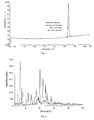
- the data of X-ray powder diffraction pattern (see figure 2 ) of crystalline form A of maleate of compound Z are as follows (Table 1): the 2 ⁇ diffraction angle is used to express X-ray powder diffraction, wherein the crystalline form has diffraction peaks at 6.30° ⁇ 0.2°, 20.18° ⁇ 0.2°, 22.30° ⁇ 0.2° and 24.02° ⁇ 0.2°.
- Table 1 X-ray powder diffraction data of crystalline form A of maleate of compound Z Diffraction angle (2 ⁇ , degree) Intensity (I/I 0 , %) 4.640 28 6.300 100 7.360 50 8.280 29 10.620 15 11.900 28 14.020 24 16.660 19 17.640 35 18.760 21 20.180 82 22.300 60 24.020 49 24.280 36 25.160 29 27.800 21 28.340 17
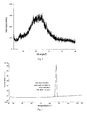
- the present invention provides an amorphous form of compound Z maleate, the X-ray powder diffraction pattern of which is shown in Figure 3 .
- the present invention provides a crystalline form I of compound Z succinate.
- the melting point of the crystalline form I of compound Z succinate is between 148 ⁇ 2 °C and 149 ⁇ 2 °C.
- the data of X-ray powder diffraction pattern ( figure 5 ) of the crystalline form I of compound Z succinate are as follows (Table 2): the 2 ⁇ diffraction angle is used to express X-ray powder diffraction, wherein the crystalline form has diffraction peaks at 6.42° ⁇ 0.2°, 8.00° ⁇ 0.2°, 18.34° ⁇ 0.2° and 24.56° ⁇ 0.2°.
- Table 2 X-ray powder diffraction data of crystalline form I of the compound Z succinate Diffraction angle (2 ⁇ , degree) Intensity (I/I 0 , %) 5.520 23 6.420 100 8.000 89 11.060 70 11.600 52 11.940 43 12.220 29 12.880 33 14.280 21 16.060 25 17.140 21 18.340 86 18.860 35 19.080 38 19.380 65 20.280 59 20.740 52 22.220 39 23.360 39 24.080 36 24.560 87 24.880 59 25.180 78 25.840 26 26.180 20
- the present invention provides the crystalline form I of compound Z methanesulfonate.
- the data of X-ray powder diffraction pattern ( figure 6 ) of the crystalline form I of compound Z methanesulfonate are as follows (Table 3): the 2 ⁇ diffraction angle is used to express X-ray powder diffraction, wherein the crystalline form has diffraction peaks at 6.62° ⁇ 0.2°, 17.94° ⁇ 0.2°, 22.24° ⁇ 0.2° and 26.45° ⁇ 0.2°.
- Table 3 X-ray powder diffraction data of crystalline form I of the compound Z methanesulfonate Diffraction angle (2 ⁇ , degree) Intensity (I/I 0 , %) 6.615 100.0 15.819 17.6 16.143 16.3 17.942 35.5 18.472 19.2 22.238 28.9 26.452 19.7
- the present invention provides a crystalline form I of compound Z hydrochloride.
- the data of X-ray powder diffraction pattern ( figure 8 ) of the crystalline form I of compound Z hydrochloride are as follows (Table 4): the 2 ⁇ diffraction angle is used to express X-ray powder diffraction, wherein the crystalline form has diffraction peaks at 7.21° ⁇ 0.2°, 8.05° ⁇ 0.2°, 12.44° ⁇ 0.2° and 16.32° ⁇ 0.2°.
- Table 4 X-ray powder diffraction data of crystalline form I of the compound Z hydrochloride Diffraction angle (2 ⁇ , degree) Intensity (I/I 0 , %) 7.212 100.0 8.047 52.6 12.444 28.3 13.050 21.9 16.323 22.3 17.943 16.9 23.993 21.5 25.405 19.1
- the present invention provides a crystalline form II of compound Z hydrochloride.
- the data of X-ray powder diffraction pattern ( figure 10 ) of the crystalline form II of compound Z hydrochloride are as follows (Table 5): the 2 ⁇ diffraction angle is used to express X-ray powder diffraction, wherein the crystalline form has diffraction peaks at 6.21° ⁇ 0.2°, 19.28° ⁇ 0.2°, 20.79° ⁇ 0.2° and 24.45° ⁇ 0.2°.
- Table 5 X-ray powder diffraction data of crystalline form II of the compound Z hydrochloride Diffraction angle (2 ⁇ , degree) Intensity (I/I 0 , %) 6.212 100.0 15.585 8.3 18.733 10.5 19.275 58.0 20.080 7.7 20.791 69.4 22.493 11.5 24.445 15.5 24.853 9.6
- the present invention provides a crystalline form III of compound Z hydrochloride.
- the data of X-ray powder diffraction pattern ( figure 12 ) of the crystalline form III of compound Z hydrochloride are as follows (Table 6): the 2 ⁇ diffraction angle is use to express X-ray powder diffraction, wherein the crystalline form has diffraction peaks at 7.22° ⁇ 0.2°, 16.64° ⁇ 0.2°, 24.86° ⁇ 0.2° and 25.48° ⁇ 0.2°.
- Table 6 X-ray powder diffraction data of crystalline form III of the compound Z hydrochloride Diffraction angle (2 ⁇ , degree) Intensity (I/I 0 , %) 5.960 20.1 6.801 21.0 7.221 100.0 9.499 17.8 16.639 53.8 17.920 19.0 24.859 53.8 25.480 34.8 26.260 24.2 27.560 21.6
- the present invention provides a crystalline form IV of compound Z hydrochloride.
- the data of X-ray powder diffraction pattern ( figure 14 ) of the crystalline form IV of compound Z hydrochloride are as follows (Table 7): the 2 ⁇ diffraction angle is used to express X-ray powder diffraction, wherein the crystalline form has diffraction peaks at 7.41° ⁇ 0.2°, 7.64° ⁇ 0.2°, 17.55° ⁇ 0.2° and 25.83° ⁇ 0.2°.
- Table 7 X-ray powder diffraction data of crystalline form IV of the compound Z hydrochloride Diffraction angle (2 ⁇ , degree) Intensity (I/I 0 , %) 7.411 55.3 7.635 100.0 16.653 24.8 17.547 76.1 18.256 22.8 18.840 21.3 25.461 20.4 25.829 24.5 27.276 19.5
- one object of the present invention is to provide a pharmaceutical composition comprising one or more compounds represented by formula (I) and pharmaceutically acceptable accessories, preferably a pharmaceutical composition comprising maleate, succinate, methanesulfonate, citrate, hydrochloride, sulfate of compound Z, more preferably a pharmaceutical composition comprising crystalline form A of compound Z maleate having a X-ray powder diffraction pattern shown in table 1.
- the accessories may be an excipient, a binder, a lubricant, a disintegrating agent, a coloring agent, a corrective, an emulsifier, a surfactant, a solubilizer, a suspending agent, an isotonic agent, a buffering agent, preservatives, an antioxidant, a stabilizer, an absorption accelerators and the like commonly used in the pharmaceutical art, and a suitable combination of the foregoing accessories may be used if necessary.
- the salts of the compound Z of the present invention may be formulated with at least one pharmaceutical excipient in the oral pharmaceutical composition, each dosage may contain 10mg to 200mg of the active ingredient.
- the main active ingredient may be mixed with a pharmaceutical carrier such as starch, lactose, magnesium stearate, etc., or the tablet may be coated with a sugar-coating or other suitable material, or can be treated so as to allow the tablet to have a prolonged or slow releasing function, so that the tablet can release a predetermined amount of the active ingredient in a continuous manner.
- a pharmaceutical carrier such as starch, lactose, magnesium stearate, etc.
- the tablet may be coated with a sugar-coating or other suitable material, or can be treated so as to allow the tablet to have a prolonged or slow releasing function, so that the tablet can release a predetermined amount of the active ingredient in a continuous manner.
- a capsule dosage form can be obtained by mixing the active ingredient with a diluent and filling the resulting mixture into a capsule.
- the acid addition salts of the compound Z (compound represented by formula I) of the present invention can be orally administered in form of tablet, capsule, granule, powder or syrup etc., or can be non-orally administered in form of injection, injectable powder, sprays or suppositories.
- formulations may be prepared by conventional methods.
- the usage amount of medicine will be different according to the symptom, age, etc., for example, an adult can be administered 1 to 7 times in one to seven days according to the symptom, the dose is 0.01mg to 1000mg, and the administration manner is not limited.
- Another object of the present invention is to provide a use of the compound represented by the formula (I) in the preparation of a medicament for the prevention or treatment of diseases associated with PDE5 enzyme.
- the disease associated with PDE5 enzyme is erectile dysfunction, pulmonary hypertension, female sexual dysfunction, premature birth, dysmenorrhea, benign prostatic hyperplasia, bladder outlet obstruction, incontinence, unstable and variant angina, hypertension, congestive heart failure, renal failure, atherosclerosis, stroke, peripheral vascular disease, Raynaud's disease, inflammatory disease, bronchitis, chronic asthma, allergic asthma, allergic rhinitis, glaucoma or diseases characterized by enterocinesia disorders, etc.
- the object of the present invention is to find a form of the compound having high solubility, good stability, good pharmacokinetics, and beingsuitable for preparing medicines.
- the salt of compound Z(compound represented by formula I) is suitable for all of the cryltalline form, mixed crystal, amorphous substance, and solvate thereof.
- One aspect of the present invention is to provide the salt of compound Z, which has high stability, improved water solubility, no bad smell and so on.
- Another aspect of the invention is to provide a plurality of crystalline forms of the various salts of compound Z.
- the crystalline forms have lower moisture absorption, good chemical stability, high purity, constant composition etc..
- the preparation method is simple and easy to repeat and the sample is easy to be stored.
- the melting point was measured by using WRR Melting Point Meter without temperature correction; Elemental Analysis was carried out by using Elementar Vario EL instrument; the nuclear magnetic resonance spectra were measured by using Mercury-400 and Mercury 300 NMR spectrometer (Varian Company); Mass spectra were measured by using MAT-95 mass spectrometer (Finnigan corporation); the infrared spectrum were measured by using United States Nicolet FTIR-6700 Fourier transform type infrared spectrometer; the thermal analysis was carried out by using Pyris 1 DSC (PERKIN-ELMER) apparatus; X-diffraction was carried out on Rigaku D/max-rB X rotating-target polycrystalline diffractometer or D8 ADVANCE X-RAY DIFFRACTOMETER polycrystalline diffractometer.
- Example 1 the preparation of 1-methyl-5- ⁇ 2-propoxy-5-[[1-methyl-1-(2-pyrrolidin-1-yl)ethyl]aminosulfonyl]phenyl ⁇ -3-propyl-1,6-dihydro-7H-pyrazolo[4 ,3-D]pyrimidin-7-one maleate
- the active carbon (2g) was added after cooling slightly and the temperature was maintained for 30 minutes, and then the active carbon was filtered off and the obtained filtrate was stirred at room temperature for 30 minutes to precipitate solid. Then the solid was filtered, dried for 4 hours at 60°C to give the title compound as a white solid (42g), yield: 70.7%, Purity: 99% (HPLC). mp :162.5-163.3 °C.
- Example 2 the preparation of 1-methyl-5- ⁇ 2-propoxy-5-[[1-methyl-1-(2-pyrrolidin-1-yl)ethyl]aminosulfonyl]phenyl ⁇ -3-propyl-1,6-dihydro-7H-pyrazolo[4 ,3-D]pyrimidin-7-one succinate
- the basic compound Z (50g, 0.097mol) was suspended in 300ml of anhydrous ethanol and heated to 65 °C to make the sample dissolved, then added succinic acid (11.7g, 0.099mol), and the solution was stirred at 65 °C for 40 minutes. Then the active carbon (2g) was added after cooling slightly to perform discoloring and it was maintained at this temperature for 30 minutes. After that, the active carbon was filtered off and the filtrate was stirred for 30 minutes at room temperature to precipitate solid. The precipitated solid was filtered and dried for 4 hours at 60 °C to give a white crystalline solid as the title compound (27g), Yield: 44 %, Purity: 99.4% (HPLC). mp :148.6-149.6 °C.
- Example 3 the preparation of 1-methyl-5- ⁇ 2-propoxy-5-[[1-methyl-1-(2-pyrrolidin-1-yl)ethyl]aminosulfonyl]phenyl ⁇ -3-propyl-1,6-dihydro-7H-pyrazol o[4,3-D]pyrimidin-7-one methanesulfonate
- the basic compound Z (31g, 0.06mol) was suspended in 200ml of anhydrous ethanol and added 4ml methanesulfonic acid under ice bath. After the addition was completed, the obtained mixture was increased to 60 ⁇ 70°C and stirred for 30 minutes. Then the active carbon (2g) was added to perform discoloring. After that, the active carbon was filtered off and the filtrate was concentrated to a small volume under reduced pressure. Then 400ml ethyl acetate was added and it was stirred for 2 hours. The product gradually precipitated, and then the product was filtered off and dried at 55°C to obtain the title compound 27.5g. mp :178.9-179.3 °C.
- Example 4 the preparation of 1-methyl-5- ⁇ 2-propoxy-5-[[1-methyl-1-(2-pyrrolidin-1-yl)ethyl]aminosulfonyl]phenyl ⁇ -3-propyl-1,6-dihydro-7H-pyrazolo[4 ,3-D]pyrimidin-7-one citrate
- the basic compound Z (5.17g, 0.01mol) was suspended in 25ml of anhydrous ethanol, 2.14 g of citric acid was added and then the mixture was heated to 60 ⁇ 70 °C and stirred for 30 minutes. After that, the mixture was cooled to room temperature and stirred overnight, and then the precipitated white solid was filtered off and dried at 55 °C to give the title compound 4.5g, Yield: 63.4%. mp: 140 °C.
- Example 5 the preparation of 1-methyl-5- ⁇ 2-propoxy- 5-[[1-methyl-1-(2-pyrrolidin-1-yl)ethyl]aminosulfonyl]phenyl ⁇ -3-propyl-1,6-dihydro-7H-pyrazolo[4 ,3-D]pyrimidin-7-one citrate
- the basic compound Z (5.17g, 0.01mol) was dissolved in a mixed solvent of 25ml of anhydrous ethanol and 5ml of water, 2.14 g of citric acid was added and then the mixture was heated to 60 ⁇ 70 °C and stirred for 30 minutes. After that, the mixture was cooled to room temperature and stirred overnight, and then the self-made seed crystal was added to gradually precipitate the product. The obtained product was filtered off and dried at 55 °C to give the title compound 4.3g.
- Example 6 the preparation of 1-methyl-5- ⁇ 2-propoxy-5-[[1-methyl-1-(2-pyrrolidin-1-yl)ethyl]aminosulfonyl]phenyl ⁇ -3-propyl-1,6-dihydro-7H-pyrazol o[4,3-D]pyrimidin-7-one hydrochloride
- the basic compound Z (51.7g, 0.1mol) was added into acetonitrile (200ml), and then 8.6ml of concentrated hydrochloric acid was added therein under ice bath. After the dropping addition was completed, the mixture was heated under reflux for one hour. Then the active carbon (5g) was added to perform the discoloring. The obtained mixture was filtered, and the filtrate was cooled to room temperature and stirred to gradually precipitate the product. The precipitated product was filtered off and dried at 55 °C to give 35 g of the title compound as a white solid, Yield: 63.2%.
- Example 7 the preparation of 1-methyl-5- ⁇ 2-propoxy-5-[[1-methyl-1-(2-pyrrolidin-1-yl)ethyl]aminosulfonyl]phenyl ⁇ -3-propyl-1,6-dihydro-7H-pyrazol o[4,3-D]pyrimidin-7-one hydrochloride
- the basic compound Z (51.7g, 0.1mol) was suspended in a mixed solvent of 400ml of anhydrous ethanol and 10ml of water, 8.6ml of concentrated hydrochloric acid was added therein under ice bath. After the dropping addition was completed, the mixture was heated to 60 °C for 30 minutes. The active carbon (5g) was added and it was stirred for 30 minutes. Then the filtration was performed to remove the active carbon. Some solvent was removed by concentration under reduced pressure, then 600ml ethyl acetate was added to gradually precipitate the product. The obtained product was filtered off and dried at 55 °C to give the title compound 31g.
- Example 8 the preparation of 1-methyl-5- ⁇ 2-propoxy-5-[[1-methyl-1-(2-pyrrolidin-1-yl)ethyl]aminosulfonyl]phenyl ⁇ -3-propyl-1,6-dihydro-7H-pyrazolo[4 ,3-D]pyrimidin-7-one sulfate
- the basic compound Z (5g) was dissolved in 19ml of anhydrous ethanol and 0.5ml of water, then 0.7ml of concentrated sulfuric acid was added under ice bath, and the mixture was heated under reflux for 30minutes, then naturally cooled to room temperature and concentrated to a small volume under reduced pressure. Then 30ml of ethyl acetate was added to perform precipitation. The precipitated product was filtered off and dried at 55 °C to obtain 3.5g of product. EI/MS: 515 (M-1).
- Example 9 the preparation of 1/2 maleate of 1-methyl-5- ⁇ 2-propoxy-5-[[1-methyl-1-(2-pyrrolidin-1-yl)ethyl]aminosulfonyl]phenyl ⁇ -3-propyl-1,6-dihy dro-7H-pyrazolo [4,3-D]pyrimidin-7-one
- the basic compound Z (5.17g) was suspended in 19ml of anhydrous ethanol and 1ml of water, then the suspension was heated to 60 ⁇ 70 °C to dissolve the compound. 0.59 g of maleic acid was added, the mixture was heated for further 30 minutes, naturally cooled to room temperature and concentrated to a small volume under reduced pressure. Then 40ml of ethyl acetate was added to gradually precipitate the product. The precipitated product was filtered off and dried at 55 °C to obtain 4.6g of product.
- Example 10 the preparation of 1/2 succinate of 1-methyl-5- ⁇ 2-propoxy-5-[[1-methyl-1-(2-pyrrolidin-1-yl)ethyl]aminosulfonyl]phenyl ⁇ -3-propyl-1,6-dihydro-7 H-pyrazolo[4,3-D]pyrimidin-7-one
- the basic compound Z (5g) was added into 19ml of anhydrous ethanol and 1ml of water, then the mixture was heated to 60 ⁇ 70 °C to dissolve the compound. 0.58 g of succinic acid was added , the mixture was heated for further 30 minutes, naturally cooledg to room temperature and concentrated to a small volume under reduced pressure. The product gradually precipitated and the precipitated product was filtered off and dried at 55 °C to obtain 2.1 g of the title compound. mp: 130.5 ⁇ 136.6 °C.
- Example 11 the preparation of 1/3 citrate of 1-methyl-5- ⁇ 2-propoxy-5-[[1-methyl-1-(2-pyrrolidin-1-yl)ethyl]aminosulfonyl]phenyl ⁇ -3-propyl-1,6-dihydro-7 H-pyrazolo[4,3-D]pyrimidin-7-one
- the basic compound Z (5g) was added into 19ml of anhydrous ethanol and 1ml of water, then the mixture was heated to dissolve the compound. And then 0.69 g of citric acid was added, the mixture was heated at 60 °C for further 30 minutes, naturally cooled to room temperature and concentrated to a small volume under reduced pressure. Then 30ml of ethyl acetate was added to gradually precipitate the product. The precipitated product was filtered off and dried at 55 °C to obtain 4.0 g of the title compound. mp: 148 °C.
- Examples 12 to 32 the preparation of various crystalline forms of salts of 1-methyl-5- ⁇ 2-propoxy-5-[[1-methyl-1-(2-pyrrolidin-1-yl)ethyl]aminosulfonyl]ph enyl ⁇ -3-propyl-1,6-dihydro-7H-pyrazolo[4,3-D]pyrimidin-7-one
- Example 12 the preparation of 1-methyl-5- ⁇ 2-propoxy-5-[[1-methyl-1-(2-pyrrolidin-1-yl)ethyl]aminosulfonyl]phenyl ⁇ -3-propyl-1,6-dihydro-7H-pyrazolo[4 ,3-D]pyrimidin-7-one maleate (crystalline form A)
- Example 2 The compound of Example 1 was dissolved in ethanol, and allowed to stand to precipitate a white needle crystal. The obtained crystal was filtered off and dried to give the title compound. mp: 162.5-163.3 °C, DSC graph thereof was shown in figure 1 , and X-ray powder diffraction pattern was shown in figure 2 .
- Example 2 The compound of Example 1 was dissolved in ethanol, and ethyl acetate was added to precipitate. The obtained precipitation was filtered off and dried to give the title compound.
- the data of mp, DSC graph, and X-ray powder diffraction pattern were same as those shown in Example 12.
- Example 14 the preparation of 1-methyl-5- ⁇ 2-propoxy-5-[[1-methyl-1-(2-pyrrolidin-1-yl)ethyl]aminosulfonyl]phenyl ⁇ -3-propyl-1,6-dihydro-7H-pyrazolo[4 ,3-D]pyrimidin-7-one maleate (crystalline form A)
- Example 2 The compound of Example 1 was dissolved in acetone by heating, and allowed to stand to precipitate. The obtained precipitation was filtered off and dried to give a flocculent crystal as the title compound.
- the data of mp, DSC graph, and X-ray powder diffraction pattern were same as those shown in Example 12.
- Example 2 The compound of Example 1 was dissolved in ethylene glycol dimethyl ether by heating, a small amount of water was added, and allowed to stand to precipitate a white needle crystal. The obtained precipitation was filtered off and dried to give the title compound.
- the data of mp, DSC graph, and X-ray powder diffraction pattern were same as those shown in Example 12.
- Example 16 the preparation of 1-methyl-5- ⁇ 2-propoxy-5-[[1-methyl-1-(2-pyrrolidin-1-yl)ethyl]aminosulfonyl]phenyl ⁇ -3-propyl-1,6-dihydro-7H-pyrazolo[4 ,3-D]pyrimidin-7-one maleate (crystalline form A)
- Example 2 The compound of Example 1 was dissolved in isopropanol by heating, and allowed to stand to precipitate a white flocculent crystal. The obtained precipitation was filtered off and dried to give the title compound.
- the data of mp, DSC graph, and X-ray powder diffraction pattern were same to those shown in Example 12.
- Example 2 The compound of Example 1 was dissolved in acetonitrile by heating, and allowed to be cooled and stand to precipitate a white flocculent crystal. The obtained precipitation was filtered off and dried to give the title compound.
- the mp, DSC graph, and X-ray powder diffraction pattern were same as those shown in Example 12.
- Example 18 the preparation of 1-methyl-5- ⁇ 2-propoxy-5-[[1-methyl-1-(2-pyrrolidin-1-yl)ethyl]aminosulfonyl]phenyl ⁇ -3-propyl-1,6-dihydro-7H-pyrazolo[4 ,3-D]pyrimidin-7-one maleate (amorphous)
- Example 2 The compound of Example 1 was dissolved in dichloromethane, and petroleum ether was added dropwise until the solution is unclear. The solid precipitated under stirred, was filtered off and dried to give the title compound as a white solid. The X-ray powder diffraction pattern was shown in figure 3 .
- Example 20 the preparation of 1-methyl-5- ⁇ 2-propoxy-5-[[1-methyl-1-(2-pyrrolidin-1-yl)ethyl]aminosulfonyl]phenyl ⁇ -3-propyl-1,6-dihydro-7H-pyrazolo[4 ,3-D]pyrimidin-7-one succinate (crystalline form I)
- Example 21 the preparation of 1-methyl-5- ⁇ 2-propoxy-5-[[1-methyl-1-(2-pyrrolidin-1-yl)ethyl]aminosulfonyl]phenyl ⁇ -3-propyl-1,6-dihydro-7H-pyrazolo[4 ,3-D]pyrimidin-7-one succinate (crystalline form I)
- Example 2 The compound of Example 2 was dissolved in a mixed solvent of acetonitrile and water by heating, and allowed to stand to room temperature and gradually precipitate short needle crystals. The obtained precipitation was filtered off and dried to give the title compound.
- the data of mp, DSC graph, and X-ray powder diffraction pattern were same as those shown in Example 19.
- Example 22 the preparation of 1-methyl-5- ⁇ 2-propoxy-5-[[1-methyl-1-(2-pyrrolidin-1-yl)ethyl]aminosulfonyl]phenyl ⁇ -3-propyl-1,6-dihydro-7H-pyrazolo[4 ,3-D]pyrimidin-7-one methanesulfonate (crystalline form I)
- Example 23 the preparation of 1-methyl-5- ⁇ 2-propoxy-5-[[1-methyl-1-(2-pyrrolidin-1-yl)ethyl]aminosulfonyl]phenyl ⁇ -3-propyl-1,6-dihydro-7H-pyrazolo[4 ,3-D]pyrimidin-7-one methanesulfonate (crystalline form I)
- Example 24 the preparation of 1-methyl-5- ⁇ 2-propoxy-5-[[1-methyl-1-(2-pyrrolidin-1-yl)ethyl]aminosulfonyl]phenyl ⁇ -3-propyl-1,6-dihydro-7H-pyrazolo[4 ,3-D]pyrimidin-7-one methanesulfonate (crystalline form I)
- Example 25 the preparation of 1-methyl-5- ⁇ 2-propoxy-5-[[1-methyl-1-(2-pyrrolidin-1-yl)ethyl]aminosulfonyl]phenyl ⁇ -3-propyl-1,6-dihydro-7H-pyrazolo[4 ,3-D]pyrimidin-7-one hydrochloride (crystalline form I)
- Example 26 the preparation of 1-methyl-5- ⁇ 2-propoxy-5-[[1-methyl-1-(2-pyrrolidin-1-yl)ethyl]aminosulfonyl]phenyl ⁇ -3-propyl-1,6-dihydro-7H-pyrazolo[4 ,3-D]pyrimidin-7-one hydrochloride (crystalline form I)
- Example 6 1g of the compound of Example 6 or 7 was dissolved in isopropanol (15ml) by heating, the mixture was naturally cooled to room temperature and gradually precipitated a white solid. The solid was filtered off and dried to give 0.62g of the title compound as a white solid.
- the data of mp, DSC graph, and X-ray powder diffraction pattern were same as those shown in Example 25.
- Example 27 the preparation of 1-methyl-5- ⁇ 2-propoxy-5-[[1-methyl-1-(2-pyrrolidin-1-yl)ethyl]aminosulfonyl]phenyl ⁇ -3-propyl-1,6-dihydro-7H-pyrazolo[4 ,3-D]pyrimidin-7-one hydrochloride (crystalline form II)
- Example 28 the preparation of 1-methyl-5- ⁇ 2-propoxy-5-[[1-methyl-1-(2-pyrrolidin-1-yl)ethyl]aminosulfonyl]phenyl ⁇ -3-propyl-1,6-dihydro-7H-pyrazolo[4 ,3-D]pyrimidin-7-one hydrochloride (crystalline form II)
- Example 29 the preparation of 1-methyl-5- ⁇ 2-propoxy-5-[[1-methyl-1-(2-pyrrolidin-1-yl)ethyl]aminosulfonyl]phenyl ⁇ -3-propyl-1,6-dihydro-7H-pyrazolo[4 ,3-D]pyrimidin-7-one hydrochloride (crystalline form II)
- Example 6 1g of the compound of Example 6 or 7 was dissolved in N-methylpyrrolidone (5ml) by heating. 40ml of ethyl acetate was added to obtain a flocculent solid. The precipitated product was filtered off and dried to give 0.77g of the title compound as a white solid.
- the data of mp, DSC graph, and X-ray powder diffraction pattern were same as those shown in Example 27.
- Example 30 the preparation of 1-methyl-5- ⁇ 2-propoxy-5-[[1-methyl-1-(2-pyrrolidin-1-yl)ethyl]aminosulfonyl]phenyl ⁇ -3-propyl-1,6-dihydro-7H-pyrazolo[4 ,3-D]pyrimidin-7-one hydrochloride (crystalline form II)
- Example 31 the preparation of 1-methyl-5- ⁇ 2-propoxy-5-[[1-methyl-1-(2-pyrrolidin-1-yl)ethyl]aminosulfonyl]phenyl ⁇ -3-propyl-1,6-dihydro-7H-pyrazolo[4 ,3-D]pyrimidin-7-one hydrochloride (crystalline form III)
- Example 32 the preparation of 1-methyl-5- ⁇ 2-propoxy-5-[[1-methyl-1-(2-pyrrolidin-1-yl)ethyl]aminosulfonyl]phenyl ⁇ -3-propyl-1,6-dihydro-7H-pyrazolo[4 ,3-D]pyrimidin-7-one hydrochloride (crystalline form IV)
- Example 6 or 7 0.5g of the compound of Example 6 or 7 was suspended in toluene (30ml), the suspension was heated under reflux for 1 hour, cooled to room temperature naturally, and allowed to stand. The resulting solid was filtered off and dried to give 0.46 g of the title compound as a white solid. mp: 183.8-189.2 °C, DSC graph thereof was shown in figure 13 , and X-ray powder diffraction pattern was shown in figure 14 .
- Example 33 the preparation of 1-methyl-5- ⁇ 2-propoxy-5-[[1-methyl-1-(2-pyrrolidin-1-yl)ethyl]aminosulfonyl]phenyl ⁇ -3-propyl-1,6-dihydro-7H-pyrazolo[4 ,3-D]pyrimidin-7-one hydrochloride monohydrate
- Example 34 the preparation of 1-methyl-5- ⁇ 2-propoxy-5-[[1-methyl-1-(2-pyrrolidin-1-yl)ethyl]aminosulfonyl]phenyl ⁇ -3-propyl-1,6-dihydro-7H-pyrazolo[4 ,3-D]pyrimidin-7-one hydrochloride dihydrate
- Compound Z maleate, microcrystalline cellulose, lactose, and sodium carboxymethyl starch were screened by 80 mesh sieve and mixed uniformly.
- the soft material was made by 8% starch paste.
- the particles were granulated by using 16 mesh sieve, dried and regulated. After that magnesium stearate was added and mixed uniformly.
- the final tablets were obtained by pressing based on the tablet weight calculated by measuring the particles content.
- the maleate of compound Z is stable under the conditions of high temperature, high humidity and light exposure.
- the compound Z (basic compound) is very unstable under light exposure condition, and the degradation is nearly 50% after 10 days, which illustrated that the basic compound Z has poor stability, is readily degradable, and has a poorer stability especially under lighting conditions. But the stability of salts thereof will increase greatly.
- the basic compound Z and various salts of compound Z were selected to compare the solubility. Appropriate amount of sample was weighed, placed in glass tubes. The predetermined solvent was added gradually and the extension of clear of the solution was observed. The solvent included the follows: pure water (pH 6.2), hydrochloric acid solution (pH1.0), a standard potassium hydrogen phthalate buffer solution (pH 4.0), and a mixed phosphate buffer solution (pH 6.86).
- the basic compound Z, maleate of compound Z and hydrochloride of compound Z were selected to perform the erectile dysfunction (ED) efficacy trials in vivo in rats according to the experimental method described in WO_2007056955_A1, so as to determine the increasing percentage of the rats cavernous body pressure / arterial blood pressure (ICP/BP) value after the administration.
- the results show that the efficacies of different compounds are similar to each other, and are similar to that of sildenafil or better.
- Table 11 comparison of the efficacy of compound Z and various salts thereof compound Dose (mg/kg) n ICP/BP increasing rate (%) water - 5 5.63 ⁇ 14.25 Sildenafil 10 5 73.10 ⁇ 36.24** Maleate of compound Z 10 5 80.99 ⁇ 17.01** Hydrochloride of compound Z 10 5 75.22 ⁇ 14.43** basic compound Z 10 5 72.22 ⁇ 19.28** n represents the number of animals per group.
- the basic compound Z, maleate of compound Z, hydrochloride of compound Z, and succinate of compound Z were selected to perform the in vivo pharmacokinetic studies in rats, and results were shown in the accompanying figures 15 and 16 .
- the experimental results show that the in vivo pharmacokinetic properties in rats of the salts of compound Z are similar to or better than basic compound Z, especially the in vivo pharmacokinetic properties of hydrochloride of compound Z are superior to that of compound Z.
- the salt forms of the basic compound Z can greatly increase the stability of the compound, improve the water-solubility of the compound and mask unpleasant odor of the basic compound, while maintaining or improving the efficacy and pharmacokinetic properties of compound Z, therefore, they are more suitable for manufacturing the pharmaceutical preparations and being stored.
- the present invention further compares the advantages and disadvantages of various salts.
- a crystalline form A of maleate of compound Z was found to have a low moisture absorption and chemical stability.
- the crystalline form A of maleate of compound Z has overcome the defects of hydrochloride and methanesulfonate of the compound Z, i.e. they are highly hygroscopic, easily deliquescent and difficult to be stored, and is more suitable for applying in the pharmaceutical preparation.
- Table 12 comparison of compound Z and various crystalline forms thereof sample items crystal water static stability component Crystalline form Maleate of compound Z no no stable constant
- Some crystalline forms have electrostatic Stable, but some crystalline forms are hygroscopic With crystal water or absorbed water Several types of crystal(crystalline form I, II, III, IV)
- the maleate of the compound Z is stable with constant composition and fewer crystalline forms.
- the crystalline form A is easy to be prepared and has good reproducibility.
- the hydrochloride of the compound Z has a variety of crystalline forms, strong hygroscopicity and intends to form solvates, especially hydrates, which will have some uncontrollable impacts on the determination of the components of the sample and quality control, and will negatively affect the subsequent preparation of pharmaceutical formulations.
- the hygroscopicities of various salts of compound Z were studied. A certain amount of the sample was placed in a precisely-weighted glass weighing bottle with a stopper to accurately weight. Then the open glass weighing bottle was placed in a desiccator (the saturated potassium nitrate solution was placed at the lower part of the desiccator, the relative humidity was 92.5%) and stood for 48 hours at room temperature. And then the glass weighing bottle was covered with the stopper and weighted again. The absorbent weight can be calculated.
- the maleate of the compound Z has the minimal hygroscopicity.
- the methanesulfonate of the compound Z has strong hygroscopicity, is easy to be deliquescent and form solvates, which will have some uncontrollable impacts on the determination of the components of the sample and will be negative to the pharmaceutical storage.
- maleate of the compound Z refers to all various crystalline forms, mixed crystal, amorphousness, or solvates of the salts, including but not limited to crystalline form A.
- the compound has good in vitro activity and selectivity, and it is superior to sildenafil.
- the crystalline form A of maleate of compound Z still has the advantages of having a single and stable crystalline form, constant composition, no hygroscopicity, good synthetic process operability, stable characters, etc., and it is easy to be prepared and stored. It is the most preferable pharmaceutical preparation form in the pharmaceutical applications.
- the maleate of compound Z has selective activity as a PDE5 inhibitor, and shows high activity and selectivity for PDE5 enzyme in the in vitro enzyme inhibitors screening test, and shows treatment efficacy to erectile dysfunction (ED) and pulmonary arterial hypertension (PAH) in vivo animal tests.
Landscapes
- Health & Medical Sciences (AREA)
- Chemical & Material Sciences (AREA)
- Organic Chemistry (AREA)
- Engineering & Computer Science (AREA)
- Bioinformatics & Cheminformatics (AREA)
- Veterinary Medicine (AREA)
- Life Sciences & Earth Sciences (AREA)
- General Chemical & Material Sciences (AREA)
- Medicinal Chemistry (AREA)
- Nuclear Medicine, Radiotherapy & Molecular Imaging (AREA)
- Chemical Kinetics & Catalysis (AREA)
- Pharmacology & Pharmacy (AREA)
- Public Health (AREA)
- Animal Behavior & Ethology (AREA)
- General Health & Medical Sciences (AREA)
- Cardiology (AREA)
- Heart & Thoracic Surgery (AREA)
- Urology & Nephrology (AREA)
- Pulmonology (AREA)
- Reproductive Health (AREA)
- Endocrinology (AREA)
- Vascular Medicine (AREA)
- Ophthalmology & Optometry (AREA)
- Gynecology & Obstetrics (AREA)
- Pregnancy & Childbirth (AREA)
- Hospice & Palliative Care (AREA)
- Immunology (AREA)
- Rheumatology (AREA)
- Pain & Pain Management (AREA)
- Biomedical Technology (AREA)
- Neurology (AREA)
- Neurosurgery (AREA)
- Otolaryngology (AREA)
- Nitrogen Condensed Heterocyclic Rings (AREA)
- Pharmaceuticals Containing Other Organic And Inorganic Compounds (AREA)
Abstract
Description
- The present invention relates to a salt and polymorph of 1-methyl-5-{2-propoxy-5 -[[1-methyl-1-(2-pyrrolidin-1-yl)ethyl]aminosulfonyl]phenyl} -3-propyl-1,6-dihydro -7H-pyrazolo[4,3-d]pyrimidin-7-one (compound Z), the pharmaceutical compositions containing the same, the method for preparation of various salts and polymorphs and the use thereof in the preparation of a pharmaceutical composition.
- It discloses the use of a class of pyrazolo[4,3-d]pyrimidine-7-one derivatives as cGMP-specific phosphodiesterase inhibitors to treat erectile dysfunction in the international application
WO94/28902 CN1124926A ). Then inWO02/27848 CN1325398T ), it discloses another class of pyrazolo[4,3-d] pyrimidine-7-one derivatives having a potent inhibitory activity for type V of phosphodiesterase(PDE5), which can be used for the treatment of diseases relevant to PDE enzymes. - A series of compounds having inhibitory activity against PDE5 are disclosed in the international application
WO2007056955 , which exhibit extremely high activity and selectivity for the PDE5 enzyme in the screening test in vitro of enzyme inhibitors and in which the compound 1-methyl-5-{2-propoxy-5-[[1-methyl-1-(2-pyrrolidin-1-yl) ethyl]aminosulfonyl]phenyl}-3-propyl-1,6-dihydro-7H-pyrazolo[4,3-d]pyrimidin-7-o ne (compound Z, in the Example 80 inWO2007056955 ) represented by the following formula is included:
- However, the compound will significantly degrade at high temperature and in bright light, and has poor chemical stability. Therefore it is particularly important to develop a stable form of the compound Z. Moreover, the compound has disadvantage with poor water-solubility and is difficult to be dissolved, which will cause some negative impact on the pharmaceutical preparation process. On the other hand, the compound itself has a pungent odor, which also has a negative impact on the application as pharmaceutical preparations for human. Therefore, the object of the invention is to develop a form of compound Z suitable for preparing the medicine, which should have good stability, high water solubility, low hygroscopicity, no pungent odor and so on.
- The physical properties of pharmaceutical compounds and salts thereof, as well as their crystals and amorphous thereof have a greater impact on the bioavailability of the drugs, the purity of the drug substance, prescription of preparations etc. So in the pharmaceutical development, it is necessary to study what kinds of salts, crystalline forms, amorphous of the compounds are best to be as a drug. That is, since the above-described physical properties depend on the characteristics of the various compounds, it is usually difficult to predict pharmaceutically acceptable salts, crystals, and amorphousness of the original substances having good properties; therefore there is a sustained need to study a variety of compounds.
- Thus, one object of the invention is to provide various salts, crystals and amorphousness of compound Z. In addition, another object of the invention is to provide crystals and amorphousness of compounds (I).
- Based on the deeply study on synthesis and separation of various salts and crystals of the compound Z, and researching work on the physical and chemical properties thereof, the present inventors found the forms of salts, crystals and solvate of compound Z having excellent physical properties, which can be used as raw material for medicine directly or intermediates for the manufacture of pharmaceutical raw materials, thereby completing the present invention.
- The present invention relates to a new salt of 1-methyl-5-{2-propoxy-5-[[1-methyl-1-(2-pyrrolidin-1-yl)ethyl]aminosulfonyl]phenyl}-3-propyl-1,6-dihydro-7H-pyrazolo[4, 3-d]pyrimidin-7-one (compound Z), and pharmaceutically acceptable polymorph, solvate, hydrate, dehydrate, co-crystal, anhydrid, or amorphous form thereof, the pharmaceutical compositions and a pharmaceutical unit dosage form containing the same. The invention further relates to co-crystals or complexes of 1-methyl-5-{2-propoxy-5-[[1-methyl-1-(2-pyrrolidin-1-yl)ethyl]aminosulfonyl]phenyl}-3-propyl-1,6 -dihydro-7H-pyrazolo[4,3-d]pyrimidin-7-one and pharmaceutical compositions containing the same. The present invention also relates to a process for the preparation thereof.
- According to one aspect of the present invention, an object of the present invention is to provide a salt of compound 1-methyl-5-{2-propoxy-5- [[1-methyl-1-(2-pyrrolidin -1-yl)ethyl]aminosulfonyl]phenyl}-3-propyl-1,6-dihydro-7H-pyrazolo[4,3-d]pyrimidi n-7-one and the cocrystallization form thereof, having high stability, low moisture absorption, high purity, and being more readily formulated in pharmaceutical processing.
- According to one aspect of the present invention, A further object of the present invention is to provide a compound represented by formula (I) (i.e. the acid addition salts of compound 1-methyl-5-{2-propoxy-5-[[1-methyl-1-(2-pyrrolidin-1-yl)ethyl] aminosulfonyl]phenyl}-3-propyl-1,6-dihydro-7H-pyrazolo[4,3-D]pyrimidin-7-one and acid X) and pharmaceutically acceptable polymorph, solvate, hydrate, dehydrate, co-crystal, anhydrid, or amorphous form thereof:

- Wherein, X includes, but not limited to, organic or inorganic acid. For example, the organic acid includes, but not limited to, maleic acid, succinic acid, citric acid, tartaric acid, fumaric acid, formic acid, acetic acid, propionic acid, malonic acid, oxalic acid, benzoic acid, phthalic acid, methanesulfonic acid, benzenesulfonic acid, toluenesulfonic acid, naphthalenesulfonic acid, 1,5-naphthalenedisulfonic acid, camphanic acid, camphorsulfonic acid, salicylic acid, acetyl salicylic acid, aspartic acid, glutamic acid, lactic acid, gluconic acid, vitamin C acid, gallic acid, mandelic acid, malic acid, sorbic acid, trifluoroacetic acid, taurine, high taurine, 2-hydroxy ethyl sulfonic acid, cinnamic acid. The inorganic acid includes, but not limited to, hydrochloric acid, hydrobromic acid, hydroiodic acid, sulfuric acid, nitric acid, phosphoric acid, perchloric acid; and the similar protic acid.
- Wherein, X is preferably selected from the group consisting of an organic acid, hydrochloric acid, nitric acid and sulfuric acid.
- X is more preferably selected from the group consisting of maleic acid, succinic acid, citric acid, methanesulfonic acid, hydrochloric acid, nitric acid and sulfuric acid.
- X is more preferable maleic acid or succinic acid.
- The most preferable compound represented by formula (I) is the crystalline form A of maleate of compound Z.
- The term of "salt" described herein includes the pharmaceutically acceptable salts and pharmaceutically unacceptable salts. The pharmaceutically unacceptable salts are not preferable to be administrated to the patient, however they may be used to provide the pharmaceutical intermediates and a pharmaceutical bulk drug form.
- The term of "pharmaceutically acceptable salts" or "pharmaceutically acceptable acid addition salt" refers to salts prepared by using different pharmaceutically acceptable acid. The salts include, but not limited to, organic salts and inorganic salts, preferably, which are the salts of maleic acid, succinic acid, citric acid, methanesulfonic acid, hydrochloric acid, nitric acid or sulfuric acid, and is most preferably the salts of maleic acid or succinic acid.
- Another embodiment of the present invention relates to pharmaceutical compositions and dosage forms containing therapeutically or prophylactically effective amount of the pharmaceutically acceptable salts of compound 1-methyl-5-{2-propoxy -5-[[1-methyl-1-(2-pyrrolidin-1-yl)ethyl]aminosulfonyl]phenyl}-3-propyl-1,6-dihydro -7H-pyrazolo[4,3-D]pyrimidin-7-one, or a polymorph, solvate, hydrate, dehydrate, co-crystal, anhydrid, or amorphous form.
- Optionally, the acid addition salt of 1-methyl-5-{2-propoxy-5-[[1-methyl-1-(2-pyrrolidin-1-yl)ethyl]aminosulfonyl]phenyl}-3-propyl-1,6-dihydro-7H-pyrazolo[4,3-D]pyrimidin-7-one can absorb moisture to form a hydrate with planar water by placing in the air or by recrystallization. Such acid addition salts containing such moisture are still included in the present invention.
- The solvent in "solvate" in the present invention may be any solvent used in the manufacture of the salts and crystallization and is not particularly limited. Specifically, for example the solvate may be hydrate, alcoholate, acetone solvate or toluene solvate, and preferably hydrate or alcoholate.
- A further embodiment of the invention relates to the preparation method of the pharmaceutical composition and dosage form comprising a therapeutically or prophylactically effective amount of the pharmaceutically acceptable salt of 1-methyl-5-{2-propoxy-5-[[1-methyl-1-(2-pyrrolidin-1-yl)ethyl]aminosulfonyl]phenyl}-3-propyl-1,6-dihydro-7H-p yrazolo[4,3-D]pyrimidin-7-one, or a polymorph, solvate, hydrate, dehydrate, co-crystal, anhydrid, or amorphous form thereof. The particular preparation method is as follows:
- Referring to Preparation Example 80 of
WO2007056955 , the compound 1-methyl-5-{2-propoxy-5-[[1-methyl-1-(2-pyrrolidin-1-yl)ethyl]aminosulfonyl]pheny 1}-3-propyl-1,6-dihydro-7H-pyrazolo[4,3-D]pyrimidin-7-one (compound Z) is prepared. The compound represented by formula (I) can be prepared as the salt by reacting the corresponding acid with compound Z, the method of the present invention is as follows: -
- 1) Dissolving compound Z in a first solvent to form a solution a;
- 2) Dissolving a corresponding acid X in a second solvent to form a solution b;
- 3) Adding the solution a to the solution b, or adding the solution b to the solution a, so as to obtain a mixed solution, and then separating the salt of the compound Z from the mixed solution (i.e., a compound represented by formula I);
-
- 1) Dissolving compound Z in a first solvent to form a solution a;
- 2) Adding a corresponding acid X directly to the solution a, and then separating the salt of the compound Z from the solution (i.e., a compound represented by formula I);
-
- 1) Dissolving a corresponding acid X in a second solvent to form a solution b;
- 2) Adding compound Z directly into the solution b, and then separating the salt of the compound Z from the solution (i.e., a compound represented by formula I);
- In the above-described method, the first and second solvents may be each independently selected from water, non-aqueous solvent or the mixed solvent thereof, more particularly, include water, alcohols, ethers, esters, hydrocarbons, ketones. The first and second solvents may each independently select from one or more of water; esters (such as ethyl acetate, methyl acetate, propyl acetate, butyl acetate, methyl formate, ethyl formate, propyl formate, butyl formate); alcohols (such as methanol, ethanol, propanol, isopropanol, butanol, ethylene glycol, propylene glycol); ethers (such as diethyl ether, dipropyl ether, diisopropyl ether, petroleum ether, ethylene glycol monomethyl ether, ethylene glycol monoethyl ether, ethylene glycol monopropyl ether, ethylene glycol dimethyl ether, ethylene glycol diethyl ether, propylene glycol monomethyl ether, propylene glycol monoethyl ether, propylene glycol dimethyl ether, tetrahydrofuran, dioxane, dimethoxyethane, diethylene glycol dimethyl ether); ketones (such as acetone, butanone, N-methylpyrrolidone, diethyl ketone); hydrocarbons (such as n-pentane, n-hexane, heptane); aromatic hydrocarbons (such as toluene, benzene, xylene, chlorobenzene, dichlorobenzene); alkylogen (such as methylene chloride, chloroform or 1,2-dichloroethane, carbon tetrachloride); acids (acetic acid, propionic acid); and nitriles (such as acetonitrile, propionitrile ).
- The definition of the corresponding acid is same as the definition of X in formula (I).
- The reaction temperature may be varied according to the reagents or solvents, etc., and is generally from -20 °C to 200 °C, preferably from 0 °C to 100 °C.
- The reaction time is not limited and usually from 10 minutes to 10 hours.
- Another aspect of the present invention provides a polymorph and solvate of the salt of Compound Z (Compound represented by formula I) and a preparation method thereof. In the mentioned method, the seed crystal may be added as necessary in the process. The "seed crystal" herein refers to "seed" of the compound represented by formula (I) or a homemade crystal material of the compound represented by formula (I), which is used to induce crystallization.
-
- 1) Dissolving compound Z in a third solvent to form a solution C;
- 2) Dissolving a corresponding acid X in a fourth solvent to form a solution D;
- 3) Adding the solution C into the solution D, or adding the solution D into the solution C, or adding the corresponding acid X directly into the solution C, so as to obtain a mixed solution E;
- 4) Optionally, adding a fifth solvent into the mixed solution E;
- 5) Precipitating the target crystal by standing, stirring or adding corresponding seed crystal into the solution prepared in step 4);
-
- 1) Dissolving the salt of compound Z (compound represented by formula (I)) in the third solvent to form solution F;
- 2) Optionally, adding the fifth solvent into the solution F;
- 3) Precipitating the target crystal by standing, stirring or adding corresponding seed crystal into the solution prepared in step 2);
-
- 1) Suspending the salt of compound Z (compound represented by formula (I)) in the third solvent to form suspension G;
- 2) Optionally, adding the fifth solvent into the solution G;
- 3) Precipitating the target crystal by heating, stirring and cooling the obtained solution, or adding seed crystal into the solution prepared in step 2);
- Wherein, the third solvent, the fourth solvent and the fifth solvent may be same or different. And the definitions of the third, fourth and fifth solvents are same as those of the above first and second solvents. The range of reaction temperature is same as that for preparing the salt of the compound Z (compound represented by formula I).
- In particular, the preferred method for preparing the crystalline form A of compound Z maleate is as follows:
- Compound Z is suspended in alcohol and heated to 65°C, then one equivalent of maleic acid is added therein, and the mixture is heated under temperature of 65°C for 0.5 to 3 hours. Optionally, active carbon is added to perform the decolorizing. And the resulting filtrate solution is allowed to stand or be stirred at room temperature so as to precipitate the solid, after that, the solid precipitate is isolated, i.e. crystalline form A of the compound Z maleate, which may be isolated by conventional means from the reaction mixture.
- In general, the diffraction angle (2θ) in X -ray powder diffraction may have a deviation of ± 0.2°. Therefore, the following values of the diffraction angle should be understood to include a range of containing a deviation of ± 0.2°. Accordingly, the present invention includes not only the crystals which are identically consistent with the X-ray powder diffraction peaks (diffraction angle), and but also the crystals consistent with the peak (diffraction angle) with a deviation of ± 0.2°.
- The present invention provides a crystalline form A of compound Z maleate.
- The data of DSC spectrum (
Figure 1 ) of the crystalline form A of compound Z maleate are as follows: - The initial value (Onset) = 166.164 ± 1 °C, Peak value(Peak) = 168.166 ± 1 °C
- The melting point of the crystalline form A of compound Z maleate is between 162 ± 2 °C and 163 ± 2 °C.
- The data of X-ray powder diffraction pattern (see
figure 2 ) of crystalline form A of maleate of compound Z are as follows (Table 1): the 2θ diffraction angle is used to express X-ray powder diffraction, wherein the crystalline form has diffraction peaks at 6.30°±0.2°, 20.18°±0.2°, 22.30°±0.2° and 24.02°±0.2°.Table 1: X-ray powder diffraction data of crystalline form A of maleate of compound Z Diffraction angle (2θ, degree) Intensity (I/I0, %) 4.640 28 6.300 100 7.360 50 8.280 29 10.620 15 11.900 28 14.020 24 16.660 19 17.640 35 18.760 21 20.180 82 22.300 60 24.020 49 24.280 36 25.160 29 27.800 21 28.340 17 - The present invention provides an amorphous form of compound Z maleate, the X-ray powder diffraction pattern of which is shown in
Figure 3 . - The present invention provides a crystalline form I of compound Z succinate.
- The data of DSC spectrum (
Figure 4 ) of compound Z succinate are as follows: - The initial value (Onset) = 151.214 ± 1 °C, Peak value (Peak) = 154.166 ± 1 °C
- The melting point of the crystalline form I of compound Z succinate is between 148 ± 2 °C and 149 ± 2 °C.
- The data of X-ray powder diffraction pattern (
figure 5 ) of the crystalline form I of compound Z succinate are as follows (Table 2): the 2θ diffraction angle is used to express X-ray powder diffraction, wherein the crystalline form has diffraction peaks at 6.42° ±0.2°, 8.00° ±0.2°, 18.34° ±0.2° and 24.56° ±0.2°.Table 2: X-ray powder diffraction data of crystalline form I of the compound Z succinate Diffraction angle (2θ, degree) Intensity (I/I0, %) 5.520 23 6.420 100 8.000 89 11.060 70 11.600 52 11.940 43 12.220 29 12.880 33 14.280 21 16.060 25 17.140 21 18.340 86 18.860 35 19.080 38 19.380 65 20.280 59 20.740 52 22.220 39 23.360 39 24.080 36 24.560 87 24.880 59 25.180 78 25.840 26 26.180 20 - The present invention provides the crystalline form I of compound Z methanesulfonate.
- The data of X-ray powder diffraction pattern (
figure 6 ) of the crystalline form I of compound Z methanesulfonate are as follows (Table 3): the 2θ diffraction angle is used to express X-ray powder diffraction, wherein the crystalline form has diffraction peaks at 6.62° ±0.2°, 17.94° ±0.2°, 22.24°± 0.2° and 26.45° ±0.2°.Table 3: X-ray powder diffraction data of crystalline form I of the compound Z methanesulfonate Diffraction angle (2θ, degree) Intensity (I/I0, %) 6.615 100.0 15.819 17.6 16.143 16.3 17.942 35.5 18.472 19.2 22.238 28.9 26.452 19.7 - The present invention provides a crystalline form I of compound Z hydrochloride.
- The data of DSC spectrum (
Figure 7 ) of the crystalline form I of compound Z hydrochloride are as follows: - Peak 1: Initial value (Onset) = 137.331 ± 1 °C, Peak value (Peak) = 143.000 ± 1 °C
- Peak 2: Initial value (Onset) = 197.891 ± 1 °C, Peak value (Peak) = 201.333 ± 1 °C
- The data of X-ray powder diffraction pattern (
figure 8 ) of the crystalline form I of compound Z hydrochloride are as follows (Table 4): the 2θ diffraction angle is used to express X-ray powder diffraction, wherein the crystalline form has diffraction peaks at 7.21° ± 0.2°, 8.05° ± 0.2°, 12.44° ± 0.2° and 16.32° ± 0.2°.Table 4: X-ray powder diffraction data of crystalline form I of the compound Z hydrochloride Diffraction angle (2θ, degree) Intensity (I/I0, %) 7.212 100.0 8.047 52.6 12.444 28.3 13.050 21.9 16.323 22.3 17.943 16.9 23.993 21.5 25.405 19.1 - The present invention provides a crystalline form II of compound Z hydrochloride.
- The data of DSC spectrum (
Figure 9 ) of the crystalline form II of compound Z hydrochloride are as follows: - The initial value (Onset) = 194.168 ± 2 °C, Peak value (Peak) = 196.000 ± 2 °C
- The data of X-ray powder diffraction pattern (
figure 10 ) of the crystalline form II of compound Z hydrochloride are as follows (Table 5): the 2θ diffraction angle is used to express X-ray powder diffraction, wherein the crystalline form has diffraction peaks at 6.21° ± 0.2°, 19.28° ± 0.2°, 20.79° ± 0.2° and 24.45° ± 0.2°.Table 5: X-ray powder diffraction data of crystalline form II of the compound Z hydrochloride Diffraction angle (2θ, degree) Intensity (I/I0, %) 6.212 100.0 15.585 8.3 18.733 10.5 19.275 58.0 20.080 7.7 20.791 69.4 22.493 11.5 24.445 15.5 24.853 9.6 - The present invention provides a crystalline form III of compound Z hydrochloride.
- The data of DSC spectrum (
Figure 11 ) of the crystalline form III of compound Z hydrochloride are as follows: - The initial value (Onset) = 180.978 ± 1°C, Peak value (Peak) = 182.666 ± 1 °C
- The data of X-ray powder diffraction pattern (
figure 12 ) of the crystalline form III of compound Z hydrochloride are as follows (Table 6): the 2θ diffraction angle is use to express X-ray powder diffraction, wherein the crystalline form has diffraction peaks at 7.22° ± 0.2°, 16.64° ± 0.2°, 24.86° ± 0.2° and 25.48° ± 0.2°.Table 6: X-ray powder diffraction data of crystalline form III of the compound Z hydrochloride Diffraction angle (2θ, degree) Intensity (I/I0, %) 5.960 20.1 6.801 21.0 7.221 100.0 9.499 17.8 16.639 53.8 17.920 19.0 24.859 53.8 25.480 34.8 26.260 24.2 27.560 21.6 - The present invention provides a crystalline form IV of compound Z hydrochloride.
- The data of DSC spectrum (
Figure 13 ) of the crystalline form IV of compound Z hydrochloride are as follows: - The initial temperature (Onset) = 180.050 ± 1 °C, the peak temperature (Peak) = 184.333 ± 1°C
- The initial temperature (Onset) = 196.715 ± 1 °C, the peak temperature (Peak) = 199.333 ± 1 °C
- The data of X-ray powder diffraction pattern (
figure 14 ) of the crystalline form IV of compound Z hydrochloride are as follows (Table 7): the 2θ diffraction angle is used to express X-ray powder diffraction, wherein the crystalline form has diffraction peaks at 7.41° ± 0.2°, 7.64° ± 0.2°, 17.55° ± 0.2° and 25.83° ± 0.2°.Table 7: X-ray powder diffraction data of crystalline form IV of the compound Z hydrochloride Diffraction angle (2θ, degree) Intensity (I/I0, %) 7.411 55.3 7.635 100.0 16.653 24.8 17.547 76.1 18.256 22.8 18.840 21.3 25.461 20.4 25.829 24.5 27.276 19.5 - According to another aspect of the present invention, one object of the present invention is to provide a pharmaceutical composition comprising one or more compounds represented by formula (I) and pharmaceutically acceptable accessories, preferably a pharmaceutical composition comprising maleate, succinate, methanesulfonate, citrate, hydrochloride, sulfate of compound Z, more preferably a pharmaceutical composition comprising crystalline form A of compound Z maleate having a X-ray powder diffraction pattern shown in table 1.
- The accessories may be an excipient, a binder, a lubricant, a disintegrating agent, a coloring agent, a corrective, an emulsifier, a surfactant, a solubilizer, a suspending agent, an isotonic agent, a buffering agent, preservatives, an antioxidant, a stabilizer, an absorption accelerators and the like commonly used in the pharmaceutical art, and a suitable combination of the foregoing accessories may be used if necessary.
- Preferably, the salts of the compound Z of the present invention may be formulated with at least one pharmaceutical excipient in the oral pharmaceutical composition, each dosage may contain 10mg to 200mg of the active ingredient.
- When preparing a solid composition in tablet type, the main active ingredient may be mixed with a pharmaceutical carrier such as starch, lactose, magnesium stearate, etc., or the tablet may be coated with a sugar-coating or other suitable material, or can be treated so as to allow the tablet to have a prolonged or slow releasing function, so that the tablet can release a predetermined amount of the active ingredient in a continuous manner.
- Or, a capsule dosage form can be obtained by mixing the active ingredient with a diluent and filling the resulting mixture into a capsule.
- When using the acid addition salts of the compound Z (compound represented by formula I) of the present invention as therapeutic agents or preventive medicines to treat the above-mentioned diseases, itself (or mixed with pharmacologically acceptable excipient or diluent etc.) can be orally administered in form of tablet, capsule, granule, powder or syrup etc., or can be non-orally administered in form of injection, injectable powder, sprays or suppositories.
- These formulations may be prepared by conventional methods.
- The usage amount of medicine will be different according to the symptom, age, etc., for example, an adult can be administered 1 to 7 times in one to seven days according to the symptom, the dose is 0.01mg to 1000mg, and the administration manner is not limited.
- Another object of the present invention is to provide a use of the compound represented by the formula (I) in the preparation of a medicament for the prevention or treatment of diseases associated with PDE5 enzyme. The disease associated with PDE5 enzyme is erectile dysfunction, pulmonary hypertension, female sexual dysfunction, premature birth, dysmenorrhea, benign prostatic hyperplasia, bladder outlet obstruction, incontinence, unstable and variant angina, hypertension, congestive heart failure, renal failure, atherosclerosis, stroke, peripheral vascular disease, Raynaud's disease, inflammatory disease, bronchitis, chronic asthma, allergic asthma, allergic rhinitis, glaucoma or diseases characterized by enterocinesia disorders, etc.
-
-
Figure 1 : differential thermal analysis graph of 1-methyl-5-{2-propoxy-5-[[1-methyl-1-(2-pyrrolidin-1-yl)ethyl]aminosulfonyl]phenyl}-3-propyl-1,6-dihydro-7H-pyrazolo[ 4,3-D]pyrimidin-7-one maleate (crystalline form A); -
Figure 2 : X-ray powder diffraction pattern of 1-methyl-5-{2-propoxy-5-[[1-methyl-1-(2-pyrrolidin-1-yl)ethyl]aminosulfonyl]phenyl}-3-propyl-1,6-dihydro-7H-pyrazolo[ 4,3-D]pyrimidin-7-one maleate (crystalline form A); -
Figure 3 : X-ray powder diffraction pattern of 1-methyl-5-{2-propoxy-5-[[1-methyl-1-(2-pyrrolidin-1-yl)ethyl]aminosulfonyl]phenyl}-3-propyl-1,6-dihydro-7H-p yrazolo[4,3-D]pyrimidin-7-one maleate (amorphous); -
Figure 4 : differential thermal analysis graph of 1-methyl-5-{2-propoxy-5-[[1-methyl-1-(2-pyrrolidin-1-yl)ethyl]aminosulfonyl]phenyl}-3-propyl-1,6-dihydro-7H-pyrazolo[ 4,3-D]pyrimidin-7-one succinate (crystalline form I); -
Figure 5 : X-ray powder diffraction pattern of 1-methyl-5-{2-propoxy-5-[[1-methyl-1-(2-pyrrolidin-1-yl)ethyl]aminosulfonyl]phenyl}-3-propyl-1,6-dihydro-7H-pyrazolo[ 4,3-D]pyrimidin-7-one succinate (crystalline form I); -
Figure 6 : X-ray powder diffraction pattern of 1-methyl-5-{2-propoxy-5-[[1-methyl-1-(2-pyrrolidin-1-yl)ethyl]aminosulfonyl]phenyl}-3-propyl-1,6-dihydro-7H-pyrazolo[ 4,3-D]pyrimidin-7-one methanesulfonate (crystalline form I); -
Figure 7 : differential thermal analysis graph of 1-methyl-5-{2-propoxy-5-[[1-methyl-1-(2-pyrrolidin-1-yl)ethyl]aminosulfonyl]phenyl}-3-propyl-1,6-dihydro-7H-pyrazolo[ 4,3-D]pyrimidin-7-one hydrochloride (crystalline form I); -
Figure 8 : X-ray powder diffraction pattern of 1-methyl-5-{2-propoxy-5-[[1-methyl-1-(2-pyrrolidin-1-yl)ethyl]aminosulfonyl]phenyl}-3-propyl-1,6-dihydro-7H-pyrazolo[ 4,3-D]pyrimidin-7-one hydrochloride (crystalline form I); -
Figure 9 : differential thermal analysis graph of 1-methyl-5-{2-propoxy-5-[[1-methyl-1-(2-pyrrolidin-1-yl)ethyl]aminosulfonyl]phenyl}-3-propyl-1,6-dihydro-7H-pyrazolo[ 4,3-D]pyrimidin-7-one hydrochloride (crystalline form II); -
Figure 10 : X-ray powder diffraction pattern of 1-methyl-5-{2-propoxy-5-[[1-methyl-1-(2-pyrrolidin-1-yl)ethyl]aminosulfonyl]phenyl}-3-propyl-1,6-dihydro-7H-pyrazolo[ 4,3-D]pyrimidin-7-one hydrochloride (crystalline form II); -
Figure 11 : differential thermal analysis graph of 1-methyl-5-{2-propoxy-5-[[1-methyl-1-(2-pyrrolidin-1-yl)ethyl]aminosulfonyl]phenyl}-3-propyl-1,6-dihydro-7H-p yrazolo[4,3-D]pyrimidin-7-one hydrochloride (crystalline form III); -
Figure 12 : X-ray powder diffraction pattern of 1-methyl-5-{2-propoxy-5-[[1-methyl-1-(2-pyrrolidin-1-yl)ethyl]aminosulfonyl]phenyl}-3-propyl-1,6-dihydro-7H-pyrazolo[ 4,3-D]pyrimidin-7-one hydrochloride (crystalline form III); -
Figure 13 : differential thermal analysis graph of 1-methyl-5-{2-propoxy-5-[[1-methyl-1-(2-pyrrolidin-1-yl)ethyl]aminosulfonyl]phenyl}-3-propyl-1,6-dihydro-7H-p yrazolo[4,3-D]pyrimidin-7-one hydrochloride (crystalline form IV); -
Figure 14 : X-ray powder diffraction pattern of 1-methyl-5-{2-propoxy-5-[[1-methyl-1-(2-pyrrolidin-1-yl)ethyl]aminosulfonyl]phenyl}-3-propyl-1,6-dihydro-7H-pyrazolo[ 4,3-D]pyrimidin-7-one hydrochloride (crystalline form IV) obtained in example 23; -
Figure 15 : plasma concentration-time curve after administration of 1-methyl-5-{2-propoxy-5-[[1-methyl-1-(2-pyrrolidin-1-yl)ethyl]aminosulfonyl]phenyl}-3-propyl-1,6 -dihydro-7H-pyrazolo[4,3-D]pyrimidin-7-one (basic) and different salts thereof; -
Figure 16 : plasma concentration-time curve after administration of 1-methyl-5-{2-propoxy-5-[[1-methyl-1-(2-pyrrolidin-1-yl)ethyl]aminosulfonyl]phenyl}-3-propyl-1,6 -dihydro-7H-pyrazolo[4,3-D]pyrimidin-7-one (basic) and hydrochloride thereof; -
Figure 17 : the effect of 1-methyl-5-{2-propoxy-5-[[1-methyl-1-(2-pyrrolidin-1-yl) ethyl]aminosulfonyl]phenyl}-3-propyl-1,6-dihydro-7H-pyrazolo[4,3-D]pyrimidin-7-o ne maleate on the pulmonary arterial pressure in rats by chronic oral administration; -
Figure 18 : the effect of 1-methyl-5-{2-propoxy-5-[[1-methyl-1-(2-pyrrolidin-1-yl) ethyl]aminosulfonyl]phenyl}-3-propyl-1,6-dihydro-7H-pyrazolo[4,3-D]pyrimidin-7-o ne maleate on the pulmonary arterial pressure in rats by single intravenous administration; -
Figure 19 : the pharmaceutical effect of 1-methyl-5-{2-propoxy-5-[[1-methyl-1-(2-pyrrolidin-1-yl)ethyl]aminosulfonyl]phenyl}-3-propyl-1,6-dihydro-7H-pyrazolo[4,3-D]pyrimidin-7-one maleate on rats ED; -
Figure 20 : the pharmaceutical effect of 1-methyl-5-{2-propoxy-5-[[1-methyl-1-(2-pyrrolidin-1-yl)ethyl]aminosulfonyl]phenyl}-3-propyl-1,6-dihydro-7H-pyrazolo[4,3-D]pyrimidin-7-one maleate on canine ED. - The object of the present invention is to find a form of the compound having high solubility, good stability, good pharmacokinetics, and beingsuitable for preparing medicines. In the following experiments, unless specified, the salt of compound Z(compound represented by formula I) is suitable for all of the cryltalline form, mixed crystal, amorphous substance, and solvate thereof.
- One aspect of the present invention is to provide the salt of compound Z, which has high stability, improved water solubility, no bad smell and so on.
- Another aspect of the invention is to provide a plurality of crystalline forms of the various salts of compound Z. The crystalline forms have lower moisture absorption, good chemical stability, high purity, constant composition etc.. The preparation method is simple and easy to repeat and the sample is easy to be stored.
- The present invention will be further illustrated by the following examples. The following embodiments of the present invention are intend to more specifically illustrate the preferred embodiment of the present invention and should not be understood to limit the present invention. Both of the temperature and the reagent adopted in the following examples can be alternatively replaced by the corresponding temperature and reagent described above to achieve the object of the present invention.
- In the following embodiments, the melting point was measured by using WRR Melting Point Meter without temperature correction; Elemental Analysis was carried out by using Elementar Vario EL instrument; the nuclear magnetic resonance spectra were measured by using Mercury-400 and
Mercury 300 NMR spectrometer (Varian Company); Mass spectra were measured by using MAT-95 mass spectrometer (Finnigan corporation); the infrared spectrum were measured by using United States Nicolet FTIR-6700 Fourier transform type infrared spectrometer; the thermal analysis was carried out by usingPyris 1 DSC (PERKIN-ELMER) apparatus; X-diffraction was carried out on Rigaku D/max-rB X rotating-target polycrystalline diffractometer or D8 ADVANCE X-RAY DIFFRACTOMETER polycrystalline diffractometer. - 1-methyl-5-{2-propoxy-5-[[1-methyl-1-(2-pyrrolidin-1-yl)ethyl]aminosulfonyl] phenyl}-3-propyl-1,6-dihydro-7H-pyrazolo[4,3-D]pyrimidin-7-one (the compound Z, the same below) (48.5g, 0.094mol) was suspended in 500ml of anhydrous ethanol and heated to 65°C to make the sample dissolved, then added maleic acid (11.0g, 0.095mol), and the solution was heated under 65 °C for 40 minutes. The active carbon (2g) was added after cooling slightly and the temperature was maintained for 30 minutes, and then the active carbon was filtered off and the obtained filtrate was stirred at room temperature for 30 minutes to precipitate solid. Then the solid was filtered, dried for 4 hours at 60°C to give the title compound as a white solid (42g), yield: 70.7%, Purity: 99% (HPLC). mp :162.5-163.3 °C. 1HNMR (CDC13) δ: 0.99 (t, 3H), 1.16 (t, 3H), 1.80∼1.86 (m, 2H), 1.99∼2.04 (m, 2H), 2.12 (brs, 4H), 2.84 (s, 3H), 2.90 (t, 2H), 3.00 (brs, 2H), 3.42 (brs, 4H), 3.85 (brs, 2H), 4.24 (s, 3H), 4.26 (t, 2H), 6.22 (s, 2H) , 7.20 (d, 1H), 7.84 (dd, 1H), 8.77 (d, 1H), 10.89 (brs, 1H), 12.60 (brs, 1H). EI / MS: 516 (M +), 515 (M-1). IR (cm-1): 3293.9, 2968.0, 2873.5, 1704.8, 1619.9, 1577.5, 1490.7, 1330.7, 1164.8, 966.2, 875.5, 578.5.
-
C H N S Actual measured value 55.05 6.31 13.35 5.29 Theoretical value 55.05 6.37 13.28 5.07 - The basic compound Z (50g, 0.097mol) was suspended in 300ml of anhydrous ethanol and heated to 65 °C to make the sample dissolved, then added succinic acid (11.7g, 0.099mol), and the solution was stirred at 65 °C for 40 minutes. Then the active carbon (2g) was added after cooling slightly to perform discoloring and it was maintained at this temperature for 30 minutes. After that, the active carbon was filtered off and the filtrate was stirred for 30 minutes at room temperature to precipitate solid. The precipitated solid was filtered and dried for 4 hours at 60 °C to give a white crystalline solid as the title compound (27g), Yield: 44 %, Purity: 99.4% (HPLC). mp :148.6-149.6 °C. 1HNMR (CDCl3) δ: 1.00 (t, 3H), 1.16 (t, 3H), 1.81∼1.88 (m, 2H), 1.98∼2.05 (brm, 6H), 2.52 (s, 4H), 2.85 (s, 3H ), 2.88 ∼2.93 (t, 2H), 3.21∼3.28 (brm, 6H), 3.34∼3.36 (t, 2H), 4.23∼4.27 (t, 2H), 4.27 (s, 3H), 7.20 (d, 1H), 7.86(dd, 1H), 8.73 (d, 1H), 11.00 (brs, 1H). EI/MS: 515 (M-1).
- The basic compound Z (31g, 0.06mol) was suspended in 200ml of anhydrous ethanol and added 4ml methanesulfonic acid under ice bath. After the addition was completed, the obtained mixture was increased to 60 ∼ 70°C and stirred for 30 minutes. Then the active carbon (2g) was added to perform discoloring. After that, the active carbon was filtered off and the filtrate was concentrated to a small volume under reduced pressure. Then 400ml ethyl acetate was added and it was stirred for 2 hours. The product gradually precipitated, and then the product was filtered off and dried at 55°C to obtain the title compound 27.5g. mp :178.9-179.3 °C. 1HNMR (CDCl3) δ: 1.00 (t, 3H), 1.17 (t, 3H), 1.81∼1.90 (m, 2H), 1.99∼2.06 (m, 2H), 2.12∼2.20 (m, 4H), 2.75 (s , 3H), 2.91 (t, 2H), 2.93 (s, 3H), 2.96∼3.02 (m, 2H), 3.45∼3.55 (m, 4H), 3.89∼3.94 (m, 2H), 4.27 (s, 3H), 4.24∼4.29 (t, 2H), 7.19 (d, 1H), 7.87 (dd, 1H), 8.79 (d, 1H), 11.02 (brs×2, 2H). EI/MS: 515 (M-1).
-
C H N Actual measured value 50.83 6.59 13.55 Theoretical value 50.96 6.58 13.71 - The basic compound Z (5.17g, 0.01mol) was suspended in 25ml of anhydrous ethanol, 2.14 g of citric acid was added and then the mixture was heated to 60∼70 °C and stirred for 30 minutes. After that, the mixture was cooled to room temperature and stirred overnight, and then the precipitated white solid was filtered off and dried at 55 °C to give the title compound 4.5g, Yield: 63.4%. mp: 140 °C. 1HNMR (CDCl3) δ: 1.00 (t, 3H), 1.16 (t, 3H), 1.81∼1.88 (m, 2H), 1.98∼2.05 (m, 2H), 2.12 (brm, 4H), 2.52 (s, 4H ), 2.85 (s, 3H), 2.93 (t, 2H), 3.03∼3.08 (brs, 2H), 3.45∼3.55 (brm, 4H), 3.83 (brs, 2H), 4.27 (s, 3H), 4.23∼4.27 (t, 2H), 7.19 (d, 1H), 7.86 (dd, 1H), 8.75 (d, 1H), 10.89 (brs, 1H), 11.80 (brs, 3H). EI / MS: 515 (M-1).
- The basic compound Z (5.17g, 0.01mol) was dissolved in a mixed solvent of 25ml of anhydrous ethanol and 5ml of water, 2.14 g of citric acid was added and then the mixture was heated to 60∼70 °C and stirred for 30 minutes. After that, the mixture was cooled to room temperature and stirred overnight, and then the self-made seed crystal was added to gradually precipitate the product. The obtained product was filtered off and dried at 55 °C to give the title compound 4.3g.
- The basic compound Z (51.7g, 0.1mol) was added into acetonitrile (200ml), and then 8.6ml of concentrated hydrochloric acid was added therein under ice bath. After the dropping addition was completed, the mixture was heated under reflux for one hour. Then the active carbon (5g) was added to perform the discoloring. The obtained mixture was filtered, and the filtrate was cooled to room temperature and stirred to gradually precipitate the product. The precipitated product was filtered off and dried at 55 °C to give 35 g of the title compound as a white solid, Yield: 63.2%. 1HNMR (CDCl3) δ: 1.01 (t, 3H), 1.18 (t, 3H), 1.81∼1.88 (m, 2H), 1.98∼2.08 (q, 2H), 2.10∼2.25 (brm, 4H), 2.91 (t, 2H), 2.95 (s, 3H), 3.42 (brs, 2H), 3.57∼3.61 (brm, 2H), 3.84 (brs, 2H), 4.27 (s, 3H), 4.25∼4.30 (t, 2H), 7.19 (d, 1H), 7.86 (dd, 1H), 8.83 (d, 1H), 10.84 (brs, 1H), 12.57 (brs, 1H). EI/MS: 515 (M-1).
-
C H N Actual measured value 54.14 6.64 15.25 Theoretical value 54.29 6.74 15.19 - The basic compound Z (51.7g, 0.1mol) was suspended in a mixed solvent of 400ml of anhydrous ethanol and 10ml of water, 8.6ml of concentrated hydrochloric acid was added therein under ice bath. After the dropping addition was completed, the mixture was heated to 60 °C for 30 minutes. The active carbon (5g) was added and it was stirred for 30 minutes. Then the filtration was performed to remove the active carbon. Some solvent was removed by concentration under reduced pressure, then 600ml ethyl acetate was added to gradually precipitate the product. The obtained product was filtered off and dried at 55 °C to give the title compound 31g.
- The basic compound Z (5g) was dissolved in 19ml of anhydrous ethanol and 0.5ml of water, then 0.7ml of concentrated sulfuric acid was added under ice bath, and the mixture was heated under reflux for 30minutes, then naturally cooled to room temperature and concentrated to a small volume under reduced pressure. Then 30ml of ethyl acetate was added to perform precipitation. The precipitated product was filtered off and dried at 55 °C to obtain 3.5g of product. EI/MS: 515 (M-1).
-
C H N Actual measured value 48.61 6.32 13.82 Theoretical value 48.85 6.23 13.67 - The basic compound Z (5.17g) was suspended in 19ml of anhydrous ethanol and 1ml of water, then the suspension was heated to 60∼70 °C to dissolve the compound. 0.59 g of maleic acid was added, the mixture was heated for further 30 minutes, naturally cooled to room temperature and concentrated to a small volume under reduced pressure. Then 40ml of ethyl acetate was added to gradually precipitate the product. The precipitated product was filtered off and dried at 55 °C to obtain 4.6g of product.
- The basic compound Z (5g) was added into 19ml of anhydrous ethanol and 1ml of water, then the mixture was heated to 60∼70 °C to dissolve the compound. 0.58 g of succinic acid was added , the mixture was heated for further 30 minutes, naturally cooledg to room temperature and concentrated to a small volume under reduced pressure. The product gradually precipitated and the precipitated product was filtered off and dried at 55 °C to obtain 2.1 g of the title compound. mp: 130.5 ∼ 136.6 °C.
-
C H N Actual measured value 56.07 6.82 14.21 Theoretical value 56.33 6.83 14.60 - The basic compound Z (5g) was added into 19ml of anhydrous ethanol and 1ml of water, then the mixture was heated to dissolve the compound. And then 0.69 g of citric acid was added, the mixture was heated at 60 °C for further 30 minutes, naturally cooled to room temperature and concentrated to a small volume under reduced pressure. Then 30ml of ethyl acetate was added to gradually precipitate the product. The precipitated product was filtered off and dried at 55 °C to obtain 4.0 g of the title compound. mp: 148 °C.
- General Method: 0.5 to 1.5 g sample salts of the compound Z were dissolved in various solvents (including single solvent and mixed solvents) and allowed to stand to precipitate. Or the sample salts were suspended in a solvent (including single solvent and mixed solvents) and the suspension was stirred, optionally added with another solvent if necessary, to precipitate. The precipitated solid was filtered off and dried to obtain the title compound.
- The compound of Example 1 was dissolved in ethanol, and allowed to stand to precipitate a white needle crystal. The obtained crystal was filtered off and dried to give the title compound. mp: 162.5-163.3 °C, DSC graph thereof was shown in
figure 1 , and X-ray powder diffraction pattern was shown infigure 2 . - The compound of Example 1 was dissolved in ethanol, and ethyl acetate was added to precipitate. The obtained precipitation was filtered off and dried to give the title compound. The data of mp, DSC graph, and X-ray powder diffraction pattern were same as those shown in Example 12.
- The compound of Example 1 was dissolved in acetone by heating, and allowed to stand to precipitate. The obtained precipitation was filtered off and dried to give a flocculent crystal as the title compound. The data of mp, DSC graph, and X-ray powder diffraction pattern were same as those shown in Example 12.
- The compound of Example 1 was dissolved in ethylene glycol dimethyl ether by heating, a small amount of water was added, and allowed to stand to precipitate a white needle crystal. The obtained precipitation was filtered off and dried to give the title compound. The data of mp, DSC graph, and X-ray powder diffraction pattern were same as those shown in Example 12.
- The compound of Example 1 was dissolved in isopropanol by heating, and allowed to stand to precipitate a white flocculent crystal. The obtained precipitation was filtered off and dried to give the title compound. The data of mp, DSC graph, and X-ray powder diffraction pattern were same to those shown in Example 12.
- The compound of Example 1 was dissolved in acetonitrile by heating, and allowed to be cooled and stand to precipitate a white flocculent crystal. The obtained precipitation was filtered off and dried to give the title compound. The mp, DSC graph, and X-ray powder diffraction pattern were same as those shown in Example 12.
- The compound of Example 1 was dissolved in dichloromethane, and petroleum ether was added dropwise until the solution is unclear. The solid precipitated under stirred, was filtered off and dried to give the title compound as a white solid. The X-ray powder diffraction pattern was shown in
figure 3 . - 1.5g of the compound of Example 2 was dissolved in 35ml of acetone by heating, and allowed to stand to room temperature and gradually precipitate short needle crystals. The obtained precipitation was filtered off and dried to give the title compound. mp: 148.6-149.6 °C, DSC graph thereof was shown in
figure 4 , and X-ray powder diffraction pattern was shown infigure 5 . - 1.5g of the compound of Example 2 was dissolved in 25ml of acetonitrile by heating, and allowed to stand to room temperature and gradually precipitate short needle crystals. The obtained precipitation was filtered off and dried to give the title compound. The data of mp, DSC graph, and X-ray powder diffraction pattern were same as those shown in Example 19.
- The compound of Example 2 was dissolved in a mixed solvent of acetonitrile and water by heating, and allowed to stand to room temperature and gradually precipitate short needle crystals. The obtained precipitation was filtered off and dried to give the title compound. The data of mp, DSC graph, and X-ray powder diffraction pattern were same as those shown in Example 19.
- 1.5g of the compound of Example 3 was dissolved in 10ml of acetonitrile, and allowed to stand overnight at room temperature and gradually precipitate needle crystals. The obtained precipitation was filtered off and dried to give the title compound. The mp was same as that in Example 3. The X-ray powder diffraction pattern was shown in
figure 6 . - 1.5g of the compound of Example 3 was suspended in toluene, and heated under reflux and allowed to stand to room temperature. The obtained solid was filtered off and dried to give the title compound. The mp was same as that in Example 3. The X-ray powder diffraction pattern was shown in
figure 6 . - 1.5g of the compound of Example 3 was dissolved in a mixed solvent of ethanol and water, heated at 60 °C for 1 hour, and allowed to stand to room temperature. The obtained solid was filtered off and dried to give the title compound. The mp was same as that in Example 3. The X-ray powder diffraction pattern was shown in
figure 6 . - 1g of the compound of Example 6 or 7 was dissolved in ethanol (8ml) by heating, the mixture was naturally cooled to room temperature and gradually precipitated a white flocculent solid. The solid was filtered off and dried to give 0.51g of the title compound as a white solid. mp:193.2-194.8 °C, DSC graph thereof was shown in
figure 7 , and X-ray powder diffraction pattern was shown infigure 8 . - 1g of the compound of Example 6 or 7 was dissolved in isopropanol (15ml) by heating, the mixture was naturally cooled to room temperature and gradually precipitated a white solid. The solid was filtered off and dried to give 0.62g of the title compound as a white solid. The data of mp, DSC graph, and X-ray powder diffraction pattern were same as those shown in Example 25.
- 1g of the compound of Example 6 or 7 was dissolved in acetone (35ml), the mixture was heated under reflux, naturally cooled to room temperature and gradually precipitated a large flocculent white solid. The solid was filtered off and dried to give 0.71g of the title compound as a white solid. mp: 187.1-188.0 °C, DSC graph thereof was shown in
figure 9 , and X-ray powder diffraction pattern was shown infigure 10 . - 1g of the compound of Example 6 or 7 was dissolved in acetonitrile (20ml) and heated under reflux for 1 hour. The insoluble matter was filtered off, and the filtrate was naturally cooled to room temperature to precipitate flocculent solid. The resultant solid was filtered off and dried to give 0.32g of the title compound as a white solid. The data of mp, DSC graph, and X-ray powder diffraction pattern were same as those shown in Example 27.
- 1g of the compound of Example 6 or 7 was dissolved in N-methylpyrrolidone (5ml) by heating. 40ml of ethyl acetate was added to obtain a flocculent solid. The precipitated product was filtered off and dried to give 0.77g of the title compound as a white solid. The data of mp, DSC graph, and X-ray powder diffraction pattern were same as those shown in Example 27.
- 1g of the compound of Example 6 or 7 was dissolved in a mixed solvent of ethanol (5ml) and ethylene glycol dimethyl ether (15ml) by heating, and the mixture was cooled to room temperature, then a flocculent solid was gradually precipitated. The precipitated product was filtered off and dried to give 0.45g of the title compound as a white solid. The data of mp, DSC graph, and X-ray powder diffraction pattern were same as those shown in Example 27.
- 1g of the compound of Example 6 or 7 was dissolved in dichloromethane (5ml), and petroleum ether (6ml) was added dropwise to precipitate white solid. The precipitated product was filtered off and dried to give 0.89g of the title compound as a white solid. mp: 176.6-178.1 °C, DSC graph thereof was shown in
figure 11 , and X-ray powder diffraction pattern was shown infigure 12 . - 0.5g of the compound of Example 6 or 7 was suspended in toluene (30ml), the suspension was heated under reflux for 1 hour, cooled to room temperature naturally, and allowed to stand. The resulting solid was filtered off and dried to give 0.46 g of the title compound as a white solid. mp: 183.8-189.2 °C, DSC graph thereof was shown in
figure 13 , and X-ray powder diffraction pattern was shown infigure 14 . - 1g of the compound of Example 6 or 7 was suspended in 10ml of ethanol and 0.5ml of water, the suspension was heated at 60 °C for 1 hour, cooled to room temperature naturally, and allowed to stand overnight in a refrigerator so that the product gradually precipitated. The precipitated product was filtered off and dried at 55 °C to give 0.34g of the title compound. TG spectrum: weight loss of 3.1 % within 100 °C.
-
C H N Actual measured value 52.25 6.71 14.68 Theoretical value 52.57 6.88 14.71 - 1g of the compound of Example 6 or 7 was dissolved in a mixed solvent of 6ml of isopropanol and 0.6ml of water by heating, the mixture was cooled to room temperature, and allowed to stand overnight in a refrigerator so that the product gradually precipitated. The precipitated product was filtered off and dried at 55 °C to give 0.2g of the title compound.
-
C H N Actual measured value 51.23 6.67 14.43 Theoretical value 50.97 7.01 14.26 -
Prescription Hydrochloride of compound Z 20.0g Starch 80.0g Lactose 60.0g Microcrystalline cellulose 35g 10% polyvinylpyrrolidone in ethanol appropriate amount Magnesium stearate 0.5g Total capsules: 1000 - 1-methyl-5-{2-propoxy-5-[[1-methyl-1-(2-pyrrolidin-1-yl)ethyl] aminosulfonyl]phenyl}-3-propyl-1,6-dihydro-7H-pyrazolo[4,3-D]pyrimidin-7-one hydrochloride and various accessories were screened by 80 mesh sieve, and weighed according to the prescription. Suitable particles were made with a 16-mesh sieve by using 10% polyvinylpyrrolidone in ethanol as a binder and dried at 65 °C. The particles were granulated by using 14-mesh sieve, and magnesium stearate was added and mixed uniformly. The final product was obtained by loading the particles into capsules based on loading amount calculated by measuring the particles content.
-
Tablets of compound Z maleate Prescription Compound Z maleate 20.0g Lactose 120.0g Microcrystalline cellulose 40.0g 8% of starch paste appropriate amount Sodium carboxymethyl starch 10.0g Magnesium stearate 1.0 g Total tablets: 1000 - Compound Z maleate, microcrystalline cellulose, lactose, and sodium carboxymethyl starch were screened by 80 mesh sieve and mixed uniformly. The soft material was made by 8% starch paste. The particles were granulated by using 16 mesh sieve, dried and regulated. After that magnesium stearate was added and mixed uniformly. The final tablets were obtained by pressing based on the tablet weight calculated by measuring the particles content.
- The basic compounds of compound Z and the maleate thereof were selected to compare the chemical stability through an impact factor test, and results were shown in Table 8:
Table 8: Stability test results of Compound Z and salts thereof Compound Z (basic) Maleate of Compound Z trait purity trait purity 0 day white 98.25% white 99.79% High temperature 5 days pale yellow 94.70% white 99.69% 10 days yellow 94.55% white 99.76% High humidity 5 days white 98.02% white 99.79% 10 days white 98.20% white 99.80 % Light exposure 5 days pale yellow 72.49% white 99.65% 10 days pale yellow 55.88% white 99.68% - It can be seen from the comparison experiment results of the factors in the above table, the maleate of compound Z is stable under the conditions of high temperature, high humidity and light exposure. However, the compound Z (basic compound) is very unstable under light exposure condition, and the degradation is nearly 50% after 10 days, which illustrated that the basic compound Z has poor stability, is readily degradable, and has a poorer stability especially under lighting conditions. But the stability of salts thereof will increase greatly.
- The basic compound Z and various salts of compound Z were selected to compare the solubility. Appropriate amount of sample was weighed, placed in glass tubes. The predetermined solvent was added gradually and the extension of clear of the solution was observed. The solvent included the follows: pure water (pH 6.2), hydrochloric acid solution (pH1.0), a standard potassium hydrogen phthalate buffer solution (pH 4.0), and a mixed phosphate buffer solution (pH 6.86).
Table 9: Comparison of solubilities of various salts of Compound Z Solubility (mg/ml) Pure water (pH6.1) hydrochloric acid solution (pH1.0) buffer solution (pH6.86) buffer solution (pH4.0) Compound Z (basic) insoluble > 21 insoluble > 5.88 Maleate of compound Z >11 > 42 > 19.8 - Succinate of compound Z > 40 > 56.5 > 49 > 41.3 Methanesulfonate of compound Z > 24 > 153 > 115 > 45.5 Citrate of compound Z > 17 > 125 > 83 > 59 Hydrochlorid of compound Z > 11.5 > 106 > 153 > 150 - It can be seen from the above table that the solubility of the basic compound Z in water and in other solvents is significantly less than those of salts of compound Z. Therefore, to transfer the compound Z into a form of salt is more advantage for a pharmaceutical preparation in human medicine use, since the water-solubility has a decisive influence on the preparation of pharmaceutical formulations, oral bioavailability etc.
- The basic compound Z and various salts of compound Z were selected to compare the appearance and characters. The results were shown in the table below:
Table 10: The comparison of appearance and characters of the various salts of compound Z Characters Odor Compound Z white solid pungent odor Maleate of compound Z white solid no bad smell hydrochloride of compound Z white solid no bad smell Succinate of compound Z white solid no bad smell Methanesulfonate of compound Z white solid no bad smell Citrate of compound Z white solid no bad smell - It can be seen from the above table that the salts of basic compound Z can mask the original pungent odor, so they are more suitable for oral administration.
- The basic compound Z, maleate of compound Z and hydrochloride of compound Z were selected to perform the erectile dysfunction (ED) efficacy trials in vivo in rats according to the experimental method described in WO_2007056955_A1, so as to determine the increasing percentage of the rats cavernous body pressure / arterial blood pressure (ICP/BP) value after the administration. The results show that the efficacies of different compounds are similar to each other, and are similar to that of sildenafil or better.
Table 11: comparison of the efficacy of compound Z and various salts thereof compound Dose (mg/kg) n ICP/BP increasing rate (%) water - 5 5.63±14.25 Sildenafil 10 5 73.10±36.24** Maleate of compound Z 10 5 80.99±17.01** Hydrochloride of compound Z 10 5 75.22±14.43** basic compound Z 10 5 72.22±19.28** n represents the number of animals per group. - The basic compound Z, maleate of compound Z, hydrochloride of compound Z, and succinate of compound Z were selected to perform the in vivo pharmacokinetic studies in rats, and results were shown in the accompanying
figures 15 and 16 . The experimental results show that the in vivo pharmacokinetic properties in rats of the salts of compound Z are similar to or better than basic compound Z, especially the in vivo pharmacokinetic properties of hydrochloride of compound Z are superior to that of compound Z. - From the experimental results, it can be seen that the salt forms of the basic compound Z (compound represented by formula I) can greatly increase the stability of the compound, improve the water-solubility of the compound and mask unpleasant odor of the basic compound, while maintaining or improving the efficacy and pharmacokinetic properties of compound Z, therefore, they are more suitable for manufacturing the pharmaceutical preparations and being stored.
- With respect to various salts of compound Z, the present invention further compares the advantages and disadvantages of various salts. Based on the above study, a crystalline form A of maleate of compound Z was found to have a low moisture absorption and chemical stability. The crystalline form A of maleate of compound Z has overcome the defects of hydrochloride and methanesulfonate of the compound Z, i.e. they are highly hygroscopic, easily deliquescent and difficult to be stored, and is more suitable for applying in the pharmaceutical preparation.
- The inventor studied on various crystalline forms of various salts of compound Z and compared the appearance, characters, components, crystalline form and extent of difficulty of manufacturing process. The results are shown in table below:
Table 12: comparison of compound Z and various crystalline forms thereof sample items crystal water static stability component Crystalline form Maleate of compound Z no no stable constant Two types (crystalline form A, amorphous) succinate of compound Z no no stable containing 1 to 2 succinic acid molecules crystalline form I, amorphous methanesulfonate of compound Z no no stable constant crystalline form I, amorphous citrate of compound Z no no stable - - Hydrochloride of compound Z 0∼2 Some crystalline forms have electrostatic Stable, but some crystalline forms are hygroscopic With crystal water or absorbed water Several types of crystal(crystalline form I, II, III, IV) - It can be seen from the above table that the maleate of the compound Z is stable with constant composition and fewer crystalline forms. The crystalline form A is easy to be prepared and has good reproducibility. However, the hydrochloride of the compound Z has a variety of crystalline forms, strong hygroscopicity and intends to form solvates, especially hydrates, which will have some uncontrollable impacts on the determination of the components of the sample and quality control, and will negatively affect the subsequent preparation of pharmaceutical formulations.
- The hygroscopicities of various salts of compound Z were studied. A certain amount of the sample was placed in a precisely-weighted glass weighing bottle with a stopper to accurately weight. Then the open glass weighing bottle was placed in a desiccator (the saturated potassium nitrate solution was placed at the lower part of the desiccator, the relative humidity was 92.5%) and stood for 48 hours at room temperature. And then the glass weighing bottle was covered with the stopper and weighted again. The absorbent weight can be calculated.
Table 13: comparison of hygroscopicities of various salts of compound Z Moisture weight gain (%) Basic compound Z 0.39 Maleate of compound Z 1.56 hydrochloride of compound Z 6.46 succinate of compound Z 1.64 methanesulfonate of compound Z 31.05 citrate of compound Z 11.75 - It can be seen from the above table that the maleate of the compound Z has the minimal hygroscopicity. However, the methanesulfonate of the compound Z has strong hygroscopicity, is easy to be deliquescent and form solvates, which will have some uncontrollable impacts on the determination of the components of the sample and will be negative to the pharmaceutical storage.
- The term of "maleate of the compound Z" herein refers to all various crystalline forms, mixed crystal, amorphousness, or solvates of the salts, including but not limited to crystalline form A.
- The in vitro activity and selectivity of maleate of the compound Z against various PDE isoenzyme were shown in the table below:
Table 14: activity and selectivity data of the maleate of compound Z against various PDE isoenzyme PDEs Maleate of compound Z sildenafil IC50(nM) IC50(PDEs)/ IC50(PDE5) IC50(nM) IC50(PDEs)/ IC50(PDE5) PDE1 462 203 460 88 PDE2 >100000 >10000 6840 1310 PDE3 22000 9649 7310 1400 PDE4 4070 1785 5830 1117 PDE5 2.28 / 5.22 / PDE6 45.2 20 42.2 8 PDE7 >100000 >10000 46900 8985 PDE8 >100000 >10000 >100000 >10000 PDE9 >100000 >10000 >100000 >10000 PDE10 >100000 >10000 >100000 >10000 PDE11 6090 2671 4910 941 - It can be seen from the above table that the compound has good in vitro activity and selectivity, and it is superior to sildenafil.
- The effects of maleate of compound Z on pulmonary artery pressure of pulmonary arterial hypertension rats were studied according to the method described in the reference (J Pharmacol Sci, 111, 235-243 (2009)). The maleate of compound Z in each dose group can significantly reduce pulmonary arterial pressure in rats with pulmonary arterial hypertension, and each dose group has significant difference comparing with the model group and no significant difference comparing with the positive control group (
Figure 17 , in which P<0.01 compared with the normal control group; **P <0.01 compared with the model group). It was shown in another set of experiments that a single intravenous administration of 1mg/kg in rats can also significantly reduce mean pulmonary artery pressure and mean aortic pressure in rats with pulmonary arterial hypertension, and the maleate of the compound Z has a strong selectivity for the reduction of pulmonary artery pressure (
Figure 18 , in which ** P<0.01 compared with the average aortic;P<0.01 compared with the saline group). - The effect of maleate of compound Z on the cavernous pressure variation in rats induced by the electric stimulus to the erectile nerve was studied according to the method described in the reference (International Journal of Impotence Research (2002) 14, 251-255).
- After 2.50-5.00 mg/kg of maleate of the compound Z was administrated through rat duodenum, the ICP value (cavernous peak pressure) and ICP/BP values (cavernous peak pressure/carotid arterial blood pressure) in rat induced by the electric stimulus to the erectile nerve were significantly increased, which means a significant role in erectile function. This enhancement effect of maleate of the compound Z has similar potency to that of positive control sildenafil with the same dosage (
Figure 19 ). - The effect of maleate of the compound Z on the cavernous pressure in canidae induced by the electric stimulus to the erectile nerve was studied according to the method described in the reference (J Urol 1998 Jul; 160 (1): 242-6). After 3.75-15.00 mg/kg of maleate of the compound Z was administrated through canine duodenum, the ICP/BP value was measured, and the results shown that the compounds were effective (
Figure 20 ). - In summary, besides the above common advantages of the salts of the compound, the crystalline form A of maleate of compound Z still has the advantages of having a single and stable crystalline form, constant composition, no hygroscopicity, good synthetic process operability, stable characters, etc., and it is easy to be prepared and stored. It is the most preferable pharmaceutical preparation form in the pharmaceutical applications. Moreover, the maleate of compound Z has selective activity as a PDE5 inhibitor, and shows high activity and selectivity for PDE5 enzyme in the in vitro enzyme inhibitors screening test, and shows treatment efficacy to erectile dysfunction (ED) and pulmonary arterial hypertension (PAH) in vivo animal tests.
Claims (19)
- A salt of 1-methyl-5-{2-propoxy-5-[[1-methyl-1-(2-pyrrolidin-1-yl)ethyl] aminosulfonyl]phenyl}-3-propyl-1,6-dihydro-7H-pyrazolo[4,3-D]pyrimidin-7-one represented by following formula (I) and pharmaceutically acceptable polymorph, solvate, hydrate, dehydrate, co-crystal, anhydrid, or amorphous form thereof:

- The compound represented by formula (I) according to claim 1, wherein X is maleic acid, succinic acid, citric acid, tartaric acid, fumaric acid, formic acid, acetic acid, propionic acid, malonic acid, oxalic acid, benzoic acid, phthalic acid, methanesulfonic acid, benzenesulfonic acid, toluenesulfonic acid, naphthalenesulfonic acid, 1,5-naphthalenedisulfonic acid, camphanic acid, camphorsulfonic acid, salicylic acid, acetyl salicylic acid, aspartic acid, glutamic acid, lactic acid, gluconic acid, vitamin C acid, gallic acid, mandelic acid, malic acid, sorbic acid, trifluoroacetic acid, taurine, high taurine, 2-hydroxyethyl sulfonic acid, cinnamic acid, hydrochloric acid, hydrobromic acid, hydroiodic acid, sulfuric acid, nitric acid, phosphoric acid, or perchloric acid
- The compound represented by formula (I) according to claim 2, wherein X is maleic acid, succinic acid, citric acid, methanesulfonic acid, hydrochloric acid, nitric acid or sulfuric acid.
- The compound represented by formula (I) according to any one of claims 1 to 3, wherein the compound is crystalline form A when X is maleic acid, the crystalline form A has at least one X-ray diffraction peak at the diffraction angle 20 selected from 6.30°±0.2°, 20.18°±0.2°, 22.30°±0.2° and 24.02°±0.2°.
- The compound represented by formula (I) according to claim 4, wherein the compound is crystalline form A when X is maleic acid, the crystalline form A has an X-ray powder diffraction pattern as shown in figure 2.
- The compound represented by formula (I) according to any one of claims 1 to 3, wherein the compound is amorphous when X is maleic acid, the amorphous compound has an X-ray powder diffraction pattern as shown in figure 3.
- The compound represented by formula (I) according to any one of claims 1 to 3, wherein the compound is crystalline form I when X is succinic acid, the crystalline form I has at least one X-ray diffraction peak at the diffraction angle 20 selected from 6.42° ±0.2°, 8.00° ±0.2°, 18.34° ±0.2° and 24.56° ±0.2°.
- The compound represented by formula (I) according to claim 7, wherein the compound is crystalline form I when X is succinic acid, the crystalline form I has an X-ray powder diffraction pattern as shown in figure 5.
- The compound represented by formula (I) according to claim 3, wherein the compound is crystalline form I when X is methanesulfonic acid, the crystalline form I has at least one X-ray diffraction peak at the diffraction angle 2θ selected from 6.62° ±0.2°, 17.94° ±0.2°, 22.24°±0.2° and 26.45° ±0.2°.
- The compound represented by formula (I) according to claim 9, wherein the crystalline form of the compound is crystalline form I when X is methanesulfonic acid, the crystalline form I has an X-ray powder diffraction pattern as shown in figure 6.
- The compound represented by formula (I) according to any one of claims 1 to 3, wherein the compound is crystalline form I, II, III or IV when X is hydrochloric acid, the crystalline form I has at least one X-ray diffraction peak at diffraction angle 20 selected from 7.21°± 0.2°, 8.05° ± 0.2°, 12.44° ± 0.2° and 16.32° ± 0.2°; the crystalline form II has at least one X-ray diffraction peak at diffraction angle 2θ selected from 6.21° ± 0.2°, 19.28° ± 0.2°, 20.79° ± 0.2° and 24.45° ± 0.2°; the crystalline form III has at least one X-ray diffraction peak at diffraction angle 2θ selected from 7.22° ± 0.2°, 16.64° ± 0.2°, 24.86° ± 0.2° and 25.48°C 0.2°; the crystalline form IV has at least one X-ray diffraction peak at diffraction angle 2θ selected from 7.41° ± 0.2°, 7.64° ± 0.2°, 17.55° ±0.2° and 25.83° ±0.2°.
- The compound represented by formula (I) according to claim 11, wherein the crystalline form of the compound is the crystalline form I, II, III or IV when X is hydrochloric acid, the crystalline form I has an X-ray powder diffraction pattern as shown in figure 8; the crystalline form II has an X-ray powder diffraction pattern as shown in figure 10; the crystalline form III has an X-ray powder diffraction pattern as shown in figure 12; the crystalline form IV has an X-ray powder diffraction pattern as shown in figure 14.
- A method for preparation of the compound represented by formula (I) according to claim 1, wherein the method is one selected from the follow methods:Method I:1) dissolving compound of 1-methyl-5-{2-propoxy-5-[[1-methyl-1-(2-pyrrolidin-1-yl) ethyl]aminosulfonyl]phenyl}-3-propyl-1,6-dihydro-7H-pyrazolo[4,3-D]pyrimidin-7-o ne in a first solvent to form a solution a;2) dissolving a corresponding acid X in a second solvent to form a solution b;3) adding the solution a to the solution b or adding the solution b to the solution a, so as to obtain a mixed solution, and then separating compound Z represented by formula (I) from the mixed solution;Method II:1) dissolving compound of 1-methyl-5-{2-propoxy-5-[[1-methyl-1-(2-pyrrolidin-1-yl) ethyl]aminosulfonyl]phenyl}-3-propyl-1,6-dihydro-7H-pyrazolo[4,3-D]pyrimidin-7-o ne in a first solvent to form a solution a;2) adding a corresponding acid X directly to the solution a, and then separating the compound represented by formula (I) from the mixed solution;Method III:1) dissolving a corresponding acid X in a second solvent to form a solution b;2) adding the compound 1-methyl-5-{2-propoxy-5-[[1-methyl-1-(2-pyrrolidin-1-yl) ethyl]aminosulfonyl]phenyl}-3-propyl-1,6-dihydro-7H-pyrazolo[4,3-D]pyrimidin-7-o ne directly into the solution b, and then separating the compound represented by formula (I) from the mixed solution;the first and second solvents are each independently one or more selected from water and non-aqueous solvent;
The definition of the corresponding acid X is same as that in claim 1. - A method for preparation of the polymorph of the compound represented by formula (I) according to claim 1, wherein the method is one selected from the follow methods:Method I:1) dissolving the compound 1-methyl-5-{2-propoxy-5-[[1-methyl-1-(2-pyrrolidin-1-yl) ethyl] aminosulfonyl]phenyl }-3-propyl-1,6-dihydro-7H-pyrazolo [4,3-D]pyrimidin-7-o ne in a third solvent to form a solution C;2) dissolving a corresponding acid X in a fourth solvent to form a solution D;3) adding the solution C into the solution D, or adding the solution D into the solution C, or adding a corresponding acid X into the solution C, so as to obtain a mixed solution E;4) optionally, adding a fifth solvent into the mixed solution E;5) precipitating the target crystal by standing, stirring, or adding a corresponding seed crystal into the solution prepared in step 4);Method II:1) dissolving the salt of compound 1-methyl-5-{2-propoxy-5-[[1-methyl-1-(2-pyrrolidin-1-yl)ethyl]aminosulfonyl]phenyl} -3-propyl-1,6-dihydro-7H-pyrazolo [4,3-D]pyrimidin-7-one in a third solvent to form a solution F;2) optionally, adding a fifth solvent into the solution F;3) precipitating the target crystal by standing, stirring or adding seed crystal into the solution prepared in step 2);Method III:1) suspending the salt of compound 1-methyl-5-{2-propoxy-5-[[1-methyl-1-(2-pyrrolidin-1-yl)ethyl]aminosulfonyl]phenyl}-3-propyl-1,6-dihydro-7H-pyrazolo [4,3-D]pyrimidin-7-one in a third solvent to form a solution G;2) optionally, adding a fifth solvent into the solution G;3) precipitating the target crystal by heating, stirring and cooling, or byadding seed crystal into the solution prepared in step 2);wherein, the third solvent, the fourth solvent and the fifth solvent are each independently one or more selected from water and non-aqueous solvent;
The definition of the corresponding acid X is same as that in claim 1. - The preparation method according to any one of claim 13 and 14, wherein the non-aqueous solvent is ethyl acetate, methyl acetate, propyl acetate, butyl acetate, methyl formate, ethyl formate, propyl formate, butyl formate, methanol, ethanol, propanol, isopropanol, butanol, ethylene glycol, propylene glycol, diethyl ether, dipropyl ether, diisopropyl ether, petroleum ether, ethylene glycol monomethyl ether, ethylene glycol monoethyl ether, ethylene glycol monopropyl ether, ethylene glycol dimethyl ether, ethylene glycol diethyl ether, propylene glycol monomethyl ether, propylene glycol monoethyl ether, propylene glycol dimethyl ether, tetrahydrofuran, dioxane, dimethoxyethane, diethylene glycol dimethyl ether, acetone, butanone, N-methylpyrrolidone, diethyl ketone, n-pentane, n-hexane, heptane, toluene, benzene, xylene, chlorobenzene, dichlorobenzene, methylene chloride, chloroform 1,2-dichloroethane, carbon tetrachloride, acetic acid, propionic acid, acetonitrile or propionitrile.
- The preparation method according to claim 14, wherein when X is maleic acid, the preparation method is as follows:the compound 1-methyl-5-{2-propoxy-5-[[1-methyl-1-(2-pyrrolidin-1-yl)ethyl] aminosulfonyl]phenyl}-3-propyl-1,6-dihydro-7H-pyrazolo[4,3-D]pyrimidin-7-one is suspended in alcohol, and heated to 65°C, adding maleic acid and heating; optionally, active carbon is added to carry out the decolorizing; the resulting filtrate solution is allowed to stand or stirred at room temperature so as to precipitate; the solid precipitate is isolated so as to obtain the crystalline form A of 1-methyl-5-{2-propoxy-5-[[1-methyl-1-(2-pyrrolidin-1-yl)ethyl]aminosulfonyl]phenyl}-3-propyl-1,6 -dihydro-7H-pyrazolo[4,3-D]pyrimidin-7-one maleate.
- A pharmaceutical composition, comprising the compound according to any one of claims 1 to 12 and pharmaceutically acceptable accessories.
- A use of the compound according to any one of claims 1 to 12 in the preparation of a medicament for the prevention or treatment of diseases associated with PDE5 enzyme.
- The use according to claim 18, wherein the disease associated with PDE5 enzyme is erectile dysfunction, pulmonary hypertension, female sexual dysfunction, premature birth, dysmenorrhea, benign prostatic hyperplasia, bladder outlet obstruction, incontinence, unstable and variant angina, hypertension, congestive heart failure, renal failure, atherosclerosis, stroke, peripheral vascular disease, Raynaud's disease, inflammatory disease, bronchitis, chronic asthma, allergic asthma, allergic rhinitis, glaucoma or diseases characterized by enterocinesia disorders.
Applications Claiming Priority (2)
| Application Number | Priority Date | Filing Date | Title |
|---|---|---|---|
| CN201110236585.3A CN102952138B (en) | 2011-08-17 | 2011-08-17 | The salt of a kind of pyrazolopyrimidinone compound, polymorph and pharmaceutical composition, preparation method and application |
| PCT/CN2012/001082 WO2013023439A1 (en) | 2011-08-17 | 2012-08-14 | Salt and polymorph of pyrazolopyrimidinone compound and drug composition, preparation method and use thereof |
Publications (3)
| Publication Number | Publication Date |
|---|---|
| EP2746284A1 true EP2746284A1 (en) | 2014-06-25 |
| EP2746284A4 EP2746284A4 (en) | 2015-01-14 |
| EP2746284B1 EP2746284B1 (en) | 2017-04-12 |
Family
ID=47714726
Family Applications (1)
| Application Number | Title | Priority Date | Filing Date |
|---|---|---|---|
| EP12823704.7A Not-in-force EP2746284B1 (en) | 2011-08-17 | 2012-08-14 | Salt and polymorph of pyrazolopyrimidinone compound and drug composition, preparation method and use thereof |
Country Status (13)
| Country | Link |
|---|---|
| US (1) | US9527849B2 (en) |
| EP (1) | EP2746284B1 (en) |
| JP (1) | JP2014521729A (en) |
| KR (1) | KR20140059241A (en) |
| CN (1) | CN102952138B (en) |
| AU (1) | AU2012297498A1 (en) |
| BR (1) | BR112014003696A2 (en) |
| CA (1) | CA2845250A1 (en) |
| EA (1) | EA201490464A1 (en) |
| IL (1) | IL230907A0 (en) |
| IN (1) | IN2014CN02022A (en) |
| MX (1) | MX2014001756A (en) |
| WO (1) | WO2013023439A1 (en) |
Families Citing this family (4)
| Publication number | Priority date | Publication date | Assignee | Title |
|---|---|---|---|---|
| CN104129803A (en) * | 2014-08-12 | 2014-11-05 | 天津市嵩锐医药科技有限公司 | Stable sodium nitroprusside crystal compound, pharmaceutical composition and preparation method thereof |
| CN105055336A (en) * | 2015-09-24 | 2015-11-18 | 青岛华之草医药科技有限公司 | Sildenafil citrate composition granules for treating urologic diseases |
| ES2949662T3 (en) * | 2018-02-02 | 2023-10-02 | Genentech Inc | Pharmaceutical compound, salts thereof, formulations thereof and methods of manufacture and use thereof |
| CN113493459B (en) * | 2020-04-07 | 2022-12-13 | 广州白云山医药集团股份有限公司白云山制药总厂 | PDE5 inhibitor compound, preparation method and application thereof |
Family Cites Families (16)
| Publication number | Priority date | Publication date | Assignee | Title |
|---|---|---|---|---|
| US3832460A (en) * | 1971-03-19 | 1974-08-27 | C Kosti | Anesthetic-vasoconstrictor-antihistamine composition for the treatment of hypertrophied oral tissue |
| US5795909A (en) * | 1996-05-22 | 1998-08-18 | Neuromedica, Inc. | DHA-pharmaceutical agent conjugates of taxanes |
| US6624138B1 (en) * | 2001-09-27 | 2003-09-23 | Gp Medical | Drug-loaded biological material chemically treated with genipin |
| TWI223598B (en) * | 1998-06-22 | 2004-11-11 | Pfizer Ireland Pharmaceuticals | An intranasal pharmaceutical composition for the treatment of male erectile dysfunction or female sexual disorders, an intranasal delivery system or device and sildenafil mesylate |
| KR100353014B1 (en) * | 1998-11-11 | 2002-09-18 | 동아제약 주식회사 | Pyrazolopyrimidinone derivatives for the treatment of impotence |
| US7927613B2 (en) * | 2002-02-15 | 2011-04-19 | University Of South Florida | Pharmaceutical co-crystal compositions |
| US7444183B2 (en) * | 2003-02-03 | 2008-10-28 | Enteromedics, Inc. | Intraluminal electrode apparatus and method |
| CA2608018C (en) * | 2005-05-12 | 2010-07-13 | Pfizer Inc. | Anhydrous crystalline forms of n-[1-(2-ethoxyethyl)-5-(n-ethyl-n-methylamino)-7-(4-methylpyridin-2-yl-amino)-1h-pyrazolo[4,3-d]pyrimidine-3-carbonyl]methanesulfonamide |
| RU2440986C2 (en) * | 2005-11-08 | 2012-01-27 | Милленниум Фамэсьютикэлс, Инк. | FACTOR Xa INHIBITOR SALT, METHOD FOR MAKING IT, BASED PHARMACEUTICAL COMPOSITION, TABLET, CAPSULE AND LOZENGE CONSISTING OF THIS COMPOSITION, METHOD FOR TREATING THROMBOSIS AND METHOD FOR INHIBITING BLOOD SAMPLE COAGULATION |
| CN1966506A (en) * | 2005-11-17 | 2007-05-23 | 上海特化医药科技有限公司 | Pyrromonazole pyrimidinone derivatives, method of producing them and use thereof |
| KR101071877B1 (en) * | 2009-02-18 | 2011-10-10 | 동아제약주식회사 | Acid salt of Udenafil, Preparation process thereof and Phamaceutical composition comprising the same |
| CN101671339B (en) * | 2009-09-27 | 2012-06-27 | 刘桂坤 | Citric acid alidenafil crystal form B and preparation method and application thereof |
| CN101671337B (en) * | 2009-09-27 | 2011-08-10 | 刘桂坤 | Aldenafil citrate crystal form A and its preparation method and use |
| CN101691372B (en) * | 2009-09-27 | 2011-11-23 | 刘桂坤 | Citric acid alidenafil crystal form C and preparation method and application thereof |
| CN101671338B (en) * | 2009-09-27 | 2012-07-25 | 刘桂坤 | Citric acid alidenafil crystal form D and preparation method and application thereof |
| CN102001045B (en) * | 2010-10-20 | 2012-05-30 | 无锡富岛精工有限公司 | Crawler-type sand blasting cleaner |
-
2011
- 2011-08-17 CN CN201110236585.3A patent/CN102952138B/en active Active
-
2012
- 2012-08-14 IN IN2022CHN2014 patent/IN2014CN02022A/en unknown
- 2012-08-14 AU AU2012297498A patent/AU2012297498A1/en not_active Abandoned
- 2012-08-14 US US14/238,790 patent/US9527849B2/en not_active Expired - Fee Related
- 2012-08-14 KR KR1020147007059A patent/KR20140059241A/en not_active Withdrawn
- 2012-08-14 WO PCT/CN2012/001082 patent/WO2013023439A1/en not_active Ceased
- 2012-08-14 BR BR112014003696-9A patent/BR112014003696A2/en not_active IP Right Cessation
- 2012-08-14 MX MX2014001756A patent/MX2014001756A/en unknown
- 2012-08-14 JP JP2014525284A patent/JP2014521729A/en active Pending
- 2012-08-14 CA CA2845250A patent/CA2845250A1/en not_active Abandoned
- 2012-08-14 EA EA201490464A patent/EA201490464A1/en unknown
- 2012-08-14 EP EP12823704.7A patent/EP2746284B1/en not_active Not-in-force
-
2014
- 2014-02-10 IL IL230907A patent/IL230907A0/en unknown
Non-Patent Citations (2)
| Title |
|---|
| See also references of WO2013023439A1 * |
| STEPHEN M BERGE ET AL: "Pharmaceutical salts", JOURNAL OF PHARMACEUTICAL SCIENCES, AMERICAN PHARMACEUTICAL ASSOCIATION, WASHINGTON, US , vol. 66, no. 1 1 January 1977 (1977-01-01), pages 1-19, XP002675560, ISSN: 0022-3549, DOI: 10.1002/JPS.2600660104 Retrieved from the Internet: URL:http://onlinelibrary.wiley.com/doi/10.1002/jps.2600660104/abstract [retrieved on 2006-09-18] * |
Also Published As
| Publication number | Publication date |
|---|---|
| AU2012297498A1 (en) | 2014-04-03 |
| BR112014003696A2 (en) | 2017-06-13 |
| MX2014001756A (en) | 2014-09-15 |
| IN2014CN02022A (en) | 2015-05-29 |
| EA201490464A1 (en) | 2014-11-28 |
| US20140309241A1 (en) | 2014-10-16 |
| CN102952138A (en) | 2013-03-06 |
| EP2746284B1 (en) | 2017-04-12 |
| JP2014521729A (en) | 2014-08-28 |
| WO2013023439A1 (en) | 2013-02-21 |
| US9527849B2 (en) | 2016-12-27 |
| CA2845250A1 (en) | 2013-02-21 |
| EP2746284A4 (en) | 2015-01-14 |
| KR20140059241A (en) | 2014-05-15 |
| CN102952138B (en) | 2016-07-06 |
| IL230907A0 (en) | 2014-03-31 |
Similar Documents
| Publication | Publication Date | Title |
|---|---|---|
| AU2011217961B2 (en) | Cyclobutane and methylcyclobutane derivatives as Janus kinase inhibitors | |
| RU2506264C2 (en) | Pyrimidine-substituted purine compounds as kinase(s) inhibitors | |
| US8933087B2 (en) | Tricyclic proteasome activity enhancing compounds | |
| WO2003091256A1 (en) | PYRAZOLO[1,5-a]PYRIMIDINE DERIVATIVE AND NAD(P)H OXIDASE INHIBITOR CONTAINING THE SAME | |
| US9603846B2 (en) | Process for the preparation of apixaban | |
| EP2746284B1 (en) | Salt and polymorph of pyrazolopyrimidinone compound and drug composition, preparation method and use thereof | |
| CA3205231A1 (en) | Solid forms of a compound | |
| WO2024109871A1 (en) | Pharmaceutically acceptable salt of nitrogen-containing heterocyclic compound, crystal form thereof, and preparation method therefor | |
| US11434226B2 (en) | Salt and polymorph of benzopyrimidinone compound and pharmaceutical composition and use thereof | |
| MX2012000749A (en) | 2-[[[2-[(hydroxyacetyl)amino]-4-pyridinyl]methyl]thio]-n-[4-(tri fluoromethoxy)phenyl]-3-pyridinecarboxamide benzene- sulfonate, crystals of same, polymorphs thereof, and processes for production thereof. | |
| CN108069942A (en) | Phthalide pyrazolone conjugate, preparation method and use | |
| CN103476778A (en) | New salts of DPP-IV inhibitors | |
| AU2011325809B2 (en) | Benzamide derivative with anticancer activity and preparation method and use thereof | |
| RU2379293C2 (en) | 2h- or 3h-benzo[e]indazol-1-yl-carbamate derivatives and use thereof in therapy | |
| MX2015004368A (en) | Tert-butyl n-[2-{4-[6-amino-5-(2,4-difluorobenzoyl)-2-oxopyridin- 1(2h)-yl]-3,5- difluorophenyl}ethyl]-l-alaninate or a salt, hydrate or solvate thereof. | |
| WO2014167436A2 (en) | Sunitinib glucuronate salt & process for preparation thereof | |
| WO2016019868A1 (en) | Salt of thiadiazole derivative dpp-iv inhibitor |
Legal Events
| Date | Code | Title | Description |
|---|---|---|---|
| PUAI | Public reference made under article 153(3) epc to a published international application that has entered the european phase |
Free format text: ORIGINAL CODE: 0009012 |
|
| 17P | Request for examination filed |
Effective date: 20140312 |
|
| AK | Designated contracting states |
Kind code of ref document: A1 Designated state(s): AL AT BE BG CH CY CZ DE DK EE ES FI FR GB GR HR HU IE IS IT LI LT LU LV MC MK MT NL NO PL PT RO RS SE SI SK SM TR |
|
| DAX | Request for extension of the european patent (deleted) | ||
| A4 | Supplementary search report drawn up and despatched |
Effective date: 20141217 |
|
| RIC1 | Information provided on ipc code assigned before grant |
Ipc: A61P 27/06 20060101ALI20141211BHEP Ipc: A61P 9/10 20060101ALI20141211BHEP Ipc: A61P 13/08 20060101ALI20141211BHEP Ipc: A61P 37/08 20060101ALI20141211BHEP Ipc: A61P 15/10 20060101ALI20141211BHEP Ipc: A61P 13/10 20060101ALI20141211BHEP Ipc: A61P 13/00 20060101ALI20141211BHEP Ipc: A61P 13/12 20060101ALI20141211BHEP Ipc: A61P 9/04 20060101ALI20141211BHEP Ipc: A61P 9/12 20060101ALI20141211BHEP Ipc: A61P 11/06 20060101ALI20141211BHEP Ipc: A61P 1/00 20060101ALI20141211BHEP Ipc: A61P 25/00 20060101ALI20141211BHEP Ipc: A61P 11/02 20060101ALI20141211BHEP Ipc: C07D 487/04 20060101AFI20141211BHEP Ipc: A61P 15/06 20060101ALI20141211BHEP Ipc: A61P 9/00 20060101ALI20141211BHEP Ipc: A61P 29/00 20060101ALI20141211BHEP Ipc: A61P 11/00 20060101ALI20141211BHEP Ipc: A61K 31/519 20060101ALI20141211BHEP Ipc: A61P 15/00 20060101ALI20141211BHEP |
|
| 17Q | First examination report despatched |
Effective date: 20160607 |
|
| GRAP | Despatch of communication of intention to grant a patent |
Free format text: ORIGINAL CODE: EPIDOSNIGR1 |
|
| STAA | Information on the status of an ep patent application or granted ep patent |
Free format text: STATUS: GRANT OF PATENT IS INTENDED |
|
| INTG | Intention to grant announced |
Effective date: 20161121 |
|
| GRAS | Grant fee paid |
Free format text: ORIGINAL CODE: EPIDOSNIGR3 |
|
| GRAA | (expected) grant |
Free format text: ORIGINAL CODE: 0009210 |
|
| STAA | Information on the status of an ep patent application or granted ep patent |
Free format text: STATUS: THE PATENT HAS BEEN GRANTED |
|
| AK | Designated contracting states |
Kind code of ref document: B1 Designated state(s): AL AT BE BG CH CY CZ DE DK EE ES FI FR GB GR HR HU IE IS IT LI LT LU LV MC MK MT NL NO PL PT RO RS SE SI SK SM TR |
|
| REG | Reference to a national code |
Ref country code: GB Ref legal event code: FG4D |
|
| REG | Reference to a national code |
Ref country code: CH Ref legal event code: EP |
|
| REG | Reference to a national code |
Ref country code: IE Ref legal event code: FG4D |
|
| REG | Reference to a national code |
Ref country code: AT Ref legal event code: REF Ref document number: 883749 Country of ref document: AT Kind code of ref document: T Effective date: 20170515 |
|
| REG | Reference to a national code |
Ref country code: DE Ref legal event code: R096 Ref document number: 602012031150 Country of ref document: DE |
|
| REG | Reference to a national code |
Ref country code: NL Ref legal event code: MP Effective date: 20170412 |
|
| REG | Reference to a national code |
Ref country code: FR Ref legal event code: PLFP Year of fee payment: 6 |
|
| REG | Reference to a national code |
Ref country code: LT Ref legal event code: MG4D |
|
| REG | Reference to a national code |
Ref country code: AT Ref legal event code: MK05 Ref document number: 883749 Country of ref document: AT Kind code of ref document: T Effective date: 20170412 |
|
| PG25 | Lapsed in a contracting state [announced via postgrant information from national office to epo] |
Ref country code: NL Free format text: LAPSE BECAUSE OF FAILURE TO SUBMIT A TRANSLATION OF THE DESCRIPTION OR TO PAY THE FEE WITHIN THE PRESCRIBED TIME-LIMIT Effective date: 20170412 |
|
| PG25 | Lapsed in a contracting state [announced via postgrant information from national office to epo] |
Ref country code: FI Free format text: LAPSE BECAUSE OF FAILURE TO SUBMIT A TRANSLATION OF THE DESCRIPTION OR TO PAY THE FEE WITHIN THE PRESCRIBED TIME-LIMIT Effective date: 20170412 Ref country code: NO Free format text: LAPSE BECAUSE OF FAILURE TO SUBMIT A TRANSLATION OF THE DESCRIPTION OR TO PAY THE FEE WITHIN THE PRESCRIBED TIME-LIMIT Effective date: 20170712 Ref country code: LT Free format text: LAPSE BECAUSE OF FAILURE TO SUBMIT A TRANSLATION OF THE DESCRIPTION OR TO PAY THE FEE WITHIN THE PRESCRIBED TIME-LIMIT Effective date: 20170412 Ref country code: GR Free format text: LAPSE BECAUSE OF FAILURE TO SUBMIT A TRANSLATION OF THE DESCRIPTION OR TO PAY THE FEE WITHIN THE PRESCRIBED TIME-LIMIT Effective date: 20170713 Ref country code: AT Free format text: LAPSE BECAUSE OF FAILURE TO SUBMIT A TRANSLATION OF THE DESCRIPTION OR TO PAY THE FEE WITHIN THE PRESCRIBED TIME-LIMIT Effective date: 20170412 Ref country code: ES Free format text: LAPSE BECAUSE OF FAILURE TO SUBMIT A TRANSLATION OF THE DESCRIPTION OR TO PAY THE FEE WITHIN THE PRESCRIBED TIME-LIMIT Effective date: 20170412 Ref country code: HR Free format text: LAPSE BECAUSE OF FAILURE TO SUBMIT A TRANSLATION OF THE DESCRIPTION OR TO PAY THE FEE WITHIN THE PRESCRIBED TIME-LIMIT Effective date: 20170412 |
|
| PGFP | Annual fee paid to national office [announced via postgrant information from national office to epo] |
Ref country code: GB Payment date: 20170824 Year of fee payment: 6 Ref country code: DE Payment date: 20170926 Year of fee payment: 6 Ref country code: FR Payment date: 20170823 Year of fee payment: 6 |
|
| PG25 | Lapsed in a contracting state [announced via postgrant information from national office to epo] |
Ref country code: RS Free format text: LAPSE BECAUSE OF FAILURE TO SUBMIT A TRANSLATION OF THE DESCRIPTION OR TO PAY THE FEE WITHIN THE PRESCRIBED TIME-LIMIT Effective date: 20170412 Ref country code: SE Free format text: LAPSE BECAUSE OF FAILURE TO SUBMIT A TRANSLATION OF THE DESCRIPTION OR TO PAY THE FEE WITHIN THE PRESCRIBED TIME-LIMIT Effective date: 20170412 Ref country code: LV Free format text: LAPSE BECAUSE OF FAILURE TO SUBMIT A TRANSLATION OF THE DESCRIPTION OR TO PAY THE FEE WITHIN THE PRESCRIBED TIME-LIMIT Effective date: 20170412 Ref country code: IS Free format text: LAPSE BECAUSE OF FAILURE TO SUBMIT A TRANSLATION OF THE DESCRIPTION OR TO PAY THE FEE WITHIN THE PRESCRIBED TIME-LIMIT Effective date: 20170812 Ref country code: BG Free format text: LAPSE BECAUSE OF FAILURE TO SUBMIT A TRANSLATION OF THE DESCRIPTION OR TO PAY THE FEE WITHIN THE PRESCRIBED TIME-LIMIT Effective date: 20170712 Ref country code: PL Free format text: LAPSE BECAUSE OF FAILURE TO SUBMIT A TRANSLATION OF THE DESCRIPTION OR TO PAY THE FEE WITHIN THE PRESCRIBED TIME-LIMIT Effective date: 20170412 |
|
| REG | Reference to a national code |
Ref country code: DE Ref legal event code: R097 Ref document number: 602012031150 Country of ref document: DE |
|
| PG25 | Lapsed in a contracting state [announced via postgrant information from national office to epo] |
Ref country code: DK Free format text: LAPSE BECAUSE OF FAILURE TO SUBMIT A TRANSLATION OF THE DESCRIPTION OR TO PAY THE FEE WITHIN THE PRESCRIBED TIME-LIMIT Effective date: 20170412 Ref country code: EE Free format text: LAPSE BECAUSE OF FAILURE TO SUBMIT A TRANSLATION OF THE DESCRIPTION OR TO PAY THE FEE WITHIN THE PRESCRIBED TIME-LIMIT Effective date: 20170412 Ref country code: SK Free format text: LAPSE BECAUSE OF FAILURE TO SUBMIT A TRANSLATION OF THE DESCRIPTION OR TO PAY THE FEE WITHIN THE PRESCRIBED TIME-LIMIT Effective date: 20170412 Ref country code: CZ Free format text: LAPSE BECAUSE OF FAILURE TO SUBMIT A TRANSLATION OF THE DESCRIPTION OR TO PAY THE FEE WITHIN THE PRESCRIBED TIME-LIMIT Effective date: 20170412 Ref country code: RO Free format text: LAPSE BECAUSE OF FAILURE TO SUBMIT A TRANSLATION OF THE DESCRIPTION OR TO PAY THE FEE WITHIN THE PRESCRIBED TIME-LIMIT Effective date: 20170412 |
|
| PLBE | No opposition filed within time limit |
Free format text: ORIGINAL CODE: 0009261 |
|
| STAA | Information on the status of an ep patent application or granted ep patent |
Free format text: STATUS: NO OPPOSITION FILED WITHIN TIME LIMIT |
|
| PG25 | Lapsed in a contracting state [announced via postgrant information from national office to epo] |
Ref country code: SM Free format text: LAPSE BECAUSE OF FAILURE TO SUBMIT A TRANSLATION OF THE DESCRIPTION OR TO PAY THE FEE WITHIN THE PRESCRIBED TIME-LIMIT Effective date: 20170412 Ref country code: IT Free format text: LAPSE BECAUSE OF FAILURE TO SUBMIT A TRANSLATION OF THE DESCRIPTION OR TO PAY THE FEE WITHIN THE PRESCRIBED TIME-LIMIT Effective date: 20170412 |
|
| 26N | No opposition filed |
Effective date: 20180115 |
|
| REG | Reference to a national code |
Ref country code: CH Ref legal event code: PL |
|
| PG25 | Lapsed in a contracting state [announced via postgrant information from national office to epo] |
Ref country code: MC Free format text: LAPSE BECAUSE OF FAILURE TO SUBMIT A TRANSLATION OF THE DESCRIPTION OR TO PAY THE FEE WITHIN THE PRESCRIBED TIME-LIMIT Effective date: 20170412 |
|
| PG25 | Lapsed in a contracting state [announced via postgrant information from national office to epo] |
Ref country code: CH Free format text: LAPSE BECAUSE OF NON-PAYMENT OF DUE FEES Effective date: 20170831 Ref country code: LI Free format text: LAPSE BECAUSE OF NON-PAYMENT OF DUE FEES Effective date: 20170831 |
|
| REG | Reference to a national code |
Ref country code: IE Ref legal event code: MM4A |
|
| PG25 | Lapsed in a contracting state [announced via postgrant information from national office to epo] |
Ref country code: SI Free format text: LAPSE BECAUSE OF FAILURE TO SUBMIT A TRANSLATION OF THE DESCRIPTION OR TO PAY THE FEE WITHIN THE PRESCRIBED TIME-LIMIT Effective date: 20170412 |
|
| REG | Reference to a national code |
Ref country code: BE Ref legal event code: MM Effective date: 20170831 |
|
| PG25 | Lapsed in a contracting state [announced via postgrant information from national office to epo] |
Ref country code: LU Free format text: LAPSE BECAUSE OF NON-PAYMENT OF DUE FEES Effective date: 20170814 |
|
| PG25 | Lapsed in a contracting state [announced via postgrant information from national office to epo] |
Ref country code: IE Free format text: LAPSE BECAUSE OF NON-PAYMENT OF DUE FEES Effective date: 20170814 |
|
| PG25 | Lapsed in a contracting state [announced via postgrant information from national office to epo] |
Ref country code: BE Free format text: LAPSE BECAUSE OF NON-PAYMENT OF DUE FEES Effective date: 20170831 |
|
| PG25 | Lapsed in a contracting state [announced via postgrant information from national office to epo] |
Ref country code: MT Free format text: LAPSE BECAUSE OF NON-PAYMENT OF DUE FEES Effective date: 20170814 |
|
| REG | Reference to a national code |
Ref country code: DE Ref legal event code: R119 Ref document number: 602012031150 Country of ref document: DE |
|
| GBPC | Gb: european patent ceased through non-payment of renewal fee |
Effective date: 20180814 |
|
| PG25 | Lapsed in a contracting state [announced via postgrant information from national office to epo] |
Ref country code: HU Free format text: LAPSE BECAUSE OF FAILURE TO SUBMIT A TRANSLATION OF THE DESCRIPTION OR TO PAY THE FEE WITHIN THE PRESCRIBED TIME-LIMIT; INVALID AB INITIO Effective date: 20120814 |
|
| PG25 | Lapsed in a contracting state [announced via postgrant information from national office to epo] |
Ref country code: DE Free format text: LAPSE BECAUSE OF NON-PAYMENT OF DUE FEES Effective date: 20190301 |
|
| PG25 | Lapsed in a contracting state [announced via postgrant information from national office to epo] |
Ref country code: FR Free format text: LAPSE BECAUSE OF NON-PAYMENT OF DUE FEES Effective date: 20180831 |
|
| PG25 | Lapsed in a contracting state [announced via postgrant information from national office to epo] |
Ref country code: GB Free format text: LAPSE BECAUSE OF NON-PAYMENT OF DUE FEES Effective date: 20180814 Ref country code: CY Free format text: LAPSE BECAUSE OF NON-PAYMENT OF DUE FEES Effective date: 20170412 |
|
| PG25 | Lapsed in a contracting state [announced via postgrant information from national office to epo] |
Ref country code: MK Free format text: LAPSE BECAUSE OF FAILURE TO SUBMIT A TRANSLATION OF THE DESCRIPTION OR TO PAY THE FEE WITHIN THE PRESCRIBED TIME-LIMIT Effective date: 20170412 |
|
| PG25 | Lapsed in a contracting state [announced via postgrant information from national office to epo] |
Ref country code: TR Free format text: LAPSE BECAUSE OF FAILURE TO SUBMIT A TRANSLATION OF THE DESCRIPTION OR TO PAY THE FEE WITHIN THE PRESCRIBED TIME-LIMIT Effective date: 20170412 |
|
| PG25 | Lapsed in a contracting state [announced via postgrant information from national office to epo] |
Ref country code: PT Free format text: LAPSE BECAUSE OF FAILURE TO SUBMIT A TRANSLATION OF THE DESCRIPTION OR TO PAY THE FEE WITHIN THE PRESCRIBED TIME-LIMIT Effective date: 20170412 |
|
| PG25 | Lapsed in a contracting state [announced via postgrant information from national office to epo] |
Ref country code: AL Free format text: LAPSE BECAUSE OF FAILURE TO SUBMIT A TRANSLATION OF THE DESCRIPTION OR TO PAY THE FEE WITHIN THE PRESCRIBED TIME-LIMIT Effective date: 20170412 |