EP2746269A1 - Alicyclic[c]benzopyrone derivatives and uses thereof - Google Patents
Alicyclic[c]benzopyrone derivatives and uses thereof Download PDFInfo
- Publication number
- EP2746269A1 EP2746269A1 EP12819955.1A EP12819955A EP2746269A1 EP 2746269 A1 EP2746269 A1 EP 2746269A1 EP 12819955 A EP12819955 A EP 12819955A EP 2746269 A1 EP2746269 A1 EP 2746269A1
- Authority
- EP
- European Patent Office
- Prior art keywords
- benzopyran
- cyclopenteno
- dihydro
- salt
- butoxy
- Prior art date
- Legal status (The legal status is an assumption and is not a legal conclusion. Google has not performed a legal analysis and makes no representation as to the accuracy of the status listed.)
- Granted
Links
- 0 C[C@](C*CC1C(OC)=O)C1=O Chemical compound C[C@](C*CC1C(OC)=O)C1=O 0.000 description 4
Classifications
-
- C—CHEMISTRY; METALLURGY
- C07—ORGANIC CHEMISTRY
- C07D—HETEROCYCLIC COMPOUNDS
- C07D311/00—Heterocyclic compounds containing six-membered rings having one oxygen atom as the only hetero atom, condensed with other rings
- C07D311/02—Heterocyclic compounds containing six-membered rings having one oxygen atom as the only hetero atom, condensed with other rings ortho- or peri-condensed with carbocyclic rings or ring systems
- C07D311/94—Heterocyclic compounds containing six-membered rings having one oxygen atom as the only hetero atom, condensed with other rings ortho- or peri-condensed with carbocyclic rings or ring systems condensed with rings other than six-membered or with ring systems containing such rings
-
- A—HUMAN NECESSITIES
- A61—MEDICAL OR VETERINARY SCIENCE; HYGIENE
- A61K—PREPARATIONS FOR MEDICAL, DENTAL OR TOILETRY PURPOSES
- A61K31/00—Medicinal preparations containing organic active ingredients
- A61K31/33—Heterocyclic compounds
- A61K31/395—Heterocyclic compounds having nitrogen as a ring hetero atom, e.g. guanethidine or rifamycins
- A61K31/435—Heterocyclic compounds having nitrogen as a ring hetero atom, e.g. guanethidine or rifamycins having six-membered rings with one nitrogen as the only ring hetero atom
- A61K31/44—Non condensed pyridines; Hydrogenated derivatives thereof
- A61K31/445—Non condensed piperidines, e.g. piperocaine
- A61K31/4523—Non condensed piperidines, e.g. piperocaine containing further heterocyclic ring systems
- A61K31/453—Non condensed piperidines, e.g. piperocaine containing further heterocyclic ring systems containing a six-membered ring with oxygen as a ring hetero atom
-
- A—HUMAN NECESSITIES
- A61—MEDICAL OR VETERINARY SCIENCE; HYGIENE
- A61K—PREPARATIONS FOR MEDICAL, DENTAL OR TOILETRY PURPOSES
- A61K31/00—Medicinal preparations containing organic active ingredients
- A61K31/33—Heterocyclic compounds
- A61K31/395—Heterocyclic compounds having nitrogen as a ring hetero atom, e.g. guanethidine or rifamycins
- A61K31/435—Heterocyclic compounds having nitrogen as a ring hetero atom, e.g. guanethidine or rifamycins having six-membered rings with one nitrogen as the only ring hetero atom
- A61K31/44—Non condensed pyridines; Hydrogenated derivatives thereof
- A61K31/445—Non condensed piperidines, e.g. piperocaine
- A61K31/4523—Non condensed piperidines, e.g. piperocaine containing further heterocyclic ring systems
- A61K31/454—Non condensed piperidines, e.g. piperocaine containing further heterocyclic ring systems containing a five-membered ring with nitrogen as a ring hetero atom, e.g. pimozide, domperidone
-
- A—HUMAN NECESSITIES
- A61—MEDICAL OR VETERINARY SCIENCE; HYGIENE
- A61K—PREPARATIONS FOR MEDICAL, DENTAL OR TOILETRY PURPOSES
- A61K31/00—Medicinal preparations containing organic active ingredients
- A61K31/33—Heterocyclic compounds
- A61K31/395—Heterocyclic compounds having nitrogen as a ring hetero atom, e.g. guanethidine or rifamycins
- A61K31/495—Heterocyclic compounds having nitrogen as a ring hetero atom, e.g. guanethidine or rifamycins having six-membered rings with two or more nitrogen atoms as the only ring heteroatoms, e.g. piperazine or tetrazines
- A61K31/496—Non-condensed piperazines containing further heterocyclic rings, e.g. rifampin, thiothixene or sparfloxacin
-
- A—HUMAN NECESSITIES
- A61—MEDICAL OR VETERINARY SCIENCE; HYGIENE
- A61P—SPECIFIC THERAPEUTIC ACTIVITY OF CHEMICAL COMPOUNDS OR MEDICINAL PREPARATIONS
- A61P25/00—Drugs for disorders of the nervous system
- A61P25/06—Antimigraine agents
-
- A—HUMAN NECESSITIES
- A61—MEDICAL OR VETERINARY SCIENCE; HYGIENE
- A61P—SPECIFIC THERAPEUTIC ACTIVITY OF CHEMICAL COMPOUNDS OR MEDICINAL PREPARATIONS
- A61P25/00—Drugs for disorders of the nervous system
- A61P25/08—Antiepileptics; Anticonvulsants
-
- A—HUMAN NECESSITIES
- A61—MEDICAL OR VETERINARY SCIENCE; HYGIENE
- A61P—SPECIFIC THERAPEUTIC ACTIVITY OF CHEMICAL COMPOUNDS OR MEDICINAL PREPARATIONS
- A61P25/00—Drugs for disorders of the nervous system
- A61P25/14—Drugs for disorders of the nervous system for treating abnormal movements, e.g. chorea, dyskinesia
-
- A—HUMAN NECESSITIES
- A61—MEDICAL OR VETERINARY SCIENCE; HYGIENE
- A61P—SPECIFIC THERAPEUTIC ACTIVITY OF CHEMICAL COMPOUNDS OR MEDICINAL PREPARATIONS
- A61P25/00—Drugs for disorders of the nervous system
- A61P25/14—Drugs for disorders of the nervous system for treating abnormal movements, e.g. chorea, dyskinesia
- A61P25/16—Anti-Parkinson drugs
-
- A—HUMAN NECESSITIES
- A61—MEDICAL OR VETERINARY SCIENCE; HYGIENE
- A61P—SPECIFIC THERAPEUTIC ACTIVITY OF CHEMICAL COMPOUNDS OR MEDICINAL PREPARATIONS
- A61P25/00—Drugs for disorders of the nervous system
- A61P25/18—Antipsychotics, i.e. neuroleptics; Drugs for mania or schizophrenia
-
- A—HUMAN NECESSITIES
- A61—MEDICAL OR VETERINARY SCIENCE; HYGIENE
- A61P—SPECIFIC THERAPEUTIC ACTIVITY OF CHEMICAL COMPOUNDS OR MEDICINAL PREPARATIONS
- A61P25/00—Drugs for disorders of the nervous system
- A61P25/22—Anxiolytics
-
- A—HUMAN NECESSITIES
- A61—MEDICAL OR VETERINARY SCIENCE; HYGIENE
- A61P—SPECIFIC THERAPEUTIC ACTIVITY OF CHEMICAL COMPOUNDS OR MEDICINAL PREPARATIONS
- A61P25/00—Drugs for disorders of the nervous system
- A61P25/24—Antidepressants
-
- A—HUMAN NECESSITIES
- A61—MEDICAL OR VETERINARY SCIENCE; HYGIENE
- A61P—SPECIFIC THERAPEUTIC ACTIVITY OF CHEMICAL COMPOUNDS OR MEDICINAL PREPARATIONS
- A61P25/00—Drugs for disorders of the nervous system
- A61P25/28—Drugs for disorders of the nervous system for treating neurodegenerative disorders of the central nervous system, e.g. nootropic agents, cognition enhancers, drugs for treating Alzheimer's disease or other forms of dementia
-
- A—HUMAN NECESSITIES
- A61—MEDICAL OR VETERINARY SCIENCE; HYGIENE
- A61P—SPECIFIC THERAPEUTIC ACTIVITY OF CHEMICAL COMPOUNDS OR MEDICINAL PREPARATIONS
- A61P9/00—Drugs for disorders of the cardiovascular system
- A61P9/10—Drugs for disorders of the cardiovascular system for treating ischaemic or atherosclerotic diseases, e.g. antianginal drugs, coronary vasodilators, drugs for myocardial infarction, retinopathy, cerebrovascula insufficiency, renal arteriosclerosis
-
- C—CHEMISTRY; METALLURGY
- C07—ORGANIC CHEMISTRY
- C07D—HETEROCYCLIC COMPOUNDS
- C07D311/00—Heterocyclic compounds containing six-membered rings having one oxygen atom as the only hetero atom, condensed with other rings
- C07D311/02—Heterocyclic compounds containing six-membered rings having one oxygen atom as the only hetero atom, condensed with other rings ortho- or peri-condensed with carbocyclic rings or ring systems
- C07D311/78—Ring systems having three or more relevant rings
- C07D311/80—Dibenzopyrans; Hydrogenated dibenzopyrans
-
- C—CHEMISTRY; METALLURGY
- C07—ORGANIC CHEMISTRY
- C07D—HETEROCYCLIC COMPOUNDS
- C07D405/00—Heterocyclic compounds containing both one or more hetero rings having oxygen atoms as the only ring hetero atoms, and one or more rings having nitrogen as the only ring hetero atom
- C07D405/02—Heterocyclic compounds containing both one or more hetero rings having oxygen atoms as the only ring hetero atoms, and one or more rings having nitrogen as the only ring hetero atom containing two hetero rings
- C07D405/12—Heterocyclic compounds containing both one or more hetero rings having oxygen atoms as the only ring hetero atoms, and one or more rings having nitrogen as the only ring hetero atom containing two hetero rings linked by a chain containing hetero atoms as chain links
-
- C—CHEMISTRY; METALLURGY
- C07—ORGANIC CHEMISTRY
- C07D—HETEROCYCLIC COMPOUNDS
- C07D409/00—Heterocyclic compounds containing two or more hetero rings, at least one ring having sulfur atoms as the only ring hetero atoms
- C07D409/02—Heterocyclic compounds containing two or more hetero rings, at least one ring having sulfur atoms as the only ring hetero atoms containing two hetero rings
- C07D409/12—Heterocyclic compounds containing two or more hetero rings, at least one ring having sulfur atoms as the only ring hetero atoms containing two hetero rings linked by a chain containing hetero atoms as chain links
-
- C—CHEMISTRY; METALLURGY
- C07—ORGANIC CHEMISTRY
- C07D—HETEROCYCLIC COMPOUNDS
- C07D413/00—Heterocyclic compounds containing two or more hetero rings, at least one ring having nitrogen and oxygen atoms as the only ring hetero atoms
- C07D413/14—Heterocyclic compounds containing two or more hetero rings, at least one ring having nitrogen and oxygen atoms as the only ring hetero atoms containing three or more hetero rings
-
- C—CHEMISTRY; METALLURGY
- C07—ORGANIC CHEMISTRY
- C07D—HETEROCYCLIC COMPOUNDS
- C07D417/00—Heterocyclic compounds containing two or more hetero rings, at least one ring having nitrogen and sulfur atoms as the only ring hetero atoms, not provided for by group C07D415/00
- C07D417/02—Heterocyclic compounds containing two or more hetero rings, at least one ring having nitrogen and sulfur atoms as the only ring hetero atoms, not provided for by group C07D415/00 containing two hetero rings
- C07D417/12—Heterocyclic compounds containing two or more hetero rings, at least one ring having nitrogen and sulfur atoms as the only ring hetero atoms, not provided for by group C07D415/00 containing two hetero rings linked by a chain containing hetero atoms as chain links
-
- C—CHEMISTRY; METALLURGY
- C07—ORGANIC CHEMISTRY
- C07D—HETEROCYCLIC COMPOUNDS
- C07D417/00—Heterocyclic compounds containing two or more hetero rings, at least one ring having nitrogen and sulfur atoms as the only ring hetero atoms, not provided for by group C07D415/00
- C07D417/14—Heterocyclic compounds containing two or more hetero rings, at least one ring having nitrogen and sulfur atoms as the only ring hetero atoms, not provided for by group C07D415/00 containing three or more hetero rings
Definitions
- the invention relates to the medicinal chemistry field.
- the invention relates to an alicyclic[c]benzopyrone derivative and the use thereof for the treatment or prevention of central nervous system diseases.
- the anti-psychosis drug exerting its pharmacological action by blocking dopamine D 2 receptor is conventionally known as the 1 st generation anti-psychosis drug, i.e. the "typical" anti-psychosis drug (e.g. haloperidol).
- This drug is effective for schizophrenia positive symptoms, but not effective for negative symptoms and cognitive disorders.
- the typical anti-psychosis drug generally has serious extrapyramidal system (EPS) side effects and is not effective for 1/3 of the patients with schizophrenia.
- EPS extrapyramidal system
- a series of new anti-psychosis drugs have been developed since 1960s, including ziprasidone, risperidone or the like, which are considered as the 2 nd generation anti-psychosis drug (the novel anti-psychosis drug).
- these drugs have different pharmacological actions, they share the same pharmacological properties, i.e. the affinities for 5-hydroxy tryptamine (5-HT) receptors (5-HT 1A , 5-HT 2A , 5-HT 2C ) and noradrenalin (NA) receptors ( ⁇ 1, ⁇ 2) are much higher than those for D 2 receptor, resulting the decrease of the ratio D 2 /5-HT 2A .
- 5-hydroxy tryptamine system plays an important role in modulating the function of prefrontal cortex (PFC), including emotion control, cognitive behavior and working memory.
- PFC prefrontal cortex
- the pyramidal neurons and GABA interneurons of PFC contain several hydroxy tryptamine receptor subtypes 5-HT 1A and 5-HT 2A in high density. It has been shown recently that PFC and NMDA receptor channels are the targets of 5-HT 1A receptor, and these two receptors modulate the excitatory neuron of cerebral cortex, thereby affecting the cognitive function.
- 5-HT 1A receptor may be the new target of the development of anti-psychosis drug.
- the high affinity of a non-typical anti-psychosis drug e.g.
- 5-HT 1A receptor olanzapine, aripiprazole or the like
- 5-HT 1A receptor olanzapine, aripiprazole or the like
- the pyramidal neurons and GABA interneurons of PFC contain several 5-hydroxy tryptamine receptor subtypes 5-HT 1A and 5-HT 2A in high density.
- 5-HT 1A agonist is associated with non-typical anti-psychosis drug therapy, which can improve negative symptoms and cognitive disorders.
- 5-HT 2A plays an important role in various aspects, including cognition, emotion regulation and motion control.
- the blocking of 5-HT 2A receptor can normalize the release of dopamine, exerting the effect of anti-psychosis.
- 5-HT 2C receptor is closely related with weight gain.
- D 3 receptor The distribution of D 3 receptor in brain mainly locates specifically at the limbic system and there are two major DA neural pathways in brain: one is nigrostriatal pathway regulating the motion function, and the other is mesencephalic ventral tegmental area-accumbens nucleus-prefrontal cortex.
- DA pathway is closely associated with learning cognition and emotion behavior, of which the disorder will lead to schizophrenia. This DA pathway is the main pathway of reward effect in brain.
- D 3 receptor is distributed in both of the DA neural pathways, and has complex interaction with other DA receptor subtypes, and thus may be the target of anti-psychosis drug therapy.
- Selective D 3 receptor antagonism can reduce the negative and cognitive symptoms of schizophrenia, which can additionally prevent extrapyramidal system side effects, including tardive dyskinesia, Parkinson's disease or the like. Therefore, it is needed to find novel anti-schizophrenia drug which can bind to multiple receptors and has less side effects clinically.
- the compound according to the invention is the alicyclic[c]benzopyrone derivative with the following formula or a salt thereof: wherein n 1 is 1, 2 or 3; n 2 is 3, 4 or 5; X is CH or N; Ar has the formula II or formula III wherein Q is O or S; R 1 , R 2 , R 3 , R 4 or R 5 each independently represents H, halogen, unsubstituted C1-C5alkyl, C1-C5alkyl substituted by halogen, unsubstituted C1-C5alkoxy or C1-C5alkoxy substituted by halogen, wherein the C1-C5alkyl and C1-C5alkoxy are preferably substituted by F.
- the C1-C5alkyl is methyl.
- the C1-C5alkyl is substituted by F, for example trifluoromethyl.
- the C1-C5alkoxy is methoxy.
- the halogens represented by R 1 , R 2 , R 3 , R 4 and R 5 are Cl or F.
- R 1 and R 2 are selected from the group consisting of H, halogen or C1-C5alkyl, preferably H, Cl or methyl.
- R 3 or R 4 is selected from the group consisting of H, halogen, C1-C5alkyl, C1-C5alkyl substituted by halogen, C1-C5alkoxy and C1-C5alkoxy substituted by halogen.
- R 3 or R 4 is selected from the group consisting of H, Cl, F, methyl, trifluoromethyl or methoxy.
- Q is preferably O or S
- X is selected from the group consisting of N or CH
- R 5 is selected from the group consisting of H or halogen, preferably H or F.
- the above alicyclic[c]benzopyrone derivatives are the following compounds or the salts thereof:
- It is an other object of the invention to provide a pharmaceutical composition comprising the compound according to the invention for use in the treatment or prevention of central nervous system diseases.
- C1-C5alkyl refers to a linear or branched alkyl containing 1-5 carbon atoms.
- the example includes methyl, ethyl, propyl, isopropyl, butyl, sec-butyl, t-butyl, n-pentyl, isopentyl, neopentyl or the like.
- C1-C5alkoxy refers to a linear or branched alkyl containing 1-5 carbon atoms, which is attached to the parent structure via an oxygen atom.
- the example includes methoxy, ethoxy, propoxy, isopropoxy, butoxy, pentyloxy or the like.
- halogen refers to F (fluorine), Cl (chlorine), Br (bromine) or I (iodine).
- Said salt is a salt containing a pharmaceutically acceptable anion, for example, hydrochloride, hydrobromide, hydriodate, nitrate, sulfate or bisulfate, phosphate or acid phosphate, acetate, lactate, citrate, tartrate, maleate, fumarate, mesylate, gluconate, saccharate, benzoate, ethanesulfonate, benzenesulfonate, p-toluenesulfonate or the like.
- a pharmaceutically acceptable anion for example, hydrochloride, hydrobromide, hydriodate, nitrate, sulfate or bisulfate, phosphate or acid phosphate, acetate, lactate, citrate, tartrate, maleate, fumarate, mesylate, gluconate, saccharate, benzoate, ethanesulfonate, benzenesulfonate, p-toluen
- the process for preparing the alicyclic[c]benzopyrone derivative comprises the following steps:
- step (ii) at about 0°C, the resulting diester derivative is reacted under the action of a Lewis acid, such as anhydrous aluminum trichloride, in an organic solvent such as dichloromethane, which is then reacted in an organic base such as triethylamine.
- a Lewis acid such as anhydrous aluminum trichloride
- step (iii) the oxonaphthenic acid methyl ester compound is reacted with a resorcinol derivative in the presence of a reagent such as bismuth nitrate pentahydrate at the temperature of about 80°C.
- a reagent such as bismuth nitrate pentahydrate at the temperature of about 80°C.
- step (iv) the product from step (iii) is reacted with alkyl dihalide, such as 1,3-dibromopropane or 1,4-dibromobutane, in the presence of a base such as anhydrous potassium carbonate in an organic solvent such as acetone under reflux.
- alkyl dihalide such as 1,3-dibromopropane or 1,4-dibromobutane
- step (v) the product from step (iv) is reacted with an aryl piperazine or piperidine derivative in organic solvent such as acetonitrile in the presence of a base such as anhydrous potassium carbonate and a catalyst such as potassium iodide under reflux to give the compound of formula I.
- organic solvent such as acetonitrile
- a base such as anhydrous potassium carbonate
- a catalyst such as potassium iodide under reflux
- n 1 , n 2 , X, Ar, Q, R 1 , R 2 and R 3 are defined as above.
- the invention also relates to a pharmaceutical composition, comprising the compound of formula (I) or the pharmaceutically acceptable salt thereof in a therapeutically and prophylactically effective amount, and pharmaceutically acceptable carrier.
- the carrier includes but not limited to commonly used carrier substances, for example flavor, sweetener, liquid or solid filler, diluent or the like.
- the composition may be formulated into a conventional pharmaceutical formulation, including but not limited to tablet, capsule, powder, syrup, solution, suspension or injectable according to the process known in the art.
- the formulation usually contains the active ingredient in 1-99% by weight.
- the compounds according to the invention have relatively higher affinities for dopamine D 2 , D 3 , 5-HT 1A and 5-HT 2A receptors, while lower affinities for 5-HT 2C . It is shown that the compounds according to the invention can significantly improve the MK-801 induced high activity and effectively improve the apomorphine induced clambering symptoms without causing EPS at effective dosage. Since these in vitro acting targets and in vivo pharmacological models are closely associated with dopamine function disorder induced neural system diseases, particularly schizophrenia, it is indicated that the compounds according to the invention have a therapeutic or prophylactic effect for central nervous system diseases, especially a therapeutic effect for schizophrenia.
- the compounds according to the invention may also be used to prepare a medicament for the treatment or prevention of central nervous system diseases, including mental disorder, anxiety, personality disorder, depression, mania, migraine, epilepsy or spasticity disorder, childhood disorder, Parkinson's disease, cognitive disorder, neural degeneration, neurotoxicity and ischemia, depression, memory disorder and functional disorders associated with intelligence, learning or the like, preferably schizophrenia.
- central nervous system diseases including mental disorder, anxiety, personality disorder, depression, mania, migraine, epilepsy or spasticity disorder, childhood disorder, Parkinson's disease, cognitive disorder, neural degeneration, neurotoxicity and ischemia, depression, memory disorder and functional disorders associated with intelligence, learning or the like, preferably schizophrenia.
- the compounds according to the invention may be administrated to a patient in need thereof orally or intravenously, at a dosage of 0.001-30mg/kg body weight per day, which may be determined by a physician according to age, condition or the like of the patient.
- the compounds of formula I are development and improvement of benzopyrone derivatives described in Chinese Patent Application No. 201110080555.1 .
- the preferable compounds according to the invention have higher affinities for D 2 , D 3 , 5HT 1A and 5HT 2A receptors, while lower affinities for 5HT 2C , as well as lower ED 50 and higher potency in the two animal models in respect of MK-801 induced high activity and the apomorphine induced clambering, and lower ED 50 and greater therapeutical indices in animal catalepsy model.
- the results of the comparison of animal models and the in vitro receptor assay are listed in Table 5 and Table 6, respectively.
- the compounds according to the invention may be prepared according to the process above or the variants thereof using available starting materials, reagent and conventional synthesis procedures.
- the reaction may be carried out in other manners known in the art but not mentioned herein.
- the starting materials are commercially available or synthesized according to the Examples, or available according to the processes known to a person skilled in the art.
- the target compound was prepared according to the procedures of Example 1, using 2,3-dichlorophenylpiperazine hydrochloride instead of 2,3-dimethylphenylpiperazine hydrochloride.
- the target compound was prepared according to the procedures of Example 1, using 3-trifluoromethylphenylpiperazine hydrochloride instead of 2,3-dimethylphenylpiperazine hydrochloride.
- the target compound was prepared according to the procedures of Example 1, using 2-methoxyphenylpiperazine hydrochloride instead of 2,3-dimethylphenyl piperazine hydrochloride.
- the target compound was prepared according to the procedures of Example 1, using 6-fluoro-3-(4-piperidyl)-1,2-benzisoxazole hydrochloride instead of 2,3-dimethylphenyl piperazine hydrochloride.
- the target compound was prepared according to the procedures of Example 4, using 2-methylresorcinol as starting material.
- the target compound was prepared according to the procedures of Example 4, using 1,4-dibromobutane instead of 1,3-dibromopropane.
- the target compound was prepared according to the procedures of Example 7, using 4-methoxyphenylpiperazine hydrochloride instead of 2-methoxyphenylpiperazine hydrochloride.
- the target compound was prepared according to the procedures of Example 7, using 4-fluorophenylpiperazine hydrochloride instead of 2-methoxyphenylpiperazine hydrochloride.
- the target compound was prepared according to the procedures of Example 7, using 6-fluoro-3-(4-piperidyl)-1,2-benzisoxazole hydrochloride instead of 2-methoxyphenylpiperazine hydrochloride.
- the target compound was prepared according to the procedures of Example 6, using 1,4-dibromobutane instead of 1,3-dibromopropane.
- the target compound was prepared according to the procedures of Example 11, using 3-(1-piperazinyl)-1,2-benzisothiazole hydrochloride instead of 2-methoxyphenylpiperazine hydrochloride.
- the target compound was prepared according to the procedures of Example 11, using 2-chlororesorcinol instead of 2-methylresorcinol.
- the target compound was prepared according to the procedures of Example 13, using 3-(1-piperazinyl)-1,2-benzisothiazole hydrochloride instead of 2-methoxyphenylpiperazine hydrochloride.
- the target compound was prepared according to the procedures of Example 13, using 6-fluoro-3-(4-piperidyl)-1,2-benzisoxazole hydrochloride instead of 2-methoxyphenylpiperazine hydrochloride.
- the target compound was prepared according to the procedures of Example 15, using 4-chlororesorcinol instead of 2-chlororesorcinol as starting material.
- the target compound was prepared according to the procedures of Example 16, using 2-methoxyphenylpiperazine hydrochloride instead of 6-fluoro-3-(4-piperidyl)-1,2-benzisoxazole hydrochloride.
- the target compound was prepared according to the procedures of Example 10, using pimelic acid instead of adipic acid.
- the target compound was prepared according to the procedures of Example 18, using 2-methoxyphenyl piperazine hydrochloride instead of 6-fluoro-3-(4-piperidyl)-1,2-benzisoxazole hydrochloride.
- the target compound was prepared according to the procedures of Example 19, using 2-methylresorcinol instead of resorcinol.
- the target compound was prepared according to the procedures of Example 18, using 2-methylresorcinol instead of resorcinol as starting material.
- Rats were sacrificed by cervical dislocation on ice. Cerebral cortex was rapidly taken, and 2 cerebral cortexes were combined into a centrifuge tube, to which 3 ml of buffer (0.05 M Tris-HCl buffer, containing 0.1% ascorbic acid, 10 ⁇ m pargyline and 4 mM CaCl 2 ) was added. Homogenization was conducted for 3-4 s at level 4 for four times, and then 5 ml of buffer was added (0.05 M Tris-HCl buffer, containing 0.1% ascorbic acid, 10 ⁇ m pargyline and 4 mM CaCl 2 ). Incubation at 37°C was conducted for 10 min, the weight of the tubes were adjusted using a balance after incubation.
- buffer 0.05 M Tris-HCl buffer, containing 0.1% ascorbic acid, 10 ⁇ m pargyline and 4 mM CaCl 2
- Centrifugation was conducted at 12000 r, 4°C for 20 min, the supernatant was discarded, and 3 ml of buffer was added. Vortex mixer was used for blending, and then 5 ml of buffer was added. Centrifugation was conducted and repeated 3 times. After the centrifugations, the supernatant was discarded, and the pellets were stored at -80°C for future use.
- Isotope ligand 3 H-8-OH-DPAT(67.0Ci/mmol) was purchased from PerkinElmer Company; 5-HT was purchased from RBI Company; GF/C glass fiber filter paper was purchased from Whatman Company; Tris was imported and divided into aliquots; PPO, POPOP were purchased from Shanghai No. 1 Reagent Factory; lipid-soluble scintillation solution. Beckman LS-6500 Multi-function Liquid Scintillation Counter was used.
- Inhibition rate (I%) (Total binding tube cpm - compound cpm)/(Total binding tube cpm - non-specific binding tube cpm) ⁇ 100%
- Rats were sacrificed by cervical dislocation on ice. Cerebral cortex was rapidly taken, and 2 cerebral cortexes were combined into a centrifuge tube, to which 3 ml of buffer (0.05 M Tris-HCl buffer: 6.05 g of Tris was dissolved in 1000 ml of double-distilled water, and concentrated HCl was used to adjust to pH 7.5) was added, homogenization was conducted for 3-4 s at level 4 for four times, and then 5 ml of buffer was added. Incubation at 37°C was conducted for 10 min, the weight of the tubes were adjusted using a balance after incubation. Centrifugation was conducted at 12000 r, 4°C for 20 min, the supernatant was discarded, and 3 ml of A solution was added.
- buffer 0.05 M Tris-HCl buffer: 6.05 g of Tris was dissolved in 1000 ml of double-distilled water, and concentrated HCl was used to adjust to pH 7.5
- Vortex mixer was used for blending, and then 5 ml of buffer was added. Centrifugation was conducted (repeated 3 times). After the centrifugations, the supernatant was discarded, and the pellets were stored at -80°C for future use.
- Isotope ligand [ 3 H]-Ketanserin (67.0Ci/mmol) was purchased from PerkinElmer Company; Methysergide was purchased from RBI Company; GF/C glass fiber filter paper was purchased from Whatman Company; Tris was imported and divided into aliquots; PPO, POPOP were purchased from Shanghai No. 1 Reagent Factory; lipid-soluble scintillation solution. Beckman LS-6500 Multi-function Liquid Scintillation Counter was used.
- Inhibition rate (I%) (Total binding tube cpm - compound cpm)/(Total binding tube cpm - non-specific binding tube cpm) ⁇ 100%
- Rats were sacrificed by cervical dislocation on ice. Cerebral cortex was rapidly taken, and 2 cerebral cortexes were combined into a centrifuge tube, to which 3 ml of buffer (0.05 M Tris-HCl buffer, containing NaCl 120 mM, KCl 5 mM, MgCl 2 1 mM, CaCl 2 1 mM) was added, homogenization was conducted for 3-4 s at level 4 for four times, and then 5 ml of buffer was then added. The weight of the homogenized tubes were adjusted using a balance, and centrifugation was conducted at 12000 r, 4°C for 20 min. The supernatant was discarded, and 3 ml of B solution was added.
- buffer 0.05 M Tris-HCl buffer, containing NaCl 120 mM, KCl 5 mM, MgCl 2 1 mM, CaCl 2 1 mM
- Vortex mixer was used for blending, and then 5 ml of B solution was added. Centrifugation was conducted and repeated 3 times. After the centrifugations, the supernatant was discarded, and the pellets were stored at -80°C for future use.
- Isotope ligand 3 H-Spiperone (67.0Ci/mmol) was purchased from PerkinElmer Company; Butaclamol was purchased from RBI Company; GF/C glass fiber filter paper was purchased from Whatman Company; Tris was imported and divided into aliquots; PPO, POPOP were purchased from Shanghai No. 1 Reagent Factory; lipid-soluble scintillation solution. Beckman LS-6500 Multi-function Liquid Scintillation Counter was used.
- Inhibitory rate (I%) (Total binding tube cpm - compound cpm)/(Total binding tube cpm - non-specific binding tube cpm) ⁇ 100%
- D 3 receptor isotope ligand [3H]-Spiperone was purchased from Amersham Company; (+)Butaclamol was purchased from RBI Company; GF/C glass fiber filter paper was purchased from Whatman Company; lipid-soluble scintillation solution. Tris was divided into aliquots by Genetimes Technology Inc.
- Inhibition rate (I%) (Total binding tube cpm - compound cpm)/(Total binding tube cpm - non-specific binding tube cpm) ⁇ 100%
- Rats were sacrificed by cervical dislocation on ice. Cerebral cortex was rapidly taken, and 2 cerebral cortexes were combined into a centrifuge tube, to which 3 ml of buffer (0.05 M Tris-HCl buffer, 6.05 g of Tris was dissolved in 1000 ml of double-distilled water, and concentrated HCl was used to adjust to pH 7.5) was added, homogenization was conducted for 3-4 s at level 4 for four times, and then 5 ml of buffer was added. Incubation at 37°C was conducted for 10 min, the weight of the tubes were adjusted using a balance after the incubation. Centrifugation was conducted at 12000 r, 4°C for 20 min, the supernatant was discarded, and 3 ml of A solution was added.
- buffer 0.05 M Tris-HCl buffer, 6.05 g of Tris was dissolved in 1000 ml of double-distilled water, and concentrated HCl was used to adjust to pH 7.5
- Vortex mixer was used for blending, and then 5 ml of buffer was added. Centrifugation was conducted (repeated 3 times). After the centrifugations, the supernatant was discarded, and the pellets were stored at -80°C for future use.
- Isotope ligand [ 3 H]-mesulergine (67.0 Ci/mmol) was purchased from PerkinElmer Company; mianserin was purchased from RBI Company; GF/C glass fiber filter paper was purchased from Whatman Company; Tris was imported and divided into aliquots; PPO, POPOP were purchased from Shanghai No. 1 Reagent Factory; lipid-soluble scintillation solution. Beckman LS-6500 Multi-function Liquid Scintillation Counter was used.
- Inhibition rate (I%) (Total binding tube cpm - compound cpm)/(Total binding tube cpm - non-specific binding tube cpm) ⁇ 100%
- Example 27 MK-801 induced high activity - the in vivo anti-schizophrenia activity of the compounds
- Ascorbic acid was provided by Sinopharm Chemical Reagent Co. Ltd.
- MK-801 was produced by Sigma Company, USA; the formulation method: 0.1% vitamin C was used to formulate a 1 mg/ml solution.
- Test positive drugs haloperidol, clozapine, risperidone, olanzapine, aripiprazole, ziprasidone, quetiapine.
- mice with qualified body weight were selected, and randomly divided into blank group, model group, positive control group (risperidone group) and drug group.
- 10% Tween was administered intragastrically to the blank group and the model group at 0.1 ml/10g; risperidone was administered intragastrically to the positive control group at 0.1 mg/kg; and corresponding amounts of drugs were administered intragastrically to the drug groups, respectively.
- 0.1% of ascorbic acid was intraperitoneally injected to the blank group at 0.1 ml/10g; and the model group, the positive control group (30 min) and the drug groups were intraperitoneally injected the MK-801 solution at 0.1 mg/kg. Subsequently, the spontaneous activities of the mice of each group in 90 min were measured.
- Test positive drugs haloperidol, clozapine, risperidone, olanzapine, aripiprazole, ziprasidone, quetiapine.
- Apomorphine provided by Sigma Company was dissolved in 0.9 % NaCl (containing 0.1% vitamin C) before use, and was freshly formulated before use.
- Vitamin C F20061113, was provided by Sinopharm Chemical Reagent Co. Ltd.
- Instruments self-made clambering cage, chronograph.
- mice male, with body weight of 18-22 g
- positive drug groups for each dosage risperidone, aripiprazole, ziprasidone, quetiapine, olanzapine, haloperidol, clozapine
- compound groups for each dosage the specific dosages are listed in Table 4
- Corresponding solvent double-distilled water was administered intragastrically to the negative control group and the model group, corresponding positive drugs were administered intragastrically to the positive drug groups (a small amount of acetic acid was first added and then double-distilled water was added when dissolving), and corresponding dosages of compounds were administered intragastrically to the compound groups for each dosage, with the volume for intragastric administration as 0.1 ml/10g. 1 hour after the intragastric administration, apomorphine was subcutaneously injected (1 mg/kg), with the volume as 0.1 ml/10g. After the injection of apomorphine, the mice were immediately put into the clambering cages.
- mice at 10-11, 20-21, and 30-31 min after the injection of apomorphine were observed and scored. Scoring criteria: 4 paws on the floor was scored as 0; 2 forepaws on the cage was scored as 1; and 4 paws on the cage was scored as 2.
- Main reagents the test drugs, haloperidol, clozapine, risperidone, olanzapine, aripiprazole, ziprasidone.
- mice half male and half female, with body weight of 20-24 g were randomly divided into negative control group, model group, positive drug groups for each dosage (risperidone, aripiprazole, ziprasidone, quetiapine, olanzapine, haloperidol, clozapine), and compound groups for each dosage, with 10 mice in each group.
- Corresponding solvent double-distilled water was administered intragastrically to the negative control group and the model group, corresponding positive drugs were administered intragastrically to the positive drug groups (a small amount of acetic acid was first added and then double-distilled water was added when dissolving), and corresponding dosages of compounds were administered intragastrically to the compound groups for each dosage, with the volume for intragastric administration as 0.1 ml/10g.
- the two forepaws of the mice were gently placed on the bars (which were 20 cm in length, 0.3 cm in diameter, and 5.5 cm above the bench), and the hindpaws of the animals were placed on the bottom of the box.
- mice The durations for the mice to maintain the posture with the two forepaws on the bars were recorded, and 30 s of spasticity without moving was considered as the positive response. In the case the forepaws of the mice were not put down persistently, the observation was terminated at 60 s. The numbers of animals with positive response in each of the compound dosage groups were counted.
- mice half male and half female were randomly divided into several groups (with 4 mice in each group), which were respectively the 1500 mg/kg, 1000 mg/kg, 500 mg/kg groups for each compound, and the solvent group. 0.2 ml/10g were administered intragastrically, and the death of the animals in 1-3 days were observed.
- mice The LD 50 of single intragastric administration of compound 7 in mice was greater than 2000 mg/kg, which was comparable to ziprasidone (> 2000 mg/kg), and was far greater than risperidone (82.1 mg/kg) and aripiprazole (93 mg/kg), indicating a relatively low acute toxicity.
- Table 2 The inhibition or IC 50 of the compounds for each receptor Compound No.
- LD 50 (po, mg/kg) MK-801 induced high activity (A) (ED 50 , po, mg/kg) apomorphine induced clambering (B) (ED 50 , po, mg/kg) catalepsy (C) (ED 50 , po, mg/kg) C/A C/B CN 201110086701.8 1 >2000 0.61 0.32 1.41 2.35 4.41 6 > 2000 0.32 0.11 0.68 2.13 6.18 7 1000-2000 0.27 0.15 1.50 5.56 10.00 19 >2000 1.33 1.68 70.85 53.27 42.17 23 >2000 4.24 0.21 46.14 10.88 219.71
- Active Ingredient 100 mg microcrystalline cellulose 50 mg lactose 100 mg Povidone K30 9 mg carboxymethyl starch sodium 12 mg silica 2.5 mg magnesium stearate 1.5 mg
- the raw excipients were sieved with 80 mesh for use.
- the prescription doses of active ingredient, microcrystalline cellulose, lactose, Povidone K30 were weighed and introduced into a high speed mixing granulator, whereby they were mixed uniformly at low speed. A suitable amount of purified water was added, the stirring was performed at low speed, and high speed shear granulation was carried out. The wet granules were dried at 60°C for 3 h, and sieved with 24 mesh.
- the prescription doses of carboxymethyl starch sodium, silica and magnesium stearate were added for mixing totally. The compression was performed in a rotary tablet press.
- Active Ingredient 100 mg lactose 80 mg starch 40 mg Povidone K30 7 mg silica 2 mg magnesium stearate 1 mg
- the raw excipients were sieved with 80 mesh for use.
- the prescription doses of active ingredient, lactose, starch, Povidone K30 were weighed and introduced into a high speed mixing granulator, whereby they were mixed uniformly at low speed. A suitable amount of purified water was added, the stirring was performed at low speed, and high speed shear granulation was carried out.
- the wet granules were dried at 60°C for 3 h, and sieved with 24 mesh.
- the prescription doses of silica and magnesium stearate were added for mixing totally.
- the capsules were filled in a capsule filling machine.
Landscapes
- Chemical & Material Sciences (AREA)
- Organic Chemistry (AREA)
- Health & Medical Sciences (AREA)
- Engineering & Computer Science (AREA)
- Bioinformatics & Cheminformatics (AREA)
- Life Sciences & Earth Sciences (AREA)
- Pharmacology & Pharmacy (AREA)
- Veterinary Medicine (AREA)
- Public Health (AREA)
- General Health & Medical Sciences (AREA)
- Medicinal Chemistry (AREA)
- Animal Behavior & Ethology (AREA)
- Neurology (AREA)
- Biomedical Technology (AREA)
- Neurosurgery (AREA)
- Nuclear Medicine, Radiotherapy & Molecular Imaging (AREA)
- General Chemical & Material Sciences (AREA)
- Chemical Kinetics & Catalysis (AREA)
- Epidemiology (AREA)
- Psychiatry (AREA)
- Pain & Pain Management (AREA)
- Psychology (AREA)
- Cardiology (AREA)
- Hospice & Palliative Care (AREA)
- Heart & Thoracic Surgery (AREA)
- Urology & Nephrology (AREA)
- Vascular Medicine (AREA)
- Pharmaceuticals Containing Other Organic And Inorganic Compounds (AREA)
- Plural Heterocyclic Compounds (AREA)
Abstract
Description
- The invention relates to the medicinal chemistry field. In particular, the invention relates to an alicyclic[c]benzopyrone derivative and the use thereof for the treatment or prevention of central nervous system diseases.
- The anti-psychosis drug exerting its pharmacological action by blocking dopamine D2 receptor is conventionally known as the 1st generation anti-psychosis drug, i.e. the "typical" anti-psychosis drug (e.g. haloperidol). This drug is effective for schizophrenia positive symptoms, but not effective for negative symptoms and cognitive disorders. Furthermore, the typical anti-psychosis drug generally has serious extrapyramidal system (EPS) side effects and is not effective for 1/3 of the patients with schizophrenia.
- A series of new anti-psychosis drugs have been developed since 1960s, including ziprasidone, risperidone or the like, which are considered as the 2nd generation anti-psychosis drug (the novel anti-psychosis drug). Although these drugs have different pharmacological actions, they share the same pharmacological properties, i.e. the affinities for 5-hydroxy tryptamine (5-HT) receptors (5-HT1A, 5-HT2A, 5-HT2C) and noradrenalin (NA) receptors (α1, α2) are much higher than those for D2 receptor, resulting the decrease of the ratio D2/5-HT2A. Their clinical effects are more advantageous over those of the 1st generation anti-psychosis drugs, since they are effective for the positive symptoms like the conventional anti-psychosis drug, and are effective for the negative symptoms and cognitive defect symptoms, and have broader application spectrum. However, these drugs have the side effects of extended QT interval, hyperprolactinemia, weight gain or the like. Therefore, it is needed to find a new drug, which is effective for schizophrenia positive and negative symptoms and cognitive disorders, and has fewer side effect.
- 5-hydroxy tryptamine system plays an important role in modulating the function of prefrontal cortex (PFC), including emotion control, cognitive behavior and working memory. The pyramidal neurons and GABA interneurons of PFC contain several hydroxy tryptamine receptor subtypes 5-HT1A and 5-HT2A in high density. It has been shown recently that PFC and NMDA receptor channels are the targets of 5-HT1A receptor, and these two receptors modulate the excitatory neuron of cerebral cortex, thereby affecting the cognitive function. In fact, various preclinical data have shown that 5-HT1A receptor may be the new target of the development of anti-psychosis drug. The high affinity of a non-typical anti-psychosis drug (e.g. olanzapine, aripiprazole or the like) to 5-HT1A receptor and its low EPS side effects indicate that 5-hydroxy tryptamine system plays an important role in modulating the function of prefrontal cortex (PFC), including emotion control, cognitive behavior and working memory. The pyramidal neurons and GABA interneurons of PFC contain several 5-hydroxy tryptamine receptor subtypes 5-HT1A and 5-HT2A in high density. It has been shown recently that 5-HT1A agonist is associated with non-typical anti-psychosis drug therapy, which can improve negative symptoms and cognitive disorders. In the treatment of schizophrenia with the non-typical anti-psychosis drug clozapine, it was found that 5-HT2A plays an important role in various aspects, including cognition, emotion regulation and motion control. The blocking of 5-HT2A receptor can normalize the release of dopamine, exerting the effect of anti-psychosis. In addition, 5-HT2C receptor is closely related with weight gain.
- The distribution of D3 receptor in brain mainly locates specifically at the limbic system and there are two major DA neural pathways in brain: one is nigrostriatal pathway regulating the motion function, and the other is mesencephalic ventral tegmental area-accumbens nucleus-prefrontal cortex. DA pathway is closely associated with learning cognition and emotion behavior, of which the disorder will lead to schizophrenia. This DA pathway is the main pathway of reward effect in brain. D3 receptor is distributed in both of the DA neural pathways, and has complex interaction with other DA receptor subtypes, and thus may be the target of anti-psychosis drug therapy. Selective D3 receptor antagonism can reduce the negative and cognitive symptoms of schizophrenia, which can additionally prevent extrapyramidal system side effects, including tardive dyskinesia, Parkinson's disease or the like. Therefore, it is needed to find novel anti-schizophrenia drug which can bind to multiple receptors and has less side effects clinically.
- It is an object of the invention to provide a novel alicyclic[c]benzopyrone derivative with greater pharmaceutical activity so as to meet clinical requirements.
- The compound according to the invention is the alicyclic[c]benzopyrone derivative with the following formula or a salt thereof:

n1 is 1, 2 or 3;
n2 is 3, 4 or 5;
X is CH or N;
Ar has the formula II or formula III
Q is O or S;
R1, R2, R3, R4 or R5 each independently represents H, halogen, unsubstituted C1-C5alkyl, C1-C5alkyl substituted by halogen, unsubstituted C1-C5alkoxy or C1-C5alkoxy substituted by halogen, wherein the C1-C5alkyl and C1-C5alkoxy are preferably substituted by F. - Preferably, the C1-C5alkyl is methyl.
- Preferably, the C1-C5alkyl is substituted by F, for example trifluoromethyl.
- Preferably, the C1-C5alkoxy is methoxy.
- Preferably, the halogens represented by R1, R2, R3, R4 and R5 are Cl or F.
- In formula I, when n1 is 1 or 2, and n2 is 3 or 4, then R1 and R2 are selected from the group consisting of H, halogen or C1-C5alkyl, preferably H, Cl or methyl.
- In formula I, when Ar has the formula II, then X is N, and R3 or R4 is selected from the group consisting of H, halogen, C1-C5alkyl, C1-C5alkyl substituted by halogen, C1-C5alkoxy and C1-C5alkoxy substituted by halogen. Preferably, R3 or R4 is selected from the group consisting of H, Cl, F, methyl, trifluoromethyl or methoxy.
- In formula I, when Ar has the formula III, then Q is preferably O or S, and X is selected from the group consisting of N or CH, and R5 is selected from the group consisting of H or halogen, preferably H or F.
- Preferably, the above alicyclic[c]benzopyrone derivatives are the following compounds or the salts thereof:
- (1) 7-{3-[4-(2,3-dimethylphenyl)piperazin-1-yl]-propoxy}-2,3-dihydro-1H-cyclopenteno[c] benzopyran-4-one,
- (2) 7-{3-[4-(2,3-dichlorophenyl)piperazin-1-yl]-propoxy}-2,3-dihydro-1H-cyclopenteno[c] benzopyran-4-one,
- (3) 7-{3-[4-(3-trifluoromethylphenyl)piperazin-1-yl]-propoxy}-2,3-dihydro-1H-cyclopenteno [c]benzopyran-4-one,
- (4) 7-{3-[4-(2-methoxyphenyl)piperazin-1-yl]-propoxy}-2,3-dihydro-1H-cyclopenteno[c] benzopyran-4-one,
- (5) 7-{3-[4-(3-(6-fluoro-benzisoxazole)-1-piperidyl)-n-propoxy]-2,3-dihydro-1H-cyclopenteno[c]benzopyran-4-one,
- (6) 7-{3-[4-(2-methoxyphenyl)piperazin-1-yl]-propoxy}-6-methyl-2,3-dihydro-1H-cyclopenteno [c]benzopyran-4-one,
- (7) 7-{4-[4-(2-methoxyphenyl)piperazin-1-yl]-butoxy}-2,3-dihydro-1H-cyclopenteno[c] benzopyran-4-one,
- (8) 7-{4-[4-(4-methoxyphenyl)piperazin-1-yl]-butoxy}-2,3-dihydro-1H-cyclopenteno[c] benzopyran-4-one,
- (9) 7-{4-[4-(4-fluorophenyl)piperazin-1-yl]-butoxy}-2,3-dihydro-1H-cyclopenteno[c] benzopyran-4-one,
- (10) 7-{4-[4-(3-(6-fluoro-benzisoxazole)-1-piperidyl)-butoxy]}-2,3-dihydro-1H-cyclopenteno [c]benzopyran-4-one,
- (11) 7-{4-[4-(2-methoxyphenyl)piperazin-1-yl]-butoxy}-6-methyl-2,3-dihydro-1H-cyclopenteno[c]benzopyran-4-one,
- (12) 7-{4-[4-(3-(1,2-benzisothiazole)-1-piperazinyl)-butoxy]}-6-methyl-2,3-dihydro-1H-cyclopenteno[c]benzopyran-4-one,
- (13) 7-{4-[4-(2-methoxyphenyl)piperazin-1-yl]-butoxy}-6-chloro-2,3-dihydro-1H-cyclopenteno[c]benzopyran-4-one,
- (14) 7-{4-[4-(3-(1,2-benzisothiazole)-1-piperazinyl)-n-butoxy]}-6-chloro-2,3-dihydro-1H-cyclopenteno[c]benzopyran-4-one,
- (15) 7-{4-[4-(3-(6-fluoro-benzisoxazole)-1-piperidyl)-butoxy]}-6-chloro-2,3-dihydro-1H-cyclopenteno[c]benzopyran-4-one,
- (16) 7-{4-[4-(3-(6-fluoro-benzisoxazole)-1-piperidyl)-butoxy]}-8-chloro-2,3-dihydro-1H-cyclopenteno[c]benzopyran-4-one,
- (17) 7-{4-[4-(2-methoxyphenyl)piperazin-1-yl-butoxy]}-8-chloro-2,3-dihydro-1H-cyclopenteno [c]benzopyran-4-one,
- (18) 3-{4-[4-(3-(6-fluoro-benzisoxazole)-1-piperidyl)-butoxy]-7,8,9,10-tetrahydrobenzo[c] benzopyran-6-one,
- (19) 3- {4-[4-(2-methoxyphenyl)piperazin-1-yl]-butoxy}-7,8,9,10-tetrahydrobenzo[c] benzopyran-6-one,
- (20) 3-{4-[4-(2-methoxyphenyl)piperazin-1-yl]-butoxy}-4-methyl-7,8,9,10-tetrahydrobenzo [c]benzopyran-6-one, or
- (21) 3-{4-[4-(3-(6-fluoro-benzisoxazole)-1-piperidyl)-butoxy]}-4-methyl-7,8,9,10-tetrahydrobenzo[c]benzopyran-6-one.
- It is an other object of the invention to provide a pharmaceutical composition comprising the compound according to the invention for use in the treatment or prevention of central nervous system diseases.
- It is another object of the invention to provide use of the compound according to the invention in the manufacture of a medicament for the treatment or prevention of central nervous system diseases.
- It is another object of the invention to provide a method for treating or preventing central nervous system diseases, comprising administrating the compound according to the invention.
- All the documents cited in the present application are incorporated herein by reference in entirety. Unless otherwise stated, the ranges used herein indicating quantities, concentrations, components and compounds groups should be understood to encompass all the possible sub-ranges, and said ranges include their end values and all the integers and fractions therein.
- Unless otherwise stated, all technical and scientific terms used herein have the same meaning as are commonly understood by a person skilled in the art to which the invention belong. The following definitions are provided for the purpose of better understanding of the invention. In the event that there is a conflict with the commonly understood meaning, those provided herein prevail.
- Unless otherwise stated, the term "C1-C5alkyl" as used herein refers to a linear or branched alkyl containing 1-5 carbon atoms. The example includes methyl, ethyl, propyl, isopropyl, butyl, sec-butyl, t-butyl, n-pentyl, isopentyl, neopentyl or the like.
- Unless otherwise stated, the term "C1-C5alkoxy" as used herein refers to a linear or branched alkyl containing 1-5 carbon atoms, which is attached to the parent structure via an oxygen atom. The example includes methoxy, ethoxy, propoxy, isopropoxy, butoxy, pentyloxy or the like.
- Unless otherwise stated, the term "halogen" as used herein refers to F (fluorine), Cl (chlorine), Br (bromine) or I (iodine).
- Said salt is a salt containing a pharmaceutically acceptable anion, for example, hydrochloride, hydrobromide, hydriodate, nitrate, sulfate or bisulfate, phosphate or acid phosphate, acetate, lactate, citrate, tartrate, maleate, fumarate, mesylate, gluconate, saccharate, benzoate, ethanesulfonate, benzenesulfonate, p-toluenesulfonate or the like.
- The process for preparing the alicyclic[c]benzopyrone derivative comprises the following steps:
- first synthesizing the parent structure of alicyclic[c]benzopyrone, which is then attached to 1,2-benzisoxazole or 1,2-benzisothiazole substituted by a piperazinyl or a piperidyl group via a carbon chain. The reaction is shown as follows:

- In step (i), the aliphatic dicarboxylic acid of formula

- In step (ii), at about 0°C, the resulting diester derivative is reacted under the action of a Lewis acid, such as anhydrous aluminum trichloride, in an organic solvent such as dichloromethane, which is then reacted in an organic base such as triethylamine.
- In step (iii), the oxonaphthenic acid methyl ester compound is reacted with a resorcinol derivative in the presence of a reagent such as bismuth nitrate pentahydrate at the temperature of about 80°C.
- In step (iv), the product from step (iii) is reacted with alkyl dihalide, such as 1,3-dibromopropane or 1,4-dibromobutane, in the presence of a base such as anhydrous potassium carbonate in an organic solvent such as acetone under reflux.
- In step (v), the product from step (iv) is reacted with an aryl piperazine or piperidine derivative in organic solvent such as acetonitrile in the presence of a base such as anhydrous potassium carbonate and a catalyst such as potassium iodide under reflux to give the compound of formula I.
- In the reaction formula, n1, n2, X, Ar, Q, R1, R2 and R3 are defined as above.
- The invention also relates to a pharmaceutical composition, comprising the compound of formula (I) or the pharmaceutically acceptable salt thereof in a therapeutically and prophylactically effective amount, and pharmaceutically acceptable carrier. The carrier includes but not limited to commonly used carrier substances, for example flavor, sweetener, liquid or solid filler, diluent or the like. The composition may be formulated into a conventional pharmaceutical formulation, including but not limited to tablet, capsule, powder, syrup, solution, suspension or injectable according to the process known in the art. The formulation usually contains the active ingredient in 1-99% by weight.
- It is shown in an in vitro assay that the compounds according to the invention have relatively higher affinities for dopamine D2, D3, 5-HT1A and 5-HT2A receptors, while lower affinities for 5-HT2C. It is shown that the compounds according to the invention can significantly improve the MK-801 induced high activity and effectively improve the apomorphine induced clambering symptoms without causing EPS at effective dosage. Since these in vitro acting targets and in vivo pharmacological models are closely associated with dopamine function disorder induced neural system diseases, particularly schizophrenia, it is indicated that the compounds according to the invention have a therapeutic or prophylactic effect for central nervous system diseases, especially a therapeutic effect for schizophrenia. The compounds according to the invention may also be used to prepare a medicament for the treatment or prevention of central nervous system diseases, including mental disorder, anxiety, personality disorder, depression, mania, migraine, epilepsy or spasticity disorder, childhood disorder, Parkinson's disease, cognitive disorder, neural degeneration, neurotoxicity and ischemia, depression, memory disorder and functional disorders associated with intelligence, learning or the like, preferably schizophrenia.
- The compounds according to the invention may be administrated to a patient in need thereof orally or intravenously, at a dosage of 0.001-30mg/kg body weight per day, which may be determined by a physician according to age, condition or the like of the patient.
- The compounds of formula I are development and improvement of benzopyrone derivatives described in Chinese Patent Application No.
201110080555.1 - Generally, the compounds according to the invention may be prepared according to the process above or the variants thereof using available starting materials, reagent and conventional synthesis procedures. The reaction may be carried out in other manners known in the art but not mentioned herein. The starting materials are commercially available or synthesized according to the Examples, or available according to the processes known to a person skilled in the art.
- The following Examples are provided for illustrative purpose for the invention rather than the limitation thereto.
-
- 1) 7.3g of adipic acid (50 mmol) and 40 ml of anhydrous methanol were added to a flask, and 2 ml of concentrated sulfuric acid was added slowly and dropwise under stirring with heating, and the reaction was carried out under reflux for 5 hours. The mixture was cooled to room temperature and the solvent was distilled off under reduced pressure. The mixture was then diluted with 30ml of dichloromethane and 25 ml of water. The aqueous layer was extracted with dichloromethane (30mlX2). The organic layers were combined, and washed to neutral with saturated sodium bicarbonate solution and then with saturated NaCl, dried with anhydrous magnesium sulfate, and filtrated. The solvent was distilled off under reduced pressure to give 8 g of dimethyl adipate. The yield was 91.9%.
- 2) 8.7g (50 mmol) of dimethyl adipate, anhydrous aluminum trichloride (20g) and 100ml of dry dichloromethane were cooled to 0°C under an ice bath. At 0°C, triethylamine (dried with sodium hydroxide, 45ml) was added dropwise and slowly. After addition, the ice bath was removed and the reaction was carried out at room temperature for 4 hours, being monitored with TLC. After the reaction was completed, the reaction liquid was poured into an ice-water mixture slowly, which was stirred for 30 min. The organic layer was separated and the aqueous layer was extracted with dichloromethane (50mlX2). The organic layers were combined and washed with water and then with saturated NaCl, dried with anhydrous magnesium sulfate, and filtrated. The solvent was distilled off under reduced pressure to give 5.1 g of 2-oxocyclopentanecarboxylate methyl ester. The yield was 71.8%.
- 3) 7.1 g (50 mmol) of 2-oxocyclopentanecarboxylate methyl ester, 5.5 g (50 mmol) of resorcinol and bismuth nitrate pentahydrate were heated to 80°C and the reaction was carried out for 4 hours. After the reaction was completed, the reaction mixture was cooled to room temperature and the reaction liquid was poured into water and yellowish solid was precipitated. Stirring was performed for 30 min and filtration lead to solid. Recrystallization with 95% ethanol gave 5.8 g of white solid. The yield was 57.4%.
- 4) 5 g of the product from step 3), 6 g of anhydrous potassium carbonate, 50 ml of acetone and 8 g of 1,3-dibromopropane were heated under reflux for 6 hours and then cooled to room temperature and filtrated. The solvent was distilled off to give yellowish oil, which was pass through a column to give 5 g of white solid.
- 5) To 0.51 g of the product from step 4) was added 0.61 g of 2,3-dimethylphenylpiperazine hydrochloride, 2 g of anhydrous potassium carbonate, 0.2 g of potassium iodide and 25 ml of acetonitrile and the mixture was heated under reflux for 12 hours and then cooled to room temperature. The solvent was distilled off. Appropriate amount of dichloromethane was added to the reaction mixture, which was washed with water. The aqueous layer was separated and the organic layer was dried with anhydrous magnesium sulfate. The solvent was distilled off to give yellowish oil, which was pass through a chromatograph column to give 0.48 g of white solid.
- The target compound was prepared according to the procedures of Example 1, using 2,3-dichlorophenylpiperazine hydrochloride instead of 2,3-dimethylphenylpiperazine hydrochloride.
- 1H NMR(CDCl3) δ 2.03-2.23 (m, 4H), 2.60-2.68 (m, 6H), 2.89 (t,2H,J=15.2Hz), 3.02-3.08 (m, 6H), 4.11 (t,2H,J=12.4Hz), 6.84-6.98 (m, 3H), 7.14-7.16 (m, 2H), 7.33 (d,1H, J=8.4Hz)
- MS (ESI) m/z 473.2([M+H]+).
- The target compound was prepared according to the procedures of Example 1, using 3-trifluoromethylphenylpiperazine hydrochloride instead of 2,3-dimethylphenylpiperazine hydrochloride.
- 1H NMR(CDCl3) δ 2.03-2.23 (m, 4H), 2.59-2.66 (m, 6H), 2.89 (t,2H,J=14.8Hz), 3.04 (t,2H,J=15.8Hz), 3.26 (t,4H,J=10Hz), 4.11 (t,2H,J=12.4Hz), 6.84-6.87 (m, 2H), 7.06-7.11 (m, 3H),7.32-7.34 (m, 2H)
- MS (ESI) m/z 473.3([M+H]+).
- The target compound was prepared according to the procedures of Example 1, using 2-methoxyphenylpiperazine hydrochloride instead of 2,3-dimethylphenyl piperazine hydrochloride.
- 1H NMR(CDCl3) δ 2.05-2.21 (m, 4H), 2.62(t,2H,J=14.4Hz), 2.70(s,br,4H), 2.87-2.89 (m, 2H),3.02-3.12 (m, 6H), 3.87 (s,3H), 4.10(t,2H,J=12.4 Hz), 6.84-7.00 (m, 6H), 7.32-7.34 (m, 1H)
- MS (ESI) m/z 435.3([M+H]+).
- The target compound was prepared according to the procedures of Example 1, using 6-fluoro-3-(4-piperidyl)-1,2-benzisoxazole hydrochloride instead of 2,3-dimethylphenyl piperazine hydrochloride.
- 1H NMR(CDCl3) δ 1.90-2.20 (m, 10H), 2.61(t,2H,J=14.8Hz), 2.88-2.91 (m, 2H), 3.03-3.11 (m, 5H),4.11(t,2H,J=12.4 Hz), 6.85-6.87 (m, 2H), 7.06-7.07 (m, 1H), 7.23-7.35 (m, 2H), 7.70-7.73 (m, 1H)
- MS (ESI) m/z 463.3([M+H]+).
- Example 6:
- The target compound was prepared according to the procedures of Example 4, using 2-methylresorcinol as starting material.
- 1H NMR(CDCl3) δ 2.06-2.21 (m, 4H), 2.33 (s,3H),2.65-3.12(m, 14H), 3.87(s,3H), 4.13(t,2H,J=12.8Hz),6.83-7.01 (m, 5H), 7.22-7.27 (m, 1H)
- MS (ESI) m/z 449.3([M+H]+)
- The target compound was prepared according to the procedures of Example 4, using 1,4-dibromobutane instead of 1,3-dibromopropane.
- 1H NMR(CDCl3) δ 1.74-1.89 (m, 4H), 2.19-2.21 (m, 3H), 2.52(t,2H,J=14.4Hz), 2.71(s,br,4H),2.87-2.90 (m, 2H), 3.02-3.13 (m, 5H), 3.86 (s, 3H), 4.05(t,2H,J=12.4Hz),6.83-7.00 (m, 6H), 7.32-7.34 (m, 4H)
- MS (ESI) m/z 449.3([M+H]+)
- The target compound was prepared according to the procedures of Example 7, using 4-methoxyphenylpiperazine hydrochloride instead of 2-methoxyphenylpiperazine hydrochloride.
- 1H NMR(CDCl3) δ 1.71-1.87(m, 4H), 2.19 (t,2H,J=14.8Hz), 2.47 (t,2H,J=14.8Hz), 2.62-2.64(m, 4H), (t,4H,J=10Hz),2.89 (t,2H,J=15.2Hz), 3.04 (t,2H,J=15.2Hz), 3.09-3.11 (m, 4H), 3.77(s, 3H), 4.05(t,2H,J=12.4Hz),6.82-6.92(m, 6H), 7.32(d,1H,J=8.4Hz)
- MS (ESI) m/z 449.3([M+H]+)
- The target compound was prepared according to the procedures of Example 7, using 4-fluorophenylpiperazine hydrochloride instead of 2-methoxyphenylpiperazine hydrochloride.
- 1H NMR(CDCl3) δ 1.71-1.89(m, 4H), 2.19 (t,2H,J=15.2Hz), 2.47 (t,2H,J=14.8Hz), 2.62 (t,4H,J=10Hz),2.88 δ (t,2H,J=14.8Hz), 3.03 (t,2H,J=15.2Hz), 3.12(t,2H,J=9.6Hz), 4.05(t,2H,J=12.4Hz), 6.82-6.97(m, 6H), 7.32(d,1H,J=9.2Hz)
- MS (ESI) m/z 437.2([M+H]+)
- The target compound was prepared according to the procedures of Example 7, using 6-fluoro-3-(4-piperidyl)-1,2-benzisoxazole hydrochloride instead of 2-methoxyphenylpiperazine hydrochloride.
- 1H NMR(CDCl3) δ 1.74-1.88(m,4H), 2.06-2.21(m,8H), 2.48(t,2H,J=14.8Hz), 2.87-2.89(m,2H), 3.02-3.10(m,5H), 4.06(t,2H,J=12.4Hz), 6.83-6.86(m,2H), 7.04-7.05(m,1H), 7.22-7.27(m,1H), 7.33(d,1H,J=9.2Hz), 7.68-7.71(m,1H)
- MS (ESI) m/z 477.3([M+H]+)
- The target compound was prepared according to the procedures of Example 6, using 1,4-dibromobutane instead of 1,3-dibromopropane.
- 1H NMR(CDCl3) δ 1.76-1.90 (m, 4H), 2.16-2.20 (m, 2H), 2.33 (s, 3H), 2.51(t,2H,J=14.8Hz), 2.67(s,br,4H), 2.87-2.90 (m, 2H), 3.00-3.10 (m, 5H), 3.86 (s, 3H), 4.08(t,2H,J=12 Hz),6.80-6.99 (m, 5H), 7.21-7.23 (m, 1H)
- MS (ESI) m/z 463.3([M+H]+)
- The target compound was prepared according to the procedures of Example 11, using 3-(1-piperazinyl)-1,2-benzisothiazole hydrochloride instead of 2-methoxyphenylpiperazine hydrochloride.
- 1H NMR(CDCl3) δ 1.78-1.92 (m, 4H), 2.17-2.21 (m, 2H), 2.34 (s, 3H), 2.54(t,2H,J=14.4Hz), 2.69-2.72(m, 4H), 2.89-3.03(m, 4H), 3.57-3.59 (m, 4H), 4.10 (t,2H,J=12.4 Hz), 6.81-6.83(m,1H), 7.22-7.27(m, 1H), 7.34-7.37(m, 1H), 7.45-7.49(m, 1H), 7.80-7.82(m, 1H), 7.90-7.92(m, 1H)
- MS (ESI) m/z 490.3([M+H]+)
- The target compound was prepared according to the procedures of Example 11, using 2-chlororesorcinol instead of 2-methylresorcinol.
- 1H NMR(CDCl3) δ 1.78-1.96 (m, 4H), 2.18-2.22 (m, 2H), 2.51(t,2H,J=14.8Hz), 2.67(s,br,4H),2.87-2.90 (m, 2H), 3.01-3.10 (m, 5H), 3.86 (s, 3H), 4.16(t,2H,J=12.4Hz),6.87-6.93 (m, 5H), 7.26-7.28 (m, 1H)
- MS (ESI) m/z 483.3([M+H]+)
- The target compound was prepared according to the procedures of Example 13, using 3-(1-piperazinyl)-1,2-benzisothiazole hydrochloride instead of 2-methoxyphenylpiperazine hydrochloride.
- 1H NMR(CDCl3) δ 1.76-2.20 (m, 6H), 2.54(t,2H,J=14.4Hz), 2.68-2.70 (m, 4H), 2.85-2.99 (m, 2H),3.01-3.03 (m, 2H), 3.55(s,br,4H), 4.17 (t,2H,J=12Hz), 6.85-6.88 (m, 1H), 7.24-7.36 (m, 2H), 7.43-7.47(m, 1H),7.77-7.80(m, 1H), 7.88-7.91(m, 1H)
- MS (ESI) m/z 510.2([M+H]+)
- The target compound was prepared according to the procedures of Example 13, using 6-fluoro-3-(4-piperidyl)-1,2-benzisoxazole hydrochloride instead of 2-methoxyphenylpiperazine hydrochloride.
- 1H NMR(CDCl3) δ 1.76-2.23 (m, 12H), 2.51(t,2H,J=14.8Hz), 2.87-2.90 (m, 2H), 3.02-3.11 (m, 5H), 4.17 (t,2H,J=12.4 Hz), 6.88-6.91 (m, 1H), 7.04-7.05(m, 1H), 7.22-7.30 (m, 2H),7.68-7.72(m, 1H)
- MS (ESI) m/z 511.3([M+H]+)
- The target compound was prepared according to the procedures of Example 15, using 4-chlororesorcinol instead of 2-chlororesorcinol as starting material.
- 1H NMR(CDCl3) δ 1.79-2.23 (m, 12H), 2.51(t,2H,J=14.4Hz), 2.88-2.92(m,2H), 3.00-3.09 (m, 5H), 4.12(t, 2H, J=12.4 Hz),6.88-6.89 (m, 1H), 7.03-7.05 (m, 1H), 7.23-7.27 (m, 1H),7.42 (s,1H),7.68-7.72(m, 1H)
- MS (ESI) m/z 511.3([M+H]+)
- The target compound was prepared according to the procedures of Example 16, using 2-methoxyphenylpiperazine hydrochloride instead of 6-fluoro-3-(4-piperidyl)-1,2-benzisoxazole hydrochloride.
- 1H NMR(CDCl3) δ 1.69-1.95 (m, 6H),2.19-2.23 (m, 2H) 2.51(t,2H,J=14.8Hz), 2.68 (s, br, 3H), 2.88-2.91(m, 2H),3.00-3.10 (m, 5H), 3.86(s, 3H) 4.12(t,2H,J=12.4 Hz),6.85-7.00 (m, 5H),7.41(s, 1H)
- MS (ESI) m/z 483.3([M+H]+)
- The target compound was prepared according to the procedures of Example 10, using pimelic acid instead of adipic acid.
- 1H NMR(CDCl3) δ 1.67-1.87 (m, 10H), 2.06-2.13 (m, 4H), 2.47 (t,2H,J=14.8Hz), 2.56 (t,2H,J=8.8Hz), 2.75 (t,2H,J=8.8Hz), 3.07-3.10 (m, 3H), 4.05 (t,2H,J=12.8Hz), 6.80-6.85 (m, 2H), 7.04-7.05 (m, 1H), 7.22-7.25(m,1H), 7.45(d,1H, J=8.4Hz), 7.68-7.71(m, 1H)
- MS (ESI) m/z 491.3([M+H]+)
- The target compound was prepared according to the procedures of Example 18, using 2-methoxyphenyl piperazine hydrochloride instead of 6-fluoro-3-(4-piperidyl)-1,2-benzisoxazole hydrochloride.
- 1H NMR(CDCl3) δ 1.73-1.87 (m, 8H), 2.47-2.74(m, 10H), 3.11(s,br,4H), 3.86(s,3H) 4.04(t,2H,J=12.4 Hz), 6.78-6.99 (m, 6H), 7.43-7.45 (m, 1H)
- MS (ESI) m/z 463.3([M+H]+)
- The target compound was prepared according to the procedures of Example 19, using 2-methylresorcinol instead of resorcinol.
- 1H NMR(CDCl3) δ 1.76-1.88 (m, 8H ), 2.32 (s, 3H), 2.48-2.75 (m, 10H ), 3.11(s,br,4H), 3.87(s,3H), 4.08(t,2H,J=12.4Hz), 6.80-7.00 (m, 5H), 7.35 (d,1H, J=8.8Hz)
- MS (ESI) m/z 477.3([M+H]+)
- The target compound was prepared according to the procedures of Example 18, using 2-methylresorcinol instead of resorcinol as starting material.
- 1H NMR(CDCl3) δ 1.78-1.88 (m, 8H), 2.07-2.08 (m, 6H), 2.32 (s, 3H), 2.48(t,2H,J=7.6Hz), 2.57-2.75(m,4H),3.08-3.10 (m, 3H), 4.08(t,2H,J=12 Hz), 6.81-6.83 (m, 1H), 7.05-7.06 (m, 1H), 7.23-7.26 (m, 1H),7.35-7.37 (m, 1H), 7.68-7.71(m, 1H)
- MS (ESI) m/z 505.3([M+H]+)
Table 1. Numbering of the preferable compounds prepared in the Examples and their structure formulae and corresponding groups. No: Structural Formula n1 n2 X Ar Q R1 R2 R3 R4 R5 1 
1 3 N II H H CH3 CH3 2 
1 3 N II H H Cl Cl 3 
1 3 N II H H H CF3 4 
1 3 N II H H OCH3 H 5 
1 3 CH III O H H F 6 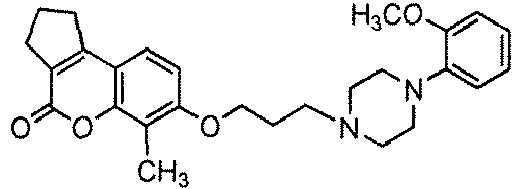
1 3 N II CH3 H OCH3 H 7 
1 4 N II H H OCH3 H 8 
1 4 N II H H H OCH3 9 
1 4 N II H H H F 10 
1 4 CH III O H H F 11 
1 4 N II CH3 H OCH3 H 12 
1 4 N III S CH3 H H 13 
1 4 N II Cl H OCH3 H 14 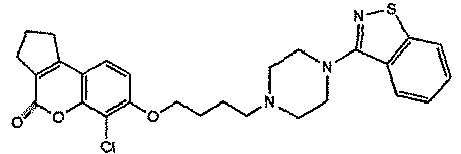
1 4 N III S Cl H H 15 
1 4 CH III O Cl H F 16 
1 4 CH III O H Cl F 17 
1 4 N II H Cl OCH3 H 18 
2 4 CH III O H H F 19 
2 4 N II H H OCH3 H 20 
2 4 N II CH3 H OCH3 H 21 
2 4 CH III O CH3 H F - Rats were sacrificed by cervical dislocation on ice. Cerebral cortex was rapidly taken, and 2 cerebral cortexes were combined into a centrifuge tube, to which 3 ml of buffer (0.05 M Tris-HCl buffer, containing 0.1% ascorbic acid, 10 µm pargyline and 4 mM CaCl2) was added. Homogenization was conducted for 3-4 s at level 4 for four times, and then 5 ml of buffer was added (0.05 M Tris-HCl buffer, containing 0.1% ascorbic acid, 10 µm pargyline and 4 mM CaCl2). Incubation at 37°C was conducted for 10 min, the weight of the tubes were adjusted using a balance after incubation. Centrifugation was conducted at 12000 r, 4°C for 20 min, the supernatant was discarded, and 3 ml of buffer was added. Vortex mixer was used for blending, and then 5 ml of buffer was added. Centrifugation was conducted and repeated 3 times. After the centrifugations, the supernatant was discarded, and the pellets were stored at -80°C for future use.
- Isotope ligand 3H-8-OH-DPAT(67.0Ci/mmol) was purchased from PerkinElmer Company; 5-HT was purchased from RBI Company; GF/C glass fiber filter paper was purchased from Whatman Company; Tris was imported and divided into aliquots; PPO, POPOP were purchased from Shanghai No. 1 Reagent Factory; lipid-soluble scintillation solution. Beckman LS-6500 Multi-function Liquid Scintillation Counter was used.
-
- (1) The prepared membrane was first applied with appropriate amount of buffer, and homogenizer was used for evenly dispersing. 15 tubes were mixed into a 100 ml container, and appropriate amount of buffer was added to give 50 ml of membrane suspension, which was reserved for future use.
- (2) 100 µL of membrane preparation and 100 µL of homogenized liquid were added into each reaction tube.
- (3) 100 µL of homogenized liquid was added into the total binding tube (TB), 100 µL of 5-HT (final concentration 10-5 M) was added into the non-specific binding tube (NB), and 100 µL of the test compound (final concentration 10-5 M) was added into the specific binding tube (SB) for each compound.
- (4) 10 µL of radioactive ligand 3H-8-OH-DPAT was respectively added into each reaction tube (2 parallel tubes were used for each reaction tube, and each of them was placed on ice when adding sample).
- (5) Each reaction tube was incubated at 37°C for 10 min; after the reaction was completed, the bound ligands were rapidly filtered under reduced pressure, and the ice-chilled assay buffer was used for adequate washing. The filter was taken out and put into a 3 ml scintillation vial, and 2 ml of toluene scintillation solution was added and blended.
- (6) The scintillation vials were put into Liquid Scintillation Counter for counting.
- Inhibition rate (I%)=(Total binding tube cpm - compound cpm)/(Total binding tube cpm - non-specific binding tube cpm)×100%
- Each assay for the compounds was conducted in duplicate.
- The results are listed in Table 2.
- Rats were sacrificed by cervical dislocation on ice. Cerebral cortex was rapidly taken, and 2 cerebral cortexes were combined into a centrifuge tube, to which 3 ml of buffer (0.05 M Tris-HCl buffer: 6.05 g of Tris was dissolved in 1000 ml of double-distilled water, and concentrated HCl was used to adjust to pH 7.5) was added, homogenization was conducted for 3-4 s at level 4 for four times, and then 5 ml of buffer was added. Incubation at 37°C was conducted for 10 min, the weight of the tubes were adjusted using a balance after incubation. Centrifugation was conducted at 12000 r, 4°C for 20 min, the supernatant was discarded, and 3 ml of A solution was added. Vortex mixer was used for blending, and then 5 ml of buffer was added. Centrifugation was conducted (repeated 3 times). After the centrifugations, the supernatant was discarded, and the pellets were stored at -80°C for future use.
- Isotope ligand [3H]-Ketanserin (67.0Ci/mmol) was purchased from PerkinElmer Company; Methysergide was purchased from RBI Company; GF/C glass fiber filter paper was purchased from Whatman Company; Tris was imported and divided into aliquots; PPO, POPOP were purchased from Shanghai No. 1 Reagent Factory; lipid-soluble scintillation solution. Beckman LS-6500 Multi-function Liquid Scintillation Counter was used.
-
- (1) The prepared membrane was first applied with appropriate amount of buffer, and homogenizer was used for evenly dispersing. 15 tubes were mixed into a 100 ml container, and appropriate amount of buffer was added to give 50 ml of membrane suspension, which was reserved for future use.
- (2) 100 µL of membrane preparation and 100 µL of homogenized liquid were added into each reaction tube.
- (3) 100 µL of homogenized liquid was added into the total binding tube (TB), 100µL of Methysergide (final concentration 10-5 M) was added into the non-specific binding tube (NB), and 100 µL of the test compound (final concentration 10-5 M) was added into the specific binding tube (SB) for each compound.
- (4) 10 µL of radioactive ligand 3H-Ketanserin was respectively added into each reaction tube (2 parallel tubes were used for each reaction tube, and each of them was placed on ice when adding sample).
- (5) Each of the reaction tubes was incubated at 37°C for 15 min. After the reaction was completed, the bound ligands were rapidly filtered under reduced pressure, and the ice-chilled assay buffer was used for adequate washing. The filter was taken out and put into a 3 ml scintillation vial, and 2ml of toluene scintillation solution was added and blended.
- (6) The scintillation vials were put into Liquid Scintillation Counter for counting.
- Inhibition rate (I%)=(Total binding tube cpm - compound cpm)/(Total binding tube cpm - non-specific binding tube cpm)×100%
- Each assay for the compounds was conducted in duplicate.
- The results are listed in Table 2.
- Rats were sacrificed by cervical dislocation on ice. Cerebral cortex was rapidly taken, and 2 cerebral cortexes were combined into a centrifuge tube, to which 3 ml of buffer (0.05 M Tris-HCl buffer, containing NaCl 120 mM, KCl 5 mM, MgCl2 1 mM, CaCl2 1 mM) was added, homogenization was conducted for 3-4 s at level 4 for four times, and then 5 ml of buffer was then added. The weight of the homogenized tubes were adjusted using a balance, and centrifugation was conducted at 12000 r, 4°C for 20 min. The supernatant was discarded, and 3 ml of B solution was added. Vortex mixer was used for blending, and then 5 ml of B solution was added. Centrifugation was conducted and repeated 3 times. After the centrifugations, the supernatant was discarded, and the pellets were stored at -80°C for future use.
- Isotope ligand 3H-Spiperone (67.0Ci/mmol) was purchased from PerkinElmer Company; Butaclamol was purchased from RBI Company; GF/C glass fiber filter paper was purchased from Whatman Company; Tris was imported and divided into aliquots; PPO, POPOP were purchased from Shanghai No. 1 Reagent Factory; lipid-soluble scintillation solution. Beckman LS-6500 Multi-function Liquid Scintillation Counter was used.
-
- (1) The prepared membrane was first applied with appropriate amount of homogenized liquid, and homogenizer was used for evenly dispersing. 15 tubes were mixed into a 100 ml container, and appropriate amount of homogenized liquid was added to give 50 ml of membrane suspension, which was reserved for future use.
- (2) 100 µL of membrane preparation and 100 µL of buffer were added into each reaction tube.
- (3) 100 µL of homogenized liquid was added into the total binding tube (TB), 100 µL of Butaclamol (final concentration 10-5 M) was added into the non-specific binding tube (NB), and 100 µL of the test compound (final concentration 10-5 M) was added into the specific binding tube (SB) for each compound.
- (4) 10 µL of radioactive ligand 3H-Spiperone was respectively added into each reaction tube (2 parallel tubes were used for each reaction tube, and each of them was placed on ice when adding sample).
- (5) Each of the reaction tubes was incubated at 37°C for 20 min. After the reaction was completed, the bound ligands were rapidly filtered under reduced pressure, and the ice-chilled assay buffer was used for adequate washing. The filter was taken out and put into a 3 ml scintillation vial, and 2 ml of toluene scintillation solution was added and blended.
- (6) The scintillation vials were put into Liquid Scintillation Counter for counting.
- Inhibitory rate (I%)=(Total binding tube cpm - compound cpm)/(Total binding tube cpm - non-specific binding tube cpm)×100%
- Each assay for the compounds was conducted in duplicate.
- The results are listed in Table 2.
- In HEK-293 cells, after 48-72 hours, receptor proteins were expressed on membrane in large amount. After the cells were centrifuged at 1000 rpm for 5 min, the supernatant was discarded, and the cell pellet was collected and stored in a -20°C fridge for reservation. It was re-suspended with Tris-Cl (pH 7.4) in the assay.
- D3 receptor isotope ligand [3H]-Spiperone was purchased from Amersham Company; (+)Butaclamol was purchased from RBI Company; GF/C glass fiber filter paper was purchased from Whatman Company; lipid-soluble scintillation solution. Tris was divided into aliquots by Genetimes Technology Inc.
- Competitive binding test for receptors: 20 µl of each of the test compounds and 20 µl of the radioactive ligand together with 160 µl of the receptor proteins were added into the reaction tubes, and the final concentrations of the test compound and the positive drug were all 10 µmol/L. After 50 min of incubation in 30°C water bath, the tubes were immediately moved to ice bath to terminate the reactions. GF/C glass fiber filter papers were used for rapid sucking filtration on a Millipore cell sample collector, elution buffer (50 mM Tris-HCl, PH 7.4) was applied for 3 ml × 3 times, and microwave was applied for 4-5 min for drying. The filter papers were moved into 0.5 ml centrifuge tubes, and 500 µl of lipid-soluble scintillation solution was added. The tubes were allowed to stand still for over 30 min in dark, and the intensities of radioactivity were measured by a counter. The percentage inhibition rates of each compound against the binding of isotope ligands were calculated according to the following formula:
- Inhibition rate (I%)=(Total binding tube cpm - compound cpm)/(Total binding tube cpm - non-specific binding tube cpm)×100%
- The results are listed in Table 2.
- Rats were sacrificed by cervical dislocation on ice. Cerebral cortex was rapidly taken, and 2 cerebral cortexes were combined into a centrifuge tube, to which 3 ml of buffer (0.05 M Tris-HCl buffer, 6.05 g of Tris was dissolved in 1000 ml of double-distilled water, and concentrated HCl was used to adjust to pH 7.5) was added, homogenization was conducted for 3-4 s at level 4 for four times, and then 5 ml of buffer was added. Incubation at 37°C was conducted for 10 min, the weight of the tubes were adjusted using a balance after the incubation. Centrifugation was conducted at 12000 r, 4°C for 20 min, the supernatant was discarded, and 3 ml of A solution was added. Vortex mixer was used for blending, and then 5 ml of buffer was added. Centrifugation was conducted (repeated 3 times). After the centrifugations, the supernatant was discarded, and the pellets were stored at -80°C for future use.
- Isotope ligand [3H]-mesulergine (67.0 Ci/mmol) was purchased from PerkinElmer Company; mianserin was purchased from RBI Company; GF/C glass fiber filter paper was purchased from Whatman Company; Tris was imported and divided into aliquots; PPO, POPOP were purchased from Shanghai No. 1 Reagent Factory; lipid-soluble scintillation solution. Beckman LS-6500 Multi-function Liquid Scintillation Counter was used.
-
- (1) The prepared membrane was first applied with appropriate amount of homogenized liquid, and homogenizer was used for evenly dispersing. 15 tubes were mixed into a 100 ml container, and appropriate amount of homogenized liquid was added to give 50 ml of membrane suspension, which was reserved for future use.
- (2) 100 µL of membrane preparation and 100 µL of buffer were added into each reaction tube.
- (3) 100 µL of homogenized liquid was added into the total binding tube (TB), 100 µL of mianserin (final concentration 10-5 M) was added into the non-specific binding tube (NB), and 100 µL of the test compound (final concentration 10-5 M) was added into the specific binding tube (SB) for each compound.
- (4) 10 µL of radioactive ligand [3H]-mesulergine was respectively added into each reaction tube (2 parallel tubes were used for each reaction tube, and each of them was placed on ice when adding sample).
- (5) Each of the reaction tubes was incubated at 37°C for 15 min. After the reaction was completed, the bound ligands were rapidly filtered under reduced pressure, and the ice-chilled assay buffer was used for adequate washing. The filter was taken out and put into a 3 ml scintillation vial, and 2 ml of toluene scintillation solution was added and blended.
- (6) The scintillation vials were put into Liquid Scintillation Counter for counting.
- Inhibition rate (I%)=(Total binding tube cpm - compound cpm)/(Total binding tube cpm - non-specific binding tube cpm)×100%
- Each assay for the compounds was conducted in duplicate.
- The results are listed in Table 2.
- The results of in vitro assay indicate that compound 7 has relatively stronger affinities for four receptors (D2, D3, 5-HT1A and 5-HT2A), while lower affinity for 5HT2C.
- Healthy mice of Kunming breed (with half male and half female, (20±2)g) were provided by Qinglongshan Animal Cultivation Center, Nanjing.
- Ascorbic acid was provided by Sinopharm Chemical Reagent Co. Ltd.
- MK-801 was produced by Sigma Company, USA; the formulation method: 0.1% vitamin C was used to formulate a 1 mg/ml solution.
- Test positive drugs: haloperidol, clozapine, risperidone, olanzapine, aripiprazole, ziprasidone, quetiapine.
- Tween 80, with the concentration of 10%.
- Mice with qualified body weight were selected, and randomly divided into blank group, model group, positive control group (risperidone group) and drug group. 10% Tween was administered intragastrically to the blank group and the model group at 0.1 ml/10g; risperidone was administered intragastrically to the positive control group at 0.1 mg/kg; and corresponding amounts of drugs were administered intragastrically to the drug groups, respectively. 1 h after the administration, 0.1% of ascorbic acid was intraperitoneally injected to the blank group at 0.1 ml/10g; and the model group, the positive control group (30 min) and the drug groups were intraperitoneally injected the MK-801 solution at 0.1 mg/kg. Subsequently, the spontaneous activities of the mice of each group in 90 min were measured.
- The results are listed in Table 3.
- The results of this assay indicate that, when compared to the model group, risperidone, compound 7 can not only significantly improve the MK-801 induced high activity, but also effectively improve the apomorphine induced clambering symptoms, and they did not cause EPS at effective dosage, indicating that they have notable anti-schizophrenia effects.
- Healthy KM mice (male, with body weight of 18-22 g) were provided by Qinglongshan Animal Cultivation Center, Nanjing.
- Test positive drugs: haloperidol, clozapine, risperidone, olanzapine, aripiprazole, ziprasidone, quetiapine.
- Apomorphine provided by Sigma Company was dissolved in 0.9 % NaCl (containing 0.1% vitamin C) before use, and was freshly formulated before use.
- Vitamin C, F20061113, was provided by Sinopharm Chemical Reagent Co. Ltd.
- Sodium chloride injection, H32026305, was provided by Xuzhou No. 5 Pharmaceutical Factory Co. Ltd.
- Instruments: self-made clambering cage, chronograph.
- Procedures: apomorphine induced clambering assay of mice
- KM mice (male, with body weight of 18-22 g) were randomly divided into negative control group, model group, positive drug groups for each dosage (risperidone, aripiprazole, ziprasidone, quetiapine, olanzapine, haloperidol, clozapine), and compound groups for each dosage (the specific dosages are listed in Table 4), with 10 mice in each group. Corresponding solvent double-distilled water was administered intragastrically to the negative control group and the model group, corresponding positive drugs were administered intragastrically to the positive drug groups (a small amount of acetic acid was first added and then double-distilled water was added when dissolving), and corresponding dosages of compounds were administered intragastrically to the compound groups for each dosage, with the volume for intragastric administration as 0.1 ml/10g. 1 hour after the intragastric administration, apomorphine was subcutaneously injected (1 mg/kg), with the volume as 0.1 ml/10g. After the injection of apomorphine, the mice were immediately put into the clambering cages. After 5 min of adaptation, the behaviors of the mice at 10-11, 20-21, and 30-31 min after the injection of apomorphine were observed and scored. Scoring criteria: 4 paws on the floor was scored as 0; 2 forepaws on the cage was scored as 1; and 4 paws on the cage was scored as 2.
- Healthy mice of Kunming breed (with half male and half female, (22±2)g) were provided by Qinglongshan Animal Cultivation Center, Nanjing.
- Main reagents: the test drugs, haloperidol, clozapine, risperidone, olanzapine, aripiprazole, ziprasidone.
- Instruments: self-made bar-grabbing apparatus: stainless steel bar in mice box, which was 0.3 cm in diameter and 5 cm above the bench.
- KM mice (half male and half female, with body weight of 20-24 g) were randomly divided into negative control group, model group, positive drug groups for each dosage (risperidone, aripiprazole, ziprasidone, quetiapine, olanzapine, haloperidol, clozapine), and compound groups for each dosage, with 10 mice in each group. Corresponding solvent double-distilled water was administered intragastrically to the negative control group and the model group, corresponding positive drugs were administered intragastrically to the positive drug groups (a small amount of acetic acid was first added and then double-distilled water was added when dissolving), and corresponding dosages of compounds were administered intragastrically to the compound groups for each dosage, with the volume for intragastric administration as 0.1 ml/10g. At 30 min, 60 min, 90 min after the intragastric administration, the two forepaws of the mice were gently placed on the bars (which were 20 cm in length, 0.3 cm in diameter, and 5.5 cm above the bench), and the hindpaws of the animals were placed on the bottom of the box. The durations for the mice to maintain the posture with the two forepaws on the bars were recorded, and 30 s of spasticity without moving was considered as the positive response. In the case the forepaws of the mice were not put down persistently, the observation was terminated at 60 s. The numbers of animals with positive response in each of the compound dosage groups were counted.
- Limit test of sequential assay KM mice (half male and half female) were randomly divided into several groups (with 2-5 mice in each group), which were respectively the 2000 mg/kg groups for each compound, and the solvent group. 0.2 ml/10g were administered intragastrically. The death of the animals in 3 days were observed. (In the case 3 or more animals survived in 3 days without notable abnormity in their life states, the observation was continued until the assay was completed in 7 days. In the case 3 or more animals died in 3 days, the median lethal dose method was used to determine the LD50).
- Pre-assay for the median lethal dose method KM mice (half male and half female) were randomly divided into several groups (with 4 mice in each group), which were respectively the 1500 mg/kg, 1000 mg/kg, 500 mg/kg groups for each compound, and the solvent group. 0.2 ml/10g were administered intragastrically, and the death of the animals in 1-3 days were observed.
- Results The LD50 of single intragastric administration of compound 7 in mice was greater than 2000 mg/kg, which was comparable to ziprasidone (> 2000 mg/kg), and was far greater than risperidone (82.1 mg/kg) and aripiprazole (93 mg/kg), indicating a relatively low acute toxicity.
Table 2. The inhibition or IC50 of the compounds for each receptor Compound No. D2 inhibition% or (IC50, nM) 5HT1A inhibition% or (IC50, nM) 5HT2A inhibition% or (IC50, nM) D3 (IC50, nM) 5HT2C (IC50, nM) 1 3.3% 102.6% 82.9% - - 2 11.5% 65.8% 14.3% - - 3 17.2% 104.1% 62.2% - - 4 50.2% 115.5% 111.5% - - 5 5.6a 0.03a 0.56a 8.9a 1156.3a 6 4.7% 95.5% 75.4% - - 7 2.1a 0.08a 0.78a 7.4a 1300.6a 8 26.4% 62.8% 23.4% - - 9 15.2% 104.4% 119.2% - - 10 5.7% 42.5% 68.4% - - 11 59.2% 106.1% 104.63% - - 12 61.2% 103.9% 106.6% - - 13 59.2% 106.1% 104.6% - - 14 10.1a 0.86a 0.82a 15.1a 1489.2a 15 8.1a 0.73a 0.29a 8.6a 1893.6a 16 51.5% 55.3% 88.4% - - 17 15.4% 114.9% 104.3% - - 18 80.6% 46.6% 113.5% - - 19 3.6a 4.2a 1.8a 13.2a 1123.3a 20 66.4% 100.1% 90.7% - - 21 45.5% 54.3% 97.1% - - aripiprazole 24.3a 3.3a 11.5a 37.9a 25.7a (Note: "a" indicates that the data in the cell is IC50 value) Table 3. Results of the in vivo animal model assay of the preferable compounds Compound No. LD50 (po,mg/kg) MK-801 induced high activity (ED50, po, mg/kg) apomorphine induced clambering (ED50, po, mg/kg) catalepsy (ED50,po,mg /kg) catalepsy/M K-801 induced high activity catalepsy/ap omorphine induced clambering 5 > 2000 0.35 0.68 168.32 480.91 247.53 7 >2000 2.05 0.13 261.49 127.56 2011.46 14 >2000 0.82 0.25 189.25 230.79 757 15 >2000 1.25 0.56 98.86 79.09 176.54 19 > 2000 2.35 0.15 156.35 66.53 1042.33 haloperidol 20 7.42 0.10 0.44 4.40 4.89 clozapine 150 2.28 17.92 >50 >21.93 >5.58 risperidone 82.1 0.01 0.015 0.92 92.00 61.33 olanzapine 177 0.10 0.11 2.23 22.30 20.27 aripiprazole 93 0.12 0.66 2.40 20.00 11.43 ziprasidone >2000 0.56 0.37 30.40 54.29 82.16 quetiapine 800 10.1 2.02 800.00 79.21 396.04 Table 4 Effect of the compounds on the apomorphine induced mice schizophrenia clambering model (x±s, n=10) Group Dosage (mg/kg) Scoring (value) Negative Control Group - 2.69±1.75 Model Group - 2.60±0.97## 5 3 0.20±0.63** 1 0.90±1.20** 0.3 3.00±1.94** 0.1 4.60±2.07 7 100 0.00±0.00** 30 1.80±1.40** 10 2.60±1.58** 3 3.50±1.96** 14 10 0.80±1.40** 3 0.25±0.71** 1 1.25±1.75** 0.3 2.10±1.85** 0.1 5.30±1.25 15 3 0.50±0.76** 1 3.00±1.60** 0.3 3.38±0.92** 0.1 4.75±1.58 19 3 0.40±0.97** 1 1.50±1.20** 0.3 4.90±1.10 0.52 0.75±1.04** risperidone 0.3 0.20±0.63** 0.1 1.80±1.32** 0.03 2.70±1.77** 0.01 5.20±1.87 aripiprazole 10 0.20±0.42** 3 2.30±1.57** 1 1.5±1.08** 0.3 4.50±1.51 ziprasidone 10 0.40±0.84** 3 0.70±1.16** 1 3.80±1.40** 0.3 4.40±2.01 quetiapine 300 0.50±1.07** 100 2.60±2.55** 30 4.00±2.31* 10 3.00±1.63** 3 4.00±2.05* olanzapine 3 0.30±0.48** 1 1.30±1.25** 0.3 2.10±1.10** 0.1 5.00±1.25 clozapine 30 0.60±1.07** 23 3.70±2.21 * 17.4 4.60±2.07 10 5.50±0.76 haloperidol 1 0.60±1.58** 0.3 0.70±0.82** 0.23 0.80±0.79** 0.174 2.20±1.69** 0.13 1.50±1.27** 0.1 4.50±1.78 Table 5 Comparison of the Animal Models Patent Compound No. LD50 (po, mg/kg) MK-801 induced high activity (A) (ED50, po, mg/kg) apomorphine induced clambering (B) (ED50, po, mg/kg) catalepsy (C) (ED50, po, mg/kg) C/A C/B CN 201110086701.8 1 >2000 0.61 0.32 1.41 2.35 4.41 6 > 2000 0.32 0.11 0.68 2.13 6.18 7 1000-2000 0.27 0.15 1.50 5.56 10.00 19 >2000 1.33 1.68 70.85 53.27 42.17 23 >2000 4.24 0.21 46.14 10.88 219.71 The present Invention 5 > 2000 0.35 0.68 168.32 480.91 247.53 7 > 2000 2.05 0.13 261.49 127.56 2011.46 14 >2000 0.82 0.25 189.25 230.79 757 15 > 2000 1.25 0.56 98.86 79.09 176.54 19 > 2000 2.35 0.15 156.35 66.53 1042.33 haloperidol 20 7.42 0.10 0.44 4.40 4.89 clozapine 150 2.28 17.92 >50 21.93 >5.58 risperidone 82.1 0.01 0.015 0.92 92.00 61.33 olanzapine 177 0.10 0.11 2.23 22.30 20.27 aripiprazole 93 0.12 0.66 2.40 20.00 11.43 ziprasidone >2000 0.56 0.37 30.40 54.29 82.16 quetiapine 800 10.1 2.02 800.00 79.21 396.04 Table 6. Comparison of Results of the In Vitro Receptor Assays Patent Compound No. D2 inhibition % 5HT1A (IC50, nM) 5HT2A (IC50, nM) D3 inhibition% 5HT2C inhibition% CN 201110086701.8 1 128.3% 9.61a 1.53a 97.6% 88.0% 6 101.3% 3.52a 0.39a 100.4% 91.4% 7 102.8% 5.95a 0.69a 101.1% 82.0% 12 124.1% 127.3a 9.26a 103.1% 93.4% 18 113.3% 6.19a 0.79a 103.3% 77.6% 22 111.8% 12.81a 6.88a 103.8% 99.8% The Present Invention Compound No. D2 (IC50, nM) 5HT1A (IC50, nM) 5HT2A (IC50, nM) D3 (IC50, nM) 5HT2C (IC50, nM) 5 5.6a 0.03a 0.56a 8.9a 1156.3a 7 2.1a 0.08a 0.78a 7.4a 1300.6a 14 10.1a 0.86a 0.82a 15.1a 1489.2a 15 8.1a 0.73a 0.29a 8.6a 1893.63 19 3.6a 4.2a 1.8a 13.2a 1123.3a aripiprazole 24.3a 3.3a 11.5a 37.9a 25.7a -
Active Ingredient (the compound according to the invention) 100 mg microcrystalline cellulose 50 mg lactose 100 mg Povidone K30 9 mg carboxymethyl starch sodium 12 mg silica 2.5 mg magnesium stearate 1.5 mg - The raw excipients were sieved with 80 mesh for use. The prescription doses of active ingredient, microcrystalline cellulose, lactose, Povidone K30 were weighed and introduced into a high speed mixing granulator, whereby they were mixed uniformly at low speed. A suitable amount of purified water was added, the stirring was performed at low speed, and high speed shear granulation was carried out. The wet granules were dried at 60°C for 3 h, and sieved with 24 mesh. The prescription doses of carboxymethyl starch sodium, silica and magnesium stearate were added for mixing totally. The compression was performed in a rotary tablet press.
-
Active Ingredient (the compound according to the invention) 100 mg lactose 80 mg starch 40 mg Povidone K30 7 mg silica 2 mg magnesium stearate 1 mg - The raw excipients were sieved with 80 mesh for use. The prescription doses of active ingredient, lactose, starch, Povidone K30 were weighed and introduced into a high speed mixing granulator, whereby they were mixed uniformly at low speed. A suitable amount of purified water was added, the stirring was performed at low speed, and high speed shear granulation was carried out. The wet granules were dried at 60°C for 3 h, and sieved with 24 mesh. The prescription doses of silica and magnesium stearate were added for mixing totally. The capsules were filled in a capsule filling machine.
MS (ESI) m/z 433.3([M+H]+).
Claims (19)
- A compound of formula I or a salt thereof:

n1 is 1, 2 or 3;
n2 is 3,4 or 5;
X is CH or N;
Ar has formula II or formula III;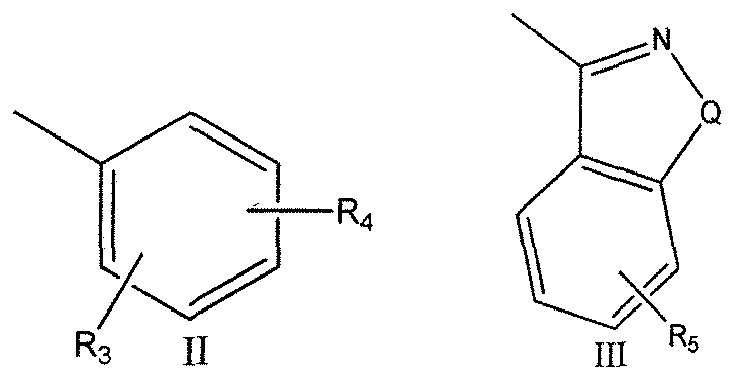
Q is O or S;
R1, R2, R3, R4 and R5 are each independently H, halogen, C1-C5alkyl, C1-C5alkyl substituted by halogen, C1-C5alkoxy or C1-C5alkoxy substituted by halogen. - The compound according to claim 1 or the salt thereof, characterized in that, the C1-C5alkyl is substituted by F.
- The compound according to claim 2 or the salt thereof, characterized in that, the C1-C5alkyl substituted by F is trifluoromethyl.
- The compound according to claim 1 or the salt thereof, characterized in that, the C1-C5alkyl is methyl.
- The compound according to claim 3 or the salt thereof, characterized in that, the C1-C5alkyl is methyl.
- The compound according to claim 1 or the salt thereof, characterized in that, the C1-C5alkoxy is methoxy.
- The compound according to claim 5 or the salt thereof, characterized in that, the C1-C5alkoxy is methoxy.
- The compound according to claim 1 or the salt thereof, characterized in that, the halogen represented by R1, R2, R3, R4 or R5 is Cl or F.
- The compound according to claim 8 or the salt thereof, characterized in that, when n1 is 1 or 2 and n2 is 3 or 4, then R1 or R2 is selected from the group consisting of H, halogen or C1-C5alkyl.
- The compound according to claim 9 or the salt thereof, characterized in that, R1 or R2 is selected from the group consisting of H, Cl or methyl.
- The compound according to claim 8 or the salt thereof, characterized in that, when Ar has the formula II, then X is N, and R3 or R4 is selected from the group consisting of H, halogen, C1-C5alkyl, C1-C5alkyl substituted by halogen, Cl-C5alkoxy and C1-C5alkoxy substituted by halogen.
- The compound according to claim 11 or the salt thereof, characterized in that, R3 or R4 is selected from the group consisting of Cl, F, methyl, trifluoromethyl or methoxy.
- The compound according to claim 8 or the salt thereof, characterized in that when Ar has the formula III, then Q is O or S, X is selected from the group consisting of N or CH, and R5 represents H or halogen.
- The compound according to claim 8 or the salt thereof, characterized in that, R5 represents F.
- The compound according to claim 1 or the salt thereof, which is the following compound or the salt thereof:(1) 7-{3-[4-(2,3-dimethylphenyl)piperazin-1-yl]-propoxy}-2,3-dihydro-1H-cyclopenteno[c] benzopyran-4-one,(2) 7-{3-[4-(2,3-dichlorophenyl)piperazin-1-yl]-propoxy}-2,3-dihydro-1H-cyclopenteno[c] benzopyran-4-one,(3) 7-{3-[4-(3-trifluoromethylphenyl)piperazin-1-yl]-propoxy}-2,3-dihydro-1H-cyclopenteno[c]benzopyran-4-one,(4) 7-{3-[4-(2-methoxyphenyl)piperazin-1-yl]-propoxy}-2,3-dihydro-1H-cyclopenteno[c] benzopyran-4-one,(5) 7-{3-[4-(3-(6-fluoro-benzisoxazole)-1-piperidyl)-n-propoxy]}-2,3-dihydro-1H-cyclopenteno[c]benzopyran-4-one,(6) 7-{3-[4-(2-methoxyphenyl)piperazin-1-yl]-propoxy}-6-methyl-2,3-dihydro-1H-cyclopenteno[c]benzopyran-4-one,(7) 7-{4-[4-(2-methoxyphenyl)piperazin-1-yl]-butoxy}-2,3-dihydro-1H-cyclopenteno[c] benzopyran-4-one,(8) 7-{4-[4-(4-methoxyphenyl)piperazin-1-yl]-butoxy}-2,3-dihydro-1H-cyclopenteno[c] benzopyran-4-one,(9) 7-{4-[4-(4-fluorophenyl)piperazin-1-yl]-butoxy}-2,3-dihydro-1H-cyclopenteno[c] benzopyran-4-one,(10) 7- {4-[4-(3-(6-fluoro-benzisoxazole)-1-piperidyl)-butoxy]}-2,3-dihydro-1H-cyclopenteno[c]benzopyran-4-one,(11) 7- {4-[4-(2-methoxyphenyl)piperazin-1-yl]-butoxy}-6-methyl-2,3-dihydro-1H-cyclopenteno[c]benzopyran-4-one,(12) 7-{4-[4-(3-(1,2-benzisothiazole)-1-piperazinyl)-butoxy]}-6-methyl-2,3-dihydro-1H-cyclopenteno[c]benzopyran-4-one,(13) 7- {4-[4-(2-methoxyphenyl)piperazin-1-yl]-butoxy}-6-chloro-2,3-dihydro-1H-cyclopenteno[c]benzopyran-4-one,(14) 7-{4-[4-(3-(1,2-benzisothiazole)-1-piperazinyl)-n-butoxy]}-6-chloro-2,3-dihydro-1H-cyclopenteno[c]benzopyran-4-one,(15) 7- {4-[4-(3-(6-fluoro-benzisoxazole)-1-piperidyl)-butoxy]}-6-chloro-2,3-dihydro-1H-cyclopenteno[c]benzopyran-4-one,(16) 7-{4-[4-(3-(6-fluoro-benzisoxazole)-1-piperidyl)-butoxy]}-8-chloro-2,3-dihydro-1H-cyclopenteno[c]benzopyran-4-one,(17) 7-{4-[4-(2-methoxyphenyl)piperazin-1-yl-butoxy]}-8-chloro-2,3-dihydro-1H-cyclopenteno [c]benzopyran-4-one,(18) 3-{4-[4-(3-(6-fluoro-benzisoxazole)-1-piperidyl)-butoxy]}-7,8,9,10-tetrahydrobenzo[c] benzopyran-6-one,(19) 3-{4-[4-(2-methoxyphenyl)piperazin-1-yl]-butoxy}-7,8,9,10-tetrahydrobenzo[c] benzopyran-6-one,(20) 3-{4-[4-(2-methoxyphenyl)piperazin-1-yl]-butoxy}-4-methyl-7,8,9,10-tetrahydrobenzo[c]benzopyran-6-one, or(21) 3-{4-[4-(3-(6-fluoro-benzisoxazole)-1-piperidyl)-butoxy]}-4-methyl-7,8,9,10-tetrahydrobenzo[c]benzopyran-6-one.
- The alicyclic[c]benzopyrone derivative according to any one of claims 1-15, characterized in that, the salt is a salt containing a pharmaceutically acceptable anion.
- A pharmaceutical composition comprising the compound according to any one of claims 1-16 or the salt thereof in a therapeutically effective amount, and a pharmaceutically acceptable carrier.
- Use of the compound according to any one of claims 1-16 or the salt thereof in the manufacture of a medicament for the treatment or prevention of a central nervous system disease.
- The use according to claim 18, characterized in that, the central nervous system disease is selected from the group consisting of mental disorder, anxiety, personality disorder, depression, mania, migraine, epilepsy or spasticity disorder, childhood disorder, Parkinson's disease, cognitive disorder, neural degeneration, neurotoxicity and ischemia, depression, memory disorder and functional disorders associated with intelligence and learning, preferably schizophrenia.
Applications Claiming Priority (2)
| Application Number | Priority Date | Filing Date | Title |
|---|---|---|---|
| CN2011102209624A CN102267971B (en) | 2011-08-03 | 2011-08-03 | Alicyclic-o[c] benzopyrone derivative and application thereof |
| PCT/CN2012/079413 WO2013017071A1 (en) | 2011-08-03 | 2012-07-31 | Alicyclic[c] benzopyrone derivatives and uses thereof |
Publications (3)
| Publication Number | Publication Date |
|---|---|
| EP2746269A1 true EP2746269A1 (en) | 2014-06-25 |
| EP2746269A4 EP2746269A4 (en) | 2014-12-31 |
| EP2746269B1 EP2746269B1 (en) | 2016-01-20 |
Family
ID=45050452
Family Applications (1)
| Application Number | Title | Priority Date | Filing Date |
|---|---|---|---|
| EP12819955.1A Active EP2746269B1 (en) | 2011-08-03 | 2012-07-31 | Alicyclic [c]benzopyrone derivatives and uses thereof |
Country Status (4)
| Country | Link |
|---|---|
| US (1) | US9018213B2 (en) |
| EP (1) | EP2746269B1 (en) |
| CN (1) | CN102267971B (en) |
| WO (1) | WO2013017071A1 (en) |
Families Citing this family (5)
| Publication number | Priority date | Publication date | Assignee | Title |
|---|---|---|---|---|
| CN102206214B (en) | 2011-04-07 | 2014-03-12 | 华中科技大学 | Benzopyrone derivative and application thereof |
| CN102267971B (en) * | 2011-08-03 | 2013-03-27 | 华中科技大学 | Alicyclic-o[c] benzopyrone derivative and application thereof |
| EP2958906A1 (en) * | 2013-02-21 | 2015-12-30 | Nobel Ilaç Sanayii Ve Ticaret A.S. | 3-substituted-6h-benzo[c]chromen-6-ones and 3-substituted-7,8,9,10-tetrahydro-6h-benzo[c]chromen-6-ones against senile dementia |
| CN104059046B (en) * | 2013-03-18 | 2017-02-08 | 江苏恩华药业股份有限公司 | flavonoid derivative and application thereof |
| CN103694233B (en) * | 2013-12-10 | 2016-08-17 | 沈阳药科大学 | Benzisoxa azole compounds and application thereof |
Family Cites Families (11)
| Publication number | Priority date | Publication date | Assignee | Title |
|---|---|---|---|---|
| US4025630A (en) | 1973-09-19 | 1977-05-24 | Abbott Laboratories | Anesthesia methods using benzopyrans and esters thereof as pre-anesthesia medication |
| DE3025385A1 (en) | 1980-07-04 | 1982-01-28 | Boehringer Mannheim Gmbh, 6800 Mannheim | NEW TRICYCLIC ARYL ETHERS, METHOD FOR THE PRODUCTION THEREOF AND MEDICINAL PRODUCTS CONTAINING THESE COMPOUNDS |
| US4569994A (en) | 1983-09-19 | 1986-02-11 | Pennwalt Corporation | Dibenzo[b,d]pyranyloxyaminopropanols |
| US4701456A (en) * | 1984-09-19 | 1987-10-20 | Warner-Lambert Company | Aminoalkoxybenzopyranones as antipsychotic and anxiolytic agents |
| US4678787A (en) * | 1985-01-30 | 1987-07-07 | Warner-Lambert Company | 4H-1-benzopyran-4-ones and their sulfur containing analogs |
| US5278174A (en) | 1990-06-04 | 1994-01-11 | Scios Nova, Inc. | Sigma binding site agents |
| DE4111861A1 (en) | 1991-04-11 | 1992-10-15 | Schwabe Willmar Gmbh & Co | BENZOPYRANONE, PROCESS FOR THEIR PREPARATION AND USE |
| CN1310899C (en) * | 2003-11-11 | 2007-04-18 | 沈阳化工研究院 | Benzopyrone compounds with pest killing and sterilizing activity and preparation and use |
| CN102038673B (en) * | 2009-10-20 | 2012-07-25 | 北京珅奥基医药科技有限公司 | Application of hydroxyl benzopyrone compound for preparing medicament for treating leukemia |
| CN102206214B (en) | 2011-04-07 | 2014-03-12 | 华中科技大学 | Benzopyrone derivative and application thereof |
| CN102267971B (en) | 2011-08-03 | 2013-03-27 | 华中科技大学 | Alicyclic-o[c] benzopyrone derivative and application thereof |
-
2011
- 2011-08-03 CN CN2011102209624A patent/CN102267971B/en active Active
-
2012
- 2012-07-31 WO PCT/CN2012/079413 patent/WO2013017071A1/en not_active Ceased
- 2012-07-31 EP EP12819955.1A patent/EP2746269B1/en active Active
- 2012-07-31 US US14/236,208 patent/US9018213B2/en active Active
Also Published As
| Publication number | Publication date |
|---|---|
| CN102267971A (en) | 2011-12-07 |
| EP2746269B1 (en) | 2016-01-20 |
| EP2746269A4 (en) | 2014-12-31 |
| US20140171442A1 (en) | 2014-06-19 |
| WO2013017071A1 (en) | 2013-02-07 |
| CN102267971B (en) | 2013-03-27 |
| US9018213B2 (en) | 2015-04-28 |
Similar Documents
| Publication | Publication Date | Title |
|---|---|---|
| EP2698369B1 (en) | Benzopyrone derivative and use thereof | |
| TWI786110B (en) | Crystalline forms of (s)-2-ethylbutyl 2-(((s)-(((2r,3s,4r,5r)-5-(4-aminopyrrolo[2,1-f] [1,2,4]triazin-7-yl)-5-cyano-3,4-dihydroxytetrahydrofuran-2-yl)methoxy)(phenoxy) phosphoryl)amino)propanoate | |
| EP3510027B1 (en) | Di-substituted pyrazole compounds for the treatment of diseases | |
| EP2746269B1 (en) | Alicyclic [c]benzopyrone derivatives and uses thereof | |
| EP3381915B1 (en) | Lactam compound derivative and application thereof | |
| WO2021091819A1 (en) | Salts and forms of an estrogen receptor modulator | |
| US8993575B2 (en) | [1,3,4] oxadiazole derivative and application thereof | |
| EP3372600B1 (en) | Fused heterocyclic compound derivative and application thereof | |
| CN102267966B (en) | Substituted benzopyrone derivatives and application thereof | |
| CN104059046B (en) | flavonoid derivative and application thereof | |
| CN114805263A (en) | 3-(Hydroxybenzyl)phthalide compound, its preparation method and use | |
| EP3941472B1 (en) | Crystalline and amorphous forms of-(5-((4-ethylpiperazin-1-yl)methyl)pyridine-2-yl)-5-fluoro-4-(3-isopropyl-2-methyl-2 <ns1:i>h</ns1:i>?-indazol-5-yl)pyrimidin-2-amine and its salts, and preparation methods and therapeutic uses thereof | |
| CN117143027B (en) | 3-Benzyloxy-6-hydroxyphenylpyridazine compounds and preparation method and use thereof | |
| CN121627661A (en) | A class of 2-thio-3-(piperidinedithio)phthalides, their preparation methods and uses | |
| CN109232549B (en) | Compound for treating schizophrenia and application thereof | |
| CN111377846B (en) | Piperazine benzamide derivative and application thereof | |
| CN121202835A (en) | A class of amine alkoxycotinine compounds, their preparation methods and uses | |
| CN121378212A (en) | 2- (Piperidyl alkyl) pyridazinone compound as well as preparation method and application thereof | |
| CN121202836A (en) | N-aminoalkylpyridinone compounds, their preparation methods and uses | |
| CN120192295A (en) | Arylpropylamine derivative and application thereof | |
| CN121627654A (en) | 3-(piperidinedithioalkyl)phthalide compounds, their preparation methods and uses | |
| EP0460358A2 (en) | Agent for treating disorders from cerebral neuro-degeneration | |
| JPH02289551A (en) | Ameliorant containing pyrimidine derivative as active ingredient for cerebral function | |
| BR112016029672B1 (en) | BIFENYL AMIDE COMPOUND WITH MODIFIED ETHER GROUPS AS HSP90 INHIBITORS AND HSP70 INDUCERS, PHARMACEUTICAL COMPOSITION COMPRISING SAID COMPOUND, AS WELL AS THERAPEUTIC USE THEREOF | |
| JPWO1987007894A1 (en) | Dibenz[b,e]oxepin derivatives and medicines containing them as active ingredients |
Legal Events
| Date | Code | Title | Description |
|---|---|---|---|
| PUAI | Public reference made under article 153(3) epc to a published international application that has entered the european phase |
Free format text: ORIGINAL CODE: 0009012 |
|
| 17P | Request for examination filed |
Effective date: 20140218 |
|
| AK | Designated contracting states |
Kind code of ref document: A1 Designated state(s): AL AT BE BG CH CY CZ DE DK EE ES FI FR GB GR HR HU IE IS IT LI LT LU LV MC MK MT NL NO PL PT RO RS SE SI SK SM TR |
|
| RAP1 | Party data changed (applicant data changed or rights of an application transferred) |
Owner name: HUAZHONG UNIVERSITY OF SCIENCE AND TECHNOLOGY Owner name: NHWA PHARMA. CORPORATION |
|
| DAX | Request for extension of the european patent (deleted) | ||
| RAP1 | Party data changed (applicant data changed or rights of an application transferred) |
Owner name: NHWA PHARMA CORPORATION Owner name: HUAZHONG UNIVERSITY OF SCIENCE AND TECHNOLOGY |
|
| A4 | Supplementary search report drawn up and despatched |
Effective date: 20141203 |
|
| RIC1 | Information provided on ipc code assigned before grant |
Ipc: A61K 31/496 20060101ALI20141127BHEP Ipc: A61P 25/22 20060101ALI20141127BHEP Ipc: A61P 25/28 20060101ALI20141127BHEP Ipc: C07D 413/14 20060101ALI20141127BHEP Ipc: A61P 9/10 20060101ALI20141127BHEP Ipc: C07D 417/12 20060101ALI20141127BHEP Ipc: A61P 25/06 20060101ALI20141127BHEP Ipc: A61P 25/14 20060101ALI20141127BHEP Ipc: C07D 311/80 20060101ALI20141127BHEP Ipc: A61P 25/16 20060101ALI20141127BHEP Ipc: A61P 25/18 20060101ALI20141127BHEP Ipc: A61K 31/454 20060101ALI20141127BHEP Ipc: C07D 409/12 20060101ALI20141127BHEP Ipc: A61P 25/08 20060101ALI20141127BHEP Ipc: C07D 311/94 20060101AFI20141127BHEP Ipc: A61P 25/24 20060101ALI20141127BHEP Ipc: C07D 405/12 20060101ALI20141127BHEP Ipc: A61K 31/453 20060101ALI20141127BHEP |
|
| GRAP | Despatch of communication of intention to grant a patent |
Free format text: ORIGINAL CODE: EPIDOSNIGR1 |
|
| INTG | Intention to grant announced |
Effective date: 20150727 |
|
| GRAS | Grant fee paid |
Free format text: ORIGINAL CODE: EPIDOSNIGR3 |
|
| GRAA | (expected) grant |
Free format text: ORIGINAL CODE: 0009210 |
|
| AK | Designated contracting states |
Kind code of ref document: B1 Designated state(s): AL AT BE BG CH CY CZ DE DK EE ES FI FR GB GR HR HU IE IS IT LI LT LU LV MC MK MT NL NO PL PT RO RS SE SI SK SM TR |
|
| REG | Reference to a national code |
Ref country code: GB Ref legal event code: FG4D |
|
| REG | Reference to a national code |
Ref country code: CH Ref legal event code: EP |
|
| REG | Reference to a national code |
Ref country code: IE Ref legal event code: FG4D |
|
| REG | Reference to a national code |
Ref country code: AT Ref legal event code: REF Ref document number: 771677 Country of ref document: AT Kind code of ref document: T Effective date: 20160215 |
|
| REG | Reference to a national code |
Ref country code: DE Ref legal event code: R096 Ref document number: 602012014232 Country of ref document: DE |
|
| REG | Reference to a national code |
Ref country code: LT Ref legal event code: MG4D Ref country code: NL Ref legal event code: MP Effective date: 20160120 |
|
| REG | Reference to a national code |
Ref country code: AT Ref legal event code: MK05 Ref document number: 771677 Country of ref document: AT Kind code of ref document: T Effective date: 20160120 |
|
| PG25 | Lapsed in a contracting state [announced via postgrant information from national office to epo] |
Ref country code: NL Free format text: LAPSE BECAUSE OF FAILURE TO SUBMIT A TRANSLATION OF THE DESCRIPTION OR TO PAY THE FEE WITHIN THE PRESCRIBED TIME-LIMIT Effective date: 20160120 |
|
| PG25 | Lapsed in a contracting state [announced via postgrant information from national office to epo] |
Ref country code: FI Free format text: LAPSE BECAUSE OF FAILURE TO SUBMIT A TRANSLATION OF THE DESCRIPTION OR TO PAY THE FEE WITHIN THE PRESCRIBED TIME-LIMIT Effective date: 20160120 Ref country code: IT Free format text: LAPSE BECAUSE OF FAILURE TO SUBMIT A TRANSLATION OF THE DESCRIPTION OR TO PAY THE FEE WITHIN THE PRESCRIBED TIME-LIMIT Effective date: 20160120 Ref country code: HR Free format text: LAPSE BECAUSE OF FAILURE TO SUBMIT A TRANSLATION OF THE DESCRIPTION OR TO PAY THE FEE WITHIN THE PRESCRIBED TIME-LIMIT Effective date: 20160120 Ref country code: NO Free format text: LAPSE BECAUSE OF FAILURE TO SUBMIT A TRANSLATION OF THE DESCRIPTION OR TO PAY THE FEE WITHIN THE PRESCRIBED TIME-LIMIT Effective date: 20160420 Ref country code: GR Free format text: LAPSE BECAUSE OF FAILURE TO SUBMIT A TRANSLATION OF THE DESCRIPTION OR TO PAY THE FEE WITHIN THE PRESCRIBED TIME-LIMIT Effective date: 20160421 Ref country code: ES Free format text: LAPSE BECAUSE OF FAILURE TO SUBMIT A TRANSLATION OF THE DESCRIPTION OR TO PAY THE FEE WITHIN THE PRESCRIBED TIME-LIMIT Effective date: 20160120 |
|
| PG25 | Lapsed in a contracting state [announced via postgrant information from national office to epo] |
Ref country code: LT Free format text: LAPSE BECAUSE OF FAILURE TO SUBMIT A TRANSLATION OF THE DESCRIPTION OR TO PAY THE FEE WITHIN THE PRESCRIBED TIME-LIMIT Effective date: 20160120 Ref country code: AT Free format text: LAPSE BECAUSE OF FAILURE TO SUBMIT A TRANSLATION OF THE DESCRIPTION OR TO PAY THE FEE WITHIN THE PRESCRIBED TIME-LIMIT Effective date: 20160120 Ref country code: LV Free format text: LAPSE BECAUSE OF FAILURE TO SUBMIT A TRANSLATION OF THE DESCRIPTION OR TO PAY THE FEE WITHIN THE PRESCRIBED TIME-LIMIT Effective date: 20160120 Ref country code: RS Free format text: LAPSE BECAUSE OF FAILURE TO SUBMIT A TRANSLATION OF THE DESCRIPTION OR TO PAY THE FEE WITHIN THE PRESCRIBED TIME-LIMIT Effective date: 20160120 Ref country code: SE Free format text: LAPSE BECAUSE OF FAILURE TO SUBMIT A TRANSLATION OF THE DESCRIPTION OR TO PAY THE FEE WITHIN THE PRESCRIBED TIME-LIMIT Effective date: 20160120 Ref country code: PT Free format text: LAPSE BECAUSE OF FAILURE TO SUBMIT A TRANSLATION OF THE DESCRIPTION OR TO PAY THE FEE WITHIN THE PRESCRIBED TIME-LIMIT Effective date: 20160520 Ref country code: IS Free format text: LAPSE BECAUSE OF FAILURE TO SUBMIT A TRANSLATION OF THE DESCRIPTION OR TO PAY THE FEE WITHIN THE PRESCRIBED TIME-LIMIT Effective date: 20160520 Ref country code: PL Free format text: LAPSE BECAUSE OF FAILURE TO SUBMIT A TRANSLATION OF THE DESCRIPTION OR TO PAY THE FEE WITHIN THE PRESCRIBED TIME-LIMIT Effective date: 20160120 |
|
| REG | Reference to a national code |
Ref country code: DE Ref legal event code: R097 Ref document number: 602012014232 Country of ref document: DE |
|
| PG25 | Lapsed in a contracting state [announced via postgrant information from national office to epo] |
Ref country code: DK Free format text: LAPSE BECAUSE OF FAILURE TO SUBMIT A TRANSLATION OF THE DESCRIPTION OR TO PAY THE FEE WITHIN THE PRESCRIBED TIME-LIMIT Effective date: 20160120 Ref country code: EE Free format text: LAPSE BECAUSE OF FAILURE TO SUBMIT A TRANSLATION OF THE DESCRIPTION OR TO PAY THE FEE WITHIN THE PRESCRIBED TIME-LIMIT Effective date: 20160120 |
|
| PLBE | No opposition filed within time limit |
Free format text: ORIGINAL CODE: 0009261 |
|
| STAA | Information on the status of an ep patent application or granted ep patent |
Free format text: STATUS: NO OPPOSITION FILED WITHIN TIME LIMIT |
|
| PG25 | Lapsed in a contracting state [announced via postgrant information from national office to epo] |
Ref country code: SM Free format text: LAPSE BECAUSE OF FAILURE TO SUBMIT A TRANSLATION OF THE DESCRIPTION OR TO PAY THE FEE WITHIN THE PRESCRIBED TIME-LIMIT Effective date: 20160120 Ref country code: CZ Free format text: LAPSE BECAUSE OF FAILURE TO SUBMIT A TRANSLATION OF THE DESCRIPTION OR TO PAY THE FEE WITHIN THE PRESCRIBED TIME-LIMIT Effective date: 20160120 Ref country code: RO Free format text: LAPSE BECAUSE OF FAILURE TO SUBMIT A TRANSLATION OF THE DESCRIPTION OR TO PAY THE FEE WITHIN THE PRESCRIBED TIME-LIMIT Effective date: 20160120 Ref country code: SK Free format text: LAPSE BECAUSE OF FAILURE TO SUBMIT A TRANSLATION OF THE DESCRIPTION OR TO PAY THE FEE WITHIN THE PRESCRIBED TIME-LIMIT Effective date: 20160120 |
|
| 26N | No opposition filed |
Effective date: 20161021 |
|
| PG25 | Lapsed in a contracting state [announced via postgrant information from national office to epo] |
Ref country code: BE Free format text: LAPSE BECAUSE OF FAILURE TO SUBMIT A TRANSLATION OF THE DESCRIPTION OR TO PAY THE FEE WITHIN THE PRESCRIBED TIME-LIMIT Effective date: 20160120 |
|
| PG25 | Lapsed in a contracting state [announced via postgrant information from national office to epo] |
Ref country code: BG Free format text: LAPSE BECAUSE OF FAILURE TO SUBMIT A TRANSLATION OF THE DESCRIPTION OR TO PAY THE FEE WITHIN THE PRESCRIBED TIME-LIMIT Effective date: 20160420 Ref country code: SI Free format text: LAPSE BECAUSE OF FAILURE TO SUBMIT A TRANSLATION OF THE DESCRIPTION OR TO PAY THE FEE WITHIN THE PRESCRIBED TIME-LIMIT Effective date: 20160120 |
|
| REG | Reference to a national code |
Ref country code: CH Ref legal event code: PL |
|
| GBPC | Gb: european patent ceased through non-payment of renewal fee |
Effective date: 20160731 |
|
| PG25 | Lapsed in a contracting state [announced via postgrant information from national office to epo] |
Ref country code: MC Free format text: LAPSE BECAUSE OF FAILURE TO SUBMIT A TRANSLATION OF THE DESCRIPTION OR TO PAY THE FEE WITHIN THE PRESCRIBED TIME-LIMIT Effective date: 20160120 |
|
| PG25 | Lapsed in a contracting state [announced via postgrant information from national office to epo] |
Ref country code: LI Free format text: LAPSE BECAUSE OF NON-PAYMENT OF DUE FEES Effective date: 20160731 Ref country code: FR Free format text: LAPSE BECAUSE OF NON-PAYMENT OF DUE FEES Effective date: 20160801 Ref country code: CH Free format text: LAPSE BECAUSE OF NON-PAYMENT OF DUE FEES Effective date: 20160731 |
|
| REG | Reference to a national code |
Ref country code: FR Ref legal event code: ST Effective date: 20170331 |
|
| REG | Reference to a national code |
Ref country code: IE Ref legal event code: MM4A |
|
| PG25 | Lapsed in a contracting state [announced via postgrant information from national office to epo] |
Ref country code: GB Free format text: LAPSE BECAUSE OF NON-PAYMENT OF DUE FEES Effective date: 20160731 |
|
| PG25 | Lapsed in a contracting state [announced via postgrant information from national office to epo] |
Ref country code: IE Free format text: LAPSE BECAUSE OF NON-PAYMENT OF DUE FEES Effective date: 20160731 |
|
| PG25 | Lapsed in a contracting state [announced via postgrant information from national office to epo] |
Ref country code: LU Free format text: LAPSE BECAUSE OF NON-PAYMENT OF DUE FEES Effective date: 20160731 |
|
| PG25 | Lapsed in a contracting state [announced via postgrant information from national office to epo] |
Ref country code: HU Free format text: LAPSE BECAUSE OF FAILURE TO SUBMIT A TRANSLATION OF THE DESCRIPTION OR TO PAY THE FEE WITHIN THE PRESCRIBED TIME-LIMIT; INVALID AB INITIO Effective date: 20120731 Ref country code: CY Free format text: LAPSE BECAUSE OF FAILURE TO SUBMIT A TRANSLATION OF THE DESCRIPTION OR TO PAY THE FEE WITHIN THE PRESCRIBED TIME-LIMIT Effective date: 20160120 |
|
| PG25 | Lapsed in a contracting state [announced via postgrant information from national office to epo] |
Ref country code: MT Free format text: LAPSE BECAUSE OF NON-PAYMENT OF DUE FEES Effective date: 20160731 Ref country code: MK Free format text: LAPSE BECAUSE OF FAILURE TO SUBMIT A TRANSLATION OF THE DESCRIPTION OR TO PAY THE FEE WITHIN THE PRESCRIBED TIME-LIMIT Effective date: 20160120 |
|
| PG25 | Lapsed in a contracting state [announced via postgrant information from national office to epo] |
Ref country code: TR Free format text: LAPSE BECAUSE OF FAILURE TO SUBMIT A TRANSLATION OF THE DESCRIPTION OR TO PAY THE FEE WITHIN THE PRESCRIBED TIME-LIMIT Effective date: 20160120 Ref country code: AL Free format text: LAPSE BECAUSE OF FAILURE TO SUBMIT A TRANSLATION OF THE DESCRIPTION OR TO PAY THE FEE WITHIN THE PRESCRIBED TIME-LIMIT Effective date: 20160120 |
|
| PGFP | Annual fee paid to national office [announced via postgrant information from national office to epo] |
Ref country code: DE Payment date: 20250722 Year of fee payment: 14 |