EP2744139A1 - Uplink feedback method, system and device - Google Patents
Uplink feedback method, system and device Download PDFInfo
- Publication number
- EP2744139A1 EP2744139A1 EP12821904.5A EP12821904A EP2744139A1 EP 2744139 A1 EP2744139 A1 EP 2744139A1 EP 12821904 A EP12821904 A EP 12821904A EP 2744139 A1 EP2744139 A1 EP 2744139A1
- Authority
- EP
- European Patent Office
- Prior art keywords
- sub
- frames
- frame
- ack
- nack
- Prior art date
- Legal status (The legal status is an assumption and is not a legal conclusion. Google has not performed a legal analysis and makes no representation as to the accuracy of the status listed.)
- Granted
Links
Images


Classifications
-
- H—ELECTRICITY
- H04—ELECTRIC COMMUNICATION TECHNIQUE
- H04L—TRANSMISSION OF DIGITAL INFORMATION, e.g. TELEGRAPHIC COMMUNICATION
- H04L5/00—Arrangements affording multiple use of the transmission path
- H04L5/003—Arrangements for allocating sub-channels of the transmission path
- H04L5/0053—Allocation of signalling, i.e. of overhead other than pilot signals
- H04L5/0055—Physical resource allocation for ACK/NACK
-
- H—ELECTRICITY
- H04—ELECTRIC COMMUNICATION TECHNIQUE
- H04B—TRANSMISSION
- H04B7/00—Radio transmission systems, i.e. using radiation field
- H04B7/24—Radio transmission systems, i.e. using radiation field for communication between two or more posts
- H04B7/26—Radio transmission systems, i.e. using radiation field for communication between two or more posts at least one of which is mobile
- H04B7/2643—Radio transmission systems, i.e. using radiation field for communication between two or more posts at least one of which is mobile using time-division multiple access [TDMA]
- H04B7/2656—Radio transmission systems, i.e. using radiation field for communication between two or more posts at least one of which is mobile using time-division multiple access [TDMA] for structure of frame, burst
-
- H—ELECTRICITY
- H04—ELECTRIC COMMUNICATION TECHNIQUE
- H04L—TRANSMISSION OF DIGITAL INFORMATION, e.g. TELEGRAPHIC COMMUNICATION
- H04L1/00—Arrangements for detecting or preventing errors in the information received
- H04L1/12—Arrangements for detecting or preventing errors in the information received by using return channel
- H04L1/16—Arrangements for detecting or preventing errors in the information received by using return channel in which the return channel carries supervisory signals, e.g. repetition request signals
- H04L1/18—Automatic repetition systems, e.g. Van Duuren systems
- H04L1/1829—Arrangements specially adapted for the receiver end
- H04L1/1861—Physical mapping arrangements
-
- H—ELECTRICITY
- H04—ELECTRIC COMMUNICATION TECHNIQUE
- H04L—TRANSMISSION OF DIGITAL INFORMATION, e.g. TELEGRAPHIC COMMUNICATION
- H04L1/00—Arrangements for detecting or preventing errors in the information received
- H04L1/12—Arrangements for detecting or preventing errors in the information received by using return channel
- H04L1/16—Arrangements for detecting or preventing errors in the information received by using return channel in which the return channel carries supervisory signals, e.g. repetition request signals
- H04L1/18—Automatic repetition systems, e.g. Van Duuren systems
- H04L1/1829—Arrangements specially adapted for the receiver end
- H04L1/1864—ARQ related signaling
Definitions
- the present invention relates to the field of communications and particularly to a method of and system and apparatus for performing an uplink feedback.
- Time Division Duplex (TDD) mode which is one of two major fundamental duplex systems has gained increasing attention along with a constantly increasing bandwidth demand of broadband mobile communications.
- TDD Time Division Duplex
- the same frequency resource is used for both uplink-downlink transmission, and uplink-downlink signals are transmitted in different timeslots.
- TD-SCDMA Time Division Synchronized Code Division Multiple Access
- TD-LTE TD-SCDMA Long Term Evolution
- uplink-downlink timeslots are allocated statically or semi-statically, and a common practice is to determine and keep an allocation proportion of uplink-downlink timeslots unchanged according to a type of cell and a general service proportion in the course of network planning. This is a relatively simple practice and also effective in the context of a macro cell with large coverage.
- the temporal cycle is a radio frame (which is illustrated only as an example, but another temporal cycle is also possible), where sub-frames #0 and #5 are fixed downlink sub-frame, sub-frames #2 and #7 are fixed uplink sub-frame, sub-frames #1 and #6 are special sub-frame (which can also be allocated as fixed sub-frames), and other sub-frames (#3, #4, #8 and #9) are sub-frame flexibly allocated for uplink or downlink transmission.
- a base station can dynamically configure them dependent upon a real-time service demand and channel condition to accommodate a dynamic change in service demand.
- bundling and multiplexing technologies are used for a Hybrid Automatic Repeat reQuest (HARQ), that is, ACK/NACK of multiple downlink sub-frames is fed back over a Physical Uplink Control Channel (PUCCH).
- HARQ Hybrid Automatic Repeat reQuest
- the ACK/NACK status is related to both information bit to be fed back over the PUCCH and a PUCCH resource index.
- the PUCCH resource index is mapped in the same manner as in the multiplexing technology in order to avoid PUCCH resource confliction between users.
- there is no confliction occurring with PUCCH resource mapping if a uniquely corresponding HARQ timing scheme is used for an uplink-downlink configuration scheme.
- a new HARQ scheme (also including the reuse of an HARQ scheme corresponding to a specific configuration of a non-dynamic system) is required in order to accommodate a flexible change in uplink-downlink sub-frame configuration. Also in order to ensure backward compatibility, it is necessary to semi-statically configure an existing uplink-downlink configuration and to use an HARQ scheme corresponding thereto for user equipments of lower releases. Thus different HARQ schemes may be used for users of R11 and later releases from users of lower releases. There may be PUCCH resource confliction for these two types of users if the existing PUCCH format 1/1a/1b resource index n PUCCH 1 mapping method is used.
- n PUCCH 1 can be configured by a higher layer for use in an Uplink Scheduling Request (SR), Semi-Persistent Scheduling (SPS) and other situations without Physical Downlink Control Channel (PDCCH) scheduling; and also can be bound with n CCE (an index of the first CCE, in a corresponding downlink sub-frame, used for a PDCCH) for use in situations with PDCCH scheduling.
- SR Uplink Scheduling Request
- SPS Semi-Persistent Scheduling
- PDCCH Physical Downlink Control Channel
- ACK/NACK/SR resources are divided by the parameter N PUCCH 1 into two sections.
- the higher layer configured n PUCCH 1 satisfies n PUCCH 1 ⁇ N PUCCH 1
- the calculated n PUCCH 1 satisfies n PUCCH 1 ⁇ N PUCCH 1 .
- n PUCCH 1 is configured by the base station itself, so n PUCCH 1 ⁇ N PUCCH 1 will not be precluded.
- a set of ACK/NACK/SR resources indicated by higher layer signaling is simply referred to as a higher layer configured section; and a set of ACK/NACK resources bound with n CCE is simply referred to as a predefined section or a calculation section.
- No boundary between the two sections is defined in the standard, but typically the higher layer section precedes the calculation section with n PUCCH 1 being a boundary between them, and for the sake of a simplified subsequent description, this typical scenario will be applicable throughout as an example. However in fact, respective solutions will not be limited to the typical scenario.
- n PUCCH 1 is calculated for firstly a sub-frame and then a section (the section actually refers to a range of values of n CCE , and sections are typically allocated dependent upon the number of PDCCH symbols, that is, the number of sections is equal to the number of PDCCH symbols).
- a n PUCCH 1 mapping method the uplink-downlink configuration 1).
- n - k if there is either a PDSCH indicated by a PDCCH(s) or a PDCCH indicating uplink Semi-Persistent Scheduling (SPS) resource releasing, where k ⁇ K with K being a set ⁇ k 0 , k 1 ,...
- SPS Semi-Persistent Scheduling
- the UE firstly selects a value of p from the set ⁇ 0, 1, 2, 3 ⁇ to satisfy N p ⁇ n CCE ⁇ N p +1 , where n CCE is the index of a first Control Channel Element (CCE), in the sub-frame n - k m , used for a PDCCH, where k m is the lowest value in the set K and satisfies such a condition that the UE detects the PDCCH in the sub-frame n - k m .
- CCE Control Channel Element
- n PUCCH 1 is configured jointly by a higher layer and Table 2.
- Table 1 Downlink association set index K : ⁇ k 0 , k 1 , ⁇ k M -1 ⁇ for TDD UL-DL
- i 1 is defined as an ACK/NACK feedback resource index derived from the sub-frame n - k i
- HARQ-ACK(i) is defined as particular information fed back by ACK/NACK/DTX corresponding to the sub-frame n - k i , where k i ⁇ K (as depicted in Table 1) and 0 ⁇ i ⁇ M -1:
- n PUCCH 1 is configured jointly by a higher layer and Table 2.
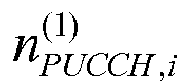
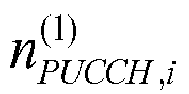
- This application is primarily focused upon how to configure n PUCCH , i 1 , and particularly how to use n PUCCH , i 1 in ACK/NACK bundling and ACK/NACK multiplexing is not a focus of this application, and the use of the existing system solution is recommended, so ACK/NACK bundling will not be further distinguished from ACK/NACK multiplexing in the following description.
- a PUCCH format 1/1a/1b resource is configured by the base station itself, and confliction between users of different releases can be avoided by the base station from occurring;
- a PUCCH format 1/1a/1b resource is determined in a predefined scheme, that is, the relationship between n PUCCH , i 1 and n CCE,i of the PUCCH format 1/1a/1b resource is specified in the protocol, and both the base station and the user equipment obtain n PUCCH , i 1 by referring to this relationship.
- a predefined scheme that is, the relationship between n PUCCH , i 1 and n CCE,i of the PUCCH format 1/1a/1b resource is specified in the protocol, and both the base station and the user equipment obtain n PUCCH , i 1 by referring to this relationship.
- mapping of an ACK/NACK resource as in the prior art may result in ACK/NACK resource confliction between the users.
- the invention provides a method of and system and apparatus for performing an uplink feedback so as to avoid the problem of possible ACK/NACK resource confliction between users in the situation of a PDSCH with PDCCH scheduling or a PDCCH indicating SPS resource releasing.
- An embodiment of the invention provides an uplink feedback method, applicable to a dynamic sub-frame system, the method including:
- An embodiment of the invention provides a method of scheduling an uplink feedback of a user equipment, the method including determining ACK/NACK resource, for carrying ACK/NACK corresponding to downlink data, in a sub-frame n according to a set of sub-frames including a sub-frame in which the downlink data is transmitted; and receiving ACK/NACK information corresponding to the downlink data over the ACK/NACK resource in the sub-frame n, wherein the set of sub-frames includes a first set of sub-frames and/or a second set of sub-frames; the first set of sub-frames and/or the second set of sub-frames are/is determined by obtained uplink/downlink sub-frame configuration information and flexible sub-frame information; the uplink/downlink sub-frame configuration information indicates the type of each sub-frame in a radio frame, and corresponding types of sub-frames include uplink sub-frames, downlink sub-frames and special sub-frames; and the flexible sub-frame information indicates the type of each sub-
- An embodiment of the invention provides an uplink feedback apparatus, the apparatus including:
- An embodiment of the invention provides an apparatus for scheduling an uplink feedback of a user equipment, the apparatus including:
- ACK/NACK resource for carrying ACK/NACK corresponding to downlink data, in a sub-frame n is determined according to a set of sub-frames including a sub-frame in which the downlink data is received;
- ACK/NACK information corresponding to the downlink data is transmitted over the ACK/NACK resource in the sub-frame n, where the set of sub-frames includes a first set of sub-frames and/or a second set of sub-frames; and the first set of sub-frames and/or the second set of sub-frames are/is determined by obtained uplink/downlink sub-frame configuration information and flexible sub-frame information.
- the uplink/downlink sub-frame configuration information indicates the type of each sub-frame in a radio frame, and corresponding types of sub-frames include uplink sub-frames, downlink sub-frames and special sub-frames; and the flexible sub-frame information indicates the type of each sub-frame in a radio frame, and corresponding types of sub-frames include uplink sub-frames, downlink sub-frames, special sub-frames and flexible sub-frames, where the flexible sub-frames can be used for transmission of uplink or downlink data.
- the uplink/downlink sub-frame configuration information configures the information about the ACK/NACK resource for carrying the ACK/NACK corresponding to the downlink data in the first set of sub-frames, that is, a downlink sub-frame included in both a non-dynamic system feedback scheme and a dynamic system feedback scheme
- the flexible sub-frame information configures the information about the ACK/NACK resource for carrying the ACK/NACK corresponding to the downlink data in the second set of sub-frames, so confliction of PUCCH resources between the non-dynamic system and the dynamic system can be avoided.
- ACK/NACK resource, for carrying ACK/NACK corresponding downlink data, in a sub-frame n is determined according to a set of sub-frames including a sub-frame in which the downlink data is received; and ACK/NACK information corresponding to the downlink data is transmitted over the ACK/NACK resource in the sub-frame n.
- ACK/NACK resource for carrying ACK/NACK corresponding to downlink data, in a sub-frame n is determined according to a set of sub-frames including a sub-frame in which the downlink data is transmitted; and ACK/NACK information corresponding to the downlink data is received over the ACK/NACK resource in the sub-frame n;
- the set of sub-frames includes a first set of sub-frames and/or a second set of sub-frames; the first set of sub-frames and/or the second set of sub-frames are/is determined by obtained uplink/downlink sub-frame configuration information and flexible sub-frame information; the uplink/downlink sub-frame configuration information indicates the type of each sub-frame in a radio frame, and corresponding types of sub-frames include uplink sub-frames, downlink sub-frames and special sub-frames; and the flexible sub-frame information indicates the type of each sub-frame in a radio frame, and corresponding types of sub-frames include uplink sub-frames, downlink sub-frames, special sub-frames and flexible sub-frames, where the flexible sub-frames can be used for transmission of uplink or downlink data, and n is a sub-frame number.
- the first set of sub-frames includes at least all the sub-frames belonging to both a set P (a first subset) and a set Q (a second subset); and the second set of sub-frames includes all the sub-frames belonging to the set Q but not the set P, where:
- the set P is determined according to the uplink/downlink sub-frame configuration information, and the set P includes the downlink sub-frames and/or the special sub-frames indicated by the uplink/downlink sub-frame configuration information;
- the set Q is determined according to the flexible sub-frame information, and the set Q includes any one or more of the downlink sub-frames, the special sub-frames and the flexible sub-frames indicated by the flexible sub-frame information.
- the ACK/NACK resource can also be referred to as a PUCCH resource for carrying ACK/NACK.
- a method of performing an uplink feedback at the user equipment side is a system including a Physical Downlink Shared Channel (PDSCH) with Physical Downlink Control Channel (PDCCH) scheduling or a PDCCH indicating uplink Semi-Persistent Scheduling (SPS) resource releasing, the method particularly including the following steps:
- PDSCH Physical Downlink Shared Channel
- PDCCH Physical Downlink Control Channel
- SPS uplink Semi-Persistent Scheduling
- Step 301 ACK/NACK resource, for carrying ACK/NACK corresponding to downlink data, in a sub-frame n is determined according to a set of sub-frames including a sub-frame in which the downlink data is received.
- the ACK/NACK resource for carrying the ACK/NACK corresponding to the downlink data in the sub-frame n is determined according to a scheme and parameters corresponding to the first set of sub-frames; and (2) if the sub-frame in which the downlink data is received belongs to a second set of sub-frames, then the ACK/NACK resource for carrying the ACK/NACK corresponding to the downlink data in the sub-frame n is determined according to a scheme and parameters corresponding to the second set of sub-frames.
- the information about the ACK/NACK resource for carrying the ACK/NACK corresponding to the downlink data in the sub-frame n for the first set of sub-frames can be obtained using a PUCCH resource obtaining scheme and relevant parameters predefined for a non-dynamic system.
- the information about the ACK/NACK resource for carrying the ACK/NACK corresponding to the downlink data in the sub-frame n for the second set of sub-frames can be obtained by receiving higher layer signaling transmitted from a base station.
- the higher layer signaling includes information about ACK/NACK resource, for carrying ACK/NACK in the corresponding sub-frame n, configured by the base station for a first sub-frame in the second set of sub-frames, and then information about ACK/NACK resource, for carrying ACK/NACK, in the sub-frame n corresponding to a subsequent sub-frame in the second set of sub-frames is obtained according to the ACK/NACK resource, in the sub-frame n, configured for the first sub-frame and a preset offset by which the sub-frames are spaced.
- the higher signaling includes information about ACK/NACK resource, for carrying ACK/NACK in the corresponding sub-frame n, configured by the base station for a part or all of the sub-frames in the second set of sub-frames.
- the sub-frame in which the downlink data is received belongs to the second set of sub-frames, then information about ACK/NACK resource, for carrying ACK/NACK, in the sub-frame n corresponding to each sub-frame in the second set of sub-frames can be obtained in a predefined configuration scheme.
- F is a predefined resource starting point of ACK/NACK corresponding to the second set of sub-frames
- M dyn is the number of sub-frames in the second set of sub-frame
- n CCE is the index of a first CCE, in a sub-frame n - k m , used for a PDCCH
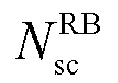
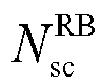
- N p max 0 , ⁇ N RB DL ⁇ N sc RB ⁇ p - 4 / 36 ⁇ with N RB DL being the number of downlink Physical Resource Blocks (PRBs), N sc RB being the number of sub-carriers in a PRB, that is, 12, and p being a value in ⁇ 0,1,2,3 ⁇ , and n PUCCH
- i 1 is an ACK/NACK/uplink Scheduling Request (SR) resource index corresponding to the i-th sub-frame in the second set of sub-frames.
- SR ACK/NACK/uplink Scheduling
- i 1 F + M dyn - i - 1 ⁇ N p + i ⁇ N p + 1 + n CCE , there is further included that another ACK/NACK resource is obtained by adding a preset offset to the ACK/NACK resource.
- Information about the predefined resource starting point of ACK/NACK corresponding to the second set of sub-frames can be received from the base station side.
- the predefined resource starting point of ACK/NACK corresponding to the second set of sub-frames can be obtained particularly as follows:
- n PUCCH 1 is a predefined configuration resource starting point for the non-dynamic system user
- ⁇ R 8 is the ACK/NACK resource reserved for the non-dynamic system user
- F is the predefined resource starting point of ACK/NACK corresponding to the second set of sub-frames.
- F is the predefined resource starting point of ACK/NACK corresponding to the second set of sub-frames
- M R 8 is the number of sub-frames in the P set of sub-frames
- k R 8 is the number of special timeslots in the P set of sub-frames
- N n is the number of CCEs carried in n PDCCH symbols
- n is the highest number of PDCCH occupied symbols in the P set of sub-frames.
- Step 302 ACK/NACK information corresponding to the downlink data is transmitted over the ACK/NACK resource in the sub-frame n.
- the flexible sub-frame information can be indicated by received higher layer signaling or obtained as prescribed.
- a method of scheduling an uplink feedback of a user equipment at the network side applicable to a system including a Physical Downlink Shared Channel (PDSCH) with Physical Downlink Control Channel (PDCCH) scheduling or a PDCCH indicating uplink Semi-Persistent Scheduling (SPS) resource releasing, the method particularly including the following steps:
- PDSCH Physical Downlink Shared Channel
- PDCCH Physical Downlink Control Channel
- SPS uplink Semi-Persistent Scheduling
- Step 401 ACK/NACK resource, for carrying ACK/NACK corresponding to downlink data, in a sub-frame n is determined according to a set of sub-frames including a sub-frame in which the downlink data is transmitted.
- the sub-frame in which the downlink data is transmitted belongs to the first set of sub-frames, then information about the ACK/NACK resource for carrying the ACK/NACK corresponding to the downlink data in the sub-frame n for the first set of sub-frames can be obtained using a PUCCH resource obtaining scheme and relevant parameters predefined for a non-dynamic system.
- high layer signaling can be transmitted to a user equipment to indicate the information about the ACK/NACK resource for carrying the ACK/NACK corresponding to the downlink data in the sub-frame n for the second set of sub-frames.
- the higher layer signaling includes information about ACK/NACK resource, for carrying ACK/NACK in the corresponding sub-frame n, configured by a base station for a first sub-frame in the second set of sub-frames.
- the higher signaling includes information about ACK/NACK resource, for carrying ACK/NACK in the corresponding sub-frame n, configured by the base station for a part or all of the sub-frames in the second set of sub-frames.
- information about ACK/NACK resource, for carrying ACK/NACK, in the sub-frame n corresponding to each sub-frame in the second set of sub-frames can be obtained in a predefined configuration scheme.
- F is a predefined resource starting point of ACK/NACK corresponding to the second set of sub-frames
- M dyn is the number of sub-frames in the second set of sub-frame
- n CCE is the index of a first CCE, in a sub-frame n - k m , used for a PDCCH
- N p max 0 , ⁇ N RB DL ⁇ N sc RB ⁇ p - 4 / 36 ⁇ with N RB DL being the number of downlink Physical Resource Blocks (PRBs), N sc RB being the number of sub-carriers in a PRB, that is, 12, and p being a value in ⁇ 0,1,2,3 ⁇ , and n PUCCH
- i 1 is a ACK/NACK/SR resource index corresponding to the i-th sub-frame in the second set of sub-frames.
- i 1 F + M dyn - i - 1 ⁇ N p + i ⁇ N p + 1 + n CCE , there is further included that another ACK/NACK resource is obtained by adding a preset offset to the ACK/NACK resource.
- F is the predefined resource starting point of ACK/NACK corresponding to the second set of sub-frames
- N PUCCH 1 is a predefined resource starting point of ACK/NACK for a non-dynamic system user
- ⁇ R 8 is ACK/NACK resource reserved for the non-dynamic system user
- M dyn is the number of sub-frames in the P set of sub-frames
- M R 8 is the number of sub-frames in the P set of sub-frames
- k R 8 is the number of special timeslots in the P set of sub-frames
- N n is the number of CCEs carried in n PDCCH symbols
- n is the highest number of PDCCH occupied symbols in the P set of sub-frames.
- the highest number of PDCCH occupied symbols in the P set of sub-frames can be transmitted to the user equipment in higher layer signaling.
- the information about the resource starting point of ACK/NACK corresponding to the second set of sub-frames is transmitted to the user equipment so that the user equipment can obtain the resource starting point of ACK/NACK corresponding to the second set of sub-frames.
- Step 402 ACK/NACK information corresponding to the downlink data is received over the ACK/NACK resource in the sub-frame n.
- the information about the ACK/NACK resource for carrying the ACK/NACK in the corresponding sub-frame n for the first set of sub-frames is obtained in a PUCCH resource obtaining scheme predefined for a non-dynamic system.
- the set of sub-frames includes the first set of sub-frames and/or the second set of sub-frames as in the previous method, and a repeated description thereof will be omitted here.
- the flexible sub-frame information is obtained by the base station itself under a preset rule or obtained as prescribed.
- the set P is determined according to the uplink/downlink sub-frame configuration information, and the set P includes the downlink sub-frames and/or the special sub-frames indicated by the uplink/downlink sub-frame configuration information; and the set Q is determined according to the flexible sub-frame information, and the set Q includes any one or more of the downlink sub-frames, the special sub-frames and the flexible sub-frames indicated by the flexible sub-frame information.
- the set P of sub-frames determined according to the uplink/downlink sub-frame configuration information is a set of sub-frames including the sub-frame n where the downlink data is transmitted in a non-dynamic system feedback scheme
- Q is a set of sub-frames including the sub-frame n where the downlink data is transmitted in a dynamic system feedback scheme
- ACK/NACK resources of both the sets P and Q are in the same sub-frame n.
- Table 3 and Table 4 depict two allocation schemes of feedback sets S0 and S1 respectively, where there is a determined dynamic HARQ feedback scheme by way of an example but without limitation thereto.
- S0 includes at least sub-frames included in both the set P and the set Q, and information about ACK/NACK resource, for carrying ACK/NACK for S0, in a corresponding sub-frame n is obtained in a PUCCH resource obtaining scheme predefined for an existing non-dynamic system.
- n PUCCH , i 1 and n CCE,i n PUCCH , i 1 M - i - 1 ⁇ N p + i ⁇ N p + 1 + n CCE , i + N PUCCH 1 , where "x" in the set S0 is a placeholder with a corresponding position at which there is no sub-frame for which a feedback is required. The purpose of the placeholder is to ensure that the same sub-frames in S0 as P are also ordered consistently in a feedback set.
- S0 includes the set P
- S1 includes only sub-frames included in only the set Q, and an ACK/NACK mapping scheme of the sub-frames in the S1 set includes but will not be limited to the following one or more schemes:
- Fig.5b illustrates the entire pre-configured ACK/NACK resource mapping scheme in which there are two PUCCH resource allocations (the configuration 4 is used for a non-dynamic system user and the configuration 2 is used for a dynamic user).
- F is the predefined resource starting point of ACK/NACK corresponding to the second set of sub-frames
- N PUCCH 1 is a predefined resource starting point of ACK/NACK for the non-dynamic system user
- ⁇ R 8 is ACK/NACK resource reserved for the non-dynamic system user
- M dyn is the number of sub-frames in the P set of sub-frames
- M R 8 is the number of sub-frames in the P set of sub-frames
- k R 8 is the number of special timeslots in the P set of sub-frames
- N n is the number of CCEs carried in n PDCCH symbols
- an uplink feedback apparatus of this embodiment includes:
- An obtaining unit 61 is configured to determine ACK/NACK resource, for carrying ACK/NACK corresponding to downlink data, in a sub-frame n according to a set of sub-frames including a sub-frame in which the downlink data is received;
- a transmitting unit 62 is configured to transmit ACK/NACK information corresponding to the downlink data over the ACK/NACK resource in the sub-frame n.
- the set of sub-frames includes a first set of sub-frames and/or a second set of sub-frames; the first set of sub-frames and/or the second set of sub-frames are/is determined by obtained uplink/downlink sub-frame configuration information and flexible sub-frame information; the uplink/downlink sub-frame configuration information indicates the type of each sub-frame in a radio frame, and corresponding types of sub-frames include uplink sub-frames, downlink sub-frames and special sub-frames; and the flexible sub-frame information indicates the type of each sub-frame in a radio frame, and corresponding types of sub-frames include uplink sub-frames, downlink sub-frames, special sub-frames and flexible sub-frames, where the flexible sub-frame can be used for transmission of uplink or downlink data.
- the first set of sub-frames includes at least all the sub-frames belonging to both a set P and a set Q; and the second set of sub-frames includes all the sub-frames belonging to the set Q but not the set P, where:
- the obtaining unit 61 determines the set P according to the uplink/downlink sub-frame configuration information, and the set P includes the downlink sub-frames and/or the special sub-frames indicated by the uplink/downlink sub-frame configuration information;
- the obtaining unit 61 determines the set Q according to the flexible sub-frame information, and the set Q includes any one or more of the downlink sub-frames, the special sub-frames and the flexible sub-frames indicated by the flexible sub-frame information.
- the obtaining unit 61 is configured to obtain the flexible sub-frame information indicated by received higher layer signaling or obtain the flexible sub-frame information as prescribed.
- the obtaining unit 61 is configured to determine the ACK/NACK resource for carrying the ACK/NACK corresponding to the downlink data in the sub-frame n according to a scheme and parameters corresponding to the first set of sub-frames in the case that the sub-frame in which the downlink data is received belongs to the first set of sub-frames;
- the ACK/NACK resource for carrying the ACK/NACK corresponding to the downlink data in the sub-frame n according to a scheme and parameters corresponding to the second set of sub-frames in the case that the sub-frame in which the downlink data is received belongs to the second set of sub-frames.
- the obtaining unit 61 is configured to obtain the information about the ACK/NACK resource for carrying the ACK/NACK corresponding to the downlink data in the sub-frame n for the first set of sub-frames using a PUCCH resource obtaining scheme and relevant parameters predefined for a non-dynamic system in the case that the sub-frame in which the downlink data is received belongs to the first set of sub-frames; and
- the higher layer signaling includes information about ACK/NACK resource, for carrying ACK/NACK in the corresponding sub-frame n, configured by the base station for a first sub-frame in the second set of sub-frames, and
- the obtaining unit 61 obtains information about ACK/NACK resource, in the sub-frame n, for carrying ACK/NACK corresponding to a subsequent sub-frame in the second set of sub-frames according to the ACK/NACK resource, in the sub-frame n, configured for the first sub-frame and a preset offset by which the sub-frames are spaced.
- the higher signaling includes information about ACK/NACK resource, for carrying ACK/NACK in the corresponding sub-frame n, configured by the base station for a part or all of the sub-frames in the second set of sub-frames.
- the obtaining unit 61 is configured to obtain information about ACK/NACK resource, in the sub-frame n, for carrying ACK/NACK corresponding to each sub-frame in the second set of sub-frames in a predefined configuration scheme if the sub-frame in which the downlink data is received belongs to the second set of sub-frames.
- F is a predefined resource starting point of ACK/NACK corresponding to the second set of sub-frames
- M dyn is the number of sub-frames in the second set of sub-frame
- n CCE is the index of a first CCE, in a sub-frame n - k m , used for a PDCCH
- N p max 0 , ⁇ N RB DL ⁇ N sc RB ⁇ p - 4 / 36 ⁇ with N RB DL being the number of downlink PRBs, N sc RB being the number of sub-carriers in a PRB, that is, 12, and p being a value in ⁇ 0,1,2,3 ⁇ , and n PUCCH
- i 1 is an ACK/NACK/SR resource index corresponding to the i-th sub-frame in the second set of sub-frames.
- the obtaining unit 61 receives information transmitted from the base station side about the predefined resource starting point of ACK/NACK corresponding to the second set of sub-frames.
- the obtaining unit 61 obtains the predefined resource starting point of ACK/NACK corresponding to the second set of sub-frames as follows:
- n PUCCH 1 is a predefined configuration resource starting point for the non-dynamic system user
- ⁇ R 8 is the ACK/NACK resource reserved for the non-dynamic system user
- F is the predefined resource starting point of ACK/NACK corresponding to the second set of sub-frames.
- F is the predefined resource starting point of ACK/NACK corresponding to the second set of sub-frames
- M R 8 is the number of sub-frames in the P set of sub-frames
- k R 8 is the number of special timeslots in the P set of sub-frames
- N n is the number of CCEs carried in n PDCCH symbols
- n is the highest number of PDCCH occupied symbols in the P set of sub-frames.
- the highest number of PDCCH occupied symbols in the P set of sub-frames is indicated directly by higher layer signaling or configured by default.
- the apparatus is applicable to applicable to a system including a Physical Downlink Shared Channel (PDSCH) with Physical Downlink Control Channel (PDCCH) scheduling or a PDCCH indicating uplink Semi-Persistent Scheduling (SPS) resource releasing.
- PDSCH Physical Downlink Shared Channel
- PDCCH Physical Downlink Control Channel
- SPS uplink Semi-Persistent Scheduling
- an apparatus for scheduling an uplink feedback of a user equipment can be a user equipment and particularly include an obtaining unit 71 and a receiving unit 72.
- the obtaining unit 71 is configured to determine ACK/NACK resource for carrying ACK/NACK corresponding to downlink data in a sub-frame n according to a set of sub-frames including a sub-frame in which the downlink data is transmitted;
- the receiving unit 72 is configured to receive ACK/NACK information corresponding to the downlink data over the ACK/NACK resource in the sub-frame n.
- the set of sub-frames includes the first set of sub-frames and/or the second set of sub-frames as in the previous method, and a repeated description thereof will be omitted here.
- the first set of sub-frames includes at least all the sub-frames belonging to both a set P and a set Q; and the second set of sub-frames includes all the sub-frames belonging to the set Q but not the set P, where:
- the obtaining unit determines the set P according to the uplink/downlink sub-frame configuration information, and the set P includes the downlink sub-frames and/or the special sub-frames indicated by the uplink/downlink sub-frame configuration information;
- the obtaining unit determines the set Q according to the flexible sub-frame information, and the set Q includes any one or more of the downlink sub-frames, the special sub-frames and the flexible sub-frames indicated by the flexible sub-frame information.
- the obtaining unit 71 is configured to obtain the flexible sub-frame information by the apparatus itself under a preset rule or obtain the flexible sub-frame information as prescribed.
- the obtaining unit 71 is configured to determine the ACK/NACK resource for carrying the ACK/NACK corresponding to the downlink data in the sub-frame n according to a scheme and parameters corresponding to the first set of sub-frames in the case that the sub-frame in which the downlink data is transmitted belongs to the first set of sub-frames; and to determine the ACK/NACK resource for carrying the ACK/NACK corresponding to the downlink data in the sub-frame n according to a scheme and parameters corresponding to the second set of sub-frames in the case that the sub-frame in which the downlink data is transmitted belongs to the second set of sub-frames.
- the obtaining unit 71 is configured to obtain the information about the ACK/NACK resource for carrying the ACK/NACK corresponding to the downlink data in the sub-frame n for the first set of sub-frames using a PUCCH resource obtaining scheme and relevant parameters predefined for a non-dynamic system in the case that the sub-frame in which the downlink data is transmitted belongs to the first set of sub-frames.
- the apparatus further includes: a first transmitting unit configured to transmit high layer signaling transmitted to a user equipment to indicate the information about the ACK/NACK resource for carrying the ACK/NACK corresponding to the downlink data in the sub-frame n for the second set of sub-frames.
- the higher layer signaling includes information about ACK/NACK resource, for carrying ACK/NACK in the corresponding sub-frame n, configured by a base station for a first sub-frame in the second set of sub-frames.
- the higher signaling includes information about ACK/NACK resource, for carrying ACK/NACK in the corresponding sub-frame n, configured by the base station for a part or all of the sub-frames in the second set of sub-frames.
- the obtaining unit 71 is configured to obtain information about ACK/NACK resource, in the sub-frame n, for carrying ACK/NACK corresponding to each sub-frame in the second set of sub-frames in a predefined configuration scheme.
- F is a predefined resource starting point of ACK/NACK corresponding to the second set of sub-frames
- M dyn is the number of sub-frames in the second set of sub-frame
- n CCE is the index of a first CCE, in a sub-frame n - k m , used for a PDCCH
- N p max 0 , ⁇ N RB DL ⁇ N sc RB ⁇ p - 4 / 36 ⁇ with N RB DL being the number of downlink PRBs, N sc RB being the number of sub-carriers in a PRB, that is, 12, and p being a value in ⁇ 0,1,2,3 ⁇ , and n PUCCH
- i 1 is a ACK/NACK/SR resource index corresponding to the i-th sub-frame in the second set of sub-frames.
- F is the predefined resource starting point of ACK/NACK corresponding to the second set of sub-frames
- N PUCCH 1 is a predefined resource starting point of ACK/NACK for a non-dynamic system user
- ⁇ R 8 is ACK/NACK resource reserved for the non-dynamic system user
- M dyn is the number of sub-frames in the P set of sub-frames
- M R 8 is the number of sub-frames in the P set of sub-frames
- k R 8 is the number of special timeslots in the P set of sub-frames
- N n is the number of CCEs carried in n PDCCH symbols
- n is the highest number of PDCCH occupied symbols in the P set of sub-frames.
- the first transmitting unit is further configured to transmit the highest number of PDCCH occupied symbols in the P set of sub-frames to the user equipment in higher layer signaling.
- the apparatus further includes: a second transmitting unit configured to transmit the information about the resource starting point of ACK/NACK corresponding to the second set of sub-frames to the user equipment side.
- the apparatus is applicable to applicable to a system including a Physical Downlink Shared Channel (PDSCH) with Physical Downlink Control Channel (PDCCH) scheduling or a PDCCH indicating uplink Semi-Persistent Scheduling (SPS) resource releasing.
- PDSCH Physical Downlink Shared Channel
- PDCCH Physical Downlink Control Channel
- SPS uplink Semi-Persistent Scheduling
- a communication system includes:
- a user equipment 81 is configured to determine ACK/NACK resource for carrying ACK/NACK corresponding to downlink data in a sub-frame n according to a set of sub-frames including a sub-frame in which the downlink data is received; and to transmit ACK/NACK information corresponding to the downlink data over the ACK/NACK resource in the sub-frame n;
- a base station 82 is configured to determine the ACK/NACK resource for carrying the ACK/NACK corresponding to the downlink data in the sub-frame n according to the set of sub-frames including the sub-frame in which the downlink data is transmitted; and to receive the ACK/NACK information corresponding to the downlink data over the ACK/NACK resource in the sub-frame n.
- the set of sub-frames includes the first set of sub-frames and/or the second set of sub-frames as in the previous method, and a repeated description thereof will be omitted here.
- the user equipment of this embodiment can include the foregoing interaction process between the base station side and the user equipment side or the interaction process between the two apparatuses in Fig.6 and Fig.7 , and a repeated description thereof will be omitted here.
- the uplink/downlink sub-frame configuration information indicates the type of each sub-frame in a radio frame, and corresponding types of sub-frames include uplink sub-frames, downlink sub-frames and special sub-frames; and the flexible sub-frame information indicates the type of each sub-frame in a radio frame, and corresponding types of sub-frames include uplink sub-frames, downlink sub-frames, special sub-frames and flexible sub-frames, where the flexible sub-frame can be used for transmission of uplink or downlink data.
- the uplink/downlink sub-frame configuration information configures the information about the ACK/NACK resource for carrying the ACK/NACK corresponding to the downlink data in the first set of sub-frames, that is, a downlink sub-frame included in both a non-dynamic system feedback scheme and a dynamic system feedback scheme
- the flexible sub-frame information configures the information about the ACK/NACK resource for carrying the ACK/NACK corresponding to the downlink data in the second set of sub-frames, so confliction of PUCCH resources between the non-dynamic system and the dynamic system can be avoided.
- the information about the corresponding PUCCH resource for carrying ACK/NACK in the first set of sub-frames can be obtained in a PUCCH resource obtaining scheme predefined for the non-dynamic system without any problem of PUCCH resource confliction while saving the resources.
- the index thereof is different from the index of the ACK/NACK resource for feeding back ACK/NACK information in the non-dynamic system, thus avoiding confliction of resources between the non-dynamic system and the dynamic system from occurring.
- the embodiments of the invention can be embodied as a method, a system or a computer program product. Therefore the invention can be embodied in the form of an all-hardware embodiment, an all-software embodiment or an embodiment of software and hardware in combination. Furthermore the invention can be embodied in the form of a computer program product embodied in one or more computer useable storage mediums (including but not limited to a disk memory, a CD-ROM, an optical memory, etc.) in which computer useable program codes are contained.
- a computer useable storage mediums including but not limited to a disk memory, a CD-ROM, an optical memory, etc.
- These computer program instructions can also be stored into a computer readable memory capable of directing the computer or the other programmable data processing device to operate in a specific manner so that the instructions stored in the computer readable memory create an article of manufacture including instruction means which perform the functions specified in the flow(s) of the flow chart and/or the block(s) of the block diagram.
- These computer program instructions can also be loaded onto the computer or the other programmable data processing device so that a series of operational steps are performed on the computer or the other programmable data processing device to create a computer implemented process so that the instructions executed on the computer or the other programmable device provide steps for performing the functions specified in the flow(s) of the flow chart and/or the block(s) of the block diagram.
Landscapes
- Engineering & Computer Science (AREA)
- Signal Processing (AREA)
- Computer Networks & Wireless Communication (AREA)
- Mobile Radio Communication Systems (AREA)
Abstract
Description
- This application claims the benefit of Chinese Patent Application No.
201110227564.5 - The present invention relates to the field of communications and particularly to a method of and system and apparatus for performing an uplink feedback.
- A Time Division Duplex (TDD) mode which is one of two major fundamental duplex systems has gained increasing attention along with a constantly increasing bandwidth demand of broadband mobile communications. In the TDD system, the same frequency resource is used for both uplink-downlink transmission, and uplink-downlink signals are transmitted in different timeslots. In common TDD systems including a Time Division Synchronized Code Division Multiple Access (TD-SCDMA) which is a third generation (3G) mobile system, and a TD-SCDMA Long Term Evolution (TD-LTE) system which is a four generation (4G) mobile communication system, uplink-downlink timeslots are allocated statically or semi-statically, and a common practice is to determine and keep an allocation proportion of uplink-downlink timeslots unchanged according to a type of cell and a general service proportion in the course of network planning. This is a relatively simple practice and also effective in the context of a macro cell with large coverage. Along with the development of technologies, more and more low power base stations including a pico cell, a Home NodeB, etc., have been deployed to provide small local coverage, and in such cells, there are a lower number of users and significantly changing service demands of the users, so a proportion demand of uplink-downlink services of the cells are changing dynamically. Although an online change to a proportion of uplink-downlink timeslots of a cell is also supported, for example, in the TD-LTE standard, a complicated signaling flow and a configuration period of time are necessitated thus lowering the performance of the system while failing to trace a real-time service change condition.
- Some more dynamic TDD uplink-downlink configuration solutions have gained attention.
- In a specific temporal cycle, there are four types of sub-frames, particularly sub-frames fixedly used for downlink transmission, sub-frame fixedly used for uplink transmission, and sub-frame flexibly allocated for uplink or downlink transmission. Referring to
Fig. 1 , the temporal cycle is a radio frame (which is illustrated only as an example, but another temporal cycle is also possible), where sub-frames #0 and #5 are fixed downlink sub-frame, sub-frames #2 and #7 are fixed uplink sub-frame, sub-frames #1 and #6 are special sub-frame (which can also be allocated as fixed sub-frames), and other sub-frames (#3, #4, #8 and #9) are sub-frame flexibly allocated for uplink or downlink transmission. For the last type of sub-frames, a base station can dynamically configure them dependent upon a real-time service demand and channel condition to accommodate a dynamic change in service demand. - For the TDD system, bundling and multiplexing technologies are used for a Hybrid Automatic Repeat reQuest (HARQ), that is, ACK/NACK of multiple downlink sub-frames is fed back over a Physical Uplink Control Channel (PUCCH). For the multiplexing technology, the ACK/NACK status is related to both information bit to be fed back over the PUCCH and a PUCCH resource index. For the bundling technology, although the ACK/NACK status is related to only the information bit to be fed back over the PUCCH, the PUCCH resource index is mapped in the same manner as in the multiplexing technology in order to avoid PUCCH resource confliction between users. Typically there is no confliction occurring with PUCCH resource mapping if a uniquely corresponding HARQ timing scheme is used for an uplink-downlink configuration scheme.
- In a dynamic system, the use of a new HARQ scheme (also including the reuse of an HARQ scheme corresponding to a specific configuration of a non-dynamic system) is required in order to accommodate a flexible change in uplink-downlink sub-frame configuration. Also in order to ensure backward compatibility, it is necessary to semi-statically configure an existing uplink-downlink configuration and to use an HARQ scheme corresponding thereto for user equipments of lower releases. Thus different HARQ schemes may be used for users of R11 and later releases from users of lower releases. There may be PUCCH resource confliction for these two types of users if the existing PUCCH format 1/1a/1b resource index

- The principle of


- Typically in order to avoid confliction of higher layer configured


- Noted the higher layer configured


- For the sake of a concise description, a set of ACK/NACK/SR resources indicated by higher layer signaling is simply referred to as a higher layer configured section; and a set of ACK/NACK resources bound with nCCE is simply referred to as a predefined section or a calculation section. No boundary between the two sections is defined in the standard, but typically the higher layer section precedes the calculation section with

- In order to lower the number of resource fragments,

Fig.2 , there is a
- As specified by the protocol:
- For the non-dynamic TDD system, with ACK/NACK bundling or ACK/NACK multiplexing, with M = 1, the UE transmits HARQ-ACK using the PUCCH resource number

- In the sub-frame n - k, if there is either a PDSCH indicated by a PDCCH(s) or a PDCCH indicating uplink Semi-Persistent Scheduling (SPS) resource releasing, where k ∈ K with K being a set {k 0, k 1,...k M-1} including M elements and the value of M being related to an uplink-downlink configuration (as depicted in Table 1), then the UE firstly selects a value of p from the set {0, 1, 2, 3} to satisfy Np ≤ nCCE < N p+1, where nCCE is the index of a first Control Channel Element (CCE), in the sub-frame n - km , used for a PDCCH, where km is the lowest value in the set K and satisfies such a condition that the UE detects the PDCCH in the sub-frame n - km .


- For a PUCCH in a multi-port transmission mode, a PUCCH resource of the second antenna port is indexed by incrementing a PUCCH resource of the first antenna port by 1, that is,

- Moreover for two aggregated carriers and the current sub-frame for an ACK/NACK feedback corresponding to only one downlink sub-frame, for the carrier in a multi-codeword transmission mode, a PUCCH resource corresponding to the second codeword is indexed by incrementing a PUCCH resource corresponding to the first codeword by 1, that is,

- In the sub-frame n - k (k ∈ K), if there is only a PDSCH transmitted without being indicated by a PDCCH, then

Table 1: Downlink association set index K : {k 0, k 1,···k M-1} for TDD UL-DL Sub-frame n Configuration 0 1 2 3 4 5 6 7 8 9 0 - - 6 - 4 - - 6 - 4 1 - - 7,6 4 - - - 7, 6 4 - 2 - - 8, 7, 4, 6 - - - - 8, 7, 4, 6 - - 3 - - 7, 6, 11 6, 5 5, 4 - - - - - 4 - - 12, 8, 7, 11 6, 5, 4, 7 - - - - - - 5 - - 13, 12, 9, 8, 7, 5, 4, 11, 6 - - - - - - - 6 - - 7 7 5 - - 7 7 - Table 2: PUCCH Resource Index for Downlink Semi-Persistent Scheduling Value of 'TPC command for PUCCH' 
'00' The first PUCCH resource index configured by the higher layers '01' The second PUCCH resource index configured by the higher layers '10' The third PUCCH resource index configured by the higher layers '11' The fourth PUCCH resource index configured by the higher layers - For TDD ACK/NACK multiplexing, with M > 1, in the sub-frame n ,

- For a PDSCH in the sub-frame n - ki or a PDCCH indicating SPS resource releasing, where ki ∈ K, the ACK/NACK feedback resource index is



- For a PDSCH without being indicated by a PDCCH in the sub-frame n - ki,

- Comparing the ACK/NACK bundling and ACK/NACK multiplexing solutions, both of their fundamental principles are the same, that is, the relationship between


- This application is primarily focused upon how to configure


- For an SR and the situation of SPS without being PDCCH scheduling, a PUCCH format 1/1a/1b resource is configured by the base station itself, and confliction between users of different releases can be avoided by the base station from occurring; and
- For the situation of a PDSCH with PDCCH scheduling or a PDCCH indicating SPS resource releasing, a PUCCH format 1/1a/1b resource is determined in a predefined scheme, that is, the relationship between


- The invention provides a method of and system and apparatus for performing an uplink feedback so as to avoid the problem of possible ACK/NACK resource confliction between users in the situation of a PDSCH with PDCCH scheduling or a PDCCH indicating SPS resource releasing.
- An embodiment of the invention provides an uplink feedback method, applicable to a dynamic sub-frame system, the method including:
- determining ACK/NACK resource, for carrying ACK/NACK corresponding to downlink data, in a sub-frame n according to a set of sub-frames including a sub-frame in which the downlink data is received; and
- transmitting ACK/NACK information corresponding to the downlink data over the ACK/NACK resource in the sub-frame n,
- wherein the set of sub-frames includes a first set of sub-frames and/or a second set of sub-frames; the first set of sub-frames and/or the second set of sub-frames are/is determined by obtained uplink/downlink sub-frame configuration information and flexible sub-frame information; the uplink/downlink sub-frame configuration information indicates the type of each sub-frame in a radio frame, and corresponding types of sub-frames include uplink sub-frames, downlink sub-frames and special sub-frames; and the flexible sub-frame information indicates the type of each sub-frame in a radio frame, and corresponding types of sub-frames include uplink sub-frames, downlink sub-frames, special sub-frames and flexible sub-frames, wherein the flexible sub-frames can be used for transmission of uplink or downlink data, and n is a sub-frame number.
- An embodiment of the invention provides a method of scheduling an uplink feedback of a user equipment, the method including
determining ACK/NACK resource, for carrying ACK/NACK corresponding to downlink data, in a sub-frame n according to a set of sub-frames including a sub-frame in which the downlink data is transmitted; and
receiving ACK/NACK information corresponding to the downlink data over the ACK/NACK resource in the sub-frame n,
wherein the set of sub-frames includes a first set of sub-frames and/or a second set of sub-frames; the first set of sub-frames and/or the second set of sub-frames are/is determined by obtained uplink/downlink sub-frame configuration information and flexible sub-frame information; the uplink/downlink sub-frame configuration information indicates the type of each sub-frame in a radio frame, and corresponding types of sub-frames include uplink sub-frames, downlink sub-frames and special sub-frames; and the flexible sub-frame information indicates the type of each sub-frame in a radio frame, and corresponding types of sub-frames include uplink sub-frames, downlink sub-frames, special sub-frames and flexible sub-frames, wherein the flexible sub-frames can be used for transmission of uplink or downlink data, and n is a sub-frame number. - An embodiment of the invention provides an uplink feedback apparatus, the apparatus including:
- an obtaining unit configured to determine ACK/NACK resource, for carrying ACK/NACK corresponding to downlink data, in a sub-frame n according to a set of sub-frames including a sub-frame in which the downlink data is received; and
- a transmitting unit configured to transmit ACK/NACK information corresponding to the downlink data over the ACK/NACK resource in the sub-frame n,
- wherein the set of sub-frames includes a first set of sub-frames and/or a second set of sub-frames; the first set of sub-frames and/or the second set of sub-frames are/is determined by obtained uplink/downlink sub-frame configuration information and flexible sub-frame information; the uplink/downlink sub-frame configuration information indicates the type of each sub-frame in a radio frame, and corresponding types of sub-frames include uplink sub-frames, downlink sub-frames and special sub-frames; and the flexible sub-frame information indicates the type of each sub-frame in a radio frame, and corresponding types of sub-frames include uplink sub-frames, downlink sub-frames, special sub-frames and flexible sub-frames, wherein the flexible sub-frames can be used for transmission of uplink or downlink data, and n is a sub-frame number.
- An embodiment of the invention provides an apparatus for scheduling an uplink feedback of a user equipment, the apparatus including:
- an obtaining unit configured to determine ACK/NACK resource, for carrying ACK/NACK corresponding to downlink data, in a sub-frame n according to a set of sub-frames including a sub-frame in which the downlink data is transmitted; and
- a receiving unit configured to receive ACK/NACK information corresponding to the downlink data over the ACK/NACK resource in the sub-frame n,
- wherein the set of sub-frames includes a first set of sub-frames and/or a second set of sub-frames; the first set of sub-frames and/or the second set of sub-frames are/is determined by obtained uplink/downlink sub-frame configuration information and flexible sub-frame information; the uplink/downlink sub-frame configuration information indicates the type of each sub-frame in a radio frame, and corresponding types of sub-frames include uplink sub-frames, downlink sub-frames and special sub-frames; and the flexible sub-frame information indicates the type of each sub-frame in a radio frame, and corresponding types of sub-frames include uplink sub-frames, downlink sub-frames, special sub-frames and flexible sub-frames, wherein the flexible sub-frames can be used for transmission of uplink or downlink data, and n is a sub-frame number.
- An embodiment of the invention provides a communication system including:
- a user equipment configured to determine ACK/NACK resource, for carrying ACK/NACK corresponding to downlink data, in a sub-frame n according to a set of sub-frames including a sub-frame in which the downlink data is received; and to transmit ACK/NACK information corresponding to the downlink data over the ACK/NACK resource in the sub-frame n; and
- a base station configured to determine the ACK/NACK resource, for carrying the ACK/NACK corresponding to the downlink data, in the sub-frame n according to the set of sub-frames including the sub-frame in which the downlink data is transmitted; and to receive the ACK/NACK information corresponding to the downlink data over the ACK/NACK resource in the sub-frame n,
- wherein the set of sub-frames includes a first set of sub-frames and/or a second set of sub-frames; the first set of sub-frames and/or the second set of sub-frames are/is determined by obtained uplink/downlink sub-frame configuration information and flexible sub-frame information; the uplink/downlink sub-frame configuration information indicates the type of each sub-frame in a radio frame, and corresponding types of sub-frames include uplink sub-frames, downlink sub-frames and special sub-frames; and the flexible sub-frame information indicates the type of each sub-frame in a radio frame, and corresponding types of sub-frames include uplink sub-frames, downlink sub-frames, special sub-frames and flexible sub-frames, wherein the flexible sub-frames can be used for transmission of uplink or downlink data, and n is a sub-frame number.
- In the embodiments of the invention, at the user equipment side, ACK/NACK resource, for carrying ACK/NACK corresponding to downlink data, in a sub-frame n is determined according to a set of sub-frames including a sub-frame in which the downlink data is received; and
- ACK/NACK information corresponding to the downlink data is transmitted over the ACK/NACK resource in the sub-frame n, where the set of sub-frames includes a first set of sub-frames and/or a second set of sub-frames; and the first set of sub-frames and/or the second set of sub-frames are/is determined by obtained uplink/downlink sub-frame configuration information and flexible sub-frame information.
- The uplink/downlink sub-frame configuration information indicates the type of each sub-frame in a radio frame, and corresponding types of sub-frames include uplink sub-frames, downlink sub-frames and special sub-frames; and the flexible sub-frame information indicates the type of each sub-frame in a radio frame, and corresponding types of sub-frames include uplink sub-frames, downlink sub-frames, special sub-frames and flexible sub-frames, where the flexible sub-frames can be used for transmission of uplink or downlink data. The uplink/downlink sub-frame configuration information configures the information about the ACK/NACK resource for carrying the ACK/NACK corresponding to the downlink data in the first set of sub-frames, that is, a downlink sub-frame included in both a non-dynamic system feedback scheme and a dynamic system feedback scheme, and the flexible sub-frame information configures the information about the ACK/NACK resource for carrying the ACK/NACK corresponding to the downlink data in the second set of sub-frames, so confliction of PUCCH resources between the non-dynamic system and the dynamic system can be avoided.
-
-
Fig.1 is a dynamic uplink/downlink sub-frame allocation scheme in the prior art; -
Fig.2 is the
-
Fig.3 is a schematic flow diagram of an uplink feedback method in an embodiment of the invention; -
Fig.4 is a schematic flow chart of a method of scheduling an uplink feedback of a user equipment in an embodiment of the invention; -
Fig.5a is a schematic diagram of a PUCCH resource allocation 1 in an embodiment of the invention; -
Fig.5b is a schematic diagram of a PUCCH resource allocation 2 in an embodiment of the invention; -
Fig.6 is a schematic structural diagram of an uplink feedback apparatus an in an embodiment of the invention; -
Fig.7 is a schematic structural diagram of an apparatus for scheduling an uplink feedback of a user equipment in an embodiment of the invention; and -
Fig.8 is a schematic structural diagram of a system in an embodiment of the invention. - In order to avoid collision between PUCCH resources for carrying ACK/NACK in a dynamic system and a non-dynamic system, at the user equipment side, ACK/NACK resource, for carrying ACK/NACK corresponding downlink data, in a sub-frame n is determined according to a set of sub-frames including a sub-frame in which the downlink data is received; and ACK/NACK information corresponding to the downlink data is transmitted over the ACK/NACK resource in the sub-frame n. At the base station side, ACK/NACK resource, for carrying ACK/NACK corresponding to downlink data, in a sub-frame n is determined according to a set of sub-frames including a sub-frame in which the downlink data is transmitted; and ACK/NACK information corresponding to the downlink data is received over the ACK/NACK resource in the sub-frame n; and
- Where the set of sub-frames includes a first set of sub-frames and/or a second set of sub-frames; the first set of sub-frames and/or the second set of sub-frames are/is determined by obtained uplink/downlink sub-frame configuration information and flexible sub-frame information; the uplink/downlink sub-frame configuration information indicates the type of each sub-frame in a radio frame, and corresponding types of sub-frames include uplink sub-frames, downlink sub-frames and special sub-frames; and the flexible sub-frame information indicates the type of each sub-frame in a radio frame, and corresponding types of sub-frames include uplink sub-frames, downlink sub-frames, special sub-frames and flexible sub-frames, where the flexible sub-frames can be used for transmission of uplink or downlink data, and n is a sub-frame number.
- For example, the first set of sub-frames includes at least all the sub-frames belonging to both a set P (a first subset) and a set Q (a second subset); and the second set of sub-frames includes all the sub-frames belonging to the set Q but not the set P, where:
- The set P is determined according to the uplink/downlink sub-frame configuration information, and the set P includes the downlink sub-frames and/or the special sub-frames indicated by the uplink/downlink sub-frame configuration information; and
- The set Q is determined according to the flexible sub-frame information, and the set Q includes any one or more of the downlink sub-frames, the special sub-frames and the flexible sub-frames indicated by the flexible sub-frame information.
- Here the ACK/NACK resource can also be referred to as a PUCCH resource for carrying ACK/NACK.
- Referring to
Fig.3 , there is a method of performing an uplink feedback at the user equipment side according to an embodiment of the invention, applicable to a dynamic sub-frame system which is a system including a Physical Downlink Shared Channel (PDSCH) with Physical Downlink Control Channel (PDCCH) scheduling or a PDCCH indicating uplink Semi-Persistent Scheduling (SPS) resource releasing, the method particularly including the following steps: - Step 301: ACK/NACK resource, for carrying ACK/NACK corresponding to downlink data, in a sub-frame n is determined according to a set of sub-frames including a sub-frame in which the downlink data is received.
- (1) If the sub-frame in which the downlink data is received belongs to a first set of sub-frames, then the ACK/NACK resource for carrying the ACK/NACK corresponding to the downlink data in the sub-frame n is determined according to a scheme and parameters corresponding to the first set of sub-frames; and (2) if the sub-frame in which the downlink data is received belongs to a second set of sub-frames, then the ACK/NACK resource for carrying the ACK/NACK corresponding to the downlink data in the sub-frame n is determined according to a scheme and parameters corresponding to the second set of sub-frames.
- In the case of (1), if the sub-frame in which the downlink data is received belongs to the first set of sub-frames, then the information about the ACK/NACK resource for carrying the ACK/NACK corresponding to the downlink data in the sub-frame n for the first set of sub-frames can be obtained using a PUCCH resource obtaining scheme and relevant parameters predefined for a non-dynamic system.
- In the case (2), if the sub-frame in which the downlink data is received belongs to the second set of sub-frames, then the information about the ACK/NACK resource for carrying the ACK/NACK corresponding to the downlink data in the sub-frame n for the second set of sub-frames can be obtained by receiving higher layer signaling transmitted from a base station.
- For example, the higher layer signaling includes information about ACK/NACK resource, for carrying ACK/NACK in the corresponding sub-frame n, configured by the base station for a first sub-frame in the second set of sub-frames, and then information about ACK/NACK resource, for carrying ACK/NACK, in the sub-frame n corresponding to a subsequent sub-frame in the second set of sub-frames is obtained according to the ACK/NACK resource, in the sub-frame n, configured for the first sub-frame and a preset offset by which the sub-frames are spaced.
- For example, the higher signaling includes information about ACK/NACK resource, for carrying ACK/NACK in the corresponding sub-frame n, configured by the base station for a part or all of the sub-frames in the second set of sub-frames.
- In another embodiment, if the sub-frame in which the downlink data is received belongs to the second set of sub-frames, then information about ACK/NACK resource, for carrying ACK/NACK, in the sub-frame n corresponding to each sub-frame in the second set of sub-frames can be obtained in a predefined configuration scheme.
- An ACK/NACK resource is calculated in the predefined configuration scheme according to the index of a first Control Channel Element (CCE) used for a Physical Downlink Control Channel (PDCCH), and the predefined configuration scheme includes:

- Where F is a predefined resource starting point of ACK/NACK corresponding to the second set of sub-frames, Mdyn is the number of sub-frames in the second set of sub-frame, n CCE is the index of a first CCE, in a sub-frame n - km, used for a PDCCH,


- When the index of a CCE corresponds to multiple ACK/NACK resources, after an ACK/NACK resource is obtained in the formula of

- Information about the predefined resource starting point of ACK/NACK corresponding to the second set of sub-frames can be received from the base station side.
- Alternatively the predefined resource starting point of ACK/NACK corresponding to the second set of sub-frames can be obtained particularly as follows:
- Information transmitted from the base station side about ACK/NACK resource reserved for a non-dynamic system user is received, and the information about the predefined configuration resource starting point of ACK/NACK is calculated in the formula of


- Here the information about the predefined resource starting point of ACK/NACK can be obtained in the formula of:

- Where F is the predefined resource starting point of ACK/NACK corresponding to the second set of sub-frames, M R8 is the number of sub-frames in the P set of sub-frames, k R8 is the number of special timeslots in the P set of sub-frames, Nn is the number of CCEs carried in n PDCCH symbols, and n is the highest number of PDCCH occupied symbols in the P set of sub-frames.
- Step 302: ACK/NACK information corresponding to the downlink data is transmitted over the ACK/NACK resource in the sub-frame n.
- In the
step 301, the flexible sub-frame information can be indicated by received higher layer signaling or obtained as prescribed. - Referring to
Fig.4 , there is a method of scheduling an uplink feedback of a user equipment at the network side according to an embodiment of the invention, applicable to a system including a Physical Downlink Shared Channel (PDSCH) with Physical Downlink Control Channel (PDCCH) scheduling or a PDCCH indicating uplink Semi-Persistent Scheduling (SPS) resource releasing, the method particularly including the following steps: - Step 401: ACK/NACK resource, for carrying ACK/NACK corresponding to downlink data, in a sub-frame n is determined according to a set of sub-frames including a sub-frame in which the downlink data is transmitted.
- (1) If the sub-frame in which the downlink data is transmitted belongs to a first set of sub-frames, then the ACK/NACK resource for carrying the ACK/NACK corresponding to the downlink data in the sub-frame n is determined according to a scheme and parameters corresponding to the first set of sub-frames; and
- (2) If the sub-frame in which the downlink data is transmitted belongs to a second set of sub-frames, then the ACK/NACK resource for carrying the ACK/NACK corresponding to the downlink data in the sub-frame n is determined according to a scheme and parameters corresponding to the second set of sub-frames.
- In the case of (1), if the sub-frame in which the downlink data is transmitted belongs to the first set of sub-frames, then information about the ACK/NACK resource for carrying the ACK/NACK corresponding to the downlink data in the sub-frame n for the first set of sub-frames can be obtained using a PUCCH resource obtaining scheme and relevant parameters predefined for a non-dynamic system.
- In the case (2), if the sub-frame in which the downlink data is transmitted belongs to the second set of sub-frames, then high layer signaling can be transmitted to a user equipment to indicate the information about the ACK/NACK resource for carrying the ACK/NACK corresponding to the downlink data in the sub-frame n for the second set of sub-frames.
- For example, the higher layer signaling includes information about ACK/NACK resource, for carrying ACK/NACK in the corresponding sub-frame n, configured by a base station for a first sub-frame in the second set of sub-frames.
- For example, the higher signaling includes information about ACK/NACK resource, for carrying ACK/NACK in the corresponding sub-frame n, configured by the base station for a part or all of the sub-frames in the second set of sub-frames.
- In another embodiment, information about ACK/NACK resource, for carrying ACK/NACK, in the sub-frame n corresponding to each sub-frame in the second set of sub-frames can be obtained in a predefined configuration scheme.
- An ACK/NACK resource is calculated in the predefined configuration scheme according to the index of a first CCE used for a Physical Downlink Control Channel (PDCCH), and the predefined configuration scheme includes:

- Where F is a predefined resource starting point of ACK/NACK corresponding to the second set of sub-frames, Mdyn is the number of sub-frames in the second set of sub-frame, n CCE is the index of a first CCE, in a sub-frame n - km, used for a PDCCH,


- When the index of a CCE corresponds to multiple ACK/NACK resources, after an ACK/NACK resource is obtained in the formula of

- Information about the predefined resource starting point of ACK/NACK corresponding to the second set of sub-frames can be obtained in the formula of:


- Where F is the predefined resource starting point of ACK/NACK corresponding to the second set of sub-frames,


- Further the highest number of PDCCH occupied symbols in the P set of sub-frames can be transmitted to the user equipment in higher layer signaling.
- There is further included that the information about the resource starting point of ACK/NACK corresponding to the second set of sub-frames is transmitted to the user equipment so that the user equipment can obtain the resource starting point of ACK/NACK corresponding to the second set of sub-frames.
- Step 402: ACK/NACK information corresponding to the downlink data is received over the ACK/NACK resource in the sub-frame n.
- In the
step 401, the information about the ACK/NACK resource for carrying the ACK/NACK in the corresponding sub-frame n for the first set of sub-frames is obtained in a PUCCH resource obtaining scheme predefined for a non-dynamic system. - The set of sub-frames includes the first set of sub-frames and/or the second set of sub-frames as in the previous method, and a repeated description thereof will be omitted here. The flexible sub-frame information is obtained by the base station itself under a preset rule or obtained as prescribed.
- The technical solution of the invention will be detailed below in particular embodiments thereof.
1. In the situation of a PDSCH with PDCCH scheduling or a PDCCH indicating uplink SPS resource releasing, there is an ACK/NAC resource mapping scheme including two sets of sub-frames {S0, S1}, where S0 includes at least sub-frames included in both the set P and the set Q; and S1 includes only sub-frames included in only the set Q. The set P is determined according to the uplink/downlink sub-frame configuration information, and the set P includes the downlink sub-frames and/or the special sub-frames indicated by the uplink/downlink sub-frame configuration information; and the set Q is determined according to the flexible sub-frame information, and the set Q includes any one or more of the downlink sub-frames, the special sub-frames and the flexible sub-frames indicated by the flexible sub-frame information.
For example, the set P of sub-frames determined according to the uplink/downlink sub-frame configuration information is a set of sub-frames including the sub-frame n where the downlink data is transmitted in a non-dynamic system feedback scheme, and Q is a set of sub-frames including the sub-frame n where the downlink data is transmitted in a dynamic system feedback scheme, and ACK/NACK resources of both the sets P and Q are in the same sub-frame n. Table 3 and Table 4 depict two allocation schemes of feedback sets S0 and S1 respectively, where there is a determined dynamic HARQ feedback scheme by way of an example but without limitation thereto.Table 3: Downlink association set index K: {k 0, k 1,···k M-1} for dynamicTDD Non-dynamic system uplink/downlink configuration Sub-frame n 0 1 2 3 4 5 6 7 8 9 0 - - S0{6} S1{8,7,4} - - - - S0{6} S1{8,7,4} - - 1 - - S0{7,6} S1{8,4} - - - - S0{7,6} S1{8,4} - - 2 - - S0{8,7,4,6} - - - - S0{8,7,4,6} - - 3 - - S0{7,6} S1{8,4} - - - - S1{8,7,4,6} - - 4 - - S0{x,8, 7, x} S1{4,6} - - - - S1{8,7,4,6} - - 5 - - S0{x,x,x,8,7,x,4,x,6} - - - - S1{8,7,4,6} - - 6 - - S0{7} S1{8,6,4} - - - - S0{7} S 1 {8,4,6} - - Table 4: Downlink association set index K : {k 0,k 1,···k M-1} for dynamicTDD Non-dynamic system uplink/downlink configuration Sub-frame n 0 1 2 3 4 5 6 7 8 9 0 - - S0{6} S1{8,7,4} - S0{4} - - S0{6} S1{8,7,4} - S0{4} 1 - - S0{7,6} S1{8,4} S0{4} - - - S0{7,6} S1{8,4} S0{4} - 2 - - S0{8, 7, 4, 6} - - - - S0{8,7,4, 6} - - 3 - - S0{7,6,11} S1{8,4} S0{6, 5} S0{5, 4} - - S1{8, 7, 4, 6} - - 4 - - S0{12,8,7, 7, 11} S1{4,6} S0{6,5, 5, 4, 7} - - - S1{8, 7, 4, 6} - - 5 - - S0{13, 12, 9, 8, 7, 5, 4,11, 6} - - - - S1{8, 7, 4, 6} - - 6 - - S0{7} S1{8,6,4} S0{7} S0{5} - - S0{7} S1{8,4,6} S0{7} -
2. S0 includes at least sub-frames included in both the set P and the set Q, and information about ACK/NACK resource, for carrying ACK/NACK for S0, in a corresponding sub-frame n is obtained in a PUCCH resource obtaining scheme predefined for an existing non-dynamic system.
If S0 includes only sub-frames included in both the set P and the set Q as depicted in Table in 3, then a user of a non-dynamic system release is treated as in the prior art, that is, calculation is performed according to the set of sub-frames defined in Table 1 and the mapping relationship between


If S0 includes the set P, then for a user of a non-dynamic system release, calculation is performed according to the set of sub-frames defined by S0 in Table 4 and the mapping relationship between


3. S1 includes only sub-frames included in only the set Q, and an ACK/NACK mapping scheme of the sub-frames in the S1 set includes but will not be limited to the following one or more schemes: - (1)
Fig.5a illustrates an example of the entire scheme in which a base station itself configures an ACK/NACK resource corresponding to a sub-frame in the S1 set, where theconfiguration 4 is used for a non-dynamic system user, and the configuration 2 is used for a dynamic user. InFig.5a , PUCCH resources of Km=8 and Km=7 are shared resources of the non-dynamic system and dynamic system UEs, that is, an ACK/NACK resource section in the sub-frame n corresponding to the S0 set, which is a PUCCH resource section illustrated here; and PUCCH resources of Km=1 and Km=12 are resources specific to the non-dynamic system UE, and
- (a) The base station configures each sub-frame in the S1 set with a corresponding ACK/NACK resource in the sub-frame n to carry ACK/NACK information and notifies the user equipment in higher layer signaling, where a higher layer signaling notification scheme includes but will not be limited to the following scheme:
For example, a piece of


For example, M


- (b) The base station configures ACK/NACK resources for the sub-frames included in the S0 and S1 sets and notifies the user equipment in higher layer signaling, where a higher layer signaling notification scheme includes but will not be limited to the following scheme:
For example, M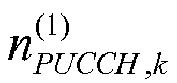

- (a) The base station configures each sub-frame in the S1 set with a corresponding ACK/NACK resource in the sub-frame n to carry ACK/NACK information and notifies the user equipment in higher layer signaling, where a higher layer signaling notification scheme includes but will not be limited to the following scheme:
- In the foregoing method, different users can be allocated with separate resources or overlapping resources.
- (2) Predefined configuration scheme
A PUCCH resource corresponding to the i-th sub-frame in the S1 set is:-


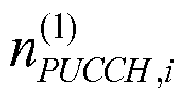
-
- For a PUCCH in a multi-port transmission mode, a PUCCH resource of the second antenna port is indexed by adding a preset offset, e.g., 1, to a PUCCH resource of the first antenna port, that is,

- Moreover for two aggregated carriers and the current sub-frame for an ACK/NACK feedback corresponding to only one downlink sub-frame, for the carrier in a multi-codeword transmission mode, a PUCCH resource corresponding to the second codeword is indexed by adding a preset offset, e.g., 1, to a PUCCH resource corresponding to the first codeword, that is,

-
Fig.5b illustrates the entire pre-configured ACK/NACK resource mapping scheme in which there are two PUCCH resource allocations (theconfiguration 4 is used for a non-dynamic system user and the configuration 2 is used for a dynamic user). InFig.5a , PUCCH resources of Km=8 and Km=7 are PUCCH resources in the sub-frame n corresponding to the S0 set, PUCCH resources of Km=11 and Km=12 are resources specific to the non-dynamic system UE, and PUCCH resources of Km=4 and Km=6 are PUCCH resources in the sub-frame n corresponding to the S1 set, which start with F. - Where F is configured and notified as follows:
- The base station itself configures F and notifies the user equipment in higher layer signaling, where


- Where F is the predefined resource starting point of ACK/NACK corresponding to the second set of sub-frames,


- Referring to
Fig.6 , an uplink feedback apparatus of this embodiment includes: - An obtaining
unit 61 is configured to determine ACK/NACK resource, for carrying ACK/NACK corresponding to downlink data, in a sub-frame n according to a set of sub-frames including a sub-frame in which the downlink data is received; and - A transmitting
unit 62 is configured to transmit ACK/NACK information corresponding to the downlink data over the ACK/NACK resource in the sub-frame n. - Where the set of sub-frames includes a first set of sub-frames and/or a second set of sub-frames; the first set of sub-frames and/or the second set of sub-frames are/is determined by obtained uplink/downlink sub-frame configuration information and flexible sub-frame information; the uplink/downlink sub-frame configuration information indicates the type of each sub-frame in a radio frame, and corresponding types of sub-frames include uplink sub-frames, downlink sub-frames and special sub-frames; and the flexible sub-frame information indicates the type of each sub-frame in a radio frame, and corresponding types of sub-frames include uplink sub-frames, downlink sub-frames, special sub-frames and flexible sub-frames, where the flexible sub-frame can be used for transmission of uplink or downlink data.
- The first set of sub-frames includes at least all the sub-frames belonging to both a set P and a set Q; and the second set of sub-frames includes all the sub-frames belonging to the set Q but not the set P, where:
- The obtaining
unit 61 determines the set P according to the uplink/downlink sub-frame configuration information, and the set P includes the downlink sub-frames and/or the special sub-frames indicated by the uplink/downlink sub-frame configuration information; and - The obtaining
unit 61 determines the set Q according to the flexible sub-frame information, and the set Q includes any one or more of the downlink sub-frames, the special sub-frames and the flexible sub-frames indicated by the flexible sub-frame information. - The obtaining
unit 61 is configured to obtain the flexible sub-frame information indicated by received higher layer signaling or obtain the flexible sub-frame information as prescribed. - The obtaining
unit 61 is configured to determine the ACK/NACK resource for carrying the ACK/NACK corresponding to the downlink data in the sub-frame n according to a scheme and parameters corresponding to the first set of sub-frames in the case that the sub-frame in which the downlink data is received belongs to the first set of sub-frames; and - To determine the ACK/NACK resource for carrying the ACK/NACK corresponding to the downlink data in the sub-frame n according to a scheme and parameters corresponding to the second set of sub-frames in the case that the sub-frame in which the downlink data is received belongs to the second set of sub-frames.
- The obtaining
unit 61 is configured to obtain the information about the ACK/NACK resource for carrying the ACK/NACK corresponding to the downlink data in the sub-frame n for the first set of sub-frames using a PUCCH resource obtaining scheme and relevant parameters predefined for a non-dynamic system in the case that the sub-frame in which the downlink data is received belongs to the first set of sub-frames; and - To obtain the information about the ACK/NACK resource for carrying the ACK/NACK corresponding to the downlink data in the sub-frame n for the second set of sub-frames by receiving higher layer signaling transmitted from a base station in the case that the sub-frame in which the downlink data is received belongs to the second set of sub-frames.
- The higher layer signaling includes information about ACK/NACK resource, for carrying ACK/NACK in the corresponding sub-frame n, configured by the base station for a first sub-frame in the second set of sub-frames, and
- Then the obtaining
unit 61 obtains information about ACK/NACK resource, in the sub-frame n, for carrying ACK/NACK corresponding to a subsequent sub-frame in the second set of sub-frames according to the ACK/NACK resource, in the sub-frame n, configured for the first sub-frame and a preset offset by which the sub-frames are spaced. - The higher signaling includes information about ACK/NACK resource, for carrying ACK/NACK in the corresponding sub-frame n, configured by the base station for a part or all of the sub-frames in the second set of sub-frames.
- The obtaining
unit 61 is configured to obtain information about ACK/NACK resource, in the sub-frame n, for carrying ACK/NACK corresponding to each sub-frame in the second set of sub-frames in a predefined configuration scheme if the sub-frame in which the downlink data is received belongs to the second set of sub-frames. - The obtaining
unit 61 is configured to calculate an ACK/NACK resource in the predefined configuration scheme according to the index of a first CCE used for a PDCCH, and the predefined configuration scheme includes:
- Where F is a predefined resource starting point of ACK/NACK corresponding to the second set of sub-frames, Mdyn is the number of sub-frames in the second set of sub-frame, n CCE is the index of a first CCE, in a sub-frame n - km, used for a PDCCH,


- The obtaining
unit 61 is configured, when the index of a CCE corresponds to multiple ACK/NACK resources, after obtaining an ACK/NACK resource in the formula of
- The obtaining
unit 61 receives information transmitted from the base station side about the predefined resource starting point of ACK/NACK corresponding to the second set of sub-frames. - The obtaining
unit 61 obtains the predefined resource starting point of ACK/NACK corresponding to the second set of sub-frames as follows: - Information transmitted from the base station side about ACK/NACK resource reserved for a non-dynamic system user is received; and
- The information about the predefined configuration resource starting point of ACK/NACK is calculated in the formula of

- Where

- The information about the predefined resource starting point of ACK/NACK is obtained in the formula of:

- Where F is the predefined resource starting point of ACK/NACK corresponding to the second set of sub-frames, M R8 is the number of sub-frames in the P set of sub-frames, k R8 is the number of special timeslots in the P set of sub-frames, Nn is the number of CCEs carried in n PDCCH symbols, and n is the highest number of PDCCH occupied symbols in the P set of sub-frames.
- The highest number of PDCCH occupied symbols in the P set of sub-frames is indicated directly by higher layer signaling or configured by default.
- The apparatus is applicable to applicable to a system including a Physical Downlink Shared Channel (PDSCH) with Physical Downlink Control Channel (PDCCH) scheduling or a PDCCH indicating uplink Semi-Persistent Scheduling (SPS) resource releasing.
- Referring to
Fig. 7 , an apparatus for scheduling an uplink feedback of a user equipment according to this embodiment can be a user equipment and particularly include an obtainingunit 71 and a receivingunit 72. - The obtaining
unit 71 is configured to determine ACK/NACK resource for carrying ACK/NACK corresponding to downlink data in a sub-frame n according to a set of sub-frames including a sub-frame in which the downlink data is transmitted; and - The receiving
unit 72 is configured to receive ACK/NACK information corresponding to the downlink data over the ACK/NACK resource in the sub-frame n. - The set of sub-frames includes the first set of sub-frames and/or the second set of sub-frames as in the previous method, and a repeated description thereof will be omitted here.
- The first set of sub-frames includes at least all the sub-frames belonging to both a set P and a set Q; and the second set of sub-frames includes all the sub-frames belonging to the set Q but not the set P, where:
- The obtaining unit determines the set P according to the uplink/downlink sub-frame configuration information, and the set P includes the downlink sub-frames and/or the special sub-frames indicated by the uplink/downlink sub-frame configuration information; and
- The obtaining unit determines the set Q according to the flexible sub-frame information, and the set Q includes any one or more of the downlink sub-frames, the special sub-frames and the flexible sub-frames indicated by the flexible sub-frame information.
- The obtaining
unit 71 is configured to obtain the flexible sub-frame information by the apparatus itself under a preset rule or obtain the flexible sub-frame information as prescribed. - The obtaining
unit 71 is configured to determine the ACK/NACK resource for carrying the ACK/NACK corresponding to the downlink data in the sub-frame n according to a scheme and parameters corresponding to the first set of sub-frames in the case that the sub-frame in which the downlink data is transmitted belongs to the first set of sub-frames; and to determine the ACK/NACK resource for carrying the ACK/NACK corresponding to the downlink data in the sub-frame n according to a scheme and parameters corresponding to the second set of sub-frames in the case that the sub-frame in which the downlink data is transmitted belongs to the second set of sub-frames. - The obtaining
unit 71 is configured to obtain the information about the ACK/NACK resource for carrying the ACK/NACK corresponding to the downlink data in the sub-frame n for the first set of sub-frames using a PUCCH resource obtaining scheme and relevant parameters predefined for a non-dynamic system in the case that the sub-frame in which the downlink data is transmitted belongs to the first set of sub-frames. - The apparatus further includes: a first transmitting unit configured to transmit high layer signaling transmitted to a user equipment to indicate the information about the ACK/NACK resource for carrying the ACK/NACK corresponding to the downlink data in the sub-frame n for the second set of sub-frames.
- The higher layer signaling includes information about ACK/NACK resource, for carrying ACK/NACK in the corresponding sub-frame n, configured by a base station for a first sub-frame in the second set of sub-frames.
- The higher signaling includes information about ACK/NACK resource, for carrying ACK/NACK in the corresponding sub-frame n, configured by the base station for a part or all of the sub-frames in the second set of sub-frames.
- The obtaining
unit 71 is configured to obtain information about ACK/NACK resource, in the sub-frame n, for carrying ACK/NACK corresponding to each sub-frame in the second set of sub-frames in a predefined configuration scheme. - The obtaining
unit 71 is configured to calculate an ACK/NACK resource in the predefined configuration scheme according to the index of a first CCE used for a Physical Downlink Control Channel (PDCCH), and the predefined configuration scheme includes:
- Where F is a predefined resource starting point of ACK/NACK corresponding to the second set of sub-frames, Mdyn is the number of sub-frames in the second set of sub-frame, n CCE is the index of a first CCE, in a sub-frame n - km, used for a PDCCH,


- The obtaining
unit 71 is configured, when the index of a CCE corresponds to multiple ACK/NACK resources, after obtaining an ACK/NACK resource in the formula of
- Information about the predefined resource starting point of ACK/NACK corresponding to the second set of sub-frames can be obtained in the formula of:

or
or
- Where F is the predefined resource starting point of ACK/NACK corresponding to the second set of sub-frames,


- The first transmitting unit is further configured to transmit the highest number of PDCCH occupied symbols in the P set of sub-frames to the user equipment in higher layer signaling.
- The apparatus further includes: a second transmitting unit configured to transmit the information about the resource starting point of ACK/NACK corresponding to the second set of sub-frames to the user equipment side.
- The apparatus is applicable to applicable to a system including a Physical Downlink Shared Channel (PDSCH) with Physical Downlink Control Channel (PDCCH) scheduling or a PDCCH indicating uplink Semi-Persistent Scheduling (SPS) resource releasing.
- Referring to
Fig.8 , a communication system according to this embodiment includes: - A user equipment 81 is configured to determine ACK/NACK resource for carrying ACK/NACK corresponding to downlink data in a sub-frame n according to a set of sub-frames including a sub-frame in which the downlink data is received; and to transmit ACK/NACK information corresponding to the downlink data over the ACK/NACK resource in the sub-frame n; and
- A
base station 82 is configured to determine the ACK/NACK resource for carrying the ACK/NACK corresponding to the downlink data in the sub-frame n according to the set of sub-frames including the sub-frame in which the downlink data is transmitted; and to receive the ACK/NACK information corresponding to the downlink data over the ACK/NACK resource in the sub-frame n. The set of sub-frames includes the first set of sub-frames and/or the second set of sub-frames as in the previous method, and a repeated description thereof will be omitted here. - The user equipment of this embodiment can include the foregoing interaction process between the base station side and the user equipment side or the interaction process between the two apparatuses in
Fig.6 and Fig.7 , and a repeated description thereof will be omitted here. - In this embodiment, the uplink/downlink sub-frame configuration information indicates the type of each sub-frame in a radio frame, and corresponding types of sub-frames include uplink sub-frames, downlink sub-frames and special sub-frames; and the flexible sub-frame information indicates the type of each sub-frame in a radio frame, and corresponding types of sub-frames include uplink sub-frames, downlink sub-frames, special sub-frames and flexible sub-frames, where the flexible sub-frame can be used for transmission of uplink or downlink data. The uplink/downlink sub-frame configuration information configures the information about the ACK/NACK resource for carrying the ACK/NACK corresponding to the downlink data in the first set of sub-frames, that is, a downlink sub-frame included in both a non-dynamic system feedback scheme and a dynamic system feedback scheme, and the flexible sub-frame information configures the information about the ACK/NACK resource for carrying the ACK/NACK corresponding to the downlink data in the second set of sub-frames, so confliction of PUCCH resources between the non-dynamic system and the dynamic system can be avoided.
- The information about the corresponding PUCCH resource for carrying ACK/NACK in the first set of sub-frames (the sub-frames included in both the set P and the set Q) can be obtained in a PUCCH resource obtaining scheme predefined for the non-dynamic system without any problem of PUCCH resource confliction while saving the resources. For a sub-frame included in only the set Q, the index thereof is different from the index of the ACK/NACK resource for feeding back ACK/NACK information in the non-dynamic system, thus avoiding confliction of resources between the non-dynamic system and the dynamic system from occurring.
- Those skilled in the art shall appreciate that the embodiments of the invention can be embodied as a method, a system or a computer program product. Therefore the invention can be embodied in the form of an all-hardware embodiment, an all-software embodiment or an embodiment of software and hardware in combination. Furthermore the invention can be embodied in the form of a computer program product embodied in one or more computer useable storage mediums (including but not limited to a disk memory, a CD-ROM, an optical memory, etc.) in which computer useable program codes are contained.
- The invention has been described in a flow chart and/or a block diagram of the method, the device (system) and the computer program product according to the embodiments of the invention. It shall be appreciated that respective flows and/or blocks in the flow chart and/or the block diagram and combinations of the flows and/or the blocks in the flow chart and/or the block diagram can be embodied in computer program instructions. These computer program instructions can be loaded onto a general-purpose computer, a specific-purpose computer, an embedded processor or a processor of another programmable data processing device to produce a machine so that the instructions executed on the computer or the processor of the other programmable data processing device create means for performing the functions specified in the flow(s) of the flow chart and/or the block(s) of the block diagram.
- These computer program instructions can also be stored into a computer readable memory capable of directing the computer or the other programmable data processing device to operate in a specific manner so that the instructions stored in the computer readable memory create an article of manufacture including instruction means which perform the functions specified in the flow(s) of the flow chart and/or the block(s) of the block diagram.
- These computer program instructions can also be loaded onto the computer or the other programmable data processing device so that a series of operational steps are performed on the computer or the other programmable data processing device to create a computer implemented process so that the instructions executed on the computer or the other programmable device provide steps for performing the functions specified in the flow(s) of the flow chart and/or the block(s) of the block diagram.
- Although the preferred embodiments of the invention have been described, those skilled in the art benefiting from the underlying inventive concept can make additional modifications and variations to these embodiments. Therefore the appended claims are intended to be construed as encompassing the preferred embodiments and all the modifications and variations coming into the scope of the invention.
- Evidently those skilled in the art can make various modifications and variations to the invention without departing from the spirit and scope of the invention. Thus the invention is also intended to encompass these modifications and variations thereto so long as the modifications and variations come into the scope of the claims appended to the invention and their equivalents.
Claims (28)
- An uplink feedback method, the method comprising:determining Acknowledgement (ACK)/Non-Acknowledgement (NACK) resource, for carrying ACK/NACK corresponding to downlink data, in a sub-frame n according to a set of sub-frames including a sub-frame in which the downlink data is received; andtransmitting ACK/NACK information corresponding to the downlink data over the ACK/NACK resource in the sub-frame n,wherein the set of sub-frames includes a first set of sub-frames and/or a second set of sub-frames; the first set of sub-frames and/or the second set of sub-frames are/is determined by obtained uplink/downlink sub-frame configuration information and flexible sub-frame information; the uplink/downlink sub-frame configuration information indicates the type of each sub-frame in a radio frame, and corresponding types of sub-frames include uplink sub-frames, downlink sub-frames and special sub-frames; and the flexible sub-frame information indicates the type of each sub-frame in a radio frame, and corresponding types of sub-frames include uplink sub-frames, downlink sub-frames, special sub-frames and flexible sub-frames, wherein the flexible sub-frames can be used for transmission of uplink or downlink data, and n is a sub-frame number.
- The method according to claim 1, wherein the first set of sub-frames includes at least all the sub-frames belonging to both a set P and a set Q; and the second set of sub-frames includes all the sub-frames belonging to the set Q but not the set P, wherein:the set P is determined according to the uplink/downlink sub-frame configuration information, and the set P includes the downlink sub-frames and/or the special sub-frames indicated by the uplink/downlink sub-frame configuration information; andthe set Q is determined according to the flexible sub-frame information, and the set Q includes any one or more of the downlink sub-frames, the special sub-frames and the flexible sub-frames indicated by the flexible sub-frame information.
- The method according to claim 2, wherein the flexible sub-frame information is indicated by received higher layer signaling or obtained as prescribed.
- The method according to claim 1 or 2, wherein determining ACK/NACK resource, for carrying ACK/NACK corresponding to downlink data, in a sub-frame n according to a set of sub-frames including a sub-frame in which the downlink data is received comprises:if the sub-frame in which the downlink data is received belongs to the first set of sub-frames, then determining the ACK/NACK resource, for carrying the ACK/NACK corresponding to the downlink data, in the sub-frame n according to a scheme and parameters corresponding to the first set of sub-frames; andif the sub-frame in which the downlink data is received belongs to the second set of sub-frames, then determining the ACK/NACK resource, for carrying the ACK/NACK corresponding to the downlink data, in the sub-frame n according to a scheme and parameters corresponding to the second set of sub-frames.
- The method according to claim 4, wherein if the sub-frame in which the downlink data is received belongs to the first set of sub-frames, then the information about the ACK/NACK resource, for carrying the ACK/NACK corresponding to the downlink data, in the sub-frame n for the first set of sub-frames is obtained using a Physical Uplink Control Channel (PUCCH) resource obtaining scheme and relevant parameters predefined for a non-dynamic system.
- The method according to claim 4, wherein if the sub-frame in which the downlink data is received belongs to the second set of sub-frames, then the information about the ACK/NACK resource, for carrying the ACK/NACK corresponding to the downlink data, in the sub-frame n for the second set of sub-frames is obtained by receiving higher layer signaling transmitted from a base station.
- The method according to claim 6, wherein the higher layer signaling includes information about ACK/NACK resource, for carrying ACK/NACK in the corresponding sub-frame n, configured by the base station for a first sub-frame in the second set of sub-frames, and
then information about ACK/NACK resource, in the sub-frame n, for carrying ACK/NACK corresponding to a subsequent sub-frame in the second set of sub-frames is obtained according to the ACK/NACK resource, in the sub-frame n, configured for the first sub-frame and a preset offset by which the sub-frames are spaced;
or
the higher signaling includes information about ACK/NACK resource, for carrying ACK/NACK in the corresponding sub-frame n, configured by the base station for a part or all of the sub-frames in the second set of sub-frames. - The method according to claim 4, wherein if the sub-frame in which the downlink data is received belongs to the second set of sub-frames, then information about ACK/NACK resource, in the sub-frame n, for carrying ACK/NACK corresponding to each sub-frame in the second set of sub-frames is obtained in a predefined configuration scheme; and
the predefined configuration scheme includes:
wherein F is a predefined resource starting point of ACK/NACK corresponding to the second set of sub-frames, Mdyn is the number of sub-frames in the second set of sub-frame, n CCE is the index of a first CCE, in a sub-frame n - km, used for a PDCCH,


when the index of a CCE corresponds to multiple ACK/NACK resources, after obtaining an ACK/NACK resource in the formula of
- The method according to claim 8, wherein information about the predefined resource starting point of ACK/NACK corresponding to the second set of sub-frames is obtained as follows:the information transmitted from the base station side about the predefined resource starting point of ACK/NACK corresponding to the second set of sub-frames is received;orinformation transmitted from the base station side about ACK/NACK resource reserved for a non-dynamic system user is received; andthe information about the predefined configuration resource starting point of ACK/NACK is calculated in the formula of
 wherein
 or
or wherein F is the predefined resource starting point of ACK/NACK corresponding to the second set of sub-frames, M R8 is the number of sub-frames in the P set of sub-frames, k R8 is the number of special timeslots in the P set of sub-frames, Nn is the number of CCEs carried in n PDCCH symbols, and n is the highest number of PDCCH occupied symbols in the P set of sub-frames.
 - The method according to claim 9, wherein the highest number of PDCCH occupied symbols in the P set of sub-frames is indicated directly by higher layer signaling or configured by default.
- A method of scheduling an uplink feedback of a user equipment, applicable to a dynamic sub-frame system, the method comprising:determining ACK/NACK resource, for carrying ACK/NACK corresponding to downlink data, in a sub-frame n according to a set of sub-frames including a sub-frame in which the downlink data is transmitted; andreceiving ACK/NACK information corresponding to the downlink data over the ACK/NACK resource in the sub-frame n,wherein the set of sub-frames includes a first set of sub-frames and/or a second set of sub-frames; the first set of sub-frames and/or the second set of sub-frames are/is determined by obtained uplink/downlink sub-frame configuration information and flexible sub-frame information; the uplink/downlink sub-frame configuration information indicates the type of each sub-frame in a radio frame, and corresponding types of sub-frames include uplink sub-frames, downlink sub-frames and special sub-frames; and the flexible sub-frame information indicates the type of each sub-frame in a radio frame, and corresponding types of sub-frames include uplink sub-frames, downlink sub-frames, special sub-frames and flexible sub-frames, wherein the flexible sub-frame can be used for transmission of uplink or downlink data, and n is a sub-frame number.
- The method according to claim 11, wherein the first set of sub-frames includes at least all the sub-frames belonging to both a set P and a set Q; and the second set of sub-frames includes all the sub-frames belonging to the set Q but not the set P, wherein:the set P is determined according to the uplink/downlink sub-frame configuration information, and the set P includes the downlink sub-frames and/or the special sub-frames indicated by the uplink/downlink sub-frame configuration information; andthe set Q is determined according to the flexible sub-frame information, and the set Q includes any one or more of the downlink sub-frames, the special sub-frames and the flexible sub-frames indicated by the flexible sub-frame information.
- The method according to claim 12, wherein the flexible sub-frame information is obtained by the apparatus itself under a preset rule or obtained as prescribed.
- The method according to claim 11 or 12, wherein determining ACK/NACK resource, for carrying ACK/NACK corresponding to downlink data, in a sub-frame n according to a set of sub-frames including a sub-frame in which the downlink data is transmitted comprises:if the sub-frame in which the downlink data is transmitted belongs to the first set of sub-frames, then determining the ACK/NACK resource, for carrying the ACK/NACK corresponding to the downlink data, in the sub-frame n according to a scheme and parameters corresponding to the first set of sub-frames; andif the sub-frame in which the downlink data is transmitted belongs to the second set of sub-frames, then determining the ACK/NACK resource, for carrying the ACK/NACK corresponding to the downlink data, in the sub-frame n according to a scheme and parameters corresponding to the second set of sub-frames.
- The method according to claim 14, wherein if the sub-frame in which the downlink data is transmitted belongs to the first set of sub-frames, then information about the ACK/NACK resource, for carrying the ACK/NACK corresponding to the downlink data, in the sub-frame n for the first set of sub-frames is obtained using a PUCCH resource obtaining scheme and relevant parameters predefined for a non-dynamic system.
- The method according to claim 14, wherein if the sub-frame in which the downlink data is transmitted belongs to the second set of sub-frames, then the method further comprises:transmitting higher layer signaling to the user equipment to indicate information about the ACK/NACK resource, for carrying the ACK/NACK corresponding to the downlink data, in the sub-frame n for the second set of sub-frames.
- The method according to claim 16, wherein the higher layer signaling includes information about ACK/NACK resource, for carrying ACK/NACK in the corresponding sub-frame n, configured by a base station for a first sub-frame in the second set of sub-frames;
or
the higher signaling includes information about ACK/NACK resource, for carrying ACK/NACK in the corresponding sub-frame n, configured by the base station for a part or all of the sub-frames in the second set of sub-frames. - The method according to claim 14, wherein information about ACK/NACK resource, in the sub-frame n, for carrying ACK/NACK corresponding to each sub-frame in the second set of sub-frames is obtained in a predefined configuration scheme; and
the predefined configuration scheme includes:
wherein F is a predefined resource starting point of ACK/NACK corresponding to the second set of sub-frames, Mdyn is the number of sub-frames in the second set of sub-frame, n CCE is the index of a first CCE, in a sub-frame n - km, used for a PDCCH,


when the index of a CCE corresponds to multiple ACK/NACK resources, after obtaining an ACK/NACK resource in the formula of
- The method according to claim 18, wherein information about the predefined resource starting point of ACK/NACK corresponding to the second set of sub-frames is transmitted to the user equipment side, and the information about the predefined resource starting point is calculated in the formula of:

or
or
wherein F is the predefined resource starting point of ACK/NACK corresponding to the second set of sub-frames,

- The method according to claim 19, further comprising:transmitting the highest number of PDCCH occupied symbols in the P set of sub-frames to the user equipment in higher layer signaling or configuring it by default.
- An uplink feedback apparatus, applicable to a dynamic sub-frame system, the apparatus comprising:an obtaining unit configured to determine ACK/NACK resource, for carrying ACK/NACK corresponding to downlink data, in a sub-frame n according to a set of sub-frames including a sub-frame in which the downlink data is received; anda transmitting unit configured to transmit ACK/NACK information corresponding to the downlink data over the ACK/NACK resource in the sub-frame n,wherein the set of sub-frames includes a first set of sub-frames and/or a second set of sub-frames; the first set of sub-frames and/or the second set of sub-frames are/is determined by obtained uplink/downlink sub-frame configuration information and flexible sub-frame information; the uplink/downlink sub-frame configuration information indicates the type of each sub-frame in a radio frame, and corresponding types of sub-frames include uplink sub-frames, downlink sub-frames and special sub-frames; and the flexible sub-frame information indicates the type of each sub-frame in a radio frame, and corresponding types of sub-frames include uplink sub-frames, downlink sub-frames, special sub-frames and flexible sub-frames, wherein the flexible sub-frame can be used for transmission of uplink or downlink data, and n is a sub-frame number.
- The apparatus according to claim 21, wherein the first set of sub-frames includes at least all the sub-frames belonging to both a set P and a set Q; and the second set of sub-frames includes all the sub-frames belonging to the set Q but not the set P, wherein:the obtaining unit determines the set P according to the uplink/downlink sub-frame configuration information, and the set P includes the downlink sub-frames and/or the special sub-frames indicated by the uplink/downlink sub-frame configuration information; andthe obtaining unit determines the set Q according to the flexible sub-frame information, and the set Q includes any one or more of the downlink sub-frames, the special sub-frames and the flexible sub-frames indicated by the flexible sub-frame information.
- The apparatus according to claim 21, wherein the obtaining unit is configured to obtain the flexible sub-frame information indicated by received higher layer signaling or obtain the flexible sub-frame information as prescribed.
- The apparatus according to claim 21 or 22, wherein the obtaining unit is configured to determine the ACK/NACK resource, for carrying the ACK/NACK corresponding to the downlink data, in the sub-frame n according to a scheme and parameters corresponding to the first set of sub-frames in the case that the sub-frame in which the downlink data is received belongs to the first set of sub-frames; and
to determine the ACK/NACK resource, for carrying the ACK/NACK corresponding to the downlink data, in the sub-frame n according to a scheme and parameters corresponding to the second set of sub-frames in the case that the sub-frame in which the downlink data is received belongs to the second set of sub-frames. - An apparatus for scheduling an uplink feedback of a user equipment, applicable to a dynamic sub-frame system, the apparatus comprising:an obtaining unit configured to determine ACK/NACK resource, for carrying ACK/NACK corresponding to downlink data, in a sub-frame n according to a set of sub-frames including a sub-frame in which the downlink data is transmitted; anda receiving unit configured to receive ACK/NACK information corresponding to the downlink data over the ACK/NACK resource in the sub-frame n,wherein the set of sub-frames includes a first set of sub-frames and/or a second set of sub-frames; the first set of sub-frames and/or the second set of sub-frames are/is determined by obtained uplink/downlink sub-frame configuration information and flexible sub-frame information; the uplink/downlink sub-frame configuration information indicates the type of each sub-frame in a radio frame, and corresponding types of sub-frames include uplink sub-frames, downlink sub-frames and special sub-frames; and the flexible sub-frame information indicates the type of each sub-frame in a radio frame, and corresponding types of sub-frames include uplink sub-frames, downlink sub-frames, special sub-frames and flexible sub-frames, wherein the flexible sub-frame can be used for transmission of uplink or downlink data, and n is a sub-frame number.
- The apparatus according to claim 25, wherein the first set of sub-frames includes at least all the sub-frames belonging to both a set P and a set Q; and the second set of sub-frames includes all the sub-frames belonging to the set Q but not the set P, wherein:the obtaining unit determines the set P according to the uplink/downlink sub-frame configuration information, and the set P includes the downlink sub-frames and/or the special sub-frames indicated by the uplink/downlink sub-frame configuration information; andthe obtaining unit determines the set Q according to the flexible sub-frame information, and the set Q includes any one or more of the downlink sub-frames, the special sub-frames and the flexible sub-frames indicated by the flexible sub-frame information.
- The apparatus according to claim 26, wherein the obtaining unit is configured to obtain the flexible sub-frame information by the apparatus itself under a preset rule or obtain the flexible sub-frame information as prescribed.
- The apparatus according to claim 25 or 26, wherein the obtaining unit is configured to determine the ACK/NACK resource, for carrying the ACK/NACK corresponding to the downlink data, in the sub-frame n according to a scheme and parameters corresponding to the first set of sub-frames in the case that the sub-frame in which the downlink data is transmitted belongs to the first set of sub-frames; and to determine the ACK/NACK resource, for carrying the ACK/NACK corresponding to the downlink data, in the sub-frame n according to a scheme and parameters corresponding to the second set of sub-frames in the case that the sub-frame in which the downlink data is transmitted belongs to the second set of sub-frames.
Applications Claiming Priority (2)
| Application Number | Priority Date | Filing Date | Title |
|---|---|---|---|
| CN201110227564.5A CN102271032B (en) | 2011-08-09 | 2011-08-09 | Method, system and device for realizing uplink feedback |
| PCT/CN2012/079795 WO2013020502A1 (en) | 2011-08-09 | 2012-08-08 | Uplink feedback method, system and device |
Publications (3)
| Publication Number | Publication Date |
|---|---|
| EP2744139A1 true EP2744139A1 (en) | 2014-06-18 |
| EP2744139A4 EP2744139A4 (en) | 2014-08-20 |
| EP2744139B1 EP2744139B1 (en) | 2017-09-13 |
Family
ID=45053204
Family Applications (1)
| Application Number | Title | Priority Date | Filing Date |
|---|---|---|---|
| EP12821904.5A Active EP2744139B1 (en) | 2011-08-09 | 2012-08-08 | Uplink feedback method and apparatus |
Country Status (4)
| Country | Link |
|---|---|
| US (1) | US9001711B2 (en) |
| EP (1) | EP2744139B1 (en) |
| CN (1) | CN102271032B (en) |
| WO (1) | WO2013020502A1 (en) |
Cited By (2)
| Publication number | Priority date | Publication date | Assignee | Title |
|---|---|---|---|---|
| CN103166745A (en) * | 2011-12-12 | 2013-06-19 | 中国移动通信集团公司 | A Method and Device for Feedback Response Command in Carrier Aggregation System |
| EP3195689A4 (en) * | 2014-09-19 | 2018-05-02 | Telefonaktiebolaget LM Ericsson (publ) | Methods and devices for uplink sps release |
Families Citing this family (47)
| Publication number | Priority date | Publication date | Assignee | Title |
|---|---|---|---|---|
| CN104868975B (en) * | 2011-03-31 | 2019-07-19 | 华为技术有限公司 | Method, base station and the user equipment of subframe in time-division duplex system configuration |
| CN102271032B (en) | 2011-08-09 | 2014-11-19 | 电信科学技术研究院 | Method, system and device for realizing uplink feedback |
| CN103179672B (en) | 2011-12-23 | 2016-03-02 | 华为技术有限公司 | Communication means, base station and subscriber equipment |
| CN103312470B (en) | 2012-03-09 | 2016-05-11 | 电信科学技术研究院 | A method and device for implementing HARQ feedback |
| CN109921885B (en) * | 2012-04-20 | 2021-11-26 | 北京三星通信技术研究有限公司 | Method for allocating HARQ-ACK channel resources supporting transmission diversity and channel selection |
| US9635645B2 (en) * | 2012-05-02 | 2017-04-25 | Industrial Technology Research Institute | Method of handling resource allocation in TDD system and related communication device |
| WO2013166689A1 (en) * | 2012-05-10 | 2013-11-14 | Nokia Corporation | Harq-ack transmissions for dynamic tdd ul/dl configuration |
| JP6131458B2 (en) * | 2012-06-27 | 2017-05-24 | シャープ株式会社 | Mobile station apparatus, base station apparatus, and radio communication method |
| CN103580831B (en) * | 2012-07-24 | 2019-03-01 | 北京三星通信技术研究有限公司 | Method and device for transmitting HARQ-ACK information |
| AU2013293772B2 (en) * | 2012-07-24 | 2017-02-02 | Samsung Electronics Co., Ltd. | Method and apparatus for transmitting HARQ-ACK |
| CN111405666B (en) * | 2012-08-03 | 2024-06-07 | 北京三星通信技术研究有限公司 | Method for RN to support multiple wireless access systems |
| CN103580824B (en) | 2012-08-03 | 2016-12-21 | 上海贝尔股份有限公司 | The method carrying out autonomous retransmission feedback in subscriber equipment in carrier aggregation network |
| CN103580828A (en) * | 2012-08-06 | 2014-02-12 | 夏普株式会社 | HARQ information sending/receiving method, base station and user equipment |
| CN103684578B (en) * | 2012-09-21 | 2017-02-01 | 电信科学技术研究院 | Method, system and device for sending and receiving configuration information |
| WO2014047786A1 (en) * | 2012-09-25 | 2014-04-03 | Telefonaktiebolaget L M Ericsson (Publ) | Method, device of filtering interference and computer-readable recording medium |
| JP5944579B2 (en) * | 2012-09-25 | 2016-07-05 | エヌイーシー(チャイナ)カンパニー, リミテッドNEC(China)Co.,Ltd. | Method and apparatus for increasing coverage |
| CN104938016B (en) * | 2013-01-17 | 2019-05-14 | 高通股份有限公司 | Hybrid reconfiguration method and apparatus for TDD adaptation |
| CN104010375B (en) * | 2013-02-22 | 2018-03-27 | 华为技术有限公司 | A kind of method, terminal and the base station of data communication |
| CN104105203B (en) * | 2013-04-03 | 2019-06-25 | 中兴通讯股份有限公司 | Method and device for processing uplink and downlink resource configuration information |
| CN105122669B (en) * | 2013-04-16 | 2019-06-18 | Lg电子株式会社 | Method and apparatus for reporting channel state information in a wireless communication system |
| WO2014186971A1 (en) * | 2013-05-23 | 2014-11-27 | 华为技术有限公司 | Subframe configuration method and apparatus |
| WO2015003366A1 (en) * | 2013-07-11 | 2015-01-15 | Broadcom Corporation | Control of cqi reports |
| US20150358138A1 (en) * | 2013-08-09 | 2015-12-10 | Mediatek Inc. | Physical Resource Allocation for UL Control Channels in Adaptive TDD Systems |
| CN104469950B (en) | 2013-09-23 | 2018-09-04 | 电信科学技术研究院 | A kind of method, system and equipment sending and receiving data |
| CN104601300B (en) * | 2013-10-31 | 2018-03-16 | 电信科学技术研究院 | A kind of data transmission method and equipment |
| WO2015062066A1 (en) * | 2013-11-01 | 2015-05-07 | 华为技术有限公司 | Measurement method, base station, and user equipment |
| CN103856301B (en) * | 2014-02-21 | 2017-02-08 | 重庆邮电大学 | Implementation method for information feedback of UE end downlink HARQ in TD-LTE-A system |
| KR101857667B1 (en) * | 2014-03-12 | 2018-06-19 | 엘지전자 주식회사 | Method for transmitting uplink control channel in wireless communication system that supports use change of radio resources, and apparatus therefor |
| CN110430028B (en) * | 2014-06-27 | 2021-09-07 | 华为技术有限公司 | PUSCH transmission method and device |
| US9462607B2 (en) * | 2014-08-28 | 2016-10-04 | Intel IP Corporation | Apparatus, method and system of multi-user uplink transmission |
| CN105391525B (en) * | 2014-09-03 | 2018-11-27 | 中国电信股份有限公司 | For selecting the method and system of resource |
| CN110213026A (en) * | 2015-01-30 | 2019-09-06 | 华为技术有限公司 | The transmission method and device of feeding back information in communication system |
| CN107113797B (en) * | 2015-03-20 | 2020-01-10 | 华为技术有限公司 | Method and device for transmitting channel state information |
| EP3264843B1 (en) | 2015-03-27 | 2019-06-26 | Huawei Technologies Co., Ltd. | User equipment, network device and method for determining physical uplink control channel resource |
| CN107113805B (en) * | 2015-09-25 | 2020-10-09 | 华为技术有限公司 | Uplink information transmission method, base station and user equipment |
| CN106685603B (en) | 2015-11-11 | 2019-11-05 | 华为技术有限公司 | The method and apparatus of TDD system information transmission |
| CN107493604A (en) * | 2016-06-13 | 2017-12-19 | 华为技术有限公司 | The method and apparatus of frame structure configuration |
| KR102182610B1 (en) | 2016-07-13 | 2020-11-25 | 베이징 시아오미 모바일 소프트웨어 컴퍼니 리미티드 | Data transmission methods, devices, computer programs and storage media |
| US10581559B2 (en) * | 2016-07-18 | 2020-03-03 | Sharp Kabushiki Kaisha | User Equipment, base stations and methods |
| CN108075864B (en) * | 2016-11-15 | 2021-02-05 | 中国电信股份有限公司 | ACK/NACK feedback method, system and terminal |
| CN108737042B (en) * | 2017-04-18 | 2021-01-22 | 上海诺基亚贝尔股份有限公司 | Method and apparatus for data transmission in a wireless communication network |
| CN109039554B (en) * | 2017-06-09 | 2021-01-26 | 上海朗帛通信技术有限公司 | Method and device in user equipment and base station used for narrow-band communication |
| JP7099734B2 (en) * | 2017-06-15 | 2022-07-12 | 日本電気株式会社 | The method performed by the user equipment and the method performed by the base station |
| WO2020248102A1 (en) * | 2019-06-10 | 2020-12-17 | 北京小米移动软件有限公司 | Harq feedback method and apparatus, and readable storage medium |
| CN112583543B (en) * | 2019-09-27 | 2022-08-02 | 维沃移动通信有限公司 | Resource determination method and communication equipment |
| CN113973283B (en) * | 2020-07-23 | 2025-05-13 | 夏普株式会社 | Method performed by user equipment and user equipment |
| WO2022151437A1 (en) * | 2021-01-15 | 2022-07-21 | 华为技术有限公司 | Feedback information sending method and apparatus, and feedback information receiving method and apparatus |
Family Cites Families (14)
| Publication number | Priority date | Publication date | Assignee | Title |
|---|---|---|---|---|
| CN101102525B (en) * | 2007-08-06 | 2012-04-18 | 中兴通讯股份有限公司 | A method for generating the uplink and downlink conversion time of the second type of LTE frame structure |
| US20090125363A1 (en) * | 2007-10-22 | 2009-05-14 | Nokia Siemens Networks Oy | Method, apparatus and computer program for employing a frame structure in wireless communication |
| CN102149148B (en) * | 2008-04-29 | 2012-08-08 | 华为技术有限公司 | Method, device and system for allocating response channels for user and system |
| CN102088341B (en) * | 2009-12-04 | 2013-04-17 | 电信科学技术研究院 | Transmitting method and transmitting device of feedback information |
| US20110176461A1 (en) * | 2009-12-23 | 2011-07-21 | Telefonakatiebolaget Lm Ericsson (Publ) | Determining configuration of subframes in a radio communications system |
| CN102111252B (en) * | 2009-12-25 | 2014-03-19 | 中兴通讯股份有限公司南京分公司 | Hybrid automatic repeat request-based repeat resource distribution method |
| KR101785313B1 (en) * | 2011-04-12 | 2017-10-17 | 삼성전자주식회사 | Method and apparatus of operating subframe and transmitting channel state information for controlling interference in communication system |
| KR101820742B1 (en) * | 2011-05-30 | 2018-01-22 | 삼성전자 주식회사 | Mobile communication system and method for transmitting data thereof |
| CN102843732B (en) * | 2011-06-20 | 2015-11-25 | 华为技术有限公司 | A kind of TDD communication means, base station and subscriber equipment |
| CN102238737B (en) | 2011-07-21 | 2015-07-15 | 电信科学技术研究院 | Acknowledgement (ACK)/negative acknowledgement (NACK)/scheduling request (SR) resource mapping method and equipment |
| CN102271032B (en) * | 2011-08-09 | 2014-11-19 | 电信科学技术研究院 | Method, system and device for realizing uplink feedback |
| KR101525073B1 (en) * | 2011-08-15 | 2015-06-02 | 노키아 솔루션스 앤드 네트웍스 오와이 | Signaling |
| CN104067667A (en) * | 2012-01-23 | 2014-09-24 | 英特尔公司 | Network-assisted user association and offloading techniques for integrated multi-RAT heterogeneous networks |
| US9014064B2 (en) * | 2012-05-11 | 2015-04-21 | Intel Corporation | Scheduling and hybrid automatic repeat request (HARQ) timing indication for an uplink-downlink (UL-DL) reconfiguration |
-
2011
- 2011-08-09 CN CN201110227564.5A patent/CN102271032B/en active Active
-
2012
- 2012-08-08 US US14/238,194 patent/US9001711B2/en active Active
- 2012-08-08 WO PCT/CN2012/079795 patent/WO2013020502A1/en not_active Ceased
- 2012-08-08 EP EP12821904.5A patent/EP2744139B1/en active Active
Cited By (4)
| Publication number | Priority date | Publication date | Assignee | Title |
|---|---|---|---|---|
| CN103166745A (en) * | 2011-12-12 | 2013-06-19 | 中国移动通信集团公司 | A Method and Device for Feedback Response Command in Carrier Aggregation System |
| CN103166745B (en) * | 2011-12-12 | 2016-08-10 | 中国移动通信集团公司 | A kind of carrier aggregation system feeds back method and the device of response instruction |
| EP3195689A4 (en) * | 2014-09-19 | 2018-05-02 | Telefonaktiebolaget LM Ericsson (publ) | Methods and devices for uplink sps release |
| US10225849B2 (en) | 2014-09-19 | 2019-03-05 | Telefonaktiebolaget Lm Ericsson (Publ) | Methods and devices for uplink SPS release |
Also Published As
| Publication number | Publication date |
|---|---|
| EP2744139B1 (en) | 2017-09-13 |
| CN102271032B (en) | 2014-11-19 |
| US20140293909A1 (en) | 2014-10-02 |
| US9001711B2 (en) | 2015-04-07 |
| CN102271032A (en) | 2011-12-07 |
| WO2013020502A1 (en) | 2013-02-14 |
| EP2744139A4 (en) | 2014-08-20 |
Similar Documents
| Publication | Publication Date | Title |
|---|---|---|
| EP2744139B1 (en) | Uplink feedback method and apparatus | |
| US20210328753A1 (en) | Base Station, User Equipment and Methods Therein for Control Timing Configuration Assignment in a Multiple Cell Communications Network | |
| US10638500B2 (en) | Method and apparatus for sending uplink/downlink scheduling information, and method and apparatus for receiving uplink/downlink scheduling information | |
| EP2785128B1 (en) | Transmission method and user equipment for physical uplink control channel | |
| US9906334B2 (en) | Method and apparatus for transmitting ACK/NACK signal in wireless communication system | |
| CN110913486B (en) | Network node, user equipment and method thereof | |
| US9319211B2 (en) | Node and method for downlink scheduling and hybrid automatic repeat request timing | |
| EP2995106A1 (en) | Method, apparatus and computer program for wireless communications | |
| WO2018031779A1 (en) | User equipments, base stations and methods | |
| EP2775767A1 (en) | Method, system and device for transmitting feedback information | |
| US9331819B2 (en) | Method for implementing HARQ feedback, and method and device for allocating uplink subframe | |
| US11368976B2 (en) | Node and method for downlink scheduling and hybrid automatic repeat request timing | |
| US9455819B2 (en) | Method, system and apparatus for sending and receiving feedback information | |
| US20160226631A1 (en) | Method whereby terminal transmits ack/nack in wireless communication system, and device therefor | |
| US20200077343A1 (en) | Method and apparatus for uplink power control in wireless cellular communication system | |
| WO2015018004A1 (en) | Enhancement of the robustness of time division duplex uplink/downlink configuration indication |
Legal Events
| Date | Code | Title | Description |
|---|---|---|---|
| PUAI | Public reference made under article 153(3) epc to a published international application that has entered the european phase |
Free format text: ORIGINAL CODE: 0009012 |
|
| 17P | Request for examination filed |
Effective date: 20140305 |
|
| AK | Designated contracting states |
Kind code of ref document: A1 Designated state(s): AL AT BE BG CH CY CZ DE DK EE ES FI FR GB GR HR HU IE IS IT LI LT LU LV MC MK MT NL NO PL PT RO RS SE SI SK SM TR |
|
| A4 | Supplementary search report drawn up and despatched |
Effective date: 20140722 |
|
| RIC1 | Information provided on ipc code assigned before grant |
Ipc: H04L 5/00 20060101ALI20140716BHEP Ipc: H04L 1/18 20060101AFI20140716BHEP |
|
| DAX | Request for extension of the european patent (deleted) | ||
| 17Q | First examination report despatched |
Effective date: 20150605 |
|
| STAA | Information on the status of an ep patent application or granted ep patent |
Free format text: STATUS: EXAMINATION IS IN PROGRESS |
|
| REG | Reference to a national code |
Ref country code: DE Ref legal event code: R079 Ref document number: 602012037395 Country of ref document: DE Free format text: PREVIOUS MAIN CLASS: H04L0001160000 Ipc: H04L0001180000 |
|
| GRAP | Despatch of communication of intention to grant a patent |
Free format text: ORIGINAL CODE: EPIDOSNIGR1 |
|
| STAA | Information on the status of an ep patent application or granted ep patent |
Free format text: STATUS: GRANT OF PATENT IS INTENDED |
|
| RIC1 | Information provided on ipc code assigned before grant |
Ipc: H04B 7/26 20060101ALI20170314BHEP Ipc: H04L 1/18 20060101AFI20170314BHEP Ipc: H04L 5/00 20060101ALI20170314BHEP |
|
| INTG | Intention to grant announced |
Effective date: 20170406 |
|
| GRAS | Grant fee paid |
Free format text: ORIGINAL CODE: EPIDOSNIGR3 |
|
| GRAA | (expected) grant |
Free format text: ORIGINAL CODE: 0009210 |
|
| STAA | Information on the status of an ep patent application or granted ep patent |
Free format text: STATUS: THE PATENT HAS BEEN GRANTED |
|
| AK | Designated contracting states |
Kind code of ref document: B1 Designated state(s): AL AT BE BG CH CY CZ DE DK EE ES FI FR GB GR HR HU IE IS IT LI LT LU LV MC MK MT NL NO PL PT RO RS SE SI SK SM TR |
|
| REG | Reference to a national code |
Ref country code: GB Ref legal event code: FG4D |
|
| REG | Reference to a national code |
Ref country code: CH Ref legal event code: EP |
|
| REG | Reference to a national code |
Ref country code: IE Ref legal event code: FG4D |
|
| REG | Reference to a national code |
Ref country code: AT Ref legal event code: REF Ref document number: 929134 Country of ref document: AT Kind code of ref document: T Effective date: 20171015 |
|
| REG | Reference to a national code |
Ref country code: DE Ref legal event code: R096 Ref document number: 602012037395 Country of ref document: DE |
|
| REG | Reference to a national code |
Ref country code: NL Ref legal event code: MP Effective date: 20170913 |
|
| REG | Reference to a national code |
Ref country code: LT Ref legal event code: MG4D |
|
| PG25 | Lapsed in a contracting state [announced via postgrant information from national office to epo] |
Ref country code: FI Free format text: LAPSE BECAUSE OF FAILURE TO SUBMIT A TRANSLATION OF THE DESCRIPTION OR TO PAY THE FEE WITHIN THE PRESCRIBED TIME-LIMIT Effective date: 20170913 Ref country code: LT Free format text: LAPSE BECAUSE OF FAILURE TO SUBMIT A TRANSLATION OF THE DESCRIPTION OR TO PAY THE FEE WITHIN THE PRESCRIBED TIME-LIMIT Effective date: 20170913 Ref country code: SE Free format text: LAPSE BECAUSE OF FAILURE TO SUBMIT A TRANSLATION OF THE DESCRIPTION OR TO PAY THE FEE WITHIN THE PRESCRIBED TIME-LIMIT Effective date: 20170913 Ref country code: NO Free format text: LAPSE BECAUSE OF FAILURE TO SUBMIT A TRANSLATION OF THE DESCRIPTION OR TO PAY THE FEE WITHIN THE PRESCRIBED TIME-LIMIT Effective date: 20171213 Ref country code: HR Free format text: LAPSE BECAUSE OF FAILURE TO SUBMIT A TRANSLATION OF THE DESCRIPTION OR TO PAY THE FEE WITHIN THE PRESCRIBED TIME-LIMIT Effective date: 20170913 |
|
| REG | Reference to a national code |
Ref country code: AT Ref legal event code: MK05 Ref document number: 929134 Country of ref document: AT Kind code of ref document: T Effective date: 20170913 |
|
| PG25 | Lapsed in a contracting state [announced via postgrant information from national office to epo] |
Ref country code: GR Free format text: LAPSE BECAUSE OF FAILURE TO SUBMIT A TRANSLATION OF THE DESCRIPTION OR TO PAY THE FEE WITHIN THE PRESCRIBED TIME-LIMIT Effective date: 20171214 Ref country code: BG Free format text: LAPSE BECAUSE OF FAILURE TO SUBMIT A TRANSLATION OF THE DESCRIPTION OR TO PAY THE FEE WITHIN THE PRESCRIBED TIME-LIMIT Effective date: 20171213 Ref country code: RS Free format text: LAPSE BECAUSE OF FAILURE TO SUBMIT A TRANSLATION OF THE DESCRIPTION OR TO PAY THE FEE WITHIN THE PRESCRIBED TIME-LIMIT Effective date: 20170913 Ref country code: ES Free format text: LAPSE BECAUSE OF FAILURE TO SUBMIT A TRANSLATION OF THE DESCRIPTION OR TO PAY THE FEE WITHIN THE PRESCRIBED TIME-LIMIT Effective date: 20170913 Ref country code: LV Free format text: LAPSE BECAUSE OF FAILURE TO SUBMIT A TRANSLATION OF THE DESCRIPTION OR TO PAY THE FEE WITHIN THE PRESCRIBED TIME-LIMIT Effective date: 20170913 |
|
| PG25 | Lapsed in a contracting state [announced via postgrant information from national office to epo] |
Ref country code: NL Free format text: LAPSE BECAUSE OF FAILURE TO SUBMIT A TRANSLATION OF THE DESCRIPTION OR TO PAY THE FEE WITHIN THE PRESCRIBED TIME-LIMIT Effective date: 20170913 |
|
| PG25 | Lapsed in a contracting state [announced via postgrant information from national office to epo] |
Ref country code: PL Free format text: LAPSE BECAUSE OF FAILURE TO SUBMIT A TRANSLATION OF THE DESCRIPTION OR TO PAY THE FEE WITHIN THE PRESCRIBED TIME-LIMIT Effective date: 20170913 Ref country code: CZ Free format text: LAPSE BECAUSE OF FAILURE TO SUBMIT A TRANSLATION OF THE DESCRIPTION OR TO PAY THE FEE WITHIN THE PRESCRIBED TIME-LIMIT Effective date: 20170913 Ref country code: RO Free format text: LAPSE BECAUSE OF FAILURE TO SUBMIT A TRANSLATION OF THE DESCRIPTION OR TO PAY THE FEE WITHIN THE PRESCRIBED TIME-LIMIT Effective date: 20170913 |
|
| PG25 | Lapsed in a contracting state [announced via postgrant information from national office to epo] |
Ref country code: AT Free format text: LAPSE BECAUSE OF FAILURE TO SUBMIT A TRANSLATION OF THE DESCRIPTION OR TO PAY THE FEE WITHIN THE PRESCRIBED TIME-LIMIT Effective date: 20170913 Ref country code: EE Free format text: LAPSE BECAUSE OF FAILURE TO SUBMIT A TRANSLATION OF THE DESCRIPTION OR TO PAY THE FEE WITHIN THE PRESCRIBED TIME-LIMIT Effective date: 20170913 Ref country code: IS Free format text: LAPSE BECAUSE OF FAILURE TO SUBMIT A TRANSLATION OF THE DESCRIPTION OR TO PAY THE FEE WITHIN THE PRESCRIBED TIME-LIMIT Effective date: 20180113 Ref country code: IT Free format text: LAPSE BECAUSE OF FAILURE TO SUBMIT A TRANSLATION OF THE DESCRIPTION OR TO PAY THE FEE WITHIN THE PRESCRIBED TIME-LIMIT Effective date: 20170913 Ref country code: SM Free format text: LAPSE BECAUSE OF FAILURE TO SUBMIT A TRANSLATION OF THE DESCRIPTION OR TO PAY THE FEE WITHIN THE PRESCRIBED TIME-LIMIT Effective date: 20170913 Ref country code: SK Free format text: LAPSE BECAUSE OF FAILURE TO SUBMIT A TRANSLATION OF THE DESCRIPTION OR TO PAY THE FEE WITHIN THE PRESCRIBED TIME-LIMIT Effective date: 20170913 |
|
| REG | Reference to a national code |
Ref country code: DE Ref legal event code: R097 Ref document number: 602012037395 Country of ref document: DE |
|
| PLBE | No opposition filed within time limit |
Free format text: ORIGINAL CODE: 0009261 |
|
| STAA | Information on the status of an ep patent application or granted ep patent |
Free format text: STATUS: NO OPPOSITION FILED WITHIN TIME LIMIT |
|
| PG25 | Lapsed in a contracting state [announced via postgrant information from national office to epo] |
Ref country code: DK Free format text: LAPSE BECAUSE OF FAILURE TO SUBMIT A TRANSLATION OF THE DESCRIPTION OR TO PAY THE FEE WITHIN THE PRESCRIBED TIME-LIMIT Effective date: 20170913 |
|
| 26N | No opposition filed |
Effective date: 20180614 |
|
| REG | Reference to a national code |
Ref country code: FR Ref legal event code: PLFP Year of fee payment: 7 |
|
| PG25 | Lapsed in a contracting state [announced via postgrant information from national office to epo] |
Ref country code: SI Free format text: LAPSE BECAUSE OF FAILURE TO SUBMIT A TRANSLATION OF THE DESCRIPTION OR TO PAY THE FEE WITHIN THE PRESCRIBED TIME-LIMIT Effective date: 20170913 |
|
| PG25 | Lapsed in a contracting state [announced via postgrant information from national office to epo] |
Ref country code: MC Free format text: LAPSE BECAUSE OF FAILURE TO SUBMIT A TRANSLATION OF THE DESCRIPTION OR TO PAY THE FEE WITHIN THE PRESCRIBED TIME-LIMIT Effective date: 20170913 |
|
| REG | Reference to a national code |
Ref country code: CH Ref legal event code: PL |
|
| PG25 | Lapsed in a contracting state [announced via postgrant information from national office to epo] |
Ref country code: LI Free format text: LAPSE BECAUSE OF NON-PAYMENT OF DUE FEES Effective date: 20180831 Ref country code: CH Free format text: LAPSE BECAUSE OF NON-PAYMENT OF DUE FEES Effective date: 20180831 Ref country code: LU Free format text: LAPSE BECAUSE OF NON-PAYMENT OF DUE FEES Effective date: 20180808 |
|
| REG | Reference to a national code |
Ref country code: BE Ref legal event code: MM Effective date: 20180831 |
|
| REG | Reference to a national code |
Ref country code: IE Ref legal event code: MM4A |
|
| PG25 | Lapsed in a contracting state [announced via postgrant information from national office to epo] |
Ref country code: IE Free format text: LAPSE BECAUSE OF NON-PAYMENT OF DUE FEES Effective date: 20180808 |
|
| PG25 | Lapsed in a contracting state [announced via postgrant information from national office to epo] |
Ref country code: BE Free format text: LAPSE BECAUSE OF NON-PAYMENT OF DUE FEES Effective date: 20180831 |
|
| PG25 | Lapsed in a contracting state [announced via postgrant information from national office to epo] |
Ref country code: MT Free format text: LAPSE BECAUSE OF NON-PAYMENT OF DUE FEES Effective date: 20180808 |
|
| PG25 | Lapsed in a contracting state [announced via postgrant information from national office to epo] |
Ref country code: TR Free format text: LAPSE BECAUSE OF FAILURE TO SUBMIT A TRANSLATION OF THE DESCRIPTION OR TO PAY THE FEE WITHIN THE PRESCRIBED TIME-LIMIT Effective date: 20170913 |
|
| PG25 | Lapsed in a contracting state [announced via postgrant information from national office to epo] |
Ref country code: PT Free format text: LAPSE BECAUSE OF FAILURE TO SUBMIT A TRANSLATION OF THE DESCRIPTION OR TO PAY THE FEE WITHIN THE PRESCRIBED TIME-LIMIT Effective date: 20170913 Ref country code: HU Free format text: LAPSE BECAUSE OF FAILURE TO SUBMIT A TRANSLATION OF THE DESCRIPTION OR TO PAY THE FEE WITHIN THE PRESCRIBED TIME-LIMIT; INVALID AB INITIO Effective date: 20120808 |
|
| PG25 | Lapsed in a contracting state [announced via postgrant information from national office to epo] |
Ref country code: CY Free format text: LAPSE BECAUSE OF FAILURE TO SUBMIT A TRANSLATION OF THE DESCRIPTION OR TO PAY THE FEE WITHIN THE PRESCRIBED TIME-LIMIT Effective date: 20170913 Ref country code: MK Free format text: LAPSE BECAUSE OF NON-PAYMENT OF DUE FEES Effective date: 20170913 |
|
| PG25 | Lapsed in a contracting state [announced via postgrant information from national office to epo] |
Ref country code: AL Free format text: LAPSE BECAUSE OF FAILURE TO SUBMIT A TRANSLATION OF THE DESCRIPTION OR TO PAY THE FEE WITHIN THE PRESCRIBED TIME-LIMIT Effective date: 20170913 |
|
| REG | Reference to a national code |
Ref country code: DE Ref legal event code: R081 Ref document number: 602012037395 Country of ref document: DE Owner name: DATANG MOBILE COMMUNICATIONS EQUIPMENT CO., LT, CN Free format text: FORMER OWNER: CHINA ACADEMY OF TELECOMMUNICATIONS TECHNOLOGY, BEIJING, CN |
|
| REG | Reference to a national code |
Ref country code: GB Ref legal event code: 732E Free format text: REGISTERED BETWEEN 20211007 AND 20211013 |
|
| P01 | Opt-out of the competence of the unified patent court (upc) registered |
Effective date: 20230512 |
|
| PGFP | Annual fee paid to national office [announced via postgrant information from national office to epo] |
Ref country code: DE Payment date: 20250820 Year of fee payment: 14 |
|
| PGFP | Annual fee paid to national office [announced via postgrant information from national office to epo] |
Ref country code: GB Payment date: 20250820 Year of fee payment: 14 |
|
| PGFP | Annual fee paid to national office [announced via postgrant information from national office to epo] |
Ref country code: FR Payment date: 20250829 Year of fee payment: 14 |