EP2743858A1 - Using a honeypot workflow for software review - Google Patents
Using a honeypot workflow for software review Download PDFInfo
- Publication number
- EP2743858A1 EP2743858A1 EP20130193120 EP13193120A EP2743858A1 EP 2743858 A1 EP2743858 A1 EP 2743858A1 EP 20130193120 EP20130193120 EP 20130193120 EP 13193120 A EP13193120 A EP 13193120A EP 2743858 A1 EP2743858 A1 EP 2743858A1
- Authority
- EP
- European Patent Office
- Prior art keywords
- application
- phase
- trap
- distribution server
- particular behavior
- Prior art date
- Legal status (The legal status is an assumption and is not a legal conclusion. Google has not performed a legal analysis and makes no representation as to the accuracy of the status listed.)
- Granted
Links
Images



Classifications
-
- G—PHYSICS
- G06—COMPUTING OR CALCULATING; COUNTING
- G06F—ELECTRIC DIGITAL DATA PROCESSING
- G06F21/00—Security arrangements for protecting computers, components thereof, programs or data against unauthorised activity
- G06F21/50—Monitoring users, programs or devices to maintain the integrity of platforms, e.g. of processors, firmware or operating systems
-
- G—PHYSICS
- G06—COMPUTING OR CALCULATING; COUNTING
- G06F—ELECTRIC DIGITAL DATA PROCESSING
- G06F21/00—Security arrangements for protecting computers, components thereof, programs or data against unauthorised activity
- G06F21/50—Monitoring users, programs or devices to maintain the integrity of platforms, e.g. of processors, firmware or operating systems
- G06F21/57—Certifying or maintaining trusted computer platforms, e.g. secure boots or power-downs, version controls, system software checks, secure updates or assessing vulnerabilities
-
- G—PHYSICS
- G06—COMPUTING OR CALCULATING; COUNTING
- G06F—ELECTRIC DIGITAL DATA PROCESSING
- G06F21/00—Security arrangements for protecting computers, components thereof, programs or data against unauthorised activity
- G06F21/50—Monitoring users, programs or devices to maintain the integrity of platforms, e.g. of processors, firmware or operating systems
- G06F21/57—Certifying or maintaining trusted computer platforms, e.g. secure boots or power-downs, version controls, system software checks, secure updates or assessing vulnerabilities
- G06F21/577—Assessing vulnerabilities and evaluating computer system security
-
- G—PHYSICS
- G06—COMPUTING OR CALCULATING; COUNTING
- G06F—ELECTRIC DIGITAL DATA PROCESSING
- G06F11/00—Error detection; Error correction; Monitoring
- G06F11/30—Monitoring
- G06F11/3003—Monitoring arrangements specially adapted to the computing system or computing system component being monitored
-
- G—PHYSICS
- G06—COMPUTING OR CALCULATING; COUNTING
- G06F—ELECTRIC DIGITAL DATA PROCESSING
- G06F11/00—Error detection; Error correction; Monitoring
- G06F11/30—Monitoring
- G06F11/3055—Monitoring arrangements for monitoring the status of the computing system or of the computing system component, e.g. monitoring if the computing system is on, off, available, not available
-
- G—PHYSICS
- G06—COMPUTING OR CALCULATING; COUNTING
- G06F—ELECTRIC DIGITAL DATA PROCESSING
- G06F2201/00—Indexing scheme relating to error detection, to error correction, and to monitoring
- G06F2201/865—Monitoring of software
-
- G—PHYSICS
- G06—COMPUTING OR CALCULATING; COUNTING
- G06F—ELECTRIC DIGITAL DATA PROCESSING
- G06F2221/00—Indexing scheme relating to security arrangements for protecting computers, components thereof, programs or data against unauthorised activity
- G06F2221/03—Indexing scheme relating to G06F21/50, monitoring users, programs or devices to maintain the integrity of platforms
- G06F2221/033—Test or assess software
-
- G—PHYSICS
- G06—COMPUTING OR CALCULATING; COUNTING
- G06F—ELECTRIC DIGITAL DATA PROCESSING
- G06F2221/00—Indexing scheme relating to security arrangements for protecting computers, components thereof, programs or data against unauthorised activity
- G06F2221/21—Indexing scheme relating to G06F21/00 and subgroups addressing additional information or applications relating to security arrangements for protecting computers, components thereof, programs or data against unauthorised activity
- G06F2221/2125—Just-in-time application of countermeasures, e.g., on-the-fly decryption, just-in-time obfuscation or de-obfuscation
-
- G—PHYSICS
- G06—COMPUTING OR CALCULATING; COUNTING
- G06F—ELECTRIC DIGITAL DATA PROCESSING
- G06F2221/00—Indexing scheme relating to security arrangements for protecting computers, components thereof, programs or data against unauthorised activity
- G06F2221/21—Indexing scheme relating to G06F21/00 and subgroups addressing additional information or applications relating to security arrangements for protecting computers, components thereof, programs or data against unauthorised activity
- G06F2221/2127—Bluffing
Definitions
- Certain embodiments of the disclosure relate to detection of malicious or undesirable software, such as malware. More specifically, certain embodiments of the disclosure relate to a method and system for using a honeypot workflow for software review.
- An application distribution server may include a plurality of published applications which may be distributed to end-user devices such as, for example, smart phones, mobile phones, tablets and/or other data processing devices. Some developers of the applications may actually be attackers who may utilize the application distribution server as a way to distribute undesirable software. Undesirable software such as malware may be used or created to disrupt device operation, gather sensitive information and/or gain access to private data processing systems.
- the undesirable software may comprise, for example, viruses, worms, trojan horses, spyware, adware and/or other malicious programs.
- an application distribution server may comprise a plurality of applications which may be downloaded and/or installed onto end-user devices such as, for example, smart phones, mobile phones and/or tablets.
- the application distribution server may perform an application distribution process for an application, where the application distribution process may comprise a plurality of phases.
- the application distribution server may detect, at each of the plurality of phases, whether a particular behavior corresponding to use of the application to distribute undesirable software may occur.
- the application distribution server may continue, utilizing a trap system, one or more subsequent phases in the application distribution process for the application, without communicating information on the detection of the particular behavior, for example, to an attacker associated with the application.
- the plurality of phases may comprise, in sequence, a developer account creation phase, a risk assessment phase, an application upload phase, an application publication phase, an application promotion phase and an application download phase, for example.
- FIG. 1 is a block diagram illustrating an example communication system, in accordance with an embodiment of the disclosure.
- FIG. 2 is a block diagram illustrating an example application distribution server, in accordance with an embodiment of the disclosure.
- FIG. 3 is a block diagram illustrating an example application distribution process with a honeypot workflow, in accordance with an embodiment of the disclosure.
- FIG. 4 is a flow chart illustrating example steps for using a honeypot workflow for software review, in accordance with an embodiment of the disclosure.
- an application distribution server may be operable to perform an application distribution process for an application, where the application distribution process may comprise a plurality of phases.
- the plurality of phases in the application distribution process may comprise, in sequence, a developer account creation phase, a risk assessment phase, an application upload phase, an application publication phase, an application promotion phase and an application download phase.
- the application distribution server may be operable to detect, at each of the plurality of phases, whether a particular behavior corresponding to use of the application to distribute undesirable software may occur.
- the application distribution server may be operable to continue, utilizing a trap system, one or more subsequent phases after the certain phase for the application, without communicating information on the detection of the occurrence of the particular behavior.
- the application distribution server in instances when the occurrence of the particular behavior is detected at the risk assessment phase, may be operable to create a trap account for the application without account blocking, for example.
- the application distribution server may be operable to mark the application, which may have been uploaded to the application distribution server, as a trap application without application suspension, for example.
- the application distribution server may be operable to mark the application, which may have been published, as a trap application without application suspension, and prevent the published trap application from being downloaded onto an end-user device, for example.
- the application distribution server may be operable to mark the application which may have been promoted as a trap application without application suspension, and prevent the promoted trap application from being installed in an end-user device, for example.
- the application distribution server may be operable to allow installation of the promoted trap application, for example, in one or more trap end-user devices, where the one or more trap end-user devices may be created for running of the installed trap application.
- the application distribution server may be operable to monitor traffic to the application distribution server based on the running of the installed trap application on the one or more trap end-user devices. The application distribution server may then be operable to determine, based on the monitoring, how the undesirable software may be attempted to be distributed.
- FIG. 1 is a block diagram illustrating an example communication system, in accordance with an embodiment of the disclosure.
- the communication system 100 may comprise an application distribution server 102, a communication network 130 and a plurality of end-user devices 110, of which end-user devices 110a-110d are illustrated.
- the application distribution server 102 may comprise suitable logic, circuitry, interfaces and/or code that may be operable to publish and/or distribute applications, for example, to the end-user devices 110.
- the application distribution server 102 may perform an application distribution process for distributing an application to one or more of the plurality of end-user devices 110.
- the application distribution process may comprise a plurality of phases, such as, for example, a developer account creation phase, a risk assessment phase, an application upload phase, an application publication phase, an application promotion phase and an application download phase in sequence.
- the application distribution server 102 may be operable to detect, at each of the plurality of phases, whether a particular behavior corresponding to use of the application to distribute undesirable software may occur.
- a trap system such as a honeypot may be a trap set which may be utilized to gather information about attackers such as an attacker 104 who may utilize the application distribution server 102 as a way to distribute undesirable software such as, for example, malware.
- the application distribution server 102 may be operable to utilize a trap or honeypot workflow for the malicious software review and/or detection in the multi-phase application distribution process.
- Each of the end-user devices 110 such as the end-user device 110a may comprise suitable logic, circuitry, interfaces and/or code that may be operable to process data or signals.
- the end-user device 110a may be operable to communicate signals across the communication network 130.
- the end-user device 110a may comprise, for example, a smart phone, a mobile phone, a tablet and/or other similar type of data processing device.
- one or more applications may be downloaded onto and/or installed in the end-user device 110a from the application distribution server 102 via, for example, the communication network 130.
- the communication network 130 may comprise suitable logic, circuitry, interfaces, devices and/or code that may be operable to provide data and voice communication services to various devices and/or entities by using various wireless and/or wired communication technologies.
- the communication network 130 may comprise, for example, the Internet, a cellular network and/or other multimedia network.
- the communication network 130 may be operable to provide communications among the application distribution server 102, the attacker 104 and/or the plurality of end-user devices 110a-110d.
- the application distribution server 102 may be operable to perform an application distribution process for an application, where the application distribution process may comprise a plurality of phases.
- the plurality of phases in the application distribution process may comprise, in sequence, a developer account creation phase, a risk assessment phase, an application upload phase, an application publication phase, an application promotion phase and an application download phase.
- the application may be uploaded to the application distribution server 102 via the communication network 130, for example.
- the application download phase the application may be downloaded from the application distribution server 102 onto an end-user device such as the end-user device 110a via the communication network 130, for example.
- the application distribution server 102 may be operable to detect, at each of the plurality of phases, whether a particular behavior may occur, where the particular behavior may correspond to use of the application to distribute undesirable software such as malware, for example. In instances when an occurrence of the particular behavior is detected at a certain phase in the application distribution process, the application distribution server 102 may be operable to continue, utilizing a trap system such as a honeypot, one or more subsequent phases after the certain phase for the application, without communicating information on the detection of the occurrence of the particular behavior, for example, to the attacker 104 who may be associated with the application.
- a trap system such as a honeypot
- the application distribution server 102 does not provide the attacker 104 an ability to determine that a particular behavior (or bad behavior) has been detected by allowing a replica of later phases of the process using a trap system such as a honeypot.
- a trap system such as a honeypot.
- the attacker 104 may not observer that he or she is detected. The longer this deception may be maintained, more interesting signals of particular behavior may be produced by the attacker 104, thus more information on the particular behavior may be collected by the application distribution server 102 and more effective the application distribution server 102 may be at preventing undesirable software such as malware from getting to end-user devices 110a-110d.
- the application distribution server 102 may be operable to create a trap account for the application without account blocking, for example.
- the application distribution server 102 may be operable to mark the application, which may have been uploaded to the application distribution server 102, as a trap application without application suspension, for example.
- the application distribution server 102 may be operable to mark the application, which may have been published, as a trap application without application suspension, and prevent the published trap application from being downloaded onto an end-user device such as the end-user device 110a, for example.
- the application distribution server 102 may be operable to mark the application which may have been promoted as a trap application without application suspension, and prevent the promoted trap application from being installed in an end-user device such as the end-user device 110a, for example.
- the trap application may be utilized to observe the attacker 104, the trap application may not actually be downloaded onto and/or installed in end-user devices 110a-110d.
- the application distribution server 102 may be operable to allow installation of the promoted trap application, for example, in one or more trap end-user devices, where the one or more trap end-user devices may be created for the purpose of running the installed trap application.
- the application distribution server 102 may be operable to monitor traffic to the application distribution server 102 based on the running of the installed trap application on the one or more trap end-user devices. The application distribution server 102 may then be operable to determine, based on the monitoring, how the undesirable software may be attempted to be distributed, for example.
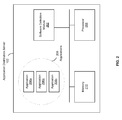
- FIG. 2 is a block diagram illustrating an example application distribution server, in accordance with an embodiment of the disclosure.
- the application distribution server 102 may comprise, for example, a software detection module 202, a processor 208 and a memory 210.
- the application distribution server 102 may comprise a plurality of applications 206, of which applications 206a-206c are illustrated. Each of the plurality of applications 206a-206d may be uploaded, published, promoted and/or downloaded onto an end-user device such as the end-user device 110a vie an application distribution process.
- the application distribution server 102 may be as described with respect to FIG. 1 , for example.
- the software detection module 202 may comprise suitable logic, circuitry, interfaces and/or code that may be operable to perform undesirable-software detection functions such as, for example, malware detection functions for the application distribution server 102.
- the software detection module 202 may be operable to detect, at each of a plurality of phases in the application distribution process, whether a particular behavior may occur, where the particular behavior may correspond to use of an application such as the application 206a to distribute undesirable software such as malware.
- the processor 208 may comprise suitable logic, circuitry, interfaces and/or code that may be operable to manage and/or control operations of various components and/or modules in the application distribution server 102.
- the processor 208 may utilize an operating system (OS) that enables the execution of various applications such as, for example, the applications 206.
- OS operating system
- the processor 208 may be operable to perform an application distribution process, for each of the applications 206a-206c, with a trap or honeypot workflow.
- the memory 210 may comprise suitable logic, circuitry, interfaces and/or code that may be operable to store information such as executable instructions and/or data that may be utilized by the processor 208, the software detection module 202 and/or other modules or components in the application distribution server 102.
- the memory 210 may comprise RAM, ROM, low latency nonvolatile memory such as flash memory and/or other suitable electronic data storage.
- the processor 208 in the application distribution server 102 may be operable to perform an application distribution process for an application such as the application 206a, where the application distribution process may comprise a plurality of phases, such as, for example, a developer account creation phase, a risk assessment phase, an application upload phase, an application publication phase, an application promotion phase and an application download phase in sequence.
- the software detection module 202 in the application distribution server 102 may be operable to detect, at each of the plurality of phases, whether a particular behavior may occur, where the particular behavior may correspond to use of the application 206a to distribute undesirable software such as malware, for example.
- the processor 208 may be operable to continue, utilizing a trap system such as a honeypot, one or more subsequent phases after the certain phase for the application 206a, without communicating information on the detection of the occurrence of the particular behavior, for example, to the attacker 104 who may be associated with the application 206a.
- a trap system such as a honeypot
- FIG. 3 is a block diagram illustrating an example application distribution process with a honeypot workflow, in accordance with an embodiment of the disclosure.
- the application distribution process 300 may comprise, in sequence, a developer account creation phase 302, a risk assessment phase 304, an application upload phase 306, an application publication phase 308, an application promotion phase 310 and an application download phase 312, for example.
- the processor 208 in the application distribution server 102 may be operable to perform the application distribution process 300 for an application such as the application 206a.
- the processor 208 may be operable to create a developer account associated with the application 206a at the developer account creation phase 302.
- the processor 208 may be operable to perform risk analysis, for example, utilizing a risk engine, for one or more on-line transactions associated with the developer account.
- the processor 208 may communicate a result of the risk analysis to the software detection module 202 in the application distribution server 102.
- the software detection module 202 may be operable to detect whether a particular behavior may occur at the risk assessment phase 304, based on the result of the risk analysis.
- the particular behavior at the risk assessment phase 304 may comprise using a particular or invalid credit card for the transaction, using a stolen credit card for the transaction and/or making the transaction not from a real human.
- the processor 208 may be operable to create a trap account 314 associated with the application 206a.
- the processor 208 may continue one or more subsequent phases utilizing the trap account 412.
- the trap account 314 may function like a regular account, except that the associated application 206a being distributed may be marked as a trap application.
- the processor 208 may be operable to upload the application 206a to the application distribution server 102.
- the uploaded application 206a is not yet available to the end-user devices 110a-110d and is in an unpublished state.
- the software detection module 202 may be operable to detect whether a particular behavior may occur at the application upload phase 306. In instances when an occurrence of a particular behavior is detected by the software detection module 202 at the application upload phase 306 and/or at a previous phase prior to the application upload phase 306, instead of suspending the application 206a, the processor 208 may be operable to mark the application 206a, which may have been uploaded to the application distribution server 102, as a trap application 316, for example.
- the processor 208 would not mark the application 206a as "suspended" or otherwise indicate that the application 206a is known to be malicious.
- the processor 208 may continue one or more subsequent phases utilizing the trap application 316.
- the particular behavior may comprise, for example, copying all existing images and sending the copied all existing images to the communication network 130, opening all contact information in a contact database and sending the opened all contact information to the communication network 130, and/or other similar type of behavior.
- the processor 208 may be operable to publish the application 206a and make the application 206a available to the end-user devices 110a-110d.
- the software detection module 202 may be operable to detect whether the particular behavior may occur at the application publication phase 308.
- the processor 208 may be operable to mark the application 206a, which may have been published, as a trap application 318, for example. The processor 208 may continue one or more subsequent phases utilizing the trap application 318.
- the processor 208 may also be operable to prevent the published trap application 318 from being downloaded onto an end-user device such as the end-user device 110a, for example.
- the trap application 318 may appear to have been published.
- the trap application 318 may not actually be downloaded onto any end-user device 110. This may be accomplished by, for example, causing any attempted download of the trap application 318 to be intentionally corrupted as though there was a network or caching problem.
- the processor 208 may be operable to promote the application 206a which has been published.
- the application 206a may be promoted, for example, utilizing advertisements, website links, and/or social networks.
- the software detection module 202 may be operable to detect whether the particular behavior may occur at the application promotion phase 310. In instances when an occurrence of the particular behavior is detected by the software detection module 202 at the application promotion phase 310 and/or at a previous phase prior to the application promotion phase 310, instead of suspending the application 206a, the processor 208 may be operable to mark the application 206a which may have been promoted as a trap application 320, for example. The processor 208 may continue one or more subsequent phases utilizing the trap application 320.
- the processor 208 may also be operable to prevent the promoted trap application 320 from being actually installed in an end-user device such as the end-user device 110a,
- the processor 208 may be operable to allow installation 322 of the promoted trap application 320, for example, in one or more trap end-user devices 330, where the one or more trap end-user devices 330 may be created for running of the installed trap application 324.
- the software detection module 202 may be operable to monitor traffic to the application distribution server 102 based on the running of the installed trap application 324 on the one or more trap end-user devices 330. The software detection module 202 may then be operable to determine, based on the monitoring, how the undesirable software such as malware may be attempted to be distributed. For example, the software detection module 202 may detect use of advertisements and/or affiliated networks to drive traffic to undesirable software.
- FIG. 4 is a flow chart illustrating example steps for using a honeypot workflow for software review, in accordance with an embodiment of the disclosure.
- the example steps start at step 401.
- the processor 208 in the application distribution server 102 may be operable to perform an application distribution process 300 for an application such as the application 206a, where the application distribution process 300 may comprise a plurality of phases.
- the plurality of phases in the application distribution process 300 may comprise, in sequence, a developer account creation phase 302, a risk assessment phase 304, an application upload phase 306, an application publication phase 308, an application promotion phase 310 and an application download phase 312.
- the software detection module 202 in the application distribution server 102 may be operable to detect, at each of the plurality of phases, whether a particular behavior corresponding to use of the application 206a to distribute undesirable software may occur.
- the processor 208 may be operable to continue, utilizing a trap system such as a honeypot, one or more subsequent phases after the certain phase for the application 206a, without communicating information on the detection of the occurrence of the particular behavior, for example, to the attacker 104 who may be associated with the application 206a.
- the example steps may proceed to the end step 405.
- a processor 208 in an application distribution server such as the application distribution server 102 may be operable to perform an application distribution process 300 for an application such as the application 206a, where the application distribution process 300 may comprise a plurality of phases, such as, for example, a developer account creation phase 302, a risk assessment phase 304, an application upload phase 306, an application publication phase 308, an application promotion phase 310 and an application download phase 312 in sequence.
- a software detection module 202 in the application distribution server 102 may be operable to detect, at each of the plurality of phases, whether a particular behavior corresponding to use of the application 206a to distribute undesirable software may occur.
- the processor 208 may be operable to continue, utilizing a trap system such as a honeypot, one or more subsequent phases after the certain phase for the application 206a, without communicating information on the detection of the occurrence of the particular behavior.
- a trap system such as a honeypot
- the processor 208 in the application distribution server 102 may be operable to create a trap account 314 for the application 206a without account blocking, for example.
- the processor 208 may be operable to mark the application 206a, which may have been uploaded to the application distribution server 102, as a trap application 316 without application suspension, for example.
- the processor 208 may be operable to mark the application 206a, which may have been published, as a trap application 318 without application suspension, and prevent the published trap application 318 from being downloaded onto an end-user device such as the end-user device 110a, for example.
- the processor 208 may be operable to mark the application 206a which may have been promoted as a trap application 320 without application suspension, and prevent the promoted trap application 320 from being installed in an end-user device such as the end-user device 110a, for example.
- the processor 208 in the application distribution server 102 may be operable to allow installation 322 of the promoted trap application 320, for example, in one or more trap end-user devices 330, where the one or more trap end-user devices 330 may be created for the purpose of running the installed trap application 324.
- the software detection module 202 in the application distribution server 102 may be operable to monitor traffic to the application distribution server 102 based on the running of the installed trap application 324 on the one or more trap end-user devices 330.
- the software detection module 202 may then be operable to determine, based on the monitoring, how the undesirable software may be attempted to be distributed, for example.
- inventions of the disclosure may provide a non-transitory computer readable medium and/or storage medium, and/or a non-transitory machine readable medium and/or storage medium, having stored thereon, a machine code and/or a computer program having at least one code section executable by a machine and/or a computer, thereby causing the machine and/or computer to perform the steps as described herein for using a honeypot workflow for software review.
- aspects of the present disclosure may be realized in hardware, software, or a combination of hardware and software. Aspects of the present disclosure may be realized in a centralized fashion in at least one computer system or in a distributed fashion where different elements are spread across several interconnected computer systems. Any kind of computer system or other apparatus adapted for carrying out the methods described herein is suited.
- a typical combination of hardware and software may be a general-purpose computer system with a computer program that, when being loaded and executed, controls the computer system such that it carries out the methods described herein.
- Computer program in the present context means any expression, in any language, code or notation, of a set of instructions intended to cause a system having an information processing capability to perform a particular function either directly or after either or both of the following: a) conversion to another language, code or notation; b) reproduction in a different material form.
- a method comprising: in an application distribution server: performing an application distribution process for an application, wherein the application distribution process comprises a plurality of phases; detecting, at each of the plurality of phases, whether a particular behavior corresponding to use of the application to distribute undesirable software occurs; and when an occurrence of the particular behavior is detected at a certain phase in the application distribution process, continuing, utilizing a trap system, one or more subsequent phases after the certain phase for the application, without communicating information on the detection of the occurrence of the particular behavior.
- the plurality of phases in the application distribution process comprise a developer account creation phase, a risk assessment phase, an application upload phase, an application publication phase, an application promotion phase and an application download phase in sequence.
- a system comprising: an application distribution server, the application distribution server being operable to: perform an application distribution process for an application, wherein the application distribution process comprises a plurality of phases; detect, at each of the plurality of phases, whether a particular behavior corresponding to use of the application to distribute undesirable software occurs; and when an occurrence of the particular behavior is detected at a certain phase in the application distribution process, continue, utilizing a trap system, one or more subsequent phases after the certain phase for the application, without communicating information on the detection of the occurrence of the particular behavior.
- the plurality of phases in the application distribution process comprise a developer account creation phase, a risk assessment phase, an application upload phase, an application publication phase, an application promotion phase and an application download phase in sequence.
- the application distribution server when the occurrence of the particular behavior is detected at the risk assessment phase, the application distribution server is operable to create a trap account for the application without account blocking.
- the application distribution server is operable to mark the application which has been uploaded to the application distribution server as a trap application without application suspension.
- the application distribution server is operable to: mark the application which has been published as a trap application without application suspension; and prevent the published trap application from being downloaded onto an end-user device.
- the application distribution server is operable to: mark the application which has been promoted as a trap application without application suspension; and prevent the promoted trap application from being installed in an end-user device.
- the application distribution server is operable to allow installation of the promoted trap application in one or more trap end-user devices, where the one or more trap end-user devices are created for running of the installed trap application.
- the application distribution server is operable to monitor traffic to the application distribution server based on the running of the installed trap application on the one or more trap end-user devices.
- a method comprising: in an application distribution server: performing an application distribution process for an application, wherein the application distribution process comprises a plurality of phases, and the plurality of phases comprise a developer account creation phase, a risk assessment phase, an application upload phase, an application publication phase, an application promotion phase and an application download phase in sequence; detecting, at each of the plurality of phases, whether a particular behavior corresponding to use of the application to distribute undesirable software occurs; and when an occurrence of the particular behavior is detected at a certain phase in the application distribution process, continuing, utilizing a trap system, one or more subsequent phases after the certain phase for the application, without communicating information on the detection of the occurrence of the particular behavior.
- the application distribution server is operable to create a trap account for the application without account blocking.
- a method comprises, in an application distribution server, the steps of performing, by the server, an application distribution process for an application, wherein the application distribution process comprises a plurality of phases, and the plurality of phases comprise a developer account creation phase, a risk assessment phase, an application upload phase, an application publication phase, an application promotion phase and an application download phase in sequence; detecting, at each of the plurality of phases, whether a particular behavior corresponding to use of the application to distribute undesirable software occurs; and when an occurrence of the particular behavior is detected at a certain phase in the application distribution process, continuing, utilizing a trap system, one or more subsequent phases after the certain phase for the application, without communicating information on the detection of the occurrence of the particular behavior.
- the application distribution server when the occurrence of the particular behavior is detected at the risk assessment phase, is operable to create a trap account for the application without account blocking.
Landscapes
- Engineering & Computer Science (AREA)
- Computer Security & Cryptography (AREA)
- Computer Hardware Design (AREA)
- General Engineering & Computer Science (AREA)
- Software Systems (AREA)
- Theoretical Computer Science (AREA)
- Physics & Mathematics (AREA)
- General Physics & Mathematics (AREA)
- Computing Systems (AREA)
- Information Transfer Between Computers (AREA)
- Stored Programmes (AREA)
Abstract
Description
- Certain embodiments of the disclosure relate to detection of malicious or undesirable software, such as malware. More specifically, certain embodiments of the disclosure relate to a method and system for using a honeypot workflow for software review.
- An application distribution server may include a plurality of published applications which may be distributed to end-user devices such as, for example, smart phones, mobile phones, tablets and/or other data processing devices. Some developers of the applications may actually be attackers who may utilize the application distribution server as a way to distribute undesirable software. Undesirable software such as malware may be used or created to disrupt device operation, gather sensitive information and/or gain access to private data processing systems. The undesirable software may comprise, for example, viruses, worms, trojan horses, spyware, adware and/or other malicious programs.
- Further limitations and disadvantages of conventional and traditional approaches will become apparent to one of skill in the art, through comparison of such systems with the present disclosure as set forth in the remainder of the present application with reference to the drawings.
- Aspects of the present disclosure are directed to a method and system for using a honeypot workflow for software review. In various embodiments of the disclosure, an application distribution server may comprise a plurality of applications which may be downloaded and/or installed onto end-user devices such as, for example, smart phones, mobile phones and/or tablets. The application distribution server may perform an application distribution process for an application, where the application distribution process may comprise a plurality of phases. The application distribution server may detect, at each of the plurality of phases, whether a particular behavior corresponding to use of the application to distribute undesirable software may occur. In instances when an occurrence of the particular behavior is detected at a certain phase, the application distribution server may continue, utilizing a trap system, one or more subsequent phases in the application distribution process for the application, without communicating information on the detection of the particular behavior, for example, to an attacker associated with the application. In this regard, the plurality of phases may comprise, in sequence, a developer account creation phase, a risk assessment phase, an application upload phase, an application publication phase, an application promotion phase and an application download phase, for example.
- Various advantages, aspects and novel features of the present disclosure, as well as details of an illustrated embodiment thereof, will be more fully understood from the following description and drawings.
-
FIG. 1 is a block diagram illustrating an example communication system, in accordance with an embodiment of the disclosure. -
FIG. 2 is a block diagram illustrating an example application distribution server, in accordance with an embodiment of the disclosure. -
FIG. 3 is a block diagram illustrating an example application distribution process with a honeypot workflow, in accordance with an embodiment of the disclosure. -
FIG. 4 is a flow chart illustrating example steps for using a honeypot workflow for software review, in accordance with an embodiment of the disclosure. - Certain embodiments of the disclosure can be found in a method and system for using a honeypot workflow for software review. Certain specific details are set forth in the following description and in drawings to provide a thorough understanding of various embodiments of the disclosure. One skilled in the art, however, will understand that additional embodiments of the present disclosure may be practiced without several of the details described in the following description.
- In various embodiments of the disclosure, an application distribution server may be operable to perform an application distribution process for an application, where the application distribution process may comprise a plurality of phases. For example, the plurality of phases in the application distribution process may comprise, in sequence, a developer account creation phase, a risk assessment phase, an application upload phase, an application publication phase, an application promotion phase and an application download phase. The application distribution server may be operable to detect, at each of the plurality of phases, whether a particular behavior corresponding to use of the application to distribute undesirable software may occur. In instances when an occurrence of the particular behavior is detected at a certain phase in the application distribution process, the application distribution server may be operable to continue, utilizing a trap system, one or more subsequent phases after the certain phase for the application, without communicating information on the detection of the occurrence of the particular behavior.
- In an example embodiment of the disclosure, in instances when the occurrence of the particular behavior is detected at the risk assessment phase, the application distribution server may be operable to create a trap account for the application without account blocking, for example. In instances when the occurrence of the particular behavior is detected at the application upload phase and/or at a previous phase prior to the application upload phase, the application distribution server may be operable to mark the application, which may have been uploaded to the application distribution server, as a trap application without application suspension, for example. In instances when the occurrence of the particular behavior is detected at the application publication phase and/or at a previous phase prior to the application publication phase, the application distribution server may be operable to mark the application, which may have been published, as a trap application without application suspension, and prevent the published trap application from being downloaded onto an end-user device, for example. In instances when the occurrence of the particular behavior is detected at the application promotion phase and/or at a previous phase prior to the application promotion phase, the application distribution server may be operable to mark the application which may have been promoted as a trap application without application suspension, and prevent the promoted trap application from being installed in an end-user device, for example.
- In an example embodiment of the disclosure, the application distribution server may be operable to allow installation of the promoted trap application, for example, in one or more trap end-user devices, where the one or more trap end-user devices may be created for running of the installed trap application. In such instances, the application distribution server may be operable to monitor traffic to the application distribution server based on the running of the installed trap application on the one or more trap end-user devices. The application distribution server may then be operable to determine, based on the monitoring, how the undesirable software may be attempted to be distributed.
-
FIG. 1 is a block diagram illustrating an example communication system, in accordance with an embodiment of the disclosure. Referring toFIG. 1 , there is shown acommunication system 100. Thecommunication system 100 may comprise anapplication distribution server 102, acommunication network 130 and a plurality of end-user devices 110, of which end-user devices 110a-110d are illustrated. - The
application distribution server 102 may comprise suitable logic, circuitry, interfaces and/or code that may be operable to publish and/or distribute applications, for example, to the end-user devices 110. In an example embodiment of the disclosure, theapplication distribution server 102 may perform an application distribution process for distributing an application to one or more of the plurality of end-user devices 110. In this regard, the application distribution process may comprise a plurality of phases, such as, for example, a developer account creation phase, a risk assessment phase, an application upload phase, an application publication phase, an application promotion phase and an application download phase in sequence. Theapplication distribution server 102 may be operable to detect, at each of the plurality of phases, whether a particular behavior corresponding to use of the application to distribute undesirable software may occur. - A trap system such as a honeypot may be a trap set which may be utilized to gather information about attackers such as an
attacker 104 who may utilize theapplication distribution server 102 as a way to distribute undesirable software such as, for example, malware. In an example embodiment of the disclosure, theapplication distribution server 102 may be operable to utilize a trap or honeypot workflow for the malicious software review and/or detection in the multi-phase application distribution process. - Each of the end-
user devices 110 such as the end-user device 110a may comprise suitable logic, circuitry, interfaces and/or code that may be operable to process data or signals. The end-user device 110a may be operable to communicate signals across thecommunication network 130. The end-user device 110a may comprise, for example, a smart phone, a mobile phone, a tablet and/or other similar type of data processing device. In an example embodiment of the disclosure, one or more applications may be downloaded onto and/or installed in the end-user device 110a from theapplication distribution server 102 via, for example, thecommunication network 130. - The
communication network 130 may comprise suitable logic, circuitry, interfaces, devices and/or code that may be operable to provide data and voice communication services to various devices and/or entities by using various wireless and/or wired communication technologies. Thecommunication network 130 may comprise, for example, the Internet, a cellular network and/or other multimedia network. In an example embodiment of the disclosure, thecommunication network 130 may be operable to provide communications among theapplication distribution server 102, theattacker 104 and/or the plurality of end-user devices 110a-110d. - In operation, the
application distribution server 102 may be operable to perform an application distribution process for an application, where the application distribution process may comprise a plurality of phases. For example, the plurality of phases in the application distribution process may comprise, in sequence, a developer account creation phase, a risk assessment phase, an application upload phase, an application publication phase, an application promotion phase and an application download phase. At the application upload phase, the application may be uploaded to theapplication distribution server 102 via thecommunication network 130, for example. At the application download phase, the application may be downloaded from theapplication distribution server 102 onto an end-user device such as the end-user device 110a via thecommunication network 130, for example. - The
application distribution server 102 may be operable to detect, at each of the plurality of phases, whether a particular behavior may occur, where the particular behavior may correspond to use of the application to distribute undesirable software such as malware, for example. In instances when an occurrence of the particular behavior is detected at a certain phase in the application distribution process, theapplication distribution server 102 may be operable to continue, utilizing a trap system such as a honeypot, one or more subsequent phases after the certain phase for the application, without communicating information on the detection of the occurrence of the particular behavior, for example, to theattacker 104 who may be associated with the application. In this regard, at each phase in the application distribution process, theapplication distribution server 102 does not provide theattacker 104 an ability to determine that a particular behavior (or bad behavior) has been detected by allowing a replica of later phases of the process using a trap system such as a honeypot. Thus, even once detected by theapplication distribution server 102, theattacker 104 may not observer that he or she is detected. The longer this deception may be maintained, more interesting signals of particular behavior may be produced by theattacker 104, thus more information on the particular behavior may be collected by theapplication distribution server 102 and more effective theapplication distribution server 102 may be at preventing undesirable software such as malware from getting to end-user devices 110a-110d. - In an example embodiment of the disclosure, in instances when the occurrence of the particular behavior is detected at the risk assessment phase, the
application distribution server 102 may be operable to create a trap account for the application without account blocking, for example. In instances when the occurrence of the particular behavior is detected at the application upload phase and/or at a previous phase prior to the application upload phase, theapplication distribution server 102 may be operable to mark the application, which may have been uploaded to theapplication distribution server 102, as a trap application without application suspension, for example. In instances when the occurrence of the particular behavior is detected at the application publication phase and/or at a previous phase prior to the application publication phase, theapplication distribution server 102 may be operable to mark the application, which may have been published, as a trap application without application suspension, and prevent the published trap application from being downloaded onto an end-user device such as the end-user device 110a, for example. In instances when the occurrence of the particular behavior is detected at the application promotion phase and/or at a previous phase prior to the application promotion phase, theapplication distribution server 102 may be operable to mark the application which may have been promoted as a trap application without application suspension, and prevent the promoted trap application from being installed in an end-user device such as the end-user device 110a, for example. In this regard, while the trap application may be utilized to observe theattacker 104, the trap application may not actually be downloaded onto and/or installed in end-user devices 110a-110d. - In an example embodiment of the disclosure, the
application distribution server 102 may be operable to allow installation of the promoted trap application, for example, in one or more trap end-user devices, where the one or more trap end-user devices may be created for the purpose of running the installed trap application. In such instances, theapplication distribution server 102 may be operable to monitor traffic to theapplication distribution server 102 based on the running of the installed trap application on the one or more trap end-user devices. Theapplication distribution server 102 may then be operable to determine, based on the monitoring, how the undesirable software may be attempted to be distributed, for example. -
FIG. 2 is a block diagram illustrating an example application distribution server, in accordance with an embodiment of the disclosure. Referring toFIG. 2 , there is shown theapplication distribution server 102. Theapplication distribution server 102 may comprise, for example, asoftware detection module 202, aprocessor 208 and amemory 210. Theapplication distribution server 102 may comprise a plurality ofapplications 206, of whichapplications 206a-206c are illustrated. Each of the plurality ofapplications 206a-206d may be uploaded, published, promoted and/or downloaded onto an end-user device such as the end-user device 110a vie an application distribution process. Theapplication distribution server 102 may be as described with respect toFIG. 1 , for example. - The
software detection module 202 may comprise suitable logic, circuitry, interfaces and/or code that may be operable to perform undesirable-software detection functions such as, for example, malware detection functions for theapplication distribution server 102. In an example embodiment of the disclosure, thesoftware detection module 202 may be operable to detect, at each of a plurality of phases in the application distribution process, whether a particular behavior may occur, where the particular behavior may correspond to use of an application such as theapplication 206a to distribute undesirable software such as malware. - The
processor 208 may comprise suitable logic, circuitry, interfaces and/or code that may be operable to manage and/or control operations of various components and/or modules in theapplication distribution server 102. Theprocessor 208 may utilize an operating system (OS) that enables the execution of various applications such as, for example, theapplications 206. In an example embodiment of the disclosure, theprocessor 208 may be operable to perform an application distribution process, for each of theapplications 206a-206c, with a trap or honeypot workflow. - The
memory 210 may comprise suitable logic, circuitry, interfaces and/or code that may be operable to store information such as executable instructions and/or data that may be utilized by theprocessor 208, thesoftware detection module 202 and/or other modules or components in theapplication distribution server 102. Thememory 210 may comprise RAM, ROM, low latency nonvolatile memory such as flash memory and/or other suitable electronic data storage. - In operation, the
processor 208 in theapplication distribution server 102 may be operable to perform an application distribution process for an application such as theapplication 206a, where the application distribution process may comprise a plurality of phases, such as, for example, a developer account creation phase, a risk assessment phase, an application upload phase, an application publication phase, an application promotion phase and an application download phase in sequence. Thesoftware detection module 202 in theapplication distribution server 102 may be operable to detect, at each of the plurality of phases, whether a particular behavior may occur, where the particular behavior may correspond to use of theapplication 206a to distribute undesirable software such as malware, for example. In instances when an occurrence of the particular behavior is detected by thesoftware detection module 202 at a certain phase in the application distribution process, theprocessor 208 may be operable to continue, utilizing a trap system such as a honeypot, one or more subsequent phases after the certain phase for theapplication 206a, without communicating information on the detection of the occurrence of the particular behavior, for example, to theattacker 104 who may be associated with theapplication 206a. -
FIG. 3 is a block diagram illustrating an example application distribution process with a honeypot workflow, in accordance with an embodiment of the disclosure. Referring toFIG. 3 , there is shown anapplication distribution process 300. Theapplication distribution process 300 may comprise, in sequence, a developeraccount creation phase 302, arisk assessment phase 304, an application uploadphase 306, anapplication publication phase 308, anapplication promotion phase 310 and anapplication download phase 312, for example. - In an example operation, the
processor 208 in theapplication distribution server 102 may be operable to perform theapplication distribution process 300 for an application such as theapplication 206a. Theprocessor 208 may be operable to create a developer account associated with theapplication 206a at the developeraccount creation phase 302. At the subsequentrisk assessment phase 304, theprocessor 208 may be operable to perform risk analysis, for example, utilizing a risk engine, for one or more on-line transactions associated with the developer account. Theprocessor 208 may communicate a result of the risk analysis to thesoftware detection module 202 in theapplication distribution server 102. Thesoftware detection module 202 may be operable to detect whether a particular behavior may occur at therisk assessment phase 304, based on the result of the risk analysis. For example, the particular behavior at therisk assessment phase 304 may comprise using a particular or invalid credit card for the transaction, using a stolen credit card for the transaction and/or making the transaction not from a real human. In instances when an occurrence of the particular behavior is detected by thesoftware detection module 202 at therisk assessment phase 304, instead of blocking or terminating the created account, theprocessor 208 may be operable to create atrap account 314 associated with theapplication 206a. Theprocessor 208 may continue one or more subsequent phases utilizing the trap account 412. Thetrap account 314 may function like a regular account, except that the associatedapplication 206a being distributed may be marked as a trap application. - At the subsequent application upload
phase 306, theprocessor 208 may be operable to upload theapplication 206a to theapplication distribution server 102. The uploadedapplication 206a is not yet available to the end-user devices 110a-110d and is in an unpublished state. Thesoftware detection module 202 may be operable to detect whether a particular behavior may occur at the application uploadphase 306. In instances when an occurrence of a particular behavior is detected by thesoftware detection module 202 at the application uploadphase 306 and/or at a previous phase prior to the application uploadphase 306, instead of suspending theapplication 206a, theprocessor 208 may be operable to mark theapplication 206a, which may have been uploaded to theapplication distribution server 102, as atrap application 316, for example. Theprocessor 208 would not mark theapplication 206a as "suspended" or otherwise indicate that theapplication 206a is known to be malicious. Theprocessor 208 may continue one or more subsequent phases utilizing thetrap application 316. In this regard, the particular behavior may comprise, for example, copying all existing images and sending the copied all existing images to thecommunication network 130, opening all contact information in a contact database and sending the opened all contact information to thecommunication network 130, and/or other similar type of behavior. - At the subsequent
application publication phase 308, theprocessor 208 may be operable to publish theapplication 206a and make theapplication 206a available to the end-user devices 110a-110d. Thesoftware detection module 202 may be operable to detect whether the particular behavior may occur at theapplication publication phase 308. In instances when an occurrence of the particular behavior is detected by thesoftware detection module 202 at theapplication publication phase 308 and/or at a previous phase prior to theapplication publication phase 308, instead of suspending theapplication 206a, theprocessor 208 may be operable to mark theapplication 206a, which may have been published, as atrap application 318, for example. Theprocessor 208 may continue one or more subsequent phases utilizing thetrap application 318. Theprocessor 208 may also be operable to prevent the publishedtrap application 318 from being downloaded onto an end-user device such as the end-user device 110a, for example. In this regard, from the perspective of theattacker 104, thetrap application 318 may appear to have been published. In reality, thetrap application 318 may not actually be downloaded onto any end-user device 110. This may be accomplished by, for example, causing any attempted download of thetrap application 318 to be intentionally corrupted as though there was a network or caching problem. - At the subsequent
application promotion phase 310, theprocessor 208 may be operable to promote theapplication 206a which has been published. Theapplication 206a may be promoted, for example, utilizing advertisements, website links, and/or social networks. Thesoftware detection module 202 may be operable to detect whether the particular behavior may occur at theapplication promotion phase 310. In instances when an occurrence of the particular behavior is detected by thesoftware detection module 202 at theapplication promotion phase 310 and/or at a previous phase prior to theapplication promotion phase 310, instead of suspending theapplication 206a, theprocessor 208 may be operable to mark theapplication 206a which may have been promoted as atrap application 320, for example. Theprocessor 208 may continue one or more subsequent phases utilizing thetrap application 320. Theprocessor 208 may also be operable to prevent the promotedtrap application 320 from being actually installed in an end-user device such as the end-user device 110a, - In an example embodiment of the disclosure, the
processor 208 may be operable to allow installation 322 of the promotedtrap application 320, for example, in one or more trap end-user devices 330, where the one or more trap end-user devices 330 may be created for running of the installedtrap application 324. In such instances, thesoftware detection module 202 may be operable to monitor traffic to theapplication distribution server 102 based on the running of the installedtrap application 324 on the one or more trap end-user devices 330. Thesoftware detection module 202 may then be operable to determine, based on the monitoring, how the undesirable software such as malware may be attempted to be distributed. For example, thesoftware detection module 202 may detect use of advertisements and/or affiliated networks to drive traffic to undesirable software. -
FIG. 4 is a flow chart illustrating example steps for using a honeypot workflow for software review, in accordance with an embodiment of the disclosure. Referring toFIG. 4 , the example steps start atstep 401. Instep 402, theprocessor 208 in theapplication distribution server 102 may be operable to perform anapplication distribution process 300 for an application such as theapplication 206a, where theapplication distribution process 300 may comprise a plurality of phases. For example, the plurality of phases in theapplication distribution process 300 may comprise, in sequence, a developeraccount creation phase 302, arisk assessment phase 304, an application uploadphase 306, anapplication publication phase 308, anapplication promotion phase 310 and anapplication download phase 312. Instep 403, thesoftware detection module 202 in theapplication distribution server 102 may be operable to detect, at each of the plurality of phases, whether a particular behavior corresponding to use of theapplication 206a to distribute undesirable software may occur. Instep 404, in instances when an occurrence of the particular behavior is detected by thesoftware detection module 202 at a certain phase in theapplication distribution process 300, theprocessor 208 may be operable to continue, utilizing a trap system such as a honeypot, one or more subsequent phases after the certain phase for theapplication 206a, without communicating information on the detection of the occurrence of the particular behavior, for example, to theattacker 104 who may be associated with theapplication 206a. The example steps may proceed to theend step 405. - In various embodiments of the disclosure, a
processor 208 in an application distribution server such as theapplication distribution server 102 may be operable to perform anapplication distribution process 300 for an application such as theapplication 206a, where theapplication distribution process 300 may comprise a plurality of phases, such as, for example, a developeraccount creation phase 302, arisk assessment phase 304, an application uploadphase 306, anapplication publication phase 308, anapplication promotion phase 310 and anapplication download phase 312 in sequence. Asoftware detection module 202 in theapplication distribution server 102 may be operable to detect, at each of the plurality of phases, whether a particular behavior corresponding to use of theapplication 206a to distribute undesirable software may occur. In instances when an occurrence of the particular behavior is detected by thesoftware detection module 202 at a certain phase in theapplication distribution process 300, theprocessor 208 may be operable to continue, utilizing a trap system such as a honeypot, one or more subsequent phases after the certain phase for theapplication 206a, without communicating information on the detection of the occurrence of the particular behavior. - In instances when the occurrence of the particular behavior is detected by the
software detection module 202 at therisk assessment phase 304, theprocessor 208 in theapplication distribution server 102 may be operable to create atrap account 314 for theapplication 206a without account blocking, for example. In instances when the occurrence of the particular behavior is detected by thesoftware detection module 202 at the application uploadphase 306 and/or at a previous phase prior to the application uploadphase 306, theprocessor 208 may be operable to mark theapplication 206a, which may have been uploaded to theapplication distribution server 102, as atrap application 316 without application suspension, for example. In instances when the occurrence of the particular behavior is detected by thesoftware detection module 202 at theapplication publication phase 308 and/or at a previous phase prior to theapplication publication phase 308, theprocessor 208 may be operable to mark theapplication 206a, which may have been published, as atrap application 318 without application suspension, and prevent the publishedtrap application 318 from being downloaded onto an end-user device such as the end-user device 110a, for example. In instances when the occurrence of the particular behavior is detected by thesoftware detection module 202 at theapplication promotion phase 310 and/or at a previous phase prior to theapplication promotion phase 310, theprocessor 208 may be operable to mark theapplication 206a which may have been promoted as atrap application 320 without application suspension, and prevent the promotedtrap application 320 from being installed in an end-user device such as the end-user device 110a, for example. - The
processor 208 in theapplication distribution server 102 may be operable to allow installation 322 of the promotedtrap application 320, for example, in one or more trap end-user devices 330, where the one or more trap end-user devices 330 may be created for the purpose of running the installedtrap application 324. In such instances, thesoftware detection module 202 in theapplication distribution server 102 may be operable to monitor traffic to theapplication distribution server 102 based on the running of the installedtrap application 324 on the one or more trap end-user devices 330. Thesoftware detection module 202 may then be operable to determine, based on the monitoring, how the undesirable software may be attempted to be distributed, for example. - Other embodiments of the disclosure may provide a non-transitory computer readable medium and/or storage medium, and/or a non-transitory machine readable medium and/or storage medium, having stored thereon, a machine code and/or a computer program having at least one code section executable by a machine and/or a computer, thereby causing the machine and/or computer to perform the steps as described herein for using a honeypot workflow for software review.
- Accordingly, aspects of the present disclosure may be realized in hardware, software, or a combination of hardware and software. Aspects of the present disclosure may be realized in a centralized fashion in at least one computer system or in a distributed fashion where different elements are spread across several interconnected computer systems. Any kind of computer system or other apparatus adapted for carrying out the methods described herein is suited. A typical combination of hardware and software may be a general-purpose computer system with a computer program that, when being loaded and executed, controls the computer system such that it carries out the methods described herein.
- Aspects of the present disclosure may also be embedded in a computer program product, which comprises all the features enabling the implementation of the methods described herein, and which when loaded in a computer system is able to carry out these methods. Computer program in the present context means any expression, in any language, code or notation, of a set of instructions intended to cause a system having an information processing capability to perform a particular function either directly or after either or both of the following: a) conversion to another language, code or notation; b) reproduction in a different material form.
- While the present disclosure has been described with reference to certain embodiments, it will be understood by those skilled in the art that various changes may be made and equivalents may be substituted without departing from the scope of the present disclosure. In addition, many modifications may be made to adapt a particular situation or material to the teachings of the present disclosure without departing from its scope. Therefore, it is intended that the present disclosure not be limited to the particular embodiment disclosed, but that the present disclosure will include all embodiments falling within the scope of the appended claims.
- The subject matter of the following paragraphs is part of the disclosure of this document and may be claimed in the present application or a divisional application derived there from.
- A method, comprising: in an application distribution server: performing an application distribution process for an application, wherein the application distribution process comprises a plurality of phases; detecting, at each of the plurality of phases, whether a particular behavior corresponding to use of the application to distribute undesirable software occurs; and when an occurrence of the particular behavior is detected at a certain phase in the application distribution process, continuing, utilizing a trap system, one or more subsequent phases after the certain phase for the application, without communicating information on the detection of the occurrence of the particular behavior.
- The method according to paragraph [043], wherein the plurality of phases in the application distribution process comprise a developer account creation phase, a risk assessment phase, an application upload phase, an application publication phase, an application promotion phase and an application download phase in sequence.
- The method according to paragraph [044], comprising, when the occurrence of the particular behavior is detected at the risk assessment phase, creating a trap account for the application without account blocking.
- The method according to paragraph [044], comprising, when the occurrence of the particular behavior is detected at the application upload phase and/or at a previous phase prior to the application upload phase, marking the application which has been uploaded to the application distribution server as a trap application without application suspension.
- The method according to paragraph [044], comprising, when the occurrence of the particular behavior is detected at the application publication phase and/or at a previous phase prior to the application publication phase: marking the application which has been published as a trap application without application suspension; and preventing the published trap application from being downloaded onto an end-user device.
- The method according to paragraph [044], comprising, when the occurrence of the particular behavior is detected at the application promotion phase and/or at a previous phase prior to the application promotion phase: marking the application which has been promoted as a trap application without application suspension; and preventing the promoted trap application from being installed in an end-user device.
- The method according to paragraph [048], comprising allowing installation of the promoted trap application in one or more trap end-user devices, wherein the one or more trap end-user devices are created for running of the installed trap application.
- The method according to paragraph [049], comprising monitoring traffic to the application distribution server based on the running of the installed trap application on the one or more trap end-user devices.
- The method according to paragraph [050], comprising determining, based on the monitoring, how the undesirable software is attempted to be distributed.
- A system, comprising: an application distribution server, the application distribution server being operable to: perform an application distribution process for an application, wherein the application distribution process comprises a plurality of phases; detect, at each of the plurality of phases, whether a particular behavior corresponding to use of the application to distribute undesirable software occurs; and when an occurrence of the particular behavior is detected at a certain phase in the application distribution process, continue, utilizing a trap system, one or more subsequent phases after the certain phase for the application, without communicating information on the detection of the occurrence of the particular behavior.
- The system according to paragraph [052], wherein the plurality of phases in the application distribution process comprise a developer account creation phase, a risk assessment phase, an application upload phase, an application publication phase, an application promotion phase and an application download phase in sequence.
- The system according to paragraph [053], wherein, when the occurrence of the particular behavior is detected at the risk assessment phase, the application distribution server is operable to create a trap account for the application without account blocking.
- The system according to paragraph [053], wherein, when the occurrence of the particular behavior is detected at the application upload phase and/or at a previous phase prior to the application upload phase, the application distribution server is operable to mark the application which has been uploaded to the application distribution server as a trap application without application suspension.
- The system according to paragraph [053], wherein, when the occurrence of the particular behavior is detected at the application publication phase and/or at a previous phase prior to the application publication phase, the application distribution server is operable to: mark the application which has been published as a trap application without application suspension; and prevent the published trap application from being downloaded onto an end-user device.
- The system according to paragraph [053], wherein, when the occurrence of the particular behavior is detected at the application promotion phase and/or at a previous phase prior to the application promotion phase, the application distribution server is operable to: mark the application which has been promoted as a trap application without application suspension; and prevent the promoted trap application from being installed in an end-user device.
- The system according to paragraph [057], wherein, the application distribution server is operable to allow installation of the promoted trap application in one or more trap end-user devices, where the one or more trap end-user devices are created for running of the installed trap application.
- The system according to paragraph [058], wherein the application distribution server is operable to monitor traffic to the application distribution server based on the running of the installed trap application on the one or more trap end-user devices.
- The system according to paragraph [059], wherein the application distribution server is operable to determine, based on the monitoring, how the undesirable software is attempted to be distributed.
- A method, comprising: in an application distribution server: performing an application distribution process for an application, wherein the application distribution process comprises a plurality of phases, and the plurality of phases comprise a developer account creation phase, a risk assessment phase, an application upload phase, an application publication phase, an application promotion phase and an application download phase in sequence; detecting, at each of the plurality of phases, whether a particular behavior corresponding to use of the application to distribute undesirable software occurs; and when an occurrence of the particular behavior is detected at a certain phase in the application distribution process, continuing, utilizing a trap system, one or more subsequent phases after the certain phase for the application, without communicating information on the detection of the occurrence of the particular behavior.
- The method according to paragraph [061], wherein, when the occurrence of the particular behavior is detected at the risk assessment phase, the application distribution server is operable to create a trap account for the application without account blocking.
- According to embodiments a method comprises, in an application distribution server, the steps of performing, by the server, an application distribution process for an application, wherein the application distribution process comprises a plurality of phases, and the plurality of phases comprise a developer account creation phase, a risk assessment phase, an application upload phase, an application publication phase, an application promotion phase and an application download phase in sequence; detecting, at each of the plurality of phases, whether a particular behavior corresponding to use of the application to distribute undesirable software occurs; and when an occurrence of the particular behavior is detected at a certain phase in the application distribution process, continuing, utilizing a trap system, one or more subsequent phases after the certain phase for the application, without communicating information on the detection of the occurrence of the particular behavior.
- According to an embodiment, when the occurrence of the particular behavior is detected at the risk assessment phase, the application distribution server is operable to create a trap account for the application without account blocking.
Claims (16)
- A method, comprising:in an application distribution server:(402) performing, by the server, an application distribution process for an application, wherein the application distribution process comprises a plurality of phases that comprise a developer account creation phase, a risk assessment phase, an application upload phase, an application publication phase, an application promotion phase and an application download phase in sequence;(403) detecting, at each of the plurality of phases, whether a particular behavior corresponding to use of the application to distribute undesirable software occurs; and(404) when an occurrence of the particular behavior is detected at a certain phase in the application distribution process, continuing, utilizing a trap system, one or more subsequent phases after the certain phase for the application, without communicating information on the detection of the occurrence of the particular behavior.
- The method according to claim 1, comprising, when the occurrence of the particular behavior is detected at the risk assessment phase, creating, especially by the application distribution sever, a trap account for the application without account blocking.
- The method according to claim 1 or 2, comprising, when the occurrence of the particular behavior is detected at the application upload phase and/or at a previous phase prior to the application upload phase, marking the application which has been uploaded to the application distribution server (102) as a trap application without application suspension.
- The method according to claim 1, 2 or 3 comprising, when the occurrence of the particular behavior is detected at the application publication phase and/or at a previous phase prior to the application publication phase:marking the application which has been published as a trap application without application suspension; andpreventing the published trap application from being downloaded onto an end-user device.
- The method according to one of claims 1 to 4, comprising, when the occurrence of the particular behavior is detected at the application promotion phase and/or at a previous phase prior to the application promotion phase:marking the application which has been promoted as a trap application without application suspension; andpreventing the promoted trap application from being installed in an end-user device.
- The method according to claim 5, comprising allowing installation of the promoted trap application in one or more trap end-user devices, wherein the one or more trap end-user devices are created for running of the installed trap application.
- The method according to claim 6, comprising monitoring traffic to the application distribution server based on the running of the installed trap application on the one or more trap end-user devices.
- The method according to claim 7, comprising determining, based on the monitoring, how the undesirable software is attempted to be distributed.
- A system, comprising:an application distribution server (102), wherein the application distribution server (102) is configured to:perform an application distribution process for an application, wherein the application distribution process comprises a plurality of phases that comprise a developer account creation phase (302), a risk assessment phase (304), an application upload phase (306), an application publication phase (308), an application promotion phase (310) and an application download phase (312) in sequence;detect, at each of the plurality of phases, whether a particular behavior corresponding to use of the application to distribute undesirable software occurs; andwhen an occurrence of the particular behavior is detected at a certain phase in the application distribution process, continue, utilizing a trap system, one or more subsequent phases after the certain phase for the application, without communicating information on the detection of the occurrence of the particular behavior.
- The system according to claim 9, wherein, when the occurrence of the particular behavior is detected at the risk assessment phase (304), the application distribution server (102) is operable to create a trap account (314) for the application without account blocking.
- The system according to claim 9 or 10, wherein, when the occurrence of the particular behavior is detected at the application upload phase (306) and/or at a previous phase prior to the application upload phase, the application distribution server (102) is operable to mark the application which has been uploaded to the application distribution server (102) as a trap application without application suspension.
- The system according to claim 9, 10 or 11 wherein, when the occurrence of the particular behavior is detected at the application publication phase (308) and/or at a previous phase prior to the application publication phase, the application distribution server (102) is operable to:mark the application which has been published as a trap application without application suspension; andprevent the published trap application from being downloaded onto an end-user device.
- The system according to one of claims 9 to 12, wherein, when the occurrence of the particular behavior is detected at the application promotion phase (310) and/or at a previous phase prior to the application promotion phase, the application distribution server (102) is operable to:mark the application which has been promoted as a trap application without application suspension; andprevent the promoted trap application from being installed in an end-user device (110).
- The system according to claim 13, wherein, the application distribution server (102) is operable to allow installation of the promoted trap application in one or more trap end-user devices, where the one or more trap end-user devices (110) are created for running of the installed trap application.
- The system according to claim 14, wherein the application distribution server (102) is operable to monitor traffic to the application distribution server (102) based on the running of the installed trap application on the one or more trap end-user devices (110).
- The system according to claim 15, wherein the application distribution server (102) is operable to determine, based on the monitoring, how the undesirable software is attempted to be distributed.
Applications Claiming Priority (1)
| Application Number | Priority Date | Filing Date | Title |
|---|---|---|---|
| US13/717,240 US8613094B1 (en) | 2012-12-17 | 2012-12-17 | Using a honeypot workflow for software review |
Publications (2)
| Publication Number | Publication Date |
|---|---|
| EP2743858A1 true EP2743858A1 (en) | 2014-06-18 |
| EP2743858B1 EP2743858B1 (en) | 2016-04-06 |
Family
ID=49641515
Family Applications (1)
| Application Number | Title | Priority Date | Filing Date |
|---|---|---|---|
| EP13193120.6A Active EP2743858B1 (en) | 2012-12-17 | 2013-11-15 | Using a honeypot workflow for software review |
Country Status (3)
| Country | Link |
|---|---|
| US (1) | US8613094B1 (en) |
| EP (1) | EP2743858B1 (en) |
| CN (1) | CN103870753B (en) |
Families Citing this family (1)
| Publication number | Priority date | Publication date | Assignee | Title |
|---|---|---|---|---|
| US10404747B1 (en) * | 2018-07-24 | 2019-09-03 | Illusive Networks Ltd. | Detecting malicious activity by using endemic network hosts as decoys |
Family Cites Families (9)
| Publication number | Priority date | Publication date | Assignee | Title |
|---|---|---|---|---|
| KR100684986B1 (en) * | 1999-12-31 | 2007-02-22 | 주식회사 잉카인터넷 | Real-time harmful information blocking system and method online |
| MXPA04007406A (en) * | 2003-05-17 | 2005-02-17 | Microsoft Corp | Mechanism for evaluating security risks. |
| TWI252976B (en) | 2004-12-27 | 2006-04-11 | Ind Tech Res Inst | Detecting method and architecture thereof for malicious codes |
| US20070220479A1 (en) * | 2006-03-14 | 2007-09-20 | Hughes John M | Systems and methods for software development |
| US9171157B2 (en) | 2006-03-28 | 2015-10-27 | Blue Coat Systems, Inc. | Method and system for tracking access to application data and preventing data exploitation by malicious programs |
| CN101741570A (en) | 2008-11-14 | 2010-06-16 | 电子科技大学 | Reverse Data Connection Control Method Based on Honeynet |
| US8418251B1 (en) * | 2009-04-27 | 2013-04-09 | Symantec Corporation | Detecting malware using cost characteristics |
| WO2012055013A1 (en) * | 2010-10-25 | 2012-05-03 | Research In Motion Limited | System and method for enabling applications to communicate using a peer-to-peer (p2p) system |
| US9990184B2 (en) * | 2011-03-25 | 2018-06-05 | Microsoft Technology Licensing, Llc | Distributed component model |
-
2012
- 2012-12-17 US US13/717,240 patent/US8613094B1/en active Active
-
2013
- 2013-11-15 EP EP13193120.6A patent/EP2743858B1/en active Active
- 2013-12-17 CN CN201310695561.3A patent/CN103870753B/en active Active
Non-Patent Citations (4)
| Title |
|---|
| HIROSHI LOCKHEIMER: "Android and Security Thursday, February 2, 2012 | 12:03 PM", 2 February 2012 (2012-02-02), XP055109863, Retrieved from the Internet <URL:http://googlemobile.blogspot.de/2012/02/android-and-security.html> [retrieved on 20140325] * |
| JOSH ONG: "Google adds 'Bouncer' malware detector layer to Android Market", 2 February 2012 (2012-02-02), XP055109860, Retrieved from the Internet <URL:http://appleinsider.com/articles/12/02/02/google_adds_bouncer_malware_detector_layer_to_android_market> [retrieved on 20140325] * |
| KARTHIKEYAN ANBARASAN: "Deploying a Windows Phone 7 Application to the Marketplace", 1 May 2011 (2011-05-01), XP055110100, Retrieved from the Internet <URL:http://www.c-sharpcorner.com/UploadFile/ae35ca/deploying-the-application-to-the-wp7-market-place/> [retrieved on 20140326] * |
| PETER GILBERT ET AL: "Automated Security Validation of Mobile Apps at App markets", MCS'11, 1 January 2011 (2011-01-01), Bethesda, Maryland, USA, pages 21, XP055110094, ISBN: 978-1-45-030738-3, DOI: 10.1145/1999732.1999740 * |
Also Published As
| Publication number | Publication date |
|---|---|
| US8613094B1 (en) | 2013-12-17 |
| EP2743858B1 (en) | 2016-04-06 |
| CN103870753A (en) | 2014-06-18 |
| CN103870753B (en) | 2015-10-14 |
Similar Documents
| Publication | Publication Date | Title |
|---|---|---|
| EP2839406B1 (en) | Detection and prevention of installation of malicious mobile applications | |
| US10102372B2 (en) | Behavior profiling for malware detection | |
| US10133863B2 (en) | Zero-day discovery system | |
| CN102741824B (en) | Systems and methods for behavioral sandboxing | |
| US8769693B2 (en) | Trusted installation of a software application | |
| KR101609124B1 (en) | Method and apparatus for providing behavior-based analysis service in mobile network environment | |
| US11544383B2 (en) | Method for runtime mitigation of software and firmware code weaknesses | |
| US20140337836A1 (en) | Optimized resource allocation for virtual machines within a malware content detection system | |
| CN107580703B (en) | Migration service method and module for software module | |
| EP3270318B1 (en) | Dynamic security module terminal device and method for operating same | |
| CN103714292B (en) | A kind of detection method of vulnerability exploit code | |
| CN106055341A (en) | Application installation package checking method and device | |
| WO2014071867A1 (en) | Program processing method and system, and client and server for program processing | |
| WO2017012241A1 (en) | File inspection method, device, apparatus and non-volatile computer storage medium | |
| CN111177727A (en) | Vulnerability detection method and device | |
| CN114679315A (en) | Attack detection method, apparatus, computer device, storage medium, and program product | |
| CN113886825A (en) | Code detection method, device, system, device and storage medium | |
| US11763004B1 (en) | System and method for bootkit detection | |
| CN111163094A (en) | Network attack detection method, network attack detection device, electronic device, and medium | |
| CN107231364B (en) | Website vulnerability detection method and device, computer device and storage medium | |
| CN102446253B (en) | Webpage trojan detection method and system | |
| US9785775B1 (en) | Malware management | |
| US10880316B2 (en) | Method and system for determining initial execution of an attack | |
| JP6169497B2 (en) | Connection destination information determination device, connection destination information determination method, and program | |
| US8613094B1 (en) | Using a honeypot workflow for software review |
Legal Events
| Date | Code | Title | Description |
|---|---|---|---|
| PUAI | Public reference made under article 153(3) epc to a published international application that has entered the european phase |
Free format text: ORIGINAL CODE: 0009012 |
|
| 17P | Request for examination filed |
Effective date: 20131115 |
|
| AK | Designated contracting states |
Kind code of ref document: A1 Designated state(s): AL AT BE BG CH CY CZ DE DK EE ES FI FR GB GR HR HU IE IS IT LI LT LU LV MC MK MT NL NO PL PT RO RS SE SI SK SM TR |
|
| AX | Request for extension of the european patent |
Extension state: BA ME |
|
| R17P | Request for examination filed (corrected) |
Effective date: 20141127 |
|
| RBV | Designated contracting states (corrected) |
Designated state(s): AL AT BE BG CH CY CZ DE DK EE ES FI FR GB GR HR HU IE IS IT LI LT LU LV MC MK MT NL NO PL PT RO RS SE SI SK SM TR |
|
| 17Q | First examination report despatched |
Effective date: 20150429 |
|
| REG | Reference to a national code |
Ref country code: DE Ref legal event code: R079 Ref document number: 602013006156 Country of ref document: DE Free format text: PREVIOUS MAIN CLASS: G06F0021500000 Ipc: G06F0021570000 |
|
| GRAP | Despatch of communication of intention to grant a patent |
Free format text: ORIGINAL CODE: EPIDOSNIGR1 |
|
| RIC1 | Information provided on ipc code assigned before grant |
Ipc: G06F 21/57 20130101AFI20151001BHEP Ipc: G06F 11/30 20060101ALI20151001BHEP |
|
| INTG | Intention to grant announced |
Effective date: 20151014 |
|
| GRAS | Grant fee paid |
Free format text: ORIGINAL CODE: EPIDOSNIGR3 |
|
| GRAA | (expected) grant |
Free format text: ORIGINAL CODE: 0009210 |
|
| AK | Designated contracting states |
Kind code of ref document: B1 Designated state(s): AL AT BE BG CH CY CZ DE DK EE ES FI FR GB GR HR HU IE IS IT LI LT LU LV MC MK MT NL NO PL PT RO RS SE SI SK SM TR |
|
| REG | Reference to a national code |
Ref country code: GB Ref legal event code: FG4D |
|
| REG | Reference to a national code |
Ref country code: AT Ref legal event code: REF Ref document number: 788490 Country of ref document: AT Kind code of ref document: T Effective date: 20160415 Ref country code: CH Ref legal event code: EP |
|
| REG | Reference to a national code |
Ref country code: IE Ref legal event code: FG4D |
|
| REG | Reference to a national code |
Ref country code: DE Ref legal event code: R096 Ref document number: 602013006156 Country of ref document: DE |
|
| REG | Reference to a national code |
Ref country code: LT Ref legal event code: MG4D Ref country code: NL Ref legal event code: MP Effective date: 20160406 |
|
| REG | Reference to a national code |
Ref country code: AT Ref legal event code: MK05 Ref document number: 788490 Country of ref document: AT Kind code of ref document: T Effective date: 20160406 |
|
| PG25 | Lapsed in a contracting state [announced via postgrant information from national office to epo] |
Ref country code: NL Free format text: LAPSE BECAUSE OF FAILURE TO SUBMIT A TRANSLATION OF THE DESCRIPTION OR TO PAY THE FEE WITHIN THE PRESCRIBED TIME-LIMIT Effective date: 20160406 |
|
| PG25 | Lapsed in a contracting state [announced via postgrant information from national office to epo] |
Ref country code: FI Free format text: LAPSE BECAUSE OF FAILURE TO SUBMIT A TRANSLATION OF THE DESCRIPTION OR TO PAY THE FEE WITHIN THE PRESCRIBED TIME-LIMIT Effective date: 20160406 Ref country code: PL Free format text: LAPSE BECAUSE OF FAILURE TO SUBMIT A TRANSLATION OF THE DESCRIPTION OR TO PAY THE FEE WITHIN THE PRESCRIBED TIME-LIMIT Effective date: 20160406 Ref country code: IS Free format text: LAPSE BECAUSE OF FAILURE TO SUBMIT A TRANSLATION OF THE DESCRIPTION OR TO PAY THE FEE WITHIN THE PRESCRIBED TIME-LIMIT Effective date: 20160806 Ref country code: LT Free format text: LAPSE BECAUSE OF FAILURE TO SUBMIT A TRANSLATION OF THE DESCRIPTION OR TO PAY THE FEE WITHIN THE PRESCRIBED TIME-LIMIT Effective date: 20160406 Ref country code: NO Free format text: LAPSE BECAUSE OF FAILURE TO SUBMIT A TRANSLATION OF THE DESCRIPTION OR TO PAY THE FEE WITHIN THE PRESCRIBED TIME-LIMIT Effective date: 20160706 |
|
| PG25 | Lapsed in a contracting state [announced via postgrant information from national office to epo] |
Ref country code: ES Free format text: LAPSE BECAUSE OF FAILURE TO SUBMIT A TRANSLATION OF THE DESCRIPTION OR TO PAY THE FEE WITHIN THE PRESCRIBED TIME-LIMIT Effective date: 20160406 Ref country code: LV Free format text: LAPSE BECAUSE OF FAILURE TO SUBMIT A TRANSLATION OF THE DESCRIPTION OR TO PAY THE FEE WITHIN THE PRESCRIBED TIME-LIMIT Effective date: 20160406 Ref country code: SE Free format text: LAPSE BECAUSE OF FAILURE TO SUBMIT A TRANSLATION OF THE DESCRIPTION OR TO PAY THE FEE WITHIN THE PRESCRIBED TIME-LIMIT Effective date: 20160406 Ref country code: AT Free format text: LAPSE BECAUSE OF FAILURE TO SUBMIT A TRANSLATION OF THE DESCRIPTION OR TO PAY THE FEE WITHIN THE PRESCRIBED TIME-LIMIT Effective date: 20160406 Ref country code: HR Free format text: LAPSE BECAUSE OF FAILURE TO SUBMIT A TRANSLATION OF THE DESCRIPTION OR TO PAY THE FEE WITHIN THE PRESCRIBED TIME-LIMIT Effective date: 20160406 Ref country code: GR Free format text: LAPSE BECAUSE OF FAILURE TO SUBMIT A TRANSLATION OF THE DESCRIPTION OR TO PAY THE FEE WITHIN THE PRESCRIBED TIME-LIMIT Effective date: 20160707 Ref country code: PT Free format text: LAPSE BECAUSE OF FAILURE TO SUBMIT A TRANSLATION OF THE DESCRIPTION OR TO PAY THE FEE WITHIN THE PRESCRIBED TIME-LIMIT Effective date: 20160808 Ref country code: RS Free format text: LAPSE BECAUSE OF FAILURE TO SUBMIT A TRANSLATION OF THE DESCRIPTION OR TO PAY THE FEE WITHIN THE PRESCRIBED TIME-LIMIT Effective date: 20160406 |
|
| PG25 | Lapsed in a contracting state [announced via postgrant information from national office to epo] |
Ref country code: IT Free format text: LAPSE BECAUSE OF FAILURE TO SUBMIT A TRANSLATION OF THE DESCRIPTION OR TO PAY THE FEE WITHIN THE PRESCRIBED TIME-LIMIT Effective date: 20160406 Ref country code: BE Free format text: LAPSE BECAUSE OF FAILURE TO SUBMIT A TRANSLATION OF THE DESCRIPTION OR TO PAY THE FEE WITHIN THE PRESCRIBED TIME-LIMIT Effective date: 20160406 |
|
| REG | Reference to a national code |
Ref country code: DE Ref legal event code: R097 Ref document number: 602013006156 Country of ref document: DE |
|
| PG25 | Lapsed in a contracting state [announced via postgrant information from national office to epo] |
Ref country code: CZ Free format text: LAPSE BECAUSE OF FAILURE TO SUBMIT A TRANSLATION OF THE DESCRIPTION OR TO PAY THE FEE WITHIN THE PRESCRIBED TIME-LIMIT Effective date: 20160406 Ref country code: EE Free format text: LAPSE BECAUSE OF FAILURE TO SUBMIT A TRANSLATION OF THE DESCRIPTION OR TO PAY THE FEE WITHIN THE PRESCRIBED TIME-LIMIT Effective date: 20160406 Ref country code: SK Free format text: LAPSE BECAUSE OF FAILURE TO SUBMIT A TRANSLATION OF THE DESCRIPTION OR TO PAY THE FEE WITHIN THE PRESCRIBED TIME-LIMIT Effective date: 20160406 Ref country code: RO Free format text: LAPSE BECAUSE OF FAILURE TO SUBMIT A TRANSLATION OF THE DESCRIPTION OR TO PAY THE FEE WITHIN THE PRESCRIBED TIME-LIMIT Effective date: 20160406 Ref country code: DK Free format text: LAPSE BECAUSE OF FAILURE TO SUBMIT A TRANSLATION OF THE DESCRIPTION OR TO PAY THE FEE WITHIN THE PRESCRIBED TIME-LIMIT Effective date: 20160406 |
|
| PLBE | No opposition filed within time limit |
Free format text: ORIGINAL CODE: 0009261 |
|
| STAA | Information on the status of an ep patent application or granted ep patent |
Free format text: STATUS: NO OPPOSITION FILED WITHIN TIME LIMIT |
|
| PG25 | Lapsed in a contracting state [announced via postgrant information from national office to epo] |
Ref country code: SM Free format text: LAPSE BECAUSE OF FAILURE TO SUBMIT A TRANSLATION OF THE DESCRIPTION OR TO PAY THE FEE WITHIN THE PRESCRIBED TIME-LIMIT Effective date: 20160406 |
|
| 26N | No opposition filed |
Effective date: 20170110 |
|
| PG25 | Lapsed in a contracting state [announced via postgrant information from national office to epo] |
Ref country code: SI Free format text: LAPSE BECAUSE OF FAILURE TO SUBMIT A TRANSLATION OF THE DESCRIPTION OR TO PAY THE FEE WITHIN THE PRESCRIBED TIME-LIMIT Effective date: 20160406 |
|
| REG | Reference to a national code |
Ref country code: CH Ref legal event code: PL |
|
| PG25 | Lapsed in a contracting state [announced via postgrant information from national office to epo] |
Ref country code: LI Free format text: LAPSE BECAUSE OF NON-PAYMENT OF DUE FEES Effective date: 20161130 Ref country code: CH Free format text: LAPSE BECAUSE OF NON-PAYMENT OF DUE FEES Effective date: 20161130 |
|
| REG | Reference to a national code |
Ref country code: IE Ref legal event code: MM4A |
|
| REG | Reference to a national code |
Ref country code: FR Ref legal event code: ST Effective date: 20170731 |
|
| PG25 | Lapsed in a contracting state [announced via postgrant information from national office to epo] |
Ref country code: LU Free format text: LAPSE BECAUSE OF NON-PAYMENT OF DUE FEES Effective date: 20161130 |
|
| PG25 | Lapsed in a contracting state [announced via postgrant information from national office to epo] |
Ref country code: FR Free format text: LAPSE BECAUSE OF NON-PAYMENT OF DUE FEES Effective date: 20161130 |
|
| PG25 | Lapsed in a contracting state [announced via postgrant information from national office to epo] |
Ref country code: IE Free format text: LAPSE BECAUSE OF NON-PAYMENT OF DUE FEES Effective date: 20161115 |
|
| REG | Reference to a national code |
Ref country code: DE Ref legal event code: R082 Ref document number: 602013006156 Country of ref document: DE Representative=s name: WUESTHOFF & WUESTHOFF, PATENTANWAELTE PARTG MB, DE Ref country code: DE Ref legal event code: R081 Ref document number: 602013006156 Country of ref document: DE Owner name: GOOGLE LLC (N.D.GES.D. STAATES DELAWARE), MOUN, US Free format text: FORMER OWNER: GOOGLE, INC., MOUNTAIN VIEW, CALIF., US |
|
| PG25 | Lapsed in a contracting state [announced via postgrant information from national office to epo] |
Ref country code: HU Free format text: LAPSE BECAUSE OF FAILURE TO SUBMIT A TRANSLATION OF THE DESCRIPTION OR TO PAY THE FEE WITHIN THE PRESCRIBED TIME-LIMIT; INVALID AB INITIO Effective date: 20131115 |
|
| PG25 | Lapsed in a contracting state [announced via postgrant information from national office to epo] |
Ref country code: MK Free format text: LAPSE BECAUSE OF FAILURE TO SUBMIT A TRANSLATION OF THE DESCRIPTION OR TO PAY THE FEE WITHIN THE PRESCRIBED TIME-LIMIT Effective date: 20160406 Ref country code: CY Free format text: LAPSE BECAUSE OF FAILURE TO SUBMIT A TRANSLATION OF THE DESCRIPTION OR TO PAY THE FEE WITHIN THE PRESCRIBED TIME-LIMIT Effective date: 20160406 Ref country code: MC Free format text: LAPSE BECAUSE OF FAILURE TO SUBMIT A TRANSLATION OF THE DESCRIPTION OR TO PAY THE FEE WITHIN THE PRESCRIBED TIME-LIMIT Effective date: 20160406 |
|
| PG25 | Lapsed in a contracting state [announced via postgrant information from national office to epo] |
Ref country code: BG Free format text: LAPSE BECAUSE OF FAILURE TO SUBMIT A TRANSLATION OF THE DESCRIPTION OR TO PAY THE FEE WITHIN THE PRESCRIBED TIME-LIMIT Effective date: 20160406 |
|
| PG25 | Lapsed in a contracting state [announced via postgrant information from national office to epo] |
Ref country code: MT Free format text: LAPSE BECAUSE OF NON-PAYMENT OF DUE FEES Effective date: 20161115 |
|
| PG25 | Lapsed in a contracting state [announced via postgrant information from national office to epo] |
Ref country code: TR Free format text: LAPSE BECAUSE OF FAILURE TO SUBMIT A TRANSLATION OF THE DESCRIPTION OR TO PAY THE FEE WITHIN THE PRESCRIBED TIME-LIMIT Effective date: 20160406 Ref country code: AL Free format text: LAPSE BECAUSE OF FAILURE TO SUBMIT A TRANSLATION OF THE DESCRIPTION OR TO PAY THE FEE WITHIN THE PRESCRIBED TIME-LIMIT Effective date: 20160406 |
|
| P01 | Opt-out of the competence of the unified patent court (upc) registered |
Effective date: 20230505 |
|
| PGFP | Annual fee paid to national office [announced via postgrant information from national office to epo] |
Ref country code: DE Payment date: 20251128 Year of fee payment: 13 |
|
| PGFP | Annual fee paid to national office [announced via postgrant information from national office to epo] |
Ref country code: GB Payment date: 20251127 Year of fee payment: 13 |