EP2739644B1 - Proteins with pro-apoptotic and antitelomerase activity on cancer cells, their preparation and use. - Google Patents
Proteins with pro-apoptotic and antitelomerase activity on cancer cells, their preparation and use. Download PDFInfo
- Publication number
- EP2739644B1 EP2739644B1 EP12772437.5A EP12772437A EP2739644B1 EP 2739644 B1 EP2739644 B1 EP 2739644B1 EP 12772437 A EP12772437 A EP 12772437A EP 2739644 B1 EP2739644 B1 EP 2739644B1
- Authority
- EP
- European Patent Office
- Prior art keywords
- protein
- cancer cells
- activity
- pro
- apoptotic
- Prior art date
- Legal status (The legal status is an assumption and is not a legal conclusion. Google has not performed a legal analysis and makes no representation as to the accuracy of the status listed.)
- Active
Links
Images


Classifications
-
- C—CHEMISTRY; METALLURGY
- C07—ORGANIC CHEMISTRY
- C07K—PEPTIDES
- C07K14/00—Peptides having more than 20 amino acids; Gastrins; Somatostatins; Melanotropins; Derivatives thereof
- C07K14/435—Peptides having more than 20 amino acids; Gastrins; Somatostatins; Melanotropins; Derivatives thereof from animals; from humans
- C07K14/46—Peptides having more than 20 amino acids; Gastrins; Somatostatins; Melanotropins; Derivatives thereof from animals; from humans from vertebrates
-
- C—CHEMISTRY; METALLURGY
- C07—ORGANIC CHEMISTRY
- C07K—PEPTIDES
- C07K14/00—Peptides having more than 20 amino acids; Gastrins; Somatostatins; Melanotropins; Derivatives thereof
- C07K14/435—Peptides having more than 20 amino acids; Gastrins; Somatostatins; Melanotropins; Derivatives thereof from animals; from humans
- C07K14/46—Peptides having more than 20 amino acids; Gastrins; Somatostatins; Melanotropins; Derivatives thereof from animals; from humans from vertebrates
- C07K14/47—Peptides having more than 20 amino acids; Gastrins; Somatostatins; Melanotropins; Derivatives thereof from animals; from humans from vertebrates from mammals
- C07K14/4701—Peptides having more than 20 amino acids; Gastrins; Somatostatins; Melanotropins; Derivatives thereof from animals; from humans from vertebrates from mammals not used
- C07K14/4747—Apoptosis related proteins
Definitions
- the present invention relates to the field of products with pharmacological activity and more specifically anti-tumor activity.
- Chemotherapeutics are classified according to their chemical structure or their biological activity (see “ Pharmacological Basis of Therapeutics "by A. Goodman and M. Gilman, Pergamon Press, New York, 2005 ). In many cases, antitumor drugs act on cell cycle blocking cell growth.
- chemotherapeutics includes also natural compounds or their derivatives (like taxol or vincristine) which can bind tubulin, thereby inhibiting mitosis.
- Patent application WO 2011/001403 described a new protein characterized for its pro-apoptotic properties; said protein is a heterotetramer made of four subunits consisting of two different pairs of identical monomers.
- Proteins are described which exhibit pro-apoptotic and anti-telomerase activity on cancer cells and are useful for preparation of pharmaceutical formulations capable of inducing apoptosis of cancer cells and of cancer stem cells in a selective manner.
- proteins according to the invention hereinafter referred to as P3, P4, P5 and P6, carry the following amino acid sequences, respectively: and
- P3 differs from P1 with respect to amino acids at positions 94, 132, 134 and 153
- P4 differs from P2 with respect to amino acids at positions 26, 94, 109, 132, 144 and 136
- P5 differs from P3 with respect to amino acids at positions 26, 39, 84 and 153
- P6 differs from P4 with respect to amino acids at positions 17, 26, 39, 72, 84 and 153.
- P3 and P4 subunits interact non-covalently in 1:1 stoichiometric ratio to form a hetero-tetrameric structure existing in equilibrium with a hetero-hexameric structure.
- Each subunit also contains a carbohydrate chain of about 3 kDa attached to the Asn138 residue and 16 cysteine residues forming eight disulfide bridges between them.
- the two P3 and P4 subunits have high sequence similarity with only six amino acid substitutions identified between them (i.e., Glu17Gln, Asp65Glu, Met69IIe, Asp109Tyr, Ala136Val, Leu153Val).
- Spectroscopic data indicate a very similar secondary structure of P3 and P4, with high beta sheet content.
- P3 and P4 separated by HPLC purification completely lose antitumor activity. This indicates that the activity is intrinsically associated with formation of a biologically active oligomeric complex.
- P3 and P4 units were isolated from python serum as described below. Instead P5 and P6 units were prepared by means of molecular biology techniques having as starting point the amino acid sequence of proteins designated P3 and P4.
- Python serum termed PSS, (100 ⁇ l) was diluted 1:5 with buffer consisting of 20 mM Tris-HCl, pH 7.5, 0.15 M NaCl, centrifuged for 2 minutes at 13000 g, filtered through a 0.45 ⁇ m filter and fractionated by ion exchange chromatography by use of a MonoQ column (0.6x6 cm) (GE-Helathcare). The column was equilibrated in 20 mM Tris-HCl, pH 7.5 buffer containing 0.15 M NaCl at a flow rate of 0.5 ml/min and eluted with a linear NaCl gradient from 0.15 to 1.0 M. The absorbance of the effluent was recorded at 280 nm.
- fractions 1 ml fractions were collected and assayed for cytotoxic activity by the MTT assay (see below). Among collected fractions, only fraction F5 that eluted at about 0.43 M NaCl was found to be active. The material eluted in fraction F5 was collected and chemically characterized. In particular, the following analyses were performed:
- fraction F5 is composed of two subunits, P3 and P4, having the above amino acid sequence, and that these subunits are present in F5 in 1:1 stoichiometric ratio to form a non-covalent tetrameric complex existing in equilibrium with a hexameric complex.
- fraction composed by the two peptide units P3 and P4, hereinafter referred to as F5 was tested for antitumor and pro-apoptotic properties by in vivo and in vitro studies.
- fraction F5 inhibits by 60% the volume of tumor growth in the A431 squamous cancer cell model following subcutaneous grafting in immunodeficient mice. F5 activity was compared with phosphate buffer (PBS) and/or with another python Sebae serum fraction not containing P3/P4 and therefore found to be inactive (subsequently termed F3).
- PBS phosphate buffer
- F3 another python Sebae serum fraction not containing P3/P4 and therefore found to be inactive
- squamous carcinoma cells A431 (10 6 /mouse) are implanted subcutaneously in immunodeficient Balb/c mice.
- F5 50 ⁇ g/100 ⁇ l
- F3 50 ⁇ g/100 ⁇ l
- vehicle PBS, 100 ⁇ l
- F5 significantly inhibits survival of various types of tumor cells such as A431 (squamous carcinoma), MCF7 (breast cancer), and U373MG (glioblastoma) (Table 1). As above, F3 does not show cytotoxic activity.
- F5 pro-apoptotic activity of F5 was evaluated by western blot detection of caspase-3; ii. activity of the telomerase enzyme was measured in tumor cells incubated with F5.
- A431 tumor cells were exposed for 24 hours to F5 or F3 (50 ⁇ g/ml) and expression of intact or cleaved/active form of the pro-apoptotic enzyme caspase-3 was measured by western blotting.
- F5 promotes increased expression of the cleaved form of caspase-3, indicative of pro-apoptotic activity, while F3 shows no activity ( Fig. 2 ).
- the bar graph represents a densitometric quantification of caspase 3 bands in Western blots.
- telomere activity contributes to the control of cell immortalization via telomere-reconstruction.
- telomerase activity is increased in tumor cells but is drastically decreased in differentiated cells. Consequently certain (non-tumor specific) anticancer agents acting on telomerase are directed at inhibiting this activity to prevent telomere restoration and promote cell death.
- Tests of fraction F5 on telomerase activity were made by a method established in our laboratories (modified TRAP method, see Gelmini S. et al; Rapid, quantitative non isotopic assay for telomerase activity in human tumors. Clin Chem 44, 2133, 1998 ).
- F5 decreases telomerase activity in a concentration-dependent manner (F5 at 50 ⁇ g/100 ⁇ l reduces telomerase activity by 4.6 fold).
- PCR polymerase chain reaction
- Said synthetic oligonucleotides were provided in purified form by MWG_Biotech, Germany.
- PCR products were cloned into plasmid psk-Bluescript (Stratagene) [ Alting-Mes et al. (1992) Methods Enzymol. 216, 483-495 ] thus obtaining the respective plasmid constructs that were then subjected to sequencing that resulted in the above P5 and P6 sequences.
- the corresponding P5 and P6 recombinant proteins were expressed in Escherichia coli as fusion proteins containing N-terminal glutathione S-transferase (GST, 27 kDa) in order to obtain corresponding P5-GST and P6-GST proteins on which the biological tests were performed.
- GST N-terminal glutathione S-transferase
- P5-GST and P6-GST proteins induce apoptosis in cancer cells.
- the possibility to obtain bacterial recombinant P5-GST and P6-GST paves the way to large scale production of these protein for their future use in pharmaceutical preparations with antitumor activity.
Landscapes
- Chemical & Material Sciences (AREA)
- Health & Medical Sciences (AREA)
- Life Sciences & Earth Sciences (AREA)
- Organic Chemistry (AREA)
- General Health & Medical Sciences (AREA)
- Gastroenterology & Hepatology (AREA)
- Biochemistry (AREA)
- Biophysics (AREA)
- Zoology (AREA)
- Genetics & Genomics (AREA)
- Medicinal Chemistry (AREA)
- Molecular Biology (AREA)
- Proteomics, Peptides & Aminoacids (AREA)
- Toxicology (AREA)
- Medicines That Contain Protein Lipid Enzymes And Other Medicines (AREA)
- Medicines Containing Material From Animals Or Micro-Organisms (AREA)
Description
- The present invention relates to the field of products with pharmacological activity and more specifically anti-tumor activity.
- Chemotherapeutics are classified according to their chemical structure or their biological activity (see "Pharmacological Basis of Therapeutics "by A. Goodman and M. Gilman, Pergamon Press, New York, 2005). In many cases, antitumor drugs act on cell cycle blocking cell growth.
- The classification of chemotherapeutics includes also natural compounds or their derivatives (like taxol or vincristine) which can bind tubulin, thereby inhibiting mitosis.
- Patent application
WO 2011/001403 described a new protein characterized for its pro-apoptotic properties; said protein is a heterotetramer made of four subunits consisting of two different pairs of identical monomers. - In
WO 02/47697 - More specifically, two of such monomers, identified as P1 in the above application, have sequence (SEQ ID N°1):while the other two, identified as P2, have sequence (SEQ. ID N°2):


- Where the symbol P* refers to methylproline.
- However, due to the importance of cancer chemotherapy, it is obvious the extreme usefulness of other compounds capable of selective pro-apoptotic action on cancer cells without affecting healthy cells.
-
-
Figure 1 shows the effect of F5 on tumor growth in vivo. -
Figure 2 shows the activity of F5 on expression of the active/cleaved form of caspase-3 -
Figure 3 shows the activity of P5, P6 and P5P6 proteins on expression of the active/cleaved form of caspase-3 - Proteins are described which exhibit pro-apoptotic and anti-telomerase activity on cancer cells and are useful for preparation of pharmaceutical formulations capable of inducing apoptosis of cancer cells and of cancer stem cells in a selective manner.
- Surprisingly, it has now been found that other proteins with a structure similar to the above mentioned two proteins, although carrying significant sequence divergence of key amino acids, show better activity than the initial proteins and also exhibit pro-apoptotic activity on cancer stem cells.
- More specifically, the proteins according to the invention, hereinafter referred to as P3, P4, P5 and P6, carry the following amino acid sequences, respectively:and

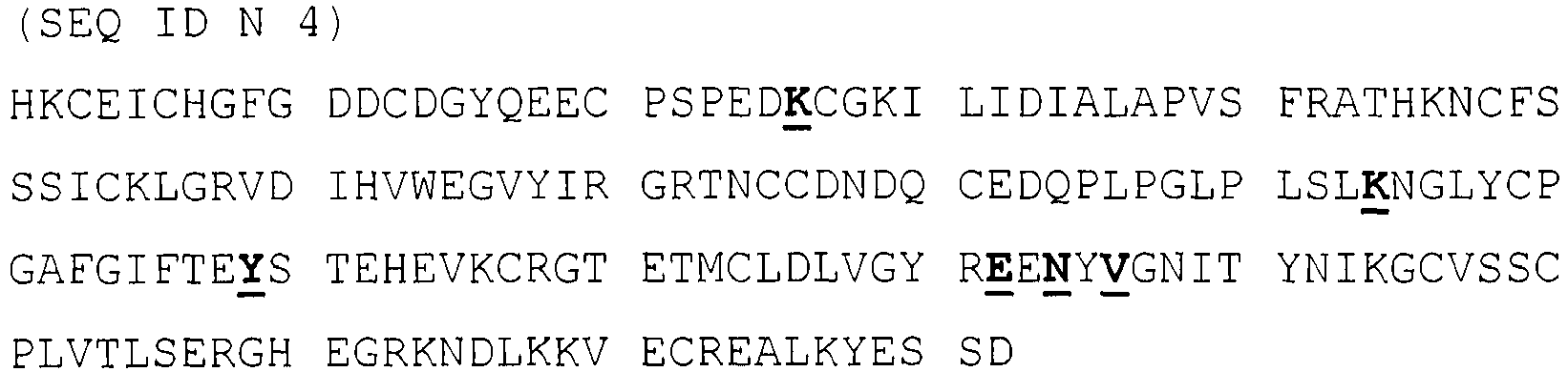 and
and

- It can be observed (i.e., amino acids in bold and underlined) that P3 differs from P1 with respect to amino acids at positions 94, 132, 134 and 153; P4 differs from P2 with respect to amino acids at positions 26, 94, 109, 132, 144 and 136; P5 differs from P3 with respect to amino acids at positions 26, 39, 84 and 153 and finally P6 differs from P4 with respect to amino acids at positions 17, 26, 39, 72, 84 and 153.
- P3 and P4 subunits, about 23 kDa each, interact non-covalently in 1:1 stoichiometric ratio to form a hetero-tetrameric structure existing in equilibrium with a hetero-hexameric structure.
- Each subunit also contains a carbohydrate chain of about 3 kDa attached to the Asn138 residue and 16 cysteine residues forming eight disulfide bridges between them.
- The two P3 and P4 subunits have high sequence similarity with only six amino acid substitutions identified between them (i.e., Glu17Gln, Asp65Glu, Met69IIe, Asp109Tyr, Ala136Val, Leu153Val).
- Spectroscopic data indicate a very similar secondary structure of P3 and P4, with high beta sheet content. P3 and P4 separated by HPLC purification completely lose antitumor activity. This indicates that the activity is intrinsically associated with formation of a biologically active oligomeric complex.
- The above defined P3 and P4 units were isolated from python serum as described below. Instead P5 and P6 units were prepared by means of molecular biology techniques having as starting point the amino acid sequence of proteins designated P3 and P4.
- Isolation of the hetero-tetrameric structure in equilibrium with the hetero-hexameric structure composed by P3 and P4 units in 1:1 stoichiometric ratio.
- Python serum, termed PSS, (100 µl) was diluted 1:5 with buffer consisting of 20 mM Tris-HCl, pH 7.5, 0.15 M NaCl, centrifuged for 2 minutes at 13000 g, filtered through a 0.45 µm filter and fractionated by ion exchange chromatography by use of a MonoQ column (0.6x6 cm) (GE-Helathcare). The column was equilibrated in 20 mM Tris-HCl, pH 7.5 buffer containing 0.15 M NaCl at a flow rate of 0.5 ml/min and eluted with a linear NaCl gradient from 0.15 to 1.0 M. The absorbance of the effluent was recorded at 280 nm. 1 ml fractions were collected and assayed for cytotoxic activity by the MTT assay (see below). Among collected fractions, only fraction F5 that eluted at about 0.43 M NaCl was found to be active. The material eluted in fraction F5 was collected and chemically characterized. In particular, the following analyses were performed:
- 1) determination of total protein content by bicinchoninic acid assay (BCA);
- 2) electrophoretic analysis in polyacrylamide gel in the presence of SDS according to Laemmli;
- 3) analytical gel-filtration chromatography in Superose-12 column (1 x 30 cm) (GE-Healthcare);
- 4) dynamic light scattering measurements by use of a Zetasizer Nano S instrument (Malvern);
- 5) determination of the amino acid sequence of P3 and P4 by tryptic fragmentation and subsequent high resolution mass analysis.
- The results indicate that fraction F5 is composed of two subunits, P3 and P4, having the above amino acid sequence, and that these subunits are present in F5 in 1:1 stoichiometric ratio to form a non-covalent tetrameric complex existing in equilibrium with a hexameric complex.
- From a biological viewpoint, the fraction composed by the two peptide units P3 and P4, hereinafter referred to as F5, was tested for antitumor and pro-apoptotic properties by in vivo and in vitro studies.
- In vivo, fraction F5 inhibits by 60% the volume of tumor growth in the A431 squamous cancer cell model following subcutaneous grafting in immunodeficient mice. F5 activity was compared with phosphate buffer (PBS) and/or with another python Sebae serum fraction not containing P3/P4 and therefore found to be inactive (subsequently termed F3).
- In short, squamous carcinoma cells A431 (106/mouse) are implanted subcutaneously in immunodeficient Balb/c mice. F5 (50 µg/100µl) or F3 (50 µg/100µl) or vehicle (PBS, 100µl) are administered daily by injection nearby the tumor mass. Tumor volumes are reported as mean ± SD, n = 6, * P <0.05 vs. vehicle (
Fig. 1 ). - In vitro, a cytotoxicity study has shown that F5 significantly inhibits survival of various types of tumor cells such as A431 (squamous carcinoma), MCF7 (breast cancer), and U373MG (glioblastoma) (Table 1). As above, F3 does not show cytotoxic activity.
TABLE 1 Sopravvivenza (% Cellule vive) %Cellule morte/numero totale di cellule cortate A431 MCF-7 U373MG A431 MCF-7 U373MG Cortrollo 100 100 100 1.4±1.6 2.4±2 3.2±3 F3 90±10 87±15 94±12 3±2.7 2.9±1.7 4.7±4 F5 63±4** 53±3** 58±5** 14±4* 21±3.4* 18±5* Survival (% Viable cells) % Dead cells / total cell counts - Cell viability was assessed by trypan blue and MTT assays after 1 hour and 24 hours, respectively, from the treatment with F5 or F3 (50 µg/ml). In short, for the trypan blue assay, tumor cells in suspension were incubated for 1 hour with the two fractions, whereas for the MTT assay plated cells were incubated with the fractions for 24 hours. After incubation, trypan blue, a dye that does not penetrate viable cells, or MTT, a yellow tetrazole salt which is reduced to purple formazan in viable cells, is added to the cell culture. MTT data reported as % cell viability are the average of two experiments performed in triplicate. The data of trypan blue assay are reported as % dead cells on total cells counts. Control = DMEM +0.1% FCS. *p<0.05, **p< 0.01 vs control (Table 1).
- Two experiments were performed to define the mechanism of action of F5: i. pro-apoptotic activity of F5 was evaluated by western blot detection of caspase-3; ii. activity of the telomerase enzyme was measured in tumor cells incubated with F5. In short, A431 tumor cells were exposed for 24 hours to F5 or F3 (50 µg/ml) and expression of intact or cleaved/active form of the pro-apoptotic enzyme caspase-3 was measured by western blotting. F5 promotes increased expression of the cleaved form of caspase-3, indicative of pro-apoptotic activity, while F3 shows no activity (
Fig. 2 ). The bar graph represents a densitometric quantification ofcaspase 3 bands in Western blots. - It is well known that the activity of telomerase enzyme contributes to the control of cell immortalization via telomere-reconstruction. In fact, telomerase activity is increased in tumor cells but is drastically decreased in differentiated cells. Consequently certain (non-tumor specific) anticancer agents acting on telomerase are directed at inhibiting this activity to prevent telomere restoration and promote cell death. Tests of fraction F5 on telomerase activity were made by a method established in our laboratories (modified TRAP method, see Gelmini S. et al; Rapid, quantitative non isotopic assay for telomerase activity in human tumors. Clin Chem 44, 2133, 1998). The experiments investigated the direct effect of F5 on the activity of telomerase enzyme extracted from the CHP cell line (neuroblastoma line). F5 decreases telomerase activity in a concentration-dependent manner (F5 at 50 µg/100 µl reduces telomerase activity by 4.6 fold).
- Liver biopsy was performed from python sebae. Total RNA was extracted from liver biopsy specimens by use of a specific kit for small amounts of tissue (Qiagen). Subsequently, RNA was reverse transcribed to obtain the complementary DNA (cDNA) strand. For this purpose, a method was used that involved the Superscript-II reverse transcriptase enzyme and hexanucleotides with random sequence. 1 µl of the cDNA thus obtained was amplified by polymerase chain reaction (PCR), according to the Qiagen protocol.
- Selective amplification of cDNA sequences was carried out using the following synthetic oligonucleotide pairs:
- GAATTCCATAAATGTGAAATTTGTCATGGCTTTGG (SEQ ID 7) GCGGGCCGCTTAATCAGAGGATGCAGGTTTCAAGGCTTCCCTACATTC (SEQ ID 8)
- GAATTCCATAAATGTGAAATTTGTCATGGCTTTGG (SEQ ID 7) GCGGCCGCTTAATCAGAGGATTCATATTTCAAGGCTTCCCTACATTC (SEQ ID 9)
- Said synthetic oligonucleotides were provided in purified form by MWG_Biotech, Germany.
- PCR products were cloned into plasmid psk-Bluescript (Stratagene) [Alting-Mes et al. (1992) Methods Enzymol. 216, 483-495] thus obtaining the respective plasmid constructs that were then subjected to sequencing that resulted in the above P5 and P6 sequences.
- Finally, by standard molecular biology techniques, the corresponding P5 and P6 recombinant proteins were expressed in Escherichia coli as fusion proteins containing N-terminal glutathione S-transferase (GST, 27 kDa) in order to obtain corresponding P5-GST and P6-GST proteins on which the biological tests were performed.
- For this purpose, equimolar solutions of P5-GST and P6-GST were prepared in stoichiometric 1:1 ratio and their pro-apoptotic activity on human A431 tumor cells was tested by western blotting.
- As it can be seen in
Figure 3 , P5-GST and P6-GST proteins induce apoptosis in cancer cells. The possibility to obtain bacterial recombinant P5-GST and P6-GST paves the way to large scale production of these protein for their future use in pharmaceutical preparations with antitumor activity. -
- <110> ZICHE et al, Maria
- <120> Proteine ad attività apoptotica e antitelomerasica su cellule cancerose, loro preparazione ed uso
- <130> 11312PTWO
- <150>
FI2011A000168
<151> 2011-08-05 - <160> 9
- <170> PatentIn version 3.5
- <210> 1
<211> 182
<212> PRT
<213> Python sebae - <220>
<221> MISC_FEATURE
<222> (38)..(38)
<223> methylproline - <400> 1
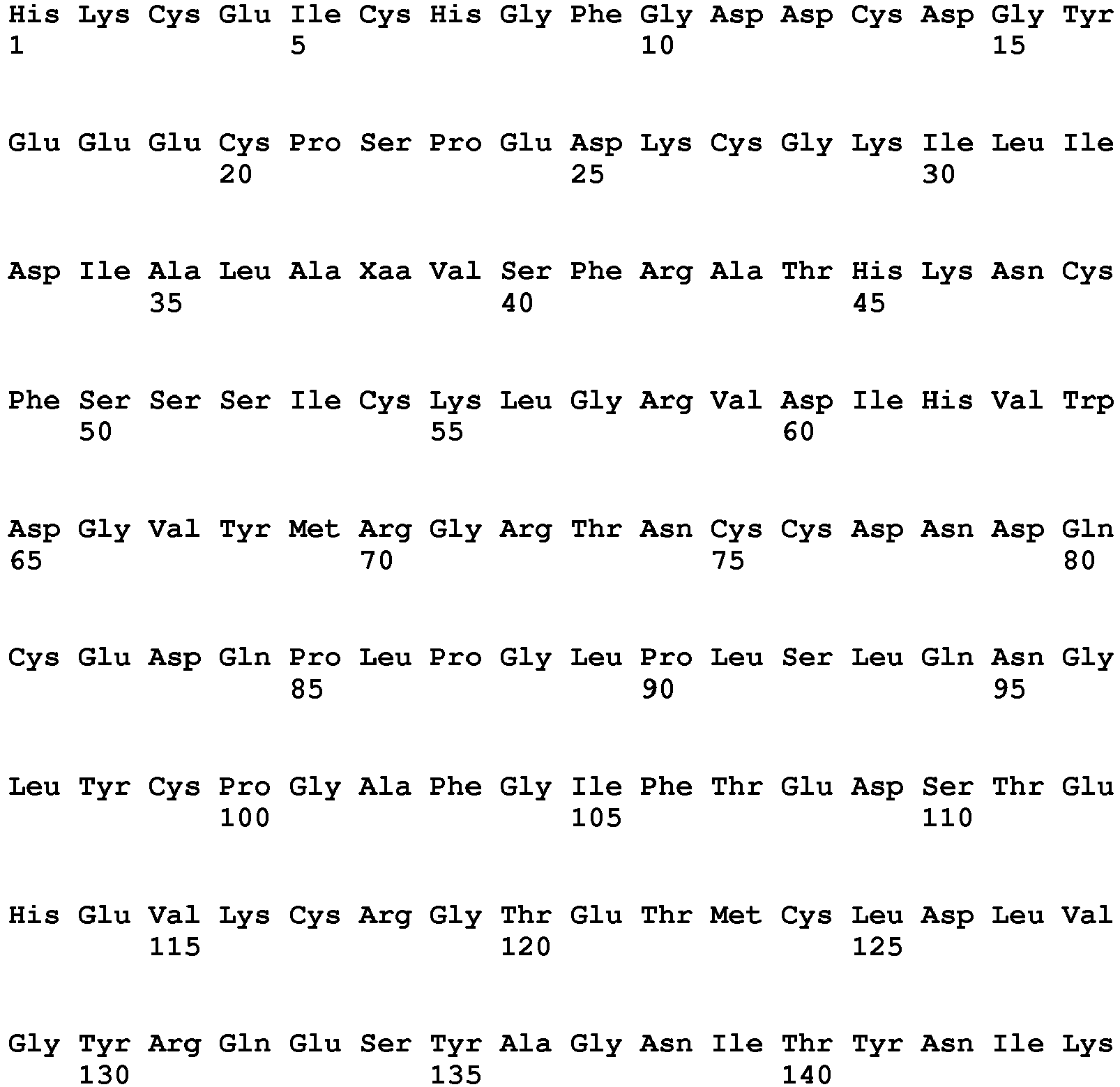

- <210> 2
<211> 182
<212> PRT
<213> Python sebae - <400> 2


- <210> 3
<211> 182
<212> PRT
<213> Python sebae - <400> 3

- <210> 4
<211> 182
<212> PRT
<213> Python sebae - <400> 4

- <210> 5
<211> 182
<212> PRT
<213> Artificial Sequence - <220>
<223> preparate mediante tecniche di biologia molecolare a partire dalla sequenza amminoacidica delle proteine denominate P3 e P4 - <400> 5

- <210> 6
<211> 182
<212> PRT
<213> Artificial Sequence - <220>
<223> preparate mediante tecniche di biologia molecolare a partire dalla sequenza amminoacidica delle proteine denominate P3 e P4 - <400> 6


- <210> 7
<211> 35
<212> PRT
<213> Artificial Sequence - <220>
<223> oligonucleotide sintentico - <400> 7


- <210> 8
<211> 48
<212> PRT
<213> Artificial Sequence - <220>
<223> oligonucleotide sintentico - <400> 8

- <210> 9
<211> 47
<212> PRT
<213> Artificial Sequence - <220>
<223> oligonucleotide sintentico - <400> 9

Claims (11)
- Protein with pro-apoptotic and anti-telomerase activity on cancer cells having the following amino acid sequence:

- Protein with pro-apoptotic and anti-telomerase activity on cancer cells having the following amino acid sequence:

- Protein according to claims 1 and 2 wherein each said protein contains a carbohydrate chain of about 3 kDa attached to the Asn138 residue and 16 cysteine residues forming eight disulfide bridges between them.
- Protein with pro-apoptotic and antitelomerase activity on cancer cells having the following amino acid sequence:

- Protein with pro-apoptotic and anti-telomerase activity on cancer cells having the following amino acid sequence:

- Protein complex consisting of the two proteins according to claims 1 and 2 which interact non-covalently in 1:1 stoichiometric ratio to form a hetero-tetrameric structure in equilibrium with a hetero-hexameric structure.
- Equimolar solutions of the two proteins according to claims 4 and 5 in 1:1 stoichiometric ratio.
- Use of a protein according to claims 1 -5, the protein complex of claim 6 or the solution of claim 7 for preparation of pharmaceutical formulations with selective ability to induce apoptosis in cancer cells.
- Use according to claim 8 wherein said cancer cells are cancer cells selected from: A431 squamous cell carcinoma, MCF7 breast cancer, and U373MG glioblastoma.
- Use of a protein according to claims 1 - 5, the protein complex of claim 6 or the solution of claim 7 for preparation of pharmaceutical formulations with selective antitelomerase activity on cancer cells and cancer stem cells.
- Use according to claims 8-10 wherein said pharmaceutical formulations have inhibitory activity on tumor vasculature.
Applications Claiming Priority (2)
| Application Number | Priority Date | Filing Date | Title |
|---|---|---|---|
| IT000168A ITFI20110168A1 (en) | 2011-08-05 | 2011-08-05 | PROTEINS WITH APOPTOTIC AND ANTITELOMERASIC ACTIVITY ON CANCER CELLS, THEIR PREPARATION AND USE. |
| PCT/IB2012/054010 WO2013021339A1 (en) | 2011-08-05 | 2012-08-06 | Proteins with pro-apoptotic and antitelomerase activity on cancer cells, their preparation and use |
Publications (2)
| Publication Number | Publication Date |
|---|---|
| EP2739644A1 EP2739644A1 (en) | 2014-06-11 |
| EP2739644B1 true EP2739644B1 (en) | 2016-03-30 |
Family
ID=44800115
Family Applications (1)
| Application Number | Title | Priority Date | Filing Date |
|---|---|---|---|
| EP12772437.5A Active EP2739644B1 (en) | 2011-08-05 | 2012-08-06 | Proteins with pro-apoptotic and antitelomerase activity on cancer cells, their preparation and use. |
Country Status (3)
| Country | Link |
|---|---|
| EP (1) | EP2739644B1 (en) |
| IT (1) | ITFI20110168A1 (en) |
| WO (1) | WO2013021339A1 (en) |
Families Citing this family (1)
| Publication number | Priority date | Publication date | Assignee | Title |
|---|---|---|---|---|
| IT202300002955A1 (en) * | 2023-02-21 | 2024-08-21 | Palmieri Angelo Michele | COMPOUND WITH ANTI-TUMORAL ACTIVITY, RELATED PROCEDURE FOR ITS MANUFACTURING AND RELATED USE |
Family Cites Families (5)
| Publication number | Priority date | Publication date | Assignee | Title |
|---|---|---|---|---|
| WO2001042462A2 (en) * | 1999-12-08 | 2001-06-14 | National University Of Singapore | Phospholipase a2 inhibitory peptides from python reticulatus |
| IT1319158B1 (en) * | 2000-12-15 | 2003-09-26 | Angelo Michele Palmieri | PHARMACEUTICAL COMPOSITION WITH ANTI-TUMOR ACTIVITY CONSTITUTING SNAKE BLOOD COMPONENTS AND METHOD FOR THEM |
| US7176281B2 (en) * | 2003-04-30 | 2007-02-13 | National University Of Singapore | Phospholipase A2-inhibitory peptide with anti-arthritic and neuroprotective activities |
| WO2007085879A1 (en) * | 2006-01-26 | 2007-08-02 | Marina Ziche | Compositions containing substances obtained from the blood and other biological fluid of snake : methods for their preparation and their use |
| ITFI20090143A1 (en) * | 2009-07-02 | 2011-01-03 | Filippis Vincenzo De | PROTEIN WITH APOPTOTIC ACTIVITY ON CANCER CELLS, ITS PREPARATION AND USE. |
-
2011
- 2011-08-05 IT IT000168A patent/ITFI20110168A1/en unknown
-
2012
- 2012-08-06 WO PCT/IB2012/054010 patent/WO2013021339A1/en not_active Ceased
- 2012-08-06 EP EP12772437.5A patent/EP2739644B1/en active Active
Also Published As
| Publication number | Publication date |
|---|---|
| WO2013021339A1 (en) | 2013-02-14 |
| EP2739644A1 (en) | 2014-06-11 |
| ITFI20110168A1 (en) | 2013-02-06 |
Similar Documents
| Publication | Publication Date | Title |
|---|---|---|
| EP3341394B1 (en) | Improved cell-permeable (icp)-socs3 recombinant protein and uses thereof | |
| KR101774272B1 (en) | Wnt antagonists and methods of treatment and screening | |
| EP2796462B1 (en) | Anti-tumor peptide and use therefor | |
| CN112626153A (en) | Methods of treating cancer with cGAMP or cGAsMP | |
| CZ292689B6 (en) | Recombinant lectin from dwarf mistletoe | |
| Pia Pescarolo et al. | A retro‐inverso peptide homologous to helix 1 of c‐Myc is a potent and specific inhibitor of proliferation in different cellular systems | |
| WO2018077189A1 (en) | High-affinity soluble pd-1 molecule | |
| CN110713546B (en) | Antitumor polypeptide Sur-X targeting survivin-XIAP complex and its application | |
| JP7008400B2 (en) | Antitumor peptides and their uses | |
| US20150202248A1 (en) | E2f as a target of hormone refractory prostate cancer | |
| KR20060090714A (en) | Selective Inhibition of NF-JPAPA Activity by Peptides to Block NEO Oligomerization | |
| KR101848147B1 (en) | HOXA9 cell-permeable fusion protein and composition comprising the same for preventing or treating of lung cancer | |
| EP4327818A2 (en) | Improved anti-senescence compounds and uses for the treatment of cancer | |
| EP3173420B1 (en) | Polypeptide and polypeptide complex for suppressing tumor metastasis and treating leukemia as well as preparation method therefor and application thereof | |
| KR20190040824A (en) | Fusion protein for CRISP/Cas system and complex comprising the same and uses thereof | |
| WO2013021339A1 (en) | Proteins with pro-apoptotic and antitelomerase activity on cancer cells, their preparation and use | |
| JP7483227B2 (en) | Antitumor peptide having PD-1 signal sequence and use thereof | |
| EP1869185B1 (en) | Conjugate comprising p21 protein for the treatment of cancer | |
| TWI634210B (en) | A peptide having inhibition of hsp expression and the composition comprising the same | |
| Khudhair et al. | ameliorative effects of lutein supplementation against cardio-toxicity induced by Ciprofloxacin and daunorubicin: in rats | |
| JP7329173B2 (en) | Anti-tumor peptide and its use | |
| Hassanvand Jamadi et al. | Anticancer activity of brevinin-2R peptide and its Two analogues against myelogenous leukemia cell line as natural treatments: An in vitro study | |
| CN113121668B (en) | PEG-modified peptides that inhibit gp96, their preparation methods and applications | |
| EP1444253B1 (en) | Pna-conjugates for treating chronic myeloid leukemia (cml) | |
| US8071285B1 (en) | Zinc finger protein derivatives and methods of using same |
Legal Events
| Date | Code | Title | Description |
|---|---|---|---|
| PUAI | Public reference made under article 153(3) epc to a published international application that has entered the european phase |
Free format text: ORIGINAL CODE: 0009012 |
|
| 17P | Request for examination filed |
Effective date: 20140304 |
|
| AK | Designated contracting states |
Kind code of ref document: A1 Designated state(s): AL AT BE BG CH CY CZ DE DK EE ES FI FR GB GR HR HU IE IS IT LI LT LU LV MC MK MT NL NO PL PT RO RS SE SI SK SM TR |
|
| DAX | Request for extension of the european patent (deleted) | ||
| 17Q | First examination report despatched |
Effective date: 20141128 |
|
| GRAP | Despatch of communication of intention to grant a patent |
Free format text: ORIGINAL CODE: EPIDOSNIGR1 |
|
| INTG | Intention to grant announced |
Effective date: 20150511 |
|
| GRAS | Grant fee paid |
Free format text: ORIGINAL CODE: EPIDOSNIGR3 |
|
| GRAA | (expected) grant |
Free format text: ORIGINAL CODE: 0009210 |
|
| RAP1 | Party data changed (applicant data changed or rights of an application transferred) |
Owner name: SQUEO, MARIA Owner name: STANISCI, FRANCESCO Owner name: MONTEMURNO, CONCETTA ANTONIA Owner name: ZICHE, MARINA Owner name: PALMIERI, ANGELO MICHELE Owner name: PAZZAGLI, MARIO Owner name: GRANITO, MARIO LEONARDO Owner name: DE FILIPPIS, VINCENZO Owner name: GARACI, ENRICO Owner name: REFOSCO, FIORENZO |
|
| RIN1 | Information on inventor provided before grant (corrected) |
Inventor name: MONTEMURNO, CONCETTA ANTONIA Inventor name: DE FILIPPIS, VINCENZO Inventor name: PALMIERI, ANGELO MICHELE Inventor name: STANISCI, FRANCESCO Inventor name: SQUEO, MARIA Inventor name: ZICHE, MARINA Inventor name: PAZZAGLI, MARIO Inventor name: GRANITO, MARIO LEONARDO Inventor name: REFOSCO, FIORENZO Inventor name: GARACI, ENRICO |
|
| AK | Designated contracting states |
Kind code of ref document: B1 Designated state(s): AL AT BE BG CH CY CZ DE DK EE ES FI FR GB GR HR HU IE IS IT LI LT LU LV MC MK MT NL NO PL PT RO RS SE SI SK SM TR |
|
| REG | Reference to a national code |
Ref country code: GB Ref legal event code: FG4D |
|
| REG | Reference to a national code |
Ref country code: CH Ref legal event code: EP |
|
| REG | Reference to a national code |
Ref country code: AT Ref legal event code: REF Ref document number: 785306 Country of ref document: AT Kind code of ref document: T Effective date: 20160415 |
|
| REG | Reference to a national code |
Ref country code: IE Ref legal event code: FG4D |
|
| REG | Reference to a national code |
Ref country code: DE Ref legal event code: R096 Ref document number: 602012016345 Country of ref document: DE |
|
| REG | Reference to a national code |
Ref country code: LT Ref legal event code: MG4D |
|
| PG25 | Lapsed in a contracting state [announced via postgrant information from national office to epo] |
Ref country code: FI Free format text: LAPSE BECAUSE OF FAILURE TO SUBMIT A TRANSLATION OF THE DESCRIPTION OR TO PAY THE FEE WITHIN THE PRESCRIBED TIME-LIMIT Effective date: 20160330 Ref country code: NO Free format text: LAPSE BECAUSE OF FAILURE TO SUBMIT A TRANSLATION OF THE DESCRIPTION OR TO PAY THE FEE WITHIN THE PRESCRIBED TIME-LIMIT Effective date: 20160630 Ref country code: HR Free format text: LAPSE BECAUSE OF FAILURE TO SUBMIT A TRANSLATION OF THE DESCRIPTION OR TO PAY THE FEE WITHIN THE PRESCRIBED TIME-LIMIT Effective date: 20160330 Ref country code: GR Free format text: LAPSE BECAUSE OF FAILURE TO SUBMIT A TRANSLATION OF THE DESCRIPTION OR TO PAY THE FEE WITHIN THE PRESCRIBED TIME-LIMIT Effective date: 20160701 |
|
| REG | Reference to a national code |
Ref country code: NL Ref legal event code: MP Effective date: 20160330 |
|
| REG | Reference to a national code |
Ref country code: AT Ref legal event code: MK05 Ref document number: 785306 Country of ref document: AT Kind code of ref document: T Effective date: 20160330 |
|
| PG25 | Lapsed in a contracting state [announced via postgrant information from national office to epo] |
Ref country code: RS Free format text: LAPSE BECAUSE OF FAILURE TO SUBMIT A TRANSLATION OF THE DESCRIPTION OR TO PAY THE FEE WITHIN THE PRESCRIBED TIME-LIMIT Effective date: 20160330 Ref country code: LV Free format text: LAPSE BECAUSE OF FAILURE TO SUBMIT A TRANSLATION OF THE DESCRIPTION OR TO PAY THE FEE WITHIN THE PRESCRIBED TIME-LIMIT Effective date: 20160330 Ref country code: SE Free format text: LAPSE BECAUSE OF FAILURE TO SUBMIT A TRANSLATION OF THE DESCRIPTION OR TO PAY THE FEE WITHIN THE PRESCRIBED TIME-LIMIT Effective date: 20160330 Ref country code: LT Free format text: LAPSE BECAUSE OF FAILURE TO SUBMIT A TRANSLATION OF THE DESCRIPTION OR TO PAY THE FEE WITHIN THE PRESCRIBED TIME-LIMIT Effective date: 20160330 |
|
| PG25 | Lapsed in a contracting state [announced via postgrant information from national office to epo] |
Ref country code: NL Free format text: LAPSE BECAUSE OF FAILURE TO SUBMIT A TRANSLATION OF THE DESCRIPTION OR TO PAY THE FEE WITHIN THE PRESCRIBED TIME-LIMIT Effective date: 20160330 |
|
| PG25 | Lapsed in a contracting state [announced via postgrant information from national office to epo] |
Ref country code: PL Free format text: LAPSE BECAUSE OF FAILURE TO SUBMIT A TRANSLATION OF THE DESCRIPTION OR TO PAY THE FEE WITHIN THE PRESCRIBED TIME-LIMIT Effective date: 20160330 Ref country code: EE Free format text: LAPSE BECAUSE OF FAILURE TO SUBMIT A TRANSLATION OF THE DESCRIPTION OR TO PAY THE FEE WITHIN THE PRESCRIBED TIME-LIMIT Effective date: 20160330 Ref country code: IS Free format text: LAPSE BECAUSE OF FAILURE TO SUBMIT A TRANSLATION OF THE DESCRIPTION OR TO PAY THE FEE WITHIN THE PRESCRIBED TIME-LIMIT Effective date: 20160730 |
|
| PG25 | Lapsed in a contracting state [announced via postgrant information from national office to epo] |
Ref country code: PT Free format text: LAPSE BECAUSE OF FAILURE TO SUBMIT A TRANSLATION OF THE DESCRIPTION OR TO PAY THE FEE WITHIN THE PRESCRIBED TIME-LIMIT Effective date: 20160801 Ref country code: SM Free format text: LAPSE BECAUSE OF FAILURE TO SUBMIT A TRANSLATION OF THE DESCRIPTION OR TO PAY THE FEE WITHIN THE PRESCRIBED TIME-LIMIT Effective date: 20160330 Ref country code: CZ Free format text: LAPSE BECAUSE OF FAILURE TO SUBMIT A TRANSLATION OF THE DESCRIPTION OR TO PAY THE FEE WITHIN THE PRESCRIBED TIME-LIMIT Effective date: 20160330 Ref country code: AT Free format text: LAPSE BECAUSE OF FAILURE TO SUBMIT A TRANSLATION OF THE DESCRIPTION OR TO PAY THE FEE WITHIN THE PRESCRIBED TIME-LIMIT Effective date: 20160330 Ref country code: ES Free format text: LAPSE BECAUSE OF FAILURE TO SUBMIT A TRANSLATION OF THE DESCRIPTION OR TO PAY THE FEE WITHIN THE PRESCRIBED TIME-LIMIT Effective date: 20160330 Ref country code: RO Free format text: LAPSE BECAUSE OF FAILURE TO SUBMIT A TRANSLATION OF THE DESCRIPTION OR TO PAY THE FEE WITHIN THE PRESCRIBED TIME-LIMIT Effective date: 20160330 Ref country code: SK Free format text: LAPSE BECAUSE OF FAILURE TO SUBMIT A TRANSLATION OF THE DESCRIPTION OR TO PAY THE FEE WITHIN THE PRESCRIBED TIME-LIMIT Effective date: 20160330 |
|
| PG25 | Lapsed in a contracting state [announced via postgrant information from national office to epo] |
Ref country code: IT Free format text: LAPSE BECAUSE OF FAILURE TO SUBMIT A TRANSLATION OF THE DESCRIPTION OR TO PAY THE FEE WITHIN THE PRESCRIBED TIME-LIMIT Effective date: 20160330 Ref country code: BE Free format text: LAPSE BECAUSE OF FAILURE TO SUBMIT A TRANSLATION OF THE DESCRIPTION OR TO PAY THE FEE WITHIN THE PRESCRIBED TIME-LIMIT Effective date: 20160330 |
|
| REG | Reference to a national code |
Ref country code: DE Ref legal event code: R097 Ref document number: 602012016345 Country of ref document: DE |
|
| PG25 | Lapsed in a contracting state [announced via postgrant information from national office to epo] |
Ref country code: DK Free format text: LAPSE BECAUSE OF FAILURE TO SUBMIT A TRANSLATION OF THE DESCRIPTION OR TO PAY THE FEE WITHIN THE PRESCRIBED TIME-LIMIT Effective date: 20160330 |
|
| PLBE | No opposition filed within time limit |
Free format text: ORIGINAL CODE: 0009261 |
|
| STAA | Information on the status of an ep patent application or granted ep patent |
Free format text: STATUS: NO OPPOSITION FILED WITHIN TIME LIMIT |
|
| 26N | No opposition filed |
Effective date: 20170103 |
|
| PG25 | Lapsed in a contracting state [announced via postgrant information from national office to epo] |
Ref country code: MC Free format text: LAPSE BECAUSE OF FAILURE TO SUBMIT A TRANSLATION OF THE DESCRIPTION OR TO PAY THE FEE WITHIN THE PRESCRIBED TIME-LIMIT Effective date: 20160330 |
|
| GBPC | Gb: european patent ceased through non-payment of renewal fee |
Effective date: 20160806 |
|
| REG | Reference to a national code |
Ref country code: FR Ref legal event code: ST Effective date: 20170428 |
|
| PG25 | Lapsed in a contracting state [announced via postgrant information from national office to epo] |
Ref country code: SI Free format text: LAPSE BECAUSE OF FAILURE TO SUBMIT A TRANSLATION OF THE DESCRIPTION OR TO PAY THE FEE WITHIN THE PRESCRIBED TIME-LIMIT Effective date: 20160330 |
|
| REG | Reference to a national code |
Ref country code: IE Ref legal event code: MM4A |
|
| PG25 | Lapsed in a contracting state [announced via postgrant information from national office to epo] |
Ref country code: IE Free format text: LAPSE BECAUSE OF NON-PAYMENT OF DUE FEES Effective date: 20160806 Ref country code: FR Free format text: LAPSE BECAUSE OF NON-PAYMENT OF DUE FEES Effective date: 20160831 Ref country code: GB Free format text: LAPSE BECAUSE OF NON-PAYMENT OF DUE FEES Effective date: 20160806 |
|
| PG25 | Lapsed in a contracting state [announced via postgrant information from national office to epo] |
Ref country code: LU Free format text: LAPSE BECAUSE OF NON-PAYMENT OF DUE FEES Effective date: 20160806 |
|
| PG25 | Lapsed in a contracting state [announced via postgrant information from national office to epo] |
Ref country code: HU Free format text: LAPSE BECAUSE OF FAILURE TO SUBMIT A TRANSLATION OF THE DESCRIPTION OR TO PAY THE FEE WITHIN THE PRESCRIBED TIME-LIMIT; INVALID AB INITIO Effective date: 20120806 Ref country code: CY Free format text: LAPSE BECAUSE OF FAILURE TO SUBMIT A TRANSLATION OF THE DESCRIPTION OR TO PAY THE FEE WITHIN THE PRESCRIBED TIME-LIMIT Effective date: 20160330 |
|
| PG25 | Lapsed in a contracting state [announced via postgrant information from national office to epo] |
Ref country code: MK Free format text: LAPSE BECAUSE OF FAILURE TO SUBMIT A TRANSLATION OF THE DESCRIPTION OR TO PAY THE FEE WITHIN THE PRESCRIBED TIME-LIMIT Effective date: 20160330 Ref country code: MT Free format text: LAPSE BECAUSE OF NON-PAYMENT OF DUE FEES Effective date: 20160831 |
|
| PG25 | Lapsed in a contracting state [announced via postgrant information from national office to epo] |
Ref country code: BG Free format text: LAPSE BECAUSE OF FAILURE TO SUBMIT A TRANSLATION OF THE DESCRIPTION OR TO PAY THE FEE WITHIN THE PRESCRIBED TIME-LIMIT Effective date: 20160330 |
|
| PG25 | Lapsed in a contracting state [announced via postgrant information from national office to epo] |
Ref country code: AL Free format text: LAPSE BECAUSE OF FAILURE TO SUBMIT A TRANSLATION OF THE DESCRIPTION OR TO PAY THE FEE WITHIN THE PRESCRIBED TIME-LIMIT Effective date: 20160330 Ref country code: TR Free format text: LAPSE BECAUSE OF FAILURE TO SUBMIT A TRANSLATION OF THE DESCRIPTION OR TO PAY THE FEE WITHIN THE PRESCRIBED TIME-LIMIT Effective date: 20160330 |
|
| P01 | Opt-out of the competence of the unified patent court (upc) registered |
Effective date: 20230525 |
|
| PGFP | Annual fee paid to national office [announced via postgrant information from national office to epo] |
Ref country code: DE Payment date: 20250221 Year of fee payment: 13 |
|
| PGFP | Annual fee paid to national office [announced via postgrant information from national office to epo] |
Ref country code: CH Payment date: 20250211 Year of fee payment: 13 |
|
| REG | Reference to a national code |
Ref country code: DE Ref legal event code: R119 Ref document number: 602012016345 Country of ref document: DE |
|
| REG | Reference to a national code |
Ref country code: CH Ref legal event code: H13 Free format text: ST27 STATUS EVENT CODE: U-0-0-H10-H13 (AS PROVIDED BY THE NATIONAL OFFICE) Effective date: 20260324 |
|
| PG25 | Lapsed in a contracting state [announced via postgrant information from national office to epo] |
Ref country code: CH Free format text: LAPSE BECAUSE OF NON-PAYMENT OF DUE FEES Effective date: 20250831 |