EP2739003A1 - Systems and methods to detect and respond to distributed denial of service (DDoS) attacks - Google Patents
Systems and methods to detect and respond to distributed denial of service (DDoS) attacks Download PDFInfo
- Publication number
- EP2739003A1 EP2739003A1 EP13193761.7A EP13193761A EP2739003A1 EP 2739003 A1 EP2739003 A1 EP 2739003A1 EP 13193761 A EP13193761 A EP 13193761A EP 2739003 A1 EP2739003 A1 EP 2739003A1
- Authority
- EP
- European Patent Office
- Prior art keywords
- server
- cbrc
- status code
- dbrc
- response message
- Prior art date
- Legal status (The legal status is an assumption and is not a legal conclusion. Google has not performed a legal analysis and makes no representation as to the accuracy of the status listed.)
- Granted
Links
Images

Classifications
-
- H—ELECTRICITY
- H04—ELECTRIC COMMUNICATION TECHNIQUE
- H04L—TRANSMISSION OF DIGITAL INFORMATION, e.g. TELEGRAPHIC COMMUNICATION
- H04L63/00—Network architectures or network communication protocols for network security
- H04L63/14—Network architectures or network communication protocols for network security for detecting or protecting against malicious traffic
- H04L63/1441—Countermeasures against malicious traffic
- H04L63/1458—Denial of Service
-
- H—ELECTRICITY
- H04—ELECTRIC COMMUNICATION TECHNIQUE
- H04L—TRANSMISSION OF DIGITAL INFORMATION, e.g. TELEGRAPHIC COMMUNICATION
- H04L63/00—Network architectures or network communication protocols for network security
- H04L63/02—Network architectures or network communication protocols for network security for separating internal from external traffic, e.g. firewalls
- H04L63/0227—Filtering policies
- H04L63/0236—Filtering by address, protocol, port number or service, e.g. IP-address or URL
-
- H—ELECTRICITY
- H04—ELECTRIC COMMUNICATION TECHNIQUE
- H04L—TRANSMISSION OF DIGITAL INFORMATION, e.g. TELEGRAPHIC COMMUNICATION
- H04L9/00—Cryptographic mechanisms or cryptographic arrangements for secret or secure communications; Network security protocols
- H04L9/40—Network security protocols
Definitions
- the present disclosure relates generally to systems and methods for detecting and responding to cyber attacks against servers and web servers and, more particularly, to systems and methods for detecting and responding to Distributed Denial of Service (DDoS) attacks, such as dictionary attacks.
- DDoS Distributed Denial of Service
- the Internet also commonly referred to as the "web,” is a global system of interconnected networks that operate according to the Internet Protocol suite, allowing access to an extensive range of information that can be retrieved and accessed using the hypertext transfer protocol (HTTP).
- HTTP hypertext transfer protocol
- the Internet operates in a client-server format that distributes computing tasks and responsibilities between the service or resource providers, commonly referred to as “web servers,” and service requesters, called clients.
- web servers are configured to accept requests from all clients, and the HTTP request generally provides little information about the requesting client that would enable the web servers to determine the nature of the client's intentions in making the request. While this open communication model serves to facilitate the transfer of knowledge and information, it may also leave web servers vulnerable to "cyber attacks,” such as denial-of-service (DoS) attacks and distributed denial-of-service (DDoS) attacks.
- DoS denial-of-service
- DDoS distributed denial-of-service
- a single client may attempt to overwhelm a server by sending a large number of requests to the server in rapid succession.
- an attacked web server may be slow or unable to respond to legitimate requests due to the burdens imposed on the server when servicing a flood of requests from a single malicious client.
- the DDoS attack is a variation of the DoS attack.
- the attacker utilizes a network of different clients to simultaneously issue requests to the server.
- Such a network of requesting clients may be at the attacker's disposal, for example, by virtue of an in-place "botnet" in which hundreds or thousands of normal users' computers are infected by malware.
- This malware may be programmed to respond to commands issued by a central machine or authority, colloquially known as a "bot master.”
- Bot masters make use of such a collection of infected machines in order to implement a DDoS attack on a server or enterprise.
- a computer-implemented method for mitigating distributed denial of service (DDoS) attacks, comprising: receiving, by a server, a response message from an application server; determining a source internet protocol (IP) address associated with the source client based on a request message received from a source client, wherein the request message received from the source client corresponds to the response message received from the application server; identifying, by the server, a plurality of counters associated with the source IP address; identifying, by the server, a response type of the response message; and causing a value of at least one of the plurality of counters to change based on the response message and the response type.
- IP internet protocol
- a computer-implemented method for mitigating against distributed denial of service (DDoS) attacks, comprising: receiving, by a server, a response message from an application server; determining, from a request message corresponding to the response message, a source internet protocol (IP) address associated with a source client; locating, by the server, a plurality of counters associated with the source IP address, including a rolling window counter (RWC) that is used to track a number of total requests received from the source IP address, a discrete bad request counter (DBRC) that is used to track a number of bad requests received from the source IP address, and a consecutive bad request counter (CBRC) that is used to track a number of consecutive bad requests received from the source IP address; identifying, by the server, a response type of the response message; determining, by the server, if the response message is associated with a malicious request based on the response type and the source IP address; and causing a value of at least one of the plurality of
- a computer-implemented method for mitigating distributed denial of service (DDoS) attacks, comprising: receiving, by a server, a response message associated with a source client, wherein the response message is one of a hypertext transfer protocol (HTTP) message or a hypertext transfer protocol secure (HTTPS) message; determining, from a request message corresponding to the response message, a source internet protocol (IP) address associated with the source client; locating, by the server, a plurality of counters associated with the source IP address, the plurality of counters including a discrete bad request counter (DBRC) that is used to track a number of bad requests received from the source IP address, and a consecutive bad request counter (CBRC) that is used to track a number of consecutive bad requests received from the source IP address; identifying, by the server, a status of the response message; determining, by the server, if the response message is associated with a malicious request based on the status of the response message and the source IP address;
- DBRC discrete bad
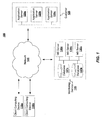
- FIG. 1 is a diagram illustrating example communications between application servers and clients, consistent with certain disclosed embodiments
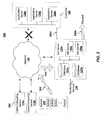
- FIG. 2 is a diagram illustrating an example method of diverting traffic intended for application servers to a mitigation site in the event of a DDoS attack, consistent with certain disclosed embodiments;
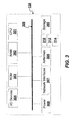
- FIG. 3 is a block diagram illustrating example components of a mitigation service (MS) server, consistent with certain disclosed embodiments
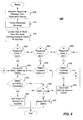
- FIG. 4 is a flow diagram illustrating an example method of detecting and mitigating DoS attacks, consistent with certain disclosed embodiments.
- FIG. 5 is a flow diagram illustrating an example method of detecting and mitigating DoS attacks, consistent with certain disclosed embodiments.
- Dictionary attacks are commonly used by hackers in DDoS attacks, target backend servers by sending requests with invalid Uniform Resource Locators (URLs) or by attempting to log in using invalid user names or passwords. Dictionary attacks differ from typical request flood attacks in that each request is unique and, thus, do not lend themselves to being handled by web caching servers. As a result, the attack directly taxes the backend servers, consuming computational resources of backend servers and causing outages of the backend servers.
- the disclosed embodiments detect and mitigate DDoS attacks, such as dictionary attacks.
- the disclosed embodiments identify attackers, not only based on requests they send to backend web servers, but also based on the responses they receive from the backend web servers.
- the disclosed techniques may be scalable (both greater and smaller), thereby consuming a minimal amount processing resources and requiring less processing time.
- the described embodiments may enable detection of coordinated attacks from motivated attack groups consisting of many volunteer activists and individual attacks that randomly rotate through a number of user-configured request patterns.
- FIG. 1 is a diagram illustrating communications between one or more example application servers and one or more client computing devices, consistent with certain disclosed embodiments.
- an example system 100 may include or more client or computing devices 110 (e.g., client computing device 110a, client computing device 110b, and client computing device 110c), one or more application servers 120 (e.g., application server 125a, application server 125b, and application server 125c), which may be owned, operated, leased and/or managed by customer 125, one or more monitoring service (MS) servers 130 (e.g., MS server 130a, MS server 130b, and MS server 130c) and one or more databases (e.g., database 137a, and database 137b), which may be owned, operated, and/or managed by monitoring service 135, and network 140.
- MS monitoring service
- Client computing devices 110 may be any type of electronic device and/or component configured to execute one or more processes, many of which are known in the art.
- Client computing devices 110 can include, by way of example and not limitation, clients, desktop computers, laptop computers, network computers, workstations, personal digital assistants (PDA), tablet PCs, telephony devices, wireless base stations, wireless access devices, pagers, musical devices, routers, hubs, cameras, printers, copiers, scanners, projectors, alarms, lights, home entertainment systems, audio/visual systems, home security devices, intercoms, domestic robots, appliances, HVAC systems, etc., or any component or sub-component of another computing device 110 or assemblage, such as, for example, a car, a train, a plane, a boat, etc.
- client computing devices 110 can also include servers and/or databases. Client computing devices 110 may be configured to transmit and/or receive information to and/or from other client computing devices 110, application servers 120, MS servers 130, and/or databases 137 directly and/or indirectly via any combination of wired and/or wireless communication systems, method, and devices, including, for example, network 140.
- Application servers 120 may comprise commercial web servers that service hypertext transfer protocol (HTTP) requests and/or hypertext transfer protocol secure (HTTPS) requests from client computing devices 110 for web pages hosted by the application servers 120.
- HTTP hypertext transfer protocol
- HTTPS hypertext transfer protocol secure
- application servers 120 may operate one or more applications or provide one or more public-facing network services, application servers 120 may comprise any servers capable of being subjected to a cyber attack, such as a DDoS attack, and need not operate any particular application or host any particular services.
- application servers 120 may comprise commercial web servers that are configured to receive and service legitimate HTTP requests, application servers 120 subject to a cyber attack can and frequently do receive and respond to HTTP requests that are not related to web pages hosted by application servers 120.
- Application servers 120 can be physical computers, or computer systems, configured to run one or more services to support users of other computers on one or more networks and/or computer programs executing on physical computers, or computer systems, and configured to serve the requests of other programs that may be operating on one or more servers (not shown) or on other computing devices, such as client computing devices 110.
- Application servers 120 can include, by way of example and not limitation, communication servers, database servers, fax servers, file servers, mail servers, print servers, name servers, web servers, proxy servers, gaming servers, etc.
- application servers 120 may be configured to transmit and/or receive information to and/or from client computing devices 110, other servers (e.g., application servers 120, MS servers 130, Internet Service Provider (ISP) servers (not shown), etc.), and/or databases (not shown) directly and/or indirectly via any combination of wired and/or wireless communication systems, method, and/or devices, including, for example, network 140.
- other servers e.g., application servers 120, MS servers 130, Internet Service Provider (ISP) servers (not shown), etc.
- ISP Internet Service Provider
- MS servers 130 may be configured to monitor application servers 120. In some embodiments, MS servers 130 may monitor application servers 120 for the purpose of determining whether application servers 120 are receiving and responding to network communications and/or are otherwise functioning in a normal or expected manner or whether application servers 120 are functioning in an abnormal manner that may indicate the presence of a DoS attack.
- a DoS attack may refer to a traditional DoS attack, in which all malicious requests or communications originate from a single device, a DDoS attack, in which multiple, separate devices may participate in the attack, and/or any other type of cyber attacks.
- MS servers 130 may include one or more physical servers, or server systems, and/or one or more proxy servers, each configured to run one or more services to support other computers or computer systems, such as, for example, application servers 120.
- MS servers 130 may be configured to monitor one or more application servers 120.
- MS servers 130 may also be configured to prevent, detect, and respond to DoS attacks targeting the monitored one or more application servers 120.
- the same server devices may perform the roles of physical MS servers 130 and/or proxy MS servers 130.
- Databases 137 can be one or more computing devices configured to store databases, e.g., organized collections of data and their data structures, and/or execute database management systems, e.g., computer programs configured to control the creation, maintenance, and use of the database. Collectively, databases and their database management systems can be referred to as database systems. As used herein, database 137 can refer to databases, database management systems, and/or database systems. In some aspects, database 137 can be configured to store databases, while database management systems are stored and executed on one or more remote computing devices, such as computing devices 110, and/or one or more remote servers, such as MS servers 130.
- databases 137 can include software database programs configured to store data associated with MS servers 130 and their associated applications or processes, such as, for example, standard databases or relational databases.
- Databases 137 can include relationship database management systems (RDBMS) that may be configured to run as a server on MS servers 130.
- databases 137 can be configured to transmit and/or receive information to and/or from client computing devices 110, MS servers 130, and/or other databases 137 directly and/or indirectly via any combination of wired and/or wireless communication systems, method, and/or devices, including, for example, network 140.
- Network 140 may be any appropriate network or other communication link that allows communication between or among one or more computing systems and/or devices, such as, for example, client computing devices 110, application servers 120, monitoring service servers 130, and databases 137.
- Network 140 may be wired, wireless, or any combination thereof.
- Network 140 may include, for example, the Internet, a local area network, a wide area network, a WiFi network, a workstation peer-to-peer network, a direct link network, a Bluetooth connection, a bus, or any other suitable communication network or any combination thereof.
- a third-party mitigation service provider 135 may operate MS servers 130, which monitor application servers 120, pursuant to a commercial mitigation service provided to customer 125, which may own or operate application servers 120.
- FIG. 1 depicts MS servers 130 as communicating with application servers 120 using an indirect network connection, such as a connection through network 140, those skilled in the art will appreciate that MS servers 130 may also communicate with application servers 120 using a direct communications link or a communications link separate from network 140.
- MS servers 130 may be within the network path between clients 110 and application servers 120 or may be outside of the communication path.
- proxy MS servers 130 may be owned or operated by a third party that provides proxy services as part of a broader DoS mitigation service.
- a separately-owned or operated mitigation server system may be the third party service provider's ability to bear computational and connection burdens that a customer's server system could not.
- customer 130 may be a small company that does not have the resources to operate separate proxy servers to perform mitigation services.
- proxy servers might not be able to bear the burden of a full DDoS attack.
- This aspect of disclosed embodiments may be contrasted with conventional systems that focus on equipping servers that are being attacked or other servers operated by the attacked entity to filter legitimate requests from malicious requests. These systems fail when filtering operations themselves are sufficient to overwhelm the owner of the attacked servers or associated proxy servers.
- client computing devices 110 may communicate directly with application servers 120 via network 140 using standard Internet Protocols, such as HTTP, transmission control protocol (TCP), internet protocol (IP), etc.
- HTTP requests from client computing devices 110 may be encapsulated in TCP segments, IP datagrams, and Ethernet frames and transmitted to application servers 120.
- third parties may participate as intermediaries in the communication, such as, for example, Internet Service Providers (ISPs) or other entities that provide routers and link layer switches. Such third parties may not, however, analyze or review the contents of the Ethernet frames beyond the link layer and the network layer, but instead analyze only those parts of the packet necessary to route communications from client computing devices 110 to application servers 120.
- ISPs Internet Service Providers
- Such third parties may not, however, analyze or review the contents of the Ethernet frames beyond the link layer and the network layer, but instead analyze only those parts of the packet necessary to route communications from client computing devices 110 to application servers 120.
- FIG. 2 is a diagram illustrating an example system for diverting traffic intended for one or more application servers to a mitigation site for filtering the traffic in the event of a DoS attack, consistent with certain disclosed embodiments.
- an example system 200 may include or more client or computing devices 110 (e.g., client computing device 110a, client computing device 110b, and client computing device 110c), one or more application servers 120 (e.g., application server 125a, application server 125b, and application server 125c), which may be owned, operated, leased and/or managed by customer 125, one or more monitoring service (MS) servers 130 (e.g., MS server 130a, MS server 130b, and MS server 130c) and one or more databases (e.g., database 137a, and database 137b), which may be owned, operated, and/or managed by monitoring service 135, and network 140.
- MS monitoring service
- databases e.g., database 137a, and database 137b
- the system of FIG. 2 may include botnets 250.
- Botnets 250 may include any number of computing devices, often numbering in the hundreds or thousands. Often, such botnets 250 include the internet-connected computing devices of average users, such as, for example, client computing devices 110, whose security defenses have been breached and control ceded to a malicious party. These internet-connected computing devices may be, in some embodiments, infected by malware that places these computing devices at the disposal of a cyber-attacker and causes the internet-connected computing devices to respond to commands issued by a central machine or authority, colloquially known as a "bot master.”
- client computing devices 110 and botnets 250 are collectively referred to as clients 260. That is, clients 260 is used generically represent any client device seeking to communicate with application servers 120, including both legitimate sources, such as client computing devices 110, as well as malicious sources, such as botnets 250.
- malware botnets 250 are also making requests to application servers 120.
- malicious traffic 252 from botnets 250 is depicted as a thick arrow, whereas traffic from legitimate client computing devices 110 is depicted as a thin arrow, to illustrate that malicious traffic 252 from botnets 250 may be significantly heavier than legitimate traffic from client computing devices 110.
- MS servers 130 may be operated by the same third-party monitoring service provider 135 that operates MS servers 130. MS servers 130 may be within the network path between clients 110 and application servers 120 or may be outside of the path.
- Traffic between network 140 and application servers 120 may be redirected to proxy MS servers 130 using a number of different techniques.
- proxy MS servers 130 may advertise their availability to route communications to the IP addresses associated with application servers 120 or may advertise that they themselves terminate such IP addresses, in a process known as a "BGP swing.”
- BGP swing an inter-Autonomous System routing protocol used by ISPs
- communications intended for application servers 120 such as communications from client computing devices 110a and 110b, may terminate at proxy MS servers 130 such that proxy MS servers 130 may communicate with client computing devices 110a and 110b on behalf of application servers 120, typically without detection.
- either application servers 120 or proxy MS servers 130 may initiate a request to one or more Domain Name Service (DNS) servers to reassign domain names hosted by application servers 120 to IP addresses assigned to proxy MS servers 130.
- DNS Domain Name Service
- This process of DNS record alteration may additionally be facilitated or expedited if application servers 120 and/or proxy MS servers 130, or the entities associated therewith, operate authoritative DNS servers or have other primary or authoritative roles in the DNS system.
- Those skilled in the art will appreciate that other techniques may be used to redirect traffic intended for application servers 120 to MS servers 130, including, for example, proxy MS servers 130.
- proxy MS servers 130 may filter the traffic by categorizing the traffic into communications from legitimate clients 260, such as, for example, client computing devices 110, and communications from malicious clients 260, such as, for example, botnets 250 or other DoS participants. Traffic that is determined by proxy MS servers 130 to be legitimate traffic 256a may be forwarded to application servers 120, while other traffic 256b may be discarded. Alternatively and/or additionally, to avoid denying service to legitimate client incorrectly identified as malicious, some or all traffic 256b could be forwarded to application servers 120 or otherwise serviced, for example at a much lower priority than traffic 256a, a process known as "rate-limiting.”
- FIG. 3 is a block diagram of an example MS server 130 arranged to identify and mitigate DoS or other malicious attacks, consistent with certain disclosed embodiments. It should be readily apparent that the example MS server 130 depicted in FIG. 3 represents a generalized schematic illustration and that other components/devices can be added, removed, or modified. In one example embodiment, computing device 110 can be configured to include address translation and full virtual-memory services.
- each MS server 130 can include one or more of the following components: at least one central processing unit (CPU) 301 configured to execute computer program instructions to perform various processes and methods, random access memory (RAM) 302 and read only memory (ROM) 303 configured to access and store data and information and computer program instructions, I/O devices 304 configured to provide input and/or output to MS server 130 (e.g., keyboard, mouse, display, speakers, printers, modems, network cards, etc.), and storage media 305 or other suitable type of memory (e.g., such as, for example, RAM, ROM, programmable read-only memory (PROM), erasable programmable read-only memory (EPROM), electrically erasable programmable read-only memory (EEPROM), magnetic disks, optical disks, floppy disks, hard disks, removable cartridges, flash drives, any type of tangible and non-transitory storage medium), where the files that comprise an operating system 310, application programs 312 including, for example, web browser application,
- each MS server 130 can include antennas 306, network interfaces 307 that provide wireless and/or wire line digital and/or analog interface to one or more networks, such as network 140, over one or more network connections (not shown), a power source 308 that provides an appropriate alternating current (AC) or direct current (DC) to power one or more components of MS server 130, and a bus 308 that allows communication among the various disclosed components of MS server 130 of FIG. 3 .
- network interfaces 307 that provide wireless and/or wire line digital and/or analog interface to one or more networks, such as network 140, over one or more network connections (not shown)
- a power source 308 that provides an appropriate alternating current (AC) or direct current (DC) to power one or more components of MS server 130
- a bus 308 that allows communication among the various disclosed components of MS server 130 of FIG. 3 .
- Each of these components is well-known in the art and will not be discussed further.
- MS server 130 can include one or more mechanisms and/or devices by which MS server 130 can perform the methods as described herein.
- MS server 130 can include one or more encoders, one or more decoders, one or more interleavers, one or more circular buffers, one or more multiplexers, one or more de-multiplexers, one or more permuters, one or more decryption units, one or more demodulation units, one or more arithmetic logic units and/or their constituent parts, etc.
- These mechanisms and/or devices can include any combination of hardware and/or software components and can be included, in whole or in part, in any of the components shown in FIG. 3 .
- the functions described can be implemented in hardware, software, firmware, or any combination thereof. If implemented in software, the functions can be stored as one or more instructions or code on computer-readable medium, including the computer-readable medium described above (e.g., RAM 302, ROM 303, and storage media 305).
- computer-readable medium including the computer-readable medium described above (e.g., RAM 302, ROM 303, and storage media 305).
- FIG. 4 is a flow diagram illustrating an example method of detecting and responding to potentially malicious requests, consistent with certain disclosed embodiments.
- direct communication between application servers 120 of FIG. 1 which may be owned or operated by customer 125, and clients 260 may have been disabled.
- client traffic may have been diverted to one or more proxy MS servers 130 to identify legitimate requests from client computing devices 110 and malicious requests from, for example, botnets 250.
- FIG. 1 In some embodiments consistent with the example method of FIG. 4 , in response to a detected DoS attack, direct communication between application servers 120 of FIG. 1 , which may be owned or operated by customer 125, and clients 260 may have been disabled.
- client traffic may have been diverted to one or more proxy MS servers 130 to identify legitimate requests from client computing devices 110 and malicious requests from, for example, botnets 250.
- FIG. 4 illustrates a flowchart 400 consistent with example implementations of the present disclosure in which traffic from all clients 260, including requests from apparently legitimate sources (e.g., client computing devices 110) and requests from apparently malicious sources (e.g., botnets 250), as well as the corresponding responses from application servers 120, are routed through one or more proxy MS servers 130.
- one or more proxy MS servers 130 may be referred to as proxy MS server 130.
- proxy MS server 130 may receive a response message from one or more of application servers 120 (405).
- the response message may be sent from application servers 120 to client 260 via proxy MS server 130 in response to a request from client 260.
- the request from client 260 may be, for example, a URL request, a user ID request, a password request, etc.
- the response message received by proxy MS server 130 may be an HTTP response message, an HTTPS response message, etc.
- Proxy MS server 130 may parse the response message, including any headers and payload, received from application servers 120 (410). In some embodiments, proxy MS server 130 may parse the response message to identify the IP address corresponding to requesting client 260.
- the IP address may be the IP address assigned to the requesting client 260 or it may be the IP address of another device that operates between client 260 and application servers 120, such as, for example, a proxy server, a network address translation (NAT) device, a port address translation (PAT) device, etc.
- NAT network address translation
- PAT port address translation
- Proxy MS server 130 may further parse the response message to obtain other information, such as, for example, a response status code, existence of a location header and/or location information, header patterns, existence of a payload and/or payload contents, payload patterns, whether or not compression is used, existence of key phrases, combinations of random ids and fixed messages, response and/or payload size, etc.
- FIG. 4 illustrates a single parsing of the response message received by MS server 130, the received response message may be parsed iteratively or repeatedly, as desired or appropriate.
- proxy MS server 130 may locate one or more data elements corresponding to the identified IP address (415).
- proxy MS server 130 may have previously determined that the identified IP address is malicious and associated the identified IP address with a unique data element, such as, for example, an IPNode data element.
- proxy MS server 130 may locate the data element previously associated with the identified IP address.
- proxy MS server 130 may determine for the first time that the identified IP address is potentially malicious and create a new association between the identified IP address and a unique data element, such as, for example, a unique IPNode data element.
- Each unique data element may, in turn, have one or more corresponding data elements, such as, counters and/or timers that are also associated with the identified IP address.
- each IPNode data element may have a request window counter (RWC), a discrete bad request counter (DBRC), and a consecutive bad request counter (CBRC), each corresponding to a same source IP address.
- RWC request window counter
- DBRC discrete bad request counter
- CBRC consecutive bad request counter
- the RWC may be used to track the number of requests received from a source IP address that is associated with a particular IPNode, and the RWC may increment by one each time a request is received from that IP address.
- the DBRC may be used to track the number of bad requests received from a source IP address associated with the particular IPNode, and the DBRC may increment by one for each bad request.
- the CBRC may be used to track the number of consecutive bad requests received from a source IP address associated with the particular IPNode, and the CBRC may increment by one for each consecutive bad request. In embodiments in which there is a valid or legitimate request received between two potentially malicious requests from the same IP address, the CBRC will be reset to zero. While three counters are specifically identified herein, one skilled in the art may use other and/or different counters to perform the systems and methods disclosed herein.
- the RWC may have an associated predetermined or preconfigured limit value, such as, for example, a positive integer value, which is used to create a "rolling window."
- the associated predetermined or preconfigured RWC limit value may be a static, positive integer value that is used as a denominator in a function represented by DBRC/RWC.
- the combination of RWC and DBRC creates a continuous and rolling representation of the number of discrete bad requests among a total number of requests received from a same IP address. For example, if the predetermined or preconfigured RWC limit value is 10, then the DBRC value may reflect the number of discrete bad requests among the most recent 10 consecutive requests. In other embodiments, when RWC counter is equal to the predetermined or preconfigured limit value, the DBRC value may be reset to zero.
- the DBRC and the CBRC may each have one or more corresponding and respective predetermined and/or preconfigured threshold values.
- MS proxy server 130 may use the respective, predetermined and/or preconfigured threshold values corresponding to DBRC and CBRC to determine if a request originating from an IP address associated with requesting client 260 is malicious. Thus, for example, if proxy MS server 130 determines that the value of the DBRC exceeds one or more of its predetermined and/or preconfigured threshold values, MS server 130 may determine that the request from client 260 is malicious.
- proxy MS server 130 may determine that the request from client 260 is malicious.
- the IP address corresponding to requesting client 260 may be determined to be a malicious source IP address.
- proxy MS server 130 may perform a mitigation action, such as, for example, adding the IP address corresponding to requesting client 260 to a blacklist, dropping current and/or future requests from the same client 260 and/or IP address associated with the same client 260, etc.
- the IP address corresponding to requesting client 260 may remain on the blacklist for a predetermined or preconfigured period of time. In other embodiments, the IP address corresponding to requesting client 260 may remain on the blacklist for a predetermined period of time that is further determined or based upon information associated with the response message transmitted from application servers 120 and received by MS server 130.
- Proxy MS server 130 may evaluate the received response to determine if the response status code is a 4xx status code (420). In certain embodiments, proxy MS server 130 may evaluate the received response to determine if the 4xx status code is a 4xx status code of interest. For example, in some embodiments, proxy MS server 130 may determine that 400, 404, and 410 response status codes are 4xx status codes of interest and all other 4xx status codes may be ignored. Generally, 4xx status codes are used for apparent client errors, such as, for example, to signify that the request contains bad syntax or otherwise cannot be fulfilled. The following table is provided as a representative example of possible 4xx status code.
- Table 1 Example 4xx Status Codes and Descriptions Status Code Value Status Code Description 400 Bad Request 401 Unauthorized 403 Forbidden 404 Not Found 405 Method Not Allowed 406 Not Acceptable 408 Request Timeout 409 Conflict 410 Gone 411 Length Required 413 Request Entity Too Large 414 Request-URI Too Long 415 Unsupported Media Type 417 Expectation Failed 423 Locked 424 Method Failure 425 Unordered Collection 426 Upgrade Required 429 Too Many Requests 431 Request Header Fields Too Large 444 No Response
- proxy MS server 130 may increment the values of RWC, DBRC and CBRC (425). Proxy MS server 130 may then evaluate the incremented values of each of DBRC and CBRC to determine if the incremented value of DBRC and/or the incremented value of CBRC is equal to or greater than its respective one or more predetermined and/or preconfigured threshold values (430).
- proxy MS server 130 may add the IP address corresponding to source client 260 to a blacklist (435). Additionally and/or alternatively, proxy MS server 130 may perform one or more other mitigation actions, such as, for example, dropping current and/or future requests from the source client 260 and/or IP address associated with the source client 260, etc.
- MS servers 130 may set initial values for DBRC and CBRC.
- proxy MS server 130 may decrement the values of DBRC and CBRC when the proxy MS server 130 determines that the response code of the response received from application servers 120 is a 4xx status code.
- Proxy MS server 130 may further evaluate the decremented value of DBRC and/or the decremented value of CBRC to determine if the decremented value of DBRC and/or the decremented value of CBRC is equal to or less than its respective one or more predetermined and/or preconfigured threshold values (430).
- proxy MS server 130 determines the value of DBRC and/or the value of CBRC is equal to or less than their respective one or more predetermined and/or preconfigured threshold values (430, Yes)
- the request from client 260 will be treated as a valid request.
- MS server 130 may increment the value of RWC and stop further processing of the response message (End).
- proxy MS server 130 may not increment the value of RWC, but may stop further processing of the response message (End).
- DBRC and/or CBRC may have multiple predetermined and/or preconfigured thresholds, and proxy MS server 130 may add an IP address corresponding to requesting client 260 to the blacklist when it determines that the value of DBRC is greater than or equal to a first threshold and the value of CBRC is greater than or equal to a second threshold value (or vice versa). Any combination of incrementing and/or decrementing the values of DBRC and CBRC, and comparing the incremented and /or decremented values of DBRC and CBRC with one or more upper and/or lower threshold values may be used without departing from the spirit or scope of the disclosed embodiments.
- proxy MS server 130 may evaluate the value of RWC to determine if the value of RWC is equal to a limit (440).
- the limit may be a predetermined and/or a preconfigured integer value representing the number of consecutive requests, whether legitimate or malicious, received from a requesting client 260. If the value of RWC is equal to the limit (440, Yes), MS server 130 may reset the values of RWC and DBRC to zero (445).
- the request from client 260 will be treated as a valid request, and MS server 130 may stop further processing of the response message (End).
- the limit may be an upper limit, whereas in embodiments in which the value of RWC is decremented by one, the limit may be a lower limit.
- proxy MS server 130 may forward the received message to the intended recipient, such as, for example, source client 260.
- proxy MS server 130 may evaluate the received response message to determine if the response status code is a 3xx status code (450). In certain embodiments, proxy MS server 130 may evaluate the received response to determine if the 3xx status code is a 3xx status code of interest. For example, in some embodiments, MS server 130 may determine that 301 and 302 response status codes are of interest, and all other 3xx status codes may be ignored. Generally, the 3xx status codes are often referred to as redirection status codes and may be used to signify that the client may need to take further action in order to complete the request. The following table is provided as a representative example of possible 3xx status code.
- Table 2 Example 3xx Status Codes and Descriptions Status Code Value Status Code Description 300 Multiple Choices 301 Moved Permanently 302 Found 303 See Other 304 Not Modified 305 Use Proxy 307 Temporary Redirect 308 Permanent Redirect
- proxy MS server 130 may evaluate the "location" header data of the response message to determine if it matches a predetermined and/or preconfigured pattern (455). In some embodiments, proxy MS server 130 may examine the "location" header data to determine if the header contains a preconfigured regular expression (regex) pattern, such as, for example, "404,” "not found,” etc.
- a preconfigured regular expression (regex) pattern such as, for example, "404,” "not found,” etc.
- proxy MS server 130 may increment the values of RWC, DBRC and CBRC (425). Proxy MS server 130 may then evaluate the incremented values of each of DBRC and CBRC to determine if the value of DBRC and/or the value of CBRC is equal to or greater than its respective one or more predetermined and/or preconfigured threshold values (430).
- proxy MS server 130 may add the IP address corresponding to the requesting client 260 to a blacklist (435). If, however, proxy MS server 130 determines that neither the value of DBRC, nor the value of CBRC, is equal to or greater than its respective one or more predetermined and/or preconfigured threshold values (430, No), MS server 130 may evaluate the value of RWC to determine if the value of RWC is equal to a predetermined and/or preconfigured limit (440).
- proxy MS server 130 may reset the values of RWC and DBRC to zero (445). If, however, the value of RWC is not equal to the limit (440, No), the request from client 260 may be treated as a valid request, and proxy MS server 130 may stop processing of the received response message (End).
- proxy MS servers 130 may increment the value of RWC by one and reset the value of CBRC to zero (460).
- MS server 130 may evaluate the value of RWC to determine if the value of RWC is equal to a predetermined and/or preconfigured limit (440). If the value of RWC is equal to the limit (440, Yes), proxy MS server 130 may reset the values of RWC and DBRC to zero (445). If, however, the value of RWC is not equal to the limit (440, No), the request from client 260 may be treated as a valid request, and MS proxy server 130 may stop processing of the received response message (End).
- MS server 130 may determine that the request from client 260, to which the response message from application server 120 is responsive, is not malicious. In certain instances, if there is no "location" header in a received response message having a 3xx response status code, the request from client 260 may be treated as a valid request.
- proxy MS server 130 may evaluate the received response message to determine if the response status code is a 2xx status code (465). In certain embodiments, MS server 130 may evaluate the received response to determine if the 2xx status code is a 2xx status code of interest. For example, proxy MS server 130 may determine that certain 2xx response status codes are of interest and all other 2xx status codes may be ignored. Generally, 2xx status codes may be used to signify that the action requested by client 260 was received, understood, accepted and processed successfully. The following table is provided as a representative example of possible 2xx status code.
- Table 3 Example 2xx Status Codes and Descriptions Status Code Value Status Code Description 200 OK 201 Created 202 Accepted 203 Non-Authoritative Information 204 No Content 205 Reset Content 206 Partial Content 207 Multi-Status 208 Already Reported 226 IM Used
- proxy MS server 130 may evaluate the "payload" of the response message to determine if it matches a predetermined and/or preconfigured pattern (470). In some embodiments, proxy MS server 130 may examine or evaluate the payload data to determine if it matches and/or contains preconfigured error messages. In still other embodiments, the response message will be treated as being responsive to a valid request when proxy MS server 130 determines that a "Content-Encoding" of the response message indicates any form of compression.
- proxy MS server 130 may increment the values of each of RWC, DBRC and CBRC (425). Proxy MS server 130 may then evaluate the incremented value of each of DBRC and the incremented value of CBRC to determine if the value of DBRC and/or the value of CBRC is equal to or greater than its respective one or more predetermined and/or preconfigured threshold values (430).
- proxy MS server 130 may add the IP address of the source client 260 to a blacklist (435). If, however, proxy MS server 130 determines that neither the value of DBRC, nor the value of CBRC, is equal to or greater than its respective one or more predetermined and/or preconfigured threshold values (430, No), proxy MS server 130 may evaluate the value of RWC to determine if RWC is equal to a preconfigured and/or predetermined limit (440).
- proxy MS server 130 may reset the values of RWC and DBRC to zero (445). If, however, the value of RWC is not equal to the limit (440, No), the request from client 260 will be treated as a valid request, and proxy MS server 130 may stop processing of the response message (End).
- proxy MS server 130 may increment the value of RWC by one and reset the value of CBRC to zero (460).
- MS server 130 may evaluate the value of RWC to determine if the value of RWC is equal to a predetermined and/or preconfigured limit (440). If the value of RWC is equal to the limit (440, Yes), proxy MS server 130 may reset the values of RWC and DBRC to zero (445). If, however, the value of RWC is not equal to the limit (440, No), proxy MS server 130 may further determine that the request from client 260 will be treated as a valid request and stop processing of the response message (End).
- proxy MS server 130 may increment the value of RWC by one and reset the value of CBRC to zero (460).
- MS server 130 may evaluate the value of RWC to determine if the value of RWC is equal to a predetermined and/or preconfigured limit (440). If the value of RWC is equal to the limit (440, Yes), proxy MS server 130 may reset the values of RWC and DBRC to zero (445). If, however, the value of RWC is not equal to the limit (440, No), and determine that the request from client 260 will be treated as a valid request. In addition, proxy MS server 130 may stop further processing of the response message received from application servers 120 (End).
- flowchart 400 of FIG. 4 illustrates evaluation of 4xx status codes, 3xx status codes, 2xx status codes
- the invention may be scalable in that fewer or greater than the disclosed status codes may be evaluated. Further, the order in which the status codes may be changed such that status codes are evaluated in the order of 3xx status codes, 4xx status codes, and 2xx status codes, the order of 2xx status codes, 4xx status codes, and 3xx status codes, the order of 2xx status codes, 3xx status codes, and 4xx status codes, etc.
- the number and/or order of evaluation may be determined based on a balancing of the perceived benefits (e.g., increased mitigation of DoS attacks, improved pattern creation, etc.) versus the perceived costs (e.g., increased use of computation resources, increased processing and transmission times, etc.).
- the perceived benefits e.g., increased mitigation of DoS attacks, improved pattern creation, etc.
- the perceived costs e.g., increased use of computation resources, increased processing and transmission times, etc.
- FIG. 5 is a flow diagram illustrating an example method of detecting and responding to potentially malicious requests, consistent with certain disclosed embodiments.
- proxy MS servers 130 may use responses that are known to be responsive to malicious requests to heuristically create a signature for filtering similar traffic by blocking source IPs without waiting for thresholds to be reached.
- the disclosed embodiments allow for the creation of signatures for filtering based, in part, on known or expected behaviors from different web servers. For example, many websites return a 4XX class response code for invalid URL requests and return a 200 response code for invalid logins. The disclosed embodiments recognize patterns in these responses, and use them to deterministically identify error responses.
- proxy MS server 130 may receive a response message from application servers 120 (505).
- the response message may be sent from application servers 120 to client 260 via proxy MS server 130 in response to a request from client 260.
- the request from client 260 may be, for example, a URL request, a user ID request, a password request, etc.
- the response message received by proxy MS server 130 may be an HTTP response message, an HTTPS response message, etc.
- Proxy MS server 130 may evaluate the received response message to determine if the response message is responsive to a malicious request and therefore considered a "bad" response (510). In some embodiments, proxy MS server 130 may evaluate the received response message using the embodiments disclosed above in connection with FIG. 4 . If proxy MS server 130 determines that the received response is not bad (510, No), proxy MS server 130 may end processing (End).
- proxy MS server 130 may store the corresponding request in a data repository for pattern discovery (515).
- the data repository may be one or more databases 137 associated with proxy MS servers 130.
- Pattern discovery may include identifying a pattern associated with the stored request. Identified patterns may include, for example, repeated use of the same URIs, variations in requested URIs, variation trends in requested URIs, etc.
- Proxy MS server 130 may run pattern discovery against headers of stored requests again with the input of the new request (520). If proxy MS server 130 does not find a new attack pattern (525, No), proxy MS server may end processing (End). If proxy MS server 130 finds a new attack pattern (525, Yes), proxy MS server 130 may apply the new pattern to request filtering (530). That is, proxy MS server 130 may use requests that are known to be malicious to heuristically create a signature for filtering similar traffic by blocking source IPs without waiting for thresholds to be reached.
- ranges disclosed herein also encompass any and all possible subranges and combinations of subranges thereof. Any listed range can be easily recognized as sufficiently describing and enabling the same range being broken down into at least equal halves, thirds, quarters, fifths, tenths, etc. As a non-limiting example, each range discussed herein can be readily broken down into a lower third, middle third and upper third, etc. As will also be understood, all language such as “up to,” “at least,” “greater than,” “less than,” and the like include the number recited and refer to ranges which can be subsequently broken down into subranges as discussed above. Finally, as will be understood, a range includes each individual member. Thus, for example, a group having 1-3 members refers to groups having 1, 2, or 3 members. Similarly, a group having 1-5 members refers to groups having 1, 2, 3, 4, or 5 members, and so forth.
Landscapes
- Engineering & Computer Science (AREA)
- Computer Security & Cryptography (AREA)
- Computer Networks & Wireless Communication (AREA)
- Signal Processing (AREA)
- Computer Hardware Design (AREA)
- Computing Systems (AREA)
- General Engineering & Computer Science (AREA)
- Data Exchanges In Wide-Area Networks (AREA)
- Computer And Data Communications (AREA)
Abstract
Description
- The present disclosure relates generally to systems and methods for detecting and responding to cyber attacks against servers and web servers and, more particularly, to systems and methods for detecting and responding to Distributed Denial of Service (DDoS) attacks, such as dictionary attacks.
- The Internet, also commonly referred to as the "web," is a global system of interconnected networks that operate according to the Internet Protocol suite, allowing access to an extensive range of information that can be retrieved and accessed using the hypertext transfer protocol (HTTP). The Internet operates in a client-server format that distributes computing tasks and responsibilities between the service or resource providers, commonly referred to as "web servers," and service requesters, called clients. Typically, web servers are configured to accept requests from all clients, and the HTTP request generally provides little information about the requesting client that would enable the web servers to determine the nature of the client's intentions in making the request. While this open communication model serves to facilitate the transfer of knowledge and information, it may also leave web servers vulnerable to "cyber attacks," such as denial-of-service (DoS) attacks and distributed denial-of-service (DDoS) attacks.
- In a DoS attack, a single client may attempt to overwhelm a server by sending a large number of requests to the server in rapid succession. As a result, an attacked web server may be slow or unable to respond to legitimate requests due to the burdens imposed on the server when servicing a flood of requests from a single malicious client.
- The DDoS attack is a variation of the DoS attack. In a DDoS attack, rather than having a single client make all of the nuisance requests to the server, the attacker utilizes a network of different clients to simultaneously issue requests to the server. Such a network of requesting clients may be at the attacker's disposal, for example, by virtue of an in-place "botnet" in which hundreds or thousands of normal users' computers are infected by malware. This malware may be programmed to respond to commands issued by a central machine or authority, colloquially known as a "bot master." Bot masters make use of such a collection of infected machines in order to implement a DDoS attack on a server or enterprise.
- In a DDoS attack, because the flood of requests may be spread over a large number of disparate clients, each with a different IP address, it may be difficult to detect which requests originate from legitimate clients and which requests originate from malicious clients, such as compromised machines in a botnet. Thus, a server may not be able to determine which requests it should ignore and which requests it should service, because all requests may appear substantially identical over the larger pool of IP addresses. While DDoS attacks may be mitigated, conventional mitigation techniques suffer from a number of drawbacks.
- There is therefore a need for methods and systems for overcoming these and other problems presented by the prior art.
- In one aspect of the invention, a computer-implemented method is disclosed for mitigating distributed denial of service (DDoS) attacks, comprising: receiving, by a server, a response message from an application server; determining a source internet protocol (IP) address associated with the source client based on a request message received from a source client, wherein the request message received from the source client corresponds to the response message received from the application server; identifying, by the server, a plurality of counters associated with the source IP address; identifying, by the server, a response type of the response message; and causing a value of at least one of the plurality of counters to change based on the response message and the response type.
- In another aspect of the invention, a computer-implemented method is disclosed for mitigating against distributed denial of service (DDoS) attacks, comprising: receiving, by a server, a response message from an application server; determining, from a request message corresponding to the response message, a source internet protocol (IP) address associated with a source client; locating, by the server, a plurality of counters associated with the source IP address, including a rolling window counter (RWC) that is used to track a number of total requests received from the source IP address, a discrete bad request counter (DBRC) that is used to track a number of bad requests received from the source IP address, and a consecutive bad request counter (CBRC) that is used to track a number of consecutive bad requests received from the source IP address; identifying, by the server, a response type of the response message; determining, by the server, if the response message is associated with a malicious request based on the response type and the source IP address; and causing a value of at least one of the plurality of counters to change based on the determining if the response message is associated with the malicious request.
- In another aspect of the invention, a computer-implemented method is disclosed for mitigating distributed denial of service (DDoS) attacks, comprising: receiving, by a server, a response message associated with a source client, wherein the response message is one of a hypertext transfer protocol (HTTP) message or a hypertext transfer protocol secure (HTTPS) message; determining, from a request message corresponding to the response message, a source internet protocol (IP) address associated with the source client; locating, by the server, a plurality of counters associated with the source IP address, the plurality of counters including a discrete bad request counter (DBRC) that is used to track a number of bad requests received from the source IP address, and a consecutive bad request counter (CBRC) that is used to track a number of consecutive bad requests received from the source IP address; identifying, by the server, a status of the response message; determining, by the server, if the response message is associated with a malicious request based on the status of the response message and the source IP address; causing the value of at least one of the plurality of counters to change based on the determining if the response message is associated with the malicious request; and performing a mitigating action in connection with the source IP address based on the determining if the response message is associated with the malicious request and at least one of a value of the DBRC and a value of the CBRC.
- Additional objects and advantages of the invention will be set forth in part in the description that follows, and in part will be obvious from the description, or may be learned by practice of the invention. The objects and advantages of the invention will be realized and attained by means of the elements and combinations particularly pointed out in the appended claims. It is to be understood that both the foregoing general description and the following detailed description are example and explanatory only and are not restrictive of the invention, as claimed.
- The accompanying drawings, which are incorporated in and constitute a part of this specification, illustrate various embodiments of the invention and together with the description, serve to explain the principles of the invention. In the drawings:
-
FIG. 1 is a diagram illustrating example communications between application servers and clients, consistent with certain disclosed embodiments; -
FIG. 2 is a diagram illustrating an example method of diverting traffic intended for application servers to a mitigation site in the event of a DDoS attack, consistent with certain disclosed embodiments; -
FIG. 3 is a block diagram illustrating example components of a mitigation service (MS) server, consistent with certain disclosed embodiments; -
FIG. 4 is a flow diagram illustrating an example method of detecting and mitigating DoS attacks, consistent with certain disclosed embodiments; and -
FIG. 5 is a flow diagram illustrating an example method of detecting and mitigating DoS attacks, consistent with certain disclosed embodiments. - Dictionary attacks are commonly used by hackers in DDoS attacks, target backend servers by sending requests with invalid Uniform Resource Locators (URLs) or by attempting to log in using invalid user names or passwords. Dictionary attacks differ from typical request flood attacks in that each request is unique and, thus, do not lend themselves to being handled by web caching servers. As a result, the attack directly taxes the backend servers, consuming computational resources of backend servers and causing outages of the backend servers. The disclosed embodiments detect and mitigate DDoS attacks, such as dictionary attacks.
- To overcome the challenges of these types of attacks, the disclosed embodiments identify attackers, not only based on requests they send to backend web servers, but also based on the responses they receive from the backend web servers. As a result, the disclosed techniques may be scalable (both greater and smaller), thereby consuming a minimal amount processing resources and requiring less processing time. Additionally, the described embodiments may enable detection of coordinated attacks from motivated attack groups consisting of many volunteer activists and individual attacks that randomly rotate through a number of user-configured request patterns.
- The following detailed description refers to the accompanying drawings. Wherever possible, the same reference numbers are used in the drawings and the following description to refer to the same or similar parts. While several example embodiments and features are described herein, modifications, adaptations, and other implementations are possible, without departing from the spirit and scope of the claimed invention. Accordingly, the following detailed description does not limit the invention. Instead, the proper scope of the invention is defined by the appended claims.
-
FIG. 1 is a diagram illustrating communications between one or more example application servers and one or more client computing devices, consistent with certain disclosed embodiments. As shown inFIG. 1 , anexample system 100 may include or more client or computing devices 110 (e.g.,client computing device 110a,client computing device 110b, and client computing device 110c), one or more application servers 120 (e.g., application server 125a, application server 125b, and application server 125c), which may be owned, operated, leased and/or managed by customer 125, one or more monitoring service (MS) servers 130 (e.g.,MS server 130a, MSserver 130b, and MSserver 130c) and one or more databases (e.g.,database 137a, anddatabase 137b), which may be owned, operated, and/or managed by monitoringservice 135, andnetwork 140. - Client computing devices 110 may be any type of electronic device and/or component configured to execute one or more processes, many of which are known in the art. Client computing devices 110 can include, by way of example and not limitation, clients, desktop computers, laptop computers, network computers, workstations, personal digital assistants (PDA), tablet PCs, telephony devices, wireless base stations, wireless access devices, pagers, musical devices, routers, hubs, cameras, printers, copiers, scanners, projectors, alarms, lights, home entertainment systems, audio/visual systems, home security devices, intercoms, domestic robots, appliances, HVAC systems, etc., or any component or sub-component of another computing device 110 or assemblage, such as, for example, a car, a train, a plane, a boat, etc. Although not illustrated, client computing devices 110 can also include servers and/or databases. Client computing devices 110 may be configured to transmit and/or receive information to and/or from other client computing devices 110, application servers 120,
MS servers 130, and/or databases 137 directly and/or indirectly via any combination of wired and/or wireless communication systems, method, and devices, including, for example,network 140. - Application servers 120 may comprise commercial web servers that service hypertext transfer protocol (HTTP) requests and/or hypertext transfer protocol secure (HTTPS) requests from client computing devices 110 for web pages hosted by the application servers 120. Although application servers 120 may operate one or more applications or provide one or more public-facing network services, application servers 120 may comprise any servers capable of being subjected to a cyber attack, such as a DDoS attack, and need not operate any particular application or host any particular services. In addition, although application servers 120 may comprise commercial web servers that are configured to receive and service legitimate HTTP requests, application servers 120 subject to a cyber attack can and frequently do receive and respond to HTTP requests that are not related to web pages hosted by application servers 120.
- Application servers 120 can be physical computers, or computer systems, configured to run one or more services to support users of other computers on one or more networks and/or computer programs executing on physical computers, or computer systems, and configured to serve the requests of other programs that may be operating on one or more servers (not shown) or on other computing devices, such as client computing devices 110. Application servers 120 can include, by way of example and not limitation, communication servers, database servers, fax servers, file servers, mail servers, print servers, name servers, web servers, proxy servers, gaming servers, etc. In some aspects, application servers 120 may be configured to transmit and/or receive information to and/or from client computing devices 110, other servers (e.g., application servers 120,
MS servers 130, Internet Service Provider (ISP) servers (not shown), etc.), and/or databases (not shown) directly and/or indirectly via any combination of wired and/or wireless communication systems, method, and/or devices, including, for example,network 140. -
MS servers 130 may be configured to monitor application servers 120. In some embodiments,MS servers 130 may monitor application servers 120 for the purpose of determining whether application servers 120 are receiving and responding to network communications and/or are otherwise functioning in a normal or expected manner or whether application servers 120 are functioning in an abnormal manner that may indicate the presence of a DoS attack. As used herein, a "DoS attack" may refer to a traditional DoS attack, in which all malicious requests or communications originate from a single device, a DDoS attack, in which multiple, separate devices may participate in the attack, and/or any other type of cyber attacks. -
MS servers 130 may include one or more physical servers, or server systems, and/or one or more proxy servers, each configured to run one or more services to support other computers or computer systems, such as, for example, application servers 120. In some embodiments,MS servers 130 may be configured to monitor one or more application servers 120.MS servers 130 may also be configured to prevent, detect, and respond to DoS attacks targeting the monitored one or more application servers 120. In certain embodiments, the same server devices may perform the roles ofphysical MS servers 130 and/orproxy MS servers 130. - Databases 137 can be one or more computing devices configured to store databases, e.g., organized collections of data and their data structures, and/or execute database management systems, e.g., computer programs configured to control the creation, maintenance, and use of the database. Collectively, databases and their database management systems can be referred to as database systems. As used herein, database 137 can refer to databases, database management systems, and/or database systems. In some aspects, database 137 can be configured to store databases, while database management systems are stored and executed on one or more remote computing devices, such as computing devices 110, and/or one or more remote servers, such as
MS servers 130. In one implementation, databases 137 can include software database programs configured to store data associated withMS servers 130 and their associated applications or processes, such as, for example, standard databases or relational databases. Databases 137 can include relationship database management systems (RDBMS) that may be configured to run as a server onMS servers 130. In some embodiments, databases 137 can be configured to transmit and/or receive information to and/or from client computing devices 110,MS servers 130, and/or other databases 137 directly and/or indirectly via any combination of wired and/or wireless communication systems, method, and/or devices, including, for example,network 140. -
Network 140 may be any appropriate network or other communication link that allows communication between or among one or more computing systems and/or devices, such as, for example, client computing devices 110, application servers 120,monitoring service servers 130, and databases 137.Network 140 may be wired, wireless, or any combination thereof.Network 140 may include, for example, the Internet, a local area network, a wide area network, a WiFi network, a workstation peer-to-peer network, a direct link network, a Bluetooth connection, a bus, or any other suitable communication network or any combination thereof. - In one embodiment, a third-party
mitigation service provider 135 may operateMS servers 130, which monitor application servers 120, pursuant to a commercial mitigation service provided to customer 125, which may own or operate application servers 120. AlthoughFIG. 1 depictsMS servers 130 as communicating with application servers 120 using an indirect network connection, such as a connection throughnetwork 140, those skilled in the art will appreciate thatMS servers 130 may also communicate with application servers 120 using a direct communications link or a communications link separate fromnetwork 140.MS servers 130 may be within the network path between clients 110 and application servers 120 or may be outside of the communication path. - In certain embodiments,
proxy MS servers 130 may be owned or operated by a third party that provides proxy services as part of a broader DoS mitigation service. One advantage of employing a separately-owned or operated mitigation server system may be the third party service provider's ability to bear computational and connection burdens that a customer's server system could not. For example,customer 130 may be a small company that does not have the resources to operate separate proxy servers to perform mitigation services. Or, even ifcustomer 130 also operated separate proxy servers, such proxy servers might not be able to bear the burden of a full DDoS attack. This aspect of disclosed embodiments may be contrasted with conventional systems that focus on equipping servers that are being attacked or other servers operated by the attacked entity to filter legitimate requests from malicious requests. These systems fail when filtering operations themselves are sufficient to overwhelm the owner of the attacked servers or associated proxy servers. - In the embodiment of
FIG. 1 , client computing devices 110 may communicate directly with application servers 120 vianetwork 140 using standard Internet Protocols, such as HTTP, transmission control protocol (TCP), internet protocol (IP), etc. For example, HTTP requests from client computing devices 110 may be encapsulated in TCP segments, IP datagrams, and Ethernet frames and transmitted to application servers 120. In some embodiments, third parties may participate as intermediaries in the communication, such as, for example, Internet Service Providers (ISPs) or other entities that provide routers and link layer switches. Such third parties may not, however, analyze or review the contents of the Ethernet frames beyond the link layer and the network layer, but instead analyze only those parts of the packet necessary to route communications from client computing devices 110 to application servers 120. -
FIG. 2 is a diagram illustrating an example system for diverting traffic intended for one or more application servers to a mitigation site for filtering the traffic in the event of a DoS attack, consistent with certain disclosed embodiments. As shown inFIG. 2 , anexample system 200 may include or more client or computing devices 110 (e.g.,client computing device 110a,client computing device 110b, and client computing device 110c), one or more application servers 120 (e.g., application server 125a, application server 125b, and application server 125c), which may be owned, operated, leased and/or managed by customer 125, one or more monitoring service (MS) servers 130 (e.g.,MS server 130a,MS server 130b, andMS server 130c) and one or more databases (e.g.,database 137a, anddatabase 137b), which may be owned, operated, and/or managed by monitoringservice 135, andnetwork 140. The aforementioned components ofsystem 200 are described above in connection withFIG. 1 . - In addition, the system of
FIG. 2 may includebotnets 250.Botnets 250 may include any number of computing devices, often numbering in the hundreds or thousands. Often,such botnets 250 include the internet-connected computing devices of average users, such as, for example, client computing devices 110, whose security defenses have been breached and control ceded to a malicious party. These internet-connected computing devices may be, in some embodiments, infected by malware that places these computing devices at the disposal of a cyber-attacker and causes the internet-connected computing devices to respond to commands issued by a central machine or authority, colloquially known as a "bot master." InFIG. 2 , client computing devices 110 andbotnets 250 are collectively referred to asclients 260. That is,clients 260 is used generically represent any client device seeking to communicate with application servers 120, including both legitimate sources, such as client computing devices 110, as well as malicious sources, such asbotnets 250. - As shown in
FIG. 2 , while legitimate client computing devices 110 are making normal requests to application servers 120,malicious botnets 250 are also making requests to application servers 120. InFIG. 2 ,malicious traffic 252 frombotnets 250 is depicted as a thick arrow, whereas traffic from legitimate client computing devices 110 is depicted as a thin arrow, to illustrate thatmalicious traffic 252 frombotnets 250 may be significantly heavier than legitimate traffic from client computing devices 110. - In some embodiments, once a DoS attack on application servers 120 is detected, all traffic to application servers 120 may be diverted to
MS servers 130 such that neither client computing devices 110, norbotnets 250, are able to establish a direct connection with application servers 120 vianetwork 140. In some embodiments,MS servers 130 may be operated by the same third-partymonitoring service provider 135 that operatesMS servers 130.MS servers 130 may be within the network path between clients 110 and application servers 120 or may be outside of the path. - Traffic between
network 140 and application servers 120 may be redirected toproxy MS servers 130 using a number of different techniques. For example, using features provided by the Border Gateway Protocol ("BGP"), an inter-Autonomous System routing protocol used by ISPs,proxy MS servers 130 may advertise their availability to route communications to the IP addresses associated with application servers 120 or may advertise that they themselves terminate such IP addresses, in a process known as a "BGP swing." As the result of a BGP swing, communications intended for application servers 120, such as communications fromclient computing devices proxy MS servers 130 such thatproxy MS servers 130 may communicate withclient computing devices - Alternatively, either application servers 120 or
proxy MS servers 130 may initiate a request to one or more Domain Name Service (DNS) servers to reassign domain names hosted by application servers 120 to IP addresses assigned toproxy MS servers 130. This process of DNS record alteration may additionally be facilitated or expedited if application servers 120 and/orproxy MS servers 130, or the entities associated therewith, operate authoritative DNS servers or have other primary or authoritative roles in the DNS system. Those skilled in the art will appreciate that other techniques may be used to redirect traffic intended for application servers 120 toMS servers 130, including, for example,proxy MS servers 130. - Once
traffic 254, illustrated inFIG. 2 by the thick traffic arrow fromnetwork 140 toMS servers 130, has been diverted toproxy MS servers 130,proxy MS servers 130 may filter the traffic by categorizing the traffic into communications fromlegitimate clients 260, such as, for example, client computing devices 110, and communications frommalicious clients 260, such as, for example,botnets 250 or other DoS participants. Traffic that is determined byproxy MS servers 130 to belegitimate traffic 256a may be forwarded to application servers 120, whileother traffic 256b may be discarded. Alternatively and/or additionally, to avoid denying service to legitimate client incorrectly identified as malicious, some or alltraffic 256b could be forwarded to application servers 120 or otherwise serviced, for example at a much lower priority thantraffic 256a, a process known as "rate-limiting." -
FIG. 3 is a block diagram of anexample MS server 130 arranged to identify and mitigate DoS or other malicious attacks, consistent with certain disclosed embodiments. It should be readily apparent that theexample MS server 130 depicted inFIG. 3 represents a generalized schematic illustration and that other components/devices can be added, removed, or modified. In one example embodiment, computing device 110 can be configured to include address translation and full virtual-memory services. - As shown in
FIG. 3 , eachMS server 130 can include one or more of the following components: at least one central processing unit (CPU) 301 configured to execute computer program instructions to perform various processes and methods, random access memory (RAM) 302 and read only memory (ROM) 303 configured to access and store data and information and computer program instructions, I/O devices 304 configured to provide input and/or output to MS server 130 (e.g., keyboard, mouse, display, speakers, printers, modems, network cards, etc.), andstorage media 305 or other suitable type of memory (e.g., such as, for example, RAM, ROM, programmable read-only memory (PROM), erasable programmable read-only memory (EPROM), electrically erasable programmable read-only memory (EEPROM), magnetic disks, optical disks, floppy disks, hard disks, removable cartridges, flash drives, any type of tangible and non-transitory storage medium), where the files that comprise anoperating system 310,application programs 312 including, for example, web browser application, email application and/or other applications, anddata files 314 are stored. - In addition, each
MS server 130 can includeantennas 306, network interfaces 307 that provide wireless and/or wire line digital and/or analog interface to one or more networks, such asnetwork 140, over one or more network connections (not shown), apower source 308 that provides an appropriate alternating current (AC) or direct current (DC) to power one or more components ofMS server 130, and abus 308 that allows communication among the various disclosed components ofMS server 130 ofFIG. 3 . Each of these components is well-known in the art and will not be discussed further. - Although not shown,
MS server 130 can include one or more mechanisms and/or devices by whichMS server 130 can perform the methods as described herein. For example,MS server 130 can include one or more encoders, one or more decoders, one or more interleavers, one or more circular buffers, one or more multiplexers, one or more de-multiplexers, one or more permuters, one or more decryption units, one or more demodulation units, one or more arithmetic logic units and/or their constituent parts, etc. These mechanisms and/or devices can include any combination of hardware and/or software components and can be included, in whole or in part, in any of the components shown inFIG. 3 . - In one or more exemplary designs of
MS server 130 ofFIG. 3 , the functions described can be implemented in hardware, software, firmware, or any combination thereof. If implemented in software, the functions can be stored as one or more instructions or code on computer-readable medium, including the computer-readable medium described above (e.g.,RAM 302,ROM 303, and storage media 305). -
FIG. 4 is a flow diagram illustrating an example method of detecting and responding to potentially malicious requests, consistent with certain disclosed embodiments. In some embodiments consistent with the example method ofFIG. 4 , in response to a detected DoS attack, direct communication between application servers 120 ofFIG. 1 , which may be owned or operated by customer 125, andclients 260 may have been disabled. In such embodiments, client traffic may have been diverted to one or moreproxy MS servers 130 to identify legitimate requests from client computing devices 110 and malicious requests from, for example,botnets 250. Specifically,FIG. 4 illustrates aflowchart 400 consistent with example implementations of the present disclosure in which traffic from allclients 260, including requests from apparently legitimate sources (e.g., client computing devices 110) and requests from apparently malicious sources (e.g., botnets 250), as well as the corresponding responses from application servers 120, are routed through one or moreproxy MS servers 130. As used herein, one or moreproxy MS servers 130 may be referred to asproxy MS server 130. - As shown in
flowchart 400,proxy MS server 130 may receive a response message from one or more of application servers 120 (405). The response message may be sent from application servers 120 toclient 260 viaproxy MS server 130 in response to a request fromclient 260. The request fromclient 260 may be, for example, a URL request, a user ID request, a password request, etc. The response message received byproxy MS server 130 may be an HTTP response message, an HTTPS response message, etc. -
Proxy MS server 130 may parse the response message, including any headers and payload, received from application servers 120 (410). In some embodiments,proxy MS server 130 may parse the response message to identify the IP address corresponding to requestingclient 260. The IP address may be the IP address assigned to the requestingclient 260 or it may be the IP address of another device that operates betweenclient 260 and application servers 120, such as, for example, a proxy server, a network address translation (NAT) device, a port address translation (PAT) device, etc.Proxy MS server 130 may further parse the response message to obtain other information, such as, for example, a response status code, existence of a location header and/or location information, header patterns, existence of a payload and/or payload contents, payload patterns, whether or not compression is used, existence of key phrases, combinations of random ids and fixed messages, response and/or payload size, etc. AlthoughFIG. 4 illustrates a single parsing of the response message received byMS server 130, the received response message may be parsed iteratively or repeatedly, as desired or appropriate. - After
proxy MS server 130 identifies an IP address corresponding to requestingclient 260,proxy MS server 130 may locate one or more data elements corresponding to the identified IP address (415). In some embodiments,proxy MS server 130 may have previously determined that the identified IP address is malicious and associated the identified IP address with a unique data element, such as, for example, an IPNode data element. In such embodiments,proxy MS server 130 may locate the data element previously associated with the identified IP address. In other embodiments,proxy MS server 130 may determine for the first time that the identified IP address is potentially malicious and create a new association between the identified IP address and a unique data element, such as, for example, a unique IPNode data element. Each unique data element (e.g., IPNode) may, in turn, have one or more corresponding data elements, such as, counters and/or timers that are also associated with the identified IP address. For example, in certain embodiments, each IPNode data element may have a request window counter (RWC), a discrete bad request counter (DBRC), and a consecutive bad request counter (CBRC), each corresponding to a same source IP address. - In some embodiments, the RWC may be used to track the number of requests received from a source IP address that is associated with a particular IPNode, and the RWC may increment by one each time a request is received from that IP address. The DBRC may be used to track the number of bad requests received from a source IP address associated with the particular IPNode, and the DBRC may increment by one for each bad request. The CBRC may be used to track the number of consecutive bad requests received from a source IP address associated with the particular IPNode, and the CBRC may increment by one for each consecutive bad request. In embodiments in which there is a valid or legitimate request received between two potentially malicious requests from the same IP address, the CBRC will be reset to zero. While three counters are specifically identified herein, one skilled in the art may use other and/or different counters to perform the systems and methods disclosed herein.
- In some embodiments, the RWC may have an associated predetermined or preconfigured limit value, such as, for example, a positive integer value, which is used to create a "rolling window." In other words, the associated predetermined or preconfigured RWC limit value may be a static, positive integer value that is used as a denominator in a function represented by DBRC/RWC. In such instances, the combination of RWC and DBRC creates a continuous and rolling representation of the number of discrete bad requests among a total number of requests received from a same IP address. For example, if the predetermined or preconfigured RWC limit value is 10, then the DBRC value may reflect the number of discrete bad requests among the most recent 10 consecutive requests. In other embodiments, when RWC counter is equal to the predetermined or preconfigured limit value, the DBRC value may be reset to zero.
- Additionally, the DBRC and the CBRC may each have one or more corresponding and respective predetermined and/or preconfigured threshold values. In some embodiments,
MS proxy server 130 may use the respective, predetermined and/or preconfigured threshold values corresponding to DBRC and CBRC to determine if a request originating from an IP address associated with requestingclient 260 is malicious. Thus, for example, ifproxy MS server 130 determines that the value of the DBRC exceeds one or more of its predetermined and/or preconfigured threshold values,MS server 130 may determine that the request fromclient 260 is malicious. Additionally and/or alternatively, ifproxy MS server 130 determines that the value of the CBRC exceeds one or more of its predetermined and/or preconfigured threshold values,MS server 130 may determine that the request fromclient 260 is malicious. In certain embodiments, whenproxy MS server 130 determines that the request fromclient 260 is malicious, the IP address corresponding to requestingclient 260 may be determined to be a malicious source IP address. As a result,proxy MS server 130 may perform a mitigation action, such as, for example, adding the IP address corresponding to requestingclient 260 to a blacklist, dropping current and/or future requests from thesame client 260 and/or IP address associated with thesame client 260, etc. In certain embodiments, the IP address corresponding to requestingclient 260 may remain on the blacklist for a predetermined or preconfigured period of time. In other embodiments, the IP address corresponding to requestingclient 260 may remain on the blacklist for a predetermined period of time that is further determined or based upon information associated with the response message transmitted from application servers 120 and received byMS server 130. -
Proxy MS server 130 may evaluate the received response to determine if the response status code is a 4xx status code (420). In certain embodiments,proxy MS server 130 may evaluate the received response to determine if the 4xx status code is a 4xx status code of interest. For example, in some embodiments,proxy MS server 130 may determine that 400, 404, and 410 response status codes are 4xx status codes of interest and all other 4xx status codes may be ignored. Generally, 4xx status codes are used for apparent client errors, such as, for example, to signify that the request contains bad syntax or otherwise cannot be fulfilled. The following table is provided as a representative example of possible 4xx status code. The following table is not intended to be a comprehensive list of all 4xx status code, nor is it intended to provide a list of 4xx status codes deemed to be of interest.Table 1: Example 4xx Status Codes and Descriptions Status Code Value Status Code Description 400 Bad Request 401 Unauthorized 403 Forbidden 404 Not Found 405 Method Not Allowed 406 Not Acceptable 408 Request Timeout 409 Conflict 410 Gone 411 Length Required 413 Request Entity Too Large 414 Request- URI Too Long 415 Unsupported Media Type 417 Expectation Failed 423 Locked 424 Method Failure 425 Unordered Collection 426 Upgrade Required 429 Too Many Requests 431 Request Header Fields Too Large 444 No Response - If
proxy MS server 130 determines that the response code of the response received from application server 120 is a 4xx status code of interest (420, Yes),MS server 130 may increment the values of RWC, DBRC and CBRC (425).Proxy MS server 130 may then evaluate the incremented values of each of DBRC and CBRC to determine if the incremented value of DBRC and/or the incremented value of CBRC is equal to or greater than its respective one or more predetermined and/or preconfigured threshold values (430). Ifproxy MS server 130 determines that the value of DBRC and/or the value of CBRC is equal to or greater than its respective one or more predetermined and/or preconfigured threshold values (430, Yes),MS server 130 may add the IP address corresponding to sourceclient 260 to a blacklist (435). Additionally and/or alternatively,proxy MS server 130 may perform one or more other mitigation actions, such as, for example, dropping current and/or future requests from thesource client 260 and/or IP address associated with thesource client 260, etc. - In some embodiments, rather than incrementing the values of DBRC and CBRC,
MS servers 130 may set initial values for DBRC and CBRC. In such embodiments,proxy MS server 130 may decrement the values of DBRC and CBRC when theproxy MS server 130 determines that the response code of the response received from application servers 120 is a 4xx status code.Proxy MS server 130 may further evaluate the decremented value of DBRC and/or the decremented value of CBRC to determine if the decremented value of DBRC and/or the decremented value of CBRC is equal to or less than its respective one or more predetermined and/or preconfigured threshold values (430). In such example instances, whenproxy MS server 130 determines the value of DBRC and/or the value of CBRC is equal to or less than their respective one or more predetermined and/or preconfigured threshold values (430, Yes), the request fromclient 260 will be treated as a valid request. In some embodiments,MS server 130 may increment the value of RWC and stop further processing of the response message (End). In other embodiments in which the value of RWC is a static value,proxy MS server 130 may not increment the value of RWC, but may stop further processing of the response message (End). - In still further embodiments, DBRC and/or CBRC may have multiple predetermined and/or preconfigured thresholds, and
proxy MS server 130 may add an IP address corresponding to requestingclient 260 to the blacklist when it determines that the value of DBRC is greater than or equal to a first threshold and the value of CBRC is greater than or equal to a second threshold value (or vice versa). Any combination of incrementing and/or decrementing the values of DBRC and CBRC, and comparing the incremented and /or decremented values of DBRC and CBRC with one or more upper and/or lower threshold values may be used without departing from the spirit or scope of the disclosed embodiments. - In some embodiments, if
proxy MS server 130 determines that the value of DBRC and/or the value of CBRC is not equal to or greater than their respective one or more predetermined and/or preconfigured threshold values (430, No),proxy MS server 130 may evaluate the value of RWC to determine if the value of RWC is equal to a limit (440). In such embodiments, the limit may be a predetermined and/or a preconfigured integer value representing the number of consecutive requests, whether legitimate or malicious, received from a requestingclient 260. If the value of RWC is equal to the limit (440, Yes),MS server 130 may reset the values of RWC and DBRC to zero (445). If, however, the value of RWC is not equal to the limit (440, No), the request fromclient 260 will be treated as a valid request, andMS server 130 may stop further processing of the response message (End). In embodiments in which the value of RWC is incremented by one for each request, the limit may be an upper limit, whereas in embodiments in which the value of RWC is decremented by one, the limit may be a lower limit. In some embodiments, whenproxy MS server 130 ends processing of the received message,proxy MS server 130 may forward the received message to the intended recipient, such as, for example,source client 260. - If
proxy MS server 130 determines that the response status code of the response received from application server 120 is not a 4xx status code of interest (420, No),MS server 130 may evaluate the received response message to determine if the response status code is a 3xx status code (450). In certain embodiments,proxy MS server 130 may evaluate the received response to determine if the 3xx status code is a 3xx status code of interest. For example, in some embodiments,MS server 130 may determine that 301 and 302 response status codes are of interest, and all other 3xx status codes may be ignored. Generally, the 3xx status codes are often referred to as redirection status codes and may be used to signify that the client may need to take further action in order to complete the request. The following table is provided as a representative example of possible 3xx status code. The following table is not intended to be a comprehensive list of all 3xx status code, nor is intended to provide a list of 3xx status codes deemed to be of interest.Table 2: Example 3xx Status Codes and Descriptions Status Code Value Status Code Description 300 Multiple Choices 301 Moved Permanently 302 Found 303 See Other 304 Not Modified 305 Use Proxy 307 Temporary Redirect 308 Permanent Redirect - If
proxy MS server 130 determines that the response status code of the response message is a 3xx status code of interest (450, Yes),proxy MS server 130 may evaluate the "location" header data of the response message to determine if it matches a predetermined and/or preconfigured pattern (455). In some embodiments,proxy MS server 130 may examine the "location" header data to determine if the header contains a preconfigured regular expression (regex) pattern, such as, for example, "404," "not found," etc. - If
proxy MS server 130 determines that the "location" header data matches a predetermined and/or preconfigured pattern (455, Yes),proxy MS server 130 may increment the values of RWC, DBRC and CBRC (425).Proxy MS server 130 may then evaluate the incremented values of each of DBRC and CBRC to determine if the value of DBRC and/or the value of CBRC is equal to or greater than its respective one or more predetermined and/or preconfigured threshold values (430). Ifproxy MS server 130 determines that the value of DBRC and/or the value of CBRC is equal to or greater than its respective one or more predetermined and/or preconfigured threshold values (430, Yes),MS server 130 may add the IP address corresponding to the requestingclient 260 to a blacklist (435). If, however,proxy MS server 130 determines that neither the value of DBRC, nor the value of CBRC, is equal to or greater than its respective one or more predetermined and/or preconfigured threshold values (430, No),MS server 130 may evaluate the value of RWC to determine if the value of RWC is equal to a predetermined and/or preconfigured limit (440). If the value of RWC is equal to the limit (440, Yes),proxy MS server 130 may reset the values of RWC and DBRC to zero (445). If, however, the value of RWC is not equal to the limit (440, No), the request fromclient 260 may be treated as a valid request, andproxy MS server 130 may stop processing of the received response message (End). - If
proxy MS server 130 determines that the "location" header data does not match a predetermined and/or preconfigured pattern (455, No),proxy MS servers 130 may increment the value of RWC by one and reset the value of CBRC to zero (460).MS server 130 may evaluate the value of RWC to determine if the value of RWC is equal to a predetermined and/or preconfigured limit (440). If the value of RWC is equal to the limit (440, Yes),proxy MS server 130 may reset the values of RWC and DBRC to zero (445). If, however, the value of RWC is not equal to the limit (440, No), the request fromclient 260 may be treated as a valid request, andMS proxy server 130 may stop processing of the received response message (End). In some embodiments, whenproxy MS server 130 determines that the "location" header data does not match a predetermined and/or preconfigured pattern,MS server 130 may determine that the request fromclient 260, to which the response message from application server 120 is responsive, is not malicious. In certain instances, if there is no "location" header in a received response message having a 3xx response status code, the request fromclient 260 may be treated as a valid request. - If
proxy MS server 130 determines that the response status code of the response received from application servers 120 is not a 3xx status code of interest (450, No),proxy MS server 130 may evaluate the received response message to determine if the response status code is a 2xx status code (465). In certain embodiments,MS server 130 may evaluate the received response to determine if the 2xx status code is a 2xx status code of interest. For example,proxy MS server 130 may determine that certain 2xx response status codes are of interest and all other 2xx status codes may be ignored. Generally, 2xx status codes may be used to signify that the action requested byclient 260 was received, understood, accepted and processed successfully. The following table is provided as a representative example of possible 2xx status code. The following table is not intended to be a comprehensive list of all 2xx status code, nor is it intended to provide a list of 2xx status codes deemed to be of interest.Table 3: Example 2xx Status Codes and Descriptions Status Code Value Status Code Description 200 OK 201 Created 202 Accepted 203 Non-Authoritative Information 204 No Content 205 Reset Content 206 Partial Content 207 Multi-Status 208 Already Reported 226 IM Used - If
proxy MS server 130 determines that the response status code of the response message is a 2xx status code of interest (465, Yes),proxy MS server 130 may evaluate the "payload" of the response message to determine if it matches a predetermined and/or preconfigured pattern (470). In some embodiments,proxy MS server 130 may examine or evaluate the payload data to determine if it matches and/or contains preconfigured error messages. In still other embodiments, the response message will be treated as being responsive to a valid request whenproxy MS server 130 determines that a "Content-Encoding" of the response message indicates any form of compression. - If
proxy MS server 130 determines that the payload data matches a predetermined and/or preconfigured pattern (470, Yes),proxy MS server 130 may increment the values of each of RWC, DBRC and CBRC (425).Proxy MS server 130 may then evaluate the incremented value of each of DBRC and the incremented value of CBRC to determine if the value of DBRC and/or the value of CBRC is equal to or greater than its respective one or more predetermined and/or preconfigured threshold values (430). Ifproxy MS server 130 determines that either the value of DBRC and/or the value of CBRC is equal to or greater than a respective one or more predetermined and/or preconfigured threshold values (430, Yes),MS server 130 may add the IP address of thesource client 260 to a blacklist (435). If, however,proxy MS server 130 determines that neither the value of DBRC, nor the value of CBRC, is equal to or greater than its respective one or more predetermined and/or preconfigured threshold values (430, No),proxy MS server 130 may evaluate the value of RWC to determine if RWC is equal to a preconfigured and/or predetermined limit (440). If the value of RWC is determined to be equal to the limit (440, Yes),proxy MS server 130 may reset the values of RWC and DBRC to zero (445). If, however, the value of RWC is not equal to the limit (440, No), the request fromclient 260 will be treated as a valid request, andproxy MS server 130 may stop processing of the response message (End). - If
proxy MS server 130 determines that the payload data does not match a predetermined and/or preconfigured pattern (470, No),proxy MS server 130 may increment the value of RWC by one and reset the value of CBRC to zero (460).MS server 130 may evaluate the value of RWC to determine if the value of RWC is equal to a predetermined and/or preconfigured limit (440). If the value of RWC is equal to the limit (440, Yes),proxy MS server 130 may reset the values of RWC and DBRC to zero (445). If, however, the value of RWC is not equal to the limit (440, No),proxy MS server 130 may further determine that the request fromclient 260 will be treated as a valid request and stop processing of the response message (End). - If
proxy MS server 130 determines that the response status code of the response message is not a 2xx status code of interest (465, No),proxy MS server 130 may increment the value of RWC by one and reset the value of CBRC to zero (460).MS server 130 may evaluate the value of RWC to determine if the value of RWC is equal to a predetermined and/or preconfigured limit (440). If the value of RWC is equal to the limit (440, Yes),proxy MS server 130 may reset the values of RWC and DBRC to zero (445). If, however, the value of RWC is not equal to the limit (440, No), and determine that the request fromclient 260 will be treated as a valid request. In addition,proxy MS server 130 may stop further processing of the response message received from application servers 120 (End). - While
flowchart 400 ofFIG. 4 illustrates evaluation of 4xx status codes, 3xx status codes, 2xx status codes, it is envisioned that the invention may be scalable in that fewer or greater than the disclosed status codes may be evaluated. Further, the order in which the status codes may be changed such that status codes are evaluated in the order of 3xx status codes, 4xx status codes, and 2xx status codes, the order of 2xx status codes, 4xx status codes, and 3xx status codes, the order of 2xx status codes, 3xx status codes, and 4xx status codes, etc. In certain embodiments, the number and/or order of evaluation may be determined based on a balancing of the perceived benefits (e.g., increased mitigation of DoS attacks, improved pattern creation, etc.) versus the perceived costs (e.g., increased use of computation resources, increased processing and transmission times, etc.). -
FIG. 5 is a flow diagram illustrating an example method of detecting and responding to potentially malicious requests, consistent with certain disclosed embodiments. In some embodiments consistent with the example method ofFIG. 5 ,proxy MS servers 130 may use responses that are known to be responsive to malicious requests to heuristically create a signature for filtering similar traffic by blocking source IPs without waiting for thresholds to be reached. The disclosed embodiments allow for the creation of signatures for filtering based, in part, on known or expected behaviors from different web servers. For example, many websites return a 4XX class response code for invalid URL requests and return a 200 response code for invalid logins. The disclosed embodiments recognize patterns in these responses, and use them to deterministically identify error responses. - As shown in
flowchart 500,proxy MS server 130 may receive a response message from application servers 120 (505). The response message may be sent from application servers 120 toclient 260 viaproxy MS server 130 in response to a request fromclient 260. The request fromclient 260 may be, for example, a URL request, a user ID request, a password request, etc. The response message received byproxy MS server 130 may be an HTTP response message, an HTTPS response message, etc. -
Proxy MS server 130 may evaluate the received response message to determine if the response message is responsive to a malicious request and therefore considered a "bad" response (510). In some embodiments,proxy MS server 130 may evaluate the received response message using the embodiments disclosed above in connection withFIG. 4 . Ifproxy MS server 130 determines that the received response is not bad (510, No),proxy MS server 130 may end processing (End). - If, however,
proxy MS server 130 determines that the received response message is a bad response (510, Yes),proxy MS server 130 may store the corresponding request in a data repository for pattern discovery (515). In some embodiments, the data repository may be one or more databases 137 associated withproxy MS servers 130. Pattern discovery may include identifying a pattern associated with the stored request. Identified patterns may include, for example, repeated use of the same URIs, variations in requested URIs, variation trends in requested URIs, etc. -
Proxy MS server 130 may run pattern discovery against headers of stored requests again with the input of the new request (520). Ifproxy MS server 130 does not find a new attack pattern (525, No), proxy MS server may end processing (End). Ifproxy MS server 130 finds a new attack pattern (525, Yes),proxy MS server 130 may apply the new pattern to request filtering (530). That is,proxy MS server 130 may use requests that are known to be malicious to heuristically create a signature for filtering similar traffic by blocking source IPs without waiting for thresholds to be reached. - The present disclosure is not to be limited in terms of the particular embodiments described in this application, which are intended as illustrations of various aspects. Many modifications and variations can be made without departing from its spirit and scope, as will be apparent. Functionally equivalent methods and apparatuses within the scope of the disclosure, in addition to those enumerated herein, will be apparent from the foregoing descriptions. Such modifications and variations are intended to fall within the scope of the appended claims. The present disclosure is to be limited only by the terms of the appended claims, along with the full scope of equivalents to which such claims are entitled. It is to be understood that this disclosure is not limited to particular methods, reagents, compounds compositions or biological systems, which can, of course, vary. It is also to be understood that the terminology used herein is for the purpose of describing particular embodiments only, and is not intended to be limiting.
- With respect to the use of substantially any plural and/or singular terms herein, those having skill in the art can translate from the plural to the singular and/or from the singular to the plural as is appropriate to the context and/or application. The various singular/plural permutations may be expressly set forth herein for sake of clarity.
- It will be understood by those within the art that, in general, terms used herein, and especially in the appended claims (e.g., bodies of the appended claims) are generally intended as "open" terms (e.g., the term "including" should be interpreted as "including but not limited to," the term "having" should be interpreted as "having at least," the term "includes" should be interpreted as "includes but is not limited to," etc.). It will be further understood by those within the art that if a specific number of an introduced claim recitation is intended, such an intent will be explicitly recited in the claim, and in the absence of such recitation no such intent is present. For example, as an aid to understanding, the following appended claims may contain usage of the introductory phrases "at least one" and "one or more" to introduce claim recitations. However, the use of such phrases should not be construed to imply that the introduction of a claim recitation by the indefinite articles "a" or "an" limits any particular claim containing such introduced claim recitation to embodiments containing only one such recitation, even when the same claim includes the introductory phrases "one or more" or "at least one" and indefinite articles such as "a" or "an" (e.g., "a" and/or "an" should be interpreted to mean "at least one" or "one or more"); the same holds true for the use of definite articles used to introduce claim recitations. In addition, even if a specific number of an introduced claim recitation is explicitly recited, such recitation should be interpreted to mean at least the recited number (e.g., the bare recitation of "two recitations," without other modifiers, means at least two recitations, or two or more recitations). Furthermore, in those instances where a convention analogous to "at least one of A, B, and C, etc." is used, in general such a construction is intended in the sense one having skill in the art would understand the convention (e.g., " a system having at least one of A, B, and C" would include but not be limited to systems that have A alone, B alone, C alone, A and B together, A and C together, B and C together, and/or A, B, and C together, etc.). In those instances where a convention analogous to "at least one of A, B, or C, etc." is used, in general such a construction is intended in the sense one having skill in the art would understand the convention (e.g., " a system having at least one of A, B, or C" would include but not be limited to systems that have A alone, B alone, C alone, A and B together, A and C together, B and C together, and/or A, B, and C together, etc.). It will be further understood by those within the art that virtually any disjunctive word and/or phrase presenting two or more alternative terms, whether in the description, claims, or drawings, should be understood to contemplate the possibilities of including one of the terms, either of the terms, or both terms. For example, the phrase "A or B" will be understood to include the possibilities of "A" or "B" or "A and B."
- As will be understood, for any and all purposes, such as in terms of providing a written description, all ranges disclosed herein also encompass any and all possible subranges and combinations of subranges thereof. Any listed range can be easily recognized as sufficiently describing and enabling the same range being broken down into at least equal halves, thirds, quarters, fifths, tenths, etc. As a non-limiting example, each range discussed herein can be readily broken down into a lower third, middle third and upper third, etc. As will also be understood, all language such as "up to," "at least," "greater than," "less than," and the like include the number recited and refer to ranges which can be subsequently broken down into subranges as discussed above. Finally, as will be understood, a range includes each individual member. Thus, for example, a group having 1-3 members refers to groups having 1, 2, or 3 members. Similarly, a group having 1-5 members refers to groups having 1, 2, 3, 4, or 5 members, and so forth.
- The foregoing description, along with its associated embodiments, has been presented for purposes of illustration only. It is not exhaustive and does not limit the invention to the precise form disclosed. Those skilled in the art will appreciate from the foregoing description that modifications and variations are possible in light of the above teachings or may be acquired from practicing the disclosed embodiments. For example, the steps described need not be performed in the same sequence discussed or with the same degree of separation. Likewise various steps may be omitted, repeated, or combined, as necessary, to achieve the same or similar objectives. Accordingly, the invention is not limited to the above-described embodiments, but instead is defined by the appended claims in light of their full scope of equivalents.
Claims (17)
- A computer-implemented method for mitigating a distributed denial of service (DDoS) attack, comprising:receiving (405), by a server, a response message from an application server (120);determining (410) a source internet protocol (IP) address associated with the source client (260) based on a request message received from a source client, wherein the request message received from the source client corresponds to the response message received from the application server;identifying, by the server, a plurality of counters associated with the source IP address;identifying (420,450,465), by the server, a response type of the response message; andcausing (425,445,460) a value of at least one of the plurality of counters to change based on the response message and the response type.
- The computer-implemented method of claim 1, wherein the response type is a status code of the response message, and the plurality of counters includes a discrete bad request counter (DBRC) that is used to track a number of bad requests received from the source IP address, and a consecutive bad request counter (CBRC) that is used to track a number of consecutive bad requests received from the source IP address.
- The computer-implemented method of claim 2, further including:determining (420), by the server, if the status code of the response message is a 4xx status code of interest;upon determining that the status code is the 4xx status code of interest, incrementing the CBRC and the DBRC;comparing (430), by the server, the CBRC that has been incremented against a CBRC threshold;comparing (430), by the server, the DBRC that has been incremented against a DBRC threshold;
andadding (435), by the server, the source IP address associated with the source client to a blacklist based on at least one of the comparing the CBRC that has been incremented against the CBRC threshold and the comparing the DBRC that has been incremented against the DBRC threshold. - The computer-implemented method of claim 2, further including:determining (450), by the server, if the status code of the response message is a 3xx status code of interest;upon determining that the status code is the 3xx status code of interest, evaluating header data of the response message; anddetermining (455), by the server, if a location data in the header data matches a predetermined location pattern.
- The computer-implemented method of claim 2, further including:determining (465), by the server, if the status code of the response message is a 2xx status code of i nterest;upon determining that the status code is the 2xx status code of interest, evaluating payload data of the response message; anddetermining (470), by the server, if the payload data matches a predetermined payload data pattern.
- The computer-implemented method of claim 4 or claim 5, further including:upon determining (460) that the location data or that the payload data does not match the predetermined payload data pattern, resetting the CBRC to zero.
- The computer-implemented method of claim 4 or claim 5, further including:upon determining (425) that the location data matches the predetermined location pattern or that the payload data matches the predetermined payload data pattern, incrementing the CBRC and the DBRC;comparing (430), by the server, the CBRC that has been incremented against a CBRC threshold;comparing (430), by the server, the DBRC that has been incremented against a DBRC threshold;
andperforming (435), by the server, a mitigating action in connection with the source client based on at least one of the comparing the CBRC that has been incremented against the CBRC threshold and the comparing the DBRC that has been incremented against the DBRC threshold. - A computer-implemented method for mitigating a distributed denial of service (DDoS) attack, comprising:receiving (505), by a server, a response message from an application server (120);determining, from a request message corresponding to the response message, a source internet protocol (IP) address associated with a source client;locating, by the server, a plurality of counters associated with the source IP address, including a rolling window counter (RWC) that is used to track a number of total requests received from the source IP address, a discrete bad request counter (DBRC) that is used to track a number of bad requests received from the source IP address, and a consecutive bad request counter (CBRC) that is used to track a number of consecutive bad requests received from the source IP address;identifying, by the server, a response type of the response message;determining, by the server, if the response message is associated with a malicious request based on the response type and the source IP address; andcausing a value of at least one of the plurality of counters to change based on the determining if the response message is associated with the malicious request.
- The computer-implemented method of claim 8, wherein the response type is a status code, further including:determining, by the server, if the status code of the response message is a status code of interest; andupon determining that the status code is not a status code of interest, resetting the CBRC to zero.
- The computer-implemented method of claim 9, wherein determining if the status code of the response message is the status code of interest, further includes:determining, by the server, if the status code of the response message is one of a 4xx status code of interest, a 3xx status code of interest, or a 2xx status code of interest.
- The computer-implemented method of claim 10, further including:upon determining that the status code is the 4xx status code of interest, incrementing the CBRC and the DBRC;comparing, by the server, the CBRC that has been incremented against a CBRC threshold;comparing, by the server, the DBRC that has been incremented against a DBRC threshold; andperforming, by the server, a mitigating action in connection with the source client based on at least one of the comparing the CBRC that has been incremented against the CBRC threshold and the comparing the DBRC that has been incremented against the DBRC threshold.
- The computer-implemented method of claim 10, further including:upon determining that the status code is the 3xx status code of interest, evaluating header data of the response message;determining, by the server, if a location data in the header data matches a predetermined location pattern;upon determining that the location data matches the predetermined location pattern, incrementing the CBRC and the DBRC;comparing, by the server, the CBRC that has been incremented against a CBRC threshold;comparing, by the server, the DBRC that has been incremented against a DBRC threshold; andperforming, by the server, a mitigating action in connection with the source client based on at least one of the comparing the CBRC that has been incremented against the CBRC threshold and the comparing the DBRC that has been incremented against the DBRC threshold.
- The computer-implemented method of claim 10, further including:upon determining that the status code is the 2xx status code of interest, evaluating payload data of the response message;determining, by the server, if the payload data matches a predetermined payload data pattern;upon determining that the payload data matches the predetermined payload data pattern, incrementing the CBRC and the DBRC;comparing, by the server, the CBRC that has been incremented against a CBRC threshold;comparing, by the server, the DBRC that has been incremented against a DBRC threshold; andperforming, by the server, a mitigating action in connection with the source client based on at least one of the comparing the CBRC that has been incremented against the CBRC threshold and the comparing the DBRC that has been incremented against the DBRC threshold.
- The computer-implemented method of claim 1 or claim 8, wherein the response message is one of a hypertext transfer protocol (HTTP) message or a hypertext transfer protocol secure (HTTPS) message, and the response type is one of an HTTP status code or an HTTPS status code.
- A computer-implemented method for mitigating a distributed denial of service (DDoS) attack, comprising:receiving, by a server, a response message associated with a source client, wherein the response message is one of a hypertext transfer protocol (HTTP) message or a hypertext transfer protocol secure (HTTPS) message;determining, from a request message corresponding to the response message, a source internet protocol (IP) address associated with the source client;locating, by the server, a plurality of counters associated with the source IP address, the plurality of counters including a discrete bad request counter (DBRC) that is used to track a number of bad requests received from the source IP address, and a consecutive bad request counter (CBRC) that is used to track a number of consecutive bad requests received from the source IP address;identifying, by the server, a status of the response message;determining, by the server, if the response message is associated with a malicious request based on the status of the response message and the source IP address;causing the value of at least one of the plurality of counters to change based on the determining if the response message is associated with the malicious request; andperforming a mitigating action in connection with the source IP address based on the determining if the response message is associated with the malicious request and at least one of a value of the DBRC and a value of the CBRC.
- The computer-implemented method of claim 15, wherein the status is one of an HTTP status code or an HTTPS status code, further including:determining, by the server, if the status code of the response message is one of a 4xx status code of interest, a 3xx status code of interest, or a 2xx status code of interest; andupon determining that the status code is not a status code of interest, resetting the CBRC to zero.
- The computer-implemented method of claim 16, further including:upon determining that the status code is the 4xx status code of interest:incrementing the CBRC and the DBRC;upon determining that the status code is the 3xx status code of interest:evaluating header data of the response message,determining, by the server, if a location data in the header data matches a predetermined location pattern, andincrementing the CBRC and the DBRC when the location data matches the predetermined location pattern;upon determining that the status code is the 2xx status code of interest:evaluating payload data of the response message,determining, by the server, if the payload data matches a predetermined payload data pattern, andincrementing the CBRC and the DBRC when the payload data matches the predetermined payload data pattern;comparing, by the server, the CBRC that has been incremented against a CBRC threshold;comparing, by the server, the DBRC that has been incremented against a DBRC threshold; andadding, by the server, the source IP address associated with the source client to a blacklist based on at least one of the comparing the CBRC that has been incremented against the CBRC threshold and the comparing the DBRC that has been incremented against the DBRC threshold.
Applications Claiming Priority (1)
| Application Number | Priority Date | Filing Date | Title |
|---|---|---|---|
| US13/688,069 US8869275B2 (en) | 2012-11-28 | 2012-11-28 | Systems and methods to detect and respond to distributed denial of service (DDoS) attacks |
Publications (2)
| Publication Number | Publication Date |
|---|---|
| EP2739003A1 true EP2739003A1 (en) | 2014-06-04 |
| EP2739003B1 EP2739003B1 (en) | 2017-08-02 |
Family
ID=49641581
Family Applications (1)
| Application Number | Title | Priority Date | Filing Date |
|---|---|---|---|
| EP13193761.7A Active EP2739003B1 (en) | 2012-11-28 | 2013-11-21 | Systems and methods to detect and respond to distributed denial of service (DDoS) attacks |
Country Status (2)
| Country | Link |
|---|---|
| US (1) | US8869275B2 (en) |
| EP (1) | EP2739003B1 (en) |
Cited By (2)
| Publication number | Priority date | Publication date | Assignee | Title |
|---|---|---|---|---|
| EP3110103A1 (en) * | 2015-06-24 | 2016-12-28 | Verisign, Inc. | Systems and methods for automatically mitigating denial of service attacks |
| DE102018218034A1 (en) * | 2018-09-27 | 2020-04-02 | Siemens Aktiengesellschaft | Procedure for monitoring the utilization of a computer-implemented application |
Families Citing this family (34)
| Publication number | Priority date | Publication date | Assignee | Title |
|---|---|---|---|---|
| US8542802B2 (en) | 2007-02-15 | 2013-09-24 | Global Tel*Link Corporation | System and method for three-way call detection |
| US9225838B2 (en) | 2009-02-12 | 2015-12-29 | Value-Added Communications, Inc. | System and method for detecting three-way call circumvention attempts |
| ES2666345T3 (en) * | 2010-05-11 | 2018-05-04 | Chepro Corporation | Bidirectional communication system and server device to be used in it |
| US9215248B1 (en) | 2012-08-31 | 2015-12-15 | Fastly Inc. | User access rate limiting among content delivery nodes |
| US11095665B2 (en) | 2012-08-31 | 2021-08-17 | Fastly, Inc. | User access rate limiting among content delivery nodes |
| US9071576B1 (en) * | 2013-03-12 | 2015-06-30 | Sprint Communications Comapny L.P. | Application rate limiting without overhead |
| US9521032B1 (en) * | 2013-03-14 | 2016-12-13 | Amazon Technologies, Inc. | Server for authentication, authorization, and accounting |
| CA2915533A1 (en) * | 2013-06-18 | 2014-12-24 | Level 3 Communications, Llc | Data center redundancy in a network |
| CN104348811B (en) * | 2013-08-05 | 2018-01-26 | 深圳市腾讯计算机系统有限公司 | Detecting method of distributed denial of service attacking and device |
| US9961481B2 (en) * | 2014-04-21 | 2018-05-01 | Lg Electronics Inc. | Method and apparatus for transmitting a HTTP data using bluetooth in wireless communication system |
| US20160080413A1 (en) * | 2014-09-12 | 2016-03-17 | Level 3 Communications, Llc | Blocking forgiveness for ddos |
| US9900344B2 (en) | 2014-09-12 | 2018-02-20 | Level 3 Communications, Llc | Identifying a potential DDOS attack using statistical analysis |
| HK1243512A1 (en) | 2014-11-03 | 2018-07-13 | Level 3 Communications, Llc | Identifying a potential ddos attack using statistical analysis |
| US10454899B1 (en) * | 2015-03-16 | 2019-10-22 | Amazon Technologies, Inc. | Controlling firewall ports in virtualized environments through public key cryptography |
| US10194001B1 (en) * | 2015-05-27 | 2019-01-29 | Google Llc | Automatic discovery of API information |
| US9621577B2 (en) | 2015-05-28 | 2017-04-11 | Microsoft Technology Licensing, Llc | Mitigation of computer network attacks |
| US10581903B2 (en) * | 2016-06-16 | 2020-03-03 | Level 3 Communications, Llc | Systems and methods for preventing denial of service attacks utilizing a proxy server |
| US10552838B2 (en) | 2016-09-09 | 2020-02-04 | Ns8, Inc. | System and method for evaluating fraud in online transactions |
| US10592922B2 (en) * | 2016-09-09 | 2020-03-17 | Ns8, Inc. | System and method for detecting fraudulent internet traffic |
| US20180091547A1 (en) * | 2016-09-26 | 2018-03-29 | Arbor Networks, Inc. | Ddos mitigation black/white listing based on target feedback |
| US10298605B2 (en) * | 2016-11-16 | 2019-05-21 | Red Hat, Inc. | Multi-tenant cloud security threat detection |
| US9614974B1 (en) | 2016-11-23 | 2017-04-04 | Global Tel*Link Corp. | Utilizing sip messages to determine the status of a remote terminal in VoIP communication systems |
| US9930088B1 (en) | 2017-06-22 | 2018-03-27 | Global Tel*Link Corporation | Utilizing VoIP codec negotiation during a controlled environment call |
| US10834113B2 (en) * | 2017-07-25 | 2020-11-10 | Netskope, Inc. | Compact logging of network traffic events |
| CN108737447B (en) * | 2018-06-22 | 2020-07-17 | 腾讯科技(深圳)有限公司 | User datagram protocol traffic filtering method, device, server and storage medium |
| US11405418B2 (en) | 2020-06-16 | 2022-08-02 | Bank Of America Corporation | Automated distributed denial of service attack detection and prevention |
| DE102021202809A1 (en) * | 2021-03-23 | 2022-09-29 | Robert Bosch Gesellschaft mit beschränkter Haftung | Method and device for processing data associated with at least one attack detection device |
| RU2768536C1 (en) * | 2021-04-21 | 2022-03-24 | Федеральное государственное бюджетное образовательное учреждение высшего образования "Санкт-Петербургский государственный университет телекоммуникаций им. проф. М.А. Бонч-Бруевича" | Method of protecting service server from ddos attacks |
| US11962615B2 (en) | 2021-07-23 | 2024-04-16 | Bank Of America Corporation | Information security system and method for denial-of-service detection |
| US11297152B1 (en) | 2021-09-30 | 2022-04-05 | metacluster lt, UAB | Regulation methods for proxy services |
| CN115499492B (en) * | 2022-09-14 | 2025-02-18 | 平安壹钱包电子商务有限公司 | Application service exception handling method, device, equipment and readable storage medium |
| US12513194B2 (en) * | 2023-09-13 | 2025-12-30 | Netscout Systems, Inc. | Systems and methods for service response analysis via out-of-band signaling |
| US12438903B2 (en) * | 2023-12-04 | 2025-10-07 | InceptionCyber.ai, Inc. | Systems and methods for detecting maliciousness of network communications through deployment of artificial intelligence techniques |
| CN119449360B (en) * | 2024-09-27 | 2025-11-25 | 中盈优创资讯科技有限公司 | A FastFlood Detection Method and Apparatus Based on Flink Stream Processing Engine |
Citations (2)
| Publication number | Priority date | Publication date | Assignee | Title |
|---|---|---|---|---|
| US20040064738A1 (en) * | 2002-09-26 | 2004-04-01 | Kabushiki Kaisha Toshiba | Systems and methods for protecting a server computer |
| WO2009039434A2 (en) * | 2007-09-21 | 2009-03-26 | Breach Security, Inc. | System and method for detecting security defects in applications |
Family Cites Families (15)
| Publication number | Priority date | Publication date | Assignee | Title |
|---|---|---|---|---|
| DE2009864A1 (en) * | 1967-08-25 | 1971-09-16 | Licentia Gmbh | Water-cooled nuclear reactor emergency switch |
| US7301899B2 (en) | 2001-01-31 | 2007-11-27 | Comverse Ltd. | Prevention of bandwidth congestion in a denial of service or other internet-based attack |
| WO2002071227A1 (en) | 2001-03-01 | 2002-09-12 | Cyber Operations, Llc | System and method for anti-network terrorism |
| ES2384377T3 (en) * | 2002-11-06 | 2012-07-04 | Telefonaktiebolaget Lm Ericsson (Publ) | Method and adaptation to prevent illegitimate use of IP addresses |
| US7436770B2 (en) | 2004-01-21 | 2008-10-14 | Alcatel Lucent | Metering packet flows for limiting effects of denial of service attacks |
| US7373524B2 (en) | 2004-02-24 | 2008-05-13 | Covelight Systems, Inc. | Methods, systems and computer program products for monitoring user behavior for a server application |
| US7363513B2 (en) | 2004-04-15 | 2008-04-22 | International Business Machines Corporation | Server denial of service shield |
| CA2606998C (en) * | 2005-05-05 | 2014-09-09 | Ironport Systems, Inc. | Detecting unwanted electronic mail messages based on probabilistic analysis of referenced resources |
| US8046827B2 (en) | 2007-06-12 | 2011-10-25 | Francisco Corella | Access control of interaction context of application |
| EP2009864A1 (en) * | 2007-06-28 | 2008-12-31 | Nibelung Security Systems GmbH | Method and apparatus for attack prevention |
| US8024472B1 (en) * | 2007-09-25 | 2011-09-20 | Limelight Networks, Inc. | Third party verification using override IP addresses |
| US9166990B2 (en) | 2009-02-09 | 2015-10-20 | Hewlett-Packard Development Company, L.P. | Distributed denial-of-service signature transmission |
| US20110016523A1 (en) | 2009-07-14 | 2011-01-20 | Electronics And Telecommunications Research Institute | Apparatus and method for detecting distributed denial of service attack |
| US8799262B2 (en) * | 2011-04-11 | 2014-08-05 | Vistaprint Schweiz Gmbh | Configurable web crawler |
| US8549645B2 (en) * | 2011-10-21 | 2013-10-01 | Mcafee, Inc. | System and method for detection of denial of service attacks |
-
2012
- 2012-11-28 US US13/688,069 patent/US8869275B2/en active Active
-
2013
- 2013-11-21 EP EP13193761.7A patent/EP2739003B1/en active Active
Patent Citations (2)
| Publication number | Priority date | Publication date | Assignee | Title |
|---|---|---|---|---|
| US20040064738A1 (en) * | 2002-09-26 | 2004-04-01 | Kabushiki Kaisha Toshiba | Systems and methods for protecting a server computer |
| WO2009039434A2 (en) * | 2007-09-21 | 2009-03-26 | Breach Security, Inc. | System and method for detecting security defects in applications |
Cited By (4)
| Publication number | Priority date | Publication date | Assignee | Title |
|---|---|---|---|---|
| EP3110103A1 (en) * | 2015-06-24 | 2016-12-28 | Verisign, Inc. | Systems and methods for automatically mitigating denial of service attacks |
| US9912678B2 (en) | 2015-06-24 | 2018-03-06 | Verisign, Inc. | Techniques for automatically mitigating denial of service attacks via attack pattern matching |
| US10193911B2 (en) | 2015-06-24 | 2019-01-29 | Verisign, Inc. | Techniques for automatically mitigating denial of service attacks via attack pattern matching |
| DE102018218034A1 (en) * | 2018-09-27 | 2020-04-02 | Siemens Aktiengesellschaft | Procedure for monitoring the utilization of a computer-implemented application |
Also Published As
| Publication number | Publication date |
|---|---|
| US8869275B2 (en) | 2014-10-21 |
| US20140150095A1 (en) | 2014-05-29 |
| EP2739003B1 (en) | 2017-08-02 |
Similar Documents
| Publication | Publication Date | Title |
|---|---|---|
| EP2739003B1 (en) | Systems and methods to detect and respond to distributed denial of service (DDoS) attacks | |
| US20150033335A1 (en) | SYSTEMS AND METHODS TO DETECT AND RESPOND TO DISTRIBUTED DENIAL OF SERVICE (DDoS) ATTACKS | |
| JP6006788B2 (en) | Using DNS communication to filter domain names | |
| US9413783B1 (en) | Network interface with on-board packet processing | |
| US10200384B1 (en) | Distributed systems and methods for automatically detecting unknown bots and botnets | |
| US9742799B2 (en) | Client-side active validation for mitigating DDOS attacks | |
| US7610375B2 (en) | Intrusion detection in a data center environment | |
| US9154479B1 (en) | Secure proxy | |
| US9912678B2 (en) | Techniques for automatically mitigating denial of service attacks via attack pattern matching | |
| US10547636B2 (en) | Method and system for detecting and mitigating denial-of-service attacks | |
| US12445410B2 (en) | In-line detection of algorithmically generated domains | |
| US20170163603A1 (en) | Discovering and selecting candidates for sinkholing of network domains | |
| Špaček et al. | Current issues of malicious domains blocking | |
| US11153350B2 (en) | Determining on-net/off-net status of a client device | |
| US20260058973A1 (en) | Detecting scanning and attacking uniform resource locators in network traffic | |
| EP2882133A1 (en) | Client-side active validation for mitigating DDOS attacks | |
| Salim et al. | Preventing ARP spoofing attacks through gratuitous decision packet | |
| US20230370492A1 (en) | Identify and block domains used for nxns-based ddos attack | |
| KR101045332B1 (en) | IRC and HTPT botnet information sharing system and method | |
| CN119788614A (en) | Flow processing method, device, electronic equipment and storage medium | |
| Thu | Network Intrusion Detection and Analyzing User-agent Field XSS Attack Log Files from Web Application |
Legal Events
| Date | Code | Title | Description |
|---|---|---|---|
| PUAI | Public reference made under article 153(3) epc to a published international application that has entered the european phase |
Free format text: ORIGINAL CODE: 0009012 |
|
| 17P | Request for examination filed |
Effective date: 20131121 |
|
| AK | Designated contracting states |
Kind code of ref document: A1 Designated state(s): AL AT BE BG CH CY CZ DE DK EE ES FI FR GB GR HR HU IE IS IT LI LT LU LV MC MK MT NL NO PL PT RO RS SE SI SK SM TR |
|
| AX | Request for extension of the european patent |
Extension state: BA ME |
|
| R17P | Request for examination filed (corrected) |
Effective date: 20141118 |
|
| RBV | Designated contracting states (corrected) |
Designated state(s): AL AT BE BG CH CY CZ DE DK EE ES FI FR GB GR HR HU IE IS IT LI LT LU LV MC MK MT NL NO PL PT RO RS SE SI SK SM TR |
|
| GRAP | Despatch of communication of intention to grant a patent |
Free format text: ORIGINAL CODE: EPIDOSNIGR1 |
|
| INTG | Intention to grant announced |
Effective date: 20170214 |
|
| GRAS | Grant fee paid |
Free format text: ORIGINAL CODE: EPIDOSNIGR3 |
|
| GRAA | (expected) grant |
Free format text: ORIGINAL CODE: 0009210 |
|
| AK | Designated contracting states |
Kind code of ref document: B1 Designated state(s): AL AT BE BG CH CY CZ DE DK EE ES FI FR GB GR HR HU IE IS IT LI LT LU LV MC MK MT NL NO PL PT RO RS SE SI SK SM TR |
|
| REG | Reference to a national code |
Ref country code: CH Ref legal event code: EP Ref country code: AT Ref legal event code: REF Ref document number: 915593 Country of ref document: AT Kind code of ref document: T Effective date: 20170815 |
|
| REG | Reference to a national code |
Ref country code: IE Ref legal event code: FG4D |
|
| REG | Reference to a national code |
Ref country code: DE Ref legal event code: R096 Ref document number: 602013024298 Country of ref document: DE |
|
| REG | Reference to a national code |
Ref country code: CH Ref legal event code: NV Representative=s name: MICHELI AND CIE SA, CH |
|
| REG | Reference to a national code |
Ref country code: NL Ref legal event code: MP Effective date: 20170802 |
|
| REG | Reference to a national code |
Ref country code: AT Ref legal event code: MK05 Ref document number: 915593 Country of ref document: AT Kind code of ref document: T Effective date: 20170802 |
|
| REG | Reference to a national code |
Ref country code: LT Ref legal event code: MG4D |
|
| PG25 | Lapsed in a contracting state [announced via postgrant information from national office to epo] |
Ref country code: FI Free format text: LAPSE BECAUSE OF FAILURE TO SUBMIT A TRANSLATION OF THE DESCRIPTION OR TO PAY THE FEE WITHIN THE PRESCRIBED TIME-LIMIT Effective date: 20170802 Ref country code: HR Free format text: LAPSE BECAUSE OF FAILURE TO SUBMIT A TRANSLATION OF THE DESCRIPTION OR TO PAY THE FEE WITHIN THE PRESCRIBED TIME-LIMIT Effective date: 20170802 Ref country code: SE Free format text: LAPSE BECAUSE OF FAILURE TO SUBMIT A TRANSLATION OF THE DESCRIPTION OR TO PAY THE FEE WITHIN THE PRESCRIBED TIME-LIMIT Effective date: 20170802 Ref country code: AT Free format text: LAPSE BECAUSE OF FAILURE TO SUBMIT A TRANSLATION OF THE DESCRIPTION OR TO PAY THE FEE WITHIN THE PRESCRIBED TIME-LIMIT Effective date: 20170802 Ref country code: NL Free format text: LAPSE BECAUSE OF FAILURE TO SUBMIT A TRANSLATION OF THE DESCRIPTION OR TO PAY THE FEE WITHIN THE PRESCRIBED TIME-LIMIT Effective date: 20170802 Ref country code: LT Free format text: LAPSE BECAUSE OF FAILURE TO SUBMIT A TRANSLATION OF THE DESCRIPTION OR TO PAY THE FEE WITHIN THE PRESCRIBED TIME-LIMIT Effective date: 20170802 Ref country code: NO Free format text: LAPSE BECAUSE OF FAILURE TO SUBMIT A TRANSLATION OF THE DESCRIPTION OR TO PAY THE FEE WITHIN THE PRESCRIBED TIME-LIMIT Effective date: 20171102 |
|
| PG25 | Lapsed in a contracting state [announced via postgrant information from national office to epo] |
Ref country code: PL Free format text: LAPSE BECAUSE OF FAILURE TO SUBMIT A TRANSLATION OF THE DESCRIPTION OR TO PAY THE FEE WITHIN THE PRESCRIBED TIME-LIMIT Effective date: 20170802 Ref country code: BG Free format text: LAPSE BECAUSE OF FAILURE TO SUBMIT A TRANSLATION OF THE DESCRIPTION OR TO PAY THE FEE WITHIN THE PRESCRIBED TIME-LIMIT Effective date: 20171102 Ref country code: LV Free format text: LAPSE BECAUSE OF FAILURE TO SUBMIT A TRANSLATION OF THE DESCRIPTION OR TO PAY THE FEE WITHIN THE PRESCRIBED TIME-LIMIT Effective date: 20170802 Ref country code: RS Free format text: LAPSE BECAUSE OF FAILURE TO SUBMIT A TRANSLATION OF THE DESCRIPTION OR TO PAY THE FEE WITHIN THE PRESCRIBED TIME-LIMIT Effective date: 20170802 Ref country code: ES Free format text: LAPSE BECAUSE OF FAILURE TO SUBMIT A TRANSLATION OF THE DESCRIPTION OR TO PAY THE FEE WITHIN THE PRESCRIBED TIME-LIMIT Effective date: 20170802 Ref country code: GR Free format text: LAPSE BECAUSE OF FAILURE TO SUBMIT A TRANSLATION OF THE DESCRIPTION OR TO PAY THE FEE WITHIN THE PRESCRIBED TIME-LIMIT Effective date: 20171103 Ref country code: IS Free format text: LAPSE BECAUSE OF FAILURE TO SUBMIT A TRANSLATION OF THE DESCRIPTION OR TO PAY THE FEE WITHIN THE PRESCRIBED TIME-LIMIT Effective date: 20171202 |
|
| PG25 | Lapsed in a contracting state [announced via postgrant information from national office to epo] |
Ref country code: DK Free format text: LAPSE BECAUSE OF FAILURE TO SUBMIT A TRANSLATION OF THE DESCRIPTION OR TO PAY THE FEE WITHIN THE PRESCRIBED TIME-LIMIT Effective date: 20170802 Ref country code: RO Free format text: LAPSE BECAUSE OF FAILURE TO SUBMIT A TRANSLATION OF THE DESCRIPTION OR TO PAY THE FEE WITHIN THE PRESCRIBED TIME-LIMIT Effective date: 20170802 Ref country code: CZ Free format text: LAPSE BECAUSE OF FAILURE TO SUBMIT A TRANSLATION OF THE DESCRIPTION OR TO PAY THE FEE WITHIN THE PRESCRIBED TIME-LIMIT Effective date: 20170802 |
|
| REG | Reference to a national code |
Ref country code: DE Ref legal event code: R097 Ref document number: 602013024298 Country of ref document: DE |
|
| PG25 | Lapsed in a contracting state [announced via postgrant information from national office to epo] |
Ref country code: EE Free format text: LAPSE BECAUSE OF FAILURE TO SUBMIT A TRANSLATION OF THE DESCRIPTION OR TO PAY THE FEE WITHIN THE PRESCRIBED TIME-LIMIT Effective date: 20170802 Ref country code: SM Free format text: LAPSE BECAUSE OF FAILURE TO SUBMIT A TRANSLATION OF THE DESCRIPTION OR TO PAY THE FEE WITHIN THE PRESCRIBED TIME-LIMIT Effective date: 20170802 Ref country code: IT Free format text: LAPSE BECAUSE OF FAILURE TO SUBMIT A TRANSLATION OF THE DESCRIPTION OR TO PAY THE FEE WITHIN THE PRESCRIBED TIME-LIMIT Effective date: 20170802 Ref country code: SK Free format text: LAPSE BECAUSE OF FAILURE TO SUBMIT A TRANSLATION OF THE DESCRIPTION OR TO PAY THE FEE WITHIN THE PRESCRIBED TIME-LIMIT Effective date: 20170802 |
|
| PLBE | No opposition filed within time limit |
Free format text: ORIGINAL CODE: 0009261 |
|
| STAA | Information on the status of an ep patent application or granted ep patent |
Free format text: STATUS: NO OPPOSITION FILED WITHIN TIME LIMIT |
|
| PG25 | Lapsed in a contracting state [announced via postgrant information from national office to epo] |
Ref country code: MC Free format text: LAPSE BECAUSE OF FAILURE TO SUBMIT A TRANSLATION OF THE DESCRIPTION OR TO PAY THE FEE WITHIN THE PRESCRIBED TIME-LIMIT Effective date: 20170802 |
|
| 26N | No opposition filed |
Effective date: 20180503 |
|
| PG25 | Lapsed in a contracting state [announced via postgrant information from national office to epo] |
Ref country code: LU Free format text: LAPSE BECAUSE OF NON-PAYMENT OF DUE FEES Effective date: 20171121 Ref country code: SI Free format text: LAPSE BECAUSE OF FAILURE TO SUBMIT A TRANSLATION OF THE DESCRIPTION OR TO PAY THE FEE WITHIN THE PRESCRIBED TIME-LIMIT Effective date: 20170802 |
|
| REG | Reference to a national code |
Ref country code: FR Ref legal event code: ST Effective date: 20180731 Ref country code: BE Ref legal event code: MM Effective date: 20171130 |
|
| REG | Reference to a national code |
Ref country code: IE Ref legal event code: MM4A |
|
| PG25 | Lapsed in a contracting state [announced via postgrant information from national office to epo] |
Ref country code: MT Free format text: LAPSE BECAUSE OF NON-PAYMENT OF DUE FEES Effective date: 20171121 |
|
| PG25 | Lapsed in a contracting state [announced via postgrant information from national office to epo] |
Ref country code: FR Free format text: LAPSE BECAUSE OF NON-PAYMENT OF DUE FEES Effective date: 20171130 Ref country code: IE Free format text: LAPSE BECAUSE OF NON-PAYMENT OF DUE FEES Effective date: 20171121 |
|
| PG25 | Lapsed in a contracting state [announced via postgrant information from national office to epo] |
Ref country code: BE Free format text: LAPSE BECAUSE OF NON-PAYMENT OF DUE FEES Effective date: 20171130 |
|
| PG25 | Lapsed in a contracting state [announced via postgrant information from national office to epo] |
Ref country code: HU Free format text: LAPSE BECAUSE OF FAILURE TO SUBMIT A TRANSLATION OF THE DESCRIPTION OR TO PAY THE FEE WITHIN THE PRESCRIBED TIME-LIMIT; INVALID AB INITIO Effective date: 20131121 |
|
| PG25 | Lapsed in a contracting state [announced via postgrant information from national office to epo] |
Ref country code: CY Free format text: LAPSE BECAUSE OF NON-PAYMENT OF DUE FEES Effective date: 20170802 |
|
| PG25 | Lapsed in a contracting state [announced via postgrant information from national office to epo] |
Ref country code: MK Free format text: LAPSE BECAUSE OF FAILURE TO SUBMIT A TRANSLATION OF THE DESCRIPTION OR TO PAY THE FEE WITHIN THE PRESCRIBED TIME-LIMIT Effective date: 20170802 |
|
| PG25 | Lapsed in a contracting state [announced via postgrant information from national office to epo] |
Ref country code: TR Free format text: LAPSE BECAUSE OF FAILURE TO SUBMIT A TRANSLATION OF THE DESCRIPTION OR TO PAY THE FEE WITHIN THE PRESCRIBED TIME-LIMIT Effective date: 20170802 |
|
| PG25 | Lapsed in a contracting state [announced via postgrant information from national office to epo] |
Ref country code: PT Free format text: LAPSE BECAUSE OF FAILURE TO SUBMIT A TRANSLATION OF THE DESCRIPTION OR TO PAY THE FEE WITHIN THE PRESCRIBED TIME-LIMIT Effective date: 20170802 |
|
| PG25 | Lapsed in a contracting state [announced via postgrant information from national office to epo] |
Ref country code: AL Free format text: LAPSE BECAUSE OF FAILURE TO SUBMIT A TRANSLATION OF THE DESCRIPTION OR TO PAY THE FEE WITHIN THE PRESCRIBED TIME-LIMIT Effective date: 20170802 |
|
| REG | Reference to a national code |
Ref country code: DE Ref legal event code: R079 Ref document number: 602013024298 Country of ref document: DE Free format text: PREVIOUS MAIN CLASS: H04L0029060000 Ipc: H04L0065000000 |
|
| REG | Reference to a national code |
Ref country code: DE Ref legal event code: R082 Ref document number: 602013024298 Country of ref document: DE Representative=s name: CBDL PATENTANWAELTE GBR, DE Ref country code: DE Ref legal event code: R082 Ref document number: 602013024298 Country of ref document: DE Representative=s name: CBDL PATENTANWAELTE EGBR, DE |
|
| P01 | Opt-out of the competence of the unified patent court (upc) registered |
Effective date: 20230530 |
|
| REG | Reference to a national code |
Ref country code: CH Ref legal event code: U11 Free format text: ST27 STATUS EVENT CODE: U-0-0-U10-U11 (AS PROVIDED BY THE NATIONAL OFFICE) Effective date: 20251201 |
|
| PGFP | Annual fee paid to national office [announced via postgrant information from national office to epo] |
Ref country code: DE Payment date: 20251128 Year of fee payment: 13 |
|
| PGFP | Annual fee paid to national office [announced via postgrant information from national office to epo] |
Ref country code: GB Payment date: 20251127 Year of fee payment: 13 |
|
| PGFP | Annual fee paid to national office [announced via postgrant information from national office to epo] |
Ref country code: CH Payment date: 20251201 Year of fee payment: 13 |