EP2735543A2 - Volume production method for uniformly sized silica nanoparticles - Google Patents
Volume production method for uniformly sized silica nanoparticles Download PDFInfo
- Publication number
- EP2735543A2 EP2735543A2 EP12815496.0A EP12815496A EP2735543A2 EP 2735543 A2 EP2735543 A2 EP 2735543A2 EP 12815496 A EP12815496 A EP 12815496A EP 2735543 A2 EP2735543 A2 EP 2735543A2
- Authority
- EP
- European Patent Office
- Prior art keywords
- silica nanoparticles
- silica
- solution
- buffer solution
- nanoparticles
- Prior art date
- Legal status (The legal status is an assumption and is not a legal conclusion. Google has not performed a legal analysis and makes no representation as to the accuracy of the status listed.)
- Withdrawn
Links
Images


Classifications
-
- C—CHEMISTRY; METALLURGY
- C01—INORGANIC CHEMISTRY
- C01B—NON-METALLIC ELEMENTS; COMPOUNDS THEREOF; METALLOIDS OR COMPOUNDS THEREOF NOT COVERED BY SUBCLASS C01C
- C01B33/00—Silicon; Compounds thereof
- C01B33/113—Silicon oxides; Hydrates thereof
- C01B33/12—Silica; Hydrates thereof, e.g. lepidoic silicic acid
- C01B33/18—Preparation of finely divided silica neither in sol nor in gel form; After-treatment thereof
-
- B—PERFORMING OPERATIONS; TRANSPORTING
- B82—NANOTECHNOLOGY
- B82B—NANOSTRUCTURES FORMED BY MANIPULATION OF INDIVIDUAL ATOMS, MOLECULES, OR LIMITED COLLECTIONS OF ATOMS OR MOLECULES AS DISCRETE UNITS; MANUFACTURE OR TREATMENT THEREOF
- B82B3/00—Manufacture or treatment of nanostructures by manipulation of individual atoms or molecules, or limited collections of atoms or molecules as discrete units
-
- B—PERFORMING OPERATIONS; TRANSPORTING
- B82—NANOTECHNOLOGY
- B82Y—SPECIFIC USES OR APPLICATIONS OF NANOSTRUCTURES; MEASUREMENT OR ANALYSIS OF NANOSTRUCTURES; MANUFACTURE OR TREATMENT OF NANOSTRUCTURES
- B82Y40/00—Manufacture or treatment of nanostructures
-
- C—CHEMISTRY; METALLURGY
- C01—INORGANIC CHEMISTRY
- C01B—NON-METALLIC ELEMENTS; COMPOUNDS THEREOF; METALLOIDS OR COMPOUNDS THEREOF NOT COVERED BY SUBCLASS C01C
- C01B33/00—Silicon; Compounds thereof
- C01B33/113—Silicon oxides; Hydrates thereof
- C01B33/12—Silica; Hydrates thereof, e.g. lepidoic silicic acid
-
- B—PERFORMING OPERATIONS; TRANSPORTING
- B82—NANOTECHNOLOGY
- B82Y—SPECIFIC USES OR APPLICATIONS OF NANOSTRUCTURES; MEASUREMENT OR ANALYSIS OF NANOSTRUCTURES; MANUFACTURE OR TREATMENT OF NANOSTRUCTURES
- B82Y30/00—Nanotechnology for materials or surface science, e.g. nanocomposites
-
- C—CHEMISTRY; METALLURGY
- C01—INORGANIC CHEMISTRY
- C01P—INDEXING SCHEME RELATING TO STRUCTURAL AND PHYSICAL ASPECTS OF SOLID INORGANIC COMPOUNDS
- C01P2004/00—Particle morphology
- C01P2004/51—Particles with a specific particle size distribution
- C01P2004/52—Particles with a specific particle size distribution highly monodisperse size distribution
-
- C—CHEMISTRY; METALLURGY
- C01—INORGANIC CHEMISTRY
- C01P—INDEXING SCHEME RELATING TO STRUCTURAL AND PHYSICAL ASPECTS OF SOLID INORGANIC COMPOUNDS
- C01P2004/00—Particle morphology
- C01P2004/60—Particles characterised by their size
- C01P2004/64—Nanometer sized, i.e. from 1-100 nanometer
Definitions
- the present invention relates to a method for large-scale production of uniform-sized silica nanoparticles, using a basic buffer solution.
- the present invention is directed to a method for producing uniform-sized silica nanoparticles, comprising: (i) adding a solution of a silica precursor and an organic solvent to a basic buffer solution, followed by heating; and (ii) separating silica nanoparticles produced in the step (i).
- silica-based nanoparticles For several recent years, developments and application of silica-based nanoparticles have been made actively. U.S. FDA (Food and Drug Administration) approved silica as "generally recognized as safe (GRAS)”. Since silica nanoparticles are extremely biocompatible, they are used variously for bioresearches.
- GRAS Food and Drug Administration
- biosensors prepared by doping labeling substances such as fluorescent dyes, magnetic materials and radioactive materials to these silica-based nanoparticles have been widely used for in vivo or in vitro biological experiments ( Piao, Y., et al., Advanced Functional Materials, 2008, 18, 3745-3758 ).
- mesoporous silica nanoparticles may be used for drug delivery by loading DNA, anti-cancer, etc. inside or on the surfaces of the silica nanoparticles ( Slowing, Igor I., Trewyn, Brian G., Giri, Supratim, Lin, Victor S.-Y Advanced Functional Materials, 2007, 17, 1225-1236 ).
- silica is widely used for desiccants, supports for catalysts, additives, etc. ( Kim, J., et al., Angewandte Chemie International Edition, 2006, 45, 4789-4793 )
- silica has been utilized for templates for synthesizing various nanomaterials since silica is well dispersible in water and easily removed by using NaOH solution. That is, porous carbon structures, such as hollow carbon nanocapsules, may be synthesized by assembling silica nanoparticles, introducing carbon precursors on the surface of the silica nanoparticles followed by carbonizing thereof, and removing the silica ( Arnal, P. M., Schuth, F., Kleitz, F. Chem. Commun. 2006, 1203 ; Bon, S., Sohn, Y. K., Kim, J. Y., Shin, C.-H., Yu, J.-S., Hyeon, T., Advanced Material. 2002, 14, 19 ).
- silica nanoparticles When silica nanoparticles are used for the above-mentioned researches, the size of the silica nanoparticles is very important. Silica nanoparticles which are to be used for bio-experiments should not be too large or too small.
- silica nanoparticles are too large, they cannot circulate in a body and will be removed by an immune system. However, if silica nanoparticles are too small, the retention time of the particles become much short and, thus, it is difficult to perform biomedical imaging.
- the pore size depends upon the size of the silica nanoparticles and, by controlling these characteristics, other properties such as a specific surface area are also determined.
- silica nanoparticles for industrial application, it should be possible for large-scale production of silica nanoparticles. Therefore, it is very important to produce uniform-sized silica nanoparticles in various particle sizes in a large scale.
- silica nanoparticles are formed by hydrolysis of tetraethyl orthosilicate (silica precursor) in an aqueous alkaline solution containing a basic catalyst. Aqueous ammonia, NaOH, etc. are used for the basic catalyst.
- silica nanoparticles having a size of 50 nm - 2 ⁇ m may be synthesized.
- the silica nanoparticles synthesized by the Stöber process, of which size is below 100 nm, are not uniform-sized. It is also difficult to synthesize spherical silica nanoparticles having a size of below 100 nm, according to the Stöber process.
- silica nanoparticles may be prepared by the reverse microemulsion process ( F.J. Arriagada and K. Osseo-Asare, Journal of Colloid and Interface Science, 1999, 211, 210 ).
- silica nanoparticles are prepared by using TEOS as a template of the microemulsion and an alkaline catalyst.
- the reverse microemulsion process allows for producing silica nanoparticles which are 30-70 nm, uniform-sized and almost spherical.
- the object of the present invention is to provide a method for producing uniform-sized silica nanoparticles, comprising: (i) adding a solution of a silica precursor and an organic solvent to a basic buffer solution, followed by heating; and (ii) separating silica nanoparticles produced in the step (i).
- the above-mentioned object of the present invention can be accomplished by providing a method for producing uniform-sized silica nanoparticles, comprising: (i) adding a solution of a silica precursor and an organic solvent to a basic buffer solution, followed by heating; and (ii) separating silica nanoparticles produced in the step (i).
- the silica precursor employed in the method for producing uniform-sized silica nanoparticles of the present invention may be tetraethylorthosilication (TEOS), tetramethoxysilane (TMOS) or silicon tetrachloride, but not limited thereto.
- TEOS tetraethylorthosilication
- TMOS tetramethoxysilane
- the organic solvent may be cyclohexane, hexane, heptane or octane, but not limited thereto.
- the basic buffer solution may preferably have a pH of 9-14 and may be, for example, NH 4 Cl ⁇ NH 3 buffer solution, KCl ⁇ NaOH buffer solution, aqueous lysine solution or aqueous arginine solution, but not limited thereto.
- the heating temperature of the step (i) is preferably 25°C to 80°C, more preferably 50°C to 70°C.
- the size of the silica nanoparticle may be controlled. That is, when the heating temperature is raised, the size of the silica nanoparticle becomes larger and vice versa.
- the silica nanoparticles synthesized at the step (i) have a size of 5 nm to 50 nm.
- the method for producing uniform-sized silica nanoparticles of the present invention may further comprise (iii) dispersing said silica nanoparticles obtained in the step (ii) into a mixture of water and ethanol; and (iv) regrowing said silica nanoparticles by adding a basic catalyst to the dispersion solution in the step (iii).
- the basic catalyst of the step (iii) is preferably aqueous ammonia, aqueous NaOH solution or aqueous KOH solution.
- the reaction temperature of the step (iii) is preferably room temperature.
- the size of the silica nanoparticles which were regrown in the step (iv) may be 60 nm to 2,000 nm.
- silica nanoparticles may be produced in large scale.
- size of the silica nanoparticle may be increased to be 2 ⁇ m through the regrowing procedure (the step (iv)) of the silica nanoparticle.
- silica nanoparticles prepared by the present invention are spherical, do not aggregate, and disperse well into aqueous system.
- NH 4 Cl ⁇ NH 3 buffer solution was prepared. 0.24 g of ammonium chloride (NH 4 Cl) was dissolved in 330 mL of water and, then, pH of the NH 4 Cl solution was measured by using a pH meter. The pH of the ammonium chloride solution was adjusted to be 9.0 by adding 30% aqueous ammonia or HCl. Then, the total volume of the ammonium chloride solution was made to be 350 mL by adding water thereto. 350 mL of the thus prepared buffer solution was used as a reaction solvent. The reaction solvent was heated to 60°C and the temperature was maintained.
- NH 4 Cl ammonium chloride
- Silica nanoparticles were synthesized by using Stöber process. 1 mL of TEOS was added to a mixture solution of 10 mL of water and 50 mL of ethanol, and 3 mL of aqueous ammonia was added slowly. The reaction solution was stirred and reacted for 24 hr at room temperature. As a result of the reaction, large amount of silica nanoparticles of which size and shape are not uniform and spherical, respectively ( Fig 5 ).
- the silica nanoparticles prepared by the present invention may be applied to various fields, for example, biomedical field such as in vivo or in vitro experiments, etc.
- the present invention may also be applied to a template for various porous nanomaterials as well as supports for catalysts since large-scale production of silica nanoparticles is possible according to the present invention.
Landscapes
- Chemical & Material Sciences (AREA)
- Engineering & Computer Science (AREA)
- Organic Chemistry (AREA)
- Nanotechnology (AREA)
- Inorganic Chemistry (AREA)
- Crystallography & Structural Chemistry (AREA)
- Manufacturing & Machinery (AREA)
- Physics & Mathematics (AREA)
- Condensed Matter Physics & Semiconductors (AREA)
- General Physics & Mathematics (AREA)
- Silicon Compounds (AREA)
Abstract
Description
- The present invention relates to a method for large-scale production of uniform-sized silica nanoparticles, using a basic buffer solution. In particular, the present invention is directed to a method for producing uniform-sized silica nanoparticles, comprising: (i) adding a solution of a silica precursor and an organic solvent to a basic buffer solution, followed by heating; and (ii) separating silica nanoparticles produced in the step (i).
- For several recent years, developments and application of silica-based nanoparticles have been made actively. U.S. FDA (Food and Drug Administration) approved silica as "generally recognized as safe (GRAS)". Since silica nanoparticles are extremely biocompatible, they are used variously for bioresearches.
- In addition, it is very easy to label proteins, enzymes, DNAs, etc. on the surface of silica, and many processes for labeling functional groups such as amine, carboxyl, ect. on the surface of silica (Yan, Jilin , et al., Nano Today, 2007, 2, 3).
- Therefore, biosensors prepared by doping labeling substances such as fluorescent dyes, magnetic materials and radioactive materials to these silica-based nanoparticles, have been widely used for in vivo or in vitro biological experiments (Piao, Y., et al., Advanced Functional Materials, 2008, 18, 3745-3758).
- Moreover, mesoporous silica nanoparticles may be used for drug delivery by loading DNA, anti-cancer, etc. inside or on the surfaces of the silica nanoparticles (Slowing, Igor I., Trewyn, Brian G., Giri, Supratim, Lin, Victor S.-Y Advanced Functional Materials, 2007, 17, 1225-1236).
- Industrially, silica is widely used for desiccants, supports for catalysts, additives, etc. (Kim, J., et al., Angewandte Chemie International Edition, 2006, 45, 4789-4793)
- Further, silica has been utilized for templates for synthesizing various nanomaterials since silica is well dispersible in water and easily removed by using NaOH solution. That is, porous carbon structures, such as hollow carbon nanocapsules, may be synthesized by assembling silica nanoparticles, introducing carbon precursors on the surface of the silica nanoparticles followed by carbonizing thereof, and removing the silica (Arnal, P. M., Schuth, F., Kleitz, F. Chem. Commun. 2006, 1203; Bon, S., Sohn, Y. K., Kim, J. Y., Shin, C.-H., Yu, J.-S., Hyeon, T., Advanced Material. 2002, 14, 19).
- When silica nanoparticles are used for the above-mentioned researches, the size of the silica nanoparticles is very important. Silica nanoparticles which are to be used for bio-experiments should not be too large or too small.
- If silica nanoparticles are too large, they cannot circulate in a body and will be removed by an immune system. However, if silica nanoparticles are too small, the retention time of the particles become much short and, thus, it is difficult to perform biomedical imaging.
- When silica nanoparticles are used as porous nanomaterials, the pore size depends upon the size of the silica nanoparticles and, by controlling these characteristics, other properties such as a specific surface area are also determined.
- Further, for industrial application of silica nanoparticles, it should be possible for large-scale production of silica nanoparticles. Therefore, it is very important to produce uniform-sized silica nanoparticles in various particle sizes in a large scale.
- The Stöber process has been currently adopted for synthesis of silica nanoparticles (Stöber, W. and A. Fink, Bohn, Journal of Colloid and Interface Science, 1986, 26, 62). According to the Stöber process, silica nanoparticles are formed by hydrolysis of tetraethyl orthosilicate (silica precursor) in an aqueous alkaline solution containing a basic catalyst. Aqueous ammonia, NaOH, etc. are used for the basic catalyst.
- According to the Stöber process, silica nanoparticles having a size of 50 nm - 2 µm may be synthesized. However, the silica nanoparticles synthesized by the Stöber process, of which size is below 100 nm, are not uniform-sized. It is also difficult to synthesize spherical silica nanoparticles having a size of below 100 nm, according to the Stöber process.
- Alternatively, silica nanoparticles may be prepared by the reverse microemulsion process (F.J. Arriagada and K. Osseo-Asare, Journal of Colloid and Interface Science, 1999, 211, 210). According to the reverse microemulsion process, silica nanoparticles are prepared by using TEOS as a template of the microemulsion and an alkaline catalyst. The reverse microemulsion process allows for producing silica nanoparticles which are 30-70 nm, uniform-sized and almost spherical.
- However, a large amount of surfactants is used in reverse microemulsion process and, thus, the surfactant should be removed from the silica nanoparticles prepared by the large amount of surfactants before use. In addition, it is difficult to produce silica nanoparticles in a large-scale according to the large amount of surfactants. Therefore, it is very difficult to prepare in a large-scale silica nanoparticles which are small, uniform-sized, according to the conventional processes.
- The object of the present invention is to provide a method for producing uniform-sized silica nanoparticles, comprising: (i) adding a solution of a silica precursor and an organic solvent to a basic buffer solution, followed by heating; and (ii) separating silica nanoparticles produced in the step (i).
- The above-mentioned object of the present invention can be accomplished by providing a method for producing uniform-sized silica nanoparticles, comprising: (i) adding a solution of a silica precursor and an organic solvent to a basic buffer solution, followed by heating; and (ii) separating silica nanoparticles produced in the step (i).
- The silica precursor employed in the method for producing uniform-sized silica nanoparticles of the present invention may be tetraethylorthosilication (TEOS), tetramethoxysilane (TMOS) or silicon tetrachloride, but not limited thereto. In addition, the organic solvent may be cyclohexane, hexane, heptane or octane, but not limited thereto.
- The basic buffer solution may preferably have a pH of 9-14 and may be, for example, NH4Cl·NH3 buffer solution, KCl·NaOH buffer solution, aqueous lysine solution or aqueous arginine solution, but not limited thereto.
- The heating temperature of the step (i) is preferably 25°C to 80°C, more preferably 50°C to 70°C. By changing the heating temperature of the step (i), the size of the silica nanoparticle may be controlled. That is, when the heating temperature is raised, the size of the silica nanoparticle becomes larger and vice versa.
- The silica nanoparticles synthesized at the step (i) have a size of 5 nm to 50 nm.
- The method for producing uniform-sized silica nanoparticles of the present invention may further comprise (iii) dispersing said silica nanoparticles obtained in the step (ii) into a mixture of water and ethanol; and (iv) regrowing said silica nanoparticles by adding a basic catalyst to the dispersion solution in the step (iii).
- The basic catalyst of the step (iii) is preferably aqueous ammonia, aqueous NaOH solution or aqueous KOH solution. The reaction temperature of the step (iii) is preferably room temperature.
- The size of the silica nanoparticles which were regrown in the step (iv) may be 60 nm to 2,000 nm.
- According to the present invention, 5 nm- to 50 nm-sized silica nanoparticles may be produced in large scale. In addition, the size of the silica nanoparticle may be increased to be 2 µm through the regrowing procedure (the step (iv)) of the silica nanoparticle.
- Moreover, the silica nanoparticles prepared by the present invention are spherical, do not aggregate, and disperse well into aqueous system.
-
-
Fig. 1 shows TEM images of the silica nanoparticles having a diameter of 5 nm to 35 nm, which were prepared by using an alkaline buffer solution. -
Fig. 2 shows TEM images of the silica nanoparticles of which sizes were adjusted to be 100 nm and 250 nm through regrowth of the silica nanoparticles ofFig. 1 by using the silica nanoparticles ofFig. 1 as nulei. -
Fig. 3 shows a SEM image of the silica nanoparticles having a diameter of 20 nm, which were prepared by using an alkaline buffer solution. -
Fig. 4 shows a SEM image of the silica nanoparticles of which sizes were adjusted to be 100 nm through regrowth of the silica nanoparticles ofFig. 2 by using the silica nanoparticles ofFig. 2 as nulei. -
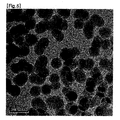
Fig. 5 shows a TEM image of the about 40 nm-sized silica nanoparticles prepared by the Stöber process. - Hereinafter, the present invention will be described in greater detail with reference to the following examples and drawings. The examples and drawings are given only for illustration of the present invention and not to be limiting the present invention.
- First, NH4Cl·NH3 buffer solution was prepared. 0.24 g of ammonium chloride (NH4Cl) was dissolved in 330 mL of water and, then, pH of the NH4Cl solution was measured by using a pH meter. The pH of the ammonium chloride solution was adjusted to be 9.0 by adding 30% aqueous ammonia or HCl. Then, the total volume of the ammonium chloride solution was made to be 350 mL by adding water thereto. 350 mL of the thus prepared buffer solution was used as a reaction solvent. The reaction solvent was heated to 60°C and the temperature was maintained. A mixture solution of 100 mL of tetraethyl orthosilicate (TEOS) as a silica precursor and 50 mL of cyclohexane was added to the reaction solvent, stirred homogeneously, and reacted for 24 hr at 60°C. After completion of the reaction, the upper organic solvent layer was removed. It was confirmed by using TEM and SEM that about 12.73 g of 25 nm-sized silica nanoparticles were produced as a result of the reaction (
Fig 1 andFig. 3 ). When the temperature of the reaction solution was adjusted at a range of 25°C - 80°C and stirred for 24 hr, it was possible to make the size of the nanoparticles uniform. - 1 mL of the thus obtained nanoparticles was used as nuclei and were dispersed into a mixture solution of 9 mL of water and 90 mL of ethanol. Then, 0.5 mL of TEOS and 2.5 mL of aqueous ammonia were added and reacted for 24 hr at room temperature. Then, 100 nm-sized silica nanoparticles were formed. The size of the silica nanoparticles could be controlled by adjusting the amount of the aqueous ammonia (
Fig 2 andFig. 4 ). - Silica nanoparticles were synthesized by using Stöber process. 1 mL of TEOS was added to a mixture solution of 10 mL of water and 50 mL of ethanol, and 3 mL of aqueous ammonia was added slowly. The reaction solution was stirred and reacted for 24 hr at room temperature. As a result of the reaction, large amount of silica nanoparticles of which size and shape are not uniform and spherical, respectively (
Fig 5 ). - The silica nanoparticles prepared by the present invention may be applied to various fields, for example, biomedical field such as in vivo or in vitro experiments, etc. The present invention may also be applied to a template for various porous nanomaterials as well as supports for catalysts since large-scale production of silica nanoparticles is possible according to the present invention.
Claims (11)
- A method for producing uniform-sized silica nanoparticles, comprising:(i) adding a solution of a silica precursor and an organic solvent to a basic buffer solution, followed by heating; and(ii) separating silica nanoparticles produced in the step (i).
- The method of Claim 1, wherein said silica precursor is selected from the group consisting of tetraethyl orthosilicate, tetramethoxysilane and silicon tetrachloride.
- The method of Claim 1, wherein said organic solvent is selected from the group consisting of cyclohexane, hexane, heptane and octane.
- The method of Claim 1, wherein pH of said basic buffer solution is 9-14.
- The method of Claim 4, wherein said basic buffer solution is selected from the group consisting of NH4Cl·NH3 buffer solution, KCl·NaOH buffer solution, aqueous lysine solution and aqueous arginine solution.
- The method of Claim 1, wherein the heating temperature in the step (i) is 25°C to 80°C.
- The method of Claim 1, wherein the sizes of said silica nanoparticles are controlled by changing the heating temperature in the step (i).
- The method of Claim 1, wherein the size of said silica nanoparticles is 5 nm to 50 nm.
- The method of Claim 1, further comprising:(iii) dispersing said silica nanoparticles obtained in the step (ii) into a mixture of water and ethanol; and(iv) regrowing said silica nanoparticles by adding a basic catalyst to the dispersion solution in the step (iii).
- The method of Claim 9, wherein said basic catalyst is aqueous ammonia.
- The method of Claim 9, wherein the size of said regrown silica nanoparticles are 60 nm to 2,000 nm.
Applications Claiming Priority (2)
| Application Number | Priority Date | Filing Date | Title |
|---|---|---|---|
| KR1020110072691A KR101880441B1 (en) | 2011-07-21 | 2011-07-21 | Method for Large-Scale Production of Uniform-Sized Silica Nanoparticles |
| PCT/KR2012/005770 WO2013012268A2 (en) | 2011-07-21 | 2012-07-19 | Volume production method for uniformly sized silica nanoparticles |
Publications (2)
| Publication Number | Publication Date |
|---|---|
| EP2735543A2 true EP2735543A2 (en) | 2014-05-28 |
| EP2735543A4 EP2735543A4 (en) | 2015-04-29 |
Family
ID=47558623
Family Applications (1)
| Application Number | Title | Priority Date | Filing Date |
|---|---|---|---|
| EP12815496.0A Withdrawn EP2735543A4 (en) | 2011-07-21 | 2012-07-19 | METHOD FOR PRODUCING VOLUME FOR UNIFORM SIZE SILICA NANOPARTICLES |
Country Status (6)
| Country | Link |
|---|---|
| US (1) | US20140356272A1 (en) |
| EP (1) | EP2735543A4 (en) |
| JP (1) | JP2014520755A (en) |
| KR (1) | KR101880441B1 (en) |
| CN (1) | CN103930368A (en) |
| WO (1) | WO2013012268A2 (en) |
Cited By (1)
| Publication number | Priority date | Publication date | Assignee | Title |
|---|---|---|---|---|
| WO2019070851A1 (en) * | 2017-10-03 | 2019-04-11 | Saudi Arabian Oil Company | Method for preventing formation of water-oil emulsions using additives |
Families Citing this family (19)
| Publication number | Priority date | Publication date | Assignee | Title |
|---|---|---|---|---|
| KR101390657B1 (en) * | 2013-02-21 | 2014-04-30 | 한림대학교 산학협력단 | Spherical nanoparticles with a silica shell and multiple au nanodots as the core and synthetic method therof |
| KR101582109B1 (en) | 2013-12-27 | 2016-01-04 | 한양대학교 산학협력단 | preparation method for silica particles containing single or multiple functional groups and silica particles prepared thereby |
| US9737860B2 (en) * | 2014-02-28 | 2017-08-22 | Pall Corporation | Hollow fiber membrane having hexagonal voids |
| US9561473B2 (en) * | 2014-02-28 | 2017-02-07 | Pall Corporation | Charged hollow fiber membrane having hexagonal voids |
| KR101483936B1 (en) | 2014-05-16 | 2015-01-21 | 한국에너지기술연구원 | Manufacturing method of iron-carbide/silica nano-composite catalysts for Fischer-Tropsch Synthesis reaction and iron-carbide/silica nano-composite catalysts thereof, manufacturing method of liquid hydrocarbon using the same and liquid hydrocarbon thereof |
| CN104609431A (en) * | 2015-01-19 | 2015-05-13 | 武汉金弘扬化工科技有限公司 | A kind of synthetic method of SiO2 nanoparticle below 50 nanometers and its particle size control synthetic method |
| US10434496B2 (en) | 2016-03-29 | 2019-10-08 | Agilent Technologies, Inc. | Superficially porous particles with dual pore structure and methods for making the same |
| EP3282290B1 (en) | 2016-08-09 | 2018-10-17 | Essilor International | Composition for the manufacture of an ophtalmic lens comprising an encapsulated light-absorbing additive |
| KR101985101B1 (en) * | 2017-10-25 | 2019-06-03 | 중앙대학교 산학협력단 | Manufacturing method for siloxane-based nano particle |
| CN110272052B (en) * | 2018-03-14 | 2022-10-04 | 天津工业大学 | Novel preparation method of nano silicon dioxide microcapsule |
| CN108862292A (en) * | 2018-09-10 | 2018-11-23 | 江西师范大学 | A method of regulation silicon dioxide microsphere partial size |
| KR102197574B1 (en) * | 2018-10-04 | 2020-12-31 | 한남대학교 산학협력단 | a manufacturing method of monodispersed silica nanoparticle |
| KR102204401B1 (en) * | 2019-04-08 | 2021-01-15 | 성균관대학교산학협력단 | Porous silica nanoparticle and method of fabricating thereof |
| CA3087226A1 (en) * | 2019-07-18 | 2021-01-18 | Nano Targeting & Therapy Biopharma Inc. | Drug delivery by pore-modified mesoporous silica nanoparticles |
| KR102280900B1 (en) | 2020-04-29 | 2021-07-23 | 주식회사 엘피엔 | The method for fabrication of silicon nano particle |
| CN112209389A (en) * | 2020-09-11 | 2021-01-12 | 江苏大学 | A kind of preparation method of ultrafine nano silica ball |
| CN112265999A (en) * | 2020-10-30 | 2021-01-26 | 三棵树(上海)新材料研究有限公司 | Particle size controllable functionalized nano-silica aqueous dispersion, preparation method and application |
| CN112442407A (en) * | 2020-11-17 | 2021-03-05 | 北京大学深圳研究生院 | Preparation method of friction reducer |
| CN113443633B (en) * | 2021-06-28 | 2022-04-29 | 上海千溯生物科技有限公司 | Small-size kernel viroid-like silica nanoparticle and preparation method thereof |
Family Cites Families (2)
| Publication number | Priority date | Publication date | Assignee | Title |
|---|---|---|---|---|
| US8263035B2 (en) * | 2006-10-26 | 2012-09-11 | Davis Tracy M | Forming nanoparticles in basic amino acid sols |
| KR20080085464A (en) * | 2007-03-20 | 2008-09-24 | 엘지마이크론 주식회사 | Silica Nanoparticles and Manufacturing Method Thereof |
-
2011
- 2011-07-21 KR KR1020110072691A patent/KR101880441B1/en active Active
-
2012
- 2012-07-19 EP EP12815496.0A patent/EP2735543A4/en not_active Withdrawn
- 2012-07-19 JP JP2014521559A patent/JP2014520755A/en active Pending
- 2012-07-19 US US14/233,987 patent/US20140356272A1/en not_active Abandoned
- 2012-07-19 CN CN201280035270.5A patent/CN103930368A/en active Pending
- 2012-07-19 WO PCT/KR2012/005770 patent/WO2013012268A2/en not_active Ceased
Non-Patent Citations (5)
| Title |
|---|
| BERTHOLDO R ET AL: "SAXS study of monodispersed silica nanospheres obtained by an amino acid route", JOURNAL OF NON-CRYSTALLINE SOLIDS, vol. 356, no. 44-49, 1 October 2010 (2010-10-01), pages 2622-2625, XP027488798, NORTH-HOLLAND PHYSICS PUBLISHING. AMSTERDAM, NL ISSN: 0022-3093, DOI: 10.1016/J.JNONCRYSOL.2010.05.011 [retrieved on 2010-06-18] * |
| KURTIS D. HARTLEN ET AL: "Facile Preparation of Highly Monodisperse Small Silica Spheres (15 to >200 nm) Suitable for Colloidal Templating and Formation of Ordered Arrays", LANGMUIR, vol. 24, no. 5, 1 March 2008 (2008-03-01), pages 1714-1720, XP055141518, ISSN: 0743-7463, DOI: 10.1021/la7025285 * |
| See also references of WO2013012268A2 * |
| YOKOI, TOSHIYUKI ET AL: "Mechanism of Formation of Uniform-Sized Silica Nanospheres Catalyzed by Basic Amino Acids", CHEMISTRY OF MATERIALS, vol. 21, no. 15, 2009, pages 3719-3729, XP002736862, ISSN: 0897-4756, DOI: 10.1021/CM900993B * |
| YOKOI, TOSHIYUKI ET AL: "Periodic Arrangement of Silica Nanospheres Assisted by Amino Acids", JOURNAL OF THE AMERICAN CHEMICAL SOCIETY, vol. 128, no. 42, 2006, pages 13664-13665, XP002736861, ISSN: 0002-7863, DOI: 10.1021/JA065071Y * |
Cited By (1)
| Publication number | Priority date | Publication date | Assignee | Title |
|---|---|---|---|---|
| WO2019070851A1 (en) * | 2017-10-03 | 2019-04-11 | Saudi Arabian Oil Company | Method for preventing formation of water-oil emulsions using additives |
Also Published As
| Publication number | Publication date |
|---|---|
| WO2013012268A9 (en) | 2013-03-14 |
| WO2013012268A3 (en) | 2013-05-10 |
| KR101880441B1 (en) | 2018-07-20 |
| JP2014520755A (en) | 2014-08-25 |
| CN103930368A (en) | 2014-07-16 |
| KR20130011505A (en) | 2013-01-30 |
| WO2013012268A2 (en) | 2013-01-24 |
| US20140356272A1 (en) | 2014-12-04 |
| EP2735543A4 (en) | 2015-04-29 |
Similar Documents
| Publication | Publication Date | Title |
|---|---|---|
| US20140356272A1 (en) | Volume production method for uniformly sized silica nanoparticles | |
| Hyde et al. | Colloidal silica particle synthesis and future industrial manufacturing pathways: a review | |
| Hartlen et al. | Facile preparation of highly monodisperse small silica spheres (15 to> 200 nm) suitable for colloidal templating and formation of ordered arrays | |
| US8822184B2 (en) | Collective chirality of binary plasmonic nanoparticles Janus assemblies | |
| Lee et al. | Preparation of silica coated magnetic nanoparticles for bioseparation | |
| JP5353004B2 (en) | Method for producing spherical ferrite nanoparticles | |
| CN102602883B (en) | Preparation method of silica-coated iron oxide nano-core-shell structural material | |
| CN102350281A (en) | Preparation method of fluorescent mesoporous silica-based core-shell nanoscale capsule | |
| CN108711480A (en) | One kind having core-shell structure magnetic mesoporous silicon dioxide nano chain and preparation method thereof | |
| CN103421495A (en) | Organic functionalized luminescent carbon quantum dots and its preparation method and use | |
| CN103730223B (en) | Super-paramagnetism nano ball and preparation method thereof | |
| CN103663478A (en) | Preparation method of mesoporous silica spherical nano particles with dendritic pore structure | |
| WO2016149711A1 (en) | Silica nanostructures, large-scale fabrication methods, and applications thereof | |
| Shah | Nanosynthesis Techniques of Silica-Coated | |
| CN101905328A (en) | A kind of preparation method of water-soluble Au10 nano-cluster molecule | |
| CN103862036A (en) | Method for preparing silicon dioxide coated noble metal nanocrystalline | |
| CN109701029B (en) | Protein-mediated nanocrystal self-assembled aggregates and preparation methods thereof | |
| CN105638729A (en) | Spherical silver/silver chloride composite material of hollow structure and preparation method thereof | |
| CN105236417A (en) | Spherical mesoporous silica with controllable particle size and preparation method of spherical mesoporous silica | |
| CN101913612A (en) | Preparation method of micron-scale monodisperse silica microspheres | |
| CN107030295A (en) | A kind of preparation method of magnetic/gold nanocomposite particle | |
| CN104609431A (en) | A kind of synthetic method of SiO2 nanoparticle below 50 nanometers and its particle size control synthetic method | |
| CN111228487B (en) | Magnetic particles containing graphitized fluorescent carbon dots and having yolk-shell structure, preparation method and application thereof | |
| CN111217374A (en) | Preparation method of sandwich silicon dioxide mesoporous nano material with particle size capable of being regulated and controlled by temperature | |
| US20140234220A1 (en) | Method and composition for dispersions of gold nanoparticles |
Legal Events
| Date | Code | Title | Description |
|---|---|---|---|
| PUAI | Public reference made under article 153(3) epc to a published international application that has entered the european phase |
Free format text: ORIGINAL CODE: 0009012 |
|
| 17P | Request for examination filed |
Effective date: 20140123 |
|
| AK | Designated contracting states |
Kind code of ref document: A2 Designated state(s): AL AT BE BG CH CY CZ DE DK EE ES FI FR GB GR HR HU IE IS IT LI LT LU LV MC MK MT NL NO PL PT RO RS SE SI SK SM TR |
|
| DAX | Request for extension of the european patent (deleted) | ||
| RIC1 | Information provided on ipc code assigned before grant |
Ipc: B82Y 40/00 20110101ALI20150318BHEP Ipc: B82B 3/00 20060101ALI20150318BHEP Ipc: C01B 33/14 20060101ALI20150318BHEP Ipc: C01B 33/18 20060101AFI20150318BHEP |
|
| A4 | Supplementary search report drawn up and despatched |
Effective date: 20150327 |
|
| RIC1 | Information provided on ipc code assigned before grant |
Ipc: C01B 33/18 20060101AFI20150320BHEP Ipc: B82B 3/00 20060101ALI20150320BHEP Ipc: C01B 33/14 20060101ALI20150320BHEP Ipc: B82Y 40/00 20110101ALI20150320BHEP |
|
| STAA | Information on the status of an ep patent application or granted ep patent |
Free format text: STATUS: THE APPLICATION IS DEEMED TO BE WITHDRAWN |
|
| 18D | Application deemed to be withdrawn |
Effective date: 20151027 |