EP2733967A1 - Procede d'amelioration de l'interface utilisateur pour les applications sim-toolkit - Google Patents
Procede d'amelioration de l'interface utilisateur pour les applications sim-toolkit Download PDFInfo
- Publication number
- EP2733967A1 EP2733967A1 EP13185996.9A EP13185996A EP2733967A1 EP 2733967 A1 EP2733967 A1 EP 2733967A1 EP 13185996 A EP13185996 A EP 13185996A EP 2733967 A1 EP2733967 A1 EP 2733967A1
- Authority
- EP
- European Patent Office
- Prior art keywords
- application
- module
- command
- terminal
- stk
- Prior art date
- Legal status (The legal status is an assumption and is not a legal conclusion. Google has not performed a legal analysis and makes no representation as to the accuracy of the status listed.)
- Granted
Links
Images


Classifications
-
- H—ELECTRICITY
- H04—ELECTRIC COMMUNICATION TECHNIQUE
- H04W—WIRELESS COMMUNICATION NETWORKS
- H04W4/00—Services specially adapted for wireless communication networks; Facilities therefor
- H04W4/60—Subscription-based services using application servers or record carriers, e.g. SIM application toolkits
Definitions
- the present invention is in the field of communication terminals comprising connection means with a secure element, for example with a microcircuit card compliant with the ISO 7816 standard.
- STK SIM Toolkit mechanism
- the invention aims to improve such mechanisms.
- the invention relates to a method implemented by a Proxy-type software module providing the interface between a first application implemented by a secure element connected to a terminal and a software or hardware module of this terminal, this module being able to execute a command received from this first application in order to obtain a first result.
- the invention also provides a Proxy-type software module comprising a communication interface with a first application of a secure element, a communication interface with a module of a terminal to which this module is connected.
- secure element this module being able to execute a command received from the first application to obtain a first result, and a communication interface with a second application that can be installed in the terminal and able to execute the above command, so to obtain a second result enriched compared to the first result, thanks to the use of resources of the terminal.
- This software module includes instructions for performing the steps of a method as mentioned above when executed by a processor of the secure element.
- the invention also relates to a secure element comprising a first application capable of sending at least one command to a module of a terminal to which the secure element is connected, this module being able to execute a command received from the first application in order to obtain a first result, this first application also being able to communicate with a Proxy-type software module, as mentioned above.
- the secure element complies with the ISO 7816 standard and / or the Common Criteria and / or the Federal Information Processing Standard (FIPS).
- FIPS Federal Information Processing Standard
- the invention finally relates to a terminal comprising means of communication with a secure element as mentioned above, a hardware or software module capable of executing an order received from a first application of this secure element in order to obtain a first result and a second application adapted to receive this command of a Proxy-type software module as mentioned above and to execute this command in order to obtain a second result enriched with respect to the first result, thanks to the use of resources of the terminal.
- the method verifies whether an application installed in the terminal is able to process the command in order to obtain a result enriched compared to that which would be obtained if the command was executed by the module of the terminal, the command is sent to this module if the application is not installed.
- the terminal module is a SIM Toolkit (STK) module able to process STK commands received from the first application according to the ETSI TS 101.267 protocol.
- STK SIM Toolkit
- the command may be a display command and the second application, an application capable of displaying an enriched STK menu with respect to the basic STK menu.
- SIM-Toolkit menus that are offered to the user of the terminal are the basic SIM-Toolkit menus, as provided by the traditional STK modules in the absence of Enriched display application installed in the terminal.
- an enriched display application is implemented by the terminal, all SIM Toolkit commands received from the secure element application are transmitted to this enriched display application in order to allow a display to be displayed. evolved compared to that provided by the STK module.
- the aforementioned commands can be display commands of the SIM-Toolkit menu or commands requiring interaction with the user such as commands for entering or detecting a particular selection.
- the method according to the invention comprises a step of sending, to the module, at least one other command received in combination with the aforementioned command.
- the method according to the invention comprises a step of sending, to the STK module, according to the ETSI TS 101.267 protocol, any other command received by the proxy (for example sending of an SMS) in combination with the aforementioned command, the combination of these commands being qualified as complex control.
- the method then operates in a hybrid mode in which the commands within the meaning of the invention are processed by the enriched display application of the terminal, the other commands being processed in a conventional manner by the STK module of the terminal.
- the Proxy module according to the invention is capable of determining, within complex commands, the commands to send to the STK module of the terminal and the commands to be sent to the enriched display application.
- the method according to the invention comprises a step of sending a command to the module to trigger the activation of the second application by the operating system of the terminal.
- the awakening of the second application is at the initiative of the Proxy module, which saves terminal resources when this application has no reason to to be active.
- this activation triggering of the second application is done when the Proxy receives a command from the first application implemented by the secure element.
- the verification of the presence of the second application consists of checking whether a presence notification has been received from this application.
- such a notification will be sent by the second display application when it is installed in the terminal or when the terminal is powered up.
- the method may comprise, following this notification, a step of deactivating the basic STK menu.
- the second application for example the enriched display application, is a midlet.
- the first application of the secure element is an applet.
- the operating system of the terminal is the Android system, but the invention also applies to the operating system iOS, RIM, Windows Phone.
- the step AAE0a comprises sending a Terminal Profile type message by which the STK module of the terminal indicates to the application of the microcircuit card capabilities of the terminal to display such commands.
- the STK application 26 of the microcircuit card communicates to the STK module 16 of the terminal a set of commands compatible with the characteristics received in the previous step.
- commands include the SIM-Toolkit menu entries in the terminal's user interface.
- the step AAE21 is implemented on detection of a predetermined event, for example the receipt of an SMS or a navigation command of the user in the SIM-Toolkit menu.
- the STK module 16 of the terminal sends, to the substep AAE21a a notification message to the application STK 26 of the microcircuit card 2 to communicate the type of event.
- the application 26 of the microcircuit card When the application 26 of the microcircuit card has operations to be performed following such an event, it responds to the STK module 16 of the terminal by a response of the type SW 91 XX.
- the STK module 16 of the terminal Upon receipt of such a response, the STK module 16 of the terminal sends the application 26 of the microcircuit card a Fetch type command during a sub-step AAE21c.
- the application 26 of the microcircuit card On receipt of the Fetch command, the application 26 of the microcircuit card sends, during a step AAE21d a Display text command to display the contents of the SMS or menu entry corresponding to the navigation of the user.
- the STK module 16 of the terminal sends, during a step AAE21e, a message of the Terminal Response type to the application 26 of the microcircuit card in order to transmit to the application STK 26 the result of the execution of the command.
- the STK application 26 of the microcircuit card has no other operation to perform; it therefore responds to this Terminal Response message by sending a message of type SW 90 00 (step AAE21f). This message ends the STK session.
- this secure element 2 comprising a Proxy 27 type software module according to the invention.
- the secure element 2 is a microcircuit card compliant with the ISO 7816 standard and certified according to the FIPS common criteria.
- Terminal 1 presents the conventional architecture of a computer. It comprises in particular a processor 11, a ROM-type ROM 12, a random-access memory type RAM 13, communication means 14 and a reader 15 enabling the terminal to connect to a microcircuit card 2.
- the invention can be implemented in a telephone type terminal, in which case the communication means 14 are means for the terminal to connect with a telephone network.
- the read-only memory ROM 12 includes an STK module 16 known to those skilled in the art, this module can be of software or hardware type.
- the read ROM ROM 12 also includes an operating system 18, namely, in this example, the Android system.
- the terminal 1 is remarkable in that it comprises, in its read-only memory 12, an enriched display application 17 capable of executing a display command sent by the Proxy module 27 of the microcircuit card 2.
- the application 17 enriched display is an application able to enrich the graphical interface of the SIM-Toolkit menu entries; it allows for example to use advanced fonts, special character colors, wallpapers, logos, graphic images, animated images, hypertext links.
- the enhanced display application 17 uses the resources of the operating system 18 to which it interfaces with an API (Application Programmable Interface).
- the microcircuit card 2 implements the operating system java OS and the software application 26 interfaces with the module 27 of the Proxy type via a Shareable interface known to those skilled in the art.
- the figure 2 represents the interfaces between the software modules 16, 17, 26 and 27 of the figure 1 .
- the interface I1 between the Proxy module 27 and the application 26 can be of Shareable interface type.
- the interface I3 between this application 17 and the Proxy 27 module of the microcircuit card 2 is JSR 177 type; in other variants the application 17 and the Proxy 27 module dialogue according to a proprietary protocol.
- the invention provides an enriched display, when the terminal includes an enriched display application 17 capable of enriching the display of SIM-Toolkit module controls, and normal operation, namely with a basic display of commands SIM-Toolkit menu, when the terminal 1 does not have such an application.
- the module 27 Proxy stores a flag representing the presence or absence of an enriched display application 17 in the terminal 1.
- the method implemented by the module 27 of the Proxy type comprises a step E4 setting this flag to the value 0, representative of the absence of an enriched display application 17 in the terminal 1 .
- Step E0 is similar to step AAE0 of the state of the art described precisely with reference to the figure 4 . It will be recalled that this step makes it possible to display the basic STK menu of the human-machine interface of the terminal 1, the displayed elements being sent by the application 26 of the microcircuit card, taking into account the display characteristics of the terminal 1.
- the invention makes it possible to propose to the user of the terminal 1 a SIM-Toolkit menu having improved graphic characteristics with respect to this basic SIM-Toolkit menu.
- the invention proposes, during step E1, to disable the basic menu so that only the enriched menu is accessible to the user. More specifically, in the embodiment described here, the enhanced display application 17 of the terminal 1 sends, during a step E1a, a notification message to the Proxy 27 to notify its presence. This notification can be sent when the terminal 1 is turned on or after the enriched display application 17 has been installed in the read-only memory 12 of the terminal.
- the Proxy-type module 27 sets the flag flag to the value 1, this value being representative of the presence of the enriched display application 17 in the terminal 1.
- the Proxy module 27 also sends, during a step E1b, a command to the application 26 of the microcircuit card to obtain the commands that must be displayed in the SIM-Toolkit menu.
- the Proxy-type software module communicates these commands to the enhanced display application 17 of the terminal 1.
- the commands received from the STK application 26 are simply encapsulated according to a proprietary protocol implemented between the Proxy 27 module and the software application 17.
- the invention proposes to disable the basic menu.
- the Proxy module 27 sends, during a step E1e, a command to the STK module 16 of the terminal 1 so that it deactivates the basic STK menu.
- the step E2 which will now be described is a step of displaying a command by the terminal 1 following the detection of a predetermined event.
- This step E2 has similarities with the step AAE21 of the prior art described previously with reference to FIG. figure 4 .
- the steps E2a, E2b and E2c correspond exactly to the steps AAE21a, AAE21b and AAE21c. It is recalled here that upon receipt of an SMS, the STK module 16 sends notification of the event to the application 26 of the microcircuit card 2 (step E2a), that it responds with a message SW 91 XX (step E2b), representative of the fact that the application 26 has operations to be performed, following which the STK module 16 returns a command of type Fetch (step E2c) to the application 26.
- the application 26 of the microcircuit card upon receipt of such a Fetch command, the application 26 of the microcircuit card sends a Display text command, in accordance with the ETSI TS 101.6.27 protocol, to the STK module 16 of the terminal.
- this command is sent to the Proxy module 27 of the microcircuit card 2, via the interface I1 (step E2d).
- the Proxy 27 module Upon receipt of this Display text command, the Proxy 27 module verifies, during a step E6, whether the terminal 1 includes an enriched display application 17. In the example described here, this is the case (flag set to 1).
- the Proxy module 27 sends, during a step E2e, a SEND DATA type command to the STK module 16.
- the operating system 18 of the terminal 1 Upon receipt of such a command, the operating system 18 of the terminal 1 broadcasts the information to all applications registered on this event which has the effect of waking up the application 17 enriched display.
- the STK module 16 responds to SEND DATA type commands by sending a Terminal Response type message received by the Proxy type module 27 of the microcircuit card 2 during a step E2f.
- the proxy module 27 On receipt of this response, the proxy module 27 considers that the SEND DATA command has been processed and responds, in a manner similar to that described in the prior art, by sending a message of the SW 90 type. 00 (step E2g), destined for the STK module 16, to signify that it no longer has any processing to perform.
- the enriched display application 17 when it has been woken by the system 18, it sends, to the Proxy 27 module, a display control request, during a step E2h.
- the Proxy module 27 On receipt of this command, the Proxy module 27 sends (step E2i) to the enriched display application 17 a Display text command, the content of this message corresponding to the content of the Display text command received from the STK application 26. in step E2d.
- step E2i displays, in an enriched manner, the text received in the step E2i, and that it reports this display by returning a message of the Terminal Response type (step E2j) to the Proxy module 27.
- the response of the enriched display application 17 does not give rise to any additional action. Since the display command has been executed in its entirety, the proxy 27 sends, during a step E2k, a response to the application STK 26 concerning the execution of the display command received in step E2d. No further new action to be executed, the STK application 26 responds to the proxy module 27 by an end of processing message of the type SW 90 00. The proxy module 27 then deactivates the enriched display application 17 when the step E2m. This step ends step E2 of displaying a command in the presence of the enriched display application 17.
- the Proxy module 27 determines, in the step E6, following the receipt of a Display text message from the application 26, that the terminal 1 does not include a display application 17 enriched, it behaves as in the prior art.
- the Proxy 27 transmits the display text command in step E2d to the STK module 16 of the terminal 1 in a manner similar to the step AAE21d described above with reference to FIG. figure 4 .
- the basic menu display procedure ends with the sending of the messages AAE21e and AAE21f.
- step E3 replaces step E2 of the execution method described in FIG. figure 3A .
- Steps E3a to E3m are similar to steps E2a to E2m previously described.
- Step E3 differs from step E2 in that steps E3j1 to E3j6 and step E3l1 have been introduced.
- step E3a On receipt of an event requesting the execution of a complex command (step E3a), the STK application 26 sends (step E3b) a command of the type SW 91 XX indicating that it is ready to send a command of size XX .
- step E3b the STK module 16 sends a Fetch command to the STK application 26 (step E3c).
- step E3a the event of step E3a is that of triggering the sending of an SMS by the application STK 26.
- step E3d the STK application 26 sends the SMS sending command to the proxy software module 27.
- the Send SMS command contains several arguments including information about the SMS to send (SMS) and a message to display (AI, Alpha Identifier in English). This message corresponds, for example, to a message of the type "SMS sending in progress ". This is a complex command that combines a display command with another command.
- SMS SMS to send
- AI Alpha Identifier in English
- the Proxy 27 traverses the complex control and identifies the text portion to be displayed. It extracts this part and reconstructs the STK command, without the text, for the STK module 16. The text part is sent to the enriched display application 17 in a proprietary format.
- the proxy module On receipt of the complex command sending SMS by the proxy type software module 27, the proxy module checks, in a step E6, whether a rich display application 17 has been installed. This is the case since the flag is equal to 1. In this case, the steps E3e to E3m are executed.
- the steps E3e to E3g make it possible, by sending a SEND DATA command, to wake up the display application enriched by the operating system 18 and the closure of the session STK opened in step E3a.
- the enriched display application 17 then responds by sending the command "Get display command" to the proxy module 27 (step E3h).
- the proxy 27 sends a display command of the message AI to the enriched display application 17 during a step E3i.
- the application 17 sends a response to the proxy 27 during a step E3j.
- step E3j1 the proxy 27 sends a proprietary request "Start STK session" to the application 17 to open an STK session.
- the application responds to it during the step E3j2 and the proxy 27 sends the command SW 91 XX making it possible to open an STK session during a step E3j3.
- step E3j3 Following step E3j3, an STK session having been opened, the operations related to the sending of the SMS can be executed. These are steps E3j4 to E3j6.
- step E3j4 the STK module 16 sends a FETCH command to the proxy 27.
- the proxy then sends the SMS sending command with the information relating to the content to be sent to the STK module during a step E3j5 without the display options.
- the STK sends a "terminal response" type command to the proxy during a step E3j6.
- the proxy 27 sends, during a step E3k, a response to the application STK 26 concerning the execution of this complex command.
- the proxy 27 then combines, if necessary, the response given by the STK module 16 following the execution of the SMS sending command (step E3j6) and the response given by the display application 17 enriched following the display of the message AI (step E3j).
- the display of the message AI does not give rise to any particular response
- the response sent in step E3k contains only the response of the STK module.
- the AI message can be displayed until a timer expires or until the user presses an "OK” or "Cancel” button for example.
- step E3l if no other command is to be executed, the STK application 26 of the microcircuit card sends a command of the type SW 90 00 intended to close the operations.
- the proxy 27 therefore sends, during a step E3l1, a message SW 90 00 to the STK module 16 in order to close the STK session as well as a message intended to deactivate the enriched display application 17, during a step e3m.
- the STK application 26 sends a command of type SW 91 XX to the proxy 27.
Landscapes
- Engineering & Computer Science (AREA)
- Computer Networks & Wireless Communication (AREA)
- Signal Processing (AREA)
- Mobile Radio Communication Systems (AREA)
- Digital Computer Display Output (AREA)
- Stored Programmes (AREA)
- Telephone Function (AREA)
Abstract
Description
- La présente invention se situe dans le domaine des terminaux de communication comportant des moyens de connexion avec un élément sécurisé, par exemple avec une carte à microcircuit conforme à la norme ISO 7816.
- De façon connue, il est usuel de prévoir, dans une telle architecture, un mécanisme permettant aux applications de l'élément sécurisé d'interagir avec un module du terminal pour rendre un certain nombre de services.
- C'est en particulier le cas du mécanisme SIM Toolkit (STK) défini par le standard ETSI GSM 11.14 qui définit comment des applications STK d'une carte SIM peuvent interagir avec le terminal mobile auquel elle est connectée.
- L'invention vise à améliorer de tels mécanismes.
- Plus précisément, l'invention concerne un procédé mis en oeuvre par un module logiciel de type Proxy réalisant l'interface entre une première application mise en oeuvre par un élément sécurisé connecté à un terminal et un module logiciel ou matériel de ce terminal, ce module étant apte à exécuter une commande reçue de cette première application afin d'obtenir un premier résultat.
- Ce procédé comporte :
- une étape pour vérifier si le terminal comporte une deuxième application apte à exécuter la commande précitée, afin d'obtenir un deuxième résultat enrichi par rapport au premier résultat grâce à l'utilisation de ressources du terminal,
- si c'est le cas, une étape d'envoi de la commande précitée à la deuxième application ; et
- si ce n'est pas le cas, une étape d'envoi de cette commande au module.
- Corrélativement, l'invention vise également un module logiciel de type Proxy comprenant une interface de communication avec une première application d'un élément sécurisé, une interface de communication avec un module d'un terminal auquel est connecté cet élément sécurisé, ce module étant apte à éxécuter une commande reçue de la première application afin d'obtenir un premier résultat, et une interface de communication avec une deuxième application susceptible d'être installée dans le terminal et apte à exécuter la commande précitée, afin d'obtenir un deuxième résultat enrichi par rapport au premier résultat, grâce à l'utilisation de ressources du terminal. Ce module logiciel comporte des instructions pour exécuter les étapes d'un procédé tel que mentionné ci-dessus lorsqu'il est exécuté par un processeur de l'élément sécurisé.
- L'invention vise également un élément sécurisé comportant une première application apte à envoyer au moins une commande à un module d'un terminal auquel l'élément sécurisé est connecté, ce module étant apte à exécuter une commande reçue de la première application afin d'obtenir un premier résultat, cette première application étant également apte à communiquer avec un module logiciel de type Proxy, tel que mentionné ci-dessus.
- Dans un mode particulier de réalisation de l'invention, l'élément sécurisé est conforme à la norme ISO 7816 et/ou aux Critères Communs et/ou à la norme FIPS (Federal Information Processing Standard).
- L'invention vise enfin un terminal comprenant des moyens de communication avec un élément sécurisé tel que mentionné ci-dessus, un module matériel ou logiciel apte à exécuter une commande reçue d'une première application de cet élément sécurisé afin d'obtenir un premier résultat et une deuxième application apte à recevoir cette commande d'un module logiciel de type Proxy tel que mentionné ci-dessus et à exécuter cette commande afin d'obtenir un deuxième résultat enrichi par rapport au premier résultat, grâce à l'utilisation de ressources du terminal.
- Ainsi, et de façon très avantageuse, le procédé vérifie si une application installée dans le terminal est apte à traiter la commande en vue d'obtenir un résultat enrichi par rapport à celui qui serait obtenu si la commande était exécutée par le module du terminal, la commande étant envoyée à ce module si l'application n'est pas installée.
- Dans un mode particulier de réalisation, le module du terminal est un module Sim Toolkit (STK) apte à traiter des commandes STK reçues de la première application selon le protocole ETSI TS 101.267.
- Dans ce mode de réalisation, la commande peut être une commande d'affichage et la deuxième application, une application apte à afficher un menu STK enrichi par rapport au menu STK de base.
- Dans ce mode de réalisation, l'homme du métier comprendra que les menus SIM-Toolkit qui sont proposés à l'utilisateur du terminal sont les menus SIM-Toolkit de base, tels que prévus par les modules STK traditionnels en l'absence d'application d'affichage enrichie installée dans le terminal. En revanche, dès lors qu'une application d'affichage enrichie est mise en oeuvre par le terminal, toutes les commandes SIM Toolkit reçues de l'application de l'élément sécurisé sont transmises à cette application d'affichage enrichie afin de permettre un affichage évolué par rapport à celui prévu par le module STK.
- Les commandes précitées peuvent être des commandes d'affichage du menu SIM-Toolkit ou des commandes nécessitant une interaction avec l'utilisateur comme des commandes de saisie ou de détection d'une sélection particulière.
- De façon avantageuse, il n'est pas nécessaire, conformément à l'invention, de configurer une liste de commandes qui bénéficient de traitement particulier, au niveau du module Proxy ce dernier connaissant la liste des commandes STK supportées par l'application d'affichage enrichie.
- Dans un mode particulier de réalisation, le procédé selon l'invention comporte une étape d'envoi, au module, d'au moins une autre commande reçue en combinaison avec la commande précitée.
- Par exemple, dans un mode particulier de réalisation, le procédé selon l'invention comporte une étape d'envoi, au module STK, selon le protocole ETSI TS 101.267, de toute autre commande reçue par le proxy (par exemple d'envoi d'un SMS) en combinaison avec la commande précitée, la combinaison de ces commandes pouvant être qualifiée de commande complexe. Le procédé fonctionne alors dans un mode hybride dans lequel les commandes au sens de l'invention sont traitées par l'application d'affichage enrichie du terminal, les autres commandes étant traitées, de façon classique, par le module STK du terminal.
- Dans ce mode de réalisation, le module Proxy selon l'invention est apte à déterminer au sein des commandes complexes, les commandes à envoyer au module STK du terminal et les commandes à envoyer à l'application d'affichage enrichi.
- Dans un mode particulier de réalisation, le procédé selon l'invention comporte une étape d'envoi d'une commande au module pour déclencher l'activation de la deuxième application par le système d'exploitation du terminal.
- Par conséquent, dans ce mode de réalisation de l'invention, le réveil de la deuxième application se fait à l'initiative du module Proxy, ce qui permet d'économiser des ressources du terminal lorsque cette application n'a pas de raison d'être active.
- Préférentiellement, ce déclenchement d'activation de la deuxième application se fait lorsque le Proxy reçoit une commande de la première application mise en oeuvre par l'élément sécurisé.
- Dans un mode de réalisation particulier, la vérification de la présence de la deuxième application consiste à vérifier si une notification de présence a été reçue de cette application.
- Préférentiellement, une telle notification sera envoyée par la deuxième application d'affichage lors de son installation dans le terminal ou à la mise sous tension du terminal.
- Dans le mode particulier de réalisation de l'invention dans lequel la deuxième application est une application apte à afficher un menu STK enrichi par rapport au menu STK de base affiché par le module STK du terminal, le procédé peut comporter, suite à cette notification, une étape de désactivation du menu STK de base.
- Dans un mode particulier de réalisation de l'invention, la deuxième application, par exemple l'application d'affichage enrichie, est une midlet.
- Dans un mode particulier de réalisation de l'invention, la première application de l'élément sécurisé est une applet.
- Dans un mode particulier de réalisation de l'invention, le système d'exploitation du terminal est le système Android, mais l'invention s'applique également au système d'exploitation iOS, RIM, Windows Phone.
- D'autres caractéristiques et avantages de la présente invention ressortiront de la description faite ci-dessous en référence aux dessins annexés qui en illustrent un exemple de réalisation dépourvu de tout caractère limitatif sur les figures :
- la
figure 1 représente un terminal et un élément sécurisé conformes à un mode particulier de réalisation de l'invention ; - la
figure 2 représente l'architecture logiciel du terminal et de l'élément sécurisé de lafigure 1 ; - les
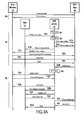
figures 3A et3B représentent les principales étapes d'un procédé d'exécution conformes à un mode de réalisation de l'invention pour traiter respectivement des commandes simples et complexes. On détaillera plus précisément le traitement d'une commande simple de type « Display Text » et le traitement d'une commande complexe d'envoi d'un SMS ; - la
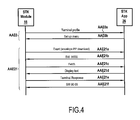
figure 4 représente des messages échangés entre une application d'une carte à microcircuit et une application d'un terminal conformément à l'art antérieur. - En référence à la
figure 4 , nous allons tout d'abord décrire un procédé connu de communication entre une application STK 26 mise en oeuvre par une carte à microcircuit et une module STK 16 mis en oeuvre par un terminal auquel est connectée cette carte à microcircuit. Ce procédé comporte deux étapes principales à savoir : - une étape AAE0 permettant l'affichage, dans un menu SIM-Toolkit de l'interface utilisateur d'un terminal, d'une commande générée par l'application STK 26 de la carte à microcircuit ; et
- une étape AAE21 de traitement d'une commande d'affichage, par le terminal, sur réception d'un événement.
- Plus précisément, l'étape AAE0a comporte l'envoi d'un message de type Terminal Profile par lequel le module STK du terminal indique à l'application de la carte à microcircuit les capacités du terminal pour afficher de telles commandes.
- Au cours d'une étape AAE0b, l'application STK 26 de la carte à microcircuit communique au module STK 16 du terminal un jeu de commandes compatible avec les caractéristiques reçues à l'étape précédente. Ces commandes comportent les entrées du menu SIM-Toolkit de l'interface utilisateur du terminal.
- L'étape AAE21 est mise en oeuvre sur détection d'un événement prédéterminé, par exemple la réception d'un SMS ou d'une commande de navigation de l'utilisateur dans le menu SIM-Toolkit.
- Lorsqu'un tel événement est détecté, le module STK 16 du terminal envoie, à la sous-étape AAE21a un message de notification à l'application STK 26 de la carte à microcircuit 2 pour lui communiquer le type d'événement.
- Lorsque l'application 26 de la carte à microcircuit a des opérations à effectuer suite à un tel événement, elle répond au module STK 16 du terminal par une réponse de type SW 91 XX.
- Il est connu de l'homme du métier que les lettres XX désignent la longueur de la commande qui sera envoyée ultérieurement par l'application STK 26, les lettres SW étant les initiales des mots Status Word.
- Sur réception d'une telle réponse, le module STK 16 du terminal envoie à l'application 26 de la carte à microcircuit une commande de type Fetch au cours d'une sous-étape AAE21c.
- Sur réception de la commande Fetch, l'application 26 de la carte à microcircuit envoie, au cours d'une étape AAE21d une commande Display text pour afficher le contenu du SMS ou l'entrée du menu correspondant à la navigation de l'utilisateur.
- Une fois que la commande d'affichage a été exécutée par le terminal, le module STK 16 du terminal envoie, au cours d'une étape AAE21e un message de type Terminal Response à l'application 26 de la carte à microcircuit afin de transmettre à l'application STK 26 le résultat de l'execution de la commande.
- Dans l'exemple de réalisation décrit ici, l'application STK 26 de la carte à microcircuit n'a pas d'autre opération à effectuer ; elle répond par conséquent à ce message Terminal Response par l'envoi d'un message de type SW 90 00 (étape AAE21f). Ce message termine la session STK.
- En référence à la
figure 1 , nous allons maintenant décrire un terminal 1 et un élément sécurisé 2 conformes à l'invention, cet élément sécurisé 2 comportant un module logiciel de type Proxy 27 conforme à l'invention. - Dans le mode de réalisation décrit ici, l'élément sécurisé 2 est une carte à microcircuit conforme à la norme ISO 7816 et certifiée conforme aux critères communs FIPS.
- Le terminal 1 présente l'architecture conventionnelle d'un ordinateur. Il comporte notamment un processeur 11, une mémoire morte de type ROM 12, une mémoire vive de type RAM 13, des moyens 14 de communication et un lecteur 15 permettant au terminal de se connecter à la une carte à microcircuit 2. L'invention peut être mise en oeuvre dans un terminal de type téléphone, auquel cas les moyens 14 de communication sont des moyens permettant au terminal de se connecter avec un réseau téléphonique.
- La mémoire morte de type ROM 12 comporte un module STK 16 connu de l'homme du métier, ce module pouvant être de type logiciel ou matériel. La mémoire morte de type ROM 12 comporte également un système d'exploitation 18, à savoir, dans cet exemple, le système Android.
- Le terminal 1 est remarquable en ce qu'il comporte, dans sa mémoire morte 12, une application d'affichage enrichi 17 apte à exécuter une commande d'affichage envoyée par le module Proxy 27 de la carte à microcircuit 2. L'application 17 d'affichage enrichi est une application apte à enrichir l'interface graphique des entrées du menu SIM-Toolkit ; elle permet par exemple d'utiliser des polices de caractères évoluées, des couleurs de caractères particulières, des fonds d'écran, des logos, des images graphiques, des images animées, des liens hypertextes. D'une façon générale, l'application 17 d'affichage enrichi utilise les ressources du système d'exploitation 18 auquel elle s'interface par une API (Application Programmable Interface).
- Dans l'exemple de réalisation décrit ici, la carte à microcircuit 2 présente aussi l'architecture matérielle d'un ordinateur. Elle comporte un processeur 21, une mémoire morte de type ROM 22, une mémoire vive de type RAM 23 et des ports d'entrée-sortie 25 aptes à s'interfacer avec le lecteur 15 du terminal 1. La mémoire morte 22 est remarquable en ce qu'elle comporte :
- une application 26 apte à envoyer des commandes STK selon le protocole ETSI TS 101.267, de telles commandes étant normalement destinées au module STK 16 du terminal 1 ; et
- un module logiciel 27 de type Proxy conforme à l'invention apte à reformater les commandes STK reçues de l'application 26 et à les encapsuler pour les envoyer à l'application 17.
- Dans cet exemple, la carte à microcircuit 2 met en oeuvre le système d'exploitation java OS et l'application logicielle 26 s'interface avec le module 27 de type Proxy via une interface Shareable connue de l'homme du métier.
- La
figure 2 représente les interfaces entre les modules logiciels 16, 17, 26 et 27 de lafigure 1 . - Plus précisément :
- l'interface I4 entre le module STK 16 du terminal et l'application 26 de la carte à microcircuit est conforme au protocole ETSI TS 101.267 ;
- l'interface I2 entre le module STK 16 du terminal 1 et le module Proxy 27 de la carte à microcircuit est conforme au protocole ETSI TS 101.267.
- Lorsque la carte à microcircuit 2 met en oeuvre un système d'exploitation de type Java OS, l'interface I1 entre le module Proxy 27 et l'application 26 peut être de type Shareable interface.
- Lorsque l'application 17 du terminal 1 est une midlet, l'interface I3 entre cette application 17 et le module Proxy 27 de la carte à microcircuit 2 est de type JSR 177 ; dans d'autres variantes l'application 17 et le module Proxy 27 dialoguent selon un protocole propriétaire.
- En référence à la
figure 3A , nous allons maintenant décrire, dans un exemple de réalisation particulier, des messages échangés entre les différents modules logiciels 16, 17, 26 et 27. - Dans cet exemple, on distingue trois étapes principales E0 à E2, dans lesquelles :
- l'étape E0 est une étape d'initialisation et de configuration du menu STK de l'interface utilisateur du terminal 1 ;
- l'étape E1 est une étape de désactivation de ce menu ; et
- l'étape E2 est une étape d'affichage enrichi d'une commande simple (dans cet exemple la commande Display Text) sur détection d'un événement.
- On rappelle que l'invention propose un affichage enrichi, lorsque le terminal comporte une application d'affichage enrichi 17 apte à enrichir l'affichage des commandes du module SIM-Toolkit, et un fonctionnement normal, à savoir avec un affichage de base des commandes du menu SIM-Toolkit, lorsque le terminal 1 ne comporte pas une telle application.
- Dans le mode de réalisation décrit ici, le module 27 Proxy mémorise un drapeau (flag) représentatif de la présence ou non d'une application d'affichage enrichi 17 dans le terminal 1.
- Par conséquent, à l'initialisation, le procédé mis en oeuvre par le module 27 de type Proxy comporte une étape E4 positionnant ce drapeau à la valeur 0, représentative de l'absence d'une application d'affichage enrichi 17 dans le terminal 1.
- L'étape E0 est similaire à l'étape AAE0 de l'état de la technique décrite précisément en référence à la
figure 4 . On rappelle que cette étape permet l'affichage du menu STK de base de l'interface homme-machine du terminal 1, les éléments affichés étant envoyés par l'application 26 de la carte à microcircuit en prenant en compte les caractéristiques d'affichage du terminal 1. - On rappelle que l'invention permet de proposer, à l'utilisateur du terminal 1, un menu SIM-Toolkit présentant des caractéristiques graphiques améliorées par rapport à ce menu SIM-Toolkit de base.
- Dans le mode de réalisation décrit ici, l'invention propose, au cours de l'étape E1, de désactiver le menu de base de sorte que seul le menu enrichi soit accessible à l'utilisateur. Plus précisément, dans le mode de réalisation décrit ici, l'application d'affichage enrichi 17 du terminal 1 envoie, au cours d'une étape E1a, un message de notification au module Proxy 27 pour notifier sa présence. Cette notification peut être envoyée à la mise sous tension du terminal 1 ou suite à l'installation de l'application d'affichage enrichi 17 dans la mémoire morte 12 du terminal.
- Sur réception d'un tel message de notification, le module 27 de type Proxy positionne le drapeau flag à la valeur 1, cette valeur étant représentative de la présence de l'application 17 d'affichage enrichi dans le terminal 1.
- Le module Proxy 27 envoie également, au cours d'une étape E1b, une commande à l'application 26 de la carte à microcircuit pour obtenir les commandes qui doivent être affichées dans le menu SIM-Toolkit.
- Ces commandes sont retournées par l'application 26 et reçues par le module logiciel Proxy 27 au cours d'une étape E1c.
- Au cours d'une étape E1d, le module logiciel de type Proxy communique ces commandes à l'application d'affichage enrichi 17 du terminal 1. Les commandes reçues de l'application STK 26 sont simplement encapsulées selon un protocole propriétaire mis en oeuvre entre le module Proxy 27 et l'application logiciel 17.
- On comprend, qu'à cet instant précis, l'utilisateur peut accéder à deux menus STK soit le menu de base résultat de l'étape E0, soit le menu enrichi par la mise en oeuvre de l'application 17.
- De façon avantageuse, dans ce mode de réalisation, l'invention propose de désactiver le menu de base. A cet effet, le module Proxy 27 envoie, au cours d'une étape E1e, une commande au module STK 16 du terminal 1 pour qu'il désactive le menu STK de base.
- L'étape E2 qui va maintenant être décrite est une étape d'affichage d'une commande par le terminal 1 suite à la détection d'un événement prédéterminé.
- Nous prendrons l'exemple dans lequel l'événement précité correspond à la réception d'un SMS par le terminal 1 à destination de la carte à microcircuit. Un événement correspondant à la détection de la navigation de l'utilisateur dans le menu SIM Toolkit enrichi serait traité de façon similaire.
- Cette étape E2 comporte des similitudes avec l'étape AAE21 de l'art antérieur décrite précédemment en référence à la
figure 4 . - En particulier, les étapes E2a, E2b et E2c correspondent exactement aux étapes AAE21a, AAE21b et AAE21c. On rappelle ici que sur réception d'un SMS, le module STK 16 envoie notification de l'événement à l'application 26 de la carte à microcircuit 2 (étape E2a), que celui-ci répond par un message SW 91 XX (étape E2b), représentative du fait que l'application 26 a des opérations à effectuer, suite à quoi le module STK 16 renvoie une commande de type Fetch (étape E2c) à l'application 26.
- On rappelle que dans l'art antérieur, sur réception d'une telle commande Fetch, l'application 26 de la carte à microcircuit envoie une commande Display text, conformément au protocole ETSI TS 101.6.27, au module STK 16 du terminal.
- Conformément à l'invention, en revanche, cette commande est envoyée au module Proxy 27 de la carte à microcircuit 2, via l'interface I1 (étape E2d).
- Sur réception de cette commande Display text, le module Proxy 27 vérifie, au cours d'une étape E6, si le terminal 1 comporte une application 17 d'affichage enrichi. Dans l'exemple décrit ici, c'est le cas (drapeau positionné à 1).
- Dans le mode de réalisation décrit ici, on suppose que l'application 17 d'affichage enrichi du terminal 1 est en veille et qu'elle doit être réveillée pour traiter les commandes d'affichage enrichi. A cet effet, et de façon avantageuse, le module Proxy 27 envoie, au cours d'une étape E2e, une commande de type SEND DATA au module STK 16.
- Sur réception d'une telle commande, le système d'exploitation 18 du terminal 1 diffuse l'information à toutes les applications enregistrées sur cet événement ce qui a pour effet de réveiller l'application 17 d'affichage enrichi.
- Le module STK 16 répond aux commandes de type SEND DATA par l'envoi d'un message de type Terminal Response reçu par le module 27 de type Proxy de la carte à microcircuit 2 au cours d'une étape E2f.
- Sur réception de cette réponse, le module de type proxy 27 considère que la commande SEND DATA a été traitée et répond, d'une façon similaire à celle décrite dans l'art antérieur, par l'envoi d'un message de type SW 90 00 (étape E2g), à destination du module STK 16, pour signifier qu'elle n'a plus de traitement à effectuer.
- La session SIM Toolkit est alors terminée.
- L'homme du métier comprendra qu'en réalité la commande d'affichage n'a pas encore été traitée.
- Conformément à ce mode de réalisation particulier, lorsque l'application 17 d'affichage enrichi a été réveillée par le système d'exploitation 18, elle envoie, au module Proxy 27, une requête de commande d'affichage, au cours d'une étape E2h.
- Sur réception de cette commande, le module Proxy 27 envoie (étape E2i), à l'application 17 d'affichage enrichi une commande Display text, le contenu de ce message correspondant au contenu de la commande Display text reçue de l'application STK 26 à l'étape E2d.
- Nous supposerons que l'application 17 affiche, de façon enrichie, le texte reçu à l'étape E2i, et qu'elle fait état de cet affichage en renvoyant un message de type Terminal Response (étape E2j) au module Proxy 27.
- Dans cet exemple, la réponse de l'application 17 d'affichage enrichi ne donne lieu aucune action supplémentaire. La commande d'affichage ayant été exécutée dans son intégralité, le proxy 27 envoie, lors d'une étape E2k, une réponse à l'application STK 26 concernant l'exécution de la commande d'affichage reçue à l'étape E2d. Aucune nouvelle action supplémentaire ne devant être exécutée, l'application STK 26 répond au module proxy 27 par un message de fin de traitement de type SW 90 00. Le module proxy 27 désactive alors l'application 17 d'affichage enrichi lors de l'étape E2m. Cette étape met fin à l'étape E2 d'affichage d'une commande en présence de l'application 17 d'affichage enrichi.
- Par contre, dans le cas où le module Proxy 27, détermine, à l'étape E6, suite à la réception d'un message Display text de l'application 26, que le terminal 1 ne comporte pas d'application 17 d'affichage enrichi, il se comporte comme dans l'art antérieur.
- Dans ce cas, le Proxy 27 transmet la commande Display text à l'étape E2d au module STK 16 du terminal 1 de façon similaire à l'étape AAE21d décrite précédemment en référence à la
figure 4 . L'homme du métier comprendra que, dans ce scénario, la procédure d'affichage du menu de base, se termine par l'envoi des messages AAE21e et AAE21f. - En référence à la
figure 3B , nous allons décrire les étapes du procédé mises en oeuvre pour le traitement d'une commande complexe, c'est-à-dire lorsque la commande d'affichage est combinée à une autre commande. Cette autre commande n'étant pas une commande d'affichage, elle sera exécutée par le module STK 16. - Plus particulièrement, nous décrirons l'étape E3 d'affichage enrichi d'une commande complexe.
- Dans l'exemple décrit ici, l'étape E3 se substitue à l'étape E2 du procédé d'exécution décrit à la
figure 3A . Les étapes E3a à E3m sont similaires aux étapes E2a à E2m précédemment décrites. L'étape E3 diffère de l'étape E2 en ce que les étapes E3j1 à E3j6 ainsi que l'étape E3l1 ont été introduites. - Nous allons maintenant décrire les différentes sous-étapes de l'étape E3.
- Sur réception d'un évènement demandant l'exécution d'une commande complexe (étape E3a), l'application STK 26 envoie (étape E3b) une commande de type SW 91 XX signalant qu'elle est prête à envoyer une commande de taille XX. En réponse, le module STK 16 envoie une commande de type Fetch à l'application STK 26 (étape E3c).
- Dans l'exemple décrit ici, l'évènement de l'étape E3a est celui du déclenchement de l'envoi d'un SMS par l'application STK 26.
- Lors de l'étape E3d, l'application STK 26 envoie donc la commande d'envoi de SMS au module logiciel de type proxy 27.
- La commande Send SMS contient plusieurs arguments dont des informations relatives au SMS à envoyer (SMS) et un message à afficher (AI, Alpha Identifier en Anglais). Ce message correspond, par exemple, à un message de type « envoi du SMS en cours... ». Il s'agit donc d'une commande complexe combinant une commande d'affichage à une autre commande.
- Dans ce mode de réalisation de l'invention, le module Proxy 27 parcourt la commande complexe et identifie la partie texte à afficher. Il extrait cette partie et reconstruit la commande STK, sans le texte, pour le module STK 16. La partie texte est envoyée à l'application d'affichage enrichi 17 dans un format propriétaire.
- A la réception de la commande complexe d'envoi de SMS par le module logiciel de type proxy 27, le module proxy vérifie, lors d'une étape E6, si une application 17 d'affichage enrichi a été installée. C'est ici le cas puisque le drapeau est égal à 1. Dans ce cas, les étapes E3e à E3m sont exécutées.
- Les étapes E3e à E3g permettent, par l'envoi d'une commande SEND DATA de réveiller l'application 17 d'affichage enrichi par le système d'exploitation 18 et la fermeture de la session STK ouverte à l'étape E3a.
- L'application 17 d'affichage enrichi répond alors en envoyant la commande « Get display command » au module 27 de type proxy (étape E3h). En réponse, le proxy 27 envoie une commande d'affichage du message AI à l'application 17 d'affichage enrichi lors d'une étape E3i. Après avoir affiché le message AI, l'application 17 envoie une réponse au proxy 27 lors d'une étape E3j. Ces étapes sont semblables aux étapes E2h, E2i et E2j décrites précédemment en référence à la
figure 3A . - S'agissant ici d'une commande complexe de type « send SMS », le module STK 16 doit intervenir pour envoyer le SMS. La session STK ayant été fermée, une nouvelle session STK doit être ouverte ; les étapes E3j1 à E3j3 sont exécutées à cette fin. Lors de l'étape E3jl, le proxy 27 envoie une requête propriétaire « Start STK session » à l'application 17 pour ouvrir une session STK. L'application lui répond lors de l'étape E3j2 et le proxy 27 envoie la commande SW 91 XX permettant d'ouvrir une session STK lors d'une étape E3j3.
- Suite à l'étape E3j3, une session STK ayant été ouverte, les opérations liées à l'envoi du SMS peuvent être exécutées. Il s'agit des étapes E3j4 à E3j6.
- A l'étape E3j4, le module STK 16 envoie une commande de type FETCH au proxy 27. Le proxy envoie alors la commande d'envoi de SMS avec les informations relatives au contenu à envoyer au module STK lors d'une étape E3j5 sans les options d'affichage. En réponse à l'exécution de cette commande, le module STK envoie une commande de type « Terminal response » au proxy lors d'une étape E3j6.
- La commande d'envoi de SMS ayant été exécutée dans son intégralité, le proxy 27 envoie, lors d'une étape E3k, une réponse à l'application STK 26 concernant l'exécution de cette commande complexe. Le proxy 27 combine alors, s'il y a lieu, la réponse donnée par le module STK 16 suite à l'exécution de la commande d'envoi de SMS (étape E3j6) et la réponse donnée par l'application 17 d'affichage enrichi suite à l'affichage du message AI (étape E3j). Ici, l'affichage du message AI ne donnant lieu à aucune réponse particulière, la réponse envoyée lors de l'étape E3k ne contient que la réponse du module STK.
- En pratique, le message AI peut être affiché jusqu'à expiration d'un timer ou jusqu'à ce que l'utilisateur appuie sur un bouton « OK » ou « Cancel » par exemple.
- Lors d'une étape E3l, si aucune autre commande ne doit être exécutée, l'application STK 26 de la carte à microcircuit envoie une commande de type SW 90 00 destinée à clôturer les opérations.
- Le proxy 27 envoie donc, lors d'une étape E3l1, un message SW 90 00 au module STK 16 afin de clôturer la session STK ainsi qu'un message destiné à désactiver l'application 17 d'affichage enrichi, lors d'une étape E3m.
- En variante et de façon non représentée, si d'autres commandes sont à exécuter, l'application STK 26 envoie une commande de type SW 91 XX au proxy 27.
Claims (12)
- Procédé mis en oeuvre par un module logiciel (27) de type proxy d'un élément sécurisé (2) réalisant l'interface entre une première application (26) mise en oeuvre par ledit élément sécurisé (2) connecté à un terminal (1) et un module (16) de ce terminal (1), ledit module étant apte à exécuter une commande reçue de ladite première application (26) afin d'obtenir un premier résultat, ce procédé étant caractérisé en ce qu'il comporte :- une étape (E6) pour vérifier si ledit terminal (1) comporte une deuxième application (17) apte à exécuter ladite commande afin d'obtenir un deuxième résultat enrichi par rapport au premier résultat, grâce à l'utilisation de ressources dudit terminal,- si c'est le cas, une étape (E2j) d'envoi de ladite commande à ladite deuxième application (17), et- si ce n'est pas le cas, une étape (AAE211) d'envoi de ladite commande audit module.
- Procédé selon la revendication 1, caractérisé en ce que ladite première application est une application STK, et en ce que ledit module (16) est un module STK apte à traiter des commandes STK reçues de ladite première application (26) selon le protocole ETSI TS 101.267.
- Procédé selon la revendication 1 ou 2 caractérisé en ce qu'il comporte une étape d'envoi audit module (16), d'au moins une autre commande reçue en combinaison avec ladite commande.
- Procédé selon la revendication 2 et 3 caractérisé en ce qu'il comporte une étape d'envoi audit module STK, selon le protocole ETSI TS 101.267, de toute autre commande reçue en combinaison avec ladite commande.
- Procédé selon l'une quelconque des revendications 1 à 4, caractérisé en ce qu'il comporte une étape (E26) d'envoi d'une commande audit module pour déclencher l'activation de ladite deuxième application (17) par un système d'exploitation (18) du terminal.
- Procédé selon les revendications 1 à 5, caractérisé en ce que l'étape (E6) de vérification de la présence de ladite deuxième application (17) consiste à vérifier (E1a) si une notification de présence a été reçue de ladite deuxième application (17).
- Procédé selon l'une quelconque des revendications 2 à 6, caractérisé en ce que ladite commande est une commande d'affichage et ladite deuxième application (17) une application apte à afficher un menu STK enrichi par rapport au menu STK de base affiché par ledit module STK.
- Procédé selon les revendications 6 et 7, caractérisé en ce qu'il comporte, suite à ladite notification, une étape (E1e) de désactivation dudit menu STK de base.
- Module logiciel de type Proxy (27) comprenant une interface (I1) de communication avec une première application (26) d'un élément sécurisé (2), une interface (I2) de communication avec un module (16) d'un terminal auquel est apte à être connecté l'élément sécurisé, ledit module étant apte à exécuter une commande reçue de ladite première application (26) afin d'obtenir un premier résultat, et une interface (I3) de communication avec une deuxième application susceptible d'être installée dans le terminal et apte à exécuter ladite commande afin d'obtenir un deuxième résultat enrichi par rapport au premier résultat, grâce à l'utilisation de ressources dudit terminal, ledit module logiciel comprenant des instructions pour exécuter les étapes d'un procédé selon l'une des revendications 1 à 7 lorsque ce module est exécuté par un processeur de l'élément sécurisé.
- Elément sécurisé connecté à un terminal, ledit élément sécurisé comprenant une première application (26) apte à envoyer une commande à un module (16) du terminal et un module logiciel de type Proxy (27) selon la revendication 9 réalisant l'interface entre le module (16) du terminal et la première application (26).
- Elément sécurisé selon la revendication 10, caractérisé en ce qu'il est conforme à la norme ISO 7816 et/ou aux Critères Communs et/ou à la norme FIPS (Federal Information Processing Standard).
- Terminal comprenant des moyens de connexion à un élément sécurisé (2) selon la revendication 10 ou 11, un module apte à exécuter une commande reçue d'une première application (26) de cet élément sécurisé afin d'obtenir un premier résultat et une deuxième application (17) apte à recevoir ladite commande d'un module logiciel de type proxy (27) de l'élément sécurisé (2) selon la revendication 9 et à exécuter ladite commande afin d'obtenir un deuxième résultat enrichi par rapport au premier résultat, grâce à l'utilisation de ressources dudit terminal.
Applications Claiming Priority (1)
| Application Number | Priority Date | Filing Date | Title |
|---|---|---|---|
| FR1259345A FR2996397B1 (fr) | 2012-10-02 | 2012-10-02 | Procede d'amelioration de l'interface utilisateur pour les applications sim-toolkit |
Publications (2)
| Publication Number | Publication Date |
|---|---|
| EP2733967A1 true EP2733967A1 (fr) | 2014-05-21 |
| EP2733967B1 EP2733967B1 (fr) | 2019-04-10 |
Family
ID=47215648
Family Applications (1)
| Application Number | Title | Priority Date | Filing Date |
|---|---|---|---|
| EP13185996.9A Active EP2733967B1 (fr) | 2012-10-02 | 2013-09-25 | Procédé d'amélioration de l'interface utilisateur pour les applications sim-toolkit |
Country Status (4)
| Country | Link |
|---|---|
| EP (1) | EP2733967B1 (fr) |
| BR (1) | BR102013025348B1 (fr) |
| FR (1) | FR2996397B1 (fr) |
| MX (1) | MX353182B (fr) |
Citations (3)
| Publication number | Priority date | Publication date | Assignee | Title |
|---|---|---|---|---|
| US20050277432A1 (en) * | 2003-11-26 | 2005-12-15 | Viana Rodrigo B D | Dynamic display generation for mobile communication devices |
| GB2478971A (en) * | 2010-03-25 | 2011-09-28 | Nec Corp | Generating a user interface on a mobile phone for an application on a UICC using metadata |
| EP2461640A1 (fr) * | 2007-12-28 | 2012-06-06 | Beijing Watch Data System Co., Ltd. | Procédé et carte de circuit intégré pour gérer une base de données par interaction avec un équipement mobile |
-
2012
- 2012-10-02 FR FR1259345A patent/FR2996397B1/fr not_active Expired - Fee Related
-
2013
- 2013-09-25 EP EP13185996.9A patent/EP2733967B1/fr active Active
- 2013-10-01 MX MX2013011393A patent/MX353182B/es active IP Right Grant
- 2013-10-01 BR BR102013025348-0A patent/BR102013025348B1/pt active IP Right Grant
Patent Citations (3)
| Publication number | Priority date | Publication date | Assignee | Title |
|---|---|---|---|---|
| US20050277432A1 (en) * | 2003-11-26 | 2005-12-15 | Viana Rodrigo B D | Dynamic display generation for mobile communication devices |
| EP2461640A1 (fr) * | 2007-12-28 | 2012-06-06 | Beijing Watch Data System Co., Ltd. | Procédé et carte de circuit intégré pour gérer une base de données par interaction avec un équipement mobile |
| GB2478971A (en) * | 2010-03-25 | 2011-09-28 | Nec Corp | Generating a user interface on a mobile phone for an application on a UICC using metadata |
Also Published As
| Publication number | Publication date |
|---|---|
| BR102013025348B1 (pt) | 2022-11-22 |
| EP2733967B1 (fr) | 2019-04-10 |
| BR102013025348A2 (pt) | 2015-09-08 |
| FR2996397B1 (fr) | 2014-12-05 |
| FR2996397A1 (fr) | 2014-04-04 |
| MX2013011393A (es) | 2015-01-08 |
| MX353182B (es) | 2018-01-05 |
Similar Documents
| Publication | Publication Date | Title |
|---|---|---|
| CN104657213B (zh) | 一种系统间应用切换的方法和终端 | |
| CN108881170A (zh) | 一种授权引导的数据处理方法、装置、处理设备及系统 | |
| EP2143053A1 (fr) | Procédé de communication et de transmission d'un message concernant une transaction d'une application sans contact, terminal, module sécurisé et système associés | |
| CN106445314B (zh) | 显示界面刷新方法及装置 | |
| CN114115866A (zh) | 基于跨域的车载场景自定义方法、装置、设备及存储介质 | |
| CN111600997A (zh) | 打卡提醒方法、装置、移动终端及存储介质 | |
| WO2010146541A1 (fr) | Module client ussd generique intelligent embarque dans un terminal de telecommunications | |
| US10817844B2 (en) | Method for sharing schedule and electronic device thereof | |
| CN104052757B (zh) | 基于手机中的客户端应用的身份识别系统及方法 | |
| WO2022162289A1 (fr) | Procédé et dispositif d'adaptation d'une communication en champ proche | |
| EP2733967B1 (fr) | Procédé d'amélioration de l'interface utilisateur pour les applications sim-toolkit | |
| EP2553633B1 (fr) | Objet de communication radiofrequence double-portee et procede de mise en oeuvre | |
| EP3154284A1 (fr) | Procédé d'appairage dans un dispositif périphérique et dans un terminal de communication, dispositifs et programme correspondants | |
| FR2822627A1 (fr) | Module de radiocommunication hebergeant et executant un logiciel client, et procede correspondant de mise en oeuvre d'un logiciel client de pilotage | |
| US20250126159A1 (en) | Programmable Voice Extension Framework | |
| US20180255173A1 (en) | Information pushing method and apparatus, and terminal and server | |
| EP1065626B1 (fr) | Gestion de la mémoire d'une carte à puce pour les modes d'économie d'énergie dans un téléphone mobile | |
| EP3357201B1 (fr) | Procede de commande locale d'un dispositif electronique | |
| EP2735993B1 (fr) | Procédé d'aiguillage d'un message | |
| CN107092468B (zh) | 一种消息显示方法及装置 | |
| EP3766233B1 (fr) | Procédés et systèmes aptes à permettre à un assistant numérique de générer une réponse sensible à un environnement ambiant | |
| EP2736275B1 (fr) | Module électronique pour rendre un message accessible par un sytème d'exploitation visé | |
| FR3089382A1 (fr) | Traitement nfc rapide | |
| EP3547616B1 (fr) | Procédé de gestion d'un dispositif électronique | |
| WO2019168648A2 (fr) | Systèmes et procédés de génération d'un clavier téléphonique réglable dynamiquement |
Legal Events
| Date | Code | Title | Description |
|---|---|---|---|
| PUAI | Public reference made under article 153(3) epc to a published international application that has entered the european phase |
Free format text: ORIGINAL CODE: 0009012 |
|
| 17P | Request for examination filed |
Effective date: 20130925 |
|
| AK | Designated contracting states |
Kind code of ref document: A1 Designated state(s): AL AT BE BG CH CY CZ DE DK EE ES FI FR GB GR HR HU IE IS IT LI LT LU LV MC MK MT NL NO PL PT RO RS SE SI SK SM TR |
|
| AX | Request for extension of the european patent |
Extension state: BA ME |
|
| R17P | Request for examination filed (corrected) |
Effective date: 20141118 |
|
| RBV | Designated contracting states (corrected) |
Designated state(s): AL AT BE BG CH CY CZ DE DK EE ES FI FR GB GR HR HU IE IS IT LI LT LU LV MC MK MT NL NO PL PT RO RS SE SI SK SM TR |
|
| RAP1 | Party data changed (applicant data changed or rights of an application transferred) |
Owner name: IDEMIA FRANCE |
|
| REG | Reference to a national code |
Ref country code: DE Ref legal event code: R079 Ref document number: 602013053579 Country of ref document: DE Free format text: PREVIOUS MAIN CLASS: H04W0004000000 Ipc: H04W0004600000 |
|
| GRAP | Despatch of communication of intention to grant a patent |
Free format text: ORIGINAL CODE: EPIDOSNIGR1 |
|
| STAA | Information on the status of an ep patent application or granted ep patent |
Free format text: STATUS: GRANT OF PATENT IS INTENDED |
|
| RIC1 | Information provided on ipc code assigned before grant |
Ipc: H04W 4/00 20090101ALI20181009BHEP Ipc: H04W 4/60 20140521AFI20181009BHEP |
|
| INTG | Intention to grant announced |
Effective date: 20181025 |
|
| RIC1 | Information provided on ipc code assigned before grant |
Ipc: H04W 4/60 20180101AFI20181009BHEP Ipc: H04W 4/00 20180101ALI20181009BHEP |
|
| RIC1 | Information provided on ipc code assigned before grant |
Ipc: H04W 4/00 20180101ALI20181009BHEP Ipc: H04W 4/60 20180101AFI20181009BHEP |
|
| GRAS | Grant fee paid |
Free format text: ORIGINAL CODE: EPIDOSNIGR3 |
|
| GRAA | (expected) grant |
Free format text: ORIGINAL CODE: 0009210 |
|
| STAA | Information on the status of an ep patent application or granted ep patent |
Free format text: STATUS: THE PATENT HAS BEEN GRANTED |
|
| AK | Designated contracting states |
Kind code of ref document: B1 Designated state(s): AL AT BE BG CH CY CZ DE DK EE ES FI FR GB GR HR HU IE IS IT LI LT LU LV MC MK MT NL NO PL PT RO RS SE SI SK SM TR |
|
| REG | Reference to a national code |
Ref country code: GB Ref legal event code: FG4D Free format text: NOT ENGLISH |
|
| REG | Reference to a national code |
Ref country code: CH Ref legal event code: EP Ref country code: AT Ref legal event code: REF Ref document number: 1120371 Country of ref document: AT Kind code of ref document: T Effective date: 20190415 |
|
| REG | Reference to a national code |
Ref country code: IE Ref legal event code: FG4D Free format text: LANGUAGE OF EP DOCUMENT: FRENCH |
|
| REG | Reference to a national code |
Ref country code: DE Ref legal event code: R096 Ref document number: 602013053579 Country of ref document: DE |
|
| REG | Reference to a national code |
Ref country code: NL Ref legal event code: MP Effective date: 20190410 |
|
| REG | Reference to a national code |
Ref country code: LT Ref legal event code: MG4D |
|
| REG | Reference to a national code |
Ref country code: AT Ref legal event code: MK05 Ref document number: 1120371 Country of ref document: AT Kind code of ref document: T Effective date: 20190410 |
|
| PG25 | Lapsed in a contracting state [announced via postgrant information from national office to epo] |
Ref country code: NL Free format text: LAPSE BECAUSE OF FAILURE TO SUBMIT A TRANSLATION OF THE DESCRIPTION OR TO PAY THE FEE WITHIN THE PRESCRIBED TIME-LIMIT Effective date: 20190410 |
|
| PG25 | Lapsed in a contracting state [announced via postgrant information from national office to epo] |
Ref country code: LT Free format text: LAPSE BECAUSE OF FAILURE TO SUBMIT A TRANSLATION OF THE DESCRIPTION OR TO PAY THE FEE WITHIN THE PRESCRIBED TIME-LIMIT Effective date: 20190410 Ref country code: HR Free format text: LAPSE BECAUSE OF FAILURE TO SUBMIT A TRANSLATION OF THE DESCRIPTION OR TO PAY THE FEE WITHIN THE PRESCRIBED TIME-LIMIT Effective date: 20190410 Ref country code: ES Free format text: LAPSE BECAUSE OF FAILURE TO SUBMIT A TRANSLATION OF THE DESCRIPTION OR TO PAY THE FEE WITHIN THE PRESCRIBED TIME-LIMIT Effective date: 20190410 Ref country code: NO Free format text: LAPSE BECAUSE OF FAILURE TO SUBMIT A TRANSLATION OF THE DESCRIPTION OR TO PAY THE FEE WITHIN THE PRESCRIBED TIME-LIMIT Effective date: 20190710 Ref country code: AL Free format text: LAPSE BECAUSE OF FAILURE TO SUBMIT A TRANSLATION OF THE DESCRIPTION OR TO PAY THE FEE WITHIN THE PRESCRIBED TIME-LIMIT Effective date: 20190410 Ref country code: FI Free format text: LAPSE BECAUSE OF FAILURE TO SUBMIT A TRANSLATION OF THE DESCRIPTION OR TO PAY THE FEE WITHIN THE PRESCRIBED TIME-LIMIT Effective date: 20190410 Ref country code: PT Free format text: LAPSE BECAUSE OF FAILURE TO SUBMIT A TRANSLATION OF THE DESCRIPTION OR TO PAY THE FEE WITHIN THE PRESCRIBED TIME-LIMIT Effective date: 20190910 Ref country code: SE Free format text: LAPSE BECAUSE OF FAILURE TO SUBMIT A TRANSLATION OF THE DESCRIPTION OR TO PAY THE FEE WITHIN THE PRESCRIBED TIME-LIMIT Effective date: 20190410 |
|
| PG25 | Lapsed in a contracting state [announced via postgrant information from national office to epo] |
Ref country code: BG Free format text: LAPSE BECAUSE OF FAILURE TO SUBMIT A TRANSLATION OF THE DESCRIPTION OR TO PAY THE FEE WITHIN THE PRESCRIBED TIME-LIMIT Effective date: 20190710 Ref country code: GR Free format text: LAPSE BECAUSE OF FAILURE TO SUBMIT A TRANSLATION OF THE DESCRIPTION OR TO PAY THE FEE WITHIN THE PRESCRIBED TIME-LIMIT Effective date: 20190711 Ref country code: PL Free format text: LAPSE BECAUSE OF FAILURE TO SUBMIT A TRANSLATION OF THE DESCRIPTION OR TO PAY THE FEE WITHIN THE PRESCRIBED TIME-LIMIT Effective date: 20190410 Ref country code: LV Free format text: LAPSE BECAUSE OF FAILURE TO SUBMIT A TRANSLATION OF THE DESCRIPTION OR TO PAY THE FEE WITHIN THE PRESCRIBED TIME-LIMIT Effective date: 20190410 Ref country code: RS Free format text: LAPSE BECAUSE OF FAILURE TO SUBMIT A TRANSLATION OF THE DESCRIPTION OR TO PAY THE FEE WITHIN THE PRESCRIBED TIME-LIMIT Effective date: 20190410 |
|
| PG25 | Lapsed in a contracting state [announced via postgrant information from national office to epo] |
Ref country code: AT Free format text: LAPSE BECAUSE OF FAILURE TO SUBMIT A TRANSLATION OF THE DESCRIPTION OR TO PAY THE FEE WITHIN THE PRESCRIBED TIME-LIMIT Effective date: 20190410 Ref country code: IS Free format text: LAPSE BECAUSE OF FAILURE TO SUBMIT A TRANSLATION OF THE DESCRIPTION OR TO PAY THE FEE WITHIN THE PRESCRIBED TIME-LIMIT Effective date: 20190810 |
|
| REG | Reference to a national code |
Ref country code: DE Ref legal event code: R097 Ref document number: 602013053579 Country of ref document: DE |
|
| PG25 | Lapsed in a contracting state [announced via postgrant information from national office to epo] |
Ref country code: EE Free format text: LAPSE BECAUSE OF FAILURE TO SUBMIT A TRANSLATION OF THE DESCRIPTION OR TO PAY THE FEE WITHIN THE PRESCRIBED TIME-LIMIT Effective date: 20190410 Ref country code: RO Free format text: LAPSE BECAUSE OF FAILURE TO SUBMIT A TRANSLATION OF THE DESCRIPTION OR TO PAY THE FEE WITHIN THE PRESCRIBED TIME-LIMIT Effective date: 20190410 Ref country code: CZ Free format text: LAPSE BECAUSE OF FAILURE TO SUBMIT A TRANSLATION OF THE DESCRIPTION OR TO PAY THE FEE WITHIN THE PRESCRIBED TIME-LIMIT Effective date: 20190410 Ref country code: SK Free format text: LAPSE BECAUSE OF FAILURE TO SUBMIT A TRANSLATION OF THE DESCRIPTION OR TO PAY THE FEE WITHIN THE PRESCRIBED TIME-LIMIT Effective date: 20190410 Ref country code: DK Free format text: LAPSE BECAUSE OF FAILURE TO SUBMIT A TRANSLATION OF THE DESCRIPTION OR TO PAY THE FEE WITHIN THE PRESCRIBED TIME-LIMIT Effective date: 20190410 |
|
| PLBE | No opposition filed within time limit |
Free format text: ORIGINAL CODE: 0009261 |
|
| STAA | Information on the status of an ep patent application or granted ep patent |
Free format text: STATUS: NO OPPOSITION FILED WITHIN TIME LIMIT |
|
| PG25 | Lapsed in a contracting state [announced via postgrant information from national office to epo] |
Ref country code: SM Free format text: LAPSE BECAUSE OF FAILURE TO SUBMIT A TRANSLATION OF THE DESCRIPTION OR TO PAY THE FEE WITHIN THE PRESCRIBED TIME-LIMIT Effective date: 20190410 Ref country code: IT Free format text: LAPSE BECAUSE OF FAILURE TO SUBMIT A TRANSLATION OF THE DESCRIPTION OR TO PAY THE FEE WITHIN THE PRESCRIBED TIME-LIMIT Effective date: 20190410 |
|
| 26N | No opposition filed |
Effective date: 20200113 |
|
| PG25 | Lapsed in a contracting state [announced via postgrant information from national office to epo] |
Ref country code: TR Free format text: LAPSE BECAUSE OF FAILURE TO SUBMIT A TRANSLATION OF THE DESCRIPTION OR TO PAY THE FEE WITHIN THE PRESCRIBED TIME-LIMIT Effective date: 20190410 |
|
| REG | Reference to a national code |
Ref country code: DE Ref legal event code: R119 Ref document number: 602013053579 Country of ref document: DE |
|
| PG25 | Lapsed in a contracting state [announced via postgrant information from national office to epo] |
Ref country code: MC Free format text: LAPSE BECAUSE OF FAILURE TO SUBMIT A TRANSLATION OF THE DESCRIPTION OR TO PAY THE FEE WITHIN THE PRESCRIBED TIME-LIMIT Effective date: 20190410 Ref country code: SI Free format text: LAPSE BECAUSE OF FAILURE TO SUBMIT A TRANSLATION OF THE DESCRIPTION OR TO PAY THE FEE WITHIN THE PRESCRIBED TIME-LIMIT Effective date: 20190410 |
|
| REG | Reference to a national code |
Ref country code: CH Ref legal event code: PL |
|
| PG25 | Lapsed in a contracting state [announced via postgrant information from national office to epo] |
Ref country code: DE Free format text: LAPSE BECAUSE OF NON-PAYMENT OF DUE FEES Effective date: 20200401 Ref country code: LI Free format text: LAPSE BECAUSE OF NON-PAYMENT OF DUE FEES Effective date: 20190930 Ref country code: LU Free format text: LAPSE BECAUSE OF NON-PAYMENT OF DUE FEES Effective date: 20190925 Ref country code: CH Free format text: LAPSE BECAUSE OF NON-PAYMENT OF DUE FEES Effective date: 20190930 Ref country code: IE Free format text: LAPSE BECAUSE OF NON-PAYMENT OF DUE FEES Effective date: 20190925 |
|
| REG | Reference to a national code |
Ref country code: BE Ref legal event code: MM Effective date: 20190930 |
|
| PG25 | Lapsed in a contracting state [announced via postgrant information from national office to epo] |
Ref country code: BE Free format text: LAPSE BECAUSE OF NON-PAYMENT OF DUE FEES Effective date: 20190930 |
|
| GBPC | Gb: european patent ceased through non-payment of renewal fee |
Effective date: 20190925 |
|
| PG25 | Lapsed in a contracting state [announced via postgrant information from national office to epo] |
Ref country code: GB Free format text: LAPSE BECAUSE OF NON-PAYMENT OF DUE FEES Effective date: 20190925 |
|
| PG25 | Lapsed in a contracting state [announced via postgrant information from national office to epo] |
Ref country code: CY Free format text: LAPSE BECAUSE OF FAILURE TO SUBMIT A TRANSLATION OF THE DESCRIPTION OR TO PAY THE FEE WITHIN THE PRESCRIBED TIME-LIMIT Effective date: 20190410 |
|
| PG25 | Lapsed in a contracting state [announced via postgrant information from national office to epo] |
Ref country code: MT Free format text: LAPSE BECAUSE OF FAILURE TO SUBMIT A TRANSLATION OF THE DESCRIPTION OR TO PAY THE FEE WITHIN THE PRESCRIBED TIME-LIMIT Effective date: 20190410 Ref country code: HU Free format text: LAPSE BECAUSE OF FAILURE TO SUBMIT A TRANSLATION OF THE DESCRIPTION OR TO PAY THE FEE WITHIN THE PRESCRIBED TIME-LIMIT; INVALID AB INITIO Effective date: 20130925 |
|
| PG25 | Lapsed in a contracting state [announced via postgrant information from national office to epo] |
Ref country code: MK Free format text: LAPSE BECAUSE OF FAILURE TO SUBMIT A TRANSLATION OF THE DESCRIPTION OR TO PAY THE FEE WITHIN THE PRESCRIBED TIME-LIMIT Effective date: 20190410 |
|
| P01 | Opt-out of the competence of the unified patent court (upc) registered |
Effective date: 20230428 |
|
| PGFP | Annual fee paid to national office [announced via postgrant information from national office to epo] |
Ref country code: FR Payment date: 20250820 Year of fee payment: 13 |