EP2731008A1 - Resource contention in multiple cores - Google Patents
Resource contention in multiple cores Download PDFInfo
- Publication number
- EP2731008A1 EP2731008A1 EP20120192302 EP12192302A EP2731008A1 EP 2731008 A1 EP2731008 A1 EP 2731008A1 EP 20120192302 EP20120192302 EP 20120192302 EP 12192302 A EP12192302 A EP 12192302A EP 2731008 A1 EP2731008 A1 EP 2731008A1
- Authority
- EP
- European Patent Office
- Prior art keywords
- resource contention
- contention
- processing elements
- instructions
- cores
- Prior art date
- Legal status (The legal status is an assumption and is not a legal conclusion. Google has not performed a legal analysis and makes no representation as to the accuracy of the status listed.)
- Granted
Links
Images




Classifications
-
- G—PHYSICS
- G06—COMPUTING OR CALCULATING; COUNTING
- G06F—ELECTRIC DIGITAL DATA PROCESSING
- G06F8/00—Arrangements for software engineering
- G06F8/40—Transformation of program code
- G06F8/41—Compilation
- G06F8/45—Exploiting coarse grain parallelism in compilation, i.e. parallelism between groups of instructions
- G06F8/458—Synchronisation, e.g. post-wait, barriers, locks
-
- G—PHYSICS
- G06—COMPUTING OR CALCULATING; COUNTING
- G06F—ELECTRIC DIGITAL DATA PROCESSING
- G06F9/00—Arrangements for program control, e.g. control units
- G06F9/06—Arrangements for program control, e.g. control units using stored programs, i.e. using an internal store of processing equipment to receive or retain programs
- G06F9/30—Arrangements for executing machine instructions, e.g. instruction decode
- G06F9/30003—Arrangements for executing specific machine instructions
- G06F9/30076—Arrangements for executing specific machine instructions to perform miscellaneous control operations, e.g. NOP
-
- G—PHYSICS
- G06—COMPUTING OR CALCULATING; COUNTING
- G06F—ELECTRIC DIGITAL DATA PROCESSING
- G06F9/00—Arrangements for program control, e.g. control units
- G06F9/06—Arrangements for program control, e.g. control units using stored programs, i.e. using an internal store of processing equipment to receive or retain programs
- G06F9/46—Multiprogramming arrangements
- G06F9/52—Program synchronisation; Mutual exclusion, e.g. by means of semaphores
- G06F9/522—Barrier synchronisation
-
- G—PHYSICS
- G06—COMPUTING OR CALCULATING; COUNTING
- G06F—ELECTRIC DIGITAL DATA PROCESSING
- G06F2209/00—Indexing scheme relating to G06F9/00
- G06F2209/52—Indexing scheme relating to G06F9/52
- G06F2209/522—Manager
-
- G—PHYSICS
- G06—COMPUTING OR CALCULATING; COUNTING
- G06F—ELECTRIC DIGITAL DATA PROCESSING
- G06F8/00—Arrangements for software engineering
- G06F8/40—Transformation of program code
- G06F8/41—Compilation
- G06F8/44—Encoding
- G06F8/443—Optimisation
- G06F8/4432—Reducing the energy consumption
-
- Y—GENERAL TAGGING OF NEW TECHNOLOGICAL DEVELOPMENTS; GENERAL TAGGING OF CROSS-SECTIONAL TECHNOLOGIES SPANNING OVER SEVERAL SECTIONS OF THE IPC; TECHNICAL SUBJECTS COVERED BY FORMER USPC CROSS-REFERENCE ART COLLECTIONS [XRACs] AND DIGESTS
- Y02—TECHNOLOGIES OR APPLICATIONS FOR MITIGATION OR ADAPTATION AGAINST CLIMATE CHANGE
- Y02D—CLIMATE CHANGE MITIGATION TECHNOLOGIES IN INFORMATION AND COMMUNICATION TECHNOLOGIES [ICT], I.E. INFORMATION AND COMMUNICATION TECHNOLOGIES AIMING AT THE REDUCTION OF THEIR OWN ENERGY USE
- Y02D10/00—Energy efficient computing, e.g. low power processors, power management or thermal management
Definitions
- the present invention relates to resource contention in high performance computing, where multiple processing cores have access to shared resources.
- General purpose and specialized computer processors typically include a plurality of cores or processing elements.
- a “core” may be thought of as hardware resources necessary for executing program code instructions.
- the term "processing element” is intended to be somewhat broader in encompassing any distinct processing unit of a chip or system which is able to independently perform some computations (such as floating-point or integer arithmetic).
- the number of cores and processing elements on general purpose and specialized computer processors is increasing. These different cores and processing elements must share certain hardware resources such as cache (fast memory), main memory (RAM), bandwidth to main memory, memory buses, network interface controllers (NIC), bandwidth through the NICs, non-volatile disk, bandwidth to disk and all the associated queues and buffers needed to provide these resources.
- cores and processing elements access and compete for shared resources
- the contention for resources causes a degradation in performance so that performance may become very poor.
- One reason for possibly very poor performance is bad scheduling of instructions using shared resources.
- Resource contention is likewise an issue in emerging multicore processors with extended functionality such as on-chip graphical processing units (GPU) and other co-processors, either on-chip or tightly coupled so that the processor directs the operation of the co-processor.
- extended functionality is an example of "extra capabilities” referred to below.
- the addition of resources providing extra capabilities is usually done in such a way that a number of cores must share either the resource directly, or share some other resource which allows the capability to be used.
- the extra capabilities may be provided by a GPU or other co-processor, and/or by one or more offload engines (see below).
- a core can either carry out arithmetic itself, or direct a GPU or other co-processor to do this much more quickly.
- a core can either prepare messages for communication (perhaps carrying out a little arithmetic) or instead an offload engine could prepare messages for communication (perhaps carrying out a little arithmetic).
- the extra capabilities are not confined to arithmetic and communication functions, and could in principle refer to other things (e.g. a source of unpredictable random numbers for cryptography or hardware optimized to carry out some calculation such as signal processing or encryption/decryption).
- a popular approach to high-performance computing currently is the cluster system, in which a plurality of nodes each having a multicore processor (also called “chip” below) are interconnected by a high-speed network.
- the cluster system is programmed by a human programmer who writes source code, making use of existing code libraries to carry out generic functions.
- the source code is then compiled to lower-level code, for example code at the ISA (Instruction Set Architecture) level capable of being executed by processor types having a specific instruction set, or to assembly language dedicated to a specific processor.
- ISA Instruction Set Architecture
- Applications are run under supervision of an operating system (OS).
- OS operating system
- MPI Message Passing Interface
- MPI uses a distributed-memory model (each process being assumed to have its own area of memory), and facilitates communication among the processes.
- MPI allows groups of processes to be defined and distinguished, and includes routines for so-called “barrier synchronization", which is an important feature for allowing multiple processes or processing elements to work together.
- Barrier synchronization is a technique of holding up all the processes in a synchronization group executing a program until every process has reached the same point in the program. This is achieved by an MPI function call which has to be called by all members of the group before the execution can proceed further.
- MPI uses a distributed memory model in which each task has its own local memory.
- Another approach to parallel programming is shared-memory, where multiple processes or cores can access the same memory or area of memory in order to execute instructions in multiple, concurrent execution paths or "threads".
- OpenMP is such a shared-memory processing model.
- a synchronization group may be constituted by all the cores of a multicore processor. Then, barrier synchronization is also possible in hardware form, such as by an on-chip logic circuit receiving outputs from the plurality of cores. This gives the advantage of higher speed in comparison with a software-based barrier.
- OpenMP provides a so-called "fork-and-join" model illustrated in Figure 1 , in which a program begins execution as a single process or thread (Master Thread). This thread executes instructions sequentially until a parallelization directive is encountered, at which point the Master Thread divides into a group of parallel Worker Threads in a Parallel region of the program. Typically, each thread is carried out by a respective core, although this is not essential. The worker threads execute instructions in parallel until they reach the end of the Parallel region. After synchronization (see above) the worker threads combine again back to a single Master Thread, which continues sequential instruction execution until the next parallelization directive is reached.
- Master Thread This thread executes instructions sequentially until a parallelization directive is encountered, at which point the Master Thread divides into a group of parallel Worker Threads in a Parallel region of the program. Typically, each thread is carried out by a respective core, although this is not essential.
- the worker threads execute instructions in parallel until they reach the end of the Parallel region. After synchronization (see above)
- the MPI and OpenMP models can be combined in a hybrid programming model, denoted below by "MPI+OpenMP", and applicable to the above mentioned cluster system.
- MPI+OpenMP a hybrid programming model
- coarse-grain parallelization Fork-and-join model of Figure 1 for example, it would be possible to insert MPI calls in the Master Thread, as indicated in the Figure.
- OpenMP is liable to cause contention for local memory/cache resources whilst MPI is liable to cause resource contention for NICs, disk storage etc.
- offloading is an important technique for maximising the processing throughput in a multicore processor. This involves transferring (offloading) certain routine tasks from the core itself to a special-purpose processor or circuit which may be able to perform the task more efficiently. Such a processor or circuit is called an "offload engine". Examples of tasks carried out by offload engines include input/output (I/O) including direct memory access (DMA), message passing and synchronization.
- I/O input/output
- DMA direct memory access
- a NIC processor may be used as an offload engine, since although slower than the cores it is closer to the network and therefore able to accelerate some I/O tasks.
- a “solver” is a program (or a software library) which solves a certain kind of mathematical problem. By providing a solution to a problem described in a generic form, the solver can be applied to many different specific problems of the same type..
- simulations typically require the solution of large numbers of linear algebra equations, the coefficients of which (typically represented as matrices) may be either "sparse” or “dense", requiring a sparse or dense iterative solver respectively.
- matrices typically represented as matrices
- “Lis” is a library for solving systems of linear equations with real sparse matrices using iterative solvers.
- FIG. 2 schematically illustrates the use of MPI and OpenMP in a cluster system of nodes 1 interconnected by a system bus 2.
- This bus may take various forms including crossbars, a mesh network and so on.
- Each node 1 consists of a plurality of cores 11 (four each in this example) and a common memory 13 for each node.
- Each core 11 has processing resources for executing threads (usually one per core) and may have a small local cache (not shown) in addition to access to the common memory 13.
- OpenMP is employed for communication among the cores (CPUs) of each node 1, whereas MPI is employed in communications among the nodes 1.
- FIG. 3 A simplified block diagram of a processor suitable for providing each node 1, and based on the SPARC64 VIIIfx processor, is shown in Figure 3 .
- FIG 3 shows a bus control unit for controlling access of the cores to the system bus, and a barrier unit 16 containing barrier blades 15 for hardware barrier synchronization as mentioned above.
- Prefetching is a technique of predicting which data is likely to be required next by a core and of bringing it closer (for example from main memory to local cache) before it is actually needed, to reduce waiting time. Prefetching may be not only software initiated (that is, software prefetching) but also hardware-initiated (hardware prefetching, performed at run-time). Conversely, “flushing” refers to emptying a cache or lower-level memory by writing its contents back to a higher-level memory or disk storage.
- a computer system comprising:
- a multicore processor for use in a computer system, the multicore processor comprising:
- processing elements are for example the cores of a multicore processor, but may in general be any independently-operable processing units of a chip or computer system.
- processing element is therefore to be understood to cover cores, CPUs, cells, nodes and the like.
- the additional instruction provided by the present invention is denoted “shrescX" elsewhere in this specification. "Execution” of the additional instruction may simply involve recognising that the instruction identifies a resource contention and notifying the fact to another part of the computer system, possibly resulting in some mitigating action being taken at a system level. Alternatively it may involve the core taking some mitigating action itself.
- the additional instruction indicates any of:
- the additional instruction may identify resource contention due to a next instruction in the sequence, or resource contention due to a group of instructions following said additional instruction in the sequence, which is where the above “set” and “clear” indications are employed.
- the common hardware resources in respect of which the additional instruction identifies resource contention can include any of:
- the compute processing elements may include any of a graphical processing unit, a floating-point arithmetic unit and an integer arithmetic unit provided in addition to, and shared by, the cores.
- Resource contention to main memory, cache memory or disk storage can include any of bandwidth for, access to, and space in, the main memory, cache memory or disk storage.
- Additional instructions may further identify resource contention in the form of requirement for power or cooling of the cores.
- the above mentioned resource contention mitigation means can include:
- the "plurality of contention status register means” may be provided by Contention mitigation Blades referred to later, and the “contention control means” may be provided by a Contention Mitigation Control Register and Contention Mitigation Logic described later.
- the new instructions may be defined at the Instruction Set Architecture (ISA) level for implementation in hardware with a direct or almost-direct correspondence to instructions in assembly language.
- the novel instructions of the invention may be used by a program employing a shared-memory model such as OpenMP but may also be used by a program employing a distributed memory model such as MPI.
- the invention is thus applicable to OpenMP programs, to MPI programs, and to the above mentioned hybrid programming model combining both techniques.
- MPI programs are relevant as communication between computers takes place which means there will be contention for resources (e.g. memory, buffers, bandwidth on a wire/connection) allowing this to take place.
- OpenMP programs are relevant as there will be contention for shared resources such as RAM, bandwidth to RAM, caches and shared resources for carrying out arithmetic.
- the "computer system” referred to above may be a high-performance computing system made up of tightly-coupled cores.
- the present invention is also applicable to servers in a distributed network.
- embodiments of the present invention can provide a processing method of a software application on a computer system having a plurality of processing cores for independently executing instructions, some common hardware resources in the system being shared among the cores.
- Source code for the application is developed by a programmer.
- the source code of the application is compiled to obtain a sequence of executable instructions for the cores by analysing the source code, identifying at least one resource contention among the cores predicted to result from execution of instructions by the cores, and inserting an additional instruction in the sequence for at least identifying the resource contention.
- the compiled application is run by executing the sequence of executable instructions by said cores to perform operations in said computer system, these operations including action to mitigate the resource contention in response to executing said additional instruction. Results of execution can be collected and fed back to the development process.
- the method allows possible resource contention to be indicated with automatically as part of the compilation process and mitigated, if necessary, at run-time.
- the present invention is applied to resource contention within a single processor (i.e., multicore processor having a number of cores like Figure 3 for example) and intended for use in a wider computer system (possibly with many other multicore processors).
- a single processor i.e., multicore processor having a number of cores like Figure 3 for example
- the cores may encounter one of the novel resource contention mitigation instructions of the invention.
- a warning is given by a core to the multicore processor as a whole and once a threshold of warnings is reached, mitigating actions may be taken which may entail choosing between different alternatives and strategies.
- the invention also allows for the cancelling of these warnings when they no longer apply.
- the proposed invention provides computer processor instructions "shrescX” (where shresc indicates “shared resource contention", and "X" represents the type of contention), inserted by the compiler of a program (software application), and providing a warning of predicted resource contention likely to be caused by execution of one or more succeeding instructions in the as-compiled program.
- a core may issue an indication to this effect to other parts of the system or chip.
- the novel instructions may cause (possibly after intervention by contention mitigation logic, described later) the individual core or processing element to apply a particular strategy so that one or more shared resources are used in a predefined manner. For example, the timing of access to main memory by individual cores may be adjusted to ensure that program execution is optimal.
- the new instructions are defined at the Instruction Set Architecture (ISA) level for implementation in hardware with a direct or almost-direct correspondence to instructions in assembly language.
- ISA Instruction Set Architecture
- the type of resource contention may be indicated by replacing "X":
- the type of contention may also be indicated as data to the generic "shrescX” instruction in the form “shrescX HH HH" where "HH HH” represents hexadecimal for some bit pattern, e.g. "0000 0010".
- the bit pattern may indicate, for example, a specific resource such as a disk unit.
- the "shrescX” instruction may be used to set a warning and clear a warning which applies to a series of program machine instructions instead of just one machine instruction.
- the "shrescX” instruction may in this more general form have set and clear variants: “shrescX_set” and "shrescX_clr”.
- shrescX need necessarily be acted on; it may be preferred to monitor the indications provided by cores and to take action only in response to the numbers of indications of specific types of resource contention and/or above a certain threshold level.
- the program itself may be responsible for managing the types of contention being monitored, or an operating system or job scheduling system may be responsible for managing the types of contention monitored. If a warning is given for a type of resource contention not being monitored, the warnings and clear warnings are ignored.
- the process begins (S102) with a programmer developing a program by writing source code, with a view to executing the program on a computer system having a particular architecture.
- the programmer may anticipate that because of the architecture used, certain kinds of resource contention may be likely to occur, and he may design the program appropriately.
- the source code is compiled into a form more directly executable by the computer system, typically into machine code.
- the compiled program is tested by executing it on the target system. To the extent that resource contention was not anticipated by the programmer, resource contention will occur.
- the resource contention can be analyzed by collecting data during execution in any manner known in the art, for example instrumentation or sampling. The data collected is fed back to the development process (S102) so that the programmer can take the data into account in modifying the source code and reduce the resource contention.
- the present invention allows the compiler to flag up resource contention and if possible take one or more mitigation steps automatically.
- the programmer develops a program (S10) paying attention to the resource contention issues likely to be encountered on the particular architecture in use.
- S12 there is a reduced need for architecture-specific contention avoidance.
- the source code is compiled (S14) and during compilation, the compiler may identify that resource contention is likely to occur in view of the combinations of actions being instructed to be executed by the cores. For example the compiler may identify that a large number of threads in an OpenMP section of code will lead to simultaneous accesses to main memory. If so, the compiler employs the novel shrescX instructions mentioned above by automatically inserting a shrescX into the machine code at a point in the instruction sequence prior to the instruction to which the resource contention applies.
- the compilation includes automatically taking steps to avoid or mitigate the resource contention.
- the compiled program is executed and data is collected on the resource contention encountered, and this data is fed back to the development stage (S10); however the amount of human intervention required can be considerably reduced. For example, the number of iterations of the process (the number of times S18 feeds back to S10) required to arrive at an efficient program, may be reduced.
- the compiler compiles source code (e.g. dense MPI+OpenMP solver or sparse iterative MPI+OpenMP solver), identifies when a certain piece of code is executed with a large number of threads (e.g. using OpenMP), and identifies when resource contention will occur.
- source code e.g. dense MPI+OpenMP solver or sparse iterative MPI+OpenMP solver
- identifies when a certain piece of code is executed with a large number of threads e.g. using OpenMP
- the compiler inserts inline assembly code to use the "shrescX" instruction or a call to an intrinsic function "_shrescX", if indication of some sort of contention is found.
- Example mitigation 0000 0000 (0x00) Compute processing elements Dense matrix multiplication. Instruction fusion, offload some calculations. Optimize number of threads. 0000 0001 (0x01) Bandwidth to main merrory Sparse matrix multiplication. Reduce pre-fetching (reduces latency, hence effective bandwidth). 0000 0010 (0x02) Space in main-memory Problem size too large or algorithm is inefficient with memory flush unneeded memory pages to disk in preparation.
- Computer processing elements is intended to refer to the hardware which carries out floating point arithmetic: i.e. a floating point scheduler and floating point execution unit. An integer arithmetic unit might also be provided.
- Barrier resources refers to the above mentioned Hardware Barrier Blades in SPARC64 VIIIfx for example (further described below). There will be contention for barrier blades if the program wishes to perform more synchronization that there are barrier blades available to implement these synchronizations (in the case of the example, when there should be five simultaneous synchronizations when only four barrier blades are available).
- Fujitsu's K computer employs a large number of SPARC64 VIIIfx nodes, and offloads communication handling from the nodes to an InterConnect Controller chip freeing the nodes from as much communication-related processing as possible.
- an offload engine may also be implemented in a NIC.
- Access to on-chip GPU refers to a GPU which may be provided in common for all the cores on a chip (for the avoidance of doubt, SPARC64 VIIIfx does not have such a GPU). Such a GPU could also provide an offload engine for floating-point arithmetic.
- the slightly different meaning of "resource contention” in this case does not concern the compiler, which merely needs a list of possible types of contention (e.g. Table 1) and needs to be able to recognize these in the source code. These possible types of contention exist because there are constraints on the system, and in particular there constraints on different types of resources available to the system.
- the compiler does not need any further awareness than being able to recognize the types of contention on the list and appropriately marking when these occur.
- the compiler may have a more active role in recommending some form of mitigating action to be taken at run-time.
- the invention is intended to mitigate resource contention for any shared resource that the cores (or processing elements with abilities similar to cores) have access to.
- Table 1, 0x06 and 0x07 would be mainly applicable to servers in a distributed network.
- "Communication buffers" would be an alternative shared resource.
- the compiler and not the programmer is responsible is responsible for identifying possible resource contention.
- shrescX only occurs at the assembly code level and will have direct or almost direct correspondence to a corresponding instruction at the ISA level and implemented in hardware (the name “shrescX” at all these levels is conflated due to the direct or almost-direct correspondence).
- the instruction could however also be made accessible at the source code level where it is referred to as an "intrinsic function", below denoted "_shrescX”.
- the compiler will be programmed to recognize certain scenarios and when one of these is observed in the source code, the novel instruction of the invention will be employed (by inserting the relevant assembly level instruction/assembly mnemonic into the assembly code). In this way the compiler inserts shrescX into a separate sequence of instructions for the cores affected.
- the compiler will be programmed to recognize source code which causes the types of resource contention in Table 1.
- the compiler will indicate resource contention in an OpenMP program when all cores are instructed to carry out vectorized operations and vectorized arithmetic (e.g. SSE, SSE2, SSE3).
- the simple implementation will indicate resource contention in an MPI program when very many messages are being sent in succession and when very large messages are being sent (it will be determined at run-time whether any mitigating steps should be taken). "All cores are instructed to carry out vectorized operations and vectorized arithmetic", "very many messages are being sent in succession" and “very large messages are being sent” are examples of scenarios recognized by the compiler.
- the compiler will insert inline assembly code to use the "shrescX" instruction or a call to an intrinsic function "_shrescX", if indication of some sort of contention is found. That is, in the first instance the compiler inserts all the required code directly into the compile code and in the second, inserts a call to an external function.
- the compiler may give an operand value (e.g. "val16” - a 16-bit operand value) to the instruction "shrescX" to indicate the type of contention, whether action should be taken to mitigate the contention and what type of action should be taken.
- the first 8-bits represent the type of contention and the correspondence between bit pattern and type of contention is show in the table above.
- next 8-bits are reserved for future optimization of contention mitigation when a specific strategy is requested.
- the use of an operand value to indicate the type of resource contention is shown in Table 2 as the insertion of explicit inline assembly code whereas it is more usual for the compiler to recognize the situation and insert the instruction without user intervention. #pragma omp parallel for
- the "shrescX" instruction is used to indicate possible contention for bandwidth to main memory.
- the multicore processor or more precisely, a software process for resource contention, running on the multicore processor
- the compiler flags up the need for mitigating action, but the mitigating action itself will take place at run-time and should be configurable (mitigation may be deactivated or different mitigation strategies may be selected).
- the code in Table 3 is an illustration of OpenMP sections with many communication operations taking place in many threads, so that there will be contention for the communication offload engine.
- the "shrescX" instruction allows individual threads and cores to mitigate the contention by processing the communication on the CPU as much as possible.
- shrescX instruction interacts with hardware and software prefetching (as shown in Table 2) on the SPARC64 VIIIfx and the x86-based architecture.
- the SPARC64 Vlllfx chip includes Hardware Barrier Resources, including Hardware Barrier Blades for synchronization which are shared by the cores on the chip (see Fig. 3 ).
- a processor 1 includes four processor cores 11 (labelled “core” in Fig. 3 ), each including various units for executing or decoding instructions, registers, cache memory, and the like.
- Each of the cores 11 is connected to a shared cache control unit 12, and is configured to access or transmit and receive data to and from mass-storage shared cache memory (data port) 13, a bus control unit 14, and a barrier unit 16.
- a barrier synchronization device according to the present embodiment is realized in the form of the barrier unit 16.
- the barrier unit 16 When all the cores 11 belonging to the same synchronization group are in the corresponding processor 1, the barrier unit 16 performs a process for realizing barrier synchronization of that synchronization group. Thereby, the necessity of transmitting and receiving data to and from devices out of the processor 1 to realize the barrier synchronization is eliminated. Barrier synchronization is realized in the processor 1 and data transmission/reception, which is slower than the processing speed in the processor, is not performed so that the process for that barrier synchronization can be performed at very high speed.
- Fig. 6 illustrates a configuration of the barrier unit 16.
- Each core 11 provides two "logical processors” (not to be confused with “processors” in the sense of multicore chips).
- the barrier unit 16 includes two barrier processing devices 15 and as many configuration registers 43 as there are logical processors (virtual cores that can be recognized by the OS).
- Each of the barrier processing devices 15 includes a BST group 42 having plural BSTs (Barrier STatus registers), and also includes plural barrier blades 40, each of which can execute a synchronization process of one synchronization group.
- Each of the BSTs 41 constituting the BST group 42 is assigned a different logical processor.
- the BSTs 41 are registers for storing one-bit data.
- Each logic processor core 11 to which that logic processor is assigned
- the value of the BST 41 represents the execution status of a process of the corresponding logic processor.
- the point at which the value changes from 0 to 1 indicates the fact that a waiting state has started in order to realize synchronization with another logic processor that belongs to the same synchronization group.
- the barrier blade 40 includes a BST mask register 40a that can hold as many bits as the total number of the BSTs 41, an LBSY (Last Barrier Synchronization register) 40b, and an LBSY update logic (circuit) 40c.
- the BST mask register 40a stores combination data representing a combination of logic processors belonging to the synchronization group assigned to the barrier blade 40. For example, the bit values, in combination data, corresponding to a logic processor belonging to the synchronization group and corresponding to a logic processor not belonging to the synchronization group are 1 and 0, respectively.
- the LBSY update logic 40c uses only the value of the BST 41 assigned to the logic processor belonging to the synchronization group in the BST group 42 on the basis of the BST mask register 40a holding combination data such as described above so that the LBSY update logic 40c can update the value of the LBSY 40b (LBSY value). This update is performed by writing to the LBSY 40b NOT of the current LBSY value (when the current LBSY value is 0, 1 is written and when the value is 1, 0 is written) when the values of all the BSTs 41 as targets are identical.
- CMCR Contention Mitigation Coordination Resources
- the CMCR will be a set of resources present on-chip and shared by all cores.
- a number of Contention Mitigation Blades are present on-chip with each blade used to represent a respective type of resource contention, and providing register means which are kept consistent between cores.
- a Contention Mitigation Control Register separate from the Contention Mitigation Blades, will be provided, one per multicore processor (chip).
- Contention Mitigation Logic (in the form of a hardware circuit, chip-level software process, or a combination of the two) manages the Contention Mitigation Control Register and Contention Mitigation Blades.
- the “Content Mitigation Coordination Resources” comprises of "Content Mitigation Blades", the equivalent term used in the claims being “contention status register means”.
- the “Content Mitigation Control Register” is separate from these Blades because there is only one per multicore processor.
- the term “Register” is used for convenience but how the data is actually stored is not important.
- Contention Status bits CST analogous to the barrier status bits, BST
- CST_mask analogous to the barrier status bit mask, BST_mask
- a Last Mitigation Synchronization bit (LMSY, analogous to the last barrier synchronization bit, LBSY) is set to "1" if all cores involved have indicated contention for the resource or "0" if previously indicated contention has ceased; LMSY and all CST bits are initialized to "0" to indicate no resource contention.
- LMSY is set to "1" in the same atomic operation.
- the Contention Mitigation Logic reads the LMSY bit and activates/deactivates other features of the multicore processor according to the Contention Mitigation Control Register.
- the Contention Mitigation Control Register (one of which is provided on-chip, in common for all cores) is set separately to determine both the kinds of mitigation to act upon, and what action to take. That is, the Control Register contains bits which determine the types of resource contention subject to contention mitigation, the default strategy for contention mitigation and which types of contention will raise a Resource Contention Exception so that an exception handler (perhaps at the kernel, operating system scheduler or user level) can employ a high-level strategy for mitigating resource contention. If resource contention for memory bandwidth is indicated by all cores, bits 18 and 17 of the SPARC64 Vlllfx Memory Control Register ASI_MCNTL can be set to "01" so that no hardware prefetching is performed.
- the CD flag (bit 30 of control register CRO) can be set so that caching is disabled for the whole of system memory ( Intel64 and IA-32 Architectures Software Developer's Manual Volume 3 , hereby incorporated by reference);
- the SPARC64 and x86 prefetch instructions could be further modified to directly access the Contention Mitigation Control Register and perform less prefetching if memory bandwidth contention has been indicated.
- the shrescX instruction may be given a 16-bit value indicating the resource contention in the first 8-bits and a bit will be set in the last 8-bits to indicate that the previously indicated resource contention is no longer present.
- the LMSY bit is updated so that the Contention Mitigation Logic is able to reverse the steps taken to mitigate resource contention (bits in the Contention Mitigation Control Register may be used to store the initial state of the processor, e.g. processor prefetching mode, before resource mitigation took place).
- the algorithm followed by the Contention Mitigation Logic is shown in Figure 7 .
- the algorithm is performed at chip level to deal with resource contention among the cores on the chip.
- a step S20 it is checked whether any core executes a shrescX instruction. If so, then the corresponding Contention Status bit is set (S21) in the Contention Mitigation Blade for the kind of resource contention which is the subject of the shrescX instruction.
- S22 it is checked whether or not that type of resource contention is being monitored and if not the process returns to the start. If that type of resource contention is being monitored (S22, "yes") then the algorithm proceeds to S23 in which the Contention Mitigation Logic reads the Contention Mitigation Control Register. If the threshold for action in respect of the resource contention type concerned has not yet been reached, a counter is incremented and the algorithm returns to the start.
- the threshold is determined by an operating system support program which evaluates the hardware specifications and sets default, user-modifiable thresholds appropriately.
- the threshold values should in the first instance be set in RAM but must be readily available on the multicore processor so either it must be in cache or other provision must be made for fast access to this data.
- step S25 it is determined whether or not to take a default strategy and if so, a step of contention mitigation (S26) is carried out according to the default strategy (S26).
- S26 any of the “Example mitigations” listed there could be defined as the default strategy for the contention type concerned.
- step S27 it is determined whether to raise a Resource Contention exception in step S27, in other words a software interrupt to flag an exception which cannot be handled within the program. If not, the flow returns to the start. Otherwise, (S27, "yes”) a step is taken of high-level contention mitigation by an exception handler.
- the invention will allow better scheduling of instructions on computer processors. For a very small number of cores, the advantage of the invention is small but as the number of cores becomes large, the advantage becomes large.
- the invention does not involve a software run-time system and does not require application-writer involvement which greatly increases ease of use.
- the invention can be used by compiler writers to give OpenMP functionality which will avoid resource contention without creating a large number of different functions for different cores and without requiring many branches in software.
- the invention allows information discovered by the compiler to be used to reduce resource contention whereas current compilers do not use this information, and instead generate object code which cannot coordinate between cores to reduce resource contention unless the programmer expends time and money to implement this.
- embodiments of the present invention provide a unified strategy for indicating and mitigating many different types of resource contention, in the form of multicore processor instructions used to indicate specific types of resource contention and allowing mitigation. This is different from the prior art which uses narrow contention-avoidance strategy such as communication off-loading to avoid contention.
- the present invention allows a single apparatus and method to address many types of resource contention in a multicore processor, and allows information regarding resource contention discovered by the compiler to be indicated to the multicore processor.
- the instructions allow local mitigation at the level of individual cores and threads without a run-time measurement of resource contention as in the prior art.
Landscapes
- Engineering & Computer Science (AREA)
- Theoretical Computer Science (AREA)
- Software Systems (AREA)
- General Engineering & Computer Science (AREA)
- Physics & Mathematics (AREA)
- General Physics & Mathematics (AREA)
- Multi Processors (AREA)
Abstract
Description
- The present invention relates to resource contention in high performance computing, where multiple processing cores have access to shared resources.
- General purpose and specialized computer processors typically include a plurality of cores or processing elements. For present purposes a "core" may be thought of as hardware resources necessary for executing program code instructions. The term "processing element" is intended to be somewhat broader in encompassing any distinct processing unit of a chip or system which is able to independently perform some computations (such as floating-point or integer arithmetic). The number of cores and processing elements on general purpose and specialized computer processors is increasing. These different cores and processing elements must share certain hardware resources such as cache (fast memory), main memory (RAM), bandwidth to main memory, memory buses, network interface controllers (NIC), bandwidth through the NICs, non-volatile disk, bandwidth to disk and all the associated queues and buffers needed to provide these resources.
- As the cores and processing elements (henceforth merely referred to as "cores" for convenience) access and compete for shared resources, the contention for resources causes a degradation in performance so that performance may become very poor. One reason for possibly very poor performance is bad scheduling of instructions using shared resources. Resource contention is likewise an issue in emerging multicore processors with extended functionality such as on-chip graphical processing units (GPU) and other co-processors, either on-chip or tightly coupled so that the processor directs the operation of the co-processor. Such extended functionality is an example of "extra capabilities" referred to below. The addition of resources providing extra capabilities is usually done in such a way that a number of cores must share either the resource directly, or share some other resource which allows the capability to be used.
- "The extra capabilities" may be provided by a GPU or other co-processor, and/or by one or more offload engines (see below). In the first case, a core can either carry out arithmetic itself, or direct a GPU or other co-processor to do this much more quickly. In the second case, a core can either prepare messages for communication (perhaps carrying out a little arithmetic) or instead an offload engine could prepare messages for communication (perhaps carrying out a little arithmetic). The extra capabilities are not confined to arithmetic and communication functions, and could in principle refer to other things (e.g. a source of unpredictable random numbers for cryptography or hardware optimized to carry out some calculation such as signal processing or encryption/decryption).
- There are many different hardware configurations and programming models applicable to high performance computing. A popular approach to high-performance computing currently is the cluster system, in which a plurality of nodes each having a multicore processor (also called "chip" below) are interconnected by a high-speed network. The cluster system is programmed by a human programmer who writes source code, making use of existing code libraries to carry out generic functions. The source code is then compiled to lower-level code, for example code at the ISA (Instruction Set Architecture) level capable of being executed by processor types having a specific instruction set, or to assembly language dedicated to a specific processor. There is often a final stage of assembling or (in the case of a virtual machine, interpreting) the assembly code into machine code. Applications are run under supervision of an operating system (OS).
- To assist understanding of the invention to be described, some relevant techniques in the field will be outlined.
- Applications for computer systems having multiple cores may be written in a conventional computer language (such as C or Fortran), augmented by libraries for allowing the programmer to take advantage of the parallel processing abilities of the multiple cores. In this regard, it is usual to refer to "processes" being run on the cores.
- One such library is the Message Passing Interface, MPI, which uses a distributed-memory model (each process being assumed to have its own area of memory), and facilitates communication among the processes. MPI allows groups of processes to be defined and distinguished, and includes routines for so-called "barrier synchronization", which is an important feature for allowing multiple processes or processing elements to work together. Barrier synchronization is a technique of holding up all the processes in a synchronization group executing a program until every process has reached the same point in the program. This is achieved by an MPI function call which has to be called by all members of the group before the execution can proceed further.
- As already mentioned, MPI uses a distributed memory model in which each task has its own local memory. Another approach to parallel programming is shared-memory, where multiple processes or cores can access the same memory or area of memory in order to execute instructions in multiple, concurrent execution paths or "threads". OpenMP is such a shared-memory processing model.
- A synchronization group may be constituted by all the cores of a multicore processor. Then, barrier synchronization is also possible in hardware form, such as by an on-chip logic circuit receiving outputs from the plurality of cores. This gives the advantage of higher speed in comparison with a software-based barrier.
- OpenMP provides a so-called "fork-and-join" model illustrated in
Figure 1 , in which a program begins execution as a single process or thread (Master Thread). This thread executes instructions sequentially until a parallelization directive is encountered, at which point the Master Thread divides into a group of parallel Worker Threads in a Parallel region of the program. Typically, each thread is carried out by a respective core, although this is not essential. The worker threads execute instructions in parallel until they reach the end of the Parallel region. After synchronization (see above) the worker threads combine again back to a single Master Thread, which continues sequential instruction execution until the next parallelization directive is reached. - The MPI and OpenMP models can be combined in a hybrid programming model, denoted below by "MPI+OpenMP", and applicable to the above mentioned cluster system. When a programmer writes source code in the hybrid programming model, he/she uses MPI for communication between the nodes ("coarse-grain parallelization") and OpenMP for communication among the cores of each node ("fine-grain parallelization"). In the fork-and-join model of
Figure 1 for example, it would be possible to insert MPI calls in the Master Thread, as indicated in the Figure. In general, it can be considered that OpenMP is liable to cause contention for local memory/cache resources whilst MPI is liable to cause resource contention for NICs, disk storage etc. - Incidentally, as an alternative to executing instructions with synchronization, it is possible to specify one or more instructions as "atomic"; that is, to be executed without interruption until it is completed.
- The above mentioned "offloading" is an important technique for maximising the processing throughput in a multicore processor. This involves transferring (offloading) certain routine tasks from the core itself to a special-purpose processor or circuit which may be able to perform the task more efficiently. Such a processor or circuit is called an "offload engine". Examples of tasks carried out by offload engines include input/output (I/O) including direct memory access (DMA), message passing and synchronization. A NIC processor may be used as an offload engine, since although slower than the cores it is closer to the network and therefore able to accelerate some I/O tasks.
- A "solver" is a program (or a software library) which solves a certain kind of mathematical problem. By providing a solution to a problem described in a generic form, the solver can be applied to many different specific problems of the same type..
- Typically, the kinds of mathematical problems to which high performance computing is directed are simulations, including weather prediction which is essentially a fluid dynamics problem. Simulations typically require the solution of large numbers of linear algebra equations, the coefficients of which (typically represented as matrices) may be either "sparse" or "dense", requiring a sparse or dense iterative solver respectively. As an example, "Lis" is a library for solving systems of linear equations with real sparse matrices using iterative solvers.
-
Figure 2 schematically illustrates the use of MPI and OpenMP in a cluster system ofnodes 1 interconnected by a system bus 2. This bus may take various forms including crossbars, a mesh network and so on. Eachnode 1 consists of a plurality of cores 11 (four each in this example) and acommon memory 13 for each node. Eachcore 11 has processing resources for executing threads (usually one per core) and may have a small local cache (not shown) in addition to access to thecommon memory 13. As indicated inFigure 2 , OpenMP is employed for communication among the cores (CPUs) of eachnode 1, whereas MPI is employed in communications among thenodes 1. - A simplified block diagram of a processor suitable for providing each
node 1, and based on the SPARC64 VIIIfx processor, is shown inFigure 3 . In this simplified example there are four cores 11 (the actual SPARC64 VIIIfx has eight cores) each sharing acommon memory 13 via amemory control unit 12. In this type of processor, data is transferred between the cores and the common memory in blocks of fixed size, called cache lines. In addition,Figure 3 shows a bus control unit for controlling access of the cores to the system bus, and abarrier unit 16 containingbarrier blades 15 for hardware barrier synchronization as mentioned above. - More generally, cores may share multiple levels of memory and disk storage of the multicore processor, where the more remote the memory/storage, the higher the level. "Prefetching" is a technique of predicting which data is likely to be required next by a core and of bringing it closer (for example from main memory to local cache) before it is actually needed, to reduce waiting time. Prefetching may be not only software initiated (that is, software prefetching) but also hardware-initiated (hardware prefetching, performed at run-time). Conversely, "flushing" refers to emptying a cache or lower-level memory by writing its contents back to a higher-level memory or disk storage.
- The document "SPARC64 VIIIfx Extensions", , gives many further details about the organisation of the SPARC64 Vlllfx chip, and is hereby incorporated by reference.
- As mentioned earlier, there is a need to deal with resource contention among cores of a multicore processor (or of a computer system including possibly many such processors) as they compete for shared resources.
- According to a first aspect of the present invention, there is provided a processing method of a software application on a computer system having a plurality of processing elements for independently executing instructions, some common hardware resources in the system being shared among the processing elements, the method comprising:
- compiling source code of the application to obtain a sequence of executable instructions for each processing element by analysing the source code, identifying at least one resource contention among the processing elements predicted to result from execution of instructions by the processing elements, and inserting an additional instruction in the sequence for at least identifying the resource contention; and
- executing the sequence of executable instructions by said processing elements to perform operations in said computer system, said operations including action by resource contention mitigation means of the system to mitigate the resource contention in response to executing said additional instruction.
- According to a second aspect of the present invention, there is provided a computer system comprising:
- a plurality of processing elements each operable independently to execute instructions;
- common hardware resources in the system shared among the processing elements; and
- resource contention mitigation means; wherein:
- the processing elements are arranged to execute a sequence of executable instructions to perform operations in said computer system, the executable instructions including additional instructions identifying resource contention among the processing elements for the common hardware resources; and
- the resource contention mitigation means is responsive to execution of said additional instructions to take action to mitigate the resource contention.
- According to a third aspect of the present invention, there is provided a multicore processor for use in a computer system, the multicore processor comprising:
- a plurality of processing elements in the form of cores each operable independently to execute instructions;
- internal common hardware resources internal to the multicore processor which are shared among the processing elements;
- input/output means for communication with external common hardware resources of the computer system; and
- resource contention mitigation means; wherein:
- the processing elements are arranged to execute a sequence of executable instructions to perform operations, the executable instructions including additional instructions identifying resource contention among the processing elements for the common hardware resources; and
- the resource contention mitigation means is responsive to execution of said additional instructions to take action to mitigate the resource contention.
- The "processing elements" referred to above are for example the cores of a multicore processor, but may in general be any independently-operable processing units of a chip or computer system. The term "processing element" is therefore to be understood to cover cores, CPUs, cells, nodes and the like.
- The additional instruction provided by the present invention is denoted "shrescX" elsewhere in this specification. "Execution" of the additional instruction may simply involve recognising that the instruction identifies a resource contention and notifying the fact to another part of the computer system, possibly resulting in some mitigating action being taken at a system level. Alternatively it may involve the core taking some mitigating action itself.
- Preferably, the additional instruction indicates any of:
- a specific type of contention;
- whether action should be taken for contention mitigation;
- what type of action should be taken; and
- set and clear of resource contention for a plurality of instructions.
- The additional instruction may identify resource contention due to a next instruction in the sequence, or resource contention due to a group of instructions following said additional instruction in the sequence, which is where the above "set" and "clear" indications are employed.
- The common hardware resources in respect of which the additional instruction identifies resource contention can include any of:
- compute processing elements;
- main memory;
- cache memory;
- disk storage;
- barrier resources;
- one or more offload engines;
- a network interface controller.
- Here, the compute processing elements may include any of a graphical processing unit, a floating-point arithmetic unit and an integer arithmetic unit provided in addition to, and shared by, the cores.
- Resource contention to main memory, cache memory or disk storage can include any of bandwidth for, access to, and space in, the main memory, cache memory or disk storage.
- Additional instructions may further identify resource contention in the form of requirement for power or cooling of the cores.
- The above mentioned resource contention mitigation means can include:
- a plurality of contention status register means for registering a resource contention affecting a specific core identified by execution of the additional instruction; and
- contention control means for receiving inputs from the plurality of contention status register means and determining a need to take mitigating action.
- As an example of the above, the "plurality of contention status register means" may be provided by Contention mitigation Blades referred to later, and the "contention control means" may be provided by a Contention Mitigation Control Register and Contention Mitigation Logic described later.
- The new instructions may be defined at the Instruction Set Architecture (ISA) level for implementation in hardware with a direct or almost-direct correspondence to instructions in assembly language. The novel instructions of the invention may be used by a program employing a shared-memory model such as OpenMP but may also be used by a program employing a distributed memory model such as MPI. The invention is thus applicable to OpenMP programs, to MPI programs, and to the above mentioned hybrid programming model combining both techniques. MPI programs are relevant as communication between computers takes place which means there will be contention for resources (e.g. memory, buffers, bandwidth on a wire/connection) allowing this to take place. OpenMP programs are relevant as there will be contention for shared resources such as RAM, bandwidth to RAM, caches and shared resources for carrying out arithmetic.
- The "computer system" referred to above may be a high-performance computing system made up of tightly-coupled cores. The present invention is also applicable to servers in a distributed network.
- Thus, embodiments of the present invention can provide a processing method of a software application on a computer system having a plurality of processing cores for independently executing instructions, some common hardware resources in the system being shared among the cores. Source code for the application is developed by a programmer. The source code of the application is compiled to obtain a sequence of executable instructions for the cores by analysing the source code, identifying at least one resource contention among the cores predicted to result from execution of instructions by the cores, and inserting an additional instruction in the sequence for at least identifying the resource contention. Then the compiled application is run by executing the sequence of executable instructions by said cores to perform operations in said computer system, these operations including action to mitigate the resource contention in response to executing said additional instruction. Results of execution can be collected and fed back to the development process. The method allows possible resource contention to be indicated with automatically as part of the compilation process and mitigated, if necessary, at run-time.
- In a specific embodiment, the present invention is applied to resource contention within a single processor (i.e., multicore processor having a number of cores like
Figure 3 for example) and intended for use in a wider computer system (possibly with many other multicore processors). Thus, in such a configuration there are both "internal" (on-chip) shared resources and "external" (off-chip) shared resources. As the cores execute instructions, they may encounter one of the novel resource contention mitigation instructions of the invention. A warning is given by a core to the multicore processor as a whole and once a threshold of warnings is reached, mitigating actions may be taken which may entail choosing between different alternatives and strategies. The invention also allows for the cancelling of these warnings when they no longer apply. - In the case of multicore processors with extra capabilities (extended functionality), alternative strategies include using the extra capabilities for accomplishing something which the general purpose processor cores could accomplish, so that a choice is possible and the invention allows this choice to be made in a general manner.
- Reference is made, by way of example only, to the accompanying drawings in which:
-
Figure 1 illustrates a "fork-and-join" model employed in OpenMP; -
Figure 2 schematically shows a cluster system employing multicore nodes; -
Figure 3 is a simplified block diagram of a multicore processor used as a node in the system ofFigure 2 ; -
Figure 4 illustrates a prior art process of program development; -
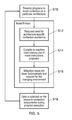
Figure 5 illustrates a process for program development employing an embodiment of the present invention; -
Figure 6 shows hardware barrier blades in the multicore processor ofFigure 3 ; and -
Figure 7 shows resource contention logic in the embodiment of the present invention. - An embodiment of the present invention will now be described as applied to a program which is the primary program running on a multicore processor supported by operating system support programs, but the invention is also applicable to the situation where many peer programs are executing on a multicore processor supported by operating system support programs. "Operating system support programs" refers to whatever software is needed to implement the invention. Once the invention is implemented, these "operating system support programs" will form a normal part of the OS.
- In the preferred embodiment, the proposed invention provides computer processor instructions "shrescX" (where shresc indicates "shared resource contention", and "X" represents the type of contention), inserted by the compiler of a program (software application), and providing a warning of predicted resource contention likely to be caused by execution of one or more succeeding instructions in the as-compiled program. On encountering such an instruction, a core may issue an indication to this effect to other parts of the system or chip. The novel instructions may cause (possibly after intervention by contention mitigation logic, described later) the individual core or processing element to apply a particular strategy so that one or more shared resources are used in a predefined manner. For example, the timing of access to main memory by individual cores may be adjusted to ensure that program execution is optimal. The new instructions are defined at the Instruction Set Architecture (ISA) level for implementation in hardware with a direct or almost-direct correspondence to instructions in assembly language.
- As one example, the type of resource contention may be indicated by replacing "X":
- "
shrescL 1" (contention for L1 cache), - "shrescL2" (contention for L2 cache),
- "shrescL<n=" (contention for Level <n> cache, e.g. n=3),
- "shrescM" (contention for main memory),
- "shrescN" (contention for network resources),
- "shrescD" (contention for disk).
- All other shared resources may be indicated by substituting a unique letter or letters for "X".
- The type of contention may also be indicated as data to the generic "shrescX" instruction in the form "shrescX HH HH" where "HH HH" represents hexadecimal for some bit pattern, e.g. "0000 0010". Here, the bit pattern may indicate, for example, a specific resource such as a disk unit.
- For simplicity, we describe the "shrescX" instruction as applying as a warning pertaining to the very next instruction but more generally the "shrescX" instruction may be used to set a warning and clear a warning which applies to a series of program machine instructions instead of just one machine instruction. The "shrescX" instruction may in this more general form have set and clear variants: "shrescX_set" and "shrescX_clr".
- Not every shrescX need necessarily be acted on; it may be preferred to monitor the indications provided by cores and to take action only in response to the numbers of indications of specific types of resource contention and/or above a certain threshold level. The program itself may be responsible for managing the types of contention being monitored, or an operating system or job scheduling system may be responsible for managing the types of contention monitored. If a warning is given for a type of resource contention not being monitored, the warnings and clear warnings are ignored.
- Alternative methods to avoid contention can be seen in the prior art, such as run-time systems to monitor contention and take steps to improve performance, using knowledge of how resources are connected to cores and processing elements to spread resource utilization, under-utilization of cores and processing elements to reduce resource contention. Prior techniques include:-
- (a) Program is categorized and executed in a manner reducing contention
- (b) Infiniband FECN (Forward Explicit Congestion Notification)/BECN (Backward Explicit Congestion Notification) mechanism indicating congestion
- (c) Communication-related processing, usually handled on the CPU, is offloaded to a device responsible for communication
- (d) Programmer mitigates contention explicitly during programming
- The differences between the prior art (Old Process) and the embodiment (Proposed Process) may be seen by comparing their respective figures,
Figures 4 and5 . - In
Figure 4 , the process begins (S102) with a programmer developing a program by writing source code, with a view to executing the program on a computer system having a particular architecture. The programmer may anticipate that because of the architecture used, certain kinds of resource contention may be likely to occur, and he may design the program appropriately. Next (S104) the source code is compiled into a form more directly executable by the computer system, typically into machine code. Then (S106) the compiled program is tested by executing it on the target system. To the extent that resource contention was not anticipated by the programmer, resource contention will occur. The resource contention can be analyzed by collecting data during execution in any manner known in the art, for example instrumentation or sampling. The data collected is fed back to the development process (S102) so that the programmer can take the data into account in modifying the source code and reduce the resource contention. - Thus, the prior art is reliant on the programmer's experience and knowledge gained from executing prior versions of the program.
- By contrast, the present invention (
Figure 5 ) allows the compiler to flag up resource contention and if possible take one or more mitigation steps automatically. As before, the programmer develops a program (S10) paying attention to the resource contention issues likely to be encountered on the particular architecture in use. However, in this case (S12) there is a reduced need for architecture-specific contention avoidance. The source code is compiled (S14) and during compilation, the compiler may identify that resource contention is likely to occur in view of the combinations of actions being instructed to be executed by the cores. For example the compiler may identify that a large number of threads in an OpenMP section of code will lead to simultaneous accesses to main memory. If so, the compiler employs the novel shrescX instructions mentioned above by automatically inserting a shrescX into the machine code at a point in the instruction sequence prior to the instruction to which the resource contention applies. - Where possible (S16) the compilation includes automatically taking steps to avoid or mitigate the resource contention. As before (S18) the compiled program is executed and data is collected on the resource contention encountered, and this data is fed back to the development stage (S10); however the amount of human intervention required can be considerably reduced. For example, the number of iterations of the process (the number of times S18 feeds back to S10) required to arrive at an efficient program, may be reduced.
- Having outlined the principle of the invention, the embodiment will be described further in more detail.
- The compiler, according to this embodiment, compiles source code (e.g. dense MPI+OpenMP solver or sparse iterative MPI+OpenMP solver), identifies when a certain piece of code is executed with a large number of threads (e.g. using OpenMP), and identifies when resource contention will occur. The compiler inserts inline assembly code to use the "shrescX" instruction or a call to an intrinsic function "_shrescX", if indication of some sort of contention is found.
- The types of resource contention recognized are shown in Table 1 below.
TABLE 1 Types of resource contention together with corresponding identifying bit patterns, example causes of the resource contention, and example ways of mitigating the contention Bit Pattern (and hexadecimal) Type of contention Example cause Example mitigation 0000 0000 (0x00) Compute processing elements Dense matrix multiplication. Instruction fusion, offload some calculations. Optimize number of threads. 0000 0001 (0x01) Bandwidth to main merrory Sparse matrix multiplication. Reduce pre-fetching (reduces latency, hence effective bandwidth). 0000 0010 (0x02) Space in main-memory Problem size too large or algorithm is inefficient with memory flush unneeded memory pages to disk in preparation. 0000 0011 (0x03) Bandwidth to cache Only a small part of each cacheline fetched is used. Indicate which part of cacheline to be brought in first (reduces latency, hence effective bandwidth). 0000 0100 (0x04) Space in cache Multi-cache line accesses. Fission of instructions to access fewer lines. Reduce number of threads. Sector cache to stream more. 0000 0101 (0x05) Barrier resources Excessive synchronization. Merge barriers. Reduced number of threads. 0000 0110 (0x06) Offload engine Sparse matrix multiplication. Move communication and calculation onto CPU. 0000 0111 (0x07) Network Interface Controller (NIC) High communication sparse iterative solver algorithm. Reduce polling of NIC. Activate load-adaptive strategy. Advance uncongested packets. Dynamic allocation of queues. 00001000 (0x08) Bandwidth to disk Writing to many files. Reduce number of simultaneous read/writes. Increase buffering. 0000 1001 (0x09) Access to on-chip GPU Dense matrix multiplication Place smaller computations on CPU and make use of an alternative co-processor Apply operation fusion and fission as appropriate. 0000 1010 (0x0A) Cooling capacity Cooling equipment may be removed or deactivated (e.g. maintenance) or cooling efficiency may change (e.g. outside temperature) Change clock frequency of cores and other elements. Deactivate cores or other elements. 00001011 (0x0B) Energy or expense less energy may be budgeted depending on available monetary resources or the time of day. Change clock frequency of cores and other elements. Deactivate cores or other elements. - In the above Table, "Compute processing elements" is intended to refer to the hardware which carries out floating point arithmetic: i.e. a floating point scheduler and floating point execution unit. An integer arithmetic unit might also be provided.
- "Barrier resources" refers to the above mentioned Hardware Barrier Blades in SPARC64 VIIIfx for example (further described below). There will be contention for barrier blades if the program wishes to perform more synchronization that there are barrier blades available to implement these synchronizations (in the case of the example, when there should be five simultaneous synchronizations when only four barrier blades are available).
- As an example of an "offload engine", Fujitsu's K computer employs a large number of SPARC64 VIIIfx nodes, and offloads communication handling from the nodes to an InterConnect Controller chip freeing the nodes from as much communication-related processing as possible. As already mentioned an offload engine may also be implemented in a NIC.
- "Access to on-chip GPU" refers to a GPU which may be provided in common for all the cores on a chip (for the avoidance of doubt, SPARC64 VIIIfx does not have such a GPU). Such a GPU could also provide an offload engine for floating-point arithmetic.
- To explain further the references to "cooling capacity" and "expense of energy", these factors may cause "resource contention" in a less direct sense than the preceding items in the Table. If execution of many threads/programs is causing an unusually large draw of electricity or causing the computer equipment to become particularly hot (e.g. floating point operations make a considerable part of the work performed by the cores and large amounts of data are moved in and out of RAM), then there can be contention for cooling and money.
- The slightly different meaning of "resource contention" in this case does not concern the compiler, which merely needs a list of possible types of contention (e.g. Table 1) and needs to be able to recognize these in the source code. These possible types of contention exist because there are constraints on the system, and in particular there constraints on different types of resources available to the system. In one embodiment, the compiler does not need any further awareness than being able to recognize the types of contention on the list and appropriately marking when these occur. In another embodiment the compiler may have a more active role in recommending some form of mitigating action to be taken at run-time.
- The invention is intended to mitigate resource contention for any shared resource that the cores (or processing elements with abilities similar to cores) have access to. Table 1, 0x06 and 0x07 would be mainly applicable to servers in a distributed network. "Communication buffers" would be an alternative shared resource.
- In embodiments of the present invention, the compiler and not the programmer is responsible is responsible for identifying possible resource contention. For maximum convenience to the user (programmer), shrescX only occurs at the assembly code level and will have direct or almost direct correspondence to a corresponding instruction at the ISA level and implemented in hardware (the name "shrescX" at all these levels is conflated due to the direct or almost-direct correspondence). The instruction could however also be made accessible at the source code level where it is referred to as an "intrinsic function", below denoted "_shrescX".
- The compiler will be programmed to recognize certain scenarios and when one of these is observed in the source code, the novel instruction of the invention will be employed (by inserting the relevant assembly level instruction/assembly mnemonic into the assembly code). In this way the compiler inserts shrescX into a separate sequence of instructions for the cores affected.
- In particular the compiler will be programmed to recognize source code which causes the types of resource contention in Table 1. For a simple implementation, the compiler will indicate resource contention in an OpenMP program when all cores are instructed to carry out vectorized operations and vectorized arithmetic (e.g. SSE, SSE2, SSE3). The simple implementation will indicate resource contention in an MPI program when very many messages are being sent in succession and when very large messages are being sent (it will be determined at run-time whether any mitigating steps should be taken). "All cores are instructed to carry out vectorized operations and vectorized arithmetic", "very many messages are being sent in succession" and "very large messages are being sent" are examples of scenarios recognized by the compiler. Thus, the compiler will insert inline assembly code to use the "shrescX" instruction or a call to an intrinsic function "_shrescX", if indication of some sort of contention is found. That is, in the first instance the compiler inserts all the required code directly into the compile code and in the second, inserts a call to an external function.
The compiler may give an operand value (e.g. "val16" - a 16-bit operand value) to the instruction "shrescX" to indicate the type of contention, whether action should be taken to mitigate the contention and what type of action should be taken. The first 8-bits represent the type of contention and the correspondence between bit pattern and type of contention is show in the table above. The next 8-bits are reserved for future optimization of contention mitigation when a specific strategy is requested. The use of an operand value to indicate the type of resource contention is shown in Table 2 as the insertion of explicit inline assembly code whereas it is more usual for the compiler to recognize the situation and insert the instruction without user intervention. #pragma omp parallel for
- For a large number of cores, it is possible that having all cores pre-fetch will result in lower performance so the "shrescX" instruction is used to indicate possible contention for bandwidth to main memory. This allows the multicore processor (or more precisely, a software process for resource contention, running on the multicore processor) -to mitigate contention for main memory bandwidth by, for example, pre-fetching on only some of the loop iterations, pre-fetching from only a subset of cores or performing no pre-fetching. Thus, the compiler flags up the need for mitigating action, but the mitigating action itself will take place at run-time and should be configurable (mitigation may be deactivated or different mitigation strategies may be selected).
- An example of intensive communication using resource contention is shown in Table 3 below, where the present invention allows the processor to mitigate for the contention.

- The code in Table 3 is an illustration of OpenMP sections with many communication operations taking place in many threads, so that there will be contention for the communication offload engine. The "shrescX" instruction allows individual threads and cores to mitigate the contention by processing the communication on the CPU as much as possible.
- Further details will now be given of how the shrescX instruction interacts with hardware and software prefetching (as shown in Table 2) on the SPARC64 VIIIfx and the x86-based architecture.
- As already mentioned, the SPARC64 Vlllfx chip includes Hardware Barrier Resources, including Hardware Barrier Blades for synchronization which are shared by the cores on the chip (see
Fig. 3 ). - As illustrated in
Fig. 3 , aprocessor 1 includes four processor cores 11 (labelled "core" inFig. 3 ), each including various units for executing or decoding instructions, registers, cache memory, and the like. Each of thecores 11 is connected to a sharedcache control unit 12, and is configured to access or transmit and receive data to and from mass-storage shared cache memory (data port) 13, abus control unit 14, and abarrier unit 16. A barrier synchronization device according to the present embodiment is realized in the form of thebarrier unit 16. - When all the
cores 11 belonging to the same synchronization group are in thecorresponding processor 1, thebarrier unit 16 performs a process for realizing barrier synchronization of that synchronization group. Thereby, the necessity of transmitting and receiving data to and from devices out of theprocessor 1 to realize the barrier synchronization is eliminated. Barrier synchronization is realized in theprocessor 1 and data transmission/reception, which is slower than the processing speed in the processor, is not performed so that the process for that barrier synchronization can be performed at very high speed. -
Fig. 6 illustrates a configuration of thebarrier unit 16. Eachcore 11 provides two "logical processors" (not to be confused with "processors" in the sense of multicore chips). Thebarrier unit 16 includes twobarrier processing devices 15 and as many configuration registers 43 as there are logical processors (virtual cores that can be recognized by the OS). Each of thebarrier processing devices 15 includes a BST group 42 having plural BSTs (Barrier STatus registers), and also includesplural barrier blades 40, each of which can execute a synchronization process of one synchronization group. - Each of the
BSTs 41 constituting the BST group 42 is assigned a different logical processor. TheBSTs 41 are registers for storing one-bit data. Each logic processor (core 11 to which that logic processor is assigned) writes "1" upon the termination of the execution of a process to be executed as parallel processing, and writes "0" upon the starting of the execution of the next process. Thereby, the value of theBST 41 represents the execution status of a process of the corresponding logic processor. The point at which the value changes from 0 to 1 indicates the fact that a waiting state has started in order to realize synchronization with another logic processor that belongs to the same synchronization group. - The
barrier blade 40 includes aBST mask register 40a that can hold as many bits as the total number of theBSTs 41, an LBSY (Last Barrier Synchronization register) 40b, and an LBSY update logic (circuit) 40c. TheBST mask register 40a stores combination data representing a combination of logic processors belonging to the synchronization group assigned to thebarrier blade 40. For example, the bit values, in combination data, corresponding to a logic processor belonging to the synchronization group and corresponding to a logic processor not belonging to the synchronization group are 1 and 0, respectively. The LBSY update logic 40c uses only the value of theBST 41 assigned to the logic processor belonging to the synchronization group in the BST group 42 on the basis of theBST mask register 40a holding combination data such as described above so that the LBSY update logic 40c can update the value of theLBSY 40b (LBSY value). This update is performed by writing to theLBSY 40b NOT of the current LBSY value (when the current LBSY value is 0, 1 is written and when the value is 1, 0 is written) when the values of all theBSTs 41 as targets are identical. - Further details of hardware barrier blades in SPARC64 VIIIfx are given in Appendix L of the above-mentioned SPARC64 Vlllfx Extensions document.
- When applying the present invention to such a chip, it is possible to provide Contention Mitigation Coordination Resources (CMCR) analogous to the SPARC64 VIIIfx Hardware Barrier Resources. These could in fact be the Hardware Barrier Blades themselves: the so-called "blades" essentially consist of registers (Address Space Identifier Registers) capable of use for other purposes.
- In any case, it is envisaged that the CMCR will be a set of resources present on-chip and shared by all cores. Preferably, a number of Contention Mitigation Blades are present on-chip with each blade used to represent a respective type of resource contention, and providing register means which are kept consistent between cores. In addition, a Contention Mitigation Control Register, separate from the Contention Mitigation Blades, will be provided, one per multicore processor (chip). Contention Mitigation Logic (in the form of a hardware circuit, chip-level software process, or a combination of the two) manages the Contention Mitigation Control Register and Contention Mitigation Blades.
- The "Content Mitigation Coordination Resources" comprises of "Content Mitigation Blades", the equivalent term used in the claims being "contention status register means". The "Content Mitigation Control Register" is separate from these Blades because there is only one per multicore processor. Incidentally, the term "Register" is used for convenience but how the data is actually stored is not important.
- A number of bits equal to or greater than the number of cores are used as the Contention Status bits (CST analogous to the barrier status bits, BST) to indicate which cores have indicated contention (in other words, which cores have executed a shrescX instruction) for the resource represented by the Contention Mitigation Blade, and the same number of bits are used in the Contention Status Bit Mask (CST_mask analogous to the barrier status bit mask, BST_mask) which indicate which cores are active in the current part of the computation. A Last Mitigation Synchronization bit (LMSY, analogous to the last barrier synchronization bit, LBSY) is set to "1" if all cores involved have indicated contention for the resource or "0" if previously indicated contention has ceased; LMSY and all CST bits are initialized to "0" to indicate no resource contention.
- Once all CST bits selected by CST_mask are set to "1", LMSY is set to "1" in the same atomic operation. Once the LMSY bit is updated, the Contention Mitigation Logic reads the LMSY bit and activates/deactivates other features of the multicore processor according to the Contention Mitigation Control Register.
- The Contention Mitigation Control Register (one of which is provided on-chip, in common for all cores) is set separately to determine both the kinds of mitigation to act upon, and what action to take. That is, the Control Register contains bits which determine the types of resource contention subject to contention mitigation, the default strategy for contention mitigation and which types of contention will raise a Resource Contention Exception so that an exception handler (perhaps at the kernel, operating system scheduler or user level) can employ a high-level strategy for mitigating resource contention. If resource contention for memory bandwidth is indicated by all cores, bits 18 and 17 of the SPARC64 Vlllfx Memory Control Register ASI_MCNTL can be set to "01" so that no hardware prefetching is performed. For the Intel 64 and IA-32 architectures, the CD flag (bit 30 of control register CRO) can be set so that caching is disabled for the whole of system memory (Intel64 and IA-32 Architectures Software Developer's Manual Volume 3, hereby incorporated by reference); The SPARC64 and x86 prefetch instructions could be further modified to directly access the Contention Mitigation Control Register and perform less prefetching if memory bandwidth contention has been indicated.
- Once execution leaves a region of resource contention, the shrescX instruction may be given a 16-bit value indicating the resource contention in the first 8-bits and a bit will be set in the last 8-bits to indicate that the previously indicated resource contention is no longer present. Once this has been indicated by all cores involved in the computation, the LMSY bit is updated so that the Contention Mitigation Logic is able to reverse the steps taken to mitigate resource contention (bits in the Contention Mitigation Control Register may be used to store the initial state of the processor, e.g. processor prefetching mode, before resource mitigation took place).
- The algorithm followed by the Contention Mitigation Logic is shown in
Figure 7 . The algorithm is performed at chip level to deal with resource contention among the cores on the chip. - Firstly, in a step S20 it is checked whether any core executes a shrescX instruction. If so, then the corresponding Contention Status bit is set (S21) in the Contention Mitigation Blade for the kind of resource contention which is the subject of the shrescX instruction. Next (S22), it is checked whether or not that type of resource contention is being monitored and if not the process returns to the start. If that type of resource contention is being monitored (S22, "yes") then the algorithm proceeds to S23 in which the Contention Mitigation Logic reads the Contention Mitigation Control Register. If the threshold for action in respect of the resource contention type concerned has not yet been reached, a counter is incremented and the algorithm returns to the start. Here, the threshold is determined by an operating system support program which evaluates the hardware specifications and sets default, user-modifiable thresholds appropriately. The threshold values should in the first instance be set in RAM but must be readily available on the multicore processor so either it must be in cache or other provision must be made for fast access to this data.
- On the other hand, if the threshold for that contention type has been reached (S24, "yes"), then it is determined whether or not to take a default strategy (step S25) and if so, a step of contention mitigation (S26) is carried out according to the default strategy (S26). Referring back to Table 1, any of the "Example mitigations" listed there could be defined as the default strategy for the contention type concerned.
- Otherwise (S25, "no") it is determined whether to raise a Resource Contention exception in step S27, in other words a software interrupt to flag an exception which cannot be handled within the program.. If not, the flow returns to the start. Otherwise, (S27, "yes") a step is taken of high-level contention mitigation by an exception handler.
- In
Figure 7 , the basic shrescX instruction applying to the next instruction is shown but the application in a set and clear implementation is simply the above diagram applying to "shrescX_set". If the corresponding type of contention is being monitored, "shrescX_clr" clears the appropriate bit, otherwise does nothing. - Various modifications of the invention are possible within the scope of the claims.
- In particular, an embodiment has been described in relation to a multicore processor having a plurality of cores, but the present invention is applicable in many other configurations such as a distributed network of servers or a system of nodes. As already mentioned the term "core" is to be understood as embracing any kind of processing element having some capability of independently executing instructions.
- Advantages of the invention include the following.
- The invention will allow better scheduling of instructions on computer processors. For a very small number of cores, the advantage of the invention is small but as the number of cores becomes large, the advantage becomes large. The invention does not involve a software run-time system and does not require application-writer involvement which greatly increases ease of use. The invention can be used by compiler writers to give OpenMP functionality which will avoid resource contention without creating a large number of different functions for different cores and without requiring many branches in software.
- The invention allows information discovered by the compiler to be used to reduce resource contention whereas current compilers do not use this information, and instead generate object code which cannot coordinate between cores to reduce resource contention unless the programmer expends time and money to implement this.
- To summarise, embodiments of the present invention provide a unified strategy for indicating and mitigating many different types of resource contention, in the form of multicore processor instructions used to indicate specific types of resource contention and allowing mitigation. This is different from the prior art which uses narrow contention-avoidance strategy such as communication off-loading to avoid contention.
- The present invention allows a single apparatus and method to address many types of resource contention in a multicore processor, and allows information regarding resource contention discovered by the compiler to be indicated to the multicore processor. The instructions allow local mitigation at the level of individual cores and threads without a run-time measurement of resource contention as in the prior art.
Claims (11)
- A processing method of a software application on a computer system having a plurality of processing elements for independently executing instructions, some common hardware resources in the system being shared among the processing elements, the method comprising:compiling source code of the application to obtain a sequence of executable instructions for each processing element by analysing the source code, identifying at least one resource contention among the processing elements predicted to result from execution of instructions by the processing elements, and inserting an additional instruction in the sequence for at least identifying the resource contention; andexecuting the sequence of executable instructions by said processing elements to perform operations in said computer system, said operations including action by resource contention mitigation means of the system to mitigate the resource contention in response to executing said additional instruction.
- A computer system comprising:a plurality of processing elements each operable independently to execute instructions;common hardware resources in the system shared among the processing elements; andresource contention mitigation means; wherein:the processing elements are arranged to execute a sequence of executable instructions to perform operations in said computer system, the executable instructions including additional instructions identifying resource contention among the processing elements for the common hardware resources; andthe resource contention mitigation means is responsive to execution of said additional instructions to take action to mitigate the resource contention.
- A multicore processor for use in a computer system, the multicore processor comprising:a plurality of processing elements in the form of cores each operable independently to execute instructions;internal common hardware resources internal to the multicore processor which are shared among the processing elements;input/output means for communication with external common hardware resources of the computer system; andresource contention mitigation means; wherein:the processing elements are arranged to execute a sequence of executable instructions to perform operations, the executable instructions including additional instructions identifying resource contention among the processing elements for the common hardware resources; andthe resource contention mitigation means is responsive to execution of said additional instructions to take action to mitigate the resource contention.
- The method, system or multicore processor according to any preceding claim wherein the additional instruction indicates any of:a specific type of contention;whether action should be taken for contention mitigation;what type of action should be taken; andset and clear of resource contention for a plurality of instructions.
- The method, system or multicore processor according to any preceding claim wherein the additional instruction identifies resource contention due to a next instruction in the sequence.
- The method, system or multicore processor according to any of claims 1 to 4 wherein the additional instruction identifies resource contention due to a group of instructions following said additional instruction in the sequence.
- The method, system or multicore processor according to any preceding claim wherein the common hardware resources in respect of which the additional instruction identifies resource contention include any of:compute processing elements;main memory;cache memory;disk storage;barrier resources;one or more offload engines;a network interface controller.
- The method, system or multicore processor according to claim 7 wherein the compute processing elements include any of a graphical processing unit, a floating-point arithmetic unit and an integer arithmetic unit provided in addition to, and shared by, the processing elements.
- The method, system or multicore processor according to claim 7 wherein the resource contention to main memory, cache memory or disk storage includes any of bandwidth for, access to, and space in, the main memory, cache memory or disk storage.
- The method, system or multicore processor according to any preceding claim wherein the additional instructions further identify resource contention in the form of requirement for power or cooling of the processing elements.
- The method, system or multicore processor according to any preceding claim wherein the resource contention mitigation means include:a plurality of contention status register means for registering a resource contention affecting a specific core identified by execution of the additional instruction; andcontention control means for receiving inputs from the plurality of contention status register means and determining a need to take mitigating action.
Priority Applications (1)
| Application Number | Priority Date | Filing Date | Title |
|---|---|---|---|
| EP12192302.3A EP2731008B1 (en) | 2012-11-12 | 2012-11-12 | Resource contention in multiple cores |
Applications Claiming Priority (1)
| Application Number | Priority Date | Filing Date | Title |
|---|---|---|---|
| EP12192302.3A EP2731008B1 (en) | 2012-11-12 | 2012-11-12 | Resource contention in multiple cores |
Publications (2)
| Publication Number | Publication Date |
|---|---|
| EP2731008A1 true EP2731008A1 (en) | 2014-05-14 |
| EP2731008B1 EP2731008B1 (en) | 2020-03-18 |
Family
ID=47191579
Family Applications (1)
| Application Number | Title | Priority Date | Filing Date |
|---|---|---|---|
| EP12192302.3A Active EP2731008B1 (en) | 2012-11-12 | 2012-11-12 | Resource contention in multiple cores |
Country Status (1)
| Country | Link |
|---|---|
| EP (1) | EP2731008B1 (en) |
Cited By (3)
| Publication number | Priority date | Publication date | Assignee | Title |
|---|---|---|---|---|
| CN109690536A (en) * | 2017-02-16 | 2019-04-26 | 华为技术有限公司 | Method and system for fetching multicore instruction traces from virtual platform emulators to performance simulation models |
| US10409350B2 (en) * | 2014-04-04 | 2019-09-10 | Empire Technology Development Llc | Instruction optimization using voltage-based functional performance variation |
| US10698785B2 (en) | 2017-05-30 | 2020-06-30 | International Business Machines Corporation | Task management based on an access workload |
Citations (3)
| Publication number | Priority date | Publication date | Assignee | Title |
|---|---|---|---|---|
| US5093916A (en) * | 1988-05-20 | 1992-03-03 | International Business Machines Corporation | System for inserting constructs into compiled code, defining scoping of common blocks and dynamically binding common blocks to tasks |
| US20100275190A1 (en) * | 2009-04-28 | 2010-10-28 | International Business Machines Corporation | Method of converting program code of program running in multi-thread to program code causing less lock collisions, computer program and computer system for the same |
| US20110067014A1 (en) * | 2009-09-14 | 2011-03-17 | Yonghong Song | Pipelined parallelization with localized self-helper threading |
-
2012
- 2012-11-12 EP EP12192302.3A patent/EP2731008B1/en active Active
Patent Citations (3)
| Publication number | Priority date | Publication date | Assignee | Title |
|---|---|---|---|---|
| US5093916A (en) * | 1988-05-20 | 1992-03-03 | International Business Machines Corporation | System for inserting constructs into compiled code, defining scoping of common blocks and dynamically binding common blocks to tasks |
| US20100275190A1 (en) * | 2009-04-28 | 2010-10-28 | International Business Machines Corporation | Method of converting program code of program running in multi-thread to program code causing less lock collisions, computer program and computer system for the same |
| US20110067014A1 (en) * | 2009-09-14 | 2011-03-17 | Yonghong Song | Pipelined parallelization with localized self-helper threading |
Cited By (3)
| Publication number | Priority date | Publication date | Assignee | Title |
|---|---|---|---|---|
| US10409350B2 (en) * | 2014-04-04 | 2019-09-10 | Empire Technology Development Llc | Instruction optimization using voltage-based functional performance variation |
| CN109690536A (en) * | 2017-02-16 | 2019-04-26 | 华为技术有限公司 | Method and system for fetching multicore instruction traces from virtual platform emulators to performance simulation models |
| US10698785B2 (en) | 2017-05-30 | 2020-06-30 | International Business Machines Corporation | Task management based on an access workload |
Also Published As
| Publication number | Publication date |
|---|---|
| EP2731008B1 (en) | 2020-03-18 |
Similar Documents
| Publication | Publication Date | Title |
|---|---|---|
| CN109213523B (en) | Processor, method and system for configurable spatial accelerator with memory system performance, power reduction and atomic support features | |
| CN109213723B (en) | A processor, method, device, and non-transitory machine-readable medium for data flow graph processing | |
| Dysart et al. | Highly scalable near memory processing with migrating threads on the emu system architecture | |
| EP2707797B1 (en) | Automatic load balancing for heterogeneous cores | |
| JP5989656B2 (en) | Shared function memory circuit elements for processing clusters | |
| Pattnaik et al. | Opportunistic computing in gpu architectures | |
| CN111527485B (en) | memory network processor | |
| US11113059B1 (en) | Dynamic allocation of executable code for multi-architecture heterogeneous computing | |
| WO2019005105A1 (en) | Speculative memory activation | |
| US10241885B2 (en) | System, apparatus and method for multi-kernel performance monitoring in a field programmable gate array | |
| US20180336034A1 (en) | Near memory computing architecture | |
| CN112130901A (en) | RISC-V based coprocessor, data processing method and storage medium | |
| Wolf et al. | AMIDAR project: lessons learned in 15 years of researching adaptive processors | |
| Aananthakrishnan et al. | The intel programmable and integrated unified memory architecture graph analytics processor | |
| Contini et al. | Enabling reconfigurable HPC through MPI-based inter-FPGA communication | |
| Gou et al. | Addressing GPU on-chip shared memory bank conflicts using elastic pipeline | |
| CN111602126B (en) | System with hybrid thread processor, hybrid thread fabric with configurable computing elements, and hybrid interconnect network | |
| EP2731008B1 (en) | Resource contention in multiple cores | |
| Vijaykumar et al. | A framework for accelerating bottlenecks in GPU execution with assist warps | |
| US20050278720A1 (en) | Distribution of operating system functions for increased data processing performance in a multi-processor architecture | |
| Barrett et al. | The impact of hybrid-core processors on MPI message rate | |
| CN119493645A (en) | Hardware guidance for efficiently scheduling workloads to optimal compute modules | |
| US8933946B2 (en) | Mechanism for effectively handling texture sampling | |
| Kornaros et al. | VWQS: A dispatching mechanism of variable-size tasks in heterogeneous systems | |
| US12197919B1 (en) | Dynamic software interface translation for computing in a heterogeneous environment |
Legal Events
| Date | Code | Title | Description |
|---|---|---|---|
| PUAI | Public reference made under article 153(3) epc to a published international application that has entered the european phase |
Free format text: ORIGINAL CODE: 0009012 |
|
| 17P | Request for examination filed |
Effective date: 20121112 |
|
| AK | Designated contracting states |
Kind code of ref document: A1 Designated state(s): AL AT BE BG CH CY CZ DE DK EE ES FI FR GB GR HR HU IE IS IT LI LT LU LV MC MK MT NL NO PL PT RO RS SE SI SK SM TR |
|
| AX | Request for extension of the european patent |
Extension state: BA ME |
|
| R17P | Request for examination filed (corrected) |
Effective date: 20140422 |
|
| RBV | Designated contracting states (corrected) |
Designated state(s): AL AT BE BG CH CY CZ DE DK EE ES FI FR GB GR HR HU IE IS IT LI LT LU LV MC MK MT NL NO PL PT RO RS SE SI SK SM TR |
|
| 17Q | First examination report despatched |
Effective date: 20140523 |
|
| STAA | Information on the status of an ep patent application or granted ep patent |
Free format text: STATUS: EXAMINATION IS IN PROGRESS |
|
| REG | Reference to a national code |
Ref country code: DE Ref legal event code: R079 Ref document number: 602012068537 Country of ref document: DE Free format text: PREVIOUS MAIN CLASS: G06F0009450000 Ipc: G06F0008410000 |
|
| RIC1 | Information provided on ipc code assigned before grant |
Ipc: G06F 8/41 20180101AFI20190822BHEP Ipc: G06F 9/30 20180101ALI20190822BHEP Ipc: G06F 9/52 20060101ALI20190822BHEP |
|
| GRAP | Despatch of communication of intention to grant a patent |
Free format text: ORIGINAL CODE: EPIDOSNIGR1 |
|
| STAA | Information on the status of an ep patent application or granted ep patent |
Free format text: STATUS: GRANT OF PATENT IS INTENDED |
|
| INTG | Intention to grant announced |
Effective date: 20191007 |
|
| GRAS | Grant fee paid |
Free format text: ORIGINAL CODE: EPIDOSNIGR3 |
|
| GRAA | (expected) grant |
Free format text: ORIGINAL CODE: 0009210 |
|
| STAA | Information on the status of an ep patent application or granted ep patent |
Free format text: STATUS: THE PATENT HAS BEEN GRANTED |
|
| AK | Designated contracting states |
Kind code of ref document: B1 Designated state(s): AL AT BE BG CH CY CZ DE DK EE ES FI FR GB GR HR HU IE IS IT LI LT LU LV MC MK MT NL NO PL PT RO RS SE SI SK SM TR |
|
| REG | Reference to a national code |
Ref country code: GB Ref legal event code: FG4D |
|
| REG | Reference to a national code |
Ref country code: DE Ref legal event code: R096 Ref document number: 602012068537 Country of ref document: DE |
|
| REG | Reference to a national code |
Ref country code: AT Ref legal event code: REF Ref document number: 1246713 Country of ref document: AT Kind code of ref document: T Effective date: 20200415 Ref country code: IE Ref legal event code: FG4D |
|
| PG25 | Lapsed in a contracting state [announced via postgrant information from national office to epo] |
Ref country code: FI Free format text: LAPSE BECAUSE OF FAILURE TO SUBMIT A TRANSLATION OF THE DESCRIPTION OR TO PAY THE FEE WITHIN THE PRESCRIBED TIME-LIMIT Effective date: 20200318 Ref country code: NO Free format text: LAPSE BECAUSE OF FAILURE TO SUBMIT A TRANSLATION OF THE DESCRIPTION OR TO PAY THE FEE WITHIN THE PRESCRIBED TIME-LIMIT Effective date: 20200618 Ref country code: RS Free format text: LAPSE BECAUSE OF FAILURE TO SUBMIT A TRANSLATION OF THE DESCRIPTION OR TO PAY THE FEE WITHIN THE PRESCRIBED TIME-LIMIT Effective date: 20200318 |
|
| REG | Reference to a national code |
Ref country code: NL Ref legal event code: MP Effective date: 20200318 |
|
| PG25 | Lapsed in a contracting state [announced via postgrant information from national office to epo] |
Ref country code: GR Free format text: LAPSE BECAUSE OF FAILURE TO SUBMIT A TRANSLATION OF THE DESCRIPTION OR TO PAY THE FEE WITHIN THE PRESCRIBED TIME-LIMIT Effective date: 20200619 Ref country code: BG Free format text: LAPSE BECAUSE OF FAILURE TO SUBMIT A TRANSLATION OF THE DESCRIPTION OR TO PAY THE FEE WITHIN THE PRESCRIBED TIME-LIMIT Effective date: 20200618 Ref country code: SE Free format text: LAPSE BECAUSE OF FAILURE TO SUBMIT A TRANSLATION OF THE DESCRIPTION OR TO PAY THE FEE WITHIN THE PRESCRIBED TIME-LIMIT Effective date: 20200318 Ref country code: LV Free format text: LAPSE BECAUSE OF FAILURE TO SUBMIT A TRANSLATION OF THE DESCRIPTION OR TO PAY THE FEE WITHIN THE PRESCRIBED TIME-LIMIT Effective date: 20200318 Ref country code: HR Free format text: LAPSE BECAUSE OF FAILURE TO SUBMIT A TRANSLATION OF THE DESCRIPTION OR TO PAY THE FEE WITHIN THE PRESCRIBED TIME-LIMIT Effective date: 20200318 |
|
| REG | Reference to a national code |
Ref country code: LT Ref legal event code: MG4D |
|
| PG25 | Lapsed in a contracting state [announced via postgrant information from national office to epo] |
Ref country code: NL Free format text: LAPSE BECAUSE OF FAILURE TO SUBMIT A TRANSLATION OF THE DESCRIPTION OR TO PAY THE FEE WITHIN THE PRESCRIBED TIME-LIMIT Effective date: 20200318 |
|
| PG25 | Lapsed in a contracting state [announced via postgrant information from national office to epo] |
Ref country code: CZ Free format text: LAPSE BECAUSE OF FAILURE TO SUBMIT A TRANSLATION OF THE DESCRIPTION OR TO PAY THE FEE WITHIN THE PRESCRIBED TIME-LIMIT Effective date: 20200318 Ref country code: LT Free format text: LAPSE BECAUSE OF FAILURE TO SUBMIT A TRANSLATION OF THE DESCRIPTION OR TO PAY THE FEE WITHIN THE PRESCRIBED TIME-LIMIT Effective date: 20200318 Ref country code: SM Free format text: LAPSE BECAUSE OF FAILURE TO SUBMIT A TRANSLATION OF THE DESCRIPTION OR TO PAY THE FEE WITHIN THE PRESCRIBED TIME-LIMIT Effective date: 20200318 Ref country code: EE Free format text: LAPSE BECAUSE OF FAILURE TO SUBMIT A TRANSLATION OF THE DESCRIPTION OR TO PAY THE FEE WITHIN THE PRESCRIBED TIME-LIMIT Effective date: 20200318 Ref country code: PT Free format text: LAPSE BECAUSE OF FAILURE TO SUBMIT A TRANSLATION OF THE DESCRIPTION OR TO PAY THE FEE WITHIN THE PRESCRIBED TIME-LIMIT Effective date: 20200812 Ref country code: SK Free format text: LAPSE BECAUSE OF FAILURE TO SUBMIT A TRANSLATION OF THE DESCRIPTION OR TO PAY THE FEE WITHIN THE PRESCRIBED TIME-LIMIT Effective date: 20200318 Ref country code: IS Free format text: LAPSE BECAUSE OF FAILURE TO SUBMIT A TRANSLATION OF THE DESCRIPTION OR TO PAY THE FEE WITHIN THE PRESCRIBED TIME-LIMIT Effective date: 20200718 Ref country code: RO Free format text: LAPSE BECAUSE OF FAILURE TO SUBMIT A TRANSLATION OF THE DESCRIPTION OR TO PAY THE FEE WITHIN THE PRESCRIBED TIME-LIMIT Effective date: 20200318 |
|
| REG | Reference to a national code |
Ref country code: AT Ref legal event code: MK05 Ref document number: 1246713 Country of ref document: AT Kind code of ref document: T Effective date: 20200318 |
|
| REG | Reference to a national code |
Ref country code: DE Ref legal event code: R097 Ref document number: 602012068537 Country of ref document: DE |
|
| REG | Reference to a national code |
Ref country code: DE Ref legal event code: R082 Ref document number: 602012068537 Country of ref document: DE Representative=s name: HL KEMPNER PATENTANWAELTE, SOLICITORS (ENGLAND, DE Ref country code: DE Ref legal event code: R082 Ref document number: 602012068537 Country of ref document: DE Representative=s name: HL KEMPNER PATENTANWALT, RECHTSANWALT, SOLICIT, DE Ref country code: DE Ref legal event code: R082 Ref document number: 602012068537 Country of ref document: DE Representative=s name: HL KEMPNER PARTG MBB, DE |
|
| PLBE | No opposition filed within time limit |
Free format text: ORIGINAL CODE: 0009261 |
|
| STAA | Information on the status of an ep patent application or granted ep patent |
Free format text: STATUS: NO OPPOSITION FILED WITHIN TIME LIMIT |
|
| PG25 | Lapsed in a contracting state [announced via postgrant information from national office to epo] |
Ref country code: ES Free format text: LAPSE BECAUSE OF FAILURE TO SUBMIT A TRANSLATION OF THE DESCRIPTION OR TO PAY THE FEE WITHIN THE PRESCRIBED TIME-LIMIT Effective date: 20200318 Ref country code: IT Free format text: LAPSE BECAUSE OF FAILURE TO SUBMIT A TRANSLATION OF THE DESCRIPTION OR TO PAY THE FEE WITHIN THE PRESCRIBED TIME-LIMIT Effective date: 20200318 Ref country code: DK Free format text: LAPSE BECAUSE OF FAILURE TO SUBMIT A TRANSLATION OF THE DESCRIPTION OR TO PAY THE FEE WITHIN THE PRESCRIBED TIME-LIMIT Effective date: 20200318 Ref country code: AT Free format text: LAPSE BECAUSE OF FAILURE TO SUBMIT A TRANSLATION OF THE DESCRIPTION OR TO PAY THE FEE WITHIN THE PRESCRIBED TIME-LIMIT Effective date: 20200318 |
|
| 26N | No opposition filed |
Effective date: 20201221 |
|
| PG25 | Lapsed in a contracting state [announced via postgrant information from national office to epo] |
Ref country code: PL Free format text: LAPSE BECAUSE OF FAILURE TO SUBMIT A TRANSLATION OF THE DESCRIPTION OR TO PAY THE FEE WITHIN THE PRESCRIBED TIME-LIMIT Effective date: 20200318 |
|
| PG25 | Lapsed in a contracting state [announced via postgrant information from national office to epo] |
Ref country code: SI Free format text: LAPSE BECAUSE OF FAILURE TO SUBMIT A TRANSLATION OF THE DESCRIPTION OR TO PAY THE FEE WITHIN THE PRESCRIBED TIME-LIMIT Effective date: 20200318 |
|
| PG25 | Lapsed in a contracting state [announced via postgrant information from national office to epo] |
Ref country code: MC Free format text: LAPSE BECAUSE OF FAILURE TO SUBMIT A TRANSLATION OF THE DESCRIPTION OR TO PAY THE FEE WITHIN THE PRESCRIBED TIME-LIMIT Effective date: 20200318 |
|
| REG | Reference to a national code |
Ref country code: CH Ref legal event code: PL |
|
| PG25 | Lapsed in a contracting state [announced via postgrant information from national office to epo] |
Ref country code: LU Free format text: LAPSE BECAUSE OF NON-PAYMENT OF DUE FEES Effective date: 20201112 |
|
| REG | Reference to a national code |
Ref country code: BE Ref legal event code: MM Effective date: 20201130 |
|
| PG25 | Lapsed in a contracting state [announced via postgrant information from national office to epo] |
Ref country code: CH Free format text: LAPSE BECAUSE OF NON-PAYMENT OF DUE FEES Effective date: 20201130 Ref country code: LI Free format text: LAPSE BECAUSE OF NON-PAYMENT OF DUE FEES Effective date: 20201130 |
|
| PG25 | Lapsed in a contracting state [announced via postgrant information from national office to epo] |
Ref country code: IE Free format text: LAPSE BECAUSE OF NON-PAYMENT OF DUE FEES Effective date: 20201112 |
|
| PG25 | Lapsed in a contracting state [announced via postgrant information from national office to epo] |
Ref country code: TR Free format text: LAPSE BECAUSE OF FAILURE TO SUBMIT A TRANSLATION OF THE DESCRIPTION OR TO PAY THE FEE WITHIN THE PRESCRIBED TIME-LIMIT Effective date: 20200318 Ref country code: MT Free format text: LAPSE BECAUSE OF FAILURE TO SUBMIT A TRANSLATION OF THE DESCRIPTION OR TO PAY THE FEE WITHIN THE PRESCRIBED TIME-LIMIT Effective date: 20200318 Ref country code: CY Free format text: LAPSE BECAUSE OF FAILURE TO SUBMIT A TRANSLATION OF THE DESCRIPTION OR TO PAY THE FEE WITHIN THE PRESCRIBED TIME-LIMIT Effective date: 20200318 |
|
| PG25 | Lapsed in a contracting state [announced via postgrant information from national office to epo] |
Ref country code: MK Free format text: LAPSE BECAUSE OF FAILURE TO SUBMIT A TRANSLATION OF THE DESCRIPTION OR TO PAY THE FEE WITHIN THE PRESCRIBED TIME-LIMIT Effective date: 20200318 Ref country code: AL Free format text: LAPSE BECAUSE OF FAILURE TO SUBMIT A TRANSLATION OF THE DESCRIPTION OR TO PAY THE FEE WITHIN THE PRESCRIBED TIME-LIMIT Effective date: 20200318 |
|
| PG25 | Lapsed in a contracting state [announced via postgrant information from national office to epo] |
Ref country code: BE Free format text: LAPSE BECAUSE OF NON-PAYMENT OF DUE FEES Effective date: 20201130 |
|
| PGFP | Annual fee paid to national office [announced via postgrant information from national office to epo] |
Ref country code: GB Payment date: 20230928 Year of fee payment: 12 |
|
| PGFP | Annual fee paid to national office [announced via postgrant information from national office to epo] |
Ref country code: FR Payment date: 20230929 Year of fee payment: 12 |
|
| PGFP | Annual fee paid to national office [announced via postgrant information from national office to epo] |
Ref country code: DE Payment date: 20230929 Year of fee payment: 12 |
|
| REG | Reference to a national code |
Ref country code: DE Ref legal event code: R119 Ref document number: 602012068537 Country of ref document: DE |
|
| GBPC | Gb: european patent ceased through non-payment of renewal fee |
Effective date: 20241112 |
|
| PG25 | Lapsed in a contracting state [announced via postgrant information from national office to epo] |
Ref country code: DE Free format text: LAPSE BECAUSE OF NON-PAYMENT OF DUE FEES Effective date: 20250603 |
|
| PG25 | Lapsed in a contracting state [announced via postgrant information from national office to epo] |
Ref country code: GB Free format text: LAPSE BECAUSE OF NON-PAYMENT OF DUE FEES Effective date: 20241112 |
|
| PG25 | Lapsed in a contracting state [announced via postgrant information from national office to epo] |
Ref country code: FR Free format text: LAPSE BECAUSE OF NON-PAYMENT OF DUE FEES Effective date: 20241130 |