EP2728781A1 - Method, system and apparatus for sending and receiving feedback information - Google Patents
Method, system and apparatus for sending and receiving feedback information Download PDFInfo
- Publication number
- EP2728781A1 EP2728781A1 EP12803955.9A EP12803955A EP2728781A1 EP 2728781 A1 EP2728781 A1 EP 2728781A1 EP 12803955 A EP12803955 A EP 12803955A EP 2728781 A1 EP2728781 A1 EP 2728781A1
- Authority
- EP
- European Patent Office
- Prior art keywords
- feedback information
- feedback timing
- timing
- dedicated
- feedback
- Prior art date
- Legal status (The legal status is an assumption and is not a legal conclusion. Google has not performed a legal analysis and makes no representation as to the accuracy of the status listed.)
- Granted
Links
Images



Classifications
-
- H—ELECTRICITY
- H04—ELECTRIC COMMUNICATION TECHNIQUE
- H04L—TRANSMISSION OF DIGITAL INFORMATION, e.g. TELEGRAPHIC COMMUNICATION
- H04L1/00—Arrangements for detecting or preventing errors in the information received
- H04L1/12—Arrangements for detecting or preventing errors in the information received by using return channel
- H04L1/16—Arrangements for detecting or preventing errors in the information received by using return channel in which the return channel carries supervisory signals, e.g. repetition request signals
- H04L1/18—Automatic repetition systems, e.g. Van Duuren systems
-
- H—ELECTRICITY
- H04—ELECTRIC COMMUNICATION TECHNIQUE
- H04L—TRANSMISSION OF DIGITAL INFORMATION, e.g. TELEGRAPHIC COMMUNICATION
- H04L5/00—Arrangements affording multiple use of the transmission path
- H04L5/14—Two-way operation using the same type of signal, i.e. duplex
-
- H—ELECTRICITY
- H04—ELECTRIC COMMUNICATION TECHNIQUE
- H04L—TRANSMISSION OF DIGITAL INFORMATION, e.g. TELEGRAPHIC COMMUNICATION
- H04L1/00—Arrangements for detecting or preventing errors in the information received
- H04L1/12—Arrangements for detecting or preventing errors in the information received by using return channel
- H04L1/16—Arrangements for detecting or preventing errors in the information received by using return channel in which the return channel carries supervisory signals, e.g. repetition request signals
- H04L1/18—Automatic repetition systems, e.g. Van Duuren systems
- H04L1/1829—Arrangements specially adapted for the receiver end
- H04L1/1854—Scheduling and prioritising arrangements
-
- H—ELECTRICITY
- H04—ELECTRIC COMMUNICATION TECHNIQUE
- H04L—TRANSMISSION OF DIGITAL INFORMATION, e.g. TELEGRAPHIC COMMUNICATION
- H04L5/00—Arrangements affording multiple use of the transmission path
- H04L5/003—Arrangements for allocating sub-channels of the transmission path
- H04L5/0044—Allocation of payload; Allocation of data channels, e.g. PDSCH or PUSCH
- H04L5/0046—Determination of the number of bits transmitted on different sub-channels
-
- H—ELECTRICITY
- H04—ELECTRIC COMMUNICATION TECHNIQUE
- H04L—TRANSMISSION OF DIGITAL INFORMATION, e.g. TELEGRAPHIC COMMUNICATION
- H04L1/00—Arrangements for detecting or preventing errors in the information received
- H04L1/02—Arrangements for detecting or preventing errors in the information received by diversity reception
- H04L1/04—Arrangements for detecting or preventing errors in the information received by diversity reception using frequency diversity
-
- H—ELECTRICITY
- H04—ELECTRIC COMMUNICATION TECHNIQUE
- H04L—TRANSMISSION OF DIGITAL INFORMATION, e.g. TELEGRAPHIC COMMUNICATION
- H04L5/00—Arrangements affording multiple use of the transmission path
- H04L5/0001—Arrangements for dividing the transmission path
- H04L5/0003—Two-dimensional division
- H04L5/0005—Time-frequency
- H04L5/0007—Time-frequency the frequencies being orthogonal, e.g. OFDM(A) or DMT
- H04L5/001—Time-frequency the frequencies being orthogonal, e.g. OFDM(A) or DMT the frequencies being arranged in component carriers
-
- H—ELECTRICITY
- H04—ELECTRIC COMMUNICATION TECHNIQUE
- H04L—TRANSMISSION OF DIGITAL INFORMATION, e.g. TELEGRAPHIC COMMUNICATION
- H04L5/00—Arrangements affording multiple use of the transmission path
- H04L5/003—Arrangements for allocating sub-channels of the transmission path
- H04L5/0053—Allocation of signalling, i.e. of overhead other than pilot signals
- H04L5/0055—Physical resource allocation for ACK/NACK
Definitions
- the present invention relates to the field of wireless communication technologies and more particularly to a method, system and apparatus for sending and receiving feedback information.
- LTE Long Term Evolution
- Fig.1A For an existing Long Term Evolution (LTE) system, only one carrier can be present in a cell and provided with the maximum bandwidth of 20MHz, as illustrated in Fig.1A .
- LTE-A Long Term Evolution-Advanced
- CA Carrier Aggregation
- a base station can transmit data to the user equipment concurrently on the 4 carriers to improve the throughput of the system.
- the User Equipment may feed back, in an uplink subframe, Acknowledgment/Non-Acknowledgement (ACK/NACK) information corresponding to a plurality of downlink subframes, that is, the UE feeds signaling (i.e., ACK/NACK) in an uplink subframe n back to the base station regarding whether data in a downlink subframe n - k needs to be retransmitted after demodulating and decoding the data in the downlink subframe, where k ⁇ K, and the values of the set K depend upon an uplink-downlink configuration of the system and a particular subframe number, particularly as depicted in Table 1.
- ACK/NACK Acknowledgment/Non-Acknowledgement
- a plurality of radio frames are arranged in sequence, that is, if the last subframe in a radio frame a is k , then the first subframe in a radio frame a +1 is k +1, and Table 1 depicts K corresponding to each uplink subframe taking only a radio frame as an example, where n-k ⁇ 0 indicates a downlink subframe in a previous radio frame.
- TDD uplink-downlink configurations may be used for LTE cells in different bands, as illustrated in Fig.1C , where a carrier 1 and a carrier 2 operate in a band A, and a carrier 3 operates in a band B, and a cell 1, a cell 2 and a cell 3 are cells respectively over the carrier 1, the carrier 2 and the carrier 3.
- TDD uplink-downlink configurations of the cell 1 and the cell 2 both of which are the uplink-downlink configuration 1
- a TDD uplink-downlink configuration of the cell 3, which is the uplink-downlink configuration 2 is different from those of the cell 1 and the cell 2. If these three cells are desired to be carrier-aggregated for the UE, then more than one TDD uplink-downlink configuration will be present across all the aggregated cells of the UE.
- Embodiments of the invention provide a method, system and apparatus for sending and receiving feedback information so as to transmit feedback information following aggregation of carriers with different TDD uplink-downlink configurations.
- An apparatus for sending feedback information according to an embodiment of the invention which is configured with carrier aggregation with different TDD uplink-downlink configurations, includes:
- a user equipment which is configured with carrier aggregation with different TDD uplink-downlink configurations sends feedback information, corresponding to downlink data, on a primary carrier according to a dedicated feedback timing. Since feedback information is enabled to be transmitted following aggregation of carriers with different TDD uplink-downlink configurations, the transmission efficiency and the system performance following aggregation of the carriers with the different TDD uplink-downlink configurations can be improved.
- the carriers aggregated for the user equipment includes the primary carrier in PCell and secondary carriers in SCells:
- the primary carrier only one carrier in a plurality of cells aggregated for the user equipment is defined as the primary cell which is selected by a base station and configured for the user equipment in Radio Resource Control (RRC) signaling.
- RRC Radio Resource Control
- a Physical Uplink Control Channel (PUCCH) is configured only on the primary carrier; and
- the other carriers with all the cells aggregated for the user equipment than the primary carrier are secondary carriers.
- the dedicated feedback timing is a feedback sending timing used specifically for a user equipment which is configured with carrier aggregation with different TDD uplink-downlink configurations.
- the user equipment to be introduced below will refer to a user equipment which is configured with carrier aggregation with different TDD uplink-downlink configurations unless stated otherwise, so a repeated description thereof will be omitted.
- a system for transmitting feedback information includes a user equipment 10 which is configured with carrier aggregation with different TDD uplink-downlink configurations and a network-side apparatus 20.
- the user equipment 10 which is configured with carrier aggregation with different TDD uplink-downlink configurations is configured to determine a dedicated feedback timing and to send feedback information, corresponding to downlink data, on a primary carrier according to the determined dedicated feedback timing.
- the network-side apparatus 20 is configured to determine a dedicated feedback timing and to receive the feedback information from the user equipment, which is configured with carrier aggregation with different TDD uplink-downlink configurations, on the primary carrier of the user equipment according to the determined dedicated feedback timing.
- downlink data includes but will not be limited to at least one of the following data:
- PDSCH Physical Downlink Shared Channel
- PDCCH Physical Downlink Control Channel
- the dedicated feedback timing can satisfy at least one of the following conditions:
- the dedicated feedback timing determined by the user equipment 10 can be configured by the network side or can be prescribed; and if the dedicated feedback timing determined by the user equipment 10 is configured by the network side, then the dedicated feedback timing determined by the network-side apparatus 20 is configured for the user equipment 10; or if the dedicated feedback timing determined by the user equipment 10 is prescribed, then the dedicated feedback timing determined by the network-side apparatus 20 is also prescribed, as will be described below respectively.
- the dedicated feedback timing is configured by the network side.
- the network-side apparatus 20 configures a dedicated feedback timing for the user equipment 10, and the user equipment 10 determines the dedicated feedback timing configured by the network side.
- the dedicated feedback timing configured by the network side is the same as a feedback timing corresponding to the primary carrier (that is, the feedback timing corresponding to the primary carrier is configured by the network side for the user equipment 10 as the dedicated feedback timing); or
- Uplink subframes in a TDD uplink-downlink configuration corresponding to the dedicated feedback timing configured by the network side are a subset or all of uplink subframes on any carrier (which can be any one carrier or can be any more than one carrier) aggregated for the user equipment.
- the dedicated feedback timing is prescribed, that is, preconfigured in the user equipment 10 through a protocol.
- the user equipment 10 determines a prescribed dedicated feedback timing
- the network-side apparatus 20 determines the prescribed dedicated feedback timing.
- the prescribed dedicated feedback timing is the same as a feedback timing corresponding to the primary carrier (that is, the user equipment 10 determines the feedback timing corresponding to the primary carrier as the dedicated feedback timing);
- the prescribed dedicated feedback timing is the feedback timing corresponding to the TDD uplink-downlink configuration 2
- the prescribed dedicated feedback timing is the feedback timing corresponding to the TDD uplink-downlink configuration 3.
- both the network-side apparatus 20 and the user equipment 10 need to use the same dedicated feedback timing which can be particularly prescribed through the protocol or notified of by the network side.
- the number of bits of the feedback information can be further determined by the user equipment 10 before sending the feedback information and by the network-side apparatus 20 before receiving the feedback information.
- the size of an ACK/NACK codebook will be determined according to a dedicated ACK/NACK feedback timing.
- N M ⁇ C + C 2 ⁇ TB
- N is the number of bits of the feedback information
- M is the number of subframes, determined according to the dedicated feedback timing, for which the feedback information needs to be transmitted in the same uplink subframe
- C is the number of aggregated carriers
- C 2TB is the number of carriers for which a multi-codeword transmission mode is configured to be used for the downlink without spatial bundling of the feedback information.
- N is the number of bits of the feedback information
- M X DL is the number of downlink subframes among M subframes on a carrier X, determined according to the dedicated feedback timing, for which the feedback information needs to be transmitted in the same uplink subframe
- the carrier X is one of the aggregated carriers, and N is the sum of M X DL ⁇ TB X of the respective carriers.
- the user equipment can further determine particular feedback information before sending the feedback information. Since all the feedback information for the different carriers needs to be transmitted on the primary carrier, and there are at least two TDD uplink-downlink configurations on the different carriers, it is likely that some subframes correspond to downlink subframes according to the dedicated feedback timing while these subframes are unlink subframes on the carrier or some subframes correspond to uplink subframes according to the dedicated feedback timing while these subframes are downlink subframes on the carrier. These subframes can be preferably handled as follows:
- the user equipment For a carrier with a corresponding TDD uplink-downlink configuration different from the TDD uplink-downlink configuration corresponding to the dedicated feedback timing, the user equipment sends, for a first particular subframe which corresponds to downlink subframe according to the dedicated feedback timing but is uplink subframe on the carrier, the feedback information for the first particular subframe;
- the user equipment For a carrier with a corresponding TDD uplink-downlink configuration different from the TDD uplink-downlink configuration corresponding to the dedicated feedback timing, the user equipment performs, for a second particular subframe which corresponds to uplink subframe according to the dedicated feedback timing but is downlink subframe on the carrier, a particular processing for feedback information corresponding to the second particular subframe.
- the user equipment performs the particular processing for the feedback information corresponding to the second particular subframe as follows: for the second particular subframe, the user equipment may not send the feedback information for the second particular subframe; or bundle the feedback information corresponding to the second particular subframe with feedback information of at least one downlink subframe located immediately before or after the second particular subframe and send the bundled feedback information at the position of the feedback information of the at least one downlink subframe located immediately before or after the second particular subframe.
- the network-side apparatus can be a base station (e.g., a macro base station, a home base station, etc.) or can be a Relay Node (RN) apparatus or can be another network-side apparatus.
- a base station e.g., a macro base station, a home base station, etc.
- RN Relay Node
- the feedback timing corresponding to the TDD uplink-downlink configuration 2 is used as the dedicated feedback timing.
- Carriers with the TDD uplink-downlink configurations 1 and 2 are aggregated for the UE.
- the UE determines the number of bits of ACK/NACK to be fed back by means of Formula 1 according to the dedicated feedback timing, where although the subframes 3 and 8 in the band 1 are uplink subframes, feedback information corresponding thereto still needs to be generated so as to ensure other bits in a sequence of feedback information to be positioned correctly.
- feedback information for an uplink subframe is preferably NACK information but can alternatively be prescribed as ACK.
- the following embodiments will be described by way of an example with feedback information corresponding to an uplink subframe being NACK information, but the same will apply with the use of ACK, so a repeated description thereof will be omitted.
- the feedback timing corresponding to the TDD uplink-downlink configuration 1 is used as the dedicated feedback timing.
- Carriers with the TDD uplink-downlink configurations 1 and 2 are aggregated for the UE.
- the UE determines the number of bits of ACK/NACK to be fed back according to the dedicated feedback timing, where there are two processing approach for the second embodiment:
- ACK/NACK information of the subframe 3 and the subframe 8 in the band 2 is bundled with that of adjacent downlink subframes and then fed back, and the positions of the ACK/NACK information of the adjacent subframes (i.e., the subframe 4 and the subframe 9) are occupied for the bundled ACK/NACK information.
- the feedback timing corresponding to the TDD uplink-downlink configuration 1 is used as the dedicated feedback timing.
- Carriers with the TDD uplink-downlink configurations 1 and 2 are aggregated for the UE but they are not synchronized, that is, numbers of the corresponding subframe are different, across different bands.
- the UE performs ACK/NACK feedback according to the dedicated feedback timing and determines the number of bits of ACK/NACK to be fed back, where there are three processing approach for the third embodiment:
- no ACK/NACK information is generated for the subframes 0 and 1 in the band 2; and according to Formula 1, although the subframe 2 in the band 2 is an uplink subframe, NACK information corresponding thereto still needs to be generated, or according to Formula 2, no feedback information may be generated for the subframe 2 in the band 2.
- ACK/NACK information of the subframe 0 and the subframe 1 in the band 2 is bundled with that of adjacent downlink subframes and then fed back, and the positions of the ACK/NACK information of the adjacent subframes (i.e., the subframe 4 and the subframe 9) are occupied for the bundled ACK/NACK information; and according to Formula 1, although the subframe 2 in the band 2 is an uplink subframe, NACK information corresponding thereto still needs to be generated, or according to Formula 2, no feedback information may be generated for the subframe 2 in the band 2.
- ACK/NACK information of the subframe 0 and the subframe 1 in the band 2 is bundled with that of adjacent uplink subframes and then fed back, and the uplink subframes correspond to downlink subframes in the dedicated feedback timing, where actually the adjacent uplink subframes will not be involved with ACK/NACK bundling but simply the ACK/NACK information corresponding to the subframe 0 and the subframe 1 can be bundled.
- embodiments of the invention further provide a user equipment, a network-side apparatus, a method of sending feedback information and a method of receiving feedback information, and since these apparatuses and methods address the problem under a similar principle to the system for transmitting feedback information, reference can be made to the implementation of the system for implementations of these apparatuses and methods, so a repeated description thereof will be omitted.
- a user equipment As illustrated in Fig.3 , a user equipment according to an embodiment of the invention which is configured with carrier aggregation with different TDD uplink-downlink configurations particularly includes a first timing determining module 300 and a sending module 310.
- the first timing determining module 300 is configured to determine a dedicated feedback timing
- the sending module 310 is configured to send feedback information, corresponding to downlink data, on a primary carrier according to the determined dedicated feedback timing.
- the first timing determining module 300 determines a dedicated feedback timing configured by the network side.
- a feedback timing corresponding to the primary carrier is determined by the network side as the dedicated feedback timing
- uplink subframes in a TDD uplink-downlink configuration corresponding to the dedicated feedback timing configured by the network side are a subset or all of uplink subframes on any aggregated carrier of the user equipment.
- the first timing determining module 300 determines a prescribed dedicated feedback timing.
- a feedback timing corresponding to the primary carrier is prescribed to be used as the dedicated feedback timing, or when the feedback timing corresponding to the primary carrier corresponds to the TDD uplink-downlink configuration 0 or 1 or 2 or 6, a feedback timing corresponding to the TDD uplink-downlink configuration 2 is prescribed to be used as the dedicated feedback timing, and when the feedback timing corresponding to the primary carrier corresponds to the TDD uplink-downlink configuration 3 or 4, a feedback timing corresponding to the TDD uplink-downlink configuration 4 is prescribed to be used as the dedicated feedback timing.
- the first timing determining module 300 determines the number of bits of the feedback information by means of Formula 1 or Formula 2.
- the first timing determining module 300 sends, for a second particular subframe which corresponds to downlink subframe according to the dedicated feedback timing but is uplink subframe on the carrier, the feedback information for the second particular subframe.
- the first timing determining module 300 performs, for a second particular subframe which corresponds to uplink subframe according to the dedicated feedback timing but is downlink subframe on the carrier, a particular processing for feedback information corresponding to the second particular subframe.
- the first timing determining module 300 performs the particular processing for the feedback information corresponding to the second particular subframe particularly by not sending the feedback information for the second particular subframe or by bundling the feedback information corresponding to the second particular subframe with feedback information of at least one downlink subframe located immediately before or after the second particular subframe and sending the bundled feedback information at the position of the feedback information of the at least one downlink subframe located immediately before or after the second particular subframe.
- a network-side apparatus includes a second timing determining module 400 and a receiving module 410.
- the second timing determining module 400 is configured to determine a dedicated feedback timing
- the receiving module 410 is configured to receive feedback information from a user equipment, which is configured with carrier aggregation with different TDD uplink-downlink configurations, on a primary carrier of the user equipment according to the determined dedicated feedback timing.
- the second timing determining module 400 configures the dedicated feedback timing for the user equipment.
- the configured dedicated feedback timing is the same as a feedback timing corresponding to the primary carrier, or uplink subframes in a TDD uplink-downlink configuration corresponding to the configured dedicated feedback timing are a subset or all of uplink subframes on any aggregated carrier of the user equipment.
- the second timing determining module 400 determines a prescribed dedicated feedback timing.
- a feedback timing corresponding to the primary carrier is prescribed to be used as the dedicated feedback timing, or when the feedback timing corresponding to the primary carrier corresponds to the TDD uplink-downlink configuration 0 or 1 or 2 or 6, a feedback timing corresponding to the TDD uplink-downlink configuration 2 is prescribed to be used as the dedicated feedback timing, and when the feedback timing corresponding to the primary carrier corresponds to the TDD uplink-downlink configuration 3 or 4, a feedback timing corresponding to the TDD uplink-downlink configuration 4 is prescribed to be used as the dedicated feedback timing.
- the second timing determining module 400 determines the number of bits of the feedback information by means of Formula 1 or Formula 2.
- a method of sending feedback information includes the following steps:
- Step 501 A user equipment which is configured with carrier aggregation with different TDD uplink-downlink configurations determines a dedicated feedback timing
- Step 502. The user equipment which is configured with carrier aggregation with different TDD uplink-downlink configurations sends feedback information, corresponding to downlink data, on a primary carrier according to the determined dedicated feedback timing.
- the dedicated feedback timing can satisfy at least one of the following conditions:
- the dedicated feedback timing determined by the user equipment can be configured by the network side or can be prescribed, as will be described below respectively.
- the dedicated feedback timing is configured by the network side.
- the user equipment determines a dedicated feedback timing configured by the network side.
- a feedback timing corresponding to the primary carrier is configured by the network side as the dedicated feedback timing; or uplink subframes in a TDD uplink-downlink configuration corresponding to the dedicated feedback timing configured by the network side are a subset or all of uplink subframes on any carrier (which can be any one carrier or can be any more than one carrier) aggregated for the user equipment.
- the dedicated feedback timing is prescribed.
- the user equipment determines a prescribed dedicated feedback timing.
- a feedback timing corresponding to the primary carrier is prescribed to be used as the dedicated feedback timing; or when the feedback timing corresponding to the primary carrier corresponds to the TDD uplink-downlink configuration 0 or 1 or 2 or 6 (see Table 1), the feedback timing corresponding to the TDD uplink-downlink configuration 2 is prescribed to be used as the dedicated feedback timing, and when the feedback timing corresponding to the primary carrier corresponds to the TDD uplink-downlink configuration 3 or 4 (see Table 1), the feedback timing corresponding to the TDD uplink-downlink configuration 4 is prescribed to be used as the dedicated feedback timing.
- both the network-side apparatus and the user equipment need to use the same dedicated feedback timing which can be particularly prescribed through a protocol or notified of by the network side.
- the user equipment can further determine the number of bits of the feedback information before the step 502.
- the size of an ACK/NACK codebook will be determined according to a dedicated ACK/NACK feedback timing.
- the user equipment can determine the number of bits of the feedback information by means of Formula 1 or Formula 2.
- the user equipment and the network-side apparatus need to determine the number of bits of the feedback information in the same formula.
- subframes correspond to downlink subframes according to the dedicated feedback timing while these subframes are unlink subframes on the carrier or some subframes correspond to uplink subframes according to the dedicated feedback timing while these subframes are downlink subframes on the carrier.
- These subframes can be preferably handled as follows: before the step 502, for a carrier with a corresponding TDD uplink-downlink configuration different from the TDD uplink-downlink configuration corresponding to the dedicated feedback timing, the user equipment sends, for a first particular subframe which corresponds to downlink subframe according to the dedicated feedback timing but is uplink subframe on the carrier, the feedback information for the first particular subframe; and
- the user equipment For a carrier with a corresponding TDD uplink-downlink configuration different from the TDD uplink-downlink configuration corresponding to the dedicated feedback timing, the user equipment performs, for a second particular subframe which corresponds to uplink subframe according to the dedicated feedback timing but is downlink subframe on the carrier, a particular processing for feedback information corresponding to the second particular subframe.
- the step that the user equipment performs the particular processing for the feedback information corresponding to the second particular subframe includes: for the second particular subframe, the user equipment may not send the feedback information for the second particular subframe; or bundle the feedback information corresponding to the second particular subframe with feedback information of at least one downlink subframe located immediately before or after the second particular subframe and send the bundled feedback information at the position of the feedback information of the at least one downlink subframe located immediately before or after the second particular subframe.
- a method of receiving feedback information includes the following steps:
- Step 601. A network-side apparatus determines a dedicated feedback timing
- Step 602. The network-side apparatus receives feedback information from a user equipment, which is configured with carrier aggregation with different TDD uplink-downlink configurations, on a primary carrier of the user equipment according to the determined dedicated feedback timing.
- the dedicated feedback timing can satisfy at least one of the following conditions:
- the dedicated feedback timing is one of feedback timings supported by an Rel-8 TDD system, for example, one of those in Table 1;
- Uplink subframes, in which the feedback information corresponding to the downlink data is transmitted, determined according to the dedicated feedback timing are a subset or all of uplink subframes on the primary carrier, that is, ACK/NACK is fed back according to the dedicated feedback timing in a corresponding feedback subframe which is at least one uplink subframe on the primary carrier.
- the dedicated feedback timing determined by the network-side apparatus can be configured for the user equipment or can be prescribed, as will be described below respectively.
- the dedicated feedback timing is configured by the network side.
- the network-side apparatus configures a dedicated feedback timing for the user equipment.
- the dedicated feedback timing configured by the network side is the same as a feedback timing corresponding to the primary carrier; or uplink subframes in a TDD uplink-downlink configuration corresponding to the dedicated feedback timing configured by the network side are a subset or all of uplink subframes on any aggregated carrier of the user equipment.
- the dedicated feedback timing is prescribed.
- the network-side apparatus determines a prescribed dedicated feedback timing.
- the feedback timing corresponding to the primary carrier corresponds to the TDD uplink-downlink configuration 0 or 1 or 2 or 6 (see Table 1)
- the feedback timing corresponding to the TDD uplink-downlink configuration 2 is prescribed to be used as the dedicated feedback timing
- the feedback timing corresponding to the primary carrier corresponds to the TDD uplink-downlink configuration 3 or 4(see Table 1)
- the feedback timing corresponding to the TDD uplink-downlink configuration 4 is prescribed to be used as the dedicated feedback timing.
- both the network-side apparatus and the user equipment need to use the same dedicated feedback timing which can be particularly prescribed through a protocol or notified of by the network side.
- the network-side apparatus can further determine the number of bits of the feedback information before the step 602.
- the network-side apparatus can determine the number of bits of the feedback information by means of Formula 1 or Formula 2.
- Fig.5 and Fig.6 can be combined into a flow of a method of transmitting feedback information, that is, firstly the steps 501 and 601, then the step 502 and finally the step 602 are performed.
- the step 501 and the step 601 may not necessarily be performed in an exact sequential order, that is, if the dedicated feedback timing is configured by the network side, then firstly the step 601 and then the step 501 are performed; or if the dedicated feedback timing is preconfigured, then firstly the step 501 and then the step 601 can be performed, or firstly the step 601 and then the step 501 can be performed, or the step 501 and the step 601 can be performed concurrently.
- the embodiments of the invention can be embodied as a method, a system or a computer program product. Therefore the invention can be embodied in the form of an all-hardware embodiment, an all-software embodiment or an embodiment of software and hardware in combination. Furthermore the invention can be embodied in the form of a computer program product embodied in one or more computer useable storage mediums (including but not limited to a disk memory, a CD-ROM, an optical memory, etc.) in which computer useable program codes are contained.
- a computer useable storage mediums including but not limited to a disk memory, a CD-ROM, an optical memory, etc.
- These computer program instructions can also be stored into a computer readable memory capable of directing the computer or the other programmable data processing device to operate in a specific manner so that the instructions stored in the computer readable memory create an article of manufacture including instruction means which perform the functions specified in the flow(s) of the flow chart and/or the block(s) of the block diagram.
- These computer program instructions can also be loaded onto the computer or the other programmable data processing device so that a series of operational steps are performed on the computer or the other programmable data processing device to create a computer implemented process so that the instructions executed on the computer or the other programmable device provide steps for performing the functions specified in the flow(s) of the flow chart and/or the block(s) of the block diagram.
Landscapes
- Engineering & Computer Science (AREA)
- Signal Processing (AREA)
- Computer Networks & Wireless Communication (AREA)
- Mobile Radio Communication Systems (AREA)
- Detection And Prevention Of Errors In Transmission (AREA)
Abstract
Description
- This application claims the benefit of Chinese Patent Application No.
201110183359.3 - The present invention relates to the field of wireless communication technologies and more particularly to a method, system and apparatus for sending and receiving feedback information.
- For an existing Long Term Evolution (LTE) system, only one carrier can be present in a cell and provided with the maximum bandwidth of 20MHz, as illustrated in
Fig.1A . - For a Long Term Evolution-Advanced (LTE-A) system, there are significantly improved peak rates of the LTE-A system as compared with the LTE system. In particular, up to 1Gbps in the downlink and 500Mbps in the uplink are required for the LTE-A system. Apparently this demand has failed to be accommodated by the 20MHz bandwidth. In order to enable the LTE-A system to comply with the requirement, the technology of Carrier Aggregation (CA) has been introduced, that is, a plurality of contiguous or non-contiguous carriers are aggregated together in the same cell to serve concurrently a user equipment if necessary to thereby provide a desired rate. Thus the LTE-A system is a multi-carrier system. In order to ensure the user equipment of the LTE-A system to be capable of operating on each aggregated carrier, there is no more than 20MHz per carrier. The CA technology of the LTE-A is as illustrated in Fig.lB.
- In the LTE-A system in
Fig.1B ,4 carriers are aggregated. A base station can transmit data to the user equipment concurrently on the 4 carriers to improve the throughput of the system. - For the LTE TDD system, the User Equipment (UE) may feed back, in an uplink subframe, Acknowledgment/Non-Acknowledgement (ACK/NACK) information corresponding to a plurality of downlink subframes, that is, the UE feeds signaling (i.e., ACK/NACK) in an uplink subframe n back to the base station regarding whether data in a downlink subframe n-k needs to be retransmitted after demodulating and decoding the data in the downlink subframe, where k□K, and the values of the set K depend upon an uplink-downlink configuration of the system and a particular subframe number, particularly as depicted in Table 1.
Table 1 Uplink feedback specified for downlink transmission Uplink-downlink configuration Subframe number 0 1 2 3 4 5 6 7 8 9 0 - - 6 - 4 - - 6 - 4 1 - - 7, 6 4 - - - 7, 6 4 - 2 - - 8, 7, 6, 4 - - - - 8, 7, 6, 4 - - 3 - - 11, 7, 6 6, 5 5, 4 - - - - - 4 - - 12, 11, 8, 7 7, 6, 5, 4 - - - - - - 5 - - 13, 12, 11, 9 , 8, 7, 6, 5, 4 - - - - - - - 6 - - 7 7 5 - - 7 7 - - A plurality of radio frames are arranged in sequence, that is, if the last subframe in a radio frame a is k, then the first subframe in a radio frame a+1 is k+1, and Table 1 depicts K corresponding to each uplink subframe taking only a radio frame as an example, where n-k<0 indicates a downlink subframe in a previous radio frame.
- In a system of the LTE Rel-11 or later, in order to avoid interference with another Time Division Duplex (TDD) system, different TDD uplink-downlink configurations may be used for LTE cells in different bands, as illustrated in
Fig.1C , where acarrier 1 and acarrier 2 operate in a band A, and acarrier 3 operates in a band B, and acell 1, acell 2 and acell 3 are cells respectively over thecarrier 1, thecarrier 2 and thecarrier 3. There are identical TDD uplink-downlink configurations of thecell 1 and thecell 2, both of which are the uplink-downlink configuration 1, and a TDD uplink-downlink configuration of thecell 3, which is the uplink-downlink configuration 2, is different from those of thecell 1 and thecell 2. If these three cells are desired to be carrier-aggregated for the UE, then more than one TDD uplink-downlink configuration will be present across all the aggregated cells of the UE. - There has been absent so far of a solution to transmission of feedback information following aggregation of carriers with different TDD uplink-downlink configurations.
- Embodiments of the invention provide a method, system and apparatus for sending and receiving feedback information so as to transmit feedback information following aggregation of carriers with different TDD uplink-downlink configurations.
- A method of sending feedback information according to an embodiment of the invention includes steps of:
- determining, by a user equipment, a dedicated feedback timing; and
- sending, by the user equipment, feedback information, corresponding to downlink data, on a primary carrier according to the determined dedicated feedback timing,
- wherein the user equipment is a user equipment which is configured with carrier aggregation with different TDD uplink-downlink configurations.
- A method of receiving feedback information according to an embodiment of the invention includes steps of:
- determining, by a network-side apparatus, a dedicated feedback timing; and
- receiving, by the network-side apparatus, feedback information from a user equipment on a primary carrier of the user equipment according to the determined dedicated feedback timing,
- wherein the user equipment is a user equipment which is configured with carrier aggregation with different TDD uplink-downlink configurations.
- An apparatus for sending feedback information according to an embodiment of the invention, which is configured with carrier aggregation with different TDD uplink-downlink configurations, includes:
- a first timing determining module configured to determine a dedicated feedback timing; and
- a sending module configured to send feedback information, corresponding to downlink data, on a primary carrier according to the determined dedicated feedback timing.
- An apparatus for receiving feedback information according to an embodiment of the invention includes:
- a second timing determining module configured to determine a dedicated feedback timing; and
- a receiving module configured to receive feedback information from a user equipment on a primary carrier of the user equipment according to the determined dedicated feedback timing,
- wherein the user equipment is a user equipment which is configured with carrier aggregation with different TDD uplink-downlink configurations.
- A system for transmitting feedback information according to an embodiment of the invention includes:
- a user equipment, which is configured with carrier aggregation with different TDD uplink-downlink configurations, configured to determine a dedicated feedback timing and to send feedback information, corresponding to downlink data, on a primary carrier according to the determined dedicated feedback timing.
- a network-side apparatus configured to determine a dedicated feedback timing and to receive the feedback information from the user equipment, which is configured with carrier aggregation with different TDD uplink-downlink configurations, on the primary carrier of the user equipment according to the determined dedicated feedback timing.
- Since feedback information is enabled to be transmitted following aggregation of carriers with different TDD uplink-downlink configurations, the transmission efficiency and the system performance following aggregation of the carriers with the different TDD uplink-downlink configurations can be improved.
-
-
Fig.1A is a schematic diagram of a single-band system in the prior art; -
Fig.1B is a schematic diagram of a system with aggregated bands in the prior art; -
Fig.1C is a schematic diagram of different TDD uplink-downlink configurations for different bands in the prior art; -
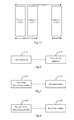
Fig.2 is a schematic structural diagram of a system for transmitting feedback information according to an embodiment of the invention; -
Fig.3 is a schematic structural diagram of a user equipment according to an embodiment of the invention; -
Fig.4 is a schematic structural diagram of a network-side apparatus according to an embodiment of the invention; -
Fig.5 is a schematic flow chart of a method of sending feedback information according to an embodiment of the invention; -
Fig.6 is a schematic flow chart of a method of receiving feedback information according to an embodiment of the invention; -
Fig.7 is a schematic flow chart of first feedback information according to an embodiment of the invention; -
Fig.8 is a schematic flow chart of second feedback information according to an embodiment of the invention; -
Fig.9 is a schematic flow chart of third feedback information according to an embodiment of the invention; -
Fig.10 is a schematic flow chart of fourth feedback information according to an embodiment of the invention; -
Fig.11 is a schematic flow chart of fifth feedback information according to an embodiment of the invention; -
Fig.12 is a schematic flow chart of sixth feedback information according to an embodiment of the invention; and -
Fig.13 is a schematic flow chart of seventh feedback information according to an embodiment of the invention. - In embodiments of the invention, a user equipment which is configured with carrier aggregation with different TDD uplink-downlink configurations sends feedback information, corresponding to downlink data, on a primary carrier according to a dedicated feedback timing. Since feedback information is enabled to be transmitted following aggregation of carriers with different TDD uplink-downlink configurations, the transmission efficiency and the system performance following aggregation of the carriers with the different TDD uplink-downlink configurations can be improved.
- The carriers aggregated for the user equipment includes the primary carrier in PCell and secondary carriers in SCells:
- For the primary carrier, only one carrier in a plurality of cells aggregated for the user equipment is defined as the primary cell which is selected by a base station and configured for the user equipment in Radio Resource Control (RRC) signaling. A Physical Uplink Control Channel (PUCCH) is configured only on the primary carrier; and
- For the secondary carriers, the other carriers with all the cells aggregated for the user equipment than the primary carrier are secondary carriers.
- Where the dedicated feedback timing is a feedback sending timing used specifically for a user equipment which is configured with carrier aggregation with different TDD uplink-downlink configurations.
- The user equipment to be introduced below will refer to a user equipment which is configured with carrier aggregation with different TDD uplink-downlink configurations unless stated otherwise, so a repeated description thereof will be omitted.
- In the following description, firstly an implementation with cooperation of the network side and the user equipment side will be described, and finally implementations at the network side and at the user equipment side will be described respectively, but this will not suggest required cooperation of both the sides for an implementation, and in fact, problems present respectively at the network side and at the user equipment side will also be addressed in the separate implementations at the network side and at the user equipment side although a better technical effect can be achieved in the implementation with cooperation of both the sides.
- The embodiments of the invention will be further described below in details with reference to the drawings.
- As illustrated in
Fig.2 , a system for transmitting feedback information according to an embodiment of the invention includes auser equipment 10 which is configured with carrier aggregation with different TDD uplink-downlink configurations and a network-side apparatus 20. - The
user equipment 10 which is configured with carrier aggregation with different TDD uplink-downlink configurations is configured to determine a dedicated feedback timing and to send feedback information, corresponding to downlink data, on a primary carrier according to the determined dedicated feedback timing. - The network-
side apparatus 20 is configured to determine a dedicated feedback timing and to receive the feedback information from the user equipment, which is configured with carrier aggregation with different TDD uplink-downlink configurations, on the primary carrier of the user equipment according to the determined dedicated feedback timing. - Where the downlink data includes but will not be limited to at least one of the following data:
- A dynamically scheduled Physical Downlink Shared Channel (PDSCH), a semi-dynamically scheduled PDSCH, and a Physical Downlink Control Channel (PDCCH) indicating release of a Semi-Persistent Scheduling (SPS) resource.
- Preferably the dedicated feedback timing can satisfy at least one of the following conditions:
- (1) The dedicated feedback timing is one of feedback timings supported by an Rel-8 TDD system, for example, one of those in Table 1, and reference can be made to the technical specification TS36.213 for details thereof; and
- (2) Uplink subframes, in which the feedback information corresponding to the downlink data is transmitted, determined according to the dedicated feedback timing are a subset or all of uplink subframes on the primary carrier, that is, ACK/NACK is fed back according to the dedicated feedback timing in a corresponding feedback subframe which is at least one uplink subframe on the primary carrier.
- Preferably the dedicated feedback timing determined by the
user equipment 10 can be configured by the network side or can be prescribed; and if the dedicated feedback timing determined by theuser equipment 10 is configured by the network side, then the dedicated feedback timing determined by the network-side apparatus 20 is configured for theuser equipment 10; or if the dedicated feedback timing determined by theuser equipment 10 is prescribed, then the dedicated feedback timing determined by the network-side apparatus 20 is also prescribed, as will be described below respectively. - In a first approach, the dedicated feedback timing is configured by the network side.
- Particularly the network-
side apparatus 20 configures a dedicated feedback timing for theuser equipment 10, and theuser equipment 10 determines the dedicated feedback timing configured by the network side. - Where the dedicated feedback timing configured by the network side is the same as a feedback timing corresponding to the primary carrier (that is, the feedback timing corresponding to the primary carrier is configured by the network side for the
user equipment 10 as the dedicated feedback timing); or - Uplink subframes in a TDD uplink-downlink configuration corresponding to the dedicated feedback timing configured by the network side are a subset or all of uplink subframes on any carrier (which can be any one carrier or can be any more than one carrier) aggregated for the user equipment.
- In a second approach, the dedicated feedback timing is prescribed, that is, preconfigured in the
user equipment 10 through a protocol. - Particularly the
user equipment 10 determines a prescribed dedicated feedback timing, and the network-side apparatus 20 determines the prescribed dedicated feedback timing. - Where the prescribed dedicated feedback timing is the same as a feedback timing corresponding to the primary carrier (that is, the
user equipment 10 determines the feedback timing corresponding to the primary carrier as the dedicated feedback timing); or - When the feedback timing corresponding to the primary carrier corresponds to the TDD uplink-
downlink configuration downlink configuration 2, and when the feedback timing corresponding to the primary carrier corresponds to the TDD uplink-downlink configuration 3 or 4 (see Table 1), the prescribed dedicated feedback timing is the feedback timing corresponding to the TDD uplink-downlink configuration 4. - It shall be noted that in either of the approaches, both the network-
side apparatus 20 and theuser equipment 10 need to use the same dedicated feedback timing which can be particularly prescribed through the protocol or notified of by the network side. - In an implementation, the number of bits of the feedback information can be further determined by the
user equipment 10 before sending the feedback information and by the network-side apparatus 20 before receiving the feedback information. - Preferably for transmission of ACK/NACK information corresponding to the downlink data, the size of an ACK/NACK codebook will be determined according to a dedicated ACK/NACK feedback timing.
- Particularly the
user equipment 10 and the network-side apparatus 20 can determine the number of bits of the feedback information by means ofFormula 1 or Formula 2:
- Where N is the number of bits of the feedback information, M is the number of subframes, determined according to the dedicated feedback timing, for which the feedback information needs to be transmitted in the same uplink subframe, C is the number of aggregated carriers, and C2TB is the number of carriers for which a multi-codeword transmission mode is configured to be used for the downlink without spatial bundling of the feedback information.

- Where N is the number of bits of the feedback information,

- The carrier X is one of the aggregated carriers, and N is the sum of

- Preferably the user equipment can further determine particular feedback information before sending the feedback information. Since all the feedback information for the different carriers needs to be transmitted on the primary carrier, and there are at least two TDD uplink-downlink configurations on the different carriers, it is likely that some subframes correspond to downlink subframes according to the dedicated feedback timing while these subframes are unlink subframes on the carrier or some subframes correspond to uplink subframes according to the dedicated feedback timing while these subframes are downlink subframes on the carrier. These subframes can be preferably handled as follows:
- For a carrier with a corresponding TDD uplink-downlink configuration different from the TDD uplink-downlink configuration corresponding to the dedicated feedback timing, the user equipment sends, for a first particular subframe which corresponds to downlink subframe according to the dedicated feedback timing but is uplink subframe on the carrier, the feedback information for the first particular subframe; and
- For a carrier with a corresponding TDD uplink-downlink configuration different from the TDD uplink-downlink configuration corresponding to the dedicated feedback timing, the user equipment performs, for a second particular subframe which corresponds to uplink subframe according to the dedicated feedback timing but is downlink subframe on the carrier, a particular processing for feedback information corresponding to the second particular subframe.
- The user equipment performs the particular processing for the feedback information corresponding to the second particular subframe as follows: for the second particular subframe, the user equipment may not send the feedback information for the second particular subframe; or bundle the feedback information corresponding to the second particular subframe with feedback information of at least one downlink subframe located immediately before or after the second particular subframe and send the bundled feedback information at the position of the feedback information of the at least one downlink subframe located immediately before or after the second particular subframe.
- Where the network-side apparatus according to the embodiment of the invention can be a base station (e.g., a macro base station, a home base station, etc.) or can be a Relay Node (RN) apparatus or can be another network-side apparatus.
- Processing of the first particular subframe and the second particular subframe will be described below in details by way of several embodiments.
- In a first embodiment, as illustrated in
Fig.7 , the feedback timing corresponding to the TDD uplink-downlink configuration 2 is used as the dedicated feedback timing. Carriers with the TDD uplink-downlink configurations Formula 1 according to the dedicated feedback timing, where although thesubframes band 1 are uplink subframes, feedback information corresponding thereto still needs to be generated so as to ensure other bits in a sequence of feedback information to be positioned correctly. - Since there is no feedback information for an uplink subframe, feedback information for an uplink subframe is preferably NACK information but can alternatively be prescribed as ACK. The following embodiments will be described by way of an example with feedback information corresponding to an uplink subframe being NACK information, but the same will apply with the use of ACK, so a repeated description thereof will be omitted.
- Referring to
Fig.7 , for example, if the number of bits of the feedback information is determined by means ofFormula 2, then no feedback information may be generated for thesubframes band 1 because the numbers of bits are calculated for the respective carriers and then summed up. - In a second embodiment, the feedback timing corresponding to the TDD uplink-
downlink configuration 1 is used as the dedicated feedback timing. Carriers with the TDD uplink-downlink configurations - In a first approach, as illustrated in
Fig.8 , no ACK/NACK information is fed back for thesubframe 3 and thesubframe 8 in theband 2. - In a second approach, as illustrated in
Fig.9 , ACK/NACK information of thesubframe 3 and thesubframe 8 in theband 2 is bundled with that of adjacent downlink subframes and then fed back, and the positions of the ACK/NACK information of the adjacent subframes (i.e., thesubframe 4 and the subframe 9) are occupied for the bundled ACK/NACK information. - For the second embodiment, the effect of
Formula 1 is the same as that ofFormula 2. - In a third embodiment, the feedback timing corresponding to the TDD uplink-
downlink configuration 1 is used as the dedicated feedback timing. Carriers with the TDD uplink-downlink configurations - In a first approach, as illustrated in
Fig.10 , no ACK/NACK information is generated for thesubframes band 2; and according toFormula 1, although thesubframe 2 in theband 2 is an uplink subframe, NACK information corresponding thereto still needs to be generated, or according toFormula 2, no feedback information may be generated for thesubframe 2 in theband 2. - In a second approach, as illustrated in
Fig.11 , ACK/NACK information of thesubframe 0 and thesubframe 1 in theband 2 is bundled with that of adjacent downlink subframes and then fed back, and the positions of the ACK/NACK information of the adjacent subframes (i.e., thesubframe 4 and the subframe 9) are occupied for the bundled ACK/NACK information; and according toFormula 1, although thesubframe 2 in theband 2 is an uplink subframe, NACK information corresponding thereto still needs to be generated, or according toFormula 2, no feedback information may be generated for thesubframe 2 in theband 2. - In a third approach, as illustrated in
Fig.12 and Fig.13 , according toFormula 1, ACK/NACK information of thesubframe 0 and thesubframe 1 in theband 2 is bundled with that of adjacent uplink subframes and then fed back, and the uplink subframes correspond to downlink subframes in the dedicated feedback timing, where actually the adjacent uplink subframes will not be involved with ACK/NACK bundling but simply the ACK/NACK information corresponding to thesubframe 0 and thesubframe 1 can be bundled. - It shall be noted that two carriers and the TDD uplink-
downlink configurations - Based upon the same inventive concept, embodiments of the invention further provide a user equipment, a network-side apparatus, a method of sending feedback information and a method of receiving feedback information, and since these apparatuses and methods address the problem under a similar principle to the system for transmitting feedback information, reference can be made to the implementation of the system for implementations of these apparatuses and methods, so a repeated description thereof will be omitted.
- As illustrated in
Fig.3 , a user equipment according to an embodiment of the invention which is configured with carrier aggregation with different TDD uplink-downlink configurations particularly includes a firsttiming determining module 300 and a sendingmodule 310. - The first
timing determining module 300 is configured to determine a dedicated feedback timing; and - The sending
module 310 is configured to send feedback information, corresponding to downlink data, on a primary carrier according to the determined dedicated feedback timing. - Preferably the first
timing determining module 300 determines a dedicated feedback timing configured by the network side. - Where a feedback timing corresponding to the primary carrier is determined by the network side as the dedicated feedback timing, or uplink subframes in a TDD uplink-downlink configuration corresponding to the dedicated feedback timing configured by the network side are a subset or all of uplink subframes on any aggregated carrier of the user equipment.
- Preferably the first
timing determining module 300 determines a prescribed dedicated feedback timing. - Where a feedback timing corresponding to the primary carrier is prescribed to be used as the dedicated feedback timing, or when the feedback timing corresponding to the primary carrier corresponds to the TDD uplink-
downlink configuration downlink configuration 2 is prescribed to be used as the dedicated feedback timing, and when the feedback timing corresponding to the primary carrier corresponds to the TDD uplink-downlink configuration downlink configuration 4 is prescribed to be used as the dedicated feedback timing. - Preferably the first
timing determining module 300 determines the number of bits of the feedback information by means ofFormula 1 orFormula 2. - Preferably for a carrier with a corresponding TDD uplink-downlink configuration different from the TDD uplink-downlink configuration corresponding to the dedicated feedback timing, the first
timing determining module 300 sends, for a second particular subframe which corresponds to downlink subframe according to the dedicated feedback timing but is uplink subframe on the carrier, the feedback information for the second particular subframe. - Preferably for a carrier with a corresponding TDD uplink-downlink configuration different from the TDD uplink-downlink configuration corresponding to the dedicated feedback timing, the first
timing determining module 300 performs, for a second particular subframe which corresponds to uplink subframe according to the dedicated feedback timing but is downlink subframe on the carrier, a particular processing for feedback information corresponding to the second particular subframe. - Preferably the first
timing determining module 300 performs the particular processing for the feedback information corresponding to the second particular subframe particularly by not sending the feedback information for the second particular subframe or by bundling the feedback information corresponding to the second particular subframe with feedback information of at least one downlink subframe located immediately before or after the second particular subframe and sending the bundled feedback information at the position of the feedback information of the at least one downlink subframe located immediately before or after the second particular subframe. - As illustrated in
Fig.4 , a network-side apparatus according to an embodiment of the invention includes a secondtiming determining module 400 and areceiving module 410. - The second
timing determining module 400 is configured to determine a dedicated feedback timing; and - The receiving
module 410 is configured to receive feedback information from a user equipment, which is configured with carrier aggregation with different TDD uplink-downlink configurations, on a primary carrier of the user equipment according to the determined dedicated feedback timing. - Preferably the second
timing determining module 400 configures the dedicated feedback timing for the user equipment. - Where the configured dedicated feedback timing is the same as a feedback timing corresponding to the primary carrier, or uplink subframes in a TDD uplink-downlink configuration corresponding to the configured dedicated feedback timing are a subset or all of uplink subframes on any aggregated carrier of the user equipment.
- Preferably the second
timing determining module 400 determines a prescribed dedicated feedback timing. - Where a feedback timing corresponding to the primary carrier is prescribed to be used as the dedicated feedback timing, or when the feedback timing corresponding to the primary carrier corresponds to the TDD uplink-
downlink configuration downlink configuration 2 is prescribed to be used as the dedicated feedback timing, and when the feedback timing corresponding to the primary carrier corresponds to the TDD uplink-downlink configuration downlink configuration 4 is prescribed to be used as the dedicated feedback timing. - Preferably the second
timing determining module 400 determines the number of bits of the feedback information by means ofFormula 1 orFormula 2. - As illustrated in
Fig.5 , a method of sending feedback information according to an embodiment of the invention includes the following steps: -
Step 501. A user equipment which is configured with carrier aggregation with different TDD uplink-downlink configurations determines a dedicated feedback timing; and -
Step 502. The user equipment which is configured with carrier aggregation with different TDD uplink-downlink configurations sends feedback information, corresponding to downlink data, on a primary carrier according to the determined dedicated feedback timing. - Preferably the dedicated feedback timing can satisfy at least one of the following conditions:
- (1) The dedicated feedback timing is one of feedback timings supported by an Rel-8 TDD system, for example, one of those in Table 1; and
- (2) Uplink subframes, in which the feedback information corresponding to the downlink data is transmitted, determined according to the dedicated feedback timing are a subset or all of uplink subframes on the primary carrier, that is, ACK/NACK is fed back according to the dedicated feedback timing in a corresponding feedback subframe which is at least one uplink subframe on the primary carrier.
- Preferably in the
step 501, the dedicated feedback timing determined by the user equipment can be configured by the network side or can be prescribed, as will be described below respectively. - In a first approach, the dedicated feedback timing is configured by the network side.
- Particularly the user equipment determines a dedicated feedback timing configured by the network side.
- Where a feedback timing corresponding to the primary carrier is configured by the network side as the dedicated feedback timing; or uplink subframes in a TDD uplink-downlink configuration corresponding to the dedicated feedback timing configured by the network side are a subset or all of uplink subframes on any carrier (which can be any one carrier or can be any more than one carrier) aggregated for the user equipment.
- In a second approach, the dedicated feedback timing is prescribed.
- Particularly the user equipment determines a prescribed dedicated feedback timing.
- Where a feedback timing corresponding to the primary carrier is prescribed to be used as the dedicated feedback timing; or when the feedback timing corresponding to the primary carrier corresponds to the TDD uplink-
downlink configuration downlink configuration 2 is prescribed to be used as the dedicated feedback timing, and when the feedback timing corresponding to the primary carrier corresponds to the TDD uplink-downlink configuration 3 or 4 (see Table 1), the feedback timing corresponding to the TDD uplink-downlink configuration 4 is prescribed to be used as the dedicated feedback timing. - It shall be noted that in either of the approaches, both the network-side apparatus and the user equipment need to use the same dedicated feedback timing which can be particularly prescribed through a protocol or notified of by the network side.
- In an implementation, the user equipment can further determine the number of bits of the feedback information before the
step 502. - Preferably for transmission of ACK/NACK information corresponding to the downlink data, the size of an ACK/NACK codebook will be determined according to a dedicated ACK/NACK feedback timing.
- Particularly the user equipment can determine the number of bits of the feedback information by means of
Formula 1 orFormula 2. - The user equipment and the network-side apparatus need to determine the number of bits of the feedback information in the same formula.
- It is likely that some subframes correspond to downlink subframes according to the dedicated feedback timing while these subframes are unlink subframes on the carrier or some subframes correspond to uplink subframes according to the dedicated feedback timing while these subframes are downlink subframes on the carrier. These subframes can be preferably handled as follows: before the
step 502, for a carrier with a corresponding TDD uplink-downlink configuration different from the TDD uplink-downlink configuration corresponding to the dedicated feedback timing, the user equipment sends, for a first particular subframe which corresponds to downlink subframe according to the dedicated feedback timing but is uplink subframe on the carrier, the feedback information for the first particular subframe; and - For a carrier with a corresponding TDD uplink-downlink configuration different from the TDD uplink-downlink configuration corresponding to the dedicated feedback timing, the user equipment performs, for a second particular subframe which corresponds to uplink subframe according to the dedicated feedback timing but is downlink subframe on the carrier, a particular processing for feedback information corresponding to the second particular subframe.
- The step that the user equipment performs the particular processing for the feedback information corresponding to the second particular subframe includes: for the second particular subframe, the user equipment may not send the feedback information for the second particular subframe; or bundle the feedback information corresponding to the second particular subframe with feedback information of at least one downlink subframe located immediately before or after the second particular subframe and send the bundled feedback information at the position of the feedback information of the at least one downlink subframe located immediately before or after the second particular subframe.
- As illustrated in
Fig.6 , a method of receiving feedback information according to an embodiment of the invention includes the following steps: -
Step 601. A network-side apparatus determines a dedicated feedback timing; and -
Step 602. The network-side apparatus receives feedback information from a user equipment, which is configured with carrier aggregation with different TDD uplink-downlink configurations, on a primary carrier of the user equipment according to the determined dedicated feedback timing. - Preferably the dedicated feedback timing can satisfy at least one of the following conditions:
- (1) The dedicated feedback timing is one of feedback timings supported by an Rel-8 TDD system, for example, one of those in Table 1; and
- (2) Uplink subframes, in which the feedback information corresponding to the downlink data is transmitted, determined according to the dedicated feedback timing are a subset or all of uplink subframes on the primary carrier, that is, ACK/NACK is fed back according to the dedicated feedback timing in a corresponding feedback subframe which is at least one uplink subframe on the primary carrier.
- Preferably the dedicated feedback timing determined by the network-side apparatus can be configured for the user equipment or can be prescribed, as will be described below respectively.
- In a first approach, the dedicated feedback timing is configured by the network side.
- Particularly the network-side apparatus configures a dedicated feedback timing for the user equipment.
- Where the dedicated feedback timing configured by the network side is the same as a feedback timing corresponding to the primary carrier; or uplink subframes in a TDD uplink-downlink configuration corresponding to the dedicated feedback timing configured by the network side are a subset or all of uplink subframes on any aggregated carrier of the user equipment.
- In a second approach, the dedicated feedback timing is prescribed.
- Particularly the network-side apparatus determines a prescribed dedicated feedback timing.
- Where a feedback timing corresponding to the primary carrier is prescribed to be used as the dedicated feedback timing; or
- When the feedback timing corresponding to the primary carrier corresponds to the TDD uplink-
downlink configuration downlink configuration 2 is prescribed to be used as the dedicated feedback timing, and when the feedback timing corresponding to the primary carrier corresponds to the TDD uplink-downlink configuration 3 or 4(see Table 1), the feedback timing corresponding to the TDD uplink-downlink configuration 4 is prescribed to be used as the dedicated feedback timing. - It shall be noted that in either of the approaches, both the network-side apparatus and the user equipment need to use the same dedicated feedback timing which can be particularly prescribed through a protocol or notified of by the network side.
- In an implementation, the network-side apparatus can further determine the number of bits of the feedback information before the
step 602. - Particularly the network-side apparatus can determine the number of bits of the feedback information by means of
Formula 1 orFormula 2. - Where
Fig.5 and Fig.6 can be combined into a flow of a method of transmitting feedback information, that is, firstly thesteps step 502 and finally thestep 602 are performed. - The
step 501 and thestep 601 may not necessarily be performed in an exact sequential order, that is, if the dedicated feedback timing is configured by the network side, then firstly thestep 601 and then thestep 501 are performed; or if the dedicated feedback timing is preconfigured, then firstly thestep 501 and then thestep 601 can be performed, or firstly thestep 601 and then thestep 501 can be performed, or thestep 501 and thestep 601 can be performed concurrently. - Those skilled in the art shall appreciate that the embodiments of the invention can be embodied as a method, a system or a computer program product. Therefore the invention can be embodied in the form of an all-hardware embodiment, an all-software embodiment or an embodiment of software and hardware in combination. Furthermore the invention can be embodied in the form of a computer program product embodied in one or more computer useable storage mediums (including but not limited to a disk memory, a CD-ROM, an optical memory, etc.) in which computer useable program codes are contained.
- The invention has been described in a flow chart and/or a block diagram of the method, the device (system) and the computer program product according to the embodiments of the invention. It shall be appreciated that respective flows and/or blocks in the flow chart and/or the block diagram and combinations of the flows and/or the blocks in the flow chart and/or the block diagram can be embodied in computer program instructions. These computer program instructions can be loaded onto a general-purpose computer, a specific-purpose computer, an embedded processor or a processor of another programmable data processing device to produce a machine so that the instructions executed on the computer or the processor of the other programmable data processing device create means for performing the functions specified in the flow(s) of the flow chart and/or the block(s) of the block diagram.
- These computer program instructions can also be stored into a computer readable memory capable of directing the computer or the other programmable data processing device to operate in a specific manner so that the instructions stored in the computer readable memory create an article of manufacture including instruction means which perform the functions specified in the flow(s) of the flow chart and/or the block(s) of the block diagram.
- These computer program instructions can also be loaded onto the computer or the other programmable data processing device so that a series of operational steps are performed on the computer or the other programmable data processing device to create a computer implemented process so that the instructions executed on the computer or the other programmable device provide steps for performing the functions specified in the flow(s) of the flow chart and/or the block(s) of the block diagram.
- Although the preferred embodiments of the invention have been described, those skilled in the art benefiting from the underlying inventive concept can make additional modifications and variations to these embodiments. Therefore the appended claims are intended to be construed as encompassing the preferred embodiments and all the modifications and variations coming into the scope of the invention.
- Since feedback information is enabled to be transmitted following aggregation of carriers with different TDD uplink-downlink configurations, the transmission efficiency and the system performance following aggregation of the carriers with the different TDD uplink-downlink configurations can be improved.
- Evidently those skilled in the art can make various modifications and variations to the invention without departing from the spirit and scope of the invention. Thus the invention is also intended to encompass these modifications and variations thereto so long as the modifications and variations come into the scope of the claims appended to the invention and their equivalents.
Claims (27)
- A method of sending feedback information, comprising steps of:determining, by a user equipment, a dedicated feedback timing; andsending, by the user equipment, feedback information, corresponding to downlink data, on a primary carrier according to the determined dedicated feedback timing,wherein the user equipment is a user equipment which is configured with carrier aggregation with different Time Division Duplex (TDD) uplink-downlink configurations.
- The method according to claim 1, wherein the dedicated feedback timing is one of feedback timing supported by an Rel-8 TDD system.
- The method according to claim 1, wherein uplink subframes, in which the feedback information corresponding to the downlink data is transmitted, determined according to the dedicated feedback timing are a subset or all of uplink subframes on the primary carrier.
- The method according to claim 1, wherein a step of determining, by the user equipment, a dedicated feedback timing comprises a step of:determining, by the user equipment, a dedicated feedback timing configured by the network side,wherein the dedicated feedback timing configured by the network side is a feedback timing corresponding to the primary carrier, or uplink subframes in a TDD uplink-downlink configuration corresponding to the dedicated feedback timing configured by the network side are a subset or all of uplink subframes on any aggregated carrier of the user equipment.
- The method according to claim 1, wherein a step of determining, by the user equipment, a dedicated feedback timing comprises a step of :determining, by the user equipment, a prescribed dedicated feedback timing,wherein a feedback timing corresponding to the primary carrier is prescribed to be used as the dedicated feedback timing, or when the feedback timing corresponding to the primary carrier corresponds to the TDD uplink-downlink configuration 0 or 1 or 2 or 6, a feedback timing corresponding to the TDD uplink-downlink configuration 2 is prescribed to be used as the dedicated feedback timing, and when the feedback timing corresponding to the primary carrier corresponds to the TDD uplink-downlink configuration 3 or 4, a feedback timing corresponding to the TDD uplink-downlink configuration 4 is prescribed to be used as the dedicated feedback timing.
- The method according to any one of claims 1 to 5, wherein before the user equipment sends the feedback information, the method further comprises a step of:determining number of bits of the feedback information by means of Formula 1 of:
 wherein N is the number of bits of the feedback information, M is the number of subframes, determined according to the dedicated feedback timing, for which the feedback information needs to be transmitted in a same uplink subframe, C is the number of aggregated carriers, and C2TB is the number of carriers for which a multi-codeword transmission mode is configured to be used for downlink without spatial bundling of the feedback information; ordetermining the number of bits of the feedback information by means of Formula 2 of:
 wherein N is the number of bits of the feedback information,
- The method according to any one of claims 1 to 5, wherein before the user equipment sends the feedback information, the method further comprises a step of:sending, by the user equipment, the feedback information for a first particular subframe which corresponds to downlink subframe according to the dedicated feedback timing but is uplink subframe on a particular carrier,wherein TDD uplink-downlink configuration of the particular carrier is different from a TDD uplink-downlink configuration corresponding to the dedicated feedback timing.
- The method according to any one of claims 1 to 5, wherein before the user equipment sends the feedback information, the method further comprises a step of:performing, by the user equipment, a particular processing for feedback information corresponding to a second particular subframe which corresponds to uplink subframe according to the dedicated feedback timing but is downlink subframe on a particular carrier,wherein TDD uplink-downlink configuration of the particular carrier is different from a TDD uplink-downlink configuration corresponding to the dedicated feedback timing.
- The method according to claim 8, wherein a step of performing, by the user equipment, a particular processing for the feedback information corresponding to the second particular subframe comprises a step of:sending, by the user equipment, no feedback information corresponding to the second particular subframe; orbundling, by the user equipment, the feedback information corresponding to the second particular subframe with feedback information of at least one downlink subframe located immediately before or after the second particular subframe and sending the bundled feedback information at the position of the feedback information of the at least one downlink subframe located immediately before or after the second particular subframe.
- A method of receiving feedback information, comprising steps of:determining, by a network-side apparatus, a dedicated feedback timing; andreceiving, by the network-side apparatus, feedback information from a user equipment on a primary carrier of the user equipment according to the determined dedicated feedback timing,wherein the user equipment is a user equipment which is configured with carrier aggregation with different Time Division Duplex (TDD) uplink-downlink configurations.
- The method according to claim 10, wherein the dedicated feedback timing is one of feedback timings supported by an Rel-8 TDD system.
- The method according to claim 10, wherein uplink subframes, in which the feedback information corresponding to the downlink data is transmitted, determined according to the dedicated feedback timing are a subset or all of uplink subframes on the primary carrier.
- The method according to claim 10, wherein before the network-side apparatus receives the feedback information, the method further comprises a step of:configuring, by the network-side apparatus, a dedicated feedback timing for the user equipment,wherein the configured dedicated feedback timing is a feedback timing corresponding to the primary carrier, or uplink subframes in a TDD uplink-downlink configuration corresponding to the configured dedicated feedback timing are a subset or all of uplink subframes on any aggregated carrier of the user equipment.
- The method according to claim 10, wherein a step of determining, by the network-side apparatus, a dedicated feedback timing comprises a step of:determining, by the network-side apparatus, a prescribed dedicated feedback timing,wherein a feedback timing corresponding to the primary carrier is prescribed to be used as the dedicated feedback timing, or when the feedback timing corresponding to the primary carrier corresponds to the TDD uplink-downlink configuration 0 or 1 or 2 or 6, a feedback timing corresponding to the TDD uplink-downlink configuration 2 is prescribed to be used as the dedicated feedback timing, and when the feedback timing corresponding to the primary carrier corresponds to the TDD uplink-downlink configuration 3 or 4, a feedback timing corresponding to the TDD uplink-downlink configuration 4 is prescribed to be used as the dedicated feedback timing.
- The method according to any one of claims 10 to 14, wherein before the network-side apparatus receives the feedback information, the method further comprises a step of:determining number of bits of the feedback information by means of Formula 1 of:
 wherein N is the number of bits of the feedback information, M is the number of subframes, determined according to the dedicated feedback timing, for which the feedback information needs to be transmitted in a same uplink subframe, C is the number of aggregated carriers, and C2TB is the number of carriers for which a multi-codeword transmission mode is configured to be used for downlink without spatial bundling of the feedback information; ordetermining the number of bits of the feedback information by means of Formula 2 of:
 wherein N is the number of bits of the feedback information,
- An apparatus for sending feedback information, the apparatus, which is configured with carrier aggregation with different Time Division Duplex (TDD) uplink-downlink configurations, comprising:a first timing determining module configured to determine a dedicated feedback timing; anda sending module configured to send feedback information, corresponding to downlink data, on a primary carrier according to the determined dedicated feedback timing.
- The apparatus according to claim 16, wherein the first timing determining module is further configured:to determine a dedicated feedback timing configured by the network side,wherein the dedicated feedback timing configured by the network side is a feedback timing corresponding to the primary carrier, or uplink subframes in a TDD uplink-downlink configuration corresponding to the dedicated feedback timing configured by the network side are a subset or all of uplink subframes on any aggregated carrier of the user equipment.
- The apparatus according to claim 16, wherein the first timing determining module is further configured:to determine a prescribed dedicated feedback timing,wherein a feedback timing corresponding to the primary carrier is prescribed to be used as the dedicated feedback timing, or when the feedback timing corresponding to the primary carrier corresponds to the TDD uplink-downlink configuration 0 or 1 or 2 or 6, a feedback timing corresponding to the TDD uplink-downlink configuration 2 is prescribed to be used as the dedicated feedback timing, and when the feedback timing corresponding to the primary carrier corresponds to the TDD uplink-downlink configuration 3 or 4, a feedback timing corresponding to the TDD uplink-downlink configuration 4 is prescribed to be used as the dedicated feedback timing.
- The apparatus according to any one of claims 16 to 18, wherein the first timing determining module is further configured:to determine number of bits of the feedback information by means of Formula 1 of:
 wherein N is the number of bits of the feedback information, M is the number of subframes, determined according to the dedicated feedback timing, for which the feedback information needs to be transmitted in a same uplink subframe, C is the number of aggregated carriers, and C2TB is the number of carriers for which a multi-codeword transmission mode is configured to be used for downlink without spatial bundling of the feedback information; orto determine the number of bits of the feedback information by means of Formula 2 of:
 wherein N is the number of bits of the feedback information,
- The apparatus according to any one of claims 16 to 18, wherein the first timing determining module is further configured:to send the feedback information for a first particular subframe which corresponds to downlink subsframe according to the dedicated feedback timing but is uplink subframe on a particular carrier,wherein TDD uplink-downlink configuration of the particular carrier is different from a TDD uplink-downlink configuration corresponding to the dedicated feedback timing.
- The apparatus according to any one of claims 16 to 18, wherein the first timing determining module is further configured:to perform a particular processing for feedback information corresponding to a second particular subframe which corresponds to uplink subframe according to the dedicated feedback timing but is downlink subframe on a particular carrier,wherein TDD uplink-downlink configuration of the particular carrier is different from a TDD uplink-downlink configuration corresponding to the dedicated feedback timing.
- The apparatus according to claim 21, wherein the first timing determining module is further configured to perform the particular processing for the feedback information corresponding to the second particular subframe by:sending no feedback information corresponding to the second particular subframe; orbundling the feedback information corresponding to the second particular subframe with feedback information of at least one downlink subframe located immediately before or after the second particular subframe and sending the bundled feedback information at the position of the feedback information of the at least one downlink subframe located immediately before or after the second particular subframe.
- An apparatus for receiving feedback information, comprising:a second timing determining module configured to determine a dedicated feedback timing; anda receiving module configured to receive feedback information from a user equipment on a primary carrier of the user equipment according to the determined dedicated feedback timing,wherein the user equipment is a user equipment which is configured with carrier aggregation with different Time Division Duplex (TDD) uplink-downlink configurations.
- The apparatus according to claim 23, wherein the second timing determining module is further configured:to configure a dedicated feedback timing for the user equipment,wherein the configured dedicated feedback timing is a feedback timing corresponding to the primary carrier, or uplink subframes in a TDD uplink-downlink configuration corresponding to the configured dedicated feedback timing are a subset or all of uplink subframes on any aggregated carrier of the user equipment.
- The apparatus according to claim 23, wherein the second timing determining module is further configured:to determine a prescribed dedicated feedback timing,wherein a feedback timing corresponding to the primary carrier is prescribed to be used as the dedicated feedback timing, or when the feedback timing corresponding to the primary carrier corresponds to the TDD uplink-downlink configuration 0 or 1 or 2 or 6, a feedback timing corresponding to the TDD uplink-downlink configuration 2 is prescribed to be used as the dedicated feedback timing, and when the feedback timing corresponding to the primary carrier corresponds to the TDD uplink-downlink configuration 3 or 4, a feedback timing corresponding to the TDD uplink-downlink configuration 4 is prescribed to be used as the dedicated feedback timing.
- The apparatus according to any one of claims 23 to 25, wherein the second timing determining module is further configured:to determine number of bits of the feedback information by means of Formula 1 of:
 wherein N is the number of bits of the feedback information, M is the number of subframes, determined according to the dedicated feedback timing, for which the feedback information needs to be transmitted in a same uplink subframe, C is the number of aggregated carriers, and C2TB is the number of carriers for which a multi-codeword transmission mode is configured to be used for downlink without spatial bundling of the feedback information; orto determine the number of bits of the feedback information by means of Formula 2 of:
 wherein N is the number of bits of the feedback information,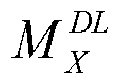
- A system for transmitting feedback information, comprising:a user equipment, which is configured with carrier aggregation with different Time Division Duplex (TDD) uplink-downlink configurations, configured to determine a dedicated feedback timing and to send feedback information, corresponding to downlink data, on a primary carrier according to the determined dedicated feedback timing; anda network-side apparatus configured to determine a dedicated feedback timing and to receive the feedback information from the user equipment, which is configured with carrier aggregation with different TDD uplink-downlink configurations, on the primary carrier of the user equipment according to the determined dedicated feedback timing.
Applications Claiming Priority (3)
| Application Number | Priority Date | Filing Date | Title |
|---|---|---|---|
| CN201110183359 | 2011-06-30 | ||
| CN201110192510XA CN102291227B (en) | 2011-06-30 | 2011-07-11 | Feedback information transmission and receiving methods, systems and devices |
| PCT/CN2012/073056 WO2013000299A1 (en) | 2011-06-30 | 2012-03-26 | Method, system and apparatus for sending and receiving feedback information |
Publications (3)
| Publication Number | Publication Date |
|---|---|
| EP2728781A1 true EP2728781A1 (en) | 2014-05-07 |
| EP2728781A4 EP2728781A4 (en) | 2014-07-23 |
| EP2728781B1 EP2728781B1 (en) | 2018-05-09 |
Family
ID=45337353
Family Applications (1)
| Application Number | Title | Priority Date | Filing Date |
|---|---|---|---|
| EP12803955.9A Active EP2728781B1 (en) | 2011-06-30 | 2012-03-26 | Method, system and apparatus for sending and receiving feedback information |
Country Status (7)
| Country | Link |
|---|---|
| US (1) | US9455819B2 (en) |
| EP (1) | EP2728781B1 (en) |
| JP (1) | JP5916851B2 (en) |
| KR (1) | KR101715088B1 (en) |
| CN (1) | CN102291227B (en) |
| ES (1) | ES2675526T3 (en) |
| WO (1) | WO2013000299A1 (en) |
Families Citing this family (9)
| Publication number | Priority date | Publication date | Assignee | Title |
|---|---|---|---|---|
| CN102291227B (en) * | 2011-06-30 | 2013-07-10 | 电信科学技术研究院 | Feedback information transmission and receiving methods, systems and devices |
| CN108111290B (en) * | 2012-01-20 | 2021-02-02 | 北京三星通信技术研究有限公司 | PUSCH transmission method and equipment |
| CN105790895B (en) * | 2012-03-09 | 2019-04-19 | 电信科学技术研究院 | A kind of implementation method and device of HARQ feedback |
| CN103516501B (en) * | 2012-06-29 | 2017-05-03 | 电信科学技术研究院 | Method, system and device for sending and receiving feedback information |
| CN103516491B (en) * | 2012-06-29 | 2016-10-19 | 电信科学技术研究院 | A kind of method, system and device sent with receiving feedback information |
| CN104426639A (en) | 2013-08-27 | 2015-03-18 | 中兴通讯股份有限公司 | Sending method and device for uplink control information |
| CN110176979B (en) * | 2013-09-27 | 2020-10-27 | 中兴通讯股份有限公司 | Data sending method and device for frequency spectrum aggregation |
| CN104683076B (en) * | 2013-12-02 | 2018-03-23 | 中国移动通信集团公司 | Response message feedback method, response message method of reseptance and relevant apparatus |
| EP3605896B1 (en) | 2017-04-19 | 2022-06-01 | LG Electronics Inc. | Method and device for transmitting feedback information in wireless communication system |
Family Cites Families (19)
| Publication number | Priority date | Publication date | Assignee | Title |
|---|---|---|---|---|
| CN101635987B (en) * | 2008-07-25 | 2012-03-07 | 中兴通讯股份有限公司 | Method for feeding back downlink receiving state |
| CN101753198B (en) * | 2008-12-08 | 2013-04-17 | 华为技术有限公司 | Communication method, relay and communication system |
| EP2214340A1 (en) * | 2009-01-30 | 2010-08-04 | Panasonic Corporation | HARQ operation for macro-diversity transmissions in the downlink |
| US20100271970A1 (en) * | 2009-04-22 | 2010-10-28 | Interdigital Patent Holdings, Inc. | Method and apparatus for transmitting uplink control information for carrier aggregated spectrums |
| EP2436137A1 (en) * | 2009-05-27 | 2012-04-04 | Nokia Siemens Networks Oy | Multiple uplink control channel transmission with reduced cubic metric |
| JP5504339B2 (en) * | 2009-06-18 | 2014-05-28 | インターデイジタル パテント ホールディングス インコーポレイテッド | Operation in discontinuous reception mode using carrier aggregation |
| US8565167B2 (en) * | 2009-07-02 | 2013-10-22 | Nokia Corporation | System and methods for ACK/NAK feedback in TDD communications |
| CN102014496B (en) * | 2009-10-16 | 2013-07-31 | 电信科学技术研究院 | Method, equipment and system for configuring uplink control channel resources |
| CN102088433B (en) | 2009-12-08 | 2015-01-28 | 中兴通讯股份有限公司 | Method and system of optimizing activation and deactivation of component carrier in multicarrier system |
| CN102025467B (en) * | 2009-12-30 | 2013-05-15 | 电信科学技术研究院 | Transmission method and transmission device for feedback information |
| CN102123019B (en) * | 2010-01-11 | 2015-11-25 | 三星电子株式会社 | Method for performing ACK/NACK feedback for downlink data transmission in wireless communication system |
| CN102083211B (en) * | 2010-03-29 | 2017-04-19 | 电信科学技术研究院 | Determining method and equipment of uplink control channel resources |
| US8483156B2 (en) * | 2010-05-03 | 2013-07-09 | Nokia Siemens Networks Oy | Feedback for inter-radio access technology carrier aggregation |
| CN102075949B (en) * | 2010-12-22 | 2013-03-20 | 大唐移动通信设备有限公司 | Carrier aggregation (CA) technology-based data transmission method and device |
| CN102075309B (en) * | 2010-12-24 | 2016-12-07 | 中兴通讯股份有限公司 | The sending method of a kind of ascending control information and device |
| WO2012091532A2 (en) * | 2011-01-02 | 2012-07-05 | 엘지전자 주식회사 | Method and apparatus for transmitting ack/nack in tdd-based wireless communication system |
| EP2685646B1 (en) * | 2011-03-01 | 2017-08-23 | LG Electronics Inc. | Method for supporting a dynamic-time division duplex (d-tdd) downlink-uplink configuration in a wireless communication system, and apparatus therefor |
| WO2012138179A2 (en) * | 2011-04-08 | 2012-10-11 | 엘지전자 주식회사 | Method for transmitting/receiving data in a wireless access system and base station for same |
| CN102291227B (en) * | 2011-06-30 | 2013-07-10 | 电信科学技术研究院 | Feedback information transmission and receiving methods, systems and devices |
-
2011
- 2011-07-11 CN CN201110192510XA patent/CN102291227B/en active Active
-
2012
- 2012-03-26 WO PCT/CN2012/073056 patent/WO2013000299A1/en not_active Ceased
- 2012-03-26 US US14/130,315 patent/US9455819B2/en active Active
- 2012-03-26 ES ES12803955.9T patent/ES2675526T3/en active Active
- 2012-03-26 JP JP2014517402A patent/JP5916851B2/en active Active
- 2012-03-26 KR KR1020147002477A patent/KR101715088B1/en active Active
- 2012-03-26 EP EP12803955.9A patent/EP2728781B1/en active Active
Non-Patent Citations (4)
| Title |
|---|
| "3rd Generation Partnership Project; Technical Specification Group Radio Access Network; Evolved Universal Terrestrial Radio Access (E-UTRA); Physical layer procedures (Release 10)", 3GPP STANDARD; 3GPP TS 36.213, 3RD GENERATION PARTNERSHIP PROJECT (3GPP), MOBILE COMPETENCE CENTRE ; 650, ROUTE DES LUCIOLES ; F-06921 SOPHIA-ANTIPOLIS CEDEX ; FRANCE, vol. RAN WG1, no. V10.2.0, 22 June 2011 (2011-06-22), pages 1-120, XP050553381, [retrieved on 2011-06-22] * |
| INTEL CORPORATION: "Support of Mixed Inter-Band TDD Configurations in Rel-11 CA", 3GPP DRAFT; R2-113216 MIXED TDD CONFIGURATIONS FOR INTERBAND CA, 3RD GENERATION PARTNERSHIP PROJECT (3GPP), MOBILE COMPETENCE CENTRE ; 650, ROUTE DES LUCIOLES ; F-06921 SOPHIA-ANTIPOLIS CEDEX ; FRANCE, vol. RAN WG2, no. Barcelona, Spain; 20110509, 3 May 2011 (2011-05-03), XP050495383, [retrieved on 2011-05-03] * |
| NOKIA SIEMENS NETWORKS ET AL: "Cell specific TDD configuration with inter-band CA", 3GPP DRAFT; R2-112946 CELL SPECIFIC TDD CONFIGURATION WITH INTER-BAND CA, 3RD GENERATION PARTNERSHIP PROJECT (3GPP), MOBILE COMPETENCE CENTRE ; 650, ROUTE DES LUCIOLES ; F-06921 SOPHIA-ANTIPOLIS CEDEX ; FRANCE, vol. RAN WG2, no. Barcelona, Spain; 20110509, 3 May 2011 (2011-05-03), XP050495304, [retrieved on 2011-05-03] * |
| See also references of WO2013000299A1 * |
Also Published As
| Publication number | Publication date |
|---|---|
| KR20140030322A (en) | 2014-03-11 |
| WO2013000299A1 (en) | 2013-01-03 |
| EP2728781A4 (en) | 2014-07-23 |
| EP2728781B1 (en) | 2018-05-09 |
| CN102291227A (en) | 2011-12-21 |
| JP2014523684A (en) | 2014-09-11 |
| US9455819B2 (en) | 2016-09-27 |
| JP5916851B2 (en) | 2016-05-11 |
| ES2675526T3 (en) | 2018-07-11 |
| KR101715088B1 (en) | 2017-03-10 |
| US20140153451A1 (en) | 2014-06-05 |
| CN102291227B (en) | 2013-07-10 |
Similar Documents
| Publication | Publication Date | Title |
|---|---|---|
| EP2824860B1 (en) | Harq feedback implementation method and device | |
| EP2744139B1 (en) | Uplink feedback method and apparatus | |
| US8798014B2 (en) | Data transmission method and device in carrier aggregation system | |
| EP2846488B1 (en) | Carrier aggregation feedback method, device and system for different tdd uplink/downlink configurations | |
| EP3281334B1 (en) | Method and apparatus for transmitting harq-ack feedback information in an enhanced carrier aggregation system | |
| EP2658303B1 (en) | Method and device for data transmission based on carrier aggregation (ca) technology | |
| EP2728781B1 (en) | Method, system and apparatus for sending and receiving feedback information | |
| KR102120701B1 (en) | Method and apparatus for transmitting harq-ack feedback information by a user equipment in a wireless communication system | |
| EP2863574B1 (en) | Ack/nack feedback bit number determination method and device | |
| EP2833686B1 (en) | Method, system and device for pucch transmission on a secondary cell with priority over the primary cell | |
| JP6194422B2 (en) | Method for transmitting uplink control information, user apparatus and base station | |
| EP2941073B1 (en) | Method and device for sending and receiving acknowledgement feedback information | |
| EP2833571A1 (en) | Method for implementing harq feedback, and method and device for allocating uplink subframe | |
| CA2922769C (en) | Data sending method and device in spectrum aggregation | |
| CN103516501B (en) | Method, system and device for sending and receiving feedback information | |
| WO2012015215A2 (en) | Method and apparatus for base station to transmit downlink control information, including downlink allocation index information, in wireless communication system that supports multiple carriers | |
| JP2015516718A (en) | Physical downlink shared channel transmission method |
Legal Events
| Date | Code | Title | Description |
|---|---|---|---|
| PUAI | Public reference made under article 153(3) epc to a published international application that has entered the european phase |
Free format text: ORIGINAL CODE: 0009012 |
|
| 17P | Request for examination filed |
Effective date: 20140130 |
|
| AK | Designated contracting states |
Kind code of ref document: A1 Designated state(s): AL AT BE BG CH CY CZ DE DK EE ES FI FR GB GR HR HU IE IS IT LI LT LU LV MC MK MT NL NO PL PT RO RS SE SI SK SM TR |
|
| A4 | Supplementary search report drawn up and despatched |
Effective date: 20140624 |
|
| RIC1 | Information provided on ipc code assigned before grant |
Ipc: H04L 5/14 20060101ALI20140617BHEP Ipc: H04L 5/00 20060101ALI20140617BHEP Ipc: H04L 1/18 20060101AFI20140617BHEP |
|
| DAX | Request for extension of the european patent (deleted) | ||
| 17Q | First examination report despatched |
Effective date: 20150630 |
|
| STAA | Information on the status of an ep patent application or granted ep patent |
Free format text: STATUS: EXAMINATION IS IN PROGRESS |
|
| GRAP | Despatch of communication of intention to grant a patent |
Free format text: ORIGINAL CODE: EPIDOSNIGR1 |
|
| STAA | Information on the status of an ep patent application or granted ep patent |
Free format text: STATUS: GRANT OF PATENT IS INTENDED |
|
| INTG | Intention to grant announced |
Effective date: 20171206 |
|
| GRAS | Grant fee paid |
Free format text: ORIGINAL CODE: EPIDOSNIGR3 |
|
| GRAA | (expected) grant |
Free format text: ORIGINAL CODE: 0009210 |
|
| STAA | Information on the status of an ep patent application or granted ep patent |
Free format text: STATUS: THE PATENT HAS BEEN GRANTED |
|
| AK | Designated contracting states |
Kind code of ref document: B1 Designated state(s): AL AT BE BG CH CY CZ DE DK EE ES FI FR GB GR HR HU IE IS IT LI LT LU LV MC MK MT NL NO PL PT RO RS SE SI SK SM TR |
|
| REG | Reference to a national code |
Ref country code: GB Ref legal event code: FG4D |
|
| REG | Reference to a national code |
Ref country code: AT Ref legal event code: REF Ref document number: 998475 Country of ref document: AT Kind code of ref document: T Effective date: 20180515 Ref country code: CH Ref legal event code: EP |
|
| REG | Reference to a national code |
Ref country code: DE Ref legal event code: R096 Ref document number: 602012046220 Country of ref document: DE Ref country code: IE Ref legal event code: FG4D |
|
| REG | Reference to a national code |
Ref country code: DE Ref legal event code: R096 Ref document number: 602012046220 Country of ref document: DE |
|
| REG | Reference to a national code |
Ref country code: NL Ref legal event code: FP |
|
| REG | Reference to a national code |
Ref country code: ES Ref legal event code: FG2A Ref document number: 2675526 Country of ref document: ES Kind code of ref document: T3 Effective date: 20180711 |
|
| REG | Reference to a national code |
Ref country code: LT Ref legal event code: MG4D |
|
| PG25 | Lapsed in a contracting state [announced via postgrant information from national office to epo] |
Ref country code: NO Free format text: LAPSE BECAUSE OF FAILURE TO SUBMIT A TRANSLATION OF THE DESCRIPTION OR TO PAY THE FEE WITHIN THE PRESCRIBED TIME-LIMIT Effective date: 20180809 Ref country code: FI Free format text: LAPSE BECAUSE OF FAILURE TO SUBMIT A TRANSLATION OF THE DESCRIPTION OR TO PAY THE FEE WITHIN THE PRESCRIBED TIME-LIMIT Effective date: 20180509 Ref country code: BG Free format text: LAPSE BECAUSE OF FAILURE TO SUBMIT A TRANSLATION OF THE DESCRIPTION OR TO PAY THE FEE WITHIN THE PRESCRIBED TIME-LIMIT Effective date: 20180809 Ref country code: SE Free format text: LAPSE BECAUSE OF FAILURE TO SUBMIT A TRANSLATION OF THE DESCRIPTION OR TO PAY THE FEE WITHIN THE PRESCRIBED TIME-LIMIT Effective date: 20180509 Ref country code: LT Free format text: LAPSE BECAUSE OF FAILURE TO SUBMIT A TRANSLATION OF THE DESCRIPTION OR TO PAY THE FEE WITHIN THE PRESCRIBED TIME-LIMIT Effective date: 20180509 |
|
| PG25 | Lapsed in a contracting state [announced via postgrant information from national office to epo] |
Ref country code: GR Free format text: LAPSE BECAUSE OF FAILURE TO SUBMIT A TRANSLATION OF THE DESCRIPTION OR TO PAY THE FEE WITHIN THE PRESCRIBED TIME-LIMIT Effective date: 20180810 Ref country code: RS Free format text: LAPSE BECAUSE OF FAILURE TO SUBMIT A TRANSLATION OF THE DESCRIPTION OR TO PAY THE FEE WITHIN THE PRESCRIBED TIME-LIMIT Effective date: 20180509 Ref country code: HR Free format text: LAPSE BECAUSE OF FAILURE TO SUBMIT A TRANSLATION OF THE DESCRIPTION OR TO PAY THE FEE WITHIN THE PRESCRIBED TIME-LIMIT Effective date: 20180509 Ref country code: LV Free format text: LAPSE BECAUSE OF FAILURE TO SUBMIT A TRANSLATION OF THE DESCRIPTION OR TO PAY THE FEE WITHIN THE PRESCRIBED TIME-LIMIT Effective date: 20180509 |
|
| REG | Reference to a national code |
Ref country code: AT Ref legal event code: MK05 Ref document number: 998475 Country of ref document: AT Kind code of ref document: T Effective date: 20180509 |
|
| PG25 | Lapsed in a contracting state [announced via postgrant information from national office to epo] |
Ref country code: DK Free format text: LAPSE BECAUSE OF FAILURE TO SUBMIT A TRANSLATION OF THE DESCRIPTION OR TO PAY THE FEE WITHIN THE PRESCRIBED TIME-LIMIT Effective date: 20180509 Ref country code: EE Free format text: LAPSE BECAUSE OF FAILURE TO SUBMIT A TRANSLATION OF THE DESCRIPTION OR TO PAY THE FEE WITHIN THE PRESCRIBED TIME-LIMIT Effective date: 20180509 Ref country code: RO Free format text: LAPSE BECAUSE OF FAILURE TO SUBMIT A TRANSLATION OF THE DESCRIPTION OR TO PAY THE FEE WITHIN THE PRESCRIBED TIME-LIMIT Effective date: 20180509 Ref country code: SK Free format text: LAPSE BECAUSE OF FAILURE TO SUBMIT A TRANSLATION OF THE DESCRIPTION OR TO PAY THE FEE WITHIN THE PRESCRIBED TIME-LIMIT Effective date: 20180509 Ref country code: CZ Free format text: LAPSE BECAUSE OF FAILURE TO SUBMIT A TRANSLATION OF THE DESCRIPTION OR TO PAY THE FEE WITHIN THE PRESCRIBED TIME-LIMIT Effective date: 20180509 Ref country code: PL Free format text: LAPSE BECAUSE OF FAILURE TO SUBMIT A TRANSLATION OF THE DESCRIPTION OR TO PAY THE FEE WITHIN THE PRESCRIBED TIME-LIMIT Effective date: 20180509 Ref country code: AT Free format text: LAPSE BECAUSE OF FAILURE TO SUBMIT A TRANSLATION OF THE DESCRIPTION OR TO PAY THE FEE WITHIN THE PRESCRIBED TIME-LIMIT Effective date: 20180509 |
|
| REG | Reference to a national code |
Ref country code: DE Ref legal event code: R097 Ref document number: 602012046220 Country of ref document: DE |
|
| PG25 | Lapsed in a contracting state [announced via postgrant information from national office to epo] |
Ref country code: SM Free format text: LAPSE BECAUSE OF FAILURE TO SUBMIT A TRANSLATION OF THE DESCRIPTION OR TO PAY THE FEE WITHIN THE PRESCRIBED TIME-LIMIT Effective date: 20180509 |
|
| PLBE | No opposition filed within time limit |
Free format text: ORIGINAL CODE: 0009261 |
|
| STAA | Information on the status of an ep patent application or granted ep patent |
Free format text: STATUS: NO OPPOSITION FILED WITHIN TIME LIMIT |
|
| 26N | No opposition filed |
Effective date: 20190212 |
|
| PG25 | Lapsed in a contracting state [announced via postgrant information from national office to epo] |
Ref country code: SI Free format text: LAPSE BECAUSE OF FAILURE TO SUBMIT A TRANSLATION OF THE DESCRIPTION OR TO PAY THE FEE WITHIN THE PRESCRIBED TIME-LIMIT Effective date: 20180509 |
|
| PG25 | Lapsed in a contracting state [announced via postgrant information from national office to epo] |
Ref country code: MC Free format text: LAPSE BECAUSE OF FAILURE TO SUBMIT A TRANSLATION OF THE DESCRIPTION OR TO PAY THE FEE WITHIN THE PRESCRIBED TIME-LIMIT Effective date: 20180509 |
|
| REG | Reference to a national code |
Ref country code: CH Ref legal event code: PL |
|
| PG25 | Lapsed in a contracting state [announced via postgrant information from national office to epo] |
Ref country code: AL Free format text: LAPSE BECAUSE OF FAILURE TO SUBMIT A TRANSLATION OF THE DESCRIPTION OR TO PAY THE FEE WITHIN THE PRESCRIBED TIME-LIMIT Effective date: 20180509 Ref country code: LU Free format text: LAPSE BECAUSE OF NON-PAYMENT OF DUE FEES Effective date: 20190326 |
|
| PG25 | Lapsed in a contracting state [announced via postgrant information from national office to epo] |
Ref country code: CH Free format text: LAPSE BECAUSE OF NON-PAYMENT OF DUE FEES Effective date: 20190331 Ref country code: LI Free format text: LAPSE BECAUSE OF NON-PAYMENT OF DUE FEES Effective date: 20190331 Ref country code: IE Free format text: LAPSE BECAUSE OF NON-PAYMENT OF DUE FEES Effective date: 20190326 |
|
| PG25 | Lapsed in a contracting state [announced via postgrant information from national office to epo] |
Ref country code: TR Free format text: LAPSE BECAUSE OF FAILURE TO SUBMIT A TRANSLATION OF THE DESCRIPTION OR TO PAY THE FEE WITHIN THE PRESCRIBED TIME-LIMIT Effective date: 20180509 |
|
| PG25 | Lapsed in a contracting state [announced via postgrant information from national office to epo] |
Ref country code: MT Free format text: LAPSE BECAUSE OF NON-PAYMENT OF DUE FEES Effective date: 20190326 Ref country code: PT Free format text: LAPSE BECAUSE OF FAILURE TO SUBMIT A TRANSLATION OF THE DESCRIPTION OR TO PAY THE FEE WITHIN THE PRESCRIBED TIME-LIMIT Effective date: 20180910 |
|
| PG25 | Lapsed in a contracting state [announced via postgrant information from national office to epo] |
Ref country code: CY Free format text: LAPSE BECAUSE OF FAILURE TO SUBMIT A TRANSLATION OF THE DESCRIPTION OR TO PAY THE FEE WITHIN THE PRESCRIBED TIME-LIMIT Effective date: 20180509 |
|
| PG25 | Lapsed in a contracting state [announced via postgrant information from national office to epo] |
Ref country code: IS Free format text: LAPSE BECAUSE OF FAILURE TO SUBMIT A TRANSLATION OF THE DESCRIPTION OR TO PAY THE FEE WITHIN THE PRESCRIBED TIME-LIMIT Effective date: 20180909 |
|
| PG25 | Lapsed in a contracting state [announced via postgrant information from national office to epo] |
Ref country code: HU Free format text: LAPSE BECAUSE OF FAILURE TO SUBMIT A TRANSLATION OF THE DESCRIPTION OR TO PAY THE FEE WITHIN THE PRESCRIBED TIME-LIMIT; INVALID AB INITIO Effective date: 20120326 |
|
| REG | Reference to a national code |
Ref country code: DE Ref legal event code: R081 Ref document number: 602012046220 Country of ref document: DE Owner name: DATANG MOBILE COMMUNICATIONS EQUIPMENT CO., LT, CN Free format text: FORMER OWNER: CHINA ACADEMY OF TELECOMMUNICATIONS TECHNOLOGY, HAIDIAN, DISTRICT BEIJING, CN |
|
| REG | Reference to a national code |
Ref country code: NL Ref legal event code: PD Owner name: DATANG MOBILE COMMUNICATIONS EQUIPMENT CO., LTD.; CN Free format text: DETAILS ASSIGNMENT: CHANGE OF OWNER(S), ASSIGNMENT; FORMER OWNER NAME: CHINA ACADEMY OF TELECOMMUNICATIONS TECHNOLOGY Effective date: 20210730 |
|
| REG | Reference to a national code |
Ref country code: ES Ref legal event code: PC2A Owner name: DATANG MOBILE COMMUNICATIONS EQUIPMENT CO., LTD Effective date: 20210826 |
|
| REG | Reference to a national code |
Ref country code: BE Ref legal event code: PD Owner name: DATANG MOBILE COMMUNICATIONS EQUIPMENT CO., LTD.; CN Free format text: DETAILS ASSIGNMENT: CHANGE OF OWNER(S), ASSIGNMENT; FORMER OWNER NAME: CHINA ACADEMY OF TELECOMMUNICATIONS TECHNOLOGY Effective date: 20210816 |
|
| REG | Reference to a national code |
Ref country code: GB Ref legal event code: 732E Free format text: REGISTERED BETWEEN 20211007 AND 20211013 |
|
| PG25 | Lapsed in a contracting state [announced via postgrant information from national office to epo] |
Ref country code: MK Free format text: LAPSE BECAUSE OF FAILURE TO SUBMIT A TRANSLATION OF THE DESCRIPTION OR TO PAY THE FEE WITHIN THE PRESCRIBED TIME-LIMIT Effective date: 20180509 |
|
| P01 | Opt-out of the competence of the unified patent court (upc) registered |
Effective date: 20230512 |
|
| PGFP | Annual fee paid to national office [announced via postgrant information from national office to epo] |
Ref country code: ES Payment date: 20250428 Year of fee payment: 14 |
|
| PGFP | Annual fee paid to national office [announced via postgrant information from national office to epo] |
Ref country code: GB Payment date: 20260324 Year of fee payment: 15 |
|
| PGFP | Annual fee paid to national office [announced via postgrant information from national office to epo] |
Ref country code: DE Payment date: 20260319 Year of fee payment: 15 |
|
| PGFP | Annual fee paid to national office [announced via postgrant information from national office to epo] |
Ref country code: BE Payment date: 20260319 Year of fee payment: 15 Ref country code: IT Payment date: 20260324 Year of fee payment: 15 |
|
| PGFP | Annual fee paid to national office [announced via postgrant information from national office to epo] |
Ref country code: NL Payment date: 20260319 Year of fee payment: 15 |
|
| PGFP | Annual fee paid to national office [announced via postgrant information from national office to epo] |
Ref country code: FR Payment date: 20260320 Year of fee payment: 15 |