EP2725653A2 - Lithium-air battery - Google Patents
Lithium-air battery Download PDFInfo
- Publication number
- EP2725653A2 EP2725653A2 EP12802278.7A EP12802278A EP2725653A2 EP 2725653 A2 EP2725653 A2 EP 2725653A2 EP 12802278 A EP12802278 A EP 12802278A EP 2725653 A2 EP2725653 A2 EP 2725653A2
- Authority
- EP
- European Patent Office
- Prior art keywords
- lithium
- air battery
- carbon
- battery according
- positive electrode
- Prior art date
- Legal status (The legal status is an assumption and is not a legal conclusion. Google has not performed a legal analysis and makes no representation as to the accuracy of the status listed.)
- Granted
Links
Images





Classifications
-
- H—ELECTRICITY
- H01—ELECTRIC ELEMENTS
- H01M—PROCESSES OR MEANS, e.g. BATTERIES, FOR THE DIRECT CONVERSION OF CHEMICAL ENERGY INTO ELECTRICAL ENERGY
- H01M12/00—Hybrid cells; Manufacture thereof
- H01M12/04—Hybrid cells; Manufacture thereof composed of a half-cell of the fuel-cell type and of a half-cell of the primary-cell type
- H01M12/06—Hybrid cells; Manufacture thereof composed of a half-cell of the fuel-cell type and of a half-cell of the primary-cell type with one metallic and one gaseous electrode
-
- H—ELECTRICITY
- H01—ELECTRIC ELEMENTS
- H01M—PROCESSES OR MEANS, e.g. BATTERIES, FOR THE DIRECT CONVERSION OF CHEMICAL ENERGY INTO ELECTRICAL ENERGY
- H01M12/00—Hybrid cells; Manufacture thereof
- H01M12/08—Hybrid cells; Manufacture thereof composed of a half-cell of a fuel-cell type and a half-cell of the secondary-cell type
-
- H—ELECTRICITY
- H01—ELECTRIC ELEMENTS
- H01M—PROCESSES OR MEANS, e.g. BATTERIES, FOR THE DIRECT CONVERSION OF CHEMICAL ENERGY INTO ELECTRICAL ENERGY
- H01M4/00—Electrodes
- H01M4/02—Electrodes composed of, or comprising, active material
- H01M4/36—Selection of substances as active materials, active masses, active liquids
- H01M4/38—Selection of substances as active materials, active masses, active liquids of elements or alloys
- H01M4/381—Alkaline or alkaline earth metals elements
- H01M4/382—Lithium
-
- H—ELECTRICITY
- H01—ELECTRIC ELEMENTS
- H01M—PROCESSES OR MEANS, e.g. BATTERIES, FOR THE DIRECT CONVERSION OF CHEMICAL ENERGY INTO ELECTRICAL ENERGY
- H01M4/00—Electrodes
- H01M4/86—Inert electrodes with catalytic activity, e.g. for fuel cells
- H01M4/88—Processes of manufacture
-
- H—ELECTRICITY
- H01—ELECTRIC ELEMENTS
- H01M—PROCESSES OR MEANS, e.g. BATTERIES, FOR THE DIRECT CONVERSION OF CHEMICAL ENERGY INTO ELECTRICAL ENERGY
- H01M4/00—Electrodes
- H01M4/86—Inert electrodes with catalytic activity, e.g. for fuel cells
- H01M4/96—Carbon-based electrodes
-
- H—ELECTRICITY
- H01—ELECTRIC ELEMENTS
- H01M—PROCESSES OR MEANS, e.g. BATTERIES, FOR THE DIRECT CONVERSION OF CHEMICAL ENERGY INTO ELECTRICAL ENERGY
- H01M8/00—Fuel cells; Manufacture thereof
- H01M8/02—Details
-
- H—ELECTRICITY
- H01—ELECTRIC ELEMENTS
- H01M—PROCESSES OR MEANS, e.g. BATTERIES, FOR THE DIRECT CONVERSION OF CHEMICAL ENERGY INTO ELECTRICAL ENERGY
- H01M2300/00—Electrolytes
- H01M2300/0017—Non-aqueous electrolytes
- H01M2300/0025—Organic electrolyte
- H01M2300/0028—Organic electrolyte characterised by the solvent
-
- H—ELECTRICITY
- H01—ELECTRIC ELEMENTS
- H01M—PROCESSES OR MEANS, e.g. BATTERIES, FOR THE DIRECT CONVERSION OF CHEMICAL ENERGY INTO ELECTRICAL ENERGY
- H01M4/00—Electrodes
- H01M4/02—Electrodes composed of, or comprising, active material
- H01M4/64—Carriers or collectors
- H01M4/66—Selection of materials
- H01M4/661—Metal or alloys, e.g. alloy coatings
-
- H—ELECTRICITY
- H01—ELECTRIC ELEMENTS
- H01M—PROCESSES OR MEANS, e.g. BATTERIES, FOR THE DIRECT CONVERSION OF CHEMICAL ENERGY INTO ELECTRICAL ENERGY
- H01M4/00—Electrodes
- H01M4/86—Inert electrodes with catalytic activity, e.g. for fuel cells
- H01M4/8663—Selection of inactive substances as ingredients for catalytic active masses, e.g. binders, fillers
- H01M4/8668—Binders
-
- Y—GENERAL TAGGING OF NEW TECHNOLOGICAL DEVELOPMENTS; GENERAL TAGGING OF CROSS-SECTIONAL TECHNOLOGIES SPANNING OVER SEVERAL SECTIONS OF THE IPC; TECHNICAL SUBJECTS COVERED BY FORMER USPC CROSS-REFERENCE ART COLLECTIONS [XRACs] AND DIGESTS
- Y02—TECHNOLOGIES OR APPLICATIONS FOR MITIGATION OR ADAPTATION AGAINST CLIMATE CHANGE
- Y02E—REDUCTION OF GREENHOUSE GAS [GHG] EMISSIONS, RELATED TO ENERGY GENERATION, TRANSMISSION OR DISTRIBUTION
- Y02E60/00—Enabling technologies; Technologies with a potential or indirect contribution to GHG emissions mitigation
- Y02E60/10—Energy storage using batteries
-
- Y—GENERAL TAGGING OF NEW TECHNOLOGICAL DEVELOPMENTS; GENERAL TAGGING OF CROSS-SECTIONAL TECHNOLOGIES SPANNING OVER SEVERAL SECTIONS OF THE IPC; TECHNICAL SUBJECTS COVERED BY FORMER USPC CROSS-REFERENCE ART COLLECTIONS [XRACs] AND DIGESTS
- Y02—TECHNOLOGIES OR APPLICATIONS FOR MITIGATION OR ADAPTATION AGAINST CLIMATE CHANGE
- Y02E—REDUCTION OF GREENHOUSE GAS [GHG] EMISSIONS, RELATED TO ENERGY GENERATION, TRANSMISSION OR DISTRIBUTION
- Y02E60/00—Enabling technologies; Technologies with a potential or indirect contribution to GHG emissions mitigation
- Y02E60/30—Hydrogen technology
- Y02E60/50—Fuel cells
Definitions
- the present invention relates to a lithium-air battery.
- the lithium-air battery has structure comprising: a gas diffusion-type oxygen electrode using carbon as a positive electrode 10, lithium metal or lithium compound as a negative electrode 20, and an organic electrolyte 30 between the positive electrode 10 and the negative electrode 20.
- the lithium metal (Li) of the negative electrode 20 is dissolved in the organic electrolyte 30 to be lithium ion (Li + + e - ), the lithium ion reaches to the positive electrode 10, and then the ion reacts with oxygen (O 2 ) in the air of the positive electrode, resulting in making lithium oxide (Li 2 O) for conducting discharging. Further, charging is conducted by reducing the lithium oxide (Li 2 O) produced as described above by applying high voltage between the two electrodes.
- this air battery used organic solvent as an electrolyte, but there was a safety problem when using the battery for a long time because this organic solvent is volatile and mixed with water. Further, on the process supplying air to the positive electrode, the positive electrode is degraded by moisture, carbon dioxide and the like contained in the air, and the moisture, carbon dioxide and the like contained in the air is delivered to the negative electrode through the organic electrolyte and reacted with the lithium in the negative electrode, thereby degrading the negative electrode. As a result, there was a problem of reducing the charging/discharging characteristic of the air battery.
- the present invention is objected to provide an air battery system, which can be safely operated for a long time by preventing degradation of a positive electrode and a negative electrode, resulting from preventing reduction of electrolyte or water permeation.
- the present invention provides a lithium-air battery, which comprises: a positive electrode containing an electron-conducting material; a separator; a lithium salt-dissolved organic electrolyte; and a negative electrode, which can occlude and release lithium.
- the positive electrode may be a carbon cloth, a carbon paper or a carbon felt, which is coated with an electron-conducting material, or a selective oxygen permeable membrane.
- the positive electrode may contain a gas diffusion-type electrode, where electrochemical reaction of oxygen is conducted. For this, it does not used a separate collector, and it is possible to use a carbon cloth, a carbon paper or a carbon felt, which is coated with an electron-conducting material, or a selective oxygen permeable membrane.
- the selective oxygen permeable membrane may be a membrane, which can be used for manufacturing a gas diffusion layer of the conventional fuel battery.
- the gas diffusion-type positive electrode of the present invention can be manufactured by a method mixing an electron-conducting material and a binder and then coating the above mixture on a collector such as metal mesh, or making the mixture of the electron-conducting material and the binder in the form of slurry and then coating on the metal mesh and drying thereof.
- a collector such as metal mesh
- One side of the gas diffusion-type positive electrode manufactured by the said method is exposed to the air, and the other side contacts to an electrolyte.
- Discharging reaction at the gas diffusion-type positive electrode by the present invention can be expressed as follows. 2Li + + O 2 + 2e - -> Li 2 O 2 (1) or 2Li + + 1/2 O 2 + 2e - -> Li 2 O (2)
- the lithium ion Li + moves from the negative electrode to the surface of the positive electrode through the electrolyte. Further, oxygen O 2 is accepted from the air into inside of the gas diffusion-type electrode. When the Li 2 O 2 or Li 2 O produced by the discharging reaction is separated on the positive electrode, and covers all reaction sites on the positive electrode, the discharging reaction is completed. Further, electrode reaction during charging is the counter reaction of the reaction formulas (1) and (2). Accordingly, the produced oxygen is released out of the battery, and the lithium ion is reinserted in the negative electrode though the electrolyte.
- the electron-conducting material may be selected from the group consisting of: carbon materials consisting of carbon black, ketjen black, acetylene black, active carbon powder, carbon molecular sieve, carbon nanotube, carbon nanowire, activated carbon having micropores, mesoporous carbon and graphite; metal powder consisting of copper, silver, nickel and aluminum; and polyphenylene derivatives.
- the electron-conducting material in the gas diffusion-type electrode increases the reaction sites on the positive electrode, and it is preferred to have particle diameter of 40 nm or less and surface area of 1000 m 2 /g or more for enhancing dispersion rate of a catalyst.
- the positive electrode may further comprise a metal collector.
- the collector may be aluminum (Al), nickel (Ni), iron (Fe), titanium (Ti), stainless and the like, but not limited thereto.
- the shape of the collector may be thin film-type, plate-type, mesh (or grid)-type, foam (or sponge)-type and the like, and it may be the foam (or sponge)-type having good collecting efficiency, preferably.
- the metal collector may be coated with the electron-conducting material like on the positive electrode, preferably, for increasing the reaction sites on the positive electrode.
- the organic electrolyte may be expressed by general formula of R 1 (CR 3 2 CR 4 2 O) n R 2 , wherein, n may be 2 to 10, R 1 and R 2 may be each independently selected from H, alkyl, cycloalkyl, aryl, heterocyclyl, heteroaryl, alkoxy, silyl, substituted alkyl, substituted cycloalkyl, substituted aryl, substituted heterocyclyl, substituted heteroaryl, substituted alkoxy, substituted silyl and halogen.
- R 3 and R 4 may be each independently H, halogen, alkyl, cycloalkyl, aryl, substituted alkyl or substituted aryl.
- the organic electrolyte may be polyethylene oxide, tetraethylene glycol diamine or dimethyl ether.
- the lithium salt may be at least one selected from the group consisting of LiBF 4 , LiClO 4 , LiPF 6 , LiAsF 6 , LiCF 3 SO 3 , Li(CF 3 SO 2 ) 2 N, LiC 4 F 9 SO 3 , Li(CF 3 SO 2 ) 3 C and LiBPh 4 .
- the lithium salt may be used alone or in combination.
- the concentration of the lithium salt may be 0.1 to 2.0 M, preferably.
- the positive electrode may further comprise a binder selected from the group consisting of PVDF, Kynar, polyethylene oxide, polyvinyl alcohol, Teflon, CMC and SBR.
- the binder plays roles of well adhering the positive electrode active material particles each other, and well adhering the positive electrode active materials on the collector.
- it may be PVDF, Kynar, polyethylene oxide, polyvinyl alcohol, Teflon, CMC and SBR, but not limited thereto.
- the positive electrode may further comprise a catalyst selected from the group consisting of Pt, Pd, Ru, Rh, Ir, Ag, Au, Ti, V, Cr, Mn, Fe, Ni, Co, Cu, Mo, W, Zr, Zn, Ce and La metals, and oxides thereof.
- the catalyst is an oxidation-reduction catalyst of oxygen, and helps oxidation-reduction of oxygen by being mixed with the conducting material of the gas diffusion-type electrode and coated.
- the separator may be a separator used in a general secondary battery, and it may be selected from a polyethylene or polypropylene polymer separator, or a glass fiber separator.
- the negative electrode may be a lithium metal, a lithium metal composite treated with organic compounds or inorganic compounds, or a lithiated metal-carbon composite.
- the metal of the lithiated metal-carbon composite may be selected from the group consisting of Mg, Ca, Al, Si, Ge, Sn, Pb, As, Bi, Ag, Au, Zn, Cd and Hg.
- the lithiated metal-carbon composite may be a lithiated silicon-carbon composite or a lithiated tin-carbon.
- the lithiated metal-carbon composite electrode form a stable composite by being inserted in carbon crystal structure while lithium forms alloy with metal at the same time. Accordingly, metal volume is changed little during a charging/discharging process, and therefore, it has effects that the charging/discharging efficiency is improved without reduction of the cycle characteristic, the irreversible capacity during the initial charging/discharging can be controlled, and it can replace the lithium metal negative electrode with low stability.
- the negative electrode may further comprise a binder selected from the group consisting of PVDF, Kynar, polyethylene oxide, polyvinyl alcohol, Teflon, CMC and SBR.
- a binder selected from the group consisting of PVDF, Kynar, polyethylene oxide, polyvinyl alcohol, Teflon, CMC and SBR.
- the shape of the lithium-air battery of the present invention is not particularly limited, but it may be, for example, coin-type, button-type, sheet-type, stacked-type, cylinder-type, plane-type, horn-type and the like. Further, it is also possible to be applied to large-size batteries for electric cars.
- the air battery of the present invention uses a low-volatility electrolyte and contains a gas diffusion-type positive electrode formed in a portion thereof contacting air. Accordingly, the battery exhibits the effect of preventing volatilization of the electrolyte, thereby enabling the battery to be used over a long period of time without safety problems and without degradation of the charging/discharging characteristics of the battery, and the effect of air flowing into the battery being provided in a quicker and more uniform manner while passing through the gas diffusion-type positive electrode, thus improving the performance of the battery.
- TGP-H-30 carbon paper (Torray Industries Inc.) as a positive electrode was coated with each electron-conducting material of the following Table 1 as an electron-conducting material.
- the electron-conducting material 80 wt% was mixed with PVDF 20 wt% as a binder to prepare slurry, and coated on the TGP-H-30 carbon paper (Torray Industries Inc.) to the density of 1.0 ⁇ 0.1 mg carbon/cm 2 , and then dried under vacuum at 100°C for 12 hrs to remove residual solvent.
- Table 1 Electron-conducting material Example 1-1 Super P
- Example 1-4 CNT Example 1-5
- Example 1-6 Acetylene black
- Example 1-7 Ketjen black
- a 2032 coin-type cell was manufactured by using a gas diffusion layer (GDL) coated with the electron-conducting material prepared as described above as an air electrode, lithium metal as a negative electrode, (TEGDME) 4 -LiCF 3 SO 3 , which was prepared by dissolving LiCF 3 SO 3 salt in TEGDME (Aldrich) at molar ratio of 4:1, as an electrolyte and a separator (Celgard LLC, Celgard 3501) of porous polyethylene film.
- GDL gas diffusion layer
- TEGDME lithium metal as a negative electrode
- LiCF 3 SO 3 salt LiCF 3 SO 3 salt in TEGDME (Aldrich) at molar ratio of 4:1, as an electrolyte and a separator (Celgard LLC, Celgard 3501) of porous polyethylene film.
- the lithium-air batteries manufactured in Examples 1-1 to 1-7 showed the charging/discharging capacity of 500 mAh/g and the discharge voltage of around 2.7 V. Accordingly, it can be found that those can work enough as a battery.
- TGP-H-30 carbon paper (Torray Industries Inc.) as a positive electrode was coated with Super P as an electron-conducting material with the same condition with Example 1.
- a 2032 coin-type cell was manufactured by using a gas diffusion layer (GDL) coated with the electron-conducting material prepared as described above as an air electrode, lithium metal as a negative electrode, each electrolyte of the following Table 2 as an electrolyte and a separator (Celgard LLC, Celgard 3501) of porous polyethylene film.
- GDL gas diffusion layer
- each electrolyte of the following Table 2 as an electrolyte and a separator (Celgard LLC, Celgard 3501) of porous polyethylene film.
- Table 2 Electrolyte Used Discharge Temperature Result of Measuring Charging/Discharging Characteristics
- FIG. 9 50°C FIG. 10 70°C FIG. 11
- FIG. 14 50°
- Charging/discharging capacity of the lithium-air batteries manufactured in Examples 2-1 to 2-4 was measured at the temperature of Table 2, and the results were shown in FIGs. 9 to 17 .
- the charging voltage was 4.0 V and the discharging voltage was 2.7 V. Accordingly, it can be found that its charging/discharging capacity is the largest, and significantly reduced as the charging/discharging temperature increased from 50°C to 70°C.
- Positive electrodes and air batteries were manufactured as described in Example 1 by using TGP-H-30 carbon paper (Torray Industries Inc.) as a positive electrode and Super P as an electron-conducting material, and mixing the Super P 80 wt% with each binder of the following Table 3 20 wt%.
- the charging voltage and the discharging voltage vary depending on types of binders, but similar each other.
- a positive electrode was manufactured as described in Example 1 by coating TGP-H-30 carbon paper (Torray Industries Inc.) as a positive electrode with Super P as an electron-conducting material.
- a lithiated tin-carbon composite electrode As a negative electrode, a lithiated tin-carbon composite electrode was used. Resorcinol (Aldrich) 28 mmol and formaldehyde (37 wt% aqueous solution, Aldrich) 120 mmol were mixed, and sodium carbonate catalyst was added to the mixture at molar ratio of 45:100 to resorcinol. The obtained mixture was stirred at 75°C for 1 hr to obtain a gel-type mixture. The obtained gel-type mixture was aged at room temperature for about 24 hrs. The aged mixture was washed with water and ethanol to remove sodium carbonate.
- the resulting product was soaked in tributylphenyltin (Aldrich) solution (solvent: water, Concentration: 37 wt%) for a day, and then heated under Ar atmosphere at 700°C for 2 days to manufacture a tin-carbon composite.
- the manufactured tin-carbon composite, Super P carbon black conducting material and polyvinylene fluoride binder were mixed at the weight ratio of 80 : 10 : 10 in N-methylpyrrolidone solvent to manufacture tin-carbon composite slurry.
- the tin-carbon composite slurry was casted on Cu foil, and the obtained product was dried in an 100°C oven for 2 hrs, and then vacuum dried for 12 hrs or more.
- the vacuum dried product was cut into the proper size, lithium metal was set thereon, and then an electrolyte (1.2 M LiPF 6 -dissolved mixture solvent of ethylene carbonate and dimethyl carbonate (3:7 volume ratio)) was evenly sprinkled on the lithium metal. Then, 0.5kg/cm 2 pressure was applied on the obtained product, kept for 30 min, and then the lithium metal was carefully removed to manufacture a lithiated tin-carbon composite electrode.
- an electrolyte 1.2 M LiPF 6 -dissolved mixture solvent of ethylene carbonate and dimethyl carbonate (3:7 volume ratio
- a 2032 coin-type cell was manufactured by using the Super P-coated gas diffusion layer (GDL) as an air electrode, the tin-carbon composite electrode as a negative electrode, (TEGDME) 4 -LiCF 3 SO 3 , which dissolving LiCF 3 SO 3 salt in TEGDME (Aldrich) at the molar ratio of 4:1, as an electrolyte and a separator (Celgard LLC, Celgard 3501) of porous polyethylene film.
- GDL Super P-coated gas diffusion layer
- TEGDME tin-carbon composite electrode
- LiCF 3 SO 3 salt LiCF 3 SO 3 salt in TEGDME (Aldrich) at the molar ratio of 4:1
- lithium-air battery manufactured in Example 4 showed the charging/discharging capacity of 500 mAh/g and the discharge voltage of around 2.5 V. Accordingly, it can be found that it can work enough as a battery.
- Example 4 The procedure of Example 4 was repeated except for using a lithiated silicon-carbon composite electrode as a negative electrode to manufacture a lithium-air battery.
- the lithiated silicon-carbon composite electrode was manufactured as follows. First of all, a silicon-graphite composite having particle size of 5 to 15 ⁇ m was prepared. The prepared silicon-graphite composite powder, Super P, CMC and SBR were mixed in NMP at the weight ratio of 85:5:3.3:6.7 to prepare slurry, and then casted on copper foil as a collector. The casted electrode was primarily dried in an 110°C oven for 2 hrs, and then secondly dried under vacuum for 12 hrs to manufacture to the form of an electrode.
- the manufactured electrode was cut into the size of 2 ⁇ 2 cm 2 , Li metal was stacked on the electrode, a solution, wherein 12 M LiPF 6 was dissolved in EC:DMC mixed solution (3:7), was coated thereon, and then the pressure of 46 N/m 2 was applied on the stacked Li metal for 30 min to manufacture the lithiated silicon-carbon composite electrode.
- a 2032 coin-type cell was manufactured by using the lithiated tin-carbon composite electrode manufactured as described above as a negative electrode and (TEGDME) 4 -LiCF 3 SO 3 as an electrolyte, and then charging/discharging capacity of the manufactured lithium-air battery was measured, and the result was shown in FIG. 22 .
- the air battery of the present invention uses a low-volatility electrolyte and contains a gas diffusion-type positive electrode formed in a portion thereof contacting air. Accordingly, the battery exhibits the effect of preventing volatilization of the electrolyte, thereby enabling the battery to be used over a long period of time without safety problems and without degradation of the charging/discharging characteristics of the battery, and the effect of air flowing into the battery being provided in a quicker and more uniform manner while passing through the gas diffusion-type positive electrode, thus improving the performance of the battery.
Landscapes
- Chemical & Material Sciences (AREA)
- Chemical Kinetics & Catalysis (AREA)
- Electrochemistry (AREA)
- General Chemical & Material Sciences (AREA)
- Engineering & Computer Science (AREA)
- Manufacturing & Machinery (AREA)
- Materials Engineering (AREA)
- Life Sciences & Earth Sciences (AREA)
- Sustainable Development (AREA)
- Sustainable Energy (AREA)
- Hybrid Cells (AREA)
- Inert Electrodes (AREA)
Abstract
Description
- The present invention relates to a lithium-air battery.
- It was reported that a lithium-air battery using oxygen in the air as a positive electrode active material shows quite large discharge capacity because oxygen is always supplied from outside of the battery, and a large amount of lithium metal as a negative active material can be charged in the battery.
- Fundamental structure of the lithium-air battery is shown in
FIG. 1 . As shown inFIG. 1 , the lithium-air battery has structure comprising: a gas diffusion-type oxygen electrode using carbon as apositive electrode 10, lithium metal or lithium compound as anegative electrode 20, and anorganic electrolyte 30 between thepositive electrode 10 and thenegative electrode 20. - In this lithium-air battery, the lithium metal (Li) of the
negative electrode 20 is dissolved in theorganic electrolyte 30 to be lithium ion (Li+ + e-), the lithium ion reaches to thepositive electrode 10, and then the ion reacts with oxygen (O2) in the air of the positive electrode, resulting in making lithium oxide (Li2O) for conducting discharging. Further, charging is conducted by reducing the lithium oxide (Li2O) produced as described above by applying high voltage between the two electrodes. - Charging : Li+ + e- -> Li 4OH- -> O2+2H2O+4e-
- Discharging : Li -> Li+ + e- O2+2H2O+4e- -> 4OH-
- In the past, this air battery used organic solvent as an electrolyte, but there was a safety problem when using the battery for a long time because this organic solvent is volatile and mixed with water. Further, on the process supplying air to the positive electrode, the positive electrode is degraded by moisture, carbon dioxide and the like contained in the air, and the moisture, carbon dioxide and the like contained in the air is delivered to the negative electrode through the organic electrolyte and reacted with the lithium in the negative electrode, thereby degrading the negative electrode. As a result, there was a problem of reducing the charging/discharging characteristic of the air battery.
- In order to solve the above-mentioned problems, the present invention is objected to provide an air battery system, which can be safely operated for a long time by preventing degradation of a positive electrode and a negative electrode, resulting from preventing reduction of electrolyte or water permeation.
- In order to solve the above aspects, the present invention provides a lithium-air battery, which comprises: a positive electrode containing an electron-conducting material; a separator; a lithium salt-dissolved organic electrolyte; and a negative electrode, which can occlude and release lithium.
- In the present invention, the positive electrode may be a carbon cloth, a carbon paper or a carbon felt, which is coated with an electron-conducting material, or a selective oxygen permeable membrane. In the present invention, the positive electrode may contain a gas diffusion-type electrode, where electrochemical reaction of oxygen is conducted. For this, it does not used a separate collector, and it is possible to use a carbon cloth, a carbon paper or a carbon felt, which is coated with an electron-conducting material, or a selective oxygen permeable membrane. The selective oxygen permeable membrane may be a membrane, which can be used for manufacturing a gas diffusion layer of the conventional fuel battery.
- The gas diffusion-type positive electrode of the present invention can be manufactured by a method mixing an electron-conducting material and a binder and then coating the above mixture on a collector such as metal mesh, or making the mixture of the electron-conducting material and the binder in the form of slurry and then coating on the metal mesh and drying thereof. One side of the gas diffusion-type positive electrode manufactured by the said method is exposed to the air, and the other side contacts to an electrolyte.
- Discharging reaction at the gas diffusion-type positive electrode by the present invention can be expressed as follows.
2Li+ + O2 + 2e- -> Li2O2 (1)
or 2Li++ 1/2 O2 + 2e- -> Li2O (2)
- In the above formulas, the lithium ion Li+ moves from the negative electrode to the surface of the positive electrode through the electrolyte. Further, oxygen O2 is accepted from the air into inside of the gas diffusion-type electrode. When the Li2O2 or Li2O produced by the discharging reaction is separated on the positive electrode, and covers all reaction sites on the positive electrode, the discharging reaction is completed. Further, electrode reaction during charging is the counter reaction of the reaction formulas (1) and (2). Accordingly, the produced oxygen is released out of the battery, and the lithium ion is reinserted in the negative electrode though the electrolyte.
- In the present invention, the electron-conducting material may be selected from the group consisting of: carbon materials consisting of carbon black, ketjen black, acetylene black, active carbon powder, carbon molecular sieve, carbon nanotube, carbon nanowire, activated carbon having micropores, mesoporous carbon and graphite; metal powder consisting of copper, silver, nickel and aluminum; and polyphenylene derivatives. The electron-conducting material in the gas diffusion-type electrode increases the reaction sites on the positive electrode, and it is preferred to have particle diameter of 40 nm or less and surface area of 1000 m2/g or more for enhancing dispersion rate of a catalyst.
- In the present invention, the positive electrode may further comprise a metal collector. The collector may be aluminum (Al), nickel (Ni), iron (Fe), titanium (Ti), stainless and the like, but not limited thereto. The shape of the collector may be thin film-type, plate-type, mesh (or grid)-type, foam (or sponge)-type and the like, and it may be the foam (or sponge)-type having good collecting efficiency, preferably.
- In the present invention, the metal collector may be coated with the electron-conducting material like on the positive electrode, preferably, for increasing the reaction sites on the positive electrode.
- In the present invention, the organic electrolyte may be expressed by general formula of R1(CR3 2CR4 2O)nR2, wherein, n may be 2 to 10, R1 and R2 may be each independently selected from H, alkyl, cycloalkyl, aryl, heterocyclyl, heteroaryl, alkoxy, silyl, substituted alkyl, substituted cycloalkyl, substituted aryl, substituted heterocyclyl, substituted heteroaryl, substituted alkoxy, substituted silyl and halogen.
- In the present invention, the R3 and R4 may be each independently H, halogen, alkyl, cycloalkyl, aryl, substituted alkyl or substituted aryl.
- In the present invention, the organic electrolyte may be polyethylene oxide, tetraethylene glycol diamine or dimethyl ether.
- In the present invention, the lithium salt may be at least one selected from the group consisting of LiBF4, LiClO4, LiPF6, LiAsF6, LiCF3SO3, Li(CF3SO2)2N, LiC4F9SO3, Li(CF3SO2)3C and LiBPh4. The lithium salt may be used alone or in combination. The concentration of the lithium salt may be 0.1 to 2.0 M, preferably.
- In the present invention, the positive electrode may further comprise a binder selected from the group consisting of PVDF, Kynar, polyethylene oxide, polyvinyl alcohol, Teflon, CMC and SBR. The binder plays roles of well adhering the positive electrode active material particles each other, and well adhering the positive electrode active materials on the collector. For example, it may be PVDF, Kynar, polyethylene oxide, polyvinyl alcohol, Teflon, CMC and SBR, but not limited thereto.
- In the present invention, the positive electrode may further comprise a catalyst selected from the group consisting of Pt, Pd, Ru, Rh, Ir, Ag, Au, Ti, V, Cr, Mn, Fe, Ni, Co, Cu, Mo, W, Zr, Zn, Ce and La metals, and oxides thereof. The catalyst is an oxidation-reduction catalyst of oxygen, and helps oxidation-reduction of oxygen by being mixed with the conducting material of the gas diffusion-type electrode and coated.
- In the present invention, the separator may be a separator used in a general secondary battery, and it may be selected from a polyethylene or polypropylene polymer separator, or a glass fiber separator.
- In the present invention, the negative electrode may be a lithium metal, a lithium metal composite treated with organic compounds or inorganic compounds, or a lithiated metal-carbon composite.
- In the present invention, the metal of the lithiated metal-carbon composite may be selected from the group consisting of Mg, Ca, Al, Si, Ge, Sn, Pb, As, Bi, Ag, Au, Zn, Cd and Hg.
- In the present invention, the lithiated metal-carbon composite may be a lithiated silicon-carbon composite or a lithiated tin-carbon. The lithiated metal-carbon composite electrode form a stable composite by being inserted in carbon crystal structure while lithium forms alloy with metal at the same time. Accordingly, metal volume is changed little during a charging/discharging process, and therefore, it has effects that the charging/discharging efficiency is improved without reduction of the cycle characteristic, the irreversible capacity during the initial charging/discharging can be controlled, and it can replace the lithium metal negative electrode with low stability.
- In the present invention, the negative electrode may further comprise a binder selected from the group consisting of PVDF, Kynar, polyethylene oxide, polyvinyl alcohol, Teflon, CMC and SBR.
- The shape of the lithium-air battery of the present invention is not particularly limited, but it may be, for example, coin-type, button-type, sheet-type, stacked-type, cylinder-type, plane-type, horn-type and the like. Further, it is also possible to be applied to large-size batteries for electric cars.
- The air battery of the present invention uses a low-volatility electrolyte and contains a gas diffusion-type positive electrode formed in a portion thereof contacting air. Accordingly, the battery exhibits the effect of preventing volatilization of the electrolyte, thereby enabling the battery to be used over a long period of time without safety problems and without degradation of the charging/discharging characteristics of the battery, and the effect of air flowing into the battery being provided in a quicker and more uniform manner while passing through the gas diffusion-type positive electrode, thus improving the performance of the battery.
- The above and other objects and features of the present invention will become apparent from the following description of the invention taken in conjunction with the following accompanying drawings, which respectively show:
-
FIG. 1 : a diagram showing structure of a lithium-air battery; -
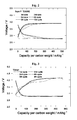
FIGs. 2 to 8 : results of measuring charging/discharging capacity of the lithium-air batteries, which are manufactured in Examples of the present invention with various conducting materials; -
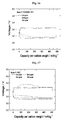
FIGs. 9 to 17 : results of measuring charging/discharging capacity of the lithium-air batteries depending on charging/discharging temperature, which are manufactured in Examples of the present invention with various electrolytes; -
FIGs. 18 to 20 : results of measuring charging/discharging capacity of the lithium-air batteries, which are manufactured in Examples of the present invention with various binders; -
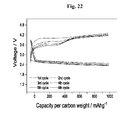
FIGs. 21 and22 : the results of measuring charging/discharging capacity of the lithium-air batteries, which are manufactured by using a lithiated tin-carbon composite electrode and a lithiated silicon-carbon composite electrode as a negative electrode. -
- 10: Positive electrode
- 20: Negative electrode
- 30: Electrolyte
- Hereinafter, Examples and Comparative Example will be described. The Examples are presented for illustrative purposes only, and do not limit the present invention.
- TGP-H-30 carbon paper (Torray Industries Inc.) as a positive electrode was coated with each electron-conducting material of the following Table 1 as an electron-conducting material. The electron-conducting material 80 wt% was mixed with
PVDF 20 wt% as a binder to prepare slurry, and coated on the TGP-H-30 carbon paper (Torray Industries Inc.) to the density of 1.0 ± 0.1 mg carbon/cm2, and then dried under vacuum at 100°C for 12 hrs to remove residual solvent.Table 1 Electron-conducting material Example 1-1 Super P Example 1-2 Vulcano carbon Example 1-3 CMK Example 1-4 CNT Example 1-5 Graphene oxide Example 1-6 Acetylene black Example 1-7 Ketjen black - A 2032 coin-type cell was manufactured by using a gas diffusion layer (GDL) coated with the electron-conducting material prepared as described above as an air electrode, lithium metal as a negative electrode, (TEGDME)4-LiCF3SO3, which was prepared by dissolving LiCF3SO3 salt in TEGDME (Aldrich) at molar ratio of 4:1, as an electrolyte and a separator (Celgard LLC, Celgard 3501) of porous polyethylene film.
- Charging/discharging capacity of the lithium-air batteries manufactured in Examples 1-1 to 1-7 was measured, and the results were shown in
FIGs. 2 to 8 . - As shown in
FIGs. 2 to 8 , the lithium-air batteries manufactured in Examples 1-1 to 1-7 showed the charging/discharging capacity of 500 mAh/g and the discharge voltage of around 2.7 V. Accordingly, it can be found that those can work enough as a battery. - TGP-H-30 carbon paper (Torray Industries Inc.) as a positive electrode was coated with Super P as an electron-conducting material with the same condition with Example 1.
- A 2032 coin-type cell was manufactured by using a gas diffusion layer (GDL) coated with the electron-conducting material prepared as described above as an air electrode, lithium metal as a negative electrode, each electrolyte of the following Table 2 as an electrolyte and a separator (Celgard LLC, Celgard 3501) of porous polyethylene film.
Table 2 Electrolyte Used Discharge Temperature Result of Measuring Charging/Discharging Characteristics Example 2-1 (TEGDME)4-LiCF3SO3 Room temperature FIG. 9 50°C FIG. 10 70°C FIG. 11 Example 2-2 PEO-(TEGDME)4-LiCF3SO3 50°C FIG. 12 70°C FIG. 13 Example 2-3 PEGDME-LiCF3SO3 Room temperature FIG. 14 50°C FIG. 15 70°C FIG. 16 Example 2-4 PEO-LiCF3SO3 70°C FIG. 17 - Charging/discharging capacity of the lithium-air batteries manufactured in Examples 2-1 to 2-4 was measured at the temperature of Table 2, and the results were shown in
FIGs. 9 to 17 . - As shown in
FIGs. 9 to 17 , when using as TEGDME an electrolyte, the charging voltage was 4.0 V and the discharging voltage was 2.7 V. Accordingly, it can be found that its charging/discharging capacity is the largest, and significantly reduced as the charging/discharging temperature increased from 50°C to 70°C. - Positive electrodes and air batteries were manufactured as described in Example 1 by using TGP-H-30 carbon paper (Torray Industries Inc.) as a positive electrode and Super P as an electron-conducting material, and mixing the Super P 80 wt% with each binder of the following Table 3 20 wt%.
Table 3 Electrolyte Used Example 3-1 PVdF Example 3-2 PEO Example 3-3 Kynar - Charging/discharging capacity of the lithium-air batteries manufactured in Examples 3-1 to 3-3 was measured, and the results were shown in
FIGs. 18 to 20 . - As shown in
FIGs. 18 to 20 , it can be found that the charging voltage and the discharging voltage vary depending on types of binders, but similar each other. - A positive electrode was manufactured as described in Example 1 by coating TGP-H-30 carbon paper (Torray Industries Inc.) as a positive electrode with Super P as an electron-conducting material.
- As a negative electrode, a lithiated tin-carbon composite electrode was used. Resorcinol (Aldrich) 28 mmol and formaldehyde (37 wt% aqueous solution, Aldrich) 120 mmol were mixed, and sodium carbonate catalyst was added to the mixture at molar ratio of 45:100 to resorcinol. The obtained mixture was stirred at 75°C for 1 hr to obtain a gel-type mixture. The obtained gel-type mixture was aged at room temperature for about 24 hrs. The aged mixture was washed with water and ethanol to remove sodium carbonate. The resulting product was soaked in tributylphenyltin (Aldrich) solution (solvent: water, Concentration: 37 wt%) for a day, and then heated under Ar atmosphere at 700°C for 2 days to manufacture a tin-carbon composite. The manufactured tin-carbon composite, Super P carbon black conducting material and polyvinylene fluoride binder were mixed at the weight ratio of 80 : 10 : 10 in N-methylpyrrolidone solvent to manufacture tin-carbon composite slurry. The tin-carbon composite slurry was casted on Cu foil, and the obtained product was dried in an 100°C oven for 2 hrs, and then vacuum dried for 12 hrs or more.
- The vacuum dried product was cut into the proper size, lithium metal was set thereon, and then an electrolyte (1.2 M LiPF6-dissolved mixture solvent of ethylene carbonate and dimethyl carbonate (3:7 volume ratio)) was evenly sprinkled on the lithium metal. Then, 0.5kg/cm2 pressure was applied on the obtained product, kept for 30 min, and then the lithium metal was carefully removed to manufacture a lithiated tin-carbon composite electrode.
- A 2032 coin-type cell was manufactured by using the Super P-coated gas diffusion layer (GDL) as an air electrode, the tin-carbon composite electrode as a negative electrode, (TEGDME)4-LiCF3SO3, which dissolving LiCF3SO3 salt in TEGDME (Aldrich) at the molar ratio of 4:1, as an electrolyte and a separator (Celgard LLC, Celgard 3501) of porous polyethylene film.
- Charging/discharging capacity of the lithium-air battery manufactured as described above was measured, and the result was shown in
FIG. 21 . - As shown in
FIG. 21 , it can be found that lithium-air battery manufactured in Example 4 showed the charging/discharging capacity of 500 mAh/g and the discharge voltage of around 2.5 V. Accordingly, it can be found that it can work enough as a battery. - The procedure of Example 4 was repeated except for using a lithiated silicon-carbon composite electrode as a negative electrode to manufacture a lithium-air battery.
- The lithiated silicon-carbon composite electrode was manufactured as follows. First of all, a silicon-graphite composite having particle size of 5 to 15 µm was prepared. The prepared silicon-graphite composite powder, Super P, CMC and SBR were mixed in NMP at the weight ratio of 85:5:3.3:6.7 to prepare slurry, and then casted on copper foil as a collector. The casted electrode was primarily dried in an 110°C oven for 2 hrs, and then secondly dried under vacuum for 12 hrs to manufacture to the form of an electrode.
- The manufactured electrode was cut into the size of 2 × 2 cm2, Li metal was stacked on the electrode, a solution, wherein 12 M LiPF6 was dissolved in EC:DMC mixed solution (3:7), was coated thereon, and then the pressure of 46 N/m2 was applied on the stacked Li metal for 30 min to manufacture the lithiated silicon-carbon composite electrode.
- A 2032 coin-type cell was manufactured by using the lithiated tin-carbon composite electrode manufactured as described above as a negative electrode and (TEGDME)4-LiCF3SO3 as an electrolyte, and then charging/discharging capacity of the manufactured lithium-air battery was measured, and the result was shown in
FIG. 22 . - The air battery of the present invention uses a low-volatility electrolyte and contains a gas diffusion-type positive electrode formed in a portion thereof contacting air. Accordingly, the battery exhibits the effect of preventing volatilization of the electrolyte, thereby enabling the battery to be used over a long period of time without safety problems and without degradation of the charging/discharging characteristics of the battery, and the effect of air flowing into the battery being provided in a quicker and more uniform manner while passing through the gas diffusion-type positive electrode, thus improving the performance of the battery.
- While the invention has been described with respect to the above specific embodiments, it should be recognized that various modifications and changes may be made and also fall within the scope of the invention as defined by the claims that follow.
Claims (17)
- A lithium-air battery comprising:a positive electrode comprising an electron-conducting material;a separator;a lithium salt-dissolved organic electrolyte; anda negative electrode, which can occlude or release lithium.
- The lithium-air battery according to claim 1, wherein the positive electrode comprises a carbon cloth, a carbon paper or a carbon felt, which is coated with an electron-conducting material, or a selective oxygen permeable membrane.
- The lithium-air battery according to claim 1, wherein the positive electrode further comprises a metal collector.
- The lithium-air battery according to claim 3, wherein the metal collector is coated with an electron-conducting material.
- The lithium-air battery according to claim 1 to 4, wherein the electron-conducting material is selected from the group consisting of: carbon materials consisting of carbon black, ketjen black, acetylene black, active carbon powder, carbon molecular sieve, carbon nanotube, carbon nanowire, activated carbon having micropores, mesoporous carbon and graphite; metal powder consisting of copper, silver, nickel and aluminum; and polyphenylene derivatives.
- The lithium-air battery according to claim 1, wherein the organic electrolyte is expressed by General Formula R1(CR3 2CR4 2O)nR2 (wherein, n is 2 to 10, R1 and R2 are each independently selected from H, alkyl, cycloalkyl, aryl, heterocyclyl, heteroaryl, alkoxy, silyl, substituted alkyl, substituted cycloalkyl, substituted aryl, substituted heterocyclyl, substituted heteroaryl, substituted alkoxy, substituted silyl and halogen).
- The lithium-air battery according to claim 6, wherein the R3 and R4 are each independently H, halogen, alkyl, cycloalkyl, aryl, substituted alkyl or substituted aryl.
- The lithium-air battery according to claim 6, wherein the organic electrolyte is polyethylene oxide, tetraethylene glycol diamine or dimethyl ether.
- The lithium-air battery according to claim 1, wherein the lithium salt is at least one selected from the group consisting of LiBF4, LiClO4, LiPF6, LiAsF6, LiCF3SO3, Li(CF3SO2)2N, LiC4F9SO3, Li(CF3SO2)3C and LiBPh4.
- The lithium-air battery according to claim 1, wherein the lithium salt is dissolved in an amount of 2 to 5 moles based on the organic electrolyte 1 mole.
- The lithium-air battery according to claim 1, wherein the positive electrode further comprises a binder selected from the group consisting of PVDF, Kynar, polyethylene oxide, polyvinyl alcohol, Teflon, CMC and SBR.
- The lithium-air battery according to claim 1, wherein the positive electrode further comprises a catalyst selected from the group consisting of Pt, Pd, Ru, Rh, Ir, Ag, Au, Ti, V, Cr, Mn, Fe, Ni, Co, Cu, Mo, W, Zr, Zn, Ce and La metals, and oxides thereof.
- The lithium-air battery according to claim 1, wherein the separator is selected from the group consisting of a polyethylene separator, a polypropylene separator or a glass fiber separator.
- The lithium-air battery according to claim 1, wherein the negative electrode is a lithium metal, a lithium metal composite treated with organic compounds or inorganic compounds, or a lithiated metal-carbon composite.
- The lithium-air battery according to claim 14, wherein the metal of the lithiated metal-carbon composite is selected from the group consisting of Mg, Ca, Al, Si, Ge, Sn, Pb, As, Bi, Ag, Au, Zn, Cd and Hg.
- The lithium-air battery according to claim 14, wherein the lithiated metal-carbon composite is a lithiated silicon-carbon composite or a lithiated tin-carbon composite.
- The lithium-air battery according to claim 14, wherein the negative electrode further comprises a binder selected from the group consisting of PVDF, Kynar, polyethylene oxide, polyvinyl alcohol, Teflon, CMC and SBR.
Applications Claiming Priority (3)
| Application Number | Priority Date | Filing Date | Title |
|---|---|---|---|
| KR20110062000 | 2011-06-24 | ||
| KR1020120068046A KR101365980B1 (en) | 2011-06-24 | 2012-06-25 | Lithium air battery |
| PCT/KR2012/005004 WO2012177104A2 (en) | 2011-06-24 | 2012-06-25 | Lithium-air battery |
Publications (3)
| Publication Number | Publication Date |
|---|---|
| EP2725653A2 true EP2725653A2 (en) | 2014-04-30 |
| EP2725653A4 EP2725653A4 (en) | 2014-12-03 |
| EP2725653B1 EP2725653B1 (en) | 2018-01-10 |
Family
ID=47834376
Family Applications (1)
| Application Number | Title | Priority Date | Filing Date |
|---|---|---|---|
| EP12802278.7A Active EP2725653B1 (en) | 2011-06-24 | 2012-06-25 | Lithium-air battery |
Country Status (5)
| Country | Link |
|---|---|
| US (1) | US20140127596A1 (en) |
| EP (1) | EP2725653B1 (en) |
| KR (1) | KR101365980B1 (en) |
| CN (1) | CN103636058A (en) |
| WO (1) | WO2012177104A2 (en) |
Cited By (1)
| Publication number | Priority date | Publication date | Assignee | Title |
|---|---|---|---|---|
| EP3188306A4 (en) * | 2014-09-03 | 2018-03-28 | IUCF-HYU (Industry-University Cooperation Foundation Hanyang University) | Lithium-air battery and method for manufacturing same |
Families Citing this family (35)
| Publication number | Priority date | Publication date | Assignee | Title |
|---|---|---|---|---|
| RU2619266C1 (en) * | 2013-09-13 | 2017-05-15 | ЭлДжи КЕМ, ЛТД. | Positive electrode for lithium-air battery and method of its preparation |
| KR20150057260A (en) * | 2013-11-19 | 2015-05-28 | 한양대학교 산학협력단 | positive active electrode for lithium air battery, and lithium air battery employing the same |
| KR101530993B1 (en) * | 2013-11-22 | 2015-06-26 | 한국전기연구원 | Lithium ion battery and cathode of lithium ion battery |
| EP3090464A4 (en) | 2014-01-02 | 2017-07-19 | Phinergy Ltd. | Hybrid metal air system and method |
| DE102014209209A1 (en) | 2014-05-15 | 2015-11-19 | Bayerische Motoren Werke Aktiengesellschaft | Lithium-air battery |
| KR101849828B1 (en) | 2014-06-13 | 2018-04-18 | 주식회사 엘지화학 | Separator for metal air battery, metal air battery including the same, manufacturing method of separator for metal air battery and manufacturing method of metal air battery |
| CN103996892A (en) * | 2014-06-17 | 2014-08-20 | 常州盈华高科储能材料科技有限公司 | Ether electrolyte and lithium air battery |
| JP6436085B2 (en) * | 2014-07-15 | 2018-12-12 | 東レ株式会社 | Electrode material for metal-air battery |
| WO2016044857A1 (en) * | 2014-09-15 | 2016-03-24 | Powermers Inc. | Metal air energy storage device |
| KR101804005B1 (en) | 2014-10-17 | 2017-12-04 | 주식회사 엘지화학 | Cathode for lithium air battery, method for manufacturing the same and lithium air battery comprising the same |
| KR101684015B1 (en) * | 2014-12-05 | 2016-12-07 | 현대자동차주식회사 | An anode of lithium-air battery and a method for producing thereof |
| KR101790840B1 (en) * | 2015-01-21 | 2017-10-26 | 주식회사 엘지화학 | Lithium air battery |
| US9553316B2 (en) | 2015-03-24 | 2017-01-24 | Uchicago Argonne, Llc | Lithium-oxygen batteries incorporating lithium superoxide |
| KR101891865B1 (en) | 2015-04-27 | 2018-09-28 | 주식회사 엘지화학 | The acrylic binder using lithium air battery cathode |
| KR102409386B1 (en) | 2015-07-08 | 2022-06-15 | 삼성전자주식회사 | Metal air battery system and method for operating the same |
| CN107534118B (en) | 2015-08-14 | 2020-06-05 | 株式会社Lg 化学 | Lithium air battery and method for manufacturing same |
| KR102050833B1 (en) | 2015-10-30 | 2019-12-02 | 주식회사 엘지화학 | Separator for Metal-Air Battery, Metal-Air Battery including The Same |
| RU2618232C1 (en) | 2015-12-28 | 2017-05-03 | Пауэрмерс Инк. | Cathode for metal-air current sources and metal-air current source, including such cathode |
| KR20170095020A (en) * | 2016-02-12 | 2017-08-22 | 주식회사 이엠따블유에너지 | Air-Zinc secondary battery |
| CN106299552A (en) * | 2016-10-19 | 2017-01-04 | 南昌大学 | The preparation method of graphitized carbon nano pipe flexible membrane lithium-air battery |
| KR102359583B1 (en) * | 2017-05-08 | 2022-02-07 | 현대자동차주식회사 | A method for preparing a solid electrolyte and an all solid state battery comprising the same |
| CN107317060B (en) * | 2017-05-11 | 2020-12-01 | 中国科学院合肥物质科学研究院 | A kind of charging method of metal-air battery and battery using the charging method |
| KR102298970B1 (en) | 2017-07-03 | 2021-09-06 | 현대자동차주식회사 | A cathode of a lithium-air battery, a lithium-air battery including the same, and fabrication method of the anode of the lithium-air battery |
| WO2019029815A1 (en) * | 2017-08-10 | 2019-02-14 | Bayerische Motoren Werke Aktiengesellschaft | Low-polarization lithium oxygen battery |
| CN107611478B (en) * | 2017-08-20 | 2019-10-11 | 桂林理工大学 | A kind of assemble method of conductive rubber electrolyte lithium air cell |
| CN107863494A (en) * | 2017-10-25 | 2018-03-30 | 北京理工大学 | A kind of Its Preparation Method And Use of flexible gas electrode for lithium-air battery |
| KR102440691B1 (en) | 2017-11-02 | 2022-09-05 | 현대자동차주식회사 | The fabrication method of cathode for the metal air battery |
| US10734636B2 (en) | 2017-12-29 | 2020-08-04 | The Florida International University Board Of Trustees | Battery cathodes for improved stability |
| US11038160B2 (en) * | 2017-12-29 | 2021-06-15 | The Florida International University Board Of Trustees | Battery cathodes for improved stability |
| KR102750641B1 (en) | 2018-11-05 | 2025-01-06 | 현대자동차주식회사 | Method of manufacturing cathod complex for litium air battery, method of manufacturing litium air battery using the same and litium air battery manufactured by the same |
| CN111200161B (en) * | 2018-11-16 | 2021-05-25 | 中国科学院上海硅酸盐研究所 | A kind of electrolyte for lithium-air battery or lithium-lithium symmetrical battery |
| CN111276740B (en) * | 2018-12-05 | 2021-05-25 | 中国科学院上海硅酸盐研究所 | Electrolyte for lithium-air battery or lithium-copper battery |
| JP7663988B2 (en) * | 2020-11-13 | 2025-04-17 | ザ フロリダ インターナショナル ユニヴァーシティー ボード オブ トラスティーズ | Battery cathode with improved stability |
| KR102576174B1 (en) | 2021-07-12 | 2023-09-07 | 원광대학교산학협력단 | Electrolyte preservation type zinc air battery |
| CN114307952B (en) * | 2021-12-24 | 2024-10-08 | 哈尔滨工业大学 | Oxygen absorption and desorption material and preparation method thereof and fully enclosed lithium-air battery |
Family Cites Families (13)
| Publication number | Priority date | Publication date | Assignee | Title |
|---|---|---|---|---|
| JP4223705B2 (en) | 2001-09-25 | 2009-02-12 | 株式会社東芝 | Nonaqueous electrolyte battery and manufacturing method thereof |
| US20040241537A1 (en) * | 2003-03-28 | 2004-12-02 | Tetsuo Okuyama | Air battery |
| CN100562353C (en) * | 2004-10-21 | 2009-11-25 | 松下电器产业株式会社 | Oxygen permeable membrane, oxygen permeable sheet and battery comprising the same |
| JP5023936B2 (en) * | 2006-10-06 | 2012-09-12 | 株式会社豊田中央研究所 | Cathode catalyst and lithium-air secondary battery |
| US8828481B2 (en) * | 2007-04-23 | 2014-09-09 | Applied Sciences, Inc. | Method of depositing silicon on carbon materials and forming an anode for use in lithium ion batteries |
| GB0712503D0 (en) * | 2007-06-27 | 2007-08-08 | Therapeutics Pentraxin Ltd | Use |
| US20090053594A1 (en) * | 2007-08-23 | 2009-02-26 | Johnson Lonnie G | Rechargeable air battery and manufacturing method |
| JP5184212B2 (en) * | 2008-05-26 | 2013-04-17 | 日本電信電話株式会社 | Lithium air secondary battery and lithium air secondary battery manufacturing method |
| RO125468B1 (en) * | 2008-11-25 | 2010-08-30 | Vasile Comşa | Installation for the extraction of crude oil from a well by using some absorbent bands |
| JP5062322B2 (en) * | 2008-11-27 | 2012-10-31 | トヨタ自動車株式会社 | Air secondary battery |
| US20110129739A1 (en) * | 2008-11-27 | 2011-06-02 | Toyota Jidosha Kabushiki Kaisha | Air secondary battery |
| US8481187B2 (en) * | 2009-09-10 | 2013-07-09 | Battelle Memorial Institute | High-energy metal air batteries |
| JP2011096492A (en) * | 2009-10-29 | 2011-05-12 | Sony Corp | Lithium air battery |
-
2012
- 2012-06-25 KR KR1020120068046A patent/KR101365980B1/en not_active Expired - Fee Related
- 2012-06-25 EP EP12802278.7A patent/EP2725653B1/en active Active
- 2012-06-25 US US14/129,096 patent/US20140127596A1/en not_active Abandoned
- 2012-06-25 CN CN201280031166.9A patent/CN103636058A/en active Pending
- 2012-06-25 WO PCT/KR2012/005004 patent/WO2012177104A2/en not_active Ceased
Cited By (1)
| Publication number | Priority date | Publication date | Assignee | Title |
|---|---|---|---|---|
| EP3188306A4 (en) * | 2014-09-03 | 2018-03-28 | IUCF-HYU (Industry-University Cooperation Foundation Hanyang University) | Lithium-air battery and method for manufacturing same |
Also Published As
| Publication number | Publication date |
|---|---|
| WO2012177104A3 (en) | 2013-03-28 |
| CN103636058A (en) | 2014-03-12 |
| KR101365980B1 (en) | 2014-02-24 |
| WO2012177104A2 (en) | 2012-12-27 |
| EP2725653B1 (en) | 2018-01-10 |
| KR20130001170A (en) | 2013-01-03 |
| EP2725653A4 (en) | 2014-12-03 |
| US20140127596A1 (en) | 2014-05-08 |
Similar Documents
| Publication | Publication Date | Title |
|---|---|---|
| EP2725653B1 (en) | Lithium-air battery | |
| US10439227B2 (en) | Cathode, lithium air battery including same, and preparation method thereof | |
| KR101851317B1 (en) | porous carbonaceous composite material, cathode and lithium air battery comprsing the material, and preparation method thereof | |
| KR101902926B1 (en) | Porous carbonaceous composite material, cathode and lithium air battery comprising the composite material, and method of preparing the composite material | |
| KR100493960B1 (en) | Preparation method for porous silicon and nano-sized silicon powder, and application for anode material in lithium secondary batteries | |
| KR101558535B1 (en) | Negative active material negative electrode comrprising same method of preparing negative electrodee and lithium battery | |
| KR101494715B1 (en) | Negative active material for rechargeable lithium battery, method of preparing the same, and negative electrode and rechargeable lithium battery including the same | |
| KR101338142B1 (en) | Lithium air battery | |
| KR101181851B1 (en) | Active material for rechargeable lithium battery and rechargeable lithium battery | |
| KR101264332B1 (en) | Cathode active material and lithium battery using the same | |
| KR101539843B1 (en) | Anode Active Material of High Density and Methode for Preparation of The Same | |
| KR101790840B1 (en) | Lithium air battery | |
| JP2016504176A (en) | Method for producing a carbon-supported nickel-cobalt-oxide catalyst and its use in a rechargeable electrochemical metal-oxygen cell | |
| JPWO2008018633A1 (en) | COMPOUND HAVING ORIBIN STRUCTURE, PROCESS FOR PRODUCING THE SAME, POSITIVE ACTIVE MATERIAL USING COMPOUND HAVING ORIBIN STRUCTURE AND NON-AQUEOUS ELECTROLYTE BATTERY | |
| JP4855399B2 (en) | Electrode active material for lithium secondary battery | |
| JPWO2016132932A1 (en) | Catalyst for oxygen reduction reaction and air electrode for metal-air secondary battery | |
| KR101666872B1 (en) | Positive electrode active material and method of manufacturing the same, and rechargeable lithium battery including the positive electrode active material | |
| JP2002042812A (en) | Positive active material for lithium secondary battery and lithium secondary battery using the same | |
| KR102415160B1 (en) | Positive electrode active material for lithium secondary battery including vanadium oxide coated with carbon and method for preparing the same | |
| JP2018041710A (en) | Active material-carbon material composite, positive electrode for nonaqueous electrolyte secondary battery, nonaqueous electrolyte secondary battery, and carbon material | |
| JP5765810B2 (en) | Cathode active material for lithium ion battery and method for producing the same | |
| JP5643182B2 (en) | Lithium-air secondary battery and method for producing air electrode thereof | |
| JP5825573B2 (en) | Cathode active material for lithium ion battery and method for producing the same | |
| KR20250135760A (en) | Composite comprising lithium-vanadium oxide and carbon nanotubes, manufacturing method thereof and energy storage devicecomprising same | |
| JP2018156823A (en) | Cathode active material, and cathode and lithium ion secondary battery using the same |
Legal Events
| Date | Code | Title | Description |
|---|---|---|---|
| PUAI | Public reference made under article 153(3) epc to a published international application that has entered the european phase |
Free format text: ORIGINAL CODE: 0009012 |
|
| 17P | Request for examination filed |
Effective date: 20140124 |
|
| AK | Designated contracting states |
Kind code of ref document: A2 Designated state(s): AL AT BE BG CH CY CZ DE DK EE ES FI FR GB GR HR HU IE IS IT LI LT LU LV MC MK MT NL NO PL PT RO RS SE SI SK SM TR |
|
| AX | Request for extension of the european patent |
Extension state: BA ME |
|
| A4 | Supplementary search report drawn up and despatched |
Effective date: 20141104 |
|
| RIC1 | Information provided on ipc code assigned before grant |
Ipc: H01M 4/66 20060101ALN20141029BHEP Ipc: H01M 12/08 20060101AFI20141029BHEP Ipc: H01M 4/86 20060101ALN20141029BHEP Ipc: H01M 4/38 20060101ALI20141029BHEP Ipc: H01M 4/96 20060101ALI20141029BHEP |
|
| 17Q | First examination report despatched |
Effective date: 20151019 |
|
| REG | Reference to a national code |
Ref country code: DE Ref legal event code: R079 Ref document number: 602012041869 Country of ref document: DE Free format text: PREVIOUS MAIN CLASS: H01M0012060000 Ipc: H01M0004380000 |
|
| GRAP | Despatch of communication of intention to grant a patent |
Free format text: ORIGINAL CODE: EPIDOSNIGR1 |
|
| RIC1 | Information provided on ipc code assigned before grant |
Ipc: H01M 4/86 20060101ALN20170803BHEP Ipc: H01M 12/06 20060101ALI20170803BHEP Ipc: H01M 4/96 20060101ALI20170803BHEP Ipc: H01M 4/38 20060101AFI20170803BHEP Ipc: H01M 12/08 20060101ALI20170803BHEP Ipc: H01M 4/66 20060101ALN20170803BHEP |
|
| INTG | Intention to grant announced |
Effective date: 20170905 |
|
| GRAS | Grant fee paid |
Free format text: ORIGINAL CODE: EPIDOSNIGR3 |
|
| GRAA | (expected) grant |
Free format text: ORIGINAL CODE: 0009210 |
|
| AK | Designated contracting states |
Kind code of ref document: B1 Designated state(s): AL AT BE BG CH CY CZ DE DK EE ES FI FR GB GR HR HU IE IS IT LI LT LU LV MC MK MT NL NO PL PT RO RS SE SI SK SM TR |
|
| AX | Request for extension of the european patent |
Extension state: BA ME |
|
| REG | Reference to a national code |
Ref country code: CH Ref legal event code: EP Ref country code: AT Ref legal event code: REF Ref document number: 963342 Country of ref document: AT Kind code of ref document: T Effective date: 20180115 |
|
| REG | Reference to a national code |
Ref country code: IE Ref legal event code: FG4D |
|
| REG | Reference to a national code |
Ref country code: DE Ref legal event code: R096 Ref document number: 602012041869 Country of ref document: DE |
|
| REG | Reference to a national code |
Ref country code: NL Ref legal event code: MP Effective date: 20180110 |
|
| REG | Reference to a national code |
Ref country code: AT Ref legal event code: MK05 Ref document number: 963342 Country of ref document: AT Kind code of ref document: T Effective date: 20180110 |
|
| PG25 | Lapsed in a contracting state [announced via postgrant information from national office to epo] |
Ref country code: NL Free format text: LAPSE BECAUSE OF FAILURE TO SUBMIT A TRANSLATION OF THE DESCRIPTION OR TO PAY THE FEE WITHIN THE PRESCRIBED TIME-LIMIT Effective date: 20180110 |
|
| PG25 | Lapsed in a contracting state [announced via postgrant information from national office to epo] |
Ref country code: ES Free format text: LAPSE BECAUSE OF FAILURE TO SUBMIT A TRANSLATION OF THE DESCRIPTION OR TO PAY THE FEE WITHIN THE PRESCRIBED TIME-LIMIT Effective date: 20180110 Ref country code: CY Free format text: LAPSE BECAUSE OF FAILURE TO SUBMIT A TRANSLATION OF THE DESCRIPTION OR TO PAY THE FEE WITHIN THE PRESCRIBED TIME-LIMIT Effective date: 20180110 Ref country code: FI Free format text: LAPSE BECAUSE OF FAILURE TO SUBMIT A TRANSLATION OF THE DESCRIPTION OR TO PAY THE FEE WITHIN THE PRESCRIBED TIME-LIMIT Effective date: 20180110 Ref country code: NO Free format text: LAPSE BECAUSE OF FAILURE TO SUBMIT A TRANSLATION OF THE DESCRIPTION OR TO PAY THE FEE WITHIN THE PRESCRIBED TIME-LIMIT Effective date: 20180410 Ref country code: HR Free format text: LAPSE BECAUSE OF FAILURE TO SUBMIT A TRANSLATION OF THE DESCRIPTION OR TO PAY THE FEE WITHIN THE PRESCRIBED TIME-LIMIT Effective date: 20180110 Ref country code: LT Free format text: LAPSE BECAUSE OF FAILURE TO SUBMIT A TRANSLATION OF THE DESCRIPTION OR TO PAY THE FEE WITHIN THE PRESCRIBED TIME-LIMIT Effective date: 20180110 |
|
| PG25 | Lapsed in a contracting state [announced via postgrant information from national office to epo] |
Ref country code: AT Free format text: LAPSE BECAUSE OF FAILURE TO SUBMIT A TRANSLATION OF THE DESCRIPTION OR TO PAY THE FEE WITHIN THE PRESCRIBED TIME-LIMIT Effective date: 20180110 Ref country code: RS Free format text: LAPSE BECAUSE OF FAILURE TO SUBMIT A TRANSLATION OF THE DESCRIPTION OR TO PAY THE FEE WITHIN THE PRESCRIBED TIME-LIMIT Effective date: 20180110 Ref country code: BG Free format text: LAPSE BECAUSE OF FAILURE TO SUBMIT A TRANSLATION OF THE DESCRIPTION OR TO PAY THE FEE WITHIN THE PRESCRIBED TIME-LIMIT Effective date: 20180410 Ref country code: GR Free format text: LAPSE BECAUSE OF FAILURE TO SUBMIT A TRANSLATION OF THE DESCRIPTION OR TO PAY THE FEE WITHIN THE PRESCRIBED TIME-LIMIT Effective date: 20180411 Ref country code: IS Free format text: LAPSE BECAUSE OF FAILURE TO SUBMIT A TRANSLATION OF THE DESCRIPTION OR TO PAY THE FEE WITHIN THE PRESCRIBED TIME-LIMIT Effective date: 20180510 Ref country code: SE Free format text: LAPSE BECAUSE OF FAILURE TO SUBMIT A TRANSLATION OF THE DESCRIPTION OR TO PAY THE FEE WITHIN THE PRESCRIBED TIME-LIMIT Effective date: 20180110 Ref country code: LV Free format text: LAPSE BECAUSE OF FAILURE TO SUBMIT A TRANSLATION OF THE DESCRIPTION OR TO PAY THE FEE WITHIN THE PRESCRIBED TIME-LIMIT Effective date: 20180110 Ref country code: PL Free format text: LAPSE BECAUSE OF FAILURE TO SUBMIT A TRANSLATION OF THE DESCRIPTION OR TO PAY THE FEE WITHIN THE PRESCRIBED TIME-LIMIT Effective date: 20180110 |
|
| REG | Reference to a national code |
Ref country code: DE Ref legal event code: R097 Ref document number: 602012041869 Country of ref document: DE |
|
| PG25 | Lapsed in a contracting state [announced via postgrant information from national office to epo] |
Ref country code: IT Free format text: LAPSE BECAUSE OF FAILURE TO SUBMIT A TRANSLATION OF THE DESCRIPTION OR TO PAY THE FEE WITHIN THE PRESCRIBED TIME-LIMIT Effective date: 20180110 Ref country code: RO Free format text: LAPSE BECAUSE OF FAILURE TO SUBMIT A TRANSLATION OF THE DESCRIPTION OR TO PAY THE FEE WITHIN THE PRESCRIBED TIME-LIMIT Effective date: 20180110 Ref country code: EE Free format text: LAPSE BECAUSE OF FAILURE TO SUBMIT A TRANSLATION OF THE DESCRIPTION OR TO PAY THE FEE WITHIN THE PRESCRIBED TIME-LIMIT Effective date: 20180110 Ref country code: AL Free format text: LAPSE BECAUSE OF FAILURE TO SUBMIT A TRANSLATION OF THE DESCRIPTION OR TO PAY THE FEE WITHIN THE PRESCRIBED TIME-LIMIT Effective date: 20180110 |
|
| PLBE | No opposition filed within time limit |
Free format text: ORIGINAL CODE: 0009261 |
|
| STAA | Information on the status of an ep patent application or granted ep patent |
Free format text: STATUS: NO OPPOSITION FILED WITHIN TIME LIMIT |
|
| PG25 | Lapsed in a contracting state [announced via postgrant information from national office to epo] |
Ref country code: DK Free format text: LAPSE BECAUSE OF FAILURE TO SUBMIT A TRANSLATION OF THE DESCRIPTION OR TO PAY THE FEE WITHIN THE PRESCRIBED TIME-LIMIT Effective date: 20180110 Ref country code: SM Free format text: LAPSE BECAUSE OF FAILURE TO SUBMIT A TRANSLATION OF THE DESCRIPTION OR TO PAY THE FEE WITHIN THE PRESCRIBED TIME-LIMIT Effective date: 20180110 Ref country code: SK Free format text: LAPSE BECAUSE OF FAILURE TO SUBMIT A TRANSLATION OF THE DESCRIPTION OR TO PAY THE FEE WITHIN THE PRESCRIBED TIME-LIMIT Effective date: 20180110 Ref country code: CZ Free format text: LAPSE BECAUSE OF FAILURE TO SUBMIT A TRANSLATION OF THE DESCRIPTION OR TO PAY THE FEE WITHIN THE PRESCRIBED TIME-LIMIT Effective date: 20180110 |
|
| 26N | No opposition filed |
Effective date: 20181011 |
|
| REG | Reference to a national code |
Ref country code: CH Ref legal event code: PL |
|
| GBPC | Gb: european patent ceased through non-payment of renewal fee |
Effective date: 20180625 |
|
| PG25 | Lapsed in a contracting state [announced via postgrant information from national office to epo] |
Ref country code: SI Free format text: LAPSE BECAUSE OF FAILURE TO SUBMIT A TRANSLATION OF THE DESCRIPTION OR TO PAY THE FEE WITHIN THE PRESCRIBED TIME-LIMIT Effective date: 20180110 |
|
| REG | Reference to a national code |
Ref country code: BE Ref legal event code: MM Effective date: 20180630 |
|
| REG | Reference to a national code |
Ref country code: IE Ref legal event code: MM4A |
|
| PG25 | Lapsed in a contracting state [announced via postgrant information from national office to epo] |
Ref country code: MC Free format text: LAPSE BECAUSE OF FAILURE TO SUBMIT A TRANSLATION OF THE DESCRIPTION OR TO PAY THE FEE WITHIN THE PRESCRIBED TIME-LIMIT Effective date: 20180110 Ref country code: LU Free format text: LAPSE BECAUSE OF NON-PAYMENT OF DUE FEES Effective date: 20180625 |
|
| PG25 | Lapsed in a contracting state [announced via postgrant information from national office to epo] |
Ref country code: IE Free format text: LAPSE BECAUSE OF NON-PAYMENT OF DUE FEES Effective date: 20180625 Ref country code: LI Free format text: LAPSE BECAUSE OF NON-PAYMENT OF DUE FEES Effective date: 20180630 Ref country code: FR Free format text: LAPSE BECAUSE OF NON-PAYMENT OF DUE FEES Effective date: 20180630 Ref country code: GB Free format text: LAPSE BECAUSE OF NON-PAYMENT OF DUE FEES Effective date: 20180625 Ref country code: CH Free format text: LAPSE BECAUSE OF NON-PAYMENT OF DUE FEES Effective date: 20180630 |
|
| PG25 | Lapsed in a contracting state [announced via postgrant information from national office to epo] |
Ref country code: BE Free format text: LAPSE BECAUSE OF NON-PAYMENT OF DUE FEES Effective date: 20180630 |
|
| PGFP | Annual fee paid to national office [announced via postgrant information from national office to epo] |
Ref country code: DE Payment date: 20190405 Year of fee payment: 8 |
|
| REG | Reference to a national code |
Ref country code: DE Ref legal event code: R082 Ref document number: 602012041869 Country of ref document: DE Representative=s name: MUELLER FOTTNER STEINECKE RECHTSANWALTS- UND P, DE Ref country code: DE Ref legal event code: R082 Ref document number: 602012041869 Country of ref document: DE Representative=s name: WITTHOFF JAEKEL STEINECKE PATENTANWAELTE PARTG, DE |
|
| REG | Reference to a national code |
Ref country code: DE Ref legal event code: R082 Ref document number: 602012041869 Country of ref document: DE Representative=s name: WITTHOFF JAEKEL STEINECKE PATENTANWAELTE PARTG, DE |
|
| PG25 | Lapsed in a contracting state [announced via postgrant information from national office to epo] |
Ref country code: MT Free format text: LAPSE BECAUSE OF NON-PAYMENT OF DUE FEES Effective date: 20180625 |
|
| PG25 | Lapsed in a contracting state [announced via postgrant information from national office to epo] |
Ref country code: TR Free format text: LAPSE BECAUSE OF FAILURE TO SUBMIT A TRANSLATION OF THE DESCRIPTION OR TO PAY THE FEE WITHIN THE PRESCRIBED TIME-LIMIT Effective date: 20180110 |
|
| PG25 | Lapsed in a contracting state [announced via postgrant information from national office to epo] |
Ref country code: PT Free format text: LAPSE BECAUSE OF FAILURE TO SUBMIT A TRANSLATION OF THE DESCRIPTION OR TO PAY THE FEE WITHIN THE PRESCRIBED TIME-LIMIT Effective date: 20180110 Ref country code: HU Free format text: LAPSE BECAUSE OF FAILURE TO SUBMIT A TRANSLATION OF THE DESCRIPTION OR TO PAY THE FEE WITHIN THE PRESCRIBED TIME-LIMIT; INVALID AB INITIO Effective date: 20120625 |
|
| PG25 | Lapsed in a contracting state [announced via postgrant information from national office to epo] |
Ref country code: MK Free format text: LAPSE BECAUSE OF NON-PAYMENT OF DUE FEES Effective date: 20180110 |
|
| REG | Reference to a national code |
Ref country code: DE Ref legal event code: R119 Ref document number: 602012041869 Country of ref document: DE |
|
| PG25 | Lapsed in a contracting state [announced via postgrant information from national office to epo] |
Ref country code: DE Free format text: LAPSE BECAUSE OF NON-PAYMENT OF DUE FEES Effective date: 20210101 |