EP2724775A1 - Method for the production of micro-, sub-micro- and nano-capsules, based on milk serum proteins - Google Patents
Method for the production of micro-, sub-micro- and nano-capsules, based on milk serum proteins Download PDFInfo
- Publication number
- EP2724775A1 EP2724775A1 EP12802201.9A EP12802201A EP2724775A1 EP 2724775 A1 EP2724775 A1 EP 2724775A1 EP 12802201 A EP12802201 A EP 12802201A EP 2724775 A1 EP2724775 A1 EP 2724775A1
- Authority
- EP
- European Patent Office
- Prior art keywords
- capsules
- electro
- spraying
- spinning
- milk
- Prior art date
- Legal status (The legal status is an assumption and is not a legal conclusion. Google has not performed a legal analysis and makes no representation as to the accuracy of the status listed.)
- Granted
Links
Images


Classifications
-
- B—PERFORMING OPERATIONS; TRANSPORTING
- B01—PHYSICAL OR CHEMICAL PROCESSES OR APPARATUS IN GENERAL
- B01J—CHEMICAL OR PHYSICAL PROCESSES, e.g. CATALYSIS OR COLLOID CHEMISTRY; THEIR RELEVANT APPARATUS
- B01J13/00—Colloid chemistry, e.g. the production of colloidal materials or their solutions, not otherwise provided for; Making microcapsules or microballoons
- B01J13/02—Making microcapsules or microballoons
- B01J13/04—Making microcapsules or microballoons by physical processes, e.g. drying, spraying
- B01J13/043—Drying and spraying
-
- A—HUMAN NECESSITIES
- A23—FOODS OR FOODSTUFFS; TREATMENT THEREOF, NOT COVERED BY OTHER CLASSES
- A23L—FOODS, FOODSTUFFS OR NON-ALCOHOLIC BEVERAGES, NOT OTHERWISE PROVIDED FOR; PREPARATION OR TREATMENT THEREOF
- A23L33/00—Modifying nutritive qualities of foods; Dietetic products; Preparation or treatment thereof
- A23L33/10—Modifying nutritive qualities of foods; Dietetic products; Preparation or treatment thereof using additives
- A23L33/105—Plant extracts, their artificial duplicates or their derivatives
-
- A—HUMAN NECESSITIES
- A23—FOODS OR FOODSTUFFS; TREATMENT THEREOF, NOT COVERED BY OTHER CLASSES
- A23L—FOODS, FOODSTUFFS OR NON-ALCOHOLIC BEVERAGES, NOT OTHERWISE PROVIDED FOR; PREPARATION OR TREATMENT THEREOF
- A23L33/00—Modifying nutritive qualities of foods; Dietetic products; Preparation or treatment thereof
- A23L33/10—Modifying nutritive qualities of foods; Dietetic products; Preparation or treatment thereof using additives
- A23L33/135—Bacteria or derivatives thereof, e.g. probiotics
-
- A—HUMAN NECESSITIES
- A23—FOODS OR FOODSTUFFS; TREATMENT THEREOF, NOT COVERED BY OTHER CLASSES
- A23P—SHAPING OR WORKING OF FOODSTUFFS, NOT FULLY COVERED BY A SINGLE OTHER SUBCLASS
- A23P10/00—Shaping or working of foodstuffs characterised by the products
- A23P10/30—Encapsulation of particles, e.g. foodstuff additives
-
- A—HUMAN NECESSITIES
- A61—MEDICAL OR VETERINARY SCIENCE; HYGIENE
- A61K—PREPARATIONS FOR MEDICAL, DENTAL OR TOILETRY PURPOSES
- A61K9/00—Medicinal preparations characterised by special physical form
- A61K9/48—Preparations in capsules, e.g. of gelatin, of chocolate
- A61K9/50—Microcapsules having a gas, liquid or semi-solid filling; Solid microparticles or pellets surrounded by a distinct coating layer, e.g. coated microspheres, coated drug crystals
- A61K9/5005—Wall or coating material
- A61K9/5021—Organic macromolecular compounds
- A61K9/5052—Proteins, e.g. albumin
-
- B—PERFORMING OPERATIONS; TRANSPORTING
- B01—PHYSICAL OR CHEMICAL PROCESSES OR APPARATUS IN GENERAL
- B01J—CHEMICAL OR PHYSICAL PROCESSES, e.g. CATALYSIS OR COLLOID CHEMISTRY; THEIR RELEVANT APPARATUS
- B01J13/00—Colloid chemistry, e.g. the production of colloidal materials or their solutions, not otherwise provided for; Making microcapsules or microballoons
- B01J13/02—Making microcapsules or microballoons
-
- B—PERFORMING OPERATIONS; TRANSPORTING
- B01—PHYSICAL OR CHEMICAL PROCESSES OR APPARATUS IN GENERAL
- B01J—CHEMICAL OR PHYSICAL PROCESSES, e.g. CATALYSIS OR COLLOID CHEMISTRY; THEIR RELEVANT APPARATUS
- B01J13/00—Colloid chemistry, e.g. the production of colloidal materials or their solutions, not otherwise provided for; Making microcapsules or microballoons
- B01J13/02—Making microcapsules or microballoons
- B01J13/04—Making microcapsules or microballoons by physical processes, e.g. drying, spraying
-
- A—HUMAN NECESSITIES
- A23—FOODS OR FOODSTUFFS; TREATMENT THEREOF, NOT COVERED BY OTHER CLASSES
- A23V—INDEXING SCHEME RELATING TO FOODS, FOODSTUFFS OR NON-ALCOHOLIC BEVERAGES AND LACTIC OR PROPIONIC ACID BACTERIA USED IN FOODSTUFFS OR FOOD PREPARATION
- A23V2002/00—Food compositions, function of food ingredients or processes for food or foodstuffs
-
- A—HUMAN NECESSITIES
- A61—MEDICAL OR VETERINARY SCIENCE; HYGIENE
- A61K—PREPARATIONS FOR MEDICAL, DENTAL OR TOILETRY PURPOSES
- A61K38/00—Medicinal preparations containing peptides
Definitions
- the present invention relates to a method for the production of micro-, sub-micro- and nano-capsules based on milk serum proteins. These micro-, sub-micro- and nano-capsules produced may be used as encapsulation vehicles for ingredients with added value and functional additives, to be used in multi-sector applications, including food and pharmaceutical preparations.
- electro-spinning and electro-spraying techniques electro-spinning and electro-spraying at high-voltage
- blow-spinning and blow-spraying techniques spinning and spraying by means of blowing
- encapsulates with controlled morphology such as micron and submicron range fibres and/or capsules by means of the action of an external electrical field applied between two electrodes or a pressurized fluid flow, to which the polymeric solution is subjected.
- the blow spinning/spraying technique does not even require the use of electrical fields. It is therefore based on applying a pressurized gas at high speed in order to produce the micro- and nano-structures. These processes do not require the use of temperature.
- the morphology of the structures produced by means of these spinning techniques may be modified by setting the parameters of the process, and for a certain material, very small capsules may be obtained (process known as "spraying” owing to the discontinuous nature of the structures obtained).
- the present invention proposes the use of products based on milk serum proteins and the mixture thereof with other biopolymers, in order to develop micro- (over one micron) submicro- (under one micron, up to 100 nanometres) and nano-capsules (between 1 and 100 nanometres), which serve to protect substances with added value.
- the present invention describes a method for obtaining said capsules, without the technical inconvenience of using high temperatures and pressures, organic solvents or other relatively harsh conditions, which might affect stability and by means of which ingredients sensitive to environmental conditions may be encapsulated, for which encapsulation is a valuable protection process.
- a first aspect of the present invention refers to a method for obtaining capsuled from milk serum proteins, comprising the following steps:
- the protein preparation is based on a milk protein concentrate from mammal or soy.
- a milk protein concentrate from mammal or soy.
- cow's, sheep, goat or soy milk Preferably, from cow's, sheep, goat or soy milk, and even more preferably from cow.
- the solvent of step a) is selected from water or milk or high polar solvents, such as alcohols or mixtures thereof.
- the percentage by weight of the proteins in the solution varies from 0.1 to 99 %, preferably between 10 and 70 %.
- the ingredients are selected from the group formed by antioxidants (vitamin C, vitamin E, carotenoids, phenolic compounds such as flavonoids and resveratrol) and natural or synthetic antioxidant concentrates or isolates, biological organisms such as cells of biomedical value and probiotics (lactic bacteria, bifidobacteria), prebiotics (lactulose, galacto-oligosaccharides, fructo-oligosaccharides, malto-oligosaccharides, xylo-oligosaccharides and oligosaccharides from soy), symbiotics, fibres, oleic acid, polyunsaturated fatty acids (omega-3 and omega-6) and other marine oils, phytosterols, phytoestrogens, ingredients of a protein based nature (DNA and its derivatives, lactoferrin, ovotransferrin, lactoperoxidase, lysozyme, soy protein, immunoglobulin, bioactive antioxidants (vitamin C
- the ingredients are more preferably selected from the group formed by:
- biopolymers selected from the following list: carbohydrates, other proteins and lipids, are added in step a) in order to produce mixtures that improve stability and protection of the encapsulated functional ingredients.
- additives selected from the following list: plasticizers, crosslinking agents, surfactants, acids, alkalis, emulsifiers, antioxidants, processing aids in general or any mixture thereof or others which facilitate capsule formation or the incorporation of the ingredients to be encapsulated, are added to step a.
- a homogenizing step by means of stirring and/or ultrasound is performed after step b).
- Stirring may be vigorous so as to facilitate the dispersion of the ingredient to be encapsulated and/or of the additives in the biopolymeric matrix (milk serum protein concentrate).
- step c) is performed at a distance of between 0.1 and 200 cm between the capillary and the support and more preferably, of between 2 and 50 cm.
- the deposition rate is between 0.001 and 100 ml/h and, more preferably between 0.01 and 10 ml/h.
- step c) the electro-spinning or electro-spraying is performed by applying a voltage of between 0.1 and 1000 kV and, more preferably of between 5 and 30 kV.
- step c) the blow spinning or blow spraying is performed using a pressurized gas flow of between 50 and 1000 m/s and, more preferably of between 200 and 300 m/s.
- a second aspect of the present invention refers to the capsules produced by means of the method described above.
- a third aspect of the present invention refers to a functional food comprising the capsules with the functional ingredients, obtained by means of the method described above.
- a fourth aspect of the present invention refers to a pharmaceutical or biomedical composition comprising the capsules with the ingredients, obtained by means of the method described above.
- a fifth aspect of the present invention refers to a chemical composition (e.g. fertilizers, phytosanitaries, antimicrobials, anti-odour, fragrances, active agents and for products suspended or dispersed in non-polar solvents), comprising the capsules with the ingredients obtained by means of the method described above.
- a chemical composition e.g. fertilizers, phytosanitaries, antimicrobials, anti-odour, fragrances, active agents and for products suspended or dispersed in non-polar solvents
- a sixth aspect of the present invention refers to a nutraceutical composition
- a nutraceutical composition comprising the capsules with the ingredients obtained by means of the method described above.
- a seventh aspect of the present invention refers to a functional container comprising the capsules with the ingredients obtained by means of the procedure described above.
- An eighth aspect of the present invention refers to the use of the capsules obtained by means of the method described above, for the incorporation thereof in pharmaceutical, biomedical, chemical, nutraceutical or food compositions or in functional containers.
- the electro-spinning/electro-spraying techniques refer to a technology based on applying high electrical fields to produce electrically charged fluids from viscoelastic polymeric solutions, which, upon drying, produce micro-fibres, nano-fibres and nano-capsules, respectively.
- blow spinning and blow spraying use a fluid (usually a gas at a high speed and pressure) for generating fibres and capsules of sub-micrometric size.
- the term "functional container” refers to that container material containing bioactive ingredients (in this specific case, it would contain the capsules or fibres developed, incorporated into its structure or as an internal coating of the container) preserved in optimal conditions until it is released to packaged foods, thus contributing to the production of functional foods.
- bioactive ingredient refers to a compound or ingredient which has a beneficial effect on health or high added-value in a technical field. Likewise, it may refer to extracts or chemical compounds denominated functional, even to those obtained from common foods. Examples of ingredients to which functional properties are attributed are olive oil, red wine, broccoli, soy, bifidobacteria, ⁇ -carotenes, etc.
- the term "functional food” refers to those foods that are not only prepared for their nutraceutical properties, but also to fulfil a specific function, as it might be to improve health or reduce the risk of developing diseases. For this reason, biologically active components, such as minerals, vitamins, fatty acids, food fibre or antioxidants, etc., are added to them.
- the term "nutraceutical” refers to a concentrate of functional or bioactive ingredients, which serve to fulfil a specific function, as it might be to improve health and reduce the risk of developing diseases.
- the pharmaceutical or biomedical composition is a set of components formed by at least the micro- or nano-capsules of the invention, which have at least one application for improving the physical, physiological or psychological well-being of an individual, implying an improvement in their general state of health, for example a cosmetic application, although it may not imply a physiological effect on the organism and rather implies an improvement in the individual's well-being related to their psychology. Therefore, said pharmaceutical composition may be a personal hygiene product, a cosmetic product or a product that may form the base for producing said products or the base for producing a medicine, an implant or a biomedical device.
- personal hygiene product refers to the substances or preparations which, not being legally considered to be drugs, sanitary products, cosmetic products or biocides, are intended to be applied to the skin, teeth or mucous membranes of the human body, with an hygienic or aesthetic purpose or to neutralize or eliminate ectoparasites.
- cosmetic product refers to all substances or preparations intended to be put into contact with the diverse superficial parts of the human body (epidermis, hair or capillary system, nails, lips and external genital organs) or with the teeth or oral mucosa, with the exclusive or main purpose of cleaning them, perfuming them, modifying their aspect and/or correcting body odours and/or protecting or keeping them in good condition.
- drug has a more limited meaning than the term “pharmaceutical composition”, as defined in the present invention, given that the term drug necessarily implies a therapeutic effect, i.e. a physiological effect on the metabolism of the subject.
- the invention is illustrated by means of a number of trials carried out by the inventors, demonstrating the efficacy of the invention method in obtaining nano-capsules from a milk serum protein concentrate, and the ability of these matrices to protect various ingredients.
- the solution of the milk serum protein concentrate is prepared in distilled water.
- the concentration of the protein concentrate used is 40% by weight relative to the volume of solvent. It is stirred at room temperature until a homogenous solution is obtained.
- the solution is introduced in 5 ml syringes, connected to a stainless steel needle of 0.9 mm in diameter, via Teflon tubes.
- the needle is connected to an electrode, which is in turn connected to a 0-30 kV power source.
- a voltage comprised between 12-14 kV is applied and the solution is pumped through said needle with a flow of 0.3 ml/h.
- the counter-electrode is connected to a stainless steel plate (collector), where the structures obtained are collected, the distance between the needle and the collector being 7 cm.
- the process is carried out at room temperature.
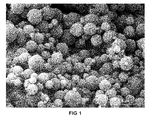
- the micro- and nano-capsules shown in Figure 1 are obtained in this way.
- the size of the capsules obtained in this way therefore varies between 50 nm and 3 microns, although nano-capsules (i.e. capsules smaller than 100 nm) are preferably obtained.
- a solution of the antioxidant ⁇ -carotene was prepared in glycerol, proven to be highly capable of stabilizing this bioactive ingredient against photodegradation.
- 1 g of ⁇ -carotene was dissolved in 10 ml of glycerol and it was left being stirred at room temperature for 24 hours.
- a solution of milk serum protein concentrate was prepared in distilled water, using a concentration of 40% by weight relative to the volume of the solvent and it was stirred at room temperature until a homogenous solution was obtained.
- the ⁇ -carotene dissolved in glycerol was added to the latter solution, the proportion added constituting 20% by weight relative to the weight of the protein used. It was left being stirred for a couple of hours at room temperature in order to achieve a homogenous solution.
- This latter aqueous solution containing the milk serum protein concentrate and the antioxidant ⁇ -carotene dissolved in glycerol was used to produce the micro-capsules shown in Figure 2 by means of the electro-spraying technique with a horizontal configuration.
- the solution was introduced into 5 ml syringes, connected to a stainless steel needle of 0.9 mm in diameter, via Teflon tubes.
- the needle was connected to an electrode, which in turn was connected to a 0-30 KV power source.
- a voltage comprised between 9-10 kV was applied and the solution was pumped through said needle with a flow of 0.3 ml/h.
- the counter-electrode was connected to a stainless steel plate (connector), where the structures obtained were collected, the distance between the needle and the collector being 7 cm.
- the process was carried out at room temperature.
- Some of the capsules obtained were collected directly on a glass support for microscopy.
- the average size of the capsules in this case was greater ( ⁇ 4 microns) owing to the presence of glycerol in the solution.
- the viability study was carried out using a commercial bifidobacteria strain and a concentrated solution of bacteria in skimmed milk was used as control, known to act as a natural protection agent for bifidobacteria.
- the solution of the milk serum protein concentrate was firstly prepared as described in the above examples, i.e. mixing a 40% proportion by weight of the protein concentrate in the solvent by means of stirring at room temperature.
- the difference in this example lies in that rather than using distilled water as a solvent, milk containing a known concentration of bifidobacteria cells was used directly.
- This solution was kept stirred at room temperature until a homogenous mixture was obtained, which was used to produce micro-capsules by means of electro-spraying.
- the solution was introduced into 5 ml syringes, connected to a stainless steel needle of 0.9 mm in diameter, via Teflon tubes. The needle was connected to an electrode, which was in turn connected to a 0-30 kV power source.
- a voltage comprised between 12-14 kV was applied and the solution was pumped through said needle with a flow of 0.6 ml/h.
- the counter-electrode was connected to a stainless steel plate (collector), where the structures obtained were collected, the distance between the needle and the collector being 6 cm.
- the process was carried out at room temperature.
- the material collected in the collector was divided in eppendorfs, stored at 20°C, to the viability count over time. They were compared to the bifidobacteria cells suspended in skimmed milk and stored in the same conditions.
- the encapsulation technique by means of electro-spraying of the bifidobacteria, using a milk serum proteins concentrate as an encapsulating matrix, proved to increase viability of the encapsulated cells at room temperature, in comparison to the cells suspended in skimmed milk, as shown in Figure 3 .
- a solution of the milk protein concentrate is firstly prepared in water, using a concentration of the same at 40% by weight relative to the volume used, stirring at room temperature until a homogenous solution is obtained.
- This aqueous solution containing the milk serum protein concentrate is used to generate the micro-capsules shown in Figure 2 by means of the electro-spraying technique by blowing with a vertical configuration.
- the solution was introduced into a 5 ml syringe located in a syringe pump and connected to an internal stainless steel needle of 0.9 mm in diameter, via Teflon tubes.
- This needle was mounted in coaxial configuration, the external needle being that through which pressurized nitrogen gas flowed at a high rate (230 -250 m/s).
- the nitrogen flow pumped coaxially through the external needle accelerates and spins the protein solution flowing through the internal needle and assists the formation of the encapsulation structures.
- the flow of the solution with the milk protein concentrate was 0.5 ml/h.
- the nitrogen gas pressure in the bottle was 20-30 bars.
- the structures produced and solidified were collected in a collector located 18-20 cm away.
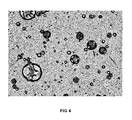
- Figure 4 shows an image of an optical microscopy of the capsules generated.
Landscapes
- Chemical & Material Sciences (AREA)
- Life Sciences & Earth Sciences (AREA)
- Organic Chemistry (AREA)
- Health & Medical Sciences (AREA)
- Engineering & Computer Science (AREA)
- Dispersion Chemistry (AREA)
- Chemical Kinetics & Catalysis (AREA)
- Food Science & Technology (AREA)
- Polymers & Plastics (AREA)
- Mycology (AREA)
- Nutrition Science (AREA)
- Animal Behavior & Ethology (AREA)
- Epidemiology (AREA)
- Medicinal Chemistry (AREA)
- General Health & Medical Sciences (AREA)
- Public Health (AREA)
- Veterinary Medicine (AREA)
- Botany (AREA)
- Bioinformatics & Cheminformatics (AREA)
- Pharmacology & Pharmacy (AREA)
- General Preparation And Processing Of Foods (AREA)
- Manufacturing Of Micro-Capsules (AREA)
- Medicines Containing Material From Animals Or Micro-Organisms (AREA)
- Medicinal Preparation (AREA)
Abstract
Description
- The present invention relates to a method for the production of micro-, sub-micro- and nano-capsules based on milk serum proteins. These micro-, sub-micro- and nano-capsules produced may be used as encapsulation vehicles for ingredients with added value and functional additives, to be used in multi-sector applications, including food and pharmaceutical preparations.
- There is considerable interest in the development of biopolymeric particles from proteins and polysaccharides, as they may be used to protect and release, in a controlled manner, bioactive compounds in food and pharmaceutical systems ( Jones, O., Decker, E.A., McClements, D.J. (2010). Food Hydrocolloids 24, 239-248). A large variety of methods for protein micro-particle production have been developed. The most common techniques are spray-drying ( Bruschi, M.L., Cardoso, M.L.C., Lucchesi, M.B. & Gremiao, M.P.D. (2003). Gelatin microparticles containing propolis obtained by spray-drying technique: Preparation and characterization. International Journal of Pharmaceutics, 264, 45-55 ), emulsification and crosslinking (Ishizaka, T., & Koishi, M. (1981). Preparation of egg albumin microcapsules and microspheres. Journal of Pharmaceutical Sciences, 70, 358-361) or coacervation ( Mauguet, M.C., Legrand, J., Brujes, L., Carnelle, G., Larre, C., & Popineau, Y.J. (2002). Gliadin matrices for microencapsulation processes by simple coacervation method. Journal of Microencapsulation, 19, 377-384). Nonetheless, these techniques require the solutions to be heated or organic agents to be used in at least one of the phases of production, thus leading to the destruction of encapsulated sensitive ingredients, as well as to toxicity problems associated with residual content of the organic agents (Birnbaum, D., Kosmala, J., Henthorn, D., & Brannon-Peppas, L. (2000). Controlled release of beta-estradiol from PLAGA microparticles: The effect of organic phase solvent on encapsulation and release. Journal of Controlled Release, 65, 375-387). Therefore, new technologies that do not involve harsh conditions (both in terms of temperature and in terms of the solvents used), which furthermore result in smaller particle sizes, are highly desirable. In this way, electro-spinning and electro-spraying techniques (electro-spinning and electro-spraying at high-voltage) and blow-spinning and blow-spraying techniques (spinning and spraying by means of blowing) are simple and highly versatile methods for producing encapsulates with controlled morphology, such as micron and submicron range fibres and/or capsules by means of the action of an external electrical field applied between two electrodes or a pressurized fluid flow, to which the polymeric solution is subjected. The blow spinning/spraying technique does not even require the use of electrical fields. It is therefore based on applying a pressurized gas at high speed in order to produce the micro- and nano-structures. These processes do not require the use of temperature. Furthermore, the biopolymers (such as proteins) may be formed from aqueous solutions, simply by means of adjusting the parameters of the process correctly and/or by means of varying the properties of the solution by adding suitable additives. The electro-spinning technique has been widely used in order to generate nano-fibres, being applied in various fields such as regenerative medicine, catalysis or filtration ( Subbiah, T., Bhat, G.S., Tock, R.W., Parameswaran, S., and Ramkumar, S.S. (2005). Electrospinning of nanofibers. Journal of Applied Polymer Science, 96, 557-569 ) but it also has high potential in the food technology sector in order to develop new functional foods, as has been recently demonstrated ( Torres-Giner, S., Martinez-Abad, A., Ocio, M.J., and Lagaron, J.M. (2010). Stabilization of a nutraceutical omega-3 fatty acid by encapsulation in ultrathin electrosprayed zein prolamine. Journal of Food Science, 75, N69-N79 ; Lopez-Rubio, A., Sanchez, E., Sanz, Y., and Lagaron, J.M. (2009). Encapsulation of living bifidobacteria in ultrathin PVOH electrspun fibers. Biomacromolecules, 10, 2823-2829). Nonetheless, the blow spinning and blow spraying techniques have been recently developed and their application in biopolymers has been fairly limited up to now ( Medeiros, E.S., Glenn, G.M., Klamczynski, A.P., Orts, W. J., Maltoso, L.H.C. (2009). Solution blow spinning: a new method to produce micro- and nanofibers from polymer Solutions. Journal of Applied Polymer Science 113, 2322-2330 ; Sinha-Ray, S., Zhang, Y., Yarin, A.L., Davis, S.C., Pourdeyhimi, B. (2011). Solution blowing of soy protein fibers. Biomacromolecules 12, 2357-2363).
- The morphology of the structures produced by means of these spinning techniques may be modified by setting the parameters of the process, and for a certain material, very small capsules may be obtained (process known as "spraying" owing to the discontinuous nature of the structures obtained).
- Nowadays, there is no bibliographic reference describing the development of micro- or nano-capsules from milk proteins using the techniques described (electro-spinning/electro-spraying and blow spinning/blow spraying). The use of milk proteins to encapsulate has barely been explored, especially those based on the concentrate. However it has great potential owing to the excellent functional properties of said proteins and their low cost (given that they are a by-product generated during the production of fermented milk products). The background scientific literature contains several examples of microencapsulates from these milk protein concentrates, using techniques such as spray-drying ( Rosenberg, M., Young, S.L., Brooker, B.E., and Colombo, V.E. (1993). Food Structure 12, 31-41 ; Bylaite, E., Venskutonis, P.R., Mapdpieriene, R. (2001). European Food Research and Technology 212, 661-670 ; Jimenez, M., Garcia, H.S., Beristain, C.I. (2010). Journal of Food Process Engineering 33, 434-447; Huynh, T. V., Caffin, N., Dykes, G.A., Bhandari, B. (2008). Drying Technology 26, 357-368; Jafari, S.M., Assadpoor, E., Bhandari, B., He, Y. (2008). Food Research International 41, 172-183 ; Hogan, S.A., McNamee, B.F., O'Riordan, E.D., O'Sullivan, M. (2001). Journal of Food Science 66, 675-680 .) and hydrogel use ( Gunasekaran, S., Ko, S., and Xiao, L. (2007). Journal of Food Engineering 83, 31-40 ). There is also a patent describing the obtaining of micro-particles from milk protein concentrate but involving the use of temperature and high pressures (
WO/2008/06 WO/2009/050333(A1 )). - The present invention proposes the use of products based on milk serum proteins and the mixture thereof with other biopolymers, in order to develop micro- (over one micron) submicro- (under one micron, up to 100 nanometres) and nano-capsules (between 1 and 100 nanometres), which serve to protect substances with added value.
- Furthermore, in order to resolve the technical problems derived from micro-, submicro- and nano-capsule production, hereinafter referred to as capsules, by means of conventional methods for producing the same, the present invention describes a method for obtaining said capsules, without the technical inconvenience of using high temperatures and pressures, organic solvents or other relatively harsh conditions, which might affect stability and by means of which ingredients sensitive to environmental conditions may be encapsulated, for which encapsulation is a valuable protection process.
- Therefore, a first aspect of the present invention refers to a method for obtaining capsuled from milk serum proteins, comprising the following steps:
- a) diluting the product based on milk proteins;
- b) adding the following to the solution of step a):
- i) functional ingredients to be encapsulated that can be dissolved or suspended in water; or
- ii) a solution of the ingredient to be encapsulated; and
- c) electro-spinning or electro-spraying or blow spinning or blow spraying the solution resulting from step b).
- In a preferred, non-limiting embodiment, the protein preparation is based on a milk protein concentrate from mammal or soy. Preferably, from cow's, sheep, goat or soy milk, and even more preferably from cow.
- In a preferred embodiment, the solvent of step a) is selected from water or milk or high polar solvents, such as alcohols or mixtures thereof.
- In a preferred embodiment, the percentage by weight of the proteins in the solution varies from 0.1 to 99 %, preferably between 10 and 70 %.
- According to another preferred embodiment, the ingredients are selected from the group formed by antioxidants (vitamin C, vitamin E, carotenoids, phenolic compounds such as flavonoids and resveratrol) and natural or synthetic antioxidant concentrates or isolates, biological organisms such as cells of biomedical value and probiotics (lactic bacteria, bifidobacteria), prebiotics (lactulose, galacto-oligosaccharides, fructo-oligosaccharides, malto-oligosaccharides, xylo-oligosaccharides and oligosaccharides from soy), symbiotics, fibres, oleic acid, polyunsaturated fatty acids (omega-3 and omega-6) and other marine oils, phytosterols, phytoestrogens, ingredients of a protein based nature (DNA and its derivatives, lactoferrin, ovotransferrin, lactoperoxidase, lysozyme, soy protein, immunoglobulin, bioactive peptides) and pharmaceutical products such as nutraceuticals and other preparations and substances of added value for the pharmaceutical, biomedical, food and chemical industries, which may be destabilized by environmental conditions, processing or storage in their commercial presentation, or any combination thereof.
- The ingredients are more preferably selected from the group formed by:
- carotenoids and polyphenols,
- bifidobacteria and lactic bacteria,
- cells of biomedical interest for bone and tissue regeneration,
- polyunsaturated fatty acids,
- enzymes and other proteins of technological value selected from lactoferrin, ovotransferrin, lactoperoxidase, lysozyme, soy protein and immunoglobulin,
- bioactive peptides selected from anti-hypertensives and antimicrobials. More preferably still:
- bifidobacteria and lactic bacteria,
- cells of biomedical interest for bone and tissue regeneration,
- polyunsaturated fatty acids,
- enzymes and other proteins of technological value selected from lactoferrin, ovotransferrin, lactoperoxidase, lysozyme, soy protein and immunoglobulin.
- bioactive peptides, selected from anti-hypertensives and antimicrobials.
- In another preferred embodiment, other biopolymers selected from the following list: carbohydrates, other proteins and lipids, are added in step a) in order to produce mixtures that improve stability and protection of the encapsulated functional ingredients.
- In another preferred embodiment, additives selected from the following list: plasticizers, crosslinking agents, surfactants, acids, alkalis, emulsifiers, antioxidants, processing aids in general or any mixture thereof or others which facilitate capsule formation or the incorporation of the ingredients to be encapsulated, are added to step a.
- In another preferred embodiment, a homogenizing step by means of stirring and/or ultrasound is performed after step b). Stirring may be vigorous so as to facilitate the dispersion of the ingredient to be encapsulated and/or of the additives in the biopolymeric matrix (milk serum protein concentrate).
- According to another preferred embodiment, step c) is performed at a distance of between 0.1 and 200 cm between the capillary and the support and more preferably, of between 2 and 50 cm.
- According to another preferred embodiment, in step c) the deposition rate is between 0.001 and 100 ml/h and, more preferably between 0.01 and 10 ml/h.
- According to another preferred embodiment, in step c) the electro-spinning or electro-spraying is performed by applying a voltage of between 0.1 and 1000 kV and, more preferably of between 5 and 30 kV.
- According to another preferred embodiment, in step c) the blow spinning or blow spraying is performed using a pressurized gas flow of between 50 and 1000 m/s and, more preferably of between 200 and 300 m/s.
- A second aspect of the present invention refers to the capsules produced by means of the method described above.
- A third aspect of the present invention refers to a functional food comprising the capsules with the functional ingredients, obtained by means of the method described above.
- A fourth aspect of the present invention refers to a pharmaceutical or biomedical composition comprising the capsules with the ingredients, obtained by means of the method described above.
- A fifth aspect of the present invention refers to a chemical composition (e.g. fertilizers, phytosanitaries, antimicrobials, anti-odour, fragrances, active agents and for products suspended or dispersed in non-polar solvents), comprising the capsules with the ingredients obtained by means of the method described above.
- A sixth aspect of the present invention refers to a nutraceutical composition comprising the capsules with the ingredients obtained by means of the method described above.
- A seventh aspect of the present invention refers to a functional container comprising the capsules with the ingredients obtained by means of the procedure described above.
- An eighth aspect of the present invention refers to the use of the capsules obtained by means of the method described above, for the incorporation thereof in pharmaceutical, biomedical, chemical, nutraceutical or food compositions or in functional containers.
- In the present invention, the electro-spinning/electro-spraying techniques refer to a technology based on applying high electrical fields to produce electrically charged fluids from viscoelastic polymeric solutions, which, upon drying, produce micro-fibres, nano-fibres and nano-capsules, respectively.
- On the other hand, blow spinning and blow spraying use a fluid (usually a gas at a high speed and pressure) for generating fibres and capsules of sub-micrometric size.
- There techniques do not require the use of high temperatures nor of organic solvents and encapsulation structures may be generated from aqueous solutions of proteins (in this case, specifically from a milk serum protein concentrate) and mixtures thereof.
- In the present invention, the term "functional container" refers to that container material containing bioactive ingredients (in this specific case, it would contain the capsules or fibres developed, incorporated into its structure or as an internal coating of the container) preserved in optimal conditions until it is released to packaged foods, thus contributing to the production of functional foods.
- In the present invention, the term "bioactive ingredient" refers to a compound or ingredient which has a beneficial effect on health or high added-value in a technical field. Likewise, it may refer to extracts or chemical compounds denominated functional, even to those obtained from common foods. Examples of ingredients to which functional properties are attributed are olive oil, red wine, broccoli, soy, bifidobacteria, β-carotenes, etc.
- In the present invention, the term "functional food" refers to those foods that are not only prepared for their nutraceutical properties, but also to fulfil a specific function, as it might be to improve health or reduce the risk of developing diseases. For this reason, biologically active components, such as minerals, vitamins, fatty acids, food fibre or antioxidants, etc., are added to them.
- In the present invention, the term "nutraceutical" refers to a concentrate of functional or bioactive ingredients, which serve to fulfil a specific function, as it might be to improve health and reduce the risk of developing diseases.
- The pharmaceutical or biomedical composition is a set of components formed by at least the micro- or nano-capsules of the invention, which have at least one application for improving the physical, physiological or psychological well-being of an individual, implying an improvement in their general state of health, for example a cosmetic application, although it may not imply a physiological effect on the organism and rather implies an improvement in the individual's well-being related to their psychology. Therefore, said pharmaceutical composition may be a personal hygiene product, a cosmetic product or a product that may form the base for producing said products or the base for producing a medicine, an implant or a biomedical device.
- The tern "personal hygiene product" refers to the substances or preparations which, not being legally considered to be drugs, sanitary products, cosmetic products or biocides, are intended to be applied to the skin, teeth or mucous membranes of the human body, with an hygienic or aesthetic purpose or to neutralize or eliminate ectoparasites.
- The term "cosmetic product" refers to all substances or preparations intended to be put into contact with the diverse superficial parts of the human body (epidermis, hair or capillary system, nails, lips and external genital organs) or with the teeth or oral mucosa, with the exclusive or main purpose of cleaning them, perfuming them, modifying their aspect and/or correcting body odours and/or protecting or keeping them in good condition.
- The term "drug" has a more limited meaning than the term "pharmaceutical composition", as defined in the present invention, given that the term drug necessarily implies a therapeutic effect, i.e. a physiological effect on the metabolism of the subject.
- Throughout the description and claims the term "comprises" and its variants are not intended to exclude other technical features, additives, components or steps. For those skilled in the art, other objects, advantages and characteristics of the invention will be deduced, partly from the description and partly from the practice of the invention. The examples and figures below provide a non-limiting illustration of the present invention.
-
-
Figure 1 shows an image of a Scanning Electron Microscopy (SEM) of electro-sprayed structures from a milk serum protein concentrate in an aqueous solution. -
Figure 2 shows an image of an optical microscopy obtained with polarized light (A), using a florescent source (B) for electro-sprayed structures of a milk serum protein concentrate, containing the antioxidant β-carotene dissolved in glycerol. -
Figure 3 shows a semi-logarithmic graph of the number of units that form a colony per millilitre of bifidobacteria, both encapsulated and un-encapsulated (in milk), at various time intervals, stored at 20°C. -
Figure 4 shows an image of an optical microscopy obtained using polarized light for structures obtained by means of blow spraying of a milk serum protein concentrate. - Below, the invention is illustrated by means of a number of trials carried out by the inventors, demonstrating the efficacy of the invention method in obtaining nano-capsules from a milk serum protein concentrate, and the ability of these matrices to protect various ingredients.
- In this example, a typical process for obtaining nano-capsules based on a milk serum protein concentrate is described, using the electro-spraying technique.
- In a first step, the solution of the milk serum protein concentrate is prepared in distilled water. The concentration of the protein concentrate used is 40% by weight relative to the volume of solvent. It is stirred at room temperature until a homogenous solution is obtained.
- Once the solution has been obtained, the same is used to generate the micro- and nano-capsules by means of the electro-spraying technique with a horizontal configuration. The solution is introduced in 5 ml syringes, connected to a stainless steel needle of 0.9 mm in diameter, via Teflon tubes. The needle is connected to an electrode, which is in turn connected to a 0-30 kV power source. A voltage comprised between 12-14 kV is applied and the solution is pumped through said needle with a flow of 0.3 ml/h. The counter-electrode is connected to a stainless steel plate (collector), where the structures obtained are collected, the distance between the needle and the collector being 7 cm. The process is carried out at room temperature. The micro- and nano-capsules shown in
Figure 1 are obtained in this way. - The size of the capsules obtained in this way therefore varies between 50 nm and 3 microns, although nano-capsules (i.e. capsules smaller than 100 nm) are preferably obtained.
- In this example, the encapsulation ability of the structures generated by means of electro-spraying and the ability thereof to protect sensitive ingredients such as the antioxidant β-carotene are demonstrated.
- Firstly, a solution of the antioxidant β-carotene was prepared in glycerol, proven to be highly capable of stabilizing this bioactive ingredient against photodegradation. 1 g of β-carotene was dissolved in 10 ml of glycerol and it was left being stirred at room temperature for 24 hours. Separately, a solution of milk serum protein concentrate was prepared in distilled water, using a concentration of 40% by weight relative to the volume of the solvent and it was stirred at room temperature until a homogenous solution was obtained. The β-carotene dissolved in glycerol was added to the latter solution, the proportion added constituting 20% by weight relative to the weight of the protein used. It was left being stirred for a couple of hours at room temperature in order to achieve a homogenous solution.
- This latter aqueous solution containing the milk serum protein concentrate and the antioxidant β-carotene dissolved in glycerol was used to produce the micro-capsules shown in
Figure 2 by means of the electro-spraying technique with a horizontal configuration. The solution was introduced into 5 ml syringes, connected to a stainless steel needle of 0.9 mm in diameter, via Teflon tubes. The needle was connected to an electrode, which in turn was connected to a 0-30 KV power source. A voltage comprised between 9-10 kV was applied and the solution was pumped through said needle with a flow of 0.3 ml/h. The counter-electrode was connected to a stainless steel plate (connector), where the structures obtained were collected, the distance between the needle and the collector being 7 cm. The process was carried out at room temperature. Some of the capsules obtained were collected directly on a glass support for microscopy. The average size of the capsules in this case was greater (∼ 4 microns) owing to the presence of glycerol in the solution. - In this example, the ability of this technology to develop structures of milk serum protein concentrate to encapsulate and protect bifidobacteria of interest in the development of new functional food products is demonstrated.
- The viability study was carried out using a commercial bifidobacteria strain and a concentrated solution of bacteria in skimmed milk was used as control, known to act as a natural protection agent for bifidobacteria.
- The solution of the milk serum protein concentrate was firstly prepared as described in the above examples, i.e. mixing a 40% proportion by weight of the protein concentrate in the solvent by means of stirring at room temperature. The difference in this example lies in that rather than using distilled water as a solvent, milk containing a known concentration of bifidobacteria cells was used directly. This solution was kept stirred at room temperature until a homogenous mixture was obtained, which was used to produce micro-capsules by means of electro-spraying. The solution was introduced into 5 ml syringes, connected to a stainless steel needle of 0.9 mm in diameter, via Teflon tubes. The needle was connected to an electrode, which was in turn connected to a 0-30 kV power source. A voltage comprised between 12-14 kV was applied and the solution was pumped through said needle with a flow of 0.6 ml/h. The counter-electrode was connected to a stainless steel plate (collector), where the structures obtained were collected, the distance between the needle and the collector being 6 cm. The process was carried out at room temperature. The material collected in the collector was divided in eppendorfs, stored at 20°C, to the viability count over time. They were compared to the bifidobacteria cells suspended in skimmed milk and stored in the same conditions.
- The encapsulation technique by means of electro-spraying of the bifidobacteria, using a milk serum proteins concentrate as an encapsulating matrix, proved to increase viability of the encapsulated cells at room temperature, in comparison to the cells suspended in skimmed milk, as shown in
Figure 3 . - In this example, the method for producing sub-micrometric capsules by means of the blow spinning/ blow spraying technique is detailed.
- A solution of the milk protein concentrate is firstly prepared in water, using a concentration of the same at 40% by weight relative to the volume used, stirring at room temperature until a homogenous solution is obtained.
- This aqueous solution containing the milk serum protein concentrate is used to generate the micro-capsules shown in
Figure 2 by means of the electro-spraying technique by blowing with a vertical configuration. The solution was introduced into a 5 ml syringe located in a syringe pump and connected to an internal stainless steel needle of 0.9 mm in diameter, via Teflon tubes. This needle was mounted in coaxial configuration, the external needle being that through which pressurized nitrogen gas flowed at a high rate (230 -250 m/s). The nitrogen flow pumped coaxially through the external needle accelerates and spins the protein solution flowing through the internal needle and assists the formation of the encapsulation structures. The flow of the solution with the milk protein concentrate was 0.5 ml/h. The nitrogen gas pressure in the bottle was 20-30 bars. The structures produced and solidified were collected in a collector located 18-20 cm away.Figure 4 shows an image of an optical microscopy of the capsules generated.
Claims (25)
- Method for obtaining capsules from a milk serum protein product, comprising the following steps:a) diluting the milk protein product,b) adding the following to the solution of step a):i. soluble in water or in polar solvents ingredients to be encapsulated, orii. a solution of the ingredient to be encapsulated; andc) electro-spinning or electro-spraying or blow spinning or blow spraying the solution produced in step b).
- The method according to claim 1, wherein the product based on milk proteins is a concentrate of milk proteins from mammals or soya.
- The method according to any of the claims 1 or 2, wherein the product based on milk proteins is a concentrate of milk proteins from cow's, sheep, goat's or soy milk.
- The method according to any of the claims 1 to 3, wherein the product based on milk proteins proceed from a concentrate of milk proteins from cow's milk.
- The method according to any of the claims 1 to 4, wherein the solvent used in step a) is selected from water or milk or polar solvents or mixtures of the above.
- The method according to any of the claims 1 to 5, wherein the percentage by weight of the protein in the solution ranges from 0.1 to 99%.
- The method according to any of the claims 1 to 6, wherein the percentage by weight of the proteins in the solution ranges from 10 to 70%.
- The method according to any of the claims 1 to 7, wherein the ingredients are functional ingredients selected from the group of antioxidants, probiotics, cells for bone and tissue regeneration, prebiotics, symbiotics, fibres, oleic acid, polyunsaturated fatty acids, marine oils, phytosterols, phytoestrogens, functional ingredients of protein nature, nutraceuticals, enzymes or proteins of technological value selected from lactoferrin, ovotransferrin, lactoperoxidase, lysozyme, soy protein, immunoglobulin or any combination thereof.
- The method according to any of the claims 1 to 8, wherein the functional ingredients are selected from the group of:a) β-carotene,b) bifidobacteria and lactic bacteria,c) cells of biomedical interest for bone and tissue regeneration,d) polyunsaturated fatty acids,e) enzymes and other proteins of technological value selected from lactoferrin, ovotransferrin, lactoperoxidase, lysozyme, soy protein, immunoglobulin,f) bioactive peptides selected from anti-hypertensive and anti-microbial peptides.
- The method according to any of the claims 1 to 8, wherein the functional ingredients are selected from the group of:a) bifidobacteria and lactic bacteria,b) cells of biomedical interest for bone and tissue regeneration,c) polyunsaturated fatty acids,d) enzymes and other proteins of technological value selected from lactoferrin, ovotransferrin, lactoperoxidase, lysozyme, soy protein, immunoglobulin,e) bioactive peptides selected from anti-hypertensive and anti-microbial peptides.
- The method according to any of the claims 1 to 10, wherein other bio-polymers selected from the following list: carbohydrates, proteins and lipids, are added in step a).
- The method according to any of the claims 1 to 11, wherein additives selected from the following list: plasticizers, acids, crosslinking agents, alkalis, emulsifiers, antioxidants, agents that assist the process or any mixture thereof or other agents that facilitate the formation of the capsules or the incorporation of the ingredients to be encapsulated, are added in step a).
- The method according to any of the claims 1 to 12, wherein, following step b), a homogenisation step is carried out by means of stirring and/or ultrasound.
- The method according to any of the claims 1 to 13, wherein step c) of electro-spinning or electro-spraying or blow-spinning or blow-spraying, is carried out with a distance of between 0.1 and 200 cm between the capillary and the support and, more preferably, between 2 and 50 cm.
- The method according to any of the claims 1 to 14, wherein in step c) of electro-spinning or electro-spraying or blow spinning or blow spraying, the deposition rate ranges from 0.001 to 100 ml/h and, more preferably, from 0.01 to 10 ml/h.
- The method according to any of the claims 1 to 15, wherein in step c) the electro-spinning or electro-spraying is carried out by applying a voltage of between 0.1 and 1000 kV.
- The method according to any of the claims 1 to 16, wherein in step c) the electro-spinning or electro-spraying is carried out by applying a voltage of between 5 and 30 kV.
- The method according to any of the claims 1 to 15, wherein in step c) the blow spinning or blow spraying is carried out by applying a flow of pressurised gas at between 50 and 1000 m/s.
- The method according to claim 18, wherein in step c) the blow spinning or blow spraying is carried out by applying a flow of pressurised gas at between 200 and 300 m/s.
- Capsules obtainable by the method of claims 1 to 19.
- Use of the capsules of claim 20, to prepare functional food products.
- Use of the capsules of claim 20, to prepare pharmaceutical or biomedical compositions.
- Use of the capsules of claim 20, to prepare chemical compositions.
- Use of the capsules of claim 20, to prepare nutraceutical compositions.
- Use of the capsules of claim 20, to prepare functional containers.
Priority Applications (1)
| Application Number | Priority Date | Filing Date | Title |
|---|---|---|---|
| PL12802201T PL2724775T3 (en) | 2011-06-22 | 2012-06-21 | Method for the production of micro-, sub-micro- and nano-capsules, based on whey proteins |
Applications Claiming Priority (2)
| Application Number | Priority Date | Filing Date | Title |
|---|---|---|---|
| ES201131048A ES2395553B1 (en) | 2011-06-22 | 2011-06-22 | PROCEDURE FOR OBTAINING MICRO-, SUBMICRO- AND NANOCAPSULES BASED ON PROTEINS OF MILK. |
| PCT/ES2012/070455 WO2012175776A1 (en) | 2011-06-22 | 2012-06-21 | Method for the production of micro-, sub-micro- and nano-capsules, based on milk serum proteins |
Publications (3)
| Publication Number | Publication Date |
|---|---|
| EP2724775A1 true EP2724775A1 (en) | 2014-04-30 |
| EP2724775A4 EP2724775A4 (en) | 2015-04-08 |
| EP2724775B1 EP2724775B1 (en) | 2020-02-19 |
Family
ID=47422071
Family Applications (1)
| Application Number | Title | Priority Date | Filing Date |
|---|---|---|---|
| EP12802201.9A Active EP2724775B1 (en) | 2011-06-22 | 2012-06-21 | Method for the production of micro-, sub-micro- and nano-capsules, based on whey proteins |
Country Status (5)
| Country | Link |
|---|---|
| EP (1) | EP2724775B1 (en) |
| DK (1) | DK2724775T3 (en) |
| ES (2) | ES2395553B1 (en) |
| PL (1) | PL2724775T3 (en) |
| WO (1) | WO2012175776A1 (en) |
Cited By (4)
| Publication number | Priority date | Publication date | Assignee | Title |
|---|---|---|---|---|
| CN105797658A (en) * | 2014-12-30 | 2016-07-27 | 上海水星家用纺织品股份有限公司 | Milk protein microcapsule finishing agent preparation method and use |
| WO2018122427A1 (en) * | 2016-12-30 | 2018-07-05 | Bioinicia, S.L. | System and method for industrial encapsulation of thermolabile substances |
| CN108311067A (en) * | 2017-01-16 | 2018-07-24 | 中国科学院理化技术研究所 | Oil-water microemulsion separation method based on composite Janus microspheres |
| IT202000030992A1 (en) * | 2020-12-16 | 2022-06-16 | Tech Scientific S R L | SYSTEM FOR THE CONTROLLED RELEASE OF ACTIVE INGREDIENTS |
Families Citing this family (3)
| Publication number | Priority date | Publication date | Assignee | Title |
|---|---|---|---|---|
| ES2541203B1 (en) * | 2014-01-15 | 2016-05-13 | Consejo Superior De Investigaciones Científicas (Csic) | PROCEDURE FOR PROTECTION OF BIOLOGICAL MATERIAL AND THERMOLABABLE COMPOUNDS FOR POSSIBLE INDUSTRIAL APPLICATIONS |
| US12454674B2 (en) | 2020-12-04 | 2025-10-28 | University Of Notre Dame Du Lac | Method of encapsulating single cells utilizing an alternating current electrospray |
| CN113768156A (en) * | 2021-09-16 | 2021-12-10 | 宁波大学 | A kind of DHA microcapsule and preparation method thereof |
Family Cites Families (7)
| Publication number | Priority date | Publication date | Assignee | Title |
|---|---|---|---|---|
| FR2526328A1 (en) * | 1982-05-04 | 1983-11-10 | Centre Nat Rech Scient | WALL MICROCAPSULES OBTAINED BY CROSSLINKING MILK PROTEINS, AND PROCESS FOR THE PREPARATION THEREOF |
| US5601760A (en) * | 1994-09-01 | 1997-02-11 | The Regents Of The University Of California, A California Corporation | Milk derived whey protein-based microencapsulating agents and a method of use |
| AU3996800A (en) * | 1998-12-10 | 2000-07-12 | Zms, Llc | Expandable polymeric microspheres, their method of production, and uses and products thereof |
| ES2221804B1 (en) * | 2003-06-18 | 2006-04-01 | Lipofoods, S.L. | MICROCAPSULES FOR THE ADMINISTRATION OF ACTIVE INGREDIENTS. |
| US8187708B2 (en) * | 2004-11-10 | 2012-05-29 | The Regents Of The University Of Michigan | Microphasic micro-components and methods for controlling morphology via electrified jetting |
| US8353811B2 (en) * | 2007-05-30 | 2013-01-15 | Phillip Morris Usa Inc. | Smoking articles enhanced to deliver additives incorporated within electroprocessed microcapsules and nanocapsules, and related methods |
| FI120642B (en) * | 2007-10-19 | 2010-01-15 | Biomed Oy | Microencapsulated liposome compositions |
-
2011
- 2011-06-22 ES ES201131048A patent/ES2395553B1/en not_active Expired - Fee Related
-
2012
- 2012-06-21 DK DK12802201.9T patent/DK2724775T3/en active
- 2012-06-21 ES ES12802201T patent/ES2792063T3/en active Active
- 2012-06-21 EP EP12802201.9A patent/EP2724775B1/en active Active
- 2012-06-21 PL PL12802201T patent/PL2724775T3/en unknown
- 2012-06-21 WO PCT/ES2012/070455 patent/WO2012175776A1/en not_active Ceased
Cited By (11)
| Publication number | Priority date | Publication date | Assignee | Title |
|---|---|---|---|---|
| CN105797658A (en) * | 2014-12-30 | 2016-07-27 | 上海水星家用纺织品股份有限公司 | Milk protein microcapsule finishing agent preparation method and use |
| CN105797658B (en) * | 2014-12-30 | 2018-05-22 | 上海水星家用纺织品股份有限公司 | A kind of preparation method and applications of milk protein microcapsule dressing agent |
| WO2018122427A1 (en) * | 2016-12-30 | 2018-07-05 | Bioinicia, S.L. | System and method for industrial encapsulation of thermolabile substances |
| CN110290862A (en) * | 2016-12-30 | 2019-09-27 | 比奥尼西亚公司 | System and method for industrial encapsulation of heat labile substances |
| KR20190110555A (en) * | 2016-12-30 | 2019-09-30 | 바이오이니시아, 에스.엘. | System and method for industrial encapsulation of thermally labile materials |
| JP2020504674A (en) * | 2016-12-30 | 2020-02-13 | バイオイニシア,エセ.エレ. | System and method for industrial encapsulation of thermolabile materials |
| EA038116B1 (en) * | 2016-12-30 | 2021-07-08 | Биоинисиа, С.Л. | System and method for industrial encapsulation of thermolabile substances |
| US11253833B2 (en) | 2016-12-30 | 2022-02-22 | Bioinicia, S.L. | System and method for industrial encapsulation of thermolabile substances |
| IL267740B (en) * | 2016-12-30 | 2022-09-01 | Bioinicia S L | System and method for industrial encapsulation of thermolabile substances |
| CN108311067A (en) * | 2017-01-16 | 2018-07-24 | 中国科学院理化技术研究所 | Oil-water microemulsion separation method based on composite Janus microspheres |
| IT202000030992A1 (en) * | 2020-12-16 | 2022-06-16 | Tech Scientific S R L | SYSTEM FOR THE CONTROLLED RELEASE OF ACTIVE INGREDIENTS |
Also Published As
| Publication number | Publication date |
|---|---|
| ES2395553A1 (en) | 2013-02-13 |
| EP2724775A4 (en) | 2015-04-08 |
| WO2012175776A1 (en) | 2012-12-27 |
| PL2724775T3 (en) | 2020-07-27 |
| DK2724775T3 (en) | 2020-05-18 |
| ES2792063T3 (en) | 2020-11-06 |
| EP2724775B1 (en) | 2020-02-19 |
| ES2395553B1 (en) | 2013-12-26 |
Similar Documents
| Publication | Publication Date | Title |
|---|---|---|
| EP2724775B1 (en) | Method for the production of micro-, sub-micro- and nano-capsules, based on whey proteins | |
| Bamidele et al. | Encapsulation of bioactive compounds by “extrusion” technologies: A review | |
| CN101415395B (en) | Casein nanoparticle | |
| Khorasani et al. | Nanoliposome technology for the food and nutraceutical industries | |
| Jafari | Nanoencapsulation of food bioactive ingredients: Principles and applications | |
| Wen et al. | Electrospinning: A novel nano-encapsulation approach for bioactive compounds | |
| Jain et al. | Microencapsulation by complex coacervation using whey protein isolates and gum acacia: An approach to preserve the functionality and controlled release of β-carotene | |
| CN105802725B (en) | A kind of preparation method and application of new type functional plant powder grease | |
| Nollet et al. | Determination of formulation conditions allowing double emulsions stabilized by PGPR and sodium caseinate to be used as capsules | |
| Wang et al. | Electrosprayed soft capsules of millimeter size for specifically delivering fish oil/nutrients to the stomach and intestines | |
| JP2008297241A (en) | Acne skin preparations for acne | |
| Salvim et al. | Production and structural characterization of solid lipid microparticles loaded with soybean protein hydrolysate | |
| JP2010132609A (en) | Casein nanoparticle | |
| CN112891244B (en) | Active substance carriers comprising biopolymers | |
| CN110290862A (en) | System and method for industrial encapsulation of heat labile substances | |
| Zhang et al. | Recent advances in the nanotechnology-based applications of essential oils | |
| JP2009040722A (en) | Casein nanoparticles composed of multiple proteins | |
| Shamil et al. | Microencapsulated bioactive compounds for fortification of dairy products: A review | |
| Calamak | Micro/nanoencapsulation of active food compounds: Encapsulation, characterization and biological fate of encapsulated systems | |
| JP7814847B2 (en) | Milk-derived exosome-like vesicles-containing topical skin preparation, collagen production promoter, and elastin production promoter | |
| Gupta et al. | Nanoencapsulated grapefruit essential oil with carrageenan: Facile preparation, characterization and cytotoxicity studies | |
| Sharma et al. | Food encapsulation: principles, novel methods, and applications | |
| Tang | Microencapsulation of bioactives by in situ complex coacervation during spray drying | |
| Sharkawy | Aroma encapsulation for eco-friendly textile application | |
| Kadyan et al. | Electrospinning: technology for encapsulation of bioactive compounds |
Legal Events
| Date | Code | Title | Description |
|---|---|---|---|
| PUAI | Public reference made under article 153(3) epc to a published international application that has entered the european phase |
Free format text: ORIGINAL CODE: 0009012 |
|
| 17P | Request for examination filed |
Effective date: 20140121 |
|
| AK | Designated contracting states |
Kind code of ref document: A1 Designated state(s): AL AT BE BG CH CY CZ DE DK EE ES FI FR GB GR HR HU IE IS IT LI LT LU LV MC MK MT NL NO PL PT RO RS SE SI SK SM TR |
|
| DAX | Request for extension of the european patent (deleted) | ||
| RA4 | Supplementary search report drawn up and despatched (corrected) |
Effective date: 20150305 |
|
| RIC1 | Information provided on ipc code assigned before grant |
Ipc: A61K 9/64 20060101ALI20150227BHEP Ipc: B01J 13/02 20060101AFI20150227BHEP |
|
| STAA | Information on the status of an ep patent application or granted ep patent |
Free format text: STATUS: EXAMINATION IS IN PROGRESS |
|
| 17Q | First examination report despatched |
Effective date: 20180219 |
|
| RIN1 | Information on inventor provided before grant (corrected) |
Inventor name: LAGARON CABELLO, JOSE MARIA Inventor name: LOPEZ RUBIO, AMPARO |
|
| RIC1 | Information provided on ipc code assigned before grant |
Ipc: B01J 13/04 20060101ALI20190726BHEP Ipc: B01J 13/02 20060101AFI20190726BHEP Ipc: A61K 38/00 20060101ALI20190726BHEP Ipc: A23L 33/135 20160101ALI20190726BHEP Ipc: A61K 9/64 20060101ALI20190726BHEP Ipc: A23L 33/105 20160101ALI20190726BHEP Ipc: A23P 10/30 20160101ALI20190726BHEP |
|
| GRAP | Despatch of communication of intention to grant a patent |
Free format text: ORIGINAL CODE: EPIDOSNIGR1 |
|
| STAA | Information on the status of an ep patent application or granted ep patent |
Free format text: STATUS: GRANT OF PATENT IS INTENDED |
|
| INTG | Intention to grant announced |
Effective date: 20190916 |
|
| GRAS | Grant fee paid |
Free format text: ORIGINAL CODE: EPIDOSNIGR3 |
|
| GRAA | (expected) grant |
Free format text: ORIGINAL CODE: 0009210 |
|
| STAA | Information on the status of an ep patent application or granted ep patent |
Free format text: STATUS: THE PATENT HAS BEEN GRANTED |
|
| AK | Designated contracting states |
Kind code of ref document: B1 Designated state(s): AL AT BE BG CH CY CZ DE DK EE ES FI FR GB GR HR HU IE IS IT LI LT LU LV MC MK MT NL NO PL PT RO RS SE SI SK SM TR |
|
| REG | Reference to a national code |
Ref country code: GB Ref legal event code: FG4D |
|
| REG | Reference to a national code |
Ref country code: CH Ref legal event code: EP |
|
| REG | Reference to a national code |
Ref country code: DE Ref legal event code: R096 Ref document number: 602012067923 Country of ref document: DE |
|
| REG | Reference to a national code |
Ref country code: AT Ref legal event code: REF Ref document number: 1234302 Country of ref document: AT Kind code of ref document: T Effective date: 20200315 |
|
| REG | Reference to a national code |
Ref country code: IE Ref legal event code: FG4D |
|
| REG | Reference to a national code |
Ref country code: DK Ref legal event code: T3 Effective date: 20200514 |
|
| REG | Reference to a national code |
Ref country code: NL Ref legal event code: FP |
|
| REG | Reference to a national code |
Ref country code: CH Ref legal event code: NV Representative=s name: ISLER AND PEDRAZZINI AG, CH |
|
| REG | Reference to a national code |
Ref country code: SE Ref legal event code: TRGR |
|
| PG25 | Lapsed in a contracting state [announced via postgrant information from national office to epo] |
Ref country code: FI Free format text: LAPSE BECAUSE OF FAILURE TO SUBMIT A TRANSLATION OF THE DESCRIPTION OR TO PAY THE FEE WITHIN THE PRESCRIBED TIME-LIMIT Effective date: 20200219 Ref country code: NO Free format text: LAPSE BECAUSE OF FAILURE TO SUBMIT A TRANSLATION OF THE DESCRIPTION OR TO PAY THE FEE WITHIN THE PRESCRIBED TIME-LIMIT Effective date: 20200519 Ref country code: RS Free format text: LAPSE BECAUSE OF FAILURE TO SUBMIT A TRANSLATION OF THE DESCRIPTION OR TO PAY THE FEE WITHIN THE PRESCRIBED TIME-LIMIT Effective date: 20200219 |
|
| REG | Reference to a national code |
Ref country code: LT Ref legal event code: MG4D |
|
| PG25 | Lapsed in a contracting state [announced via postgrant information from national office to epo] |
Ref country code: GR Free format text: LAPSE BECAUSE OF FAILURE TO SUBMIT A TRANSLATION OF THE DESCRIPTION OR TO PAY THE FEE WITHIN THE PRESCRIBED TIME-LIMIT Effective date: 20200520 Ref country code: BG Free format text: LAPSE BECAUSE OF FAILURE TO SUBMIT A TRANSLATION OF THE DESCRIPTION OR TO PAY THE FEE WITHIN THE PRESCRIBED TIME-LIMIT Effective date: 20200519 Ref country code: LV Free format text: LAPSE BECAUSE OF FAILURE TO SUBMIT A TRANSLATION OF THE DESCRIPTION OR TO PAY THE FEE WITHIN THE PRESCRIBED TIME-LIMIT Effective date: 20200219 Ref country code: IS Free format text: LAPSE BECAUSE OF FAILURE TO SUBMIT A TRANSLATION OF THE DESCRIPTION OR TO PAY THE FEE WITHIN THE PRESCRIBED TIME-LIMIT Effective date: 20200619 Ref country code: HR Free format text: LAPSE BECAUSE OF FAILURE TO SUBMIT A TRANSLATION OF THE DESCRIPTION OR TO PAY THE FEE WITHIN THE PRESCRIBED TIME-LIMIT Effective date: 20200219 |
|
| PG25 | Lapsed in a contracting state [announced via postgrant information from national office to epo] |
Ref country code: LT Free format text: LAPSE BECAUSE OF FAILURE TO SUBMIT A TRANSLATION OF THE DESCRIPTION OR TO PAY THE FEE WITHIN THE PRESCRIBED TIME-LIMIT Effective date: 20200219 Ref country code: SK Free format text: LAPSE BECAUSE OF FAILURE TO SUBMIT A TRANSLATION OF THE DESCRIPTION OR TO PAY THE FEE WITHIN THE PRESCRIBED TIME-LIMIT Effective date: 20200219 Ref country code: RO Free format text: LAPSE BECAUSE OF FAILURE TO SUBMIT A TRANSLATION OF THE DESCRIPTION OR TO PAY THE FEE WITHIN THE PRESCRIBED TIME-LIMIT Effective date: 20200219 Ref country code: PT Free format text: LAPSE BECAUSE OF FAILURE TO SUBMIT A TRANSLATION OF THE DESCRIPTION OR TO PAY THE FEE WITHIN THE PRESCRIBED TIME-LIMIT Effective date: 20200712 Ref country code: EE Free format text: LAPSE BECAUSE OF FAILURE TO SUBMIT A TRANSLATION OF THE DESCRIPTION OR TO PAY THE FEE WITHIN THE PRESCRIBED TIME-LIMIT Effective date: 20200219 Ref country code: SM Free format text: LAPSE BECAUSE OF FAILURE TO SUBMIT A TRANSLATION OF THE DESCRIPTION OR TO PAY THE FEE WITHIN THE PRESCRIBED TIME-LIMIT Effective date: 20200219 |
|
| REG | Reference to a national code |
Ref country code: ES Ref legal event code: FG2A Ref document number: 2792063 Country of ref document: ES Kind code of ref document: T3 Effective date: 20201106 |
|
| REG | Reference to a national code |
Ref country code: DE Ref legal event code: R097 Ref document number: 602012067923 Country of ref document: DE |
|
| PLBE | No opposition filed within time limit |
Free format text: ORIGINAL CODE: 0009261 |
|
| STAA | Information on the status of an ep patent application or granted ep patent |
Free format text: STATUS: NO OPPOSITION FILED WITHIN TIME LIMIT |
|
| 26N | No opposition filed |
Effective date: 20201120 |
|
| PG25 | Lapsed in a contracting state [announced via postgrant information from national office to epo] |
Ref country code: MC Free format text: LAPSE BECAUSE OF FAILURE TO SUBMIT A TRANSLATION OF THE DESCRIPTION OR TO PAY THE FEE WITHIN THE PRESCRIBED TIME-LIMIT Effective date: 20200219 |
|
| PG25 | Lapsed in a contracting state [announced via postgrant information from national office to epo] |
Ref country code: SI Free format text: LAPSE BECAUSE OF FAILURE TO SUBMIT A TRANSLATION OF THE DESCRIPTION OR TO PAY THE FEE WITHIN THE PRESCRIBED TIME-LIMIT Effective date: 20200219 |
|
| PG25 | Lapsed in a contracting state [announced via postgrant information from national office to epo] |
Ref country code: LU Free format text: LAPSE BECAUSE OF NON-PAYMENT OF DUE FEES Effective date: 20200621 |
|
| REG | Reference to a national code |
Ref country code: AT Ref legal event code: UEP Ref document number: 1234302 Country of ref document: AT Kind code of ref document: T Effective date: 20200219 |
|
| PG25 | Lapsed in a contracting state [announced via postgrant information from national office to epo] |
Ref country code: MT Free format text: LAPSE BECAUSE OF FAILURE TO SUBMIT A TRANSLATION OF THE DESCRIPTION OR TO PAY THE FEE WITHIN THE PRESCRIBED TIME-LIMIT Effective date: 20200219 Ref country code: CY Free format text: LAPSE BECAUSE OF FAILURE TO SUBMIT A TRANSLATION OF THE DESCRIPTION OR TO PAY THE FEE WITHIN THE PRESCRIBED TIME-LIMIT Effective date: 20200219 |
|
| PG25 | Lapsed in a contracting state [announced via postgrant information from national office to epo] |
Ref country code: MK Free format text: LAPSE BECAUSE OF FAILURE TO SUBMIT A TRANSLATION OF THE DESCRIPTION OR TO PAY THE FEE WITHIN THE PRESCRIBED TIME-LIMIT Effective date: 20200219 Ref country code: AL Free format text: LAPSE BECAUSE OF FAILURE TO SUBMIT A TRANSLATION OF THE DESCRIPTION OR TO PAY THE FEE WITHIN THE PRESCRIBED TIME-LIMIT Effective date: 20200219 |
|
| PGFP | Annual fee paid to national office [announced via postgrant information from national office to epo] |
Ref country code: SE Payment date: 20220616 Year of fee payment: 11 |
|
| PGFP | Annual fee paid to national office [announced via postgrant information from national office to epo] |
Ref country code: TR Payment date: 20220615 Year of fee payment: 11 Ref country code: PL Payment date: 20220614 Year of fee payment: 11 Ref country code: AT Payment date: 20220621 Year of fee payment: 11 |
|
| REG | Reference to a national code |
Ref country code: SE Ref legal event code: EUG |
|
| REG | Reference to a national code |
Ref country code: AT Ref legal event code: MM01 Ref document number: 1234302 Country of ref document: AT Kind code of ref document: T Effective date: 20230621 |
|
| PG25 | Lapsed in a contracting state [announced via postgrant information from national office to epo] |
Ref country code: AT Free format text: LAPSE BECAUSE OF NON-PAYMENT OF DUE FEES Effective date: 20230621 |
|
| PG25 | Lapsed in a contracting state [announced via postgrant information from national office to epo] |
Ref country code: AT Free format text: LAPSE BECAUSE OF NON-PAYMENT OF DUE FEES Effective date: 20230621 |
|
| PG25 | Lapsed in a contracting state [announced via postgrant information from national office to epo] |
Ref country code: SE Free format text: LAPSE BECAUSE OF NON-PAYMENT OF DUE FEES Effective date: 20230622 |
|
| PG25 | Lapsed in a contracting state [announced via postgrant information from national office to epo] |
Ref country code: PL Free format text: LAPSE BECAUSE OF NON-PAYMENT OF DUE FEES Effective date: 20230621 |
|
| PG25 | Lapsed in a contracting state [announced via postgrant information from national office to epo] |
Ref country code: PL Free format text: LAPSE BECAUSE OF NON-PAYMENT OF DUE FEES Effective date: 20230621 |
|
| PGFP | Annual fee paid to national office [announced via postgrant information from national office to epo] |
Ref country code: DE Payment date: 20250626 Year of fee payment: 14 |
|
| PGFP | Annual fee paid to national office [announced via postgrant information from national office to epo] |
Ref country code: GB Payment date: 20250513 Year of fee payment: 14 Ref country code: DK Payment date: 20250630 Year of fee payment: 14 |
|
| PGFP | Annual fee paid to national office [announced via postgrant information from national office to epo] |
Ref country code: NL Payment date: 20250602 Year of fee payment: 14 Ref country code: BE Payment date: 20250528 Year of fee payment: 14 |
|
| PGFP | Annual fee paid to national office [announced via postgrant information from national office to epo] |
Ref country code: FR Payment date: 20250515 Year of fee payment: 14 |
|
| PGFP | Annual fee paid to national office [announced via postgrant information from national office to epo] |
Ref country code: CZ Payment date: 20250515 Year of fee payment: 14 |
|
| PGFP | Annual fee paid to national office [announced via postgrant information from national office to epo] |
Ref country code: IE Payment date: 20250616 Year of fee payment: 14 |
|
| PGFP | Annual fee paid to national office [announced via postgrant information from national office to epo] |
Ref country code: ES Payment date: 20250701 Year of fee payment: 14 |
|
| PGFP | Annual fee paid to national office [announced via postgrant information from national office to epo] |
Ref country code: IT Payment date: 20250610 Year of fee payment: 14 |
|
| PGFP | Annual fee paid to national office [announced via postgrant information from national office to epo] |
Ref country code: CH Payment date: 20250701 Year of fee payment: 14 |