EP2720403A1 - Aggregator-oblivious encryption of time-series data - Google Patents
Aggregator-oblivious encryption of time-series data Download PDFInfo
- Publication number
- EP2720403A1 EP2720403A1 EP12306250.7A EP12306250A EP2720403A1 EP 2720403 A1 EP2720403 A1 EP 2720403A1 EP 12306250 A EP12306250 A EP 12306250A EP 2720403 A1 EP2720403 A1 EP 2720403A1
- Authority
- EP
- European Patent Office
- Prior art keywords
- group
- aggregator
- key
- time period
- time
- Prior art date
- Legal status (The legal status is an assumption and is not a legal conclusion. Google has not performed a legal analysis and makes no representation as to the accuracy of the status listed.)
- Withdrawn
Links
- 238000000034 method Methods 0.000 claims description 15
- 230000006870 function Effects 0.000 claims description 10
- 238000004590 computer program Methods 0.000 claims description 4
- 238000004220 aggregation Methods 0.000 description 5
- 230000002776 aggregation Effects 0.000 description 5
- 238000004422 calculation algorithm Methods 0.000 description 2
- 239000002131 composite material Substances 0.000 description 2
- 230000001010 compromised effect Effects 0.000 description 2
- 125000004122 cyclic group Chemical group 0.000 description 2
- 230000000670 limiting effect Effects 0.000 description 2
- 238000004364 calculation method Methods 0.000 description 1
- 238000011084 recovery Methods 0.000 description 1
- 238000009827 uniform distribution Methods 0.000 description 1
Images

Classifications
-
- H—ELECTRICITY
- H04—ELECTRIC COMMUNICATION TECHNIQUE
- H04L—TRANSMISSION OF DIGITAL INFORMATION, e.g. TELEGRAPHIC COMMUNICATION
- H04L9/00—Cryptographic mechanisms or cryptographic arrangements for secret or secure communications; Network security protocols
- H04L9/30—Public key, i.e. encryption algorithm being computationally infeasible to invert or user's encryption keys not requiring secrecy
- H04L9/3093—Public key, i.e. encryption algorithm being computationally infeasible to invert or user's encryption keys not requiring secrecy involving Lattices or polynomial equations, e.g. NTRU scheme
-
- H—ELECTRICITY
- H04—ELECTRIC COMMUNICATION TECHNIQUE
- H04L—TRANSMISSION OF DIGITAL INFORMATION, e.g. TELEGRAPHIC COMMUNICATION
- H04L9/00—Cryptographic mechanisms or cryptographic arrangements for secret or secure communications; Network security protocols
- H04L9/30—Public key, i.e. encryption algorithm being computationally infeasible to invert or user's encryption keys not requiring secrecy
- H04L9/3006—Public key, i.e. encryption algorithm being computationally infeasible to invert or user's encryption keys not requiring secrecy underlying computational problems or public-key parameters
- H04L9/3013—Public key, i.e. encryption algorithm being computationally infeasible to invert or user's encryption keys not requiring secrecy underlying computational problems or public-key parameters involving the discrete logarithm problem, e.g. ElGamal or Diffie-Hellman systems
-
- H—ELECTRICITY
- H04—ELECTRIC COMMUNICATION TECHNIQUE
- H04L—TRANSMISSION OF DIGITAL INFORMATION, e.g. TELEGRAPHIC COMMUNICATION
- H04L9/00—Cryptographic mechanisms or cryptographic arrangements for secret or secure communications; Network security protocols
- H04L9/008—Cryptographic mechanisms or cryptographic arrangements for secret or secure communications; Network security protocols involving homomorphic encryption
-
- H—ELECTRICITY
- H04—ELECTRIC COMMUNICATION TECHNIQUE
- H04L—TRANSMISSION OF DIGITAL INFORMATION, e.g. TELEGRAPHIC COMMUNICATION
- H04L9/00—Cryptographic mechanisms or cryptographic arrangements for secret or secure communications; Network security protocols
- H04L9/30—Public key, i.e. encryption algorithm being computationally infeasible to invert or user's encryption keys not requiring secrecy
- H04L9/3066—Public key, i.e. encryption algorithm being computationally infeasible to invert or user's encryption keys not requiring secrecy involving algebraic varieties, e.g. elliptic or hyper-elliptic curves
-
- H—ELECTRICITY
- H04—ELECTRIC COMMUNICATION TECHNIQUE
- H04L—TRANSMISSION OF DIGITAL INFORMATION, e.g. TELEGRAPHIC COMMUNICATION
- H04L2209/00—Additional information or applications relating to cryptographic mechanisms or cryptographic arrangements for secret or secure communication H04L9/00
- H04L2209/24—Key scheduling, i.e. generating round keys or sub-keys for block encryption
-
- H—ELECTRICITY
- H04—ELECTRIC COMMUNICATION TECHNIQUE
- H04L—TRANSMISSION OF DIGITAL INFORMATION, e.g. TELEGRAPHIC COMMUNICATION
- H04L2209/00—Additional information or applications relating to cryptographic mechanisms or cryptographic arrangements for secret or secure communication H04L9/00
- H04L2209/46—Secure multiparty computation, e.g. millionaire problem
-
- H—ELECTRICITY
- H04—ELECTRIC COMMUNICATION TECHNIQUE
- H04L—TRANSMISSION OF DIGITAL INFORMATION, e.g. TELEGRAPHIC COMMUNICATION
- H04L2209/00—Additional information or applications relating to cryptographic mechanisms or cryptographic arrangements for secret or secure communication H04L9/00
- H04L2209/80—Wireless
- H04L2209/805—Lightweight hardware, e.g. radio-frequency identification [RFID] or sensor
Definitions
- the present invention relates generally to public-key cryptography, and in particular to privacy-preserving aggregation of encrypted data.
- aggregator-oblivious (AO) encryption scheme that allows the users to encrypt their data and the aggregator to calculate the sum without being able to obtain knowledge about the individual data from a user.
- Such privacy-preserving aggregation has many potential applications: electronic voting, electronic auctions, recommendation systems allowing users to privately disclose their preferences and so forth. As the number of users may be great, it is a distinct advantage if the aggregation remains practical computation-wise.
- An aggregator-oblivious encryption scheme is a tuple of algorithms, (Setup, Enc, AggrDec), defined as:
- AO aggregator-oblivious
- AO is defined by the following game between a challenger and an attacker.
- the challenger runs the Setup algorithm and gives param to the attacker.
- the attacker can submit queries that are answered by the challenger.
- the attacker can make two types of queries:
- the attacker chooses a time period t *.
- U * ⁇ ⁇ 1,..., n ⁇ be the whole set of users for which, at the end of the game, no encryption queries have been made on time period t * and no compromised queries have been made.
- the attacker chooses a subset S * ⁇ U * and two different series of triples ⁇ ( i, t*, x (0) i,t * ) ⁇ i ⁇ S * and ⁇ ( i, t*, x (1) i,t * ) ⁇ i ⁇ S * that are given to the challenger.
- the present invention provides a solution that improves upon the prior art in that it overcomes at least some of its disadvantages.
- the encrypted value c i,t is output to an aggregator.
- the key s i [- L 2 , ..., L 2 ] with # G 1 ⁇ L .
- the first group G 1 is equal to the third group G.
- the interface is configured to output the encrypted value c i,t to an aggregator.
- the key s i [- L 2 , ..., L 2 ] with # G 1 ⁇ L .
- the first group G 1 is equal to the third group G.
- the invention is directed to a non-transitory computer program product having stored thereon instructions that, when executed by a processor, perform the method of any embodiment of the first aspect.
- the present invention is directed to an aggregator-oblivious encryption scheme.
- a main inventive idea is to consider groups of unknown [composite] order for which there is a subgroup wherein some complexity hardness assumption (e.g., the DDH assumption) holds and another subgroup wherein discrete logarithms are easily computable.
- the order of the underlying group is only known to a trusted dealer. As the aggregator does not know the group order it cannot recover the user's private key.
- Figure 1 illustrates an aggregator-oblivious encryption system 100 according to a preferred embodiment of the invention. For ease of illustration and comprehension, the connections between the devices in the system have been omitted.
- the system 100 comprises a plurality of users 110 - User 1,..., User n - and an aggregator 120, each comprising at least one interface unit 111, 121 configured for communication, at least one processor (“processor”) 112, 122 and at least one memory 113, 123 configured for storing data, such as accumulators and intermediary calculation results.
- processor processor
- the processor 112 of a user 110 is configured to encrypt a user input to obtain an encrypted value c i,t that is sent, via the interface unit 111 to the aggregator 120, and the interface unit 121 of the aggregator 120 is configured to receive the encrypted values and aggregate them.
- a first computer program product (non-transitory storage medium) 114 such as a CD-ROM or a DVD comprises stored instructions that, when executed by the processor 112 of a user 110, encrypts a user input according to the invention.
- a second computer program product (non-transitory storage medium) 124 comprises stored instructions that, when executed by the processor 122 of the aggregator 120, aggregates the received encrypted values according to the invention.
- G be a group of composite order for which there is a first subgroup G 1 ⁇ G of unknown (except to a trusted dealer) order q 1 in which some complexity hardness assumption (e.g., the DDH assumption) holds for some security parameter ⁇ and a second, different subgroup G 2 ⁇ G of order q 2 wherein discrete logarithms are "easy" to compute.
- some complexity hardness assumption e.g., the DDH assumption
- r denotes the rank of group G 2 , which can thus be written as a product ⁇ g 1 ⁇ ⁇ ... ⁇ ⁇ g r ⁇ , it is further assumed that it must be "easy" to compute the representation of arbitrary G 2 elements with respect to the base ⁇ g 1 , ⁇ , g r ⁇ .
- G 1 , q 1 the order of G 1 , q 1 , is known only to a trusted dealer, while it is unknown to any other party, including the aggregator. These parties are only able to derive an upper bound on q 1 .
- the message space is denoted by M ⁇ (Z/ q 2,1 Z) ⁇ ⁇ ⁇ (Z/ q 2,r Z) , where r is the rank of G 2 and, for each j ⁇ ⁇ 1, ..., r ⁇ , q 2, j denotes the order of the subgroup ⁇ g j ⁇ in G 2 .
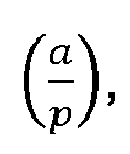
- the Jacobi symbol is a generalization of the Legendre symbol.
- the set of elements modulus N whose Jacobi symbol is +1 forms a multiplicative group which is denoted J N .
- the present invention provides a aggregator-oblivious encryption scheme that overcomes at least some of the disadvantages of the scheme provided by Shi et al..
Landscapes
- Engineering & Computer Science (AREA)
- Theoretical Computer Science (AREA)
- Computing Systems (AREA)
- Computer Security & Cryptography (AREA)
- Computer Networks & Wireless Communication (AREA)
- Signal Processing (AREA)
- General Physics & Mathematics (AREA)
- Algebra (AREA)
- Physics & Mathematics (AREA)
- Mathematical Analysis (AREA)
- Mathematical Optimization (AREA)
- Mathematical Physics (AREA)
- Pure & Applied Mathematics (AREA)
- Computer And Data Communications (AREA)
- Storage Device Security (AREA)
- Mobile Radio Communication Systems (AREA)
Abstract
A processor (111) of a device (110) of user i in an aggregator-oblivious encryption system with n users encrypts a message 
where t denotes a time period by generating an encrypted value ci,t for the time period t, by calculating ci,t = g 1 xi,t,1 ··· gr xi,t,r · H(t) Si , wherein H(t) is a hash function that hashes the time t on to an element of a first group G1 with order q 1 in which discrete logarithms are are calculable only non-polynomial time for a security parameter κ, wherein g 1, ··· , g r is the base of a second group G2 = 〈g 1, ···, gr 〉 with order q 2 in which discrete logarithms are calculable in polynomial time, the first group G1 and the second group G2 both being different subgroups of a third group G, and wherein Si is a key for user i provided by a dealer so that an aggregator key 
and outputs the encrypted value ci,t to an aggregator (120). The aggregator obtains the sum Xt for time period t by first computing 
and then 
with 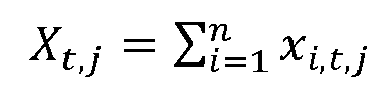
for each j ∈{1,... ,r}, as the unique representation of Vt ∈ G2 with regard to basis 〈g 1, ···, gr 〉.
Description
- The present invention relates generally to public-key cryptography, and in particular to privacy-preserving aggregation of encrypted data.
- This section is intended to introduce the reader to various aspects of art, which may be related to various aspects of the present invention that are described and/or claimed below. This discussion is believed to be helpful in providing the reader with background information to facilitate a better understanding of the various aspects of the present invention. Accordingly, it should be understood that these statements are to be read in this light, and not as admissions of prior art.
- Computing the sum of data input by various users is, in itself, a trivial problem. However, the problem becomes much more complicated if the data is sensitive (e.g. private) and the sum is to be calculated by an untrusted party, hereinafter called aggregator. In this case, there is a need for a so-called aggregator-oblivious (AO) encryption scheme that allows the users to encrypt their data and the aggregator to calculate the sum without being able to obtain knowledge about the individual data from a user.
- Such privacy-preserving aggregation has many potential applications: electronic voting, electronic auctions, recommendation systems allowing users to privately disclose their preferences and so forth. As the number of users may be great, it is a distinct advantage if the aggregation remains practical computation-wise.
- Further introductory information may be found in Elaine Shi, T.-H. Hubert Chan, Eleanor G. Rieffel, Richard Chow, and Dawn Song. Privacy-preserving aggregation of time-series data. In Proceedings of the Network and Distributed System Security Symposium (NDSS 2011). The Internet Society, 2011. Available at URL http://www.isoc.org/isoc/conferences/ndss/11/pdf/9_3.pdf.
- Definition An aggregator-oblivious encryption scheme is a tuple of algorithms, (Setup, Enc, AggrDec), defined as:
- Setup(1κ) - On input security parameter κ, a trusted dealer generates system parameters param, the aggregator's private key sk0, and a private encryption key sk i for each user (1 ≤ i ≤ n);
- Enc(param, sk i , xi,t ) - During time t, user i encrypts a value xi,t using its private encryption key sk i to obtain an encrypted value ci,t = Enc(param, sk i , xi,t ).
- AggrDec(param, sk0; c 1, t,..., cn,t ) - During time period t, the aggregator using sk0 obtains

- Security The security notion of aggregator-oblivious (AO) requires that the aggregator cannot learn, for each time period, anything more than the aggregated value Xt from the encrypted values of n (honest) users. If there are corrupted users (i.e., users sharing their private information), the notion only requires that the aggregator gets no extra information about the values of the honest users beyond their aggregated value. Furthermore, it is assumed that each user encrypts only one value per time period.
- More formally, AO is defined by the following game between a challenger and an attacker. The challenger runs the Setup algorithm and gives param to the attacker.
- In a first phase, the attacker can submit queries that are answered by the challenger. The attacker can make two types of queries:
- 1. Encryption queries: The attacker submits (i, t, xi,t ) for a fresh pair (i, t) - i.e. queries like (i, t, xi,t ) and (i, t, x'i,t ) are not permitted unless x i,t is equivalent to x'i,t - and gets back the encryption of x i,t under key sk i for time period t; and
- 2. Compromise queries: The attacker submits i and receives the private key sk i of user i; if i = 0, the attacker receives the private key of the aggregator.
- In a second phase, the attacker chooses a time period t*. Let U* ⊆ {1,..., n} be the whole set of users for which, at the end of the game, no encryption queries have been made on time period t* and no compromised queries have been made. The attacker chooses a subset S* ⊆ U* and two different series of triples 〈(i, t*, x(0) i,t*)〉i∈S* and 〈(i, t*, x(1) i,t*)〉i∈S* that are given to the challenger. Further, if the aggregator capability sk0 is compromised at the end of the game and S* = U*, it is required that

- In the paper already mentioned, Shi et al. also consider the following encryption scheme and show that the scheme meets the AO security notion under the Decisional Diffie-Hellman (DDH) assumption [see Dan Boneh. The decision Diffie-Hellman problem. In J. Buhler, editor, Algorithmic Number Theory (ANTSIII), volume 1423 of Lecture Notes in Computer Science, pages 48-63. Springer-Verlag, 1998.] in the random oracle model:
- Setup(1κ) - Let a group G of prime order q for which the DDH assumption holds, and let a random generator g ∈ G. Let also a hash function H : Z → G viewed as a random oracle. Finally, let n random elements in Z / qZ, s 1,..., sn , and define

- Enc(param, sk i , xi,t ) - At time period t, for a private input xi,t ∈ Z / qZ, user i produces ci,t = gxi,t H(t) si.
- AggrDec(param, sk0, c1,t ,..., c n,t ) - The aggregator obtains the sum Xt for time period t by first computing Vt = H(t) s 0

- It will be appreciated that since g has order q, the so-obtained value for Xt is defined modulo q.
- Shi et al.'s scheme involves the computation of a discrete logarithm in a prime-order group for which the DDH assumption holds. Namely, using the previous notation, the aggregator has to compute the value of Xt from Vt = gXt in G. For known groups satisfying Shi et al.'s setting, only generic methods are available. There is therefore a need to have settings where the computation of discrete logarithms can be done efficiently while, at the same time, the AO security notion is met.
- In addition, in Shi et al.'s scheme there is a restriction on the message space or on the number of users. It will be appreciated that this can be a disadvantage.
- The present invention provides a solution that improves upon the prior art in that it overcomes at least some of its disadvantages.
- In a first aspect, the invention is directed to a method of encrypting a value


- In a first preferred embodiment, the encrypted value ci,t for the time period t is generated by calculating ci,t = g 1 xi,t,1 ··· gr xi,t,r · H(t) si, wherein H(t) is a hash function that hashes the time t on to an element of the first group G1.
- In a second preferred embodiment, the encrypted value ci,t is output to an aggregator.
- In a third preferred embodiment, the key si ∈ [-L 2, ..., L 2] with # G1 <L.
- In a fourth preferred embodiment, the first group G1 is equal to the third group G.
- In a second aspect, the invention is directed to a device for encrypting a value xτ,t = (x i,t,1 ,...,xi,t,r ) for a user i in an aggregator-oblivious encryption system with n users, wherein t denotes a time period. The device comprises memory configured to store a key si for user i provided by a dealer and generated so that an aggregator key

 2 = 〈g 1, ··· , gr 〉 with order q 2 in which discrete logarithms are calculable in polynomial time and using the key si as an exponent to a base in a first group G1 with order q 1 in which discrete logarithms are calculable only in non-polynomial time for a security parameter κ, the first group G1 and the second group G2 both being different subgroups of a third group G; and an interface configured to output the encrypted value ci,t .
- In a first preferred embodiment, the processor is configured to generate the encrypted value ci,t for the time period t by calculating ci,t = g 1 xi,t,1 ··· gr xi,t,r · H(t) si, wherein H(t) is a hash function that hashes the time t on to an element of the first group G1.
- In a second preferred embodiment, the interface is configured to output the encrypted value ci,t to an aggregator.
- In a third preferred embodiment, the key si ∈ [-L 2, ..., L 2] with # G1 <L.
- In a fourth preferred embodiment, the first group G1 is equal to the third group G.
- In a third aspect, the invention is directed to a non-transitory computer program product having stored thereon instructions that, when executed by a processor, perform the method of any embodiment of the first aspect.
- Preferred features of the present invention will now be described, by way of non-limiting example, with reference to the accompanying drawings, in which:
-
Figure 1 illustrates an aggregator-oblivious encryption system according to a preferred embodiment of the invention; and -
Figure 2 illustrates a method for aggregator-oblivious aggregation of user data according to a preferred embodiment of the invention. - The present invention is directed to an aggregator-oblivious encryption scheme. A main inventive idea is to consider groups of unknown [composite] order for which there is a subgroup wherein some complexity hardness assumption (e.g., the DDH assumption) holds and another subgroup wherein discrete logarithms are easily computable. The order of the underlying group is only known to a trusted dealer. As the aggregator does not know the group order it cannot recover the user's private key.
-
Figure 1 illustrates an aggregator-oblivious encryption system 100 according to a preferred embodiment of the invention. For ease of illustration and comprehension, the connections between the devices in the system have been omitted. - The
system 100 comprises a plurality of users 110 -User 1,..., User n - and anaggregator 120, each comprising at least oneinterface unit memory - As will be further described hereinafter, the
processor 112 of auser 110 is configured to encrypt a user input to obtain an encrypted value ci,t that is sent, via theinterface unit 111 to theaggregator 120, and theinterface unit 121 of theaggregator 120 is configured to receive the encrypted values and aggregate them. A first computer program product (non-transitory storage medium) 114 such as a CD-ROM or a DVD comprises stored instructions that, when executed by theprocessor 112 of auser 110, encrypts a user input according to the invention. A second computer program product (non-transitory storage medium) 124 comprises stored instructions that, when executed by theprocessor 122 of theaggregator 120, aggregates the received encrypted values according to the invention. - In its most general form, the invention may be described as follows. Let G be a group of composite order for which there is a first subgroup G1 ⊆ G of unknown (except to a trusted dealer) order q 1 in which some complexity hardness assumption (e.g., the DDH assumption) holds for some security parameter κ and a second, different subgroup G2 ⊆ G of order q 2 wherein discrete logarithms are "easy" to compute. Put another way, in G1 discrete logarithms are computable (i.e. calculable) in non-polynomial time (only), whereas they are computable in polynomial time in G2; as is well known, Cobham's thesis states that polynomial time is a synonym for "easy", "efficient" and "fast".
- If r denotes the rank of group G2, which can thus be written as a product 〈g 1〉 × ... × 〈g r 〉, it is further assumed that it must be "easy" to compute the representation of arbitrary G2 elements with respect to the base 〈g 1, ···, gr 〉.
- As previously mentioned, the order of G1, q 1, is known only to a trusted dealer, while it is unknown to any other party, including the aggregator. These parties are only able to derive an upper bound on q 1.
- The message space is denoted by M ⊆ (Z/q2,1 Z) × ··· × (Z/q2,r Z), where r is the rank of G2 and, for each j ∈ {1, ..., r}, q 2,j denotes the order of the subgroup 〈gj 〉 in G2.
- Setup(1κ) - On input security parameter κ, the trusted dealer defines two subgroups G1 and G2 = 〈g 1, ··· , gr 〉 as described. The trusted dealer also defines a hash function H : Z → G1 viewed as a random oracle. Let L be such that # G1 < L (where # G1 denotes the cardinality of G1; in case G1 is a group, it is also called the order of the group). The trusted dealer chooses uniformly, i.e. statistically indisguinshable from the uniform distribution, at random n integers s 1, ... , sn ∈ [-L 2, ..., L 2] and sets

- Enc(param, sk i , xi,t ) - During time period t, for a private input

i,t,1 ··· gr xi,t,r · H(t) si . - AggrDec(param, sk0, c 1 ,t,..., cn,t ) - The aggregator obtains the sum Xt for time period t by first computing


- If p is a prime, then the Legendre symbol of an integer α co-prime to p, written


- Setup(1κ) - On input security parameter κ, the trusted dealer randomly generates two safe, balanced primes p and q, where p = 2p' + 1 and q = 2q' + 1 with both p' and q' prime. Let N = pq and = (Z/N 2Z)×. Let also G1 be the subgroup of order 2p'q'N in (Z/N2 Z)× with Jacobi symbol +1 modulo N,

and G2 be the subgroup of order N in (Z/N 2Z)×. It will be appreciated that any element α ∈ G1 can be uniquely written as α = α1 + Nα2 with α1 ∈ J N and α2 ∈ Z/NZ. Group G2 is cyclic and is generated by (1 + N).
It also defines a hash function H : Z → G1 : t ↦ H(t) = f 1(t) + N · f 2(t), where f 1 : Z → J N and f 2 : Z → Z/NZ are both hash functions viewed as random oracles. Letting ℓ the bit-length of p'q', from n randomly chosen elements in±{0,1}2ℓ, s 1,..., sn , it finally sets
- Enc(param, sk i , xi,t ) - During time period t, for a private input x i,t ∈ Z/NZ, user i produces encrypted value ci,t = (1 + N) xi,t H(t) si (mod N 2),
step 210. - AggrDec(param, sk0, c 1 ,t,..., cn,t ) - The aggregator obtains the sum Xt for time period t by first computing


step 220, and then, step 230, Xt (that is then preferably output) as
- The correctness follows by observing that


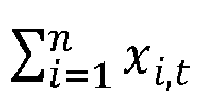

- A main difference when compared to the scheme of Shi et al. is that in the present scheme there is no discrete logarithm to compute in a group in which a complexity hardness assumption holds. On the contrary, the recovery of Xt from the accumulated product Vt is now easy. As a result, there is no longer any practical restriction on the size of xi,t or on the total number n of users, as long as

- It will be appreciated that, given a hash function f 0 : Z → (Z/NZ)×, it is easy to construct a hash function f 1 : Z → J N by iterating f 0 until a value with Jacobi symbol +1 is obtained.
- It will thus be appreciated that the present invention provides a aggregator-oblivious encryption scheme that overcomes at least some of the disadvantages of the scheme provided by Shi et al..
- Each feature disclosed in the description and (where appropriate) the claims and drawings may be provided independently or in any appropriate combination. Features described as being implemented in hardware may also be implemented in software, and vice versa. Reference numerals appearing in the claims are by way of illustration only and shall have no limiting effect on the scope of the claims.
Claims (11)
- A method of encrypting a value
 - generating an encrypted value ci,t for the time period t, by using the value
 - outputting the encrypted value ci,t ;
characterised in that the first group G1 and the second group G2 both are different subgroups of a third group G. - The method of claim 1, wherein the encrypted value ci,t for the time period t is generated by calculating ci,t = g 1 xi,t,1 ··· gr xi,t,r · H(t) si, wherein H(t) is a hash function that hashes the time t on to an element of the first group G1.
- The method of claim 1 or 2, wherein the encrypted value ci,t is output to an aggregator (120).
- The method of claim 1, wherein the key si ∈ [-L 2, ..., L 2] with # G1 <L.
- The method of claim 1, wherein the first group G1 is equal to the third group G.
- A device (110) for encrypting a value
 memory (113) configured to store a key si for user i provided by a dealer and generated so that an aggregator key
 a processor (112) configured to generate an encrypted value ci,t for the time period t, by using the value
 an interface (111) configured to output the encrypted value c i,t .
 - The method of claim 6, wherein the processor (112) is configured to generate the encrypted value ci,t for the time period t by calculating ci,t = g 1 xi,t,1 ··· gr xi,t,r · H(t) si, wherein H(t) is a hash function that hashes the time t on to an element of the first group G1.
- The method of claim 6 or 7, wherein the interface (111) is configured to output the encrypted value c i,t to an aggregator (120).
- The method of claim 6, wherein the key si ∈ [-L 2, ..., L 2] with # G1 <L.
- The method of claim 6, wherein the first group G1 is equal to the third group G.
- A non-transitory computer program product (114) having stored thereon instructions that, when executed by a processor, perform the method of any one of claims 1 to 5.
Priority Applications (4)
| Application Number | Priority Date | Filing Date | Title |
|---|---|---|---|
| EP12306250.7A EP2720403A1 (en) | 2012-10-12 | 2012-10-12 | Aggregator-oblivious encryption of time-series data |
| US14/433,967 US20150270966A1 (en) | 2012-10-12 | 2013-10-11 | Aggregator-oblivious encryption of time-series data |
| EP13786438.5A EP2907259A1 (en) | 2012-10-12 | 2013-10-11 | Aggregator-oblivious encryption of time-series data |
| PCT/EP2013/071358 WO2014057124A1 (en) | 2012-10-12 | 2013-10-11 | Aggregator-oblivious encryption of time-series data |
Applications Claiming Priority (1)
| Application Number | Priority Date | Filing Date | Title |
|---|---|---|---|
| EP12306250.7A EP2720403A1 (en) | 2012-10-12 | 2012-10-12 | Aggregator-oblivious encryption of time-series data |
Publications (1)
| Publication Number | Publication Date |
|---|---|
| EP2720403A1 true EP2720403A1 (en) | 2014-04-16 |
Family
ID=47290854
Family Applications (2)
| Application Number | Title | Priority Date | Filing Date |
|---|---|---|---|
| EP12306250.7A Withdrawn EP2720403A1 (en) | 2012-10-12 | 2012-10-12 | Aggregator-oblivious encryption of time-series data |
| EP13786438.5A Withdrawn EP2907259A1 (en) | 2012-10-12 | 2013-10-11 | Aggregator-oblivious encryption of time-series data |
Family Applications After (1)
| Application Number | Title | Priority Date | Filing Date |
|---|---|---|---|
| EP13786438.5A Withdrawn EP2907259A1 (en) | 2012-10-12 | 2013-10-11 | Aggregator-oblivious encryption of time-series data |
Country Status (3)
| Country | Link |
|---|---|
| US (1) | US20150270966A1 (en) |
| EP (2) | EP2720403A1 (en) |
| WO (1) | WO2014057124A1 (en) |
Cited By (1)
| Publication number | Priority date | Publication date | Assignee | Title |
|---|---|---|---|---|
| CN115348017A (en) * | 2022-10-18 | 2022-11-15 | 阿里巴巴(中国)有限公司 | Ciphertext processing method and device |
Families Citing this family (3)
| Publication number | Priority date | Publication date | Assignee | Title |
|---|---|---|---|---|
| EP3455995B1 (en) * | 2016-05-13 | 2022-03-02 | ABB Schweiz AG | Secure remote aggregation |
| US11539517B2 (en) * | 2019-09-09 | 2022-12-27 | Cisco Technology, Inc. | Private association of customer information across subscribers |
| CN113468585B (en) * | 2021-09-02 | 2021-11-19 | 国网浙江省电力有限公司营销服务中心 | Encryption method, device and storage medium based on energy key table |
Family Cites Families (2)
| Publication number | Priority date | Publication date | Assignee | Title |
|---|---|---|---|---|
| JPWO2005098795A1 (en) * | 2004-03-31 | 2008-02-28 | 松下電器産業株式会社 | Computer system, computer program, and addition method |
| US8281121B2 (en) * | 2010-05-13 | 2012-10-02 | Microsoft Corporation | Private aggregation of distributed time-series data |
-
2012
- 2012-10-12 EP EP12306250.7A patent/EP2720403A1/en not_active Withdrawn
-
2013
- 2013-10-11 US US14/433,967 patent/US20150270966A1/en not_active Abandoned
- 2013-10-11 EP EP13786438.5A patent/EP2907259A1/en not_active Withdrawn
- 2013-10-11 WO PCT/EP2013/071358 patent/WO2014057124A1/en not_active Ceased
Non-Patent Citations (5)
| Title |
|---|
| "Chapter 12: Key Establishment Protocols ED - Menezes A J; Van Oorschot P C; Vanstone S A", 1 October 1996 (1996-10-01), XP001525012, ISBN: 978-0-8493-8523-0, Retrieved from the Internet <URL:http://www.cacr.math.uwaterloo.ca/hac/> * |
| CASTELLUCCIA C ET AL: "E.cient Aggregation of encrypted data in Wireless Sensor Networks", MOBILE AND UBIQUITOUS SYSTEMS: NETWORKING AND SERVICES, 2005. MOBIQUIT OUS 2005. THE SECOND ANNUAL INTERNATIONAL CONFERENCE ON SAN DIEGO, CA, USA 17-21 JULY 2005, PISCATAWAY, NJ, USA,IEEE, LOS ALAMITOS, CA, USA, 17 July 2005 (2005-07-17), pages 109 - 117, XP010853989, ISBN: 978-0-7695-2375-0 * |
| DAN BONEH: "Algorithmic Number Theory (ANTSIII), volume 1423 of Lecture Notes in Computer Science", vol. 1423, 1998, SPRINGER-VERLAG, article "The decision Diffie-Hellman problem", pages: 48 - 63 |
| ELAINE SHI ET AL: "Privacy-Preserving Aggregation of Time-Series Data", PROCEEDINGS OF THE NETWORK AND DISTRIBUTED SYSTEM SECURITY SYMPOSIUM (NDSS 2011), 9 May 2011 (2011-05-09), XP055058556, Retrieved from the Internet <URL:http://www.isoc.org/isoc/conferences/ndss/11/pdf/9_3.pdf> [retrieved on 20130404] * |
| ELAINE SHI; T.-H. HUBERT CHAN; ELEANOR G. RIEFFEL; RICHARD CHOW; DAWN SONG: "Proceedings of the Network and Distributed System Security Symposium (NDSS 2011", 2011, THE INTERNET SOCIETY, article "Privacy-preserving aggregation of time-series data" |
Cited By (1)
| Publication number | Priority date | Publication date | Assignee | Title |
|---|---|---|---|---|
| CN115348017A (en) * | 2022-10-18 | 2022-11-15 | 阿里巴巴(中国)有限公司 | Ciphertext processing method and device |
Also Published As
| Publication number | Publication date |
|---|---|
| EP2907259A1 (en) | 2015-08-19 |
| WO2014057124A1 (en) | 2014-04-17 |
| US20150270966A1 (en) | 2015-09-24 |
Similar Documents
| Publication | Publication Date | Title |
|---|---|---|
| US11895231B2 (en) | Adaptive attack resistant distributed symmetric encryption | |
| US7853796B2 (en) | Method, system and computer program for polynomial based hashing and message authentication coding with separate generation of spectrums | |
| US11804960B2 (en) | Distributed symmetric encryption | |
| Ahn et al. | Computing on authenticated data | |
| Ma et al. | Outsourcing computation of modular exponentiations in cloud computing | |
| US20100329454A1 (en) | Encryption parameter setting apparatus, key generation apparatus, cryptographic system, program, encryption parameter setting method, and key generation method | |
| US20120324240A1 (en) | Secure search system, public parameter generation device, encryption device, user secret key generation device, query issuing device, search device, computer program, secure search method, public parameter generation method, encryption method, user secret key generation method, query issuing method, and search method | |
| EP3096488A1 (en) | Hypersphere-based multivariable public key encryption/decryption system and method | |
| Zhang et al. | Public-key encryption with bidirectional keyword search and its application to encrypted emails | |
| Rocha et al. | An overview on homomorphic encryption algorithms | |
| US20150270966A1 (en) | Aggregator-oblivious encryption of time-series data | |
| JP2008520144A (en) | Custom Static Diffie-Hellman Group | |
| Nayak et al. | SEMKC: secure and efficient computation over outsourced data encrypted under multiple keys | |
| Gaithuru et al. | Insight into the operation of NTRU and a comparative study of NTRU, RSA and ECC public key cryptosystems | |
| Hong et al. | Constant-round privacy preserving multiset union | |
| Tahat et al. | Hybrid publicly verifiable authenticated encryption scheme based on chaotic maps and factoring problems | |
| Yuan et al. | Efficient unrestricted identity-based aggregate signature scheme | |
| Rososhek | Cryptosystems in automorphism groups of group rings of Abelian groups | |
| Mihalcik | An analysis of algorithms for solving discrete logarithms in fixed groups | |
| Konoma et al. | The computational difficulty of solving cryptographic primitive problems related to the discrete logarithm problem | |
| Vaanchig et al. | Public key encryption with temporary and fuzzy keyword search | |
| Peter et al. | Additively homomorphic encryption with a double decryption mechanism, revisited | |
| Yi et al. | Homomorphic encryption | |
| Liu et al. | Public key encryption with hierarchical authorized keyword search | |
| Horng | Accelerating DSA signature generation |
Legal Events
| Date | Code | Title | Description |
|---|---|---|---|
| PUAI | Public reference made under article 153(3) epc to a published international application that has entered the european phase |
Free format text: ORIGINAL CODE: 0009012 |
|
| AK | Designated contracting states |
Kind code of ref document: A1 Designated state(s): AL AT BE BG CH CY CZ DE DK EE ES FI FR GB GR HR HU IE IS IT LI LT LU LV MC MK MT NL NO PL PT RO RS SE SI SK SM TR |
|
| AX | Request for extension of the european patent |
Extension state: BA ME |
|
| STAA | Information on the status of an ep patent application or granted ep patent |
Free format text: STATUS: THE APPLICATION IS DEEMED TO BE WITHDRAWN |
|
| 18D | Application deemed to be withdrawn |
Effective date: 20141017 |