EP2719699B1 - Certain triazolopyrazines, compositions thereof and methods of use therefor - Google Patents
Certain triazolopyrazines, compositions thereof and methods of use therefor Download PDFInfo
- Publication number
- EP2719699B1 EP2719699B1 EP13198224.1A EP13198224A EP2719699B1 EP 2719699 B1 EP2719699 B1 EP 2719699B1 EP 13198224 A EP13198224 A EP 13198224A EP 2719699 B1 EP2719699 B1 EP 2719699B1
- Authority
- EP
- European Patent Office
- Prior art keywords
- mmol
- compound
- reference compound
- stirred
- added
- Prior art date
- Legal status (The legal status is an assumption and is not a legal conclusion. Google has not performed a legal analysis and makes no representation as to the accuracy of the status listed.)
- Active
Links
- 0 *Cc(cc1)n[n]2c1ncc2 Chemical compound *Cc(cc1)n[n]2c1ncc2 0.000 description 13
- BTYBBOZRYLSQCX-UHFFFAOYSA-N Brc1nc([n](Cc2cc([nH]nc3)c3[s]2)nn2)c2nc1 Chemical compound Brc1nc([n](Cc2cc([nH]nc3)c3[s]2)nn2)c2nc1 BTYBBOZRYLSQCX-UHFFFAOYSA-N 0.000 description 2
- CSSCYSFRLRGABY-UHFFFAOYSA-N CC[n]1nc(cc(C[n]2nnc(nc3)c2nc3-c2c[n](CC#N)nc2)[s]2)c2c1 Chemical compound CC[n]1nc(cc(C[n]2nnc(nc3)c2nc3-c2c[n](CC#N)nc2)[s]2)c2c1 CSSCYSFRLRGABY-UHFFFAOYSA-N 0.000 description 2
- SHIVCSRVTSNZLL-UHFFFAOYSA-N CC[n]1nc(cc(C[n]2nnc(nc3)c2nc3-c2c[n](CCO)nc2)[s]2)c2c1 Chemical compound CC[n]1nc(cc(C[n]2nnc(nc3)c2nc3-c2c[n](CCO)nc2)[s]2)c2c1 SHIVCSRVTSNZLL-UHFFFAOYSA-N 0.000 description 2
- NQPLZZVDAACZHI-UHFFFAOYSA-N COCC[n]1ncc(-c2cnc3nn[n](Cc4c[n]5ncnc5cc4)c3n2)c1 Chemical compound COCC[n]1ncc(-c2cnc3nn[n](Cc4c[n]5ncnc5cc4)c3n2)c1 NQPLZZVDAACZHI-UHFFFAOYSA-N 0.000 description 2
- RWAZGHCZCOETLG-UHFFFAOYSA-N FC(C[n]1ncc(-c2nc([n](Cc3cc([nH]nc4)c4[s]3)nn3)c3nc2)c1)(F)F Chemical compound FC(C[n]1ncc(-c2nc([n](Cc3cc([nH]nc4)c4[s]3)nn3)c3nc2)c1)(F)F RWAZGHCZCOETLG-UHFFFAOYSA-N 0.000 description 2
- HSRDGJFPXDGZFT-UHFFFAOYSA-N N#Cc(cc1)ncc1-c1nc([n](Cc(cc2)c[n]3c2ncc3)nn2)c2nc1 Chemical compound N#Cc(cc1)ncc1-c1nc([n](Cc(cc2)c[n]3c2ncc3)nn2)c2nc1 HSRDGJFPXDGZFT-UHFFFAOYSA-N 0.000 description 2
- DJUKDCWWPWKPQN-UHFFFAOYSA-N C(c(cc1)c[n]2c1ncc2)[n]1nnc(nc2)c1cc2N1CCOCC1 Chemical compound C(c(cc1)c[n]2c1ncc2)[n]1nnc(nc2)c1cc2N1CCOCC1 DJUKDCWWPWKPQN-UHFFFAOYSA-N 0.000 description 1
- IQUSFWJUEZVVPS-UHFFFAOYSA-N C(c(cc1)c[n]2c1ncc2)[n]1nnc2ncc(-c3ccncc3)nc12 Chemical compound C(c(cc1)c[n]2c1ncc2)[n]1nnc2ncc(-c3ccncc3)nc12 IQUSFWJUEZVVPS-UHFFFAOYSA-N 0.000 description 1
- YXOVOCKOXVXFOW-UHFFFAOYSA-N C(c(cc1)cc2c1nccc2)N1NNc2ccc(-c(cc3)cnc3N3CCOCC3)nc12 Chemical compound C(c(cc1)cc2c1nccc2)N1NNc2ccc(-c(cc3)cnc3N3CCOCC3)nc12 YXOVOCKOXVXFOW-UHFFFAOYSA-N 0.000 description 1
- RPZPROLNFDYKFK-UHFFFAOYSA-N C(c1cc([nH]nc2)c2[s]1)[n]1nnc(nc2)c1nc2-c1c[nH]nc1 Chemical compound C(c1cc([nH]nc2)c2[s]1)[n]1nnc(nc2)c1nc2-c1c[nH]nc1 RPZPROLNFDYKFK-UHFFFAOYSA-N 0.000 description 1
- LWFUDVXHHDLVNO-UHFFFAOYSA-N C(c1cc2cccnc2[s]1)[n]1nnc2ncc(-c3ccc[s]3)nc12 Chemical compound C(c1cc2cccnc2[s]1)[n]1nnc2ncc(-c3ccc[s]3)nc12 LWFUDVXHHDLVNO-UHFFFAOYSA-N 0.000 description 1
- WARPUQIQSZEKEJ-UHFFFAOYSA-N CC(C)OCc1cnc2[n]1cc(C[n]1nnc3ncc(-c4c[n](C)nc4)nc13)cc2 Chemical compound CC(C)OCc1cnc2[n]1cc(C[n]1nnc3ncc(-c4c[n](C)nc4)nc13)cc2 WARPUQIQSZEKEJ-UHFFFAOYSA-N 0.000 description 1
- SZHOGKOEYCYZDY-UHFFFAOYSA-N CC(C)[n]1ncc(-c(cc2)nc3c2nn[n]3Cc(cc2)cc3c2nccc3)c1 Chemical compound CC(C)[n]1ncc(-c(cc2)nc3c2nn[n]3Cc(cc2)cc3c2nccc3)c1 SZHOGKOEYCYZDY-UHFFFAOYSA-N 0.000 description 1
- PPFVINJDDNSAQB-UHFFFAOYSA-N CC(C)[n]1ncc(-c2cnc3NNN(Cc4cc([nH]nc5)c5[s]4)c3n2)c1 Chemical compound CC(C)[n]1ncc(-c2cnc3NNN(Cc4cc([nH]nc5)c5[s]4)c3n2)c1 PPFVINJDDNSAQB-UHFFFAOYSA-N 0.000 description 1
- IMLUPNBQRVYURE-UHFFFAOYSA-N CC(C)[n]1ncc(-c2cnc3nn[n](Cc(cc4)c[n]5c4ncc5)c3n2)c1 Chemical compound CC(C)[n]1ncc(-c2cnc3nn[n](Cc(cc4)c[n]5c4ncc5)c3n2)c1 IMLUPNBQRVYURE-UHFFFAOYSA-N 0.000 description 1
- UTHZEVJQHFKZNF-BQYQJAHWSA-N CC/C(/NCC)=C\C=C Chemical compound CC/C(/NCC)=C\C=C UTHZEVJQHFKZNF-BQYQJAHWSA-N 0.000 description 1
- FCPJKLZISILSSX-UHFFFAOYSA-N CC=C=CN(C=C(CN1N=NC2=CNC=C(C3=CN(CC[U]C)N4C3C4)N=C12)C=C1)C1=C Chemical compound CC=C=CN(C=C(CN1N=NC2=CNC=C(C3=CN(CC[U]C)N4C3C4)N=C12)C=C1)C1=C FCPJKLZISILSSX-UHFFFAOYSA-N 0.000 description 1
- PVRPHEVJOIUNQW-YDYVVGBMSA-N CCC1=[N]=CC(/C(/CC/C=C2/N(Cc(cc3)c[n]4c3ncc4)N=N/C2=C2)=C/C2=C)=CC1 Chemical compound CCC1=[N]=CC(/C(/CC/C=C2/N(Cc(cc3)c[n]4c3ncc4)N=N/C2=C2)=C/C2=C)=CC1 PVRPHEVJOIUNQW-YDYVVGBMSA-N 0.000 description 1
- FIPKJRVNFUKKPH-UHFFFAOYSA-N CCC[n]1ncc(-c2ccc3nn[n](Cc(cc4)c[n]5c4ncc5)c3n2)c1 Chemical compound CCC[n]1ncc(-c2ccc3nn[n](Cc(cc4)c[n]5c4ncc5)c3n2)c1 FIPKJRVNFUKKPH-UHFFFAOYSA-N 0.000 description 1
- LYTFJMKUHIUTMF-UHFFFAOYSA-N CCC[n]1ncc(-c2ccc3nn[n](Cc(cc4)cc5c4nccc5)c3n2)c1 Chemical compound CCC[n]1ncc(-c2ccc3nn[n](Cc(cc4)cc5c4nccc5)c3n2)c1 LYTFJMKUHIUTMF-UHFFFAOYSA-N 0.000 description 1
- RZMZBHSKPLVQCP-UHFFFAOYSA-N CCOC(C(N)=O)=O Chemical compound CCOC(C(N)=O)=O RZMZBHSKPLVQCP-UHFFFAOYSA-N 0.000 description 1
- HOKBWPKPFFXTEQ-UHFFFAOYSA-N CC[n]1ncc(-c2ccc3nn[n](Cc4cc5cccnc5cc4)c3n2)c1 Chemical compound CC[n]1ncc(-c2ccc3nn[n](Cc4cc5cccnc5cc4)c3n2)c1 HOKBWPKPFFXTEQ-UHFFFAOYSA-N 0.000 description 1
- ZVRARTXZNDAIOO-UHFFFAOYSA-N CC[n]1ncc2c1cc(C[n]1nnc3ncc(-c4c[n](CCO)nc4)nc13)[s]2 Chemical compound CC[n]1ncc2c1cc(C[n]1nnc3ncc(-c4c[n](CCO)nc4)nc13)[s]2 ZVRARTXZNDAIOO-UHFFFAOYSA-N 0.000 description 1
- ZUXFONXYBDJOKU-UHFFFAOYSA-N CN(C)Cc1ccc(-c2ccc3N(C)NN(Cc4cc5cccnc5cc4)c3n2)[s]1 Chemical compound CN(C)Cc1ccc(-c2ccc3N(C)NN(Cc4cc5cccnc5cc4)c3n2)[s]1 ZUXFONXYBDJOKU-UHFFFAOYSA-N 0.000 description 1
- DQBOIJAFYLPUEJ-UHFFFAOYSA-N CN(c1cc(C#N)ncc1)c1cnc2nn[n](Cc(cc3)cc4c3nccc4)c2n1 Chemical compound CN(c1cc(C#N)ncc1)c1cnc2nn[n](Cc(cc3)cc4c3nccc4)c2n1 DQBOIJAFYLPUEJ-UHFFFAOYSA-N 0.000 description 1
- MKKUKBKLPLYIOZ-UHFFFAOYSA-O CN1NN(Cc2cc3c(CO)cn[n]3cc2)c2nc(-c3c[n](CC[OH2+])nc3)cnc12 Chemical compound CN1NN(Cc2cc3c(CO)cn[n]3cc2)c2nc(-c3c[n](CC[OH2+])nc3)cnc12 MKKUKBKLPLYIOZ-UHFFFAOYSA-O 0.000 description 1
- MKHXXVRLPNKTOI-UHFFFAOYSA-N CNc(cc1)nc2c1nn[n]2Cc(cc1)cc2c1nccc2 Chemical compound CNc(cc1)nc2c1nn[n]2Cc(cc1)cc2c1nccc2 MKHXXVRLPNKTOI-UHFFFAOYSA-N 0.000 description 1
- MMNCMZRUTZBGOH-UHFFFAOYSA-N COC(c(cc1)n[n]2c1ncc2)=O Chemical compound COC(c(cc1)n[n]2c1ncc2)=O MMNCMZRUTZBGOH-UHFFFAOYSA-N 0.000 description 1
- MSDUTJRIMLEHOA-UHFFFAOYSA-O COCC[n]1ncc(-c(nc2N(Cc3cc4cccnc4cc3)N)ccc2[NH3+])c1 Chemical compound COCC[n]1ncc(-c(nc2N(Cc3cc4cccnc4cc3)N)ccc2[NH3+])c1 MSDUTJRIMLEHOA-UHFFFAOYSA-O 0.000 description 1
- HNHRURGYDSWDJB-UHFFFAOYSA-N COCC[n]1ncc(-c2cnc3nn[n](Cc4n[nH]c5ncccc45)c3n2)c1 Chemical compound COCC[n]1ncc(-c2cnc3nn[n](Cc4n[nH]c5ncccc45)c3n2)c1 HNHRURGYDSWDJB-UHFFFAOYSA-N 0.000 description 1
- ZRKILOFATILKCU-UHFFFAOYSA-N COCC[n]1ncc(-c2nc([n](Cc3cc(cncc4)c4[s]3)nn3)c3nc2)c1 Chemical compound COCC[n]1ncc(-c2nc([n](Cc3cc(cncc4)c4[s]3)nn3)c3nc2)c1 ZRKILOFATILKCU-UHFFFAOYSA-N 0.000 description 1
- MGDROVNXQSFZHE-UHFFFAOYSA-P COCc1c(cc(CN2N[NH2+]c3ncc(-c4c[n](CC[OH2+])nc4)nc23)cc2)[n]2nc1 Chemical compound COCc1c(cc(CN2N[NH2+]c3ncc(-c4c[n](CC[OH2+])nc4)nc23)cc2)[n]2nc1 MGDROVNXQSFZHE-UHFFFAOYSA-P 0.000 description 1
- FHJGGOUBWQEGMT-UHFFFAOYSA-N COCc1c(cc(C[n]2nnc3ncc(-c4c[n](CCO)nc4)nc23)cc2)[n]2nc1 Chemical compound COCc1c(cc(C[n]2nnc3ncc(-c4c[n](CCO)nc4)nc23)cc2)[n]2nc1 FHJGGOUBWQEGMT-UHFFFAOYSA-N 0.000 description 1
- JKBOVHMWJJEPIE-UHFFFAOYSA-N COCc1cnc2[n]1cc(C[n]1nnc(nc3)c1nc3-c1c[n](CCO)nc1)cc2 Chemical compound COCc1cnc2[n]1cc(C[n]1nnc(nc3)c1nc3-c1c[n](CCO)nc1)cc2 JKBOVHMWJJEPIE-UHFFFAOYSA-N 0.000 description 1
- BNWWNKPNPKMGPJ-UHFFFAOYSA-N CS(Nc1cc(-c(cc2)nc3c2nn[n]3Cc2cc3cccnc3cc2)ccc1)(=O)=O Chemical compound CS(Nc1cc(-c(cc2)nc3c2nn[n]3Cc2cc3cccnc3cc2)ccc1)(=O)=O BNWWNKPNPKMGPJ-UHFFFAOYSA-N 0.000 description 1
- ACLCUVGFTFQZNS-GFCCVEGCSA-N C[C@H](c1cc2ccn[n]2cc1)[n]1nnc2ncc(-c3c[n](CCO)nc3)nc12 Chemical compound C[C@H](c1cc2ccn[n]2cc1)[n]1nnc2ncc(-c3c[n](CCO)nc3)nc12 ACLCUVGFTFQZNS-GFCCVEGCSA-N 0.000 description 1
- AUGFKAHXPFNGBZ-UHFFFAOYSA-N C[n]1ncc(-c(cc2)nc3c2nn[n]3C2(CC2)c(cc2)cc3c2nccc3)c1 Chemical compound C[n]1ncc(-c(cc2)nc3c2nn[n]3C2(CC2)c(cc2)cc3c2nccc3)c1 AUGFKAHXPFNGBZ-UHFFFAOYSA-N 0.000 description 1
- ILJYTMNBZBMBMB-UHFFFAOYSA-N C[n]1ncc(-c(cc2)nc3c2nn[n]3Cc2cc3cccnc3[nH]2)c1 Chemical compound C[n]1ncc(-c(cc2)nc3c2nn[n]3Cc2cc3cccnc3[nH]2)c1 ILJYTMNBZBMBMB-UHFFFAOYSA-N 0.000 description 1
- LVOGCLURBJCHSB-UHFFFAOYSA-O C[n]1ncc(-c2cnc3[NH2+]NN(Cc4n[nH]c5ncccc45)c3n2)c1 Chemical compound C[n]1ncc(-c2cnc3[NH2+]NN(Cc4n[nH]c5ncccc45)c3n2)c1 LVOGCLURBJCHSB-UHFFFAOYSA-O 0.000 description 1
- UIFLYFCBISPFOZ-UHFFFAOYSA-N C[n]1ncc(-c2nc([n](Cc(cc3)c[n]4c3ncc4Br)nn3)c3nc2)c1 Chemical compound C[n]1ncc(-c2nc([n](Cc(cc3)c[n]4c3ncc4Br)nn3)c3nc2)c1 UIFLYFCBISPFOZ-UHFFFAOYSA-N 0.000 description 1
- QSDFKPYCBHOVFV-UHFFFAOYSA-N C[n]1ncc(-c2nc([n](Cc(cc3)nc4c3nc[s]4)nn3)c3nc2)c1 Chemical compound C[n]1ncc(-c2nc([n](Cc(cc3)nc4c3nc[s]4)nn3)c3nc2)c1 QSDFKPYCBHOVFV-UHFFFAOYSA-N 0.000 description 1
- QCFPXWYXQFVXLS-UHFFFAOYSA-N C[n]1ncc(-c2nc([n](Cc3c[s]c4ncccc34)nn3)c3nc2)c1 Chemical compound C[n]1ncc(-c2nc([n](Cc3c[s]c4ncccc34)nn3)c3nc2)c1 QCFPXWYXQFVXLS-UHFFFAOYSA-N 0.000 description 1
- WVSODGZNHWDZJH-UHFFFAOYSA-N C[n]1ncc(C2=CNC3N=NN(Cc4cc5ccn[n]5cc4)C3=N2)c1 Chemical compound C[n]1ncc(C2=CNC3N=NN(Cc4cc5ccn[n]5cc4)C3=N2)c1 WVSODGZNHWDZJH-UHFFFAOYSA-N 0.000 description 1
- FOFUJRBNZPBUHA-UHFFFAOYSA-N Cc(nc1)ccc1-c1ccc2nn[n](Cc(cc3)cc4c3nccc4)c2n1 Chemical compound Cc(nc1)ccc1-c1ccc2nn[n](Cc(cc3)cc4c3nccc4)c2n1 FOFUJRBNZPBUHA-UHFFFAOYSA-N 0.000 description 1
- KXEPIMDXCQJOAU-UHFFFAOYSA-N Cc1c(Nc2nc([n](Cc(cc3)cc4c3nccc4)nn3)c3nc2)nccc1 Chemical compound Cc1c(Nc2nc([n](Cc(cc3)cc4c3nccc4)nn3)c3nc2)nccc1 KXEPIMDXCQJOAU-UHFFFAOYSA-N 0.000 description 1
- SOHDPICLICFSOP-UHFFFAOYSA-N Cc1cccc(Br)n1 Chemical compound Cc1cccc(Br)n1 SOHDPICLICFSOP-UHFFFAOYSA-N 0.000 description 1
- VTPLAROOERKRCJ-UHFFFAOYSA-N Cc1cccc(N(C)c(nc2N)ccc2N)n1 Chemical compound Cc1cccc(N(C)c(nc2N)ccc2N)n1 VTPLAROOERKRCJ-UHFFFAOYSA-N 0.000 description 1
- CVBJYIXOGITMNB-UHFFFAOYSA-P Cc1cnc2[n]1cc(CN1N[NH2+]c3ncc(C(C=[NH2+])=CNCCO)nc13)cc2 Chemical compound Cc1cnc2[n]1cc(CN1N[NH2+]c3ncc(C(C=[NH2+])=CNCCO)nc13)cc2 CVBJYIXOGITMNB-UHFFFAOYSA-P 0.000 description 1
- JIWNLSVRWFGCLX-UHFFFAOYSA-N Clc1cc(Nc2cnc3nn[n](Cc(cc4)cc5c4nccc5)c3n2)ncc1 Chemical compound Clc1cc(Nc2cnc3nn[n](Cc(cc4)cc5c4nccc5)c3n2)ncc1 JIWNLSVRWFGCLX-UHFFFAOYSA-N 0.000 description 1
- HYIXABUCIJTCGV-UHFFFAOYSA-N FC(C[n]1ncc(-c2cnc3NNN(Cc4cc([nH]nc5)c5[s]4)c3n2)c1)(F)F Chemical compound FC(C[n]1ncc(-c2cnc3NNN(Cc4cc([nH]nc5)c5[s]4)c3n2)c1)(F)F HYIXABUCIJTCGV-UHFFFAOYSA-N 0.000 description 1
- FLAOLXIVHDPGJX-UHFFFAOYSA-N FC(C[n]1ncc(-c2cnc3nn[n](Cc(cc4)c[n]5c4ncc5)c3n2)c1)(F)F Chemical compound FC(C[n]1ncc(-c2cnc3nn[n](Cc(cc4)c[n]5c4ncc5)c3n2)c1)(F)F FLAOLXIVHDPGJX-UHFFFAOYSA-N 0.000 description 1
- AQCJZJRWKLOTCI-UHFFFAOYSA-N FC(C[n]1ncc(-c2nc([n](Cc3c[n]4ncnc4cc3)nn3)c3nc2)c1)(F)F Chemical compound FC(C[n]1ncc(-c2nc([n](Cc3c[n]4ncnc4cc3)nn3)c3nc2)c1)(F)F AQCJZJRWKLOTCI-UHFFFAOYSA-N 0.000 description 1
- SBNILQRRTOQGGB-UHFFFAOYSA-N Fc(c1cccnc1cc1)c1Br Chemical compound Fc(c1cccnc1cc1)c1Br SBNILQRRTOQGGB-UHFFFAOYSA-N 0.000 description 1
- KSXMRXXLZBWMGB-UHFFFAOYSA-N Fc(cc1)ccc1-c1nc([n](Cc(cc2)c[n]3c2ncc3)nn2)c2nc1 Chemical compound Fc(cc1)ccc1-c1nc([n](Cc(cc2)c[n]3c2ncc3)nn2)c2nc1 KSXMRXXLZBWMGB-UHFFFAOYSA-N 0.000 description 1
- IFIKQQLFQMNCRN-UHFFFAOYSA-N Fc1cc2ncccc2cc1Br Chemical compound Fc1cc2ncccc2cc1Br IFIKQQLFQMNCRN-UHFFFAOYSA-N 0.000 description 1
- IQESQZIWSXPFIL-UHFFFAOYSA-N N#Cc(cc1)cnc1Nc1cnc2nn[n](Cc(cc3)cc4c3nccc4)c2n1 Chemical compound N#Cc(cc1)cnc1Nc1cnc2nn[n](Cc(cc3)cc4c3nccc4)c2n1 IQESQZIWSXPFIL-UHFFFAOYSA-N 0.000 description 1
- BHAQNANYXUJWKT-UHFFFAOYSA-N N#Cc(ccc1ncccc11)c1F Chemical compound N#Cc(ccc1ncccc11)c1F BHAQNANYXUJWKT-UHFFFAOYSA-N 0.000 description 1
- JIPYODMGGTWJCM-UHFFFAOYSA-N N#Cc1cc(Nc2cnc3nn[n](Cc(cc4)cc5c4nccc5)c3n2)ccn1 Chemical compound N#Cc1cc(Nc2cnc3nn[n](Cc(cc4)cc5c4nccc5)c3n2)ccn1 JIPYODMGGTWJCM-UHFFFAOYSA-N 0.000 description 1
- ZZRZPSBJVJCWIC-UHFFFAOYSA-N N#Cc1cc2cccnc2cc1F Chemical compound N#Cc1cc2cccnc2cc1F ZZRZPSBJVJCWIC-UHFFFAOYSA-N 0.000 description 1
- DXMKZWBNIWFTBQ-UHFFFAOYSA-N N=NNCc1c[nH]c2ncccc12 Chemical compound N=NNCc1c[nH]c2ncccc12 DXMKZWBNIWFTBQ-UHFFFAOYSA-N 0.000 description 1
- GGSLEELBXWTDBN-UHFFFAOYSA-N N=Nc1ncc(-c2c[n](CCO)nc2)nc1NCC1=Nc2c1cccn2 Chemical compound N=Nc1ncc(-c2c[n](CCO)nc2)nc1NCC1=Nc2c1cccn2 GGSLEELBXWTDBN-UHFFFAOYSA-N 0.000 description 1
- WBDRIOQUCXEPRE-UHFFFAOYSA-N NC(CCC1)c2c1[nH]c(C[n]1ncc3ccc(C4C=CN(CCO)C4)cc13)c2 Chemical compound NC(CCC1)c2c1[nH]c(C[n]1ncc3ccc(C4C=CN(CCO)C4)cc13)c2 WBDRIOQUCXEPRE-UHFFFAOYSA-N 0.000 description 1
- QHUJFPISKLSRTF-UHFFFAOYSA-N NCc(cc1)n[n]2c1ncc2 Chemical compound NCc(cc1)n[n]2c1ncc2 QHUJFPISKLSRTF-UHFFFAOYSA-N 0.000 description 1
- YKGBOHZPTJFCFE-UHFFFAOYSA-N NCc(ccc1c2cccn1)c2F Chemical compound NCc(ccc1c2cccn1)c2F YKGBOHZPTJFCFE-UHFFFAOYSA-N 0.000 description 1
- VYSMJCHIPNCNJL-UHFFFAOYSA-N NCc1cc2cccnc2cc1F Chemical compound NCc1cc2cccnc2cc1F VYSMJCHIPNCNJL-UHFFFAOYSA-N 0.000 description 1
- KHMLYFIUDXUUCO-UHFFFAOYSA-O N[NH2+]c(c(NCc1cc2ccn[n]2cc1)n1)ncc1Br Chemical compound N[NH2+]c(c(NCc1cc2ccn[n]2cc1)n1)ncc1Br KHMLYFIUDXUUCO-UHFFFAOYSA-O 0.000 description 1
- YTMVYYAKOPIJCZ-UHFFFAOYSA-N Nc(cc1)cc(F)c1Br Chemical compound Nc(cc1)cc(F)c1Br YTMVYYAKOPIJCZ-UHFFFAOYSA-N 0.000 description 1
- OTXZCRCTNZCHKJ-UHFFFAOYSA-N Nc(cc1)nnc1C(O)=O Chemical compound Nc(cc1)nnc1C(O)=O OTXZCRCTNZCHKJ-UHFFFAOYSA-N 0.000 description 1
- KHNNSMFTHAZLKZ-UHFFFAOYSA-N OC(c(cc1)n[n]2c1ncc2)=O Chemical compound OC(c(cc1)n[n]2c1ncc2)=O KHNNSMFTHAZLKZ-UHFFFAOYSA-N 0.000 description 1
- NYTCWMNKQMGVBJ-UHFFFAOYSA-N OCC[n]1ncc(-c2ccc3nn[n](Cc(cc4)cc5c4nc[s]5)c3n2)c1 Chemical compound OCC[n]1ncc(-c2ccc3nn[n](Cc(cc4)cc5c4nc[s]5)c3n2)c1 NYTCWMNKQMGVBJ-UHFFFAOYSA-N 0.000 description 1
- ZXAZVWAHKQFAIL-UHFFFAOYSA-N OCC[n]1ncc(-c2cnc3nn[n](Cc4cc5cccnc5[nH]4)c3n2)c1 Chemical compound OCC[n]1ncc(-c2cnc3nn[n](Cc4cc5cccnc5[nH]4)c3n2)c1 ZXAZVWAHKQFAIL-UHFFFAOYSA-N 0.000 description 1
- RZHXWRMPIDZVPI-UHFFFAOYSA-N OCC[n]1ncc(-c2nc([n](Cc3c[nH]c4ncccc34)nn3)c3nc2)c1 Chemical compound OCC[n]1ncc(-c2nc([n](Cc3c[nH]c4ncccc34)nn3)c3nc2)c1 RZHXWRMPIDZVPI-UHFFFAOYSA-N 0.000 description 1
- BIMZYPPZCLOZPA-UHFFFAOYSA-N OCC[n]1ncc(-c2nc([n](Cc3c[s]c4ncccc34)nn3)c3nc2)c1 Chemical compound OCC[n]1ncc(-c2nc([n](Cc3c[s]c4ncccc34)nn3)c3nc2)c1 BIMZYPPZCLOZPA-UHFFFAOYSA-N 0.000 description 1
- VWJCGTFCAFYGAT-UHFFFAOYSA-N OCc(cc1)n[n]2c1ncc2 Chemical compound OCc(cc1)n[n]2c1ncc2 VWJCGTFCAFYGAT-UHFFFAOYSA-N 0.000 description 1
Classifications
-
- A—HUMAN NECESSITIES
- A61—MEDICAL OR VETERINARY SCIENCE; HYGIENE
- A61K—PREPARATIONS FOR MEDICAL, DENTAL OR TOILETRY PURPOSES
- A61K31/00—Medicinal preparations containing organic active ingredients
- A61K31/33—Heterocyclic compounds
- A61K31/395—Heterocyclic compounds having nitrogen as a ring hetero atom, e.g. guanethidine or rifamycins
- A61K31/435—Heterocyclic compounds having nitrogen as a ring hetero atom, e.g. guanethidine or rifamycins having six-membered rings with one nitrogen as the only ring hetero atom
- A61K31/4353—Heterocyclic compounds having nitrogen as a ring hetero atom, e.g. guanethidine or rifamycins having six-membered rings with one nitrogen as the only ring hetero atom ortho- or peri-condensed with heterocyclic ring systems
- A61K31/437—Heterocyclic compounds having nitrogen as a ring hetero atom, e.g. guanethidine or rifamycins having six-membered rings with one nitrogen as the only ring hetero atom ortho- or peri-condensed with heterocyclic ring systems the heterocyclic ring system containing a five-membered ring having nitrogen as a ring hetero atom, e.g. indolizine, beta-carboline
-
- A—HUMAN NECESSITIES
- A61—MEDICAL OR VETERINARY SCIENCE; HYGIENE
- A61K—PREPARATIONS FOR MEDICAL, DENTAL OR TOILETRY PURPOSES
- A61K31/00—Medicinal preparations containing organic active ingredients
- A61K31/33—Heterocyclic compounds
- A61K31/395—Heterocyclic compounds having nitrogen as a ring hetero atom, e.g. guanethidine or rifamycins
- A61K31/435—Heterocyclic compounds having nitrogen as a ring hetero atom, e.g. guanethidine or rifamycins having six-membered rings with one nitrogen as the only ring hetero atom
- A61K31/4353—Heterocyclic compounds having nitrogen as a ring hetero atom, e.g. guanethidine or rifamycins having six-membered rings with one nitrogen as the only ring hetero atom ortho- or peri-condensed with heterocyclic ring systems
- A61K31/4375—Heterocyclic compounds having nitrogen as a ring hetero atom, e.g. guanethidine or rifamycins having six-membered rings with one nitrogen as the only ring hetero atom ortho- or peri-condensed with heterocyclic ring systems the heterocyclic ring system containing a six-membered ring having nitrogen as a ring heteroatom, e.g. quinolizines, naphthyridines, berberine, vincamine
-
- A—HUMAN NECESSITIES
- A61—MEDICAL OR VETERINARY SCIENCE; HYGIENE
- A61K—PREPARATIONS FOR MEDICAL, DENTAL OR TOILETRY PURPOSES
- A61K31/00—Medicinal preparations containing organic active ingredients
- A61K31/33—Heterocyclic compounds
- A61K31/395—Heterocyclic compounds having nitrogen as a ring hetero atom, e.g. guanethidine or rifamycins
- A61K31/435—Heterocyclic compounds having nitrogen as a ring hetero atom, e.g. guanethidine or rifamycins having six-membered rings with one nitrogen as the only ring hetero atom
- A61K31/44—Non condensed pyridines; Hydrogenated derivatives thereof
- A61K31/445—Non condensed piperidines, e.g. piperocaine
- A61K31/4523—Non condensed piperidines, e.g. piperocaine containing further heterocyclic ring systems
- A61K31/4545—Non condensed piperidines, e.g. piperocaine containing further heterocyclic ring systems containing a six-membered ring with nitrogen as a ring hetero atom, e.g. pipamperone, anabasine
-
- A—HUMAN NECESSITIES
- A61—MEDICAL OR VETERINARY SCIENCE; HYGIENE
- A61K—PREPARATIONS FOR MEDICAL, DENTAL OR TOILETRY PURPOSES
- A61K31/00—Medicinal preparations containing organic active ingredients
- A61K31/33—Heterocyclic compounds
- A61K31/395—Heterocyclic compounds having nitrogen as a ring hetero atom, e.g. guanethidine or rifamycins
- A61K31/435—Heterocyclic compounds having nitrogen as a ring hetero atom, e.g. guanethidine or rifamycins having six-membered rings with one nitrogen as the only ring hetero atom
- A61K31/47—Quinolines; Isoquinolines
- A61K31/4709—Non-condensed quinolines and containing further heterocyclic rings
-
- A—HUMAN NECESSITIES
- A61—MEDICAL OR VETERINARY SCIENCE; HYGIENE
- A61K—PREPARATIONS FOR MEDICAL, DENTAL OR TOILETRY PURPOSES
- A61K31/00—Medicinal preparations containing organic active ingredients
- A61K31/33—Heterocyclic compounds
- A61K31/395—Heterocyclic compounds having nitrogen as a ring hetero atom, e.g. guanethidine or rifamycins
- A61K31/495—Heterocyclic compounds having nitrogen as a ring hetero atom, e.g. guanethidine or rifamycins having six-membered rings with two or more nitrogen atoms as the only ring heteroatoms, e.g. piperazine or tetrazines
- A61K31/4985—Pyrazines or piperazines ortho- or peri-condensed with heterocyclic ring systems
-
- A—HUMAN NECESSITIES
- A61—MEDICAL OR VETERINARY SCIENCE; HYGIENE
- A61K—PREPARATIONS FOR MEDICAL, DENTAL OR TOILETRY PURPOSES
- A61K31/00—Medicinal preparations containing organic active ingredients
- A61K31/33—Heterocyclic compounds
- A61K31/395—Heterocyclic compounds having nitrogen as a ring hetero atom, e.g. guanethidine or rifamycins
- A61K31/495—Heterocyclic compounds having nitrogen as a ring hetero atom, e.g. guanethidine or rifamycins having six-membered rings with two or more nitrogen atoms as the only ring heteroatoms, e.g. piperazine or tetrazines
- A61K31/50—Pyridazines; Hydrogenated pyridazines
- A61K31/5025—Pyridazines; Hydrogenated pyridazines ortho- or peri-condensed with heterocyclic ring systems
-
- A—HUMAN NECESSITIES
- A61—MEDICAL OR VETERINARY SCIENCE; HYGIENE
- A61K—PREPARATIONS FOR MEDICAL, DENTAL OR TOILETRY PURPOSES
- A61K31/00—Medicinal preparations containing organic active ingredients
- A61K31/33—Heterocyclic compounds
- A61K31/395—Heterocyclic compounds having nitrogen as a ring hetero atom, e.g. guanethidine or rifamycins
- A61K31/495—Heterocyclic compounds having nitrogen as a ring hetero atom, e.g. guanethidine or rifamycins having six-membered rings with two or more nitrogen atoms as the only ring heteroatoms, e.g. piperazine or tetrazines
- A61K31/505—Pyrimidines; Hydrogenated pyrimidines, e.g. trimethoprim
- A61K31/519—Pyrimidines; Hydrogenated pyrimidines, e.g. trimethoprim ortho- or peri-condensed with heterocyclic rings
-
- A—HUMAN NECESSITIES
- A61—MEDICAL OR VETERINARY SCIENCE; HYGIENE
- A61K—PREPARATIONS FOR MEDICAL, DENTAL OR TOILETRY PURPOSES
- A61K31/00—Medicinal preparations containing organic active ingredients
- A61K31/33—Heterocyclic compounds
- A61K31/395—Heterocyclic compounds having nitrogen as a ring hetero atom, e.g. guanethidine or rifamycins
- A61K31/535—Heterocyclic compounds having nitrogen as a ring hetero atom, e.g. guanethidine or rifamycins having six-membered rings with at least one nitrogen and one oxygen as the ring hetero atoms, e.g. 1,2-oxazines
- A61K31/5375—1,4-Oxazines, e.g. morpholine
- A61K31/5377—1,4-Oxazines, e.g. morpholine not condensed and containing further heterocyclic rings, e.g. timolol
-
- A—HUMAN NECESSITIES
- A61—MEDICAL OR VETERINARY SCIENCE; HYGIENE
- A61K—PREPARATIONS FOR MEDICAL, DENTAL OR TOILETRY PURPOSES
- A61K45/00—Medicinal preparations containing active ingredients not provided for in groups A61K31/00 - A61K41/00
- A61K45/06—Mixtures of active ingredients without chemical characterisation, e.g. antiphlogistics and cardiaca
-
- A—HUMAN NECESSITIES
- A61—MEDICAL OR VETERINARY SCIENCE; HYGIENE
- A61P—SPECIFIC THERAPEUTIC ACTIVITY OF CHEMICAL COMPOUNDS OR MEDICINAL PREPARATIONS
- A61P35/00—Antineoplastic agents
-
- A—HUMAN NECESSITIES
- A61—MEDICAL OR VETERINARY SCIENCE; HYGIENE
- A61P—SPECIFIC THERAPEUTIC ACTIVITY OF CHEMICAL COMPOUNDS OR MEDICINAL PREPARATIONS
- A61P35/00—Antineoplastic agents
- A61P35/02—Antineoplastic agents specific for leukemia
-
- A—HUMAN NECESSITIES
- A61—MEDICAL OR VETERINARY SCIENCE; HYGIENE
- A61P—SPECIFIC THERAPEUTIC ACTIVITY OF CHEMICAL COMPOUNDS OR MEDICINAL PREPARATIONS
- A61P43/00—Drugs for specific purposes, not provided for in groups A61P1/00-A61P41/00
-
- C—CHEMISTRY; METALLURGY
- C07—ORGANIC CHEMISTRY
- C07D—HETEROCYCLIC COMPOUNDS
- C07D471/00—Heterocyclic compounds containing nitrogen atoms as the only ring hetero atoms in the condensed system, at least one ring being a six-membered ring with one nitrogen atom, not provided for by groups C07D451/00 - C07D463/00
- C07D471/02—Heterocyclic compounds containing nitrogen atoms as the only ring hetero atoms in the condensed system, at least one ring being a six-membered ring with one nitrogen atom, not provided for by groups C07D451/00 - C07D463/00 in which the condensed system contains two hetero rings
- C07D471/04—Ortho-condensed systems
-
- C—CHEMISTRY; METALLURGY
- C07—ORGANIC CHEMISTRY
- C07D—HETEROCYCLIC COMPOUNDS
- C07D487/00—Heterocyclic compounds containing nitrogen atoms as the only ring hetero atoms in the condensed system, not provided for by groups C07D451/00 - C07D477/00
- C07D487/02—Heterocyclic compounds containing nitrogen atoms as the only ring hetero atoms in the condensed system, not provided for by groups C07D451/00 - C07D477/00 in which the condensed system contains two hetero rings
- C07D487/04—Ortho-condensed systems
-
- C—CHEMISTRY; METALLURGY
- C07—ORGANIC CHEMISTRY
- C07D—HETEROCYCLIC COMPOUNDS
- C07D519/00—Heterocyclic compounds containing more than one system of two or more relevant hetero rings condensed among themselves or condensed with a common carbocyclic ring system not provided for in groups C07D453/00 or C07D455/00
Definitions
- the c-Met protein also known as the hepatocyte growth factor (HGF) receptor, is a transmembrane 190 kDa heterodimer with tyrosine kinase activity, encoded by the c-met oncogene.
- HGF/c-Met signalling pathway has been shown to demonstrate various cellular responses, including mitogenic, proliferative, morphogenic and angiogenic activities.
- the inhibition of the HGF/c-Met pathway has significant potential for the treatment of cancer.
- Compounds described herein include, but are not limited to, their optical isomers, racemates, and other mixtures thereof.
- the single enantiomers or diastereomers i.e., optically active forms
- Resolution of the racemates or mixtures of diastereomers can be accomplished, for example, by conventional methods such as crystallization in the presence of a resolving agent, or chromatography, using, for example a chiral high-pressure liquid chromatography (HPLC) column.
- HPLC high-pressure liquid chromatography
- such compounds include Z- and E- forms (or cis- and trans- forms) of compounds with carbon-carbon double bonds.
- the term "compound” is intended to include all tautomeric forms of the compound. Such compounds also include crystal forms including polymorphs and clathrates. Similarly, the term “salt” is intended to include all isomers, racemates, other mixtures, Z- and E-forms, tautomeric forms and crystal forms of the salt of the compound.
- “Pharmaceutically acceptable salts” include, but are not limited to salts with inorganic acids, such as hydrochlorate, phosphate, diphosphate, hydrobromate, sulfate, sulfinate, nitrate, and like salts; as well as salts with an organic acid, such as malate, maleate, fumarate, tartrate, succinate, citrate, acetate, lactate, methanesulfonate, p-toluenesulfonate, 2-hydroxyethylsulfonate, benzoate, salicylate, stearate, and alkanoate such as acetate, HOOC-(CH 2 ) n -COOH where n is 0-4, and like salts.
- pharmaceutically acceptable cations include, but are not limited to sodium, potassium, calcium, aluminum, lithium, and ammonium.
- the free base can be obtained by basifying a solution of the acid salt.
- an addition salt particularly a pharmaceutically acceptable addition salt, may be produced by dissolving the free base in a suitable organic solvent and treating the solution with an acid, in accordance with conventional procedures for preparing acid addition salts from base compounds.
- Those skilled in the art will recognize various synthetic methodologies that may be used to prepare non-toxic pharmaceutically acceptable addition salts.
- a “solvate,” such as a “hydrate,” is formed by the interaction of a solvent and a compound.
- the term “compound” is intended to include solvates, including hydrates, of compounds.
- “salts” includes solvates, such as hydrates, of salts.
- Suitable solvates are pharmaceutically acceptable solvates, such as hydrates, including monohydrates and hemi-hydrates.
- a “chelate” is formed by the coordination of a compound to a metal ion at two (or more) points.
- the term “compound” is intended to include chelates of compounds.
- salts includes chelates of salts.
- non-covalent complex is formed by the interaction of a compound and another molecule wherein a covalent bond is not formed between the compound and the molecule.
- complexation can occur through van der Waals interactions, hydrogen bonding, and electrostatic interactions (also called ionic bonding).
- Such non-covalent complexes are included in the term "compound'.
- hydrogen bond refers to a form of association between an electronegative atom (also known as a hydrogen bond acceptor) and a hydrogen atom attached to a second, relatively electronegative atom (also known as a hydrogen bond donor).
- Suitable hydrogen bond donor and acceptors are well understood in medicinal chemistry ( G. C. Pimentel and A. L. McClellan, The Hydrogen Bond, Freeman, San Francisco, 1960 ; R. Taylor and O. Kennard, "Hydrogen Bond Geometry in Organic Crystals", Accounts of Chemical Research, 17, pp. 320-326 (1984 )).
- group As used herein the terms "group”, “radical” or “fragment” are synonymous and are intended to indicate functional groups or fragments of molecules attachable to a bond or other fragments of molecules.
- active agent is used to indicate a chemical substance which has biological activity.
- an “active agent” is a chemical substance having pharmaceutical utility.
- Treating” or “treatment” or “alleviation” refers to administering at least one compound and/or at least one pharmaceutically acceptable salt described herein to a subject that has cancer, or has a symptom of cancer, or has a predisposition toward cancer, with the purpose to cure, heal, alleviate, relieve, alter, remedy, ameliorate, improve, or affect cancer, the symptoms of cancer, or the predisposition toward cancer.
- the term "effective amount” refers to an amount of at least one compound and/or at least one pharmaceutically acceptable salt described herein effective to "treat” a disease or disorder in a subject.
- the effective amount may cause any of the changes observable or measurable in a subject as described in the definition of "treating,” “treatment” and “alleviation” above.
- the effective amount can reduce the number of cancer or tumor cells; reduce the tumor size; inhibit or stop tumor cell infiltration into peripheral organs including, for example, the spread of tumor into soft tissue and bone; inhibit and stop tumor metastasis; inhibit and stop tumor growth; relieve to some extent one or more of the symptoms associated with the cancer, reduce morbidity and mortality; improve quality of life; or a combination of such effects.
- An effective amount may be an amount sufficient to decrease the symptoms of a disease responsive to inhibition of c-Met activity.
- efficacy in vivo can, for example, be measured by assessing the duration of survival, time to disease progression (TTP), the response rates (RR), duration of response, and/or quality of life. Effective amounts may vary, as recognized by those skilled in the art, depending on route of administration, excipient usage, and co-usage with other agents.
- inhibitortion indicates a decrease in the baseline activity of a biological activity or process.
- “Inhibition of c-Met activity” refers to a decrease in the activity of c-Met as a direct or indirect response to the presence of at least one at least one compound and/or at least one pharmaceutically acceptable salt described herein, relative to the activity of c-Met in the absence of the at least one compound and/or the at least one pharmaceutically acceptable salt thereof.
- the decrease in activity may be due to the direct interaction of the at least one compound and/or at least one pharmaceutically acceptable salt described herein with c-Met, or due to the interaction of the at least one compound and/or at least one pharmaceutically acceptable salt described herein, with one or more other factors that in turn affect c-Met activity.
- the presence of at least one compound and/or at least one pharmaceutically acceptable salt described herein may decrease c-Met activity by directly binding to the c-Met, by causing (directly or indirectly) another factor to decrease c-Met activity, or by (directly or indirectly) decreasing the amount of c-Met present in the cell or organism.
- the compounds described herein, and/or the pharmaceutically acceptable salts thereof, can be synthesized from commercially available starting materials by methods well known in the art.
- the following schemes illustrate methods for most of compound preparation.
- LG and LG' are leaving groups that can be same or different.
- Y' is -NHR 7 , -OH, -SH, -B(OH) 2 , or B(OR') 2 , and R 1 , R 2 , R 3 , R 4 , R 5 and Y are as defined herein.
- the compounds thus obtained can be further modified at their peripheral positions to provide the desired compounds.
- Synthetic chemistry transformations are described, for example, in R. Larock, Comprehensive Organic Transformations, VCH Publishers (1989 ); T.W. Greene and P.G.M. Wuts, Protective Groups in Organic Synthesis, 3rd Ed., John Wiley and Sons (1999 ); L. Fieser and M. Fieser, Fieser and Fieser's Reagents for Organic Synthesis, John Wiley and Sons (1994 ); and L. Paquette, ed., Encyclopedia of Reagents for Organic Synthesis, John Wiley and Sons (1995 ) and subsequent editions thereof.
- the at least one compound and/or at least one pharmaceutically acceptable salt described herein can be purified by column chromatography, high performance liquid chromatography, crystallization, or other suitable methods.
- composition containing at least one compound and/or at least one pharmaceutically acceptable salt described herein, and at least one pharmaceutically acceptable carrier.
- a composition comprising at least one compound and/or at least one pharmaceutically acceptable salt described herein can be administered in various known manners, such as orally, parenterally, by inhalation spray, or via an implanted reservoir.
- parenteral as used herein includes subcutaneous, intracutaneous, intravenous, intramuscular, intraarticular, intraarterial, intrasynovial, intrasternal, intrathecal, intralesional and intracranial injection or infusion techniques.
- An oral composition can be any orally acceptable dosage form including, but not limited to, tablets, capsules, emulsions, and aqueous suspensions, dispersions and solutions.
- Commonly used carriers for tablets include lactose and corn starch.
- Lubricating agents, such as magnesium stearate, are also typically added to tablets.
- useful diluents include lactose and dried corn starch.
- a sterile injectable composition e.g., aqueous or oleaginous suspension
- a sterile injectable composition can be formulated according to techniques known in the art using suitable dispersing or wetting agents (such as, for example, Tween 80) and suspending agents.
- the sterile injectable preparation can also be a sterile injectable solution or suspension in a non-toxic parenterally acceptable diluent or solvent, for example, as a solution in 1,3-butanediol.
- suitable dispersing or wetting agents such as, for example, Tween 80
- the sterile injectable preparation can also be a sterile injectable solution or suspension in a non-toxic parenterally acceptable diluent or solvent, for example, as a solution in 1,3-butanediol.
- a non-toxic parenterally acceptable diluent or solvent for example, as a solution in 1,3-butanediol.
- sterile, fixed oils are conventionally employed as a solvent or suspending medium (e.g., synthetic mono- or di-glycerides).
- Fatty acids such as oleic acid and its glyceride derivatives are useful in the preparation of injectables, as are natural pharmaceutically-acceptable oils, such as olive oil or castor oil, especially in their polyoxyethylated versions.
- These oil solutions or suspensions can also contain a long-chain alcohol diluent or dispersant, or carboxymethyl cellulose or similar dispersing agents.
- An inhalation composition can be prepared according to techniques well known in the art of pharmaceutical formulation and can be prepared as solutions in saline, employing benzyl alcohol or other suitable preservatives, absorption promoters to enhance bioavailability, fluorocarbons, and/or other solubilizing or dispersing agents known in the art.
- a topical composition can be formulated in form of oil, cream, lotion, ointment and the like.
- suitable carriers for the composition include vegetable or mineral oils, white petrolatum (white soft paraffin), branched chain fats or oils, animal fats and high molecular weight alcohols (greater than C12).
- the pharmaceutically acceptable carrier is one in which the active ingredient is soluble.
- Emulsifiers, stabilizers, humectants and antioxidants may also be included as well as agents imparting color or fragrance, if desired.
- transdermal penetration enhancers may be employed in these topical formulations. Examples of such enhancers can be found in U.S. Patents 3,989,816 and 4,444,762 .
- Creams may be formulated from a mixture of mineral oil, self-emulsifying beeswax and water in which mixture the active ingredient, dissolved in a small amount of an oil, such as almond oil, is admixed.
- An example of such a cream is one which includes about 40 parts water, about 20 parts beeswax, about 40 parts mineral oil and about 1 part almond oil.
- Ointments may be formulated by mixing a solution of the active ingredient in a vegetable oil, such as almond oil, with warm soft paraffin and allowing the mixture to cool.
- An example of such an ointment is one which includes about 30% by weight almond and about 70% by weight white soft paraffin.
- a pharmaceutically acceptable carrier refers to a carrier that is compatible with active ingredients of the composition (and in some embodiments, capable of stabilizing the active ingredients) and not deleterious to the subject to be treated.
- solubilizing agents such as cyclodextrins (which form specific, more soluble complexes with the at least one compound and/or at least one pharmaceutically acceptable salt described herein), can be utilized as pharmaceutical excipients for delivery of the active ingredients.
- examples of other carriers include colloidal silicon dioxide, magnesium stearate, cellulose, sodium lauryl sulfate, and pigments such as D&C Yellow # 10.
- Suitable in vitro assays can be used to preliminarily evaluate the efficacy of the at least one compound and/or at least one pharmaceutically acceptable salt described herein, in inhibiting the activity of c-Met.
- the at least one compound and/or at least one pharmaceutically acceptable salt described herein can further be examined for efficacy in treating cancer by in vivo assays.
- the compounds described herein, and/or the pharmaceutically acceptable salts thereof can be administered to an animal (e.g., a mouse model) having cancer and its therapeutic effects can be accessed. Based on the results, an appropriate dosage range and administration route for animals, such as humans, can also be determined.
- a method of inhibiting the activity of c-Met comprises contacting the receptor with an amount of at least one compound and/or at least one pharmaceutically acceptable salt described herein effective to inhibit the activity of c-Met.
- the at least one compound and/or at least one pharmaceutically acceptable salt described herein can be used to achieve a beneficial therapeutic or prophylactic effect, for example, in subjects with cancer.
- cancer refers to a cellular disorder characterized by uncontrolled or disregulated cell proliferation, decreased cellular differentiation, inappropriate ability to invade surrounding tissue, and/or ability to establish new growth at ectopic sites.
- cancer includes, but is not limited to, solid tumors and bloodborne tumors.
- cancer encompasses diseases of skin, tissues, organs, bone, cartilage, blood, and vessels.
- the term “cancer” further encompasses primary and metastatic cancers.
- Non-limiting examples of solid tumors include pancreatic cancer; bladder cancer; colorectal cancer; breast cancer, including metastatic breast cancer; prostate cancer, including androgen-dependent and androgen-independent prostate cancer; renal cancer, including, e.g., metastatic renal cell carcinoma; hepatocellular cancer; lung cancer, including, e.g., non-small cell lung cancer (NSCLC), bronchioloalveolar carcinoma (BAC), and adenocarcinoma of the lung; ovarian cancer, including, e.g., progressive epithelial or primary peritoneal cancer; cervical cancer; gastric cancer; esophageal cancer; head and neck cancer, including, e.g., squamous cell carcinoma of the head and neck; skin cancer, including e.g., malignant melanoma; neuroendocrine cancer, including metastatic neuroendocrine tumors; brain tumors, including, e.g., glioma, anaplastic oligodendroglioma, adult
- Non-limiting examples of hematologic malignancies include acute myeloid leukemia (AML); chronic myelogenous leukemia (CML), including accelerated CML and CML blast phase (CML-BP); acute lymphoblastic leukemia (ALL); chronic lymphocytic leukemia (CLL); Hodgkin's disease (HD); non-Hodgkin's lymphoma (NHL), including follicular lymphoma and mantle cell lymphoma; B-cell lymphoma; T-cell lymphoma; multiple myeloma (MM); Waldenstrom's macroglobulinemia; myelodysplastic syndromes (MDS), including refractory anemia (RA), refractory anemia with ringed siderblasts (RARS), (refractory anemia with excess blasts (RAEB), and RAEB in transformation (RAEB-T); and myeloproliferative syndromes.
- AML acute myeloid leukemia
- CML chronic my
- the examples of the cancer to be treated include, but are not limited to, lung cancer, head and neck cancer, colorectal cancer, pancreatic cancer, colon cancer, breast cancer, ovarian cancer, prostate cancer, stomach cancer, kidney cancer, liver cancer, brain cancer, bone cancer, and leukemia.
- the at least one compound and/or at least one pharmaceutically acceptable salt described herein is administered in conjunction with another therapeutic agent.
- the other therapeutic agent is one that is normally administered to patients with the disease or condition being treated.
- the at least one compound and/or at least one pharmaceutically acceptable salt described herein may be administered with the other therapeutic agent in a single dosage form or as a separate dosage form.
- the other therapeutic agent may be administered prior to, at the same time as, or following administration of the at least one compound and/or at least one pharmaceutically acceptable salt described herein.
- At least one compound and/or at least one pharmaceutically acceptable salt described herein is administered in conjunction with an anti-neoplastic agent.
- an anti-neoplastic agent refers to any agent that is administered to a subject with cancer for purposes of treating the cancer.
- Nonlimiting examples anti-neoplastic agents include: radiotherapy; immunotherapy; DNA damaging chemotherapeutic agents; and chemotherapeutic agents that disrupt cell replication.
- Non-limiting examples of DNA damaging chemotherapeutic agents include topoisomerase I inhibitors (e.g., irinotecan, topotecan, camptothecin and analogs or metabolites thereof, and doxorubicin); topoisomerase II inhibitors (e.g., etoposide, teniposide, and daunorubicin); alkylating agents (e.g., melphalan, chlorambucil, busulfan, thiotepa, ifosfamide, carmustine, lomustine, semustine, streptozocin, decarbazine, methotrexate, mitomycin C, and cyclophosphamide); DNA intercalators (e.g., cisplatin, oxaliplatin, and carboplatin); DNA intercalators and free radical generators such as bleomycin; and nucleoside mimetics (e.g., 5-fluorouracil, capecitibine
- Chemotherapeutic agents that disrupt cell replication include: paclitaxel, docetaxel, and related analogs; vincristine, vinblastin, and related analogs; thalidomide and related analogs (e.g., CC-5013 and CC-4047); protein tyrosine kinase inhibitors (e.g., imatinib mesylate and gefitinib); proteasome inhibitors (e.g., bortezomib); NF-kappa B inhibitors, including inhibitors of I kappa B kinase; antibodies which bind to proteins overexpressed in cancers and thereby downregulate cell replication (e.g., trastuzumab, rituximab, cetuximab, and bevacizumab); and other inhibitors of proteins or enzymes known to be upregulated, over-expressed or activated in cancers, the inhibition of which downregulates cell replication.
- N -methoxy- N -methylthieno[3,2-c]pyridine-2-carboxamide (D'-2) (11.1 g, 50 mmol) in anhydrous THF (150 mL) was added MeMgBr (3M in ethyl ether, 25 mL, 75 mmol) at 0°C under N 2 .
- MeMgBr 3M in ethyl ether, 25 mL, 75 mmol
- E-2 was prepared from thieno[2,3-b]pyridine-2-carbaldehyde (E-1) following similar procedures for synthesizing intermediate A-3 from A-2, as described above. MS (m/z): 166 (M+1) + .
- This intermediate was prepared from 4-bromo-1 H-pyrazole as described in US2007/ 0265272 .
- Compound 104 was prepared according to the procedure of Intermediates W-1 to W using Intermediate 104-a that was prepared according to the procedures of Compound 60 .
- 2,6-Dichloropyridin-4-amine (3.0 g, 18 mmol) was carefully added to concentrated sulfuric acid (20 mL). The mixture was cooled in an ice bath, and fuming nitric acid (2.6 mL) was added dropwise via pipette. The mixture was warmed to room temperature and stirred for 1 h, then poured onto crushed ice, resulting in a white precipitate. The white precipitate was collected by filtration, washed with cold water, and dried to afford the title compound (3.7 g), which was used for next step without further purification.
- N -(2,6-Dichloropyridin-4-yl)nitramide (3.7 g, 18 mmol) was added to concentrated sulfuric acid (5 mL), and the reaction mixture was heated at 60 °C for 30 mins After cooled to room temperature, the reaction mixture was poured onto crushed ice, and concentrated ammonium hydroxide was addded until the pH reached about 7. The precipitate was collected by filtration, washed with ice cold water, and dried to afford the title compound (2.5 g). MS (m/z): 208 (M+1) + .
- Compound 321 was prepared according to the procedure of Compound 318 starting from Compound 272. MS: 389.9(M+1) + .
- Compound 77 is the first eluent with at least 98% ee, MS (m/z): 386 (M+1) + .
- Compound 78 is the second eluent with at least 98% ee, MS (m/z): 386 (M+1) + .
- the racemic compound 331 (3 mg) was resolved by chiral HPLC to produce the optically pure enantiomers Compound 270 (0.9 mg) and 271 (1.1 mg).
- Compound 270 is the first eluent with at least 98% ee, MS (m/z): 346 (M+1) + .
- Compound 271 is the second eluent with 93% ee, MS (m/z): 346 (M+1) + .
- the racemic compound 310 (5 mg) was resolved by chiral HPLC to produce optically pure enantiomers Compound 314 (1.0 mg) and Compound 315 (1.9 mg).
- Compound 314 is the first eluent with 95% ee, MS (m/z): 376 (M+1) + .
- Compound 315 is the second eluent with 80% ee, MS (m/z): 376 (M+1) + .
- Racemic Compound 318 (50 mg) was resolved by chiral HPLC to produce enantiomeic Compounds 324 (15 mg) and 325 (8 mg).
- Compound 324 is the first eluent with at least 98% ee, MS (m/z): 390 (M+1) + .
- Compound 325 is the second eluent with at least 90% ee, MS (m/z): 390 (M+1) + .
- Example 2 Inhibition of c-Met kinase activity using Transcreener FP assay
- Compound dilution dilute test articles to 5 folds of the testing concentration using 20% DMSO.
- Enzyme/Substrate stock dilute recombinant human c-Met and Poly E4Y in assay buffer to 0.5 ⁇ g/mL for c-Met, and 62.5 ⁇ g/mL for Poly E4Y. The mixture is kept on ice until use;
- ADP Diluent dilute 500 ⁇ M ADP stock to 25 ⁇ M with assay buffer;
- Inhibition % 100 - Compound well ADP Positivecontrol well ADP ⁇ 100
- IC 50 calculated using XL-Fit 2.0 software.
Landscapes
- Health & Medical Sciences (AREA)
- Chemical & Material Sciences (AREA)
- Organic Chemistry (AREA)
- Animal Behavior & Ethology (AREA)
- Veterinary Medicine (AREA)
- Public Health (AREA)
- Medicinal Chemistry (AREA)
- General Health & Medical Sciences (AREA)
- Pharmacology & Pharmacy (AREA)
- Life Sciences & Earth Sciences (AREA)
- Epidemiology (AREA)
- General Chemical & Material Sciences (AREA)
- Nuclear Medicine, Radiotherapy & Molecular Imaging (AREA)
- Chemical Kinetics & Catalysis (AREA)
- Oncology (AREA)
- Engineering & Computer Science (AREA)
- Bioinformatics & Cheminformatics (AREA)
- Hematology (AREA)
- Pharmaceuticals Containing Other Organic And Inorganic Compounds (AREA)
- Nitrogen Condensed Heterocyclic Rings (AREA)
- Nitrogen And Oxygen Or Sulfur-Condensed Heterocyclic Ring Systems (AREA)
- Medicines That Contain Protein Lipid Enzymes And Other Medicines (AREA)
- Pyridine Compounds (AREA)
Description
- The c-Met protein, also known as the hepatocyte growth factor (HGF) receptor, is a transmembrane 190 kDa heterodimer with tyrosine kinase activity, encoded by the c-met oncogene. The HGF/c-Met signalling pathway has been shown to demonstrate various cellular responses, including mitogenic, proliferative, morphogenic and angiogenic activities. The inhibition of the HGF/c-Met pathway has significant potential for the treatment of cancer.
- As used in the present specification, the following words, phrases and symbols are generally intended to have the meanings as set forth below, except to the extent that the context in which they are used indicates otherwise. The following abbreviations and terms have the indicated meanings throughout:
- Compounds described herein include, but are not limited to, their optical isomers, racemates, and other mixtures thereof. In those situations, the single enantiomers or diastereomers, i.e., optically active forms, can be obtained by asymmetric synthesis or by resolution of the racemates or mixtures of diastereomers. Resolution of the racemates or mixtures of diastereomers can be accomplished, for example, by conventional methods such as crystallization in the presence of a resolving agent, or chromatography, using, for example a chiral high-pressure liquid chromatography (HPLC) column. In addition, such compounds include Z- and E- forms (or cis- and trans- forms) of compounds with carbon-carbon double bonds. Where compounds described herein exist in various tautomeric forms, the term "compound" is intended to include all tautomeric forms of the compound. Such compounds also include crystal forms including polymorphs and clathrates. Similarly, the term "salt" is intended to include all isomers, racemates, other mixtures, Z- and E-forms, tautomeric forms and crystal forms of the salt of the compound.
- "Pharmaceutically acceptable salts" include, but are not limited to salts with inorganic acids, such as hydrochlorate, phosphate, diphosphate, hydrobromate, sulfate, sulfinate, nitrate, and like salts; as well as salts with an organic acid, such as malate, maleate, fumarate, tartrate, succinate, citrate, acetate, lactate, methanesulfonate, p-toluenesulfonate, 2-hydroxyethylsulfonate, benzoate, salicylate, stearate, and alkanoate such as acetate, HOOC-(CH2)n-COOH where n is 0-4, and like salts. Similarly, pharmaceutically acceptable cations include, but are not limited to sodium, potassium, calcium, aluminum, lithium, and ammonium.
- In addition, if a compound described herein is obtained as an acid addition salt, the free base can be obtained by basifying a solution of the acid salt. Conversely, if the product is a free base, an addition salt, particularly a pharmaceutically acceptable addition salt, may be produced by dissolving the free base in a suitable organic solvent and treating the solution with an acid, in accordance with conventional procedures for preparing acid addition salts from base compounds. Those skilled in the art will recognize various synthetic methodologies that may be used to prepare non-toxic pharmaceutically acceptable addition salts.
- A "solvate," such as a "hydrate," is formed by the interaction of a solvent and a compound. The term "compound" is intended to include solvates, including hydrates, of compounds. Similarly, "salts" includes solvates, such as hydrates, of salts. Suitable solvates are pharmaceutically acceptable solvates, such as hydrates, including monohydrates and hemi-hydrates.
- A "chelate" is formed by the coordination of a compound to a metal ion at two (or more) points. The term "compound" is intended to include chelates of compounds. Similarly, "salts" includes chelates of salts.
- A "non-covalent complex" is formed by the interaction of a compound and another molecule wherein a covalent bond is not formed between the compound and the molecule. For example, complexation can occur through van der Waals interactions, hydrogen bonding, and electrostatic interactions (also called ionic bonding). Such non-covalent complexes are included in the term "compound'.
- The term "hydrogen bond" refers to a form of association between an electronegative atom (also known as a hydrogen bond acceptor) and a hydrogen atom attached to a second, relatively electronegative atom (also known as a hydrogen bond donor). Suitable hydrogen bond donor and acceptors are well understood in medicinal chemistry (G. C. Pimentel and A. L. McClellan, The Hydrogen Bond, Freeman, San Francisco, 1960; R. Taylor and O. Kennard, "Hydrogen Bond Geometry in Organic Crystals", Accounts of Chemical Research, 17, pp. 320-326 (1984)).
- As used herein the terms "group", "radical" or "fragment" are synonymous and are intended to indicate functional groups or fragments of molecules attachable to a bond or other fragments of molecules.
- The term "active agent" is used to indicate a chemical substance which has biological activity. In some embodiments, an "active agent" is a chemical substance having pharmaceutical utility.
- "Treating" or "treatment" or "alleviation" refers to administering at least one compound and/or at least one pharmaceutically acceptable salt described herein to a subject that has cancer, or has a symptom of cancer, or has a predisposition toward cancer, with the purpose to cure, heal, alleviate, relieve, alter, remedy, ameliorate, improve, or affect cancer, the symptoms of cancer, or the predisposition toward cancer.
- The term "effective amount" refers to an amount of at least one compound and/or at least one pharmaceutically acceptable salt described herein effective to "treat" a disease or disorder in a subject. In the case of cancer, the effective amount may cause any of the changes observable or measurable in a subject as described in the definition of "treating," "treatment" and "alleviation" above. For example, the effective amount can reduce the number of cancer or tumor cells; reduce the tumor size; inhibit or stop tumor cell infiltration into peripheral organs including, for example, the spread of tumor into soft tissue and bone; inhibit and stop tumor metastasis; inhibit and stop tumor growth; relieve to some extent one or more of the symptoms associated with the cancer, reduce morbidity and mortality; improve quality of life; or a combination of such effects. An effective amount may be an amount sufficient to decrease the symptoms of a disease responsive to inhibition of c-Met activity. For cancer therapy, efficacy in vivo can, for example, be measured by assessing the duration of survival, time to disease progression (TTP), the response rates (RR), duration of response, and/or quality of life. Effective amounts may vary, as recognized by those skilled in the art, depending on route of administration, excipient usage, and co-usage with other agents.
- The term "inhibition" indicates a decrease in the baseline activity of a biological activity or process. "Inhibition of c-Met activity" refers to a decrease in the activity of c-Met as a direct or indirect response to the presence of at least one at least one compound and/or at least one pharmaceutically acceptable salt described herein, relative to the activity of c-Met in the absence of the at least one compound and/or the at least one pharmaceutically acceptable salt thereof. The decrease in activity may be due to the direct interaction of the at least one compound and/or at least one pharmaceutically acceptable salt described herein with c-Met, or due to the interaction of the at least one compound and/or at least one pharmaceutically acceptable salt described herein, with one or more other factors that in turn affect c-Met activity. For example, the presence of at least one compound and/or at least one pharmaceutically acceptable salt described herein, may decrease c-Met activity by directly binding to the c-Met, by causing (directly or indirectly) another factor to decrease c-Met activity, or by (directly or indirectly) decreasing the amount of c-Met present in the cell or organism.
- The details of one or more embodiments of the invention are set forth below. Provided is at least one compound which is selected from:








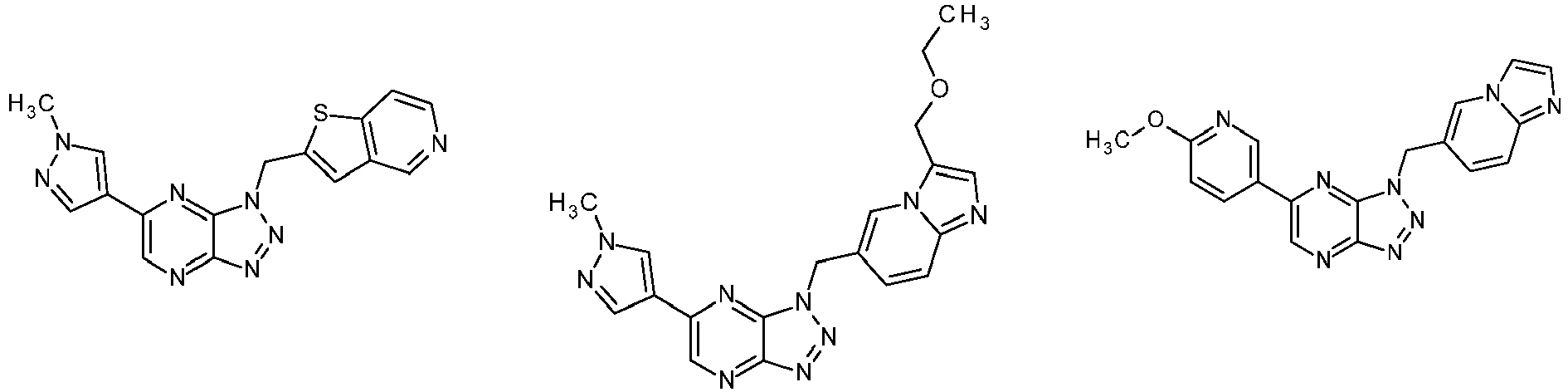
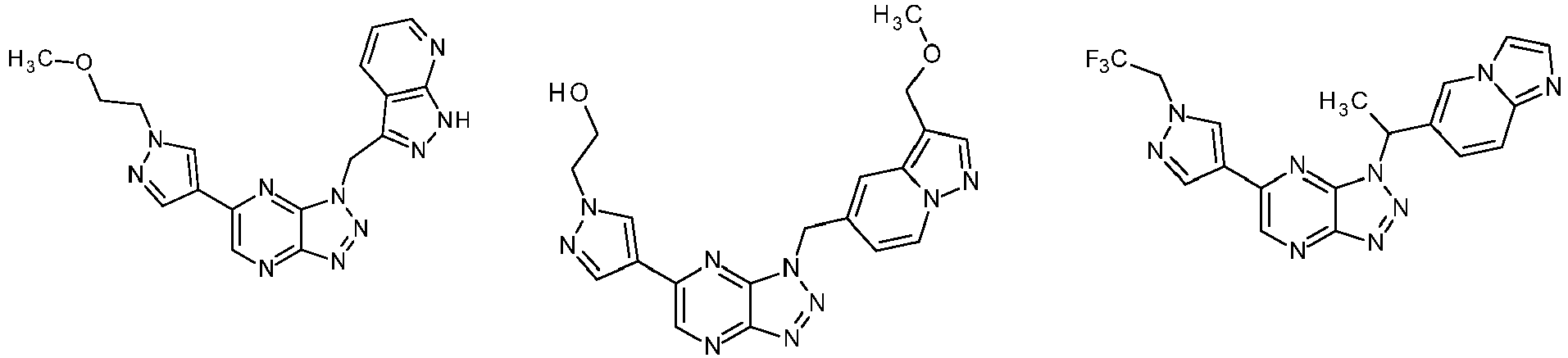


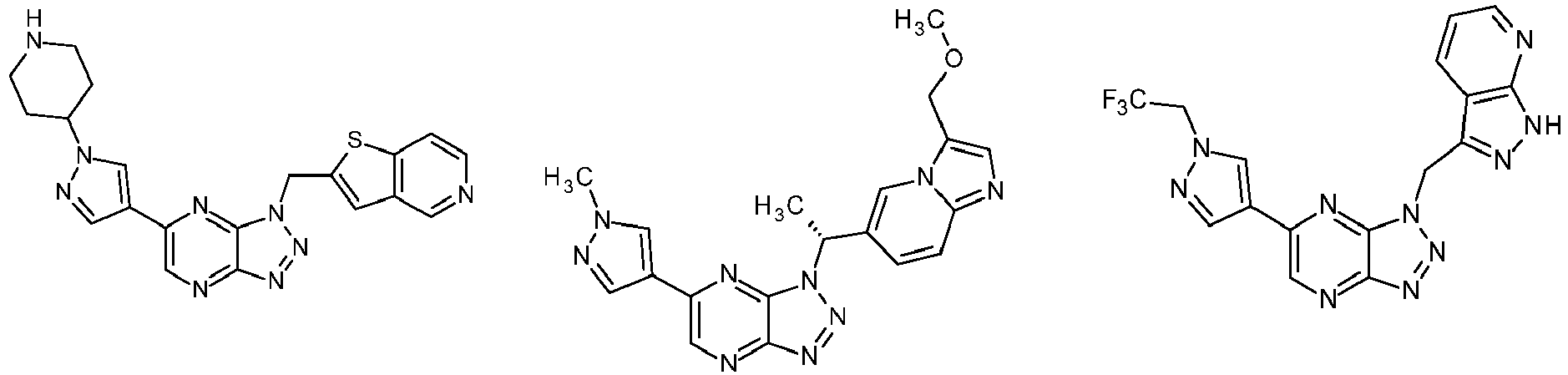





- The compounds described herein, and/or the pharmaceutically acceptable salts thereof, can be synthesized from commercially available starting materials by methods well known in the art. The following schemes illustrate methods for most of compound preparation. In each of the schemes, LG and LG' are leaving groups that can be same or different. Y' is -NHR7, -OH, -SH, -B(OH)2, or B(OR')2, and R1, R2, R3, R4, R5 and Y are as defined herein.


- The compounds thus obtained can be further modified at their peripheral positions to provide the desired compounds. Synthetic chemistry transformations are described, for example, in R. Larock, Comprehensive Organic Transformations, VCH Publishers (1989); T.W. Greene and P.G.M. Wuts, Protective Groups in Organic Synthesis, 3rd Ed., John Wiley and Sons (1999); L. Fieser and M. Fieser, Fieser and Fieser's Reagents for Organic Synthesis, John Wiley and Sons (1994); and L. Paquette, ed., Encyclopedia of Reagents for Organic Synthesis, John Wiley and Sons (1995) and subsequent editions thereof.
- Before use, the at least one compound and/or at least one pharmaceutically acceptable salt described herein, can be purified by column chromatography, high performance liquid chromatography, crystallization, or other suitable methods.
- Also provided is a composition containing at least one compound and/or at least one pharmaceutically acceptable salt described herein, and at least one pharmaceutically acceptable carrier.
- A composition comprising at least one compound and/or at least one pharmaceutically acceptable salt described herein, can be administered in various known manners, such as orally, parenterally, by inhalation spray, or via an implanted reservoir. The term "parenteral" as used herein includes subcutaneous, intracutaneous, intravenous, intramuscular, intraarticular, intraarterial, intrasynovial, intrasternal, intrathecal, intralesional and intracranial injection or infusion techniques.
- An oral composition can be any orally acceptable dosage form including, but not limited to, tablets, capsules, emulsions, and aqueous suspensions, dispersions and solutions. Commonly used carriers for tablets include lactose and corn starch. Lubricating agents, such as magnesium stearate, are also typically added to tablets. For oral administration in a capsule form, useful diluents include lactose and dried corn starch. When aqueous suspensions or emulsions are administered orally, the active ingredient can be suspended or dissolved in an oily phase combined with emulsifying or suspending agents. If desired, certain sweetening, flavoring, or coloring agents can be added.
- A sterile injectable composition (e.g., aqueous or oleaginous suspension) can be formulated according to techniques known in the art using suitable dispersing or wetting agents (such as, for example, Tween 80) and suspending agents. The sterile injectable preparation can also be a sterile injectable solution or suspension in a non-toxic parenterally acceptable diluent or solvent, for example, as a solution in 1,3-butanediol. Among the pharmaceutically acceptable vehicles and solvents that can be employed are mannitol, water, Ringer's solution and isotonic sodium chloride solution. In addition, sterile, fixed oils are conventionally employed as a solvent or suspending medium (e.g., synthetic mono- or di-glycerides). Fatty acids, such as oleic acid and its glyceride derivatives are useful in the preparation of injectables, as are natural pharmaceutically-acceptable oils, such as olive oil or castor oil, especially in their polyoxyethylated versions. These oil solutions or suspensions can also contain a long-chain alcohol diluent or dispersant, or carboxymethyl cellulose or similar dispersing agents.
- An inhalation composition can be prepared according to techniques well known in the art of pharmaceutical formulation and can be prepared as solutions in saline, employing benzyl alcohol or other suitable preservatives, absorption promoters to enhance bioavailability, fluorocarbons, and/or other solubilizing or dispersing agents known in the art.
- A topical composition can be formulated in form of oil, cream, lotion, ointment and the like. Suitable carriers for the composition include vegetable or mineral oils, white petrolatum (white soft paraffin), branched chain fats or oils, animal fats and high molecular weight alcohols (greater than C12). In some embodiments, the pharmaceutically acceptable carrier is one in which the active ingredient is soluble. Emulsifiers, stabilizers, humectants and antioxidants may also be included as well as agents imparting color or fragrance, if desired. Additionally, transdermal penetration enhancers may be employed in these topical formulations. Examples of such enhancers can be found in
U.S. Patents 3,989,816 and4,444,762 . - Creams may be formulated from a mixture of mineral oil, self-emulsifying beeswax and water in which mixture the active ingredient, dissolved in a small amount of an oil, such as almond oil, is admixed. An example of such a cream is one which includes about 40 parts water, about 20 parts beeswax, about 40 parts mineral oil and about 1 part almond oil. Ointments may be formulated by mixing a solution of the active ingredient in a vegetable oil, such as almond oil, with warm soft paraffin and allowing the mixture to cool. An example of such an ointment is one which includes about 30% by weight almond and about 70% by weight white soft paraffin.
- A pharmaceutically acceptable carrier refers to a carrier that is compatible with active ingredients of the composition (and in some embodiments, capable of stabilizing the active ingredients) and not deleterious to the subject to be treated. For example, solubilizing agents, such as cyclodextrins (which form specific, more soluble complexes with the at least one compound and/or at least one pharmaceutically acceptable salt described herein), can be utilized as pharmaceutical excipients for delivery of the active ingredients. Examples of other carriers include colloidal silicon dioxide, magnesium stearate, cellulose, sodium lauryl sulfate, and pigments such as D&C Yellow # 10.
- Suitable in vitro assays can be used to preliminarily evaluate the efficacy of the at least one compound and/or at least one pharmaceutically acceptable salt described herein, in inhibiting the activity of c-Met. The at least one compound and/or at least one pharmaceutically acceptable salt described herein, can further be examined for efficacy in treating cancer by in vivo assays. For example, the compounds described herein, and/or the pharmaceutically acceptable salts thereof, can be administered to an animal (e.g., a mouse model) having cancer and its therapeutic effects can be accessed. Based on the results, an appropriate dosage range and administration route for animals, such as humans, can also be determined.
- A method of inhibiting the activity of c-Met is disclosed herein. The method comprises contacting the receptor with an amount of at least one compound and/or at least one pharmaceutically acceptable salt described herein effective to inhibit the activity of c-Met.
- The at least one compound and/or at least one pharmaceutically acceptable salt described herein can be used to achieve a beneficial therapeutic or prophylactic effect, for example, in subjects with cancer. As used herein, the term "cancer" refers to a cellular disorder characterized by uncontrolled or disregulated cell proliferation, decreased cellular differentiation, inappropriate ability to invade surrounding tissue, and/or ability to establish new growth at ectopic sites. The term "cancer" includes, but is not limited to, solid tumors and bloodborne tumors. The term "cancer" encompasses diseases of skin, tissues, organs, bone, cartilage, blood, and vessels. The term "cancer" further encompasses primary and metastatic cancers.
- Non-limiting examples of solid tumors include pancreatic cancer; bladder cancer; colorectal cancer; breast cancer, including metastatic breast cancer; prostate cancer, including androgen-dependent and androgen-independent prostate cancer; renal cancer, including, e.g., metastatic renal cell carcinoma; hepatocellular cancer; lung cancer, including, e.g., non-small cell lung cancer (NSCLC), bronchioloalveolar carcinoma (BAC), and adenocarcinoma of the lung; ovarian cancer, including, e.g., progressive epithelial or primary peritoneal cancer; cervical cancer; gastric cancer; esophageal cancer; head and neck cancer, including, e.g., squamous cell carcinoma of the head and neck; skin cancer, including e.g., malignant melanoma; neuroendocrine cancer, including metastatic neuroendocrine tumors; brain tumors, including, e.g., glioma, anaplastic oligodendroglioma, adult glioblastoma multiforme, and adult anaplastic astrocytoma; bone cancer; soft tissue sarcoma; and thyroid carcinoma.
- Non-limiting examples of hematologic malignancies include acute myeloid leukemia (AML); chronic myelogenous leukemia (CML), including accelerated CML and CML blast phase (CML-BP); acute lymphoblastic leukemia (ALL); chronic lymphocytic leukemia (CLL); Hodgkin's disease (HD); non-Hodgkin's lymphoma (NHL), including follicular lymphoma and mantle cell lymphoma; B-cell lymphoma; T-cell lymphoma; multiple myeloma (MM); Waldenstrom's macroglobulinemia; myelodysplastic syndromes (MDS), including refractory anemia (RA), refractory anemia with ringed siderblasts (RARS), (refractory anemia with excess blasts (RAEB), and RAEB in transformation (RAEB-T); and myeloproliferative syndromes.
- In some embodiments, the examples of the cancer to be treated include, but are not limited to, lung cancer, head and neck cancer, colorectal cancer, pancreatic cancer, colon cancer, breast cancer, ovarian cancer, prostate cancer, stomach cancer, kidney cancer, liver cancer, brain cancer, bone cancer, and leukemia.
- In some embodiments, the at least one compound and/or at least one pharmaceutically acceptable salt described herein, is administered in conjunction with another therapeutic agent. In some embodiments, the other therapeutic agent is one that is normally administered to patients with the disease or condition being treated. The at least one compound and/or at least one pharmaceutically acceptable salt described herein, may be administered with the other therapeutic agent in a single dosage form or as a separate dosage form. When administered as a separate dosage form, the other therapeutic agent may be administered prior to, at the same time as, or following administration of the at least one compound and/or at least one pharmaceutically acceptable salt described herein.
- In some embodiments, at least one compound and/or at least one pharmaceutically acceptable salt described herein, is administered in conjunction with an anti-neoplastic agent. As used herein, the term "anti-neoplastic agent" refers to any agent that is administered to a subject with cancer for purposes of treating the cancer. Nonlimiting examples anti-neoplastic agents include: radiotherapy; immunotherapy; DNA damaging chemotherapeutic agents; and chemotherapeutic agents that disrupt cell replication.
- Non-limiting examples of DNA damaging chemotherapeutic agents include topoisomerase I inhibitors (e.g., irinotecan, topotecan, camptothecin and analogs or metabolites thereof, and doxorubicin); topoisomerase II inhibitors (e.g., etoposide, teniposide, and daunorubicin); alkylating agents (e.g., melphalan, chlorambucil, busulfan, thiotepa, ifosfamide, carmustine, lomustine, semustine, streptozocin, decarbazine, methotrexate, mitomycin C, and cyclophosphamide); DNA intercalators (e.g., cisplatin, oxaliplatin, and carboplatin); DNA intercalators and free radical generators such as bleomycin; and nucleoside mimetics (e.g., 5-fluorouracil, capecitibine, gemcitabine, fludarabine, cytarabine, mercaptopurine, thioguanine, pentostatin, and hydroxyurea).
- Chemotherapeutic agents that disrupt cell replication include: paclitaxel, docetaxel, and related analogs; vincristine, vinblastin, and related analogs; thalidomide and related analogs (e.g., CC-5013 and CC-4047); protein tyrosine kinase inhibitors (e.g., imatinib mesylate and gefitinib); proteasome inhibitors (e.g., bortezomib); NF-kappa B inhibitors, including inhibitors of I kappa B kinase; antibodies which bind to proteins overexpressed in cancers and thereby downregulate cell replication (e.g., trastuzumab, rituximab, cetuximab, and bevacizumab); and other inhibitors of proteins or enzymes known to be upregulated, over-expressed or activated in cancers, the inhibition of which downregulates cell replication.
- The examples below are intended to be purely exemplary and should not be considered to be limiting in any way. Efforts have been made to ensure accuracy with respect to numbers used (for example, amounts, temperature, etc.) but some experimental errors and deviations should be accounted for. Unless indicated otherwise, parts are parts by weight, temperature is in degrees Centigrade, and pressure is at or near atmospheric. All MS data were checked by agilent 6120 agilent 1100. All reagents, except intermediates, used in this invention are commercially available. All compound names except the reagents were generated by Chemdraw 8.0.
- In the following examples, the abbreviations below are used:
- AIBN
- a,a'-azo-isobutyronnitrile
- BINAP
- 2,2'-Bis(diphenylphosphino)-1,1 '-binaphthyl
- Boc
- tert-butoxycarbonyl
- Boc2O
- di-t-butyl-dicarbonate
- i-BuNO2
- Isobutylnitrite
- DCM
- dichloromethane
- DMF
- N,N-dimethylformamide
- DMAP
- 4-Dimethylaminopyridine
- DPPA
- Diphenylphosphoryl azide
- DBU
- 1,8-Diazabicyclo[5.4.0]undec-7-ene
- DEA
- N,N-diethylamine
- ee
- enantiomeric excess
- Et3N
- triethylamine
- h
- hour
- HATU
- O-(7-Azabenzotriazol-1-yl)-N,N,N',N'-tetra-methyluronium hexafluorophosphate
- HMTA
- Hexamethylenetetramine
- HOAc
- acetic acid
- Lawesson's reagent
- 2,4-Bis(4-methoxyphenyl)-2,4-dithioxo-1,3,2,4-dithiadiphosphetane
- mL
- milliliter(s)
- min
- minute(s)
- MeOH
- methanol
- MsCl
- methanesulfonyl chloride
- NBS
- N-Bromosuccinimide
- Pd(dppf)Cl2
- 1,1'-Bis(diphenylphosphino)ferrocene-palladium(II)dichloride dichloromethane complex
- Pd2(dba)3
- Tris(dibenzylideneacetone)dipalladium(0)
- Pd(PPh3)4
- Tetrakis(triphenylphosphine)palladium(0)
- PPh3
- Triphenylphosphine
- THF
- tetrahydrofuran
- Ti(i-OPr)4
- Titanium(IV) isopropoxide
- Xantphos
- 9-Dimethyl-4,5-bis(diphenylphosphino)xanthene
-

- To a solution of 1H-pyrrolo[2,3-b]pyridine (A-1) (7.23 g, 61.2 mmol) in acetic acid (20 mL) and water (40 mL) was added HMTA (9.42 g, 67.3 mmol). The reaction mixture was stirred at 120 °C for 6 h. It was cooled with an ice bath, and the resulting precipitate was collected and dried to afford the title compound (7.90 g) MS (m/z): 147 (M+1)+.
- To a solution of 1H-pyrrolo[2,3-b]pyridine-3-carbaldehyde (A-2) (5.0 g, 34.21 mmol) in EtOH (150 mL) was added NaBH4 (1.30 g, 34.21 mmol). The reaction mixture was stirred at room temperature for 0.5 h. It was concentrated and purified by chromatography on silica gel to afford the title compound (5.0 g). MS (m/z): 149 (M+1)+.
- To a mixture of 1H-pyrrolo[2,3-b]pyridin-3-yl)methanol (A-3) (1.0 g, 6.75 mmol) in anhydrous THF (50 mL) were added DPPA (3.71 g, 13.5 mmol) and DBU (0.821 g, 5.4 mmol) respectively. It was refluxed under N2 for 6 h, and then concentrated under vacuo. The resulting residue was dissolved in EtOAc (50 mL), washed with brine, dried over sodium sulfate and concentrated under vacuo, to obtain the crude product. The crude product was purified by chromatography on silica gel to afford the title compound (0.587 g). MS (m/z): 174 (M+1)+.
- To a mixture of 3-(azidomethyl)-1H-pyrrolo[2,3-b]pyridine (A-4) (1.50 g, 8.63 mmol) in EtOAc (150 mL) was added 10% Pd/C (1.10 g). The resulting reaction mixture was stirred under one atmosphere of H2 at room temperature for 3 h. The mixture was filtered, and the filtrate was concentrated to afford the title compound (1.15 g).
-

- To a solution of 2-chloronicotinic acid (B-1) (7.88 g, 50.0 mmol) in THF (100 mL) was added methyl magnesium bromide (42 mL, 3M ethyl ether solution) dropwise under 0 °C. Upon completion of the addition, the reaction mixture was stirred at 0 °C for 0.5 h and then at room temperature overnight. The reaction mixture was added into ice/water (150 mL), and extracted with ethyl acetate. The combined organic layers were dried over Na2SO4 and concentrated to afford the title compound 1-(2-chloropyridin-3-yl)ethanone (B-2). MS (m/z): 156 (M+1)+.
- A solution of 1-(2-chloropyridin-3-yl)ethanone (B-2) (6 g, 38.6 mmol) and hydrazine (85%, 9.1 g, 154.4 mmol) in pyridine (80 mL) was stirred under reflux overnight. The mixture was cooled to room temperature, concentrated, diluted with water (80 mL) and then extracted with ethyl acetate (100 mLx3). The combined organic layers were washed with brine, dried over Na2SO4, and concentrated under vacuo. The resulting residue was used for the next step without furtuer purification. MS (m/z): 134 (M+1)+.
- To a solution of 3-methyl-1H-pyrazolo[3,4-b]pyridine (B-3) in EtOAc (300 mL) were added (Boc)2O (16.4 g, 75 mmol), DMAP (610 mg, 5 mmol), and Et3N (10 g, 100 mmol). The reaction mixture was stirred at room temperature overnight. Solvent was removed in vacuo, and the residue was purified by chromatography on silica gel to afford the title compound (5.3 g, 45.5% by two steps). MS (m/z): 134.
- To a solution of tert-butyl 3-methyl-1 H-pyrazolo[3,4-b]pyridine-1-carboxylate (B-4) (699 mg, 3 mmol) in CCl4 (15 mL) were added NBS (641 mg, 3.6 mmol) and AIBN (70 mg, 0.3 mmol). The reaction mixture was stirred under reflux overnight and then filtered. The filtrate was washed with saturated aqueous Na2CO3 (15 mL). The organic layer was dried over Na2SO4 and concentrated to afford the crude product. The crude product was used for next step without further purification. MS (m/z): 212 (M+1)+.
- A mixture of 3-(bromomethyl)-1 H-pyrazolo[3,4-b]pyridine (B-5) and NaN3 (390 mg, 6 mmol) in DMF (6 mL) was stirred at 80°C for 1.5 h. After the mixture was cooled to room temperature, water (25 mL) was added. The resulting mixture was extracted with ethyl acetate (40 mLx3). The combined organic layers were washed with brine (40 mL) and dried over Na2SO4. Solvent was removed in vacuo, and the residue was purified by chromatography on silica gel. A solid was obtained (152 mg, 29.1% by two steps).
- A mixture of 3-(azidomethyl)-1 H-pyrazolo[3,4-b]pyridine (B-6) (152 mg, 0.87 mmol), PPh3 (465 mg, 1.74 mmol) and 1 mL of NH4OH in THF (20 mL) was stirred at room temperature overnight. The solution was concentrated, and the resulting residue was dissolved in ethyl acetate. The solution was treated with 2M HCl, which resulted in precipitates. The precipitates were collected by filtration to afford the title compound (121 mg). MS (m/z): 149 (M+1)+.
-

- To a mixture of 3-chloropyridine-2-carbonitrile (C-1) (1.01 g, 7.29 mmol) and K2CO3 (1.10 g, 7.96 mmol) in DMF (10 mL) and water (1 mL) was added methyl thioglycolate (0.709 mL, 7.93 mmol) dropwise. The reaction mixture was stirred at 40 °C for 3h. The mixture was quenched with cold water (70 mL) and placed on ice to enhance precipitation. The precipitate was collected by filtration to afford the title compound. MS (m/z): 209 (M+1)+.
- To a solution of methyl 3-aminothieno[3,2-b]pyridine-2-carboxylate (C-2) (930 mg, 4.47 mmol) in hypophosphorous acid (35 mL) chilled in an ice bath was added sodium nitrite (620 mg, 8.98 mmol) in a minimal amount of water. The reaction mixture was stirred for 3h in an ice bath, and then the pH was adjusted to about 7.0 with 30% aqueous sodium hydroxide solution. The resulting mixture was extracted with EtOAc. The combined organic layers were dried and concentrated to afford the title compound. MS (m/z): 194 (M+1)+.
- To a solution of methyl thieno[3,2-b]pyridine-2-carboxylate (C-3) (600 mg, 3.1 mmol) in 30 mL of anhydrous THF at 0°C was added LiAlH4 (472 mg, 12.4 mmol) in anhydrous THF (25 mL) dropwise over 20 mins. The reaction mixture was stirred at 0 °C for 30 mins. MeOH was added and the resulting mixture was purified by chromatography to afford the title compound. MS (m/z): 166 (M+1)+.
- To a solution of thieno[3,2-b]pyridin-2-ylmethanol (C-4) (17 mg, 0.1 mmol) in anhydrous dichloromethane (10 mL) was added SOCl2 (120 mg). After the mixture was stirred at room temperature for 2 hours, it was concentrated and used for the next step without further purification. MS (m/z): 184 (M+1)+.
- 2-(Chloromethyl)thieno[3,2-b]pyridine (C-5) (183 mg, 1 mmol) was dissolved in NH3/methanol (7 N, 10 mL). The resulting mixture was stirred at 50 °C for 16 hours and concentrated. The residue was purified by chromatography. MS (m/z): 165 (M+1)+.
- To a solution of 4-chloropyridine-3-carboxaldehyde (D-1) (1.4 g, 10 mmol) dissolved in DMF (10 mL) and water (1 mL) were added K2CO3 (1.66 g, 12 mmol) and methyl thioglycolate (1.07 mL, 12 mmol) portion-wise. The reaction mixture was stirred at 45°C overnight and then quenched with cold water. The flask was placed on ice to enhance precipitation. The precipitate was collected by filtration and air-dried to afford the title compound (1.23 g). MS (m/z): 194 (M+1)+.
- To a solution of methyl thieno[3,2-c]pyridine-2-carboxylate (D-2) (15 g, 77.6 mmol) in anhydrous THF (250 mL) was added LiAlH4 (4.42 g, 116.4 mmol) in portions at 0°C. The suspension was stirred at 0°C for 1h and then quenched by adding saturated aqueous NH4Cl and filtered. The filtrate was washed with brine and concentrated. The residue was used in the next step without any further purification (10.3 g).

- To a flame-dried round-bottomed flask containing thieno[3,2-c]pyridin-2-ylmethanol (D-3) (3.2 g, 19.4 mmol) was added DPPA (8 g, 6.26 mL, 29.1 mmol) in THF (50 mL). The reaction mixture was stirred for 5 mins and cooled to 0°C, followed by adding DBU (4.43 g, 4 mL, 29.1 mmol) via syringe. The mixture was allowed to stir at reflux overnight. The reaction was then partitioned between water and ethyl ether. The aqueous layer was extracted with ethyl ether. The combined organic layers were washed with brine, dried over Na2SO4, concentrated, and purified by chromatography to afford the product (3.27 g). MS (m/z): 191 (M+1)+.
- To a solution of 2-(azidomethyl)thieno[3,2-c]pyridine (D-4) (3 g, 15.8 mmol) in anhydrous THF (50 mL) was added Ph3P (8.27 g, 31.5 mmol), followed by NH4OH (2 mL). The solution was stirred at room temperature overnight. Solvent was removed, and the residue was purified by chromatography to afford the title compound (2.5 g).
- To a solution of methyl thieno[3,2-c]pyridine-2-carboxylate (D-2) (12 g, 62.1 mmol) in MeOH (150 mL) and H2O (15 mL) was added LiOH.H2O (5.2 g, 124.2 mmol). The solution was stirred at room temperature overnight, and then acidified with 1 N aqueous HCl. The resulting white precipitate was collected by filtration and air-dried to afford the title compound. MS (m/z): 179 (M)+.
- To a solution of thieno[3,2-c]pyridine-2-carboxylic acid (D'-1) (11.5 g, 64.2 mmol) in DCM (200 mL) and DMF (50 mL) was added Et3N (19.5 g, 26.6 mL, 192.6 mmol) followed by HATU (36.6 g, 96.3 mmol). The reaction solution was stirred at room temperature for 20 mins, and then treated with N,O-dimethylhydroxylamine hydrochloride (6.9 g, 70.6 mmol). Stirring continued overnight at room temperature. The solvent was removed.The residue was dissolved in EtOAc and washed with water and brine. The organic layer was dried and concentrated. The residue was purified by chromatography on silica gel to give the title compound. MS (m/z): 223 (M+1)+.
- To a solution of N-methoxy-N-methylthieno[3,2-c]pyridine-2-carboxamide (D'-2) (11.1 g, 50 mmol) in anhydrous THF (150 mL) was added MeMgBr (3M in ethyl ether, 25 mL, 75 mmol) at 0°C under N2. The reaction mixture was allowed to warm to the ambient temperature and stirred overnight. Saturated aqueous NH4Cl solution was added to quench the reaction. The resulting mixture was then extracted with EtOAc. The combined organic layers were dried over Na2SO4, filtered, and concentrated to afford the title compound. MS (m/z): 178 (M+1)+.
- To a solution of 1-(thieno[3,2-c]pyridin-2-yl)ethanone (D'-3) (3.5 g, 1 mmol) in anhydrous THF (50 mL) was added LiAlH4 (1.13 g, 1.5 mmol) in portions at 0°C. The suspension was stirred under this temperature for 1 h. The reaction mixture was quenched with saturated aqueous NH4Cl solution and filtered. The filtrate was washed with brine, concentrated, and then used for the next step without any further purification.
- Intermediate D' was prepared from 1-(thieno[3,2-c]pyridin-2-yl)ethanol (D'-4) following similar procedures for synthesizing intermediate A from A-3, as described above.
-

- E-2 was prepared from thieno[2,3-b]pyridine-2-carbaldehyde (E-1) following similar procedures for synthesizing intermediate A-3 from A-2, as described above. MS (m/z): 166 (M+1)+.
- Intermediate E was prepared from thieno[2,3-b]pyridine-2-ylmethanol (E-2) following similar procedures for synthesizing intermediate C from C-4, as described above. MS (m/z): 165 (M+1)+.
-

- To a solution of 5-methylthiophene-2-carboxylic acid (F-1) (14.0 g, 0.1 mol) in MeOH (250 mL) was added concentrated H2SO4 (2.0 mL). The reaction mixture was stirred under reflux for 60h. The solvent was removed in vacuo. Ethyl acetate was added to dilute the reaction mixture. Then the organic solution was washed with a saturated aqueous Na2CO3 solution, and dried over Na2SO4. The solvent was removed to afford the title compound (13.4 g).
- A solution of concentrated HNO3 (7.2 mL, 111.5 mmol) in concentrated H2SO4 (20 mL) was added dropwise to the solution of methyl 5-methylthiophene-2-carboxylate (F-2) (13.4 g, 86.0 mmol) in concentrated H2SO4 (30 mL) at 0°C. The reaction mixture was stirred at 0°C for 30 mins and poured into ice-water. The precipitate was filtered and washed with water. A solid was collected as the product (14.8 g).
- To a solution of methyl 5-methyl-4-nitrothiophene-2-carboxylate (F-3) (14.8 g, 73.6 mmol) in MeOH/THF (1:1,300 mL) was added Raney Ni. The reaction mixture was degassed and charged with hydrogen 3 times, and then stirred at room temperature for 36 h under 1 atmosphere of hydrogen. Raney Ni was filtered, and the filtrate was concentrated. The residue was treated with aqueous HCl (1 N, 150 mL) and filtered. The filtrate was treated with aqueous NaOH (1 N) to bring pH to about 8 to 9. Then the mixture was extracted with ethyl acetate. The combined organic layers were dried over Na2SO4, and the solvent was removed to give the title compound (8.1 g).
- To a solution of methyl 4-amino-5-methylthiophene-2-carboxylate (F-4) (5.1 g, 30 mmol) in toluene (120 mL) were added acetic anhydride (16.0 g, 0.12 mol) and potassium acetate (1.5 g, 15.1 mmol). The reaction mixture was stirred at 100 °C for 3h. After cooled to room temperature, the reaction mixture was treated with isobutyl nitrite (10.5 g, 90.0 mmol), and then stirred at 100°C overnight. Wate was added, and then the mixture was extracted with ethyl acetate. The combined organic layers were washed with brine, dried over Na2SO4 and concentrated. The residue was purified by chromatography eluting with Pet/EtOAc=10/1 to afford the title compound (5.3 g) as the product.
- To a solution of methyl 1 -acetyl- 1H-thieno[3,2-c]pyrazole-5-carboxylate (F-5) (4.5 g, 20.0 mmol) in MeOH (30 mL) was slowly added NaBH4 (836 mg, 22.0 mmol). The mixture was stirred at room temperature for 30 mins, and then concentrated. The residue was dissolved in anhydrous THF (80 mL) and then LiAlH4 (1.5 g, 40.0 mmol) was slowly added at 0°C. The reaction mixture was stirred at 0°C for 30 min. Aqueous NH4Cl solution was added dropwise to quench the reaction. The resulting mixture was filtered, and the filtrate was extracted with ethyl acetate. The combined organic layers were washed with brine, dried over Na2SO4, and concentrated in vacuo to give the title compound (2.9 g).
- Intermediate F was prepared from (1 H-thieno[3,2-c]pyrazol-5-yl)methanol (F-6) following similar procedures for synthesizing intermediate D from D-3, as described above.
- To a solution of methyl 1-acetyl-1 H-thieno[3,2-c]pyrazole-5-carboxylate (F-5) (4.9 g, 21.8 mmol) in MeOH (15 mL) was added an aqueous KOH solution (6 N, 10 mL). The reaction mixture was stirred at room temperature for 2h, and then concentrated in vacuo. Aqueous HCl (6 N) was added to adjust pH to 5-6. The precipitates were collected by filtration to afford the title compound (3.0 g).

- To a solution of 1 H-thieno[3,2-c]pyrazole-5-carboxylic acid (G-1) (3.0 g, 17.9 mmol) in MeOH (50 mL) was added concentrated H2SO4 (0.3 mL). The reaction mixture was stirred at reflux for 60 h. Solvent was removed in vacuo. Ethyl acetate was added to dilute the mixture. The mixture was washed with aqueous NaHCO3 solution, dried over Na2SO4, and concentrated in vacuo to afford the title compound (2.4 g).
- To a solution of methyl 1H-thieno[3,2-c]pyrazole-5-carboxylate (G-2) (760 mg, 4.2 mmol) in DMF (4 mL) were added bromoethane (915 mg, 8.3 mmol) and K2CO3 (1.7 g, 12.6 mmol). The reaction mixture was stirred at 110 °C for 3 h in a sealed tube. After cooled to room temperature, the mixture was concentrated and purified by chromatography to afford two products:
- Methyl 2-ethyl-2H-thieno[3,2-c]pyrazole-5-carboxylate (351 mg) (G-3). MS (m/z): 211 (M+1)+.
- Methyl 1-ethyl-1 H-thieno[3,2-c]pyrazole-5-carboxylate (272 mg) (G'-3). MS (m/z): 211 (M+1)+.
- Intermediate G was prepared from methyl 2-ethyl-2H-thieno[3,2-c]pyrazole-5-carboxylate (G-3) following similar procedures for synthesizing intermediate D from D-2, as described above. MS (m/z): 182 (M+1)+.
- Intermediate G' was prepared from methyl 1-ethyl-1H-thieno[3,2-c]pyrazole-5-carboxylate (G'-3) following similar procedures for synthesizing intermediate D from D-2, as described above. MS (m/z): 182 (M+1)+.
-

- To a solution of methyl 1 H-pyrrolo[2,3-b]pyridine-2-carboxylate (H-1) (880 mg, 5.0 mmol) in MeOH (2 mL) was added NH3.H2O (6 mL). The reaction was heated at 80°C overnight. After being cooled to room temparature, the mixture was concentrated in vacuo to afford the title compound (805 mg) as a yellow solid, which was used for the next step without further purification. MS (m/z): 162 (M+1)+.
- To a solution of 1 H-pyrrolo[2,3-b]pyridine-2-carboxamide (H-2) (805 mg, 5.0 mmol) in dried THF (10 mL) at 0°C under 1 atm of N2 was slowly added LiAlH4 (570 mg, 15 mmol). The mixture was stirred at 80°C overnight. The mixture was then cooled to 0°C concentrated, and then purified by chromatography on silica gel to afford the title compound (720 mg). MS (m/z): 148 (M+1)+.
- To a solution of methyl 1 H-pyrrolo[2,3-b]pyrid1 ine-2-carboxylate (H-1) (528 mg, 3 mmol) in dried THF (5 mL) at 0°C was added NaH (240 mg, 6 mmol). The reaction was stirred for 0.5 h under N2, and then SEMCI (526 mg, 3 mmol) was added dropwise. The mixture was stirred at room temperature for 2 h. H2O was added to quench the reaction. The resulting mixture was extracted with EtOAc. The oragnic layer was dried over Na2SO4, and concentrated to afford the title compound (750 mg), which was used for the next step without purification. MS (m/z): 307 (M+1)+.
- Intermediate H' was prepared from methyl 1-((2-(trimethylsilyl)ethoxy)methyl)-1H-pyrrolo[2,3-b]pyridine-2-carboxylate (H'-1) following similar procedures for synthesizing intermediate D from D-2, as described above. MS (m/z): 278 (M+1)+.
-
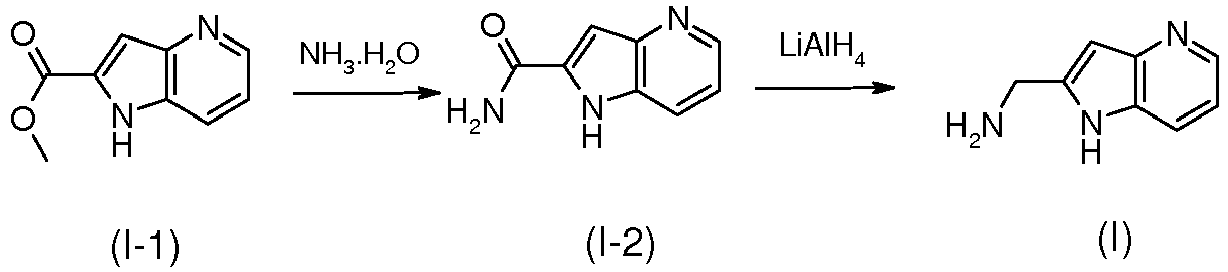
- Intermediate I was prepared from methyl 1H-pyrrolo[3,2-b]pyridine-2-carboxylate (I-1) following similar procedures for synthesizing intermediate H, as described above. MS (m/z): 148 (M+1)+.
-

- To a vigorously stirred mixture of of 2-nitrothiophene (J-1) (13 g , 0.1 mol) and concentrated hydrochloric acid (195 mL) was added tin (25 g) at 0°C. After most of the tin was dissolved, EtOH (70 mL) and anhydrous ZnCl2 (6 g) were added. The mixture was heated to 85°C, and then treated with malonaldehyde bis(diethyl acetal) (17.2 g , 0.078 mol) in EtOH (30 mL). The resulting reaction was maintained at 85 °C for 1 h, then poured onto ice (100 g), basified with NH3.H2O, and extracted with DCM (75 mLx3). The combined organic layers were concentrated and purified by chromatography on silica gel to give the title compound. MS (m/z): 135 (M)+.
- Bromine (2.08 g ,13 mmol) was dropwise added to a mixture of thieno[2,3-b]pyridine (J-2) (1.35 g , 10 mmol), dipotassium monohydrogen orthophosphate (940 mg, 5.4 mmol), sodium bicarbonate (840 mg 10 mmol), and magnesium sulfate (2.0 g, 16.7mmol) in chloroform (40 mL) which has been stirred at reflux for 16 h, the resulting mixture was stirred under reflux for 24 h, then filtered and washed with DCM. The filtrate was concentrated, and purified by chromatography. MS (m/z): 214 (M+1)+.
- To a stirred solution of 3-bromothieno[2,3-b]pyridine (J-3) (107 mg, 0.5 mmol) and CuCN (60 mg , 0.67 mmol) in anhydrous DMF(4 mL) was added Pd(PPh3)4 (57 mg, 0.05 mmol). The reaction was degassed with nitrogen and stirred at 120 °C for 5 h. Then the cooled mixture was concentrated and purified by chromatography to afford the title compound. MS (m/z): 161 (M+1)+.
- To a solution of thieno[2,3-b]pyridine-3-carbonitrile (J-4) (320 mg, 2 mmol) in NH3.EtOH (25 mL) was added Ranye/Ni (about 300 mg). The reaction was degassed with hydrogen and stirred at room temperature for 2 h. Then the mixture was filtered, and the filtrate was concentrated to give the title compound, which was used for next step without purification. MS (m/z): 165 (M+1)+.
-

- To a solution of 6-aminonicotinonitrile (K-1) (4.0 g, 33.6 mmol) in anhydrous EtOH (160 mL) was added 2-chloroacetaldehyde (40% in H2O, 27.5 mL, 168 mmol). The reaction was refluxed for 4h, and then concentrated. The resulting residue was dissolved in water and adjusted to pH > 7 with a saturated NaHCO3 solution. The precipitate was collected and dried to afford the title compound (4.80 g).
- Intermediate K was prepared from H-imidazo[1,2-a]pyridine-6-carbonitrile (K-2) following similar procedures for synthesizing intermediate J from J-4, as described above.
-

- To a stirred solution of 6-aminonicotinonitrile (L-1) (8.7 g, 73 mmol) in DMF (35 mL) was added N,N-dimethylformamide dimethyl acetal (35 mL, 294 mmol). The reaction mixture was heated to 130°C overnight. After cooled to room temperature, the volatiles were removed under reduced pressure to afford the desired intermediate N'-(5-cyanopyridin-2-yl)-N,N-dimethylformamidine.
- To an ice-cooled, stirred solution of the above product in methanol (200 mL) and pyridine (11.5 mL, 143 mmol) was added hydroxylamine-O-sulfonic acid (11.3 g, 100 mmol). The reaction mixture was allowed to warm to room temperature and was stirred overnight. Then the volatiles were removed under reduced pressure, and the residue was partitioned between aqueous sodium bicarbonate solution and ethyl acetate. The aqueous layer was further extracted with ethyl acetate. The combined organic layers were washed sequentially with water and brine, dried over anhydrous Na2SO4, filtered, and concentrated. The resulting residue was purified by chromatography on silica gel to give the title compound (5.5 g). MS (m/z): 145 (M+1)+.
- Intermediate L was prepared from [1,2,4]triazolo[1,5-a]pyridine-6-carbonitrile (L-2) following similar procedures for synthesizing intermediate J from J-4, as described above.
-

- Intermediate M was prepared from pyrazolo[1,5-a]pyrimidine-5-carbonitrile (M-1) following similar procedures for synthesizing intermediate J from J-4, as described above . MS (m/z): 149 (M+1)+.
-

-

- To a mixture of quinoline-6-carboxylic acid (O-1) (2.0 g, 11.5 mmol) in CH2Cl2 (250 mL) was added 3 drops of DMF at 0°C, followed by oxalyl chloride (7.3 g, 57.5 mmol) dropwise. The resulting reaction was stirred at room temperature overnight, and then concentrated to afford the title compound (2.2 g).
- To a solution of quinoline-6-carbonyl chloride (O-2) (2.2 g, 10.5 mmol) in THF (100 mL) was added ammonia (5 mL) at 0°C. The mixture was stirred at room temperature for 1 h, then concentrated and washed with water (15 mL) to afford the title compound (1.5 g). MS (m/z): 173 (M+1)+.
- To a mixture of quinoline-6-carboxamide (O-3) (1.2 g, 7.2 mmol) and triethylamine (2.2 g, 21.8 mmol) in DCM (50 mL) at 0°C was added trifluoroacetic acid anhydride (1.9 g, 8.9 mmol). The reaction was stirred for 10 mins at 0°C, then quenched with water. The resulting mixture was extracted with DCM. The organic layer was dried over anhydrous Na2SO4, and concentrated to afford the desired title compound (1.0 g). MS (m/z): 154 (M)+.
- Ethylmagnesium bromide (7.7 mmol, 3 M in ethyl ether) was added to a solution of quinoline-6-carbonitrile (O-4) (540 mg, 3.5 mmol) and Ti(Oi-Pr)4 (3.9 mmol, 1.16 mL) in Et2O (15 mL) at -70°C. The resulting yellow solution was stirred for 10 mins, warmed to room temperature over 1.5h, and then was treated with BF3.OEt2 (7 mmol, 0.88 mL). The resulting mixture was stirred for 1 h. Then 1 N aqueous HCl (11 mL) and ethyl ether (40 mL) were added, followed by NaOH (10% aq, 30 mL). The mixture was extracted with ethyl ether. The combined ethyl ether layers were dried over anhydrous Na2SO4, filtered, and concentrated in vacuo to afford the crude title compound, which was used for the next step without further purification. MS (m/z): 185 (M+1)+.
-

- A mixture of 4-bromo-3-fluoroaniline (P-1) (5.7 g, 30 mmol), propane-1,2,3-triol (11.04 g, 120 mmol), FeSO4.7H2O (1.92 g, 6.9 mmol), and nitrobenzene (2.22 g, 18 mmol) was stirred at room temperature for 10 mins, then concentrated H2SO4 (9.7 g, 9.9 mmol) was added. The resulting mixture was stirred at reflux for 7h. After cooling to room temperature, the reaction was poured into water, basified with NH3.H2O to pH about 8, and extracted with DCM. The concentrated organic layer was purified by chromatography on silica gel (eluted with Pet/EtOAc=15/1) to afford the title compound mixture. 6.78 g. MS (m/z): 226 (M+1)+.
- These compounds were prepared from 6-bromo-7-fluoroquinoline and 6-bromo-5-fluoroquinoline (P-2) following similar procedures for synthesizing Intermediate J from J-3, as described above. MS (m/z): 177 (M+1)+.
-

- To glacial acetic acid (125 mL) pre-cooled to 5°C were added potassium thiocyanate (93 g, 961 mmol) and 6-chloropyridin-3-amine (Q-1) (15 g, 117 mmol). The mixture was placed in a freezing mixture of ice and salt and stirred, while 10 mL of bromine in glacial acetic acid (30 mL) was added from an addition funnel at such a rate that the temperature never rose beyond 0°C. After all the bromine had been added, the solution was stirred for an additional 2h at 0°C and at room temperature overnight. Water (60 mL) was added quickly, and the slurry maintained at 90°C was filtered hot. The orange filter cake was placed in the reaction flask. Glacial acetic acid (60 mL) was added to the flask. The mixture in the flask was maintained at 85°C was filtered hot once again. The combined filtrates were cooled and neutralized with concentrated ammonia solution to pH 6. A precipitate was collected as the title compound (19 g). MS (m/z): 186 (M+1)+.
- 5-Chlorothiazolo[5,4-b]pyridin-2-amine (Q-2) (19 g,103 mmol) containing sodium sulfite (2 g ) was refluxed in 20% aqueous sodium hydroxide solution (150 mL) overnight. The solids were completely dissolved after 1 h, then cooled to room temperature. The solution was neutralized with formic acid. A precipitate was collected by filtration as the title compound (16.4 g).
- 3-Amino-6-chloropyridine-2-thiol (Q-3) (16.4 g, 103 mmol) in formic acid (80 mL) was refluxed at 110°C for 2h. The reaction mixture was cooled and neutralized with concentrated ammonia to pH 7. A precipitate was collected by filtration as the title compound (14.5 g). MS (m/z): 171 (M+1)+.
- To an 8 mL screw cap vial equipped with a magnetic stirring bar were added 5-chlorothiazolo[5,4-b]pyridine (Q-4) (460 mg, 2.7 mmol), Zn(CN)2 (316 mg, 2.7 mmol), Pd2(dba)3 (123 mg, 0.13 mmol), DPPF (150 mg, 0.27 mmol) and DMF (5 mL, wet, containing 1% of H20). The vial was flushed with nitrogen, then sealed with the screw cap. The mixture was stirred at 120°C for overnight, and then concentrated in vacuo. The resulting residue was purified by chromatography on silica gel to give the title compound (151 mg).
- Intermediate Q was prepared from thiazolo[5,4-b]pyridine-5-carbonitrile (Q-5) following similar procedures for synthesizing intermediate J from J-4, as described above. MS (m/z): 166 (M+1)+.
-

- To a solution of 4-chloropyridin-3-amine (R-1) (5 g, 38.9 mmol) in THF (100 mL) was added Et3N (4.72 g, 6.5 mL, 46.7 mmol), followed by ethyl 2-chloro-2-oxoacetate (5.84 g, 4.78 mL, 42.8 mmol) in THF (5 mL) dropwise at 0°C. The resulting mixture was stirred at room temperature for 1 h, and then concentrated in vacuo. The resulting residue was dissolved in EtOAc, and washed with aqueous saturated NaHCO3. The organic layer was separated, dried over Na2SO4, and concentrated to give the title compound, which was used for the next step without further purification. MS (m/z): 229 (M+1)+.
- A solution of ethyl 2-(4-chloropyridin-3-ylamino)-2-oxoacetate (R-2) (8 g, 35 mmol) and Lawesson's reagent (8.5 g, 21 mmol) in toluene (100 mL) was refluxed for 2h, and then concentrated in vacuo. The residue was purified by chromatography on silica gel to give the title compound. MS (m/z): 209 (M+1)+.
- To a solution of ethyl thiazolo[4,5-c]pyridine-2-carboxylate (R-3) (5 g, 24 mmol) in ethanol (100 mL) was added NaBH4 (0.9 g, 24 mmol) in portions at 0°C. The suspension was stirred at room temperature for 1 h, and then concentrated. The resulting residue was dissolved in EtOAc, washed with water. The organic layer was separated, dried over Na2SO4, concentrated in vacuo and purified by chromatography on silica gel to give the title compound. MS (m/z): 167 (M+1)+.
- Intermediate R was prepared from thiazolo[4,5-c]pyridin-2-ylmethanol (R-4) following similar procedures for synthesizing intermediate A from A-3, as described above. MS (m/z): 165 (M)+.
-

- To a mixture of 3-chloropyridin-2-amine (S-1) (12.8 g, 100 mmol) and Et3N (3 mL) in dried DCM (50 mL) was added acetyl chloride (8 mL) dropwise. The reaction was stirred at room temperature overnight, then adjusted to pH about 7 with an aqueous NaHCO3 solution, and extracted with DCM. The organic layer was washed with water, dried over Na2SO4, and concentrated to afford the title compound (17.1 g). MS (m/z): 171.6 (M+1)+.
- Intermediate S-3 was prepared from N-(2-chloropyridin-3-yl)acetamide (S-2) following similar procedures for synthesizing intermediate R-3 from R-2, as described above. MS (m/z): 151.6 (M+1)+.
- Intermediate S-4 was prepared from 2-methylthiazolo[5,4-b]pyridine (S-3) following similar procedures for synthesizing intermediate B-5 from B-4, as described above.
- Intermediate S was prepared from 2-(bromomethyl)thiazolo[5,4-b]pyridine (S-4) following similar procedured for synthesizing intermediate C from C-5, as described above. MS (m/z): 166 (M+1)+.
-

- Intermediate T2 was prepared from benzo[d]thiazole-6-carboxylic acid (T-1) following similar procedures for synthesizing intermediate F-2 from F-1, as described above.
- Intermediate T was prepared from methyl benzo[d]thiazole-6-carboxylate (T-2) following similar procedures for synthesizing intermediate D from D-2, as described above. MS (m/z): 165 (M+1)+.
- Intermediate T' was prepared from benzo[d]thiazole-6-carboxylic acid (T-1) following similar procedures for synthesizing intermediate D'-5 from D'-1, as described above, and intermediate D from D-4 as described above.. MS (m/z): 179(M+1)+.
-

- To a mixture of tetrahydro-2H-pyran-4-ol (U-1) (1.02 g, 10 mmol) and Et3N (1 mL) in dried DCM (20 mL) was added MsCl (2 mL) dropwise. The reaction was stirred at room temperature for 1 h, then washed with water. The organic layer was separated, dried over Na2SO4, and concentrated to afford the title compound (1.8 g).
- The mixture of tetrahydro-2H-pyran-4-yl methanesulfonate (U-2) (1.8 g, 10 mmol), 4-bromo-1 H-pyrazole (1.46 g, 10 mmol) and K2CO3 (1.4 g, 10 mmol) in DMF (10 mmol) was stirred at 80°C overnight, then purified by chromatography to afford the title compound (861 mg). MS (m/z): 231 (M+1)+.
- To a mixture of 4-bromo-1-(tetrahydro-2H-pyran-4-yl)-1 H-pyrazole (U-3) (1.13 g, 4.48 mmol), 4,4,5,5-tetramethyl-2-(4,4,5,5-tetramethyl-1,3,2-dioxaborolan-2-yl)-1,3,2-dioxaborolane (861 mg, 3.73 mmol) and KOAc(12.43 g, 12.68 mmol) in DMSO (5 mL) was added Pd (dppf)Cl2 (172 mg, 0.21 mmol) under N2. The mixture was stirred overnight at 80°C under N2. After cooling to room temperature, the reaction mixture was poured into water, and extracted with EtOAc. The organic phase was separated, concentrated in vacuo and then purified by chromatography to afford the title compound (170 mg). MS (m/z): 279 (M+1)+.
-

- To a solution of 4-(4,4,5,5-tetramethyl-1,3,2-dioxaborolan-2-yl)-1 H-pyrazole (V-1) (3 g, 15 mmol) in DMF (6 mL) were added bromoethane (3.24 g, 30 mmol) and K2CO3 (4.26 g, 30 mmol). The reaction mixture was stirred at 60°C overnight, then diluted with EtOAc, washed with water and then brine. The organic layer was separated, then dried over Na2SO4, and concentrated to afford the title compound (3.40 g). MS (m/z): 223 (M+1)+.
-

- Intermediate W-1 was prepared from 2-chlorocyclopentanone (1.06 g, 9 mmol) following the similar procedures of synthesizing intermediate (V), as described above. MS (m/z): 277 (M+1)+.
- To a solution of 2-(4-(4,4,5,5-tetramethyl-1,3,2-dioxaborolan-2-yl)-1 H-pyrazol-1-yl)cyclopentanone (W-1) (550 mg, 2 mmol) in methanol (5 mL) was added NaBH4(150 mg, 4 mmol). The reaction was stirred at room temperature for 1 h. The solvent was removed in vacuo, and the residue was extracted with EtOAc, washed with water, and purified by chromatography on silica gel to afford the title compound (200 mg). MS (m/z): 279 (M+1)+.
-

- This intermediate was prepared from 4-bromo-1 H-pyrazole as described in
US2007/ 0265272 . - Other pyrazole boric acids or esters were prepared according to the procedures of intermediates (U-X)
- To a suspension of 2-hydroxyisoindoline-1,3-dione (20.0 g, 0.12 mol) in acetone (400 mL) was added Et3N (14.9 g, 0.15 mol), the mixture was stirred at room temperature until it became a homogeneous solution, then 1-bromo-2,4-dinitrobenzene Y-1 (30.2 g, 0.12 mol) was added. The reaction was stirred at room temperature for 3 h, then poured into ice-water, the resulting precipitate was filtered and washed three times with cold MeOH, dried in vacuum to afford the title compound (38.1 g).

- To a solution of 2-(2,4-dinitrophenoxy)isoindoline-1,3-dione Y-2 (20.0 g, 60.7 mmol) in CH2Cl2 (400 ml) was added a solution of hydrazine hydrate (10.0 mL, 85%, 177 mmol) in MeOH (60 ml) at 0°C. The reaction mixture was stirred at 0°C for 6h, then treated with cold aqueous HCl (1N, 400 ml). The resulting mixture was rapidly filtered and washed with MeCN. The filtrate was transfered into a funnel. The organic phase was separated. The aqueous layer was extracted with CH2Cl2. The combined organic layers were dried over anhydrous Na2SO4, then concentrated to afford the title compound (7.9 g). MS (m/z): 183(M-16)-.
- To a solution of pyridin-4-ylmethanol (21.8 g, 0.20 mol) in CH2Cl2 (200 mL) were added Et3N (30.0 g, 0.30 mmol) and TBSCI (45.0 g, 0.30 mmol) at 0°C. The reaction mixture was stirred at room temperature for 4 h, then quenched with water. The organic phase was separated, and the aqueous layer was extracted with CH2Cl2. The combined organic layers were washed with brine, dried over Na2SO4 and concentrated. The residue was purified by silica gel chromatography to afford 4-((tert-butyldimethylsilyloxy)methyl)-pyridine.
- A mixture of 4-((tert-butyldimethylsilyloxy)methyl)pyridine (8.9 g, 39.7 mmol) and O-(2,4-dinitrophenyl)hydroxylamine Y-3 (7.9 g, 39.7 mmol) in MeCN (27 ml) was stirred at 40°C for 24 h, then concentrated to afford the title compound (17.1g ), used in next step without further purification. MS (m/z): 239(M-183)+.
- To a solution of 1-amino-4-((tert-butyldimethylsilyloxy)methyl)pyridinium 2,4-dinitrophenolate Y-4 (13.4 g, 31.6 mmol) in DMF (60 mL) were added methyl propiolate (2.7 g, 31.6 mmol) and K2CO3 (6.5 g, 47.4 mmol). The reaction was stirred at room temperature for 24 h, then treated with water. The resulting mixture was extracted with ethyl acetate (100 ml x 3), the combined organic layers were washed with water, brine and dried over Na2SO4, then concentrated in vacuo, the residue was purified by silica gel chromatography to afford the title compound (2.9 g). MS (m/z): 321 (M+1)+.
- To a solution of methyl 5-((tert-butyldimethylsilyloxy)methyl)pyrazolo[1,5-a]pyridine-3-carboxylate Y-5 (2.9 g, 9.1 mmol) in dry THF (20 mL) was added TBAF (3.5 g, 13.7 mmol). The reaction mixture was stirred at room temperature for 10 mins, then treated with ethyl acetate. The resulting mixture was washed with brine, dried over Na2SO4 and concentrated to afford the title compound (1.9 g).
- A suspension of methyl 5-(hydroxymethyl)pyrazolo[1,5-a]pyridine-3-carboxylate Y-6 (1.9 g, 9.1 mmol) in 40% H2SO4 was stirred at 80°C for 24 h, then neutralized with 3N NaOH to pH=7-8. The resulting mixture was extracted with ethyl acetate. The combined organic layers were washed with brine, dried over Na2SO4 and concentrated. The residue was purified by silica gel chromatography to afford the title compound (1.1g). MS (m/z): 149(M+1)+.
- Intermediate Y was prepared from pyrazolo[1,5-a]pyridin-5-ylmethanol (Y-7) following similar procedures for synthesizing intermediate D from D-3.
-

- To a solution of Z-1 (9.0 g, 59.21 mmol) in anhydrous EtOH (160 ml) was added chloroacetaldehyde (40% in H2O, 48.6 mL, 296 mmol). The reaction mixture was refluxed for 4h, then concentrated. The residue was dissolved in water and adjusted to pH>7 with a saturated NaHCO3 solution, extracted with EtOAc and purified by silica gel chromatography to afford the title compound (6.60 g). MS (m/z): 177 (M+1)+.
- To a mixture of Z-2 (5.0 g, 28.4 mmol) and N-methoxymethanamine (5.54 g, 56.8 mmol) in dry THF (50 ml) at -20°C under N2 was added isopropylmagnesium chloride (56.8 mL, 113.6 mmol) over 30 mins. The resulting mixture was stirred at -20°C for 30 mins, then quenched with 20% NH4Cl solution, and extracted with EtOAc (50 mL x3). The combined organic layers were dried over Na2SO4, concentrated and purified by silicon gel chromatography to afford the title compound (3.0 g). MS (m/z): 206 (M+1)+.
- It was prepared from compound Z-3 following similar procedures for synthesizing intermediate D' from D'-2.
-

- To a mixture of 6-aminopyridazine-3-carboxylic acid (1-1) (1.39 g, 10 mmol) in ethanol in a sealed flask was added 2-chloroacetaldehyde(4 mL, 40% aqueous). The reaction mixture was stirred at room temperature for 5 min, then heated at 100°C overnight. After cooled to room temperature, the mixture was concentrated to afford the title compound (1.63 g). MS (m/z): 164 (M+1)+
- To a mixture of imidazo[1,2-b]pyridazine-6-carboxylic acid (1-2) (1.63 g, 10 mmol) in SOCl2 (15 mL) was added 10 drops of DMF at room temperature. The resulting solution was heated at reflux for 3 h. After cooled to room temperature, the reaction was concentrated, and the resulting solid was dissolved in methanol, and stirred for a while, then treated with an aqueous saturated NaHCO3 solution to pH7. The mixture was purified by silica gel chromatography to afford the title compound (891 mg). MS (m/z): 178 (M+1)+
- To a solution of methyl imidazo[1,2-b]pyridazine-6-carboxylate (1-3) (891 mg, 5.03 mmol) in ethanol (25 mL) was added NaBH4 (420 mg, 11.1 mmol) at room temperature. The suspension was stirred at room temperature for 2 h. The reaction mixture was concentrated in vacuum. The residue was purified by chromatography on silica gel to afford the title compound (630 mg). MS (m/z): 150 (M+1)+
- Intermediate 1 was prepared from imidazo[1,2-b]pyridazin-6-ylmethanol (1-4) following the procedures similar to procedure of intermediate D from D-3. MS (m/z): 149 (M+1)+
-

- To a mixture of 5-chloropyrazolo[1,5-a]pyrimidine (2-1) (1.0 g, 6.45 mmol) and Zn(CN)2 (770 mg, 6.58 mmol) in dried DMF (20 mL) exchanged by N2 was added Pd(PPh3)4 (400 mg, 3.46 mmol). The reaction mixture was stirred at 110°C overnight. After cooled to the room temperature, the solution was concentrated and purified by chromatography on silica gel to afford the title compound (620 mg)
- To a solution of pyrazolo[1,5-a]pyrimidine-5-carbonitrile (2-2) (620 mg, 4.31 mmol) in NH3 in MeOH (5 mL) was added Raney Ni (100 mg). The reaction mixture was stirred at room temperature for 3 h under H2. The mixture was filtered, and the filtrate was concentrated to afford the title compound (600 mg). MS (m/z): 149(M+1)+.
- To a solution of 1-(pyridin-4-yl)ethanone (100 mg, 0.82 mmol) dissolved in CH3CN (3 mL) was added Y-3 (180 mg, 0.9 mmol). The reaction mixture was heated to 40°C and stirred at 40°C for 24 h. Solvent was removed in vacuum. The residue was used in next step without further purification (225 mg).

- To a mixture of (3-1) (100 mg, 0.31 mmol) and K2CO3 (60 mg, 0.43 mmol) in DMF (1 mL) was added methyl propiolate (29 mg, 0.34 mmol) dropwise. The reaction mixture was stirred vigorously at room temperature for 24 h. The suspension was filtered. The filtrate was concentrated. The resulting residue was dissolved in Et2O and washed with water. The organic layer was separated, concentrated and purified by chromatography on silica gel to afford the title compound (20 mg). MS (m/z): 219(M+1)+.
- A suspension of methyl 5-acetylpyrazolo[1,5-a]pyridine-3-carboxylate (3-2) (90 mg, 0.41 mmol) dissolved in 50% H2SO4 (2 mL) was stirred at 80°C for 3 h. After cooled to 0°C, the solution was treated with 5N NaOH solution, and then extracted with Et2O. The organic layer was separated, dried, concentrated and purified by flash chromatography to afford the title compound (25 mg).
- Intermediate 3 was prepared from 1-(pyrazolo[1,5-a]pyridin-5-yl)ethanone (3-3) following the procedures similar to the procedures of intermediate D' from D'-3. MS (m/z): 162 (M+1)+.
-

- To a solution of 4-(chloromethyl)pyridin-2-amine (4-1) (1.56 g, 8.7 mmol) in propan-2-ol (15 mL) was added DMF-DMA (1.56 mL, 11.3 mmol) at room temperature under N2. The reaction mixture was heated to 90°C for 3 h. After cooled to 50°C, the mixture was treated with NH2OH.HCl (0.781 g, 11.3 mmol), then stirred at 50°C overnight. After cooled to room temperature, the mixture was concentrated and purified by chromatography on silica gel to afford the title compound (820 mg) .MS (m/z): 186 (M+1)+.
- To a solution of N-(4-(chloromethyl)pyridin-2-yl)-N'-hydroxyformimidamide (4-2) (820 mg, 4.4 mmol) in anhydrous THF (5 mL) cooled to 0°C was added TFAA (1.1 g, 5.28 mmol) dropwise under N2. The reaction mixture was stirred at room temperature for 3 h. Then the mixture was treated with aqueous NaHCO3 to pH 8, concentrated and purified by chromatography on silica gel to afford the title compound (400 mg). MS (m/z): 168 (M+1)+.
- To a solution of 7-(chloromethyl)-[1,2,4]triazolo[1,5-a]pyridine (4-3) (400 mg, 2.4 mmol) in dried DMF (5 mL) was added NaN3 (250 mg, 3.6 mmol) under N2. The reaction mixture was stirred at 80°C for 2 h, then quenched with aqueous Na2S2O3, The resulting mixture was extracted with EtOAc, dried on Na2SO4, and concentrated to afford the title compound (340 mg), which was used in next step without further purification. MS (m/z): 175 (M+1)+.
- To a solution of 7-(azidomethyl)-[1,2,4]triazolo[1,5-a]pyridine (4-4) (340 mg, 1.9 mmol) in methanol (20 mL) was added Pd/C (30 mg). The reaction mixture was stirred at room temperature under H2 (1 atm) for 2 h. The mixture was filtered to remove Pd/C. The filtrate was concentrated to afford the title compound (300 mg) MS (m/z): 149(M+1)+.
-

- To a solution of 5-aminopyrazine-2-carbonitrile (5-1) (350 mg, 2.92 mmol) in ethanol (15 mL) was added 2-chloroacetaldehyde (4 mL, 40% in water). The mixture was stirred at 110°C overnight. The solution was concentrated, then purified by chromatography on silica gel to afford the title compound (280 mg). MS (m/z): 145.1 (M+H)+.
- To a solution of imidazo[1,2-a]pyrazine-6-carbonitrile (5-1) (180 mg, 1.25 mmol) in methanol (15 mL) were added Raney nickel (slurry in water, 150 mg) and 1 N ammonia. The reaction mixture was stirred under H2 (1 atm) for 2 h. The mixture was filtered, and the filtrate was concentrated to afford the title compound (160 mg). MS (m/z): 149.1 (M+H)+
-

- To a solution of propionaldehyde (20mL, 265 mmol) in 25 mL of dioxane at 0°C was added bromine (13.5 mL, 265 mmol) within 1 h. The reaction mixture was allowed to continue stirring for an additional 10 min untill the reaction became colorless. The mixture was diluted with 200 mL of ether, and washed with aqueous NaHSO4, NaHCO3 and brine. The aqueous layer was extracted with ether. The combined organic layer was dried over Na2SO4 and concentrated. The resulting oil was further purified by distillation under vacuum to afford the title compound (8.5 g).
- To a solution of 6-aminonicotinonitrile (1.2 g, 10.1 mmol) in ethanol (80 mL) was added 2-bromopropanal (6-1) (6.9 g, 50.5 mmol). The reaction mixture was stirred at 80 °C overnight. The solution was concentrated, diluted with water (20 mL) and adjusted to PH>7 with saturated aqueous NaHCO3 solution. The precipitate was collected to afford the title compound (430 mg). MS (m/z): 158 (M+H)+.
- To a solution of 3-methylimidazo[1,2-a]pyridine-6-carbonitrile (6-2) (200 mg, 1.27 mmol) in methanol (30 mL) were added Raney nickel (slurry in water, 100 mg) and 1 N mmonia. The reaction mixture was stirred under H2 for 2 h, then filtered and concentrated to afford the title compound (200 mg). MS (m/z): 162 (M+H)+
-

- To a solution of imidazo[1,2-a]pyridine-6-carbonitrile (7-1) (1.43 g, 10 mmol) in 3 mL of acetic acid were added sodium acetate (3.03 g, 37 mmol) and then formaldehyde (6mL, 37% in water). The reaction mixture was stirred at 100 °C overnight. After cooled to room temperature, the mixture was adjusted to pH>7 with aqueous Na2CO3. The precipitate was collected to afford the title compound (1.4 g). MS (m/z): 174.0 (M+H)+
- To a solution of 3-(hydroxymethyl)-imidazo[1,2-a]pyridine-6-carbonitrile (7-2) (346 mg, 2 mmol) in 20 mL of THF was added sodium hydride (240 mg, 60% in oil) at 0°C. The reaction mixture was stirred at 0 °C for 1 h, then methyl iodide (615 mg, 4.3 mmol) was added. The reaction was stirred at room temperature overnight. The mixture was treated with aqueous Na2CO3, then concentrated. The residue was diluted with water and extracted with EtOAc. The combined organics were dried over Na2SO4 and concentrated to afford the title compound (300 mg). MS (m/z): 188.0 (M+H)+
- To a solution of 3-(methoxymethyl)imidazo[1,2-a]pyridine-6-carbonitrile (7-3) (300 mg, 1.6 mmol) in methanol (30 mL) were added Raney nickel (slurry in water, 150mg) and 1 N ammonia. The reaction mixture was stirred under H2 for 2 h. The mixture was filtered. The filtrate was concentrated to afford the title compound (300 mg). MS (m/z): 192.0 (M+H)+
-

- A mixture of 6-methylpyridin-3-amine (8-1) (4.8 g, 44.4 mmol) and propane-1,2,3-triol (20 g, 222 mmol) in 5 mL of H2O was stirred at room temperature for 5 min, then concentrated H2SO4 (47 g, 488 mmol) was added dropwise within 20 min at room temperature. After addition, the reaction mixture was stirred at 150 °C for 30 min. After cooled to room temperature, the mixture was poured into water, adjusted with 6 N NaOH to pH 13, then extracted with ethyl acetate. The combined organic layers were washed with brine, dried over Na2SO4, concentrated and purified by chromatography on silica gel to afford the title compound (2.9 g). MS: 145(M+1)+.
- A mixture of 2-methyl-1,5-naphthyridine (8-2) (2.9 g, 20.1 mmol) and SeO2 (2.2 g, 20.1 mmol) in 40 mL of dioxane was refluxed for 3 h. After cooled to room temperature, the reaction mixture was concentrated. The residue was treated with brine and extracted with DCM/i-PrOH=4/1. The organic layer was washed with brine, dried over Na2SO4, concentrated and purified by chromatography on silica gel to afford the title compound (1.81 g).
- To a solution of 1,5-naphthyridine-2-carbaldehyde (8-3) (1.0 g, 6.32 mmol) in MeOH (15 mL) and THF (15 mL) was added NaBH4 (84 mg, 2.21 mmol). The reaction mixture was stirred at 0 °C for 0.5 h. The mixture was concentrated and purified by chromatography on silica gel to afford the title compound (790 mg).
- Intermediate 8 was prepared from (1,5-naphthyridin-2-yl)methanol (8-4) following the procedures similar to the procedure for synthesizing intermediate D from D-3. MS (m/z): 160 (M+1)+.
-

- To a solution of methyl 5-((tert-butyldimethylsilyloxy)methyl)pyrazolo[1,5-a]pyridine-3-carboxylate (Y-5) (2.9 g, 9.1 mmol) in anhydrous THF (20 mL) was added TBAF (3.5 g, 13.7 mmol). The reaction mixture was stirred at room temperature for 10 min, then treated with ethyl acetate (50 mL). The resulting mixture was washed with brine, dried over Na2SO4 and concentrated to afford the title compound (1.9 g).
- Intermediate 9 was prepared from methyl 5-(hydroxymethyl)pyrazolo[1,5-a]pyridine-3-carboxylate (9-1) following the procedures similar to the procedure of synthesizing intermediate D from D-3. MS (m/z): 148 (M+1)+.
-

- To a solution of methyl 1H-thieno[3,2-c]pyrazole-5-carboxylate (F-5) (4.2 g, 18.7 mmol) in MeOH (50 mL) was added a solution of LiOH.H2O (3.1 g, 74.8 mmol) in water (5 mL). The reaction mixture was stirred at room temperature overnight. Then 1 N HCl was added to adjust to pH to ∼ 5, the resulting precipitate was collected and dried to afford the title compound.
- Intermediate 10 was prepared from 1 H-thieno[3,2-c]pyrazole-5-carboxylic acid (10-1) following similar procedures for synthesizing intermediate T' from T-1. MS (m/z): 168 (M+1)+.
-

- Intermediate 11 was prepared from Z-3 following similar procedures for synthesizing intermediate Z from Z-3.
- Compounds of the present invention can be made according to the following examples. It will be understood by those skilled in the art that the following examples do not limit the invention. For example, it may be possible to alter exact solvents, conditions, quantities, or utilize the equivalent reagents and intermediates with appropriate protecting groups.
-

- A mixture of (1 H-pyrrolo[2,3-b]pyridin-3-yl)methanamine (intermediate A) (442 mg, 3.0 mmol), 3,5-dibromopyrazin-2-amine (758 mg, 3.0 mmol) and N-ethyl-N-isopropylpropan-2-amine (1160 mg, 9.0 mmol) in EtOH (70 mL) was stirred at 150 °C overnight. After being cooled to room temperature, it was concentrated and purified by chromatography to afford the title compound (70 mg) MS (m/z): 319 (M+1)+.
- To the ice-cooled mixture of N2-((1 H-pyrrolo[2,3-b]pyridin-3-yl)methyl)-6-bromopyrazine-2,3-diamine (48 mg, 0.15 mmol) in HOAc/H2O (1.5 mL/1.5 mL) was added NaNO2 (31 mg, 0.45 mmol) in water (0.2 mL). The reaction was stirred for 1.5 h in an ice bath, then aqueous H2SO4 (49%, 0.1 mL) was added. The resulting mixture was allowed to warm to room temperature and stir overnight, then was adjusted to pH>8 with 3 N aqueous NaOH solution, and extracted with EtOAc. The combined organics were dried over Na2SO4, filtered and concentrated to give the title compound (46 mg) MS (m/z): 332 (M+1)+.
- The mixture of 1-((1 H-pyrrolo[2,3-b]pyridin-3-yl)methyl)-6-bromo-1 H-[1,2,3] triazolo-[4,5-b]pyrazine (46 mg, 0.14 mmol), 1-methyl-4-(4,4,5,5-tetramethyl-1,3,2-dioxaborolan-2-yl)-1H-pyrazole (77 mg, 0.35 mmol), PdCl2(dppf) (12 mg, 0.014 mmol) and Cs2CO3 (137 mg, 0.42 mmol) in dioxane/H2O (10:1, 8 mL) was stirred at 80°C overnight. After being cooled to room temperature, the mixture was concentrated and purified by chromatography to afford the title compound (18 mg) MS (m/z): 332 (M+H).
- The following compounds 2-59, 265-269, 272, 274-277,279-290, 293-296, 298-299, 301-305, 308-310,316-317, 326, 328-329, 331 were prepared according to the procedures of Compound 1 using the corresponding intermediates and boronic acid or ester under appropriate conditions that will be recognized by one skilled in the art. Compounds 11, 12, 19 and 20 are disclosed for reference purposes:
Table 1 Compound Structure LC/MS data 2 
349 (M+1)+ 3 
332 (M+1)+ 4 
358 (M+1)+ 5 
379 (M+1)+ 6 
351 (M+1)+ 7 
379 (M+1)+ 8 
346 (M+1)+ 9 
362 (M+1)+ 10 
362 (M+1)+ Reference compound 11 
349 (M+1)+ Reference compound 12 
379 (M+1)+ 13 
367.4 (M)+ 14 
348 (M)+ 15 
377 (M+1)+ 16 
362 (M+1)+ 17 
407 (M+1)+ 18 
418 (M+1)+ Reference compound 19 
363 (M+1)+ Reference compound 20 
393 (M+1)+ 21 
393 (M+1)+ 22 
419 (M+1)+ 23 
393 (M+1)+ Reference compound 24 
432 (M+1)+ 25 
352 (M+1)+ 26 
366 (M+1)+ 27 
363 (M+1)+ 28 
349 (M+1)+ 29 
377 (M+1)+ 30 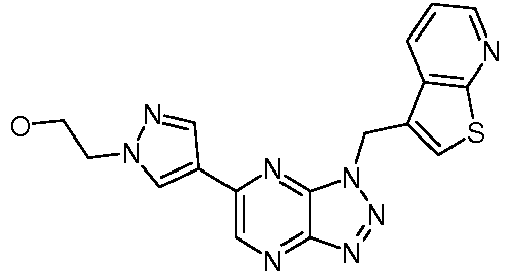
379 (M+1)+ 31 
366 (M+1)+ 32 
396.7 (M+1)+ 33 
332 (M+1)+ 34 
360 (M+1)+ 35 
357 (M+1)+ 36 
362 (M+1)+ 37 
380 (M+1)+ 38 
396 (M+1)+ 39 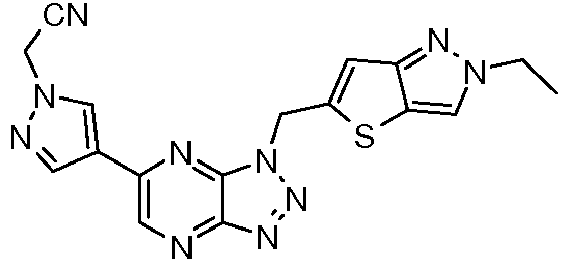
391.7 (M+1)+ 40 
394.5 (M+1)+ 41 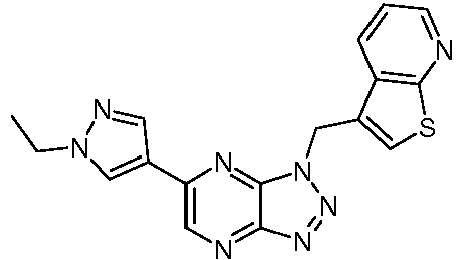
363 (M+1)+ 42 
406.9 (M+1)+ 43 
338 (M+1)+ 44 
324 (M+1)+ 45 
382 (M+1)+ 46 
401 (M+1)+ 47 
360 (M+1)+ 48 
400 (M+1)+ 49 
347 (M+1)+ 50 
363 (M+1)+ 51 
333 (M+1)+ 52 
401 (M+1)+ 53 
377 (M+1)+ 54 
363 (M+1)+ 55 
403 (M+1)+ 56 
354 (M+1)+ 57 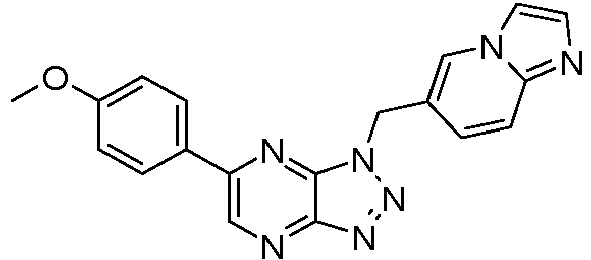
358 (M+1)+ 58 
376 (M+1)+ 59 
359 (M+1)+ 265 
362 (M+1)+ 266 
332 (M+1)+ 267 
400 (M+1)+ 268 
376 (M+1)+ 269 
346 (M+1)+ 272* 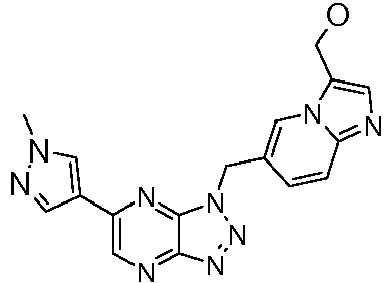
362 (M+1)+ 274 
333.1 (M+1)+ 275 
329.1 (M+1)+ 276 
359 (M+1)+ 277 
413.9 (M+1)+ 279 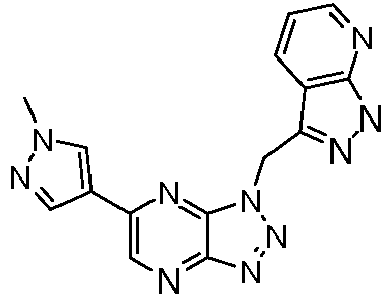
333 (M+1)+ 280 
401 (M+1)+ 281 
363.1 (M+1)+ 282 
360.1 (M+1)+ 283 
379.0 (M+1)+ 284 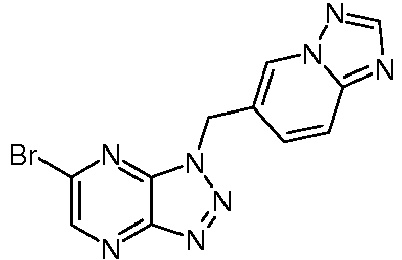
332.9 (M+1)+ 285 
333 (M+1)+ 286 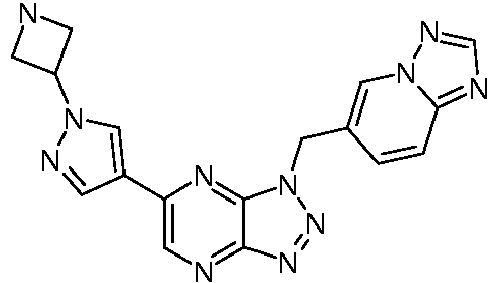
374.1 (M+1)+ 287 
400.9 (M+1)+ 288 
363.0 (M+1)+ 289 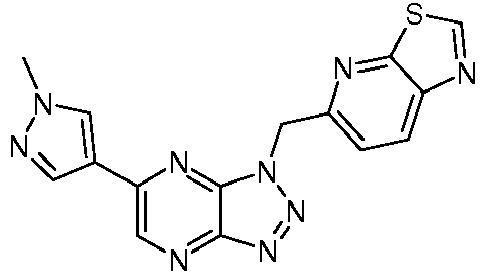
350 (M+1)+ 290 
373 (M+1)+ 293 
401 (M+1)+ 294 
333 (M+1)+ 295 
335.9 (M+1)+ 296 
380.0 (M+1)+ 298 
346 (M+1)+ 299 
351.9 (M+1)+ 301 
357.0 (M+1)+ 302 
354.1 (M+1)+ 303 
346.1 (M+1)+ 304 
420.0 (M+1)+ 305 
376.0 (M+1)+ 308 
376.0 (M+1)+ 309 
405.9 (M+1)+ 310 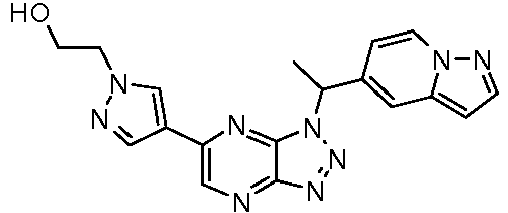
375.9 (M+1)+ 316 
333.0 (M+1)+ 317 
362.9 (M+1)+ 326 
360.1 (M+1)+ 328 
332.1 (M+1)+ 329 
466.1 (M+1)+ 331 
346 (M+1)+ - *Compound 272 was prepared from Compound 33 by the following procedure:
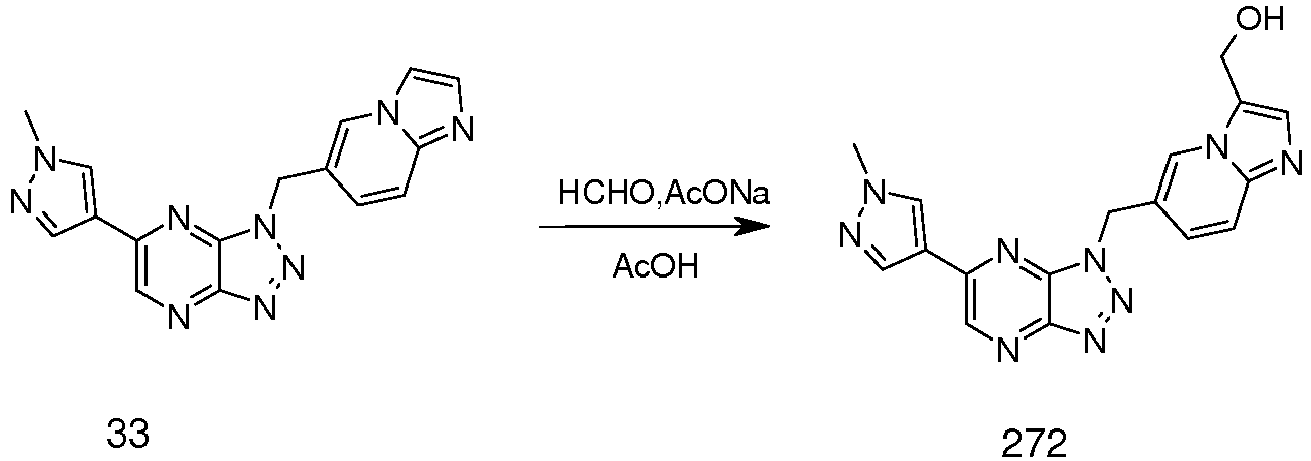
- To a solution of compound 33 (66 mg, 0.2 mmol) in 0.1 mL of acetic acid were added sodium acetate (60 mg, 0.73 mmol) and an aqueous solution of formaldehyde (37%, 0.2 mL, 2.8 mmol). The reaction mixture was stirred at 100°C overnight. After cooled to room temperature, the reaction mixture was diluted with water and basified with a saturated sodium carbonate aqueous solution. The resulting precipitate was filtered. The filtrate was purified by chromatography to afford compound 272 (30 mg).
-
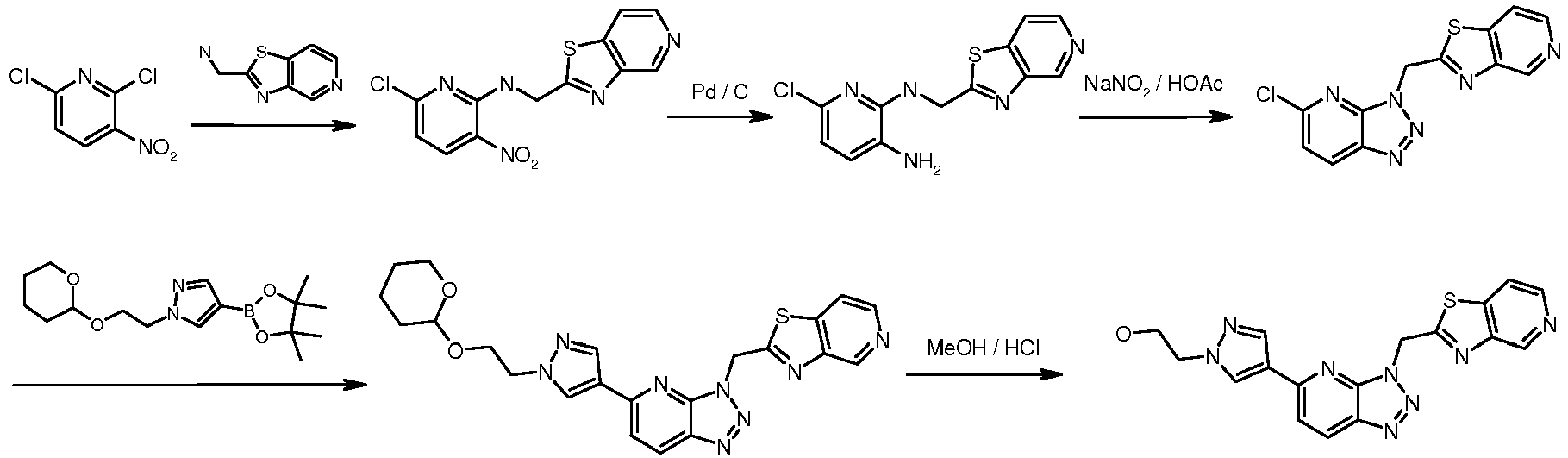
- To a solution of 3-nitro-2,6-dichloropyridine (106 mg, 0.55 mmol) in isopropanol (3 mL) was sequentially added Na2CO3 (116 mg, 1.1 mmol) and intermediate R (100 mg, 0.61 mmol). The reaction mixture was stirred at room temperature overnight, and then concentrated. The residue was extracted with EtOAc. The organic layer was separated, concentrated, and purified by chromatography on silica gel to afford the title compound. MS (m/z): 322 (M)+.
- 10% Pd/C (20 mg) was added to a solution of 3-nitro-6-chloro-N-(thiazolo[4,5-c]pyridin-2-ylmethyl)pyridin-2-amine (100 mg, 0.31 mmol) in MeOH (2 mL) and THF (10 mL). The mixture was stirred at room temperature under 1 atm of H2 for 1 h, and then filtered. The filtrate was concentrated and purified by chromatography on silica gel to afford the title compound. MS (m/z): 292 (M+1)+.
- A solution of NaNO2 (42.5 mg, 0.62 mmol) in H2O (0.5 mL) was added dropwise to a solution of 6-chloro-N 2-(thiazolo[4,5-c]pyridin-2-ylmethyl)pyridine-2,3-diamine (90 mg, 0.31 mmol) in AcOH (1 mL) and H2O (1 mL) at 0°C. The reaction solution was stirred at 0°C for 1 h, then basified with 30% aqueous NaOH to pH ~ 9. The resulting precipitate was collected by filtration to afford the title compound. MS (m/z): 303 (M+1)+.
- To a solution of intermediate X (75 mg, 0.23 mmol), 5-chloro-3-(thiazolo[4,5-c]pyridin-2-ylmethyl)-3H-[1,2,3]triazolo[4,5-b]pyridine (64 mg, 0.21 mmol) in dioxane (1.5 mL) and H2O (0.15 mL) were added Pd(dppf)Cl2 (32.7 mg, 0.04 mmol) and Cs2CO3 (98 mg, 0.3 mmol) under N2. The resulting mixture was stirred at 120°C overnight under N2, and then concentrated. The residue was purified by chromatography to afford the title compound. MS (m/z): 463 (M+1)+.
- 5-(1-(2-(tetrahydro-2H-pyran-2-yloxy)ethyl)-1 H-pyrazol-4-yl)-3-(thiazolo[4,5-c]pyridin-2-ylmethyl)-3H-[1,2,3]triazolo[4,5-b]pyridine (20 mg, 0.04 mmol) was dissolved in MeOH/HCl (2 mL). The reaction mixture was stirred at room temperature for 1 h, and then concentrated. The residue was purified by chromatography to afford the title compound. MS (m/z): 379 (M+1)+.
- The following reference compounds 61-76, 79, 81--151, 273, 291, 292, 297, 332 were prepared according to the procedures of Compound 60 using the corresponding intermediates and boronic acid or ester under appropriate conditions that will be recognized by one skilled in the art:
Table 2 Compound Structure LC/MS data Reference compound 61 
372 (M+1)+ Reference compound 62 
354 (M+1)+ Reference compound 63 
424 (M+1)+ Reference compound 64 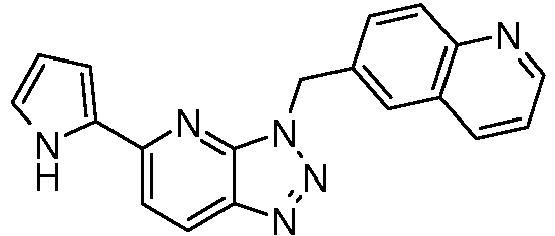
327 (M+1)+ Reference compound 65 
414 (M+1)+ Reference compound 66 
386 (M+1)+ Reference compound 67 
348 (M+1)+ Reference compound 68 
378 (M+1)+ Reference compound 69 
419 (M+1)+ Reference compound 70 
369 (M+1)+ Reference compound 71 
348 (M+1)+ Reference compound 72 
348 (M+1)+ Reference compound 73 
378 (M+1)+ Reference compound 74 
378 (M+1)+ Reference compound 75 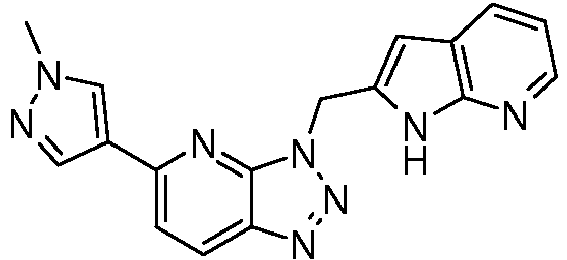
331 (M+1)+ Reference compound 76 
368 (M+1)+ Reference compound 79 
353 (M+1)+ Reference compound 81 
328 (M+1)+ Reference compound 82 
412 (M+1)+ Reference compound 83 
396 (M+1)+ Reference compound 84 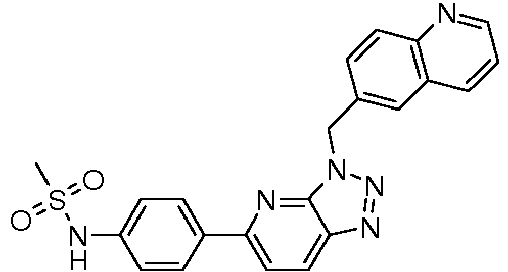
431 (M+1)+ Reference compound 85 
431 (M+1)+ Reference compound 86 
361 (M+1)+ Reference compound 87 
344 (M+1)+ Reference compound 88 
368 (M+1)+ Reference compound 90 
432 (M+1)+ Reference compound 91 
396 (M+1)+ Reference compound 92 
399 (M+1)+ Reference compound 93 
386 (M+1)+ Reference compound 941 
411 (M+1)+ Reference compound 95 
356 (M+1)+ Reference compound 96 
412 (M+1)+ Reference compound 97 
412 (M+1)+ Reference compound 982 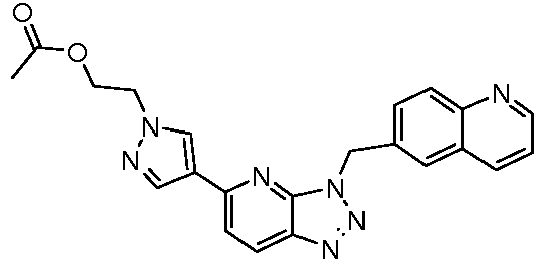
414 (M+1)+ Reference compound 99 
413 (M+1)+ Reference compound 100 
386 (M+1)+ Reference compound 1013 
425 (M+1)+ Reference compound 102 
369 (M+1)+ Reference compound 103 
364 (M+1)+ Reference compound 1044 
374 (M+1)+ Reference compound 1055 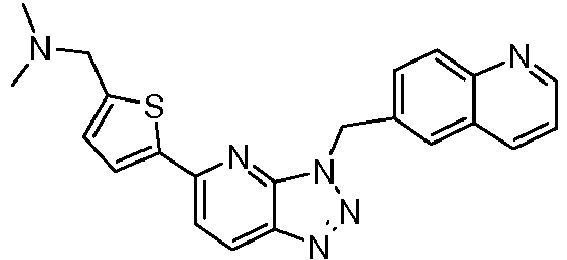
401 (M+1)+ Reference compound 106 
375 (M+1)+ Reference compound 107 
413 (M+1)+ Reference compound 1086 
342 (M+1)+ Reference compound 1096 
372 (M+1)+ Reference compound 110 
412 (M+1)+ Reference compound 111 
375 (M+1)+ Reference compound 112 
357 (M+1)+ Reference compound 113 
375 (M+1)+ Reference compound 114 
376 (M+1)+ Reference compound 115 
385 (M+1)+ Reference compound 1167 
400 (M+1)+ Reference compound 117 
367 (M+1)+ Reference compound 118 
412 (M+1)+ Reference compound 119 
412 (M+1)+ Reference compound 120 
332 (M+1)+ Reference compound 121 
400 (M+1)+ Reference compound 122 
368 (M+1)+ Reference compound 123 
398 (M+1)+ Reference compound 124 
378 (M+1)+ Reference compound 125 
348 (M+1)+ Reference compound 126 
362 (M+1)+ Reference compound 127 
360 (M+1)+ Reference compound 128 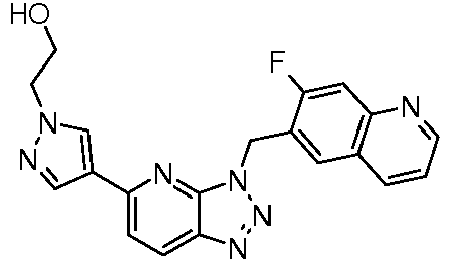
390 (M+1)+ Reference compound 129 
360 (M+1)+ Reference compound 130 
390 (M+1)+ Reference compound 131 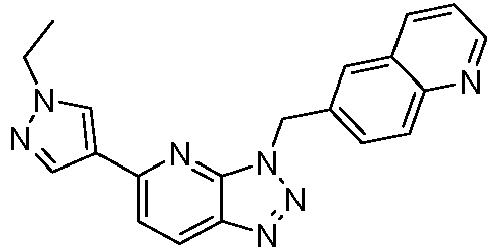
356 (M+1)+ Reference compound 132 
337 (M+1)+ Reference compound 133 
331 (M+1)+ Reference compound 134 
361 (M+1)+ Reference compound 135 
345 (M+1)+ Reference compound 136 
359 (M+1)+ Reference compound 137 
346 (M+1)+ Reference compound 1388 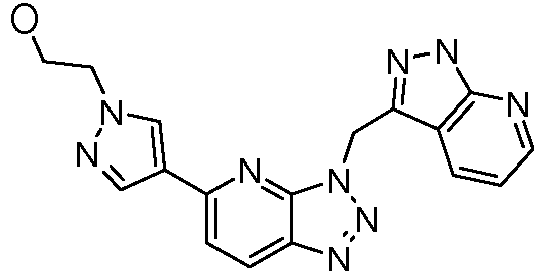
362 (M+1)+ Reference compound 139 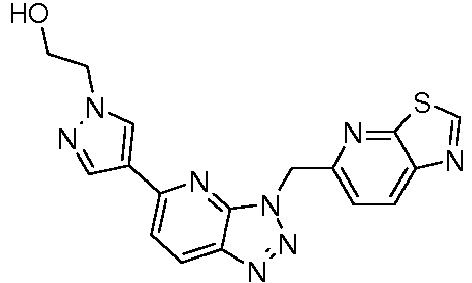
379 (M+1)+ Reference compound 140 
359 (M+1)+ Reference compound 141 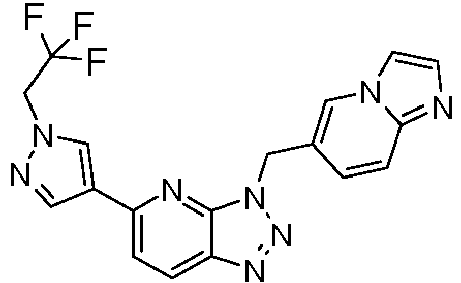
399 (M+1)+ Reference compound 142 
349 (M+1)+ Reference compound 143 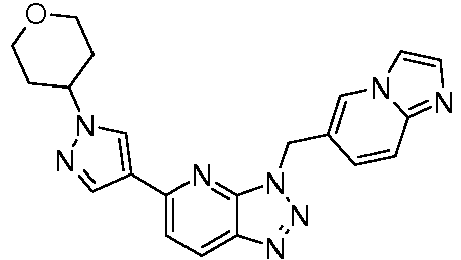
401 (M+1)+ Reference compound 144 
370 (M+1)+ Reference compound 145 
328 (M+1)+ Reference compound 146 
370 (M+1)+ Reference compound 147 
410 (M+1)+ Reference compound 1489 
379 (M+1)+ Reference compound 1499 
349 (M+1)+ Reference compound 150 
406 (M+1)+ Reference compound 151 
332 (M+1)+ Reference compound 273 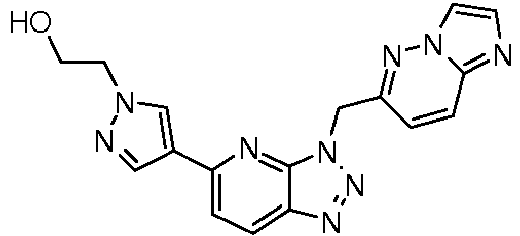
362.1 (M+1)+ Reference compound 291 
343.1 (M+1)+ Reference compound 292 
411 (M+1)+ Reference compound 297 
373.1 (M+1)+ Reference compound 332 
386 (M+1)+ 1 Using the following procedure, Compound 94 was synthesized from intermediate 94-a that was prepared according to the procedures of Compound 60 using the corresponding intermediates and boronic acid or ester under appropriate conditions that will be recognized by one skilled in the art. : 
- A solution of 94-a (30 mg, 0.06 mmol) in TFA (2 mL) and DCM (2 mL) was stirred at room tempature overnight, then concentrated. The residue was dissolved in aqueous sodium bicarbonate solution and extracted with EtOAc. The organic layer was concentrated and purified on silica gel to afford Compound 94.
- 2Compound 98 was prepared from Compound 61 using the following procedure:
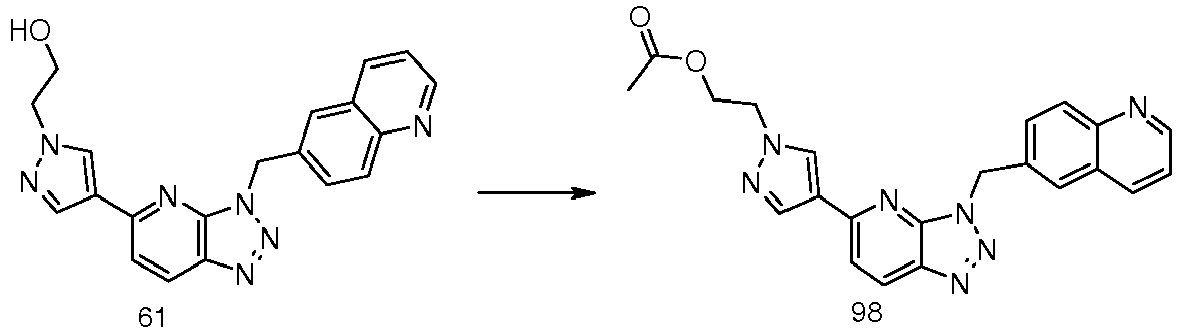
- A solution of Compound 61 in DCM was treated with Et3N and acetyl chloride at room temparature for 3 h. It was then treated with water and extracted with DCM (15 mL x 2). The combined organic extracts were dried, concentrated and the residue was purified on silica to afford Compound 98.
- 3Compound 101 was prepared from Compound 94 using the following procedure:
- To a solutoin of Compound 94 (18 mg, 0.044 mmol) in anhydrous DCM (2 mL) was added Et3N (12.2 uL, 0.088 mmol), followed by CH3I (2.4 uL, 0.048 mmol) at 0 °C. The reaction mixture was warmed to room tempature, and stirred for over 1 h. A saturated sodium bicarbonate aqueous solution was added to the mixture. The organic layer was separated, and the aqueous layer was extracted with EtOAc. The combined extracts were dried over Na2SO4 and concentrated. The resulting residue was purified on silica to afford Compound 101.
- 4 Compound 104 was prepared according to the procedure of Intermediates W-1 to W using Intermediate 104-a that was prepared according to the procedures of Compound 60.

- 5Compound 105 was prepared from intermediate 104-a by the following procedure

- A mixture of intermediate 104-a (37 mg, 0.1 mmol) and exessive amount of dimethylamine in methanol (5 mL) was stirred at room temperature for 1 h. Sodium cyano borohydride (12 mg) was added. The resulting mixture was stirred at room temperature for 16 h, then concentrated. The residue was treated with saturated aqueous sodium bicarbonate and DCM. The organic layer was separated, concentrated. The residue was purified on silica to afford Compound 105 (8 mg).
- 6 Under similar conditions of Compound 60, Compound 108 was prepared by using Intermediate 108-a that was prepared according to the procedure of intermediates U-3 to U

- Compound 109 was prepared similar to Compound 108
- 7 Compound 116 was prepared according to the procedures of Compound 94.
- 8 P(t-Bu)3HBF4 and Pd2(dba)3 were used instead of Pd(dppf)Cl2 in the procedure of Compound 138.
- 9 Compounds 148 was prepared by the following route using similar conditions described for Compound 60.

- According to the procedure of Compound 148, Compound 149 was prepared using the corresponding intermediates and reagents under appropriate conditions that will be recognized by one skilled in the art:
-

- To a suspension of 6-((6-bromo-1H-[1,2,3]triazolo[4,5-b]pyrazin-1-yl)methyl)quinoline (68 mg, 0.2 mmol) (prepared from quinolin-6-ylmethanamine following the procedures of Compound 1) and 1-methyl-1 H-pyrazol-3-amine (20 mg, 0.22 mmol) in dioxane (5mL) were added Cs2CO3 (72 mg, 0.22 mmol) and H2O (0.5 mL). The mixture was degassed and charged with N2 three times, then Pd2(dba)3 (0.02 mmol, 18 mg) and xantphos (0.04 mmol, 23 mg) were added. The resulting mixture was stirred at 120°C under one atmosphere of N2 overnight, then concentrated. The resulting residue was purified by chromatography to afford the title compound (10 mg). MS (m/z): 358 (M+1)+.
- The following reference compounds 80, 153-240 were prepared according to the procedure of Compound 152 using the corresponding intermediates and amines under appropriate conditions that will be recognized by one skilled in the art:
Table 3 Compound Structure LC/MS data Reference compound 80 
328 (M+1)+ Reference compound 153 
389 (M+1)+ Reference compound 15410 
383 (M+1)+ Reference compound 155 
369 (M+1)+ Reference compound 156 
385 (M+1)+ Reference compound 157 
369 (M+1)+ Reference compound 158 
369 (M+1)+ Reference compound 159 
399 (M+1)+ Reference compound 160 
359 (M+1)+ Reference compound 161 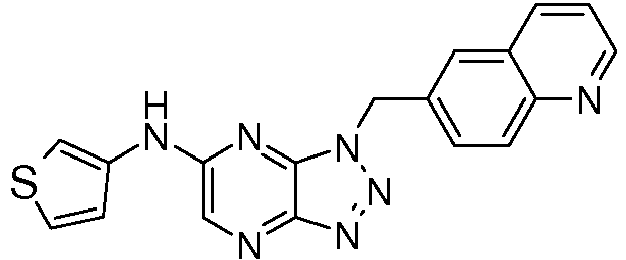
360 (M+1)+ Reference compound 162 
385 (M+1)+ Reference compound 163 
369 (M+1)+ Reference compound 164 
389 (M+1)+ Reference compound 165 
440 (M+1)+ Reference compound 166 
440 (M+1)+ Reference compound 167 
440 (M+1)+ Reference compound 168 
355 (M+1)+ Reference compound 169 
355 (M+1)+ Reference compound 170 
393 (M+1)+ Reference compound 171 
393 (M+1)+ Reference compound 172 
375 (M+1)+ Reference compound 173 
358 (M+1)+ Reference compound 174 
412 (M+1)+ Reference compound 175 
412 (M+1)+ Reference compound 176 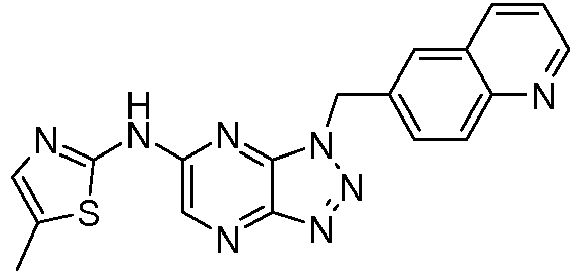
375 (M+1)+ Reference compound 17710 
369 (M+1)+ Reference compound 178 
384 (M+1)+ Reference compound 179 
384 (M+1)+ Reference compound 180 
384 (M+1)+ Reference compound 181 
368(M+1)+ Reference compound 182 
368 (M+1)+ Reference compound 183 
385 (M+1)+ Reference compound 185 
429 (M+1)+ Reference compound 186 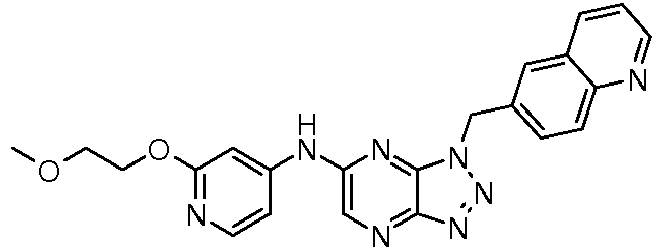
429 (M+1)+ Reference compound 187 
384 (M+1)+ Reference compound 188 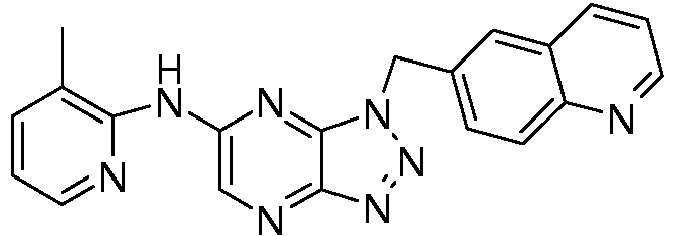
369 (M+1)+ Reference compound 189 
357(M+1)+ Reference compound 190 
380 (M+1)+ Reference compound 191 
358 (M+1)+ Reference compound 192 
412 (M+1)+ Reference compound 193 
440 (M+1)+ Reference compound 194 
415 (M+1)+ Reference compound 195 
385 (M+1)+ Reference compound 196 
369 (M+1)+ Reference compound 197 
385 (M+1)+ Reference compound 198 
344 (M+1)+ Reference compound 199 
359 (M+1)+ Reference compound 200 
359 (M+1)+ Reference compound 201 
415 (M+1)+ Reference compound 202 
427 (M+1)+ Reference compound 203 
428 (M+1)+ Reference compound 204 
428 (M+1)+ Reference compound 205 
414 (M+1)+ Reference compound 206 
454 (M+1)+ Reference compound 207 
454 (M+1)+ Reference compound 208 
429 (M+1)+ Reference compound 209 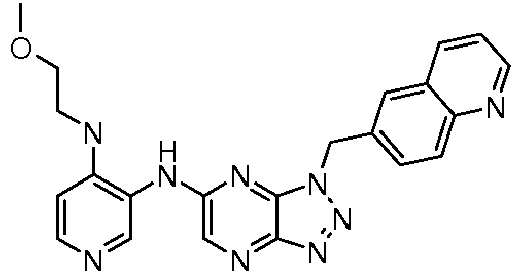
428(M+1)+ Reference compound 210 
385 (M+1)+ Reference compound 211 
429 (M+1)+ Reference compound 212 
355 (M+1)+ Reference compound 213 
385 (M+1)+ Reference compound 214 
328 (M+1)+ Reference compound 215 
379 (M+1)+ Reference compound 216 
429 (M+1)+ Reference compound 217 
441 (M+1)+ Reference compound 218 
441 (M+1)+ Reference compound 219 
453 (M+1)+ Reference compound 220 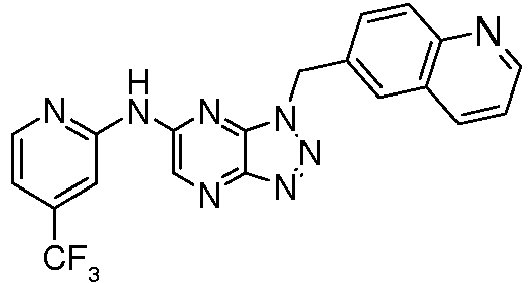
423 (M+1)+ Reference compound 221 
423 (M+1)+ Reference compound 222 
440 (M+1)+ Reference compound 223 
380 (M+1)+ Reference compound 224 
383 (M+1)+ Reference compound 225 
379 (M)+ Reference compound 226 
455 (M+1)+ Reference compound 227 
428 (M)+ Reference compound 228 
456 (M+1)+ Reference compound 229 
453 (M+1)+ Reference compound 230 
440 (M+1)+ Reference compound 231 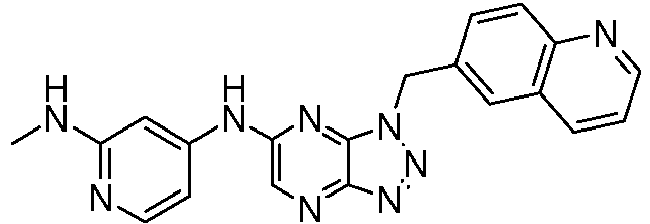
384 (M+1)+ Reference compound 232 
447 (M+1)+ Reference compound 233 
427 (M)+ Reference compound 234 
384 (M+1)+ Reference compound 235 
368 (M+1)+ Reference compound 236 
354 (M+1)+ Reference compound 237 
354 (M+1)+ Reference compound 238 
379 (M+1)+ Reference compound 239 10 
394 (M+1)+ Reference compound 240 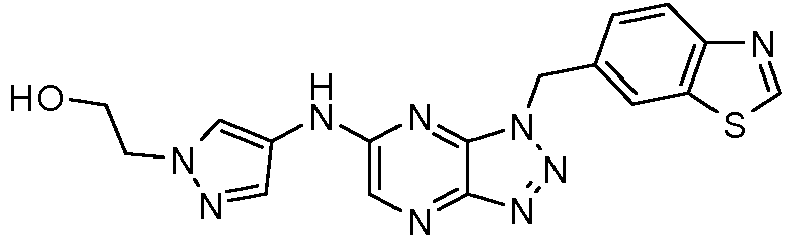
394 (M+1)+ Reference compound 241 
361 (M+1)+ Reference compound 242 
361 (M+1)+ Reference compound 243 
361 (M+1)+ - 10 Under similar conditions described in Compound 152, Compound 154 was synthesized by using Intermediate 154-a that was prepared according to the procedure of Compound 244, under appropriate conditions that will be recognized by one skilled in the art.

- According to the procedure of Compound 154, Compound 177 and 239 were prepared using the corresponding intermediates and reagents under appropriate conditions that will be recognized by one skilled in the art.
-

- The mixture 6-((5-chloro-3H-[1,2,3]triazolo[4,5-b]pyridin-3-yl)methyl)quinoline (60 mg, 0.2 mmol) (prepared according to Compound 60), Cs2CO3 (195 mg, 0.6 mmol) and 4,5,6,7-tetrahydrothieno[3,2-c]pyridine hydrochloride (52 mg, 0.3 mmol) in DMF (1.5 mL) was stirred at 120°C overnight, then concentrated. The residue was purified by chromatography to afford the title compound MS (m/z): 399 (M+1)+.
- The following compounds 245-260 were prepared according to the procedures of Compound 244 using the corresponding intermediates under similar conditions that will be recognized by one skilled in the art. Compounds 245-259 are reference compounds.
Table 4 Compound Structure LC/MS data Reference compound 245 
375 (M+1)+ Reference compound 246 
347 (M+1)+ Reference compound 247 
389 (M+1)+ Reference compound 248 
372 (M+1)+ Reference compound 249 
362 (M+1)+ Reference compound 250 
356 (M+1)+ Reference compound 252 
372 (M+1)+ Reference compound 253 
361 (M+1)+ Reference compound 254 
389 (M)+ Reference compound 255 
370 (M+1)+ Reference compound 256 
370 (M+1)+ Reference compound 257 
356 (M+1)+ Reference compound 258 
356 (M+1)+ Reference compound 259 
371 (M+1)+ 260 
337 (M+1)+ -

- 2,6-Dichloropyridin-4-amine (3.0 g, 18 mmol) was carefully added to concentrated sulfuric acid (20 mL). The mixture was cooled in an ice bath, and fuming nitric acid (2.6 mL) was added dropwise via pipette. The mixture was warmed to room temperature and stirred for 1 h, then poured onto crushed ice, resulting in a white precipitate. The white precipitate was collected by filtration, washed with cold water, and dried to afford the title compound (3.7 g), which was used for next step without further purification.
- N-(2,6-Dichloropyridin-4-yl)nitramide (3.7 g, 18 mmol) was added to concentrated sulfuric acid (5 mL), and the reaction mixture was heated at 60 °C for 30 mins After cooled to room temperature, the reaction mixture was poured onto crushed ice, and concentrated ammonium hydroxide was addded until the pH reached about 7. The precipitate was collected by filtration, washed with ice cold water, and dried to afford the title compound (2.5 g). MS (m/z): 208 (M+1)+.
- 2,6-Dichloro-3-nitropyridin-4-amine (208 mg, 1 mmol) was added to acetic anhydride (2 mL), and the reaction mixture was refluxed overnight. After cooled to room temperature, the reaction mixture was basified with aqueous Na2CO3 until the pH was 8. The resulting mixture was then extracted with CH2Cl2. The organic layer was separated, dried over Na2SO4, and concentrated to afford the title compound (240 mg), which was used for the next step without further purification. MS (m/z): 250 (M+1)+.
- To a mixture of N-(2,6-dichloro-3-nitropyridin-4-yl)acetamide (240 mg, 0.96 mmol) and quinolin-6-ylmethanamine (150 mg, 0.96 mmol) in CH3CN (10 mL) was added Et3N (0.5 mL). The reaction mixture was stirred at 80 °C for 1 h. After being cooled to room temperature, the mixture was purified by chromatography on silica gel eluting with DCM/MeOH =50/1 to afford the title compound (220 mg). MS (m/z): 372 (M+1)+.
- To a solution of N-(6-chloro-3-nitro-2-(quinolin-6-ylmethylamino)pyridin-4-yl)acetamide (220 mg, 0.593 mmol) in methanol (5 mL) and CH2Cl2(5 mL) was added 10% catalytical amount Pd/C. The reaction mixture was stirred at room temperature under 1 atm of H2 for 1 h, then filtered. The filtrate was concentrated to afford the title compound, which was used for the next step without further purification. MS (m/z): 342 (M+1)+.
- N-(3-amino-6-chloro-2-(quinolin-6-ylmethylamino)pyridin-4-yl)acetamide was added to a solution of acetic acid (2 mL) and water (2 mL) at 0 °C, followed by the addition of NaNO2 (180 mg, 2.6 mmol) in H2O (0.2 mL). The reaction was stirred at 0 °C for 1 h, and then basified with 30% NaOH to pH = 7. The resulting precipitate was collected by filtration to afford the title compound (80 mg), which was used for the next step without further purification. MS (m/z): 353 (M+1)+.
- To a mixture of N-(5-chloro-3-(quinolin-6-ylmethyl)-3H-[1,2,3]triazolo[4,5-b]pyridin-7-yl)acetamide (80 mg, 0.227 mmol), 1-methyl-4-(4,4,5,5-tetramethyl-1,3,2-dioxaborolan-2-yl)-1 H-pyrazole (50 mg, 0.24 mmol) and Na2CO3 (48 mg, 0.25 mmol) in dioxane (10 mL) and H2O (1 mL) under N2 was added Pd(dppf)Cl2 (20 mg, 0.02 mmol). The reaction mixture was stirred at 100 °C under N2 overnight. After cooled to room temperature, the reaction mixture was concentrated and purified by chromatography to afford the title compound (7 mg). MS: 400 (M+1)+.
-

- To a mixture of 2,6-dichloro-3-nitropyridin-4-amine (624 mg, 3 mmol) and quinolin-6-ylmethanamine (316 mg, 2 mmol) in CH3CN (10 mL) was added Et3N (0.5 mL). The reaction mixture was stirred at 80°C for 1 h. After cooled to room temperature, the mixture was concentrated to afford the title compound (658 mg). MS (m/z): 330 (M+1)+.
- To a mixture of 6-chloro-3-nitro-N2-(quinolin-6-ylmethyl)pyridine-2,4-diamine (658 mg, 2 mmol), 1-methyl-4-(4,4,5,5-tetramethyl-1,3,2-dioxaborolan-2-yl)-1H-pyrazole (500 mg, 2.4 mmol) and Na2CO3 (424 mg, 4 mmol) in dioxane (20 mL) and H2O (2 mL) under N2 was added Pd(dppf)Cl2 (160 mg, 0.2 mmol). The reaction mixture was stirred at 100 °C under N2 overnight. After cooled to room temperature, the mixture was concentrated and purified by chromatography to afford the title compound (300 mg). MS (m/z): 376 (M+1)+.
- To a mixture of 6-(1-methyl-1H-pyrazol-4-yl)-3-nitro-N2-(quinolin-6-ylmethyl) pyridine-2,4-diamine (260 mg, 0.69 mmol) in HBF4 (5 mL) at 0°C was added HNO2 (96 mg, 1.4 mmol) in H2O (0.5 mL). The reaction mixture was stirred at 0°C overnight, then basified with aqueous NaHCO3 to pH = 6-7. The resulting mixture was filtered. The filtrate was concentrated and purified by chromatography on silica gel to afford the title compound (200 mg). MS (m/z): 377 (M+1)+.
- To a solution of 6-(1-methyl-1 H-pyrazol-4-yl)-3-nitro-N2-(quinolin-6-ylmethyl)pyridine-2,4-diamine (200 mg, 0.53 mmol) in methanol (10 mL) was added 10% Pd/C (20 mg, 0.1 eq). The reaction mixture was stirred at room temperature under 1 atm of H2 for 2h, then filtered. The filtrate was concentrated to afford the title compound (170 mg), which was used for the next step without further purification. MS (m/z): 347 (M+1)+.
- 3-amino-6-(1-methyl-1 H-pyrazol-4-yl)-2-(quinolin-6-ylmethylamino)pyridin-4-ol (170 mg, 0.49 mmol) was added to a solution of acetic acid (3 mL) and H2O (3 mL) at 0°C, followed by the addition of NaNO2 (69 mg, 10 mmol) in H2O (0.3 mL). The reaction mixture was stirred at 0 °C for 1 h, then basified with aqueous 30% NaOH to pH = 6-7 and purified by chromatography to afford the title compound (120 mg). MS (m/z): 358 (M+1)+.
-

- 5-(1-Methyl-1H-pyrazol-4-yl)-3-(quinolin-6-ylmethyl)-3H-[1,2,3]triazolo[4,5-b]pyridin-7-ol (120 mg, 0.336 mmol) was dissolved in POCl3 (2 ml). The reaction mixture was stirred at 110 °C for 1 h. After cooled to 0 °C, the mixture was basified with aqueous NaHCO3 to pH = 7, and extracted with EtOAc. The organic layer was separated, dried over anhydrous Na2SO4, concentrated, and purified by chromatography to afford the title compound (25 mg). MS: 376 (M+1)+.
-

- To a solution of 2,6-dichloro-3-nitropyridin-4-amine (832 mg. 4 mmol) in THF (10 mL) was added DMAP (50 mg, 0.4 mmol) and (Boc)2O (1.0 g, 4.6 mmol) in that order. The reaction mixture was stirred at room temperature for 2h, then concentrated. The residue was purified by chromatography on silica gel eluting with Pet/EtOAc=50/1 to afford the title compound (1.20 g).
- A solution of tert-butyl 2,6-dichloro-3-nitropyridin-4-ylcarbamate (1.2 g, 3.9 mmol) and quinolin-6-ylmethanamine (616 mg, 3.9 mmol) in CH3CN (15 mL) and Et3N (1 mL) was stirred at 80 °C for 1 h. After cooled to room temperature, the mixture was concentrated. The residue was purified by chromatography to afford the title compound (1.60 g). MS (m/z): 430 (M+1)+.
- To a mixture of tert-butyl 6-chloro-3-nitro-2-(quinolin-6-ylmethylamino)pyridin-4-ylcarbamate (860 mg, 2 mmol), 1-methyl-4-(4,4,5,5-tetramethyl-1,3,2-dioxaborolan-2-yl)-1H-pyrazole (416 mg, 2 mmol) and Na2CO3 (424 mg, 4 mmol) in dioxane (20 mL) and H2O (2 mL) under N2 was added Pd(dppf)Cl2 (163 mg, 0.2 mmol). The reaction was stirred at 80°C under N2 overnight. After cooled to room temperature, the mixture was concentrated and purified by chromatography to afford the title compound (950 mg). MS (m/z): 476 (M+1)+.
- To a solution of tert-butyl 6-(1-methyl-1 H-pyrazol-4-yl)-3-nitro-2-(quinolin-6-ylmethylamino)pyridin-4-ylcarbamate (950 mg, 2 mmol) in methanol (10 mL) was added 10% Pd/C (95 mg, 0.1 eq). The reaction was stirred at room temperature under 1 atm of H2 for 1 h, then filtered. The filtrate was concentrated to afford the title compound (890 mg), which was used for the next step without further purification. MS (m/z): 446 (M+1)+.
- tert-Butyl 3-amino-6-(1-methyl-1H-pyrazol-4-yl)-2-(quinolin-6-ylmethylamino)pyridin-4-ylcarbamate (890 mg, 2 mmol) was added to a solution of acetic acid (5 mL) and water (5 mL) at 0 °C, followed by the addition of NaNO2 (300 mg, 4 mmol) in H2O (0.5 mL). The reaction was stirred at 0 °C for 1 h, then basified with 30% NaOH to pH = 8. The resulting mixture was filtered to afford a solid. The solid was treated with TFA (3 mL), and then stirred at room temperature for another 0.5h, before treated with aqueous Na2CO3 to adjust the pH to 8. The resulting mixture was purified by chromatography to afford the title compound (190 mg). MS: 358 (M+1)+.
-

- To a solution of Compound 33 (10 mg, 0.03 mmol) in CHCl3 (3 mL) was added NBS (5.4 mg, 0.031 mmol). The reaction mixture was stirred at room temperature overnight. The solvent was evaporated, and the residue was purified by chromatography to afford the title compound (11 mg). MS (m/z): 411.7 (M+1)+.
-

- Compound 300 was prepared with NCS according to the procedure of Compound 278. MS (m/z): 365.9 (M+1)+.
-

- To a solution of 306-a (60 mg, 0.13 mmol) (prepared according to the procedure of Compound 1) in 0.1 mL of acetic acid were added sodium acetate (39 mg, 0.48 mmol) and then formaldehyde (0.13 mL, 37% in water). The mixture was stirred at 100 °C overnight. After cooled, the mixture was adjusted to pH>7 with aqueous NaOH.. The resulting precipitate was collected and purified by chromatography to afford the title compound (10 mg). MS (m/z): 392.0 (M+H)+
-

- To a mixture of Compound 33 (33 mg, 0.1 mmol) in 0.2 mL of acetic acid and 0.4 mL of water was added hexamethylenetetramine (16 mg, 0.11 mmol). The mixture was stirred at 120°C overnight. After cooled, the mixture was adjusted to pH>7 with aqueous NaOH and purified by chromatography to afford the title compound (5 mg). MS (m/z): 360.0 (M+H)+.
-

- To a solution of 1-(pyrazolo[1,5-a]pyridin-5-ylmethyl)-6-(1-(2-(tetrahydro-2H-pyran-2-yloxy)ethyl)-1H-pyrazol-4-yl)-1H-[1,2,3]triazolo[4,5-b]pyrazine 311-a (10 mg, 0.022 mmol) (prepared according to the procedure of Compound 1) in CHCl3 was added NBS (4.4 mg, 0.025 mmol). The reaction mixture was stirred at rt for 1 h, then concentrated. The resulting residue was dissolved in CHCl3 (2 mL) and MeOH (2 mL), followed by the addition of 6N HCl in MeOH. The resulting mixture was stirred for 30 min, then treated with NH3.H2O to bring pH to 8. The mixture was concentrated and purified by prep-TLC to afford the title compound. MS (m/z): 439.9 (M+1)+.
-

- To a solution of 1-(pyrazolo[1,5-a]pyridin-5-ylmethyl)-6-(1-(2-(tetrahydro-2H-pyran-2-yloxy)ethyl)-1H-pyrazol-4-yl)-1H-[1,2,3]triazolo[4,5-b]pyrazine 311-a (125 mg, 0.28 mmol) in AcOH/H2O (2 mL/1 mL) was added HMTA (79 mg, 0.56 mmol). The reaction mixture was stirred at 110°C for 2 h, then treated with NH3.H2O to bring pH to 8. The resulting mixture was then concentrated and purified by prep-TLC to afford the title compound (67 mg). MS (m/z): 389.37 (M+1)+.
-

- To a solution of compound 312 (10 mg, 0.025 mmol) in MeOH was added NaBH4 (4 mg, 0.051 mmol). The reaction was stirred at room temperature for 1 h, then concentrated and purified by prep-TLC to afford the title compound.
-

- Intermediate 318-a was prepared according to the procedure of Compound 306 by using Compound 331.
- To a mixture of (6-(1-(6-(1-methyl-1H-pyrazol-4-yl)-1H-[1,2,3]triazolo[4,5-b]pyrazin-1-yl)ethyl)H-imidazo[1,2-a]pyridin-3-yl)methanol 318-a (40 mg, 0.11 mmol) in 30 mL of THF was added sodium hydride (22 mg, 0.53 mmol, 60% in mineral oil) at 0°C. The mixture was stirred at 0 °C for 1 h, then iodomethane (60 mg, 0.43 mmol) was added. The mixture was stirred at room temperature overnight, then treated with sat. Na2CO3, then concentrated. The residue was diluted with water, and extracted with ethyl acetate. The combined organic layers were dried over Na2SO4, concentrated and purified by chromatography on silica gel to afford the title compound (30 mg) MS (m/z): 389.9 (M+H)+
-

- Compounds 319 and 320 were prepared according to the procedure of Compound 327. Compound 319: MS: 388.9(M+1)+; Compound 320 MS: 431(M+1)+
-

- Compound 321 was prepared according to the procedure of Compound 318 starting from Compound 272. MS: 389.9(M+1)+.
-

- The title compound (Intermediate 322-b ) was prepared according to the procedure of Compound 307.
- The title compound (Intermediate 322-c ) was prepared from 322-b according to the procedure of Compound 1.
- The title compound (Intermediate 322-d) was prepared from 322-c according to the procedure of Compound 313. MS (m/z): 476.1 (M+H)+.
- The title compound (Intermediate 322-e) was prepared from 322-d according to the procedure of Compound 318.
- To a mixture of 322-e (40 mg, 0.082 mmol) in methanol (15mL)) was added a solution of HCl in methanol (0.5 mL, 5 N). The mixture was stirred at 0°C for 1 h, then treated with ammonia to adjust pH to > 7. The resulting solution was concentrated and purified by chromatography to afford the title compound (15 mg).
-

- Compound 323 was prepared from compound 272 according to the procedure of Compound 318. MS: 403.9(M+1)+
-

- To a mixture of compound 33 (50 mg, 0.15 mmol) in acetic acid (0.5mL) were added ammonium chloride (61 mg, 0.9 mmol) and formaldehyde (61 mg, 0.75 mmol, 37% in water). The mixture was stirred at 55°C for 24h. The reaction was treated with ammonia to adjust the pH to >7, then concentrated and purified by chromatography to afford the title compound (15 mg). MS (m/z): 374.8 (M+H)+.
-

- To a solution of the compound 331 (1.0g) in 100 mL of CH2Cl2 was bubbled O3 at - 60 - -70 °C for 30 mins, then N2 for 10 mins. The reaction mixture was treated with Na2SO3 solution, and stirred for 10 mins. The resulting mixture was extracted with CH2Cl2. The organic layer was concentrated and purified by chromatography to afford the title compound as a solid (300 mg). MS (m/z): 322 (M+H)+.
- A solution of compound 330-a (300 mg) in 10 mL of HCl/CH3OH was stirred overnight, then concentrated and basified with Na2CO3 solution. The resulting mixture was purified by chromatography to afford the title compound as a solid, 155 mg.
-

- The racemic Compound 332 (4 mg) was resolved by chiral HPLC to produce the optically pure enantiomers Compound 77 (0.7 mg) and 78 (1.1 mg) (HPLC conditions: Gilson system, Column: Dicel IA 4.6 x 250 mm; mobile phase: n-hexane/i-PrOH/ DEA = 70/30/0.1; flow rate, 1 mL/min; detector: UV 254 nm). Compound 77 is the first eluent with at least 98% ee, MS (m/z): 386 (M+1)+. Compound 78 is the second eluent with at least 98% ee, MS (m/z): 386 (M+1)+.
-

- The racemic compound 331 (3 mg) was resolved by chiral HPLC to produce the optically pure enantiomers Compound 270 (0.9 mg) and 271 (1.1 mg). (HPLC conditions: Gilson system, column: Dicel IA 20 x 250 mm; mobile phase: EtOH/CH3CN =9/1; flow rate = 8 mL/min; detector: UV 254 nm), Compound 270 is the first eluent with at least 98% ee, MS (m/z): 346 (M+1)+. and Compound 271 is the second eluent with 93% ee, MS (m/z): 346 (M+1)+.
-

- The racemic compound 310 (5 mg) was resolved by chiral HPLC to produce optically pure enantiomers Compound 314 (1.0 mg) and Compound 315 (1.9 mg). (HPLC conditions: Gilson system, Column: Dicel IA 20 x 250 mm; Mobile phase: n-Hexane/i-PrOH/ DEA=6/4/0.1; Flow rate: 8 ml/min; Detector: 254 nm;).Compound 314 is the first eluent with 95% ee, MS (m/z): 376 (M+1)+. Compound 315 is the second eluent with 80% ee, MS (m/z): 376 (M+1)+.
-

- Racemic Compound 318 (50 mg) was resolved by chiral HPLC to produce enantiomeic Compounds 324 (15 mg) and 325 (8 mg). (HPLC conditions: Gilson system; column: dicel IA, 20 x 250 mm IA; mobile phase: ethanol / methanol/ DEA = 70/30/0.1; detector: UV 254 nm). Compound 324 is the first eluent with at least 98% ee, MS (m/z): 390 (M+1)+. Compound 325 is the second eluent with at least 90% ee, MS (m/z): 390 (M+1)+.
-
- Transcreenen™ KINASE Assay kit: Bellbrook Labs., 3003-10K;
- Recombinant human Met : Invitrogen, PV3143;
- Poly E4Y (substrate): Sigma, P0275; 5 mg/mL, dissolved in H2O;
- Assay buffer: 67 mM HEPES, 0.013% Triton X-100, 27 mM MgCl2, 0.67 mM MnCl2, 1.25 mM
- DTT, PH 7.4;
- 10 mM ATP: Invitrogene, PV3227;
- 500 mM EDTA: Invitrogene, 15575-038;
- 96 well black Greiner plate: Greiner, 675076.
- Compound dilution: dilute test articles to 5 folds of the testing concentration using 20% DMSO.
- Prepare Enzyme/Substrate stock: dilute recombinant human c-Met and Poly E4Y in assay buffer to 0.5 µg/mL for c-Met, and 62.5 µg/mL for Poly E4Y. The mixture is kept on ice until use;
- Prepare ATP Diluent: dilute 10 mM ATP stock to 25 µM with assay buffer;
- Prepare ADP Diluent: dilute 500 µM ADP stock to 25 µM with assay buffer;
- Prepare ATP standard curve stock as following:
Column ADP diluent (uL) ATP diluent (uL) 1 50 0 2 25 25 3 10 40 4 5 45 5 5 95 6 5 195 7 5 495 8 4 496 9 3 497 10 2 498 11 1 499 12 1 999 -
- Add 5 µL of test article or 5 µL of 20% DMSO or 5 µL of 500 mM EDTA;
- Add 10 µL of Enzyme/Substrate stock;
- Add 10 µL of ATP Diluent to begin the enzyme reaction and mix on plate shaker;
- Add 5 µL of 20% DMSO, 10 µL of assay buffer and 10 µL of ATP standard curve stock into standard curve wells;
- Gently shake at 28 °C for 45 min.
- Prepare Detection Mix: According to the procedures described in the Assay kit, Alexa633 tracer, ADP antibody and stop & detect buffer were added into H2O and mixed thoroughly. Prepare Tracer Only control: According to the procedures described in the Assay kit, ADP Alexa633 tracer and stop & detect buffer were added to H2O and mixed throughly. Prepare No Tracer control: According to the procedures described in the Assay kit, the stop & detect buffer was diluted with H2O;
Add 25 µL of detection mix, Tracer Only control and No Tracer control into corresponding wells, respectively;
The reaction plate was gently shaken at 28 °C for 1 h;
Florescence polarization (FP) was measured on TECAN F500. Excitation wavelength: 610 nm, Emission wavelength: 670 nm. -

- Compound well [ADP] represents the ADP concentration of the compound well.
- Positive control well [ADP] represents the ADP concentration of the 20% DMSO well.
- Conversion of mP value to ADP concentration is based on the formula which is determined by standard curve. Measurement of mP value follows the suggestion of the instructions provided by BellBrook Labs (www.bellbrooklabs.com).
- IC50 values of compounds 7, 8, 11, 12, 16, 19, 20, 25, 33, 34, 35, 36, 42, 43, 44, 45, 47, 48, 49, 50, 56, 57, 77, 127, 128, 129, 153, 156, 158, 161, 163, 169, 190, 192, 193, 195, 197, 198, 203, 207, 210, 212, 220, 222, 223, 224, 225, 227, 228, 229, 230, 254, 265, 269, 270, 278, 279, 280, 300, 301, 303, 308, 309, 314, 318, 325, 328, 332, 1, 13, 14, 15, 21, 24, 26, 27, 46, 51, 52, 54, 58, 59, 61, 62, 63, 65, 70, 72, 76, 81, 82, 83, 84, 85, 86, 87, 88, 89, 90, 91, 95, 97, 102, 104, 111, 112, 113, 115, 117, 130, 131, 132, 133, 134, 135, 136, 137, 140, 141, 144, 145, 146, 147, 150, 152, 155, 157, 160, 162, 164, 165, 166, 168, 172, 173, 176, 177, 179, 180, 182, 183, 185, 186, 188, 189, 191, 194, 196, 199, 200, 202, 213, 214, 215, 217, 218, 221, 226, 235, 237, 238, 239, 240, 245, 246, 248, 250, 252, 253, 255, 258, 259, 266, 267, 268, 271, 272, 274, 275, 276, 277, 281, 282, 283, 287, 290, 295, 298, 302, 304, 305, 306, 307, 310, 311, 312, 313, 315, 319, 321, 322, 323, 324, 326, 327, 329, 331 are in the range of 0.001 to less than 0.1 uM.
- IC50 values of compounds 2, 5, 6, 9, 17, 18, 22, 23, 28, 30, 37, 38, 41, 53, 55, 64, 66, 71, 73, 74, 78, 79, 80, 92, 93, 94, 96, 98, 99, 100, 101, 103, 105, 107, 108, 109, 110, 116, 118, 119, 120, 121, 122, 123, 126, 138, 142, 143, 154, 170, 174, 181, 187, 201, 204, 205, 206, 208, 209, 216, 219, 231, 234, 236, 241, 244, 247, 249, 257, 260, 261, 263, 273, 284, 285, 286, 288, 289, 292, 293, 294, 296, 299, 316, 317, 320, are from 0.1 uM to less than 1 uM.
Claims (9)
- At least one compound which is selected from:


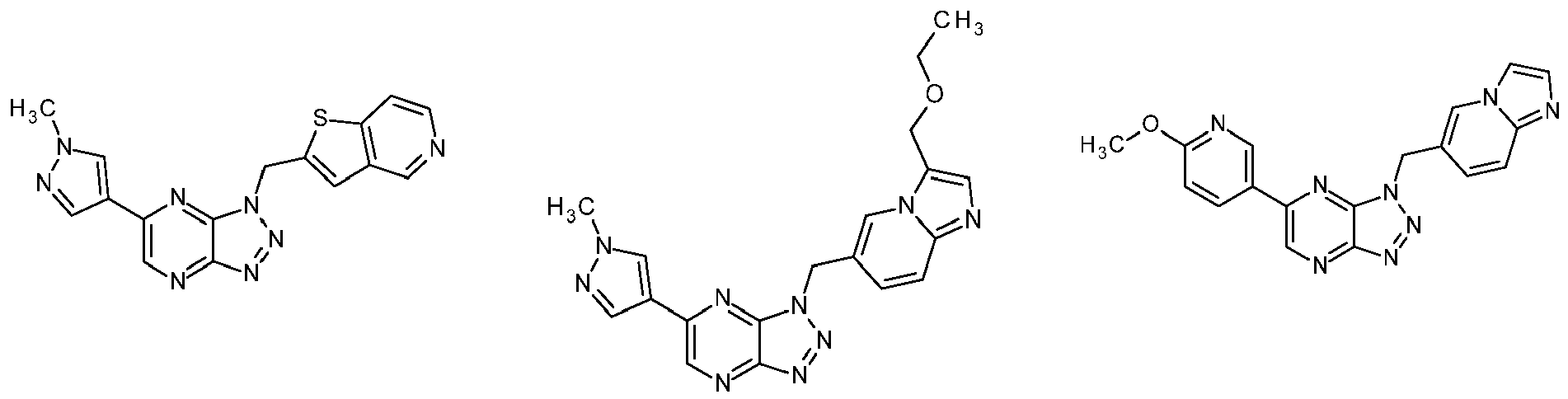


- At least one compound as claimed in claim 1 which is selected from:


- A compound as claimed in claim 1 which is:

- A compound as claimed in claim 1 which is:

- A composition comprising at least one compound as claimed in any one of claims 1 to 3, and/or at least one pharmaceutically acceptable salt thereof and at least one pharmaceutically acceptable carrier.
- At least one compound as claimed in any one of claims 1 to 3, and/or at least one pharmaceutically acceptable salt thereof, for use in therapy.
- At least one compound as claimed in any one of claims 1 to 3, and/or at least one pharmaceutically acceptable salt thereof, for use in the treatment of cancer.
- At least one compound as claimed in any one of claims 1 to 3, and/or at least one pharmaceutically acceptable salt thereof, for use in the treatment of cancer as claimed in claim 7, where the cancer is selected from lung cancer, head and neck cancer, colorectal cancer, pancreatic cancer, colon cancer, breast cancer, ovarian cancer, prostate cancer, stomach cancer, kidney cancer, liver cancer, brain cancer, bone cancer, and leukaemia.
- At least one compound as claimed in any one of claims 1 to 3, and/or at least one pharmaceutically acceptable salt thereof, for use in the treatment of cancer as claimed in claim 7, where the compound is administered in conjunction with an anti-neoplastic agent.
Priority Applications (9)
| Application Number | Priority Date | Filing Date | Title |
|---|---|---|---|
| EP15170608.2A EP2966075B1 (en) | 2009-12-31 | 2010-12-30 | Certain triazolopyridines, compositions thereof and their use in the treatment of cancer. |
| PL19151824T PL3511330T3 (en) | 2009-12-31 | 2010-12-30 | Synthetic intermediate useful in the preparation of triazolopyridine c-met inhibitors |
| MEP-2015-150A ME02211B (en) | 2009-12-31 | 2010-12-30 | Certain triazolopyrazines, compositions thereof and methods of use therefor |
| EP20199091.8A EP3795573B1 (en) | 2009-12-31 | 2010-12-30 | Certain triazolopyrazines, compositions thereof and methods of use therefor |
| EP19151824.0A EP3511330B1 (en) | 2009-12-31 | 2010-12-30 | Synthetic intermediate useful in the preparation of triazolopyridine c-met inhibitors |
| PL13198224T PL2719699T3 (en) | 2009-12-31 | 2010-12-30 | Certain triazolopyrazines, compositions thereof and methods of use therefor |
| SI201031021T SI2719699T1 (en) | 2009-12-31 | 2010-12-30 | Certain triazolopyrazines, compositions thereof and methods of use therefor |
| HRP20150952TT HRP20150952T1 (en) | 2009-12-31 | 2015-09-08 | Certain triazolopyrazines, compositions thereof and methods of use therefor |
| CY20201101206T CY1123777T1 (en) | 2009-12-31 | 2020-12-21 | SYNTHETIC INTERMEDIATE USEFUL IN THE PREPARATION OF TRIAZOLOPYRIDINE C-MET INHIBITORS |
Applications Claiming Priority (2)
| Application Number | Priority Date | Filing Date | Title |
|---|---|---|---|
| CN2009076321 | 2009-12-31 | ||
| EP10840591.1A EP2519524A4 (en) | 2009-12-31 | 2010-12-30 | CERTAIN TRIAZOLOPYRIDINES AND TRIAZOLOPYRAZINES, COMPOSITIONS THEREOF AND METHODS OF USE |
Related Parent Applications (1)
| Application Number | Title | Priority Date | Filing Date |
|---|---|---|---|
| EP10840591.1A Division EP2519524A4 (en) | 2009-12-31 | 2010-12-30 | CERTAIN TRIAZOLOPYRIDINES AND TRIAZOLOPYRAZINES, COMPOSITIONS THEREOF AND METHODS OF USE |
Related Child Applications (3)
| Application Number | Title | Priority Date | Filing Date |
|---|---|---|---|
| EP15170608.2A Division EP2966075B1 (en) | 2009-12-31 | 2010-12-30 | Certain triazolopyridines, compositions thereof and their use in the treatment of cancer. |
| EP19151824.0A Division EP3511330B1 (en) | 2009-12-31 | 2010-12-30 | Synthetic intermediate useful in the preparation of triazolopyridine c-met inhibitors |
| EP20199091.8A Division EP3795573B1 (en) | 2009-12-31 | 2010-12-30 | Certain triazolopyrazines, compositions thereof and methods of use therefor |
Publications (2)
| Publication Number | Publication Date |
|---|---|
| EP2719699A1 EP2719699A1 (en) | 2014-04-16 |
| EP2719699B1 true EP2719699B1 (en) | 2015-07-08 |
Family
ID=44226181
Family Applications (5)
| Application Number | Title | Priority Date | Filing Date |
|---|---|---|---|
| EP13198224.1A Active EP2719699B1 (en) | 2009-12-31 | 2010-12-30 | Certain triazolopyrazines, compositions thereof and methods of use therefor |
| EP19151824.0A Active EP3511330B1 (en) | 2009-12-31 | 2010-12-30 | Synthetic intermediate useful in the preparation of triazolopyridine c-met inhibitors |
| EP15170608.2A Active EP2966075B1 (en) | 2009-12-31 | 2010-12-30 | Certain triazolopyridines, compositions thereof and their use in the treatment of cancer. |
| EP20199091.8A Active EP3795573B1 (en) | 2009-12-31 | 2010-12-30 | Certain triazolopyrazines, compositions thereof and methods of use therefor |
| EP10840591.1A Withdrawn EP2519524A4 (en) | 2009-12-31 | 2010-12-30 | CERTAIN TRIAZOLOPYRIDINES AND TRIAZOLOPYRAZINES, COMPOSITIONS THEREOF AND METHODS OF USE |
Family Applications After (4)
| Application Number | Title | Priority Date | Filing Date |
|---|---|---|---|
| EP19151824.0A Active EP3511330B1 (en) | 2009-12-31 | 2010-12-30 | Synthetic intermediate useful in the preparation of triazolopyridine c-met inhibitors |
| EP15170608.2A Active EP2966075B1 (en) | 2009-12-31 | 2010-12-30 | Certain triazolopyridines, compositions thereof and their use in the treatment of cancer. |
| EP20199091.8A Active EP3795573B1 (en) | 2009-12-31 | 2010-12-30 | Certain triazolopyrazines, compositions thereof and methods of use therefor |
| EP10840591.1A Withdrawn EP2519524A4 (en) | 2009-12-31 | 2010-12-30 | CERTAIN TRIAZOLOPYRIDINES AND TRIAZOLOPYRAZINES, COMPOSITIONS THEREOF AND METHODS OF USE |
Country Status (38)
| Country | Link |
|---|---|
| US (9) | US8987269B2 (en) |
| EP (5) | EP2719699B1 (en) |
| JP (5) | JP5337313B2 (en) |
| KR (3) | KR101905350B1 (en) |
| CN (3) | CN106432225B (en) |
| AU (2) | AU2010338712B2 (en) |
| BR (1) | BR112012016129B1 (en) |
| CA (1) | CA2785749C (en) |
| CL (1) | CL2012001752A1 (en) |
| CO (1) | CO6612235A2 (en) |
| CU (1) | CU24167B1 (en) |
| CY (3) | CY1118250T1 (en) |
| DK (3) | DK3795573T3 (en) |
| DO (1) | DOP2012000188A (en) |
| EA (2) | EA030141B1 (en) |
| EC (1) | ECSP12012011A (en) |
| ES (4) | ES2726152T3 (en) |
| GT (1) | GT201200220A (en) |
| HR (3) | HRP20221090T1 (en) |
| HU (3) | HUE052828T2 (en) |
| IL (2) | IL220433B (en) |
| LT (1) | LT3795573T (en) |
| ME (1) | ME02211B (en) |
| MX (2) | MX386852B (en) |
| MY (1) | MY179933A (en) |
| NI (1) | NI201200118A (en) |
| NZ (1) | NZ601128A (en) |
| PE (3) | PE20130375A1 (en) |
| PH (1) | PH12012501355A1 (en) |
| PL (3) | PL3795573T3 (en) |
| PT (3) | PT2719699E (en) |
| RS (3) | RS61281B1 (en) |
| SG (1) | SG181781A1 (en) |
| SI (2) | SI2719699T1 (en) |
| SM (3) | SMT202000693T1 (en) |
| UA (1) | UA107822C2 (en) |
| WO (1) | WO2011079804A1 (en) |
| ZA (1) | ZA201205730B (en) |
Families Citing this family (51)
| Publication number | Priority date | Publication date | Assignee | Title |
|---|---|---|---|---|
| RS61281B1 (en) * | 2009-12-31 | 2021-02-26 | Hutchison Medipharma Ltd | Synthetic intermediate useful in the preparation of triazolopyridine c-met inhibitors |
| EP3450432A1 (en) * | 2010-05-17 | 2019-03-06 | Incozen Therapeutics Pvt. Ltd. | Novel 3,5-disubstitued-3h-imidazo[4,5-b]pyridine and 3,5- disubstitued - 3h-[1,2,3]triazolo[4,5-b] pyridine compounds as modulators of protein kinases |
| CN103030654A (en) * | 2011-10-09 | 2013-04-10 | 济南赛文医药技术有限公司 | Micromolecular c-Met protein kinase inhibitor |
| CN102516046A (en) * | 2011-11-22 | 2012-06-27 | 太仓市运通化工厂 | Method for synthesizing 2-bromopropanal |
| AP3908A (en) * | 2012-03-30 | 2016-11-24 | Rhizen Pharmaceuticals Sa | Novel 3,5-disubstituted-3H-imidazo[4,5-B]pyridine and 3,5-disubstituted-3H-[1,2,3]triazolo [4,5-B] pyridine compounds as modulators of C-met protein kinases |
| CA2776178A1 (en) | 2012-04-05 | 2013-10-05 | Hydro-Quebec | Ionic compounds |
| KR101745741B1 (en) | 2012-08-13 | 2017-06-12 | 한국화학연구원 | Novel Triazolopyrazine Derivatives and Use Thereof |
| WO2014109414A1 (en) * | 2013-01-11 | 2014-07-17 | 富士フイルム株式会社 | Nitrogen-containing heterocylic compound or salt thereof |
| MX362247B (en) | 2013-03-06 | 2019-01-09 | Astrazeneca Ab | Quinazoline inhibitors of activating mutant forms of epidermal growth factor receptor. |
| CN103265468A (en) * | 2013-06-17 | 2013-08-28 | 连云港盛和生物科技有限公司 | Synthetic method of 2,4-dimethyl-1H-pyrrole-3-carboxylic acid ethyl ester |
| EP2818471A1 (en) * | 2013-06-27 | 2014-12-31 | Max-Planck-Gesellschaft zur Förderung der Wissenschaften e.V. | Nitrogen bicyclic compounds as inhibitors for Scyl1 and Grk5 |
| AU2013402175B2 (en) * | 2013-09-30 | 2017-09-07 | Handok Inc. | Novel triazolopyrazine derivative and use thereof |
| CA2934667A1 (en) * | 2013-12-26 | 2015-07-02 | Ignyta, Inc. | Pyrazolo[1,5-a]pyridine derivatives and methods of their use |
| JP2016048495A (en) * | 2014-08-28 | 2016-04-07 | 京セラ株式会社 | Mobile terminal, recommendation program, recommendation system, and recommendation method |
| AR106018A1 (en) | 2015-08-26 | 2017-12-06 | Achillion Pharmaceuticals Inc | ARYL, HETEROARYL AND HETEROCYCLIC COMPOUNDS FOR THE TREATMENT OF MEDICAL DISORDERS |
| EP3340983B1 (en) | 2015-08-26 | 2023-10-04 | Achillion Pharmaceuticals, Inc. | Aryl, heteroaryl, and heterocyclic compounds for treatment of immune and inflammatory disorders |
| WO2017035405A1 (en) | 2015-08-26 | 2017-03-02 | Achillion Pharmaceuticals, Inc. | Amino compounds for treatment of immune and inflammatory disorders |
| WO2017035401A1 (en) | 2015-08-26 | 2017-03-02 | Achillion Pharmaceuticals, Inc. | Amide compounds for treatment of immune and inflammatory disorders |
| CN106928232B (en) * | 2015-12-31 | 2019-07-09 | 上海医药集团股份有限公司 | Crystal form, preparation method, composition and application of quinoline compound and salt thereof |
| GB201616116D0 (en) | 2016-09-22 | 2016-11-09 | Astrazeneca Ab | Use of c-Met inhibitors to treat cancers harbouring MET mutations |
| KR20180092096A (en) | 2017-02-08 | 2018-08-17 | 에이비온 주식회사 | Novel Polymorphic Forms of Triazolopyrazine Derivatives and Processes of Manufacturing Thereof |
| WO2018160891A1 (en) | 2017-03-01 | 2018-09-07 | Achillion Pharmaceutical, Inc. | Pharmaceutical compounds for treatment of medical disorders |
| KR102632860B1 (en) | 2017-03-01 | 2024-02-02 | 아칠리온 파르마세우티칼스 인코포레이티드 | Aryl, heteroaryl, and heterocyclic pharmaceutical compounds for the treatment of medical disorders |
| WO2018160892A1 (en) | 2017-03-01 | 2018-09-07 | Achillion Pharmaceuticals, Inc. | Macrocyclic compounds for treatment of medical disorders |
| CN108570053A (en) * | 2017-03-13 | 2018-09-25 | 中国科学院上海药物研究所 | Five yuan and 6-membered heterocyclic compound, preparation method, intermediate, combination and application |
| KR101924801B1 (en) | 2017-08-16 | 2018-12-04 | 한국원자력의학원 | Composition for preventing or treating cancer comprising triazolopyridine derivatives |
| HU231333B1 (en) | 2018-07-13 | 2023-01-28 | Richter Gedeon Nyrt | Spirochroman derivatives |
| HU231414B1 (en) | 2018-07-13 | 2023-08-28 | Richter Gedeon Nyrt. | Thiadiazine derivatives |
| EP3846803A4 (en) | 2018-09-06 | 2022-08-10 | Achillion Pharmaceuticals, Inc. | MACROCYCLIC COMPOUNDS FOR THE TREATMENT OF MEDICAL DISEASES |
| US11814363B2 (en) | 2018-09-06 | 2023-11-14 | Achillion Pharmaceuticals, Inc. | Morphic forms of danicopan |
| IL281283B2 (en) * | 2018-09-11 | 2024-01-01 | Astrazeneca Ab | Improved method for the production of 3-[(1S)-1-imidazolo[1,2-A]pyridine-6-ylethyl]-5-(1-methylpyrazol-1-YL]triazolo[4,5-B]pyrazine and polymeric forms His |
| EP3856164B1 (en) | 2018-09-25 | 2024-08-07 | Achillion Pharmaceuticals, Inc. | Morphic forms of complement factor d inhibitors |
| JP2022510501A (en) * | 2018-10-30 | 2022-01-26 | リペア セラピューティクス インコーポレイテッド | Compounds, pharmaceutical compositions, and methods of preparing compounds and their use as ATR kinase inhibitors. |
| US12258365B2 (en) | 2018-12-14 | 2025-03-25 | Beta Pharma, Inc. | Organophosphorus-substituted compounds as c-MET inhibitors and therapeutic uses thereof |
| BR112021011727A2 (en) | 2018-12-17 | 2021-08-31 | Achillion Pharmaceuticals, Inc | DIRECTED DOSAGE FOR THE TREATMENT OF COMPLEMENT MEDIATED DISORDERS |
| WO2020198062A1 (en) | 2019-03-22 | 2020-10-01 | Achillion Pharmaceuticals, Inc. | Pharmaceutical compounds for the treatment of complement mediated disorders |
| AU2020317381A1 (en) * | 2019-07-22 | 2022-02-10 | Repare Therapeutics Inc. | Substituted 2-morpholinopyridine derivatives as ATR kinase inhibitors |
| CN115362162A (en) * | 2020-02-20 | 2022-11-18 | 艾其林医药公司 | Heteroaryl compounds for use in the treatment of complement factor D mediated disorders |
| WO2021229605A1 (en) * | 2020-05-14 | 2021-11-18 | Dr. Reddy's Laboratories Limited | Process for preparation of savolitinib and its intermediates |
| WO2022066534A1 (en) * | 2020-09-28 | 2022-03-31 | Codexis, Inc. | Engineered biocatalysts and methods for synthesizing chiral amines |
| EP4263523A2 (en) * | 2020-12-16 | 2023-10-25 | IFM Due, Inc. | Compounds and compositions for treating conditions associated with sting activity |
| KR102659095B1 (en) | 2021-01-08 | 2024-04-19 | 에이비온 주식회사 | Method for preparing pharmaceutical formulation of tablet containing triazolopyrazine derivative as an active ingredient |
| CN113278019A (en) * | 2021-05-31 | 2021-08-20 | 河南偶联生物科技有限公司 | Synthesis method of imidazo [1,2-A ] pyridine compound |
| CN117897384A (en) | 2021-06-28 | 2024-04-16 | 缆图药品公司 | CDK2 inhibitors |
| JP2025513560A (en) * | 2022-04-20 | 2025-04-24 | エングレイル セラピューティクス,インコーポレーテッド | GABAA receptor modulator salts, particles, and uses thereof |
| EP4551226A1 (en) | 2022-07-08 | 2025-05-14 | Astrazeneca AB | Epidermal growth factor receptor tyrosine kinase inhibitors in combination with hgf-receptor inhibitors for the treatment of cancer |
| CN119998281A (en) * | 2022-07-29 | 2025-05-13 | 贝勒医学院 | Neurotrophic receptor tyrosine kinase (NTRK) inhibitors and methods of use thereof |
| CN115611802B (en) * | 2022-12-02 | 2023-03-14 | 北京迪泰医药科技有限公司 | Synthetic method of 3-acetyl-2-chloropyridine |
| CN120835885A (en) * | 2023-01-04 | 2025-10-24 | 缆图药品公司 | CDK2 inhibitors |
| GB202300923D0 (en) * | 2023-01-20 | 2023-03-08 | Macfarlan Smith Ltd | Novel polymorphic forms of savolitinib |
| WO2024263860A1 (en) * | 2023-06-22 | 2024-12-26 | Ifm Due, Inc. | Compounds and compositions for treating conditions associated with sting activity |
Family Cites Families (37)
| Publication number | Priority date | Publication date | Assignee | Title |
|---|---|---|---|---|
| US3989816A (en) | 1975-06-19 | 1976-11-02 | Nelson Research & Development Company | Vehicle composition containing 1-substituted azacycloheptan-2-ones |
| US4444762A (en) | 1980-04-04 | 1984-04-24 | Nelson Research & Development Company | Vehicle composition containing 1-substituted azacyclopentan-2-ones |
| US5977134A (en) * | 1996-12-05 | 1999-11-02 | Merck & Co., Inc. | Inhibitors of farnesyl-protein transferase |
| CA2333040A1 (en) * | 1998-05-26 | 1999-12-02 | Merck & Co., Inc. | Imidazopyridine thrombin inhibitors |
| JP2000119250A (en) * | 1998-08-11 | 2000-04-25 | Takeda Chem Ind Ltd | Cyclic amide compound, its production, intermediate and herbicide |
| WO2004092177A1 (en) | 2003-04-09 | 2004-10-28 | Biogen Idec Ma Inc. | Triazolopyrazines and methods of making and using the same |
| JP2007516180A (en) * | 2003-07-02 | 2007-06-21 | スゲン,インコーポレイティド | Arylmethyltriazolo and imidazopyrazines as c-Met inhibitors |
| US7122548B2 (en) | 2003-07-02 | 2006-10-17 | Sugen, Inc. | Triazolotriazine compounds and uses thereof |
| WO2005028480A2 (en) | 2003-09-03 | 2005-03-31 | Neurogen Corporation | 5-aryl-pyrazolo[4,3-d]pyrimidines, pyridines, and pyrazines and related compounds |
| EP2264033A1 (en) | 2004-07-27 | 2010-12-22 | SGX Pharmaceuticals, Inc. | 3,5-DIPHENYL-SUBSTITUTED PYRROLO[2,3b]PYRIDINES USEFUL AS KINASE INHIBITORS |
| JP2008509987A (en) | 2004-08-18 | 2008-04-03 | ファルマシア アンド アップジョン カンパニー リミテッド ライアビリティ カンパニー | Triazolopyridine compound |
| CN101119996A (en) * | 2005-02-16 | 2008-02-06 | 阿斯利康(瑞典)有限公司 | chemical compound |
| WO2006087538A1 (en) * | 2005-02-16 | 2006-08-24 | Astrazeneca Ab | Chemical compounds |
| CA2630884A1 (en) | 2005-11-30 | 2007-06-07 | Vertex Pharmaceuticals Incorporated | Inhibitors of c-met and uses thereof |
| HUE030390T2 (en) | 2005-12-21 | 2017-05-29 | Janssen Pharmaceutica Nv | Triazolopyridazines as tyrosine kinase modulators |
| NL2000613C2 (en) | 2006-05-11 | 2007-11-20 | Pfizer Prod Inc | Triazole pyrazine derivatives. |
| EP2032578A2 (en) | 2006-05-30 | 2009-03-11 | Pfizer Products Incorporated | Triazolopyridazine derivatives |
| PE20080403A1 (en) | 2006-07-14 | 2008-04-25 | Amgen Inc | FUSED HETEROCYCLIC DERIVATIVES AND METHODS OF USE |
| US8217177B2 (en) | 2006-07-14 | 2012-07-10 | Amgen Inc. | Fused heterocyclic derivatives and methods of use |
| JP2010500365A (en) | 2006-08-07 | 2010-01-07 | インサイト・コーポレイション | Triazolotriazines as kinase inhibitors |
| WO2008036272A1 (en) | 2006-09-18 | 2008-03-27 | Vertex Pharmaceuticals Incorporated | HETEROCYCLIC INHIBITORS OF c-MET AND USES THEREOF |
| CA2667428A1 (en) | 2006-10-23 | 2008-05-02 | Sgx Pharmaceuticals, Inc. | Bicyclic triazoles as protein kinase modulators |
| KR101083177B1 (en) * | 2006-10-23 | 2011-11-11 | 에스지엑스 파마슈티컬스, 인코포레이티드 | Triazolo-pyridazine protein kinase modulators |
| ES2560435T3 (en) | 2006-11-22 | 2016-02-19 | Incyte Holdings Corporation | Imidazotriazines and imidazopyrimidines as kinase inhibitors |
| JP4785881B2 (en) * | 2007-02-27 | 2011-10-05 | 大塚製薬株式会社 | Medicine |
| CN101679436A (en) | 2007-04-10 | 2010-03-24 | Sgx药品公司 | Fused ring heterocycle kinase modulators |
| WO2008138842A1 (en) | 2007-05-10 | 2008-11-20 | Galapagos N.V. | Imidazopyrazines and triazolopyrazine for the treatment of joint degenerative and inflammatory diseases |
| PA8792501A1 (en) | 2007-08-09 | 2009-04-23 | Sanofi Aventis | NEW DERIVATIVES OF 6-TRIAZOLOPIRIDACINA-SULFANIL BENZOTIAZOL AND BENCIMIDAZOL, ITS PREPARATION PROCEDURE, ITS APPLICATION AS MEDICATIONS, PHARMACEUTICAL COMPOSITIONS AND NEW MAIN USE AS MET INHIBITORS. |
| EP2285216A4 (en) * | 2008-02-21 | 2012-09-19 | Sequoia Pharmaceuticals Inc | Hiv protease inhibitor and cytochrome p450 inhibitor combinations |
| PE20091468A1 (en) | 2008-02-28 | 2009-10-22 | Novartis Ag | DERIVATIVES OF 3-METHYL-IMIDAZINE- [1,2-b] -PYRIDAZINE |
| US8691838B2 (en) | 2008-05-22 | 2014-04-08 | Amgen Inc. | Heterocycles as protein kinase inhibitors |
| DE102008037790A1 (en) | 2008-08-14 | 2010-02-18 | Merck Patent Gmbh | Bicyclic triazole derivatives |
| UY32049A (en) | 2008-08-14 | 2010-03-26 | Takeda Pharmaceutical | CMET INHIBITORS |
| EA201200260A1 (en) * | 2009-08-12 | 2012-09-28 | Новартис Аг | HETEROCYCLIC HYDRAZONES AND THEIR APPLICATION FOR THE TREATMENT OF CANCER AND INFLAMMATION |
| MX2012002179A (en) * | 2009-08-20 | 2012-03-16 | Novartis Ag | Heterocyclic oxime compounds. |
| RS61281B1 (en) * | 2009-12-31 | 2021-02-26 | Hutchison Medipharma Ltd | Synthetic intermediate useful in the preparation of triazolopyridine c-met inhibitors |
| EP3450432A1 (en) | 2010-05-17 | 2019-03-06 | Incozen Therapeutics Pvt. Ltd. | Novel 3,5-disubstitued-3h-imidazo[4,5-b]pyridine and 3,5- disubstitued - 3h-[1,2,3]triazolo[4,5-b] pyridine compounds as modulators of protein kinases |
-
2010
- 2010-12-30 RS RS20201567A patent/RS61281B1/en unknown
- 2010-12-30 RS RS20150584A patent/RS54217B1/en unknown
- 2010-12-30 SM SM20200693T patent/SMT202000693T1/en unknown
- 2010-12-30 HR HRP20221090TT patent/HRP20221090T1/en unknown
- 2010-12-30 BR BR112012016129-6A patent/BR112012016129B1/en active IP Right Grant
- 2010-12-30 KR KR1020177022937A patent/KR101905350B1/en active Active
- 2010-12-30 HU HUE19151824A patent/HUE052828T2/en unknown
- 2010-12-30 CN CN201610432059.7A patent/CN106432225B/en active Active
- 2010-12-30 JP JP2012546344A patent/JP5337313B2/en active Active
- 2010-12-30 MY MYPI2012002974A patent/MY179933A/en unknown
- 2010-12-30 AU AU2010338712A patent/AU2010338712B2/en active Active
- 2010-12-30 PE PE2012000903A patent/PE20130375A1/en not_active Application Discontinuation
- 2010-12-30 NZ NZ601128A patent/NZ601128A/en unknown
- 2010-12-30 HU HUE13198224A patent/HUE025504T2/en unknown
- 2010-12-30 ME MEP-2015-150A patent/ME02211B/en unknown
- 2010-12-30 LT LTEP20199091.8T patent/LT3795573T/en unknown
- 2010-12-30 CN CN201080065014.1A patent/CN102906092B/en active Active
- 2010-12-30 US US13/501,222 patent/US8987269B2/en active Active
- 2010-12-30 CU CU20120101A patent/CU24167B1/en active IP Right Grant
- 2010-12-30 PE PE2020001800A patent/PE20211094A1/en unknown
- 2010-12-30 RS RS20220854A patent/RS63612B1/en unknown
- 2010-12-30 PL PL20199091.8T patent/PL3795573T3/en unknown
- 2010-12-30 CA CA2785749A patent/CA2785749C/en active Active
- 2010-12-30 CN CN201610437304.3A patent/CN106117248B/en active Active
- 2010-12-30 PE PE2016000292A patent/PE20160588A1/en unknown
- 2010-12-30 KR KR1020147010967A patent/KR101771299B1/en active Active
- 2010-12-30 DK DK20199091.8T patent/DK3795573T3/en active
- 2010-12-30 PH PH1/2012/501355A patent/PH12012501355A1/en unknown
- 2010-12-30 DK DK13198224.1T patent/DK2719699T3/en active
- 2010-12-30 HU HUE20199091A patent/HUE059696T2/en unknown
- 2010-12-30 EP EP13198224.1A patent/EP2719699B1/en active Active
- 2010-12-30 PT PT131982241T patent/PT2719699E/en unknown
- 2010-12-30 MX MX2016001733A patent/MX386852B/en unknown
- 2010-12-30 EP EP19151824.0A patent/EP3511330B1/en active Active
- 2010-12-30 ES ES15170608T patent/ES2726152T3/en active Active
- 2010-12-30 DK DK19151824.0T patent/DK3511330T3/en active
- 2010-12-30 EP EP15170608.2A patent/EP2966075B1/en active Active
- 2010-12-30 PL PL13198224T patent/PL2719699T3/en unknown
- 2010-12-30 SI SI201031021T patent/SI2719699T1/en unknown
- 2010-12-30 UA UAA201208929A patent/UA107822C2/en unknown
- 2010-12-30 EP EP20199091.8A patent/EP3795573B1/en active Active
- 2010-12-30 KR KR1020127019509A patent/KR101434766B1/en active Active
- 2010-12-30 PT PT201990918T patent/PT3795573T/en unknown
- 2010-12-30 SG SG2012044830A patent/SG181781A1/en unknown
- 2010-12-30 ES ES19151824T patent/ES2840454T3/en active Active
- 2010-12-30 EA EA201691461A patent/EA030141B1/en not_active IP Right Cessation
- 2010-12-30 ES ES20199091T patent/ES2927146T3/en active Active
- 2010-12-30 SM SM20220371T patent/SMT202200371T1/en unknown
- 2010-12-30 MX MX2012007756A patent/MX336996B/en active IP Right Grant
- 2010-12-30 WO PCT/CN2010/080499 patent/WO2011079804A1/en not_active Ceased
- 2010-12-30 PL PL19151824T patent/PL3511330T3/en unknown
- 2010-12-30 ES ES13198224.1T patent/ES2546635T3/en active Active
- 2010-12-30 PT PT191518240T patent/PT3511330T/en unknown
- 2010-12-30 EA EA201200951A patent/EA025466B1/en not_active IP Right Cessation
- 2010-12-30 SI SI201032046T patent/SI3511330T1/en unknown
- 2010-12-30 EP EP10840591.1A patent/EP2519524A4/en not_active Withdrawn
-
2012
- 2012-04-10 US US13/501,224 patent/US8507487B2/en active Active
- 2012-06-14 IL IL220433A patent/IL220433B/en active IP Right Grant
- 2012-06-26 CL CL2012001752A patent/CL2012001752A1/en unknown
- 2012-06-28 GT GT201200220A patent/GT201200220A/en unknown
- 2012-06-29 CO CO12109937A patent/CO6612235A2/en not_active Application Discontinuation
- 2012-06-29 NI NI201200118A patent/NI201200118A/en unknown
- 2012-06-29 DO DO2012000188A patent/DOP2012000188A/en unknown
- 2012-06-29 EC EC2012012011A patent/ECSP12012011A/en unknown
- 2012-07-30 ZA ZA2012/05730A patent/ZA201205730B/en unknown
-
2013
- 2013-06-11 JP JP2013122502A patent/JP2013209418A/en active Pending
-
2015
- 2015-01-21 US US14/601,674 patent/US20150368271A1/en not_active Abandoned
- 2015-06-23 AU AU2015203480A patent/AU2015203480B2/en active Active
- 2015-07-16 IL IL239997A patent/IL239997A/en active IP Right Grant
- 2015-09-08 HR HRP20150952TT patent/HRP20150952T1/en unknown
- 2015-09-09 SM SM201500213T patent/SMT201500213B/en unknown
- 2015-09-17 CY CY20151100816T patent/CY1118250T1/en unknown
-
2016
- 2016-04-04 JP JP2016074893A patent/JP6194046B2/en active Active
- 2016-10-14 US US15/293,722 patent/US9956218B2/en active Active
-
2017
- 2017-08-10 JP JP2017155493A patent/JP6486999B2/en active Active
-
2018
- 2018-04-04 US US15/945,324 patent/US10512645B2/en active Active
-
2019
- 2019-02-20 JP JP2019028197A patent/JP6647434B2/en active Active
- 2019-11-08 US US16/678,091 patent/US10946014B2/en active Active
-
2020
- 2020-12-17 HR HRP20202017TT patent/HRP20202017T1/en unknown
- 2020-12-21 CY CY20201101206T patent/CY1123777T1/en unknown
-
2021
- 2021-02-03 US US17/248,688 patent/US11896592B2/en active Active
-
2022
- 2022-09-15 CY CY20221100615T patent/CY1125550T1/en unknown
-
2023
- 2023-12-13 US US18/538,151 patent/US20240139182A1/en not_active Abandoned
-
2024
- 2024-05-28 US US18/676,172 patent/US20250099462A1/en active Pending
Also Published As
Similar Documents
| Publication | Publication Date | Title |
|---|---|---|
| US11896592B2 (en) | Certain triazolopyridines and triazolopyrazines, compositions thereof and methods of use therefor | |
| HK40049874A (en) | Certain triazolopyrazines, compositions thereof and methods of use therefor | |
| HK40049874B (en) | Certain triazolopyrazines, compositions thereof and methods of use therefor | |
| HK40011539B (en) | Synthetic intermediate useful in the preparation of triazolopyridine c-met inhibitors | |
| HK40011539A (en) | Synthetic intermediate useful in the preparation of triazolopyridine c-met inhibitors | |
| HK1194071B (en) | Certain triazolopyrazines, compositions thereof and methods of use therefor | |
| HK1216880B (en) | Certain triazolopyridines, compositions thereof and their use in the treatment of cancer. |
Legal Events
| Date | Code | Title | Description |
|---|---|---|---|
| PUAI | Public reference made under article 153(3) epc to a published international application that has entered the european phase |
Free format text: ORIGINAL CODE: 0009012 |
|
| AC | Divisional application: reference to earlier application |
Ref document number: 2519524 Country of ref document: EP Kind code of ref document: P |
|
| AK | Designated contracting states |
Kind code of ref document: A1 Designated state(s): AL AT BE BG CH CY CZ DE DK EE ES FI FR GB GR HR HU IE IS IT LI LT LU LV MC MK MT NL NO PL PT RO RS SE SI SK SM TR |
|
| AX | Request for extension of the european patent |
Extension state: BA ME |
|
| REG | Reference to a national code |
Ref country code: HK Ref legal event code: DE Ref document number: 1194071 Country of ref document: HK |
|
| 17P | Request for examination filed |
Effective date: 20141010 |
|
| RAX | Requested extension states of the european patent have changed |
Extension state: ME Payment date: 20141016 Extension state: BA Payment date: 20141016 |
|
| RBV | Designated contracting states (corrected) |
Designated state(s): AL AT BE BG CH CY CZ DE DK EE ES FI FR GB GR HR HU IE IS IT LI LT LU LV MC MK MT NL NO PL PT RO RS SE SI SK SM TR |
|
| GRAP | Despatch of communication of intention to grant a patent |
Free format text: ORIGINAL CODE: EPIDOSNIGR1 |
|
| INTG | Intention to grant announced |
Effective date: 20150203 |
|
| RIN1 | Information on inventor provided before grant (corrected) |
Inventor name: DAI, GUANGXIU Inventor name: JIA, HONG Inventor name: SU, WEI-GUO |
|
| GRAS | Grant fee paid |
Free format text: ORIGINAL CODE: EPIDOSNIGR3 |
|
| GRAA | (expected) grant |
Free format text: ORIGINAL CODE: 0009210 |
|
| AC | Divisional application: reference to earlier application |
Ref document number: 2519524 Country of ref document: EP Kind code of ref document: P |
|
| AK | Designated contracting states |
Kind code of ref document: B1 Designated state(s): AL AT BE BG CH CY CZ DE DK EE ES FI FR GB GR HR HU IE IS IT LI LT LU LV MC MK MT NL NO PL PT RO RS SE SI SK SM TR |
|
| AX | Request for extension of the european patent |
Extension state: BA ME |
|
| REG | Reference to a national code |
Ref country code: GB Ref legal event code: FG4D |
|
| REG | Reference to a national code |
Ref country code: AT Ref legal event code: REF Ref document number: 735320 Country of ref document: AT Kind code of ref document: T Effective date: 20150715 Ref country code: CH Ref legal event code: EP |
|
| REG | Reference to a national code |
Ref country code: IE Ref legal event code: FG4D |
|
| REG | Reference to a national code |
Ref country code: DE Ref legal event code: R096 Ref document number: 602010025847 Country of ref document: DE |
|
| REG | Reference to a national code |
Ref country code: DK Ref legal event code: T3 Effective date: 20150818 |
|
| REG | Reference to a national code |
Ref country code: HR Ref legal event code: TUEP Ref document number: P20150952 Country of ref document: HR Ref country code: SE Ref legal event code: TRGR |
|
| REG | Reference to a national code |
Ref country code: NL Ref legal event code: T3 |
|
| REG | Reference to a national code |
Ref country code: RO Ref legal event code: EPE |
|
| REG | Reference to a national code |
Ref country code: ES Ref legal event code: FG2A Ref document number: 2546635 Country of ref document: ES Kind code of ref document: T3 Effective date: 20150925 |
|
| REG | Reference to a national code |
Ref country code: PT Ref legal event code: SC4A Free format text: AVAILABILITY OF NATIONAL TRANSLATION Effective date: 20150817 |
|
| REG | Reference to a national code |
Ref country code: HR Ref legal event code: T1PR Ref document number: P20150952 Country of ref document: HR |
|
| REG | Reference to a national code |
Ref country code: NO Ref legal event code: T2 Effective date: 20150708 |
|
| REG | Reference to a national code |
Ref country code: FR Ref legal event code: PLFP Year of fee payment: 6 |
|
| REG | Reference to a national code |
Ref country code: EE Ref legal event code: FG4A Ref document number: E011015 Country of ref document: EE Effective date: 20150812 |
|
| REG | Reference to a national code |
Ref country code: GR Ref legal event code: EP Ref document number: 20150401901 Country of ref document: GR Effective date: 20151022 |
|
| REG | Reference to a national code |
Ref country code: SK Ref legal event code: T3 Ref document number: E 19335 Country of ref document: SK |
|
| PGFP | Annual fee paid to national office [announced via postgrant information from national office to epo] |
Ref country code: SM Payment date: 20151126 Year of fee payment: 6 |
|
| REG | Reference to a national code |
Ref country code: HU Ref legal event code: AG4A Ref document number: E025504 Country of ref document: HU |
|
| REG | Reference to a national code |
Ref country code: HK Ref legal event code: GR Ref document number: 1194071 Country of ref document: HK |
|
| REG | Reference to a national code |
Ref country code: DE Ref legal event code: R097 Ref document number: 602010025847 Country of ref document: DE |
|
| PLBE | No opposition filed within time limit |
Free format text: ORIGINAL CODE: 0009261 |
|
| STAA | Information on the status of an ep patent application or granted ep patent |
Free format text: STATUS: NO OPPOSITION FILED WITHIN TIME LIMIT |
|
| 26N | No opposition filed |
Effective date: 20160411 |
|
| PG25 | Lapsed in a contracting state [announced via postgrant information from national office to epo] |
Ref country code: MC Free format text: LAPSE BECAUSE OF FAILURE TO SUBMIT A TRANSLATION OF THE DESCRIPTION OR TO PAY THE FEE WITHIN THE PRESCRIBED TIME-LIMIT Effective date: 20150708 |
|
| REG | Reference to a national code |
Ref country code: FR Ref legal event code: PLFP Year of fee payment: 7 |
|
| REG | Reference to a national code |
Ref country code: AT Ref legal event code: UEP Ref document number: 735320 Country of ref document: AT Kind code of ref document: T Effective date: 20150708 |
|
| REG | Reference to a national code |
Ref country code: FR Ref legal event code: PLFP Year of fee payment: 8 |
|
| PG25 | Lapsed in a contracting state [announced via postgrant information from national office to epo] |
Ref country code: SM Free format text: LAPSE BECAUSE OF NON-PAYMENT OF DUE FEES Effective date: 20170711 |
|
| PG25 | Lapsed in a contracting state [announced via postgrant information from national office to epo] |
Ref country code: AL Free format text: LAPSE BECAUSE OF FAILURE TO SUBMIT A TRANSLATION OF THE DESCRIPTION OR TO PAY THE FEE WITHIN THE PRESCRIBED TIME-LIMIT Effective date: 20150708 |
|
| REG | Reference to a national code |
Ref country code: HR Ref legal event code: ODRP Ref document number: P20150952 Country of ref document: HR Payment date: 20181106 Year of fee payment: 9 |
|
| REG | Reference to a national code |
Ref country code: HR Ref legal event code: ODRP Ref document number: P20150952 Country of ref document: HR Payment date: 20191029 Year of fee payment: 10 |
|
| REG | Reference to a national code |
Ref country code: HR Ref legal event code: ODRP Ref document number: P20150952 Country of ref document: HR Payment date: 20201223 Year of fee payment: 11 |
|
| REG | Reference to a national code |
Ref country code: HR Ref legal event code: ODRP Ref document number: P20150952 Country of ref document: HR Payment date: 20211228 Year of fee payment: 12 |
|
| REG | Reference to a national code |
Ref country code: HR Ref legal event code: ODRP Ref document number: P20150952 Country of ref document: HR Payment date: 20221228 Year of fee payment: 13 |
|
| P01 | Opt-out of the competence of the unified patent court (upc) registered |
Effective date: 20230521 |
|
| REG | Reference to a national code |
Ref country code: HR Ref legal event code: ODRP Ref document number: P20150952 Country of ref document: HR Payment date: 20231102 Year of fee payment: 14 |
|
| REG | Reference to a national code |
Ref country code: HR Ref legal event code: ODRP Ref document number: P20150952 Country of ref document: HR Payment date: 20241028 Year of fee payment: 15 |
|
| PGFP | Annual fee paid to national office [announced via postgrant information from national office to epo] |
Ref country code: CY Payment date: 20241220 Year of fee payment: 15 |
|
| PGFP | Annual fee paid to national office [announced via postgrant information from national office to epo] |
Ref country code: PT Payment date: 20251121 Year of fee payment: 16 |
|
| PGFP | Annual fee paid to national office [announced via postgrant information from national office to epo] |
Ref country code: NL Payment date: 20251119 Year of fee payment: 16 Ref country code: LU Payment date: 20251119 Year of fee payment: 16 |
|
| REG | Reference to a national code |
Ref country code: CH Ref legal event code: U11 Free format text: ST27 STATUS EVENT CODE: U-0-0-U10-U11 (AS PROVIDED BY THE NATIONAL OFFICE) Effective date: 20260101 |
|
| REG | Reference to a national code |
Ref country code: HR Ref legal event code: ODRP Ref document number: P20150952 Country of ref document: HR Payment date: 20251203 Year of fee payment: 16 |
|
| PGFP | Annual fee paid to national office [announced via postgrant information from national office to epo] |
Ref country code: IS Payment date: 20251219 Year of fee payment: 16 Ref country code: DE Payment date: 20251126 Year of fee payment: 16 |
|
| PGFP | Annual fee paid to national office [announced via postgrant information from national office to epo] |
Ref country code: GB Payment date: 20251120 Year of fee payment: 16 Ref country code: LT Payment date: 20251119 Year of fee payment: 16 |
|
| PGFP | Annual fee paid to national office [announced via postgrant information from national office to epo] |
Ref country code: NO Payment date: 20251121 Year of fee payment: 16 |
|
| PGFP | Annual fee paid to national office [announced via postgrant information from national office to epo] |
Ref country code: AT Payment date: 20251121 Year of fee payment: 16 Ref country code: MK Payment date: 20251127 Year of fee payment: 16 |
|
| PGFP | Annual fee paid to national office [announced via postgrant information from national office to epo] |
Ref country code: IT Payment date: 20251119 Year of fee payment: 16 Ref country code: FI Payment date: 20251119 Year of fee payment: 16 Ref country code: DK Payment date: 20251119 Year of fee payment: 16 |
|
| PGFP | Annual fee paid to national office [announced via postgrant information from national office to epo] |
Ref country code: HR Payment date: 20251203 Year of fee payment: 16 Ref country code: HU Payment date: 20251212 Year of fee payment: 16 Ref country code: FR Payment date: 20251119 Year of fee payment: 16 |
|
| PGFP | Annual fee paid to national office [announced via postgrant information from national office to epo] |
Ref country code: TR Payment date: 20251127 Year of fee payment: 16 Ref country code: BE Payment date: 20251119 Year of fee payment: 16 Ref country code: GR Payment date: 20251121 Year of fee payment: 16 |
|
| PGFP | Annual fee paid to national office [announced via postgrant information from national office to epo] |
Ref country code: SE Payment date: 20251119 Year of fee payment: 16 |
|
| PGFP | Annual fee paid to national office [announced via postgrant information from national office to epo] |
Ref country code: IE Payment date: 20251121 Year of fee payment: 16 Ref country code: CZ Payment date: 20251212 Year of fee payment: 16 |
|
| PGFP | Annual fee paid to national office [announced via postgrant information from national office to epo] |
Ref country code: MT Payment date: 20251203 Year of fee payment: 16 Ref country code: LV Payment date: 20251119 Year of fee payment: 16 |
|
| PGFP | Annual fee paid to national office [announced via postgrant information from national office to epo] |
Ref country code: BG Payment date: 20251127 Year of fee payment: 16 Ref country code: PL Payment date: 20251124 Year of fee payment: 16 |
|
| PGFP | Annual fee paid to national office [announced via postgrant information from national office to epo] |
Ref country code: EE Payment date: 20251126 Year of fee payment: 16 |
|
| PGFP | Annual fee paid to national office [announced via postgrant information from national office to epo] |
Ref country code: RO Payment date: 20251219 Year of fee payment: 16 Ref country code: SK Payment date: 20251125 Year of fee payment: 16 |
|
| PGFP | Annual fee paid to national office [announced via postgrant information from national office to epo] |
Ref country code: RS Payment date: 20251222 Year of fee payment: 16 |
|
| PGFP | Annual fee paid to national office [announced via postgrant information from national office to epo] |
Ref country code: SI Payment date: 20251125 Year of fee payment: 16 |
|
| PGFP | Annual fee paid to national office [announced via postgrant information from national office to epo] |
Ref country code: ES Payment date: 20260102 Year of fee payment: 16 |
|
| PGFP | Annual fee paid to national office [announced via postgrant information from national office to epo] |
Ref country code: CH Payment date: 20260101 Year of fee payment: 16 |