EP2718424B1 - Passaging and harvesting formulation and method for human pluripotent stem cells - Google Patents
Passaging and harvesting formulation and method for human pluripotent stem cells Download PDFInfo
- Publication number
- EP2718424B1 EP2718424B1 EP12723066.2A EP12723066A EP2718424B1 EP 2718424 B1 EP2718424 B1 EP 2718424B1 EP 12723066 A EP12723066 A EP 12723066A EP 2718424 B1 EP2718424 B1 EP 2718424B1
- Authority
- EP
- European Patent Office
- Prior art keywords
- formulation
- sodium citrate
- cells
- stem cells
- culture
- Prior art date
- Legal status (The legal status is an assumption and is not a legal conclusion. Google has not performed a legal analysis and makes no representation as to the accuracy of the status listed.)
- Active
Links
Images




















Classifications
-
- C—CHEMISTRY; METALLURGY
- C12—BIOCHEMISTRY; BEER; SPIRITS; WINE; VINEGAR; MICROBIOLOGY; ENZYMOLOGY; MUTATION OR GENETIC ENGINEERING
- C12N—MICROORGANISMS OR ENZYMES; COMPOSITIONS THEREOF; PROPAGATING, PRESERVING, OR MAINTAINING MICROORGANISMS; MUTATION OR GENETIC ENGINEERING; CULTURE MEDIA
- C12N5/00—Undifferentiated human, animal or plant cells, e.g. cell lines; Tissues; Cultivation or maintenance thereof; Culture media therefor
-
- C—CHEMISTRY; METALLURGY
- C12—BIOCHEMISTRY; BEER; SPIRITS; WINE; VINEGAR; MICROBIOLOGY; ENZYMOLOGY; MUTATION OR GENETIC ENGINEERING
- C12N—MICROORGANISMS OR ENZYMES; COMPOSITIONS THEREOF; PROPAGATING, PRESERVING, OR MAINTAINING MICROORGANISMS; MUTATION OR GENETIC ENGINEERING; CULTURE MEDIA
- C12N5/00—Undifferentiated human, animal or plant cells, e.g. cell lines; Tissues; Cultivation or maintenance thereof; Culture media therefor
- C12N5/06—Animal cells or tissues; Human cells or tissues
- C12N5/0602—Vertebrate cells
- C12N5/0652—Cells of skeletal and connective tissues; Mesenchyme
- C12N5/0662—Stem cells
-
- C—CHEMISTRY; METALLURGY
- C12—BIOCHEMISTRY; BEER; SPIRITS; WINE; VINEGAR; MICROBIOLOGY; ENZYMOLOGY; MUTATION OR GENETIC ENGINEERING
- C12N—MICROORGANISMS OR ENZYMES; COMPOSITIONS THEREOF; PROPAGATING, PRESERVING, OR MAINTAINING MICROORGANISMS; MUTATION OR GENETIC ENGINEERING; CULTURE MEDIA
- C12N5/00—Undifferentiated human, animal or plant cells, e.g. cell lines; Tissues; Cultivation or maintenance thereof; Culture media therefor
- C12N5/06—Animal cells or tissues; Human cells or tissues
- C12N5/0602—Vertebrate cells
- C12N5/0603—Embryonic cells ; Embryoid bodies
- C12N5/0606—Pluripotent embryonic cells, e.g. embryonic stem cells [ES]
-
- C—CHEMISTRY; METALLURGY
- C12—BIOCHEMISTRY; BEER; SPIRITS; WINE; VINEGAR; MICROBIOLOGY; ENZYMOLOGY; MUTATION OR GENETIC ENGINEERING
- C12N—MICROORGANISMS OR ENZYMES; COMPOSITIONS THEREOF; PROPAGATING, PRESERVING, OR MAINTAINING MICROORGANISMS; MUTATION OR GENETIC ENGINEERING; CULTURE MEDIA
- C12N5/00—Undifferentiated human, animal or plant cells, e.g. cell lines; Tissues; Cultivation or maintenance thereof; Culture media therefor
- C12N5/06—Animal cells or tissues; Human cells or tissues
- C12N5/0602—Vertebrate cells
- C12N5/0607—Non-embryonic pluripotent stem cells, e.g. MASC
-
- C—CHEMISTRY; METALLURGY
- C12—BIOCHEMISTRY; BEER; SPIRITS; WINE; VINEGAR; MICROBIOLOGY; ENZYMOLOGY; MUTATION OR GENETIC ENGINEERING
- C12N—MICROORGANISMS OR ENZYMES; COMPOSITIONS THEREOF; PROPAGATING, PRESERVING, OR MAINTAINING MICROORGANISMS; MUTATION OR GENETIC ENGINEERING; CULTURE MEDIA
- C12N5/00—Undifferentiated human, animal or plant cells, e.g. cell lines; Tissues; Cultivation or maintenance thereof; Culture media therefor
- C12N5/06—Animal cells or tissues; Human cells or tissues
- C12N5/0602—Vertebrate cells
- C12N5/0652—Cells of skeletal and connective tissues; Mesenchyme
- C12N5/0662—Stem cells
- C12N5/0663—Bone marrow mesenchymal stem cells (BM-MSC)
-
- C—CHEMISTRY; METALLURGY
- C12—BIOCHEMISTRY; BEER; SPIRITS; WINE; VINEGAR; MICROBIOLOGY; ENZYMOLOGY; MUTATION OR GENETIC ENGINEERING
- C12N—MICROORGANISMS OR ENZYMES; COMPOSITIONS THEREOF; PROPAGATING, PRESERVING, OR MAINTAINING MICROORGANISMS; MUTATION OR GENETIC ENGINEERING; CULTURE MEDIA
- C12N2500/00—Specific components of cell culture medium
- C12N2500/05—Inorganic components
- C12N2500/10—Metals; Metal chelators
- C12N2500/12—Light metals, i.e. alkali, alkaline earth, Be, Al, Mg
- C12N2500/14—Calcium; Ca chelators; Calcitonin
Definitions
- the present invention relates to a formulation and method for harvesting/passaging pluripotent stem cells. Specifically, the present invention relates to a method using formulations including sodium citrate.
- hPSCs Human pluripotent stem cells
- hESCs human embryonic stem cells
- iPSCs induced pluripotent stem cells
- Scaling up existing flask-based processes is a critical stepping stone in translating current hPSC research into clinical application.
- One of the biggest challenges is to establish a scalable passaging method for large scale multilayer vessels that maintains high yield, pluripotent phenotype, and karyotypic stability.
- hPSCs are harvested and passaged as colony fragments by mechanical scraping with or without pre-treatment with enzymes (such as collagenase or Dispase®).
- enzymes such as collagenase or Dispase®
- This process is labor intensive and cannot be applied in culturing hPSCs in multilayer cell culture vessels, the platform widely used in producing commercial scale adherent cells. Cells growing in multilayer cell culturing vessels cannot be accessed for scraping.
- mechanical scraping causes damage to cells. Without scraping, cell viability can increase up to 90 percent.
- Known methods related to single-cell passaging and harvesting are not desirable due for example, to concerns related to low post-passaging and cryopreservation recovery and abnormal karyotype, associated with low cloning efficiency of hPSCs.
- Rho-associated kinase inhibitors have been reported to be able to improve hPSC cloning efficiency, the mechanism is not fully understood and the effect of ROCK Inhibitors on hPSC culture is yet to be evaluated. Therefore, passaging hPSCs as single cells in the presence of ROCK Inhibitors is not widely accepted.
- EDTA ethylene diamine tetraacetic acid
- the typical procedure of passaging hESCs with Versene® EDTA starts with washing the culture with Ca2+/Mg2+-free buffer (for example, Dulbecco's phosphate -buffered saline; DPBS), followed by incubating the culture in Versene® EDTA for 4-9 minutes. Versene® EDTA is then removed and cells are physically removed from the surface as clusters by manual hosing of the cells with culture medium via pipetting.
- Ca2+/Mg2+-free buffer for example, Dulbecco's phosphate -buffered saline; DPBS
- the advantage of this method is that (1) it uses a non-enzymatic solution - thus, there is no need for post-detachment washing or centrifugation to eliminate enzyme, and (2) it does not require scraping - the cells treated with Versene® EDTA can be washed off the surface.
- the hESCs treated with Versene® EDTA and detached without scraping have higher post-detachment viability and re-attach to the new culturing surface much faster (minutes vs. hours) when passaged.
- the Versene® EDTA passaging/harvesting method is not ideal. Versene® EDTA seems to breaks down cell-cell association faster than it breaks cell-surface bonding. If hESC culture is over-treated with Versene® EDTA (>9 minutes), a greater percentage of cells come off the surface as single cells rather than clusters or clumps. In order to avoid getting too many single cells, the treatment time normally is controlled between seven to nine minutes. After the removal of Versene® EDTA, in six-well plate or T-flask culture format, fluidic shear force generated by hosing with culture medium via manual pipetting is needed to dislodge the cells off the surface.
- hESC culture in multilayer vessels cannot be manually sheared with culture medium as pipettes cannot be introduced inside the vessels. Instead, in this culture format, after Versene® EDTA is replaced with culture medium, vigorous tapping is applied to dislodge the cells. The mechanical force (tapping) has to follow the replacement of Versene® EDTA with culture medium immediately because Versene® EDTA treated hESCs quickly re-attach to the surface once they come in contact with culture medium. In fact, with the current state-of-art, it is only possible to harvest 40-70% of the entire culture in multilayer cell factories - dramatically impacting the yield of these very expensive cells.
- the present invention provides a non-enzymatic reagent formulation and a method of harvesting and subsequently passaging pluripotent stem cells as clusters with high yield and high post-detachment cell viability.
- a formulation for harvesting and subsequent passaging of human pluripotent stem cells without scraping and without substantial loss of viability.
- the formulation includes, for example, sodium citrate, a salt, and a phosphate-buffered saline solution, at an osmolality of about 250-1050 mOsmol/Liter.
- the osmolarity is 311-1014 mOsmol/Liter.
- the formulation is used to harvest and passage embryonic stem cells and induced pluripotent stem cells.
- the concentration of citrate is, for example, about 0.15 to 150 mMol/Liter.
- the salt is, for example, NaCl, KCl, Na2HP03, NaH2P03, K2HP03, or KH2P03.
- the concentration is, for example, about 1.00-1400 mMol/Liter
- the concentration is about 1.35-1350 mMol/Liter.
- the osmolarity of the formulation is, for example, about 400-700 mOsmol/Liter. In another aspect of the embodiment, the osmolarity of the formulation is, for example, about 418-570 mOsmol/Liter.
- the formulation is pH buffered with, for example, bicarbonate, phosphate, ethanolamine, triethanolamine, or trometamol.
- the pH of the formulation is, for example, about 7-8, In an alternative embodiment the pH is about 7.2-7.8.
- the phosphate-buffered saline solution is, for example, Ca2+/Mg2+-free Dulbecco's phosphate buffered saline (DPBS).
- treatment of the cells with the formulation results in the harvest of, for example, at least 90% of the cells from the surface of the culture vessel and cell viability of, for example, at least 90%.
- a method for producing a formulation for harvesting and subsequent passaging of human pluripotent stem cells without scraping and substantial loss of viability.
- a method for harvesting and subsequent passaging of hPSCs comprising incubating the hPSCs in one of the formulations described in the preceding paragraphs and in cell culture vessels for a period of time to allow the hPSCs to detach from the cell culture vessels in clusters with high yield and high post-detachment cell viability of, for example, about 85-100%.
- the cell culture plates or vessels are, for example, petri dishes, multi-well cell culture plates, stacked cell culture apparatus, multilayer cell culture factories, and similar vessels known in the art to be capable of supporting the culture of hPSCs.
- the cells are treated with the formulation for about 2-20 minutes.
- the treatment time is 5-15min for hPSCs cultured in mTeSRI®. In another embodiment, the treatment time is 8- 20min for hPSCs cultured in StemPro®. (StemPro® and mTeSRI® are examples of commercially available defined media for hPSC culture.)
- the cells are harvested in clusters with sizes ranging, for example, from about 10-1000 ⁇ . More particularly, the cluster size is, for example, about 40-500 ⁇ .
- the method results in the harvest of, for example, at least 90% of the cells from the surface of the culture vessel and cell viability of at least 90%.
- additional passaging and harvesting formulations including formulations containing EDTA and EGTA, other Ca2+ chelators besides sodium citrate, or combinations of various Ca2+ chelators. Two factors are identified related to cell detachment, the Ca2+ chelator concentration and osmolarity.
- a method of developing a cell-detaching solution for hPSCs wherein the size distribution of the detached clusters and the percentage of the culture detached at given treatment time can be controlled with the osmolarity and Ca2+ chelator concentration.
- the disclosed formulation includes sodium citrate, which disrupts the cell-surface bond and cell-cell association by chelating/sequestering Ca2+, the divalent cation required for cell-surface and cell-cell binding.
- This sodium citrate -based formulation and process is specially designed and developed to address the unique challenges in routine or scale up hPSC culture and manufacturing processes.
- hPSCs are normally passaged as multi-cellular clusters/aggregates, and passaging hPSCs as single-cells is to be avoided due to low cloning efficiency of hPSCs and the high risk of karyotypic abnormality.
- This formulation and method is additionally optimized for harvesting and passaging hPSCs in reference to the key quality parameters of hPSCs, for example, viability, yield, post-detachment cluster size, passageability, and maintaining a pluripotent phenotype.
- This formulation and process can be used in any hPSC lab as routine lab practice to expand hPSC culture with reduced labor intensity and process time.
- this formulation and process does not require mechanical scraping to get the cells off the surface and the cell harvest does not need to be washed and centrifuged to remove the agents used to detach the culture.
- This formulation and process especially benefit large-scale hPSC production when the cells are growing in multilayer cell culture vessels where scraping cannot be applied. Using this formulation and method, more than 90% of hPSCs grown in multilayer cell culture vessels can be harvested with more than 90% viability.
- Non-enzymatic cell detachment solutions at various concentrations were screened with one objective being to improve the yield of hESCs harvested from multilayer culture vessels while retaining the simplicity of the Versene® EDTA harvesting/passaging method.
- This screening included, for example, Versene® EDTA solutions at 0.1, 0.55, 1, 3, and 10 mM, Versene® based ethylene glycol tetraacetic acid (EGTA) solutions at 0.1, 0.55, 1, 3, and 10 mM, and 1 X sodium citrate solution (10X solution: 0.15 M sodium citrate, 1.35 M potassium chloride (KCI), diluted to 1 X in Ca2+/Mg2+-free DPBS).
- EGTA ethylene glycol tetraacetic acid
- KCI potassium chloride
- EDTA, EGTA and sodium citrate are Ca2+ chelators and have been used historically for detaching adherent cells in culture.
- Versene® EDTA has been used routinely for harvesting/passaging hESCs in some labs; both EDTA and EGTA (in combination with trypsin) were used to passage hESCs in a study published by Thomson et al. at Roslin Institute in Scotland in 2008 ( Thomson et al. (2008), "Human Embryonic Stem Cells Passaged Using Enzymatic Methods Retain a Normal Karyotype and Express CD30", Cloning and Stem Cells, 10 (1), 1-17 .).
- hESCs cultured in Murine Embryonic Fibroblast-conditioned medium were treated with solutions including those described above as follows: (1) remove culture medium; (2) wash once with Ca2+/Mg2+ free buffer (for example, DPBS); (3) incubate in solution at room temperature; (4) remove solution; and (5) soak the colonies in MEF-CM for 0.5-1 minute to let them have a chance to stick back onto the surface. The colonies were then hosed with culture medium to see if they can be detached from the surface.
- incubation step # 3 above it is noted that 4-9 minutes is the norm for Versene® EDTA.
- step # 5 this step was executed in the initial detachment- solution screening study to see whether the cells re-stick onto the surface in culture medium.
- the cells are hosed off the surface right after removing the cell-detachment solution.
- the culture medium is poured into the vessel first, the medium is leveled in all layers, and then the vessel is tapped to dislodge the cells in the culture medium.
- the pouring and leveling take 0.5-1 minute in a ten-layer vessel. In the cGMP setting, additional time may be required.
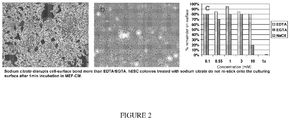
- FIGURE 2 As illustrated by FIGURE 2 , after this procedure, 85% of the Versene® (0.55 mM EDTA)-treated culture remained on the surface ( FIGURE 2a ), while nearly all the cells came off the surface in 1 X sodium citrate (sodium citrate formulation) treated culture ( FIGURE 2b ). The visual assessment of the percentage of the culture remaining on the surface after treatment is plotted in FIGURE 2c .
- sodium citrate solution is surprisingly identified as a superior reagent compared to Versene® EDTA for harvesting hESC culture.
- Sodium citrate formulation disrupts the cell-surface bond to a greater extent than Versene® EDTA and sodium citrate formulation treated hESCs do not re-stick to the surface in culture medium as fast and easily as Versene® EDTA or EGTA formulation- treated hESCs.
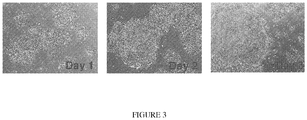
- FIGURE 3 shows that hESCs passaged with sodium citrate formulation for six times in MEF-CM retain typical hESC morphology.
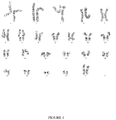
- FIGURE 4 the karyotype of this culture was evaluated to be normal after five passages with sodium citrate formulation.
- FIGURE 5 provides images of the cells remaining on the surface after harvest.
- the cultures in FIGURE 5a and 5b were both harvested using Versene® EDTA, but were handled by different operators (with the strength applied to tapping of stacks to dislodge cells varying between the operators).
- the percentage of the culture detached from each two-layer stack is plotted in FIGURE 5d .
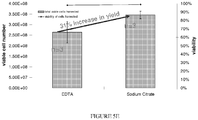
- the number of cells harvested from each vessel was counted and the viability of the harvest was calculated ( FIGURE 5e ).
- the counts of the cells harvested with IX sodium citrate solution have much tighter distribution (2.64E8+5.1E7 with Versene® EDTA vs. 3.46E8+1.81E7 with sodium citrate, (see FIGURE 5e ), which contributes to a more robust and consistent manufacturing process.
- the yield of sodium citrate formulation-harvested hESC culture was 31% higher than that of Versene® EDTA harvested culture. There was less operator-to-operator variance when sodium citrate formulation was used. This may be because sodium citrate formulation disrupts the cell-surface bond more than Versene® EDTA and much less tapping effort was needed to dislodge the cells.
- the optimal range for the concentration of sodium citrate for hESC detachment was 0.1X-3X (see Table 2 for the concentrations of sodium citrate and KCI), or higher.
- sodium citrate formulations at higher sodium citrate concentrations did not necessarily detach the cells faster or break the colonies up into single cells more than lower concentrations ( FIGURE 6b ).
- sodium citrate at higher concentration (1X-3X and higher) tended to lift the hESC colonies up as whole sheets.
- the size of the detached hESC clump was dependent on the dilution of sodium citrate formulation more than treatment time (1-11 minutes tested).
- clump size of the detached hESC grown in mTeSRI® was overall smaller than that grown in MEF-CM.
- the effect of cell-detachment formulation on the size of detached clusters (clumps) of hESCs was further investigated. As described below, the osmolarity of the formulation affects the size of the clusters. In certain embodiments, a clump size of 10-1000 ⁇ m is preferred. In alternative embodiments, a clump size of 40-500 ⁇ m is desired.
- the operational time window for sodium citrate formulation treatment on hESCs was wider than Versene® EDTA treatment on hESCs, which is particularly beneficial in cGMP-compliant production when product quality consistency is regulated and deviation is to be minimized.
- the operational time window is further described below.
- citrate formulations containing a salt other than KC1 are contemplated.
- Such salts include, for example, NaCl, Na2HPO3, NaH2PO3, K2HPO3, KH2PO3, and the like.
- sodium citrate concentration has a preferred working range of 0.15-150 mM.
- sodium citrate concentration has a working range of 1.0-50 mM.
- sodium citrate concentration has a working range of 1.5-45 mM.
- sodium citrate concentration for passaging cells grown in MEF-CM is a working range of 1.5-15 mM.
- sodium citrate concentration for harvesting cells grown in culture medium such as mTeSRI® is a working range of 1.5-30 mM.
- Excipients in the formulation include, but are not limited to, Ca2+/Mg2+-free DPBS and KCl (1.35-1350 mM).
- the working osmolarity of this formulation is from 31.1-2050 mOsmol/L. In one embodiment, the working range is 290-1015 mOsmol/L. In another embodiment, the working range is 299-781 mOsmol/L. In yet another embodiment, the range is 548-781 mOsmol/L.
- sodium citrate solution of 10X contains 1350 mM KCl and 150 mM sodium citrate in water. A series of dilutions was made by diluting the 10X solution in DPBS (without Ca2+ or Mg2+).
- Table 2 Formulations of Sodium Citrate Solution Dilution Factor 0.1x 0.3x 0.7x 1.0x 1.3x 2.0x 3.0x 10x KCl 13.5mM 40.5mM 94.5mM 135mM 175.5mM 270mM 405mM 1350mM Sodium Citrate 1.5mM 4.5mM 10.5mM 15mM 19.5mM 30mM 45mM 150mM
- Osmolality of the screened cell detachment solutions was measured (Table 3).
- Sodium citrate solution in general has a higher osmolality than all the Versene®-based EDTA and EGTA solutions (solutions screened in FIGURE 2 ). This may be due to the high concentration of KCl and other excipients in the solutions.
- High osmolarity of the sodium citrate formulation is identified herein as one attribute that contributes to the unique cell detachment behavior of the solution, which is further discussed hereinafter.
- Table 3 illustrates osmolarity of various solutions. Table 3.
- hESC grown in MEF-CM
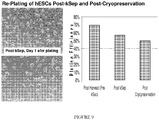
- hESCs processed with kSep® remain as clusters and plate well with 10% drop in plating efficiency, compared with pre-kSep® fresh harvest ( FIGURE 9 ).
- the process of expanding and passaging hESCs grown in mTeSR1® from T-flasks into multilayer cell factories is optimized with a novel non-enzymatic passaging method, followed by downstream processing with continuous counter-flow centrifugation technology.
- hESC culture in MEF-CM is expanded, with Versene® EDTA passaging, from six-well plate into T-flasks, and further into multilayer cell culture vessels.
- the final harvest from multilayer cell factories was characterized with flow cytometry and more than 90% of these cells expressed pluripotency markers including OCT4, SSEA4, Tra-1-60, and Tra-1-81.
- the final cell harvest was concentrated more than 14 times after automated downstream processing, with only 2% drop in cell viability.
- FIGURE 10 and 11 demonstrate the effect of the dilution of sodium citrate formulation on the trend of culture harvest increase with the increase of treatment time.
- the study illustrated in FIGURE 10 was conducted on hESC culture grown in MEF-CM, and the study illustrated in FIGURE 11 was conducted on hESC culture grown in mTeSR1®.
- the cells can be harvested from a variety of surfaces including but not limited to Matrigel-coated surface, gelatin-coated and MEF-plated surface, and/or chemically defined surfaces.
- surfaces include, for example, synthetic plastic or peptide-bound surfaces (Corning Synthemax and Nunclon (Nunc) Vita surfaces), surfaces coated with defined recombinant or native proteins (e.g. vitronectin, fibronectin, laminin and collagen).
- MEF-seeded surface MEF-seeded surface
- Matrigel-coated surface Matrigel is an extracellular matrix derived from mouse tumor.
- Synthemax and Nunc Vita are defined surfaces available on the market and marketed as a surface that can be used for hPSC culture.
- Sodium citrate formulations can be used to harvest hPSCs grown in various types of culture medium, including, but not limited to, regular culture medium used for culturing hPSCs on MEF- seeded surfaces, MEF-CM, mTeSRI® and StemPro®.
- the 1 X sodium citrate formulation described above is 15 mM sodium citrate, 135 mM KCI, pH 7.31, and 499 mOsmol/L in DPBS. Further studies were performed to determine the effects of osmolarity, KCl on the ability of the sodium citrate formulation to promote cell detachment.
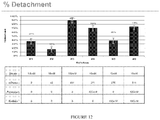
- FIGURE 12 shows the percentage of detachment of hESC in cultures treated with various solutions of sodium citrate. The results indicate that the osmolarity of the solution and the concentration of sodium citrate are important factors for achieving optimal cell detachment.
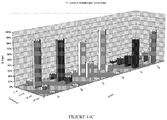
- FIGURE 14B microscopic images revealed substantially larger clusters of harvested cells from cultures treated with 781-1016 versus 169-548 mOsmol/L solutions of sodium citrate. The images of the detached clusters were analyzed and the sizes of the clusters were quantified. The distribution of the cluster sizes is shown in FIGURE 14C .
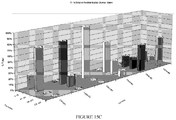
- FIGURE 15B microscopic images revealed substantially larger clusters of harvested cells from cultures treated with 30-75 mM sodium citrate solutions of sodium citrate.
- FIGURE 15C There was a corresponding increase in the measured sizes of clusters obtained from cultures treated with 30-75 mM sodium citrate solutions versus 1.5-15 mM sodium citrate solutions (mostly 250-900 equidiameter size clusters versus mostly 40-150 equidiameter size clusters, respectively) ( FIGURE 15C ).
- the Ca2+ chelation capacity of citrate, EDTA, and EGTA are 1: 1.5, 1: 1, and 1: 1, respectively, based on stoichiometry.
- EDTA also binds Mg ⁇ 2+> and other metals whereas EGTA is more specific for binding of Ca2+.
- Cell detachment achieved by a solution of sodium citrate (15 mM sodium citrate at 400 mOsmol/L (achieved by addition of KC1) and a pH of 7.8) was compared to that achieved by 22.5 mM and 45 mM solutions of EDTA and EGTA at 400 mOsmol/L and a pH of 7.8.
- FIGURE 16A EDTA and EGTA at concentrations higher than 22.5 mM detached hESC colonies as effectively as sodium citrate.
- the measured sizes of redistributed clusters obtained from cultures treated with the various solutions were similar (mostly 40-200 equidiameter size clusters) ( FIGURE 16B ).
- FIGURE 18A shows the effects of Versene EDTA and various sodium citrate solutions on hESC percent detachment at each treatment time point.
- FIGURE 18B shows the effects of Versene® EDTA and various sodium citrate solutions on cluster size distribution at each treatment time point.
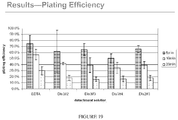
- FIGURE 19 shows the effects of Versene® EDTA and various sodium citrate solutions on the plating efficiency of detached cells at each treatment time points of 5, 10 and 20 minutes.
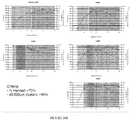
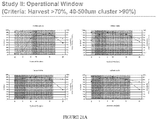
- an operational window similar to that depicted in FIGURE 20A can be established and appropriate parameters can be selected to achieve a desired percentage of cell detachment and cluster size (equi-diameter).
- the criteria used to determine the operational window is (1) the percentage of culture detached is over 70% and (2) the percentage of culture detached as 40-500um clusters is over 90%.
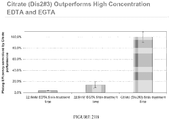
- the durations of the operational windows of 22.5mM EGTA and Versene® EDTA formulations are similar to that of citrate formulation Dis2#3, and are much wider than that of Versene® EDTA.
- the starting time points of the operational windows of 22.5mM EGTA and EDTA formulations are the same, and are earlier than that of citrate formulation Dis2#3.
- sodium citrate formulations outperform EDTA- containing and EGTA-containing formulations in passaging hPSCs. Furthermore, another advantage of sodium citrate over EDTA and EGTA is that leftover sodium citrate should have less deleterious effects on cell cultures than EDTA or EGTA. (Sodium citrate is sometimes used as a normal component in various culture media of various cell types.) For example, as seen in EXAMPLE 6, sodium citrate formulation solutions do not necessarily need to be removed after treating the cells.
- additional passaging and harvesting formulations are contemplated herein including formulations containing EDTA and EGTA, other Ca2+ chelators besides sodium citrate, or combinations of various Ca2+ chelators.
- concentration is too low, the bond between the cells and the matrix is not effectively disrupted and the formulation cannot effectively detach the cells.
- concentration is too high, the bond between the cells is overly disrupted, the size of the detached clusters decrease, and the detached clusters can be fragile and easily disintegrated when further handled.
- the shrinking of the cells or the colonies caused by high osmorality can result in cell detachment, especially at the edge of the colonies.
- the cells could also be damaged if the osmolarity is too high.
- the osmolarity is too high, the cells are not effectively detached from the surface.
- EXAMPLE 4 provides studies toward further optimization. Through use of the experimental design disclosed herein, other cell-detaching/passaging formulations containing various Ca2+ chelators can be developed and are considered within the scope of the present invention.
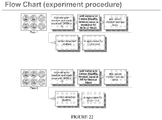
- Loss of the cells can occur during treatment with cell-detaching solutions. This is because the culture is soaked in the solution during treatment, and the solution is removed prior to detaching the culture with cell culture medium. In order to eliminate this loss, studies were performed to find out whether the solution can be added and removed right away at the beginning of the treatment, and whether the culture can be detached with only the residue of the solution on the culture surface ("dry passaging").
- the proposed new procedure is depicted in FIGURE 22 . As also indicated in FIGURE 22 , two treatment time points (5, 10 min), two incubation conditions (Room Temperature, 37°C incubator) were compared, and both Versene® EDTA and citrate formulation Dis2#3 were tested for this dry passaging procedure.
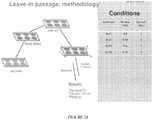
- FIGURE 24 depicts the methodology used in "leave- in passaging”. Basically, after soaking the culture with the cell-detaching solution for a certain treatment time, the solution is not removed from the culture; instead, it is left in the culture and neutralized with culture medium. The cells are then dislodged from the surface by a swirling motion, and seeded onto a fresh surface afterwards. The cell-detaching solution is left in the final cell harvest and is later transferred into the next passage of the culture when the cell harvest is seeded onto fresh surface.
- citrate is sometimes used as a normal component of some cell culture medium, the remaining citrate should not have deleterious effects on cell cultures.
- Such a protocol provides increased ease-of-use and scalability of the sodium citrate formulations for cell detachment.
- the solutions are not required to be removed from the culture vessel and tapping of the vessel is not used to dislodge the cells.
- the protocol could be applied in small scale bench-top culture plate culture format; it could also be applied in, for example, harvesting cells grown in 10-layer, or even 40-layer cell culture vessels that have to be handled by robots (e.g. Automatic Cell Factory Manipulator).
- FIGURE 24 The study described in FIGURE 24 was conducted on hESC culture grown in StemPro® medium. The culture was treated with two sodium citrate formulations, solution #3 and #13 described in EXAMPLE 4, at the volume of 0.5mL and 0.75mL.
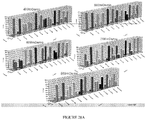
- FIGURE 25 shows the post-detachment viable cell number and percent viability achieved using leave-in passaging with the two sodium citrate formulations.
- FIGURE 26 shows the post-detachment cluster size distribution and plating efficiency achieved using leave-in passaging with the two sodium citrate formulations.
- citrate formulations described above were initially identified and optimized for applications in harvesting and passaging hESCs grown in large-scale in closed culture vessels.
- culture vessels were agitated by tapping, swirling or shaking in the experiments to simulate the cell detachment process in closed culture vessels.
- open culture platforms e.g. six-well plates or T-flasks, are often used, and cells are accessible to be dislodged by hosing with a stream of culture medium, as described in Table 1 under "EDTA method".
- citrate solution #3 and #13 were tested in the small-scale bench- top applications, and compared their performance with Versene® EDTA.
- the culture was grown in mTeSR1® medium and was treated for 5-8 minutes with the formulations followed by hosing (note that for large scale application, longer treatment, around 10 min, may needed).
- Treatment of hESC cultures with either solution for 5 minutes followed by hosing with a pipette works well and achieves 95% harvesting and approximately 70-85% replating efficiency.
- the replating efficiency of citrate solution #13 was about 15% higher than that of Versene® EDTA.
- hESCs cultures in StemPro® and mTeSR1® were initiated and maintained for over 50 passages (about 8 months) by continuously passaging with citrate formulations.
- Sodium citrate solutions Dis2#3, #3 and #13 were evaluated and Versene® EDTA was included in this study as a comparison to the citrate formulations.
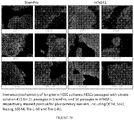
- FIGURE 29 hESCs passaged with citrate solution #13 for 31 passages in StemPro® medium, and 34 passages in mTeSR1®, respectively, stained positive for hESC markers, including OCT4, Sox2, Nanog, SSEA4, TRA-1-60 and TRA-1-81). The marker expressions were further quantified with flow cytometry.
- Pluripotency of these hESCs was further evaluated for differentiation capability.
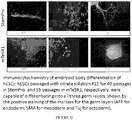
- hESCs passaged with citrate solution for 40 passages in StemPro® and 35 passages in mTeSR1®, respectively were capable of generating embryoid bodies (EBs) and differentiating into all three germ layers, endoderm, mesoderm and ectoderm.
- the differentiation capability of the long-term hESC culture in StemPro® was further confirmed by the generation of teratomas of these cells in immunodeficient SCID mice ( FIGURE 31 ).
- the results from EB differentiation and teratoma generation proved that hESCs passaged with citrate solution for numerous passages and prolonged time are still pluripotent and retain the capability of differentiating into all kinds of somatic cells.
- G-banding karyotype of the long term hESC culture passaged with citrate solution was examined for abnormality.
- Three samples of hESCs cultured in StemPro® medium were karyotyped normal after passaged for 10 and 25 passages with the citrate solution #13; in contrast, whereas three samples of hESCs are normal after 10 passages with Versene® EDTA, one out of three samples are abnormal and one sample had emerging abnormality after 25 passages with Versene® EDTA.
- HESCs cultured in mTeSR1® medium were also karyotyped normal after passaged for 29 times with the citrate solution #13.
- the split ratio used to passage the long term hESC cultures was 1:15 to 1:40 (i.e. for example, cells harvested from one well could be split into 15 to 40 fresh wells; in the context of hPSC cultivation, 1:40 is considered higher split ratio than 1:15), in both mTeSRI® and StemPro®.
- the cultures typically reached confluence on day 4 or day 5 after split.
- the split ratio is typically 1:2 to 1:6, and the culture typically reaches confluence between day 5 and day 7.
- the passaging method disclosed herein results in much faster expansion of the culture.
- sodium citrate formulations were tested on other hESC lines (in addition to H9) and human iPSCs.
- Sodium citrate solution #13 was used to passage H7 and H14 hESCs grown in mTeSR1®. Unlike the H9 cultures used in the other studies, the starting cultures of H7 and H14 had many stroma or differentiated cells. The citrate solution selectively detached and passaged mostly the undifferentiated hESCs, and left the stroma and differentiated cells on the surface. Following three consecutive passages with the solution, the morphology of both the H7 and H14 cultures was greatly improved with no obvious stroma or differentiated cells observed. It follows that the sodium citrate formulations can be used to detach and passage various hESC lines.
- Citrate solution #13 can be used to detach and passage iPSCs. Even when the cells were transferred from MEF feeders onto Matrigel, the attachment was good when the detached cells were re-plated, and the majority of the MEF feeders was not detached and hence not subsequently transferred onto the fresh Matrigel surface. In this experiment, the human iPSC culture was also gradually adapted into defined medium (StemPro®) in five days at passage 1. It therefore follows that the citrate formulations can be applied onto various human iPSC lines for passaging and maintaining the established culture.
- the formulation can further be used to transfer the hPSC cells, including hESCs and human iPSCs, from MEF feeders onto feeder- free surfaces, like Matrigel, with reduced time to clear up the remaining MEFs (compared with mechanical passaging methods involving scraping).
- MEF feeders including hESCs and human iPSCs
- feeder- free surfaces like Matrigel
- the images of the Day 1 re-plated cultures also indicated that the hESC clusters harvested with the citrate solution were not fully disintegrated into single cells or smaller clusters by KSep processing.
- sodium citrate solution # 13 is capable of generating robust clusters that survive kSep®, automated vialing and cryopreservation with Controlled-Rate Freezer, retain high viability and plating efficiency, and present normal karyotype post-scaling up.
Landscapes
- Health & Medical Sciences (AREA)
- Life Sciences & Earth Sciences (AREA)
- Engineering & Computer Science (AREA)
- Biomedical Technology (AREA)
- Zoology (AREA)
- Organic Chemistry (AREA)
- Biotechnology (AREA)
- Chemical & Material Sciences (AREA)
- Bioinformatics & Cheminformatics (AREA)
- Genetics & Genomics (AREA)
- Wood Science & Technology (AREA)
- Developmental Biology & Embryology (AREA)
- Microbiology (AREA)
- Cell Biology (AREA)
- Biochemistry (AREA)
- General Engineering & Computer Science (AREA)
- General Health & Medical Sciences (AREA)
- Gynecology & Obstetrics (AREA)
- Reproductive Health (AREA)
- Rheumatology (AREA)
- Hematology (AREA)
- Immunology (AREA)
- Micro-Organisms Or Cultivation Processes Thereof (AREA)
Description
- The present invention relates to a formulation and method for harvesting/passaging pluripotent stem cells. Specifically, the present invention relates to a method using formulations including sodium citrate.
- Human pluripotent stem cells (hPSCs), including human embryonic stem cells (hESCs) and induced pluripotent stem cells (iPSCs), can proliferate indefinitely in culture while maintaining the capability to differentiate into multiple types of somatic cells. These cells are greatly valued as providing unlimited cell source in cell therapy and regenerative medicine. As demonstrated by recent FDA approval of clinical trials, human embryonic stem cell (hESC)-based cell therapies are progressing from bench to clinic. However, currently available plate and T-flask-based culture platforms severely limit the scalability of hPSCs production to commercially relevant lot sizes. To unleash the potential of hPSCs in cell therapy and regenerative medicine, a scalable hPSC manufacturing process must be developed. Scaling up existing flask-based processes is a critical stepping stone in translating current hPSC research into clinical application. One of the biggest challenges is to establish a scalable passaging method for large scale multilayer vessels that maintains high yield, pluripotent phenotype, and karyotypic stability.
- Traditionally, hPSCs are harvested and passaged as colony fragments by mechanical scraping with or without pre-treatment with enzymes (such as collagenase or Dispase®). This process is labor intensive and cannot be applied in culturing hPSCs in multilayer cell culture vessels, the platform widely used in producing commercial scale adherent cells. Cells growing in multilayer cell culturing vessels cannot be accessed for scraping. In addition, mechanical scraping causes damage to cells. Without scraping, cell viability can increase up to 90 percent. Known methods related to single-cell passaging and harvesting are not desirable due for example, to concerns related to low post-passaging and cryopreservation recovery and abnormal karyotype, associated with low cloning efficiency of hPSCs.
- Although Rho-associated kinase inhibitors (ROCK Inhibitors) have been reported to be able to improve hPSC cloning efficiency, the mechanism is not fully understood and the effect of ROCK Inhibitors on hPSC culture is yet to be evaluated. Therefore, passaging hPSCs as single cells in the presence of ROCK Inhibitors is not widely accepted.
- Recently, passaging hESCs with non-enzymatic cell detachment solutions, mainly EDTA (ethylene diamine tetraacetic acid) solutions, has been adopted by some hESC labs and is spreading from academic labs into industry. One of the commercially available EDTA- containing solutions for cell dissociation is Versene® EDTA, which contains 0.55mM EDTA and has been used for harvesting and passaging hPSCs. The typical procedure of passaging hESCs with Versene® EDTA starts with washing the culture with Ca2+/Mg2+-free buffer (for example, Dulbecco's phosphate -buffered saline; DPBS), followed by incubating the culture in Versene® EDTA for 4-9 minutes. Versene® EDTA is then removed and cells are physically removed from the surface as clusters by manual hosing of the cells with culture medium via pipetting. Compared with the conventional enzymatic-treatment-followed-by- scraping method (see Table 1), the advantage of this method is that (1) it uses a non-enzymatic solution - thus, there is no need for post-detachment washing or centrifugation to eliminate enzyme, and (2) it does not require scraping - the cells treated with Versene® EDTA can be washed off the surface. As described in Table 1, and illustrated in
FIGURE 1 , compared with hESCs treated with enzyme and scraped off the culturing surface, the hESCs treated with Versene® EDTA and detached without scraping have higher post-detachment viability and re-attach to the new culturing surface much faster (minutes vs. hours) when passaged.Table 1. Methods of Harvesting/Passaging hESCs Conventional Enzymatic and Scraping Method Versene® EDTA Method 1. remove culture medium 1. remove culture medium 2. incubate in collagenase or Dispase® at 37°C for 2-5 minutes 2. wash once with Ca2+/Mg2+-free buffer (for example, DPBS) 3. remove collagenase or Dispase® 3. incubate in Versene® EDTA at room temperature for 4-9 minutes 4. wash three times with culture medium 4. remove Versene® EDTA 5. scrape hESCs off the surface in culture medium with cell scraper or pipette tip 5. hose the cells off the surface with culture medium 6. collect the colony clumps (harvest) or transfer into a fresh culture vessel (passage) 6. collect the cell clusters (harvest) or transfer into fresh culture vessel (passage) - However, when applied into expanding hESC in multilayer vessels, the Versene® EDTA passaging/harvesting method is not ideal. Versene® EDTA seems to breaks down cell-cell association faster than it breaks cell-surface bonding. If hESC culture is over-treated with Versene® EDTA (>9 minutes), a greater percentage of cells come off the surface as single cells rather than clusters or clumps. In order to avoid getting too many single cells, the treatment time normally is controlled between seven to nine minutes. After the removal of Versene® EDTA, in six-well plate or T-flask culture format, fluidic shear force generated by hosing with culture medium via manual pipetting is needed to dislodge the cells off the surface. However, hESC culture in multilayer vessels cannot be manually sheared with culture medium as pipettes cannot be introduced inside the vessels. Instead, in this culture format, after Versene® EDTA is replaced with culture medium, vigorous tapping is applied to dislodge the cells. The mechanical force (tapping) has to follow the replacement of Versene® EDTA with culture medium immediately because Versene® EDTA treated hESCs quickly re-attach to the surface once they come in contact with culture medium. In fact, with the current state-of-art, it is only possible to harvest 40-70% of the entire culture in multilayer cell factories - dramatically impacting the yield of these very expensive cells. One possible solution to increase the yield is not to replace Versene® EDTA with culture medium and to dislodge the cells in Versene® EDTA instead. However, in this case, the exposure time of cells to Versene® EDTA is increased, which increases the risk of getting too many single cells and obtaining karyotypic unstable colonies. In addition, extra steps of post-detachment processing have to follow to remove or neutralize Versene<®> EDTA from the final harvest, which will not only add to the labor intensity but also further the breakup of the small hESC clusters.
- There is therefore a need for a scalable and high-yielding passaging and harvesting formulation and method for hPSCs that eliminates or reduces the drawbacks of methods known in the art.
- The present invention provides a non-enzymatic reagent formulation and a method of harvesting and subsequently passaging pluripotent stem cells as clusters with high yield and high post-detachment cell viability.
- It is an object of the invention to provide a scalable and high-yielding passaging and harvesting formulation and method for hPSCs that eliminates or reduces the drawbacks of methods known in the art.
- It is further described to provide a formulation comprising sodium citrate.
- It is a further object of the invention to provide a formulation and method optimized for harvesting and passaging hPSCs in reference to hPSC parameters such as high viability, high yield, large post-detachment cluster size, serial passageability, and maintenance of the pluripotent phenotype (for example, expression of markers typically associated with stem cells such as OCT4, Sox2, Nanog, SSEA4, TRA-1-60 and TRA-1-81) and karyotypic stability.
- It is a further object of the invention to provide a formulation and method that can be used in any hPSC lab as routine lab practice to expand hPSC cultures with reduced labor intensity and process time.
- It is a further object of the invention to provide a formulation and related method that does not require mechanical scraping to remove cells from the surface of the culture vessel.
- It is a further object of the invention to provide a formulation and related method wherein the harvested cells do not need to be washed and centrifuged to remove the agents used to detach the cells from the surface of the culture vessel.
- It is a further object of the invention to provide a formulation and method, whereby over 90% of hPSCs grown in multilayer cell culture vessels can be harvested with over 90% viability.
- It is further described to provide a closed and scalable hPSC manufacturing process through culturing hPSCs in multilayer cell culture vessels and by washing, concentrating, vialing and cryopreserving cell harvest with automatic downstream processing technology.
- It is further described to provide a process of expanding and passaging hPSCs from T-flasks into multilayer cell factories with a novel non-enzymatic harvesting and passaging method, followed by downstream processing with continuous counter-flow centrifugation technology (for example, kSep® technology).
- It is a further object of the invention to provide a method of developing a cell-detaching solution for hPSCs wherein the size distribution of the detached clusters and the percentage of the culture detached at given treatment time can be controlled with the osmolality and Ca2+ chelator concentration.
- It is a further object of the invention to provide a method for harvesting and subsequent passaging of hPSCs grown in suspension as aggregates or on microcarriers that includes incubating the hPSC aggregates or hPSCs on microcarriers, in either a formulation disclosed herein or a formulation identified by a method disclosed herein, in cell culture vessels for two to twenty minutes allowing the hPSC aggregates to disintegrate or to allow the hPSCs to detach from the microcarriers, with cell viability between about 85-100 percent.
- It is a further object of the invention to provide a method for harvesting and subsequent passaging of hPSCs, where the hPSCs are passaged with a high split ratio (1:10 to up to 1:60; or density of cells at seeding of about 30E3/cm2 to as low as 5E3/cm2) and the culture reaches confluence within seven days after split.
- It is a further object of the invention to provide a method for harvesting and subsequent passaging of hPSCs where the hPSCs maintain pluripotency and normal G- banding karyotype at over 50 passages.
- It is a further object of the invention to provide formulations, and method of use thereof, providing for selectively detaching and passaging undifferentiated hPSCs.
- It is further described to provide a means for harvesting and subsequent cryopreserving hPSCs with high post thaw recovery and re-plating efficiency.
- It is a further object of the invention to provide a method of downstream processing of harvested hPSC clusters in a closed system including continuous counter flow, centrifugation, formulation, automated vialing and cryopreservation with controlled rate freezer.
- Accordingly, in one embodiment, a formulation is provided for harvesting and subsequent passaging of human pluripotent stem cells without scraping and without substantial loss of viability. In one aspect of the embodiment, the formulation includes, for example, sodium citrate, a salt, and a phosphate-buffered saline solution, at an osmolality of about 250-1050 mOsmol/Liter. In an alternative aspect the osmolarity is 311-1014 mOsmol/Liter. In another aspect of the embodiment, the formulation is used to harvest and passage embryonic stem cells and induced pluripotent stem cells. The concentration of citrate is, for example, about 0.15 to 150 mMol/Liter. The salt is, for example, NaCl, KCl, Na2HP03, NaH2P03, K2HP03, or KH2P03. When the salt is KCl, the concentration is, for example, about 1.00-1400 mMol/Liter Alternatively, when the salt is KCl, the concentration is about 1.35-1350 mMol/Liter. In an aspect of the embodiment, the osmolarity of the formulation is, for example, about 400-700 mOsmol/Liter. In another aspect of the embodiment, the osmolarity of the formulation is, for example, about 418-570 mOsmol/Liter. In another aspect of the embodiment, the formulation is pH buffered with, for example, bicarbonate, phosphate, ethanolamine, triethanolamine, or trometamol. The pH of the formulation is, for example, about 7-8, In an alternative embodiment the pH is about 7.2-7.8. In one aspect the phosphate-buffered saline solution is, for example, Ca2+/Mg2+-free Dulbecco's phosphate buffered saline (DPBS). In some aspects of the embodiment, treatment of the cells with the formulation results in the harvest of, for example, at least 90% of the cells from the surface of the culture vessel and cell viability of, for example, at least 90%.
- In another embodiment, a method is provided for producing a formulation for harvesting and subsequent passaging of human pluripotent stem cells without scraping and substantial loss of viability.
- In another embodiment, a method is provided for harvesting and subsequent passaging of hPSCs comprising incubating the hPSCs in one of the formulations described in the preceding paragraphs and in cell culture vessels for a period of time to allow the hPSCs to detach from the cell culture vessels in clusters with high yield and high post-detachment cell viability of, for example, about 85-100%. In one aspect of the embodiment, the cell culture plates or vessels are, for example, petri dishes, multi-well cell culture plates, stacked cell culture apparatus, multilayer cell culture factories, and similar vessels known in the art to be capable of supporting the culture of hPSCs. In some aspects of the embodiment, the cells are treated with the formulation for about 2-20 minutes. In one embodiment, the treatment time is 5-15min for hPSCs cultured in mTeSRI®. In another embodiment, the treatment time is 8- 20min for hPSCs cultured in StemPro®. (StemPro® and mTeSRI® are examples of commercially available defined media for hPSC culture.) In aspects of the embodiment, the cells are harvested in clusters with sizes ranging, for example, from about 10-1000 µιη. More particularly, the cluster size is, for example, about 40-500 µιη. In some aspects of the embodiment, the method results in the harvest of, for example, at least 90% of the cells from the surface of the culture vessel and cell viability of at least 90%.
- In another embodiment additional passaging and harvesting formulations are provided including formulations containing EDTA and EGTA, other Ca2+ chelators besides sodium citrate, or combinations of various Ca2+ chelators. Two factors are identified related to cell detachment, the Ca2+ chelator concentration and osmolarity.
- In another embodiment, a method of developing a cell-detaching solution for hPSCs is provided wherein the size distribution of the detached clusters and the percentage of the culture detached at given treatment time can be controlled with the osmolarity and Ca2+ chelator concentration.
- These and other objects are achieved in the present invention.
- There has thus been outlined, rather broadly, the more important features of the invention in order that the detailed description thereof that follows may be better understood, and in order that the present contribution to the art may be better appreciated. There are, of course, additional features of the invention that will be described further hereinafter.
- In this respect, before explaining at least one embodiment of the invention in detail, it is to be understood that the invention is not limited in its application to the details of construction and to the arrangements of the components set forth in the following description or illustrated in the drawings. The invention is capable of other embodiments and of being practiced and carried out in various ways. Also, it is to be understood that the phraseology and terminology employed herein are for the purpose of description and should not be regarded as limiting.
- As such, those skilled in the art will appreciate that the conception upon which this disclosure is based may readily be utilized as a basis for the designing of other structures, methods and systems for carrying out the several purposes of the present invention.
- For a better understanding of the invention, its operating advantages and the specific objects attained by its uses, reference should be had to the accompanying drawings and descriptive matter which illustrate preferred embodiments of the invention.
-
-
FIGURE 1 illustrates the percent viability of hESCs detached from a culturing surface following enzymatic treatment and scraping vs. non-enzymatic treatment and non- scraping. -
FIGURE 2 illustrates EDTA/EGTA detachment vs. sodium citrate detachment. -
FIGURE 3 illustrates hESCs continuously passaged with sodium citrate showing typical hESC colony morphology and growth. -
FIGURE 4 illustrates the normal karyotype of hESCs passaged five times following harvesting with sodium citrate. -
FIGURES 5a-e illustrate harvest of hESC culture in two-layer multilayer cell stacks (sodium citrate vs. EDTA). -
FIGURE 6 illustrates optimization of sodium citrate formulation for hESC detachment. -
FIGURE 7 illustrates the density increase of viable hESCs post-KSep processing (volume reduction) and the viability change before and after application of continuous counter-flow centrifugation technology (kSep®). -
FIGURE 8 illustrates the recovery of cells after cryopreservation. -
FIGURE 9 illustrates re-plating of hESCs post-continuous counter-flow centrifugation technology (kSep®) and post cryopreservation. -
FIGURE 10 illustrates the trend of increasing detachment with the increase of treatment time with various dilutions of sodium citrate formulation in MEF-CM. -
FIGURE 11 illustrates the trend of increasing detachment with the increase of treatment time with various dilutions of sodium citrate formulation in mTeSRI®. -
FIGURE 12 illustrates the effects of osmolarity and potassium concentration on the ability of sodium citrate formulations to promote hESC detachment. -
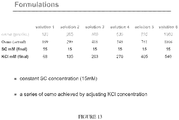
FIGURE 13 illustrates the osmolarity and final concentrations of sodium citrate and KCl of various formulation solutions used in the experiments described inFIGURE 14A-C . -
FIGURES 14A-C illustrate the effect of osmolarity on the ability of sodium citrate formulations to promote hESC detachment and maintain large cluster size. -
FIGURES 15A-C illustrate the effects of sodium citrate concentration on hESC detachment and on size of detached clusters. -
FIGURES 16A-B illustrate the effects of EDTA, EGTA, and sodium citrate on hESC detachment. -
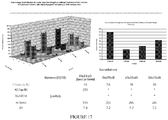
FIGURE 17 illustrates formulations used in time course studies. -
FIGURE 18A illustrates the effect of treatment time with various formulation solutions on hESC detachment; -
FIGURE 18B illustrates the size distribution of the hESC clusters detached by treatment of various sodium citrate formulations, and the effect of the treatment time on the cluster size distribution. -
FIGURE 19 illustrates the plating efficiency of hESC clusters generated using Versene® EDTA and various sodium citrate formulations, and the effect of treatment time on the plating efficiency. -
FIGURES 20A-B illustrate determination of the operational window (that is, time frame of treatment) to achieve optimal harvest and cluster size using cell detachment solutions. -
FIGURES 21A-B illustrate the comparison of the operational windows and the plating efficiency of hESC clusters detached using sodium citrate formulation solution with that of the clusters detached using EDTA and EGTA at high concentrations -
FIGURE 22 illustrates the experimental procedure for harvesting hESCs from 6-well-plates using either Versene® EDTA or sodium citrate formulation solution when EDTA or sodium citrate is removed during incubation ("Dry Passaging" methodology). -
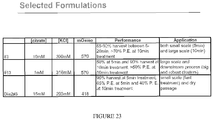
FIGURE 23 illustrates the chemical compositions, performance characteristics, and potential applications of three sodium citrate formulation solutions. -
FIGURE 24 illustrates the 'leave-in passage" methodology. -
FIGURE 25 illustrates the number of viable cells harvested and post-detachment viability of hESCs following "leave-in passage" with sodium citrate formulation solutions. -
FIGURE 26 illustrates the cluster size distribution, plating efficiency and the morphology of re-plated hESC colonies following "leave-in passage" with sodium citrate formulation solutions. -
FIGURE 27 illustrates the effects of Versene® EDTA and various sodium citrate formulation solutions on passaging of mesenchymal stem cells (MSC). -
FIGURES 28A-C illustrate optimization of sodium citrate formulations towards high plating efficiency after extended treatment. -
FIGURE 29 illustrates the immunocytochemistry of hESC markers, as evaluation of the self-renewal of the hESCs after long-term passaging with sodium citrate formulation. -
FIGURE 30 illustrates the immunocytochemistry of embryoid body differentiation of hESCs, as evaluation of the differentiation capability of hESCs passaged for a long term with sodium citrate formulation. -
FIGURE 31 illustrates the histology of teratomas generated in immune-deficient mice injected with hESCs passaged for a long term with sodium citrate formulation, as further confirmation of differentiation capability of long-term hESC culture. - Disclosed herein is a non-enzymatic reagent formulation and a method of harvesting/passaging pluripotent stem cells as clusters with high yield and high post-detachment cell viability (>90). These cells can then be processed as final harvest or seeded into new culture vessels to be further expanded. In one embodiment, the disclosed formulation includes sodium citrate, which disrupts the cell-surface bond and cell-cell association by chelating/sequestering Ca2+, the divalent cation required for cell-surface and cell-cell binding. This sodium citrate -based formulation and process is specially designed and developed to address the unique challenges in routine or scale up hPSC culture and manufacturing processes. hPSCs are normally passaged as multi-cellular clusters/aggregates, and passaging hPSCs as single-cells is to be avoided due to low cloning efficiency of hPSCs and the high risk of karyotypic abnormality. This formulation and method is additionally optimized for harvesting and passaging hPSCs in reference to the key quality parameters of hPSCs, for example, viability, yield, post-detachment cluster size, passageability, and maintaining a pluripotent phenotype. This formulation and process can be used in any hPSC lab as routine lab practice to expand hPSC culture with reduced labor intensity and process time. For example, this formulation and process does not require mechanical scraping to get the cells off the surface and the cell harvest does not need to be washed and centrifuged to remove the agents used to detach the culture. This formulation and process especially benefit large-scale hPSC production when the cells are growing in multilayer cell culture vessels where scraping cannot be applied. Using this formulation and method, more than 90% of hPSCs grown in multilayer cell culture vessels can be harvested with more than 90% viability.
- A variety of non-enzymatic cell detachment solutions at various concentrations were screened with one objective being to improve the yield of hESCs harvested from multilayer culture vessels while retaining the simplicity of the Versene® EDTA harvesting/passaging method. This screening included, for example, Versene® EDTA solutions at 0.1, 0.55, 1, 3, and 10 mM, Versene® based ethylene glycol tetraacetic acid (EGTA) solutions at 0.1, 0.55, 1, 3, and 10 mM, and 1 X sodium citrate solution (10X solution: 0.15 M sodium citrate, 1.35 M potassium chloride (KCI), diluted to 1 X in Ca2+/Mg2+-free DPBS).
- All of these reagents (EDTA, EGTA and sodium citrate) are Ca2+ chelators and have been used historically for detaching adherent cells in culture. As mentioned previously, Versene® EDTA has been used routinely for harvesting/passaging hESCs in some labs; both EDTA and EGTA (in combination with trypsin) were used to passage hESCs in a study published by Thomson et al. at Roslin Institute in Scotland in 2008 (Thomson et al. (2008), "Human Embryonic Stem Cells Passaged Using Enzymatic Methods Retain a Normal Karyotype and Express CD30", Cloning and Stem Cells, 10 (1), 1-17.).
- hESCs cultured in Murine Embryonic Fibroblast-conditioned medium (MEF-CM) were treated with solutions including those described above as follows: (1) remove culture medium; (2) wash once with Ca2+/Mg2+ free buffer (for example, DPBS); (3) incubate in solution at room temperature; (4) remove solution; and (5) soak the colonies in MEF-CM for 0.5-1 minute to let them have a chance to stick back onto the surface. The colonies were then hosed with culture medium to see if they can be detached from the surface. Related to
incubation step # 3 above, it is noted that 4-9 minutes is the norm for Versene® EDTA. It is generally longer with culture grown in undefined serum or serum replacement-containing medium (for example, MEF-CM), and shorter in defined serum-free medium such as mTeSRI®. Thus, an incubation window of 2-12 minutes is contemplated. Treatment for more than 9 minutes can result in the generation of too many single cells. Treatment for less than 2 minutes can be too short a time frame resulting in partial detachment. Sodium citrate solution (1 X can detach the cells grown in mTeSRI® in 2-3 minutes, and detach the cells grown in MEF-CM in 3-4 minutes. - Related to step # 5, this step was executed in the initial detachment- solution screening study to see whether the cells re-stick onto the surface in culture medium. For harvesting cells grown in an open platform such as 6-well plates, the cells are hosed off the surface right after removing the cell-detachment solution. However, for multilayer cell culture vessels, after draining out the detachment solution, the culture medium is poured into the vessel first, the medium is leveled in all layers, and then the vessel is tapped to dislodge the cells in the culture medium. In one embodiment, the pouring and leveling take 0.5-1 minute in a ten-layer vessel. In the cGMP setting, additional time may be required. A portion of the culture is inevitably soaked in the culture medium during these steps and may re-stick onto the surface. As mentioned previously, this is a difficulty with the use of Versene® EDTA, which results in the incomplete detachment/harvest of the culture in multilayer cell culture vessels. Therefore, soaking the colonies in culture medium for 0.5-1 minute was done to evaluate the re-sticking of the cells onto the surface.
- As illustrated by
FIGURE 2 , after this procedure, 85% of the Versene® (0.55 mM EDTA)-treated culture remained on the surface (FIGURE 2a ), while nearly all the cells came off the surface in 1 X sodium citrate (sodium citrate formulation) treated culture (FIGURE 2b ). The visual assessment of the percentage of the culture remaining on the surface after treatment is plotted inFIGURE 2c . Through this experiment, sodium citrate solution is surprisingly identified as a superior reagent compared to Versene® EDTA for harvesting hESC culture. Sodium citrate formulation disrupts the cell-surface bond to a greater extent than Versene® EDTA and sodium citrate formulation treated hESCs do not re-stick to the surface in culture medium as fast and easily as Versene® EDTA or EGTA formulation- treated hESCs. - Two commercially available solutions were tested as potential solution to harvest hPSCs out of multilayer cell culture vessels. One was from Millipore, the "PBS Based Enzyme-Free Cell Dissociation Solution", the other was "Hank's Based Enzyme-Free Cell Dissociation Solution". Both of the solutions contain EDTA, Glycerol and Sodium Citrate. When used on H9 hESCs cultured in MEF-CM, neither one of the solutions was able to detach the cells effectively.
- Further experimentation was performed to determine whether sodium citrate formulation can be used to passage hESC cultures; that is, whether hESCs detached by sodium citrate formulation can be plated onto a fresh surface to start a new culture. In one exemplary experiment, hESCs treated with sodium citrate formulation were continuously passaged six times in MEF-CM and three times in mTeSRI®.
FIGURE 3 shows that hESCs passaged with sodium citrate formulation for six times in MEF-CM retain typical hESC morphology. As illustrated byFIGURE 4 , the karyotype of this culture was evaluated to be normal after five passages with sodium citrate formulation. Further testing has confirmed normal karyotype at 10 passages in MEF-CM, 29 passages in mTeSRI®, and 25 passages in StemPro®. It is contemplated that a normal karyotype will be present at greater than 50 passages. - Sodium citrate formulation was tested for harvesting hESCs in two-layer cell stacks. This sodium citrate harvest was compared with the harvest using Versene® EDTA.
FIGURE 5 provides images of the cells remaining on the surface after harvest. The cultures inFIGURE 5a and 5b were both harvested using Versene® EDTA, but were handled by different operators (with the strength applied to tapping of stacks to dislodge cells varying between the operators). The operator with stronger tapping harvested -70% of the entire culture, while the operator with weaker tapping only harvested -45% of the culture. However, both the operators harvested more than 90% of the entire culture from the surface when sodium citrate formulation was used for the harvest (FIGURE 5c ). The percentage of the culture detached from each two-layer stack is plotted inFIGURE 5d . The number of cells harvested from each vessel was counted and the viability of the harvest was calculated (FIGURE 5e ). Compared with Versene® EDTA, the counts of the cells harvested with IX sodium citrate solution have much tighter distribution (2.64E8+5.1E7 with Versene® EDTA vs. 3.46E8+1.81E7 with sodium citrate, (seeFIGURE 5e ), which contributes to a more robust and consistent manufacturing process. The yield of sodium citrate formulation-harvested hESC culture was 31% higher than that of Versene® EDTA harvested culture. There was less operator-to-operator variance when sodium citrate formulation was used. This may be because sodium citrate formulation disrupts the cell-surface bond more than Versene® EDTA and much less tapping effort was needed to dislodge the cells. - Additional studies to further optimize the formulation and method were conducted. In one embodiment, the optimal range for the concentration of sodium citrate for hESC detachment was 0.1X-3X (see Table 2 for the concentrations of sodium citrate and KCI), or higher. Surprisingly, sodium citrate formulations at higher sodium citrate concentrations did not necessarily detach the cells faster or break the colonies up into single cells more than lower concentrations (
FIGURE 6b ). In fact, when working on hESCs grown in MEF-CM, sodium citrate at higher concentration (1X-3X and higher) tended to lift the hESC colonies up as whole sheets. The size of the detached hESC clump was dependent on the dilution of sodium citrate formulation more than treatment time (1-11 minutes tested). This adds to the advantage of sodium citrate formulation over Versene® EDTA, which breaks the hESC colonies into undesirable single cells at extended treatment (>9 minutes). The clump size of the detached hESC grown in mTeSRI® was overall smaller than that grown in MEF-CM. The effect of cell-detachment formulation on the size of detached clusters (clumps) of hESCs was further investigated. As described below, the osmolarity of the formulation affects the size of the clusters. In certain embodiments, a clump size of 10-1000 µm is preferred. In alternative embodiments, a clump size of 40-500 µm is desired. The operational time window for sodium citrate formulation treatment on hESCs was wider than Versene® EDTA treatment on hESCs, which is particularly beneficial in cGMP-compliant production when product quality consistency is regulated and deviation is to be minimized. The operational time window is further described below. - In exemplary experimentation presented herein, the solution included: sodium citrate and KCl diluted in Ca2+/Mg2+-free DPBS. It is, however, reasonably contemplated that alternative calcium chelators at optimized concentrations in formulations with optimal osmolality will provide attractive results. Similarly, citrate formulations containing a salt other than KC1 are contemplated. Such salts include, for example, NaCl, Na2HPO3, NaH2PO3, K2HPO3, KH2PO3, and the like.
- In one embodiment, sodium citrate concentration has a preferred working range of 0.15-150 mM. In one embodiment for harvesting cells grown in culture medium such as MEF-CM (Murine Embryonic Fibroblast-Conditioned Medium), sodium citrate concentration has a working range of 1.0-50 mM. In an alternative embodiment, as illustrated in
FIGURE 6 , sodium citrate concentration has a working range of 1.5-45 mM. In one embodiment, sodium citrate concentration for passaging cells grown in MEF-CM is a working range of 1.5-15 mM. In one embodiment, sodium citrate concentration for harvesting cells grown in culture medium such as mTeSRI® is a working range of 1.5-30 mM. Excipients in the formulation include, but are not limited to, Ca2+/Mg2+-free DPBS and KCl (1.35-1350 mM). The working osmolarity of this formulation is from 31.1-2050 mOsmol/L. In one embodiment, the working range is 290-1015 mOsmol/L. In another embodiment, the working range is 299-781 mOsmol/L. In yet another embodiment, the range is 548-781 mOsmol/L. In Table 2, sodium citrate solution of 10X contains 1350 mM KCl and 150 mM sodium citrate in water. A series of dilutions was made by diluting the 10X solution in DPBS (without Ca2+ or Mg2+).Table 2: Formulations of Sodium Citrate Solution Dilution Factor 0.1x 0.3x 0.7x 1.0x 1.3x 2.0x 3.0x 10x KCl 13.5mM 40.5mM 94.5mM 135mM 175.5mM 270mM 405mM 1350mM Sodium Citrate 1.5mM 4.5mM 10.5mM 15mM 19.5mM 30mM 45mM 150mM - Osmolality of the screened cell detachment solutions was measured (Table 3). Sodium citrate solution in general has a higher osmolality than all the Versene®-based EDTA and EGTA solutions (solutions screened in
FIGURE 2 ). This may be due to the high concentration of KCl and other excipients in the solutions. High osmolarity of the sodium citrate formulation is identified herein as one attribute that contributes to the unique cell detachment behavior of the solution, which is further discussed hereinafter. Table 3 illustrates osmolarity of various solutions.Table 3. Osmolarity of Non-Enzymatic Detachment Solutions Versene® -Based EDTA solutions 0.1mM EDTA 0.55mM EDTA 1mM EDTA 3mM EDTA 10mM EDTA mOsmo 273 272 281 287 305 Versene®-Based EGTA solutions 0.1mM EGTA 0.55mM EGTA 1mM EGTA 3mM EGTA 10mM EGTA mOsmo 282 282 283 290 311 Sodium Citrate (Diluted in DPBS) 0.1x 0.3x 0.7x 1.0x 1.3x 2.0x 3.0x 10x mOsmo 311 352 432 499 587 741 1014 >2050 - Continuous counter-flow centrifugation technology can be used to concentrate and wash hESC harvest. As illustrated in
FIGURE 7 , hESC (grown in MEF-CM) harvest is five times concentrated with 10% drop in viability after processing with kSep®. hESCs processed with kSep® remain as clusters and plate well with 10% drop in plating efficiency, compared with pre-kSep® fresh harvest (FIGURE 9 ). hESCs formulated and vialed with M-1 filling machine cryopreserve efficiently in CryoStor10 with more than 90% viable cell recovery and 50% post-thaw plating efficiency (FIGURES 8-9 ). - As further discussed in EXAMPLE 11, in one embodiment, the process of expanding and passaging hESCs grown in mTeSR1® from T-flasks into multilayer cell factories is optimized with a novel non-enzymatic passaging method, followed by downstream processing with continuous counter-flow centrifugation technology.
- In another embodiment, hESC culture in MEF-CM is expanded, with Versene® EDTA passaging, from six-well plate into T-flasks, and further into multilayer cell culture vessels. The final harvest from multilayer cell factories was characterized with flow cytometry and more than 90% of these cells expressed pluripotency markers including OCT4, SSEA4, Tra-1-60, and Tra-1-81. The final cell harvest was concentrated more than 14 times after automated downstream processing, with only 2% drop in cell viability.
- Further studies related to treatment time and its correlation with the dilutions of the citrate formulation were conducted and are further defined below in Table 4.
FIGURE 10 and11 demonstrate the effect of the dilution of sodium citrate formulation on the trend of culture harvest increase with the increase of treatment time. The study illustrated inFIGURE 10 was conducted on hESC culture grown in MEF-CM, and the study illustrated inFIGURE 11 was conducted on hESC culture grown in mTeSR1®.
- It is contemplated that with the sodium citrate formulations the cells can be harvested from a variety of surfaces including but not limited to Matrigel-coated surface, gelatin-coated and MEF-plated surface, and/or chemically defined surfaces. Examples include, for example, synthetic plastic or peptide-bound surfaces (Corning Synthemax and Nunclon (Nunc) Vita surfaces), surfaces coated with defined recombinant or native proteins (e.g. vitronectin, fibronectin, laminin and collagen). There are two widely-used surfaces for hPSCs: the MEF-seeded surface (Murine Embryonic Fibroblasts are seeded onto surface pre- coated with gelatin), and Matrigel-coated surface (Matrigel is an extracellular matrix derived from mouse tumor). Both Synthemax and Nunc Vita are defined surfaces available on the market and marketed as a surface that can be used for hPSC culture. Sodium citrate formulations can be used to harvest hPSCs grown in various types of culture medium, including, but not limited to, regular culture medium used for culturing hPSCs on MEF- seeded surfaces, MEF-CM, mTeSRI® and StemPro®.
- The 1 X sodium citrate formulation described above is 15 mM sodium citrate, 135 mM KCI, pH 7.31, and 499 mOsmol/L in DPBS. Further studies were performed to determine the effects of osmolarity, KCl on the ability of the sodium citrate formulation to promote cell detachment.
FIGURE 12 shows the percentage of detachment of hESC in cultures treated with various solutions of sodium citrate. The results indicate that the osmolarity of the solution and the concentration of sodium citrate are important factors for achieving optimal cell detachment. In addition, at nearly normal osmolarity, the addition of potassium (KCI) to the sodium citrate formulation caused greater percentage detachment than the addition of sodium (NaCI) (comparesolution # 4 to solution # 5) suggesting that KCl may be a better choice of salt in this formulation than NaCl. Not to be limited by theory, one possible explanation for this finding is that the additional sodium (Na<+>) inhibits the electrolysis of sodium citrate and consequently lowered the availability of the Ca2+ chelating citrate ions. - Studies were performed to determine the effect of osmolality on the ability of sodium citrate to promote hESC detachment. Sodium citrate solutions/formulations of various osmolarity were prepared by adjusting the concentration of KCl and maintaining a constant concentration of sodium citrate (see
FIGURE 13 ). As shown inFIGURE 14A , high (and approximately the same) viability was observed with all solutions whereas maximum harvesting of cells was achieved after treatment of cells for 5 minutes with sodium citrate solutions (15 mM citrate) having an osmolarity of between 299-781 mOsmol/L. Substantially reduced harvesting was observed using a sodium citrate solution with an osmolarity of 169 mOsmol/L and an osmolarity of 1016 mOsmol/L suggesting that there is a threshold between about 299-781 mOsmol/L at which high percentage of culture could be harvested. In fact, microscopic images (FIGURE 14B ) revealed substantially larger clusters of harvested cells from cultures treated with 781-1016 versus 169-548 mOsmol/L solutions of sodium citrate. The images of the detached clusters were analyzed and the sizes of the clusters were quantified. The distribution of the cluster sizes is shown inFIGURE 14C . As demonstrated in images and the size distribution plot, The percentage of the culture harvested as large cell clusters was increasing with the increase of the osmolarity. There was a substantial increase in the measured sizes of the detached clusters obtained from cultures treated with 781-1016 mOsmol/L solutions versus 169-548 mOsmol/L solutions (mostly 250- 900 equidiameter size clusters versus mostly 40-150 equidiameter size clusters, respectively). - Studies were performed to determine the effect of citrate concentration on hESC detachment and viability. Sodium citrate solutions of various concentrations were prepared at about 265 mOsmol/L and a pH of about 7.2. As shown in
FIGURE 15A , high (and approximately the same) viability was observed with all solutions whereas the percentage of harvested cells increased with increasing concentrations of up to about 30-45 mM sodium citrate. Only slightly improved harvesting was achieved using 75 mM sodium citrate. However, there appeared to be a threshold between about 30-75 mM sodium citrate at which "sheeting harvest" (hESC colonies detached as big clusters or sheets of cells) occurred. In fact, microscopic images revealed substantially larger clusters of harvested cells from cultures treated with 30-75 mM sodium citrate solutions of sodium citrate (FIGURE 15B ). There was a corresponding increase in the measured sizes of clusters obtained from cultures treated with 30-75 mM sodium citrate solutions versus 1.5-15 mM sodium citrate solutions (mostly 250-900 equidiameter size clusters versus mostly 40-150 equidiameter size clusters, respectively) (FIGURE 15C ). - Studies were performed to determine the comparative effects of chelators on hESC detachment. The Ca2+ chelation capacity of citrate, EDTA, and EGTA are 1: 1.5, 1: 1, and 1: 1, respectively, based on stoichiometry. EDTA also binds Mg<2+> and other metals whereas EGTA is more specific for binding of Ca2+. Cell detachment achieved by a solution of sodium citrate (15 mM sodium citrate at 400 mOsmol/L (achieved by addition of KC1) and a pH of 7.8) was compared to that achieved by 22.5 mM and 45 mM solutions of EDTA and EGTA at 400 mOsmol/L and a pH of 7.8. As shown in
FIGURE 16A , EDTA and EGTA at concentrations higher than 22.5 mM detached hESC colonies as effectively as sodium citrate. The measured sizes of redistributed clusters obtained from cultures treated with the various solutions were similar (mostly 40-200 equidiameter size clusters) (FIGURE 16B ). - Studies were performed to determine the operational time windows that provide good percentage detachment and cluster size distribution. The detachments in the studies described above were evaluated after five minute treatment with cell detachment formulations. Here, treatment time is extended up to 20 minutes, and detachment and cluster size are examined under various time points (2, 5, 8, 10, 15 and 20 minutes). Formulations of moderate osmolality and pH are selected from prior studies and the time span (operational window) of treating hESC culture with these formulations that would yield a desirable percentage detachment and post-detachment cluster size distribution is determined. Cell cultures were treated with the solutions of
FIGURE 17 for 2, 5, 8, 10, 15 or 20 minutes and then tapped twice to dislodge the cells. For each treatment time point, cultures were evaluated for percentage detachment of cells and cluster size in order to determine the optimal operational window. Cell viability and plating efficiency of detached cells were evaluated at the 5, 10, and 20 minute time points.FIGURE 18A shows the effects of Versene EDTA and various sodium citrate solutions on hESC percent detachment at each treatment time point.FIGURE 18B shows the effects of Versene® EDTA and various sodium citrate solutions on cluster size distribution at each treatment time point.FIGURE 19 shows the effects of Versene® EDTA and various sodium citrate solutions on the plating efficiency of detached cells at each treatment time points of 5, 10 and 20 minutes. - Based on the results obtained from this study, and not to be limited by theory, an operational window similar to that depicted in
FIGURE 20A can be established and appropriate parameters can be selected to achieve a desired percentage of cell detachment and cluster size (equi-diameter). For example, as shown inFIGURE 20B the criteria used to determine the operational window is (1) the percentage of culture detached is over 70% and (2) the percentage of culture detached as 40-500um clusters is over 90%. As indicated by the experiment data, in general, the percent detachment increase with the increase of the treatment time and the cluster size decrease with the increase of the treatment time. Based on these plots, treating hESC culture with citrateformulation Dis2# 3 for 3.5 to 7 min (operational window) would result in detaching >70% of the culture as mostly (>90%) 40- 500um clusters. The operational windows determined under the same criteria for other citrate formulations and Versene® EDTA are narrower. In fact, based on the plot, to meet the same criteria with Versene® EDTA, the culture needs to be treated for exactly 10 min (0 duration). Wider operational window, which gives more operational flexibility without affecting the consistence of product characteristics, is more desirable, especially in cGMP production. Based onFIGURE 19 , plating efficiency drops with the increase of the treatment time and longer than 10 min treatment time is not desirable because of this. Accordingly, best practice (based on high percent detachment, desirable cluster size range and high plating efficiency) for detaching hESCs with citrateformulation Dis2# 3 would be 5-7min treatment, and 10 min treatment with Versene® EDTA. At their respective optimal treatment times, Versene® EDTA harvested over 20% fewer cells than sodium citrate. - Following the same basic approach as used above for determining the operational windows for various sodium citrate formulations and Versene® EDTA, experiments were performed to determine the operational windows and plating efficiency for 22.5 mM Versene® EDTA and 22.5 mM EGTA formulations described in EXAMPLE 2, as comparison to Versene® EDTA and sodium citrate (formulation Dis2#3). The operational windows were determined based on the criteria of ">70% of the culture is harvested and >90% of the cells harvested are in the format of 40-500µη cluster". As shown in
FIGURE 21A , the durations of the operational windows of 22.5mM EGTA and Versene® EDTA formulations are similar to that of citrateformulation Dis2# 3, and are much wider than that of Versene® EDTA. The starting time points of the operational windows of 22.5mM EGTA and EDTA formulations are the same, and are earlier than that of citrateformulation Dis2# 3. However, as shown inFIGURE 21B , hESCs detached with 22.5mM EGTA and EDTA formulations did not re-plate well (5, 15 and 20min treatment time points examined), and sodium citrate (solution Dis2#3) substantially outperformed high-concentration (22.5mM) EDTA and EGTA formulations in terms of cell plating efficiency post-harvest (plotted are plating efficiencies at 5 minute treatment time point normalized with that of citrate formulation Dis2#3). - It is demonstrated herein that sodium citrate formulations outperform EDTA- containing and EGTA-containing formulations in passaging hPSCs. Furthermore, another advantage of sodium citrate over EDTA and EGTA is that leftover sodium citrate should have less deleterious effects on cell cultures than EDTA or EGTA. (Sodium citrate is sometimes used as a normal component in various culture media of various cell types.) For example, as seen in EXAMPLE 6, sodium citrate formulation solutions do not necessarily need to be removed after treating the cells.
- However, additional passaging and harvesting formulations are contemplated herein including formulations containing EDTA and EGTA, other Ca2+ chelators besides sodium citrate, or combinations of various Ca2+ chelators. Two factors are identified related to cell detachment, the Ca2+ chelator concentration and osmolarity. When the concentration is too low, the bond between the cells and the matrix is not effectively disrupted and the formulation cannot effectively detach the cells. When the concentration is too high, the bond between the cells is overly disrupted, the size of the detached clusters decrease, and the detached clusters can be fragile and easily disintegrated when further handled.
- Not to be limited by theory, the shrinking of the cells or the colonies caused by high osmorality can result in cell detachment, especially at the edge of the colonies. However, the cells could also be damaged if the osmolarity is too high. As illustrated herein, when the osmolarity is too high, the cells are not effectively detached from the surface. EXAMPLE 4, provides studies toward further optimization. Through use of the experimental design disclosed herein, other cell-detaching/passaging formulations containing various Ca2+ chelators can be developed and are considered within the scope of the present invention.
- Studies were performed to determine the optimum sodium citrate formulation to be used for achieving high plating efficiency of the hESC clusters detached after extended treatment with sodium citrate solution. hESC culture was treated with solutions of varying sodium citrate concentration (1, 5, and 10 mM) and osmolarity (400, 500, 600, 700, and 800 mOsmol/L, achieved by adjusting the concentration of KCI) for 5, 10, 15, and 20 minutes. At the indicated treatment time points, percent harvest, cluster size, and re-plating efficiency were compared for each sodium citrate solution. To quantify re-plating efficiency, 2x10⁵ viable cells detached from the surface were re-plated onto one well of a six-well plate coated with Matrigel, and the attached cells were harvested and counted the next day. Assuming that the re-attached cells grew to double their population within one day, the re-plating efficiency was then calculated as the number of the cells harvested the next day divided by 4x10⁵. As shown in
FIGURE 28A :1 / cluster size decreases with the increase of the treatment time; 2/ cluster size decreases with the increase of sodium citrate concentration; and 3/ cluster size increases with the increase of the osmolarity. Results indicated that compared with all solutions tested, the low sodium citrate concentration solution (1 mM) with high osmolarity (600-700 mOsmol/L) produced good cell detachment, large clusters and high plating efficiency even after extended treatment (FIGURES 28A-C ). However, high osmolarity (>700 mOsmol/L) appeared to cause hESC cluster roll-up at detachment, which can result in undesired morphology of the re-plated colonies and cell death or differentiation at the centers of those colonies. - Loss of the cells can occur during treatment with cell-detaching solutions. This is because the culture is soaked in the solution during treatment, and the solution is removed prior to detaching the culture with cell culture medium. In order to eliminate this loss, studies were performed to find out whether the solution can be added and removed right away at the beginning of the treatment, and whether the culture can be detached with only the residue of the solution on the culture surface ("dry passaging"). The proposed new procedure is depicted in
FIGURE 22 . As also indicated inFIGURE 22 , two treatment time points (5, 10 min), two incubation conditions (Room Temperature, 37°C incubator) were compared, and both Versene® EDTA and citrateformulation Dis2# 3 were tested for this dry passaging procedure. Based on the cluster size distributions and the images of re-plated cells, it was determined that "dry passaging" procedure works for both Versene® EDTA and citrate formulation, and the best condition based on this experiment was 5min of incubation at room temperature. "Dry passaging" could be adopted to avoid the harvest loss in detachment solutions. Although additional optimization of the citrate formulation for the application in "dry passaging" to yield high detachment, desirable cluster size distribution and re-plating efficiency can be determine by one of ordinary skill in the art, one exemplary formulation isDis2# 3. - As another alternative approach to streamline the detachment and passaging procedure and to avoid the loss of cells at the removal of the cell-detaching solutions, "leave- in passaging" procedure was evaluated.
FIGURE 24 depicts the methodology used in "leave- in passaging". Basically, after soaking the culture with the cell-detaching solution for a certain treatment time, the solution is not removed from the culture; instead, it is left in the culture and neutralized with culture medium. The cells are then dislodged from the surface by a swirling motion, and seeded onto a fresh surface afterwards. The cell-detaching solution is left in the final cell harvest and is later transferred into the next passage of the culture when the cell harvest is seeded onto fresh surface. Given that citrate is sometimes used as a normal component of some cell culture medium, the remaining citrate should not have deleterious effects on cell cultures. Such a protocol provides increased ease-of-use and scalability of the sodium citrate formulations for cell detachment. For example, the solutions are not required to be removed from the culture vessel and tapping of the vessel is not used to dislodge the cells. The protocol could be applied in small scale bench-top culture plate culture format; it could also be applied in, for example, harvesting cells grown in 10-layer, or even 40-layer cell culture vessels that have to be handled by robots (e.g. Automatic Cell Factory Manipulator). - The study described in
FIGURE 24 was conducted on hESC culture grown in StemPro® medium. The culture was treated with two sodium citrate formulations,solution # 3 and #13 described in EXAMPLE 4, at the volume of 0.5mL and 0.75mL.FIGURE 25 shows the post-detachment viable cell number and percent viability achieved using leave-in passaging with the two sodium citrate formulations.FIGURE 26 shows the post-detachment cluster size distribution and plating efficiency achieved using leave-in passaging with the two sodium citrate formulations. The data indicate that both sodium citrate formulations worked well and provided comparable results; complete detachment occurred within 7-10 minutes, cell viability post-detachment was >95, clusters were primarily large (20-75% post- detachment cells were in the format of clusters of >200 µm equidiameter; <8% were <40 µm), and the post-detachment plating efficiency was as high as around 80%. In addition, the data also indicate that 0.5mL of cell-detachment citrate solution was sufficient to detach the cells, and the size of post-detachment hESC clusters were relatively smaller when 0.75mL solution was used. - Studies were performed to assess the effect of sodium citrate formulations, which were optimized for hESC detachment, on detaching and passaging MSCs. Four formulations were used and compared: Versene® EDTA,
citrate Dis2# 3,citrate # 3 and citrate #13 (indicated as citrate 2-3, 3 and 13 inFIGURE 27 ). As shown inFIGURE 27 , sodiumcitrate solution # 3 provided optimum results. Treatment of MSCs withcitrate # 13 for 10 minutes followed by tapping of the vessel was sufficient to detach 80% of the cells, and resulted in 90% post-detachment viability and the best post-detachment replating, compared with the other three formulations. - The citrate formulations described above were initially identified and optimized for applications in harvesting and passaging hESCs grown in large-scale in closed culture vessels. To dislodge the cells after the treatment with the cell-detaching solutions, culture vessels were agitated by tapping, swirling or shaking in the experiments to simulate the cell detachment process in closed culture vessels. In small scale bench-top cultivation of hPSCs, open culture platforms, e.g. six-well plates or T-flasks, are often used, and cells are accessible to be dislodged by hosing with a stream of culture medium, as described in Table 1 under "EDTA method". To evaluate the use of sodium citrate solutions in the small-scale bench- top applications, a preliminary study was conducted to test
citrate solution # 3 and #13 on hESC culture in six- well plate, and compared their performance with Versene® EDTA. The culture was grown in mTeSR1® medium and was treated for 5-8 minutes with the formulations followed by hosing (note that for large scale application, longer treatment, around 10 min, may needed). Treatment of hESC cultures with either solution for 5 minutes followed by hosing with a pipette works well and achieves 95% harvesting and approximately 70-85% replating efficiency. The replating efficiency ofcitrate solution # 13 was about 15% higher than that of Versene® EDTA. - Long term hESCs cultures in StemPro® and mTeSR1® were initiated and maintained for over 50 passages (about 8 months) by continuously passaging with citrate formulations. Sodium citrate
solutions Dis2# 3, #3 and #13 were evaluated and Versene® EDTA was included in this study as a comparison to the citrate formulations. As shown inFIGURE 29 , hESCs passaged withcitrate solution # 13 for 31 passages in StemPro® medium, and 34 passages in mTeSR1®, respectively, stained positive for hESC markers, including OCT4, Sox2, Nanog, SSEA4, TRA-1-60 and TRA-1-81). The marker expressions were further quantified with flow cytometry. 80-100% of the hESCs passaged with the citrate solution for 36 passages in StemPro® , and 30 passages in mTeSR1®, respectively, stained positive for OCT4, SSEA4, TRA-1-60 and TRA-1-81, and the percentages of positive cells were comparable to those of cells directly thawed out from the hESC bank (the starting cells for the long term culture). The characterization results from both immunocytochemistry and flow cytometry shows that long-term passaging with sodium citrate formulation supports sustainable culture, or self-renewal of hESCs. - Pluripotency of these hESCs was further evaluated for differentiation capability. As shown in
FIGURE 30 , hESCs passaged with citrate solution for 40 passages in StemPro® and 35 passages in mTeSR1®, respectively, were capable of generating embryoid bodies (EBs) and differentiating into all three germ layers, endoderm, mesoderm and ectoderm. The differentiation capability of the long-term hESC culture in StemPro® was further confirmed by the generation of teratomas of these cells in immunodeficient SCID mice (FIGURE 31 ). The results from EB differentiation and teratoma generation proved that hESCs passaged with citrate solution for numerous passages and prolonged time are still pluripotent and retain the capability of differentiating into all kinds of somatic cells. - G-banding karyotype of the long term hESC culture passaged with citrate solution was examined for abnormality. Three samples of hESCs cultured in StemPro® medium were karyotyped normal after passaged for 10 and 25 passages with the
citrate solution # 13; in contrast, whereas three samples of hESCs are normal after 10 passages with Versene® EDTA, one out of three samples are abnormal and one sample had emerging abnormality after 25 passages with Versene® EDTA. HESCs cultured in mTeSR1® medium were also karyotyped normal after passaged for 29 times with thecitrate solution # 13. - The split ratio used to passage the long term hESC cultures was 1:15 to 1:40 (i.e. for example, cells harvested from one well could be split into 15 to 40 fresh wells; in the context of hPSC cultivation, 1:40 is considered higher split ratio than 1:15), in both mTeSRI® and StemPro®. The cultures typically reached confluence on
day 4 orday 5 after split. In traditional hPSC cultivation, where enzymatic treatment and scraping is used to passage the cells, the split ratio is typically 1:2 to 1:6, and the culture typically reaches confluence betweenday 5 andday 7. Compared with the traditional passaging method, the passaging method disclosed herein results in much faster expansion of the culture. This not only benefits manufacturing cells in large scale, but also shortens the waiting time between experiments in bench- top studies. One concern related to high split ratio and fast expansion is the emergence of abnormal karyotypes. However, as described above, the cultures in both mTeSRI® and StemPro® maintained normal karyotype after extended cultivation using sodium citrate formulation as passaging solution. - The time course study described in EXAMPLE 3 was conducted to determine the operational windows for
citrate solution # 13. Versene® EDTA was used as a control in this study. The experiment method was slightly modified from the study in EXAMPLE 3; the percent harvest was quantified based on cell counts instead of visual assessment. As compared with Versene® EDTA, sodiumcitrate solution # 13 harvested more cells in shorter treatment time. There was bigger population of cells in the ">200um" category when citrate solution was used, according to the "Cluster Size" plot. As a result,citrate solution # 13 had a wider operational window (8-11.5min) than Versene® EDTA. In fact, the "Operational Window" of Versene presented no overlap in time frame to satisfy both requirements (" harvest" >70, and "clusters bigger than 40um" >90). The cells detached withcitrate # 13 had comparable plating efficiency with those detached with Versene® EDTA (data not shown). Overall, sodiumcitrate solution # 13 outperforms Versene® EDTA - In this EXAMPLE 10, sodium citrate formulations were tested on other hESC lines (in addition to H9) and human iPSCs. Sodium
citrate solution # 13 was used to passage H7 and H14 hESCs grown in mTeSR1®. Unlike the H9 cultures used in the other studies, the starting cultures of H7 and H14 had many stroma or differentiated cells. The citrate solution selectively detached and passaged mostly the undifferentiated hESCs, and left the stroma and differentiated cells on the surface. Following three consecutive passages with the solution, the morphology of both the H7 and H14 cultures was greatly improved with no obvious stroma or differentiated cells observed. It follows that the sodium citrate formulations can be used to detach and passage various hESC lines. -
Citrate solution # 13 can be used to detach and passage iPSCs. Even when the cells were transferred from MEF feeders onto Matrigel, the attachment was good when the detached cells were re-plated, and the majority of the MEF feeders was not detached and hence not subsequently transferred onto the fresh Matrigel surface. In this experiment, the human iPSC culture was also gradually adapted into defined medium (StemPro®) in five days atpassage 1. It therefore follows that the citrate formulations can be applied onto various human iPSC lines for passaging and maintaining the established culture. The formulation can further be used to transfer the hPSC cells, including hESCs and human iPSCs, from MEF feeders onto feeder- free surfaces, like Matrigel, with reduced time to clear up the remaining MEFs (compared with mechanical passaging methods involving scraping). Application of citrate formulations in the initial phase of human iPSC generation can help speed up the process of establishing the culture in feeder-free and/or defined conditions. - The study described in EXAMPLE 1 where hESCs were harvested from two-layer cell culture vessels (e.g. Corning Cell Stacks) using a sodium citrate formulation was conducted on cells cultured in MEF-CM, and the formulation was composed of 15mM sodium citrate, 135mM KC1 in DPBS. The current example describes the study in which
citrate solution # 13 was used to harvest hESCs grown in mTeSR1®. Prior to scaling up the culture from six-well plate into multi-layer cell factories,citrate solutions # 3 and #13 were assessed and compared with Versene® EDTA in detaching hESC from larger culture vessels, i.e. T225 flasks instead of 6-well plates. Two hESC lines, H9 and H14 were used. The cultures were treated with citrate solutions for 10 minutes and then incubated in culture medium for 2 minutes before the flasks were tapped to dislodge the cells. The results indicated that both solutions are good for large-scale harvesting and provide greater harvesting than Versene® EDTA (for example, 30% higher than Versene® EDTA for H9 cells and 15-20% higher than Versene® EDTA for H14 cells) with similar cluster size distributions (primarily 40-200 µιη) among both solutions and Versene® EDTA for both cell lines (data not shown). In detaching H14 cells,solution # 13 seemed to slightly outperform solution #3 (5% more harvest, and bigger clusters with #13). Therefore,citrate solution # 13 was used in the study of scaling up hESC cultures into multi-layer cell culture vessels. - Regardless of the method used to obtain hESCs, compatible downstream processing technologies are also needed to concentrate and purify the cells in the final harvest. As mentioned previously, current therapeutic cell volume reduction and purification technique using open centrifugation technology is time consuming, introduces high process risk, and is cost prohibitive for high volume batches. After processing with KSep, the size distribution of the hESC clusters harvested by sodium
citrate solution # 13 did not change significantly, indicating that KSep processing was not significantly breaking up the clusters. The viability of the cells after KSep was as high as over 80%, and the plating efficiency was over 60%, only 13% lower than the plating efficiency before KSep. The images of theDay 1 re-plated cultures also indicated that the hESC clusters harvested with the citrate solution were not fully disintegrated into single cells or smaller clusters by KSep processing. Overall, sodiumcitrate solution # 13 is capable of generating robust clusters that survive kSep®, automated vialing and cryopreservation with Controlled-Rate Freezer, retain high viability and plating efficiency, and present normal karyotype post-scaling up. - Having now described a few embodiments of the invention, it should be apparent to those skilled in the art that the foregoing is merely illustrative and not limiting, having been presented by way of example only.
Claims (17)
- A method for harvesting and subsequent passaging of human pluripotent stem cells without scraping and without substantial loss of viability comprising:
incubating said human pluripotent stem cells in a formulation, said formulation comprising:
sodium citrate, and a salt, wherein the salt is selected from the group consisting of NaCl, KCl, Na2HPO3, NAH2PO3, K2HPO3, KH2PO3 and NaHCO3, wherein said formulation has an osmolarity of 150 -1500 mOsmol/Liter. - The method of claim 1, wherein said sodium citrate is at a concentration of 0.15 to 150 mMol/Liter.
- The method of claim 1 or 2, wherein the sodium citrate is at a concentration of 1-30 mMol/Liter, preferably at a concentration of 1-15 mMol/Liter.
- The method of claim 1, wherein the osmolarity is of 500-700 mOsmol/Liter, preferably 418-570 mOsmol/Liter.
- The method of claim 1, wherein the human pluripotent stem cells are selected from the group consisting of embryonic stem cells and induced pluripotent stem cells.
- The method of claim 1, wherein the salt is KCl and wherein the KCl is at a concentration of 1.35-1350 mMol/Liter, preferably at a concentration of 203-316 mMol/Liter.
- The method n of claim 1, wherein the formulation is pH buffered with bicarbonate, phosphate, ethanolamine, triethanolamine, or trometamol.
- The method of claim 1, wherein the formulation has a pH between 7-8.
- The method of claim 1, further comprising a phosphate-buffered saline solution, which is Ca2+/Mg2+-free Dulbecco's phosphate buffered saline (DPBS).
- A method of producing a formulation for harvesting and subsequent passaging of human pluripotent stem cells comprising:
combining sodium citrate and at least one salt with a liquid to have an osmolarity of 150-1500 mOsmol/Liter and a sodium citrate concentration of 0.15 to 150 mMol/Liter, wherein the salt is selected from the group consisting of NaCl, KCl, Na2HPO3, NAH2PO3, K2HPO3, KH2PO3 and NaHCO3. - The method for harvesting and subsequent passaging of human pluripotent stem cells according to claim 1 comprising:
incubating the human pluripotent stem cells in the formulation comprising:sodium citrate, and a salt, wherein the salt is selected from the group consisting of NaCl, KCl, Na2HPO3, NAH2PO3, K2HPO3, KH2PO3 and NaHCO3, wherein said formulation has an osmolarity of 150 -1500 mOsmol/Liter, in cell culture plates orvessels for 2-20 minutes, wherein said human pluripotent stem cells detach from the cell culture plates or vessels in clusters having cell viability between 85-100%, and wherein the average cluster size is 10-1000 µm. - The method of claim 11, wherein the cell culture plates or vessels are selected from the group consisting of petri dishes, multi-well cell culture plates, stacked cell culture apparatus, and cell culture factories.
- The method of claim 11, wherein the average cluster size is 40-500 µm.
- The method of claim 11, further comprising:
downstream processing of clusters, wherein downstream processing is selected from the group consisting of continuous counter-flow centrifugation technology, formulation, automated vialing and cryopreservation. - The method for harvesting and subsequent passaging of human pluripotent stem cells according to claim 1, comprising:
passaging the human pluripotent stem cells with the formulation comprising sodium citrate, and a salt, wherein the salt is selected from the group consisting of NaCl, KCl, Na2HPO3, NAH2PO3, K2HPO3, KH2PO3 and NaHCO3, wherein said formulation has an osmolarity of 150 -1500 mOsmol/Liter, at a split ratio of 1: 10 to 1:60, wherein the culture reaches confluence within seven days after split. - The method for harvesting and subsequent passaging of human pluripotent stem cells according to claim 1 comprising:plating the human pluripotent stem cells in medium,aspirating spent medium,washing with DPBS,adding the formulation comprising sodium citrate, and a salt, wherein the salt is selected from the group consisting of NaCl, KCl, Na2HPO3, NAH2PO3, K2HPO3,KH2PO3 and NaHCO3, wherein said formulation has an osmolarity of 150 -1500 mOsmol/Liter,removing the formulation, incubating,adding culture media, andcollecting detached clusters.
- The method of claim 11, wherein the formulation is not removed.
Applications Claiming Priority (2)
| Application Number | Priority Date | Filing Date | Title |
|---|---|---|---|
| US201161487087P | 2011-05-17 | 2011-05-17 | |
| PCT/US2012/038321 WO2012158899A1 (en) | 2011-05-17 | 2012-05-17 | Passaging and harvesting formulation and method for human pluripotent stem cells |
Publications (2)
| Publication Number | Publication Date |
|---|---|
| EP2718424A1 EP2718424A1 (en) | 2014-04-16 |
| EP2718424B1 true EP2718424B1 (en) | 2018-10-03 |
Family
ID=46147793
Family Applications (1)
| Application Number | Title | Priority Date | Filing Date |
|---|---|---|---|
| EP12723066.2A Active EP2718424B1 (en) | 2011-05-17 | 2012-05-17 | Passaging and harvesting formulation and method for human pluripotent stem cells |
Country Status (10)
| Country | Link |
|---|---|
| US (2) | US9885019B2 (en) |
| EP (1) | EP2718424B1 (en) |
| JP (1) | JP6140149B2 (en) |
| KR (1) | KR101970368B1 (en) |
| AU (2) | AU2012255724B2 (en) |
| CA (1) | CA2836578C (en) |
| ES (1) | ES2703751T3 (en) |
| IL (1) | IL229462B (en) |
| SG (1) | SG194967A1 (en) |
| WO (1) | WO2012158899A1 (en) |
Families Citing this family (8)
| Publication number | Priority date | Publication date | Assignee | Title |
|---|---|---|---|---|
| WO2014196549A1 (en) * | 2013-06-03 | 2014-12-11 | 国立大学法人京都大学 | Method for three-dimensional culture of cells using fiber-on-fiber and substrate therefor |
| EP3142485B1 (en) | 2014-05-12 | 2021-04-28 | Roosterbio, Inc. | Ready-to-print cells and integrated devices |
| CA3050259A1 (en) * | 2017-01-17 | 2018-07-26 | Lonza Walkersville, Inc. | Passaging and harvesting formulation for single-cell human pluripotent stem cells |
| JP2018201403A (en) * | 2017-06-02 | 2018-12-27 | 日本ゼオン株式会社 | Methods for culturing stem cells |
| JP7428866B2 (en) * | 2019-06-20 | 2024-02-07 | シンフォニアテクノロジー株式会社 | Cell collection method and cell culture device |
| JP7804327B2 (en) * | 2019-12-11 | 2026-01-22 | リペアオン ゲーエムベーハー | Method for growing stem cells in suspension in a bioreactor |
| JP2024539519A (en) * | 2021-10-20 | 2024-10-28 | エクシール, インク. | Compositions and methods for using non-human primate personalized genome assemblies and induced pluripotent stem cell lines for preclinical evaluation |
| EP4474473A4 (en) * | 2022-01-31 | 2026-02-25 | Canon Kk | CELL DETACHING PROCEDURE, CELL DETACHING SYSTEM AND INFORMATION PROCESSING DEVICE |
Family Cites Families (7)
| Publication number | Priority date | Publication date | Assignee | Title |
|---|---|---|---|---|
| WO1991002003A1 (en) * | 1989-08-04 | 1991-02-21 | Board Of Regents, The University Of Texas System | Methods and compositions; purified preparation of neural progenitor regulatory factor |
| US6017719A (en) * | 1994-06-14 | 2000-01-25 | Nexell Therapeutics, Inc. | Positive and positive/negative cell selection mediated by peptide release |
| WO1999055688A1 (en) * | 1998-04-27 | 1999-11-04 | Warner-Lambert Company | Substituted diarylalkyl amides as calcium channel antagonists |
| WO2006122147A2 (en) * | 2005-05-10 | 2006-11-16 | Rutgers, The State University Of New Jersey | Alginate poly-l-lysine encapsulation as a technology for controlled differentiation of embryonic stem cells |
| US9422522B2 (en) * | 2008-02-05 | 2016-08-23 | Regenertech Pty Limited | Method of producing adipocytes from fibroblast cells |
| KR20110074564A (en) * | 2008-09-24 | 2011-06-30 | 메디뮨 엘엘씨 | Methods for Cell Culture, Virus Propagation, and Virus Purification |
| WO2010035136A2 (en) * | 2008-09-25 | 2010-04-01 | Uti Limited Partnership | Expansion of embryonic stem cells |
-
2012
- 2012-05-17 SG SG2013084496A patent/SG194967A1/en unknown
- 2012-05-17 KR KR1020137033280A patent/KR101970368B1/en active Active
- 2012-05-17 JP JP2014511531A patent/JP6140149B2/en active Active
- 2012-05-17 WO PCT/US2012/038321 patent/WO2012158899A1/en not_active Ceased
- 2012-05-17 AU AU2012255724A patent/AU2012255724B2/en active Active
- 2012-05-17 US US14/117,687 patent/US9885019B2/en active Active
- 2012-05-17 EP EP12723066.2A patent/EP2718424B1/en active Active
- 2012-05-17 ES ES12723066T patent/ES2703751T3/en active Active
- 2012-05-17 CA CA2836578A patent/CA2836578C/en active Active
-
2013
- 2013-11-14 IL IL229462A patent/IL229462B/en active IP Right Grant
-
2016
- 2016-10-06 AU AU2016238891A patent/AU2016238891B2/en active Active
-
2017
- 2017-12-15 US US15/843,078 patent/US10487312B2/en active Active
Non-Patent Citations (1)
| Title |
|---|
| None * |
Also Published As
| Publication number | Publication date |
|---|---|
| AU2016238891B2 (en) | 2019-05-09 |
| US20140212966A1 (en) | 2014-07-31 |
| IL229462A0 (en) | 2014-01-30 |
| IL229462B (en) | 2019-08-29 |
| KR20140057493A (en) | 2014-05-13 |
| KR101970368B1 (en) | 2019-04-18 |
| SG194967A1 (en) | 2013-12-30 |
| ES2703751T3 (en) | 2019-03-12 |
| JP6140149B2 (en) | 2017-05-31 |
| WO2012158899A1 (en) | 2012-11-22 |
| US9885019B2 (en) | 2018-02-06 |
| CA2836578A1 (en) | 2012-11-22 |
| AU2012255724B2 (en) | 2016-07-07 |
| US10487312B2 (en) | 2019-11-26 |
| AU2012255724A1 (en) | 2013-11-28 |
| CA2836578C (en) | 2019-09-10 |
| AU2016238891A1 (en) | 2016-11-10 |
| JP2014513556A (en) | 2014-06-05 |
| US20180171300A1 (en) | 2018-06-21 |
| EP2718424A1 (en) | 2014-04-16 |
Similar Documents
| Publication | Publication Date | Title |
|---|---|---|
| US10487312B2 (en) | Passaging and harvesting formulation and method for human pluripotent stem cells | |
| Bajpai et al. | Efficient propagation of single cells accutase‐dissociated human embryonic stem cells | |
| US10246682B2 (en) | Methods of culturing retinal pigmented epithelium cells, including Xeno-free production, RPE enrichment, and cryopreservation | |
| Lei et al. | Xeno-free derivation and culture of human embryonic stem cells: current status, problems and challenges | |
| JP7635119B2 (en) | Compositions and methods for cell culture | |
| EP2949746A1 (en) | Method of subculturing pluripotent stem cells | |
| WO2011137485A1 (en) | Media and methods for cell culture | |
| CN101443445B (en) | Culture system and method for propagation of human blastocyst-derived stem cells | |
| CN106381282B (en) | Passage method for induced pluripotent stem cells | |
| US20190359946A1 (en) | Passaging and harvesting formulation for single-cell human pluripotent stem cells | |
| JP5363820B2 (en) | Culture system and method for growing stem cells from human blastocysts | |
| Deleu et al. | Human cystic fibrosis embryonic stem cell lines derived on placental mesenchymal stromal cells | |
| Brook | Single-Cell Enzymatic Dissociation of hESC Lines OxF1–OxF4 and Culture in Feeder-Free Conditions | |
| US9359590B2 (en) | Derivation and culture of human embryo-derived cells | |
| CN121699872A (en) | Culture medium and culture method for primary tumor cells of solid tumor | |
| Meng et al. | Derivation and expansion of human embryonic stem cells under xeno-free, defined conditions | |
| Trivedi | Enhanced Expansion of Human Pluripotent Stem Cells and Somatic Cell Reprogramming Using Defined and Xeno-Free Culture Conditions |
Legal Events
| Date | Code | Title | Description |
|---|---|---|---|
| PUAI | Public reference made under article 153(3) epc to a published international application that has entered the european phase |
Free format text: ORIGINAL CODE: 0009012 |
|
| 17P | Request for examination filed |
Effective date: 20140210 |
|
| AK | Designated contracting states |
Kind code of ref document: A1 Designated state(s): AL AT BE BG CH CY CZ DE DK EE ES FI FR GB GR HR HU IE IS IT LI LT LU LV MC MK MT NL NO PL PT RO RS SE SI SK SM TR |
|
| RIN1 | Information on inventor provided before grant (corrected) |
Inventor name: NIE, YING Inventor name: WALSH, PATRICK Inventor name: ROWLEY, JONATHAN ALLEN Inventor name: FELLNER, THOMAS |
|
| DAX | Request for extension of the european patent (deleted) | ||
| 17Q | First examination report despatched |
Effective date: 20160202 |
|
| STAA | Information on the status of an ep patent application or granted ep patent |
Free format text: STATUS: EXAMINATION IS IN PROGRESS |
|
| GRAP | Despatch of communication of intention to grant a patent |
Free format text: ORIGINAL CODE: EPIDOSNIGR1 |
|
| STAA | Information on the status of an ep patent application or granted ep patent |
Free format text: STATUS: GRANT OF PATENT IS INTENDED |
|
| INTG | Intention to grant announced |
Effective date: 20180508 |
|
| GRAS | Grant fee paid |
Free format text: ORIGINAL CODE: EPIDOSNIGR3 |
|
| GRAA | (expected) grant |
Free format text: ORIGINAL CODE: 0009210 |
|
| STAA | Information on the status of an ep patent application or granted ep patent |
Free format text: STATUS: THE PATENT HAS BEEN GRANTED |
|
| AK | Designated contracting states |
Kind code of ref document: B1 Designated state(s): AL AT BE BG CH CY CZ DE DK EE ES FI FR GB GR HR HU IE IS IT LI LT LU LV MC MK MT NL NO PL PT RO RS SE SI SK SM TR |
|
| REG | Reference to a national code |
Ref country code: GB Ref legal event code: FG4D |
|
| REG | Reference to a national code |
Ref country code: CH Ref legal event code: EP Ref country code: AT Ref legal event code: REF Ref document number: 1048626 Country of ref document: AT Kind code of ref document: T Effective date: 20181015 |
|
| REG | Reference to a national code |
Ref country code: IE Ref legal event code: FG4D Ref country code: DE Ref legal event code: R096 Ref document number: 602012051743 Country of ref document: DE |
|
| REG | Reference to a national code |
Ref country code: SE Ref legal event code: TRGR |
|
| REG | Reference to a national code |
Ref country code: NL Ref legal event code: FP |
|
| REG | Reference to a national code |
Ref country code: LT Ref legal event code: MG4D |
|
| REG | Reference to a national code |
Ref country code: ES Ref legal event code: FG2A Ref document number: 2703751 Country of ref document: ES Kind code of ref document: T3 Effective date: 20190312 |
|
| REG | Reference to a national code |
Ref country code: AT Ref legal event code: MK05 Ref document number: 1048626 Country of ref document: AT Kind code of ref document: T Effective date: 20181003 |
|
| PG25 | Lapsed in a contracting state [announced via postgrant information from national office to epo] |
Ref country code: FI Free format text: LAPSE BECAUSE OF FAILURE TO SUBMIT A TRANSLATION OF THE DESCRIPTION OR TO PAY THE FEE WITHIN THE PRESCRIBED TIME-LIMIT Effective date: 20181003 Ref country code: NO Free format text: LAPSE BECAUSE OF FAILURE TO SUBMIT A TRANSLATION OF THE DESCRIPTION OR TO PAY THE FEE WITHIN THE PRESCRIBED TIME-LIMIT Effective date: 20190103 Ref country code: IS Free format text: LAPSE BECAUSE OF FAILURE TO SUBMIT A TRANSLATION OF THE DESCRIPTION OR TO PAY THE FEE WITHIN THE PRESCRIBED TIME-LIMIT Effective date: 20190203 Ref country code: CZ Free format text: LAPSE BECAUSE OF FAILURE TO SUBMIT A TRANSLATION OF THE DESCRIPTION OR TO PAY THE FEE WITHIN THE PRESCRIBED TIME-LIMIT Effective date: 20181003 Ref country code: PL Free format text: LAPSE BECAUSE OF FAILURE TO SUBMIT A TRANSLATION OF THE DESCRIPTION OR TO PAY THE FEE WITHIN THE PRESCRIBED TIME-LIMIT Effective date: 20181003 Ref country code: LT Free format text: LAPSE BECAUSE OF FAILURE TO SUBMIT A TRANSLATION OF THE DESCRIPTION OR TO PAY THE FEE WITHIN THE PRESCRIBED TIME-LIMIT Effective date: 20181003 Ref country code: HR Free format text: LAPSE BECAUSE OF FAILURE TO SUBMIT A TRANSLATION OF THE DESCRIPTION OR TO PAY THE FEE WITHIN THE PRESCRIBED TIME-LIMIT Effective date: 20181003 Ref country code: BG Free format text: LAPSE BECAUSE OF FAILURE TO SUBMIT A TRANSLATION OF THE DESCRIPTION OR TO PAY THE FEE WITHIN THE PRESCRIBED TIME-LIMIT Effective date: 20190103 Ref country code: LV Free format text: LAPSE BECAUSE OF FAILURE TO SUBMIT A TRANSLATION OF THE DESCRIPTION OR TO PAY THE FEE WITHIN THE PRESCRIBED TIME-LIMIT Effective date: 20181003 Ref country code: AT Free format text: LAPSE BECAUSE OF FAILURE TO SUBMIT A TRANSLATION OF THE DESCRIPTION OR TO PAY THE FEE WITHIN THE PRESCRIBED TIME-LIMIT Effective date: 20181003 |
|
| PG25 | Lapsed in a contracting state [announced via postgrant information from national office to epo] |
Ref country code: PT Free format text: LAPSE BECAUSE OF FAILURE TO SUBMIT A TRANSLATION OF THE DESCRIPTION OR TO PAY THE FEE WITHIN THE PRESCRIBED TIME-LIMIT Effective date: 20190203 Ref country code: AL Free format text: LAPSE BECAUSE OF FAILURE TO SUBMIT A TRANSLATION OF THE DESCRIPTION OR TO PAY THE FEE WITHIN THE PRESCRIBED TIME-LIMIT Effective date: 20181003 Ref country code: RS Free format text: LAPSE BECAUSE OF FAILURE TO SUBMIT A TRANSLATION OF THE DESCRIPTION OR TO PAY THE FEE WITHIN THE PRESCRIBED TIME-LIMIT Effective date: 20181003 Ref country code: GR Free format text: LAPSE BECAUSE OF FAILURE TO SUBMIT A TRANSLATION OF THE DESCRIPTION OR TO PAY THE FEE WITHIN THE PRESCRIBED TIME-LIMIT Effective date: 20190104 |
|
| REG | Reference to a national code |
Ref country code: DE Ref legal event code: R097 Ref document number: 602012051743 Country of ref document: DE |
|
| PG25 | Lapsed in a contracting state [announced via postgrant information from national office to epo] |
Ref country code: DK Free format text: LAPSE BECAUSE OF FAILURE TO SUBMIT A TRANSLATION OF THE DESCRIPTION OR TO PAY THE FEE WITHIN THE PRESCRIBED TIME-LIMIT Effective date: 20181003 |
|
| PLBE | No opposition filed within time limit |
Free format text: ORIGINAL CODE: 0009261 |
|
| STAA | Information on the status of an ep patent application or granted ep patent |
Free format text: STATUS: NO OPPOSITION FILED WITHIN TIME LIMIT |
|
| PG25 | Lapsed in a contracting state [announced via postgrant information from national office to epo] |
Ref country code: SK Free format text: LAPSE BECAUSE OF FAILURE TO SUBMIT A TRANSLATION OF THE DESCRIPTION OR TO PAY THE FEE WITHIN THE PRESCRIBED TIME-LIMIT Effective date: 20181003 Ref country code: RO Free format text: LAPSE BECAUSE OF FAILURE TO SUBMIT A TRANSLATION OF THE DESCRIPTION OR TO PAY THE FEE WITHIN THE PRESCRIBED TIME-LIMIT Effective date: 20181003 Ref country code: EE Free format text: LAPSE BECAUSE OF FAILURE TO SUBMIT A TRANSLATION OF THE DESCRIPTION OR TO PAY THE FEE WITHIN THE PRESCRIBED TIME-LIMIT Effective date: 20181003 Ref country code: SM Free format text: LAPSE BECAUSE OF FAILURE TO SUBMIT A TRANSLATION OF THE DESCRIPTION OR TO PAY THE FEE WITHIN THE PRESCRIBED TIME-LIMIT Effective date: 20181003 |
|
| 26N | No opposition filed |
Effective date: 20190704 |
|
| PG25 | Lapsed in a contracting state [announced via postgrant information from national office to epo] |
Ref country code: SI Free format text: LAPSE BECAUSE OF FAILURE TO SUBMIT A TRANSLATION OF THE DESCRIPTION OR TO PAY THE FEE WITHIN THE PRESCRIBED TIME-LIMIT Effective date: 20181003 |
|
| PG25 | Lapsed in a contracting state [announced via postgrant information from national office to epo] |
Ref country code: MC Free format text: LAPSE BECAUSE OF FAILURE TO SUBMIT A TRANSLATION OF THE DESCRIPTION OR TO PAY THE FEE WITHIN THE PRESCRIBED TIME-LIMIT Effective date: 20181003 |
|
| REG | Reference to a national code |
Ref country code: BE Ref legal event code: MM Effective date: 20190531 |
|
| PG25 | Lapsed in a contracting state [announced via postgrant information from national office to epo] |
Ref country code: LU Free format text: LAPSE BECAUSE OF NON-PAYMENT OF DUE FEES Effective date: 20190517 |
|
| PG25 | Lapsed in a contracting state [announced via postgrant information from national office to epo] |
Ref country code: TR Free format text: LAPSE BECAUSE OF FAILURE TO SUBMIT A TRANSLATION OF THE DESCRIPTION OR TO PAY THE FEE WITHIN THE PRESCRIBED TIME-LIMIT Effective date: 20181003 |
|
| PG25 | Lapsed in a contracting state [announced via postgrant information from national office to epo] |
Ref country code: IE Free format text: LAPSE BECAUSE OF NON-PAYMENT OF DUE FEES Effective date: 20190517 |
|
| PG25 | Lapsed in a contracting state [announced via postgrant information from national office to epo] |
Ref country code: BE Free format text: LAPSE BECAUSE OF NON-PAYMENT OF DUE FEES Effective date: 20190531 |
|
| PG25 | Lapsed in a contracting state [announced via postgrant information from national office to epo] |
Ref country code: CY Free format text: LAPSE BECAUSE OF FAILURE TO SUBMIT A TRANSLATION OF THE DESCRIPTION OR TO PAY THE FEE WITHIN THE PRESCRIBED TIME-LIMIT Effective date: 20181003 |
|
| PG25 | Lapsed in a contracting state [announced via postgrant information from national office to epo] |
Ref country code: HU Free format text: LAPSE BECAUSE OF FAILURE TO SUBMIT A TRANSLATION OF THE DESCRIPTION OR TO PAY THE FEE WITHIN THE PRESCRIBED TIME-LIMIT; INVALID AB INITIO Effective date: 20120517 Ref country code: MT Free format text: LAPSE BECAUSE OF FAILURE TO SUBMIT A TRANSLATION OF THE DESCRIPTION OR TO PAY THE FEE WITHIN THE PRESCRIBED TIME-LIMIT Effective date: 20181003 |
|
| PG25 | Lapsed in a contracting state [announced via postgrant information from national office to epo] |
Ref country code: MK Free format text: LAPSE BECAUSE OF FAILURE TO SUBMIT A TRANSLATION OF THE DESCRIPTION OR TO PAY THE FEE WITHIN THE PRESCRIBED TIME-LIMIT Effective date: 20181003 |
|
| PGFP | Annual fee paid to national office [announced via postgrant information from national office to epo] |
Ref country code: NL Payment date: 20250526 Year of fee payment: 14 |
|
| PGFP | Annual fee paid to national office [announced via postgrant information from national office to epo] |
Ref country code: DE Payment date: 20250528 Year of fee payment: 14 |
|
| PGFP | Annual fee paid to national office [announced via postgrant information from national office to epo] |
Ref country code: GB Payment date: 20250520 Year of fee payment: 14 Ref country code: ES Payment date: 20250611 Year of fee payment: 14 |
|
| PGFP | Annual fee paid to national office [announced via postgrant information from national office to epo] |
Ref country code: IT Payment date: 20250522 Year of fee payment: 14 |
|
| PGFP | Annual fee paid to national office [announced via postgrant information from national office to epo] |
Ref country code: FR Payment date: 20250526 Year of fee payment: 14 |
|
| PGFP | Annual fee paid to national office [announced via postgrant information from national office to epo] |
Ref country code: CH Payment date: 20250601 Year of fee payment: 14 |
|
| PGFP | Annual fee paid to national office [announced via postgrant information from national office to epo] |
Ref country code: SE Payment date: 20250526 Year of fee payment: 14 |