EP2716755A1 - Attenuated virus of lily mottle virus - Google Patents
Attenuated virus of lily mottle virus Download PDFInfo
- Publication number
- EP2716755A1 EP2716755A1 EP20110859266 EP11859266A EP2716755A1 EP 2716755 A1 EP2716755 A1 EP 2716755A1 EP 20110859266 EP20110859266 EP 20110859266 EP 11859266 A EP11859266 A EP 11859266A EP 2716755 A1 EP2716755 A1 EP 2716755A1
- Authority
- EP
- European Patent Office
- Prior art keywords
- lily
- attenuated
- strain
- virus
- mottle virus
- Prior art date
- Legal status (The legal status is an assumption and is not a legal conclusion. Google has not performed a legal analysis and makes no representation as to the accuracy of the status listed.)
- Withdrawn
Links
- 230000002238 attenuated effect Effects 0.000 title claims abstract description 102
- 241001455589 Lily mottle virus Species 0.000 title claims abstract description 82
- 241000700605 Viruses Species 0.000 title description 89
- 241000234435 Lilium Species 0.000 claims abstract description 90
- 208000024891 symptom Diseases 0.000 claims abstract description 71
- 241000196324 Embryophyta Species 0.000 claims description 50
- 239000002773 nucleotide Substances 0.000 claims description 41
- 125000003729 nucleotide group Chemical group 0.000 claims description 41
- 201000010099 disease Diseases 0.000 claims description 18
- 208000037265 diseases, disorders, signs and symptoms Diseases 0.000 claims description 18
- 238000000034 method Methods 0.000 claims description 18
- 125000003275 alpha amino acid group Chemical group 0.000 claims description 17
- 238000011081 inoculation Methods 0.000 claims description 15
- 108090000765 processed proteins & peptides Proteins 0.000 claims description 14
- 108020004707 nucleic acids Proteins 0.000 claims description 12
- 102000039446 nucleic acids Human genes 0.000 claims description 12
- 150000007523 nucleic acids Chemical class 0.000 claims description 12
- 238000012217 deletion Methods 0.000 claims description 8
- 230000037430 deletion Effects 0.000 claims description 8
- 230000001902 propagating effect Effects 0.000 claims description 8
- 238000006467 substitution reaction Methods 0.000 claims description 8
- 230000000295 complement effect Effects 0.000 claims description 6
- 150000001413 amino acids Chemical class 0.000 claims description 2
- 102000004196 processed proteins & peptides Human genes 0.000 claims description 2
- 108030001386 Helper-component proteinases Proteins 0.000 description 30
- SQGRDKSRFFUBBU-UHFFFAOYSA-N ethyl 4-(2-bromo-4-fluorophenyl)-6-(morpholin-4-ylmethyl)-2-(1,3-thiazol-2-yl)-1,4-dihydropyrimidine-5-carboxylate Chemical compound N1C(C=2SC=CN=2)=NC(C=2C(=CC(F)=CC=2)Br)C(C(=O)OCC)=C1CN1CCOCC1 SQGRDKSRFFUBBU-UHFFFAOYSA-N 0.000 description 28
- 241000709992 Potato virus X Species 0.000 description 17
- 238000012360 testing method Methods 0.000 description 17
- 241001124076 Aphididae Species 0.000 description 12
- 239000013598 vector Substances 0.000 description 12
- 230000000694 effects Effects 0.000 description 10
- 208000015181 infectious disease Diseases 0.000 description 8
- 108091032973 (ribonucleotides)n+m Proteins 0.000 description 7
- 230000005540 biological transmission Effects 0.000 description 7
- 230000001681 protective effect Effects 0.000 description 7
- 230000002411 adverse Effects 0.000 description 6
- 239000000463 material Substances 0.000 description 6
- 239000013612 plasmid Substances 0.000 description 6
- 108091028043 Nucleic acid sequence Proteins 0.000 description 5
- 238000003776 cleavage reaction Methods 0.000 description 5
- 238000004519 manufacturing process Methods 0.000 description 5
- 108090000623 proteins and genes Proteins 0.000 description 5
- 230000007017 scission Effects 0.000 description 5
- 230000003612 virological effect Effects 0.000 description 5
- FWMNVWWHGCHHJJ-SKKKGAJSSA-N 4-amino-1-[(2r)-6-amino-2-[[(2r)-2-[[(2r)-2-[[(2r)-2-amino-3-phenylpropanoyl]amino]-3-phenylpropanoyl]amino]-4-methylpentanoyl]amino]hexanoyl]piperidine-4-carboxylic acid Chemical compound C([C@H](C(=O)N[C@H](CC(C)C)C(=O)N[C@H](CCCCN)C(=O)N1CCC(N)(CC1)C(O)=O)NC(=O)[C@H](N)CC=1C=CC=CC=1)C1=CC=CC=C1 FWMNVWWHGCHHJJ-SKKKGAJSSA-N 0.000 description 4
- 241000724252 Cucumber mosaic virus Species 0.000 description 4
- 241000894698 Lilium formosanum Species 0.000 description 4
- 239000003905 agrochemical Substances 0.000 description 4
- 230000007918 pathogenicity Effects 0.000 description 4
- 238000003757 reverse transcription PCR Methods 0.000 description 4
- 241001600408 Aphis gossypii Species 0.000 description 3
- 241001166626 Aulacorthum solani Species 0.000 description 3
- 108020004414 DNA Proteins 0.000 description 3
- 241000721621 Myzus persicae Species 0.000 description 3
- 238000004458 analytical method Methods 0.000 description 3
- 238000001962 electrophoresis Methods 0.000 description 3
- 238000003780 insertion Methods 0.000 description 3
- 230000037431 insertion Effects 0.000 description 3
- 108091008146 restriction endonucleases Proteins 0.000 description 3
- 241000588724 Escherichia coli Species 0.000 description 2
- 241000207746 Nicotiana benthamiana Species 0.000 description 2
- 208000036142 Viral infection Diseases 0.000 description 2
- 238000013459 approach Methods 0.000 description 2
- 238000010367 cloning Methods 0.000 description 2
- 238000011156 evaluation Methods 0.000 description 2
- 239000003337 fertilizer Substances 0.000 description 2
- 239000002054 inoculum Substances 0.000 description 2
- 239000002245 particle Substances 0.000 description 2
- 230000000644 propagated effect Effects 0.000 description 2
- 230000009385 viral infection Effects 0.000 description 2
- 102000040650 (ribonucleotides)n+m Human genes 0.000 description 1
- ASJSAQIRZKANQN-CRCLSJGQSA-N 2-deoxy-D-ribose Chemical compound OC[C@@H](O)[C@@H](O)CC=O ASJSAQIRZKANQN-CRCLSJGQSA-N 0.000 description 1
- 108020005345 3' Untranslated Regions Proteins 0.000 description 1
- 108020003589 5' Untranslated Regions Proteins 0.000 description 1
- 235000011889 Bermuda lily Nutrition 0.000 description 1
- 108020004705 Codon Proteins 0.000 description 1
- 108020004635 Complementary DNA Proteins 0.000 description 1
- HMFHBZSHGGEWLO-SOOFDHNKSA-N D-ribofuranose Chemical compound OC[C@H]1OC(O)[C@H](O)[C@@H]1O HMFHBZSHGGEWLO-SOOFDHNKSA-N 0.000 description 1
- 241000620209 Escherichia coli DH5[alpha] Species 0.000 description 1
- 206010020649 Hyperkeratosis Diseases 0.000 description 1
- 235000002156 Lilium lancifolium Nutrition 0.000 description 1
- 244000003342 Lilium longiflorum Species 0.000 description 1
- 101800000089 Movement protein P3N-PIPO Proteins 0.000 description 1
- 241001533393 Potyviridae Species 0.000 description 1
- 241000710078 Potyvirus Species 0.000 description 1
- PYMYPHUHKUWMLA-LMVFSUKVSA-N Ribose Natural products OC[C@@H](O)[C@@H](O)[C@@H](O)C=O PYMYPHUHKUWMLA-LMVFSUKVSA-N 0.000 description 1
- VYPSYNLAJGMNEJ-UHFFFAOYSA-N Silicium dioxide Chemical compound O=[Si]=O VYPSYNLAJGMNEJ-UHFFFAOYSA-N 0.000 description 1
- 108091081024 Start codon Proteins 0.000 description 1
- HMFHBZSHGGEWLO-UHFFFAOYSA-N alpha-D-Furanose-Ribose Natural products OCC1OC(O)C(O)C1O HMFHBZSHGGEWLO-UHFFFAOYSA-N 0.000 description 1
- 230000003321 amplification Effects 0.000 description 1
- 230000033228 biological regulation Effects 0.000 description 1
- 230000000903 blocking effect Effects 0.000 description 1
- 230000005200 bud stage Effects 0.000 description 1
- 210000004027 cell Anatomy 0.000 description 1
- 238000006243 chemical reaction Methods 0.000 description 1
- 239000013256 coordination polymer Substances 0.000 description 1
- 230000003111 delayed effect Effects 0.000 description 1
- 230000008021 deposition Effects 0.000 description 1
- 238000011161 development Methods 0.000 description 1
- 230000018109 developmental process Effects 0.000 description 1
- 239000013604 expression vector Substances 0.000 description 1
- 230000014509 gene expression Effects 0.000 description 1
- 230000002068 genetic effect Effects 0.000 description 1
- 238000003306 harvesting Methods 0.000 description 1
- 230000001939 inductive effect Effects 0.000 description 1
- 230000002458 infectious effect Effects 0.000 description 1
- 239000002917 insecticide Substances 0.000 description 1
- 238000011835 investigation Methods 0.000 description 1
- 238000002955 isolation Methods 0.000 description 1
- 244000005700 microbiome Species 0.000 description 1
- 238000012986 modification Methods 0.000 description 1
- 230000004048 modification Effects 0.000 description 1
- 238000003199 nucleic acid amplification method Methods 0.000 description 1
- 244000000003 plant pathogen Species 0.000 description 1
- 239000013600 plasmid vector Substances 0.000 description 1
- 210000001938 protoplast Anatomy 0.000 description 1
- 239000005871 repellent Substances 0.000 description 1
- 230000002940 repellent Effects 0.000 description 1
- 238000012216 screening Methods 0.000 description 1
- 238000012163 sequencing technique Methods 0.000 description 1
- 238000005507 spraying Methods 0.000 description 1
- 230000006641 stabilisation Effects 0.000 description 1
- 238000011105 stabilization Methods 0.000 description 1
- 230000002459 sustained effect Effects 0.000 description 1
- 238000012546 transfer Methods 0.000 description 1
- 229960005486 vaccine Drugs 0.000 description 1
Images



Classifications
-
- C—CHEMISTRY; METALLURGY
- C12—BIOCHEMISTRY; BEER; SPIRITS; WINE; VINEGAR; MICROBIOLOGY; ENZYMOLOGY; MUTATION OR GENETIC ENGINEERING
- C12N—MICROORGANISMS OR ENZYMES; COMPOSITIONS THEREOF; PROPAGATING, PRESERVING, OR MAINTAINING MICROORGANISMS; MUTATION OR GENETIC ENGINEERING; CULTURE MEDIA
- C12N7/00—Viruses; Bacteriophages; Compositions thereof; Preparation or purification thereof
-
- A—HUMAN NECESSITIES
- A01—AGRICULTURE; FORESTRY; ANIMAL HUSBANDRY; HUNTING; TRAPPING; FISHING
- A01N—PRESERVATION OF BODIES OF HUMANS OR ANIMALS OR PLANTS OR PARTS THEREOF; BIOCIDES, e.g. AS DISINFECTANTS, AS PESTICIDES OR AS HERBICIDES; PEST REPELLANTS OR ATTRACTANTS; PLANT GROWTH REGULATORS
- A01N63/00—Biocides, pest repellants or attractants, or plant growth regulators containing microorganisms, viruses, microbial fungi, animals or substances produced by, or obtained from, microorganisms, viruses, microbial fungi or animals, e.g. enzymes or fermentates
- A01N63/40—Viruses, e.g. bacteriophages
-
- C—CHEMISTRY; METALLURGY
- C07—ORGANIC CHEMISTRY
- C07K—PEPTIDES
- C07K14/00—Peptides having more than 20 amino acids; Gastrins; Somatostatins; Melanotropins; Derivatives thereof
- C07K14/005—Peptides having more than 20 amino acids; Gastrins; Somatostatins; Melanotropins; Derivatives thereof from viruses
-
- A—HUMAN NECESSITIES
- A01—AGRICULTURE; FORESTRY; ANIMAL HUSBANDRY; HUNTING; TRAPPING; FISHING
- A01H—NEW PLANTS OR NON-TRANSGENIC PROCESSES FOR OBTAINING THEM; PLANT REPRODUCTION BY TISSUE CULTURE TECHNIQUES
- A01H6/00—Angiosperms, i.e. flowering plants, characterised by their botanic taxonomy
- A01H6/56—Liliaceae, e.g. Alstroemeria or Lilium
-
- C—CHEMISTRY; METALLURGY
- C12—BIOCHEMISTRY; BEER; SPIRITS; WINE; VINEGAR; MICROBIOLOGY; ENZYMOLOGY; MUTATION OR GENETIC ENGINEERING
- C12N—MICROORGANISMS OR ENZYMES; COMPOSITIONS THEREOF; PROPAGATING, PRESERVING, OR MAINTAINING MICROORGANISMS; MUTATION OR GENETIC ENGINEERING; CULTURE MEDIA
- C12N2770/00—MICROORGANISMS OR ENZYMES; COMPOSITIONS THEREOF; PROPAGATING, PRESERVING, OR MAINTAINING MICROORGANISMS; MUTATION OR GENETIC ENGINEERING; CULTURE MEDIA ssRNA viruses positive-sense
- C12N2770/00011—Details
- C12N2770/34011—Potyviridae
- C12N2770/34021—Viruses as such, e.g. new isolates, mutants or their genomic sequences
-
- C—CHEMISTRY; METALLURGY
- C12—BIOCHEMISTRY; BEER; SPIRITS; WINE; VINEGAR; MICROBIOLOGY; ENZYMOLOGY; MUTATION OR GENETIC ENGINEERING
- C12N—MICROORGANISMS OR ENZYMES; COMPOSITIONS THEREOF; PROPAGATING, PRESERVING, OR MAINTAINING MICROORGANISMS; MUTATION OR GENETIC ENGINEERING; CULTURE MEDIA
- C12N2770/00—MICROORGANISMS OR ENZYMES; COMPOSITIONS THEREOF; PROPAGATING, PRESERVING, OR MAINTAINING MICROORGANISMS; MUTATION OR GENETIC ENGINEERING; CULTURE MEDIA ssRNA viruses positive-sense
- C12N2770/00011—Details
- C12N2770/34011—Potyviridae
- C12N2770/34022—New viral proteins or individual genes, new structural or functional aspects of known viral proteins or genes
-
- C—CHEMISTRY; METALLURGY
- C12—BIOCHEMISTRY; BEER; SPIRITS; WINE; VINEGAR; MICROBIOLOGY; ENZYMOLOGY; MUTATION OR GENETIC ENGINEERING
- C12N—MICROORGANISMS OR ENZYMES; COMPOSITIONS THEREOF; PROPAGATING, PRESERVING, OR MAINTAINING MICROORGANISMS; MUTATION OR GENETIC ENGINEERING; CULTURE MEDIA
- C12N2770/00—MICROORGANISMS OR ENZYMES; COMPOSITIONS THEREOF; PROPAGATING, PRESERVING, OR MAINTAINING MICROORGANISMS; MUTATION OR GENETIC ENGINEERING; CULTURE MEDIA ssRNA viruses positive-sense
- C12N2770/00011—Details
- C12N2770/34011—Potyviridae
- C12N2770/34061—Methods of inactivation or attenuation
Definitions
- the present invention relates to an attenuated lily mottle virus that infects lilies to cause disease damage.
- Lily mosaic disease is a viral disease that occurs in lilies. Its causative virus is reportedly lily mottle virus (hereinafter occasionally referred to as "LMoV").
- the LMoV virus is classified into the genus Potyvirus of the family Potyviridae and known to have a single-stranded RNA genome.
- virus-free lilies have been produced by meristem culture.
- viral infection via aphids occurs in farm fields in a short time.
- the infection of LMoV is generally prevented by spraying insecticides against such vector aphids or by use of repellent materials or blocking materials. The effects of these approaches, however, are insufficient.
- Attenuated viruses are a current effective approach for plant viral diseases. Accordingly, attenuated viruses of causative viruses for plant viral diseases are under development around the world.
- An object to be solved by the present invention is to provide an attenuated lily mottle virus, the virus causing a lily to have no or faint mosaic symptoms, if any when inoculated to the lily.
- the present inventors have conducted diligent studies to solve the object and consequently completed the present invention by isolating attenuated strains of LMoV from the field and subsequent screening that enabled controlling lily mosaic disease caused by LMoV.
- the present invention is as follows:
- the present invention can provide an attenuated lily mottle virus which protects lilies effectively and efficiently from lily mosaic disease.
- the attenuated lily mottle virus (hereinafter occasionally referred to as an "attenuated virus”) in the present invention is an attenuated virus which does not cause any mosaic symptom in lily leaves or faint mosaic symptom, if any.
- the attenuated virus in the present invention further does not cause any variegated symptom in flowers or faint variegated symptom, if any.
- the attenuated virus in the present invention includes an NDM-LM1 strain.
- the NDM-LM1 strain is an attenuated virus obtained as shown below.
- Attenuated LMoV strains are obtained from a symptom-free lily cultivar with pink flower color by tissue blot analysis to select LMoV12-1-1 strain.
- the LMoV12-1-1 strain is further screened to reduce the adverse effects observed in the cultivar with pink flower color.
- an attenuated LMoV, LMoV12-1-9 NDM-LM1 strain which has an exceedingly little adverse effect on sensitive cultivars with pink flower color, is screened from LMoV12-1-1 strain by selecting repeatedly lily plants that have no mosaic symptom on their petals over 9 generations.
- the attenuated virus in the present invention preferably the NDM-LM1 strain which is the attenuated virus in the present invention, has an RNA represented by the nucleotide sequence described in SEQ ID NO: 1 (provided that T in the sequence is replaced with U).
- the attenuated virus in the present invention having the RNA represented by the nucleotide sequence described in SEQ ID NO: 1 (provided that T in the sequence is replaced with U) can be provided as an attenuated virus which does not cause any mosaic symptom in lily leaves or faint mosaic symptom, if any.
- Use of this attenuated virus provides an effective and efficient method for controlling lily mosaic disease.
- the attenuated virus in the present invention can further save costs such as costs of agricultural chemicals, materials, fertilizers, or seedlings and reduce labor required for crop management. As a result, it provides LMoV-resistant materials with no symptom or faint symptom, if any by means of vegetative propagations such as bulb or scale propagation.
- the attenuated virus in the present invention is practical.
- the present invention provides even a nucleic acid comprising the nucleotide sequence of SEQ ID NO: 1, the nucleic acid being isolated from the attenuated virus.
- the nucleotide sequence of the nucleic acid may be a nucleotide sequence having the deletion, addition, and/or substitution of one or several base(s) without departing from the object of the present invention and is preferably an RNA having the nucleotide sequence described in SEQ ID NO: 1 provided that T in SEQ ID NO: 1 is replaced with U when the nucleic acid is an RNA.
- the nucleotide sequence described in SEQ ID NO: 1 may contain bases equivalent to A, T, G, C, and U, in addition to A, T, G, C, and U.
- the equivalent bases contained therein may be bases having substituted or modified base moieties of A, T, G, C, and U.
- a sugar moiety in the nucleic acid may be substituted or modified if the sugar moiety is equivalent to ribose or deoxyribose.
- the present invention also provides a nucleic acid comprising a nucleotide sequence complementary to the nucleotide sequence of SEQ ID NO: 1.
- the nucleotide sequence of the nucleic acid which is complementary to the nucleotide sequence of SEQ ID NO: 1, may be a nucleotide sequence having the deletion, addition, and/or substitution of one or several base(s) without departing from the object of the present invention and is preferably a DNA having a nucleotide sequence complementary to the nucleotide sequence described in SEQ ID NO: 1.
- the nucleotide sequence described in SEQ ID NO: 1 comprises a sequence presumably essential for the attenuated virus which does not cause any mosaic symptom in lily leaves or faint mosaic symptom, if any and corresponds to a helper component proteinase (HC-Pro) region.
- HC-Pro helper component proteinase
- the attenuated virus in the present invention preferably the NDM-LM1 strain which is the attenuated virus in the present invention, comprises a peptide represented by the amino acid sequence described in SEQ ID NO: 7 or a peptide represented by an amino acid sequence derived from the amino acid sequence described in SEQ ID NO: 7 by the deletion, addition, and/or substitution of one or several base(s).
- the peptide represented by the amino acid sequence described in SEQ ID NO: 7 or the peptide represented by an amino acid sequence derived from the amino acid sequence described in SEQ ID NO: 7 by the deletion, addition, and/or substitution of one or several base(s) is a peptide encoded by the nucleic acid comprising the nucleotide sequence of SEQ ID NO: 1 or a nucleotide sequence derived from the nucleotide sequence of SEQ ID NO: 1 by the deletion, addition, and/or substitution of one or several base(s).
- the peptide represented by the amino acid sequence described in SEQ ID NO: 7 or the peptide represented by an amino acid sequence derived from the amino acid sequence described in SEQ ID NO: 7 by the deletion, addition, and/or substitution of one or several base(s) corresponds to a helper component proteinase (HC-Pro) region.
- the attenuated virus in the present invention comprising the peptide represented by the sequence can be provided as an attenuated virus which does not cause any mosaic symptom in lily leaves or faint mosaic symptom, if any.
- Use of this attenuated virus provides an effective and efficient method for controlling lily mosaic disease.
- the attenuated virus in the present invention can further save costs such as costs of agricultural chemicals, materials, fertilizers, or seedlings and reduce labor required for crop management. As a result, it provides LMoV-resistant materials with no symptom or faint symptom, if any by means of vegetative propagations such as bulb or scale propagation.
- the attenuated virus in the present invention is practical.
- the attenuated virus in the present invention is not particularly limited to the NDM-LM1 strain and includes a wide range of viruses having the property that does not cause any mosaic symptom in lily leaves or faint mosaic symptom, if any.
- the attenuated virus in the present invention further exhibits the property that does not cause any variegated symptom in flowers or faint variegated symptom, if any.
- the attenuated virus in the present invention is not particularly limited as long as the virus does not cause any mosaic symptom in lily leaves or faint mosaic symptom, if any.
- the attenuated virus in the present invention is preferably a virus which does not cause any mosaic symptom in lily leaves or no mosaic symptom, if any and does not cause any variegated symptom in flowers or faint variegated symptom, if any.
- the attenuated virus in the present invention may be a virus which does not cause any variegated symptom in flowers or faint variegated symptom, if any.
- the method for controlling lily mottle virus disease in the present invention involves inoculating the attenuated lily mottle virus to a lily to thereby controlling the lily mottle virus disease.
- the attenuated virus can be inoculated in advance to a lily to thereby prevent the lily from being infected by LMoV.
- lily mottle virus disease refers to the condition of an LMoV-infected lily having a mosaic symptom in its leaf and/or a variegated symptom in its flower due to infection. This disease may further cause an LMoV-infected lily dwarfing and/or reduce the bulb size.
- the lily to be inoculated with the attenuated virus is not particularly limited as long as the lily belongs to the genus Lilium. Examples thereof include Oriental hybrids, Asiatic hybrids, and Easter lily.
- the inoculation timing of the attenuated virus is not particularly limited.
- the attenuated virus is inoculated at a seedling stage.
- the inoculation of the attenuated virus to the lily can be carried out, for example, by rubbing an attenuated virus-infected leaf as a source of inoculum and inoculating the inoculums to lily seedlings (height: approximately 15 cm) using a swab coated with celite as an abrasive.
- the infected leaf can be a proximal leaf of a flower located at the highest position in a plant that has been confirmed to have no mosaic symptom in its leaves after growing the inoculated seedlings till blooming all flowers.
- the infected leaf is preferably a proximal leaf of a flower located at the highest position in a plant that has been confirmed to have no mosaic symptom in its leaves and no variegated symptom in its flowers.
- Each lily seedling inoculated with the attenuated virus can be cultivated to thereby prepare an adult lily inoculated with the attenuated virus.
- bulbs or scales resistant to LMoV resistant source
- Examples of the lily plant tissue include, but not particularly limited to, leaves, stems, roots, flowers, cut flowers, bulbs, scales, cell masses, calluses, and protoplasts obtained from lily plants.
- the method for preparing a lily mottle virus-resistant plant in the present invention involves inoculating the attenuated lily mottle virus in the present invention to a lily to thereby prepare a lily mottle virus-resistant plant that exhibits resistance to lily mottle virus by virtue of viral functions exerted by the attenuated virus.
- the attenuated virus can be inoculated in advance to a lily to thereby prepare a lily that exhibits resistance to infection of LMoV.
- the cultivars of the lily, the inoculation method, and the timing of inoculation can be the same as in the protective method described above.
- the method for propagating a lily mottle virus-resistant plant in the present invention involves propagating, by bulb propagation, scale propagation, or tissue culture, a lily infected by the attenuated lily mottle virus in the present invention to thereby propagate a lily mottle virus-resistant plant so that a next-generation lily is prepared.
- Bulbs infected by the attenuated virus are planted and cultivated in a farm field or a facility. Lily mottle virus-resistant plants can be propagated to thereby obtain new plant tissues such as bulbs and scales.
- lily mottle-resistant plants or lily plant tissues obtained by the propagating the lily mottle virus-resistant plants have resistance to virulent lily mottle virus by virtue of the attenuated virus that has already been delivered into their tissues.
- individuals allowed to proliferate by the tissue culture of a lily infected by the attenuated virus also have resistance to virulent lily mottle virus.
- a producer Since the effect of the attenuated virus can be sustained by vegetative propagation, a producer does not actually need to inoculate the attenuated virus in every cultivation and can continuously obtain the protective effect of the attenuated virus over seasons by harvesting bulbs or scales through usual cultivation.
- Attenuated LMoV strains were screened by tissue blot analysis from virus symptom-free plants (600 plants) at a bud stage of a lily cultivar "Sorbonne" with pink flower color that was sensitive to the adverse effects (which mean a variegated symptom in flowers and a mosaic symptom in leaves) of the virus.
- the obtained strain was designated as LMoV12-1-1 strain.
- the LMoV12-1-1 strain was inoculated to a lily cultivar "Newton" with pink flower color to investigate a virus symptom. In this procedure, the virus symptom that appeared in petals was evaluated on a 5-point scale: no symptom: 0, faint: 1, mild: 2, faintly severe: 3, and severe: 4.
- Figure 1 shows the petals of the cultivar "Newton" with pink flower color evaluated as a score of no symptom: 0, faint: 1, faintly severe: 3, or severe: 4.
- the virulent LMoV strain GLS4 (hereinafter occasionally referred to as a "virulent GLS4 strain") used was a virulent virus obtained from a lily that exhibited a severe mosaic symptom observed in the farm field of lily bulb production based on scale propagation in Niigata prefecture, Japan.
- the virus symptom appearing in petals was investigated in order to reduce the adverse effects of the LMoV12-1-1 strain in the cultivar with pink flower color. As a result, a more severe virus symptom was observed in late blooming flowers located at an upper position than the earliest blooming flowers located at a lower position. On the basis of this finding, the LMoV12-1-1 strain was screened from the LMoV12-1-1 inoculated plants which did not show any virus symptom in upper leaves over 9 generations.
- This plasmid which was designated as pNDMLM1, was accepted by National Institute of Technology and Evaluation, Patent Microorganisms Depositary on Feb. 16, 2011 and deposited under Deposition No. FERM-ABP11343.
- the NDM-LM1 strain is being preserved by the present applicant, and transfer prescribed by Rule 27-3 of the Japanese Patent Law Enforcement Regulation is guaranteed by the present applicant.
- the nucleotide sequence inserted to the deposited plasmid is shown in SEQ ID NO: 2.
- Each fasted aphid was transferred to the leaves of a lily cultivar "Aktiva" infected by the virulent GLS4 strain or the attenuated virus NDM-LM1 strain, followed by acquisition feeding. Then, the fed aphid was transferred to virus-uninfected Takasago lily leaves, followed by inoculation feeding for 1 day on the Takasago lilies (5 aphids/plant). Ten plants of Takasago lily in each of the virulent GLS4 strain inoculation feeding group and the NDM-LM1 strain inoculation feeding group were used in the test.
- tissue blot analysis antigen-antibody reaction
- the rate of transmission of the virulent GLS4 strain was 70%, whereas the rate of transmission of the NDM-LM1 strain was 0%.
- the rate of transmission of the virulent GLS4 strain was 50%, whereas the rate of transmission of the NDM-LM1 strain was 0%.
- an uninoculated group group inoculated with neither the NDM-LM1 strain nor the virulent GLS4 strain
- an NDM-LM1 strain group group inoculated with the NDM-LM1 strain but with no virulent GLS4 strain
- a virulent GLS4 strain group group inoculated with no NDM-LM1 strain but with the virulent GLS4 strain
- the inoculation of the NDM-LM1 strain was shown to result in the height of the plant comparable to that of the uninoculated plant and slightly hasten its blooming stage without influencing the number of flowers per plant. This demonstrated that the inoculation of the NDM-LM1 strain hastens the blooming stage and also showed that the inoculation of the attenuated virus rarely produced adverse effects in lilies. Thus, the attenuated virus NDM-LM1 strain was shown to be usable as a virus vaccine against LMoV.
- the NDM-LM1 strain was inoculated to a lily cultivar "Casablanca".
- a practical application test was conducted in four farm fields in order to compare an inoculated zone with an uninoculated zone.
- a virus symptom was observed in 5 out of 29 lily plants in the uninoculated zone.
- LMoV was detected in 3 out of the 5 plants, while cucumber mosaic virus (CMV) and LMoV were detected in the remaining 2 plants.
- CMV cucumber mosaic virus
- 27 lily plants in the NDM-LM1 strain-inoculated zone exhibited no virus symptom. The results are shown in Table 4.
- Bulbs were harvested from this farm field, and their weights were compared between the inoculated zone and the uninoculated zone. As a result, the bulbs harvested from the NDM-LM1 strain-inoculated zone were significantly higher in weight than those from the uninoculated zone. This demonstrated that the NDM-LM1 strain also has a protective effect on bulb growth in the farm field affected by LMoV and CMV. In the other farm fields (B, C, and D), no virus symptom was observed, and the height of each lily and the weight of each bulb derived from the NDM-LM1 strain-inoculated zone were comparable to those from the uninoculated zone, demonstrating few adverse effects. The number of flower buds tended to be slightly larger in the NDM-LM1 strain-inoculated zone than the uninoculated zone.
- RT-PCR products were obtained.
- the RT-PCR products were purified and then inserted by TA cloning to plasmid vectors, with which E. coli was then transformed.
- Plasmid DNA was purified from the transformed E. coli DH5 ⁇ and sequenced using BigDye Terminator v3.1 Cycle Sequencing Kit and ABI PRISM3100 Genetic Analyzer.
- the attenuated virus NDM-LM1 strain had the nucleotide sequence represented by SEQ ID NO: 2.
- the nucleotide sequence represented by SEQ ID NO: 2 consists of 5' UTR, P1, Hc-Pro, P3, 6K1, CI, 6K2, VPg, a functionally unidentified region, NIa, NIb, CP, 3' UTR, and PIPO.
- LMoV helper component proteinase (HC-Pro) regions of the virulent strain GLS4 strain and the attenuated strain NDM-LM1 strain were separately inserted to PVX vectors to prepare infectious chimeric clones. The presence or absence of change in plant pathogenicity by each inserted HC-Pro region was investigated.
- An F primer and an R primer shown in Table 5 were used for this insertion of the HC-Pro gene to the PVX vector (pgR106).
- the F primer and the R primer each have a restriction enzyme site NotI.
- the F primer and the R primer can be used in common to both the virulent GLS4 strain and the attenuated virus NDM-LM1 strain.
- the HC-Pro region was amplified by PCR using these primers.
- the obtained PCR products were treated with NotI and inserted to the NotI sites of the PVX vectors (pgR106). After the insertion, the nucleotide sequence of the HC-Pro gene was confirmed to be successfully inserted.
- the HC-Pro gene-inserted plasmid DNAs (infections chimeric clones) were purified in large amounts and inoculated to test plants Nicotiana benthamiana by the particle gun method. Change in the pathogenicity of potato virus X (PVX) by the inserted HC-Pro gene was evaluated.
- the particle gun manufactured by Bio-Rad Laboratories, Inc. was used, and the inoculation conditions followed the manual of the product.
- the HC-Pro region was amplified by RT-PCR from each plant inoculated with the PVX vector containing each HC-Pro gene and cleaved by a restriction enzyme SphI, followed by electrophoresis.
- the virulent strain-derived HC-Pro gene was confirmed in the plant having severe symptoms, while the attenuated strain-derived HC-Pro gene was confirmed in the plant having no symptom.
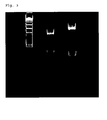
- the results of electrophoresis are shown in Figure 3 . In Figure 3 , size markers are shown on the left.
- the SphI-cleaved products of the HC-Pro gene derived from the attenuated strain are shown in the middle.
- the SphI-cleaved products of the HC-Pro gene derived from the virulent strain are shown on the right.
- the patterns of SphI cleavage differed between the attenuated strain and the virulent strain.
- the patterns of SphI cleavage were not changed even after exhibition of a symptom by the inoculated plants (data not shown), demonstrating that the inoculation of the attenuated strain-derived Hc-Pro gene causes the plant to have no symptom, whereas the inoculation of the virulent strain-derived Hc-Pro gene causes the plant to exhibit severe symptoms.
- the attenuated lily mottle virus of the present invention can serve as effective control means for lily mottle virus disease.
- the present invention therefore brings about ripple effects such as the high-quality and stable production of cut flowers and bulbs of lilies, price stabilization based on such production, decrease in labor and cost required for controls against viral diseases, the supply of safe and secure cut flowers and bulbs resulting from reduced use of agricultural chemicals, and the promotion of environmentally friendly agriculture. Accordingly, the present invention is practical and makes a great contribution to the society.
Landscapes
- Life Sciences & Earth Sciences (AREA)
- Health & Medical Sciences (AREA)
- Chemical & Material Sciences (AREA)
- Zoology (AREA)
- Engineering & Computer Science (AREA)
- Virology (AREA)
- General Health & Medical Sciences (AREA)
- Organic Chemistry (AREA)
- Wood Science & Technology (AREA)
- Genetics & Genomics (AREA)
- Microbiology (AREA)
- Biotechnology (AREA)
- Bioinformatics & Cheminformatics (AREA)
- Medicinal Chemistry (AREA)
- Biochemistry (AREA)
- General Engineering & Computer Science (AREA)
- Agronomy & Crop Science (AREA)
- Pest Control & Pesticides (AREA)
- Biomedical Technology (AREA)
- Environmental Sciences (AREA)
- Plant Pathology (AREA)
- Dentistry (AREA)
- Immunology (AREA)
- Gastroenterology & Hepatology (AREA)
- Biophysics (AREA)
- Molecular Biology (AREA)
- Proteomics, Peptides & Aminoacids (AREA)
- Micro-Organisms Or Cultivation Processes Thereof (AREA)
- Breeding Of Plants And Reproduction By Means Of Culturing (AREA)
- Agricultural Chemicals And Associated Chemicals (AREA)
- Peptides Or Proteins (AREA)
Abstract
Description
- The present invention relates to an attenuated lily mottle virus that infects lilies to cause disease damage.
- Lily mosaic disease is a viral disease that occurs in lilies. Its causative virus is reportedly lily mottle virus (hereinafter occasionally referred to as "LMoV"). The LMoV virus is classified into the genus Potyvirus of the family Potyviridae and known to have a single-stranded RNA genome.
- Since lilies are vegetatively propagated crops, lilies infected by LMoV transmit LMoV along with their vegetative propagation and thus result in great damage by infection. Thus, the infection of LMoV in lilies leads to marked decrease in revenues from cut flower production and bulb production. There are no agricultural chemicals effective for eliminating LMoV in lily, as in other plant viruses.
- To protect lilies from LMoV, virus-free lilies have been produced by meristem culture. However, viral infection via aphids occurs in farm fields in a short time. The infection of LMoV is generally prevented by spraying insecticides against such vector aphids or by use of repellent materials or blocking materials. The effects of these approaches, however, are insufficient.
- Reportedly, use of attenuated viruses is a current effective approach for plant viral diseases. Accordingly, attenuated viruses of causative viruses for plant viral diseases are under development around the world.
- An object to be solved by the present invention is to provide an attenuated lily mottle virus, the virus causing a lily to have no or faint mosaic symptoms, if any when inoculated to the lily.
- The present inventors have conducted diligent studies to solve the object and consequently completed the present invention by isolating attenuated strains of LMoV from the field and subsequent screening that enabled controlling lily mosaic disease caused by LMoV.
- Specifically, the present invention is as follows:
- [1] An attenuated lily mottle virus which does not cause any mosaic symptom in lily leaves or faint mosaic symptom, if any.
- [2] The attenuated lily mottle virus according to [1], comprising an RNA represented by the nucleotide sequence of SEQ ID NO: 1 (provided that T in the sequence is replaced with U).
- [3] The attenuated lily mottle virus according to [1] or [2], comprising any of the following peptides:
- (1) a peptide represented by the amino acid sequence of SEQ ID NO: 7; and
- (2) a peptide represented by an amino acid sequence derived from the amino acid sequence of SEQ ID NO: 7 by the deletion, addition, and/or substitution of one or several amino acid(s).
- [4] A nucleic acid comprising the nucleotide sequence of SEQ ID NO: 1 or a nucleotide sequence complementary to the nucleotide sequence of SEQ ID NO: 1 (provided that T in the nucleotide sequence is replaced with U when the nucleic acid is an RNA).
- [5] A method for controlling lily mottle virus disease, comprising a step of:
- inoculating the attenuated lily mottle virus according to any of [1] to [3] to a lily.
- [6] A method for preparing a lily mottle virus-resistant plant, comprising a step of:
- inoculating the attenuated lily mottle virus according to any of [1] to [3] to a lily.
- [7] A method for propagating a lily mottle virus-resistant plant, comprising a step of:
- propagating, by scale propagation or tissue culture, a lily infected by the attenuated lily mottle virus according to any of [1] to [3].
- [8] A lily mottle virus-resistant plant obtained by the inoculation of the attenuated lily mottle virus according to any of [1] to [3].
- [9] A lily plant tissue infected by the attenuated lily mottle virus according to any of [1] to [3].
- [10] The lily plant tissue according to [9], wherein the tissue is a scale or a bulb.
- The present invention can provide an attenuated lily mottle virus which protects lilies effectively and efficiently from lily mosaic disease.
-
- [
Figure 1 ] The virus symptom of a lily cultivar "Newton" with pink flower color inoculated with the virus is evaluated on a 5-point scale: no symptom: 0, faint: 1, mild: 2, faintly severe: 3, and severe: 4.Figure 1 shows the petals of the cultivar "Newton" with pink flower color evaluated as a score of no symptom: 0, faint: 1, faintly severe: 3, or severe: 4. - [
Figure 2] Figure 2 shows a symptom in a test plant Nicotiana benthamiana inoculated with a PVX vector containing the Hc-Pro region of NDM-LM1 strain, an attenuated virus, or a virulent strain. Results about the test plant inoculated with only a "PVX vector" are shown on the left. Results about the test plant inoculated with the "PVX vector containing the Hc-Pro region of the NDM-LM1 strain" are shown in the middle. Results about the test plant inoculated with the "PVX vector containing the Hc-Pro region of the virulent strain" are shown on the right. - [
Figure 3] Figure 3 shows the results of electrophoresis of a restriction enzyme SphI-cleaved RT-PCR amplification product of the HC-Pro gene from a plant with inoculated with a PVX vector containing the HC-Pro gene. Size markers are shown on the left. The SphI-cleaved products of the HC-Pro gene derived from the attenuated strain are shown in the middle. The SphI-cleaved products of the HC-Pro gene derived from the virulent strain are shown on the right. - [
Figure 4] Figure 4 shows the nucleotide sequence of SEQ ID NO: 1. - [
Figure 5] Figure 5 shows the amino acid sequence of SEQ ID NO: 7. - Hereinafter, each embodiment for carrying out the present invention will be described in detail. However, the present invention is not limited by the embodiments shown below, and various changes or modifications can be made therein without departing from the gist of the present invention.
- The attenuated lily mottle virus (hereinafter occasionally referred to as an "attenuated virus") in the present invention is an attenuated virus which does not cause any mosaic symptom in lily leaves or faint mosaic symptom, if any. Preferably, the attenuated virus in the present invention further does not cause any variegated symptom in flowers or faint variegated symptom, if any.
- One example of the attenuated virus in the present invention includes an NDM-LM1 strain. The NDM-LM1 strain is an attenuated virus obtained as shown below.
- Attenuated LMoV strains are obtained from a symptom-free lily cultivar with pink flower color by tissue blot analysis to select LMoV12-1-1 strain. The LMoV12-1-1 strain is further screened to reduce the adverse effects observed in the cultivar with pink flower color. For example, an attenuated LMoV, LMoV12-1-9 (NDM-LM1 strain) which has an exceedingly little adverse effect on sensitive cultivars with pink flower color, is screened from LMoV12-1-1 strain by selecting repeatedly lily plants that have no mosaic symptom on their petals over 9 generations.
- The attenuated virus in the present invention, preferably the NDM-LM1 strain which is the attenuated virus in the present invention, has an RNA represented by the nucleotide sequence described in SEQ ID NO: 1 (provided that T in the sequence is replaced with U).
- The attenuated virus in the present invention having the RNA represented by the nucleotide sequence described in SEQ ID NO: 1 (provided that T in the sequence is replaced with U) can be provided as an attenuated virus which does not cause any mosaic symptom in lily leaves or faint mosaic symptom, if any. Use of this attenuated virus provides an effective and efficient method for controlling lily mosaic disease. The attenuated virus in the present invention can further save costs such as costs of agricultural chemicals, materials, fertilizers, or seedlings and reduce labor required for crop management. As a result, it provides LMoV-resistant materials with no symptom or faint symptom, if any by means of vegetative propagations such as bulb or scale propagation. Thus, the attenuated virus in the present invention is practical.
- The present invention provides even a nucleic acid comprising the nucleotide sequence of SEQ ID NO: 1, the nucleic acid being isolated from the attenuated virus. The nucleotide sequence of the nucleic acid may be a nucleotide sequence having the deletion, addition, and/or substitution of one or several base(s) without departing from the object of the present invention and is preferably an RNA having the nucleotide sequence described in SEQ ID NO: 1 provided that T in SEQ ID NO: 1 is replaced with U when the nucleic acid is an RNA. Alternatively, the nucleotide sequence described in SEQ ID NO: 1 may contain bases equivalent to A, T, G, C, and U, in addition to A, T, G, C, and U. The equivalent bases contained therein may be bases having substituted or modified base moieties of A, T, G, C, and U. In addition, a sugar moiety in the nucleic acid may be substituted or modified if the sugar moiety is equivalent to ribose or deoxyribose.
- The present invention also provides a nucleic acid comprising a nucleotide sequence complementary to the nucleotide sequence of SEQ ID NO: 1. The nucleotide sequence of the nucleic acid, which is complementary to the nucleotide sequence of SEQ ID NO: 1, may be a nucleotide sequence having the deletion, addition, and/or substitution of one or several base(s) without departing from the object of the present invention and is preferably a DNA having a nucleotide sequence complementary to the nucleotide sequence described in SEQ ID NO: 1.
- The nucleotide sequence described in SEQ ID NO: 1 comprises a sequence presumably essential for the attenuated virus which does not cause any mosaic symptom in lily leaves or faint mosaic symptom, if any and corresponds to a helper component proteinase (HC-Pro) region.
- The attenuated virus in the present invention, preferably the NDM-LM1 strain which is the attenuated virus in the present invention, comprises a peptide represented by the amino acid sequence described in SEQ ID NO: 7 or a peptide represented by an amino acid sequence derived from the amino acid sequence described in SEQ ID NO: 7 by the deletion, addition, and/or substitution of one or several base(s). The peptide represented by the amino acid sequence described in SEQ ID NO: 7 or the peptide represented by an amino acid sequence derived from the amino acid sequence described in SEQ ID NO: 7 by the deletion, addition, and/or substitution of one or several base(s) is a peptide encoded by the nucleic acid comprising the nucleotide sequence of SEQ ID NO: 1 or a nucleotide sequence derived from the nucleotide sequence of SEQ ID NO: 1 by the deletion, addition, and/or substitution of one or several base(s). Also, the peptide represented by the amino acid sequence described in SEQ ID NO: 7 or the peptide represented by an amino acid sequence derived from the amino acid sequence described in SEQ ID NO: 7 by the deletion, addition, and/or substitution of one or several base(s) corresponds to a helper component proteinase (HC-Pro) region.
- The attenuated virus in the present invention comprising the peptide represented by the sequence can be provided as an attenuated virus which does not cause any mosaic symptom in lily leaves or faint mosaic symptom, if any. Use of this attenuated virus provides an effective and efficient method for controlling lily mosaic disease. The attenuated virus in the present invention can further save costs such as costs of agricultural chemicals, materials, fertilizers, or seedlings and reduce labor required for crop management. As a result, it provides LMoV-resistant materials with no symptom or faint symptom, if any by means of vegetative propagations such as bulb or scale propagation. Thus, the attenuated virus in the present invention is practical.
- The attenuated virus in the present invention is not particularly limited to the NDM-LM1 strain and includes a wide range of viruses having the property that does not cause any mosaic symptom in lily leaves or faint mosaic symptom, if any. Preferably, the attenuated virus in the present invention further exhibits the property that does not cause any variegated symptom in flowers or faint variegated symptom, if any. The attenuated virus in the present invention is not particularly limited as long as the virus does not cause any mosaic symptom in lily leaves or faint mosaic symptom, if any. The attenuated virus in the present invention is preferably a virus which does not cause any mosaic symptom in lily leaves or no mosaic symptom, if any and does not cause any variegated symptom in flowers or faint variegated symptom, if any. Alternatively, the attenuated virus in the present invention may be a virus which does not cause any variegated symptom in flowers or faint variegated symptom, if any.
- The method for controlling lily mottle virus disease in the present invention involves inoculating the attenuated lily mottle virus to a lily to thereby controlling the lily mottle virus disease.
- The attenuated virus can be inoculated in advance to a lily to thereby prevent the lily from being infected by LMoV.
- The term "lily mottle virus disease" refers to the condition of an LMoV-infected lily having a mosaic symptom in its leaf and/or a variegated symptom in its flower due to infection. This disease may further cause an LMoV-infected lily dwarfing and/or reduce the bulb size.
- The lily to be inoculated with the attenuated virus is not particularly limited as long as the lily belongs to the genus Lilium. Examples thereof include Oriental hybrids, Asiatic hybrids, and Easter lily.
- The inoculation timing of the attenuated virus is not particularly limited. Preferably, the attenuated virus is inoculated at a seedling stage.
- The inoculation of the attenuated virus to the lily can be carried out, for example, by rubbing an attenuated virus-infected leaf as a source of inoculum and inoculating the inoculums to lily seedlings (height: approximately 15 cm) using a swab coated with celite as an abrasive. The infected leaf can be a proximal leaf of a flower located at the highest position in a plant that has been confirmed to have no mosaic symptom in its leaves after growing the inoculated seedlings till blooming all flowers. The infected leaf is preferably a proximal leaf of a flower located at the highest position in a plant that has been confirmed to have no mosaic symptom in its leaves and no variegated symptom in its flowers.
- Each lily seedling inoculated with the attenuated virus can be cultivated to thereby prepare an adult lily inoculated with the attenuated virus. For example, bulbs or scales resistant to LMoV (resistant source) can be obtained from the adult lily plants infected with the attenuated LMoV. Examples of the lily plant tissue include, but not particularly limited to, leaves, stems, roots, flowers, cut flowers, bulbs, scales, cell masses, calluses, and protoplasts obtained from lily plants.
- The method for preparing a lily mottle virus-resistant plant in the present invention involves inoculating the attenuated lily mottle virus in the present invention to a lily to thereby prepare a lily mottle virus-resistant plant that exhibits resistance to lily mottle virus by virtue of viral functions exerted by the attenuated virus.
- The attenuated virus can be inoculated in advance to a lily to thereby prepare a lily that exhibits resistance to infection of LMoV.
- The cultivars of the lily, the inoculation method, and the timing of inoculation can be the same as in the protective method described above.
- The method for propagating a lily mottle virus-resistant plant in the present invention involves propagating, by bulb propagation, scale propagation, or tissue culture, a lily infected by the attenuated lily mottle virus in the present invention to thereby propagate a lily mottle virus-resistant plant so that a next-generation lily is prepared.
- Bulbs infected by the attenuated virus are planted and cultivated in a farm field or a facility. Lily mottle virus-resistant plants can be propagated to thereby obtain new plant tissues such as bulbs and scales.
- These lily mottle-resistant plants or lily plant tissues obtained by the propagating the lily mottle virus-resistant plants have resistance to virulent lily mottle virus by virtue of the attenuated virus that has already been delivered into their tissues. Likewise, individuals allowed to proliferate by the tissue culture of a lily infected by the attenuated virus also have resistance to virulent lily mottle virus.
- Since the effect of the attenuated virus can be sustained by vegetative propagation, a producer does not actually need to inoculate the attenuated virus in every cultivation and can continuously obtain the protective effect of the attenuated virus over seasons by harvesting bulbs or scales through usual cultivation.
- Hereinafter, the present invention will be described more specifically with reference to Examples. However, the scope of the present invention is not limited by only these Examples.
- Attenuated LMoV strains were screened by tissue blot analysis from virus symptom-free plants (600 plants) at a bud stage of a lily cultivar "Sorbonne" with pink flower color that was sensitive to the adverse effects (which mean a variegated symptom in flowers and a mosaic symptom in leaves) of the virus. The obtained strain was designated as LMoV12-1-1 strain. The LMoV12-1-1 strain was inoculated to a lily cultivar "Newton" with pink flower color to investigate a virus symptom. In this procedure, the virus symptom that appeared in petals was evaluated on a 5-point scale: no symptom: 0, faint: 1, mild: 2, faintly severe: 3, and severe: 4.
-
Figure 1 shows the petals of the cultivar "Newton" with pink flower color evaluated as a score of no symptom: 0, faint: 1, faintly severe: 3, or severe: 4. - As a result of the evaluation, the first-generation lilies inoculated with the LMoV12-1-1 strain had a score of 1.14, whereas uninoculated lilies had a score of 0.17. Lilies inoculated with a virulent LMoV strain GLS4 had a score of 4.00, which exhibited the most severe degree of the virus symptom (n = 36).
- The virulent LMoV strain GLS4 (hereinafter occasionally referred to as a "virulent GLS4 strain") used was a virulent virus obtained from a lily that exhibited a severe mosaic symptom observed in the farm field of lily bulb production based on scale propagation in Niigata prefecture, Japan.
- Since the lilies inoculated with the LMoV12-1-1 strain had a score higher than that of the uninoculated lilies and were confirmed to have a variegated symptom in their flowers, the virus symptom appearing in petals was investigated in order to reduce the adverse effects of the LMoV12-1-1 strain in the cultivar with pink flower color. As a result, a more severe virus symptom was observed in late blooming flowers located at an upper position than the earliest blooming flowers located at a lower position. On the basis of this finding, the LMoV12-1-1 strain was screened from the LMoV12-1-1 inoculated plants which did not show any virus symptom in upper leaves over 9 generations. As a result, the score 1.14 of the first-generation lilies inoculated with the LMoV12-1-1 strain was able to be reduced to 0.16 in the ninth-generation lilies infected by an LMoV12-1-9 strain (NDM-LM1 strain) (n = 25). These ninth-generation lilies were evaluated as being marketable as cut flowers without problems. Table 1 shows the results about the severity (score) of a virus symptom in the petals of the first-generation to ninth-generation lilies of the cultivar "Newton" with pink flower color.
[Table 1] Table 1. Reduction in the severity (score) of a virus symptom in the petals of the cultivar with pink flower color The number of generations Score 1st generation 1.14 2nd generation 0.38 3rd generation 0.89 4th generation 0.86 5th generation 0.78 6th generation 0.80 7th generation 0.45 8th generation 0.40 9th generation 0.16 Score of virus symptom in petal: no symptom: 0, faint: 1, mild: 2, faintly severe: 3, and severe: 4 - A full-length DNA sequence homologous to the full-length RNA sequence of the attenuated virus LMoV12-1-9 strain (NDM-LM1 strain) obtained from the ninth-generation lily was inserted to a plasmid. This plasmid, which was designated as pNDMLM1, was accepted by National Institute of Technology and Evaluation, Patent Microorganisms Depositary on Feb. 16, 2011 and deposited under Deposition No. FERM-ABP11343. The NDM-LM1 strain is being preserved by the present applicant, and transfer prescribed by Rule 27-3 of the Japanese Patent Law Enforcement Regulation is guaranteed by the present applicant.
- The nucleotide sequence inserted to the deposited plasmid is shown in SEQ ID NO: 2.
- An aphid transmissibility test was conducted on lilies infected by the NDM-LM1 strain or the virulent GLS4 strain.
- Each fasted aphid (alate) was transferred to the leaves of a lily cultivar "Aktiva" infected by the virulent GLS4 strain or the attenuated virus NDM-LM1 strain, followed by acquisition feeding. Then, the fed aphid was transferred to virus-uninfected Takasago lily leaves, followed by inoculation feeding for 1 day on the Takasago lilies (5 aphids/plant). Ten plants of Takasago lily in each of the virulent GLS4 strain inoculation feeding group and the NDM-LM1 strain inoculation feeding group were used in the test.
- The presence or absence of detectable viruses was assayed by tissue blot analysis (antigen-antibody reaction) to determine the rate of transmission of each virus to the Takasago lily via the aphid.
- As a result, use of Aphis gossypii Glover (alate) as the aphid produced 80% rate of transmission of the virulent GLS4 strain, but produced 0% rate of transmission of the NDM-LM1 strain.
- As a result of conducting a transmissibility test using Aulacorthum solani in the same way as above, the rate of transmission of the virulent GLS4 strain was 70%, whereas the rate of transmission of the NDM-LM1 strain was 0%. As a result of conducting a transmissibility test using Myzus persicae, the rate of transmission of the virulent GLS4 strain was 50%, whereas the rate of transmission of the NDM-LM1 strain was 0%.
- These results showed that 3 types of aphids (Aphis gossypii Glover, Aulacorthum solani, and Myzus persicae) transmit the virulent GLS4 strain, but do not transmit the NDM-LM1 strain. The results of the aphid transmissibility test are shown in Table 2.
- [Table 2]
Table 2. Aphid transmissibility test Aphid Virulent GLS4 strain NDM-LM1 strain Aphis gossypii Glover 80% 0% Aulacorthum solani 70% 0% Myzus persicae 50% 0% - As a control test, an uninoculated group (group inoculated with neither the NDM-LM1 strain nor the virulent GLS4 strain), an NDM-LM1 strain group (group inoculated with the NDM-LM1 strain but with no virulent GLS4 strain), and a virulent GLS4 strain group (group inoculated with no NDM-LM1 strain but with the virulent GLS4 strain) were investigated (n = 12) in the same way as above.
- The results are shown in Table 3.
- [Table 3]
Table 3. Protective effect of the attenuated LMoV strain, NDM-LM1 against the virulent GLS4 strain in a lily Group Height (cm) The number of flower buds per plant The number of blooming flowers per plant Uninoculated 77.5 b 3.2 1.0 b NDM-LM1 strain 79.3 b 3.1 2.3 c Virulent GLS4 strain 63.3 a 3.0 0.3 a NDM-LM1 strain + Virulent GLS4 strain 73.9 b 3.1 2.4 c Different characters in the same column represent a significant difference (p < 0.05). - The results of Table 3 demonstrated that the lilies inoculated with the virulent GLS4 strain (virulent GLS4 group) tended to be dwarfed and delayed blooming stage, whereas the lilies inoculated with the virulent GLS4 strain after infection of the attenuated NDM-LM1 (NDM-LM1 group + virulent GLS4 strain group) had a height comparable to that of the uninoculated lilies (uninoculated group) and had an earlier blooming stage. This showed the NDM-LM1 strain has a remarkable protective effect against the virulent strain of LMoV.
- Also, the inoculation of the NDM-LM1 strain was shown to result in the height of the plant comparable to that of the uninoculated plant and slightly hasten its blooming stage without influencing the number of flowers per plant. This demonstrated that the inoculation of the NDM-LM1 strain hastens the blooming stage and also showed that the inoculation of the attenuated virus rarely produced adverse effects in lilies. Thus, the attenuated virus NDM-LM1 strain was shown to be usable as a virus vaccine against LMoV.
- The NDM-LM1 strain was inoculated to a lily cultivar "Casablanca". A practical application test was conducted in four farm fields in order to compare an inoculated zone with an uninoculated zone. In one farm field (A), a virus symptom was observed in 5 out of 29 lily plants in the uninoculated zone. LMoV was detected in 3 out of the 5 plants, while cucumber mosaic virus (CMV) and LMoV were detected in the remaining 2 plants. In this farm field, 27 lily plants in the NDM-LM1 strain-inoculated zone exhibited no virus symptom. The results are shown in Table 4.
- [Table 4]
Table 4. Results of the farm field test on the lilies infected by the attenuated virus NDM-LM1 strain Investigation item Zone Farm field A B C D The number of plants having virus symptoma Uninoculated 5/29 0/29 0/28 0/24 NDM-LM1 strain-inoculated 0/27* 0/25 0/23 0/28 Height (cm) Uninoculated 39.0 50.5 48.5 78.1 NDM-LM1 strain-inoculated 40.3 50.4 50.7 78.0 The number of flower buds per plant Uninoculated 1.2 2.7 1.8 1.3 NDM-LM1 strain-inoculated 1.9 2.7 2.0 1.9 Yield of bulb per plant (g) Uninoculated 141.2 165.3 161.9 141.5 NDM-LM1 strain-inoculated 150.4* 161.9 163.0 141.2 a : The number of plants having virus symptom/ the number of tested plants
* : Significantly different from uninoculated group (p<0.05) - The results of Table 4 showed that the NDM-LM1 strain has a protective effect against viral infection in the farm field infected with LMoV and CMV.
- Bulbs were harvested from this farm field, and their weights were compared between the inoculated zone and the uninoculated zone. As a result, the bulbs harvested from the NDM-LM1 strain-inoculated zone were significantly higher in weight than those from the uninoculated zone. This demonstrated that the NDM-LM1 strain also has a protective effect on bulb growth in the farm field affected by LMoV and CMV. In the other farm fields (B, C, and D), no virus symptom was observed, and the height of each lily and the weight of each bulb derived from the NDM-LM1 strain-inoculated zone were comparable to those from the uninoculated zone, demonstrating few adverse effects. The number of flower buds tended to be slightly larger in the NDM-LM1 strain-inoculated zone than the uninoculated zone.
- The whole nucleotide sequences of the virulent strain GLS4 strain and the attenuated virus NDM-LM1 strain were determined.
- In order to determine the whole nucleotide sequence of LMoV, primers shown below were designed, and RT-PCR products were obtained. The RT-PCR products were purified and then inserted by TA cloning to plasmid vectors, with which E. coli was then transformed. Plasmid DNA was purified from the transformed E. coli DH5α and sequenced using BigDye Terminator v3.1 Cycle Sequencing Kit and ABI PRISM3100 Genetic Analyzer.
- LMoV_IC_2F: AAAATAAAACAAACCAACAAGACTCAATACAAC (SEQ ID NO: 3)
- LMoV_IC_2R: GTGGCGAGTACAGTGAGAAGC (SEQ ID NO: 4)
- The attenuated virus NDM-LM1 strain had the nucleotide sequence represented by SEQ ID NO: 2. The nucleotide sequence represented by SEQ ID NO: 2 consists of 5' UTR, P1, Hc-Pro, P3, 6K1, CI, 6K2, VPg, a functionally unidentified region, NIa, NIb, CP, 3' UTR, and PIPO.
- The LMoV helper component proteinase (HC-Pro) regions of the virulent strain GLS4 strain and the attenuated strain NDM-LM1 strain were separately inserted to PVX vectors to prepare infectious chimeric clones. The presence or absence of change in plant pathogenicity by each inserted HC-Pro region was investigated.
- Foreign gene expression PVX vectors (pgR106) developed by Baulcombe et al. were used. The HC-Pro gene of the virulent strain or the attenuated strain was inserted to a foreign gene insertion site (Takken, F.L., Luderer, R., Gabriels, S.H., Westerink, N., Lu, R., de Wit, P.J., and Joosten, M.H. (2000). A functional cloning strategy, based on a binary PVX-expression vector, to isolate HR-inducing cDNAs of plant pathogens. Plant J., vol. 24, p. 275-283).
- An F primer and an R primer shown in Table 5 were used for this insertion of the HC-Pro gene to the PVX vector (pgR106). The F primer and the R primer each have a restriction enzyme site NotI. The F primer and the R primer can be used in common to both the virulent GLS4 strain and the attenuated virus NDM-LM1 strain. The HC-Pro region was amplified by PCR using these primers. The obtained PCR products were treated with NotI and inserted to the NotI sites of the PVX vectors (pgR106). After the insertion, the nucleotide sequence of the HC-Pro gene was confirmed to be successfully inserted.
- [Table 5]
Table 5. Sequences of primers for inserting the HC-Pro gene to the PVX vector (pgR106) • F primer (4 bases + NotI + start codon + first 20 bases of HC-Pro): AACTGCGGCCGCATGTCGGGCCCAGGCGATAAATT Tm: 66.5 (SEQ ID NO: 5) • R primer (strand complementary to last 20 bases of HC-Pro + stop codon + NotI + 4 bases): TCTAGCGGCCGCCTAGCCGACCTGGTAGTGCTTCA Tm: 67.7 (SEQ ID NO: 6) - The HC-Pro gene-inserted plasmid DNAs (infections chimeric clones) were purified in large amounts and inoculated to test plants Nicotiana benthamiana by the particle gun method. Change in the pathogenicity of potato virus X (PVX) by the inserted HC-Pro gene was evaluated. The particle gun manufactured by Bio-Rad Laboratories, Inc. was used, and the inoculation conditions followed the manual of the product.
- The virulent strain-derived HC-Pro gene inoculated to the test plant considerably strengthened the pathogenicity of PVX, whereas the test plant inoculated with the attenuated strain-derived HC-Pro gene was not influenced by the pathogenicity of PVX (
Figure 2 ). - The HC-Pro region was amplified by RT-PCR from each plant inoculated with the PVX vector containing each HC-Pro gene and cleaved by a restriction enzyme SphI, followed by electrophoresis. The virulent strain-derived HC-Pro gene was confirmed in the plant having severe symptoms, while the attenuated strain-derived HC-Pro gene was confirmed in the plant having no symptom. The results of electrophoresis are shown in
Figure 3 . InFigure 3 , size markers are shown on the left. The SphI-cleaved products of the HC-Pro gene derived from the attenuated strain are shown in the middle. The SphI-cleaved products of the HC-Pro gene derived from the virulent strain are shown on the right. The patterns of SphI cleavage differed between the attenuated strain and the virulent strain. The patterns of SphI cleavage were not changed even after exhibition of a symptom by the inoculated plants (data not shown), demonstrating that the inoculation of the attenuated strain-derived Hc-Pro gene causes the plant to have no symptom, whereas the inoculation of the virulent strain-derived Hc-Pro gene causes the plant to exhibit severe symptoms. Since the pattern of SphI cleavage in the attenuated strain - derived Hc-Pro gene had two SphI cleavage sites, a band of approximately 430 bases, which was not observed in the pattern of SphI cleavage in the virulent strain-derived Hc-Pro gene, was confirmed. - The attenuated lily mottle virus of the present invention can serve as effective control means for lily mottle virus disease. The present invention therefore brings about ripple effects such as the high-quality and stable production of cut flowers and bulbs of lilies, price stabilization based on such production, decrease in labor and cost required for controls against viral diseases, the supply of safe and secure cut flowers and bulbs resulting from reduced use of agricultural chemicals, and the promotion of environmentally friendly agriculture. Accordingly, the present invention is practical and makes a great contribution to the society.
-
- SEQ ID NO: 1 represents the nucleotide sequence of the Hc-Pro region of an NDM-LM1 strain.
- SEQ ID NO: 2 represents a nucleotide sequence that corresponds to the full-length sequence of the NDM-LM1 strain and is inserted in a plasmid carried by deposited E. coli.
- SEQ ID NO: 3 represents the nucleotide sequence of an F primer used for determining the whole nucleotide sequences of a virulent strain GLS4 and the attenuated virus NDM-LM1 strain.
- SEQ ID NO: 4 represents the nucleotide sequence of an R primer used for determining the whole nucleotide sequences of a virulent strain GLS4 and the attenuated virus NDM-LM1 strain.
- SEQ ID NO: 5 represents the nucleotide sequence of an F primer used for inserting the HC-Pro gene to PVX (pgR106).
- SEQ ID NO: 6 represents the nucleotide sequence of an R primer used for inserting the HC-Pro gene to PVX (pgR106).
- SEQ ID NO: 7 represents the amino acid sequence of the Hc-Pro region of the NDM-LM1 strain.


Claims (10)
- An attenuated lily mottle virus which does not cause any mosaic symptom in lily leaves or faint mosaic symptom, if any.
- The attenuated lily mottle virus according to claim 1, comprising an RNA represented by the nucleotide sequence of SEQ ID NO: 1 (provided that T in the sequence is replaced with U).
- The attenuated lily mottle virus according to claim 1 or 2, comprising any of the following peptides:(1) a peptide represented by the amino acid sequence of SEQ ID NO: 7; and(2) a peptide represented by an amino acid sequence derived from the amino acid sequence of SEQ ID NO: 7 by the deletion, addition, and/or substitution of one or several amino acid(s).
- A nucleic acid comprising the nucleotide sequence of SEQ ID NO: 1 or a nucleotide sequence complementary to the nucleotide sequence of SEQ ID NO: 1 (provided that T in the nucleotide sequence is replaced with U when the nucleic acid is an RNA).
- A method for controlling lily mottle virus disease, comprising a step of:inoculating the attenuated lily mottle virus according to any one of claims 1 to 3 to a lily.
- A method for preparing a lily mottle virus-resistant plant, comprising a step of:inoculating the attenuated lily mottle virus according to any one of claims 1 to 3 to a lily.
- A method for propagating a lily mottle virus-resistant plant, comprising a step of:propagating, by scale propagation or tissue culture, a lily infected by the attenuated lily mottle virus according to any one of claims 1 to 3.[Cla
- A lily mottle virus-resistant plant obtained by the inoculation of the attenuated lily mottle virus according to any one of claims 1 to 3.
- A lily plant tissue infected by the attenuated lily mottle virus according to any one of claims 1 to 3.
- The lily plant tissue according to claim 9, wherein the tissue is a scale or a bulb.
Applications Claiming Priority (1)
| Application Number | Priority Date | Filing Date | Title |
|---|---|---|---|
| PCT/JP2011/054370 WO2012114520A1 (en) | 2011-02-25 | 2011-02-25 | Attenuated virus of lily mottle virus |
Publications (2)
| Publication Number | Publication Date |
|---|---|
| EP2716755A1 true EP2716755A1 (en) | 2014-04-09 |
| EP2716755A4 EP2716755A4 (en) | 2015-05-27 |
Family
ID=46720335
Family Applications (1)
| Application Number | Title | Priority Date | Filing Date |
|---|---|---|---|
| EP11859266.6A Withdrawn EP2716755A4 (en) | 2011-02-25 | 2011-02-25 | ATTENUATED VIRUS OF LYS MARBLING |
Country Status (3)
| Country | Link |
|---|---|
| EP (1) | EP2716755A4 (en) |
| JP (1) | JP5848747B2 (en) |
| WO (1) | WO2012114520A1 (en) |
Cited By (1)
| Publication number | Priority date | Publication date | Assignee | Title |
|---|---|---|---|---|
| CN104122391A (en) * | 2014-04-14 | 2014-10-29 | 中国科学院寒区旱区环境与工程研究所 | Lily symptomless virus and lily mottle virus composite colloidal gold immunochromatography detection reagent card and preparation method thereof |
Family Cites Families (1)
| Publication number | Priority date | Publication date | Assignee | Title |
|---|---|---|---|---|
| JP2005269983A (en) * | 2004-03-24 | 2005-10-06 | Kyoto Prefecture | Method for isolating attenuated phytovirus |
-
2011
- 2011-02-25 JP JP2013500808A patent/JP5848747B2/en not_active Expired - Fee Related
- 2011-02-25 WO PCT/JP2011/054370 patent/WO2012114520A1/en not_active Ceased
- 2011-02-25 EP EP11859266.6A patent/EP2716755A4/en not_active Withdrawn
Cited By (2)
| Publication number | Priority date | Publication date | Assignee | Title |
|---|---|---|---|---|
| CN104122391A (en) * | 2014-04-14 | 2014-10-29 | 中国科学院寒区旱区环境与工程研究所 | Lily symptomless virus and lily mottle virus composite colloidal gold immunochromatography detection reagent card and preparation method thereof |
| CN104122391B (en) * | 2014-04-14 | 2015-12-09 | 中国科学院寒区旱区环境与工程研究所 | A kind of lily recessive virus and lily mottled virus composite colloidal gold immunochromatographic detection reagent card and preparation method |
Also Published As
| Publication number | Publication date |
|---|---|
| WO2012114520A1 (en) | 2012-08-30 |
| JP5848747B2 (en) | 2016-01-27 |
| EP2716755A4 (en) | 2015-05-27 |
| JPWO2012114520A1 (en) | 2014-07-07 |
Similar Documents
| Publication | Publication Date | Title |
|---|---|---|
| Gao et al. | Characterization of Soybean mosaic virus resistance derived from inverted repeat-SMV-HC-Pro genes in multiple soybean cultivars | |
| US20170240917A1 (en) | Stress-resistant plants and their production | |
| CN102559666B (en) | Plant virus inhibitory artificial miRNA (microRNA) and construction and application thereof | |
| CN117587047A (en) | Application of GhMPK9 gene in improving cotton Verticillium wilt disease resistance | |
| CN113652423A (en) | Method for assisting in identifying drought resistance of wheat to be detected and special molecular marker thereof | |
| CN114929881A (en) | CCA genes for virus resistance | |
| US7576264B2 (en) | Gene resistant to Aphis gossypii | |
| CN108004249B (en) | Cloning and Application of Sorghum Aphid Resistance Gene RMES1 | |
| KR102708972B1 (en) | Solanaceae plants, Solanaceae plant cells, and methods for producing Solanaceae plants resistant to begomovirus viruses causing yellow leaf curl-like symptoms in tomatoes | |
| Sahu et al. | Managing chili leaf curl disease through RNAi based strategies | |
| CN120020143B (en) | Cloning and application of wheat broad-spectrum powdery mildew resistance gene Pm26 | |
| CN102250947B (en) | Preparation method of plant male sterile line and restorer line and application thereof | |
| CN105886526A (en) | Vector capable of inhibiting cytochrome P450 gene expression and application of vector capable of inhibiting cytochrome P450 gene expression | |
| JP5164093B2 (en) | Method for increasing resistance of rice to pathogens and pathogen-resistant rice transformants | |
| US20190211350A1 (en) | Phytophthora Resistance Gene | |
| JP5848747B2 (en) | Lily mottle virus attenuated virus | |
| CN119876259B (en) | Application of the tomato antiviral gene AGO2a in regulating plant antiviral resistance | |
| CN102115751A (en) | Rape BnPABP 5 gene and application of promoter thereof | |
| CN116103322B (en) | A functional gene for enhancing plant resistance to gray mold infection and its application | |
| Ling et al. | Breeding of selectable marker-free transgenic rice lines containing AP1 gene with enhanced disease resistance | |
| KR101360542B1 (en) | RICE OsSERK1 GENE AND TRANSGENIC RICE TRANSFORMED WITH THE SAME | |
| CN110747203B (en) | Application of gene OsBBX14 in improving bacterial leaf blight resistance of rice | |
| US20150259700A1 (en) | Transgenic Plants With RNA Interference-Mediated Resistance Against Root-Knot Nematodes | |
| Owor | Maize streak virus (MSV) diversity in Uganda and the assessment of gene silencing as a tool for development of resistance to MSV | |
| Kavetskyi | Using a BSMV mediated genome editing system to validate the function of Fhb1 candidate genes in Fusarium head blight resistance |
Legal Events
| Date | Code | Title | Description |
|---|---|---|---|
| PUAI | Public reference made under article 153(3) epc to a published international application that has entered the european phase |
Free format text: ORIGINAL CODE: 0009012 |
|
| 17P | Request for examination filed |
Effective date: 20130924 |
|
| AK | Designated contracting states |
Kind code of ref document: A1 Designated state(s): AL AT BE BG CH CY CZ DE DK EE ES FI FR GB GR HR HU IE IS IT LI LT LU LV MC MK MT NL NO PL PT RO RS SE SI SK SM TR |
|
| DAX | Request for extension of the european patent (deleted) | ||
| RA4 | Supplementary search report drawn up and despatched (corrected) |
Effective date: 20150430 |
|
| RIC1 | Information provided on ipc code assigned before grant |
Ipc: A01N 63/00 20060101ALI20150423BHEP Ipc: C12N 15/09 20060101AFI20150423BHEP Ipc: C12N 7/00 20060101ALI20150423BHEP Ipc: C07K 14/08 20060101ALI20150423BHEP Ipc: A01H 5/06 20060101ALI20150423BHEP |
|
| RAP1 | Party data changed (applicant data changed or rights of an application transferred) |
Owner name: KIKKOMAN CORPORATION Owner name: UTSUNOMIYA UNIVERSITY Owner name: NIPPON DEL MONTE CORPORATION |
|
| 17Q | First examination report despatched |
Effective date: 20160922 |
|
| STAA | Information on the status of an ep patent application or granted ep patent |
Free format text: STATUS: THE APPLICATION IS DEEMED TO BE WITHDRAWN |
|
| 18D | Application deemed to be withdrawn |
Effective date: 20171130 |