EP2716689A1 - Polymer comprising a plurality of branches having at least one disulfide group and/or at least one vinyl group - Google Patents
Polymer comprising a plurality of branches having at least one disulfide group and/or at least one vinyl group Download PDFInfo
- Publication number
- EP2716689A1 EP2716689A1 EP12187515.7A EP12187515A EP2716689A1 EP 2716689 A1 EP2716689 A1 EP 2716689A1 EP 12187515 A EP12187515 A EP 12187515A EP 2716689 A1 EP2716689 A1 EP 2716689A1
- Authority
- EP
- European Patent Office
- Prior art keywords
- polymer
- group
- vinyl
- cell
- branches
- Prior art date
- Legal status (The legal status is an assumption and is not a legal conclusion. Google has not performed a legal analysis and makes no representation as to the accuracy of the status listed.)
- Withdrawn
Links
- 229920000642 polymer Polymers 0.000 title claims abstract description 164
- 125000000391 vinyl group Chemical group [H]C([*])=C([H])[H] 0.000 title claims abstract description 49
- 125000002228 disulfide group Chemical group 0.000 title claims abstract description 11
- 108020004707 nucleic acids Proteins 0.000 claims abstract description 33
- 102000039446 nucleic acids Human genes 0.000 claims abstract description 33
- 150000007523 nucleic acids Chemical class 0.000 claims abstract description 33
- 229920002554 vinyl polymer Polymers 0.000 claims abstract description 23
- 238000001890 transfection Methods 0.000 claims description 51
- 239000000178 monomer Substances 0.000 claims description 48
- 238000000034 method Methods 0.000 claims description 30
- 239000003795 chemical substances by application Substances 0.000 claims description 26
- 239000003999 initiator Substances 0.000 claims description 19
- 229920000587 hyperbranched polymer Polymers 0.000 claims description 18
- 230000008569 process Effects 0.000 claims description 18
- 125000000217 alkyl group Chemical group 0.000 claims description 16
- 108090000623 proteins and genes Proteins 0.000 claims description 16
- 238000001476 gene delivery Methods 0.000 claims description 13
- 102000004169 proteins and genes Human genes 0.000 claims description 13
- 125000002947 alkylene group Chemical group 0.000 claims description 12
- 150000004820 halides Chemical class 0.000 claims description 11
- 108700005077 Viral Genes Proteins 0.000 claims description 10
- 150000001875 compounds Chemical class 0.000 claims description 10
- 150000001412 amines Chemical class 0.000 claims description 9
- 150000004985 diamines Chemical class 0.000 claims description 9
- JEQYWIBQETUPEM-UHFFFAOYSA-N (ethenyldisulfanyl)ethene Chemical compound C=CSSC=C JEQYWIBQETUPEM-UHFFFAOYSA-N 0.000 claims description 8
- 230000000694 effects Effects 0.000 claims description 8
- 125000004169 (C1-C6) alkyl group Chemical group 0.000 claims description 7
- 201000010099 disease Diseases 0.000 claims description 7
- 208000037265 diseases, disorders, signs and symptoms Diseases 0.000 claims description 7
- 230000002068 genetic effect Effects 0.000 claims description 7
- 238000011282 treatment Methods 0.000 claims description 7
- 229940124447 delivery agent Drugs 0.000 claims description 5
- CERQOIWHTDAKMF-UHFFFAOYSA-M methacrylate group Chemical group C(C(=C)C)(=O)[O-] CERQOIWHTDAKMF-UHFFFAOYSA-M 0.000 claims description 5
- 229920000867 polyelectrolyte Polymers 0.000 claims description 5
- 150000001414 amino alcohols Chemical group 0.000 claims description 4
- 230000000536 complexating effect Effects 0.000 claims description 4
- 238000012377 drug delivery Methods 0.000 claims description 4
- 125000002887 hydroxy group Chemical group [H]O* 0.000 claims description 4
- 229910052794 bromium Inorganic materials 0.000 claims description 3
- 229910052801 chlorine Inorganic materials 0.000 claims description 3
- 229910052731 fluorine Inorganic materials 0.000 claims description 3
- 229910052740 iodine Inorganic materials 0.000 claims description 3
- 238000003384 imaging method Methods 0.000 claims description 2
- 210000004027 cell Anatomy 0.000 description 52
- 108020004414 DNA Proteins 0.000 description 36
- 230000014509 gene expression Effects 0.000 description 24
- VHILMKFSCRWWIJ-UHFFFAOYSA-N dimethyl acetylenedicarboxylate Chemical compound COC(=O)C#CC(=O)OC VHILMKFSCRWWIJ-UHFFFAOYSA-N 0.000 description 22
- 101100170601 Drosophila melanogaster Tet gene Proteins 0.000 description 21
- 230000015572 biosynthetic process Effects 0.000 description 18
- 125000001495 ethyl group Chemical group [H]C([H])([H])C([H])([H])* 0.000 description 18
- 238000003786 synthesis reaction Methods 0.000 description 16
- 210000002510 keratinocyte Anatomy 0.000 description 14
- 229920002873 Polyethylenimine Polymers 0.000 description 12
- VGGSQFUCUMXWEO-UHFFFAOYSA-N Ethene Chemical group C=C VGGSQFUCUMXWEO-UHFFFAOYSA-N 0.000 description 11
- 239000005977 Ethylene Substances 0.000 description 11
- 239000003153 chemical reaction reagent Substances 0.000 description 11
- 125000002496 methyl group Chemical group [H]C([H])([H])* 0.000 description 11
- 230000003612 virological effect Effects 0.000 description 11
- 125000002091 cationic group Chemical group 0.000 description 10
- 238000001415 gene therapy Methods 0.000 description 10
- 108010017377 Collagen Type VII Proteins 0.000 description 9
- 102000004510 Collagen Type VII Human genes 0.000 description 9
- 238000006243 chemical reaction Methods 0.000 description 9
- 150000003254 radicals Chemical class 0.000 description 9
- 239000012096 transfection reagent Substances 0.000 description 9
- XKRFYHLGVUSROY-UHFFFAOYSA-N Argon Chemical compound [Ar] XKRFYHLGVUSROY-UHFFFAOYSA-N 0.000 description 8
- 108060001084 Luciferase Proteins 0.000 description 8
- 239000005089 Luciferase Substances 0.000 description 8
- 125000003277 amino group Chemical group 0.000 description 8
- 238000006116 polymerization reaction Methods 0.000 description 8
- 125000001436 propyl group Chemical group [H]C([*])([H])C([H])([H])C([H])([H])[H] 0.000 description 8
- 102100024335 Collagen alpha-1(VII) chain Human genes 0.000 description 7
- 101000909498 Homo sapiens Collagen alpha-1(VII) chain Proteins 0.000 description 7
- 238000004458 analytical method Methods 0.000 description 7
- 229920006317 cationic polymer Polymers 0.000 description 7
- 230000003833 cell viability Effects 0.000 description 7
- 230000003013 cytotoxicity Effects 0.000 description 7
- 231100000135 cytotoxicity Toxicity 0.000 description 7
- 239000013612 plasmid Substances 0.000 description 7
- JKNCOURZONDCGV-UHFFFAOYSA-N 2-(dimethylamino)ethyl 2-methylprop-2-enoate Chemical compound CN(C)CCOC(=O)C(C)=C JKNCOURZONDCGV-UHFFFAOYSA-N 0.000 description 6
- WEVYAHXRMPXWCK-UHFFFAOYSA-N Acetonitrile Chemical compound CC#N WEVYAHXRMPXWCK-UHFFFAOYSA-N 0.000 description 6
- BWGNESOTFCXPMA-UHFFFAOYSA-N Dihydrogen disulfide Chemical compound SS BWGNESOTFCXPMA-UHFFFAOYSA-N 0.000 description 6
- 125000000484 butyl group Chemical group [H]C([*])([H])C([H])([H])C([H])([H])C([H])([H])[H] 0.000 description 6
- 239000000412 dendrimer Substances 0.000 description 6
- 229920000736 dendritic polymer Polymers 0.000 description 6
- 239000003814 drug Substances 0.000 description 6
- 150000002148 esters Chemical class 0.000 description 6
- 238000005227 gel permeation chromatography Methods 0.000 description 6
- 238000004519 manufacturing process Methods 0.000 description 6
- 239000000243 solution Substances 0.000 description 6
- 150000001408 amides Chemical group 0.000 description 5
- -1 cationic lipid Chemical class 0.000 description 5
- 238000010668 complexation reaction Methods 0.000 description 5
- 239000000203 mixture Substances 0.000 description 5
- 239000002245 particle Substances 0.000 description 5
- 230000009467 reduction Effects 0.000 description 5
- 210000002966 serum Anatomy 0.000 description 5
- 239000000126 substance Substances 0.000 description 5
- 150000003512 tertiary amines Chemical class 0.000 description 5
- 238000012546 transfer Methods 0.000 description 5
- 239000013598 vector Substances 0.000 description 5
- 239000013603 viral vector Substances 0.000 description 5
- NIXOWILDQLNWCW-UHFFFAOYSA-M Acrylate Chemical compound [O-]C(=O)C=C NIXOWILDQLNWCW-UHFFFAOYSA-M 0.000 description 4
- 239000012987 RAFT agent Substances 0.000 description 4
- 229910052786 argon Inorganic materials 0.000 description 4
- 125000004429 atom Chemical group 0.000 description 4
- 125000004427 diamine group Chemical group 0.000 description 4
- 230000012010 growth Effects 0.000 description 4
- 238000001727 in vivo Methods 0.000 description 4
- 150000002632 lipids Chemical class 0.000 description 4
- 229920001223 polyethylene glycol Polymers 0.000 description 4
- 238000002560 therapeutic procedure Methods 0.000 description 4
- XFNJVJPLKCPIBV-UHFFFAOYSA-N trimethylenediamine Chemical compound NCCCN XFNJVJPLKCPIBV-UHFFFAOYSA-N 0.000 description 4
- XLYOFNOQVPJJNP-UHFFFAOYSA-N water Substances O XLYOFNOQVPJJNP-UHFFFAOYSA-N 0.000 description 4
- PNEYBMLMFCGWSK-UHFFFAOYSA-N Alumina Chemical compound [O-2].[O-2].[O-2].[Al+3].[Al+3] PNEYBMLMFCGWSK-UHFFFAOYSA-N 0.000 description 3
- 239000002202 Polyethylene glycol Substances 0.000 description 3
- 238000013459 approach Methods 0.000 description 3
- 238000012512 characterization method Methods 0.000 description 3
- 230000009849 deactivation Effects 0.000 description 3
- 238000011161 development Methods 0.000 description 3
- 230000018109 developmental process Effects 0.000 description 3
- 238000005516 engineering process Methods 0.000 description 3
- 210000002950 fibroblast Anatomy 0.000 description 3
- 230000006870 function Effects 0.000 description 3
- PCHJSUWPFVWCPO-UHFFFAOYSA-N gold Chemical compound [Au] PCHJSUWPFVWCPO-UHFFFAOYSA-N 0.000 description 3
- 239000005090 green fluorescent protein Substances 0.000 description 3
- 238000003119 immunoblot Methods 0.000 description 3
- 230000006872 improvement Effects 0.000 description 3
- 238000005259 measurement Methods 0.000 description 3
- VLKZOEOYAKHREP-UHFFFAOYSA-N n-Hexane Chemical compound CCCCCC VLKZOEOYAKHREP-UHFFFAOYSA-N 0.000 description 3
- 239000002105 nanoparticle Substances 0.000 description 3
- 230000004962 physiological condition Effects 0.000 description 3
- 238000000746 purification Methods 0.000 description 3
- 238000011160 research Methods 0.000 description 3
- 238000001228 spectrum Methods 0.000 description 3
- 238000004627 transmission electron microscopy Methods 0.000 description 3
- 238000005160 1H NMR spectroscopy Methods 0.000 description 2
- DPBJAVGHACCNRL-UHFFFAOYSA-N 2-(dimethylamino)ethyl prop-2-enoate Chemical compound CN(C)CCOC(=O)C=C DPBJAVGHACCNRL-UHFFFAOYSA-N 0.000 description 2
- OSBLTNPMIGYQGY-UHFFFAOYSA-N 2-amino-2-(hydroxymethyl)propane-1,3-diol;2-[2-[bis(carboxymethyl)amino]ethyl-(carboxymethyl)amino]acetic acid;boric acid Chemical compound OB(O)O.OCC(N)(CO)CO.OC(=O)CN(CC(O)=O)CCN(CC(O)=O)CC(O)=O OSBLTNPMIGYQGY-UHFFFAOYSA-N 0.000 description 2
- WIYVVIUBKNTNKG-UHFFFAOYSA-N 6,7-dimethoxy-3,4-dihydronaphthalene-2-carboxylic acid Chemical compound C1CC(C(O)=O)=CC2=C1C=C(OC)C(OC)=C2 WIYVVIUBKNTNKG-UHFFFAOYSA-N 0.000 description 2
- CSCPPACGZOOCGX-UHFFFAOYSA-N Acetone Chemical compound CC(C)=O CSCPPACGZOOCGX-UHFFFAOYSA-N 0.000 description 2
- 108091023037 Aptamer Proteins 0.000 description 2
- CIWBSHSKHKDKBQ-JLAZNSOCSA-N Ascorbic acid Chemical compound OC[C@H](O)[C@H]1OC(=O)C(O)=C1O CIWBSHSKHKDKBQ-JLAZNSOCSA-N 0.000 description 2
- 0 CCCOCC(C(*(C)N)=C)=O Chemical compound CCCOCC(C(*(C)N)=C)=O 0.000 description 2
- 208000024172 Cardiovascular disease Diseases 0.000 description 2
- 102000008186 Collagen Human genes 0.000 description 2
- 108010035532 Collagen Proteins 0.000 description 2
- 229910021592 Copper(II) chloride Inorganic materials 0.000 description 2
- RTZKZFJDLAIYFH-UHFFFAOYSA-N Diethyl ether Chemical compound CCOCC RTZKZFJDLAIYFH-UHFFFAOYSA-N 0.000 description 2
- PIICEJLVQHRZGT-UHFFFAOYSA-N Ethylenediamine Chemical compound NCCN PIICEJLVQHRZGT-UHFFFAOYSA-N 0.000 description 2
- 241000963438 Gaussia <copepod> Species 0.000 description 2
- 108010043121 Green Fluorescent Proteins Proteins 0.000 description 2
- 102000004144 Green Fluorescent Proteins Human genes 0.000 description 2
- 208000026350 Inborn Genetic disease Diseases 0.000 description 2
- 239000012097 Lipofectamine 2000 Substances 0.000 description 2
- 238000005481 NMR spectroscopy Methods 0.000 description 2
- 238000003917 TEM image Methods 0.000 description 2
- 241000700605 Viruses Species 0.000 description 2
- CSCPPACGZOOCGX-WFGJKAKNSA-N acetone d6 Chemical compound [2H]C([2H])([2H])C(=O)C([2H])([2H])[2H] CSCPPACGZOOCGX-WFGJKAKNSA-N 0.000 description 2
- 150000003973 alkyl amines Chemical class 0.000 description 2
- 210000004102 animal cell Anatomy 0.000 description 2
- QVGXLLKOCUKJST-UHFFFAOYSA-N atomic oxygen Chemical compound [O] QVGXLLKOCUKJST-UHFFFAOYSA-N 0.000 description 2
- 239000003054 catalyst Substances 0.000 description 2
- 230000001684 chronic effect Effects 0.000 description 2
- 229920001436 collagen Polymers 0.000 description 2
- 238000009833 condensation Methods 0.000 description 2
- 230000005494 condensation Effects 0.000 description 2
- 229920001577 copolymer Polymers 0.000 description 2
- ORTQZVOHEJQUHG-UHFFFAOYSA-L copper(II) chloride Chemical compound Cl[Cu]Cl ORTQZVOHEJQUHG-UHFFFAOYSA-L 0.000 description 2
- 238000004132 cross linking Methods 0.000 description 2
- 210000000805 cytoplasm Anatomy 0.000 description 2
- 238000013461 design Methods 0.000 description 2
- LOKCTEFSRHRXRJ-UHFFFAOYSA-I dipotassium trisodium dihydrogen phosphate hydrogen phosphate dichloride Chemical compound P(=O)(O)(O)[O-].[K+].P(=O)(O)([O-])[O-].[Na+].[Na+].[Cl-].[K+].[Cl-].[Na+] LOKCTEFSRHRXRJ-UHFFFAOYSA-I 0.000 description 2
- 238000009826 distribution Methods 0.000 description 2
- 229940079593 drug Drugs 0.000 description 2
- 210000001163 endosome Anatomy 0.000 description 2
- 238000000105 evaporative light scattering detection Methods 0.000 description 2
- 125000000524 functional group Chemical group 0.000 description 2
- 239000000499 gel Substances 0.000 description 2
- 208000016361 genetic disease Diseases 0.000 description 2
- RWSXRVCMGQZWBV-WDSKDSINSA-N glutathione Chemical compound OC(=O)[C@@H](N)CCC(=O)N[C@@H](CS)C(=O)NCC(O)=O RWSXRVCMGQZWBV-WDSKDSINSA-N 0.000 description 2
- 208000006454 hepatitis Diseases 0.000 description 2
- 231100000283 hepatitis Toxicity 0.000 description 2
- 238000000338 in vitro Methods 0.000 description 2
- 210000003734 kidney Anatomy 0.000 description 2
- 239000002502 liposome Substances 0.000 description 2
- 239000007788 liquid Substances 0.000 description 2
- 210000004185 liver Anatomy 0.000 description 2
- 238000010550 living polymerization reaction Methods 0.000 description 2
- 231100000324 minimal toxicity Toxicity 0.000 description 2
- 229910052760 oxygen Inorganic materials 0.000 description 2
- 239000001301 oxygen Substances 0.000 description 2
- 125000001147 pentyl group Chemical group C(CCCC)* 0.000 description 2
- 239000002953 phosphate buffered saline Substances 0.000 description 2
- 150000003141 primary amines Chemical class 0.000 description 2
- 108090000765 processed proteins & peptides Proteins 0.000 description 2
- 102000004196 processed proteins & peptides Human genes 0.000 description 2
- 239000000047 product Substances 0.000 description 2
- 201000000744 recessive dystrophic epidermolysis bullosa Diseases 0.000 description 2
- 230000002441 reversible effect Effects 0.000 description 2
- 150000003335 secondary amines Chemical class 0.000 description 2
- 241000894007 species Species 0.000 description 2
- 210000000952 spleen Anatomy 0.000 description 2
- 210000000130 stem cell Anatomy 0.000 description 2
- 229920001059 synthetic polymer Polymers 0.000 description 2
- 231100000419 toxicity Toxicity 0.000 description 2
- 230000001988 toxicity Effects 0.000 description 2
- QBPLSNCUNPWENX-UHFFFAOYSA-N 2-(2-prop-2-enoyloxyethyldisulfanyl)ethyl prop-2-enoate Chemical compound C=CC(=O)OCCSSCCOC(=O)C=C QBPLSNCUNPWENX-UHFFFAOYSA-N 0.000 description 1
- AISZNMCRXZWVAT-UHFFFAOYSA-N 2-ethylsulfanylcarbothioylsulfanyl-2-methylpropanenitrile Chemical compound CCSC(=S)SC(C)(C)C#N AISZNMCRXZWVAT-UHFFFAOYSA-N 0.000 description 1
- FWBHETKCLVMNFS-UHFFFAOYSA-N 4',6-Diamino-2-phenylindol Chemical compound C1=CC(C(=N)N)=CC=C1C1=CC2=CC=C(C(N)=N)C=C2N1 FWBHETKCLVMNFS-UHFFFAOYSA-N 0.000 description 1
- 229920000936 Agarose Polymers 0.000 description 1
- 108010017384 Blood Proteins Proteins 0.000 description 1
- 102000004506 Blood Proteins Human genes 0.000 description 1
- 108091003079 Bovine Serum Albumin Proteins 0.000 description 1
- 201000009030 Carcinoma Diseases 0.000 description 1
- RYGMFSIKBFXOCR-UHFFFAOYSA-N Copper Chemical compound [Cu] RYGMFSIKBFXOCR-UHFFFAOYSA-N 0.000 description 1
- 229910021591 Copper(I) chloride Inorganic materials 0.000 description 1
- 201000003883 Cystic fibrosis Diseases 0.000 description 1
- 101000798869 Escherichia phage Mu DDE-recombinase A Proteins 0.000 description 1
- 102000010834 Extracellular Matrix Proteins Human genes 0.000 description 1
- 108010037362 Extracellular Matrix Proteins Proteins 0.000 description 1
- 238000012413 Fluorescence activated cell sorting analysis Methods 0.000 description 1
- 206010017964 Gastrointestinal infection Diseases 0.000 description 1
- 108010024636 Glutathione Proteins 0.000 description 1
- 102000002068 Glycopeptides Human genes 0.000 description 1
- 108010015899 Glycopeptides Proteins 0.000 description 1
- 102000008394 Immunoglobulin Fragments Human genes 0.000 description 1
- 108010021625 Immunoglobulin Fragments Proteins 0.000 description 1
- 239000002211 L-ascorbic acid Substances 0.000 description 1
- 235000000069 L-ascorbic acid Nutrition 0.000 description 1
- 208000019693 Lung disease Diseases 0.000 description 1
- 238000006845 Michael addition reaction Methods 0.000 description 1
- 241000699666 Mus <mouse, genus> Species 0.000 description 1
- 241000699670 Mus sp. Species 0.000 description 1
- 208000002454 Nasopharyngeal Carcinoma Diseases 0.000 description 1
- 206010061306 Nasopharyngeal cancer Diseases 0.000 description 1
- 206010028980 Neoplasm Diseases 0.000 description 1
- 208000018737 Parkinson disease Diseases 0.000 description 1
- 108010052090 Renilla Luciferases Proteins 0.000 description 1
- 206010062106 Respiratory tract infection viral Diseases 0.000 description 1
- 108020004459 Small interfering RNA Proteins 0.000 description 1
- HMNZFMSWFCAGGW-XPWSMXQVSA-N [3-[hydroxy(2-hydroxyethoxy)phosphoryl]oxy-2-[(e)-octadec-9-enoyl]oxypropyl] (e)-octadec-9-enoate Chemical compound CCCCCCCC\C=C\CCCCCCCC(=O)OCC(COP(O)(=O)OCCO)OC(=O)CCCCCCC\C=C\CCCCCCCC HMNZFMSWFCAGGW-XPWSMXQVSA-N 0.000 description 1
- 239000002253 acid Substances 0.000 description 1
- 230000002378 acidificating effect Effects 0.000 description 1
- 230000004913 activation Effects 0.000 description 1
- 239000011543 agarose gel Substances 0.000 description 1
- 239000003242 anti bacterial agent Substances 0.000 description 1
- 229940088710 antibiotic agent Drugs 0.000 description 1
- 229960005070 ascorbic acid Drugs 0.000 description 1
- 210000001130 astrocyte Anatomy 0.000 description 1
- 230000008901 benefit Effects 0.000 description 1
- 239000006085 branching agent Substances 0.000 description 1
- 239000000872 buffer Substances 0.000 description 1
- 239000006227 byproduct Substances 0.000 description 1
- 125000004432 carbon atom Chemical group C* 0.000 description 1
- 230000015556 catabolic process Effects 0.000 description 1
- 150000001768 cations Chemical class 0.000 description 1
- 230000001413 cellular effect Effects 0.000 description 1
- 230000007541 cellular toxicity Effects 0.000 description 1
- 229920002678 cellulose Polymers 0.000 description 1
- 239000001913 cellulose Substances 0.000 description 1
- 150000005829 chemical entities Chemical class 0.000 description 1
- 238000004587 chromatography analysis Methods 0.000 description 1
- 238000003776 cleavage reaction Methods 0.000 description 1
- 230000000052 comparative effect Effects 0.000 description 1
- 238000012790 confirmation Methods 0.000 description 1
- 239000010949 copper Substances 0.000 description 1
- 229910052802 copper Inorganic materials 0.000 description 1
- OXBLHERUFWYNTN-UHFFFAOYSA-M copper(I) chloride Chemical compound [Cu]Cl OXBLHERUFWYNTN-UHFFFAOYSA-M 0.000 description 1
- 210000004748 cultured cell Anatomy 0.000 description 1
- 238000006731 degradation reaction Methods 0.000 description 1
- 230000000593 degrading effect Effects 0.000 description 1
- 230000003111 delayed effect Effects 0.000 description 1
- 206010012601 diabetes mellitus Diseases 0.000 description 1
- HPNMFZURTQLUMO-UHFFFAOYSA-N diethylamine Chemical compound CCNCC HPNMFZURTQLUMO-UHFFFAOYSA-N 0.000 description 1
- 125000000118 dimethyl group Chemical group [H]C([H])([H])* 0.000 description 1
- 230000008030 elimination Effects 0.000 description 1
- 238000003379 elimination reaction Methods 0.000 description 1
- 230000007613 environmental effect Effects 0.000 description 1
- 230000002255 enzymatic effect Effects 0.000 description 1
- IOLQWGVDEFWYNP-UHFFFAOYSA-N ethyl 2-bromo-2-methylpropanoate Chemical compound CCOC(=O)C(C)(C)Br IOLQWGVDEFWYNP-UHFFFAOYSA-N 0.000 description 1
- 210000002744 extracellular matrix Anatomy 0.000 description 1
- 239000012091 fetal bovine serum Substances 0.000 description 1
- 238000009472 formulation Methods 0.000 description 1
- 238000013467 fragmentation Methods 0.000 description 1
- 238000006062 fragmentation reaction Methods 0.000 description 1
- 238000001502 gel electrophoresis Methods 0.000 description 1
- 238000012637 gene transfection Methods 0.000 description 1
- 239000011521 glass Substances 0.000 description 1
- 229960003180 glutathione Drugs 0.000 description 1
- 229910052736 halogen Inorganic materials 0.000 description 1
- 125000005843 halogen group Chemical group 0.000 description 1
- 150000002367 halogens Chemical class 0.000 description 1
- 208000019622 heart disease Diseases 0.000 description 1
- LNCPIMCVTKXXOY-UHFFFAOYSA-N hexyl 2-methylprop-2-enoate Chemical group CCCCCCOC(=O)C(C)=C LNCPIMCVTKXXOY-UHFFFAOYSA-N 0.000 description 1
- 229920006158 high molecular weight polymer Polymers 0.000 description 1
- 210000005260 human cell Anatomy 0.000 description 1
- XLYOFNOQVPJJNP-UHFFFAOYSA-M hydroxide Chemical compound [OH-] XLYOFNOQVPJJNP-UHFFFAOYSA-M 0.000 description 1
- 230000005847 immunogenicity Effects 0.000 description 1
- 238000011534 incubation Methods 0.000 description 1
- 206010022000 influenza Diseases 0.000 description 1
- 230000000977 initiatory effect Effects 0.000 description 1
- 230000010039 intracellular degradation Effects 0.000 description 1
- 230000003834 intracellular effect Effects 0.000 description 1
- 210000003093 intracellular space Anatomy 0.000 description 1
- 238000011835 investigation Methods 0.000 description 1
- INQOMBQAUSQDDS-UHFFFAOYSA-N iodomethane Chemical compound IC INQOMBQAUSQDDS-UHFFFAOYSA-N 0.000 description 1
- 230000001788 irregular Effects 0.000 description 1
- 238000001638 lipofection Methods 0.000 description 1
- 238000011068 loading method Methods 0.000 description 1
- 230000004807 localization Effects 0.000 description 1
- 230000033001 locomotion Effects 0.000 description 1
- 238000004020 luminiscence type Methods 0.000 description 1
- 210000004072 lung Anatomy 0.000 description 1
- 229920002521 macromolecule Polymers 0.000 description 1
- 210000004962 mammalian cell Anatomy 0.000 description 1
- 239000003550 marker Substances 0.000 description 1
- 239000012528 membrane Substances 0.000 description 1
- 230000002503 metabolic effect Effects 0.000 description 1
- 238000012986 modification Methods 0.000 description 1
- 230000004048 modification Effects 0.000 description 1
- 238000002703 mutagenesis Methods 0.000 description 1
- 231100000350 mutagenesis Toxicity 0.000 description 1
- OKPYIWASQZGASP-UHFFFAOYSA-N n-(2-hydroxypropyl)-2-methylprop-2-enamide Chemical compound CC(O)CNC(=O)C(C)=C OKPYIWASQZGASP-UHFFFAOYSA-N 0.000 description 1
- 201000011216 nasopharynx carcinoma Diseases 0.000 description 1
- 239000013642 negative control Substances 0.000 description 1
- 238000005580 one pot reaction Methods 0.000 description 1
- 238000004806 packaging method and process Methods 0.000 description 1
- 210000000496 pancreas Anatomy 0.000 description 1
- 230000007918 pathogenicity Effects 0.000 description 1
- UKODFQOELJFMII-UHFFFAOYSA-N pentamethyldiethylenetriamine Chemical compound CN(C)CCN(C)CCN(C)C UKODFQOELJFMII-UHFFFAOYSA-N 0.000 description 1
- 208000028591 pheochromocytoma Diseases 0.000 description 1
- 229920003229 poly(methyl methacrylate) Polymers 0.000 description 1
- 239000004926 polymethyl methacrylate Substances 0.000 description 1
- 229920001184 polypeptide Polymers 0.000 description 1
- 239000013641 positive control Substances 0.000 description 1
- 239000000843 powder Substances 0.000 description 1
- ZNZJJSYHZBXQSM-UHFFFAOYSA-N propane-2,2-diamine Chemical compound CC(C)(N)N ZNZJJSYHZBXQSM-UHFFFAOYSA-N 0.000 description 1
- 238000010926 purge Methods 0.000 description 1
- 230000000630 rising effect Effects 0.000 description 1
- 238000013341 scale-up Methods 0.000 description 1
- 230000007017 scission Effects 0.000 description 1
- 238000001338 self-assembly Methods 0.000 description 1
- 239000002904 solvent Substances 0.000 description 1
- 238000010186 staining Methods 0.000 description 1
- 238000003756 stirring Methods 0.000 description 1
- 230000002194 synthesizing effect Effects 0.000 description 1
- 230000008685 targeting Effects 0.000 description 1
- 230000001225 therapeutic effect Effects 0.000 description 1
- 230000010474 transient expression Effects 0.000 description 1
- 238000013519 translation Methods 0.000 description 1
- 241001529453 unidentified herpesvirus Species 0.000 description 1
- 241000712461 unidentified influenza virus Species 0.000 description 1
- 230000000007 visual effect Effects 0.000 description 1
- 238000001262 western blot Methods 0.000 description 1
Images


Classifications
-
- C—CHEMISTRY; METALLURGY
- C08—ORGANIC MACROMOLECULAR COMPOUNDS; THEIR PREPARATION OR CHEMICAL WORKING-UP; COMPOSITIONS BASED THEREON
- C08F—MACROMOLECULAR COMPOUNDS OBTAINED BY REACTIONS ONLY INVOLVING CARBON-TO-CARBON UNSATURATED BONDS
- C08F220/00—Copolymers of compounds having one or more unsaturated aliphatic radicals, each having only one carbon-to-carbon double bond, and only one being terminated by only one carboxyl radical or a salt, anhydride ester, amide, imide or nitrile thereof
- C08F220/02—Monocarboxylic acids having less than ten carbon atoms; Derivatives thereof
- C08F220/10—Esters
- C08F220/26—Esters containing oxygen in addition to the carboxy oxygen
- C08F220/28—Esters containing oxygen in addition to the carboxy oxygen containing no aromatic rings in the alcohol moiety
- C08F220/285—Esters containing oxygen in addition to the carboxy oxygen containing no aromatic rings in the alcohol moiety and containing a polyether chain in the alcohol moiety
- C08F220/286—Esters containing oxygen in addition to the carboxy oxygen containing no aromatic rings in the alcohol moiety and containing a polyether chain in the alcohol moiety and containing polyethylene oxide in the alcohol moiety, e.g. methoxy polyethylene glycol (meth)acrylate
-
- C—CHEMISTRY; METALLURGY
- C08—ORGANIC MACROMOLECULAR COMPOUNDS; THEIR PREPARATION OR CHEMICAL WORKING-UP; COMPOSITIONS BASED THEREON
- C08F—MACROMOLECULAR COMPOUNDS OBTAINED BY REACTIONS ONLY INVOLVING CARBON-TO-CARBON UNSATURATED BONDS
- C08F220/00—Copolymers of compounds having one or more unsaturated aliphatic radicals, each having only one carbon-to-carbon double bond, and only one being terminated by only one carboxyl radical or a salt, anhydride ester, amide, imide or nitrile thereof
- C08F220/02—Monocarboxylic acids having less than ten carbon atoms; Derivatives thereof
- C08F220/10—Esters
- C08F220/38—Esters containing sulfur
-
- C—CHEMISTRY; METALLURGY
- C08—ORGANIC MACROMOLECULAR COMPOUNDS; THEIR PREPARATION OR CHEMICAL WORKING-UP; COMPOSITIONS BASED THEREON
- C08F—MACROMOLECULAR COMPOUNDS OBTAINED BY REACTIONS ONLY INVOLVING CARBON-TO-CARBON UNSATURATED BONDS
- C08F226/00—Copolymers of compounds having one or more unsaturated aliphatic radicals, each having only one carbon-to-carbon double bond, and at least one being terminated by a single or double bond to nitrogen or by a heterocyclic ring containing nitrogen
- C08F226/02—Copolymers of compounds having one or more unsaturated aliphatic radicals, each having only one carbon-to-carbon double bond, and at least one being terminated by a single or double bond to nitrogen or by a heterocyclic ring containing nitrogen by a single or double bond to nitrogen
-
- C—CHEMISTRY; METALLURGY
- C08—ORGANIC MACROMOLECULAR COMPOUNDS; THEIR PREPARATION OR CHEMICAL WORKING-UP; COMPOSITIONS BASED THEREON
- C08F—MACROMOLECULAR COMPOUNDS OBTAINED BY REACTIONS ONLY INVOLVING CARBON-TO-CARBON UNSATURATED BONDS
- C08F236/00—Copolymers of compounds having one or more unsaturated aliphatic radicals, at least one having two or more carbon-to-carbon double bonds
- C08F236/02—Copolymers of compounds having one or more unsaturated aliphatic radicals, at least one having two or more carbon-to-carbon double bonds the radical having only two carbon-to-carbon double bonds
- C08F236/20—Copolymers of compounds having one or more unsaturated aliphatic radicals, at least one having two or more carbon-to-carbon double bonds the radical having only two carbon-to-carbon double bonds unconjugated
-
- C—CHEMISTRY; METALLURGY
- C08—ORGANIC MACROMOLECULAR COMPOUNDS; THEIR PREPARATION OR CHEMICAL WORKING-UP; COMPOSITIONS BASED THEREON
- C08G—MACROMOLECULAR COMPOUNDS OBTAINED OTHERWISE THAN BY REACTIONS ONLY INVOLVING UNSATURATED CARBON-TO-CARBON BONDS
- C08G83/00—Macromolecular compounds not provided for in groups C08G2/00 - C08G81/00
- C08G83/002—Dendritic macromolecules
- C08G83/005—Hyperbranched macromolecules
-
- C—CHEMISTRY; METALLURGY
- C08—ORGANIC MACROMOLECULAR COMPOUNDS; THEIR PREPARATION OR CHEMICAL WORKING-UP; COMPOSITIONS BASED THEREON
- C08G—MACROMOLECULAR COMPOUNDS OBTAINED OTHERWISE THAN BY REACTIONS ONLY INVOLVING UNSATURATED CARBON-TO-CARBON BONDS
- C08G83/00—Macromolecular compounds not provided for in groups C08G2/00 - C08G81/00
- C08G83/002—Dendritic macromolecules
- C08G83/005—Hyperbranched macromolecules
- C08G83/006—After treatment of hyperbranched macromolecules
-
- C—CHEMISTRY; METALLURGY
- C08—ORGANIC MACROMOLECULAR COMPOUNDS; THEIR PREPARATION OR CHEMICAL WORKING-UP; COMPOSITIONS BASED THEREON
- C08J—WORKING-UP; GENERAL PROCESSES OF COMPOUNDING; AFTER-TREATMENT NOT COVERED BY SUBCLASSES C08B, C08C, C08F, C08G or C08H
- C08J3/00—Processes of treating or compounding macromolecular substances
- C08J3/02—Making solutions, dispersions, lattices or gels by other methods than by solution, emulsion or suspension polymerisation techniques
- C08J3/03—Making solutions, dispersions, lattices or gels by other methods than by solution, emulsion or suspension polymerisation techniques in aqueous media
- C08J3/075—Macromolecular gels
-
- C—CHEMISTRY; METALLURGY
- C08—ORGANIC MACROMOLECULAR COMPOUNDS; THEIR PREPARATION OR CHEMICAL WORKING-UP; COMPOSITIONS BASED THEREON
- C08J—WORKING-UP; GENERAL PROCESSES OF COMPOUNDING; AFTER-TREATMENT NOT COVERED BY SUBCLASSES C08B, C08C, C08F, C08G or C08H
- C08J3/00—Processes of treating or compounding macromolecular substances
- C08J3/24—Crosslinking, e.g. vulcanising, of macromolecules
- C08J3/246—Intercrosslinking of at least two polymers
-
- C—CHEMISTRY; METALLURGY
- C12—BIOCHEMISTRY; BEER; SPIRITS; WINE; VINEGAR; MICROBIOLOGY; ENZYMOLOGY; MUTATION OR GENETIC ENGINEERING
- C12N—MICROORGANISMS OR ENZYMES; COMPOSITIONS THEREOF; PROPAGATING, PRESERVING, OR MAINTAINING MICROORGANISMS; MUTATION OR GENETIC ENGINEERING; CULTURE MEDIA
- C12N15/00—Mutation or genetic engineering; DNA or RNA concerning genetic engineering, vectors, e.g. plasmids, or their isolation, preparation or purification; Use of hosts therefor
- C12N15/09—Recombinant DNA-technology
- C12N15/87—Introduction of foreign genetic material using processes not otherwise provided for, e.g. co-transformation
- C12N15/90—Stable introduction of foreign DNA into chromosome
- C12N15/902—Stable introduction of foreign DNA into chromosome using homologous recombination
- C12N15/907—Stable introduction of foreign DNA into chromosome using homologous recombination in mammalian cells
-
- A—HUMAN NECESSITIES
- A61—MEDICAL OR VETERINARY SCIENCE; HYGIENE
- A61K—PREPARATIONS FOR MEDICAL, DENTAL OR TOILETRY PURPOSES
- A61K48/00—Medicinal preparations containing genetic material which is inserted into cells of the living body to treat genetic diseases; Gene therapy
-
- C—CHEMISTRY; METALLURGY
- C08—ORGANIC MACROMOLECULAR COMPOUNDS; THEIR PREPARATION OR CHEMICAL WORKING-UP; COMPOSITIONS BASED THEREON
- C08F—MACROMOLECULAR COMPOUNDS OBTAINED BY REACTIONS ONLY INVOLVING CARBON-TO-CARBON UNSATURATED BONDS
- C08F222/00—Copolymers of compounds having one or more unsaturated aliphatic radicals, each having only one carbon-to-carbon double bond, and at least one being terminated by a carboxyl radical and containing at least one other carboxyl radical in the molecule; Salts, anhydrides, esters, amides, imides, or nitriles thereof
- C08F222/10—Esters
- C08F222/1006—Esters of polyhydric alcohols or polyhydric phenols
- C08F222/102—Esters of polyhydric alcohols or polyhydric phenols of dialcohols, e.g. ethylene glycol di(meth)acrylate or 1,4-butanediol dimethacrylate
-
- C—CHEMISTRY; METALLURGY
- C08—ORGANIC MACROMOLECULAR COMPOUNDS; THEIR PREPARATION OR CHEMICAL WORKING-UP; COMPOSITIONS BASED THEREON
- C08J—WORKING-UP; GENERAL PROCESSES OF COMPOUNDING; AFTER-TREATMENT NOT COVERED BY SUBCLASSES C08B, C08C, C08F, C08G or C08H
- C08J2300/00—Characterised by the use of unspecified polymers
- C08J2300/20—Polymers characterized by their physical structure
- C08J2300/202—Dendritic macromolecules, e.g. dendrimers or hyperbranched polymers
Definitions
- the invention relates to the provision of hyperbranched polymers which may be used as mucleic acid transfection reagents.
- hyperbranched polymers which may be used as mucleic acid transfection reagents.
- biodegradable hyperbranched polymers are provided and can be used in gene delivery.
- Non-viral transfection agents overcome many concerns associated with viral vector use, although there are typically problems associated with lower transfection success. In the non-viral based therapies, there is a wider range of genetic diseases being studied. Cystic fibrosis, hepatitis, chronic heart disease, diabetes mellitus, chronic pulmonary disease as well as influenza virus, HIV and nasopharyngeal carcinoma are the current and ongoing trials with a variety of drug interventions being used.
- in vitro and in vivo transfection reagents there are a range of in vitro and in vivo transfection reagents currently on the market to suit the needs of many areas of study.
- Altogen Biosystems carry a range of in vivo reagents that are siRNA and have a plasmid DNA delivery reagent, which are lipid based, polymer based, nano-particle based and PEGliposme based: all of which have been functionally tested on mice, have efficient delivery to pancreas, liver, kidney, spleen and certain tumor types with minimal toxicity.
- Thermo Scientific carry two in vivo transfection reagents: ExGen 500 and TurboFect which provide gene delivery via multiple routes of administration and reproducible results.
- Thermo Scientific also provide in vitro transfection reagents with minimal cytotoxicity, ready-to-use reagents with high transfection efficiency on a wide variety of cell types.
- Polyplus carry JetPEI DNA which is compatible with serum and antibiotics, has a broad cell-line spectrum and a straightforward protocol.
- BioMol has ExGen 500 which is capable of transfecting a wide variety of cells. Pierce Protein provides optimum delivery in 3 to 4 hours after incubation.
- T-Pro Biotechnology provide the T-Pro G-Fect Transfection Reagent which is suitable for DNA administration via various routes but the DNA quality is critical for successful transfection. Reagents such as Lipofectamine TM 2000, Polyethyleneimine,
- non-viral polymer/liposome transfection reagents consist of simple components, many are commercially available and they exhibit fewer biosafety problems.
- a polymer for transfecting a nucleic acid into a cell comprising a plurality of branches, wherein at least one of the branches comprises: at least one disulfide group, and/or at least one vinyl group, which may an unsubstituted vinyl or a functionalized vinyl group, and/or combinations thereof.
- At least one of the plurality of polymeric branches comprises at least one ionisable amine, diamine, tri-amine or amino alcohol functionality, or combinations thereof.
- the vinyl group or vinyl functionality of the polymer may be a methacrylate group which can be unsubstituted or substituted with a linear or branched C 1-6 alkyl. Methyl and ethyl substituents are preferred.
- the polymer branches comprise more than one, and preferably a plurality of disulfide and/or vinyl groups or vinyl functionalities in each branch.
- Suitable vinyl functionalisations include primary, secondary or tertiary amine, such as diamine or amino alcohol.
- each of the plurality of polymeric branches comprises an alkylene based chain from which further alkylene based chains split off to form further branches.
- At least one of the plurality of polymeric branches comprises at least one hydroxyl functionality.
- At least one of the plurality of polymeric branches comprises at least one of an ester, ether, thioate or amide functionality.
- the at least one of the each of the plurality of polymeric branches comprises at least one halide selected from the group consisting of: F, Cl, Br and I.
- branches terminate with a halide. Terminal or terminating halides on the branches are preferred. Branches terminating in Br are particularly preferred.
- the polymer is hyperbranched.
- the polymer of the invention can adopt a knotted polymer structure, which can be single cyclized or multi-cyclized.
- the polymer of the invention has low polydispersity index meaning that there is little or no difference between the number average and weight average molecualer weight of the polymer as determined by Gel Premeation Chromatography.
- the alkyl based chain of the polymer may be an ethylene chain which may be unsubstituted or substituted with a linear or branched C 1-6 alkyl. Unsubstituted ethylene chains are particularly preferred.
- the polymer of the invention is hyperbranched and comprises a plurality of branched alkylene chains, wherein at least one of the alkylene branches comprises at least one disulfide group in the alkylene chain, and the alkylene sidechain is further substituted with at least one vinyl group or vinyl functionality; and wherein at least one of the alkylene branches terminates with at least one of a carbocation, a halide, an ionisable amine, diamine and a hydroxyl group.
- the polymer further comprises a plurality of additional polymer backbone chains having the at least one first sidechain repeating unit and the at least one second sidechain repeating unit as defined above, the plurality of additional polymer backbone chains being arranged in a branched polymeric repeating pattern to form a hyperbranched polymer.
- the invention provides a linear, branched or hyperbranched polymer having controlled molecular weights and narrow molecular weight distributions.
- the molecular weight, and the composition (i.e. the number and ratio) of first and second sidearm chains can be controlled or adjusted by appropriate choice of the co-monomer composition used to provide the polymer (for example, by a RAFT, ATRP or DE-ATRP or other controlled living polymerization process.
- quaternisation reaction of the polymer with reagents such as methyl iodide can leads to watersoluble cationic polyelectrolytes with linear, branched or hyperbranched structures.
- the polymers of the invention are a significant achievement as it is known in the art that synthesis of well-defined branched polymers with ionic or ionisable groups is difficult.
- the polymer of the invention is important as it can be used as a non-viral gene transfection agent.
- the polymer of the invention has been shown to have excellent transfection efficiency, low cytotoxicity and is stable in nature.
- the polymer (plus nucleic acid-polyplex) displays fast intracellular degradation, and can be used in transfection of a broad range of cell types.
- ester linkages are preferred.
- the polymer ethylene backbone comprises at least one halide and optionally at least -OH.
- halide selected from F, Cl, Br or I.
- the ethylene backbone chain of the polymer may be substituted with other alkyl C 1 to C 6 alkyl groups (preferably methyl, ethyl or propyl) or may be unsubstituted (apart from the sidearm chains mentioned above).
- the polymer may be linear, linearly branched, branched or hyperbranched.
- the polymer comprises more than one backbone chain in a hyperbranched type structure.
- the polymer comprises a plurality of backbone chains, one or more of which are covalently linked together by each end of at least one of the first sidearm chains.
- This arrangement gives rise to the hyperbranched structure.
- the degree of crosslinking provides for formation of a branched or hyperbranched structure.
- the at least one linear polymeric ethylene backbone and/or the additional polymer backbone chain(s) further comprises at least one initiator sidechain, which arises from the polymerisation initator used to prepare the polymer of the invention.
- One end of the initiator sidechain may be covalently bonded to the ethylene backbone by an ester, amide or thioate linkage and wherein the other end of the initiator sidechain terminates with C 1 to C 6 alkyl group.
- the amine group may be a primary, a secondary or a tertiary amine group or a diamine group of general formula -NH-alkyl-NH 2 , wherein the alkyl group is a linear or branched alkyl group having from 1 to 6 carbon atoms, and which can be substituted or unsubstituted with C 1-6 alkyl.
- the amine group or diamine groups comprise cationic amine groups or amine groups that become cationic under certain conditions, i.e., ionisable.
- ionisable i.e., physiological conditions.
- tertiary amines are easily protonated at acidic endosomal pH, and therefore assist more in disruption of the endosome to allow movement of the polymer into the cell.
- the terminating vinyl group may be provided as a methacrylate group which can be unsubstituted or substituted with C 1-6 alkyl.
- the vinyl group may also be provided as C 1 - C 6 alkylmethacrylate, for example, methyl, ethyl propyl, butyl, pentyl or hexyl methacrylate group.
- the alkyl groups in these instances may be substituted or unsubstituted with at least one methyl or ethyl group.
- the polymer comprises at least one repeating unit selected from:
- the polymer comprises at least one repeating unit selected from the group consisting of wherein m is X and n is greater than 1, wherein the structure above forms either one polymer unit or form the basis for the repeating unit of a hyperbranched polymer.
- the terminating vinyl group of second sidearm chain in the polymer can form a covalent bond with a further still back bond chain to further grow the polymer.
- the polymer of the invention may be used as a nucleic acid or a drug delivery agent or as a transfecting agent in non-viral gene delivery or as a polyelectrolyte for complexing a nucleic acid or in an analytical application in bio-imaging techniques for tagging proteins/nucleic acids inside the cell.
- the polymer in nucleic acid or drug delivery embodiments, can be used in the treatment of a disease that can be treated by genetic/nucleic acid manipulation.
- genetic/nucleic acid manipulation it is such where transient expression of genetic entities such as DNA, RNA, aptamers, etc is facilitated, that is, where the delivered agent enters the cell and functions without being integrating into the host's genome.
- diseases include nucleus pulpous, Parkinson's disease, cardiovascular disease and recessive dystrophic epidermolysis bullosa.
- drug as used herein can mean a chemical entities such as a pharmaceuticals; proteins including peptides, polypeptides and/or glycopeptides; DNA and/or RNA (nucleic acids); aptamers (nucleic acids); and or nucleic acid products such as antibodies and/or antibody fragments.
- the polymer may be used as a medicament delivery agent.
- the polymer of the invention is capable of self-assembly with nucleic acid, for example DNA, to form a polyplex.
- Polymer embodiments having free cationic amine groups are particularly desirable since they readily form polyplexes with nucleic acids.
- the polyplex of the invention When the polyplex of the invention is applied to cultured cells, the polyplex are suitable for entry into the cell with the nucleic acid is released on degradation of the polymer, and thereby gets integrated into the host cell genome. A desired protein expression is thereby achieved.
- the polymers of the invention are suitable gene or gene product a drug delivery agent or medicament delivery agents or as a transfecting agent in non-viral gene delivery.
- the polymer of the invention may be used as a transfecting agent in a method of non-viral gene delivery. Accordingly, there is provided a method of transfecting an cell, comprising contacting the cell with a transfection agent comprising a hyperbranched polymer comprising a plurality of disulfide groups and a plurality of vinyl groups or vinyl functionalities, wherein the step of contacting the least one comprising nucleic acid and a polycationic compound transfects the cell with the nucleic acid.
- Suitable vinyl functionalisations include primary, secondary or tertiary amine, such as diamine or amino alcohols.
- the cell is an animal cell.
- animal cell is mammalian cells.
- the cell is a human cell.
- the transfection may optionally be carried out in the presence of serum.
- the serum may be fetal bovine serum or human serum.
- the transfection may be carried out with a lipid aggregate in the presence of the polymer transfection agent of the invention.
- the nucleic acid and/or the polymer transfection agent may be provided in the lipid aggregate.
- the hyperbranched polymer may be provided as part of the lipid aggregate.
- the nucleic acid is DNA or RNA or derivatives thereof, or combinations thereof.
- a process for synthesising a hyperbranched polymer comprising polymerising a divinyl disulfide monomer with other optional polymerisable monomers and/or initiators under suitable polymerisation conditions to effect polymerisation of the monomer by a living polymerisation process.
- the polymerisaton conditions are provided by use of an RAFT, ATRP or a DE-ATRP or other controlled living polymerisation process.
- a method of manufacturing a polymer for transfecting agent for non-viral gene delivery comprising radial polymerization of at least one multi-vinyl monomer or co-monomer, or combinations thereof, using a controlled living polymerization process in which polymerization is initiated by a radical initiator in the presence of a catalyst; subsequent polymerization of the multi vinyl monomers to form at least one first linear polymer backbone chain terminating in a halide or other leaving group; optional further polymerization of the multi vinyl monomers with a second linear polymer backbone chain terminating in a halide or other leaving group to form a branched or hyperbranched polymer; optional vinyl group termination by conjugate addition of a terminating group.
- Terminating group is preferably a diamine.
- the process of the invention uses a divinyl disulfide monomer is selected from the group consisting of: in which, independently, R 1 , R 2 , R 3 and R 4 can be C 0 - C 6 alkyl.
- alkyl groups are methyl, ethyl, propyl or butyl groups, which can be linear or branched.
- a preferred alkyl group is ethyl.
- R 1 and R 2 are both unsubstituted (i.e. C 0 , wherein a pair of -H are found on the terminal end of the alkene bond. Examples of this embodiment include:
- R 3 and R 4 can be C 0 - C 6 alkyl.
- Particularly preferred alkyl groups are methyl, ethyl, propyl or butyl groups, which can be linear or branched.
- a preferred alkyl group is ethyl.
- either one of R 3 or R 4 may be ethyl. Examples include:
- either one of R 3 or R 4 may be ethyl, propyl, butyl or pentyl.
- the disulfide group can be centrally positioned or preferentially on toward one or the other ends of the monomer chain. In another embodiment, more than one disulfide group can be provided in the monomer chain. Examples include:
- the IUPAC name for this compound is 2-(2-prop-2-enoyloxyethyldisulfanyl)ethyl prop-2-enoate.
- the divinyl disulfide monomer used in the polymerisation process of the invention is any divinyl disulfide monomer used in the polymerisation process of the invention.
- R 1 , R 2 , R 3 and R 4 can be C 0 - C 6 alkyl.
- Particularly preferred alkyl groups are methyl, ethyl, propyl or butyl groups, which can be linear or branched.
- a preferred alkyl group is ethyl.
- the monomer has the structure:
- this compound may be used in a living polymerisation process.
- the living polymerisation process is a RAFT, an ATRP or a DE-ARTP process.
- At least one co-vinyl monomers may be used in the process of the invention may have the general structure:
- R 1 is C 1 - C 6 alkyl-amine selected from the group consisting of: C 0 - C 6 alkyl-NH2 , C 0 -C 6 alkyl-NHR2, C 0 - C 6 alkyl-NR 2 R 3 , wherein independently R 2 and R 3 are -H or C 0 - C 6 alkyl, and R 2 is C 0 - C 6 alkyl.
- Particularly preferred alkyl groups are methyl, ethyl, propyl or butyl groups, which can be linear or branched.
- a preferred alkyl group is methyl.
- R 1 is methyl, ethyl or propyl, or combinations thereof
- the amine is dimethyl or diethyl amine.
- particularly preferred monomer are: poly(ethylene glycol) methacrylate, N-(2-hydroxypropyl)methacrylamide., 2-dimethylaminoethyl prop-2-enoate, 2(dimethylamino ethyl) methacrylate or 2(dimethyleamino ethyl) acrylate, although other monomers having vinyl and amine groups can be used.
- the ratios of divinyl disulfide monomer to co-vinyl monomer may be in the range of from 1:99 to 99:1.
- a preferred polymer with some knotting has a ration of 10:90.
- the initiator molecule have general structure:
- R 1 may be C 1 - C 6 alkyl.
- R 1 is methyl, ethyl or propyl.
- Particularly preferred alkyl group is ethyl.
- the ratios of initiator to divinyl disulfide monomer is in the range of from 1:1 to 99:1 (all ratios are referenced to the disulfide monomer).
- the ratio is 4:1 disulfide: initiator.
- a preferred initiator is: ethyl 2-bromo-2-methyl-propanoate.
- This particular initiator compound can be subjected to co-polymerisation via a self-condensing vinyl polymerization process involving vinyl monomer 2-dimethylaminoethyl prop-2-enoate having structure:
- a vinyl monomer compound is selected from the group of general structures consisting of: in which, independently, R 1 , R 2 , R 3 and R 4 can be C 0 - C 6 alkyl, and a second vinyl monomer compound is selected from compounds having general structure: wherein R 1 is C 1 - C 6 alkyl-amine selected from the group consisting of: C 0 - C 6 alkyl-NH 2, C 0 -C 6 alkyl-NHR 2 , C 0 - C 6 alkyl-NR 2 R 3 , wherein independently R 2 and R 3 are -H or C 0 - C 6 alkyl, and R 2 is C 0 - C 6 alkyl; and wherein the initiator is selected from a compound having general structure: wherein R 1 may be C 1 - C 6 alkyl.
- the multi-vinyl monomers are a mixture of 2-(dimethylamino) ethyl methacrylate (DMAEMA) and 2- ⁇ [2-(prop-2-enoyloxy)ethyl]disulfanyl-4-ethyl prop-2-enoate (PEEDEPE).
- DMAEMA 2-(dimethylamino) ethyl methacrylate
- PEEDEPE 2- ⁇ [2-(prop-2-enoyloxy)ethyl]disulfanyl-4-ethyl prop-2-enoate
- the polymerisation initiator is EBIB.
- the catalyst of the invention is a mixture of CuCl/CuCl 2 .
- the terminating group of the polymer of the invention is provided by conjugate addition (Michael Addition) of diaminopropane to the vinyl group.
- the self-condensing vinyl polymerization process is a deactivation atom transfer radical polymerisation (DE-ATRP), ATRP or a RAFT process.
- DE-ATRP deactivation atom transfer radical polymerisation
- ATRP ATRP
- RAFT RAFT process
- Suitable RAFT agents function as terminating groups in a RAFT polymerisation - such agents are shown in Figure 19 .
- the ratios of initiators and RAFT agents to the divinyl disulfide monomer can range from 1:1:1 to 1:99:1 (RAFT initiator: disulfide: RAFT agent).
- Figure 1 shows expression of collagen in keratinocytes after transfection with the polymer of the invention in the form of a polyplex ("polymer of the invention");
- Figure 2 shows the superior transfection efficiency in a variety of cell types compared to PEI and Lipofectamine TM 2000 [Polymer/DNA @ optimal w/w];
- Figure 3 demonstrates the reduced toxicity of the polymer of the invention
- Figure 4 demonstrates that the polymer of the invention degrades within minutes
- Figure 5 is a schematic of the polymer synthesis and purification using the DE-ATRP process
- Figure 6 is a more detailed schematic of the polymer synthesis and purification using DE-ATRP;
- Figure 7 shows GPC trace for the synthesis of the polymer and growth
- Figure 8 indicates size and charge measurements of the polymer of the invention obtained by zeta potentials
- Figure 9 demonstrates complexation capability of DMAD at different DNA/polymer weight ratios.
- Figure 10 demonstrates results of cell viability studies in various cells.
- Figure 11 shows Luciferase expression activity analysis of DMAD demonstrated the polymer's capability to efficiently deliver and release DNA into the cell
- Figure 12 comparative Luciferase expression results after transfection with various transfection agents
- Figure 13 shows the percentage of transfected keratinocytes with DMAD compared with other commercially available reagents.
- Figure 14 demonstrates expression of type VII collagen after transfection with various transfection agents
- Figure 15 illustrates an immunoblot of RDEB keratinocytes transfected with various transfection agents
- Figure 16 is a schematic of a typical hyperbranched polymer of the invention.
- Figure 17 the chemical structures of the primary monomers used for the synthesis of DMAD
- Figure 18 list of the chemical structures of the initiators that could be used for ATRP reaction for the synthesis of DMAD;
- Figure 19 list of the RAFT initiators and RAFT agents that could be used for the RAFT synthesis of such polymer as DMAD;
- Figure 22 the principle of knotting/cyclising within a linear polymer
- Figure 24 the final simplified structure of DMAD which includes both knotted and hyprebranched structures.
- the inventors have provided a platform for a non-viral, synthetic polymer based approach for gene delivery that overcome the current challenges associated with non-viral gene therapy.
- the approach of the invention uses Deactivation-Enhanced Atom Transfer Radical Polymerisation (DE-ATRP) to control the rate of polymer synthesis to achieve a specific molecular weight polymer in a one-pot reaction.
- DE-ATRP Deactivation-Enhanced Atom Transfer Radical Polymerisation
- the polymer of the invention as described herein was developed using this approach.
- the polymer is hyperbranched.
- Dendritic polymers belong to a class of synthetic tree-like macromolecules called dendritic polymers. They are polymers with densely branched structure and a large number of end groups. Dendritic polymers include dendrimers which have completely branched star-like topologies and hyperbranched polymers which have imperfectly branched or irregular structures. Both dendrimer and hyperbranched polymer molecules are composed of repeating units emanating from a central core. The core is characterised by its functionality, which is the number of chemical bonds through which it can be connected to the external parts of the molecule. The functionality of the core is normally three (e.g. amine) or four (e.g. ethylenediamine).
- the layers of linear units are attached to the core and each of these arms is terminated with the multifunctional branched unit.
- Larger molecules are created by adding shells of linear units to the end groups of the layer beneath. If all of these units are attached to the molecule perfectly, a dendrimer is formed. In contrast, the absence of any of these units in the molecule will result in a hyperbranched polymer structure.
- Polyplexes polyelectrolyte complexes of nucleic acids with polycations
- Polyplexes with the ability to alter their behaviour and properties to respond to stimuli or environmental changes insure a substantial improvement of the performance of the delivery process.
- Gene delivery vectors have technical design criteria such as packaging of large DNA plasmids, protection of DNA, serum stability, specific cell targeting, internalisation, endolysosomal escape and nuclear localisation with minimal toxicity to name a few. Other criteria include economic and scale-up production factors: ease of administration, ease of fabrication, inexpensive synthesis, facile purification and safety.
- DMAEMA linear poly
- PDMAEMA tertiary amine groups for complexing DNA5.
- the polymers showed higher transfection capability (and higher protein expression) after transfection compared to current gold standard polymers (PEI, LipofectamineTM2000, superfect) with less cytotoxicity and higher DNA condensation capability.
- PEI gold standard polymers
- DMAD has better biodegradability due to the additional cleavage of the disulfide bond by cellular enzymatic activity and this is demonstrated by lowered cytotoxicity and higher transfection rates of 3T3 fibroblasts and collagen type VII null RDEB keratinocytes. Elevated protein expression is seen in hard to transfect cells such as Neu7.
- the present invention involves development of polymers for the investigation of non-viral gene delivery in a number of clinical targets by the use of non-viral vectors for the efficient delivery of genes to cells for gene therapy.
- Clinical targets include nucleus pulpous, Parkinson's, cardiovascular disease and Recessive Dystrophic Epidermolysis Bullosa.
- the invention provides a synthesis platform suitable for the production of specifically designed cationic polymers that are demonstrated to deliver improved transfection efficiency and cytotoxicity performance when compared to currently available gold standard gene delivery reagents.
- the polymer of the invention (designed herein as 'NFBfect') is an example of one such polymer.
- the methods provided herein are capable of synthesizing polymers with impressive biodegradable properties [intracellular] and the specific addition of modifiable functional groups, making antibody (or indeed moieties of a variety of other applications) attachment a genuine prospect.
- the Inventors have demonstrated the synthesis and characterisation of hyperbranched or linearly branched cationic polymers for the effective gene delivery for the treatment of genetic related diseases.
- the polymers of the invention have:
- a vinyl monomer of structure AB can be used, where A is a vinyl group and B is a functional group that can be converted into an initiating group B* by an external stimulus.
- This species is known as an inimer.
- the activated species can be a "living" free radical, an electrophilic cationic moiety or a carbanion.
- Inimers often comprise halogen groups, whereby activation occurs by removing the halogen to form either a cation or a radical.
- Controlled/living radical polymerisation is a widely used technique that allows the synthesis of defined polymer architectures through precise control of molecular weights and distributions.
- the architectures of polymers prepared by the CRP techniques are reported to be the linear, crosslinked, branched/dendritic structures.
- branching is introduced by the multi-functional vinyl monomers in a controlled fashion and the cross linking reaction is delayed.
- DE-ATRP allows the simple use of readily available and inexpensive multi-functional vinyl momomers to synthesis soluble hyperbranced polymers with a high degree of branching and controlled chain structure via homo- and copolymerisations.
- the key to the strategy is to control competition between chain growth and revesible chain termination via a deactivation enhanced method.
- the polymer chains can grow effectively and brancing is introduced by multifunctional vinyl monomer in a controlled fashion, leading to the formation of hyperbranced polymers rather than cross linked gel.
- the non-viral vectors are synthetic polymers that are synthesised by the process of Atom Transfer Radical Polymerisation (ATRP) or Reversible Addition Fragmentation Chain-transfer (RAFT) polymerization to yield hyperbranched or linearly branched polymers.
- ATRP Atom Transfer Radical Polymerisation
- RAFT Reversible Addition Fragmentation Chain-transfer
- the polymers are composed of 2-(dimethylamino) ethyl methacrylate (DMAEMA), 2- ⁇ [2-(prop-2-enoyloxy)ethyl]disulfanyl4ethyl prop-2-enoate (PEEDEPE, synthesised in the lab and not available commercially), and Polyethylene glycol (PEG) (meth)acrylate.
- DMAEMA 2-(dimethylamino) ethyl methacrylate
- PEEDEPE 2- ⁇ [2-(prop-2-enoyloxy)ethyl]disulfanyl4ethyl prop-2-enoate
- PEG Polyethylene glycol
- the DNA condensation is achieved by the cationic amine groups of the DMAEMA, while the reduced cytotoxicity is accredited to the reduction of the disulfide bonds in the PEEDEPE monomer which is also the branching agent.
- the PEG monomer adds protection from serum proteins credit to its hydrophilic nature.
- the polymer was called disulfide hyperbranched polymers.
- the polymers contain excessive vinyl groups which were terminated by conjugate addition of amine monomers (mainly 1, 3-Diaminopropane).
- L-Ascorbic acid was added into the flask to start the reaction which was kept in an oil bath at 60°C and stirring at 600rpm. Samples were taken at different time points for GPC analysis to monitor the monomer conversions by comparing the peak areas for monomers and polymers. The reaction was stopped when the desired monomer to polymer ratio was obtained. After polymerization, the obtained polymers were precipitated by adding the solution drop-wise into a large excess of hexane to remove excess DMAEMA and PEEDEPE monomers. The precipitated polymer was dissolved in acetone and passed through an aluminium oxide (Sigma-Aldrich, activated, basic, Brockmann I) glass column to remove the copper.
- aluminium oxide Sigma-Aldrich, activated, basic, Brockmann I
- NFBfect TM -Unreacted vinyl groups of DMA were end-capped by adding 200mg (2mmol, dissolved in water) of the DMA polymer to 40mg (50mmol, dissolved in water) of either 1,3-diaminopropane or ethylenediamine under argon at ambient temperature for 48 hours in the dark.
- the end-capped polymer (DMA) solution was then protonated to a pH of 5.6 using 1 mol HCL, dialysed against water using 6,000-8,000 MWO Spectra/Por® cellulose membrane (Spectrum labs, Medical Supply Co., Dublin 15, Ireland), and freeze dried to obtain a light yellow powder.
- the polymer of the invention forms polyplexes with zeta-potential higher than PEI and LipofectamineTm2000.
- the polymer of the invention forms polyplexes with average diameter size of less than 200 nm.
- the high positive charge and small diameter bring about enhanced cell update and internalization of polyplexes. Reduction in polymer size occurs within minutes in intracellular space. This reduction enhances DNA release into the cytoplasm. Reduction is followed by byproduct elimination from the cells which result in enhanced cell viability. Cell viability remains high relative to gold standard transfection reagents (this is seen in 5 different cell types - see Figures).
- TEM Transmission electron microscopy
- the resultant polymer was characterized by gel permeation chromatography (GPC) and proton nuclear magnetic resonance ( 1 H NMR).
- Number average molecular weight (M n ), weight average molecular weight (M w ), and polydispersity (M w /M n ) were obtained by GPC (920-LC Liquid Chromatograph, Varian) with a refractive index detector, column heater and evaporative light scattering (ELS) detector supplied by Varian.
- the columns 300 ⁇ 7.5 mm PolarGel-M Column, two in series) were eluted using DMF and calibrated with poly (methyl methacrylate) standards. All calibrations and analyses were performed at 60 °C and a flow rate of 1 mL/min.
- 1 H NMR was carried out on a 400 MHz JEOL NMR with DELTA processing software. The chemical shifts were referenced to the lock (CD3)2CO.
- FIG. 4 Size and charge measurements of poyplexes as obtained from Zetasizer and TEM are shown in Figure 4 .
- A DMA/ COL7A1 polyplex sizes and equivalent Zeta-potential at various ratios. As the polymer/DNA weight ratio (w/w) increases, a proportional decrease in polyplex size is observed.
- C polyplex sizes corresponding to (B).
- D TEM images of DMA, PEI, superfect and lipofectamine polyplexes.
- Polymer/DNA complexation The ability of the polymer to complex plasmid Gaussia Luciferase (G-Luc) DNA was then assessed by gel electrophoresis.
- Polymer/plasmid solutions were made in phosphate buffered saline (PBS) at various weight ratios by adding 10 ⁇ g to varying concentrations of polymer. These were left gently shaking for 1 hour to form complexes before analysis.
- An agarose gel (10% agarose in Tris-borate-EDTA (TBE) buffer, with SYBR®Safe DNA stain) was made up for all polymers tested. 5 ⁇ l of each polymer/plasmid solution (DNA concentration of 50 ⁇ gml-1) were added along with 5 ⁇ l loading dye to each well and subjected simultaneously to 80mV for up to 2 hours ( Fig 4 ).
- DMAD Luciferase expression activity analysis of DMAD demonstrated the polymer's capability to efficiently deliver and release DNA into the cell. Gaussia luciferase expression results indicate that DMAD is capable of efficiently transfecting type VII collagen-null keratinocytes (RDEBK), rabbit-adipose derived stem cells (ADSCs), 3T3 fibroblasts and Neu7 astrocytes.
- RDEBK type VII collagen-null keratinocytes
- ADSCs rabbit-adipose derived stem cells
- 3T3 fibroblasts Neu7 astrocytes.
- Luciferase expression quantified by luminescence after transfection with various transfection agents including DMAD (see Figure 11 ). Luciferase activity after transfection with polyplexes incubated in water for 60 hours at 4°C indicate that DMAD forms more stable polyplexes than commercial vectors. Results are displayed at optimal w/w ratios of polymer/DNA. (n 5)( ⁇ S)(P ⁇ 0.001).
- Transfection efficiency analysis In order to measure the percentage of transfected cells when using optimal formulations for DMA, PEI, Superfect and lipofetamine, we used the eGFP as a marker gene and measured the gene expression by FACS analysis. Out of a gated 10,000 recoded events, around 10% of RDEBK cell population showed expression for eGFP. Meanwhile, only 4-6% efficiency of transfection was observed in cells transfected with PEI, Superfect and lipofectamine polyplexes. These results demonstrate the capability of the polymer to form small charged particles that are easier to uptake in biophysical conditions. Furthermore, the reduction in polymer size upon cell internalization can also be proven by this method as protein expression depends on the eGFP release from the polymer.
- Flow cytometery dot plots (top) and histograms (bottom) of polymer or liposome poyplex transfected RDEB keratinocytes are shown in Figure 12 .
- Efficiency of transfection was measured by counting the number of eGFP transfected cells using BDFACSCanto equipment. DMA transfected cells showed the highest percentage of total transfected cells compared to other transfection agents.
- COL7A1 expression after transfection - Indirect immunoflourescence staining was carried out on RDEB Keratinocytes transfected with polyplexes carrying the COL7A1 sequence. Expression of type VII collagen in transfected cells was visualized using an affinity-purified antibody to the NC1 domain of the type VII collagen. Large amounts of the protein were seen in cells transfected with the DMAD polyplexes with some being released into the extracellular matrix (figure 9a). Transfection data of collagen type VII null keratinocytes, using the polymer of the invention carrying the GFP plasmids, showing about 10% of cells are expressing the green fluorescent protein. The number of cells expressing the green fluorescent protein are two folds higher with the polymer of the invention than in groups transfected with commercial reagents.
- Type VII collagen Green
- type VII collagen-null RDEB keratinocytes RDEBKs
- DMA transfected cells show the highest amount of type VII collagen expression (5%, as analyzed using threshold on ImageJ). Cell identification was achieved by counterstaining with rhodmaine-phalloidin (red) and DAPI (blue). Areas of significant expression are indicated with arrows. Collagen type VII expression in collagen VII null human RDEB keratinocytes was also analysed by western blot after transfection. DMAD transfected cells showed the highest amount of collagen type VII in RDEB keratinocytes in immunoblot.
- the inventors have developed a biodegradable cationic polymer from DE-ATRP and end-capped with diamine monomers by conjugate addition.
- the polymer shows significantly higher transfection and cell metabolic activity over conventional dendrimer and liposome based transfection agents. Efficient transfection and protein expression are clearly demonstrated using this polymeric vector due to its high cationic charge and disulfide content that degrade upon cell internalization.
Landscapes
- Chemical & Material Sciences (AREA)
- Health & Medical Sciences (AREA)
- Organic Chemistry (AREA)
- Polymers & Plastics (AREA)
- Medicinal Chemistry (AREA)
- Chemical Kinetics & Catalysis (AREA)
- Genetics & Genomics (AREA)
- Life Sciences & Earth Sciences (AREA)
- Dispersion Chemistry (AREA)
- Engineering & Computer Science (AREA)
- Molecular Biology (AREA)
- Wood Science & Technology (AREA)
- Zoology (AREA)
- General Engineering & Computer Science (AREA)
- Biomedical Technology (AREA)
- Bioinformatics & Cheminformatics (AREA)
- Biotechnology (AREA)
- Physics & Mathematics (AREA)
- Plant Pathology (AREA)
- Biophysics (AREA)
- Microbiology (AREA)
- Mycology (AREA)
- Cell Biology (AREA)
- Biochemistry (AREA)
- General Health & Medical Sciences (AREA)
- Medicines That Contain Protein Lipid Enzymes And Other Medicines (AREA)
- Medicinal Preparation (AREA)
Abstract
A polymer for transfecting a nucleic acid into a cell, the polymer comprising a plurality of polymeric branches, wherein at least one branch comprises at least one disulfide group and at least one vinyl group, which may an unsubstituted vinyl or a functionalized vinyl group.
Description
- The invention relates to the provision of hyperbranched polymers which may be used as mucleic acid transfection reagents. In particular, biodegradable hyperbranched polymers are provided and can be used in gene delivery.
- Gene therapy promises to be one of the most important frontiers in medicine. Although there have been some major setbacks in the treatment of disease, many new systems show great potential for effective and safe treatment of genetic related diseases. The demand for reagent-based genetic transfection systems has expanded rapidly in the last decade, currently standing at $250M per year and rising.
- Evidence of growth in this technology can be seen from the rise in the number of viral based gene therapy companies (from 44 in 1995 to more than 190 at present), major financing agreements since 2004 with well over $100 M in funding, and significant progress in non-viral based gene therapy systems. There are now a range of research trials beginning and ongoing in both viral and non-viral based therapies, with viral trials ranging from "Determining a viral load threshold for treating Cytomelovirus (CMV)"to "Viral respiratory and gastrointestinal infections in children under 6 years of age". The variety of viral research alone covers numerous diseases including HIV, hepatitis, herpes virus, influenza and heptocellular carcinoma. Use of viral vector have raised concerns in terms of immunogenicity, pathogenicity and oncogenicity. Viruses are limited in the size of DNA that can be transfected.
- Non-viral transfection agents overcome many concerns associated with viral vector use, although there are typically problems associated with lower transfection success. In the non-viral based therapies, there is a wider range of genetic diseases being studied. Cystic fibrosis, hepatitis, chronic heart disease, diabetes mellitus, chronic pulmonary disease as well as influenza virus, HIV and nasopharyngeal carcinoma are the current and ongoing trials with a variety of drug interventions being used.
- There are a range of in vitro and in vivo transfection reagents currently on the market to suit the needs of many areas of study. Altogen Biosystems carry a range of in vivo reagents that are siRNA and have a plasmid DNA delivery reagent, which are lipid based, polymer based, nano-particle based and PEGliposme based: all of which have been functionally tested on mice, have efficient delivery to pancreas, liver, kidney, spleen and certain tumor types with minimal toxicity. Thermo Scientific carry two in vivo transfection reagents: ExGen 500 and TurboFect which provide gene delivery via multiple routes of administration and reproducible results. Thermo Scientific also provide in vitro transfection reagents with minimal cytotoxicity, ready-to-use reagents with high transfection efficiency on a wide variety of cell types. Polyplus carry JetPEI DNA which is compatible with serum and antibiotics, has a broad cell-line spectrum and a straightforward protocol. InvivoGen claims to have the first lyophilized-based cationic lipid-based transfection reagent, LyoVec. It is rapid and easy to use with an optimized procedure and a long shelf-life. BioMol has ExGen 500 which is capable of transfecting a wide variety of cells. Pierce Protein provides optimum delivery in 3 to 4 hours after incubation. SignaGen Laboratories have PepJet DNA and GenJet DNA which claim to have a high in vivo transfection efficiency and give good renilla luciferase expression in lung, liver, spleen and kidney. T-Pro Biotechnology provide the T-Pro G-Fect Transfection Reagent which is suitable for DNA administration via various routes but the DNA quality is critical for successful transfection. Reagents such as
Lipofectamine ™2000, Polyethyleneimine, - SuperFect and FuGENE® are now hugely important tools for R&D scientists. Some other companies and their products include INVITOGEN: Lipofectin, Liptofectamine, Lipofectamine Plus and Lipofectamine 2000; CLONTECH: Clonefectin; STRATAGENE: GeneJammer, LipoTAXI; GENE THERAPY SYSTEMS: GenePORTER. Indeed, Lipofectamine® reagents, owned by Life Technologies, have become the most referenced transfection reagents with over 42,000 citations to date. Despite market saturation, limitations in terms of transfection efficiency, cellular toxicity and clinical application mean the improvement drive is ongoing.
- The advantages of non-viral polymer/liposome transfection reagents is that they consist of simple components, many are commercially available and they exhibit fewer biosafety problems.
- Even though significant improvements have occurred over the past decade in the field of non-viral gene therapy, the efficiency is still lacking with many new technologies unable to move beyond the stage of clinical trials and FDA approval.
- Furthermore, the translation of 'Gene Therapy' developments to clinical application has to date been severely restricted by mutagenesis concerns with virus-based delivery systems and efficiency issues with currently available chemical-based reagents.
- It is an object of the invention to provide effective DNA transfection non-viral vectors which will facilitate new treatments of genetic diseases and will improve the production of therapeutic proteins.
- Accordingly to the present invention as set out in the appended claims, there is provided a polymer for transfecting a nucleic acid into a cell, the polymer comprising a plurality of branches, wherein at least one of the branches comprises: at least one disulfide group, and/or at least one vinyl group, which may an unsubstituted vinyl or a functionalized vinyl group, and/or combinations thereof.
- Preferably, at least one of the plurality of polymeric branches comprises at least one ionisable amine, diamine, tri-amine or amino alcohol functionality, or combinations thereof.
- Suitably, the vinyl group or vinyl functionality of the polymer may be a methacrylate group which can be unsubstituted or substituted with a linear or branched C1-6 alkyl. Methyl and ethyl substituents are preferred.
- Preferably, the polymer branches comprise more than one, and preferably a plurality of disulfide and/or vinyl groups or vinyl functionalities in each branch.
- Suitable vinyl functionalisations include primary, secondary or tertiary amine, such as diamine or amino alcohol.
- Suitably, in the polymer of the invention, each of the plurality of polymeric branches comprises an alkylene based chain from which further alkylene based chains split off to form further branches.
- Desirably, at least one of the plurality of polymeric branches comprises at least one hydroxyl functionality.
- Suitably, at least one of the plurality of polymeric branches comprises at least one of an ester, ether, thioate or amide functionality.
- In the polymer of the invention, the at least one of the each of the plurality of polymeric branches comprises at least one halide selected from the group consisting of: F, Cl, Br and I.
- It is preferred that the branches terminate with a halide. Terminal or terminating halides on the branches are preferred. Branches terminating in Br are particularly preferred.
- In a preferred embodiment, the polymer is hyperbranched.
- In one arrangement, the polymer of the invention can adopt a knotted polymer structure, which can be single cyclized or multi-cyclized.
- Desirably, the polymer of the invention has low polydispersity index meaning that there is little or no difference between the number average and weight average molecualer weight of the polymer as determined by Gel Premeation Chromatography.
- In a preferred embodiment, the alkyl based chain of the polymer may be an ethylene chain which may be unsubstituted or substituted with a linear or branched C1-6 alkyl. Unsubstituted ethylene chains are particularly preferred.
- In a particularly preferred embodiment, the polymer of the invention is hyperbranched and comprises a plurality of branched alkylene chains, wherein at least one of the alkylene branches comprises at least one disulfide group in the alkylene chain, and the alkylene sidechain is further substituted with at least one vinyl group or vinyl functionality; and wherein at least one of the alkylene branches terminates with at least one of a carbocation, a halide, an ionisable amine, diamine and a hydroxyl group.
- In a preferred embodiment there is provided a polymer for transfecting nucleic acid into a cell comprising at least one polymeric ethylene backbone having:
- at least one first sidechain repeating unit,
wherein one end of each sidechain is covalently bonded to the ethylene backbone by an ester, amide or thioate linkage, and wherein the other end of each first sidechain comprises at least one of a vinyl group, a hydroxide, a halide, an amine group or a diamine group to form a polymer or comprises at least one an ester, amide or thioate linkage to a polymeric ethylene backbone (which can be same or different) to form a branched polymer having at least two polymeric ethylene backbones, and wherein each of the first sidechains further comprises at least one disulfide group located between either ends of the first sidechain repeating unit; and - at least one second sidechain repeating unit,
- wherein one end of each sidechain is covalently bonded to the at least one polymer ethylene backbone by an ester, amide or thioate linkage, and wherein the other end of each second sidechain comprises with an ionisable amine or a diamine group to form an polyelectrolyte for complexing nucleic acid.
- In a preferred embodiment, the polymer further comprises a plurality of additional polymer backbone chains having the at least one first sidechain repeating unit and the at least one second sidechain repeating unit as defined above, the plurality of additional polymer backbone chains being arranged in a branched polymeric repeating pattern to form a hyperbranched polymer.
- Thus the invention provides a linear, branched or hyperbranched polymer having controlled molecular weights and narrow molecular weight distributions. Suitably, the molecular weight, and the composition (i.e. the number and ratio) of first and second sidearm chains can be controlled or adjusted by appropriate choice of the co-monomer composition used to provide the polymer (for example, by a RAFT, ATRP or DE-ATRP or other controlled living polymerization process. Desirably, quaternisation reaction of the polymer with reagents such as methyl iodide can leads to watersoluble cationic polyelectrolytes with linear, branched or hyperbranched structures. The polymers of the invention are a significant achievement as it is known in the art that synthesis of well-defined branched polymers with ionic or ionisable groups is difficult. The polymer of the invention is important as it can be used as a non-viral gene transfection agent. The polymer of the invention has been shown to have excellent transfection efficiency, low cytotoxicity and is stable in nature. The polymer (plus nucleic acid-polyplex) displays fast intracellular degradation, and can be used in transfection of a broad range of cell types.
- In a preferred embodiment, ester linkages are preferred. Suitably, the polymer ethylene backbone comprises at least one halide and optionally at least -OH. Suitably, halide selected from F, Cl, Br or I. The ethylene backbone chain of the polymer may be substituted with other alkyl C1 to C6 alkyl groups (preferably methyl, ethyl or propyl) or may be unsubstituted (apart from the sidearm chains mentioned above). Desirably, the polymer may be linear, linearly branched, branched or hyperbranched. Preferably, the polymer comprises more than one backbone chain in a hyperbranched type structure. Desirably, the polymer comprises a plurality of backbone chains, one or more of which are covalently linked together by each end of at least one of the first sidearm chains. This arrangement gives rise to the hyperbranched structure. The degree of crosslinking provides for formation of a branched or hyperbranched structure.
- Desirably, the at least one linear polymeric ethylene backbone and/or the additional polymer backbone chain(s) further comprises at least one initiator sidechain, which arises from the polymerisation initator used to prepare the polymer of the invention. One end of the initiator sidechain may be covalently bonded to the ethylene backbone by an ester, amide or thioate linkage and wherein the other end of the initiator sidechain terminates with C1 to C6 alkyl group.
- Suitably, the amine group may be a primary, a secondary or a tertiary amine group or a diamine group of general formula -NH-alkyl-NH2, wherein the alkyl group is a linear or branched alkyl group having from 1 to 6 carbon atoms, and which can be substituted or unsubstituted with C1-6 alkyl.
- Desirably, the amine group or diamine groups comprise cationic amine groups or amine groups that become cationic under certain conditions, i.e., ionisable. Suitably such conditions include physiological conditions. Particularly preferred are tertiary amines, as they are easily protonated at acidic endosomal pH, and therefore assist more in disruption of the endosome to allow movement of the polymer into the cell.
- In a particularly preferred embodiment, in the polymer of the invention the terminating vinyl group may be provided as a methacrylate group which can be unsubstituted or substituted with C1-6 alkyl. The vinyl group may also be provided as C1 - C6 alkylmethacrylate, for example, methyl, ethyl propyl, butyl, pentyl or hexyl methacrylate group. The alkyl groups in these instances may be substituted or unsubstituted with at least one methyl or ethyl group.
- In a preferred embodiment, the polymer comprises at least one repeating unit selected from:

- In a preferred embodiment, the polymer comprises at least one repeating unit selected from the group consisting of


- In one aspect, the polymer of the invention may be used as a nucleic acid or a drug delivery agent or as a transfecting agent in non-viral gene delivery or as a polyelectrolyte for complexing a nucleic acid or in an analytical application in bio-imaging techniques for tagging proteins/nucleic acids inside the cell.
- In nucleic acid or drug delivery embodiments, the polymer can be used in the treatment of a disease that can be treated by genetic/nucleic acid manipulation. By genetic/nucleic acid manipulation, it is such where transient expression of genetic entities such as DNA, RNA, aptamers, etc is facilitated, that is, where the delivered agent enters the cell and functions without being integrating into the host's genome.
- Examples of such diseases include nucleus pulpous, Parkinson's disease, cardiovascular disease and recessive dystrophic epidermolysis bullosa.
- It will be understood that drug as used herein can mean a chemical entities such as a pharmaceuticals; proteins including peptides, polypeptides and/or glycopeptides; DNA and/or RNA (nucleic acids); aptamers (nucleic acids); and or nucleic acid products such as antibodies and/or antibody fragments.
- Thus, in a related aspect of the invention, the polymer may be used as a medicament delivery agent. The polymer of the invention is capable of self-assembly with nucleic acid, for example DNA, to form a polyplex. Polymer embodiments having free cationic amine groups are particularly desirable since they readily form polyplexes with nucleic acids.
- When the polyplex of the invention is applied to cultured cells, the polyplex are suitable for entry into the cell with the nucleic acid is released on degradation of the polymer, and thereby gets integrated into the host cell genome. A desired protein expression is thereby achieved. Thus the polymers of the invention are suitable gene or gene product a drug delivery agent or medicament delivery agents or as a transfecting agent in non-viral gene delivery.
- In a related aspect, the polymer of the invention may be used as a transfecting agent in a method of non-viral gene delivery. Accordingly, there is provided a method of transfecting an cell, comprising contacting the cell with a transfection agent comprising a hyperbranched polymer comprising a plurality of disulfide groups and a plurality of vinyl groups or vinyl functionalities, wherein the step of contacting the least one comprising nucleic acid and a polycationic compound transfects the cell with the nucleic acid.
- Suitable vinyl functionalisations include primary, secondary or tertiary amine, such as diamine or amino alcohols.
- Suitably, the cell is an animal cell. Desirably animal cell is mammalian cells. Preferably, the cell is a human cell.
- The transfection may optionally be carried out in the presence of serum. Suitably, the serum may be fetal bovine serum or human serum. The transfection may be carried out with a lipid aggregate in the presence of the polymer transfection agent of the invention. Typically the nucleic acid and/or the polymer transfection agent may be provided in the lipid aggregate. When a cell is contact with such an aggregate the cell is transfected with the nucleic acid in question. For example, the hyperbranched polymer may be provided as part of the lipid aggregate.
- Desirably, the nucleic acid is DNA or RNA or derivatives thereof, or combinations thereof.
- In a related aspect, there is provided a process for synthesising a hyperbranched polymer comprising polymerising a divinyl disulfide monomer with other optional polymerisable monomers and/or initiators under suitable polymerisation conditions to effect polymerisation of the monomer by a living polymerisation process.
- Suitably, the polymerisaton conditions are provided by use of an RAFT, ATRP or a DE-ATRP or other controlled living polymerisation process.
- In a further related aspect still, there is provided a method of manufacturing a polymer for transfecting agent for non-viral gene delivery comprising radial polymerization of at least one multi-vinyl monomer or co-monomer, or combinations thereof, using a controlled living polymerization process in which
polymerization is initiated by a radical initiator in the presence of a catalyst;
subsequent polymerization of the multi vinyl monomers to form at least one first linear polymer backbone chain terminating in a halide or other leaving group;
optional further polymerization of the multi vinyl monomers with a second linear polymer backbone chain terminating in a halide or other leaving group to form a branched or hyperbranched polymer;
optional vinyl group termination by conjugate addition of a terminating group. - Terminating group is preferably a diamine.
- In a preferred embodiment, the process of the invention uses a divinyl disulfide monomer is selected from the group consisting of:


- Particularly preferred alkyl groups are methyl, ethyl, propyl or butyl groups, which can be linear or branched. A preferred alkyl group is ethyl.
- n a preferred embodiment, R1 and R2 are both unsubstituted (i.e. C0, wherein a pair of -H are found on the terminal end of the alkene bond. Examples of this embodiment include:


- In this embodiment, independently R3 and R4 can be C0 - C6 alkyl. Particularly preferred alkyl groups are methyl, ethyl, propyl or butyl groups, which can be linear or branched. A preferred alkyl group is ethyl.
- In a further preferred embodiment, either one of R3 or R4 may be ethyl. Examples include:

- In a further preferred embodiment, either one of R3 or R4 may be ethyl, propyl, butyl or pentyl. In this embodiment, the disulfide group can be centrally positioned or preferentially on toward one or the other ends of the monomer chain. In another embodiment, more than one disulfide group can be provided in the monomer chain. Examples include:


- In a particularly preferred embodiment, there is provided a multifunctional vinyl monomer having structure:

- The IUPAC name for this compound is 2-(2-prop-2-enoyloxyethyldisulfanyl)ethyl prop-2-enoate.
- Desirably, the divinyl disulfide monomer used in the polymerisation process of the invention is

- In a related aspect, there is provided a monomer compound having general formula:

- in which, independently, R1, R2, R3 and R4 can be C0 - C6 alkyl. Particularly preferred alkyl groups are methyl, ethyl, propyl or butyl groups, which can be linear or branched. A preferred alkyl group is ethyl.
- Suitably, the monomer has the structure:

- Desirably, this compound may be used in a living polymerisation process.
- Suitably, the living polymerisation process is a RAFT, an ATRP or a DE-ARTP process.
- Suitably, at least one co-vinyl monomers may be used in the process of the invention may have the general structure:

- wherein R1 is C1- C6 alkyl-amine selected from the group consisting of: C0- C6 alkyl-NH2, C0-C6 alkyl-NHR2, C0- C6 alkyl-NR2 R3, wherein independently R2 and R3 are -H or C0- C6 alkyl, and R2 is C0 - C6 alkyl. Particularly preferred alkyl groups are methyl, ethyl, propyl or butyl groups, which can be linear or branched. A preferred alkyl group is methyl. Preferably, R1 is methyl, ethyl or propyl, or combinations thereof
- Preferably, the amine is dimethyl or diethyl amine.
- Suitably, particularly preferred monomer are: poly(ethylene glycol) methacrylate, N-(2-hydroxypropyl)methacrylamide., 2-dimethylaminoethyl prop-2-enoate, 2(dimethylamino ethyl) methacrylate or 2(dimethyleamino ethyl) acrylate, although other monomers having vinyl and amine groups can be used.
- Suitably, the ratios of divinyl disulfide monomer to co-vinyl monomer may be in the range of from 1:99 to 99:1. A preferred polymer with some knotting has a ration of 10:90.
- In a preferred embodiment, the initiator molecule have general structure:

- wherein R1 may be C1- C6 alkyl. Preferably, R1 is methyl, ethyl or propyl. Particularly preferred alkyl group is ethyl.
- Other suitable initiators (and polymerisation components for RAFT, ATRP and DE-ARTP) are shown in
Figures 18 and19 . The skilled person will appreciate the conditions required for such processes. - Preferably, the ratios of initiator to divinyl disulfide monomer is in the range of from 1:1 to 99:1 (all ratios are referenced to the disulfide monomer). One specific example, the ratio is 4:1 disulfide: initiator.
- Suitably, a preferred initiator is:

- This particular initiator compound can be subjected to co-polymerisation via a self-condensing vinyl polymerization process involving vinyl monomer 2-dimethylaminoethyl prop-2-enoate having structure:

- In a particularly preferred embodiment, in the method of the invention, a vinyl monomer compound is selected from the group of general structures consisting of:

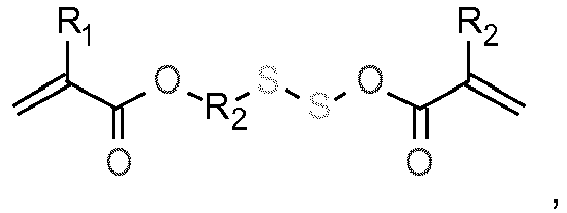
a second vinyl monomer compound is selected from compounds having general structure:
wherein the initiator is selected from a compound having general structure:
In a preferred embodiment, the multi-vinyl monomers are a mixture of 2-(dimethylamino) ethyl methacrylate (DMAEMA) and 2-{[2-(prop-2-enoyloxy)ethyl]disulfanyl-4-ethyl prop-2-enoate (PEEDEPE).Suitably, the polymerisation initiator is EBIB. - Preferably, the catalyst of the invention is a mixture of CuCl/CuCl2.
- Desirably, the terminating group of the polymer of the invention is provided by conjugate addition (Michael Addition) of diaminopropane to the vinyl group.
- Preferably, the self-condensing vinyl polymerization process is a deactivation atom transfer radical polymerisation (DE-ATRP), ATRP or a RAFT process.
- Suitable RAFT agents function as terminating groups in a RAFT polymerisation - such agents are shown in
Figure 19 . The ratios of initiators and RAFT agents to the divinyl disulfide monomer can range from 1:1:1 to 1:99:1 (RAFT initiator: disulfide: RAFT agent). -
Figure 1 shows expression of collagen in keratinocytes after transfection with the polymer of the invention in the form of a polyplex ("polymer of the invention"); -
Figure 2 shows the superior transfection efficiency in a variety of cell types compared to PEI and Lipofectamine™2000 [Polymer/DNA @ optimal w/w]; -
Figure 3 demonstrates the reduced toxicity of the polymer of the invention; -
Figure 4 demonstrates that the polymer of the invention degrades within minutes; -
Figure 5 is a schematic of the polymer synthesis and purification using the DE-ATRP process; -
Figure 6 is a more detailed schematic of the polymer synthesis and purification using DE-ATRP; -
Figure 7 shows GPC trace for the synthesis of the polymer and growth; -
Figure 8 indicates size and charge measurements of the polymer of the invention obtained by zeta potentials; -
Figure 9 demonstrates complexation capability of DMAD at different DNA/polymer weight ratios. -
Figure 10 demonstrates results of cell viability studies in various cells. -
Figure 11 shows Luciferase expression activity analysis of DMAD demonstrated the polymer's capability to efficiently deliver and release DNA into the cell; -
Figure 12 comparative Luciferase expression results after transfection with various transfection agents; -
Figure 13 shows the percentage of transfected keratinocytes with DMAD compared with other commercially available reagents. -
Figure 14 demonstrates expression of type VII collagen after transfection with various transfection agents; -
Figure 15 illustrates an immunoblot of RDEB keratinocytes transfected with various transfection agents; -
Figure 16 is a schematic of a typical hyperbranched polymer of the invention; -
Figure 17 the chemical structures of the primary monomers used for the synthesis of DMAD; -
Figure 18 list of the chemical structures of the initiators that could be used for ATRP reaction for the synthesis of DMAD; -
Figure 19 list of the RAFT initiators and RAFT agents that could be used for the RAFT synthesis of such polymer as DMAD; -
Figure 20 Polymer structure development from linear to branched; -
Figure 21 simplified hyperbranched structure of the polymer; -
Figure 22 the principle of knotting/cyclising within a linear polymer; -
Figure 23 the principle of knotting/cyclising within the DMAD polymer; and -
Figure 24 the final simplified structure of DMAD which includes both knotted and hyprebranched structures. - The inventors have provided a platform for a non-viral, synthetic polymer based approach for gene delivery that overcome the current challenges associated with non-viral gene therapy. The approach of the invention uses Deactivation-Enhanced Atom Transfer Radical Polymerisation (DE-ATRP) to control the rate of polymer synthesis to achieve a specific molecular weight polymer in a one-pot reaction. The polymer of the invention as described herein was developed using this approach. Preferably, the polymer is hyperbranched.
- Hyperbranched polymers belong to a class of synthetic tree-like macromolecules called dendritic polymers. They are polymers with densely branched structure and a large number of end groups. Dendritic polymers include dendrimers which have completely branched star-like topologies and hyperbranched polymers which have imperfectly branched or irregular structures. Both dendrimer and hyperbranched polymer molecules are composed of repeating units emanating from a central core. The core is characterised by its functionality, which is the number of chemical bonds through which it can be connected to the external parts of the molecule. The functionality of the core is normally three (e.g. amine) or four (e.g. ethylenediamine). Through the bonds of the core, the layers of linear units (single monomers or linear chains) are attached to the core and each of these arms is terminated with the multifunctional branched unit. Larger molecules are created by adding shells of linear units to the end groups of the layer beneath. If all of these units are attached to the molecule perfectly, a dendrimer is formed. In contrast, the absence of any of these units in the molecule will result in a hyperbranched polymer structure.
- DNA complexation, cell viability and cell transfection results show promise for these newly synthesised polymers. Polyplexes (polyelectrolyte complexes of nucleic acids with polycations) have been investigated as promising delivery vectors for an assortment of therapies. Most notably, polyplexes with the ability to alter their behaviour and properties to respond to stimuli or environmental changes insure a substantial improvement of the performance of the delivery process. They depict a promising non-viral alternative for the delivery of many nucleic acid therapies and can be optimized and fine tuning to provide the optimal molecular weight, amine/acrylate and polymer/DNA ratios, and particle size for each cell and treatment type. These polymers in combination with the advances in plasmid design will have a profound effect on the non-viral gene therapy field.
- Gene delivery vectors have technical design criteria such as packaging of large DNA plasmids, protection of DNA, serum stability, specific cell targeting, internalisation, endolysosomal escape and nuclear localisation with minimal toxicity to name a few. Other criteria include economic and scale-up production factors: ease of administration, ease of fabrication, inexpensive synthesis, facile purification and safety. A much-studied cationic polymer for gene delivery is linear poly (DMAEMA) (PDMAEMA) containing tertiary amine groups for complexing DNA5. However, most of the cationic based polymers that are currently used in research lack the high efficiency displayed The cationic polymer described herein help with achieving that goal. Since cationic polymers seem to work differently with different cell types, our system is flexible enough to allow for small changes to the polymer to accommodate the required clinical target. Recent results showed protein expression in a number of cells using our three newly synthesised polymer (DMAD). This polymer formed complexes with DNA in the nanometre scale (<500nm) which were efficiently taken up by the cell. The excess positive charge of the nano-particles meant that they were capable of escaping the endosome by the "proton sponge" effect and degrading in the cytoplasm allowing for release of the DNA and subsequent expression of the protein. The polymers showed higher transfection capability (and higher protein expression) after transfection compared to current gold standard polymers (PEI, LipofectamineTM2000, superfect) with less cytotoxicity and higher DNA condensation capability. DMAD has better biodegradability due to the additional cleavage of the disulfide bond by cellular enzymatic activity and this is demonstrated by lowered cytotoxicity and higher transfection rates of 3T3 fibroblasts and collagen type VII null RDEB keratinocytes. Elevated protein expression is seen in hard to transfect cells such as Neu7.
- The present invention involves development of polymers for the investigation of non-viral gene delivery in a number of clinical targets by the use of non-viral vectors for the efficient delivery of genes to cells for gene therapy. Clinical targets include nucleus pulpous, Parkinson's, cardiovascular disease and Recessive Dystrophic Epidermolysis Bullosa.
- Furthermore, the invention provides a synthesis platform suitable for the production of specifically designed cationic polymers that are demonstrated to deliver improved transfection efficiency and cytotoxicity performance when compared to currently available gold standard gene delivery reagents. The polymer of the invention (designed herein as 'NFBfect') is an example of one such polymer. The methods provided herein are capable of synthesizing polymers with impressive biodegradable properties [intracellular] and the specific addition of modifiable functional groups, making antibody (or indeed moieties of a variety of other applications) attachment a genuine prospect.
- In particular, the Inventors have demonstrated the synthesis and characterisation of hyperbranched or linearly branched cationic polymers for the effective gene delivery for the treatment of genetic related diseases.
- In comparison to commercially available transfection agents, the polymers of the invention have:
- 1. Superior Transfection Efficiency - transfection efficiency in a variety of cell types demonstrates superior luciferase expression compared to PEI and Lipofectamine™2000 [Polymer/DNA @ optimal w/w] (See
Figure 2 ); - 2. Reduced Toxicity - aided by superior biodegradability when placed in physiological conditions (
Figure 3 ). Under physiological conditions (glutathione), NFBfect degrades within minutes (Figure 4 ); and - 3. Function Group Modification and Gene Therapy Potential.
- Polymer Synthesis & Characterisation -Copolycondensation reactions are not suitable for forming hyperbranced copolymers as vinyl monomers cannot be polymerized by these methods. However, SCVP can be used to produce such hyperbranched polymers. Typically, a vinyl monomer of structure AB can be used, where A is a vinyl group and B is a functional group that can be converted into an initiating group B* by an external stimulus. This species is known as an inimer. The activated species can be a "living" free radical, an electrophilic cationic moiety or a carbanion. Inimers often comprise halogen groups, whereby activation occurs by removing the halogen to form either a cation or a radical. Controlled/living radical polymerisation (CRP) is a widely used technique that allows the synthesis of defined polymer architectures through precise control of molecular weights and distributions. The architectures of polymers prepared by the CRP techniques are reported to be the linear, crosslinked, branched/dendritic structures. By precisely controlling the competition between chain growth and reversible chain termination, the polymers can grow slowly and effectively while branching is introduced by the multi-functional vinyl monomers in a controlled fashion and the cross linking reaction is delayed. DE-ATRP allows the simple use of readily available and inexpensive multi-functional vinyl momomers to synthesis soluble hyperbranced polymers with a high degree of branching and controlled chain structure via homo- and copolymerisations. The key to the strategy is to control competition between chain growth and revesible chain termination via a deactivation enhanced method. Thus the polymer chains can grow effectively and brancing is introduced by multifunctional vinyl monomer in a controlled fashion, leading to the formation of hyperbranced polymers rather than cross linked gel.
- The non-viral vectors are synthetic polymers that are synthesised by the process of Atom Transfer Radical Polymerisation (ATRP) or Reversible Addition Fragmentation Chain-transfer (RAFT) polymerization to yield hyperbranched or linearly branched polymers.
- The polymers are composed of 2-(dimethylamino) ethyl methacrylate (DMAEMA), 2-{[2-(prop-2-enoyloxy)ethyl]disulfanyl4ethyl prop-2-enoate (PEEDEPE, synthesised in the lab and not available commercially), and Polyethylene glycol (PEG) (meth)acrylate.
- The DNA condensation is achieved by the cationic amine groups of the DMAEMA, while the reduced cytotoxicity is accredited to the reduction of the disulfide bonds in the PEEDEPE monomer which is also the branching agent.
- The PEG monomer adds protection from serum proteins credit to its hydrophilic nature. The polymer was called disulfide hyperbranched polymers. The polymers contain excessive vinyl groups which were terminated by conjugate addition of amine monomers (mainly 1, 3-Diaminopropane).
- An example of manufacturing procedure - The process of synthesising and purifying a preferred polymer of the invention is based on the radical polymerisation known as deactivation-enhanced atom transfer radical polymerisation (DE-ATRP,
Figure 5, Figure 6 ). - The polymer was prepared in acetonitrile (the volume ratios of total monomers to solvent = 1:1) at 60°C with Schlenk line system, where argon was bubbled through the solutions to remove oxygen. Liquids were transferred by means of septa and syringes while under argon. A typical reaction procedure is described: The DMAEMA (5.4g), PEEDEPE (1g), initiator (0.186 g), PMDTA (0.016 g), CuCl2 (0.013 g) and acetonitrile (7ml) were transferred to a two necked round-bottom flask fitted with stopcocks. Argon was bubbled through the solution for 15 minutes to purge the oxygen. L-Ascorbic acid was added into the flask to start the reaction which was kept in an oil bath at 60°C and stirring at 600rpm. Samples were taken at different time points for GPC analysis to monitor the monomer conversions by comparing the peak areas for monomers and polymers. The reaction was stopped when the desired monomer to polymer ratio was obtained. After polymerization, the obtained polymers were precipitated by adding the solution drop-wise into a large excess of hexane to remove excess DMAEMA and PEEDEPE monomers. The precipitated polymer was dissolved in acetone and passed through an aluminium oxide (Sigma-Aldrich, activated, basic, Brockmann I) glass column to remove the copper.
- Conjugate addition of diamine monomers to form cationic polymer, NFBfect™ -Unreacted vinyl groups of DMA were end-capped by adding 200mg (2mmol, dissolved in water) of the DMA polymer to 40mg (50mmol, dissolved in water) of either 1,3-diaminopropane or ethylenediamine under argon at ambient temperature for 48 hours in the dark. The end-capped polymer (DMA) solution was then protonated to a pH of 5.6 using 1 mol HCL, dialysed against water using 6,000-8,000 MWO Spectra/Por® cellulose membrane (Spectrum labs, Medical Supply Co., Dublin 15, Ireland), and freeze dried to obtain a light yellow powder.
- Characterization of the polymer - Two of the most significant factors that effect polyplex uptake by cells are their cationic charge and hydrodynamic size. The zeta-potential and hydrodynamic size of the nano-particles were determined using multimode measuring equipment that utilises the DLS and charge properties of colloidal particles to determine the particle size and potential respectively. The polymer of the invention forms polyplexes with zeta-potential higher than PEI and LipofectamineTm2000. The polymer of the invention forms polyplexes with average diameter size of less than 200 nm. Advantageously, the high positive charge and small diameter bring about enhanced cell update and internalization of polyplexes. Reduction in polymer size occurs within minutes in intracellular space. This reduction enhances DNA release into the cytoplasm. Reduction is followed by byproduct elimination from the cells which result in enhanced cell viability. Cell viability remains high relative to gold standard transfection reagents (this is seen in 5 different cell types - see Figures).
- Transmission electron microscopy (TEM) was used to obtain visual confirmation of particle sizes (
figure 5 ). - The resultant polymer was characterized by gel permeation chromatography (GPC) and proton nuclear magnetic resonance (1H NMR). Number average molecular weight (Mn), weight average molecular weight (Mw), and polydispersity (Mw/Mn) were obtained by GPC (920-LC Liquid Chromatograph, Varian) with a refractive index detector, column heater and evaporative light scattering (ELS) detector supplied by Varian. The columns (300×7.5 mm PolarGel-M Column, two in series) were eluted using DMF and calibrated with poly (methyl methacrylate) standards. All calibrations and analyses were performed at 60 °C and a flow rate of 1 mL/min. 1H NMR was carried out on a 400 MHz JEOL NMR with DELTA processing software. The chemical shifts were referenced to the lock (CD3)2CO.
- Co-polymer Synthesis: - The polymer (DMAD) was successfully synthesised using DE-ATRP in controlled conditions to obtain high molecular weight polymers with low polydispersity (PDI ∼1.2) (see
Figure 7 , showing the GPC trace for the synthesis of DMAD showing the peak shift (increase in molecular weight) and increased height (monomer conversion) over time. Samples were taken for analysis after 1 hour (H1), 2hours (H2), 5 hours (H5), and 7 hours (H7). - Size and charge measurements of poyplexes were obtained from Zetasizer and TEM (
Figure 8 ). (A) DMA/COL7A1 polyplex sizes and equivalent Zeta-potential at various ratios. As the polymer/DNA weight ratio (w/w) increases, a proportional decrease in polyplex size is observed. (B) Zeta-potential of polyplexes formed from various transfection agents showing DMA polymer with the highest charge (DMA/COL7A1 w/w =10:1) compared to other transfection agents. (C) polyplex sizes corresponding to (B). (D) TEM images of DMA, PEI, superfect and lipofectamine polyplexes. - Results are displayed as the means and standard deviations from 3 values (n=3, ±S, for statistical significance *P<0.05).
- Size and charge measurements of poyplexes as obtained from Zetasizer and TEM are shown in
Figure 4 . (A) DMA/COL7A1 polyplex sizes and equivalent Zeta-potential at various ratios. As the polymer/DNA weight ratio (w/w) increases, a proportional decrease in polyplex size is observed. (B) Zeta-potential of polyplexes formed from various transfection agents showing DMA polymer with the highest charge (DMA/COL7A1 w/w =10:1) compared to other transfection agents. (C) polyplex sizes corresponding to (B). (D) TEM images of DMA, PEI, superfect and lipofectamine polyplexes. - Results are displayed as the means and standard deviations from 3 values (n=3, ±S, for statistical significance *P<0.05).
- Polymer/DNA complexation - The ability of the polymer to complex plasmid Gaussia Luciferase (G-Luc) DNA was then assessed by gel electrophoresis. Polymer/plasmid solutions were made in phosphate buffered saline (PBS) at various weight ratios by adding 10µg to varying concentrations of polymer. These were left gently shaking for 1 hour to form complexes before analysis. An agarose gel (10% agarose in Tris-borate-EDTA (TBE) buffer, with SYBR®Safe DNA stain) was made up for all polymers tested. 5µl of each polymer/plasmid solution (DNA concentration of 50 µgml-1) were added along with 5µl loading dye to each well and subjected simultaneously to 80mV for up to 2 hours (
Fig 4 ). - Complexation Capability - Complexation capability of DMAD at different DNA/polymer weight ratios is shown in
Figure 8 . Even at a ratio of 1:0.5, it is clear that most of the DNA is complexed with the polymer as the DNA becomes trapped only free DNA continues to flow towards the positive charge. As the amount of polymer is increased, no free DNA is observed, in fact at a ratio of 1:40 the complex begins to travel in the opposite direction towards the negative electrode indicating that the complex is more cationic than at lower ratios. - Cell viability - Cell viability studies for DMAD show lower cytotoxicity in most cell types compared with current commercial polymer vectors. Results of cell viability studies of DMAD, in mouse 3T3 fibroblasts, rat adipose derived stem cells, PC12 pheochromocytoma and human RDEB keratinocytes at optimal polymer/DNA weight ratios are shown in
Figure 9 . Controls (PEI, Superfect® and LipofectamineTM) also have an optimal w/w ratio. (n=5)(±S)(P<0.05). - Cell Transfection: - Luciferase expression activity analysis of DMAD demonstrated the polymer's capability to efficiently deliver and release DNA into the cell. Gaussia luciferase expression results indicate that DMAD is capable of efficiently transfecting type VII collagen-null keratinocytes (RDEBK), rabbit-adipose derived stem cells (ADSCs), 3T3 fibroblasts and Neu7 astrocytes.
- Luciferase expression quantified by luminescence after transfection with various transfection agents including DMAD (see
Figure 11 ). Luciferase activity after transfection with polyplexes incubated in water for 60 hours at 4°C indicate that DMAD forms more stable polyplexes than commercial vectors. Results are displayed at optimal w/w ratios of polymer/DNA. (n=5)(±S)(P<0.001). - Transfection efficiency analysis - In order to measure the percentage of transfected cells when using optimal formulations for DMA, PEI, Superfect and lipofetamine, we used the eGFP as a marker gene and measured the gene expression by FACS analysis. Out of a gated 10,000 recoded events, around 10% of RDEBK cell population showed expression for eGFP. Meanwhile, only 4-6% efficiency of transfection was observed in cells transfected with PEI, Superfect and lipofectamine polyplexes. These results demonstrate the capability of the polymer to form small charged particles that are easier to uptake in biophysical conditions. Furthermore, the reduction in polymer size upon cell internalization can also be proven by this method as protein expression depends on the eGFP release from the polymer.
- Flow cytometery dot plots (top) and histograms (bottom) of polymer or liposome poyplex transfected RDEB keratinocytes are shown in
Figure 12 . Efficiency of transfection was measured by counting the number of eGFP transfected cells using BDFACSCanto equipment. DMA transfected cells showed the highest percentage of total transfected cells compared to other transfection agents. - COL7A1 expression after transfection - Indirect immunoflourescence staining was carried out on RDEB Keratinocytes transfected with polyplexes carrying the COL7A1 sequence. Expression of type VII collagen in transfected cells was visualized using an affinity-purified antibody to the NC1 domain of the type VII collagen. Large amounts of the protein were seen in cells transfected with the DMAD polyplexes with some being released into the extracellular matrix (figure 9a). Transfection data of collagen type VII null keratinocytes, using the polymer of the invention carrying the GFP plasmids, showing about 10% of cells are expressing the green fluorescent protein. The number of cells expressing the green fluorescent protein are two folds higher with the polymer of the invention than in groups transfected with commercial reagents.
- Expression of type VII collagen (Green) in type VII collagen-null RDEB keratinocytes (RDEBKs) after (a) DMAD, (b) PEI, (c) lipofetamine and (d) naked COL7A1 transfection is shown in
Figure 13 . DMA transfected cells show the highest amount of type VII collagen expression (5%, as analyzed using threshold on ImageJ). Cell identification was achieved by counterstaining with rhodmaine-phalloidin (red) and DAPI (blue). Areas of significant expression are indicated with arrows. Collagen type VII expression in collagen VII null human RDEB keratinocytes was also analysed by western blot after transfection. DMAD transfected cells showed the highest amount of collagen type VII in RDEB keratinocytes in immunoblot. - Immunoblot of RDEB keratinocytes transfected with various transfection agents is shown in
Figure 14 . Positive controls include NHK, Lipofectamine2000, Superfect and PEI, negative control is untreated RDEB keratinocytes. - In conclusion, the inventors have developed a biodegradable cationic polymer from DE-ATRP and end-capped with diamine monomers by conjugate addition. The polymer shows significantly higher transfection and cell metabolic activity over conventional dendrimer and liposome based transfection agents. Efficient transfection and protein expression are clearly demonstrated using this polymeric vector due to its high cationic charge and disulfide content that degrade upon cell internalization.
Claims (15)
- A polymer for transfecting a nucleic acid into a cell, the polymer comprising a plurality of branches, wherein at least one of the branches comprises: at least one disulfide group, and/or at least one vinyl group, which may an unsubstituted vinyl or a functionalized vinyl group, and/or combinations thereof.
- The polymer of any preceding Claim wherein each of the plurality of polymeric branches comprises an alkyl based chain from which further alkyl based chains split off to form further branches.
- The polymer of Claim 1 or 2 wherein at least one of the plurality of polymeric branches comprises at least one ionisable amine, diamine, tri-amine or amino alcohol functionality.
- The polymer of any preceding Claim wherein at least one of the plurality of polymeric branches terminates with a hydroxyl functionality.
- The polymer of Claim 1 or 2 wherein at least one of the each of the plurality of polymeric branches terminates with a halide selected from the group consisting of: F, Cl, Br and I.
- The polymer of any preceding claim in which the polymer is hyperbranched.
- The polymer of any preceding claim in which the polymer is a knotted polymer which can be single cyclized or multi-cyclized.
- The polymer of any preceding claim in which the polymer is polydisperse.
- The polymer of claim 1 wherein the polymer is hyperbranched and comprises
a plurality of branched alkylene chains,
wherein at least one of the alkylene branches comprises at least one disulfide group in the alkylene chain, and the alkylene sidechain is further substituted with at least one vinyl group or vinyl functionality; and
wherein at least one of the alkylene branches terminates with at least one of a carbocation, a halide, an ionisable amine, diamine and a hydroxyl group. - The polymer of any preceding claim wherein the vinyl group or vinyl functionality is a methacrylate group which can be unsubstituted or substituted with a linear or branched C1-6 alkyl.
- Use of a polymer as defined in any one of claims 1 to 10 as a nucleic acid or a drug delivery agent or as a transfecting agent in non-viral gene delivery or as a polyelectrolyte for complexing nucleic acid or in an analytical application in bio-imaging techniques for tagging proteins/nucleic acids inside the cell.
- Polymer for use as defined in claim 11, wherein the agent is for the treatment of a disease that can be treated by genetic or nucleic acid manipulation.
- A process for synthesising a hyperbranched polymer comprising polymerising a divinyl disulfide monomer with other optional polymerisable monomers and/or initiators under suitable polymerisation conditions to effect polymerisation of the monomer by a living polymerisation process.
- The process of claim 12 or 13 wherein the divinyl disulfide monomer is selected from the group consisting of:

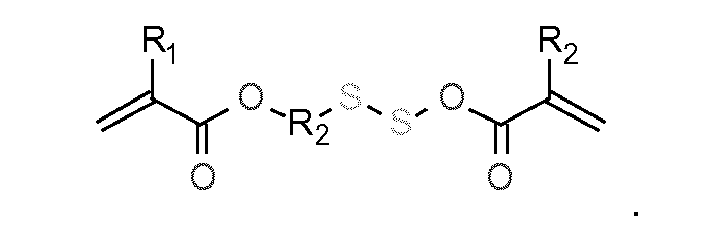
- A method of transfecting an cell, comprising contacting the cell with a transfection agent comprising a hyperbranched polymer comprising a plurality of disulfide groups and a plurality of vinyl groups or vinyl functionalities, wherein the step of contacting the least one comprising nucleic acid and a polycationic compound transfects the cell with the nucleic acid.
Priority Applications (4)
| Application Number | Priority Date | Filing Date | Title |
|---|---|---|---|
| EP12187515.7A EP2716689A1 (en) | 2012-10-05 | 2012-10-05 | Polymer comprising a plurality of branches having at least one disulfide group and/or at least one vinyl group |
| US14/432,640 US20150240262A1 (en) | 2012-10-05 | 2013-10-04 | Polymer synthesis |
| EP13771543.9A EP2904035A1 (en) | 2012-10-05 | 2013-10-04 | Polymer synthesis |
| PCT/EP2013/070749 WO2014053654A1 (en) | 2012-10-05 | 2013-10-04 | Polymer synthesis |
Applications Claiming Priority (1)
| Application Number | Priority Date | Filing Date | Title |
|---|---|---|---|
| EP12187515.7A EP2716689A1 (en) | 2012-10-05 | 2012-10-05 | Polymer comprising a plurality of branches having at least one disulfide group and/or at least one vinyl group |
Publications (1)
| Publication Number | Publication Date |
|---|---|
| EP2716689A1 true EP2716689A1 (en) | 2014-04-09 |
Family
ID=47010344
Family Applications (2)
| Application Number | Title | Priority Date | Filing Date |
|---|---|---|---|
| EP12187515.7A Withdrawn EP2716689A1 (en) | 2012-10-05 | 2012-10-05 | Polymer comprising a plurality of branches having at least one disulfide group and/or at least one vinyl group |
| EP13771543.9A Withdrawn EP2904035A1 (en) | 2012-10-05 | 2013-10-04 | Polymer synthesis |
Family Applications After (1)
| Application Number | Title | Priority Date | Filing Date |
|---|---|---|---|
| EP13771543.9A Withdrawn EP2904035A1 (en) | 2012-10-05 | 2013-10-04 | Polymer synthesis |
Country Status (3)
| Country | Link |
|---|---|
| US (1) | US20150240262A1 (en) |
| EP (2) | EP2716689A1 (en) |
| WO (1) | WO2014053654A1 (en) |
Cited By (1)
| Publication number | Priority date | Publication date | Assignee | Title |
|---|---|---|---|---|
| CN120988297A (en) * | 2025-08-13 | 2025-11-21 | 滨州医学院 | A multifunctional multi-arm star polymer, its preparation method and uses |
Families Citing this family (17)
| Publication number | Priority date | Publication date | Assignee | Title |
|---|---|---|---|---|
| CA2807552A1 (en) | 2010-08-06 | 2012-02-09 | Moderna Therapeutics, Inc. | Engineered nucleic acids and methods of use thereof |
| ES3005233T3 (en) | 2010-10-01 | 2025-03-14 | Modernatx Inc | Modified nucleosides, nucleotides, and nucleic acids, and uses thereof |
| JP2014511687A (en) | 2011-03-31 | 2014-05-19 | モデルナ セラピューティクス インコーポレイテッド | Engineered nucleic acid delivery and formulation |
| US9464124B2 (en) | 2011-09-12 | 2016-10-11 | Moderna Therapeutics, Inc. | Engineered nucleic acids and methods of use thereof |
| EP2763701B1 (en) | 2011-10-03 | 2018-12-19 | Moderna Therapeutics, Inc. | Modified nucleosides, nucleotides, and nucleic acids, and uses thereof |
| JP2015501844A (en) | 2011-12-16 | 2015-01-19 | モデルナ セラピューティクス インコーポレイテッドModerna Therapeutics,Inc. | Modified nucleosides, nucleotides and nucleic acid compositions |
| US9572897B2 (en) | 2012-04-02 | 2017-02-21 | Modernatx, Inc. | Modified polynucleotides for the production of cytoplasmic and cytoskeletal proteins |
| WO2013151663A1 (en) | 2012-04-02 | 2013-10-10 | modeRNA Therapeutics | Modified polynucleotides for the production of membrane proteins |
| US9254311B2 (en) | 2012-04-02 | 2016-02-09 | Moderna Therapeutics, Inc. | Modified polynucleotides for the production of proteins |
| US9283287B2 (en) | 2012-04-02 | 2016-03-15 | Moderna Therapeutics, Inc. | Modified polynucleotides for the production of nuclear proteins |
| ES2921623T3 (en) | 2012-11-26 | 2022-08-30 | Modernatx Inc | terminally modified RNA |
| US8980864B2 (en) | 2013-03-15 | 2015-03-17 | Moderna Therapeutics, Inc. | Compositions and methods of altering cholesterol levels |
| WO2015048744A2 (en) | 2013-09-30 | 2015-04-02 | Moderna Therapeutics, Inc. | Polynucleotides encoding immune modulating polypeptides |
| KR20160067219A (en) | 2013-10-03 | 2016-06-13 | 모더나 세라퓨틱스, 인코포레이티드 | Polynucleotides encoding low density lipoprotein receptor |
| SG11202105760VA (en) | 2018-12-28 | 2021-07-29 | Amryt Genetics Ltd | Methods for forming polyplexes |
| CN115926134B (en) * | 2022-11-14 | 2023-11-10 | 百达联康生物科技(深圳)有限公司 | Cationic polyester and preparation method and application thereof |
| CN117460761B (en) * | 2023-02-16 | 2025-03-11 | 林桂孜 | A terminal-modified cationic polyester, a living body delivery system and its application |
-
2012
- 2012-10-05 EP EP12187515.7A patent/EP2716689A1/en not_active Withdrawn
-
2013
- 2013-10-04 EP EP13771543.9A patent/EP2904035A1/en not_active Withdrawn
- 2013-10-04 WO PCT/EP2013/070749 patent/WO2014053654A1/en not_active Ceased
- 2013-10-04 US US14/432,640 patent/US20150240262A1/en not_active Abandoned
Non-Patent Citations (5)
| Title |
|---|
| ARAM O. SAEED ET AL: "The reverse of polymer degradation: in situ crosslinked gel formation through disulfide cleavage", CHEMICAL COMMUNICATIONS, vol. 48, no. 4, 1 January 2012 (2012-01-01), pages 585, XP055042452, ISSN: 1359-7345, DOI: 10.1039/c1cc16538k * |
| HONGYUN TAI ET AL: "Thermoresponsive and Photocrosslinkable PEGMEMA-PPGMA-EGDMA Copolymers from a One-Step ATRP Synthesis", BIOMACROMOLECULES, vol. 10, no. 4, 13 April 2009 (2009-04-13), pages 822 - 828, XP055042524, ISSN: 1525-7797, DOI: 10.1021/bm801308q * |
| JUNG KWON OH ET AL: "Biodegradable Nanogels Prepared by Atom Transfer Radical Polymerization as Potential Drug Delivery Carriers: Synthesis, Biodegradation, in Vitro Release, and Bioconjugation", JOURNAL OF THE AMERICAN CHEMICAL SOCIETY, vol. 129, no. 18, 1 May 2007 (2007-05-01), pages 5939 - 5945, XP055042469, ISSN: 0002-7863, DOI: 10.1021/ja069150l * |
| NICOLAY V TSAREVSKY ET AL: "Combining Atom Transfer Radical Polymerization and Disulfide/Thiol Redox Chemistry: A Route to Well-Defined (Bio)degradable Polymeric Materials", MACROMOLECULES, AMERICAN CHEMICAL SOCIETY, WASHINGTON, DC; US, vol. 38, no. 8, 1 January 2005 (2005-01-01), pages 3087 - 3092, XP002646814, ISSN: 0024-9297, [retrieved on 20050324], DOI: 10.1021/MA050020R * |
| SAADYAH E. AVERICK ET AL: "Preparation of Cationic Nanogels for Nucleic Acid Delivery", BIOMACROMOLECULES, 1 January 2012 (2012-01-01), XP055042517, ISSN: 1525-7797, DOI: 10.1021/bm301166s * |
Cited By (1)
| Publication number | Priority date | Publication date | Assignee | Title |
|---|---|---|---|---|
| CN120988297A (en) * | 2025-08-13 | 2025-11-21 | 滨州医学院 | A multifunctional multi-arm star polymer, its preparation method and uses |
Also Published As
| Publication number | Publication date |
|---|---|
| EP2904035A1 (en) | 2015-08-12 |
| US20150240262A1 (en) | 2015-08-27 |
| WO2014053654A1 (en) | 2014-04-10 |
Similar Documents
| Publication | Publication Date | Title |
|---|---|---|
| US20150240262A1 (en) | Polymer synthesis | |
| Cho et al. | Synthesis of biocompatible PEG-based star polymers with cationic and degradable core for siRNA delivery | |
| Hinton et al. | The effect of RAFT-derived cationic block copolymer structure on gene silencing efficiency | |
| US9254258B2 (en) | Amphiphilic block copolymers for nucleic acid delivery | |
| US20160375143A1 (en) | Mikto-arm branched polymers | |
| WO2014066912A1 (en) | Polymeric nanoparticles | |
| WO2007084797A1 (en) | Chemically modified polycation polymer for sirna delivery | |
| Gibson et al. | Star polymers with acid-labile diacetal-based cores synthesized by aqueous RAFT polymerization for intracellular DNA delivery | |
| Kundu et al. | Synthetic polymeric vectors in gene therapy | |
| Cook et al. | Cationic and hydrolysable branched polymers by RAFT for complexation and controlled release of dsRNA | |
| AU2022253899A1 (en) | Rapid design, build, test, and learn technologies for identifying and using non-viral carriers | |
| Lin et al. | Grafting from small interfering ribonucleic acid (siRNA) as an alternative synthesis route to siRNA–polymer conjugates | |
| Li et al. | Tumor‐targeted redox‐responsive nonviral gene delivery nanocarriers based on neutral‐cationic brush block copolymers | |
| Pafiti et al. | Hydrophilic cationic star homopolymers based on a novel diethanol-N-methylamine dimethacrylate cross-linker for siRNA transfection: synthesis, characterization, and evaluation | |
| Fliervoet et al. | Structure and dynamics of thermosensitive pDNA polyplexes studied by time-resolved fluorescence spectroscopy | |
| Pafiti et al. | Cationic star polymer siRNA transfectants interconnected with a piperazine-based cationic cross-linker | |
| Burgevin et al. | Cationic star copolymers obtained by the arm first approach for gene transfection | |
| Feng et al. | PEGylated poly (aspartate-g-OEI) copolymers for effective and prolonged gene transfection | |
| JP2008195687A (en) | Nucleic acid complex | |
| JP2010115153A (en) | Gene-transferring agent and nucleic acid complex | |
| Dalal | Effective pDNA and CRISPR RNP Delivery Promoted by Design of Cationic Bottlebrush and Combinatorial Polymer Synthesis | |
| Chrysostomou et al. | Hydrophilic Random Cationic Copolymers as Polyplex-Formation Vectors for DNA. Materials 2022, 15, 2650 | |
| JP2010136631A (en) | Method for preparing nucleic acid complex and nucleic acid complex | |
| Prossnitz et al. | Boronic acid copolymers for intracellular delivery of proteins, peptides, and nucleic acids | |
| KR101486989B1 (en) | Copolymer and gene transfer carrier comprising the same |
Legal Events
| Date | Code | Title | Description |
|---|---|---|---|
| PUAI | Public reference made under article 153(3) epc to a published international application that has entered the european phase |
Free format text: ORIGINAL CODE: 0009012 |
|
| AK | Designated contracting states |
Kind code of ref document: A1 Designated state(s): AL AT BE BG CH CY CZ DE DK EE ES FI FR GB GR HR HU IE IS IT LI LT LU LV MC MK MT NL NO PL PT RO RS SE SI SK SM TR |
|
| AX | Request for extension of the european patent |
Extension state: BA ME |
|
| STAA | Information on the status of an ep patent application or granted ep patent |
Free format text: STATUS: THE APPLICATION IS DEEMED TO BE WITHDRAWN |
|
| 18D | Application deemed to be withdrawn |
Effective date: 20141010 |