EP2716650A1 - Method for producing peptide - Google Patents
Method for producing peptide Download PDFInfo
- Publication number
- EP2716650A1 EP2716650A1 EP12793717.5A EP12793717A EP2716650A1 EP 2716650 A1 EP2716650 A1 EP 2716650A1 EP 12793717 A EP12793717 A EP 12793717A EP 2716650 A1 EP2716650 A1 EP 2716650A1
- Authority
- EP
- European Patent Office
- Prior art keywords
- group
- fmoc
- peptide
- terminal
- protected
- Prior art date
- Legal status (The legal status is an assumption and is not a legal conclusion. Google has not performed a legal analysis and makes no representation as to the accuracy of the status listed.)
- Withdrawn
Links
- 108090000765 processed proteins & peptides Proteins 0.000 title claims abstract description 146
- 238000004519 manufacturing process Methods 0.000 title claims abstract description 55
- -1 N-Fmoc amino Chemical group 0.000 claims abstract description 86
- 239000002904 solvent Substances 0.000 claims abstract description 72
- 150000001413 amino acids Chemical class 0.000 claims abstract description 49
- 125000003088 (fluoren-9-ylmethoxy)carbonyl group Chemical group 0.000 claims abstract description 42
- 238000006243 chemical reaction Methods 0.000 claims abstract description 42
- 238000009833 condensation Methods 0.000 claims abstract description 42
- 230000005494 condensation Effects 0.000 claims abstract description 42
- 210000004899 c-terminal region Anatomy 0.000 claims abstract description 39
- RTZKZFJDLAIYFH-UHFFFAOYSA-N Diethyl ether Chemical compound CCOCC RTZKZFJDLAIYFH-UHFFFAOYSA-N 0.000 claims abstract description 35
- 239000002253 acid Substances 0.000 claims abstract description 27
- 230000000269 nucleophilic effect Effects 0.000 claims abstract description 22
- 150000007530 organic bases Chemical class 0.000 claims abstract description 22
- 239000002798 polar solvent Substances 0.000 claims abstract description 20
- 125000003178 carboxy group Chemical group [H]OC(*)=O 0.000 claims abstract description 17
- 238000006386 neutralization reaction Methods 0.000 claims abstract description 16
- 239000004210 ether based solvent Substances 0.000 claims abstract description 13
- 239000003795 chemical substances by application Substances 0.000 claims abstract description 12
- 230000003472 neutralizing effect Effects 0.000 claims abstract description 4
- 238000000034 method Methods 0.000 claims description 65
- 238000010511 deprotection reaction Methods 0.000 claims description 44
- 125000006239 protecting group Chemical group 0.000 claims description 43
- WVDDGKGOMKODPV-UHFFFAOYSA-N hydroxymethyl benzene Natural products OCC1=CC=CC=C1 WVDDGKGOMKODPV-UHFFFAOYSA-N 0.000 claims description 38
- 125000005843 halogen group Chemical group 0.000 claims description 34
- 125000001931 aliphatic group Chemical group 0.000 claims description 29
- 150000001875 compounds Chemical class 0.000 claims description 29
- GQHTUMJGOHRCHB-UHFFFAOYSA-N 2,3,4,6,7,8,9,10-octahydropyrimido[1,2-a]azepine Chemical compound C1CCCCN2CCCN=C21 GQHTUMJGOHRCHB-UHFFFAOYSA-N 0.000 claims description 26
- VEXZGXHMUGYJMC-UHFFFAOYSA-N Hydrochloric acid Chemical compound Cl VEXZGXHMUGYJMC-UHFFFAOYSA-N 0.000 claims description 25
- 125000004435 hydrogen atom Chemical group [H]* 0.000 claims description 24
- 235000019445 benzyl alcohol Nutrition 0.000 claims description 19
- AFVFQIVMOAPDHO-UHFFFAOYSA-N Methanesulfonic acid Chemical compound CS(O)(=O)=O AFVFQIVMOAPDHO-UHFFFAOYSA-N 0.000 claims description 17
- 125000002887 hydroxy group Chemical group [H]O* 0.000 claims description 15
- 125000000962 organic group Chemical group 0.000 claims description 15
- IXCSERBJSXMMFS-UHFFFAOYSA-N hydrogen chloride Substances Cl.Cl IXCSERBJSXMMFS-UHFFFAOYSA-N 0.000 claims description 14
- 229910000041 hydrogen chloride Inorganic materials 0.000 claims description 14
- SKTCDJAMAYNROS-UHFFFAOYSA-N methoxycyclopentane Chemical compound COC1CCCC1 SKTCDJAMAYNROS-UHFFFAOYSA-N 0.000 claims description 14
- 125000004169 (C1-C6) alkyl group Chemical group 0.000 claims description 12
- 125000003710 aryl alkyl group Chemical group 0.000 claims description 12
- QAOWNCQODCNURD-UHFFFAOYSA-N Sulfuric acid Chemical compound OS(O)(=O)=O QAOWNCQODCNURD-UHFFFAOYSA-N 0.000 claims description 10
- 125000000217 alkyl group Chemical group 0.000 claims description 10
- ASOKPJOREAFHNY-UHFFFAOYSA-N 1-Hydroxybenzotriazole Chemical group C1=CC=C2N(O)N=NC2=C1 ASOKPJOREAFHNY-UHFFFAOYSA-N 0.000 claims description 9
- 125000004191 (C1-C6) alkoxy group Chemical group 0.000 claims description 8
- 229940098779 methanesulfonic acid Drugs 0.000 claims description 8
- 125000001424 substituent group Chemical group 0.000 claims description 8
- HFVGJVRPXMSSHO-UHFFFAOYSA-N (3,4,5-trioctadecoxyphenyl)methanol Chemical compound CCCCCCCCCCCCCCCCCCOC1=CC(CO)=CC(OCCCCCCCCCCCCCCCCCC)=C1OCCCCCCCCCCCCCCCCCC HFVGJVRPXMSSHO-UHFFFAOYSA-N 0.000 claims description 7
- ITMCEJHCFYSIIV-UHFFFAOYSA-N triflic acid Chemical compound OS(=O)(=O)C(F)(F)F ITMCEJHCFYSIIV-UHFFFAOYSA-N 0.000 claims description 7
- JIVOYVYXKAUBQE-UHFFFAOYSA-N [4-methoxy-2-[(3,4,5-trioctadecoxyphenyl)methoxy]phenyl]methanol Chemical compound CCCCCCCCCCCCCCCCCCOC1=C(OCCCCCCCCCCCCCCCCCC)C(OCCCCCCCCCCCCCCCCCC)=CC(COC=2C(=CC=C(OC)C=2)CO)=C1 JIVOYVYXKAUBQE-UHFFFAOYSA-N 0.000 claims description 6
- 125000003983 fluorenyl group Chemical group C1(=CC=CC=2C3=CC=CC=C3CC12)* 0.000 claims description 6
- 239000007788 liquid Substances 0.000 claims description 6
- 238000000926 separation method Methods 0.000 claims description 6
- 125000001997 phenyl group Chemical group [H]C1=C([H])C([H])=C(*)C([H])=C1[H] 0.000 claims description 5
- SGUVLZREKBPKCE-UHFFFAOYSA-N 1,5-diazabicyclo[4.3.0]-non-5-ene Chemical compound C1CCN=C2CCCN21 SGUVLZREKBPKCE-UHFFFAOYSA-N 0.000 claims description 4
- FPIRBHDGWMWJEP-UHFFFAOYSA-N 1-hydroxy-7-azabenzotriazole Chemical compound C1=CN=C2N(O)N=NC2=C1 FPIRBHDGWMWJEP-UHFFFAOYSA-N 0.000 claims description 4
- QUVBNUCRYNYNTI-UHFFFAOYSA-N 9-bromo-2-(12-docosoxydodecoxy)-9-(3-fluorophenyl)fluorene Chemical compound C12=CC(OCCCCCCCCCCCCOCCCCCCCCCCCCCCCCCCCCCC)=CC=C2C2=CC=CC=C2C1(Br)C1=CC=CC(F)=C1 QUVBNUCRYNYNTI-UHFFFAOYSA-N 0.000 claims description 4
- 150000001409 amidines Chemical group 0.000 claims description 4
- 150000002391 heterocyclic compounds Chemical class 0.000 claims description 4
- IMNIMPAHZVJRPE-UHFFFAOYSA-N triethylenediamine Chemical compound C1CN2CCN1CC2 IMNIMPAHZVJRPE-UHFFFAOYSA-N 0.000 claims description 4
- NCNPWXJYNBTSLM-UHFFFAOYSA-N (3,4,5-trioctadecoxyphenyl)methanamine Chemical compound CCCCCCCCCCCCCCCCCCOC1=CC(CN)=CC(OCCCCCCCCCCCCCCCCCC)=C1OCCCCCCCCCCCCCCCCCC NCNPWXJYNBTSLM-UHFFFAOYSA-N 0.000 claims description 3
- PDVFSPNIEOYOQL-UHFFFAOYSA-N (4-methylphenyl)sulfonyl 4-methylbenzenesulfonate Chemical compound C1=CC(C)=CC=C1S(=O)(=O)OS(=O)(=O)C1=CC=C(C)C=C1 PDVFSPNIEOYOQL-UHFFFAOYSA-N 0.000 claims description 3
- SRSXLGNVWSONIS-UHFFFAOYSA-N benzenesulfonic acid Chemical compound OS(=O)(=O)C1=CC=CC=C1 SRSXLGNVWSONIS-UHFFFAOYSA-N 0.000 claims description 3
- 229940092714 benzenesulfonic acid Drugs 0.000 claims description 3
- HBXISCOEZOJYPX-UHFFFAOYSA-N bis(4-docosoxyphenyl)methanamine Chemical compound C1=CC(OCCCCCCCCCCCCCCCCCCCCCC)=CC=C1C(N)C1=CC=C(OCCCCCCCCCCCCCCCCCCCCCC)C=C1 HBXISCOEZOJYPX-UHFFFAOYSA-N 0.000 claims description 3
- LDWRQPXEPGNMRS-UHFFFAOYSA-N bis(4-docosoxyphenyl)methanol Chemical compound C1=CC(OCCCCCCCCCCCCCCCCCCCCCC)=CC=C1C(O)C1=CC=C(OCCCCCCCCCCCCCCCCCCCCCC)C=C1 LDWRQPXEPGNMRS-UHFFFAOYSA-N 0.000 claims description 3
- ZYOVPECQFUYTET-UHFFFAOYSA-N ethyl 3-hydroxytriazole-4-carboxylate Chemical compound CCOC(=O)C1=CN=NN1O ZYOVPECQFUYTET-UHFFFAOYSA-N 0.000 claims description 3
- 230000001376 precipitating effect Effects 0.000 claims description 3
- WEVYAHXRMPXWCK-UHFFFAOYSA-N Acetonitrile Chemical compound CC#N WEVYAHXRMPXWCK-UHFFFAOYSA-N 0.000 description 50
- OKKJLVBELUTLKV-UHFFFAOYSA-N Methanol Chemical compound OC OKKJLVBELUTLKV-UHFFFAOYSA-N 0.000 description 45
- HEDRZPFGACZZDS-UHFFFAOYSA-N Chloroform Chemical compound ClC(Cl)Cl HEDRZPFGACZZDS-UHFFFAOYSA-N 0.000 description 40
- 239000000203 mixture Substances 0.000 description 24
- WYURNTSHIVDZCO-UHFFFAOYSA-N Tetrahydrofuran Chemical compound C1CCOC1 WYURNTSHIVDZCO-UHFFFAOYSA-N 0.000 description 20
- YMWUJEATGCHHMB-UHFFFAOYSA-N Dichloromethane Chemical compound ClCCl YMWUJEATGCHHMB-UHFFFAOYSA-N 0.000 description 18
- 125000003277 amino group Chemical group 0.000 description 18
- 238000001556 precipitation Methods 0.000 description 17
- BXRNXXXXHLBUKK-UHFFFAOYSA-N piperazine-2,5-dione Chemical compound O=C1CNC(=O)CN1 BXRNXXXXHLBUKK-UHFFFAOYSA-N 0.000 description 16
- 239000000243 solution Substances 0.000 description 16
- 125000000524 functional group Chemical group 0.000 description 13
- 125000000999 tert-butyl group Chemical group [H]C([H])([H])C(*)(C([H])([H])[H])C([H])([H])[H] 0.000 description 13
- 238000005580 one pot reaction Methods 0.000 description 12
- 125000004432 carbon atom Chemical group C* 0.000 description 11
- 238000006482 condensation reaction Methods 0.000 description 11
- 238000001914 filtration Methods 0.000 description 11
- 239000002244 precipitate Substances 0.000 description 11
- 239000000047 product Substances 0.000 description 11
- NQRYJNQNLNOLGT-UHFFFAOYSA-N Piperidine Chemical compound C1CCNCC1 NQRYJNQNLNOLGT-UHFFFAOYSA-N 0.000 description 10
- DTQVDTLACAAQTR-UHFFFAOYSA-N Trifluoroacetic acid Chemical compound OC(=O)C(F)(F)F DTQVDTLACAAQTR-UHFFFAOYSA-N 0.000 description 10
- 238000002955 isolation Methods 0.000 description 10
- 230000015572 biosynthetic process Effects 0.000 description 9
- ZMXDDKWLCZADIW-UHFFFAOYSA-N N,N-Dimethylformamide Chemical compound CN(C)C=O ZMXDDKWLCZADIW-UHFFFAOYSA-N 0.000 description 8
- 125000000539 amino acid group Chemical group 0.000 description 8
- HPNMFZURTQLUMO-UHFFFAOYSA-N diethylamine Chemical compound CCNCC HPNMFZURTQLUMO-UHFFFAOYSA-N 0.000 description 8
- 238000010647 peptide synthesis reaction Methods 0.000 description 8
- 238000011403 purification operation Methods 0.000 description 8
- NPZTUJOABDZTLV-UHFFFAOYSA-N hydroxybenzotriazole Substances O=C1C=CC=C2NNN=C12 NPZTUJOABDZTLV-UHFFFAOYSA-N 0.000 description 7
- 239000007791 liquid phase Substances 0.000 description 7
- 125000002496 methyl group Chemical group [H]C([H])([H])* 0.000 description 7
- 238000003786 synthesis reaction Methods 0.000 description 7
- FPQQSJJWHUJYPU-UHFFFAOYSA-N 3-(dimethylamino)propyliminomethylidene-ethylazanium;chloride Chemical compound Cl.CCN=C=NCCCN(C)C FPQQSJJWHUJYPU-UHFFFAOYSA-N 0.000 description 6
- 125000001797 benzyl group Chemical group [H]C1=C([H])C([H])=C(C([H])=C1[H])C([H])([H])* 0.000 description 6
- 125000001495 ethyl group Chemical group [H]C([H])([H])C([H])([H])* 0.000 description 6
- 239000012046 mixed solvent Substances 0.000 description 6
- 230000002829 reductive effect Effects 0.000 description 6
- 238000007086 side reaction Methods 0.000 description 6
- 238000005406 washing Methods 0.000 description 6
- QWXZOFZKSQXPDC-NSHDSACASA-N (2s)-2-(9h-fluoren-9-ylmethoxycarbonylamino)propanoic acid Chemical compound C1=CC=C2C(COC(=O)N[C@@H](C)C(O)=O)C3=CC=CC=C3C2=C1 QWXZOFZKSQXPDC-NSHDSACASA-N 0.000 description 5
- 238000001816 cooling Methods 0.000 description 5
- 125000000956 methoxy group Chemical group [H]C([H])([H])O* 0.000 description 5
- 239000007787 solid Substances 0.000 description 5
- SWZCTMTWRHEBIN-QFIPXVFZSA-N (2s)-2-(9h-fluoren-9-ylmethoxycarbonylamino)-3-(4-hydroxyphenyl)propanoic acid Chemical compound C([C@@H](C(=O)O)NC(=O)OCC1C2=CC=CC=C2C2=CC=CC=C21)C1=CC=C(O)C=C1 SWZCTMTWRHEBIN-QFIPXVFZSA-N 0.000 description 4
- WSLDOOZREJYCGB-UHFFFAOYSA-N 1,2-Dichloroethane Chemical compound ClCCCl WSLDOOZREJYCGB-UHFFFAOYSA-N 0.000 description 4
- WKBOTKDWSSQWDR-UHFFFAOYSA-N Bromine atom Chemical group [Br] WKBOTKDWSSQWDR-UHFFFAOYSA-N 0.000 description 4
- IAZDPXIOMUYVGZ-UHFFFAOYSA-N Dimethylsulphoxide Chemical compound CS(C)=O IAZDPXIOMUYVGZ-UHFFFAOYSA-N 0.000 description 4
- JGFZNNIVVJXRND-UHFFFAOYSA-N N,N-Diisopropylethylamine (DIPEA) Chemical compound CCN(C(C)C)C(C)C JGFZNNIVVJXRND-UHFFFAOYSA-N 0.000 description 4
- UIIMBOGNXHQVGW-UHFFFAOYSA-M Sodium bicarbonate Chemical compound [Na+].OC([O-])=O UIIMBOGNXHQVGW-UHFFFAOYSA-M 0.000 description 4
- 125000000484 butyl group Chemical group [H]C([*])([H])C([H])([H])C([H])([H])C([H])([H])[H] 0.000 description 4
- 230000018044 dehydration Effects 0.000 description 4
- 238000006297 dehydration reaction Methods 0.000 description 4
- 238000004090 dissolution Methods 0.000 description 4
- 150000002430 hydrocarbons Chemical group 0.000 description 4
- 125000000959 isobutyl group Chemical group [H]C([H])([H])C([H])(C([H])([H])[H])C([H])([H])* 0.000 description 4
- 125000001449 isopropyl group Chemical group [H]C([H])([H])C([H])(*)C([H])([H])[H] 0.000 description 4
- 125000001436 propyl group Chemical group [H]C([*])([H])C([H])([H])C([H])([H])[H] 0.000 description 4
- 125000002914 sec-butyl group Chemical group [H]C([H])([H])C([H])([H])C([H])(*)C([H])([H])[H] 0.000 description 4
- 239000007858 starting material Substances 0.000 description 4
- NDKDFTQNXLHCGO-UHFFFAOYSA-N 2-(9h-fluoren-9-ylmethoxycarbonylamino)acetic acid Chemical compound C1=CC=C2C(COC(=O)NCC(=O)O)C3=CC=CC=C3C2=C1 NDKDFTQNXLHCGO-UHFFFAOYSA-N 0.000 description 3
- ZCYVEMRRCGMTRW-UHFFFAOYSA-N 7553-56-2 Chemical group [I] ZCYVEMRRCGMTRW-UHFFFAOYSA-N 0.000 description 3
- UHOVQNZJYSORNB-UHFFFAOYSA-N Benzene Chemical compound C1=CC=CC=C1 UHOVQNZJYSORNB-UHFFFAOYSA-N 0.000 description 3
- OKTJSMMVPCPJKN-UHFFFAOYSA-N Carbon Chemical compound [C] OKTJSMMVPCPJKN-UHFFFAOYSA-N 0.000 description 3
- LFQSCWFLJHTTHZ-UHFFFAOYSA-N Ethanol Chemical compound CCO LFQSCWFLJHTTHZ-UHFFFAOYSA-N 0.000 description 3
- YXFVVABEGXRONW-UHFFFAOYSA-N Toluene Chemical compound CC1=CC=CC=C1 YXFVVABEGXRONW-UHFFFAOYSA-N 0.000 description 3
- 125000003342 alkenyl group Chemical group 0.000 description 3
- 125000000304 alkynyl group Chemical group 0.000 description 3
- 125000003275 alpha amino acid group Chemical group 0.000 description 3
- 150000001412 amines Chemical class 0.000 description 3
- 229910052799 carbon Inorganic materials 0.000 description 3
- 229910052801 chlorine Inorganic materials 0.000 description 3
- 125000001309 chloro group Chemical group Cl* 0.000 description 3
- 125000000753 cycloalkyl group Chemical group 0.000 description 3
- 238000001035 drying Methods 0.000 description 3
- 230000008030 elimination Effects 0.000 description 3
- 238000003379 elimination reaction Methods 0.000 description 3
- 238000002474 experimental method Methods 0.000 description 3
- 125000004051 hexyl group Chemical group [H]C([H])([H])C([H])([H])C([H])([H])C([H])([H])C([H])([H])C([H])([H])* 0.000 description 3
- 238000009776 industrial production Methods 0.000 description 3
- 229910052740 iodine Inorganic materials 0.000 description 3
- 239000000463 material Substances 0.000 description 3
- 238000005259 measurement Methods 0.000 description 3
- PSHKMPUSSFXUIA-UHFFFAOYSA-N n,n-dimethylpyridin-2-amine Chemical compound CN(C)C1=CC=CC=N1 PSHKMPUSSFXUIA-UHFFFAOYSA-N 0.000 description 3
- NIHNNTQXNPWCJQ-UHFFFAOYSA-N o-biphenylenemethane Natural products C1=CC=C2CC3=CC=CC=C3C2=C1 NIHNNTQXNPWCJQ-UHFFFAOYSA-N 0.000 description 3
- 125000001147 pentyl group Chemical group C(CCCC)* 0.000 description 3
- 238000000746 purification Methods 0.000 description 3
- 230000035484 reaction time Effects 0.000 description 3
- 239000000758 substrate Substances 0.000 description 3
- 238000010189 synthetic method Methods 0.000 description 3
- YLQBMQCUIZJEEH-UHFFFAOYSA-N tetrahydrofuran Natural products C=1C=COC=1 YLQBMQCUIZJEEH-UHFFFAOYSA-N 0.000 description 3
- JOXIMZWYDAKGHI-UHFFFAOYSA-N toluene-4-sulfonic acid Chemical compound CC1=CC=C(S(O)(=O)=O)C=C1 JOXIMZWYDAKGHI-UHFFFAOYSA-N 0.000 description 3
- ZPGDWQNBZYOZTI-SFHVURJKSA-N (2s)-1-(9h-fluoren-9-ylmethoxycarbonyl)pyrrolidine-2-carboxylic acid Chemical compound OC(=O)[C@@H]1CCCN1C(=O)OCC1C2=CC=CC=C2C2=CC=CC=C21 ZPGDWQNBZYOZTI-SFHVURJKSA-N 0.000 description 2
- JAUKCFULLJFBFN-VWLOTQADSA-N (2s)-2-(9h-fluoren-9-ylmethoxycarbonylamino)-3-[4-[(2-methylpropan-2-yl)oxy]phenyl]propanoic acid Chemical compound C1=CC(OC(C)(C)C)=CC=C1C[C@@H](C(O)=O)NC(=O)OCC1C2=CC=CC=C2C2=CC=CC=C21 JAUKCFULLJFBFN-VWLOTQADSA-N 0.000 description 2
- 125000006719 (C6-C10) aryl (C1-C6) alkyl group Chemical group 0.000 description 2
- BDNKZNFMNDZQMI-UHFFFAOYSA-N 1,3-diisopropylcarbodiimide Chemical compound CC(C)N=C=NC(C)C BDNKZNFMNDZQMI-UHFFFAOYSA-N 0.000 description 2
- RYHBNJHYFVUHQT-UHFFFAOYSA-N 1,4-Dioxane Chemical compound C1COCCO1 RYHBNJHYFVUHQT-UHFFFAOYSA-N 0.000 description 2
- 125000004343 1-phenylethyl group Chemical group [H]C1=C([H])C([H])=C(C([H])=C1[H])C([H])(*)C([H])([H])[H] 0.000 description 2
- WZUODJNEIXSNEU-UHFFFAOYSA-N 2-Hydroxy-4-methoxybenzaldehyde Chemical compound COC1=CC=C(C=O)C(O)=C1 WZUODJNEIXSNEU-UHFFFAOYSA-N 0.000 description 2
- 125000000094 2-phenylethyl group Chemical group [H]C1=C([H])C([H])=C(C([H])=C1[H])C([H])([H])C([H])([H])* 0.000 description 2
- YEUBRJIWOALJER-UHFFFAOYSA-N 4-methoxy-2-[(3,4,5-trioctadecoxyphenyl)methoxy]benzaldehyde Chemical compound CCCCCCCCCCCCCCCCCCOC1=C(OCCCCCCCCCCCCCCCCCC)C(OCCCCCCCCCCCCCCCCCC)=CC(COC=2C(=CC=C(OC)C=2)C=O)=C1 YEUBRJIWOALJER-UHFFFAOYSA-N 0.000 description 2
- UDXUSFMBHMHKSX-UHFFFAOYSA-N 5-(chloromethyl)-1,2,3-trioctadecoxybenzene Chemical compound CCCCCCCCCCCCCCCCCCOC1=CC(CCl)=CC(OCCCCCCCCCCCCCCCCCC)=C1OCCCCCCCCCCCCCCCCCC UDXUSFMBHMHKSX-UHFFFAOYSA-N 0.000 description 2
- CSCPPACGZOOCGX-UHFFFAOYSA-N Acetone Chemical compound CC(C)=O CSCPPACGZOOCGX-UHFFFAOYSA-N 0.000 description 2
- 239000004215 Carbon black (E152) Substances 0.000 description 2
- QOSSAOTZNIDXMA-UHFFFAOYSA-N Dicylcohexylcarbodiimide Chemical compound C1CCCCC1N=C=NC1CCCCC1 QOSSAOTZNIDXMA-UHFFFAOYSA-N 0.000 description 2
- ROSDSFDQCJNGOL-UHFFFAOYSA-N Dimethylamine Chemical compound CNC ROSDSFDQCJNGOL-UHFFFAOYSA-N 0.000 description 2
- 108010016626 Dipeptides Proteins 0.000 description 2
- ZHNUHDYFZUAESO-UHFFFAOYSA-N Formamide Chemical compound NC=O ZHNUHDYFZUAESO-UHFFFAOYSA-N 0.000 description 2
- KFZMGEQAYNKOFK-UHFFFAOYSA-N Isopropanol Chemical compound CC(C)O KFZMGEQAYNKOFK-UHFFFAOYSA-N 0.000 description 2
- YNAVUWVOSKDBBP-UHFFFAOYSA-N Morpholine Chemical compound C1COCCN1 YNAVUWVOSKDBBP-UHFFFAOYSA-N 0.000 description 2
- HEDRZPFGACZZDS-MICDWDOJSA-N Trichloro(2H)methane Chemical compound [2H]C(Cl)(Cl)Cl HEDRZPFGACZZDS-MICDWDOJSA-N 0.000 description 2
- 125000003545 alkoxy group Chemical group 0.000 description 2
- 125000005907 alkyl ester group Chemical group 0.000 description 2
- 150000001408 amides Chemical class 0.000 description 2
- 125000003118 aryl group Chemical group 0.000 description 2
- XDMSCRHRJNISLQ-SANMLTNESA-N benzyl (2S)-2-(9H-fluoren-9-ylmethoxycarbonylamino)-4-methylpentanoate Chemical compound O=C([C@@H](NC(=O)OCC1C2=CC=CC=C2C2=CC=CC=C21)CC(C)C)OCC1=CC=CC=C1 XDMSCRHRJNISLQ-SANMLTNESA-N 0.000 description 2
- 239000012267 brine Substances 0.000 description 2
- 239000003153 chemical reaction reagent Substances 0.000 description 2
- MVPPADPHJFYWMZ-UHFFFAOYSA-N chlorobenzene Chemical compound ClC1=CC=CC=C1 MVPPADPHJFYWMZ-UHFFFAOYSA-N 0.000 description 2
- BGRWYRAHAFMIBJ-UHFFFAOYSA-N diisopropylcarbodiimide Natural products CC(C)NC(=O)NC(C)C BGRWYRAHAFMIBJ-UHFFFAOYSA-N 0.000 description 2
- 125000003438 dodecyl group Chemical group [H]C([H])([H])C([H])([H])C([H])([H])C([H])([H])C([H])([H])C([H])([H])C([H])([H])C([H])([H])C([H])([H])C([H])([H])C([H])([H])C([H])([H])* 0.000 description 2
- 150000002148 esters Chemical class 0.000 description 2
- 125000003754 ethoxycarbonyl group Chemical group C(=O)(OCC)* 0.000 description 2
- 229910052731 fluorine Inorganic materials 0.000 description 2
- 125000001153 fluoro group Chemical group F* 0.000 description 2
- 238000004128 high performance liquid chromatography Methods 0.000 description 2
- 229930195733 hydrocarbon Natural products 0.000 description 2
- 239000012535 impurity Substances 0.000 description 2
- 125000001160 methoxycarbonyl group Chemical group [H]C([H])([H])OC(*)=O 0.000 description 2
- 125000004923 naphthylmethyl group Chemical group C1(=CC=CC2=CC=CC=C12)C* 0.000 description 2
- BWHMMNNQKKPAPP-UHFFFAOYSA-L potassium carbonate Chemical compound [K+].[K+].[O-]C([O-])=O BWHMMNNQKKPAPP-UHFFFAOYSA-L 0.000 description 2
- FVSKHRXBFJPNKK-UHFFFAOYSA-N propionitrile Chemical compound CCC#N FVSKHRXBFJPNKK-UHFFFAOYSA-N 0.000 description 2
- 230000001681 protective effect Effects 0.000 description 2
- 230000009257 reactivity Effects 0.000 description 2
- 229910000030 sodium bicarbonate Inorganic materials 0.000 description 2
- 235000017557 sodium bicarbonate Nutrition 0.000 description 2
- HPALAKNZSZLMCH-UHFFFAOYSA-M sodium;chloride;hydrate Chemical compound O.[Na+].[Cl-] HPALAKNZSZLMCH-UHFFFAOYSA-M 0.000 description 2
- 238000003756 stirring Methods 0.000 description 2
- FYSNRJHAOHDILO-UHFFFAOYSA-N thionyl chloride Chemical compound ClS(Cl)=O FYSNRJHAOHDILO-UHFFFAOYSA-N 0.000 description 2
- 125000002221 trityl group Chemical group [H]C1=C([H])C([H])=C([H])C([H])=C1C([*])(C1=C(C(=C(C(=C1[H])[H])[H])[H])[H])C1=C([H])C([H])=C([H])C([H])=C1[H] 0.000 description 2
- CBPJQFCAFFNICX-IBGZPJMESA-N (2s)-2-(9h-fluoren-9-ylmethoxycarbonylamino)-4-methylpentanoic acid Chemical compound C1=CC=C2C(COC(=O)N[C@@H](CC(C)C)C(O)=O)C3=CC=CC=C3C2=C1 CBPJQFCAFFNICX-IBGZPJMESA-N 0.000 description 1
- 125000000008 (C1-C10) alkyl group Chemical group 0.000 description 1
- 125000000923 (C1-C30) alkyl group Chemical group 0.000 description 1
- 125000000229 (C1-C4)alkoxy group Chemical group 0.000 description 1
- 125000005913 (C3-C6) cycloalkyl group Chemical group 0.000 description 1
- BYEAHWXPCBROCE-UHFFFAOYSA-N 1,1,1,3,3,3-hexafluoropropan-2-ol Chemical compound FC(F)(F)C(O)C(F)(F)F BYEAHWXPCBROCE-UHFFFAOYSA-N 0.000 description 1
- 125000001637 1-naphthyl group Chemical group [H]C1=C([H])C([H])=C2C(*)=C([H])C([H])=C([H])C2=C1[H] 0.000 description 1
- 125000006017 1-propenyl group Chemical group 0.000 description 1
- 125000000530 1-propynyl group Chemical group [H]C([H])([H])C#C* 0.000 description 1
- 238000005160 1H NMR spectroscopy Methods 0.000 description 1
- NUPXQRVATZYHDP-UHFFFAOYSA-N 2-(12-docosoxydodecoxy)-9-(3-fluorophenyl)fluoren-9-ol Chemical compound C12=CC(OCCCCCCCCCCCCOCCCCCCCCCCCCCCCCCCCCCC)=CC=C2C2=CC=CC=C2C1(O)C1=CC=CC(F)=C1 NUPXQRVATZYHDP-UHFFFAOYSA-N 0.000 description 1
- ZWEHNKRNPOVVGH-UHFFFAOYSA-N 2-Butanone Chemical compound CCC(C)=O ZWEHNKRNPOVVGH-UHFFFAOYSA-N 0.000 description 1
- 125000001622 2-naphthyl group Chemical group [H]C1=C([H])C([H])=C2C([H])=C(*)C([H])=C([H])C2=C1[H] 0.000 description 1
- 125000003903 2-propenyl group Chemical group [H]C([*])([H])C([H])=C([H])[H] 0.000 description 1
- 125000001494 2-propynyl group Chemical group [H]C#CC([H])([H])* 0.000 description 1
- ZYASLTYCYTYKFC-UHFFFAOYSA-N 9-methylidenefluorene Chemical compound C1=CC=C2C(=C)C3=CC=CC=C3C2=C1 ZYASLTYCYTYKFC-UHFFFAOYSA-N 0.000 description 1
- ZHGNHOOVYPHPNJ-UHFFFAOYSA-N Amigdalin Chemical compound FC(F)(F)C(=O)OCC1OC(OCC2OC(OC(C#N)C3=CC=CC=C3)C(OC(=O)C(F)(F)F)C(OC(=O)C(F)(F)F)C2OC(=O)C(F)(F)F)C(OC(=O)C(F)(F)F)C(OC(=O)C(F)(F)F)C1OC(=O)C(F)(F)F ZHGNHOOVYPHPNJ-UHFFFAOYSA-N 0.000 description 1
- 125000000882 C2-C6 alkenyl group Chemical group 0.000 description 1
- 125000003601 C2-C6 alkynyl group Chemical group 0.000 description 1
- 125000000041 C6-C10 aryl group Chemical group 0.000 description 1
- 125000005915 C6-C14 aryl group Chemical group 0.000 description 1
- QUSNBJAOOMFDIB-UHFFFAOYSA-N Ethylamine Chemical compound CCN QUSNBJAOOMFDIB-UHFFFAOYSA-N 0.000 description 1
- FXHOOIRPVKKKFG-UHFFFAOYSA-N N,N-Dimethylacetamide Chemical compound CN(C)C(C)=O FXHOOIRPVKKKFG-UHFFFAOYSA-N 0.000 description 1
- 125000001429 N-terminal alpha-amino-acid group Chemical group 0.000 description 1
- CTQNGGLPUBDAKN-UHFFFAOYSA-N O-Xylene Chemical compound CC1=CC=CC=C1C CTQNGGLPUBDAKN-UHFFFAOYSA-N 0.000 description 1
- ONIBWKKTOPOVIA-UHFFFAOYSA-N Proline Natural products OC(=O)C1CCCN1 ONIBWKKTOPOVIA-UHFFFAOYSA-N 0.000 description 1
- RHQDFWAXVIIEBN-UHFFFAOYSA-N Trifluoroethanol Chemical compound OCC(F)(F)F RHQDFWAXVIIEBN-UHFFFAOYSA-N 0.000 description 1
- QDBGTPIUAHDASH-UHFFFAOYSA-N [3,5-di(docosoxy)phenyl]methanol Chemical compound CCCCCCCCCCCCCCCCCCCCCCOC1=CC(CO)=CC(OCCCCCCCCCCCCCCCCCCCCCC)=C1 QDBGTPIUAHDASH-UHFFFAOYSA-N 0.000 description 1
- CLZISMQKJZCZDN-UHFFFAOYSA-N [benzotriazol-1-yloxy(dimethylamino)methylidene]-dimethylazanium Chemical compound C1=CC=C2N(OC(N(C)C)=[N+](C)C)N=NC2=C1 CLZISMQKJZCZDN-UHFFFAOYSA-N 0.000 description 1
- 125000002777 acetyl group Chemical group [H]C([H])([H])C(*)=O 0.000 description 1
- 238000010306 acid treatment Methods 0.000 description 1
- 230000002378 acidificating effect Effects 0.000 description 1
- 230000002411 adverse Effects 0.000 description 1
- HSFWRNGVRCDJHI-UHFFFAOYSA-N alpha-acetylene Natural products C#C HSFWRNGVRCDJHI-UHFFFAOYSA-N 0.000 description 1
- 125000000748 anthracen-2-yl group Chemical group [H]C1=C([H])C([H])=C2C([H])=C3C([H])=C([*])C([H])=C([H])C3=C([H])C2=C1[H] 0.000 description 1
- 125000001124 arachidoyl group Chemical group O=C([*])C([H])([H])C([H])([H])C([H])([H])C([H])([H])C([H])([H])C([H])([H])C([H])([H])C([H])([H])C([H])([H])C([H])([H])C([H])([H])C([H])([H])C([H])([H])C([H])([H])C([H])([H])C([H])([H])C([H])([H])C([H])([H])C([H])([H])[H] 0.000 description 1
- 150000001491 aromatic compounds Chemical class 0.000 description 1
- 125000002029 aromatic hydrocarbon group Chemical group 0.000 description 1
- 150000004945 aromatic hydrocarbons Chemical class 0.000 description 1
- 125000002511 behenyl group Chemical group [H]C([*])([H])C([H])([H])C([H])([H])C([H])([H])C([H])([H])C([H])([H])C([H])([H])C([H])([H])C([H])([H])C([H])([H])C([H])([H])C([H])([H])C([H])([H])C([H])([H])C([H])([H])C([H])([H])C([H])([H])C([H])([H])C([H])([H])C([H])([H])C([H])([H])C([H])([H])[H] 0.000 description 1
- WGQKYBSKWIADBV-UHFFFAOYSA-N benzylamine Chemical compound NCC1=CC=CC=C1 WGQKYBSKWIADBV-UHFFFAOYSA-N 0.000 description 1
- 125000001584 benzyloxycarbonyl group Chemical group C(=O)(OCC1=CC=CC=C1)* 0.000 description 1
- 238000006664 bond formation reaction Methods 0.000 description 1
- WTEOIRVLGSZEPR-UHFFFAOYSA-N boron trifluoride Chemical compound FB(F)F WTEOIRVLGSZEPR-UHFFFAOYSA-N 0.000 description 1
- 244000309464 bull Species 0.000 description 1
- 125000004369 butenyl group Chemical group C(=CCC)* 0.000 description 1
- 239000003054 catalyst Substances 0.000 description 1
- 230000003197 catalytic effect Effects 0.000 description 1
- 239000007810 chemical reaction solvent Substances 0.000 description 1
- 238000012790 confirmation Methods 0.000 description 1
- 238000007796 conventional method Methods 0.000 description 1
- 239000013078 crystal Substances 0.000 description 1
- 125000000392 cycloalkenyl group Chemical group 0.000 description 1
- 125000001995 cyclobutyl group Chemical group [H]C1([H])C([H])([H])C([H])(*)C1([H])[H] 0.000 description 1
- GCFAUZGWPDYAJN-UHFFFAOYSA-N cyclohexyl 3-phenylprop-2-enoate Chemical compound C=1C=CC=CC=1C=CC(=O)OC1CCCCC1 GCFAUZGWPDYAJN-UHFFFAOYSA-N 0.000 description 1
- 125000000113 cyclohexyl group Chemical group [H]C1([H])C([H])([H])C([H])([H])C([H])(*)C([H])([H])C1([H])[H] 0.000 description 1
- 125000000062 cyclohexylmethoxy group Chemical group [H]C([H])(O*)C1([H])C([H])([H])C([H])([H])C([H])([H])C([H])([H])C1([H])[H] 0.000 description 1
- 125000004210 cyclohexylmethyl group Chemical group [H]C([H])(*)C1([H])C([H])([H])C([H])([H])C([H])([H])C([H])([H])C1([H])[H] 0.000 description 1
- 125000001511 cyclopentyl group Chemical group [H]C1([H])C([H])([H])C([H])([H])C([H])(*)C1([H])[H] 0.000 description 1
- 125000001559 cyclopropyl group Chemical group [H]C1([H])C([H])([H])C1([H])* 0.000 description 1
- 238000000354 decomposition reaction Methods 0.000 description 1
- 230000003247 decreasing effect Effects 0.000 description 1
- 125000002704 decyl group Chemical group [H]C([H])([H])C([H])([H])C([H])([H])C([H])([H])C([H])([H])C([H])([H])C([H])([H])C([H])([H])C([H])([H])C([H])([H])* 0.000 description 1
- 239000012351 deprotecting agent Substances 0.000 description 1
- QKIUAMUSENSFQQ-UHFFFAOYSA-N dimethylazanide Chemical compound C[N-]C QKIUAMUSENSFQQ-UHFFFAOYSA-N 0.000 description 1
- 230000000694 effects Effects 0.000 description 1
- 125000004494 ethyl ester group Chemical group 0.000 description 1
- 125000002534 ethynyl group Chemical group [H]C#C* 0.000 description 1
- 238000001704 evaporation Methods 0.000 description 1
- 230000008020 evaporation Effects 0.000 description 1
- 238000000605 extraction Methods 0.000 description 1
- 125000002485 formyl group Chemical group [H]C(*)=O 0.000 description 1
- 150000004820 halides Chemical class 0.000 description 1
- 150000008282 halocarbons Chemical class 0.000 description 1
- 229910052736 halogen Inorganic materials 0.000 description 1
- 150000002367 halogens Chemical class 0.000 description 1
- 238000010348 incorporation Methods 0.000 description 1
- 238000002347 injection Methods 0.000 description 1
- 239000007924 injection Substances 0.000 description 1
- 125000000555 isopropenyl group Chemical group [H]\C([H])=C(\*)C([H])([H])[H] 0.000 description 1
- 150000002576 ketones Chemical class 0.000 description 1
- 230000000670 limiting effect Effects 0.000 description 1
- 125000005647 linker group Chemical group 0.000 description 1
- GRWIABMEEKERFV-UHFFFAOYSA-N methanol;oxolane Chemical compound OC.C1CCOC1 GRWIABMEEKERFV-UHFFFAOYSA-N 0.000 description 1
- 150000004702 methyl esters Chemical class 0.000 description 1
- MGJXBDMLVWIYOQ-UHFFFAOYSA-N methylazanide Chemical compound [NH-]C MGJXBDMLVWIYOQ-UHFFFAOYSA-N 0.000 description 1
- 125000002950 monocyclic group Chemical group 0.000 description 1
- 125000001421 myristyl group Chemical group [H]C([*])([H])C([H])([H])C([H])([H])C([H])([H])C([H])([H])C([H])([H])C([H])([H])C([H])([H])C([H])([H])C([H])([H])C([H])([H])C([H])([H])C([H])([H])C([H])([H])[H] 0.000 description 1
- KQBDNKORAMABML-UHFFFAOYSA-N n-ethylethanamine;oxolane Chemical compound CCNCC.C1CCOC1 KQBDNKORAMABML-UHFFFAOYSA-N 0.000 description 1
- 150000002825 nitriles Chemical class 0.000 description 1
- 239000012454 non-polar solvent Substances 0.000 description 1
- 125000002347 octyl group Chemical group [H]C([*])([H])C([H])([H])C([H])([H])C([H])([H])C([H])([H])C([H])([H])C([H])([H])C([H])([H])[H] 0.000 description 1
- 125000001117 oleyl group Chemical group [H]C([*])([H])C([H])([H])C([H])([H])C([H])([H])C([H])([H])C([H])([H])C([H])([H])C([H])([H])/C([H])=C([H])\C([H])([H])C([H])([H])C([H])([H])C([H])([H])C([H])([H])C([H])([H])C([H])([H])C([H])([H])[H] 0.000 description 1
- 239000003960 organic solvent Substances 0.000 description 1
- 125000004043 oxo group Chemical group O=* 0.000 description 1
- 125000000913 palmityl group Chemical group [H]C([*])([H])C([H])([H])C([H])([H])C([H])([H])C([H])([H])C([H])([H])C([H])([H])C([H])([H])C([H])([H])C([H])([H])C([H])([H])C([H])([H])C([H])([H])C([H])([H])C([H])([H])C([H])([H])[H] 0.000 description 1
- UYWQUFXKFGHYNT-UHFFFAOYSA-N phenylmethyl ester of formic acid Natural products O=COCC1=CC=CC=C1 UYWQUFXKFGHYNT-UHFFFAOYSA-N 0.000 description 1
- LWMPFIOTEAXAGV-UHFFFAOYSA-N piperidin-1-amine Chemical compound NN1CCCCC1 LWMPFIOTEAXAGV-UHFFFAOYSA-N 0.000 description 1
- 229910000027 potassium carbonate Inorganic materials 0.000 description 1
- 150000003140 primary amides Chemical class 0.000 description 1
- SBMSLRMNBSMKQC-UHFFFAOYSA-N pyrrolidin-1-amine Chemical compound NN1CCCC1 SBMSLRMNBSMKQC-UHFFFAOYSA-N 0.000 description 1
- 238000010791 quenching Methods 0.000 description 1
- 230000002441 reversible effect Effects 0.000 description 1
- 229920006395 saturated elastomer Polymers 0.000 description 1
- 229930195734 saturated hydrocarbon Natural products 0.000 description 1
- 150000003334 secondary amides Chemical class 0.000 description 1
- 150000003335 secondary amines Chemical class 0.000 description 1
- 238000010898 silica gel chromatography Methods 0.000 description 1
- 239000002002 slurry Substances 0.000 description 1
- 229910000033 sodium borohydride Inorganic materials 0.000 description 1
- 239000012279 sodium borohydride Substances 0.000 description 1
- 238000003746 solid phase reaction Methods 0.000 description 1
- 238000010532 solid phase synthesis reaction Methods 0.000 description 1
- 125000004079 stearyl group Chemical group [H]C([*])([H])C([H])([H])C([H])([H])C([H])([H])C([H])([H])C([H])([H])C([H])([H])C([H])([H])C([H])([H])C([H])([H])C([H])([H])C([H])([H])C([H])([H])C([H])([H])C([H])([H])C([H])([H])C([H])([H])C([H])([H])[H] 0.000 description 1
- 150000003462 sulfoxides Chemical class 0.000 description 1
- 230000001629 suppression Effects 0.000 description 1
- 238000012360 testing method Methods 0.000 description 1
- 125000003866 trichloromethyl group Chemical group ClC(Cl)(Cl)* 0.000 description 1
- 125000002889 tridecyl group Chemical group [H]C([*])([H])C([H])([H])C([H])([H])C([H])([H])C([H])([H])C([H])([H])C([H])([H])C([H])([H])C([H])([H])C([H])([H])C([H])([H])C([H])([H])C([H])([H])[H] 0.000 description 1
- 125000004044 trifluoroacetyl group Chemical group FC(C(=O)*)(F)F 0.000 description 1
- 125000002023 trifluoromethyl group Chemical group FC(F)(F)* 0.000 description 1
- FTVLMFQEYACZNP-UHFFFAOYSA-N trimethylsilyl trifluoromethanesulfonate Chemical compound C[Si](C)(C)OS(=O)(=O)C(F)(F)F FTVLMFQEYACZNP-UHFFFAOYSA-N 0.000 description 1
- 125000000391 vinyl group Chemical group [H]C([*])=C([H])[H] 0.000 description 1
- 229920002554 vinyl polymer Polymers 0.000 description 1
- XLYOFNOQVPJJNP-UHFFFAOYSA-N water Substances O XLYOFNOQVPJJNP-UHFFFAOYSA-N 0.000 description 1
- 239000003643 water by type Substances 0.000 description 1
- 239000008096 xylene Substances 0.000 description 1
Classifications
-
- C—CHEMISTRY; METALLURGY
- C07—ORGANIC CHEMISTRY
- C07K—PEPTIDES
- C07K1/00—General methods for the preparation of peptides, i.e. processes for the organic chemical preparation of peptides or proteins of any length
- C07K1/06—General methods for the preparation of peptides, i.e. processes for the organic chemical preparation of peptides or proteins of any length using protecting groups or activating agents
- C07K1/061—General methods for the preparation of peptides, i.e. processes for the organic chemical preparation of peptides or proteins of any length using protecting groups or activating agents using protecting groups
-
- C—CHEMISTRY; METALLURGY
- C07—ORGANIC CHEMISTRY
- C07K—PEPTIDES
- C07K1/00—General methods for the preparation of peptides, i.e. processes for the organic chemical preparation of peptides or proteins of any length
- C07K1/06—General methods for the preparation of peptides, i.e. processes for the organic chemical preparation of peptides or proteins of any length using protecting groups or activating agents
- C07K1/061—General methods for the preparation of peptides, i.e. processes for the organic chemical preparation of peptides or proteins of any length using protecting groups or activating agents using protecting groups
- C07K1/062—General methods for the preparation of peptides, i.e. processes for the organic chemical preparation of peptides or proteins of any length using protecting groups or activating agents using protecting groups for alpha- or omega-carboxy functions
-
- C—CHEMISTRY; METALLURGY
- C07—ORGANIC CHEMISTRY
- C07K—PEPTIDES
- C07K1/00—General methods for the preparation of peptides, i.e. processes for the organic chemical preparation of peptides or proteins of any length
- C07K1/02—General methods for the preparation of peptides, i.e. processes for the organic chemical preparation of peptides or proteins of any length in solution
-
- C—CHEMISTRY; METALLURGY
- C07—ORGANIC CHEMISTRY
- C07K—PEPTIDES
- C07K5/00—Peptides containing up to four amino acids in a fully defined sequence; Derivatives thereof
- C07K5/04—Peptides containing up to four amino acids in a fully defined sequence; Derivatives thereof containing only normal peptide links
- C07K5/08—Tripeptides
- C07K5/0802—Tripeptides with the first amino acid being neutral
- C07K5/0804—Tripeptides with the first amino acid being neutral and aliphatic
- C07K5/0806—Tripeptides with the first amino acid being neutral and aliphatic the side chain containing 0 or 1 carbon atoms, i.e. Gly, Ala
Definitions
- the present invention relates to a method capable of obtaining an object peptide with a high purity and a high yield by a convenient operation omitting an isolation and purification operation of an intermediate as much as possible, which is suitable for industrial production.
- a production method using a protecting group (hereinafter to be also referred to as an anchor group) permitting a reaction in a homogeneous liquid phase, and, after changing the solvent composition after the reaction, performing isolation and purification merely by filtration and washing (hereinafter to be also referred to as an anchor method) has recently been proposed.
- the anchor method is a production method of peptide, wherein, in peptide synthesis and the like, a particular compound that shows reversible changes between a dissolved state and an undissolved (precipitated) state according to the changes of the solvent composition is used as a compound (anchor) that forms an anchor group for protecting the C-terminal and/or a side chain functional group of amino acid or peptide.
- the anchor group means a protecting group that binds to a reactive substrate to make the substrate soluble in nonpolar solvents and capable of reaction in a liquid phase, and that precipitates on addition of a polar solvent to enable solid-liquid separation, thus showing both reactivity and convenience of working up.
- the anchor means a compound for forming an anchor group.
- patent document 1 and non-patent document 1 each disclose a method of using 3,4,5-tri(n-octadecyloxy)benzyl alcohol as a protective reagent for carboxy group and the like.
- patent documents 2 - 4 each disclose anchors such as 3,5-di(docosyloxy)benzyl alcohol, 2,4-di(docosyloxy)benzyl alcohol, trityl type compound and the like.
- the present inventors have also developed a particular diphenylmethane compound (patent document 5) and a fluorene compound (patent document 6) as an anchor usable for the anchor method.
- the above-mentioned anchor method is a useful method in the organic synthetic methods such as peptide synthesis and the like, which shows advantages of both the solid phase reaction and the liquid phase reaction, such as convenient working up and possible scaling up, and draws attention from an industrial aspect.
- sequential multistep synthetic reactions are needed such as in the peptide synthesis and the like, isolation and purification operations of concentration, precipitation by poor solvent, filtration, washing and drying need to be repeated in each step, so that undesirable side reactions will not occur in the next step. Since the high number of operation steps requires a large amount of time and cost, industrialization is prevented.
- the present inventors have found that, in the anchor method, different from the liquid phase reaction, purification of peptide is difficult since the anchor itself, which was eliminated along with the by-production of diketopiperazine, also precipitates along with the object product in an isolation step of peptide protected by an anchor group, and the yield and purity of the object product decrease since an amino acid sequence derived from the eliminated anchor and a peptide having a different chain length are also by-produced.
- the present invention has been made in view of the above-mentioned problems specific to the peptide synthesis by conventional anchor methods, and aims to provide an industrially useful production method of peptide, which suppresses conventionally problematic by-production of diketopiperazine, and incorporates a step that can be performed successively in one pot by omitting isolation and purification operations of an intermediate as much as possible.
- the present inventors have found that, in an elongation step of a peptide chain having a 9-fluorenylmethyloxycarbonyl group (hereinafter to be also referred to as Fmoc group) as a temporary protecting group of the N-terminal amino group of an amino acid or peptide, and an anchor group derived from an anchor as a protecting group of the C-terminal carboxy group, the steps up to the condensation reaction with N-Fmoc amino acid or N-Fmoc peptide can be performed successively in one pot by omitting a set of isolation and purification operations of concentration, precipitation, filtration, washing and drying from a temporary protecting group removal step by merely performing neutralization with an acid after removal of the Fmoc group with a non-nucleophilic organic base.
- Fmoc group 9-fluorenylmethyloxycarbonyl group
- a step of removing an Fmoc group which is a temporary protecting group of the N-terminal amino group of an amino acid or peptide, a neutralization step, and a subsequent condensation step with N-Fmoc amino acid or N-Fmoc peptide can be successively performed in one pot without isolation and purification operations of an intermediate. Therefore, a convenient and efficient production method of peptide, which is suitable for industrial production, can be provided.
- An amino acid which is a constitutional unit of a peptide produced by the method of the present invention is a compound having an amino group and a carboxy group in the same molecule, and may be a natural amino acid or non-natural amino acid, and an L form, a D form or a racemate.
- a peptide is synthesized by repeating a dehydration condensation step (condensation step) of an amino group of an amino acid component and a carboxy group of other amino acid component, according to the amino acid sequence of the peptide.
- a component providing an amino group is hereinafter sometimes referred to as an amine component, and a component providing a carboxy group as an acid component.
- the protecting group of the N-terminal amino group of an acid component to be used for the condensation step in the present invention is an Fmoc group.
- N-Fmoc amino acid or "N-Fmoc peptide” means an amino acid or peptide wherein an N-terminal amino group thereof is protected by an Fmoc group and a carboxy group is not protected.
- C-protected amino acid or “C-protected peptide” means an amino acid or peptide wherein the C-terminal carboxy group thereof is protected by forming an anchor group by condensing with an anchor soluble in halogenated solvents or ether solvents, insoluble in polar solvents and having a molecular weight of not less than 300 (e.g., benzyl compound, diphenylmethane compound or fluorene compound), and the N-terminal amino group is not protected.
- N-Fmoc C-protected amino acid or "N-Fmoc C-protected peptide” means the above-mentioned “C-protected amino acid” or “C-protected peptide” wherein the N-terminal amino acid is protected by an Fmoc group of a temporary protecting group.
- halogenated solvent in the present invention examples include halogenated hydrocarbons such as chloroform, dichloromethane, 1,2-dichloroethane, chlorobenzene and the like.
- the halogenated solvent may be a mixed solvent of two or more kinds.
- chloroform and dichloromethane are particularly preferable.
- ether solvent in the present invention examples include 1,4-dioxane, cyclopentyl methyl ether (hereinafter sometimes to be referred to as CPME), tetrahydrofuran (hereinafter sometimes to be referred to as THF) and the like.
- the ether solvent may be a mixed solvent of two or more kinds.
- CPME and THF are particularly preferable.
- Examples of the polar solvent in the present invention include methanol, ethanol, isopropanol, acetonitrile, propionitrile, dimethylformamide, dimethylacetamide, dimethyl sulfoxide, water and the like, and a mixed solvent of two or more kinds of these. Of these, methanol or acetonitrile is preferably used. As the polar solvent in the present invention, methanol is preferable particularly from the aspect of practical utility.
- One embodiment of the anchor soluble in halogenated solvents or ether solvents, insoluble in polar solvents and having a molecular weight of not less than 300 in the present invention is a compound represented by the following formula (I). Among such compounds, one having a molecular weight of not less than 400 is preferable.
- the anchor represented by the above-mentioned formula (I) is bound to a compound intended to be protected. That is, an anchor wherein Y is a hydroxy group, an -NHR group or a halogen atom protects a compound by condensing with a carboxy group on the C-terminal of amino acid or peptide and the like.
- alkyl group for R, a straight or branched C 1-30 alkyl group can be mentioned. It is preferably a C 1-10 alkyl group, more preferably a C 1-6 alkyl group. Specific preferable examples include methyl, ethyl, propyl, isopropyl, butyl, isobutyl, sec-butyl, tert-butyl and the like, and methyl and ethyl are particularly preferable.
- a C 7-30 aralkyl group can be mentioned. It is preferably a C 7-20 aralkyl group, more preferably a C 7-16 aralkyl group (C 6-10 - aryl-C 1-6 alkyl group). Specific preferable examples include benzyl, 1-phenylethyl, 2-phenylethyl, 1-phenylpropyl, naphthylmethyl, 1-naphthylethyl, 1-naphthylpropyl and the like, and benzyl is particularly preferable.
- a hydrogen atom, a C 1-6 alkyl group or a C 7-16 aralkyl group is preferable, a hydrogen atom, methyl, ethyl or benzyl is more preferable, and a hydrogen atom is particularly preferable.
- halogen atom is a fluorine atom, a chlorine atom, a bromine atom or an iodine atom.
- halogen atom for Y, a chlorine atom, a bromine atom or an iodine atom is preferable, and a bromine atom is more preferable.
- the "organic group having an aliphatic hydrocarbon group" for R 2 or R 4 is a monovalent organic group having an aliphatic hydrocarbon group in a molecule structure thereof.
- the "aliphatic hydrocarbon group" in the "organic group having an aliphatic hydrocarbon group” is a straight or branched saturated or unsaturated aliphatic hydrocarbon group, preferably an aliphatic hydrocarbon group having 5 or more carbon atoms, more preferably an aliphatic hydrocarbon group having 5 to 60 carbon atoms, further preferably an aliphatic hydrocarbon group having 5 to 30 carbon atoms, particularly preferably an aliphatic hydrocarbon group 10 to 30 carbon atoms.
- the moiety of the "aliphatic hydrocarbon group" in the "organic group having an aliphatic hydrocarbon group” is not particularly limited, and may be present at the terminal (monovalent group), or other site (for example, divalent group).
- aliphatic hydrocarbon group examples include monovalent groups such as an alkyl group, a cycloalkyl group, an alkenyl group, a cycloalkenyl group, an alkynyl group and the like, and divalent groups derived therefrom, preferably monovalent groups such as a methyl group, an ethyl group, a propyl group, an isopropyl group, a butyl group, an isobutyl group, a sec-butyl group, a tert-butyl group, a pentyl group, a hexyl group, an octyl group, a decyl group, a dodecyl group, a lauryl group, a tridecyl group, a myristyl group, a cetyl group, a stearyl group, an arachyl group, a behenyl group, an oleyl group, an isostearyl group and
- the moiety other than the "aliphatic hydrocarbon group" of the "organic group having an aliphatic hydrocarbon group” can be set freely.
- it may have a moiety such as - O-, -S-, -COO-, -OCONH-, -CONH-, a hydrocarbon group (monovalent group or divalent group) and the like as a linker.
- hydrocarbon group include an aliphatic hydrocarbon group, an aromatic-aliphatic hydrocarbon group, a monocyclic saturated hydrocarbon group, an aromatic hydrocarbon group and the like.
- monovalent groups such as an alkyl group, an alkenyl group, an alkynyl group, a cycloalkyl group, an aryl group, an aralkyl group and the like, and divalent groups derived therefrom are used.
- alkyl group a C 1-6 alkyl group and the like are preferable and, for example, methyl, ethyl, propyl, isopropyl, butyl, isobutyl, sec-butyl, tert-butyl, pentyl, hexyl and the like can be mentioned.
- alkenyl group a C 2-6 alkenyl group and the like are preferable and, for example, vinyl, 1-propenyl, allyl, isopropenyl, butenyl, isobutenyl and the like can be mentioned.
- alkynyl group a C 2-6 alkynyl group and the like are preferable and, for example, ethynyl, propargyl, 1-propynyl and the like can be mentioned.
- cycloalkyl group a C 3-6 cycloalkyl group and the like are preferable and, for example, cyclopropyl, cyclobutyl, cyclopentyl, cyclohexyl and the like can be mentioned.
- the "aryl group” is preferably a C 6-14 aryl group and the like and, for example, phenyl, 1-naphthyl, 2-naphthyl, biphenylyl, 2-anthryl and the like can be mentioned. Of these, a C 6-10 aryl group is more preferable, and phenyl is particularly preferable.
- a C 7-20 aralkyl group is preferable and, for example, benzyl, 1-phenylethyl, 2-phenylethyl, 1-phenylpropyl, naphthylmethyl, 1-naphthylethyl, 1-naphthylpropyl and the like can be mentioned.
- a C 7-16 aralkyl group (C 6-10 aryl-C 1-6 alkyl group) is more preferable, and benzyl is particularly preferable.
- the "hydrocarbon group” may be substituted by a substituent selected from a halogen atom (a chlorine atom, a bromine atom, a fluorine atom, an iodine atom), an alkyl group having 1 to 6 carbon atoms and optionally substituted by one or more halogen atoms, an oxo group and the like.
- a halogen atom a chlorine atom, a bromine atom, a fluorine atom, an iodine atom
- the lower limit of the total carbon number is preferably 5, more preferably 10, further preferably 12, still more preferably 14, especially preferably 16, and particularly preferably 20.
- the upper limit of the total carbon number is preferably 200, more preferably 150, further preferably 120, still more preferably 100, especially preferably 80, particularly preferably 60, particularly further preferably 40, and most preferably 30. The higher the carbon number, the better the crystallinity of the compound represented by the formula (I) in a polar solvent becomes, even when the peptide chain is a long chain.
- OR 2 " group or “OR 4 " group include dodecyloxy, cetyl oxy, octadecyloxy, docosyloxy, docosyloxy-dodecyloxy, triacontyloxy and the like.
- the "OR 2 " group or “OR 4 " group is present in a total number of p or r (p is an integer of 1 to 4 and r is an integer of 0 to 4), p is preferably 2 or 3, and r is preferably an integer of 0 to 2.
- substituent optionally present in ring A or ring B in the above-mentioned formula (I) include a C 1-6 alkoxy group (e.g., a C 1-4 alkoxy group such as methoxy, ethoxy, propoxy, isopropoxy, butoxy, isobutoxy, sec-butoxy, tert-butoxy and the like), a C 1-6 alkyl group optionally substituted by one or more halogens (e.g., a C 1-6 alkyl group such as methyl, ethyl, propyl, isopropyl, butyl, isobutyl, sec-butyl, tert-butyl, pentyl, hexyl and the like, a halogen-substituted C 1-6 alkyl group such as trifluoromethyl, trichloromethyl and the like), and a halogen atom.
- a C 1-6 alkoxy group is preferable.
- a preferable embodiment of the anchor represented by the above-mentioned formula (I) is a compound of the formula (I), wherein Y is a hydroxy group; R 1 is a hydrogen atom; R 2 and/or R 4 are/is an aliphatic hydrocarbon group having 5 to 60 carbon atoms; p is an integer of 1 to 3; and r is an integer of 0 to 2.
- Another preferable embodiment of the anchor represented by the above-mentioned formula (I) is a compound of the formula (I), wherein Y is a hydroxy group; R a , R b , and R 1 are each a hydrogen atom; R 2 is an aliphatic hydrocarbon group having 5 to 60 carbon atoms; and p is an integer of 1 to 3.
- Another preferable embodiment of the anchor represented by the above-mentioned formula (I) is a compound of the formula (I), wherein Y is a hydroxy group; R a , R b , and R 1 are each a hydrogen atom; R 2 is an alkyl group having 10 to 40 carbon atoms; and p is 2 or 3.
- Another preferable embodiment of the anchor represented by the above-mentioned formula (I) is a compound of the formula (I), wherein Y is a hydroxy group; R a , R b , and R 1 are each a hydrogen atom; R 2 is an alkyl group having 12 to 30 carbon atoms; and p is 2 or 3.
- Another preferable embodiment of the anchor represented by the above-mentioned formula (I) is a compound of the formula (I), wherein Y is a hydroxy group; R a , R b , and R 1 are each a hydrogen atom; R 2 is a benzyl group having 1 to 3 alkoxy groups having 12 to 30 carbon atoms; and p is an integer of 1 to 3.
- Another preferable embodiment of the anchor represented by the above-mentioned formula (I) is a compound of the formula (I), wherein Y is a hydroxy group; R a , R b , and R 1 are each a hydrogen atom; R 2 is a cyclohexylmethyl group having 1 to 3 alkoxy groups having 12 to 30 carbon atoms; and p is an integer of 1 to 3.
- anchor soluble in halogenated solvents or ether solvents, insoluble in polar solvents and having a molecular weight of not less than 300 in the present invention include the following anchors. 3,4,5-tri(octadecyloxy)benzyl alcohol, 2,4-di(docosyloxy)benzyl alcohol, 4-methoxy-2-[3',4',5'-tri(octadecyloxy)benzyloxy]benzyl alcohol, 4-methoxy-2-[3',4',5'-tri(octadecyloxy)cyclohexylmethyloxy]benzyl alcohol, 2-methoxy-4-[3',4',5'-tri(octadecyloxy)cyclohexylmethyloxy]benzyl alcohol, 4-[3 ⁇ ,4',5'-tri(octadecyloxy)cyclohexylmethyloxy]benzyl alcohol, 3,5-dimethoxy-4
- the production method of the aforementioned anchor is not particularly limited, it can be produced from a starting material compound according to a method known per se (patent documents 1 - 6, non-patent document 1) or a method analogous thereto.
- a compound used as a starting compound for example, halide corresponding to the group R 2 or R 4 in the formula (I) and the like can be obtained as a commercially available product or can be produced by a method known per se or a method analogous thereto.
- An amino acid or peptide which is an acid component or an amine component to be used in the present invention often has, in addition to an amino group or carboxy group involved in the formation of a peptide bond, a functional group subjected to a dehydration condensation reaction, such as an amino group, a carboxy group, a hydroxy group and the like.
- a functional group subjected to a dehydration condensation reaction such as an amino group, a carboxy group, a hydroxy group and the like.
- Such functional group is distinguished from an amino group and a carboxy group forming a peptide bond of the main chain, and referred to as a side chain functional group.
- the side chain functional group does not need to be always protected as long as it does not impair the gist of the present invention, it is preferably protected by an appropriate protecting group to prevent an undesirable side reaction during peptide bond formation by a dehydration condensation reaction and deprotection of an N-terminal amino groups.
- the protecting group of the side chain functional group is subject to a certain limitation on the combination with the N-terminal amino-protecting group, like the C-terminal carboxy-protecting group of the aforementioned amine component. That is, the protecting group of the side chain functional group needs to be maintained until the completion of the desired amino acid sequence, without being removed even under the removing conditions of an Fmoc group which is the protecting group of the N-terminal amino group.
- the protecting group is not particularly limited as long as the side chain functional group does not cause an undesirable side reaction during formation of the peptide bond by a dehydration condensation reaction and deprotection of the N-terminal amino group.
- the protecting group of the side chain functional group is not particularly limited as long as it is stable under the deprotection conditions of an Fmoc group which is the protecting group of the N-terminal amino group (temporary protecting group).
- an Fmoc group which is the protecting group of the N-terminal amino group (temporary protecting group).
- temporary protecting group the protecting groups described in PEPTIDE GOUSEI NO KISO TO JIKKENN (basis and experiment of peptide synthesis), published by Maruzen Co., Ltd. (1985 ), PROTECTIVE GROUPS IN ORGANIC SYNTHESIS, the third edition, published by JOHN WILLY&SONS (1999 ) and the like can be mentioned.
- the side chain functional group is a carboxy group, an ester-type protecting group, an amide-type protecting group, a hydrazide-type protecting group and the like can be mentioned.
- ester-type protecting group substituted or unsubstituted alkyl ester, and substituted or unsubstituted aralkyl ester are preferably used.
- substituted or unsubstituted alkyl ester methyl ester, ethyl ester, tert-butyl ester, cyclohexyl ester, trichloroethyl ester, phenacyl ester and the like are preferably used.
- substituted or unsubstituted aralkyl ester benzyl ester, p-nitrobenzyl ester, p-methoxybenzyl ester, diphenylmethyl ester, 9-fluorenylmethyl (Fm) ester, 4-picolyl (Pic) ester and the like are preferably used.
- amide-type protecting group unsubstituted amide, primary amide such as N-methylamide, N-ethylamide, N-benzylamide and the like, secondary amide such as N,N-dimethylamide, pyrrolidinylamide, piperidinylamide and the like, and the like are preferably used.
- hydrazide-type protecting group unsubstituted hydrazide, N-phenylhydrazide, N,N'-diisopropylhydrazide and the like are preferably used.
- ester-type protecting groups which are stable under the deprotection conditions of an Fmoc group, such as t-butyl ester, substituted or unsubstituted benzyl ester and the like are preferably used, and substituted or unsubstituted benzyl ester is particularly preferably used since synthesis thereof is comparatively easy.
- the side chain functional group is an amino group
- a urethane-type protecting group an acyl-type protecting group, a sulfonyl-type protecting group and the like can be mentioned.
- urethane-type protecting group for example, a methoxycarbonyl group, an ethoxycarbonyl group, a tert-butoxycarbonyl (Boc) group, a benzyloxycarbonyl (Z) group and the like are used, and a methoxycarbonyl group, an ethoxycarbonyl group, a Boc group and the like are preferable.
- a Boc group is particularly preferably .used since selective deprotection thereof is possible under mild acidic conditions.
- acyl-type protecting group for example, a formyl group, an acetyl group, a trifluoroacetyl group and the like are preferably used.
- sulfonyl-type protecting group for example, a p-toluenesulfonyl (Ts) group, a p-tolylmethanesulfonyl group, a 4-methoxy-2,3,6-trimethylbenzenesulfonyl group and the like are preferably used.
- a protecting group stable under the deprotection conditions of an Fmoc group which is the protecting group (temporary protecting group) of the N-terminal amino group can be selected and used.
- the side chain functional group can be deprotected as necessary after forming the object peptide bond.
- the production method of the present invention is a production method of peptide, which characteristically includes the following step (1).
- step (1) The N-Fmoc C-protected amino acid or N-Fmoc C-protected peptide to be used in step (1) in the production method of the present invention can be produced by the following step (a).
- step (a) is first explained before explanation on step (1).
- an anchor soluble in halogenated solvents or ether solvents, insoluble in polar solvents and having a molecular weight of not less than 300 is condensed with a C-terminal of N-Fmoc amino acid or N-Fmoc peptide to give N-Fmoc C-protected amino acid or N-Fmoc C-protected peptide.
- the upper limit of the number of amino acid residues of the N-Fmoc peptide is not particularly limited as long as the N-Fmoc peptide to be used in this step is soluble in a solvent to be used in this step, the number of amino acid residues of N-Fmoc peptide is preferably not more than 100, more preferably not more than 50, still more preferably not more than 30.
- the condensation reaction is preferably performed by dissolving anchor, N-Fmoc amino acid or N-Fmoc peptide and a catalytic amount of dimethylaminopyridine in a solvent, adding a condensing agent (and a condensation accelerator where necessary) and stirring the mixture.
- This step is performed in a solvent that does not influence the reaction.
- the higher the solubility in the solvent becomes, the more superior the reactivity is expected to be. Therefore, a solvent showing high solubility of the aforementioned N-Fmoc amino acid or N-Fmoc peptide is preferably selected.
- halogenated solvents such as chloroform, dichloromethane, 1,2-dichloroethane and the like; and ether solvents such as 1,4-dioxane, cyclopentyl methyl ether, tetrahydrofuran and the like can be mentioned. Two or more kinds of these solvents may be used in a mixture in an appropriate ratio.
- aromatic hydrocarbons such as benzene, toluene, xylene and the like; nitriles such as acetonitrile, propionitrile and the like; ketones such as acetone, 2-butanone and the like; amides such as N,N-dimethylformamide and the like; sulfoxides such as dimethyl sulfoxide and the like may be mixed at an appropriate proportion with the above-mentioned halogenated solvent and ether solvents as long as the compound to be used for the production method of the present invention can be dissolved.
- chloroform, dichloromethane, cyclopentyl methyl ether or tetrahydrofuran is preferable, and chloroform is particularly preferable.
- concentration of the N-Fmoc amino acid or N-Fmoc peptide in a solution in this step is not particularly limited as long as it is dissolved, it is preferably 1 - 30 wt%.
- the amount of the N-Fmoc amino acid or N-Fmoc peptide to be used in this step can be 1 - 10 mol, preferably 1 - 5 mol, per 1 mol of the aforementioned anchor.
- an ester bond is formed by adding a condensing agent and, where necessary, a condensation accelerator in a solvent that does not influence the reaction in the presence of a dimethylaminopyridine catalyst.
- an amide bond is formed by adding a condensing agent in the presence of a condensation accelerator.
- an ester bond is formed by adding a base such as diisopropylethylamine and the like in a solvent that does not influence the reaction.
- 1-hydroxybenzotriazole HOBt
- ethyl 1-hydroxy-1H-1,2,3-triazole-5-carboxylate HACt
- 1-hydroxy-7-azabenzotriazole HAAt
- O-(benzotriazol-1-yl)-N,N,N',N'-tetramethyluronium hexafluorophosphate HBTU
- 0-(6-chlorobenzotriazol-1-yl)-N,N,N',N'-tetramethyluronium hexafluorophosphate HCTU
- the amount of the condensation accelerator to be used is preferably 0.05 - 1.5 mol per 1 mol of the aforementioned anchor.
- dicyclohexylcarbodiimide DCC
- diisopropylcarbodiimide DIC
- N-ethyl-N'-3-dimethylaminopropylcarbodiimide and hydrochloride thereof EDC HCl
- (benzotriazol-1-yloxy)tripyrrolidinophosphonium hexafluorophosphate PyBop
- O-(benzotriazol-1-yl)-N,N,N',N'-tetramethyluronium tetrafluoroborate TBTU
- 1-[bis(dimethylamino)methylene]-5-chloro-1H-benzotriazolium 3-oxide hexafluorophosphate HCTU
- O-benzotriazole-N,N,N',N'-tetramethyluronium hexafluorophosphate HBTU
- the amount of the condensing agent to be used is, for example, 1 - 10 mol, preferably 1 - 5 mol, per 1 mol of the aforementioned anchor.
- reaction temperature is not particularly limited as long as the reaction proceeds, it is preferably not less than -10°C, more preferably not less than 0°C, preferably not more than 50°C, more preferably not more than 30°C.
- the reaction time is, for example, 1 - 70 hr.
- the N-Fmoc C-protected amino acid or N-Fmoc C-protected peptide contained in the thus-obtained reaction solution can be isolated by concentrating the reaction solvent under reduced pressure, adding the aforementioned polar solvent to allow for precipitation, solid-liquid separation (filtration) of the precipitate, and washing same with acetonitrile.
- the polar solvent to be used in this step include methanol, acetonitrile and the like, preferably methanol.
- Step (1) N-terminal deprotection step and subsequent condensation step
- an N-terminal Fmoc group of N-Fmoc C-protected amino acid or N-Fmoc C-protected peptide is removed by a treatment with a non-nucleophilic organic base to give a C-protected amino acid or C-protected peptide, which is then neutralized and, without an isolation and purification operation, C-protected amino acid or C-protected peptide and N-Fmoc amino acid or N-Fmoc peptide are subjected to dehydrating condensation.
- the upper limit of the number of the amino acid residues of the N-Fmoc C-protected peptide is not particularly limited as long as the N-Fmoc C-protected peptide to be used in this step is soluble in a solvent to be used in this step, the number of the amino acid residues of the N-Fmoc C-protected peptide is preferably not more than 100, more preferably not more than 50, further preferably not more than 30.
- the upper limit of the number of amino acid residues of the C-protected peptide is not particularly limited as long as the C-protected peptide to be used in this step is soluble in a solvent to be used in this step, the number of amino acid residues of C-protected peptide is preferably not more than 100, more preferably not more than 50, still more preferably not more than 30.
- step (1) is explained by dividing into step (1-1) (N-terminal deprotection step) and step (1-2) (condensation step).
- Step (1-1) N-terminal deprotection step
- the Fmoc group is removed (deprotected) by treating same with a non-nucleophilic organic base in a halogenated solvent or ether solvent.
- the deprotection is performed in a solvent that does not influence the reaction.
- DBU 1,8-diazabicyclo[5.4.0]-7-undecene
- DABCO 1,4-diazabicyclo[2.2.2]octane
- DBN 1,5-diazabicyclo[4.3.0]-5-nonene
- the halogenated solvent or ether solvents may be a mixed solvent of two or more kinds thereof.
- the halogenated solvent or ether solvent is preferably chloroform, dichloromethane, THF or CPME.
- nucleophilic organic base such as dimethylamine, diethylamine, piperidine, morpholine and the like, which are widely used for removal of Fmoc group
- a nonpolar organic solvent such as chloroform and the like
- the organic base in large excess is necessary to complete the reaction.
- a nucleophilic base is used, a side reaction wherein an acid component is amidated occurs in the next condensation step.
- deprotection reaction is completed both in a halogenated solvent and an ether solvent.
- the amount of the non-nucleophilic base to be used is preferably not less than 0.8 equivalent, more preferably not less than 1 equivalent, preferably not more than 5 equivalents, more preferably not more than 3 equivalents, relative to the reactive substrate (N-Fmoc C-protected amino acid or N-Fmoc C-protected peptide).
- an organic base that exerts an adverse influence side reaction such as deprotection of N-terminal of N-Fmoc amino acid or N-Fmoc peptide itself, which is a newly added acid component, and the like
- side reaction such as deprotection of N-terminal of N-Fmoc amino acid or N-Fmoc peptide itself, which is a newly added acid component, and the like
- a neutralization step for addition of an acid to the reaction solution after the deprotection step.
- Examples of the acid to be used for the neutralization step include methanesulfonic acid, trifluoromethanesulfonic acid, benzenesulfonic acid, p-toluenesulfonic acid anhydride, sulfuric acid, hydrogen chloride/ether solution and the like. Of these, methanesulfonic acid, trifluoromethanesulfonic acid, hydrogen chloride/diethyl ether and hydrogen chloride/cyclopentyl methyl ether are preferable.
- the amount of the acid to be used is preferably not less than 0.5 mol, more preferably not less than 0.9 mol, preferably not more than 1.1 mol, more preferably not more than 1.0 mol, per 1 mol of the non-nucleophilic organic base.
- reaction temperature of step (1-1) is not particularly limited as long as the reaction proceeds, it is preferably not less than -10°C, more preferably not less than 0°C, preferably not more than 50°C, more preferably not more than 30°C.
- the reaction time of step (1-1) is, for example, 1 - 70 hr.
- Step (1-2) (condensation step)
- N-Fmoc amino acid or N-Fmoc peptide, a condensing agent and a condensation accelerator are directly added to the reaction solution after the neutralization step in step (1-1) to perform condensation of the N-terminal of the C-protected amino acid or C-protected peptide with N-Fmoc amino acid or N-Fmoc peptide to give N-Fmoc C-protected peptide.
- This step is performed using the condensing agent, condensation accelerator and the like described in the aforementioned step (a) and under the peptide synthesis conditions generally used in the field of peptide chemistry.
- a particularly preferable combination of a condensing agent and a condensation accelerator in this step is that of N-ethyl-N'-3-dimethylaminopropylcarbodiimide hydrochloride (EDC HCl) and 1-hydroxybenzotriazole (HOBt).
- the amount of the condensation accelerator to be used is preferably not less than 0.05 mol, more preferably not less than 0.9 mol, preferably not more than 1.5 mol, more preferably not more than 1.1 mol, per 1 mol of the aforementioned C-protected amino acid or C-protected peptide.
- the production method of the present invention may further contain step (2) (precipitation step) wherein N-Fmoc C-protected peptide is precipitated in a polar solvent, and obtained by solid-liquid separation, after step (1).
- step (2) is explained in the following.
- Step (2) (precipitation step)
- the condensate (N-Fmoc C-protected peptide) obtained in the above-mentioned step (1) is isolated by changing the solvent, in which the condensate is dissolved (e.g., change of solvent composition, change of solvent kind), to allow for precipitation. That is, the reaction is performed under the conditions allowing dissolution of the condensate, the solvent is exchanged to cause precipitation of the condensate, followed by solid-liquid separation, and slurry washing to remove impurity. Evaporation of the solvent and the like may be performed before solvent exchange.
- a polar solvent such as methanol, acetonitrile and the like is used.
- the reaction is performed under the conditions allowing dissolution of the compound and, after the reaction, as the solvent for exchange, for example, a halogenated solvent and the like are used for dissolution and a polar solvent such as methanol, acetonitrile and the like are used for precipitation.
- a solvent for exchange for example, a halogenated solvent and the like are used for dissolution and a polar solvent such as methanol, acetonitrile and the like are used for precipitation.
- steps (1) and (2) may be repeated two times or more to obtain an N-Fmoc C-protected peptide having an elongated peptide chain.
- the upper limit of the number of amino acid residues of the N-Fmoc C-protected peptide having an elongated peptide chain is not particularly limited as long as the N-Fmoc C-protected peptide is soluble in the solvent to be used in step (1), the number of the amino acid residues is preferably not more than 200, more preferably not more than 100, more preferably not more than 50.
- the production method of the peptide of the present invention can further contain step (3) for removing the N-terminal Fmoc group and/or the C-terminal anchor group of the N-Fmoc C-protected peptide after the precipitation step (2).
- the N-terminal Fmoc group is removed according to, for example, the above-mentioned step (1).
- the C-terminal anchor group is removed after the above-mentioned precipitation step (2) and after removal of the N-terminal Fmoc group, or before removal of the Fmoc group.
- the final object product peptide wherein the C-terminal of the peptide is -COOH e.g., the aforementioned formula (I) wherein Y is a hydroxy group or a halogen atom
- -CONHR e.g., the aforementioned formula (I) wherein Y is an NHR group
- deprotection is preferably performed by an acid treatment.
- an acid to be used for the deprotection trifluoroacetic acid (hereinafter to be referred to as TFA), hydrochloric acid, sulfuric acid, methanesulfonic acid, p-toluenesulfonic acid and the like can be mentioned, with preference given to TFA.
- a solvent to be used for the deprotection for example, chloroform, dichloromethane, 1,2-dichloroethane or a mixed solvent thereof and the like can be mentioned.
- the concentration of an acid to be used for the deprotection is, for example, 0.1w/v% - 5w/v%.
- a conventional method used in the field, particularly peptide synthesis, is used, and a method including adding an acid and the like is preferably used.
- the acid TFA, hydrochloric acid, sulfuric acid, mesylic acid, tosylic acid, trifluoroethanol, hexafluoroisopropanol and the like are used. Of these, TFA is particularly preferable.
- the amount of the acid to be used is appropriately set according to the kind of the acid to be used, and an amount suitable for removing the anchor group is used.
- the amount of the acid to be used is preferably not less than 3 mol, more preferably not less than 5 mol, preferably not more than 100 mol, more preferably not more than 50 mol, per 1 mol of the N-Fmoc C-protected peptide.
- trifluoromethanesulfonic acid, trimethylsilyl trifluoromethanesulfonate, BF 3 ⁇ etherate and the like can also be added as a further source of strong acid.
- reaction temperature is not particularly limited as long as the reaction proceeds, for example, it is preferably 0°C - 50°C, more preferably 0°C - 30°C.
- the reaction time is, for example, 0.5 - 24 hr.
- step (1) and step (3) For confirmation of the progress of the reaction in the above-mentioned step (a), step (1) and step (3), a method similar to general liquid phase organic synthetic reaction can be applied. That is, thin layer silica gel chromatography, high performance liquid chromatography and the like can be used to trace the reaction.
- the anchor used in the Example can be produced by a method known per se (see the aforementioned patent documents 1 - 6, non-patent document 1) or a method analogous thereto, or method according to the following Reference Example 1, from a known starting material compound (or commercially available product).
- Example 1 Synthesis of dipeptide (Fmoc-Tyr(t-Bu)-Leu-OBzl (3, 4, 5-OC 18 H 37 ) ) from Fmoc-Leu-OBzl (3,4,5-OC 18 H 37 ) wherein deprotection step (removal step of Fmoc group), neutralization step and dehydrating condensation step with Fmoc-Tyr(t-Bu)-OH are successively performed in one pot
- Measurement device LCT Premier XE manufactured by Waters Capillary voltage: 3000V Sample cone voltage: 86V Dissolution temperature: 350°C Source part temperature: 120°C LC part Solvent: aqueous trifluoroacetic acid solution (trifluoroacetic acid concentration: 0.05v/v%) - mixed solvent of MeCN and THF (MeCN concentration: 0.05v/v%) Column: AQUITY BEH C18 1.7 ⁇ m 2.1 ⁇ 50 mm Temperature: 40°C Flow rate: 0.7 ml/min Wavelength: 220 nm Injection volume: 2 ⁇ l
- Example 2 Synthesis of tripeptide (Fmoc-Ala-Pro-Gly-OBzl (3, 4, 5-OC 18 H 37 )) from Fmoc-Pro-Gly-OBzl (3, 4, 5-OC 18 H 37 ) wherein deprotection step (removal step of Fmoc group), neutralization step and dehydrating condensation step with Fmoc-Ala-OH are successively performed in one pot
- Example 3 Synthesis of tripeptide (Fmoc-Gly-Cys(Trt)-Tyr(t-Bu)-O-anchor group) from Fmoc-Cys(Trt)-Tyr(t-Bu)-O-anchor group wherein deprotection step (removal step of Fmoc group), neutralization step and dehydrating condensation step with Fmoc-Gly-OH are successively performed in one pot
- Fmoc-Cys(Trt)-Tyr(tBu)-OBzl(2-TOB-4-OMe) (9.0 g (4.90 mmol)) obtained in the same manner as in Example 1 except that 4-methoxy-2-[3',4',5'-tri(octadecyloxy)benzyloxy]benzyl alcohol (hereinafter sometimes to be indicated as HO-Bzl(2-TOB-4-OMe)) was used as a starting material was dissolved in chloroform (90 ml), DBU (870 mg, 1.2 equivalents) was added under ice-cooling and the mixture was stirred.
- HO-Bzl(2-TOB-4-OMe) 4-methoxy-2-[3',4',5'-tri(octadecyloxy)benzyloxy]benzyl alcohol
- Example 4 Synthesis of tripeptide(Fmoc-Ala-Pro-Gly-O-anchor group) from Fmoc-Gly-O-anchor group wherein deprotection step (removal step of Fmoc group), neutralization step and dehydrating condensation step with Fmoc-Pro-OH are successively performed in one pot, and further, peptide chain elongation step using Fmoc-Ala-OH is also performed in one pot
- the solid (1 g) was further subjected to the removal of Fmoc and subsequent condensation reaction by operations similar to those in the above to give Fmoc-Ala-Pro-GlyO-anchor group (1.04 g).
- the content of the decomposed 2-(12-docosyloxy-dodecyloxy)-9-(3-fluorophenyl)-9-fluorenol in the obtained solid was measured under the same conditions as in Example 1 to find 0.2 area % of the object product.
- TOF-MS(+) 1232.5
- the dipeptide (Fmoc-Tyr(tBu)-Leu-OBzl (3,4,5-OC 18 H 37 )) obtained in Example 1 was dissolved in chloroform or CPME, subjected to deprotection reaction using various bases for 2.5 hr, and the content of 3,4,5-tri(octadecyloxy)benzyl alcohol formed as a result of decomposition in conjunction with the by-production of diketopiperazine was measured by HPLC as a ratio relative to the yield of the object product.
- the by-production rate of diketopiperazine when tripeptide was produced by the following methods B, C was calculated from the measurement of the amount of the eliminated anchor, and compared.
- Method B Under the same conditions as in method A, the N-terminal Fmoc group of Fmoc-Pro-Gly-O-anchor group was removed using DBU (1 equivalent)/diethylamine (15 equivalents). After completion of the reaction, the mixture was neutralized with 0.95 equivalent of hydrogen chloride/CPME relative to DBU, concentrated and precipitated. Thereafter, the precipitate was dissolved and subjected to a condensation step with Fmoc-Ala to isolate tripeptide.
- Method C Under the same conditions as in method A, the N-terminal Fmoc group of Fmoc-Pro-Gly-O-anchor group was removed using diethylamine (50 equivalents). After completion of the reaction, and the mixture was subjected to concentration and precipitation. Thereafter, the precipitate was dissolved and subjected to a condensation step with Fmoc-Ala to isolate tripeptide.
- a step of removing an Fmoc group which is a temporary protecting group of the N-terminal amino group of an amino acid or peptide, a neutralization step, and a subsequent condensation step with N-Fmoc amino acid or N-Fmoc peptide can be successively performed in one pot without isolation and purification operations during the process. Therefore, a convenient and efficient production method of peptide, which is suitable for industrial production, can be provided. According to the present invention, moreover, since by-production of diketopiperazine can be suppressed, an object peptide compound can be produced with good purity for any sequence.
- An “immobilizing-protecting group” is defined as a “protecting group uninfluenced in a (deprotection step) and a (condensation step), and deprotected in a (final deprotection step)", and a general “protecting group” is defined as a “protecting group uninfluenced in a (condensation step), and deprotected in a (deprotection step)".
- a “production method of peptide by a method of immobilizing-protecting C-terminal and elongating N-terminal” is defined as a “production method of peptide comprising elongating a peptide chain in the N-terminal direction by repeating a step of N-terminal deprotection step of "N-terminal protected amino acid or peptide having immobilized and protected C-terminal (deprotection step) and a step of condensing with a novel N-terminal protected amino acid or peptide (condensation step)", Fmoc method and Boc method are included therein, and the Fmoc method is preferable.
- an "improved successive method of immobilizing-protecting C-terminal and elongating N-terminal" is defined as a "method of immobilizing-protecting C-terminal and elongating N-terminal characterized by successively performing a (deprotection step) and a (condensation step) in a solution without purification by extraction, precipitation and the like on the way between these steps and purifying by a (precipitation step) after the completion of the (condensation step)"
- the production method of peptide of the present invention can also be expressed as follows.
- a step of producing N-terminal protected amino acid or peptide with immobilized and protected C-terminal by reacting C-terminal of an N-terminal protected amino acid or peptide with an immobilizing-protecting group.
- a step of producing amino acid or peptide with immobilized and protected C-terminal by removing the N-terminal protecting group of the N-terminal protected amino acid or peptide with immobilized and protected C-terminal.
- a step of producing elongated N-terminal protected peptide with immobilized and protected C-terminal by condensing amino acid or peptide with immobilized and protected C-terminal and a novel N-terminal protected amino acid or peptide.
- a step of purifying the elongated N-terminal protected peptide with immobilized and protected C-terminal by precipitating the elongated N-terminal protected peptide with immobilized and protected C-terminal in a polar solvent.
- a step of producing an elongated peptide by removing the immobilized-protected C-terminal from the elongated N-terminal protected peptide with immobilized and protected C-terminal or elongated peptide with immobilized and protected C-terminal.
- the production method of peptide of the present invention specifically includes two cases as follows.
- m is a natural number, and "(That x m times" means that the step in the parenthesis is repeated m times.
- (Case 1) the first step ⁇ (the second step ⁇ the third step ⁇ the fourth step) x m times ⁇ the fifth step
- (Case 2) the first step ⁇ (the second step ⁇ the third step ⁇ the fourth steep) ⁇ m times ⁇ the second step ⁇ the fifth step
Landscapes
- Chemical & Material Sciences (AREA)
- Organic Chemistry (AREA)
- General Health & Medical Sciences (AREA)
- Life Sciences & Earth Sciences (AREA)
- Biochemistry (AREA)
- Biophysics (AREA)
- Health & Medical Sciences (AREA)
- Genetics & Genomics (AREA)
- Medicinal Chemistry (AREA)
- Molecular Biology (AREA)
- Proteomics, Peptides & Aminoacids (AREA)
- Analytical Chemistry (AREA)
- Organic Low-Molecular-Weight Compounds And Preparation Thereof (AREA)
- Peptides Or Proteins (AREA)
Abstract
The present invention provides a production method of peptide, which includes the following step (1).
(1) removing N-terminal Fmoc group of N-Fmoc C-protected amino acid or N-Fmoc C-protected peptide wherein a C-terminal carboxy group is protected by an anchor group derived from an anchor soluble in halogenated solvents or ether solvents, insoluble in polar solvents and having a molecular weight of not less than 300, with a non-nucleophilic organic base in a halogenated solvent or ether solvent to give a C-protected amino acid or C-protected peptide, neutralizing with an acid, adding N-Fmoc amino acid or N-Fmoc peptide, a condensing agent and a condensation accelerator to the reaction solution after neutralization, and condensing the N-terminal of the C-protected amino acid or C-protected peptide with N-Fmoc amino acid or N-Fmoc peptide to give an N-Fmoc C-protected peptide.
(1) removing N-terminal Fmoc group of N-Fmoc C-protected amino acid or N-Fmoc C-protected peptide wherein a C-terminal carboxy group is protected by an anchor group derived from an anchor soluble in halogenated solvents or ether solvents, insoluble in polar solvents and having a molecular weight of not less than 300, with a non-nucleophilic organic base in a halogenated solvent or ether solvent to give a C-protected amino acid or C-protected peptide, neutralizing with an acid, adding N-Fmoc amino acid or N-Fmoc peptide, a condensing agent and a condensation accelerator to the reaction solution after neutralization, and condensing the N-terminal of the C-protected amino acid or C-protected peptide with N-Fmoc amino acid or N-Fmoc peptide to give an N-Fmoc C-protected peptide.
Description
- The present invention relates to a method capable of obtaining an object peptide with a high purity and a high yield by a convenient operation omitting an isolation and purification operation of an intermediate as much as possible, which is suitable for industrial production.
- As a production method of peptide besides a solid phase method and a liquid phase method, a production method using a protecting group (hereinafter to be also referred to as an anchor group) permitting a reaction in a homogeneous liquid phase, and, after changing the solvent composition after the reaction, performing isolation and purification merely by filtration and washing (hereinafter to be also referred to as an anchor method) has recently been proposed. The anchor method is a production method of peptide, wherein, in peptide synthesis and the like, a particular compound that shows reversible changes between a dissolved state and an undissolved (precipitated) state according to the changes of the solvent composition is used as a compound (anchor) that forms an anchor group for protecting the C-terminal and/or a side chain functional group of amino acid or peptide. Here, the anchor group means a protecting group that binds to a reactive substrate to make the substrate soluble in nonpolar solvents and capable of reaction in a liquid phase, and that precipitates on addition of a polar solvent to enable solid-liquid separation, thus showing both reactivity and convenience of working up. The anchor means a compound for forming an anchor group.
- For example, patent document 1 and non-patent document 1 each disclose a method of using 3,4,5-tri(n-octadecyloxy)benzyl alcohol as a protective reagent for carboxy group and the like. In addition, patent documents 2 - 4 each disclose anchors such as 3,5-di(docosyloxy)benzyl alcohol, 2,4-di(docosyloxy)benzyl alcohol, trityl type compound and the like.
- The present inventors have also developed a particular diphenylmethane compound (patent document 5) and a fluorene compound (patent document 6) as an anchor usable for the anchor method.
-
- patent document 1:
JP-A-2000-44493 - patent document 2:
WO2006/104166 - patent document 3:
WO2007/034812 - patent document 4:
WO2007/122847 - patent document 5:
WO2010/11393 - patent document 6:
WO2010/104169 -
- non-patent document 1: Bull. Chem. Soc. Jpn 74, 733-738 (2001)
- The above-mentioned anchor method is a useful method in the organic synthetic methods such as peptide synthesis and the like, which shows advantages of both the solid phase reaction and the liquid phase reaction, such as convenient working up and possible scaling up, and draws attention from an industrial aspect. However, when sequential multistep synthetic reactions are needed such as in the peptide synthesis and the like, isolation and purification operations of concentration, precipitation by poor solvent, filtration, washing and drying need to be repeated in each step, so that undesirable side reactions will not occur in the next step. Since the high number of operation steps requires a large amount of time and cost, industrialization is prevented.
- When an anchor other than the above-mentioned trityl type compound (patent document 4) and fluorene compound (patent document 6) is used, the same problem of by-production of diketopiperazine as in the liquid phase reaction occurs in the peptide synthesis when an isolation and purification operation including concentration, precipitation, filtration, washing and drying is performed after removal of the N-terminal temporary protecting group. Particularly, when a sequence having proline at the C-terminal or the second residue is contained or when two residues on the C-terminal are different optically active amino acids, for example, D-form and L-form amino acid and the like, by-production of diketopiperazine is remarkable. Furthermore, the present inventors have found that, in the anchor method, different from the liquid phase reaction, purification of peptide is difficult since the anchor itself, which was eliminated along with the by-production of diketopiperazine, also precipitates along with the object product in an isolation step of peptide protected by an anchor group, and the yield and purity of the object product decrease since an amino acid sequence derived from the eliminated anchor and a peptide having a different chain length are also by-produced.
- The present invention has been made in view of the above-mentioned problems specific to the peptide synthesis by conventional anchor methods, and aims to provide an industrially useful production method of peptide, which suppresses conventionally problematic by-production of diketopiperazine, and incorporates a step that can be performed successively in one pot by omitting isolation and purification operations of an intermediate as much as possible.
- The present inventors have found that, in an elongation step of a peptide chain having a 9-fluorenylmethyloxycarbonyl group (hereinafter to be also referred to as Fmoc group) as a temporary protecting group of the N-terminal amino group of an amino acid or peptide, and an anchor group derived from an anchor as a protecting group of the C-terminal carboxy group, the steps up to the condensation reaction with N-Fmoc amino acid or N-Fmoc peptide can be performed successively in one pot by omitting a set of isolation and purification operations of concentration, precipitation, filtration, washing and drying from a temporary protecting group removal step by merely performing neutralization with an acid after removal of the Fmoc group with a non-nucleophilic organic base. In addition, they have found that said production method can suppress elimination of the anchor group by suppressing the by-production of diketopiperazine problematic in the peptide synthetic reaction by the conventional anchor method, which resulted in the completion of the present invention. The present invention is as follows.
-
- [1] A production method of a peptide, comprising the following step (1);
- (1) removing N-terminal Fmoc group of N-Fmoc C-protected amino acid or N-Fmoc C-protected peptide wherein a C-terminal carboxy group is protected by an anchor group derived from an anchor soluble in halogenated solvents or ether solvents, insoluble in polar solvents and having a molecular weight of not less than 300, with a non-nucleophilic organic base in a halogenated solvent or ether solvent to give a C-protected amino acid or C-protected peptide, neutralizing with an acid, adding N-Fmoc amino acid or N-Fmoc peptide, a condensing agent and a condensation accelerator to the reaction solution after neutralization, and condensing the N-terminal of the C-protected amino acid or C-protected peptide with N-Fmoc amino acid or N-Fmoc peptide to give an N-Fmoc C-protected peptide.
- [2] The method of the above-mentioned [1], further comprising step (2) precipitating N-Fmoc C-protected peptide with a polar solvent, and obtaining same by solid-liquid separation, after step (1).
- [3] The method of the above-mentioned [2], further comprising step (3) removing N-terminal Fmoc group and/or C-terminal anchor group of the N-Fmoc C-protected peptide, after step (2).
- [4] The method of any one of the above-mentioned [1] - [3], wherein the anchor is a compound represented by the following formula (I):
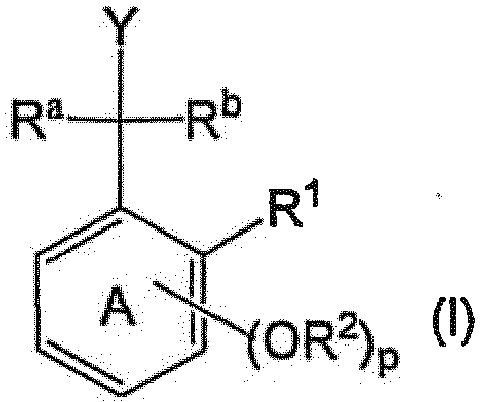
- R1 is a hydrogen atom or, when Rb is a group represented by the following formula (a), optionally shows a single bond together with R3 to form a fluorene ring together with ring A and ring B;
- R2 in the number of p is each independently an organic group having an aliphatic hydrocarbon group;
- p is an integer of 1 to 4;
- ring A optionally further has, in addition to OR2 in the number of p, a substituent selected from the group consisting of a halogen atom, a C1-6 alkyl group optionally substituted by a halogen atom, and a C1-6 alkoxy group optionally substituted by a halogen atom;
- Ra is a hydrogen atom, or a phenyl group optionally substituted by a halogen atom; and
- Rb is a hydrogen atom, or a group represented by the formula (a) :
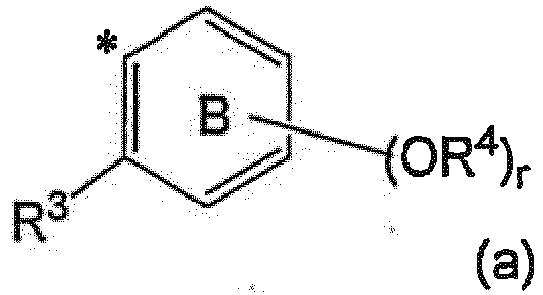
- * is a binding site;
- r is an integer of 0 to 4;
- R4 in the number of r is each independently an organic group having an aliphatic hydrocarbon group;
- R3 is a hydrogen atom, or optionally shows a single bond together with R1 to form a fluorene ring together with ring A and ring B; and
- ring B optionally further has, in addition to OR4 in the number of r, a substituent selected from the group consisting of a halogen atom, a C1-6 alkyl group optionally substituted by a halogen atom, and a C1-6 alkoxy group optionally substituted by a halogen atom; and
- Y is a hydroxy group, NHR (R is a hydrogen atom, an alkyl group or an aralkyl group) or a halogen atom.
- [5] The method of the above-mentioned [4], wherein the compound represented by the formula (I) is a compound selected from the group consisting of
3,4,5-tri(octadecyloxy)benzyl alcohol, 2,4-di(docosyloxy)benzyl alcohol, 4-methoxy-2-[3',4',5'-tri(octadecyloxy)benzyloxy]benzyl alcohol, 4-methoxy-2-[3',4',5'-tri(octadecyloxy)cyclohexylmethyloxy]benzyl alcohol, 2-methoxy-4-[3',4',5'-tri(octadecyloxy)cyclohexylmethyloxy]benzyl alcohol, 4-[3',4',5'-tri(octadecyloxy)cyclohexylmethyloxy]benzyl alcohol, 3,5-dimethoxy-4-[3',4',5'-tri(octadecyloxy)cyclohexylmethyloxy]benzyl alcohol, 2,4-di(dodecyloxy)benzyl alcohol, 3,4,5-tri(octadecyloxy)benzylamine, bis(4-docosyloxyphenyl)methanol, bis(4-docosyloxyphenyl)methylamine, and 2-(12-docosyloxy-dodecyloxy)-9-(3-fluorophenyl)-9-bromofluorene. - [6] The method of any one of the above-mentioned [1] - [5], wherein the non-nucleophilic organic base is selected from the group consisting of 1,8-diazabicyclo[5.4.0]-7-undecene, 1,4-diazabicyclo[2.2.2]octane and 1,5-diazabicyclo[4.3.0]-5-nanene.
- [7] The method of any one of the above-mentioned [1] - [5], wherein the non-nucleophilic organic base is 1,8-diazabicyclo[5.4.0]-7-undecene.
- [8] The method of any one of the above-mentioned [1] - [7], wherein the acid is selected from the group consisting of methanesulfonic acid, trifluoromethanesulfonic acid, benzenesulfonic acid, p-toluenesulfonic acid anhydride, sulfuric acid and hydrogen chloride/ether solution.
- [9] The method of any one of the above-mentioned [1] - [7], wherein the acid is selected from the group consisting of methanesulfonic acid, trifluoromethanesulfonic acid, hydrogen chloride/diethyl ether, and hydrogen chloride/cyclopentyl methyl ether.
- [10] The method of any one of the above-mentioned [1] - [9], wherein the condensation accelerator is 1-hydroxybenzotriazole, ethyl 1-hydroxy-1H-1,2,3-triazole-5-carboxylate, 1-hydroxy-7-azabenzotriazole, O-(benzotriazol-1-yl)-N,N,N',N'-tetramethyluronium hexafluorophosphate, or O-(6-chlorobenzotriazol-1-yl)-N,N,N',N'-tetramethyluronium hexafluorophosphate.
- [11] A production method of peptide by improved successive immobilization-protection of C-terminal and elongation of N-terminal, comprising a deprotection step by a heterocyclic compound having an amidine structure.
- [12] The production method of peptide by improved successive immobilization-protection of C-terminal and elongation of N-terminal of the above-mentioned [11], wherein the protecting group is an Fmoc group.
- According to the production method of peptide of the present invention, a step of removing an Fmoc group which is a temporary protecting group of the N-terminal amino group of an amino acid or peptide, a neutralization step, and a subsequent condensation step with N-Fmoc amino acid or N-Fmoc peptide can be successively performed in one pot without isolation and purification operations of an intermediate. Therefore, a convenient and efficient production method of peptide, which is suitable for industrial production, can be provided. According to the present invention, moreover, in an elongation step of a peptide chain containing a particular sequence conventionally difficult to synthesize in a good yield due to the by-production of diketopiperazine, the by-production of an impurity peptide compound is suppressed and an object peptide compound can be produced with high purity and high yield. Description of Embodiments
- Unless otherwise specified in the sentences, any technical terms and scientific terms used in the present specification, have the same meaning as those generally understood by those of ordinary skill in the art the present invention belongs to. Any methods and materials similar or equivalent to those described in the present specification can be used for practicing or testing the present invention, and preferable methods and materials are described in the following. All publications and patents referred to in the present specification are hereby incorporated by reference so as to describe and disclose constructed products and methodology described in, for example, publications usable in relation to the described invention.
- An amino acid which is a constitutional unit of a peptide produced by the method of the present invention is a compound having an amino group and a carboxy group in the same molecule, and may be a natural amino acid or non-natural amino acid, and an L form, a D form or a racemate. A peptide is synthesized by repeating a dehydration condensation step (condensation step) of an amino group of an amino acid component and a carboxy group of other amino acid component, according to the amino acid sequence of the peptide. Of the two amino acid components involved in the formation of the peptide bond, a component providing an amino group is hereinafter sometimes referred to as an amine component, and a component providing a carboxy group as an acid component.
- The protecting group of the N-terminal amino group of an acid component to be used for the condensation step in the present invention is an Fmoc group.
- In the present specification, the "N-Fmoc amino acid" or "N-Fmoc peptide" means an amino acid or peptide wherein an N-terminal amino group thereof is protected by an Fmoc group and a carboxy group is not protected.
- In the present specification, the "C-protected amino acid" or "C-protected peptide" means an amino acid or peptide wherein the C-terminal carboxy group thereof is protected by forming an anchor group by condensing with an anchor soluble in halogenated solvents or ether solvents, insoluble in polar solvents and having a molecular weight of not less than 300 (e.g., benzyl compound, diphenylmethane compound or fluorene compound), and the N-terminal amino group is not protected.
- In the present specification, the "N-Fmoc C-protected amino acid" or "N-Fmoc C-protected peptide" means the above-mentioned "C-protected amino acid" or "C-protected peptide" wherein the N-terminal amino acid is protected by an Fmoc group of a temporary protecting group.
- Examples of the halogenated solvent in the present invention include halogenated hydrocarbons such as chloroform, dichloromethane, 1,2-dichloroethane, chlorobenzene and the like. The halogenated solvent may be a mixed solvent of two or more kinds. Among the halogenated solvents, chloroform and dichloromethane are particularly preferable.
- Examples of the ether solvent in the present invention include 1,4-dioxane, cyclopentyl methyl ether (hereinafter sometimes to be referred to as CPME), tetrahydrofuran (hereinafter sometimes to be referred to as THF) and the like. The ether solvent may be a mixed solvent of two or more kinds. Among the ether solvents, CPME and THF are particularly preferable.
- Examples of the polar solvent in the present invention include methanol, ethanol, isopropanol, acetonitrile, propionitrile, dimethylformamide, dimethylacetamide, dimethyl sulfoxide, water and the like, and a mixed solvent of two or more kinds of these. Of these, methanol or acetonitrile is preferably used. As the polar solvent in the present invention, methanol is preferable particularly from the aspect of practical utility.
- One embodiment of the anchor soluble in halogenated solvents or ether solvents, insoluble in polar solvents and having a molecular weight of not less than 300 in the present invention is a compound represented by the following formula (I). Among such compounds, one having a molecular weight of not less than 400 is preferable.
- The formula (I):

- R1 is a hydrogen atom or, when Rb is a group represented by the following formula (a), optionally shows a single bond together with R3 to form a fluorene ring together with ring A and ring B;
- R2 in the number of p is each independently an organic group having an aliphatic hydrocarbon group;
- p is an integer of 1 to 4;
- ring A optionally further has, in addition to OR2 in the number of p, a substituent selected from the group consisting of a halogen atom, a C1-6 alkyl group optionally substituted by a halogen atom, and a C1-6 alkoxy group optionally substituted by a halogen atom;
- Ra is a hydrogen atom, or a phenyl group optionally substituted by a halogen atom; and
- Rb is a hydrogen atom, or a group represented by the formula (a) :

- * is a binding site;
- r is an integer of 0 to 4;
- R4 in the number of r is each independently an organic group having an aliphatic hydrocarbon group;
- R3 is a hydrogen atom, or optionally shows a single bond together with R1 to form a fluorene ring together with ring A and ring B; and
- ring B optionally further has, in addition to OR4 in the number of r, a substituent selected from the group consisting of a halogen atom, a C1-6 alkyl group optionally substituted by a halogen atom, and a C1-6 alkoxy group optionally substituted by a halogen atom; and
- Y is a hydroxy group, NHR (R is a hydrogen atom, an alkyl group or an aralkyl group) or a halogen atom.
- The anchor represented by the above-mentioned formula (I) is bound to a compound intended to be protected. That is, an anchor wherein Y is a hydroxy group, an -NHR group or a halogen atom protects a compound by condensing with a carboxy group on the C-terminal of amino acid or peptide and the like.
- In the present specification, as the "alkyl group" for R, a straight or branched C1-30 alkyl group can be mentioned. It is preferably a C1-10 alkyl group, more preferably a C1-6 alkyl group. Specific preferable examples include methyl, ethyl, propyl, isopropyl, butyl, isobutyl, sec-butyl, tert-butyl and the like, and methyl and ethyl are particularly preferable.
- In the present specification, as the "aralkyl group" for R, a C7-30 aralkyl group can be mentioned. It is preferably a C7-20 aralkyl group, more preferably a C7-16 aralkyl group (C6-10 - aryl-C1-6 alkyl group). Specific preferable examples include benzyl, 1-phenylethyl, 2-phenylethyl, 1-phenylpropyl, naphthylmethyl, 1-naphthylethyl, 1-naphthylpropyl and the like, and benzyl is particularly preferable.
- As R, a hydrogen atom, a C1-6 alkyl group or a C7-16 aralkyl group is preferable, a hydrogen atom, methyl, ethyl or benzyl is more preferable, and a hydrogen atom is particularly preferable.
- In the present specification, the "halogen atom" is a fluorine atom, a chlorine atom, a bromine atom or an iodine atom. In the present specification, as the "halogen atom" for Y, a chlorine atom, a bromine atom or an iodine atom is preferable, and a bromine atom is more preferable.
- In the present specification, the "organic group having an aliphatic hydrocarbon group" for R2 or R4 is a monovalent organic group having an aliphatic hydrocarbon group in a molecule structure thereof.
- The "aliphatic hydrocarbon group" in the "organic group having an aliphatic hydrocarbon group" is a straight or branched saturated or unsaturated aliphatic hydrocarbon group, preferably an aliphatic hydrocarbon group having 5 or more carbon atoms, more preferably an aliphatic hydrocarbon group having 5 to 60 carbon atoms, further preferably an aliphatic hydrocarbon group having 5 to 30 carbon atoms, particularly preferably an aliphatic hydrocarbon group 10 to 30 carbon atoms.
- The moiety of the "aliphatic hydrocarbon group" in the "organic group having an aliphatic hydrocarbon group" is not particularly limited, and may be present at the terminal (monovalent group), or other site (for example, divalent group).
- Examples of the "aliphatic hydrocarbon group" include monovalent groups such as an alkyl group, a cycloalkyl group, an alkenyl group, a cycloalkenyl group, an alkynyl group and the like, and divalent groups derived therefrom, preferably monovalent groups such as a methyl group, an ethyl group, a propyl group, an isopropyl group, a butyl group, an isobutyl group, a sec-butyl group, a tert-butyl group, a pentyl group, a hexyl group, an octyl group, a decyl group, a dodecyl group, a lauryl group, a tridecyl group, a myristyl group, a cetyl group, a stearyl group, an arachyl group, a behenyl group, an oleyl group, an isostearyl group and the like, and divalent groups derived therefrom.
- The moiety other than the "aliphatic hydrocarbon group" of the "organic group having an aliphatic hydrocarbon group" can be set freely. For example, it may have a moiety such as - O-, -S-, -COO-, -OCONH-, -CONH-, a hydrocarbon group (monovalent group or divalent group) and the like as a linker. Examples of the "hydrocarbon group" include an aliphatic hydrocarbon group, an aromatic-aliphatic hydrocarbon group, a monocyclic saturated hydrocarbon group, an aromatic hydrocarbon group and the like. Specifically, for example, monovalent groups such as an alkyl group, an alkenyl group, an alkynyl group, a cycloalkyl group, an aryl group, an aralkyl group and the like, and divalent groups derived therefrom are used. As the "alkyl group", a C1-6 alkyl group and the like are preferable and, for example, methyl, ethyl, propyl, isopropyl, butyl, isobutyl, sec-butyl, tert-butyl, pentyl, hexyl and the like can be mentioned. As the "alkenyl group", a C2-6 alkenyl group and the like are preferable and, for example, vinyl, 1-propenyl, allyl, isopropenyl, butenyl, isobutenyl and the like can be mentioned. As the "alkynyl group", a C2-6 alkynyl group and the like are preferable and, for example, ethynyl, propargyl, 1-propynyl and the like can be mentioned. As the "cycloalkyl group", a C3-6 cycloalkyl group and the like are preferable and, for example, cyclopropyl, cyclobutyl, cyclopentyl, cyclohexyl and the like can be mentioned. For example, the "aryl group" is preferably a C6-14 aryl group and the like and, for example, phenyl, 1-naphthyl, 2-naphthyl, biphenylyl, 2-anthryl and the like can be mentioned. Of these, a C6-10 aryl group is more preferable, and phenyl is particularly preferable. As the "aralkyl group", a C7-20 aralkyl group is preferable and, for example, benzyl, 1-phenylethyl, 2-phenylethyl, 1-phenylpropyl, naphthylmethyl, 1-naphthylethyl, 1-naphthylpropyl and the like can be mentioned. Of these, a C7-16 aralkyl group (C6-10 aryl-C1-6 alkyl group) is more preferable, and benzyl is particularly preferable. The "hydrocarbon group" may be substituted by a substituent selected from a halogen atom (a chlorine atom, a bromine atom, a fluorine atom, an iodine atom), an alkyl group having 1 to 6 carbon atoms and optionally substituted by one or more halogen atoms, an oxo group and the like.
- In the "organic group having an aliphatic hydrocarbon group" constituting the OR2 group or OR4 group in the above-mentioned formula (I), plural "aliphatic hydrocarbon groups" may be present by branching and the like. When plural "aliphatic hydrocarbon groups" are present in the "organic group having an aliphatic hydrocarbon group", they may be the same or different.
- In the "organic group having an aliphatic hydrocarbon group" for R2 or R4 in the above-mentioned formula (I), the lower limit of the total carbon number is preferably 5, more preferably 10, further preferably 12, still more preferably 14, especially preferably 16, and particularly preferably 20. On the other hand, in the "organic group having an aliphatic hydrocarbon group" for R2 or R4, the upper limit of the total carbon number is preferably 200, more preferably 150, further preferably 120, still more preferably 100, especially preferably 80, particularly preferably 60, particularly further preferably 40, and most preferably 30. The higher the carbon number, the better the crystallinity of the compound represented by the formula (I) in a polar solvent becomes, even when the peptide chain is a long chain.
- Specific preferable examples of the "OR2" group or "OR4" group include dodecyloxy, cetyl oxy, octadecyloxy, docosyloxy, docosyloxy-dodecyloxy, triacontyloxy and the like. The "OR2" group or "OR4" group is present in a total number of p or r (p is an integer of 1 to 4 and r is an integer of 0 to 4), p is preferably 2 or 3, and r is preferably an integer of 0 to 2.
- Specific preferable examples of the substituent optionally present in ring A or ring B in the above-mentioned formula (I) include a C1-6 alkoxy group (e.g., a C1-4 alkoxy group such as methoxy, ethoxy, propoxy, isopropoxy, butoxy, isobutoxy, sec-butoxy, tert-butoxy and the like), a C1-6 alkyl group optionally substituted by one or more halogens (e.g., a C1-6 alkyl group such as methyl, ethyl, propyl, isopropyl, butyl, isobutyl, sec-butyl, tert-butyl, pentyl, hexyl and the like, a halogen-substituted C1-6 alkyl group such as trifluoromethyl, trichloromethyl and the like), and a halogen atom. Of these, a C1-6 alkoxy group is preferable.
- A preferable embodiment of the anchor represented by the above-mentioned formula (I) is a compound of the formula (I), wherein
Y is a hydroxy group;
R1 is a hydrogen atom;
R2 and/or R4 are/is an aliphatic hydrocarbon group having 5 to 60 carbon atoms;
p is an integer of 1 to 3; and
r is an integer of 0 to 2. - Another preferable embodiment of the anchor represented by the above-mentioned formula (I) is a compound of the formula (I), wherein
Y is a hydroxy group;
Ra, Rb, and R1 are each a hydrogen atom;
R2 is an aliphatic hydrocarbon group having 5 to 60 carbon atoms; and
p is an integer of 1 to 3. - Another preferable embodiment of the anchor represented by the above-mentioned formula (I) is a compound of the formula (I), wherein
Y is a hydroxy group;
Ra, Rb, and R1 are each a hydrogen atom;
R2 is an alkyl group having 10 to 40 carbon atoms; and
p is 2 or 3. - Another preferable embodiment of the anchor represented by the above-mentioned formula (I) is a compound of the formula (I), wherein
Y is a hydroxy group;
Ra, Rb, and R1 are each a hydrogen atom;
R2 is an alkyl group having 12 to 30 carbon atoms; and
p is 2 or 3. - Another preferable embodiment of the anchor represented by the above-mentioned formula (I) is a compound of the formula (I), wherein
Y is a hydroxy group;
Ra, Rb, and R1 are each a hydrogen atom;
R2 is a benzyl group having 1 to 3 alkoxy groups having 12 to 30 carbon atoms; and
p is an integer of 1 to 3. - Another preferable embodiment of the anchor represented by the above-mentioned formula (I) is a compound of the formula (I), wherein
Y is a hydroxy group;
Ra, Rb, and R1 are each a hydrogen atom;
R2 is a cyclohexylmethyl group having 1 to 3 alkoxy groups having 12 to 30 carbon atoms; and
p is an integer of 1 to 3. - Preferable examples of the anchor soluble in halogenated solvents or ether solvents, insoluble in polar solvents and having a molecular weight of not less than 300 in the present invention include the following anchors.
3,4,5-tri(octadecyloxy)benzyl alcohol, 2,4-di(docosyloxy)benzyl alcohol, 4-methoxy-2-[3',4',5'-tri(octadecyloxy)benzyloxy]benzyl alcohol, 4-methoxy-2-[3',4',5'-tri(octadecyloxy)cyclohexylmethyloxy]benzyl alcohol, 2-methoxy-4-[3',4',5'-tri(octadecyloxy)cyclohexylmethyloxy]benzyl alcohol, 4-[3`,4',5'-tri(octadecyloxy)cyclohexylmethyloxy]benzyl alcohol, 3,5-dimethoxy-4-[3',4',5'-tri(octadecyloxy)cyclohexylmethyloxy]benzyl alcohol, 2,4-di(dodecyloxy)benzyl alcohol, 3,4,5-tri(octadecyloxy)benzylamine, bis(4-docosyloxyphenyl)methanol, bis(4-docosyloxyphenyl)methylamine, and 2-(12-docosyloxy-dodecyloxy)-9-(3-fluorophenyl)-9-bromofluorene. - While the production method of the aforementioned anchor is not particularly limited, it can be produced from a starting material compound according to a method known per se (patent documents 1 - 6, non-patent document 1) or a method analogous thereto. A compound used as a starting compound, for example, halide corresponding to the group R2 or R4 in the formula (I) and the like can be obtained as a commercially available product or can be produced by a method known per se or a method analogous thereto.
- An amino acid or peptide which is an acid component or an amine component to be used in the present invention often has, in addition to an amino group or carboxy group involved in the formation of a peptide bond, a functional group subjected to a dehydration condensation reaction, such as an amino group, a carboxy group, a hydroxy group and the like. Such functional group is distinguished from an amino group and a carboxy group forming a peptide bond of the main chain, and referred to as a side chain functional group. While the side chain functional group does not need to be always protected as long as it does not impair the gist of the present invention, it is preferably protected by an appropriate protecting group to prevent an undesirable side reaction during peptide bond formation by a dehydration condensation reaction and deprotection of an N-terminal amino groups.
- The protecting group of the side chain functional group is subject to a certain limitation on the combination with the N-terminal amino-protecting group, like the C-terminal carboxy-protecting group of the aforementioned amine component. That is, the protecting group of the side chain functional group needs to be maintained until the completion of the desired amino acid sequence, without being removed even under the removing conditions of an Fmoc group which is the protecting group of the N-terminal amino group. The protecting group is not particularly limited as long as the side chain functional group does not cause an undesirable side reaction during formation of the peptide bond by a dehydration condensation reaction and deprotection of the N-terminal amino group.
- The protecting group of the side chain functional group is not particularly limited as long as it is stable under the deprotection conditions of an Fmoc group which is the protecting group of the N-terminal amino group (temporary protecting group). For example, the protecting groups described in PEPTIDE GOUSEI NO KISO TO JIKKENN (basis and experiment of peptide synthesis), published by Maruzen Co., Ltd. (1985), PROTECTIVE GROUPS IN ORGANIC SYNTHESIS, the third edition, published by JOHN WILLY&SONS (1999) and the like can be mentioned.
- When the side chain functional group is a carboxy group, an ester-type protecting group, an amide-type protecting group, a hydrazide-type protecting group and the like can be mentioned.
- As the ester-type protecting group, substituted or unsubstituted alkyl ester, and substituted or unsubstituted aralkyl ester are preferably used. As the substituted or unsubstituted alkyl ester, methyl ester, ethyl ester, tert-butyl ester, cyclohexyl ester, trichloroethyl ester, phenacyl ester and the like are preferably used. As the substituted or unsubstituted aralkyl ester, benzyl ester, p-nitrobenzyl ester, p-methoxybenzyl ester, diphenylmethyl ester, 9-fluorenylmethyl (Fm) ester, 4-picolyl (Pic) ester and the like are preferably used.
- As the amide-type protecting group, unsubstituted amide, primary amide such as N-methylamide, N-ethylamide, N-benzylamide and the like, secondary amide such as N,N-dimethylamide, pyrrolidinylamide, piperidinylamide and the like, and the like are preferably used.
- As the hydrazide-type protecting group, unsubstituted hydrazide, N-phenylhydrazide, N,N'-diisopropylhydrazide and the like are preferably used.
- Of these, ester-type protecting groups which are stable under the deprotection conditions of an Fmoc group, such as t-butyl ester, substituted or unsubstituted benzyl ester and the like are preferably used, and substituted or unsubstituted benzyl ester is particularly preferably used since synthesis thereof is comparatively easy.
- When the side chain functional group is an amino group, a urethane-type protecting group, an acyl-type protecting group, a sulfonyl-type protecting group and the like can be mentioned.
- As the urethane-type protecting group, for example, a methoxycarbonyl group, an ethoxycarbonyl group, a tert-butoxycarbonyl (Boc) group, a benzyloxycarbonyl (Z) group and the like are used, and a methoxycarbonyl group, an ethoxycarbonyl group, a Boc group and the like are preferable. Of these, a Boc group is particularly preferably .used since selective deprotection thereof is possible under mild acidic conditions.
- As the acyl-type protecting group, for example, a formyl group, an acetyl group, a trifluoroacetyl group and the like are preferably used.
- As the sulfonyl-type protecting group, for example, a p-toluenesulfonyl (Ts) group, a p-tolylmethanesulfonyl group, a 4-methoxy-2,3,6-trimethylbenzenesulfonyl group and the like are preferably used.
- As for side chain functional groups other than those mentioned above, a protecting group stable under the deprotection conditions of an Fmoc group which is the protecting group (temporary protecting group) of the N-terminal amino group can be selected and used.
- The side chain functional group can be deprotected as necessary after forming the object peptide bond.
- Next, the production method of the present invention is explained. The production method of the present invention is a production method of peptide, which characteristically includes the following step (1).
- (1) removing N-terminal Fmoc group of N-Fmoc C-protected amino acid or N-Fmoc C-protected peptide wherein a C-terminal carboxy group is protected by an anchor group derived from an anchor soluble in halogenated solvents or ether solvents, insoluble in polar solvents and having a molecular weight of not less than 300, with a non-nucleophilic organic base in a halogenated solvent or ether solvent to give a C-protected amino acid or C-protected peptide, neutralizing with an acid, adding N-Fmoc amino acid or N-Fmoc peptide, a condensing agent and a condensation accelerator to the reaction solution after neutralization, and condensing the N-terminal of the C-protected amino acid or C-protected peptide with N-Fmoc amino acid or N-Fmoc peptide to give an N-Fmoc C-protected peptide (N-terminal deprotection step and subsequent condensation step).
- The N-Fmoc C-protected amino acid or N-Fmoc C-protected peptide to be used in step (1) in the production method of the present invention can be produced by the following step (a). In the following, step (a) is first explained before explanation on step (1).
- In this step, an anchor soluble in halogenated solvents or ether solvents, insoluble in polar solvents and having a molecular weight of not less than 300 is condensed with a C-terminal of N-Fmoc amino acid or N-Fmoc peptide to give N-Fmoc C-protected amino acid or N-Fmoc C-protected peptide.
- While the upper limit of the number of amino acid residues of the N-Fmoc peptide is not particularly limited as long as the N-Fmoc peptide to be used in this step is soluble in a solvent to be used in this step, the number of amino acid residues of N-Fmoc peptide is preferably not more than 100, more preferably not more than 50, still more preferably not more than 30.
- The condensation reaction is preferably performed by dissolving anchor, N-Fmoc amino acid or N-Fmoc peptide and a catalytic amount of dimethylaminopyridine in a solvent, adding a condensing agent (and a condensation accelerator where necessary) and stirring the mixture.
- This step is performed in a solvent that does not influence the reaction. The higher the solubility in the solvent becomes, the more superior the reactivity is expected to be. Therefore, a solvent showing high solubility of the aforementioned N-Fmoc amino acid or N-Fmoc peptide is preferably selected. Specifically, halogenated solvents such as chloroform, dichloromethane, 1,2-dichloroethane and the like; and ether solvents such as 1,4-dioxane, cyclopentyl methyl ether, tetrahydrofuran and the like can be mentioned. Two or more kinds of these solvents may be used in a mixture in an appropriate ratio. In addition, aromatic hydrocarbons such as benzene, toluene, xylene and the like; nitriles such as acetonitrile, propionitrile and the like; ketones such as acetone, 2-butanone and the like; amides such as N,N-dimethylformamide and the like; sulfoxides such as dimethyl sulfoxide and the like may be mixed at an appropriate proportion with the above-mentioned halogenated solvent and ether solvents as long as the compound to be used for the production method of the present invention can be dissolved. Of these, chloroform, dichloromethane, cyclopentyl methyl ether or tetrahydrofuran is preferable, and chloroform is particularly preferable.
- While the concentration of the N-Fmoc amino acid or N-Fmoc peptide in a solution in this step is not particularly limited as long as it is dissolved, it is preferably 1 - 30 wt%.
- The amount of the N-Fmoc amino acid or N-Fmoc peptide to be used in this step can be 1 - 10 mol, preferably 1 - 5 mol, per 1 mol of the aforementioned anchor.
- When Y is a hydroxy group, an ester bond is formed by adding a condensing agent and, where necessary, a condensation accelerator in a solvent that does not influence the reaction in the presence of a dimethylaminopyridine catalyst.
- When Y is an -NHR group, an amide bond is formed by adding a condensing agent in the presence of a condensation accelerator.
- When Y is a halogen atom, an ester bond is formed by adding a base such as diisopropylethylamine and the like in a solvent that does not influence the reaction.
- As a condensation accelerator, 1-hydroxybenzotriazole (HOBt), ethyl 1-hydroxy-1H-1,2,3-triazole-5-carboxylate (HOCt), 1-hydroxy-7-azabenzotriazole (HOAt), O-(benzotriazol-1-yl)-N,N,N',N'-tetramethyluronium hexafluorophosphate (HBTU), 0-(6-chlorobenzotriazol-1-yl)-N,N,N',N'-tetramethyluronium hexafluorophosphate (HCTU) and the like can be mentioned, with preference given to HOBt.
- The amount of the condensation accelerator to be used is preferably 0.05 - 1.5 mol per 1 mol of the aforementioned anchor.
- As a condensing agent, dicyclohexylcarbodiimide (DCC), diisopropylcarbodiimide (DIC), N-ethyl-N'-3-dimethylaminopropylcarbodiimide and hydrochloride thereof (EDC HCl), (benzotriazol-1-yloxy)tripyrrolidinophosphonium hexafluorophosphate (PyBop), O-(benzotriazol-1-yl)-N,N,N',N'-tetramethyluronium tetrafluoroborate (TBTU), 1-[bis(dimethylamino)methylene]-5-chloro-1H-benzotriazolium 3-oxide hexafluorophosphate (HCTU), O-benzotriazole-N,N,N',N'-tetramethyluronium hexafluorophosphate (HBTU) and the like can be mentioned.
- The amount of the condensing agent to be used is, for example, 1 - 10 mol, preferably 1 - 5 mol, per 1 mol of the aforementioned anchor.
- While the reaction temperature is not particularly limited as long as the reaction proceeds, it is preferably not less than -10°C, more preferably not less than 0°C, preferably not more than 50°C, more preferably not more than 30°C. The reaction time is, for example, 1 - 70 hr.
- The N-Fmoc C-protected amino acid or N-Fmoc C-protected peptide contained in the thus-obtained reaction solution can be isolated by concentrating the reaction solvent under reduced pressure, adding the aforementioned polar solvent to allow for precipitation, solid-liquid separation (filtration) of the precipitate, and washing same with acetonitrile. Examples of the polar solvent to be used in this step include methanol, acetonitrile and the like, preferably methanol.
- In this step, an N-terminal Fmoc group of N-Fmoc C-protected amino acid or N-Fmoc C-protected peptide is removed by a treatment with a non-nucleophilic organic base to give a C-protected amino acid or C-protected peptide, which is then neutralized and, without an isolation and purification operation, C-protected amino acid or C-protected peptide and N-Fmoc amino acid or N-Fmoc peptide are subjected to dehydrating condensation.
- While the upper limit of the number of the amino acid residues of the N-Fmoc C-protected peptide is not particularly limited as long as the N-Fmoc C-protected peptide to be used in this step is soluble in a solvent to be used in this step, the number of the amino acid residues of the N-Fmoc C-protected peptide is preferably not more than 100, more preferably not more than 50, further preferably not more than 30. While the upper limit of the number of amino acid residues of the C-protected peptide is not particularly limited as long as the C-protected peptide to be used in this step is soluble in a solvent to be used in this step, the number of amino acid residues of C-protected peptide is preferably not more than 100, more preferably not more than 50, still more preferably not more than 30.
- In the following, step (1) is explained by dividing into step (1-1) (N-terminal deprotection step) and step (1-2) (condensation step).
- The Fmoc group is removed (deprotected) by treating same with a non-nucleophilic organic base in a halogenated solvent or ether solvent. The deprotection is performed in a solvent that does not influence the reaction.
- As the non-nucleophilic base, 1,8-diazabicyclo[5.4.0]-7-undecene (DBU), 1,4-diazabicyclo[2.2.2]octane (DABCO), and 1,5-diazabicyclo[4.3.0]-5-nonene (DBN) and the like can be mentioned, DBU and DBN are preferable, and DBU is more preferable.
- The halogenated solvent or ether solvents may be a mixed solvent of two or more kinds thereof. The halogenated solvent or ether solvent is preferably chloroform, dichloromethane, THF or CPME.
- In this deprotection step, when nucleophilic organic base (secondary amine) such as dimethylamine, diethylamine, piperidine, morpholine and the like, which are widely used for removal of Fmoc group, are used in a nonpolar organic solvent such as chloroform and the like, the organic base in large excess is necessary to complete the reaction. When a nucleophilic base is used, a side reaction wherein an acid component is amidated occurs in the next condensation step. When the aforementioned non-nucleophilic base is used in this step, deprotection reaction is completed both in a halogenated solvent and an ether solvent. The amount of the non-nucleophilic base to be used is preferably not less than 0.8 equivalent, more preferably not less than 1 equivalent, preferably not more than 5 equivalents, more preferably not more than 3 equivalents, relative to the reactive substrate (N-Fmoc C-protected amino acid or N-Fmoc C-protected peptide).
- To achieve one pot in this step, an organic base that exerts an adverse influence (side reaction such as deprotection of N-terminal of N-Fmoc amino acid or N-Fmoc peptide itself, which is a newly added acid component, and the like) on the next condensation reaction of C-protected amino acid or C-protected peptide and N-Fmoc amino acid or N-Fmoc peptide needs to be removed. In this step, therefore, it is essential to incorporate a neutralization step for addition of an acid to the reaction solution after the deprotection step.
- Examples of the acid to be used for the neutralization step include methanesulfonic acid, trifluoromethanesulfonic acid, benzenesulfonic acid, p-toluenesulfonic acid anhydride, sulfuric acid, hydrogen chloride/ether solution and the like. Of these, methanesulfonic acid, trifluoromethanesulfonic acid, hydrogen chloride/diethyl ether and hydrogen chloride/cyclopentyl methyl ether are preferable.
- The amount of the acid to be used is preferably not less than 0.5 mol, more preferably not less than 0.9 mol, preferably not more than 1.1 mol, more preferably not more than 1.0 mol, per 1 mol of the non-nucleophilic organic base.
- While the reaction temperature of step (1-1) is not particularly limited as long as the reaction proceeds, it is preferably not less than -10°C, more preferably not less than 0°C, preferably not more than 50°C, more preferably not more than 30°C. The reaction time of step (1-1) is, for example, 1 - 70 hr.
- In this step, N-Fmoc amino acid or N-Fmoc peptide, a condensing agent and a condensation accelerator are directly added to the reaction solution after the neutralization step in step (1-1) to perform condensation of the N-terminal of the C-protected amino acid or C-protected peptide with N-Fmoc amino acid or N-Fmoc peptide to give N-Fmoc C-protected peptide.
- This step is performed using the condensing agent, condensation accelerator and the like described in the aforementioned step (a) and under the peptide synthesis conditions generally used in the field of peptide chemistry. A particularly preferable combination of a condensing agent and a condensation accelerator in this step is that of N-ethyl-N'-3-dimethylaminopropylcarbodiimide hydrochloride (EDC HCl) and 1-hydroxybenzotriazole (HOBt).
- The amount of the condensation accelerator to be used is preferably not less than 0.05 mol, more preferably not less than 0.9 mol, preferably not more than 1.5 mol, more preferably not more than 1.1 mol, per 1 mol of the aforementioned C-protected amino acid or C-protected peptide.
- The production method of the present invention may further contain step (2) (precipitation step) wherein N-Fmoc C-protected peptide is precipitated in a polar solvent, and obtained by solid-liquid separation, after step (1). Step (2) is explained in the following.
- In this step, the condensate (N-Fmoc C-protected peptide) obtained in the above-mentioned step (1) is isolated by changing the solvent, in which the condensate is dissolved (e.g., change of solvent composition, change of solvent kind), to allow for precipitation. That is, the reaction is performed under the conditions allowing dissolution of the condensate, the solvent is exchanged to cause precipitation of the condensate, followed by solid-liquid separation, and slurry washing to remove impurity. Evaporation of the solvent and the like may be performed before solvent exchange. As the solvent for exchange, a polar solvent such as methanol, acetonitrile and the like is used. That is, the reaction is performed under the conditions allowing dissolution of the compound and, after the reaction, as the solvent for exchange, for example, a halogenated solvent and the like are used for dissolution and a polar solvent such as methanol, acetonitrile and the like are used for precipitation.
- The above-mentioned steps (1) and (2) may be repeated two times or more to obtain an N-Fmoc C-protected peptide having an elongated peptide chain. While the upper limit of the number of amino acid residues of the N-Fmoc C-protected peptide having an elongated peptide chain is not particularly limited as long as the N-Fmoc C-protected peptide is soluble in the solvent to be used in step (1), the number of the amino acid residues is preferably not more than 200, more preferably not more than 100, more preferably not more than 50.
- The production method of the peptide of the present invention can further contain step (3) for removing the N-terminal Fmoc group and/or the C-terminal anchor group of the N-Fmoc C-protected peptide after the precipitation step (2). The N-terminal Fmoc group is removed according to, for example, the above-mentioned step (1).
- The C-terminal anchor group is removed after the above-mentioned precipitation step (2) and after removal of the N-terminal Fmoc group, or before removal of the Fmoc group. As a result, the final object product peptide wherein the C-terminal of the peptide is -COOH (e.g., the aforementioned formula (I) wherein Y is a hydroxy group or a halogen atom), or -CONHR (e.g., the aforementioned formula (I) wherein Y is an NHR group) can be obtained.
- When an anchor group derived from an anchor of the aforementioned formula (I) wherein Y is a hydroxy group or a halogen atom is selectively removed, deprotection is preferably performed by an acid treatment. As an acid to be used for the deprotection, trifluoroacetic acid (hereinafter to be referred to as TFA), hydrochloric acid, sulfuric acid, methanesulfonic acid, p-toluenesulfonic acid and the like can be mentioned, with preference given to TFA. As a solvent to be used for the deprotection, for example, chloroform, dichloromethane, 1,2-dichloroethane or a mixed solvent thereof and the like can be mentioned. The concentration of an acid to be used for the deprotection is, for example, 0.1w/v% - 5w/v%.
- It is also possible to remove an anchor group derived from an aromatic compound (anchor) of the aforementioned formula (I) wherein Y is a hydroxy group, an -NHR group, or a halogen atom, simultaneously with the protecting group of other side chain in a peptide. In this case, a conventional method used in the field, particularly peptide synthesis, is used, and a method including adding an acid and the like is preferably used. As the acid, TFA, hydrochloric acid, sulfuric acid, mesylic acid, tosylic acid, trifluoroethanol, hexafluoroisopropanol and the like are used. Of these, TFA is particularly preferable. The amount of the acid to be used is appropriately set according to the kind of the acid to be used, and an amount suitable for removing the anchor group is used. The amount of the acid to be used is preferably not less than 3 mol, more preferably not less than 5 mol, preferably not more than 100 mol, more preferably not more than 50 mol, per 1 mol of the N-Fmoc C-protected peptide. Along with such use, trifluoromethanesulfonic acid, trimethylsilyl trifluoromethanesulfonate, BF3·etherate and the like can also be added as a further source of strong acid.
- While the reaction temperature is not particularly limited as long as the reaction proceeds, for example, it is preferably 0°C - 50°C, more preferably 0°C - 30°C. The reaction time is, for example, 0.5 - 24 hr.
- For confirmation of the progress of the reaction in the above-mentioned step (a), step (1) and step (3), a method similar to general liquid phase organic synthetic reaction can be applied. That is, thin layer silica gel chromatography, high performance liquid chromatography and the like can be used to trace the reaction.
- The present invention is explained in more detail in the following by referring to Examples, which are not to be construed as limiting the scope of the present invention in any way. The reagents, apparatuses and materials used in the present invention are commercially available unless otherwise specified. In the present specification, when amino acid and the like are indicated by abbreviations, each indication is based on the abbreviation of the IUPAC-IUB Commission on Biochemical Nomenclature or conventional abbreviations in the art.
- The anchor used in the Example can be produced by a method known per se (see the aforementioned patent documents 1 - 6, non-patent document 1) or a method analogous thereto, or method according to the following Reference Example 1, from a known starting material compound (or commercially available product).
-
- (i) 3,4,5-Tri(octadecyloxy)benzyl alcohol (83.0 g, 90.8 mmol) was dissolved in chloroform (830 ml), thionyl chloride (21.6 g, 0 .182 mol) was added at 0°C and the mixture was stirred for 1.5 hr at room temperature. The solvent was evaporated, and the residue was crystallized from acetonitrile (800 ml) to give 3,4,5-tri(octadecyloxy)benzyl chloride as wet crystals (93.6 g).
- (ii) 3,4,5-Tri(octadecyloxy)benzyl chloride (93.6 g, wet, <90.8 mmol), 2-hydroxy-4-methoxybenzaldehyde (15.2 g, 0.10 mol), potassium carbonate (31.4 g, 0.23 mol) were suspended in DMF (830 ml), and the mixture was stirred at 80°C overnight. The reaction solution was dissolved in chloroform (1600 ml), and washed three times with 1N hydrochloric acid (800 ml), once with 5 wt% aqueous sodium hydrogen carbonate solution (800 ml) and once with 20 wt% brine (800 ml). The solvent was evaporated, and the residue was crystallized from methanol (800 ml), and washed with acetonitrile (800 ml) to give 4-methoxy-2-[3',4',5'-tri(octadecyloxy)benzyloxy]benzaldehyde (93.5 g, 89.2 mmol, yield 98%).
- (iii) 4-Methoxy-2-[3',4',5'-tri(octadecyloxy)benzyloxy]benzaldehyde (93.5 g, 89.2 mmol) was dissolved in THF-methanol (1870 ml+94 ml), and sodium borohydride (4.05 g, 107 mol) was added at 0°C. After stirring at room temperature for 1.5 hr, 0.2N hydrochloric acid (100 ml) was added at 0°C to quench the reaction. About half the solvent was evaporated, the residue was dissolved in chloroform (2400 ml) and washed two times with 0.1N hydrochloric acid (1200 ml), once with 5wt% aqueous sodium hydrogen carbonate solution (1200 ml) and once with 20wt% brine (1200 ml). The solvent was evaporated, and the residue was crystallized from methanol (900 ml), and washed with acetonitrile to give 4-methoxy-2-[3',4',5'-tri(octadecyloxy)benzyloxy]benzyl alcohol (92.4 g, 88.0 mmol, yield 97% (vs 3,4,5-tri(octadecyloxy)benzyl alcohol)). 1H-NMR (300MHz, CDCl3): δ 0.88(9H,t,J=6.3Hz,C17H34-Me), 1.15-1.40(84H,br,C3',4',5'-OC3H6-C14 H 28 -CH3), 1.40-1.55 (6H,br,C3',4', 5' -OC2H4-CH 2 -C15H31), 1.70-1.85(6H,m,C3',4'.5'-OCH2-CH 2 -C16H33), 2.18(1H,t,J=6.3Hz, OH), 3.79(3H,s,C4-OMe), 3.90-4.03(6H,m,C3', 4',5'-O-CH 2 -C17H35), 4.65(2H,d,J=6.6Hz,Ar-CH 2 -OH) , 4.97(2H,s,Ar-O-CH 2 -Ar), 6.47(1H,dd,J=2.1,8.1Hz,C5-H), 6.53(1H,d,J=2.4Hz,C3-H), 6.60(2H,s,C2',6'-H), 7.19(1H,d,J=8.1Hz,C6-H)
- 3,4,5-tri(Octadecyloxy)benzyl alcohol (hereinafter sometimes indicated as Bzl (3,4,5-OC18H37)-OH) (3. 0 g, 3.28 mmol) and Fmoc-Leu-OH (1.3 equivalents) were dissolved in chloroform, EDC HCl (1.4 equivalents) and dimethylaminopyridine (0.1 equivalent) were added under ice-cooling and the mixture was stirred. After completion of the reaction, the solvent was evaporated, MeOH (45 ml) was added and the mixture was stirred. The precipitate was collected by filtration, washed with acetonitrile and dried.
- The obtained Fmoc-Leu-OBzl (3,4,5-OC18H37) was dissolved in chloroform, DBU (1.0 equivalent) was added under ice-cooling and the mixture was stirred. After completion of the deprotection, HCl/CPME solution (0.95 equivalent relative to DBU) was added, HOBt (1.0 equivalent) and Fmoc-Tyr(tBu)-OH (1.1 equivalents) were added, EDC·HCl (1.2 equivalents) was added and the mixture was stirred. After completion of the condensation reaction, the solvent was evaporated, MeOH (45 ml) was added and the mixture was stirred. The precipitate was collected by filtration, washed with acetonitrile, and dried under reduced pressure to give Fmoc-Tyr(tBu)-Leu-OBzl (3,4,5-OC18H37) (4.04 g, 3.19 mmol, yield 97%).
TOF-MS(+)=1468.1 - The measurement device and conditions thereof used in Example 1 are as described below.
Measurement device: LCT Premier XE manufactured by Waters
Capillary voltage: 3000V
Sample cone voltage: 86V
Dissolution temperature: 350°C
Source part temperature: 120°C
LC part
Solvent: aqueous trifluoroacetic acid solution (trifluoroacetic acid concentration: 0.05v/v%) - mixed solvent of MeCN and THF
(MeCN concentration: 0.05v/v%)
Column: AQUITY BEH C18 1.7 µm 2.1×50 mm
Temperature: 40°C
Flow rate: 0.7 ml/min
Wavelength: 220 nm
Injection volume: 2 µl - Fmoc-Pro-Gly-OBzl (3,4,5-OC18H37) (400 mg) obtained in the same manner as in Example 1 was dissolved in chloroform (5 ml), DBU (1.0 equivalent) was added under ice-cooling and the mixture was stirred. After completion of the deprotection, HCl/CPME solution (0.97 equivalent relative to DBU) was added, HOBt (1.0 equivalent) and Fmoc-Ala-OH (1.1 equivalents) and EDC HCl (1.2 equivalents) were added and the mixture was stirred. After completion of the condensation reaction, the solvent was evaporated, MeOH (5 ml) was added and the mixture was stirred. The precipitate was collected by filtration, washed with acetonitrile, and dried under reduced pressure to give Fmoc-Ala-Pro-Gly-OBzl (3,4,5-OC18H37) (415 mg). The content of Bzl (3,4,5-OC18H37)-OH in the obtained solid was measured under the same conditions as in Example 1 to find 0.9 mol% of the object product.
TOF-MS(+)=1361.5 - Fmoc-Cys(Trt)-Tyr(tBu)-OBzl(2-TOB-4-OMe) (9.0 g (4.90 mmol)) obtained in the same manner as in Example 1 except that 4-methoxy-2-[3',4',5'-tri(octadecyloxy)benzyloxy]benzyl alcohol (hereinafter sometimes to be indicated as HO-Bzl(2-TOB-4-OMe)) was used as a starting material was dissolved in chloroform (90 ml), DBU (870 mg, 1.2 equivalents) was added under ice-cooling and the mixture was stirred. After completion of the deprotection, methanesulfonic acid (522 mg, 0.95 equivalent relative to DBU) was added, HOBt (640 mg, 1.0 equivalent), Fmoc-Gly-OH (1.56 g, 1.1 equivalents), and EDC HCl (1.11 g, 1.2 equivalents) were added and the mixture was stirred. After completion of the condensation reaction, the solvent was evaporated, MeOH (90 ml) was added and the mixture was stirred. The precipitate was collected by filtration, washed with acetonitrile, and dried under reduced pressure to give Fmoc-Gly-Cys(Trt)-Tyr(tBu)-OBzl(2-TOB-4-OMe) (9.04 g, 4.77 mmol, yield 99%). The content of the decomposed Bzl(2-TOB-4-OMe)-OH in the obtained solid was measured under the same conditions as in Example 1 to find 1 mol% of the object product. TOF-MS(+)=1893.2
- 2-(12-Docosyloxy-dodecyloxy)-9-(3-fluorophenyl)-9-bromofluorene (1.0 g) and Fmoc-Gly-OH (2 equivalents) were dissolved in chloroform, diisopropylethylamine (2 equivalents) was added and the mixture was stirred at 60°C. After completion of the reaction, the solvent was evaporated, methanol (5 ml) was added and the mixture was stirred. The precipitate was collected by filtration, washed with acetonitrile, and dried under reduced pressure. The solid was dissolved in chloroform, and DBU (1.5 equivalents) was added under ice-cooling to remove Fmoc. After completion of the reaction, HCl/CPME solution (0.95 equivalent relative to DBU) was added, HOBt (1.0 equivalent) and Fmoc-Pro-OH (1.1 equivalents) were added, EDC HCl (1.2 equivalents) was added, and the mixture was stirred. After completion of the condensation reaction, the solvent was evaporated, methanol (5 ml) was added and the mixture was stirred. The precipitate was collected by filtration, washed with acetonitrile, and dried under reduced pressure to give Fmoc-Pro-Gly-O-anchor group (1.28 g). The solid (1 g) was further subjected to the removal of Fmoc and subsequent condensation reaction by operations similar to those in the above to give Fmoc-Ala-Pro-GlyO-anchor group (1.04 g). The content of the decomposed 2-(12-docosyloxy-dodecyloxy)-9-(3-fluorophenyl)-9-fluorenol in the obtained solid was measured under the same conditions as in Example 1 to find 0.2 area % of the object product.
TOF-MS(+)=1232.5 - The dipeptide (Fmoc-Tyr(tBu)-Leu-OBzl (3,4,5-OC18H37)) obtained in Example 1 was dissolved in chloroform or CPME, subjected to deprotection reaction using various bases for 2.5 hr, and the content of 3,4,5-tri(octadecyloxy)benzyl alcohol formed as a result of decomposition in conjunction with the by-production of diketopiperazine was measured by HPLC as a ratio relative to the yield of the object product.
- When non-nucleophilic DBU was used as an organic base, elimination of the anchor group was scarcely found in both an ether solvent THF and a halogenated solvent chloroform, and by-production of diketopiperazine could be suppressed. On the other hand, when nucleophilic diethylamine or piperidine was used, the amount of the eliminated anchor group increased remarkably, which indicates by-production of a large amount of diketopiperazine.
Table 1 Solvent Organic base for deprotection 2.5 hr later (mol%) THF diethylamine (15 equivalents)/DBU (1 equivalent) 18 THF piperidine (15 equivalents) 80 THF DBU (1 equivalent) 0.5 chloroform DBU (1 equivalent) 0.2 - The by-production rate of diketopiperazine when tripeptide (Fmoc-Ala-Pro-Gly-OBzl (3,4,5-OC18H37) ) was produced by the following methods B, C was calculated from the measurement of the amount of the eliminated anchor, and compared.
Method B: Under the same conditions as in method A, the N-terminal Fmoc group of Fmoc-Pro-Gly-O-anchor group was removed using DBU (1 equivalent)/diethylamine (15 equivalents). After completion of the reaction, the mixture was neutralized with 0.95 equivalent of hydrogen chloride/CPME relative to DBU, concentrated and precipitated. Thereafter, the precipitate was dissolved and subjected to a condensation step with Fmoc-Ala to isolate tripeptide.
Method C: Under the same conditions as in method A, the N-terminal Fmoc group of Fmoc-Pro-Gly-O-anchor group was removed using diethylamine (50 equivalents). After completion of the reaction, and the mixture was subjected to concentration and precipitation. Thereafter, the precipitate was dissolved and subjected to a condensation step with Fmoc-Ala to isolate tripeptide. - As compared to method A using DBU for removal of Fmoc group, method C using diethylamine required an excess amount of a base to complete the reaction in a halogenated solvent. Not only in the above-mentioned method C but also in method B using diethylamine to trap dibenzofulvene, elimination of the anchor group caused by the by-production of diketopiperazine could not be suppressed as shown in Table 2, even though the concentration and precipitation step was performed after removal of the Fmoc group.
Table 2 Production method of tripeptide Content of eliminated anchor in tripeptide (mol%) Method A 0.9 Method B 19 Method C 38 - As shown above, it was found that, when diethylamine or piperidine, which is a nucleophilic organic base widely used as a deprotecting agent for Fmoc group, is used, the deprotection speed is slow in halogenated solvents or ether solvents as compared to DBU, which is a non-nucleophilic organic base, even when an excess amount of the organic base is used, and a side reaction of a reaction with an acid component to form amide occurs in the subsequent condensation step, thus decreasing the yield of the object product. Furthermore, when diethylamine or piperidine is used, the by-production of diketopiperazine during the deprotection cannot be suppressed. These results have clarified that use of about 0.8 - 5 equivalents of a non-nucleophilic and highly basic organic base such as DBU and the like is suitable for removing the Fmoc group, and further incorporation of a neutralization step enables steps up to the subsequent condensation step to be performed successively in one pot and suppression of the by-production of diketopiperazine.
- According to the production method of peptide of the present invention, a step of removing an Fmoc group which is a temporary protecting group of the N-terminal amino group of an amino acid or peptide, a neutralization step, and a subsequent condensation step with N-Fmoc amino acid or N-Fmoc peptide can be successively performed in one pot without isolation and purification operations during the process. Therefore, a convenient and efficient production method of peptide, which is suitable for industrial production, can be provided. According to the present invention, moreover, since by-production of diketopiperazine can be suppressed, an object peptide compound can be produced with good purity for any sequence.
- A differently expression method showing the characteristics of the production method of peptide of the present invention is described below.
- An "immobilizing-protecting group" is defined as a "protecting group uninfluenced in a (deprotection step) and a (condensation step), and deprotected in a (final deprotection step)", and a general "protecting group" is defined as a "protecting group uninfluenced in a (condensation step), and deprotected in a (deprotection step)".
- When a "production method of peptide by a method of immobilizing-protecting C-terminal and elongating N-terminal" is defined as a "production method of peptide comprising elongating a peptide chain in the N-terminal direction by repeating a step of N-terminal deprotection step of "N-terminal protected amino acid or peptide having immobilized and protected C-terminal (deprotection step) and a step of condensing with a novel N-terminal protected amino acid or peptide (condensation step)", Fmoc method and Boc method are included therein, and the Fmoc method is preferable.
- Here, when an "improved successive method of immobilizing-protecting C-terminal and elongating N-terminal" is defined as a "method of immobilizing-protecting C-terminal and elongating N-terminal characterized by successively performing a (deprotection step) and a (condensation step) in a solution without purification by extraction, precipitation and the like on the way between these steps and purifying by a (precipitation step) after the completion of the (condensation step)", the production method of peptide of the present invention can also be expressed as follows.
- [1] A production method of peptide by improved successive immobilization-protection of C-terminal and elongation of N-terminal, comprising a deprotection step by a heterocyclic compound having an amidine structure.
- [2] The production method of peptide of [1], wherein the heterocyclic compound having the amidine structure is at least one kind selected from the group consisting of 1,8-diazabicyclo[5.4.0]-7-undecene, 1,4-diazabicyclo[2.2.2]octane, 1,5-diazabicyclo[4.3.0]-5-nonene.
- [3] The production method of peptide of [1] or [2], further comprising a neutralization step with an acid after the deprotection step.
- [4] The production method of peptide of [3], comprising a precipitation step after the condensation step.
- [5] The production method of peptide of any one of [1] -[4], wherein the protecting group is an Fmoc group.
- [6] The production method of peptide of any one of [1] - [4], comprising a final deprotection step.
- The production method of peptide of the present invention can be further expressed in detail as follows.
- A step of producing N-terminal protected amino acid or peptide with immobilized and protected C-terminal by reacting C-terminal of an N-terminal protected amino acid or peptide with an immobilizing-protecting group.
- A step of producing amino acid or peptide with immobilized and protected C-terminal by removing the N-terminal protecting group of the N-terminal protected amino acid or peptide with immobilized and protected C-terminal.
- A step of producing elongated N-terminal protected peptide with immobilized and protected C-terminal by condensing amino acid or peptide with immobilized and protected C-terminal and a novel N-terminal protected amino acid or peptide.
- A step of purifying the elongated N-terminal protected peptide with immobilized and protected C-terminal by precipitating the elongated N-terminal protected peptide with immobilized and protected C-terminal in a polar solvent.
- A step of producing an elongated peptide by removing the immobilized-protected C-terminal from the elongated N-terminal protected peptide with immobilized and protected C-terminal or elongated peptide with immobilized and protected C-terminal.
- Since the above-mentioned second step, third step and fourth step are repeated as one set, the production method of peptide of the present invention specifically includes two cases as follows. m is a natural number, and "(...) x m times" means that the step in the parenthesis is repeated m times.
(Case 1) the first step → (the second step → the third step → the fourth step) x m times → the fifth step
(Case 2) the first step → (the second step → the third step → the fourth steep) × m times → the second step → the fifth step - This application is based on a patent application No.
2011-122798
Claims (12)
- A production method of a peptide, comprising the following step (1) ;(1) removing N-terminal Fmoc group of N-Fmoc C-protected amino acid or N-Fmoc C-protected peptide wherein a C-terminal carboxy group is protected by an anchor group derived from an anchor soluble in halogenated solvents or ether solvents, insoluble in polar solvents and having a molecular weight of not less than 300, with a non-nucleophilic organic base in a halogenated solvent or ether solvent to give a C-protected amino acid or C-protected peptide, neutralizing with an acid, adding N-Fmoc amino acid or N-Fmoc peptide, a condensing agent and a condensation accelerator to the reaction solution after neutralization, and condensing the N-terminal of the C-protected amino acid or C-protected peptide with N-Fmoc amino acid or N-Fmoc peptide to give an N-Fmoc C-protected peptide.
- The method according to claim 1, further comprising step (2) precipitating N-Fmoc C-protected peptide with a polar solvent, and obtaining same by solid-liquid separation, after step (1).
- The method according to claim 2, further comprising step (3) removing N-terminal Fmoc group and/or C-terminal anchor group of the N-Fmoc C-protected peptide, after step (2).
- The method according to any one of claims 1 - 3, wherein the anchor is a compound represented by the following formula (I):
 R1 is a hydrogen atom or, when Rb is a group represented by the following formula (a), optionally shows a single bond together with R3 to form a fluorene ring together with ring A and ring B;R2 in the number of p is each independently an organic group having an aliphatic hydrocarbon group;p is an integer of 1 to 4;ring A optionally further has, in addition to OR2 in the number of p, a substituent selected from the group consisting of a halogen atom, a C1-6 alkyl group optionally substituted by a halogen atom, and a C1-6 alkoxy group optionally substituted by a halogen atom;Ra is a hydrogen atom, or a phenyl group optionally substituted by a halogen atom; andRb is a hydrogen atom, or a group represented by the formula (a) :
 r is an integer of 0 to 4;R4 in the number of r is each independently an organic group having an aliphatic hydrocarbon group;R3 is a hydrogen atom, or optionally shows a single bond together with R1 to form a fluorene ring together with ring A and ring B; andring B optionally further has, in addition to OR4 in the number of r, a substituent selected from the group consisting of a halogen atom, a C1-6 alkyl group optionally substituted by a halogen atom, and a C1-6 alkoxy group optionally substituted by a halogen atom; andY is a hydroxy group, NHR (R is a hydrogen atom, an alkyl group or an aralkyl group) or a halogen atom.
 - The method according to claim 4, wherein the compound represented by the formula (I) is a compound selected from the group consisting of 3,4,5-tri(octadecyloxy)benzyl alcohol, 2,4-di(docosyloxy)benzyl alcohol, 4-methoxy-2-[3',4',5'-tri(octadecyloxy)benzyloxy]benzyl alcohol, 4-methoxy-2-[3',4',5'-tri(octadecyloxy)cyclohexylmethyloxy]benzyl alcohol, 2-methoxy-4-[3',4',5'-tri(octadecyloxy)cyclohexylmethyloxy]benzyl alcohol, 4-[3',4',5'-tri(octadecyloxy)cyclohexylmethyloxy]benzyl alcohol, 3,5-dimethoxy-4-[3',4',5'-tri(octadecyloxy)cyclohexylmethyloxy]benzyl alcohol, 2,4-di(dodecyloxy)benzyl alcohol, 3,4,5-tri(octadecyloxy)benzylamine, bis(4-docosyloxyphenyl)methanol, bis(4-docosyloxyphenyl)methylamine, and 2-(12-docosyloxy-dodecyloxy)-9-(3-fluorophenyl)-9-bromofluorene.
- The method according to any one of claims 1- 5, wherein the non-nucleophilic organic base is selected from the group consisting of 1,8-diazabicyclo[5.4.0]-7-undecene, 1,4-diazabicyclo[2.2.2]octane and 1,5-diazabicyclo[4.3.0]-5-nonene.
- The method according to any one of claims 1 - 5, wherein the non-nucleophilic organic base is 1,8-diazabicyclo[5.4.0]-7-undecene.
- The method according to any one of claims 1 - 7, wherein the acid is selected from the group consisting of methanesulfonic acid, trifluoromethanesulfonic acid, benzenesulfonic acid, p-toluenesulfonic acid anhydride, sulfuric acid and hydrogen chloride/ether solution.
- The method according to any one of claims 1 - 7, wherein the acid is selected from the group consisting of methanesulfonic acid, trifluoromethanesulfonic acid, hydrogen chloride/diethyl ether, and hydrogen chloride/cyclopentyl methyl ether.
- The method according to any one of claims 1 - 9, wherein the condensation accelerator is 1-hydroxybenzotriazole, ethyl 1-hydroxy-1H-1,2,3-triazole-5-carboxylate, 1-hydroxy-7-azabenzotriazole, O-(benzotriazol-1-yl)-N,N,N',N'-tetramethyluronium hexafluorophosphate, or O-(6-chlorobenzotriazol-1-yl)-N,N,N',N'-tetramethyluronium hexafluorophosphate.
- A production method of peptide by improved successive immobilization-protection of C-terminal and elongation of N-terminal, comprising a deprotection step by a heterocyclic compound having an amidine structure.
- The production method of peptide by improved successive immobilization-protection of C-terminal and elongation of N-terminal according to claim 11, wherein the protecting group is an Fmoc group.
Applications Claiming Priority (2)
| Application Number | Priority Date | Filing Date | Title |
|---|---|---|---|
| JP2011122798 | 2011-05-31 | ||
| PCT/JP2012/064074 WO2012165546A1 (en) | 2011-05-31 | 2012-05-31 | Method for producing peptide |
Publications (1)
| Publication Number | Publication Date |
|---|---|
| EP2716650A1 true EP2716650A1 (en) | 2014-04-09 |
Family
ID=47259398
Family Applications (1)
| Application Number | Title | Priority Date | Filing Date |
|---|---|---|---|
| EP12793717.5A Withdrawn EP2716650A1 (en) | 2011-05-31 | 2012-05-31 | Method for producing peptide |
Country Status (4)
| Country | Link |
|---|---|
| US (1) | US9353147B2 (en) |
| EP (1) | EP2716650A1 (en) |
| JP (2) | JP6112011B2 (en) |
| WO (1) | WO2012165546A1 (en) |
Cited By (6)
| Publication number | Priority date | Publication date | Assignee | Title |
|---|---|---|---|---|
| CN107406480A (en) * | 2015-03-04 | 2017-11-28 | Jitsubo株式会社 | Peptide Synthesis Method |
| WO2020186840A1 (en) * | 2019-03-19 | 2020-09-24 | 广州同隽医药科技有限公司 | Compound containing fluorene ring structure and application thereof |
| US10947267B2 (en) | 2015-12-21 | 2021-03-16 | Texas Tech University System | System and method for solution phase gap peptide synthesis |
| US11827660B2 (en) | 2019-02-01 | 2023-11-28 | Sederma | Synthesis strategy for gap protecting group |
| US12024537B2 (en) | 2018-05-31 | 2024-07-02 | Sederma | Compositions and methods for chemical synthesis |
| US12379357B2 (en) | 2019-10-15 | 2025-08-05 | Chugai Seiyaku Kabushiki Kaisha | Method for quantifying amino group-containing compound protected by protecting group having Fmoc skeleton |
Families Citing this family (16)
| Publication number | Priority date | Publication date | Assignee | Title |
|---|---|---|---|---|
| CN101094867B (en) | 2004-10-19 | 2011-08-24 | 隆萨股份公司 | Method for solid phase peptide synthesis |
| JP5768712B2 (en) | 2009-03-30 | 2015-08-26 | 味の素株式会社 | Diphenylmethane compounds |
| EP2716650A1 (en) * | 2011-05-31 | 2014-04-09 | Ajinomoto Co., Inc. | Method for producing peptide |
| US9969769B2 (en) | 2014-12-19 | 2018-05-15 | Cem Corporation | Coupling method for peptide synthesis at elevated temperatures |
| US10308677B2 (en) | 2014-12-19 | 2019-06-04 | Cem Corporation | Coupling method for peptide synthesis at elevated temperatures |
| JP6733554B2 (en) * | 2015-01-21 | 2020-08-05 | 味の素株式会社 | Precipitation accelerator and precipitation method using the same |
| EP3778621B1 (en) | 2018-04-13 | 2023-08-23 | Jitsubo Co., Ltd. | Peptide synthesis method |
| KR102836091B1 (en) * | 2018-04-26 | 2025-07-18 | 제리아 신야쿠 고교 가부시키 가이샤 | Dipeptide and pharmaceutical composition containing same |
| EP3613757A1 (en) * | 2018-08-20 | 2020-02-26 | Wntresearch AB | Solution phase routes for wnt hexapeptides |
| CN112094204B (en) * | 2019-06-18 | 2022-06-21 | 成都郑源生化科技有限公司 | Method for preparing Fmoc-Tyr (tBu) -OH |
| TW202229306A (en) * | 2020-11-05 | 2022-08-01 | 日商中外製藥股份有限公司 | Peptide synthetic method to suppress deletions caused by diketopiperazine formation |
| EP4269423A4 (en) * | 2020-12-22 | 2024-08-07 | FUJIFILM Corporation | PROCESS FOR PRODUCING PEPTIDE, REAGENT FOR FORMING PROTECTIVE GROUP AND FUSED POLYCYCLIC COMPOUND |
| KR20240096774A (en) * | 2021-12-08 | 2024-06-26 | 후지필름 가부시키가이샤 | Method for producing peptide compounds, reagents for forming protecting groups, and substituted benzyl compounds |
| KR20250006193A (en) * | 2022-05-02 | 2025-01-10 | 추가이 세이야쿠 가부시키가이샤 | Method for synthesizing peptides that suppress defects caused by diketopiperazine formation |
| CN116284238A (en) * | 2023-03-30 | 2023-06-23 | 浙江九洲药业股份有限公司 | A method for synthesizing polypeptide drugs |
| TWI889186B (en) * | 2024-02-01 | 2025-07-01 | 國立陽明交通大學 | Tribenzotriquinacene with axial aryl and method for preparing the same |
Family Cites Families (9)
| Publication number | Priority date | Publication date | Assignee | Title |
|---|---|---|---|---|
| JP2000044493A (en) * | 1998-07-27 | 2000-02-15 | Asahi Chem Ind Co Ltd | Protecting group for synthesizing compound library |
| US20040214989A1 (en) | 2001-08-24 | 2004-10-28 | Kazuhiro Chiba | Compatible-multiphase organic solvent system |
| WO2006104166A1 (en) | 2005-03-29 | 2006-10-05 | National University Corporation, Tokyo University Of Agriculture And Technology | Support for crystallization separation and method of separating compound |
| EP1927584B1 (en) * | 2005-09-20 | 2016-11-30 | Jitsubo Co., Ltd. | Carrier for separation, method for separation of compound, and method for synthesis of peptide using the carrier |
| DK2003104T3 (en) | 2006-03-24 | 2015-08-10 | Jitsubo Co Ltd | Reagents for organic synthesis and method for organic synthesis reaction with the reagent |
| BRPI0817697A2 (en) * | 2007-09-25 | 2015-04-07 | Trimeris Inc | Synthesis method of a peptide, set of peptide fragments, and, peptide |
| WO2010104169A1 (en) * | 2009-03-12 | 2010-09-16 | 味の素株式会社 | Fluorene compound |
| JP5768712B2 (en) * | 2009-03-30 | 2015-08-26 | 味の素株式会社 | Diphenylmethane compounds |
| EP2716650A1 (en) * | 2011-05-31 | 2014-04-09 | Ajinomoto Co., Inc. | Method for producing peptide |
-
2012
- 2012-05-31 EP EP12793717.5A patent/EP2716650A1/en not_active Withdrawn
- 2012-05-31 WO PCT/JP2012/064074 patent/WO2012165546A1/en not_active Ceased
- 2012-05-31 JP JP2013518160A patent/JP6112011B2/en active Active
-
2013
- 2013-11-26 US US14/089,853 patent/US9353147B2/en active Active
-
2016
- 2016-10-21 JP JP2016207264A patent/JP6350632B2/en active Active
Non-Patent Citations (1)
| Title |
|---|
| See references of WO2012165546A1 * |
Cited By (10)
| Publication number | Priority date | Publication date | Assignee | Title |
|---|---|---|---|---|
| CN107406480A (en) * | 2015-03-04 | 2017-11-28 | Jitsubo株式会社 | Peptide Synthesis Method |
| EP3266792A4 (en) * | 2015-03-04 | 2018-05-09 | Jitsubo Co., Ltd. | Peptide synthesis method |
| US11098078B2 (en) | 2015-03-04 | 2021-08-24 | Jitsubo Co., Ltd. | Peptide synthesis method |
| CN107406480B (en) * | 2015-03-04 | 2022-06-24 | Jitsubo株式会社 | Peptide synthesis method |
| US10947267B2 (en) | 2015-12-21 | 2021-03-16 | Texas Tech University System | System and method for solution phase gap peptide synthesis |
| US12344632B2 (en) | 2015-12-21 | 2025-07-01 | Texas Tech University System | System and method for solution phase gap peptide synthesis |
| US12024537B2 (en) | 2018-05-31 | 2024-07-02 | Sederma | Compositions and methods for chemical synthesis |
| US11827660B2 (en) | 2019-02-01 | 2023-11-28 | Sederma | Synthesis strategy for gap protecting group |
| WO2020186840A1 (en) * | 2019-03-19 | 2020-09-24 | 广州同隽医药科技有限公司 | Compound containing fluorene ring structure and application thereof |
| US12379357B2 (en) | 2019-10-15 | 2025-08-05 | Chugai Seiyaku Kabushiki Kaisha | Method for quantifying amino group-containing compound protected by protecting group having Fmoc skeleton |
Also Published As
| Publication number | Publication date |
|---|---|
| US9353147B2 (en) | 2016-05-31 |
| JPWO2012165546A1 (en) | 2015-02-23 |
| JP6350632B2 (en) | 2018-07-04 |
| WO2012165546A1 (en) | 2012-12-06 |
| JP6112011B2 (en) | 2017-04-12 |
| JP2017036322A (en) | 2017-02-16 |
| US20140088291A1 (en) | 2014-03-27 |
Similar Documents
| Publication | Publication Date | Title |
|---|---|---|
| US9353147B2 (en) | Method for producing peptide | |
| US9353148B2 (en) | Method for producing peptide | |
| JP5803674B2 (en) | Benzyl compounds | |
| EP2612845B1 (en) | Aromatic compound containing specific branch | |
| US9169187B2 (en) | Method of making peptides using diphenylmethane compound | |
| US8569453B2 (en) | Fluorene compound | |
| KR102668387B1 (en) | Method for producing peptide compounds, reagents for forming protecting groups, and condensed polycyclic aromatic hydrocarbon compounds | |
| JP7196087B2 (en) | Method for producing peptide compound | |
| WO2013089241A1 (en) | METHOD FOR REMOVING Fmoc GROUP | |
| WO2022196797A1 (en) | Method for producing amino acid or peptide, reagent for forming protecting group, and compound | |
| US8076299B2 (en) | Method for producing peptide thioester |
Legal Events
| Date | Code | Title | Description |
|---|---|---|---|
| PUAI | Public reference made under article 153(3) epc to a published international application that has entered the european phase |
Free format text: ORIGINAL CODE: 0009012 |
|
| 17P | Request for examination filed |
Effective date: 20131230 |
|
| AK | Designated contracting states |
Kind code of ref document: A1 Designated state(s): AL AT BE BG CH CY CZ DE DK EE ES FI FR GB GR HR HU IE IS IT LI LT LU LV MC MK MT NL NO PL PT RO RS SE SI SK SM TR |
|
| STAA | Information on the status of an ep patent application or granted ep patent |
Free format text: STATUS: THE APPLICATION HAS BEEN WITHDRAWN |
|
| 18W | Application withdrawn |
Effective date: 20140611 |