EP2714042B1 - An analgesic pharmaceutical composition for oral administration - Google Patents
An analgesic pharmaceutical composition for oral administration Download PDFInfo
- Publication number
- EP2714042B1 EP2714042B1 EP12735347.2A EP12735347A EP2714042B1 EP 2714042 B1 EP2714042 B1 EP 2714042B1 EP 12735347 A EP12735347 A EP 12735347A EP 2714042 B1 EP2714042 B1 EP 2714042B1
- Authority
- EP
- European Patent Office
- Prior art keywords
- magnesium
- micronized
- activity
- body mass
- administration
- Prior art date
- Legal status (The legal status is an assumption and is not a legal conclusion. Google has not performed a legal analysis and makes no representation as to the accuracy of the status listed.)
- Active
Links
Images








Classifications
-
- A—HUMAN NECESSITIES
- A61—MEDICAL OR VETERINARY SCIENCE; HYGIENE
- A61K—PREPARATIONS FOR MEDICAL, DENTAL OR TOILETRY PURPOSES
- A61K33/00—Medicinal preparations containing inorganic active ingredients
- A61K33/14—Alkali metal chlorides; Alkaline earth metal chlorides
-
- A—HUMAN NECESSITIES
- A61—MEDICAL OR VETERINARY SCIENCE; HYGIENE
- A61K—PREPARATIONS FOR MEDICAL, DENTAL OR TOILETRY PURPOSES
- A61K31/00—Medicinal preparations containing organic active ingredients
- A61K31/13—Amines
- A61K31/135—Amines having aromatic rings, e.g. ketamine, nortriptyline
-
- A—HUMAN NECESSITIES
- A61—MEDICAL OR VETERINARY SCIENCE; HYGIENE
- A61K—PREPARATIONS FOR MEDICAL, DENTAL OR TOILETRY PURPOSES
- A61K31/00—Medicinal preparations containing organic active ingredients
- A61K31/13—Amines
- A61K31/135—Amines having aromatic rings, e.g. ketamine, nortriptyline
- A61K31/137—Arylalkylamines, e.g. amphetamine, epinephrine, salbutamol, ephedrine or methadone
-
- A—HUMAN NECESSITIES
- A61—MEDICAL OR VETERINARY SCIENCE; HYGIENE
- A61K—PREPARATIONS FOR MEDICAL, DENTAL OR TOILETRY PURPOSES
- A61K31/00—Medicinal preparations containing organic active ingredients
- A61K31/185—Acids; Anhydrides, halides or salts thereof, e.g. sulfur acids, imidic, hydrazonic or hydroximic acids
- A61K31/19—Carboxylic acids, e.g. valproic acid
-
- A—HUMAN NECESSITIES
- A61—MEDICAL OR VETERINARY SCIENCE; HYGIENE
- A61K—PREPARATIONS FOR MEDICAL, DENTAL OR TOILETRY PURPOSES
- A61K31/00—Medicinal preparations containing organic active ingredients
- A61K31/185—Acids; Anhydrides, halides or salts thereof, e.g. sulfur acids, imidic, hydrazonic or hydroximic acids
- A61K31/19—Carboxylic acids, e.g. valproic acid
- A61K31/194—Carboxylic acids, e.g. valproic acid having two or more carboxyl groups, e.g. succinic, maleic or phthalic acid
-
- A—HUMAN NECESSITIES
- A61—MEDICAL OR VETERINARY SCIENCE; HYGIENE
- A61K—PREPARATIONS FOR MEDICAL, DENTAL OR TOILETRY PURPOSES
- A61K31/00—Medicinal preparations containing organic active ingredients
- A61K31/185—Acids; Anhydrides, halides or salts thereof, e.g. sulfur acids, imidic, hydrazonic or hydroximic acids
- A61K31/19—Carboxylic acids, e.g. valproic acid
- A61K31/195—Carboxylic acids, e.g. valproic acid having an amino group
- A61K31/197—Carboxylic acids, e.g. valproic acid having an amino group the amino and the carboxyl groups being attached to the same acyclic carbon chain, e.g. gamma-aminobutyric acid [GABA], beta-alanine, epsilon-aminocaproic acid or pantothenic acid
-
- A—HUMAN NECESSITIES
- A61—MEDICAL OR VETERINARY SCIENCE; HYGIENE
- A61K—PREPARATIONS FOR MEDICAL, DENTAL OR TOILETRY PURPOSES
- A61K31/00—Medicinal preparations containing organic active ingredients
- A61K31/33—Heterocyclic compounds
- A61K31/395—Heterocyclic compounds having nitrogen as a ring hetero atom, e.g. guanethidine or rifamycins
- A61K31/435—Heterocyclic compounds having nitrogen as a ring hetero atom, e.g. guanethidine or rifamycins having six-membered rings with one nitrogen as the only ring hetero atom
- A61K31/47—Quinolines; Isoquinolines
- A61K31/485—Morphinan derivatives, e.g. morphine, codeine
-
- A—HUMAN NECESSITIES
- A61—MEDICAL OR VETERINARY SCIENCE; HYGIENE
- A61K—PREPARATIONS FOR MEDICAL, DENTAL OR TOILETRY PURPOSES
- A61K33/00—Medicinal preparations containing inorganic active ingredients
- A61K33/06—Aluminium, calcium or magnesium; Compounds thereof, e.g. clay
-
- A—HUMAN NECESSITIES
- A61—MEDICAL OR VETERINARY SCIENCE; HYGIENE
- A61K—PREPARATIONS FOR MEDICAL, DENTAL OR TOILETRY PURPOSES
- A61K45/00—Medicinal preparations containing active ingredients not provided for in groups A61K31/00 - A61K41/00
- A61K45/06—Mixtures of active ingredients without chemical characterisation, e.g. antiphlogistics and cardiaca
-
- A—HUMAN NECESSITIES
- A61—MEDICAL OR VETERINARY SCIENCE; HYGIENE
- A61P—SPECIFIC THERAPEUTIC ACTIVITY OF CHEMICAL COMPOUNDS OR MEDICINAL PREPARATIONS
- A61P25/00—Drugs for disorders of the nervous system
- A61P25/04—Centrally acting analgesics, e.g. opioids
-
- A—HUMAN NECESSITIES
- A61—MEDICAL OR VETERINARY SCIENCE; HYGIENE
- A61K—PREPARATIONS FOR MEDICAL, DENTAL OR TOILETRY PURPOSES
- A61K9/00—Medicinal preparations characterised by special physical form
- A61K9/14—Particulate form, e.g. powders, Processes for size reducing of pure drugs or the resulting products, Pure drug nanoparticles
- A61K9/16—Agglomerates; Granulates; Microbeadlets ; Microspheres; Pellets; Solid products obtained by spray drying, spray freeze drying, spray congealing,(multiple) emulsion solvent evaporation or extraction
-
- A—HUMAN NECESSITIES
- A61—MEDICAL OR VETERINARY SCIENCE; HYGIENE
- A61K—PREPARATIONS FOR MEDICAL, DENTAL OR TOILETRY PURPOSES
- A61K9/00—Medicinal preparations characterised by special physical form
- A61K9/14—Particulate form, e.g. powders, Processes for size reducing of pure drugs or the resulting products, Pure drug nanoparticles
- A61K9/16—Agglomerates; Granulates; Microbeadlets ; Microspheres; Pellets; Solid products obtained by spray drying, spray freeze drying, spray congealing,(multiple) emulsion solvent evaporation or extraction
- A61K9/1605—Excipients; Inactive ingredients
- A61K9/1611—Inorganic compounds
Definitions
- the presented invention relates to an analgesic pharmaceutical composition for oral administration.
- the algorithm of pain treatment is based on the rule that the stronger pain, the more effective and more strongly acting analgesic is needed.
- This schematic is also known by the common name of the analgesic ladder, on which individual rungs are occupied by nonsteroidal analgesics, then weak opioids, and finally potent opioid analgesics.
- This schematic also encompasses the use of ancillary drugs (adjuvants) which may enhance opioid activity (the so-called co-analgesics).
- opioids are increasingly often used in treatment. At present, they are used not only in alleviating cancer or post-operative pain, but are also used for relief of other pain for instance in rheumatoid arthritis.
- the insurmountable barrier is a limit in analgesic opioid effectiveness connected with, for instance, development of tolerance, the resistance of neuropathic pain to analgesic opioids, or the so-called "paradoxical pain" following opioid use.
- Another problem consists of the undesirable effects of opioids, which also limit their utility. These are, amongst others: chronic constipation, dizziness, disturbances of central nervous system, such as consciousness disorders, cognitive impairment or respiratory depression (particularly in the case of an overdose).
- magnesium (II) is a physiological antagonist of NMDA receptors, the activation of which is responsible for the development of various types of pain. Likewise, is commonly known the laxative activity of orally administered magnesium salts.
- the aim of this invention is to create a pharmaceutical composition of analgesic drugs containing an opioid, which makes it possible to conduct a more effective analgesic therapy. It is particularly desirable to limit the daily dose of opioid and, consequently, to limit the risk of undesirable effects of opioid use. This should particularly delay the development of tolerance to analgesic opioid activity as well as the development of physical addiction. It is particularly desirable to obtain a novel composition in the form of a tablet for oral administration, which would increase the availability of such a drug and enable its use at home.
- the subject of the present invention is a pharmaceutical composition for use in oral treatment of pain, comprising an opioid and a pharmaceutically admissible salt of magnesium (II) selected from a group consisting of: magnesium lactate, magnesium hydroaspartate or magnesium citrate, wherein the magnesium (II) salt is in finely particulated form of D90 ⁇ 50 ⁇ m in size.
- a pharmaceutically admissible salt of magnesium (II) selected from a group consisting of: magnesium lactate, magnesium hydroaspartate or magnesium citrate, wherein the magnesium (II) salt is in finely particulated form of D90 ⁇ 50 ⁇ m in size.
- a composition according to the present invention is characterised in that the opioid is selected from a group consisting of: morphine, codeine, dihydrocodeine, oxycodone, tramadol or their pharmaceutically admissible salts.
- ancillary substances necessary for the manufacturing of an orally administered drug form include fillers (e.g. sugars such as lactose, glucose or saccharose, alcohol sugar derivatives, such as mannitol, sorbitol, or xylitol, starches such as wheat, corn or potato starch), lubricants such as talcum, magnesium stearate, calcium stearate, colloidal silica or stearic acid, or binders such as polyvinylpyrrolidone or cellulose derivatives (carboxymethylcellulose, hydroxypropylcellulose, hydroxypropylmethylcellulose, methylcellulose) or gelatin.
- fillers e.g. sugars such as lactose, glucose or saccharose, alcohol sugar derivatives, such as mannitol, sorbitol, or xylitol, starches such as wheat, corn or potato starch
- lubricants such as talcum, magnesium stearate, calcium stearate, colloidal silica or
- the tablets may be, for ease of use, coated with an appropriate film-form agent, e.g. hydroxypropylmethylcellulose, hydroxypropylcellulose, polivinyl alcohol or ethylcellulose, which may optionally be supplemented with ancillary substances, i.e. a softener such as glycerol, propylene glycol, diethyl phthalene or glycerol triacetate; a filler such as saccharose, sorbitol, xylitol, glucose or lactose; and a dye such as titanium dioxide, iron oxides, etc.
- an appropriate film-form agent e.g. hydroxypropylmethylcellulose, hydroxypropylcellulose, polivinyl alcohol or ethylcellulose, which may optionally be supplemented with ancillary substances, i.e. a softener such as glycerol, propylene glycol, diethyl phthalene or glycerol triacetate;
- magnesium ion (Mg 2+ ) absorption in vivo is dependent not only on the solubility of the relevant magnesium compounds (e.g. pharmaceutically admissible salts), but also on the degree of micronization of these substances.
- the rate of magnesium ion (Mg 2+ ) absorption in vivo is dependent not only on the solubility of the relevant magnesium compounds (e.g. pharmaceutically admissible salts), but also on the degree of micronization of these substances.
- magnesium is used in the form of particles of lesser dimentions, it probably results in faster magnesium absorption in vivo from an oral composition with an opioid, and it is manifested by an enhanced analgesic synergy between opioid and magnesium ions.
- a micronized magnesium (II) compound a number of methods are available which make it possible to obtain particles D90 ⁇ 200 ⁇ m in diameter. The simplest method is micronization.
- a preparation produced according to the present invention has been show above.
- Particularly preferable is the use of an opioid in long-acting form, i.e. morphine sulphate.
- magnesium enhances the analgesic effect of a concomitantly administered opioid, in particular morphine, codeine, tramadol, oxycodone and dihydrocodeine or their pharmaceutically admissible salts.
- a particularly beneficial synergy of analgesic activity was observed when the magnesium salts administered orally with the opioid were in micronized form (D90 ⁇ 50 ⁇ m).
- magnesium salts were significantly more effective in enhancing the analgesic activity of orally administered opioids than traditional form of magnesium salts.
- Analgesia was also observed following the concomitant administration of small doses of micronized magnesium salts and small doses of the investigated opioids, which showed non-analgesic activity when given separately. Furthermore, it was observed that a composition according to the present invention decreases the incidences of opioid-induced constipation.
- the magnesium (II) salt dose used in the examples described below (15 mg magnesium ions/kg body mass of the rat) is a very small dose.
- the magnesium lactate (2x500 mg) dose used in clinical trials is also a small dose, and is indicated as a supplementary dose.
- Supplementation makes use of 5-10 mg/kg/day of magnesium ions. Therefore, for a patient weighing 70 kg this is 350-700 mg/day.
- the proposed daily magnesium salt dose (51-102 mg of magnesium ions/person; 25.5-51 mg of magnesium ions in one tablets) is also a very small dose.
- a magnesium (II) compound with an opioid additionally alleviates one of the most common undesirable effects of opioids i.e, troublesome constipation.
- the risk of this complication is reduced in two ways by a composition according to the present invention: firstly, by decreasing the size of the effective dose and secondly, due to the laxative effect (desirable in this case) of the magnesium (II) compound contained in the composition.
- a preparation composed of an opioid with a magnesium (II) compound also allows simplification of the dosage schedule (a patient takes two substances in one tablet instead of two tablets). Delivery of the composition in a single tablet makes it possible to use this combination not only in inpatient care but at home as well.
- an oral analgesic preparation is possible in two separate forms, containing an opioid and a micronized magnesium (II) compound
- mice Male Wistar rats (250 - 300 g) were housed in a room maintained at a temperature of 20 ⁇ 2°C under 12 h-12 h light - dark cycles. The animals had free access to food and water. Experimental groups consisted of six rats.
- magnesium salts and investigated opioids were administered concomitantly.
- the micronized form of magnesium salts used in experiments contains particles of magnesium compounds of size D90 ⁇ 50 ⁇ m.
- the normal magnesium salts form used in experiments contains particles of sizes commonly available in the market.
- Acute activity of investigated drugs was measured in short time periods (from 5 to 300 min) after single administration.
- Prolonged activity of the investigated drugs was measured the following day after initial administration, but before the next administration as well as after cessation of administration. Drugs were administered for seven consecutive days (administration of morphine, codeine, dihydrocodeine, oxycodone) or for ten days (administration of tramadol).
- Nociceptive thresholds (average of two trials) measured for each animal before single administration of investigated drugs (measurement of acute activity) or in day 0 before the first administration (measurement of prolonged activity) constituted the baseline pain threshold - A.
- measurements of the withdrawal threshold to mechanical stimuli were performed at 5, 15, 30, 60, 90, 120, 180, 240, 300 min after drug administration (measurements of acute activity) or every day before drug administration (measurements of prolonged activity) - B.
- the study shows that a single administration of a micronized or normal form of magnesium lactate or magnesium chloride at a dose of 15 mg magnesium ions/kg body mass ( p.o .) with morphine at a dose of 15 mg/kg body mass ( p.o .) significantly enhanced morphine analgesia.
- the activity of micronized magnesium lactate was not only marked but also appeared earlier (already 30 minutes into the study) and lasted up to 240 min as compared to normal magnesium (from 60 to 180 min).
- the activity of magnesium chloride both in micronized form and in normal form on morphine analgesia was similar to the activity of the micronized form of magnesium lactate.
- micronized magnesium hydroaspartate and citrate 15 mg of magnesium ions/kg body mass, p.o .
- morphine 15 mg/kg body mass, p.o .
- This activity was weaker, although significant, and lasted for a shorter time (magnesium citrate up to 120 min; magnesium hydroaspartate up to 180 min) than in the case of micronized form of magnesium lactate.
- the activity of these same magnesium salts on morphine analgesia was much weaker only in normal form, as compared to the micronized form. Both magnesium citrate and hydroaspartate administered alone in micronized or normal form did not alter the pain threshold ( Fig. 1A , B, C, D; Fig. 2 ).
- the activity of normal magnesium lactate on morphine analgesia (at a 2x larger dose of 30 mg magnesium ions/kg body mass, p.o .) was much weaker and appeared only on days 6 and 7 of the measurements ( Fig. 3 ).
- the separate administration of morphine slightly increased the threshold for mechanical nociceptive stimuli, whereas the separate administration of magnesium lactate in micronized form or normal form did not alter the pain threshold ( Fig.3 ).
- micronized magnesium hydroaspartate or citrate 15 mg magnesium ions/kg body mass, p.o .
- codeine 175 mg/kg body mass, p.o .
- the activity of the same magnesium compounds in normal form on codeine analgesia was significantly weaker ( Fig. 4 A, B , C, D ; Fig. 5 ).
- the separate administration of codeine and the micronized, as well as the normal, form of lactate, chloride, hydroaspartate and citrate of magnesium did not exhibit analgesic activity ( Fig. 4 ).
- a 7-day administration of micronized magnesium lactate (15 mg magnesium ions/kg body mass, p.o .) also enhanced analgesic activity of chronically administered codeine (175 mg/kg body mass, p.o .).
- the activity began on the fourth day of measurement, reached a maximum on days 6 and 7, and then after cessation of drug administration rapidly decreased.
- the activity of normal magnesium lactate (at a dose of 30 mg magnesium ions/kg body mass, p.o .) was significantly weaker and only appeared on days 6 and 7 of the measurements ( Fig. 6 ).
- the enhancement of opioid analgesia by magnesium appeared in min 5, with maximum activity at min 15 and lasted until min 45 (for magnesium lactate) or min 90 (for magnesium chloride) following the administration of the opioid.
- Activity of the normal form of magnesium lactate as opposed to the normal form of magnesium chloride on tramodol analgesia was weaker than the micronized form.
- Micronized magnesium lactate (15 mg magnesium ions/kg body mass, p.o .) administered for 10 consecutive days with tramadol (125 mg/kg body mass, p.o .) enhanced the long-term analgesic activity of the examined opioid. The activity began on the third day, gradually increased (to day 7), and then was maintained to day 10 of the measurements. After the removal of the tested substances, the pain threshold returned to control values by day 11 of the measurements. The activity of normal magnesium lactate (at a dose of 30 mg magnesium ions/kg body mass, p.o .) was similar to the micronized form up to day 6 of the measurements and then significantly weaker ( Fig. 9 ).
- the activity of the normal form of magnesium lactate on oxycodone analgesia was weakened by min 15 and 30 and was maintained up to min 45 following the administration of the opioid.
- the activity of the normal form of magnesium chloride was similar to the activity of the micronized form of this salt.
- magnesium hydroaspartate or citrate 15 mg magnesium ions/kg body mass, p.o .
- oxycodone 5 mg/kg body mass, p.o .
- the same magnesium salts administered in normal form enhanced oxycodone analgesia significantly less when compared to the micronized form ( Fig. 10A , B, C, D; Fig. 11 ).
- magnesium lactate (15 mg magnesium ions/kg body mass, p.o .) administered for 7 consecutive days together with oxycodone (5 mg/kg body mass, p.o .) enhanced the long-term analgesic activity of the examined opioid.
- the activity began on the third day of measurement and reached its maximum on days 6 and 7 of the study.
- the activity of normal magnesium lactate (at a dose 2x larger - 30 mg magnesium ions/kg body mass, p.o .) was similar in the initial phase of the treatment (to day 5) where after it became weaker compared to the micronized form ( Fig. 12 ).
- micronized hydroaspartate or magnesium citrate 15 mg magnesium ions/kg body mass, p.o .
- dihydrocodeine 50 mg/kg body mass, p.o .
- the activity of the same magnesium compound in normal form was significantly weaker ( Fig. 13 A, B , C, D ; Fig. 14 ).
- micronized magnesium lactate (15 mg magnesium ions/kg body mass, p.o .) gradually enhanced the analgesic activity of chronically administered dihydrocodeine (50 mg/kg body mass, p.o .).
- the activity began on the fourth day of measurement, reached a maximum on days 6 and 7 of the study and then after cessation of drug administration the pain threshold rapidly reduced to control values.
- the activity of ordinary magnesium lactate (at a 2x greater dose of 30 mg magnesium ions/kg body mass, p.o .) was significantly weaker in comparison to the micronized form.
Landscapes
- Health & Medical Sciences (AREA)
- Chemical & Material Sciences (AREA)
- Medicinal Chemistry (AREA)
- Pharmacology & Pharmacy (AREA)
- Life Sciences & Earth Sciences (AREA)
- Animal Behavior & Ethology (AREA)
- General Health & Medical Sciences (AREA)
- Public Health (AREA)
- Veterinary Medicine (AREA)
- Epidemiology (AREA)
- Inorganic Chemistry (AREA)
- Emergency Medicine (AREA)
- Pain & Pain Management (AREA)
- Engineering & Computer Science (AREA)
- Bioinformatics & Cheminformatics (AREA)
- Biomedical Technology (AREA)
- Neurology (AREA)
- Neurosurgery (AREA)
- Chemical Kinetics & Catalysis (AREA)
- General Chemical & Material Sciences (AREA)
- Nuclear Medicine, Radiotherapy & Molecular Imaging (AREA)
- Organic Chemistry (AREA)
- Pharmaceuticals Containing Other Organic And Inorganic Compounds (AREA)
- Acyclic And Carbocyclic Compounds In Medicinal Compositions (AREA)
Description
- The presented invention relates to an analgesic pharmaceutical composition for oral administration.
- The treatment of severe pain, particularly pain in final stages of neoplasm diseases, still remain an unsatisfactorily resolved problem in modern medicine. The algorithm of pain treatment is based on the rule that the stronger pain, the more effective and more strongly acting analgesic is needed. This schematic is also known by the common name of the analgesic ladder, on which individual rungs are occupied by nonsteroidal analgesics, then weak opioids, and finally potent opioid analgesics. This schematic also encompasses the use of ancillary drugs (adjuvants) which may enhance opioid activity (the so-called co-analgesics). In the absence of other, equally effective analgesic drugs, opioids are increasingly often used in treatment. At present, they are used not only in alleviating cancer or post-operative pain, but are also used for relief of other pain for instance in rheumatoid arthritis.
- Unfortunately, the results of analgesic treatment have been unsatisfactory for years. The insurmountable barrier is a limit in analgesic opioid effectiveness connected with, for instance, development of tolerance, the resistance of neuropathic pain to analgesic opioids, or the so-called "paradoxical pain" following opioid use. Another problem consists of the undesirable effects of opioids, which also limit their utility. These are, amongst others: chronic constipation, dizziness, disturbances of central nervous system, such as consciousness disorders, cognitive impairment or respiratory depression (particularly in the case of an overdose).
- In clinical practice, in order to reduce opioid doses, and thereby to avoid the risk of deleterious side effects, attempts have been made to introduce co-analgesics, which enhance the analgesic activity of opioid like drugs that block N-methyl-D-aspartate (NMDA) receptors, or drugs that stimulate the GABA-ergic system. However, these compounds are often accompanied by undesirable effects, which limits their use.
- It is well-known that magnesium (II) is a physiological antagonist of NMDA receptors, the activation of which is responsible for the development of various types of pain. Likewise, is commonly known the laxative activity of orally administered magnesium salts.
- Ahmet Ulugol et al (Brain Research, vol. 943, no. 1, 2002) reported that combined systemic administration of morphine and magnesium sulphate attenuates pain-related behaviour in mononeuropathic rats.
- Moreover, Abdel-Azim Assi (Pharmacological Research, vol. 43, no. 6, 2001) disclosed that magnesium ions potentiated the antinociceptive effect of butorphanol.
- Further, Sophie Bergon et al (Anesthesiology, vol. 96, no. 3, 2002) disclosed that magnesium increases morphine analgesic effect in different experimental models of pain.
- The aim of this invention is to create a pharmaceutical composition of analgesic drugs containing an opioid, which makes it possible to conduct a more effective analgesic therapy. It is particularly desirable to limit the daily dose of opioid and, consequently, to limit the risk of undesirable effects of opioid use. This should particularly delay the development of tolerance to analgesic opioid activity as well as the development of physical addiction. It is particularly desirable to obtain a novel composition in the form of a tablet for oral administration, which would increase the availability of such a drug and enable its use at home.
- Unexpectedly, such stated goals have been achieved by the present invention. The subject of the present invention is a pharmaceutical composition for use in oral treatment of pain, comprising an opioid and a pharmaceutically admissible salt of magnesium (II) selected from a group consisting of: magnesium lactate, magnesium hydroaspartate or magnesium citrate, wherein the magnesium (II) salt is in finely particulated form of D90 < 50 µm in size.
- Preferably, a composition according to the present invention is characterised in that the opioid is selected from a group consisting of: morphine, codeine, dihydrocodeine, oxycodone, tramadol or their pharmaceutically admissible salts.
- Examples of ancillary substances necessary for the manufacturing of an orally administered drug form, such as tablets or capsules, include fillers (e.g. sugars such as lactose, glucose or saccharose, alcohol sugar derivatives, such as mannitol, sorbitol, or xylitol, starches such as wheat, corn or potato starch), lubricants such as talcum, magnesium stearate, calcium stearate, colloidal silica or stearic acid, or binders such as polyvinylpyrrolidone or cellulose derivatives (carboxymethylcellulose, hydroxypropylcellulose, hydroxypropylmethylcellulose, methylcellulose) or gelatin. The tablets may be, for ease of use, coated with an appropriate film-form agent, e.g. hydroxypropylmethylcellulose, hydroxypropylcellulose, polivinyl alcohol or ethylcellulose, which may optionally be supplemented with ancillary substances, i.e. a softener such as glycerol, propylene glycol, diethyl phthalene or glycerol triacetate; a filler such as saccharose, sorbitol, xylitol, glucose or lactose; and a dye such as titanium dioxide, iron oxides, etc.
- Without going into detail, in light of the results shown below, it seems that the rate of magnesium ion (Mg2+) absorption in vivo is dependent not only on the solubility of the relevant magnesium compounds (e.g. pharmaceutically admissible salts), but also on the degree of micronization of these substances. When magnesium is used in the form of particles of lesser dimentions, it probably results in faster magnesium absorption in vivo from an oral composition with an opioid, and it is manifested by an enhanced analgesic synergy between opioid and magnesium ions. In terms of the method of obtaining a micronized magnesium (II) compound, a number of methods are available which make it possible to obtain particles D90 < 200 µm in diameter. The simplest method is micronization. However, one should not limit oneself to this method as a specialist is capable of proposing a series of other methods which make it possible to obtain particles of a desirable size or their obvious functional equivalents characterized by a developed active surface. Such methods include: production of a molecular dispersion, spraying a solution onto neutral carrier grains, or other methods largely consisting of spraying or dripping a magnesium compound and evaporation of the solvent.
- The preferable characteristics of a preparation produced according to the present invention have been show above. Particularly preferable is the use of an opioid in long-acting form, i.e. morphine sulphate.
- According to the present invention, it unexpectedly turned out that orally administered magnesium enhances the analgesic effect of a concomitantly administered opioid, in particular morphine, codeine, tramadol, oxycodone and dihydrocodeine or their pharmaceutically admissible salts. Unexpectedly, a particularly beneficial synergy of analgesic activity was observed when the magnesium salts administered orally with the opioid were in micronized form (D90<50 µm).
- In the studies on rats described below, it was shown in particular that the micronized form of magnesium salts were significantly more effective in enhancing the analgesic activity of orally administered opioids than traditional form of magnesium salts.
- Analgesia was also observed following the concomitant administration of small doses of micronized magnesium salts and small doses of the investigated opioids, which showed non-analgesic activity when given separately. Furthermore, it was observed that a composition according to the present invention decreases the incidences of opioid-induced constipation.
- The magnesium (II) salt dose used in the examples described below (15 mg magnesium ions/kg body mass of the rat) is a very small dose.
- For instance, the magnesium lactate (2x500 mg) dose used in clinical trials is also a small dose, and is indicated as a supplementary dose. Supplementation makes use of 5-10 mg/kg/day of magnesium ions. Therefore, for a patient weighing 70 kg this is 350-700 mg/day. The proposed daily magnesium salt dose (51-102 mg of magnesium ions/person; 25.5-51 mg of magnesium ions in one tablets) is also a very small dose.
- Because salts of magnesium have a laxative effect, the oral administration of a magnesium (II) compound with an opioid additionally alleviates one of the most common undesirable effects of opioids i.e, troublesome constipation. The risk of this complication is reduced in two ways by a composition according to the present invention: firstly, by decreasing the size of the effective dose and secondly, due to the laxative effect (desirable in this case) of the magnesium (II) compound contained in the composition.
- In a particular version of the present invention, a preparation composed of an opioid with a magnesium (II) compound also allows simplification of the dosage schedule (a patient takes two substances in one tablet instead of two tablets). Delivery of the composition in a single tablet makes it possible to use this combination not only in inpatient care but at home as well.
- According to an alternative version of the present invention, an oral analgesic preparation is possible in two separate forms, containing an opioid and a micronized magnesium (II) compound
- In order to better demonstrate the concept of the present invention, this description is supplemented with the following figures:
-
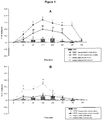
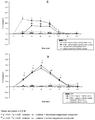
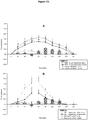
Figure 1 represents the influence of magnesium salts (lactate - A, citrate - B and hydroaspartate - C, chloride - D) in micronized form (micro) and a normal form at a dose of 15 mg magnesium ions/kg body mass (per os; [p.o.]) on the analgesic activity of morphine (MRP) at a dose of 15 mg/kg body mass (p.o.); -
Figure 2 represents the influence of magnesium salts at a dose of 15 mg magnesium ions/kg body mass (p.o.) on morphine analgesia (MRP, 15 mg/kg body mass, p.o.). Wherein in the combined graph: control 1 - 0.5% methylcellulose solution, control 2 - distilled water; -
Figure 3 represents the effect of long-term, 7-day administration of magnesium lactate in micronized form (micro) or normal form (15 or 30 mg magnesium ions/kg body mass [p.o.], respectively) on the analgesic activity of morphine (MRP, 15 mg/kg body mass, p.o.). Day 0 - measurement of the initial pain threshold and the first day of administration of the tested compounds, days 1 - 7 - measurement of the prolonged activity of the tested drugs, days 8 - 10 - measurement following the cessation of administration; -
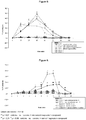
Figure 4 represents the influence of magnesium salts (lactate - A, citrate - B, hydroaspartate - C, chloride - D) in micronized form (micro) and normal form at a dose of 15 mg magnesium ions/kg body mass (p.o.) on the analgesic activity of codeine (COD) at a dose of 175 mg/kg body mass (p.o.); -
Figure 5 represents the effect of magnesium salts at a dose of 15 mg magnesium ions/kg body mass on the codeine analgesia (COD, 175 mg/kg body mass, p.o.). Wherein in the combined graph: control 1 - 0,5% methylcellulose solution, control 2 - distilled water; -
Figure 6 represents the effect of long-term 7-day administration of magnesium lactate in micronized form (micro) or normal form (15 or 30 mg magnesium ions/kg body mass [p.o.], respectively) on the analgesic activity of codeine (COD, 175 mg/kg body mass, p.o.). Day 0 - measurement of the initial pain threshold and the first day of administration of tested compound, days 1 - 7 - measurement of the prolonged activity of the tested drugs, days 8 - 10 - measurement following the cessation of administration; -
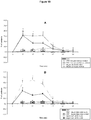
Figure 7 represents the effect of magnesium salts (lactate - A, citrate - B, hydroaspartate - C, chloride - D) in micronized form (micro) and normal form at a dose of 15 mg magnesium ions/kg body mass (p.o.) on the analgesic activity of tramadol (TRAM) at a dose of 125 mg/kg body mass (p.o.); -
Figure 8 represents the effect of magnesium salts at a dose of 15 mg magnesium ions/kg body mass (p.o.) on the tramadol analgesia (TRAM, 125 mg/kg body mass, p.o.). Wherein in the combined graph: control 1 - 0,5% methylcellulose solution, control 2 - distilled water; -
Figure 9 represents the effect of long-term 10-day administration of magnesium lactate in micronized (micro) form or normal form (15 or 30 mg magnesium ions/kg body mass [p.o], respectively) on the analgesic activity of tramadol (TRAM, 125 mg/kg body mass, p.o.). Day 0 - measurement of the initial pain threshold and the first day of administration of tested compound, days 1 - 10 - measurement of the prolonged activity of the tested drugs, days 11 - 12 - measurement following the cessation of administration; -
Figure 10 represents the effect of magnesium salts (lactate - A, citrate - B, hydroaspartate - C, chloride - D) in micronized form (micro) and normal form at a dose of 15 mg magnesium ions/kg body mass (p.o.) on the analgesic activity of oxycodone (OXC) at a dose of 5 mg/kg body mass (p.o.); -
Figure 11 represents the effect of magnesium salts at a dose of 15 mg magnesium ions/kg body mass (p.o.) on the oxycodone (OXC) analgesia at a dose of 5 mg/kg body mass (p.o.). Wherein in the combined graph: control 1 - 0,5% methylcellulose solution, control 2 - distilled water; -
Figure 12 represents the effect of long-term 7-day administration of magnesium lactate in micronized (micro) or normal form (15 or 30 mg of magnesium ions/kg body mass [p.o.], respectively) on the analgesic activity of oxycodone (OXC, 5 mg/kg body mass, p.o.). Day 0 - measurement of the initial pain threshold and the first day of administration of tested compound, days 1 - 7 - measurement of the prolonged activity of the tested drugs, days 8 - 10 - measurement following the cessation of administration; -
Figure 13 represents the effect of magnesium salts (lactate - A, citrate - B, hydroaspartate - C and chloride - D) in micronized form (micro) and normal form at a dose of 15 mg magnesium ions/kg body mass (p.o.) on the analgesic activity of dihydrocodeine (DIH) at a dose of 50 mg/kg body mass (p.o.); -
Figure 14 represents the effect of magnesium salts at a dose of 15 mg magnesium ions/kg body mass (p.o.) on dihydrocodeine analgesia (DIH, 50 mg/kg body mass, p.o.). Wherein in the combined graph: control 1 - 0,5% methylcellulose solution, control 2 - distilled water; -
Figure 15 represents the effect of long-term, 7-day administration of magnesium lactate in micronized (micro) form or normal form (15 or 30 mg of magnesium ions/kg body mass,[p.o.], respectively) on the analgesic activity of dihydrocodeine (DIH, 50 mg/kg body mass, p.o.). Day 0 - measurement of the initial pain threshold and the first day of administration of tested compound, days 1 - 7 - measurement of the prolonged activity of the tested drugs, days 8 - 10 - measurement following the cessation of administration. - Furthermore, the description is supplemented with the following examples:
- Example 1. Preparation of tablets containing morphine and magnesium lactate
Tablet cores with the following composition:- magnesium lactate in micronized form with particles of D90 < 200µm or D90 < 50 µm in size: 250 mg
-
morphine sulphate 30 mg - lactose monohydrate 48.17 mg
- corn starch 14.40 mg
- modified starch 9.60 mg
- polyvinylpyrrolidone 25.000 4.00 mg
- magnesium stearate 0.80 mg
- Example 2. Intensification of analgesic effect of orally administered opioids by the oral administration of magnesium ions.
- The study was conducted according to the guidelines of the Ethical Committee for Experiments on Small Animals, Medical University of Warsaw. The aforementioned Committee approved the experiment protocols.
- Male Wistar rats (250 - 300 g) were housed in a room maintained at a temperature of 20 ± 2°C under 12 h-12 h light - dark cycles. The animals had free access to food and water. Experimental groups consisted of six rats.
-
- Morphine at a dose of 15 mg/kg, codeine at a dose of 175 mg/kg, tramadol at a dose of 125 mg/kg and oxycodone at a dose of 5 mg/kg were dissolved in distilled water;
- Dihydrocodeine at a dose of 50 mg/kg was suspended in 1% solution of methylcellulose;
- Magnesium lactate (in micronized form) - at a dose of 15 mg magnesium ions/kg (150 mg of magnesium lactate/kg) was suspended in 0.5% solution of methylcellulose;
- Magnesium lactate in normal (non-micronized) form - at doses of 15 or 30 mg magnesium ions/kg (150 or 300 mg of magnesium lactate/kg, respectively) was suspended in 0,5% solution of methylcellulose;
- Magnesium citrate (in micronized and normal form) - at a dose of 15 mg magnesium ions/kg (112 mg of magnesium citrate/kg) was dissolved in distilled water;
- Magnesium hydroaspartate (in micronized and normal form) - at a dose of 15 mg magnesium ions/kg (216 mg of magnesium hydroaspartate/kg) was suspended in 0,5% solution of methylcellulose;
- Magnesium chloride (in micronized and normal form) - at a dose of 15 mg magnesium ions/kg (59,5 mg of magnesium chloride/kg) was dissolved in distilled water;
- Control animals received a 0.5% solution of methylcellulose, a 1% solution of methylcellulose and distilled water, respectively, according to the same time schedule.
- In the mentioned studies, doses of opioids and magnesium salts were selected experimentally, so that the separately administered investigated drugs did not reveal significant analgesic action. Magnesium salts and investigated opioids were administered concomitantly.
The micronized form of magnesium salts used in experiments contains particles of magnesium compounds of size D90<50 µm.
The normal magnesium salts form used in experiments contains particles of sizes commonly available in the market. - Acute activity of investigated drugs was measured in short time periods (from 5 to 300 min) after single administration.
- Prolonged activity of the investigated drugs was measured the following day after initial administration, but before the next administration as well as after cessation of administration. Drugs were administered for seven consecutive days (administration of morphine, codeine, dihydrocodeine, oxycodone) or for ten days (administration of tramadol).
- All drugs were administered per os (p.o.); literally - orally. However, in practice, drugs were administered intragastric via a gastric tube.
- Changes in pain thresholds were determined using a mechanical stimuli - the modification of the classic paw withdrawal test described by Randall and Selitto [1957]. In order to produce mechanical stimulation, progressively increasing pressure was applied to the dorsal surface of the rat's paw using an analgesymeter. The instrument used increased the force on the paw at a rate of 32 grams per second. The nociceptive threshold was defined as force in grams, at which the rat attempted to withdraw its right hindpaw and values of pressure were recorded at this very moment. At least two observers controlled the response.
- Nociceptive thresholds (average of two trials) measured for each animal before single administration of investigated drugs (measurement of acute activity) or in
day 0 before the first administration (measurement of prolonged activity) constituted the baseline pain threshold - A. Next, measurements of the withdrawal threshold to mechanical stimuli were performed at 5, 15, 30, 60, 90, 120, 180, 240, 300 min after drug administration (measurements of acute activity) or every day before drug administration (measurements of prolonged activity) - B. - In all experimental sessions (i.e. every day, each drug investigated) values of thresholds obtained (B) were compared to baseline (A).
- Changes in pain threshold were calculated as a percent of baseline value according to the following formula:

- Percents of analgesia values calculated as above for individual animals were subsequently used to calculate average values in particular experimental groups and for statistical analysis.
- The results are expressed as mean values ± standard deviation of the mean (± S.E.M.). The statistical significance of differences between groups was evaluated by Student's t-test. p ≤ 0.05 was accepted as statistically significant. All statistical calculations were performed using the computer software described by Tallarida and Murray.
- The study shows that a single administration of a micronized or normal form of magnesium lactate or magnesium chloride at a dose of 15 mg magnesium ions/kg body mass (p.o.) with morphine at a dose of 15 mg/kg body mass (p.o.) significantly enhanced morphine analgesia. The activity of micronized magnesium lactate was not only marked but also appeared earlier (already 30 minutes into the study) and lasted up to 240 min as compared to normal magnesium (from 60 to 180 min). The activity of magnesium chloride both in micronized form and in normal form on morphine analgesia was similar to the activity of the micronized form of magnesium lactate.
- Neither morphine nor magnesium lactate and chloride in micronized or normal form administered alone showed analgesic activity.
- The administration of equivalent doses of micronized magnesium hydroaspartate and citrate (15 mg of magnesium ions/kg body mass, p.o.) concomitantly with morphine (15 mg/kg body mass, p.o.) also enhanced morphine analgesia. This activity was weaker, although significant, and lasted for a shorter time (magnesium citrate up to 120 min; magnesium hydroaspartate up to 180 min) than in the case of micronized form of magnesium lactate. The activity of these same magnesium salts on morphine analgesia was much weaker only in normal form, as compared to the micronized form. Both magnesium citrate and hydroaspartate administered alone in micronized or normal form did not alter the pain threshold (
Fig. 1A , B, C, D;Fig. 2 ). - A 7-day premedication with micronized magnesium lactate (15 mg magnesium ions/kg p.o., also enhanced the analgesic activity of morphine (15 mg/kg body mass, p.o.). This activity began on
day 3 of the measurement, grew gradually to 7 day. Cessation of drug administration resulted in gradual return to baseline values. The activity of normal magnesium lactate on morphine analgesia (at a 2x larger dose of 30 mg magnesium ions/kg body mass, p.o.) was much weaker and appeared only ondays Fig. 3 ). The separate administration of morphine slightly increased the threshold for mechanical nociceptive stimuli, whereas the separate administration of magnesium lactate in micronized form or normal form did not alter the pain threshold (Fig.3 ). - A single administration of a micronized or normal form of magnesium lactate or magnesium chloride at a dose of 15 mg magnesium ions/kg body mass (p.o.) with codeine at a dose of 175 mg/kg body mass (p.o.) significantly enhanced the analgesic activity of codeine. The activity of micronized magnesium salts was particularly strong in
min 45 of the study. - The administration of equivalent doses of micronized magnesium hydroaspartate or citrate (15 mg magnesium ions/kg body mass, p.o.) with codeine (175 mg/kg body mass, p.o.) also enhanced codeine analgesia. The activity of the same magnesium compounds in normal form on codeine analgesia was significantly weaker (
Fig. 4 A, B ,C, D ;Fig. 5 ). The separate administration of codeine and the micronized, as well as the normal, form of lactate, chloride, hydroaspartate and citrate of magnesium did not exhibit analgesic activity (Fig. 4 ). - A 7-day administration of micronized magnesium lactate (15 mg magnesium ions/kg body mass, p.o.) also enhanced analgesic activity of chronically administered codeine (175 mg/kg body mass, p.o.). The activity began on the fourth day of measurement, reached a maximum on
days days Fig. 6 ). - Separately administered codeine as well as the micronized or normal form magnesium lactate did not exhibit analgesic activity (
Fig. 6 ). - A single administration of the micronized or normal form magnesium lactate and magnesium chloride (in both forms) at a dose of 15 mg magnesium ions/kg p.o., increased antynociceptive activity of tramadol (125 mg/kg body mass, p.o.). The enhancement of opioid analgesia by magnesium appeared in
min 5, with maximum activity atmin 15 and lasted until min 45 (for magnesium lactate) or min 90 (for magnesium chloride) following the administration of the opioid. Activity of the normal form of magnesium lactate as opposed to the normal form of magnesium chloride on tramodol analgesia was weaker than the micronized form. - The administration of equivalent doses of magnesium hydroaspartate and citrate in micronized forms (15 mg magnesium ions/kg body mass, p.o.) concomitantly with tramadol (125 mg/kg body mass, p.o.) also enhanced tramadol analgesia. The activity of micronized magnesium citrate was similar to the activity of the magnesium chloride, whereas the activity of micronized magnesium hydroaspartate was weaker throughout the study.
- The same magnesium salts given in normal form enhanced tramadol analgesia less in comparison to the micronized form (
Fig. 7A , B, C, D;Fig. 8 ). - The separate administration of tramadol as well as the micronized and normal form of lactate, chloride, aspartate and magnesium citrate did not exhibit analgesic activity (
Fig. 7 ). - Micronized magnesium lactate (15 mg magnesium ions/kg body mass, p.o.) administered for 10 consecutive days with tramadol (125 mg/kg body mass, p.o.) enhanced the long-term analgesic activity of the examined opioid. The activity began on the third day, gradually increased (to day 7), and then was maintained to
day 10 of the measurements. After the removal of the tested substances, the pain threshold returned to control values byday 11 of the measurements. The activity of normal magnesium lactate (at a dose of 30 mg magnesium ions/kg body mass, p.o.) was similar to the micronized form up today 6 of the measurements and then significantly weaker (Fig. 9 ). - The separate administration of tramadol insignificantly intensified the threshold for mechanical nociceptive stimuli from
days 6 to 10 of the measurements, whereas the separate administration of magnesium lactate in micronized form or normal form did not alter the pain threshold (Fig. 9 ). - A single administration of the micronized or normal form of magnesium lactate or magnesium chloride at a dose of 15 mg magnesium ions/kg body mass (p.o.) significantly enhanced oxycodone analgesia (5 mg/kg body mass, p.o.). The activity appeared already in the
min 5, and in the case of the micronized form was maintained at a constant level up tomin 30 of the study, then became weaker inmin 45 and disappeared inmin 60. The activity of the normal form of magnesium lactate on oxycodone analgesia was weakened bymin min 45 following the administration of the opioid. The activity of the normal form of magnesium chloride was similar to the activity of the micronized form of this salt. - The administration of equivalent doses of magnesium hydroaspartate or citrate (15 mg magnesium ions/kg body mass, p.o.) with oxycodone (5 mg/kg body mass, p.o.) also enhanced oxycodone analgesia. The same magnesium salts administered in normal form enhanced oxycodone analgesia significantly less when compared to the micronized form (
Fig. 10A , B, C, D;Fig. 11 ). - The separate administration of oxycodone or the micronized, as well as the normal, forms of magnesium lactate, chloride, hydroaspartate and citrate showed no analgesic activity (
Fig. 10 ). - The form of magnesium lactate (15 mg magnesium ions/kg body mass, p.o.) administered for 7 consecutive days together with oxycodone (5 mg/kg body mass, p.o.) enhanced the long-term analgesic activity of the examined opioid. The activity began on the third day of measurement and reached its maximum on
days Fig. 12 ). - Separate administration of oxycodone as well as magnesium lactate in micronized form or normal form did not exhibit analgesic activity (
Fig.12 ). - A single administeration of the micronized or normal form of magnesium lactate and also magnesium chloride in both forms at a dose of 15 mg magnesium ions/kg body mass, p.o.) together with dihydrocodeine at a dose of 50 mg/kg body mass (p.o.) significantly enhanced dihydrocodeine analgesia. The activity gradually increased and reached a maximum between
min min 210 of the measurements. - The activity of the normal form of magnesium (chloride or lactate) also enhanced dihydrocodeine analgesia, but compared to micronized magnesium this was somewhat weaker.
- The administration of equivalent doses of micronized hydroaspartate or magnesium citrate (15 mg magnesium ions/kg body mass, p.o.) with dihydrocodeine (50 mg/kg body mass, p.o.) also enhanced dihydrocodeine analgesia, though the activity compared to magnesium lactate lasted a shorter time. The activity of the same magnesium compound in normal form was significantly weaker (
Fig. 13 A, B ,C, D ;Fig. 14 ). - The separate administration of dihydrocodeine only insignificantly raised the pain perception threshold (90 - 120 min) whereas the separate administration of micronized or normal forms of lactate, chloride, hydroaspartate and magnesium citrate did not exhibit analgesic activity (
Fig. 13 ). - A 7-day administration of micronized magnesium lactate (15 mg magnesium ions/kg body mass, p.o.) gradually enhanced the analgesic activity of chronically administered dihydrocodeine (50 mg/kg body mass, p.o.). The activity began on the fourth day of measurement, reached a maximum on
days - The separate administration of dihydrocodeine insignificantly raised the nociceptive stimulus threshold on
days Fig. 15 ). - It was observed that the oral administration of salts of magnesium, both in micronized and in normal form, seemed to decrease opioid-related bowel obstruction. Fecal pellets following the administration of the same opioids were very dry, whereas the co-administration of the opioid with magnesium salts resulted in increased fecal pellet moisture content. The fecal pellets were more similar to normal ones.
- Magnesium compounds, particularly salts, regardless of form (micronized or normal) increase the analgesic activity of opioids administered orally. However, in the case of micronized magnesium salts, additional intensification of the opioid analgesia occurred. The effect seems to be caused by accelerated absorption of micronized magnesium salt uptake in the gastrointestinal tract.
Claims (2)
- A pharmaceutical composition for use in oral treatment of pain, comprising an opioid and a pharmaceutically admissible salt of magnesium (II) selected from a group consisting of: magnesium lactate, magnesium hydroaspartate or magnesium citrate, wherein the magnesium (II) salt is in finely particulated form of D90 < 50 µm in size.
- A composition for use according to claim 1, characterised in that the opioid is selected from a group consisting of: morphine, codeine, dihydrocodeine, oxycodone, tramadol or their pharmaceutically admissible salts.
Priority Applications (1)
| Application Number | Priority Date | Filing Date | Title |
|---|---|---|---|
| PL12735347T PL2714042T3 (en) | 2011-05-31 | 2012-05-31 | An analgesic pharmaceutical composition for oral administration |
Applications Claiming Priority (2)
| Application Number | Priority Date | Filing Date | Title |
|---|---|---|---|
| PL39506911A PL395069A1 (en) | 2011-05-31 | 2011-05-31 | An analgesic pharmaceutical composition for oral administration |
| PCT/PL2012/050016 WO2012165985A1 (en) | 2011-05-31 | 2012-05-31 | An analgesic pharmaceutical composition for oral administration |
Publications (2)
| Publication Number | Publication Date |
|---|---|
| EP2714042A1 EP2714042A1 (en) | 2014-04-09 |
| EP2714042B1 true EP2714042B1 (en) | 2018-08-29 |
Family
ID=46513810
Family Applications (1)
| Application Number | Title | Priority Date | Filing Date |
|---|---|---|---|
| EP12735347.2A Active EP2714042B1 (en) | 2011-05-31 | 2012-05-31 | An analgesic pharmaceutical composition for oral administration |
Country Status (7)
| Country | Link |
|---|---|
| US (1) | US9101577B2 (en) |
| EP (1) | EP2714042B1 (en) |
| DK (1) | DK2714042T3 (en) |
| ES (1) | ES2708689T3 (en) |
| HU (1) | HUE040419T2 (en) |
| PL (2) | PL395069A1 (en) |
| WO (1) | WO2012165985A1 (en) |
Cited By (1)
| Publication number | Priority date | Publication date | Assignee | Title |
|---|---|---|---|---|
| WO2026033410A1 (en) * | 2024-08-05 | 2026-02-12 | Vm1 Spolka Z Ograniczona Odpowiedzialnoscia | Analgesic dosage form for oral administration with abuse-deterrent properties |
Families Citing this family (3)
| Publication number | Priority date | Publication date | Assignee | Title |
|---|---|---|---|---|
| EP2968185A4 (en) * | 2013-03-15 | 2016-08-31 | Jaffe Russell M | ENCAPSULATION OF GEL MOU |
| GB2607333A (en) * | 2021-06-03 | 2022-12-07 | Horopito Ltd | Pain relief composition |
| EP4389120A1 (en) * | 2022-12-20 | 2024-06-26 | Inflacod Sp. z o.o. | An anti-inflammatory pharmaceutical composition |
Family Cites Families (7)
| Publication number | Priority date | Publication date | Assignee | Title |
|---|---|---|---|---|
| US20020051794A1 (en) * | 2000-08-09 | 2002-05-02 | Alk-Abello A/S | Novel parenteral vaccine formulations and uses thereof |
| IL159156A0 (en) * | 2001-06-22 | 2004-06-01 | Millard Marsden Mershon | A gel forming composition containing a polyacrylic acid |
| RU2284189C2 (en) * | 2001-08-27 | 2006-09-27 | Киова Кемикал Индастри Ко., Лтд. | Anthacidal and aperient tablet |
| US20040048870A1 (en) * | 2002-09-06 | 2004-03-11 | Amir Ahmad A. | Composition for the prevention and treatment of migraine headaches |
| AU2004229464A1 (en) * | 2003-04-08 | 2004-10-28 | Progenics Pharmaceuticals, Inc. | Combination therapy for constipation comprising a laxative and a peripheral opioid antagonist |
| JP2007506775A (en) * | 2003-09-26 | 2007-03-22 | アルザ・コーポレーシヨン | Controlled release formulations exhibiting incremental release rates |
| US20080220064A1 (en) * | 2006-12-06 | 2008-09-11 | Ramesh Ketkar Anant | Extended release matrix formulations of morphine |
-
2011
- 2011-05-31 PL PL39506911A patent/PL395069A1/en unknown
-
2012
- 2012-05-31 EP EP12735347.2A patent/EP2714042B1/en active Active
- 2012-05-31 ES ES12735347T patent/ES2708689T3/en active Active
- 2012-05-31 DK DK12735347.2T patent/DK2714042T3/en active
- 2012-05-31 US US14/122,712 patent/US9101577B2/en active Active
- 2012-05-31 WO PCT/PL2012/050016 patent/WO2012165985A1/en not_active Ceased
- 2012-05-31 HU HUE12735347A patent/HUE040419T2/en unknown
- 2012-05-31 PL PL12735347T patent/PL2714042T3/en unknown
Cited By (1)
| Publication number | Priority date | Publication date | Assignee | Title |
|---|---|---|---|---|
| WO2026033410A1 (en) * | 2024-08-05 | 2026-02-12 | Vm1 Spolka Z Ograniczona Odpowiedzialnoscia | Analgesic dosage form for oral administration with abuse-deterrent properties |
Also Published As
| Publication number | Publication date |
|---|---|
| US20140127302A1 (en) | 2014-05-08 |
| US9101577B2 (en) | 2015-08-11 |
| PL395069A1 (en) | 2012-12-03 |
| EP2714042A1 (en) | 2014-04-09 |
| WO2012165985A1 (en) | 2012-12-06 |
| PL2714042T3 (en) | 2019-03-29 |
| HUE040419T2 (en) | 2019-03-28 |
| DK2714042T3 (en) | 2019-01-02 |
| ES2708689T3 (en) | 2019-04-10 |
Similar Documents
| Publication | Publication Date | Title |
|---|---|---|
| JP6235962B2 (en) | Dosage form containing oxycodone and naloxone | |
| CN103040829B (en) | Pharmaceutical composition containing lappaconitine and oxycodone | |
| CA2661759A1 (en) | Buprenophine-wafer for drug substitution therapy | |
| BRPI0707859A2 (en) | multi-particulate dosage forms that resist immediate release of the active ingredient in the presence of alcohol | |
| MXPA03011314A (en) | PHARMACEUTICAL FORMULATION FOR THE EFFICIENT ADMINISTRATION OF APOMORPHINE, 6aR-(-)-N-PROPYL-NORAPOMORPHINE AND THEIR DERIVATIVES AND PRO-DRUGS THEREOF. | |
| JP6174666B2 (en) | Naltrexone sustained release formulation | |
| CN103313711A (en) | Increasing drug bioavailability in naltrexone therapy | |
| JPS62501845A (en) | controlled release potassium chloride | |
| US9101577B2 (en) | Analgesic pharmaceutical composition for oral administration | |
| US20210353559A1 (en) | Composition and method for treating neurological disease | |
| AU2023251499A1 (en) | Combinations of opioids and N-acylethanolamines | |
| EA014539B1 (en) | Use of a combination of morphine and at least one opiate antagonists for treatment of opiate dependency and for prevention of non-oral opiate abuse in opiate addicts | |
| US20190247327A1 (en) | Composition and method for treating neurological disease | |
| US20080021083A1 (en) | 4-Methylpyrazole Formulations for Inhibiting Ethanol Intolerance | |
| CA2825690A1 (en) | Pharmaceutical formulation | |
| US11833121B2 (en) | Composition and method for treating neurological disease | |
| CA2859203A1 (en) | Methods for treatment and prevention of opioid induced constipation using oral compositions of methylnaltrexone | |
| CN118767141A (en) | Use of ciliristat for analgesia | |
| RU2483715C2 (en) | Solid dosage form of preparations of memantine and its salts | |
| CN102552248B (en) | Application of levo-oxiracetam and oxiracetam in the preparation of drugs for preventing or treating coma | |
| CN102232934B (en) | Pulsatile pellet, pulsatile orally disintegrating tablet containing same, and preparation methods and applications thereof | |
| US10610507B2 (en) | Methods for the treatment of sialorrhea | |
| TWI781925B (en) | Use of ghb or one of its therapeutically acceptable salts administered via oral route | |
| CN103860551A (en) | Pharmaceutical composition containing etodolac and tramadol hydrochloride and application thereof | |
| Partownavid | Morphine sulfate controlled-release |
Legal Events
| Date | Code | Title | Description |
|---|---|---|---|
| PUAI | Public reference made under article 153(3) epc to a published international application that has entered the european phase |
Free format text: ORIGINAL CODE: 0009012 |
|
| 17P | Request for examination filed |
Effective date: 20140102 |
|
| AK | Designated contracting states |
Kind code of ref document: A1 Designated state(s): AL AT BE BG CH CY CZ DE DK EE ES FI FR GB GR HR HU IE IS IT LI LT LU LV MC MK MT NL NO PL PT RO RS SE SI SK SM TR |
|
| DAX | Request for extension of the european patent (deleted) | ||
| STAA | Information on the status of an ep patent application or granted ep patent |
Free format text: STATUS: EXAMINATION IS IN PROGRESS |
|
| 17Q | First examination report despatched |
Effective date: 20170207 |
|
| GRAP | Despatch of communication of intention to grant a patent |
Free format text: ORIGINAL CODE: EPIDOSNIGR1 |
|
| RIC1 | Information provided on ipc code assigned before grant |
Ipc: A61K 33/06 20060101ALI20180206BHEP Ipc: A61K 31/137 20060101ALI20180206BHEP Ipc: A61K 31/194 20060101ALI20180206BHEP Ipc: A61K 9/16 20060101ALI20180206BHEP Ipc: A61P 25/04 20060101ALI20180206BHEP Ipc: A61K 33/14 20060101ALI20180206BHEP Ipc: A61K 45/06 20060101ALI20180206BHEP Ipc: A61K 31/197 20060101ALI20180206BHEP Ipc: A61K 31/135 20060101ALI20180206BHEP Ipc: A61K 31/19 20060101ALI20180206BHEP Ipc: A61K 31/485 20060101AFI20180206BHEP |
|
| STAA | Information on the status of an ep patent application or granted ep patent |
Free format text: STATUS: GRANT OF PATENT IS INTENDED |
|
| INTG | Intention to grant announced |
Effective date: 20180315 |
|
| RIN1 | Information on inventor provided before grant (corrected) |
Inventor name: BUJALSKA-ZAD-ROZNY, MAGDALENA Inventor name: NARUSZEWICZ, MAREK |
|
| GRAS | Grant fee paid |
Free format text: ORIGINAL CODE: EPIDOSNIGR3 |
|
| GRAA | (expected) grant |
Free format text: ORIGINAL CODE: 0009210 |
|
| STAA | Information on the status of an ep patent application or granted ep patent |
Free format text: STATUS: THE PATENT HAS BEEN GRANTED |
|
| AK | Designated contracting states |
Kind code of ref document: B1 Designated state(s): AL AT BE BG CH CY CZ DE DK EE ES FI FR GB GR HR HU IE IS IT LI LT LU LV MC MK MT NL NO PL PT RO RS SE SI SK SM TR |
|
| REG | Reference to a national code |
Ref country code: GB Ref legal event code: FG4D |
|
| REG | Reference to a national code |
Ref country code: CH Ref legal event code: EP |
|
| REG | Reference to a national code |
Ref country code: AT Ref legal event code: REF Ref document number: 1034330 Country of ref document: AT Kind code of ref document: T Effective date: 20180915 |
|
| REG | Reference to a national code |
Ref country code: IE Ref legal event code: FG4D |
|
| REG | Reference to a national code |
Ref country code: DE Ref legal event code: R096 Ref document number: 602012050382 Country of ref document: DE |
|
| REG | Reference to a national code |
Ref country code: NL Ref legal event code: FP |
|
| REG | Reference to a national code |
Ref country code: CH Ref legal event code: NV Representative=s name: ING. ALESSANDRO GALASSI C/O PGA S.P.A., MILANO, CH |
|
| REG | Reference to a national code |
Ref country code: DK Ref legal event code: T3 Effective date: 20181217 Ref country code: SE Ref legal event code: TRGR |
|
| REG | Reference to a national code |
Ref country code: LT Ref legal event code: MG4D |
|
| REG | Reference to a national code |
Ref country code: NO Ref legal event code: CREP Representative=s name: TANDBERG INNOVATION AS, POSTBOKS 1570 VIKA, 0118 |
|
| PG25 | Lapsed in a contracting state [announced via postgrant information from national office to epo] |
Ref country code: LT Free format text: LAPSE BECAUSE OF FAILURE TO SUBMIT A TRANSLATION OF THE DESCRIPTION OR TO PAY THE FEE WITHIN THE PRESCRIBED TIME-LIMIT Effective date: 20180829 Ref country code: GR Free format text: LAPSE BECAUSE OF FAILURE TO SUBMIT A TRANSLATION OF THE DESCRIPTION OR TO PAY THE FEE WITHIN THE PRESCRIBED TIME-LIMIT Effective date: 20181130 Ref country code: SE Free format text: LAPSE BECAUSE OF FAILURE TO SUBMIT A TRANSLATION OF THE DESCRIPTION OR TO PAY THE FEE WITHIN THE PRESCRIBED TIME-LIMIT Effective date: 20180829 Ref country code: BG Free format text: LAPSE BECAUSE OF FAILURE TO SUBMIT A TRANSLATION OF THE DESCRIPTION OR TO PAY THE FEE WITHIN THE PRESCRIBED TIME-LIMIT Effective date: 20181129 Ref country code: RS Free format text: LAPSE BECAUSE OF FAILURE TO SUBMIT A TRANSLATION OF THE DESCRIPTION OR TO PAY THE FEE WITHIN THE PRESCRIBED TIME-LIMIT Effective date: 20180829 Ref country code: IS Free format text: LAPSE BECAUSE OF FAILURE TO SUBMIT A TRANSLATION OF THE DESCRIPTION OR TO PAY THE FEE WITHIN THE PRESCRIBED TIME-LIMIT Effective date: 20181229 |
|
| REG | Reference to a national code |
Ref country code: NO Ref legal event code: T2 Effective date: 20180829 |
|
| PG25 | Lapsed in a contracting state [announced via postgrant information from national office to epo] |
Ref country code: LV Free format text: LAPSE BECAUSE OF FAILURE TO SUBMIT A TRANSLATION OF THE DESCRIPTION OR TO PAY THE FEE WITHIN THE PRESCRIBED TIME-LIMIT Effective date: 20180829 Ref country code: AL Free format text: LAPSE BECAUSE OF FAILURE TO SUBMIT A TRANSLATION OF THE DESCRIPTION OR TO PAY THE FEE WITHIN THE PRESCRIBED TIME-LIMIT Effective date: 20180829 Ref country code: HR Free format text: LAPSE BECAUSE OF FAILURE TO SUBMIT A TRANSLATION OF THE DESCRIPTION OR TO PAY THE FEE WITHIN THE PRESCRIBED TIME-LIMIT Effective date: 20180829 |
|
| REG | Reference to a national code |
Ref country code: HU Ref legal event code: AG4A Ref document number: E040419 Country of ref document: HU |
|
| REG | Reference to a national code |
Ref country code: ES Ref legal event code: FG2A Ref document number: 2708689 Country of ref document: ES Kind code of ref document: T3 Effective date: 20190410 |
|
| PG25 | Lapsed in a contracting state [announced via postgrant information from national office to epo] |
Ref country code: EE Free format text: LAPSE BECAUSE OF FAILURE TO SUBMIT A TRANSLATION OF THE DESCRIPTION OR TO PAY THE FEE WITHIN THE PRESCRIBED TIME-LIMIT Effective date: 20180829 Ref country code: RO Free format text: LAPSE BECAUSE OF FAILURE TO SUBMIT A TRANSLATION OF THE DESCRIPTION OR TO PAY THE FEE WITHIN THE PRESCRIBED TIME-LIMIT Effective date: 20180829 Ref country code: CZ Free format text: LAPSE BECAUSE OF FAILURE TO SUBMIT A TRANSLATION OF THE DESCRIPTION OR TO PAY THE FEE WITHIN THE PRESCRIBED TIME-LIMIT Effective date: 20180829 |
|
| PG25 | Lapsed in a contracting state [announced via postgrant information from national office to epo] |
Ref country code: SM Free format text: LAPSE BECAUSE OF FAILURE TO SUBMIT A TRANSLATION OF THE DESCRIPTION OR TO PAY THE FEE WITHIN THE PRESCRIBED TIME-LIMIT Effective date: 20180829 Ref country code: SK Free format text: LAPSE BECAUSE OF FAILURE TO SUBMIT A TRANSLATION OF THE DESCRIPTION OR TO PAY THE FEE WITHIN THE PRESCRIBED TIME-LIMIT Effective date: 20180829 |
|
| REG | Reference to a national code |
Ref country code: DE Ref legal event code: R097 Ref document number: 602012050382 Country of ref document: DE |
|
| PLBE | No opposition filed within time limit |
Free format text: ORIGINAL CODE: 0009261 |
|
| STAA | Information on the status of an ep patent application or granted ep patent |
Free format text: STATUS: NO OPPOSITION FILED WITHIN TIME LIMIT |
|
| REG | Reference to a national code |
Ref country code: AT Ref legal event code: UEP Ref document number: 1034330 Country of ref document: AT Kind code of ref document: T Effective date: 20180829 |
|
| 26N | No opposition filed |
Effective date: 20190531 |
|
| PG25 | Lapsed in a contracting state [announced via postgrant information from national office to epo] |
Ref country code: SI Free format text: LAPSE BECAUSE OF FAILURE TO SUBMIT A TRANSLATION OF THE DESCRIPTION OR TO PAY THE FEE WITHIN THE PRESCRIBED TIME-LIMIT Effective date: 20180829 |
|
| PG25 | Lapsed in a contracting state [announced via postgrant information from national office to epo] |
Ref country code: MC Free format text: LAPSE BECAUSE OF FAILURE TO SUBMIT A TRANSLATION OF THE DESCRIPTION OR TO PAY THE FEE WITHIN THE PRESCRIBED TIME-LIMIT Effective date: 20180829 |
|
| PG25 | Lapsed in a contracting state [announced via postgrant information from national office to epo] |
Ref country code: LU Free format text: LAPSE BECAUSE OF NON-PAYMENT OF DUE FEES Effective date: 20190531 |
|
| PG25 | Lapsed in a contracting state [announced via postgrant information from national office to epo] |
Ref country code: TR Free format text: LAPSE BECAUSE OF FAILURE TO SUBMIT A TRANSLATION OF THE DESCRIPTION OR TO PAY THE FEE WITHIN THE PRESCRIBED TIME-LIMIT Effective date: 20180829 |
|
| PG25 | Lapsed in a contracting state [announced via postgrant information from national office to epo] |
Ref country code: PT Free format text: LAPSE BECAUSE OF FAILURE TO SUBMIT A TRANSLATION OF THE DESCRIPTION OR TO PAY THE FEE WITHIN THE PRESCRIBED TIME-LIMIT Effective date: 20181229 |
|
| PG25 | Lapsed in a contracting state [announced via postgrant information from national office to epo] |
Ref country code: CY Free format text: LAPSE BECAUSE OF FAILURE TO SUBMIT A TRANSLATION OF THE DESCRIPTION OR TO PAY THE FEE WITHIN THE PRESCRIBED TIME-LIMIT Effective date: 20180829 |
|
| PG25 | Lapsed in a contracting state [announced via postgrant information from national office to epo] |
Ref country code: MT Free format text: LAPSE BECAUSE OF FAILURE TO SUBMIT A TRANSLATION OF THE DESCRIPTION OR TO PAY THE FEE WITHIN THE PRESCRIBED TIME-LIMIT Effective date: 20180829 |
|
| PG25 | Lapsed in a contracting state [announced via postgrant information from national office to epo] |
Ref country code: MK Free format text: LAPSE BECAUSE OF FAILURE TO SUBMIT A TRANSLATION OF THE DESCRIPTION OR TO PAY THE FEE WITHIN THE PRESCRIBED TIME-LIMIT Effective date: 20180829 |
|
| P01 | Opt-out of the competence of the unified patent court (upc) registered |
Effective date: 20230719 |
|
| PGFP | Annual fee paid to national office [announced via postgrant information from national office to epo] |
Ref country code: NL Payment date: 20250523 Year of fee payment: 14 |
|
| PGFP | Annual fee paid to national office [announced via postgrant information from national office to epo] |
Ref country code: FI Payment date: 20250520 Year of fee payment: 14 |
|
| PGFP | Annual fee paid to national office [announced via postgrant information from national office to epo] |
Ref country code: PL Payment date: 20250502 Year of fee payment: 14 Ref country code: DE Payment date: 20250515 Year of fee payment: 14 |
|
| PGFP | Annual fee paid to national office [announced via postgrant information from national office to epo] |
Ref country code: GB Payment date: 20250520 Year of fee payment: 14 Ref country code: ES Payment date: 20250605 Year of fee payment: 14 Ref country code: DK Payment date: 20250507 Year of fee payment: 14 |
|
| PGFP | Annual fee paid to national office [announced via postgrant information from national office to epo] |
Ref country code: NO Payment date: 20250520 Year of fee payment: 14 |
|
| PGFP | Annual fee paid to national office [announced via postgrant information from national office to epo] |
Ref country code: IT Payment date: 20250527 Year of fee payment: 14 Ref country code: BE Payment date: 20250521 Year of fee payment: 14 |
|
| PGFP | Annual fee paid to national office [announced via postgrant information from national office to epo] |
Ref country code: FR Payment date: 20250415 Year of fee payment: 14 Ref country code: HU Payment date: 20250602 Year of fee payment: 14 |
|
| PGFP | Annual fee paid to national office [announced via postgrant information from national office to epo] |
Ref country code: CH Payment date: 20250601 Year of fee payment: 14 |
|
| PGFP | Annual fee paid to national office [announced via postgrant information from national office to epo] |
Ref country code: AT Payment date: 20250508 Year of fee payment: 14 |
|
| PGFP | Annual fee paid to national office [announced via postgrant information from national office to epo] |
Ref country code: IE Payment date: 20250507 Year of fee payment: 14 |
|
| PGFP | Annual fee paid to national office [announced via postgrant information from national office to epo] |
Ref country code: SE Payment date: 20250605 Year of fee payment: 14 |