EP2713286A1 - Search ranking method and system for community users - Google Patents
Search ranking method and system for community users Download PDFInfo
- Publication number
- EP2713286A1 EP2713286A1 EP12830165.2A EP12830165A EP2713286A1 EP 2713286 A1 EP2713286 A1 EP 2713286A1 EP 12830165 A EP12830165 A EP 12830165A EP 2713286 A1 EP2713286 A1 EP 2713286A1
- Authority
- EP
- European Patent Office
- Prior art keywords
- user
- ranking
- search
- community
- factor
- Prior art date
- Legal status (The legal status is an assumption and is not a legal conclusion. Google has not performed a legal analysis and makes no representation as to the accuracy of the status listed.)
- Ceased
Links
Images


Classifications
-
- G—PHYSICS
- G06—COMPUTING OR CALCULATING; COUNTING
- G06F—ELECTRIC DIGITAL DATA PROCESSING
- G06F16/00—Information retrieval; Database structures therefor; File system structures therefor
- G06F16/20—Information retrieval; Database structures therefor; File system structures therefor of structured data, e.g. relational data
- G06F16/24—Querying
- G06F16/245—Query processing
- G06F16/2457—Query processing with adaptation to user needs
- G06F16/24578—Query processing with adaptation to user needs using ranking
-
- G—PHYSICS
- G06—COMPUTING OR CALCULATING; COUNTING
- G06F—ELECTRIC DIGITAL DATA PROCESSING
- G06F16/00—Information retrieval; Database structures therefor; File system structures therefor
- G06F16/90—Details of database functions independent of the retrieved data types
- G06F16/903—Querying
-
- G—PHYSICS
- G06—COMPUTING OR CALCULATING; COUNTING
- G06Q—INFORMATION AND COMMUNICATION TECHNOLOGY [ICT] SPECIALLY ADAPTED FOR ADMINISTRATIVE, COMMERCIAL, FINANCIAL, MANAGERIAL OR SUPERVISORY PURPOSES; SYSTEMS OR METHODS SPECIALLY ADAPTED FOR ADMINISTRATIVE, COMMERCIAL, FINANCIAL, MANAGERIAL OR SUPERVISORY PURPOSES, NOT OTHERWISE PROVIDED FOR
- G06Q10/00—Administration; Management
- G06Q10/40—Business processes related to social networking or social networking services
-
- G—PHYSICS
- G06—COMPUTING OR CALCULATING; COUNTING
- G06Q—INFORMATION AND COMMUNICATION TECHNOLOGY [ICT] SPECIALLY ADAPTED FOR ADMINISTRATIVE, COMMERCIAL, FINANCIAL, MANAGERIAL OR SUPERVISORY PURPOSES; SYSTEMS OR METHODS SPECIALLY ADAPTED FOR ADMINISTRATIVE, COMMERCIAL, FINANCIAL, MANAGERIAL OR SUPERVISORY PURPOSES, NOT OTHERWISE PROVIDED FOR
- G06Q10/00—Administration; Management
- G06Q10/40—Business processes related to social networking or social networking services
- G06Q10/42—Determination of affinities or common interests between users
-
- G—PHYSICS
- G06—COMPUTING OR CALCULATING; COUNTING
- G06Q—INFORMATION AND COMMUNICATION TECHNOLOGY [ICT] SPECIALLY ADAPTED FOR ADMINISTRATIVE, COMMERCIAL, FINANCIAL, MANAGERIAL OR SUPERVISORY PURPOSES; SYSTEMS OR METHODS SPECIALLY ADAPTED FOR ADMINISTRATIVE, COMMERCIAL, FINANCIAL, MANAGERIAL OR SUPERVISORY PURPOSES, NOT OTHERWISE PROVIDED FOR
- G06Q10/00—Administration; Management
- G06Q10/40—Business processes related to social networking or social networking services
- G06Q10/46—Determination of level of influence of users within social networking services
-
- G—PHYSICS
- G06—COMPUTING OR CALCULATING; COUNTING
- G06Q—INFORMATION AND COMMUNICATION TECHNOLOGY [ICT] SPECIALLY ADAPTED FOR ADMINISTRATIVE, COMMERCIAL, FINANCIAL, MANAGERIAL OR SUPERVISORY PURPOSES; SYSTEMS OR METHODS SPECIALLY ADAPTED FOR ADMINISTRATIVE, COMMERCIAL, FINANCIAL, MANAGERIAL OR SUPERVISORY PURPOSES, NOT OTHERWISE PROVIDED FOR
- G06Q10/00—Administration; Management
- G06Q10/40—Business processes related to social networking or social networking services
- G06Q10/48—Business processes related to social networking or social networking services using social graphs
Definitions
- the invention relates to the field of Internet technologies, and in particular, to a search ranking method and system for community users.
- the searching part employs solely a user attribute matching search
- the ranking part simply employs ranking by degree of matching. That is, in the background of the community, user attribute fields, such as name, birth date, school, company, location, interests, etc. of the user, are stored fields by fields. When a search is conducted, searching and matching are performed in these fields based on a keyword inputted by the user to obtain search results; and the search results are ranked by the degree of matching with the keyword.
- search results Given the current number of community users, a lot of search results will be obtained using the existing search ranking method. Also, because a single ranking factor is used, a lot of search results will have the same degree of matching. In the prior art, such search results are usually randomly ranked. As a result, search results seen by the user on the first page or first few pages of search results are not optimized, and are quite different from what the user really needs. The user usually needs to conduct multiple searches before he/she can find the desired person.
- the invention provides a search ranking method and system for community users, by which more optimized search ranking results can be obtained.
- a search ranking method for community users comprising:
- a search ranking system for community users comprising:
- such a search ranking method and system for community users of the invention introduce into the ranking part of the search ranking technique a pre-ranking factor and an offline ranking factor calculated according to historical behavior data of users.
- the pre-ranking factor as a weight
- the offline ranking factor is used as a weight to further perform weighted calculation on search results obtained according to the orderly inverted index data. This enables ranking of the search results to better suit the user's needs, and be more relevant to the user. That is, the object of optimizing search results is achieved.
- the invention mainly lies in the ranking part of a search ranking method.
- a pre-ranking factor and an offline ranking factor calculated in advance according to historical behavior data of users are introduced.
- index data is established, weighted ranking is performed on inverted indices of users by taking the pre-ranking factor as a weight, to obtain orderly inverted user index data.
- weighted calculation is performed on the search results according to the offline ranking factor, to obtain final ranking results.
- the search ranking method of the invention better suits the user's needs, and is more relevant to the user.
- Fig. 1 is a diagram showing the implementing principles of a search ranking method of the invention. As shown in Fig. 1 , improvements made by the invention over the existing ranking include the following.
- pre-ranking is performed on inverted indices of the users according to a pre-ranking factor, to obtain orderly inverted user index data.
- Index data is search indices based on user attribute fields established in advance by a search engine.
- index data is not ranked and items in the index data are randomly arranged, while in the invention, the concept of a pre-ranking factor is introduced. Items are given different weights according to the pre-ranking factor. Weighted calculation, i.e., pre-ranking, is performed on items in the index data, to thereby obtain orderly inverted index data that has been ranked. It is guaranteed that more optimized data is ranked higher in each inverted array. Thus, ranking of search results (community users) is more optimized.
- the pre-ranking factor may be a numerical value calculated from certain historical behavior data of users. For example, activeness of a community user is calculated through a user level of the user in the community and the user's recent log-ins and usages of the community. A community user with high activeness will be ranked high in the inverted array. Thus, when a user searches for community users, without other operations, community users with high activeness can be presented as top search results.
- the specific method for calculating the activeness can be determined depending on specific requirements.
- the invention When search results are ranked, the invention introduces an offline ranking factor and an online ranking factor. Weighted calculation is further performed on search results obtained through index data, to obtain final ranking results.
- the offline ranking factor and the online ranking factor can be used simultaneously, or only one of them can be used.
- Both the offline ranking factor and the online ranking factor are information obtained by analysis according to certain historical behavior data of users.
- the difference is that the online ranking factor is information for weighted calculation obtained by real-time analysis when the user conducts a search, while the offline ranking factor can be obtained by analysis in advance before the user conducts a search.
- the offline ranking factors of a user are based on historical behavior data of the user in the community. Therefore, the above offline ranking factors can only be applied when the identity of the user has been confirmed. That is, they can only be applied in an online search state after the user has logged into the community. It is possible that only one of the offline ranking factors given above as examples is used in ranking. It is also possible that a plurality of offline ranking factors are used for comprehensive ranking.
- the invention also provides a search ranking system for community users realized by applying the ideas discussed above. As shown in Fig. 2 , the system comprises:
- system may further comprise:
- the system may also further comprise an online analysis module 204; wherein the online analysis module 204 obtains location information of the logged-in search user to calculate an online ranking factor; the ranking module 203 further performs weighted calculation on the search results according to the offline ranking factor and the online ranking factor, such that items in the same location as the logged-in search user or near the location of the logged-in search user are ranked higher, to obtain final ranking results.
- the online analysis module 204 obtains location information of the logged-in search user to calculate an online ranking factor
- the ranking module 203 further performs weighted calculation on the search results according to the offline ranking factor and the online ranking factor, such that items in the same location as the logged-in search user or near the location of the logged-in search user are ranked higher, to obtain final ranking results.
- the system may also further comprise an online analysis module 204; wherein, with respect to a logged-in search user, the online analysis module 204 calculates an online ranking factor according to attribute information of the logged-in search user; in search results obtained according to the index data, the ranking module 203 further performs weighted calculation on the search results according to the online ranking factor and the offline ranking factor, such that community users having same or similar attributes as the logged-in search user are ranked higher, to obtain final ranking results.
- the online analysis module 204 calculates an online ranking factor according to attribute information of the logged-in search user
- the ranking module 203 further performs weighted calculation on the search results according to the online ranking factor and the offline ranking factor, such that community users having same or similar attributes as the logged-in search user are ranked higher, to obtain final ranking results.
- the offline analysis module 201 may comprise:
- such a search ranking method and system for community users of the invention introduce ranking factors, such as user profile matching, activeness, potential friendship chain, degree of intimacy between users, and the like, into result ranking by analyzing the profile and behaviors of the user, and realize community user searching with higher accuracy and higher quality.
- ranking factors such as user profile matching, activeness, potential friendship chain, degree of intimacy between users, and the like.
- efficiency of his/her searching can be improved efficiently, his/her search needs can be quickly met in a maximal way, and his/her satisfaction with the searching and the community can be improved.
- his/her enthusiasm in searching can be aroused, popularity and activeness of the community can also be efficiently improved, and thus user stickiness of the community can be increased. Benefits can thus be provided to both the user and the community.
- the invention introduces ranking factors, such as user profile matching, activeness, potential friendship chain, degree of intimacy between users, and the like, into result ranking by analyzing the profile and behaviors of the user, and realizes community user searching with higher accuracy and higher quality.
- ranking factors such as user profile matching, activeness, potential friendship chain, degree of intimacy between users, and the like.
- efficiency of his/her searching can be improved efficiently, his/her search needs can be quickly met in a maximal way, and his/her satisfaction with the searching and the community can be improved.
- his/her enthusiasm in searching can be aroused, popularity and activeness of the community can also be efficiently improved, and thus user stickiness of the community can be increased. Benefits can thus be provided to both the user and the community.
Landscapes
- Engineering & Computer Science (AREA)
- Theoretical Computer Science (AREA)
- Business, Economics & Management (AREA)
- Physics & Mathematics (AREA)
- General Physics & Mathematics (AREA)
- Databases & Information Systems (AREA)
- Marketing (AREA)
- Entrepreneurship & Innovation (AREA)
- Strategic Management (AREA)
- Tourism & Hospitality (AREA)
- Operations Research (AREA)
- General Business, Economics & Management (AREA)
- Human Resources & Organizations (AREA)
- Quality & Reliability (AREA)
- Economics (AREA)
- Data Mining & Analysis (AREA)
- Computational Linguistics (AREA)
- General Engineering & Computer Science (AREA)
- Information Retrieval, Db Structures And Fs Structures Therefor (AREA)
- Management, Administration, Business Operations System, And Electronic Commerce (AREA)
- Computing Systems (AREA)
Abstract
Description
- The invention relates to the field of Internet technologies, and in particular, to a search ranking method and system for community users.
- Communitization is one of the most important directions in which the Internet develops. Many famous community websites, such as Weibo, Tianya, Qzone, Pengyou, RenRen, Xiaonei, and the like, are now providing to the masses of users a broader space for social activities without spatial and temporal limitations, and are gradually becoming an indispensable part of people's life.
- With the development of network communitization, more and more people are using various communities, and the number of users within each community is also increasing rapidly. Finding persons in which the user is interested in the community, that is, a function for search ranking of community users, has become an important application provided to the user by the community. As to this application, how to quickly and accurately find the community users for which the user is searching from a massive amount of data and appropriately rank search results is an important factor reflecting the performance of this function.
- However, in the search ranking provided by most of the communities nowadays, the searching part employs solely a user attribute matching search, and the ranking part simply employs ranking by degree of matching. That is, in the background of the community, user attribute fields, such as name, birth date, school, company, location, interests, etc. of the user, are stored fields by fields. When a search is conducted, searching and matching are performed in these fields based on a keyword inputted by the user to obtain search results; and the search results are ranked by the degree of matching with the keyword.
- Given the current number of community users, a lot of search results will be obtained using the existing search ranking method. Also, because a single ranking factor is used, a lot of search results will have the same degree of matching. In the prior art, such search results are usually randomly ranked. As a result, search results seen by the user on the first page or first few pages of search results are not optimized, and are quite different from what the user really needs. The user usually needs to conduct multiple searches before he/she can find the desired person.
- In view of this, the invention provides a search ranking method and system for community users, by which more optimized search ranking results can be obtained.
- To achieve the above object, technical solutions of the invention are implemented as follows.
- A search ranking method for community users, comprising:
- calculating a pre-ranking factor and an offline ranking factor according to historical behavior data of users;
- performing weighted ranking on inverted indices of users by taking the pre-ranking factor as a weight, to obtain orderly inverted user index data;
- with respect to a logged-in search user, in search results obtained according to the index data, performing weighted calculation on the search results according to the offline ranking factor, to obtain final ranking results.
- A search ranking system for community users, comprising:
- an offline analysis module, which calculates a pre-ranking factor and an offline ranking factor according to historical behavior data of users;
- an indexing module, which performs weighted ranking on inverted indices of users by taking the pre-ranking factor as a weight, to obtain orderly inverted user index data;
- a ranking module, which, with respect to a logged-in search user, in search results obtained according to the index data, performs weighted calculation on the search results according to the offline ranking factor, to obtain final ranking results.
- As can be seen from the above technical solutions, such a search ranking method and system for community users of the invention introduce into the ranking part of the search ranking technique a pre-ranking factor and an offline ranking factor calculated according to historical behavior data of users. By using the pre-ranking factor as a weight, when index data is established, pre-ranking is performed in advance on inverted indices, to obtain orderly inverted index data. Also, the offline ranking factor is used as a weight to further perform weighted calculation on search results obtained according to the orderly inverted index data. This enables ranking of the search results to better suit the user's needs, and be more relevant to the user. That is, the object of optimizing search results is achieved.
- The foregoing is merely a summary of the technical solutions of the invention. In order to be able to more clearly understand the technical means of the invention and implement the same in accordance with the disclosure in the specification, and to make the above and other objects, features and advantages of the invention more apparent and easy to understand, detailed description will be given below with reference to specific embodiments in connection with the accompanying drawings.
-
-
Fig. 1 is a diagram showing the implementing principles of a search ranking method of an embodiment of the invention; -
Fig. 2 is a schematic diagram showing the structure of a search ranking system of an embodiment of the invention; -
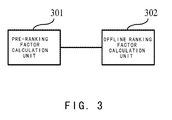
Fig. 3 is a schematic diagram showing the structure of an offline analysis module of an embodiment of the invention. - In order to further describe the technical means adopted by the invention for achieving the predetermined invention objects and the effects thereof, specific implementations, structures, features and effects of a search ranking method and system for community users proposed according to the invention are described in detailed below in connection with the accompanying drawings and preferred embodiments.
- The foregoing and other technical aspects, features and effects of the invention will be apparent from the following detailed description of the preferred embodiments with reference to the drawings. By describing the specific implementations, a more in-depth and specific understanding of the technical means adopted by the invention for achieving the predetermined invention objects and the effects thereof can be provided. However, the accompanying drawings are used for reference and explanation only, rather than limiting the invention.
- The invention mainly lies in the ranking part of a search ranking method. A pre-ranking factor and an offline ranking factor calculated in advance according to historical behavior data of users are introduced. When index data is established, weighted ranking is performed on inverted indices of users by taking the pre-ranking factor as a weight, to obtain orderly inverted user index data. For a logged-in search user, in search results obtained according to the index data, weighted calculation is performed on the search results according to the offline ranking factor, to obtain final ranking results. With the pre-ranking factor and the offline ranking factor, the search ranking method of the invention better suits the user's needs, and is more relevant to the user.
-
Fig. 1 is a diagram showing the implementing principles of a search ranking method of the invention. As shown inFig. 1 , improvements made by the invention over the existing ranking include the following. - When index data of the users is established, pre-ranking is performed on inverted indices of the users according to a pre-ranking factor, to obtain orderly inverted user index data.
- Index data is search indices based on user attribute fields established in advance by a search engine. In the prior art, index data is not ranked and items in the index data are randomly arranged, while in the invention, the concept of a pre-ranking factor is introduced. Items are given different weights according to the pre-ranking factor. Weighted calculation, i.e., pre-ranking, is performed on items in the index data, to thereby obtain orderly inverted index data that has been ranked. It is guaranteed that more optimized data is ranked higher in each inverted array. Thus, ranking of search results (community users) is more optimized.
- The pre-ranking factor may be a numerical value calculated from certain historical behavior data of users. For example, activeness of a community user is calculated through a user level of the user in the community and the user's recent log-ins and usages of the community. A community user with high activeness will be ranked high in the inverted array. Thus, when a user searches for community users, without other operations, community users with high activeness can be presented as top search results. The specific method for calculating the activeness can be determined depending on specific requirements.
- When search results are ranked, the invention introduces an offline ranking factor and an online ranking factor. Weighted calculation is further performed on search results obtained through index data, to obtain final ranking results. The offline ranking factor and the online ranking factor can be used simultaneously, or only one of them can be used.
- Both the offline ranking factor and the online ranking factor are information obtained by analysis according to certain historical behavior data of users. The difference is that the online ranking factor is information for weighted calculation obtained by real-time analysis when the user conducts a search, while the offline ranking factor can be obtained by analysis in advance before the user conducts a search.
-
- 1. User preference or user category information: by analyzing data on articles posted or read by the user in the community, persons with whom the user has communicated or become friends, persons followed by the user, and the like, information on the user's preferences and the category to which the user belongs can be determined. Community users having the same preferences or belonging to the same category as the search user can be given a greater weight in ranking, such that community users having the same preferences or belonging to the same category as the user are ranked higher among the search results.
- 2. User potential friendship chain information: by analyzing various friendship data, such as the existing friend circle of the user in the community, persons followed by the user, friends of these users, and the like, user potential friendship chain information is obtained. Thus, when the user conducts a search, community users in the user's potential friendship chain among the search results can be given a greater weight, such that community users having potential friendship with the user are ranked higher among the search results.
- 3. Intimacy degree information: according to data on interactivities between a user and other community users, the degree of intimacy between the other community users and the user is calculated. When this user conducts a search, community users having a higher degree of intimacy with the user among the search results can be given a greater weight, such that community users having a higher degree of intimacy with the user are ranked higher among the search results.
- Of course, all the offline ranking factors of a user are based on historical behavior data of the user in the community. Therefore, the above offline ranking factors can only be applied when the identity of the user has been confirmed. That is, they can only be applied in an online search state after the user has logged into the community. It is possible that only one of the offline ranking factors given above as examples is used in ranking. It is also possible that a plurality of offline ranking factors are used for comprehensive ranking.
-
- 1. User location information: when a user conducts a search, the current IP address of the user can be retrieved as the location information of the user. In ranking, community users in the same location as the user among the search results are given a greater weight, such that community users located in the same location as the user or near the location of the user are ranked higher. As an online ranking factor, user location information can be applied both in a non-login search performed when the user has not logged into the community, and a logged-in search performed after the user has logged into the community.
- 2. User attribute information: when a user conducts a search, personal profile data in the registration information of the user can be searched, such as location, school, time graduated, company, hobbies, etc. In ranking, community users having the same attribute information as the user among the search results are given a greater weight, such that community users having same or similar attributes as the user are ranked higher. Because user attribute information can only be obtained after the user has logged in, user attribute information as an online ranking factor can only be applied in a logged-in search performed after the user has logged into the community.
- When search results are ranked according to the above offline ranking factors or online ranking factors, the specific assignment of weights can be determined as required by specific applications. After all the weights have been determined, comprehensive ranking is performed according to all the weights, to eventually obtain optimized ranking results.
- In addition, the invention also provides a search ranking system for community users realized by applying the ideas discussed above. As shown in
Fig. 2 , the system comprises: - an
offline analysis module 201, which calculates a pre-ranking factor and an offline ranking factor according to historical behavior data of users; - an
indexing module 202, which performs weighted ranking on inverted indices of users by taking the pre-ranking factor as a weight, to obtain orderly inverted user index data; - a
ranking module 203, which, with respect to a logged-in search user, in search results obtained according to the index data, performs weighted calculation on the search results according to the offline ranking factor, to obtain final ranking results. - As a preferred embodiment, the system may further comprise:
- an
online analysis module 204, which, with respect to a non-login search user, obtains location information of the non-login search user to calculate an online ranking factor; - with respect to the non-login search user, in search results obtained according to the index data, the
ranking module 203 further performs weighted calculation on the search results according to the online ranking factor, such that items in the same location as the user or near the location of the user are ranked higher, to obtain final ranking results. - Alternatively, as another preferred embodiment, the system may also further comprise an
online analysis module 204;
wherein theonline analysis module 204 obtains location information of the logged-in search user to calculate an online ranking factor;
theranking module 203 further performs weighted calculation on the search results according to the offline ranking factor and the online ranking factor, such that items in the same location as the logged-in search user or near the location of the logged-in search user are ranked higher, to obtain final ranking results. - Alternatively, as another preferred embodiment, the system may also further comprise an
online analysis module 204;
wherein, with respect to a logged-in search user, theonline analysis module 204 calculates an online ranking factor according to attribute information of the logged-in search user;
in search results obtained according to the index data, theranking module 203 further performs weighted calculation on the search results according to the online ranking factor and the offline ranking factor, such that community users having same or similar attributes as the logged-in search user are ranked higher, to obtain final ranking results. - In addition, as a preferred embodiment, the
offline analysis module 201, as shown inFig. 3 , may comprise: - a pre-ranking
factor calculation unit 301, which calculates a pre-ranking factor according to user activeness calculated according to data on a user level of the user in the community and data on the user's recent log-ins and usages of the community; - an offline ranking
factor calculation unit 302, which calculates an offline ranking factor according to user preference information or user category information obtained by analyzing data on articles posted or read by the user in the community, persons with whom the user has communicated or become friends, and directions followed by the user; - and/or calculates an offline ranking factor according to user potential friendship chain information obtained by analyzing data on friends of the user in the community and persons followed by the user in the community;
- and/or calculates an offline ranking factor according to user intimacy degree information calculated according to data on interactivities between the user and friends.
- As can be seen from the above embodiments, such a search ranking method and system for community users of the invention introduce ranking factors, such as user profile matching, activeness, potential friendship chain, degree of intimacy between users, and the like, into result ranking by analyzing the profile and behaviors of the user, and realize community user searching with higher accuracy and higher quality. For the user, efficiency of his/her searching can be improved efficiently, his/her search needs can be quickly met in a maximal way, and his/her satisfaction with the searching and the community can be improved. Meanwhile, his/her enthusiasm in searching can be aroused, popularity and activeness of the community can also be efficiently improved, and thus user stickiness of the community can be increased. Benefits can thus be provided to both the user and the community.
- The foregoing is just a description of embodiments of the invention, and is not intended to limit the invention in any sense. Although the invention has been disclosed above by embodiments, the invention is not limited to this. Anyone skilled in the art can make equivalent embodiments with equivalent variations by making some alternations or modifications using the technical contents disclosed above, without departing from the scope of the technical solutions of the invention. Any simple alternations, equivalent variations or modifications made to the above embodiments in accordance with the technical substance of the invention without departing from the technical solutions of the invention are within the scope of the technical solutions of the invention.
- The invention introduces ranking factors, such as user profile matching, activeness, potential friendship chain, degree of intimacy between users, and the like, into result ranking by analyzing the profile and behaviors of the user, and realizes community user searching with higher accuracy and higher quality. For the user, efficiency of his/her searching can be improved efficiently, his/her search needs can be quickly met in a maximal way, and his/her satisfaction with the searching and the community can be improved. Meanwhile, his/her enthusiasm in searching can be aroused, popularity and activeness of the community can also be efficiently improved, and thus user stickiness of the community can be increased. Benefits can thus be provided to both the user and the community.
Claims (11)
- A search ranking method for community users, characterized in that the method comprises:calculating a pre-ranking factor and an offline ranking factor according to historical behavior data of users;performing weighted ranking on inverted indices of users by taking the pre-ranking factor as a weight, to obtain orderly inverted user index data;with respect to a logged-in search user, in search results obtained according to the index data, performing weighted calculation on the search results according to the offline ranking factor, to obtain final ranking results.
- The search ranking method for community users according to claim 1, characterized in that the method further comprises:with respect to a non-login search user, obtaining location information of the non-login search user to calculate an online ranking factor;in search results obtained according to the index data, performing weighted calculation on the search results according to the online ranking factor, such that items in the same location as the non-login search user or near the location of the non-login search user are ranked higher, to obtain final ranking results.
- The search ranking method for community users according to claim 1, characterized in that the method further comprises:obtaining location information of the logged-in search user to calculate an online ranking factor;in search results obtained according to the index data, further performing weighted calculation on the search results according to the online ranking factor and the offline ranking factor, such that items in the same location as the logged-in search user or near the location of the logged-in search user are ranked higher, to obtain final ranking results.
- The search ranking method for community users according to claim 1, characterized in that the method further comprises:calculating an online ranking factor according to attribute information of the logged-in search user;in search results obtained according to the index data, further performing weighted calculation on the search results according to the online ranking factor and the offline ranking factor, such that community users having same or similar attributes as the logged-in search user are ranked higher, to obtain final ranking results.
- The search ranking method for community users according to claim 1, characterized in that the pre-ranking factor includes:user activeness calculated according to data on a user level of the user in the community and data on the user's recent log-ins and usages of the community.
- The search ranking method for community users according to claim 1, characterized in that the offline ranking factor includes at least one of:user preference information or user category information obtained by analyzing data on articles posted or read by a user in a community, persons with whom the user has communicated or become friends, and persons followed by the user;user potential friendship chain information obtained by analyzing data on friends of the user in the community and persons followed by the user in the community;user intimacy degree information calculated according to data on interactivities between the user and friends.
- A search ranking system for community users, characterized in that the system comprises:an offline analysis module, which calculates a pre-ranking factor and an offline ranking factor according to historical behavior data of users;an indexing module, which performs weighted ranking on inverted indices of users by taking the pre-ranking factor as a weight, to obtain orderly inverted user index data;a ranking module, which, with respect to a logged-in search user, in search results obtained according to the index data, performs weighted calculation on the search results according to the offline ranking factor, to obtain final ranking results.
- The search ranking system for community users according to claim 7, characterized in that the system further comprises:an online analysis module, which, with respect to a non-login search user, obtains location information of the non-login search user to calculate an online ranking factor;wherein, with respect to the non-login search user, in search results obtained according to the index data, the ranking module further performs weighted calculation on the search results according to the online ranking factor, such that items in the same location as the user or near the location of the user are ranked higher, to obtain final ranking results.
- The search ranking system for community users according to claim 7, characterized in that the system further comprises:an online analysis module, which obtains location information of the logged-in search user to calculate an online ranking factor;wherein, in search results obtained according to the index data, the ranking module further performs weighted calculation on the search results according to the offline ranking factor and the online ranking factor, such that items in the same location as the logged-in search user or near the location of the logged-in search user are ranked higher, to obtain final ranking results.
- The search ranking system for community users according to claim 7, characterized in that the system further comprises:an online analysis module, which calculates an online ranking factor according to attribute information of the logged-in search user;wherein, in search results obtained according to the index data, the ranking module further performs weighted calculation on the search results according to the online ranking factor and the offline ranking factor, such that community users having same or similar attributes as the logged-in search user are ranked higher, to obtain final ranking results.
- The search ranking system for community users according to claim 7, characterized in that the offline analysis module comprises:a pre-ranking factor calculation unit, which calculates the pre-ranking factor according to user activeness calculated according to data on a user level of a user in a community and data on the user's recent log-ins and usages of the community;an offline ranking factor calculation unit, which calculates the offline ranking factor according to user preference information or user category information obtained by analyzing data on articles posted or read by the user in the community, persons with whom the user has communicated or become friends, and directions followed by the user;and/or calculates the offline ranking factor according to user potential friendship chain information obtained by analyzing data on friends of the user in the community and persons followed by the user in the community;and/or calculates the offline ranking factor according to user intimacy degree information calculated from data on interactivities between the user and friends.
Applications Claiming Priority (2)
| Application Number | Priority Date | Filing Date | Title |
|---|---|---|---|
| CN201110260200.7A CN102982035B (en) | 2011-09-05 | 2011-09-05 | A kind of search ordering method of community users and system |
| PCT/CN2012/079944 WO2013034043A1 (en) | 2011-09-05 | 2012-08-10 | Search ranking method and system for community users |
Publications (2)
| Publication Number | Publication Date |
|---|---|
| EP2713286A1 true EP2713286A1 (en) | 2014-04-02 |
| EP2713286A4 EP2713286A4 (en) | 2015-09-16 |
Family
ID=47831516
Family Applications (1)
| Application Number | Title | Priority Date | Filing Date |
|---|---|---|---|
| EP12830165.2A Ceased EP2713286A4 (en) | 2011-09-05 | 2012-08-10 | METHOD AND SYSTEM FOR CLASSIFYING SEARCHES FOR COMMUNITY USERS |
Country Status (4)
| Country | Link |
|---|---|
| US (1) | US9489428B2 (en) |
| EP (1) | EP2713286A4 (en) |
| CN (1) | CN102982035B (en) |
| WO (1) | WO2013034043A1 (en) |
Families Citing this family (6)
| Publication number | Priority date | Publication date | Assignee | Title |
|---|---|---|---|---|
| CN104834657B (en) * | 2014-08-27 | 2018-05-15 | 腾讯科技(北京)有限公司 | User behavior analysis method and server |
| CN105447205B (en) * | 2016-01-05 | 2023-10-24 | 腾讯科技(深圳)有限公司 | Methods and devices for sorting search results |
| CN110750535B (en) * | 2019-09-27 | 2024-02-02 | 上海麦克风文化传媒有限公司 | Ordering result updating method |
| US11429908B2 (en) | 2020-04-30 | 2022-08-30 | International Business Machines Corporation | Identifying related messages in a natural language interaction |
| CN112559903B (en) * | 2020-12-15 | 2024-04-05 | 广州市贺氏办公设备有限公司 | Community member searching method, system, device and medium |
| CN112559902B (en) * | 2020-12-15 | 2024-06-04 | 广州市贺氏办公设备有限公司 | Community member ranking method, system, device and medium |
Family Cites Families (11)
| Publication number | Priority date | Publication date | Assignee | Title |
|---|---|---|---|---|
| US7698270B2 (en) * | 2004-12-29 | 2010-04-13 | Baynote, Inc. | Method and apparatus for identifying, extracting, capturing, and leveraging expertise and knowledge |
| US7783632B2 (en) * | 2005-11-03 | 2010-08-24 | Microsoft Corporation | Using popularity data for ranking |
| ITMI20061897A1 (en) * | 2006-10-03 | 2008-04-04 | Pointer S R L | SYSTEMS AND METHODS FOR CLASSIFYING RESULTS OF SEARCH ENGINES |
| CN100507920C (en) * | 2007-05-25 | 2009-07-01 | 清华大学 | Search engine retrieving result reordering method based on user behavior information |
| CN101661477A (en) * | 2008-08-26 | 2010-03-03 | 华为技术有限公司 | Search method and system |
| CN101661487B (en) * | 2008-08-27 | 2012-08-08 | 国际商业机器公司 | Method and system for searching information items |
| US20100169323A1 (en) * | 2008-12-29 | 2010-07-01 | Microsoft Corporation | Query-Dependent Ranking Using K-Nearest Neighbor |
| US20100241580A1 (en) * | 2009-03-19 | 2010-09-23 | Tagged, Inc. | System and method of selecting a relevant user for introduction to a user in an online environment |
| CN101588400A (en) * | 2009-06-25 | 2009-11-25 | 宇龙计算机通信科技(深圳)有限公司 | Method for ordering data and mobile communication terminal |
| WO2011050495A1 (en) * | 2009-10-29 | 2011-05-05 | Google Inc. | Ranking user generated web content |
| CN102098388A (en) * | 2011-01-31 | 2011-06-15 | 宇龙计算机通信科技(深圳)有限公司 | Method for sequencing contacts and terminal |
-
2011
- 2011-09-05 CN CN201110260200.7A patent/CN102982035B/en active Active
-
2012
- 2012-08-10 EP EP12830165.2A patent/EP2713286A4/en not_active Ceased
- 2012-08-10 WO PCT/CN2012/079944 patent/WO2013034043A1/en not_active Ceased
-
2013
- 2013-12-23 US US14/139,180 patent/US9489428B2/en active Active
Also Published As
| Publication number | Publication date |
|---|---|
| CN102982035B (en) | 2015-10-07 |
| EP2713286A4 (en) | 2015-09-16 |
| US20140122474A1 (en) | 2014-05-01 |
| WO2013034043A1 (en) | 2013-03-14 |
| US9489428B2 (en) | 2016-11-08 |
| CN102982035A (en) | 2013-03-20 |
Similar Documents
| Publication | Publication Date | Title |
|---|---|---|
| CN102955781B (en) | A kind of personage's searching method and device | |
| US9489428B2 (en) | Search ranking method and system for community users | |
| US9536003B2 (en) | Method and system for hybrid information query | |
| US9466071B2 (en) | Social media user recommendation system and method | |
| US8478735B1 (en) | Method and system for ranking results and providing lists of experts from social networks | |
| CN102754094B (en) | For the system and method for the content classification to user or user's generation | |
| CA2813037C (en) | Presenting social search results | |
| CN103838834B (en) | Mention recommendation method, information processing method and system | |
| CN103188139B (en) | A kind of information displaying method of recommending friends and device | |
| US20150213368A1 (en) | Information recommendation method, apparatus, and server | |
| KR20140068942A (en) | Search method, device and system | |
| CN108259638B (en) | Intelligent sorting method for personal group list, intelligent terminal and storage medium | |
| JP2014528113A (en) | Filtering social search results | |
| US20080065600A1 (en) | Method and apparatus for providing search results from content on a computer network | |
| Yazdanfar et al. | Link recommender: Collaborative-filtering for recommending urls to twitter users | |
| JP5710576B2 (en) | Itinerary table generating device, itinerary table generating method, and itinerary table generating program | |
| JP2014522046A (en) | Search method, system, and device | |
| KR101559719B1 (en) | Auto-learning system and method for derive effective marketing | |
| CN107679053A (en) | Location recommendation method, device, computer equipment and storage medium | |
| CN104598448A (en) | Personalized information recommendation system | |
| Mican et al. | Building a social recommender system by harvesting social relationships and trust scores between users | |
| KR20150045236A (en) | Method and apparatus for managing scrap information | |
| CN101136869A (en) | Method for generating search intention based contacts group of instant communication system | |
| Alotaibi et al. | Personalized Recommendation of Research Papers by Fusing Recommendations from Explicit and Implicit Social Network. | |
| WO2014139056A1 (en) | Social media based content selection system |
Legal Events
| Date | Code | Title | Description |
|---|---|---|---|
| PUAI | Public reference made under article 153(3) epc to a published international application that has entered the european phase |
Free format text: ORIGINAL CODE: 0009012 |
|
| 17P | Request for examination filed |
Effective date: 20131113 |
|
| AK | Designated contracting states |
Kind code of ref document: A1 Designated state(s): AL AT BE BG CH CY CZ DE DK EE ES FI FR GB GR HR HU IE IS IT LI LT LU LV MC MK MT NL NO PL PT RO RS SE SI SK SM TR |
|
| DAX | Request for extension of the european patent (deleted) | ||
| RA4 | Supplementary search report drawn up and despatched (corrected) |
Effective date: 20150819 |
|
| RIC1 | Information provided on ipc code assigned before grant |
Ipc: G06F 17/30 20060101AFI20150813BHEP Ipc: G06Q 10/00 20120101ALI20150813BHEP |
|
| 17Q | First examination report despatched |
Effective date: 20160929 |
|
| STAA | Information on the status of an ep patent application or granted ep patent |
Free format text: STATUS: EXAMINATION IS IN PROGRESS |
|
| REG | Reference to a national code |
Ref country code: DE Ref legal event code: R003 |
|
| STAA | Information on the status of an ep patent application or granted ep patent |
Free format text: STATUS: THE APPLICATION HAS BEEN REFUSED |
|
| 18R | Application refused |
Effective date: 20180419 |