EP2712863B1 - Novel inhibitors of bacterial biofilms and related methods - Google Patents
Novel inhibitors of bacterial biofilms and related methods Download PDFInfo
- Publication number
- EP2712863B1 EP2712863B1 EP12186521.6A EP12186521A EP2712863B1 EP 2712863 B1 EP2712863 B1 EP 2712863B1 EP 12186521 A EP12186521 A EP 12186521A EP 2712863 B1 EP2712863 B1 EP 2712863B1
- Authority
- EP
- European Patent Office
- Prior art keywords
- alkyl
- group
- substituted
- alkenyl
- hydrogen
- Prior art date
- Legal status (The legal status is an assumption and is not a legal conclusion. Google has not performed a legal analysis and makes no representation as to the accuracy of the status listed.)
- Ceased
Links
- 238000000034 method Methods 0.000 title claims description 43
- 230000001580 bacterial effect Effects 0.000 title description 17
- 239000003112 inhibitor Substances 0.000 title description 16
- 150000001875 compounds Chemical class 0.000 claims description 264
- 239000000203 mixture Substances 0.000 claims description 215
- -1 3H-indolyl Chemical group 0.000 claims description 158
- 239000001257 hydrogen Substances 0.000 claims description 109
- 229910052739 hydrogen Inorganic materials 0.000 claims description 109
- 230000002829 reductive effect Effects 0.000 claims description 97
- 125000004435 hydrogen atom Chemical group [H]* 0.000 claims description 81
- 125000000392 cycloalkenyl group Chemical group 0.000 claims description 65
- 125000001072 heteroaryl group Chemical group 0.000 claims description 60
- 125000002496 methyl group Chemical group [H]C([H])([H])* 0.000 claims description 55
- 229910052757 nitrogen Inorganic materials 0.000 claims description 53
- 150000004820 halides Chemical group 0.000 claims description 52
- 125000003118 aryl group Chemical group 0.000 claims description 46
- 241000894006 Bacteria Species 0.000 claims description 44
- 230000012010 growth Effects 0.000 claims description 40
- 125000002887 hydroxy group Chemical group [H]O* 0.000 claims description 37
- 239000000126 substance Substances 0.000 claims description 35
- 229910052799 carbon Inorganic materials 0.000 claims description 29
- 125000002924 primary amino group Chemical group [H]N([H])* 0.000 claims description 29
- 150000001721 carbon Chemical group 0.000 claims description 26
- 125000000113 cyclohexyl group Chemical group [H]C1([H])C([H])([H])C([H])([H])C([H])(*)C([H])([H])C1([H])[H] 0.000 claims description 26
- 125000001511 cyclopentyl group Chemical group [H]C1([H])C([H])([H])C([H])([H])C([H])(*)C1([H])[H] 0.000 claims description 26
- 150000002825 nitriles Chemical class 0.000 claims description 26
- ORILYTVJVMAKLC-UHFFFAOYSA-N adamantane Chemical compound C1C(C2)CC3CC1CC2C3 ORILYTVJVMAKLC-UHFFFAOYSA-N 0.000 claims description 25
- 229910001573 adamantine Inorganic materials 0.000 claims description 25
- 150000001408 amides Chemical group 0.000 claims description 25
- ZXKINMCYCKHYFR-UHFFFAOYSA-N aminooxidanide Chemical group [O-]N ZXKINMCYCKHYFR-UHFFFAOYSA-N 0.000 claims description 25
- 125000001995 cyclobutyl group Chemical group [H]C1([H])C([H])([H])C([H])(*)C1([H])[H] 0.000 claims description 25
- UMRZSTCPUPJPOJ-KNVOCYPGSA-N norbornane Chemical compound C1C[C@H]2CC[C@@H]1C2 UMRZSTCPUPJPOJ-KNVOCYPGSA-N 0.000 claims description 25
- 150000003254 radicals Chemical class 0.000 claims description 24
- 125000003178 carboxy group Chemical group [H]OC(*)=O 0.000 claims description 23
- 125000001559 cyclopropyl group Chemical group [H]C1([H])C([H])([H])C1([H])* 0.000 claims description 22
- 125000002541 furyl group Chemical group 0.000 claims description 22
- 150000003839 salts Chemical class 0.000 claims description 22
- 125000004432 carbon atom Chemical group C* 0.000 claims description 21
- 125000003838 furazanyl group Chemical group 0.000 claims description 21
- 125000002883 imidazolyl group Chemical group 0.000 claims description 21
- 125000003387 indolinyl group Chemical group N1(CCC2=CC=CC=C12)* 0.000 claims description 21
- 125000003406 indolizinyl group Chemical group C=1(C=CN2C=CC=CC12)* 0.000 claims description 21
- 125000001041 indolyl group Chemical group 0.000 claims description 21
- 125000000904 isoindolyl group Chemical group C=1(NC=C2C=CC=CC12)* 0.000 claims description 21
- 125000001786 isothiazolyl group Chemical group 0.000 claims description 21
- 125000002971 oxazolyl group Chemical group 0.000 claims description 21
- 125000003226 pyrazolyl group Chemical group 0.000 claims description 21
- 125000002098 pyridazinyl group Chemical group 0.000 claims description 21
- 125000004076 pyridyl group Chemical group 0.000 claims description 21
- 125000000714 pyrimidinyl group Chemical group 0.000 claims description 21
- 125000000168 pyrrolyl group Chemical group 0.000 claims description 21
- 125000000335 thiazolyl group Chemical group 0.000 claims description 21
- 125000001544 thienyl group Chemical group 0.000 claims description 21
- 125000003785 benzimidazolyl group Chemical group N1=C(NC2=C1C=CC=C2)* 0.000 claims description 20
- 125000000499 benzofuranyl group Chemical group O1C(=CC2=C1C=CC=C2)* 0.000 claims description 20
- 125000001164 benzothiazolyl group Chemical group S1C(=NC2=C1C=CC=C2)* 0.000 claims description 20
- 125000004196 benzothienyl group Chemical group S1C(=CC2=C1C=CC=C2)* 0.000 claims description 20
- 125000004541 benzoxazolyl group Chemical group O1C(=NC2=C1C=CC=C2)* 0.000 claims description 20
- 230000015572 biosynthetic process Effects 0.000 claims description 20
- 125000000259 cinnolinyl group Chemical group N1=NC(=CC2=CC=CC=C12)* 0.000 claims description 20
- 125000001070 dihydroindolyl group Chemical group N1(CCC2=CC=CC=C12)* 0.000 claims description 20
- 125000003453 indazolyl group Chemical group N1N=C(C2=C1C=CC=C2)* 0.000 claims description 20
- 230000002401 inhibitory effect Effects 0.000 claims description 20
- 125000001977 isobenzofuranyl group Chemical group C=1(OC=C2C=CC=CC12)* 0.000 claims description 20
- 125000002183 isoquinolinyl group Chemical group C1(=NC=CC2=CC=CC=C12)* 0.000 claims description 20
- 125000000842 isoxazolyl group Chemical group 0.000 claims description 20
- 125000001715 oxadiazolyl group Chemical group 0.000 claims description 20
- 125000004592 phthalazinyl group Chemical group C1(=NN=CC2=CC=CC=C12)* 0.000 claims description 20
- 125000001042 pteridinyl group Chemical group N1=C(N=CC2=NC=CN=C12)* 0.000 claims description 20
- 125000000561 purinyl group Chemical group N1=C(N=C2N=CNC2=C1)* 0.000 claims description 20
- 125000003373 pyrazinyl group Chemical group 0.000 claims description 20
- 125000002294 quinazolinyl group Chemical group N1=C(N=CC2=CC=CC=C12)* 0.000 claims description 20
- 125000001567 quinoxalinyl group Chemical group N1=C(C=NC2=CC=CC=C12)* 0.000 claims description 20
- 125000005888 tetrahydroindolyl group Chemical group 0.000 claims description 20
- 125000003039 tetrahydroisoquinolinyl group Chemical group C1(NCCC2=CC=CC=C12)* 0.000 claims description 20
- 125000004604 benzisothiazolyl group Chemical group S1N=C(C2=C1C=CC=C2)* 0.000 claims description 19
- 125000004603 benzisoxazolyl group Chemical group O1N=C(C2=C1C=CC=C2)* 0.000 claims description 19
- 125000004619 benzopyranyl group Chemical group O1C(C=CC2=C1C=CC=C2)* 0.000 claims description 19
- 125000004612 furopyridinyl group Chemical group O1C(=CC2=C1C=CC=N2)* 0.000 claims description 19
- 125000002943 quinolinyl group Chemical group N1=C(C=CC2=CC=CC=C12)* 0.000 claims description 19
- JUJWROOIHBZHMG-UHFFFAOYSA-N Pyridine Chemical compound C1=CC=NC=C1 JUJWROOIHBZHMG-UHFFFAOYSA-N 0.000 claims description 16
- 125000004429 atom Chemical group 0.000 claims description 16
- RAXXELZNTBOGNW-UHFFFAOYSA-N imidazole Natural products C1=CNC=N1 RAXXELZNTBOGNW-UHFFFAOYSA-N 0.000 claims description 15
- 230000032770 biofilm formation Effects 0.000 claims description 14
- 125000000592 heterocycloalkyl group Chemical group 0.000 claims description 14
- SIKJAQJRHWYJAI-UHFFFAOYSA-N Indole Chemical compound C1=CC=C2NC=CC2=C1 SIKJAQJRHWYJAI-UHFFFAOYSA-N 0.000 claims description 12
- KAESVJOAVNADME-UHFFFAOYSA-N Pyrrole Chemical compound C=1C=CNC=1 KAESVJOAVNADME-UHFFFAOYSA-N 0.000 claims description 12
- SMWDFEZZVXVKRB-UHFFFAOYSA-N Quinoline Chemical compound N1=CC=CC2=CC=CC=C21 SMWDFEZZVXVKRB-UHFFFAOYSA-N 0.000 claims description 12
- 229910006074 SO2NH2 Inorganic materials 0.000 claims description 12
- AWJUIBRHMBBTKR-UHFFFAOYSA-N isoquinoline Chemical compound C1=NC=CC2=CC=CC=C21 AWJUIBRHMBBTKR-UHFFFAOYSA-N 0.000 claims description 12
- 125000004430 oxygen atom Chemical group O* 0.000 claims description 12
- 125000004193 piperazinyl group Chemical group 0.000 claims description 12
- 125000004001 thioalkyl group Chemical group 0.000 claims description 12
- 230000001018 virulence Effects 0.000 claims description 12
- BAXOFTOLAUCFNW-UHFFFAOYSA-N 1H-indazole Chemical compound C1=CC=C2C=NNC2=C1 BAXOFTOLAUCFNW-UHFFFAOYSA-N 0.000 claims description 11
- 125000001495 ethyl group Chemical group [H]C([H])([H])C([H])([H])* 0.000 claims description 11
- 125000005843 halogen group Chemical group 0.000 claims description 11
- MGJXBDMLVWIYOQ-UHFFFAOYSA-N methylazanide Chemical group [NH-]C MGJXBDMLVWIYOQ-UHFFFAOYSA-N 0.000 claims description 11
- 125000002757 morpholinyl group Chemical group 0.000 claims description 11
- 125000004433 nitrogen atom Chemical group N* 0.000 claims description 11
- KDCGOANMDULRCW-UHFFFAOYSA-N 7H-purine Chemical compound N1=CNC2=NC=NC2=C1 KDCGOANMDULRCW-UHFFFAOYSA-N 0.000 claims description 10
- UJOBWOGCFQCDNV-UHFFFAOYSA-N 9H-carbazole Chemical compound C1=CC=C2C3=CC=CC=C3NC2=C1 UJOBWOGCFQCDNV-UHFFFAOYSA-N 0.000 claims description 10
- KYQCOXFCLRTKLS-UHFFFAOYSA-N Pyrazine Chemical compound C1=CN=CC=N1 KYQCOXFCLRTKLS-UHFFFAOYSA-N 0.000 claims description 10
- DZBUGLKDJFMEHC-UHFFFAOYSA-N acridine Chemical compound C1=CC=CC2=CC3=CC=CC=C3N=C21 DZBUGLKDJFMEHC-UHFFFAOYSA-N 0.000 claims description 10
- 125000000484 butyl group Chemical group [H]C([*])([H])C([H])([H])C([H])([H])C([H])([H])[H] 0.000 claims description 10
- 125000003917 carbamoyl group Chemical group [H]N([H])C(*)=O 0.000 claims description 10
- 125000006297 carbonyl amino group Chemical group [H]N([*:2])C([*:1])=O 0.000 claims description 10
- 125000001449 isopropyl group Chemical group [H]C([H])([H])C([H])(*)C([H])([H])[H] 0.000 claims description 10
- 125000001436 propyl group Chemical group [H]C([*])([H])C([H])([H])C([H])([H])[H] 0.000 claims description 10
- XSCHRSMBECNVNS-UHFFFAOYSA-N quinoxaline Chemical compound N1=CC=NC2=CC=CC=C21 XSCHRSMBECNVNS-UHFFFAOYSA-N 0.000 claims description 10
- 230000009467 reduction Effects 0.000 claims description 10
- 241001465754 Metazoa Species 0.000 claims description 9
- 125000002560 nitrile group Chemical group 0.000 claims description 8
- UMJSCPRVCHMLSP-UHFFFAOYSA-N pyridine Natural products COC1=CC=CN=C1 UMJSCPRVCHMLSP-UHFFFAOYSA-N 0.000 claims description 8
- HYZJCKYKOHLVJF-UHFFFAOYSA-N 1H-benzimidazole Chemical compound C1=CC=C2NC=NC2=C1 HYZJCKYKOHLVJF-UHFFFAOYSA-N 0.000 claims description 6
- VHMICKWLTGFITH-UHFFFAOYSA-N 2H-isoindole Chemical compound C1=CC=CC2=CNC=C21 VHMICKWLTGFITH-UHFFFAOYSA-N 0.000 claims description 6
- WTKZEGDFNFYCGP-UHFFFAOYSA-N Pyrazole Chemical compound C=1C=NNC=1 WTKZEGDFNFYCGP-UHFFFAOYSA-N 0.000 claims description 6
- PZOUSPYUWWUPPK-UHFFFAOYSA-N indole Natural products CC1=CC=CC2=C1C=CN2 PZOUSPYUWWUPPK-UHFFFAOYSA-N 0.000 claims description 6
- RKJUIXBNRJVNHR-UHFFFAOYSA-N indolenine Natural products C1=CC=C2CC=NC2=C1 RKJUIXBNRJVNHR-UHFFFAOYSA-N 0.000 claims description 6
- JYEUMXHLPRZUAT-UHFFFAOYSA-N 1,2,3-triazine Chemical compound C1=CN=NN=C1 JYEUMXHLPRZUAT-UHFFFAOYSA-N 0.000 claims description 5
- PCNDJXKNXGMECE-UHFFFAOYSA-N Phenazine Natural products C1=CC=CC2=NC3=CC=CC=C3N=C21 PCNDJXKNXGMECE-UHFFFAOYSA-N 0.000 claims description 5
- CZPWVGJYEJSRLH-UHFFFAOYSA-N Pyrimidine Chemical compound C1=CN=CN=C1 CZPWVGJYEJSRLH-UHFFFAOYSA-N 0.000 claims description 5
- WCZVZNOTHYJIEI-UHFFFAOYSA-N cinnoline Chemical compound N1=NC=CC2=CC=CC=C21 WCZVZNOTHYJIEI-UHFFFAOYSA-N 0.000 claims description 5
- HOBCFUWDNJPFHB-UHFFFAOYSA-N indolizine Chemical compound C1=CC=CN2C=CC=C21 HOBCFUWDNJPFHB-UHFFFAOYSA-N 0.000 claims description 5
- PBMFSQRYOILNGV-UHFFFAOYSA-N pyridazine Chemical compound C1=CC=NN=C1 PBMFSQRYOILNGV-UHFFFAOYSA-N 0.000 claims description 5
- JWVCLYRUEFBMGU-UHFFFAOYSA-N quinazoline Chemical compound N1=CN=CC2=CC=CC=C21 JWVCLYRUEFBMGU-UHFFFAOYSA-N 0.000 claims description 5
- OKTJSMMVPCPJKN-UHFFFAOYSA-N Carbon Chemical group [C] OKTJSMMVPCPJKN-UHFFFAOYSA-N 0.000 claims description 3
- 125000006527 (C1-C5) alkyl group Chemical group 0.000 claims 102
- 125000006729 (C2-C5) alkenyl group Chemical group 0.000 claims 62
- 125000006730 (C2-C5) alkynyl group Chemical group 0.000 claims 27
- OKKJLVBELUTLKV-UHFFFAOYSA-N Methanol Chemical compound OC OKKJLVBELUTLKV-UHFFFAOYSA-N 0.000 description 339
- YMWUJEATGCHHMB-UHFFFAOYSA-N Dichloromethane Chemical compound ClCCl YMWUJEATGCHHMB-UHFFFAOYSA-N 0.000 description 291
- VYPSYNLAJGMNEJ-UHFFFAOYSA-N Silicium dioxide Chemical compound O=[Si]=O VYPSYNLAJGMNEJ-UHFFFAOYSA-N 0.000 description 291
- XEKOWRVHYACXOJ-UHFFFAOYSA-N Ethyl acetate Chemical compound CCOC(C)=O XEKOWRVHYACXOJ-UHFFFAOYSA-N 0.000 description 284
- 238000002360 preparation method Methods 0.000 description 152
- 235000019439 ethyl acetate Nutrition 0.000 description 142
- VLKZOEOYAKHREP-UHFFFAOYSA-N n-Hexane Chemical class CCCCCC VLKZOEOYAKHREP-UHFFFAOYSA-N 0.000 description 142
- 239000000377 silicon dioxide Substances 0.000 description 131
- 238000004440 column chromatography Methods 0.000 description 130
- 239000000243 solution Substances 0.000 description 128
- HEDRZPFGACZZDS-MICDWDOJSA-N Trichloro(2H)methane Chemical compound [2H]C(Cl)(Cl)Cl HEDRZPFGACZZDS-MICDWDOJSA-N 0.000 description 124
- CSNNHWWHGAXBCP-UHFFFAOYSA-L Magnesium sulfate Chemical compound [Mg+2].[O-][S+2]([O-])([O-])[O-] CSNNHWWHGAXBCP-UHFFFAOYSA-L 0.000 description 114
- 239000011541 reaction mixture Substances 0.000 description 107
- 238000005160 1H NMR spectroscopy Methods 0.000 description 98
- IJGRMHOSHXDMSA-UHFFFAOYSA-N Atomic nitrogen Chemical compound N#N IJGRMHOSHXDMSA-UHFFFAOYSA-N 0.000 description 86
- LFQSCWFLJHTTHZ-UHFFFAOYSA-N Ethanol Chemical compound CCO LFQSCWFLJHTTHZ-UHFFFAOYSA-N 0.000 description 79
- 239000012267 brine Substances 0.000 description 73
- HPALAKNZSZLMCH-UHFFFAOYSA-M sodium;chloride;hydrate Chemical compound O.[Na+].[Cl-] HPALAKNZSZLMCH-UHFFFAOYSA-M 0.000 description 73
- OKKJLVBELUTLKV-MZCSYVLQSA-N Deuterated methanol Chemical compound [2H]OC([2H])([2H])[2H] OKKJLVBELUTLKV-MZCSYVLQSA-N 0.000 description 70
- 125000000217 alkyl group Chemical group 0.000 description 70
- UHOVQNZJYSORNB-UHFFFAOYSA-N Benzene Chemical compound C1=CC=CC=C1 UHOVQNZJYSORNB-UHFFFAOYSA-N 0.000 description 69
- 125000003342 alkenyl group Chemical group 0.000 description 63
- 125000000304 alkynyl group Chemical group 0.000 description 57
- 229910052943 magnesium sulfate Inorganic materials 0.000 description 57
- BWHMMNNQKKPAPP-UHFFFAOYSA-L potassium carbonate Chemical compound [K+].[K+].[O-]C([O-])=O BWHMMNNQKKPAPP-UHFFFAOYSA-L 0.000 description 56
- 239000012074 organic phase Substances 0.000 description 55
- 238000000668 atmospheric pressure chemical ionisation mass spectrometry Methods 0.000 description 50
- 239000007787 solid Substances 0.000 description 50
- 125000000753 cycloalkyl group Chemical group 0.000 description 43
- UFHFLCQGNIYNRP-UHFFFAOYSA-N Hydrogen Chemical compound [H][H] UFHFLCQGNIYNRP-UHFFFAOYSA-N 0.000 description 42
- UAOMVDZJSHZZME-UHFFFAOYSA-N diisopropylamine Chemical compound CC(C)NC(C)C UAOMVDZJSHZZME-UHFFFAOYSA-N 0.000 description 42
- OAKJQQAXSVQMHS-UHFFFAOYSA-N Hydrazine Chemical compound NN OAKJQQAXSVQMHS-UHFFFAOYSA-N 0.000 description 40
- MZRVEZGGRBJDDB-UHFFFAOYSA-N N-Butyllithium Chemical compound [Li]CCCC MZRVEZGGRBJDDB-UHFFFAOYSA-N 0.000 description 40
- XLYOFNOQVPJJNP-UHFFFAOYSA-N water Chemical compound O XLYOFNOQVPJJNP-UHFFFAOYSA-N 0.000 description 40
- 239000000706 filtrate Substances 0.000 description 32
- VHUUQVKOLVNVRT-UHFFFAOYSA-N Ammonium hydroxide Chemical compound [NH4+].[OH-] VHUUQVKOLVNVRT-UHFFFAOYSA-N 0.000 description 30
- 239000007832 Na2SO4 Substances 0.000 description 30
- PMZURENOXWZQFD-UHFFFAOYSA-L Sodium Sulfate Chemical compound [Na+].[Na+].[O-]S([O-])(=O)=O PMZURENOXWZQFD-UHFFFAOYSA-L 0.000 description 30
- 239000000908 ammonium hydroxide Substances 0.000 description 30
- 229910052938 sodium sulfate Inorganic materials 0.000 description 30
- 239000005909 Kieselgur Substances 0.000 description 28
- 229910000027 potassium carbonate Inorganic materials 0.000 description 28
- 241000196324 Embryophyta Species 0.000 description 27
- NFHFRUOZVGFOOS-UHFFFAOYSA-N Pd(PPh3)4 Substances [Pd].C1=CC=CC=C1P(C=1C=CC=CC=1)C1=CC=CC=C1.C1=CC=CC=C1P(C=1C=CC=CC=1)C1=CC=CC=C1.C1=CC=CC=C1P(C=1C=CC=CC=1)C1=CC=CC=C1.C1=CC=CC=C1P(C=1C=CC=CC=1)C1=CC=CC=C1 NFHFRUOZVGFOOS-UHFFFAOYSA-N 0.000 description 27
- 238000010992 reflux Methods 0.000 description 27
- 239000000725 suspension Substances 0.000 description 23
- RTZKZFJDLAIYFH-UHFFFAOYSA-N Diethyl ether Chemical compound CCOCC RTZKZFJDLAIYFH-UHFFFAOYSA-N 0.000 description 22
- 230000003115 biocidal effect Effects 0.000 description 22
- 239000003937 drug carrier Substances 0.000 description 22
- 239000003242 anti bacterial agent Substances 0.000 description 21
- 238000001914 filtration Methods 0.000 description 21
- UIIMBOGNXHQVGW-UHFFFAOYSA-M Sodium bicarbonate Chemical compound [Na+].OC([O-])=O UIIMBOGNXHQVGW-UHFFFAOYSA-M 0.000 description 20
- 229940088710 antibiotic agent Drugs 0.000 description 20
- 125000001424 substituent group Chemical group 0.000 description 20
- 238000002330 electrospray ionisation mass spectrometry Methods 0.000 description 19
- NXJCBFBQEVOTOW-UHFFFAOYSA-L palladium(2+);dihydroxide Chemical compound O[Pd]O NXJCBFBQEVOTOW-UHFFFAOYSA-L 0.000 description 18
- 239000002904 solvent Substances 0.000 description 18
- 229920001817 Agar Polymers 0.000 description 17
- 239000008272 agar Substances 0.000 description 17
- 238000006243 chemical reaction Methods 0.000 description 17
- 229940125904 compound 1 Drugs 0.000 description 17
- 208000015181 infectious disease Diseases 0.000 description 17
- NLXLAEXVIDQMFP-UHFFFAOYSA-N Ammonia chloride Chemical class [NH4+].[Cl-] NLXLAEXVIDQMFP-UHFFFAOYSA-N 0.000 description 16
- 239000002253 acid Substances 0.000 description 16
- 238000002953 preparative HPLC Methods 0.000 description 16
- 241000588724 Escherichia coli Species 0.000 description 15
- YXFVVABEGXRONW-UHFFFAOYSA-N Toluene Chemical compound CC1=CC=CC=C1 YXFVVABEGXRONW-UHFFFAOYSA-N 0.000 description 15
- 238000003556 assay Methods 0.000 description 15
- JONIMGVUGJVFQD-UHFFFAOYSA-N (4-methylphenyl)sulfonylformonitrile Chemical compound CC1=CC=C(S(=O)(=O)C#N)C=C1 JONIMGVUGJVFQD-UHFFFAOYSA-N 0.000 description 14
- KDLHZDBZIXYQEI-UHFFFAOYSA-N Palladium on carbon Substances [Pd] KDLHZDBZIXYQEI-UHFFFAOYSA-N 0.000 description 14
- 239000003054 catalyst Substances 0.000 description 14
- 229940043279 diisopropylamine Drugs 0.000 description 14
- 150000002431 hydrogen Chemical group 0.000 description 14
- 239000012044 organic layer Substances 0.000 description 14
- 235000010419 agar Nutrition 0.000 description 13
- 125000003545 alkoxy group Chemical group 0.000 description 13
- 125000001188 haloalkyl group Chemical group 0.000 description 13
- 238000004128 high performance liquid chromatography Methods 0.000 description 13
- 239000010410 layer Substances 0.000 description 13
- 235000002639 sodium chloride Nutrition 0.000 description 13
- 230000007480 spreading Effects 0.000 description 13
- 238000003892 spreading Methods 0.000 description 13
- OISVCGZHLKNMSJ-UHFFFAOYSA-N 2,6-dimethylpyridine Chemical compound CC1=CC=CC(C)=N1 OISVCGZHLKNMSJ-UHFFFAOYSA-N 0.000 description 12
- CSCPPACGZOOCGX-UHFFFAOYSA-N Acetone Chemical compound CC(C)=O CSCPPACGZOOCGX-UHFFFAOYSA-N 0.000 description 12
- HEMHJVSKTPXQMS-UHFFFAOYSA-M Sodium hydroxide Chemical compound [OH-].[Na+] HEMHJVSKTPXQMS-UHFFFAOYSA-M 0.000 description 12
- MIJYXULNPSFWEK-GTOFXWBISA-N 3beta-hydroxyolean-12-en-28-oic acid Chemical group C1C[C@H](O)C(C)(C)[C@@H]2CC[C@@]3(C)[C@]4(C)CC[C@@]5(C(O)=O)CCC(C)(C)C[C@H]5C4=CC[C@@H]3[C@]21C MIJYXULNPSFWEK-GTOFXWBISA-N 0.000 description 11
- 125000003806 alkyl carbonyl amino group Chemical group 0.000 description 11
- 125000004103 aminoalkyl group Chemical group 0.000 description 11
- 239000004599 antimicrobial Substances 0.000 description 11
- 238000006467 substitution reaction Methods 0.000 description 11
- 125000004183 alkoxy alkyl group Chemical group 0.000 description 10
- 125000004453 alkoxycarbonyl group Chemical group 0.000 description 10
- 230000001684 chronic effect Effects 0.000 description 10
- WEVYAHXRMPXWCK-UHFFFAOYSA-N Acetonitrile Chemical compound CC#N WEVYAHXRMPXWCK-UHFFFAOYSA-N 0.000 description 9
- KWYUFKZDYYNOTN-UHFFFAOYSA-M Potassium hydroxide Chemical compound [OH-].[K+] KWYUFKZDYYNOTN-UHFFFAOYSA-M 0.000 description 9
- 210000004027 cell Anatomy 0.000 description 9
- 230000002939 deleterious effect Effects 0.000 description 9
- 210000002919 epithelial cell Anatomy 0.000 description 9
- 230000008506 pathogenesis Effects 0.000 description 9
- 238000000746 purification Methods 0.000 description 9
- 238000011282 treatment Methods 0.000 description 9
- JKLISIRFYWXLQG-UHFFFAOYSA-N Epioleonolsaeure Natural products C1CC(O)C(C)(C)C2CCC3(C)C4(C)CCC5(C(O)=O)CCC(C)(C)CC5C4CCC3C21C JKLISIRFYWXLQG-UHFFFAOYSA-N 0.000 description 8
- VEXZGXHMUGYJMC-UHFFFAOYSA-N Hydrochloric acid Chemical compound Cl VEXZGXHMUGYJMC-UHFFFAOYSA-N 0.000 description 8
- YNAVUWVOSKDBBP-UHFFFAOYSA-N Morpholine Chemical compound C1COCCN1 YNAVUWVOSKDBBP-UHFFFAOYSA-N 0.000 description 8
- YBRJHZPWOMJYKQ-UHFFFAOYSA-N Oleanolic acid Natural products CC1(C)CC2C3=CCC4C5(C)CCC(O)C(C)(C)C5CCC4(C)C3(C)CCC2(C1)C(=O)O YBRJHZPWOMJYKQ-UHFFFAOYSA-N 0.000 description 8
- MIJYXULNPSFWEK-UHFFFAOYSA-N Oleanolinsaeure Natural products C1CC(O)C(C)(C)C2CCC3(C)C4(C)CCC5(C(O)=O)CCC(C)(C)CC5C4=CCC3C21C MIJYXULNPSFWEK-UHFFFAOYSA-N 0.000 description 8
- 239000000551 dentifrice Substances 0.000 description 8
- 230000000694 effects Effects 0.000 description 8
- 239000004615 ingredient Substances 0.000 description 8
- 230000005764 inhibitory process Effects 0.000 description 8
- HSZCZNFXUDYRKD-UHFFFAOYSA-M lithium iodide Chemical compound [Li+].[I-] HSZCZNFXUDYRKD-UHFFFAOYSA-M 0.000 description 8
- 229940100243 oleanolic acid Drugs 0.000 description 8
- 239000002244 precipitate Substances 0.000 description 8
- HZLWUYJLOIAQFC-UHFFFAOYSA-N prosapogenin PS-A Natural products C12CC(C)(C)CCC2(C(O)=O)CCC(C2(CCC3C4(C)C)C)(C)C1=CCC2C3(C)CCC4OC1OCC(O)C(O)C1O HZLWUYJLOIAQFC-UHFFFAOYSA-N 0.000 description 8
- 125000006239 protecting group Chemical group 0.000 description 8
- 229910000030 sodium bicarbonate Inorganic materials 0.000 description 8
- 238000003756 stirring Methods 0.000 description 8
- 125000003107 substituted aryl group Chemical group 0.000 description 8
- 208000037581 Persistent Infection Diseases 0.000 description 7
- 150000007513 acids Chemical class 0.000 description 7
- 125000002768 hydroxyalkyl group Chemical group 0.000 description 7
- AKHNMLFCWUSKQB-UHFFFAOYSA-L sodium thiosulfate Chemical compound [Na+].[Na+].[O-]S([O-])(=O)=S AKHNMLFCWUSKQB-UHFFFAOYSA-L 0.000 description 7
- WCGUUGGRBIKTOS-GPOJBZKASA-N (3beta)-3-hydroxyurs-12-en-28-oic acid Chemical compound C1C[C@H](O)C(C)(C)[C@@H]2CC[C@@]3(C)[C@]4(C)CC[C@@]5(C(O)=O)CC[C@@H](C)[C@H](C)[C@H]5C4=CC[C@@H]3[C@]21C WCGUUGGRBIKTOS-GPOJBZKASA-N 0.000 description 6
- QTBSBXVTEAMEQO-UHFFFAOYSA-N Acetic acid Chemical compound CC(O)=O QTBSBXVTEAMEQO-UHFFFAOYSA-N 0.000 description 6
- WFDIJRYMOXRFFG-UHFFFAOYSA-N Acetic anhydride Chemical compound CC(=O)OC(C)=O WFDIJRYMOXRFFG-UHFFFAOYSA-N 0.000 description 6
- WHNWPMSKXPGLAX-UHFFFAOYSA-N N-Vinyl-2-pyrrolidone Chemical class C=CN1CCCC1=O WHNWPMSKXPGLAX-UHFFFAOYSA-N 0.000 description 6
- DTQVDTLACAAQTR-UHFFFAOYSA-N Trifluoroacetic acid Chemical compound OC(=O)C(F)(F)F DTQVDTLACAAQTR-UHFFFAOYSA-N 0.000 description 6
- 206010052428 Wound Diseases 0.000 description 6
- 230000008901 benefit Effects 0.000 description 6
- FJDQFPXHSGXQBY-UHFFFAOYSA-L caesium carbonate Chemical compound [Cs+].[Cs+].[O-]C([O-])=O FJDQFPXHSGXQBY-UHFFFAOYSA-L 0.000 description 6
- 229910000024 caesium carbonate Inorganic materials 0.000 description 6
- 229920001577 copolymer Polymers 0.000 description 6
- 238000009472 formulation Methods 0.000 description 6
- 125000000623 heterocyclic group Chemical group 0.000 description 6
- 230000036039 immunity Effects 0.000 description 6
- 230000009545 invasion Effects 0.000 description 6
- 239000000463 material Substances 0.000 description 6
- 239000013642 negative control Substances 0.000 description 6
- 239000008194 pharmaceutical composition Substances 0.000 description 6
- 235000019345 sodium thiosulphate Nutrition 0.000 description 6
- FPGGTKZVZWFYPV-UHFFFAOYSA-M tetrabutylammonium fluoride Chemical compound [F-].CCCC[N+](CCCC)(CCCC)CCCC FPGGTKZVZWFYPV-UHFFFAOYSA-M 0.000 description 6
- 229940096998 ursolic acid Drugs 0.000 description 6
- PLSAJKYPRJGMHO-UHFFFAOYSA-N ursolic acid Natural products CC1CCC2(CCC3(C)C(C=CC4C5(C)CCC(O)C(C)(C)C5CCC34C)C2C1C)C(=O)O PLSAJKYPRJGMHO-UHFFFAOYSA-N 0.000 description 6
- 208000035143 Bacterial infection Diseases 0.000 description 5
- 201000003883 Cystic fibrosis Diseases 0.000 description 5
- PEDCQBHIVMGVHV-UHFFFAOYSA-N Glycerine Chemical compound OCC(O)CO PEDCQBHIVMGVHV-UHFFFAOYSA-N 0.000 description 5
- 208000032376 Lung infection Diseases 0.000 description 5
- FAPWRFPIFSIZLT-UHFFFAOYSA-M Sodium chloride Chemical compound [Na+].[Cl-] FAPWRFPIFSIZLT-UHFFFAOYSA-M 0.000 description 5
- 208000027418 Wounds and injury Diseases 0.000 description 5
- 150000005215 alkyl ethers Chemical class 0.000 description 5
- 208000022362 bacterial infectious disease Diseases 0.000 description 5
- AGEZXYOZHKGVCM-UHFFFAOYSA-N benzyl bromide Chemical compound BrCC1=CC=CC=C1 AGEZXYOZHKGVCM-UHFFFAOYSA-N 0.000 description 5
- NKLCNNUWBJBICK-UHFFFAOYSA-N dess–martin periodinane Chemical compound C1=CC=C2I(OC(=O)C)(OC(C)=O)(OC(C)=O)OC(=O)C2=C1 NKLCNNUWBJBICK-UHFFFAOYSA-N 0.000 description 5
- 239000006260 foam Substances 0.000 description 5
- UPBDXRPQPOWRKR-UHFFFAOYSA-N furan-2,5-dione;methoxyethene Chemical compound COC=C.O=C1OC(=O)C=C1 UPBDXRPQPOWRKR-UHFFFAOYSA-N 0.000 description 5
- 210000004072 lung Anatomy 0.000 description 5
- 230000003389 potentiating effect Effects 0.000 description 5
- 239000000047 product Substances 0.000 description 5
- 239000012321 sodium triacetoxyborohydride Substances 0.000 description 5
- XWKFPIODWVPXLX-UHFFFAOYSA-N 2-methyl-5-methylpyridine Natural products CC1=CC=C(C)N=C1 XWKFPIODWVPXLX-UHFFFAOYSA-N 0.000 description 4
- VHYFNPMBLIVWCW-UHFFFAOYSA-N 4-Dimethylaminopyridine Chemical compound CN(C)C1=CC=NC=C1 VHYFNPMBLIVWCW-UHFFFAOYSA-N 0.000 description 4
- 108010078777 Colistin Proteins 0.000 description 4
- 108090000790 Enzymes Proteins 0.000 description 4
- 102000004190 Enzymes Human genes 0.000 description 4
- WQZGKKKJIJFFOK-GASJEMHNSA-N Glucose Natural products OC[C@H]1OC(O)[C@H](O)[C@@H](O)[C@@H]1O WQZGKKKJIJFFOK-GASJEMHNSA-N 0.000 description 4
- KFZMGEQAYNKOFK-UHFFFAOYSA-N Isopropanol Chemical compound CC(C)O KFZMGEQAYNKOFK-UHFFFAOYSA-N 0.000 description 4
- PCLIMKBDDGJMGD-UHFFFAOYSA-N N-bromosuccinimide Chemical compound BrN1C(=O)CCC1=O PCLIMKBDDGJMGD-UHFFFAOYSA-N 0.000 description 4
- 206010048038 Wound infection Diseases 0.000 description 4
- 239000003139 biocide Substances 0.000 description 4
- 239000000872 buffer Substances 0.000 description 4
- 229960003346 colistin Drugs 0.000 description 4
- 239000008103 glucose Substances 0.000 description 4
- 150000002430 hydrocarbons Chemical group 0.000 description 4
- 238000011081 inoculation Methods 0.000 description 4
- 244000005700 microbiome Species 0.000 description 4
- 238000012986 modification Methods 0.000 description 4
- 230000004048 modification Effects 0.000 description 4
- 230000004899 motility Effects 0.000 description 4
- JORAUNFTUVJTNG-BSTBCYLQSA-N n-[(2s)-4-amino-1-[[(2s,3r)-1-[[(2s)-4-amino-1-oxo-1-[[(3s,6s,9s,12s,15r,18s,21s)-6,9,18-tris(2-aminoethyl)-3-[(1r)-1-hydroxyethyl]-12,15-bis(2-methylpropyl)-2,5,8,11,14,17,20-heptaoxo-1,4,7,10,13,16,19-heptazacyclotricos-21-yl]amino]butan-2-yl]amino]-3-h Chemical compound CC(C)CCCCC(=O)N[C@@H](CCN)C(=O)N[C@H]([C@@H](C)O)CN[C@@H](CCN)C(=O)N[C@H]1CCNC(=O)[C@H]([C@@H](C)O)NC(=O)[C@H](CCN)NC(=O)[C@H](CCN)NC(=O)[C@H](CC(C)C)NC(=O)[C@@H](CC(C)C)NC(=O)[C@H](CCN)NC1=O.CCC(C)CCCCC(=O)N[C@@H](CCN)C(=O)N[C@H]([C@@H](C)O)CN[C@@H](CCN)C(=O)N[C@H]1CCNC(=O)[C@H]([C@@H](C)O)NC(=O)[C@H](CCN)NC(=O)[C@H](CCN)NC(=O)[C@H](CC(C)C)NC(=O)[C@@H](CC(C)C)NC(=O)[C@H](CCN)NC1=O JORAUNFTUVJTNG-BSTBCYLQSA-N 0.000 description 4
- KJIFKLIQANRMOU-UHFFFAOYSA-N oxidanium;4-methylbenzenesulfonate Chemical compound O.CC1=CC=C(S(O)(=O)=O)C=C1 KJIFKLIQANRMOU-UHFFFAOYSA-N 0.000 description 4
- 229920001223 polyethylene glycol Polymers 0.000 description 4
- XDJYMJULXQKGMM-UHFFFAOYSA-N polymyxin E1 Natural products CCC(C)CCCCC(=O)NC(CCN)C(=O)NC(C(C)O)C(=O)NC(CCN)C(=O)NC1CCNC(=O)C(C(C)O)NC(=O)C(CCN)NC(=O)C(CCN)NC(=O)C(CC(C)C)NC(=O)C(CC(C)C)NC(=O)C(CCN)NC1=O XDJYMJULXQKGMM-UHFFFAOYSA-N 0.000 description 4
- KNIWPHSUTGNZST-UHFFFAOYSA-N polymyxin E2 Natural products CC(C)CCCCC(=O)NC(CCN)C(=O)NC(C(C)O)C(=O)NC(CCN)C(=O)NC1CCNC(=O)C(C(C)O)NC(=O)C(CCN)NC(=O)C(CCN)NC(=O)C(CC(C)C)NC(=O)C(CC(C)C)NC(=O)C(CCN)NC1=O KNIWPHSUTGNZST-UHFFFAOYSA-N 0.000 description 4
- 239000008223 sterile water Substances 0.000 description 4
- 239000000758 substrate Substances 0.000 description 4
- VZGDMQKNWNREIO-UHFFFAOYSA-N tetrachloromethane Chemical compound ClC(Cl)(Cl)Cl VZGDMQKNWNREIO-UHFFFAOYSA-N 0.000 description 4
- 239000003053 toxin Substances 0.000 description 4
- 231100000765 toxin Toxicity 0.000 description 4
- 108700012359 toxins Proteins 0.000 description 4
- 150000003648 triterpenes Chemical class 0.000 description 4
- 239000003981 vehicle Substances 0.000 description 4
- 229920000858 Cyclodextrin Polymers 0.000 description 3
- LYCAIKOWRPUZTN-UHFFFAOYSA-N Ethylene glycol Chemical compound OCCO LYCAIKOWRPUZTN-UHFFFAOYSA-N 0.000 description 3
- 208000005141 Otitis Diseases 0.000 description 3
- DNIAPMSPPWPWGF-UHFFFAOYSA-N Propylene glycol Chemical compound CC(O)CO DNIAPMSPPWPWGF-UHFFFAOYSA-N 0.000 description 3
- 241000589516 Pseudomonas Species 0.000 description 3
- XTXRWKRVRITETP-UHFFFAOYSA-N Vinyl acetate Chemical compound CC(=O)OC=C XTXRWKRVRITETP-UHFFFAOYSA-N 0.000 description 3
- 238000010521 absorption reaction Methods 0.000 description 3
- 125000003277 amino group Chemical group 0.000 description 3
- 125000002837 carbocyclic group Chemical group 0.000 description 3
- 239000000969 carrier Substances 0.000 description 3
- 230000001413 cellular effect Effects 0.000 description 3
- 239000001913 cellulose Substances 0.000 description 3
- 229920002678 cellulose Polymers 0.000 description 3
- 235000010980 cellulose Nutrition 0.000 description 3
- 239000006071 cream Substances 0.000 description 3
- 244000038559 crop plants Species 0.000 description 3
- 229940097362 cyclodextrins Drugs 0.000 description 3
- 239000003814 drug Substances 0.000 description 3
- 208000019258 ear infection Diseases 0.000 description 3
- 150000002148 esters Chemical class 0.000 description 3
- 239000000499 gel Substances 0.000 description 3
- 238000000338 in vitro Methods 0.000 description 3
- 238000001727 in vivo Methods 0.000 description 3
- 239000007924 injection Substances 0.000 description 3
- 238000002347 injection Methods 0.000 description 3
- 239000000543 intermediate Substances 0.000 description 3
- 239000007788 liquid Substances 0.000 description 3
- FPYJFEHAWHCUMM-UHFFFAOYSA-N maleic anhydride Chemical compound O=C1OC(=O)C=C1 FPYJFEHAWHCUMM-UHFFFAOYSA-N 0.000 description 3
- 230000007246 mechanism Effects 0.000 description 3
- 230000001404 mediated effect Effects 0.000 description 3
- XJRBAMWJDBPFIM-UHFFFAOYSA-N methyl vinyl ether Chemical compound COC=C XJRBAMWJDBPFIM-UHFFFAOYSA-N 0.000 description 3
- 125000004092 methylthiomethyl group Chemical group [H]C([H])([H])SC([H])([H])* 0.000 description 3
- 239000003921 oil Substances 0.000 description 3
- 239000006072 paste Substances 0.000 description 3
- 229920000642 polymer Polymers 0.000 description 3
- 239000000843 powder Substances 0.000 description 3
- 239000000651 prodrug Substances 0.000 description 3
- 229940002612 prodrug Drugs 0.000 description 3
- 108090000623 proteins and genes Proteins 0.000 description 3
- 125000000719 pyrrolidinyl group Chemical group 0.000 description 3
- 238000012552 review Methods 0.000 description 3
- 241000894007 species Species 0.000 description 3
- 238000012360 testing method Methods 0.000 description 3
- 238000002560 therapeutic procedure Methods 0.000 description 3
- 230000000699 topical effect Effects 0.000 description 3
- NHDIQVFFNDKAQU-UHFFFAOYSA-N tripropan-2-yl borate Chemical compound CC(C)OB(OC(C)C)OC(C)C NHDIQVFFNDKAQU-UHFFFAOYSA-N 0.000 description 3
- 229930195735 unsaturated hydrocarbon Natural products 0.000 description 3
- 208000019206 urinary tract infection Diseases 0.000 description 3
- FRWNAQDBODEVAL-VMPITWQZSA-N (5e)-5-[(4-nitrophenyl)methylidene]-2-sulfanylidene-1,3-thiazolidin-4-one Chemical compound C1=CC([N+](=O)[O-])=CC=C1\C=C\1C(=O)NC(=S)S/1 FRWNAQDBODEVAL-VMPITWQZSA-N 0.000 description 2
- JVVRJMXHNUAPHW-UHFFFAOYSA-N 1h-pyrazol-5-amine Chemical compound NC=1C=CNN=1 JVVRJMXHNUAPHW-UHFFFAOYSA-N 0.000 description 2
- QNMKGMUGYVWVFQ-UHFFFAOYSA-N 2alpha-Hydroxyursolic acid Natural products CC12CC(O)C(O)C(C)(C)C1CCC1(C)C2CC=C2C3C(C)C(C)(C)CCC3(C(O)=O)CCC21C QNMKGMUGYVWVFQ-UHFFFAOYSA-N 0.000 description 2
- KSAVZSUPQGDMRC-UHFFFAOYSA-N 3-bromofuran-2-carbaldehyde Chemical compound BrC=1C=COC=1C=O KSAVZSUPQGDMRC-UHFFFAOYSA-N 0.000 description 2
- 229960000549 4-dimethylaminophenol Drugs 0.000 description 2
- WKBOTKDWSSQWDR-UHFFFAOYSA-N Bromine atom Chemical compound [Br] WKBOTKDWSSQWDR-UHFFFAOYSA-N 0.000 description 2
- 241001453380 Burkholderia Species 0.000 description 2
- 206010011409 Cross infection Diseases 0.000 description 2
- 208000008960 Diabetic foot Diseases 0.000 description 2
- ROSDSFDQCJNGOL-UHFFFAOYSA-N Dimethylamine Chemical compound CNC ROSDSFDQCJNGOL-UHFFFAOYSA-N 0.000 description 2
- DHMQDGOQFOQNFH-UHFFFAOYSA-N Glycine Chemical compound NCC(O)=O DHMQDGOQFOQNFH-UHFFFAOYSA-N 0.000 description 2
- 241000282412 Homo Species 0.000 description 2
- CPELXLSAUQHCOX-UHFFFAOYSA-N Hydrogen bromide Chemical class Br CPELXLSAUQHCOX-UHFFFAOYSA-N 0.000 description 2
- 208000005230 Leg Ulcer Diseases 0.000 description 2
- RJQXTJLFIWVMTO-TYNCELHUSA-N Methicillin Chemical compound COC1=CC=CC(OC)=C1C(=O)N[C@@H]1C(=O)N2[C@@H](C(O)=O)C(C)(C)S[C@@H]21 RJQXTJLFIWVMTO-TYNCELHUSA-N 0.000 description 2
- IMNFDUFMRHMDMM-UHFFFAOYSA-N N-Heptane Chemical compound CCCCCCC IMNFDUFMRHMDMM-UHFFFAOYSA-N 0.000 description 2
- GRYLNZFGIOXLOG-UHFFFAOYSA-N Nitric acid Chemical compound O[N+]([O-])=O GRYLNZFGIOXLOG-UHFFFAOYSA-N 0.000 description 2
- NBIIXXVUZAFLBC-UHFFFAOYSA-N Phosphoric acid Chemical compound OP(O)(O)=O NBIIXXVUZAFLBC-UHFFFAOYSA-N 0.000 description 2
- 239000002202 Polyethylene glycol Substances 0.000 description 2
- WCUXLLCKKVVCTQ-UHFFFAOYSA-M Potassium chloride Chemical compound [Cl-].[K+] WCUXLLCKKVVCTQ-UHFFFAOYSA-M 0.000 description 2
- 241000589517 Pseudomonas aeruginosa Species 0.000 description 2
- 229920002125 Sokalan® Polymers 0.000 description 2
- 241000191967 Staphylococcus aureus Species 0.000 description 2
- 229920002472 Starch Polymers 0.000 description 2
- QAOWNCQODCNURD-UHFFFAOYSA-N Sulfuric acid Chemical compound OS(O)(=O)=O QAOWNCQODCNURD-UHFFFAOYSA-N 0.000 description 2
- 241000607479 Yersinia pestis Species 0.000 description 2
- XLOMVQKBTHCTTD-UHFFFAOYSA-N Zinc monoxide Chemical compound [Zn]=O XLOMVQKBTHCTTD-UHFFFAOYSA-N 0.000 description 2
- 230000009471 action Effects 0.000 description 2
- 239000004480 active ingredient Substances 0.000 description 2
- 239000000654 additive Substances 0.000 description 2
- 230000000844 anti-bacterial effect Effects 0.000 description 2
- 244000052616 bacterial pathogen Species 0.000 description 2
- 239000002585 base Substances 0.000 description 2
- WQZGKKKJIJFFOK-VFUOTHLCSA-N beta-D-glucose Chemical compound OC[C@H]1O[C@@H](O)[C@H](O)[C@@H](O)[C@@H]1O WQZGKKKJIJFFOK-VFUOTHLCSA-N 0.000 description 2
- WHGYBXFWUBPSRW-FOUAGVGXSA-N beta-cyclodextrin Chemical compound OC[C@H]([C@H]([C@@H]([C@H]1O)O)O[C@H]2O[C@@H]([C@@H](O[C@H]3O[C@H](CO)[C@H]([C@@H]([C@H]3O)O)O[C@H]3O[C@H](CO)[C@H]([C@@H]([C@H]3O)O)O[C@H]3O[C@H](CO)[C@H]([C@@H]([C@H]3O)O)O[C@H]3O[C@H](CO)[C@H]([C@@H]([C@H]3O)O)O3)[C@H](O)[C@H]2O)CO)O[C@@H]1O[C@H]1[C@H](O)[C@@H](O)[C@@H]3O[C@@H]1CO WHGYBXFWUBPSRW-FOUAGVGXSA-N 0.000 description 2
- 125000002619 bicyclic group Chemical group 0.000 description 2
- 229920002988 biodegradable polymer Polymers 0.000 description 2
- 239000004621 biodegradable polymer Substances 0.000 description 2
- GDTBXPJZTBHREO-UHFFFAOYSA-N bromine Substances BrBr GDTBXPJZTBHREO-UHFFFAOYSA-N 0.000 description 2
- 229910052794 bromium Inorganic materials 0.000 description 2
- 239000011203 carbon fibre reinforced carbon Substances 0.000 description 2
- JQXXHWHPUNPDRT-BQVAUQFYSA-N chembl1523493 Chemical compound O([C@](C1=O)(C)O\C=C/[C@@H]([C@H]([C@@H](OC(C)=O)[C@H](C)[C@H](O)[C@H](C)[C@@H](O)[C@@H](C)/C=C\C=C(C)/C(=O)NC=2C(O)=C3C(O)=C4C)C)OC)C4=C1C3=C(O)C=2C=NN1CCN(C)CC1 JQXXHWHPUNPDRT-BQVAUQFYSA-N 0.000 description 2
- KQIADDMXRMTWHZ-UHFFFAOYSA-N chloro-tri(propan-2-yl)silane Chemical compound CC(C)[Si](Cl)(C(C)C)C(C)C KQIADDMXRMTWHZ-UHFFFAOYSA-N 0.000 description 2
- 238000011260 co-administration Methods 0.000 description 2
- 201000003146 cystitis Diseases 0.000 description 2
- 230000034994 death Effects 0.000 description 2
- 238000011161 development Methods 0.000 description 2
- WIWBLJMBLGWSIN-UHFFFAOYSA-L dichlorotris(triphenylphosphine)ruthenium(ii) Chemical compound [Cl-].[Cl-].[Ru+2].C1=CC=CC=C1P(C=1C=CC=CC=1)C1=CC=CC=C1.C1=CC=CC=C1P(C=1C=CC=CC=1)C1=CC=CC=C1.C1=CC=CC=C1P(C=1C=CC=CC=1)C1=CC=CC=C1 WIWBLJMBLGWSIN-UHFFFAOYSA-L 0.000 description 2
- 238000010790 dilution Methods 0.000 description 2
- 239000012895 dilution Substances 0.000 description 2
- 239000002552 dosage form Substances 0.000 description 2
- 229940079593 drug Drugs 0.000 description 2
- 230000007613 environmental effect Effects 0.000 description 2
- 239000000284 extract Substances 0.000 description 2
- GDSRMADSINPKSL-HSEONFRVSA-N gamma-cyclodextrin Chemical compound OC[C@H]([C@H]([C@@H]([C@H]1O)O)O[C@H]2O[C@@H]([C@@H](O[C@H]3O[C@H](CO)[C@H]([C@@H]([C@H]3O)O)O[C@H]3O[C@H](CO)[C@H]([C@@H]([C@H]3O)O)O[C@H]3O[C@H](CO)[C@H]([C@@H]([C@H]3O)O)O[C@H]3O[C@H](CO)[C@H]([C@@H]([C@H]3O)O)O[C@H]3O[C@H](CO)[C@H]([C@@H]([C@H]3O)O)O3)[C@H](O)[C@H]2O)CO)O[C@@H]1O[C@H]1[C@H](O)[C@@H](O)[C@@H]3O[C@@H]1CO GDSRMADSINPKSL-HSEONFRVSA-N 0.000 description 2
- 150000004676 glycans Chemical class 0.000 description 2
- 235000011187 glycerol Nutrition 0.000 description 2
- 244000000058 gram-negative pathogen Species 0.000 description 2
- 230000036541 health Effects 0.000 description 2
- 125000002632 imidazolidinyl group Chemical group 0.000 description 2
- 238000011534 incubation Methods 0.000 description 2
- 230000000266 injurious effect Effects 0.000 description 2
- 231100000518 lethal Toxicity 0.000 description 2
- 230000001665 lethal effect Effects 0.000 description 2
- 230000033001 locomotion Effects 0.000 description 2
- 230000004060 metabolic process Effects 0.000 description 2
- OSWPMRLSEDHDFF-UHFFFAOYSA-N methyl salicylate Chemical compound COC(=O)C1=CC=CC=C1O OSWPMRLSEDHDFF-UHFFFAOYSA-N 0.000 description 2
- 229960003085 meticillin Drugs 0.000 description 2
- 125000002950 monocyclic group Chemical group 0.000 description 2
- 229910017604 nitric acid Inorganic materials 0.000 description 2
- 239000002674 ointment Substances 0.000 description 2
- BTXWOKJOAGWCSN-UHFFFAOYSA-N oleanolic acid methyl ester Natural products CC12CCC(O)C(C)(C)C1CCC1(C)C2CC=C2C3CC(C)(C)CCC3(C(=O)OC)CCC21C BTXWOKJOAGWCSN-UHFFFAOYSA-N 0.000 description 2
- 238000005457 optimization Methods 0.000 description 2
- AICOOMRHRUFYCM-ZRRPKQBOSA-N oxazine, 1 Chemical compound C([C@@H]1[C@H](C(C[C@]2(C)[C@@H]([C@H](C)N(C)C)[C@H](O)C[C@]21C)=O)CC1=CC2)C[C@H]1[C@@]1(C)[C@H]2N=C(C(C)C)OC1 AICOOMRHRUFYCM-ZRRPKQBOSA-N 0.000 description 2
- 238000007911 parenteral administration Methods 0.000 description 2
- 230000036961 partial effect Effects 0.000 description 2
- 230000000144 pharmacologic effect Effects 0.000 description 2
- 125000003386 piperidinyl group Chemical group 0.000 description 2
- 244000000003 plant pathogen Species 0.000 description 2
- 229920001282 polysaccharide Polymers 0.000 description 2
- 239000005017 polysaccharide Substances 0.000 description 2
- LPNYRYFBWFDTMA-UHFFFAOYSA-N potassium tert-butoxide Chemical compound [K+].CC(C)(C)[O-] LPNYRYFBWFDTMA-UHFFFAOYSA-N 0.000 description 2
- 230000000063 preceeding effect Effects 0.000 description 2
- 239000003755 preservative agent Substances 0.000 description 2
- 201000007094 prostatitis Diseases 0.000 description 2
- ZSKGQVFRTSEPJT-UHFFFAOYSA-N pyrrole-2-carboxaldehyde Chemical compound O=CC1=CC=CN1 ZSKGQVFRTSEPJT-UHFFFAOYSA-N 0.000 description 2
- 125000004621 quinuclidinyl group Chemical group N12C(CC(CC1)CC2)* 0.000 description 2
- 229960001225 rifampicin Drugs 0.000 description 2
- 230000028327 secretion Effects 0.000 description 2
- 201000009890 sinusitis Diseases 0.000 description 2
- 239000011780 sodium chloride Substances 0.000 description 2
- PUZPDOWCWNUUKD-UHFFFAOYSA-M sodium fluoride Chemical compound [F-].[Na+] PUZPDOWCWNUUKD-UHFFFAOYSA-M 0.000 description 2
- 239000012453 solvate Substances 0.000 description 2
- 125000003003 spiro group Chemical group 0.000 description 2
- 235000019698 starch Nutrition 0.000 description 2
- 239000007858 starting material Substances 0.000 description 2
- UCSJYZPVAKXKNQ-HZYVHMACSA-N streptomycin Chemical compound CN[C@H]1[C@H](O)[C@@H](O)[C@H](CO)O[C@H]1O[C@@H]1[C@](C=O)(O)[C@H](C)O[C@H]1O[C@@H]1[C@@H](NC(N)=N)[C@H](O)[C@@H](NC(N)=N)[C@H](O)[C@H]1O UCSJYZPVAKXKNQ-HZYVHMACSA-N 0.000 description 2
- 235000000346 sugar Nutrition 0.000 description 2
- 229910052717 sulfur Inorganic materials 0.000 description 2
- 238000003786 synthesis reaction Methods 0.000 description 2
- 239000003826 tablet Substances 0.000 description 2
- 125000003718 tetrahydrofuranyl group Chemical group 0.000 description 2
- 125000001412 tetrahydropyranyl group Chemical group 0.000 description 2
- FYSNRJHAOHDILO-UHFFFAOYSA-N thionyl chloride Chemical compound ClS(Cl)=O FYSNRJHAOHDILO-UHFFFAOYSA-N 0.000 description 2
- MGSRCZKZVOBKFT-UHFFFAOYSA-N thymol Chemical compound CC(C)C1=CC=C(C)C=C1O MGSRCZKZVOBKFT-UHFFFAOYSA-N 0.000 description 2
- 210000001519 tissue Anatomy 0.000 description 2
- 239000000606 toothpaste Substances 0.000 description 2
- 125000002023 trifluoromethyl group Chemical group FC(F)(F)* 0.000 description 2
- 125000000025 triisopropylsilyl group Chemical group C(C)(C)[Si](C(C)C)(C(C)C)* 0.000 description 2
- LWIHDJKSTIGBAC-UHFFFAOYSA-K tripotassium phosphate Chemical compound [K+].[K+].[K+].[O-]P([O-])([O-])=O LWIHDJKSTIGBAC-UHFFFAOYSA-K 0.000 description 2
- 230000003827 upregulation Effects 0.000 description 2
- 230000002485 urinary effect Effects 0.000 description 2
- XUARCIYIVXVTAE-ZAPOICBTSA-N uvaol Chemical compound C1C[C@H](O)C(C)(C)[C@@H]2CC[C@@]3(C)[C@]4(C)CC[C@@]5(CO)CC[C@@H](C)[C@H](C)[C@H]5C4=CC[C@@H]3[C@]21C XUARCIYIVXVTAE-ZAPOICBTSA-N 0.000 description 2
- 239000000304 virulence factor Substances 0.000 description 2
- 230000007923 virulence factor Effects 0.000 description 2
- 239000001993 wax Substances 0.000 description 2
- NOOLISFMXDJSKH-UTLUCORTSA-N (+)-Neomenthol Chemical compound CC(C)[C@@H]1CC[C@@H](C)C[C@@H]1O NOOLISFMXDJSKH-UTLUCORTSA-N 0.000 description 1
- RYGOBSYXIIUFOR-UHFFFAOYSA-N (1-methylpyrazol-4-yl)boronic acid Chemical compound CN1C=C(B(O)O)C=N1 RYGOBSYXIIUFOR-UHFFFAOYSA-N 0.000 description 1
- DIRRKLFMHQUJCM-UHFFFAOYSA-N (2-aminophenyl)boronic acid Chemical compound NC1=CC=CC=C1B(O)O DIRRKLFMHQUJCM-UHFFFAOYSA-N 0.000 description 1
- WXGBZJJAGLSBPR-UHFFFAOYSA-N (2-fluoropyridin-4-yl)boronic acid Chemical compound OB(O)C1=CC=NC(F)=C1 WXGBZJJAGLSBPR-UHFFFAOYSA-N 0.000 description 1
- SFUIGUOONHIVLG-UHFFFAOYSA-N (2-nitrophenyl)boronic acid Chemical compound OB(O)C1=CC=CC=C1[N+]([O-])=O SFUIGUOONHIVLG-UHFFFAOYSA-N 0.000 description 1
- CNAUTMPRKBSDLH-UHFFFAOYSA-N (3-bromopyrrol-1-yl)-tri(propan-2-yl)silane Chemical compound CC(C)[Si](C(C)C)(C(C)C)N1C=CC(Br)=C1 CNAUTMPRKBSDLH-UHFFFAOYSA-N 0.000 description 1
- WDGWHKRJEBENCE-UHFFFAOYSA-N (3-carbamoylphenyl)boronic acid Chemical compound NC(=O)C1=CC=CC(B(O)O)=C1 WDGWHKRJEBENCE-UHFFFAOYSA-N 0.000 description 1
- KNXQDJCZSVHEIW-UHFFFAOYSA-N (3-fluorophenyl)boronic acid Chemical compound OB(O)C1=CC=CC(F)=C1 KNXQDJCZSVHEIW-UHFFFAOYSA-N 0.000 description 1
- NLLGFYPSWCMUIV-UHFFFAOYSA-N (3-methoxyphenyl)boronic acid Chemical compound COC1=CC=CC(B(O)O)=C1 NLLGFYPSWCMUIV-UHFFFAOYSA-N 0.000 description 1
- NTWLPZMPTFQYQI-UHFFFAOYSA-N (3alpha)-olean-12-ene-3,23-diol Natural products C1CC(O)C(C)(CO)C2CCC3(C)C4(C)CCC5(C)CCC(C)(C)CC5C4=CCC3C21C NTWLPZMPTFQYQI-UHFFFAOYSA-N 0.000 description 1
- OASVXBRTNVFKFS-UHFFFAOYSA-N (4-methyl-3-nitrophenyl)boronic acid Chemical compound CC1=CC=C(B(O)O)C=C1[N+]([O-])=O OASVXBRTNVFKFS-UHFFFAOYSA-N 0.000 description 1
- UEBLBBPWFQTTKE-NEPLBCTESA-N (4aS,6aS,6bR,10S,12aR)-10-acetyloxy-14-bromo-2,2,6a,6b,9,9,12a-heptamethyl-1,3,4,5,6,6a,7,8,8a,10,11,12,13,14b-tetradecahydropicene-4a-carboxylic acid Chemical compound C(C)(=O)O[C@@H]1C(C2CC[C@]3([C@@]4(CC[C@]5(CCC(CC5C4=C(CC3[C@]2(CC1)C)Br)(C)C)C(=O)O)C)C)(C)C UEBLBBPWFQTTKE-NEPLBCTESA-N 0.000 description 1
- MUCRYNWJQNHDJH-VUVJRWLCSA-N (4as,6as,6br,12ar)-1,2,6a,6b,9,9,12a-heptamethyl-10-oxo-1,2,3,4,5,6,6a,7,8,8a,11,12,13,14b-tetradecahydropicene-4a-carboxylic acid Chemical compound C1CC(=O)C(C)(C)C2CC[C@@]3(C)[C@]4(C)CC[C@@]5(C(O)=O)CCC(C)C(C)C5C4=CCC3[C@]21C MUCRYNWJQNHDJH-VUVJRWLCSA-N 0.000 description 1
- FMIMFCRXYXVFTA-YUVMXPMLSA-N (4as,6as,6br,12ar)-2,2,6a,6b,9,9,12a-heptamethyl-10-oxo-3,4,5,6,6a,7,8,8a,11,12,13,14b-dodecahydro-1h-picene-4a-carboxylic acid Chemical compound C1CC(=O)C(C)(C)C2CC[C@@]3(C)[C@]4(C)CC[C@@]5(C(O)=O)CCC(C)(C)CC5C4=CCC3[C@]21C FMIMFCRXYXVFTA-YUVMXPMLSA-N 0.000 description 1
- DSSYKIVIOFKYAU-XCBNKYQSSA-N (R)-camphor Chemical compound C1C[C@@]2(C)C(=O)C[C@@H]1C2(C)C DSSYKIVIOFKYAU-XCBNKYQSSA-N 0.000 description 1
- VVMKVFQYONGBPV-MKWAYWHRSA-N (z)-4-butoxy-4-oxobut-2-enoic acid;methoxyethene Chemical compound COC=C.CCCCOC(=O)\C=C/C(O)=O VVMKVFQYONGBPV-MKWAYWHRSA-N 0.000 description 1
- UVHQXWILFGUDTA-LNKPDPKZSA-N (z)-4-ethoxy-4-oxobut-2-enoic acid;methoxyethene Chemical compound COC=C.CCOC(=O)\C=C/C(O)=O UVHQXWILFGUDTA-LNKPDPKZSA-N 0.000 description 1
- RKMYTFSTAKSJAJ-UHFFFAOYSA-N 1,1,2,2,3,3,4-heptamethyl-10-oxo-14-prop-1-enyl-5,6,6a,6a,6b,7,8,8a,9,11,12,12a,13,14b-tetradecahydro-4H-picene-4a-carboxylic acid Chemical compound CC=CC1=C2C(CCC3(C2C(C(C(C3C)(C)C)(C)C)(C)C)C(=O)O)C4CCC5CC(=O)CCC5C4C1 RKMYTFSTAKSJAJ-UHFFFAOYSA-N 0.000 description 1
- 125000004514 1,2,4-thiadiazolyl group Chemical group 0.000 description 1
- XBYRMPXUBGMOJC-UHFFFAOYSA-N 1,2-dihydropyrazol-3-one Chemical compound OC=1C=CNN=1 XBYRMPXUBGMOJC-UHFFFAOYSA-N 0.000 description 1
- WNXJIVFYUVYPPR-UHFFFAOYSA-N 1,3-dioxolane Chemical compound C1COCO1 WNXJIVFYUVYPPR-UHFFFAOYSA-N 0.000 description 1
- WEEGYLXZBRQIMU-UHFFFAOYSA-N 1,8-cineole Natural products C1CC2CCC1(C)OC2(C)C WEEGYLXZBRQIMU-UHFFFAOYSA-N 0.000 description 1
- JXNAIAOHYPDQQC-UHFFFAOYSA-N 1-Benzyl-1H-pyrazole-4-boronic acid Chemical compound C1=C(B(O)O)C=NN1CC1=CC=CC=C1 JXNAIAOHYPDQQC-UHFFFAOYSA-N 0.000 description 1
- IIZPXYDJLKNOIY-JXPKJXOSSA-N 1-palmitoyl-2-arachidonoyl-sn-glycero-3-phosphocholine Chemical compound CCCCCCCCCCCCCCCC(=O)OC[C@H](COP([O-])(=O)OCC[N+](C)(C)C)OC(=O)CCC\C=C/C\C=C/C\C=C/C\C=C/CCCCC IIZPXYDJLKNOIY-JXPKJXOSSA-N 0.000 description 1
- JEXLJQDNDXOJGZ-UHFFFAOYSA-N 1-tri(propan-2-yl)silylpyrrole-3-carbaldehyde Chemical compound CC(C)[Si](C(C)C)(C(C)C)N1C=CC(C=O)=C1 JEXLJQDNDXOJGZ-UHFFFAOYSA-N 0.000 description 1
- VHADYSUJZAPXOW-UHFFFAOYSA-N 1h-indol-5-ylboronic acid Chemical compound OB(O)C1=CC=C2NC=CC2=C1 VHADYSUJZAPXOW-UHFFFAOYSA-N 0.000 description 1
- GBBSAMQTQCPOBF-UHFFFAOYSA-N 2,4,6-trimethyl-1,3,5,2,4,6-trioxatriborinane Chemical compound CB1OB(C)OB(C)O1 GBBSAMQTQCPOBF-UHFFFAOYSA-N 0.000 description 1
- CHHHXKFHOYLYRE-UHFFFAOYSA-M 2,4-Hexadienoic acid, potassium salt (1:1), (2E,4E)- Chemical compound [K+].CC=CC=CC([O-])=O CHHHXKFHOYLYRE-UHFFFAOYSA-M 0.000 description 1
- 125000004200 2-methoxyethyl group Chemical group [H]C([H])([H])OC([H])([H])C([H])([H])* 0.000 description 1
- 229940044120 2-n-octyl-4-isothiazolin-3-one Drugs 0.000 description 1
- AVGVFDSUDIUXEU-UHFFFAOYSA-N 2-octyl-1,2-thiazolidin-3-one Chemical compound CCCCCCCCN1SCCC1=O AVGVFDSUDIUXEU-UHFFFAOYSA-N 0.000 description 1
- QGJZLNKBHJESQX-UHFFFAOYSA-N 3-Epi-Betulin-Saeure Natural products C1CC(O)C(C)(C)C2CCC3(C)C4(C)CCC5(C(O)=O)CCC(C(=C)C)C5C4CCC3C21C QGJZLNKBHJESQX-UHFFFAOYSA-N 0.000 description 1
- FMIMFCRXYXVFTA-UHFFFAOYSA-N 3-Oxo-12-oleanen-28-oic acid Natural products C1CC(=O)C(C)(C)C2CCC3(C)C4(C)CCC5(C(O)=O)CCC(C)(C)CC5C4=CCC3C21C FMIMFCRXYXVFTA-UHFFFAOYSA-N 0.000 description 1
- BCZHCWCOQDRYGS-UHFFFAOYSA-N 3-bromothiophene-2-carbaldehyde Chemical compound BrC=1C=CSC=1C=O BCZHCWCOQDRYGS-UHFFFAOYSA-N 0.000 description 1
- 125000004364 3-pyrrolinyl group Chemical group [H]C1=C([H])C([H])([H])N(*)C1([H])[H] 0.000 description 1
- CLOUCVRNYSHRCF-UHFFFAOYSA-N 3beta-Hydroxy-20(29)-Lupen-3,27-oic acid Natural products C1CC(O)C(C)(C)C2CCC3(C)C4(C(O)=O)CCC5(C)CCC(C(=C)C)C5C4CCC3C21C CLOUCVRNYSHRCF-UHFFFAOYSA-N 0.000 description 1
- MRWWWZLJWNIEEJ-UHFFFAOYSA-N 4,4,5,5-tetramethyl-2-propan-2-yloxy-1,3,2-dioxaborolane Chemical compound CC(C)OB1OC(C)(C)C(C)(C)O1 MRWWWZLJWNIEEJ-UHFFFAOYSA-N 0.000 description 1
- NNYCWQQBERZJMP-UHFFFAOYSA-N 4-(1h-pyrrol-2-ylmethyl)morpholine Chemical compound C=1C=CNC=1CN1CCOCC1 NNYCWQQBERZJMP-UHFFFAOYSA-N 0.000 description 1
- OCSDVHROSRNVRO-UHFFFAOYSA-N 4-[(3-bromofuran-2-yl)methyl]morpholine Chemical compound C1=COC(CN2CCOCC2)=C1Br OCSDVHROSRNVRO-UHFFFAOYSA-N 0.000 description 1
- ILEGAMHYBHLLPQ-UHFFFAOYSA-N 4-[(3-bromothiophen-2-yl)methyl]morpholine Chemical compound C1=CSC(CN2CCOCC2)=C1Br ILEGAMHYBHLLPQ-UHFFFAOYSA-N 0.000 description 1
- ALFGDRZSUSOWJU-UHFFFAOYSA-N 4-bromo-1-tri(propan-2-yl)silylpyrrole-3-carbaldehyde Chemical compound CC(C)[Si](C(C)C)(C(C)C)N1C=C(Br)C(C=O)=C1 ALFGDRZSUSOWJU-UHFFFAOYSA-N 0.000 description 1
- DQAZPZIYEOGZAF-UHFFFAOYSA-N 4-ethyl-n-[4-(3-ethynylanilino)-7-methoxyquinazolin-6-yl]piperazine-1-carboxamide Chemical compound C1CN(CC)CCN1C(=O)NC(C(=CC1=NC=N2)OC)=CC1=C2NC1=CC=CC(C#C)=C1 DQAZPZIYEOGZAF-UHFFFAOYSA-N 0.000 description 1
- ZCYVEMRRCGMTRW-UHFFFAOYSA-N 7553-56-2 Chemical compound [I] ZCYVEMRRCGMTRW-UHFFFAOYSA-N 0.000 description 1
- 208000002874 Acne Vulgaris Diseases 0.000 description 1
- 239000005995 Aluminium silicate Substances 0.000 description 1
- 208000024827 Alzheimer disease Diseases 0.000 description 1
- 101100248253 Arabidopsis thaliana RH40 gene Proteins 0.000 description 1
- 241000416162 Astragalus gummifer Species 0.000 description 1
- 201000001320 Atherosclerosis Diseases 0.000 description 1
- 206010004446 Benign prostatic hyperplasia Diseases 0.000 description 1
- DIZWSDNSTNAYHK-XGWVBXMLSA-N Betulinic acid Natural products CC(=C)[C@@H]1C[C@H]([C@H]2CC[C@]3(C)[C@H](CC[C@@H]4[C@@]5(C)CC[C@H](O)C(C)(C)[C@@H]5CC[C@@]34C)[C@@H]12)C(=O)O DIZWSDNSTNAYHK-XGWVBXMLSA-N 0.000 description 1
- 206010061695 Biliary tract infection Diseases 0.000 description 1
- 102000004506 Blood Proteins Human genes 0.000 description 1
- 108010017384 Blood Proteins Proteins 0.000 description 1
- 241000588832 Bordetella pertussis Species 0.000 description 1
- LVDKZNITIUWNER-UHFFFAOYSA-N Bronopol Chemical compound OCC(Br)(CO)[N+]([O-])=O LVDKZNITIUWNER-UHFFFAOYSA-N 0.000 description 1
- WSNMPAVSZJSIMT-UHFFFAOYSA-N COc1c(C)c2COC(=O)c2c(O)c1CC(O)C1(C)CCC(=O)O1 Chemical compound COc1c(C)c2COC(=O)c2c(O)c1CC(O)C1(C)CCC(=O)O1 WSNMPAVSZJSIMT-UHFFFAOYSA-N 0.000 description 1
- UXVMQQNJUSDDNG-UHFFFAOYSA-L Calcium chloride Chemical compound [Cl-].[Cl-].[Ca+2] UXVMQQNJUSDDNG-UHFFFAOYSA-L 0.000 description 1
- 241000606161 Chlamydia Species 0.000 description 1
- 241001647372 Chlamydia pneumoniae Species 0.000 description 1
- KZBUYRJDOAKODT-UHFFFAOYSA-N Chlorine Chemical compound ClCl KZBUYRJDOAKODT-UHFFFAOYSA-N 0.000 description 1
- ZAMOUSCENKQFHK-UHFFFAOYSA-N Chlorine atom Chemical compound [Cl] ZAMOUSCENKQFHK-UHFFFAOYSA-N 0.000 description 1
- 208000017667 Chronic Disease Diseases 0.000 description 1
- 241000723346 Cinnamomum camphora Species 0.000 description 1
- 208000035473 Communicable disease Diseases 0.000 description 1
- RYGMFSIKBFXOCR-UHFFFAOYSA-N Copper Chemical compound [Cu] RYGMFSIKBFXOCR-UHFFFAOYSA-N 0.000 description 1
- 241000186031 Corynebacteriaceae Species 0.000 description 1
- FBPFZTCFMRRESA-FSIIMWSLSA-N D-Glucitol Natural products OC[C@H](O)[C@H](O)[C@@H](O)[C@H](O)CO FBPFZTCFMRRESA-FSIIMWSLSA-N 0.000 description 1
- FBPFZTCFMRRESA-JGWLITMVSA-N D-glucitol Chemical compound OC[C@H](O)[C@@H](O)[C@H](O)[C@H](O)CO FBPFZTCFMRRESA-JGWLITMVSA-N 0.000 description 1
- HMFHBZSHGGEWLO-SOOFDHNKSA-N D-ribofuranose Chemical compound OC[C@H]1OC(O)[C@H](O)[C@@H]1O HMFHBZSHGGEWLO-SOOFDHNKSA-N 0.000 description 1
- NOOLISFMXDJSKH-UHFFFAOYSA-N DL-menthol Natural products CC(C)C1CCC(C)CC1O NOOLISFMXDJSKH-UHFFFAOYSA-N 0.000 description 1
- 206010064687 Device related infection Diseases 0.000 description 1
- 206010060803 Diabetic foot infection Diseases 0.000 description 1
- 206010012735 Diarrhoea Diseases 0.000 description 1
- MDNWOSOZYLHTCG-UHFFFAOYSA-N Dichlorophen Chemical compound OC1=CC=C(Cl)C=C1CC1=CC(Cl)=CC=C1O MDNWOSOZYLHTCG-UHFFFAOYSA-N 0.000 description 1
- 241000588921 Enterobacteriaceae Species 0.000 description 1
- 241000588698 Erwinia Species 0.000 description 1
- 241000588694 Erwinia amylovora Species 0.000 description 1
- WEEGYLXZBRQIMU-WAAGHKOSSA-N Eucalyptol Chemical compound C1C[C@H]2CC[C@]1(C)OC2(C)C WEEGYLXZBRQIMU-WAAGHKOSSA-N 0.000 description 1
- 102000010834 Extracellular Matrix Proteins Human genes 0.000 description 1
- 108010037362 Extracellular Matrix Proteins Proteins 0.000 description 1
- 206010016654 Fibrosis Diseases 0.000 description 1
- PXGOKWXKJXAPGV-UHFFFAOYSA-N Fluorine Chemical compound FF PXGOKWXKJXAPGV-UHFFFAOYSA-N 0.000 description 1
- 229930091371 Fructose Natural products 0.000 description 1
- 239000005715 Fructose Substances 0.000 description 1
- RFSUNEUAIZKAJO-ARQDHWQXSA-N Fructose Chemical compound OC[C@H]1O[C@](O)(CO)[C@@H](O)[C@@H]1O RFSUNEUAIZKAJO-ARQDHWQXSA-N 0.000 description 1
- 208000007882 Gastritis Diseases 0.000 description 1
- 239000004471 Glycine Substances 0.000 description 1
- AEMRFAOFKBGASW-UHFFFAOYSA-N Glycolic acid Polymers OCC(O)=O AEMRFAOFKBGASW-UHFFFAOYSA-N 0.000 description 1
- 241000606768 Haemophilus influenzae Species 0.000 description 1
- GCGBHJLBFAPRDB-UHFFFAOYSA-N Hederagenin Natural products CC1(C)CCC2(CCC3(C)C4CCC5C(C)(CO)C(O)CCC5(C)C4CC=C3C2C1)C(=O)O GCGBHJLBFAPRDB-UHFFFAOYSA-N 0.000 description 1
- 102000008100 Human Serum Albumin Human genes 0.000 description 1
- 108091006905 Human Serum Albumin Proteins 0.000 description 1
- DGAQECJNVWCQMB-PUAWFVPOSA-M Ilexoside XXIX Chemical compound C[C@@H]1CC[C@@]2(CC[C@@]3(C(=CC[C@H]4[C@]3(CC[C@@H]5[C@@]4(CC[C@@H](C5(C)C)OS(=O)(=O)[O-])C)C)[C@@H]2[C@]1(C)O)C)C(=O)O[C@H]6[C@@H]([C@H]([C@@H]([C@H](O6)CO)O)O)O.[Na+] DGAQECJNVWCQMB-PUAWFVPOSA-M 0.000 description 1
- 241000588747 Klebsiella pneumoniae Species 0.000 description 1
- 244000178870 Lavandula angustifolia Species 0.000 description 1
- 235000010663 Lavandula angustifolia Nutrition 0.000 description 1
- 206010024229 Leprosy Diseases 0.000 description 1
- 241000124008 Mammalia Species 0.000 description 1
- 238000005481 NMR spectroscopy Methods 0.000 description 1
- 241000588653 Neisseria Species 0.000 description 1
- 241000588652 Neisseria gonorrhoeae Species 0.000 description 1
- 206010031252 Osteomyelitis Diseases 0.000 description 1
- 206010033078 Otitis media Diseases 0.000 description 1
- JYDNKGUBLIKNAM-UHFFFAOYSA-N Oxyallobutulin Natural products C1CC(=O)C(C)(C)C2CCC3(C)C4(C)CCC5(CO)CCC(C(=C)C)C5C4CCC3C21C JYDNKGUBLIKNAM-UHFFFAOYSA-N 0.000 description 1
- 229910019142 PO4 Inorganic materials 0.000 description 1
- 206010035148 Plague Diseases 0.000 description 1
- 229920003072 Plasdone™ povidone Polymers 0.000 description 1
- 229920002732 Polyanhydride Polymers 0.000 description 1
- 239000004698 Polyethylene Substances 0.000 description 1
- 229920002534 Polyethylene Glycol 1450 Polymers 0.000 description 1
- 229920000954 Polyglycolide Polymers 0.000 description 1
- 229920001710 Polyorthoester Polymers 0.000 description 1
- ZLMJMSJWJFRBEC-UHFFFAOYSA-N Potassium Chemical compound [K] ZLMJMSJWJFRBEC-UHFFFAOYSA-N 0.000 description 1
- 229920003081 Povidone K 30 Polymers 0.000 description 1
- 229920003082 Povidone K 90 Polymers 0.000 description 1
- 208000004210 Pressure Ulcer Diseases 0.000 description 1
- 208000004403 Prostatic Hyperplasia Diseases 0.000 description 1
- 102000007327 Protamines Human genes 0.000 description 1
- 108010007568 Protamines Proteins 0.000 description 1
- 241000947836 Pseudomonadaceae Species 0.000 description 1
- 241000521936 Pseudomonas amygdali pv. lachrymans Species 0.000 description 1
- 206010037596 Pyelonephritis Diseases 0.000 description 1
- 206010057190 Respiratory tract infections Diseases 0.000 description 1
- 241001633102 Rhizobiaceae Species 0.000 description 1
- PYMYPHUHKUWMLA-LMVFSUKVSA-N Ribose Natural products OC[C@@H](O)[C@@H](O)[C@@H](O)C=O PYMYPHUHKUWMLA-LMVFSUKVSA-N 0.000 description 1
- 241000607142 Salmonella Species 0.000 description 1
- GCGBHJLBFAPRDB-KCVAUKQGSA-N Scutellaric acid Natural products CC1(C)CC[C@@]2(CC[C@@]3(C)[C@@H]4CC[C@H]5[C@@](C)(CO)[C@H](O)CC[C@]5(C)[C@H]4CC=C3[C@@H]2C1)C(=O)O GCGBHJLBFAPRDB-KCVAUKQGSA-N 0.000 description 1
- 206010040047 Sepsis Diseases 0.000 description 1
- 206010072170 Skin wound Diseases 0.000 description 1
- KEAYESYHFKHZAL-UHFFFAOYSA-N Sodium Chemical compound [Na] KEAYESYHFKHZAL-UHFFFAOYSA-N 0.000 description 1
- DBMJMQXJHONAFJ-UHFFFAOYSA-M Sodium laurylsulphate Chemical compound [Na+].CCCCCCCCCCCCOS([O-])(=O)=O DBMJMQXJHONAFJ-UHFFFAOYSA-M 0.000 description 1
- 241000295644 Staphylococcaceae Species 0.000 description 1
- 241000191940 Staphylococcus Species 0.000 description 1
- 241000194017 Streptococcus Species 0.000 description 1
- 241000204060 Streptomycetaceae Species 0.000 description 1
- NINIDFKCEFEMDL-UHFFFAOYSA-N Sulfur Chemical compound [S] NINIDFKCEFEMDL-UHFFFAOYSA-N 0.000 description 1
- 239000004098 Tetracycline Substances 0.000 description 1
- 239000005844 Thymol Substances 0.000 description 1
- 229920001615 Tragacanth Polymers 0.000 description 1
- XEFQLINVKFYRCS-UHFFFAOYSA-N Triclosan Chemical compound OC1=CC(Cl)=CC=C1OC1=CC=C(Cl)C=C1Cl XEFQLINVKFYRCS-UHFFFAOYSA-N 0.000 description 1
- 208000037386 Typhoid Diseases 0.000 description 1
- MUCRYNWJQNHDJH-UHFFFAOYSA-N Ursonic acid Natural products C1CC(=O)C(C)(C)C2CCC3(C)C4(C)CCC5(C(O)=O)CCC(C)C(C)C5C4=CCC3C21C MUCRYNWJQNHDJH-UHFFFAOYSA-N 0.000 description 1
- 108010059993 Vancomycin Proteins 0.000 description 1
- 241000589634 Xanthomonas Species 0.000 description 1
- 241001272684 Xanthomonas campestris pv. oryzae Species 0.000 description 1
- 241000607734 Yersinia <bacteria> Species 0.000 description 1
- HCHKCACWOHOZIP-UHFFFAOYSA-N Zinc Chemical compound [Zn] HCHKCACWOHOZIP-UHFFFAOYSA-N 0.000 description 1
- YKTZLHLBQGCFQX-UHFFFAOYSA-N [1-(benzenesulfonyl)indol-3-yl]boronic acid Chemical compound C12=CC=CC=C2C(B(O)O)=CN1S(=O)(=O)C1=CC=CC=C1 YKTZLHLBQGCFQX-UHFFFAOYSA-N 0.000 description 1
- HUBVAOMVEMGRFA-UHFFFAOYSA-N [1-tri(propan-2-yl)silylpyrrol-3-yl]boronic acid Chemical compound CC(C)[Si](C(C)C)(C(C)C)N1C=CC(B(O)O)=C1 HUBVAOMVEMGRFA-UHFFFAOYSA-N 0.000 description 1
- DUFYBZOFLRXMJF-UHFFFAOYSA-N [2-(morpholin-4-ylmethyl)furan-3-yl]boronic acid Chemical compound C1=COC(CN2CCOCC2)=C1B(O)O DUFYBZOFLRXMJF-UHFFFAOYSA-N 0.000 description 1
- JHJKXIOOICXKAI-UHFFFAOYSA-N [2-(morpholin-4-ylmethyl)pyrrol-1-yl]-tri(propan-2-yl)silane Chemical compound CC(C)[Si](C(C)C)(C(C)C)N1C=CC=C1CN1CCOCC1 JHJKXIOOICXKAI-UHFFFAOYSA-N 0.000 description 1
- FYBLMXSFVAZAPL-UHFFFAOYSA-N [2-(morpholin-4-ylmethyl)thiophen-3-yl]boronic acid Chemical compound C1=CSC(CN2CCOCC2)=C1B(O)O FYBLMXSFVAZAPL-UHFFFAOYSA-N 0.000 description 1
- GPEGQJOWPHQBFF-UHFFFAOYSA-N [2-[[4-[(2-methylpropan-2-yl)oxycarbonyl]piperazin-1-yl]methyl]furan-3-yl]boronic acid Chemical compound C1CN(C(=O)OC(C)(C)C)CCN1CC1=C(B(O)O)C=CO1 GPEGQJOWPHQBFF-UHFFFAOYSA-N 0.000 description 1
- YWZCOYQPEZBEOE-UHFFFAOYSA-N [3-(aminomethyl)phenyl]boronic acid Chemical compound NCC1=CC=CC(B(O)O)=C1 YWZCOYQPEZBEOE-UHFFFAOYSA-N 0.000 description 1
- YZQQHZXHCXAJAV-UHFFFAOYSA-N [3-(dimethylamino)phenyl]boronic acid Chemical compound CN(C)C1=CC=CC(B(O)O)=C1 YZQQHZXHCXAJAV-UHFFFAOYSA-N 0.000 description 1
- DXNVRKQXSJLOGJ-UHFFFAOYSA-N [3-(morpholin-4-ylmethyl)-4-(4,4,5,5-tetramethyl-1,3-dioxolan-2-yl)pyrrol-1-yl]-tri(propan-2-yl)silane Chemical compound O1C(C)(C)C(C)(C)OC1C1=CN([Si](C(C)C)(C(C)C)C(C)C)C=C1CN1CCOCC1 DXNVRKQXSJLOGJ-UHFFFAOYSA-N 0.000 description 1
- LIHVEOAQFXCKOV-UHFFFAOYSA-N [3-bromo-4-(morpholin-4-ylmethyl)pyrrol-1-yl]-tri(propan-2-yl)silane Chemical compound CC(C)[Si](C(C)C)(C(C)C)N1C=C(Br)C(CN2CCOCC2)=C1 LIHVEOAQFXCKOV-UHFFFAOYSA-N 0.000 description 1
- WAIJUOHEXSJBQE-UHFFFAOYSA-N [3-fluoro-4-(phenylmethoxycarbonylamino)phenyl]boronic acid Chemical compound FC1=CC(B(O)O)=CC=C1NC(=O)OCC1=CC=CC=C1 WAIJUOHEXSJBQE-UHFFFAOYSA-N 0.000 description 1
- RIIPFHVHLXPMHQ-UHFFFAOYSA-N [4-(dimethylamino)phenyl]boronic acid Chemical compound CN(C)C1=CC=C(B(O)O)C=C1 RIIPFHVHLXPMHQ-UHFFFAOYSA-N 0.000 description 1
- YLOIIFMDGSVISM-UHFFFAOYSA-N [4-bromo-2-(morpholin-4-ylmethyl)pyrrol-1-yl]-tri(propan-2-yl)silane Chemical compound CC(C)[Si](C(C)C)(C(C)C)N1C=C(Br)C=C1CN1CCOCC1 YLOIIFMDGSVISM-UHFFFAOYSA-N 0.000 description 1
- AOJMCBUKAKCIPX-UHFFFAOYSA-N [5-(morpholin-4-ylmethyl)-1-tri(propan-2-yl)silylpyrrol-3-yl]boronic acid Chemical compound CC(C)[Si](C(C)C)(C(C)C)N1C=C(B(O)O)C=C1CN1CCOCC1 AOJMCBUKAKCIPX-UHFFFAOYSA-N 0.000 description 1
- DPXJVFZANSGRMM-UHFFFAOYSA-N acetic acid;2,3,4,5,6-pentahydroxyhexanal;sodium Chemical compound [Na].CC(O)=O.OCC(O)C(O)C(O)C(O)C=O DPXJVFZANSGRMM-UHFFFAOYSA-N 0.000 description 1
- 125000002777 acetyl group Chemical group [H]C([H])([H])C(*)=O 0.000 description 1
- 206010000496 acne Diseases 0.000 description 1
- 125000000641 acridinyl group Chemical group C1(=CC=CC2=NC3=CC=CC=C3C=C12)* 0.000 description 1
- 230000001154 acute effect Effects 0.000 description 1
- 125000002252 acyl group Chemical group 0.000 description 1
- 239000000443 aerosol Substances 0.000 description 1
- 150000001298 alcohols Chemical class 0.000 description 1
- 239000003513 alkali Substances 0.000 description 1
- 125000004414 alkyl thio group Chemical group 0.000 description 1
- 125000002947 alkylene group Chemical group 0.000 description 1
- HMFHBZSHGGEWLO-UHFFFAOYSA-N alpha-D-Furanose-Ribose Natural products OCC1OC(O)C(O)C1O HMFHBZSHGGEWLO-UHFFFAOYSA-N 0.000 description 1
- FSLPMRQHCOLESF-SFMCKYFRSA-N alpha-amyrin Chemical compound C1C[C@H](O)C(C)(C)[C@@H]2CC[C@@]3(C)[C@]4(C)CC[C@@]5(C)CC[C@@H](C)[C@H](C)[C@H]5C4=CC[C@@H]3[C@]21C FSLPMRQHCOLESF-SFMCKYFRSA-N 0.000 description 1
- SJMCNAVDHDBMLL-UHFFFAOYSA-N alpha-amyrin Natural products CC1CCC2(C)CCC3(C)C(=CCC4C5(C)CCC(O)CC5CCC34C)C2C1C SJMCNAVDHDBMLL-UHFFFAOYSA-N 0.000 description 1
- 229910000147 aluminium phosphate Inorganic materials 0.000 description 1
- 235000012211 aluminium silicate Nutrition 0.000 description 1
- CEGOLXSVJUTHNZ-UHFFFAOYSA-K aluminium tristearate Chemical compound [Al+3].CCCCCCCCCCCCCCCCCC([O-])=O.CCCCCCCCCCCCCCCCCC([O-])=O.CCCCCCCCCCCCCCCCCC([O-])=O CEGOLXSVJUTHNZ-UHFFFAOYSA-K 0.000 description 1
- 229940063655 aluminum stearate Drugs 0.000 description 1
- 229940038195 amoxicillin / clavulanate Drugs 0.000 description 1
- 238000002266 amputation Methods 0.000 description 1
- 150000001450 anions Chemical class 0.000 description 1
- 230000000845 anti-microbial effect Effects 0.000 description 1
- 239000003963 antioxidant agent Substances 0.000 description 1
- 235000006708 antioxidants Nutrition 0.000 description 1
- 238000013459 approach Methods 0.000 description 1
- JXSVIVRDWWRQRT-UYDOISQJSA-N asiatic acid Chemical compound C1[C@@H](O)[C@H](O)[C@@](C)(CO)[C@@H]2CC[C@@]3(C)[C@]4(C)CC[C@@]5(C(O)=O)CC[C@@H](C)[C@H](C)[C@H]5C4=CC[C@@H]3[C@]21C JXSVIVRDWWRQRT-UYDOISQJSA-N 0.000 description 1
- 229940011658 asiatic acid Drugs 0.000 description 1
- LBGFKBYMNRAMFC-PYSQTNCISA-N asiatic acid Natural products C[C@@H]1CC[C@@]2(CC[C@]3(C)C(=CC[C@@H]4[C@@]5(C)C[C@@H](O)[C@H](O)[C@@](C)(CO)[C@@H]5CC[C@@]34C)[C@]2(C)[C@H]1C)C(=O)O LBGFKBYMNRAMFC-PYSQTNCISA-N 0.000 description 1
- 125000002785 azepinyl group Chemical group 0.000 description 1
- 125000002393 azetidinyl group Chemical group 0.000 description 1
- 235000012216 bentonite Nutrition 0.000 description 1
- 229960000686 benzalkonium chloride Drugs 0.000 description 1
- 125000003236 benzoyl group Chemical group [H]C1=C([H])C([H])=C(C([H])=C1[H])C(*)=O 0.000 description 1
- FORBELDBKUYWLC-WWMNVXFISA-N benzyl (4aS,6aS,6bR,10S,12aR)-10-acetyloxy-14-bromo-2,2,6a,6b,9,9,12a-heptamethyl-1,3,4,5,6,6a,7,8,8a,10,11,12,13,14b-tetradecahydropicene-4a-carboxylate Chemical compound C(C)(=O)O[C@@H]1C(C2CC[C@]3([C@@]4(CC[C@]5(CCC(CC5C4=C(CC3[C@]2(CC1)C)Br)(C)C)C(=O)OCC1=CC=CC=C1)C)C)(C)C FORBELDBKUYWLC-WWMNVXFISA-N 0.000 description 1
- KDPXNIZPQAXYOY-WWMNVXFISA-N benzyl (4aS,6aS,6bR,10S,12aR)-10-acetyloxy-14-chloro-2,2,6a,6b,9,9,12a-heptamethyl-1,3,4,5,6,6a,7,8,8a,10,11,12,13,14b-tetradecahydropicene-4a-carboxylate Chemical compound C(C)(=O)O[C@@H]1C(C2CC[C@]3([C@@]4(CC[C@]5(CCC(CC5C4=C(CC3[C@]2(CC1)C)Cl)(C)C)C(=O)OCC1=CC=CC=C1)C)C)(C)C KDPXNIZPQAXYOY-WWMNVXFISA-N 0.000 description 1
- RQWPBBXYKGHGRP-JYUWCWKWSA-N benzyl (4aS,6aS,6bR,10S,12aR)-10-acetyloxy-2,2,6a,6b,9,9,12a-heptamethyl-1,3,4,5,6,6a,7,8,8a,10,11,12,13,14b-tetradecahydropicene-4a-carboxylate Chemical compound C(C)(=O)O[C@@H]1C(C2CC[C@]3([C@@]4(CC[C@]5(CCC(CC5C4=CCC3[C@]2(CC1)C)(C)C)C(=O)OCC1=CC=CC=C1)C)C)(C)C RQWPBBXYKGHGRP-JYUWCWKWSA-N 0.000 description 1
- BFYNWSMFXNPVFX-CTIURKETSA-N benzyl (4aS,6aS,6bR,8aR,12aR,14bS)-11-cyano-14-(3-fluorophenyl)-2,2,6a,6b,9,9,12a-heptamethyl-10-oxo-3,4,5,6,6a,7,8,8a,11,12,13,14b-dodecahydro-1H-picene-4a-carboxylate Chemical compound C(#N)C1C(C([C@@H]2CC[C@]3([C@@]4(CC[C@]5(CCC(C[C@H]5C4=C(CC3[C@]2(C1)C)C1=CC(=CC=C1)F)(C)C)C(=O)OCC1=CC=CC=C1)C)C)(C)C)=O BFYNWSMFXNPVFX-CTIURKETSA-N 0.000 description 1
- BNWORFVDYLZTII-CXQADUMZSA-N benzyl (4aS,6aS,6bR,8aR,12aR,14bS)-11-cyano-14-(furan-3-yl)-2,2,6a,6b,9,9,12a-heptamethyl-10-oxo-3,4,5,6,6a,7,8,8a,11,12,13,14b-dodecahydro-1H-picene-4a-carboxylate Chemical compound C(#N)C1C(C([C@@H]2CC[C@]3([C@@]4(CC[C@]5(CCC(C[C@H]5C4=C(CC3[C@]2(C1)C)C1=COC=C1)(C)C)C(=O)OCC1=CC=CC=C1)C)C)(C)C)=O BNWORFVDYLZTII-CXQADUMZSA-N 0.000 description 1
- MYHFQXDRNFYCDL-DXQQMJTKSA-N benzyl (4aS,6aS,6bR,8aR,12aR,14bS)-11-cyano-2,2,6a,6b,9,9,12a,14-octamethyl-10-oxo-3,4,5,6,6a,7,8,8a,11,12,13,14b-dodecahydro-1H-picene-4a-carboxylate Chemical compound C(C1=CC=CC=C1)OC(=O)[C@@]12CCC(C[C@H]2C2=C(CC3[C@]4(CC(C(C([C@@H]4CC[C@]3([C@@]2(CC1)C)C)(C)C)=O)C#N)C)C)(C)C MYHFQXDRNFYCDL-DXQQMJTKSA-N 0.000 description 1
- HWYYIFCVWDWRNA-QWTQEAEPSA-N benzyl (4aS,6aS,6bR,8aR,12aR,14bS)-11-cyano-2,2,6a,6b,9,9,12a-heptamethyl-10-oxo-14-pyridin-3-yl-3,4,5,6,6a,7,8,8a,11,12,13,14b-dodecahydro-1H-picene-4a-carboxylate Chemical compound C(#N)C1C(C([C@@H]2CC[C@]3([C@@]4(CC[C@]5(CCC(C[C@H]5C4=C(CC3[C@]2(C1)C)C=1C=NC=CC1)(C)C)C(=O)OCC1=CC=CC=C1)C)C)(C)C)=O HWYYIFCVWDWRNA-QWTQEAEPSA-N 0.000 description 1
- CQIRNVSRGSJEPN-QWTQEAEPSA-N benzyl (4aS,6aS,6bR,8aR,12aR,14bS)-11-cyano-2,2,6a,6b,9,9,12a-heptamethyl-10-oxo-14-pyridin-4-yl-3,4,5,6,6a,7,8,8a,11,12,13,14b-dodecahydro-1H-picene-4a-carboxylate Chemical compound C(#N)C1C(C([C@@H]2CC[C@]3([C@@]4(CC[C@]5(CCC(C[C@H]5C4=C(CC3[C@]2(C1)C)C1=CC=NC=C1)(C)C)C(=O)OCC1=CC=CC=C1)C)C)(C)C)=O CQIRNVSRGSJEPN-QWTQEAEPSA-N 0.000 description 1
- HCCMRPOLLSUHAB-MAQJQQDJSA-N benzyl (4aS,6aS,6bR,8aR,12aR,14bS)-11-cyano-2,2,6a,6b,9,9,12a-heptamethyl-10-oxo-14-pyrimidin-5-yl-3,4,5,6,6a,7,8,8a,11,12,13,14b-dodecahydro-1H-picene-4a-carboxylate Chemical compound C(#N)C1C(C([C@@H]2CC[C@]3([C@@]4(CC[C@]5(CCC(C[C@H]5C4=C(CC3[C@]2(C1)C)C=1C=NC=NC1)(C)C)C(=O)OCC1=CC=CC=C1)C)C)(C)C)=O HCCMRPOLLSUHAB-MAQJQQDJSA-N 0.000 description 1
- CQJPIULCHLOXIQ-MAQJQQDJSA-N benzyl (4aS,6aS,6bR,8aR,12aR,14bS)-11-cyano-2,2,6a,6b,9,9,12a-heptamethyl-14-(1-methylpyrazol-4-yl)-10-oxo-3,4,5,6,6a,7,8,8a,11,12,13,14b-dodecahydro-1H-picene-4a-carboxylate Chemical compound C(#N)C1C(C([C@@H]2CC[C@]3([C@@]4(CC[C@]5(CCC(C[C@H]5C4=C(CC3[C@]2(C1)C)C=1C=NN(C1)C)(C)C)C(=O)OCC1=CC=CC=C1)C)C)(C)C)=O CQJPIULCHLOXIQ-MAQJQQDJSA-N 0.000 description 1
- XXQUQSCNAVPGSZ-CTIURKETSA-N benzyl (4aS,6aS,6bR,8aR,12aR,14bS)-14-(3-aminophenyl)-11-cyano-2,2,6a,6b,9,9,12a-heptamethyl-10-oxo-3,4,5,6,6a,7,8,8a,11,12,13,14b-dodecahydro-1H-picene-4a-carboxylate Chemical compound NC=1C=C(C=CC1)C=1CC2[C@]3(CC(C(C([C@@H]3CC[C@]2([C@@]2(CC[C@]3(CCC(C[C@H]3C12)(C)C)C(=O)OCC1=CC=CC=C1)C)C)(C)C)=O)C#N)C XXQUQSCNAVPGSZ-CTIURKETSA-N 0.000 description 1
- CFYQNKPYTLCRLW-QGRUTHEESA-N benzyl (4aS,6aS,6bR,8aS,9S,12aS,14bS)-11-cyano-2,2,6a,6b,9,12a-hexamethyl-10-oxo-1,3,4,5,6,6a,7,8,8a,9,11,12,13,14b-tetradecahydropicene-4a-carboxylate Chemical compound C(C1=CC=CC=C1)OC(=O)[C@@]12CCC(C[C@H]2C2=CCC3[C@]4(CC(C([C@H]([C@@H]4CC[C@]3([C@@]2(CC1)C)C)C)=O)C#N)C)(C)C CFYQNKPYTLCRLW-QGRUTHEESA-N 0.000 description 1
- BXPBVHNXTDZAAM-HYWQZQBMSA-N benzyl (4as,6as,6br,10s,12ar)-10-hydroxy-2,2,6a,6b,9,9,12a-heptamethyl-1,3,4,5,6,6a,7,8,8a,10,11,12,13,14b-tetradecahydropicene-4a-carboxylate Chemical compound O=C([C@]12CCC(CC1C=1[C@@]([C@@]3(CCC4C(C)(C)[C@@H](O)CC[C@]4(C)C3CC=1)C)(C)CC2)(C)C)OCC1=CC=CC=C1 BXPBVHNXTDZAAM-HYWQZQBMSA-N 0.000 description 1
- JTFJMXLGWPLOTQ-XRIWSOOHSA-N benzyl (4as,6as,6br,10s,12ar)-14-bromo-10-hydroxy-2,2,6a,6b,9,9,12a-heptamethyl-1,3,4,5,6,6a,7,8,8a,10,11,12,13,14b-tetradecahydropicene-4a-carboxylate Chemical compound O=C([C@]12CCC(CC1C=1[C@@]([C@@]3(CCC4C(C)(C)[C@@H](O)CC[C@]4(C)C3CC=1Br)C)(C)CC2)(C)C)OCC1=CC=CC=C1 JTFJMXLGWPLOTQ-XRIWSOOHSA-N 0.000 description 1
- FWQDCWBJBULHJA-WDOCXJKOSA-N benzyl (4as,6as,6br,12ar)-1,2,6a,6b,9,9,12a-heptamethyl-10-oxo-1,2,3,4,5,6,6a,7,8,8a,11,12,13,14b-tetradecahydropicene-4a-carboxylate Chemical compound O=C([C@]12CCC(C(C1C=1[C@@]([C@@]3(CCC4C(C)(C)C(=O)CC[C@]4(C)C3CC=1)C)(C)CC2)C)C)OCC1=CC=CC=C1 FWQDCWBJBULHJA-WDOCXJKOSA-N 0.000 description 1
- CQYPJFULRWGJCS-FSQUAJCSSA-N benzyl (4as,6as,6br,12ar)-11-cyano-1,2,6a,6b,9,9,12a-heptamethyl-10-oxo-1,2,3,4,5,6,6a,7,8,8a,11,12,13,14b-tetradecahydropicene-4a-carboxylate Chemical compound O=C([C@]12CCC(C(C1C=1[C@@]([C@@]3(CCC4C(C)(C)C(=O)C(C#N)C[C@]4(C)C3CC=1)C)(C)CC2)C)C)OCC1=CC=CC=C1 CQYPJFULRWGJCS-FSQUAJCSSA-N 0.000 description 1
- QLSJKBUWAXSBHC-SMUYNNTFSA-N benzyl (4as,6as,6br,12ar)-11-cyano-14-[3-(dimethylamino)phenyl]-2,2,6a,6b,9,9,12a-heptamethyl-10-oxo-3,4,5,6,6a,7,8,8a,11,12,13,14b-dodecahydro-1h-picene-4a-carboxylate Chemical compound CN(C)C1=CC=CC(C=2CC3[C@@]4(C)CC(C(=O)C(C)(C)C4CC[C@@]3(C)[C@]3(C)CC[C@]4(CCC(C)(C)CC4C3=2)C(=O)OCC=2C=CC=CC=2)C#N)=C1 QLSJKBUWAXSBHC-SMUYNNTFSA-N 0.000 description 1
- UOTRKMKCUMOOLB-LHMFWKNFSA-N benzyl (4as,6as,6br,12ar)-11-cyano-2,2,6a,6b,9,9,12a-heptamethyl-10-oxo-3,4,5,6,6a,7,8,8a,11,12,13,14b-dodecahydro-1h-picene-4a-carboxylate Chemical compound O=C([C@]12CCC(CC1C=1[C@@]([C@@]3(CCC4C(C)(C)C(=O)C(C#N)C[C@]4(C)C3CC=1)C)(C)CC2)(C)C)OCC1=CC=CC=C1 UOTRKMKCUMOOLB-LHMFWKNFSA-N 0.000 description 1
- OPHJOVGRUAXIOO-FEQLBLHQSA-N benzyl (4as,6as,6br,12ar)-14-bromo-11-cyano-2,2,6a,6b,9,9,12a-heptamethyl-10-oxo-3,4,5,6,6a,7,8,8a,11,12,13,14b-dodecahydro-1h-picene-4a-carboxylate Chemical compound O=C([C@]12CCC(CC1C=1[C@@]([C@@]3(CCC4C(C)(C)C(=O)C(C#N)C[C@]4(C)C3CC=1Br)C)(C)CC2)(C)C)OCC1=CC=CC=C1 OPHJOVGRUAXIOO-FEQLBLHQSA-N 0.000 description 1
- OJFAVEWZBPUGCI-FEQLBLHQSA-N benzyl (4as,6as,6br,12ar)-14-chloro-11-cyano-2,2,6a,6b,9,9,12a-heptamethyl-10-oxo-3,4,5,6,6a,7,8,8a,11,12,13,14b-dodecahydro-1h-picene-4a-carboxylate Chemical compound O=C([C@]12CCC(CC1C=1[C@@]([C@@]3(CCC4C(C)(C)C(=O)C(C#N)C[C@]4(C)C3CC=1Cl)C)(C)CC2)(C)C)OCC1=CC=CC=C1 OJFAVEWZBPUGCI-FEQLBLHQSA-N 0.000 description 1
- HAGSTFWQANBKID-YSTHOPRPSA-N benzyl (4as,6as,6br,12ar)-14-chloro-2,2,6a,6b,9,9,12a-heptamethyl-10-oxo-3,4,5,6,6a,7,8,8a,11,12,13,14b-dodecahydro-1h-picene-4a-carboxylate Chemical compound O=C([C@]12CCC(CC1C=1[C@@]([C@@]3(CCC4C(C)(C)C(=O)CC[C@]4(C)C3CC=1Cl)C)(C)CC2)(C)C)OCC1=CC=CC=C1 HAGSTFWQANBKID-YSTHOPRPSA-N 0.000 description 1
- ZLQLOEPUQAGXOO-MTQQDKIUSA-N benzyl (4as,6as,6br,12ar)-2,2,6a,6b,9,9,12a-heptamethyl-10-oxo-3,4,5,6,6a,7,8,8a,11,12,13,14b-dodecahydro-1h-picene-4a-carboxylate Chemical compound O=C([C@]12CCC(CC1C=1[C@@]([C@@]3(CCC4C(C)(C)C(=O)CC[C@]4(C)C3CC=1)C)(C)CC2)(C)C)OCC1=CC=CC=C1 ZLQLOEPUQAGXOO-MTQQDKIUSA-N 0.000 description 1
- NCHMJXIARSCYFA-KPOGJSHSSA-N benzyl (4as,6as,6br,8ar,12ar,14bs)-14-(3-aminophenyl)-2,2,6a,6b,9,9,12a-heptamethyl-10-oxo-3,4,5,6,6a,7,8,8a,11,12,13,14b-dodecahydro-1h-picene-4a-carboxylate Chemical compound C1([C@@]([C@@]2(CC[C@H]3C(C)(C)C(=O)CC[C@]3(C)C2C2)C)(C)CC[C@]3(CCC(C[C@H]31)(C)C)C(=O)OCC=1C=CC=CC=1)=C2C1=CC=CC(N)=C1 NCHMJXIARSCYFA-KPOGJSHSSA-N 0.000 description 1
- MLZXVWNLGFJOPK-KPOGJSHSSA-N benzyl (4as,6as,6br,8ar,12ar,14bs)-14-(3-fluorophenyl)-2,2,6a,6b,9,9,12a-heptamethyl-10-oxo-3,4,5,6,6a,7,8,8a,11,12,13,14b-dodecahydro-1h-picene-4a-carboxylate Chemical compound C1([C@@]([C@@]2(CC[C@H]3C(C)(C)C(=O)CC[C@]3(C)C2C2)C)(C)CC[C@]3(CCC(C[C@H]31)(C)C)C(=O)OCC=1C=CC=CC=1)=C2C1=CC=CC(F)=C1 MLZXVWNLGFJOPK-KPOGJSHSSA-N 0.000 description 1
- PLWNVURGUKQNLY-QUOBDNJESA-N benzyl (4as,6as,6br,8ar,12ar,14bs)-14-(furan-3-yl)-2,2,6a,6b,9,9,12a-heptamethyl-10-oxo-3,4,5,6,6a,7,8,8a,11,12,13,14b-dodecahydro-1h-picene-4a-carboxylate Chemical compound C1([C@@]([C@@]2(CC[C@H]3C(C)(C)C(=O)CC[C@]3(C)C2C2)C)(C)CC[C@]3(CCC(C[C@H]31)(C)C)C(=O)OCC=1C=CC=CC=1)=C2C=1C=COC=1 PLWNVURGUKQNLY-QUOBDNJESA-N 0.000 description 1
- NGVRHQOAGBWVDF-PLRVWRSZSA-N benzyl (4as,6as,6br,8ar,12ar,14bs)-2,2,6a,6b,9,9,12a,14-octamethyl-10-oxo-3,4,5,6,6a,7,8,8a,11,12,13,14b-dodecahydro-1h-picene-4a-carboxylate Chemical compound O=C([C@]12CCC(C)(C)C[C@H]1C1=C(CC3[C@@]4(C)CCC(=O)C(C)(C)[C@@H]4CC[C@@]3(C)[C@]1(C)CC2)C)OCC1=CC=CC=C1 NGVRHQOAGBWVDF-PLRVWRSZSA-N 0.000 description 1
- ZXPZPWMQZXDHAJ-LFKYQKHNSA-N benzyl (4as,6as,6br,8ar,12ar,14bs)-2,2,6a,6b,9,9,12a-heptamethyl-10-oxo-14-pyridin-3-yl-3,4,5,6,6a,7,8,8a,11,12,13,14b-dodecahydro-1h-picene-4a-carboxylate Chemical compound C1([C@@]([C@@]2(CC[C@H]3C(C)(C)C(=O)CC[C@]3(C)C2C2)C)(C)CC[C@]3(CCC(C[C@H]31)(C)C)C(=O)OCC=1C=CC=CC=1)=C2C1=CC=CN=C1 ZXPZPWMQZXDHAJ-LFKYQKHNSA-N 0.000 description 1
- DMCORSYXMKSWIG-LFKYQKHNSA-N benzyl (4as,6as,6br,8ar,12ar,14bs)-2,2,6a,6b,9,9,12a-heptamethyl-10-oxo-14-pyridin-4-yl-3,4,5,6,6a,7,8,8a,11,12,13,14b-dodecahydro-1h-picene-4a-carboxylate Chemical compound C1([C@@]([C@@]2(CC[C@H]3C(C)(C)C(=O)CC[C@]3(C)C2C2)C)(C)CC[C@]3(CCC(C[C@H]31)(C)C)C(=O)OCC=1C=CC=CC=1)=C2C1=CC=NC=C1 DMCORSYXMKSWIG-LFKYQKHNSA-N 0.000 description 1
- WBUVQSKUNKYZQX-XHPLSCBISA-N benzyl (4as,6as,6br,8ar,9r,10s,12ar,14bs)-10-hydroxy-9-(hydroxymethyl)-2,2,6a,6b,9,12a-hexamethyl-1,3,4,5,6,6a,7,8,8a,10,11,12,13,14b-tetradecahydropicene-4a-carboxylate Chemical compound O=C([C@]12CCC(C[C@H]1C=1[C@@]([C@@]3(CC[C@H]4[C@](C)(CO)[C@@H](O)CC[C@]4(C)C3CC=1)C)(C)CC2)(C)C)OCC1=CC=CC=C1 WBUVQSKUNKYZQX-XHPLSCBISA-N 0.000 description 1
- BBEJUZGNIJYXBS-XSDLYDQMSA-N benzyl (4as,6as,6br,8ar,9r,12ar,14bs)-9-(hydroxymethyl)-2,2,6a,6b,9,12a-hexamethyl-10-oxo-3,4,5,6,6a,7,8,8a,11,12,13,14b-dodecahydro-1h-picene-4a-carboxylate Chemical compound O=C([C@]12CCC(C[C@H]1C=1[C@@]([C@@]3(CC[C@H]4[C@](C)(CO)C(=O)CC[C@]4(C)C3CC=1)C)(C)CC2)(C)C)OCC1=CC=CC=C1 BBEJUZGNIJYXBS-XSDLYDQMSA-N 0.000 description 1
- BISAMMBKTHJCOR-UKSRGAMCSA-N benzyl (4as,6as,6br,8as,9s,12as,14bs)-2,2,6a,6b,9,12a-hexamethyl-10-oxo-1,3,4,5,6,6a,7,8,8a,9,11,12,13,14b-tetradecahydropicene-4a-carboxylate Chemical compound O=C([C@]12CCC(C)(C)C[C@H]1C1=CCC3[C@@]([C@@]1(CC2)C)(C)CC[C@H]1[C@@H](C(CC[C@@]13C)=O)C)OCC1=CC=CC=C1 BISAMMBKTHJCOR-UKSRGAMCSA-N 0.000 description 1
- 125000001797 benzyl group Chemical group [H]C1=C([H])C([H])=C(C([H])=C1[H])C([H])([H])* 0.000 description 1
- CADWTSSKOVRVJC-UHFFFAOYSA-N benzyl(dimethyl)azanium;chloride Chemical compound [Cl-].C[NH+](C)CC1=CC=CC=C1 CADWTSSKOVRVJC-UHFFFAOYSA-N 0.000 description 1
- 125000001584 benzyloxycarbonyl group Chemical group C(=O)(OCC1=CC=CC=C1)* 0.000 description 1
- FVWJYYTZTCVBKE-ROUWMTJPSA-N betulin Chemical compound C1C[C@H](O)C(C)(C)[C@@H]2CC[C@@]3(C)[C@]4(C)CC[C@@]5(CO)CC[C@@H](C(=C)C)[C@@H]5[C@H]4CC[C@@H]3[C@]21C FVWJYYTZTCVBKE-ROUWMTJPSA-N 0.000 description 1
- MVIRREHRVZLANQ-UHFFFAOYSA-N betulin Natural products CC(=O)OC1CCC2(C)C(CCC3(C)C2CC=C4C5C(CCC5(CO)CCC34C)C(=C)C)C1(C)C MVIRREHRVZLANQ-UHFFFAOYSA-N 0.000 description 1
- QGJZLNKBHJESQX-FZFNOLFKSA-N betulinic acid Chemical compound C1C[C@H](O)C(C)(C)[C@@H]2CC[C@@]3(C)[C@]4(C)CC[C@@]5(C(O)=O)CC[C@@H](C(=C)C)[C@@H]5[C@H]4CC[C@@H]3[C@]21C QGJZLNKBHJESQX-FZFNOLFKSA-N 0.000 description 1
- 239000011230 binding agent Substances 0.000 description 1
- 230000007321 biological mechanism Effects 0.000 description 1
- 238000010352 biotechnological method Methods 0.000 description 1
- 210000004369 blood Anatomy 0.000 description 1
- 239000008280 blood Substances 0.000 description 1
- 208000037815 bloodstream infection Diseases 0.000 description 1
- 238000009395 breeding Methods 0.000 description 1
- 230000001488 breeding effect Effects 0.000 description 1
- 229960003168 bronopol Drugs 0.000 description 1
- PPKJUHVNTMYXOD-PZGPJMECSA-N c49ws9n75l Chemical compound O=C([C@@H]1N(C2=O)CC[C@H]1S(=O)(=O)CCN(CC)CC)O[C@H](C(C)C)[C@H](C)\C=C\C(=O)NC\C=C\C(\C)=C\[C@@H](O)CC(=O)CC1=NC2=CO1.N([C@@H]1C(=O)N[C@@H](C(N2CCC[C@H]2C(=O)N(C)[C@@H](CC=2C=CC(=CC=2)N(C)C)C(=O)N2C[C@@H](CS[C@H]3C4CCN(CC4)C3)C(=O)C[C@H]2C(=O)N[C@H](C(=O)O[C@@H]1C)C=1C=CC=CC=1)=O)CC)C(=O)C1=NC=CC=C1O PPKJUHVNTMYXOD-PZGPJMECSA-N 0.000 description 1
- 239000001110 calcium chloride Substances 0.000 description 1
- 229910001628 calcium chloride Inorganic materials 0.000 description 1
- 159000000007 calcium salts Chemical class 0.000 description 1
- 229930008380 camphor Natural products 0.000 description 1
- 229960000846 camphor Drugs 0.000 description 1
- 239000002775 capsule Substances 0.000 description 1
- 125000000609 carbazolyl group Chemical group C1(=CC=CC=2C3=CC=CC=C3NC12)* 0.000 description 1
- 125000002915 carbonyl group Chemical group [*:2]C([*:1])=O 0.000 description 1
- 239000001768 carboxy methyl cellulose Substances 0.000 description 1
- HHTWOMMSBMNRKP-UHFFFAOYSA-N carvacrol Natural products CC(=C)C1=CC=C(C)C(O)=C1 HHTWOMMSBMNRKP-UHFFFAOYSA-N 0.000 description 1
- RECUKUPTGUEGMW-UHFFFAOYSA-N carvacrol Chemical compound CC(C)C1=CC=C(C)C(O)=C1 RECUKUPTGUEGMW-UHFFFAOYSA-N 0.000 description 1
- 235000007746 carvacrol Nutrition 0.000 description 1
- 239000004359 castor oil Substances 0.000 description 1
- 235000019438 castor oil Nutrition 0.000 description 1
- 230000007541 cellular toxicity Effects 0.000 description 1
- 239000003795 chemical substances by application Substances 0.000 description 1
- 235000015218 chewing gum Nutrition 0.000 description 1
- 239000000460 chlorine Substances 0.000 description 1
- 229910052801 chlorine Inorganic materials 0.000 description 1
- 208000003167 cholangitis Diseases 0.000 description 1
- 208000013507 chronic prostatitis Diseases 0.000 description 1
- 229960005233 cineole Drugs 0.000 description 1
- 230000007882 cirrhosis Effects 0.000 description 1
- 208000019425 cirrhosis of liver Diseases 0.000 description 1
- 239000011248 coating agent Substances 0.000 description 1
- 239000008199 coating composition Substances 0.000 description 1
- 238000000576 coating method Methods 0.000 description 1
- 239000008119 colloidal silica Substances 0.000 description 1
- 238000002648 combination therapy Methods 0.000 description 1
- 230000002860 competitive effect Effects 0.000 description 1
- 229940125782 compound 2 Drugs 0.000 description 1
- 229940126214 compound 3 Drugs 0.000 description 1
- 239000000470 constituent Substances 0.000 description 1
- 229910052802 copper Inorganic materials 0.000 description 1
- 239000010949 copper Substances 0.000 description 1
- ARUVKPQLZAKDPS-UHFFFAOYSA-L copper(II) sulfate Chemical compound [Cu+2].[O-][S+2]([O-])([O-])[O-] ARUVKPQLZAKDPS-UHFFFAOYSA-L 0.000 description 1
- MDZKJHQSJHYOHJ-UHFFFAOYSA-N crataegolic acid Natural products C1C(O)C(O)C(C)(C)C2CCC3(C)C4(C)CCC5(C(O)=O)CCC(C)(C)CC5C4=CCC3C21C MDZKJHQSJHYOHJ-UHFFFAOYSA-N 0.000 description 1
- 239000013058 crude material Substances 0.000 description 1
- 239000012043 crude product Substances 0.000 description 1
- 239000013078 crystal Substances 0.000 description 1
- 238000005520 cutting process Methods 0.000 description 1
- 125000000596 cyclohexenyl group Chemical group C1(=CCCCC1)* 0.000 description 1
- 125000002433 cyclopentenyl group Chemical group C1(=CCCC1)* 0.000 description 1
- 101150058227 cysB gene Proteins 0.000 description 1
- 230000007123 defense Effects 0.000 description 1
- 230000003111 delayed effect Effects 0.000 description 1
- 208000002925 dental caries Diseases 0.000 description 1
- 229960003887 dichlorophen Drugs 0.000 description 1
- 235000014113 dietary fatty acids Nutrition 0.000 description 1
- 230000004069 differentiation Effects 0.000 description 1
- 125000006001 difluoroethyl group Chemical group 0.000 description 1
- PZXJOHSZQAEJFE-UHFFFAOYSA-N dihydrobetulinic acid Natural products C1CC(O)C(C)(C)C2CCC3(C)C4(C)CCC5(C(O)=O)CCC(C(C)C)C5C4CCC3C21C PZXJOHSZQAEJFE-UHFFFAOYSA-N 0.000 description 1
- 125000004852 dihydrofuranyl group Chemical group O1C(CC=C1)* 0.000 description 1
- 125000005043 dihydropyranyl group Chemical group O1C(CCC=C1)* 0.000 description 1
- FSBVERYRVPGNGG-UHFFFAOYSA-N dimagnesium dioxido-bis[[oxido(oxo)silyl]oxy]silane hydrate Chemical compound O.[Mg+2].[Mg+2].[O-][Si](=O)O[Si]([O-])([O-])O[Si]([O-])=O FSBVERYRVPGNGG-UHFFFAOYSA-N 0.000 description 1
- ZPWVASYFFYYZEW-UHFFFAOYSA-L dipotassium hydrogen phosphate Chemical compound [K+].[K+].OP([O-])([O-])=O ZPWVASYFFYYZEW-UHFFFAOYSA-L 0.000 description 1
- 235000019797 dipotassium phosphate Nutrition 0.000 description 1
- 229910000396 dipotassium phosphate Inorganic materials 0.000 description 1
- 238000007598 dipping method Methods 0.000 description 1
- BNIILDVGGAEEIG-UHFFFAOYSA-L disodium hydrogen phosphate Chemical compound [Na+].[Na+].OP([O-])([O-])=O BNIILDVGGAEEIG-UHFFFAOYSA-L 0.000 description 1
- 238000004090 dissolution Methods 0.000 description 1
- 238000009510 drug design Methods 0.000 description 1
- 235000013399 edible fruits Nutrition 0.000 description 1
- 239000003792 electrolyte Substances 0.000 description 1
- 239000000839 emulsion Substances 0.000 description 1
- 230000029578 entry into host Effects 0.000 description 1
- CLXOLTFMHAXJST-UHFFFAOYSA-N esculentic acid Natural products C12CC=C3C4CC(C)(C(O)=O)CCC4(C(O)=O)CCC3(C)C1(C)CCC1C2(C)CCC(O)C1(CO)C CLXOLTFMHAXJST-UHFFFAOYSA-N 0.000 description 1
- BEFDCLMNVWHSGT-UHFFFAOYSA-N ethenylcyclopentane Chemical compound C=CC1CCCC1 BEFDCLMNVWHSGT-UHFFFAOYSA-N 0.000 description 1
- 150000002170 ethers Chemical class 0.000 description 1
- SLAFUPJSGFVWPP-UHFFFAOYSA-M ethyl(triphenyl)phosphanium;iodide Chemical compound [I-].C=1C=CC=CC=1[P+](C=1C=CC=CC=1)(CC)C1=CC=CC=C1 SLAFUPJSGFVWPP-UHFFFAOYSA-M 0.000 description 1
- 238000001704 evaporation Methods 0.000 description 1
- 210000002744 extracellular matrix Anatomy 0.000 description 1
- 239000003925 fat Substances 0.000 description 1
- 235000019197 fats Nutrition 0.000 description 1
- 239000000194 fatty acid Substances 0.000 description 1
- 229930195729 fatty acid Natural products 0.000 description 1
- 150000004665 fatty acids Chemical class 0.000 description 1
- 239000011737 fluorine Substances 0.000 description 1
- 229910052731 fluorine Inorganic materials 0.000 description 1
- 125000004216 fluoromethyl group Chemical group [H]C([H])(F)* 0.000 description 1
- 239000012458 free base Substances 0.000 description 1
- CYEFKCRAAGLNHW-UHFFFAOYSA-N furan-3-ylboronic acid Chemical compound OB(O)C=1C=COC=1 CYEFKCRAAGLNHW-UHFFFAOYSA-N 0.000 description 1
- 238000010353 genetic engineering Methods 0.000 description 1
- 125000002791 glucosyl group Chemical group C1([C@H](O)[C@@H](O)[C@H](O)[C@H](O1)CO)* 0.000 description 1
- 125000005456 glyceride group Chemical group 0.000 description 1
- ZEMPKEQAKRGZGQ-XOQCFJPHSA-N glycerol triricinoleate Natural products CCCCCC[C@@H](O)CC=CCCCCCCCC(=O)OC[C@@H](COC(=O)CCCCCCCC=CC[C@@H](O)CCCCCC)OC(=O)CCCCCCCC=CC[C@H](O)CCCCCC ZEMPKEQAKRGZGQ-XOQCFJPHSA-N 0.000 description 1
- 229960002449 glycine Drugs 0.000 description 1
- 150000002334 glycols Chemical class 0.000 description 1
- 239000008187 granular material Substances 0.000 description 1
- 239000001963 growth medium Substances 0.000 description 1
- 229940047650 haemophilus influenzae Drugs 0.000 description 1
- 229910052736 halogen Inorganic materials 0.000 description 1
- 150000002367 halogens Chemical class 0.000 description 1
- 210000003709 heart valve Anatomy 0.000 description 1
- PGOYMURMZNDHNS-MYPRUECHSA-N hederagenin Chemical compound C1C[C@H](O)[C@@](C)(CO)[C@@H]2CC[C@@]3(C)[C@]4(C)CC[C@@]5(C(O)=O)CCC(C)(C)C[C@H]5C4=CC[C@@H]3[C@]21C PGOYMURMZNDHNS-MYPRUECHSA-N 0.000 description 1
- 125000005842 heteroatom Chemical group 0.000 description 1
- 150000002402 hexoses Chemical class 0.000 description 1
- 150000004677 hydrates Chemical class 0.000 description 1
- 125000002636 imidazolinyl group Chemical group 0.000 description 1
- 230000007124 immune defense Effects 0.000 description 1
- 230000028993 immune response Effects 0.000 description 1
- 210000000987 immune system Anatomy 0.000 description 1
- 239000007943 implant Substances 0.000 description 1
- 230000006872 improvement Effects 0.000 description 1
- 125000003392 indanyl group Chemical group C1(CCC2=CC=CC=C12)* 0.000 description 1
- 230000006698 induction Effects 0.000 description 1
- 230000002458 infectious effect Effects 0.000 description 1
- 239000007972 injectable composition Substances 0.000 description 1
- QWXYZCJEXYQNEI-OSZHWHEXSA-N intermediate I Chemical compound COC(=O)[C@@]1(C=O)[C@H]2CC=[N+](C\C2=C\C)CCc2c1[nH]c1ccccc21 QWXYZCJEXYQNEI-OSZHWHEXSA-N 0.000 description 1
- 230000003834 intracellular effect Effects 0.000 description 1
- 238000007918 intramuscular administration Methods 0.000 description 1
- 239000007927 intramuscular injection Substances 0.000 description 1
- 238000010255 intramuscular injection Methods 0.000 description 1
- 238000001990 intravenous administration Methods 0.000 description 1
- 238000011835 investigation Methods 0.000 description 1
- 239000011630 iodine Substances 0.000 description 1
- 229910052740 iodine Inorganic materials 0.000 description 1
- INQOMBQAUSQDDS-UHFFFAOYSA-N iodomethane Chemical compound IC INQOMBQAUSQDDS-UHFFFAOYSA-N 0.000 description 1
- 125000000959 isobutyl group Chemical group [H]C([H])([H])C([H])(C([H])([H])[H])C([H])([H])* 0.000 description 1
- WYXXLXHHWYNKJF-UHFFFAOYSA-N isocarvacrol Natural products CC(C)C1=CC=C(O)C(C)=C1 WYXXLXHHWYNKJF-UHFFFAOYSA-N 0.000 description 1
- 125000003384 isochromanyl group Chemical group C1(OCCC2=CC=CC=C12)* 0.000 description 1
- 125000001972 isopentyl group Chemical group [H]C([H])([H])C([H])(C([H])([H])[H])C([H])([H])C([H])([H])* 0.000 description 1
- 125000005956 isoquinolyl group Chemical group 0.000 description 1
- 125000004628 isothiazolidinyl group Chemical group S1N(CCC1)* 0.000 description 1
- 125000003965 isoxazolidinyl group Chemical group 0.000 description 1
- NLYAJNPCOHFWQQ-UHFFFAOYSA-N kaolin Chemical compound O.O.O=[Al]O[Si](=O)O[Si](=O)O[Al]=O NLYAJNPCOHFWQQ-UHFFFAOYSA-N 0.000 description 1
- PVTHJAPFENJVNC-MHRBZPPQSA-N kasugamycin Chemical compound N[C@H]1C[C@H](NC(=N)C(O)=O)[C@@H](C)O[C@@H]1O[C@H]1[C@H](O)[C@@H](O)[C@@H](O)[C@H](O)[C@@H]1O PVTHJAPFENJVNC-MHRBZPPQSA-N 0.000 description 1
- 239000001102 lavandula vera Substances 0.000 description 1
- 235000018219 lavender Nutrition 0.000 description 1
- 239000000787 lecithin Substances 0.000 description 1
- 235000010445 lecithin Nutrition 0.000 description 1
- 229940067606 lecithin Drugs 0.000 description 1
- 239000002502 liposome Substances 0.000 description 1
- 239000006194 liquid suspension Substances 0.000 description 1
- UBJFKNSINUCEAL-UHFFFAOYSA-N lithium;2-methylpropane Chemical compound [Li+].C[C-](C)C UBJFKNSINUCEAL-UHFFFAOYSA-N 0.000 description 1
- 239000006210 lotion Substances 0.000 description 1
- 239000000314 lubricant Substances 0.000 description 1
- PKGKOZOYXQMJNG-UHFFFAOYSA-N lupeol Natural products CC(=C)C1CC2C(C)(CCC3C4(C)CCC5C(C)(C)C(O)CCC5(C)C4CCC23C)C1 PKGKOZOYXQMJNG-UHFFFAOYSA-N 0.000 description 1
- MQYXUWHLBZFQQO-QGTGJCAVSA-N lupeol Chemical compound C1C[C@H](O)C(C)(C)[C@@H]2CC[C@@]3(C)[C@]4(C)CC[C@@]5(C)CC[C@@H](C(=C)C)[C@@H]5[C@H]4CC[C@@H]3[C@]21C MQYXUWHLBZFQQO-QGTGJCAVSA-N 0.000 description 1
- JMZFEHDNIAQMNB-UHFFFAOYSA-N m-aminophenylboronic acid Chemical compound NC1=CC=CC(B(O)O)=C1 JMZFEHDNIAQMNB-UHFFFAOYSA-N 0.000 description 1
- 229920002521 macromolecule Polymers 0.000 description 1
- PRAUVHZJPXOEIF-AOLYGAPISA-N madecassic acid Chemical compound C1[C@@H](O)[C@H](O)[C@@](C)(CO)[C@@H]2[C@H](O)C[C@@]3(C)[C@]4(C)CC[C@@]5(C(O)=O)CC[C@@H](C)[C@H](C)[C@H]5C4=CC[C@@H]3[C@]21C PRAUVHZJPXOEIF-AOLYGAPISA-N 0.000 description 1
- 229940011656 madecassic acid Drugs 0.000 description 1
- BUWCHLVSSFQLPN-UHFFFAOYSA-N madecassic acid Natural products CC1CCC2(CCC3(C)C(=CCC4C5(C)CC(O)C(O)C(C)(C5CCC34C)C(=O)O)C2C1C)C(=O)OC6OC(COC7OC(CO)C(OC8OC(C)C(O)C(O)C8O)C(O)C7O)C(O)C(O)C6O BUWCHLVSSFQLPN-UHFFFAOYSA-N 0.000 description 1
- 239000000391 magnesium silicate Substances 0.000 description 1
- 235000019793 magnesium trisilicate Nutrition 0.000 description 1
- 229940099273 magnesium trisilicate Drugs 0.000 description 1
- 229910000386 magnesium trisilicate Inorganic materials 0.000 description 1
- 210000004962 mammalian cell Anatomy 0.000 description 1
- 238000004519 manufacturing process Methods 0.000 description 1
- MDZKJHQSJHYOHJ-LLICELPBSA-N maslinic acid Chemical compound C1[C@@H](O)[C@H](O)C(C)(C)[C@@H]2CC[C@@]3(C)[C@]4(C)CC[C@@]5(C(O)=O)CCC(C)(C)C[C@H]5C4=CC[C@@H]3[C@]21C MDZKJHQSJHYOHJ-LLICELPBSA-N 0.000 description 1
- 239000002609 medium Substances 0.000 description 1
- 239000012528 membrane Substances 0.000 description 1
- 210000004379 membrane Anatomy 0.000 description 1
- 229940041616 menthol Drugs 0.000 description 1
- 125000004184 methoxymethyl group Chemical group [H]C([H])([H])OC([H])([H])* 0.000 description 1
- CTBIFWNXAOQIGA-DLJYEVMOSA-N methyl (4aR,6aS,6bR,10S,12aS)-10-acetyloxy-13,14,14b-tribromo-2,2,6a,6b,9,9,12a-heptamethyl-3,4,5,6,6a,7,8,8a,10,11,12,13-dodecahydro-1H-picene-4a-carboxylate Chemical compound C(C)(=O)O[C@@H]1C(C2CC[C@]3([C@@]4(CC[C@]5(CCC(CC5(C4=C(C(C3[C@]2(CC1)C)Br)Br)Br)(C)C)C(=O)OC)C)C)(C)C CTBIFWNXAOQIGA-DLJYEVMOSA-N 0.000 description 1
- ZBQNPCDOMDSYFI-FUHQVHCBSA-N methyl (4aS,6aS,6bR,10S,12aR)-10-acetyloxy-14-bromo-2,2,6a,6b,9,9,12a-heptamethyl-1,3,4,5,6,6a,7,8,8a,10,11,12,13,14b-tetradecahydropicene-4a-carboxylate Chemical compound C(C)(=O)O[C@@H]1C(C2CC[C@]3([C@@]4(CC[C@]5(CCC(CC5C4=C(CC3[C@]2(CC1)C)Br)(C)C)C(=O)OC)C)C)(C)C ZBQNPCDOMDSYFI-FUHQVHCBSA-N 0.000 description 1
- VTZCFEUQVQTSSV-JFRVCCMFSA-N methyl (4aS,6aS,6bR,10S,12aR)-10-acetyloxy-2,2,6a,6b,9,9,12a-heptamethyl-1,3,4,5,6,6a,7,8,8a,10,11,12,13,14b-tetradecahydropicene-4a-carboxylate Chemical compound C(C)(=O)O[C@@H]1C(C2CC[C@]3([C@@]4(CC[C@]5(CCC(CC5C4=CCC3[C@]2(CC1)C)(C)C)C(=O)OC)C)C)(C)C VTZCFEUQVQTSSV-JFRVCCMFSA-N 0.000 description 1
- RALAQHPRNCVAQN-SXTUAUMNSA-N methyl (4aS,6aS,6bR,8aR,12aR,14bS)-11-cyano-2,2,6a,6b,9,9,12a-heptamethyl-10-oxo-14-prop-1-enyl-3,4,5,6,6a,7,8,8a,11,12,13,14b-dodecahydro-1H-picene-4a-carboxylate Chemical compound C(#N)C1C(C([C@@H]2CC[C@]3([C@@]4(CC[C@]5(CCC(C[C@H]5C4=C(CC3[C@]2(C1)C)C=CC)(C)C)C(=O)OC)C)C)(C)C)=O RALAQHPRNCVAQN-SXTUAUMNSA-N 0.000 description 1
- BTXWOKJOAGWCSN-WAUHWPHHSA-N methyl (4as,6as,6br,10s,12ar)-10-hydroxy-2,2,6a,6b,9,9,12a-heptamethyl-1,3,4,5,6,6a,7,8,8a,10,11,12,13,14b-tetradecahydropicene-4a-carboxylate Chemical compound C([C@@]12C)C[C@H](O)C(C)(C)C1CC[C@]1(C)C2CC=C2C3CC(C)(C)CC[C@]3(C(=O)OC)CC[C@]21C BTXWOKJOAGWCSN-WAUHWPHHSA-N 0.000 description 1
- JETIFHNDCLYJOF-FKMZGSAGSA-N methyl (4as,6as,6br,8ar,10s,12ar,14br)-14-bromo-10-hydroxy-2,2,6a,6b,9,9,12a-heptamethyl-1,3,4,5,6,6a,7,8,8a,10,11,12,13,14b-tetradecahydropicene-4a-carboxylate Chemical compound C([C@@]12C)C[C@H](O)C(C)(C)[C@@H]1CC[C@]1(C)C2CC(Br)=C2[C@@H]3CC(C)(C)CC[C@]3(C(=O)OC)CC[C@]21C JETIFHNDCLYJOF-FKMZGSAGSA-N 0.000 description 1
- IOUNSBKMPWOQQL-CPSARVBCSA-N methyl (4as,6as,6br,8ar,12ar,14br)-14-bromo-2,2,6a,6b,9,9,12a-heptamethyl-10-oxo-3,4,5,6,6a,7,8,8a,11,12,13,14b-dodecahydro-1h-picene-4a-carboxylate Chemical compound C([C@@]12C)CC(=O)C(C)(C)[C@@H]1CC[C@]1(C)C2CC(Br)=C2[C@@H]3CC(C)(C)CC[C@]3(C(=O)OC)CC[C@]21C IOUNSBKMPWOQQL-CPSARVBCSA-N 0.000 description 1
- BQTSUCIOKTZOQS-LMFITAEZSA-N methyl (4as,6as,6br,8ar,12ar,14bs)-11-cyano-14-ethenyl-2,2,6a,6b,9,9,12a-heptamethyl-10-oxo-3,4,5,6,6a,7,8,8a,11,12,13,14b-dodecahydro-1h-picene-4a-carboxylate Chemical compound C([C@@]12C)C(C#N)C(=O)C(C)(C)[C@@H]1CC[C@]1(C)C2CC(C=C)=C2[C@@H]3CC(C)(C)CC[C@]3(C(=O)OC)CC[C@]21C BQTSUCIOKTZOQS-LMFITAEZSA-N 0.000 description 1
- USDBZYUAWSSLEI-YPGLPZGVSA-N methyl (4as,6as,6br,8ar,12ar,14bs)-14-ethenyl-2,2,6a,6b,9,9,12a-heptamethyl-10-oxo-3,4,5,6,6a,7,8,8a,11,12,13,14b-dodecahydro-1h-picene-4a-carboxylate Chemical compound C([C@@]12C)CC(=O)C(C)(C)[C@@H]1CC[C@]1(C)C2CC(C=C)=C2[C@@H]3CC(C)(C)CC[C@]3(C(=O)OC)CC[C@]21C USDBZYUAWSSLEI-YPGLPZGVSA-N 0.000 description 1
- 229960001047 methyl salicylate Drugs 0.000 description 1
- JNMIXMFEVJHFNY-UHFFFAOYSA-M methyl(triphenyl)phosphanium;iodide Chemical compound [I-].C=1C=CC=CC=1[P+](C=1C=CC=CC=1)(C)C1=CC=CC=C1 JNMIXMFEVJHFNY-UHFFFAOYSA-M 0.000 description 1
- 229960000282 metronidazole Drugs 0.000 description 1
- VAOCPAMSLUNLGC-UHFFFAOYSA-N metronidazole Chemical compound CC1=NC=C([N+]([O-])=O)N1CCO VAOCPAMSLUNLGC-UHFFFAOYSA-N 0.000 description 1
- 239000004530 micro-emulsion Substances 0.000 description 1
- 238000000386 microscopy Methods 0.000 description 1
- 239000002480 mineral oil Substances 0.000 description 1
- 235000010446 mineral oil Nutrition 0.000 description 1
- 150000007522 mineralic acids Chemical class 0.000 description 1
- 125000002911 monocyclic heterocycle group Chemical group 0.000 description 1
- 150000004682 monohydrates Chemical class 0.000 description 1
- 210000000214 mouth Anatomy 0.000 description 1
- 239000000278 mouth detergent Substances 0.000 description 1
- 239000002324 mouth wash Substances 0.000 description 1
- 210000004400 mucous membrane Anatomy 0.000 description 1
- BLCKKNLGFULNRC-UHFFFAOYSA-L n,n-dimethylcarbamodithioate;nickel(2+) Chemical compound [Ni+2].CN(C)C([S-])=S.CN(C)C([S-])=S BLCKKNLGFULNRC-UHFFFAOYSA-L 0.000 description 1
- JIKUXBYRTXDNIY-UHFFFAOYSA-N n-methyl-n-phenylformamide Chemical compound O=CN(C)C1=CC=CC=C1 JIKUXBYRTXDNIY-UHFFFAOYSA-N 0.000 description 1
- 125000001624 naphthyl group Chemical group 0.000 description 1
- 125000004593 naphthyridinyl group Chemical group N1=C(C=CC2=CC=CN=C12)* 0.000 description 1
- 239000006199 nebulizer Substances 0.000 description 1
- MQYXUWHLBZFQQO-UHFFFAOYSA-N nepehinol Natural products C1CC(O)C(C)(C)C2CCC3(C)C4(C)CCC5(C)CCC(C(=C)C)C5C4CCC3C21C MQYXUWHLBZFQQO-UHFFFAOYSA-N 0.000 description 1
- DCUJJWWUNKIJPH-UHFFFAOYSA-N nitrapyrin Chemical compound ClC1=CC=CC(C(Cl)(Cl)Cl)=N1 DCUJJWWUNKIJPH-UHFFFAOYSA-N 0.000 description 1
- 231100000252 nontoxic Toxicity 0.000 description 1
- 230000003000 nontoxic effect Effects 0.000 description 1
- VTZCFEUQVQTSSV-UHFFFAOYSA-N oleanolic acid methyl ester acetate Natural products CC12CCC(OC(C)=O)C(C)(C)C1CCC1(C)C2CC=C2C3CC(C)(C)CCC3(C(=O)OC)CCC21C VTZCFEUQVQTSSV-UHFFFAOYSA-N 0.000 description 1
- 229920001542 oligosaccharide Polymers 0.000 description 1
- 210000000056 organ Anatomy 0.000 description 1
- 150000007524 organic acids Chemical class 0.000 description 1
- 235000005985 organic acids Nutrition 0.000 description 1
- 206010033072 otitis externa Diseases 0.000 description 1
- 125000000160 oxazolidinyl group Chemical group 0.000 description 1
- 125000005476 oxopyrrolidinyl group Chemical group 0.000 description 1
- 229910052760 oxygen Inorganic materials 0.000 description 1
- IWVCMVBTMGNXQD-PXOLEDIWSA-N oxytetracycline Chemical compound C1=CC=C2[C@](O)(C)[C@H]3[C@H](O)[C@H]4[C@H](N(C)C)C(O)=C(C(N)=O)C(=O)[C@@]4(O)C(O)=C3C(=O)C2=C1O IWVCMVBTMGNXQD-PXOLEDIWSA-N 0.000 description 1
- 230000037361 pathway Effects 0.000 description 1
- 230000035515 penetration Effects 0.000 description 1
- 239000003961 penetration enhancing agent Substances 0.000 description 1
- 150000002972 pentoses Chemical class 0.000 description 1
- 125000001147 pentyl group Chemical group C(CCCC)* 0.000 description 1
- 125000005327 perimidinyl group Chemical group N1C(=NC2=CC=CC3=CC=CC1=C23)* 0.000 description 1
- 201000001245 periodontitis Diseases 0.000 description 1
- 125000004934 phenanthridinyl group Chemical group C1(=CC=CC2=NC=C3C=CC=CC3=C12)* 0.000 description 1
- 125000004625 phenanthrolinyl group Chemical group N1=C(C=CC2=CC=C3C=CC=NC3=C12)* 0.000 description 1
- 125000001484 phenothiazinyl group Chemical group C1(=CC=CC=2SC3=CC=CC=C3NC12)* 0.000 description 1
- 125000001997 phenyl group Chemical group [H]C1=C([H])C([H])=C(*)C([H])=C1[H] 0.000 description 1
- WVDDGKGOMKODPV-ZQBYOMGUSA-N phenyl(114C)methanol Chemical compound O[14CH2]C1=CC=CC=C1 WVDDGKGOMKODPV-ZQBYOMGUSA-N 0.000 description 1
- UYWQUFXKFGHYNT-UHFFFAOYSA-N phenylmethyl ester of formic acid Chemical group O=COCC1=CC=CC=C1 UYWQUFXKFGHYNT-UHFFFAOYSA-N 0.000 description 1
- 235000021317 phosphate Nutrition 0.000 description 1
- 150000003013 phosphoric acid derivatives Chemical class 0.000 description 1
- 125000004437 phosphorous atom Chemical group 0.000 description 1
- 229910052698 phosphorus Inorganic materials 0.000 description 1
- 239000006187 pill Substances 0.000 description 1
- 125000005936 piperidyl group Chemical group 0.000 description 1
- 229920001230 polyarylate Polymers 0.000 description 1
- 239000008389 polyethoxylated castor oil Substances 0.000 description 1
- 229920000573 polyethylene Polymers 0.000 description 1
- 229920001296 polysiloxane Polymers 0.000 description 1
- 229920000036 polyvinylpyrrolidone Polymers 0.000 description 1
- 239000001267 polyvinylpyrrolidone Substances 0.000 description 1
- 235000013855 polyvinylpyrrolidone Nutrition 0.000 description 1
- 239000011591 potassium Substances 0.000 description 1
- 229910052700 potassium Inorganic materials 0.000 description 1
- 239000001103 potassium chloride Substances 0.000 description 1
- 235000011164 potassium chloride Nutrition 0.000 description 1
- 229910000160 potassium phosphate Inorganic materials 0.000 description 1
- 235000011009 potassium phosphates Nutrition 0.000 description 1
- 239000004302 potassium sorbate Substances 0.000 description 1
- 235000010241 potassium sorbate Nutrition 0.000 description 1
- 229940069338 potassium sorbate Drugs 0.000 description 1
- 239000002243 precursor Substances 0.000 description 1
- 230000002335 preservative effect Effects 0.000 description 1
- 230000002265 prevention Effects 0.000 description 1
- WHHIPMZEDGBUCC-UHFFFAOYSA-N probenazole Chemical compound C1=CC=C2C(OCC=C)=NS(=O)(=O)C2=C1 WHHIPMZEDGBUCC-UHFFFAOYSA-N 0.000 description 1
- 230000008569 process Effects 0.000 description 1
- 230000001737 promoting effect Effects 0.000 description 1
- 208000011354 prosthesis-related infectious disease Diseases 0.000 description 1
- 229950008679 protamine sulfate Drugs 0.000 description 1
- 102000004169 proteins and genes Human genes 0.000 description 1
- 125000004309 pyranyl group Chemical group O1C(C=CC=C1)* 0.000 description 1
- 125000003072 pyrazolidinyl group Chemical group 0.000 description 1
- 125000002755 pyrazolinyl group Chemical group 0.000 description 1
- ABMYEXAYWZJVOV-UHFFFAOYSA-N pyridin-3-ylboronic acid Chemical compound OB(O)C1=CC=CN=C1 ABMYEXAYWZJVOV-UHFFFAOYSA-N 0.000 description 1
- QLULGIRFKAWHOJ-UHFFFAOYSA-N pyridin-4-ylboronic acid Chemical compound OB(O)C1=CC=NC=C1 QLULGIRFKAWHOJ-UHFFFAOYSA-N 0.000 description 1
- HZFPPBMKGYINDF-UHFFFAOYSA-N pyrimidin-5-ylboronic acid Chemical compound OB(O)C1=CN=CN=C1 HZFPPBMKGYINDF-UHFFFAOYSA-N 0.000 description 1
- 238000010791 quenching Methods 0.000 description 1
- 230000000171 quenching effect Effects 0.000 description 1
- 150000007660 quinolones Chemical class 0.000 description 1
- 125000005493 quinolyl group Chemical group 0.000 description 1
- 229940052337 quinupristin/dalfopristin Drugs 0.000 description 1
- 230000009257 reactivity Effects 0.000 description 1
- 230000003252 repetitive effect Effects 0.000 description 1
- 201000004700 rosacea Diseases 0.000 description 1
- 229920006395 saturated elastomer Polymers 0.000 description 1
- 229930195734 saturated hydrocarbon Natural products 0.000 description 1
- RMAQACBXLXPBSY-UHFFFAOYSA-N silicic acid Chemical compound O[Si](O)(O)O RMAQACBXLXPBSY-UHFFFAOYSA-N 0.000 description 1
- 235000012239 silicon dioxide Nutrition 0.000 description 1
- 206010040872 skin infection Diseases 0.000 description 1
- 239000011734 sodium Substances 0.000 description 1
- 229910052708 sodium Inorganic materials 0.000 description 1
- 235000019812 sodium carboxymethyl cellulose Nutrition 0.000 description 1
- 229920001027 sodium carboxymethylcellulose Polymers 0.000 description 1
- 239000011775 sodium fluoride Substances 0.000 description 1
- 235000013024 sodium fluoride Nutrition 0.000 description 1
- 239000012312 sodium hydride Substances 0.000 description 1
- 229910000104 sodium hydride Inorganic materials 0.000 description 1
- 235000019333 sodium laurylsulphate Nutrition 0.000 description 1
- 239000001488 sodium phosphate Substances 0.000 description 1
- 229910000162 sodium phosphate Inorganic materials 0.000 description 1
- 235000011008 sodium phosphates Nutrition 0.000 description 1
- 239000004334 sorbic acid Substances 0.000 description 1
- 235000010199 sorbic acid Nutrition 0.000 description 1
- 229940075582 sorbic acid Drugs 0.000 description 1
- 239000000600 sorbitol Substances 0.000 description 1
- 239000007921 spray Substances 0.000 description 1
- 238000005507 spraying Methods 0.000 description 1
- 239000008107 starch Substances 0.000 description 1
- 238000003860 storage Methods 0.000 description 1
- 229960005322 streptomycin Drugs 0.000 description 1
- 238000007920 subcutaneous administration Methods 0.000 description 1
- 239000007929 subcutaneous injection Substances 0.000 description 1
- 238000010254 subcutaneous injection Methods 0.000 description 1
- 150000008163 sugars Chemical class 0.000 description 1
- 239000011593 sulfur Substances 0.000 description 1
- 125000004434 sulfur atom Chemical group 0.000 description 1
- 230000004083 survival effect Effects 0.000 description 1
- 230000002195 synergetic effect Effects 0.000 description 1
- 239000006188 syrup Substances 0.000 description 1
- 235000020357 syrup Nutrition 0.000 description 1
- 239000000454 talc Substances 0.000 description 1
- 235000012222 talc Nutrition 0.000 description 1
- 229910052623 talc Inorganic materials 0.000 description 1
- ROZUQUDEWZIBHV-UHFFFAOYSA-N tecloftalam Chemical compound OC(=O)C1=C(Cl)C(Cl)=C(Cl)C(Cl)=C1C(=O)NC1=CC=CC(Cl)=C1Cl ROZUQUDEWZIBHV-UHFFFAOYSA-N 0.000 description 1
- IWVCMVBTMGNXQD-UHFFFAOYSA-N terramycin dehydrate Natural products C1=CC=C2C(O)(C)C3C(O)C4C(N(C)C)C(O)=C(C(N)=O)C(=O)C4(O)C(O)=C3C(=O)C2=C1O IWVCMVBTMGNXQD-UHFFFAOYSA-N 0.000 description 1
- MAEVUTYDUCWFBC-UHFFFAOYSA-N tert-butyl 4-[(3-bromofuran-2-yl)methyl]piperazine-1-carboxylate Chemical compound C1CN(C(=O)OC(C)(C)C)CCN1CC1=C(Br)C=CO1 MAEVUTYDUCWFBC-UHFFFAOYSA-N 0.000 description 1
- 125000000999 tert-butyl group Chemical group [H]C([H])([H])C(*)(C([H])([H])[H])C([H])([H])[H] 0.000 description 1
- CWXPZXBSDSIRCS-UHFFFAOYSA-N tert-butyl piperazine-1-carboxylate Chemical compound CC(C)(C)OC(=O)N1CCNCC1 CWXPZXBSDSIRCS-UHFFFAOYSA-N 0.000 description 1
- 125000001981 tert-butyldimethylsilyl group Chemical group [H]C([H])([H])[Si]([H])(C([H])([H])[H])[*]C(C([H])([H])[H])(C([H])([H])[H])C([H])([H])[H] 0.000 description 1
- 125000000037 tert-butyldiphenylsilyl group Chemical group [H]C1=C([H])C([H])=C([H])C([H])=C1[Si]([H])([*]C(C([H])([H])[H])(C([H])([H])[H])C([H])([H])[H])C1=C([H])C([H])=C([H])C([H])=C1[H] 0.000 description 1
- 238000010998 test method Methods 0.000 description 1
- 235000019364 tetracycline Nutrition 0.000 description 1
- 150000003522 tetracyclines Chemical class 0.000 description 1
- 229940040944 tetracyclines Drugs 0.000 description 1
- 125000001712 tetrahydronaphthyl group Chemical group C1(CCCC2=CC=CC=C12)* 0.000 description 1
- 125000005958 tetrahydrothienyl group Chemical group 0.000 description 1
- UEUXEKPTXMALOB-UHFFFAOYSA-J tetrasodium;2-[2-[bis(carboxylatomethyl)amino]ethyl-(carboxylatomethyl)amino]acetate Chemical compound [Na+].[Na+].[Na+].[Na+].[O-]C(=O)CN(CC([O-])=O)CCN(CC([O-])=O)CC([O-])=O UEUXEKPTXMALOB-UHFFFAOYSA-J 0.000 description 1
- 125000003831 tetrazolyl group Chemical group 0.000 description 1
- 230000001225 therapeutic effect Effects 0.000 description 1
- 125000004627 thianthrenyl group Chemical group C1(=CC=CC=2SC3=CC=CC=C3SC12)* 0.000 description 1
- 125000001984 thiazolidinyl group Chemical group 0.000 description 1
- 125000004568 thiomorpholinyl group Chemical group 0.000 description 1
- 229960000790 thymol Drugs 0.000 description 1
- 229940034610 toothpaste Drugs 0.000 description 1
- 239000000196 tragacanth Substances 0.000 description 1
- 235000010487 tragacanth Nutrition 0.000 description 1
- 229940116362 tragacanth Drugs 0.000 description 1
- 238000013518 transcription Methods 0.000 description 1
- 230000035897 transcription Effects 0.000 description 1
- 230000009261 transgenic effect Effects 0.000 description 1
- 229960003500 triclosan Drugs 0.000 description 1
- WRECIMRULFAWHA-UHFFFAOYSA-N trimethyl borate Chemical compound COB(OC)OC WRECIMRULFAWHA-UHFFFAOYSA-N 0.000 description 1
- 125000000026 trimethylsilyl group Chemical group [H]C([H])([H])[Si]([*])(C([H])([H])[H])C([H])([H])[H] 0.000 description 1
- RYFMWSXOAZQYPI-UHFFFAOYSA-K trisodium phosphate Chemical compound [Na+].[Na+].[Na+].[O-]P([O-])([O-])=O RYFMWSXOAZQYPI-UHFFFAOYSA-K 0.000 description 1
- 201000008827 tuberculosis Diseases 0.000 description 1
- 201000008297 typhoid fever Diseases 0.000 description 1
- 210000001635 urinary tract Anatomy 0.000 description 1
- OOTXFYSZXCPMPG-BMYLZFHVSA-N ursane Chemical compound C1CCC(C)(C)[C@@H]2CC[C@@]3(C)[C@]4(C)CC[C@@]5(C)CC[C@@H](C)[C@H](C)[C@H]5[C@H]4CC[C@@H]3[C@]21C OOTXFYSZXCPMPG-BMYLZFHVSA-N 0.000 description 1
- SYFNOXYZEIYOSE-UHFFFAOYSA-N uvaol Natural products CC1CCC2(O)CCC3(C)C(=CCC4(C)C5(C)CCC(O)C(C)(C)C5CCC34C)C2C1C SYFNOXYZEIYOSE-UHFFFAOYSA-N 0.000 description 1
- MYPYJXKWCTUITO-LYRMYLQWSA-N vancomycin Chemical compound O([C@@H]1[C@@H](O)[C@H](O)[C@@H](CO)O[C@H]1OC1=C2C=C3C=C1OC1=CC=C(C=C1Cl)[C@@H](O)[C@H](C(N[C@@H](CC(N)=O)C(=O)N[C@H]3C(=O)N[C@H]1C(=O)N[C@H](C(N[C@@H](C3=CC(O)=CC(O)=C3C=3C(O)=CC=C1C=3)C(O)=O)=O)[C@H](O)C1=CC=C(C(=C1)Cl)O2)=O)NC(=O)[C@@H](CC(C)C)NC)[C@H]1C[C@](C)(N)[C@H](O)[C@H](C)O1 MYPYJXKWCTUITO-LYRMYLQWSA-N 0.000 description 1
- 229960003165 vancomycin Drugs 0.000 description 1
- MYPYJXKWCTUITO-UHFFFAOYSA-N vancomycin Natural products O1C(C(=C2)Cl)=CC=C2C(O)C(C(NC(C2=CC(O)=CC(O)=C2C=2C(O)=CC=C3C=2)C(O)=O)=O)NC(=O)C3NC(=O)C2NC(=O)C(CC(N)=O)NC(=O)C(NC(=O)C(CC(C)C)NC)C(O)C(C=C3Cl)=CC=C3OC3=CC2=CC1=C3OC1OC(CO)C(O)C(O)C1OC1CC(C)(N)C(O)C(C)O1 MYPYJXKWCTUITO-UHFFFAOYSA-N 0.000 description 1
- 230000002792 vascular Effects 0.000 description 1
- 235000019871 vegetable fat Nutrition 0.000 description 1
- 235000013311 vegetables Nutrition 0.000 description 1
- 125000000391 vinyl group Chemical group [H]C([*])=C([H])[H] 0.000 description 1
- 239000000341 volatile oil Substances 0.000 description 1
- 239000000080 wetting agent Substances 0.000 description 1
- 210000002268 wool Anatomy 0.000 description 1
- 230000029663 wound healing Effects 0.000 description 1
- 229920001285 xanthan gum Polymers 0.000 description 1
- 125000001834 xanthenyl group Chemical group C1=CC=CC=2OC3=CC=CC=C3C(C12)* 0.000 description 1
- 150000003751 zinc Chemical class 0.000 description 1
- 239000011787 zinc oxide Substances 0.000 description 1
- 235000014692 zinc oxide Nutrition 0.000 description 1
Images

Classifications
-
- C—CHEMISTRY; METALLURGY
- C07—ORGANIC CHEMISTRY
- C07D—HETEROCYCLIC COMPOUNDS
- C07D231/00—Heterocyclic compounds containing 1,2-diazole or hydrogenated 1,2-diazole rings
- C07D231/54—Heterocyclic compounds containing 1,2-diazole or hydrogenated 1,2-diazole rings condensed with carbocyclic rings or ring systems
-
- A—HUMAN NECESSITIES
- A61—MEDICAL OR VETERINARY SCIENCE; HYGIENE
- A61P—SPECIFIC THERAPEUTIC ACTIVITY OF CHEMICAL COMPOUNDS OR MEDICINAL PREPARATIONS
- A61P31/00—Antiinfectives, i.e. antibiotics, antiseptics, chemotherapeutics
-
- C—CHEMISTRY; METALLURGY
- C07—ORGANIC CHEMISTRY
- C07D—HETEROCYCLIC COMPOUNDS
- C07D401/00—Heterocyclic compounds containing two or more hetero rings, having nitrogen atoms as the only ring hetero atoms, at least one ring being a six-membered ring with only one nitrogen atom
- C07D401/02—Heterocyclic compounds containing two or more hetero rings, having nitrogen atoms as the only ring hetero atoms, at least one ring being a six-membered ring with only one nitrogen atom containing two hetero rings
- C07D401/04—Heterocyclic compounds containing two or more hetero rings, having nitrogen atoms as the only ring hetero atoms, at least one ring being a six-membered ring with only one nitrogen atom containing two hetero rings directly linked by a ring-member-to-ring-member bond
-
- C—CHEMISTRY; METALLURGY
- C07—ORGANIC CHEMISTRY
- C07D—HETEROCYCLIC COMPOUNDS
- C07D401/00—Heterocyclic compounds containing two or more hetero rings, having nitrogen atoms as the only ring hetero atoms, at least one ring being a six-membered ring with only one nitrogen atom
- C07D401/02—Heterocyclic compounds containing two or more hetero rings, having nitrogen atoms as the only ring hetero atoms, at least one ring being a six-membered ring with only one nitrogen atom containing two hetero rings
- C07D401/06—Heterocyclic compounds containing two or more hetero rings, having nitrogen atoms as the only ring hetero atoms, at least one ring being a six-membered ring with only one nitrogen atom containing two hetero rings linked by a carbon chain containing only aliphatic carbon atoms
-
- C—CHEMISTRY; METALLURGY
- C07—ORGANIC CHEMISTRY
- C07D—HETEROCYCLIC COMPOUNDS
- C07D401/00—Heterocyclic compounds containing two or more hetero rings, having nitrogen atoms as the only ring hetero atoms, at least one ring being a six-membered ring with only one nitrogen atom
- C07D401/02—Heterocyclic compounds containing two or more hetero rings, having nitrogen atoms as the only ring hetero atoms, at least one ring being a six-membered ring with only one nitrogen atom containing two hetero rings
- C07D401/12—Heterocyclic compounds containing two or more hetero rings, having nitrogen atoms as the only ring hetero atoms, at least one ring being a six-membered ring with only one nitrogen atom containing two hetero rings linked by a chain containing hetero atoms as chain links
-
- C—CHEMISTRY; METALLURGY
- C07—ORGANIC CHEMISTRY
- C07D—HETEROCYCLIC COMPOUNDS
- C07D401/00—Heterocyclic compounds containing two or more hetero rings, having nitrogen atoms as the only ring hetero atoms, at least one ring being a six-membered ring with only one nitrogen atom
- C07D401/14—Heterocyclic compounds containing two or more hetero rings, having nitrogen atoms as the only ring hetero atoms, at least one ring being a six-membered ring with only one nitrogen atom containing three or more hetero rings
-
- C—CHEMISTRY; METALLURGY
- C07—ORGANIC CHEMISTRY
- C07D—HETEROCYCLIC COMPOUNDS
- C07D403/00—Heterocyclic compounds containing two or more hetero rings, having nitrogen atoms as the only ring hetero atoms, not provided for by group C07D401/00
- C07D403/02—Heterocyclic compounds containing two or more hetero rings, having nitrogen atoms as the only ring hetero atoms, not provided for by group C07D401/00 containing two hetero rings
- C07D403/04—Heterocyclic compounds containing two or more hetero rings, having nitrogen atoms as the only ring hetero atoms, not provided for by group C07D401/00 containing two hetero rings directly linked by a ring-member-to-ring-member bond
-
- C—CHEMISTRY; METALLURGY
- C07—ORGANIC CHEMISTRY
- C07D—HETEROCYCLIC COMPOUNDS
- C07D403/00—Heterocyclic compounds containing two or more hetero rings, having nitrogen atoms as the only ring hetero atoms, not provided for by group C07D401/00
- C07D403/02—Heterocyclic compounds containing two or more hetero rings, having nitrogen atoms as the only ring hetero atoms, not provided for by group C07D401/00 containing two hetero rings
- C07D403/12—Heterocyclic compounds containing two or more hetero rings, having nitrogen atoms as the only ring hetero atoms, not provided for by group C07D401/00 containing two hetero rings linked by a chain containing hetero atoms as chain links
-
- C—CHEMISTRY; METALLURGY
- C07—ORGANIC CHEMISTRY
- C07D—HETEROCYCLIC COMPOUNDS
- C07D405/00—Heterocyclic compounds containing both one or more hetero rings having oxygen atoms as the only ring hetero atoms, and one or more rings having nitrogen as the only ring hetero atom
- C07D405/02—Heterocyclic compounds containing both one or more hetero rings having oxygen atoms as the only ring hetero atoms, and one or more rings having nitrogen as the only ring hetero atom containing two hetero rings
- C07D405/04—Heterocyclic compounds containing both one or more hetero rings having oxygen atoms as the only ring hetero atoms, and one or more rings having nitrogen as the only ring hetero atom containing two hetero rings directly linked by a ring-member-to-ring-member bond
-
- C—CHEMISTRY; METALLURGY
- C07—ORGANIC CHEMISTRY
- C07D—HETEROCYCLIC COMPOUNDS
- C07D405/00—Heterocyclic compounds containing both one or more hetero rings having oxygen atoms as the only ring hetero atoms, and one or more rings having nitrogen as the only ring hetero atom
- C07D405/02—Heterocyclic compounds containing both one or more hetero rings having oxygen atoms as the only ring hetero atoms, and one or more rings having nitrogen as the only ring hetero atom containing two hetero rings
- C07D405/06—Heterocyclic compounds containing both one or more hetero rings having oxygen atoms as the only ring hetero atoms, and one or more rings having nitrogen as the only ring hetero atom containing two hetero rings linked by a carbon chain containing only aliphatic carbon atoms
-
- C—CHEMISTRY; METALLURGY
- C07—ORGANIC CHEMISTRY
- C07D—HETEROCYCLIC COMPOUNDS
- C07D405/00—Heterocyclic compounds containing both one or more hetero rings having oxygen atoms as the only ring hetero atoms, and one or more rings having nitrogen as the only ring hetero atom
- C07D405/14—Heterocyclic compounds containing both one or more hetero rings having oxygen atoms as the only ring hetero atoms, and one or more rings having nitrogen as the only ring hetero atom containing three or more hetero rings
-
- C—CHEMISTRY; METALLURGY
- C07—ORGANIC CHEMISTRY
- C07D—HETEROCYCLIC COMPOUNDS
- C07D409/00—Heterocyclic compounds containing two or more hetero rings, at least one ring having sulfur atoms as the only ring hetero atoms
- C07D409/02—Heterocyclic compounds containing two or more hetero rings, at least one ring having sulfur atoms as the only ring hetero atoms containing two hetero rings
- C07D409/04—Heterocyclic compounds containing two or more hetero rings, at least one ring having sulfur atoms as the only ring hetero atoms containing two hetero rings directly linked by a ring-member-to-ring-member bond
-
- C—CHEMISTRY; METALLURGY
- C07—ORGANIC CHEMISTRY
- C07D—HETEROCYCLIC COMPOUNDS
- C07D413/00—Heterocyclic compounds containing two or more hetero rings, at least one ring having nitrogen and oxygen atoms as the only ring hetero atoms
- C07D413/02—Heterocyclic compounds containing two or more hetero rings, at least one ring having nitrogen and oxygen atoms as the only ring hetero atoms containing two hetero rings
- C07D413/04—Heterocyclic compounds containing two or more hetero rings, at least one ring having nitrogen and oxygen atoms as the only ring hetero atoms containing two hetero rings directly linked by a ring-member-to-ring-member bond
-
- C—CHEMISTRY; METALLURGY
- C07—ORGANIC CHEMISTRY
- C07D—HETEROCYCLIC COMPOUNDS
- C07D417/00—Heterocyclic compounds containing two or more hetero rings, at least one ring having nitrogen and sulfur atoms as the only ring hetero atoms, not provided for by group C07D415/00
- C07D417/02—Heterocyclic compounds containing two or more hetero rings, at least one ring having nitrogen and sulfur atoms as the only ring hetero atoms, not provided for by group C07D415/00 containing two hetero rings
- C07D417/04—Heterocyclic compounds containing two or more hetero rings, at least one ring having nitrogen and sulfur atoms as the only ring hetero atoms, not provided for by group C07D415/00 containing two hetero rings directly linked by a ring-member-to-ring-member bond
-
- C—CHEMISTRY; METALLURGY
- C07—ORGANIC CHEMISTRY
- C07D—HETEROCYCLIC COMPOUNDS
- C07D417/00—Heterocyclic compounds containing two or more hetero rings, at least one ring having nitrogen and sulfur atoms as the only ring hetero atoms, not provided for by group C07D415/00
- C07D417/02—Heterocyclic compounds containing two or more hetero rings, at least one ring having nitrogen and sulfur atoms as the only ring hetero atoms, not provided for by group C07D415/00 containing two hetero rings
- C07D417/12—Heterocyclic compounds containing two or more hetero rings, at least one ring having nitrogen and sulfur atoms as the only ring hetero atoms, not provided for by group C07D415/00 containing two hetero rings linked by a chain containing hetero atoms as chain links
Definitions
- the present invention generally relates to compounds and compositions useful for reducing or inhibiting the growth of a biofilm.
- the present invention also relates to compounds useful for reducing or inhibiting the formation of a biofilm and for controlling or treating a chronic bacterial infection involving biofilms.
- Biofilms exist in natural, medical, and engineering environments.
- the biofilms offer a selective advantage to a microorganism to ensure its survival, or allow it a certain amount of time to exist in a dormant state until growth conditions arise.
- this selective advantage poses serious threats to animal health, especially human health.
- biofilms are involved in 65% of human bacterial infections. Biofilms are involved in prostatitis, biliary tract infections, urinary tract infections, cystitis, lung infections, sinus infections, ear infections, acne, rosacea, dental caries, periodontitis, nosocomial infections, open wounds, and chronic wounds.
- biofilm inhibitors that modify biofilm formation would have a substantial medical impact by treating many chronic infections, reducing catheter- and medical device-related infections, and treating lung and ear infections.
- the potential market for biofilm inhibitors could be enormous given the sheer number of cases in which biofilms contribute to medical problems.
- the inhibitors may be used to cure, treat, or prevent a variety of conditions, such as, but are not limited to, arterial damage, gastritis, urinary tract infections, pyelonephritis, cystitis, otitis media, otitis externa, leprosy, tuberculosis, benign prostatic hyperplasia, chronic prostatitis, chronic lung infections of humans with cystic fibrosis, osteomyelitis, bloodstream infections, skin infections, open or chronic wound infections, cirrhosis, and any other acute or chronic infection that involves or possesses a biofilm.
- conditions such as, but are not limited to, arterial damage, gastritis, urinary tract infections, pyelonephritis, cystitis, otitis media, otitis externa, leprosy, tuberculosis, benign prostatic hyperplasia, chronic prostatitis, chronic lung infections of humans with cystic fibrosis, osteomyelitis, bloodstream infections, skin infections, open
- biofilms Using the protection of biofilms, microbes can resist antibiotics at a concentration ranging from 1 to 1.5 thousand times higher than the amount used in conventional antibiotic therapy.
- bacteria surrounded by biofilms are rarely resolved by the immune defense mechanisms of the host. It has been proposed that in a chronic infection, a biofilm gives bacteria a selective advantage by reducing the penetration of an antibiotic into the depths of the tissue needed to completely eradicate the bacteria's existence ( Costerton, J. W. et al., Science. 1999 May 21; 284(5418):1318-22 ).
- Biofilm inhibitors can provide an alternative treatment approach for certain infections.
- Biofilm inhibitors act on the biological mechanisms that provide bacteria protection from antibiotics and from a host's immune system. Biofilm inhibitors may be used to "clear the way" for the antibiotics to penetrate the affected cells and eradicate the infection.
- Treatment of nosocomial infections requires an administration of a combination of products, such as amoxicillin/clavulanate and quinupristin/dalfopristin, or an administration of two antibiotics simultaneously.
- rifampin was unable to eradicate methicillin-resistant Staphylococcus aureus in a biofilm but was effective against planktonic, or suspended cells ( Jones, S. M., et. al., "Effect of vancomycin and rifampicin on methicillin-resistant Staphylococcus aureus biofilms", Lancet 357:40-41, 2001 ).
- Biofilm inhibitors are not likely to trigger growth-resistance mechanisms or affect the growth of the normal human flora. Thus, biofilm inhibitors could potentially extend the product life of antibiotics.
- Pseudomonas aeruginosa in the lungs of cystic fibrosis (CF) patients is resistant to high doses of antibiotics because it forms biofilms.
- Biofilms are complex, heterogeneous communities of bacterial cells encased in extrapolymeric substances (EPS). These EPS are composed of polysaccharides, proteins, and extracellular DNA. EPS provide frameworks for communities of bacteria to exist and enhance attachment to themselves and surfaces.
- Bacteria within biofilms differentiate into stratified communities of phenotypically diverse cells that offer competitive advantages for different environmental conditions.
- One of these advantages is increased tolerance to antibiotics, which enables bacteria like P. aeruginosa to persist in chronic infections despite antibiotic therapy.
- P . aeruginosa reduces its metabolism, which prevents its death from antibiotics.
- specific populations of P. aeruginosa within the EPS increase their metabolism and spread. This cycle continuously repeats, enabling the spread of P. aeruginosa bacteria within the lungs of CF patients.
- Chronic wound infection represents another illness that is difficult to eradicate. Examples of the most common types of chronic wounds are diabetic foot ulcers, venous leg ulcers, arterial leg ulcers, and pressure ulcers. Diabetic foot ulcers appear to be the most prevalent. These wounds are typically colonized by multiple species of bacteria including Staphylococcus spp., Streptococcus spp., Pseudomonas spp. and Gram-negative bacilli ( Lipsky, B. Medical Treatment of Diabetic Foot Infections. Clin. Infect. Dis. 2004, 39, p.S104-14 ).
- P. aeruginosa have been shown to invade epithelial cells during lung infections ( Leroy-Dudal, J. et al. Microbes and Infection, 2004, 6, p. 875-881 ). P. aeruginosa are the principal infectious organisms found in the lungs of cystic fibrosis patients, and the bacteria exist within a biofilm. Antibiotics like tobramcyin, and other current antibacterial compounds, do not provide effective treatment against biofilms of chronic infections, perhaps because antibiotic therapy fails to eradicate the biofilm.
- Klebsiella pneumoniae invade epithelial cells and form biofilm ( Cortes, G et al. Infection and Immunity. 2002, 70(3); 1075-1080 ; Lavender, hours. et al., Infection and Immunity. 2004, 72(8); 4888-4890 ).
- Salmonella spp. invade epithelial cells and form biofilms Cossart, P. Science, 2004, 304; 242-248 ; Boddicker, J. et al., Mol. Microbiol. 2002, 45(5); 1255-1265 ).
- Yersinia pestis invade epithelial cells and form biofilms ( Cossart, P. Science, 2004, 304; 242-248 ; Jarrett, C. et al. J.
- Neisseria gonorrhea invade epithelial cells and form biofilms ( Edwards, J. et al., Cellular Micro., 2002, 4(9); 585-598 ; Greiner, L. et al., Infection and Immunity. 2004, 73(4); 1964-1970 ). Burkholderia spp. are another important class of gram-negative bacterial pathogens. Chlamydia spp., including Chlamydia pneumoniae is an intracellular, gram-negative pathogen implicated in respiratory infections and chronic diseases such as atherosclerosis and Alzheimer's disease ( Little, C. S. et al., Infection and Immunity. 2005, 73(3); 1723-34 ).
- E . coli and P . aeruginosa are two of the most widely studied Gram-negative pathogens.
- researchers believe that the pathogenesis of these bacteria involves invasion of host cells and formation of biofilms.
- biofilm inhibitors are already known, for example in document WO2006/031943 . But these compounds do not always exhibit a satisfactory inhibition of biofilm formation.
- the present invention provides compounds of the following general chemical structure
- the present invention provides compounds of the following chemical Structure I
- a 3-aminopyrazole of any structure of the invention may be as follows:
- hydroxypyrazole of compound 68 as described herein may exist as tautomers. These tautomers are within the scope of the invention.
- compositions containing the compounds described above and a pharmaceutically acceptable carrier are also contemplated by this invention.
- Such compositions containing the compounds described above optionally include an antimicrobial agent. As demonstrated herein such compositions are useful in reducing or inhibiting the formation or growth of biofilms.
- a method for reducing or inhibiting the formation or growth of biofilms comprises contacting the biofilm or cell capable of biofilm formation with an effective amount of a composition or a compound of the preceeding chemical Structure I wherein R 1 is selected from the group consisting of hydrogen, methyl, halide, lower haloalkyl, nitrile, lower alkyl nitrile, lower alkyl, substituted lower alkyl, lower alkenyl, substituted lower alkenyl, lower alkynyl, substituted lower alkynyl, lower cycloalkyl, lower cycloalkenyl, aryl, substituted aryl, heteroaryl, and substituted heteroaryl; R 2 is selected from the group consisting of carboxyl, amide, hydroxyamide, methylamide,-CH 2 N(CH 3 ) 2 , -CH 2 NR 6 R 7 , R 3 is selected from the group consisting of hydrogen or methyl; one of R 4 and R 5 is hydrogen and the other
- compositions used to inhibit or reduce the formation or growth of biofilms may further include an antimicrobial agent, biocide, or antibiotic.
- the methods also provide for inhibiting or reducing the formation or growth of biofilms on a variety of substrates.
- biofilms Inhibition or reduction of the formation or growth of biofilms reduces virulence of gram-negative bacteria.
- Adhesion, biofilm growth, invasion, and the secretion of enzymes or toxins contribute to virulence of gram-negative bacteria. It is well known to those skilled in the art that biofilms increase the virulence of gram-negative bacteria and an upregulation of virulence factors (i.e. enzymes, toxins) has been demonstrated in gram-negative bacterial biofilms.
- the compounds of the invention reduce virulence of gram-negative bacteria.
- “Acceptable carrier” refers to a carrier that is not deleterious to the other ingredients of the composition and is not deleterious to material to which it is to be applied.
- “Pharmaceutically acceptable carrier” refers to a carrier that is not deleterious to the other ingredients of the composition and is not deleterious to the human or other animal recipient thereof.
- “Agriculturally acceptable carrier” refers to a carrier that is not deleterious to the other ingredients of the composition and is not deleterious to the plant recipient thereof.
- “not deleterious” means that the carrier will not react with or degrade the other ingredients or otherwise interfere with their efficacy. Interference with the efficacy of an ingredient does not encompass mere dilution of the ingredient.
- “not deleterious” means that the carrier is not injurious or lethal to the plant or animal.
- administering refers to any means of providing a compound or composition to a subject.
- Non-limiting examples of administration means include oral, topical, rectal, percutaneous, parenteral injection, intranasal and inhalation delivery.
- Biofilm refers to an extracellular matrix in which microorganisms are dispersed and/or form colonies.
- the biofilm typically is made of polysaccharides and other macromolecules.
- Biofilm Growth Assay refers to an assay performed on semi-solid agar surface where the bacteria collectively move out from an inoculation point.
- the act of bacteria collectively moving out from an inoculation point on a semi-solid surface may be referred to as swarming or a spreading biofilm.
- Anderson, et al Microbiology, 2003, 149, 37-46 ; Daniels, et al. FEMS Microbiology Reviews, 2004, 28, 261-289 The procedure to perform this assay is described in detail in the Examples. This type of surface motility by bacteria has been reported in the literature by those skilled in the art. ( Shrout, et al.
- “Commercial source” refers to a vendor that provides the desired compound.
- Direct synthesis refers to production of the desired compound by reacting appropriate compound precursors under appropriate conditions to obtain the desired compound.
- Effective amount refers to the amount of compound or composition that, in the case of biofilm formation, will reduce the size or volume of existing biofilms; reduce the rate at which bacteria are capable of producing biofilm; or will inhibit or prevent the formation of biofilm by one or more microorganisms.
- an “effective amount” refers the amount of a compound or composition that will reduce the degree of an existing infection or will inhibit or prevent an infection from occurring.
- Essentially pure preparation refers to a preparation in which the concentration of the desired ingredient is at least 95% or more of the preparation by weight.
- the antimicrobial agents and compounds of the invention typically and preferably make up 99% or more by weight of the preparation and are referred to herein as “highly pure” preparations.
- “In vivo”, in the context of biofilm formation, refers to effects mediated in or upon living organisms or subjects. Effects mediated on biofilms associated with medical devices such as central venous catheters, urinary catheters, endotracheal tubes, mechanical heart valves, pacemakers, vascular grafts, stents, and prosthetic joints located within a living organism or subject are considered as "in vivo" uses of the compounds and compositions described herein.
- “In vitro”, in the context of biofilm formation, refers to effects mediated on substrates located outside of an organism that are potential sites of biofilm formation.
- substrates include vessel hulls, cars, airplanes, industrial equipment, devices, membranes, filters, microtiter plates, continuous flow chambers, bioreactors, fermentors, chemostats and machinery.
- compositions that have characteristics that enable the preparation to be used for a given mode of administration of the composition.
- pharmaceutically acceptable carriers that permit parenteral administration to an animal are liquids that are not injurious or lethal to the animals when so injected.
- Such carriers often comprise sterile water, which may be supplemented with various solutes to increase solubility. Sterile water or sterile water supplemented with solutes is thus a pharmaceutically acceptable carrier that permits parental administration.
- Reducing or inhibiting in reference to a biofilm refers to the inhibiting or reducing of biofilm formation or growth, a reduction in the rate of biofilm formation or growth,
- This definition includes but is not limited to the biofilm growth that also occurs on semi-solid surfaces like 0.4% to 1.0% agar, but is not limited to these surfaces, as described in the Examples of the invention.
- This type of surface motility which is also referred to as swarming or spreading biofilms and conducted on the same semi-solid agar plates independent of terminology, demonstrates mechanistic relationships between attached biofilms and gram-negative bacteria spreading across semi-solid agar plates as known to those skilled in the art. Michael Givskov and colleagues defined the movement of a Pseudomonas spp.
- Subject in need thereof refers to living organism that would benefit from either prevention or reductions in the degree of a bacterial infection.
- Subjects may include animals or more specifically, mammals or humans.
- Subjects may also include plants.
- Substrate refers to any material to which the compound or a composition containing the compound may be applied.
- lower alkyl refers to a saturated hydrocarbon chain having one, two, three, four, or five carbon atoms.
- Lower alkyl groups may be optionally substituted with one or more substituents as defined herein to form substituted lower alkyl groups.
- Lower alkyl groups may be straight or branched. Examples of lower alkyl groups include methyl, ethyl, propyl, isopropyl, butyl, isobutyl, t-butyl, pentyl, and isopentyl.
- substituted lower alkyl refers to a lower alkyl group, as previously defined, substituted by independent replacement of one, two, or three of the hydrogen atoms thereon with substituents including halide, nitrile, aryl, heteroaryl, substituted heteroaryl, lower cycloalkyl, lower cycloalkenyl, -SH, and lower thioalkyl.
- lower alkenyl refers to an unsaturated hydrocarbon chain having one, two, three, four, or five carbon atoms and having one or more carbon-carbon double bonds within the chain.
- the lower alkenyl groups may be straight or branched and may be optionally substituted with one or more substituents as defined herein to form substituted lower anlkenyl groups.
- substituted lower alkenyl refers to a lower alkenyl group, as previously defined, substituted by independent replacement of one, two, or three of the hydrogen atoms thereon with substituents including halide, nitrile, aryl, heteroaryl, substituted heteroaryl, lower cycloalkyl, lower cycloalkenyl, -SH, and lower thioalkyl.
- substituents including halide, nitrile, aryl, heteroaryl, substituted heteroaryl, lower cycloalkyl, lower cycloalkenyl, -SH, and lower thioalkyl.
- lower alkynyl refers to an unsaturated hydrocarbon chain having one, two, three, four, or five carbon atoms and having one or more carbon-carbon triple bonds within the chain.
- the lower alkynyl groups may be straight or branched and may be optionally substituted with one or more substituents as defined herein to form substituted lower alkynyl groups.
- N-heterocycle which is substituted or not refers to a N-heterocycle group substituted or not by independent replacement of one, two, or three of the hydrogen atoms thereon with substituents including for example amino groups
- the aromatic N-heterocycle is selected from the group consisting of indole, imidazole, quinoline, isoquinoline, pyridine, triazine, pyrazine, pyrimidine, pyridazine, isoindole, pyrrole, benzimidazole, purine, pyrazole, benzopyrazole, indazole, quinoxaline, acridine, quinazoline, indolizine, carbazole and cinnoline.
- the aromatic N-heterocycle may be bicyclic moiety in which the N-heterocycle may be fused with an aryl ring.
- the aromatic N-heterocycle is selected from the group consisting of indole, benzimidazole, quinoline, isoquinoline, isoindole, benzopyrazole, pyrrole, pyrazole.
- heterocycle as used herein as a substituent is defined as including an aromatic or non aromatic cyclic alkyl, alkenyl, aryl or alkynyl moiety as defined above, having at least one O, S, P and/or N atom interrupting the carbocyclic ring structure and optionally, one of the carbon of the carbocyclic ring structure may be replaced by a carbonyl.
- Non-limiting examples of aromatic heterocycles are pyridyl, furyl, pyrrolyl, thienyl, isothiazolyl, imidazolyl, benzimidazolyl, tetrazolyl, quinazolinyl, quinolizinyl, naphthyridinyl, pyridazinyl, pyrimidinyl, pyrazinyl, quinolyl, isoquinolyl, isobenzofuranyl, benzothienyl, pyrazolyl, indolyl, indolizinyl, purinyl, isoindolyl, carbazolyl, thiazolyl, 1, 2, 4-thiadiazolyl, thieno (2,3-b) furanyl, furopyranyl, benzofuranyl, benzoxepinyl, isooxazolyl, oxazolyl, thianthrenyl, benzothiazolyl, or benzoxazo
- Non-limiting examples of non aromatic heterocycles are tetrahydrofuranyl, tetrahydropyranyl, piperidinyl, piperidyl, piperazinyl, imidazolidinyl, morpholino, morpholinyl, 1-oxaspiro(4,5)dec-2-yl, pyrrolidinyl, 2-oxo-pyrrolidinyl, sugar moieties (i.e. glucose, pentose, hexose, ribose, fructose, which may also be substituted) or the same which can optionally be substituted with any suitable group.
- sugar moieties i.e. glucose, pentose, hexose, ribose, fructose, which may also be substituted
- heterocycle also includes bicyclic, tricyclic and tetracyclic, spiro groups in which any of the above heterocyclic rings is fused to one or two rings independently selected from an aryl ring, a cyclohexane ring, a cyclohexene ring, a cyclopentane ring, a cyclopentene ring or another monocyclic heterocyclic ring or where a monocyclic heterocyclic group is bridged by an alkylene group, such as quinuclidinyl, 7-azabicyclo (2,2,1) heptanyl, 7-oxabicyclo (2,2,1) heptanyl, 8-azabicyclo (3,2,1) octanyl.
- heterocycle also encompasses substituted heterocycle as defined above, bearing one or more substituent as defined above.
- substituted lower alkynyl refers to a lower alkynyl group, as previously defined, substituted by independent replacement of one, two, or three of the hydrogen atoms thereon with substituents including halide, nitrile, aryl, heteroaryl, substituted heteroaryl, lower cycloalkyl, lower cycloalkenyl, -SH, and lower thioalkyl.
- lower alkyl ethers refers to ethers of the formula R'OR", wherein R' is a lower alkyl, lower alkenyl or lower alkynyl, and R" is a lower alkyl, lower alkenyl, lower alkynyl, or aryl, heteroaryl or heterocycloalkyl.
- lower alkoxy as used herein by itself or as part of another substituent, means a radical of the formula -OR, wherein R is a lower alkyl, lower alkenyl, lower cycloalkyl, or lower cycloalkenyl group as defined herein.
- Representative examples of lower alkoxy groups include, but are not limited to, methoxy, ethoxy, propoxy, isopropoxy, butoxy, tert-butoxy, cyclopropyloxy, cyclopentyloxy, and the like.
- lower alkoxyalkyl refers to a lower alkyl moiety as defined herein with one carbon atom replaced with an oxygen atom. Examples include -CH 2 CH 2 OCH 3 and -CH 2 OCH 2 CH 2 CH 3 .
- lower alkoxycarbonyl refers to a radical of the formula -C(O)-(lower alkoxy), wherein lower alkoxy is as defined herein.
- lower alkyl nitrile refers to lower alkyl or lower alkenyl with one nitrile group replacing one terminal carbon atom in the unbranched or branched chain.
- Lower alkyl nitrile includes, but is not limited to, -CH 2 CN and -CH 2 CH 2 CN.
- lower aminoalkyl refers to lower alkyl or lower alkenyl with one nitrogen atom replacing one carbon atom in the unbranched or branched chain.
- Lower aminoalkyl includes, but is not limited to, -NHCH 2 CH 2 CH 3 , -CH 2 CH 2 -NHCH 3 , -CH 2 N(CH 3 ) 2 , -N(CH 3 ) 2 , and -CH 2 CH 2 NH 2 .
- lower alkylcarbonylamino refers to lower alkyl with a carbonylamino or aminocarbonyl replacing two carbon atoms in the unbranched or branched chain.
- Lower alkylcarbonylamino includes, but is not limited to, -NHCOCH 2 CH 3 , -CH 2 CONHCH 3 , -CON(CH 3 ) 2 , and -CONHCH 3 (methylamide).
- lower haloalkyl refers to a lower alkyl group wherein one or more hydrogen atoms attached to a member atom within the lower alkyl group is replaced with 1, 2, 3, or 4 halide atoms.
- Lower haloalkyl includes, but are not limited to, fluoromethyl, -CF 3 , difluoroethyl, and trifluoromethyl.
- lower hydroxyalkyl refers to lower alkyl or lower alkenyl wherein one or more hydrogen atoms attached to a member atom within the lower alkyl or lower alkenyl group is replaced with one or two hydroxyls.
- Lower hydroxyalkyl includes, but is not limited to, -CH 2 CH 2 -OH and -CH 2 CH(-OH)CH 3 , and the like.
- aryl as used herein, means mono- or bicyclic carbocyclic ring systems comprising 6 to 12 carbon atoms, which consist of one or two aromatic rings, specifically including phenyl, naphthyl, tetrahydronaphthyl, indanyl, and idenyl; and specifically substitutions to these aryls by independent replacement of one two, or three of the hydrogen atoms thereon with substituents specifically selected from the group consisting of halide, lower haloalkyl, amino, hydroxyl, lower alkoxy, lower aminoalkyl, lower hydroxyalkyl, nitrile, lower alkyl nitrile, lower alkyl, lower alkenyl, lower alkynyl, nitro, carboxyl, amide, hydroxyamide, lower alkyl ethers, lower alkoxyalkyl, lower alkoxycarbonyl, lower alkylcarbonylamino, -SH, and lower thioalkyl.
- substituted aryl means a aryl group, as previously defined, substituted by independent replacement or one or two of the hydrogen atoms thereon with substituents specifically selected from the group consisting of -(CH 2 ) 0-3 -lower cycloalkyl, -(CH 2 ) 0-3 -aryl, -(CH 2 ) 0-3 -lower cycloalkenyl, -(CH 2 ) 0-3 -heteroaryl, -(CH 2 ) 0-3 -heterocycloalkyl, -NH-lower cycloalkyl, -NH-aryl, -NH-lower cycloalkenyl, -NH-heteroaryl, -NH- heterocycloalkyl, -O-aryl, -O-heteroaryl, -O- heterocycloalkyl, -C(O)-lower alkyl, -C(O)-lower alkyl, -
- lower cycloalkyl means a saturated carbocyclic ring compound specifically including cyclopropyl, cyclobutyl, cyclopentyl, cyclohexyl, norbornane, and adamantine; and specifically substitutions to these lower cycloalkyls by independent replacement of one or two of the hydrogen atoms thereon with substituents specifically selected from the group consisting of halide, lower haloalkyl, amino, hydroxyl, lower alkoxy, lower aminoalkyl, lower hydroxyalkyl, nitrile, lower alkyl nitrile, lower alkyl, lower alkenyl, lower alkynyl, nitro, carboxyl, amide, hydroxyamide, lower alkyl ethers, lower alkoxyalkyl, lower alkoxycarbonyl, lower alkylcarbonylamino, - SH, and thioalkyl.
- lower cycloalkenyl as used herein specifically refers to an unsaturated hydrocarbon ring with five or six carbons; and specifically substitutions to these lower cycloalkenyls by independent replacement of one or two of the hydrogen atoms thereon with substituents specifically selected from the group consisting of halide, lower haloalkyl, amino, hydroxyl, lower alkoxy, lower aminoalkyl, lower hydroxyalkyl, nitrile, lower alkyl nitrile, lower alkyl, lower alkenyl, lower alkynyl, nitro, carboxyl, amide, hydroxyamide, lower alkyl ethers, lower alkoxyalkyl, lower alkoxycarbonyl, lower alkylcarbonylamino, -SH, and thioalkyl.
- heteroaryl as used herein specifically refers to pyrrolyl, pyrazolyl, imidazolyl, oxazolyl, isoxazolyl, oxadiazolyl, thiazolyl, isothiazolyl, thienyl, furanyl, furazanyl, pyridinyl, pyrimidinyl, pyridazinyl, indolyl, 3H-indolyl, isoindolyl, indolinyl, indolizinyl, indazolyl, dihydroindolyl, tetrahydroindolyl, purinyl, pyrazinyl, quinolinyl, isoquinolinyl, tetrahydroisoquinolinyl, quinoxalinyl, quinazolinyl, cinnolinyl, pteridinyl, benzimidazolyl, benzopyrany
- substituted heteroaryl means a heteroaryl group as previously defined, substituted by independent replacement or one or two of the hydrogen atoms thereon with substituents specifically selected from the group consisting of -(CH 2 ) 0-3 -lower cycloalkyl, -(CH 2 ) 0-3 -aryl, -(CH 2 ) 0-3 -lower cycloalkenyl, -(CH 2 ) 0-3 -heteroaryl, -(CH 2 ) 0-3 - heterocycloalkyl, -NH-lower cycloalkyl, -NH-aryl, -NH-lower cycloalkenyl, -NH-heteroaryl, -NH- heterocycloalkyl, -O-aryl, -O-heteroaryl, -O-heterocycloalkyl, -C(O)-lower alkyl, -C(O)-lower alkyl, -C
- heterocycloalkyl as used herein specifically refers to azetidinyl, [1,3]dioxolane, pyrazolinyl, pyrrolidinyl, 2-pyrrolinyl, 3-pyrrolinyl, tetrahydrofuranyl, dihydrofuranyl, pyranyl, tetrahydropyranyl, dihydropyranyl, tetrahydrothienyl, imidazolinyl, imidazolidinyl, pyrazolidinyl, oxazolidinyl, isoxazolidinyl, thiazolidinyl, isothiazolidinyl, piperidinyl, homopiperidinyl, quinuclidinyl, piperazinyl, lower alkyl piperazinyl, morpholinyl, thiamorpholinyl, 1-pyrazolidinyl, azepinyl; and heterocycloalkyls as defined
- substitutions to pyrrolidinyl may include hydroxyl-pyrrolidinyl, chloropyrrolidinyl, methoxy-pyrrolidinyl, nitrile-pyrrolidinyl, methyl-pyrrolidinyl, and amino-pyrrolidinyl.
- heteroatom refers to a nitrogen, sulfur, or oxygen atom.
- lower thioalkyl as used herein by itself or as part of another substituent, means a radical of the formula -SR, wherein R is a lower alkyl or lower cycloalkyl group as defined herein. Examples of lower alkylthio groups include, but are not limited to, methylthio, ethylthio, propylthio, isopropylthio, butylthio, and tert-butylthio.
- hydroxy means a group of formula -OH.
- hydroxy protecting group means a labile chemical moiety which is known in the art to protect a hydroxyl group against undesired reactions during synthetic procedures. Following such procedures, the hydroxy protecting group may be selectively removed.
- hydroxy protecting groups include, but are not limited to, methylthiomethyl, tert-butyldimethylsilyl, tertbutyldiphenylsilyl, acyl substituted with an aromatic group, and the like.
- protected hydroxy means a hydroxy group protected with a hydroxy protecting group, as defined above, including benzoyl, acetyl, trimethylsilyl, triethylsilyl, methoxymethyl groups, for example.
- amino protecting group means a labile chemical moiety which is known in the art to protect an amino group against undesired reactions during synthetic procedures. Following such procedures, the amino protecting group may be selectively removed. Examples of amino protecting groups include, but are not limited to, t-butoxycarbonyl, 9-fluorenylmethoxycarbonyl, benzyloxycarbonyl, and the like.
- protected amino means an amino group protected with an amino protecting group as defined above.
- compounds as disclosed herein are surprisingly effective at inhibiting or reducing the formation or growth of biofilms. Furthermore, it is also disclosed that the co-administration to a bacterial biofilm of compounds described herein with an antimicrobial agent, antibiotic, or biocide provides increased susceptibility of the bacteria within the biofilm to the antimicrobial agent, antibiotic, or biocide.
- the instant invention thus provides for novel compounds, compositions, compositions comprising biofilm inhibitors and antimicrobial agents or antibiotics or biocides, and various methods of using the compositions containing the biofilm inhibitors of the invention to reduce or inhibit the formation or growth of bacterial biofilms.
- the compounds of the invention may be prepared by the techniques described in the examples below, starting from the ursane or oleanane triterpene scaffolds like ursolic acid and oleanolic acid. While a typical starting chemical compound in the semi-synthetic preparation of the compounds of the invention may be ursolic acid, oleanolic acid, corosolic acid, asiatic acid, or madecassic acid, oleanolic acid and ursolic acid are preferred staring compounds. In designing semi-synthetic strategies to prepare analogs of the starting chemical compound, modifications at certain positions of the scaffold of the basic chemical compound prove to be important for modulating biofilm inhibition, while other modifications at positions can improve the bioavailability of the compound.
- Compounds of this invention include: Compound Chemical Structure Compound Chemical Structure 1 12 2 62 3 64 4 65 5 68 6 84 7 88 8 90 9 91 10 92 11
- the invention especially teaches the remarkable discovery as demonstrated by the examples that the following Structure II may contain a diverse variety of moieties and structures at R 1 and retain the ability to inhibit or reduce the formation or growth of biofilms.
- the examples demonstrate that a diverse group of aryl, substituted aryl, heteroaryl, and substituted heteroaryl moieties and structures may be added at R 1 and retain potent activity to reduce or inhibit the formation or growth of biofilms.
- a few representative chemical structures prepared semi-synthetically and described herein including the examples are as follows:
- the present invention also includes compounds of the following chemical Structure III: wherein R 1 is selected from the group consisting of hydrogen, methyl, halide, nitrile, lower alkyl, substituted lower alkyl, lower alkenyl, substituted lower alkenyl, lower alkynyl, substituted lower alkynyl, aryl, substituted aryl, heteroaryl, and substituted heteroaryl, R 3 is selected from the group consisting of hydrogen or methyl, and one of R 4 and R 5 is hydrogen and the other is methyl. Salts are also contemplated by the present invention as described in the examples.
- the present invention provides compounds of the following chemical Structure IV wherein R 1 is selected from the group consisting of hydrogen, methyl, halide, nitrile, lower alkyl, substituted lower alkyl, lower alkenyl, substituted lower alkenyl, lower alkynyl, substituted lower alkynyl, aryl, substituted aryl, heteroaryl, and substituted heteroaryl, wherein R 3 is selected from the group consisting of hydrogen or methyl; wherein one of R 4 and R 5 is hydrogen and the other is methyl. Salts are also contemplated by the present invention as described in the examples.
- Structure IV substituted with the following moieties at R 1 exhibit potent activities at inhibiting the formation of biofilms:
- compositions contemplated by the present invention including the compounds of the invention and the specific examples described herein, further including pharmaceutically acceptable salt, ester, or salt of an ester thereof, which, upon administration to a patient, is capable of providing (directly or indirectly) a compound used in this invention.
- efficacy of the compounds of this invention is related to localized reaction sites on the compounds. Accordingly, as illustrated by the examples below, a wide variety of substitutions therefore may be made at various sites on the compounds spacially remote from the localized reaction sites that do not significantly interfere with the efficacy of the compounds.
- substitutions to form pharmaceutically acceptable salts are contemplated herein as well. Thus, compounds with such innocuous substitutions do no depart from the scope of the invention.
- Compounds useful in the present invention may, optionally, be converted to their therapeutically-active non-toxic acid salt forms by treatment with appropriate acids.
- acids include inorganic acids, e.g., hydrochloric and hydrobromic acids, sulfuric acid, nitric acid, phosphoric acid and like acids; or organic acids, such as acetic, propanoic, hydroxyacetic, 2-hydroxypropanoic, 2-oxo-propanoic, ethanedioic, propanedioic and like acids.
- the salt forms may be converted into the free base form by treatment with alkali.
- the pharmaceutically-acceptable acid salts of the present invention also comprise the solvates that the compositions of the present invention may form, which, of course, are included within the scope of the present invention.
- Non-limiting examples of such solvates are hydrates, alcoholates and the like.
- compositions of the present invention can be prepared by combining an effective amount of the particular compound of this invention, typically in base or acid salt form, as the active ingredient with one or more pharmaceutically-acceptable carriers and delivery vehicles.
- pharmaceutically-acceptable carriers and delivery vehicles exist that are readily accessible and well-known in the art, which may be employed to generate the preparation desired (i.e. that permit administration of the pharmaceutical composition orally, topically, rectally, percutaneously, by parenteral injection, intranasally or by inhalation).
- pharmaceutically acceptable carriers and delivery vehicles include aluminum stearate, lecithin, serum proteins, such as human serum albumin; buffer substances such as the various phosphates, glycine, sorbic acid, potassium sorbate, partial glyceride mixtures of saturated vegetable fatty acids; water, salts or electrolytes, such as protamine sulfate, disodium hydrogen phosphate, potassium hydrogen phosphate, sodium chloride, and zinc salts; colloidal silica, magnesium trisilicate, polyvinyl pyrrolidone, cellulose-based substances, polyethylene glycol, sodium carboxymethylcellulose, polyarylates, waxes, polyethylene, polyoxypropylene-block polymers, polyethylene glycol and wool fat, and the like.
- Other constituents, such as aids for taste, color, tableting, and so forth, may be combined with the active ingredient and carrier for any of the many known purposes of such additives. Examples of such additives are discussed bleow.
- compositions described herein may further be prepared in unitary dosage form for administration orally, percutaneously, by parenteral injection (including subcutaneous, intramuscular, intravenous and intradermal), topically, intranasally, by inhalation, or for application to a medical device, such as an implant, catheter, or other device.
- parenteral injection including subcutaneous, intramuscular, intravenous and intradermal
- a medical device such as an implant, catheter, or other device.
- any of the pharmaceutically acceptable carriers known in the art may be used, such as water, glycols, oils, alcohols and the like in the case of carriers that permit oral delivery of liquid preparations such as suspensions, syrups, elixirs and solutions.
- solid pharmaceutically acceptable carriers are desired that permit oral or rectal administration
- starches, sugars, kaolin, lubricants, binders, cellulose and its derivable prodrugs, and disintegrating agents and the like may be used to prepare, for example, powders, pills, capsules and tablets.
- the pharmaceutically acceptable carriers often comprise sterile water, which may be supplemented with various solutes to, for example, increase solubility.
- injectable solutions may be prepared in which the pharmaceutically acceptable carrier comprises saline solution, glucose solution, or a mixture thereof, which may include certain well-known anti-oxidants, buffers, bacteriostats, and other solutes that render the formulation isotonic with the blood of the intended patient.
- the pharmaceutically acceptable carriers For pharmaceutically acceptable carriers that permit intranasal administration, the pharmaceutically acceptable carriers often comprise poly acrylic acids such as Carbopol.RTM. 940, a hydrogenated castor oil such as Cremophor.RTM. RH40, glycerol, vinylpyrrolidones such as PVP-K90.RTM. or PVP K30.RTM., polyethylene glycols such as PEG 1450.RTM., benzyl alcohol, Edetate sodium, hydroxycellulose, potassium chloride, potassium phosphate, and sodium phosphate.
- Compositions used for intranasal administration also commonly include benzalkonium chloride as an antimicrobial preservative.
- the pharmaceutically acceptable carriers often comprise solvent/carrier/water mixtures that are easily dispersed and inhaled via a nebulizer or inhaler.
- solvent/carrier/water mixtures that are easily dispersed and inhaled via a nebulizer or inhaler.
- a mixture of ethanol/propylene glycol/water in the ratio of about 85:10:5 parts ethanol: parts propylene glycol: parts water
- Ratios as expressed herein are based on parts by weight.
- the pharmaceutically acceptable carrier may, optionally, comprise a penetration enhancing agent and/or a wetting agent.
- Dosage forms that permit topical or transdermal administration of a compound of this invention include ointments, pastes, creams, lotions, gels, powders, solutions, sprays, inhalants or patches.
- the active compound or compounds is/are mixed under sterile conditions with a pharmaceutically acceptable carrier and optionally one or more preservatives and/or buffers.
- the active compound is a pentacyclic acid triterpene.
- the pentacyclic acid triterpene is combined in the composition with another active compound that is an antimicrobial agent or antibiotic.
- the ointments, pastes, creams and gels may contain, in addition to an active compound or compounds according to the present invention, pharmaceutically acceptable carriers that permit topical or transdermal administration such as animal and vegetable fats, oils, waxes, paraffins, starch, tragacanth, cellulose derivable prodrugs, polyethylene glycols, silicones, bentonites, silicic acid, talc and zinc oxide, or mixtures thereof.
- pharmaceutically acceptable carriers that permit topical or transdermal administration such as animal and vegetable fats, oils, waxes, paraffins, starch, tragacanth, cellulose derivable prodrugs, polyethylene glycols, silicones, bentonites, silicic acid, talc and zinc oxide, or mixtures thereof.
- the pH of the pharmaceutical formulations contemplated herein may be adjusted with acceptable acids, bases or buffers to enhance the stability of one or more of the active compounds present or their delivery forms.
- the active compound is a pentacyclic acid triterpene.
- the pentacyclic acid triterpene is combined in the composition with another active compound that is an antimicrobial agent or antibiotic.
- a compound disclosed herein in order to prolong the anti-bacterial effect of a compound disclosed herein, it may be desirable to slow the absorption of the compound from subcutaneous or intramuscular injection. This may be accomplished using a liquid suspension of crystalline or amorphous material with poor water solubility. The rate of absorption of the compound then depends upon its rate of dissolution, which, in turn, may depend upon crystal size and crystalline form. Alternatively, delayed absorption of a parenterally administered drug form may be accomplished by dissolving or suspending the compound in an oil vehicle.
- Injectable depot forms are made, e.g., by forming microencapsule matrices of one or more compounds of the present invention in biodegradable polymers such as polylactide-polyglycolide. Depending upon the ratio of active(s) to polymer and the nature of the particular polymer employed, the rate at which such active(s) is released may be controlled. Examples of other biodegradable polymers include poly(orthoesters) and poly(anhydrides). Depot injectable formulations are also prepared by entrapping the compound in liposomes or microemulsions that are compatible with body tissues.
- the pharmaceutical composition may also be a dentifrice.
- dentifrice is understood to broadly include compositions suitable for administering to the oral cavity, especially, for example, to the gingival/mucosal tissue or to the teeth.
- the dentifrice may include toothpastes, toothpowders, liquid dentifrices, mouth detergents, mouthwashes, troches, chewing gums, dental or gingival massage creams, dental strips, dental gels, and gargle tablets.
- a tooth or gum adherence promoting substance selected from the group consisting of copolymers of methyl vinyl ether and maleic anhydride, copolymers of vinyl pyrrolidone and vinyl acetate, and cyclodextrins may also be included in the composition.
- Copolymers of methyl vinyl ether and maleic anhydride useful in this invention may have molecular weights ranging from 200,000 to 2,000,000 kD and may be free acids, mixed sodium and calcium salts, or half ester derivable prodrugs.
- Representative commercial sources of the copolymers of methyl vinyl ether and maleic anhydride include GANTREZ.RTM.
- Cyclodextrins useful in the invention are cyclic oligosaccharides composed of either 6, 7 or 8 glucose units (a-, b- and g-cyclodextrin, respectively).
- Representative commercial sources of the cyclodextrins useful in this invention include CAVAMAX.RTM. W6 Pharma, CAVAMAX.RTM.W7 Pharma and CAV AMAXW8 Pharma (a-, b- and g-cyclodextrin, respectively) and can be obtained from International Specialty Products Wayne, N.J.
- an antimicrobial agent may be selected from the group consisting of triclosan, metronidazole, tetracyclines, quinolones, plant essential oils, camphor, thymol, carvacrol, menthol, eucalyptol, and methyl salicylate may also be included.
- Pharmaceutically acceptable carriers that permit administration of the pentacyclic acid triterpene compounds of this application as dentifrices include sorbitol, glycerin, silica, sodium lauryl sulfate and Xanthum gum.
- the dentifrices of this invention may also include sodium fluoride.
- bacterial biofilms also may be reduced or inhibited by the application or administration of compositions containing compounds disclosed herein when the subject is a plant.
- the compound or a composition containing an active compound described herein may be administered to a plant, such as a surface of a plant to reduce or inhibit the formation of a biofilm on the plant.
- the methods described herein may be applicable to reducing or inhibiting a variety of bacterial biofilms in plants.
- Pseudomonadaceae, Rhizobiaceae, Enterobacteriaceae, Corynebacteriaceae and Streptomycetaceae bacteria are all economically significant plant pathogens that may be controlled by the present invention.
- Non-limiting examples of specific plant pathogens involving biofilms that may be effectively inhibited by the methods described herein include: Xanthomonas species, such as, for example, Xanthomonas campestris pv. oryzae; Pseudomonas species, such as, for example, Pseudomonas syringae pv.
- compositions used in the methods of reducing or inhibiting bacterial biofilms of plants described herein may further comprise antimicrobial agents such as bronopol, dichlorophen, nitrapyrin, nickel dimethyldithiocarbamate, kasugamycin, octhilinone, furancarboxyl, oxytetracyclin, probenazole, streptomycin, tecloftalam, copper sulphate and other copper preparations.
- antimicrobial agents such as bronopol, dichlorophen, nitrapyrin, nickel dimethyldithiocarbamate, kasugamycin, octhilinone, furancarboxyl, oxytetracyclin, probenazole, streptomycin, tecloftalam, copper sulphate and other copper preparations.
- plants can be plants obtainable by conventional breeding and optimization methods or by biotechnological and genetic engineering methods or combinations of these methods, and include the transgenic plants and the plant varieties that can or cannot be protected by varietal property rights.
- Parts of plants as used herein is to be understood as meaning all above-ground and below-ground parts and organs of plants, such as shoot, leaf, flower and root, examples which may be mentioned being leaves, needles, stems, trunks, flowers, fruit-bodies, fruits and seeds and also roots, tubers and rhizomes. Parts of plants also include harvested plants and vegetative and generative propagation material, for example, seedlings, tubers, rhizomes, cuttings and seeds.
- the treatment of the plants and the parts of plants with the active compounds according to the invention is carried out directly or by action on their surroundings, habitat or storage space, according to customary treatment methods, for example by dipping, spraying, evaporating, atomizing, broadcasting, spreading-on and, in the case of propagation material, in particular in the case of seeds, furthermore by one- or multilayer coating.
- the compounds and compositions described herein can be converted to the customary formulations, such as solutions, emulsions, suspensions, powders, foams, pastes, granules, aerosols and microencapsulations in polymeric substances and in coating compositions for seeds, and ULV cool and warm fogging formulations.
- Table 1 shows experimental results illustrating remarkable properties of Compound 1 to inhibit the spreading of clinical isolates of P. aeruginosa and E. coli bioflms as determined in a biofilm growth assay.
- the related scaffolds and analogs shown in Table 1 have been found to exhibit significantly less inhibitory activities than does Compound 1 in the biofilm growth assay even though certain of the compounds consist of chemical structures similar to that of Compound 1.
- the biofilm growth assay was carried out to measure swarming or biofilm spreading on semi-solid agar media in round plates (for example, 100 ⁇ 15 mm), also referred to as Petri dishes.
- the plates contained LB medium with 0.6% agar and 0.5% glucose.
- P. aeruginosa plates were made with M8 agar supplemented with 0.2% glucose, 100 ⁇ M CaCl 2 , 1 mM MgSO 4 , and 0.5% Casamino acids.
- the agar plates of this assay consisted of 0.4% to 0.7% agar (Bacto or Noble agar), although other media may also be used as described in the literature and known to those skilled in the art.
- Test compounds at the desired concentration were added to the cooled, autoclaved media. Portions of the media were then poured into the plates (20 mL/plate), and the plates allowed to dry at room temperature for approximately 3 to 4 hours. Alternatively, however, plates may be dried in a laminar flow hood for approximately fifteen to twenty minutes. Overnight cultures were grown in a 37°C shaker in LB ( E . coli ) or TSB ( P. aeruginosa ) . Plates were inoculated by placing 5 ⁇ L of the appropriate overnight culture in the centers of the plates. The plates then were incubated overnight at 37°C. The area of the zone of spreading bacteria was then measured and replicates are averaged.
- Percent inhibition was calculated as 100 ⁇ (area without compound - area with compound)/(area without compound). An active compound was considered that which reduces the area of the spreading biofilm compared to negative controls by greater than or equal to 85%.
- the values shown in Table 1 are the concentrations of compounds ( ⁇ g/ml) tested in the biofilm growth assay that reduce the area of the spreading biofilm compared to negative controls by greater than or equal to 85% unless noted differently in Table 1.
- a > (“greater than” symbol) as used in Table 1 is well understood to those skilled in the art as an indication that the listed concentration was not effective at this concentration.
- This example demonstrates the reduction of virulence of gram-negative bacteria. Inhibition or reduction of the growth of biofilms reduces virulence of gram-negative bacteria. Adhesion, biofilm growth, invasion, and the secretion of enzymes or toxins contribute to virulence of gram-negative bacteria. It is well known to those skilled in the art that biofilms increase the virulence of gram-negative bacteria and an upregulation of virulence factors (i.e. enzymes, toxins) has been demonstrated in gram-negative bacterial biofilms. The compounds of the invention reduce virulence of gram-negative bacteria. Table 1. Related Scaffolds and Analogs of Compound 1 COMPOUND STRUCTURE P.
- Preparative HPLC was conducted using a SunFire Prep C18 OBD Column, 5 ⁇ m, 19 ⁇ 100 mm eluting with a gradient from 90:10 (water:acetonitrile, both with 0.05% trifluoroacetic acid) to 10:90 (water:acetonitrile, both with 0.05% trifluoroacetic acid) over 14 minutes followed by a 2 minute hold at 10:90 (water:acetonitrile, both with 0.05% trifluoroacetic acid) with a flow rate at 25 mL/min.
- Oleanolic acid (20 g, 43.79 mmol) was dissolved in DMF (200 mL).
- Potassium carbonate (9.06 g, 65.68 mmol) and methyl iodide (3.3 mL, 52.55 mmol) were added.
- the mixture was stirred at room temperature overnight and then poured into H 2 O (500 mL).
- the precipitate was collected by filtration.
- the precipitate was dissolved in EtOAc (500 mL). The solution was washed with brine then dried (Na 2 SO 4 ), filtered and concentrated to give the sub-title compound (20.9 g, 100%) which was used without further purification.
- Zinc dust (21.8 g, 335.7 mmol) was added to a solution of IId (50.5 g, 67.15 mmol) and AcOH (450 mL). The mixture was stirred at room temperature overnight and then heated at reflux for 2 hours. The reaction mixture was cooled to room temperature and then poured into H 2 O (600 mL). The precipitate was collected by filtration and then dissolved in EtOAc (1 L). The solution was washed with brine then dried (Na 2 SO 4 ), filtered and concentrated. The residue was purified by column chromatography (silica, 0-10% EtOAc in hexanes) to obtain the sub-title compound (21.5 g, 54%).
- TIPS refers to triisopropylsilyl
- n -butyllithium (1.8 mL, 2.5 M in hexanes, 5.9 mmol) was added ethyl 2-bromo-2-fluoroacetate (0.46 mL, 3.9 mmol) at -78°C.
- the second anion mixture was stirred for 10 min.
- the anion solution was added to the above reaction mixture at -78°C.
- the mixture was stirred at -78°C for 1 hour and warmed to -20°C over 1 hour.
- the reaction mixture was quenched with saturated NH 4 Cl (20 mL) and extracted with EtOAc (100 mL). The organic phase was washed with brine, dried (MgSO 4 ), filtered and concentrated to dryness.
Landscapes
- Chemical & Material Sciences (AREA)
- Organic Chemistry (AREA)
- Health & Medical Sciences (AREA)
- Communicable Diseases (AREA)
- Oncology (AREA)
- Chemical Kinetics & Catalysis (AREA)
- General Chemical & Material Sciences (AREA)
- Medicinal Chemistry (AREA)
- Nuclear Medicine, Radiotherapy & Molecular Imaging (AREA)
- Pharmacology & Pharmacy (AREA)
- Life Sciences & Earth Sciences (AREA)
- Animal Behavior & Ethology (AREA)
- General Health & Medical Sciences (AREA)
- Public Health (AREA)
- Veterinary Medicine (AREA)
- Pharmaceuticals Containing Other Organic And Inorganic Compounds (AREA)
- Heterocyclic Carbon Compounds Containing A Hetero Ring Having Oxygen Or Sulfur (AREA)
- Nitrogen Condensed Heterocyclic Rings (AREA)
Description
- The present invention generally relates to compounds and compositions useful for reducing or inhibiting the growth of a biofilm. The present invention also relates to compounds useful for reducing or inhibiting the formation of a biofilm and for controlling or treating a chronic bacterial infection involving biofilms.
- Bacterial biofilms exist in natural, medical, and engineering environments. The biofilms offer a selective advantage to a microorganism to ensure its survival, or allow it a certain amount of time to exist in a dormant state until growth conditions arise. Unfortunately, this selective advantage poses serious threats to animal health, especially human health.
- Chronic infections involving biofilms are serious medical problems throughout the world. For example, biofilms are involved in 65% of human bacterial infections. Biofilms are involved in prostatitis, biliary tract infections, urinary tract infections, cystitis, lung infections, sinus infections, ear infections, acne, rosacea, dental caries, periodontitis, nosocomial infections, open wounds, and chronic wounds.
- Compounds that modify biofilm formation would have a substantial medical impact by treating many chronic infections, reducing catheter- and medical device-related infections, and treating lung and ear infections. The potential market for biofilm inhibitors could be enormous given the sheer number of cases in which biofilms contribute to medical problems. The inhibitors may be used to cure, treat, or prevent a variety of conditions, such as, but are not limited to, arterial damage, gastritis, urinary tract infections, pyelonephritis, cystitis, otitis media, otitis externa, leprosy, tuberculosis, benign prostatic hyperplasia, chronic prostatitis, chronic lung infections of humans with cystic fibrosis, osteomyelitis, bloodstream infections, skin infections, open or chronic wound infections, cirrhosis, and any other acute or chronic infection that involves or possesses a biofilm.
- In the United States, the market for antibiotics is greater than $10 billion. The antibiotic market is fueled by the continued increase in resistance to conventional antibiotics. Approximately 70% of bacteria found in hospitals resist at least one of the most commonly prescribed antibiotics. Because biofilms appear to reduce or prevent the efficacy of antibiotics, co-administration of biofilm inhibitors could significantly boost the antibiotic market.
- Using the protection of biofilms, microbes can resist antibiotics at a concentration ranging from 1 to 1.5 thousand times higher than the amount used in conventional antibiotic therapy. During an infection, bacteria surrounded by biofilms are rarely resolved by the immune defense mechanisms of the host. It has been proposed that in a chronic infection, a biofilm gives bacteria a selective advantage by reducing the penetration of an antibiotic into the depths of the tissue needed to completely eradicate the bacteria's existence (Costerton, J. W. et al., Science. 1999 May 21; 284(5418):1318-22).
- Traditionally, antibiotics are discovered using the susceptibility test methods established by the Clinical Laboratory and Standards Institute (CLSI). The methods identify compounds that specifically affect growth or death of bacteria. These methods involve inoculation of a bacterial species into a growth medium, followed by the addition of a test compound, and then plot of the bacterial growth over a time period post-incubation. Unfortunately these antibiotics derived from the CLSI methods would not be effective therapeutics against chronic infections involving biofilms because the methods do not test compounds against bacteria in a biofilm. Consistently, numerous publications have reported a difference in gene transcription in bacteria living in biofilms from bacteria in suspension, which further explains the failure of conventional antibiotics to eradicate biofilm infections (Sauer, K. et al. J. Bacteriol. 2001,183: 6579-6589).
- Biofilm inhibitors can provide an alternative treatment approach for certain infections. Biofilm inhibitors, on the other hand, act on the biological mechanisms that provide bacteria protection from antibiotics and from a host's immune system. Biofilm inhibitors may be used to "clear the way" for the antibiotics to penetrate the affected cells and eradicate the infection. Traditionally, treatment of nosocomial infections requires an administration of a combination of products, such as amoxicillin/clavulanate and quinupristin/dalfopristin, or an administration of two antibiotics simultaneously. In one study of urinary catheters, rifampin was unable to eradicate methicillin-resistant Staphylococcus aureus in a biofilm but was effective against planktonic, or suspended cells (Jones, S. M., et. al., "Effect of vancomycin and rifampicin on methicillin-resistant Staphylococcus aureus biofilms", Lancet 357:40-41, 2001).
- Bacteria have no known resistance to biofilm inhibitors. Biofilm inhibitors are not likely to trigger growth-resistance mechanisms or affect the growth of the normal human flora. Thus, biofilm inhibitors could potentially extend the product life of antibiotics. Pseudomonas aeruginosa in the lungs of cystic fibrosis (CF) patients is resistant to high doses of antibiotics because it forms biofilms. Biofilms are complex, heterogeneous communities of bacterial cells encased in extrapolymeric substances (EPS). These EPS are composed of polysaccharides, proteins, and extracellular DNA. EPS provide frameworks for communities of bacteria to exist and enhance attachment to themselves and surfaces. Bacteria within biofilms differentiate into stratified communities of phenotypically diverse cells that offer competitive advantages for different environmental conditions. One of these advantages is increased tolerance to antibiotics, which enables bacteria like P. aeruginosa to persist in chronic infections despite antibiotic therapy. While residing within these EPS, one hypothesis is that P. aeruginosa reduces its metabolism, which prevents its death from antibiotics. As antibiotic concentrations are reduced, specific populations of P. aeruginosa within the EPS increase their metabolism and spread. This cycle continuously repeats, enabling the spread of P. aeruginosa bacteria within the lungs of CF patients.
- Chronic wound infection represents another illness that is difficult to eradicate. Examples of the most common types of chronic wounds are diabetic foot ulcers, venous leg ulcers, arterial leg ulcers, and pressure ulcers. Diabetic foot ulcers appear to be the most prevalent. These wounds are typically colonized by multiple species of bacteria including Staphylococcus spp., Streptococcus spp., Pseudomonas spp. and Gram-negative bacilli (Lipsky, B. Medical Treatment of Diabetic Foot Infections. Clin. Infect. Dis. 2004, 39, p.S104-14).
- Based on clinical evidence, microorganisms cause or contribute to chronic wound infections. Only recently have biofilms been implicated in these infections (Harrison-Balestra, C. et al. A Wound-isolated Pseudomonas aeruginosa Grow a Biofilm In Vitro Within 10 Hours and Is Visualized by Light Microscopy, Dermatol Surg 2003, 29; 631-635; Edwards, R. et al. Bacteria and wound healing. Curr Opin Infect Dis, 2004, 17; 91-96). Approximately 140,000 amputations occur each year in the United States due to chronic wound infections that could not be treated with conventional antibiotics. Unfortunately, treating these infections with high doses of antibiotics over long periods of time contributes to the development of antibiotic resistance (Howell-Jones, R. S., et al. A review of the microbiology, antibiotic usage and resistance in chronic skin wounds. J. Antimicrob. Ther. Jan. 2005). Biofilm inhibitors in a combination therapy with antibiotics may provide an effective alternative to the treatment of chronic wounds. Recent publications describe the cycles of the pathogenesis of numerous species of bacteria involving biofilms. For example, Escherichia coli, which cause recurrent urinary tract infections, undergo a cycle of binding to and then invading a host's bladder epithelial cells. E. coli form a biofilm intracellularly, modify its morphology, and then burst out of the host cells to repeat the cycle of pathogenesis (Justice, S. et al. Differentiation and development pathways of uropathogenic Escherichia coli in urinary tract pathogenesis, PNAS 2004, 101 (5): 1333-1338). The authors suggest that this repetitive cycle of pathogenesis of E. coli may explain the recurrence of the infection.
- In 1997, Finlay, B. et al. reported that numerous bacteria, including Staphylococci, Streptococci, Bordetella pertussis, Neisseria spp., Helicobactor pylori, and Yersinia spp., adhere to mammalian cells during their pathogenesis. The authors hypothesized that the adherence would lead to an invasion of the host cell. Later publications confirm this hypothesis (Cossart, P. Science, 2004, 304; 242-248; see additional references infra). Other publications presented similar hypotheses to Mulvey, M. et al. (Mulvey, M. et al. "Induction and Evasion of Host Defenses by Type 1-Piliated Uropathogenic E. coli" Science 1998, 282 p. 1494-1497). In particular, Mulvey, M. et al. stated invasion of E. coli into epithelial cells provide protection from the host's immune response to allow a build up of a large bacterial population.
- Cellular invasion and biofilm formation appear to be integral to the pathogenesis of most, if not all bacteria. P. aeruginosa have been shown to invade epithelial cells during lung infections (Leroy-Dudal, J. et al. Microbes and Infection, 2004, 6, p. 875-881). P. aeruginosa are the principal infectious organisms found in the lungs of cystic fibrosis patients, and the bacteria exist within a biofilm. Antibiotics like tobramcyin, and other current antibacterial compounds, do not provide effective treatment against biofilms of chronic infections, perhaps because antibiotic therapy fails to eradicate the biofilm.
- The pathogenesis of cellular invasion and biofilm formation gram-negative bacteria follow conserved mechanisms. For example, Haemophilus influenzae invade epithelial cells and form biofilms (Hardy, G. et al., Methods Mol. Med., 2003, 71; 1-18; Greiner, L. et al., Infection and Immunity, 2004, 72(7); 4249-4260). Burkholderia spp. invade epithelial cells and form biofilm (Utaisincharoen, P. et al., Microb Pathog. 2005, 38(2-3); 107-112; Schwab, U. et al. Infection and Immunity, 2003, 71 (11); 6607-6609). Klebsiella pneumoniae invade epithelial cells and form biofilm (Cortes, G et al. Infection and Immunity. 2002, 70(3); 1075-1080; Lavender, hours. et al., Infection and Immunity. 2004, 72(8); 4888-4890). Salmonella spp. invade epithelial cells and form biofilms (Cossart, P. Science, 2004, 304; 242-248; Boddicker, J. et al., Mol. Microbiol. 2002, 45(5); 1255-1265). Yersinia pestis invade epithelial cells and form biofilms (Cossart, P. Science, 2004, 304; 242-248; Jarrett, C. et al. J. Infect. Dis., 2004, 190; 783-792). Neisseria gonorrhea invade epithelial cells and form biofilms (Edwards, J. et al., Cellular Micro., 2002, 4(9); 585-598; Greiner, L. et al., Infection and Immunity. 2004, 73(4); 1964-1970). Burkholderia spp. are another important class of gram-negative bacterial pathogens. Chlamydia spp., including Chlamydia pneumoniae is an intracellular, gram-negative pathogen implicated in respiratory infections and chronic diseases such as atherosclerosis and Alzheimer's disease (Little, C. S. et al., Infection and Immunity. 2005, 73(3); 1723-34).
- These Gram-negative bacteria cause lung, ear, and sinus infections, gonorrhoeae, plague, diarrhea, typhoid fever, and other infectious diseases. E. coli and P. aeruginosa are two of the most widely studied Gram-negative pathogens. Researchers believe that the pathogenesis of these bacteria involves invasion of host cells and formation of biofilms. These models have enabled those skilled in the art to understand the pathogenesis of other Gram-negative bacteria. Some biofilm inhibitors are already known, for example in document
WO2006/031943 . But these compounds do not always exhibit a satisfactory inhibition of biofilm formation. - Accordingly, for the reasons discussed above and others, there exists an unmet need for compounds that serve as biofilm inhibitors and/or that would be useful for reducing or inhibiting the formation or growth of bacterial biofilms and bacterial infections involving biofilms.
- The present invention provides compounds of the following general chemical structure

- wherein R1 is selected from the group consisting of hydrogen, methyl, halide, lower haloalkyl, nitrile, lower alkyl nitrile, lower alkyl, substituted lower alkyl, lower alkenyl, substituted lower alkenyl, lower alkynyl, substituted lower alkynyl, lower cycloalkyl, lower cycloalkenyl, aryl, substituted aryl, heteroaryl, and substituted heteroaryl; wherein
- R2 is selected from the group consisting of carboxyl, amide, hydroxyamide, methylamide, -CH2N(CH3)2, -CH2NR6R7,


- wherein R3 is selected from the group consisting of hydrogen and methyl; wherein one of R4 and R5 is hydrogen and the other is methyl; wherein R6 and R7 are independently selected from the group consisting of hydrogen, methyl, ethyl, propyl, isopropyl, and butyl; wherein R8 is selected from the group consisting of hydroxyl, amino, -N(CH3)2, and -NHCH3; wherein R9 is selected from the group consisting of hydrogen, halide, lower alkyl, lower alkenyl, lower alkynyl, morpholinyl, piperazinyl, lower alkyl piperazinyl, heterocycloalkyl, lower cycloalkyl, lower cycloalkenyl; and lower alkyl, lower alkenyl, and lower alkynyl optionally substituted with moieties selected from the group consisting of hydroxyl, amino, lower aminoalkyl, halide, lower alkoxy, lower alkoxyalkyl, lower alkoxycarbonyl, lower alkylcarbonylamino, carboxyl, amide, hydroxyamide, -CONHCH3, -NHCONH2, -SO2NH2, -SO2CH3, -NHCOCH3, -NHCSNH2, and -NHSO2CH3; and wherein R10 and R11 together with the carbon atoms to which they are attached form an aromatic N-heterocycle which is substituted or not selected from the group consisting of indole, imidazole, quinoline, isoquinoline, pyridine, triazine, pyrazine, pyrimidine, pyridazine, isoindole, pyrrole, benzimidazole, purine, pyrazole, benzopyrazole, indazole, quinoxaline, acridine, quinazoline, indolizine, carbazole and cinnoline; and salts thereof.
- In a preferred embodiment, the present invention provides compounds of the following chemical Structure I

- wherein R1 is selected from the group consisting of hydrogen, methyl, halide, lower haloalkyl, nitrile, lower alkyl nitrile, lower alkyl, substituted lower alkyl, lower alkenyl, substituted lower alkenyl, lower alkynyl, lower cycloalkyl, lower cycloalkenyl, substituted lower alkynyl, aryl, substituted aryl, heteroaryl, and substituted heteroaryl;
- R2 is selected from the group consisting of carboxyl, amide, hydroxyamide, methylamide, -CH2N(CH3)2, -CH2NR6R7,


- R3 is selected from the group consisting of hydrogen or methyl; one of R4 and R5 is hydrogen and the other is methyl; R6 and R7 are independently selected from the group consisting of hydrogen, methyl, ethyl, propyl, isopropyl, and butyl; R8 selected from the group consisting of hydroxyl, amino, -N(CH3)2, and -NHCH3; and wherein R9 is selected from the group consisting of hydrogen, halide, lower alkyl, lower alkenyl, lower alkynyl, morpholinyl, piperazinyl, lower alkyl piperazinyl, heterocycloalkyl, lower cycloalkyl, lower cycloalkenyl; and lower alkyl, lower alkenyl, and lower alkynyl substituted with moieties selected from the group consisting of hydroxyl, amino, lower aminoalkyl, halide, lower alkoxy, lower alkoxyalkyl, lower alkoxycarbonyl, lower alkylcarbonylamino, carboxyl, amide, hydroxyamide, -CONHCH3, -NHCONH2, -SO2NH2, -SO2CH3, - NHCOCH3, -NHCSNH2, and -NHSO2CH3- Salts are also contemplated by the present invention as described in the examples.
- A number of the compounds of the invention and intermediates may exist in different tautomeric forms. All such tautomeric forms are within the scope of the invention. The depiction of any tautomer herein is not intended to limit the scope of the invention to one specific tautomer. For example, the following is within the scope of the invention. Those skilled in the art will understand that Structure I may exist as a tautomer envisioned as the following. In any respect, 3-aminopyrazole of any structure of the invention may be as follows:

- Or a 3-aminopyrazole of any structure of the invention may be as follows:

- These tautomeric depictions are within the scope of the invention.
- Furthermore, the hydroxypyrazole of compound 68 as described herein may exist as tautomers. These tautomers are within the scope of the invention.
- Compositions containing the compounds described above and a pharmaceutically acceptable carrier are also contemplated by this invention. Such compositions containing the compounds described above optionally include an antimicrobial agent. As demonstrated herein such compositions are useful in reducing or inhibiting the formation or growth of biofilms.
- These objects and other aspects of the invention are achieved with the compounds and/or formulation as claimed.
- This invention also provides methods for reducing or inhibiting the formation or growth of biofilms comprising contacting the biofilm or cell capable of biofilm formation with an effective amount of a composition or a compound of the preceeding general chemical structure

- wherein R1 is selected from the group consisting of hydrogen, methyl, halide, lower haloalkyl, nitrile, lower alkyl nitrile, lower alkyl, substituted lower alkyl, lower alkenyl, substituted lower alkenyl, lower alkynyl, substituted lower alkynyl, lower cycloalkyl, lower cycloalkenyl, aryl, substituted aryl, heteroaryl, and substituted heteroaryl; wherein
- R2 is selected from the group consisting of carboxyl, amide, hydroxyamide, methylamide, -CH2N(CH3)2, -CH2NR6R7,


- wherein R3 is selected from the group consisting of hydrogen and methyl; wherein one of R4 and R5 is hydrogen and the other is methyl; wherein R6 and R7 are independently selected from the group consisting of hydrogen, methyl, ethyl, propyl, isopropyl, and butyl; wherein R8 is selected from the group consisting of hydroxyl, amino, -N(CH3)2, and -NHCH3; wherein R9 is selected from the group consisting of hydrogen, halide, lower alkyl, lower alkenyl, lower alkynyl, morpholinyl, piperazinyl, lower alkyl piperazinyl, heterocycloalkyl, lower cycloalkyl, lower cycloalkenyl; and lower alkyl, lower alkenyl, and lower alkynyl optionally substituted with moieties selected from the group consisting of hydroxyl, amino, lower aminoalkyl, halide, lower alkoxy, lower alkoxyalkyl, lower alkoxycarbonyl, lower alkylcarbonylamino, carboxyl, amide, hydroxyamide, -CONHCH3, -NHCONH2, -SO2NH2, -SO2CH3, -NHCOCH3, -NHCSNH2, and -NHSO2CH3; and wherein R10 and R11 together with the carbon atoms to which they are attached form an aromatic N-heterocycle which is substituted or not selected from the group consisting of indole, imidazole, quinoline, isoquinoline, pyridine, triazine, pyrazine, pyrimidine, pyridazine, isoindole, pyrrole, benzimidazole, purine, pyrazole, benzopyrazole, indazole, quinoxaline, acridine, quinazoline, indolizine, carbazole and cinnoline; and salts thereof.
- In a preferred embodiment, a method for reducing or inhibiting the formation or growth of biofilms comprises contacting the biofilm or cell capable of biofilm formation with an effective amount of a composition or a compound of the preceeding chemical Structure I wherein R1 is selected from the group consisting of hydrogen, methyl, halide, lower haloalkyl, nitrile, lower alkyl nitrile, lower alkyl, substituted lower alkyl, lower alkenyl, substituted lower alkenyl, lower alkynyl, substituted lower alkynyl, lower cycloalkyl, lower cycloalkenyl, aryl, substituted aryl, heteroaryl, and substituted heteroaryl; R2 is selected from the group consisting of carboxyl, amide, hydroxyamide, methylamide,-CH2N(CH3)2, -CH2NR6R7,


- Inhibition or reduction of the formation or growth of biofilms may be effected either in vivo or in vitro. Compositions used to inhibit or reduce the formation or growth of biofilms may further include an antimicrobial agent, biocide, or antibiotic. The methods also provide for inhibiting or reducing the formation or growth of biofilms on a variety of substrates.
- Inhibition or reduction of the formation or growth of biofilms reduces virulence of gram-negative bacteria. Adhesion, biofilm growth, invasion, and the secretion of enzymes or toxins contribute to virulence of gram-negative bacteria. It is well known to those skilled in the art that biofilms increase the virulence of gram-negative bacteria and an upregulation of virulence factors (i.e. enzymes, toxins) has been demonstrated in gram-negative bacterial biofilms. The compounds of the invention reduce virulence of gram-negative bacteria.
- Without being bound by the theory, it is believed that compounds as described herein modulate cysB and genes under its control.
- These objects and other aspects of the invention are achieved with the compounds and/or formulation and methods as claimed.
-
-
Figure 1 is a set of photographs of the Biofilm Growth Assay for Compound 1, as described in Example I, below, wherein the round plates on the left (A) are negative controls, in which the agar in the plates does not contain Compound 1, and wherein, as shown in the negative control plates, P. aeruginosa spread out from the inoculation point in the center of the plate during overnight incubation at 37°C and covered the entire plate, whereas the agar in the plates on the right (B) contained 0.5 µg/ml of Compound 1 of the invention, which prevented the growth of the spreading P. aeruginosa biofilm. -
Figure 2 is a set of photographs of the Biofilm Growth Assay for Compound 1 in the presence of colistin (antibiotic) disks as described in Example VIII, below, wherein the top left plate was a negative control plate with paper disks without antibiotic and the top right plate had 0.125 µg/ml of Compound 1 in the agar on the right side of the plate with paper disks without antibiotic (and 0.125 µg/ml of Compound 1 was two dilutions below its optimal working concentration of 0.5 µg/ml), and the bottom left plate had colistin 10 µg disks, while the bottom right plate had 0.125 µg/ml of Compound 1 in the agar on the right side of the plate with colistin 10 µg disks, the inhibition of the growth of P. aeruginosa biofilm in the bottom right plate demonstrating that Compound 1 and colistin (antibiotic) are synergistic at preventing the growth of P. aeruginosa biofilms. - "Acceptable carrier" refers to a carrier that is not deleterious to the other ingredients of the composition and is not deleterious to material to which it is to be applied. "Pharmaceutically acceptable carrier" refers to a carrier that is not deleterious to the other ingredients of the composition and is not deleterious to the human or other animal recipient thereof. "Agriculturally acceptable carrier" refers to a carrier that is not deleterious to the other ingredients of the composition and is not deleterious to the plant recipient thereof. In the context of the other ingredients of the composition, "not deleterious" means that the carrier will not react with or degrade the other ingredients or otherwise interfere with their efficacy. Interference with the efficacy of an ingredient does not encompass mere dilution of the ingredient. In the context of the animal or plant host, "not deleterious" means that the carrier is not injurious or lethal to the plant or animal.
- "Administration" refers to any means of providing a compound or composition to a subject. Non-limiting examples of administration means include oral, topical, rectal, percutaneous, parenteral injection, intranasal and inhalation delivery.
- "Biofilm" refers to an extracellular matrix in which microorganisms are dispersed and/or form colonies. The biofilm typically is made of polysaccharides and other macromolecules.
- "Biofilm Growth Assay" refers to an assay performed on semi-solid agar surface where the bacteria collectively move out from an inoculation point. To those skilled in the art, the act of bacteria collectively moving out from an inoculation point on a semi-solid surface may be referred to as swarming or a spreading biofilm. (Anderson, et al Microbiology, 2003, 149, 37-46; Daniels, et al. FEMS Microbiology Reviews, 2004, 28, 261-289). The procedure to perform this assay is described in detail in the Examples. This type of surface motility by bacteria has been reported in the literature by those skilled in the art. (Shrout, et al. Molecular Microbiology, 2006, 62(5), 1264-1277; Kim, et al. J. Bacteriology, 2003, 185(10), 3111-3117; Lai, et al. Environmental Microbiology, 2009, 11(1), 126-136; Overhage, et al. J. Bacteriology, 2008, 190(8), 2671-2679) These literature references also demonstrate a link to this type of surface motility and increased antibiotic tolerance.
- "Commercial source" refers to a vendor that provides the desired compound.
- "Direct synthesis" refers to production of the desired compound by reacting appropriate compound precursors under appropriate conditions to obtain the desired compound. "Effective amount" refers to the amount of compound or composition that, in the case of biofilm formation, will reduce the size or volume of existing biofilms; reduce the rate at which bacteria are capable of producing biofilm; or will inhibit or prevent the formation of biofilm by one or more microorganisms. In the context of treating a bacterial infection, an "effective amount" refers the amount of a compound or composition that will reduce the degree of an existing infection or will inhibit or prevent an infection from occurring.
- "Essentially pure preparation" refers to a preparation in which the concentration of the desired ingredient is at least 95% or more of the preparation by weight. In the context of this processes used in this invention, the antimicrobial agents and compounds of the invention typically and preferably make up 99% or more by weight of the preparation and are referred to herein as "highly pure" preparations.
- "In vivo", in the context of biofilm formation, refers to effects mediated in or upon living organisms or subjects. Effects mediated on biofilms associated with medical devices such as central venous catheters, urinary catheters, endotracheal tubes, mechanical heart valves, pacemakers, vascular grafts, stents, and prosthetic joints located within a living organism or subject are considered as "in vivo" uses of the compounds and compositions described herein.
- "In vitro", in the context of biofilm formation, refers to effects mediated on substrates located outside of an organism that are potential sites of biofilm formation. Non-limiting examples of substrates include vessel hulls, cars, airplanes, industrial equipment, devices, membranes, filters, microtiter plates, continuous flow chambers, bioreactors, fermentors, chemostats and machinery.
- "Is one that permits" as it relates to a pharmaceutically acceptable carrier that has characteristics that enable the preparation to be used for a given mode of administration of the composition. For example, pharmaceutically acceptable carriers that permit parenteral administration to an animal are liquids that are not injurious or lethal to the animals when so injected. Such carriers often comprise sterile water, which may be supplemented with various solutes to increase solubility. Sterile water or sterile water supplemented with solutes is thus a pharmaceutically acceptable carrier that permits parental administration.
- As used herein, all agar percentages are expressed in terms of weight/volume; all formulation percentages are expressed in terms of weight/weight.
- "Reducing or inhibiting" in reference to a biofilm refers to the inhibiting or reducing of biofilm formation or growth, a reduction in the rate of biofilm formation or growth,
- reduction or removal of preformed or existing biofilm, as well as the partial or complete inhibition of biofilm formation or growth. This definition includes but is not limited to the biofilm growth that also occurs on semi-solid surfaces like 0.4% to 1.0% agar, but is not limited to these surfaces, as described in the Examples of the invention. This type of surface motility, which is also referred to as swarming or spreading biofilms and conducted on the same semi-solid agar plates independent of terminology, demonstrates mechanistic relationships between attached biofilms and gram-negative bacteria spreading across semi-solid agar plates as known to those skilled in the art. Michael Givskov and colleagues defined the movement of a Pseudomonas spp. across a 0.6% Bacto agar plate as surface motility with biofilm structures instead of swarming (Anderson, et al Microbiology, 2003, 149, 37-46). Jan Michiels and colleagues defined swarming as a biofilm spreading over a semi-solid surface (Daniels, et al. FEMS Microbiology Reviews, 2004, 28, 261-289). Even though terminology is evolving as more investigations are reported, all of these data have been generated examining the movement of gram-negative bacteria on 0.4% to 0.7% agar surfaces.
- "Subject in need thereof" refers to living organism that would benefit from either prevention or reductions in the degree of a bacterial infection. Subjects may include animals or more specifically, mammals or humans. Subjects may also include plants. "Substrate" refers to any material to which the compound or a composition containing the compound may be applied.
- The term "lower alkyl" as used herein refers to a saturated hydrocarbon chain having one, two, three, four, or five carbon atoms. Lower alkyl groups may be optionally substituted with one or more substituents as defined herein to form substituted lower alkyl groups. Lower alkyl groups may be straight or branched. Examples of lower alkyl groups include methyl, ethyl, propyl, isopropyl, butyl, isobutyl, t-butyl, pentyl, and isopentyl.
- The phrase "substituted lower alkyl" as used herein, refers to a lower alkyl group, as previously defined, substituted by independent replacement of one, two, or three of the hydrogen atoms thereon with substituents including halide, nitrile, aryl, heteroaryl, substituted heteroaryl, lower cycloalkyl, lower cycloalkenyl, -SH, and lower thioalkyl. The term "lower alkenyl" as used herein refers to an unsaturated hydrocarbon chain having one, two, three, four, or five carbon atoms and having one or more carbon-carbon double bonds within the chain. The lower alkenyl groups may be straight or branched and may be optionally substituted with one or more substituents as defined herein to form substituted lower anlkenyl groups.
- The phrase "substituted lower alkenyl" as used herein, refers to a lower alkenyl group, as previously defined, substituted by independent replacement of one, two, or three of the hydrogen atoms thereon with substituents including halide, nitrile, aryl, heteroaryl, substituted heteroaryl, lower cycloalkyl, lower cycloalkenyl, -SH, and lower thioalkyl. The term "lower alkynyl" as used herein refers to an unsaturated hydrocarbon chain having one, two, three, four, or five carbon atoms and having one or more carbon-carbon triple bonds within the chain. The lower alkynyl groups may be straight or branched and may be optionally substituted with one or more substituents as defined herein to form substituted lower alkynyl groups.
- The phrase "N-heterocycle which is substituted or not" as used herein refers to a N-heterocycle group substituted or not by independent replacement of one, two, or three of the hydrogen atoms thereon with substituents including for example amino groups, Preferably, the aromatic N-heterocycle is selected from the group consisting of indole, imidazole, quinoline, isoquinoline, pyridine, triazine, pyrazine, pyrimidine, pyridazine, isoindole, pyrrole, benzimidazole, purine, pyrazole, benzopyrazole, indazole, quinoxaline, acridine, quinazoline, indolizine, carbazole and cinnoline. The aromatic N-heterocycle may be bicyclic moiety in which the N-heterocycle may be fused with an aryl ring. Preferably, the aromatic N-heterocycle is selected from the group consisting of indole, benzimidazole, quinoline, isoquinoline, isoindole, benzopyrazole, pyrrole, pyrazole.
- The term "heterocycle", as used herein as a substituent is defined as including an aromatic or non aromatic cyclic alkyl, alkenyl, aryl or alkynyl moiety as defined above, having at least one O, S, P and/or N atom interrupting the carbocyclic ring structure and optionally, one of the carbon of the carbocyclic ring structure may be replaced by a carbonyl. Non-limiting examples of aromatic heterocycles are pyridyl, furyl, pyrrolyl, thienyl, isothiazolyl, imidazolyl, benzimidazolyl, tetrazolyl, quinazolinyl, quinolizinyl, naphthyridinyl, pyridazinyl, pyrimidinyl, pyrazinyl, quinolyl, isoquinolyl, isobenzofuranyl, benzothienyl, pyrazolyl, indolyl, indolizinyl, purinyl, isoindolyl, carbazolyl, thiazolyl, 1, 2, 4-thiadiazolyl, thieno (2,3-b) furanyl, furopyranyl, benzofuranyl, benzoxepinyl, isooxazolyl, oxazolyl, thianthrenyl, benzothiazolyl, or benzoxazolyl, cinnolinyl, phthalazinyl, quinoxalinyl, phenanthridinyl, acridinyl, perimidinyl, phenanthrolinyl, phenothiazinyl, furazanyl, isochromanyl, indolinyl, xanthenyl, hypoxanthinyl, pteridinyl, 5-azacytidinyl, 5-azauracilyl, triazolopyridinyl, imidazolopyridinyl, pyrrolopyrimidinyl, and pyrazolopyrimidinyl optionally substituted by alkyl or as described above for the alkyl groups. Non-limiting examples of non aromatic heterocycles are tetrahydrofuranyl, tetrahydropyranyl, piperidinyl, piperidyl, piperazinyl, imidazolidinyl, morpholino, morpholinyl, 1-oxaspiro(4,5)dec-2-yl, pyrrolidinyl, 2-oxo-pyrrolidinyl, sugar moieties (i.e. glucose, pentose, hexose, ribose, fructose, which may also be substituted) or the same which can optionally be substituted with any suitable group. The term "heterocycle" also includes bicyclic, tricyclic and tetracyclic, spiro groups in which any of the above heterocyclic rings is fused to one or two rings independently selected from an aryl ring, a cyclohexane ring, a cyclohexene ring, a cyclopentane ring, a cyclopentene ring or another monocyclic heterocyclic ring or where a monocyclic heterocyclic group is bridged by an alkylene group, such as quinuclidinyl, 7-azabicyclo (2,2,1) heptanyl, 7-oxabicyclo (2,2,1) heptanyl, 8-azabicyclo (3,2,1) octanyl. The term "heterocycle" also encompasses substituted heterocycle as defined above, bearing one or more substituent as defined above.
- The phrase "substituted lower alkynyl" as used herein refers to a lower alkynyl group, as previously defined, substituted by independent replacement of one, two, or three of the hydrogen atoms thereon with substituents including halide, nitrile, aryl, heteroaryl, substituted heteroaryl, lower cycloalkyl, lower cycloalkenyl, -SH, and lower thioalkyl. The phrase "lower alkyl ethers" as used herein refers to ethers of the formula R'OR", wherein R' is a lower alkyl, lower alkenyl or lower alkynyl, and R" is a lower alkyl, lower alkenyl, lower alkynyl, or aryl, heteroaryl or heterocycloalkyl.
- The term "lower alkoxy," as used herein by itself or as part of another substituent, means a radical of the formula -OR, wherein R is a lower alkyl, lower alkenyl, lower cycloalkyl, or lower cycloalkenyl group as defined herein. Representative examples of lower alkoxy groups include, but are not limited to, methoxy, ethoxy, propoxy, isopropoxy, butoxy, tert-butoxy, cyclopropyloxy, cyclopentyloxy, and the like.
- The term "lower alkoxyalkyl" as used herein refers to a lower alkyl moiety as defined herein with one carbon atom replaced with an oxygen atom. Examples include -CH2CH2OCH3 and -CH2OCH2CH2CH3.
- The term "lower alkoxycarbonyl" as used herein by itself or as part of another substituent, refers to a radical of the formula -C(O)-(lower alkoxy), wherein lower alkoxy is as defined herein.
- The phrase "lower alkyl nitrile" as used herein refers to lower alkyl or lower alkenyl with one nitrile group replacing one terminal carbon atom in the unbranched or branched chain. Lower alkyl nitrile includes, but is not limited to, -CH2CN and -CH2CH2CN.
- The term "lower aminoalkyl" as used herein refers to lower alkyl or lower alkenyl with one nitrogen atom replacing one carbon atom in the unbranched or branched chain. Lower aminoalkyl includes, but is not limited to, -NHCH2CH2CH3, -CH2CH2-NHCH3, -CH2N(CH3)2, -N(CH3)2, and -CH2CH2NH2.
- The term "lower alkylcarbonylamino" as used herein refers to lower alkyl with a carbonylamino or aminocarbonyl replacing two carbon atoms in the unbranched or branched chain. Lower alkylcarbonylamino includes, but is not limited to, -NHCOCH2CH3, -CH2CONHCH3, -CON(CH3)2, and -CONHCH3 (methylamide).
- The terms "halo" and "halogen," as used herein, mean an atom selected from fluorine, chlorine, bromine and iodine and the term "halide" and used herein means the corresponding anion.
- The term "lower haloalkyl" as used herein refers to a lower alkyl group wherein one or more hydrogen atoms attached to a member atom within the lower alkyl group is replaced with 1, 2, 3, or 4 halide atoms. Lower haloalkyl includes, but are not limited to, fluoromethyl, -CF3, difluoroethyl, and trifluoromethyl.
- The term "lower hydroxyalkyl" as used herein refers to lower alkyl or lower alkenyl wherein one or more hydrogen atoms attached to a member atom within the lower alkyl or lower alkenyl group is replaced with one or two hydroxyls. Lower hydroxyalkyl includes, but is not limited to, -CH2CH2-OH and -CH2CH(-OH)CH3, and the like.
- The term "aryl" as used herein, means mono- or bicyclic carbocyclic ring systems comprising 6 to 12 carbon atoms, which consist of one or two aromatic rings, specifically including phenyl, naphthyl, tetrahydronaphthyl, indanyl, and idenyl; and specifically substitutions to these aryls by independent replacement of one two, or three of the hydrogen atoms thereon with substituents specifically selected from the group consisting of halide, lower haloalkyl, amino, hydroxyl, lower alkoxy, lower aminoalkyl, lower hydroxyalkyl, nitrile, lower alkyl nitrile, lower alkyl, lower alkenyl, lower alkynyl, nitro, carboxyl, amide, hydroxyamide, lower alkyl ethers, lower alkoxyalkyl, lower alkoxycarbonyl, lower alkylcarbonylamino, -SH, and lower thioalkyl.
- The phrase "substituted aryl," as used herein, means a aryl group, as previously defined, substituted by independent replacement or one or two of the hydrogen atoms thereon with substituents specifically selected from the group consisting of -(CH2)0-3-lower cycloalkyl, -(CH2)0-3-aryl, -(CH2)0-3-lower cycloalkenyl, -(CH2)0-3-heteroaryl, -(CH2)0-3-heterocycloalkyl, -NH-lower cycloalkyl, -NH-aryl, -NH-lower cycloalkenyl, -NH-heteroaryl, -NH- heterocycloalkyl, -O-aryl, -O-heteroaryl, -O- heterocycloalkyl, -C(O)-lower alkyl, -C(O)-lower alkenyl, -C(O)-lower alkynyl, -C(O)-lower cycloalkyl, - C(O)-aryl, -C(O)-lower cycloalkenyl, -C(O)-heteroaryl, -C(O)- heterocycloalkyl, -CONH2, -CONH-lower alkyl, -CONH-lower alkenyl, -CONH-lower alkynyl, -CONH-lower cycloalkyl, -CONH-aryl, -CONH-lower cycloalkenyl, -CONH-heteroaryl, -CONH-heterocycloalkyl, -OCO2-lower alkyl, -OCO2-lower alkenyl, -OCO2-lower alkynyl, -OCO2-lower cycloalkyl, -OCO2-aryl, -OCO2-lower cycloalkenyl, -OCO2-heteroaryl, -OCO2- heterocycloalkyl, -OCONH2, -OCONH-lower alkyl, -OCONH-lower alkenyl, -OCONH-lower alkynyl, -OCONH-lower cycloalkyl, -OCONH-aryl, -OCONH-lower cycloalkenyl, -OCONH-heteroaryl, -OCONH- heterocycloalkyl, -NHC(O)-lower alkyl, -NHC(O)-lower alkenyl, -NHC(O)-lower alkynyl, -NHC(O)-lower cycloalkyl, - NHC(O)-aryl, -NHC(O)-lower cycloalkenyl, -NHC(O)-heteroaryl, -NHC(O)-heterocycloalkyl, -NHCO2-lower alkyl, -NHCO2-lower alkenyl, -NHCO2-lower alkynyl,-NHCO2-lower cycloalkyl, -NHCO2-aryl, -NHCO2-lower cycloalkenyl, -NHCO2-heteroaryl, -NHCO2- heterocycloalkyl, -NHC(O)NH2, -NHC(O)NH-lower alkyl, -NHC(O)NH-lower alkenyl, -NHC(O)NH-lower alkynyl, -NHC(O)NH-lower cycloalkyl, -NHC(O)NH-aryl,-NHC(O)NH-lower cycloalkenyl, -NHC(O)NH-heteroaryl, -NHC(O)NH- heterocycloalkyl, -NHC(S)NH2, -NHC(S)NH-lower alkyl, -NHC(S)NH-lower alkenyl, -NHC(S)NH-lower alkynyl, -NHC(S)NH-lower cycloalkyl, -NHC(S)NH-aryl, -NHC(S)NH-lower cycloalkenyl, -NHC(S)NH-heteroaryl, -NHC(S)NH- heterocycloalkyl, -S(O)-lower alkyl, -S(O)-lower alkenyl, -S(O)-lower alkynyl, -S(O)-lower cycloalkyl, -S(O)-aryl, -S(O)-lower cycloalkenyl, -S(O)-heteroaryl, -S(O)- heterocycloalkyl, -CH2SO2CH3, -SO2NH2, -SO2NH-lower alkyl, -SO2NH-lower alkenyl, -SO2NH-lower alkynyl, -SO2NH-lower cycloalkyl, -SO2NH-aryl, -SO2NH-lower cycloalkenyl, -SO2NH-heteroaryl, -SO2NH-heterocycloalkyl, -NHSO2-lower alkyl, -NHSO2-lower alkenyl, -NHSO2-lower alkynyl,-NHSO2-lower cycloalkyl, -NHSO2-aryl, -NHSO2-lower cycloalkenyl, -NHSO2-heteroaryl, -NHSO2- heterocycloalkyl, -S-lower alkenyl, -S-lower alkynyl, -S-lower cycloalkyl, -S-aryl, -S-heteroaryl, -S- heterocycloalkyl, or methylthiomethyl.
- The phrase "lower cycloalkyl," as used herein, means a saturated carbocyclic ring compound specifically including cyclopropyl, cyclobutyl, cyclopentyl, cyclohexyl, norbornane, and adamantine; and specifically substitutions to these lower cycloalkyls by independent replacement of one or two of the hydrogen atoms thereon with substituents specifically selected from the group consisting of halide, lower haloalkyl, amino, hydroxyl, lower alkoxy, lower aminoalkyl, lower hydroxyalkyl, nitrile, lower alkyl nitrile, lower alkyl, lower alkenyl, lower alkynyl, nitro, carboxyl, amide, hydroxyamide, lower alkyl ethers, lower alkoxyalkyl, lower alkoxycarbonyl, lower alkylcarbonylamino, - SH, and thioalkyl.
- The term "lower cycloalkenyl" as used herein specifically refers to an unsaturated hydrocarbon ring with five or six carbons; and specifically substitutions to these lower cycloalkenyls by independent replacement of one or two of the hydrogen atoms thereon with substituents specifically selected from the group consisting of halide, lower haloalkyl, amino, hydroxyl, lower alkoxy, lower aminoalkyl, lower hydroxyalkyl, nitrile, lower alkyl nitrile, lower alkyl, lower alkenyl, lower alkynyl, nitro, carboxyl, amide, hydroxyamide, lower alkyl ethers, lower alkoxyalkyl, lower alkoxycarbonyl, lower alkylcarbonylamino, -SH, and thioalkyl.
- The term "heteroaryl" as used herein specifically refers to pyrrolyl, pyrazolyl, imidazolyl, oxazolyl, isoxazolyl, oxadiazolyl, thiazolyl, isothiazolyl, thienyl, furanyl, furazanyl, pyridinyl, pyrimidinyl, pyridazinyl, indolyl, 3H-indolyl, isoindolyl, indolinyl, indolizinyl, indazolyl, dihydroindolyl, tetrahydroindolyl, purinyl, pyrazinyl, quinolinyl, isoquinolinyl, tetrahydroisoquinolinyl, quinoxalinyl, quinazolinyl, cinnolinyl, pteridinyl, benzimidazolyl, benzopyranyl, benzoxazolyl, benzisoxazolyl, benzofuranyl, isobenzofuranyl, benzothiazolyl, benzisothiazolyl, benzothienyl, furopyridinyl, phthalazinyl, napthyridinyl, pyrazolopyridyl, pyrazolopyrimidinyl; specifically their partially reduced forms as known to those skilled in the art like as tetrahydroisoquinolinyl is to isoquinolinyl; and specifically a heteroaryl (as defined herein) of 6 members or less fused with an aryl (as defined herein) of 6 members or less OR separately two heteroaryls (as defined herein) of 6 members or less fused together as known to those skilled in the art like as in pyrrolopyridinyl and its partially reduced form dihydropyrrolopyridinyl; and specifically substitutions to these heteroaryls by independent replacement of one two, or three of the hydrogen atoms thereon with substituents specifically selected from the group consisting of halide, lower haloalkyl, amino, hydroxyl, lower alkoxy, lower aminoalkyl, lower hydroxyalkyl, nitrile, lower alkyl nitrile, lower alkyl, lower alkenyl, lower alkynyl, nitro, carboxyl, amide, hydroxyamide, lower alkyl ethers, lower alkoxyalkyl, lower alkoxycarbonyl, lower alkylcarbonylamino, -SH, and thioalkyl; and heteroaryls as defined herein with substitutions by independent replacement of a hydrogen atom on a ring nitrogen specifically selected from the group consisting of lower alkyl, lower alkenyl, and lower haloalkyl.
- The phrase "substituted heteroaryl," as used herein, means a heteroaryl group as previously defined, substituted by independent replacement or one or two of the hydrogen atoms thereon with substituents specifically selected from the group consisting of -(CH2)0-3-lower cycloalkyl, -(CH2)0-3-aryl, -(CH2)0-3-lower cycloalkenyl, -(CH2)0-3-heteroaryl, -(CH2)0-3- heterocycloalkyl, -NH-lower cycloalkyl, -NH-aryl, -NH-lower cycloalkenyl, -NH-heteroaryl, -NH- heterocycloalkyl, -O-aryl, -O-heteroaryl, -O-heterocycloalkyl, -C(O)-lower alkyl, -C(O)-lower alkenyl, -C(O)-lower alkynyl, -C(O)-lower cycloalkyl, -C(O)-aryl, -C(O)-lower cycloalkenyl, -C(O)-heteroaryl, -C(O)-heterocycloalkyl, -CONH2, -CONH-lower alkyl, -CONH-lower alkenyl, -CONH-lower alkynyl, -CONH-lower cycloalkyl, -CONH-aryl, -CONH-lower cycloalkenyl, -CONH-heteroaryl, -CONH- heterocycloalkyl, -OCO2-lower alkyl, -OCO2-lower alkenyl, -OCO2-lower alkynyl, -OCO2-lower cycloalkyl, -OCO2-aryl, -OCO2-lower cycloalkenyl, -OCO2-heteroaryl, -OCO2- heterocycloalkyl, -OCONH2, -OCONH-lower alkyl, -OCONH-lower alkenyl, -OCONH-lower alkynyl, -OCONH-lower cycloalkyl, -OCONH-aryl, -OCONH-lower cycloalkenyl, -OCONH-heteroaryl, -OCONH- heterocycloalkyl, -NHC(O)-lower alkyl, -NHC(O)-lower alkenyl, -NHC(O)-lower alkynyl, -NHC(O)-lower cycloalkyl, -NHC(O)-aryl, -NHC(O)-lower cycloalkenyl, -NHC(O)-heteroaryl, -NHC(O)-heterocycloalkyl, -NHCO2-lower alkyl, -NHCO2-lower alkenyl, -NHCO2-lower alkynyl, -NHCO2-lower cycloalkyl, -NHCO2-aryl, -NHCO2-lower cycloalkenyl, -NHCO2-heteroaryl, -NHCO2- heterocycloalkyl, -NHC(O)NH2, -NHC(O)NH-lower alkyl,-NHC(O)NH-lower alkenyl, -NHC(O)NH-lower alkynyl, -NHC(O)NH-lower cycloalkyl, - NHC(O)NH-aryl, -NHC(O)NH-lower cycloalkenyl, -NHC(O)NH-heteroaryl, -NHC(O)NH-heterocycloalkyl, -NHC(S)NH2, -NHC(S)NH-lower alkyl, -NHC(S)NH-lower alkenyl,-NHC(S)NH-lower alkynyl, -NHC(S)NH-lower cycloalkyl, -NHC(S)NH-aryl, -NHC(S)NH-lower cycloalkenyl, -NHC(S)NH-heteroaryl, -NHC(S)NH- heterocycloalkyl, -S(O)-lower alkyl, -S(O)-lower alkenyl, -S(O)-lower alkynyl, -S(O)-lower cycloalkyl, -S(O)-aryl,-S(O)-lower cycloalkenyl, -S(O)-heteroaryl, -S(O)- heterocycloalkyl, -CH2SO2CH3,-SO2NH2, -SO2NH-lower alkyl, -SO2NH-lower alkenyl, -SO2NH-lower alkynyl, -SO2NH-lower cycloalkyl, -SO2NH-aryl, -SO2NH-lower cycloalkenyl, -SO2NH-heteroaryl,-SO2NH- heterocycloalkyl, -NHSO2-lower alkyl, -NHSO2-lower alkenyl, -NHSO2-lower alkynyl, -NHSO2-lower cycloalkyl, -NHSO2-aryl, -NHSO2-lower cycloalkenyl, -NHSO2-heteroaryl, -NHSO2- heterocycloalkyl, -S-lower alkenyl, -S-lower alkynyl, -S-lower cycloalkyl, -S-aryl, -S-heteroaryl, -S- heterocycloalkyl, or methylthiomethyl.
- The term "heterocycloalkyl" as used herein specifically refers to azetidinyl, [1,3]dioxolane, pyrazolinyl, pyrrolidinyl, 2-pyrrolinyl, 3-pyrrolinyl, tetrahydrofuranyl, dihydrofuranyl, pyranyl, tetrahydropyranyl, dihydropyranyl, tetrahydrothienyl, imidazolinyl, imidazolidinyl, pyrazolidinyl, oxazolidinyl, isoxazolidinyl, thiazolidinyl, isothiazolidinyl, piperidinyl, homopiperidinyl, quinuclidinyl, piperazinyl, lower alkyl piperazinyl, morpholinyl, thiamorpholinyl, 1-pyrazolidinyl, azepinyl; and heterocycloalkyls as defined herein with substitutions by independent replacement of a hydrogen atom on a ring nitrogen specifically selected from the group consisting of lower alkyl, lower alkenyl, and lower haloalkyl; and specifically substitutions to these heterocycloalkyls by independent replacement of one or two of the hydrogen atoms thereon with substituents specifically selected from the group consisting of halide, lower haloalkyl, amino, hydroxyl, lower alkoxy, lower aminoalkyl, lower hydroxyalkyl, nitrile, lower alkyl nitrile, lower alkyl, lower alkenyl, lower alkynyl, carboxyl, amide, hydroxyamide, lower alkoxyalkyl, lower alkoxycarbonyl, lower alkylcarbonylamino, -SH, and thioalkyl. For example, substitutions to pyrrolidinyl may include hydroxyl-pyrrolidinyl, chloropyrrolidinyl, methoxy-pyrrolidinyl, nitrile-pyrrolidinyl, methyl-pyrrolidinyl, and amino-pyrrolidinyl.
- The term "heteroatom" as used herein refers to a nitrogen, sulfur, or oxygen atom. The term "lower thioalkyl" as used herein by itself or as part of another substituent, means a radical of the formula -SR, wherein R is a lower alkyl or lower cycloalkyl group as defined herein. Examples of lower alkylthio groups include, but are not limited to, methylthio, ethylthio, propylthio, isopropylthio, butylthio, and tert-butylthio.
- The term "carboxy," as used herein, means a group of formula -COOH.
- The term "hydroxy," as used herein, means a group of formula -OH.
- The phrase "hydroxy protecting group," as used herein, means a labile chemical moiety which is known in the art to protect a hydroxyl group against undesired reactions during synthetic procedures. Following such procedures, the hydroxy protecting group may be selectively removed. Examples of hydroxy protecting groups include, but are not limited to, methylthiomethyl, tert-butyldimethylsilyl, tertbutyldiphenylsilyl, acyl substituted with an aromatic group, and the like.
- The phrase "protected hydroxy," as used herein, means a hydroxy group protected with a hydroxy protecting group, as defined above, including benzoyl, acetyl, trimethylsilyl, triethylsilyl, methoxymethyl groups, for example.
- The phrase "amino protecting group," as used herein, means a labile chemical moiety which is known in the art to protect an amino group against undesired reactions during synthetic procedures. Following such procedures, the amino protecting group may be selectively removed. Examples of amino protecting groups include, but are not limited to, t-butoxycarbonyl, 9-fluorenylmethoxycarbonyl, benzyloxycarbonyl, and the like. The phrase "protected amino," as used herein, means an amino group protected with an amino protecting group as defined above.
- In accordance with the present invention, compounds as disclosed herein are surprisingly effective at inhibiting or reducing the formation or growth of biofilms. Furthermore, it is also disclosed that the co-administration to a bacterial biofilm of compounds described herein with an antimicrobial agent, antibiotic, or biocide provides increased susceptibility of the bacteria within the biofilm to the antimicrobial agent, antibiotic, or biocide. The instant invention thus provides for novel compounds, compositions, compositions comprising biofilm inhibitors and antimicrobial agents or antibiotics or biocides, and various methods of using the compositions containing the biofilm inhibitors of the invention to reduce or inhibit the formation or growth of bacterial biofilms.
- The compounds of the invention may be prepared by the techniques described in the examples below, starting from the ursane or oleanane triterpene scaffolds like ursolic acid and oleanolic acid. While a typical starting chemical compound in the semi-synthetic preparation of the compounds of the invention may be ursolic acid, oleanolic acid, corosolic acid, asiatic acid, or madecassic acid, oleanolic acid and ursolic acid are preferred staring compounds. In designing semi-synthetic strategies to prepare analogs of the starting chemical compound, modifications at certain positions of the scaffold of the basic chemical compound prove to be important for modulating biofilm inhibition, while other modifications at positions can improve the bioavailability of the compound. Many of these modifications or optimizations are taught in the literature known to those skilled in the art, including The Organic Chemistry of Drug Design and Drug Action, 2nd Edition, by Richard B. Silverman. Improvement of the bioavailability of the compound expands the therapeutic range of the compounds by reducing certain cellular toxicities in the subject.
- Compounds of this invention include:
Compound Chemical Structure Compound Chemical Structure 1 
12 
2 
62 
3 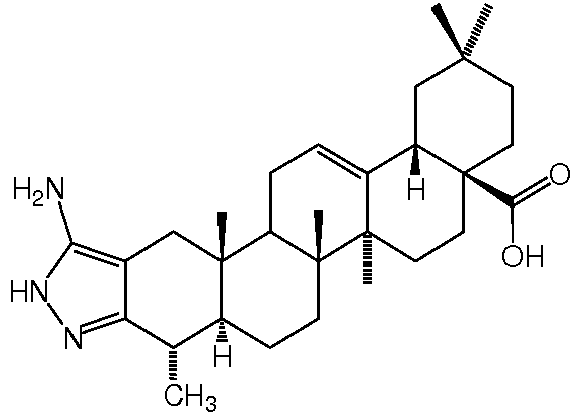
64 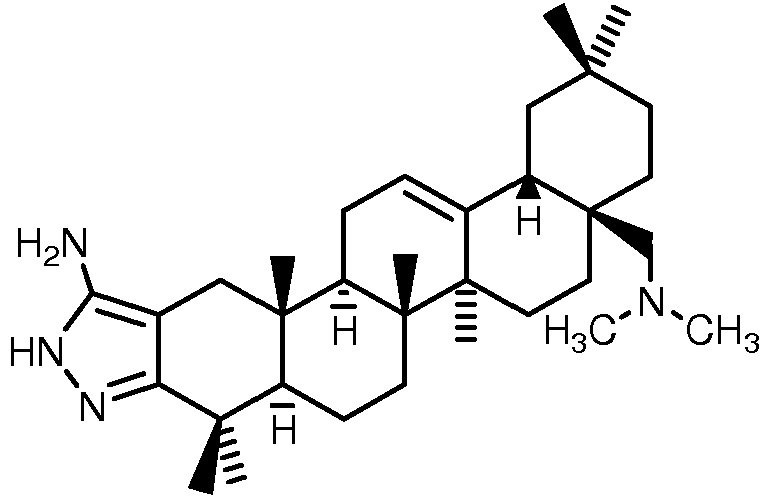
4 
65 
5 
68 
6 
84 
7 
88 
8 
90 
9 
91 
10 
92 
11 
- The invention especially teaches the remarkable discovery as demonstrated by the examples that the following Structure II


- The present invention also includes compounds of the following chemical Structure III:

- Based upon the teachings described herein, those skilled in the art appreciate that Structure III substituted with any of the following moieties at R1 will exhibit potent activities at inhibiting the formation of biofilms.




- The present invention provides compounds of the following chemical Structure IV

- Structure IV substituted with the following moieties at R1 exhibit potent activities at inhibiting the formation of biofilms:


- Various pharmaceutical compositions contemplated by the present invention, including the compounds of the invention and the specific examples described herein, further including pharmaceutically acceptable salt, ester, or salt of an ester thereof, which, upon administration to a patient, is capable of providing (directly or indirectly) a compound used in this invention. It will be recognized that the efficacy of the compounds of this invention is related to localized reaction sites on the compounds. Accordingly, as illustrated by the examples below, a wide variety of substitutions therefore may be made at various sites on the compounds spacially remote from the localized reaction sites that do not significantly interfere with the efficacy of the compounds. Likewise, substitutions to form pharmaceutically acceptable salts are contemplated herein as well. Thus, compounds with such innocuous substitutions do no depart from the scope of the invention.
- On the other hand, however, certain moieties have been found to be so significant in size or reactivity as to interfere significantly with the efficacy of the compounds. Thus, highly reactive, polar, ionic or large substituents such as those shown in the examples below as having a deleterious affect on the activity of the compound are excluded from the most preferred embodiments of the invention.
- Compounds useful in the present invention may, optionally, be converted to their therapeutically-active non-toxic acid salt forms by treatment with appropriate acids. Such acids include inorganic acids, e.g., hydrochloric and hydrobromic acids, sulfuric acid, nitric acid, phosphoric acid and like acids; or organic acids, such as acetic, propanoic, hydroxyacetic, 2-hydroxypropanoic, 2-oxo-propanoic, ethanedioic, propanedioic and like acids. Of course, the salt forms may be converted into the free base form by treatment with alkali. The pharmaceutically-acceptable acid salts of the present invention also comprise the solvates that the compositions of the present invention may form, which, of course, are included within the scope of the present invention. Non-limiting examples of such solvates are hydrates, alcoholates and the like.
- Such pharmacologic compositions may be formulated in various ways known in the art for administration purposes. Pharmaceutical compositions of the present invention can be prepared by combining an effective amount of the particular compound of this invention, typically in base or acid salt form, as the active ingredient with one or more pharmaceutically-acceptable carriers and delivery vehicles. Numerous pharmaceutically acceptable carriers and delivery vehicles exist that are readily accessible and well-known in the art, which may be employed to generate the preparation desired (i.e. that permit administration of the pharmaceutical composition orally, topically, rectally, percutaneously, by parenteral injection, intranasally or by inhalation). Representative examples of pharmaceutically acceptable carriers and delivery vehicles include aluminum stearate, lecithin, serum proteins, such as human serum albumin; buffer substances such as the various phosphates, glycine, sorbic acid, potassium sorbate, partial glyceride mixtures of saturated vegetable fatty acids; water, salts or electrolytes, such as protamine sulfate, disodium hydrogen phosphate, potassium hydrogen phosphate, sodium chloride, and zinc salts; colloidal silica, magnesium trisilicate, polyvinyl pyrrolidone, cellulose-based substances, polyethylene glycol, sodium carboxymethylcellulose, polyarylates, waxes, polyethylene, polyoxypropylene-block polymers, polyethylene glycol and wool fat, and the like. Other constituents, such as aids for taste, color, tableting, and so forth, may be combined with the active ingredient and carrier for any of the many known purposes of such additives. Examples of such additives are discussed bleow.
- The pharmacologic compositions described herein may further be prepared in unitary dosage form for administration orally, percutaneously, by parenteral injection (including subcutaneous, intramuscular, intravenous and intradermal), topically, intranasally, by inhalation, or for application to a medical device, such as an implant, catheter, or other device. In preparing the compositions that permit administration of an oral dosage, for example, any of the pharmaceutically acceptable carriers known in the art may be used, such as water, glycols, oils, alcohols and the like in the case of carriers that permit oral delivery of liquid preparations such as suspensions, syrups, elixirs and solutions. When solid pharmaceutically acceptable carriers are desired that permit oral or rectal administration, starches, sugars, kaolin, lubricants, binders, cellulose and its derivable prodrugs, and disintegrating agents and the like may be used to prepare, for example, powders, pills, capsules and tablets.
- For pharmaceutically acceptable carriers that permit parenteral administration, the pharmaceutically acceptable carriers often comprise sterile water, which may be supplemented with various solutes to, for example, increase solubility. Injectable solutions may be prepared in which the pharmaceutically acceptable carrier comprises saline solution, glucose solution, or a mixture thereof, which may include certain well-known anti-oxidants, buffers, bacteriostats, and other solutes that render the formulation isotonic with the blood of the intended patient.
- For pharmaceutically acceptable carriers that permit intranasal administration, the pharmaceutically acceptable carriers often comprise poly acrylic acids such as Carbopol.RTM. 940, a hydrogenated castor oil such as Cremophor.RTM. RH40, glycerol, vinylpyrrolidones such as PVP-K90.RTM. or PVP K30.RTM., polyethylene glycols such as PEG 1450.RTM., benzyl alcohol, Edetate sodium, hydroxycellulose, potassium chloride, potassium phosphate, and sodium phosphate. Compositions used for intranasal administration also commonly include benzalkonium chloride as an antimicrobial preservative.
- For pharmaceutically acceptable carriers that permit administration by inhalation, the pharmaceutically acceptable carriers often comprise solvent/carrier/water mixtures that are easily dispersed and inhaled via a nebulizer or inhaler. For example, a mixture of ethanol/propylene glycol/water in the ratio of about 85:10:5 (parts ethanol: parts propylene glycol: parts water) can be used to administer the compounds and compositions of the invention via inhalation. Ratios as expressed herein are based on parts by weight.
- For pharmaceutically acceptable carriers that permit percutaneous administration, the pharmaceutically acceptable carrier may, optionally, comprise a penetration enhancing agent and/or a wetting agent.
- Dosage forms that permit topical or transdermal administration of a compound of this invention include ointments, pastes, creams, lotions, gels, powders, solutions, sprays, inhalants or patches. The active compound or compounds is/are mixed under sterile conditions with a pharmaceutically acceptable carrier and optionally one or more preservatives and/or buffers. In the context of certain embodiments of this invention, the active compound is a pentacyclic acid triterpene. In the context of other embodiments of this invention, the pentacyclic acid triterpene is combined in the composition with another active compound that is an antimicrobial agent or antibiotic. The ointments, pastes, creams and gels may contain, in addition to an active compound or compounds according to the present invention, pharmaceutically acceptable carriers that permit topical or transdermal administration such as animal and vegetable fats, oils, waxes, paraffins, starch, tragacanth, cellulose derivable prodrugs, polyethylene glycols, silicones, bentonites, silicic acid, talc and zinc oxide, or mixtures thereof.
- In some cases, the pH of the pharmaceutical formulations contemplated herein may be adjusted with acceptable acids, bases or buffers to enhance the stability of one or more of the active compounds present or their delivery forms. In the context of certain embodiments of this invention, the active compound is a pentacyclic acid triterpene. In the context of other embodiments of this invention, the pentacyclic acid triterpene is combined in the composition with another active compound that is an antimicrobial agent or antibiotic.
- Still further, in order to prolong the anti-bacterial effect of a compound disclosed herein, it may be desirable to slow the absorption of the compound from subcutaneous or intramuscular injection. This may be accomplished using a liquid suspension of crystalline or amorphous material with poor water solubility. The rate of absorption of the compound then depends upon its rate of dissolution, which, in turn, may depend upon crystal size and crystalline form. Alternatively, delayed absorption of a parenterally administered drug form may be accomplished by dissolving or suspending the compound in an oil vehicle.
- Injectable depot forms are made, e.g., by forming microencapsule matrices of one or more compounds of the present invention in biodegradable polymers such as polylactide-polyglycolide. Depending upon the ratio of active(s) to polymer and the nature of the particular polymer employed, the rate at which such active(s) is released may be controlled. Examples of other biodegradable polymers include poly(orthoesters) and poly(anhydrides). Depot injectable formulations are also prepared by entrapping the compound in liposomes or microemulsions that are compatible with body tissues.
- The pharmaceutical composition may also be a dentifrice. In the present invention, "dentifrice" is understood to broadly include compositions suitable for administering to the oral cavity, especially, for example, to the gingival/mucosal tissue or to the teeth. Thus, the dentifrice may include toothpastes, toothpowders, liquid dentifrices, mouth detergents, mouthwashes, troches, chewing gums, dental or gingival massage creams, dental strips, dental gels, and gargle tablets.
- When the pharmaceutical composition of this invention is a dentifrice such as tooth paste, a tooth or gum adherence promoting substance selected from the group consisting of copolymers of methyl vinyl ether and maleic anhydride, copolymers of vinyl pyrrolidone and vinyl acetate, and cyclodextrins may also be included in the composition. Copolymers of methyl vinyl ether and maleic anhydride useful in this invention may have molecular weights ranging from 200,000 to 2,000,000 kD and may be free acids, mixed sodium and calcium salts, or half ester derivable prodrugs. Representative commercial sources of the copolymers of methyl vinyl ether and maleic anhydride include GANTREZ.RTM. AN(CAS # 9011-16-9) GANTREZ.RTM. S (CAS # 25153-40-69) GANTREZ.RTM. MS (CAS# 62386-95-2) GANTREZ.RTM. ES (CAS# 25087-06-3 or CAS# 25119-68-0) and can be obtained from International Specialty Products Wayne, N.J. Copolymers of vinyl pyrrolidone and vinyl acetate useful in the invention typically have a molecule weight of approximately 27,000 kD and are water soluble. Representative commercial sources of the copolymers of vinyl pyrrolidone and vinyl acetate PLASDONE.RTM. S-630 and can be obtained from International Specialty Products Wayne, N.J. Cyclodextrins useful in the invention are cyclic oligosaccharides composed of either 6, 7 or 8 glucose units (a-, b- and g-cyclodextrin, respectively). Representative commercial sources of the cyclodextrins useful in this invention include CAVAMAX.RTM. W6 Pharma, CAVAMAX.RTM.W7 Pharma and CAV AMAXW8 Pharma (a-, b- and g-cyclodextrin, respectively) and can be obtained from International Specialty Products Wayne, N.J.
- When the composition of this invention is a dentifrice, an antimicrobial agent may be selected from the group consisting of triclosan, metronidazole, tetracyclines, quinolones, plant essential oils, camphor, thymol, carvacrol, menthol, eucalyptol, and methyl salicylate may also be included. Pharmaceutically acceptable carriers that permit administration of the pentacyclic acid triterpene compounds of this application as dentifrices include sorbitol, glycerin, silica, sodium lauryl sulfate and Xanthum gum. The dentifrices of this invention may also include sodium fluoride.
- Finally, bacterial biofilms also may be reduced or inhibited by the application or administration of compositions containing compounds disclosed herein when the subject is a plant. Thus, the compound or a composition containing an active compound described herein may be administered to a plant, such as a surface of a plant to reduce or inhibit the formation of a biofilm on the plant.
- The methods described herein may be applicable to reducing or inhibiting a variety of bacterial biofilms in plants. Pseudomonadaceae, Rhizobiaceae, Enterobacteriaceae, Corynebacteriaceae and Streptomycetaceae bacteria are all economically significant plant pathogens that may be controlled by the present invention. Non-limiting examples of specific plant pathogens involving biofilms that may be effectively inhibited by the methods described herein include: Xanthomonas species, such as, for example, Xanthomonas campestris pv. oryzae; Pseudomonas species, such as, for example, Pseudomonas syringae pv. lachrymans; and Erwinia species, such as, for example, Erwinia amylovora. The compositions used in the methods of reducing or inhibiting bacterial biofilms of plants described herein may further comprise antimicrobial agents such as bronopol, dichlorophen, nitrapyrin, nickel dimethyldithiocarbamate, kasugamycin, octhilinone, furancarboxyl, oxytetracyclin, probenazole, streptomycin, tecloftalam, copper sulphate and other copper preparations.
- In an alternative manner, methods of reducing or inhibiting bacterial biofilms described herein can be used to treat all plants and parts of plants. By reference to "plants," what is meant here is all plants and plant populations such as desired and undesired wild plants or crop plants (including naturally occurring crop plants). Crop plants can be plants obtainable by conventional breeding and optimization methods or by biotechnological and genetic engineering methods or combinations of these methods, and include the transgenic plants and the plant varieties that can or cannot be protected by varietal property rights. The phrase "parts of plants" as used herein is to be understood as meaning all above-ground and below-ground parts and organs of plants, such as shoot, leaf, flower and root, examples which may be mentioned being leaves, needles, stems, trunks, flowers, fruit-bodies, fruits and seeds and also roots, tubers and rhizomes. Parts of plants also include harvested plants and vegetative and generative propagation material, for example, seedlings, tubers, rhizomes, cuttings and seeds.
- The treatment of the plants and the parts of plants with the active compounds according to the invention is carried out directly or by action on their surroundings, habitat or storage space, according to customary treatment methods, for example by dipping, spraying, evaporating, atomizing, broadcasting, spreading-on and, in the case of propagation material, in particular in the case of seeds, furthermore by one- or multilayer coating.
- Depending on their particular physical and/or chemical properties, the compounds and compositions described herein can be converted to the customary formulations, such as solutions, emulsions, suspensions, powders, foams, pastes, granules, aerosols and microencapsulations in polymeric substances and in coating compositions for seeds, and ULV cool and warm fogging formulations.
- The following examples illustrate various aspects of the present invention and are not intended to limit the scope of the present invention. Those of skill in the art should, in light of the present disclosure, appreciate that many changes can be made in the specific embodiments which are disclosed and still obtain a like or similar result without departing from the spirit and scope of the invention.
- Table 1, below, shows experimental results illustrating remarkable properties of Compound 1 to inhibit the spreading of clinical isolates of P. aeruginosa and E. coli bioflms as determined in a biofilm growth assay. The related scaffolds and analogs shown in Table 1 have been found to exhibit significantly less inhibitory activities than does Compound 1 in the biofilm growth assay even though certain of the compounds consist of chemical structures similar to that of Compound 1. These data demonstrate the novel and unique aspects of Compound 1 and its discovery and the specificity of the biofilm growth assay to identify Compound 1 as a potent inhibitor of spreading gram-negative bacterial biofilms.
- The biofilm growth assay was carried out to measure swarming or biofilm spreading on semi-solid agar media in round plates (for example, 100 × 15 mm), also referred to as Petri dishes. For E. coli, the plates contained LB medium with 0.6% agar and 0.5% glucose. P. aeruginosa plates were made with M8 agar supplemented with 0.2% glucose, 100 µM CaCl2, 1 mM MgSO4, and 0.5% Casamino acids. The agar plates of this assay consisted of 0.4% to 0.7% agar (Bacto or Noble agar), although other media may also be used as described in the literature and known to those skilled in the art. Test compounds at the desired concentration were added to the cooled, autoclaved media. Portions of the media were then poured into the plates (20 mL/plate), and the plates allowed to dry at room temperature for approximately 3 to 4 hours. Alternatively, however, plates may be dried in a laminar flow hood for approximately fifteen to twenty minutes. Overnight cultures were grown in a 37°C shaker in LB (E. coli) or TSB (P. aeruginosa). Plates were inoculated by placing 5 µL of the appropriate overnight culture in the centers of the plates. The plates then were incubated overnight at 37°C. The area of the zone of spreading bacteria was then measured and replicates are averaged. Percent inhibition was calculated as 100 × (area without compound - area with compound)/(area without compound). An active compound was considered that which reduces the area of the spreading biofilm compared to negative controls by greater than or equal to 85%. The values shown in Table 1 are the concentrations of compounds (µg/ml) tested in the biofilm growth assay that reduce the area of the spreading biofilm compared to negative controls by greater than or equal to 85% unless noted differently in Table 1. A > ("greater than" symbol) as used in Table 1 is well understood to those skilled in the art as an indication that the listed concentration was not effective at this concentration.
- This example demonstrates the reduction of virulence of gram-negative bacteria. Inhibition or reduction of the growth of biofilms reduces virulence of gram-negative bacteria. Adhesion, biofilm growth, invasion, and the secretion of enzymes or toxins contribute to virulence of gram-negative bacteria. It is well known to those skilled in the art that biofilms increase the virulence of gram-negative bacteria and an upregulation of virulence factors (i.e. enzymes, toxins) has been demonstrated in gram-negative bacterial biofilms. The compounds of the invention reduce virulence of gram-negative bacteria.
Table 1. Related Scaffolds and Analogs of Compound 1 COMPOUND STRUCTURE P. aeruginosa (µg/ml) E. coli (µg/ml) Compound 1 
0.5 1 Uvaol 
> 128 >8 alpha-Amyrin 
> 32 Not tested Lupeol 
>16 >8 Betulin 
16 > 16 Betulinic acid 
> 16 > 16 Oleanolic acid 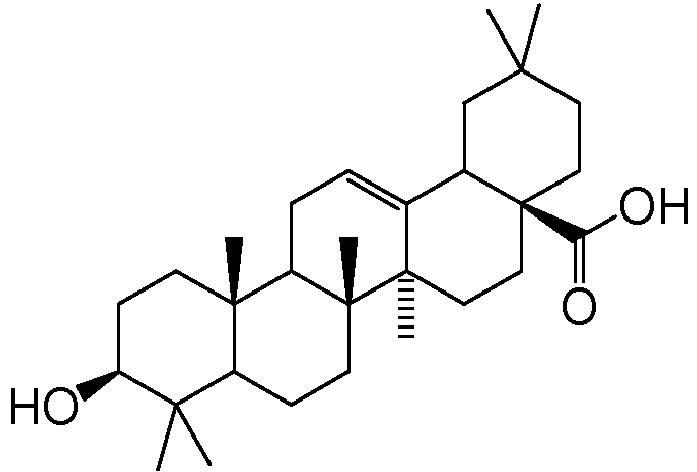
4 >8 Ursolic acid 
8 8 Oleanolic acid methyl ester 
>16 > 16 Corosolic acid 
4 Not tested Maslinic acid 
4 Not tested A 
8 >8 B 
4 8 C 
0.5 0.5 D 
1 4 E 
2 >16 F 
4 >8 G 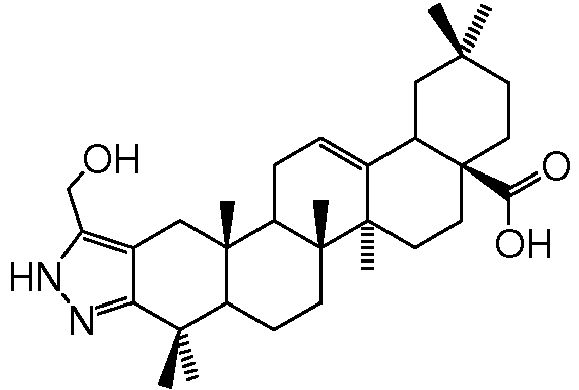
>8 >8 H 
8 >8 I 
> 16 8 J 
> 16 > 16 K 
>8 >8 L 
> 16 > 16 M 
8 8 N 
8 8 - All of the compounds shown in Tables 2, 3, 4, and 5, below, were prepared semi-synthetically from oleanolic acid, except for Compounds 2 and 3. Compound 2 was prepared from ursolic acid. Compound 3 was prepared from hederagenin, but could also be prepared from an oleanolic acid analog with a hydroxyl at C23 or C24. These compounds were tested in the spreading biofilm assay according to the methods detailed in Example I, above. The values shown in Tables 2, 3, 4, and 5 are the concentrations of compounds tested in the biofilm growth assay that reduce the area of the spreading biofilm compared to negative controls by greater than or equal to 85%.
Table 2. Compound 1 and its Analogs and their inhibitory concentrations in the biofilm growth assay as detailed in Example I, above COMPOUND Chemical Structure P. aeruginosa (µg/ml) E. coli (µg/ml) 1 
0.5 1 2 
0.5 1 3 
0.5 1 4 
0.25 1 5 
0.5 1 6 
0.125 0.25 7 
0.25 1 8 
0.25 1 9 
0.5 1 10 
0.5 1 11 
0.5 0.5 12 
0.5 1 Table 3. Analogs of Compound 1 COMPOUND Chemical Structure P. aeruginosa (µg/ml) E. coli (µg/ml) 
R 1 13 -CH=CH2 0.5 1 14 -CH2CH3 0.5 2 15 
0.25 1 16 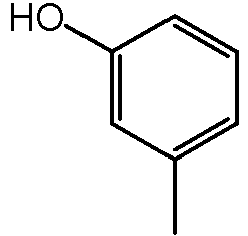
1 2 17 
0.5 > 2 18 
0.5 1 19 
1 1 20 
0.5 2 21 
0.5 > 2 22 
1 >2 23 
1 2 24 -Cl 0.5 1 25 -Br 0.5 > 2 26 
0.25 1 27 
1 > 2 28 
1 2 29 
1 1 30 
2 1 31 
0.5 1 32 
0.5 1 33 
2 4 34 
1 1 35 
> 1 1 36 
> 1 2 37 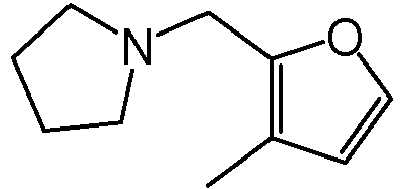
> 1 1 38 
1 2 39 
1 2 40 
0.5 2 41 
1 2 42 
0.25 1 43 
1 1 44 
0.5 2 45 
0.5 1 46 
0.5 1 47 
0.5 1 48 
0.5 1 49 
0.5 > 1 50 
2 1 51 
0.5 2 52 
1 2 53 
0.5 2 54 
1 2 55 
> 1 2 56 
1 2 57 
> 2 1 58 
1 2 59 
0.5 > 1 Table 4. Analogs of Compound 1 COMPOUND CHEMICAL STRUCTURE P. aeruginosa (µg/ml) E. coli (µg/ml) 
60 
0.5 1 61 
0.5 0.5 62 
1 1 63 
4 1 64 
0.5 1 65 
0.25 0.25 66 
0.25 1 67 
1 2 68 
0.5 0.5 69 
1 1 70 
0.5 2 71 
0.5 2 72 
1 >2 73 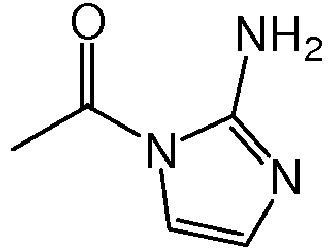
1 1 74 
1 >2 75 
0.5 1 76 
0.5 2 77 
1 2 78 
>1 1 79 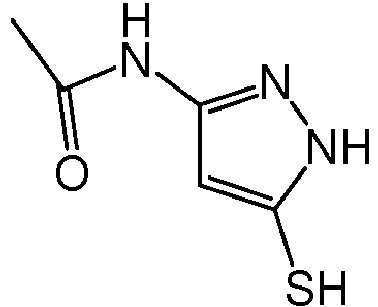
0.25 0.5 80 
1 1 81 
0.5 1 82 
0.5 1 83 
0.25 0.5 84 
0.125 0.5 85 
0.5 1 86 
0.5 2 87 
0.5 1 88 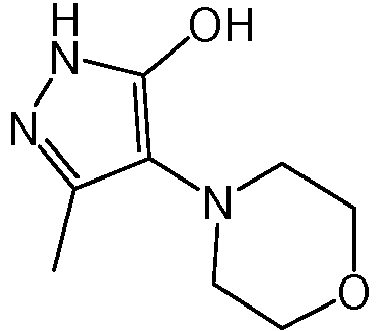
0.25 0.5 89 
1 1 90 
0.5 1 Table 5. Analogs of Compound 1. Compounds 91 and 92 demonstrate that combined modifications at the R1 and R2 positions can be prepared and retain potent inhibitory activities against biofilms. COMPOUND CHEMICAL STRUCTURE P. aeruginosa (µg/ml) E. coli (µg/ml) 91 
1 1 92 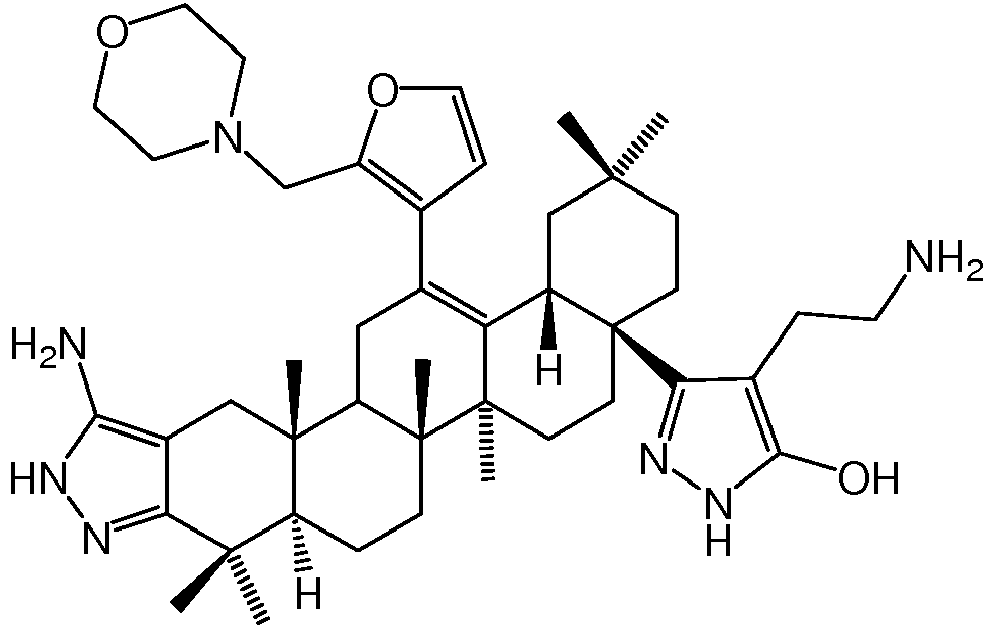
0.5 2 - Preparative HPLC: Preparative HPLC was conducted using a SunFire Prep C18 OBD Column, 5 µm, 19 × 100 mm eluting with a gradient from 90:10 (water:acetonitrile, both with 0.05% trifluoroacetic acid) to 10:90 (water:acetonitrile, both with 0.05% trifluoroacetic acid) over 14 minutes followed by a 2 minute hold at 10:90 (water:acetonitrile, both with 0.05% trifluoroacetic acid) with a flow rate at 25 mL/min. CMA: CMA = 80:18:2 Methylene Chloride/Methanol/concentrated Ammonium Hydroxide
-

- To a mixture of oleanolic acid (Ia, 5.0 g, 10.9 mmol) and CH2Cl2 (200 mL) was added the Dess-Martin reagent (6.0 g, 14.2 mmo l) under nitrogen at room temperature. After stirring at room temperature for 1 hour, the starting material was consumed, as indicated by TLC (1:1 hexanes:diethyl ether). The reaction mixture was quenched with the addition of a solution of sodium thiosulfate and NaHCO3 (50 g sodium thiosulfate in 200 mL saturated NaHCO3 solution). The mixture was stirred at room temperature for 10 minutes. The layers were separated and the aqueous layer was extracted with EtOAc (3 × 250 mL). The combined organics were dried (Na2SO4), filtered and concentrated under reduced pressure. The residue was purified by column chromatography (silica, 3:1 hexanes/diethyl ether) to provide the sub-title compound (4.9 g, 99%) as a white foam.
1H NMR (300 MHz, CDCl3) 0.81 (s, 3H), 0.90-2.05 (m, 39H), 2.42-2.44 (m, 1 H), 2.59-2.61 (m, 1 H), 2.83-2.85 (m, 1 H), 5.29-5.31 (m, 1 H). ESI MS m/z 455 [C30H46O3 + H]+. - A mixture of Ib (4.9 g, 10.8 mmol), benzyl bromide (1.9 mL, 16.2 mmol), K2CO3 (2.2 g, 16.2 mmol) and DMF (185 mL) was stirred at room temperature for 2.5 hours. The solvent then was removed under reduced pressure and the residue was partitioned between H2O (250 mL) and EtOAc (250 mL). The layers were separated and the aqueous layer was extracted with EtOAc (200 mL). The combined organics were dried (Na2SO4) and filtered. The solvent was removed under reduced pressure and the residue was purified by column chromatography (silica, 3:1 hexanes/diethyl ether) to provide the sub-title compound (4.7 g, 81%) as a white solid.
1H NMR (300 MHz, CDCl3) 0.65 (s, 3H), 0.89 (s, 3H), 0.92 (s, 3H), 1.09-2.05 (m, 32H), 2.36-2.38 (m, 1H), 2.49-2.51 (m, 1H), 2.87-2.89 (m, 1H), 5.07-5.09 (m, 2H), 5.29-5.31 (m, 1H), 7.29-7.38 (m, 5H). ESI MS m/z 545 [C37H52O3 + H]+. - A solution of diisopropylamine (31.8 mL, 227 mmol) and THF (250 mL) was cooled to -78°C under nitrogen. A solution of n-butyllithium (2.5 M in hexanes, 100 mL, 251 mmol) was slowly added, maintaining the internal temperature below -70 °C. The solution was allowed to stir for 30 min and was then slowly added to a solution of Ic (65.0 g, 120 mmol) and THF (1.4 L) at -78°C under nitrogen. This solution was stirred for 30 min after which time a suspension of p-toluenesulfonyl cyanide (43.3 g, 239 mmol) and THF (200 mL) was added over 45 min. The solution was stirred for 10 min and then quenched by the addition of saturated ammonium chloride solution (250 mL) at -78°C. The mixture was allowed to warm to room temperature overnight. The organic layer was separated and the aqueous layer was extracted with EtOAc. The combined organic layers were dried (Na2SO4) and filtered. The solvent was removed under reduced pressure and the residue was purified by column chromatography (silica, 1:1 hexanes/EtOAc) to provide the sub-title compound (58 g, 85%) as a white solid.
1H NMR(300MHz,CDCl3) 0.65 (s, 3H), 2.14-2.16 (m, 39H), 2.93-2.95 (m, 1H), 5.06-5.08 (m, 2H), 5.29-5.31 (m, 1H), 7.29-7.37 (m, 5H). - A solution of Id (2.0 g, 3.5 mmol) and hydrazine (0.33 mL, 10.6 mmol) in EtOH (18 mL) was heated at reflux for 16 hours. The solvent and excess hydrazine were removed under reduced pressure. The residue was purified by column chromatography (silica, 0-7% MeOH in CH2Cl2) to provide the title compound (1.8 g, 88%) as an off-white solid.
1H NMR (300 MHz, CDCl3) 0.69 (s, 3H), 0.85-2.03 (m, 37H), 2.24-2.35 (m, 1 H), 2.92-2.98 (m, 1 H), 5.06-5.08 (m, 2H), 5.22-5.24 (m, 1 H), 7.28-7.37 (m, 5H). APCI MS m/z 584 [C38H53N3O2 + H]+. -

- Oleanolic acid (20 g, 43.79 mmol) was dissolved in DMF (200 mL). Potassium carbonate (9.06 g, 65.68 mmol) and methyl iodide (3.3 mL, 52.55 mmol) were added. The mixture was stirred at room temperature overnight and then poured into H2O (500 mL). The precipitate was collected by filtration. The precipitate was dissolved in EtOAc (500 mL). The solution was washed with brine then dried (Na2SO4), filtered and concentrated to give the sub-title compound (20.9 g, 100%) which was used without further purification.
1H NMR (300 MHz, CDCl3) δ 0.70-1.97 (m, 42H), 2.83-2.84 (m, 1H), 3.19-3.22 (m, 1 H), 3.62 (s, 3H), 5.28 (t, J = 3.6 Hz, 1H). - To a solution of IIb (20.9 g, 44.47 mmol) in pyridine (120 mL) was added DMAP (100 mg, 0.81 mmol) and acetic anhydride (5.04 mL, 53.36 mmol). The mixture was stirred at room temperature for 20 hours and poured into H2O (300 mL). The precipitate was collected by filtration. The precipitate was dried in a vacuum oven overnight to obtain the sub-title compound (21.33 g, 94%) which was used without further purification.
1H NMR (300 MHz, CDCl3) δ 0.72-1.97 (m, 43H), 2.04 (s, 3H), 2.82-2.88 (m, 1H), 3.62 (s, 3H), 4.46-4.51 (m, 1H), 5.27 (t, J = 3.6 Hz, 1H). - To a solution of IIc (35 g, 68.35 mmol) in AcOH (330 mL) and CCl4 (160 mL) was added bromine (14.05 mL, 273.4 mmol) slowly. The mixture was stirred at room temperature for 17 hours. The CCl4 was removed under reduced pressure and the reaction mixture was poured into H2O (1 L). The precipitate was collected by filtration and then dissolved in EtOAc (1 L). The solution was washed with brine then dried (Na2SO4), filtered and concentrated to give the sub-title compound (50.5 g, 98%) which was used without further purification.
1H NMR (300 MHz, CDCl3) δ 0.75-1.75 (m, 38H), 2.04 (s, 3H), 2.40-2.43 (m, 2H), 2.57 (t, J = 12.6 Hz, 1 H), 3.63 (s, 3H), 4.44-4.50 (m, 1 H), 4.58-4.64 (m, 1H). - Zinc dust (21.8 g, 335.7 mmol) was added to a solution of IId (50.5 g, 67.15 mmol) and AcOH (450 mL). The mixture was stirred at room temperature overnight and then heated at reflux for 2 hours. The reaction mixture was cooled to room temperature and then poured into H2O (600 mL). The precipitate was collected by filtration and then dissolved in EtOAc (1 L). The solution was washed with brine then dried (Na2SO4), filtered and concentrated. The residue was purified by column chromatography (silica, 0-10% EtOAc in hexanes) to obtain the sub-title compound (21.5 g, 54%).
1H NMR (300 MHz, CDCl3) δ 0.75-1.78 (m, 40H), 1.93-1.95 (m, 1 H), 2.04 (s, 3H), 2.41 (m, 2H), 3.54 (m, 1 H), 3.63 (s, 3H), 4.48 (m, 1H). - To a solution of IIe (21.5 g, 36.31 mmol) in 2,6-lutidine (300 mL) was added lithium iodide (72.9 g, 544.7 mmol). The mixture was heated at 143 °C overnight and then cooled to room temperature. The mixture was acidified (pH ≈ 4) with aqueous HCl and extracted with EtOAc (300 mL × 3). The combined extracts were washed with H2O and brine then dried (Na2SO4), filtered and concentrated to afford the sub-title compound (22.8 g, 109%) which was used without further purification.
1H NMR (300 MHz, CDCl3) δ 0.80-1.82 (m, 42H), 2.04 (s, 3H), 2.41 (m, 2H), 3.51 (m, 1 H), 4.48 (m, 1 H). - To a solution of IIf (21.2 g, 36.67 mmol) and DMF (350 mL) was added K2CO3 and BnBr (as used herein, "Bn" represents benzyl). The reaction mixture was stirred overnight at room temperature and then poured into H2O (1 L). The precipitate was collected by filtration and then dissolved in EtOAc (1 L). The solution was washed with H2O and brine then dried (Na2SO4), filtered and concentrated to afford the sub-title compound (24.5 g, 100%) which was used without further purification.
1H NMR (300 MHz, CDCl3) δ 0.57-2.00 (m, 41 H), 2.04 (s, 3H), 2.34 (d, J = 8.7 Hz, 2H), 3.59 (dd, J = 4.8, 4.2 Hz, 1 H), 4.49 (m, 1 H), 5.08 (s, 2H), 7.29-7.38 (m, 5H). - To a solution of IIg (24.5 g, 36.67 mmol) in MeOH (500 mL) was added potassium hydroxide (8.2 g, 146.7 mmol) and the mixture was heated at reflux for 2.5 hours. The resulting mixture was concentrated and the residue was dissolved in EtOAc (1 L). The solution was washed with H2O and brine then dried (Na2SO4), filtered and concentrated. The residue was purified by column chromatography (silica, 0-30% EtOAc in hexanes) to afford the sub-title compound (21.3 g, 93%).
1H NMR (300 MHz, CDCl3) δ 0.58-1.81 (m, 41 H), 2.01 (m, 1 H), 2.37 (d, J = 9.3 Hz, 2H), 3.21 (m, 1 H), 3.58 (dd, J = 4.8, 4.1 Hz, 1 H), 5.08 (s, 2H), 7.29-7.38 (m, 5H). - To a solution of IIh (21.3 g, 34.02 mmol) in CH2Cl2 (400 mL) was added the Dess-Martin reagent (18.76 g, 44.23 mmol). The mixture was stirred at room temperature for 5 hours, quenched with aqueous sodium thiosulfate and NaHCO3 and then extracted with EtOAc (3 x 300 mL). The organic solution was washed with H2O and brine then dried (Na2SO4), filtered and concentrated. The residue was purified by column chromatography (silica, 0-15% EtOAc in hexanes) to afford the sub-title compound (19.3g, 90%).
1H NMR (300 MHz, CDCl3) δ 0.24-2.27 (m, 40H), 2.94 (d, J = 8.7 Hz, 1 H), 3.44 (dd, J = 4.8, 4.2 Hz, 1 H), 5.13-5.15 (m, 2H), 7.33-7.35 (m, 5H). - To a solution of diisopropylamine (0.64 mL, 4.5 mmol) in THF (15 mL) was added n-butyl lithium (2.5 M; 1.9 mL, 4.8 mmol) at -78°C. The mixture was stirred at -78°C for 10 min. The LDA solution was added to a solution of IIi (1.5 g, 2.4 mmol) in THF (40 mL) pre-cooled to -78°C. The mixture was stirred at-78°C for 1 hour. A solution of 4-methylbenzenesulfonyl cyanide (815 mg, 4.5 mmol) in THF (5 mL) was added and stirred for 30 min at -78°C. The reaction mixture was warmed to -20 °C over 1 hour. The reaction mixture was quenched with saturated NH4Cl solution and extracted with EtOAc (3 × 50 mL). The organic layer was washed with H2O and brine then dried (Na2SO4), filtered and concentrated. The residue was purified by column chromatography (silica, 0-20% EtOAc in hexanes) to afford the sub-title compound (1.2g, 77%).
1H NMR (300 MHz, CDCl3) δ 0.56-2.42 (m, 41 H), 3.61-3.89 (m, 2H), 5.08 (s, 2H), 7.35 (m, 5H). - To a solution of IIj (6.4 g, 9.89 mmol) and EtOH (30 mL) was added hydrazine (0.62 mL, 19.78 mmol). The solution was heated at reflux overnight. The reaction mixture was concentrated and then the residue was purified by column chromatography (silica, 0-10% MeOH in CH2Cl2) to afford the title compound (5.0 g, 76%).
1H NMR (300 MHz, CDCl3) δ 0.63-2.06 (m, 38H), 2.29 (d, J = 14.7 Hz, 1 H), 2.45 (d, J = 9.0 Hz, 2H), 3.65 (dd, J = 4.4, 4.2 Hz, 1 H), 5.08 (s, 2H), 7.29-7.39 (m, 5H). APCI MS (Positive Mode) m/z 662 [C38H52BrN3O2 + H]+. -

- To a suspension of 1 (as defined above) (3.0 g, 6.08 mmol) in CH2Cl2 was added thionyl chloride (4.4 mL, 60.85 mmol) at room temperature. The mixture was stirred for 2.5 hours, after which time the solvent was removed under reduced pressure. The residue was dried in a high vacuum to provide the title compound (3.2 g, >100%). The material was used without further purification. APCI MS (Positive Mode) m/z 512 [C31H46ClN3O + H]+.

- A suspension of I (as defined above)(1.8g, 3.1 mmol), 10% Pd/C (1.0 g) and MeOH (100 mL) was stirred under hydrogen at atmospheric pressure for 2 hours. The catalyst was removed by filtration through diatomaceous earth and the filtrate was concentrated under reduced pressure to provide the title compound (1.4 g, 88%) as an off-white solid. Rf 0.37 (9:1 Methylene Chloride/Methanol) m.p. 263-266 °C.
H NMR (500 MHz, CD3OD) δ 0.82-0.98 (m, 9H), 1.12-1.31 (m, 15H), 1.39-1.87 (m, 13H), 2.01-2.10 (m, 3H), 2.35-2.42 (m, 1 H), 2.87-2.91 (m, 1 H), 5.28-5.33 (m, 1H). ESI MS m/z 494 [C31H47N3O2 + H]+. HPLC 98.8% (area %), t R = 16.2 min. -

- To a mixture of ursolic acid (2a, 1.0 g, 2.18 mmol) and CH2Cl2 (55 mL) was added the Dess-Martin reagent (1.2 g, 2.83 mmol) under nitrogen at room temperature. After stirring at room temperature for 2.5 hours, the starting material was consumed as indicated by TLC (1:1 hexanes:diethyl ether). The reaction mixture was quenched with the addition of a solution of sodium thiosulfate and NaHCO3 (6.3 g sodium thiosulfate in 25 mL saturated NaHCO3 solution). The mixture was stirred at room temperature for 10 minutes. The layers were separated and the aqueous layer was extracted with EtOAc (3 x 250 mL). The combined organics were dried (Na2SO4), filtered and concentrated under reduced pressure. The residue was purified by column chromatography (silica, 3:1 hexanes/diethyl ether) to provide the sub-title compound (924 mg, 92%) as a white foam solid.
- A mixture of 2b (924 mg, 2.03 mmol), benzyl bromide (0.31 mL, 0.64 mmol), K2CO3 (393 mg, 2.84 mmol) and DMF (50 mL) was stirred at room temperature for 12 hours. The solvent was then removed under reduced pressure and the residue was partitioned between H2O (150 mL) and EtOAc (150 mL). The layers were separated and the aqueous layer was extracted with EtOAc (50 mL). The combined organics were dried (Na2SO4) and filtered. The solvent was removed under reduced pressure and the residue was purified by column chromatography (silica, 1:1 hexanes/diethyl ether) to provide the sub-title compound (1.0 g, 92%) as a white solid.
1H NMR (300 MHz, CDCl3) 0.68 (s, 3H), 0.84 (d, J = 6.3 Hz, 3H), 0.92 (d, J = 6.0 Hz, 3H), 1.02 (s, 3H), 1.03 (s, 3H), 1.08 (s, 6H), 1.20-2.05 (m, 20H), 2.26 (d, J = 15.0 Hz, 1 H), 2.30 (m, 1 H), 2.50 (m, 1 H), 4.96 (m, 2H), 5.24 (m, 1 H), 7.30-7.35 (m, 5H). - A solution of diisopropylamine (0.45 mL, 3.24 mmol) and THF (5 mL) was cooled to -78°C under nitrogen. A solution of n-butyllithium (2.5 M in hexanes, 1.43 mL, 3.56 mmol) was slowly added, maintaining the internal temperature below -70 °C. The solution was allowed to stir for 30 min and was then slowly added to a solution of 2c (880 mg, 1.62 mmol) and THF (10 mL) at -78°C under nitrogen. This solution was stirred for 30 min after which time a suspension of p-toluenesulfonyl cyanide (587 mg, 3.24 mmol) and THF (2 mL) was added over 45 min. The solution was stirred for 10 min and then quenched by the addition of saturated ammonium chloride solution (3 mL) at-78°C. The mixture was allowed to warm to room temperature overnight. The organic layer was separated and the aqueous layer was extracted with EtOAc. The combined organic layers were dried (Na2SO4) and filtered. The solvent was removed under reduced pressure and the residue was purified by column chromatography (silica, 3:1 hexanes/Et2O) to provide the sub-title compound (600 mg, 65%) as a white foam solid.
- A solution of 2d (303 mg, 0.53 mmol) and hydrazine (0.050 mL, 1.59 mmol) in EtOH (5 mL) was heated at reflux for 12 hours. The solvent and excess hydrazine were removed under reduced pressure. The residue was purified by column chromatography (silica, 0-10% MeOH in CH2Cl2 to provide the sub-title compound (234 mg, 75%) as a white foam solid.
1H NMR (300 MHz, CDCl3) δ 0.69 (s,3H), 0.86 (d, J = 5.7 Hz, 3H), 0.88 (s, 3H), 0.93 (d, J= 6.0 Hz, 3H), 1.09 (s, 3H), 1.13 (s, 3H), 1.22 (s, 3H), 1.38-2.05 (m, 19H), 2.28 (m, 1 H), 2.30 (d, J = 14.7 Hz, 1 H), 4.96 (q, J = 12.6 Hz, 2H), 5.29 (s, 1 H), 7.32 (m, 5H). - A suspension of 2e (234 mg, 0.40 mmol), 10% Pd/C (60 mg) and MeOH (6 mL) was stirred under hydrogen at atmospheric pressure for 9 hours. The catalyst was removed by filtration and the filtrate was concentrated under reduced pressure. The residue was purified by column chromatography (silica, 0-15% MeOH in CH2Cl2) to provide the title compound (103 mg, 52%) as an off-white solid.
Rf 0.16 (89:18:2 Methylene Chloride/Methanol/concentrated Ammonium Hydroxide).
m.p. 258-278°C. 1H NMR (300 MHz, CD3OD) δ 0.89 (s, 9H), 0.91 (s, 3H), 1.15 (s, 6H), 1.19 (s, 3H), 2.05-2.10 (m, 19H), 2.22 (m, 1 H), 2.40 (m, 1 H), 5.30 (s, 1H). ESI MS m/z 494 [C31H47N3O2 + H]+. -

- A mixture of 3a (2.0 g, 4.2 mmol), benzyl bromide (0.6 mL, 5.0 mmol) and K2CO3 (580 mg, 6.3 mmol) in DMF (20 mL) was stirred at room temperature for 12 hours. The reaction mixture was diluted with EtOAc (300 mL). The organic phase was washed with brine then dried (MgSO4), filtered and concentrated to dryness. The residue was purified by column chromatography (silica, 0-50% EtOAc in hexanes) to afford the sub-title compound (2.3 g, 95%).
- To a solution of 3b (400 mg, 0.71 mmol) in benzene (20 mL) was added RuCl2(PPh3)3 (682 mg, 0.71 mmol). The mixture was stirred at room temperature for 12 hours. The reaction was not complete. An additional amount of RuCl2(PPh3)3 (341 mg, 0.36 mmol) was added and the reaction mixture was continued to stir for 8 hours. The reaction mixture was diluted with EtOAc (150 mL). The organic phase was washed with brine then dried (MgSO4), filtered and concentrated to dryness. The residue was purified by column chromatography (silica, 0-50% EtOAc in hexanes) to afford the sub-title compound (150 mg, 38%).
- A mixture of 3c (150 mg, 0.26 mmol) and K2CO3 (44 mg, 0.32 mmol) in MeOH (10 mL) was stirred at room temperature for 24 hours. The reaction mixture was diluted with EtOAc (150 mL) and washed with brine then dried (MgSO4), filtered and concentrated to dryness. The residue was purified by column chromatography (silica, 0-30% EtOAc in hexanes) to afford the sub-title compound (70 mg, 49%).
- To a solution of diisopropylamine (0.073 mL, 0.52 mmol) in THF (4 mL) was added n-butyllithium (0.22 mL, 2.5 M in hexanes, 0.54 mmol) at-78°C. The solution was stirred for 30 min. The LDA solution was added to 3d (150 mg, 0.27 mmol) in THF (5 mL). The mixture was allowed to warm to -40°C for 5 min and cooled to -78°C. A suspension of p-toluene sulfonyl cyanide (98 mg, 0.54 mmol) in THF (2 mL) was added. The reaction mixture was allowed to warm to -40°C over 1.5 hours. The reaction was quenched by saturated NH4Cl (3 mL) and extracted with EtOAc (100 mL). The organic phase was washed with brine then dried (MgSO4), filtered and concentrated to dryness. The residue was purified by column chromatography (silica, 0-30% EtOAc in hexanes) to afford the sub-title compound (90 mg, 58%).
1H NMR (300 MHz, CDCl3) δ 0.65 (s, 3H), 0.86 (s, 3H), 0.88 (s, 3H), 1.0-2.0 (m, 28H), 2.35 (m, 2H), 2.92 (m, 1 H), 3.61 (m, 1 H), 5.15 (s, 2 H), 5.30 (m, 1 H), 7.30 (s, 5H). - A mixture of 3e (90 mg, 0.15 mmol) and hydrazine (0.025 mL) in EtOH (3 mL) was heated at reflux overnight. The reaction mixture was concentrated to dryness under reduced pressure. The residue was purified by column chromatography (silica, 0-10% MeOH in CH2Cl2) to afford the sub-title compound (60 mg, 65%).
- A mixture of 3f (60 mg, 0.10 mmol) and 10% Pd(OH)2/C (60 mg) in MeOH (5 mL) and EtOAc (5 mL) was stirred under hydrogen balloon for 5 hours. The reaction mixture was filtered through a pad of diatomaceous earth and washed with CMA (25 mL). The filtrate was concentrated to dryness under reduced pressure. The residue was purified by column chromatography (silica, 0-60% CMA in CH2Cl2) to afford the title compound (32 mg, 68%) as a brown solid.
Rf 0.40 (80:18:2 Methylene Chloride/Methanol/concentrated Ammonium Hydroxide).
1H NMR (300 MHz, DMSO-d 6) δ 0.78 (s, 3H), 0.80 (s, 3H), 0.91 (s, 6H), 1.05 (s, 3H), 1.10-2.0 (m, 25H), 2.15 (m, 1 H), 2.25 (d, J = 15.0 Hz, 1 H), 2.80 (m, 1 H), 5.24 (s, 1 H), 11.4 (bs, 1H). mp >300 °C. ESI MS (Positive Mode) m/z 478 [C30H45N3O2 + H]+ . -

- A mixture of IIi (300 mg, 0.48 mmol), trimethylboroxine (0.3 mL, 2.15 mmol), Pd(PPh3)4 (60 mg, 0.048 mmol) and K2CO3 (300 mg, 2.17 mmol) in DMF (9 mL) was heated at 100 °C for 12 hours. The reaction mixture was diluted with EtOAc (100 mL). The organic phase was washed with brine then dried (MgSO4), filtered and concentrated to dryness. The residue was purified by column chromatography (silica, 0-10% EtOAc in hexanes) to afford the sub-title compound (220 mg, 82%).
- To a solution of diisopropylamine (0.15 mL, 1.07 mmol) in THF (5 mL) was added n-butyllithium (0.45 mL, 2.5 M in hexanes, 1.1 mmol) at -78°C. The solution was stirred for 30 min. The LDA solution was added to 4b (315 mg, 0.56 mmol) in THF (5 mL). The mixture was allowed to warm to -40°C for 5 min and cooled to -78°C. A suspension of p-toluene sulfonyl cyanide (203 mg, 1.1 mmol) in THF (2 mL) was added. The reaction mixture was allowed to warm to -40°C over 1.5 hours. The reaction was quenched by saturated NH4Cl (3 mL) and extracted with EtOAc (100 mL). The organic phase was washed with brine then dried (MgSO4), filtered and concentrated to dryness. The residue was purified by column chromatography (silica, 0-20% EtOAc in hexanes) to afford the sub-title compound (215 mg, 66%).
- A mixture of 4c (215 mg, 0.36 mmol) and hydrazine (0.060 mL, 1.85 mmol) in EtOH (3 mL) was heated at reflux overnight. The reaction mixture was concentrated to dryness under reduced pressure. The residue was purified by column chromatography (silica, 0-10% MeOH in CH2Cl2) to afford the sub-title compound (180 mg, 84%).
ESI MS (Positive Mode) m/z 598 [C39H55N3O2 + H]+. - A mixture of 4d (180 mg, 0.30 mmol) and 10% Pd(OH)2/C (100 mg) in MeOH (15 mL) and EtOAc (2 mL) was stirred under hydrogen balloon for 12 hours. The reaction mixture was filtered through a pad of diatomaceous earth and washed with CMA (25 mL). The filtrate was concentrated to dryness under reduced pressure. The residue was purified by column chromatography (silica, 0-50% CMA in CH2Cl2) followed by preparative HPLC to provide the title compound (28 mg, 18%) as an off-white solid. Rf 0.62 (80:18:2 Methylene Chloride/Methanol/concentrated Ammonium Hydroxide). 1H NMR (300 MHz, CD3OD) δ 0.85 (s, 3H), 0.90 (s, 3H), 0.93 (s, 3H), 0.99 (s, 3H), 1.20 (s, 3H), 1.23 (s, 3H), 1.38 (s, 3H), 1.40-2.05 (m, 23H), 2.39 (d, J = 14.7 Hz, 1H). mp >300 °C. ESI MS (Positive Mode) m/z 508 [C32H49N3O2 + H]+.
-

- A mixture of IIe (36.0 g, 61.0 mmol) and KOH (13.6 g, 243 mmol) in MeOH (500 mL) was heated at reflux for 3 hours. The mixture was cooled to room temperature and concentrated to remove MeOH. The residue was acidified with HCl (2 M) to pH 5 and extracted with EtOAc (500 mL). The organic phase was washed with brine then dried (MgSO4), filtered and concentrated to afford the sub-title compound (34.0 g, 94%) which was used for the next step without further purification.
1H NMR (300 MHz, CDCl3) δ 0.78 (s, 3H), 0.80 (s, 3H), 0.95 (s, 3H), 0.98 (s, 3H), 1.01 -2.35 (m, 33H), 3.20 (m, 1 H), 3.62 (s, 3H). - A mixture of 5b (32.0 g, 61.0 mmol) and Dess-Martin reagent (31.0 g, 73.0 mmol) in CH2Cl2 (500 mL) was stirred at room temperature for 4 hours. The mixture was quenched with saturated sodium thiosulfate (50 mL) and NaHCO3 (50 mL) and extracted with EtOAc (500 mL). The organic phase was washed with brine then dried (MgSO4), filtered and concentrated to dryness under reduced pressure. The residue was purified by column chromatography (silica, 5-10% EtOAc in hexanes) to afford the sub-title compound (26.0 g, 81 %).
1H NMR (300 MHz, CDCl3) δ 0.80 (s, 3H), 0.90 (s, 3H), 0.98 (s, 3H), 1.02 (s, 3H), 1.05 (s, 6H), 1.06-2.55 (m, 26H), 3.62 (s, 3H). - A flask equipped with a Dean-Stark trap was charged 5c (26.0 g, 47.4 mmol), ethylene glycol (7.9 mL, 142.3 mmol) and p-toluenesulfoinc acid monohydrate (894 mg, 4.7 mmol) in benzene (500 mL). The mixture was heated at reflux overnight. The reaction mixture was cooled to room temperature and diluted with EtOAc (500 mL). The organic phase was washed with saturated NaHCO3 (50 mL) and brine (200 mL) then dried (MgSO4), filtered and concentrated to dryness. The residue was purified by column chromatography (silica, 0-10% EtOAc in hexanes) to afford the sub-title compound (18.0g, 64%).
1H NMR (300 MHz, CDCl3) δ 0.74 (s, 3H), 0.83 (s, 3H), 0.92 (s, 3H), 0.94 (s, 3H), 0.97 (s, 3H), 0.99 (s,3H), 1.14 (s, 3H), 1.15-2.05 (m, 21 H), 2.39 (d, J = 9.0 Hz, 1 H), 3.57 (m, 1 H), 3.63 (s, 3H), 3.93 (m, 4H). - To a solution of 5d (3.0 g, 5.1 mmol) in THF (60 mL) was added tert-butyllithium (10 mL, 1.5 M in heptane, 15.0 mmol) at -78°C. The mixture was stirred for 20 min. n-Methylformanilide (1.8 mL, 15.2 mmol) was added. The reaction mixture was allowed to warm to -10 °C over 1 hour. The reaction mixture was quenched by saturated NH4Cl (10 mL) and extracted with EtOAc (200 mL). The organic phase was washed with brine (200 mL) then dried (MgSO4), filtered and concentrated to dryness. The residue was purified by column chromatography (silica, 0-10% EtOAc in hexanes) to afford the sub-title compund (2.0 g, 73%).
1H NMR (300 MHz, CDCl3) δ 0.65 (s, 3H), 0.81 (s, 3H), 0.90 (s, 6H), 0.92 (s, 3H), 0.99 (s, 3H), 1.12 (s, 3H), 1.25-2.18 (m, 19H), 2.65 (s, 3H), 3.85 (m, 4H), 10.3 (s, 1H). - To a suspension of ethyltriphenylphosphonium iodide (1.2 g, 2.96 mmol) in benzene (20 mL) was added potassium tert-butoxide (332 mg, 2.96 mmol). The mixture was stirred at room temperature for 1 hour. A solution of 5e (400 mg, 0.74 mmol) in THF (5 mL) was added. The mixture was stirred at room temperature for 1.5 hours. The reaction mixture was diluted with EtOAc (100 mL). The organic phase was washed with brine then dried (MgSO4), filtered and concentrated to dryness. The residue was purified by column chromatography (silica, 0-10% EtOAc in hexanes) to afford the sub-title compound (380 mg, 93%) as a mixture of cis- and trans-isomers.
- A mixture of 5f (571 mg, 0.92 mmol) and p-toluenesulfonic acid monohydrate (176 mg, 0.92 mmol) in acetone (20 mL) and H2O (2 mL) was stirred at room temperature for 1.5 hours. The reaction mixture was concentrated to remove acetone under reduced pressure and extracted with EtOAc (100 mL). The organic phase was washed with brine then dried (MgSO4), filtered and concentrated to dryness. The residue was purified by column chromatography (silica, 0-10% EtOAc in hexanes) to afford the sub-title compound (500 mg, 95%).
1H NMR (300 MHz, CDCl3) δ 0.72 (s, 1.8H), 0.81 (s, 1.2H), 0.89 (s, 3H), 0.91 (s, 3H), 1.0-2.50 (m, 38H), 3.65 (s, 3H), 5.40-5.70 (m, 1 H), 6.05 (d, J = 12.0 Hz, 0.4H), 6.53 (d, J = 15.0 Hz, 0.6H). - To a solution of diisopropylamine (0.26 mL, 1.87 mmol) in THF (5 mL) was added n-butyllithium (0.78 mL, 2.5 M in hexanes, 1.96 mmol) at-78°C. The solution was stirred for 30 min. The LDA solution was added to 5g (500 mg, 0.98 mmol) in THF (5 mL). The mixture was allowed to warm to -40°C for 5 min and cooled to -78°C. A suspension of p-toluene sulfonyl cyanide (339 mg, 1.87 mmol) in THF (2 mL) was added. The reaction mixture was allowed to warm to -40°C over 1.5 hours. The reaction was quenched by saturated NH4Cl (3 mL) and extracted with EtOAc (100 mL). The organic phase was washed with brine then dried (MgSO4), filtered and concentrated to dryness. The residue was purified by column chromatography (silica, 0-20% EtOAc in hexanes) to afford the sub-title compound (210 mg, 40%).
1H NMR (300 MHz, CDCl3) δ 0.65-2.01 (m, 44H), 2.42-2.80 (m, 1 H), 3.60 (s, 3H), 4.21 (m, 1 H), 5.41-5.70 (m, 1 H), 6.01 (m, 1H). - A mixture of 5h (200 mg, 0.37 mmol) and hydrazine (0.014 mL, 0.45 mmol) in EtOH (3 mL) was heated at reflux overnight. The reaction mixture was concentrated to dryness under reduced pressure. The residue was purified by column chromatography (silica, 0-10% MeOH in CH2Cl2) to afford the sub-title compound (130 mg, 64%).
1H NMR (300 MHz, CDCl3) δ 0.71 (s, 1.8H), 0.81 (s, 1.2H), 0.88 (s, 3H), 0.89 (s, 6H), 0.98 (s, 1.8H), 1.02 (s, 1.2H), 1.05 (s, 3H), 1.12 (s, 3H), 1.16-2.35 (m, 27H), 3.65 (s, 3H), 5.50 (m, 0.4H), 5.70 (m, 0.6H), 6.05 (d, J= 12.0 Hz, 0.4H), 6.55 (d, J= 15.0 Hz, 0.6H). - A mixture of 5h (90 mg, 0.16 mmol) and lithium iodide (330 mg, 2.47 mmol) in 2,6-lutidine (3 mL) was heated to 144 °C for 6 hours. The reaction mixture was cooled to room temperature and neutralized with HCl (2 M) and extracted with CH2Cl2/i-PrOH (3:1). The organic phase was dried (MgSO4), filtered and concentrated to dryness under reduced pressure. The residue was purified by column chromatography (silica, 0-40% CMA in CH2Cl2) followed by preparative HPLC to provide the title compound (20 mg, 23%) as an off-white solid.
Rf 0.85 (80:18:2 Methylene Chloride/Methanol/concentrated Ammonium Hydroxide).
1H NMR (300 MHz, CD3OD) δ 0.80 (s, 3H), 0.90 (s, 6H), 1.02 (s, 3H), 1.18 (s, 3H), 1.20 (s, 3H), 1.28 (s, 3H), 1.30-2.30 (m, 22H), 2.52 (d, J= 15.0 Hz, 1 H), 3.63 (m, 1 H), 5.68 (dd, J= 6.0, 15.0 Hz, 1 H), 6.59 (d, J= 15.0 Hz, 1H). mp>300 °C. ESI MS (Positive Mode) m/z 534 [C34H51N3O2 + H]+. -

- A mixture of II (250 mg, 0.37 mmol), 1-(triisopropylsilyl)-1H-pyrrol-3-ylboronic acid (303 mg, 1.13 mmol), Pd(PPh3)4 (43 mg, 0.037 mmol) and K2CO3 (203 mg, 1.47 mmol) in benzene (3.5 mL) and EtOH (1.5 mL) was sealed and heated to 120 °C by microwave for 1 hour. The reaction mixture was diluted with EtOAc (100 mL). The organic phase was washed with brine then dried (MgSO4), filtered and concentrated to dryness. The residue was purified by column chromatography (silica, 0-10% MeOH in CH2Cl2) to afford the sub-title compound (130 mg, 43%). APCI MS (Positive Mode) m/z 805 [C51H76N4O2Si + H]+.
- To a solution of 6b (130 mg, 0.16 mmol) in THF (2 mL) was added tetrabutylammonium fluoride (0.49 mL, 1 M in THF, 0.49 mmol). The mixture was stirred at room temperature for 2 hours. The reaction mixture was diluted with EtOAc (100 mL). The organic phase was washed with brine then dried (MgSO4), filtered and concentrated to dryness. The residue was purified by column chromatography (silica, 0-10% MeOH in CH2Cl2) to afford the sub-title compound (90 mg, 87%). APCI MS (Positive Mode) m/z 649 [C42H56N4O2 + H]+.
- A mixture of 6c (90 mg, 0.13 mmol) and 10% Pd(OH)2/C (50 mg) in MeOH (12 mL) and EtOAc (3 mL) was stirred under a hydrogen balloon for 5 hours. The reaction mixture was filtered through a pad of diatomaceous earth and washed with CMA (25 mL). The filtrate was concentrated to dryness under reduced pressure. The residue was purified by column chromatography (silica, 0-50% CMA in CH2Cl2) to afford the title compound (18 mg, 25%) as a brown solid.
Rf 0.26 (9:1 Methylene Chloride/Methanol).
1H NMR (400 MHz, CD3OD) δ 0.50 (s, 3H), 0.80 (s, 3H), 0.86 (s, 3H), 0.95 (s, 3H), 1.14 (s, 3H), 1.21 (s, 3H), 1.24 (s, 3H), 1.25-2.18 (m, 19H), 2.26 (s, 1 H), 2.36 (d, J= 14.8 Hz, 1 H), 3.62 (m, 1 H), 6.08 (s, 1 H), 6.65 (s, 1 H), 9.91 (s, 1 H). mp >300 °C. APCI MS (Positive Mode) m/z 559 [C35H50N4O2 + H]+. -

- To a mixture of II (250 mg, 0.377 mmol) and potassium 2-furantrifluoroborate (196 mg, 1.12 mmol) in toluene (4.5 mL) and H2O (0.5 mL) was added K2CO3 (207 mg, 1.5 mmol). The mixture was sparged with nitrogen and then Pd(PPh3)4 (86 mg, 0.074 mmol) was added. The reaction mixture was heated at 120 °C for 1 hour using microwave irradiation. The solvent was concentrated under reduced pressure. The residue was taken up in EtOAc (40 mL) and washed with brine (3 x 15 mL). The organic layer was dried (Na2SO4), filtered and concentrated. The residue was purified by column chromatography (silica, 0-10% MeOH in CH2Cl2) to afford the sub-title compound (200 mg, 81%). APCI MS m/z 650 [C42H55N3O3 + H]+.
- A solution of 7b (200 mg, 0.308 mmol) and MeOH (15 mL) was flushed with nitrogen and then 10% Pd/C (200 mg) was added. The mixture was flushed with nitrogen followed by hydrogen. The mixture was stirred under hydrogen at atmospheric pressure overnight. The catalyst was removed by filtration through diatomaceous earth and the filtrate was concentrated. The residue was purified by column chromatography (silica, 0-10% MeOH in CH2Cl2) followed by preparative HPLC to afford the title compound (19 mg, 11%).
Rf 0.20 (90:9:1 Methylene Chloride/Methanol/concentrated Ammonium Hydroxide).
1H NMR (400 MHz, CD3OD) δ 0.78 (s, 3H), 0.86-2.50 (m, 42H), 3.74 (d, J= 12.1 Hz, 1 H), 6.38(s, 2H), 7.41 (s, 1H). APCI MS m/z 560 [C39H49N3O3 + H]+. m.p. 250-270 °C dec. HPLC (Method A) 98.3% (214 nm) t R = 16.6 min. -

- A mixture of II (250 mg, 0.37 mmol), 1-(phenylsulfonyl)-1H-indol-3-ylboronic acid (341 mg, 1.13 mmol), Pd(PPh3)4 (43 mg, 0.037 mmol) and cesium carbonate (491 mg, 1.50 mmol) in toluene (4.0 mL) and H2O (1.0 mL) was sealed and heated to 120°C by microwave for 1 hour. The reaction mixture was diluted with EtOAc (100 mL). The organic phase was washed with brine then dried (MgSO4), filtered and concentrated to dryness. The residue was purified by column chromatography (silica, 0-5% MeOH in CH2Cl2) to afford the sub-title compound (264 mg, 83%). APCI MS (Positive Mode) m/z 839 [C52H62N4O4S + H]+.
- A mixture of 8b (260 mg, 0.30 mmol) and NaOH (15 mL, 2.0 M) in MeOH (10 mL) and EtOH (30 mL) was heated at reflux for 24 hours. The reaction mixture was extracted with EtOAc (100 mL). The organic phase was washed with brine then dried (MgSO4), filtered and concentrated to dryness. The residue was purified by column chromatography (silica, 0-5% MeOH in CH2Cl2) to afford the sub-title compound (115 mg, 53%).
- A mixture 8c (115 mg, 0.16 mmol) and 10% Pd(OH)2/C (60 mg) in MeOH (15 mL) and EtOAc (5 mL) was stirred under a hydrogen balloon for 12 hours. The reaction mixture was filtered through a pad of diatomaceous earth and washed with CMA (25 mL). The filtrate was concentrated to dryness under reduced pressure. The residue was purified by column chromatography (silica, 0-40% CMA in CMA) to afford the title compound (56 mg, 76%) as a brown solid.
Rf 0.75 (80:18:2 Methylene Chloride/Methanol/concentrated Ammonium Hydroxide).
1H NMR (400 MHz, CD3OD) δ 0.14 (s, 3H), 0.65 (s, 3H), 0.88 (s, 3H), 1.09 (s, 3H), 1.16 (s, 3H), 1.26 (s, 3H), 1.34 (s, 3H), 1.35-2.20 (m, 19H), 2.30 (d, J= 14.4 Hz, 1 H), 2.40 (m, 1 H), 6.96 (t, J = 8.0 Hz, 1 H), 7.05 (t, J= 8.0 Hz, 1 H), 7.07 (s, 1 H), 7.31 (d, J = 8.0 Hz, 1 H), 7.42 (d, J = 8.0 Hz, 1 H). mp >300 °C dec. APCI MS (Positive Mode) m/z 609 [C39H52N4O2 + H]+. -

- To a solution of 1H-pyrrole-2-carbaldehyde (5.0 g, 52.5 mmol) and morpholine (5.0 mL, 57.8 mmol) in CH2Cl2 (160 mL) was added sodium triacetoxyborohydride (12.2 g, 57.8 mmol). The mixture was stirred at room temperature for 4 hours. The reaction mixture was diluted with EtOAc (200 mL). The organic phase was washed with aqueous NaHCO3 and brine then dried (MgSO4), filtered and concentrated to dryness. The residue was purified by column chromatography (silica, 0-10% MeOH in CH2Cl2) to afford the sub-title compound (5.3 g, 61%).
1H NMR (400 MHz, CDCl3) δ 2.40 (s, 4H), 3.42 (s, 2H), 3.70 (m, 4H), 6.03 (s, 1 H), 6.09 (s, 1 H), 6.74 (s, 1 H), 8.30 (bs, 1H). - To a solution of 9b (5.3 g, 31.9 mmol) in DMF (60 mL) was added sodium hydride (60% in mineral oil, 1.4 g, 35.1 mmol) in an ice bath. The mixture was stirred for 5 min. Chlorotriisopropylsilane (7.4 mL, 35.1 mmol) was added. The reaction mixture was stirred at room temperature for 12 hours. The reaction mixture was diluted with EtOAc (200 mL). The organic phase was washed with brine then dried (MgSO4), filtered and concentrated to dryness. The residue was purified by column chromatography (silica, 0-20% EtOAc in hexanes) to afford the sub-title compound (10.0 g, 98%).
1H NMR (400 MHz, CDCl3) δ 1.10 (d, J = 2.5 Hz, 18H), 1.62 (m, 3H), 2.40 (s, 4H), 3.42 (s, 2H), 3.70 (m, 4H), 6.20 (s, 2H), 6.80 (s, 1H). - To a solution of 9c (1.0 g, 3.1 mmol) in THF (10 mL) was added N-bromosuccinimide (552 mg, 3.1 mmol) at-78°C. The mixture was stirred at-78°C for 2 hours and warmed to room temperature for 1 hour. The reaction was quenched with H2O (5 mL) and extracted with EtOAc (100 mL). The organic phase was washed with brine then dried (MgSO4), filtered and concentrated to dryness. The residue was purified by column chromatography (silica, 0-10% EtOAc in hexanes) to afford the sub-title compound (1.0 g, 83%).
1H NMR (400 MHz, CDCl3) δ 1.15 (d, J = 2.5 Hz, 18H), 1.58 (m, 3H), 2.40 (m, 4H), 3.32 (s, 2H), 3.68 (m, 4H), 6.20 (s, 1 H), 6.72 (s, 1H). - To a solution of 9d (200 mg, 0.49 mmol) in THF (5 mL) was added n-butyllithium (2.5 M in hexanes, 0.30 mL, 0.74 mmol) at -78°C. The mixture was stirred at -78°C for 20 min. Trimethyl borate (0.28 mL, 2.45 mmol) was added. The reaction mixture was stirred at -78°C for 1 hour and quenched with MeOH (4 mL). The reaction mixture was warmed to room temperature for 1 hour and extracted with EtOAc (100 mL). The organic phase was washed with brine then dried (MgSO4), filtered and concentrated to dryness. The residue was purified by column chromatography (silica, 0-10% MeOH in CH2Cl2) to afford the sub-title compound (70 mg, 39%).
1H NMR (400 MHz, CDCl3) δ 1.15 (d, J = 2.5 Hz, 18H), 1.58 (m, 3H), 2.40 (m, 4H), 3.32 (s, 2H), 3.68 (m, 4H), 6.35 (s, 1 H), 7.15 (s, 1H). - A mixture of II (220 mg, 0.33 mmol), 9e (310 mg, 0.84 mmol), Pd(PPh3)4 (60 mg, 0.052 mmol) and K2CO3 (184 mg, 1.32 mmol) in toluene (4.0 mL) and H2O (0.5 mL) was sealed and heated to 120 °C by microwave for 1 hour. The reaction mixture was diluted with EtOAc (100 mL). The organic phase was washed with brine then dried (MgSO4), filtered and concentrated to dryness. The residue was purified by column chromatography (silica, 0-10% MeOH in CH2Cl2) to afford the sub-title compound (250 mg, 83%).
1H NMR (300 MHz, CDCl3) δ 0.42 (s, 3H), 0.73 (s, 3H), 0.78 (s, 3H), 0.85 (s, 3H), 1.11-2.40 (m, 55H), 3.43 (s, 3H), 3.60 (m, 6H), 5.02 (m, 2H), 6.08 (s, 1 H), 6.68 (s, 1 H), 7.33 (m, 5H). APCI MS (Positive Mode) m/z 904 [C56H85N5O3Si + H]+. - To a solution of 9f (250 mg, 0.27 mmol) in THF (5 mL) was add tetrabutylammonium fluoride (0.83 mL, 1 M in THF, 0.83 mmol). The mixture was stirred at room temperature for 2 hours. The reaction mixture was diluted with EtOAc (100 mL). The organic phase was washed with brine then dried (MgSO4), filtered and concentrated to dryness. The residue was purified by column chromatography (silica, 0-10% MeOH in CH2Cl2) to afford the sub-title compound (176 mg, 87%). APCI MS (Positive Mode) m/z 748 [C47H65N5O3 + H]+.
- A mixture of 9g (176 mg, 0.23 mmol) and 10% Pd(OH)2/C (100 mg) in MeOH (15 mL) and EtOAc (5 mL) was stirred under a hydrogen balloon for 12 hours. The reaction mixture was filtered through a pad of diatomaceous earth and washed with CMA (25 mL). The filtrate was concentrated to dryness under reduced pressure. The residue was purified by column chromatography (silica, 0-60% CMA in CH2Cl2) to afford the title compound (25 mg, 17%) as an off-white solid.
Rf 0.50 (80:18:2 Methylene Chloride/Methanol/concentrated Ammonium Hydroxide).
1H NMR (400 MHz, CD3OD) δ 0.55 (s, 3H), 0.78 (s, 3H), 0.86 (s, 3H), 0.94 (s, 3H), 1.12 (s, 3H), 1.21 (s, 3H), 1.24 (s, 3H), 1.25-2.18 (m, 19H), 2.26 (m, 1 H), 2.36 (d, J = 14.8 Hz, 1 H), 3.49 (m, 4H), 3.52 (m, 3H), 3.67 (m, 6H), 6.03 (s, 1 H), 6.63 (s, 1H). mp 270-280 °C dec. ESI MS (Positive Mode) m/z 659 [C40H59N5O3 + H]+. -

- To a solution of II (300 mg, 0.45 mmol), 4-(dimethylamino)phenylboronic acid (223 mg, 1.35 mmol), benzene (4 mL) and EtOH (1 mL) was added K2CO3 (249 mg, 1.80 mmol). The mixture was sparged with nitrogen and then Pd(PPh3)4 (104 mg, 0.08 mmol) was added. The reaction mixture was heated at 120 °C for 1 hour using microwave irradiation and then concentrated under reduced pressure. The residue was dissolved in EtOAc (20 mL) and the solution was washed with brine then dried (Na2SO4), filtered and concentrated. The residue was purified (silica, 0-5% MeOH in CH2Cl2) to afford the sub-title compound (254 mg, 79%).
1H NMR (300 MHz, CDCl3) δ 0.32-2.31 (m, 41 H), 2.89 (s, 6H), 3.15 (m, 1 H), 5.08 (m, 2H), 6.63 (d, J= 8.7 Hz, 2H), 7.03(d, J= 8.7 Hz, 2H), 7.34-7.37 (m, 5H).
APCI MS m/z 703 [C46H62N4O2 + H]+. - A solution of 10b (248 mg, 0.35 mmol) and MeOH (20 mL) was flushed with nitrogen and then 10% Pd/C (150 mg) was added. The mixture was flushed with nitrogen followed by hydrogen. The mixture was stirred under hydrogen at atmospheric pressure overnight. The catalyst was removed by filtration and the filtrate was concentrated. Purification by column chromatography (silica, 0-50% CMA in CH2Cl2) afforded the title compound (40 mg, 19%).
Rf 0.32 (90:9:1 Methylene Chloride/Methanol/concentrated Ammonium Hydroxide).
1H NMR (300 MHz, CD3OD) δ 0.31-2.37 (m, 41 H), 2.88 (s, 6H), 3.18 (m, 1 H), 6.81 (d, J = 8.7 Hz, 2H), 7.13 (d, J= 8.4 Hz, 2H). APCI MS m/z 613 [C39H56N4O2 + H]+. m.p. >300 °C. HPLC (Method A) 97.0% (214 nm) t R = 13.2 min. -

- To a solution of II (200 mg, 0.302 mmol), 1H-indol-5-ylboronic acid (145 mg, 0.90 mmol), toluene (4.5 mL) and H2O (0.5 mL) was added cesium carbonate (391 mg, 1.20 mmol). The mixture was sparged with nitrogen and then Pd(PPh3)4 (69 mg, 0.06 mmol) was added. The reaction mixture was heated at 120 °C for 1 hour using microwave irradiation and then concentrated under reduced pressure. The residue was dissolved in EtOAc (30 mL) and the solution was washed with brine then dried (Na2SO4), filtered and concentrated. The residue was purified by column chromatography (silica, 0-5% MeOH in CH2Cl2) to afford the title compound (195 mg, 92%). APCI MS m/z 699 [C46H58N4O2 + H]+.
- A solution of 11b (192 mg, 0.274 mmol), MeOH (12 mL) and EtOAc (3 mL) was flushed with nitrogen and then 10% Pd/C (228 mg) was added. The mixture was flushed with nitrogen followed by hydrogen. The mixture was stirred under hydrogen at atmospheric pressure overnight. The catalyst was removed by filtration and the filtrate was concentrated. The residue was purified by column chromatography (silica, 0-50% CMA in CH2Cl2) followed by preparative HPLC to afford the title compound (7.5 mg, 5%) as a solid.
Rf 0.15 (90:9:1 Methylene Chloride/Methanol/concentrated Ammonium Hydroxide).
1H NMR (400 MHz, CD3OD) δ 0.30 (s, 3H), 0.77-2.39 (m, 43H), 2.99-3.03 (m, 1 H), 3.34 (t, J= 7.75 Hz, 2H), 3.85 (t, J = 7.75 Hz, 2H), 7.35-7.44 (m, 3H).
APCI MS m/z 611 [C39H54N4O2 + H]+. m.p. 170-190 °C dec. HPLC (Method A) 97.7% (214 nm) t R = 12.6 min. -

- A mixture of IIi (400 mg, 0.64 mmol), pyridin-3-ylboronic acid (237 mg, 1.93 mmol), Pd(PPh3)4 (74 mg, 0.064 mmol) and cesium carbonate (629 mg, 1.93 mmol) in benzene (15 mL) and EtOH (5 mL) was heated at reflux for 12 hours. The reaction mixture was diluted with EtOAc (100 mL). The organic phase was washed with brine then dried (MgSO4), filtered and concentrated to dryness. The residue was purified by column chromatography (silica, 0-50% EtOAc in hexanes) to afford the sub-title compound (200 mg, 48%).
1H NMR (300 MHz, CDCl3) δ 0.25 (s, 3H), 0.75 (s, 3H), 0.83 (s, 3H), 1.02 (s, 3H), 1.04 (s, 3H), 1.09 (s, 3H), 1.22 (s, 3H), 1.23-2.02 (m, 20H), 2.30-2.50 (m, 2H), 2.90 (m, 1 H), 5.05 (m, 2H), 7.14 (m, 1 H), 7.37 (m, 5H), 7.48 (m, 1H), 8.42(m, 2H). - To a solution of diisopropylamine (0.085 mL, 0.61 mmol) in THF (3 mL) was added n-butyllithium (0.26 mL, 2.5 M in hexanes, 0.64 mmol) at-78°C. The solution was stirred for 30 min. The LDA solution was added to 12b (200 mg, 0.32 mmol) in THF (5 mL). The mixture was allowed to warm to -40°C for 5 min and cooled to -78°C. A suspension of p-toluene sulfonyl cyanide (116 mg, 0.64 mmol) in THF (2 mL) was added. The reaction mixture was allowed to warm to -40 °C over 1.5 hours. The reaction was quenched by saturated NH4Cl (3 mL) and extracted with EtOAc (100 mL). The organic phase was washed with brine then dried (MgSO4), filtered and concentrated to dryness. The residue was purified by column chromatography (silica, 0-50% EtOAc in hexanes) to afford the sub-title compound (80 mg, 39%).
1H NMR (300 MHz, CDCl3) δ 0.25 (s, 3H), 0.75 (s, 3H), 0.83 (s, 3H), 1.08 (s, 3H), 1.13 (s, 3H), 1.15 (s, 3H), 1.21 (s, 3H), 1.23-2.25 (m, 20H), 2.90 (m, 1H), 3.82 (m, 1H), 5.04 (m, 2H), 7.14 (m, 1 H), 7.37 (m, 5H), 7.48 (m, 1 H), 8.43 (m, 2H). - A mixture of 12c (80 mg, 0.12 mmol) and hydrazine (0.020 mL) in EtOH (2 mL) was heated at reflux overnight. The reaction mixture was concentrated to dryness under reduced pressure. The residue was purified by column chromatography (silica, 0-50% CMA in CH2Cl2) to afford the sub-title compound (74 mg, 93%). ESI MS (Positive Mode) m/z 661 [C43H56N4O2 + H]+.
- A mixture of 12d (74 mg, 0.11 mmol) and 10% Pd(OH)2/C (60 mg) in MeOH (10 mL) and EtOAc (2 mL) was stirred under a hydrogen balloon for 5 hours. The reaction mixture was filtered through a pad of diatomaceous earth and washed with CMA (25 mL). The filtrate was concentrated to dryness under reduced pressure. The residue was purified by column chromatography (silica, 0-70% CMA in CH2Cl2) to afford the title compound (25 mg, 40%) as a brown solid.
Rf 0.30 (80:18:2 Methylene Chloride/Methanol/concentrated Ammonium Hydroxide).
1H NMR (300 MHz, CD3OD) δ 0.55 (s, 3H), 0.81 (s, 3H), 0.87 (s, 3H), 0.97 (s, 3H), 1.03 (s, 3H), 1.08 (s, 6H), 1.25-2.10 (m, 19H), 2.10 (d, J = 14.8 Hz, 1 H), 2.75 (m, 1 H), 7.18 (t, J = 7.8 Hz, 1 H), 7.56 (d, J = 7.2 Hz, 1 H), 8.16 (d, J = 4.8 Hz, 1 H), 8.26 (s, 1 H). mp >300 °C. APCI MS (Positive Mode) m/z 571 [C36H50N4O2 + H]+. -

- To a suspension of methyltriphenylphosphonium iodide (808 mg, 2.0 mmol) in benzene (30 mL) was added potassium tert-butoxide (224 mg, 2.0 mmol). The mixture was stirred at room temperature for 1 hour. A solution of 5c (600 mg, 1.11 mmol) in THF (5 mL) was added. The mixture was stirred at room temperature for 1.5 hours. The reaction mixture was diluted with EtOAc (100 mL). The organic phase was washed with brine then dried (MgSO4), filtered and concentrated to dryness. The residue was purified by column chromatography (silica, 0-15% EtOAc in hexanes) to afford the sub-title compound (490 mg, 82%).
1H NMR (300 MHz, CDCl3) δ 0.63 (s, 3H), 0.85 (s, 3H), 0.89 (s, 3H), 0.91 (s, 3H), 0.94 (s, 3H), 0.97 (s, 3H), 0.99 (s, 3H), 1.11 (s, 3H), 1.15-2.05 (m, 22H), 3.60 (s, 3H), 3.95 (m, 4H), 4.95 (m, 1H), 4.95(d, J= 9.3 Hz, 2H), 5.09 (d, J = 16.2 Hz, 1 H). - A mixture of 13b (600 mg, 1.11 mmol) and p-toluenesulfonic acid monohydrate (211 mg, 1.11 mmol) in acetone (20 mL) and H2O (2 mL) was heated at reflux for 4 hours. The reaction mixture was concentrated to remove acetone under reduced pressure and extracted with EtOAc (100 mL). The organic phase was washed with brine then dried (MgSO4), filtered and concentrated to dryness. The residue was purified by column chromatography (silica, 0-15% EtOAc in hexanes) to afford the sub-title compound (500 mg, 91%).
1H NMR (300 MHz, CDCl3) δ 0.72 (s, 1.8H), 0.81 (s, 1.2H), 0.89 (s, 3H), 0.91 (s, 3H), 1.0-2.50 (m, 38H), 3.65 (s, 3H), 5.40-5.70 (m, 1 H), 6.05 (d, J = 12.0 Hz, 0.4H), 6.53 (d, J= 15.0 Hz, 0.6H). - To a solution of diisopropylamine (0.27 mL, 1.92 mmol) in THF (6 mL) was added n-butyllithium (0.81 mL, 2.5 M in hexanes, 2.02 mmol) at -78°C. The solution was stirred for 30 min. The LDA solution was added to 13c (500 mg, 1.01 mmol) in THF (10 mL). The mixture was allowed to warm to -40°C for 5 min and cooled to -78°C. A suspension of p-toluene sulfonyl cyanide (329 mg, 1.82 mmol) in THF (3 mL) was added. The reaction mixture was allowed to warm to -40°C over 1.5 hours. The reaction was quenched by saturated NH4Cl (3 mL) and extracted with EtOAc (100 mL). The organic phase was washed with brine then dried (MgSO4), filtered and concentrated to dryness. The residue was purified by column chromatography (silica, 0-15% EtOAc in hexanes) to afford the sub-title compound (200 mg, 38%).
- A mixture of 13d (200 mg, 0.38 mmol) and hydrazine (0.015 mL, 0.46 mmol) in EtOH (3 mL) was heated at reflux overnight. The reaction mixture was concentrated to dryness under reduced pressure. The residue was purified by column chromatography (silica, 0-10% MeOH in CH2Cl2) to afford the sub-title compound (180 mg, 89%). ESI MS (Positive Mode) m/z 534 [C34H51N3O2 + H]+.
- A mixture of 13e (80 mg, 0.15 mmol) and lithium iodide (300 mg, 2.25 mmol) in 2,6-lutidine (3 mL) was heated to 144 °C for 5 hours. The reaction mixture was cooled to room temperature and neutralized with HCl (2 M) and extracted with CH2Cl2/i-PrOH (3:1). The organic phase was dried (MgSO4), filtered and concentrated to dryness under reduced pressure. The residue was purified by column chromatography (silica, 0-50% CMA in CH2Cl2) followed by preparative HPLC to provide the title compound (6 mg, 8%) as an off-white solid.
Rf 0.35 (80:18:2 Methylene Chloride/Methanol/concentrated Ammonium Hydroxide).
1H NMR (300 MHz, CD3OD) δ 0.81 (s, 3H), 0.91 (s, 3H), 0.94 (s, 3H), 1.01 (s, 3H), 1.17 (s, 3H), 1.22 (s, 3H), 1.25 (m, 3H), 1.30-2.30 (m, 19H), 2.53 (d, J = 15.0 Hz, 1 H), 3.53 (m, 1 H), 4.98 (d, J = 12.3 Hz, 1 H), 5.18 (d, J = 19.2 Hz, 1 H), 6.95 (dd, J = 12.3, 19.2 Hz, 1H). mp >300 °C. ESI MS (Positive Mode) m/z 520 [C33H49N3O2 + H]+. -

- A mixture of 13e (80 mg, 0.15 mmol) and 10% Pd(OH)2/C (30 mg) in MeOH (10 mL) was stirred under a hydrogen balloon for 12 hours. The reaction mixture was filtered through a pad of diatomaceous earth and washed with CMA (20 mL). The filtrate was concentrated to dryness and the residue purified by column chromatography (silica, 0-10% MeOH in CH2Cl2) to afford the sub-title compound (70 mg, 87%). ESI MS (Positive Mode) m/z 536 [C34H53N3O2 + H]+.
- A mixture of 14b (70 mg, 0.13 mmol) and lithium iodide (263 mg, 1.96 mmol) in 2,6-lutidine (3 mL) was heated to 144 °C for 5 hours. The reaction mixture was cooled to room temperature and neutralized with HCl (2 M) and extracted with CH2Cl2/i-PrOH (3:1). The organic phase was dried (MgSO4), filtered and concentrated to dryness under reduced pressure. The residue was purified by column chromatography (silica, 0-50% CMA in CH2Cl2) followed by preparative HPLC to provide the title compound (13 mg, 19%) as an off-white solid.
Rf0.80 (80:18:2 Methylene Chloride/Methanol/concentrated Ammonium Hydroxide).
1H NMR (300 MHz, CD3OD) δ 0.83 (s, 3H), 0.92 (s, 6H), 0.99 (s, 3H), 1.11 (s, 3H), 1.21 (s, 3H), 1.29 (s, 3H), 1.30-2.30 (m, 25H), 2.44 (d, J= 15.0 Hz, 1H), mp >300 °C. ESI MS (Positive Mode) m/z 522 [C33H51N3O2 + H]+. -

- A mixture of IIi (600 mg, 0.96 mmol), 3-aminophenylboronic acid (362 mg, 2.66 mmol), Pd(PPh3)4 (104 mg, 0.09 mmol) and K2CO3 (353 mg, 2.56 mmol) in benzene (16 mL) and EtOH (5 mL) was heated at reflux for 12 hours. The reaction mixture was diluted with EtOAc (100 mL). The organic phase was washed with brine then dried (MgSO4), filtered and concentrated to dryness. The residue was purified by column chromatography (silica, 0-40% EtOAc in hexanes) to afford the sub-title compound (400 mg, 65%).
1H NMR (300 MHz, CDCl3) δ 0.30 (s, 3H), 0.76 (s, 3H), 0.86 (s, 3H), 1.04 (s, 3H), 1.06 (s, 3H), 1.08 (s, 3H), 1.19 (s, 3H), 1.20-2.50 (m, 24H), 3.12 (m, 1 H), 5.02 (m, 2H), 6.48 (m, 3H), 7.01 (m, 1H), 7.33 (m, 5H). - To a solution of diisopropylamine (0.22 mL, 1.57 mmol) in THF (5 mL) was added n-butyllithium (0.64 mL, 2.5 M in hexanes, 1.61 mmol) at-78°C. The solution was stirred for 30 min. The LDA solution was added to 15b (400 mg, 0.62 mmol) in THF (5 mL). The mixture was allowed to warm to -40°C for 5 min and cooled to -78°C. A suspension of p-toluene sulfonyl cyanide (285 mg, 1.57 mmol) in THF (3 mL) was added. The reaction mixture was allowed to warm to -40°C over 1.5 hours. The reaction was quenched by saturated NH4Cl (3 mL) and extracted with EtOAc (100 mL). The organic phase was washed with brine then dried (MgSO4), filtered and concentrated to dryness. The residue was purified by column chromatography (silica, 0-20% EtOAc in hexanes) to afford the sub-title compound (100 mg, 25%).
1H NMR (300 MHz, CDCl3) δ 0.32 (s, 3H), 0.76 (s, 3H), 0.86 (s, 3H), 0.87-2.30 (m, 32H), 3.12 (m, 1 H), 3.30 (s, 2H), 3.82 (m, 1 H), 5.02 (m, 2H), 6.48 (m, 3H), 7.01 (m, 1H), 7.33 (m, 5H). - A mixture of 15c (100 mg, 0.15 mmol) and hydrazine (0.020 mL) in EtOH (2 mL) was heated at reflux overnight. The reaction mixture was concentrated to dryness under reduced pressure. The residue was purified by column chromatography (silica, 0-30% CMA in CH2Cl2) to afford the sub-title compound (70 mg, 69%). APCI MS (Positive Mode) m/z 675 [C44H58N4O2 + H]+.
- A mixture of 15d (70 mg, 0.10 mmol) and 10% Pd(OH)2/C (35 mg) in MeOH (12 mL) was stirred under a hydrogen balloon for 12 hours. The reaction mixture was filtered through a pad of diatomaceous earth and washed with CMA (25 mL). The filtrate was concentrated to dryness under reduced pressure. The residue was purified by column chromatography (silica, 0-80% CMA in CH2Cl2) followed by preparative HPLC to provide the title compound (32 mg, 55%) as a brown solid.
Rf 0.70 (80:18:2 Methylene Chloride/Methanol/concentrated Ammonium Hydroxide).
1H NMR (300 MHz, DMSO-d 6) δ 0.30 (s, 3H), 0.78 (s, 3H), 0.85 (s, 3H), 0.96 (s, 3H), 1.18 (s, 3H), 1.31 (s, 6H), 1.32-2.28 (m, 19H), 2.26 (d, J= 14.7 Hz, 1H), 3.0 (m, 1 H), 7.16 (m, 4H). mp >300 °C. APCI MS (Positive Mode) m/z 585 [C37H52N4O2 + H]+. -

- To a mixture of II (200 mg, 0.30 mmol) and 3-methoxyphenylboronic acid (92 mg, 0.60 mmol) in benzene (4 mL) and EtOH (1 mL) was added K2CO3 (125 mg, 0.90 mmol). The mixture was sparged with nitrogen and then Pd(PPh3)4 (70 mg, 0.06 mmol) was added. The reaction mixture was heated at 120 °C for 1 hour using microwave irradiation and then concentrated. The residue was dissolved in EtOAc (20 mL) and the solution was washed with brine then dried (Na2SO4), filtered and concentrated under reduced pressure. The residue was purified by column chromatography (silica, 0-30% CMA in CH2Cl2 to afford the sub-title compound (179 mg, 86%).
1H NMR (300 MHz, CDCl3) δ 0.30-2.25 (m, 39H), 3.11 (m, 1 H), 3.40 (s, 2H), 3.82 (s, 3H), 5.08 (d, J = 12.6 Hz, 1 H), 5.20 (d, J = 12.3 Hz, 1H),6.75(m, 1H), 6.78 (s, 1 H), 7.15 (t, J = 7.8 Hz, 1 H), 7.31-7.36 (m, 5H). APCI MS m/z 690 [C45H59N3O3 + H]+ - A mixture of 16b (179 mg, 0.25 mmol) and HBr (2 mL, 33% in AcOH) was heated at 120 °C for 1 hour. The reaction mixture was concentrated under reduced pressure and the residue was purified by column chromatography (silica, 0-80% CMA in CH2Cl2) to afford the title compound (20 mg, 13%).
Rf 0.30 (40:9:1 Methylene Chloride/Methanol/concentrated Ammonium Hydroxide).
1H NMR (300 MHz, CD3OD) δ 0.34-2.37 (m, 41 H), 3.15 (d, J = 10.8 Hz, 1 H), 6.61-6.70 (m, 3H), 7.11 (t, J= 7.8 Hz, 1 H). APCI MS m/z 586 [C37H51N3O3 + H]+. m.p. 260-280 °C dec. HPLC (Method A) 92.4% (214 nm) t R = 15.6 min. -

- A mixture of IIi (300 mg, 0.48 mmol), 3-fluorophenylboronic acid (100 mg, 0.72 mmol), Pd(PPh3)4 (55 mg, 0.048 mmol) and cesium carbonate (469 mg, 1.44 mmol) in benzene (15 mL) and EtOH (5 mL) was heated at reflux for 12 hours. The reaction mixture was diluted with EtOAc (100 mL). The organic phase was washed with brine then dried (MgSO4), filtered and concentrated to dryness. The residue was purified by column chromatography (silica, 0-10% EtOAc in hexanes) to afford the sub-title compound (250 mg, 82%).
1H NMR (300 MHz, CDCl3) δ 0.25 (s, 3H), 0.78 (s, 3H), 0.83 (s, 3H), 1.05 (s, 3H), 1.07 (s, 3H), 1.12 (s, 3H), 1.21 (s, 3H), 1.23-2.55 (m, 22H), 3.01 (m, 1 H), 5.04 (m, 2H), 6.87 (m, 3H), 7.15 (m, 1 H), 7.34 (m, 5H). - To a solution of diisopropylamine (0.17 mL, 1.22 mmol) in THF (6 mL) was added n-butyllithium (0.51 mL, 2.5 M in hexanes, 1.28 mmol) at-78°C. The solution was stirred for 30 min. The LDA solution was added to 17b (408 mg, 0.64 mmol) in THF (4 mL). The mixture was allowed to warm to -40°C for 5 min and cooled to -78°C. A suspension of p-toluene sulfonyl cyanide (232 mg, 1.28 mmol) in THF (3 mL) was added at -78°C. The reaction mixture was allowed to warm to -40°C over 1.5 hours. The reaction was quenched by saturated NH4Cl (3 mL) and extracted with EtOAc (100 mL). The organic phase was washed with brine then dried (MgSO4), filtered and concentrated to dryness. The residue was purified by column chromatography (silica, 0-20% EtOAc in hexanes) to afford the sub-title compound (280 mg, 66%).
1H NMR (300 MHz, CDCl3) δ 0.25 (s, 3H), 0.78 (s, 3H), 0.83 (s, 3H), 1.05 (s, 3H), 1.07 (s, 3H), 1.12 (s, 3H), 1.22 (s, 3H), 1.23-2.30 (m, 20H), 3.01 (m, 1 H), 3.83 (m, 1 H), 5.04 (m, 2H), 6.87 (m, 3H), 7.15 (m, 1 H), 7.34 (m, 5H). - A mixture of 17c (280 mg, 0.42 mmol) and hydrazine (0.053 mL) in EtOH (5 mL) was heated at reflux overnight. The reaction mixture was concentrated to dryness under reduced pressure. The residue was purified by column chromatography (silica, 0-10% MeOH in CH2Cl2) to afford the sub-title compound (230 mg, 81%). ESI MS (Positive Mode) m/z 678 [C44H56FN3O2 + H]+.
- A mixture of 17d (230 mg, 0.34 mmol) and 10% Pd(OH)2/C (100 mg) in MeOH (6 mL) and EtOAc (6 mL) was stirred under a hydrogen balloon for 12 hours. The reaction mixture was filtered through a pad of diatomaceous earth and washed with CMA (25 mL). The filtrate was concentrated to dryness under reduced pressure. The residue was purified by column chromatography (silica, 0-50% CMA in CH2Cl2) to afford the title compound (110 mg, 55%) as a white solid.
Rf 0.75 (4:1 Methylene Chloride/Methanol).
1H NMR (300 MHz, CD3OD) δ 0.30 (s, 3H), 0.75 (s, 3H), 0.87 (s, 3H), 0.99 (s, 3H), 1.16 (s, 3H), 1.19 (s, 3H), 1.25 (s, 3H), 1.26-2.25 (m, 19H), 2.30 (d, J= 14.7 Hz, 1 H), 3.15 (m, 1H), 6.91 (t, J= 8.4 Hz, 1 H), 7.01 (m, 2H), 7.28 (q, J= 8.1 Hz, 1 H). mp >300 °C.
APCI MS (Positive Mode) m/z 588 [C37H50FN3O2 + H]+. -

- To a mixture of II (200 mg, 0.30 mmol) and 3-(aminomethyl)phenylboronic acid (169 mg, 0.90 mmol) in benzene (4 mL) and EtOH (1 mL) was added K2CO3 (166 mg, 1.20 mmol). The mixture was sparged with nitrogen and then Pd(PPh3)4 (70 mg, 0.06 mmol) was added. The reaction mixture was heated at 120 °C for 1 hour using microwave irradiation and then concentrated. The residue was dissolved in EtOAc (20 mL) and the organic layer was washed with brine then dried (Na2SO4), filtered and concentrated under reduced pressure. The residue was purified by column chromatography (silica, 0-40% CMA in CH2Cl2) to afford the sub-title compound (170 mg, 82%).
1H NMR (300 MHz, CDCl3) δ 0.23-2.25 (m, 45H), 3.05 (m, 1H), 3.40 (s, 1H), 3.82 (s, 2H), 5.06 (d, J= 12.6 Hz, 1 H), 5.23 (d, J = 12.3 Hz, 1 H), 7.06-7.20 (m, 4H), 7.33-7.38 (m, 5H). APCI MS m/z 689 [C45H60N4O2 + H]+. - A solution of 18b (160 mg, 0.23 mmol) and MeOH (20 mL) was flushed with nitrogen and then 10% Pd/C (100 mg) was added. The mixture was flushed with nitrogen followed by hydrogen. The mixture was stirred under hydrogen at atmospheric pressure overnight. The catalyst was removed by filtration and the filtrate was concentrated under reduced pressure. The residue was purified by column chromatography (silica, 0-70% CMA in CH2Cl2) followed by preparative HPLC to afford the title compound (48 mg, 35%) as a solid.
R f 0.13 (40:9:1 Methylene Chloride/Methanol/concentrated Ammonium Hydroxide).
1H NMR (300 MHz, CD3OD) δ 0.27-2.34 (m, 41 H), 2.99 (d, J= 11.1 Hz, 1H), 4.13 (s, 2H), 7.30-7.44 (m, 4H). APCI MS m/z 599 [C38H54N4O2 + H]+m.p. 270-290 °C dec. HPLC (Method A) >99% (214 nm) t R = 12.4 min. -

- To a mixture of II (200 mg, 0.30 mmol) and 3-carbamoylphenylboronic acid (99 mg, 0.64 mmol) in benzene (4 mL) and EtOH (1 mL) was added K2CO3 (125 mg, 0.90 mmol). The mixture was sparged with nitrogen and then Pd(PPh3)4 (69 mg, 0.06 mmol) was added. The reaction mixture was heated at 120 °C for 1 hour using microwave irradiation and then concentrated. The residue was dissolved in EtOAc (20 mL) and the solution was washed with brine then dried (Na2SO4), filtered and concentrated under reduced pressure. The residue was purified by column chromatography (silica, 0-40% CMA in CH2Cl2) to afford the sub-title compound (170 mg, 80%). APCI MS m/z 703 [C45H58N4O3 + H]+
- A solution of 19b (170 mg, 0.24 mmol) and MeOH (20 mL) was flushed with nitrogen and then 10% Pd/C (100 mg) was added. The mixture was flushed with nitrogen followed by hydrogen. The mixture was stirred under hydrogen at atmospheric pressure overnight. The catalyst was removed by filtration through diatomaceous earth and the filtrate was concentrated under reduced pressure. The residue was purified by column chromatography (silica, 0-60% CMA in CH2Cl2) to afford the title compound (60 mg, 40%).
Rf0.22 (40:9:1 Methylene Chloride/Methanol/concentrated Ammonium Hydroxide).
1H NMR (300 MHz, CD3OD) δ 0.24-2.38 (m, 41 H), 3.02 (d, J = 11.4 Hz, 1 H), 7.42-7.45 (m, 2H), 7.73-7.76 (m, 2 H). APCI MS m/z 613 [C38H52N4O3 + H]+. m.p. >300 °C. HPLC (Method A) >99% (214 nm) tR = 14.1 min. -

- To a mixture of II (250 mg, 0.37 mmol) and 4-methyl-3-nitrophenylboronic acid (136 mg, 0.75 mmol) in benzene (4 mL) and EtOH (1 mL) was added K2CO3 (156 mg, 1.13 mmol). The mixture was sparged with nitrogen and then Pd(PPh3)4 (87 mg, 0.07 mmol) was added. The reaction mixture was heated at 120 °C for 1 hour using microwave irradiation. The solvent was removed under reduced pressure and then the residue was dissolved in EtOAc (20 mL). The solution was washed with brine then dried (Na2SO4), filtered and concentrated under reduced pressure. The residue was purified by column chromatography (silica, 0-40% CMA in CH2Cl2) to afford the sub-title compound (186 mg, 69%).
1H NMR (300 MHz, CD3OD) δ 0.26-2.34 (m, 41 H), 2.51 (s, 3H), 3.01 (m, 1H), 5.05 (d, J = 12.0 Hz, 1 H), 5.23 (d, J = 12.0 Hz, 1 H), 7.22-7.37 (m, 7H), 7.80 (s, 1 H). APCI MS m/z 719 [C45H58N4O4 + H]+. - A solution of 20b (180 mg, 0.25 mmol) and MeOH (20 mL) was flushed with nitrogen and then 10% Pd/C (180 mg) was added. The mixture was flushed with nitrogen followed by hydrogen. The mixture was stirred under hydrogen at atmospheric pressure overnight. The catalyst was removed by filtration through diatomaceous earth and the filtrate was concentrated under reduced pressure. The residue was purified by column chromatography (silica, 0-40% CMA in CH2Cl2) followed by preparative HPLC to afford the title compound (16 mg, 10%) as a solid.
Rf 0.23 (90:9:1 Methylene Chloride/Methanol/concentrated Ammonium Hydroxide).
1H NMR (300 MHz, CD3OD) δ 0.31-2.27 (m, 41 H), 2.36 (s, 3H), 2.99 (d, J = 10.5 Hz, 1 H), 7.14-7.32 (m, 3H). APCI MS m/z 599 [C38H54N4O2 + H]+m.p. 220-240 °C dec. HPLC (Method A) >99% (214 nm) t R = 12.4 min. -
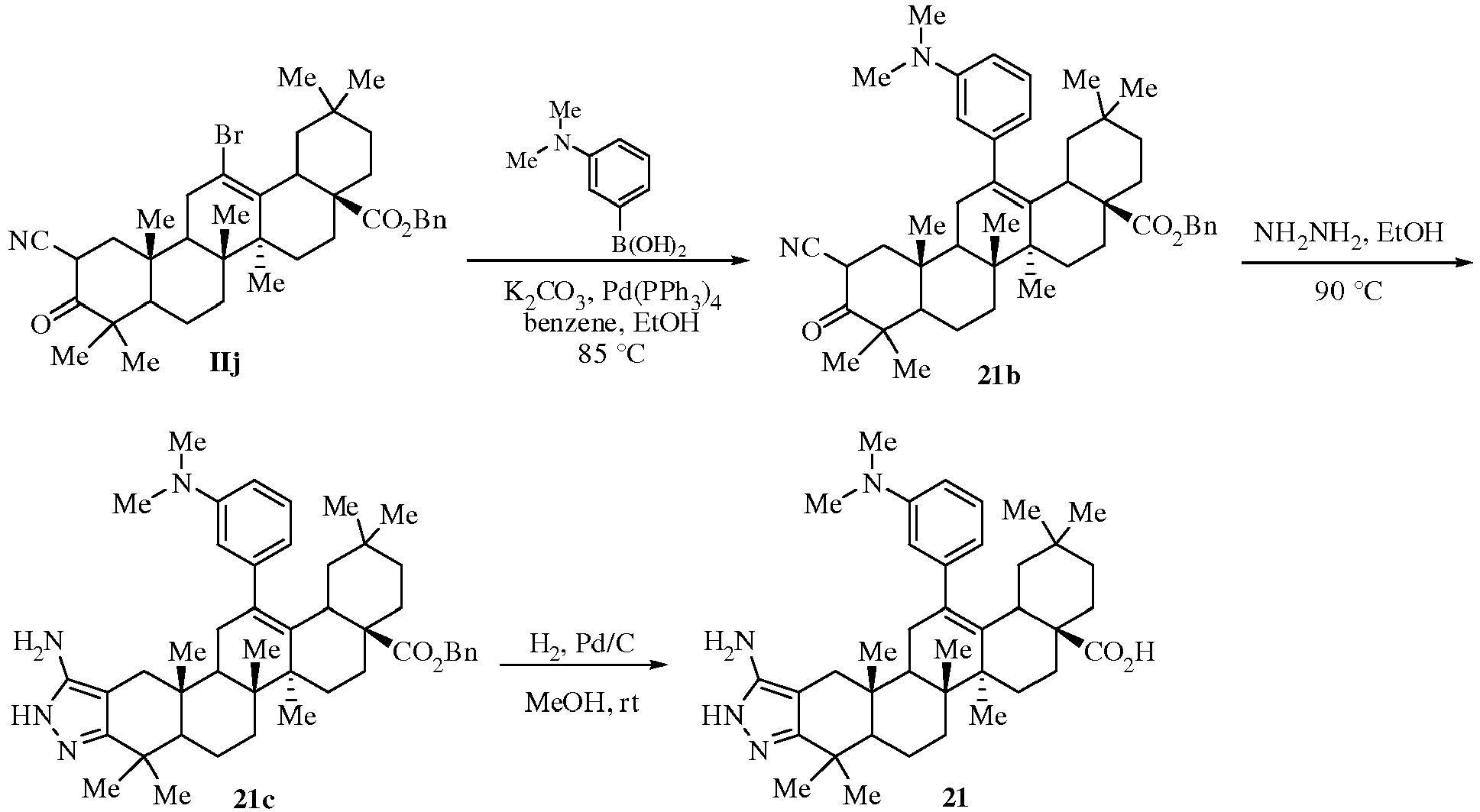
- To a mixture of IIj (300 mg, 0.46 mmol) and 3-(dimethylamino)phenylboronic acid (458 mg, 2.78 mmol) in benzene (10 mL) and EtOH (5 mL) was added K2CO3 (511 mg, 3.70 mmol). The mixture was sparged with nitrogen and then Pd(PPh3)4 (107 mg, 0.09 mmol) was added. The mixture was heated at 85 °C overnight and then concentrated under reduced pressure. The residue was dissolved in EtOAc (50 mL) and the solution was washed with brine then dried (Na2SO4), filtered and concentrated under reduced pressure. The residue was purified by column chromatography (silica, 0-10% EtOAc in hexanes) to afford the sub-title compound (270 mg, 84%).
- 1H NMR (300 MHz, CDCl3) δ 0.29-2.30 (m, 41 H), 2.95 (s, 6H), 3.13 (d, J = 10.5 Hz, 1 H), 3.81-3.91 (m, 1 H), 5.07 (d, J= 12.3 Hz, 1 H), 5.17 (d, J= 15.3 Hz, 1H), 6.51 (d, J = 6.9 Hz, 1 H), 6.51 (d, J= 6.9 Hz, 1 H), 7.03-7.09 (m, 1 H), 7.34-7.36 (m, 5H).
- To a solution of 21b (266 mg, 0.38 mmol) and EtOH (4 mL) was added hydrazine (60 µL, 1.93 mmol). The mixture was heated at 90 °C overnight and then concentrated under reduced pressure. The residue was purified by column chromatography (0-30% EtOAc in hexanes and 50% CMA in CH2Cl2) to afford the sub-title compound (191 mg, 70%).
1H NMR (300 MHz, CD3OD) δ 0.27-2.36 (m, 42H), 2.89 (s, 6H), 5.05 (m, 1 H), 5.22 (m, 1 H), 6.49-7.06 (m, 4H), 7.35-7.7.36 (m, 5H). APCI MS m/z 703 [C46H62N4O2 + H]+. - A solution of 21c (180 mg, 0.25 mmol) and MeOH (20 mL) was flushed with nitrogen and then 10% Pd/C (90 mg) was added. The mixture was flushed with nitrogen followed by hydrogen. The mixture was stirred under hydrogen at atmospheric pressure overnight. The catalyst was removed by filtration through diatomaceous earth and the filtrate was concentrated. The residue was purified by column chromatography (silica, 0-40% CMA in CH2Cl2) followed by preparative HPLC to afford the title compound (36 mg, 23%) as a solid.
Rf 0.44 (90:9:1 Methylene Chloride/Methanol/concentrated Ammonium Hydroxide).
1H NMR (300 MHz, CD3OD) δ 0.27-2.43 (m, 41 H), 3.04 (d, J = 9.6 Hz, 1 H), 3.18 (s, 6H), 7.16-7.47 (m, 4H). APCI MS m/z 613 [C39H56N4O2 + H]+. m.p. >300 °C. HPLC (Method A) 98.1 % (214 nm) t R = 12.0 min. -

- A mixture of II (500 mg, 0.75 mmol), 2-fluoropyridin-4-ylboronic acid (210 mg, 1.50 mmol), Pd(PPh3)4 (80 mg, 0.075 mmol) and K2CO3 (310 mg, 2.25 mmol) in benzene (4.0 mL) and EtOH (1.0 mL) was sealed and heated to 120 °C by microwave for 1 hour. The reaction mixture was diluted with EtOAc (100 mL). The organic phase was washed with brine then dried (MgSO4), filtered and concentrated to dryness. The residue was purified by column chromatography (silica, 0-10% MeOH in CH2Cl2) to afford the sub-title compound (448 mg, 88%) as a brown solid. APCI MS (Positive Mode) m/z 679 [C43H55FN4O2 + H]+.
- A mixture of 22b (150 mg, 0.22 mmol) and dimethylamine (4.0 mL, 2 M in MeOH, 8.0 mmol) was sealed and heated to 140°C by microwave for 5 hours. The mixture was concentrated to dryness. The residue and 10% Pd(OH)2/C (50 mg) in MeOH (12 mL) was stirred under a hydrogen balloon for 5 hours. The reaction mixture was filtered through a pad of diatomaceous earth and washed with CMA (25 mL). The filtrate was concentrated to dryness under reduced pressure. The residue was purified by column chromatography (silica, 0-10% MeOH in CH2Cl2) followed by preparative HPLC to provide the title compound (25 mg, 19%) as an off-white solid.
Rf 0.65 (80:18:2 Methylene Chloride/Methanol/concentrated Ammonium Hydroxide).
1H NMR (300 MHz, CD3OD) δ 0.50 (s, 3H), 0.82 (s, 3H), 0.90 (s, 3H), 0.98 (s, 3H), 1.22 (s, 3H), 1.31 (s, 6H), 1.35-2.20 (m, 24H), 2.28 (m, 1H), 2.31 (d, J = 14.8 Hz, 1H), 3.05 (m, 1H), 6.90 (s, 1H), 7.31 (s, 1H), 7.90 (s, 1H). mp >300 °C. APCI MS (Positive Mode) m/z 614 [C38H55N5O2 + H]+. -

- To a solution of 2-nitrophenylboronic acid (500 mg, 2.99 mmol) and MeOH (10 mL) was added 10% Pd/C (250 mg). The mixture was stirred under hydrogen at atmospheric pressure for 2 hours. The catalyst was removed by filtration through diatomaceous earth and the filtrate was concentrated under reduced pressure. The residue was purified by column chromatography (silica, 0-50% CMA in CH2Cl2) to afford the sub-title compound (182 mg, 44%).
1H NMR (300 MHz, CD3OD) δ 6.69-7.75 (m, 4H). - To a mixture of II (150 mg, 0.22 mmol) and 23b (77 mg, 0.56 mmol) in benzene (4 mL) and EtOH (1 mL) was added K2CO3 (124 mg, 0.90 mmol). The mixture was sparged with nitrogen and then Pd(PPh3)4 (52 mg, 0.04 mmol) was added. The reaction mixture was heated at 120 °C for 1 hour using microwave irradiation and then concentrated under reduced pressure. The residue was dissolved in EtOAc (20 mL). The organic solution was washed with brine then dried (Na2SO4), filtered and concentrated. The residue was purified by column chromatography (silica, 0-40% CMA in CH2Cl2) to afford the sub-title compound (190 mg, 75%).
APCI MS m/z 675 [C44H58N4O2 + H]+. - A solution of 23c (180 mg, 0.26 mmol) and MeOH (20 mL) was flushed with nitrogen and then 10% Pd/C (150 mg) was added. The mixture was flushed with nitrogen followed by hydrogen. The mixture was stirred under hydrogen at atmospheric pressure overnight. The catalyst was removed by filtration through diatomaceous earth and the filtrate was concentrated under reduced pressure. The residue was purified by column chromatography (silica, 0-100% CMA in CH2Cl2) followed by preparative HPLC to afford the title compound (17 mg, 10%) as a solid.
Rf 0.28 (40:9:1 Methylene Chloride/Methanol/concentrated Ammonium Hydroxide).
1H NMR (300 MHz, CD3OD) δ 0.20-2.47 (m, 48H), δ 7.29 (d, J = 7.2 Hz, 1 H), δ 7.41- 7.42 (m, 3H). APCI MS m/z 585 [C37H52N4O2 + H]+ m.p. 210-230 °C dec. HPLC (Method A) >99% (214 nm) t R = 12.7 min. -

- A mixture of oleanolic acid (1a, 6.0 g, 13.1 mmol), benzyl bromide (2.8 g, 16.4 mmol), K2CO3 (2.7 g, 19.7 mmol) and DMF (120 mL) was stirred at room temperature for 15 hours. The solvent was removed under reduced pressure and the residue was purified by column chromatography (silica, 30% EtOAc in hexanes) to provide the sub-title compound (6.6 g, 92%) as a white solid.
1H NMR (300 MHz, CDCl3) 0.61 (s, 3H), 0.65-0.72 (m, 1 H), 0.78 (s, 3H), 0.87-1.00 (m, 10H), 1.05-1.46 (m, 12H), 1.49-1.72 (m, 12H), 1.81-2.05 (m, 3H), 2.86-2.91 (m, 1 H), 3.15-3.27 (m, 1 H), 5.02-5.11 (m, 2H), 5.43-5.45 (m, 1 H), 7.31-7.49 (m, 5H). - To a solution of 24b (6.6 g, 12.1 mmol), DMAP (200 mg) and pyridine (65 mL) was slowly added acetic anhydride (1.5 g, 14.5 mmol) at 0 °C under nitrogen. The mixture was allowed to slowly warm to room temperature overnight and was quenched by pouring into one liter of H2O. The precipitate was collected by filtration and dried in a vacuum oven at 40°C to provide the sub-title compound (6.6 g, 93%) as a white solid.
1H NMR (300 MHz, CDCl3) 0.61 (s, 3H), 0.77-0.94 (m, 16H), 0.98-1.75 (m, 21 H), 1.84-2.02 (m, 3H), 2.04 (s, 3H), 2.85-2.95 (m, 1 H), 4.46-4.51 (m, 1 H), 5.01-5.08 (m, 2H), 5.27-5.29 (m, 1 H), 7.29-7.35 (m, 5H). - To a suspension of 24c (3.0 g, 5.13 mmol) and pyridine (65 mL) at 0 °C was added chlorine gas which was generated by addition of nitric acid to sodium chloride. After 20 min at 0 °C, the mixture was poured into H2O and the solid was collected by filtration. The crude material was purified by column chromatography (silica, 20% diethyl ether in hexanes) to provide the sub-title compound (1.3 g, 40%).
1H NMR (500 MHz, CDCl3) 0.82-0.91 (m, 12H), 1.00 (s, 3H), 1.12-1.79 (m, 22H), 1.88-2.33 (m, 9H), 3.63-3.74 (m, 1 H), 4.45-4.52 (m, 1 H), 5.11-5.21 (m, 2H), 7.31-7.44 (m, 5H). - A mixture of 24d (1.0 g, 1.62 mmol), KOH (360 mg, 4.86 mmol) and MeOH (70 mL) was heated at reflux for 96 hours. The solvent was removed and the residue was partitioned between H2O (50 mL) and CH2Cl2 (50 mL). The organic layer was separated then dried (Na2SO4), filtered and concentrated under reduced pressure. The crude product was dissolved in CH2Cl2 (40 mL) and the Dess-Martin reagent (900 mg, 2.1 mmol) was added at room temperature. The mixture was stirred for 14 hours before quenching with a solution of sodium thiosulfate (12.5 g) and saturated NaHCO3 (50 mL). After stirring 30 min, the layers were separated and the aqueous layer was extracted with CH2Cl2 (50 mL). The combined organic layers were dried (Na2SO4), filtered and concentrated under reduced pressure. The residue was purified by column chromatography (silica, 0-25% EtOAc in hexanes) to provide the sub-title compound (785 mg, 100 %) as a white solid.
1H NMR (300 MHz, CDCl3) 0.64 (s, 3H), 0.89-1.18 (m, 21 H), 1.22-2.07 (m, 15H), 2.23-2.41 (m, 3H), 2.47-2.61 (m, 1 H), 3.62-3.75 (m, 1 H), 5.05-5.16 (m, 2H), 7.29-7.41 (m, 5H). - A solution of diisopropylamine (0.2 mL, 1.46 mmol) and THF (7 mL) was cooled to -78°C under nitrogen. A solution of n-butyllithium (2.5 M in hexanes, 0.65 mL, 1.63 mmol) was slowly added, maintaining the internal temperature below -70 °C. The solution was allowed to stir for 45 min and was then slowly added to a solution of 24e (500 mg, 0.86 mmol) and THF (10 mL) at -78°C under nitrogen. This solution was stirred for 30 min after which time a suspension of p-toluenesulfonyl cyanide (310 mg, 1.72 mmol) and THF (3 mL) was added over 15 min. The solution was stirred for 30 min and then quenched by addition of saturated ammonium chloride solution (10 mL) at -78 OC. The mixture was allowed to warm to room temperature overnight. The organic layer was separated and the aqueous layer was extracted with EtOAc. The combined organic layers were dried (Na2SO4) and filtered. The solvent was removed under reduced pressure and the residue was purified by column chromatography (silica, 0-25% EtOAc in hexanes) to provide the sub-title compound (350 mg, 67%).
1H NMR (500 MHz, CD3OD) 0.59 (s, 3H), 0.82-2.29 (m, 39H), 3.63-3.74 (m, 1 H), 5.03-5.15 (m, 2H), 7.31-2.7.45 (m, 5H). - A solution of 24f (350 mg, 0.58 mmol) and hydrazine (74 mg, 2.32 mmol) in EtOH (10 mL) was heated at reflux for 16 hours. The solvent and excess hydrazine were removed under reduced pressure. The residue was purified by column chromatography (silica, 0-50% CMA in CH2Cl2) to provide the sub-title compound (175 mg, 50%).
1H NMR (300 MHz, CDCl3) 0.61 (s, 3H), 0.88 (s, 3H), 0.91 (s, 3H), 0.98 (s, 3H), 1.09-2.06 (m, 27H), 2.23-2.35 (m, 3H), 3.66-3.78 (m, 1 H), 5.02-5.14 (m, 2H), 7.29-7.41 (m, 5H). - A suspension of 24g (150 mg, 0.24 mmol), 10% Pd/C (100 mg) and EtOAc/ MeOH (20% MeOH, 25 mL) was stirred under hydrogen at atmospheric pressure for 23 hours. The catalyst was removed by filtration through diatomaceous earth and the filtrate was concentrated under reduced pressure. The residue was purified by column chromatography (silica, 50-100% CMA in CH2Cl2) to provide the title compound (48 mg, 38%) as an off-white solid.
1H NMR (300 MHz, CD3OD) 0.89-1.01 (m, 12H), 1.12-1.30 (m, 12H), 1.34-2.10 (m, 15H), 2.33-2.41 (m, 3H), 3.62-3.70 (m, 1H). APCI MS m/z 528 [C31H46ClN3O2 + H]+.
HPLC >99% (area %), t R = 15.9 min. -

- A mixture of II (75 mg, 0.11 mmol) and 10% Pd(OH)2/C (75 mg) in EtOAc (10 mL) and MeOH (2 mL) was stirred under a hydrogen balloon for 12 hours. The reaction mixture was filtered through a pad of diatomaceous earth and washed with CMA (25 mL). The filtrate was concentrated to dryness under reduced pressure. The residue was purified by column chromatography (silica, 0-60% CMA in CH2Cl2) to afford the title compound (20 mg, 32%) as a brown solid.
Rf 0.40 (80:18:2 Methylene Chloride/Methanol/concentrated Ammonium Hydroxide). 1H NMR (300 MHz, CD3OD) δ 0.91 (s, 6H), 0.93 (s, 3H), 1.0 (s, 3H), 1.12 (s, 3H), 1.15 (s, 3H), 1.21 (s, 3H), 1.32-2.28 (m, 20H), 2.35 (d, J = 14.4 Hz, 1 H), 2.53 (d, J = 8.7 Hz, 2H), 3.53 (m, 1H). mp 268-270 °C. ESI MS (Positive Mode) m/z 572 [C31H46BrN3O2 + H]+. -

- A mixture of IIi (360 mg, 0.57 mmol), furan-3-ylboronic acid (194 mg, 1.73 mmol), Pd(PPh3)4 (66 mg, 0.057 mmol) and cesium carbonate (564 mg, 1.73 mmol) in benzene (15 mL) and EtOH (4 mL) was heated at reflux for 12 hours. The reaction mixture was diluted with EtOAc (100 mL). The organic phase was washed with brine then dried (MgSO4), filtered and concentrated to dryness. The residue was purified by column chromatography (silica, 0-20% EtOAc in hexanes) to afford the sub-title compound (340 mg, 97%).
1H NMR (300 MHz, CDCl3) δ 0.57 (s, 3H), 0.77 (s, 3H), 0.81 (s, 3H), 1.05 (s, 3H), 1.07 (s, 3H), 1.12 (s, 3H), 1.22 (s, 3H), 1.23-2.55 (m, 22H), 3.31 (m, 1 H), 5.04 (m, 2H), 6.32 (s, 1 H), 7.20 (s, 1 H), 7.31 (m, 6H). - To a solution of diisopropylamine (0.12 mL, 0.84 mmol) in THF (5 mL) was added n-butyllithium (0.35 mL, 2.5 M in hexanes, 0.88 mmol) at-78°C. The solution was stirred for 30 min. The LDA solution was added to 26b (270 mg, 0.44 mmol) in THF (5 mL). The mixture was allowed to warm to -40°C for 5 min and cooled to -78°C. A suspension of p-toluene sulfonyl cyanide (203 mg, 1.12 mmol) in THF (2 mL) was added. The reaction mixture was allowed to warm to -40°C over 1.5 hours. The reaction was quenched by saturated NH4Cl (3 mL) and extracted with EtOAc (100 mL). The organic phase was washed with brine then dried (MgSO4), filtered and concentrated to dryness. The residue was purified by column chromatography (silica, 0-20% EtOAc in hexanes) to afford the sub-title compound (150 mg, 54%).
1H NMR (300 MHz, CDCl3) δ 0.51 (s, 3H), 0.62 (s, 3H), 0.65 (s, 3H), 1.03 (s, 3H), 1.04 (s, 3H), 1.07 (s, 3H), 1.16 (s, 3H), 1.23-2.55 (m, 21 H), 3.32 (m, 1 H), 5.02 (m, 2H), 6.32 (s, 1 H), 7.20 (s, 1 H), 7.31 (m, 6H). - A mixture of 26c (150 mg, 0.23 mmol) and hydrazine (0.030 mL) in EtOH (3 mL) was heated at reflux overnight. The reaction mixture was concentrated to dryness under reduced pressure. The residue was purified by column chromatography (silica, 0-10% MeOH in CH2Cl2) to afford the sub-title compound (110 mg, 71 %).
ESI MS (Positive Mode) m/z 650 [C42H55N3O3 + H]+. - A mixture of 26d (110 mg, 0.17 mmol) and 10% Pd(OH)2/C (50 mg) in MeOH (6 mL) and EtOAc (6 mL) was stirred under a hydrogen balloon for 12 hours. The reaction mixture was filtered through a pad of diatomaceous earth and washed with CMA (25 mL). The filtrate was concentrated to dryness under reduced pressure. The residue was purified by column chromatography (silica, 0-50% CMA in CH2Cl2) to afford the title compound (20 mg, 21%) as a brown solid.
Rf0.45 (80:18:2 Methylene Chloride/Methanol/concentrated Ammonium Hydroxide). 1H NMR (300 MHz, DMSO-d 6) δ 0.53 (s, 3H), 0.78 (s, 3H), 0.80 (s, 3H), 0.84 (s, 3H), 1.05 (s, 3H), 1.16 (s, 6H), 1.26-2.25 (m, 19H), 2.25 (d, J= 14.7 Hz, 1 H), 6.48 (s, 1 H), 7.48 (s, 1 H), 7.59 (s, 1 H). mp >300 °C. APCI MS (Positive Mode) m/z 560 [C35H49N3O3 + H]+. -

- A mixture of IIi (300 mg, 0.48 mmol), 1-benzyl-1H-pyrazol-4-ylboronic acid (291 mg, 1.44 mmol), Pd(PPh3)4 (60 mg, 0.048 mmol) and K2CO3 (198 mg, 1.44 mmol) in DMF (9 mL) was heated at 100 °C for 24 hours. The reaction mixture was diluted with EtOAc (100 mL). The organic phase was washed with brine then dried (MgSO4), filtered and concentrated to dryness. The residue was purified by column chromatography (silica, 0-20% EtOAc in hexanes) to afford the sub-title compound (280 mg, 83%).
1H NMR (300 MHz, CDCl3)δ 0.43 (s, 3H), 0.76 (s, 3H), 0.77 (s, 3H), 0.78-2.53 (m, 37H), 3.32 (m, 1 H), 5.02 (m, 4H), 7.15 (m, 4H), 7.31 (m, 8H). - To a solution of diisopropylamine (0.13 mL, 0.95 mmol) in THF (5 mL) was added n-butyllithium (0.4 mL, 2.5 M in hexanes, 1.0 mmol) at-78°C. The solution was stirred for 30 min. The LDA solution was added to 27b (350 mg, 0.50 mmol) in THF (5 mL). The mixture was allowed to warm to -40°C for 5 min and cooled to -78°C. A suspension of p-toluene sulfonyl cyanide (181 mg, 1.0 mmol) in THF (2 mL) was added. The reaction mixture was allowed to warm to -40°C over 1.5 hours. The reaction was quenched by saturated NH4Cl (3 mL) and extracted with EtOAc (100 mL). The organic phase was washed with brine then dried (MgSO4), filtered and concentrated to dryness. The residue was purified by column chromatography (silica, 0-20% EtOAc in hexanes) to afford the sub-title compound (160 mg, 44%).
- A mixture of 27c (160 mg, 0.22 mmol) and hydrazine (0.10 mL, 0.69 mmol) in EtOH (3 mL) was heated at reflux overnight. The reaction mixture was concentrated to dryness under reduced pressure. The residue was purified by column chromatography (silica, 0-40% CMA in CH2Cl2) to afford the sub-title compound (60 mg, 62%). APCI MS (Positive Mode) m/z 740 [C41H55N5O2 + H]+.
- A mixture of 27d (60 mg, 0.082 mmol) and 10% Pd(OH)2/C (60 mg) in MeOH (12 mL) and EtOAc (2 mL) was stirred under a hydrogen balloon for 12 hours. The reaction mixture was filtered through a pad of diatomaceous earth and washed with CMA (25 mL). The filtrate was concentrated to dryness under reduced pressure. The residue was purified by column chromatography (silica, 0-80% CMA in CH2Cl2) to afford the title compound (8 mg, 18%) as a brown solid.
Rf 0.20 (80:18:2 Methylene Chloride/Methanol/concentrated Ammonium Hydroxide).
1H NMR (300 MHz, CD3OD + CDCl3) δ 0.52 (s, 3H), 0.77 (s, 3H), 0.88 (s, 3H), 0.95 (s, 3H), 1.16 (s, 3H), 1.24 (s, 6H), 1.32-2.28 (m, 20H), 2.32 (d, J = 14.7 Hz, 1 H), 7.57 (s, 1 H), 7.82 (s, 1H). mp >300 °C. APCI MS (Positive Mode) m/z 560 [C34H49N5O2 + H]+. -

- A mixture of IIj (100 mg, 0.15 mmol), 1-methyl-1H-pyrazol-4-ylboronic acid (75.0 mg, 0.60 mmol), Pd(PPh3)4 (34 mg, 0.030 mmol) and K2CO3 (184 mg, 1.33 mmol) in benzene (3.5 mL) and EtOH (1.5 mL) was sealed and heated to 120 °C by microwave for 1 hour. The reaction mixture was diluted with EtOAc (100 mL). The organic phase was washed with brine then dried (MgSO4), filtered and concentrated to dryness. The residue was purified by column chromatography (silica, 0-30% EtOAc in hexanes) to afford the sub-title compound (60 mg, 61%).
1H NMR (300 MHz, CDCl3) δ 0.54 (s, 3H), 0.76 (s, 3H), 0.80 (s, 3H), 0.81-2.05 (m, 32H), 3.32 (m, 1 H), 3.77 (s, 3H), 3.85 (m, 1 H), 5.02 (m, 2H), 7.10 (s, 1 H), 7.33 (m, 6H). - A mixture of 28b (60 mg, 0.09 mmol) and hydrazine (0.05 mL) in EtOH (1.5 mL) was heated at reflux overnight. The reaction mixture was concentrated to dryness under reduced pressure. The residue was purified by column chromatography (silica, 0-30% CMA in CH2Cl2) to afford the sub-title compound (33 mg, 54%). APCI MS (Positive Mode) m/z 664 [C42H57N5O2 + H]+.
- A mixture of 28c (33 mg, 0.05 mmol) and 10% Pd(OH)2/C (16 mg) in MeOH (12 mL) was stirred under a hydrogen balloon for 5 hours. The reaction mixture was filtered through a pad of diatomaceous earth and washed with CMA (25 mL). The filtrate was concentrated to dryness under reduced pressure. The residue was purified by column chromatography (silica, 0-50% CMA in CH2Cl2) to afford the title compound (20 mg, 71 %) as a brown solid.
Rf 0.64 (9:1 Methylene Chloride/Methanol).
1H NMR (300 MHz, CD3OD) δ 0.55 (s, 3H), 0.81 (s, 3H), 0.87 (s, 3H), 0.93 (s, 3H), 1.15 (s, 3H), 1.23 (s, 3H), 1.24 (s, 3H), 1.25-2.18 (m, 19H), 2.36 (d, J= 14.8 Hz, 1H), 3.34 (m, 1 H), 7.45 (s, 1 H), 7.52 (s, 1 H). mp >300 °C. APCI MS (Positive Mode) m/z 574 [C35H51N5O2 + H]+. -

- A mixture of IIi (400 mg, 0.64 mmol), pyridine-4ylboronic acid (395 mg, 3.21 mmol), Pd(PPh3)4 (222 mg, 0.19 mmol) and K2CO3 (443 mg, 3.21 mmol) in DMF (10 mL) was heated at 100 °C for 24 hours. The reaction mixture was diluted with EtOAc (100 mL). The organic phase was washed with brine then dried (MgSO4), filtered and concentrated to dryness. The residue was purified by column chromatography (silica, 0-30% EtOAc in hexanes) to afford the sub-title compound (185 mg, 46%).
1H NMR (300 MHz, CDCl3) δ 0.32 (s, 3H), 0.75 (s, 3H), 0.89 (s, 3H), 1.02 (s, 3H), 1.04 (s, 3H), 1.10 (s, 3H), 1.23 (s, 3H), 1.32-2.05 (m, 20H), 2.30 (m, 1H), 2.45 (m,1H), 2.98 (m, 1H), 5.10 (m, 2H), 7.10 (d, J = 5.7 Hz, 2H), 7.30 (m, 5H), 8.35 (d, J= 5.7 Hz, 2H). - To a solution of diisopropylamine (0.16 mL, 1.16 mmol) in THF (5 mL) was added n-butyllithium (0.48 mL, 2.5 M in hexanes, 1.2 mmol) at -78°C. The solution was stirred for 30 min. The LDA solution was added to 29b (326 mg, 0.52 mmol) in THF (5 mL). The mixture was allowed to warm to -40°C for 5 min and cooled to -78°C. A suspension of p-toluene sulfonyl cyanide (188 mg, 1.0 mmol) in THF (2 mL) was added. The reaction mixture was allowed to warm to -40 °C over 1.5 hours. The reaction was quenched by saturated NH4Cl (3 mL) and extracted with EtOAc (100 mL). The organic phase was washed with brine then dried (MgSO4), filtered and concentrated to dryness. The residue was purified by column chromatography (silica, 0-30% EtOAc in hexanes) to afford the sub-title compound (171 mg, 51 %).
1H NMR (300 MHz, CDCl3) δ 0.25 (s, 3H), 0.75 (s, 3H), 0.82 (s, 3H), 1.09 (s, 3H), 1.13 (s, 3H), 1.15 (s, 3H), 1.17 (s, 3H), 1.18-2.25 (m, 20H), 2.95 (m, 1H), 3.85 (m, 1H), 5.04 (m, 2H), 7.06 (m, 2H), 7.37 (m, 5H), 8.44 (m, 2H). - A mixture of 29c (171 mg, 0.26 mmol) and hydrazine (0.025 mL, 0.80 mmol) in EtOH (3 mL) was heated at reflux overnight. The reaction mixture was concentrated to dryness under reduced pressure. The residue was purified by column chromatography (silica, 0-10% MeOH in CH2Cl2) to afford the sub-title compound (143 mg, 83%).
ESI MS (Positive Mode) m/z 661 [C43H56N4O2 + H]+. - A mixture of 29d (143 mg, 0.21 mmol) and 10% Pd(OH)2/C (50 mg) in MeOH (15 mL) was stirred under a hydrogen balloon for 12 hours. The reaction mixture was filtered through a pad of diatomaceous earth and washed with CMA (25 mL). The filtrate was concentrated to dryness under reduced pressure. The residue was purified by column chromatography (silica, 0-50% CMA in CH2Cl2) to afford the title compound (85 mg, 72%) as a brown solid.
R f 0.24 (80:18:2 Methylene Chloride/Methanol/concentrated Ammonium Hydroxide).
1H NMR (300 MHz, CD3OD) δ 0.32 (s, 3H), 0.75 (s, 3H), 0.89 (s, 3H), 0.98 (s, 3H), 1.10 (s, 3H), 1.19 (s, 3H), 1.25 (s, 3H), 1.32-2.28 (m, 20H), 2.32 (d, J= 14.7 Hz, 1 H), 3.0 (m, 1 H), 7.40 (d, J = 5.7 Hz, 2H), 8.47 (d, J = 5.7 Hz, 1 H). mp >300 °C. ESI MS (Positive Mode) m/z 571 [C36H50N4O2 + H]+. -

- A mixture of IIj (200 mg, 0.30 mmol), pyrimidin-5-ylboronic acid (115 mg, 0.91 mmol), Pd(PPh3)4 (34 mg, 0.030 mmol) and K2CO3 (184 mg, 1.33 mmol) in benzene (3.5 mL) and EtOH (1.5 mL) was sealed and heated to 120 °C by microwave for 1 hour. The reaction mixture was diluted with EtOAc (100 mL). The organic phase was washed with brine then dried (MgSO4), filtered and concentrated to dryness. The residue was purified by column chromatography (silica, 0-40% EtOAc in hexanes) to afford the sub-title compound (90 mg, 40%).
- A mixture of 30b (90 mg, 0.13 mmol) and hydrazine (0.04 mL) in EtOH (1.5 mL) was heated at reflux overnight. The reaction mixture was concentrated to dryness under reduced pressure. The residue was purified by column chromatography (silica, 0-30% CMA in CH2Cl2) to afford the sub-title compound (65 mg, 71%).
APCI MS (Positive Mode) m/z 664 [C42H55N5O2 + H]+. - A mixture of 30c (65 mg, 0.098 mmol) and 10% Pd(OH)2/C (30 mg) in MeOH (10 mL) was stirred under a hydrogen balloon for 5 hours. The reaction mixture was filtered through a pad of diatomaceous earth and washed with CMA (25 mL). The filtrate was concentrated to dryness under reduced pressure. The residue was purified by column chromatography (silica, 0-60% CMA in CH2Cl2) to afford the title compound (32 mg, 57%) as a brown solid.
Rf 0.50 (80:18:2 Methylene Chloride/Methanol/concentrated Ammonium Hydroxide).
1H NMR (300 MHz, CD3OD) δ 0.31 (s, 3H), 0.80 (s, 3H), 0.89 (s, 3H), 1.02 (s, 3H), 1.20 (s, 3H), 1.25 (s, 3H), 1.31 (s, 3H), 1.32-2.30 (m, 21 H), 2.33 (d, J = 14.8 Hz, 1 H), 2.88 (m, 1 H), 8.78 (s, 1 H), 9.04 (s, 1 H). mp >300 °C. APCI MS (Positive Mode) m/z 572 [C35H49N5O2 + H]+. -

- To a mixture of II (200 mg, 0.30 mmol) and 4-(benzyloxycarbonylamino)-3-fluorophenylboronic acid (262 mg, 0.90 mmol) in benzene (4 mL) and EtOH (1 mL) was added K2CO3 (166 mg, 1.20 mmol). The mixture was sparged with nitrogen and then Pd(PPh3)4 (69 mg, 0.06 mmol) was added. The reaction mixture was heated at 120 °C for 1 hour using microwave irradiation and then solvent was removed under reduced pressure. The residue was dissolved in EtOAc (20 mL) and washed with brine. The organic layer was dried (Na2SO4), filtered and concentrated. The residue was purified by column chromatography (silica, 0-10% MeOH in CH2Cl2) to afford the sub-title compound (190 mg, 76%).
APCI MS m/z 827 [C52H63N4O4 + H]+. - A solution of 31 b (190 mg, 0.22 mmol) and MeOH (15 mL) was flushed with nitrogen and then 10% Pd/C (300 mg) was added. The mixture was flushed with nitrogen followed by hydrogen. The mixture was stirred under hydrogen at atmospheric pressure overnight. The catalyst was removed by filtration through diatomaceous earth and the filtrate was concentrated under reduced pressure. The residue was purified by column chromatography (silica, 0-30% CMA in CH2Cl2) followed by preparative HPLC to afford the title compound (35 mg, 21%) as as solid.
Rf 0.74 (40:9:1 Methylene Chloride/Methanol/concentrated Ammonium Hydroxide).
1H NMR (300 MHz, CD3OD) δ 0.37-2.43 (m, 41 H), 3.07(dd, J = 3.4, 6.5 Hz, 1 H), 6.99-7.10 (m, 3H). APCI MS m/z 603 [C37H51FN4O2 + H]+. m.p. 180-200 °C dec. HPLC (Method A) >99% (214 nm) tR = 13.4 min. -

- To a solution of 3-bromofuran-2-carbaldehyde (500 mg, 2.85 mmol) and morpholine (0.5 mL, 5.71 mmol) in CH2Cl2 (10 mL) was added sodium triacetoxyborohydride (1.2 g, 5.71 mmol). The mixture was stirred at room temperature for 12 hours. The reaction mixture was diluted with EtOAc (100 mL). The organic phase was washed with aqueous NaHCO3 and brine then dried (MgSO4), filtered and concentrated to dryness. The residue was purified by column chromatography (silica, 0-10% MeOH in CH2Cl2) to afford the sub-title compound (670 mg, 89%).
1H NMR (300 MHz, CDCl3) δ 2.50 (s, 4H), 3.62 (s, 2H), 3.70 (m, 4H), 6.43 (s, 1 H), 7.35 (s, 1H). - To a solution of 32b (670 mg, 2.54 mmol) in THF (15 mL) was added n-butyllithium (2.5 M in hexanes, 1.30 mL, 3.31 mmol) at -78°C. The mixture was stirred at -78°C for 20 min. Triisopropyl borate (2.9 mL, 12.7 mmol) was added. The reaction mixture was stirred at -78°C for 1 hour and quenched with HCl (2 M, 4 mL). The reaction mixture was stirred for 5 min and neutralized by NaOH (2 M) and extracted with EtOAc (100 mL). The organic phase was washed with brine then dried (MgSO4), filtered and concentrated to dryness. The residue was purified by column chromatography (silica, 0-10% MeOH in CH2Cl2) to afford the sub-title compound (450 mg, 83%).
1H NMR (300 MHz, CDCl3) δ 2.40 (s, 4H), 3.65 (s, 2H), 3.68 (m, 4H), 6.52 (s, 1 H), 7.30 (s, 1 H). - A mixture of II (200 mg, 0.30 mmol), 32c (250 mg, 1.18 mmol), Pd(PPh3)4 (35 mg, 0.030 mmol) and K2CO3 (207 mg, 1.50 mmol) in benzene (3.5 mL) and EtOH (1.5 mL) was sealed and heated to 120 °C by microwave for 1 hour. The reaction mixture was diluted with EtOAc (100 mL). The organic phase was washed with brine then dried (MgSO4), filtered and concentrated to dryness. The residue was purified by column chromatography (silica, 0-10% MeOH in CH2Cl2) to afford the sub-title compound (135 mg, 60%).
APCI MS (Positive Mode) m/z 749 [C47H64N4O4 + H]+. - A mixture of 32d (135 mg, 0.18 mmol) and 10% Pd(OH)2/C (100 mg) in MeOH (12 mL) and EtOAc (3 mL) was stirred under a hydrogen balloon for 6 hours. The reaction mixture was filtered through a pad of diatomaceous earth and washed with CMA (25 mL). The filtrate was concentrated to dryness under reduced pressure. The residue was purified by column chromatography (silica, 0-50% CMA in CMA) to afford the title compound (35 mg, 30%) as a brown solid.
Rf 0.63 (80:18:2 Methylene Chloride/Methanol/concentrated Ammonium Hydroxide).
1H NMR (300 MHz, CD3OD) δ 0.55 (s, 3H), 0.81 (s, 3H), 0.89 (s, 3H), 0.99 (s, 3H), 1.14 (s, 3H), 1.28 (s, 6H), 1.35-2.28 (m, 20H), 2.61 (m, 4H), 2.90 (m, 1 H), 3.53 (m, 6H), 6.33 (s, 1 H), 7.45 (s, 1H). mp >300 °C dec. APCI MS (Positive Mode) m/z 659 [C40H58N4O4 + H]+. -

- To a solution of 3-bromo-1-(triisopropylsilyl)-1H-pyrrole (2.0 g, 6.61 mmol) in THF (30 mL) was added n-butyllithium (2.5 M in hexanes, 3.4 mL, 8.60 mmol) at-78°C. The mixture was stirred at -78°C for 10 min then DMF (0.76 mL, 9.92 mmol) was added and the mixture was warmed to 0°C over 1 hour. The reaction mixture was quenched by saturated NH4Cl and extracted with EtOAc (200 mL). The organic phase was washed with brine then dried (MgSO4), filtered and concentrated to dryness. The residue was purified by column chromatography (silica, 0-10% EtOAc in hexanes) to afford the sub-title compound (1.65 g, 100%).
1H NMR (400 MHz, CDCl3) δ 2.40 (m, 4H), 3.42 (s, 2H), 3.70 (m, 4H), 6.03 (s, 1H), 6.09 (s, 1 H), 6.74 (s, 1 H), 8.30 (bs, 1 H). - To a solution of 33b (1.45 g, 5.8 mmol) in THF (40 mL) was added N-bromosuccinimide (1.03 g, 5.8 mmol) at room temperature. The mixture was stirred for 2 hours and quenched with H2O (5 mL) and extracted with EtOAc (100 mL). The organic phase was washed with brine then dried (MgSO4), filtered and concentrated to dryness. The residue was purified by column chromatography (silica, 0-10% EtOAc in hexanes) to afford the sub-title compound (1.4 g, 74%).
1H NMR (400 MHz, CDCl3) δ 1.15 (d, J= 2.5 Hz, 18H), 1.58 (m, 3H), 6.70 (s, 1H), 7.32 (s, 1 H), 9.82 (s, 1 H). - To a solution of 33c (1.5 g, 4.5 mmol) and morpholine (0.79 mL, 9.0 mmol) in CH2Cl2 (30 mL) was added sodium triacetoxyborohydride (1.9 g, 9.0 mmol). The mixture was stirred at room temperature for 12 hours. The reaction mixture was diluted with EtOAc (200 mL). The organic phase was washed with aqueous NaHCO3 and brine then dried (MgSO4), filtered and concentrated to dryness. The residue was purified by column chromatography (silica, 0-10% EtOAc in hexanes) to afford the sub-title compound (1.8 g, 91%).
1H NMR (400 MHz, CDCl3) δ 1.15 (d, J = 2.5 Hz, 18H), 1.58 (m, 3H), 2.40 (m, 4H), 3.40 (s, 2H), 3.72 (m, 4H), 6.61 (s, 1H), 6.65 (s, 1H). - To a solution of 33d (400 mg, 1.0 mmol) was added n-butyllithium (2.5 M in hexanes, 0.52 mmol, 1.3 mmol) at-78°C. The mixture was stirred for 20 min and 2-isopropoxy-4,4,5,5-tetramethyl-1,3,2-dioxaborolane (0.24 mL, 1.2 mmol) was added. The mixture was stirred at -78°C for 30 min and warmed to room temperature over 1 hour. The reaction was quenched with H2O and extracted with EtOAc (100 mL). The organic phase was washed with brine then dried (MgSO4), filtered and concentrated to dryness. The residue was subjected to column chromatography (silica, 0-50% EtOAc in hexanes) to afford the still impure sub-title compound (448 mg, 100%) which was used without further purification.
- A mixture of II (200 mg, 0.30 mmol), 33e (500 mg, 1.06 mmol), Pd(PPh3)4 (35 mg, 0.030 mmol) and cesium carbonate (390 mg, 1.20 mmol) in toluene (4.5 mL) and H2O (0.3 mL) was sealed and heated to 140°C by microwave for 1 hour. The reaction mixture was diluted with EtOAc (100 mL). The organic phase was washed with brine then dried (MgSO4), filtered and concentrated to dryness. The residue was purified by column chromatography (silica, 0-10% MeOH in CH2Cl2) to afford the sub-title compound (176 mg, 65%).
- To a solution of 33f (176 mg, 0.19 mmol) in THF (3 mL) was added tetrabutylammonium fluoride (0.38 mL, 1 M in THF, 0.38 mmol). The mixture was stirred at room temperature for 2 hours. The reaction mixture was diluted with EtOAc (100 mL). The organic phase was washed with brine then dried (MgSO4), filtered and concentrated to dryness. The residue was purified by column chromatography (silica, 0-10% MeOH in CH2Cl2) to afford the sub-title compound (60 mg, 42%).
APCI MS (Positive Mode) m/z 748 [C47H65N5O3 + H]+. - A mixture of 33g (60 mg, 0.08 mmol) and 10% Pd(OH)2/C (30 mg) in MeOH (12 mL) and EtOAc (3 mL) was stirred under a hydrogen balloon for 6 hours. The reaction mixture was filtered through a pad of diatomaceous earth and washed with CMA (25 mL). The filtrate was concentrated to dryness under reduced pressure. The residue was purified by column chromatography (silica, 0-70% CMA in CMA) to afford the title compound (35 mg, 67%) as a brown solid.
Rf 0.54 (80:18:2 Methylene Chloride/Methanol/concentrated Ammonium Hydroxide).
1H NMR (400 MHz, CD3OD) δ 0.55 (s, 3H), 0.85 (s, 3H), 0.92 (s, 3H), 1.12 (s, 3H), 1.15 (s, 3H), 1.38 (m, 6H), 1.39-2.20 (m, 21 H), 2.26 (d, J = 14.4 Hz, 1 H), 2.90 (m, 1 H), 3.12 (m, 3H), 3.75 (m, 6H), 6.55 (s, 1H), 7.92 (s, 1H). mp >300 °C dec. APCI MS (Positive Mode) m/z 658 [C40H59N5O3 + H]+. -

- To a solution of 3-bromothiophene-2-carbaldehyde (500 mg, 2.62 mmol) and morpholine (0.68 mL, 7.85 mmol) and CH2Cl2 (10 mL) was added sodium triacetoxyborohydride (1.11 g, 5.24 mmol). The mixture was stirred at room temperature overnight. The resulting mixture was diluted with EtOAc (100 mL) and the organic layer was washed with brine then dried (Na2SO4), filtered and concentrated. The residue was purified by column chromatography (silica, 0-5% MeOH in CH2Cl2) to afford the sub-title compound (580 mg, 84%).
1H NMR (300 MHz, CDCl3) δ 2.47-2.54 (m, 4H), 3.68-3.71 (m, 4H), 6.90 (d, J= 5.2 Hz, 1 H), 7.23 (d, J = 5.2 Hz, 1 H). - To a solution of 34b (500 mg, 1.90 mmol) in THF (10 mL) was added n-butyllithium (1.14 mL, 2.86 mmol) at -78°C. After stirring for 20 min, triisopropyl borate (1.99 mL, 8.69 mmol) was added at -78°C. The mixture was slowly warmed to room temperature and then quenched with aqueous HCl (2.0 M, 2 mL). The reaction mixture was neutralized with 2 M NaOH solution and extracted with EtOAc (3 × 10 mL) followed by i-PrOH/CH2Cl2 (1:2, 10 mL × 2). The combined extracts were dried (Na2SO4), filtered and concentrated under reduced pressure. The residue was purified by column chromatography (silica, 0-10% MeOH in CH2Cl2) to afford the sub-title compound (220 mg, 51 %).
1H NMR (300 MHz, CDCl3) δ 2.47-2.49 (m, 4H), 3.52-3.76 (m, 6H), 6.91-6.98 (m, 1 H), 7.22-7.24 (m, 1H). - To a mixture of II (250 mg, 0.38 mmol) and 34c (220 mg, 0.96 mmol) in benzene (4 mL) and EtOH (1 mL) was added K2CO3 (182 mg, 1.32 mmol). The mixture was sparged with nitrogen and then Pd(PPh3)4 (87 mg, 0.075 mmol) was added. The reaction mixture was heated at 120 °C for 1 hour using microwave irradiation. The solvent was concentrated under reduced pressure. The residue was taken up in EtOAc (20 mL) and washed with brine. The organic layer was dried (Na2SO4), filtered and concentrated. The residue was purified by column chromatography (silica, 0-10% MeOH in CH2Cl2) to afford the sub-title compound (190 mg, 66%).
APCI MS m/z 765 [C47H64N4O3S + H]+. - A solution of 34d (190 mg, 0.24 mmol), EtOH (2 mL) and MeOH (8 mL) was flushed with nitrogen and then 10% Pd/C (400 mg) was added. The mixture was flushed with nitrogen followed by hydrogen. The mixture was stirred under hydrogen at atmospheric pressure overnight. The catalyst was removed by filtration through diatomaceous earth and the filtrate was concentrated. The residue was purified by column chromatography (silica, 0-50% CMA in CH2Cl2) followed by preparative HPLC to afford the title compound (18 mg, 11%) as a solid.
Rf 0.13 (90:9:1 Methylene Chloride/Methanol/concentrated Ammonium Hydroxide).
1H NMR (300 MHz, CD3OD) δ 0.40 (s, 3H), 0.80 (s, 3H), 0.92 (s, 3H), 1.05 (s, 3H), 1.10-2.67 (m, 32H), 3.30 (s, 3H), 3.97 (s, 4H), 4.57-4.62 (m, 1H), 6.95 (d, J = 4.95 Hz, 1 H), 7.67 (d, J = 4.95 Hz, 1H). APCI MS m/z 675 [C40H58N4O3S + H]+. m.p. 280-300 °C dec. HPLC (Method A) 98.7% (214 nm) t R = 12.9 min. -

- To a solution of 3-bromofuran-2-carbaldehyde (500 mg, 2.85 mmol) and tert-butyl piperazine-1-carboxylate (1.1 g, 5.71 mmol) in CH2Cl2 (10 mL) was added sodium triacetoxyborohydride (1.2 g, 5.71 mmol). The mixture was stirred at room temperature for 12 hours. The reaction mixture was diluted with EtOAc (100 mL). The organic phase was washed with aqueous NaHCO3 and brine then dried (MgSO4), filtered and concentrated to dryness. The residue was purified by column chromatography (silica, 0-10% MeOH in CH2Cl2) to afford the sub-title compound (910 mg, 92%).
1H NMR (300 MHz, CDCl3) δ 1.42 (s, 9H), 2.40 (m, 4H), 3.42 (m, 4H), 3.60 (s, 2H), 6.35 (s, 1H), 7.35 (s,1H). - To a solution of 35b (910 mg, 2.63 mmol) in THF (20 mL) was added n-butyllithium (2.5 M in hexanes, 1.4 mL, 3.43 mmol) at-78°C. The mixture was stirred at-78°C for 20 minutes. Triisopropyl borate (3.0 mL, 13.2 mmol) was added. The reaction mixture was stirred at -78°C for 1 hour and quenched with HCl (2 M, 4 mL). The reaction mixture was stirred for 5 min then neutralized by NaOH (2 M) and extracted with EtOAc (100 mL). The organic phase was washed with brine then dried (MgSO4), filtered and concentrated to dryness. The residue was purified by column chromatography (silica, 0-10% MeOH in CH2Cl2) to afford the sub-title compound (560 mg, 68%).
1H NMR (300 MHz, CDCl3) δ 1.42 (s, 9H), 2.40 (m, 4H), 3.65 (m, 4H), 3.68 (s, 2H), 6.52 (s, 1H), 7.31 (s, 1H). - A mixture of II (300 mg, 0.45 mmol), 35c (418 mg, 1.35 mmol), Pd(PPh3)4 (52 mg, 0.045 mmol) and K2CO3 (248 mg, 1.80 mmol) in benzene (3.5 mL) and EtOH (1.5 mL) was sealed and heated to 120 °C by microwave for 1 hour. The reaction mixture was diluted with EtOAc (100 mL). The organic phase was washed with brine then dried (MgSO4), filtered and concentrated to dryness. The residue was purified by column chromatography (silica, 0-10% MeOH in CH2Cl2) to afford the sub-title compound (400 mg, 100%).
APCI MS (Positive Mode) m/z 848 [C52H73N5O5 + H]+. - To a solution of 35d (400 mg, 0.45 mmol) in MeOH (3 mL) and CH2Cl2 (2 mL) was added HCl (2.3 mL, 2 M in Et2O, 4.6 mmol). The mixture was stirred at room temperature for 12 hours. The reaction mixture was concentrated to dryness. The residue was purified by column chromatography (silica, 0-10% MeOH in CH2Cl2) to afford the sub-title compound (250 mg, 74%).
APCI MS (Positive Mode) m/z 748 [C47H65N5O3 + H]+. - A mixture of 35e (250 mg, 0.33 mmol) and 10% Pd(OH)2/C (110 mg) in MeOH (15 mL) and EtOAc (5 mL) was stirred under a hydrogen balloon for 12 hours. The reaction mixture was filtered through a pad of diatomaceous earth and washed with CMA (25 mL). The filtrate was concentrated to dryness under reduced pressure. The residue was purified by column chromatography (silica, 0-10% MeOH in CMA) to afford the title compound (160 mg, 75%) as a brown sold.
Rf 0.20 (80:28:2 Methylene Chloride/Methanol/concentrated Ammonium Hydroxide).
1H NMR (300 MHz, CD3OD) δ 0.55 (s, 3H), 0.78 (s, 3H), 0.86 (s, 3H), 0.94 (s, 3H), 1.12 (s, 3H), 1.21 (s, 3H), 1.24 (s, 3H), 1.35-2.18 (m, 19H), 2.36 (d, J= 14.8 Hz, 1H), 2.73 (m, 4H), 3.0 (m, 1 H), 3.18 (m, 4H), 3.52 (m, 1H), 3.90 (m, 1H), 6.33 (s, 1H), 7.44 (s, 1H).mp >300 °C. APCI MS (Positive Mode) m/z 658 [C40H59N5O3 + H]+. -

- To a solution of 3-bromofuran-2-carbaldehyde (500 mg, 2.85 mmol), 1-methylpiperazine dihydrochloride (986 mg, 5.71 mmol) and triethylamine (1.5 mL, 11.4 mmol) in CH2Cl2 (10 mL) was added sodium triacetoxyborohydride (1.2 g, 5.71 mmol). The mixture was stirred at room temperature for 12 hours. The reaction mixture was diluted with EtOAc (100 mL). The organic phase was washed with aqueous NaHCO3 and brine then dried (MgSO4), filtered and concentrated to dryness. The residue was purified by column chromatography (silica, 0-10% MeOH in CH2Cl2) to afford the sub-title compound (570 mg, 78%).
1H NMR (300 MHz, CDCl3) δ 2.25 (s, 3H), 2.40 (m, 4H), 2.60 (m, 4H), 3.60 (s, 2H), 6.35 (s, 1 H), 7.35 (s, 1 H). - To a solution of 36b (570 mg, 2.20 mmol) in THF (15 mL) was added n-butyllithium (2.5 M in hexanes, 1.1 mL, 2.80 mmol) at-78°C. The mixture was stirred at-78°C for 20 minutes. Triisopropyl borate (2.5 mL, 11.0 mmol) was added. The reaction mixture was stirred at -78°C for 1 hour and quenched with HCl (2 M, 4 mL). The reaction mixture was stirred for 5 min then neutralized by NaOH (2 M) and extracted with EtOAc (100 mL). The organic phase was washed with brine then dried (MgSO4), filtered and concentrated to dryness. The residue was purified by column chromatography (silica, 0-15% MeOH in CH2Cl2) to afford the sub-title compound (200 mg, 41 %).
1H NMR (300 MHz, CD3OD) δ 2.32 (s, 3H), 2.40 (m, 4H), 2.80 (m, 4H), 3.95 (s, 2H), 6.46 (s, 1H), 7.38 (s,1H). - A mixture of II (200 mg, 0.30 mmol), 36c (200 mg, 0.89 mmol), Pd(PPh3)4 (35 mg, 0.030 mmol) and K2CO3 (166 mg, 1.20 mmol) in benzene (3.5 mL) and EtOH (1.5 mL) was sealed and heated to 120°C by microwave for 1 hour. The reaction mixture was diluted with EtOAc (100 mL). The organic phase was washed with brine then dried (MgSO4), filtered and concentrated to dryness. The residue was purified by column chromatography (silica, 0-50% CMA in CH2Cl2) to afford the sub-title compound (200 mg, 87%).
APCI MS (Positive Mode) m/z 762 [C48H67N5O3 + H]+. - A mixture of 36d (200 mg, 0.26 mmol) and 10% Pd(OH)2/C (100 mg) in MeOH (15 mL) and EtOAc (5 mL) was stirred under a hydrogen balloon for 12 hours. The reaction mixture was filtered through a pad of diatomaceous earth and washed with CMA (25 mL). The filtrate was concentrated to dryness under reduced pressure. The residue was purified by column chromatography (silica, 0-70% CMA in CH2Cl2) to afford the title compound (22 mg, 13%) as a brown solid.
Rf 0.30 (80:28:2 Methylene Chloride/Methanol/concentrated Ammonium Hydroxide).
1H NMR (300 MHz, CD3OD) δ 0.55 (s, 3H), 0.78 (s, 3H), 0.86 (s, 3H), 0.99 (s, 3H), 1.12 (s, 3H), 1.28 (s, 6H), 1.35-2.18 (m, 16H), 2.28 (d, J = 14.8 Hz, 1H), 2.29 (m, 4H), 2.40 (m, 9H), 2.90 (m, 1 H), 3.52 (m, 2H), 3.80 (m, 1 H), 6.33 (s, 1 H), 7.47 (s, 1 H). mp >300°C. APCI MS (Positive Mode) m/z 672 [C41H61N5O3 + H]+. -

- To a solution of 3-bromofuran-2-carbaldehyde (1.5 g, 8.57 mmol) and pyrrolidine (1.42 mL, 17.14 mmol) and CH2Cl2 (30 mL) was added sodium triacetoxyborohydride (3.63 g, 17.14 mmol). The mixture was stirred at room temperature for 5 hours. The resulting mixture was diluted with EtOAc (300 mL) and the organic layer was washed with saturated NaHCO3 and brine then dried (Na2SO4), filtered and concentrated. The residue was purified by column chromatography (silica, 0-10% MeOH in CH2Cl2) to afford the sub-title compound (1.26 g, 65%).
1H NMR (400 MHz, CDCl3) δ 1.74-1.80 (m, 4H), 2.56-2.59 (m, 4H), 3.67 (s, 2H), 6.37 (d, J= 2.0 Hz, 1 H), 7.34 (d, J= 2.0 Hz, 1 H). - To a solution of 37b (1.29 g, 5.60 mmol) in THF (20 mL) was added n-butyllithium (4.26 mL, 10.65 mmol) at-78°C. After stirring for 20 min, triisopropylborate (1.99 mL, 8.69 mmol) was added at -78°C. The mixture was slowly warmed to room temperature and then quenched with H3PO4 (85% in H2O, 3 mL). The reaction mixture was neutralized with 2 N NaOH solution and extracted with EtOAc (3 × 10 mL) followed by i-PrOH/CH2Cl2 (2:1, 3 × 10 mL). The combined extracts were dried (Na2SO4), filtered and concentrated under reduced pressure. The residue was purified by column chromatography (silica, 0-50% CMA in CH2Cl2) to afford the sub-title compound (515 mg, 47%).
1H NMR (400 MHz, CD3OD) δ 2.04-2.07 (m, 4H), 3.15-3.18 (m, 4H), 3.29-3.31 (m, 2H), 4.19 (s, 2H), 6.41 (d, J= 1.6 Hz, 1H), 7.32 (d, J= 1.6 Hz, 1H). - To a mixture of II (500 mg, 0.75 mmol) and 37c (441 mg, 2.26 mmol) in benzene (4 mL) and EtOH (1 mL) was added K2CO3 (416 mg, 3.02 mmol). The mixture was sparged with nitrogen and then Pd(PPh3)4 (174 mg, 0.15 mmol) was added. The reaction mixture was heated at 130°C for 1 hour using microwave irradiation. The solvent was concentrated under reduced pressure. The residue was dissolved in EtOAc (40 mL) and washed with brine (3 × 15 mL). The organic layer was dried (Na2SO4), filtered and concentrated. The residue was purified by column chromatography (silica, 0-10% MeOH in CH2Cl2 followed by 30% CMA in CH2Cl2) to afford the sub-title compound (260 mg, 47%).
1H NMR (400 MHz, CD3OD) δ 0.51-2.66 (m, 50H), 3.05-3.08 (m, 1H), 3.61-3.87 (m, 3H), 5.0 (d, J = 12.20 Hz, 1H), 5.21 (d, J = 12.20 Hz, 1H), 6.23 (d, J= 1.56 Hz, 1H), 7.31-7.52 (m, 7H). APCI MS m/z 733 [C47H64N4O3 + H]+. - A solution of 37d (260 mg, 0.35 mmol), EtOAc (5 mL) and MeOH (10 mL) was flushed with nitrogen and then 10% Pd/C (130 mg) was added. The mixture was flushed with nitrogen followed by hydrogen. The mixture was stirred under hydrogen at atmospheric pressure overnight. The catalyst was removed by filtration through diatomaceous earth and the filtrate was concentrated. The residue was purified by column chromatography (silica, 0-50% CMA in CH2Cl2) to afford the title compound (85 mg, 37%).
Rf 0.24 (90:9:1 Methylene Chloride/Methanol/concentrated Ammonium Hydroxide).
1H NMR (300 MHz, CD3OD) δ 0.59 (s, 3H), 0.85 (s, 3H), 0.89 (s, 3H), 1.04-2.32 (m, 36H), 2.75-2.79 (m, 1 H), 3.11-3.15 (m, 2H), 3.48 (s, 2H), 4.08-4.19 (m, 2H), 6.38 (d, J = 1.5 Hz, 1 H), 7.60 (d, J = 1.5 Hz, 1H). APCI MS m/z 643 [C40H58N4O3 + H]+. m.p. 260-280°C dec. HPLC (Method A) 98.4 % (214 nm) t R = 13.1 min -

- To a solution of 4-bromofuran-2-carbaldehyde (500 mg, 2.85 mmol) and pyrrolidine (0.47 mL, 5.74 mmol) and CH2Cl2 (10 mL) was added sodium triacetoxyborohydride (1.2 g, 5.71 mmol). The mixture was stirred at room temperature overnight. The resulting mixture was diluted with EtOAc (100 mL) and the organic layer was washed with brine then dried (Na2SO4), filtered and concentrated. The residue was purified by column chromatography (silica, 0-5% MeOH in CH2Cl2) to afford the sub-title compound (400 mg, 61%).
1H NMR (300 MHz, CDCl3) δ 1.77-1.82 (m, 4H), 2.53-2.58 (m, 4H), 3.62 (s, 2H), 6.25 (s, 1 H), 7.35 (s, 1 H). - To a solution of 38b (400 mg, 1.73 mmol) in THF (10 mL) was added n-butyllithium (0.90 mL, 2.26 mmol) at -78°C. After stirring for 20 min, triisopropylborate (1.99 mL, 8.69 mmol) was added at -78°C. The mixture was slowly warmed to room temperature and then quenched with phosphoric acid. The reaction mixture was neutralized with 2 M NaOH solution and extracted with EtOAc (3 × 10 mL) followed by i-PrOH/CH2Cl2 (1:2, 2 × 10 mL). The combined extracts were dried (Na2SO4), filtered and concentrated under reduced pressure. The residue was purified by column chromatography (silica, 0-100% CMA in CH2Cl2) to afford the sub-title compound (197 mg, 58%).
1H NMR (300 MHz, CD3OD) δ 1.84 (d, J = 3.9 Hz, 4H), 2.74 (m, 4H), 3.81 (d, J = 4.2 Hz, 2H), 6.46 (d, J = 4.2 Hz, 1 H), 7.62 (d, J = 3.9 Hz, 1 H). - To a mixture of II (200 mg, 0.30 mmol) and 38c (176 mg, 0.96 mmol) in benzene (4 mL) and EtOH (1 mL) was added K2CO3 (166 mg, 1.20 mmol). The mixture was sparged with nitrogen and then Pd(PPh3)4 (69 mg, 0.06 mmol) was added. The reaction mixture was heated at 120°C for 1 hour using microwave irradiation. The solvent was concentrated under reduced pressure. The residue was taken up in EtOAc (20 mL) and washed with brine. The organic layer was dried (Na2SO4), filtered and concentrated. The residue was purified by column chromatography (silica, 0-10% MeOH in CH2Cl2) to afford the sub-title compound (200 mg, 90%).
1H NMR (300 MHz, CD3OD) δ 0.59-3.69 (m, 52H), 5.03 (d, J = 12.0 Hz, 1 H), 5.21 (d, J = 12.3 Hz, 1 H), 6.22 (s, 1 H), 7.21 (s, 1 H), 7.58-7.67 (m, 5H). APCI MS m/z 733 [C47H64N4O3 + H]+. - A solution of 38d (200 mg, 0.27 mmol) and MeOH (15 mL) was flushed with nitrogen and then 10% Pd/C (300 mg) was added. The mixture was flushed with nitrogen followed by hydrogen. The mixture was stirred under hydrogen at atmospheric pressure overnight. The catalyst was removed by filtration through diatomaceous earth and the filtrate was concentrated. The residue was purified by column chromatography (silica, 0-80% CMA in CH2Cl2) followed by preparative HPLC to afford the title compound (16 mg, 9%) as a solid.
Rf 0.30 (40:9:1 Methylene Chloride/Methanol/concentrated Ammonium Hydroxide).
1H NMR (300 MHz, CD3OD) δ 0.62-2.19 (m, 46H), 2.41 (d, J= 15.0 Hz, 2H), 3.53 (m, 2H), 4.45 (s, 2H), 6.64 (s, 1 H), 7.57 (s, 1H). APCI MS m/z 643 [C40H58N4O3 + H]+. m.p. 220-240°C dec. HPLC (Method A) 98.6% (214 nm) t R = 12.3 min. -
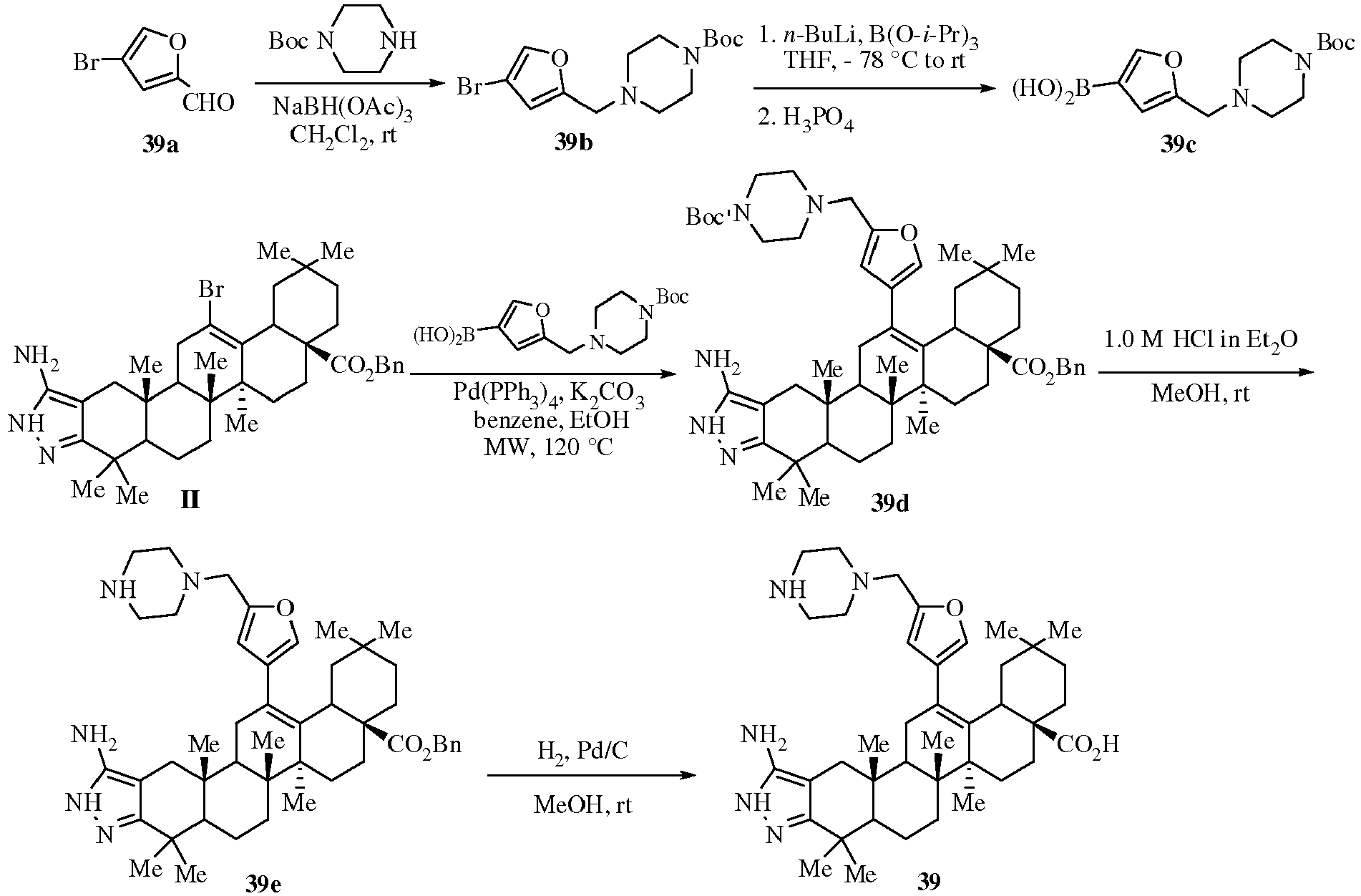
- To a solution of 4-bromofuran-2-carbaldehyde (500 mg, 2.85 mmol) and CH2Cl2 (10 mL) was added tert-butyl piperazine-1-carboxylate (1.06 g, 5.74 mmol) and sodium triacetoxyborohydride (1.2 g, 5.74 mmol). The mixture was stirred at room temperature overnight. The resultant mixture was diluted with EtOAc (100 mL), washed with brine then dried (Na2S04), filtered and concentrated under reduced pressure. The residue was purified by column chromatography (silica, 0-5% MeOH in CH2Cl2) to afford the sub-title compound (900 mg, 91%).
1H NMR (300 MHz, CDCl3) δ 1.45 (s, 9H), 2.39-2.42 (m, 4H), 3.42-3.45 (m, 4H), 3.52 (s, 2H), 6.27 (s, 1H), 7.38 (s,1H). - To a solution of 39b (900 mg, 2.60 mmol) and THF (10 mL) was added n-butyllithium (1.35 mL, 3.39 mmol) at -78°C. After stirring for 10 min, triisopropylborate (2.99 mL, 13.04 mmol) was added at -78°C. The mixture was slowly warmed to room temperature and quenched with phosphoric acid. The reaction mixture was neutralized with 2 M NaOH solution and extracted with EtOAc (3 × 10 mL). The extracts were dried (Na2SO4), filtered and concentrated under reduced pressure. The residue was purified by column chromatography (silica, 0-5% CMA in CH2Cl2) to afford the sub-title compound (180 mg, 58%).
1H NMR (300 MHz, CDCl3) δ 1.44 (s, 9H), 3.44 (m, 4H), 3.56 (s, 2H), 3.73 (m, 4H), 6.39 (s, 1 H), 7.87 (s, 1 H). - To a mixture of II (300 mg, 0.45 mmol) and 39c (420 mg, 1.35 mmol) in benzene (4 mL) and EtOH (1 mL) was added K2CO3 (249 mg, 1.80 mmol). The mixture was sparged with nitrogen and then Pd(PPh3)4 (105 mg, 0.09 mmol) was added. The reaction mixture was heated at 120°C for 1 hour using microwave irradiation. The solvent was removed under reduced pressure and the residue was dissolved in EtOAc (20 mL). The solution was washed with brine then dried (Na2SO4), filtered and concentrated. The residue was purified by column chromatography (silica, 0-10% MeOH in CH2Cl2) to afford the sub-title compound (260 mg, 68%).
1H NMR (300 MHz, CDCl3) δ 0.57-2.41 (m, 65H), 3.42-3.48 (m, 6H), 5.04 (d, J= 14.7 Hz, 1H), 5.14 (d, J= 12.3 Hz, 1H), 6.18 (s, 1H), 7.21 (s, 1H), 7.33-7.35 (m, 5H). APCI MS m/z 848 [C52H73N5O5 + H]+. - To a solution of 39d (260 mg, 0.30 mmol) and MeOH (2 mL) was added HCl (1.0 M in diethyl ether, 10 mL, 10.0 mmol). After stirring overnight at room temperature, the reaction mixture was concentrated. Purification of the residue by column chromatography (silica, 0-80% CMA in CH2Cl2) afforded the sub-title compound (190 mg, 83%).
1H NMR (300 MHz, CD3OD) δ 0.57-2.37 (m, 42H), 2.44 (s, 4H), 2.80 (s, 4H), 3.43 (s, 2H), 4.98-5.03 (m, 1H), 5.15-5.21 (m, 1H), 6.20 (s, 1H), 7.21 (s, 1H), 7.36-7.37 (m, 5H). APCI MS m/z 748 [C47H65N5O3 + H]+. - A solution of 39e (190 mg, 0.25 mmol) and MeOH (10 mL) was flushed with nitrogen and then 10% Pd/C (190 mg) was added. The mixture was flushed with nitrogen followed by hydrogen. The mixture was stirred under hydrogen at atmospheric pressure overnight. The catalyst was removed by filtration through diatomaceous earth and the filtrate was concentrated under reduced pressure. The residue was purified by column chromatography (silica, 0-70% CMA in CH2Cl2) followed by preparative HPLC to afford the title compound (34 mg, 20%) as a solid.
Rf 0.10 (32:17:1 Methylene Chloride/Methanol/concentrated Ammonium Hydroxide).
1H NMR (300 MHz, CD3OD) δ 0.60-2.44 (m, 42H), 3.14 (s, 4H), 3.39 (s, 4H), 4.06 (s, 2H), 6.64 (s, 1H), 7.48 (s,1H).
APCI MS m/z 658 [C40H59N5O3 + H]+. m.p. 220-240°C dec. HPLC (Method A) >99% (214 nm) t R = 13.7 min. -

- To a solution of 4-bromofuran-2-carbaldehyde (500 mg, 2.85 mmol) and morpholine (0.5 mL, 5.71 mmol) in CH2Cl2 (10 mL) was added sodium triacetoxyborohydride (1.2 g, 5.71 mmol). The mixture was stirred at room temperature for 12 hours. The reaction mixture was diluted with EtOAc (100 mL). The organic phase was washed with aqueous NaHCO3 and brine then dried (MgSO4), filtered and concentrated to dryness. The residue was purified by column chromatography (silica, 0-10% MeOH in CH2Cl2) to afford the sub-title compound (600 mg, 86%).
1H NMR (300 MHz, CDCl3) δ 2.42 (m, 4H), 3.62 (s, 2H), 3.72 (m, 4H), 6.27 (s, 1H), 7.32 (s, 1 H). - To a solution of 40b (300 mg, 1.20 mmol) in THF (6 mL) was added n-butyllithium (2.5 M in hexanes, 0.64 mL, 1.60 mmol) at -78°C. The mixture was stirred at -78°C for 20 min. Triisopropyl borate (1.3 mL, 6.0 mmol) was added. The reaction mixture was stirred at -78°C for 1 hour and quenched with HCl (2 M, 4 mL). The reaction mixture was stirred for 5 min and neutralized by NaOH (2 M) and extracted with EtOAc (100 mL). The organic phase was washed with brine then dried (MgSO4), filtered and concentrated to dryness. The residue was purified by column chromatography (silica, 0-10% MeOH in CH2Cl2) to afford the sub-title compound (120 mg, 47%).
1H NMR (300 MHz, CDCl3) δ 2.40 (s, 4H), 3.65 (s, 2H), 3.68 (m, 4H), 6.58 (s, 1H), 7.95 (s, 1 H). - A mixture of II (100 mg, 0.18 mmol), 40c (120 mg, 0.56 mmol), Pd(PPh3)4 (20 mg, 0.018 mmol) and K2CO3 (100 mg, 0.72 mmol) in benzene (3.5 mL) and EtOH (1.5 mL) was sealed and heated to 120°C by microwave for 1 hour. The reaction mixture was diluted with EtOAc (100 mL). The organic phase was washed with brine then dried (MgSO4), filtered and concentrated to dryness. The residue was purified by column chromatography (silica, 0-10% MeOH in CH2Cl2) to afford the sub-title compound (120 mg, 89%).
APCI MS (Positive Mode) m/z 749 [C47H64N4O4 + H]+. - A mixture of 40d (120 mg, 0.16 mmol) and 10% Pd(OH)2/C (40 mg) in MeOH (13 mL) and EtOAc (2 mL) was stirred under a hydrogen balloon for 6 hours. The reaction mixture was filtered through a pad of diatomaceous earth and washed with CMA (25 mL). The filtrate was concentrated to dryness under reduced pressure. The residue was purified by column chromatography (silica, 0-60% CMA in CH2Cl2) followed by preparative HPLC to provide the title compound (25 mg, 24%) as an off-white solid.
Rf 0.25 (80:18:2 Methylene Chloride/Methanol/concentrated Ammonium Hydroxide).
1H NMR (300 MHz, CD3OD) δ 0.60 (s, 3H), 0.84 (s, 3H), 0.89 (s, 3H), 0.94 (s, 3H), 1.22 (s, 3H), 1.25 (s, 3H), 1.30 (s, 3H), 1.35-2.28 (m, 20H), 2.38 (d, J= 15.0 Hz, 1H), 3.85 (m, 3H), 4.44 (s, 2H), 6.86 (s, 1 H), 7.60 (s, 1 H). mp >300 °C. APCI MS (Positive Mode) m/z 659 [C40H58N4O4 + H]+. -

- A mixture of II (400 mg, 2.85 mmol), 6-fluoropyridin-3-ylboronic acid (400 mg, 2.85mmol), Pd(PPh3)4 (105 mg, 0.090 mmol) and K2CO3 (600 mg, 4.34 mmol) in benzene (4.0 mL) and EtOH (1.0 mL) was sealed and heated to 120 °C by microwave for 1 hour. The reaction mixture was diluted with EtOAc (100 mL). The organic phase was washed with brine then dried (MgSO4), filtered and concentrated to dryness. The residue was purified by column chromatography (silica, 0-10% MeOH in CH2Cl2) to afford the sub-title compound (500 mg, 81%) as a brown solid.
APCI MS (Positive Mode) m/z 679 [C43H55FN4O2 + H]+. - A mixture of 41b (100 mg, 0.14 mmol) and hydrazine (0.5 mL) in MeOH (4 mL) was sealed and heated to 140°C by microwave for 5 hours. The mixture was concentrated to dryness. The residue was dissolved in MeOH (20 mL), transferred to a Parr hydrogenation flask and Raney Ni (70 mg) was added. The mixture was placed on a Parr shaker under 40 psi of hydrogen for 12 hours. The mixture was filtered through a pad of diatomaceous earth and the filter cake washed with CMA. The filtrate was concentrated to dryness and the residue dissolved in MeOH (10 mL), transferred to a Parr hydrogenation flask and 10% Pd(OH)2/C (70 mg) was added and the mixture placed on a Parr Shaker under 30 psi of hydrogen for 12 hours. The reaction mixture was filtered through a pad of diatomaceous earth and washed with CMA (25 mL). The filtrate was concentrated to dryness under reduced pressure. The residue was purified by column chromatography (silica, 0-60% CMA in CH2Cl2) to afford the title compound (8 mg, 7%) as a brown solid.
Rf 0.30 (80:18:2 Methylene Chloride/Methanol/concentrated Ammonium Hydroxide).
1H NMR (300 MHz, CD3OD) δ 0.50 (s, 3H), 0.82 (s, 3H), 0.90 (s, 3H), 0.98 (s, 3H), 1.22 (s, 3H), 1.31 (s, 6H), 1.35-2.30 (m, 21 H), 6.61 (d, J= 8.1 Hz, 1 H), 7.47 (d, J = 8.1 Hz, 1 H), 7.80 (s, 1 H). mp >300°C dec. APCI MS (Positive Mode) m/z 586 [C3gH51N5O2 + H]+. -

- A mixture of II (200 mg, 0.30 mmol), 6-methoxypyridin-3-ylboronic acid (138 mg, 0.90 mmol), Pd(PPh3)4 (34 mg, 0.030 mmol) and K2CO3 (208 mg, 1.50 mmol) in benzene (4.0 mL) and EtOH (1.0 mL) was sealed and heated to 120°C by microwave for 1 hour. The reaction mixture was diluted with EtOAc (100 mL). The organic phase was washed with brine then dried (MgSO4), filtered and concentrated to dryness. The residue was purified by column chromatography (silica, 0-10% MeOH in CH2Cl2) to afford the sub-title compound (200 mg, 96%) as a brown solid.
APCI MS (Positive Mode) m/z 691 [C44H58N4O3 + H]+. - To a solution of 42b (107 mg, 0.15 mmol) in CH2Cl2 (2 mL) was added boron tribromide (1 M in THF, 0.93 mL, 0.93 mmol) at -78°C. The mixture was warmed to 0°C for 6 hours. The reaction mixture was quenched with MeOH (2 mL) and concentrated to dryness under reduced pressure. The residue was purified by column chromatography (silica, 0-4% CMA in CH2Cl2) to afford the title compound (34 mg, 38%).
Rf0.75 (80:18:2 Methylene Chloride/Methanol/concentrated Ammonium Hydroxide).
1H NMR (300 MHz, CD3OD) δ 0.32 (s, 3H), 0.78 (s, 3H), 0.88 (s, 3H), 1.0 (s, 3H), 1.16 (s, 3H), 1.25 (s, 3H), 1.28 (s, 3H), 1.30-2.25 (m, 19H), 2.32 (d, J = 14.7 Hz, 1H), 3.04 (m, 1 H), 3.89 (s, 3H), 6.78 (d, J = 8.7 Hz, 1 H), 7.62 (d, J = 10.2, 1H), 8.02 (s,1H). mp >300°C. APCI MS (Positive Mode) m/z 601 [C37H52N4O3 + H]+. -

- A mixture of 41b (100 mg, 0.14 mmol) and methylamine (1.5 mL, 1 M in THF, 1.5 mmol) in i-PrOH (2 mL) was sealed and heated to 160°C by microwave for 5 hours. The mixture was concentrated to dryness. The residue was purified by column chromatography (silica, 0-30% CMA in CH2Cl2) to afford the sub-title compound (41 mg, 42%) as a brown solid.
APCI MS (Positive Mode) m/z 690 [C44H59N5O2 + H]+. - A mixture of 43b (32 mg, 0.046 mmol) and 10% Pd(OH)2/C (32 mg) in MeOH (20 mL) was stirred under a hydrogen balloon for 5 hours. The reaction mixture was filtered through a pad of diatomaceous earth and washed with CMA (25 mL). The filtrate was concentrated to dryness under reduced pressure. The residue was purified by column chromatography (silica, 0-70% CMA in CH2Cl2) followed by preparative HPLC to provide the title compound (10 mg, 37%) as an off-white solid.
Rf 0.60 (80:18:2 Methylene Chloride/Methanol/concentrated Ammonium Hydroxide).
1H NMR (300 MHz, CD3OD) δ 0.50 (s, 3H), 0.82 (s, 3H), 0.90 (s, 3H), 0.98 (s, 3H), 1.22 (s, 3H), 1.28 (s, 3H), 1.31 (s, 3H), 1.35-2.30 (m, 21 H), 3.02 (m, 1H), 3.03 (s, 3H), 7.05 (d, J = 9.3 Hz, 1 H), 7.83 (s, 1 H), 7.90 (d, J = 8.4 Hz, 1H). mp >300°C. APCI MS (Positive Mode) m/z 600 [C37H53N5O2 + H]+. -

- A mixture of 41 b (150 mg, 0.22 mmol) and dimethylamine (2.0 mL, 1 M in MeOH, 2.0 mmol) in MeOH (1 mL) was sealed and heated to 140°C by microwave for 7 hours. The mixture was concentrated to dryness. The residue was purified by column chromatography (silica, 0-10% MeOH in CH2Cl2) to afford the sub-title compound (88 mg, 58%) as a brown solid.
APCI MS (Positive Mode) m/z 690 [C45H61N5O2 + H]+. - A mixture of 44b (88 mg, 0.12 mmol) and 10% Pd(OH)2/C (40 mg) in MeOH (15 mL) was stirred under a hydrogen balloon for 12 hours. The reaction mixture was filtered through a pad of diatomaceous earth and washed with CMA (25 mL). The filtrate was concentrated to dryness under reduced pressure. The residue was purified by column chromatography (silica, 0-40% CMA in CH2Cl2) to afford the title compound (35 mg, 26%) as an off-white solid.
Rf 0.75 (80:18:2 Methylene Chloride/Methanol/concentrated Ammonium Hydroxide).
1H NMR (300 MHz, CD3OD) δ 0.38 (s, 3H), 0.78 (s, 3H), 0.87 (s, 3H), 0.99 (s, 3H), 1.15 (s, 3H), 1.25 (s, 3H), 1.26 (s, 3H), 1.35-2.30 (m, 19H), 2.33 (d, J= 14.4 Hz, 1H), 3.06 (s, 6H), 3.07 (m, 1H), 6.66 (d, J = 8.7 Hz, 1 H), 7.50 (d, J = 8.7 Hz, 1 H), 7.94 (s, 1 H).
mp >300°C dec. APCI MS (Positive Mode) m/z 614 [C38H55N5O2 + H]+. -

- To a solution of 41b (150 mg, 0.22 mmol) in MeOH (4 mL) was added pyrrolidine (1 mL, 12.09 mmol). The mixture was heated at 140°C for 5 hours using microwave irradiation. The solvent was removed under reduced pressure and the residue was dissolved in EtOAc (20 mL). The solution was washed with brine then dried (Na2SO4), filtered and concentrated to afford the sub-title compound (162 mg, 100%) which was used without further purification.
APCI MS m/z 730 [C47H63N5O2 + H]+, - A solution of 45b (162 mg, 0.22 mmol) and MeOH (10 mL) was flushed with nitrogen and then 10% Pd/C (200 mg) was added. The mixture was flushed with nitrogen followed by hydrogen. The mixture was stirred under hydrogen at atmospheric pressure overnight. The catalyst was removed by filtration through diatomaceous earth and the filtrate was concentrated. The residue was purified by column chromatography (silica, 0-40% CMA in CH2Cl2) to afford the title compound (52 mg, 37%).
Rf 0.48 (43:6:1 Methylene Chloride/Methanol/concentrated Ammonium Hydroxide).
1H NMR (300 MHz, CD3OD) δ 0.39 (s, 3H), 0.78 (s, 3H), 0.87-2.27 (m, 38H), 2.38 (d, J = 14.6 Hz, 1 H), 3.08 (m, 1 H), 3.43 (m, 4H), 6.50 (d, J = 8.7 Hz, 1 H), 7.51 (dd, J = 2.1 Hz, 2.9 Hz,1 H), 7.90 (s, 1H). m.p. 280-300°C dec. APCI MS m/z 640 [C40H57N5O2 + H]+.
HPLC (Method A) >99% (214 nm) tR = 12.2 min. -
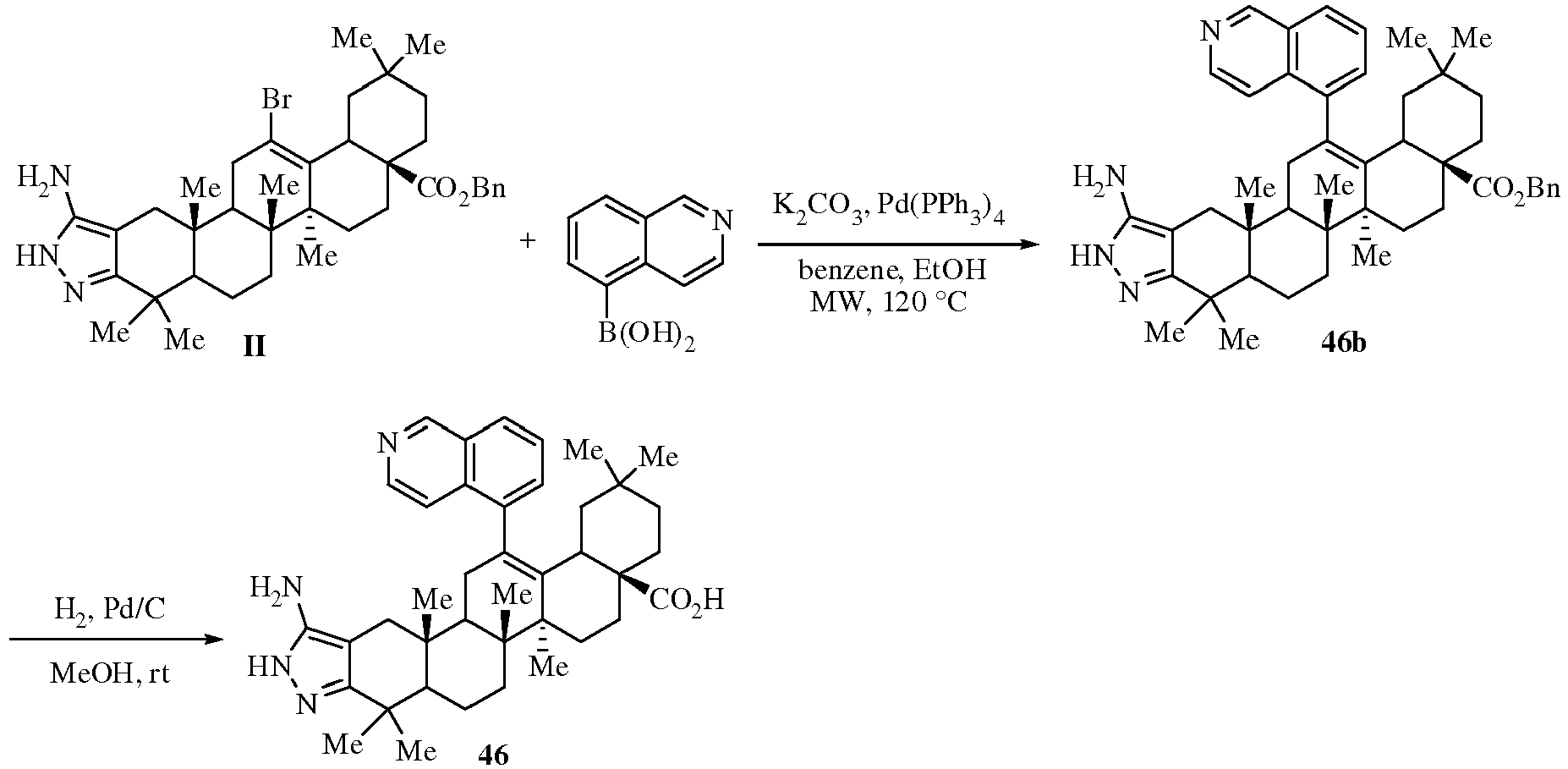
- To a mixture of II (200 mg, 0.30 mmol) and isoquinolin-5-ylboronic acid (156 mg, 0.90 mmol) in benzene (4 mL) and EtOH (1 mL) was added K2CO3 (166 mg, 1.20 mmol). The mixture was sparged with nitrogen and then Pd(PPh3)4 (70 mg, 0.06 mmol) was added. The reaction mixture was heated at 120°C for 1 hour using microwave irradiation and then concentrated. The residue was dissolved in EtOAc (20 mL) and washed with brine. The organic solution was dried (Na2SO4), filtered and concentrated under reduced pressure. The residue was purified by column chromatography (silica, 0-10% MeOH in CH2Cl2) to afford the sub-title compound (180 mg, 84%).
APCI MS m/z 711 [C47H58N4O2 + H]+. - A solution of 46b (180 mg, 0.25 mmol) and MeOH (15 mL) was flushed with nitrogen and then 10% Pd/C (220 mg) was added. The mixture was flushed with nitrogen followed by hydrogen. The mixture was stirred under hydrogen at atmospheric pressure overnight. The catalyst was removed by filtration through diatomaceous earth and the filtrate was concentrated under reduced pressure. The residue was purified by column chromatography (silica, 0-80% CMA in CH2Cl2) followed by preparative HPLC to afford the title compound (13 mg, 8%) as a solid.
Rf0.73 (40:9:1 Methylene Chloride/Methanol/concentrated Ammonium Hydroxide).
1H NMR (300 MHz, CD3OD) δ -0.17-2.33 (m, 41 H), 2.95 (d, J = 11.1 Hz, 1H), 7.94-7.99 (m, 1 H), 8.13 (d, J = 6.3 Hz, 1 H), 8.19 (d, J = 7.2 Hz, 1 H), 8.32 (d, J = 8.4 Hz, 1 H), 8.54 (d, J = 6.3 Hz, 1 H), 9.61 (s, 1 H). APCI MS m/z 621 [C40H52N4O2 + H]+. m.p. >300°C. HPLC (Method A) 93.4% (214 nm) t R = 11.6 min. -

- To a solution of 46b (150 mg, 0.21 mmol) and THF (5 mL) was added lithium triethylborohydride (1.26 mL, 1.26 mmol, 1.0 M in THF). The mixture was heated at 60°C overnight and then cooled to room temperature. The mixture was taken up in EtOAc (40 mL) and washed with brine (3 x 15 mL). The organic layer was dried (Na2SO4), filtered and concentrated. The residue was purified by column chromatography (silica, 0-80% CMA in CH2Cl2) to afford the sub-title compound (40 mg, 26%).
APCI MS m/z 715 [C47H62N4O2 + H]+. - A solution of 47b (40 mg, 0.055 mmol) and MeOH (10 mL) was flushed with nitrogen and then 10% Pd/C (50 mg) was added. The mixture was flushed with nitrogen followed by hydrogen. The mixture was stirred under hydrogen at atmospheric pressure overnight. The catalyst was removed by filtration through diatomaceous earth and the filtrate was concentrated. The residue was purified by column chromatography (silica, 0-80% CMA in CH2Cl2) to afford the title compound (19 mg, 56%).
Rf 0.28 (40:9:1 Methylene Chloride/Methanol/concentrated Ammonium Hydroxide).
1H NMR (400 MHz, CD3OD) δ 0.24 (s, 3H), 0.75-2.36 (m, 38H), 2.86-3.44 (m, 5H), 4.10-4.20 (m, 2H), 6.98 (d, J = 7.42 Hz, 1H), 7.19 (d, J = 7.42 Hz, 1H), 7.40 (d, J= 7.42 Hz, 1H). APCI MS m/z 625 [C40H56N4O2 + H]+. m.p. >300°C dec. HPLC (Method A) 99.1 % (214 nm) t R = 12.4 min -

- To a mixture of II (200 mg, 0.302 mmol) and 1H-indol-4-ylboronic acid (146 mg, 0.906 mmol) in toluene (4.5 mL) and H2O (0.5 mL) was added cesium carbonate (393 mg, 1.208 mmol). The mixture was sparged with nitrogen and then Pd(PPh3)4 (70 mg, 0.060 mmol) was added. The reaction mixture was heated at 120°C for 1 hour using microwave irradiation. The solvent was concentrated under reduced pressure. The residue was taken up in EtOAc (20 mL) and washed with brine (3 × 15 mL). The organic layer was dried (Na2SO4), filtered and concentrated. The residue was purified by column chromatography (silica, 0-10% MeOH in CH2Cl2) to afford the sub-title compound (180 mg, 85%).
APCI MS m/z 699 [C46H58N4O2 + H]+. - A solution of 48b (180 mg, 0.26 mmol), EtOAc (2 mL) and MeOH (8 mL) was flushed with nitrogen and then 10% Pd/C (280 mg) was added. The mixture was flushed with nitrogen followed by hydrogen. The mixture was stirred under hydrogen at atmospheric pressure overnight. The catalyst was removed by filtration through diatomaceous earth and the filtrate was concentrated. The residue was purified by column chromatography (silica, 0-10% MeOH in CH2Cl2) followed by preparative HPLC to afford the title compound (29 mg, 18%) as a solid.
Rf 0.30 (90:9:1 Methylene Chloride/Methanol/concentrated Ammonium Hydroxide).
1H NMR (400 MHz, CD3OD) δ -0.08 (s, 3H), 0.22 (s, 3H), 0.54 (s, 3H), 0.78-2.56 (m, 32H), 6.28 (s, 1 H), 7.01-7.24 (m, 5H). APCI MS m/z 609 [C39H52N4O2 + H]+. m.p. 280-300°C dec. HPLC (Method A) 99.3 % (214 nm) t R = 16.6 min -

- To a mixture of II (200 mg, 0.302 mmol) and 1H-indol-5-ylboronic acid (146 mg, 0.91 mmol) in toluene (4.5 mL) and H2O (0.5 mL) was added cesium carbonate (393 mg, 1.21 mmol). The mixture was sparged with nitrogen and then Pd(PPh3)4 (70 mg, 0.06 mmol) was added. The reaction mixture was heated at 120°C for 1 hour using microwave irradiation. The solvent was concentrated under reduced pressure. The residue was taken up in EtOAc (20 mL) and washed with brine (3 × 15 mL). The organic layer was dried (Na2SO4), filtered and concentrated. The residue was purified by column chromatography (silica, 0-10% CMA in CH2Cl2) to afford the sub-title compound (178 mg, 84%).
APCI MS m/z 699 [C46H58N4O2 + H]+. - A solution of 49b (175 mg, 0.25 mmol), EtOAc (5 mL) and MeOH (10 mL) was flushed with nitrogen and then 10% Pd/C (175 mg) was added. The mixture was flushed with nitrogen followed by hydrogen. The mixture was stirred under hydrogen at atmospheric pressure overnight. The catalyst was removed by filtration through diatomaceous earth and the filtrate was concentrated. The residue was purified by column chromatography (silica, 0-6% MeOH in CH2Cl2) followed by preparative HPLC to afford the title compound (18 mg, 12%) as a solid.
Rf 0.30 (90:9:1 Methylene Chloride/Methanol/concentrated Ammonium Hydroxide).
1H NMR (400 MHz, CD3OD) δ 0.10 (s, 3H), 0.70 (s, 3H), 0.89-2.43 (m, 35H), 3.21-3.25 (m, 1 H), 6.38-6.39 (m, 1 H), 7.04 (s, 1 H), 7.18 (s, 1 H), 7.32 (d, J = 8.26 Hz, 1 H), 7.39 (s, 1 H). APCI MS m/z 609 [C39H52N4O2 + H]+. m.p. 230-250°C dec. HPLC (Method A) 96.2 % (214 nm) t R = 17.1 min -

- To a slurry of 1-(4-bromophenyl)piperazine hydrochloride (3.0 g, 10.8 mmol), DMAP (135 mg, 1.1 mmol) and triethylamine (4.5 mL, 32.4 mmol) in CH3CN (25 mL) was added di-tert-butyl dicarbonate (2.6 g, 11.9 mmol). The mixture was stirred at room temperature overnight. Water (25 mL) was added to the resultant mixture and stirred for 30 min. The resultant solid was collected by filtration. The solid was washed with H2O and dried in a vacuum oven at 40°C to afford the sub-title compound (3.2 g, 87%).
1H NMR ((300 MHz, DMSO-d6) δ 1.48 (s, 9H), 3.15 (m, 4H), 3.54 (m, 4H), 6.95 (d, J = 9.0 Hz, 2H), 7.37 (d, J= 9.0 Hz, 2H). - To a solution of 50b (500 mg, 1.46 mmol) and THF (10 mL) was added n-butyllithium (0.76 mL of 2.5 M in hexanes, 1.90 mmol) at -78°C. After stirring for 30 min, triisopropylborate (1.68 mL, 7.33 mmol) was added at -78°C. The mixture was slowly warmed to room temperature and quenched with phosphoric acid. The reaction mixture was neutralized with saturated NaHCO3 and extracted with EtOAc (10 mL × 3). The extracts were dried (Na2SO4), filtered and concentrated under reduced pressure. The residue was purified by column chromatography (silica, 0-10% MeOH in CH2Cl2) to afford the sub-title compound (180 mg, 58%).
1 H NMR (300 MHz, CD3OD) δ -0.50 (s, 9H), 0.93-0.96 (m, 4H), 1.15-1.19 (m, 4H), 4.86-4.89 (m, 4H). - To a mixture of II (130 mg, 0.19 mmol) and 50c (180 mg, 0.58 mmol) in benzene (4 mL) and EtOH (1 mL) was added K2CO3 (108 mg, 0.78 mmol). The mixture was sparged with nitrogen and then Pd(PPh3)4 (45 mg, 0.06 mmol) was added. The reaction mixture was heated at 120°C for 1 hour using microwave irradiation and then concentrated under reduced pressure. The residue was dissolved in EtOAc (20 mL) and the solution was washed with brine then dried (Na2SO4), filtered and concentrated. The residue was purified by column chromatography (silica, 0-5% MeOH in CH2Cl2) to afford the sub-title compound (100 mg, 60%).
1H NMR (300 MHz, CD3OD) δ 0.28-3.59 (m, 59H), 5.18 (d, 2H), 6.70-7.07 (m, 9H). APCI MS m/z 844 [C53H73N5O4 + H]+. - To a solution of 50d (220 mg, 0.26 mmol) in MeOH (3 mL) was added HCl (1.0 M in diethyl ether, 6 mL, 6.0 mmol). The mixture was stirred at room temperature for 62 hours and then concentrated under reduced pressure. The residue was purified by column chromatography (silica, 0-50% CMA in CH2Cl2) to afford the sub-title compound (65 mg, 33%).
1H NMR (300 MHz, CD3OD) δ 0.27-2.34 (m, 42H), 2.98-3.06 (m, 8H), 5.02 (d, J= 12.3 Hz, 1H), 5.22 (d, J= 12.0 Hz, 1H), 6.78 (d, J= 8.7 Hz, 2H), 6.99 (d, J= 8.7 Hz, 2H), 7.39 (m, 5H). APCI MS m/z 744 [C48H65N5O2 + H]+. - A solution of 50e (65 mg, 0.087 mmol) and MeOH (15 mL) was flushed with nitrogen and then 10% Pd/C (90 mg) was added. The mixture was flushed with nitrogen followed by hydrogen. The mixture was stirred under hydrogen at atmospheric pressure overnight. The catalyst was removed by filtration through diatomaceous earth and the filtrate was concentrated. The residue was purified by column chromatography (silica, 0-70% CMA in CH2Cl2) followed by preparative HPLC to afford the title compound (11 mg, 20%) as a solid.
Rf 0.10 (40:9:1 Methylene Chloride/Methanol/concentrated Ammonium Hydroxide).
1H NMR (300 MHz, CD3OD) δ 0.28-2.42 (m, 41 H), 3.10 (d, J= 10.2 Hz, 1H), 3.37 (m, 8H), 7.03 (d, J = 9.0 Hz, 2H), 7.24 (d, J = 7.8 Hz, 2H). APCI MS m/z 654 [C41H59N5O2 + H]+ m.p. 270-290°C dec. HPLC (Method A) >99% (214 nm) t R = 13.2 min. -

- To a mixture of IIj (300 mg, 0.46 mmol) and 4-morpholinophenylboronic acid (575 mg, 2.78 mmol) in benzene (10 mL) and EtOH (5 mL) was added K2CO3 (511 mg, 3.70 mmol). The mixture was sparged with nitrogen and then Pd(PPh3)4 (107 mg, 0.09 mmol) was added. The mixture was heated at 85°C overnight and concentrated under reduced pressure. The residue was dissolved in EtOAc (50 mL) and the solution was washed with brine then dried (Na2SO4), filtered and concentrated. The residue was purified by column chromatography (silica, 0-30% EtOAc in hexanes) to afford the sub-title compound (200 mg, 59%).
1H NMR (300 MHz, CDCl3) δ 0.28-2.29 (m, 43H), 3.09-3.10 (m, 4H), 3.85-3.86 (m, 4H), 5.05 (m, 1H), 5.17 (m, 1H), 6.75-6.78 (m, 2H), 7.02-7.06 (m, 2H), 7.25-7.36 (m, 5H). - To a solution of 51 b (196 mg, 0.26 mmol) and EtOH (5 mL) was added hydrazine (42 µL, 1.34 mmol). The mixture was heated at 90°C for 60 hours and then concentrated under reduced pressure. The residue was purified by column chromatography (silica, 0-20% CMA in CH2Cl2) to provide the sub-title compound (109 mg, 55%).
1H NMR (300 MHz, CDCl3) δ 0.30-2.24 (m, 43H), 3.07-3.12 (m, 4H), 3.40-3.47 (m, 2H), 3.85-3.88 (m, 4H), 5.10 (d, J = 12.3 Hz, 1 H), 5.22 (d, J = 12.6 Hz, 1 H), 6.78 (d, J = 8.7 Hz, 1 H), 7.06 (d, J = 8.4 Hz, 1 H), 7.36-7.39 (m, 5H). APCI MS m/z 745 [C48H64N4O3 + H]+. - A solution of 51 c (108 mg, 0.14 mmol) and MeOH (15 mL) was flushed with nitrogen and then 10% Pd/C (55 mg) was added. The mixture was flushed with nitrogen followed by hydrogen. The mixture was stirred under hydrogen at atmospheric pressure overnight. The catalyst was removed by filtration through diatomaceous earth and the filtrate was concentrated. The residue was purified by column chromatography (silica, 0-10% MeOH in CH2Cl2) to afford the title compound (26 mg, 27%).
Rf 0.35 (90:9:1 Methylene Chloride/Methanol/concentrated Ammonium Hydroxide).
1H NMR (300 MHz, CD3OD) δ 0.30-2.37 (m, 42H), 3.10 (m, 4H), 3.84 (m, 4H), 6.95 (d, J = 7.8 Hz, 2H), 7.16 (d, J = 7.5 Hz, 2H). APCI MS m/z 655 [C41H58N4O3 + H]+ m.p. 250-270°C dec. HPLC (Method A) >99% (214 nm) t R = 13.3 min. -

- To a solution of II (250 mg, 0.37 mmol), 4-formylphenylboronic acid (170 mg, 1.13 mmol), benzene (4 mL) and EtOH (1 mL) was added K2CO3 (208 mg, 1.50 mmol). The mixture was sparged with nitrogen and then Pd(PPh3)4 (87 mg, 0.07 mmol) was added. The reaction mixture was heated at 120°C for 1 hour using microwave irradiation and then concentrated under reduced pressure. The residue was dissolved in EtOAc (20 mL) and the solution was washed with brine. The organic layer was dried (Na2SO4), filtered and concentrated. The residue was purified by column chromatography (silica, 0-10% MeOH in CH2Cl2) to afford the sub-title compound (224 mg, 86%).
APCI MS m/z 688 [C45H57N3O3 + H]+. - To a solution of 52b (220 mg, 0.32 mmol), morpholine (56 µL, 0.64 mmol) and CH2Cl2 (10 mL) was added sodium triacetoxyborohydride (136 mg, 0.64 mmol). The mixture was stirred at room temperature overnight. The resultant mixture was diluted with EtOAc (100 mL) and the solution was washed with brine then dried (Na2SO4), filtered and concentrated under reduced pressure. The residue was purified by column chromatography (silica, 0-20% MeOH in CH2Cl2) to afford the sub-title compound (80 mg, 33%).
1H NMR (300 MHz, CD3OD) δ 0.28-2.24 (m, 41 H), 2.39-2.42 (m, 4H), 3.03 (m, 1 H), 3.45 (s, 2H), 3.69-3.70 (m, 4H), 5.03 (d, J = 12.6 Hz, 1H), 5.23 (d, J = 12.3 Hz, 1H), 7.15-7.18 (m, 4H), 7.37 (s, 5H). - A solution of 52c (75 mg, 0.09 mmol) and MeOH (10 mL) was flushed with nitrogen and then 10% Pd/C (100 mg) was added. The mixture was flushed with nitrogen followed by hydrogen. The mixture was stirred under hydrogen at atmospheric pressure overnight. The catalyst was removed by filtration through diatomaceous earth and the filtrate was concentrated. The residue was purified by preparative HPLC to afford the title compound (8 mg, 12%).
Rf0.75 (40:9:1 Methylene Chloride/Methanol/concentrated Ammonium Hydroxide).
1H NMR (300 MHz, CD3OD) δ 0.25-2.39 (m, 45H), 2.99 (m, 1H), 3.73 (s, 2H), 4.02 (s, 2H), 4.38 (s, 2H), 7.47-7.52 (m, 4H). APCI MS m/z 669 [C42H60N4O3 + H]+. m.p. >300°C dec. HPLC (Method A) >99% (214 nm) t R = 12.1 min. -

- A mixture of 1-(4-bromophenyl)piperazine hydrochloride (1.0 g, 3.61 mmol), formaldehyde (37% aqueous, 3 mL, 39.71 mmol), AcOH (0.23 mL, 3.97 mmol) and MeOH (30 mL) was heated at 80°C under nitrogen. After 1.5 hours, the mixture was cooled to 0°C in an ice bath. Methylene chloride (5 mL) was added followed by a slow addition of sodium borohydride (1.91 g, 50.54 mmol) under nitrogen. The mixture was stirred for 1 hour and then poured into a seperatory funnel containing a saturated solution of NH4Cl (25 mL) and CH2Cl2 (50 mL). The layers were separated and the aqueous layer was extracted with CH2Cl2 (2 × 50 mL). The extracts were dried (Na2SO4), filtered and concentrated to to give the sub-title compound (900 mg, 97%) which was used without further purification.
1H NMR ((300 MHz, CDCl3) δ 2.34 (s, 3H), 2.55 (m, 4H), 3.17 (m, 4H), 6.79 (d, J= 9.0 Hz, 2H), 7.32 (d, J= 9.0 Hz, 2H). - To a solution of 53b (390 mg, 1.52 mmol) and THF (10 mL) was added n-butyllithium (0.79 mL of 2.5 M in hexanes, 1.98 mmol) at -78°C and stirred for 10 min. Triisopropylborate (1.75 mL, 7.64 mmol) was added at-78°C. The mixture was slowly warmed to room temperature and then quenched with phosphoric acid. The reaction mixture was neutralized with saturated NaHCO3 solution and extracted with EtOAc (3 × 10 mL). The solution was dried (Na2SO4), filtered and concentrated under reduced pressure. The residue was purified by column chromatography (silica, 0-10% MeOH in CH2Cl2) to afford the sub-title compound (180 mg, 58%).
1H NMR ((300 MHz, CD3OD) δ 2.32 (s, 3H), 2.55 (m, 4H), 3.03 (s, 1H), 3.21 (m, 3H), 6.69-7.59 (m, 4H). - To a mixture of II (160 mg, 0.24 mmol) and 53c (159 mg, 0.72 mmol) in benzene (4 mL) and EtOH (1 mL) was added K2CO3 (133 mg, 0.96 mmol). The mixture was sparged with nitrogen and then Pd(PPh3)4 (55 mg, 0.04 mmol) was added. The reaction mixture was heated at 120°C for 1 hour using microwave irradiation and then concentrated. The residue was dissolved in EtOAc (20 mL) and the solution was washed with brine then dried (Na2SO4), filtered and concentrated under reduced pressure. The residue was purified by column chromatography (silica, 0-10% MeOH in CH2Cl2) to afford the sub-title compound (80 mg, 44%).
1H NMR (300 MHz, CDCl3) δ 0.29-3.46 (m, 53H), 5.06 (d, J = 12.6 Hz, 1 H), 5.22 (d, J = 12.6 Hz, 1 H), 6.80 (d, J = 8.4 Hz, 2H), 7.05 (d, J = 8.7 Hz, 2H), 7.35-7.44 (m, 5H). APCI MS m/z 758 [C49H67N5O2 + H]+. - A solution of 53d (75 mg, 0.09 mmol) and MeOH (10 mL) was flushed with nitrogen and then 10% Pd/C (70 mg) was added. The mixture was flushed with nitrogen followed by hydrogen. The mixture was stirred under hydrogen at atmospheric pressure overnight. The catalyst was removed by filtration through diatomaceous earth and the filtrate was concentrated. The residue was purified by column chromatography (silica, 0-40% CMA in CH2Cl2) followed by preparative HPLC to afford the title compound (6 mg, 5%) as a solid.
Rf0.37 (40:9:1 Methylene Chloride/Methanol/concentrated Ammonium Hydroxide).
1H NMR (300 MHz, CD3OD) δ 0.28-2.42 (m, 34H), 2.97 (s, 3H), 3.12-3.77 (m, 8H), 3.37 (s, 8H), 7.02 (d, J = 8.7 Hz, 2H), 7.24 (d, J = 8.1 Hz, 2H). APCI MS m/z 668 [C42H61N5O2 + H]+. m.p. >300 °C dec. HPLC (Method A) >99% (214 nm) t R = 13.9 min. -

- A mixture of 41b (100 mg, 0.14 mmol) and morpholine (0.5 mL) in i-PrOH (2 mL) was sealed and heated to 160°C by microwave for 2 hours. The mixture was concentrated to dryness. The residue was purified by column chromatography (silica, 0-30% CMA in CH2Cl2) followed by preparative HPLC to afford the sub-title compound (10 mg, 11%) as an off-white solid.
Rf0.75 (80:18:2 Methylene Chloride/Methanol/concentrated Ammonium Hydroxide).
1H NMR (300 MHz, CD3OD) δ 0.46 (s, 3H), 0.82 (s, 3H), 0.90 (s, 3H), 0.99 (s, 3H), 1.22 (s, 3H), 1.25 (s, 3H), 1.29 (s, 3H), 1.35-2.30 (m, 19H), 2.37 (d, J = 14.4 Hz, 1H), 3.01 (s, 1 H), 3.62 (m, 4H), 3.84 (m, 4H), 7.34 (d, J = 9.6 Hz, 1 H), 8.00 (s, 2H). mp >300°C. APCI MS (Positive Mode) m/z 656 [C40H57N5O3 + H]+. -

- To 41b (150 mg, 0.22 mmol) in MeOH (5 mL) was added piperazine (1.38 g, 20.89 mmol). The reaction mixture was heated at 140°C for 5 hours and then at 150°C for an additional 5 hours using microwave irradiation. The solvent was concentrated and then the residue was dissolved in EtOAc/i-PrOH/CH2Cl2 (1:1:1, 30 mL). The solution was washed with brine, dried (Na2SO4), filtered and concentrated. The residue was purified by column chromatography (silica, 0-40% CMA in CH2Cl2) followed by preparative HPLC to afford the title compound (15 mg, 10%) as a solid.
Rf 0.10 (40:9:1 Methylene Chloride/Methanol/concentrated Ammonium Hydroxide). 1H NMR (300 MHz, CD3OD) δ 0.40-2.43 (m, 41 H), 2.98 (m, 1 H), 3.39-3.41 (m, 4H), 3.85-3.87 (m, 4H), 7.23 (d, J = 9.0 Hz, 1 H), 7.89 (d, J = 3.4 Hz, 1 H), 8.12 (s, 1 H). APCI MS m/z 655 [C40H58N6O2 + H]+ m.p. 240-260 °dec. HPLC (Method A) 96.2% (214 nm) tR = 10.7 min. -

- To a solution of 41b (210 mg, 0.30 mmol) in MeOH (4 mL) was added 1-methylpiperazine dihydrochloride (1.5 g, 8.67 mmol). The reaction mixture was heated at 140°C for 10 hours using microwave irradiation and then concentrated. The residue was dissolved in EtOAc (20 mL) and the solution was washed with brine then dried (Na2SO4), filtered and concentrated under reduced pressure. The residue was purified by column chromatography (silica, 0-30% CMA in CH2Cl2) to afford the sub-title compound (90 mg, 38%).
1H NMR (300 MHz, CD3OD) δ 0.34-2.16 (m, 43H), 2.34 (s, 4H), 2.56 (s, 4H), 3.01 (m, 1H), 3.49 (s, 4H), 5.03 (d, J = 12.1 Hz, 2H), 5.20 (d, J = 12.0 Hz, 2H), 6.65 (d, J = 8.4 Hz, 1 H), 6.65 (d, J = 4.8 Hz, 1 H), 7.36-7.38 (m, 6H), 7.98 (s, 1 H).
APCI MS m/z 759 [C48H66N6O2 + H]+. - A solution of 56b (70 mg, 0.09 mmol) and MeOH (10 mL) was flushed with nitrogen and then 10% Pd/C (70 mg) was added. The mixture was flushed with nitrogen followed by hydrogen. The mixture was stirred under hydrogen at atmospheric pressure overnight. The catalyst was removed by filtration through diatomaceous earth and the filtrate was concentrated under reduced pressure. The residue was purified by column chromatography (silica, 0-60% CMA in CH2Cl2) to afford the title compound (42 mg, 69%).
Rf0.25 (40:9:1 Methylene Chloride/Methanol/concentrated Ammonium Hydroxide).
1H NMR (300 MHz, CD3OD) δ 0.35-2.24 (m, 40H), 2.37 (s, 3H), 2.62 (s, 4H), 3.07 (m, 1 H), 3.53 (s, 4H), 4.53 (s, 1 H), 6.86 (d, J = 8.4 Hz, 1 H), 7.75 (d, J = 8.1 Hz, 1 H), 8.03 (s, 1H). APCI MS m/z 669 [C41H60N6O2 + H]+. m.p. 280-300 °C dec. HPLC (Method A) >99% (214 nm) t R = 10.3 min. -

- To 41 b (200 mg, 0.29 mmol) in MeOH (4 mL) was added tert-butyl piperidin-4-ylcarbamate (1.5 g, 7.50 mmol). The reaction mixture was heated at 140°C for 7 hours using microwave irradiation and then concentrated. The residue was dissolved in EtOAc (20 mL) and the solution was washed with brine then dried (Na2SO4), filtered and concentrated under reduced pressure. The residue was purified by column chromatography (0-10% MeOH in CH2Cl2) to afford the sub-title compound (200 mg, 79%).
APCI MS m/z 859 [C53H74N6O4 + H]+. - To a solution of 57b (190 mg, 0.22 mmol) in MeOH (10 mL) was added HCl (1.0 M in diethyl ether; 10 mL, 10.0 mmol). The mixture was stirred at room temperature for 32 hours and then concentrated under reduced pressure. Purification of the residue by column chromatography (silica, 0-70 % CMA in CH2Cl2) afforded the sub-title compound (100 mg, 59%).
APCI MS m/z 759 [C48H66N6O2 + H]+. - A solution of 57c (100 mg, 0.13 mmol) and MeOH (10 mL) was flushed with nitrogen and then 10% Pd/C (100 mg) was added. The mixture was flushed with nitrogen followed by hydrogen. The mixture was stirred under hydrogen at atmospheric pressure overnight. The catalyst was removed by filtration through diatomaceous earth and the filtrate was concentrated under reduced pressure. The residue was purified by column chromatography (silica, 0-50% CMA in CH2Cl2) to afford the title compound (25 mg, 29%).
Rf 0.11 (40:9:1 Methylene Chloride/Methanol/concentrated Ammonium Hydroxide).
1H NMR (300 MHz, CD3OD) δ 0.36-2.35 (m, 46H), 3.07 (m, 2 H), 3.10 (dd, J = 3.4 Hz, 3.9 Hz, 1 H), 4.29 (d, J = 13.2 Hz, 2H), 6.87 (d, J = 8.7 Hz, 1 H), 7.61 (m, 1 H), 8.03 (s, 1 H). APCI MS m/z 669 [C41H60N6O2 + H]+ m.p. 260-270°C dec. HPLC (Method A) 95.3% (214 nm) t R = 10.8 min. -

- To a solution of 41 b (246 mg, 0.36 mmol) in MeOH (4 mL) was added tert-butyl pyrrolidin-3-ylcarbamate (1.0 g, 5.36 mmol). The reaction mixture was heated at 140°C for 6 hours using microwave irradiation. The solvent was removed under reduced pressure and the residue was dissolved in EtOAc (20 mL). The solution was washed with brine then dried (Na2SO4), filtered and concentrated. The residue was purified by column chromatography (silica, 0-10% MeOH in CH2Cl2) to afford the sub-title compound (306 mg, 100%).
APCI MS m/z 845 [C52H72N6O4 + H]+. - To a solution of 58b (300 mg, 0.35 mmol) in MeOH (10 mL) was added HCl (1.0 M in diethyl ether, 7.8 mL, 7.80 mmol). The reaction mixture was stirred at room temperature for 24 hours and then concentrated. The residue was purified by column chromatography (silica, 0-40% CMA in CH2Cl2) to afford the sub-title compound (50 mg, 19%).
1H NMR (300 MHz, CD3OD) δ 0.36-2.35 (m, 42H), 3.08-3.68 (m, 7H), 5.05 (d, J= 12.0 Hz, 1H), 5.21 (d, J = 12.0 Hz, 1 H), 6.32 (d, J = 8.7 Hz, 1 H), 7.30-7.39 (m, 6H), 7.89 (s, 1H).
APCI MS m/z 745 [C47H64N6O2 + H]+. - A solution of 58c (50 mg, 0.067 mmol) and MeOH (15 mL) was flushed with nitrogen and then 10% Pd/C (50 mg) was added. The mixture was flushed with nitrogen followed by hydrogen. The mixture was stirred under hydrogen at atmospheric pressure overnight. The catalyst was removed by filtration through diatomaceous earth and the filtrate was concentrated. The residue was purified by column chromatography (silica, 0-70% CMA in CH2Cl2) to afford the title compound (33 mg, 76%).
Rf 0.14 (40:9:1 Methylene Chloride/Methanol/concentrated Ammonium Hydroxide).
1H NMR (300 MHz, CD3OD) δ 0.37-2.36 (m, 44H), 3.10-3.80 (m, 5H), 6.53 (d, J = 8.7 Hz, 1 H), 7.61 (d, J = 8.4 Hz, 1 H), 7.93 (s, 1H). APCI MS m/z 655 [C40H58N6O2 + H]+. m.p. >300°C. HPLC (Method A) 97.4% (214 nm) t R = 10.8 min. -

- A mixture of II (500 mg, 0.75 mmol), 2-formylphenylboronic acid (337 mg, 2.24 mmol) Pd(PPh3)4 (80 mg, 0.069 mmol) and K2CO3 (414 mg, 3.0 mmol) in benzene (3.5 mL) and EtOH (1.5 mL) was sealed and heated to 120°C by microwave for 1 hour. The reaction mixture was diluted with EtOAc (100 mL). The organic phase was washed with brine then dried (MgSO4), filtered and concentrated to dryness. The residue was purified by column chromatography (silica, 0-10% MeOH in CH2Cl2) to afford the sub-title compound (540 mg) as a brown solid.
APCI MS (Positive Mode) m/z 688 [C45H57N3O3 + H]+. - To a solution of 59b (140 mg, 0.20 mmol) and morpholine (0.035 mL, 0.40 mmol) in CH2Cl2 (5 mL) was added sodium triacetoxyborohydride (85 mg, 0.40 mmol). The mixture was stirred at room temperature for 12 hours. The reaction mixture was diluted with EtOAc (150 mL). The organic phase was washed with brine then dried (MgSO4), filtered and concentrated to dryness. The residue was purified by column chromatography (silica, 0-10% MeOH in CH2Cl2) to afford the sub-title compound (71 mg, 47%) as a brown solid.
APCI MS (Positive Mode) m/z 759 [C49H66N4O3 + H]+. - A mixture of 59c (71 mg, 0.093 mmol) and 10% Pd(OH)2/C (50 mg) in MeOH (12 mL) and EtOAc (3 mL) was stirred under a hydrogen balloon for 12 hours. The reaction mixture was filtered through a pad of diatomaceous earth and washed with CMA (25 mL). The filtrate was concentrated to dryness under reduced pressure. The residue was purified by column chromatography (silica, 0-70% CMA in CH2Cl2) to afford the title compound (20 mg, 33%) as a mixture of rotamers.
Rf 0.80 (80:18:2 Methylene Chloride/Methanol/concentrated Ammonium Hydroxide).
1H NMR (400 MHz, CD3OD) δ 0.25 (s, 3H), 0.78 (s, 3H), 0.89 (s, 3H), 1.08 (s, 3H), 1.12 (s, 3H), 1.28 (s, 6H), 1.35-2.30 (m, 23H), 2.28 (d, J = 14.8 Hz, 1H), 2.40 (m, 1H), 2.90 (m, 1H), 3.95-4.50 (m, 5H), 7.20-7.62 (m, 4H). mp >300°C dec. APCI MS (Positive Mode) m/z 669 [C42H60N4O3 + H]+. -

- To a suspension of 1 (150 mg, 0.30 mmol) and CH2Cl2 (7 mL) was added thionyl chloride (0.22 mL, 3.0 mmol) at room temperature. The mixture was stirred for 1 hour, after which time the solvent was removed under reduced pressure. The residue was taken up in toluene (5 mL), concentrated and placed under vacuum at room temperature. A solution of CH3CN (0.16 mL, 3.0 mmol) and THF (5 mL) was cooled to - 78°C under nitrogen. The solution was treated with n-butyllithium (2.5 M in hexanes, 1.27 mL, 3.2 mmol) while maintaining the internal temperature below-70°C. The previously prepared acid chloride was taken up in THF (2 mL), cooled to -78°C and slowly added to the lithium salt mixture. The reaction mixture was stirred for 80 minutes and then quenched with 1 N HCl (10 mL). The layers were separated and the aqueous layer was extracted with EtOAc (15 mL) and the combined organic layers were dried (Na2SO4) and filtered. The solvent was removed under reduced pressure and the residue was purified by column chromatography (silica, 0-50% CMA in CH2Cl2) to provide the sub-title compound (115 mg, 74%) as an off-white solid.
1H NMR (300 MHz, CD3OD) 0.80 (s, 3H), 0.91-0.96 (m, 9H), 1.12-1.17 (m, 12H), 1.31-1.91 (m, 15H), 2.08-2.12 (m, 3H), 2.39-2.45 (m, 1H), 2.71-2.81 (m, 1H), 5.43-5.45 (m, 1 H). ESI MS m/z 517 [C33H48N4O + H]+. HPLC 97.6% (area %), t R = 16.2 min. - A solution of 60b (100 mg, 0.19 mmol), hydrazine (31 mg, 0.97 mmol) and EtOH (5 mL) was heated at reflux under nitrogen for 16 hours. A second portion of hydrazine (91 mg, 2.85 mmol) was added and the reaction continued for 72 hours at reflux. The solvent was removed under reduced pressure and the residue was purified by column chromatography (silica, 0-50% CMA in CH2Cl2) to provide the title compound (43 mg, 43%) as an off-white solid.
1H NMR (300 MHz, CD3OD) 0.58 (s, 3H), 0.82 (s, 3H), 0.91-1.35 (m, 18H), 1.39-1.91 (m, 15H), 2.13-2.35 (m, 2H), 2.73-2.81 (m, 1H), 5.43-5.48 (m, 2H). ESI MS m/z 531 [C33H50N6+ H]+. HPLC 97.9% (area %), tR = 14.2 min. -

- To a solution of 1H-tetrazol-5-amine hydrate (103 mg, 1.0 mmol) and triethylamine (0.27 mL, 2.0 mmol) in THF (3 mL) was added III (100 mg, 0.20 mmol). The mixture was stirred at room temperature overnight. The reaction mixture was diluted with EtOAc (60 mL). The organic phase was washed with brine, dried (MgSO4), filtered and concentrated to dryness under reduced pressure. The residue was purified by column chromatography (silica, 0-80% CMA in CH2Cl2) followed by preparative HPLC to afford the title compound (35 mg, 32%) as an off-white solid.
Rf 0.40 (80:18:2 Methylene Chloride/Methanol/concentrated Ammonium Hydroxide).
1H NMR (300 MHz, CD3OD) δ 0.73 (s, 3H), 0.85 (s, 3H), 0.92 (s, 3H), 0.97 (2, 3H), 1.15 (s, 3H), 1.20 (s, 3H), 1.25 (s, 3H), 1.30-1.90 (m, 16H), 2.10 (m, 2H), 2.20 (m, 1H), 2.41 (d, J = 15.0 Hz, 1 H), 3.05 (m, 1 H), 5.46 (s, 1 H). mp >300°C. ESI MS (Positive Mode) m/z 561 [C32H48N8O + H]+. -

- To a suspension of 1 (250 mg, 0.51 mmol) and CH2Cl2 (5 mL) was added thionyl chloride (0.4 mL, 5.1 mmol) at room temperature. The mixture was stirred for 3 hours, after which time the solvent was removed under reduced pressure. The residue was taken up in toluene (5 mL), concentrated and placed under vacuum at room temperature for 1 hour. The residue was taken up in THF (5 mL) and concentrated NH4OH (1.4 mL) was added. The mixture was stirred for 1 hour and another portion of NH4OH (1.4 mL) was added. The mixture was stirred at room temperature over night before being quenched with saturated NaHCO3 solution (10 mL). The mixture was extracted with CH2Cl2 (3 × 15 mL), dried (Na2SO4) and filtered. The solvent was removed under reduced pressure and the residue was purified by column chromatography (silica, 0-3% MeOH in CH2Cl2) to provide the title compound (144 mg, 58%) as an off-white solid.
1H NMR (500 MHz, CD3OD) δ 0.89-0.98 (m, 12H), 1.02-1.31 (m, 12H), 1.39-1.91 (m, 12H), 2.03-2.11 (m, 3H), 2.42-2.45 (m, 1 H), 2.76-2.83 (m, 1 H), 5.43-5.45 (m, 1 H).
ESI MS m/z 493 [C31H48N4O + H]+.HPLC 97.9% (area %), t R = 14.2 min. -

- To a solution of 62 (300 mg, 0.61 mmol) and THF (20 mL) was added lithium aluminum hydride (230 mg, 6.1 mmol) at room temperature. The mixture was heated at reflux for 24 hours, cooled to room temperature, carefully quenched with H2O and EtOAc then extracted with CH2Cl2 (3 × 20 mL). The organics were dried (Na2SO4) and filtered. The solvent was removed under reduced pressure and the residue was purified by column chromatography (silica, 0-60% CMA in CH2Cl2) to provide the title compound (94 mg, 30%).
1H NMR (300 MHz, CDCl3) δ 0.82-1.03 (m, 12H), 1.15-1.85 (m, 14H), 1.91-2.11 (m, 15H), 2.52-2.60 (m, 2H), 2.83-2.91 (m, 1H), 3.25-3.30 (m, 1H), 3.56-3.63 (m, 1H), 5.23-5.39 (m, 2H), 7.92-7.94 (m, 2H). ESI MS m/z 479 [C31H50N4 + H]+. HPLC 96.6% (area %), t R = 11.3 min. -

- To a suspension of 1 (200 mg, 0.41 mmol) and CH2Cl2 (4 mL) was added thionyl chloride (0.3 mL, 4.1 mmol) at room temperature. The mixture was stirred for 0.5 hours, after which time the solvent was removed under reduced pressure. The residue was taken up in toluene (5 mL), concentrated and placed under vacuum at room temperature for 1 hour. The residue was taken up in THF (4 mL) and N,N-diisopropylethylamine (0.23 mL, 1.2 mmol) was added followed by diethylamine solution (2.0 M in THF, 2.05 mL, 4.1 mmol). The solution was stirred overnight and then quenched with a 2% solution of citric acid. The layers were separated and the aqueous solution was extracted with CH2Cl2 (2 × 10 mL). The combined extracts were dried (Na2SO4) and filtered. The solvent was removed under reduced pressure and the residue was purified by column chromatography (silica, 0-7% MeOH in CH2Cl2) to provide the sub-title compound (153 mg, 73%) as an off-white solid.
1H NMR (300 MHz, CD3OD) δ 0.83 (s, 3H), 0.91-0.98 (m, 9H), 1.17-1.26 (m, 13H), 1.39-2.25 (m, 16H), 3.01-3.20 (m, 7H), 5.29 (m, 1 H). ESI MS m/z 521 [C33H52N4O + H]+. HPLC 98.4% (area %), t R = 17.2 min. - A solution of 64b (129 mg, 0.25 mmol) and THF (12.5 mL) was slowly added to a suspension of lithium aluminum hydride (94 mg, 2.5 mmol) and THF (6.5 mL) at room temperature. The mixture was stirred overnight and then quenched with EtOAc followed by H2O. The layers were separated and the aqueous layer was extracted with EtOAc (3 × 15 mL). The organics were combined, dried (Na2SO4) and filtered. The solvent was removed under reduced pressure and the residue was purified by column chromatography (silica, 0-7% MeOH in CH2Cl2) to provide the title compound (54 mg, 43%) as a white solid.
1H NMR (300 MHz, CDCl3) δ 0.83-0.95 (m, 12H), 1.02-1.33 (m, 20H), 1.35-2.10 (m, 16H), 2.30-2.41 (m, 3H), 5.21-5.25 (m, 1H). ESI MS m/z 507 [C33H54N4 + H]+. HPLC 96.4% (area %), t R = 11.6 min -

- To a suspension of 1 (75 mg, 0.15 mmol) in CH2Cl2 (5 mL) was added thionyl chloride (0.1 mL, 1.5 mmol) at room temperature. The mixture was stirred for 0.5 hours, after which time the solvent was removed under reduced pressure. The residue was taken up in toluene (5 mL), concentrated and placed under vacuum at room temperature overnight. The residue was taken up in CH2Cl2 (5 mL) at room temperature. N,N-Diisopropylethylamine (0.2 mL, 1.05 mmol) was added followed by hydroxylamine hydrochloride (52 mg, 0.75 mmol). The mixture was stirred at room temperature for 14 hours. A solution of citric acid (2%, 5 mL) was added and the mixture was extracted with CH2Cl2 (2 × 5 mL). The combined organic layers were dried (Na2SO4), filtered and concentrated under reduced pressure. The residue was purified by column chromatography (silica, 0-6% MeOH in CH2Cl2) to provided the title compound (144 mg, 58%) as an off-white solid.
1H NMR (500 MHz, CD3OD) 0.87-0.95 (m, 12H), 1.05-1.33 (m, 12H), 1.38-1.88 (m, 13H), 2.08-2.15 (m, 3H), 2.43-2.46 (m, 1H), 2.75-2.82 (m, 1H), 5.43-5.45 (m, 1H). APCI MS m/z 509 [C31H48N4O + H]+. HPLC 97.4% (area %), t R = 13.5 min. -

- To a solution of III (250 mg, 0.48 mmol) and THF (2 mL) was added triethylamine (0.68 mL, 4.88 mmol) and the solution was stirred for 5 min. To the resultant mixture was added a solution of 3-amino-5-hydroxypyrazole (241 mg, 2.44 mmol) in DMF (6 mL) and the mixture was heated at 50°C for 3 hours. The mixture was poured into H2O (20 mL) and the precipitate was removed by filtration. The filtrate was concentrated and the residue was purified by column chromatography (silica, 0-50% CMA in CH2Cl2) followed by preparative HPLC to afford the title compound (48 mg, 17%) as a solid.
Rf 0.28 (90:9:1 Methylene Chloride/Methanol/concentrated Ammonium Hydroxide).
1H NMR (300 MHz, CDCl3) δ 0.49-2.97 (m, 42H), 5.36 (s, 1 H), 5.76 (s, 1 H).
APCI MS m/z 575 [C34H50N6O2 + H]+. m.p. 275-295°C dec. HPLC (Method A) 97.7% (214 nm) t R = 11.5 min. -
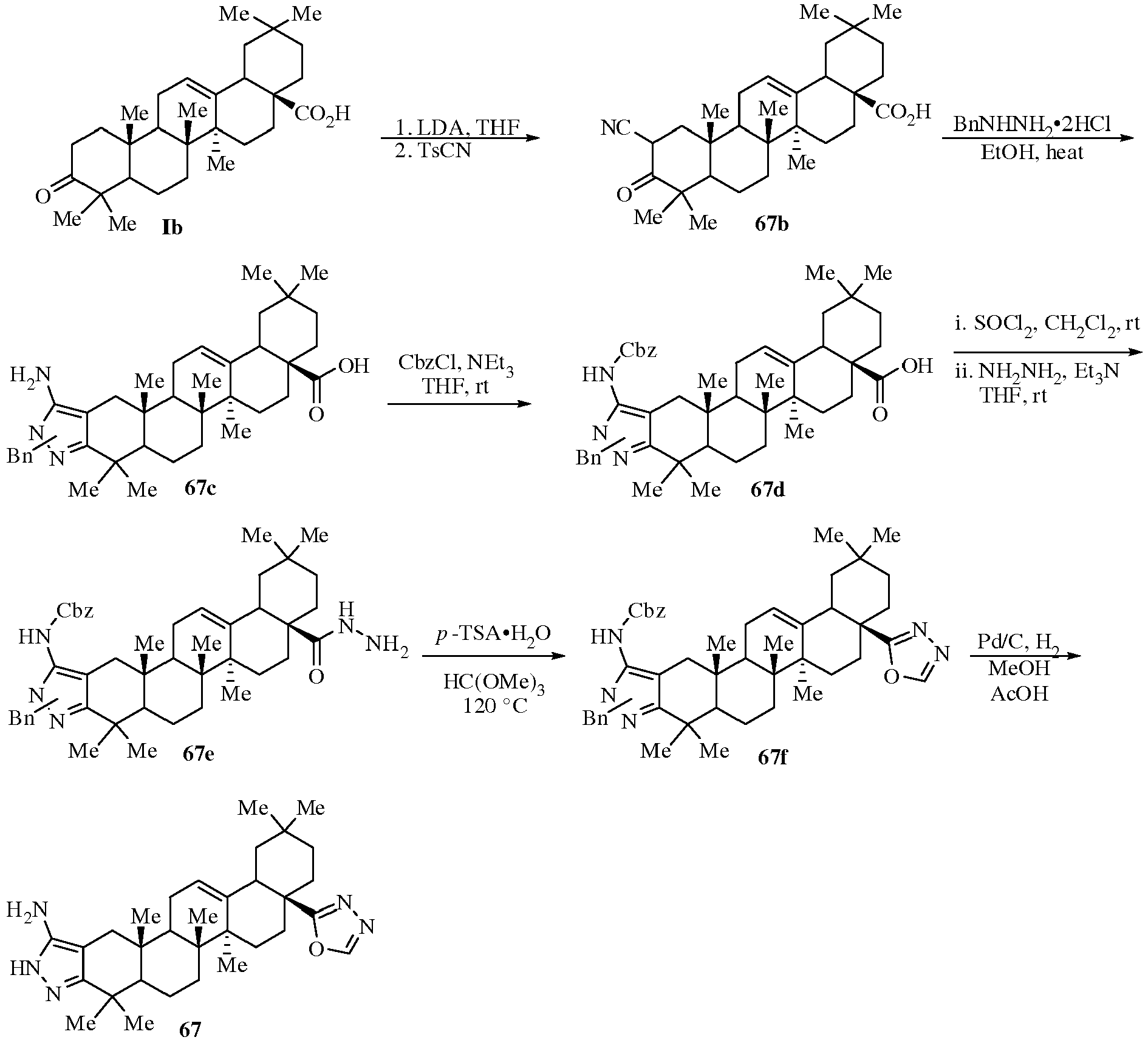
- A solution of diisopropylamine (1.4 mL, 10.2 mmol) and THF (20 mL) was cooled to - 78°C under nitrogen. A solution of n-butyllithium (2.5 M in hexanes, 4.4 mL, 11.0 mmol) was slowly added, maintaining the internal temperature below -70°C. The solution was allowed to stir for 30 min and was then slowly added to a solution of Ib (2.0 g, 4.4 mmol) and THF (250 mL) at -78°C under nitrogen. This solution was stirred for 30 min after which time a suspension of p-toluenesulfonyl cyanide (1.6 g, 8.8 mmol) and THF (25 mL) was added over 45 min. The solution was stirred for 1 hour and then quenched by the addition of saturated ammonium chloride solution (100 mL) at -78°C. The mixture was allowed to warm to room temperature overnight. The organic layer was separated and the aqueous layer was extracted with EtOAc (3 × 100 mL). The combined organic layers were dried (Na2SO4) and filtered. The solvent was removed under reduced pressure and the residue was purified by column chromatography (silica, 0-35% EtOAc in hexanes) to provide the sub-title compound (1.3 g, 60%) as a white solid.
1H NMR (300 MHz, CDCl3) δ 0.77-0.82 (m, 9H), 1.06-1.11 (m , 13H), 1.12-2.03 (m, 19H), 2.09-2.38 (m, 1H), 2.81-2.89 (m, 1H), 5.26-5.35 (m, 1H). - A solution of 67b (1.3 g, 2.6 mmol), benzylhydrazine dihydrochloride (1.2 g, 6.2 mmol) and EtOH (15 mL) was heated at reflux for 58 hours. The solvent was removed under reduced pressure and the residue was purified by column chromatography (silica, 0-5% MeOH in CH2Cl2) to provide the sub-title compound (1.1 g, 72%) as yellow solid.
1H NMR (300 MHz, CDCl3) δ 0.78-0.95 (m, 15H), 1.05-2.03 (m, 25H), 2.25-2.35 (m, 1 H), 2.81-2.91 (m, 1 H), 5.21-5.36 (m, 3H), 7.04-7.11 (m, 2H), 7.21-7.35 (m, 3H). ESI MS m/z 584 [C38H53N3O2 + H]+. - To a solution of 67c (560 mg, 0.96 mmol) in THF (50 mL) were added triethylamine (0.27 mL, 1.92 mmol) and benzyl chloroformate (0.16 mL, 1.15 mmol) under nitrogen. The mixture was stirred at room temperature for 16 hours and then quenched with brine (40 mL). The layers were separated and the aqueous layer was extracted with EtOAc (2 × 20 mL). The solution was dried (Na2SO4), filtered and concentrated to afford the sub-title compound (108 mg, quant) which was used without further purification.
ESI MS m/z 718 [C46H59N3O4 + H]+. - To a solution of 67d (744 mg, 1.03 mmol) in CH2Cl2 (100 mL) was added thionyl chloride (0.76 mL, 10.37 mmol). The mixture was stirred at room temperature for 1.5 hours and then the solvent was removed under reduced pressure. The residue was azeotroped with toluene and then dried under vacuum overnight to afford the intermediate acid chloride (687 mg, 93%). The crude acid chloride (364 mg, 0.49 mmol) was dissolved in THF (10 mL) and then triethylamine (0.34 mL, 2.47 mmol) and hydrazine (0.15 mL, 4.94 mmol) were added. The mixture was stirred at room temperature for 20 hours and concentrated under reduced pressure. The residue was partitioned between EtOAc (20 mL) and H2O (10 mL). The layers were separated and the organic layer was washed with H2O and brine. The solution was dried (Na2SO4), filtered and concentrated. The residue was purified by column chromatography (silica, 0-40 % CMA in CH2Cl2) to afford the sub-title compound (224 mg, 62%).
ESI MS (m/z 733 [C46H61 N5O3 + H]+. - A mixture of 67e (100 mg, 0.13 mmol), trimethoxymethane (0.22 mL, 2.04 mmol) and p-toluene sulfonic acid monohydrate (4 mg, 0.02 mmol) was heated at 120°C overnight. The mixture was concentrated under reduced pressure and the residue was purified by column chromatography (silica, 2:1 hexanes/EtOAc) to afford the sub-title compound (75 mg, 74%).
ESI MS m/z 651 [C47H59N5O3-C7H7 + H]+. - A solution of 67d (70 mg, 0.09 mmol), acetic acid (0.2 mL) and MeOH (10 mL) was flushed with nitrogen. To the resultant mixture was added 10% Pd/C (150 mg) and the mixture was flushed with nitrogen followed by hydrogen. The mixture was stirred under hydrogen at atmospheric pressure for 23 hours. The catalyst was removed by filtration through diatomaceous earth and the filtrate was concentrated under reduced pressure. The residue was purified by column chromatography (silica, 0-40% CMA in CH2Cl2) to afford the title compound (6 mg, 12%).
Rf 0.42 (90:9:1 Methylene Chloride/Methanol/concentrated Ammonium Hydroxide).
1H NMR (300 MHz, CD3OD) δ 0.45-2.41 (m, 41 H), 3.14 (d, J = 10.8 Hz, 1 H), 5.44 (s, 1H), 8.84 (s, 1H). ESI MS m/z 518 [C32H47N5O + H]+. m.p. 255-270 °C dec. HPLC (Method A) 89.0% (214 nm) t R = 16.1 min. -

- A solution of 60b (200 mg, 0.39 mmol) and EtOH (15 mL) was saturated with anhydrous HCl at -5°C. The solution was kept at that temperature for 10 d before removal of the solvent and excess HCl under reduced pressure. The residue was coevaporated with EtOH followed by diethyl ether to provide the sub-title compound (220 mg, 100%) as a tan solid.
APCI MS m/z 563 [C33H54N4O2 + H]+. - To a solution of 68b (220 mg, 0.39 mmol) and EtOH (3 mL) was added 1 N HCl (2 mL) at room temperature. After 24 hours, the solvent was removed under reduced pressure and the residue was purified by column chromatography (silica, 0-65% CMA in CH2Cl2) to provide the sub-title compound (135 mg, 58%).
1H NMR (500 MHz, CDCl3) δ 0.71-0.95 (m, 12H), 1.13-1.31 (m, 16H), 1.34-2.15 (m, 17H), 2.29-2.33 (m, 1H), 2.71-2.74 (m, 1H), 3.49-3.71 (m, 2H), 4.13-4.21 (m, 2H), 5.43-5.45 (m, 1 H). - A solution of 68c (135 mg, 0.24 mmol), hydrazine (38 mg, 1.2 mmol) and EtOH (5 mL) was heated at reflux under nitrogen for 66 hours and then cooled to room temperature. The solvent was removed under reduced pressure and the residue was purified by column chromatography (silica, 0-55% CMA in CH2Cl2) to provide the title compound (11 mg, 9%) as a solid.
1H NMR (300 MHz, CD3OD) δ 0.62 (s, 3H), 0.86-1.01 (m, 9H), 1.03-1.39 (m, 15H), 1.41-1.99 (m, 11H), 2.03-2.11 (m, 2H), 2.25-2.45 (m, 2H), 2.74-2.81 (m, 1H), 5.43-5.45 (m, 1 H). APCI MS m/z 532 [C33H49N5O + H]+. HPLC 98.6% (area %), t R = 10.2 min. -

- To a solution of 1H-pyrazole-3,5-diamine (70 mg, 0.54 mmol) prepared by the procedure described in the literature (
US82902, 2007 ) and pyridine (2.0 mL) was added III (100 mg, 0.20 mmol). The mixture was stirred at room temperature overnight. The reaction mixture was concentrated to dryness under reduced pressure. The residue was purified by column chromatography (silica, 0-40% CMA in CH2Cl2) followed by preparative HPLC to afford the title compound (25 mg, 25%) as an off-white solid.
Rf 0.20 (180:18:2 Methylene Chloride/Methanol/concentrated Ammonium Hydroxide).
1H NMR (300 MHz, DMSO-d6) δ 0.83 (s, 3H), 0.92 (s, 3H), 0.95 (s, 3H), 1.0 (s, 3H), 1.25 (s, 6H), 1.30 (s, 3H), 1.30-1.90 (m, 23H), 2.06 (m, 3H), 2.25 (m, 1 H), 2.44 (d, J = 15.0 Hz, 1H), 2.62 (m,1H), 5.35 (s, 1 H). mp >300 °C. APCI MS (Positive Mode) m/z 574 [C34H51N7O + H]+. -

- To a solution of 5-amino-4H-1,2,4-triazole-3-thiol (1.42 g, 12.2 mmol) in pyridine (30 mL was added III (2.0 g, 3.91 mmol). The mixture was stirred at room temperature for 3 hours. The reaction mixture was concentrated to remove pyridine under reduced pressure. The residue was purified by column chromatography (silica, 0-15% MeOH in CH2Cl2) to afford the title compound (1.41 g, 59%) as an off-white solid.
- Rf 0.12 (89:10:1 Methylene Chloride/Methanol/concentrated Ammonium Hydroxide). 1H NMR (300 MHz, CD3OD) δ 0.87 (s, 6H), 0.90 (s, 3H), 0.95 (s, 3H), 1.10 (s, 3H), 1.15 (s, 3H), 1.20 (s, 3H), 1.30-2.20 (m, 19H), 2.38 (d, J = 15.0 Hz, 1H), 2.88 (m, 1H), 5.39 (s, 1H). mp 278-296°C. ESI MS (Positive Mode) m/z 59 [C33H49N7OS - H]-.
-

- To a solution of III (500 mg, 0.97 mmol) and pyridine (4 mL) was added 1,3,4-thiadiazole-2,5-diamine (340 mg, 2.92 mmol). The reaction mixture was heated at 60°C for 20 hours and then poured into H2O (50 mL). The precipitate was collected by filtration and dissolved in CH2Cl2/i-PrOH (2:1, 20 mL). The aqueous layer was extracted with CH2Cl2/i-PrOH (2:1, 2 x25 mL). The combined extracts were dried (Na2SO4), filtered and concentrated under reduced pressure. The residue was purified by column chromatography (silica, 0-40% CMA in CH2Cl2) followed by preparative HPLC to afford the title compound (32 mg, 6%) as a solid.
Rf 0.20 (90:9:1 Methylene Chloride/Methanol/concentrated Ammonium Hydroxide)
1H NMR (300 MHz, DMSO-d 6) δ 0.77-2.43 (m, 41 H), 2.94 (d, J = 12 Hz, 1 H), 5.32 (s, 1 H), 7.46 (s, 1 H), 11.50 (s, 1 H), 13.20 (s, 1 H).
APCI MS m/z 592 [C33H49N7OS + H]+. m.p. 280-300°C dec. HPLC (Method A) 95.4% (214 nm) t R = 10.2 min. -

- A mixture of 60b (282 mg, 0.54 mmol) and methylhydrazine (0.14 mL, 2.73 mmol) in EtOH (4 mL) was sealed and heated to 160°C by microwave for 3 hours. The reaction mixture was concentrated to dryness. The residue was purified by column chromatography (silica, 0-10% MeOH in CH2Cl2) followed by preparative HPLC to afford title compound (35 mg, 12%) as a white solid.
Rf 0.34 (89:10:1 Methylene Chloride/Methanol/concentrated Ammonium Hydroxide).
1H NMR (300 MHz, CD3OD) δ 0.65 (s, 3H), 0.88 (s, 3H), 0.95 (s, 3H), 0.97 (s, 3H), 1.15 (s, 3H), 1.20 (s, 3H), 1.24 (s, 3H), 1.25-2.10 (m, 19H), 2.38 (m, 2H), 2.78 (m, 1 H), 3.68 (s, 3H), 5.47 (m, 1H). mp 195-210°C dec. APCI MS (Positive Mode) m/z 545 [C34H52N6 + H]+. -

- To a solution of III (200 mg, 0.39 mmol) and pyridine (2 mL) was added 1H-imidazol-2-amine (70 mg, 0.84 mmol). The reaction mixture was stirred at room temperature for 3.5 hours and then poured into H2O (20 mL). The precipitate was collected by filtration and dissolved in CH2Cl2/i-PrOH (2:1, 10 mL). The aqueous layer was extracted with CH2Cl2/i-PrOH (2:1, 2 × 10 mL). The combined organics were dried (Na2SO4), filtered and concentrated under reduced pressure. The residue was purified by column chromatography (silica, 0-30% CMA in CH2Cl2) to afford the title compound (96 mg, 44%).
Rf 0.50 (90:9:1 Methylene Chloride/Methanol/concentrated Ammonium Hydroxide).
1H NMR (300 MHz, DMSO-d 6) δ 0.91-2.49 (m, 41 H), 3.00 (d, J = 11.1 Hz, 1 H), 4.12 (s, 2H), 5.29 (s, 1 H), 6.46 (s, 1 H), 6.64 (s, 2H), 7.39 (s, 1 H), 10.95 (s, 1 H). APCI MS m/z 559 [C34H50N6O + H]+. m.p. 230-250°C dec. HPLC (Method A) 97.6% (214 nm) t R = 9.9 min. -

- To a solution of 5-amino-1,3,4-thiadiazole-2-thiol (200 mg, 2.1 mmol) prepared by the procedure described in the literature (
US3940409, 1976 ) and pyridine (10.0 mL) was added III (215 mg, 0.42 mmol). The mixture was stirred at room temperature overnight. The reaction mixture was concentrated to dryness under reduced pressure. The residue was purified by column chromatography (silica, 0-70% CMA in CH2Cl2) followed by preparative HPLC to afford the title compound (30 mg, 12%) as an off-white solid.
Rf 0.60 (80:18:2 Methylene Chloride/Methanol/concentrated Ammonium Hydroxide).
1H NMR (300 MHz, CD3OD) δ 0.89 (s, 3H), 0.90 (s, 3H), 0.92 (s, 3H), 0.97 (s, 3H), 1.29 (s, 6H), 1.36 (s, 3H), 1.43-2.30 (m, 19H), 2.43 (d, J = 14.7 Hz, 1H), 2.84 (m, 1H), 5.42 (s, 1 H). mp >300°C. ESI MS (Positive Mode) m/z 609 [C33H48N6OS2 + H]+. -

- To a solution of hydrazinecarbothioamide (914 mg, 10.0 mmol) and pyridine (50.0 mL) was added III (1.0 g, 2.0 mmol). The mixture was stirred at room temperature for 2 hours. The reaction mixture was poured into H2O. Brown precipitates were collected by filtration and washed with H2O, dried in an oven at 40°C to provide the sub-title compound (900 mg). The crude compound was used without further purification.
ESI MS (Positive Mode) m/z 567 [C32H50N6OS + H]+. - A mixture of 75b (100 mg) and NaOH (2 M, 2.0 mL) was heated at reflux for 7 d. The reaction mixture was concentrated to dryness under reduced pressure. The residue was triturated with MeOH and CH2Cl2. The filtrate was concentrated and purified by preparative HPLC to provide the title compound (61 mg, 66%) as an off-white solid.
Rf 0.60 (180:18:2 Methylene Chloride/Methanol/concentrated Ammonium Hydroxide).
1H NMR (300 MHz, CD3OD) δ 0.60 (s, 3H), 0.82 (s, 3H), 0.95 (s, 3H), 0.98 (s, 3H), 1.21 (s, 3H), 1.25 (s, 3H), 1.46 (s, 3H), 1.50-2.05 (m, 18H), 2.25 (m, 1H), 2.40 (d, J = 15.0 Hz, 1 H), 2.98 (m, 1 H), 5.40 (s, 1 H). mp >300°C. ESI MS (Positive Mode) m/z 549 [C32H48N6S + H]+. -

- To a solution of III (300 mg, 0.58 mmol) and pyridine (3 mL) was added 1H-1,2,4-triazole-3-thiol (177 mg, 1.75 mmol). The reaction mixture was stirred at room temperature for 1 hour and then poured into H2O (30 mL). The precipitate was dissolved in CH2Cl2/i-PrOH (2:1, 20 mL). The aqueous layer was extracted with CH2Cl2/i-PrOH (2:1, 3 × 10 mL) and the combined organics were dried (Na2SO4), filtered and concentrated under reduced pressure. The residue was purified by column chromatography (silica, 0-8% MeOH in CH2Cl2) to afford the title compound (110 mg, 33%).
Rf 0.27 (90:9:1 Methylene Chloride/Methanol/concentrated Ammonium Hydroxide)
1H NMR (300 MHz, CD3OD) δ 0.89-2.23 (m, 40H), 2.41 (d, J = 14.7 Hz, 1 H), 3.00 (dd, J = 3.6, 12.9 Hz, 1H), 5.40 (s, 1H), 8.46 (s, 1H). APCI MS m/z 577 [C33H48N6OS + H]+ m.p. 260-280°C dec. HPLC (Method A) 96.2% (214 nm) t R = 14.3 min. -

- To a solution of III (300 mg, 0.58 mmol) and pyridine (3 mL) was added 4-amino-5-methyl-4H-1,2,4-triazole-3-thiol (228 mg, 1.75 mmol). The reaction mixture was stirred at room temperature for 1 hour and then poured into H2O (30 mL). The precipitate was collected by filtration and dried under vacuum overnight. The residue was purified by column chromatography (silica, 0-30% CMA in CH2Cl2) followed by preparative HPLC to afford the title compound (30 mg, 8%) as a solid.
Rf 0.25 (90:9:1 Methylene Chloride/Methanol/concentrated Ammonium Hydroxide)
1H NMR (300 MHz, CD3OD) δ 0.89-2.50 (m, 44H), 2.93-2.97 (m, 1 H), 5.36 (s, 1 H). APCI MS m/z 606 [C34H51N7OS + H]+. m.p. 250-270°C dec. HPLC (Method A) 92.7% (214 nm) t R = 13.2 min. -

- To a solution of hydrazine (0.15 mL, 4.5 mmol) and triethylamine (0.77 mL) was added III (500 mg, 0.91 mmol). The mixture was stirred at room temperature overnight. The reaction mixture was diluted with EtOAc (100 mL). The organic phase was washed with brine then dried (MgSO4), filtered and concentrated to dryness. The residue was purified by column chromatography on (silica, 0-50% CMA in CH2Cl2) to afford the sub-title compound (360 mg, 78%) as a brown solid.
- To a solution of 78b (140 mg, 0.27 mmol) in CHCl3 (5 mL) was added carbon disulfide (0.58 mL, 0.96 mmol). The mixture was stirred at room temperature for 4 hours. The reaction mixture was concentrated to dryness under reduced pressure. The residue was dissolved in EtOH (5 mL) and NaOH (2 M, 5 mL) was added. The mixture was heated at reflux for 12 hours. The reaction mixture was concentrated to remove EtOH. Brown solids were collected by filtration and washed with H2O. The residue was purified by column chromatography (silica, 0-50% CMA in CH2Cl2) followed by preparative HPLC to afford the title compound (30 mg, 12%) as an off-white solid.
Rf 0.30 (10:1 Methylene Chloride/Methanol).
1H NMR (300 MHz, DMSO-d6) δ 0.58 (s, 3H), 0.75 (s, 3H), 0.92 (s, 6H), 1.16 (s, 3H), 1.21 (s, 3H), 1.26 (s, 3H), 1.31-1.97 (m, 22H), 2.22 (m, 1 H), 2.43 (d, J = 15.0 Hz, 1 H), 2.83 (m, 1 H), 5.35 (s, 1 H).mp >300°C. ESI MS (Positive Mode) m/z 550 [C32H47N5OS + H]+. -

- To a solution of 5-amino-1H-pyrazole-3-thiol (459 mg, 4.0 mmol) prepared by the procedure described in the literature (J. Med. Chem. 2008, 51(15), 4672-4684) and pyridine (10.0 mL) was added III (490 mg, 0.95 mmol). The mixture was stirred at room temperature overnight. The reaction mixture was concentrated to dryness under reduced pressure. The residue was purified by column chromatography (silica, 0-70% CMA in CH2Cl2) followed by preparative HPLC to afford the title compound (115 mg, 17%) as an off-white solid.
Rf 0.75 (80:18:2 Methylene Chloride/Methanol/concentrated Ammonium Hydroxide).
1H NMR (300 MHz, CD3OD) δ 0.89 (s, 6H), 0.91 (s, 3H), 0.95 (s, 3H), 1.28 (s, 3H), 1.40 (s, 3H), 1.48 (s, 3H), 1.55-2.20 (m, 19H), 2.43 (d, J = 14.4 Hz, 1H), 2.93 (m, 1H), 5.39 (m, 1H), 5.57 (m, 1H). mp >300°C. ESI MS (Positive Mode) m/z 591 [C34H50N6OS + H]+. -

- To a solution of N-(5-sulfamoyl-1,3,4-thiadiazol-2-yl)acetamide (1.0 g, 4.50 mmol) and MeOH (15 mL) was added HCl (2 N, 10 mL). The reaction mixture was heated at reflux for 18 hours and then concentrated under reduced pressure. The residue was purified by column chromatography (silica, 0-10% MeOH in CMA) to afford the sub-title compound (800 mg, 98%).
- To a solution of III (400 mg, 0.78 mmol), pyridine (15 mL) and DMF (1 mL) was added 80b (281 mg, 1.56 mmol). The reaction mixture was stirred at room temperature for 24 hours and then poured into H2O (15 mL). The precipitate was collected by filtration and dried under vacuum overnight. The residue was purified by column chromatography (silica, 0-60% CMA in CH2Cl2) followed by preparative HPLC to afford the title (8 mg, 2%) as a solid.
Rf 0.35 (90:9:1 Methylene Chloride/Methanol/concentrated Ammonium Hydroxide).
1H NMR (300 MHz, Acetone-d 6) δ 0.68-2.27 (m, 40H), 2.45 (d, J = 15 Hz, 1H), 3.05-3.08 (m, 1 H), 5.47 (s, 1H). APCI MS m/z 656 [C33H49N7O3S2 + H]+. m.p. 280-300°C dec. HPLC (Method A) >99% (214 nm) t R = 14.0 min. -

- To a solution of lithium bis(trimethylsilyl)amide (2.3 mL, 1 M in THF, 2.3 mmol) was added dihydrofuran-2(3H)-one (0.15 mL, 1.9 mmol) at -78°C. The mixture was stirred for 15 min. The anion solution was added to a solution of III (100 mg, 0.19 mmol) in THF (7 mL) precooled to -78°C. The mixture was stirred at -78°C for 30 min and deemed incomplete. To a second solution of lithium bis(trimethylsilyl)amide (1.1 mL, 1 M in THF, 1.1 mmol) was added dihydrofuran-2(3H)-one (0.075 mL, 1.0 mmol) at - 78°C. The second anion mixture was stirred for 15 min. The anion solution was added to the above reaction mixture at -78°C. The mixture was continued to stir at -78°C for 30 min. The reaction mixture was quenched with saturated NH4Cl (60 mL) and extracted with EtOAc (100 mL). The organic phase was washed with brine, dried (MgSO4), filtered and concentrated to dryness. The residue was purified by column chromatography (silica, 0-30% CMA in CH2Cl2) to afford the sub-title compound (150 mg) as a brown solid.
ESI MS (Positive Mode) m/z 562 [C35H51N3O3 + H]+ - A mixture of 81b (150 mg) and hydrazine (0.037 mL) in EtOH (2 mL) was heated at reflux overnight. The reaction mixture was concentrated to dryness under reduced pressure. The residue was purified by column chromatography (silica, 0-60% CMA in CH2Cl2) followed by preparative HPLC to afford the title compound (12 mg, 8%) as an off-white solid.
Rf 0.70 (80:18:2 Methylene Chloride/Methanol/concentrated Ammonium Hydroxide).
1H NMR (300 MHz, CD3OD) δ 0.50 (s, 3H), 0.86 (s, 3H), 0.95 (s, 3H), 0.98 (s, 3H), 1.23 (s, 3H), 1.28 (s, 3H), 1.32 (s, 3H), 1.35-2.08 (m, 18H), 2.25 (m, 1H), 2.36 (d, J = 15.0 Hz, 1 H), 2.74 (m, 2H), 2.82 (m, 1 H), 3.72 (t, J = 6.6 Hz, 2H), 5.51 (s, 1H). mp 251-255°C. APCI MS (Positive Mode) m/z 576 [C35H53N5O2 + H]+. -

- To a solution of lithium bis(trimethylsilyl)amide (3.8 mL, 1 M in THF, 3.8 mmol) was added ethyl propionate (0.22 mL, 1.9 mmol). The mixture was stirred for 30 min. The anion solution was added to a solution of III (100 mg, 0.19 mmol) in THF (3 mL) precooled to -78°C. The mixture was stirred at -78°C for 1 hour and the reaction was deemed incomplete. To a second solution of lithium bis(trimethylsilyl)amide (1.9 mL, 1 M in THF, 1.9 mmol) was added ethyl propionate (0.33 mL, 1.9 mmol). The second anion mixture was stirred for 30 min. The anion solution was added to the above reaction mixture at -78°C. The mixture was continued to stir at -78°C for 30 min. The reaction mixture was quenched with saturated NH4Cl (20 mL) and extracted with EtOAc (100 mL). The organic phase was washed brine, dried (MgSO4), filtered and concentrated to dryness. The residue was purified by column chromatography (silica, 0-30% CMA in CH2Cl2) to afford the sub-title compound (100 mg) as a brown solid. APCI MS (Positive Mode) m/z 578 [C36H55N3O3 + H]+
- A mixture of 82b (100 mg) and hydrazine (0.06 mL) in EtOH (2 mL) was heated at reflux overnight. The reaction mixture was concentrated to dryness under reduced pressure. The residue was purified by column chromatography (silica, 0-50% CMA in CH2Cl2) followed by preparative HPLC to the title compound (7 mg, 7%) as an off-white solid.
Rf 0.70 (80:18:2 Methylene Chloride/Methanol/concentrated Ammonium Hydroxide).
1H NMR (300 MHz, CD3OD) δ 0.55 (s, 3H), 0.85 (s, 3H), 0.96 (s, 3H), 1.00 (s, 3H), 1.19 (s, 3H), 1.23 (s, 3H), 1.28 (s, 3H), 1.32-2.08 (m, 21 H), 2.39 (m, 1 H), 2.44 (d, J = 15.0 Hz, 1H), 2.90 (m, 1H), 5.48 (s, 1H). mp >300°C. APCI MS (Positive Mode) m/z 546 [C34H51N5O + H]+. -

- To a solution of lithium bis(trimethylsilyl)amide (5.9 mL, 1 M in THF, 5.9 mmol) was added ethyl 2-bromo-2-fluoroacetate (0.46 mL, 3.9 mmol) at -78°C. The mixture was stirred for 10 min. The anion solution was added to a solution of III (200 mg, 0.39 mmol) in THF (4 mL) precooled to -78°C. The mixture was stirred at -78°C for 1 hour and the reaction was deemed incomplete. To a second solution of n-butyllithium (1.8 mL, 2.5 M in hexanes, 5.9 mmol) was added ethyl 2-bromo-2-fluoroacetate (0.46 mL, 3.9 mmol) at -78°C. The second anion mixture was stirred for 10 min. The anion solution was added to the above reaction mixture at -78°C. The mixture was stirred at -78°C for 1 hour and warmed to -20°C over 1 hour. The reaction mixture was quenched with saturated NH4Cl (20 mL) and extracted with EtOAc (100 mL). The organic phase was washed with brine, dried (MgSO4), filtered and concentrated to dryness. The residue was purified by column chromatography (silica, 0-30% CMA in CH2Cl2) to afford the sub-title compound (110 mg) as a brown solid.
APCI MS (Positive Mode) m/z 582 [C35H52FN3O3 + H]+. - A mixture of 83b (110 mg) and hydrazine (0.05 mL) in EtOH (2 mL) was heated at reflux overnight. The reaction mixture was concentrated to dryness under reduced pressure. The residue was purified by column chromatography (silica, 0-50% CMA in CH2Cl2) followed by preparative HPLC to afford the title compound (9 mg, 10%) as an off-white solid.
- Rf 0.50 (80:18:2 Methylene Chloride/Methanol/concentrated Ammonium Hydroxide). 1H NMR (300 MHz, CD3OD) δ 0.52 (s, 3H), 0.85 (s, 3H), 0.96 (s, 3H), 1.00 (s, 3H), 1.19 (s, 3H), 1.23 (s, 3H), 1.28 (s, 3H), 1.32-2.08 (m, 18H), 2.39 (m, 1H), 2.40 (d, J = 15.0 Hz, 1H), 2.90 (m, 1H), 5.42 (s, 1H). mp >300°C. APCI MS (Positive Mode) m/z 550 [C33H48FN5O + H]+.
-

- To a solution of lithium bis(trimethylsilyl)amide (38 mL, 1 M in THF, 38.0 mmol) was added 1-vinyl-2-pyrrolidinone (2.1 mL, 19.0 mmol) at-78°C. The mixture was stirred for 10 min. The anion solution was added to a solution of III (1.0 g, 1.9 mmol) in THF (20 mL) precooled to -78°C. The mixture was stirred at -78°C for 1 hour. The reaction mixture was quenched with saturated NH4Cl (60 mL) and extracted with EtOAc (100 mL). The organic phase was washed with brine, dried (MgSO4), filtered and concentrated to dryness. The residue was purified by column chromatography (silica, 0-10% MeOH in CH2Cl2) to afford the sub-title compound (350 mg) as a brown solid.
APCI MS (Positive Mode) mlz 587 [C37H54N4O2 + H]+. - A mixture of 84b (100 mg) and hydrazine (0.05 mL) in EtOH (2 mL) was sealed and heated to 160°C by microwave for 3 hours. The reaction mixture was concentrated to dryness under reduced pressure. The residue was purified by column chromatography (silica, 0-80% CMA in CH2Cl2) to afford the title compound (50 mg, 30%) as a brown solid.
Rf 0.27 (80:18:2 Methylene Chloride/Methanol/concentrated Ammonium Hydroxide). 1H NMR (300 MHz, CD3OD) δ 0.50 (s, 3H), 0.86 (s, 3H), 0.95 (s, 3H), 0.98 (s, 3H), 1.09 (s, 3H), 1.21 (s, 6H), 1.35-2.40 (m, 21 H), 2.72 (m, 2H), 2.96 (m, 2H), 5.47 (s, 1H).
mp 250-260°C dec. APCI MS (Positive Mode) m/z 575 [C35H54N6O + H]+. -

- To a solution of 84 (100 mg, 0.17 mmol) in MeOH (8 mL) was added 37% formaldehyde (0.021 mL, 0.36 mmol) in an ice bath. The mixture was stirred for 5 min. Sodium borohydride (32 mg, 0.84 mmol) was added. The reaction mixture was stirred at 0°C for 1 hour and concentrated to dryness. The residue was purified by column chromatography (silica, 0-80% CMA in CH2Cl2) to afford 85 (35 mg, 20%) as an off-white solid and 86 (18 mg, 20%) as an off-white solid.
- Data for 85:
Rf 0.35 (80:18:2 Methylene Chloride/Methanol/concentrated Ammonium Hydroxide).
1H NMR (300 MHz, CD3OD) δ 0.50 (s, 3H), 0.86 (s, 3H), 0.95 (s, 3H), 0.98 (s, 3H), 1.15 (s, 3H), 1.21 (s, 6H), 1.35-2.35 (m, 20H), 2.35 (s, 6H), 2.67 (m, 4H), 2.90 (m, 1 H), 5.48 (s, 1H). mp 260-270°C dec. APCI MS (Positive Mode) m/z 603 [C37H58N6O + H]+. - Data for 86:
Rf 0.30 (80:18:2 Methylene Chloride/Methanol/concentrated Ammonium Hydroxide).
1H NMR (300 MHz, CD3OD) δ 0.50 (s, 3H), 0.86 (s, 3H), 0.95 (s, 3H), 0.98 (s, 3H), 1.15 (s, 3H), 1.21 (s, 6H), 1.35-2.08 (m, 20H), 2.30 (s, 2H), 2.71 (m, 3H), 2.83 (m, 3H), 5.49 (s, 1H). mp 260-270°C dec. APCI MS (Positive Mode) m/z 589 [C36H56N6O + H]+. -

- To a solution of 84 (66 mg, 0.11 mmol) and acetic acid (0.2 mL) in THF (2 mL) and benzene (3 mL) was added potassium cyanate (22 mg, 0.26 mmol). The mixture was stirred at room temperature for 12 hours. Sodium hydroxide (2 mL, 2.0 M) was added. The reaction mixture was stirred at room temperature for 3 hours and concentrated to dryness. The residue was purified by column chromatography (silica, 0-10% MeOH in CMA) to afford the title compound (7 mg, 10%) as a brown solid.
Rf 0.50 (80:28:2 Methylene Chloride/Methanol/concentrated Ammonium Hydroxide).
1H NMR (300 MHz, CD3OD) δ 0.51 (s, 3H), 0.87 (s, 3H), 0.96 (s, 3H), 1.00 (s, 3H), 1.12 (s, 3H), 1.28 (s, 3H), 1.32 (s, 3H), 1.35-2.12 (m, 20H), 2.28 (s, 1H), 2.30 (d, J = 15.0 Hz, 1 H), 2.60 (m, 2H), 2.85 (m, 1 H), 5.52 (s, 1 H). mp >300°C. APCI MS (Positive Mode) m/z 618 [C36H55N7O2 + H]+. -

- To a solution of lithium bis(trimethylsilyl)amide (15.6 mL, 1 M in THF, 15.6 mmol) was added methyl morpholinoacetate (1.8 g, 11.7 mmol) at -78°C. The mixture was stirred for 10 min. The anion solution was added to a solution of III (400 mg, 0.78 mmol) in THF (10 mL) precooled to -10°C. The mixture was stirred at -10°C for 1 hour. The reaction mixture was quenched with saturated NH4Cl (60 mL) and extracted with EtOAc (100 mL). The organic phase was washed with brine, dried (MgSO4), filtered and concentrated to dryness. The residue was purified by column chromatography (silica, 0-20% CMA in CH2Cl2) to afford the sub-title compound (120 mg) as a brown solid.
APCI MS (Positive Mode) m/z 635 [C38H58N4O4 + H]+. - A mixture of 88b (120 mg) and hydrazine (0.05 mL) in n-BuOH (2 mL) was heated at reflux overnight. The reaction mixture was concentrated to dryness under reduced pressure. The residue was purified by column chromatography (silica, 0-30% CMA in CH2Cl2) to afford the the title compound (6 mg, 5%) as a brown solid.
Rf 0.42 (80:18:2 Methylene Chloride/Methanol/concentrated Ammonium Hydroxide). 1H NMR (300 MHz, CD3OD) δ 0.53 (s, 3H), 0.84 (s, 3H), 0.94 (s, 3H), 1.12 (s, 3H), 1.21 (s, 3H), 1.23 (s, 6H), 1.32-2.37 (m, 24H), 2.53 (m, 1 H), 3.68 (m, 4H), 5.42 (s, 1H). mp >300°C. ESI MS (Positive Mode) m/z 617 [C37H56N6O2 + H]+. -

- To a suspension of 1-methylpiperazine dihydrochloride (8.5 g, 49.2 mmol) and triethylamine (22.8 mL, 164.0 mmol) in THF (150 mL) was added tert-butyl 2-bromoacetate (8.0 g, 41.0 mmol). The mixture was stirred at room temperature for 12 hours. The reaction mixture was diluted with EtOAc (200 mL) and H2O (100 mL). The organic phase was washed with brine, dried (MgSO4), filtered and concentrated to dryness. The residue was purified by column chromatography (silica, 0-10% MeOH in CH2Cl2) to afford the sub-title compound (6.0 g, 69%).
1H NMR (400 MHz, CDCl3) δ 1.42 (s, 9H), 2.30 (s, 3H), 2.41-2.62 (m, 8H), 3.10 (s, 2H). - To a solution of lithium bis(trimethylsilyl)amide (15.6 mL, 1 M in THF, 15.6 mmol) was added 89b (2.5 g, 11.7 mmol) at -78°C. The mixture was stirred for 10 min. The anion solution was added to a solution of III (400 mg, 0.78 mmol) in THF (10 mL) precooled to -10°C. The mixture was stirred at 0°C for 1.5 hours. The reaction mixture was quenched with saturated NH4Cl (60 mL) and extracted with EtOAc (100 mL). The organic phase was washed with brine, dried (MgSO4), filtered and concentrated to dryness. The residue was purified by column chromatography (silica, 0-20% CMA in CH2Cl2) to afford the sub-title compound (200 mg) as a brown solid.
APCI MS (Positive Mode) m/z 690 [C42H67N5O3 + H]+. - A mixture of 89c (100 mg) and hydrazine (0.02 mL) in n-BuOH (2 mL) was heated at reflux overnight. The reaction mixture was concentrated to dryness under reduced pressure. The residue was purified by column chromatography (silica, 0-40% CMA in CH2Cl2) to afford the title compound (16 mg, 18%) as a brown solid.
Rf 0.70 (80:18:2 Methylene Chloride/Methanol/concentrated Ammonium Hydroxide).
1H NMR (400 MHz, CD3OD) δ 0.54 (s, 3H), 0.84 (s, 3H), 0.91 (s, 3H), 0.95 (s, 3H), 1.01 (s, 3H), 1.10 (s, 3H), 1.11-2.06 (m, 16H), 2.20 (m, 1H), 2.41 (m, 1H), 2.84 (s, 3H), 2.91-3.70 (m, 14H), 5.45 (s, 1H). mp >300°C. APCI MS (Positive Mode) m/z 630 [C38H59N7O + H]+. -

- To a suspension of tert-butyl piperazine-1-carboxylate (3.0 g, 16.1 mmol) and triethylamine (4.5 mL, 32.2 mmol) in THF (80 mL) was added tert-butyl 2-bromoacetate (2.4 mL, 16.1 mmol). The mixture was stirred at room temperature for 12 hours. The reaction mixture was diluted with EtOAc (200 mL) and H2O (100 mL). The organic phase was washed with brine, dried (MgSO4), filtered and concentrated to dryness. The residue was purified by column chromatography (silica, 0-5% MeOH in CH2Cl2) to afford the sub-title compound (4.2 g, 87%).
1H NMR (400 MHz, CDCl3) δ 1.42 (s, 18H), 2.50 (m, 4H), 3.10 (s, 2H), 3.47 (m, 4H). - To a solution of lithium bis(trimethylsilyl)amide (19.4 mL, 1 M in THF, 19.4 mmol) was added 90b (3.5 g, 11.7 mmol) at -78°C. The mixture was stirred for 10 min. The anion solution was added to a solution of III (500 mg, 0.97 mmol) in THF (10 mL) precooled to -78°C. The mixture was stirred at 0°C for 1.5 hours. The reaction mixture was quenched with saturated NH4Cl (60 mL) and extracted with EtOAc (100 mL). The organic phase was washed brine, dried (MgSO4), filtered and concentrated to dryness. The residue was purified by column chromatography (silica, 0-20% CMA in CH2Cl2) to afford the sub-title compound (237 mg) as a brown solid.
ESI MS (Positive Mode) mlz 776 [C46H73N5O5 + H]+. - A mixture of 90c (237 mg) and hydrazine (0.059 mL) in n-BuOH (5 mL) was heated at reflux overnight. The reaction mixture was concentrated to dryness under reduced pressure. The residue was purified by column chromatography (silica, 0-40% CMA in CH2Cl2) to afford the sub-title compound (15 mg, 7%) as a brown solid.
- To a solution of 90d (15 mg) in MeOH (2 mL) was added HCl (0.8 mL, 2 M in diethyl ether) and stirred at room temperature for 5 hours. The reaction mixture was concentrated and purified by preparative HPLC to provide the title compound (4.5 mg, 30%) as an off-white solid.
Rf 0.12 (80:18:2 Methylene Chloride/Methanol/concentrated Ammonium Hydroxide). 1H NMR (400 MHz, CD3OD) δ 0.55 (s, 3H), 0.86 (s, 3H), 0.89 (s, 3H), 0.91 (s, 3H), 1.14 (s, 3H), 1.19 (s, 3H), 1.28 (s, 3H), 1.30-2.06 (m, 23H), 2.20 (m, 1 H), 2.41 (d, J = 15.0 Hz, 1 H), 2.85-3.65 (m, 4H), 5.45 (s, 1H). mp >300°C. APCI MS (Positive Mode) m/z 616 [C37H57N7O + H]+. -

- To a solution of 12 (150 mg, 0.26 mmol) in CH2Cl2 (10 mL) was added thionyl chloride (0.19 mL, 2.6 mmol). The mixture was stirred at room temperature for 2 hours. The reaction mixture was concentrated to dryness under reduced pressure. The residue was dissolved in pyridine (10 mL) and DMF (2 mL). 5-Amino-4H-1,2,4-triazole-3-thiol (71 mg, 0.60 mmol) was added and stirred at room temperature for 1 hour. The reaction mixture was concentrated to dryness under reduced pressure. The residue was purified by column chromatography (silica, 0-50% CMA in CH2Cl2) followed by preparative HPLC to afford the title compound (19 mg, 14%) as an off-white solid.
Rf 0.20 (80:18:2 Methylene Chloride/Methanol/concentrated Ammonium Hydroxide). 1H NMR (300 MHz, CD3OD) δ 0.30 (s, 3H), 0.82 (s, 3H), 0.90 (s, 3H), 0.98 (s, 3H), 1.22 (s, 3H), 1.32 (s, 3H), 1.34 (s,3H), 1.35-2.30 (m, 19H), 2.35 (d, J = 15.0 Hz, 1H), 2.75 (m, 1H), 7.91 (dd, J = 5.7, 7.5 Hz, 1 H), 8.40 (d, J = 7.8 Hz, 1 H), 8.68 (d, J = 4.8 Hz, 1H), 8.79 (s, 1H). mp >300°C. ESI MS (Positive Mode) m/z 669 [C38H52N8OS + H]+. -

- To a solution of 32 (250 mg, 0.37 mmol) in CH2Cl2 (10 mL) was added thionyl chloride (0.27 mL, 3.7 mmol). The mixture was stirred at room temperature for 2 hours. The reaction mixture was concentrated to dryness under reduced pressure. The residue was dissolved in THF (5 mL) and added to a solution of 1-vinylpyrrolidin-2-one (0.39 mL, 3.7 mmol) and lithium bis(trimethylsilyl)amide (7.4 mL, 1 M in THF, 7.4 mmol) in THF (5 mL) at -78°C. The reaction mixture was stirred at -78°C for 1 hour. The reaction mixture was quenched with saturated NH4Cl (10 mL) and extracted with EtOAc (100 mL x 2). The organic phase was washed with brine then dried (MgSO4), filtered and concentrated to dryness under reduced pressure. The residue was purified by column chromatography (silica, 0-10% MeOH in CH2Cl2) to afford the sub-title compound (110 mg, 40%).
1H NMR (300 MHz, CDCl3) δ 0.51 (s, 3H), 0.81 (s, 3H), 0.87 (s, 6H), 1.10 (s, 3H), 1.18 (s, 3H), 1.20 (s, 3H), 1.21-2.60 (m, 29H), 2.95 (m, 1H), 3.35-3.75 (m, 8H), 4.05 (m, 1 H), 4.45 (m, 2H), 6.40 (m, 1 H), 7.01 (m, 1 H), 7.37 (m, 1 H). - A mixture of 92b (110 mg, 0.14 mmol) and hydrazine (0.5 mL) in EtOH (2 mL) was sealed and heated to 160 °C by microwave for 3 hours. The reaction mixture was concentrated to dryness. The residue was purified by column chromatography (silica, 0-70% CMA in CH2Cl2) to afford the title compound (25 mg, 25%).
Rf 0.54 (80:28:2 Methylene Chloride/Methanol/concentrated Ammonium Hydroxide).
1H NMR (300 MHz, CD3OD) δ 0.60 (s, 6H), 0.84 (s, 3H), 0.86 (s, 3H), 1.12 (s, 3H), 1.22 (s, 3H), 1.28 (s, 3H), 1.35-2.0 (m, 19H), 2.18 (m, 2H), 2.27 (d, J = 15.0 Hz, 2H), 2.61-2.72 (m, 6H), 2.97 (m, 2 H), 3.50-3.70 (m, 7H), 6.41 (s, 1H), 7.51 (s, 1H). mp 238-240°C. APCI MS (Positive Mode) m/z 740 [C44H65N7O3 + H]+. - Table 6, below, lists the inhibitory concentrations of select compounds and antibiotics in the biofilm growth assay against various gram-negative bacterial biofilms. "N" means the number of isolates of bacteria tested. The biofilm growth assay procedure detailed in Example I, above, was followed. Burkholderia cepacia used media consisting of M9 salts, 100 µM CaCl2, 1 mM MgS04, and 0.7% citrate in 0.4% Noble agar. Salmonella spp. used media consisting of Nutrient Broth with 0.5% glucose in 0.5% Noble agar. Compound 1 of the invention is the most active compound in Table 6. Compound 1 is superior to tobramycin, ceftazidime, and azithromycin in the biofilm growth assay.
- A successful research lead optimization strategy requires examining multiple clinical isolates in parallel based upon the inherent risks of antibacterial development and heterogeneity of biofilms. Past medicinal chemistry efforts focused on identifying superior analogs of approved classes of antibiotics have typically demonstrated that closely related analogs can exhibit varying degrees of antibacterial activities against different isolates and species of bacteria in an unpredictable trend. Hence, accurately selecting the next set of synthetic targets requires microbiological activities from a broad group of bacterial isolates and species of bacteria that would be encountered in clinical and community settings. In addition, significant variability of biofilm formation among different clinical isolates of P. aeruginosa has been shown to exist. Therefore, the lead optimization of a biofilm inhibitor may be detrimentally misguided if an unrepresentative group of clinical isolates not exhibiting these different biofilms are used to generate structure activity relationships.
Table 6. Compound P. aeruginosa (n=10) E. coli (n=10) B. cepacia (n=10) Salmonella spp. (n=6) Oleanolic Acid 8 16 0.5 > 64 C644 2 > 16 0.5 16 C649 16 > 16 1 > 16 Compound 1 1 1 0.25 1 Tobramycin 4 16 > 64 8 Ceftazidime 4 0.25 > 8 0.5 Azithromycin > 16 - > 16 > 16 - The bioavailabilities of certain compounds were examined in mice. Administration of the compounds was performed orally and by intraperitoneal (IP) injection using a vehicle as known to those skilled in the art. Many vehicles can be used to examine bioavailability. Prior to administration, each vehicle was optimized based on compound solubility according to the formulation research conducted by Uckun et al. (Arznelmittel-Forschung (Drug Research) 2007; 57(4):218-226). Based upon this publication, vehicles containing approximate ratios of 2:1:1 of propylene glycol:Tween20:PEG400 (Tween20 being a common emulsier used in formulations and food products) and less than 5% ethanol upon administration exhibit good solubility properties and increase serum bioavailability. During these experiments, PEG400 demonstrated a critical role in serum bioavailability. The concentration of PEG400 is modulated depending upon solubility of the compounds and the amount of aqueous phase added (0.02 M citrate and 0.9% NaCl).
- Compounds 1, 12, 64, and 68 demonstrated good bioavailability when administered orally or via IP injection at approximately 20 mg/kg to 50 mg/kg exceeding approximately 5 µg/ml in the serum of mice at 30 minutes or 1 hour after administration This example demonstrates that the compounds of the invention can be formulated into tablets, capsules, suppositories, and sterile liquids for parenteral administration as known to those skilled in the art.
- The biofilm growth assay as described in Example I, as amended by the details that follow, was performed using Pseudomonas syringae, Xanthomonas campestris, and Pectobacterium atrosepticum (gram-negative bacterial plant pathogens). A freezer stock of each plant pathogen was grown separately overnight on 1.5% agar plates containing TSB at 30°C. The next day a pipette tip was used to inoculate a round plate composed of M8 salts and 0.7% glucose on 0.5% Noble agar from the overnight TSB plates. Plates were allowed to incubate at 30°C for approximately 24 to 48 hours. Compound 1 of the invention was examined against these plant pathogens and found to inhibit the spreading biofilms at 0.03 µg/ml against Pseudomonas syringae, 0.5 µg/ml against Xanthomonas campestris, and 0.06 µg/ml against Pectobacterium atrosepticum. These data demonstrate that the compounds of the invention inhibit spreading biofilms of plant pathogens.
- INHIBITION OF THE GROWTH OF PREFORMED BIOFILMS. The Biofilm Growth Assay described in Example I was performed in round plates with the compounds of the invention only in agar on half of the plate. The agar not containing compound was inoculated with bacteria and the formed biofilm moved toward the agar containing compound on the other half of the round plate. Once the spreading biofilm reached the agar containing compound, the biofilm was inhibited from moving or spreading onto the agar with compound. This Biofilm Growth Assay performed on these agar plates demonstrates that the compounds of the invention inhibit the growth of preformed biofilms.
- Approximately 0.5% agar not containing a compound of the invention was poured and allowed to dry. Agar on half of the plate was removed and then agar containing a compound of the invention was poured on the empty half of the plate and allowed to dry. Bacteria is inoculated onto the agar not containing compound and allowed in incubate overnight as described in Example I. During incubation bacteria spread as a biofilm until they reach the agar containing compound. The compounds of the invention inhibit the spreading biofilm at the same concentrations at shown in Examples I, II, and III, above.
- INHIBITION OF THE GROWTH OF PREFORMED BIOFILMS. The Biofilm Growth Assay as described in Example VII was performed in round plates with the compounds of the invention in agar on half of the plate and antibiotic disks placed onto the agar containing the compounds of the invention. This assay demonstrates that the compounds of the invention are synergistic with antibiotics like tobramycin and colistin at inhibiting spreading biofilms across the agar.
- The Biofilm Growth Assay was performed as described in Example VIII. 2 to 4 antibiotic disks were placed onto the agar containing a compound of the invention in a line parallel to the line that separates the two agars in one round plate. Appropriate negative and positive control plates were performed as known to those skilled in the art. This assay demonstrates that the compounds of the invention in combination with antibiotics inhibit spreading biofilms at approximately 4 times less the concentration than when performed alone as described in Example I.
- Evaluation of Compound 62 (Table 4) salt formation was performed. HCl, HBr, H3PO4, p-toluenesulfonic acid, benzenesulfonic acid, methanesulfonic acid, L-tartaric acid, acetic acid, xinafoic acid, L-lactic acid, benzoic acid, adipic acid, oxalic acid, pamoic acid, maleic acid, and laurylsulfuric acid indicated crystallinity. p-toluenesulfonic acid (mono) and H3PO4 (bis) provided the most desirable physical properties compared to freebase. As stated herein, the invention also includes compounds and their salts.
- Evaluation of Compound 64 (Table 4) salt formation was performed. HCl (mono and bis), p-TSA (bis), BSA (bis), MSA (bis), H2SO4 (mono), and H3PO4 (mono) provided salts with crystallinity. Bis-MSA and mono-H3PO4 increased aqueous solubility compared to freebase. As stated herein, the invention also includes compounds and their salts.
- A topical gel containing 2% by weight of the compound of the invention with azithromycin for use in treating skin infections can be prepared.
- 0.25 gram of the compound of the invention is dissolved in 6.75 grams of ethanol. 0.2 grams of azithromycin is dissolved in this solution. 0.25 grams of hydroxypropyl methylcellulose is added with gentle stirring until a homogenous solution is obtained. 4.8 grams of water is then added with gentle shaking.
- A formulation without antibiotic can also be prepared using this same procedure.
- Solutions were prepared comprising 2 mg/ml and 10 mg/ml of the compound of the invention in ethanol/propylene glycol/water (85:10:5). These solutions were nebulized separately by a ProNeb Ultra nebulizer manufactured by PARI. The nebulized solutions were collected in a cold trap, processed appropriately, and were detected by mass spectrometry. The compounds is recovered from both formulations and these latters aren suitable for the treatment or prophylaxis of lung infections.
- The compounds shown in the table below were prepared semi-synthetically and tested in the biofilm growth assay as described herein. These compounds with substitutions at R1 and R2 did not inhibit the biofilms of P. aeruginosa or E. coli at 1 or 2 µg/ml sufficiently to warrant further investigation relative to the compounds noted above.

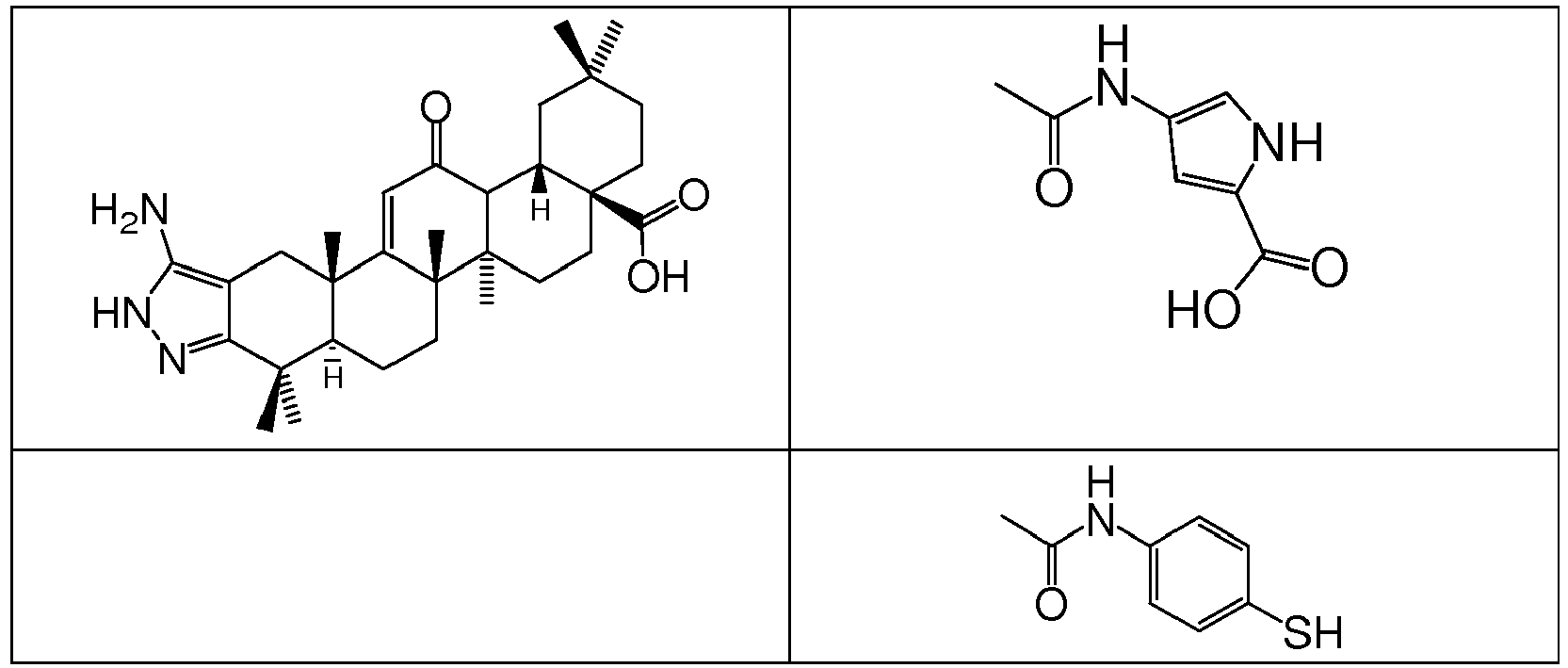
Claims (16)
- A compound corresponding to the following chemical structure:
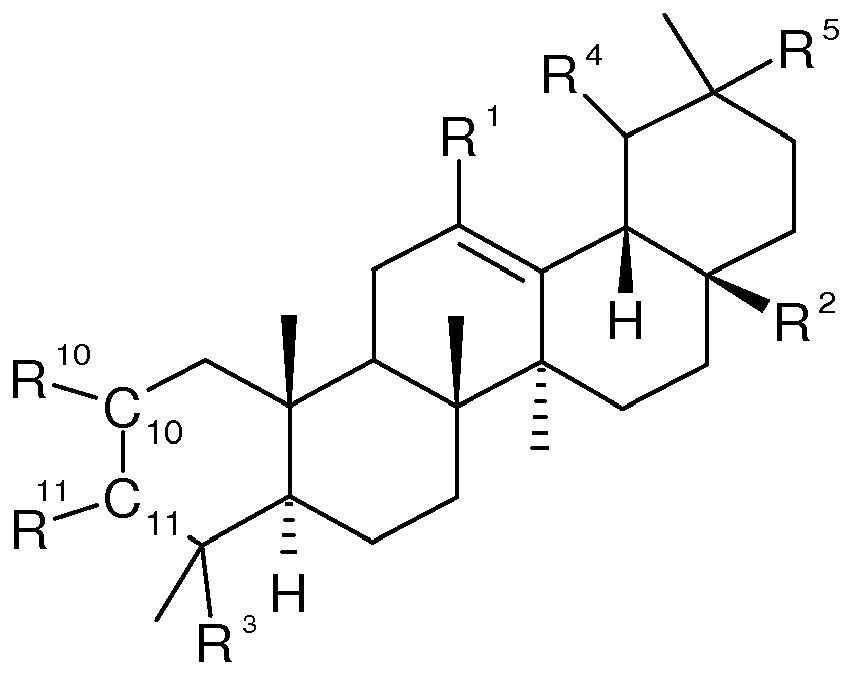 wherein R10 and R11 together with the carbon atoms to which they are attached form
 and when R10 and R11 together with the carbon atoms to which they are attached
form R1 is selected from the group consisting of hydrogen, methyl, halide, C1-C5 alkyl wherein one or more hydrogen atoms attached to a member atom within the C1-C5 alkyl group is replaced with 1, 2, 3 or 4 halide atoms, nitrile, C1-C5 alkyl or C2-C5 alkenyl with one nitrile group replacing one terminal carbon atom in the unbranched or branched chain, substituted or not C1-C5 alkyl, substituted or not C2-C5 alkenyl, substituted or not C2-C5 alkynyl, cyclopropyl, cyclobutyl, cyclopentyl, cyclohexyl, norbornane, adamantine, C5-C6 cycloalkenyl, substituted or not C6-C12 aryl, and substituted or not pyrrolyl, pyrazolyl, imidazolyl, oxazolyl, isoxazolyl, oxadiazolyl, thiazolyl, isothiazolyl, thienyl, furanyl, furazanyl, pyridinyl, pyrimidinyl, pyridazinyl, indolyl, 3H-indolyl, isoindolyl, indolinyl, indolizinyl, indazolyl, dihydroindolyl, tetrahydroindolyl, purinyl, pyrazinyl, quinolinyl, isoquinolinyl, tetrahydroisoquinolinyl, quinoxalinyl, quinazolinyl, cinnolinyl, pteridinyl, benzimidazolyl, benzopyranyl, benzoxazolyl, benzisoxazolyl, benzofuranyl, isobenzofuranyl, benzothiazolyl, benzisothiazolyl, benzothienyl, furopyridinyl, phthalazinyl, napthyridinyl, pyrazolopyridyl, pyrazolopyrimidinyl; and their partially reduced forms; or a heteroaryl of 6 members or less fused with an aryl of 6 members or less or separately two heteroaryls of 6 members or less fused together; wherein R2 is selected from the group consisting of carboxyl, amide, hydroxyamide, methylamide, -CH2N(CH3)2, -CH2NR6R7,

 R3 is selected from the group consisting of hydrogen and methyl; one of R4 and R5 is hydrogen and the other is methyl; R6 and R7 are independently selected from the group consisting of hydrogen, methyl, ethyl, propyl, isopropyl, and butyl; wherein R8 is selected from the group consisting of hydroxyl, amino, -N(CH3)2, and -NHCH3; and wherein R9 is selected from the group consisting of hydrogen, halide, C1-C5 alkyl, C2-C5 alkenyl, C2-C5 alkynyl, morpholinyl, piperazinyl, C1-C5 alkyl piperazinyl, heterocycloalkyl, cyclopropyl, cyclobutyl, cyclopentyl, cyclohexyl, norbornane, adamantine, C5-C6 cycloalkenyl; and C1-C5 alkyl, C2-C5 alkenyl, and C2-C5 alkynyl optionally substituted with moieties selected from the group consisting of hydroxyl, amino, C1-C5 alkyl or C2-C5 alkenyl with one nitrogen atom replacing one terminal carbon atom in the unbranched or branched chain, halide, C1-C5 alkyl with one carbon atom replaced with an oxygen atom, C1-C5 alkyl with a carbonylamino or aminocarbonyl replacing two carbon atoms in the unbranched or branched chain, carboxyl, amide, hydroxyamide, -CONHCH3, -NHCONH2, -SO2NH2, -SO2CH3,-NHCOCH3, -NHCSNH2, -NHSO2CH3, and a radical of formula -OR12 or a radical of formula -C(O)-R12 wherein R12 is selected from the group consisting of C1-C5 alkyl, C2-C5 alkenyl, cyclopropyl, cyclobutyl, cyclopentyl, cyclohexyl, norbornane, adamantine, and C5-C6 cycloalkenyl; and pharmaceutically acceptable salts thereof,
orwhen R10 and R11 together with the carbon atoms to which they are attached form R1 is selected from the group consisting of hydrogen, methyl, halide, nitrile, substituted or not C1-C5 alkyl, substituted or not C2-C5 alkenyl, substituted or not C2-C5 alkynyl, substituted or not C2-C5 aryl, and substituted or not pyrrolyl, pyrazolyl, imidazolyl, oxazolyl, isoxazolyl, oxadiazolyl, thiazolyl, isothiazolyl, thienyl, furanyl, furazanyl, pyridinyl, pyrimidinyl, pyridazinyl, indolyl, 3H-indolyl, isoindolyl, indolinyl, indolizinyl, indazolyl, dihydroindolyl, tetrahydroindolyl, purinyl, pyrazinyl, quinolinyl, isoquinolinyl, tetrahydroisoquinolinyl, quinoxalinyl, quinazolinyl, cinnolinyl, pteridinyl, benzimidazolyl, benzopyranyl, benzoxazolyl, benzisoxazolyl, benzofuranyl, isobenzofuranyl, benzothiazolyl, benzisothiazolyl, benzothienyl, furopyridinyl, phthalazinyl, napthyridinyl, pyrazolopyridyl, pyrazolopyrimidinyl; and their partially reduced forms; or a heteroaryl of 6 members or less fused with an aryl of 6 members or less or separately two heteroaryls of 6 members or less fused together; R2 is a carboxyl; R3 is selected from the group consisting of hydrogen and methyl; and one of R4 and R5 is hydrogen and the other is methyl; and pharmaceutically acceptable salts thereof.
 - A compound according to claim 1 wherein the compound corresponds to the following chemical structure

- A compound according to claim 1 wherein the compound corresponds to the following chemical structure:

- A compound according to claim 3 wherein R1 is selected from the group consisting of halide, substituted or not C1-C5 alkyl, substituted or not C2-C5 alkenyl, cyclopropyl, cyclobutyl, cyclopentyl, cyclohexyl, norbornane, adamantine, C5-C6 cycloalkenyl, substituted or not C6-C12 aryl, and substituted or not pyrrolyl, pyrazolyl, imidazolyl, oxazolyl, isoxazolyl, oxadiazolyl, thiazolyl, isothiazolyl, thienyl, furanyl, furazanyl, pyridinyl, pyrimidinyl, pyridazinyl, indolyl, 3H-indolyl, isoindolyl, indolinyl, indolizinyl, indazolyl, dihydroindolyl, tetrahydroindolyl, purinyl, pyrazinyl, quinolinyl, isoquinolinyl, tetrahydroisoquinolinyl, quinoxalinyl, quinazolinyl, cinnolinyl, pteridinyl, benzimidazolyl, benzopyranyl, benzoxazolyl, benzisoxazolyl, benzofuranyl, isobenzofuranyl, benzothiazolyl, benzisothiazolyl, benzothienyl, furopyridinyl, phthalazinyl, napthyridinyl, pyrazolopyridyl, pyrazolopyrimidinyl; and their partially reduced forms; or a heteroaryl of 6 members or less fused with an aryl of 6 members or less or separately two heteroaryls of 6 members or less fused together, preferably R1 is selected from the group consisting of pyrrolyl, pyrazolyl, imidazolyl, oxazolyl, isoxazolyl, oxadiazolyl, thiazolyl, isothiazolyl, thienyl, furanyl, furazanyl, pyridinyl, pyrimidinyl, pyridazinyl, indolyl, 3H-indolyl, isoindolyl, indolinyl, indolizinyl, indazolyl, dihydroindolyl, tetrahydroindolyl, purinyl, pyrazinyl, quinolinyl, isoquinolinyl, tetrahydroisoquinolinyl, quinoxalinyl, quinazolinyl, cinnolinyl, pteridinyl, benzimidazolyl, benzopyranyl, benzoxazolyl, benzisoxazolyl, benzofuranyl, isobenzofuranyl, benzothiazolyl, benzisothiazolyl, benzothienyl, furopyridinyl, phthalazinyl, napthyridinyl, pyrazolopyridyl, pyrazolopyrimidinyl, pyrrolopyridinyl, and tetrahydropyrrolopyridinyl optionally substituted from moieties selected from the group consisting of C1-C5 alkyl, halide, C1-C5 alkyl wherein one or more hydrogen atoms attached to a member atom within the C1-C5 alkyl group is replaced with 1, 2, 3 or 4 halide atoms, hydroxyl, amino, C1-C5 alkyl or C2-C5 alkenyl with one nitrogen atom replacing one terminal carbon atom in the unbranched or branched chain, C1-C5 alkyl or C2-C5 alkenyl wherein one or more hydrogen atoms attached to a member atom within the C1-C5 alkyl or C2-C5 alkenyl group is replaced with one or more hydroxyls, nitrile, C1-C5 alkyl or C2-C5 alkenyl with one nitrile group replacing one terminal carbon in the unbranched or branched chain, a radical of formula R'OR" wherein R' is C1-C5 alkyl, C2-C5 alkenyl or C2-C5 alkynyl and R" is C1-C5 alkyl, C2-C5 alkenyl, C2-C5 alkynyl, C6-C12 aryl, pyrrolyl, pyrazolyl, imidazolyl,
oxazolyl, isoxazolyl, oxadiazolyl, thiazolyl, isothiazolyl, thienyl, furanyl, furazanyl, pyridinyl, pyrimidinyl, pyridazinyl, indolyl, 3H-indolyl, isoindolyl, indolinyl, indolizinyl, indazolyl, dihydroindolyl, tetrahydroindolyl, purinyl, pyrazinyl, quinolinyl, isoquinolinyl, tetrahydroisoquinolinyl, quinoxalinyl, quinazolinyl, cinnolinyl, pteridinyl, benzimidazolyl, benzopyranyl, benzoxazolyl, benzisoxazolyl, benzofuranyl, isobenzofuranyl, benzothiazolyl, benzisothiazolyl, benzothienyl, furopyridinyl, phthalazinyl, napthyridinyl, pyrazolopyridyl, pyrazolopyrimidinyl; and their partially reduced forms; or a heteroaryl of 6 members or less fused with an aryl of 6 members or less or separately two heteroaryls of 6 members or less fused together or heterocycloalkyl, C1-C5 alkyl with one carbon atom replaced with an oxygen atom, C1-C5 alkyl with a carbonylamino or aminocarbonyl replacing two carbon atoms in the unbranched or branched chain, a radical of formula -OR12 or a radical of formula -C(O)-R12 wherein R12 is selected from the group consisting of a C1-C5 alkyl, C2-C5 alkenyl, cyclopropyl, cyclobutyl, cyclopentyl, cyclohexyl, norbornane, adamantine, and C5-C6 cycloalkenyl; and thioalkyl. - A compound according to claim 1 wherein the compound corresponds to the following chemical structure


- A compound according to claim 5 wherein R1 is selected from the group consisting of pyrrolyl, pyrazolyl, imidazolyl, oxazolyl, isoxazolyl, oxadiazolyl, thiazolyl, isothiazolyl, thienyl, furanyl, furazanyl, pyridinyl, pyrimidinyl, pyridazinyl, indolyl, 3H-indolyl, isoindolyl, indolinyl, indolizinyl, indazolyl, dihydroindolyl, and tetrahydroindolyl optionally substituted from moieties selected from the group consisting of C1-C5 alkyl, halide, C1-C5 alkyl wherein one or more hydrogen atoms attached to a member atom within the C1-C5 alkyl group is replaced with 1, 2, 3 or 4 halide atoms, hydroxyl, amino, C1-C5 alkyl or C2-C5 alkenyl with one nitrogen atom replacing one terminal carbon atom in the unbranched or branched chain, C1-C5 alkyl or C2-C5 alkenyl wherein one or more hydrogen atoms attached to a member atom within the C1-C5 alkyl or C2-C5 alkenyl group is replaced with one or more hydroxyls, nitrile, C1-C5 alkyl or C2-C5 alkenyl with one nitrile group replacing one terminal carbon in the unbranched or branched chain, a radical of formula R'OR" wherein R' is C1-C5 alkyl, C2-C5 alkenyl or C2-C5 alkynyl and R" is a C1-C5 alkyl, a C2-C5 alkenyl, a C2-C5 alkynyl, aryl, pyrrolyl, pyrazolyl, imidazolyl, oxazolyl, isoxazolyl, oxadiazolyl, thiazolyl, isothiazolyl, thienyl, furanyl, furazanyl, pyridinyl, pyrimidinyl, pyridazinyl, indolyl, 3H-indolyl, isoindolyl, indolinyl, indolizinyl, indazolyl, dihydroindolyl, tetrahydroindolyl, purinyl, pyrazinyl, quinolinyl, isoquinolinyl, tetrahydroisoquinolinyl, quinoxalinyl, quinazolinyl, cinnolinyl, pteridinyl, benzimidazolyl, benzopyranyl, benzoxazolyl, benzisoxazolyl, benzofuranyl, isobenzofuranyl, benzothiazolyl, benzisothiazolyl, benzothienyl, furopyridinyl, phthalazinyl, napthyridinyl, pyrazolopyridyl, pyrazolopyrimidinyl; and their partially reduced forms; or a heteroaryl of 6 members or less fused with an aryl of 6 members or less or separately two heteroaryls of 6 members or less fused together or heterocycloalkyl, a radical of formula -OR12 or a radical of formula -C(O)-R12 wherein R2 is selected from the group consisting of C1-C5 alkyl, C2-C5 alkenyl, cyclopropyl, cyclobutyl, cyclopentyl, cyclohexyl, norbornane, adamantine, or C5-C6 cycloalkenyl; C1-C5 alkyl with one carbon atom replaced with an oxygen atom, C1-C5 alkyl with a carbonylamino or aminocarbonyl replacing two carbon atoms in the unbranched or branched chain, and thioalkyl.
- A compound according to claim 1 wherein the compound corresponds to the following chemical structure
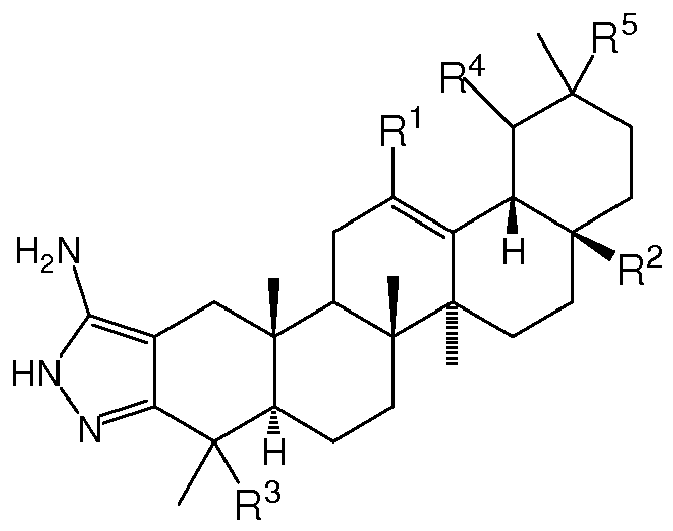 wherein R2 is
 wherein R8 is selected from the group consisting of hydroxyl and amino; and wherein R9 is selected from the group consisting of hydrogen, halide, C1-C5 alkyl, C2-C5 alkenyl, C2-C5 alkynyl, morpholinyl, piperazinyl, C1-C5 alkyl piperazinyl, heterocycloalkyl cyclopropyl, cyclobutyl, cyclopentyl, cyclohexyl, norbornane, adamantine, C5-C6 cycloalkenyl; and C1-C5 alkyl, C2-C5 alkenyl, and C2-C5 alkynyl optionally substituted with moieties selected from the group consisting of hydroxyl, amino, C1-C5 alkyl or C2-C5 alkenyl with one nitrogen atom replacing one terminal carbon atom in the unbranched or branched chain, halide, a radical of formula-OR12 or a radical of formula -C(O)-R12 wherein R12 is selected from the group consisting of C1-C5 alkyl, C2-C5 alkenyl, cyclopropyl, cyclobutyl, cyclopentyl, cyclohexyl, norbornane, adamantine, and C5-C6 cycloalkenyl; C1-C5 alkyl with one carbon atom replaced with an oxygen atom, C1-C5 alkyl with a carbonylamino or aminocarbonyl replacing two carbon atoms in the unbranched or branched chain, carboxyl, amide, hydroxyamide, -CONHCH3,-NHCONH2, -SO2NH2, -SO2CH3,-NHCOCH3, -NHCSNH2, and -NHSO2CH3 preferably R9 is hydrogen; and pharmaceutically acceptable salts thereof.
 - A compound according to claim 7 wherein R1 is selected from the group consisting of substituted or not pyrrolyl, pyrazolyl, imidazolyl, oxazolyl, isoxazolyl, oxadiazolyl, thiazolyl, isothiazolyl, thienyl, furanyl, furazanyl, pyridinyl, pyrimidinyl, pyridazinyl, indolyl, 3H-indolyl, isoindolyl, indolinyl, indolizinyl, indazolyl, dihydroindolyl, tetrahydroindolyl, purinyl, pyrazinyl, quinolinyl, isoquinolinyl, tetrahydroisoquinolinyl, quinoxalinyl, quinazolinyl, cinnolinyl, pteridinyl, benzimidazolyl, benzopyranyl, benzoxazolyl, benzisoxazolyl, benzofuranyl, isobenzofuranyl, benzothiazolyl, benzisothiazolyl, benzothienyl, furopyridinyl, phthalazinyl, napthyridinyl, pyrazolopyridyl, pyrazolopyrimidinyl; and their partially reduced forms; or a heteroaryl of 6 members or less fused with an aryl of 6 members or less or separately two heteroaryls of 6 members or less fused together, wherein R2 is

- A compound according to claim 1 wherein the compound corresponds to the following chemical structure:

- A method for inhibiting or reducing the formation or growth of a biofilm comprising contacting said biofilm or a cell capable of biofilm formation or growth with an effective amount of a compound or a composition comprising the compound corresponding to the following chemical structure:
 wherein R1 is selected from the group consisting of hydrogen, methyl, halide, C1-C5 alkyl wherein one or more hydrogen atoms attached to a member atom within the C1-C5 alkyl group is replaced with 1, 2, 3 or 4 halide atoms, nitrile, C1-C5 alkyl or C2-C5 alkenyl with one nitrile group replacing one terminal carbon atom in the unbranched or branched chain, substituted or not C1-C5 alkyl, substituted or not C2-C5 alkenyl, substituted or not C2-C5 alkynyl, cyclopropyl, cyclobutyl, cyclopentyl, cyclohexyl, norbornane, adamantine, C5-C6 cycloalkenyl, substituted C6-C12 aryl, and substituted or not pyrrolyl, pyrazolyl, imidazolyl, oxazolyl, isoxazolyl, oxadiazolyl, thiazolyl, isothiazolyl, thienyl, furanyl, furazanyl, pyridinyl, pyrimidinyl, pyridazinyl, indolyl, 3H-indolyl, isoindolyl, indolinyl, indolizinyl, indazolyl, dihydroindolyl, tetrahydroindolyl, purinyl, pyrazinyl, quinolinyl, isoquinolinyl, tetrahydroisoquinolinyl, quinoxalinyl, quinazolinyl, cinnolinyl, pteridinyl, benzimidazolyl, benzopyranyl, benzoxazolyl, benzisoxazolyl, benzofuranyl, isobenzofuranyl, benzothiazolyl, benzisothiazolyl, benzothienyl, furopyridinyl, phthalazinyl, napthyridinyl, pyrazolopyridyl, pyrazolopyrimidinyl; and their partially reduced forms; or a heteroaryl of 6 members or less fused with an aryl of 6 members or less or separately two heteroaryls of 6 members or less fused together,wherein R2 is selected from the group consisting of carboxyl, amide, hydroxyamide, methylamide, -CH2N(CH3)2, -CH2NR6R7,

 wherein R3 is selected from the group consisting of hydrogen and methyl; wherein one of R4 and R5 is hydrogen and the other is methyl; wherein R6 and R7 are independently selected from the group consisting of hydrogen, methyl, ethyl, propyl, isopropyl, and butyl; wherein R8 is selected from the group consisting of hydroxyl, amino, -N(CH3)2, and -NHCH3; wherein R9 is selected from the group consisting of hydrogen, halide, C1-C5 alkyl, C2-C5 alkenyl, C2-C5 alkynyl, morpholinyl, piperazinyl, C1-C5 alkyl piperazinyl, heterocycloalkyl, cyclopropyl, cyclobutyl, cyclopentyl, cyclohexyl, norbornane, adamantine, C5-C6 cycloalkenyl; and C1-C5 alkyl, C2-C5 alkenyl, and C2-C5 alkynyl optionally substituted with moieties selected from the group consisting of hydroxyl, amino, C1-C5 alkyl or C2-C5 alkenyl with one nitrogen atom replacing one terminal carbon atom in the unbranched or branched chain, halide, C1-C5 alkyl with one carbon atom replaced with an oxygen atom , C1-C5 alkyl with a carbonylamino or aminocarbonyl replacing two carbon atoms in the unbranched or branched chain, carboxyl, amide, hydroxyamide, -CONHCH3, -NHCONH2, -SO2NH2, -SO2CH3, -NHCOCH3,-NHCSNH2, -NHSO2CH3, a radical of formula -OR12 or a radical of formula -C(O)-R12 wherein R12 is selected from the group consisting of C1-C5 alkyl, C2-C5 alkenyl, cyclopropyl, cyclobutyl, cyclopentyl, cyclohexyl, norbornane, adamantine, a C5-C6 cycloalkenyl; and wherein R10 and R11 together with the carbon atoms to which they are attached form an aromatic N-heterocycle which is substituted or not selected from the group consisting of indole, imidazole, quinoline, isoquinoline, pyridine, triazine, pyrazine, pyrimidine, pyridazine, isoindole, pyrrole, benzimidazole, purine, pyrazole, benzopyrazole, indazole, quinoxaline, acridine, quinazoline, indolizine, carbazole and cinnoline; and pharmaceutically acceptable salts thereof, with the proviso that the method is not performed on a human or animal body.
 - A method according to claim 10 wherein the compound corresponds to the following chemical structure:
 wherein R1 is selected from the group consisting of hydrogen, methyl, halide, C1-C5 alkyl group wherein one or more hydrogen atoms attached to a member atom within the C1-C5 alkyl group is replaced with 1, 2, 3, or 4 halide atoms, nitrile, C1-C5 alkyl nitrile, substituted or not C1-C5 alkyl, substituted or not C2-C5 alkenyl, substituted or not C2-C5 alkynyl, cyclopropyl, cyclobutyl, cyclopentyl, cyclohexyl, norbornane, adamantine, C5-C6 cycloalkenyl, substituted or not C6-C12 aryl, and substituted or not pyrrolyl, pyrazolyl, imidazolyl, oxazolyl, isoxazolyl, oxadiazolyl, thiazolyl, isothiazolyl, thienyl, furanyl, furazanyl, pyridinyl, pyrimidinyl, pyridazinyl, indolyl, 3H-indolyl, isoindolyl, indolinyl, indolizinyl, indazolyl, dihydroindolyl, tetrahydroindolyl, purinyl, pyrazinyl, quinolinyl, isoquinolinyl, tetrahydroisoquinolinyl, quinoxalinyl, quinazolinyl, cinnolinyl, pteridinyl, benzimidazolyl, benzopyranyl, benzoxazolyl, benzisoxazolyl, benzofuranyl, isobenzofuranyl, benzothiazolyl, benzisothiazolyl, benzothienyl, furopyridinyl, phthalazinyl, napthyridinyl, pyrazolopyridyl, pyrazolopyrimidinyl; and their partially reduced forms; or a heteroaryl of 6 members or less fused with an aryl of 6 members or less or separately two heteroaryls of 6 members or less fused together; wherein R2 is selected from the group consisting of carboxyl, amide, hydroxyamide, methylamide, -CH2N(CH3)2, -CH2NR6R7,

 wherein R3 is selected from the group consisting of hydrogen and methyl; wherein one of R4 and R5 is hydrogen and the other is methyl; wherein R6 and R7 are independently selected from the group consisting of hydrogen, methyl, ethyl, propyl, isopropyl, and butyl; wherein R8 is selected from the group consisting of hydroxyl, amino, -N(CH3)2, and -NHCH3; and wherein wherein R9 is selected from the group consisting of hydrogen, halide, C1-C5 alkyl, C2-C5 alkenyl, C2-C5 alkynyl, morpholinyl, piperazinyl, C1-C5 alkyl piperazinyl, heterocycloalkyl, cyclopropyl, cyclobutyl, cyclopentyl, cyclohexyl, norbornane, adamantine, C5-C6 cycloalkenyl; and C1-C5 alkyl, C2-C5 alkenyl, and C2-C5 alkynyl optionally substituted with moieties selected from the group consisting of hydroxyl, amino, C1-C5 alkyl or C2-C5 alkenyl with one nitrogen atom replacing one terminal carbon atom in the unbranched or branched chain, halide, C1-C5 alkyl with one carbon atom replaced with an oxygen atom , C1-C5 alkyl with a carbonylamino or aminocarbonyl replacing two carbon atoms in the unbranched or branched chain, carboxyl, amide, hydroxyamide, -CONHCH3, -NHCONH2, -SO2NH2, -SO2CH3, -NHCOCH3,-NHCSNH2, -NHSO2CH3, a radical of formula -OR12 or a radical of formula -C(O)-R12 wherein R12 is selected from the group consisting of C1-C5 alkyl, C2-C5 alkenyl, cyclopropyl, cyclobutyl, cyclopentyl, cyclohexyl, norbornane, adamantine, and C5-C6 cycloalkenyl; and pharmaceutically acceptable salts thereof.
 - A method according to claim 10 wherein the compound corresponds to the following chemical structure:
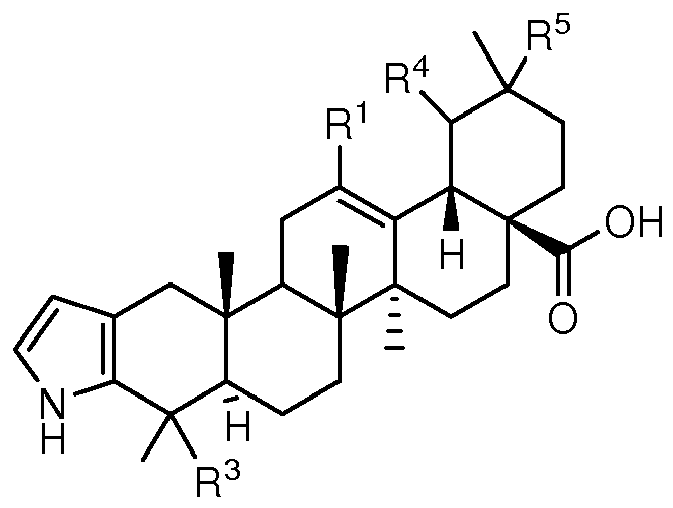
- A method according to claim 10, wherein the compound corresponds to the followings chemical structure:
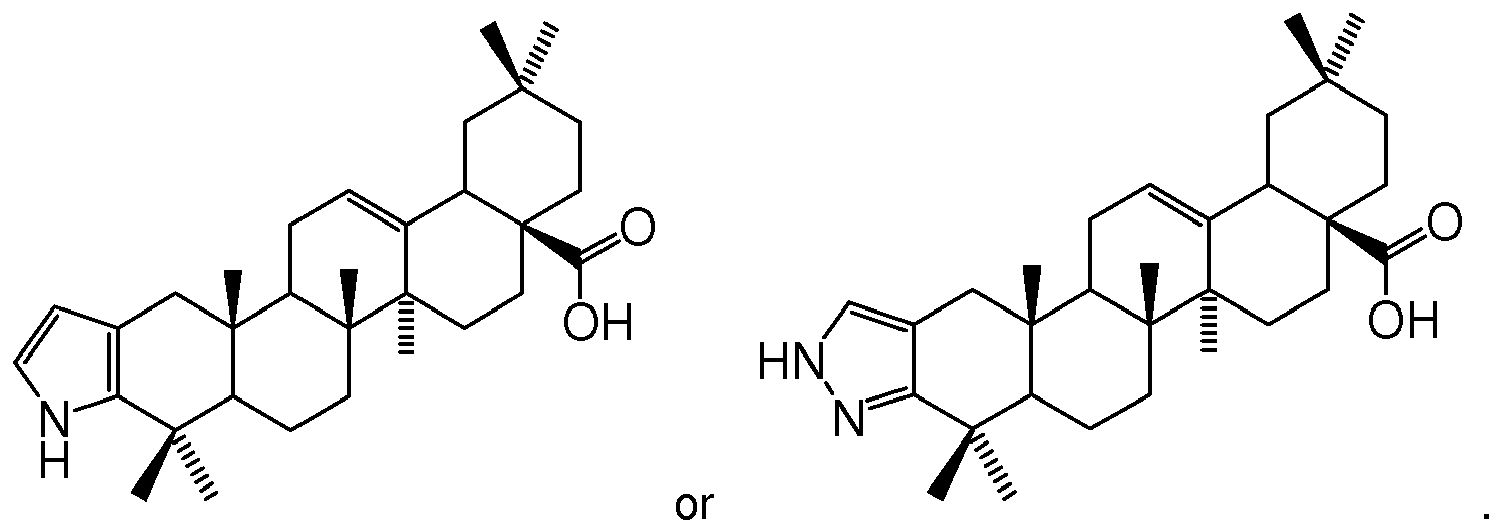
- A compound for use in the reduction of virulence of gram-negative bacteria, the compound corresponding to the following chemical structure:
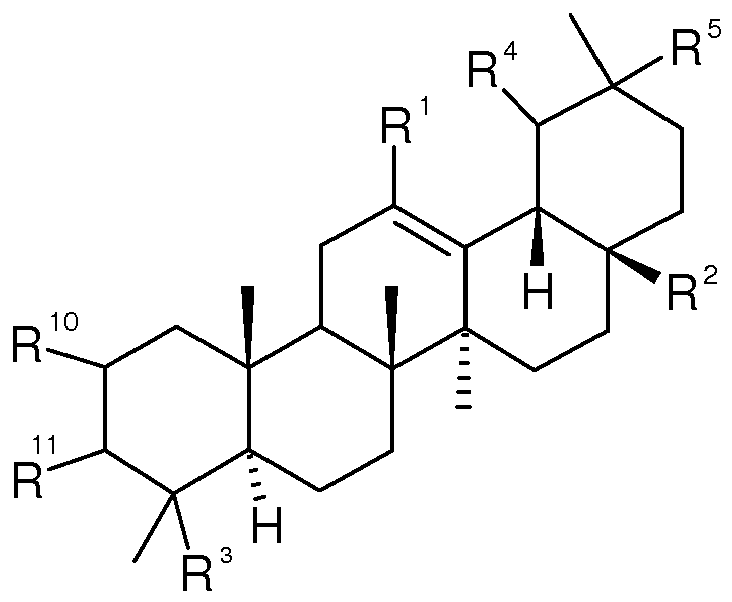 wherein R1 is selected from the group consisting of hydrogen, methyl, halide, C1-C5 alkyl wherein one or more hydrogen atoms attached to a member atom within the C1-C5 alkyl group is replaced with 1, 2, 3 or 4 halide atoms, nitrile, C1-C5 alkyl or C2-C5 alkenyl with one nitrile group replacing one terminal carbon atom in the unbranched or branched chain, substituted or not C1-C5 alkyl, substituted or not C2-C5 alkenyl, substituted or not C2-C5 alkynyl, cyclopropyl, cyclobutyl, cyclopentyl, cyclohexyl, norbornane, adamantine, C5-C6 cycloalkenyl, substituted C6-C12 aryl, and substituted or not pyrrolyl, pyrazolyl, imidazolyl, oxazolyl, isoxazolyl, oxadiazolyl, thiazolyl, isothiazolyl, thienyl, furanyl, furazanyl, pyridinyl, pyrimidinyl, pyridazinyl, indolyl, 3H-indolyl, isoindolyl, indolinyl, indolizinyl, indazolyl, dihydroindolyl, tetrahydroindolyl, purinyl, pyrazinyl, quinolinyl, isoquinolinyl, tetrahydroisoquinolinyl, quinoxalinyl, quinazolinyl, cinnolinyl, pteridinyl, benzimidazolyl, benzopyranyl, benzoxazolyl, benzisoxazolyl, benzofuranyl, isobenzofuranyl, benzothiazolyl, benzisothiazolyl, benzothienyl, furopyridinyl, phthalazinyl, napthyridinyl, pyrazolopyridyl, pyrazolopyrimidinyl; and their partially reduced forms; or a heteroaryl of 6 members or less fused with an aryl of 6 members or less or separately two heteroaryls of 6 members or less fused together; wherein R2 is selected from the group consisting of carboxyl, amide, hydroxyamide, methylamide, -CH2N(CH3)2, -CH2NR6R7,

 wherein R3 is selected from the group consisting of hydrogen and methyl; wherein one of R4 and R5 is hydrogen and the other is methyl; wherein R6 and R7 are independently selected from the group consisting of hydrogen, methyl, ethyl, propyl, isopropyl, and butyl; wherein R8 is selected from the group consisting of hydroxyl, amino, -N(CH3)2, and -NHCH3; wherein R9 is selected from the group consisting of hydrogen, halide, C1-C5 alkyl, C2-C5 alkenyl, C2-C5 alkynyl, morpholinyl, piperazinyl, C1-C5 alkyl piperazinyl, heterocycloalkylcyclopropyl, cyclobutyl, cyclopentyl, cyclohexyl, norbornane, adamantine, C5-C6 cycloalkenyl; and C1-C5 alkyl, C2-C5 alkenyl, and C2-C5 alkynyl optionally substituted with moieties selected from the group consisting of hydroxyl, amino, C1-C5 alkyl or C2-C5 alkenyl with one nitrogen atom replacing one terminal carbon atom in the unbranched or branched chain, halide, C1-C5 alkyl with one carbon atom replaced with an oxygen atom , C1-C5 alkyl with a carbonylamino or aminocarbonyl replacing two carbon atoms in the unbranched or branched chain, carboxyl, amide, hydroxyamide, -CONHCH3,-NHCONH2, -SO2NH2, -SO2CH3, -NHCOCH3,-NHCSNH2, -NHSO2CH3, a radical of formula -OR12 or a radical of formula -C(O)-R12 wherein R12 is selected from the group consisting of C1-C5 alkyl, C2-C5 alkenyl, cyclopropyl, cyclobutyl, cyclopentyl, cyclohexyl, norbornane, adamantine, and C5-C6 cycloalkenyl; and wherein R10 and R11 together with the carbon atoms to which they are attached form an aromatic N-heterocycle which is substituted or not selected from the group consisting of indole, imidazole, quinoline, isoquinoline, pyridine, triazine, pyrazine, pyrimidine, pyridazine, isoindole, pyrrole, benzimidazole, purine, pyrazole, benzopyrazole, indazole, quinoxaline, acridine, quinazoline, indolizine, carbazole and cinnoline and pharmaceutically acceptable salts thereof.
 - A compound for use in the reduction of virulence of gram-negative bacteria according to claim 14 wherein the compound corresponds to the following chemical structure:
 wherein R1 is selected from the group consisting of hydrogen, methyl, halide, C1-C5 alkyl group wherein one or more hydrogen atoms attached to a member atom within the C1-C5 alkyl group is replaced with 1, 2, 3, or 4 halide atoms, nitrile, C1-C5 alkyl nitrile, substituted or not C1-C5 alkyl, substituted or not C2-C5 alkenyl, substituted or not C2-C5 alkynyl, cyclopropyl, cyclobutyl, cyclopentyl, cyclohexyl, norbornane, adamantine, C5-C6 cycloalkenyl, substituted or not C6-C12 aryl, and substituted or not pyrrolyl, pyrazolyl, imidazolyl, oxazolyl, isoxazolyl, oxadiazolyl, thiazolyl, isothiazolyl, thienyl, furanyl, furazanyl, pyridinyl, pyrimidinyl, pyridazinyl, indolyl, 3H-indolyl, isoindolyl, indolinyl, indolizinyl, indazolyl, dihydroindolyl, tetrahydroindolyl, purinyl, pyrazinyl, quinolinyl, isoquinolinyl, tetrahydroisoquinolinyl, quinoxalinyl, quinazolinyl, cinnolinyl, pteridinyl, benzimidazolyl, benzopyranyl, benzoxazolyl, benzisoxazolyl, benzofuranyl, isobenzofuranyl, benzothiazolyl, benzisothiazolyl, benzothienyl, furopyridinyl, phthalazinyl, napthyridinyl, pyrazolopyridyl, pyrazolopyrimidinyl; and their partially reduced forms; or a heteroaryl of 6 members or less fused with an aryl of 6 members or less or separately two heteroaryls of 6 members or less fused together; wherein R2 is selected from the group consisting of carboxyl, amide, hydroxyamide, methylamide, -CH2N(CH3)2, -CH2NR6R7,

 wherein R3 is selected from the group consisting of hydrogen and methyl; wherein one of R4 and R5 is hydrogen and the other is methyl; wherein R6 and R7 are independently selected from the group consisting of hydrogen, methyl, ethyl, propyl, isopropyl, and butyl; wherein R8 is selected from the group consisting of hydroxyl, amino, -N(CH3)2, and -NHCH3; and wherein wherein R9 is selected from the group consisting of hydrogen, halide, C1-C5 alkyl, C2-C5 alkenyl, C2-C5 alkynyl, morpholinyl, piperazinyl, C1-C5 alkyl piperazinyl, heterocycloalkyl cyclopropyl, cyclobutyl, cyclopentyl, cyclohexyl, norbornane, adamantine, C5-C6 cycloalkenyl; and C1-C5 alkyl, C2-C5 alkenyl, and C2-C5 alkynyl optionally substituted with moieties selected from the group consisting of hydroxyl, amino, C1-C5 alkyl or C2-C5 alkenyl with one nitrogen atom replacing one terminal carbon atom in the unbranched or branched chain, halide, C1-C5 alkyl with one carbon atom replaced with an oxygen atom, C1-C5 alkyl with a carbonylamino or aminocarbonyl replacing two carbon atoms in the unbranched or baranched chain, carboxyl, amide, hydroxyamide, -CONHCH3,-NHCONH2, -SO2NH2, -SO2CH3, -NHCOCH3,-NHCSNH2, -NHSO2CH3, a radical of formula -OR12 or a radical of formula -C(O)-R12 wherein R12 is selected from the group consisting of C1-C5 alkyl, C2-C5 alkenyl, cyclopropyl, cyclobutyl, cyclopentyl, cyclohexyl, norbornane, adamantine, and C5-C6 cycloalkenyl; and pharmaceutically acceptable salts thereof.
 - A compound for use in the reduction of virulence of gram-negative bacteria according to claim 14 wherein the compound corresponds to the following chemical structure:

Priority Applications (1)
| Application Number | Priority Date | Filing Date | Title |
|---|---|---|---|
| EP12186521.6A EP2712863B1 (en) | 2012-09-28 | 2012-09-28 | Novel inhibitors of bacterial biofilms and related methods |
Applications Claiming Priority (1)
| Application Number | Priority Date | Filing Date | Title |
|---|---|---|---|
| EP12186521.6A EP2712863B1 (en) | 2012-09-28 | 2012-09-28 | Novel inhibitors of bacterial biofilms and related methods |
Publications (2)
| Publication Number | Publication Date |
|---|---|
| EP2712863A1 EP2712863A1 (en) | 2014-04-02 |
| EP2712863B1 true EP2712863B1 (en) | 2014-10-22 |
Family
ID=46963599
Family Applications (1)
| Application Number | Title | Priority Date | Filing Date |
|---|---|---|---|
| EP12186521.6A Ceased EP2712863B1 (en) | 2012-09-28 | 2012-09-28 | Novel inhibitors of bacterial biofilms and related methods |
Country Status (1)
| Country | Link |
|---|---|
| EP (1) | EP2712863B1 (en) |
Families Citing this family (1)
| Publication number | Priority date | Publication date | Assignee | Title |
|---|---|---|---|---|
| EP4204403A1 (en) | 2020-08-27 | 2023-07-05 | Københavns Universitet | Compounds having pseudomonas anti-biofilm properties |
Family Cites Families (5)
| Publication number | Priority date | Publication date | Assignee | Title |
|---|---|---|---|---|
| US82902A (en) | 1868-10-06 | Improved metallic eoofim | ||
| US3865739A (en) | 1974-02-25 | 1975-02-11 | Texaco Inc | Thiadiazole derivative, mixture and compositions thereof |
| EP1773313A4 (en) * | 2004-07-14 | 2007-11-07 | Gary R Eldridge | Control of biofilm formation |
| WO2006031943A1 (en) * | 2004-09-14 | 2006-03-23 | Eldridge Gary R | Compounds, compositions and methods for controlling biofilms and bacterial infections |
| CN101619088B (en) * | 2009-08-04 | 2012-07-04 | 上海朴颐化学科技有限公司 | Maslinic acid derivative as well as preparation and application thereof |
-
2012
- 2012-09-28 EP EP12186521.6A patent/EP2712863B1/en not_active Ceased
Also Published As
| Publication number | Publication date |
|---|---|
| EP2712863A1 (en) | 2014-04-02 |
Similar Documents
| Publication | Publication Date | Title |
|---|---|---|
| US8324264B1 (en) | Inhibitors of bacterial biofilms and related methods | |
| DE69426831T2 (en) | HETEROCYCLIC ESTERS OF RAPAMYCIN AND PHARMACEUTICAL COMPOSITIONS CONTAINING THEM | |
| CN112566916B (en) | Substituted Thienopyrroles as PAD4 Inhibitors | |
| DE69529100T2 (en) | metalloproteinase | |
| DE60221684T2 (en) | ANTIBIOTICS WITH DOUBLE EFFECT | |
| MX2008011128A (en) | N-formyl hydroxylamine compounds. | |
| DE60210612T2 (en) | N-FORMYLHYDROXYLAMINE COMPOUNDS AS INHIBITORS OF PDF | |
| TW201326138A (en) | Canine uric acid-3-monooxygenase inhibitor, pharmaceutical composition thereof and use method thereof | |
| RS60662B1 (en) | Peptide macrocycles against acinetobacter baumannii | |
| DE69736775T2 (en) | CEPHEM COMPOUNDS AND MEDICAMENTS CONTAINING THESE COMPOUNDS | |
| CN101583617A (en) | 4-(2-oxo-oxazolidin-3yl)-phenoxymethyle derivativeas as antibacterials | |
| DE102005057924A1 (en) | pyridazinone derivatives | |
| WO2016129983A1 (en) | Novel n-acyl-arylsulfonamide derivatives as aminoacyl-trna synthetase inhibitors | |
| WO2020172565A1 (en) | Methods and materials for increasing or maintaining nicotinamide mononucleotide adenylyl transferase-2 (nmnat2) polypeptide levels | |
| DE60133561T2 (en) | Heterocyclic mutilin esters and their use as bactericides | |
| KR20120089437A (en) | Flavin derivatives | |
| US10988444B2 (en) | Antimicrobial compounds | |
| RU2412939C2 (en) | N-formyl hydroxyamine derivatives | |
| CA2474850A1 (en) | Imidazo[1,2-a]pyridine derivatives | |
| JPWO1998002431A1 (en) | Cis-substituted aminocyclopropane derivatives | |
| PT1538150E (en) | Novel pleuromutilin derivatives | |
| EP2712863A1 (en) | Novel inhibitors of bacterial biofilms and related methods | |
| CN114945577B (en) | Macrolide compounds and their use in treating chronic respiratory diseases | |
| JP4926723B2 (en) | Fluoroalkylpyrrolidine derivatives | |
| DE60125977T2 (en) | STREPTOGRAMINE DERIVATIVES, THEIR MANUFACTURE AND THE COMPOSITIONS THAT CONTAIN THEM |
Legal Events
| Date | Code | Title | Description |
|---|---|---|---|
| GRAP | Despatch of communication of intention to grant a patent |
Free format text: ORIGINAL CODE: EPIDOSNIGR1 |
|
| PUAI | Public reference made under article 153(3) epc to a published international application that has entered the european phase |
Free format text: ORIGINAL CODE: 0009012 |
|
| 17P | Request for examination filed |
Effective date: 20130814 |
|
| AK | Designated contracting states |
Kind code of ref document: A1 Designated state(s): AL AT BE BG CH CY CZ DE DK EE ES FI FR GB GR HR HU IE IS IT LI LT LU LV MC MK MT NL NO PL PT RO RS SE SI SK SM TR |
|
| AX | Request for extension of the european patent |
Extension state: BA ME |
|
| GRAJ | Information related to disapproval of communication of intention to grant by the applicant or resumption of examination proceedings by the epo deleted |
Free format text: ORIGINAL CODE: EPIDOSDIGR1 |
|
| GRAP | Despatch of communication of intention to grant a patent |
Free format text: ORIGINAL CODE: EPIDOSNIGR1 |
|
| INTG | Intention to grant announced |
Effective date: 20140401 |
|
| INTG | Intention to grant announced |
Effective date: 20140410 |
|
| GRAP | Despatch of communication of intention to grant a patent |
Free format text: ORIGINAL CODE: EPIDOSNIGR1 |
|
| INTG | Intention to grant announced |
Effective date: 20140522 |
|
| GRAS | Grant fee paid |
Free format text: ORIGINAL CODE: EPIDOSNIGR3 |
|
| GRAA | (expected) grant |
Free format text: ORIGINAL CODE: 0009210 |
|
| AK | Designated contracting states |
Kind code of ref document: B1 Designated state(s): AL AT BE BG CH CY CZ DE DK EE ES FI FR GB GR HR HU IE IS IT LI LT LU LV MC MK MT NL NO PL PT RO RS SE SI SK SM TR |
|
| RBV | Designated contracting states (corrected) |
Designated state(s): AL AT BE BG CH CY CZ DE DK EE ES FI FR GB GR HR HU IE IS IT LI LT LU LV MC MK MT NL NO PL PT RO RS SE SI SK SM TR |
|
| REG | Reference to a national code |
Ref country code: GB Ref legal event code: FG4D |
|
| REG | Reference to a national code |
Ref country code: CH Ref legal event code: EP |
|
| REG | Reference to a national code |
Ref country code: AT Ref legal event code: REF Ref document number: 692563 Country of ref document: AT Kind code of ref document: T Effective date: 20141115 |
|
| REG | Reference to a national code |
Ref country code: IE Ref legal event code: FG4D |
|
| REG | Reference to a national code |
Ref country code: DE Ref legal event code: R096 Ref document number: 602012003489 Country of ref document: DE Effective date: 20141204 |
|
| REG | Reference to a national code |
Ref country code: NL Ref legal event code: VDEP Effective date: 20141022 |
|
| REG | Reference to a national code |
Ref country code: AT Ref legal event code: MK05 Ref document number: 692563 Country of ref document: AT Kind code of ref document: T Effective date: 20141022 |
|
| REG | Reference to a national code |
Ref country code: LT Ref legal event code: MG4D |
|
| PG25 | Lapsed in a contracting state [announced via postgrant information from national office to epo] |
Ref country code: LT Free format text: LAPSE BECAUSE OF FAILURE TO SUBMIT A TRANSLATION OF THE DESCRIPTION OR TO PAY THE FEE WITHIN THE PRESCRIBED TIME-LIMIT Effective date: 20141022 Ref country code: NL Free format text: LAPSE BECAUSE OF FAILURE TO SUBMIT A TRANSLATION OF THE DESCRIPTION OR TO PAY THE FEE WITHIN THE PRESCRIBED TIME-LIMIT Effective date: 20141022 Ref country code: IS Free format text: LAPSE BECAUSE OF FAILURE TO SUBMIT A TRANSLATION OF THE DESCRIPTION OR TO PAY THE FEE WITHIN THE PRESCRIBED TIME-LIMIT Effective date: 20150222 Ref country code: FI Free format text: LAPSE BECAUSE OF FAILURE TO SUBMIT A TRANSLATION OF THE DESCRIPTION OR TO PAY THE FEE WITHIN THE PRESCRIBED TIME-LIMIT Effective date: 20141022 Ref country code: NO Free format text: LAPSE BECAUSE OF FAILURE TO SUBMIT A TRANSLATION OF THE DESCRIPTION OR TO PAY THE FEE WITHIN THE PRESCRIBED TIME-LIMIT Effective date: 20150122 Ref country code: ES Free format text: LAPSE BECAUSE OF FAILURE TO SUBMIT A TRANSLATION OF THE DESCRIPTION OR TO PAY THE FEE WITHIN THE PRESCRIBED TIME-LIMIT Effective date: 20141022 Ref country code: PT Free format text: LAPSE BECAUSE OF FAILURE TO SUBMIT A TRANSLATION OF THE DESCRIPTION OR TO PAY THE FEE WITHIN THE PRESCRIBED TIME-LIMIT Effective date: 20150223 |
|
| PG25 | Lapsed in a contracting state [announced via postgrant information from national office to epo] |
Ref country code: HR Free format text: LAPSE BECAUSE OF FAILURE TO SUBMIT A TRANSLATION OF THE DESCRIPTION OR TO PAY THE FEE WITHIN THE PRESCRIBED TIME-LIMIT Effective date: 20141022 Ref country code: PL Free format text: LAPSE BECAUSE OF FAILURE TO SUBMIT A TRANSLATION OF THE DESCRIPTION OR TO PAY THE FEE WITHIN THE PRESCRIBED TIME-LIMIT Effective date: 20141022 Ref country code: SE Free format text: LAPSE BECAUSE OF FAILURE TO SUBMIT A TRANSLATION OF THE DESCRIPTION OR TO PAY THE FEE WITHIN THE PRESCRIBED TIME-LIMIT Effective date: 20141022 Ref country code: CY Free format text: LAPSE BECAUSE OF FAILURE TO SUBMIT A TRANSLATION OF THE DESCRIPTION OR TO PAY THE FEE WITHIN THE PRESCRIBED TIME-LIMIT Effective date: 20141022 Ref country code: RS Free format text: LAPSE BECAUSE OF FAILURE TO SUBMIT A TRANSLATION OF THE DESCRIPTION OR TO PAY THE FEE WITHIN THE PRESCRIBED TIME-LIMIT Effective date: 20141022 Ref country code: LV Free format text: LAPSE BECAUSE OF FAILURE TO SUBMIT A TRANSLATION OF THE DESCRIPTION OR TO PAY THE FEE WITHIN THE PRESCRIBED TIME-LIMIT Effective date: 20141022 Ref country code: GR Free format text: LAPSE BECAUSE OF FAILURE TO SUBMIT A TRANSLATION OF THE DESCRIPTION OR TO PAY THE FEE WITHIN THE PRESCRIBED TIME-LIMIT Effective date: 20150123 Ref country code: AT Free format text: LAPSE BECAUSE OF FAILURE TO SUBMIT A TRANSLATION OF THE DESCRIPTION OR TO PAY THE FEE WITHIN THE PRESCRIBED TIME-LIMIT Effective date: 20141022 |
|
| REG | Reference to a national code |
Ref country code: DE Ref legal event code: R097 Ref document number: 602012003489 Country of ref document: DE |
|
| PG25 | Lapsed in a contracting state [announced via postgrant information from national office to epo] |
Ref country code: SK Free format text: LAPSE BECAUSE OF FAILURE TO SUBMIT A TRANSLATION OF THE DESCRIPTION OR TO PAY THE FEE WITHIN THE PRESCRIBED TIME-LIMIT Effective date: 20141022 Ref country code: CZ Free format text: LAPSE BECAUSE OF FAILURE TO SUBMIT A TRANSLATION OF THE DESCRIPTION OR TO PAY THE FEE WITHIN THE PRESCRIBED TIME-LIMIT Effective date: 20141022 Ref country code: DK Free format text: LAPSE BECAUSE OF FAILURE TO SUBMIT A TRANSLATION OF THE DESCRIPTION OR TO PAY THE FEE WITHIN THE PRESCRIBED TIME-LIMIT Effective date: 20141022 Ref country code: EE Free format text: LAPSE BECAUSE OF FAILURE TO SUBMIT A TRANSLATION OF THE DESCRIPTION OR TO PAY THE FEE WITHIN THE PRESCRIBED TIME-LIMIT Effective date: 20141022 Ref country code: RO Free format text: LAPSE BECAUSE OF FAILURE TO SUBMIT A TRANSLATION OF THE DESCRIPTION OR TO PAY THE FEE WITHIN THE PRESCRIBED TIME-LIMIT Effective date: 20141022 |
|
| PLBE | No opposition filed within time limit |
Free format text: ORIGINAL CODE: 0009261 |
|
| STAA | Information on the status of an ep patent application or granted ep patent |
Free format text: STATUS: NO OPPOSITION FILED WITHIN TIME LIMIT |
|
| PG25 | Lapsed in a contracting state [announced via postgrant information from national office to epo] |
Ref country code: IT Free format text: LAPSE BECAUSE OF FAILURE TO SUBMIT A TRANSLATION OF THE DESCRIPTION OR TO PAY THE FEE WITHIN THE PRESCRIBED TIME-LIMIT Effective date: 20141022 |
|
| REG | Reference to a national code |
Ref country code: FR Ref legal event code: PLFP Year of fee payment: 4 |
|
| 26N | No opposition filed |
Effective date: 20150723 |
|
| PG25 | Lapsed in a contracting state [announced via postgrant information from national office to epo] |
Ref country code: SI Free format text: LAPSE BECAUSE OF FAILURE TO SUBMIT A TRANSLATION OF THE DESCRIPTION OR TO PAY THE FEE WITHIN THE PRESCRIBED TIME-LIMIT Effective date: 20141022 |
|
| PG25 | Lapsed in a contracting state [announced via postgrant information from national office to epo] |
Ref country code: LU Free format text: LAPSE BECAUSE OF FAILURE TO SUBMIT A TRANSLATION OF THE DESCRIPTION OR TO PAY THE FEE WITHIN THE PRESCRIBED TIME-LIMIT Effective date: 20150928 Ref country code: MC Free format text: LAPSE BECAUSE OF FAILURE TO SUBMIT A TRANSLATION OF THE DESCRIPTION OR TO PAY THE FEE WITHIN THE PRESCRIBED TIME-LIMIT Effective date: 20141022 |
|
| REG | Reference to a national code |
Ref country code: FR Ref legal event code: PLFP Year of fee payment: 5 |
|
| PG25 | Lapsed in a contracting state [announced via postgrant information from national office to epo] |
Ref country code: MT Free format text: LAPSE BECAUSE OF FAILURE TO SUBMIT A TRANSLATION OF THE DESCRIPTION OR TO PAY THE FEE WITHIN THE PRESCRIBED TIME-LIMIT Effective date: 20141022 |
|
| PG25 | Lapsed in a contracting state [announced via postgrant information from national office to epo] |
Ref country code: SM Free format text: LAPSE BECAUSE OF FAILURE TO SUBMIT A TRANSLATION OF THE DESCRIPTION OR TO PAY THE FEE WITHIN THE PRESCRIBED TIME-LIMIT Effective date: 20141022 Ref country code: BG Free format text: LAPSE BECAUSE OF FAILURE TO SUBMIT A TRANSLATION OF THE DESCRIPTION OR TO PAY THE FEE WITHIN THE PRESCRIBED TIME-LIMIT Effective date: 20141022 Ref country code: HU Free format text: LAPSE BECAUSE OF FAILURE TO SUBMIT A TRANSLATION OF THE DESCRIPTION OR TO PAY THE FEE WITHIN THE PRESCRIBED TIME-LIMIT; INVALID AB INITIO Effective date: 20120928 |
|
| REG | Reference to a national code |
Ref country code: FR Ref legal event code: PLFP Year of fee payment: 6 |
|
| PG25 | Lapsed in a contracting state [announced via postgrant information from national office to epo] |
Ref country code: BE Free format text: LAPSE BECAUSE OF FAILURE TO SUBMIT A TRANSLATION OF THE DESCRIPTION OR TO PAY THE FEE WITHIN THE PRESCRIBED TIME-LIMIT Effective date: 20141022 |
|
| PG25 | Lapsed in a contracting state [announced via postgrant information from national office to epo] |
Ref country code: TR Free format text: LAPSE BECAUSE OF FAILURE TO SUBMIT A TRANSLATION OF THE DESCRIPTION OR TO PAY THE FEE WITHIN THE PRESCRIBED TIME-LIMIT Effective date: 20141022 Ref country code: MK Free format text: LAPSE BECAUSE OF FAILURE TO SUBMIT A TRANSLATION OF THE DESCRIPTION OR TO PAY THE FEE WITHIN THE PRESCRIBED TIME-LIMIT Effective date: 20141022 |
|
| REG | Reference to a national code |
Ref country code: FR Ref legal event code: PLFP Year of fee payment: 7 |
|
| PG25 | Lapsed in a contracting state [announced via postgrant information from national office to epo] |
Ref country code: AL Free format text: LAPSE BECAUSE OF FAILURE TO SUBMIT A TRANSLATION OF THE DESCRIPTION OR TO PAY THE FEE WITHIN THE PRESCRIBED TIME-LIMIT Effective date: 20141022 |
|
| PGFP | Annual fee paid to national office [announced via postgrant information from national office to epo] |
Ref country code: GB Payment date: 20200909 Year of fee payment: 9 Ref country code: FR Payment date: 20200910 Year of fee payment: 9 Ref country code: IE Payment date: 20200908 Year of fee payment: 9 Ref country code: DE Payment date: 20200916 Year of fee payment: 9 |
|
| PGFP | Annual fee paid to national office [announced via postgrant information from national office to epo] |
Ref country code: CH Payment date: 20200914 Year of fee payment: 9 |
|
| REG | Reference to a national code |
Ref country code: DE Ref legal event code: R119 Ref document number: 602012003489 Country of ref document: DE |
|
| REG | Reference to a national code |
Ref country code: CH Ref legal event code: PL |
|
| GBPC | Gb: european patent ceased through non-payment of renewal fee |
Effective date: 20210928 |
|
| PG25 | Lapsed in a contracting state [announced via postgrant information from national office to epo] |
Ref country code: IE Free format text: LAPSE BECAUSE OF NON-PAYMENT OF DUE FEES Effective date: 20210928 Ref country code: GB Free format text: LAPSE BECAUSE OF NON-PAYMENT OF DUE FEES Effective date: 20210928 Ref country code: FR Free format text: LAPSE BECAUSE OF NON-PAYMENT OF DUE FEES Effective date: 20210930 Ref country code: DE Free format text: LAPSE BECAUSE OF NON-PAYMENT OF DUE FEES Effective date: 20220401 |
|
| PG25 | Lapsed in a contracting state [announced via postgrant information from national office to epo] |
Ref country code: LI Free format text: LAPSE BECAUSE OF NON-PAYMENT OF DUE FEES Effective date: 20210930 Ref country code: CH Free format text: LAPSE BECAUSE OF NON-PAYMENT OF DUE FEES Effective date: 20210930 |