EP2712629A1 - Colloid bonded Medicinal Compounds - Google Patents
Colloid bonded Medicinal Compounds Download PDFInfo
- Publication number
- EP2712629A1 EP2712629A1 EP12186555.4A EP12186555A EP2712629A1 EP 2712629 A1 EP2712629 A1 EP 2712629A1 EP 12186555 A EP12186555 A EP 12186555A EP 2712629 A1 EP2712629 A1 EP 2712629A1
- Authority
- EP
- European Patent Office
- Prior art keywords
- group
- compound
- compound according
- substituted
- starch
- Prior art date
- Legal status (The legal status is an assumption and is not a legal conclusion. Google has not performed a legal analysis and makes no representation as to the accuracy of the status listed.)
- Withdrawn
Links
- 0 CC(C)N(C(C)C)P(O*)OCCC#N Chemical compound CC(C)N(C(C)C)P(O*)OCCC#N 0.000 description 3
- KPIVDGYHFUDJMR-UHFFFAOYSA-N ONNC(NNC(S)=O)=O Chemical compound ONNC(NNC(S)=O)=O KPIVDGYHFUDJMR-UHFFFAOYSA-N 0.000 description 1
Classifications
-
- A—HUMAN NECESSITIES
- A61—MEDICAL OR VETERINARY SCIENCE; HYGIENE
- A61K—PREPARATIONS FOR MEDICAL, DENTAL OR TOILETRY PURPOSES
- A61K47/00—Medicinal preparations characterised by the non-active ingredients used, e.g. carriers or inert additives; Targeting or modifying agents chemically bound to the active ingredient
- A61K47/50—Medicinal preparations characterised by the non-active ingredients used, e.g. carriers or inert additives; Targeting or modifying agents chemically bound to the active ingredient the non-active ingredient being chemically bound to the active ingredient, e.g. polymer-drug conjugates
- A61K47/51—Medicinal preparations characterised by the non-active ingredients used, e.g. carriers or inert additives; Targeting or modifying agents chemically bound to the active ingredient the non-active ingredient being chemically bound to the active ingredient, e.g. polymer-drug conjugates the non-active ingredient being a modifying agent
- A61K47/56—Medicinal preparations characterised by the non-active ingredients used, e.g. carriers or inert additives; Targeting or modifying agents chemically bound to the active ingredient the non-active ingredient being chemically bound to the active ingredient, e.g. polymer-drug conjugates the non-active ingredient being a modifying agent the modifying agent being an organic macromolecular compound, e.g. an oligomeric, polymeric or dendrimeric molecule
- A61K47/61—Medicinal preparations characterised by the non-active ingredients used, e.g. carriers or inert additives; Targeting or modifying agents chemically bound to the active ingredient the non-active ingredient being chemically bound to the active ingredient, e.g. polymer-drug conjugates the non-active ingredient being a modifying agent the modifying agent being an organic macromolecular compound, e.g. an oligomeric, polymeric or dendrimeric molecule the organic macromolecular compound being a polysaccharide or a derivative thereof
-
- C—CHEMISTRY; METALLURGY
- C07—ORGANIC CHEMISTRY
- C07H—SUGARS; DERIVATIVES THEREOF; NUCLEOSIDES; NUCLEOTIDES; NUCLEIC ACIDS
- C07H19/00—Compounds containing a hetero ring sharing one ring hetero atom with a saccharide radical; Nucleosides; Mononucleotides; Anhydro-derivatives thereof
- C07H19/02—Compounds containing a hetero ring sharing one ring hetero atom with a saccharide radical; Nucleosides; Mononucleotides; Anhydro-derivatives thereof sharing nitrogen
- C07H19/04—Heterocyclic radicals containing only nitrogen atoms as ring hetero atom
- C07H19/06—Pyrimidine radicals
Definitions
- the invention relates to colloids bound medicinal compounds or fluorescent markers, to a process for the preparation thereof, and to a pharmaceutical formulation containing such compounds.
- EP 1 230 935 A1 describes the chemical binding of medicinally active substances to a polysaccharide to form a linker. The uptake of substances by correspondingly specialized cells of the reticulohistiocytic system has been demonstrated for a wide variety of colloids and particles.
- the object of the present invention is to provide a novel and versatile way to link colloids, especially HES molecules or derivatives, to an active ingredient or a fluorescence marker via a phosphor acid diester linkage therefore giving access to novel bioconjugates.
- bioconjugates retain biological activity while exhibiting improved drug properties.
- the present invention relates to a compound of general formula (I) wherein X is a colloid-active compound; L 1 is a first linker by means of which X and the phosphate group are covalently linked together; L 2 is a second linker by means of which the phosphate group and A are covalently linked together; A is a medicinally active substance or a fluorescence marker; n is an integer of at least 1.
- n is an integer of from 1 to 10,000, preferably from 2 to 1000, more preferably from 5 to 500, especially from 10 to 100.
- the colloid-active compound X is selected from the group consisting of amyloses, amylopectins, acemannans, arabinogalactans, galactomannans, galactoglucomannans, xanthans, carrageenan, hyaluronic acid, deacetylated hyaluronic acid, chitosan, starch and modified starch.
- the modified starch is preferably selected from the group consisting of hydroxyalkyl starches, esterified starches, carboxyalkyl starches, hydroxyalkyl carboxyalkyl starch, aminated hydroxyalkyl starch, aminated hydroxyalkyl carboxyalkyl starch and aminated carboxyalkyl starch.
- the modified starch is selected from hydroxyethyl starch or aminated hydroxyethyl starch.
- the degree of substitution, DS, of the modified starch, especially hydroxyethyl starch is from 0.2 to 0.8, preferably from 0.3 to 0.6.
- the colloid-active compound has an average molecular weight of from 20,000 to 800,000 daltons, preferably from 25,000 to 500,000 daltons, especially from 30,000 to 200,000 daltons.
- the medicinally active compound A is selected from the group consisting of antibiotics, chemotherapeutics, cytostatic agents, antigens, oligonucleotides, mediators, false metabolic substrates, analgetics, antifungals and cytotoxic substances.
- a in formula (I) is preferably selected from group consisting of 5-Fluorouracil, Amphotericin B, Daunorubicin, Doxorubicin, Cladribine, Zosyn (Tazosyn), Floxuridine, Delafloxacin, Gemcitabine, Irinotecan, Vadimezan, Fluconazole, Voriconazole and Ravuconazole.
- R 1 is H or an organic moiety, preferably a C 1 -C 28 chain which may be branched or linear and which may be saturated or unsaturated and which may optionally be interrupted and/or substituted by one or more hetero atom(s) (Het1) and/or functional group(s)(G1); or R 1 is a C 3 -C 28 moiety which comprises at least one cyclic structure and which may be saturated or unsaturated and which may optionally be interrupted and/or substituted by one or more hetero atom(s) (Het1) and functional group(s)(G1); R 2 is H or an organic moiety comprising 1 to 30 carbon atoms; R 3 and R 4 represent independently from each other H or a C 1 -C 28 -alkyl moiety which may optionally be substituted or interrupted by one or more heteroatom(s) and/or functional group(s); or R 3 and R 4 form a ring having at least 5 members,
- substituent R 1 is a linear or branched chain comprising 1 to 50 carbon which may be interrupted and/or substituted by one or more hetero atom(s) (Het1) and/or functional group(s)(G1).
- R 1 is a linear or branched chain comprising 2 to 40, more preferably 3 to 30, especially 4 to 28 or 6 to 20 or 8 to 16 carbon atoms.
- R 1 is a linear or branched C 1 -C 28 -alkyl, preferably C 2 -C 20 -alkyl, more preferably C 4 -C 20 -alkyl or C 6 -C 18 -alkyl, especially C 8 -C 16 -alkyl which may be substituted or unsubstituted.
- the carbon chain is interrupted by one or more hetero atom(s) (Het1) wherein the Het1 is preferably selected from O, S and N, more preferably selected from O or N.
- the substituent R 1 is interrupted by up to 3 hetero atom(s) (Het1), preferably 1 or 2 hetero atoms such as O.
- the carbon chain of substituent R 1 is interrupted by nitrogen which preferably further branches the chain.
- R 9 and R 10 are independently selected from a C 1 to C 30 chain which can be saturated or unsaturated, preferably a C 1 to C 30 alkyl, preferably C 4 to C 24 alkyl, more preferably C 8 to C 22 alkyl and especially C 12 to C 18 alkyl; or a C 2 to C 30 chain having one or more carbon-carbon double and/or carbon-carbon triple bond(s); and "a" is an integer ranging from 1 to 20, preferably 2 to 18, more preferably 3 to 12 or 4 to 8.
- the linking moiety which links the nitrogen atom with substituents R 9 and R 10 to the 5-fluorouracil moiety can also be a unsaturated carbon chain having one 2 to 20 carbon atoms and one or more carbon- carbon double and or carbon-carbon triple bonds.
- the exemplary substituent of the following formula: can be synthesized by various synthetic routes. Scheme 1 shows several synthetic routes for precursors which can be attached to the 5-fluorouracil moiety.
- the dioctadecylamine is reacted with methyl bromoacetate in the presence of dibenzo-[18]-crown-6 which leads to the pure methyl ester in almost quantitative yield.
- the ester can be reduced with LiAlH 4 to give the alcohole.
- the dioctadecylamine can be reacted with methyl acrylate which results in almost quantitative yield to the ester which was further reduced with LiAlH 4 to give a lipophilic aminopropanol derivative.
- the dioctadecylamine was reacted with succinic anhydride to give the acid which can be converted to the methyl ester by reaction with dimethyl sulphate in the presence of K 2 CO 3 .
- the methyl ester can then be reduced with LiAlH 4 yielding the further extended alcohole, namely a lipophilized 4-aminobutanol derivative.
- the dioctadecylamine can be alkylated with 1,4-dichlorobut-2-yne in the presence of Na 2 CO 3 in benzene.
- lipid single chain precursors can be obtained by the reaction of octadecylamine with succinic anhydride which leads to the acid which can be reduced with LiAlH 4 in THF at ambient temperature which leads to the reduction of the carboxylic group only, but not of the amide moiety and results into the amidoalcohole in 82% yield.
- Replacement of THF by Et 2 O however results in the amino alcohol in a high yield of 84%.
- Subsequent reaction of amino alcohol with propargyl bromide results in the double chained alkine in 61% yield.
- the lipophilic carbon chains comprising a hydroxyl functional group or a halide can be introduced regioselectively into the 5-fluorouracil derivative.
- the lipophilic groups can principally be positioned either at the heterocyclic base or at the glyconic moiety and can be introduced by various methods, e.g. by base-catalysed alkylation with alkyl halides.
- reaction of unprotected 5-fluorouracil derivatives with halogenated alkyls, alkenes or alkynes can be performed in DMF/K 2 CO 3 (direct alkylation) and leads to the alkylation of the unsubstituted nitrogen atom in the 5-fluorouracil ring.
- the unsubstituted nitrogen atom in the 5-fluorouracil ring is substituted by an halogen substituted precursor under the proviso that the hydroxyl groups present in the 5-fluorouracil derivative are protected by protecting groups.
- Suitable protecting groups are known to the person skilled in the art. Examples are dimethoxytrityl (DMT) and a tert -butyl-dimethylsilyl group.
- the hydroxyl functional lipophilic precursor (such as the amino alcohols reflected in Scheme 1 and 2) can be selectively reacted with the unsubstituted nitrogen atom of the 5-fluorouracil derivative by a Mitsunobu reaction.
- This reaction is carried out by first protecting any hydroxyl groups which may be present in the 5-fluorouracil derivative.
- the Mitsunobu reaction is generally carried out by reacting the alcohol and the 5-fluorouracil derivative which comprises the unsubstituted ring nitrogen atom in the presence of triphenylphosphine and diisopropylazo dicarboxylate (DIAD).
- DIAD diisopropylazo dicarboxylate
- R 1 is preferably a C 2 to C 40 chain which is unsaturated, more preferably a C 8 to C 28 chain which is unsaturated.
- R 1 comprises one or more carbon-carbon double bond(s) and/or one or more carbon-carbon triple bond(s).
- R 1 comprises two or more, especially 2 to 6, such as 2 to 4 carbon-carbon double bonds.
- substituents are derived from nature. Suitable naturally derived substituents have a structure derived from terpenes. When terpenes are chemically modified such as by oxidation or rearrangement of the carbon skeleton, the resulting compounds are generally referred to as terpenoids.
- R 1 is a cyclic or alicyclic terpenoid, preferably a terpenoid having 8 to 36 carbon atoms.
- the terpenes are preferably selected from monoterpenes, sesquiterpenes, diterpenes, sesterterpenes, triterpenes and sesquaterpenes.
- Suitable monoterpenes or monoterpenoids which can be acyclic or cyclic are selected from the group consisting of geraniol, limonene, pinen, bornylen, nerol.
- Suitable sesquiterpenes sesquiterpenoids which can be acyclic or cyclic may inter alia be selected from farnesol.
- Suitable sesterterpenes or sesterterpenoids are inter alia selected from geranylfarnesol.
- Suitable diterpenes or diterpenoids can be selected from the group consisting of abietic acid, aphidicolin, cafestol, cembrene, ferruginol, forskolin, guanacastepene A, kahweol, labdane, lagochilin, sclarene, stemarene, steviol, taxadiene (precursor of taxol), tiamulin, geranylgeraniol and phytol.
- R 1 is selected from the group consisting of geranyl, farnesyl, neryl and phythyl.
- R 1 is H or C 3 -C 28 chain which may be branched or linear and which may be saturated or unsaturated and which may optionally be interrupted and/or substituted by one or more hetero atom(s) (Het1) and/or functional group(s)(G1); or R 1 is a C 1 -C 28 moiety which comprises at least one cyclic structure and which may be saturated or unsaturated and which may optionally be interrupted and/or substituted by one or more hetero atom(s) (Het1) and functional group(s)(G1);
- R 1 in formula (II) is selected from H, and and substituted or unsubstituted cyclic terpene moieties, wherein R 9 and R 10 are independently selected from C 1 to C 30 alkyl, b is an integer ranging 1 to 4, preferably n is 1 or 2; and a is an integer ranging from 1 to 20, preferably 2 to 18.
- group A is a fluorescence marker which is preferably selected from the group consisting of fluorescein isothiocyanate (FITC), phycoerythrin, rhodamide, 2-aminopyridine and coumarine dyes.
- FITC fluorescein isothiocyanate
- phycoerythrin phycoerythrin
- rhodamide phycoerythrin
- 2-aminopyridine 2-aminopyridine
- linker L 1 and/or L 2 are independently selected from a single bond or a saturated or unsaturated moiety having 1 to 30, preferably 2 to 20 carbon atoms, more preferably a carbon chain which may be substituted and/or interrupted by one or more functional groups selected from carboxylic acid ester, phosphate ester, carboxylic acid amides, urethane, ether and amine groups.
- L 1 and/or L 2 may also comprise cyclic moieties.
- linker L 1 and/or L 2 are independently selected from a single bond; alkandiyl, preferably C 1 -C 20 -alkandiyl; alkendiyl, preferably a C 2 -C 20 -alkendiyl; alkyndiyl, preferably a C 2 -C 20 -alkyndiyl; aryl moiety, aralkyl moiety and herterocyclic moiety.
- the alkandiyl represents a straight-chain or branched-chain alkandiyl group bound by two different carbon atoms to the molecule, it preferably represents a straight-chain or branched-chain C 1-12 alkandiyl, particularly preferably represents a straight-chain or branched-chain C 1-6 alkandiyl; for example, methandiyl (--CH 2 --), 1,2-ethanediyl (--CH 2 -CH 2 --), 1,1-ethanediyl ((-CH(CH 3 )--), 1,1-, 1,2-, 1,3-propanediyl and 1,1-, 1,2-, 1,3-, 1,4-butanediyl, with particular preference given to methandiyl, 1,1-ethanediyl, 1,2-ethanediyl, 1,3-propanediyl, 1,4-butanediyl.
- methandiyl 1,1-ethaned
- the aryl moiety preferably represents an aromatic hydrocarbon group, preferably a C 6-10 aromatic hydrocarbon group; for example phenyl, naphthyl, especially phenyl which may optionally be substituted.
- the aromatic moiety may form a linker in that the aromatic moiety is attached to the phosphor acid diester and the group A.
- the phosphor acid ester group and group A may be in ortho, meta or preferably para-position of the aromatic moiety.
- Aralkyl moiety denotes an "Aryl" bound to an "Alkyl” and represents, for example benzyl, ⁇ -methylbenzyl, 2-phenylethyl, ⁇ , ⁇ -dimethylbenzyl, especially benzyl.
- Aralkyl moiety can be attached to the phosphoracid ester group via the alkyl or via the aryl part of the aralkyl moiety.
- group A can be attached to the phosphor acid ester group via the alkyl or via the aryl part of the aralkyl moiety.
- Heterocyclic moiety represents a saturated, partly saturated or aromatic ring system containing at least one hetero atom.
- heterocycles consist of 3 to 11 ring atoms of which 1-3 ring atoms are hetero atoms.
- Heterocycles may be present as a single ring system or as bicyclic or tricyclic ring systems; preferably as single ring system or as benz-annelated ring system.
- Bicyclic or tricyclic ring systems may be formed by annelation of two or more rings, by a bridging atom, e.g. oxygen, sulfur, nitrogen or by a bridging group, e.g. alkandiyl or alkenediyl.
- heterocyclic moieties are: pyrrole, pyrroline, pyrrolidine, pyrazole, pyrazoline, pyrazolidine, imidazole, imidazoline, imidazolidine, triazole, triazoline, triazolidine, tetrazole, furane, dihydrofurane, tetrahydrofurane, furazane (oxadiazole), dioxolane, thiophene, dihydrothiophene, tetrahydrothiophene, oxazole, oxazoline, oxazolidine, isoxazole, isoxazoline, isoxazolidine, thiazole, thiazoline, thiazlolidine, isothiazole, istothiazoline, isothiazolidine, thiadiazole, thiadiazoline, thiadiazolidine, pyridine, piperidine, pyridazine, pyrazine
- Hetero atoms are atoms other than carbon and hydrogen, preferably nitrogen (N), oxygen (O) or sulfur (S).
- the heterocyclic moiety may form a linker L 2 in that the heterocylic moiety is covalently linked to the phosphor acid ester and the group A.
- heterocyclic moiety may form a linker L 1 in that the heterocylic moiety is covalently linked to the phosphor acid ester and the colloid-active compound X.
- linker L 1 is selected from the group consisting of a single bond and a C 1 -C 10 alkandiyl, preferably a C 2 -C 6 -alkandiyl, especially ethan-1,2-diyl (ethylene) or propan-1,2-diyl or propan-1,3-diyl.
- linker L 2 is selected from the group consisting of a single bond, a moiety of formula (VII), a moiety of formula (VIII) and a moiety of formula (IX) wherein the R 3 , R 4 , R 2 , R 5 , R 6 and R 7 are as defined above.
- X is hydroxyethylstarch and said medicinally active substance A is 5-fluorouracil (5-fluoro-1 H -pyrimidine-2,4-dione) or a derivative or a prodrug thereof.
- substance A may be 5-fluorouridine or a 5-fluorouridine derivative.
- An especially preferred embodiment of the invention is represented by the formula (V) wherein HES is hydroxyethylstarch and L 1 , L 2 and n are define as above.
- the phosphoric acid forms an ester linkage with the hydroxethyl group of the hydroxyethyl starch.
- linker L 1 in formula (V) is a single bond.
- the compound of the present invention is represented by the following formula (Ia): wherein n is as defined above and Z is selected from the group of following moieties with formulae Ib to Ig: wherein c is an integer ranging from 2 to 12, preferably 3 to 8, more preferably 3 to 6; d is an integer ranging from 1 to 24, preferably 2 to 18, more preferably 3 to 12; e is 1 or 2; R 3 , R 4 , R 2 , R 5 , R 6 and R 7 as well as A are as defined above.
- formula (Ia) wherein n is as defined above and Z is selected from the group of following moieties with formulae Ib to Ig: wherein c is an integer ranging from 2 to 12, preferably 3 to 8, more preferably 3 to 6; d is an integer ranging from 1 to 24, preferably 2 to 18, more preferably 3 to 12; e is 1 or 2; R 3 , R 4 , R 2 , R 5 , R 6 and R 7 as well as A are as defined above.
- a further embodiment of the invention is a pharmaceutical formulation comprising the compound of the invention.
- the pharmaceutical formulation is preferably aqueous and injectable.
- the compound of the invention can be obtained by reacting a phosphoramidite, which is linked to a a medicinally active substance A or a fluorescence marker A, with a colloid active compound which comprises one or more hydroxyl groups.
- the reaction sequence provides an access to pharmaceutically acceptable colloids which are linked with a medicinally active substance or a fluorescence marker and which can be cleaved enzymatically.
- a further embodiment of the invention is a process for preparing a compound of general formula (I) of the invention by linking a phosphoramidite covalently bonded to a A-L 2 -group, preferably by linking a compound of formula (VI) with a compound X-L 1 -OH or X which comprise at least one hydroxyl group and subsequently oxidizing and hydrolyzing the linked product so as to form a phosphor acid diester.
- the groups X, A, L 1 and L 2 are as defined above.
- the colloid active compound X which is preferably a starch, comprises one or more substituents selected from the group consisting of the moieties reflected in the following formulae: wherein f is an integer ranging from 1 to 4; g is an integer ranging from 1 to 10, preferably 1 to 4; h is an integer ranging from 1 to 4; preferably 2 to 4; i is an integer ranging from 1 to 4; preferably 2 to 4; j is an integer ranging from 1 to 4; preferably 2 to 4; and G is independently selected from -O- or NR 11 , wherein R 11 is selected from H or C 1 to C 4 alkyl.
- a phosphoramidite (RO) 2 PNR 2 is a monoamide of a phosphite diester.
- the key feature of phosphoramidites is their markedly high reactivity towards nucleophiles catalyzed by weak acids e . c ., triethylammonium chloride or 1 H- tetrazole. In these reactions, the incoming nucleophile replaces the NR 2 moiety.
- Phosphoramidites derived from protected nucleosides are referred to as nucleoside phosphoramidites and are widely used in chemical synthesis of DNA, RNA, and other nucleic acids and their analogs.
- Nucleoside phosphoramidites are derivatives of natural or synthetic nucleosides. They are used to synthesize oligonucleotides, relatively short fragments of nucleic acid and their analogs. Nucleoside phosphoramidites were first introduced in 1981 by Beaucage and Caruthers ( Beaucage, S.L.; Caruthers M.H. (1981). "Deoxynucleoside phosphoramidites-A new class of key intermediates for deoxypolynucleotide synthesis". Tetrahedron Letters 22: 1859-1862 ). In order to avoid undesired side reactions, reactive hydroxy and exocyclic amino groups present in natural or synthetic nucleosides are appropriately protected.
- nucleoside analog contains at least one hydroxy group
- the use of the appropriate protecting strategy allows one to convert that to the respective phosphoramidite and to incorporate the latter into synthetic nucleic acids
- the protected nucleoside is treated with the phosphorochloridite in the presence of an organic base, most commonly N-ethyl-N,N-diisopropylamine (Hünig's base).
- organic base most commonly N-ethyl-N,N-diisopropylamine (Hünig's base).
- the protected nucleoside is first treated with chloro N,N,N',N'-tetraisopropyl phosphorodiamidite in the presence of an organic base, most commonly N-ethyl-N,N-diisopropylamine (Hünig's base) to form a protected nucleoside diamidite.
- an organic base most commonly N-ethyl-N,N-diisopropylamine (Hünig's base)
- the latter is treated with an alcohol respective to the desired phosphite protecting group, for instance, 2-cyanoethanol, in the presence of a weak acid.
- Nucleoside phosphoramidites can be purified by column chromatography on for example silica gel.
- phosphoramidites can undergo a phosphoramidite coupling reaction with the colloid active compound X which comprises at least one hydroxy group.
- the reaction can be carried out in the presence of an acidic azole catalyst, 1 H -tetrazole, 2-ethylthiotetrazole, 2-benzylthiotetrazole, 4,5-dicyanoimidazole, or a number of similar compounds.
- Phosphoramidites are readily oxidized with weak oxidating reagents, for instance, with aqueous iodine in the presence of weak bases or with hydrogen peroxide to form the respective phosphoramidates.
- the oxidation step is carried out in the presence of a CSO oxidizer, preferably ((1S)-(+)(10-comphorsulfonyl)-oxaziridine).
- a CSO oxidizer preferably ((1S)-(+)(10-comphorsulfonyl)-oxaziridine).
- nucleoside-3'- or 5'-phosphates The naturally occurring nucleotides (nucleoside-3'- or 5'-phosphates) and their phosphodiester analogs are insufficiently reactive to afford an expedite synthetic preparation of oligonucleotides in high yields.
- the selectivity and the rate of the formation of internucleosidic linkages are dramatically improved by using 3'- O- ( N,N -diisopropyl phosphoramidite) derivatives of nucleosides (nucleoside phosphoramidites) that serve as building blocks in phosphite triester methodology.
- all other functional groups present in nucleosides should be rendered unreactive (protected) by attaching protecting groups.
- groups present at group A which may react with the phosphoramidite such as nucleophilic groups, e.g. OH groups are protected by protecting groups which can be cleaved after the coupling reaction with the colloid active compound occurred.
- Scheme 3 shows in an exemplary embodiment a synthetic route to obtain a phosphor acid diester attached to a hydroxyethy starch.
- hydroxyethyl starch HES
- Scheme 3 a reaction sequence is shown for a corresponding 5-fluorouridine derivative.
- 5-fluorouridine is first lipophilized at the O-2',3' position by a cyclic ketal moiety; the ring size is variable.
- the ketal moiety can be for example obtained by the synthesis disclosed in E. Malecki, H. Rosemeyer, Helv. Chim. Acta 2010, 93, 1500 .
- Anhydrous compound 6 (256 mg, 0.45 mmol) was 5'-phosphitylated under an nitrogen atmosphere using ethyldiisopropylamine ( Hünig's base, 147 ⁇ l, 0.85 mmol) and (chloro)(2-cyanoethoxy)(diisopropylamino)phosphine (181 ⁇ l, 0.80 mmol) The reaction mixture was stirred for 15 min at room temperature, and then an ice-cold 5% aq. NaHCO 3 solution (12 ml) was added.
- Scheme 4 shows another route for the preparation of a compound of the invention.
- Phosphoramidite 4 which is based on 5-(propyn-1-yl)-2'-deoxyuridine a virostatic compound, active against Herpes simplex viruses ( A.L. Andronova et al. Russ. J. Bioorg. Chem. 2003, 29, 262-266 ) has been coupled to HES.
- HES-40 (1 g) was dried by repeated (7 times) lyophilisation (freeze drying) from anhydrous acetonitrile (MeCN) (20 ml, each) during one week.
- the HES 500 mg was transferred into a reactor and purged with anhydrous MeCN (10 ml). Subsequently, the solid was purged with a 0.25 M 4,5-dicyano-imidazole (DCI) activator solution in MeCN (10 ml).
Landscapes
- Chemical & Material Sciences (AREA)
- Health & Medical Sciences (AREA)
- Organic Chemistry (AREA)
- Engineering & Computer Science (AREA)
- Life Sciences & Earth Sciences (AREA)
- General Health & Medical Sciences (AREA)
- Biochemistry (AREA)
- Molecular Biology (AREA)
- Genetics & Genomics (AREA)
- Biotechnology (AREA)
- Medicinal Chemistry (AREA)
- Veterinary Medicine (AREA)
- Public Health (AREA)
- Animal Behavior & Ethology (AREA)
- Epidemiology (AREA)
- Pharmacology & Pharmacy (AREA)
- Bioinformatics & Cheminformatics (AREA)
- Pharmaceuticals Containing Other Organic And Inorganic Compounds (AREA)
Abstract
The invention relates to colloids bound medicinal compounds or fluorescent markers, to a process for the preparation thereof, and to a pharmaceutical formulation containing such compounds.
Description
- The invention relates to colloids bound medicinal compounds or fluorescent markers, to a process for the preparation thereof, and to a pharmaceutical formulation containing such compounds.
- Achieving good solubility and/or chemical and metabolic stability can be a challenging issue in drug development. As a result a significant number of drugs or drug candidates exhibit sub-optimal properties potentially resulting in repeated administration, high doses and associated cost of goods, and represent a burden both to the patient and the drug companies developing them. Over the last 30 years a few innovative approaches have been developed to try to address these issues either via formulation strategies and/or bioconjugation methodologies such as PEGylation. Starch derivatives (eg HES) are water soluble semisynthetic polysaccharides that have been used in large amounts for decades in hospital care notably for the treatment of hypovolemia and that exhibit low toxicology potential. Their behavior in the human body is therefore very well understood. It has recently been reported that they could also be used as a biopolymer conjugates and could represent as such an elegant alternative to other methodologies described above.
- The covalent binding to colloids enables substances to be introduced by phagocytosis into cells of the immune system, which would not be taken up, or if so only in negligible amounts, without such modification.
EP 1 230 935 A1 describes the chemical binding of medicinally active substances to a polysaccharide to form a linker. The uptake of substances by correspondingly specialized cells of the reticulohistiocytic system has been demonstrated for a wide variety of colloids and particles. However, there is still a need to improve the binding complexes in terms of a sufficient availability of the medicinally active substance and/or the fluorescence marker at the cells which also requires a effective enzymatic cleavage of the medicinally active substance and/or the fluorescence marker from the colloid active substance. - For the introduction of medicinally active substances or fluorescence marker into specific organs and cell systems of the body, the following conditions must be met:
- 1. The medicament complex, which consists of the medicament chemically bonded to a colloid, should be water-soluble and circulate in the blood for a sufficient period of time.
- 2. The medicament complex should have no influence on blood clotting.
- 3. The medicinally active substance must be cleavable from the colloid active substance, especially enzymatically cleavable.
- The object of the present invention is to provide a novel and versatile way to link colloids, especially HES molecules or derivatives, to an active ingredient or a fluorescence marker via a phosphor acid diester linkage therefore giving access to novel bioconjugates. These bioconjugates retain biological activity while exhibiting improved drug properties.
- Surprisingly, it has now been found that bonding of a medicinally active substance or a fluorescence marker to a colloid (colloid-active compound) via a phosphor acid diester solves the above mentioned problems and serves, in particular, as a suitable transport system for medicaments and/or fluorescence markers covalently linked thereto.
- The present invention relates to a compound of general formula (I)

X is a colloid-active compound;
L1 is a first linker by means of which X and the phosphate group are covalently linked together;
L2 is a second linker by means of which the phosphate group and A are covalently linked together;
A is a medicinally active substance or a fluorescence marker;
n is an integer of at least 1. - In a preferred embodiment of the present invention, n is an integer of from 1 to 10,000, preferably from 2 to 1000, more preferably from 5 to 500, especially from 10 to 100.
- In a further preferred embodiment the colloid-active compound X is selected from the group consisting of amyloses, amylopectins, acemannans, arabinogalactans, galactomannans, galactoglucomannans, xanthans, carrageenan, hyaluronic acid, deacetylated hyaluronic acid, chitosan, starch and modified starch.
- The modified starch is preferably selected from the group consisting of hydroxyalkyl starches, esterified starches, carboxyalkyl starches, hydroxyalkyl carboxyalkyl starch, aminated hydroxyalkyl starch, aminated hydroxyalkyl carboxyalkyl starch and aminated carboxyalkyl starch.
- According to a especially preferred embodiment the modified starch is selected from hydroxyethyl starch or aminated hydroxyethyl starch. Preferably the degree of substitution, DS, of the modified starch, especially hydroxyethyl starch, is from 0.2 to 0.8, preferably from 0.3 to 0.6.
- Advantageously, the colloid-active compound has an average molecular weight of from 20,000 to 800,000 daltons, preferably from 25,000 to 500,000 daltons, especially from 30,000 to 200,000 daltons.
- According to a further preferred embodiment of the invention the medicinally active compound A is selected from the group consisting of antibiotics, chemotherapeutics, cytostatic agents, antigens, oligonucleotides, mediators, false metabolic substrates, analgetics, antifungals and cytotoxic substances.
- A in formula (I) is preferably selected from group consisting of 5-Fluorouracil, Amphotericin B, Daunorubicin, Doxorubicin, Cladribine, Zosyn (Tazosyn), Floxuridine, Delafloxacin, Gemcitabine, Irinotecan, Vadimezan, Fluconazole, Voriconazole and Ravuconazole.
- Specifically said medicinally active compound A is selected from formula (II) to (IV)


R1 is H or an organic moiety, preferably a C1-C28 chain which may be branched or linear and which may be saturated or unsaturated and which may optionally be interrupted and/or substituted by one or more hetero atom(s) (Het1) and/or functional group(s)(G1); or
R1 is a C3-C28 moiety which comprises at least one cyclic structure and which may be saturated or unsaturated and which may optionally be interrupted and/or substituted by one or more hetero atom(s) (Het1) and functional group(s)(G1);
R2 is H or an organic moiety comprising 1 to 30 carbon atoms;
R3 and R4 represent independently from each other H or a C1-C28-alkyl moiety which may optionally be substituted or interrupted by one or more heteroatom(s) and/or functional group(s); or
R3 and R4 form a ring having at least 5 members, preferably a ring having 5 to 8 carbon atoms and wherein the ring may be substituted or interrupted by one or more hetero atom(s) and/or functional group(s);
R5 and R6 represent independently from each other H or a C1-C28-alkyl moiety which may optionally be substituted or interrupted by one or more heteroatom(s) and/or functional group(s);
or
R5 and R6 form a ring having at least 5 members, preferably a ring having 5 to 18 carbon atoms and wherein the ring may be substituted or interrupted by one or more hetero atom(s) and/or functional group(s);
R7 is a hydrogen atom or -O-R8;
R8 is H or C1-C28 chain which may be branched or linear and which may be saturated or unsaturated and which may optionally be interrupted and/or substituted by one or more hetero atom(s) (Het1) and/or functional group(s)(G1). - In a preferred embodiment substituent R1 is a linear or branched chain comprising 1 to 50 carbon which may be interrupted and/or substituted by one or more hetero atom(s) (Het1) and/or functional group(s)(G1). Preferably, R1 is a linear or branched chain comprising 2 to 40, more preferably 3 to 30, especially 4 to 28 or 6 to 20 or 8 to 16 carbon atoms. In one aspect of the invention R1 is a linear or branched C1-C28-alkyl, preferably C2-C20-alkyl, more preferably C4-C20-alkyl or C6-C18-alkyl, especially C8-C16-alkyl which may be substituted or unsubstituted. In a further aspect of the invention the carbon chain is interrupted by one or more hetero atom(s) (Het1) wherein the Het1 is preferably selected from O, S and N, more preferably selected from O or N. In one aspect the substituent R1 is interrupted by up to 3 hetero atom(s) (Het1), preferably 1 or 2 hetero atoms such as O. In a further aspect of the invention the carbon chain of substituent R1 is interrupted by nitrogen which preferably further branches the chain. An exemplary embodiment of this type of substituent is reflected in the following formula:

"a" is an integer ranging from 1 to 20, preferably 2 to 18, more preferably 3 to 12 or 4 to 8. However, the linking moiety which links the nitrogen atom with substituents R9 and R10 to the 5-fluorouracil moiety can also be a unsaturated carbon chain having one 2 to 20 carbon atoms and one or more carbon- carbon double and or carbon-carbon triple bonds. The exemplary substituent of the following formula:

- As can be seen from Scheme 1 various precursor for the connection with the nitrogen atom of the 5-fluorouracil moiety can be obtained by different synthetic routes. In a preferred embodiment of the present invention substituent R1 is a double chained substituent. The double chained substituents can be obtained as reflected in Scheme 2.
- In a first aspect the dioctadecylamine is reacted with methyl bromoacetate in the presence of dibenzo-[18]-crown-6 which leads to the pure methyl ester in almost quantitative yield. The ester can be reduced with LiAlH4 to give the alcohole.
- In order to extend the spacer between the hydroxyl group and the nitrogen carrying the carbon chains the dioctadecylamine can be reacted with methyl acrylate which results in almost quantitative yield to the ester which was further reduced with LiAlH4 to give a lipophilic aminopropanol derivative.
- In a further aspect the dioctadecylamine was reacted with succinic anhydride to give the acid which can be converted to the methyl ester by reaction with dimethyl sulphate in the presence of K2CO3. The methyl ester can then be reduced with LiAlH4 yielding the further extended alcohole, namely a lipophilized 4-aminobutanol derivative.
- In a further reaction the dioctadecylamine can be alkylated with 1,4-dichlorobut-2-yne in the presence of Na2CO3 in benzene.
- In the following Scheme 2 various synthetic routes to obtain single chain precursor or double chain precursor with different chains for the substitution of the 5-fluorouracil moiety are disclosed. The single chain precursor reflected in Scheme 3 is interrupted by a hetero atom (N) or a functional group (amid; NHCO).

- As can be seen from Scheme 2 lipid single chain precursors can be obtained by the reaction of octadecylamine with succinic anhydride which leads to the acid which can be reduced with LiAlH4 in THF at ambient temperature which leads to the reduction of the carboxylic group only, but not of the amide moiety and results into the amidoalcohole in 82% yield. Replacement of THF by Et2O however results in the amino alcohol in a high yield of 84%. Subsequent reaction of amino alcohol with propargyl bromide results in the double chained alkine in 61% yield.
- It has surprisingly been found that the lipophilic carbon chains comprising a hydroxyl functional group or a halide can be introduced regioselectively into the 5-fluorouracil derivative. The lipophilic groups can principally be positioned either at the heterocyclic base or at the glyconic moiety and can be introduced by various methods, e.g. by base-catalysed alkylation with alkyl halides.
- The reaction of unprotected 5-fluorouracil derivatives with halogenated alkyls, alkenes or alkynes can be performed in DMF/K2CO3 (direct alkylation) and leads to the alkylation of the unsubstituted nitrogen atom in the 5-fluorouracil ring.
- Preferably, the unsubstituted nitrogen atom in the 5-fluorouracil ring is substituted by an halogen substituted precursor under the proviso that the hydroxyl groups present in the 5-fluorouracil derivative are protected by protecting groups. Suitable protecting groups are known to the person skilled in the art. Examples are dimethoxytrityl (DMT) and a tert-butyl-dimethylsilyl group.
- Surprisingly it has been found that the hydroxyl functional lipophilic precursor (such as the amino alcohols reflected in Scheme 1 and 2) can be selectively reacted with the unsubstituted nitrogen atom of the 5-fluorouracil derivative by a Mitsunobu reaction. This reaction is carried out by first protecting any hydroxyl groups which may be present in the 5-fluorouracil derivative.
- The Mitsunobu reaction is generally carried out by reacting the alcohol and the 5-fluorouracil derivative which comprises the unsubstituted ring nitrogen atom in the presence of triphenylphosphine and diisopropylazo dicarboxylate (DIAD).
- Further, R1 is preferably a C2 to C40 chain which is unsaturated, more preferably a C8 to C28 chain which is unsaturated. In one embodiment of the invention R1 comprises one or more carbon-carbon double bond(s) and/or one or more carbon-carbon triple bond(s). In a particular preferred embodiment R1 comprises two or more, especially 2 to 6, such as 2 to 4 carbon-carbon double bonds.
- In a specially preferred embodiment the substituents are derived from nature. Suitable naturally derived substituents have a structure derived from terpenes. When terpenes are chemically modified such as by oxidation or rearrangement of the carbon skeleton, the resulting compounds are generally referred to as terpenoids. In a preferred embodiment R1 is a cyclic or alicyclic terpenoid, preferably a terpenoid having 8 to 36 carbon atoms.
- The terpenes are preferably selected from monoterpenes, sesquiterpenes, diterpenes, sesterterpenes, triterpenes and sesquaterpenes.
- Suitable monoterpenes or monoterpenoids which can be acyclic or cyclic are selected from the group consisting of geraniol, limonene, pinen, bornylen, nerol.
- Suitable sesquiterpenes sesquiterpenoids which can be acyclic or cyclic may inter alia be selected from farnesol.
- Suitable sesterterpenes or sesterterpenoids are inter alia selected from geranylfarnesol.
- Suitable diterpenes or diterpenoids can be selected from the group consisting of abietic acid, aphidicolin, cafestol, cembrene, ferruginol, forskolin, guanacastepene A, kahweol, labdane, lagochilin, sclarene, stemarene, steviol, taxadiene (precursor of taxol), tiamulin, geranylgeraniol and phytol.
- According to a especially preferred embodiment of the invention R1 is selected from the group consisting of geranyl, farnesyl, neryl and phythyl.
- According to a further alternative aspect R1 is H or C3-C28 chain which may be branched or linear and which may be saturated or unsaturated and which may optionally be interrupted and/or substituted by one or more hetero atom(s) (Het1) and/or functional group(s)(G1); or
R1 is a C1-C28 moiety which comprises at least one cyclic structure and which may be saturated or unsaturated and which may optionally be interrupted and/or substituted by one or more hetero atom(s) (Het1) and functional group(s)(G1); - According to an especially preferred embodiment R1 in formula (II) is selected from H,
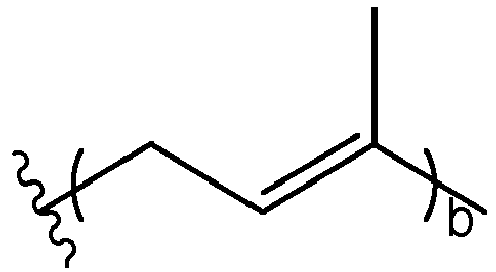

substituted or unsubstituted cyclic terpene moieties,
wherein
R9 and R10 are independently selected from C1 to C30 alkyl,
b is an integer ranging 1 to 4, preferably n is 1 or 2; and
a is an integer ranging from 1 to 20, preferably 2 to 18. - In a further aspect of the invention group A is a fluorescence marker which is preferably selected from the group consisting of fluorescein isothiocyanate (FITC), phycoerythrin, rhodamide, 2-aminopyridine and coumarine dyes.
- In a further aspect of the invention linker L1 and/or L2 are independently selected from a single bond or a saturated or unsaturated moiety having 1 to 30, preferably 2 to 20 carbon atoms, more preferably a carbon chain which may be substituted and/or interrupted by one or more functional groups selected from carboxylic acid ester, phosphate ester, carboxylic acid amides, urethane, ether and amine groups. L1 and/or L2 may also comprise cyclic moieties.
- According to a preferred embodiment linker L1 and/or L2 are independently selected from a single bond; alkandiyl, preferably C1-C20-alkandiyl; alkendiyl, preferably a C2-C20-alkendiyl; alkyndiyl, preferably a C2-C20-alkyndiyl; aryl moiety, aralkyl moiety and herterocyclic moiety.
- Preferably, the alkandiyl represents a straight-chain or branched-chain alkandiyl group bound by two different carbon atoms to the molecule, it preferably represents a straight-chain or branched-chain C1-12 alkandiyl, particularly preferably represents a straight-chain or branched-chain C1-6 alkandiyl; for example, methandiyl (--CH2--), 1,2-ethanediyl (--CH2-CH2--), 1,1-ethanediyl ((-CH(CH3)--), 1,1-, 1,2-, 1,3-propanediyl and 1,1-, 1,2-, 1,3-, 1,4-butanediyl, with particular preference given to methandiyl, 1,1-ethanediyl, 1,2-ethanediyl, 1,3-propanediyl, 1,4-butanediyl.
- Further, preferably the alkendiyl represents a straight-chain or branched-chain alkendiyl group bound by two different carbon atoms to the molecule, it preferably represents a straight-chain or branched-chain C2-6 alkendiyl; for example,-CH=CH--, --CH=C(CH3)--, --CH=CH-CH2--, --C(CH3)=CH-CH2--, --CH=C(CH3)-CH2--, --CH=CH-C(CH3)H--, --CH=CH-CH=CH--, --C(CH3)=CH-CH=CH--,-CH=C(CH3)-CH=CH--, with particular preference given to --CH=CH-CH2--,-CH=CH-CH=CH--.
- The aryl moiety preferably represents an aromatic hydrocarbon group, preferably a C6-10 aromatic hydrocarbon group; for example phenyl, naphthyl, especially phenyl which may optionally be substituted. The aromatic moiety may form a linker in that the aromatic moiety is attached to the phosphor acid diester and the group A. The phosphor acid ester group and group A may be in ortho, meta or preferably para-position of the aromatic moiety.
- Aralkyl moiety denotes an "Aryl" bound to an "Alkyl" and represents, for example benzyl, α-methylbenzyl, 2-phenylethyl, α,α-dimethylbenzyl, especially benzyl. Aralkyl moiety can be attached to the phosphoracid ester group via the alkyl or via the aryl part of the aralkyl moiety. Likewise group A can be attached to the phosphor acid ester group via the alkyl or via the aryl part of the aralkyl moiety.
- Heterocyclic moiety represents a saturated, partly saturated or aromatic ring system containing at least one hetero atom. Preferably, heterocycles consist of 3 to 11 ring atoms of which 1-3 ring atoms are hetero atoms. Heterocycles may be present as a single ring system or as bicyclic or tricyclic ring systems; preferably as single ring system or as benz-annelated ring system. Bicyclic or tricyclic ring systems may be formed by annelation of two or more rings, by a bridging atom, e.g. oxygen, sulfur, nitrogen or by a bridging group, e.g. alkandiyl or alkenediyl. A Heterocycle may be substituted by one or more substituents selected from the group consisting of oxo (=O), halogen, nitro, cyano, alkyl, alkoxy, alkoxyalkyl, alkoxycarbonyl, alkoxycarbonylalkyl, halogenalkyl, aryl, aryloxy, arylalkyl. Examples of heterocyclic moieties are: pyrrole, pyrroline, pyrrolidine, pyrazole, pyrazoline, pyrazolidine, imidazole, imidazoline, imidazolidine, triazole, triazoline, triazolidine, tetrazole, furane, dihydrofurane, tetrahydrofurane, furazane (oxadiazole), dioxolane, thiophene, dihydrothiophene, tetrahydrothiophene, oxazole, oxazoline, oxazolidine, isoxazole, isoxazoline, isoxazolidine, thiazole, thiazoline, thiazlolidine, isothiazole, istothiazoline, isothiazolidine, thiadiazole, thiadiazoline, thiadiazolidine, pyridine, piperidine, pyridazine, pyrazine, piperazine, triazine, pyrane, tetrahydropyrane, thiopyrane, tetrahydrothiopyrane, oxazine, thiazine, dioxine, morpholine, purine, pterine, and the corresponding benz-annelated heterocycles, e.g. indole, isoindole, cumarine, cumaronecinoline, isochinoline, cinnoline and the like.
- Hetero atoms" are atoms other than carbon and hydrogen, preferably nitrogen (N), oxygen (O) or sulfur (S).
- The heterocyclic moiety may form a linker L2 in that the heterocylic moiety is covalently linked to the phosphor acid ester and the group A.
- Likewise, the heterocyclic moiety may form a linker L1 in that the heterocylic moiety is covalently linked to the phosphor acid ester and the colloid-active compound X.
- In a preferred embodiment of the present invention linker L1 is selected from the group consisting of a single bond and a C1-C10 alkandiyl, preferably a C2-C6-alkandiyl, especially ethan-1,2-diyl (ethylene) or propan-1,2-diyl or propan-1,3-diyl.
- In an especially preferred embodiment linker L2 is selected from the group consisting of a single bond, a moiety of formula (VII), a moiety of formula (VIII) and a moiety of formula (IX)

- According to an especially preferred embodiment of the invention X is hydroxyethylstarch and said medicinally active substance A is 5-fluorouracil (5-fluoro-1H-pyrimidine-2,4-dione) or a derivative or a prodrug thereof. Alternatively, substance A may be 5-fluorouridine or a 5-fluorouridine derivative.
- An especially preferred embodiment of the invention is represented by the formula (V)

- Especially, the phosphoric acid forms an ester linkage with the hydroxethyl group of the hydroxyethyl starch. In this case linker L1 in formula (V) is a single bond.
- According to a further aspect of the invention the compound of the present invention is represented by the following formula (Ia):
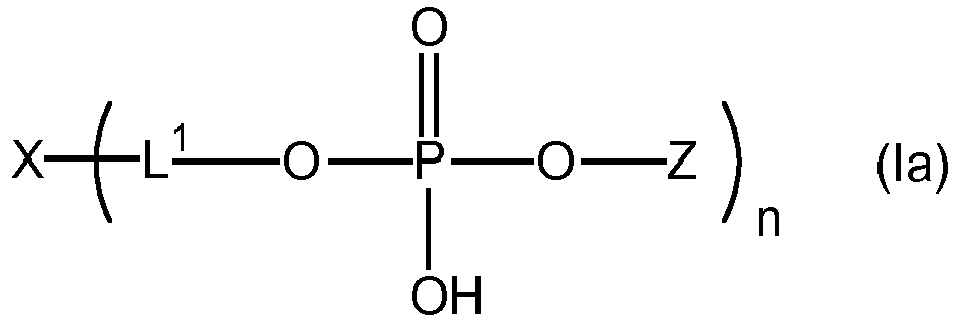


c is an integer ranging from 2 to 12, preferably 3 to 8, more preferably 3 to 6;
d is an integer ranging from 1 to 24, preferably 2 to 18, more preferably 3 to 12;
e is 1 or 2;
R3, R4, R2, R5, R6 and R7 as well as A are as defined above. - A further embodiment of the invention is a pharmaceutical formulation comprising the compound of the invention.
- The pharmaceutical formulation is preferably aqueous and injectable.
- It has surprisingly found that the compound of the invention can be obtained by reacting a phosphoramidite, which is linked to a a medicinally active substance A or a fluorescence marker A, with a colloid active compound which comprises one or more hydroxyl groups.
- The reaction sequence provides an access to pharmaceutically acceptable colloids which are linked with a medicinally active substance or a fluorescence marker and which can be cleaved enzymatically.
- Therefore, a further embodiment of the invention is a process for preparing a compound of general formula (I) of the invention by linking a phosphoramidite covalently bonded to a A-L2-group, preferably by linking a compound of formula (VI)

- In a preferred embodiment of the invention the colloid active compound X, which is preferably a starch, comprises one or more substituents selected from the group consisting of the moieties reflected in the following formulae:


f is an integer ranging from 1 to 4;
g is an integer ranging from 1 to 10, preferably 1 to 4;
h is an integer ranging from 1 to 4; preferably 2 to 4;
i is an integer ranging from 1 to 4; preferably 2 to 4;
j is an integer ranging from 1 to 4; preferably 2 to 4;
and G is independently selected from -O- or NR11, wherein R11 is selected from H or C1 to C4 alkyl. - The preparation of phosphoramidites is generally known to the person skilled in the art.
- A phosphoramidite (RO)2PNR2 is a monoamide of a phosphite diester. The key feature of phosphoramidites is their markedly high reactivity towards nucleophiles catalyzed by weak acids e.c., triethylammonium chloride or 1H-tetrazole. In these reactions, the incoming nucleophile replaces the NR2 moiety. Phosphoramidites derived from protected nucleosides are referred to as nucleoside phosphoramidites and are widely used in chemical synthesis of DNA, RNA, and other nucleic acids and their analogs.
- Nucleoside phosphoramidites are derivatives of natural or synthetic nucleosides. They are used to synthesize oligonucleotides, relatively short fragments of nucleic acid and their analogs. Nucleoside phosphoramidites were first introduced in 1981 by Beaucage and Caruthers (Beaucage, S.L.; Caruthers M.H. (1981). "Deoxynucleoside phosphoramidites-A new class of key intermediates for deoxypolynucleotide synthesis". Tetrahedron Letters 22: 1859-1862). In order to avoid undesired side reactions, reactive hydroxy and exocyclic amino groups present in natural or synthetic nucleosides are appropriately protected. As long as a nucleoside analog contains at least one hydroxy group, the use of the appropriate protecting strategy allows one to convert that to the respective phosphoramidite and to incorporate the latter into synthetic nucleic acids
There are three main methods for the preparation of nucleoside phosphoramidites. - The method used most commonly consist in the treatment of a protected nucleoside bearing a single free hydroxy group with phosphorodiamidite under the catalytic action of a weak acid (Nielsen, J.; Marugg, J. E.; Taagaard, M.; Van Boom, J. H.; Dahl, O. (1986). "Polymer-supported synthesis of deoxyoligonucleotides using in situ prepared deoxynucleoside 2-cyanoethyl phosphoramidites". Rec. Trav. Chim. Pays-Bas 105 (1): 33-34; Nielsen, J.; Taagaard, M.; Marugg, J. E.; Van Boom, J. H.; Dahl, O. (1986). "Application of 2-cyanoethyl N,N,N',N'-tetraisopropylphosphorodiamidite for in situ preparation of deoxyribonucleoside phosphoramidites and their use in polymer-supported synthesis of oligodeoxyribonucleotides". Nucl. Acids Res. 14 (18): 7391-7403). 2-cyanoethyl N,N,N',N'-tetraisopropylphosphorodiamidite, the amidite used for the preparation of commercial nucleoside phosphoramidites, is relatively stable. It can be synthesized using a two-step, one-pot procedure and purified by distillation.
- According to an alternative method, the protected nucleoside is treated with the phosphorochloridite in the presence of an organic base, most commonly N-ethyl-N,N-diisopropylamine (Hünig's base).
- In a further alternative synthetic route for the preparation of phosphoramidites the protected nucleoside is first treated with chloro N,N,N',N'-tetraisopropyl phosphorodiamidite in the presence of an organic base, most commonly N-ethyl-N,N-diisopropylamine (Hünig's base) to form a protected nucleoside diamidite. The latter is treated with an alcohol respective to the desired phosphite protecting group, for instance, 2-cyanoethanol, in the presence of a weak acid. Nucleoside phosphoramidites can be purified by column chromatography on for example silica gel. To warrant the stability of the phosphoramidite moiety, it is advisable to equilibrate the column with an eluent containing 3 to 5wt.-% of triethylamine and maintain this concentration in the eluent throughout the entire course of the separation.
- It has surprisingly found that phosphoramidites can undergo a phosphoramidite coupling reaction with the colloid active compound X which comprises at least one hydroxy group. The reaction can be carried out in the presence of an acidic azole catalyst, 1H-tetrazole, 2-ethylthiotetrazole, 2-benzylthiotetrazole, 4,5-dicyanoimidazole, or a number of similar compounds.
- Phosphoramidites are readily oxidized with weak oxidating reagents, for instance, with aqueous iodine in the presence of weak bases or with hydrogen peroxide to form the respective phosphoramidates.
- According to a preferred embodiment of the present invention the oxidation step is carried out in the presence of a CSO oxidizer, preferably ((1S)-(+)(10-comphorsulfonyl)-oxaziridine).
- The naturally occurring nucleotides (nucleoside-3'- or 5'-phosphates) and their phosphodiester analogs are insufficiently reactive to afford an expedite synthetic preparation of oligonucleotides in high yields. The selectivity and the rate of the formation of internucleosidic linkages are dramatically improved by using 3'-O-(N,N-diisopropyl phosphoramidite) derivatives of nucleosides (nucleoside phosphoramidites) that serve as building blocks in phosphite triester methodology. To prevent undesired side reactions, all other functional groups present in nucleosides should be rendered unreactive (protected) by attaching protecting groups.
- Thus, in a preferred embodiment, groups present at group A which may react with the phosphoramidite such as nucleophilic groups, e.g. OH groups are protected by protecting groups which can be cleaved after the coupling reaction with the colloid active compound occurred.
- Scheme 3 shows in an exemplary embodiment a synthetic route to obtain a phosphor acid diester attached to a hydroxyethy starch.

- It has been found that medicinally active substances or fluorescence marker can be coupled to colloid active compounds comprising at least one hydroxy group, such as hydroxyethyl starch (HES). In Scheme 3 a reaction sequence is shown for a corresponding 5-fluorouridine derivative. For this purpose, 5-fluorouridine is first lipophilized at the O-2',3' position by a cyclic ketal moiety; the ring size is variable. The ketal moiety can be for example obtained by the synthesis disclosed in E. Malecki, H. Rosemeyer, Helv. Chim. Acta 2010, 93, 1500. An example is shown in the following formula representing compound 6 wherein n=14.

- The ketal moiety further acts as a protecting group. A phosphoramidite 2 with n=14 (hereinafter 2a) can be prepared as follows:
- 5-Fluoro-1-[(4'R,6'R)-2',3',4',5'-tetrahydro-6'-(hydroxymethyl)spiro[cyclo-pentadecane-1,2'-furo[3,4-d][1,3]dioxol]-4'-y/]pyrimidine-2,4(1H,3H)-dione 2-Cyanoethyldiisopropylphosphoramidite (2a).
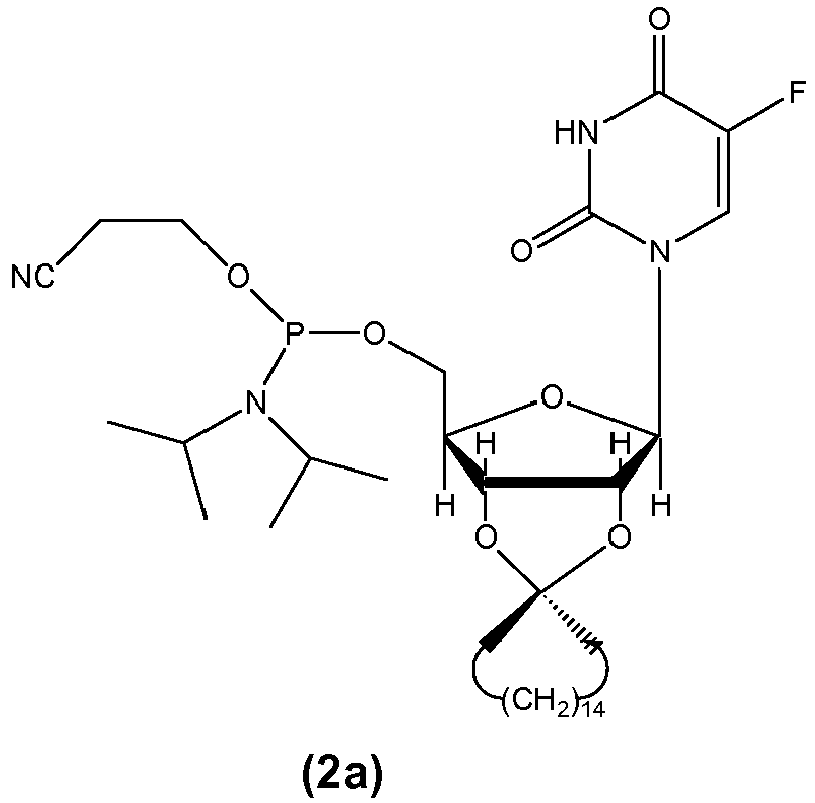
- Anhydrous compound 6 (256 mg, 0.45 mmol) was 5'-phosphitylated under an nitrogen atmosphere using ethyldiisopropylamine (Hünig's base, 147 µl, 0.85 mmol) and (chloro)(2-cyanoethoxy)(diisopropylamino)phosphine (181 µl, 0.80 mmol) The reaction mixture was stirred for 15 min at room temperature, and then an ice-cold 5% aq. NaHCO3 solution (12 ml) was added. The mixture was extracted three times with cold CH2Cl2, the combined organic layers were dried (Na2SO4), filtered and evaporated on a rotary evaporator (bath temperature, 25°C). Chromatography (silica gel, column: 2 x 8 cm, CH2Cl2/MeOH, 8:2, v/v) gave one main zone from which compound 2a (208 mg, 60 %) was obtained as colourless oil. TLC (CH2Cl2/MeOH, 8:2, v/v): R f, 0.95. 31P-NMR (CDCl3): 149.56, 149.41.
- From Scheme 3 it can be seen that the synthesis of the end product 3 implies - after the coupling of the P(III) derivative 2 to HES - the oxidation of 2 with I2/H2O, followed by a cleavage of the cyanoethyl protecting group in concentrate aqueous ammonia. The reactions are preferably performed under strict exclusion of moisture (Ar atmosphere) and using thoroughly dried hydroxyethyl starch (HES). The advantage of a product such as compound 3 is its enzymatic cleavability by phosphodiesterases.
- Scheme 4 shows another route for the preparation of a compound of the invention.
- Phosphoramidite 4 which is based on 5-(propyn-1-yl)-2'-deoxyuridine a virostatic compound, active against Herpes simplex viruses (A.L. Andronova et al. Russ. J. Bioorg. Chem. 2003, 29, 262-266) has been coupled to HES.

- HES-40 (1 g) was dried by repeated (7 times) lyophilisation (freeze drying) from anhydrous acetonitrile (MeCN) (20 ml, each) during one week. The HES (500 mg) was transferred into a reactor and purged with anhydrous MeCN (10 ml). Subsequently, the solid was purged with a 0.25 M 4,5-dicyano-imidazole (DCI) activator solution in MeCN (10 ml). Simultaneously, 5-(propin-1-yl)-2'-deoxyuridine 2-(cyanoethyl)(diisopropyl)phosphoramidite (4, 1 g) was dissolved in the DCI activator solution and diluted with MeCN to a total volume of 10 ml. After injection into the reactor, the suspension was slightly agitated for 10 min at room temperature. Then, the product was washed twice with anhydrous MeCN (10 ml, each), and, next, an oxidizer solution (0.02 M I2, THF, pyridine, 10 ml) was injected. After 1 min of agitation within the reactor, the material was washed 4 times with anhydrous MeCN (20 ml, each). For drying N2 gas was purged through the reactor for several minutes, and the material was removed from the column. 31P-NMR ((D6)DMSO: -1.25 ppm.
Claims (15)
- A compound of formula (I)

X is a colloid-active compound;
L1 is a first linker by means of which X and the phosphate group are covalently linked together;
L2 is a second linker by means of which the phosphate group and A are covalently linked together;
A is a medicinally active substance or a fluorescence marker;
n is an integer of at least 1. - The compound according to claim 1, characterized in that said colloid-active compound X is selected from the group consisting of amyloses, amylopectins, acemannans, arabinogalactans, galactomannans, galactoglucomannans, xanthans, carrageenan, hyaluronic acid, deacetylated hyaluronic acid, starch and modified starch.
- The compound according to claim 2, characterized in that said modified starch is selected from the group consisting of hydroxyalkyl starches, esterified starches, carboxyalkyl starches, hydroxyalkyl carboxyalkyl starch, aminated hydroxyalkyl starch, aminated hydroxyalkyl carboxyalkyl starch and aminated carboxyalkyl starch.
- The compound according to claim 2, characterized in that said modified starch is selected from hydroxyethyl starch or aminated hydroxyethyl starch.
- The compound according to claims 1 to 4, characterized in that said colloid-active compound has an average molecular weight of from 20,000 to 800,000 daltons, preferably from 25,000 to 500,000 daltons, especially from 30,000 to 200,000 daltons.
- The compound according to at least one of claims 1 to 5, characterized in that the degree of substitution, DS, of the modified starch, especially hydroxyethyl starch, is from 0.2 to 0.8, preferably from 0.3 to 0.6.
- The compound according to at least one of claims 1 to 6, characterized in that said medicinally active compound A is selected from the group consisting of antibiotics, chemotherapeutics, cytostatic agents, antigens, oligonucleotides, mediators, false metabolic substrates, analgetics and cytotoxic substances.
- The compound according to at least one of claims 1 to 7, characterized in that said medicinally active compound A is selected from formula (II) to (IV)

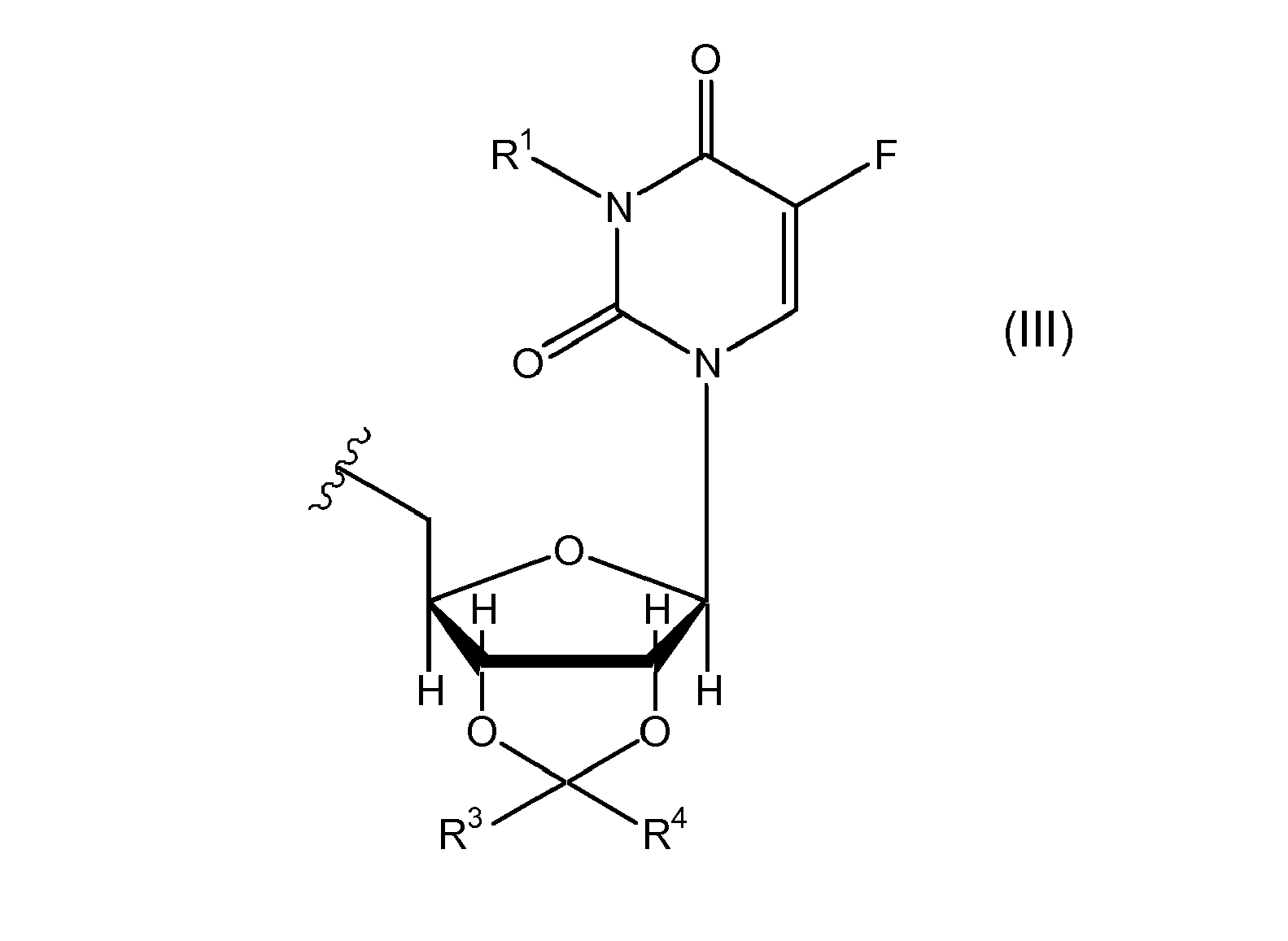

R1 is H or an organic moiety, preferably a C1-C28 chain which may be branched or linear and which may be saturated or unsaturated and which may optionally be interrupted and/or substituted by one or more hetero atom(s) (Het1) and/or functional group(s)(G1); or
R1 is a C3-C28 moiety which comprises at least one cyclic structure and which may be saturated or unsaturated and which may optionally be interrupted and/or substituted by one or more hetero atom(s) (Het1) and functional group(s)(G1);
R2 is H or an organic moiety comprising 1 to 30 carbon atoms;
R3 and R4 represent independently from each other H or a C1-C28-alkyl moiety which may optionally be substituted or interrupted by one or more heteroatom(s) and/or functional group(s); or
R3 and R4 form a ring having at least 5 members, preferably a ring having 5 to 8 carbon atoms and wherein the ring may be substituted or interrupted by one or more hetero atom(s) and/or functional group(s);
R5 and R6 represent independently from each other H or a C1-C28-alkyl moiety which may optionally be substituted or interrupted by one or more heteroatom(s) and/or functional group(s);
or
R5 and R6 form a ring having at least 5 members, preferably a ring having 5 to 18 carbon atoms and wherein the ring may be substituted or interrupted by one or more hetero atom(s) and/or functional group(s);
R7 is a hydrogen atom or -O-R8;
R8 is H or C1-C28 chain which may be branched or linear and which may be saturated or unsaturated and which may optionally be interrupted and/or substituted by one or more hetero atom(s) (Het1) and/or functional group(s)(G1). - Compound according to claim 8 wherein
R1 is selected from H,

substituted or unsubstituted cyclic terpene moieties,
wherein
R9 and R10 are independently selected from C1 to C30 alkyl,
b is an integer ranging 1 to 4, preferably n is 1 or 2; and
a is an integer ranging from 1 to 20, preferably 2 to 18 - The compound according to at least one of claims 1 to 7, characterized in that said fluorescence marker is selected from the group consisting of fluorescein isothiocyanate (FITC), phycoerythrin, rhodamide, 2-aminopyridine and coumarine dyes.
- The compound according to claim 1, wherein said X is hydroxyethylstarch and said medicinally active substance A is 5-fluorouracil (5-fluoro-1H-pyrimidine-2,4-dione) or a derivative or a prodrug thereof.
- The compound according to claim 1 which is represented by the formula (V)

- A pharmaceutical formulation comprising the compound according to at least one of claims 1 to 12.
- The pharmaceutical formulation according to claim 13, characterized in that said formulation is aqueous and injectable.
- A process for preparing a compound of general formula (I) according to at least one of claims 1 to 12 by linking a compound of formula (VI)

Priority Applications (5)
| Application Number | Priority Date | Filing Date | Title |
|---|---|---|---|
| EP12186555.4A EP2712629A1 (en) | 2012-09-28 | 2012-09-28 | Colloid bonded Medicinal Compounds |
| EP13766351.4A EP2900273B1 (en) | 2012-09-28 | 2013-09-25 | Colloid bonded medicinal compounds |
| ES13766351.4T ES2677477T3 (en) | 2012-09-28 | 2013-09-25 | Medicinal compounds bound to colloids |
| PCT/EP2013/069979 WO2014048996A1 (en) | 2012-09-28 | 2013-09-25 | Colloid bonded medicinal compounds |
| US14/413,716 US9737613B2 (en) | 2012-09-28 | 2013-09-25 | Colloid bonded medicinal compounds |
Applications Claiming Priority (1)
| Application Number | Priority Date | Filing Date | Title |
|---|---|---|---|
| EP12186555.4A EP2712629A1 (en) | 2012-09-28 | 2012-09-28 | Colloid bonded Medicinal Compounds |
Publications (1)
| Publication Number | Publication Date |
|---|---|
| EP2712629A1 true EP2712629A1 (en) | 2014-04-02 |
Family
ID=47010308
Family Applications (2)
| Application Number | Title | Priority Date | Filing Date |
|---|---|---|---|
| EP12186555.4A Withdrawn EP2712629A1 (en) | 2012-09-28 | 2012-09-28 | Colloid bonded Medicinal Compounds |
| EP13766351.4A Not-in-force EP2900273B1 (en) | 2012-09-28 | 2013-09-25 | Colloid bonded medicinal compounds |
Family Applications After (1)
| Application Number | Title | Priority Date | Filing Date |
|---|---|---|---|
| EP13766351.4A Not-in-force EP2900273B1 (en) | 2012-09-28 | 2013-09-25 | Colloid bonded medicinal compounds |
Country Status (4)
| Country | Link |
|---|---|
| US (1) | US9737613B2 (en) |
| EP (2) | EP2712629A1 (en) |
| ES (1) | ES2677477T3 (en) |
| WO (1) | WO2014048996A1 (en) |
Cited By (1)
| Publication number | Priority date | Publication date | Assignee | Title |
|---|---|---|---|---|
| CN118851926A (en) * | 2024-07-04 | 2024-10-29 | 长沙理工大学 | Preparation method of ester quaternary ammonium salt surfactant |
Families Citing this family (1)
| Publication number | Priority date | Publication date | Assignee | Title |
|---|---|---|---|---|
| ES2878332T3 (en) | 2019-02-26 | 2021-11-18 | Moelnlycke Health Care Ab | Process for inserting perforations in laminates comprising silicone gels |
Citations (4)
| Publication number | Priority date | Publication date | Assignee | Title |
|---|---|---|---|---|
| EP1230935A2 (en) | 2001-02-09 | 2002-08-14 | B. Braun Melsungen Ag | Modified colloids and their use |
| US20050063943A1 (en) * | 2001-03-16 | 2005-03-24 | Klaus Sommermeyer | Conjugated of hydroxyalkyl starch and an active agent |
| US20050118199A1 (en) * | 2003-10-07 | 2005-06-02 | Esser Mark T. | Process for covalently conjugating polysaccharides to microspheres or biomolecules |
| US20080194806A1 (en) * | 2004-09-29 | 2008-08-14 | Saul Yedgar | Use of lipid conjugates in the treatment of diseases |
Family Cites Families (1)
| Publication number | Priority date | Publication date | Assignee | Title |
|---|---|---|---|---|
| FR2835252B1 (en) | 2002-01-25 | 2005-08-05 | Seppic Sa | USE OF A PROTEIN KINASE A INACTIFYING COMPOUND IN A COMPOSITION CONTAINING A COSMETICALLY ACCEPTABLE MEDIUM FOR LAMINATING THE SKIN |
-
2012
- 2012-09-28 EP EP12186555.4A patent/EP2712629A1/en not_active Withdrawn
-
2013
- 2013-09-25 US US14/413,716 patent/US9737613B2/en not_active Expired - Fee Related
- 2013-09-25 WO PCT/EP2013/069979 patent/WO2014048996A1/en not_active Ceased
- 2013-09-25 ES ES13766351.4T patent/ES2677477T3/en active Active
- 2013-09-25 EP EP13766351.4A patent/EP2900273B1/en not_active Not-in-force
Patent Citations (4)
| Publication number | Priority date | Publication date | Assignee | Title |
|---|---|---|---|---|
| EP1230935A2 (en) | 2001-02-09 | 2002-08-14 | B. Braun Melsungen Ag | Modified colloids and their use |
| US20050063943A1 (en) * | 2001-03-16 | 2005-03-24 | Klaus Sommermeyer | Conjugated of hydroxyalkyl starch and an active agent |
| US20050118199A1 (en) * | 2003-10-07 | 2005-06-02 | Esser Mark T. | Process for covalently conjugating polysaccharides to microspheres or biomolecules |
| US20080194806A1 (en) * | 2004-09-29 | 2008-08-14 | Saul Yedgar | Use of lipid conjugates in the treatment of diseases |
Non-Patent Citations (7)
| Title |
|---|
| A.L. ANDRONOVA ET AL., RUSS. J. BIOORG. CHEM., vol. 29, 2003, pages 262 - 266 |
| BEAUCAGE, S.L.; CARUTHERS M.H.: "Deoxynucleoside phosphoramidites-A new class of key intermediates for deoxypolynucleotide synthesis", TETRAHEDRON LETTERS, vol. 22, 1981, pages 1859 - 1862 |
| E. MALECKI; H. ROSEMEYER, HELV. CHIM. ACTA, vol. 93, 2010, pages 1500 |
| KANETSUNA F ET AL: "Chemical analysis of a mycolic acid-arabinogalactan-mucopeptide complex of mycobacterial cell wall", BIOCHIMICA ET BIOPHYSICA ACTA - GENERAL SUBJECTS, ELSEVIER SCIENCE PUBLISHERS, NL, vol. 208, no. 3, 16 June 1970 (1970-06-16), pages 434 - 443, XP026041956, ISSN: 0304-4165, [retrieved on 19700616], DOI: 10.1016/0304-4165(70)90216-3 * |
| NIELSEN, J.; MARUGG, J. E.; TAAGAARD, M.; VAN BOOM, J. H.; DAHL, O.: "Polymer-supported synthesis of deoxyoligonucleotides using in situ prepared deoxynucleoside 2-cyanoethyl phosphoramidites", REC. TRAV. CHIM. PAYS-BAS, vol. 105, no. 1, 1986, pages 33 - 34 |
| NIELSEN, J.; TAAGAARD, M.; MARUGG, J. E.; VAN BOOM, J. H.; DAHL, O.: "Application of 2-cyanoethyl N,N,N',N'-tetraisopropylphosphorodiamidite for in situ preparation of deoxyribonucleoside phosphoramidites and their use in polymer-supported synthesis of oligodeoxyribonucleotides", NUCL. ACIDS RES., vol. 14, no. 18, 1986, pages 7391 - 7403 |
| QING LUO ET AL: "A novel 5-fluorouracil prodrug using hydroxyethyl starch as a macromolecular carrier for sustained release", CARBOHYDRATE POLYMERS, APPLIED SCIENCE PUBLISHERS, LTD. BARKING, GB, vol. 87, no. 4, 13 November 2011 (2011-11-13), pages 2642 - 2647, XP028349373, ISSN: 0144-8617, [retrieved on 20111122], DOI: 10.1016/J.CARBPOL.2011.11.039 * |
Cited By (1)
| Publication number | Priority date | Publication date | Assignee | Title |
|---|---|---|---|---|
| CN118851926A (en) * | 2024-07-04 | 2024-10-29 | 长沙理工大学 | Preparation method of ester quaternary ammonium salt surfactant |
Also Published As
| Publication number | Publication date |
|---|---|
| EP2900273A1 (en) | 2015-08-05 |
| US9737613B2 (en) | 2017-08-22 |
| EP2900273B1 (en) | 2018-04-18 |
| US20150202307A1 (en) | 2015-07-23 |
| WO2014048996A1 (en) | 2014-04-03 |
| ES2677477T3 (en) | 2018-08-02 |
Similar Documents
| Publication | Publication Date | Title |
|---|---|---|
| EP4585603A1 (en) | Galnac compound comprising ribose ring or derivative structure thereof, and oligonucleotide conjugate thereof | |
| AU2017368283B2 (en) | Novel bicyclic nucleosides and oligomers prepared therefrom | |
| US9902752B2 (en) | 5-fluorouracil derivatives | |
| SA515360190B1 (en) | Novel Rig-I Ligands and Methods for Producing Them | |
| CA2106819C (en) | Oligoribonucleotide and ribozyme analogs with terminal 3'-3' and/or 5'-5' linkages | |
| JP7040892B2 (en) | Oligonucleotide composition and its preparation method | |
| JP6773677B2 (en) | Improved disulfide-containing alkyne conjugate | |
| EP4210759A1 (en) | Lipid conjugates for the delivery of therapeutic agents | |
| EP2900273B1 (en) | Colloid bonded medicinal compounds | |
| JP2002506036A (en) | Novel nucleoside analogs and their use in treating diseases | |
| WO2020002469A1 (en) | Methods and reagents for cross-linking cellular dna and rna via strain-promoted double-click reactions | |
| JP2023525480A (en) | Multimeric oligonucleotides with split strands | |
| US6498277B1 (en) | Disulfone reagents and methods of preparing and using same | |
| Meschaninova et al. | Rational synthesis of conjugates of oligonucleotides with functional molecules: from simple approaches to integrated strategies | |
| KR20010108722A (en) | Novel oligonucleotide compounds having pyrrolizine derivatives, processes for preparing them, compositions containing them and uses thereof in treatment, diagnosis and analysis of gene-related diseases | |
| GB2611043A (en) | A cis-platinum(II)-oligomer hybrid | |
| KR20260030178A (en) | Metabolically stabilized carbohydrate targeting ligands for oligonucleotide conjugates | |
| NZ763996B2 (en) | Oligonucleotide compositions and methods of making the same | |
| CA3199239A1 (en) | A compound, a conjugate and uses thereof | |
| NZ724764B2 (en) | Oligonucleotide compositions and methods of making the same | |
| Zhang | Synthesis and characterization of single and tethered cyclic diguanosine monophosphate |
Legal Events
| Date | Code | Title | Description |
|---|---|---|---|
| PUAI | Public reference made under article 153(3) epc to a published international application that has entered the european phase |
Free format text: ORIGINAL CODE: 0009012 |
|
| AK | Designated contracting states |
Kind code of ref document: A1 Designated state(s): AL AT BE BG CH CY CZ DE DK EE ES FI FR GB GR HR HU IE IS IT LI LT LU LV MC MK MT NL NO PL PT RO RS SE SI SK SM TR |
|
| AX | Request for extension of the european patent |
Extension state: BA ME |
|
| STAA | Information on the status of an ep patent application or granted ep patent |
Free format text: STATUS: THE APPLICATION HAS BEEN WITHDRAWN |
|
| 18W | Application withdrawn |
Effective date: 20140404 |