EP2711366A1 - Cationic triphenylamine derivatives activable by visible and Infra Red light for inducing and imaging apoptosis in cancer cells - Google Patents
Cationic triphenylamine derivatives activable by visible and Infra Red light for inducing and imaging apoptosis in cancer cells Download PDFInfo
- Publication number
- EP2711366A1 EP2711366A1 EP12306133.5A EP12306133A EP2711366A1 EP 2711366 A1 EP2711366 A1 EP 2711366A1 EP 12306133 A EP12306133 A EP 12306133A EP 2711366 A1 EP2711366 A1 EP 2711366A1
- Authority
- EP
- European Patent Office
- Prior art keywords
- group
- formula
- triphenylamine derivative
- cationic
- cationic triphenylamine
- Prior art date
- Legal status (The legal status is an assumption and is not a legal conclusion. Google has not performed a legal analysis and makes no representation as to the accuracy of the status listed.)
- Ceased
Links
- 230000006907 apoptotic process Effects 0.000 title claims abstract description 47
- 206010028980 Neoplasm Diseases 0.000 title claims abstract description 19
- 201000011510 cancer Diseases 0.000 title claims abstract description 18
- -1 Cationic triphenylamine derivatives Chemical class 0.000 title abstract description 22
- 238000003384 imaging method Methods 0.000 title abstract description 6
- 230000001939 inductive effect Effects 0.000 title abstract description 5
- 150000001875 compounds Chemical class 0.000 claims description 91
- 230000005284 excitation Effects 0.000 claims description 55
- 125000000623 heterocyclic group Chemical group 0.000 claims description 31
- 239000008194 pharmaceutical composition Substances 0.000 claims description 29
- 239000000203 mixture Substances 0.000 claims description 22
- 125000004435 hydrogen atom Chemical group [H]* 0.000 claims description 18
- 125000005647 linker group Chemical group 0.000 claims description 18
- 238000001126 phototherapy Methods 0.000 claims description 16
- 125000000524 functional group Chemical group 0.000 claims description 15
- UFHFLCQGNIYNRP-UHFFFAOYSA-N Hydrogen Chemical compound [H][H] UFHFLCQGNIYNRP-UHFFFAOYSA-N 0.000 claims description 12
- 230000001419 dependent effect Effects 0.000 claims description 12
- 239000001257 hydrogen Substances 0.000 claims description 12
- 229910052739 hydrogen Inorganic materials 0.000 claims description 12
- 238000006243 chemical reaction Methods 0.000 claims description 8
- 239000003937 drug carrier Substances 0.000 claims description 6
- 239000000411 inducer Substances 0.000 claims description 6
- 239000000906 photoactive agent Substances 0.000 claims description 6
- 239000002904 solvent Substances 0.000 claims description 6
- 239000003814 drug Substances 0.000 claims description 5
- 125000005843 halogen group Chemical group 0.000 claims description 5
- QVGXLLKOCUKJST-UHFFFAOYSA-N atomic oxygen Chemical compound [O] QVGXLLKOCUKJST-UHFFFAOYSA-N 0.000 claims description 4
- 238000004519 manufacturing process Methods 0.000 claims description 4
- 239000001301 oxygen Substances 0.000 claims description 4
- 229910052760 oxygen Inorganic materials 0.000 claims description 4
- 229940079593 drug Drugs 0.000 claims description 3
- 125000005842 heteroatom Chemical group 0.000 claims description 3
- 125000001424 substituent group Chemical group 0.000 claims description 3
- 206010005003 Bladder cancer Diseases 0.000 claims description 2
- 206010006187 Breast cancer Diseases 0.000 claims description 2
- 208000026310 Breast neoplasm Diseases 0.000 claims description 2
- 206010008342 Cervix carcinoma Diseases 0.000 claims description 2
- 206010061902 Pancreatic neoplasm Diseases 0.000 claims description 2
- 206010060862 Prostate cancer Diseases 0.000 claims description 2
- 208000000236 Prostatic Neoplasms Diseases 0.000 claims description 2
- 208000000453 Skin Neoplasms Diseases 0.000 claims description 2
- NINIDFKCEFEMDL-UHFFFAOYSA-N Sulfur Chemical group [S] NINIDFKCEFEMDL-UHFFFAOYSA-N 0.000 claims description 2
- 208000007097 Urinary Bladder Neoplasms Diseases 0.000 claims description 2
- 208000006105 Uterine Cervical Neoplasms Diseases 0.000 claims description 2
- 201000010881 cervical cancer Diseases 0.000 claims description 2
- 230000001747 exhibiting effect Effects 0.000 claims description 2
- 208000015486 malignant pancreatic neoplasm Diseases 0.000 claims description 2
- 229910052757 nitrogen Inorganic materials 0.000 claims description 2
- 208000008443 pancreatic carcinoma Diseases 0.000 claims description 2
- 201000000849 skin cancer Diseases 0.000 claims description 2
- 201000008261 skin carcinoma Diseases 0.000 claims description 2
- 201000005112 urinary bladder cancer Diseases 0.000 claims description 2
- 125000001183 hydrocarbyl group Chemical group 0.000 claims 21
- 230000034994 death Effects 0.000 claims 1
- 210000003238 esophagus Anatomy 0.000 claims 1
- 210000004027 cell Anatomy 0.000 description 112
- 238000005286 illumination Methods 0.000 description 59
- 150000002430 hydrocarbons Chemical group 0.000 description 30
- IAZDPXIOMUYVGZ-UHFFFAOYSA-N Dimethylsulphoxide Chemical compound CS(C)=O IAZDPXIOMUYVGZ-UHFFFAOYSA-N 0.000 description 27
- YXFVVABEGXRONW-UHFFFAOYSA-N Toluene Chemical compound CC1=CC=CC=C1 YXFVVABEGXRONW-UHFFFAOYSA-N 0.000 description 26
- YMWUJEATGCHHMB-UHFFFAOYSA-N Dichloromethane Chemical compound ClCCl YMWUJEATGCHHMB-UHFFFAOYSA-N 0.000 description 24
- 238000000034 method Methods 0.000 description 22
- 238000002428 photodynamic therapy Methods 0.000 description 22
- RTZKZFJDLAIYFH-UHFFFAOYSA-N Diethyl ether Chemical compound CCOCC RTZKZFJDLAIYFH-UHFFFAOYSA-N 0.000 description 21
- 108090000672 Annexin A5 Proteins 0.000 description 18
- 102000004121 Annexin A5 Human genes 0.000 description 18
- 239000003642 reactive oxygen metabolite Substances 0.000 description 17
- 230000008569 process Effects 0.000 description 16
- 231100000419 toxicity Toxicity 0.000 description 16
- 230000001988 toxicity Effects 0.000 description 16
- 230000030833 cell death Effects 0.000 description 15
- 238000002474 experimental method Methods 0.000 description 15
- 239000012528 membrane Substances 0.000 description 13
- 238000010521 absorption reaction Methods 0.000 description 12
- 230000005540 biological transmission Effects 0.000 description 11
- 229920000776 Poly(Adenosine diphosphate-ribose) polymerase Polymers 0.000 description 10
- 238000011534 incubation Methods 0.000 description 10
- NFHFRUOZVGFOOS-UHFFFAOYSA-N palladium;triphenylphosphane Chemical compound [Pd].C1=CC=CC=C1P(C=1C=CC=CC=1)C1=CC=CC=C1.C1=CC=CC=C1P(C=1C=CC=CC=1)C1=CC=CC=C1.C1=CC=CC=C1P(C=1C=CC=CC=1)C1=CC=CC=C1.C1=CC=CC=C1P(C=1C=CC=CC=1)C1=CC=CC=C1 NFHFRUOZVGFOOS-UHFFFAOYSA-N 0.000 description 10
- OKKJLVBELUTLKV-UHFFFAOYSA-N Methanol Chemical compound OC OKKJLVBELUTLKV-UHFFFAOYSA-N 0.000 description 9
- 230000015572 biosynthetic process Effects 0.000 description 9
- 210000000805 cytoplasm Anatomy 0.000 description 9
- 210000003470 mitochondria Anatomy 0.000 description 9
- 239000007787 solid Substances 0.000 description 9
- 238000010186 staining Methods 0.000 description 9
- CSNNHWWHGAXBCP-UHFFFAOYSA-L Magnesium sulfate Chemical compound [Mg+2].[O-][S+2]([O-])([O-])[O-] CSNNHWWHGAXBCP-UHFFFAOYSA-L 0.000 description 8
- 102000012338 Poly(ADP-ribose) Polymerases Human genes 0.000 description 8
- 108010061844 Poly(ADP-ribose) Polymerases Proteins 0.000 description 8
- HEDRZPFGACZZDS-MICDWDOJSA-N Trichloro(2H)methane Chemical compound [2H]C(Cl)(Cl)Cl HEDRZPFGACZZDS-MICDWDOJSA-N 0.000 description 8
- 239000000243 solution Substances 0.000 description 8
- 230000001404 mediated effect Effects 0.000 description 7
- 150000004032 porphyrins Chemical class 0.000 description 7
- XLYOFNOQVPJJNP-UHFFFAOYSA-N water Substances O XLYOFNOQVPJJNP-UHFFFAOYSA-N 0.000 description 7
- 0 *c1cnc(-c(cc2)ccc2N(c(cc2)ccc2-c2ncc(*)[o]2)c(cc2)ccc2-c2ncc(*)[o]2)[o]1 Chemical compound *c1cnc(-c(cc2)ccc2N(c(cc2)ccc2-c2ncc(*)[o]2)c(cc2)ccc2-c2ncc(*)[o]2)[o]1 0.000 description 6
- IAZDPXIOMUYVGZ-WFGJKAKNSA-N Dimethyl sulfoxide Chemical compound [2H]C([2H])([2H])S(=O)C([2H])([2H])[2H] IAZDPXIOMUYVGZ-WFGJKAKNSA-N 0.000 description 6
- LFQSCWFLJHTTHZ-UHFFFAOYSA-N Ethanol Chemical compound CCO LFQSCWFLJHTTHZ-UHFFFAOYSA-N 0.000 description 6
- XEKOWRVHYACXOJ-UHFFFAOYSA-N Ethyl acetate Chemical compound CCOC(C)=O XEKOWRVHYACXOJ-UHFFFAOYSA-N 0.000 description 6
- RJURFGZVJUQBHK-UHFFFAOYSA-N actinomycin D Natural products CC1OC(=O)C(C(C)C)N(C)C(=O)CN(C)C(=O)C2CCCN2C(=O)C(C(C)C)NC(=O)C1NC(=O)C1=C(N)C(=O)C(C)=C2OC(C(C)=CC=C3C(=O)NC4C(=O)NC(C(N5CCCC5C(=O)N(C)CC(=O)N(C)C(C(C)C)C(=O)OC4C)=O)C(C)C)=C3N=C21 RJURFGZVJUQBHK-UHFFFAOYSA-N 0.000 description 6
- 238000002073 fluorescence micrograph Methods 0.000 description 6
- 230000005937 nuclear translocation Effects 0.000 description 6
- 239000003504 photosensitizing agent Substances 0.000 description 6
- 238000001228 spectrum Methods 0.000 description 6
- 238000001644 13C nuclear magnetic resonance spectroscopy Methods 0.000 description 5
- 238000005160 1H NMR spectroscopy Methods 0.000 description 5
- 229930105110 Cyclosporin A Natural products 0.000 description 5
- PMATZTZNYRCHOR-CGLBZJNRSA-N Cyclosporin A Chemical compound CC[C@@H]1NC(=O)[C@H]([C@H](O)[C@H](C)C\C=C\C)N(C)C(=O)[C@H](C(C)C)N(C)C(=O)[C@H](CC(C)C)N(C)C(=O)[C@H](CC(C)C)N(C)C(=O)[C@@H](C)NC(=O)[C@H](C)NC(=O)[C@H](CC(C)C)N(C)C(=O)[C@H](C(C)C)NC(=O)[C@H](CC(C)C)N(C)C(=O)CN(C)C1=O PMATZTZNYRCHOR-CGLBZJNRSA-N 0.000 description 5
- 108010036949 Cyclosporine Proteins 0.000 description 5
- PWKSKIMOESPYIA-BYPYZUCNSA-N L-N-acetyl-Cysteine Chemical compound CC(=O)N[C@@H](CS)C(O)=O PWKSKIMOESPYIA-BYPYZUCNSA-N 0.000 description 5
- 229960004308 acetylcysteine Drugs 0.000 description 5
- 238000004458 analytical method Methods 0.000 description 5
- 230000001640 apoptogenic effect Effects 0.000 description 5
- 208000002352 blister Diseases 0.000 description 5
- 239000000460 chlorine Substances 0.000 description 5
- 229910052801 chlorine Inorganic materials 0.000 description 5
- 238000003776 cleavage reaction Methods 0.000 description 5
- 238000001218 confocal laser scanning microscopy Methods 0.000 description 5
- MHMNJMPURVTYEJ-UHFFFAOYSA-N fluorescein-5-isothiocyanate Chemical compound O1C(=O)C2=CC(N=C=S)=CC=C2C21C1=CC=C(O)C=C1OC1=CC(O)=CC=C21 MHMNJMPURVTYEJ-UHFFFAOYSA-N 0.000 description 5
- 239000007788 liquid Substances 0.000 description 5
- LZWQNOHZMQIFBX-UHFFFAOYSA-N lithium;2-methylpropan-2-olate Chemical compound [Li+].CC(C)(C)[O-] LZWQNOHZMQIFBX-UHFFFAOYSA-N 0.000 description 5
- IFTVAQUNDKGWDD-UHFFFAOYSA-M mitoTracker Green FM Chemical compound [Cl-].O1C2=CC=CC=C2N(C)C1=CC=CC(=[N+](C1=CC(Cl)=C(Cl)C=C11)C=2C=CC(CCl)=CC=2)N1C1=CC=C(CCl)C=C1 IFTVAQUNDKGWDD-UHFFFAOYSA-M 0.000 description 5
- 238000000524 positive electrospray ionisation mass spectrometry Methods 0.000 description 5
- 238000002360 preparation method Methods 0.000 description 5
- 238000006862 quantum yield reaction Methods 0.000 description 5
- 150000003839 salts Chemical class 0.000 description 5
- 239000000523 sample Substances 0.000 description 5
- 230000007017 scission Effects 0.000 description 5
- 238000003786 synthesis reaction Methods 0.000 description 5
- 150000001651 triphenylamine derivatives Chemical class 0.000 description 5
- RYHBNJHYFVUHQT-UHFFFAOYSA-N 1,4-Dioxane Chemical compound C1COCCO1 RYHBNJHYFVUHQT-UHFFFAOYSA-N 0.000 description 4
- YOWBHIIBYBTAJF-UHFFFAOYSA-N 2,3,4-tribromo-n,n-diphenylaniline Chemical compound BrC1=C(Br)C(Br)=CC=C1N(C=1C=CC=CC=1)C1=CC=CC=C1 YOWBHIIBYBTAJF-UHFFFAOYSA-N 0.000 description 4
- 108020004414 DNA Proteins 0.000 description 4
- OFBQJSOFQDEBGM-UHFFFAOYSA-N Pentane Chemical compound CCCCC OFBQJSOFQDEBGM-UHFFFAOYSA-N 0.000 description 4
- FAPWRFPIFSIZLT-UHFFFAOYSA-M Sodium chloride Chemical compound [Na+].[Cl-] FAPWRFPIFSIZLT-UHFFFAOYSA-M 0.000 description 4
- 125000004432 carbon atom Chemical group C* 0.000 description 4
- 230000003833 cell viability Effects 0.000 description 4
- 238000001816 cooling Methods 0.000 description 4
- 238000011161 development Methods 0.000 description 4
- 231100000673 dose–response relationship Toxicity 0.000 description 4
- 230000004807 localization Effects 0.000 description 4
- 229910052943 magnesium sulfate Inorganic materials 0.000 description 4
- 230000007246 mechanism Effects 0.000 description 4
- QSHDDOUJBYECFT-UHFFFAOYSA-N mercury Chemical compound [Hg] QSHDDOUJBYECFT-UHFFFAOYSA-N 0.000 description 4
- 229910052753 mercury Inorganic materials 0.000 description 4
- VUQUOGPMUUJORT-UHFFFAOYSA-N methyl 4-methylbenzenesulfonate Chemical compound COS(=O)(=O)C1=CC=C(C)C=C1 VUQUOGPMUUJORT-UHFFFAOYSA-N 0.000 description 4
- 238000011533 pre-incubation Methods 0.000 description 4
- 239000011541 reaction mixture Substances 0.000 description 4
- 239000000725 suspension Substances 0.000 description 4
- OYINILBBZAQBEV-UWJYYQICSA-N (17s,18s)-18-(2-carboxyethyl)-20-(carboxymethyl)-12-ethenyl-7-ethyl-3,8,13,17-tetramethyl-17,18,22,23-tetrahydroporphyrin-2-carboxylic acid Chemical compound N1C2=C(C)C(C=C)=C1C=C(N1)C(C)=C(CC)C1=CC(C(C)=C1C(O)=O)=NC1=C(CC(O)=O)C([C@@H](CCC(O)=O)[C@@H]1C)=NC1=C2 OYINILBBZAQBEV-UWJYYQICSA-N 0.000 description 3
- ZAMOUSCENKQFHK-UHFFFAOYSA-N Chlorine atom Chemical compound [Cl] ZAMOUSCENKQFHK-UHFFFAOYSA-N 0.000 description 3
- 108010092160 Dactinomycin Proteins 0.000 description 3
- WSFSSNUMVMOOMR-UHFFFAOYSA-N Formaldehyde Chemical compound O=C WSFSSNUMVMOOMR-UHFFFAOYSA-N 0.000 description 3
- PEDCQBHIVMGVHV-UHFFFAOYSA-N Glycerine Chemical compound OCC(O)CO PEDCQBHIVMGVHV-UHFFFAOYSA-N 0.000 description 3
- 239000007995 HEPES buffer Substances 0.000 description 3
- 206010034972 Photosensitivity reaction Diseases 0.000 description 3
- RJURFGZVJUQBHK-IIXSONLDSA-N actinomycin D Chemical compound C[C@H]1OC(=O)[C@H](C(C)C)N(C)C(=O)CN(C)C(=O)[C@@H]2CCCN2C(=O)[C@@H](C(C)C)NC(=O)[C@H]1NC(=O)C1=C(N)C(=O)C(C)=C2OC(C(C)=CC=C3C(=O)N[C@@H]4C(=O)N[C@@H](C(N5CCC[C@H]5C(=O)N(C)CC(=O)N(C)[C@@H](C(C)C)C(=O)O[C@@H]4C)=O)C(C)C)=C3N=C21 RJURFGZVJUQBHK-IIXSONLDSA-N 0.000 description 3
- 125000000217 alkyl group Chemical group 0.000 description 3
- 239000012267 brine Substances 0.000 description 3
- 229940127093 camptothecin Drugs 0.000 description 3
- 125000002091 cationic group Chemical group 0.000 description 3
- 238000004440 column chromatography Methods 0.000 description 3
- 230000001086 cytosolic effect Effects 0.000 description 3
- 229960000640 dactinomycin Drugs 0.000 description 3
- 238000010908 decantation Methods 0.000 description 3
- 238000001514 detection method Methods 0.000 description 3
- 238000001317 epifluorescence microscopy Methods 0.000 description 3
- CXKWCBBOMKCUKX-UHFFFAOYSA-M methylene blue Chemical compound [Cl-].C1=CC(N(C)C)=CC2=[S+]C3=CC(N(C)C)=CC=C3N=C21 CXKWCBBOMKCUKX-UHFFFAOYSA-M 0.000 description 3
- 229960000907 methylthioninium chloride Drugs 0.000 description 3
- 230000025608 mitochondrion localization Effects 0.000 description 3
- 230000007935 neutral effect Effects 0.000 description 3
- 230000030648 nucleus localization Effects 0.000 description 3
- 239000012044 organic layer Substances 0.000 description 3
- 230000035515 penetration Effects 0.000 description 3
- 229940109328 photofrin Drugs 0.000 description 3
- 230000036211 photosensitivity Effects 0.000 description 3
- 239000002244 precipitate Substances 0.000 description 3
- 238000010992 reflux Methods 0.000 description 3
- HPALAKNZSZLMCH-UHFFFAOYSA-M sodium;chloride;hydrate Chemical compound O.[Na+].[Cl-] HPALAKNZSZLMCH-UHFFFAOYSA-M 0.000 description 3
- 230000004960 subcellular localization Effects 0.000 description 3
- 210000001519 tissue Anatomy 0.000 description 3
- 125000006617 triphenylamine group Chemical group 0.000 description 3
- 229930195735 unsaturated hydrocarbon Natural products 0.000 description 3
- 238000001262 western blot Methods 0.000 description 3
- TZCPCKNHXULUIY-RGULYWFUSA-N 1,2-distearoyl-sn-glycero-3-phosphoserine Chemical compound CCCCCCCCCCCCCCCCCC(=O)OC[C@H](COP(O)(=O)OC[C@H](N)C(O)=O)OC(=O)CCCCCCCCCCCCCCCCC TZCPCKNHXULUIY-RGULYWFUSA-N 0.000 description 2
- JKMHFZQWWAIEOD-UHFFFAOYSA-N 2-[4-(2-hydroxyethyl)piperazin-1-yl]ethanesulfonic acid Chemical compound OCC[NH+]1CCN(CCS([O-])(=O)=O)CC1 JKMHFZQWWAIEOD-UHFFFAOYSA-N 0.000 description 2
- LUMKXMDGONYZHO-UHFFFAOYSA-N 5-pyridin-2-yl-1,3-oxazole Chemical compound O1C=NC=C1C1=CC=CC=N1 LUMKXMDGONYZHO-UHFFFAOYSA-N 0.000 description 2
- QTBSBXVTEAMEQO-UHFFFAOYSA-M Acetate Chemical compound CC([O-])=O QTBSBXVTEAMEQO-UHFFFAOYSA-M 0.000 description 2
- XKRFYHLGVUSROY-UHFFFAOYSA-N Argon Chemical compound [Ar] XKRFYHLGVUSROY-UHFFFAOYSA-N 0.000 description 2
- CIWBSHSKHKDKBQ-JLAZNSOCSA-N Ascorbic acid Chemical compound OC[C@H](O)[C@H]1OC(=O)C(O)=C1O CIWBSHSKHKDKBQ-JLAZNSOCSA-N 0.000 description 2
- OYPRJOBELJOOCE-UHFFFAOYSA-N Calcium Chemical compound [Ca] OYPRJOBELJOOCE-UHFFFAOYSA-N 0.000 description 2
- KLWPJMFMVPTNCC-UHFFFAOYSA-N Camptothecin Natural products CCC1(O)C(=O)OCC2=C1C=C3C4Nc5ccccc5C=C4CN3C2=O KLWPJMFMVPTNCC-UHFFFAOYSA-N 0.000 description 2
- 241000233866 Fungi Species 0.000 description 2
- ZWZWYGMENQVNFU-UHFFFAOYSA-N Glycerophosphorylserin Natural products OC(=O)C(N)COP(O)(=O)OCC(O)CO ZWZWYGMENQVNFU-UHFFFAOYSA-N 0.000 description 2
- 208000031888 Mycoses Diseases 0.000 description 2
- 241000283973 Oryctolagus cuniculus Species 0.000 description 2
- XYFCBTPGUUZFHI-UHFFFAOYSA-N Phosphine Chemical compound P XYFCBTPGUUZFHI-UHFFFAOYSA-N 0.000 description 2
- 241000101040 Pityriasis Species 0.000 description 2
- VYPSYNLAJGMNEJ-UHFFFAOYSA-N Silicium dioxide Chemical compound O=[Si]=O VYPSYNLAJGMNEJ-UHFFFAOYSA-N 0.000 description 2
- 230000004075 alteration Effects 0.000 description 2
- 239000000010 aprotic solvent Substances 0.000 description 2
- 229910052794 bromium Inorganic materials 0.000 description 2
- 239000011575 calcium Substances 0.000 description 2
- 229910052791 calcium Inorganic materials 0.000 description 2
- VSJKWCGYPAHWDS-FQEVSTJZSA-N camptothecin Chemical compound C1=CC=C2C=C(CN3C4=CC5=C(C3=O)COC(=O)[C@]5(O)CC)C4=NC2=C1 VSJKWCGYPAHWDS-FQEVSTJZSA-N 0.000 description 2
- 239000003054 catalyst Substances 0.000 description 2
- 150000001804 chlorine Chemical class 0.000 description 2
- 230000008045 co-localization Effects 0.000 description 2
- 238000010226 confocal imaging Methods 0.000 description 2
- 239000000539 dimer Substances 0.000 description 2
- 201000010099 disease Diseases 0.000 description 2
- 208000037265 diseases, disorders, signs and symptoms Diseases 0.000 description 2
- VSJKWCGYPAHWDS-UHFFFAOYSA-N dl-camptothecin Natural products C1=CC=C2C=C(CN3C4=CC5=C(C3=O)COC(=O)C5(O)CC)C4=NC2=C1 VSJKWCGYPAHWDS-UHFFFAOYSA-N 0.000 description 2
- 230000000694 effects Effects 0.000 description 2
- 238000005516 engineering process Methods 0.000 description 2
- 239000000835 fiber Substances 0.000 description 2
- 238000003818 flash chromatography Methods 0.000 description 2
- 238000000684 flow cytometry Methods 0.000 description 2
- 238000002189 fluorescence spectrum Methods 0.000 description 2
- OVBPIULPVIDEAO-LBPRGKRZSA-N folic acid Chemical compound C=1N=C2NC(N)=NC(=O)C2=NC=1CNC1=CC=C(C(=O)N[C@@H](CCC(O)=O)C(O)=O)C=C1 OVBPIULPVIDEAO-LBPRGKRZSA-N 0.000 description 2
- 208000014829 head and neck neoplasm Diseases 0.000 description 2
- 230000003834 intracellular effect Effects 0.000 description 2
- 229910052740 iodine Inorganic materials 0.000 description 2
- 238000002372 labelling Methods 0.000 description 2
- 238000005259 measurement Methods 0.000 description 2
- 230000002438 mitochondrial effect Effects 0.000 description 2
- 238000012544 monitoring process Methods 0.000 description 2
- 230000004660 morphological change Effects 0.000 description 2
- 239000013307 optical fiber Substances 0.000 description 2
- 239000012074 organic phase Substances 0.000 description 2
- 239000003960 organic solvent Substances 0.000 description 2
- 238000007911 parenteral administration Methods 0.000 description 2
- YBYRMVIVWMBXKQ-UHFFFAOYSA-N phenylmethanesulfonyl fluoride Chemical compound FS(=O)(=O)CC1=CC=CC=C1 YBYRMVIVWMBXKQ-UHFFFAOYSA-N 0.000 description 2
- BWHMMNNQKKPAPP-UHFFFAOYSA-L potassium carbonate Chemical compound [K+].[K+].[O-]C([O-])=O BWHMMNNQKKPAPP-UHFFFAOYSA-L 0.000 description 2
- 235000018102 proteins Nutrition 0.000 description 2
- 102000004169 proteins and genes Human genes 0.000 description 2
- 108090000623 proteins and genes Proteins 0.000 description 2
- 239000003586 protic polar solvent Substances 0.000 description 2
- 230000004044 response Effects 0.000 description 2
- 239000000741 silica gel Substances 0.000 description 2
- 229910002027 silica gel Inorganic materials 0.000 description 2
- 239000011780 sodium chloride Substances 0.000 description 2
- MFRIHAYPQRLWNB-UHFFFAOYSA-N sodium tert-butoxide Chemical compound [Na+].CC(C)(C)[O-] MFRIHAYPQRLWNB-UHFFFAOYSA-N 0.000 description 2
- ATHGHQPFGPMSJY-UHFFFAOYSA-N spermidine Chemical compound NCCCCNCCCN ATHGHQPFGPMSJY-UHFFFAOYSA-N 0.000 description 2
- PFNFFQXMRSDOHW-UHFFFAOYSA-N spermine Chemical compound NCCCNCCCCNCCCN PFNFFQXMRSDOHW-UHFFFAOYSA-N 0.000 description 2
- 239000007858 starting material Substances 0.000 description 2
- 230000001225 therapeutic effect Effects 0.000 description 2
- JOXIMZWYDAKGHI-UHFFFAOYSA-N toluene-4-sulfonic acid Chemical compound CC1=CC=C(S(O)(=O)=O)C=C1 JOXIMZWYDAKGHI-UHFFFAOYSA-N 0.000 description 2
- 231100000331 toxic Toxicity 0.000 description 2
- 230000002588 toxic effect Effects 0.000 description 2
- VZCYOOQTPOCHFL-UHFFFAOYSA-N trans-butenedioic acid Natural products OC(=O)C=CC(O)=O VZCYOOQTPOCHFL-UHFFFAOYSA-N 0.000 description 2
- 230000001960 triggered effect Effects 0.000 description 2
- 210000004881 tumor cell Anatomy 0.000 description 2
- PVVLBEDMWMUSTD-UHFFFAOYSA-N 1-N,1-N,2-N,2-N-tetraphenyl-3,4-bis(2-phenylethenyl)benzene-1,2-diamine Chemical group C(=Cc1ccc(N(c2ccccc2)c2ccccc2)c(N(c2ccccc2)c2ccccc2)c1C=Cc1ccccc1)c1ccccc1 PVVLBEDMWMUSTD-UHFFFAOYSA-N 0.000 description 1
- IXFZBZJZJAAHQV-UHFFFAOYSA-N 2,3-dibromo-n,n-diphenylaniline Chemical compound BrC1=CC=CC(N(C=2C=CC=CC=2)C=2C=CC=CC=2)=C1Br IXFZBZJZJAAHQV-UHFFFAOYSA-N 0.000 description 1
- KZMAWJRXKGLWGS-UHFFFAOYSA-N 2-chloro-n-[4-(4-methoxyphenyl)-1,3-thiazol-2-yl]-n-(3-methoxypropyl)acetamide Chemical compound S1C(N(C(=O)CCl)CCCOC)=NC(C=2C=CC(OC)=CC=2)=C1 KZMAWJRXKGLWGS-UHFFFAOYSA-N 0.000 description 1
- JGZVUTYDEVUNMK-UHFFFAOYSA-N 5-carboxy-2',7'-dichlorofluorescein Chemical compound C12=CC(Cl)=C(O)C=C2OC2=CC(O)=C(Cl)C=C2C21OC(=O)C1=CC(C(=O)O)=CC=C21 JGZVUTYDEVUNMK-UHFFFAOYSA-N 0.000 description 1
- 102000007469 Actins Human genes 0.000 description 1
- 108010085238 Actins Proteins 0.000 description 1
- 102000000412 Annexin Human genes 0.000 description 1
- 108050008874 Annexin Proteins 0.000 description 1
- 240000003291 Armoracia rusticana Species 0.000 description 1
- FTEDXVNDVHYDQW-UHFFFAOYSA-N BAPTA Chemical compound OC(=O)CN(CC(O)=O)C1=CC=CC=C1OCCOC1=CC=CC=C1N(CC(O)=O)CC(O)=O FTEDXVNDVHYDQW-UHFFFAOYSA-N 0.000 description 1
- 241000283690 Bos taurus Species 0.000 description 1
- UXVMQQNJUSDDNG-UHFFFAOYSA-L Calcium chloride Chemical compound [Cl-].[Cl-].[Ca+2] UXVMQQNJUSDDNG-UHFFFAOYSA-L 0.000 description 1
- 239000004215 Carbon black (E152) Substances 0.000 description 1
- 102000003952 Caspase 3 Human genes 0.000 description 1
- 108090000397 Caspase 3 Proteins 0.000 description 1
- KRKNYBCHXYNGOX-UHFFFAOYSA-K Citrate Chemical compound [O-]C(=O)CC(O)(CC([O-])=O)C([O-])=O KRKNYBCHXYNGOX-UHFFFAOYSA-K 0.000 description 1
- 206010009944 Colon cancer Diseases 0.000 description 1
- 208000001333 Colorectal Neoplasms Diseases 0.000 description 1
- 241000699800 Cricetinae Species 0.000 description 1
- XDTMQSROBMDMFD-UHFFFAOYSA-N Cyclohexane Chemical compound C1CCCCC1 XDTMQSROBMDMFD-UHFFFAOYSA-N 0.000 description 1
- 102000011724 DNA Repair Enzymes Human genes 0.000 description 1
- 230000004568 DNA-binding Effects 0.000 description 1
- FEWJPZIEWOKRBE-JCYAYHJZSA-N Dextrotartaric acid Chemical compound OC(=O)[C@H](O)[C@@H](O)C(O)=O FEWJPZIEWOKRBE-JCYAYHJZSA-N 0.000 description 1
- MYMOFIZGZYHOMD-UHFFFAOYSA-N Dioxygen Chemical compound O=O MYMOFIZGZYHOMD-UHFFFAOYSA-N 0.000 description 1
- 241000283073 Equus caballus Species 0.000 description 1
- 208000000461 Esophageal Neoplasms Diseases 0.000 description 1
- 241000282326 Felis catus Species 0.000 description 1
- BDAGIHXWWSANSR-UHFFFAOYSA-M Formate Chemical compound [O-]C=O BDAGIHXWWSANSR-UHFFFAOYSA-M 0.000 description 1
- VZCYOOQTPOCHFL-OWOJBTEDSA-N Fumaric acid Chemical compound OC(=O)\C=C\C(O)=O VZCYOOQTPOCHFL-OWOJBTEDSA-N 0.000 description 1
- 238000006736 Huisgen cycloaddition reaction Methods 0.000 description 1
- VEXZGXHMUGYJMC-UHFFFAOYSA-N Hydrochloric acid Chemical compound Cl VEXZGXHMUGYJMC-UHFFFAOYSA-N 0.000 description 1
- CPELXLSAUQHCOX-UHFFFAOYSA-N Hydrogen bromide Chemical compound Br CPELXLSAUQHCOX-UHFFFAOYSA-N 0.000 description 1
- 238000000134 MTT assay Methods 0.000 description 1
- 231100000002 MTT assay Toxicity 0.000 description 1
- 241000124008 Mammalia Species 0.000 description 1
- AFVFQIVMOAPDHO-UHFFFAOYSA-N Methanesulfonic acid Chemical compound CS(O)(=O)=O AFVFQIVMOAPDHO-UHFFFAOYSA-N 0.000 description 1
- 241000699666 Mus <mouse, genus> Species 0.000 description 1
- OVBPIULPVIDEAO-UHFFFAOYSA-N N-Pteroyl-L-glutaminsaeure Natural products C=1N=C2NC(N)=NC(=O)C2=NC=1CNC1=CC=C(C(=O)NC(CCC(O)=O)C(O)=O)C=C1 OVBPIULPVIDEAO-UHFFFAOYSA-N 0.000 description 1
- 108091093105 Nuclear DNA Proteins 0.000 description 1
- CTQNGGLPUBDAKN-UHFFFAOYSA-N O-Xylene Chemical compound CC1=CC=CC=C1C CTQNGGLPUBDAKN-UHFFFAOYSA-N 0.000 description 1
- KDLHZDBZIXYQEI-UHFFFAOYSA-N Palladium Chemical compound [Pd] KDLHZDBZIXYQEI-UHFFFAOYSA-N 0.000 description 1
- 241001494479 Pecora Species 0.000 description 1
- 241000009328 Perro Species 0.000 description 1
- 239000002202 Polyethylene glycol Substances 0.000 description 1
- 241000288906 Primates Species 0.000 description 1
- 241000700159 Rattus Species 0.000 description 1
- 241000282898 Sus scrofa Species 0.000 description 1
- DTQVDTLACAAQTR-UHFFFAOYSA-M Trifluoroacetate Chemical compound [O-]C(=O)C(F)(F)F DTQVDTLACAAQTR-UHFFFAOYSA-M 0.000 description 1
- 239000007983 Tris buffer Substances 0.000 description 1
- 206010052428 Wound Diseases 0.000 description 1
- 208000027418 Wounds and injury Diseases 0.000 description 1
- 238000000862 absorption spectrum Methods 0.000 description 1
- 239000004480 active ingredient Substances 0.000 description 1
- 239000000443 aerosol Substances 0.000 description 1
- 150000001335 aliphatic alkanes Chemical class 0.000 description 1
- 150000001345 alkine derivatives Chemical group 0.000 description 1
- 230000009435 amidation Effects 0.000 description 1
- 238000007112 amidation reaction Methods 0.000 description 1
- 150000001450 anions Chemical class 0.000 description 1
- 239000003963 antioxidant agent Substances 0.000 description 1
- 230000003078 antioxidant effect Effects 0.000 description 1
- 235000006708 antioxidants Nutrition 0.000 description 1
- 238000013459 approach Methods 0.000 description 1
- 229910052786 argon Inorganic materials 0.000 description 1
- 238000000149 argon plasma sintering Methods 0.000 description 1
- 239000003849 aromatic solvent Substances 0.000 description 1
- 229940072107 ascorbate Drugs 0.000 description 1
- 235000010323 ascorbic acid Nutrition 0.000 description 1
- 239000011668 ascorbic acid Substances 0.000 description 1
- 230000002238 attenuated effect Effects 0.000 description 1
- 125000000852 azido group Chemical group *N=[N+]=[N-] 0.000 description 1
- 230000008901 benefit Effects 0.000 description 1
- AFYNADDZULBEJA-UHFFFAOYSA-N bicinchoninic acid Chemical compound C1=CC=CC2=NC(C=3C=C(C4=CC=CC=C4N=3)C(=O)O)=CC(C(O)=O)=C21 AFYNADDZULBEJA-UHFFFAOYSA-N 0.000 description 1
- 230000027455 binding Effects 0.000 description 1
- 239000003150 biochemical marker Substances 0.000 description 1
- 230000004071 biological effect Effects 0.000 description 1
- 230000008033 biological extinction Effects 0.000 description 1
- 239000012472 biological sample Substances 0.000 description 1
- FJDQFPXHSGXQBY-UHFFFAOYSA-L caesium carbonate Chemical compound [Cs+].[Cs+].[O-]C([O-])=O FJDQFPXHSGXQBY-UHFFFAOYSA-L 0.000 description 1
- 229910000024 caesium carbonate Inorganic materials 0.000 description 1
- 239000001110 calcium chloride Substances 0.000 description 1
- 235000011148 calcium chloride Nutrition 0.000 description 1
- 229910001628 calcium chloride Inorganic materials 0.000 description 1
- 150000001723 carbon free-radicals Chemical class 0.000 description 1
- 125000002843 carboxylic acid group Chemical group 0.000 description 1
- 150000001767 cationic compounds Chemical class 0.000 description 1
- 210000000170 cell membrane Anatomy 0.000 description 1
- 230000001413 cellular effect Effects 0.000 description 1
- 230000030570 cellular localization Effects 0.000 description 1
- 230000005754 cellular signaling Effects 0.000 description 1
- 239000002738 chelating agent Substances 0.000 description 1
- 238000002038 chemiluminescence detection Methods 0.000 description 1
- 150000001805 chlorine compounds Chemical class 0.000 description 1
- 150000004035 chlorins Chemical class 0.000 description 1
- 229960001265 ciclosporin Drugs 0.000 description 1
- 239000012459 cleaning agent Substances 0.000 description 1
- 238000000942 confocal micrograph Methods 0.000 description 1
- 238000004624 confocal microscopy Methods 0.000 description 1
- 230000008878 coupling Effects 0.000 description 1
- 238000010168 coupling process Methods 0.000 description 1
- 238000005859 coupling reaction Methods 0.000 description 1
- 239000013078 crystal Substances 0.000 description 1
- 230000007711 cytoplasmic localization Effects 0.000 description 1
- 230000003247 decreasing effect Effects 0.000 description 1
- 230000003831 deregulation Effects 0.000 description 1
- 239000003599 detergent Substances 0.000 description 1
- 230000009699 differential effect Effects 0.000 description 1
- 238000010790 dilution Methods 0.000 description 1
- 239000012895 dilution Substances 0.000 description 1
- 238000009826 distribution Methods 0.000 description 1
- 238000000295 emission spectrum Methods 0.000 description 1
- 238000005538 encapsulation Methods 0.000 description 1
- 201000004101 esophageal cancer Diseases 0.000 description 1
- 150000002148 esters Chemical class 0.000 description 1
- 125000001495 ethyl group Chemical group [H]C([H])([H])C([H])([H])* 0.000 description 1
- 230000003721 exogen phase Effects 0.000 description 1
- 238000007667 floating Methods 0.000 description 1
- 238000001917 fluorescence detection Methods 0.000 description 1
- 238000000799 fluorescence microscopy Methods 0.000 description 1
- 238000001506 fluorescence spectroscopy Methods 0.000 description 1
- 229960000304 folic acid Drugs 0.000 description 1
- 235000019152 folic acid Nutrition 0.000 description 1
- 239000011724 folic acid Substances 0.000 description 1
- 239000011521 glass Substances 0.000 description 1
- 229930195733 hydrocarbon Natural products 0.000 description 1
- XMBWDFGMSWQBCA-UHFFFAOYSA-N hydrogen iodide Chemical compound I XMBWDFGMSWQBCA-UHFFFAOYSA-N 0.000 description 1
- 238000000338 in vitro Methods 0.000 description 1
- 238000001727 in vivo Methods 0.000 description 1
- 230000006698 induction Effects 0.000 description 1
- 239000011261 inert gas Substances 0.000 description 1
- 150000007529 inorganic bases Chemical class 0.000 description 1
- 230000010354 integration Effects 0.000 description 1
- 150000002500 ions Chemical class 0.000 description 1
- 125000000959 isobutyl group Chemical group [H]C([H])([H])C([H])(C([H])([H])[H])C([H])([H])* 0.000 description 1
- 125000001449 isopropyl group Chemical group [H]C([H])([H])C([H])(*)C([H])([H])[H] 0.000 description 1
- 230000031700 light absorption Effects 0.000 description 1
- 238000011068 loading method Methods 0.000 description 1
- 239000012139 lysis buffer Substances 0.000 description 1
- 210000003712 lysosome Anatomy 0.000 description 1
- 230000001868 lysosomic effect Effects 0.000 description 1
- 235000019341 magnesium sulphate Nutrition 0.000 description 1
- VZCYOOQTPOCHFL-UPHRSURJSA-N maleic acid Chemical compound OC(=O)\C=C/C(O)=O VZCYOOQTPOCHFL-UPHRSURJSA-N 0.000 description 1
- 208000026037 malignant tumor of neck Diseases 0.000 description 1
- 239000000463 material Substances 0.000 description 1
- 230000010534 mechanism of action Effects 0.000 description 1
- 125000002496 methyl group Chemical group [H]C([H])([H])* 0.000 description 1
- MBABOKRGFJTBAE-UHFFFAOYSA-N methyl methanesulfonate Chemical compound COS(C)(=O)=O MBABOKRGFJTBAE-UHFFFAOYSA-N 0.000 description 1
- 238000000386 microscopy Methods 0.000 description 1
- 231100001224 moderate toxicity Toxicity 0.000 description 1
- 239000003068 molecular probe Substances 0.000 description 1
- 230000000877 morphologic effect Effects 0.000 description 1
- 125000004108 n-butyl group Chemical group [H]C([H])([H])C([H])([H])C([H])([H])C([H])([H])* 0.000 description 1
- 125000004123 n-propyl group Chemical group [H]C([H])([H])C([H])([H])C([H])([H])* 0.000 description 1
- 239000012454 non-polar solvent Substances 0.000 description 1
- 230000004942 nuclear accumulation Effects 0.000 description 1
- 108020004707 nucleic acids Proteins 0.000 description 1
- 102000039446 nucleic acids Human genes 0.000 description 1
- 150000007523 nucleic acids Chemical class 0.000 description 1
- 210000003463 organelle Anatomy 0.000 description 1
- 230000001590 oxidative effect Effects 0.000 description 1
- YJVFFLUZDVXJQI-UHFFFAOYSA-L palladium(ii) acetate Chemical compound [Pd+2].CC([O-])=O.CC([O-])=O YJVFFLUZDVXJQI-UHFFFAOYSA-L 0.000 description 1
- 239000008188 pellet Substances 0.000 description 1
- 239000000137 peptide hydrolase inhibitor Substances 0.000 description 1
- 230000008823 permeabilization Effects 0.000 description 1
- 229910000073 phosphorus hydride Inorganic materials 0.000 description 1
- 230000002186 photoactivation Effects 0.000 description 1
- 230000008832 photodamage Effects 0.000 description 1
- 238000001782 photodegradation Methods 0.000 description 1
- IEQIEDJGQAUEQZ-UHFFFAOYSA-N phthalocyanine Chemical compound N1C(N=C2C3=CC=CC=C3C(N=C3C4=CC=CC=C4C(=N4)N3)=N2)=C(C=CC=C2)C2=C1N=C1C2=CC=CC=C2C4=N1 IEQIEDJGQAUEQZ-UHFFFAOYSA-N 0.000 description 1
- 239000004033 plastic Substances 0.000 description 1
- 229920003023 plastic Polymers 0.000 description 1
- 229920000768 polyamine Polymers 0.000 description 1
- 229920001223 polyethylene glycol Polymers 0.000 description 1
- 150000004033 porphyrin derivatives Chemical class 0.000 description 1
- 230000002980 postoperative effect Effects 0.000 description 1
- 229910000027 potassium carbonate Inorganic materials 0.000 description 1
- 230000003389 potentiating effect Effects 0.000 description 1
- 239000000843 powder Substances 0.000 description 1
- 230000000861 pro-apoptotic effect Effects 0.000 description 1
- 108090000765 processed proteins & peptides Proteins 0.000 description 1
- 102000004196 processed proteins & peptides Human genes 0.000 description 1
- 239000000047 product Substances 0.000 description 1
- 230000002035 prolonged effect Effects 0.000 description 1
- 238000011002 quantification Methods 0.000 description 1
- 150000003254 radicals Chemical class 0.000 description 1
- 238000001953 recrystallisation Methods 0.000 description 1
- 238000011160 research Methods 0.000 description 1
- MUSLHCJRTRQOSP-UHFFFAOYSA-N rhodamine 101 Chemical compound [O-]C(=O)C1=CC=CC=C1C(C1=CC=2CCCN3CCCC(C=23)=C1O1)=C2C1=C(CCC1)C3=[N+]1CCCC3=C2 MUSLHCJRTRQOSP-UHFFFAOYSA-N 0.000 description 1
- 229910052594 sapphire Inorganic materials 0.000 description 1
- 239000010980 sapphire Substances 0.000 description 1
- 229920006395 saturated elastomer Polymers 0.000 description 1
- 238000007790 scraping Methods 0.000 description 1
- 125000002914 sec-butyl group Chemical group [H]C([H])([H])C([H])([H])C([H])(*)C([H])([H])[H] 0.000 description 1
- 238000000926 separation method Methods 0.000 description 1
- 238000002415 sodium dodecyl sulfate polyacrylamide gel electrophoresis Methods 0.000 description 1
- ZNJHFNUEQDVFCJ-UHFFFAOYSA-M sodium;2-[4-(2-hydroxyethyl)piperazin-1-yl]ethanesulfonic acid;hydroxide Chemical compound [OH-].[Na+].OCCN1CCN(CCS(O)(=O)=O)CC1 ZNJHFNUEQDVFCJ-UHFFFAOYSA-M 0.000 description 1
- 239000008247 solid mixture Substances 0.000 description 1
- 241000894007 species Species 0.000 description 1
- 230000003595 spectral effect Effects 0.000 description 1
- 229940063673 spermidine Drugs 0.000 description 1
- 229940063675 spermine Drugs 0.000 description 1
- 239000007921 spray Substances 0.000 description 1
- 230000002459 sustained effect Effects 0.000 description 1
- 239000006188 syrup Substances 0.000 description 1
- 235000020357 syrup Nutrition 0.000 description 1
- 230000008685 targeting Effects 0.000 description 1
- 229940095064 tartrate Drugs 0.000 description 1
- 230000002123 temporal effect Effects 0.000 description 1
- 125000000999 tert-butyl group Chemical group [H]C([H])([H])C(*)(C([H])([H])[H])C([H])([H])[H] 0.000 description 1
- 238000012360 testing method Methods 0.000 description 1
- 230000036962 time dependent Effects 0.000 description 1
- 125000003944 tolyl group Chemical group 0.000 description 1
- 238000011200 topical administration Methods 0.000 description 1
- 238000012546 transfer Methods 0.000 description 1
- 230000005945 translocation Effects 0.000 description 1
- ITMCEJHCFYSIIV-UHFFFAOYSA-M triflate Chemical compound [O-]S(=O)(=O)C(F)(F)F ITMCEJHCFYSIIV-UHFFFAOYSA-M 0.000 description 1
- ODHXBMXNKOYIBV-UHFFFAOYSA-N triphenylamine Chemical compound C1=CC=CC=C1N(C=1C=CC=CC=1)C1=CC=CC=C1 ODHXBMXNKOYIBV-UHFFFAOYSA-N 0.000 description 1
- LENZDBCJOHFCAS-UHFFFAOYSA-N tris Chemical compound OCC(N)(CO)CO LENZDBCJOHFCAS-UHFFFAOYSA-N 0.000 description 1
- IHIXIJGXTJIKRB-UHFFFAOYSA-N trisodium vanadate Chemical compound [Na+].[Na+].[Na+].[O-][V]([O-])([O-])=O IHIXIJGXTJIKRB-UHFFFAOYSA-N 0.000 description 1
- 238000000482 two photon fluorescence microscopy Methods 0.000 description 1
- YTZALCGQUPRCGW-ZSFNYQMMSA-N verteporfin Chemical compound N1C(C=C2C(=C(CCC(O)=O)C(C=C3C(CCC(=O)OC)=C(C)C(N3)=C3)=N2)C)=C(C=C)C(C)=C1C=C1C2=CC=C(C(=O)OC)[C@@H](C(=O)OC)[C@@]2(C)C3=N1 YTZALCGQUPRCGW-ZSFNYQMMSA-N 0.000 description 1
- 238000001429 visible spectrum Methods 0.000 description 1
- 229940061392 visudyne Drugs 0.000 description 1
- 239000008096 xylene Substances 0.000 description 1
Images


Classifications
-
- C—CHEMISTRY; METALLURGY
- C07—ORGANIC CHEMISTRY
- C07D—HETEROCYCLIC COMPOUNDS
- C07D407/00—Heterocyclic compounds containing two or more hetero rings, at least one ring having oxygen atoms as the only ring hetero atoms, not provided for by group C07D405/00
- C07D407/02—Heterocyclic compounds containing two or more hetero rings, at least one ring having oxygen atoms as the only ring hetero atoms, not provided for by group C07D405/00 containing two hetero rings
- C07D407/04—Heterocyclic compounds containing two or more hetero rings, at least one ring having oxygen atoms as the only ring hetero atoms, not provided for by group C07D405/00 containing two hetero rings directly linked by a ring-member-to-ring-member bond
-
- A—HUMAN NECESSITIES
- A61—MEDICAL OR VETERINARY SCIENCE; HYGIENE
- A61P—SPECIFIC THERAPEUTIC ACTIVITY OF CHEMICAL COMPOUNDS OR MEDICINAL PREPARATIONS
- A61P35/00—Antineoplastic agents
-
- C—CHEMISTRY; METALLURGY
- C07—ORGANIC CHEMISTRY
- C07D—HETEROCYCLIC COMPOUNDS
- C07D413/00—Heterocyclic compounds containing two or more hetero rings, at least one ring having nitrogen and oxygen atoms as the only ring hetero atoms
- C07D413/02—Heterocyclic compounds containing two or more hetero rings, at least one ring having nitrogen and oxygen atoms as the only ring hetero atoms containing two hetero rings
- C07D413/04—Heterocyclic compounds containing two or more hetero rings, at least one ring having nitrogen and oxygen atoms as the only ring hetero atoms containing two hetero rings directly linked by a ring-member-to-ring-member bond
-
- C—CHEMISTRY; METALLURGY
- C09—DYES; PAINTS; POLISHES; NATURAL RESINS; ADHESIVES; COMPOSITIONS NOT OTHERWISE PROVIDED FOR; APPLICATIONS OF MATERIALS NOT OTHERWISE PROVIDED FOR
- C09B—ORGANIC DYES OR CLOSELY-RELATED COMPOUNDS FOR PRODUCING DYES, e.g. PIGMENTS; MORDANTS; LAKES
- C09B23/00—Methine or polymethine dyes, e.g. cyanine dyes
- C09B23/14—Styryl dyes
- C09B23/145—Styryl dyes the ethylene chain carrying an heterocyclic residue, e.g. heterocycle-CH=CH-C6H5
-
- C—CHEMISTRY; METALLURGY
- C09—DYES; PAINTS; POLISHES; NATURAL RESINS; ADHESIVES; COMPOSITIONS NOT OTHERWISE PROVIDED FOR; APPLICATIONS OF MATERIALS NOT OTHERWISE PROVIDED FOR
- C09B—ORGANIC DYES OR CLOSELY-RELATED COMPOUNDS FOR PRODUCING DYES, e.g. PIGMENTS; MORDANTS; LAKES
- C09B57/00—Other synthetic dyes of known constitution
-
- C—CHEMISTRY; METALLURGY
- C09—DYES; PAINTS; POLISHES; NATURAL RESINS; ADHESIVES; COMPOSITIONS NOT OTHERWISE PROVIDED FOR; APPLICATIONS OF MATERIALS NOT OTHERWISE PROVIDED FOR
- C09B—ORGANIC DYES OR CLOSELY-RELATED COMPOUNDS FOR PRODUCING DYES, e.g. PIGMENTS; MORDANTS; LAKES
- C09B57/00—Other synthetic dyes of known constitution
- C09B57/008—Triarylamine dyes containing no other chromophores
Definitions
- the present invention relates to cationic triphenylamine derivates and to their use in dynamic phototherapy (PDT).
- PDT is a treatment that uses a photosensitizer or photosensitizing agent, and a particular type of light (in most cases, in the visible region of the spectrum).
- photosensitizers When said photosensitizers are exposed to a specific wavelength of light, it causes escape of reactive oxygen species (ROS) that induces apoptosis of cancer cells.
- ROS reactive oxygen species
- Photofrin ® was the first PDT compound approved for clinical use.
- it has several drawbacks including low molar absorption (extinction coefficient of 3200 M -1 cm -1 at 630 nm) and prolonged skin photosensitivity due to a low stringency in terms of light dose response (patients are prohibited from going out into direct sunlight for minimally 1 month (usually 4-8 weeks) after administration).
- PDT compounds of second generation including well-known chlorine compounds, are characterized by a better absorption of light but they do not allow to overcome the problem of skin photosensitivity (patients are prohibited from going out into direct sunlight (protection of the eyes and skin) for 1 week up to 6 weeks after administration of chlorine derivatives ( Moore et al. 2009 Nature Clinical Practice 6, 18-30 )).
- Rose Bengal acetate Panzarini et al. 2011 Cell Death & Disease 2, e16
- two cationic compounds namely methylene blue (MB) and crystal violet (CV)
- MB methylene blue
- CV crystal violet
- total fluence or light dose 1.7 J/cm 2 for MB and CV with 532 or 665-nm line laser sources, 1.6 J/cm 2 for RBA with 532 or 665-nm line laser sources).
- the fluorescent properties of the above PDT compounds described above are low. Therefore, high concentrations of these compounds have to be used in order to image their fates in the cell context during the apoptosis phenomenon.
- the current available photosensitizers display absorption peaks compatible with photo activation in the one-photon therapeutic window (i.e. in the red part of the visible spectrum: absorption peaks are centered around 630 nm for porphyrins, 652 nm for mTHPC (chlorine derivative) and 670 nm for phthalocyanine ( Yow et al. 2000 Cancer Letters 157, 123-31 and references herein). Nevertheless, their two-photon absorption properties are strongly limited.
- Most of the current available PDT compounds are not compatible with two-photon PDT approaches. Indeed, their two-photon absorption cross sections are much below 100 GM, which is too small to be clinically useful.
- the commercial photosensitiser Visudyne® is characterized by a low two-photon cross section of 46 GM at 920 nm ( Dahlstedt et al. 2009 Org. Biomol. Chem. 7, 897-904 ) .
- Photofrin® and chlorin e6 have also a very low two-photon cross-section (10 and 5 GM at 800 and 900 nm, respectively, for Photofrin® and 29 GM at 800 nm for chlorin e6) ( Karotki et al. 2006 Photochem. Photobiol. 82,443-52 ). Therefore, their use under two-photon excitation conditions means that these compounds require a high irradiation intensity (typically 6300 J/cm 2 ) which could account for photodamage during treatment ( Karotki et al. 2006 Photochem. Photobiol. 82, 443-52 ) .
- porphyrin dimers Dahlstedt et al. 2009 Org. Biomol. Chem. 7, 897-904
- a porphyrin derivative with two covalently linked bis(diphenylamino)distyrylbenzene groups Starkey et al. 2008 Clin. Cancer Res. 14, 6564 .
- these compounds present many drawbaks.
- a good fluorescence signal could be another interesting property, in particular if the fluorescence emission itself or the subcellular localization of emission could be indicative of the time-course of the photo-induced apoptosis phenomenon.
- cationic triphenylamines derivatives mean compounds having a common structure presenting the following general formula (A). where ---- is an optional covalent bond
- hydrocarbon group means a chain of 1 to 25 carbon atoms, typically 1 to 12 carbon atoms, more typically 1 to 10 carbon atoms, and most typically 1 to 8 carbon atoms.
- Hydrocarbon groups may have a linear or branched chain structure. Typical hydrocarbon groups have one or two branches, typically one branch. Typically, hydrocarbon groups are saturated. Unsaturated hydrocarbon groups may have one or more double bonds, one or more triple bonds, or combinations thereof. Typical unsaturated hydrocarbon groups have one or two double bonds or one triple bond; more typically unsaturated hydrocarbon groups have one double bond, hydrocarbon groups may be substituted with one or more substituents, which are identical or different, and comprise one or more heteroatoms.
- hydrocarbon groups may be alkyl group.
- alkyl group means linear or branched carbon radicals in C 1 -C 25 , preferably in C 1 -C 12 , more preferably in C 1 -C 8 or in C 1 -C 6 , even more preferably in C 1 -C 4 . Typically, they are chosen in the group consisting of methyl, ethyl, n-propyl, isopropyl, n-butyl, isobutyl, sec-butyl and tert-butyl.
- Cationic triphenylamine derivatives according to the invention penetrate by themselves in targeted cells. However, it would be interesting to vectorize compound (I) so as to target preferentially specific cancer cells avoiding normal cells.
- R 3 and/or R 2 represents a linking group which is a functional group capable of allowing the grafting, by a chemical reaction, of the compound of formula (I) on a biomolecule, said biomolecule being chosen in the group consisting of folic acid, polyamines such as spermine, spermidine or peptides.
- the linking group being a functional group is chosen in the group consisting of polyethylene glycol of various lengths, or alkyl chains bearing a terminal functional group such as halogen group or carboxylic acid group, an azido group or a terminal alkyne.
- the compound of formula (I) can be grafted on said biomolecule by a chemical reaction such as amidation, Huisgen cycloaddition.
- cationic triphenylamine derivative does not contain the optional bond.
- the cationic triphenylamine derivative of formula (I) is associated with a counter-ion chosen from the group consisting of tosylate, mesylate, hydrochloride, hydrobromide, tartrate, hydroiodide, fumarate, citrate, trifluoroacetate, ascorbate, triflate, formate, acetate and maleate to ensure ionic neutrality.
- the counter-ion and/or the number of the counter ion will be chosen according to the valence so as to maintain the ionic neutrality.
- At least two of R 1 , R 1' or R 2 are identical.
- At least two of R 1 , R 1' or R 2 represent (IV) with Q 1 being (i) or (v).
- R 1 , R 1' or R 2 represent (IV) with Q 1 being (i) or (v)
- W is NR 16 and R 12 -R 15 are identical and represent H.
- the cationic triphenylamine derivatives are compounds TP-2(Ox5Q1) and TP-3(Ox5Q1).
- the cationic triphenylamine derivatives according to the invention are compounds selected from the group consisting of those of formula (a), (b), (c) or (d) named respectively later on TP30x5Py, TP20x5Py, TP30x5Bzim and TP20x5Bzim.
- the cationic triphenylamines derivatives described above are highly fluorescent, especially when bound to a target such as nucleic acids, specifically DNA, or a cell organelle.
- the binding process strongly limits the internal dynamics of TPA, leading to a substantial increase in the fluorescence quantum yield.
- chlorine e6 is characterized by a quantum yield of 0.008-0.01 in water up to 10 ⁇ M.
- the cationic triphenylamines derivatives according to formula (I) exhibit a quantum yield in presence of DNA ranging from 0.01 to 0.8, preferably from 0.08 to 0.6.
- the values of quantum yield were measured using a reference Rhodamine 101 in ethanol according to: Lakowics JR (2006) Principles of Fluorescence Spectroscopy, 3rd Ed., Springer-Verlag New York Inc., New York .
- the cationic triphenylamine derivatives described above exhibit a fluence ranging from 10 to 300, preferably from 15 to 200 and more preferably from 22 to 100J/cm 2 for one photon excitation and a fluence ranging from 50 to 500, preferably from 100 to 400 and more preferably from 150 to 300J/cm 2 for two photons excitation.
- the fluence can be calculated by multiplying the irradiance by the time of light exposure.
- the total intensity (or irradiance in mW/cm 2 ) can be measured by using a power meter (Nova II / PD300-3W photodiode sensor or VEGA / 3A thermal head or equivalent).
- the cationic triphenylamine derivatives described above present a two-photon cross section which is comprised between 100 and 2000GM, and more preferably between 400 and 1000GM.
- the cross section can be determined by different methods such as Z-scan, Non Linear Transmission (NLT) or two-photon-induced fluorescence (TPIF) measurements.
- Another object of the present invention is a synthesis of compounds of the present invention, specifically compounds TP-2(Ox5Q1) and TP-3(Ox5Q1) presenting respectively the general formula below. with and X - being an anion, for example, tosylate.
- TP-2(Ox5Q1) or TP-3(Ox5Q1) can be prepared according to scheme 1 below.
- a compound of formula 3a (R 1 and R 2 are selected in the group consisting of Br, Cl and I) or 3b (R 1 is selected in the group consisting of Br, Cl and I) is placed in a dry protic solvent S1.
- a compound of formula 4 wherein HetAr is as defined in scheme 1 is then added in a molar ratio ranging from 1 to 5, preferably from 1 to 1.5 with respect to the compound of formula 3a or 3b in presence of a base in a molar ratio ranging from 1 to 6, preferably from 2 to 4 in the presence of a catalyst in an amount ranging from 1 mol% to 15 mol%, preferably from 2mol% and 10mol% relative to the total amount of compound of formula 3a or 3b.
- the reaction mixture is then heated at a temperature ranging from 70°C to 150°C, preferably from 80 to 130°C, and more preferably at 120°C in a Schlenk flask for example and stirred for a time ranging from 1 to 30 hours, preferably from 2 to 20 hours, and more preferably during 18 hours under inert gas such as argon.
- the reaction mixture can be concentrated under reduced pressure and the residue can be diluted with an organic solvent.
- the organic phase can be washed with water, decanted and dried over magnesium sulphate.
- the compounds are purified (by flash chromatography on silica gel for example). Finally, solid can be dried under vacuum overnight to give a compound of formula 5.
- a compound of formula 5a or 5b and a compound chosen in particular among of methyl tosylate or methyl mesylate (or another suitable compound that the man skilled in the art will be able to choose according to the desired salt) in a ratio ranging from 1 to 10, preferably from 1 to 6 equivalents are placed in an aprotic solvent S2.
- the reaction mixture can then be heated at a temperature ranging from 30 and 150°C, preferably from 40 to 120°C, more preferably at 110°C and stirred for a time ranging from 8 to 30 hours, preferably from 15 to 25 hours, and more preferably during 20 hours.
- the precipitate is filtered, washed with for example hot toluene and diethyl ether to afford the desired salt TP-2(Ox5Q1) or TP-3(Ox5Q1) depending on the starting material 5a or 5b.
- the starting compounds of formula 3a, 3b and 4 are commercially available or can be prepared according to methods known to the person skilled in the art.
- the dry protic solvent S1 is for example 1,4-dioxane.
- the aprotic solvent S2 is chosen in the group consisting of apolar solvents such as alkanes such as cyclohexane, pentane or aromatic solvents such as xylene, toluene and preferably is toluene.
- apolar solvents such as alkanes such as cyclohexane, pentane or aromatic solvents such as xylene, toluene and preferably is toluene.
- the base is chosen in the group consisting of inorganic bases such as potassium carbonate, cesium carbonate, sodium tert-butoxide or lithium tert-butoxide and preferably is lithium tert-butoxide.
- the catalyst is chosen in the group consisting of palladium(0) species such as Pd(OAc)2 and a phosphine such as triarylphosphine, trialkylphosphine or tetrakis(triphenylphosphine)palladium(0), and preferably is tetrakis(triphenylphosphine)palladium(0).
- palladium(0) species such as Pd(OAc)2
- a phosphine such as triarylphosphine, trialkylphosphine or tetrakis(triphenylphosphine)palladium(0), and preferably is tetrakis(triphenylphosphine)palladium(0).
- the residue can be diluted with an organic solvent such as ethyl acetate and the organic phase can be washed with water.
- the compounds can be purified by flash chromatography on silica gel or by recrystallization.
- Another object of the present invention is a solution comprising at least a cationic triphenylamine derivative according to formula (I) and at least a solvent.
- Another object of the present invention is a pharmaceutical composition
- a pharmaceutical composition comprising a cationic triphenylamine derivative according to the invention and a pharmaceutically acceptable carrier.
- a “solution”, as used herein, is defined as comprising at least a cationic triphenylamine derivative according to the invention and at least a solvent and comprises necessarily a counter-ion to ensure ionic neutrality.
- a “pharmaceutical composition”, as used herein, is defined as comprising at least a cationic triphenylamine derivative according to the invention, and at least one pharmaceutically acceptable carrier and comprising necessarily a counter-ion to ensure ionic neutrality.
- the term " pharmaceutically acceptable carrier” refers to a carrier medium which does not interfere with the effectiveness of the biological activity of the active ingredients and which is not excessively toxic to the hosts at the concentrations at which it is administered.
- the carrier(s) may be particulate, so that the compositions are, for example, in tablet or powder form.
- the carrier(s) may be liquid, with the compositions being, for example, an oral syrup or injectable liquid.
- the carrier(s) may be gaseous, so as to provide an aerosol composition useful in, e.g ., inhalatory administration.
- effective amount refers to any amount of pharmaceutical composition, which is sufficient to fulfill its intended purpose(s) (e.g ., the purpose may be the apoptosis in cancer cells in a biological system or in a subject).
- the term "subject” refers to a human or another mammal (e.g ., mouse, rat, rabbit, hamster, dog, cat, cattle, swine, sheep, horse or primate).
- the subject is a human being.
- the subject is often referred to as an "individual”, or a “patient” if the subject is afflicted with a disease or clinical condition.
- the terms “subject”, “individual” and “patient” do not denote a particular age, and thus encompass adults, children and newborns.
- the solution comprises a cationic triphenylamine derivative selected from the group consisting of TP-2(Ox5Q1), TP-3(Ox5Q1), preferably TP30x5Py, TP20x5Py, TP30x5Bzim, TP20x5Bzim and mixture(s) thereof, and a solvent.
- a cationic triphenylamine derivative selected from the group consisting of TP-2(Ox5Q1), TP-3(Ox5Q1), preferably TP30x5Py, TP20x5Py, TP30x5Bzim, TP20x5Bzim and mixture(s) thereof, and a solvent.
- the solvent will be chosen so as to solubilize the cationic triphenylamine derivative of the invention.
- DMSO with a maximum final concentration 1% (v/v) to maintain cell viability can be used.
- Another object of the present invention is a pharmaceutical composition
- a pharmaceutical composition comprising a cationic triphenylamine derivative selected from the group consisting of compounds of formula (21) defined below, compounds of formula (I) defined above and mixture(s) thereof and a pharmaceutically acceptable carrier.
- ----- represents an optional covalent bond
- R 24 represents a hydrogen atom or a linking group, in which case:
- the pharmaceutical composition comprises a cationic triphenylamine derivative of formula (2IA) corresponding to the formula (2I) but in which Q 21 cannot be an heterocycle of formula (ii)', (iii)', (iv)' and in which it is not possible for each of R 233 and R 236 to form with R 234 and/or R 235 a bridging group.
- the pharmaceutical composition comprises at least a compound chosen in the group consisting of TP-2(Ox5Q1), TP-3(Ox5Q1), preferably TP30x5Py, TP20x5Py, TP30x5Bzim, TP20x5Bzim, or a compound chosen in the group consisting of TP3Pyo, TP2Pyo, Cbz2Py, Cbz3Py, TP2BZim, TP3BZim, TP2Py, TP3Py and mixture thereof and a pharmaceutical acceptable carrier.
- the pharmaceutical composition may be in the form of a liquid (solutions, suspensions or other like form) composition or a solid composition.
- the pharmaceutical composition may be intended for different administration routes such as topical administration, parenteral administration or oral administration.
- the pharmaceutical composition when in liquid form, it is intended for parenteral administration.
- the parenteral preparation can be enclosed in ampoules, disposable syringes or multiple dose vials made of glass or plastic.
- the pharmaceutical composition contains an effective amount of the compound (I), (21) or (2IA) such that a suitable dosage will be obtained.
- Another object of the invention is the use of cationic triphenylamine derivative of formula (I), (21) or (2IA) or mixture thereof or of a pharmaceutical composition comprising cationic triphenylamine derivative of formula (I), (21) or (2IA) and a pharmaceutically acceptable carrier as photo active agent in dynamic phototherapy.
- dynamic phototherapy means a method involving the introduction of an exogen molecule as a PDT compound (i.e cationic triphenylamines derivatives of the invention) in a subject or a biological sample.
- a PDT compound i.e cationic triphenylamines derivatives of the invention
- the PDT compound induces cell death under light illumination (via a one or two-photons absorption process) preferably by generating ROS.
- This ROS generation can result from a direct mechanism (i.e generation of singlet oxygen by energy transfer from the triplet state of the photosensitizer or photodegradation of the PDT compounds in organism) or the ROS generation can also result from an indirect mechanism (i.e loss of membrane potential of mitochondria).
- an object of the invention is the use of a cationic triphenylamine derivative selected from the group consisting of compounds TP-2(Ox5Q1), TP-3(Ox5Q1), preferably TP30x5Py, TP20x5Py, TP30x5Bzim, TP20x5Bzim, or a cationic triphenylamine derivative selected from the group consisting of compounds TP3Pyo, TP2Pyo, Cbz2Py, Cbz3Py, TP2BZim, TP3BZim, TP2Py, TP3Py and mixture thereof as photo active agent in dynamic phototherapy.
- a cationic triphenylamine derivative selected from the group consisting of compounds TP-2(Ox5Q1), TP-3(Ox5Q1), preferably TP30x5Py, TP20x5Py, TP30x5Bzim, TP20x5Bzim, or a cationic triphen
- Another object of the present invention is the use of a pharmaceutical composition
- a pharmaceutical composition comprising cationic triphenylamine derivative selected from the group consisting of compounds TP-2(Ox5Q1), TP-3(Ox5Q1), preferably TP30x5Py, TP20x5Py, TP30x5Bzim, TP20x5Bzim, or a cationic triphenylamine derivative selected from the group consisting of compounds TP3Pyo, TP2Pyo, Cbz2Py, Cbz3Py, TP2BZim, TP3BZim, TP2Py, TP3Py and a pharmaceutical acceptable carrier as photo active agent in dynamic phototherapy.
- cationic triphenylamine derivative of formula (I), (2I) or (2IA) or a pharmaceutical composition comprising said cationic triphenylamine derivative can be used in one-photon dynamic phototherapy, into the 400-700 range, preferably into the 400-600 nm range for excitation or in two-photons dynamic phototherapy into the 700-930 nm, preferably into the 840-900 nm range for the excitation.
- cationic triphenylamine derivative of formula (I),(2I) or (2IA) or composition comprising said cationic triphenylamine derivative are used in two-photons dynamic phototherapy since the excitation wavelength in the near-infra red region of the spectrum offers deeper penetration in the tissues, and therefore, offers a better treatment.
- the wavelength is ranged from 840 nm to 900 nm.
- Another object of the present invention is the use of cationic triphenylamine derivative of formula (I),(2I) or (2IA) as photo-dependent inducers of apoptosis on living cells.
- an object of the invention is the use of a cationic triphenylamine derivative selected from the group consisting of compounds TP-2(Ox5Q1), TP-3(Ox5Q1), preferably TP30x5Py, TP20x5Py, TP30x5Bzim, TP20x5Bzim, or a cationic triphenylamine derivative selected from the group consisting of compounds TP3Pyo, TP2Pyo, Cbz2Py, Cbz3Py, TP2BZim, TP3BZim, TP2Py, TP3Py and mixture thereof as photo-dependent inducer of apoptosis on living cells.
- a cationic triphenylamine derivative selected from the group consisting of compounds TP-2(Ox5Q1), TP-3(Ox5Q1), preferably TP30x5Py, TP20x5Py, TP30x5Bzim, TP20x5Bzim,
- Another object of the present invention is the use of a pharmaceutical composition
- a pharmaceutical composition comprising cationic triphenylamine derivative selected from the group consisting of compounds TP-2(Ox5Q1), TP-3(Ox5Q1), preferably TP30x5Py, TP20x5Py, TP30x5Bzim, TP20x5Bzim, or a cationic triphenylamine derivative selected from the group consisting of compounds TP3Pyo, TP2Pyo, Cbz2Py, Cbz3Py, TP2BZim, TP3BZim, TP2Py, TP3Py and a pharmaceutical acceptable carrier as photo-dependent inducer of apoptosis on living cells.
- the cationic triphenylamine derivatives according to the invention allow a simultaneous monitoring of the overall apoptosis process on the same sample by following the re-localization of the fluorescent signal (from the cytoplasm to the nucleus) or/and by directly monitoring the formation of membrane blebs (another hallmark of apoptosis).
- Another object of the present invention is the use of cationic triphenylamine derivative formula (I), (2I) or (2IA) as fluorescent apoptotic tracers when these derivatives - exposed to light - trigger by themselves the cell apoptosis.
- Another object of the present invention is the use of cationic triphenylamine derivative selected from the group consisting of compounds TP-2(Ox5Q1), TP-3(Ox5Q1), preferably TP30x5Py, TP20x5Py, TP30x5Bzim, TP20x5Bzim, or a cationic triphenylamine derivative selected from the group consisting of compounds TP3Pyo, TP2Pyo, Cbz2Py, Cbz3Py, TP2BZim, TP3BZim, TP2Py, TP3Py and mixture thereof as fluorescent apoptotic tracers.
- Another object of the present invention is the use of a pharmaceutical composition
- a pharmaceutical composition comprising a cationic triphenylamine derivative selected from the group consisting of compounds TP-2(Ox5Q1), TP-3(Ox5Q1), preferably TP30x5Py, TP20x5Py, TP30x5Bzim, TP20x5Bzim, or a cationic triphenylamine derivative selected from the group consisting of compounds TP3Pyo, TP2Pyo, Cbz2Py, Cbz3Py, TP2BZim, TP3BZim, TP2Py, TP3Py and a pharmaceutical acceptable carrier as fluorescent apoptotic tracers.
- Still another object of the present invention is the use of cationic triphenylamine derivative formula (I), (21) or (2IA) or a pharmaceutical composition comprising said compounds as photodependant inducer of apoptosis and fluorescent apoptotic tracers of the induced apoptosis.
- the molar concentration of said triphenylamine derivative is ranged from 10nM to 10 ⁇ M, preferably from 20nM to 2 ⁇ M in the solution or pharmaceutical composition of the present invention.
- the molar concentration of said triphenylamine derivative must be above 50 nM and preferably above 200nM.
- the molar concentration of said triphenylamine derivative is ranged from 200nM to 2 ⁇ M so as to follow apoptosis phenomenon by fluorescence.
- Another object of the invention is a cationic triphenylamine derivative of formula (I), (21) or (2IA) or a pharmaceutical composition comprising said cationic triphenylamine derivative for use as a drug.
- Another object of the invention is a cationic triphenylamine derivative of formula (I), (21) or (2IA) or a pharmaceutical composition comprising said cationic triphenylamine derivative for use in the treatment of cancer, preferably by dynamic phototherapy.
- Another object of the invention is the use of a cationic triphenylamine derivative of formula (I), (21) or (2IA) or a pharmaceutical composition comprising said cationic triphenylamine derivative in the manufacture of a medicament for the treatment of cancer, preferably by dynamic phototherapy.
- the cancers to be treated are chosen in the group consisting of cervical cancer, breast cancer, colorectal cancer, skin cancer especially non-melanoma skin cancer; head cancer, neck cancer, esophagus cancer, pancreas cancer, bladder cancer or prostate cancer.
- Another object of the present invention is the use of cationic triphenylamine derivative of formula (I), (21) or (2IA) or a pharmaceutical composition comprising said cationic triphenylamine derivative as a cleaning agent for postoperative wounds, for example using spray and subsequent light illumination.
- TPAs specifically target tumor cells in patients by their own or if (ii) TPAs specifically target tumor cells by a process based on vector coupling, there is possibility to observe the area concerned by fluorescence so as to delineate the targeted tissues to be light-treated or removed.
- Another object of the invention is the cationic triphenylamine derivative of formula (I), (21) or (2IA) or a pharmaceutical composition comprising said cationic triphenylamine derivative for use in the treatment of psoriaris, and superficial mycoses such as fungi or pityriasis.
- Another object of the invention is the use of a cationic triphenylamine derivative of formula (I), (21) or (2IA) or a pharmaceutical composition comprising said cationic triphenylamine derivative in the manufacture of a medicament for the treatment of psoriaris, and superficial mycoses such as fungi or pityriasis.
- Another object of the present invention is a method for treating cancer by means of PDT comprising the following steps:
- Another object of the present invention is a method for treating cancer by means of PDT comprising the following steps:
- the step of following the apoptosis phenomenon by fluorescence enables to stop the illumination when the apoptosis is completed.
- the effective amount of compounds (I), (2I) or (2IA) or of a pharmaceutical composition comprising said compounds is administrated by parenteral route.
- the area to be treated is illuminated by means of one photon excitation or a two-photons excitation, preferably by means of two-photons excitation.
- One-photon epifluorescence and confocal images were obtained using a SP2 confocal microscope (Leica MicroSystem) equipped with an incubation chamber (37°C, CO 2 5%). Excitation and emission filters for epifluorescence were 450-490 nm and 515-700 nm, respectively. A continuous laser line (458 nm) was used for excitation in the confocal mode.
- irradiance in mW/cm 2
- a power meter Nova II / PD300-3W photodiode sensor or VEGA / 3A thermal head
- Example 2 Differential properties of TP2Py and TP3Bzim compounds in terms of cellular localization between fixed and living cells.
- TPAs clearly behave differently in fixed and living cells. They directly localize in the nucleus of fixed cells while they initially localize in the cytoplasm of living cells with a subsequent re-localization (from cytoplasm to nucleus) upon photoillumination.
- Example 3 Photoinduced membrane blebbing by TPAs and simultaneous subscellular relocalization: Insight into the mechanism of action of TPAs on living cells.
- TPAs were incubated with HeLa for 2 hours at a concentration of 2 ⁇ M of TP3Bzim or TP2Py.
- Epifluorescence imaging [Excitation filter: 450-490 nm; emission filter: 515-700 nm; irradiance, 1.8 W / cm 2 ] shows that the subcellular localization of TPAs (TP2Py in Fig. 2A or TP3Bzim in Fig. 2B ) in living HeLa cells, at early time of observation was mainly cytoplasmic. The same result was found with living MCF-7 cells.
- a co-localization signal was evidenced thanks to the confocal microscopy with the MitoTracker Green FM that stains mitochondria ( Fig. 3 ) [Excitation wavelengths were 458 and 488 nm for TP2Py and MitoTracker Green FM, respectively; emission slit settings: 560-720 nm and 500-550 nm for TP2Py and MitoTracker Green FM, respectively].
- Tp3ox5Py (I) and Cbz2Py (21) up to 50 ⁇ M in MCF-7 cells; the Tp2Bzim (21) and Tp2Pyo (21) were found to be more toxic when tested in dark on MCF-7 cells with TC50 values of 10 and 20 ⁇ M, respectively.
- TP3Bzim three-branch TPA
- Figure 5E shows selected regions of interest in confocal fluorescence image (irradiance, 30 mW/cm 2 ) used in temporal ( Fig.5C ) and spectral ( Fig.5D ) analysis of the fluorescence signal.
- TPAs are initially localized in the cell cytoplasm, regardless of the duration of the pre-incubation (cell + TPA; tested up to 16 hours). Only the TPA/light combination leads to cell death, concomitantly to the re-localization of TPA from cytoplasm to nucleus.
- Example 4 Apoptosis phenomenon linked to the cationic nature of the TPA derivatives
- Figure 6 shows that the neutral TPA derivative (TP3 N Bzim) was found to be mainly localized in nuclei, even in early microscopic observation. Most importantly, no membrane blebbing or morphological changes of the cells was observed under light illumination (data not shown).
- Example 5 Dose response and illumination power-dependencies of the TPA-mediated cell death under confocal observation
- Example 6 Influence of the concentration of the TPA on the nuclear relocalization of TPA.
- FIG 8A 2 ⁇ M; FIG 8B : 0.2 ⁇ M; FIGBC: 0.02 ⁇ M).
- the light illumination-dependent cell death may occur within a large range of concentration (from 20nM to 2 ⁇ M), much below the toxicity concentration (see below).
- the time of exposure must be adapted to each TPA concentration.
- Example 7 Measurement of the cytophotoxicity by MTT assay in two cell lines (HeLa and MCF-7 cells)
- the source of excitation was a Mercury lamp (130W; 380-600nm) with an excitation filter centered at 452nm ( ⁇ 45 nm), irradiance, 60mW/cm 2 .
- the experiment was calibrated by determining the time of illumination exposure which leads to the toxicity 50%, for a given concentration of TPA (2 ⁇ M) and for an irradiance of 60mW/cm 2 .
- Fig. 9A and 9B for MCF-7 and HeLa cells, respectively, the corresponding times for TP2Py and TP3Bzim were significantly different.
- This characteristic time was then used for the plots shown in Fig. 9C and 9D which represent the cell viability as a function of TPA concentration (in HeLa and MCF-7 cells, respectively).
- the dose responses as shown in Fig. 9C & 9D indicate that TP2Py and TP3Bzim display only moderate toxicity in the absence of illumination (dark toxicity).
- TP2Py or TP3Bzim The dark toxicity of TP2Py or TP3Bzim was negligible below 50 ⁇ M in HeLa cells ( FIG. 9D ). In MCF-7 cells, the dark toxicity was higher (the TC 50 value of TP2Py was found to be above 30 ⁇ M) ( Fig. 9C ). As shown in HeLa cells, TP2Py exhibits more toxicity than TP3Bzim. Moreover, TP3Bzim is more efficient for the photo-induced apoptosis because the same TC 50 under illumination (toxicity concentration 50%) requires an illumination time of 15 min for TP3Bzim and 30 min for TP2Py (corresponding light dose values: 54 and 108 J/cm 2 , respectively).
- TPAs are compatible with photo-induced cell death via a 2-photon excitation process.
- Example 9 Evidences for an apoptosis-mediated mechanism of cell death induced by TPAs.
- HeLa cells were plated in 6-well plates (4.10 5 cells/well) and incubated with 2 ⁇ M TP2Py for 2h at 37°C. After varying illumination times (up to 90min) at 17 mW.cm -2 (Mercury lamp (130W; 380-600nm) + excitation filter centered at 452 nm ( ⁇ 45 nm)), cells were collected by scraping, washed once in ice-cold PBS, treated with lysis buffer (1% Nonidet P-40, 20 mM Tris pH 8.0, 137 mM NaCl, 10% glycerol (v/v)) supplemented with 1 mM phenyl-methylsulfonyl fluoride, 1 mM sodium orthovanadate and anti-protease cocktail (Complete, Boehringer Mannheim, Germany) for 20 min on ice and further centrifuged at 10000g for 10 min.
- lysis buffer 1% Nonidet P-40, 20 mM Tris pH
- Protein concentrations were determined using the bicinchoninic acid method (micro BCA, Pierce, USA). 40 ⁇ g of detergent soluble proteins were separated by SDS-PAGE under reducing conditions followed by Western blotting. Membranes were first incubated overnight at 4°C with the rabbit primary polyclonal antibody anti-PARP (Cell Signaling Technology). Membranes were then probed with horseradish peroxidase-labelled anti-rabbit IgG (dilution, 1/2000) (Dakocytomation). Detection was based on a chemiluminescence detection system (GE Healthcare, Orsay, France). The immunodetection of beta-actin (supposed to be constant regarding its concentration, regardless of the experimental condition) was used as an internal loading control.
- nuclear DNA repair enzyme PARP poly-ADP ribose polymerase
- PARP poly-ADP ribose polymerase
- its cleavage can serve as a biochemical marker of apoptosis ( Kuznetsov et al. 2011 Cancer Res. 64, 5760-66 ; Sarveswaran et al. 2010 Cancer Let. 291, 167-76 ; Lee et al. 2011 Molecular Cell 43, 180-91 ).
- Fig. 11A PARP cleavage was detected after 60 min illumination and its intensity was dependent on the illumination time. No cleavage was evidenced in the control (not treated with TP2Py but only with DMSO (1% v/v)), after 90 min illumination.
- the concomitant alteration of the cell morphology induced by TP2Py and light illumination was observed before the detection of PARP cleaved products ( Fig. 11B ).
- the HeLa cells displayed a normal morphology as observed using transmission or epifluorescence microscopy ( Fig. 11B , left); after 15 min illumination, a few cells were detached ( Fig. 11B , middle), whereas all cells displayed morphological alteration, typically observed during apoptosis, after 90 min illumination ( Fig. 11B , right).
- MCF-7 cells were plated in 12-well plates (2.10 5 cells/well) and incubated with 2 ⁇ M of TP2Py for 2h at 37°C. Under specific conditions (see Fig. 12 ), cells were further incubated with NAC (1mM) for 30 min, Bapta-AM (20 ⁇ M) for 3h, or CsA (10 ⁇ M) for 1h at 37°C. After a time illumination of either 30 or 60 min at 40 MW.cm -2 (Mercury lamp (130W; 380-600nm) + excitation filter centered at 452nm ( ⁇ 45nm)), cells were gently scraped and pooled with medium floating cells.
- NAC 1mM
- Bapta-AM 20 ⁇ M
- CsA 10 ⁇ M
- Cells were individualized in PBS-EDTA (10mM) and stained as described by the manufacturer (Roche, Germany). Briefly, the cell pellet was re-suspended in 500 ⁇ l Annexin V-HEPES solution (10 mM HEPES-NaOH, pH 7.4, 140mM NaCl, 5mM CaCl2) and incubated on ice for 30 min in the dark. Cells were then washed in ice-cold HEPES buffer before analysis. Fluorescence signals of fluorescently labelled (FITC) Annexin V and TP2Py were measured by a FACSCalibur flow cytometer (Becton-Dickinson, Sunnyvale, CA, USA) using FL1 and FL2 detectors, respectively.
- FITC fluorescently labelled
- the horizontal (FL1-H) and vertical (FL2-H) axes correspond to the fluorescence signal of Annexin V and TP2Py, respectively.
- the percentage of population with a high mean fluorescence signal is indicated in the corresponding quadrant (top right or bottom right in the presence or absence of TP2Py, respectively).
- apoptosis was then assessed by FITC-conjugated Annexin V staining and flow cytometric analysis ( FIG. 12 ), probing the externalization of phosphatidyl serine ( Lim et al. 2009 British J. Cancer 101, 1606-12 ; Sarveswaran et al. 2010 Cancer Let. 291, 167-76 ).
- Fig. 12-A cells treated with TP2Py without light illumination
- Fig. 12-D DMSO only and 30 min of light illumination
- 4.3% Annexin V positive, TP2Py positive
- 2% Annexin V positive, TP2Py negative
- the HMFI populations (Annexin V positive, TP2Py positive) also significantly increased, i.e . 29% and 38% after 30 min and 60 min illumination, respectively, confirming that TP2Py induced apoptosis in a light-dependent manner ( Fig. 12-B-C ).
- TP2Py-mediated photo-induced apoptosis phenomenon is related to both oxidative and calcium deregulation processes. It has been confirmed that TP2Py causes apoptosis of MCF-7 cells in a light illumination-dependent manner.
- CF-7 cells were plated in 12-well plates (2.10 5 cells/well) and incubated with 2 ⁇ M of TP2Py for 2h at 37°C. After a time illumination of 30 min [Irradiance, 40mW / cm 2 .
- the source of excitation was a Mercury lamp (130 W; 380-600 nm) with an excitation filter centered at 452 nm ( ⁇ 45 nm)], cells were gently scraped, individualized in PBS-EDTA (10 mM) and stained with 10 ⁇ M of 5-(and-6)-carboxy-2',7'-dichlorofluorescein (H2DCF-DA) (Molecular Probe, USA) for 45 min. Cells were then washed in ice-cold HEPES buffer before analysis. Fluorescence signals of H2DCF-DA and TP2Py were measured by FACSCalibur flow cytometer using FL1 and FL2 detectors, respectively.
- the horizontal (FL1-H) and vertical (FL2-H) axes correspond to fluorescence signals of H 2 DCF-DA and TP2Py, respectively.
- HMFI populations H 2 DCF-DA positive, TP2Py positive
- ROS ROS mediate the TPA-dependent and light-dependent apoptosis phenomenon.
- the apoptosis phenomenon induced by the TPA/light combination originates from a burst of the intracellular concentration of reactive oxygen species.
Landscapes
- Chemical & Material Sciences (AREA)
- Organic Chemistry (AREA)
- Health & Medical Sciences (AREA)
- General Chemical & Material Sciences (AREA)
- Medicinal Chemistry (AREA)
- Nuclear Medicine, Radiotherapy & Molecular Imaging (AREA)
- Chemical Kinetics & Catalysis (AREA)
- Pharmacology & Pharmacy (AREA)
- Life Sciences & Earth Sciences (AREA)
- Animal Behavior & Ethology (AREA)
- General Health & Medical Sciences (AREA)
- Public Health (AREA)
- Veterinary Medicine (AREA)
- Pharmaceuticals Containing Other Organic And Inorganic Compounds (AREA)
Abstract
The present invention relates to cationic triphenylamines derivatives compounds having a common structure presenting the following general formula (A) activable by visible and infra-red light for inducing and imaging apoptosis in cancer cells

where
---- is an optional covalent bond
---- is an optional covalent bond
Description
- The present invention relates to cationic triphenylamine derivates and to their use in dynamic phototherapy (PDT).
- Over the last thirty years, photodynamic therapy (PDT hereafter) has known considerable development in a wide range of medical applications.
- PDT is a treatment that uses a photosensitizer or photosensitizing agent, and a particular type of light (in most cases, in the visible region of the spectrum). When said photosensitizers are exposed to a specific wavelength of light, it causes escape of reactive oxygen species (ROS) that induces apoptosis of cancer cells.
- Currently, two main families of compounds are used in dynamic phototherapy: porphyrin and chlorine.
- Among the plurality of porphyrin and chlorine derivatives, Photofrin® was the first PDT compound approved for clinical use. However, it has several drawbacks including low molar absorption (extinction coefficient of 3200 M-1 cm-1 at 630 nm) and prolonged skin photosensitivity due to a low stringency in terms of light dose response (patients are prohibited from going out into direct sunlight for minimally 1 month (usually 4-8 weeks) after administration).
- PDT compounds of second generation, including well-known chlorine compounds, are characterized by a better absorption of light but they do not allow to overcome the problem of skin photosensitivity (patients are prohibited from going out into direct sunlight (protection of the eyes and skin) for 1 week up to 6 weeks after administration of chlorine derivatives (Moore et al. 2009 Nature Clinical Practice 6, 18-30 )).
- Besides the porphyrin and chlorine family compounds, Rose Bengal acetate (RBA) (Panzarini et al. 2011 Cell Death & Disease 2, e16 ) and two cationic compounds, namely methylene blue (MB) and crystal violet (CV) ( Oliveira et al. 2011 Free Radical Biology & Medicine 51, 824-33 ), have been described to be potent photosensitizers for PDT, most likely targeting perinuclear region, lysosomes and mitochondria, respectively. However, they are highly sensitive to light illumination (total fluence or light dose: 1.7 J/cm2 for MB and CV with 532 or 665-nm line laser sources, 1.6 J/cm2 for RBA with 532 or 665-nm line laser sources).
- Moreover, the fluorescent properties of the above PDT compounds described above are low. Therefore, high concentrations of these compounds have to be used in order to image their fates in the cell context during the apoptosis phenomenon.
- There are two different possible ways to achieve excitation of compounds in PDT: one-photon excitation process and two-photon excitation process.
- The development of two-photon PDT compounds is of particular interest for two main reasons:
- (i) the excitation wavelength in the near-infra red region of the spectrum offers deeper penetration in the tissues. The high penetration using two-photon excitation is possible because above 780 nm, the IR light is not or much less attenuated by absorption and light scattering. However, above 930-950 nm, the IR absorption of water significantly occurs and accounts for heat release. This intrinsically defines a therapeutic window for in vivo two-photon applications: typically 780-950 nm.
- (ii) The two-photon excitation process allows to intrinsically determine the area of excitation in a very specific manner as the excitation can be pin-pointed to a small excitation volume (typically below 1 femtoliter) at the laser focus, providing a highly and accurate targeted treatment.
- The current available photosensitizers display absorption peaks compatible with photo activation in the one-photon therapeutic window (i.e. in the red part of the visible spectrum: absorption peaks are centered around 630 nm for porphyrins, 652 nm for mTHPC (chlorine derivative) and 670 nm for phthalocyanine ( Yow et al. 2000 Cancer Letters 157, 123-31 and references herein). Nevertheless, their two-photon absorption properties are strongly limited.
- The efficiency by which a compound undergoes two photon absorption is related to its cross section (in Göppert Mayer units where 1 GM = 10-50 cm4 s photon-1 molecule-1). Most of the current available PDT compounds are not compatible with two-photon PDT approaches. Indeed, their two-photon absorption cross sections are much below 100 GM, which is too small to be clinically useful. For instance, the commercial photosensitiser Visudyne® is characterized by a low two-photon cross section of 46 GM at 920 nm ( Dahlstedt et al. 2009 Org. Biomol. Chem. 7, 897-904 ). Photofrin® and chlorin e6 (Radachlorin®) have also a very low two-photon cross-section (10 and 5 GM at 800 and 900 nm, respectively, for Photofrin® and 29 GM at 800 nm for chlorin e6) ( Karotki et al. 2006 Photochem. Photobiol. 82,443-52 ). Therefore, their use under two-photon excitation conditions means that these compounds require a high irradiation intensity (typically 6300 J/cm2) which could account for photodamage during treatment ( Karotki et al. 2006 Photochem. Photobiol. 82, 443-52 ).
- Up to now, two PDT compounds have been published to be compatible with two-photon absorption without encapsulation strategy (it means that these compounds penetrate by themselves in the targeted cells without vectorization): porphyrin dimers ( Dahlstedt et al. 2009 Org. Biomol. Chem. 7, 897-904 ) and a porphyrin derivative with two covalently linked bis(diphenylamino)distyrylbenzene groups ( Starkey et al. 2008 Clin. Cancer Res. 14, 6564). However, these compounds present many drawbaks.
- Indeed, firstly, these compounds remain highly sensitive to natural light as they display their one-photon absorption band around 657 nm and 700 nm ( Dahlstedt et al. 2009 Org. Biomol. Chem. 7, 897-904; Starkey et al. 2008 Clin. Cancer Res. 14, 6564), with little stringency regarding the light dose (fluence) response (in the 2-11 J/cm2 range).
- Secondly, the separation of one- and two-photon effects is not easy since the one-photon absorption band used in PDT (657 or 700 nm) is close to the near IR. Thus, in this case, one-photon excitation in the long wavelength tail of the one-photon absorption spectrum can be misinterpreted as a 2-photon excitation process.
- Thirdly, regarding porphyrin dimers, the compounds do not localise in mitochondria ( Kuimova et al. 2009 Org. Biomol. Chem. 7, 889-96) which is widely described as to be the most optimal localization for efficient light-induced apoptosis.
- Furthermore, the development of two-photon PDT compounds is of particular interest, in the context where optical fibers capable of carrying high-peak intensity laser pulses are currently in development. Indeed, one-photon optical fibers are widely used. Confocal fiber bundles offer a relatively poor transverse resolution of 3 to 5 µm and may not be suitable for delivering short pulses for multiphoton imaging. Recently, several research groups have demonstrated promising endoscope technologies based on fiber optic bundles and gradient-index (GRIN) lenses. GRIN endoscopes have been demonstrated to have cellular resolution for one-photon wide-field and two-photon fluorescence imaging ( Gu M., Bao HC and Li JL. 2010 J. Biomed. Optics 15, 050502 ; Pilhan Kim et al. 2008 Journal of Biomed. Optics 13, 010501 ; Christoph J. Engelbrecht, et al. 2008 Optics Express Vol . 16(8), pp. 5556-64 ; Juergen C. Jung and Mark J. Schnitzer 2003 Optics Letters Vol. 28 (11), pp. 902-904; Le Harzic R. et al. 2009 Applied Optics 48, 3396-400 ) .
- Therefore, analysis of the prior art leads to the observation that there is a need for fluorescent PDT compounds exhibiting a high stringency for avoiding sustained skin photosensitivity while being sensitive enough to keep non invasive safety excitation conditions.
- Moreover, there is a need for new PDT compounds which are compatible not only with a one-photon excitation but also with two-photons excitation to provide a highly and accurate treatment.
- A good fluorescence signal could be another interesting property, in particular if the fluorescence emission itself or the subcellular localization of emission could be indicative of the time-course of the photo-induced apoptosis phenomenon.
- The Applicant found that specific cationic triphenylamines derivatives are capable of meeting these needs.
- The present invention relates to cationic triphenylamines derivatives.
According to the invention, cationic triphenylamines derivatives (or TPA) mean compounds having a common structure presenting the following general formula (A).
---- is an optional covalent bond - The object of the present invention is a cationic triphenylamine derivative presenting the following general formula (I):
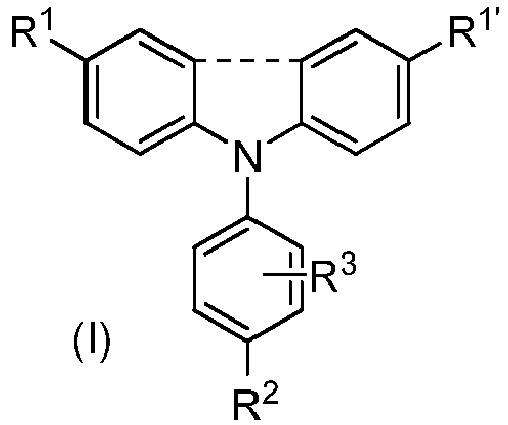
---- is an optional covalent bond;
each of R1, R1', R2 is the same or different and represents
- an heterocyclic group of formula (i)

R4 to R7 represent independently an hydrogen or an hydrocarbon group; - an heterocyclic group of formula (ii), (iii), (iv) or (v)


R2 can also be an hydrogen or a linking group which is a functional group capable of allowing the grafting, by a chemical reaction, of the compound of formula (I) on a biomolecule, or a hydrocarbon group comprising such a functional group;
R3 represents H or a linking group which is a functional group capable of allowing the grafting, by a chemical reaction, of the compound of formula (I) on a biomolecule, or a hydrocarbon group comprising such a functional group; with the proviso that compound (I) does not represent
- The term "hydrocarbon group" means a chain of 1 to 25 carbon atoms, typically 1 to 12 carbon atoms, more typically 1 to 10 carbon atoms, and most typically 1 to 8 carbon atoms. Hydrocarbon groups may have a linear or branched chain structure. Typical hydrocarbon groups have one or two branches, typically one branch. Typically, hydrocarbon groups are saturated. Unsaturated hydrocarbon groups may have one or more double bonds, one or more triple bonds, or combinations thereof. Typical unsaturated hydrocarbon groups have one or two double bonds or one triple bond; more typically unsaturated hydrocarbon groups have one double bond, hydrocarbon groups may be substituted with one or more substituents, which are identical or different, and comprise one or more heteroatoms.
- For example, hydrocarbon groups may be alkyl group.
- The term "alkyl group" means linear or branched carbon radicals in C1-C25, preferably in C1-C12, more preferably in C1-C8 or in C1-C6, even more preferably in C1-C4. Typically, they are chosen in the group consisting of methyl, ethyl, n-propyl, isopropyl, n-butyl, isobutyl, sec-butyl and tert-butyl.
- Cationic triphenylamine derivatives according to the invention penetrate by themselves in targeted cells. However, it would be interesting to vectorize compound (I) so as to target preferentially specific cancer cells avoiding normal cells.
- Therefore, according to an embodiment, R3 and/or R2 represents a linking group which is a functional group capable of allowing the grafting, by a chemical reaction, of the compound of formula (I) on a biomolecule, said biomolecule being chosen in the group consisting of folic acid, polyamines such as spermine, spermidine or peptides.
- According to an embodiment, the linking group being a functional group is chosen in the group consisting of polyethylene glycol of various lengths, or alkyl chains bearing a terminal functional group such as halogen group or carboxylic acid group, an azido group or a terminal alkyne.
- The compound of formula (I) can be grafted on said biomolecule by a chemical reaction such as amidation, Huisgen cycloaddition.
- According to a preferred embodiment, cationic triphenylamine derivative does not contain the optional bond.
- Of course, the cationic triphenylamine derivative of formula (I) is associated with a counter-ion chosen from the group consisting of tosylate, mesylate, hydrochloride, hydrobromide, tartrate, hydroiodide, fumarate, citrate, trifluoroacetate, ascorbate, triflate, formate, acetate and maleate to ensure ionic neutrality.
- The counter-ion and/or the number of the counter ion will be chosen according to the valence so as to maintain the ionic neutrality.
- The counter-ion, even if present, is not always represented in the present specification.
- According to an embodiment of the present invention, at least two of R1, R1' or R2 are identical.
- According to another embodiment of the present invention, at least two of R1, R1' or R2 represent (IV) with Q1 being (i) or (v).
- According to another embodiment when two of R1, R1' or R2 represent (IV) with Q1 being (i) or (v), W is NR16 and R12-R15 are identical and represent H.
- According to another embodiment, the cationic triphenylamine derivatives are compounds TP-2(Ox5Q1) and TP-3(Ox5Q1).


- According to a preferred embodiment, the cationic triphenylamine derivatives according to the invention are compounds selected from the group consisting of those of formula (a), (b), (c) or (d) named respectively later on TP30x5Py, TP20x5Py, TP30x5Bzim and TP20x5Bzim.


- The cationic triphenylamines derivatives described above are highly fluorescent, especially when bound to a target such as nucleic acids, specifically DNA, or a cell organelle. The binding process strongly limits the internal dynamics of TPA, leading to a substantial increase in the fluorescence quantum yield.
- Therefore, compared to porphyrins and chlorins, they typically display a higher quantum yield. Indeed, for instance, chlorine e6 is characterized by a quantum yield of 0.008-0.01 in water up to 10 µM.
- The cationic triphenylamines derivatives according to formula (I) exhibit a quantum yield in presence of DNA ranging from 0.01 to 0.8, preferably from 0.08 to 0.6. The values of quantum yield were measured using a
reference Rhodamine 101 in ethanol according to: Lakowics JR (2006) Principles of Fluorescence Spectroscopy, 3rd Ed., Springer-Verlag New York Inc., New York. - According to the invention, the cationic triphenylamine derivatives described above exhibit a fluence ranging from 10 to 300, preferably from 15 to 200 and more preferably from 22 to 100J/cm2 for one photon excitation and a fluence ranging from 50 to 500, preferably from 100 to 400 and more preferably from 150 to 300J/cm2 for two photons excitation.
- The fluence can be calculated by multiplying the irradiance by the time of light exposure.
- The total intensity (or irradiance in mW/cm2) can be measured by using a power meter (Nova II / PD300-3W photodiode sensor or VEGA / 3A thermal head or equivalent).
- According to the invention, the cationic triphenylamine derivatives described above present a two-photon cross section which is comprised between 100 and 2000GM, and more preferably between 400 and 1000GM. The cross section can be determined by different methods such as Z-scan, Non Linear Transmission (NLT) or two-photon-induced fluorescence (TPIF) measurements.
- Another object of the present invention is a synthesis of compounds of the present invention, specifically compounds TP-2(Ox5Q1) and TP-3(Ox5Q1) presenting respectively the general formula below.


- The compounds of general formula TP-2(Ox5Q1) or TP-3(Ox5Q1) can be prepared according to
scheme 1 below.
- A compound of formula 3a (R1 and R2 are selected in the group consisting of Br, Cl and I) or 3b (R1 is selected in the group consisting of Br, Cl and I) is placed in a dry protic solvent S1. A compound of
formula 4 wherein HetAr is as defined inscheme 1 is then added in a molar ratio ranging from 1 to 5, preferably from 1 to 1.5 with respect to the compound of formula 3a or 3b in presence of a base in a molar ratio ranging from 1 to 6, preferably from 2 to 4 in the presence of a catalyst in an amount ranging from 1 mol% to 15 mol%, preferably from 2mol% and 10mol% relative to the total amount of compound of formula 3a or 3b. The reaction mixture is then heated at a temperature ranging from 70°C to 150°C, preferably from 80 to 130°C, and more preferably at 120°C in a Schlenk flask for example and stirred for a time ranging from 1 to 30 hours, preferably from 2 to 20 hours, and more preferably during 18 hours under inert gas such as argon. The reaction mixture can be concentrated under reduced pressure and the residue can be diluted with an organic solvent. The organic phase can be washed with water, decanted and dried over magnesium sulphate. The compounds are purified (by flash chromatography on silica gel for example). Finally, solid can be dried under vacuum overnight to give a compound offormula 5. - A compound of formula 5a or 5b and a compound chosen in particular among of methyl tosylate or methyl mesylate (or another suitable compound that the man skilled in the art will be able to choose according to the desired salt) in a ratio ranging from 1 to 10, preferably from 1 to 6 equivalents are placed in an aprotic solvent S2. The reaction mixture can then be heated at a temperature ranging from 30 and 150°C, preferably from 40 to 120°C, more preferably at 110°C and stirred for a time ranging from 8 to 30 hours, preferably from 15 to 25 hours, and more preferably during 20 hours. After cooling down to room temperature, the precipitate is filtered, washed with for example hot toluene and diethyl ether to afford the desired salt TP-2(Ox5Q1) or TP-3(Ox5Q1) depending on the starting material 5a or 5b.
- The starting compounds of
formula 3a, 3b and 4 are commercially available or can be prepared according to methods known to the person skilled in the art. - According to the invention, the dry protic solvent S1 is for example 1,4-dioxane.
- According to the invention, the aprotic solvent S2 is chosen in the group consisting of apolar solvents such as alkanes such as cyclohexane, pentane or aromatic solvents such as xylene, toluene and preferably is toluene.
- According to the invention, the base is chosen in the group consisting of inorganic bases such as potassium carbonate, cesium carbonate, sodium tert-butoxide or lithium tert-butoxide and preferably is lithium tert-butoxide.
- According to the invention, the catalyst is chosen in the group consisting of palladium(0) species such as Pd(OAc)2 and a phosphine such as triarylphosphine, trialkylphosphine or tetrakis(triphenylphosphine)palladium(0), and preferably is tetrakis(triphenylphosphine)palladium(0).
- The residue can be diluted with an organic solvent such as ethyl acetate and the organic phase can be washed with water.
- The compounds can be purified by flash chromatography on silica gel or by recrystallization.
- Another object of the present invention is a solution comprising at least a cationic triphenylamine derivative according to formula (I) and at least a solvent.
- Another object of the present invention is a pharmaceutical composition comprising a cationic triphenylamine derivative according to the invention and a pharmaceutically acceptable carrier.
- A "solution", as used herein, is defined as comprising at least a cationic triphenylamine derivative according to the invention and at least a solvent and comprises necessarily a counter-ion to ensure ionic neutrality.
- A "pharmaceutical composition", as used herein, is defined as comprising at least a cationic triphenylamine derivative according to the invention, and at least one pharmaceutically acceptable carrier and comprising necessarily a counter-ion to ensure ionic neutrality.
- As used herein, the term "pharmaceutically acceptable carrier" refers to a carrier medium which does not interfere with the effectiveness of the biological activity of the active ingredients and which is not excessively toxic to the hosts at the concentrations at which it is administered. The carrier(s) may be particulate, so that the compositions are, for example, in tablet or powder form. The carrier(s) may be liquid, with the compositions being, for example, an oral syrup or injectable liquid. In addition, the carrier(s) may be gaseous, so as to provide an aerosol composition useful in, e.g., inhalatory administration.
- The term "effective amount" refers to any amount of pharmaceutical composition, which is sufficient to fulfill its intended purpose(s) (e.g., the purpose may be the apoptosis in cancer cells in a biological system or in a subject).
- As used herein, the term "subject" refers to a human or another mammal (e.g., mouse, rat, rabbit, hamster, dog, cat, cattle, swine, sheep, horse or primate). In many embodiments, the subject is a human being. In such embodiments, the subject is often referred to as an "individual", or a "patient" if the subject is afflicted with a disease or clinical condition. The terms "subject", "individual" and "patient" do not denote a particular age, and thus encompass adults, children and newborns.
- According to an embodiment, the solution comprises a cationic triphenylamine derivative selected from the group consisting of TP-2(Ox5Q1), TP-3(Ox5Q1), preferably TP30x5Py, TP20x5Py, TP30x5Bzim, TP20x5Bzim and mixture(s) thereof, and a solvent.
- The solvent will be chosen so as to solubilize the cationic triphenylamine derivative of the invention.
- The man skilled in the art will be able to choose the solvent suitable to the use of the solution.
- For example, DMSO with a maximum
final concentration 1% (v/v) to maintain cell viability can be used. - Another object of the present invention is a pharmaceutical composition comprising a cationic triphenylamine derivative selected from the group consisting of compounds of formula (21) defined below, compounds of formula (I) defined above and mixture(s) thereof and a pharmaceutically acceptable carrier.

----- represents an optional covalent bond;
R24 represents a hydrogen atom or a linking group, in which case: - 1) if R24 represents a hydrogen atom, then:
- R21 represents a linking group or a group of formula (II)' below:

- Q21 represents:
- a heterocyclic group of formula (i)' below:

- in which R25 represents a hydrocarbon group; any one of R26-R29 and R210 represents a covalent bond linking the said heterocyclic group to B, while the others from R26-R29 and R210 represents, independently of each other, a hydrogen atom or a hydrocarbon group; or
- a heterocyclic group of formula (ii)' or (iii)' below:


- in which R25 represents a hydrocarbon group; any one of R211 to R217 represents a covalent bond linking the said heterocyclic group to B, while the others from R211 to R217 represent, independently of each other, a hydrogen atom or a hydrocarbon group, it being possible for R212, R214 and R216 to also form, respectively with R211 and/or R213, R213 and/or R215, and with R215 and/or R217, a bridging group; or
- a heterocyclic group of formula (iv)' below:
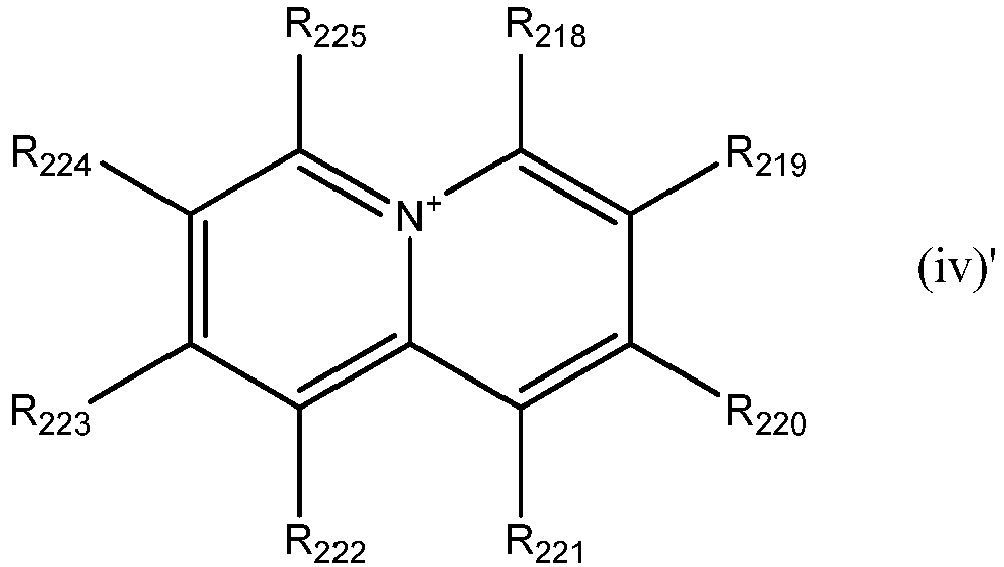
- in which any one of R218 to R225 represents a covalent bond linking the said heterocyclic group to B, while the others from R218 to R225 represent, independently of each other, a hydrogen atom or a hydrocarbon group, it being possible for R219, R221, R223 and R225 to also form, respectively with R218 and/or R220, R220 and/or R222, R222 and/or R224, and with R224 and/or R218, a bridging group; or
- a heterocyclic group of formula (v)' below:

- in which R225 represents a hydrocarbon group; W represents an oxygen or sulphur atom or a group -N(R231)- in which R231 is a hydrogen atom or a hydrocarbon group, or a group - C(R231)(R232)- in which R231 and R232 are, independently of each other, a hydrogen atom or a hydrocarbon group; R230 represents a covalent bond linking the said heterocyclic group to B, while R226 to R229 represent, independently of each other, a hydrogen atom or a hydrocarbon group, it being possible for R227 to also form with R226 and/or R228 a bridging group, it being possible for R228 itself to form with R229 a bridging group;
- a is equal to 0 (in which case A' is absent) or 1 (in which case A' is present);
- A' and B' represent the groups below:


- in which R233 to R236 represent, independently of each other, a hydrogen atom or a hydrocarbon group, it being possible for each of R233 and R236 to form with R234 and/or R235 a bridging group;
- when R21 represents a group of formula (II)' above, then R22 also represents a group of formula (II)' above while, when R21 represents a linking group, then R22 represents a group of formula (III)' below:

- Q22 represents:
- a heterocyclic group corresponding to any one of the formulae (i)' to (v)' above; or
- a heterocyclic group of formula (vi)' below:

- in which R26-R29 and R210 have the same meaning as in the formula (i)' above; or
- a heterocyclic group of formula (vii)' or (viii)' below:

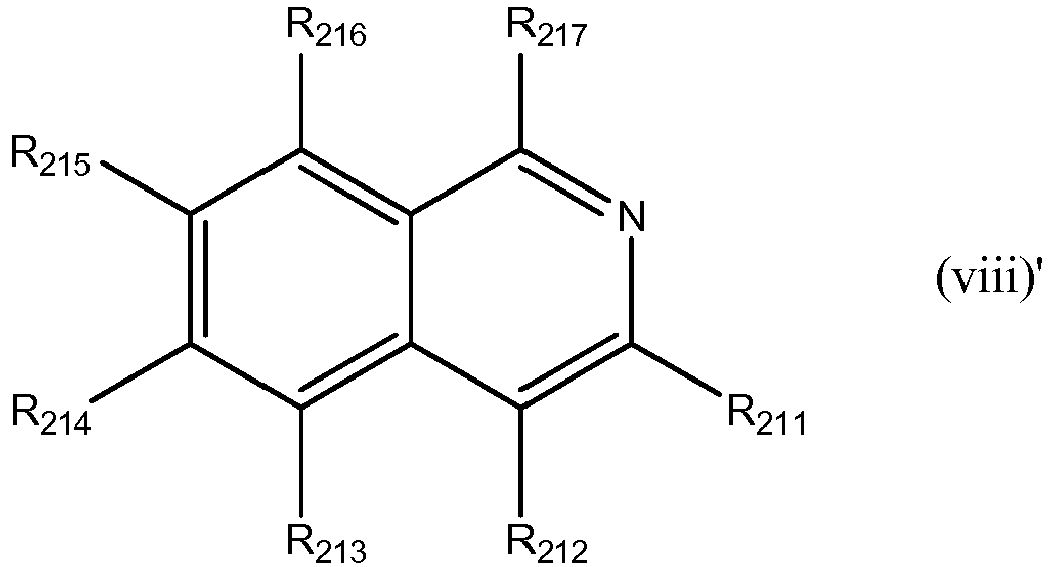
- in which R211 to R217 have the same meaning as in the formulae (ii)' and (iii)' above; or
- a heterocyclic group of formula (ix)' below:

- in which W, R226 to R230 have the same meaning as in the formula (v)' above;
- a, A" and B" have the same meaning as above;
- when R21 represents a linking group, then R23 represents a group of formula (III)' above while, when R21 represents a group of formula (II)' above, then R23 represents a hydrogen or halogen atom, a hydrocarbon group or a group of formula (II)' above;
- R21 represents a linking group or a group of formula (II)' below:
- 2) if R24 represents a linking group, then R21 and R22 represent a group of formula (III)' above while R23 represents a hydrogen or halogen atom, a hydrocarbon group or a group of formula (III)' above;
in which the linking group is a functional group capable of allowing the grafting, by a chemical reaction, of the compound on a biomolecule, or a hydrocarbon group comprising such a functional group, and in which each of the abovementioned hydrocarbon groups may be substituted with one or more substituents, which are identical or different, and comprise one or more heteroatoms. - According to a preferred embodiment, the pharmaceutical composition comprises a cationic triphenylamine derivative of formula (2IA) corresponding to the formula (2I) but in which Q21 cannot be an heterocycle of formula (ii)', (iii)', (iv)' and in which it is not possible for each of R233 and R236 to form with R234 and/or R235 a bridging group.
- According to preferred embodiment, the pharmaceutical composition comprises at least a compound chosen in the group consisting of TP-2(Ox5Q1), TP-3(Ox5Q1), preferably TP30x5Py, TP20x5Py, TP30x5Bzim, TP20x5Bzim, or a compound chosen in the group consisting of TP3Pyo, TP2Pyo, Cbz2Py, Cbz3Py, TP2BZim, TP3BZim, TP2Py, TP3Py and mixture thereof and a pharmaceutical acceptable carrier.

- The pharmaceutical composition may be in the form of a liquid (solutions, suspensions or other like form) composition or a solid composition.
- According to its form (liquid or solid), the pharmaceutical composition may be intended for different administration routes such as topical administration, parenteral administration or oral administration.
- According to a preferred embodiment, when the pharmaceutical composition is in liquid form, it is intended for parenteral administration. The parenteral preparation can be enclosed in ampoules, disposable syringes or multiple dose vials made of glass or plastic.
- According to the invention, the pharmaceutical composition contains an effective amount of the compound (I), (21) or (2IA) such that a suitable dosage will be obtained.
- Another object of the invention is the use of cationic triphenylamine derivative of formula (I), (21) or (2IA) or mixture thereof or of a pharmaceutical composition comprising cationic triphenylamine derivative of formula (I), (21) or (2IA) and a pharmaceutically acceptable carrier as photo active agent in dynamic phototherapy.
- According to the invention, "dynamic phototherapy" means a method involving the introduction of an exogen molecule as a PDT compound (i.e cationic triphenylamines derivatives of the invention) in a subject or a biological sample.
- According to the invention, the PDT compound induces cell death under light illumination (via a one or two-photons absorption process) preferably by generating ROS. This ROS generation can result from a direct mechanism (i.e generation of singlet oxygen by energy transfer from the triplet state of the photosensitizer or photodegradation of the PDT compounds in organism) or the ROS generation can also result from an indirect mechanism (i.e loss of membrane potential of mitochondria).
- According to a preferred embodiment, an object of the invention is the use of a cationic triphenylamine derivative selected from the group consisting of compounds TP-2(Ox5Q1), TP-3(Ox5Q1), preferably TP30x5Py, TP20x5Py, TP30x5Bzim, TP20x5Bzim, or a cationic triphenylamine derivative selected from the group consisting of compounds TP3Pyo, TP2Pyo, Cbz2Py, Cbz3Py, TP2BZim, TP3BZim, TP2Py, TP3Py and mixture thereof as photo active agent in dynamic phototherapy.
- Another object of the present invention is the use of a pharmaceutical composition comprising cationic triphenylamine derivative selected from the group consisting of compounds TP-2(Ox5Q1), TP-3(Ox5Q1), preferably TP30x5Py, TP20x5Py, TP30x5Bzim, TP20x5Bzim, or a cationic triphenylamine derivative selected from the group consisting of compounds TP3Pyo, TP2Pyo, Cbz2Py, Cbz3Py, TP2BZim, TP3BZim, TP2Py, TP3Py and a pharmaceutical acceptable carrier as photo active agent in dynamic phototherapy.
- According to the invention, cationic triphenylamine derivative of formula (I), (2I) or (2IA) or a pharmaceutical composition comprising said cationic triphenylamine derivative can be used in one-photon dynamic phototherapy, into the 400-700 range, preferably into the 400-600 nm range for excitation or in two-photons dynamic phototherapy into the 700-930 nm, preferably into the 840-900 nm range for the excitation.
- Indeed, experimental data have shown that the cationic triphenylamine derivative of formula (I), (21) or (2IA) according to the invention can be used not only as photo active agent in one-photon dynamic phototherapy but also in two-photons dynamic phototherapy.
- According to a preferred embodiment, cationic triphenylamine derivative of formula (I),(2I) or (2IA) or composition comprising said cationic triphenylamine derivative are used in two-photons dynamic phototherapy since the excitation wavelength in the near-infra red region of the spectrum offers deeper penetration in the tissues, and therefore, offers a better treatment.
- When the cationic triphenylamine derivatives are used as a photoactive agent in two-photons dynamic phototherapy, the wavelength is ranged from 840 nm to 900 nm.
- Another object of the present invention is the use of cationic triphenylamine derivative of formula (I),(2I) or (2IA) as photo-dependent inducers of apoptosis on living cells.
- According to a preferred embodiment, an object of the invention is the use of a cationic triphenylamine derivative selected from the group consisting of compounds TP-2(Ox5Q1), TP-3(Ox5Q1), preferably TP30x5Py, TP20x5Py, TP30x5Bzim, TP20x5Bzim, or a cationic triphenylamine derivative selected from the group consisting of compounds TP3Pyo, TP2Pyo, Cbz2Py, Cbz3Py, TP2BZim, TP3BZim, TP2Py, TP3Py and mixture thereof as photo-dependent inducer of apoptosis on living cells.
- Another object of the present invention is the use of a pharmaceutical composition comprising cationic triphenylamine derivative selected from the group consisting of compounds TP-2(Ox5Q1), TP-3(Ox5Q1), preferably TP30x5Py, TP20x5Py, TP30x5Bzim, TP20x5Bzim, or a cationic triphenylamine derivative selected from the group consisting of compounds TP3Pyo, TP2Pyo, Cbz2Py, Cbz3Py, TP2BZim, TP3BZim, TP2Py, TP3Py and a pharmaceutical acceptable carrier as photo-dependent inducer of apoptosis on living cells.
- Indeed, it has been underlined that rapid cell death (on the minute scale) can be revealed after selective excitation of triphenylamine derivatives according to the invention using one or two-photon excitation process. The photo-induced cell death is concomitant to ROS (reactive Oxygen Species) generation as revealed by the H2DCF-DA probe and actually corresponds to an apoptosis mechanism as revealed by the PARP cleavage and the externalization of phosphatidyl serine, two well-known hallmarks of apoptosis.
- Moreover, due to their fluorescent properties, the cationic triphenylamine derivatives according to the invention allow a simultaneous monitoring of the overall apoptosis process on the same sample by following the re-localization of the fluorescent signal (from the cytoplasm to the nucleus) or/and by directly monitoring the formation of membrane blebs (another hallmark of apoptosis).
- Therefore, another object of the present invention is the use of cationic triphenylamine derivative formula (I), (2I) or (2IA) as fluorescent apoptotic tracers when these derivatives - exposed to light - trigger by themselves the cell apoptosis.
- Another object of the present invention is the use of cationic triphenylamine derivative selected from the group consisting of compounds TP-2(Ox5Q1), TP-3(Ox5Q1), preferably TP30x5Py, TP20x5Py, TP30x5Bzim, TP20x5Bzim, or a cationic triphenylamine derivative selected from the group consisting of compounds TP3Pyo, TP2Pyo, Cbz2Py, Cbz3Py, TP2BZim, TP3BZim, TP2Py, TP3Py and mixture thereof as fluorescent apoptotic tracers.
- Another object of the present invention is the use of a pharmaceutical composition comprising a cationic triphenylamine derivative selected from the group consisting of compounds TP-2(Ox5Q1), TP-3(Ox5Q1), preferably TP30x5Py, TP20x5Py, TP30x5Bzim, TP20x5Bzim, or a cationic triphenylamine derivative selected from the group consisting of compounds TP3Pyo, TP2Pyo, Cbz2Py, Cbz3Py, TP2BZim, TP3BZim, TP2Py, TP3Py and a pharmaceutical acceptable carrier as fluorescent apoptotic tracers.
- Still another object of the present invention is the use of cationic triphenylamine derivative formula (I), (21) or (2IA) or a pharmaceutical composition comprising said compounds as photodependant inducer of apoptosis and fluorescent apoptotic tracers of the induced apoptosis.
- When the cationic triphenylamine derivative of formula (I), (2I) or (2IA) is used as photo-dependent inducers of apoptosis on living cells, the molar concentration of said triphenylamine derivative is ranged from 10nM to 10µM, preferably from 20nM to 2µM in the solution or pharmaceutical composition of the present invention.
- Indeed, it has been shown that such concentrations are below the dark toxicity values defining the intrinsic toxicity of the compound in the absence of any illumination by light. Morevover, the cationic triphenylamine derivatives of formula (I), (21) or (2IA) have the benefit of being non photosensitive to natural light.
- However, when the cationic triphenylamine derivative of formula (I), (21) or (2IA) is used as fluorescent apoptotic tracers for cell studies (i.e. as visualized by the re-localization of the fluorescence signal from cytoplasm to the nucleus as mentioned above), the molar concentration of said triphenylamine derivative must be above 50 nM and preferably above 200nM.
- Therefore, according to a preferred embodiment, the molar concentration of said triphenylamine derivative is ranged from 200nM to 2µM so as to follow apoptosis phenomenon by fluorescence.
- Another object of the invention is a cationic triphenylamine derivative of formula (I), (21) or (2IA) or a pharmaceutical composition comprising said cationic triphenylamine derivative for use as a drug.
- Another object of the invention is a cationic triphenylamine derivative of formula (I), (21) or (2IA) or a pharmaceutical composition comprising said cationic triphenylamine derivative for use in the treatment of cancer, preferably by dynamic phototherapy.
- Another object of the invention is the use of a cationic triphenylamine derivative of formula (I), (21) or (2IA) or a pharmaceutical composition comprising said cationic triphenylamine derivative in the manufacture of a medicament for the treatment of cancer, preferably by dynamic phototherapy.
- According to a preferred embodiment, the cancers to be treated are chosen in the group consisting of cervical cancer, breast cancer, colorectal cancer, skin cancer especially non-melanoma skin cancer; head cancer, neck cancer, esophagus cancer, pancreas cancer, bladder cancer or prostate cancer.
- Another object of the present invention is the use of cationic triphenylamine derivative of formula (I), (21) or (2IA) or a pharmaceutical composition comprising said cationic triphenylamine derivative as a cleaning agent for postoperative wounds, for example using spray and subsequent light illumination. In the case if (i) TPAs specifically target tumor cells in patients by their own or if (ii) TPAs specifically target tumor cells by a process based on vector coupling, there is possibility to observe the area concerned by fluorescence so as to delineate the targeted tissues to be light-treated or removed.
- Another object of the invention is the cationic triphenylamine derivative of formula (I), (21) or (2IA) or a pharmaceutical composition comprising said cationic triphenylamine derivative for use in the treatment of psoriaris, and superficial mycoses such as fungi or pityriasis.
- Another object of the invention is the use of a cationic triphenylamine derivative of formula (I), (21) or (2IA) or a pharmaceutical composition comprising said cationic triphenylamine derivative in the manufacture of a medicament for the treatment of psoriaris, and superficial mycoses such as fungi or pityriasis.
- Another object of the present invention is a method for treating cancer by means of PDT comprising the following steps:
- administrating to a patient an effective amount of cationic triphenylamine derivative of formula (I), (21) or (2IA) or a pharmaceutical composition comprising said cationic triphenylamine derivative;
- illuminating the area to be treated by means of photon(s) excitation thereby inducing apoptosis.
- Another object of the present invention is a method for treating cancer by means of PDT comprising the following steps:
- administrating to a patient an effective amount of cationic triphenylamine derivative of formula (I), (21) or (2IA) or a pharmaceutical composition comprising said cationic triphenylamine derivative;
- illuminating the area to be treated by means of photon(s) excitation thereby inducing apoptosis; and
- following the apoptosis phenomenon by fluorescence.
- The step of following the apoptosis phenomenon by fluorescence enables to stop the illumination when the apoptosis is completed.
- According to an embodiment, the effective amount of compounds (I), (2I) or (2IA) or of a pharmaceutical composition comprising said compounds is administrated by parenteral route.
- According to another embodiment, the area to be treated is illuminated by means of one photon excitation or a two-photons excitation, preferably by means of two-photons excitation.
- Embodiments of the invention are described by way of example with reference to the accompanying drawings, in which:
-
Figures 1 show epifluorescence (A) and confocal (B) images of fixed HeLa cells treated with TPA (left: TP2Py & right: TP3Bzim). The corresponding transmission images are shown below the fluorescence images. -
Figures 2 represent epifluorescence imaging of living HeLa cells treated with TPA, TP2Py (A) or TP3Bzim (B) (under continuous illumination). The corresponding transmission images are shown below the fluorescence images. -
Figures 3 represent the co-localization of TP2Py with the mitotracker Green FM by using confocal microscopy images of living MCF-7 cells treated with both TP2Py and the MitoTracker Green FM. -
Figures 4 show epifluorescence images of living HeLa cells treated with TP2Py showing that the duration of the preincubation does not influence the phenomenon ((left panel) initial localization after 16-hours preincubation; (right panel) same sample as in (left panel) but 15 min after illumination). -
Figures 5 represent time-dependent confocal fluorescence imaging of living MCF7 cells treated with (A) TP2Py or (B) TP-3Bzim, (C) quantification of the fluorescence emission intensity of TP2Py as a function of time; (D) fluorescence emission spectra of TP2Py in distinct ROIs (ROI = Region Of Interest), (E) confocal image showing the selected ROIs used in panels C and D. -
Figure 6 is confocal fluorescence imaging of living MCF-7 cells treated with a neutral TPA: TP3NBzim used as a control. -
Figures 7 represent (A;B) confocal images of living MCF-7 cells treated with TP2Py at (A) high irradiance or (B) low irradiance; (C) Fluorescence emission intensity in ROIs corresponding to the nucleus as a function of time. -
Figures 8 show confocal images of living MCF-7 cells treated with different concentration of TP2Py (A) 2µM (B) 200nM and (C) 20nM; Fluorescence emission intensity in ROIs corresponding to the nucleus as a function of time (A1) C=2µM and (B1) C=200nM. -
Figures 9 represent cell viability (in % of control treated in the absence of TPA) as a function of time illumination (for a given TPA concentration) ((A) for MCF7 cells and (B) for HeLa cells) or as a function of TPA concentration (for a given time illumination) ((C) for MCF7 cells and (D) for HeLa cells). -
Figures 10 show (A) two photon fluorescence images as a function of time of living MCF-7 cells treated with TP2Py; (B) Transmission image corresponding to t = 30 min. -
Figures 11 represent (A) Western blot analysis of HeLa cells treated with 2 µM TP2Py or not (DMSO only); (B) Transmission (top) and epifluorescence (bottom) images of the cells after incubation with the TP2Py compound without any further light illumination treatment (left) or with a light illumination treatment of 15 min (middle) or 90 min (right). -
Figures 12 and13 : Flow cytometer analysis of MCF-7 cells treated under various conditions, showing that TPA induces both the loss of plasma membrane polarity (Fig. 12 : Annexin V staining) and the production of ROS (Reactive Oxygen Species) (Fig. 13 : H2DCF-DA test). -


- A mixture of tris-bromotriphenylamine 3a (123 mg, 0.25 mmol, 1 equiv.), 5-pyridyloxazole (112 mg, 0.77 mmol, 3 equiv.), lithium tert-butoxide (92 mg, 1.1 mmol, 4.5 equiv.), tetrakis(triphenylphosphine)palladium(0) (44 mg, 0.04 mmol, 0.15 equiv.) in dry dioxane (2 mL) was stirred for 2 h at 120°C in a sealed tube. Dichloromethane and water were added. After decantation, the resulting organic layer was washed with brine, dried over MgSO4, filtered and concentrated to dryness. The crude residue was purified by column chromatography (dichloromethane/methanol = 100/0 to 90/10), dissolved in a minimal amount of dichloromethane and precipitated with diethyl ether to afford the desired compound 5aPy in 35 % yield (60 mg, 0.09 mmol) as a yellow solid.
1H NMR (300 MHz, CDCl3) δ 8.69 (d, J = 5. 0, 2H), 8.09 (d, J = 8.6, 2H), 7.67 (s, 1H), 7.58 (d, J = 5.7, 2H), 7.30 (d, J = 8.6, 2H) 13C NMR (75 MHz, CDCl3) δ 162.2, 150.5, 148.8, 148.6, 134.8, 128.2, 127.1, 124.6, 122.3, 117.9
MS (ES+) m/z 678.3
Anal. (C42H27N7O3.0.5H2O) Calcd: C, 73.46; H, 4.11; N, 14.28 Found : C, 73.62; H, 3.89; N, 13.96 - A suspension of compound 5aPy (40 mg, 0.06 mmol, 1 equiv.) and methyl tosylate (50 mg, 0.26 mmol, 4.5 equiv.) in toluene (4 mL) was stirred for 12 h at reflux. After cooling down to room temperature, the reaction mixture was sonicated and put at 4°C for 2 days. The resultant fine solid was washed with hot toluene and diethyl ether to afford the desired salt as an orange solid (52 mg, 0.04 mmol) in 71% yield.
1H NMR (300 MHz, DMSO-d6 ) δ 9.01 (d, J = 6.1, 6H), 8.61 (s, 3H), 8.46 (d, J = 6.3, 6H), 8.25 (d, J = 8.6, 6H), 7.47 (d, J = 7.9, 6H), 7.37 (d, J = 8.2, 6H), 7.10 (d, J = 7.8, 6H), 4.30 (s, 9H), 2.28 (s, 9H) 13C NMR (75 MHz, DMSO) δ 163.9, 148.9, 146.1, 146.0, 145.7, 140.4, 137.7, 134.6, 128.9, 128.1, 125.51, 124.7, 121.2, 120.5, 47.2, 20.8
MS (ES+) m/z 241.0 HRMS (ESI) calcd for C52H43N7O6S [M+OTs]2+ 446.6498, found 446.6481 - A mixture of bis-bromotriphenylamine 3b (426 mg, 1 mmol, 1 equiv.), 5-pyridyloxazole (386 mg, 2.6 mmol, 2.5 equiv.), lithium tert-butoxide (338 mg, 4.2 mmol, 4 equiv.), tetrakis(triphenylphosphine)palladium(0) (122 mg, 0.1 mmol, 0.10 equiv.) in dry dioxane (10 mL) was stirred for 21 h at 120°C in a sealed tube. Ethyl acetate and water were added. After decantation, the resulting organic layer was washed with brine, dried over MgSO4, filtered and concentrated to dryness. The crude residue was purified by column chromatography (dichloromethane/methanol = 100/0 to 90/10), dissolved in a minimal amount of dichloromethane and precipitated with a small quantity of diethyl ether and a large quantity of pentane to afford the desired compound 5bPy in 26 % yield (147 mg, 0.27 mmol) as a bright yellow solid.
1H NMR (300 MHz, CDCl3) δ 8.66 (d, J = 5. 4, 4H), 8. 00 (d, J = 8.7, 4H), 7.63 (s, 2H), 7.54 (d, J = 5.4, 4H), 7.41 - 7.30 (m, 2H), 7.25 - 7.13 (m, 7H) 13C NMR (75 MHz, CDCl3) δ 162.6, 150.5, 149.6, 148.4, 146.3, 135.1, 130.0, 128.0, 127.2, 126.3, 125.3, 123.5, 121.2, 118.0
MS (ES+) m/z 534.2 - A suspension of compound 5bPy (40 mg, 0.07 mmol, 1 equiv.) and methyl tosylate (42 mg, 0.22 mmol, 3 equiv.) in toluene (4 mL) was stirred for 18 h at reflux. After cooling down to room temperature, the orange precipitate was filtered, washed with hot toluene and diethyl ether to afford the desired salt as an orange solid (60 mg, 0.06 mmol) in 89% yield.
1H NMR (300 MHz, DMSO-d6 ) δ 8.99 (d, J = 6.2, 4H), 8.58 (s, 2H), 8.43 (d, J = 6.2, 4H), 8.17 (d, J = 8.1, 4H), 7.47 (d, J = 7.5, 4H), 7.35 - 7.15 (m, 9H), 7.10 (d, J = 7.3, 4H), 4.29 (s, 6H), 2.28 (s, 6H) 13C NMR (75 MHz, DMSO-d6 ) δ 164.1, 149.6, 145.9, 145.8, 145.4, 140.4, 137.5, 134.7, 130.3, 128.9, 128.7, 128.2, 128.0, 126.5, 125.5, 123.0, 120.4, 119.8, 47.2, 20.8
MS (ES+) m/z 282.3 HRMS (ESI) calcd for C36H29N5O2 [M+] 563.2321, found 563.2304 - A mixture of tris-bromotriphenylamine 3a (123 mg, 0.25 mmol, 1 equiv.), 5-N-methylbenzimidazoyloxazole (600 mg, 3 mmol, 3 equiv.), lithium tert-butoxide (460 mg, 6 mmol, 6 equiv.), tetrakis(triphenylphosphine)palladium(0) (180 mg, 10mol%) in dry dioxane (5 mL) was stirred overnight at 120°C in a sealed tube. Dichloromethane and water were added. After decantation, the resulting organic layer was washed with brine, dried over MgSO4, filtered and concentrated to dryness. The crude residue was purified by column chromatography (dichloromethane/methanol = 100/0 to 90/10), dissolved in a minimal amount of dichloromethane and precipitated with diethyl ether to afford the desired compound 5aBzim in 83% yield (700 mg, 0.83 mmol) as a yellow solid.
- A suspension of 5aBzim (144 mg, 0.172 mmol, 1 equiv.) and methyl tosylate (144.19 mg, 0.77 mmol, 4.5 equiv.) in toluene (15 mL) was stirred for 24 h at reflux. After cooling down to room temperature, the yellow precipitate was filtered, washed with hot toluene and diethyl ether to afford the desired salt as a yellow solid (66 mg, 0.072 mmol) in 84% yield.
1H NMR (300 MHz, DMSO) δ 8.66 (s, 3H), 8.25 (d, J = 9, 6H), 8.16 (m, 6H), 7.74 (m, 6H), 7.44 (d, J = 9, 6H), 7.38 (d, J = 9, 6H), 7.08 (d, J = 9, 6H), 4.27 (s, 18H), 2.25 (s, 9H) 13C NMR (75 MHz, DMSO) 164.1, 149.1, 145.7, 139.1, 138.0, 137.6, 134.5, 132.1, 129.2, 128.9, 128.1, 127.1, 125.5, 120.8, 113.4, 33.7, 20.8
MS (ES+) m/z 293.9 HRMS (ESI) calcd for C54H45N10O3 [M+] 881.3676, found 881.3661 - The following instrument set-up for fluorescence imaging was used in examples 2-10.
- One-photon epifluorescence and confocal images were obtained using a SP2 confocal microscope (Leica MicroSystem) equipped with an incubation chamber (37°C,
CO 2 5%). Excitation and emission filters for epifluorescence were 450-490 nm and 515-700 nm, respectively. A continuous laser line (458 nm) was used for excitation in the confocal mode. - A similar set up was used for two-photon images except that the excitation source was a 80-MHz mode-locked Mai Tai® Ti:Sapphire tunable laser (720-920 nm, 100 fs laser pulse; Spectra Physics, Mountain View, California) tuned to 860 nm.
- For each experiment, the total intensity, called irradiance (in mW/cm2) was measured using a power meter (Nova II / PD300-3W photodiode sensor or VEGA / 3A thermal head).
- When HeLa cells were treated with TPA (2 µM TP2Py - λmax,emission = 634 nm - or TP3Bzim - λmax,emission = 572 nm - for 2 hours) and fixed using formaldehyde in
Fig. 1 ; (the same result was found using ethanol), epifluorescence and confocal imaging clearly showed a nuclear localization of the TPA compound (Fig. 1 ), in accordance with the propensity of these compounds to bind in the DNA minor groove ( Allains et al. 2007 ). Similar observations were done with MCF7 cells. - Intriguingly, the labelling of living cells by TPAs led to a completely different pattern of fluorescence distribution in cells. After the 2 hour-incubation step, living cells were observed using the confocal microscope in the epifluorescence mode [see
Figure 2 ]. In the short time scale, an initial cytoplasmic localization of TPA (no labelling was detected at the nucleus level) was found. However, the fluorescence signal localization was dramatically modified under observation. Indeed, a strong decrease in the cytoplasmic fluorescence intensity concomitant to a strong increase in the nuclear fluorescence intensity was observed. Moreover, the transmission image showed a concomitant formation of membrane blebs, suggesting a photo-induced cell death. - Conclusion: TPAs clearly behave differently in fixed and living cells. They directly localize in the nucleus of fixed cells while they initially localize in the cytoplasm of living cells with a subsequent re-localization (from cytoplasm to nucleus) upon photoillumination.
- TPAs were incubated with HeLa for 2 hours at a concentration of 2 µM of TP3Bzim or TP2Py. Epifluorescence imaging [Excitation filter: 450-490 nm; emission filter: 515-700 nm; irradiance, 1.8 W/cm2] shows that the subcellular localization of TPAs (TP2Py in
Fig. 2A or TP3Bzim inFig. 2B ) in living HeLa cells, at early time of observation was mainly cytoplasmic. The same result was found with living MCF-7 cells. - Due to its well marked emission in the red region of the spectrum, i.e. 634 nm, the subcellular localization of TP2Py at a concentration of 2 µM using MCF-7 cells was studied using green trackers.
- A co-localization signal was evidenced thanks to the confocal microscopy with the MitoTracker Green FM that stains mitochondria (
Fig. 3 ) [Excitation wavelengths were 458 and 488 nm for TP2Py and MitoTracker Green FM, respectively; emission slit settings: 560-720 nm and 500-550 nm for TP2Py and MitoTracker Green FM, respectively]. - As shown in
Fig. 2 , the observation/excitation (after an incubation time of 2 hours) triggered a rapid re-localization of the fluorescence signal from mitochondria to the nucleus. This nuclear translocation began before t = 1 min and nuclear accumulation was optimal between 1 and 5 min (fluence or light dose, 108 J/cm2). In the transmission mode, the formation of membrane blebs was detected at t = 5 min and subsequent dramatic morphological changes (nucleus and cell shrinkages) were observed from t = 15 min, highly suggesting that cells undergo apoptosis. - All the above-mentioned observations done with Tp2Py (formula 21) and TP3Bzim (formula 21) were repeated with Tp3ox5Py (formula I), Tp2Bzim (formula 2I), Tp2Pyo (formula 21) and Cbz2Py (formula 21) (using 2 µM of TPA pre-incubated with living MCF-7 cells for 2 h before initial illumination under epifluorescence microscopy which triggers the cytoplasm -> nucleus re-localization).
- The induction of cell death was clearly triggered by excitation light since:
- the initial observation consistently shows a mitochondrial localization of TP2Py, regardless of the incubation time (cells + TPA) preceding observation/illumination. For instance, the initial mitochondrial localization of TP2Py was also observed after 16-hour incubation (
Fig. 4 , left) in a similar manner than that observed after 2-hour incubation (Fig. 2A ). A further nucleus translocation kinetics was observed after 15 min under continuous light illumination (Fig. 4 , right showing the photo-induced re-localization of the fluorescence signal of TP2Py from the cytoplasm to the nucleus, 15 min after the beginning of irradiation of cells pre-incubated with TP2Py for 16 hours). [Excitation filter, 450-490nm; emission filter, 515-700 nm; irradiance, 1.8W/cm2]. Conclusion: the re-localization of TP2Py from the cytoplasm to the nucleus and the associated cell death actually depends on the illumination process, regardless of the pre-incubation time. - Each time the illumination field was changed for a given coverslip, the overall process (nuclear translocation of TPA + membrane blebbing) restarted, regardless of the time period separating the incubation and observation (data not shown). Thus, only cells in the irradiated area undergo the apoptosis process. It is important to note that exposure to natural light did not trigger any of the associated phenomena described above (nuclear translocation, blebbing) under the same concentration condition (TPA, 2µM).
- Altogether, these data suggest that both the presence of TPA and light illumination were required for inducing cell death. In the dark or exposed to natural light only, the TPA remained localized in mitochondria and did not appear to significantly perturb the cell morphology. The dark toxicity of TP2Py (2I) or TP3Bzim (2I) was negligible below 50µM in HeLa cells. In MCF-7 cells, the dark toxicity was slightly higher, however the TC50 values (
toxicity concentration 50%) were found to be above 30µM. No dark toxicity was evidenced with Tp3ox5Py (I) and Cbz2Py (21) up to 50 µM in MCF-7 cells; the Tp2Bzim (21) and Tp2Pyo (21) were found to be more toxic when tested in dark on MCF-7 cells with TC50 values of 10 and 20 µM, respectively. - The photo-induced nuclear translocation and membrane blebbing were next assessed using confocal fluorescence microscopy [λ exc = 458 nm; emission slit settings: 560-720nm and 530-690nm for TP2Py and TP3Bzim, respectively] under experimental conditions similar to those described in
experiment 1 for epifluorescence experiments. The corresponding transmission images illustrating the concomitant membrane blebbing are shown below the confocal fluorescence images. Living MCF7 cells were incubated with 2µM TP3Bzim or TP2Py for 2 hours before observation. As shown inFig. 5A (TP2Py) and inFig. 5B (TP3BZim), the results obtained with confocal imaging were similar to those obtained with epifluorescence imaging (experiment 1), with however, some discrepancies in the time courses of event appearance, most likely due to the power of the excitation source which is different between epifluorescence and confocal experiments (see below). Under light illumination, the fluorescence emission intensity of TP2Py continuously increased in the nucleus (after a lag period of approximately 2-4 min) to reach a maximum value at t = 8-10 min (Fig. 5C ). In the same time, the fluorescence intensity in mitochondrial regions continuously decreased and then, was found to be anti-correlated to the fluorescence signal measured in the nucleus (the subsequent parallel decrease of both signals was related to photobleaching). Based on both criteria (re-localization of the fluorescence signal and the formation of blebs), the deduced fluences were 22 and 40 J/cm2 for TP2Py and TP3Bzim, respectively. - Interestingly, the fluorescence emission spectra of TP2Py in nuclei or in mitochondria were distinct (
Fig. 5D ) with a maximum of emission centered at 624 nm in nuclei, close to the one obtained in vitro for DNA-bound TP2Py (634 nm) ( Allains et al. 2007 ). In contrast, the maximum of emission was blue-shifted in mitochondria (594 nm), suggesting that TP2Py probes (two-branches TPA compound) a distinct environment. In contrast to two-branch TPA compounds, the fluorescence of three-branch TPA (TP3Bzim) was found to be less sensitive to the environment, and consequently, the emission spectrum of TP3Bzim remained the same, regardless of its localization, nuclear or cytoplasmic (data not shown -
Figure 5E shows selected regions of interest in confocal fluorescence image (irradiance, 30 mW/cm2) used in temporal (Fig.5C ) and spectral (Fig.5D ) analysis of the fluorescence signal. - Conclusion: In the absence of illumination, TPAs are initially localized in the cell cytoplasm, regardless of the duration of the pre-incubation (cell + TPA; tested up to 16 hours). Only the TPA/light combination leads to cell death, concomitantly to the re-localization of TPA from cytoplasm to nucleus.
- Living MCF-7 cells were treated with 2 µM a neutral TPA: TP3NBzim (see formula below) for two hours and observed by confocal fluorescence imaging with [λ exc = 458nm] at different times, t = 0 (left) and t = 30 min (right).

-
Figure 6 shows that the neutral TPA derivative (TP3NBzim) was found to be mainly localized in nuclei, even in early microscopic observation. Most importantly, no membrane blebbing or morphological changes of the cells was observed under light illumination (data not shown). - Conclusion: This result suggests that the cationic charge ensures a mitochondrial localization and prevents the nuclear localization (in absence of light illumination, and that the DNA binding / nuclear localization is not directly responsible for apoptosis occurring on short time scale.
- The TP2Py compound at a concentration of 2 µM was first incubated with living MCF-7 cells for 2 hours and then observed with confocal microscope with varying illumination power of the laser source [λ=458 nm; emission slit setting: 560-720 nm]. Clearly,
Fig.7 shows that the excitation power influences the time course of the nuclear translocation of TP2Py, with a re-localization starting at tstart = 4 min and peaking at tmax = 15 min for an irradiance of 30 mW/cm2 (Fig. 7A ) while the same process was time-shifted for a lower excitation power for an irradiance of 5.6 mW/cm2: tstart = 50 min and tmax = 1h22min) (Fig. 7B ). For each condition, the fluorescence intensity in ROIs corresponding to the nucleus was plotted as a function of time (the initial time value, t = 0, represents the first observation) (FIG.7C ). Using integration time based on tmax values, light dose values, determined from experiments performed at irradiance of 5.6 or 30 mW/cm2, were consistent (27.6 and 27 J/cm2 respectively). These values are in accordance with the above-mentioned value for TP2Py (fluence, 22 J/cm2 inFig. 5 ). - Conclusion: The fluences characterizing TPAs correspond to non-invasive values.
- Living MCF-7 cells were treated with varying concentrations of TP2Py for two hours (2µM; 0.2µM and 0.02µM) and observed with a confocal microscope [λ exc = 458nm; irradiance 30mW/cm2, emission slit setting: 560-720nm.] (
FIG 8A : 2µM;FIG 8B : 0.2µM; FIGBC: 0.02µM). - A clear dose response effect on the nuclear translocation time course was observed for a given excitation power (30 mW/cm2) (
Fig. 8 ). Indeed, at 0.2µM TP2Py (Fig. 8B ), the tstart and tmax values were 1h15min and >2h, respectively (while at 2 µM (Fig. 8A ), tstart = 4 min and tmax = 15 min). The delay in the appearance of membrane blebbing parallels the delay in the re-localization event. - For experiments using 0.2 (
FIG 8B 1) and 2µM (FIG 8A 1) TP2Py, the fluorescence intensity in ROIs corresponding to the nucleus was plotted as a function of time (the initial time value, t = 0, represents the first observation). As expected, the corresponding light dose value depends proportionally on the concentration of TP2Py used (27 J/cm2 and 306 J/cm2 for concentrations of 2 and 0.2µM TP2Py, respectively). Interestingly, even under conditions where the TP2Py concentration was too low for measuring its fluorescence signal (20nM), the membrane blebbing was observed under transmission mode. However the first blebs appeared at t = 75 min under constant light excitation (Fig. 8C ). - Conclusion: The light illumination-dependent cell death may occur within a large range of concentration (from 20nM to 2µM), much below the toxicity concentration (see below). The time of exposure must be adapted to each TPA concentration.
- Cell viability (in % of control treated in the absence of TPA) as a function of time illumination (
Fig.9A and Fig.9B ) for a given TPA concentration (2µM) or as a function of TPA concentration (for a given time illumination) (Fig.9C and Fig.9D ) has been assessed. Different experiments were conducted and described below: - MCF7 cells were treated with 2µM of TP2Py or TP3Bzim and exposed to illumination (
Fig.9A ); - HeLa cells were treated with 2µM of TP2Py or TP3Bzim and exposed to illumination (
Fig.9B ); - MCF7 cells were treated with TP2Py, 40 min illumination (black circles) or without illumination (white circles) (
Fig.9C ) - HeLa cells were treated with TP2Py [30 min illumination (black circles) or without illumination (white circles)] or TP3Bzim [15 min illumination (black triangles) or without illumination (white triangles)]
- For each experiment, the source of excitation was a Mercury lamp (130W; 380-600nm) with an excitation filter centered at 452nm (± 45 nm), irradiance, 60mW/cm2.
- First, the experiment was calibrated by determining the time of illumination exposure which leads to the
toxicity 50%, for a given concentration of TPA (2 µM) and for an irradiance of 60mW/cm2. As shown inFig. 9A and 9B for MCF-7 and HeLa cells, respectively, the corresponding times for TP2Py and TP3Bzim were significantly different. This characteristic time was then used for the plots shown inFig. 9C and 9D which represent the cell viability as a function of TPA concentration (in HeLa and MCF-7 cells, respectively). The dose responses as shown inFig. 9C & 9D indicate that TP2Py and TP3Bzim display only moderate toxicity in the absence of illumination (dark toxicity). The dark toxicity of TP2Py or TP3Bzim was negligible below 50µM in HeLa cells (Fig. 9D ). In MCF-7 cells, the dark toxicity was higher (the TC50 value of TP2Py was found to be above 30µM) (Fig. 9C ). As shown in HeLa cells, TP2Py exhibits more toxicity than TP3Bzim. Moreover, TP3Bzim is more efficient for the photo-induced apoptosis because the same TC50 under illumination (toxicity concentration 50%) requires an illumination time of 15 min for TP3Bzim and 30 min for TP2Py (corresponding light dose values: 54 and 108 J/cm2, respectively). Regarding light-induced toxicity, the responses of HeLa and MCF-7 cells to TP3Bzim and TP2Py compounds are similar. Finally, exposure to natural light was not able to induce apoptosis of HeLa or MCF-7 cells, using a standard concentration of 2µM. However, both blebbing and re-localization of the fluorescence signal to the nucleus after 2-hour incubation of 30-50µM TPA with HeLa cells under natural light was observed (data not shown). - Conclusion: This result suggests that (i) the toxicity of TPA under natural light or the dark toxicity are moderate and that (ii) the observed TPA-mediated effects of natural light requires very high concentrations of TPAs (above 30µM).
- Living MCF-7 cells were treated with 2 µM of TP2Py for 2 hours, exposed to two-photon excitation and simultaneously observed by multiphoton microscopy [using- a pulsed IR laser source for excitation Mai Tai, Spectra Physics, λ ex = 860nm; irradiance, 1.25W/cm2, emission slit setting: 560-720nm]. This wavelength represents the best compromise for optimizing the two-photon fluorescence signal and minimizing photobleaching, because the susceptibility to photobleaching was found to be greater under two-photon excitation (photobleaching was even much greater using λex = 900-920nm). As shown in
Fig. 10 , the two-photon excitation of TP2Py lead to a re-localization of the TPA compound into the nucleus of living MCF-7 cells, starting at t = 5-15 min after the first excitation, (light dose ≈ 300 J/cm2) with a visible associated blebbing in fluorescence images (Fig. 10A ); the blebbing phenomenon was also observed in the transmission mode as shown inFig. 10B , corresponding to t = 30 min. - Conclusion: TPAs are compatible with photo-induced cell death via a 2-photon excitation process.
- HeLa cells were plated in 6-well plates (4.105 cells/well) and incubated with 2 µM TP2Py for 2h at 37°C. After varying illumination times (up to 90min) at 17 mW.cm-2 (Mercury lamp (130W; 380-600nm) + excitation filter centered at 452 nm (± 45 nm)), cells were collected by scraping, washed once in ice-cold PBS, treated with lysis buffer (1% Nonidet P-40, 20 mM Tris pH 8.0, 137 mM NaCl, 10% glycerol (v/v)) supplemented with 1 mM phenyl-methylsulfonyl fluoride, 1 mM sodium orthovanadate and anti-protease cocktail (Complete, Boehringer Mannheim, Germany) for 20 min on ice and further centrifuged at 10000g for 10 min. Protein concentrations were determined using the bicinchoninic acid method (micro BCA, Pierce, USA). 40µg of detergent soluble proteins were separated by SDS-PAGE under reducing conditions followed by Western blotting. Membranes were first incubated overnight at 4°C with the rabbit primary polyclonal antibody anti-PARP (Cell Signaling Technology). Membranes were then probed with horseradish peroxidase-labelled anti-rabbit IgG (dilution, 1/2000) (Dakocytomation). Detection was based on a chemiluminescence detection system (GE Healthcare, Orsay, France). The immunodetection of beta-actin (supposed to be constant regarding its concentration, regardless of the experimental condition) was used as an internal loading control.
- It is known that nuclear DNA repair enzyme PARP (poly-ADP ribose polymerase) is a target of caspase 3, and its cleavage can serve as a biochemical marker of apoptosis ( Kuznetsov et al. 2011 Cancer Res. 64, 5760-66; Sarveswaran et al. 2010 Cancer Let. 291, 167-76 ; Lee et al. 2011 Molecular Cell 43, 180-91 ).
- The cleavage of PARP, a hallmark of apoptosis, was assessed by Western blot using an anti-PARP antibody that recognizes both the entire and cleaved PARP (
Fig. 11 ). - As shown in
Fig. 11A , PARP cleavage was detected after 60 min illumination and its intensity was dependent on the illumination time. No cleavage was evidenced in the control (not treated with TP2Py but only with DMSO (1% v/v)), after 90 min illumination. The concomitant alteration of the cell morphology induced by TP2Py and light illumination was observed before the detection of PARP cleaved products (Fig. 11B ). Indeed, after 2 hour incubation with TP2Py but without any further light illumination, the HeLa cells displayed a normal morphology as observed using transmission or epifluorescence microscopy (Fig. 11B , left); after 15 min illumination, a few cells were detached (Fig. 11B , middle), whereas all cells displayed morphological alteration, typically observed during apoptosis, after 90 min illumination (Fig. 11B , right). - MCF-7 cells were plated in 12-well plates (2.105 cells/well) and incubated with 2µM of TP2Py for 2h at 37°C. Under specific conditions (see
Fig. 12 ), cells were further incubated with NAC (1mM) for 30 min, Bapta-AM (20µM) for 3h, or CsA (10µM) for 1h at 37°C. After a time illumination of either 30 or 60 min at 40 MW.cm-2 (Mercury lamp (130W; 380-600nm) + excitation filter centered at 452nm (± 45nm)), cells were gently scraped and pooled with medium floating cells. Cells were individualized in PBS-EDTA (10mM) and stained as described by the manufacturer (Roche, Germany). Briefly, the cell pellet was re-suspended in 500µl Annexin V-HEPES solution (10 mM HEPES-NaOH, pH 7.4, 140mM NaCl, 5mM CaCl2) and incubated on ice for 30 min in the dark. Cells were then washed in ice-cold HEPES buffer before analysis. Fluorescence signals of fluorescently labelled (FITC) Annexin V and TP2Py were measured by a FACSCalibur flow cytometer (Becton-Dickinson, Sunnyvale, CA, USA) using FL1 and FL2 detectors, respectively. - Different experiments are summarized below:
- MCF-7 cells treated with 2µM TP2Py for 2 hours and then stained with FITC-conjugated Annexin V immediately (
Fig.12A ) without light exposure; - MCF-7 cells treated with 2µM TP2Py for 2 hours and then stained with FITC-conjugated Annexin V after a time illumination (Exc, 452 nm) of 30 min (
Fig.12B ); - MCF-7 cells treated with 2µM TP2Py for 2 hours and then stained with FITC-conjugated Annexin V after a time illumination (Exc, 452 nm) of 60 min (
Fig.12C ); - control MCF-7 cells treated with DMSO (1%) only and illuminated for 30 min before Annexin V staining (
Fig.12D ); - control MCF-7 cells treated with 1µg/mL actinomycin D (ActD), no illumination before Annexin V staining (
Fig.12E ); - control MCF-7 cells treated with camptothecin (CPT, 10µM)) (
Fig.12F ) for 2.5 hours, no illumination before Annexin V staining; - MCF-7 cells treated during 2 hours with 2µM TP2Py and 10µM cyclosporine A (CsA) and illuminated for 30 min before Annexin V staining (
Fig.12G ); - MCF-7 cells treated during 2 hours with 2µM TP2Py and 1 mM N-Acetyl cysteine (NAC) and illuminated for 30 min before Annexin V staining (
Fig.12H ); and - MCF-7 cells treated during 2 hours with 2µM TP2Py and 20µM Bapta-am (
Fig.12I ) and illuminated for 30 min before Annexin V staining. - The horizontal (FL1-H) and vertical (FL2-H) axes correspond to the fluorescence signal of Annexin V and TP2Py, respectively. The percentage of population with a high mean fluorescence signal is indicated in the corresponding quadrant (top right or bottom right in the presence or absence of TP2Py, respectively).
- In this example, apoptosis was then assessed by FITC-conjugated Annexin V staining and flow cytometric analysis (
Fig. 12 ), probing the externalization of phosphatidyl serine (Lim et al. 2009 ; Sarveswaran et al. 2010 Cancer Let. 291, 167-76). In cells treated with TP2Py without light illumination (Fig. 12-A ) or in the control experiment (Fig. 12-D : DMSO only and 30 min of light illumination), 4.3% (Annexin V positive, TP2Py positive) and 2% (Annexin V positive, TP2Py negative) of cells displayed a high mean fluorescence intensity (HMFI), respectively. The HMFI population (Annexin V positive, TP2Py negative) was significantly higher when cells were treated with the proapoptotic compound actinomycin D (Fig.12-E ; HMFI = 34%) or camptothecin (Fig. 12-F ; HMFI = 37%). Upon light illumination of TP2Py-treated cells, the HMFI populations (Annexin V positive, TP2Py positive) also significantly increased, i.e. 29% and 38% after 30 min and 60 min illumination, respectively, confirming that TP2Py induced apoptosis in a light-dependent manner (Fig. 12-B-C ). The apoptosis is related to mitochondria since CsA (cyclosporin A), a compound that inhibits mitochondrial permeabilization, prevented the TP2Py-mediated photo-induced apoptosis (Fig. 12-G ; HMFI = 13%). Moreover, the TP2Py-dependent apoptosis was also protected by antioxidant NAC (N-Acetyl cysteine) (Fig. 12-H ; HMFI = 25%) or the intracellular calcium chelator Bapta-am (1,2-bis(o-Aminophenoxy)ethane-N,N,N',N'-tetraacetic Acid Tetra(acetoxymethyl) Ester) (Fig. 12-1 ; HMFI = 19%), showing that the TP2Py-mediated photo-induced apoptosis phenomenon is related to both oxidative and calcium deregulation processes. It has been confirmed that TP2Py causes apoptosis of MCF-7 cells in a light illumination-dependent manner. - Conclusion: The cell death process induced by the TPA/light combination is related to apoptosis.
- In order to assess the participation of ROS (reactive oxygen species) in the TPA-mediated apoptosis, a flow cytometric analysis was performed using a H2DCF-DA probe which is a detector of ROS.
- CF-7 cells were plated in 12-well plates (2.105 cells/well) and incubated with 2µM of TP2Py for 2h at 37°C. After a time illumination of 30 min [Irradiance, 40mW/cm2. The source of excitation was a Mercury lamp (130 W; 380-600 nm) with an excitation filter centered at 452 nm (± 45 nm)], cells were gently scraped, individualized in PBS-EDTA (10 mM) and stained with 10µM of 5-(and-6)-carboxy-2',7'-dichlorofluorescein (H2DCF-DA) (Molecular Probe, USA) for 45 min. Cells were then washed in ice-cold HEPES buffer before analysis. Fluorescence signals of H2DCF-DA and TP2Py were measured by FACSCalibur flow cytometer using FL1 and FL2 detectors, respectively.
- Different experiments are summarized below:
- Control MCF7 cells were treated with DMSO (1%) (
Fig.13A ) without light exposure; - MCF7 cells were plated and treated with H2DCF-DA and 2µM TP2Py for 2 hours without light exposure (
Fig.13B ); - MCF7 cells were plated and treated with H2DCF-DA and 2µM TP2Py for 2 hours after a time illumination of 30 min (
Fig.13C ) - The horizontal (FL1-H) and vertical (FL2-H) axes correspond to fluorescence signals of H2DCF-DA and TP2Py, respectively.
- As shown in
Fig. 13 , upon light illumination of TP2Py-treated cells, the HMFI populations (H2DCF-DA positive, TP2Py positive) significantly increased from 4.9% to 15.4%, demonstrating that ROS mediate the TPA-dependent and light-dependent apoptosis phenomenon. - Conclusion: The apoptosis phenomenon induced by the TPA/light combination originates from a burst of the intracellular concentration of reactive oxygen species.
Claims (16)
- Cationic triphenylamine derivative presenting the following general formula (I):

---- is an optional covalent bond;
each of R1, R1', R2 is the same or different and represents - an heterocyclic group of formula (i)
R4 to R7 represent independently an hydrogen or an hydrocarbon group;- an heterocyclic group of formula (ii), (iii), (iv) or (v)

R2 can also be an hydrogen or a linking group which is a functional group capable of allowing the grafting, by a chemical reaction, of the compound of formula (I) on a biomolecule, or a hydrocarbon group comprising such a functional group;
R3 represents H or a linking group which is a functional group capable of allowing the grafting, by a chemical reaction, of the compound of formula (I) on a biomolecule, or a hydrocarbon group comprising such a functional group; with the proviso that compound (I) does not represent
- Cationic triphenylamine derivative according to claim 1, wherein at least two of R1, R1' or R2 are identical.
- Cationic triphenylamine derivative according to claim 2, wherein at least two of R1, R1' or R2 represent (IV) with Q1 being (i) or (v).
- Cationic triphenylamine derivative according to claim 3, wherein W is NR16 and R12-R15 are identical and represent H.
- Cationic triphenylamine derivative according to anyone of claims 1-4 being a compound chosen in the group consisting of TP-2(Ox5Q1) and TP-3(Ox5Q1)


- Cationic triphenylamine derivative according to anyone of claims 1-5 being a compound chosen in the group consisting of TP30x5Py (formula a), TP20x5Py (formula b), TP30x5BZim (formula c) and TP20x5BZim (formula d)


- Process for preparing compound TP-2(Ox5Q1) or TP-3(Ox5Q1) as defined in claim 5 according to the following scheme


- Cationic triphenylamine derivative according to anyone of claims 1-6 exhibiting a fluence ranging from 10 to 300 J/cm2 and a fluence ranging from 50 to 500 J/cm2 for triggering death cell by one photon excitation and two photons excitation, respectively.
- A solution comprising a cationic triphenylamine derivative according to anyone of claims 1-6 and a solvent.
- A pharmaceutical composition comprising a cationic triphenylamine derivative selected from the group consisting of compounds of formula (21) defined below, compounds of formula (I) defined above and mixture(s) thereof and a pharmaceutically acceptable carrier

----- represents an optional covalent bond;
R24 represents a hydrogen atom or a linking group, in which case:1) if R24 represents a hydrogen atom, then: R21 represents a linking group or a group of formula (II) below:
Q21 represents:a heterocyclic group of formula (i)' below: in which R25 represents a hydrocarbon group; any one of R26-R29 and R210 represents a covalent bond linking the said heterocyclic group to B, while the others from R26-R29 and R210 represents, independently of each other, a hydrogen atom or a hydrocarbon group; ora heterocyclic group of formula (ii)' or (iii)' below:
 in which R25 represents a hydrocarbon group; any one of R211 to R217 represents a covalent bond linking the said heterocyclic group to B, while the others from R211 to R217 represent, independently of each other, a hydrogen atom or a hydrocarbon group, it being possible for R212, R214 and R216 to also form, respectively with R211 and/or R213, R213 and/or R215, and with R215 and/or R217, a bridging group; ora heterocyclic group of formula (iv)' below:
 in which any one of R218 to R225 represents a covalent bond linking the said heterocyclic group to B, while the others from R218 to R225 represent, independently of each other, a hydrogen atom or a hydrocarbon group, it being possible for R219, R221, R223 and R225 to also form, respectively with R218 and/or R220, R220 and/or R222, R222 and/or R224, and with R224 and/or R218, a bridging group; ora heterocyclic group of formula (v)' below:
 in which R225 represents a hydrocarbon group; W represents an oxygen or sulphur atom or a group -N(R231)- in which R231 is a hydrogen atom or a hydrocarbon group, or a group - C(R231)(R232)- in which R231 and R232 are, independently of each other, a hydrogen atom or a hydrocarbon group; R230 represents a covalent bond linking the said heterocyclic group to B, while R226 to R229 represent, independently of each other, a hydrogen atom or a hydrocarbon group, it being possible for R227 to also form with R226 and/or R228 a bridging group, it being possible for R228 itself to form with R229 a bridging group;a is equal to 0 (in which case A' is absent) or 1 (in which case A' is present);A' and B' represent the groups below:
 in which R233 to R236 represent, independently of each other, a hydrogen atom or a hydrocarbon group, it being possible for each of R233 and R236 to form with R234 and/or R235 a bridging group;when R21 represents a group of formula (II)' above, then R22 also represents a group of formula (II)' above while, when R21 represents a linking group, then R22 represents a group of formula (III)' below:in which:
 Q22 represents:a heterocyclic group corresponding to any one of the formulae (i)' to (v)' above; ora heterocyclic group of formula (vi)' below:
 in which R26-R29 and R210 have the same meaning as in the formula (i)' above; ora heterocyclic group of formula (vii)' or (viii)' below:
 in which R211 to R217 have the same meaning as in the formulae (ii)' and (iii)' above; ora heterocyclic group of formula (ix)' below:
 in which W, R226 to R230 have the same meaning as in the formula (v)' above;a, A" and B" have the same meaning as above;when R21 represents a linking group, then R23 represents a group of formula (III)' above while, when R21 represents a group of formula (II)' above, then R23 represents a hydrogen or halogen atom, a hydrocarbon group or a group of formula (II)' above;2) if R24 represents a linking group, then R21 and R22 represent a group of formula (III)' above while R23 represents a hydrogen or halogen atom, a hydrocarbon group or a group of formula (III)' above;
in which the linking group is a functional group capable of allowing the grafting, by a chemical reaction, of the compound on a biomolecule, or a hydrocarbon group comprising such a functional group, and in which each of the abovementioned hydrocarbon groups may be substituted with one or more substituents, which are identical or different, and comprise one or more heteroatoms. - A pharmaceutical composition according to claim 10 wherein the cationic triphenylamine derivative is selected in the group consisting of compounds TP-2(Ox5Q1) and TP-3(Ox5Q1), preferably TP30x5Py, TP20x5Py, TP30x5Bzim, TP20x5Bzim, or in the group consisting of compounds TP2BZim, TP3BZim, TP3Pyo, TP2Pyo, Cbz2Py, Cbz3Py, TP2BZim, TP3BZim, TP2Py, TP3Py and mixture thereof and a pharmaceutical acceptable carrier.

- Cationic triphenylamine derivative of formula (I) or (21) or composition comprising said cationic triphenylamine derivative as defined in anyone of claims 10 or 11 for use as a drug.
- Use of cationic triphenylamine derivative of formula (I) or (21) or of a composition comprising said cationic triphenylamine derivative as defined in anyone of claims 10 or 11 as photo active agent in dynamic phototherapy.
- Use of cationic triphenylamine derivative of formula (I) or (21) or of a composition comprising said cationic triphenylamine derivative as defined in anyone of claims 10 or 11 as photo-dependent inducers of apoptosis on living cells.
- Cationic triphenylamine derivative of formula (I) or (21) or composition comprising said cationic triphenylamine derivative as defined in anyone of claims 10 or 11 for use in the treatment of cancer, preferably by dynamic phototherapy.
- Cationic triphenylamine derivative of formula (I) or (21) or composition comprising said cationic triphenylamine derivative as defined in anyone of claims 10 or 11 for use for treating cancer, such as:- cervical cancer,- breast cancer,- skin cancer, especially in the treatment of non-melanoma skin cancer- head, neck, esophagus- pancreas cancer- bladder cancer- prostate cancer.
Priority Applications (2)
| Application Number | Priority Date | Filing Date | Title |
|---|---|---|---|
| EP12306133.5A EP2711366A1 (en) | 2012-09-19 | 2012-09-19 | Cationic triphenylamine derivatives activable by visible and Infra Red light for inducing and imaging apoptosis in cancer cells |
| PCT/EP2013/069480 WO2014044757A1 (en) | 2012-09-19 | 2013-09-19 | Cationic triphenylamine derivatives activable by visible and infra red light for inducing and imaging apoptosis in cancer cells |
Applications Claiming Priority (1)
| Application Number | Priority Date | Filing Date | Title |
|---|---|---|---|
| EP12306133.5A EP2711366A1 (en) | 2012-09-19 | 2012-09-19 | Cationic triphenylamine derivatives activable by visible and Infra Red light for inducing and imaging apoptosis in cancer cells |
Publications (1)
| Publication Number | Publication Date |
|---|---|
| EP2711366A1 true EP2711366A1 (en) | 2014-03-26 |
Family
ID=47010448
Family Applications (1)
| Application Number | Title | Priority Date | Filing Date |
|---|---|---|---|
| EP12306133.5A Ceased EP2711366A1 (en) | 2012-09-19 | 2012-09-19 | Cationic triphenylamine derivatives activable by visible and Infra Red light for inducing and imaging apoptosis in cancer cells |
Country Status (2)
| Country | Link |
|---|---|
| EP (1) | EP2711366A1 (en) |
| WO (1) | WO2014044757A1 (en) |
Cited By (2)
| Publication number | Priority date | Publication date | Assignee | Title |
|---|---|---|---|---|
| CN105153733A (en) * | 2015-08-07 | 2015-12-16 | 山东大学 | Membrane permeability dye with large two-photon fluorescence active cross section and application of membrane permeability dye |
| CN111978313A (en) * | 2020-08-28 | 2020-11-24 | 深圳大学 | Multi-modal light diagnosis and treatment agent with aggregation-induced emission property and preparation and application thereof |
Families Citing this family (2)
| Publication number | Priority date | Publication date | Assignee | Title |
|---|---|---|---|---|
| CN109369632B (en) * | 2018-10-19 | 2021-03-30 | 华中科技大学 | Water-soluble aggregation-induced emission probe and preparation method and application thereof |
| EP4173621A1 (en) * | 2021-10-29 | 2023-05-03 | Université de Bordeaux | Pharmaceutical composition, its use as a drug and new compounds, especially for treating sars-cov-2 infection |
Citations (1)
| Publication number | Priority date | Publication date | Assignee | Title |
|---|---|---|---|---|
| WO2008055969A1 (en) * | 2006-11-10 | 2008-05-15 | Commissariat A L'energie Atomique | Novel triphenylamine derivatives for use as fluorophores in biology, in particular for two-photon microscopy |
-
2012
- 2012-09-19 EP EP12306133.5A patent/EP2711366A1/en not_active Ceased
-
2013
- 2013-09-19 WO PCT/EP2013/069480 patent/WO2014044757A1/en not_active Ceased
Patent Citations (1)
| Publication number | Priority date | Publication date | Assignee | Title |
|---|---|---|---|---|
| WO2008055969A1 (en) * | 2006-11-10 | 2008-05-15 | Commissariat A L'energie Atomique | Novel triphenylamine derivatives for use as fluorophores in biology, in particular for two-photon microscopy |
Non-Patent Citations (22)
| Title |
|---|
| ALLAINS ET AL., CHEMBIOCHEM, vol. 8, 2007, pages 1 - 11 |
| CHRISTOPH J. ENGELBRECHT ET AL., OPTICS EXPRESS, vol. 16, no. 8, 2008, pages 5556 - 64 |
| CLÉMENCE ALLAIN ET AL: "Vinyl-Pyridinium Triphenylamines: Novel Far-Red Emitters with High Photostability and Two-Photon Absorption Properties for Staining DNA", CHEMBIOCHEM, vol. 8, no. 4, 5 March 2007 (2007-03-05), pages 424 - 433, XP055054392, ISSN: 1439-4227, DOI: 10.1002/cbic.200600483 * |
| DAHLSTEDT ET AL., ORG. BIOMOL. CHEM., vol. 7, 2009, pages 897 - 904 |
| DUMAT B ET AL: "-phenyl-carbazole-based two-photon fluorescent probes: Strong sequence dependence of the duplexquadruplex selectivity", BIOCHIMIE, MASSON, PARIS, FR, vol. 93, no. 8, 31 May 2011 (2011-05-31), pages 1209 - 1218, XP028242310, ISSN: 0300-9084, [retrieved on 20110610], DOI: 10.1016/J.BIOCHI.2011.05.035 * |
| GU M.; BAO HC; LI JL., J. BIOMED. OPTICS, vol. 15, 2010, pages 050502 |
| JUERGEN C. JUNG; MARK J. SCHNITZER, OPTICS LETTERS, vol. 28, no. 11, 2003, pages 902 - 904 |
| KAROTKI ET AL., PHOTOCHEM. PHOTOBIOL., vol. 82, 2006, pages 443 - 52 |
| KUIMOVA ET AL., ORG. BIOMOL. CHEM., vol. 7, 2009, pages 889 - 96 |
| KUZNETSOV ET AL., CANCER RES., vol. 64, 2011, pages 5760 - 66 |
| LAKOWICS JR: "Principles of Fluorescence Spectroscopy", 2006, SPRINGER-VERLAG NEW YORK INC. |
| LE HARZIC R. ET AL., APPLIED OPTICS, vol. 48, 2009, pages 3396 - 400 |
| LEE ET AL., MOLECULAR CELL, vol. 43, 2011, pages 180 - 91 |
| LIM ET AL., BRITISH J. CANCER, vol. 101, 2009, pages 1606 - 12 |
| MOORE ET AL., NATURE CLINICAL PRACTICE, vol. 6, 2009, pages 18 - 30 |
| OLIVEIRA ET AL., FREE RADICAL BIOLOGY & MEDICINE, vol. 51, 2011, pages 824 - 33 |
| PANZARINI ET AL., CELL DEATH & DISEASE, vol. 2, 2011, pages E16 |
| PILHAN KIM ET AL., JOURNAL OF BIOMED. OPTICS, vol. 13, 2008, pages 010501 |
| SARVESWARAN ET AL., CANCER LET., vol. 291, 2010, pages 167 - 76 |
| STARKEY ET AL., CLIN. CANCER RES., vol. 14, 2008, pages 6564 |
| ULRICH JACQUEMARD ET AL: "Synthesis of diphenylcarbazoles as cytotoxic DNA binding agents", ORGANIC & BIOMOLECULAR CHEMISTRY, vol. 2, no. 10, 1 January 2004 (2004-01-01), pages 1476, XP055054425, ISSN: 1477-0520, DOI: 10.1039/b401445f * |
| YOW ET AL., CANCER LETTERS, vol. 157, 2000, pages 123 - 31 |
Cited By (3)
| Publication number | Priority date | Publication date | Assignee | Title |
|---|---|---|---|---|
| CN105153733A (en) * | 2015-08-07 | 2015-12-16 | 山东大学 | Membrane permeability dye with large two-photon fluorescence active cross section and application of membrane permeability dye |
| CN111978313A (en) * | 2020-08-28 | 2020-11-24 | 深圳大学 | Multi-modal light diagnosis and treatment agent with aggregation-induced emission property and preparation and application thereof |
| CN111978313B (en) * | 2020-08-28 | 2022-01-18 | 深圳大学 | Multi-modal light diagnosis and treatment agent with aggregation-induced emission property and preparation and application thereof |
Also Published As
| Publication number | Publication date |
|---|---|
| WO2014044757A1 (en) | 2014-03-27 |
Similar Documents
| Publication | Publication Date | Title |
|---|---|---|
| Burke et al. | Targeting photoinduced DNA destruction by Ru (II) tetraazaphenanthrene in live cells by signal peptide | |
| US10994029B2 (en) | Conformational restriction of cyanine fluorophores in far-red and near-IR range | |
| Kwon et al. | Mitochondria-targeting indolizino [3, 2-c] quinolines as novel class of photosensitizers for photodynamic anticancer activity | |
| Dąbrowski et al. | Combined effects of singlet oxygen and hydroxyl radical in photodynamic therapy with photostable bacteriochlorins: evidence from intracellular fluorescence and increased photodynamic efficacy in vitro | |
| Patel et al. | Highly effective dual-function near-infrared (NIR) photosensitizer for fluorescence imaging and photodynamic therapy (PDT) of cancer | |
| Wang et al. | AIE-based theranostic agent: in situ tracking mitophagy prior to late apoptosis to guide the photodynamic therapy | |
| ES2450136T3 (en) | Process for the preparation of chlorines and their pharmaceutical uses | |
| Lima et al. | Synthesis and in vitro evaluation of the antitumoral phototherapeutic potential of squaraine cyanine dyes derived from indolenine | |
| EP3285765B1 (en) | A composition comprising a photosensitive compound in a polymeric nanoparticle, and a method of using the composition | |
| Kramer-Marek et al. | Spectroscopic properties and photodynamic effects of new lipophilic porphyrin derivatives: efficacy, localisation and cell death pathways | |
| EP3634397A1 (en) | Heterocyclyl polymethine ir chromophores | |
| Yow et al. | Photocytotoxic and DNA damaging effect of temoporfin (mTHPC) and merocyanine 540 (MC540) on nasopharyngeal carcinoma cell | |
| Nguyen et al. | A simple route toward next-generation thiobase-based photosensitizers for cancer theranostics | |
| Deng et al. | Quantitative and site-directed chemical modification of hypocrellins toward direct drug delivery and effective photodynamic activity | |
| Vinck et al. | Red-absorbing Ru (II) polypyridyl complexes with biotin targeting spontaneously assemble into nanoparticles in biological media | |
| Pereira et al. | Advances on photodynamic therapy of melanoma through novel ring-fused 5, 15-diphenylchlorins | |
| Li et al. | Mitochondria-targeting BODIPY-loaded micelles as novel class of photosensitizer for photodynamic therapy | |
| WO2014044757A1 (en) | Cationic triphenylamine derivatives activable by visible and infra red light for inducing and imaging apoptosis in cancer cells | |
| Liu et al. | Activatable Heavy-Atom-Free Photosensitizer with Large Stokes Shift and a NIR-II Emission Harnessing Rhodamine Ring-Opening Strategy | |
| Wang et al. | Cellular membrane-targeting ruthenium complexes as efficient photosensitizers for broad-spectrum antibacterial activity | |
| Sun et al. | Novel one-/two-photon excited carbazole/quinolinium photosensitizers manifest nanomolar and hypoxia-resistant tumor photodynamic therapy by accelerating apoptosis, ferroptosis, and autophagy | |
| KR102127289B1 (en) | Polo-like kinase(PLK) selective fluorescent probe compound for targeting tumor cells and a PLK detection fluorescence sensor comprising the same | |
| WO2015187940A1 (en) | Methods and compounds for phototherapy with chalcogenorhodamine photosensitizers | |
| WO2014200872A9 (en) | Pharmaceutical compounds targeted by mif affinity-tethered moieties | |
| US20220409727A1 (en) | Metal Complexes Bearing Bisstyryl-Bipyridine Ligand and Their Use as Photosensitizer Agent in One and Two-Photon Photodynamic Therapy |
Legal Events
| Date | Code | Title | Description |
|---|---|---|---|
| PUAI | Public reference made under article 153(3) epc to a published international application that has entered the european phase |
Free format text: ORIGINAL CODE: 0009012 |
|
| AK | Designated contracting states |
Kind code of ref document: A1 Designated state(s): AL AT BE BG CH CY CZ DE DK EE ES FI FR GB GR HR HU IE IS IT LI LT LU LV MC MK MT NL NO PL PT RO RS SE SI SK SM TR |
|
| AX | Request for extension of the european patent |
Extension state: BA ME |
|
| STAA | Information on the status of an ep patent application or granted ep patent |
Free format text: STATUS: THE APPLICATION HAS BEEN REFUSED |
|
| 18R | Application refused |
Effective date: 20140412 |