EP2711022A2 - Polymer microspheres as adjuvants in the production of vaccines against scuticociliate fish parasites - Google Patents
Polymer microspheres as adjuvants in the production of vaccines against scuticociliate fish parasites Download PDFInfo
- Publication number
- EP2711022A2 EP2711022A2 EP12785658.1A EP12785658A EP2711022A2 EP 2711022 A2 EP2711022 A2 EP 2711022A2 EP 12785658 A EP12785658 A EP 12785658A EP 2711022 A2 EP2711022 A2 EP 2711022A2
- Authority
- EP
- European Patent Office
- Prior art keywords
- microspheres
- antigen
- fish
- dispersion
- pharmaceutical composition
- Prior art date
- Legal status (The legal status is an assumption and is not a legal conclusion. Google has not performed a legal analysis and makes no representation as to the accuracy of the status listed.)
- Withdrawn
Links
- 239000004005 microsphere Substances 0.000 title claims abstract description 218
- 241000251468 Actinopterygii Species 0.000 title claims abstract description 66
- 229960005486 vaccine Drugs 0.000 title claims abstract description 45
- 244000045947 parasite Species 0.000 title claims abstract description 26
- 238000004519 manufacturing process Methods 0.000 title claims abstract description 12
- 229920000642 polymer Polymers 0.000 title claims description 30
- 239000002671 adjuvant Substances 0.000 title abstract description 58
- 241001490743 Scuticociliatia Species 0.000 title 1
- 239000000427 antigen Substances 0.000 claims abstract description 135
- 108091007433 antigens Proteins 0.000 claims abstract description 135
- 102000036639 antigens Human genes 0.000 claims abstract description 135
- 229920001661 Chitosan Polymers 0.000 claims abstract description 39
- 241000782899 Philasterides dicentrarchi Species 0.000 claims abstract description 29
- 241000157468 Reinhardtius hippoglossoides Species 0.000 claims abstract description 26
- 229920001577 copolymer Polymers 0.000 claims abstract description 26
- 230000028993 immune response Effects 0.000 claims abstract description 21
- XJRBAMWJDBPFIM-UHFFFAOYSA-N methyl vinyl ether Chemical compound COC=C XJRBAMWJDBPFIM-UHFFFAOYSA-N 0.000 claims abstract description 16
- FPYJFEHAWHCUMM-UHFFFAOYSA-N maleic anhydride Chemical compound O=C1OC(=O)C=C1 FPYJFEHAWHCUMM-UHFFFAOYSA-N 0.000 claims abstract description 14
- 241000497908 Miamiensis avidus Species 0.000 claims abstract description 11
- 239000012528 membrane Substances 0.000 claims abstract description 8
- 239000008194 pharmaceutical composition Substances 0.000 claims description 29
- 238000000034 method Methods 0.000 claims description 25
- 239000000203 mixture Substances 0.000 claims description 23
- QTBSBXVTEAMEQO-UHFFFAOYSA-N Acetic acid Natural products CC(O)=O QTBSBXVTEAMEQO-UHFFFAOYSA-N 0.000 claims description 22
- 239000006185 dispersion Substances 0.000 claims description 22
- 239000000725 suspension Substances 0.000 claims description 22
- UPBDXRPQPOWRKR-UHFFFAOYSA-N furan-2,5-dione;methoxyethene Chemical compound COC=C.O=C1OC(=O)C=C1 UPBDXRPQPOWRKR-UHFFFAOYSA-N 0.000 claims description 21
- 239000003431 cross linking reagent Substances 0.000 claims description 20
- 239000002612 dispersion medium Substances 0.000 claims description 17
- CSCPPACGZOOCGX-UHFFFAOYSA-N Acetone Chemical group CC(C)=O CSCPPACGZOOCGX-UHFFFAOYSA-N 0.000 claims description 14
- SXRSQZLOMIGNAQ-UHFFFAOYSA-N Glutaraldehyde Chemical compound O=CCCCC=O SXRSQZLOMIGNAQ-UHFFFAOYSA-N 0.000 claims description 14
- 238000000889 atomisation Methods 0.000 claims description 12
- 238000002360 preparation method Methods 0.000 claims description 12
- 238000007911 parenteral administration Methods 0.000 claims description 10
- 241000269908 Platichthys flesus Species 0.000 claims description 9
- 239000000839 emulsion Substances 0.000 claims description 9
- 229920002134 Carboxymethyl cellulose Polymers 0.000 claims description 8
- 239000001768 carboxy methyl cellulose Substances 0.000 claims description 8
- 235000010948 carboxy methyl cellulose Nutrition 0.000 claims description 8
- 239000008112 carboxymethyl-cellulose Substances 0.000 claims description 8
- 229920000136 polysorbate Polymers 0.000 claims description 8
- 241000269978 Pleuronectiformes Species 0.000 claims description 7
- 229920002988 biodegradable polymer Polymers 0.000 claims description 7
- 239000005714 Chitosan hydrochloride Substances 0.000 claims description 6
- 239000003814 drug Substances 0.000 claims description 6
- LEQAOMBKQFMDFZ-UHFFFAOYSA-N glyoxal Chemical compound O=CC=O LEQAOMBKQFMDFZ-UHFFFAOYSA-N 0.000 claims description 6
- 239000004621 biodegradable polymer Substances 0.000 claims description 5
- 230000004936 stimulating effect Effects 0.000 claims description 5
- IIZPXYDJLKNOIY-JXPKJXOSSA-N 1-palmitoyl-2-arachidonoyl-sn-glycero-3-phosphocholine Chemical compound CCCCCCCCCCCCCCCC(=O)OC[C@H](COP([O-])(=O)OCC[N+](C)(C)C)OC(=O)CCC\C=C/C\C=C/C\C=C/C\C=C/CCCCC IIZPXYDJLKNOIY-JXPKJXOSSA-N 0.000 claims description 4
- 238000005354 coacervation Methods 0.000 claims description 4
- 239000000787 lecithin Substances 0.000 claims description 4
- 235000010445 lecithin Nutrition 0.000 claims description 4
- 229940067606 lecithin Drugs 0.000 claims description 4
- 239000003960 organic solvent Substances 0.000 claims description 4
- 239000012188 paraffin wax Substances 0.000 claims description 4
- 229950008882 polysorbate Drugs 0.000 claims description 4
- 230000008569 process Effects 0.000 claims description 4
- 239000002904 solvent Substances 0.000 claims description 4
- 238000000935 solvent evaporation Methods 0.000 claims description 4
- UWFRVQVNYNPBEF-UHFFFAOYSA-N 1-(2,4-dimethylphenyl)propan-1-one Chemical compound CCC(=O)C1=CC=C(C)C=C1C UWFRVQVNYNPBEF-UHFFFAOYSA-N 0.000 claims description 3
- AZKVWQKMDGGDSV-BCMRRPTOSA-N Genipin Chemical compound COC(=O)C1=CO[C@@H](O)[C@@H]2C(CO)=CC[C@H]12 AZKVWQKMDGGDSV-BCMRRPTOSA-N 0.000 claims description 3
- 238000013019 agitation Methods 0.000 claims description 3
- AZKVWQKMDGGDSV-UHFFFAOYSA-N genipin Natural products COC(=O)C1=COC(O)C2C(CO)=CCC12 AZKVWQKMDGGDSV-UHFFFAOYSA-N 0.000 claims description 3
- 229940015043 glyoxal Drugs 0.000 claims description 3
- 230000001939 inductive effect Effects 0.000 claims description 3
- 235000019832 sodium triphosphate Nutrition 0.000 claims description 3
- 125000000218 acetic acid group Chemical group C(C)(=O)* 0.000 claims description 2
- 239000003125 aqueous solvent Substances 0.000 claims description 2
- 229940105329 carboxymethylcellulose Drugs 0.000 claims description 2
- 238000003760 magnetic stirring Methods 0.000 claims description 2
- WSFSSNUMVMOOMR-NJFSPNSNSA-N methanone Chemical compound O=[14CH2] WSFSSNUMVMOOMR-NJFSPNSNSA-N 0.000 claims description 2
- 239000003921 oil Substances 0.000 abstract description 9
- 230000000694 effects Effects 0.000 abstract description 8
- 230000001965 increasing effect Effects 0.000 abstract description 8
- 230000001717 pathogenic effect Effects 0.000 abstract description 2
- 239000000243 solution Substances 0.000 description 23
- 230000003053 immunization Effects 0.000 description 18
- 238000002649 immunization Methods 0.000 description 17
- 101710181478 Envelope glycoprotein GP350 Proteins 0.000 description 14
- 238000009472 formulation Methods 0.000 description 13
- 239000011859 microparticle Substances 0.000 description 13
- LOKCTEFSRHRXRJ-UHFFFAOYSA-I dipotassium trisodium dihydrogen phosphate hydrogen phosphate dichloride Chemical compound P(=O)(O)(O)[O-].[K+].P(=O)(O)([O-])[O-].[Na+].[Na+].[Cl-].[K+].[Cl-].[Na+] LOKCTEFSRHRXRJ-UHFFFAOYSA-I 0.000 description 11
- 239000002953 phosphate buffered saline Substances 0.000 description 11
- XLYOFNOQVPJJNP-UHFFFAOYSA-N water Substances O XLYOFNOQVPJJNP-UHFFFAOYSA-N 0.000 description 10
- 241000699670 Mus sp. Species 0.000 description 9
- 235000018102 proteins Nutrition 0.000 description 8
- 102000004169 proteins and genes Human genes 0.000 description 8
- 108090000623 proteins and genes Proteins 0.000 description 8
- 210000002966 serum Anatomy 0.000 description 8
- 238000002255 vaccination Methods 0.000 description 8
- 241000223782 Ciliophora Species 0.000 description 7
- VEXZGXHMUGYJMC-UHFFFAOYSA-N Hydrochloric acid Chemical compound Cl VEXZGXHMUGYJMC-UHFFFAOYSA-N 0.000 description 7
- 238000009360 aquaculture Methods 0.000 description 7
- 244000144974 aquaculture Species 0.000 description 7
- 239000000872 buffer Substances 0.000 description 7
- 208000015181 infectious disease Diseases 0.000 description 7
- 239000002245 particle Substances 0.000 description 7
- PEDCQBHIVMGVHV-UHFFFAOYSA-N Glycerine Chemical compound OCC(O)CO PEDCQBHIVMGVHV-UHFFFAOYSA-N 0.000 description 6
- 239000002270 dispersing agent Substances 0.000 description 6
- 210000004379 membrane Anatomy 0.000 description 6
- 230000004044 response Effects 0.000 description 6
- 239000004094 surface-active agent Substances 0.000 description 6
- 241001324820 Bothus podas Species 0.000 description 5
- 238000002965 ELISA Methods 0.000 description 5
- WSFSSNUMVMOOMR-UHFFFAOYSA-N Formaldehyde Chemical compound O=C WSFSSNUMVMOOMR-UHFFFAOYSA-N 0.000 description 5
- 201000010099 disease Diseases 0.000 description 5
- 208000037265 diseases, disorders, signs and symptoms Diseases 0.000 description 5
- 238000002474 experimental method Methods 0.000 description 5
- 210000000987 immune system Anatomy 0.000 description 5
- 206010061218 Inflammation Diseases 0.000 description 4
- FAPWRFPIFSIZLT-UHFFFAOYSA-M Sodium chloride Chemical compound [Na+].[Cl-] FAPWRFPIFSIZLT-UHFFFAOYSA-M 0.000 description 4
- 229930006000 Sucrose Natural products 0.000 description 4
- 239000002253 acid Substances 0.000 description 4
- 125000003172 aldehyde group Chemical group 0.000 description 4
- 230000000890 antigenic effect Effects 0.000 description 4
- 239000007900 aqueous suspension Substances 0.000 description 4
- 238000011161 development Methods 0.000 description 4
- 230000005847 immunogenicity Effects 0.000 description 4
- 230000004054 inflammatory process Effects 0.000 description 4
- 238000005259 measurement Methods 0.000 description 4
- KQCBYLOBOGMDSY-OMCTUWBCSA-N n-[(2r,3r,4r,5r,6r)-5-[(2s,3r,4r,5r,6r)-3-acetamido-5-[(2s,3r,4r,5s,6r)-3-acetamido-4,5-dihydroxy-6-(hydroxymethyl)oxan-2-yl]oxy-4-hydroxy-6-(hydroxymethyl)oxan-2-yl]oxy-2,4-dihydroxy-6-(hydroxymethyl)oxan-3-yl]acetamide;2-hydroxybutanedioic acid Chemical compound OC(=O)C(O)CC(O)=O.O[C@@H]1[C@@H](NC(=O)C)[C@H](O)O[C@H](CO)[C@@H]1O[C@H]1[C@H](NC(C)=O)[C@@H](O)[C@@H](O[C@H]2[C@@H]([C@@H](O)[C@H](O)[C@@H](CO)O2)NC(C)=O)[C@@H](CO)O1 KQCBYLOBOGMDSY-OMCTUWBCSA-N 0.000 description 4
- YBYRMVIVWMBXKQ-UHFFFAOYSA-N phenylmethanesulfonyl fluoride Chemical compound FS(=O)(=O)CC1=CC=CC=C1 YBYRMVIVWMBXKQ-UHFFFAOYSA-N 0.000 description 4
- 230000001681 protective effect Effects 0.000 description 4
- 241000894007 species Species 0.000 description 4
- 239000005720 sucrose Substances 0.000 description 4
- 241001242914 Arnoglossus laterna Species 0.000 description 3
- 241000723298 Dicentrarchus labrax Species 0.000 description 3
- 241001676635 Lepidorhombus whiffiagonis Species 0.000 description 3
- 241000269979 Paralichthys olivaceus Species 0.000 description 3
- 241000269907 Pleuronectes platessa Species 0.000 description 3
- CZMRCDWAGMRECN-UGDNZRGBSA-N Sucrose Chemical compound O[C@H]1[C@H](O)[C@@H](CO)O[C@@]1(CO)O[C@@H]1[C@H](O)[C@@H](O)[C@H](O)[C@@H](CO)O1 CZMRCDWAGMRECN-UGDNZRGBSA-N 0.000 description 3
- 125000003277 amino group Chemical group 0.000 description 3
- 230000005875 antibody response Effects 0.000 description 3
- 239000007864 aqueous solution Substances 0.000 description 3
- 229920000249 biocompatible polymer Polymers 0.000 description 3
- 238000005119 centrifugation Methods 0.000 description 3
- KRKNYBCHXYNGOX-UHFFFAOYSA-N citric acid Chemical compound OC(=O)CC(O)(C(O)=O)CC(O)=O KRKNYBCHXYNGOX-UHFFFAOYSA-N 0.000 description 3
- 229940079593 drug Drugs 0.000 description 3
- 230000002434 immunopotentiative effect Effects 0.000 description 3
- 238000002329 infrared spectrum Methods 0.000 description 3
- 210000002540 macrophage Anatomy 0.000 description 3
- 239000002609 medium Substances 0.000 description 3
- 230000004048 modification Effects 0.000 description 3
- 238000012986 modification Methods 0.000 description 3
- 231100000252 nontoxic Toxicity 0.000 description 3
- 230000003000 nontoxic effect Effects 0.000 description 3
- 239000000843 powder Substances 0.000 description 3
- 235000020183 skimmed milk Nutrition 0.000 description 3
- 239000007787 solid Substances 0.000 description 3
- 238000003860 storage Methods 0.000 description 3
- 239000000126 substance Substances 0.000 description 3
- 210000001519 tissue Anatomy 0.000 description 3
- 239000003053 toxin Substances 0.000 description 3
- 230000003442 weekly effect Effects 0.000 description 3
- IDOQDZANRZQBTP-UHFFFAOYSA-N 2-[2-(2,4,4-trimethylpentan-2-yl)phenoxy]ethanol Chemical compound CC(C)(C)CC(C)(C)C1=CC=CC=C1OCCO IDOQDZANRZQBTP-UHFFFAOYSA-N 0.000 description 2
- JKMHFZQWWAIEOD-UHFFFAOYSA-N 2-[4-(2-hydroxyethyl)piperazin-1-yl]ethanesulfonic acid Chemical compound OCC[NH+]1CCN(CCS([O-])(=O)=O)CC1 JKMHFZQWWAIEOD-UHFFFAOYSA-N 0.000 description 2
- 206010067484 Adverse reaction Diseases 0.000 description 2
- 239000004971 Cross linker Substances 0.000 description 2
- 241001663423 Cryptocaryon irritans Species 0.000 description 2
- 239000007995 HEPES buffer Substances 0.000 description 2
- 241000248482 Ichthyophthirius multifiliis Species 0.000 description 2
- CSNNHWWHGAXBCP-UHFFFAOYSA-L Magnesium sulfate Chemical compound [Mg+2].[O-][S+2]([O-])([O-])[O-] CSNNHWWHGAXBCP-UHFFFAOYSA-L 0.000 description 2
- 241001465754 Metazoa Species 0.000 description 2
- 241000699666 Mus <mouse, genus> Species 0.000 description 2
- 208000030852 Parasitic disease Diseases 0.000 description 2
- 241000096946 Pseudocohnilembus persalinus Species 0.000 description 2
- 241000245026 Scoliopus bigelovii Species 0.000 description 2
- 241001074085 Scophthalmus aquosus Species 0.000 description 2
- UIIMBOGNXHQVGW-UHFFFAOYSA-M Sodium bicarbonate Chemical compound [Na+].OC([O-])=O UIIMBOGNXHQVGW-UHFFFAOYSA-M 0.000 description 2
- 229920004929 Triton X-114 Polymers 0.000 description 2
- 241001491881 Uronema marinum Species 0.000 description 2
- 241001431505 Uronema nigricans Species 0.000 description 2
- 208000027418 Wounds and injury Diseases 0.000 description 2
- 230000004913 activation Effects 0.000 description 2
- 230000006838 adverse reaction Effects 0.000 description 2
- 210000000612 antigen-presenting cell Anatomy 0.000 description 2
- 239000008346 aqueous phase Substances 0.000 description 2
- 230000008901 benefit Effects 0.000 description 2
- AFYNADDZULBEJA-UHFFFAOYSA-N bicinchoninic acid Chemical compound C1=CC=CC2=NC(C=3C=C(C4=CC=CC=C4N=3)C(=O)O)=CC(C(O)=O)=C21 AFYNADDZULBEJA-UHFFFAOYSA-N 0.000 description 2
- 239000013060 biological fluid Substances 0.000 description 2
- 229920001222 biopolymer Polymers 0.000 description 2
- 230000015572 biosynthetic process Effects 0.000 description 2
- 210000004369 blood Anatomy 0.000 description 2
- 239000008280 blood Substances 0.000 description 2
- 235000012467 brownies Nutrition 0.000 description 2
- 230000015556 catabolic process Effects 0.000 description 2
- 210000004027 cell Anatomy 0.000 description 2
- 210000000170 cell membrane Anatomy 0.000 description 2
- 238000006243 chemical reaction Methods 0.000 description 2
- 239000003795 chemical substances by application Substances 0.000 description 2
- 150000001875 compounds Chemical class 0.000 description 2
- 229940028617 conventional vaccine Drugs 0.000 description 2
- 239000002577 cryoprotective agent Substances 0.000 description 2
- 230000001186 cumulative effect Effects 0.000 description 2
- 230000006378 damage Effects 0.000 description 2
- 238000006731 degradation reaction Methods 0.000 description 2
- 239000012153 distilled water Substances 0.000 description 2
- 238000009826 distribution Methods 0.000 description 2
- 238000001493 electron microscopy Methods 0.000 description 2
- 239000013020 final formulation Substances 0.000 description 2
- 125000000524 functional group Chemical group 0.000 description 2
- 230000002163 immunogen Effects 0.000 description 2
- 230000016784 immunoglobulin production Effects 0.000 description 2
- 229940031551 inactivated vaccine Drugs 0.000 description 2
- 230000006698 induction Effects 0.000 description 2
- 238000002347 injection Methods 0.000 description 2
- 239000007924 injection Substances 0.000 description 2
- 208000014674 injury Diseases 0.000 description 2
- 230000003993 interaction Effects 0.000 description 2
- JVTAAEKCZFNVCJ-UHFFFAOYSA-N lactic acid Chemical compound CC(O)C(O)=O JVTAAEKCZFNVCJ-UHFFFAOYSA-N 0.000 description 2
- 239000000463 material Substances 0.000 description 2
- 239000011159 matrix material Substances 0.000 description 2
- 230000037353 metabolic pathway Effects 0.000 description 2
- 239000004530 micro-emulsion Substances 0.000 description 2
- 239000003094 microcapsule Substances 0.000 description 2
- 238000005457 optimization Methods 0.000 description 2
- 210000000056 organ Anatomy 0.000 description 2
- 244000052769 pathogen Species 0.000 description 2
- 230000007170 pathology Effects 0.000 description 2
- 239000008188 pellet Substances 0.000 description 2
- 230000000144 pharmacologic effect Effects 0.000 description 2
- 239000012071 phase Substances 0.000 description 2
- 230000002516 postimmunization Effects 0.000 description 2
- 239000000047 product Substances 0.000 description 2
- 238000000746 purification Methods 0.000 description 2
- 150000003839 salts Chemical class 0.000 description 2
- 235000015170 shellfish Nutrition 0.000 description 2
- 239000011780 sodium chloride Substances 0.000 description 2
- 238000001228 spectrum Methods 0.000 description 2
- 238000003756 stirring Methods 0.000 description 2
- 229940031626 subunit vaccine Drugs 0.000 description 2
- 231100000419 toxicity Toxicity 0.000 description 2
- 230000001988 toxicity Effects 0.000 description 2
- 239000003981 vehicle Substances 0.000 description 2
- HDTRYLNUVZCQOY-UHFFFAOYSA-N α-D-glucopyranosyl-α-D-glucopyranoside Natural products OC1C(O)C(O)C(CO)OC1OC1C(O)C(O)C(O)C(CO)O1 HDTRYLNUVZCQOY-UHFFFAOYSA-N 0.000 description 1
- GEYOCULIXLDCMW-UHFFFAOYSA-N 1,2-phenylenediamine Chemical compound NC1=CC=CC=C1N GEYOCULIXLDCMW-UHFFFAOYSA-N 0.000 description 1
- GUBGYTABKSRVRQ-XLOQQCSPSA-N Alpha-Lactose Chemical compound O[C@@H]1[C@@H](O)[C@@H](O)[C@@H](CO)O[C@H]1O[C@@H]1[C@@H](CO)O[C@H](O)[C@H](O)[C@H]1O GUBGYTABKSRVRQ-XLOQQCSPSA-N 0.000 description 1
- 241000473391 Archosargus rhomboidalis Species 0.000 description 1
- 241000894006 Bacteria Species 0.000 description 1
- 241000269981 Bothidae Species 0.000 description 1
- 229920002101 Chitin Polymers 0.000 description 1
- 229920000858 Cyclodextrin Polymers 0.000 description 1
- FBPFZTCFMRRESA-FSIIMWSLSA-N D-Glucitol Natural products OC[C@H](O)[C@H](O)[C@@H](O)[C@H](O)CO FBPFZTCFMRRESA-FSIIMWSLSA-N 0.000 description 1
- FBPFZTCFMRRESA-KVTDHHQDSA-N D-Mannitol Chemical compound OC[C@@H](O)[C@@H](O)[C@H](O)[C@H](O)CO FBPFZTCFMRRESA-KVTDHHQDSA-N 0.000 description 1
- FBPFZTCFMRRESA-JGWLITMVSA-N D-glucitol Chemical compound OC[C@H](O)[C@@H](O)[C@H](O)[C@H](O)CO FBPFZTCFMRRESA-JGWLITMVSA-N 0.000 description 1
- WQZGKKKJIJFFOK-QTVWNMPRSA-N D-mannopyranose Chemical compound OC[C@H]1OC(O)[C@@H](O)[C@@H](O)[C@@H]1O WQZGKKKJIJFFOK-QTVWNMPRSA-N 0.000 description 1
- KCXVZYZYPLLWCC-UHFFFAOYSA-N EDTA Chemical compound OC(=O)CN(CC(O)=O)CCN(CC(O)=O)CC(O)=O KCXVZYZYPLLWCC-UHFFFAOYSA-N 0.000 description 1
- 241000233866 Fungi Species 0.000 description 1
- WQZGKKKJIJFFOK-GASJEMHNSA-N Glucose Natural products OC[C@H]1OC(O)[C@H](O)[C@@H](O)[C@@H]1O WQZGKKKJIJFFOK-GASJEMHNSA-N 0.000 description 1
- WHUUTDBJXJRKMK-UHFFFAOYSA-N Glutamic acid Natural products OC(=O)C(N)CCC(O)=O WHUUTDBJXJRKMK-UHFFFAOYSA-N 0.000 description 1
- 206010018691 Granuloma Diseases 0.000 description 1
- 206010020751 Hypersensitivity Diseases 0.000 description 1
- WHUUTDBJXJRKMK-VKHMYHEASA-N L-glutamic acid Chemical compound OC(=O)[C@@H](N)CCC(O)=O WHUUTDBJXJRKMK-VKHMYHEASA-N 0.000 description 1
- GUBGYTABKSRVRQ-QKKXKWKRSA-N Lactose Natural products OC[C@H]1O[C@@H](O[C@H]2[C@H](O)[C@@H](O)C(O)O[C@@H]2CO)[C@H](O)[C@@H](O)[C@H]1O GUBGYTABKSRVRQ-QKKXKWKRSA-N 0.000 description 1
- 241000791898 Lepidorhombus boscii Species 0.000 description 1
- 229930195725 Mannitol Natural products 0.000 description 1
- 241000489861 Maximus Species 0.000 description 1
- 108010052285 Membrane Proteins Proteins 0.000 description 1
- 102000018697 Membrane Proteins Human genes 0.000 description 1
- SECXISVLQFMRJM-UHFFFAOYSA-N N-Methylpyrrolidone Chemical class CN1CCCC1=O SECXISVLQFMRJM-UHFFFAOYSA-N 0.000 description 1
- OVRNDRQMDRJTHS-UHFFFAOYSA-N N-acelyl-D-glucosamine Natural products CC(=O)NC1C(O)OC(CO)C(O)C1O OVRNDRQMDRJTHS-UHFFFAOYSA-N 0.000 description 1
- OVRNDRQMDRJTHS-FMDGEEDCSA-N N-acetyl-beta-D-glucosamine Chemical compound CC(=O)N[C@H]1[C@H](O)O[C@H](CO)[C@@H](O)[C@@H]1O OVRNDRQMDRJTHS-FMDGEEDCSA-N 0.000 description 1
- 238000011887 Necropsy Methods 0.000 description 1
- 241000283973 Oryctolagus cuniculus Species 0.000 description 1
- 102000003992 Peroxidases Human genes 0.000 description 1
- 241000782902 Philasterides Species 0.000 description 1
- 241000387962 Phrynorhombus norvegicus Species 0.000 description 1
- 241000269980 Pleuronectidae Species 0.000 description 1
- 229940124158 Protease/peptidase inhibitor Drugs 0.000 description 1
- 239000002262 Schiff base Substances 0.000 description 1
- 150000004753 Schiff bases Chemical class 0.000 description 1
- 241000512304 Scophthalmidae Species 0.000 description 1
- 208000028990 Skin injury Diseases 0.000 description 1
- 241000292574 Solea solea Species 0.000 description 1
- 241001417980 Soleidae Species 0.000 description 1
- QAOWNCQODCNURD-UHFFFAOYSA-N Sulfuric acid Chemical compound OS(O)(=O)=O QAOWNCQODCNURD-UHFFFAOYSA-N 0.000 description 1
- 230000024932 T cell mediated immunity Effects 0.000 description 1
- HDTRYLNUVZCQOY-WSWWMNSNSA-N Trehalose Natural products O[C@@H]1[C@@H](O)[C@@H](O)[C@@H](CO)O[C@@H]1O[C@@H]1[C@H](O)[C@@H](O)[C@@H](O)[C@@H](CO)O1 HDTRYLNUVZCQOY-WSWWMNSNSA-N 0.000 description 1
- 241000251539 Vertebrata <Metazoa> Species 0.000 description 1
- 241000700605 Viruses Species 0.000 description 1
- 241001080923 Zeugopterus Species 0.000 description 1
- 241001080929 Zeugopterus punctatus Species 0.000 description 1
- 206010000269 abscess Diseases 0.000 description 1
- 238000002835 absorbance Methods 0.000 description 1
- 238000010521 absorption reaction Methods 0.000 description 1
- 235000011054 acetic acid Nutrition 0.000 description 1
- 230000021736 acetylation Effects 0.000 description 1
- 238000006640 acetylation reaction Methods 0.000 description 1
- 150000007513 acids Chemical class 0.000 description 1
- 230000009471 action Effects 0.000 description 1
- 239000013543 active substance Substances 0.000 description 1
- 239000000853 adhesive Substances 0.000 description 1
- 230000001070 adhesive effect Effects 0.000 description 1
- 230000002411 adverse Effects 0.000 description 1
- 150000001299 aldehydes Chemical class 0.000 description 1
- HDTRYLNUVZCQOY-LIZSDCNHSA-N alpha,alpha-trehalose Chemical compound O[C@@H]1[C@@H](O)[C@H](O)[C@@H](CO)O[C@@H]1O[C@@H]1[C@H](O)[C@@H](O)[C@H](O)[C@@H](CO)O1 HDTRYLNUVZCQOY-LIZSDCNHSA-N 0.000 description 1
- WQZGKKKJIJFFOK-PHYPRBDBSA-N alpha-D-galactose Chemical compound OC[C@H]1O[C@H](O)[C@H](O)[C@@H](O)[C@H]1O WQZGKKKJIJFFOK-PHYPRBDBSA-N 0.000 description 1
- AZDRQVAHHNSJOQ-UHFFFAOYSA-N alumane Chemical class [AlH3] AZDRQVAHHNSJOQ-UHFFFAOYSA-N 0.000 description 1
- 238000010640 amide synthesis reaction Methods 0.000 description 1
- 238000004458 analytical method Methods 0.000 description 1
- 150000008064 anhydrides Chemical group 0.000 description 1
- 239000012736 aqueous medium Substances 0.000 description 1
- 239000011324 bead Substances 0.000 description 1
- WQZGKKKJIJFFOK-VFUOTHLCSA-N beta-D-glucose Chemical compound OC[C@H]1O[C@@H](O)[C@H](O)[C@@H](O)[C@@H]1O WQZGKKKJIJFFOK-VFUOTHLCSA-N 0.000 description 1
- 230000037396 body weight Effects 0.000 description 1
- 238000009395 breeding Methods 0.000 description 1
- 230000001488 breeding effect Effects 0.000 description 1
- 125000002915 carbonyl group Chemical group [*:2]C([*:1])=O 0.000 description 1
- 125000002057 carboxymethyl group Chemical group [H]OC(=O)C([H])([H])[*] 0.000 description 1
- 238000012512 characterization method Methods 0.000 description 1
- 238000002512 chemotherapy Methods 0.000 description 1
- 239000007979 citrate buffer Substances 0.000 description 1
- 235000015165 citric acid Nutrition 0.000 description 1
- 238000004737 colorimetric analysis Methods 0.000 description 1
- 230000024203 complement activation Effects 0.000 description 1
- 238000007796 conventional method Methods 0.000 description 1
- 239000002537 cosmetic Substances 0.000 description 1
- 230000008878 coupling Effects 0.000 description 1
- 238000010168 coupling process Methods 0.000 description 1
- 238000005859 coupling reaction Methods 0.000 description 1
- 238000004132 cross linking Methods 0.000 description 1
- 210000000805 cytoplasm Anatomy 0.000 description 1
- 230000000593 degrading effect Effects 0.000 description 1
- 230000036425 denaturation Effects 0.000 description 1
- 238000004925 denaturation Methods 0.000 description 1
- 230000001419 dependent effect Effects 0.000 description 1
- 238000001514 detection method Methods 0.000 description 1
- 235000014113 dietary fatty acids Nutrition 0.000 description 1
- 239000012895 dilution Substances 0.000 description 1
- 238000010790 dilution Methods 0.000 description 1
- 231100000676 disease causative agent Toxicity 0.000 description 1
- 239000004815 dispersion polymer Substances 0.000 description 1
- 231100000673 dose–response relationship Toxicity 0.000 description 1
- 238000005516 engineering process Methods 0.000 description 1
- 230000002255 enzymatic effect Effects 0.000 description 1
- 230000009483 enzymatic pathway Effects 0.000 description 1
- 229930195729 fatty acid Natural products 0.000 description 1
- 239000000194 fatty acid Substances 0.000 description 1
- 150000004665 fatty acids Chemical class 0.000 description 1
- 238000007306 functionalization reaction Methods 0.000 description 1
- 229930182830 galactose Natural products 0.000 description 1
- 210000002816 gill Anatomy 0.000 description 1
- 239000008103 glucose Substances 0.000 description 1
- 239000004220 glutamic acid Substances 0.000 description 1
- 235000013922 glutamic acid Nutrition 0.000 description 1
- 150000004676 glycans Chemical class 0.000 description 1
- PCHJSUWPFVWCPO-UHFFFAOYSA-N gold Chemical compound [Au] PCHJSUWPFVWCPO-UHFFFAOYSA-N 0.000 description 1
- 239000010931 gold Substances 0.000 description 1
- 229910052737 gold Inorganic materials 0.000 description 1
- 230000028996 humoral immune response Effects 0.000 description 1
- 235000011167 hydrochloric acid Nutrition 0.000 description 1
- 230000008105 immune reaction Effects 0.000 description 1
- 230000009851 immunogenic response Effects 0.000 description 1
- 239000000677 immunologic agent Substances 0.000 description 1
- 229940124541 immunological agent Drugs 0.000 description 1
- 230000006872 improvement Effects 0.000 description 1
- 238000001727 in vivo Methods 0.000 description 1
- 238000011534 incubation Methods 0.000 description 1
- 238000001802 infusion Methods 0.000 description 1
- 238000010255 intramuscular injection Methods 0.000 description 1
- 239000007927 intramuscular injection Substances 0.000 description 1
- 238000001990 intravenous administration Methods 0.000 description 1
- 231100000944 irritant response Toxicity 0.000 description 1
- 230000007794 irritation Effects 0.000 description 1
- 239000004310 lactic acid Substances 0.000 description 1
- 235000014655 lactic acid Nutrition 0.000 description 1
- 239000008101 lactose Substances 0.000 description 1
- 238000002356 laser light scattering Methods 0.000 description 1
- 231100001231 less toxic Toxicity 0.000 description 1
- 239000007788 liquid Substances 0.000 description 1
- 230000007774 longterm Effects 0.000 description 1
- 210000004698 lymphocyte Anatomy 0.000 description 1
- 229910052943 magnesium sulfate Inorganic materials 0.000 description 1
- 235000019341 magnesium sulphate Nutrition 0.000 description 1
- 239000000594 mannitol Substances 0.000 description 1
- 235000010355 mannitol Nutrition 0.000 description 1
- 230000011987 methylation Effects 0.000 description 1
- 238000007069 methylation reaction Methods 0.000 description 1
- 244000005700 microbiome Species 0.000 description 1
- 210000001589 microsome Anatomy 0.000 description 1
- 239000002480 mineral oil Substances 0.000 description 1
- 229950006780 n-acetylglucosamine Drugs 0.000 description 1
- VIKNJXKGJWUCNN-XGXHKTLJSA-N norethisterone Chemical compound O=C1CC[C@@H]2[C@H]3CC[C@](C)([C@](CC4)(O)C#C)[C@@H]4[C@@H]3CCC2=C1 VIKNJXKGJWUCNN-XGXHKTLJSA-N 0.000 description 1
- 229960005030 other vaccine in atc Drugs 0.000 description 1
- 239000000137 peptide hydrolase inhibitor Substances 0.000 description 1
- 210000003200 peritoneal cavity Anatomy 0.000 description 1
- 210000004303 peritoneum Anatomy 0.000 description 1
- 108040007629 peroxidase activity proteins Proteins 0.000 description 1
- 239000000546 pharmaceutical excipient Substances 0.000 description 1
- 239000002831 pharmacologic agent Substances 0.000 description 1
- 125000005498 phthalate group Chemical class 0.000 description 1
- 229920000447 polyanionic polymer Polymers 0.000 description 1
- 229920001282 polysaccharide Polymers 0.000 description 1
- 239000005017 polysaccharide Substances 0.000 description 1
- 238000004321 preservation Methods 0.000 description 1
- 230000002265 prevention Effects 0.000 description 1
- 230000002035 prolonged effect Effects 0.000 description 1
- 238000011002 quantification Methods 0.000 description 1
- 230000000601 reactogenic effect Effects 0.000 description 1
- 238000011160 research Methods 0.000 description 1
- 238000012552 review Methods 0.000 description 1
- 108020004418 ribosomal RNA Proteins 0.000 description 1
- HFHDHCJBZVLPGP-UHFFFAOYSA-N schardinger α-dextrin Chemical compound O1C(C(C2O)O)C(CO)OC2OC(C(C2O)O)C(CO)OC2OC(C(C2O)O)C(CO)OC2OC(C(O)C2O)C(CO)OC2OC(C(C2O)O)C(CO)OC2OC2C(O)C(O)C1OC2CO HFHDHCJBZVLPGP-UHFFFAOYSA-N 0.000 description 1
- 229910000030 sodium bicarbonate Inorganic materials 0.000 description 1
- 238000000527 sonication Methods 0.000 description 1
- 239000000600 sorbitol Substances 0.000 description 1
- 238000010561 standard procedure Methods 0.000 description 1
- 230000000638 stimulation Effects 0.000 description 1
- 238000007920 subcutaneous administration Methods 0.000 description 1
- 150000003445 sucroses Chemical class 0.000 description 1
- 239000006228 supernatant Substances 0.000 description 1
- 230000009885 systemic effect Effects 0.000 description 1
- 238000012360 testing method Methods 0.000 description 1
- -1 that is Substances 0.000 description 1
- 231100000765 toxin Toxicity 0.000 description 1
- 108700012359 toxins Proteins 0.000 description 1
- 238000002834 transmittance Methods 0.000 description 1
- 201000008827 tuberculosis Diseases 0.000 description 1
- 229910021642 ultra pure water Inorganic materials 0.000 description 1
- 239000012498 ultrapure water Substances 0.000 description 1
- 238000012762 unpaired Student’s t-test Methods 0.000 description 1
- 210000003462 vein Anatomy 0.000 description 1
- 238000012795 verification Methods 0.000 description 1
- 230000004580 weight loss Effects 0.000 description 1
- 208000016261 weight loss Diseases 0.000 description 1
Images



Classifications
-
- A—HUMAN NECESSITIES
- A61—MEDICAL OR VETERINARY SCIENCE; HYGIENE
- A61K—PREPARATIONS FOR MEDICAL, DENTAL OR TOILETRY PURPOSES
- A61K39/00—Medicinal preparations containing antigens or antibodies
- A61K39/002—Protozoa antigens
-
- A—HUMAN NECESSITIES
- A61—MEDICAL OR VETERINARY SCIENCE; HYGIENE
- A61K—PREPARATIONS FOR MEDICAL, DENTAL OR TOILETRY PURPOSES
- A61K39/00—Medicinal preparations containing antigens or antibodies
- A61K39/39—Medicinal preparations containing antigens or antibodies characterised by the immunostimulating additives, e.g. chemical adjuvants
-
- A—HUMAN NECESSITIES
- A61—MEDICAL OR VETERINARY SCIENCE; HYGIENE
- A61P—SPECIFIC THERAPEUTIC ACTIVITY OF CHEMICAL COMPOUNDS OR MEDICINAL PREPARATIONS
- A61P33/00—Antiparasitic agents
-
- A—HUMAN NECESSITIES
- A61—MEDICAL OR VETERINARY SCIENCE; HYGIENE
- A61K—PREPARATIONS FOR MEDICAL, DENTAL OR TOILETRY PURPOSES
- A61K39/00—Medicinal preparations containing antigens or antibodies
- A61K2039/55—Medicinal preparations containing antigens or antibodies characterised by the host/recipient, e.g. newborn with maternal antibodies
- A61K2039/552—Veterinary vaccine
-
- A—HUMAN NECESSITIES
- A61—MEDICAL OR VETERINARY SCIENCE; HYGIENE
- A61K—PREPARATIONS FOR MEDICAL, DENTAL OR TOILETRY PURPOSES
- A61K39/00—Medicinal preparations containing antigens or antibodies
- A61K2039/555—Medicinal preparations containing antigens or antibodies characterised by a specific combination antigen/adjuvant
- A61K2039/55511—Organic adjuvants
- A61K2039/55555—Liposomes; Vesicles, e.g. nanoparticles; Spheres, e.g. nanospheres; Polymers
-
- A—HUMAN NECESSITIES
- A61—MEDICAL OR VETERINARY SCIENCE; HYGIENE
- A61K—PREPARATIONS FOR MEDICAL, DENTAL OR TOILETRY PURPOSES
- A61K39/00—Medicinal preparations containing antigens or antibodies
- A61K2039/555—Medicinal preparations containing antigens or antibodies characterised by a specific combination antigen/adjuvant
- A61K2039/55511—Organic adjuvants
- A61K2039/55566—Emulsions, e.g. Freund's adjuvant, MF59
-
- A—HUMAN NECESSITIES
- A61—MEDICAL OR VETERINARY SCIENCE; HYGIENE
- A61K—PREPARATIONS FOR MEDICAL, DENTAL OR TOILETRY PURPOSES
- A61K39/00—Medicinal preparations containing antigens or antibodies
- A61K2039/555—Medicinal preparations containing antigens or antibodies characterised by a specific combination antigen/adjuvant
- A61K2039/55511—Organic adjuvants
- A61K2039/55583—Polysaccharides
Definitions
- the present invention falls within the field of vaccine development for pathogens that affect species produced by aquaculture. More specifically, the invention describes the use of microspheres as adjuvants in the production of a vaccine against the scuticociliatosis.
- the invention provides a vaccine containing chitosan microspheres and a copolymer of methyl vinyl ether and maleic anhydride, which act as adjuvant, the microspheres being coated with a membrane antigen of a pathogenic parasite of turbot, the scuticociliated Philasterides dicentrarchi (synonymous of Miamiensis avidus ).
- the vaccine induces protection in fish, for example turbot, against scuticociliatosis and advantageously overcomes drawbacks in the immunization of other vaccines which use oily components as adjuvants.
- Conventional vaccine preparations typically include an antigen.
- the main drawbacks found are, on the one hand, the large amount of antigen required for immunization, and on the other hand, that protection obtained is generally poor and short-lived.
- Adjuvants are pharmacological or immunological agents capable of increasing the effect of other agents, such as drugs or vaccines. Adjuvants are virtually useless if administered alone, but can be used to make a much more effective vaccine. When administered with a vaccine, an adjuvant stimulates the immune system and increases response to the vaccine. Therefore, the development of new adjuvant formulations to improve the immunogenicity of protective antigens and that enhance the immune response of fish is currently gaining a lot of interest.
- compositions of vaccines applied to fish include adjuvants to increase antigenic potency, also to improve the stability of the antigen or the formulation.
- the available vaccine compositions often incorporate "depot effect" adjuvants by which adjuvants such as aluminum salts or water in oil emulsions, keep the antigen trapped at the administration site, allowing a prolonged immune stimulation.
- Such formulations although improving the immune response of fish, carry some side effects when injected intraperitoneally such as: local inflammation, weight loss, or granulomas and abscesses formation, and thus, due to these drawbacks, use is often discouraged.
- Philasterides dicentrarchi is an escuticociliated opportunistic parasite that causes a severe systemic infection in turbot, known as scuticociliatosis, invading organs and tissues ( Iglesias R. et al. 2001 Diseases of Aquatic Organisms 46: 47-55 ).
- the parasite enters through skin injuries or through the gills ( Parama A. et al. 2003 Aquaculture 217: 73-80 ) and invades different organs and tissues of the fish, causing serious injury which ultimately cause death.
- Scuticociliatosis is directly related to problems in water quality that favor the growth of the parasite ( Emerging Diseases in Spanish marine aquaculture. 2007. Fish pathology service. Skretting. Autonomous University of Barcelona ).
- Immunoprophylaxis is presented as an alternative to chemotherapy, as it would allow the prevention of the infection since, at present, there are no effective drugs to treat it ( Iglesias R. et al. 2008 Diseases of Aquatic Organisms 49: 417-424 ). Attempts have been made to obtain an effective vaccine against scuticociliatosis in different flatfish, but to the present date none of them has proved completely effective, especially due to the existence of different strains of ciliates and the inability to generate protection when immunized and infected with heterologous strains ( Piazzon, C. et al. Fish & Shellfish Immunology 2008 25: 417-424 ).
- inactivated vaccine formulations use a large number of full ciliates (10 6 ciliates/ml) inactivated with formalin and emulsified in Montanide type oily adjuvants ( Lamas, J., et al. 2008. Aquaculture 278: 22-26 ) and whose safety has not been tested yet.
- These inactivated vaccines have disadvantages associated especially with the large amount of antigen used, the need to administer booster doses, and also, given the fact they are not subjected to any kind purification, contain all the biochemical components, which makes them in general more reactogenic than subunit vaccines, i.e., they cause more side effects ( straying, L. 2002. Shots 3: 78-84 ).
- a subunit vaccine such as that proposed (i.e. without using full but parts of the ciliate), induces high levels of specific antibodies because, as shown recently, the effective control of ciliated parasite induced scuticociliatosis, is dependent mainly on the action of humoral components of the immune response of fish on the activation of the classical complement pathway, in which antibodies play a key role ( Leiro J. et al, 2008 Parasite Immunology 30: 535-543 ). In fish, it has been shown that the peritoneal route of administration of vaccines generates the highest antibody response ( Estevez J. et al. 1994. Aquaculture 123: 197-204 ).
- microparticles as vaccine delivery systems, have the advantage of possessing a size similar to that of the pathogens which the immune system combat, and also are readily internalized by antigen presenting cells ( O'Hagan DT, et al size. Methods 2006 40: 10-19 ). Furthermore, it has been shown that microparticles with encapsulated antigens exhibit a similar inmunogenecity to that of Freund's adjuvant ( González Regueiro JR, et al immunogenicity. 2002. Immunology. Biology and pathology of the immune system. 3rd Edition. Panamérican medical Editorial, Chapter 7 ).
- microparticles with encapsulated antigens by methods or techniques conventionally used in the field of pharmaceutical technology sometimes cause the degradation of the active substance, mainly due to denaturation by the use of high temperatures, solvents, or high shear forces which are used in the preparation of micron-sized particles. It would therefore be desirable to provide microparticles capable of retaining the antigen without degrading it, for it to be recognized by the immune system.
- microparticles with molecules that can be recognized by macrophages would be an additional advantage to their capability as adjuvant.
- a vaccine would be obtained with adjuvants (microparticles) that would not generate the inconveniences produced by the oily adjuvants and, moreover, induce an effective protective response. This would allow far increased safety in immunoprophylaxis and a better control of scuticociliatosis in breeding flatfish, particularly turbot.
- the present invention focuses on the preparation of a vaccine composed of microspheres obtained from biocompatible and biodegradable materials which carry on their surface covalently attached antigenic subunits from the plasma membrane of scuticociliated P. dicentrarchi.
- This pharmaceutical composition is parenterally administrable and is characterized by its special immunopotentiating capacity without generating adverse inflammatory reactions, providing adequate protection for fish against parasitic infectious diseases.
- the present invention describes the preparation of polymeric microspheres, the composition of the polymeric microspheres, the pharmaceutical composition containing these microspheres, and the use of said composition in the preparation of a vaccine or a medicament for stimulating the immune response in fish.
- the authors of the present invention have carried out an optimization process of the microsphere composition formed by two biodegradable and biocompatible polymers, so that when such polymers are in certain proportions, provide microspheres with stability so they are stable as dry powder (allowing the storage and preservation) and once reconstituted as aqueous suspension, maintaining all properties until administered.
- the polymers forming part of the microspheres are biodegradable and biocompatible, that is, once administered, the microspheres of the invention are degraded in the body, leading to non-toxic metabolites that can be removed by normal metabolic pathways.
- the microspheres are spherical and are of a particular size range, enabling their recognition by macrophages involved in the immune response.
- the authors have demonstrated that the microspheres of the invention to which an antigen binds on the surface, are capable of increasing the immune response against the antigen bound to the microsphere, protecting the receptor against a specific disease and without adverse reactions for the host organism, particularly due to the low amount of antigen used.
- the authors of the present invention have synthesized stable microspheres formed by biodegradable and biocompatible polymers (chitosan polymer and a copolymer of methyl vinyl ether and maleic anhydride) and which carry on their surface an antigen obtained from membrane components of the scuticociliated Philasterides dicentrarchi, wherein the antigen is covalently attached to the microspheres.
- biodegradable and biocompatible polymers chitosan polymer and a copolymer of methyl vinyl ether and maleic anhydride
- microspheres of the invention comprising (i) a biodegradable polymer of chitosan or a derivative thereof, (ii) a biodegradable copolymer of methyl vinyl ether and maleic anhydride, or a derivative thereof, (iii) a crosslinking agent and (iv) one or more antigens.
- biodegradable polymer refers to a polymer that can be degraded in vivo through the enzymatic route or not (a non-enzymatic pathway would be, for example, one were water penetrates into the microspheres, they are eroded and the remains are reabsorbed by the organism), and that as a result of degradation within the body, give rise to non toxic metabolites that can be removed by normal metabolic pathways.
- biocompatible polymer refers to one that does not produce other kind of allergic reactions, immune reactions or adverse reactions when in contact with body tissues, i.e., that when placed in contact with a living organism, it is not harmful therefor.
- microsphere refers to a spherical microparticle and having a matrix structure.
- Microparticle means particle with a diameter less than 1 mm, preferably less than 100 ⁇ m, preferably below 50 ⁇ m, and more preferably with a diameter between 1 and 10 ⁇ m. It is important to note that according to their internal structure and their morphology, the microparticles are classified into microcapsules and microspheres. The difference between both is that, while the microcapsules have a solid or liquid core coated with a polymeric membrane, in microspheres the system's structure is a matrix, and the shape is always spherical. Therefore, the present invention relates only to the particular type of microparticle called microsphere.
- the microspheres may have an electric surface charge (measured by zeta potential), the magnitude of which can take positive or negative values depending on the proportion of the different components in the system. Both, the size and the zeta potential, of the microspheres are important parameters for the interaction with the surface of cells.
- the microspheres have a positive charge that can vary between 30 mV and 50 mV, more preferably between 35 and 45 mV. The charge is particularly suitable to ensure the stability of the microspheres after parenteral administration.
- the zeta potential thereof is increased, so that the increase in this parameter confirms the modification of the microsphere with the antigen, as demonstrated in the examples of the present invention.
- the zeta potential of the microspheres of the invention can be measured using standard procedures known to the skilled artisan, and which are described, for example, in the experimental part of the present specification.
- the microspheres of the invention are stable, i.e., maintain their stability in the form of lyophilized dry powder, and also during reconstitution and once reconstituted as aqueous suspension at room temperature, before being administered.
- the first polymer that is part of the microsphere of the invention is a chitosan biodegradable polymer.
- Chitosan is a natural polysaccharide which is composed of units of beta-(1-4)-D-glucosamine (deacetylated unit) and N-acetyl-D-glucosamine (acetylated unit) arranged at random.
- the polymer of chitosan used to prepare the microspheres of the present invention may have a molecular weight between 15 and 300 kDa, preferably between 25 and 200 kDa, more preferably between 50 and 100 kDa.
- chitosan comprised in the microspheres may also be a derivative of chitosan.
- chitosan derivative include the chitosan inorganic salts which can form the chitosan with acids, such as hydrochloric acid, acetic acid, lactic acid, glutamic acid, or citric acid.
- acids such as hydrochloric acid, acetic acid, lactic acid, glutamic acid, or citric acid.
- Such salts are water soluble, and they may be a way to incorporate chitosan into a pharmaceutical composition for use as a vaccine or for stimulating the immune response in an individual.
- chitosan hydrochloride is used, and is dispersed in a solution of acetic acid.
- chitosan derivatives include: O-acetylated, O-alkylated or O-sulfonated chitosans, carboxymethyl chitosan, chitosan having different degrees of acetylation, or cyclodextrin, galactose, mannose, phthalates, fatty acids or methylpyrrolidone derivatives, among others.
- the second component part of the microspheres of the invention is a copolymer of methyl vinyl ether and maleic anhydride.
- An example of a commercial synthetic copolymer of methyl vinyl ether and maleic anhydride is Gantrez®AN, excipient widely used in the pharmaceutical and cosmetic industry.
- Gantrez®AN Gantrez®AN
- the ES2178961 B1 patent document describes other examples of copolymers of methyl vinyl ether and maleic anhydride commercially available.
- the microspheres of the invention may be prepared with copolymers of methyl vinyl ether and maleic anhydride of various molecular weights, for example those sold under the name Gantrez®AN.
- the molecular weight of the copolymer of methyl vinyl ether and maleic anhydride used in the microspheres of the invention may be between 100 and 2000 kDa, more preferably between 100 and 300 kDa, and most preferably is 200 kDa.
- Derivatives of methyl vinyl ether and maleic anhydride may be Gantrez in its acid form (Gantrez S varieties).
- the microspheres further comprise one or more antigens. Therefore, the microsphere may comprise a single antigen derived from a single organism, or several antigens which belong to different organisms, or different components of the same organism.
- antigen refers to any substance capable of being recognized by the immune system of a subject and/or capable of inducing in a subject a humoral immune response or a cellular immune response leading to the activation of lymphocytes B and/or T when is introduced into a subject, for example, said term includes any immunogenic, native or recombinant product obtained from a higher organism or from a microorganism, for example, a bacterium, a virus, a parasite, a protozoa or a fungus which contains one or more antigenic determinants, for example, compounds excreted by these organisms, such as toxins, or structural components of these organisms, such integral components of the plasma membrane.
- the antigen which binds to the surface of the microspheres is an antigen from a parasite, even more preferably is an antigen from a parasite affecting cultivated in aquaculture fish, such as Philasterides dicentrarchi, Miamiensis avidus, Uronema nigricans, Uronema marinum, Pseudocohnilembus persalinus, Ichthyophthirius multifiliis or Cryptocaryon irritans.; more preferably is an antigen from at least one of the scuticociliated parasites Philasterides dicentrarchi or Miamiensis avidus, even more preferably, the antigen is a membrane component of the parasite; still more preferably, is a membrane antigen of at least one of the scuticociliated parasites Philasterides dicentrarchi or Miamiensis avidus.
- the antigen(s) is(are) attached covalently to the outer surface of the microsphere.
- Covalent bonding to bind the antigen to the microsphere can be established between the antigen and the remaining glutaraldehyde which exists on the surface of the microspheres. Furthermore, it can also be established between the antigen and the aldehyde groups of the copolymer of methyl vinyl ether and maleic anhydride.
- antigen binding to the surface of the microspheres is done by incorporating a solution of antigen over a microsphere suspension, keeping constant orbital agitation for 15 minutes at 22°C.
- the antigen to be covalently bonded to the outer surface of the microsphere is added in a proportion of between 0.05 and 0.15% w/v. More preferably, the ratio of antigen is 0.1% w/v, meaning % w/v or weight/volume as the ratio between the amount of antigen in weight and the total volume of the suspension wherein the microspheres are suspended and antigen is dissolved, multiplied by 100.
- the antigen is incorporated into the microspheres by incubating 1 mg of antigen in a suspension of 10 mg of microspheres, the concentration of which is 10 mg/ml, i.e., the antigen concentration is 1 mg/ml or 0.1 % w/v in the volume of microspheres.
- the microspheres have an amount of antigen covalently linked to its outer surface of between 2 and 7% w/w, preferably between 3 and 6% w/w, more preferably between 4 and 5% w/w , and even more preferably 4.5% w/w, meaning % w/w the ratio between the weight of the antigen and the weight of the microsphere, multiplied by 100.
- the antigen covalently bonded to the outer surface of the microsphere is a component of a parasite. More preferably, it is a component of one of the parasites Philasterides dicentrarchi, Miamiensis avidus, Uronema nigricans, Uronema marinum, Pseudocohnilembus persalinus, Ichthyophthirius multifiliis or Cryptocaryon irritans.
- it is a component of at least one of the parasites Philasterides dicentrarchi or Miamiensis avidus, even more preferably, a component of the parasite membrane of at least one of the scuticociliated parasites Philasterides dicentrarchi or Miamiensis avidus.
- Philasterides dicentrarchi is the causative agent of fish scuticociliatosis, and mainly affects turbot, flounder, sole, sea bass, wide-eyed flounder and hirami.
- other scuticociliated such as Miamiensis avidus are phylogenetically close species to Philasterides dicentrarchi, having found up to 99% similarity between the two species in the sequence of the ribosomal RNA small subunit ( Parama et al. 2006. Parasitology 132: 555-564 ).
- microspheres further comprise a crosslinking agent to improve the stability thereof, for example to improve its stability in an aqueous medium.
- crosslinking agents that can be used include compounds with aldehyde groups (such as glutaraldehyde or formaldehyde), sodium tripolyphosphate and other polyanions, genipin, glyoxal, ethylene glycol diglycidyl ether, and generally any molecule having functional groups capable of reacting with the functional groups present in the biodegradable polymers.
- aldehyde groups such as glutaraldehyde or formaldehyde
- sodium tripolyphosphate and other polyanions such as glutaraldehyde or formaldehyde
- genipin such as glutaraldehyde or formaldehyde
- genipin such as glutaraldehyde or formaldehyde
- genipin such as glutaraldehyde or formaldehyde
- glyoxal such as glyoxal
- ethylene glycol diglycidyl ether such as ethylene glycol diglycidyl ether
- the crosslinking agent is glutaraldehyde, formaldehyde, sodium tripolyphosphate, genipin, glyoxal, ethylene glycol diglycidyl ether, preferably glutaraldehyde.
- the microspheres are prepared by adding the crosslinking agent in a proportion of between 0.01 and 0.1 % w/v, more preferably 0.015 to 0.025%, and most preferably, in a proportion of 0.02% , the % w/v or weight/volume percentage understood as the ratio between the weight of the crosslinking agent and the total volume of the dispersion of the two polymers, multiplied by 100.
- microspheres are prepared by dispersing, in the first place a certain amount of vinyl methyl ether and maleic anhydride copolymer in acetone, which is incorporated over a dispersion of chitosan hydrochloride in acetic acid, and to which a crosslinking agent which is added. Then an antigen solution is incorporated over a suspension of microspheres and the microspheres with bound antigen are collected by centrifugation.
- the microspheres of the invention are prepared by adding the chitosan polymer in a proportion of between 0.12 and 0.5% w/v, preferably at a concentration of 0.25% w/v, and vinyl methyl ether and maleic anhydride copolymer in a proportion of between 0.15 and 0.5% w/v, preferably at a concentration of 0.24% w/v, % w/v or weight/volume percentage being understood as the ratio between the weight of the polymer or copolymer and the total final volume of the dispersion of the two polymers (100 ml in the examples of the present invention) multiplied by 100.
- the microspheres have a diameter of between 1 to 10 ⁇ m, more preferably between 3.88 and 4.68 ⁇ m.
- the spherical shape and size of the microspheres is an important characteristic for the manufacture of a pharmaceutical composition which is suitable for use as a vaccine or for stimulating the immune response in a subject, since this form of microsphere is more suitable for detection by macrophages, so that the power of the immune response produced in an individual is increased, and also the most suitable to be injected as part of a pharmaceutical composition.
- the term "individual” or “subject” is understood as a member of a species of animal, preferably a vertebrate, more preferably a fish, more preferably a flatfish, and includes but is not limited to breaded marine fishes such as turbot, flounder, sole, sea bream, sea bass, Wide-eyed flounder and hirami.
- the solid microspheres comprise:
- the weight percentage of each component is understood as the ratio between the weight of each component and the total weight of the solid microspheres multiplied by 100.
- microspheres are obtained carrying an amount of antigen covalently bonded to the outer surface of the microsphere of 46 ⁇ g of antigen/mg of microparticle (4.6 wt% or 4.6% w/p) which are able to induce an effective immune response in turbot.
- the dose used for vaccination is 5 mg of microspheres, 230 ⁇ g of antigen per fish was administered, which is a particularly low quantity of antigen compared to other immunization attempts conducted in the prior art for fish scuticociliatosis.
- the microspheres are lyophilized.
- the microspheres of the invention can be lyophilized by conventional methods. From a pharmacological point of view, it is important to have lyophilized microspheres, as this improves its storage stability and long-term conservation and additionally reduces the volume of product to be handled.
- the microspheres of the invention may be lyophilized in the presence of a usual cryoprotectant agent such as glucose, sucrose, mannitol, trehalose, glycerol, lactose, sorbitol or polivinilpilorridona, among others, at a concentration comprised within a wide range, preferably between 0,1% to 20% by weight.
- the microspheres can also be lyophilized without cryoprotectant such as in the examples of the present invention.
- microspheres of the invention may be administered to the individual in the form of aqueous suspension or as part of more complex pharmaceutical compositions, for example in conjunction with a suitable vehicle for the administration route.
- the invention relates to a pharmaceutical composition, hereinafter "pharmaceutical composition of the invention” comprising microspheres of the invention together with a dispersion medium.
- dispersion media include, for example, water, saline solutions, phosphate buffered saline (PBS) solutions, or any solution suitable for containing the microspheres for subsequent administration.
- said dispersion medium comprises a suspending vehicle or dispersing agent suitable and accepted for route parenteral administration.
- Suitable dispersing media for parenteral administration are, for example, aqueous solution of carboxymethylcellulose or polysorbate.
- Other suitable dispersion media can also be oily solutions of lecithin, paraffin, natural oils or other media such as microemulsions (nanometric size droplet emulsions comprised by an aqueous phase, oil phase, surfactant and co-surfactant).
- microemulsions nanometric size droplet emulsions comprised by an aqueous phase, oil phase, surfactant and co-surfactant.
- the dispersion medium comprises carboxymethylcellulose, polysorbate, lecithin, paraffin wax or a natural oil, preferably the dispersion medium comprises carboxymethylcellulose.
- the pharmaceutical composition comprises between 0.1-2% w/v of microspheres, preferably between 0.5-1.5% w/v, more preferably between 0.75 and 1.25% w/v, and most preferably comprises 1% w/v of microspheres, w/v percentage being understood as the ratio between the weight of the microspheres and the total volume in which the same are resuspended (e.g. in a suitable dispersion medium for the administration route for which it is intended) before being administered, multiplied by 100.
- composition of the invention may also comprise other adjuvants incorporated into the suspension in order to enhance the immunopotentiating activity, which can be soluble or not in biological fluids.
- the pharmaceutical composition of the invention comprises:
- the invention relates to the use of the pharmaceutical composition of the invention for the manufacture of a medicament for stimulating and/or inducing an immune response in a fish.
- the invention relates to the use of the pharmaceutical composition of the invention for the manufacture of a vaccine for fish.
- the fish are selected from the group comprising flatfish and bass.
- flatfish turbot ( Scophthalmidae family, e.g. Psetta maxima, Scophtalmus maximus, Scophtalmus aquosus ), flounder ( Pleuronectidae family, e.g.
- Platichthys flesus ), plaice ( Pleuronectes platessa ), dab (Zeugopterus regius, Phrynorhombus norvegicus ) browny (maschineopterus punctatus ), brill ( Scophtalmus rhombus ), megrim (e.g. Lepidorhombus boscii or Lepidorhombus whiffiagonis ), flounder ( Soleidae family, e.g.
- Serranids e.g. Dicentrarchus labrax
- the microspheres act as an antigen's adjuvant.
- An adjuvant is any substance that when incorporated in a vaccine, accelerates, prolongs or enhances the immunogenic response against the same.
- the pharmaceutical composition is in a form adapted for parenteral administration.
- One way to accommodate the pharmaceutical composition comprising the microspheres to parenteral administration is to incorporate microspheres in a suitable dispersion for parenteral administration, such as a carboxymethylcellulose solution.
- Parenteral administration is one that is made by injection or infusion. Examples of parenteral administration include subcutaneous, intravenous, intraarticular or intramuscular injection.
- the pharmaceutical composition of the invention is administered in a therapeutically effective amount.
- therapeutically effective amount refers to an amount of substance sufficient to achieve the intended purpose.
- the dose of microspheres of the invention to be administered to an individual may vary over a wide range, for example between about 0.1 and 0.5, preferably between 0.1 and 0.3, more preferably is 0.2 g/kg of body weight.
- the invention relates to the process for preparing microspheres of the invention, comprising the steps of:
- the microspheres are obtained by atomization.
- the atomization process takes place under the following conditions: atomization temperature: 72°C, feed rate: 3-4 ml/min and air pressure, 500 l/h.
- the organic solvent is acetone, and methyl vinyl ether copolymer is incorporated at an initial concentration of between 0.15 and 0.5% w/v, preferably 0.24% w/v relative to the volume of dispersion of the two polymers.
- the solvent is an acetic acid solution, preferably at a concentration of 0.1 M
- the chitosan used is chitosan hydrochloride at an initial concentration of between 0,12 and 0.5% w/v, preferably 0.25% w/v relative to the volume of dispersion of the two polymers.
- step iii) the mixture is carried out with magnetic stirring.
- the crosslinking agent in step iv), is glutaraldehyde at a ratio of between 0.01 and 0.1% w/v, preferably between 0.015 and 0.025% w/v, more preferably 0.02 % w/v relative to the total volume of the dispersion of the two polymers.
- step vi) the binding of the antigen to the outer surface of the microsphere is of covalent type.
- the antigen binding in step vi) is performed by incorporating an antigen solution at a ratio of between 0.05-0.15% w/v over a suspension of microspheres.
- the antigen binding in step vi) is performed by incorporating an antigen solution at 0.1% w/v over a suspension of microspheres obtained in step v), under stirring for a certain period of time at 22°C and then centrifugating so as to isolate the microspheres.
- these vaccine compositions comprising microspheres can be used with suitable biocompatible dispersion media for parental administration.
- these formulations of the invention can be used with other adjuvants incorporated in the suspension of microspheres, these capable of being soluble or insoluble in biological fluids, that is, formulations containing microspheres can be administered both in aqueous suspension as an oily suspension.
- Chitosan hydrochloride and Gantrez AN 119 based microspheres are prepared by dispersing, first, 240 mg of Gantrez AN 119 in 50 ml of acetone, which is incorporated into a solution of 250 mg of Chitosan Seacure 210 HCl in 50 ml of 0.1 M acetic acid. 1 ml of 2% glutaraldehyde is used as crosslinking agent.
- microsphere preparation can be carried out by various procedures such as atomization, emulsion/solvent evaporation or coacervation.
- the procedure for obtaining the microspheres takes place under the following atomization conditions: inlet air temperature (72°C), feed rate at 3-4 ml/min and air pressure at 500 l/h.
- Microspheres so prepared have a mean size of between 1 and 10 ⁇ m in diameter.
- the antigen is obtained as follows. Briefly, ciliates ( P. dicentrarchi, strain I1) were washed 3 times with phosphate buffered saline solution (PBS, pH 7.4) buffer by centrifugation at 700 x g.
- PBS phosphate buffered saline solution
- HEPES buffer (30 mM HEPES, 20 mM KCI, 5 mM MgSO4, 0.5 mM EDTA, pH 7.6) which was carefully applied on the top of a sucrose gradient with 3 different concentrations (in a centrifuge tube of 15 ml): Part A: 3 ml of 1.5 M (nuclei and ciliates) Part B: 3 ml of 1.0 M (membrane fraction) Part C: 3 ml of 0.5 M (cytoplasm and microsomes).
- the binding of the antigen to the surface of the microspheres is conducted as follows:
- the microspheres, based on Chitosan hydrochloride and Gantrez AN 119, are prepared by dispersing, in the first place, 240 mg of Gantrez AN 119 in 50 ml of acetone, which is incorporated into a solution of 250 mg of Chitosan Seacure 210 HCl in 50 ml of acetic acid 0.1 M. 1 ml of 2% glutaraldehyde was used as crosslinking agent.
- the microspheres are obtained through some of the aforementioned techniques (atomization, emulsion/solvent evaporation or coacervation).
- microspheres carrying the antigen on their outer surface were incorporated to a dispersion medium suitable for parenteral administration.
- Suitable dispersing media for this type of administration are, for example, aqueous solutions of polysorbate or carboximentilculosa.
- Other suitable dispersion media which can also be used are oily solutions of lecithin, paraffin, natural oils or other media such as microemulsions (nanomeric size droplet size emulsions formed by an aqueous phase, an oily phase, surfactant and co-surfactant).
- 1% carboxymethylcellulose was added as a dispersing agent. Once the dispersant had been added, the dispersion of microspheres in the suspension medium can be effected by vigorous shaking of the vial containing preparation, thereby forming a injectable homogeneous suspension.
- microspheres with the antigen on their surface are performed by parenteral route, once resuspended in the dispersion medium.
- the administration was carried out following the protocol shown in Figure 1 .
- Two separate vaccinations were made for 30 days each.
- each fish or mouse with a weight of 25 g was vaccinated with a suspension of 5 mg of microspheres carrying 230 ⁇ g of membrane antigen coupled to its surface and in a total volume of 500 ⁇ l of buffer phosphate buffered saline solution (PBS) containing 1% carboxymethylcellulose (dispersing agent).
- PBS buffer phosphate buffered saline solution
- Blood samples were collected from the caudal vein of the fish the same day of immunization and experimental infection (0, 30 and 60 days, see Figure 1 ). To determine the kinetics of antibody, fish were bled weekly for 8 weeks. These blood samples were kept two hours at room temperature and, in order to obtain the serum, and centrifuged at 3000 x g for 10 minutes. The obtained serum was diluted 1:1 in glycerol and stored at -20°C until later analysis.
- the wells were washed 5 times with TBS, and then an antibody of rabbit anti-Ig of mouse conjugated with peroxidase diluted 1:2000 in 0.2% TBS-Tween buffer was added and incubated for 2 hours at 37°C. After this time, the wells were washed five times with TBS.
- the reaction was developed by adding to each well a solution of orthophenylenediamine (ODP) prepared in citrate buffer pH 5.1, containing 0.001% of H 2 O 2 and incubated for 20 minutes. After this time, the reaction was stopped by adding 25 ⁇ l/well of H 2 SO 4 3N, and the test was read on a spectrophotometer plate reader at a wavelength of 492 nm.
- ODP orthophenylenediamine
- the size of the microspheres was determined through laser light scattering using a Mastersizer Micro (Malvern Instruments, UK). The microspheres were resuspended in distilled water and measurements were made at room temperature with constant agitation. The size distribution was made considering the volume occupied by the particles and was taken as average particle size of size value possessed by 50% of them. The size values that were above 90% and below 10% were used to estimate the extent of the size distribution.
- the measurements of the surface charge of the microspheres were made with the equipment Zeta Plus Potential Analyzer (Brookhaven Instruments Corporation, New York, USA). The zeta potential was determined by ten measurements of each sample and as a result a mean and standard deviation were obtained. Likewise, each measurement was carried out in triplicate.
- microspheres were examined by sweep electron microscopy photographs (LEO 435 VP, LEO Electron Microscopy Ltd., Cambridge, UK). To do this, dry samples of each formulation were placed on a double-sided adhesive sheet attached to a support and each sample was coated with gold using a Biorad E5000 metallizer. It is well established that the particle surface is smooth, non-porous, and that are mostly spherical ( Figure 2 ).
- IR studies were conducted in order to confirm the covalent bonding between the acid groups of the surface of the microspheres and the protein.
- the samples were prepared in KBr discs and transmittance between 400 and 4000 cm-1 was measured on a Bruker, model IFS-66 V.
- Determination of the bound antigen was determined by the bicinchoninic acid method. For this purpose 10 mg of microspheres were dissolved in 3 ml of 0.1 M acetic acid overnight. After that, the sample was centrifuged at 20,000 x g for 20 minutes and the supernatant was spectrophotometrically measured at 562 nm by the bicinchoninic acid colorimetric method for proteins.
- Table 1 shows the physicochemical characteristics of the microspheres obtained.
- the microspheres are characterized by size and zeta potential since these are important parameters for the interaction with the surface of cells.
- the microspheres have an average size of 4.28 ⁇ 0.4 ⁇ m, which gives a capacity to be internalized by antigen presenting cells, and a zeta potential that is increased when the microspheres carry on their surface antigen from 38.11 ⁇ 0.22 mV to 42.98 ⁇ 0.87 mV, confirming the modification of the microspheres.
- Table 1 shows the physicochemical characteristics of the microspheres obtained.
- the microspheres are characterized by size and zeta potential since these are important parameters for the interaction with the surface of cells.
- the microspheres have an average size of 4.28 ⁇ 0.4 ⁇ m, which gives a capacity to be internalized by antigen presenting cells, and a zeta potential that is increased when the microspheres carry on their surface antigen from 38.11 ⁇ 0.22 mV to
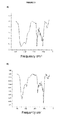
- Figure 3 shows the infrared spectrum of the microspheres of Chitosan Seacure 210 HCl and Gantrez®AN119 with protein on the surface. Comparing the spectra, one can observe a decrease in the absorption band at 3400 cm -1 corresponding to the aldehyde groups of glutaraldehyde containing microspheres. When the antigen is bound to the surface ( Fig. 3b ), the peak disappears because the amino groups of the antigen react with the aldehyde groups, resulting in amide formation.
- Decrease of the absorbance peak at 1700 cm -1 is due to binding of the protein with the free carbonyl groups of Gantrez®AN119.
- the variation in the peak at 2940 cm -1 is due to methylation of the amino groups of chitosan when they form part of the Schiff base for the covalent attachment with the protein.
- the peak at 1516.7 cm -1 disappears, characteristic of the free amino groups of the chitosan, while the peak at 1630 cm -1 , is diverted due to the occurrence of amide bonds between the glutaraldehyde and chitosan and protein.
- mice were vaccinated with different amounts of membrane antigen of P. dicentrarchi covalently coupled to the surface of the microspheres.
- mice were vaccinated on day 0 and were boosted at day 30 with 1, 2, 3 and 5 mg of particles carrying on their surface covalently bound antigen, and were used as controls mice vaccinated with antigen emulsified in an oily adjuvant (Freund's adjuvant, FCA), and mice immunized without adjuvant, only with particles (blank).
- FCA oily adjuvant
- mice immunized exclusively with the microspheres did not generate response anti-P.
- mice that were immunized with antigen containing microspheres produce a dose dependent antibody response, said response being maximal at the highest dose of microspheres carrying antigen.
- the vaccination of the mice with the antigen emulsified in FCA generates the maximum response.
- FCA has been used for over 50 years for the production of antisera in animals ( Freund J. 1956, Advances in Tuberculosis Research 7:130-48 ), at present, due to the seriousness and toxicity derived from their use, they are restricted to experimental studies and cannot be used in medical or veterinary clinic.
- the w/v percentage is understood as the ratio between the weight of each component and the volume where the microspheres to be administered are suspended, multiplied by 100.
- Montanide ISA 763 A (Seppic, Paris, France) was used.
- Montanide ISA adjuvants are a group of surfactant/oil solutions based on the combination of surfactants with metabolizable non-mineral oils. They are prepared for use as an emulsion with the aqueous solution of the antigen. It seems that the effect of these adjuvants in antibody production is similar to Freund's adjuvant, however, the irritant response is usually much lower, and are approved by the Food and Drug Administration (FDA, USA) for veterinary use, demonstrating also there safety in fish vaccines.
- FDA Food and Drug Administration
Landscapes
- Health & Medical Sciences (AREA)
- Life Sciences & Earth Sciences (AREA)
- Chemical & Material Sciences (AREA)
- Veterinary Medicine (AREA)
- Pharmacology & Pharmacy (AREA)
- Public Health (AREA)
- General Health & Medical Sciences (AREA)
- Medicinal Chemistry (AREA)
- Animal Behavior & Ethology (AREA)
- Epidemiology (AREA)
- Mycology (AREA)
- Microbiology (AREA)
- Immunology (AREA)
- General Chemical & Material Sciences (AREA)
- Chemical Kinetics & Catalysis (AREA)
- Tropical Medicine & Parasitology (AREA)
- Nuclear Medicine, Radiotherapy & Molecular Imaging (AREA)
- Organic Chemistry (AREA)
- Medicines Containing Antibodies Or Antigens For Use As Internal Diagnostic Agents (AREA)
- Medicinal Preparation (AREA)
Abstract
Description
- The present invention falls within the field of vaccine development for pathogens that affect species produced by aquaculture. More specifically, the invention describes the use of microspheres as adjuvants in the production of a vaccine against the scuticociliatosis.
- The invention provides a vaccine containing chitosan microspheres and a copolymer of methyl vinyl ether and maleic anhydride, which act as adjuvant, the microspheres being coated with a membrane antigen of a pathogenic parasite of turbot, the scuticociliated Philasterides dicentrarchi (synonymous of Miamiensis avidus). The vaccine induces protection in fish, for example turbot, against scuticociliatosis and advantageously overcomes drawbacks in the immunization of other vaccines which use oily components as adjuvants.
- The development of new vaccines against emerging diseases of fish and improvement of conventional vaccine formulations has acquired great importance in recent years, especially due to the great impact caused in the economic and social fields of aquaculture (Sommerset, I. et al., 2005. Expert Review of Vaccines 4(1):89-101).
- Conventional vaccine preparations typically include an antigen. The main drawbacks found are, on the one hand, the large amount of antigen required for immunization, and on the other hand, that protection obtained is generally poor and short-lived.
- Adjuvants are pharmacological or immunological agents capable of increasing the effect of other agents, such as drugs or vaccines. Adjuvants are virtually useless if administered alone, but can be used to make a much more effective vaccine. When administered with a vaccine, an adjuvant stimulates the immune system and increases response to the vaccine. Therefore, the development of new adjuvant formulations to improve the immunogenicity of protective antigens and that enhance the immune response of fish is currently gaining a lot of interest.
- Many pharmaceutical compositions of vaccines applied to fish include adjuvants to increase antigenic potency, also to improve the stability of the antigen or the formulation. In such cases, the available vaccine compositions often incorporate "depot effect" adjuvants by which adjuvants such as aluminum salts or water in oil emulsions, keep the antigen trapped at the administration site, allowing a prolonged immune stimulation. Such formulations, although improving the immune response of fish, carry some side effects when injected intraperitoneally such as: local inflammation, weight loss, or granulomas and abscesses formation, and thus, due to these drawbacks, use is often discouraged.
- Philasterides dicentrarchi is an escuticociliated opportunistic parasite that causes a severe systemic infection in turbot, known as scuticociliatosis, invading organs and tissues (Iglesias R. et al. 2001 Diseases of Aquatic Organisms 46: 47-55). The parasite enters through skin injuries or through the gills (Parama A. et al. 2003 Aquaculture 217: 73-80) and invades different organs and tissues of the fish, causing serious injury which ultimately cause death. Scuticociliatosis is directly related to problems in water quality that favor the growth of the parasite (Emerging Diseases in Spanish marine aquaculture. 2007. Fish pathology service. Skretting. Autonomous University of Barcelona).
- Immunoprophylaxis is presented as an alternative to chemotherapy, as it would allow the prevention of the infection since, at present, there are no effective drugs to treat it (Iglesias R. et al. 2008 Diseases of Aquatic Organisms 49: 417-424). Attempts have been made to obtain an effective vaccine against scuticociliatosis in different flatfish, but to the present date none of them has proved completely effective, especially due to the existence of different strains of ciliates and the inability to generate protection when immunized and infected with heterologous strains (Piazzon, C. et al. Fish & Shellfish Immunology 2008 25: 417-424). Some effective inactivated vaccine formulations exist, however, they use a large number of full ciliates (106 ciliates/ml) inactivated with formalin and emulsified in Montanide type oily adjuvants (Lamas, J., et al. 2008. Aquaculture 278: 22-26) and whose safety has not been tested yet. These inactivated vaccines have disadvantages associated especially with the large amount of antigen used, the need to administer booster doses, and also, given the fact they are not subjected to any kind purification, contain all the biochemical components, which makes them in general more reactogenic than subunit vaccines, i.e., they cause more side effects (straying, L. 2002. Shots 3: 78-84).
- For example, experiments carried out using Freund's incomplete adjuvant and 200 µg of Philasterides dicentrarchi immobilization antigen per individual, suggested that these antigens were not adequate to induce an immune response in flounder, demonstrating the difficulty in selecting suitable antigens for the development of scuticociliatosis vaccines (Lee, EH and Kim, KH 2008 Fish & Shellfish Immunology 24: 142e146). Turbot immunization trials using 400 µg of Philasterides discentrarchi antigen per individual with Freund's adjuvant did proved to be effective in protecting the fish from infection, but the toxicity of Freund's adjuvant makes it unsuitable for commercial application (Iglesias R. et al. 2003 Parasitology 126: 125-134). It is therefore desirable to obtain a vaccine to prevent fish scuticociliatosis which uses a less toxic adjuvant than those currently used, but that at the same time enhances the immune response, so that it is possible to incorporate the minimum amount of antigen, but sufficient to produce the immune response in fish.
- In this regard, it is important that a subunit vaccine such as that proposed (i.e. without using full but parts of the ciliate), induces high levels of specific antibodies because, as shown recently, the effective control of ciliated parasite induced scuticociliatosis, is dependent mainly on the action of humoral components of the immune response of fish on the activation of the classical complement pathway, in which antibodies play a key role (Leiro J. et al, 2008 Parasite Immunology 30: 535-543). In fish, it has been shown that the peritoneal route of administration of vaccines generates the highest antibody response (Estevez J. et al. 1994. Aquaculture 123: 197-204).
- It is known that P. dicentrarchi presents immunogenic antigens in its membrane that turbot is able to recognize and produce antibodies against them in response to a natural infection or tested under different immunization protocols (Piazzon C. et al 2008 Shelfish Fish and Immunology 25: 417-424).
- The microparticles, as vaccine delivery systems, have the advantage of possessing a size similar to that of the pathogens which the immune system combat, and also are readily internalized by antigen presenting cells (O'Hagan DT, et al size. Methods 2006 40: 10-19). Furthermore, it has been shown that microparticles with encapsulated antigens exhibit a similar inmunogenecity to that of Freund's adjuvant (González Regueiro JR, et al immunogenicity. 2002. Immunology. Biology and pathology of the immune system. 3rd Edition. Panamérican medical Editorial, Chapter 7).
- The preparation of microparticles with encapsulated antigens by methods or techniques conventionally used in the field of pharmaceutical technology sometimes cause the degradation of the active substance, mainly due to denaturation by the use of high temperatures, solvents, or high shear forces which are used in the preparation of micron-sized particles. It would therefore be desirable to provide microparticles capable of retaining the antigen without degrading it, for it to be recognized by the immune system.
- The surface modification or functionalization of microparticles with molecules that can be recognized by macrophages would be an additional advantage to their capability as adjuvant. Thus, a vaccine would be obtained with adjuvants (microparticles) that would not generate the inconveniences produced by the oily adjuvants and, moreover, induce an effective protective response. This would allow far increased safety in immunoprophylaxis and a better control of scuticociliatosis in breeding flatfish, particularly turbot.
- To this end, the present invention focuses on the preparation of a vaccine composed of microspheres obtained from biocompatible and biodegradable materials which carry on their surface covalently attached antigenic subunits from the plasma membrane of scuticociliated P. dicentrarchi. This pharmaceutical composition is parenterally administrable and is characterized by its special immunopotentiating capacity without generating adverse inflammatory reactions, providing adequate protection for fish against parasitic infectious diseases.
- The present invention describes the preparation of polymeric microspheres, the composition of the polymeric microspheres, the pharmaceutical composition containing these microspheres, and the use of said composition in the preparation of a vaccine or a medicament for stimulating the immune response in fish.
- The authors of the present invention have carried out an optimization process of the microsphere composition formed by two biodegradable and biocompatible polymers, so that when such polymers are in certain proportions, provide microspheres with stability so they are stable as dry powder (allowing the storage and preservation) and once reconstituted as aqueous suspension, maintaining all properties until administered. Moreover, the polymers forming part of the microspheres are biodegradable and biocompatible, that is, once administered, the microspheres of the invention are degraded in the body, leading to non-toxic metabolites that can be removed by normal metabolic pathways. Also, the microspheres are spherical and are of a particular size range, enabling their recognition by macrophages involved in the immune response. Moreover, the authors have demonstrated that the microspheres of the invention to which an antigen binds on the surface, are capable of increasing the immune response against the antigen bound to the microsphere, protecting the receptor against a specific disease and without adverse reactions for the host organism, particularly due to the low amount of antigen used.
- In particular, the authors of the present invention have synthesized stable microspheres formed by biodegradable and biocompatible polymers (chitosan polymer and a copolymer of methyl vinyl ether and maleic anhydride) and which carry on their surface an antigen obtained from membrane components of the scuticociliated Philasterides dicentrarchi, wherein the antigen is covalently attached to the microspheres.
- In a first aspect, the invention relates to microspheres, hereinafter "microspheres of the invention", comprising (i) a biodegradable polymer of chitosan or a derivative thereof, (ii) a biodegradable copolymer of methyl vinyl ether and maleic anhydride, or a derivative thereof, (iii) a crosslinking agent and (iv) one or more antigens.
- In the present invention, the term "biodegradable polymer" refers to a polymer that can be degraded in vivo through the enzymatic route or not (a non-enzymatic pathway would be, for example, one were water penetrates into the microspheres, they are eroded and the remains are reabsorbed by the organism), and that as a result of degradation within the body, give rise to non toxic metabolites that can be removed by normal metabolic pathways.
- In the present invention, the term "biocompatible polymer" refers to one that does not produce other kind of allergic reactions, immune reactions or adverse reactions when in contact with body tissues, i.e., that when placed in contact with a living organism, it is not harmful therefor.
- In the present invention, the term "microsphere" refers to a spherical microparticle and having a matrix structure. Microparticle means particle with a diameter less than 1 mm, preferably less than 100 µm, preferably below 50 µm, and more preferably with a diameter between 1 and 10 µm. It is important to note that according to their internal structure and their morphology, the microparticles are classified into microcapsules and microspheres. The difference between both is that, while the microcapsules have a solid or liquid core coated with a polymeric membrane, in microspheres the system's structure is a matrix, and the shape is always spherical. Therefore, the present invention relates only to the particular type of microparticle called microsphere.
- The microspheres may have an electric surface charge (measured by zeta potential), the magnitude of which can take positive or negative values depending on the proportion of the different components in the system. Both, the size and the zeta potential, of the microspheres are important parameters for the interaction with the surface of cells. In a particular embodiment of the invention, the microspheres have a positive charge that can vary between 30 mV and 50 mV, more preferably between 35 and 45 mV. The charge is particularly suitable to ensure the stability of the microspheres after parenteral administration. By covalently binding an antigen on the surface of the microsphere, the zeta potential thereof is increased, so that the increase in this parameter confirms the modification of the microsphere with the antigen, as demonstrated in the examples of the present invention. The zeta potential of the microspheres of the invention can be measured using standard procedures known to the skilled artisan, and which are described, for example, in the experimental part of the present specification.
- Once synthesized, the microspheres of the invention are stable, i.e., maintain their stability in the form of lyophilized dry powder, and also during reconstitution and once reconstituted as aqueous suspension at room temperature, before being administered.
- The first polymer that is part of the microsphere of the invention is a chitosan biodegradable polymer. Chitosan is a natural polysaccharide which is composed of units of beta-(1-4)-D-glucosamine (deacetylated unit) and N-acetyl-D-glucosamine (acetylated unit) arranged at random.
- It is a nontoxic and biodegradable derivative of chitin. The polymer of chitosan used to prepare the microspheres of the present invention may have a molecular weight between 15 and 300 kDa, preferably between 25 and 200 kDa, more preferably between 50 and 100 kDa.
- In the present invention, chitosan comprised in the microspheres may also be a derivative of chitosan. Included within the definition of chitosan derivative are the chitosan inorganic salts which can form the chitosan with acids, such as hydrochloric acid, acetic acid, lactic acid, glutamic acid, or citric acid. Such salts are water soluble, and they may be a way to incorporate chitosan into a pharmaceutical composition for use as a vaccine or for stimulating the immune response in an individual. In the examples of the present invention, chitosan hydrochloride is used, and is dispersed in a solution of acetic acid. Examples of chitosan derivatives include: O-acetylated, O-alkylated or O-sulfonated chitosans, carboxymethyl chitosan, chitosan having different degrees of acetylation, or cyclodextrin, galactose, mannose, phthalates, fatty acids or methylpyrrolidone derivatives, among others.
- The second component part of the microspheres of the invention is a copolymer of methyl vinyl ether and maleic anhydride. An example of a commercial synthetic copolymer of methyl vinyl ether and maleic anhydride is Gantrez®AN, excipient widely used in the pharmaceutical and cosmetic industry. The
ES2178961 B1 - The microspheres of the invention may be prepared with copolymers of methyl vinyl ether and maleic anhydride of various molecular weights, for example those sold under the name Gantrez®AN. The molecular weight of the copolymer of methyl vinyl ether and maleic anhydride used in the microspheres of the invention may be between 100 and 2000 kDa, more preferably between 100 and 300 kDa, and most preferably is 200 kDa. Derivatives of methyl vinyl ether and maleic anhydride may be Gantrez in its acid form (Gantrez S varieties).
- The microspheres further comprise one or more antigens. Therefore, the microsphere may comprise a single antigen derived from a single organism, or several antigens which belong to different organisms, or different components of the same organism.
- The term "antigen" refers to any substance capable of being recognized by the immune system of a subject and/or capable of inducing in a subject a humoral immune response or a cellular immune response leading to the activation of lymphocytes B and/or T when is introduced into a subject, for example, said term includes any immunogenic, native or recombinant product obtained from a higher organism or from a microorganism, for example, a bacterium, a virus, a parasite, a protozoa or a fungus which contains one or more antigenic determinants, for example, compounds excreted by these organisms, such as toxins, or structural components of these organisms, such integral components of the plasma membrane. Virtually any antigen can be used in the manufacture of microspheres of the invention coated with antigen. Preferably, the antigen which binds to the surface of the microspheres is an antigen from a parasite, even more preferably is an antigen from a parasite affecting cultivated in aquaculture fish, such as Philasterides dicentrarchi, Miamiensis avidus, Uronema nigricans, Uronema marinum, Pseudocohnilembus persalinus, Ichthyophthirius multifiliis or Cryptocaryon irritans.; more preferably is an antigen from at least one of the scuticociliated parasites Philasterides dicentrarchi or Miamiensis avidus, even more preferably, the antigen is a membrane component of the parasite; still more preferably, is a membrane antigen of at least one of the scuticociliated parasites Philasterides dicentrarchi or Miamiensis avidus.
- In a preferred embodiment, the antigen(s) is(are) attached covalently to the outer surface of the microsphere.
- Covalent bonding to bind the antigen to the microsphere can be established between the antigen and the remaining glutaraldehyde which exists on the surface of the microspheres. Furthermore, it can also be established between the antigen and the aldehyde groups of the copolymer of methyl vinyl ether and maleic anhydride. In the examples of the present invention, antigen binding to the surface of the microspheres is done by incorporating a solution of antigen over a microsphere suspension, keeping constant orbital agitation for 15 minutes at 22°C.
- In a preferred embodiment of the invention, the antigen to be covalently bonded to the outer surface of the microsphere is added in a proportion of between 0.05 and 0.15% w/v. More preferably, the ratio of antigen is 0.1% w/v, meaning % w/v or weight/volume as the ratio between the amount of antigen in weight and the total volume of the suspension wherein the microspheres are suspended and antigen is dissolved, multiplied by 100. In the examples of the present invention, the antigen is incorporated into the microspheres by incubating 1 mg of antigen in a suspension of 10 mg of microspheres, the concentration of which is 10 mg/ml, i.e., the antigen concentration is 1 mg/ml or 0.1 % w/v in the volume of microspheres.
- In another preferred embodiment, the microspheres have an amount of antigen covalently linked to its outer surface of between 2 and 7% w/w, preferably between 3 and 6% w/w, more preferably between 4 and 5% w/w , and even more preferably 4.5% w/w, meaning % w/w the ratio between the weight of the antigen and the weight of the microsphere, multiplied by 100.
- In another preferred embodiment of the invention, the antigen covalently bonded to the outer surface of the microsphere is a component of a parasite. More preferably, it is a component of one of the parasites Philasterides dicentrarchi, Miamiensis avidus, Uronema nigricans, Uronema marinum, Pseudocohnilembus persalinus, Ichthyophthirius multifiliis or Cryptocaryon irritans. More preferably it is a component of at least one of the parasites Philasterides dicentrarchi or Miamiensis avidus, even more preferably, a component of the parasite membrane of at least one of the scuticociliated parasites Philasterides dicentrarchi or Miamiensis avidus.
- Philasterides dicentrarchi is the causative agent of fish scuticociliatosis, and mainly affects turbot, flounder, sole, sea bass, wide-eyed flounder and hirami. In addition, several studies indicate that other scuticociliated such as Miamiensis avidus are phylogenetically close species to Philasterides dicentrarchi, having found up to 99% similarity between the two species in the sequence of the ribosomal RNA small subunit (Parama et al. 2006. Parasitology 132: 555-564).
- The microspheres further comprise a crosslinking agent to improve the stability thereof, for example to improve its stability in an aqueous medium.
- Illustrative non-limiting examples of crosslinking agents that can be used include compounds with aldehyde groups (such as glutaraldehyde or formaldehyde), sodium tripolyphosphate and other polyanions, genipin, glyoxal, ethylene glycol diglycidyl ether, and generally any molecule having functional groups capable of reacting with the functional groups present in the biodegradable polymers.
- In a preferred embodiment, the crosslinking agent is glutaraldehyde, formaldehyde, sodium tripolyphosphate, genipin, glyoxal, ethylene glycol diglycidyl ether, preferably glutaraldehyde. Preferably, the microspheres are prepared by adding the crosslinking agent in a proportion of between 0.01 and 0.1 % w/v, more preferably 0.015 to 0.025%, and most preferably, in a proportion of 0.02% , the % w/v or weight/volume percentage understood as the ratio between the weight of the crosslinking agent and the total volume of the dispersion of the two polymers, multiplied by 100.
- In the examples of the present invention, microspheres are prepared by dispersing, in the first place a certain amount of vinyl methyl ether and maleic anhydride copolymer in acetone, which is incorporated over a dispersion of chitosan hydrochloride in acetic acid, and to which a crosslinking agent which is added. Then an antigen solution is incorporated over a suspension of microspheres and the microspheres with bound antigen are collected by centrifugation.
- In a preferred embodiment of the invention, the microspheres of the invention are prepared by adding the chitosan polymer in a proportion of between 0.12 and 0.5% w/v, preferably at a concentration of 0.25% w/v, and vinyl methyl ether and maleic anhydride copolymer in a proportion of between 0.15 and 0.5% w/v, preferably at a concentration of 0.24% w/v, % w/v or weight/volume percentage being understood as the ratio between the weight of the polymer or copolymer and the total final volume of the dispersion of the two polymers (100 ml in the examples of the present invention) multiplied by 100. These ranges of w/v percentages of the polymer and copolymer as well as the order in which the various components are added, the amount of crosslinker used, the crosslinking time, solvents and conditions of preparation (atomization temperature, flow rate of the polymer dispersion, and air pressure) are important so that the microspheres remain stable. Essays carried out by the authors of the present invention demonstrated that when the polymer and the copolymer bind in proportions outside these ranges, for example, result in less stable microspheres than those optimized within these ranges, thus the weight/volume percentages of each of them have to be taken into account to obtain suitable microspheres for storage as powder and subsequent reconstitution while maintaining all their properties until they are finally administered.
- In a preferred embodiment of the invention, the microspheres have a diameter of between 1 to 10 µm, more preferably between 3.88 and 4.68 µm.
- The spherical shape and size of the microspheres is an important characteristic for the manufacture of a pharmaceutical composition which is suitable for use as a vaccine or for stimulating the immune response in a subject, since this form of microsphere is more suitable for detection by macrophages, so that the power of the immune response produced in an individual is increased, and also the most suitable to be injected as part of a pharmaceutical composition.
- In the present invention, the term "individual" or "subject" is understood as a member of a species of animal, preferably a vertebrate, more preferably a fish, more preferably a flatfish, and includes but is not limited to breaded marine fishes such as turbot, flounder, sole, sea bream, sea bass, Wide-eyed flounder and hirami.
- In a preferred embodiment, the solid microspheres comprise:
- i. Chitosan polymer, preferably of molecular weight between 50-100 kDa: in a proportion of between 25 and 75%, preferably between 35 and 60%, more preferably 47% by weight.
- ii. Copolymer of methyl vinyl ether-maleic anhydride, preferably Gantrez AN119: in a proportion of between 25 and 75%, preferably between 35 and 60%, more preferably 45% by weight.
- iii. Crosslinking agent, preferably glutaraldehyde: in a proportion of between 2.4 and 5%, preferably between 2.9 and 4.5%, more preferably 3.7% by weight.
- iv. Antigen, preferably an antigen from a parasite affecting fish: in a proportion of between 2 and 7%, preferably between 2 and 6%, more preferably 4.5% by weight.
- The weight percentage of each component is understood as the ratio between the weight of each component and the total weight of the solid microspheres multiplied by 100.
- In the examples of the present invention, microspheres are obtained carrying an amount of antigen covalently bonded to the outer surface of the microsphere of 46 µg of antigen/mg of microparticle (4.6 wt% or 4.6% w/p) which are able to induce an effective immune response in turbot. Given that the dose used for vaccination is 5 mg of microspheres, 230 µg of antigen per fish was administered, which is a particularly low quantity of antigen compared to other immunization attempts conducted in the prior art for fish scuticociliatosis.
- In another preferred embodiment of the invention, the microspheres are lyophilized. The microspheres of the invention can be lyophilized by conventional methods. From a pharmacological point of view, it is important to have lyophilized microspheres, as this improves its storage stability and long-term conservation and additionally reduces the volume of product to be handled. The microspheres of the invention may be lyophilized in the presence of a usual cryoprotectant agent such as glucose, sucrose, mannitol, trehalose, glycerol, lactose, sorbitol or polivinilpilorridona, among others, at a concentration comprised within a wide range, preferably between 0,1% to 20% by weight. The microspheres can also be lyophilized without cryoprotectant such as in the examples of the present invention.
- The microspheres of the invention may be administered to the individual in the form of aqueous suspension or as part of more complex pharmaceutical compositions, for example in conjunction with a suitable vehicle for the administration route.
- Therefore, in another aspect, the invention relates to a pharmaceutical composition, hereinafter "pharmaceutical composition of the invention" comprising microspheres of the invention together with a dispersion medium. These dispersion media include, for example, water, saline solutions, phosphate buffered saline (PBS) solutions, or any solution suitable for containing the microspheres for subsequent administration. In a preferred embodiment, said dispersion medium comprises a suspending vehicle or dispersing agent suitable and accepted for route parenteral administration.
- Suitable dispersing media for parenteral administration are, for example, aqueous solution of carboxymethylcellulose or polysorbate. Other suitable dispersion media can also be oily solutions of lecithin, paraffin, natural oils or other media such as microemulsions (nanometric size droplet emulsions comprised by an aqueous phase, oil phase, surfactant and co-surfactant). After adding the dispersant, the dispersion of the microspheres in the suspension medium can be effected by vigorous shaking of the vial containing the preparation, thereby forming a homogeneous suspension for injection.
- In a preferred embodiment, the dispersion medium comprises carboxymethylcellulose, polysorbate, lecithin, paraffin wax or a natural oil, preferably the dispersion medium comprises carboxymethylcellulose.
- In a preferred embodiment, the pharmaceutical composition comprises between 0.1-2% w/v of microspheres, preferably between 0.5-1.5% w/v, more preferably between 0.75 and 1.25% w/v, and most preferably comprises 1% w/v of microspheres, w/v percentage being understood as the ratio between the weight of the microspheres and the total volume in which the same are resuspended (e.g. in a suitable dispersion medium for the administration route for which it is intended) before being administered, multiplied by 100.
- The pharmaceutical composition of the invention may also comprise other adjuvants incorporated into the suspension in order to enhance the immunopotentiating activity, which can be soluble or not in biological fluids.
- In another preferred embodiment, the pharmaceutical composition of the invention comprises:
- i. Chitosan polymer, preferably of molecular weight between 50-100 kDa: 0.25-0.75% (w/v)
- ii. Methyl vinyl ether-maleic anhydride copolymer, preferably Gantrez AN119: 0.25-0.75% (w/v)
- iii. Crosslinking agent, preferably glutaraldehyde: 0.024 to 0.05% (w/v).
- iv. Antigen, preferably an antigen from a parasite affecting fish: 0.02-0.07% (w/v).
- v. dispersion medium, preferably a solution of carboxymethylcellulose.
- In another aspect, the invention relates to the use of the pharmaceutical composition of the invention for the manufacture of a medicament for stimulating and/or inducing an immune response in a fish.
- In another aspect, the invention relates to the use of the pharmaceutical composition of the invention for the manufacture of a vaccine for fish. In a preferred embodiment, the fish are selected from the group comprising flatfish and bass. Among flatfish, turbot (Scophthalmidae family, e.g. Psetta maxima, Scophtalmus maximus, Scophtalmus aquosus), flounder (Pleuronectidae family, e.g. Platichthys flesus), plaice (Pleuronectes platessa), dab (Zeugopterus regius, Phrynorhombus norvegicus) browny (Zeugopterus punctatus), brill (Scophtalmus rhombus), megrim (e.g. Lepidorhombus boscii or Lepidorhombus whiffiagonis), flounder (Soleidae family, e.g. Solea vulgaris), wide-eyed flounder (Bothus podas), scaldfish (Arnoglossus laterna) and olive flounder (Paralichthys olivaceus); bass is understood as the family of Serranids, e.g. Dicentrarchus labrax, preferably fish are flatfish, such as turbot, flounder, dab, plaice, browny, brill, megrim, sole, wide-eyed flounder, scaldfish and olive flounder, more preferably, the fish is turbot or flounder.
- In the pharmaceutical composition of the invention, the microspheres act as an antigen's adjuvant. An adjuvant is any substance that when incorporated in a vaccine, accelerates, prolongs or enhances the immunogenic response against the same.
- In a preferred embodiment, the pharmaceutical composition is in a form adapted for parenteral administration. One way to accommodate the pharmaceutical composition comprising the microspheres to parenteral administration, is to incorporate microspheres in a suitable dispersion for parenteral administration, such as a carboxymethylcellulose solution.
- Parenteral administration is one that is made by injection or infusion. Examples of parenteral administration include subcutaneous, intravenous, intraarticular or intramuscular injection.
- In a preferred embodiment, the pharmaceutical composition of the invention is administered in a therapeutically effective amount. The term "therapeutically effective amount" refers to an amount of substance sufficient to achieve the intended purpose. The dose of microspheres of the invention to be administered to an individual may vary over a wide range, for example between about 0.1 and 0.5, preferably between 0.1 and 0.3, more preferably is 0.2 g/kg of body weight.
- In another aspect, the invention relates to the process for preparing microspheres of the invention, comprising the steps of:
- i. Preparing a dispersion of a copolymer of methyl vinyl ether and maleic anhydride in an organic solvent
- ii. Preparing a dispersion of a chitosan polymer in an aqueous solvent
- iii. Incorporating the dispersion of step i) with the dispersion of step ii)
- iv. Addition of a crosslinker
- v. Obtaining microspheres by one of the procedures selected from the group comprising: atomization, emulsion/solvent evaporation or coacervation.
- vi. Antigen binding to the outer surface of the microspheres.
- In a preferred embodiment of the invention, in step v), the microspheres are obtained by atomization. Preferably, the atomization process takes place under the following conditions: atomization temperature: 72°C, feed rate: 3-4 ml/min and air pressure, 500 l/h.
- In another preferred embodiment, in step i), the organic solvent is acetone, and methyl vinyl ether copolymer is incorporated at an initial concentration of between 0.15 and 0.5% w/v, preferably 0.24% w/v relative to the volume of dispersion of the two polymers.
- In another preferred embodiment, in step ii), the solvent is an acetic acid solution, preferably at a concentration of 0.1 M, and the chitosan used is chitosan hydrochloride at an initial concentration of between 0,12 and 0.5% w/v, preferably 0.25% w/v relative to the volume of dispersion of the two polymers.
- In another preferred embodiment, in step iii), the mixture is carried out with magnetic stirring.
- In another preferred embodiment, in step iv), the crosslinking agent is glutaraldehyde at a ratio of between 0.01 and 0.1% w/v, preferably between 0.015 and 0.025% w/v, more preferably 0.02 % w/v relative to the total volume of the dispersion of the two polymers.
- In another preferred embodiment, in step vi) the binding of the antigen to the outer surface of the microsphere is of covalent type. Preferably, the antigen binding in step vi) is performed by incorporating an antigen solution at a ratio of between 0.05-0.15% w/v over a suspension of microspheres. Preferably, the antigen binding in step vi) is performed by incorporating an antigen solution at 0.1% w/v over a suspension of microspheres obtained in step v), under stirring for a certain period of time at 22°C and then centrifugating so as to isolate the microspheres.
- The surprising finding that the polymeric microspheres can induce immune responses in turbot, is essential for the invention since it provides a new strategy for the control of parasitic diseases in commercial hatcheries. Furthermore, these vaccine compositions comprising microspheres can be used with suitable biocompatible dispersion media for parental administration. Also, in order to enhance the immunopotentiating activity, these formulations of the invention can be used with other adjuvants incorporated in the suspension of microspheres, these capable of being soluble or insoluble in biological fluids, that is, formulations containing microspheres can be administered both in aqueous suspension as an oily suspension.
-
-
Figure 1 : experimental protocol of vaccination and determination of protection. -
Figure 2 : Chitosan microspheres Seacure 210 HCl - Gantrez®AN119 (3000 X). -
Figure 3 : Infrared spectrum of microspheres Chitosan Seacure HCl 210 and Gantrez®AN119 (a) and with the protein covalently bound to its surface (b). -
Figure 4 : Production of antibodies determined by ELISA. Mice were immunized intraperitoneally with a dose of 0.5 ml containing 1, 2, 3 and 5 mg of microspheres to which membrane antigen of P. dicentrarchi is covalently bound. The concentration of antigen bound to the microspheres follows the relationship of 46 µg of antigen/mg of microparticle. For the group that was immunized with Freund's complete adjuvant (FCA), each vaccine contains the highest concentration of antigen which is inoculated with the microspheres (230 µg). Bars indicate standard error of mean levels of antibodies (n = 5). -
Figure 5 . Kinetics of antibody production in immunized turbot with 5 mg of microspheres containing 230 µg of antigen covalently bound to its surface, and immunized only with antigen. The antibody levels were quantified weekly using a double indirect ELISA essay, and each point represents the mean levels of antibodies from a pool of sera from 5 fish. Arrows indicate the days when immunizations were performed. -
Figure 6 : Kinetics of mortality in fish experimentally infected with P. dicentrarchi, vaccinated onday 0 and 30 with different vaccine formulations including membrane antigen of P. dicentrarchi and as microspheres and oil formulations adjuvants (Montanide ISA 763a). Values are expressed as percentage of cumulative mortality for 20 days. -
Figure 7 : Levels of antibodies produced by vaccinated turbots with various formulations containing membrane antigen (230 µg) of P. dicentrarchi covalently coupled to beads (5 mg/fish) or emulsified (1:1, v/v) in Montanide oil adjuvant. The determination of the antibodies was performed by an ELISA essay on sera collected on day 0 before immunizing fish (preimmune serum) and at 30 and 60 days postimmunization. Fish were individually bled and the sera obtained were pooled together. Results show the mean values ± standard deviation (n = 3). -
Figure 8 . Difference in the weights of the fish immunized with 5 mg of microspheres carrying membrane antigen P. dicentrarchi on its surface and those vaccinated with the same amount of antigen administered in an oil emulsion of Montanide. * Value of two-tailed P <0.0001, considered extremely significant when the two means are compared using the unpaired student t test (n = 20). - The present invention is suitably illustrated by the following examples which are not intended to be limiting of its scope.
- It is essential for the preparation of microspheres to select biopolymers with biodegradable properties, and thus of the microspheres. They are an example of this type of biopolymer chitosan and Gantrez in anhydride form. Chitosan hydrochloride and Gantrez AN 119 based microspheres are prepared by dispersing, first, 240 mg of Gantrez AN 119 in 50 ml of acetone, which is incorporated into a solution of 250 mg of Chitosan Seacure 210 HCl in 50 ml of 0.1 M acetic acid. 1 ml of 2% glutaraldehyde is used as crosslinking agent. The microsphere preparation can be carried out by various procedures such as atomization, emulsion/solvent evaporation or coacervation. The procedure for obtaining the microspheres takes place under the following atomization conditions: inlet air temperature (72°C), feed rate at 3-4 ml/min and air pressure at 500 l/h. Microspheres so prepared have a mean size of between 1 and 10 µm in diameter.
- The antigen is obtained as follows. Briefly, ciliates (P. dicentrarchi, strain I1) were washed 3 times with phosphate buffered saline solution (PBS, pH 7.4) buffer by centrifugation at 700 x g.
- They were resuspended in PBS with 250 mM sucrose, and 3 mM phenylmethanesulfonyl fluoride (PMSF, a protease inhibitor) and were ultrasonically lysed in a Branson W-250 sonifier (Branson Ultrasonic Corporation, USA) on ice (8 sonication cycles of 10 pulses each using a 50% of duty cycle and output intensity four - between each cycle it was allowed to stand in ice for one minute). Then the pellet was centrifuged at 8000 x g for 5 minutes and resuspended in 3 ml of HEPES buffer (30 mM HEPES, 20 mM KCI, 5 mM MgSO4, 0.5 mM EDTA, pH 7.6) which was carefully applied on the top of a sucrose gradient with 3 different concentrations (in a centrifuge tube of 15 ml): Part A: 3 ml of 1.5 M (nuclei and ciliates) Part B: 3 ml of 1.0 M (membrane fraction) Part C: 3 ml of 0.5 M (cytoplasm and microsomes). This sucrose gradient was centrifuged at 6000 x g for 10 minutes very carefully withdrawing membrane antigen accumulated in Part B with a pipette. The antigen obtained was washed 2 times with PBS (11,000 x g for 10 minutes). Then, the antigen's integral membrane proteins obtained with Triton X-114 were extracted. For this, the pellet was incubated with 0.5% Triton X-114 for 1 hour at 0°C. Finally centrifuged at 10,000 x g for 10 minutes and stored at -20°C.
- According to the invention, in a second step, the binding of the antigen to the surface of the microspheres is conducted as follows: The microspheres, based on Chitosan hydrochloride and Gantrez AN 119, are prepared by dispersing, in the first place, 240 mg of Gantrez AN 119 in 50 ml of acetone, which is incorporated into a solution of 250 mg of Chitosan Seacure 210 HCl in 50 ml of acetic acid 0.1 M. 1 ml of 2% glutaraldehyde was used as crosslinking agent. Next, the microspheres are obtained through some of the aforementioned techniques (atomization, emulsion/solvent evaporation or coacervation). Then a solution of 1 mg of antigen is incorporated over 10 mg of a suspension of microspheres and this suspension is kept under constant stirring at 500 rpm for 15 minutes. After this time, the microspheres were collected by centrifugation at 5000 g for 10 minutes and washed twice with PBS and a final time with water and then are lyophilized and stored at 4°C.
- The microspheres carrying the antigen on their outer surface were incorporated to a dispersion medium suitable for parenteral administration. Suitable dispersing media for this type of administration are, for example, aqueous solutions of polysorbate or carboximentilcelulosa. Other suitable dispersion media which can also be used are oily solutions of lecithin, paraffin, natural oils or other media such as microemulsions (nanomeric size droplet size emulsions formed by an aqueous phase, an oily phase, surfactant and co-surfactant). In the examples of the
present invention 1% carboxymethylcellulose was added as a dispersing agent. Once the dispersant had been added, the dispersion of microspheres in the suspension medium can be effected by vigorous shaking of the vial containing preparation, thereby forming a injectable homogeneous suspension. - The administration of the microspheres with the antigen on their surface is performed by parenteral route, once resuspended in the dispersion medium. The administration was carried out following the protocol shown in
Figure 1 . Two separate vaccinations were made for 30 days each. Thus, each fish or mouse with a weight of 25 g, was vaccinated with a suspension of 5 mg of microspheres carrying 230 µg of membrane antigen coupled to its surface and in a total volume of 500 µl of buffer phosphate buffered saline solution (PBS) containing 1% carboxymethylcellulose (dispersing agent). Fish were also vaccinated with vaccines containing oily adjuvants (Seppic, Paris, France Montanide ISA 763 A) or mice with Freund's adjuvant and the same concentration of antigen (230 µg). Controls immunized only with the adjuvants and with the buffer containing the dispersing agent were included in all cases. To specifically determine the protective capacity of the vaccine, fish were experimentally infected onday 60 after immunization, each fish with 500 µl of medium L-15 containing 7.5 x 10⁵ ciliates. The cumulative mortality of vaccinated and control fish was monitored over 20 days post-infection. - Blood samples were collected from the caudal vein of the fish the same day of immunization and experimental infection (0, 30 and 60 days, see
Figure 1 ). To determine the kinetics of antibody, fish were bled weekly for 8 weeks. These blood samples were kept two hours at room temperature and, in order to obtain the serum, and centrifuged at 3000 x g for 10 minutes. The obtained serum was diluted 1:1 in glycerol and stored at -20°C until later analysis. - To determine the effect of vaccination on the fish growth, all turbot vaccinated with microspheres and oil adjuvant were weighed on day 0 and
day 60. - The determination of specific antibodies against the antigens of P. dicentrarchi present in the serum of vaccinated turbot was performed using an ELISA inmunoenzime essay. A 1 µg solution of antigen in 100 µl of coupling buffer 0.1 M NaHCO3 /0.5 M NaCl was incorporated into each well of a 96-well microplate, and was allowed to incubate overnight at 4°C. Then it was washed with distilled water, and the wells were blocked with TBS-Tween 0.2% and 5% skim milk for 2 hours at 37°C in a humid chamber. Subsequently, dilutions of the immune serum of turbot diluted in a solution of TBS-Tween 0.2% and 1% skim milk were added and incubated for 2 hours at 37°C. After incubation the wells were washed 5 times with TBS buffer, and an anti-Ig turbot (UR3) monoclonal antibody at a 1:1000 concentration was added in a solution of TBS-Tween 0.2% and 1% skim milk, and incubated for 2 hours at 37°C in a humid chamber. Once incubated, the wells were washed 5 times with TBS, and then an antibody of rabbit anti-Ig of mouse conjugated with peroxidase diluted 1:2000 in 0.2% TBS-Tween buffer was added and incubated for 2 hours at 37°C. After this time, the wells were washed five times with TBS. The reaction was developed by adding to each well a solution of orthophenylenediamine (ODP) prepared in citrate buffer pH 5.1, containing 0.001% of H2O2 and incubated for 20 minutes. After this time, the reaction was stopped by adding 25 µl/well of H2SO4 3N, and the test was read on a spectrophotometer plate reader at a wavelength of 492 nm.
- The size of the microspheres was determined through laser light scattering using a Mastersizer Micro (Malvern Instruments, UK). The microspheres were resuspended in distilled water and measurements were made at room temperature with constant agitation. The size distribution was made considering the volume occupied by the particles and was taken as average particle size of size value possessed by 50% of them. The size values that were above 90% and below 10% were used to estimate the extent of the size distribution.
- The measurements of the surface charge of the microspheres were made with the equipment Zeta Plus Potential Analyzer (Brookhaven Instruments Corporation, New York, USA). The zeta potential was determined by ten measurements of each sample and as a result a mean and standard deviation were obtained. Likewise, each measurement was carried out in triplicate.
- The shape and surface of the microspheres were examined by sweep electron microscopy photographs (LEO 435 VP, LEO Electron Microscopy Ltd., Cambridge, UK). To do this, dry samples of each formulation were placed on a double-sided adhesive sheet attached to a support and each sample was coated with gold using a Biorad E5000 metallizer. It is well established that the particle surface is smooth, non-porous, and that are mostly spherical (
Figure 2 ). - IR studies were conducted in order to confirm the covalent bonding between the acid groups of the surface of the microspheres and the protein. The samples were prepared in KBr discs and transmittance between 400 and 4000 cm-1 was measured on a Bruker, model IFS-66 V.
- Determination of the bound antigen was determined by the bicinchoninic acid method. For this
purpose 10 mg of microspheres were dissolved in 3 ml of 0.1 M acetic acid overnight. After that, the sample was centrifuged at 20,000 x g for 20 minutes and the supernatant was spectrophotometrically measured at 562 nm by the bicinchoninic acid colorimetric method for proteins. - Table 1 shows the physicochemical characteristics of the microspheres obtained. The microspheres are characterized by size and zeta potential since these are important parameters for the interaction with the surface of cells. The microspheres have an average size of 4.28±0.4 µm, which gives a capacity to be internalized by antigen presenting cells, and a zeta potential that is increased when the microspheres carry on their surface antigen from 38.11±0.22 mV to 42.98±0.87 mV, confirming the modification of the microspheres.
Table 1. Physicochemical properties of the microspheres Average Standard deviation Size 4,28 µm 0,4 Zeta potential of microspheres of chitosan and Gantrez 38,11 mV 0,22 Zeta potential of microspheres of chitosan and Gantrez with antigen on its surface 42,98 mV 0,87 Protein amount bound to the surface 45,7 µg/mg of microparticle 0,9 -
Figure 3 shows the infrared spectrum of the microspheres of Chitosan Seacure 210 HCl and Gantrez®AN119 with protein on the surface. Comparing the spectra, one can observe a decrease in the absorption band at 3400 cm-1 corresponding to the aldehyde groups of glutaraldehyde containing microspheres. When the antigen is bound to the surface (Fig. 3b ), the peak disappears because the amino groups of the antigen react with the aldehyde groups, resulting in amide formation. - Decrease of the absorbance peak at 1700 cm-1 is due to binding of the protein with the free carbonyl groups of Gantrez®AN119. The variation in the peak at 2940 cm-1 is due to methylation of the amino groups of chitosan when they form part of the Schiff base for the covalent attachment with the protein. In the infrared spectrum of the microspheres carrying the antigen bound, the peak at 1516.7 cm-1 disappears, characteristic of the free amino groups of the chitosan, while the peak at 1630 cm-1, is diverted due to the occurrence of amide bonds between the glutaraldehyde and chitosan and protein.
- In all spectra a peak at 1180 cm-1 appears, characteristic of the Gantrez®AN119 aldehyde links.
- To initially optimize the concentration of antigen and microspheres needed that generate greater immune response, mice were vaccinated with different amounts of membrane antigen of P. dicentrarchi covalently coupled to the surface of the microspheres. In this case, mice were vaccinated on day 0 and were boosted at
day 30 with 1, 2, 3 and 5 mg of particles carrying on their surface covalently bound antigen, and were used as controls mice vaccinated with antigen emulsified in an oily adjuvant (Freund's adjuvant, FCA), and mice immunized without adjuvant, only with particles (blank). As seen inFigure 4 , mice immunized exclusively with the microspheres did not generate response anti-P. dicentrarchi, while mice that were immunized with antigen containing microspheres, produce a dose dependent antibody response, said response being maximal at the highest dose of microspheres carrying antigen. It can also be seen that, in this case, the vaccination of the mice with the antigen emulsified in FCA, generates the maximum response. Although FCA has been used for over 50 years for the production of antisera in animals (Freund J. 1956, Advances in Tuberculosis Research 7:130-48), at present, due to the seriousness and toxicity derived from their use, they are restricted to experimental studies and cannot be used in medical or veterinary clinic. - Final formula or composition comprising the microspheres before being administered, that is, the final composition of the formulation for each dose (5 mg of microspheres are administered in suspension to each fish) is:
- i. Chitosan: 0.472% (w/v).
- ii. Gantrez®AN119: 0.452% (w/v).
- iii. Glutaraldehyde: 0.037% (w/v).
- iv. Antigen: 0.045% (w/v).
- v. Milli Q ultrapure water, saline solution or dispersion medium: a.n.f. (amount needed for) 500 µl.
- The w/v percentage is understood as the ratio between the weight of each component and the volume where the microspheres to be administered are suspended, multiplied by 100.
- To check the immunogenicity of microspheres in turbot carrying membrane antigen on their surface, fish were immunized according to the protocol outlined in
Figure 1 , with 5 mg of microspheres containing 230 µg of membrane antigen of P. dicentrarchi and with 230 µg of antigen without adjuvant. Fish serum obtained before immunization was used as control. Weekly, antibody levels in serum were measured by ELISA essays and the results obtained are presented inFigure 5 . As can be seen, the fish vaccinated with microspheres + antigen showed kinetics with significant increase in antibody levels after primary and secondary immunization. By contrast, in fish immunized only with antigens, antibody levels were discreet, yielding only small increments after the immunizations. These results indicate that the microspheres act as adjuvants for the immune response, significantly increasing the levels of antibodies when the antigen is administered in conjunction with microspheres. - In this example the protective capacity of the vaccines developed in the present invention is illustrated in comparison with a vaccine using an oily adjuvant: in this case, Montanide ISA 763 A (Seppic, Paris, France) was used. Montanide ISA adjuvants are a group of surfactant/oil solutions based on the combination of surfactants with metabolizable non-mineral oils. They are prepared for use as an emulsion with the aqueous solution of the antigen. It seems that the effect of these adjuvants in antibody production is similar to Freund's adjuvant, however, the irritant response is usually much lower, and are approved by the Food and Drug Administration (FDA, USA) for veterinary use, demonstrating also there safety in fish vaccines.
- In this experiment six groups of fish (each group contained 20 fish) were used which were individually vaccinated following the strategy shown in
Figure 1 : a) 230 µg of membrane antigen of P. dicentrarchi covalently coupled to the surface of the microspheres (5 mg microspheres/fish), b) 230 µg of antigen emulsified 1:1 with oily adjuvant Montanide ISA 763A, c) only 230 µg of antigen, d) with microspheres (5 mg/fish), d) with Montanide adjuvant, e) with physiological buffer (PBS). In this experiment it was determined: a) the level of protection obtained by the various vaccine formulations, b) the level of antibodies induced by the same, c) the degree of influence of vaccination on the growth of the fish immunized with the two types adjuvant. - a) Level of protection: With respect to mortality obtained after experimental infection with P. dicentrarchi,
Figure 6 shows that the fish which presented a higher protection were vaccinated with microspheres superficially coupled with membrane antigen of the parasite, followed by fish vaccinated with the vaccine containing the antigen emulsified with oily adjuvant Montanide ISA 763A. Fish immunized only with microsphere, only with parasite antigen, or with PBS showed no protection, but immunized fish with only oily adjuvant Montanide showed some inspecific protection. This protection could be explained by high induction of inflammation produced by oily adjuvants generated in the peritoneal cavity of the fish. Moreover, the inspecific lack of induction of protection from microspheres could indicate that they do not induce peritoneal inflammation. The latter was confirmed after necropsy of fish, confirming the lack of any visible injury, irritation or adhesions in the peritoneum in fish vaccinated with the microspheres. - b) Level of antibodies: In this experiment the production of antibodies by different vaccines as indicated in
Figure 6 was evaluated simultaneously. As seen inFigure 7 , the vaccines containing antigen and the two adjuvants (Montanide adjuvant and microspheres), induced high levels of antibodies even in the first week of postimmunization, but there were no significant differences between them. On the contrary, after the second immunization, the antibody levels induced in fish following immunization with the microspheres and antigen were superior to those obtained following immunization with antigen emulsified in oily adjuvant Montanide. Thus, there seems to be a clear correlation between the levels of antibodies generated by the vaccine and the degree of protection obtained. Regarding other immunizations used in the experiment, it can be seen that the immunization with the adjuvant alone does not generate specific anti-P. dicentrarchi and immunization with antigen generates only a low antibody response. - c) Effects on growth: Finally the influence of vaccination with adjuvants on fish growth was analyzed. In this case, all the fish belonging to the group of turbot vaccinated with microspheres having covalently attached antigen, and of turbot immunized with the antigen emulsified in adjuvant Montanide were weighed. As seen in
Figure 8 , there is a significant difference between the weight of fish vaccinated with both adjuvants, being those vaccinated with microspheres the ones which showed higher growth, while fish vaccinated with the oily adjuvant presented lower growth.
Claims (33)
- Microspheres comprising (i) a first biodegradable polymer of chitosan or a derivative thereof, (ii) a second biodegradable copolymer of methyl vinyl ether and maleic anhydride, or a derivative thereof, (iii) a crosslinking agent and (iv) one or several antigens.
- Microspheres according to claim 1 wherein the antigen is covalently bonded to the outer surface of the microsphere.
- Microspheres according to any of claims 1 to 2, which are prepared by adding antigen in a proportion of between 0.05 and 0.15% w/v, where w/v is the ratio between the amount of antigen in weight and the total volume of the suspension wherein the microspheres are suspended and the antigen is dissolved.
- Microspheres according to any of claims 1 to 2, wherein the amount of antigen bound to the microsphere is between 2 and 7% by weight relative to the weight of the microsphere.
- Microspheres according to any of claims 1 to 4 wherein the antigen is a component of a parasite that affects fish.
- Microspheres according to claim 5, wherein the antigen is a component of at least one of the scuticociliated parasites Philasterides dicentrarchi or Miamiensis avidus.
- Microspheres according to claim 6, wherein the antigen is a component of the membrane of at least one of the scuticociliated parasites Philasterides dicentrarchi or Miamiensis avidus.
- Microspheres according to any of claims 1 to 7 wherein the crosslinking agent is selected from the group comprising: glutaraldehyde, formaldehyde, sodium tripolyphosphate, genipin, glyoxal and ethylene glycol diglycidyl ether.
- Microspheres according to any of claims 1 to 8, which are prepared by adding a crosslinking agent in a proportion of between 0.01 and 0.1 % w/v, where w/v is the ratio between the weight of crosslinking agent and the total volume of the dispersion of the two polymers that form part of the microsphere.
- Microspheres according to any of claims 1 to 9 which are prepared by adding the first polymer in a proportion of between 0.12 and 0.5% (w/v), and the copolymer in a proportion of between 0.15 and 0,5% (w/v), w/v meaning the ratio between the weight of polymer or copolymer and the total final volume of the dispersion of the two polymers that form part of the microsphere.
- Microspheres according to any of claims 1 to 10 wherein the diameter of the microsphere is between 1 and 10 µm.
- Microspheres according to any of claims 1 to 11 comprising:i. Chitosan polymer: 25-75% (w/w)ii. Copolymer of methyl vinyl ether-maleic anhydride: 25-75% (w/w)iii. Crosslinking agent: 2.4-5% (w/w)iv. Antigen: 2-7% (w/w),where w/w is the ratio between the weight of each component and the total weight of the microsphere.
- Microspheres according to any of claims 1 to 12 wherein said microspheres are lyophilized.
- A pharmaceutical composition comprising the microspheres according to any of claims 1 to 13 together with a dispersion medium.
- Pharmaceutical composition according to preceding claim wherein the dispersion medium comprises: carboxymethylcellulose, polysorbate, lecithin, paraffin wax or a natural oil.
- Pharmaceutical composition according to any of claims 14 to 15 wherein the microspheres are in a proportion between 0.1-2% w/v.
- Pharmaceutical composition according to any of claims 14 to 15 comprising:i. Chitosan polymer: 0.25-0.75% (w/v)ii. Copolymer of methyl vinyl ether-maleic anhydride: 0.25-0.75%. (w/v)iii. Crosslinking agent: 0.024 to 0.05% (w/v)iv. Antigen: 0.02-0.07% (w/v)v. dispersion medium
- Use of the pharmaceutical composition according to any of claims 14 to 17 for the manufacture of a medicament for stimulating and/or inducing an immune response in a fish.
- Use of the pharmaceutical composition according to any of claims 14 to 17 for the preparation of a vaccine for a fish.
- Use of the pharmaceutical composition according to the preceding claim wherein the fish is selected from the group comprising flatfish and bass.
- Use of the pharmaceutical composition according to the preceding claim wherein the fish is flounder or turbot.
- Use of the pharmaceutical composition according to any of claims 18 to 21, wherein the composition is in a form suitable for parenteral administration.
- Use of the pharmaceutical composition according to any of claims 18 to 22, wherein the pharmaceutical composition is administered in a dose of between 0.1 and 0.5 g per kilogram of the subject's weight.
- Method for preparing the microspheres according to any of claims 1 to 13 comprising the steps of:i. Preparing a dispersion of a copolymer of methyl vinyl ether and maleic anhydride in an organic solventii. Preparing a dispersion of a chitosan polymer in an aqueous solventiii. Incorporating the dispersion of step i) with the dispersion of step ii)iv. Addition of a crosslinking agent.v. Obtaining microspheres by one of the procedures selected from the group comprising: atomization, emulsion/solvent evaporation and coacervation.vi. Antigen binding to the outer surface of the microsphere.
- Method for preparing the microspheres according to claim 24, wherein in step v) microspheres are obtained by atomization.
- Method for preparing the microspheres according to claim 25 wherein the atomization process takes place under the following conditions: atomization temperature: 72°C, feed rate: 3-4 ml/min and air pressure 500l/h.
- Method for preparing the microspheres according to any of claims 24 to 26, wherein in step i), the organic solvent is acetone, and methyl vinyl ether copolymer is incorporated at an initial concentration of between 0.15 and 0.5 % w/v in relation to the total volume of the dispersion of the two polymers.
- Method for preparing the microspheres according to any of claims 24 to 27, wherein in step ii), the solvent is an acetic acid solution and the chitosan polymer is employed as chitosan hydrochloride at an initial concentration of between 0.12 and 0.5% w/v in relation to the total volume of the dispersion of the two polymers.
- Method for preparing the microspheres according to any of claims 24 to 28, wherein in step iii), the mixture is carried out under magnetic stirring.
- Method for preparing the microspheres according to any of claims 24 to 29, wherein in step iv), the crosslinking agent is glutaraldehyde in a proportion of between 0.01 and 0.1% w/v in relation to the total volume of the dispersion of the two polymers.
- Method for preparing the microspheres according to any of claims 24 to 30, wherein in step vi), the binding of the antigen to the outer surface of the microsphere is of covalent type.
- Method for preparing the microspheres according to claim 31, wherein the binding of antigen is performed by incorporating an antigen solution over a suspension of microspheres obtained in step v), and wherein said antigen solution is in a proportion of between 0.05 and 0.15% w/v with respect to the total volume of the suspension wherein the microspheres are suspended and the antigen is dissolved.
- Method for preparing the microspheres according to claim 32, wherein the antigen binding is performed by incorporating an antigen solution of 0.1% w/v over a suspension of microspheres obtained in step v), maintaining agitation and centrifugating to isolate the microspheres.
Applications Claiming Priority (2)
| Application Number | Priority Date | Filing Date | Title |
|---|---|---|---|
| ES201130806A ES2369949B1 (en) | 2011-05-19 | 2011-05-19 | Polymeric microspheres as adjuvants in the production of vaccines against scuticociliated fish parasites. |
| PCT/ES2012/070345 WO2012156564A2 (en) | 2011-05-19 | 2012-05-15 | Polymer microspheres as adjuvants in the production of vaccines against scuticociliate fish parasites |
Publications (2)
| Publication Number | Publication Date |
|---|---|
| EP2711022A2 true EP2711022A2 (en) | 2014-03-26 |
| EP2711022A4 EP2711022A4 (en) | 2015-03-25 |
Family
ID=44996383
Family Applications (1)
| Application Number | Title | Priority Date | Filing Date |
|---|---|---|---|
| EP12785658.1A Withdrawn EP2711022A4 (en) | 2011-05-19 | 2012-05-15 | POLYMERIC MICROSPHERES AS ADJUVANTS IN THE PRODUCTION OF VACCINES AGAINST PARASITES OF THE GENUS SCUTICOCILIATES OF FISH |
Country Status (3)
| Country | Link |
|---|---|
| EP (1) | EP2711022A4 (en) |
| ES (1) | ES2369949B1 (en) |
| WO (1) | WO2012156564A2 (en) |
Cited By (1)
| Publication number | Priority date | Publication date | Assignee | Title |
|---|---|---|---|---|
| CN113599515A (en) * | 2021-08-11 | 2021-11-05 | 通用生物系统(安徽)有限公司 | A kind of thermostable nucleic acid vaccine adjuvant and preparation method thereof |
Families Citing this family (4)
| Publication number | Priority date | Publication date | Assignee | Title |
|---|---|---|---|---|
| CN110613843A (en) * | 2019-10-22 | 2019-12-27 | 武汉轻工大学 | Preparation method of water-soluble chitosan liposome adjuvant for livestock |
| US12239703B2 (en) | 2021-05-26 | 2025-03-04 | Nuecology Biomedical Inc. | Composite-type nano-vaccine particle |
| CN116271001A (en) * | 2023-03-03 | 2023-06-23 | 杭州博日科技股份有限公司 | Immune preparations and their applications |
| CN120361200B (en) * | 2025-04-22 | 2026-01-30 | 大连海洋大学 | Shield ciliate membrane protein vaccine and preparation method and application thereof |
Family Cites Families (3)
| Publication number | Priority date | Publication date | Assignee | Title |
|---|---|---|---|---|
| ES2178961B1 (en) | 2001-03-06 | 2004-07-01 | Instituto Cientifico Y Tecnologico De Navarra, S.A. | MANUFACTURE OF NANOPARTICULES BASED ON THE COPYLIMER OF METHYL VINYL ETER AND MALEIC ANHYDRIDE FOR THE ADMINISTRATION OF PHARMACES OF HYDROPHYLICAL NATURE, IN PARTICULAR OF PURIC BASES AND PYRIMIDINICS. |
| ES2246695B1 (en) * | 2004-04-29 | 2007-05-01 | Instituto Cientifico Y Tecnologico De Navarra, S.A. | STIMULATING COMPOSITION OF THE IMMUNE RESPONSE THAT INCLUDES NANOPARTICLES BASED ON A COPYLIMER OF METHYL VINYL ETER AND MALEIC ANHYDRIDE. |
| US7740861B2 (en) * | 2004-06-16 | 2010-06-22 | University Of Massachusetts | Drug delivery product and methods |
-
2011
- 2011-05-19 ES ES201130806A patent/ES2369949B1/en active Active
-
2012
- 2012-05-15 WO PCT/ES2012/070345 patent/WO2012156564A2/en not_active Ceased
- 2012-05-15 EP EP12785658.1A patent/EP2711022A4/en not_active Withdrawn
Cited By (2)
| Publication number | Priority date | Publication date | Assignee | Title |
|---|---|---|---|---|
| CN113599515A (en) * | 2021-08-11 | 2021-11-05 | 通用生物系统(安徽)有限公司 | A kind of thermostable nucleic acid vaccine adjuvant and preparation method thereof |
| CN113599515B (en) * | 2021-08-11 | 2023-11-07 | 通用生物(安徽)股份有限公司 | A heat-stable nucleic acid vaccine adjuvant and its preparation method |
Also Published As
| Publication number | Publication date |
|---|---|
| WO2012156564A2 (en) | 2012-11-22 |
| ES2369949B1 (en) | 2013-08-13 |
| EP2711022A4 (en) | 2015-03-25 |
| WO2012156564A3 (en) | 2013-04-11 |
| ES2369949A1 (en) | 2011-12-09 |
Similar Documents
| Publication | Publication Date | Title |
|---|---|---|
| Tafalla et al. | Adjuvants and immunostimulants in fish vaccines: current knowledge and future perspectives | |
| Spickler et al. | Adjuvants in veterinary vaccines: modes of action and adverse effects | |
| Carcaboso et al. | Potent, long lasting systemic antibody levels and mixed Th1/Th2 immune response after nasal immunization with malaria antigen loaded PLGA microparticles | |
| JP4164361B2 (en) | Vaccine with enhanced immune response and method for its preparation | |
| CN102112135B (en) | Vaccine compositions comprising synthetic adjuvants | |
| Behera et al. | Alginate–chitosan–PLGA composite microspheres induce both innate and adaptive immune response through parenteral immunization in fish | |
| TWI232222B (en) | Fungal antigens, process for producing the same and composition contain the same | |
| Harikrishnan et al. | Poly d, l-lactide-co-glycolic acid (PLGA)-encapsulated vaccine on immune system in Epinephelus bruneus against Uronema marinum | |
| US10245319B2 (en) | Lymph node-targeting nanoparticles | |
| CN110339160A (en) | Improvement adjuvant formulation and its application method comprising TLR4 agonist | |
| James et al. | The influence of adjuvant on induction of protective immunity by a non-living vaccine against schistosomiasis. | |
| JP2012504150A5 (en) | ||
| Noia et al. | Inflammatory responses and side effects generated by several adjuvant-containing vaccines in turbot | |
| León-Rodríguez et al. | A vaccine based on biodegradable microspheres induces protective immunity against scuticociliatosis without producing side effects in turbot | |
| WO2015195504A1 (en) | Dual adjuvant vaccine compositions, preparation and uses | |
| ES2369949B1 (en) | Polymeric microspheres as adjuvants in the production of vaccines against scuticociliated fish parasites. | |
| AU3683095A (en) | Chitosan induced immunopotentiation | |
| JPH05507498A (en) | Improved adjuvants and vaccines | |
| Sales-Junior et al. | Use of biodegradable PLGA microspheres as a slow release delivery system for the Boophilus microplus synthetic vaccine SBm7462 | |
| Doroud et al. | Cysteine proteinase type I, encapsulated in solid lipid nanoparticles induces substantial protection against Leishmania major infection in C57BL/6 mice | |
| Wang et al. | PEI‐PLGA nanoparticles significantly enhanced the immunogenicity of IsdB137‐361 proteins from Staphylococcus aureus | |
| EP3471706B1 (en) | Oral pharmaceutical composition comprising a pharmaceutically active agent, at least one cationic bioadhesive polymer and at least two anionic polymers | |
| EP2804592B1 (en) | Inulin and inulin acetate formulations | |
| Gómez et al. | Allergen immunotherapy with nanoparticles containing lipopolysaccharide from Brucella ovis | |
| Harikrishnan et al. | Poly d, l-lactide-co-glycolic acid-liposome encapsulated ODN on innate immunity in Epinephelus bruneus against Vibrio alginolyticus |
Legal Events
| Date | Code | Title | Description |
|---|---|---|---|
| PUAI | Public reference made under article 153(3) epc to a published international application that has entered the european phase |
Free format text: ORIGINAL CODE: 0009012 |
|
| 17P | Request for examination filed |
Effective date: 20131218 |
|
| AK | Designated contracting states |
Kind code of ref document: A2 Designated state(s): AL AT BE BG CH CY CZ DE DK EE ES FI FR GB GR HR HU IE IS IT LI LT LU LV MC MK MT NL NO PL PT RO RS SE SI SK SM TR |
|
| DAX | Request for extension of the european patent (deleted) | ||
| RIC1 | Information provided on ipc code assigned before grant |
Ipc: A61P 33/00 20060101ALI20150211BHEP Ipc: A61K 39/39 20060101AFI20150211BHEP |
|
| A4 | Supplementary search report drawn up and despatched |
Effective date: 20150220 |
|
| STAA | Information on the status of an ep patent application or granted ep patent |
Free format text: STATUS: THE APPLICATION IS DEEMED TO BE WITHDRAWN |
|
| 18D | Application deemed to be withdrawn |
Effective date: 20150922 |