EP2708535A1 - Agents for treating disorders involving modulation of ryanodine receptors - Google Patents
Agents for treating disorders involving modulation of ryanodine receptors Download PDFInfo
- Publication number
- EP2708535A1 EP2708535A1 EP12167732.2A EP12167732A EP2708535A1 EP 2708535 A1 EP2708535 A1 EP 2708535A1 EP 12167732 A EP12167732 A EP 12167732A EP 2708535 A1 EP2708535 A1 EP 2708535A1
- Authority
- EP
- European Patent Office
- Prior art keywords
- compound
- treatment
- diseases
- disorders
- pharmaceutical composition
- Prior art date
- Legal status (The legal status is an assumption and is not a legal conclusion. Google has not performed a legal analysis and makes no representation as to the accuracy of the status listed.)
- Withdrawn
Links
- 0 COC(C1C=CC=C(C*2CC3=CC(OC)=CCC3NCC2)C1)=O Chemical compound COC(C1C=CC=C(C*2CC3=CC(OC)=CCC3NCC2)C1)=O 0.000 description 1
- KCGNOSPVMXTSBQ-UHFFFAOYSA-N COC(c1cc(CN2Cc3cc(OC)ccc3SCC2)ccc1)=O Chemical compound COC(c1cc(CN2Cc3cc(OC)ccc3SCC2)ccc1)=O KCGNOSPVMXTSBQ-UHFFFAOYSA-N 0.000 description 1
- UBFOHLGRXVDWLA-UHFFFAOYSA-N COC(c1ccc(CN2Cc3cc(OC)ccc3SCC2)cc1)=O Chemical compound COC(c1ccc(CN2Cc3cc(OC)ccc3SCC2)cc1)=O UBFOHLGRXVDWLA-UHFFFAOYSA-N 0.000 description 1
- NQMPPZFTSHGUQC-UHFFFAOYSA-N COC(c1ccccc1CN1CC2=CC(OC)=CCC2SCC1)=O Chemical compound COC(c1ccccc1CN1CC2=CC(OC)=CCC2SCC1)=O NQMPPZFTSHGUQC-UHFFFAOYSA-N 0.000 description 1
- WONWINAZRQOULX-UHFFFAOYSA-N COc(cc1)cc2c1SCCN(Cc(cc1)ccc1C#N)C2 Chemical compound COc(cc1)cc2c1SCCN(Cc(cc1)ccc1C#N)C2 WONWINAZRQOULX-UHFFFAOYSA-N 0.000 description 1
- CKBSVYXWLAFWLE-UHFFFAOYSA-N COc(cc1)cc2c1SCCN(Cc1ccccc1C(O)=O)C2 Chemical compound COc(cc1)cc2c1SCCN(Cc1ccccc1C(O)=O)C2 CKBSVYXWLAFWLE-UHFFFAOYSA-N 0.000 description 1
Images







Classifications
-
- C—CHEMISTRY; METALLURGY
- C07—ORGANIC CHEMISTRY
- C07D—HETEROCYCLIC COMPOUNDS
- C07D281/00—Heterocyclic compounds containing rings of more than six members having one nitrogen atom and one sulfur atom as the only ring hetero atoms
- C07D281/02—Seven-membered rings
- C07D281/04—Seven-membered rings having the hetero atoms in positions 1 and 4
- C07D281/08—Seven-membered rings having the hetero atoms in positions 1 and 4 condensed with carbocyclic rings or ring systems
- C07D281/10—Seven-membered rings having the hetero atoms in positions 1 and 4 condensed with carbocyclic rings or ring systems condensed with one six-membered ring
-
- A—HUMAN NECESSITIES
- A61—MEDICAL OR VETERINARY SCIENCE; HYGIENE
- A61K—PREPARATIONS FOR MEDICAL, DENTAL OR TOILETRY PURPOSES
- A61K31/00—Medicinal preparations containing organic active ingredients
- A61K31/33—Heterocyclic compounds
- A61K31/395—Heterocyclic compounds having nitrogen as a ring hetero atom, e.g. guanethidine or rifamycins
- A61K31/55—Heterocyclic compounds having nitrogen as a ring hetero atom, e.g. guanethidine or rifamycins having seven-membered rings, e.g. azelastine, pentylenetetrazole
- A61K31/554—Heterocyclic compounds having nitrogen as a ring hetero atom, e.g. guanethidine or rifamycins having seven-membered rings, e.g. azelastine, pentylenetetrazole having at least one nitrogen and one sulfur as ring hetero atoms, e.g. clothiapine, diltiazem
-
- A—HUMAN NECESSITIES
- A61—MEDICAL OR VETERINARY SCIENCE; HYGIENE
- A61K—PREPARATIONS FOR MEDICAL, DENTAL OR TOILETRY PURPOSES
- A61K31/00—Medicinal preparations containing organic active ingredients
- A61K31/70—Carbohydrates; Sugars; Derivatives thereof
- A61K31/7088—Compounds having three or more nucleosides or nucleotides
-
- A—HUMAN NECESSITIES
- A61—MEDICAL OR VETERINARY SCIENCE; HYGIENE
- A61P—SPECIFIC THERAPEUTIC ACTIVITY OF CHEMICAL COMPOUNDS OR MEDICINAL PREPARATIONS
- A61P11/00—Drugs for disorders of the respiratory system
-
- A—HUMAN NECESSITIES
- A61—MEDICAL OR VETERINARY SCIENCE; HYGIENE
- A61P—SPECIFIC THERAPEUTIC ACTIVITY OF CHEMICAL COMPOUNDS OR MEDICINAL PREPARATIONS
- A61P13/00—Drugs for disorders of the urinary system
-
- A—HUMAN NECESSITIES
- A61—MEDICAL OR VETERINARY SCIENCE; HYGIENE
- A61P—SPECIFIC THERAPEUTIC ACTIVITY OF CHEMICAL COMPOUNDS OR MEDICINAL PREPARATIONS
- A61P13/00—Drugs for disorders of the urinary system
- A61P13/02—Drugs for disorders of the urinary system of urine or of the urinary tract, e.g. urine acidifiers
-
- A—HUMAN NECESSITIES
- A61—MEDICAL OR VETERINARY SCIENCE; HYGIENE
- A61P—SPECIFIC THERAPEUTIC ACTIVITY OF CHEMICAL COMPOUNDS OR MEDICINAL PREPARATIONS
- A61P13/00—Drugs for disorders of the urinary system
- A61P13/12—Drugs for disorders of the urinary system of the kidneys
-
- A—HUMAN NECESSITIES
- A61—MEDICAL OR VETERINARY SCIENCE; HYGIENE
- A61P—SPECIFIC THERAPEUTIC ACTIVITY OF CHEMICAL COMPOUNDS OR MEDICINAL PREPARATIONS
- A61P19/00—Drugs for skeletal disorders
-
- A—HUMAN NECESSITIES
- A61—MEDICAL OR VETERINARY SCIENCE; HYGIENE
- A61P—SPECIFIC THERAPEUTIC ACTIVITY OF CHEMICAL COMPOUNDS OR MEDICINAL PREPARATIONS
- A61P19/00—Drugs for skeletal disorders
- A61P19/02—Drugs for skeletal disorders for joint disorders, e.g. arthritis, arthrosis
-
- A—HUMAN NECESSITIES
- A61—MEDICAL OR VETERINARY SCIENCE; HYGIENE
- A61P—SPECIFIC THERAPEUTIC ACTIVITY OF CHEMICAL COMPOUNDS OR MEDICINAL PREPARATIONS
- A61P19/00—Drugs for skeletal disorders
- A61P19/08—Drugs for skeletal disorders for bone diseases, e.g. rachitism, Paget's disease
-
- A—HUMAN NECESSITIES
- A61—MEDICAL OR VETERINARY SCIENCE; HYGIENE
- A61P—SPECIFIC THERAPEUTIC ACTIVITY OF CHEMICAL COMPOUNDS OR MEDICINAL PREPARATIONS
- A61P21/00—Drugs for disorders of the muscular or neuromuscular system
-
- A—HUMAN NECESSITIES
- A61—MEDICAL OR VETERINARY SCIENCE; HYGIENE
- A61P—SPECIFIC THERAPEUTIC ACTIVITY OF CHEMICAL COMPOUNDS OR MEDICINAL PREPARATIONS
- A61P21/00—Drugs for disorders of the muscular or neuromuscular system
- A61P21/04—Drugs for disorders of the muscular or neuromuscular system for myasthenia gravis
-
- A—HUMAN NECESSITIES
- A61—MEDICAL OR VETERINARY SCIENCE; HYGIENE
- A61P—SPECIFIC THERAPEUTIC ACTIVITY OF CHEMICAL COMPOUNDS OR MEDICINAL PREPARATIONS
- A61P25/00—Drugs for disorders of the nervous system
-
- A—HUMAN NECESSITIES
- A61—MEDICAL OR VETERINARY SCIENCE; HYGIENE
- A61P—SPECIFIC THERAPEUTIC ACTIVITY OF CHEMICAL COMPOUNDS OR MEDICINAL PREPARATIONS
- A61P25/00—Drugs for disorders of the nervous system
- A61P25/14—Drugs for disorders of the nervous system for treating abnormal movements, e.g. chorea, dyskinesia
-
- A—HUMAN NECESSITIES
- A61—MEDICAL OR VETERINARY SCIENCE; HYGIENE
- A61P—SPECIFIC THERAPEUTIC ACTIVITY OF CHEMICAL COMPOUNDS OR MEDICINAL PREPARATIONS
- A61P25/00—Drugs for disorders of the nervous system
- A61P25/14—Drugs for disorders of the nervous system for treating abnormal movements, e.g. chorea, dyskinesia
- A61P25/16—Anti-Parkinson drugs
-
- A—HUMAN NECESSITIES
- A61—MEDICAL OR VETERINARY SCIENCE; HYGIENE
- A61P—SPECIFIC THERAPEUTIC ACTIVITY OF CHEMICAL COMPOUNDS OR MEDICINAL PREPARATIONS
- A61P25/00—Drugs for disorders of the nervous system
- A61P25/22—Anxiolytics
-
- A—HUMAN NECESSITIES
- A61—MEDICAL OR VETERINARY SCIENCE; HYGIENE
- A61P—SPECIFIC THERAPEUTIC ACTIVITY OF CHEMICAL COMPOUNDS OR MEDICINAL PREPARATIONS
- A61P25/00—Drugs for disorders of the nervous system
- A61P25/24—Antidepressants
-
- A—HUMAN NECESSITIES
- A61—MEDICAL OR VETERINARY SCIENCE; HYGIENE
- A61P—SPECIFIC THERAPEUTIC ACTIVITY OF CHEMICAL COMPOUNDS OR MEDICINAL PREPARATIONS
- A61P25/00—Drugs for disorders of the nervous system
- A61P25/28—Drugs for disorders of the nervous system for treating neurodegenerative disorders of the central nervous system, e.g. nootropic agents, cognition enhancers, drugs for treating Alzheimer's disease or other forms of dementia
-
- A—HUMAN NECESSITIES
- A61—MEDICAL OR VETERINARY SCIENCE; HYGIENE
- A61P—SPECIFIC THERAPEUTIC ACTIVITY OF CHEMICAL COMPOUNDS OR MEDICINAL PREPARATIONS
- A61P29/00—Non-central analgesic, antipyretic or antiinflammatory agents, e.g. antirheumatic agents; Non-steroidal antiinflammatory drugs [NSAID]
-
- A—HUMAN NECESSITIES
- A61—MEDICAL OR VETERINARY SCIENCE; HYGIENE
- A61P—SPECIFIC THERAPEUTIC ACTIVITY OF CHEMICAL COMPOUNDS OR MEDICINAL PREPARATIONS
- A61P3/00—Drugs for disorders of the metabolism
- A61P3/08—Drugs for disorders of the metabolism for glucose homeostasis
- A61P3/10—Drugs for disorders of the metabolism for glucose homeostasis for hyperglycaemia, e.g. antidiabetics
-
- A—HUMAN NECESSITIES
- A61—MEDICAL OR VETERINARY SCIENCE; HYGIENE
- A61P—SPECIFIC THERAPEUTIC ACTIVITY OF CHEMICAL COMPOUNDS OR MEDICINAL PREPARATIONS
- A61P35/00—Antineoplastic agents
-
- A—HUMAN NECESSITIES
- A61—MEDICAL OR VETERINARY SCIENCE; HYGIENE
- A61P—SPECIFIC THERAPEUTIC ACTIVITY OF CHEMICAL COMPOUNDS OR MEDICINAL PREPARATIONS
- A61P35/00—Antineoplastic agents
- A61P35/04—Antineoplastic agents specific for metastasis
-
- A—HUMAN NECESSITIES
- A61—MEDICAL OR VETERINARY SCIENCE; HYGIENE
- A61P—SPECIFIC THERAPEUTIC ACTIVITY OF CHEMICAL COMPOUNDS OR MEDICINAL PREPARATIONS
- A61P37/00—Drugs for immunological or allergic disorders
- A61P37/02—Immunomodulators
-
- A—HUMAN NECESSITIES
- A61—MEDICAL OR VETERINARY SCIENCE; HYGIENE
- A61P—SPECIFIC THERAPEUTIC ACTIVITY OF CHEMICAL COMPOUNDS OR MEDICINAL PREPARATIONS
- A61P37/00—Drugs for immunological or allergic disorders
- A61P37/02—Immunomodulators
- A61P37/06—Immunosuppressants, e.g. drugs for graft rejection
-
- A—HUMAN NECESSITIES
- A61—MEDICAL OR VETERINARY SCIENCE; HYGIENE
- A61P—SPECIFIC THERAPEUTIC ACTIVITY OF CHEMICAL COMPOUNDS OR MEDICINAL PREPARATIONS
- A61P43/00—Drugs for specific purposes, not provided for in groups A61P1/00-A61P41/00
-
- A—HUMAN NECESSITIES
- A61—MEDICAL OR VETERINARY SCIENCE; HYGIENE
- A61P—SPECIFIC THERAPEUTIC ACTIVITY OF CHEMICAL COMPOUNDS OR MEDICINAL PREPARATIONS
- A61P9/00—Drugs for disorders of the cardiovascular system
-
- A—HUMAN NECESSITIES
- A61—MEDICAL OR VETERINARY SCIENCE; HYGIENE
- A61P—SPECIFIC THERAPEUTIC ACTIVITY OF CHEMICAL COMPOUNDS OR MEDICINAL PREPARATIONS
- A61P9/00—Drugs for disorders of the cardiovascular system
- A61P9/04—Inotropic agents, i.e. stimulants of cardiac contraction; Drugs for heart failure
-
- A—HUMAN NECESSITIES
- A61—MEDICAL OR VETERINARY SCIENCE; HYGIENE
- A61P—SPECIFIC THERAPEUTIC ACTIVITY OF CHEMICAL COMPOUNDS OR MEDICINAL PREPARATIONS
- A61P9/00—Drugs for disorders of the cardiovascular system
- A61P9/06—Antiarrhythmics
-
- A—HUMAN NECESSITIES
- A61—MEDICAL OR VETERINARY SCIENCE; HYGIENE
- A61P—SPECIFIC THERAPEUTIC ACTIVITY OF CHEMICAL COMPOUNDS OR MEDICINAL PREPARATIONS
- A61P9/00—Drugs for disorders of the cardiovascular system
- A61P9/10—Drugs for disorders of the cardiovascular system for treating ischaemic or atherosclerotic diseases, e.g. antianginal drugs, coronary vasodilators, drugs for myocardial infarction, retinopathy, cerebrovascula insufficiency, renal arteriosclerosis
-
- A—HUMAN NECESSITIES
- A61—MEDICAL OR VETERINARY SCIENCE; HYGIENE
- A61P—SPECIFIC THERAPEUTIC ACTIVITY OF CHEMICAL COMPOUNDS OR MEDICINAL PREPARATIONS
- A61P9/00—Drugs for disorders of the cardiovascular system
- A61P9/12—Antihypertensives
-
- C—CHEMISTRY; METALLURGY
- C07—ORGANIC CHEMISTRY
- C07C—ACYCLIC OR CARBOCYCLIC COMPOUNDS
- C07C57/00—Unsaturated compounds having carboxyl groups bound to acyclic carbon atoms
- C07C57/02—Unsaturated compounds having carboxyl groups bound to acyclic carbon atoms with only carbon-to-carbon double bonds as unsaturation
- C07C57/13—Dicarboxylic acids
- C07C57/15—Fumaric acid
-
- C—CHEMISTRY; METALLURGY
- C07—ORGANIC CHEMISTRY
- C07D—HETEROCYCLIC COMPOUNDS
- C07D285/00—Heterocyclic compounds containing rings having nitrogen and sulfur atoms as the only ring hetero atoms, not provided for by groups C07D275/00 - C07D283/00
- C07D285/36—Seven-membered rings
-
- C—CHEMISTRY; METALLURGY
- C07—ORGANIC CHEMISTRY
- C07D—HETEROCYCLIC COMPOUNDS
- C07D417/00—Heterocyclic compounds containing two or more hetero rings, at least one ring having nitrogen and sulfur atoms as the only ring hetero atoms, not provided for by group C07D415/00
- C07D417/02—Heterocyclic compounds containing two or more hetero rings, at least one ring having nitrogen and sulfur atoms as the only ring hetero atoms, not provided for by group C07D415/00 containing two hetero rings
- C07D417/10—Heterocyclic compounds containing two or more hetero rings, at least one ring having nitrogen and sulfur atoms as the only ring hetero atoms, not provided for by group C07D415/00 containing two hetero rings linked by a carbon chain containing aromatic rings
-
- Y—GENERAL TAGGING OF NEW TECHNOLOGICAL DEVELOPMENTS; GENERAL TAGGING OF CROSS-SECTIONAL TECHNOLOGIES SPANNING OVER SEVERAL SECTIONS OF THE IPC; TECHNICAL SUBJECTS COVERED BY FORMER USPC CROSS-REFERENCE ART COLLECTIONS [XRACs] AND DIGESTS
- Y10—TECHNICAL SUBJECTS COVERED BY FORMER USPC
- Y10S—TECHNICAL SUBJECTS COVERED BY FORMER USPC CROSS-REFERENCE ART COLLECTIONS [XRACs] AND DIGESTS
- Y10S530/00—Chemistry: natural resins or derivatives; peptides or proteins; lignins or reaction products thereof
- Y10S530/827—Proteins from mammals or birds
- Y10S530/841—Muscles; heart
Definitions
- the present invention relates to 1,4-benzothiazepine derivatives and their use to treat disorders and diseases associated with ryanodine receptors (RyRs) that regulate calcium channel functioning in cells.
- the invention also discloses pharmaceutical compositions comprising these compounds and uses thereof to treat diseases and conditions associated with RyRs, in particular cardiac, skeletal muscular and central nervous system (CNS) disorders.
- RyRs ryanodine receptors
- CNS central nervous system
- the sarcoplasmic reticulum is a structure in cells that functions, among other things, as a specialized intracellular calcium (Ca 2+ ) store.
- RyRs are channels in the SR, which open and close to regulate the release of Ca 2+ from the SR into the intracellular cytoplasm of the cell. Release of Ca 2+ into the cytoplasm from the SR increases cytoplasmic Ca 2+ concentration.
- Open probability of RyRs refers to the likelihood that a RyR is open at any given moment, and therefore capable of releasing Ca 2+ into the cytoplasm from the SR.
- RyR1 is found predominantly in skeletal muscle as well as other tissues
- RyR2 is found predominantly in the heart as well as other tissues
- RyR3 is found in the brain as well as other tissues.
- the RyR is a tetramer.
- Part of the RyR complex is formed by four RyR polypeptides in association with four FK506 binding proteins (FKBPs) (calstabins), specifically FKBP12 (calstabin1) and FKBP12.6 (calstabin2).
- FKBPs FK506 binding proteins
- Calstabin1 binds to RyR1 and RyR3 while calstabin2 binds to RyR2.
- the calstabins bind to the RyR (one molecule per RyR subunit), stabilize the RyR function, facilitate coupled gating between neighboring RyRs and prevent abnormal activation (Ca 2+ leak) of the channel by stabilizing the channel's closed state.
- RyR2 is the major Ca 2+ release channel required for excitation-contraction (EC) coupling and muscle contraction.
- EC excitation-contraction
- depolarization of the cardiac-muscle cell membrane during phase zero of the action potential activates voltage-gated Ca 2+ channels.
- Ca 2+ influx through the open voltage-gated channels in turn initiates Ca 2+ release from the SR via RyR2.
- This process is known as Ca 2+ -induced Ca 2+ release.
- the RyR2-mediated Ca 2+ -induced Ca 2+ release then activates the contractile proteins in the cardiac cell, resulting in cardiac muscle contraction.
- Phosphorylation of RyR2 by protein kinase A is an important part of the "fight or flight” response that increases cardiac EC coupling gain by augmenting the amount of Ca 2+ released for a given trigger.
- This signaling pathway provides a mechanism by which activation of the sympathetic nervous system (SNS), in response to stress, results in increased cardiac output.
- SNS sympathetic nervous system
- Phosphorylation of RyR2 by PKA results in partial dissociation of calstabin2 from the channel, which in turn, leads to increased open probability, and increased Ca 2+ release from the SR into the intracellular cytoplasm.
- Heart failure is characterized by a sustained hyperadrenergic state in which serum catecholamine levels are chronically elevated.
- This chronic hyperadrenergic state is persistent PKA hyperphosphorylation of RyR2, such that 3-4 out of the four Ser2808 in each homotetrameric RyR2 channel are chronically phosphorylated ( Marx SO, et al. Cell, 2000;101(4):365-376 ).
- chronic PKA hyperphosphorylation of RyR2 is associated with depletion of the channel-stabilization subunit calstabin2 from the RyR2 channel macromolecular complex.
- RyR2-S2808D+/+ (aspartic acid replacing serine 2808) knock-in mice, that mimic constitutive PKA hyperphosphorylation of RyR2, show depletion of calstabin2 and leaky RyR2.
- RyR2-S2808D+/+ mice develop age-dependent cardiomyopathy, demonstrate elevated RyR2 oxidation and nitrosylation, a reduced SR Ca 2+ store content, and increased diastolic SR Ca 2+ leak. After myocardial infarction, RyR2-S2808D+/+ mice exhibit increased mortality compared with WT littermates.
- RyR2 contains about 33 free thiol residues rendering it highly sensitive to the cellular redox state. Cysteine oxidation facilitates RyR opening and SR Ca 2+ leak. Shan et al, 2010, demonstrated that oxidation and nitrosylation of RyR2 and dissociation of the stabilizing subunit calstabin2 from RyR2 induces SR Ca 2+ leak.
- CPVT Catecholaminergic polymorphic ventricular tachycardia
- SCD syncope and sudden cardiac death
- Individuals with CPVT have ventricular arrhythmias when subjected to exercise, but do not develop arrhythmias at rest.
- CPVT-associated RyR2 mutations result in "leaky" RyR2 channels due to the decreased binding of the calstabin2 subunit (Lehnart et al., 2008).
- Skeletal muscle contraction is activated by SR Ca 2+ release via RyR1.
- Depolarization of the transverse (T)-tubule membrane activates the dihydropyridine receptor voltage sensor (Cav1.1) that in turn activates RyR1 channels via a direct protein-protein interaction causing the release of SR Ca 2+ stores.
- Ca 2+ binds to troponin C allowing actin-myosin cross-bridging to occur and sarcomere shortening.
- the RyR1 macromolecular complex consists of a tetramer of the 560-kDa RyR1 subunit that forms a scaffold for proteins that regulate channel function including PKA and the phosphodiesterase 4D3 (PDE4D3), protein phosphatase 1 (PP1) and calstabin1.
- PKA PKA and the phosphodiesterase 4D3
- PP1 protein phosphatase 1
- mAKAP protein phosphatase 1
- spinophilin targets PP1 to the channel (Marx et al. 2000; Brillantes et al., Cell, 1994, 77, 513-523 ; Bellinger et al. J. Clin. Invest. 2008, 118, 445-53 ).
- Calstabin1 concentrations in skeletal muscle are reported to be approximately 200 nM and that PKA phosphorylation of RyR1 reduces the binding affinity of calstabinl for RyR1 from approximately 100-200 nM to more than 600 nM.
- PKA phosphorylation of RyR1 reduces the binding affinity of calstabinl for RyR1 from approximately 100-200 nM to more than 600 nM.
- RyR1 regulation of RyR1 by posttranslational modifications other than phosphorylation, such as by nitrosylation of free sulfhydryl groups on cysteine residues (S-nitrosylation), as well as channel oxidation, have been reported to increase RyR1 channel activity. S-nitrosylation and oxidation of RyR1 have each been shown to reduce calstabin1 binding to RyR1.
- DMD Duchenne muscular dystrophy
- X-linked Duchenne muscular dystrophy
- Mutations in dystrophin associated with DMD lead to a complete loss of the dystrophin protein, thereby disrupting the link between the subsarcolemma cytoskeleton and the extracellular matrix. This link is essential for protecting and stabilizing the muscle against contraction induced injury.
- Emerging interventions in Phase I/II clinical trials are exon skipping, myostatin inhibition, and up-regulation of utrophin.
- PCT International patent publication WO 2008/060332 relates to the use of 1,4-benzothiazepine derivatives for treating muscle fatigue in subjects suffering from pathologies such as muscular dystrophy, or in subjects suffering from muscle fatigue as a result of sustained, prolonged and/or strenuous exercise, or chronic stress.
- PCT International patent publication WO 2008/021432 relates to the use of 1,4-benzothiazepine derivatives for the treatment and/or prevention of diseases, disorders and conditions affecting the nervous system.
- PCT International patent publication WO 2012/019076 relates to the use of 1,4-benzothiazepine derivatives for the treatment and/or prevention of cardiac ischemia/reperfusion injury. Fauconnier et al., Proc Natl Acad Sci USA, 2011, 108(32): 13258-63 reported that RyR leak mediated by caspase-8 activation leads to left ventricular injury after myocardial ischemia-reperfusion, and that treatment with S107 inhibited the SR Ca 2+ leak, reduced ventricular arrhythmias, infarct size, and left ventricular remodeling at 15 days after reperfusion.
- PCT International patent publication WO 2012/019071 relates to the use of 1,4-benzothiazepine derivatives for the treatment and/or prevention of sarcopenia.
- PCT International patent publication WO 2012/037105 relates to the use of 1,4-benzothiazepine derivatives for the treatment and/or prevention of stress-induced neuronal disorders and diseases.
- the present invention provides novel 1,4-benzothiazepine derivatives, and their pharmaceutically acceptable salts.
- the compounds of the present invention are ryanodine receptor calcium channel stabilizers, sometimes referred to as "RycalsTM.”
- the present invention further provides methods of using these compounds for treating disorders and diseases associated with RyRs.
- the compounds of the present invention are represented by the structure of Formula (I): wherein R is COOH or a bioisostere thereof, COOR 1 or CN; and R 1 is a C 1 -C 4 alkyl; and phannaceutically acceptable salts thereof.
- R in Formula (I) is a carboxylic acid (COOH).
- R in Formula (I) is a carboxylic acid bioisostere, for example tetrazole.
- the carboxylic acid bioisostere may be an acidic heterocycle such as 1,2,4-oxadiazol-5(4H)-one, 1,2,4-thiadiazol-5(4H)-one, 1,2,4-oxadiazole-5(4H)-thione, 1,3,4-oxadiazole-2(3H)-thione, 4-methyl-1H-1,2,4-triazole-5(4H)-thione, 5-fluoroorotic acid, and the like.
- R in Formula (I) is at position 4 of the phenyl ring. Each possibility represents a separate embodiment of the present invention.
- the compounds of Formula (I) may be present in the form of a salt with a pharmaceutically acceptable acid or base.
- Such salts are preferably selected from the group consisting of sodium, potassium, magnesium, hemifumarate, hydrochloride and hydrobromide salts, with each possibility representing a separate embodiment of the present invention.
- the compound is selected from the group consisting of compound 1, compound 2, compound 3, compound 4, compound 5, compound 6, compound 7, compound 8, compound 9, compound 10, compound 11, and compound 12, and pharmaceutically acceptable salts thereof.
- the structures of these compounds are described hereinbelow.
- the compound is represented by the structure of compound (1): or pharmaceutically acceptable salts thereof.
- compound 1 is provided as the parent compound. In other embodiments, however, compound 1 is provided in the form of a salt with a pharmaceutically acceptable acid or base.
- a pharmaceutically acceptable acid or base Preferably, such salt is selected from the group consisting of sodium, potassium, magnesium, hemifumarate, hydrochloride and hydrobromide salts, with each possibility representing a separate embodiment of the present invention.
- a currently preferred salt is the sodium salt.
- the present invention also provides methods for the synthesis of compounds of the invention, and salts thereof.
- the present invention also provides pharmaceutical compositions comprising one or more of the compounds of the invention, and at least one additive or excipient, e.g., fillers, diluents, binders, disintegrants, buffers, colorants, emulsifiers, flavor-improving agents, gellants, glidants, preservatives, solubilizers, stabilizers, suspending agents, sweeteners, tonicity agents, wetting agents, emulsifiers, dispersing agents, swelling agents, retardants, lubricants, absorbents, and viscosity-increasing agents.
- the compositions may be presented in capsules, granules, powders, solutions, sachets, suspensions, or tablet dosage form.
- the present invention further provides methods of treating or preventing various disorders, diseases and conditions associated with RyRs, such as cardiac, musculoskeletal and cognitive/CNS disorders and diseases, comprising administering to a subject in need of such treatment an amount of a compound of Formula (I) or a salt thereof, effective to prevent or treat a disorder or disease associated with an RyR.
- various disorders, diseases and conditions associated with RyRs such as cardiac, musculoskeletal and cognitive/CNS disorders and diseases
- the present invention also provides a method of preventing or treating a leak in RyR (including RyR1, RyR2 and RyR3) in a subject, including administering to the subject an amount of a compound of Formula (I) or a salt thereof, effective to prevent or treat a leak in RyR.
- the present invention provides a method of modulating the binding of RyRs and calstabins in a subject, including administering to the subject an amount of a compound of Formula (I) or a salt thereof, effective to modulate the amount of RyR-bound calstabin.
- the present invention further relates to the use of a compound of Formula (I) for the manufacture of a medicament for the treatment and/or prevention of disorders, diseases and conditions associated with RyRs, such as cardiac, musculoskeletal and cognitive/CNS disorders and diseases.
- the present invention relates to the use of a compound of Formula (I) for the manufacture of a medicament for preventing or treating a leak in RyR.
- the present invention relates to the use of a compound of Formula (I) for the manufacture of a medicament for modulating the amount of RyR-bound calstabins.
- the methods of the invention can be practiced on an in vitro system (e . g ., cultured cells or tissues) or in vivo (e.g. , in a non-human animal or a human).
- RatsTM refers to ryanodine receptor calcium channel stabilizers, represented by compounds of the general Formula (I) as provided by the invention, as well as the specific compounds designated by numerical numbers as provided by the invention, and herein collectively referred to as "compound(s) of the invention".
- the compounds of the present invention are represented by the structure of Formula (I): wherein R is COOH or a bioisostere thereof, COOR 1 or CN; and R 1 is a C 1 -C 4 alkyl; and pharmaceutically acceptable salts thereof.
- R in Formula (I) is a carboxylic acid (COOH).
- R in Formula (I) is a carboxylic acid bioisostere, for example tetrazole.
- the carboxylic acid bioisostere may be an acidic heterocycle such as 1,2,4-oxadiazol-5(4H)-one, 1,2,4-thiadiazol-5(4H)-one, 1,2,4-oxadiazole-5(4H)-thione, 1,3,4-oxadiazole-2(3H)-thione, 4-methyl-1H-1,2,4-triazole-5(4H)-thione, 5-fluoroorotic acid, and the like.
- R in Formula (I) is at position 4 of the phenyl ring.
- the compounds of Formula (I) may be present in the form of a salt with a pharmaceutically acceptable acid or base.
- Such salts are preferably selected from the group consisting of sodium, potassium, magnesium, hemifumarate, hydrochloride and hydrobromide salts, with each possibility representing a separate embodiment of the present invention.
- the compound is selected from the group consisting of compound 1, compound 2, compound 3, compound 4, compound 5, compound 6, compound 7, compound 8, compound 9, compound 10, compound 11, and compound 12, and pharmaceutically acceptable salts thereof.
- These compounds are represented by the following structures: and
- alkyl refers to a linear or branched, saturated hydrocarbon having from 1 to 4 carbon atoms (“C 1 -C 4 alkyl”).
- Representative alkyl groups include, but are not limited to, methyl, ethyl, propyl, isopropyl, butyl, sec-butyl, and tert-butyl.
- the alkyl group may be unsubstituted or substituted by one or more groups selected from halogen, haloalkyl, hydroxy, alkoxy, haloalkoxy, cycloalkyl, aryl, heterocyclyl, heteroaryl, amido, alkylamido, dialkylamido, nitro, amino, cyano, N 3 , oxo, alkylamino, dialkylamino, carboxyl, thio, thioalkyl and thioaryl.
- All stereoisomers of the compounds of the present invention are contemplated within the scope of this invention.
- Individual stereoisomers of the compounds of the invention may, for example, be substantially free of other isomers (e.g., as a pure or substantially pure optical isomer having a specified activity), or may be admixed, for example, as racemates, or as mixtures enriched by one stereoisomer.
- the chiral centers of the present invention may have the S or R configuration as defined by the IUPAC 1974 Recommendations.
- racemic forms can be resolved by physical methods, such as, for example, fractional crystallization, separation or crystallization of diastereomeric derivatives or separation by chiral column chromatography.
- the individual optical isomers can be obtained from the racemates by any suitable method, including without limitation, conventional methods, such as, for example, salt formation with an optically active acid or base, followed by crystallization.
- Compounds of the present invention are, subsequent to their preparation, preferably isolated and purified to obtain a composition containing an amount by weight equal to or greater than about 90% of the compound, about 95% of the compound, and even more preferably greater than about 99% of the compound ("substantially pure” compound), which is then used or formulated as described herein. Such “substantially pure” compounds of the present invention are also contemplated herein as part of the present invention.
- the present invention provides compounds that are capable of treating conditions, disorders and diseases associated with RyRs. More particularly, the present invention provides compounds that are capable of fixing a leak in RyR channels, which may be RyR1, RyR2 and/or RyR3 channels. In one embodiment, the compounds of the invention enhance association and/or inhibit dissociation of RyR and calstabin (e.g., RyR1 and calstabin1; RyR2 and calstabin2; and RyR3 and calstabin1).
- RyR and calstabin e.g., RyR1 and calstabin1; RyR2 and calstabin2; and RyR3 and calstabin1
- Conscess and diseases associated with RyRs means disorders and diseases that can be treated and/or prevented by modulating RyRs and include, without limitation, cardiac disorders and diseases, muscle fatigue, musculoskeletal disorders and diseases, CNS disorders and diseases, cognitive dysfunction, cognitive function improvement, bone disorders and diseases, malignant hyperthermia, diabetes, sudden cardiac death, and sudden infant death syndrome.
- the present invention relates to a method of treating or preventing a condition selected from the group consisting of cardiac disorders and diseases, muscle fatigue, musculoskeletal disorders and diseases, CNS disorders and diseases, cognitive dysfunction, bone disorders and diseases, malignant hyperthermia, diabetes, sudden cardiac death, and sudden infant death syndrome, or for improving cognitive function, the method comprising the step of administering to a subject in need thereof a therapeutically effective amount of a compound of Formula (I) as described herein, or a salt thereof, to effectuate such treatment.
- a currently preferred compound is a compound of Formula (1).
- the present invention relates to the use of an effective amount of compound of Formula (I), as described herein, or a salt thereof, for the manufacture of a medicament for treating or preventing a condition selected from the group consisting of cardiac disorders and diseases, muscle fatigue, skeletal muscular disorders and diseases, CNS disorders and diseases, cognitive dysfunction, bone disorders and diseases, malignant hyperthermia, diabetes, sudden cardiac death, and sudden infant death syndrome, or for improving cognitive function.
- a condition selected from the group consisting of cardiac disorders and diseases, muscle fatigue, skeletal muscular disorders and diseases, CNS disorders and diseases, cognitive dysfunction, bone disorders and diseases, malignant hyperthermia, diabetes, sudden cardiac death, and sudden infant death syndrome, or for improving cognitive function.
- a currently preferred compound is a compound of Formula (1).
- the present invention relates to a compound of Formula (I) as described herein, or a salt thereof, for use in the manufacture of a medicament for treating or preventing a condition selected from the group consisting of cardiac disorders and diseases, muscle fatigue, skeletal muscular disorders and diseases, CNS disorders and diseases, cognitive dysfunction, bone disorders and diseases, malignant hyperthermia, diabetes, sudden cardiac death, and sudden infant death syndrome, or for improving cognitive function.
- a currently preferred compound is a compound of Formula (1).
- condition, disorder or disease is associated with an abnormal function of RyR1. In another embodiment, the condition, disorder or disease is associated with an abnormal function of RyR2. In another embodiment, the condition, disorder or disease is associated with an abnormal function of RyR3.
- RyR1 In another embodiment, the condition, disorder or disease is associated with an abnormal function of RyR2.
- Cardiac disorders and diseases include, but are not limited to, irregular heartbeat disorders and diseases, exercise-induced irregular heartbeat disorders and diseases, heart failure, congestive heart failure, chronic heart failure, acute heart failure, systolic heart failure, diastolic heart failure, acute decompensated heart failure, cardiac ischemia/reperfusion (I/R) injury (including I/R injury following coronary angioplasty or following thrombolysis during myocardial infarction (MI)), chronic obstructive pulmonary disease, and high blood pressure.
- I/R cardiac ischemia/reperfusion
- MI myocardial infarction
- Irregular heartbeat disorders and diseases include, but are not limited to atrial and ventricular arrhythmia, atrial and ventricular fibrillation, atrial and ventricular tachyarrhythmia, atrial and ventricular tachycardia, catecholaminergic polymorphic ventricular tachycardia (CPVT), and exercise-induced variants thereof.
- atrial and ventricular arrhythmia atrial and ventricular fibrillation
- atrial and ventricular tachyarrhythmia atrial and ventricular tachycardia
- atrial and ventricular tachycardia atrial and ventricular tachycardia
- CPVT catecholaminergic polymorphic ventricular tachycardia
- the compounds of the invention are also useful in treating muscle fatigue, which may be due to prolonged exercise or high-intensity exercise, or may be caused by a muscular disorder or disease.
- muscular disorders and diseases include, but are not limited to, skeletal muscle fatigue, central core diseases, exercise-induced skeletal muscle fatigue, bladder disorders, incontinence, age-associated muscle fatigue, sarcopenia, congenital myopathies, cancer cachexia, myopathy with cores and rods, mitochondrial myopathies [e.g., Kearns-Sayre syndrome, MELAS (mitochondrial myopathy, encephalopathy, lactic acidosis, and stroke) syndrome, and MERRF (myoclonus epilepsy with ragged-red fibers) syndrome], endocrine myopathies, muscular glycogen storage diseases [e.g., Pompe's disease, Andersen's disease, and Cori's diseases], myoglobinurias [e.g., McArdle's disease, Tarui disease, and DiMaur
- Preferred skeletal muscular disorders include, but are not limited to exercise-induced skeletal muscle fatigue, a congenital myopathy, muscular dystrophy, age-related muscle fatigue, sarcopenia, central core disease, cancer cachexia, bladder disorders, and incontinence.
- muscular dystrophy examples include, but are not limited to, Duchenne Muscular Dystrophy (DMD), Becker's Muscular Dystrophy (BMD), Limb Girdle Muscular Dystrophy (LGMD), Congenital Muscular Dystrophy (CMD), distal muscular dystrophy, facioscapulohumeral dystrophy, myotonic muscular dystrophy, Emery-Dreifuss muscular dystrophy, and oculopharyngeal muscular dystrophy, with DMD being currently preferred.
- DMD Duchenne Muscular Dystrophy
- BMD Becker's Muscular Dystrophy
- LGMD Limb Girdle Muscular Dystrophy
- CMD Congenital Muscular Dystrophy
- distal muscular dystrophy facioscapulohumeral dystrophy
- myotonic muscular dystrophy myotonic muscular dystrophy
- Emery-Dreifuss muscular dystrophy Emery-Dreifuss muscular dystrophy
- Congenital muscular dystrophy refers to muscular dystrophy that is present at birth.
- CMD is classified based on genetic mutations: 1) genes encoding for structural proteins of the basal membrane or extracellular matrix of the skeletal muscle fibres; 2) genes encoding for putative or demonstrated glycosyltransferases, that in turn affect the glycosylation of dystroglycan, an external membrane protein of the basal membrane; and 3) other.
- CMD examples include, but are not limited to Laminin- ⁇ 2-deficient CMD (MDC1A), Ullrich CMG (UCMDs 1, 2 and 3), Walker-Warburg syndrome (WWS), Muscle-eye-brain disease (MEB), Fukuyama CMD (FCMD), CMD plus secondary laminin deficiency 1 (MDC1B), CMD plus secondary laminin deficiency 2 (MDC1C), CMD with mental retardation and pachygyria (MDC1D), and Rigid spine with muscular dystrophy Type 1 (RSMD1).
- MDC1A Laminin- ⁇ 2-deficient CMD
- Ullrich CMG Ullrich CMG
- WWS Walker-Warburg syndrome
- MB Muscle-eye-brain disease
- FCMD Fukuyama CMD
- CMD plus secondary laminin deficiency 1 MDC1B
- CMD plus secondary laminin deficiency 2 CMD with mental retardation and pachygyria
- MDC1D CMD
- Cognitive disorders, diseases or dysfunction include, but are not limited to, Alzheimer's Disease, memory loss, age-dependent memory loss, post-traumatic stress disorder (PTSD), a neuropathy and seizures.
- the cognitive dysfunction may be stress-related, age-related or a combination thereof.
- the cognitive dysfunction is associated with a disease or disorder, including but not limited to, Alzheimer's disease (AD), attention deficit hyperactivity disorder (ADHD), autism spectrum disorder (ASD), generalized anxiety disorder (GAD), obsessive compulsive disorder (OCD), Parkinson's Disease (PD), post-traumatic stress disorder (PTSD), Schizophrenia, Bipolar disorder; and major depression.
- the compounds of the present invention improve cognitive function, which may be selected from short term memory, long term memory, attention, learning, and any combination thereof.
- an "effective amount,” “sufficient amount” or “therapeutically effective amount” of an agent as used herein interchangeably, is that amount sufficient to effectuate beneficial or desired results, including clinical results and, as such, an “effective amount” or its variants depends upon the context in which it is being applied. The response is in some embodiments preventative, in others therapeutic, and in others a combination thereof.
- the term “effective amount” also includes the amount of a compound of the invention, which is “therapeutically effective” and which avoids or substantially attenuates undesirable side effects.
- treatment is an approach for obtaining beneficial or desired results, including clinical results.
- beneficial or desired clinical results can include, but are not limited to, alleviation or amelioration of one or more symptoms or conditions, diminishment of extent of disease, stabilized ( i . e ., not worsening) state of disease, preventing spread of disease, delay or slowing of disease progression, amelioration or palliation of the disease state and remission (whether partial or total), whether detectable or undetectable.
- Treatment can also mean prolonging survival as compared to expected survival if not receiving treatment.
- the compounds of the invention are formulated into pharmaceutical compositions for administration to human subjects in a biologically compatible form suitable for administration in vivo .
- the present invention provides a pharmaceutical composition comprising compounds of the invention in admixture with a pharmaceutically acceptable diluent and/or carrier.
- the pharmaceutically-acceptable carrier is preferably "acceptable" in the sense of being compatible with the other ingredients of the composition and not deleterious to the recipient thereof.
- the compound may be administered alone, but is preferably administered with one or more pharmaceutically acceptable carriers.
- the pharmaceutically-acceptable carrier employed herein may be selected from various organic or inorganic materials that are used as materials for pharmaceutical formulations and which are incorporated as any one or more of fillers, diluents, binders, disintegrants, buffers, colorants, emulsifiers, flavor-improving agents, gellants, glidants, preservatives, solubilizers, stabilizers, suspending agents, sweeteners, tonicity agents, wetting agents, emulsifiers, dispersing agents, swelling agents, retardants, lubricants, absorbents, and viscosity-increasing agents.
- the compounds of the present invention are administered to a human or animal subject by known procedures including, without limitation, oral, sublingual, buccal, parenteral (intravenous, intramuscular or subcutaneous), transdermal, per- or trans-cutaneous, intranasal, intra-vaginal, rectal, ocular, and respiratory (via inhalation administration.
- the compounds of the invention may also be administered to the subject by way of delivery to the subject's muscles including, but not limited to, the subject's cardiac or skeletal muscles.
- the compound is administered to the subject by way of targeted delivery to cardiac muscle cells via a catheter inserted into the subject's heart.
- the compounds may be administered directly into the CNS, for example by intralumbar injection or intreventricular infusion of the compounds directly into the cerebrospinal-fluid (CSF), or by intraventricular, intrathecal or interstitial administration. Oral administration is currently preferred.
- CSF cerebrospinal-fluid
- compositions according to the invention for solid oral administration include especially tablets or dragées, sublingual tablets, sachets, capsules including gelatin capsules, powders, and granules, and those for liquid oral, nasal, buccal or ocular administration include especially emulsions, solutions, suspensions, drops, syrups and aerosols.
- the compounds may also be administered as a suspension or solution via drinking water or with food.
- acceptable pharmaceutical carriers include, but are not limited to, cellulose derivatives including carboxymethyl cellulose, methyl cellulose, hydroxypropyl cellulose, hydroxypropylmethylcellulose, ethyl cellulose and microcrystalline cellulose; sugars such as mannitol, sucrose, or lactose; glycerin, gum arabic, magnesium stearate, sodium stearyl fumarate, saline, sodium alginate, starch, talc and water, among others.
- compositions according to the invention for parenteral injections include especially sterile solutions, which may be aqueous or non-aqueous, dispersions, suspensions or emulsions and also sterile powders for the reconstitution of injectable solutions or dispersions.
- sterile solutions which may be aqueous or non-aqueous, dispersions, suspensions or emulsions and also sterile powders for the reconstitution of injectable solutions or dispersions.
- the compounds of the invention may be combined with a sterile aqueous solution that is isotonic with the blood of the subject.
- Such a formulation is prepared by dissolving a solid active ingredient in water containing physiologically-compatible substances, such as sodium chloride, glycine and the like, and having a buffered pH compatible with physiological conditions, so as to produce an aqueous solution, then rendering said solution sterile.
- the formulation is presented in unit or multi-dose containers, such as sealed ampoules or vials.
- the formulation is delivered by any mode of injection, including, without limitation, epifascial, intracapsular, intracranial, intracutaneous, intrathecal, intramuscular, intraorbital, intraperitoneal, intraspinal, intrasternal, intravascular, intravenous, parenchymatous, subcutaneous, or sublingual or by way of catheter into the subject's heart.
- compositions for rectal or vaginal administration are preferably suppositories, and those for per- or trans-cutaneous administration include especially powders, aerosols, creams, ointments, gels and patches.
- the compounds of the invention are combined with skin penetration enhancers, such as propylene glycol, polyethylene glycol, isopropanol, ethanol, oleic acid, N -methylpyrrolidone and the like, which increase the permeability of the skin to the compounds of the invention and permit the compounds to penetrate through the skin and into the bloodstream.
- skin penetration enhancers such as propylene glycol, polyethylene glycol, isopropanol, ethanol, oleic acid, N -methylpyrrolidone and the like, which increase the permeability of the skin to the compounds of the invention and permit the compounds to penetrate through the skin and into the bloodstream.
- the compound/enhancer compositions also may be further combined with a polymeric substance, such as ethylcellulose, hydroxypropyl cellulose, ethylene/vinylacetate, polyvinyl pyrrolidone, and the like, to provide the composition in gel form, which is dissolved in a solvent, evaporated to the desired viscosity and
- the pharmaceutical formulations of the present invention are prepared by methods well-known in the pharmaceutical arts, including but not limited to wet and dry granulation methods, or by direct compression.
- the choice of carrier is determined by the solubility and chemical nature of the compounds, chosen route of administration and standard pharmaceutical practice.
- compositions mentioned above illustrate the invention but do not limit it in any way.
- any of these compounds may be administered to the subject (or are contacted with cells of the subject) in an amount effective to limit or prevent a decrease in the level of RyR-bound calstabin in the subject, particularly in cells of the subject.
- This amount is readily determined by the skilled artisan, based upon known procedures, including analysis of titration curves established in vivo and methods and assays disclosed herein.
- a suitable amount of the compounds of the invention effective to limit or prevent a decrease in the level of RyR-bound calstabin in the subject ranges from about 0.01 mg/kg/day to about 100 mg/kg/day (e.g., 1, 2, 5, 10, 20, 25, 50 or 100 mg/kg/day), and/or is an amount sufficient to achieve plasma levels ranging from about 300 ng/ml to about 5,000 ng/ml.
- the amount of compounds from the invention ranges from about 1 mg/kg/day to about 50 mg/kg/day.
- the amount of compounds from the invention ranges from about 10 mg/kg/day to about 20 mg/kg/day. Also included are amounts of from about 0.01 mg/kg/day or 0.05 mg/kg/day to about 5 mg/kg/day or about 10 mg/kg/day which can be administered.
- the present invention provides, in a further aspect, processes for the preparation of a compound of the invention, and salts thereof. More particularly, the present invention provides processes for the preparation of compounds of Formula (I), e.g., compound 1, compound 2, compound 3, compound 4, compound 5, compound 6, compound 7, compound 8, compound 9, compound 10, compound 11, and compound 12, or salts thereof.
- compounds of Formula (I) e.g., compound 1, compound 2, compound 3, compound 4, compound 5, compound 6, compound 7, compound 8, compound 9, compound 10, compound 11, and compound 12, or salts thereof.
- ROS general route of synthesis
- R is as defined in Formula (I), and L is a leaving group, which is, by way of example, a halogen, a sulfonate (OSO 2 R' wherein R' is alkyl or aryl, e.g., OMs (mesylate), OTs (tosylate)), and the like.
- the amine starting material is reacted with the alkylating agent (benzyl derivative shown above), preferably in the presence of a base, to yield the desired compound of Formula (I) or a precursor thereof. If desired, such precursor may further be reacted to a compound of Formula (I) as exemplified in the experimental section herein below, or by any other method known to a person of skill in the art.
- the amine starting material may be prepared in accordance with the methods described in WO 2009/111463 or WO 2007/024717 , or by any other method known to a person of skill in the art. The contents of all of the aforementioned references are incorporated by reference herein.
- bases include, but are not limited to, hydrides (e.g., sodium or potassium hydride) and N , N-diisopropylethylamine.
- suitable bases include, but are not limited to an organic base such as a tertiary amine, selected from the group consisting of acyclic amines (e.g., trimethylamine, triethylamine, dimethylphenylamine diisopropylethylamine and tributylamine), cyclic amines (e.g., N-methylmorpholine) and aromatic amines (dimethylaniline, dimethylaminopyridine and pyridine).
- acyclic amines e.g., trimethylamine, triethylamine, dimethylphenylamine diisopropylethylamine and tributylamine
- cyclic amines e.g., N-methylmorpholine
- aromatic amines dimethylaniline, dimethylaminopyridine
- the reaction may be conducted in the presence or absence of a solvent.
- a solvent such as an ester (e.g., ethyl acetate), an ether (e.g., THF), a chlorinated solvent (e.g., dichloromethane or chloroform), dimethylformamide (DMF), and other solvents such as acetonitrile or toluene or mixtures of these solvents with each other or with water.
- a suitable base e.g., NaOH or KOH
- LC/MS Waters Delta 600 equipped with Autosampler 717Plus, Photo Diode Array Detector 2996, and Mass Detector 3100, or Shimadzu 210
- Methyl ester (3 mmol) was dissolved in 30 ml of THF/methanol/l M NaOH (1:1:1, v/v). The mixture was stirred for 8 hours and TLC showed complete disappearance of the ester . 1 ml Conc. HCl was added to adjust to acidic pH. The organic solvent was removed and the formed solid was collected by filtration. The solid was dried in the air.
- Nitrile precursor (3.22 mmol), sodium azide (830 mg, 12.9 mmol) and triethylamine hydrochloride (1.72 g, 12.9 mmol) were stirred in 40 ml anhydrous DMF at 100°C for 5 days.
- the DMF was removed under high vacuum and the residue was mixed with water.
- the water solution was extracted with dichloromethane (3 x 100ml), The pure compound was purified by column chromatography (EtOAc/methanol).
- Cardiac SR membranes were prepared as previously described (Marx et al., 2000; Kaftan et al., Circ. Res., 1996, 78:990-97 ). Immunoblotting of microsomes (50 ⁇ g) was performed as described, with anti-calstabin antibody (1:1,000) ( Jayaraman et al., J Biol. Chem., 1992, 267:9474-77 ) for 1 hr at room temperature ( Reiken et al., Circulation, 107:2459-66, 2003 ).
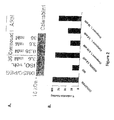
- Figure 1A depicts an immunoblot with calstabin2 antibody showing binding of calstabin2 to PKA-phosphorylated RyR2 in the absence (-) or presence of 100 nM compound 1.
- (+) calstabin binding to non-PKA phosphorylated RyR2.
- S36 a benzothiazepine described in US 7,544,678 , is used as a control.
- compound 1, at a concentration of 100 nM prevented the dissociation of calstabin2 from PKA-phosphorylated RyR2 and/or enhanced the (re)binding of calstabin2 to PKA-phosphorylated RyR.
- SR membranes from skeletal muscle were prepared in a manner similar to Example 2, and as further described in US patent application publication No. 2004/0224368 , the contents of which are incorporated by reference herein. Immunoblotting of microsomes (50 ⁇ g) was performed as described, with anti-calstabin1 antibody (Zymed) (1:1,000). The blots were developed and quantified as described in Example 2.
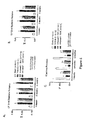
- Figure 1C depicts an immunoblot with calstabin1 antibody showing binding of calstabin1 to PKA phosphorylated RyR1 in the absence (Neg) or presence of the indicated concentrations of compound 1 or compound 4.
- (Pos) calstabin binding to non-PKA phosphorylated RyR1. S36 is used as a control.
- compound 1 and compound 4 prevented the dissociation of calstabin1 from PKA phosphorylated RyR1 and/or enhanced the (re)binding of calstabin1 to PKA-phosphorylated RyR1 in a dose-dependent manner, with an estimated EC50 of about 100 nM and 150 nM, respectively.
- Isoproterenol a beta adrenergic receptor agonist, induces heart failure in mice via overstimulation of the beta adrenergic receptor. Concurrent with this is the activation of PKA, phosphorylation of the RyR2 on the SR, and decreased interaction of calstabin2 (FKBP12.6) to RyR2. A similar cascade of events occurs in skeletal muscle, wherein RyR1 is phosphorylated, leading to decreased binding of calstabin1 (FKBP12) to RyR1.
- chronic isoproterenol treatment to a wild-type mouse offers a fast and reliable method for inducing changes in RyR biochemistry that could be readily quantified. These changes include increased RyR phosphorylation and concomitant decreased calstabin binding.
- mice C57B1/6 mice were maintained and studied according to approved protocols.
- the synthetic beta-adrenergic agonist, isoproterenol (ISO) was obtained from Sigma (I65627) and prepared as a 100 mg/ml stock in water. Lysis buffer was made by adding sucrose (1 mM), dithiothreitol (320 mM), and 1 protease inhibitor tablet (10X) to 10 ml stock solution (10 mM HEPES, 1 mM EDTA, 20 mM NaF, 2 mM Na 3 VO 4 ).
- mice were continually infused for five days with 10 mg/ml isoproterenol (1 ⁇ l/hr) by means of a subcutaneously implanted osmotic infusion pump (Alzet MiniOsmotic pump, Model 2001, Durect Corporation, Cupertino, CA).
- osmotic infusion pump Alzet MiniOsmotic pump, Model 2001, Durect Corporation, Cupertino, CA.
- the osmotic pump was held vertically and 200 ⁇ l drug solution was injected into the pump via a 1 ml syringe (attached to a cannula) that contained an excess of drug solution ( ⁇ 250-300 ⁇ l).
- the drug solution was injected slowly downward, while the syringe was slowly lifted, until the pump was overfilled. Overflow of displaced fluid upon capping the pump confirmed that the pump was properly filled.
- the loaded osmotic pumps were implanted subcutaneously by the following steps.
- the recipient mouse was anesthetized with 1.5-2% isoflurane in O 2 administered at 0.6 L/min, and its weight was then measured and recorded.
- the mouse was then placed chest-down on styrofoam, its face in the nose cone. The fur was clipped on the back of the neck, extending behind the ears to the top of the head. The area was wiped gently with 70% alcohol, and a small incision was made at the midline on the nape of head/neck.
- a suture holder was swabbed with alcohol, inserted into the cut, and opened to release the skin from the underlying tissue. To accommodate the pump, this opening was extended back to the hindquarters.
- the loaded pump was inserted into the opening, with its release site positioned away from the incision, and was allowed to settle underneath the skin with minimal tension.
- the incision was closed with 5.0 nylon suture, requiring about 5-6 sutures, and the area was wiped gently with 70% alcohol. Following surgery, mice were placed in individual cages to minimize injury and possible activation of the sympathetic nervous system.
- Mouse skeletal muscle tissue was isolated as follows. The leg muscles were exposed by cutting the skin at the ankle and pulling upward. The tissue was kept moistened with Tyrode's buffer (10 mM HEPES, 140 mM NaCl, 2.68 mM KCl, 0.42 mM Na 2 HPO 4 , 1.7 mM MgCl 2 , 11.9 mM NaHCO 3 , 5 mM glucose, 1.8 mM CaCl 2 , prepared by adding 20 mg CaCl 2 to 100 ml 1X buffer made from a 10X solution without CaCl 2 ). The following muscles were isolated and frozen in liquid nitrogen.
- Tyrode's buffer (10 mM HEPES, 140 mM NaCl, 2.68 mM KCl, 0.42 mM Na 2 HPO 4 , 1.7 mM MgCl 2 , 11.9 mM NaHCO 3 , 5 mM glucose, 1.8 mM CaCl 2 , prepared by adding 20 mg CaCl 2 to
- extensor digitorum longus was isolated by inserting scissors between lateral tendon and the X formed by the EDL and Tibialis tendons, cutting upward toward the knee; cutting the fibularis muscle to expose the fan-shaped tendon of gastrocnemius; inserting forceps under X and under the muscle to loosen the EDL tendon; cutting the EDL tendon and pulling up the muscle; and finally cutting loose the EDL.
- the soleus was isolated by removing the fibularis muscle from top of gastrocnemius; exposing the soleus on the underside of the gastrocnemius by cutting and lifting up the Achilles tendon; cutting the soleus at the top of the muscle behind the knee; and finally pulling the soleus and cutting it away from the gastroenemius muscle.
- the tibialis was isolated by cutting the tibialis tendon from the front of ankle, pulling the tendon upwards, and cutting it away from the tibia.
- the vastus (thigh muscle) was isolated from both legs, by cutting the muscle just above the knee and removing the muscle bundle. The samples were frozen in liquid nitrogen.
- RyR1 was immunoprecipitated from samples by incubating 200-500 ⁇ g of homogenate with 2 ⁇ l anti-RyR1 antibody (Zymed) in 0.5 ml of a modified RIPA buffer (50 mM Tris-HCl (pH 7.4), 0.9% NaCl, 5.0 mM NaF, 1.0 mM Na3VO 4 , 0.5% Triton-X100, and protease inhibitors) at 4°C for 1.5 hr. The samples were then incubated with Protein A sepharose beads (Amersham Pharmacia Biotech, Piscatawy, NJ) at 4°C for 1 hour, after which the beads were washed three times with ice cold RIPA.
- a modified RIPA buffer 50 mM Tris-HCl (pH 7.4), 0.9% NaCl, 5.0 mM NaF, 1.0 mM Na3VO 4 , 0.5% Triton-X100, and protease inhibitors
- Osmotic pumps containing isoproterenol with or without test compound were implanted in mice as described above.
- the mice were osmotically perfused for five days with either vehicle alone (DMSO/PEG), isoproterenol alone (ISO) (0.5 mg/kg/hr), or a combination of isoproterenol (0.5 mg/kg/hr) and compound 1 at the indicated concentrations.
- vehicle alone DMSO/PEG
- ISO isoproterenol alone
- compound 1 0.5 mg/kg/hr
- compound 1 0.5 mg/kg/hr
- each mouse was sacrificed, and skeletal muscle tissue was isolated and used to analyze calstabin1 binding in RyR1 immunoprecipates.
- the objective of this study was to test the ability of compound 1 to reduce cardiac dysfunction and attenuate ventricular remodelling in a model of ischemia-reperfusion induced heart failure.
- I/R ischemia-reperfusion
- LAD left anterior descending coronary artery
- Drug treatment (5 mg/kg/d or 10 mg/kg/d in drinking water) was initiated 1 week after reperfusion and was maintained for a 3 month study period.
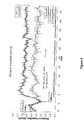
- the efficacy of compound 1 was assessed by echocardiography at one, two and three months after treatment began, and by invasive hemodynamics at 3 months in comparison with vehicle-treated and sham-operated animals. Cardiac specimens were also analyzed to assess hypertrophy and collagen content. Blood was collected from each rat on the final study day to assess drug plasma concentrations as shown in Figure 3 . The study design is depicted in Figure 3 . Experiments were performed in a blinded manner.
- Compound 1 was significantly and surprisingly more active in comparison with compound A, a structurally related benzothiazepine derivative described in WO 2007/024717 .
- compound A administered at a concentration of 5 mg/kg/d for 3 months, failed to improve systolic and diastolic cardiac function when compared with compound 1 in the chronic post-ischemic heart failure rat model at the end of the study.
- beneficial effects of compound 1, but not compound A were observed at a dose of 5 mg/kg/d after 3 months of treatment in the rat CHF model.
- the objective of this study was to test whether treatment with compound 1 improves muscle function in a dystrophin-deficient mouse model ( mdx ) .
- EDL muscle was dissected from hind limbs for isometric force analysis using the 407A Muscle Test System from Aurora Scientific (Aurora, Ontario, Canada).
- a 6-0 suture were tied to each tendon and the entire EDL muscle, tendon to tendon, was transferred to a Ragnoti bath of O 2 /CO 2 (95%/5%) bubbled Tyrode solution (in mM: NaCl 121, KCl 5.0, CaCl 2 1.8, MgCl 2 , NaH 2 PO 4 , NaHCO 3 24, and glucose 5.5).
- the EDL muscle was then removed from the system and weighed after clipping the end tendons and sutures off. The EDL muscle was then frozen in liquid nitrogen.
- the cross-sectional area (mm 2 ) of the EDL muscle was calculated by dividing the EDL muscle weight by the EDL muscle length and the mammalian muscle density constant of 1.056 mg/m 3 ( Yamada, T., et al. Arthritis and rheumatism 60:3280-3289 ).
- EDL specific force kN/m 2
- the absolute tetanic force was divided by the EDL muscle cross-sectional area.
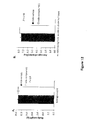
- compound 1 treatment significantly ( P ⁇ 0.0015) increased specific force in mdx muscle compared to vehicle-treated mdx control values.
- Metabolic bioavailability predictions were based on in vitro metabolic stability measurements with hepatic microsomes assuming total absorption. Briefly, unchanged drugs were quantified by LC-MS-MS following incubation (10 -7 M) with rat and human hepatic microsomes (0.33 mg protein/ml) after 0, 5, 15, 30 and 60 min of incubation in presence of NADPH (1mM). Enzymatic reaction was stopped with methanol (v/v) and proteins were precipitated by centrifugation. The in vitro intrinsic clearances (Clint_mic) expressed as ml/min/g protein were the slope (after LN linearization) of the unchanged drug remaining concentration versus incubation time.
- Table 1 Stability in human microsomes Compound Structure Rat microsomes Human microsomes Clint_mic rat ml/min/gprot MF mic % Class Clint_ mic man ml/min/gprot MF mic % Class B 823 5 very low 285 6 very low C 1926 2 very low 1326 2 very low 1 101 30 Inter media te 9.1 75 high a. Clint_mic: in vitro intrinsic clearance in ml/min/gprotein b. MF%: metabolic bioavailability in %
- Compound solubilization Stock solutions were made in DMSO, and working solutions in William medium containing 1/10 rat plasma or 1/4 human plasma.
- Metabolic stability determination Compounds were incubated at 10 -7 M with isolated hepatocytes (6E+5 cells/ml for rat hepatocytes and 4E+5 cells/ml for human hepatocytes) at 37°C in plasma from the same species diluted in Wiliams medium (1/10 dilution for rat and 1 ⁇ 4 dilution for human). Sampling times were performed at 0, 10, 20, 30, 60 and 120 min and enzymatic reaction stopped with methanol (v/v). Proteins were precipitated by centrifugation and the supernatant was analyzed by LC/MS/MS.
- Clint expressed as ml/min/g protein were calculated as for hepatic microsomes using a ratio of 0.134 mg protein/ml for 4E+5 cells/ml for human and 0.201 mg protein/ml for 6E+5 cells/ml for rat.
- the presence of the reference drug and the potential metabolite was checked by LC/MS/MS during the assay in each sample.
- Table 2 Stability in rat and human hepatocytes Compound Rat hepatocytes Human hepatocytes Clint (ml/min/gprot) MF rat % Q cellules/ml Clint (ml/min/gprot) MF human % Q cellules/ml B 1334 3 6.00E+05 693 3 4.00E+05 1 5 90 6.00E+05 0 100 4.00E+05 C 2610 2 6.00E+05 100 16 4.00E+05 a.
- Clint_mic in vitro intrinsic clearance in ml/min/gprotein b.
- MF% metabolic bioavailability in % c.
- Q cells quantity per ml
- Dilution Buffer 0.1 M Tris HCl buffer at pH 7.4 containing 5 mM EDTA.
- NADPH cofactor solution To a 50 mL falcon tube containing 2.79 mL of dilution buffer were added 0.429 mL of NADPH-regenerating soln. A and 0.079 mL of NADPH-regenerating soln. B
- Microsome Preparation (1.5 mg/mL solution) A 50 mL falcon tube containing 3.32 mL of dilution buffer was prewarmed at 37°C for 15 min. (at least 10 min.) 0.178 mL of microsome (24.6 mg/mL) were added to the prewarmed dilution buffer. The protein concentration of this microsome preparation was 1.25 mg/mL.
- Sample (Test compound) - Original and intermediate Stock Solutions A 1 mg/ mL (0.5 mg/mL was used for compound 1) solution of the test compound in methanol was prepared. 100 ⁇ M intermediate solution of the test compound from the original stock solution were prepared using the dilution buffer. A 5 ⁇ M solution was prepared by diluting the 100 ⁇ M intermediate solution using dilution buffer.
- the MS area used is an average of duplicate injections.
- Table 3 Stability in mouse and rat microsomes In Vitro Metabolic Stability Compound (1)
- Compound (B) Compound (C) Rat microsomes (% remaining) 15min 54% 1% 0% 30min 17% 0% 0% 1h 2% 0% 0%
Landscapes
- Health & Medical Sciences (AREA)
- Chemical & Material Sciences (AREA)
- Organic Chemistry (AREA)
- Life Sciences & Earth Sciences (AREA)
- Pharmacology & Pharmacy (AREA)
- Veterinary Medicine (AREA)
- Public Health (AREA)
- General Health & Medical Sciences (AREA)
- Animal Behavior & Ethology (AREA)
- Medicinal Chemistry (AREA)
- Engineering & Computer Science (AREA)
- Bioinformatics & Cheminformatics (AREA)
- Chemical Kinetics & Catalysis (AREA)
- General Chemical & Material Sciences (AREA)
- Nuclear Medicine, Radiotherapy & Molecular Imaging (AREA)
- Neurology (AREA)
- Biomedical Technology (AREA)
- Neurosurgery (AREA)
- Epidemiology (AREA)
- Cardiology (AREA)
- Immunology (AREA)
- Physical Education & Sports Medicine (AREA)
- Heart & Thoracic Surgery (AREA)
- Orthopedic Medicine & Surgery (AREA)
- Urology & Nephrology (AREA)
- Molecular Biology (AREA)
- Rheumatology (AREA)
- Diabetes (AREA)
- Pain & Pain Management (AREA)
- Psychology (AREA)
- Hospice & Palliative Care (AREA)
- Psychiatry (AREA)
- Oncology (AREA)
- Endocrinology (AREA)
- Emergency Medicine (AREA)
- Obesity (AREA)
- Vascular Medicine (AREA)
- Pulmonology (AREA)
- Transplantation (AREA)
- Hematology (AREA)
Abstract
The present invention relates to 1,4-benzothiazepine derivatives and their use to treat conditions, disorders and diseases associated with ryanodine receptors (RyRs) that regulate calcium channel functioning in cells. The invention also discloses pharmaceutical compositions comprising the compounds and uses thereof to treat diseases and conditions associated with RyRs, in particular cardiac, musculoskeletal and central nervous system (CNS) disorders.
Description
- The present invention relates to 1,4-benzothiazepine derivatives and their use to treat disorders and diseases associated with ryanodine receptors (RyRs) that regulate calcium channel functioning in cells. The invention also discloses pharmaceutical compositions comprising these compounds and uses thereof to treat diseases and conditions associated with RyRs, in particular cardiac, skeletal muscular and central nervous system (CNS) disorders.
- The sarcoplasmic reticulum (SR) is a structure in cells that functions, among other things, as a specialized intracellular calcium (Ca2+) store. RyRs are channels in the SR, which open and close to regulate the release of Ca2+ from the SR into the intracellular cytoplasm of the cell. Release of Ca2+ into the cytoplasm from the SR increases cytoplasmic Ca2+ concentration. Open probability of RyRs refers to the likelihood that a RyR is open at any given moment, and therefore capable of releasing Ca2+ into the cytoplasm from the SR.
- There are three types of RyR, all of which are highly homologous: RyR1, RyR2, and RyR3. RyR1 is found predominantly in skeletal muscle as well as other tissues, RyR2 is found predominantly in the heart as well as other tissues, and RyR3 is found in the brain as well as other tissues. The RyR is a tetramer. Part of the RyR complex is formed by four RyR polypeptides in association with four FK506 binding proteins (FKBPs) (calstabins), specifically FKBP12 (calstabin1) and FKBP12.6 (calstabin2). Calstabin1 binds to RyR1 and RyR3 while calstabin2 binds to RyR2. The calstabins bind to the RyR (one molecule per RyR subunit), stabilize the RyR function, facilitate coupled gating between neighboring RyRs and prevent abnormal activation (Ca2+ leak) of the channel by stabilizing the channel's closed state.
- In cardiac striated muscle, RyR2 is the major Ca2+ release channel required for excitation-contraction (EC) coupling and muscle contraction. During EC coupling, depolarization of the cardiac-muscle cell membrane during phase zero of the action potential activates voltage-gated Ca2+ channels. Ca2+ influx through the open voltage-gated channels in turn initiates Ca2+ release from the SR via RyR2. This process is known as Ca2+-induced Ca2+ release. The RyR2-mediated Ca2+-induced Ca2+ release then activates the contractile proteins in the cardiac cell, resulting in cardiac muscle contraction.
- Phosphorylation of RyR2 by protein kinase A (PKA) is an important part of the "fight or flight" response that increases cardiac EC coupling gain by augmenting the amount of Ca2+ released for a given trigger. This signaling pathway provides a mechanism by which activation of the sympathetic nervous system (SNS), in response to stress, results in increased cardiac output. Phosphorylation of RyR2 by PKA results in partial dissociation of calstabin2 from the channel, which in turn, leads to increased open probability, and increased Ca2+ release from the SR into the intracellular cytoplasm.
- Heart failure (HF) is characterized by a sustained hyperadrenergic state in which serum catecholamine levels are chronically elevated. One consequence of this chronic hyperadrenergic state is persistent PKA hyperphosphorylation of RyR2, such that 3-4 out of the four Ser2808 in each homotetrameric RyR2 channel are chronically phosphorylated (Marx SO, et al. Cell, 2000;101(4):365-376). In particular, chronic PKA hyperphosphorylation of RyR2 is associated with depletion of the channel-stabilization subunit calstabin2 from the RyR2 channel macromolecular complex. Depletion of calstabin results in a diastolic SR Ca2+ "leak" from the RyR complex, which contributes to impaired contractility (Marx et al., 2000) . Due to the activation of inward depolarizing currents, this diastolic SR Ca2+ "leak" also is associated with fatal cardiac arrhythmias (Lehnart et al, J Clin Invest. 2008;118(6):2230-2245). Indeed, mice engineered with RyR2 lacking the PKA phosphorylation site are protected from HF progression after myocardial infarction (MI) (Wehrens XH et al. Proc Natl Acad Sci USA. 2006;103(3):511-518). In addition, chronic PKA hyperphosphorylation of RyR2 in HF is associated with remodeling of the RyR2 macromolecular complex that includes depletion of phosphatases (Marx et al. 2000) PP1 and PP2a (impairing dephosphorylation of Ser2808) and the cAMP-
specifc type 4 phosphodiesterase (PDE4D3) from the RyR2 complex. Depletion of PDE4D3 from the RyR2 complex causes sustained elevation of local cAMP levels (Lehnart SE, et al., Cell 2005;123(1):25-35). Thus, diastolic SR Ca2+ leak contributes to HF progression and arrhythmias. Moreover, a recent report has demonstrated that RyR2-S2808D+/+ (aspartic acid replacing serine 2808) knock-in mice, that mimic constitutive PKA hyperphosphorylation of RyR2, show depletion of calstabin2 and leaky RyR2. RyR2-S2808D+/+ mice develop age-dependent cardiomyopathy, demonstrate elevated RyR2 oxidation and nitrosylation, a reduced SR Ca2+ store content, and increased diastolic SR Ca2+ leak. After myocardial infarction, RyR2-S2808D+/+ mice exhibit increased mortality compared with WT littermates. Treatment with S107, a 1,4-benzothiazepine derivative that stabilizes RyR2-calstabin2 interactions (WO 2007/024717 ), inhibited the RyR2-mediated diastolic SR Ca2+ leak and reduced HF progression in both WT and RyR2-S2808D+/+ mice (Shan et al., J Clin Invest. 2010 Dec 1;120(12):4375-87). - Moreover, RyR2 contains about 33 free thiol residues rendering it highly sensitive to the cellular redox state. Cysteine oxidation facilitates RyR opening and SR Ca2+ leak. Shan et al, 2010, demonstrated that oxidation and nitrosylation of RyR2 and dissociation of the stabilizing subunit calstabin2 from RyR2 induces SR Ca2+ leak.
- Catecholaminergic polymorphic ventricular tachycardia (CPVT) is an inherited disorder in individuals with structurally normal hearts. More than 50 distinct RyR2 mutations have been linked to CPVT. CPVT patients experience syncope and sudden cardiac death (SCD) from the toddler to adult ages, and by 35 years of age the mortality is up to 50%. Individuals with CPVT have ventricular arrhythmias when subjected to exercise, but do not develop arrhythmias at rest. CPVT-associated RyR2 mutations result in "leaky" RyR2 channels due to the decreased binding of the calstabin2 subunit (Lehnart et al., 2008). Mice heterozygous for the R2474S mutation in RyR2 (RyR2-R2474S mice) exhibit spontaneous generalized tonic-clonic seizures (which occurred in the absence of cardiac arrhythmias), exercise-induced ventricular arrhythmias, and SCD. Treatment with S107 enhanced the binding of calstabin2 to the mutant RyR2-R2474S channel, inhibited the channel leak, prevented cardiac arrhythmias and raised the seizure threshold (Lehnart et al., 2008).
- Skeletal muscle contraction is activated by SR Ca2+ release via RyR1. Depolarization of the transverse (T)-tubule membrane activates the dihydropyridine receptor voltage sensor (Cav1.1) that in turn activates RyR1 channels via a direct protein-protein interaction causing the release of SR Ca2+ stores. Ca2+ binds to troponin C allowing actin-myosin cross-bridging to occur and sarcomere shortening.
- In conditions of prolonged muscular stress (e.g., during marathon running) or in a disease such as heart failure, both of which are characterized by chronic activation of SNS, skeletal muscle function is impaired, possibly due to altered EC coupling. In particular, the amount of Ca2+ released from the SR during each contraction of the muscle is reduced, aberrant Ca2+ release events can occur, and Ca2+ reuptake is slowed (Reiken, S, et al. 2003. J. Cell Biol. 160:919-928). These observations suggest that the deleterious effects of chronic activation of the SNS on skeletal muscle might be due, at least in part, to defects in Ca2+ signaling.
- The RyR1 macromolecular complex consists of a tetramer of the 560-kDa RyR1 subunit that forms a scaffold for proteins that regulate channel function including PKA and the phosphodiesterase 4D3 (PDE4D3), protein phosphatase 1 (PP1) and calstabin1. A-kinase anchor protein (mAKAP) targets PKA and PDE4D3 to RyR1, whereas spinophilin targets PP1 to the channel (Marx et al. 2000; Brillantes et al., Cell, 1994, 77, 513-523; Bellinger et al. J. Clin. Invest. 2008, 118, 445-53). The catalytic and regulatory subunits of PKA, PP1, and PDE4D3 regulate PKA-mediated phosphorylation of RyR1 at Ser2843 (Ser2844 in the mouse). It has been shown that PKA-mediated phosphorylation of RyR1 at Ser2844 increases the sensitivity of the channel to cytoplasmic Ca2+, reduces the binding affinity of calstabin1 for RyR1, and destabilizes the closed state of the channel (Reiken et al., 2003; Marx, S.O. et al., Science, 1998, 281:818-821). Calstabin1 concentrations in skeletal muscle are reported to be approximately 200 nM and that PKA phosphorylation of RyR1 reduces the binding affinity of calstabinl for RyR1 from approximately 100-200 nM to more than 600 nM. Thus, under physiologic conditions, reduction in the binding affinity of calstabin1 for RyR1, resulting from PKA phosphorylation of RyR1 at Ser2843, is sufficient to substantially reduce the amount of calstabin1 present in the RyR1 complex. Chronic PKA hyperphosphorylation of RyR1 at Ser2843 (defined as PKA phosphorylation of 3 or 4 of the 4 PKA Ser2843 sites present in each RyR1 homotetramer) results in "leaky" channels (i.e., channels prone to opening at rest), which contribute to the skeletal muscle dysfunction that is associated with persistent hyperadrenergic states such as occurs in individuals with heart failure (Reiken et al., 2003).
- Moreover, regulation of RyR1 by posttranslational modifications other than phosphorylation, such as by nitrosylation of free sulfhydryl groups on cysteine residues (S-nitrosylation), as well as channel oxidation, have been reported to increase RyR1 channel activity. S-nitrosylation and oxidation of RyR1 have each been shown to reduce calstabin1 binding to RyR1.
- It was previously reported by Bellinger et al. (Proc. Natl. Acad. Sci. 2008, 105(6):2198-2002) that during extreme exercise in mice and human, RyR1 is progressively PKA-hyperphosphorylated, S-nitrosylated and depleted of PDE4D3 and calstabin1, resulting in "leaky" channels that cause decreased exercise capacity in mice. Treatment with S107 prevented depletion of calstabin1 from the RyR1 complex, improved force generation and exercise capacity, and reduced Ca2+-dependent neutral protease calpain activity and plasma creatinine kinase levels.
- Duchenne muscular dystrophy (DMD) is one of the leading lethal childhood genetic diseases. DMD is X-linked, affecting 1 in 3,500 male births and typically results in death by ~30 y of age from respiratory or cardiac failure. Mutations in dystrophin associated with DMD lead to a complete loss of the dystrophin protein, thereby disrupting the link between the subsarcolemma cytoskeleton and the extracellular matrix. This link is essential for protecting and stabilizing the muscle against contraction induced injury. Currently, there is no cure for DMD and most treatments in the clinic are palliative. Emerging interventions in Phase I/II clinical trials are exon skipping, myostatin inhibition, and up-regulation of utrophin. However, problems with systemic delivery, sustaining exon skipping, and up-regulation of utrophin exist. In addition, in Phase I/II clinical trials, inactivation of myostatin to increase muscle size did not show improved muscle strength or function. Sarcolemmal instability due to mutations in dystrophin has a cascade effect. One major effect is increased cytosolic Ca2+ concentration, which leads to activation of Ca2+-dependent proteases (calpains). Another effect is inflammation and elevated iNOS activity, which can cause oxidation/nitrosylation of proteins, lipids, and DNA. DMD muscle pathology is progressive and far exceeds the instability of the sarcolemma. Thus the pathology is consistent with the instability of the sarcolemma increasing the susceptibility to further injury. It was recently demonstrated that excessive oxidation or nitrosylation of RyR1 can disrupt the interaction of calstabinl with the RyR1 complex, leading to RyR1 leakiness and muscle weakness in a mouse model of muscular dystrophy (mdx) and that treatment with S107 improves indices of muscle function in this mouse model (Bellinger, A. et al. 2009, Nature Medicine, 15:325-330).
- Age-related loss of muscle mass and force (sarcopenia) contributes to disability and increased mortality. Andersson, D. et al. (Cell Metab. 2011 ) reported that RyR1 from aged (24 months) mice is oxidized, cysteine-nitrosylated, and depleted of calstabinl, compared to RyR1 from younger (3-6 months) adults. This RyR1 channel complex remodeling resulted in "leaky" channels with increased open probability, leading to intracellular calcium leak in skeletal muscle. Treating aged mice with S107 stabilized binding of calstabin1 to RyR1, reduced intracellular calcium leak, decreased reactive oxygen species (ROS), and enhanced tetanic Ca2+ release, muscle-specific force, and exercise capacity.
-
PCT International patent publications WO 2005/094457 ,WO 2006/101496 andWO 2007/024717 disclose 1,4-benzothiazepine derivatives and their use in treating cardiac, skeletal muscular and cognitive disorders, among others. -
PCT International patent publication WO 2008/060332 relates to the use of 1,4-benzothiazepine derivatives for treating muscle fatigue in subjects suffering from pathologies such as muscular dystrophy, or in subjects suffering from muscle fatigue as a result of sustained, prolonged and/or strenuous exercise, or chronic stress. -
PCT International patent publication WO 2008/021432 relates to the use of 1,4-benzothiazepine derivatives for the treatment and/or prevention of diseases, disorders and conditions affecting the nervous system. -
PCT International patent publication WO 2012/019076 relates to the use of 1,4-benzothiazepine derivatives for the treatment and/or prevention of cardiac ischemia/reperfusion injury. Fauconnier et al., Proc Natl Acad Sci USA, 2011, 108(32): 13258-63 reported that RyR leak mediated by caspase-8 activation leads to left ventricular injury after myocardial ischemia-reperfusion, and that treatment with S107 inhibited the SR Ca2+ leak, reduced ventricular arrhythmias, infarct size, and left ventricular remodeling at 15 days after reperfusion. -
PCT International patent publication WO 2012/019071 relates to the use of 1,4-benzothiazepine derivatives for the treatment and/or prevention of sarcopenia. -
PCT International patent publication WO 2012/037105 relates to the use of 1,4-benzothiazepine derivatives for the treatment and/or prevention of stress-induced neuronal disorders and diseases. - There is a need to identify new compounds effective for treating disorders and diseases associated with RyRs, including skeletal muscular and cardiac disorders and diseases. More particularly, a need remains to identify new agents that can be used to treat RyR-associated disorders by, for example, repairing the leak in RyR channels, and enhancing binding of calstabins to PKA-phosphorylated/oxidized/nitrosylated RyRs, and to mutant RyRs that otherwise have reduced affinity for, or do not bind to, calstabins.
- The present invention provides
novel 1,4-benzothiazepine derivatives, and their pharmaceutically acceptable salts. In some embodiments, the compounds of the present invention are ryanodine receptor calcium channel stabilizers, sometimes referred to as "Rycals™." The present invention further provides methods of using these compounds for treating disorders and diseases associated with RyRs. - The compounds of the present invention are represented by the structure of Formula (I):
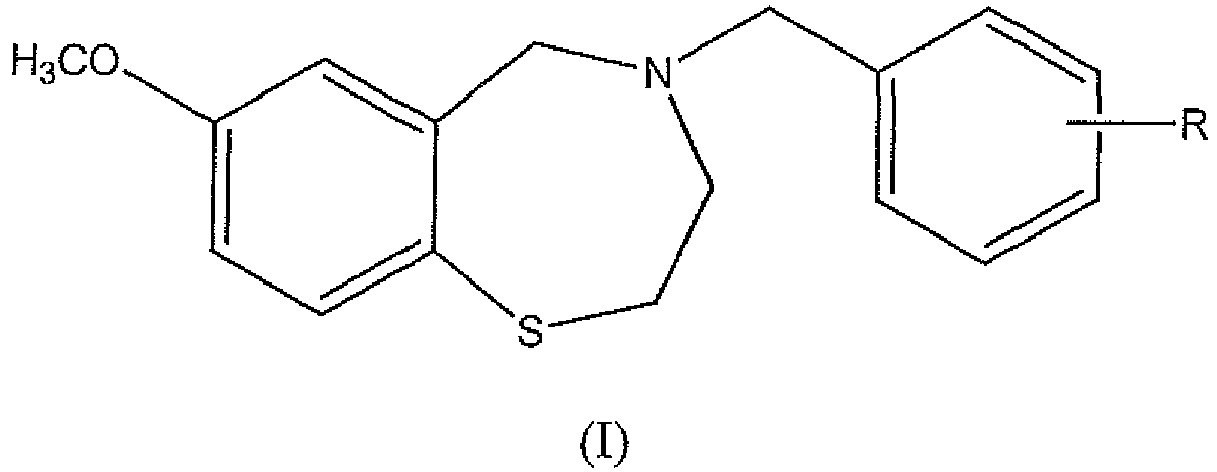
R is COOH or a bioisostere thereof, COOR1 or CN; and
R1 is a C1-C4 alkyl;
and phannaceutically acceptable salts thereof. - In some preferred embodiments, R in Formula (I) is a carboxylic acid (COOH). In other preferred embodiments, R in Formula (I) is a carboxylic acid bioisostere, for example tetrazole. Alternatively, the carboxylic acid bioisostere may be an acidic heterocycle such as 1,2,4-oxadiazol-5(4H)-one, 1,2,4-thiadiazol-5(4H)-one, 1,2,4-oxadiazole-5(4H)-thione, 1,3,4-oxadiazole-2(3H)-thione, 4-methyl-1H-1,2,4-triazole-5(4H)-thione, 5-fluoroorotic acid, and the like. In other preferred embodiments, R in Formula (I) is at
position 4 of the phenyl ring. Each possibility represents a separate embodiment of the present invention. - The compounds of Formula (I) may be present in the form of a salt with a pharmaceutically acceptable acid or base. Such salts are preferably selected from the group consisting of sodium, potassium, magnesium, hemifumarate, hydrochloride and hydrobromide salts, with each possibility representing a separate embodiment of the present invention.
- In some specific embodiments, the compound is selected from the group consisting of
compound 1,compound 2,compound 3,compound 4,compound 5,compound 6,compound 7, compound 8,compound 9,compound 10,compound 11, and compound 12, and pharmaceutically acceptable salts thereof. The structures of these compounds are described hereinbelow. - In a preferred embodiment, the compound is represented by the structure of compound (1):

- In some embodiments,
compound 1 is provided as the parent compound. In other embodiments, however,compound 1 is provided in the form of a salt with a pharmaceutically acceptable acid or base. Preferably, such salt is selected from the group consisting of sodium, potassium, magnesium, hemifumarate, hydrochloride and hydrobromide salts, with each possibility representing a separate embodiment of the present invention. A currently preferred salt is the sodium salt. - The present invention also provides methods for the synthesis of compounds of the invention, and salts thereof.
- The present invention also provides pharmaceutical compositions comprising one or more of the compounds of the invention, and at least one additive or excipient, e.g., fillers, diluents, binders, disintegrants, buffers, colorants, emulsifiers, flavor-improving agents, gellants, glidants, preservatives, solubilizers, stabilizers, suspending agents, sweeteners, tonicity agents, wetting agents, emulsifiers, dispersing agents, swelling agents, retardants, lubricants, absorbents, and viscosity-increasing agents. The compositions may be presented in capsules, granules, powders, solutions, sachets, suspensions, or tablet dosage form.
- The present invention further provides methods of treating or preventing various disorders, diseases and conditions associated with RyRs, such as cardiac, musculoskeletal and cognitive/CNS disorders and diseases, comprising administering to a subject in need of such treatment an amount of a compound of Formula (I) or a salt thereof, effective to prevent or treat a disorder or disease associated with an RyR.
- The present invention also provides a method of preventing or treating a leak in RyR (including RyR1, RyR2 and RyR3) in a subject, including administering to the subject an amount of a compound of Formula (I) or a salt thereof, effective to prevent or treat a leak in RyR.
- In addition, the present invention provides a method of modulating the binding of RyRs and calstabins in a subject, including administering to the subject an amount of a compound of Formula (I) or a salt thereof, effective to modulate the amount of RyR-bound calstabin.
- The present invention further relates to the use of a compound of Formula (I) for the manufacture of a medicament for the treatment and/or prevention of disorders, diseases and conditions associated with RyRs, such as cardiac, musculoskeletal and cognitive/CNS disorders and diseases. In another embodiment, the present invention relates to the use of a compound of Formula (I) for the manufacture of a medicament for preventing or treating a leak in RyR. In another embodiment, the present invention relates to the use of a compound of Formula (I) for the manufacture of a medicament for modulating the amount of RyR-bound calstabins.
- The methods of the invention can be practiced on an in vitro system (e.g., cultured cells or tissues) or in vivo (e.g., in a non-human animal or a human).
- Other features and advantages of the present invention will become apparent from the following detailed description and figures.
-
- Figure 1A
- Immunoblot with calstabin2 antibody showing binding of calstabin2 to PKA-phosphorylated RyR2 in the absence (-) or presence of 100
nM compound 1. (+): calstabin binding to non-PKA phosphorylated RyR2. S36 (US 7,544,678 ), is used as a positive control. - Figure 1B
- Immunoblot with calstabin2 antibody showing binding of calstabin2 to PKA-phosphorylated RyR2 in the absence (-) or presence of 100
nM compound 2,compound 3 orcompound 4. (+): calstabin binding to non-PKA phosphorylated RyR2. S36 is used as a positive control. - Figure 1C
- Immunoblot with calstabin1 antibody showing binding of calstabin1 to PKA-phosphorylated RyR1 in the absence (Neg) or presence of the indicated concentrations of
compound 1 orcompound 4. (Pos): calstabin binding to non-PKA phosphorylated RyR1. S36 is used as a positive control. - Figure 2
-
Figure 2A : Immunoblot with calstabin1 antibody showing the levels of calstabin1 in immunoprecipitated RyR1 complexes from tibialis lysates in mice administered vehicle (50:50 DMSO/PEG), isoproterenol alone (ISO) or isoproterenol together with the indicated concentrations ofcompound 1 in osmotic pumps. S36 is used as control at 3.6 mM.Figure 2B : quantification of % calstabin1 rebinding to RyR1. - Figure 3
- Rat chronic heart failure model induced by ischemia-reperfusion (I/R) injury. For I/R protocol, the left anterior descending (LAD) coronary artery was occluded for 1 h.
- Figure 4
- Left ventricular (LV) volumes and ejection fraction (EF) in rats treated with
compound 1 at 5 mg/kg/d (5MK) or 10 mg/kg/d (10MK) in drinking water vs. vehicle (H2O)-treated and sham-operated animals. Chronic heart failure was induced by ischemia-reperfusion (I/R) injury. LAD artery was occluded for 1 h; treatment started 1 week after reperfusion and continued for 3 months. Echocardiographic parameters were obtained after 1, 2 or 3 months of treatment.Figure 4A : LV End Diastolic Volume;Figure 4B : LV End Systolic Volume;Figure 4C : EF.Figures 4A and 4B : § P <0.001 vs. sham; * P <0.05 vs. vehicle; t P <0.001 vs. vehicle.Figure 4C : § P <0.001 vs. sham, † P <0.001 vs. vehicle. - Figure 5
-
Figures 5A-C depict body weight (BW) (5A), Infarct size (5B), and LV weight (5C), andFigure 5D depicts collagen content in rats treated withcompound 1 at 5 mg/kg/d (5MK) and 10mg/kg/day (10MK) in drinking water vs. vehicle(H2O)-treated and sham-operated animals. Chronic heart failure was induced by ischemia-reperfusion (I/R) injury. LAD artery was occluded for 1 h; treatment started I week after reperfusion and continued for 3 months. Parameters were measured after 3 months of treatment.Figures 5A-C : not significant.Figure 5D : ††† P <0.001 vs. sham; * P <0.05 vs. vehicle. - Figure 6
- Invasive hemodynamics: Left ventricular systolic pressure (LV SP) (6A), dP/dtmax (6B); and dP/dtmin (6C) in rats treated with
compound 1 at 5 mg/kg/d (5MK) or 10mg/kg/day (10MK) in drinking water vs. vehicle(H2O)-treated and sham-operated animals. Chronic heart failure was induced by ischemia-reperfusion (I/R) injury. LAD artery was occluded for 1 h; treatment started 1 week after reperfusion and continued for 3 months. Hemodynamic parameters were measured after 3 months of treatment.Figure 6A : not significant.Figure 6B : § P <0.05 vs. sham; * P <0.05 vs. vehicle.Figure 6C : † P <0.01 vs. sham; * P <0.05 vs. vehicle. - Figure 7
-
Compound 1 plasma concentrations (µM) vs. time of day. - Figure 8
- EF in rats treated with
compound 1 or compound A at 5 mg/kg/d (5MK) in drinking water vs. vehicle (H2O)-treated and sham-operated animals. LAD artery was occluded for 1 h; treatment started 1 week after reperfusion and continued for 3 months. Echocardiographic parameters were obtained after 1, 2 or 3 months of treatment. § P <0.001 vs. sham; * P <0.05 vs. vehicle; † P <0.001 vs. vehicle. - Figure 9
- Effects of compound 1 (50 mg/kg/d administered in drinking water for 2 months) on spontaneous physical activity of mdx mice (voluntarily exercised), as compared with vehicle (H2O)-treated controls. *P <0.05 vs. vehicle.
- Figure 10
- Forelimb grip strength in voluntarily exercised mdx mice after treatment with compound 1 (50 mg/kg/d administered in drinking water for 2 months), as compared with vehicle (H2O)-treated controls. *P <0.05 vs. vehicle.
- Figure 11
- Specific force-frequency relationship of EDL muscle from mice treated with compound 1 (50 mg/kg/d administered in drinking water for 2 months), as compared with vehicle (H2O)-treated controls. mdx-compound 1treated (n=11); mdx-vehicle (n=6). *P <0.0015 vs. vehicle.
- Figure 12
- Average weight (12A) and average water consumption (12B) of mdx mice treated with vehicle (H2O) or compound 1 (50 mg/kg/d administered in drinking water for 2 months).
- It should be understood that the detailed description and the specific examples while indicating various embodiments of the invention are given by way of illustration only, since various changes and modifications within the spirit and scope of the invention will become apparent to those skilled in the art from this detailed description.
- As used herein and in the appended claims, the singular forms "a," "an," and "the" include plural references unless the content clearly dictates otherwise. All publications, patent applications, patents, and other references mentioned herein are incorporated by reference in their entirety.
- The term "Rycals™" refers to ryanodine receptor calcium channel stabilizers, represented by compounds of the general Formula (I) as provided by the invention, as well as the specific compounds designated by numerical numbers as provided by the invention, and herein collectively referred to as "compound(s) of the invention".
- The compounds of the present invention are represented by the structure of Formula (I):

R is COOH or a bioisostere thereof, COOR1 or CN; and
R1 is a C1-C4 alkyl;
and pharmaceutically acceptable salts thereof. - In some preferred embodiments, R in Formula (I) is a carboxylic acid (COOH). In other preferred embodiments, R in Formula (I) is a carboxylic acid bioisostere, for example tetrazole. Alternatively, the carboxylic acid bioisostere may be an acidic heterocycle such as 1,2,4-oxadiazol-5(4H)-one, 1,2,4-thiadiazol-5(4H)-one, 1,2,4-oxadiazole-5(4H)-thione, 1,3,4-oxadiazole-2(3H)-thione, 4-methyl-1H-1,2,4-triazole-5(4H)-thione, 5-fluoroorotic acid, and the like. Additional carboxylic acid bioisosteres are described in, e.g., Hamada, Y. et al., Bioorg. Med. Chem. Lett. 2006; 16:4354-4359; Herr, R.J. et al., Bioorg. Med. Chem. 2002; 10: 3379-3393; Olesen, P.H., Curr. Opin. Drug Discov. Devel. 2001; 4: 471; Patani. G.A. et al., J. Chem. Rev. 1996; 96:3147; Kimura, T. et al. Bioorg. Med. Chem. Lett. 2006; 16: 2380-2386; and Kohara, Y. et al. Bioorg. Med. Chem. Lett. 1995; 5(17): 1903-1908. The contents of each of the aforementioned references are incorporated by reference herein.
- In other preferred embodiments, R in Formula (I) is at
position 4 of the phenyl ring. Each possibility represents a separate embodiment of the present invention. - The compounds of Formula (I) may be present in the form of a salt with a pharmaceutically acceptable acid or base. Such salts are preferably selected from the group consisting of sodium, potassium, magnesium, hemifumarate, hydrochloride and hydrobromide salts, with each possibility representing a separate embodiment of the present invention.
- In some specific embodiments, the compound is selected from the group consisting of
compound 1,compound 2,compound 3,compound 4,compound 5,compound 6,compound 7, compound 8,compound 9,compound 10,compound 11, and compound 12, and pharmaceutically acceptable salts thereof. These compounds are represented by the following structures:


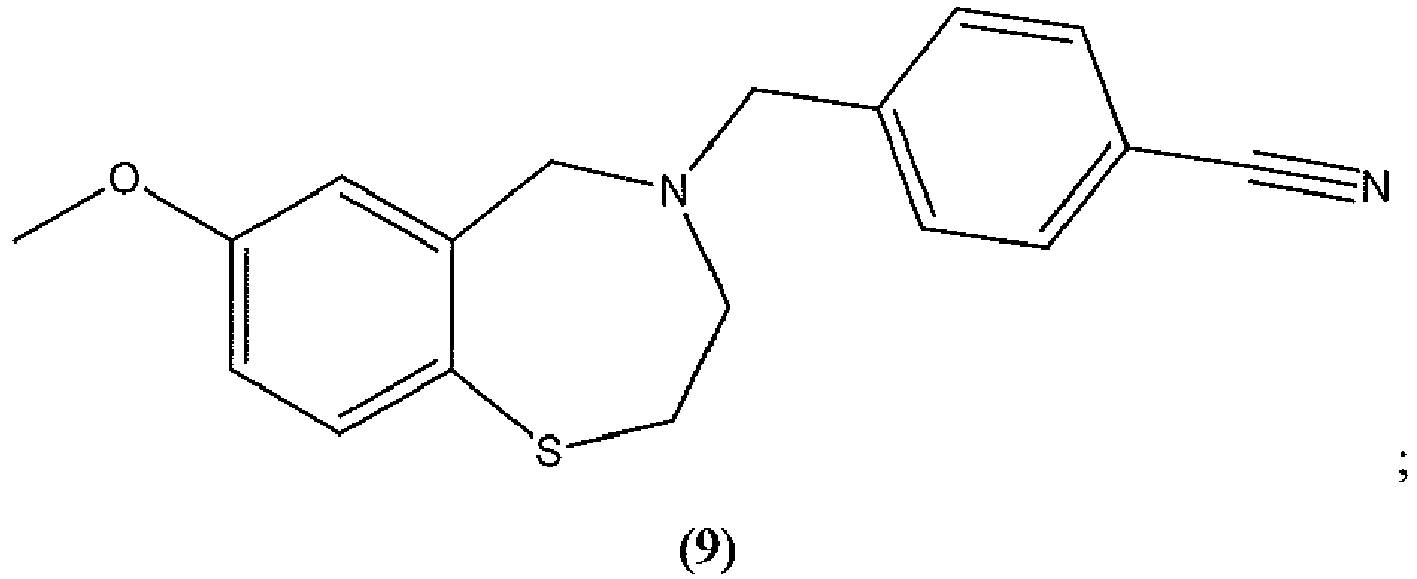


- The term "alkyl" as used herein refers to a linear or branched, saturated hydrocarbon having from 1 to 4 carbon atoms ("C1-C4 alkyl"). Representative alkyl groups include, but are not limited to, methyl, ethyl, propyl, isopropyl, butyl, sec-butyl, and tert-butyl. The alkyl group may be unsubstituted or substituted by one or more groups selected from halogen, haloalkyl, hydroxy, alkoxy, haloalkoxy, cycloalkyl, aryl, heterocyclyl, heteroaryl, amido, alkylamido, dialkylamido, nitro, amino, cyano, N3, oxo, alkylamino, dialkylamino, carboxyl, thio, thioalkyl and thioaryl.
- Compounds of the present invention may exist in their tautomeric form. All such tautomeric forms are contemplated herein as part of the present invention.
- All stereoisomers of the compounds of the present invention (for example, those which may exist due to asymmetric carbons on various substituents), including enantiomeric forms and diastereomeric forms, are contemplated within the scope of this invention. Individual stereoisomers of the compounds of the invention may, for example, be substantially free of other isomers (e.g., as a pure or substantially pure optical isomer having a specified activity), or may be admixed, for example, as racemates, or as mixtures enriched by one stereoisomer. The chiral centers of the present invention may have the S or R configuration as defined by the IUPAC 1974 Recommendations. The racemic forms can be resolved by physical methods, such as, for example, fractional crystallization, separation or crystallization of diastereomeric derivatives or separation by chiral column chromatography. The individual optical isomers can be obtained from the racemates by any suitable method, including without limitation, conventional methods, such as, for example, salt formation with an optically active acid or base, followed by crystallization.
- Compounds of the present invention are, subsequent to their preparation, preferably isolated and purified to obtain a composition containing an amount by weight equal to or greater than about 90% of the compound, about 95% of the compound, and even more preferably greater than about 99% of the compound ("substantially pure" compound), which is then used or formulated as described herein. Such "substantially pure" compounds of the present invention are also contemplated herein as part of the present invention.
- The present invention provides compounds that are capable of treating conditions, disorders and diseases associated with RyRs. More particularly, the present invention provides compounds that are capable of fixing a leak in RyR channels, which may be RyR1, RyR2 and/or RyR3 channels. In one embodiment, the compounds of the invention enhance association and/or inhibit dissociation of RyR and calstabin (e.g., RyR1 and calstabin1; RyR2 and calstabin2; and RyR3 and calstabin1). "Conditions, disorders and diseases associated with RyRs" means disorders and diseases that can be treated and/or prevented by modulating RyRs and include, without limitation, cardiac disorders and diseases, muscle fatigue, musculoskeletal disorders and diseases, CNS disorders and diseases, cognitive dysfunction, cognitive function improvement, bone disorders and diseases, malignant hyperthermia, diabetes, sudden cardiac death, and sudden infant death syndrome.
- Thus, in one embodiment, the present invention relates to a method of treating or preventing a condition selected from the group consisting of cardiac disorders and diseases, muscle fatigue, musculoskeletal disorders and diseases, CNS disorders and diseases, cognitive dysfunction, bone disorders and diseases, malignant hyperthermia, diabetes, sudden cardiac death, and sudden infant death syndrome, or for improving cognitive function, the method comprising the step of administering to a subject in need thereof a therapeutically effective amount of a compound of Formula (I) as described herein, or a salt thereof, to effectuate such treatment. A currently preferred compound is a compound of Formula (1).
- In another embodiment, the present invention relates to the use of an effective amount of compound of Formula (I), as described herein, or a salt thereof, for the manufacture of a medicament for treating or preventing a condition selected from the group consisting of cardiac disorders and diseases, muscle fatigue, skeletal muscular disorders and diseases, CNS disorders and diseases, cognitive dysfunction, bone disorders and diseases, malignant hyperthermia, diabetes, sudden cardiac death, and sudden infant death syndrome, or for improving cognitive function. A currently preferred compound is a compound of Formula (1).
- In another embodiment, the present invention relates to a compound of Formula (I) as described herein, or a salt thereof, for use in the manufacture of a medicament for treating or preventing a condition selected from the group consisting of cardiac disorders and diseases, muscle fatigue, skeletal muscular disorders and diseases, CNS disorders and diseases, cognitive dysfunction, bone disorders and diseases, malignant hyperthermia, diabetes, sudden cardiac death, and sudden infant death syndrome, or for improving cognitive function. A currently preferred compound is a compound of Formula (1).
- In one embodiment, the condition, disorder or disease is associated with an abnormal function of RyR1. In another embodiment, the condition, disorder or disease is associated with an abnormal function of RyR2. In another embodiment, the condition, disorder or disease is associated with an abnormal function of RyR3. Each possibility represents a separate embodiment of the present invention.
- Cardiac disorders and diseases include, but are not limited to, irregular heartbeat disorders and diseases, exercise-induced irregular heartbeat disorders and diseases, heart failure, congestive heart failure, chronic heart failure, acute heart failure, systolic heart failure, diastolic heart failure, acute decompensated heart failure, cardiac ischemia/reperfusion (I/R) injury (including I/R injury following coronary angioplasty or following thrombolysis during myocardial infarction (MI)), chronic obstructive pulmonary disease, and high blood pressure. Irregular heartbeat disorders and diseases include, but are not limited to atrial and ventricular arrhythmia, atrial and ventricular fibrillation, atrial and ventricular tachyarrhythmia, atrial and ventricular tachycardia, catecholaminergic polymorphic ventricular tachycardia (CPVT), and exercise-induced variants thereof.
- The compounds of the invention are also useful in treating muscle fatigue, which may be due to prolonged exercise or high-intensity exercise, or may be caused by a muscular disorder or disease. Examples of muscular disorders and diseases include, but are not limited to, skeletal muscle fatigue, central core diseases, exercise-induced skeletal muscle fatigue, bladder disorders, incontinence, age-associated muscle fatigue, sarcopenia, congenital myopathies, cancer cachexia, myopathy with cores and rods, mitochondrial myopathies [e.g., Kearns-Sayre syndrome, MELAS (mitochondrial myopathy, encephalopathy, lactic acidosis, and stroke) syndrome, and MERRF (myoclonus epilepsy with ragged-red fibers) syndrome], endocrine myopathies, muscular glycogen storage diseases [e.g., Pompe's disease, Andersen's disease, and Cori's diseases], myoglobinurias [e.g., McArdle's disease, Tarui disease, and DiMauro disease], dermatomyositis, myositis ossificans, familial periodic paralysis, polymyositis, inclusion body myositis, neuromyotonia, stiff-man syndrome, malignant hyperthermia, common muscle cramps, tetany, myasthenia gravis, and muscular dystrophy. Preferred skeletal muscular disorders include, but are not limited to exercise-induced skeletal muscle fatigue, a congenital myopathy, muscular dystrophy, age-related muscle fatigue, sarcopenia, central core disease, cancer cachexia, bladder disorders, and incontinence.
- Examples of muscular dystrophy include, but are not limited to, Duchenne Muscular Dystrophy (DMD), Becker's Muscular Dystrophy (BMD), Limb Girdle Muscular Dystrophy (LGMD), Congenital Muscular Dystrophy (CMD), distal muscular dystrophy, facioscapulohumeral dystrophy, myotonic muscular dystrophy, Emery-Dreifuss muscular dystrophy, and oculopharyngeal muscular dystrophy, with DMD being currently preferred.
- Congenital muscular dystrophy as used herein refers to muscular dystrophy that is present at birth. CMD is classified based on genetic mutations: 1) genes encoding for structural proteins of the basal membrane or extracellular matrix of the skeletal muscle fibres; 2) genes encoding for putative or demonstrated glycosyltransferases, that in turn affect the glycosylation of dystroglycan, an external membrane protein of the basal membrane; and 3) other. Examples of CMD include, but are not limited to Laminin-α2-deficient CMD (MDC1A), Ullrich CMG (
UCMDs - Cognitive disorders, diseases or dysfunction include, but are not limited to, Alzheimer's Disease, memory loss, age-dependent memory loss, post-traumatic stress disorder (PTSD), a neuropathy and seizures. The cognitive dysfunction may be stress-related, age-related or a combination thereof. Alternatively, the cognitive dysfunction is associated with a disease or disorder, including but not limited to, Alzheimer's disease (AD), attention deficit hyperactivity disorder (ADHD), autism spectrum disorder (ASD), generalized anxiety disorder (GAD), obsessive compulsive disorder (OCD), Parkinson's Disease (PD), post-traumatic stress disorder (PTSD), Schizophrenia, Bipolar disorder; and major depression.
- In some embodiments, the compounds of the present invention improve cognitive function, which may be selected from short term memory, long term memory, attention, learning, and any combination thereof.
- The term an "effective amount," "sufficient amount" or "therapeutically effective amount" of an agent as used herein interchangeably, is that amount sufficient to effectuate beneficial or desired results, including clinical results and, as such, an "effective amount" or its variants depends upon the context in which it is being applied. The response is in some embodiments preventative, in others therapeutic, and in others a combination thereof. The term "effective amount" also includes the amount of a compound of the invention, which is "therapeutically effective" and which avoids or substantially attenuates undesirable side effects.
- As used herein and as well understood in the art, "treatment" is an approach for obtaining beneficial or desired results, including clinical results. Beneficial or desired clinical results can include, but are not limited to, alleviation or amelioration of one or more symptoms or conditions, diminishment of extent of disease, stabilized (i.e., not worsening) state of disease, preventing spread of disease, delay or slowing of disease progression, amelioration or palliation of the disease state and remission (whether partial or total), whether detectable or undetectable. "Treatment" can also mean prolonging survival as compared to expected survival if not receiving treatment.
- The compounds of the invention are formulated into pharmaceutical compositions for administration to human subjects in a biologically compatible form suitable for administration in vivo. According to another aspect, the present invention provides a pharmaceutical composition comprising compounds of the invention in admixture with a pharmaceutically acceptable diluent and/or carrier. The pharmaceutically-acceptable carrier is preferably "acceptable" in the sense of being compatible with the other ingredients of the composition and not deleterious to the recipient thereof.
- The compound may be administered alone, but is preferably administered with one or more pharmaceutically acceptable carriers. The pharmaceutically-acceptable carrier employed herein may be selected from various organic or inorganic materials that are used as materials for pharmaceutical formulations and which are incorporated as any one or more of fillers, diluents, binders, disintegrants, buffers, colorants, emulsifiers, flavor-improving agents, gellants, glidants, preservatives, solubilizers, stabilizers, suspending agents, sweeteners, tonicity agents, wetting agents, emulsifiers, dispersing agents, swelling agents, retardants, lubricants, absorbents, and viscosity-increasing agents.
- The compounds of the present invention are administered to a human or animal subject by known procedures including, without limitation, oral, sublingual, buccal, parenteral (intravenous, intramuscular or subcutaneous), transdermal, per- or trans-cutaneous, intranasal, intra-vaginal, rectal, ocular, and respiratory (via inhalation administration. The compounds of the invention may also be administered to the subject by way of delivery to the subject's muscles including, but not limited to, the subject's cardiac or skeletal muscles. In one embodiment, the compound is administered to the subject by way of targeted delivery to cardiac muscle cells via a catheter inserted into the subject's heart. In other embodiments, the compounds may be administered directly into the CNS, for example by intralumbar injection or intreventricular infusion of the compounds directly into the cerebrospinal-fluid (CSF), or by intraventricular, intrathecal or interstitial administration. Oral administration is currently preferred.
- The pharmaceutical compositions according to the invention for solid oral administration include especially tablets or dragées, sublingual tablets, sachets, capsules including gelatin capsules, powders, and granules, and those for liquid oral, nasal, buccal or ocular administration include especially emulsions, solutions, suspensions, drops, syrups and aerosols. The compounds may also be administered as a suspension or solution via drinking water or with food. Examples of acceptable pharmaceutical carriers include, but are not limited to, cellulose derivatives including carboxymethyl cellulose, methyl cellulose, hydroxypropyl cellulose, hydroxypropylmethylcellulose, ethyl cellulose and microcrystalline cellulose; sugars such as mannitol, sucrose, or lactose; glycerin, gum arabic, magnesium stearate, sodium stearyl fumarate, saline, sodium alginate, starch, talc and water, among others.
- The pharmaceutical compositions according to the invention for parenteral injections include especially sterile solutions, which may be aqueous or non-aqueous, dispersions, suspensions or emulsions and also sterile powders for the reconstitution of injectable solutions or dispersions. The compounds of the invention may be combined with a sterile aqueous solution that is isotonic with the blood of the subject. Such a formulation is prepared by dissolving a solid active ingredient in water containing physiologically-compatible substances, such as sodium chloride, glycine and the like, and having a buffered pH compatible with physiological conditions, so as to produce an aqueous solution, then rendering said solution sterile. The formulation is presented in unit or multi-dose containers, such as sealed ampoules or vials. The formulation is delivered by any mode of injection, including, without limitation, epifascial, intracapsular, intracranial, intracutaneous, intrathecal, intramuscular, intraorbital, intraperitoneal, intraspinal, intrasternal, intravascular, intravenous, parenchymatous, subcutaneous, or sublingual or by way of catheter into the subject's heart.
- The pharmaceutical compositions for rectal or vaginal administration are preferably suppositories, and those for per- or trans-cutaneous administration include especially powders, aerosols, creams, ointments, gels and patches.
- For transdermal administration, the compounds of the invention are combined with skin penetration enhancers, such as propylene glycol, polyethylene glycol, isopropanol, ethanol, oleic acid, N-methylpyrrolidone and the like, which increase the permeability of the skin to the compounds of the invention and permit the compounds to penetrate through the skin and into the bloodstream. The compound/enhancer compositions also may be further combined with a polymeric substance, such as ethylcellulose, hydroxypropyl cellulose, ethylene/vinylacetate, polyvinyl pyrrolidone, and the like, to provide the composition in gel form, which is dissolved in a solvent, evaporated to the desired viscosity and then applied to backing material to provide a patch.
- The pharmaceutical formulations of the present invention are prepared by methods well-known in the pharmaceutical arts, including but not limited to wet and dry granulation methods, or by direct compression. The choice of carrier is determined by the solubility and chemical nature of the compounds, chosen route of administration and standard pharmaceutical practice.
- The pharmaceutical compositions mentioned above illustrate the invention but do not limit it in any way.
- In accordance with the methods of the present invention, any of these compounds may be administered to the subject (or are contacted with cells of the subject) in an amount effective to limit or prevent a decrease in the level of RyR-bound calstabin in the subject, particularly in cells of the subject. This amount is readily determined by the skilled artisan, based upon known procedures, including analysis of titration curves established in vivo and methods and assays disclosed herein. A suitable amount of the compounds of the invention effective to limit or prevent a decrease in the level of RyR-bound calstabin in the subject ranges from about 0.01 mg/kg/day to about 100 mg/kg/day (e.g., 1, 2, 5, 10, 20, 25, 50 or 100 mg/kg/day), and/or is an amount sufficient to achieve plasma levels ranging from about 300 ng/ml to about 5,000 ng/ml. Alternatively, the amount of compounds from the invention ranges from about 1 mg/kg/day to about 50 mg/kg/day. Alternatively, the amount of compounds from the invention ranges from about 10 mg/kg/day to about 20 mg/kg/day. Also included are amounts of from about 0.01 mg/kg/day or 0.05 mg/kg/day to about 5 mg/kg/day or about 10 mg/kg/day which can be administered.
- The present invention provides, in a further aspect, processes for the preparation of a compound of the invention, and salts thereof. More particularly, the present invention provides processes for the preparation of compounds of Formula (I), e.g.,
compound 1,compound 2,compound 3,compound 4,compound 5,compound 6,compound 7, compound 8,compound 9,compound 10,compound 11, and compound 12, or salts thereof. The various synthetic routes to the compounds are described in the examples. The general route of synthesis (ROS) is set forth inScheme 1 below:
- In
Scheme 1, R is as defined in Formula (I), and L is a leaving group, which is, by way of example, a halogen, a sulfonate (OSO2R' wherein R' is alkyl or aryl, e.g., OMs (mesylate), OTs (tosylate)), and the like. The amine starting material is reacted with the alkylating agent (benzyl derivative shown above), preferably in the presence of a base, to yield the desired compound of Formula (I) or a precursor thereof. If desired, such precursor may further be reacted to a compound of Formula (I) as exemplified in the experimental section herein below, or by any other method known to a person of skill in the art. For example, an ester precursor (R =COOR1 wherein R1 is a C1-C4 alkyl), can be converted into the corresponding carboxylic acid (R = COOH) by hydrolysis under acidic or basic conditions in accordance with known methods. Alternatively, a nitrile precursor (R = CN) can be converted into a tetrazole (a carboxylic acid isostere) by reaction with sodium azide under suitable conditions. The amine starting material may be prepared in accordance with the methods described inWO 2009/111463 orWO 2007/024717 , or by any other method known to a person of skill in the art. The contents of all of the aforementioned references are incorporated by reference herein. - The nature of the base is not particularly limiting. Preferred bases include, but are not limited to, hydrides (e.g., sodium or potassium hydride) and N,N-diisopropylethylamine. Other suitable bases include, but are not limited to an organic base such as a tertiary amine, selected from the group consisting of acyclic amines (e.g., trimethylamine, triethylamine, dimethylphenylamine diisopropylethylamine and tributylamine), cyclic amines (e.g., N-methylmorpholine) and aromatic amines (dimethylaniline, dimethylaminopyridine and pyridine).
- The reaction may be conducted in the presence or absence of a solvent. The nature of the solvent, when used, is not particularly limiting, with examples including solvents such an ester (e.g., ethyl acetate), an ether (e.g., THF), a chlorinated solvent (e.g., dichloromethane or chloroform), dimethylformamide (DMF), and other solvents such as acetonitrile or toluene or mixtures of these solvents with each other or with water.
- Salts of compounds of formula (I) wherein R=COOH may be prepared by reacting the parent molecule with a suitable base, e.g., NaOH or KOH to yield the corresponding alkali metal salts, e.g., the sodium or potassium salts. Alternatively, esters (R=COOR1) may be directly converted to salts by reactions with suitable bases.
- The following examples are provided as illustrations of the some preferred embodiments according to the invention.
- NMR: Bruker AVANCE III 400 or
Varian Mercury 300 - LC/MS: Waters Delta 600 equipped with Autosampler 717Plus, Photo Diode Array Detector 2996, and Mass Detector 3100, or Shimadzu 210
-

- Amine (structure shown above) (1 mmol) was dissolved in 3 ml dichloromethane. To the solution was added alkylation reagent (1mmol), followed by N,N-diisopropylethylamine (0.34 ml, 2 mmol). The mixture was stirred at room temperature overnight. The solution was loaded onto column directly and eluted with hexane/EtOAc (2:1, v/v).

- Methyl 3-((7-methoxy-2,3-dihydrobenzo[f][1,4]thiazepin-4(5H)-yl)methyl)benzoate:.1HNMR (300 MHz, CDCl3): 7.96 (m, 2H), 7.46 (m, 3H), 6.70 (dd, J =8.4 Hz, 3.0 Hz, 1H), 6.50 (d, J = 2.7 Hz, 1H), 4.09 (s, 2H), 3.90 (s, 3H), 3.72 (s, 3H), 3.57 (s, 2H), 3.35 (m, 2H), 2.72 (m, 2H). MS: 344(M+1)

-

- Methyl 2-((7-methoxy-2,3-dihrydrobenzo[f][1,4]thiazopin-4(5H)-yl)methyl)benzoate: The compound was converted to hydrochloride salt with 2M HCl in ether. 1HNMR (300 MHz, DMSO-d6): 10.33(br, 1H), 8.08 (d, J= 7.5Hz, 1H), 7.80-7.65 (m, 3H), 7.51 (d, J=8.1Hz, 1H), 7.14 (s, 1H), 6.99 (dd, J= 8.4, 2.1Hz, 1H), 4.90-4.40 (m, br, 4H), 3.88 (s, 3H), 3.78 (s, 3H), 3.40 (m, 2H), 3.26 (m, 1H), 3.11 (m, 1H). MS: 344 (M+1)

- 2-((7-Methoxy-2,3-dihydrobenzo[f][1,4]thiazepin-4(5H)-yl)methyl)benzonitrile: 1HNMR (300 MHz, CDCl3): 7.67-7.26 (m, 5H), 6.73 (d, J= 2.7 Hz, 1H), 6.74 (dd, J= 2.7,8.4 Hz, 1H), 4.14 (s, 2H), 3.78(s, 3H), 3.70 (s, 2H), 3.36 (m, 2H), 2.76 (m, 2H). MS : 311 (M+1)

- 3-((7-Methoxy-2,3-dihydrobenzo[f][1,4]thiazepin-4(5H)-yl)methyl)benzonitrile: 1HNMR (300 MHz, CDCl3): 7.64-7.42 (m, 5H), 6.74 (dd, J= 2.7,8.4 Hz, 1H), 6.48 (d, J= 2.7 Hz, 1H), 4.08 (s, 2H), 3.75(s, 3H), 3.57 (s, 2H), 3.36 (m, 2H), 2.76 (m, 2H). MS : 311 (M+1)

- 4-((7-Methoxy-2,3-dihydrobenzo[f][1,4]thiazepin-4(5H)-yl)methyl)benzonitrile: 1HNMR (300 MHz, CDCl3): 7.64 (d, J= 7.2Hz, 2H), 7.42 (m, 3H), 6.74 (dd, J= 2.7,8.4 Hz, 1H), 6.48 (d, J= 2.7 Hz, 1H), 4.08 (s, 2H), 3.75(s, 3H), 3.58 (s, 2H), 3.36 (m, 2H), 2.76 (m, 2H). MS: 311 (M+1)
- Methyl ester (3 mmol) was dissolved in 30 ml of THF/methanol/l M NaOH (1:1:1, v/v). The mixture was stirred for 8 hours and TLC showed complete disappearance of the ester . 1 ml Conc. HCl was added to adjust to acidic pH. The organic solvent was removed and the formed solid was collected by filtration. The solid was dried in the air.

- 3-((7-Methoxy-2,3-dihydrobenzo[f][1,4]thiazepin-4(5H)-yl)methyl)benzoic acid: This was obtained by extraction with EtOAc as solvent. 1HNMR (300 MHz, CDCl3): 8.10 (s, 1H), 8.04 (d, J= 8.4 Hz, 1H), 7.80 (br, 1H), 7.46 (m, 2H), 6.80 (m, 2H), 4.40 (s, 2H), 3.90 (s, 2H), 3.76 (s, 3H), 3.42 (s, 2H), 2.86 (s, 2H). MS: 330 (M+1), 328 (M-1).

- 4-((7-Methoxy-2,3-dihydrobenzo[f][1,4]thiazepin-4(5H)-yl)methyl)benzoic acid: This was obtained by extraction with EtOAc as solvent. 1HNMR (300 MHz, CDCl3): 8.02 (d, J= 8.4 Hz, 2H), 7.46 (d, J= 8.4 Hz, 1H), 7.42 (d, J= 8.7 Hz, 2H), 6.70 (dd, J =8.4 Hz, 3.0 Hz, 1H), 6.50 (d, J = 3.0 Hz, 1H), 4.11 (s, 2H), 3.72 (s, 3H), 3.62 (s, 2H), 3.35 (m, 2H), 2.76 (m, 2H). MS: 330 (M+1), 328 (M-1).
The sodium salt ofcompound 1 was prepared from the parent molecule (m.p. of the salt: > 290°C).
- 2-((7-Methoxy-2,3-dihydrobenzo[f][1,4]thiazepin-4(5H)-yl)methyl)benzoic acid: The compound was converted to hydrochloride salt with 2M HCl in ether. 1HNMR (300 MHz, DMSO-d6): 10.10(br, 1H), 8.08 (d, J= 7.5Hz, 1H), 7.66-7.51 (m, 4H), 7.17 (d, J= 2.1Hz, 1H), 6.99 (dd, J= 8.4, 2.1Hz, 1H), 4.80-4.40 (m, br, 4H), 3.78 (s, 3H), 3.46 (m, 2H), 3.13 (m, 2H). MS: 330(M+1), 328 (M-1).
- Nitrile precursor (3.22 mmol), sodium azide (830 mg, 12.9 mmol) and triethylamine hydrochloride (1.72 g, 12.9 mmol) were stirred in 40 ml anhydrous DMF at 100°C for 5 days. The DMF was removed under high vacuum and the residue was mixed with water. The water solution was extracted with dichloromethane (3 x 100ml), The pure compound was purified by column chromatography (EtOAc/methanol).

- 1HNMR (300 MHz, CDCl3 and a drop of CD3OD): 8.30 (d, J= 8.7Hz, 1H), 7.53 (m, 2H). 7.14 (t, J= 7.8Hz, 1H), 7.20 (d, J= 7.5Hz,1H), 6.84 (dd, J= 2.7,8.4 Hz, 1H), 6.69 (d, J= 2.7 Hz, 1H), 4.46 (s, 2H), 3.80(s, 2H), 3.75 (s, 2H), 3.43 (m, 2H), 2.96 (m, 2H). MS: 354(M+1), 352(M-1)

- 4-(3-(1H-Tetrazol-5-yl)benzyl)-7-methoxy-2,3,4,5-tetrahydrobenzo[f][1,4]thiazepine: 1HNMR (300 MHz, CDCl3): 8.16 (s, 1H), 7.90 (d, J=7.5Hz, 1H), 7.40 (d, J= 8.4Hz, 1H),7.20 (m, 2H), 6.74 (dd, J= 2.7,8.4 Hz, 1H), 6.58 (d, J= 2.7 Hz, 1H), 4.18 (s, 2H), 3.75(s, 5H), 3.36 (m, 2H), 2.76 (m, 2H).). MS: 354(M+1), 352(M-1)

- 4-(4-(1H-Tetrazol-5-yl)benzyl)-7-methoxy-2,3,4,5-tetrahydrobenzo[f][1,4]thiazepine: 1HNMR (300 MHz, CDCl3 and a drop of CD3OD): 7.99 (d, J= 7.2Hz, 2H), 7.42 (m, 3H), 6.74 (dd, J= 2.7,8.4 Hz, 1H), 6.53 (d, J= 2.7 Hz, 1H), 4.10 (s, 2H), 3.71 (s, 3H), 3.58 (s, 2H), 3.36 (m, 2H), 2.76 (m, 2H).). MS: 354(M+1), 352(M-1)
- Cardiac SR membranes were prepared as previously described (Marx et al., 2000; Kaftan et al., Circ. Res., 1996, 78:990-97). Immunoblotting of microsomes (50 µg) was performed as described, with anti-calstabin antibody (1:1,000) (Jayaraman et al., J Biol. Chem., 1992, 267:9474-77) for 1 hr at room temperature (Reiken et al., Circulation, 107:2459-66, 2003). After incubation with HRP-labeled anti-rabbit IgG (1:5,000 dilution; Transduction Laboratories, Lexington, Ky.), the blots were developed using ECL (Amersham Pharmacia, Piscataway, N.J.) and detected on x-ray film, or exposed to secondary antibodies labeled with infrared Die and visualized on equipment from Li-Cor Biosciences (model Odyssey). Unless otherwise stated, compounds were tested at a concentration of 100 nM. A representative calstabin2 binding assay is presented below.
- A. PKA phosphorylation of cardiac sarcoplasmic reticulum CSR
- B. Reaction mixture was set up in 1.5 ml microfuge tube. 200µg of cardiac SR were added to a reaction mix of kinase buffer, PKA and ATP to a final volume of 100 µl (Reaction mix below). ATP was added last to initiate the reaction.
Reaction mix:
20µl = Sample (cardiac SR, 2 or 10 µg/µl)
10µl= 10x Kinase buffer (80 mM MgCl2, 100 mM EGTA, 500 mM Tris/PIPES),
pH=7.0
20µl = PKA (2units/ul) (Sigma # P2645)
10µl = 10x ATP (1.0 mM) (Sigma A 9187)
40µl = distilled H2O- 1. The tubes were incubated at 30°C for 30 minutes.
- 2. The reaction mix was then transferred to 0.5ml thick walled glass tubes.
- 3. The glass tubes containing the reaction mix were centrifuged for 10 min at 50,000xg in Sorvall Centrifuge RCM120EX using S120AT3 rotor. Centrifugation at 50,000 x g for 10 min is sufficient to isolate the microsomes.
- 4. The resulting pellet was washed 4 times with binding buffer (10mM Imidazol 300mM Sucrose, pH =7.4). Each time 100µl of 1x binding buffer was added to the tube to wash the pellet. The pellet was resuspended by flushing up and down using the pipette tip. After the last spin 50µl of binding buffer was added and the pellets from all tubes were pooled. The reaction was stored at -20°C.
- 5. Phosphorylation was confirmed by separating approximately 10 µg of CSR by 6% Polyacylamide gel electrophoresis (PAGE) and analyzing the immunoblots for both total RyR (5029 Ab, 1:3000 dilution or Monoclonal Ab from Affinity Bioreagents, Cat # MA3-916, 1:2000 dilution) and PKA phosphorylated RyR2 (P2809 Ab, 1:10000 dilution).
- 6. Aliquots can be stored at -80C.
- C. Calstabin Rebinding Assay
- 1. PKA-phosphorylated CSR (approximately 20µg) was incubated with
250nM Calstabin 2 in 100µl binding buffer (as described above) with or without compounds. - 2. The reaction was set up in 0.5 ml thick walled glass tube (Hitachi Centrifuge ware, Catalog # B4105).
- 3. Calstabin2 was added as the last reagent in the reaction mix. Reaction was carried out at room temperature for 30 mins.
- 4. After the reaction, the tubes were centrifuged for 10 min at 100,000 g. (Sorvall RCM120EX centrifuge with S120AT3 rotor).
- 5. The resulting pellet was washed 4 times in 1x binding buffer at 4°C. After each wash the tubes were centrifuged at 50,000 g for 10 mins at 4°C.
- 6. After the final wash, supernatant was discarded.
- 7. 20µl of sample buffer (2x) [6x sample buffer described below] were added and the pellet was resuspended with the tip and/or by brief vortexing. The suspension was transferred to 1.5ml microcentrifuge tube.
- 8. The tubes were heated at 90°C for 4min.
- 9. Proteins were separated using 15% SDS/PAGE.
- 10. Calstabin2 binding was detected with αFKBP (Jayaraman et al., J. Biol. Chem. 1992;267:9474-77, 1:2000) primary antibody and appropriate secondary antibody.
- 1. PKA-phosphorylated CSR (approximately 20µg) was incubated with
- 6x Sample Buffer
- 7.0 ml 4x Tris-HCl/SDS, pH6.8
- 3.0 ml glycerol (30% final concentration)
- 1.0 g SDS (10% final concentration)
- 0.93 g DTT (0.6 M final)
- 1mg Bromophenol blue (0.001% final concentration)
- Distilled water to 10 ml final volume.
- Store in 1ml aliquots at -70°C.
-
Figure 1A depicts an immunoblot with calstabin2 antibody showing binding of calstabin2 to PKA-phosphorylated RyR2 in the absence (-) or presence of 100nM compound 1. (+): calstabin binding to non-PKA phosphorylated RyR2. S36, a benzothiazepine described inUS 7,544,678 , is used as a control. As shown,compound 1, at a concentration of 100 nM, prevented the dissociation of calstabin2 from PKA-phosphorylated RyR2 and/or enhanced the (re)binding of calstabin2 to PKA-phosphorylated RyR. - As shown in
Figure 1B , the following representative compounds were also found to prevent dissociation of calstabin2 from PKA-phosphorylated RyR2, and/or enhance the (re)binding of calstabin2 to PKA-phosphorylated RyR2 when tested in the aforementioned calstabin2 rebinding assay at 100 nM:compound 2,compound 3 andcompound 4. - SR membranes from skeletal muscle were prepared in a manner similar to Example 2, and as further described in
US patent application publication No. 2004/0224368 , the contents of which are incorporated by reference herein. Immunoblotting of microsomes (50 µg) was performed as described, with anti-calstabin1 antibody (Zymed) (1:1,000). The blots were developed and quantified as described in Example 2. -
Figure 1C depicts an immunoblot with calstabin1 antibody showing binding of calstabin1 to PKA phosphorylated RyR1 in the absence (Neg) or presence of the indicated concentrations ofcompound 1 orcompound 4. (Pos): calstabin binding to non-PKA phosphorylated RyR1. S36 is used as a control. As shown,compound 1 andcompound 4 prevented the dissociation of calstabin1 from PKA phosphorylated RyR1 and/or enhanced the (re)binding of calstabin1 to PKA-phosphorylated RyR1 in a dose-dependent manner, with an estimated EC50 of about 100 nM and 150 nM, respectively. - Isoproterenol, a beta adrenergic receptor agonist, induces heart failure in mice via overstimulation of the beta adrenergic receptor. Concurrent with this is the activation of PKA, phosphorylation of the RyR2 on the SR, and decreased interaction of calstabin2 (FKBP12.6) to RyR2. A similar cascade of events occurs in skeletal muscle, wherein RyR1 is phosphorylated, leading to decreased binding of calstabin1 (FKBP12) to RyR1.
- As described in detail in International publication no.
WO2008/064264 , the contents of which are incorporated by reference herein, chronic isoproterenol treatment to a wild-type mouse offers a fast and reliable method for inducing changes in RyR biochemistry that could be readily quantified. These changes include increased RyR phosphorylation and concomitant decreased calstabin binding. - C57B1/6 mice were maintained and studied according to approved protocols. The synthetic beta-adrenergic agonist, isoproterenol (ISO) was obtained from Sigma (I65627) and prepared as a 100 mg/ml stock in water. Lysis buffer was made by adding sucrose (1 mM), dithiothreitol (320 mM), and 1 protease inhibitor tablet (10X) to 10 ml stock solution (10 mM HEPES, 1 mM EDTA, 20 mM NaF, 2 mM Na3VO4).
- Mice were continually infused for five days with 10 mg/ml isoproterenol (1 µl/hr) by means of a subcutaneously implanted osmotic infusion pump (Alzet MiniOsmotic pump, Model 2001, Durect Corporation, Cupertino, CA).
- For drug loading, the osmotic pump was held vertically and 200 µl drug solution was injected into the pump via a 1 ml syringe (attached to a cannula) that contained an excess of drug solution (∼ 250-300 µl). The drug solution was injected slowly downward, while the syringe was slowly lifted, until the pump was overfilled. Overflow of displaced fluid upon capping the pump confirmed that the pump was properly filled.
- The loaded osmotic pumps were implanted subcutaneously by the following steps. The recipient mouse was anesthetized with 1.5-2% isoflurane in O2 administered at 0.6 L/min, and its weight was then measured and recorded. The mouse was then placed chest-down on styrofoam, its face in the nose cone. The fur was clipped on the back of the neck, extending behind the ears to the top of the head. The area was wiped gently with 70% alcohol, and a small incision was made at the midline on the nape of head/neck. A suture holder was swabbed with alcohol, inserted into the cut, and opened to release the skin from the underlying tissue. To accommodate the pump, this opening was extended back to the hindquarters. The loaded pump was inserted into the opening, with its release site positioned away from the incision, and was allowed to settle underneath the skin with minimal tension. The incision was closed with 5.0 nylon suture, requiring about 5-6 sutures, and the area was wiped gently with 70% alcohol. Following surgery, mice were placed in individual cages to minimize injury and possible activation of the sympathetic nervous system.
- Mouse skeletal muscle tissue was isolated as follows. The leg muscles were exposed by cutting the skin at the ankle and pulling upward. The tissue was kept moistened with Tyrode's buffer (10 mM HEPES, 140 mM NaCl, 2.68 mM KCl, 0.42 mM Na2HPO4, 1.7 mM MgCl2, 11.9 mM NaHCO3, 5 mM glucose, 1.8 mM CaCl2, prepared by adding 20 mg CaCl2 to 100 ml 1X buffer made from a 10X solution without CaCl2). The following muscles were isolated and frozen in liquid nitrogen. The extensor digitorum longus (EDL) was isolated by inserting scissors between lateral tendon and the X formed by the EDL and Tibialis tendons, cutting upward toward the knee; cutting the fibularis muscle to expose the fan-shaped tendon of gastrocnemius; inserting forceps under X and under the muscle to loosen the EDL tendon; cutting the EDL tendon and pulling up the muscle; and finally cutting loose the EDL. The soleus was isolated by removing the fibularis muscle from top of gastrocnemius; exposing the soleus on the underside of the gastrocnemius by cutting and lifting up the Achilles tendon; cutting the soleus at the top of the muscle behind the knee; and finally pulling the soleus and cutting it away from the gastroenemius muscle. The tibialis was isolated by cutting the tibialis tendon from the front of ankle, pulling the tendon upwards, and cutting it away from the tibia. The vastus (thigh muscle) was isolated from both legs, by cutting the muscle just above the knee and removing the muscle bundle. The samples were frozen in liquid nitrogen.
- RyR1 was immunoprecipitated from samples by incubating 200-500 µg of homogenate with 2 µl anti-RyR1 antibody (Zymed) in 0.5 ml of a modified RIPA buffer (50 mM Tris-HCl (pH 7.4), 0.9% NaCl, 5.0 mM NaF, 1.0 mM Na3VO4, 0.5% Triton-X100, and protease inhibitors) at 4°C for 1.5 hr. The samples were then incubated with Protein A sepharose beads (Amersham Pharmacia Biotech, Piscatawy, NJ) at 4°C for 1 hour, after which the beads were washed three times with ice cold RIPA. Samples were heated to 95°C and size fractionated by SDS-PAGE (15% SDS-PAGE for calstabin). Immunoblots were developed using an anti-FKBP antibody (FKBP12/12.6, Jayaraman et al., J. Biol. Chem. 1992;267:9474-77) at a 1:2,000 dilution. The antibodies were diluted in 5% milk or TBS-T (20 mM Tris-HCl, pH 7.5, 0.5 M NaCl, 0.05
% Tween® 20, 0.5% Triton X-100). - Osmotic pumps containing isoproterenol with or without test compound were implanted in mice as described above. The mice were osmotically perfused for five days with either vehicle alone (DMSO/PEG), isoproterenol alone (ISO) (0.5 mg/kg/hr), or a combination of isoproterenol (0.5 mg/kg/hr) and
compound 1 at the indicated concentrations. Atday 6, each mouse was sacrificed, and skeletal muscle tissue was isolated and used to analyze calstabin1 binding in RyR1 immunoprecipates. - The effect of
compound 1 on enhancing calstabin1 binding to RyR1 in skeletal muscle isolated from isoproterenol treated mice is depicted inFigures 2A (immunoblot) and 2B (graphical quantification). As shown,compound 1 enhanced levels of calstabin1 bound to RyR1 in skeletal muscle membranes to a level similar to that observed by administration of 3.6 mM S36, another benzothiazepine derivative used as a positive control (WO2008/064264 ). Similar results were obtained for compound 4 (data not shown). - The objective of this study was to test the ability of
compound 1 to reduce cardiac dysfunction and attenuate ventricular remodelling in a model of ischemia-reperfusion induced heart failure. - Chronic heart failure was induced in male wistar rats (224-240 g, 10-11 weeks of age) by ischemia-reperfusion (I/R) injury. For I/R protocol, the left anterior descending (LAD) coronary artery was occluded for 1 h. Drug treatment (5 mg/kg/d or 10 mg/kg/d in drinking water) was initiated 1 week after reperfusion and was maintained for a 3 month study period. The efficacy of
compound 1 was assessed by echocardiography at one, two and three months after treatment began, and by invasive hemodynamics at 3 months in comparison with vehicle-treated and sham-operated animals. Cardiac specimens were also analyzed to assess hypertrophy and collagen content. Blood was collected from each rat on the final study day to assess drug plasma concentrations as shown inFigure 3 . The study design is depicted inFigure 3 . Experiments were performed in a blinded manner. - On parameters measured over time, comparison of Sham versus Vehicle and comparison of drug treatments are analyzed by 2 way ANOVAs with repeated measures. On parameters measured at sacrifice and morphometry, comparisons of Sham versus Vehicle are analyzed by t-test and comparisons of drug treatments by 1-way ANOVA followed by Dunnett test.
- Vehicle-treated I/R animals, compared to sham-operated animals, showed increased left ventricular (LV) end systolic (LV ESV) and end diastolic (LV EDV) volumes (
Figures 4 A and B ), depressed cardiac function as measured by decreased Ejection Fraction (EF) (Figure 4C ) and increased interstitial collagen content (Figure 5D ).compound 1, administered at 5 and 10 mg/kg/d, significantly increased EF, as well as decreased both LVESV and LVEDV compared to vehicle, from one to three months (Figures 4A-C ), as well as reduced interstitial collagen content (Figure 5D ). - Invasive hemodynamic study (at 3 months) showed a preservation of LV dP/dt max and LV dP/dt min in the animals treated with
compound 1 at 5 and 10 mg/kg/d compared to vehicle (Figures 6B and C ), with no statistically significant change in LV systolic pressure upon treatment (Figure 6A ). - No effects on body weight (BW), infarct size or hypertrophy (LV weight) were observed upon treatment (
Figures 5A-C ). Drug plasma concentrations are depicted inFigure 7 . - The results show that
compound 1, at concentrations as low as low as 5 mg/kg/d, exerts a beneficial effect on both systolic and diastolic cardiac function in a model of chronic post-ischemic heart failure in rat. -
Compound 1 was significantly and surprisingly more active in comparison with compound A, a structurally related benzothiazepine derivative described inWO 2007/024717 . As shown inFigure 8 , compound A, administered at a concentration of 5 mg/kg/d for 3 months, failed to improve systolic and diastolic cardiac function when compared withcompound 1 in the chronic post-ischemic heart failure rat model at the end of the study. Thus, beneficial effects ofcompound 1, but not compound A, were observed at a dose of 5 mg/kg/d after 3 months of treatment in the rat CHF model.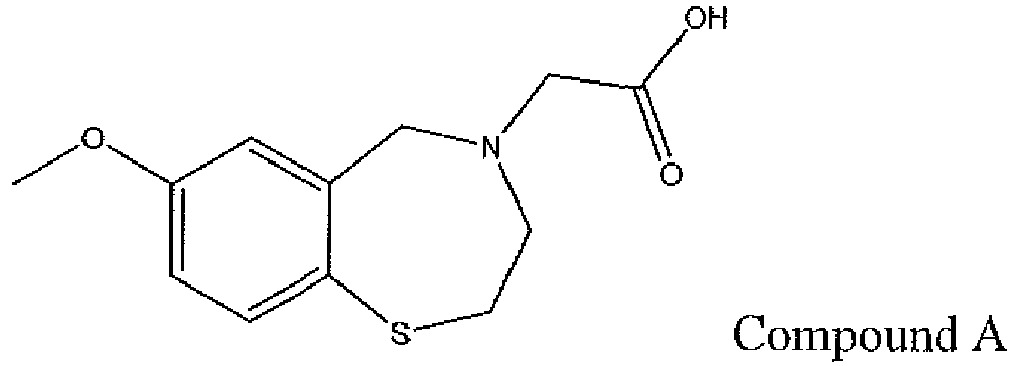
- The objective of this study was to test whether treatment with
compound 1 improves muscle function in a dystrophin-deficient mouse model (mdx). - C57BL/10ScSn-DMDmdx /J (abbreviated as mdx) mice, 8 weeks and approximately 20 grams at study initiation, were randomized into groups receiving treatment with either vehicle (H2O) (n=7) or 50 mg/kg/d the sodium salt of compound I (based on the weight of the parent drug; the sodium salt is referred to hereinafter as "
compound 1") (n=14) administered in the drinking water ad libitum for 2 months. Animals were acclimated to the voluntary wheels for one week and voluntary wheel data was collected daily over the entire 2 months. Distance traveled (Km/day) over a 24 hr period was analyzed as an index of improved functional activity (see, DMD_M.2.1.002 SOP at http://www.treat-nmd.eu/). At the conclusion of the study, grip strength was determined and activity assessed as further described hereinbelow. Extensor digitorum longus (EDL) muscle was isolated for muscle force analysis as further described hereinbelow. Blood was collected from each mouse by retro-orbital bleeds at the end of the study (after end of dark cycle - about 7AM) to assess drug plasma concentrations. Experiments were blinded. - At the end of the study, EDL muscle was dissected from hind limbs for isometric force analysis using the 407A Muscle Test System from Aurora Scientific (Aurora, Ontario, Canada). A 6-0 suture were tied to each tendon and the entire EDL muscle, tendon to tendon, was transferred to a Ragnoti bath of O2/CO2 (95%/5%) bubbled Tyrode solution (in mM: NaCl 121, KCl 5.0, CaCl2 1.8, MgCl2, NaH2PO4, NaHCO3 24, and glucose 5.5). Using the sutures, one tendon was tied vertically to a stainless steel hook connected to a force transducer The other sutured tendon was clamped down into a moving arm on the Aurora system. The EDL muscle was stimulated to contract using an electrical field between two platinum electrodes. At the start of each experiment, muscle length was adjusted to yield the maximum force. Force-frequency relationships were determined by triggering contraction using incremental stimulation frequencies (5-250 Hz for 200 ms at suprathreshold voltage). Between stimulations the muscle was allowed to rest ∼3 min. At the end of the force measurement, the length (Lo) of the EDL muscle while sutured in the Aurora system was measured excluding the tendons. The EDL muscle was then removed from the system and weighed after clipping the end tendons and sutures off. The EDL muscle was then frozen in liquid nitrogen. The cross-sectional area (mm2) of the EDL muscle was calculated by dividing the EDL muscle weight by the EDL muscle length and the mammalian muscle density constant of 1.056 mg/m3 (Yamada, T., et al. Arthritis and rheumatism 60:3280-3289). To determine EDL specific force (kN/m2), the absolute tetanic force was divided by the EDL muscle cross-sectional area.
- Grip strength test was performed after the dark cycle ends (7AM). Grip strength measurements for forelimbs were measured using the 303500-M/C-1 Grip Strength Meter Mouse, from TSE Systems, Inc. Grip strength is defined as the average of the first three forces recorded from pulls on a grip bar (forces measured in ponds (p) = gram•force = 9.81 mN).
- To determine statistical significance, student's t-test was used for comparison between two groups. All pooled data was expressed as mean +/- SEM.
- The ability of
compound 1 to improve voluntary exercise in mdx mice was tested. After acclimating the mice to the voluntary wheel cage, mouse activity on the voluntary wheels was monitored by a computer 24/7. Data collected was transcribed to distance traveled per day over the course of the study. Mdx mice treated withcompound 1 traveled significantly longer distances (P < 0.05) on the wheel compared to mdx mice treated with vehicle alone (H2O), with treatment effect observed as early as 5 days after treatment initiation, and continuing throughout the study (Figure 9 ). Forelimb grip strength was also assessed at the end of the study (Figure 10 ). There was significant improvement in grip strength in the compound 1-treated group (P < 0.05) versus the vehicle-treated group. - In addition, as determined by in vitro force measurements in EDL muscle (
Figure 11 ),compound 1 treatment significantly (P < 0.0015) increased specific force in mdx muscle compared to vehicle-treated mdx control values. - As shown in
Figure 12 , body weight and water consumption did not differ between the vehicle andcompound 1 treated groups. Blood exposure ofcompound 1 was 34.2-96.6 µM (average 56.6 µM) (11.27-31.16 µg/ml). - Taken together, the results show that, as compared with vehicle-treated controls, treatment with
compound 1 at 50 mg/kg/d for 2 months improved muscle specific force, grip strength, and voluntary wheel exercise in mdx mice, a murine model of Duchenne muscular dystrophy (DMD), thereby demonstrating the utility ofcompound 1 and its analogs as claimed herein, in the treatment of muscular dystrophy. - The metabolic stability of
compound 1, a representative Rycal™ according to the present invention, was compared to compound B and compound C, structurally related benzothiazepine derivative described inWO 2007/024717 . - Compound solubilization: Stock solutions were made in DMSO, and working solutions in water containing 1mg/ml BSA.
- Prediction of metabolic bioavailability: Metabolic bioavailability predictions (MF%) were based on in vitro metabolic stability measurements with hepatic microsomes assuming total absorption. Briefly, unchanged drugs were quantified by LC-MS-MS following incubation (10-7M) with rat and human hepatic microsomes (0.33 mg protein/ml) after 0, 5, 15, 30 and 60 min of incubation in presence of NADPH (1mM). Enzymatic reaction was stopped with methanol (v/v) and proteins were precipitated by centrifugation. The in vitro intrinsic clearances (Clint_mic) expressed as ml/min/g protein were the slope (after LN linearization) of the unchanged drug remaining concentration versus incubation time. In vitro Clint were then scaled up to in vivo whole body (vivoClint) using 0.045 mg prot/kg of liver and liver weight of 11 g for the rat and 1.2 kg for Man. In vivo Clint were then transformed into hepatic clearances (HepCl) using the well-stirred model (HepCl=vivoClint*HBF/(vivoClint + HBF) where HBF (hepatic blood flow) were taken as 22 ml/min for the rat and 1500 ml/min for Man. The MF% were then deducted from the extraction ratio with the following equation (MF%=1-HepCl/HBF). The results are presented in Table 1:
Table 1: Stability in human microsomes Compound Structure Rat microsomes Human microsomes Clint_mic rat ml/min/gprot MF mic % Class Clint_ mic man ml/min/gprot MF mic % Class B 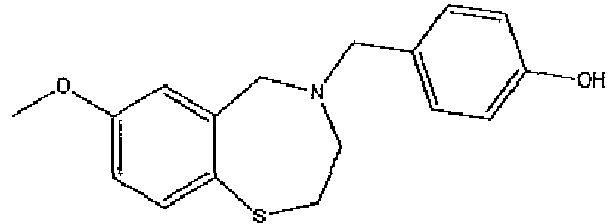
823 5 very low 285 6 very low C 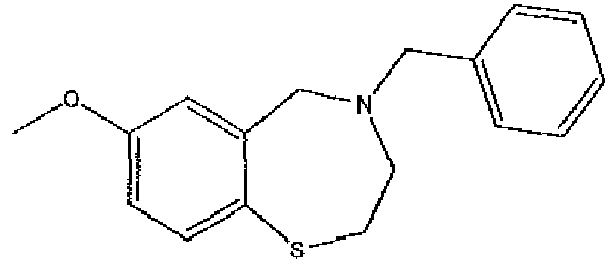
1926 2 very low 1326 2 very low 1 
101 30 Inter media te 9.1 75 high a. Clint_mic: in vitro intrinsic clearance in ml/min/gprotein
b. MF%: metabolic bioavailability in % - Compound solubilization: Stock solutions were made in DMSO, and working solutions in William medium containing 1/10 rat plasma or 1/4 human plasma.
- Metabolic stability determination: Compounds were incubated at 10-7 M with isolated hepatocytes (6E+5 cells/ml for rat hepatocytes and 4E+5 cells/ml for human hepatocytes) at 37°C in plasma from the same species diluted in Wiliams medium (1/10 dilution for rat and ¼ dilution for human). Sampling times were performed at 0, 10, 20, 30, 60 and 120 min and enzymatic reaction stopped with methanol (v/v). Proteins were precipitated by centrifugation and the supernatant was analyzed by LC/MS/MS. Clint expressed as ml/min/g protein were calculated as for hepatic microsomes using a ratio of 0.134 mg protein/ml for 4E+5 cells/ml for human and 0.201 mg protein/ml for 6E+5 cells/ml for rat. The presence of the reference drug and the potential metabolite was checked by LC/MS/MS during the assay in each sample. The results are presented in Table 2:
Table 2: Stability in rat and human hepatocytes Compound Rat hepatocytes Human hepatocytes Clint (ml/min/gprot) MF rat % Q cellules/ml Clint (ml/min/gprot) MF human % Q cellules/ml B 1334 3 6.00E+05 693 3 4.00E+05 1 5 90 6.00E+05 0 100 4.00E+05 C 2610 2 6.00E+05 100 16 4.00E+05 a. Clint_mic: in vitro intrinsic clearance in ml/min/gprotein
b. MF%: metabolic bioavailability in %
c. Q: cells quantity per ml - Dilution Buffer: 0.1 M Tris HCl buffer at pH 7.4 containing 5 mM EDTA.
- NADPH cofactor solution: To a 50 mL falcon tube containing 2.79 mL of dilution buffer were added 0.429 mL of NADPH-regenerating soln. A and 0.079 mL of NADPH-regenerating soln. B
- Microsome Preparation: (1.5 mg/mL solution) A 50 mL falcon tube containing 3.32 mL of dilution buffer was prewarmed at 37°C for 15 min. (at least 10 min.) 0.178 mL of microsome (24.6 mg/mL) were added to the prewarmed dilution buffer. The protein concentration of this microsome preparation was 1.25 mg/mL.
- Sample (Test compound) - Original and intermediate Stock Solutions: A 1 mg/ mL (0.5 mg/mL was used for compound 1) solution of the test compound in methanol was prepared. 100 µM intermediate solution of the test compound from the original stock solution were prepared using the dilution buffer. A 5 µM solution was prepared by diluting the 100 µM intermediate solution using dilution buffer.
- (The experiments were conducted in 1.5 mL eppendorf micro centrifuge tubes)
- 0 minutes incubation. Procedure:
- a. Add 100 µL of prewarmed microsomes
- b. Add 50 µL of 5 µM solution of the test compound.
- c. Add 500 µL of cold stop solution (ice cold Methanol)
- d. Add 100 µL of NADPH cofactor solution to the eppendorf.
- a. Vortex mix the eppendorf
- "t" minutes incubation
- b. Add 100 µL of NADPH cofactor solution to the eppendorf.
- c. Add 50 µL of 5 µM solution of the test compound.
- d. Add 100 µL of prewarmed microsomes
- e. Incubate the eppendorf at 37°
C 300 rpm for 't' min. on a thermomixer. - f. Remove the eppendorf from thermomixer
- g. Add 500 µL of cold stop solution (ice cold Methanol)
- h. Vortex mix the eppendorf.
- Both the '0' and 't' minutes incubated samples were centrifuged at 15, 000 rcf at 4°C for 15 min. 500 µL of the supernatant solution was removed and subject it to LC/MS analysis (SIM - Selected Ion Monitoring)
- Results are expressed as % test compound remaining = (MS Area response of 't' min sample / MS Area response of '0' min sample) * 100. The MS area used is an average of duplicate injections.
- Time points = 0, 15, 30 and 60 min. for each test compound
- 2 µM Imipramine - 5 min. and 2 µM Imipramine - 15 min. incubation was used as a positive control for the rat and mouse liver microsome stability experiments.
- The results are presented in Table 3:
Table 3: Stability in mouse and rat microsomes In Vitro Metabolic Stability Compound (1) Compound (B) Compound (C) Rat microsomes (% remaining) 15min 54% 1% 0% 30min 17% 0% 0% 1h 2% 0% 0% Mouse microsomes (% remaining) 15min 99% 0% 0% 30min 98% 0% 0% 1h 82% 0% 0% - Surprisingly, as seen in Tables 1-3,
compound 1 was significantly more stable in mouse, rat and human microsomes, and in rat and human hepatocytes, as compared with the structural analogs compounds B and C. The increased metabolic stability ofCompound 1 compared with its structural analogs was indeed surprising and substantiates the unexpected benefits of this compound over compounds known in the art. - All publications, references, patents and patent applications cited herein are incorporated by reference in their entirety to the same extent as if each individual application, patent or patent application was specifically and individually indicated to be incorporated by reference in its entirety.
- The foregoing description of the specific embodiments will so fully reveal the general nature of the invention that others can, by applying current knowledge, readily modify and/or adapt for various applications such specific embodiments without undue experimentation and without departing from the generic concept, and, therefore, such adaptations and modifications should and are intended to be comprehended within the meaning and range of equivalents of the disclosed embodiments. It is to be understood that the phraseology or terminology employed herein is for the purpose of illustration and not of limitation. The means, materials, and steps for carrying out various disclosed functions may take a variety of alternative forms without departing from the invention.
Claims (28)
- A compound represented by the structure of Formula (I):

R is COOH or a bioisostere thereof, COOR1 or CN; and
R1 is a C1-C4 alkyl;
and pharmaceutically acceptable salts thereof. - The compound according to claim 1, wherein R is a carboxylic acid.
- The compound according to claim 1 or 2, wherein R is at position 4 of the phenyl ring.
- The compound according to claim 1, wherein R is a carboxylic acid bioisostere, wherein the carboxylic acid bioisostere is a tetrazole.
- The compound according to claim 1, in the form of a salt with a pharmaceutically acceptable acid or base.
- The compound according to claim 5, wherein the salt is selected from the group consisting of sodium, potassium, magnesium, hemifumarate, hydrochloride and hydrobromide.
- The compound according to claim 1, which is selected from the group consisting of:


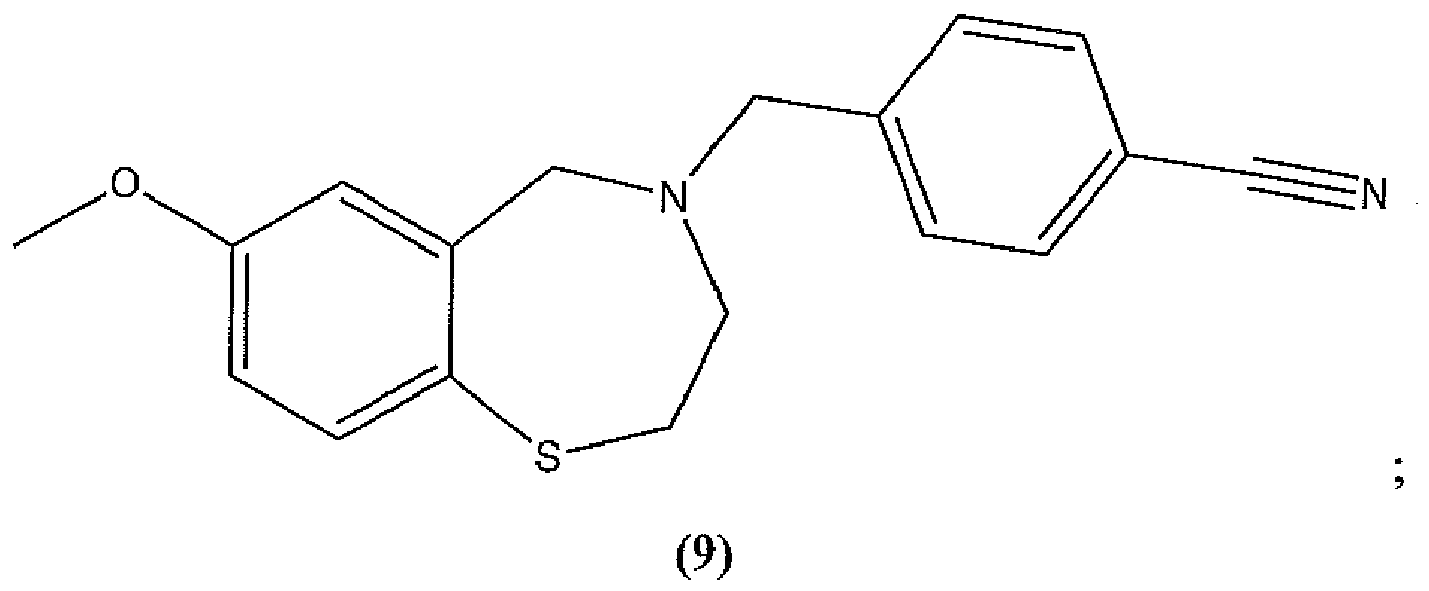


- The compound according to claim 1, which is represented by the structure of Formula (1):

- The compound according to claim 8, in the form of a salt with a pharmaceutically acceptable acid or base.
- The compound according to claim 9, wherein the salt is selected from the group consisting of sodium, potassium, magnesium, hemifumarate, hydrochloride and hydrobromide,
- The compound according to claim 10, wherein the salt is the sodium salt.
- A pharmaceutical composition comprising a compound according to any of claims 1-11, in combination with one or more pharmaceutically acceptable excipients or carriers.
- A pharmaceutical composition according to claim 12 for use in the treatment or prevention of a condition selected from the group consisting of cardiac disorders and diseases, muscle fatigue, musculoskeletal disorders and diseases, CNS disorders and diseases, cognitive dysfunction, bone disorders and diseases, malignant hyperthermia, diabetes, sudden cardiac death, and sudden infant death syndrome, or for improving cognitive function.
- A pharmaceutical composition according to claim 12 for use in the treatment or prevention of a condition according to claim 13, wherein the condition is associated with an abnormal function of a ryanodine receptor 1 (RyR1), a ryanodine receptor type (RyR2), a ryanodine receptor type 3 (RyR3), or a combination thereof.
- A pharmaceutical composition according to claim 12 for use in the treatment or prevention of a condition according to claim 13, wherein the cardiac disorders and diseases are selected from the group consisting of irregular heartbeat disorders and diseases, exercise-induced irregular heartbeat disorders and diseases, heart failure, congestive heart failure, chronic heart failure, acute heart failure, systolic heart failure, diastolic heart failure, acute decompensated heart failure, cardiac ischemia/reperfusion (I/R) injury, chronic obstructive pulmonary disease, and high blood pressure.
- A pharmaceutical composition according to claim 12 for use in the treatment or prevention according to claim 15, wherein the irregular heartbeat disorders and diseases are selected from the group consisting of atrial and ventricular arrhythmia, atrial and ventricular fibrillation, atrial and ventricular tachyarrhythmia, atrial and ventricular tachycardia, catecholaminergic polymorphic ventricular tachycardia (CPVT), and exercise-induced variants thereof.
- A pharmaceutical composition according to claim 12 for use in the treatment or prevention according to claim 15, wherein the cardiac I/R injury is I/R injury following coronary angioplasty or following thrombolysis for the treatment of myocardial infarction (MI).
- A pharmaceutical composition according to claim 12 for use in the treatment or prevention according to claim 13, wherein the muscle fatigue is due to a skeletal muscle disease, disorder or condition.
- A pharmaceutical composition according to claim 12 for use in the treatment or prevention according to claim 13 or 18, wherein the musculoskeletal disorder, disease or condition is selected from the group consisting of exercise-induced skeletal muscle fatigue, a congenital myopathy, muscular dystrophy, age-related muscle fatigue, sarcopenia, central core disease, cancer cachexia, bladder disorders, and incontinence.
- A pharmaceutical composition according to claim 12 for use in the treatment or prevention according to claim 19, wherein the muscular dystrophy is selected from Duchenne Muscular Dystrophy (DMD), Becker's Muscular Dystrophy (BMD), Limb-Girdle Muscular Dystrophy (LGMD), facioscapulohumeral dystrophy, myotonic muscular dystrophy, congenital muscular dystrophy (CMD), distal muscular dystrophy, Emery-Dreifuss muscular dystrophy, and oculopharyngeal muscular dystrophy.
- A pharmaceutical composition according to claim 12 for use in the treatment or prevention according to claim 19, wherein the exercise-induced muscle fatigue is due to prolonged exercise or high-intensity exercise.
- A pharmaceutical composition according to claim 12 for use in the treatment or prevention according to claim 13, wherein the CNS condition is selected from the group consisting of Alzheimer's Disease, memory loss, age-dependent memory loss, PTSD, a neuropathy and seizures.
- A pharmaceutical composition according to claim 12 for use in the treatment or prevention according to claim 13, wherein the cognitive dysfunction is stress-related or age-related, or wherein the cognitive dysfunction is associated with a disease or disorder selected from the group consisting of: Alzheimer's disease (AD), attention deficit hyperactivity disorder (ADHD), autism spectrum disorder (ASD), generalized anxiety disorder (GAD), obsessive compulsive disorder (OCD), Parkinson's Disease (PD), post-traumatic stress disorder (PTSD), Schizophrenia, Bipolar disorder; and major depression.
- A pharmaceutical composition according to claim 12 for use in the treatment or prevention according to claim 13, wherein the cognitive function to be improved is short term memory, long term memory, attention or learning.
- A pharmaceutical composition according to claim 12 for use in the treatment or prevention according to claim 13, wherein the compound is used at a dose sufficient to restore or enhance binding of calstabin2 to RyR2.
- A pharmaceutical composition according to claim 12 for use in the treatment or prevention according to claim 13, wherein the compound is used at a dose sufficient to restore or enhance binding of calstabin1 to RyR1.
- A pharmaceutical composition according to claim 12 for use in the treatment or prevention according to claim 13, wherein the compound is used at a dose sufficient to decrease Ca2+ leak through a RyR channel
- A compound according to any of claims 1-11, or a salt thereof, for use in the treatment or prevention of a condition selected from the group consisting of cardiac disorders and diseases, muscle fatigue, musculoskeletal disorders and diseases, CNS disorders and diseases, cognitive dysfunction, bone disorders and diseases, malignant hyperthermia, diabetes, sudden cardiac death, and sudden infant death syndrome, or for improving cognitive function.
Priority Applications (53)
| Application Number | Priority Date | Filing Date | Title |
|---|---|---|---|
| EP12167732.2A EP2708535A1 (en) | 2012-05-11 | 2012-05-11 | Agents for treating disorders involving modulation of ryanodine receptors |
| JOP/2013/0090A JO3070B1 (en) | 2012-04-18 | 2013-04-09 | Factors for the treatment of disorders include the modification of ryanodin receptors |
| UY0001034742A UY34742A (en) | 2012-04-18 | 2013-04-12 | AGENTS TO TREAT DISORDERS THAT INVOLVE THE MODULATION OF RIANODINE RECEPTORS |
| MDA20140119A MD4489C1 (en) | 2012-04-18 | 2013-04-17 | 1,4-Benzothiazepine derivatives, method for the synthesis thereof, pharmaceutical compositions comprising the same, and use thereof for treating and preventing disorders involving modulation of ryanodine receptors |
| CA2870599A CA2870599C (en) | 2012-04-18 | 2013-04-17 | Agents for treating disorders involving modulation of ryanodine receptors |
| JP2015506221A JP5965542B2 (en) | 2012-04-18 | 2013-04-17 | Drugs for treating diseases involved in the modulation of ryanodine receptors |
| ARP130101246A AR090712A1 (en) | 2012-04-18 | 2013-04-17 | AGENTS TO TREAT DISORDERS INVOLVING THE MODULATION OF RIANODINE RECEPTORS |
| KR1020147032345A KR101731459B1 (en) | 2012-04-18 | 2013-04-17 | Agents for treating disorders involving modulation of ryanodine receptors |
| GEAP201713636A GEP20186836B (en) | 2012-04-18 | 2013-04-17 | Agents for treating disorders involving modulation of ryanodine receptors |
| RS20140701A RS53711B1 (en) | 2012-04-18 | 2013-04-17 | MEDICINES FOR TREATMENT OF DISORDERS INCLUDING MODULATION OF RIANODINE RECEPTORS |
| PT131640518T PT2653466E (en) | 2012-04-18 | 2013-04-17 | AGENTS FOR TREATING PATHOLOGIES INVOLVING THE MODULATION OF RIANODINE RECEPTORS |
| MYPI2014702980A MY167783A (en) | 2012-04-18 | 2013-04-17 | Agents for treating disorders involving modulation of ryanodine receptors |
| NZ701122A NZ701122A (en) | 2012-04-18 | 2013-04-17 | Agents for treating disorders involving modulation of ryanodine receptors |
| ES13164051.8T ES2529890T3 (en) | 2012-04-18 | 2013-04-17 | Agents for the treatment of disorders that involve modulation of ryanodine receptors |
| EA201401141A EA027922B1 (en) | 2012-04-18 | 2013-04-17 | MEANS FOR TREATING DISTURBANCES INVOLVING MODULATION OF RIANODINE RECEPTORS |
| PL13164051T PL2653466T3 (en) | 2012-04-18 | 2013-04-17 | Agents for treating disorders involving the modulation of ryanodine receptors |
| PCT/EP2013/057958 WO2013156505A1 (en) | 2012-04-18 | 2013-04-17 | Agents for treating disorders involving modulation of ryanodine receptors |
| MX2014012575A MX350890B (en) | 2012-04-18 | 2013-04-17 | Agents for treating disorders involving modulation of ryanodine receptors. |
| EP20130164051 EP2653466B1 (en) | 2012-04-18 | 2013-04-17 | Agents for treating disorders involving modulation of ryanodine receptors |
| PE2014001612A PE20142193A1 (en) | 2012-04-18 | 2013-04-17 | AGENTS TO TREAT DISORDERS INVOLVING RIANODINE RECEPTOR MODULATION |
| RU2014145939A RU2644350C2 (en) | 2012-04-18 | 2013-04-17 | Means for treatment of violations involving rianodin receptors modulation |
| UAA201412301A UA113759C2 (en) | 2012-04-18 | 2013-04-17 | Remedies for the treatment of disorders involving the modulation of ryanodine receptors |
| SI201330014T SI2653466T1 (en) | 2012-04-18 | 2013-04-17 | Agents for treating disorders involving modulation of ryanodine receptors |
| AP2014008011A AP3591A (en) | 2012-04-18 | 2013-04-17 | Agents for treating disorders involving modulation of ryanodine receptors |
| DK13164051.8T DK2653466T3 (en) | 2012-04-18 | 2013-04-17 | Agents for the treatment of diseases involving the modulation of ryanodine receptors |
| SA113340479A SA113340479B1 (en) | 2012-04-18 | 2013-04-17 | Agents for treating disorders involving modulation of ryanodine receptors |
| CN201380030477.8A CN104350045B (en) | 2012-04-18 | 2013-04-17 | Agents for the treatment of dysregulation disorders involving modulation of ryanodine receptors |
| BR112014025670-5A BR112014025670B1 (en) | 2012-04-18 | 2013-04-17 | compound and pharmaceutical composition to treat disorders involving the modulation of ryanodine receptors and process for preparing the compound |
| HUE13164051A HUE024284T2 (en) | 2012-04-18 | 2013-04-17 | Agents for treating disorders involving modulation of ryanodine receptors |
| CUP2014000119A CU24327B1 (en) | 2012-04-18 | 2013-04-17 | DERIVATIVES OF 1,4-BENZOTIAZEPIN, USEFUL TO TREAT DISORDERS AND DISEASES ASSOCIATED WITH RIANODINE RECEPTORS, AND THE PHARMACEUTICAL COMPOSITIONS THAT INCLUDE THEM |
| AU2013248313A AU2013248313B2 (en) | 2012-04-18 | 2013-04-17 | Agents for treating disorders involving modulation of ryanodine receptors |
| TW102113668A TWI507399B (en) | 2012-04-18 | 2013-04-17 | Medicament for the treatment of diseases associated with the regulation of RYANODINE receptors |
| SG11201406404YA SG11201406404YA (en) | 2012-04-18 | 2013-04-17 | Agents for treating disorders involving modulation of ryanodine receptors |
| HK15107691.0A HK1207073B (en) | 2012-04-18 | 2013-04-17 | Agents for treating disorders involving modulation of ryanodine receptors |
| MEP-2014-147A ME01969B (en) | 2012-04-18 | 2013-04-17 | Agents for treating disorders involving modulation of ryanodine receptors |
| US13/865,359 US20130281512A1 (en) | 2012-04-18 | 2013-04-18 | Agents for treating disorders involving modulation of ryanodine receptors |
| US14/076,474 US8853198B2 (en) | 2012-04-18 | 2013-11-11 | Agents for treating disorders involving modulation of ryanodine receptors |
| HK14103808.0A HK1192537B (en) | 2012-04-18 | 2014-04-22 | Agents for treating disorders involving modulation of ryanodine receptors |
| US14/475,980 US20140378437A1 (en) | 2012-04-18 | 2014-09-03 | Agents for treating disorders involving modulation of ryanodine receptors |
| PH12014502256A PH12014502256A1 (en) | 2012-04-18 | 2014-10-07 | Agents for treating disorders involving modulation of ryanodine receptors |
| IL235043A IL235043A (en) | 2012-04-18 | 2014-10-07 | Agents for treating disorders involving modulation of ryanodine receptors |
| CO14224913A CO7091184A2 (en) | 2012-04-18 | 2014-10-10 | Agents for treating disorders that involve modulation of riandonin receptors |
| TN2014000424A TN2014000424A1 (en) | 2012-04-18 | 2014-10-10 | AGENTS FOR THE TREATMENT OF DISORDERS INVOLVING MODULATION OF RYANODINE RECEPTORS |
| DO2014000230A DOP2014000230A (en) | 2012-04-18 | 2014-10-13 | AGENTS TO TREAT DISORDERS THAT INVOLVE THE MODULATION OF RIANODINE RECEPTORS |
| CR20140476A CR20140476A (en) | 2012-04-18 | 2014-10-14 | AGENTS TO TREAT DISORDERS INVOLVING THE MODULATION OF RIANODINE RECEPTORS |
| CL2014002756A CL2014002756A1 (en) | 2012-04-18 | 2014-10-14 | Compounds derived from 1,4-benzothiazepine; pharmaceutical composition comprising it; use to treat conditions related to abnormal ryanodine receptor function; and compound preparation method. |
| ZA2014/07499A ZA201407499B (en) | 2012-04-18 | 2014-10-15 | Agents for treating disorders involving modulation of ryanodine receptors |
| GT201400222A GT201400222A (en) | 2012-04-18 | 2014-10-17 | AGENTS TO TREAT DISORDERS THAT INVOLVE THE MODULATION OF RIANODINE RECEPTORS |
| NI201400123A NI201400123A (en) | 2012-04-18 | 2014-10-30 | AGENTS TO TREAT DISORDERS INVOLVING RIANODINE RECEPTOR MODULATION |
| MA37525A MA37525B1 (en) | 2012-05-11 | 2014-11-13 | Agents for the treatment of disorders involving modulation of ryanodine receptors |
| ECIEPI201427564A ECSP14027564A (en) | 2012-04-18 | 2014-11-17 | AGENTS TO TREAT DISORDERS INVOLVING RIANODINE RECEPTOR MODULATION |
| HRP20141113TT HRP20141113T8 (en) | 2012-04-18 | 2014-11-18 | MEDICINES FOR TREATMENT OF DISORDERS INCLUDING MODULATION OF RIANODINE RECEPTORS |
| CY20141101052T CY1115826T1 (en) | 2012-04-18 | 2014-12-17 | INSTRUMENTS FOR DISORDER TREATMENT THAT INCLUDE THE REGULATION OF RYANODINE RECEPTORS |
Applications Claiming Priority (1)
| Application Number | Priority Date | Filing Date | Title |
|---|---|---|---|
| EP12167732.2A EP2708535A1 (en) | 2012-05-11 | 2012-05-11 | Agents for treating disorders involving modulation of ryanodine receptors |
Publications (1)
| Publication Number | Publication Date |
|---|---|
| EP2708535A1 true EP2708535A1 (en) | 2014-03-19 |
Family
ID=49165460
Family Applications (2)
| Application Number | Title | Priority Date | Filing Date |
|---|---|---|---|
| EP12167732.2A Withdrawn EP2708535A1 (en) | 2012-04-18 | 2012-05-11 | Agents for treating disorders involving modulation of ryanodine receptors |
| EP20130164051 Active EP2653466B1 (en) | 2012-04-18 | 2013-04-17 | Agents for treating disorders involving modulation of ryanodine receptors |
Family Applications After (1)
| Application Number | Title | Priority Date | Filing Date |
|---|---|---|---|
| EP20130164051 Active EP2653466B1 (en) | 2012-04-18 | 2013-04-17 | Agents for treating disorders involving modulation of ryanodine receptors |
Country Status (48)
Cited By (2)
| Publication number | Priority date | Publication date | Assignee | Title |
|---|---|---|---|---|
| US9102645B2 (en) | 2013-03-15 | 2015-08-11 | Rosalind Franklin University Of Medicine And Science | Compounds for stabilizing ryanodine receptors from aberrant levels of calcium release |
| US9725429B2 (en) | 2013-03-15 | 2017-08-08 | Rosalind Franklin University Of Medicine And Science | Furanyl-imine and thiofuranyl-imine compounds for stabilizing ryanodine receptors from aberrant levels of calcium release |
Families Citing this family (20)
| Publication number | Priority date | Publication date | Assignee | Title |
|---|---|---|---|---|
| AU2014290368B2 (en) | 2013-07-18 | 2019-07-11 | Baylor College Of Medicine | Methods and compositions for treatment of muscle wasting, muscle weakness, and/or cachexia |
| WO2015197562A1 (en) * | 2014-06-23 | 2015-12-30 | INSERM (Institut National de la Santé et de la Recherche Médicale) | Methods and pharmaceutical compositions for the treatment of disorders or diseases associated with ryanodine receptor dysfunction |
| PL3176164T3 (en) * | 2014-07-30 | 2020-05-18 | Aetas Pharma Co. Ltd. | Optical isomer of 1,4-benzothiazepine-1-oxide derivative, and pharmaceutical composition prepared using same |
| WO2016109596A1 (en) * | 2014-12-30 | 2016-07-07 | Myotherix, Inc. | Novel calcium modulators |
| ES2643856B1 (en) * | 2016-05-24 | 2018-08-03 | Universidad Del Pais Vasco / Euskal Herriko Unibertsitatea | Triazoles for the regulation of intracellular calcium homeostasis |
| WO2018165171A1 (en) | 2017-03-06 | 2018-09-13 | Washington University | Treatment for wolfram syndrome and other endoplasmic reticulum stress disorders |
| WO2019082940A1 (en) * | 2017-10-25 | 2019-05-02 | 学校法人順天堂 | Ryanodine receptor inhibitor |
| US11026905B2 (en) | 2018-04-19 | 2021-06-08 | Tvardi Therapeutics, Inc. | STAT3 inhibitors |
| PL3773537T3 (en) | 2018-04-19 | 2022-05-23 | Tvardi Therapeutics, Inc. | Stat3 inhibitors |
| CN115052584B (en) | 2020-01-24 | 2024-08-23 | 特维迪疗法公司 | Therapeutic compounds and their preparations and uses |
| JP7825618B2 (en) | 2020-11-06 | 2026-03-06 | サイトキネティックス, インコーポレイテッド | Bicyclic 1,4-diazepanones and their therapeutic uses |
| WO2022150603A1 (en) | 2021-01-08 | 2022-07-14 | Armgo Pharma, Inc. | Crystalline forms of a ryanodine receptor modulator and uses thereof |
| CN115369163A (en) * | 2021-05-17 | 2022-11-22 | 中国科学院上海营养与健康研究所 | Application of RYR2 and down-regulation agent thereof in treating metastatic colorectal cancer |
| JP2024519917A (en) | 2021-05-20 | 2024-05-21 | アームゴ・ファーマ・インコーポレーテッド | Pharmaceutical compositions comprising ryanodine receptor modulators and uses thereof - Patents.com |
| EP4433062A4 (en) * | 2021-11-16 | 2025-10-22 | Rycarma Therapeutics Inc | THERAPEUTIC COMPOUNDS |
| US20230368862A1 (en) * | 2021-12-07 | 2023-11-16 | The Trustees Of Columbia University In The City Of New York | Binding site in type 2 ryanodine receptor |
| US20230302013A1 (en) * | 2022-02-09 | 2023-09-28 | The Trustees Of Columbia University In The City Of New York | METHOD OF TREATING VIRAL-INDUCED COGNITIVE DYSFUNCTION BY TARGETING LEAKY RyR2 CHANNELS |
| EP4230196A1 (en) | 2022-02-21 | 2023-08-23 | Som Innovation Biotech, S.A. | Compounds for use in the treatment of dystrophinopathies |
| AU2023292912A1 (en) | 2022-06-15 | 2025-01-16 | Tvardi Operating Company, Inc. | Prodrugs of stat3 inhibitors |
| EP4548971A1 (en) * | 2023-11-06 | 2025-05-07 | Georg-August-Universität Göttingen Stiftung Öffentlichen Rechts, Universitätsmedizin | 1,4-benzothiazepines and related compounds with cyclopropanol groups as multi-targeted drugs |
Citations (12)
| Publication number | Priority date | Publication date | Assignee | Title |
|---|---|---|---|---|
| US20040224368A1 (en) | 2003-03-07 | 2004-11-11 | Marks Andrew R. | Type 1 ryanodine receptor-based methods |
| WO2005094457A2 (en) | 2004-03-25 | 2005-10-13 | The Trustees Of Columbia University In The City Of New York | Novel anti-arrhythmic and heart failure drugs that target the leak in the ryanodine receptor (ryr2) and uses thereof |
| WO2006101496A1 (en) | 2005-03-23 | 2006-09-28 | The Trustees Of Columbia University In The City Of New York | Novel anti-arrythmic and heart failure drugs that target the leak in the ryanodine receptor (ryr2) |
| WO2007024717A2 (en) | 2005-08-25 | 2007-03-01 | The Trustees Of Columbia University In The City Of New York | Agents for preventing and treating disorders involving modulation of the ryr receptors |
| WO2008021432A2 (en) | 2006-08-17 | 2008-02-21 | The Trustees Of Columbia University In The City Of New York | Compositions and methods for treatment of conditions affecting the nervous system |
| WO2008021439A2 (en) * | 2006-08-17 | 2008-02-21 | The Trustees Of Columbia University In The City Of New York | Compositions and methods for treatment of cardiac hypertrophy |
| WO2008060332A2 (en) | 2006-06-02 | 2008-05-22 | The Trustees Of Columbia University In The City Of New York | Methods for treating or reducing muscle fatigue |
| WO2008064264A2 (en) | 2006-11-20 | 2008-05-29 | Armgo Pharma, Inc. | In vivo methods for identifying and screening compounds that modulate calstabin binding to a ryanodine receptor |
| WO2009111463A1 (en) | 2008-03-03 | 2009-09-11 | Armgo Pharma, Inc. | Process for preparing benzothiazepines from gamma-aminoalkylbenzenes |
| WO2012019071A1 (en) | 2010-08-06 | 2012-02-09 | The Trustees Of Columbia University In The City Of New York | Methods of preventing and treating sarcopenia |
| WO2012019076A1 (en) | 2010-08-06 | 2012-02-09 | The Trustees Of Columbia University In The City Of New York | Compositions and methods for preventing and treating cardiac ischemia/reperfusion injury |
| WO2012037105A1 (en) | 2010-09-14 | 2012-03-22 | The Trustees Of Columbia University In The City Of New York | Methods of treating, ameliorating or preventing stress-induced neuronal disorders and diseases |
Family Cites Families (15)
| Publication number | Priority date | Publication date | Assignee | Title |
|---|---|---|---|---|
| DE58901634D1 (en) * | 1988-11-05 | 1992-07-16 | Bayer Ag | METHOD FOR THE NUCLEAR CHLORINATION OF AROMATIC HYDROCARBONS. |
| GB9021813D0 (en) * | 1990-10-08 | 1990-11-21 | Ici Plc | Tricyclic heterocycles |
| ATE228115T1 (en) | 1991-06-28 | 2002-12-15 | Smithkline Beecham Corp | BCYCLIC FIBRINOGEN ANTAGONISTS |
| EP0667866B1 (en) * | 1992-11-09 | 1998-03-11 | Knoll AG | 1,4-benzothiazepines useful as neurological agents |
| FR2752017B1 (en) | 1996-08-01 | 1998-10-16 | Hispano Suiza Sa | TURBOREACTOR DRIVE INVERTER WITH SCOOPING DOORS |
| GB9914745D0 (en) | 1999-06-24 | 1999-08-25 | Knoll Ag | Therapeutic agents |
| US7879840B2 (en) * | 2005-08-25 | 2011-02-01 | The Trustees Of Columbia University In The City Of New York | Agents for preventing and treating disorders involving modulation of the RyR receptors |
| US20040229781A1 (en) * | 2000-05-10 | 2004-11-18 | Marks Andrew Robert | Compounds and methods for treating and preventing exercise-induced cardiac arrhythmias |
| US8022058B2 (en) * | 2000-05-10 | 2011-09-20 | The Trustees Of Columbia University In The City Of New York | Agents for preventing and treating disorders involving modulation of the RyR receptors |
| US20020183307A1 (en) | 2000-07-26 | 2002-12-05 | Tremont Samuel J. | Novel 1,4-benzothiazephine and 1,5-benzothiazepine compounds as inhibitors of apical sodium co-dependent bile acid transport and taurocholate uptake |
| AU2479702A (en) | 2000-10-30 | 2002-05-15 | Janssen Pharmaceutica Nv | Tripeptidyl peptidase inhibitors |
| US20090292119A1 (en) * | 2003-10-07 | 2009-11-26 | The Trustees Of Columbia University In The City Of New York | Methods for synthesizing benzothiazepine compounds |
| DE112005003511T5 (en) | 2005-03-23 | 2008-04-17 | Battelle Memorial Institute, Richland | RFID system with improved performance |
| WO2007127145A2 (en) | 2006-04-25 | 2007-11-08 | The Trustees Of Columbia University In The City Of New York | Methods and compositions for treatment of cardiac arrhythmia in non-human animals |
| CN101891706B (en) * | 2010-04-09 | 2013-05-29 | 复旦大学 | 3,4-dihydrobenzo[f][1,4]thiazepine* compounds or their salts and their pharmaceutical use |
-
2012
- 2012-05-11 EP EP12167732.2A patent/EP2708535A1/en not_active Withdrawn
-
2013
- 2013-04-09 JO JOP/2013/0090A patent/JO3070B1/en active
- 2013-04-12 UY UY0001034742A patent/UY34742A/en not_active Application Discontinuation
- 2013-04-17 ES ES13164051.8T patent/ES2529890T3/en active Active
- 2013-04-17 PT PT131640518T patent/PT2653466E/en unknown
- 2013-04-17 RU RU2014145939A patent/RU2644350C2/en not_active IP Right Cessation
- 2013-04-17 AP AP2014008011A patent/AP3591A/en active
- 2013-04-17 UA UAA201412301A patent/UA113759C2/en unknown
- 2013-04-17 AR ARP130101246A patent/AR090712A1/en unknown
- 2013-04-17 SI SI201330014T patent/SI2653466T1/en unknown
- 2013-04-17 CN CN201380030477.8A patent/CN104350045B/en active Active
- 2013-04-17 WO PCT/EP2013/057958 patent/WO2013156505A1/en not_active Ceased
- 2013-04-17 CU CUP2014000119A patent/CU24327B1/en unknown
- 2013-04-17 DK DK13164051.8T patent/DK2653466T3/en active
- 2013-04-17 JP JP2015506221A patent/JP5965542B2/en active Active
- 2013-04-17 NZ NZ701122A patent/NZ701122A/en unknown
- 2013-04-17 EP EP20130164051 patent/EP2653466B1/en active Active
- 2013-04-17 CA CA2870599A patent/CA2870599C/en active Active
- 2013-04-17 MX MX2014012575A patent/MX350890B/en active IP Right Grant
- 2013-04-17 GE GEAP201713636A patent/GEP20186836B/en unknown
- 2013-04-17 EA EA201401141A patent/EA027922B1/en not_active IP Right Cessation
- 2013-04-17 MY MYPI2014702980A patent/MY167783A/en unknown
- 2013-04-17 ME MEP-2014-147A patent/ME01969B/en unknown
- 2013-04-17 HU HUE13164051A patent/HUE024284T2/en unknown
- 2013-04-17 TW TW102113668A patent/TWI507399B/en active
- 2013-04-17 MD MDA20140119A patent/MD4489C1/en not_active IP Right Cessation
- 2013-04-17 PE PE2014001612A patent/PE20142193A1/en active IP Right Grant
- 2013-04-17 RS RS20140701A patent/RS53711B1/en unknown
- 2013-04-17 PL PL13164051T patent/PL2653466T3/en unknown
- 2013-04-17 SG SG11201406404YA patent/SG11201406404YA/en unknown
- 2013-04-17 KR KR1020147032345A patent/KR101731459B1/en active Active
- 2013-04-17 BR BR112014025670-5A patent/BR112014025670B1/en active IP Right Grant
- 2013-04-17 SA SA113340479A patent/SA113340479B1/en unknown
- 2013-04-17 AU AU2013248313A patent/AU2013248313B2/en active Active
- 2013-04-18 US US13/865,359 patent/US20130281512A1/en not_active Abandoned
- 2013-11-11 US US14/076,474 patent/US8853198B2/en active Active
-
2014
- 2014-09-03 US US14/475,980 patent/US20140378437A1/en not_active Abandoned
- 2014-10-07 PH PH12014502256A patent/PH12014502256A1/en unknown
- 2014-10-07 IL IL235043A patent/IL235043A/en active IP Right Grant
- 2014-10-10 TN TN2014000424A patent/TN2014000424A1/en unknown
- 2014-10-10 CO CO14224913A patent/CO7091184A2/en active IP Right Grant
- 2014-10-13 DO DO2014000230A patent/DOP2014000230A/en unknown
- 2014-10-14 CR CR20140476A patent/CR20140476A/en unknown
- 2014-10-14 CL CL2014002756A patent/CL2014002756A1/en unknown
- 2014-10-15 ZA ZA2014/07499A patent/ZA201407499B/en unknown
- 2014-10-17 GT GT201400222A patent/GT201400222A/en unknown
- 2014-10-30 NI NI201400123A patent/NI201400123A/en unknown
- 2014-11-13 MA MA37525A patent/MA37525B1/en unknown
- 2014-11-17 EC ECIEPI201427564A patent/ECSP14027564A/en unknown
- 2014-11-18 HR HRP20141113TT patent/HRP20141113T8/en unknown
- 2014-12-17 CY CY20141101052T patent/CY1115826T1/en unknown
Patent Citations (13)
| Publication number | Priority date | Publication date | Assignee | Title |
|---|---|---|---|---|
| US7544678B2 (en) | 2002-11-05 | 2009-06-09 | The Trustees Of Columbia University In The City Of New York | Anti-arrythmic and heart failure drugs that target the leak in the ryanodine receptor (RyR2) |
| US20040224368A1 (en) | 2003-03-07 | 2004-11-11 | Marks Andrew R. | Type 1 ryanodine receptor-based methods |
| WO2005094457A2 (en) | 2004-03-25 | 2005-10-13 | The Trustees Of Columbia University In The City Of New York | Novel anti-arrhythmic and heart failure drugs that target the leak in the ryanodine receptor (ryr2) and uses thereof |
| WO2006101496A1 (en) | 2005-03-23 | 2006-09-28 | The Trustees Of Columbia University In The City Of New York | Novel anti-arrythmic and heart failure drugs that target the leak in the ryanodine receptor (ryr2) |
| WO2007024717A2 (en) | 2005-08-25 | 2007-03-01 | The Trustees Of Columbia University In The City Of New York | Agents for preventing and treating disorders involving modulation of the ryr receptors |
| WO2008060332A2 (en) | 2006-06-02 | 2008-05-22 | The Trustees Of Columbia University In The City Of New York | Methods for treating or reducing muscle fatigue |
| WO2008021439A2 (en) * | 2006-08-17 | 2008-02-21 | The Trustees Of Columbia University In The City Of New York | Compositions and methods for treatment of cardiac hypertrophy |
| WO2008021432A2 (en) | 2006-08-17 | 2008-02-21 | The Trustees Of Columbia University In The City Of New York | Compositions and methods for treatment of conditions affecting the nervous system |
| WO2008064264A2 (en) | 2006-11-20 | 2008-05-29 | Armgo Pharma, Inc. | In vivo methods for identifying and screening compounds that modulate calstabin binding to a ryanodine receptor |
| WO2009111463A1 (en) | 2008-03-03 | 2009-09-11 | Armgo Pharma, Inc. | Process for preparing benzothiazepines from gamma-aminoalkylbenzenes |
| WO2012019071A1 (en) | 2010-08-06 | 2012-02-09 | The Trustees Of Columbia University In The City Of New York | Methods of preventing and treating sarcopenia |
| WO2012019076A1 (en) | 2010-08-06 | 2012-02-09 | The Trustees Of Columbia University In The City Of New York | Compositions and methods for preventing and treating cardiac ischemia/reperfusion injury |
| WO2012037105A1 (en) | 2010-09-14 | 2012-03-22 | The Trustees Of Columbia University In The City Of New York | Methods of treating, ameliorating or preventing stress-induced neuronal disorders and diseases |
Non-Patent Citations (25)
| Title |
|---|
| "Alzet MiniOsmotic pump", 2001, DURECT CORPORATION |
| ANDERSSON, D. ET AL., CELL METAB., vol. 14, no. 2, 3 August 2011 (2011-08-03), pages 196 - 207 |
| BELLINGER ET AL., CLIN. INVEST., vol. 118, 2008, pages 445 - 53 |
| BELLINGER ET AL., PROC. NATL. ACAD SCI., vol. 105, no. 6, 2008, pages 2198 - 2002 |
| BELLINGER, A. ET AL., NATURE MEDICINE, vol. 15, 2009, pages 325 - 330 |
| BRILLANTES ET AL., CELL, vol. 77, 1994, pages 513 - 523 |
| FAUCONNIER ET AL., PROC NALL ACAD SCI USA, vol. 108, no. 32, 2011, pages 13258 - 63 |
| HAMADA, Y. ET AL., BIOORG. MED. CHEM. LETT., vol. 16, 2006, pages 4354 - 4359 |
| HERR, R.J., BIOORG. MED CHEM., vol. 10, 2002, pages 3379 - 3393 |
| JAYARAMAN ET AL., J BIOL. CHEM., vol. 267, 1992, pages 9474 - 77 |
| JAYARAMAN ET AL., J. BIOL. CHEM., vol. 267, 1992, pages 9474 - 77 |
| KAFTAN ET AL., CIRC. RES., vol. 78, 1996, pages 990 - 97 |
| KIMURA, T. ET AL., BIOORG. MED. CHEM. LETT., vol. 16, 2006, pages 2380 - 2386 |
| KOHARA, Y. ET AL., BIOORG. MED CHEM. LETT., vol. 5, no. 17, 1995, pages 1903 - 1908 |
| LEHNART ET AL., J CLIN INVEST., vol. 118, no. 6, 2008, pages 2230 - 2245 |
| LEHNART SE ET AL., CELL, vol. 123, no. 1, 2005, pages 25 - 35 |
| MARX SO ET AL., CELL, vol. 101, no. 4, 2000, pages 365 - 376 |
| MARX, S.O. ET AL., SCIENCE, vol. 281, 1998, pages 818 - 821 |
| OLESEN, P.H., C OPIN. DRUG DISCOV. DEVEL., vol. 4, 2001, pages 471 |
| PATANI. G.A. ET AL., J. CHEM. REV., vol. 96, 1996, pages 3147 |
| REIKEN ET AL., CIRCULATION, vol. 107, 2003, pages 2459 - 66 |
| REIKEN, S ET AL., J. CELL BIOL., vol. 160, 2003, pages 919 - 928 |
| SHAN ET AL., JCLIN INVEST., vol. 120, no. 12, 1 December 2010 (2010-12-01), pages 4375 - 87 |
| WEHRENS XH ET AL., PROC NATL ACAD SCI USA., vol. 103, no. 3, 2006, pages 511 - 518 |
| YAMADA, T. ET AL., ARTHRITIS AND RHEUMATISM, vol. 60, pages 3280 - 3289 |
Cited By (3)
| Publication number | Priority date | Publication date | Assignee | Title |
|---|---|---|---|---|
| US9102645B2 (en) | 2013-03-15 | 2015-08-11 | Rosalind Franklin University Of Medicine And Science | Compounds for stabilizing ryanodine receptors from aberrant levels of calcium release |
| US9725429B2 (en) | 2013-03-15 | 2017-08-08 | Rosalind Franklin University Of Medicine And Science | Furanyl-imine and thiofuranyl-imine compounds for stabilizing ryanodine receptors from aberrant levels of calcium release |
| US10011578B2 (en) | 2013-03-15 | 2018-07-03 | Rosalind Franklin University Of Medicine And Science | Compounds for stabilizing ryanodine receptors from aberrant levels of calcium release |
Also Published As
Similar Documents
| Publication | Publication Date | Title |
|---|---|---|
| EP2653466B1 (en) | Agents for treating disorders involving modulation of ryanodine receptors | |
| ES2405780T3 (en) | Agents to avoid and treat disorders that involve modulation of RyR receptors | |
| WO2008060332A2 (en) | Methods for treating or reducing muscle fatigue | |
| HK1192537B (en) | Agents for treating disorders involving modulation of ryanodine receptors | |
| AU781333B2 (en) | 3-phenyl-3, 7-diazabicyclo (3.3.1) nonane compounds and process for their preparation and medicaments containing these compounds | |
| HK1207073B (en) | Agents for treating disorders involving modulation of ryanodine receptors | |
| HK1153664B (en) | Agents for preventing and treating disorders involving modulation of the ryr receptors | |
| HK1137150B (en) | Compound for preventing and treating disorders involving modulation of the ryr receptors |
Legal Events
| Date | Code | Title | Description |
|---|---|---|---|
| PUAI | Public reference made under article 153(3) epc to a published international application that has entered the european phase |
Free format text: ORIGINAL CODE: 0009012 |
|
| 17P | Request for examination filed |
Effective date: 20120511 |
|
| AK | Designated contracting states |
Kind code of ref document: A1 Designated state(s): AL AT BE BG CH CY CZ DE DK EE ES FI FR GB GR HR HU IE IS IT LI LT LU LV MC MK MT NL NO PL PT RO RS SE SI SK SM TR |
|
| AX | Request for extension of the european patent |
Extension state: BA ME |
|
| STAA | Information on the status of an ep patent application or granted ep patent |
Free format text: STATUS: THE APPLICATION IS DEEMED TO BE WITHDRAWN |
|
| 18D | Application deemed to be withdrawn |
Effective date: 20141028 |