EP2708179A2 - Sleep monitor - Google Patents
Sleep monitor Download PDFInfo
- Publication number
- EP2708179A2 EP2708179A2 EP13005789.6A EP13005789A EP2708179A2 EP 2708179 A2 EP2708179 A2 EP 2708179A2 EP 13005789 A EP13005789 A EP 13005789A EP 2708179 A2 EP2708179 A2 EP 2708179A2
- Authority
- EP
- European Patent Office
- Prior art keywords
- sleep
- data
- server
- unit
- data server
- Prior art date
- Legal status (The legal status is an assumption and is not a legal conclusion. Google has not performed a legal analysis and makes no representation as to the accuracy of the status listed.)
- Withdrawn
Links
Images


Classifications
-
- A—HUMAN NECESSITIES
- A61—MEDICAL OR VETERINARY SCIENCE; HYGIENE
- A61B—DIAGNOSIS; SURGERY; IDENTIFICATION
- A61B5/00—Measuring for diagnostic purposes; Identification of persons
- A61B5/48—Other medical applications
- A61B5/4806—Sleep evaluation
-
- G—PHYSICS
- G16—INFORMATION AND COMMUNICATION TECHNOLOGY [ICT] SPECIALLY ADAPTED FOR SPECIFIC APPLICATION FIELDS
- G16H—HEALTHCARE INFORMATICS, i.e. INFORMATION AND COMMUNICATION TECHNOLOGY [ICT] SPECIALLY ADAPTED FOR THE HANDLING OR PROCESSING OF MEDICAL OR HEALTHCARE DATA
- G16H50/00—ICT specially adapted for medical diagnosis, medical simulation or medical data mining; ICT specially adapted for detecting, monitoring or modelling epidemics or pandemics
- G16H50/30—ICT specially adapted for medical diagnosis, medical simulation or medical data mining; ICT specially adapted for detecting, monitoring or modelling epidemics or pandemics for calculating health indices; for individual health risk assessment
-
- A—HUMAN NECESSITIES
- A61—MEDICAL OR VETERINARY SCIENCE; HYGIENE
- A61B—DIAGNOSIS; SURGERY; IDENTIFICATION
- A61B5/00—Measuring for diagnostic purposes; Identification of persons
- A61B5/0002—Remote monitoring of patients using telemetry, e.g. transmission of vital signals via a communication network
-
- A—HUMAN NECESSITIES
- A61—MEDICAL OR VETERINARY SCIENCE; HYGIENE
- A61B—DIAGNOSIS; SURGERY; IDENTIFICATION
- A61B5/00—Measuring for diagnostic purposes; Identification of persons
- A61B5/103—Measuring devices for testing the shape, pattern, colour, size or movement of the body or parts thereof, for diagnostic purposes
- A61B5/11—Measuring movement of the entire body or parts thereof, e.g. head or hand tremor or mobility of a limb
-
- A—HUMAN NECESSITIES
- A61—MEDICAL OR VETERINARY SCIENCE; HYGIENE
- A61B—DIAGNOSIS; SURGERY; IDENTIFICATION
- A61B5/00—Measuring for diagnostic purposes; Identification of persons
- A61B5/48—Other medical applications
- A61B5/4806—Sleep evaluation
- A61B5/4809—Sleep detection, i.e. determining whether a subject is asleep or not
-
- A—HUMAN NECESSITIES
- A61—MEDICAL OR VETERINARY SCIENCE; HYGIENE
- A61B—DIAGNOSIS; SURGERY; IDENTIFICATION
- A61B5/00—Measuring for diagnostic purposes; Identification of persons
- A61B5/48—Other medical applications
- A61B5/4806—Sleep evaluation
- A61B5/4812—Detecting sleep stages or cycles
-
- A—HUMAN NECESSITIES
- A61—MEDICAL OR VETERINARY SCIENCE; HYGIENE
- A61B—DIAGNOSIS; SURGERY; IDENTIFICATION
- A61B5/00—Measuring for diagnostic purposes; Identification of persons
- A61B5/48—Other medical applications
- A61B5/4806—Sleep evaluation
- A61B5/4815—Sleep quality
-
- A—HUMAN NECESSITIES
- A61—MEDICAL OR VETERINARY SCIENCE; HYGIENE
- A61B—DIAGNOSIS; SURGERY; IDENTIFICATION
- A61B5/00—Measuring for diagnostic purposes; Identification of persons
- A61B5/48—Other medical applications
- A61B5/4806—Sleep evaluation
- A61B5/4818—Sleep apnoea
-
- G—PHYSICS
- G16—INFORMATION AND COMMUNICATION TECHNOLOGY [ICT] SPECIALLY ADAPTED FOR SPECIFIC APPLICATION FIELDS
- G16H—HEALTHCARE INFORMATICS, i.e. INFORMATION AND COMMUNICATION TECHNOLOGY [ICT] SPECIALLY ADAPTED FOR THE HANDLING OR PROCESSING OF MEDICAL OR HEALTHCARE DATA
- G16H20/00—ICT specially adapted for therapies or health-improving plans, e.g. for handling prescriptions, for steering therapy or for monitoring patient compliance
-
- G—PHYSICS
- G16—INFORMATION AND COMMUNICATION TECHNOLOGY [ICT] SPECIALLY ADAPTED FOR SPECIFIC APPLICATION FIELDS
- G16H—HEALTHCARE INFORMATICS, i.e. INFORMATION AND COMMUNICATION TECHNOLOGY [ICT] SPECIALLY ADAPTED FOR THE HANDLING OR PROCESSING OF MEDICAL OR HEALTHCARE DATA
- G16H40/00—ICT specially adapted for the management or administration of healthcare resources or facilities; ICT specially adapted for the management or operation of medical equipment or devices
- G16H40/60—ICT specially adapted for the management or administration of healthcare resources or facilities; ICT specially adapted for the management or operation of medical equipment or devices for the operation of medical equipment or devices
- G16H40/63—ICT specially adapted for the management or administration of healthcare resources or facilities; ICT specially adapted for the management or operation of medical equipment or devices for the operation of medical equipment or devices for local operation
-
- G—PHYSICS
- G16—INFORMATION AND COMMUNICATION TECHNOLOGY [ICT] SPECIALLY ADAPTED FOR SPECIFIC APPLICATION FIELDS
- G16H—HEALTHCARE INFORMATICS, i.e. INFORMATION AND COMMUNICATION TECHNOLOGY [ICT] SPECIALLY ADAPTED FOR THE HANDLING OR PROCESSING OF MEDICAL OR HEALTHCARE DATA
- G16H40/00—ICT specially adapted for the management or administration of healthcare resources or facilities; ICT specially adapted for the management or operation of medical equipment or devices
- G16H40/60—ICT specially adapted for the management or administration of healthcare resources or facilities; ICT specially adapted for the management or operation of medical equipment or devices for the operation of medical equipment or devices
- G16H40/67—ICT specially adapted for the management or administration of healthcare resources or facilities; ICT specially adapted for the management or operation of medical equipment or devices for the operation of medical equipment or devices for remote operation
-
- A—HUMAN NECESSITIES
- A61—MEDICAL OR VETERINARY SCIENCE; HYGIENE
- A61B—DIAGNOSIS; SURGERY; IDENTIFICATION
- A61B2505/00—Evaluating, monitoring or diagnosing in the context of a particular type of medical care
- A61B2505/07—Home care
-
- A—HUMAN NECESSITIES
- A61—MEDICAL OR VETERINARY SCIENCE; HYGIENE
- A61B—DIAGNOSIS; SURGERY; IDENTIFICATION
- A61B2560/00—Constructional details of operational features of apparatus; Accessories for medical measuring apparatus
- A61B2560/02—Operational features
- A61B2560/0266—Operational features for monitoring or limiting apparatus function
- A61B2560/0276—Determining malfunction
-
- A—HUMAN NECESSITIES
- A61—MEDICAL OR VETERINARY SCIENCE; HYGIENE
- A61B—DIAGNOSIS; SURGERY; IDENTIFICATION
- A61B2562/00—Details of sensors; Constructional details of sensor housings or probes; Accessories for sensors
- A61B2562/02—Details of sensors specially adapted for in-vivo measurements
- A61B2562/0247—Pressure sensors
-
- A—HUMAN NECESSITIES
- A61—MEDICAL OR VETERINARY SCIENCE; HYGIENE
- A61B—DIAGNOSIS; SURGERY; IDENTIFICATION
- A61B5/00—Measuring for diagnostic purposes; Identification of persons
- A61B5/103—Measuring devices for testing the shape, pattern, colour, size or movement of the body or parts thereof, for diagnostic purposes
- A61B5/11—Measuring movement of the entire body or parts thereof, e.g. head or hand tremor or mobility of a limb
- A61B5/1102—Ballistocardiography
-
- A—HUMAN NECESSITIES
- A61—MEDICAL OR VETERINARY SCIENCE; HYGIENE
- A61B—DIAGNOSIS; SURGERY; IDENTIFICATION
- A61B5/00—Measuring for diagnostic purposes; Identification of persons
- A61B5/103—Measuring devices for testing the shape, pattern, colour, size or movement of the body or parts thereof, for diagnostic purposes
- A61B5/11—Measuring movement of the entire body or parts thereof, e.g. head or hand tremor or mobility of a limb
- A61B5/1113—Local tracking of patients, e.g. in a hospital or private home
- A61B5/1115—Monitoring leaving of a patient support, e.g. a bed or a wheelchair
-
- A—HUMAN NECESSITIES
- A61—MEDICAL OR VETERINARY SCIENCE; HYGIENE
- A61B—DIAGNOSIS; SURGERY; IDENTIFICATION
- A61B5/00—Measuring for diagnostic purposes; Identification of persons
- A61B5/103—Measuring devices for testing the shape, pattern, colour, size or movement of the body or parts thereof, for diagnostic purposes
- A61B5/11—Measuring movement of the entire body or parts thereof, e.g. head or hand tremor or mobility of a limb
- A61B5/1116—Determining posture transitions
-
- A—HUMAN NECESSITIES
- A61—MEDICAL OR VETERINARY SCIENCE; HYGIENE
- A61B—DIAGNOSIS; SURGERY; IDENTIFICATION
- A61B5/00—Measuring for diagnostic purposes; Identification of persons
- A61B5/68—Arrangements of detecting, measuring or recording means, e.g. sensors, in relation to patient
- A61B5/6887—Arrangements of detecting, measuring or recording means, e.g. sensors, in relation to patient mounted on external non-worn devices, e.g. non-medical devices
- A61B5/6892—Mats
-
- G—PHYSICS
- G06—COMPUTING OR CALCULATING; COUNTING
- G06F—ELECTRIC DIGITAL DATA PROCESSING
- G06F11/00—Error detection; Error correction; Monitoring
- G06F11/07—Responding to the occurrence of a fault, e.g. fault tolerance
- G06F11/0703—Error or fault processing not based on redundancy, i.e. by taking additional measures to deal with the error or fault not making use of redundancy in operation, in hardware, or in data representation
- G06F11/0706—Error or fault processing not based on redundancy, i.e. by taking additional measures to deal with the error or fault not making use of redundancy in operation, in hardware, or in data representation the processing taking place on a specific hardware platform or in a specific software environment
- G06F11/0736—Error or fault processing not based on redundancy, i.e. by taking additional measures to deal with the error or fault not making use of redundancy in operation, in hardware, or in data representation the processing taking place on a specific hardware platform or in a specific software environment in functional embedded systems, i.e. in a data processing system designed as a combination of hardware and software dedicated to performing a certain function
-
- G—PHYSICS
- G06—COMPUTING OR CALCULATING; COUNTING
- G06F—ELECTRIC DIGITAL DATA PROCESSING
- G06F11/00—Error detection; Error correction; Monitoring
- G06F11/07—Responding to the occurrence of a fault, e.g. fault tolerance
- G06F11/0703—Error or fault processing not based on redundancy, i.e. by taking additional measures to deal with the error or fault not making use of redundancy in operation, in hardware, or in data representation
- G06F11/0706—Error or fault processing not based on redundancy, i.e. by taking additional measures to deal with the error or fault not making use of redundancy in operation, in hardware, or in data representation the processing taking place on a specific hardware platform or in a specific software environment
- G06F11/0748—Error or fault processing not based on redundancy, i.e. by taking additional measures to deal with the error or fault not making use of redundancy in operation, in hardware, or in data representation the processing taking place on a specific hardware platform or in a specific software environment in a remote unit communicating with a single-box computer node experiencing an error/fault
Definitions
- the present invention relates to a sleep monitor.
- a sleep monitor for measuring biometric information and/or biological information during user's sleep or performing some evaluation on the user's sleep state in a certain degree on the basis of the biometric information measurement has been provided (see patent publications 1 and 2 for example).
- This sleep monitor enables to confirm with specific numerical evidences, for example, how many hours the user could substantially sleep after going to bed and before waking up.
- a conventional sleep monitor does not have a network capability, it has not been considered, for example, to allow a server on the network to receive biometric or biological information from the sleep monitor and provide service relating to sleep to an external terminal.
- a service using biometric information relating to sleep a framework for providing dissimilar services such as a service requiring highly timely updates to, for example, prevent a resident in a nursing home from nighttime wandering, and a service requiring a complicated sleep analysis to, for example, evaluate a sleep state of a driver of a transportation company on the day before driving.
- an object of the present invention is to provide a sleep monitor that can distinctly manage both of a service requiring highly timely updates and a service performing a sleep analysis on the basis of biometric or biological information measured by a sleep monitor with a network capability.
- a sleep monitor comprises, a sensor for measuring biological information (hereinafter also referred to as biometric information) relating to user's sleep, a microcomputer for processing said biological information in each unit interval being a predetermined time period used as a unit, a storage unit for storing data of said biological information and a processing result of said biological information, and an external communication unit for sending said data of said biological information and said processing result of said biological data, wherein said external communication unit is operable to send first data consisting of said processing result of said biological information in each said unit interval, and second data consisting of said biological data accumulated during said user's sleep and said processing result of biological data in said each unit interval to first and second servers, respectively.
- biometric information biological information relating to user's sleep
- a microcomputer for processing said biological information in each unit interval being a predetermined time period used as a unit
- a storage unit for storing data of said biological information and a processing result of said biological information
- an external communication unit for sending said data of said biological information and said processing result of said
- said external communication unit may be operable to send said first data to said first server in every predetermined time period defining said unit interval.
- said external communication unit may be operable to send said second data accumulated up to said time point to said second server.
- said biological information data may contain data of a plurality of channels with different amplification factors or data of only one channel among data of a plurality of channels with different amplification factors.
- said external communication unit in case of communication failure with at least one of said first and second servers, may be operable to send a notice of the failure to said external terminal.
- said external communication unit in case of communication failure with any one of said first and second servers, may be operable to send data supposed to be sent to the incommunicable server to the communicable server.
- said external communication unit when said incommunicable server recovers from the failure, may be operable to send a predetermined notice to at least one of said recovered server and said communicable servers so that said recovered server obtains the data supposed to be received during the communication failure from said communicable server.
- the sleep monitor of the present invention it is possible to distinctly manage both of the service requiring highly timely updates and the service performing a sleep analysis on the basis of biometric information measured by a sleep monitor with a network capability.
- FIG. 1 illustrates a configuration of an embodiment of a sleep management system according to the present invention.
- the sleep management system has a sleep monitor 10 for measuring biometric data relating to user's sleep, a power source 20 for providing electricity power to the sleep monitor 10, a real-time data server 30 (first server) for providing a service requiring highly timely updates, a sleep analysis data server 40 (second server) for providing a service requiring a sleep analysis, an external terminal 50 for displaying a state of the user's sleep, and a network connection unit 60 for connecting sleep monitor 10 to a network.
- the sleep monitor 10 and the external terminal 50 are connected to the real-time data server 30 and the sleep analysis data server 40 via a network such as the internet. It is noted that although only one sleep monitor 10 is depicted in FIG. 1 for a purpose of illustration, more than one sleep monitors 10 can be connected to the real-time data server 30 or the sleep analysis data server 40. A plurality of external terminals 50 may be used as well.
- the sleep monitor 10 has a mat 11, a sensor 12, an analog circuit 13, a microcomputer 14, a storage unit 15, a display unit 16 and an external communicate unit 17.
- the mat 11 is a rug for resting the body of the sleeping user.
- the mat 11 is used in a condition that bedding such as futon or mattress for the user lying down is placed on the mat 11, or in a state that the user directly lies on the upper surface of the mat 11.
- the sensor 12 detects biometric signals of the user lying on the mat 11.
- the sensor 12 is equipped with, for example, a microphone such as a condenser microphone to measure a pressure variation of the mat 11 and detect the biometric signals such as respiratory rates and heart rates and postural changes or body movement of the user in a supine.
- biometric information relating to sleep biometric information data means raw data of the biometric information detected in a time series manner, such as waveform data.
- An analog circuit 13 performs A/D conversion of the biometric information detected by the sensor 12 and outputs the biometric information to the microcomputer 14. It is noted that the analog circuit 13 may extract data in a predetermined range (e.g. a predetermined frequency) from the biometric information data by using a filter and amplify the extracted biometric information data by using an amplifier.
- a predetermined range e.g. a predetermined frequency
- the microcomputer 14 is fed by an electric power source 20 and processes the biometric information detected by the sensor 12.
- the microcomputer 14 processes the biometric information in each unit interval (hereinafter referred to as "epoch") with predetermined time (e.g. 30 seconds) being used as a unit.
- epoch unit interval
- predetermined time e.g. 30 seconds
- the microcomputer 14 may collect heart rates and respiratory rate in every epoch.
- the microcomputer 14 may calculate the standard deviation of the biometric information data in every epoch.
- the microcomputer 14 may determine the user's in-bed/out-of-bed state in every epoch based on the fluctuation of the biometric information data such as respiration data.
- the microcomputer 14 may determine the user's sleep/wake state in every epoch based on the fluctuation of the biometric information data such as body movement data. Further, microcomputer 14 may determine whether the user is apnea or not in every epoch based on the biometric information such as respiration data. It is noted that the microcomputer 14 may process the biometric information in every epoch in every predetermined time period defining said unit interval.
- the storage unit 15 stores the biometric information data and the processing result obtained from the microcomputer 14 in every epoch.
- the display unit 16 displays the operation state of sleep unit 10 and the processing result from the microcomputer 14.
- the external communication unit 17 is a communication interface connected to the network via the network connection unit 60, and communicates with the real-time data server 30 and the sleep analysis data server 40. It is noted that the external communication unit 17 may also be directly connected to the network not via the network connection unit 60 to communicate with the real-time data server 30 and the sleep analysis data server 40.
- the external communication unit 17 sends data (a first data) including the processing result of the biometric information in every epoch to the real-time data server 30.
- the external communication unit 17 preferably sends data including the processing result of the biometric information to the real-time data server 30 in each predetermined time period defining the epoch.
- the external communication unit 17, in each predetermined time period defining the epoch transmits processing results such as heart rates in the current epoch, respiratory rates in the current epoch, the standard deviation of the data in the current epoch, the determination result of in-bed/out-of-bed state in the current epoch and the determination results of sleep-wake state in the current epoch.
- the size of the data sent by the external communication unit 17 to the real-time data server 30 may be as small as, for example, about 100 bytes.
- the external communication unit 17 also sends data of the biological information data accumulated during user's sleep (e.g. during in-bed time) and data including the processing result of the biometric information in every epoch (second data) to the sleep analysis data server 40. For example, when the user wakes up, the external communication unit 17 transmits data of the biometric information accumulated in the storage unit 15 from the beginning to the end of the user's sleep and the processing results such as heart rates in every epoch, respiratory rates in every epoch, the standard deviation in every epoch, the determination result of in-bed/out-of-bed state in every epoch and the determination result of sleep-awake state in every epoch.
- the size of the data sent by the external communication unit 17 to the sleep analysis data server 40 is relatively large and may be 800 kilobytes to 2.5 megabytes.
- the data transmission from the external communication unit 17 to the sleep analysis data server 40 is not limited at the time when the user wakes up, but the external communication unit 17 may send, at any time during the user's sleep (e.g. in every predetermined time period or at the time when any communication is not performed on the other sleep monitors 10), the data of the biometric information accumulated in the storage unit 15 until then and the processing results of the biometric information in every epoch to the sleep analysis data server 40. Further, the external communication unit 17 may also transmit the data to the sleep analysis data server 40 a predetermined time period after the user wakes up. In this way, by dispersing the timings of the data transmissions, a disadvantage that the data transmissions concentrate in the early morning can be solved, which reduces the load of the sleep analysis data server 40.
- the external communication unit 17 resends the failed data to the real-time data server 30 and the sleep analysis data server 40 in the next epoch or after finishing the measurement. For example, when communication failure occurs in a certain epoch, the external communicate unit 17 may send the failed data to the real-time data server 30 in the next epoch. In addition, when communication failure occurs in the data transmission to the sleep analysis data server 40 upon the user getting up, the external communicate unit 17 may resend the data to the sleep analysis data server 40 after waiting for a predetermined time period.
- the external communication unit 17 may identify the location (the server or the network connection unit) with the malfunction or failure and notify the external terminal 50 of it through the communicable server.
- the external communication unit 17 may notify the external terminal 50 of the failure.
- the external communication unit 17 may confirm whether it can communicate with each of the network connection unit 60 and the sleep analysis data server 40.
- the external communication unit 17 determines that the real-time data server 30 is incommunicable due to a malfunction, and notifies the sleep analysis data server 40 of it. This allows the sleep analysis data server 40 to notify the external terminal 50 that the real-time data server 30 is incommunicable due to malfunction or failure. It is noted that, when the sleep analysis data server 40 is incommunicable due to malfunction or failure, the external communication unit 17 may take the similar processing and notify the external terminal 50 of the failure through the real-time data server 30.
- the external communication unit 17 may send the data which is supposed to be sent to the incommunicable server to the communicable server.
- the communicable server may store the data which is supposed to be sent to the incommunicable server in the storage unit of the communicable server.
- the external terminal 50 can access to the communicable server to obtain the information relating to the user's sleep which is supposed to be obtained from the incommunicable server.
- the recovered server can obtain the data which is supposed to be received during the communication failure from the communicable server.
- the external communication unit 17 may send a predetermined notice to at least one of the recovered server and the communicable server so that the recovered server can obtain the data which is supposed to be received during the communication failure from the communicable server. This allows an appropriate data communication between the recovered server and the communicable server.
- the external communication unit 17 may send the data which is supposed to be sent to both of the servers to the external terminal 50. This allows the external terminal 50 to directly obtain and analyze the state relating to the user's sleep. It is noted that, when the external communication unit 17 determines that any one of the real-time data server 30 and the sleep analysis data server 40 is incommunicable, the external communication unit 17 may send the data supposed to be sent to the incommunicable server to external terminal 50.
- the biometric information data sent from the external communication unit 17 to the sleep analysis data server 40 may be transmitted.
- the biometric information data varies according to the internal environment changes of the sleep monitor 10 such as a change of water in mat 11 over time, a temperature change due to the installation environment of the mat 11 and instrumental error of outputs from the sensor 12, as well as the external changes of the sleep monitor 10 such as a body type and body weight of the user, the position where the body lays against the mat 11 and the thickness, hardness and the type (futon, mattress) of the bedding.
- the analog circuit 13 generates data of a plurality of channels with different amplification factors for the data of the biometric information from sensor 12, and the external communication unit 17 sends the data of the plurality of channels to the sleep analysis data server 40.
- the sleep analysis data server 40 can analyze the factors of changes caused by the environments, and conduct sleep analysis independent from the measuring environment. It is noted that, as the data of the plurality of channels with various amplification factors, 4 (four) channels of data may be sent with the amplification factors being respectively set to 2 times, 8 times, 32 times and 195.2 times.
- the external communication unit 17 may send only one channel of data suitable for the sleep analysis among the data of the plurality of channels with different amplification factors to the sleep analysis data server 40. This allows the amount of data sent to the sleep analysis data server 40 to be significantly reduced, and thus makes it possible to decrease the processing load of the sleep analysis data server 40. It is noted that the selection of a suitable channel for the sleep analysis can be performed by, for example, the microcomputer 14 analyzing the waveform of the data of each channel.
- the real-time data server 30, which stores the data received from the sleep monitor 10 and provides the data to the external terminal 50, has an external communication unit 31 as an interface for communication, a storage unit 32 for storing the data received from the sleep monitor 10, and an analysis unit 33 for analyzing the data stored in the storage unit 32.
- the storage unit 32 stores the data received from the sleep monitor 10 for each epoch.
- the external communication unit 31 provides the data stored in the storage unit 32 to the external terminal 50 when accessed from the external terminal 50.
- the real-time data server 30 to provide information such as heart rates in the current epoch, transitions of heart rates over the epochs, respiratory rates in the current epoch, transitions of respiratory rates over the epochs, standard deviation of the data in the current epoch, transitions of standard deviation over the epochs, determination of in-bed/out-of-bed in the current epoch, transitions of determination of in-bed/out-of-bed over the epochs, determination of sleep/wake in the current epoch, and transitions of determination of sleep/wake over the epochs to the external terminal 50.
- the real-time data server 30 may identify the location (the sleep monitor or the network connection unit) with the malfunction or failure and notify the external terminal 50 of it. For example, when the real-time data server 30 receives no data from the sleep monitor 10 for a certain period of time, the real-time data server 30 may confirm whether it can communicate with each of the network connection unit 60 and the sleep monitor 10. For example, when the real-time data server 30 cannot confirm the communication with the network connection unit 60, the real-time data server 30 may notify the external terminal 50 of the malfunction of the network connection device 60. In addition, when the real-time data server 30 can confirm the communication with the network connection unit 60 but cannot confirm the communication with the sleep monitor 10, the real-time data server may notify the external terminal 50 of the malfunction of the sleep monitor 10.
- the real-time data server 30 may store the data transmitted from the sleep monitor 10 in the storage unit 32 on behalf of the sleep analysis data server 40. Further, when the sleep analysis data server 40 recovers to a normal operation, the real-time data server 30 may send the data stored in the storage unit 32 during the communication failure to the sleep analysis data server 40.
- the real-time data server 30 may obtain the data supposed to be received from the sleep monitor 10 during the communication failure from the sleep analysis data server 40 after recovering to a normal operation.
- the real-time data server 30 may send/receive the data during the communication failure to/from the sleep analysis data server 40 in accordance with the predetermined notification from the sleep monitor 10.
- the sleep analysis data server 40 which conducts a sleep analysis based on the data received from the sleep monitor 10 and provides the analysis results to the external terminal 50, has an external communication unit 41 as an interface for communication, a storage unit 42 for storing the data received from the sleep monitor 10, and an analysis unit 43 for analyzing the data stored in the storage unit 42.
- the analysis unit 43 conducts the sleep analysis based on the data received from the sleep monitor 10, and stores the analysis results in the storage unit 42.
- the analysis unit 43 may analyze total sleep time, in-bed time and out-of-bed time with respect to in-bed/out-of bed; roll-over number and roll-over period with respect to body movements; average heart rates, maximum heart rates and minimum heart rates with respect to heart rates; and sleep time, sleep-onset latency, out-of-bed latency, deep sleep latency, REM sleep latency, mid-arousal period, mid-arousal number, sleep efficiency, arousal occurrence period, light sleep occurrence period, REM sleep occurrence period, deep sleep occurrence period, arousal occurrence ratio, light sleep occurrence ratio, REM sleep occurrence ratio, deep sleep occurrence ratio, arousal occurrence number, light sleep occurrence number, REM sleep occurrence number, deep sleep occurrence number, sleep stage change number, sleep cycle, ratio of deep sleep in the first half and the second half of sleep and AHI (Apnea Hypopnea Index) with respect to the sleep/wake determination.
- AHI Apnea Hypopnea
- the analysis unit 43 may utilize parameters indicating the state of sleep such as sleep-onset latency, deep sleep latency, deep sleep occurrence period, mid-arousal number, roll over number, and sleep efficiency to determine a sleep score (sleep index) indicating quality of sleep and the type of sleep, and to analyze the depth of sleep (sleep stage) in each epoch.
- the external communication unit 41 provides analysis results stored in the storage unit 42 to external terminal 50 when accessed by the external terminal 50. This enables the sleep analysis data server 40 to provide a variety of sleep analysis results with the external terminal 50. It is noted that any method known to those skilled in the art may be used to perform various analysis at the analysis unit 43. Although applicable methods are not detailed herein, it can be found Patent Documents 1 and 2, if necessary.
- the sleep analysis data server 40 may identify the location (the sleep monitor or the network connection unit) with the malfunction and notify the external terminal 50 of it. For example, when the sleep analysis data server 40 receives no data from the sleep monitor 10 for a certain period of time, the sleep analysis data server may confirm whether it can communicate with each of the network connection unit 60 and the sleep monitor 10. For example, when the sleep analysis data server 40 cannot confirm the communication with the network connection unit 60, the sleep analysis data server 40 may notify the external terminal 50 of the malfunction of the network connection unit 60. In addition, when the sleep analysis data server 40 can confirm the communication with the network connection unit 60 but cannot confirm the communication with the sleep monitor 10, sleep analysis data server 40 may notify the external terminal 50 of the malfunction of the sleep monitor 10.
- the sleep analysis data server 40 may store the data transmitted from the sleep monitor 10 in the storage unit 42 on behalf of the real time data server 30 when the real-time data server 30 is incommunicable and the sleep monitor 10 sends the data supposed to be transmitted to the real-time data server 30. Further, when the real-time data server 30 recovers to a normal operation, the sleep analysis data server 40 may send the data stored in the storage unit 42 during the communication failure to the real-time data server 30.
- the sleep analysis data server 40 may obtain the data supposed to be received from the sleep monitor 10 to the real-time data server 30 after returning to a normal operation.
- the sleep analysis data server 40 may send/receive the data during the communication failure to/from the real-time data server 30 in accordance with the predetermined notification from the sleep monitor 10.
- the external terminal 50 is a communication terminal for displaying the state relating to user's sleep such as a PC and a mobile phone.
- the external terminal 50 has an external communication unit 51 as an interface for communication, a storage unit 52 for storing data received from the sleep analysis data server 40 and the real-time data server 30, and an analysis unit 53 for analyzing the data stored in the storage unit 52.
- the external terminal 50 accesses the real-time data server 30 and the sleep analysis data server 40 through the external communication unit 51, and presents the state relating to user's sleep to the user, an administrator and the like by means of a display unit such as a liquid crystal display (not shown), a sound unit such as a speaker (not shown) or the like.
- the system may be configured so that the data to be received is preset in the storage unit 52 of the external terminal 50 by the user and the administrator, and only the necessary data is received from the real-time data server-30 and the data analysis server 40. This allows the user and the administrator to obtain the necessary information while the transmission processes of the real-time data server 30 and the sleep analysis data server 40 can be reduced.
- the external terminal 50 may directly obtain and analyze the state relating to user's sleep from the data and present it to the user and the administrator. It is noted that when any one of the real-time data server 30 and the sleep analysis data server 40 is incommunicable and the sleep monitor 10 sends the data supposed to be sent to the incommunicable server, the external communication unit 17 may directly obtain and analyze the state relating to user's sleep from the data and present to the user and the administrator.
- the external terminal 50 may identify the location (the sleeping monitor or the server) with the malfunction or failure and notify the communicable device (the sleep monitor or server) of it. For example, when the external terminal 50 cannot receive data from the real-time data server 30 for a predetermined time period, the external terminal 50 determines that the real-time data server 30 is incommunicable due to malfunction and the notifies sleep monitor 10 and the sleep analysis data server 40 of it. This allows the sleep monitor 10 and the data analysis server 40 to recognize the communication failure of the real-time data server 30 due to malfunction or failure. It is noted that, when the sleep monitor 10 and the data analysis server 40 are incommunicable due to malfunction or failure, the external terminal 50 may take the similar processing and notify the communicable device (the sleep monitor or server) of it.
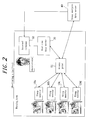
- FIG. 2 illustrates a first example of an application of the sleep management system according to the present invention.
- a sleep management system is applied to monitoring a nursing home.
- Four sleep monitors 10a-10d, an access point 61 as a network connection unit, a real-time data server 30, and an external terminal 50 are installed inside of nursing home, and a sleep analysis data server 40 is installed outside of the nursing home.
- the administrator checks the state of the resident such as the in-bed/out-of-bed information from the real-time data server 30 in a real time manner, and prevents the residents from nighttime wandering.
- the administrator confirms the analysis results of the residents from the sleep analysis data server 40 after each resident's sleep, and utilizes the results to improve residents' QOL (Quality Of Life).
- the administrator may preset the external terminal 50 to receive only the out-of-bed information of the current epoch in a real time manner and only the sleep stage information in each epoch in the sleep analysis after the measurement, so that the transmission processes of the real-time data server 30 and the sleep analysis data server 40 can be reduced.
- FIG 3 illustrate a second example of an application of the sleep management system according to the present invention.
- the sleep management system is applied to understanding the sleep state of employees (drivers) of a transportation company.
- Sleep monitors 10a, 10b and access points 61 a, 61 b are installed in driver's houses a, b, respectively.
- a real-time data server 30 and an external terminal 50 are installed in the transportation company, and a sleep analysis data server 40 is installed in a facility other than the houses and the transport company.
- the administrator checks the state of the drivers such as in-bed/out-of-bed information from the real-time date server 30 in a real time manner, and encourages the driver staying up late to go to sleep. It is also possible that the administrator confirms the analysis results of the drivers from the sleep analysis data server 40 after each resident's sleep, and recognizes the sleep durations and the health conditions of the drivers before driving.
- the sleep monitor 10 processes the biometric information in each epoch (unit interval), sends the data containing processing result of the biometric information in each epoch to the real-time data server 30 (first server), and sends the data of biometric information accumulated during the user's sleep and the data containing processing result of the biometric information in each epoch to the sleep analysis data server 40 (second server).
- the sleep analysis data server 40 second server
- the data such as heart rates, respiratory rates and the like in each epoch that imposes the heaviest load on the sleep analysis process is pre-calculated on the sleep monitor 10, so that the burden of the calculation of heart rates, respiration rates and the like on the sleep analysis data server 40 (second server) can be eliminated to reduce the load on the sleep analysis data server 40.
- the sleep monitor 10 sends the data containing processing result of the biometric information in each epoch to the real-time data server 30 (first server), in every predetermined time period defining the epoch (unit interval). This allows the administrator to verify the latest data in each epoch through the external terminal 50 server and the real-time data server 30 in a real time manner.
- the sleep monitor 10 sends the data accumulated up to the current time point and the data containing processing result of the biometric information in every epoch (second data) to the sleep analysis data server 40 at a certain time point during the sleep of the user. This can scatter the times for data transmission to resolve a disadvantage of data jam in, for example, the early morning, so that the burden on the sleep analysis data server 40 can be reduced.
- the biometric information data preferably contains data of a plurality of channels with different amplification factors. This allows the sleep analysis data server 40 to utilize the data of the plurality of channels with different amplification factors, so that fluctuation caused by environmental influence can be identified to be able to conduct the sleep analysis regardless of the measurement environment.
- the biometric information data preferably contains data of only one channel among data of a plurality of channels with different amplification factors. This can greatly reduce the amount of data sent to the sleep analysis data server 40 and thus reduce the processing load of the sleep analysis data server 40.
- the external terminal 50 may select the data to be received from to the real-time data server 30 (first server) and the sleep analysis data server 40 (second server) for each user. This allows the administrator and the user to obtain necessary information, and allows the real-time data server 30 and the sleep analysis data server 40 to reduce the transmission processes.
- the sleep monitor 10 When at least one of the real-time data server 30 (first server) and the sleep analysis data server 40 (second server) is incommunicable, the sleep monitor 10 notifies the external terminal 50 of the failure. Thus, in case of malfunction or failure, it is possible to notify the administrator and the user of the sleep management system of the necessary information in response to the malfunction.
- the sleep monitor 10 sends data supposed to be sent to the incommunicable server to the communicable server.
- the incommunicable server recovers to a normal operation, the recovered server can obtain the data supposed to be received during the communication failure from the communicable server.
- the sleep monitor 10 sends a predetermined notice to at least one of the recovered and communicable servers so that the recovered server obtains the data supposed to be received during the communication failure from the communicable server.
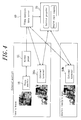
- Figure 4 illustrates a modified example of the sleep management system according to the present invention.
- the modified example in Figure 4 is intended to a general monitoring service in cooperated with a third party.
- a sleep monitor 10, an access point 61, and an external terminal 50a are installed in a user's house
- an external terminal 50b is installed in a his/her family's house
- a sleep data analysis server 40 and a server 70 of a third-party are installed in a facility other than the user's house.
- the server 70 of the third party can obtain data from the sleep analysis data server 40 to provide a third-party proprietary service. Therefore, the user and his/her family not only can see the results of the sleep analysis from the sleep analysis data server 40, but also can enjoy the third-party proprietary service.
- a sleep management system may comprise:a sleep monitor for measuring biometric information relating to user's sleep, an external terminal for displaying a state of said user's sleep, a first server for storing first data received from said sleep monitor and providing the first data to said external terminal, and a second server for analyzing said user's sleep on the basis of second data received from said sleep monitor and providing analysis result to said external terminal, wherein said sleep monitor processes said biometric information of in each unit interval, sends a processing result of said biometric information in said each unit interval to said first server as said first data, and sends said biometric data accumulated during said user's sleep and said processing result of said biometric information in each said unit interval to said second sever as said second data.
- Said sleep monitor may send said first data to said first server in every predetermined time period defining said unit interval.
- said sleep monitor may send said second data accumulated up to said time point to said second server.
- Said biometric information data may contain data of a plurality of channels with different amplification factors or data of only one channel among data of a plurality of channels with different amplification factors.
- Said external terminal may be capable of selecting the data to be received from said first and second servers for each said user.
- Said sleep monitor may, in case of communication failure with at least one of said first and second servers, notify said external terminal of the failure.
- Said sleep monitor may, in case of communication failure with any one of said first and second servers, send data supposed to be sent to the incommunicable server to the communicable server.
- Said sleep monitor may, when said incommunicable server recovers from the failure, send a predetermined notice to at least one of said recovered server and said communicable servers so that said recovered server obtains the data supposed to be received during the communication failure from said communicable server.
Landscapes
- Health & Medical Sciences (AREA)
- Life Sciences & Earth Sciences (AREA)
- Engineering & Computer Science (AREA)
- Biomedical Technology (AREA)
- Public Health (AREA)
- Medical Informatics (AREA)
- General Health & Medical Sciences (AREA)
- Pathology (AREA)
- Veterinary Medicine (AREA)
- Heart & Thoracic Surgery (AREA)
- Molecular Biology (AREA)
- Surgery (AREA)
- Animal Behavior & Ethology (AREA)
- Physics & Mathematics (AREA)
- Biophysics (AREA)
- Primary Health Care (AREA)
- Epidemiology (AREA)
- General Business, Economics & Management (AREA)
- Business, Economics & Management (AREA)
- Computer Networks & Wireless Communication (AREA)
- Anesthesiology (AREA)
- Physiology (AREA)
- Dentistry (AREA)
- Oral & Maxillofacial Surgery (AREA)
- Data Mining & Analysis (AREA)
- Databases & Information Systems (AREA)
- Measuring And Recording Apparatus For Diagnosis (AREA)
- Measurement Of The Respiration, Hearing Ability, Form, And Blood Characteristics Of Living Organisms (AREA)
Abstract
Description
- The present invention relates to a sleep monitor.
- Heretofore, a sleep monitor for measuring biometric information and/or biological information during user's sleep or performing some evaluation on the user's sleep state in a certain degree on the basis of the biometric information measurement has been provided (see patent publications 1 and 2 for example). This sleep monitor enables to confirm with specific numerical evidences, for example, how many hours the user could substantially sleep after going to bed and before waking up.
- [Patent Publication 1] Japanese Patent Application Laid-Open Publication No.
2006-280686 - [Patent Publication 2] Japanese Patent Application Laid-Open Publication No.
2008-301951 - Since a conventional sleep monitor does not have a network capability, it has not been considered, for example, to allow a server on the network to receive biometric or biological information from the sleep monitor and provide service relating to sleep to an external terminal. In particular, as a service using biometric information relating to sleep, a framework for providing dissimilar services such as a service requiring highly timely updates to, for example, prevent a resident in a nursing home from nighttime wandering, and a service requiring a complicated sleep analysis to, for example, evaluate a sleep state of a driver of a transportation company on the day before driving.
- Accordingly, in view of the circumstances as described above, an object of the present invention is to provide a sleep monitor that can distinctly manage both of a service requiring highly timely updates and a service performing a sleep analysis on the basis of biometric or biological information measured by a sleep monitor with a network capability.
- In order to solve the various problems described above, a sleep monitor according to the present invention comprises, a sensor for measuring biological information (hereinafter also referred to as biometric information) relating to user's sleep, a microcomputer for processing said biological information in each unit interval being a predetermined time period used as a unit, a storage unit for storing data of said biological information and a processing result of said biological information, and an external communication unit for sending said data of said biological information and said processing result of said biological data, wherein said external communication unit is operable to send first data consisting of said processing result of said biological information in each said unit interval, and second data consisting of said biological data accumulated during said user's sleep and said processing result of biological data in said each unit interval to first and second servers, respectively.
- Preferably, said external communication unit may be operable to send said first data to said first server in every predetermined time period defining said unit interval.
- Preferably, at a certain time point of said user's sleep, said external communication unit may be operable to send said second data accumulated up to said time point to said second server.
- Preferably, said biological information data may contain data of a plurality of channels with different amplification factors or data of only one channel among data of a plurality of channels with different amplification factors.
- Preferably, said external communication unit, in case of communication failure with at least one of said first and second servers, may be operable to send a notice of the failure to said external terminal.
- Preferably, said external communication unit, in case of communication failure with any one of said first and second servers, may be operable to send data supposed to be sent to the incommunicable server to the communicable server.
- Preferably, said external communication unit, when said incommunicable server recovers from the failure, may be operable to send a predetermined notice to at least one of said recovered server and said communicable servers so that said recovered server obtains the data supposed to be received during the communication failure from said communicable server.
- According to the sleep monitor of the present invention, it is possible to distinctly manage both of the service requiring highly timely updates and the service performing a sleep analysis on the basis of biometric information measured by a sleep monitor with a network capability.
-
-
FIG. 1 illustrates a configuration of an embodiment of a sleep management system according to the present invention. -
FIG. 2 illustrates a first example of an application of the sleep management system according to the present invention. -
FIG. 3 illustrates a second example of an application of the sleep management system according to the present invention. -
FIG. 4 illustrates a modified example of the sleep management system according to the present invention. - Hereinafter, an embodiment of the present invention is described in detail with reference to the drawings.
-
FIG. 1 illustrates a configuration of an embodiment of a sleep management system according to the present invention. The sleep management system has asleep monitor 10 for measuring biometric data relating to user's sleep, apower source 20 for providing electricity power to thesleep monitor 10, a real-time data server 30 (first server) for providing a service requiring highly timely updates, a sleep analysis data server 40 (second server) for providing a service requiring a sleep analysis, anexternal terminal 50 for displaying a state of the user's sleep, and anetwork connection unit 60 for connectingsleep monitor 10 to a network. Thesleep monitor 10 and theexternal terminal 50 are connected to the real-time data server 30 and the sleepanalysis data server 40 via a network such as the internet. It is noted that although only onesleep monitor 10 is depicted inFIG. 1 for a purpose of illustration, more than onesleep monitors 10 can be connected to the real-time data server 30 or the sleepanalysis data server 40. A plurality ofexternal terminals 50 may be used as well. - The
sleep monitor 10 has amat 11, asensor 12, ananalog circuit 13, amicrocomputer 14, astorage unit 15, adisplay unit 16 and anexternal communicate unit 17. - The
mat 11 is a rug for resting the body of the sleeping user. For example, themat 11 is used in a condition that bedding such as futon or mattress for the user lying down is placed on themat 11, or in a state that the user directly lies on the upper surface of themat 11. - The
sensor 12 detects biometric signals of the user lying on themat 11. Thesensor 12 is equipped with, for example, a microphone such as a condenser microphone to measure a pressure variation of themat 11 and detect the biometric signals such as respiratory rates and heart rates and postural changes or body movement of the user in a supine. Hereinafter, the biometric signals and the body movement detected by thesensor 12 are referred to as biometric information relating to sleep. In addition, biometric information data means raw data of the biometric information detected in a time series manner, such as waveform data. - An
analog circuit 13 performs A/D conversion of the biometric information detected by thesensor 12 and outputs the biometric information to themicrocomputer 14. It is noted that theanalog circuit 13 may extract data in a predetermined range (e.g. a predetermined frequency) from the biometric information data by using a filter and amplify the extracted biometric information data by using an amplifier. - The
microcomputer 14 is fed by anelectric power source 20 and processes the biometric information detected by thesensor 12. In particular, themicrocomputer 14 processes the biometric information in each unit interval (hereinafter referred to as "epoch") with predetermined time (e.g. 30 seconds) being used as a unit. For example, themicrocomputer 14 may collect heart rates and respiratory rate in every epoch. Themicrocomputer 14 may calculate the standard deviation of the biometric information data in every epoch. Further, themicrocomputer 14 may determine the user's in-bed/out-of-bed state in every epoch based on the fluctuation of the biometric information data such as respiration data. Further, themicrocomputer 14 may determine the user's sleep/wake state in every epoch based on the fluctuation of the biometric information data such as body movement data. Further,microcomputer 14 may determine whether the user is apnea or not in every epoch based on the biometric information such as respiration data. It is noted that themicrocomputer 14 may process the biometric information in every epoch in every predetermined time period defining said unit interval. - The
storage unit 15 stores the biometric information data and the processing result obtained from themicrocomputer 14 in every epoch. - The
display unit 16 displays the operation state ofsleep unit 10 and the processing result from themicrocomputer 14. - The
external communication unit 17 is a communication interface connected to the network via thenetwork connection unit 60, and communicates with the real-time data server 30 and the sleepanalysis data server 40. It is noted that theexternal communication unit 17 may also be directly connected to the network not via thenetwork connection unit 60 to communicate with the real-time data server 30 and the sleepanalysis data server 40. - The
external communication unit 17 sends data (a first data) including the processing result of the biometric information in every epoch to the real-time data server 30. Theexternal communication unit 17 preferably sends data including the processing result of the biometric information to the real-time data server 30 in each predetermined time period defining the epoch. For example, theexternal communication unit 17, in each predetermined time period defining the epoch, transmits processing results such as heart rates in the current epoch, respiratory rates in the current epoch, the standard deviation of the data in the current epoch, the determination result of in-bed/out-of-bed state in the current epoch and the determination results of sleep-wake state in the current epoch. The size of the data sent by theexternal communication unit 17 to the real-time data server 30 may be as small as, for example, about 100 bytes. - The
external communication unit 17 also sends data of the biological information data accumulated during user's sleep (e.g. during in-bed time) and data including the processing result of the biometric information in every epoch (second data) to the sleepanalysis data server 40. For example, when the user wakes up, theexternal communication unit 17 transmits data of the biometric information accumulated in thestorage unit 15 from the beginning to the end of the user's sleep and the processing results such as heart rates in every epoch, respiratory rates in every epoch, the standard deviation in every epoch, the determination result of in-bed/out-of-bed state in every epoch and the determination result of sleep-awake state in every epoch. The size of the data sent by theexternal communication unit 17 to the sleepanalysis data server 40 is relatively large and may be 800 kilobytes to 2.5 megabytes. - It is noted that the data transmission from the
external communication unit 17 to the sleepanalysis data server 40 is not limited at the time when the user wakes up, but theexternal communication unit 17 may send, at any time during the user's sleep (e.g. in every predetermined time period or at the time when any communication is not performed on the other sleep monitors 10), the data of the biometric information accumulated in thestorage unit 15 until then and the processing results of the biometric information in every epoch to the sleepanalysis data server 40. Further, theexternal communication unit 17 may also transmit the data to the sleep analysis data server 40 a predetermined time period after the user wakes up. In this way, by dispersing the timings of the data transmissions, a disadvantage that the data transmissions concentrate in the early morning can be solved, which reduces the load of the sleepanalysis data server 40. - Furthermore, in case of communication failure, the
external communication unit 17 resends the failed data to the real-time data server 30 and the sleepanalysis data server 40 in the next epoch or after finishing the measurement. For example, when communication failure occurs in a certain epoch, theexternal communicate unit 17 may send the failed data to the real-time data server 30 in the next epoch. In addition, when communication failure occurs in the data transmission to the sleepanalysis data server 40 upon the user getting up, theexternal communicate unit 17 may resend the data to the sleepanalysis data server 40 after waiting for a predetermined time period. - In addition, in case of communication failure, the
external communication unit 17 may identify the location (the server or the network connection unit) with the malfunction or failure and notify theexternal terminal 50 of it through the communicable server. In particular, when the communication failure occurs in at least one of the real-time data server 30 and the sleepanalysis data server 40, theexternal communication unit 17 may notify theexternal terminal 50 of the failure. For example, when theexternal communication unit 17 cannot send data to the real-time data server 30 for a certain period of time, theexternal communication unit 17 may confirm whether it can communicate with each of thenetwork connection unit 60 and the sleepanalysis data server 40. If theexternal communication unit 17 can communicate with both of thenetwork connection unit 60 and the sleepanalysis data server 40, the external communicateunit 17 determines that the real-time data server 30 is incommunicable due to a malfunction, and notifies the sleepanalysis data server 40 of it. This allows the sleepanalysis data server 40 to notify theexternal terminal 50 that the real-time data server 30 is incommunicable due to malfunction or failure. It is noted that, when the sleepanalysis data server 40 is incommunicable due to malfunction or failure, theexternal communication unit 17 may take the similar processing and notify theexternal terminal 50 of the failure through the real-time data server 30. - In addition, when the
external communication unit 17 determines that any one of the real-time data server 30 and the sleepanalysis data server 40 is incommunicable, theexternal communication unit 17 may send the data which is supposed to be sent to the incommunicable server to the communicable server. This allows the communicable server to store the data which is supposed to be sent to the incommunicable server in the storage unit of the communicable server. In other words, theexternal terminal 50 can access to the communicable server to obtain the information relating to the user's sleep which is supposed to be obtained from the incommunicable server. In addition, when the incommunicable server recovers to a normal operation, the recovered server can obtain the data which is supposed to be received during the communication failure from the communicable server. It is noted that, when the incommunicable server recovers to a normal operation, theexternal communication unit 17 may send a predetermined notice to at least one of the recovered server and the communicable server so that the recovered server can obtain the data which is supposed to be received during the communication failure from the communicable server. This allows an appropriate data communication between the recovered server and the communicable server. - When the
external communication unit 17 determines that both of the real-time data server 30 and the sleepanalysis data server 40 are incommunicable, theexternal communication unit 17 may send the data which is supposed to be sent to both of the servers to theexternal terminal 50. This allows theexternal terminal 50 to directly obtain and analyze the state relating to the user's sleep. It is noted that, when theexternal communication unit 17 determines that any one of the real-time data server 30 and the sleepanalysis data server 40 is incommunicable, theexternal communication unit 17 may send the data supposed to be sent to the incommunicable server toexternal terminal 50. - In addition, as the biometric information data sent from the
external communication unit 17 to the sleepanalysis data server 40, the data of a plurality of channels with different amplification factors may be transmitted. The biometric information data varies according to the internal environment changes of the sleep monitor 10 such as a change of water inmat 11 over time, a temperature change due to the installation environment of themat 11 and instrumental error of outputs from thesensor 12, as well as the external changes of the sleep monitor 10 such as a body type and body weight of the user, the position where the body lays against themat 11 and the thickness, hardness and the type (futon, mattress) of the bedding. Therefore, theanalog circuit 13 generates data of a plurality of channels with different amplification factors for the data of the biometric information fromsensor 12, and theexternal communication unit 17 sends the data of the plurality of channels to the sleepanalysis data server 40. By using the data of the plurality of channels with different amplification factors, the sleepanalysis data server 40 can analyze the factors of changes caused by the environments, and conduct sleep analysis independent from the measuring environment. It is noted that, as the data of the plurality of channels with various amplification factors, 4 (four) channels of data may be sent with the amplification factors being respectively set to 2 times, 8 times, 32 times and 195.2 times. Further, theexternal communication unit 17 may send only one channel of data suitable for the sleep analysis among the data of the plurality of channels with different amplification factors to the sleepanalysis data server 40. This allows the amount of data sent to the sleepanalysis data server 40 to be significantly reduced, and thus makes it possible to decrease the processing load of the sleepanalysis data server 40. It is noted that the selection of a suitable channel for the sleep analysis can be performed by, for example, themicrocomputer 14 analyzing the waveform of the data of each channel. - The real-
time data server 30, which stores the data received from thesleep monitor 10 and provides the data to theexternal terminal 50, has anexternal communication unit 31 as an interface for communication, astorage unit 32 for storing the data received from thesleep monitor 10, and ananalysis unit 33 for analyzing the data stored in thestorage unit 32. In particular, thestorage unit 32 stores the data received from the sleep monitor 10 for each epoch. In addition, theexternal communication unit 31 provides the data stored in thestorage unit 32 to theexternal terminal 50 when accessed from theexternal terminal 50. This allows the real-time data server 30 to provide information such as heart rates in the current epoch, transitions of heart rates over the epochs, respiratory rates in the current epoch, transitions of respiratory rates over the epochs, standard deviation of the data in the current epoch, transitions of standard deviation over the epochs, determination of in-bed/out-of-bed in the current epoch, transitions of determination of in-bed/out-of-bed over the epochs, determination of sleep/wake in the current epoch, and transitions of determination of sleep/wake over the epochs to theexternal terminal 50. - In addition, in case of communication failure, the real-
time data server 30 may identify the location (the sleep monitor or the network connection unit) with the malfunction or failure and notify theexternal terminal 50 of it. For example, when the real-time data server 30 receives no data from the sleep monitor 10 for a certain period of time, the real-time data server 30 may confirm whether it can communicate with each of thenetwork connection unit 60 and thesleep monitor 10. For example, when the real-time data server 30 cannot confirm the communication with thenetwork connection unit 60, the real-time data server 30 may notify theexternal terminal 50 of the malfunction of thenetwork connection device 60. In addition, when the real-time data server 30 can confirm the communication with thenetwork connection unit 60 but cannot confirm the communication with thesleep monitor 10, the real-time data server may notify theexternal terminal 50 of the malfunction of thesleep monitor 10. - Moreover, when the sleep
analysis data server 40 is incommunicable and the data supposed to be sent to the sleepanalysis data server 40 is transmitted from thesleep monitor 10, the real-time data server 30 may store the data transmitted from the sleep monitor 10 in thestorage unit 32 on behalf of the sleepanalysis data server 40. Further, when the sleepanalysis data server 40 recovers to a normal operation, the real-time data server 30 may send the data stored in thestorage unit 32 during the communication failure to the sleepanalysis data server 40. - When the real-
time data server 30 is incommunicable due to its own malfunction, the real-time data server 30 may obtain the data supposed to be received from the sleep monitor 10 during the communication failure from the sleepanalysis data server 40 after recovering to a normal operation. - It is noted that the real-
time data server 30 may send/receive the data during the communication failure to/from the sleepanalysis data server 40 in accordance with the predetermined notification from thesleep monitor 10. - The sleep
analysis data server 40, which conducts a sleep analysis based on the data received from thesleep monitor 10 and provides the analysis results to theexternal terminal 50, has anexternal communication unit 41 as an interface for communication, astorage unit 42 for storing the data received from thesleep monitor 10, and ananalysis unit 43 for analyzing the data stored in thestorage unit 42. In particular, theanalysis unit 43 conducts the sleep analysis based on the data received from thesleep monitor 10, and stores the analysis results in thestorage unit 42. For example, theanalysis unit 43 may analyze total sleep time, in-bed time and out-of-bed time with respect to in-bed/out-of bed; roll-over number and roll-over period with respect to body movements; average heart rates, maximum heart rates and minimum heart rates with respect to heart rates; and sleep time, sleep-onset latency, out-of-bed latency, deep sleep latency, REM sleep latency, mid-arousal period, mid-arousal number, sleep efficiency, arousal occurrence period, light sleep occurrence period, REM sleep occurrence period, deep sleep occurrence period, arousal occurrence ratio, light sleep occurrence ratio, REM sleep occurrence ratio, deep sleep occurrence ratio, arousal occurrence number, light sleep occurrence number, REM sleep occurrence number, deep sleep occurrence number, sleep stage change number, sleep cycle, ratio of deep sleep in the first half and the second half of sleep and AHI (Apnea Hypopnea Index) with respect to the sleep/wake determination. In addition, theanalysis unit 43 may utilize parameters indicating the state of sleep such as sleep-onset latency, deep sleep latency, deep sleep occurrence period, mid-arousal number, roll over number, and sleep efficiency to determine a sleep score (sleep index) indicating quality of sleep and the type of sleep, and to analyze the depth of sleep (sleep stage) in each epoch. Theexternal communication unit 41 provides analysis results stored in thestorage unit 42 toexternal terminal 50 when accessed by theexternal terminal 50. This enables the sleepanalysis data server 40 to provide a variety of sleep analysis results with theexternal terminal 50. It is noted that any method known to those skilled in the art may be used to perform various analysis at theanalysis unit 43. Although applicable methods are not detailed herein, it can be found Patent Documents 1 and 2, if necessary. - In addition, in case of communication failure, the sleep
analysis data server 40 may identify the location (the sleep monitor or the network connection unit) with the malfunction and notify theexternal terminal 50 of it. For example, when the sleepanalysis data server 40 receives no data from the sleep monitor 10 for a certain period of time, the sleep analysis data server may confirm whether it can communicate with each of thenetwork connection unit 60 and thesleep monitor 10. For example, when the sleepanalysis data server 40 cannot confirm the communication with thenetwork connection unit 60, the sleepanalysis data server 40 may notify theexternal terminal 50 of the malfunction of thenetwork connection unit 60. In addition, when the sleepanalysis data server 40 can confirm the communication with thenetwork connection unit 60 but cannot confirm the communication with thesleep monitor 10, sleepanalysis data server 40 may notify theexternal terminal 50 of the malfunction of thesleep monitor 10. - In addition, the sleep
analysis data server 40 may store the data transmitted from the sleep monitor 10 in thestorage unit 42 on behalf of the realtime data server 30 when the real-time data server 30 is incommunicable and the sleep monitor 10 sends the data supposed to be transmitted to the real-time data server 30. Further, when the real-time data server 30 recovers to a normal operation, the sleepanalysis data server 40 may send the data stored in thestorage unit 42 during the communication failure to the real-time data server 30. - When the sleep
analysis data server 40 is incommunicable due to its own malfunction, the sleepanalysis data server 40 may obtain the data supposed to be received from the sleep monitor 10 to the real-time data server 30 after returning to a normal operation. - It is noted that the sleep
analysis data server 40 may send/receive the data during the communication failure to/from the real-time data server 30 in accordance with the predetermined notification from thesleep monitor 10. - The
external terminal 50 is a communication terminal for displaying the state relating to user's sleep such as a PC and a mobile phone. Theexternal terminal 50 has anexternal communication unit 51 as an interface for communication, astorage unit 52 for storing data received from the sleepanalysis data server 40 and the real-time data server 30, and ananalysis unit 53 for analyzing the data stored in thestorage unit 52. Theexternal terminal 50 accesses the real-time data server 30 and the sleepanalysis data server 40 through theexternal communication unit 51, and presents the state relating to user's sleep to the user, an administrator and the like by means of a display unit such as a liquid crystal display (not shown), a sound unit such as a speaker (not shown) or the like. It is noted that since different information is required for each user and administrator, the system may configured so that the data to be received is preset in thestorage unit 52 of theexternal terminal 50 by the user and the administrator, and only the necessary data is received from the real-time data server-30 and thedata analysis server 40. This allows the user and the administrator to obtain the necessary information while the transmission processes of the real-time data server 30 and the sleepanalysis data server 40 can be reduced. - In addition, when both of the real-
time data server 30 and the sleepanalysis data server 40 are incommunicable and the sleep monitor 10 sends the data supposed to be sent to both of the serves, theexternal terminal 50 may directly obtain and analyze the state relating to user's sleep from the data and present it to the user and the administrator. It is noted that when any one of the real-time data server 30 and the sleepanalysis data server 40 is incommunicable and the sleep monitor 10 sends the data supposed to be sent to the incommunicable server, theexternal communication unit 17 may directly obtain and analyze the state relating to user's sleep from the data and present to the user and the administrator. - In addition, in case of communication failure, the
external terminal 50 may identify the location (the sleeping monitor or the server) with the malfunction or failure and notify the communicable device (the sleep monitor or server) of it. For example, when theexternal terminal 50 cannot receive data from the real-time data server 30 for a predetermined time period, theexternal terminal 50 determines that the real-time data server 30 is incommunicable due to malfunction and the notifies sleep monitor 10 and the sleepanalysis data server 40 of it. This allows thesleep monitor 10 and thedata analysis server 40 to recognize the communication failure of the real-time data server 30 due to malfunction or failure. It is noted that, when thesleep monitor 10 and thedata analysis server 40 are incommunicable due to malfunction or failure, theexternal terminal 50 may take the similar processing and notify the communicable device (the sleep monitor or server) of it. -
Figure 2 illustrates a first example of an application of the sleep management system according to the present invention. InFigure 2 , a sleep management system is applied to monitoring a nursing home. Four sleep monitors 10a-10d, anaccess point 61 as a network connection unit, a real-time data server 30, and anexternal terminal 50 are installed inside of nursing home, and a sleepanalysis data server 40 is installed outside of the nursing home. With said configuration, it is possible that the administrator checks the state of the resident such as the in-bed/out-of-bed information from the real-time data server 30 in a real time manner, and prevents the residents from nighttime wandering. It is also possible that the administrator confirms the analysis results of the residents from the sleepanalysis data server 40 after each resident's sleep, and utilizes the results to improve residents' QOL (Quality Of Life). In this case, for example, the administrator may preset theexternal terminal 50 to receive only the out-of-bed information of the current epoch in a real time manner and only the sleep stage information in each epoch in the sleep analysis after the measurement, so that the transmission processes of the real-time data server 30 and the sleepanalysis data server 40 can be reduced. -
Figure 3 illustrate a second example of an application of the sleep management system according to the present invention. InFigure 3 , the sleep management system is applied to understanding the sleep state of employees (drivers) of a transportation company. Sleep monitors 10a, 10b andaccess points time data server 30 and anexternal terminal 50 are installed in the transportation company, and a sleepanalysis data server 40 is installed in a facility other than the houses and the transport company. With this configuration, it is possible that the administrator checks the state of the drivers such as in-bed/out-of-bed information from the real-time date server 30 in a real time manner, and encourages the driver staying up late to go to sleep. It is also possible that the administrator confirms the analysis results of the drivers from the sleepanalysis data server 40 after each resident's sleep, and recognizes the sleep durations and the health conditions of the drivers before driving. - In this way, according to the present embodiment, the sleep monitor 10 processes the biometric information in each epoch (unit interval), sends the data containing processing result of the biometric information in each epoch to the real-time data server 30 (first server), and sends the data of biometric information accumulated during the user's sleep and the data containing processing result of the biometric information in each epoch to the sleep analysis data server 40 (second server). As a result, it is possible to distinctly process a service requiring highly timely updates and a service requiring a sleep analysis to efficiently provide services with different natures. Also, the data such as heart rates, respiratory rates and the like in each epoch that imposes the heaviest load on the sleep analysis process is pre-calculated on the
sleep monitor 10, so that the burden of the calculation of heart rates, respiration rates and the like on the sleep analysis data server 40 (second server) can be eliminated to reduce the load on the sleepanalysis data server 40. - The sleep monitor 10 sends the data containing processing result of the biometric information in each epoch to the real-time data server 30 (first server), in every predetermined time period defining the epoch (unit interval). This allows the administrator to verify the latest data in each epoch through the
external terminal 50 server and the real-time data server 30 in a real time manner. - The sleep monitor 10 sends the data accumulated up to the current time point and the data containing processing result of the biometric information in every epoch (second data) to the sleep
analysis data server 40 at a certain time point during the sleep of the user. This can scatter the times for data transmission to resolve a disadvantage of data jam in, for example, the early morning, so that the burden on the sleepanalysis data server 40 can be reduced. - The biometric information data preferably contains data of a plurality of channels with different amplification factors. This allows the sleep
analysis data server 40 to utilize the data of the plurality of channels with different amplification factors, so that fluctuation caused by environmental influence can be identified to be able to conduct the sleep analysis regardless of the measurement environment. - The biometric information data preferably contains data of only one channel among data of a plurality of channels with different amplification factors. This can greatly reduce the amount of data sent to the sleep
analysis data server 40 and thus reduce the processing load of the sleepanalysis data server 40. - The
external terminal 50 may select the data to be received from to the real-time data server 30 (first server) and the sleep analysis data server 40 (second server) for each user. This allows the administrator and the user to obtain necessary information, and allows the real-time data server 30 and the sleepanalysis data server 40 to reduce the transmission processes. - When at least one of the real-time data server 30 (first server) and the sleep analysis data server 40 (second server) is incommunicable, the sleep monitor 10 notifies the
external terminal 50 of the failure. Thus, in case of malfunction or failure, it is possible to notify the administrator and the user of the sleep management system of the necessary information in response to the malfunction. - In addition, in case of communication failure with any one of the real-time data server 30 (first server) and the sleep analysis data server 40 (second server), the sleep monitor 10 sends data supposed to be sent to the incommunicable server to the communicable server. Thus, when the incommunicable server recovers to a normal operation, the recovered server can obtain the data supposed to be received during the communication failure from the communicable server.
- Further, when the incommunicable server recovers, the sleep monitor 10 sends a predetermined notice to at least one of the recovered and communicable servers so that the recovered server obtains the data supposed to be received during the communication failure from the communicable server.
- The present invention has been discussed with reference to the various embodiments and the accompanying drawings. It should be appreciated that various variations and modifications of the present invention can be easily made by those skilled in the art. Therefore, it is noted that these variations and modifications are also within the scope of the present invention. For example, the features included in each part or each step can be rearranged with maintaining a logical consistency, and a plurality of function units and steps can be combined or divided.
-
Figure 4 illustrates a modified example of the sleep management system according to the present invention. The modified example inFigure 4 is intended to a general monitoring service in cooperated with a third party. Asleep monitor 10, anaccess point 61, and anexternal terminal 50a are installed in a user's house, anexternal terminal 50b is installed in a his/her family's house, and a sleepdata analysis server 40 and aserver 70 of a third-party (a service provider, a health care company) are installed in a facility other than the user's house. Theserver 70 of the third party can obtain data from the sleepanalysis data server 40 to provide a third-party proprietary service. Therefore, the user and his/her family not only can see the results of the sleep analysis from the sleepanalysis data server 40, but also can enjoy the third-party proprietary service. - In an aspect, a sleep management system is described. Said system may comprise:a sleep monitor for measuring biometric information relating to user's sleep, an external terminal for displaying a state of said user's sleep, a first server for storing first data received from said sleep monitor and providing the first data to said external terminal, anda second server for analyzing said user's sleep on the basis of second data received from said sleep monitor and providing analysis result to said external terminal, wherein said sleep monitor processes said biometric information of in each unit interval, sends a processing result of said biometric information in said each unit interval to said first server as said first data, and sends said biometric data accumulated during said user's sleep and said processing result of said biometric information in each said unit interval to said second sever as said second data.Said sleep monitor may send said first data to said first server in every predetermined time period defining said unit interval. At a certain time point of said user's sleep, said sleep monitor may send said second data accumulated up to said time point to said second server. Said biometric information data may contain data of a plurality of channels with different amplification factors or data of only one channel among data of a plurality of channels with different amplification factors. Said external terminal may be capable of selecting the data to be received from said first and second servers for each said user. Said sleep monitor may, in case of communication failure with at least one of said first and second servers, notify said external terminal of the failure. Said sleep monitor may, in case of communication failure with any one of said first and second servers, send data supposed to be sent to the incommunicable server to the communicable server. Said sleep monitor may, when said incommunicable server recovers from the failure, send a predetermined notice to at least one of said recovered server and said communicable servers so that said recovered server obtains the data supposed to be received during the communication failure from said communicable server.
-
- 10
- Sleep monitor
- 11
- Matt
- 12
- Sensor
- 13
- Analog Circuits
- 14
- Microcomputer
- 15
- Storage unit
- 16
- Display unit
- 17
- External communication unit
- 20
- Power source
- 30
- Real-time data server (First server)
- 31
- External communication unit
- 32
- Storage unit
- 33
- Analysis unit
- 40
- Sleep analysis data server (Second server)
- 41
- External communication unit
- 42
- Storage unit
- 43
- Analysis unit
- 50
- External terminal
- 51
- External communication unit
- 52
- Storage unit
- 53
- Analysis unit
- 60
- Network connection equipment
- 61
- Access points
- 70
- Server
Claims (7)
- A sleep monitor (10) comprises,
a sensor (12) for measuring biological information relating to user's sleep,
a microcomputer (14) for processing said biological information in each unit interval being a predetermined time period used as a unit,
a storage unit (15) for storing data of said biological information and a processing result of said biological information, and
an external communication unit (17) for sending said data of said biological information and said processing result of said biological data,
wherein said external communication unit (17) is operable to send first data consisting of said processing result of said biological information in each said unit interval, and second data consisting of said biological data accumulated during said user's sleep and said processing result of biological data in said each unit interval to first and second servers (30 and 40), respectively. - The sleep monitor according to claim 1, wherein said external communication unit (17) is operable to send said first data to said first server (30) in every predetermined time period defining said unit interval.
- The sleep monitor according to claim 1 or 2, wherein at a certain time point of said user's sleep, said external communication unit (17) is operable to send said second data accumulated up to said time point to said second server (40).
- The sleep monitor according to any one of claims 1-3, wherein said biological information data contains
data of a plurality of channels with different amplification factors or
data of only one channel among data of a plurality of channels with different amplification factors. - The sleep monitor according to any one of claims 1-4, wherein said external communication unit (17), in case of communication failure with at least one of said first and second servers (30 and 40 40), is operable to send a notice of the failure.
- The sleep monitor according to any one of claims 1-5, wherein said external communication unit (17), in case of communication failure with any one of said first and second servers (30 and 40), is operable to send data supposed to be sent to the incommunicable server to the communicable server.
- The sleep monitor according to claim 6, wherein said external communication unit (17), when said incommunicable server recovers from the failure, is operable to send a predetermined notice to at least one of said recovered server and said communicable servers so that said recovered server is operable to obtain the data supposed to be received during the communication failure from said communicable server.
Applications Claiming Priority (2)
| Application Number | Priority Date | Filing Date | Title |
|---|---|---|---|
| JP2012080626A JP5515156B2 (en) | 2012-03-30 | 2012-03-30 | Sleep management system and sleep meter |
| EP13000613.3A EP2644087A1 (en) | 2012-03-30 | 2013-02-06 | Sleep management system and sleep monitor |
Related Parent Applications (1)
| Application Number | Title | Priority Date | Filing Date |
|---|---|---|---|
| EP13000613.3A Division EP2644087A1 (en) | 2012-03-30 | 2013-02-06 | Sleep management system and sleep monitor |
Publications (2)
| Publication Number | Publication Date |
|---|---|
| EP2708179A2 true EP2708179A2 (en) | 2014-03-19 |
| EP2708179A3 EP2708179A3 (en) | 2014-05-07 |
Family
ID=47832855
Family Applications (2)
| Application Number | Title | Priority Date | Filing Date |
|---|---|---|---|
| EP13005789.6A Withdrawn EP2708179A3 (en) | 2012-03-30 | 2013-02-06 | Sleep monitor |
| EP13000613.3A Withdrawn EP2644087A1 (en) | 2012-03-30 | 2013-02-06 | Sleep management system and sleep monitor |
Family Applications After (1)
| Application Number | Title | Priority Date | Filing Date |
|---|---|---|---|
| EP13000613.3A Withdrawn EP2644087A1 (en) | 2012-03-30 | 2013-02-06 | Sleep management system and sleep monitor |
Country Status (6)
| Country | Link |
|---|---|
| US (1) | US20130261404A1 (en) |
| EP (2) | EP2708179A3 (en) |
| JP (1) | JP5515156B2 (en) |
| KR (1) | KR20130111400A (en) |
| CN (1) | CN103356168B (en) |
| TW (1) | TWI458466B (en) |
Cited By (1)
| Publication number | Priority date | Publication date | Assignee | Title |
|---|---|---|---|---|
| CN109032223A (en) * | 2018-08-17 | 2018-12-18 | 三星电子(中国)研发中心 | A kind of sleep environment regulating device, system and method |
Families Citing this family (31)
| Publication number | Priority date | Publication date | Assignee | Title |
|---|---|---|---|---|
| JP6209830B2 (en) * | 2013-03-01 | 2017-10-11 | オムロンヘルスケア株式会社 | Sleep and activity amount display program, apparatus, system and method |
| RU2522400C1 (en) * | 2013-04-05 | 2014-07-10 | Общество С Ограниченной Ответственностью "Хилби" | Method for determining human sleep phase favourable to awakening |
| US10893831B2 (en) | 2013-10-25 | 2021-01-19 | Resmed Inc. | Electronic management of sleep related data |
| US10363388B2 (en) | 2013-12-18 | 2019-07-30 | Koninklijke Philips N.V. | System and method for enhancing sleep slow wave activity based on cardiac characteristics or respiratory characteristics |
| US11298075B2 (en) * | 2013-12-19 | 2022-04-12 | Apple Inc. | Physiological monitoring method and system |
| US20160192218A1 (en) * | 2014-07-14 | 2016-06-30 | Under Armour, Inc. | Techniques for classifying sleep sessions |
| EP3212072B1 (en) * | 2014-12-05 | 2021-03-31 | Apple Inc. | Sleep measurement computer system |
| CN107205650A (en) | 2015-01-27 | 2017-09-26 | 苹果公司 | system for determining sleep quality |
| WO2016124817A1 (en) | 2015-02-03 | 2016-08-11 | Beddit Oy | Family sleep monitoring system |
| US10764079B2 (en) | 2015-02-09 | 2020-09-01 | Vivint, Inc. | System and methods for correlating sleep data to security and/or automation system operations |
| US10206618B2 (en) | 2015-02-17 | 2019-02-19 | Microsoft Technology Licensing, Llc | Optimized visibility for sleep sessions over time |
| CN113709244B (en) * | 2015-05-12 | 2024-08-09 | 德克斯康公司 | Distributed system architecture for continuous glucose monitoring |
| EP3294115B1 (en) * | 2015-05-13 | 2024-04-10 | ResMed Pty Ltd | Systems and methods for screening, diagnosis, and monitoring of sleep-disordered breathing |
| US9582263B2 (en) * | 2015-07-13 | 2017-02-28 | International Business Machines Corporation | Computer update scheduling based on biometrics |
| JP6517647B2 (en) * | 2015-09-25 | 2019-05-22 | アイシン精機株式会社 | Doze detection system |
| JP2017194795A (en) * | 2016-04-19 | 2017-10-26 | 株式会社ワンビジョン | HEALTH MANAGEMENT SYSTEM, HEALTH STATUS MEASURING DEVICE, HEALTH MANAGEMENT METHOD, PROGRAM, AND RECORDING MEDIUM |
| CN106137130B (en) * | 2016-06-28 | 2019-01-29 | 南京大学 | A sleep period recognition method based on audio processing |
| CN109561840B (en) | 2016-08-12 | 2021-11-19 | 苹果公司 | Vital sign monitoring system |
| US10245408B2 (en) * | 2016-09-23 | 2019-04-02 | Nokia Technologies Oy | Method, apparatus and computer program product for providing a dynamic wake-up alert |
| CN106618503A (en) * | 2016-12-30 | 2017-05-10 | 南京全世联科技有限公司 | Sleep monitoring system |
| JP6800759B2 (en) | 2017-01-04 | 2020-12-16 | オムロン株式会社 | User terminal |
| JP6855877B2 (en) * | 2017-03-29 | 2021-04-07 | トヨタ自動車株式会社 | Sleep management system |
| CN110612060B (en) | 2017-05-22 | 2022-09-02 | 苹果公司 | Multi-element piezoelectric sensor for physiological measurements |
| JP6309682B1 (en) * | 2017-10-26 | 2018-04-11 | オムロンヘルスケア株式会社 | Data processing apparatus, data processing method, and data processing program |
| GB2584241B (en) * | 2018-01-19 | 2023-03-08 | Eight Sleep Inc | Sleep pod |
| CN109350075B (en) * | 2018-09-18 | 2022-02-01 | 深圳和而泰数据资源与云技术有限公司 | Snore detection method and device and readable storage medium |
| JP2022527875A (en) * | 2019-04-08 | 2022-06-07 | スリープ ナンバー コーポレイション | A system for sensing and controlling the bed environment |
| JP6823238B2 (en) * | 2019-07-18 | 2021-02-03 | 株式会社タニタ | Safe driving management system, sleep deprivation determination device, control method, and program |
| CN111035367B (en) * | 2019-12-31 | 2021-05-18 | 华南师范大学 | A signal detection system for judging sleep apnea |
| JP2021061007A (en) * | 2020-12-09 | 2021-04-15 | 株式会社タニタ | Safe driving management system, insufficient sleep determination device, sleep data measurement device, user identification information input device, control method and program |
| JP2024500341A (en) * | 2020-12-18 | 2024-01-09 | レズメド センサー テクノロジーズ リミテッド | Evaluation of cohort sleep performance |
Citations (1)
| Publication number | Priority date | Publication date | Assignee | Title |
|---|---|---|---|---|
| US20100010385A1 (en) * | 2008-07-11 | 2010-01-14 | Medtronic, Inc. | Generation of sleep quality information based on posture state data |
Family Cites Families (33)
| Publication number | Priority date | Publication date | Assignee | Title |
|---|---|---|---|---|
| US6602469B1 (en) * | 1998-11-09 | 2003-08-05 | Lifestream Technologies, Inc. | Health monitoring and diagnostic device and network-based health assessment and medical records maintenance system |
| US20030095648A1 (en) * | 1999-10-05 | 2003-05-22 | Lifecor, Inc. | Fault-tolerant remote reprogramming for a patient-worn medical device |
| JP3502006B2 (en) * | 2000-03-21 | 2004-03-02 | 株式会社日立エンジニアリングサービス | Care staff placement support system and support method for elderly people |
| US6650932B1 (en) * | 2000-05-15 | 2003-11-18 | Boston Medical Technologies, Inc. | Medical testing telemetry system |
| JP2002052010A (en) * | 2000-08-07 | 2002-02-19 | Hitachi Ltd | Sleeping condition monitoring device |
| JP2002099618A (en) * | 2000-09-25 | 2002-04-05 | Terumo Corp | Medical care communication network system and its program code storage medium |
| JP2002224053A (en) * | 2001-02-05 | 2002-08-13 | Next:Kk | Telemedicine management system |
| US7258665B2 (en) * | 2001-09-21 | 2007-08-21 | Ge Medical Systems Global Technology Company, Llc | High availability deployment of an off-site management system for digital cardiac electrocardiograms operating in an application service provider model |
| DE60317766T2 (en) * | 2002-04-09 | 2008-11-27 | Matsushita Electric Industrial Co., Ltd., Kadoma | HEALTH CARE SYSTEM AND METHODS FOR MAINTAINING HEALTH |
| US20040059599A1 (en) * | 2002-09-25 | 2004-03-25 | Mcivor Michael E. | Patient management system |
| JP2004344265A (en) * | 2003-05-21 | 2004-12-09 | Sanyo Electric Co Ltd | Sleep diagnosis supporting server and program |
| US7524279B2 (en) * | 2003-12-31 | 2009-04-28 | Raphael Auphan | Sleep and environment control method and system |
| US20050209512A1 (en) * | 2004-03-16 | 2005-09-22 | Heruth Kenneth T | Detecting sleep |
| JP4582642B2 (en) | 2005-04-01 | 2010-11-17 | 株式会社タニタ | Sleep stage determination device |
| JP4670512B2 (en) * | 2005-06-30 | 2011-04-13 | ダイキン工業株式会社 | Sleep judgment advice device |
| JP2007195823A (en) * | 2006-01-27 | 2007-08-09 | Daikin Ind Ltd | Sleep information provision system |
| TW200730134A (en) * | 2006-02-14 | 2007-08-16 | Univ Yuan Ze | Sleep quality monitor system, and physiological signal monitor process |
| US20080021730A1 (en) * | 2006-07-19 | 2008-01-24 | Mdatalink, Llc | Method for Remote Review of Clinical Data |
| US8126728B2 (en) * | 2006-10-24 | 2012-02-28 | Medapps, Inc. | Systems and methods for processing and transmittal of medical data through an intermediary device |
| JP5073371B2 (en) | 2007-06-06 | 2012-11-14 | 株式会社タニタ | Sleep evaluation device |
| AU2008270835A1 (en) * | 2007-06-29 | 2009-01-08 | F. Hoffmann-La Roche Ag | Device and methods for optimizing communications between a medical device and a remote electronic device |
| JP5017021B2 (en) * | 2007-08-24 | 2012-09-05 | 株式会社タニタ | Sleep measuring device |
| US20100099954A1 (en) * | 2008-10-22 | 2010-04-22 | Zeo, Inc. | Data-driven sleep coaching system |
| TWI355260B (en) * | 2008-11-21 | 2012-01-01 | Univ Yuan Ze | Remote sleeping quality detecting system and metho |
| US8876737B2 (en) * | 2008-12-15 | 2014-11-04 | Intel-Ge Care Innovations Llc | Monitoring sleep stages to determine optimal arousal times and to alert an individual to negative states of wakefulness |
| US20110231208A1 (en) * | 2008-12-17 | 2011-09-22 | The Johns Hopkins University | System and method for patient self-assessment or treatment compliance |
| GB2471902A (en) * | 2009-07-17 | 2011-01-19 | Sharp Kk | Sleep management system which correlates sleep and performance data |
| US20110230790A1 (en) * | 2010-03-16 | 2011-09-22 | Valeriy Kozlov | Method and system for sleep monitoring, regulation and planning |
| US20130030257A1 (en) * | 2010-05-14 | 2013-01-31 | Kai Medical, Inc. | Systems and methods for non-contact multiparameter vital signs monitoring, apnea therapy, apnea diagnosis, and snore therapy |
| US12383190B2 (en) * | 2011-03-04 | 2025-08-12 | Flint Hills Scientific, Llc | Detecting, assessing and managing extreme seizure events |
| US10213152B2 (en) * | 2011-02-14 | 2019-02-26 | The Board Of Regents Of The University Of Texas System | System and method for real-time measurement of sleep quality |
| US20120239410A1 (en) * | 2011-03-17 | 2012-09-20 | Onmark, Inc. | Method, apparatus and computer program product for developing cost-effective, evidence-based treatment pathways using a data-driven approach |
| CN202161312U (en) * | 2011-07-31 | 2012-03-14 | 河南华南医电科技有限公司 | Remote sleep breathing monitoring system |
-
2012
- 2012-03-30 JP JP2012080626A patent/JP5515156B2/en not_active Expired - Fee Related
-
2013
- 2013-02-06 EP EP13005789.6A patent/EP2708179A3/en not_active Withdrawn
- 2013-02-06 EP EP13000613.3A patent/EP2644087A1/en not_active Withdrawn
- 2013-02-06 US US13/760,393 patent/US20130261404A1/en not_active Abandoned
- 2013-03-28 KR KR1020130033396A patent/KR20130111400A/en not_active Ceased
- 2013-03-29 CN CN201310109211.4A patent/CN103356168B/en not_active Expired - Fee Related
- 2013-03-29 TW TW102111281A patent/TWI458466B/en not_active IP Right Cessation
Patent Citations (1)
| Publication number | Priority date | Publication date | Assignee | Title |
|---|---|---|---|---|
| US20100010385A1 (en) * | 2008-07-11 | 2010-01-14 | Medtronic, Inc. | Generation of sleep quality information based on posture state data |
Cited By (1)
| Publication number | Priority date | Publication date | Assignee | Title |
|---|---|---|---|---|
| CN109032223A (en) * | 2018-08-17 | 2018-12-18 | 三星电子(中国)研发中心 | A kind of sleep environment regulating device, system and method |
Also Published As
| Publication number | Publication date |
|---|---|
| JP2013208283A (en) | 2013-10-10 |
| CN103356168B (en) | 2015-04-15 |
| US20130261404A1 (en) | 2013-10-03 |
| TWI458466B (en) | 2014-11-01 |
| KR20130111400A (en) | 2013-10-10 |
| JP5515156B2 (en) | 2014-06-11 |
| EP2708179A3 (en) | 2014-05-07 |
| TW201338758A (en) | 2013-10-01 |
| EP2644087A1 (en) | 2013-10-02 |
| CN103356168A (en) | 2013-10-23 |
Similar Documents
| Publication | Publication Date | Title |
|---|---|---|
| EP2644087A1 (en) | Sleep management system and sleep monitor | |
| US12596990B2 (en) | Low-power signaling for medical devices and medical device personnel | |
| CN1964666B (en) | Physiological event handling system and method, inspecting apparatus and program thereof | |
| JP5642200B2 (en) | Portable EEG monitor system with wireless communication | |
| CN101385637B (en) | Remote data management system and method for collecting measured data | |
| CN201282481Y (en) | Remote health monitoring service device | |
| US10945699B2 (en) | Respiratory sound analysis for lung health assessment | |
| US20060293571A1 (en) | Distributed architecture for remote patient monitoring and caring | |
| CN110051329A (en) | A kind of sleep monitor method, apparatus, system and readable storage medium storing program for executing | |
| WO2008053366A2 (en) | Remote health care diagnostic tool | |
| KR20130021929A (en) | Self diagnosis system of vital sign using smart phone | |
| US20090089089A1 (en) | Apparatus and method for providing geriatric care management service | |
| US20140135591A1 (en) | Footwear capable of being wirelessly charged and transmitting biological information, method for managing health in wireless communication system including the footwear, and wireless communication system to which the method is applied | |
| CN104523252A (en) | Mobile health service method and system and mobile terminal | |
| CN102436558A (en) | Electronic health station public health information integration system and method | |
| KR20150075612A (en) | System and method for protecting the lonely death using services based Information and Communication Technology | |
| CN102246177A (en) | Method for recording and evaluation of measurements related to the condition of a patient for configuration of a portable, patient-controlled device operated to record said measurements and related device | |
| JP2007195823A (en) | Sleep information provision system | |
| CN113017335B (en) | Early warning system integrated on mattress | |
| JP2004275272A (en) | Biological information terminal, information management device, biological information collection system, and biological information abnormality evaluation method | |
| JP2013069067A (en) | Operation monitor system for medical equipment | |
| CN109074855A (en) | Terminal installation, information processing system | |
| KR101665774B1 (en) | System for sleep posture tracking | |
| KR101148424B1 (en) | Health care system for using wire/wireless network in ubiquitous environment | |
| CN101161195A (en) | Information acquisition device and method for collecting physiological parameters |
Legal Events
| Date | Code | Title | Description |
|---|---|---|---|
| PUAI | Public reference made under article 153(3) epc to a published international application that has entered the european phase |
Free format text: ORIGINAL CODE: 0009012 |
|
| AC | Divisional application: reference to earlier application |
Ref document number: 2644087 Country of ref document: EP Kind code of ref document: P |
|
| AK | Designated contracting states |
Kind code of ref document: A2 Designated state(s): AL AT BE BG CH CY CZ DE DK EE ES FI FR GB GR HR HU IE IS IT LI LT LU LV MC MK MT NL NO PL PT RO RS SE SI SK SM TR |
|
| AX | Request for extension of the european patent |
Extension state: BA ME |
|
| PUAL | Search report despatched |
Free format text: ORIGINAL CODE: 0009013 |
|
| AK | Designated contracting states |
Kind code of ref document: A3 Designated state(s): AL AT BE BG CH CY CZ DE DK EE ES FI FR GB GR HR HU IE IS IT LI LT LU LV MC MK MT NL NO PL PT RO RS SE SI SK SM TR |
|
| AX | Request for extension of the european patent |
Extension state: BA ME |
|
| RIC1 | Information provided on ipc code assigned before grant |
Ipc: G06F 11/16 20060101ALN20140401BHEP Ipc: G06F 19/00 20110101ALI20140401BHEP Ipc: A61B 5/11 20060101ALN20140401BHEP Ipc: A61B 5/00 20060101AFI20140401BHEP |
|
| 17P | Request for examination filed |
Effective date: 20140814 |
|
| RBV | Designated contracting states (corrected) |
Designated state(s): AL AT BE BG CH CY CZ DE DK EE ES FI FR GB GR HR HU IE IS IT LI LT LU LV MC MK MT NL NO PL PT RO RS SE SI SK SM TR |
|
| 17Q | First examination report despatched |
Effective date: 20150122 |
|
| STAA | Information on the status of an ep patent application or granted ep patent |
Free format text: STATUS: THE APPLICATION IS DEEMED TO BE WITHDRAWN |
|
| 18D | Application deemed to be withdrawn |
Effective date: 20151006 |