EP2706112A1 - Fluidic device for studying of surface-dwelling multicellular layers and microbial biofilms - Google Patents
Fluidic device for studying of surface-dwelling multicellular layers and microbial biofilms Download PDFInfo
- Publication number
- EP2706112A1 EP2706112A1 EP12183279.4A EP12183279A EP2706112A1 EP 2706112 A1 EP2706112 A1 EP 2706112A1 EP 12183279 A EP12183279 A EP 12183279A EP 2706112 A1 EP2706112 A1 EP 2706112A1
- Authority
- EP
- European Patent Office
- Prior art keywords
- fluidic
- fluidic chamber
- chamber
- flow
- multicellular
- Prior art date
- Legal status (The legal status is an assumption and is not a legal conclusion. Google has not performed a legal analysis and makes no representation as to the accuracy of the status listed.)
- Withdrawn
Links
- 230000000813 microbial effect Effects 0.000 title description 7
- 238000004458 analytical method Methods 0.000 claims abstract description 19
- 230000015572 biosynthetic process Effects 0.000 claims abstract description 19
- 210000004027 cell Anatomy 0.000 claims description 71
- 239000012530 fluid Substances 0.000 claims description 69
- 238000009826 distribution Methods 0.000 claims description 40
- 239000000463 material Substances 0.000 claims description 36
- 238000000034 method Methods 0.000 claims description 24
- -1 hydroaxyapatite Chemical compound 0.000 claims description 17
- 238000012544 monitoring process Methods 0.000 claims description 15
- 241000233866 Fungi Species 0.000 claims description 11
- 230000001464 adherent effect Effects 0.000 claims description 10
- 229920000642 polymer Polymers 0.000 claims description 10
- 239000001963 growth medium Substances 0.000 claims description 9
- 239000007788 liquid Substances 0.000 claims description 9
- 244000005700 microbiome Species 0.000 claims description 7
- 229920003171 Poly (ethylene oxide) Polymers 0.000 claims description 6
- 238000003384 imaging method Methods 0.000 claims description 6
- 238000000386 microscopy Methods 0.000 claims description 6
- 229920001451 polypropylene glycol Polymers 0.000 claims description 6
- 229910000831 Steel Inorganic materials 0.000 claims description 5
- 210000004102 animal cell Anatomy 0.000 claims description 5
- 229910052500 inorganic mineral Inorganic materials 0.000 claims description 5
- 239000011707 mineral Substances 0.000 claims description 5
- 239000010959 steel Substances 0.000 claims description 5
- 229910052782 aluminium Inorganic materials 0.000 claims description 4
- XAGFODPZIPBFFR-UHFFFAOYSA-N aluminium Chemical compound [Al] XAGFODPZIPBFFR-UHFFFAOYSA-N 0.000 claims description 4
- 230000021164 cell adhesion Effects 0.000 claims description 4
- 150000001875 compounds Chemical class 0.000 claims description 4
- 235000013305 food Nutrition 0.000 claims description 4
- 239000011521 glass Substances 0.000 claims description 4
- 229920001296 polysiloxane Polymers 0.000 claims description 4
- 239000010935 stainless steel Substances 0.000 claims description 4
- 229910001220 stainless steel Inorganic materials 0.000 claims description 4
- RYGMFSIKBFXOCR-UHFFFAOYSA-N Copper Chemical compound [Cu] RYGMFSIKBFXOCR-UHFFFAOYSA-N 0.000 claims description 3
- JOYRKODLDBILNP-UHFFFAOYSA-N Ethyl urethane Chemical compound CCOC(N)=O JOYRKODLDBILNP-UHFFFAOYSA-N 0.000 claims description 3
- 239000004952 Polyamide Substances 0.000 claims description 3
- 239000004698 Polyethylene Substances 0.000 claims description 3
- 239000004743 Polypropylene Substances 0.000 claims description 3
- 239000004793 Polystyrene Substances 0.000 claims description 3
- 239000004809 Teflon Substances 0.000 claims description 3
- 229920006362 Teflon® Polymers 0.000 claims description 3
- RTAQQCXQSZGOHL-UHFFFAOYSA-N Titanium Chemical compound [Ti] RTAQQCXQSZGOHL-UHFFFAOYSA-N 0.000 claims description 3
- 239000000919 ceramic Substances 0.000 claims description 3
- 229910052802 copper Inorganic materials 0.000 claims description 3
- 239000010949 copper Substances 0.000 claims description 3
- 238000000799 fluorescence microscopy Methods 0.000 claims description 3
- PCHJSUWPFVWCPO-UHFFFAOYSA-N gold Chemical compound [Au] PCHJSUWPFVWCPO-UHFFFAOYSA-N 0.000 claims description 3
- 239000010931 gold Substances 0.000 claims description 3
- 229910052737 gold Inorganic materials 0.000 claims description 3
- 239000004816 latex Substances 0.000 claims description 3
- 229920000126 latex Polymers 0.000 claims description 3
- 238000012634 optical imaging Methods 0.000 claims description 3
- 229920002647 polyamide Polymers 0.000 claims description 3
- 229920001748 polybutylene Polymers 0.000 claims description 3
- 229920000515 polycarbonate Polymers 0.000 claims description 3
- 239000004417 polycarbonate Substances 0.000 claims description 3
- 229920000728 polyester Polymers 0.000 claims description 3
- 229920000570 polyether Polymers 0.000 claims description 3
- 229920000573 polyethylene Polymers 0.000 claims description 3
- 239000004926 polymethyl methacrylate Substances 0.000 claims description 3
- 229920001155 polypropylene Polymers 0.000 claims description 3
- 229920002223 polystyrene Polymers 0.000 claims description 3
- 229920001343 polytetrafluoroethylene Polymers 0.000 claims description 3
- 239000004810 polytetrafluoroethylene Substances 0.000 claims description 3
- 239000004800 polyvinyl chloride Substances 0.000 claims description 3
- 229910052710 silicon Inorganic materials 0.000 claims description 3
- 239000010703 silicon Substances 0.000 claims description 3
- 229910052709 silver Inorganic materials 0.000 claims description 3
- 239000004332 silver Substances 0.000 claims description 3
- 229910052719 titanium Inorganic materials 0.000 claims description 3
- 239000010936 titanium Substances 0.000 claims description 3
- 239000000017 hydrogel Substances 0.000 claims description 2
- 239000010410 layer Substances 0.000 description 78
- 241000894006 Bacteria Species 0.000 description 11
- 240000004808 Saccharomyces cerevisiae Species 0.000 description 11
- 230000012010 growth Effects 0.000 description 11
- 241000196324 Embryophyta Species 0.000 description 10
- 235000014680 Saccharomyces cerevisiae Nutrition 0.000 description 10
- 230000002538 fungal effect Effects 0.000 description 9
- 239000000126 substance Substances 0.000 description 9
- 238000004140 cleaning Methods 0.000 description 8
- 230000001413 cellular effect Effects 0.000 description 6
- 239000002609 medium Substances 0.000 description 6
- 210000005253 yeast cell Anatomy 0.000 description 6
- 230000001580 bacterial effect Effects 0.000 description 5
- 238000002474 experimental method Methods 0.000 description 5
- 210000004962 mammalian cell Anatomy 0.000 description 5
- 238000004088 simulation Methods 0.000 description 5
- XLYOFNOQVPJJNP-UHFFFAOYSA-N water Substances O XLYOFNOQVPJJNP-UHFFFAOYSA-N 0.000 description 5
- 241000228212 Aspergillus Species 0.000 description 4
- 241000238631 Hexapoda Species 0.000 description 4
- 241000228143 Penicillium Species 0.000 description 4
- 238000000576 coating method Methods 0.000 description 4
- 210000001519 tissue Anatomy 0.000 description 4
- 239000002028 Biomass Substances 0.000 description 3
- 241000233654 Oomycetes Species 0.000 description 3
- 239000003795 chemical substances by application Substances 0.000 description 3
- 239000004205 dimethyl polysiloxane Substances 0.000 description 3
- 235000013870 dimethyl polysiloxane Nutrition 0.000 description 3
- 239000000203 mixture Substances 0.000 description 3
- 230000008569 process Effects 0.000 description 3
- 239000000243 solution Substances 0.000 description 3
- 230000001954 sterilising effect Effects 0.000 description 3
- 238000004659 sterilization and disinfection Methods 0.000 description 3
- 241000186046 Actinomyces Species 0.000 description 2
- 241000235349 Ascomycota Species 0.000 description 2
- 241000221198 Basidiomycota Species 0.000 description 2
- 241000222120 Candida <Saccharomycetales> Species 0.000 description 2
- OKTJSMMVPCPJKN-UHFFFAOYSA-N Carbon Chemical compound [C] OKTJSMMVPCPJKN-UHFFFAOYSA-N 0.000 description 2
- 201000009030 Carcinoma Diseases 0.000 description 2
- 241000233652 Chytridiomycota Species 0.000 description 2
- 241000699802 Cricetulus griseus Species 0.000 description 2
- LFQSCWFLJHTTHZ-UHFFFAOYSA-N Ethanol Chemical compound CCO LFQSCWFLJHTTHZ-UHFFFAOYSA-N 0.000 description 2
- 241001465754 Metazoa Species 0.000 description 2
- 241000235395 Mucor Species 0.000 description 2
- 241000221960 Neurospora Species 0.000 description 2
- 241000758405 Zoopagomycotina Species 0.000 description 2
- 241001148470 aerobic bacillus Species 0.000 description 2
- 239000003242 anti bacterial agent Substances 0.000 description 2
- 230000003373 anti-fouling effect Effects 0.000 description 2
- 229940088710 antibiotic agent Drugs 0.000 description 2
- 238000003556 assay Methods 0.000 description 2
- 230000032770 biofilm formation Effects 0.000 description 2
- 239000012620 biological material Substances 0.000 description 2
- 230000031018 biological processes and functions Effects 0.000 description 2
- 229910052799 carbon Inorganic materials 0.000 description 2
- 230000015556 catabolic process Effects 0.000 description 2
- 238000000423 cell based assay Methods 0.000 description 2
- 238000005229 chemical vapour deposition Methods 0.000 description 2
- 238000009792 diffusion process Methods 0.000 description 2
- 239000012153 distilled water Substances 0.000 description 2
- 230000000694 effects Effects 0.000 description 2
- 230000007613 environmental effect Effects 0.000 description 2
- 239000000284 extract Substances 0.000 description 2
- 239000012737 fresh medium Substances 0.000 description 2
- 150000004676 glycans Chemical class 0.000 description 2
- 210000005260 human cell Anatomy 0.000 description 2
- 210000004408 hybridoma Anatomy 0.000 description 2
- 229910052588 hydroxylapatite Inorganic materials 0.000 description 2
- 238000002347 injection Methods 0.000 description 2
- 239000007924 injection Substances 0.000 description 2
- 239000002054 inoculum Substances 0.000 description 2
- 210000003734 kidney Anatomy 0.000 description 2
- 210000004072 lung Anatomy 0.000 description 2
- 229910052751 metal Inorganic materials 0.000 description 2
- 239000002184 metal Substances 0.000 description 2
- CXQXSVUQTKDNFP-UHFFFAOYSA-N octamethyltrisiloxane Chemical compound C[Si](C)(C)O[Si](C)(C)O[Si](C)(C)C CXQXSVUQTKDNFP-UHFFFAOYSA-N 0.000 description 2
- 210000003463 organelle Anatomy 0.000 description 2
- XYJRXVWERLGGKC-UHFFFAOYSA-D pentacalcium;hydroxide;triphosphate Chemical compound [OH-].[Ca+2].[Ca+2].[Ca+2].[Ca+2].[Ca+2].[O-]P([O-])([O-])=O.[O-]P([O-])([O-])=O.[O-]P([O-])([O-])=O XYJRXVWERLGGKC-UHFFFAOYSA-D 0.000 description 2
- 238000004987 plasma desorption mass spectroscopy Methods 0.000 description 2
- 229920001983 poloxamer Polymers 0.000 description 2
- 229920000435 poly(dimethylsiloxane) Polymers 0.000 description 2
- 229920001282 polysaccharide Polymers 0.000 description 2
- 239000005017 polysaccharide Substances 0.000 description 2
- 108090000623 proteins and genes Proteins 0.000 description 2
- 238000011084 recovery Methods 0.000 description 2
- 239000002356 single layer Substances 0.000 description 2
- 241000894007 species Species 0.000 description 2
- 210000004881 tumor cell Anatomy 0.000 description 2
- 241001148471 unidentified anaerobic bacterium Species 0.000 description 2
- 230000009105 vegetative growth Effects 0.000 description 2
- 239000002699 waste material Substances 0.000 description 2
- OWEGMIWEEQEYGQ-UHFFFAOYSA-N 100676-05-9 Natural products OC1C(O)C(O)C(CO)OC1OCC1C(O)C(O)C(O)C(OC2C(OC(O)C(O)C2O)CO)O1 OWEGMIWEEQEYGQ-UHFFFAOYSA-N 0.000 description 1
- UHPMCKVQTMMPCG-UHFFFAOYSA-N 5,8-dihydroxy-2-methoxy-6-methyl-7-(2-oxopropyl)naphthalene-1,4-dione Chemical compound CC1=C(CC(C)=O)C(O)=C2C(=O)C(OC)=CC(=O)C2=C1O UHPMCKVQTMMPCG-UHFFFAOYSA-N 0.000 description 1
- 241001578974 Achlya <moth> Species 0.000 description 1
- 241001019659 Acremonium <Plectosphaerellaceae> Species 0.000 description 1
- 241000186044 Actinomyces viscosus Species 0.000 description 1
- 241000607534 Aeromonas Species 0.000 description 1
- 229920001817 Agar Polymers 0.000 description 1
- 235000001674 Agaricus brunnescens Nutrition 0.000 description 1
- 241000606749 Aggregatibacter actinomycetemcomitans Species 0.000 description 1
- 241001136561 Allomyces Species 0.000 description 1
- 241000219195 Arabidopsis thaliana Species 0.000 description 1
- 241000193830 Bacillus <bacterium> Species 0.000 description 1
- 241000193755 Bacillus cereus Species 0.000 description 1
- 241000235432 Blastocladiella Species 0.000 description 1
- 241000235172 Bullera Species 0.000 description 1
- 241001453380 Burkholderia Species 0.000 description 1
- 241000222122 Candida albicans Species 0.000 description 1
- 229920002101 Chitin Polymers 0.000 description 1
- 229920001661 Chitosan Polymers 0.000 description 1
- 241001279801 Coelomomyces Species 0.000 description 1
- 241000699800 Cricetinae Species 0.000 description 1
- 241000490729 Cryptococcaceae Species 0.000 description 1
- 241000221199 Cryptococcus <basidiomycete yeast> Species 0.000 description 1
- 241000195493 Cryptophyta Species 0.000 description 1
- 241000228138 Emericella Species 0.000 description 1
- 241000588914 Enterobacter Species 0.000 description 1
- 241000194032 Enterococcus faecalis Species 0.000 description 1
- 241000588724 Escherichia coli Species 0.000 description 1
- IAYPIBMASNFSPL-UHFFFAOYSA-N Ethylene oxide Chemical compound C1CO1 IAYPIBMASNFSPL-UHFFFAOYSA-N 0.000 description 1
- 241000206602 Eukaryota Species 0.000 description 1
- 241001136487 Eurotium Species 0.000 description 1
- 102000010834 Extracellular Matrix Proteins Human genes 0.000 description 1
- 108010037362 Extracellular Matrix Proteins Proteins 0.000 description 1
- 241000221207 Filobasidium Species 0.000 description 1
- 241000192125 Firmicutes Species 0.000 description 1
- 241000589565 Flavobacterium Species 0.000 description 1
- 241000223218 Fusarium Species 0.000 description 1
- 241001291922 Fusobacterium nucleatum subsp. polymorphum Species 0.000 description 1
- 241000605994 Fusobacterium periodonticum Species 0.000 description 1
- 229920001503 Glucan Polymers 0.000 description 1
- 235000010469 Glycine max Nutrition 0.000 description 1
- 108090000288 Glycoproteins Proteins 0.000 description 1
- 102000003886 Glycoproteins Human genes 0.000 description 1
- 240000005979 Hordeum vulgare Species 0.000 description 1
- 235000007340 Hordeum vulgare Nutrition 0.000 description 1
- 241000223198 Humicola Species 0.000 description 1
- 241000588747 Klebsiella pneumoniae Species 0.000 description 1
- 241000235649 Kluyveromyces Species 0.000 description 1
- 244000285963 Kluyveromyces fragilis Species 0.000 description 1
- 241001138401 Kluyveromyces lactis Species 0.000 description 1
- 241000235058 Komagataella pastoris Species 0.000 description 1
- 241000186660 Lactobacillus Species 0.000 description 1
- 244000199866 Lactobacillus casei Species 0.000 description 1
- 235000013958 Lactobacillus casei Nutrition 0.000 description 1
- 241000255777 Lepidoptera Species 0.000 description 1
- 241000321520 Leptomitales Species 0.000 description 1
- 241000186781 Listeria Species 0.000 description 1
- 241000186779 Listeria monocytogenes Species 0.000 description 1
- 235000007688 Lycopersicon esculentum Nutrition 0.000 description 1
- GUBGYTABKSRVRQ-PICCSMPSSA-N Maltose Natural products O[C@@H]1[C@@H](O)[C@H](O)[C@@H](CO)O[C@@H]1O[C@@H]1[C@@H](CO)OC(O)[C@H](O)[C@H]1O GUBGYTABKSRVRQ-PICCSMPSSA-N 0.000 description 1
- 229920000057 Mannan Polymers 0.000 description 1
- 240000004658 Medicago sativa Species 0.000 description 1
- 235000017587 Medicago sativa ssp. sativa Nutrition 0.000 description 1
- 241001467578 Microbacterium Species 0.000 description 1
- 244000292688 Micromeria chamissonis Species 0.000 description 1
- 102000015728 Mucins Human genes 0.000 description 1
- 108010063954 Mucins Proteins 0.000 description 1
- 241000226677 Myceliophthora Species 0.000 description 1
- 241000588653 Neisseria Species 0.000 description 1
- 244000061176 Nicotiana tabacum Species 0.000 description 1
- 235000002637 Nicotiana tabacum Nutrition 0.000 description 1
- 240000007594 Oryza sativa Species 0.000 description 1
- 235000007164 Oryza sativa Nutrition 0.000 description 1
- 208000037581 Persistent Infection Diseases 0.000 description 1
- 241000425347 Phyla <beetle> Species 0.000 description 1
- 241000235648 Pichia Species 0.000 description 1
- 235000010582 Pisum sativum Nutrition 0.000 description 1
- 241000605862 Porphyromonas gingivalis Species 0.000 description 1
- 241001135223 Prevotella melaninogenica Species 0.000 description 1
- 241000588770 Proteus mirabilis Species 0.000 description 1
- 241000589516 Pseudomonas Species 0.000 description 1
- 241000589517 Pseudomonas aeruginosa Species 0.000 description 1
- 244000046095 Psophocarpus tetragonolobus Species 0.000 description 1
- 241000221535 Pucciniales Species 0.000 description 1
- 241000235527 Rhizopus Species 0.000 description 1
- 241000223252 Rhodotorula Species 0.000 description 1
- 241000283984 Rodentia Species 0.000 description 1
- 241000235070 Saccharomyces Species 0.000 description 1
- 244000206963 Saccharomyces cerevisiae var. diastaticus Species 0.000 description 1
- 241001407717 Saccharomyces norbensis Species 0.000 description 1
- 241001123227 Saccharomyces pastorianus Species 0.000 description 1
- 241000235344 Saccharomycetaceae Species 0.000 description 1
- 241000235343 Saccharomycetales Species 0.000 description 1
- 241001326564 Saccharomycotina Species 0.000 description 1
- 241000607142 Salmonella Species 0.000 description 1
- 241000235346 Schizosaccharomyces Species 0.000 description 1
- 235000007238 Secale cereale Nutrition 0.000 description 1
- 244000082988 Secale cereale Species 0.000 description 1
- 239000005708 Sodium hypochlorite Substances 0.000 description 1
- 240000003768 Solanum lycopersicum Species 0.000 description 1
- 244000061456 Solanum tuberosum Species 0.000 description 1
- 235000002595 Solanum tuberosum Nutrition 0.000 description 1
- 241000256251 Spodoptera frugiperda Species 0.000 description 1
- 241000228389 Sporidiobolus Species 0.000 description 1
- 241000222068 Sporobolomyces <Sporidiobolaceae> Species 0.000 description 1
- 241000191940 Staphylococcus Species 0.000 description 1
- 241000191967 Staphylococcus aureus Species 0.000 description 1
- 241000191963 Staphylococcus epidermidis Species 0.000 description 1
- 241000194008 Streptococcus anginosus Species 0.000 description 1
- 241000176094 Streptococcus australis Species 0.000 description 1
- 241001291896 Streptococcus constellatus Species 0.000 description 1
- 241001134658 Streptococcus mitis Species 0.000 description 1
- 241000194019 Streptococcus mutans Species 0.000 description 1
- 241000194023 Streptococcus sanguinis Species 0.000 description 1
- 241000193987 Streptococcus sobrinus Species 0.000 description 1
- 241001312524 Streptococcus viridans Species 0.000 description 1
- 241001494489 Thielavia Species 0.000 description 1
- 241001149964 Tolypocladium Species 0.000 description 1
- 241000223259 Trichoderma Species 0.000 description 1
- 241000255993 Trichoplusia ni Species 0.000 description 1
- 235000021307 Triticum Nutrition 0.000 description 1
- 244000098338 Triticum aestivum Species 0.000 description 1
- 241000221561 Ustilaginales Species 0.000 description 1
- 241001148134 Veillonella Species 0.000 description 1
- 241001148135 Veillonella parvula Species 0.000 description 1
- 241000700605 Viruses Species 0.000 description 1
- 241000235015 Yarrowia lipolytica Species 0.000 description 1
- 230000006978 adaptation Effects 0.000 description 1
- 239000008272 agar Substances 0.000 description 1
- 229910045601 alloy Inorganic materials 0.000 description 1
- 239000000956 alloy Substances 0.000 description 1
- 230000004075 alteration Effects 0.000 description 1
- 239000012491 analyte Substances 0.000 description 1
- 230000000181 anti-adherent effect Effects 0.000 description 1
- 238000005452 bending Methods 0.000 description 1
- 230000008901 benefit Effects 0.000 description 1
- 238000010256 biochemical assay Methods 0.000 description 1
- 230000003851 biochemical process Effects 0.000 description 1
- 239000008280 blood Substances 0.000 description 1
- 210000004369 blood Anatomy 0.000 description 1
- 210000004556 brain Anatomy 0.000 description 1
- 239000000872 buffer Substances 0.000 description 1
- 239000007853 buffer solution Substances 0.000 description 1
- 229940095731 candida albicans Drugs 0.000 description 1
- 230000034303 cell budding Effects 0.000 description 1
- 238000004113 cell culture Methods 0.000 description 1
- 239000001913 cellulose Substances 0.000 description 1
- 229920002678 cellulose Polymers 0.000 description 1
- 235000013339 cereals Nutrition 0.000 description 1
- 230000008859 change Effects 0.000 description 1
- 239000003153 chemical reaction reagent Substances 0.000 description 1
- 239000011248 coating agent Substances 0.000 description 1
- 238000004891 communication Methods 0.000 description 1
- 230000002596 correlated effect Effects 0.000 description 1
- 230000007797 corrosion Effects 0.000 description 1
- 238000005260 corrosion Methods 0.000 description 1
- 238000001514 detection method Methods 0.000 description 1
- 239000003599 detergent Substances 0.000 description 1
- 238000010894 electron beam technology Methods 0.000 description 1
- 238000001493 electron microscopy Methods 0.000 description 1
- 210000002889 endothelial cell Anatomy 0.000 description 1
- 230000003511 endothelial effect Effects 0.000 description 1
- 229940032049 enterococcus faecalis Drugs 0.000 description 1
- 210000002744 extracellular matrix Anatomy 0.000 description 1
- 210000002950 fibroblast Anatomy 0.000 description 1
- 230000004907 flux Effects 0.000 description 1
- 238000002309 gasification Methods 0.000 description 1
- 210000002216 heart Anatomy 0.000 description 1
- 239000003779 heat-resistant material Substances 0.000 description 1
- 210000003494 hepatocyte Anatomy 0.000 description 1
- 238000000338 in vitro Methods 0.000 description 1
- 230000002452 interceptive effect Effects 0.000 description 1
- 230000035987 intoxication Effects 0.000 description 1
- 231100000566 intoxication Toxicity 0.000 description 1
- 150000002500 ions Chemical class 0.000 description 1
- 229940039696 lactobacillus Drugs 0.000 description 1
- 229940017800 lactobacillus casei Drugs 0.000 description 1
- 150000002632 lipids Chemical class 0.000 description 1
- 235000021056 liquid food Nutrition 0.000 description 1
- 210000004185 liver Anatomy 0.000 description 1
- 230000014759 maintenance of location Effects 0.000 description 1
- 238000004949 mass spectrometry Methods 0.000 description 1
- 239000011159 matrix material Substances 0.000 description 1
- 238000005259 measurement Methods 0.000 description 1
- 150000002739 metals Chemical class 0.000 description 1
- 239000008267 milk Substances 0.000 description 1
- 210000004080 milk Anatomy 0.000 description 1
- 235000013336 milk Nutrition 0.000 description 1
- 230000003278 mimic effect Effects 0.000 description 1
- 229940051875 mucins Drugs 0.000 description 1
- 210000003205 muscle Anatomy 0.000 description 1
- 235000015097 nutrients Nutrition 0.000 description 1
- 230000003287 optical effect Effects 0.000 description 1
- 210000001672 ovary Anatomy 0.000 description 1
- 230000001590 oxidative effect Effects 0.000 description 1
- 239000002245 particle Substances 0.000 description 1
- 239000004033 plastic Substances 0.000 description 1
- 229920003023 plastic Polymers 0.000 description 1
- 102000004169 proteins and genes Human genes 0.000 description 1
- 238000005086 pumping Methods 0.000 description 1
- 230000001105 regulatory effect Effects 0.000 description 1
- 238000011160 research Methods 0.000 description 1
- 230000004044 response Effects 0.000 description 1
- 238000000518 rheometry Methods 0.000 description 1
- 235000009566 rice Nutrition 0.000 description 1
- 239000011435 rock Substances 0.000 description 1
- 238000011012 sanitization Methods 0.000 description 1
- 238000007789 sealing Methods 0.000 description 1
- 210000003491 skin Anatomy 0.000 description 1
- SUKJFIGYRHOWBL-UHFFFAOYSA-N sodium hypochlorite Chemical compound [Na+].Cl[O-] SUKJFIGYRHOWBL-UHFFFAOYSA-N 0.000 description 1
- 239000007787 solid Substances 0.000 description 1
- 239000002904 solvent Substances 0.000 description 1
- 238000004611 spectroscopical analysis Methods 0.000 description 1
- 238000005211 surface analysis Methods 0.000 description 1
- 239000000725 suspension Substances 0.000 description 1
- 238000012360 testing method Methods 0.000 description 1
- 238000009210 therapy by ultrasound Methods 0.000 description 1
- 238000012800 visualization Methods 0.000 description 1
- 239000002351 wastewater Substances 0.000 description 1
- 238000004065 wastewater treatment Methods 0.000 description 1
Images


Classifications
-
- C—CHEMISTRY; METALLURGY
- C12—BIOCHEMISTRY; BEER; SPIRITS; WINE; VINEGAR; MICROBIOLOGY; ENZYMOLOGY; MUTATION OR GENETIC ENGINEERING
- C12M—APPARATUS FOR ENZYMOLOGY OR MICROBIOLOGY; APPARATUS FOR CULTURING MICROORGANISMS FOR PRODUCING BIOMASS, FOR GROWING CELLS OR FOR OBTAINING FERMENTATION OR METABOLIC PRODUCTS, i.e. BIOREACTORS OR FERMENTERS
- C12M23/00—Constructional details, e.g. recesses, hinges
- C12M23/02—Form or structure of the vessel
- C12M23/16—Microfluidic devices; Capillary tubes
-
- C—CHEMISTRY; METALLURGY
- C12—BIOCHEMISTRY; BEER; SPIRITS; WINE; VINEGAR; MICROBIOLOGY; ENZYMOLOGY; MUTATION OR GENETIC ENGINEERING
- C12M—APPARATUS FOR ENZYMOLOGY OR MICROBIOLOGY; APPARATUS FOR CULTURING MICROORGANISMS FOR PRODUCING BIOMASS, FOR GROWING CELLS OR FOR OBTAINING FERMENTATION OR METABOLIC PRODUCTS, i.e. BIOREACTORS OR FERMENTERS
- C12M23/00—Constructional details, e.g. recesses, hinges
-
- C—CHEMISTRY; METALLURGY
- C12—BIOCHEMISTRY; BEER; SPIRITS; WINE; VINEGAR; MICROBIOLOGY; ENZYMOLOGY; MUTATION OR GENETIC ENGINEERING
- C12M—APPARATUS FOR ENZYMOLOGY OR MICROBIOLOGY; APPARATUS FOR CULTURING MICROORGANISMS FOR PRODUCING BIOMASS, FOR GROWING CELLS OR FOR OBTAINING FERMENTATION OR METABOLIC PRODUCTS, i.e. BIOREACTORS OR FERMENTERS
- C12M23/00—Constructional details, e.g. recesses, hinges
- C12M23/22—Transparent or translucent parts
-
- C—CHEMISTRY; METALLURGY
- C12—BIOCHEMISTRY; BEER; SPIRITS; WINE; VINEGAR; MICROBIOLOGY; ENZYMOLOGY; MUTATION OR GENETIC ENGINEERING
- C12M—APPARATUS FOR ENZYMOLOGY OR MICROBIOLOGY; APPARATUS FOR CULTURING MICROORGANISMS FOR PRODUCING BIOMASS, FOR GROWING CELLS OR FOR OBTAINING FERMENTATION OR METABOLIC PRODUCTS, i.e. BIOREACTORS OR FERMENTERS
- C12M23/00—Constructional details, e.g. recesses, hinges
- C12M23/40—Manifolds; Distribution pieces
-
- C—CHEMISTRY; METALLURGY
- C12—BIOCHEMISTRY; BEER; SPIRITS; WINE; VINEGAR; MICROBIOLOGY; ENZYMOLOGY; MUTATION OR GENETIC ENGINEERING
- C12M—APPARATUS FOR ENZYMOLOGY OR MICROBIOLOGY; APPARATUS FOR CULTURING MICROORGANISMS FOR PRODUCING BIOMASS, FOR GROWING CELLS OR FOR OBTAINING FERMENTATION OR METABOLIC PRODUCTS, i.e. BIOREACTORS OR FERMENTERS
- C12M25/00—Means for supporting, enclosing or fixing the microorganisms, e.g. immunocoatings
- C12M25/02—Membranes; Filters
- C12M25/04—Membranes; Filters in combination with well or multiwell plates, i.e. culture inserts
-
- C—CHEMISTRY; METALLURGY
- C12—BIOCHEMISTRY; BEER; SPIRITS; WINE; VINEGAR; MICROBIOLOGY; ENZYMOLOGY; MUTATION OR GENETIC ENGINEERING
- C12M—APPARATUS FOR ENZYMOLOGY OR MICROBIOLOGY; APPARATUS FOR CULTURING MICROORGANISMS FOR PRODUCING BIOMASS, FOR GROWING CELLS OR FOR OBTAINING FERMENTATION OR METABOLIC PRODUCTS, i.e. BIOREACTORS OR FERMENTERS
- C12M25/00—Means for supporting, enclosing or fixing the microorganisms, e.g. immunocoatings
- C12M25/06—Plates; Walls; Drawers; Multilayer plates
-
- C—CHEMISTRY; METALLURGY
- C12—BIOCHEMISTRY; BEER; SPIRITS; WINE; VINEGAR; MICROBIOLOGY; ENZYMOLOGY; MUTATION OR GENETIC ENGINEERING
- C12M—APPARATUS FOR ENZYMOLOGY OR MICROBIOLOGY; APPARATUS FOR CULTURING MICROORGANISMS FOR PRODUCING BIOMASS, FOR GROWING CELLS OR FOR OBTAINING FERMENTATION OR METABOLIC PRODUCTS, i.e. BIOREACTORS OR FERMENTERS
- C12M29/00—Means for introduction, extraction or recirculation of materials, e.g. pumps
- C12M29/10—Perfusion
-
- C—CHEMISTRY; METALLURGY
- C12—BIOCHEMISTRY; BEER; SPIRITS; WINE; VINEGAR; MICROBIOLOGY; ENZYMOLOGY; MUTATION OR GENETIC ENGINEERING
- C12Q—MEASURING OR TESTING PROCESSES INVOLVING ENZYMES, NUCLEIC ACIDS OR MICROORGANISMS; COMPOSITIONS OR TEST PAPERS THEREFOR; PROCESSES OF PREPARING SUCH COMPOSITIONS; CONDITION-RESPONSIVE CONTROL IN MICROBIOLOGICAL OR ENZYMOLOGICAL PROCESSES
- C12Q1/00—Measuring or testing processes involving enzymes, nucleic acids or microorganisms; Compositions therefor; Processes of preparing such compositions
- C12Q1/02—Measuring or testing processes involving enzymes, nucleic acids or microorganisms; Compositions therefor; Processes of preparing such compositions involving viable microorganisms
Definitions
- the present invention relates to a fluidic device that can be used for the analysis of surface-dwelling multicellular layers and their formation under controlled dynamic conditions. More particularly, the surface in the fluidic chamber on which the multicellular layer is grown is detachable and/or removable from the fluidic chamber, thereby providing a highly versatile device.
- Biofilms are complex communities enmeshed in a self-produced matrix.
- biofilms represent about 90% of the bacterial lifestyle since it offers protection against all types of environmental threats (e.g. antibiotics, sanitizing agents).
- Biofilms are also intimately bound to human activities with both desired (wastewater treatment and gasification) and undesired aspects (corrosion, food intoxication or chronic infections). Biofilm research has gained increasing attention over the past years and this trend will certainly continue in the following years.
- cell-based assays are required where the behavior of living cells and changes in cell behavior in response to various conditions and agents may be observed, for instance through imaging techniques (visualization of microscopic processes through the use of agents that provide detectable signals representative of cellular components or events).
- imaging techniques visualization of microscopic processes through the use of agents that provide detectable signals representative of cellular components or events.
- these observations are performed in microtiter plates that contain the cells that can be observed through a microscope.
- these stationary conditions only offer a very narrow range of settings to observe biofilms and hence they do not provide a realistic image when it comes to monitoring biofilms because in nature these systems are usually formed in more dynamic environments, which require simulation of the actual real-life situations.
- Formation and monitoring of a multicellular layer is a complex process where many factors (e.g. microorganisms, fluid flow and type, surface material and structure) play a role. Therefore, it is critical to perform the growth of multicellular layers in a versatile device that allows all these factors to be included into the simulation.
- factors e.g. microorganisms, fluid flow and type, surface material and structure
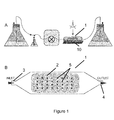
- the present invention relates to a fluidic device for cultivation and/or analysis of surface dwelling multicellular layers comprising:
- the flow of the fluid through said fluidic chamber is laminar, preferably having a Reynolds number smaller than 100. More particularly, the flow of the fluid through said fluidic chamber provides a linear flow profile over the entire width of the fluidic chamber, with the exception of the area (10%) adjacent to the side walls.
- the fluidic device provides in a device wherein said fluidic chamber comprises a bottom surface, two side surfaces and a top surface, wherein at least part of said top or bottom surface are detachable and/or removable. More particularly, at least part of said fluidic chamber is transparent for optical imaging, for microscopy, and/or for fluorescence imaging, thereby providing an imaging observation site. More particularly, the fluidic device further comprising observation zones and/or sensors located on or in one or more surface enclosing said fluidic chamber, for observing and/or monitoring the formation and/or cultivation of surface-dwelling multicellular layers on said detachable and/or removable surface. More particularly, said detachable and/or removable surface is made from or provided with an adherent surface material suitable for the adherence of the multicellular layer, wherein said surface material models a surface likely to be involved in cell adhesion and/or multicellular layer formation.
- the fluidic device provides that said surface-dwelling multicellular layer adherent surface material is chosen from the group comprising aluminum, stainless steel, silver, copper, hydroaxyapatite, silicon, latex, urethane, PVC, ceramic, steel, gold, titanium, polyethylene, polysiloxanes, biocompatible glasses, poly-methylmethacrylate, Teflon (or PTFE), polypropylene, polystyrene, polyamides, polyethers, polyesters, coated block polymers of polyethylene oxide (PEO), polypropylene oxide (PPO), polybutylene oxide (PBO), food film polymers polycarbonate filters and minerals.
- said surface-dwelling multicellular layer adherent surface material is chosen from the group comprising aluminum, stainless steel, silver, copper, hydroaxyapatite, silicon, latex, urethane, PVC, ceramic, steel, gold, titanium, polyethylene, polysiloxanes, biocompatible glasses, poly-methylmethacrylate, Teflon (or PT
- the fluidic device provides that said fluidic device further comprising an inlet flow distributor for distributing incoming fluid over the fluidic chamber and optionally an outlet flow distributor for guiding the outflowing fluid from the fluidic chamber to the outlet. More particularly, said inlet flow distributor or part thereof slopes downward relative to the horizontal position of the fluidic chamber.
- the fluidic device according to the present invention provides that the depth of the fluidic chamber ranges between 0.1 and 5 mm. More particularly, said fluidic device is made from a polymeric material and wherein said detachable and/or removable surface wall of said fluidic device is made from a material other than said polymeric material.
- the present invention relates to a method for cultivating and monitoring surface-dwelling multicellular layers, comprising:
- said surface dwelling multicellular layer composed of unicellular organism cells is a biofilm.
- said varying conditions comprise different types of fluid media, different fluid flow rates, different temperatures and/or combinations thereof.
- the present invention relates to a flow distributor for distributing a fluidic flow from a narrow inlet channel to a wider fluidic channel, wherein said flow distributor comprises a first distribution region shaped as an isosceles trapezoid fluidically connected through the larger of the two parallel sides of said isosceles trapezoid to a second rectangular shaped distribution region, wherein the narrow inlet channel is fluidically connected to the smaller of the two parallel sides of said first distribution region and said wider fluidic channel is fluidically connected to the second distribution region, characterized in that said second distribution region slopes downward relative to the horizontal position of said wider fluidic channel.
- the present invention provides in a fluidic device providing in the growth of a surface-dwelling multicellular layer under controlled dynamic conditions.
- the device allows the cultivation and growth of a multicellular layer on a surface adherent material, but also offers the possibility to monitor and analyze the multicellular layer under changing and controlled conditions.
- the contact interface on which the multicellular layer is grown is removable and/or detachable from the fluidic chamber, thereby being adaptable and allowing alteration.
- the control of the fluid flow is highly regulated throughout the fluid cell and the device offers a high flexibility in analysis possibilities.
- all system parts of the fluidic device are autoclavable, a property of major importance with regard to biosafety and environmental issues.
- said multicellular layer is a biofilm.
- Surface-dwelling multicellular layers as referred to herein relate to biological monolayer or multilayer structures comprising one or more types of mammalian cells, insect cells, yeast cells, fungal cells, plant cells microbial cells, bacterial cells, cellular vesicles, cellular organelles or tissue sections.
- the cultivation and/or growth of surface-dwelling multicellular layers is typically known for the growth of bacterial, archaeal or yeast cells in the form of biofilms.
- other cell type growth and adhesion may be assessed such as for instance in a particular embodiment the adhesion of animal cells upon a layer of a chosen compound (i.e. antibodies, receptors, extracellular matrix molecules, biomaterial).
- fungi and/or plant cells could also be used in the devices according to the present invention.
- useful cells include prokaryotes and eukaryotes such as mammalian cells including hybridoma cells, insect cells, yeast cells, fungal cells, plant cells, microbial cells, bacterial cells, tissue sections and/or protist cells comprising protozoa, algae and fungal cells.
- Mammalian cells may be derived from any recognized source with respect to species (e.g. human, rodent, simian), tissue source (brain, liver, lung, heart, kidney, skin, muscle) and cell type (e.g. epithelial, endothelial).
- cells which have been transfected with recombinant genes may also be cultured using the present invention.
- Suitable cell lines may be comprised within e.g. the American Type Culture Collection and the German Collection of Microorganisms and Cell Cultures.
- Non-limiting examples of useful mammalian cell lines include animal and human cell lines such as Chinese hamster ovary (CHO) cells, Chinese hamster lung (CHL) cells, baby hamster kidney (BHK) cells, COS cells, HeLa cells, THP cell lines, Jurkat cells, hybridoma cells, carcinoma cell lines, hepatocytes, primary fibroblasts, endothelial cells, tumor cell lines and the like. In particular embodiments tumor cell lines or carcinoma cell lines are envisaged.
- Suitable insect cell lines include but are not limited to Lepidoptera cell lines such as Spodoptera frugiperda cells and Trichoplusia ni cells.
- Non-limiting examples of fungal cells useful in the present invention include the phyla Ascomycota, Basidiomycota, Chytridiomycota, and Zygomycota as well as the Oomycota and all mitosporic fungi.
- Representative groups of Ascomycota include, e.g., Neurospora spp., Eupenicillium (or Penicillium ) spp., Emericella (or Aspergillus ) spp., Eurotium (or Aspergillus ) spp., and the true yeasts listed above.
- Examples of Basidiomycota include mushrooms, rusts, and smuts.
- Chytridiomycota include, e.g., Allomyces spp., Blastocladiella spp., Coelomomyces spp., and aquatic fungi.
- Representative groups of Oomycota include, e.g. saprolegniomycetous aquatic fungi (water molds) such as Achlya spp.. Examples of mitosporic fungi include Aspergillus spp., Penicillium spp., Candida spp. and Altemaria spp..
- Representative groups of Zygomycota include, e.g., Rhizopus spp. and Mucor spp..
- Fungal cells may be yeast cells.
- useful yeast cells include ascosporogenous yeast ( Endomycetales ) , basidiosporogenous yeast, and yeast belonging to the Fungi Impeffecti or Deuteromycota ( Blastomycetes ).
- the ascosporogenous yeasts are divided into the families Spermophthoraceae and Saccharomycetaceae. The latter is comprised of four sub-families, Schizosaccharomycoideae (e.g., genus Schizosaccharomyces including S. pombe ), Nadsonioideae, Lipomycoideae, and Saccharomycoideae (e.g., genera Pichia including P. pastoris, P.
- Schizosaccharomycoideae e.g., genus Schizosaccharomyces including S. pombe
- Nadsonioideae e.g., Lipomycoideae
- the basidiosporogenous yeasts include the genera Leucosporidim, Rhodosporidium, Sporidiobolus, Filobasidium, and Filobasidiella.
- Yeasts belonging to the Fungi Impeffecti are divided into two families, Sporobolomycetaceae (e.g., genera Sporobolomyces and Bullera ) and Cryptococcaceae (e.g., genus Candida including C. maltose ).
- Sporobolomycetaceae e.g., genera Sporobolomyces and Bullera
- Cryptococcaceae e.g., genus Candida including C. maltose
- Other useful yeast host cells are Hansehula polymorpha, Yarrowia lipolytica, Ustilgo maylis.
- Fungal cells may be filamentous fungal cells including all filamentous forms of the subdivision Eumycota and Oomycota.
- Filamentous fungi are characterized by a vegetative mycelium composed of chitin, cellulose, glucan, chitosan, mannan, and other complex polysaccharides. Vegetative growth is by hyphal elongation and carbon catabolism is obligatory aerobic. In contrast, vegetative growth by yeasts such as Saccharomyces cerevisiae is by budding of a unicellular thallus and carbon catabolism may be fermentative.
- the filamentous fungal host cell is a cell of a species of, but not limited to the genera, Acremonium, Aspergillus, Fusarium, Humicola, Mucor, MyceliopHthora, Neurospora, Penicillium, Thielavia, Tolypocladium, and Trichoderma or a teleomorph or synonym thereof.
- Suitable plant cells for use in the present invention include dicotyledonous plant cells, examples of which are Arabidopsis thaliana, tobacco, potato, tomato, and leguminous (e.g. bean, pea, soy, alfalfa) cells. It is, however, contemplated that monocotyledonous plant cells, e.g. monocotyledonous cereal plant cells such as for example rice, rye, barley and wheat, may be equally suitable.
- a multicellular layer of adherent microorganisms is often referred to as a biofilm.
- the microorganisms in the biofilm may include a mixture of bacteria, for example, including Gram-positive, Gram-negative bacteria, anaerobic bacteria, aerobic bacteria, and any combination thereof.
- the Gram-positive bacteria includes without limitation to Enterococcus faecalis, Staphylococcus aureus, Staphylococcus epidermidis, Streptococcus viridans, Listeria monocytogenes, Bacillus cereus or any combination thereof.
- the Gram-negative bacteria includes without limitation to Escherichia coli, Klebsiella pneumoniae, Proteus mirabilis, Pseudomonas aeruginosa and any combination thereof.
- Bacteria may be aerobic or anaerobic, the anaerobic bacteria is Streptococcus anginosus, Streptococcus australis, Streptococcus constellatus, Streptococcus mitis, Enterobacter spp., Actinomyces spp., Veillonella spp., Prevotella melaninogenica, Fusobacterium periodonticum or any combination thereof.
- the aerobic bacteria includes without limitation to strains fo the following genera Aeromonas, Bacillus, Burkholderia, Flavobacterium, Listeria, Microbacterium, Pseudomonas, Salmonella, Staphylococcus or any combination thereof.
- the biofilm includes oral bacteria.
- the oral bacteria includes without limitation to Actinomyces viscosus, Actinomyces naselundii, Streptococcus mutans, Streptococcus sanguis, Streptococcus sobrinus, Lactobacillus casei, Lactobacillus acidophilius, Candida albicans, Actinobacillus actinomycetemcomitans, Veillonella parvula, Fusobacterium nucleatum subsp. polymorphum, Porphyromonas gingivalis, Neisseria spp., and any combination thereof.
- said multicellular layers as referred to herein comprise a combination of two or more different types of organisms such as for instance the combination of bacteria with yeast or the combination of human cell lines with bacteria.
- the removable and/or detachable contact interface in the fluidic chamber provides that the contact surface can be removed from the fluidic chamber without the necessity to break parts of it or without having to apply forces that could disrupt the fore grown multicellular layer.
- the devices and methods according to the present invention accordingly allow the cultivation of surface-dwelling multicellular layers under controlled dynamic flow conditions where these parameters are controlled over the entire scan observation area, thereby assuring a laminar flow parabolic velocity profile and constant shear forces over this area.
- the contact interface on which the multicellular layer is grown is removable and/or detachable from the fluidic chamber and is pressed against the fluidic chamber without the requirement of any other seals. Accordingly, only the contact interface on which the multicellular layer is grown is contaminated by the culture medium.
- the removable character of this contact interface also allows fast and easy adaptation depending on the needs and the type of multicellular layer to be analyzed.
- a surface of hydroxyapatite may for instance be used for experimenting with dental biofilms, a stainless steel plate may be used to simulate behavior in industry applications and silicone can be used to mimic the attachment of bacteria (biofilms) on biomaterials.
- the observation may occur in real time depending on the properties of the surface to be used.
- the biomass of the surface-dwelling multicellular layer can easily be recovered as the surface can be removed and subjected to further surface analysis.
- the temperature in the growth chamber is kept constant through good heat diffusion. If accurately calibrated, a simple equipment such as a Peltier or a hot plate is sufficient to maintain an optimized temperature control. The medium passing through the flow chamber is heated at the desired temperature.
- the present invention relates to a fluidic device for cultivation and/or analysis of surface-dwelling multicellular layers comprising:
- said multicellular layer composed of microbial cells is a biofilm.
- the fluidic device according to the present invention is characterized by having at least one interchangeable contact surface for the growth of the multicellular layer.
- the surface, on which the multicellular layer is cultivated is removable and/or detachable from the fluidic device. This allows the user to change the cultivation surface depending on the type of surfaces one wants to study the multicellular layer formation on.
- the surface-dwelling multicellular layer formation is not limited to the type of material the fluidic chamber is made of.
- the material from which this surface is made can be chosen by the user.
- the detachable and/or removable surface for the cultivation and/or analysis of multicellular layers does not compromise the type of analysis options using for instance microscopy, spectroscopy or the recovery of biomass.
- the fluidic device according to the present invention offers the possibility to grow surface-dwelling multicellular layers in dynamic conditions under controlled conditions of the fluidic flux inside the fluidic chamber, thereby obtain the desired accuracy and reproducibility.
- the devices according to the present invention may also be used to test the anti-fouling properties of a surface.
- fouling on the detachable and/or removable surface can be assessed.
- biofilm formation on that surface both uses of the devices according to the present invention are closely related.
- fluid chamber refers to an enclosure that defines an interior space or cavity which can contain a fluid and through which a fluid can flow.
- the fluid is referred to as a substance that has the ability to flow and to conform to the boundaries of a container in which the substance is placed.
- Fluids include liquid and gas substances, and preferably liquid substances. Fluids include, but are not limited to, water, buffer, blood, preparative fluids, culture medium, reagents, organic solutions, inorganic solutions, and any fluid that can be used to conduct an assay.
- a flow path can be the path of flow of a fluid through a flow chamber.
- a flow path can be the path of flow of a fluid from an inlet port, through the interior of a chamber and to an outlet port.
- inlet port refers to a port through which a substance, e.g., a fluid, is introduced into a chamber
- outlet port refers to a port through which a substance, e.g., a fluid, is removed from a chamber.
- fluidically connected indicates that the items referred to are in fluid communication with each other.
- the fluidic device according to the present invention provides that the flow of the fluid through said fluidic chamber is laminar. More particularly, the Reynolds number of the flow of the fluid through said fluidic chamber is smaller than 100.
- laminar or “laminar flow”, with reference to a fluid, refers to the fluid flow being substantially non-turbulent.
- laminar flow generally can be characterized by a Re less than about 100.
- laminar flow can be characterized by a Re less than about 90, or less than about 80, or less than about 70, or less than about 60, or less than about 50, or less than about 40, or less than about 30, or less than about 20 or less than about 10.
- Laminar flow can also be referred to as a streamlined, uniform flow of fluid near a solid boundary without any significant turbulence.
- a fluid path that has little to no bending, little to no sharp turns, little to no steep slopes, little to no recirculation paths, little to no retroflow, little to no eddy currents, and little to no whorls generally can provide for substantially laminar flow.
- the term is also used to describe a linear flow of fluid that has a controllable linear velocity at the surface of a flow chamber provided and that is non-disruptive to an element (e.g., a living cell or an analyte) of a process, e.g., a biological or biochemical process, in the flow chamber.
- an element e.g., a living cell or an analyte
- a process e.g., a biological or biochemical process
- substantially laminar flow inside the fluidic chamber is a flow of fluid that is at least about 80% laminar, at least about 85% laminar, at least about 90% laminar, at least about 95% laminar, at least about 96% laminar, at least about 97% laminar, at least about 98% laminar, at least about 99% laminar, or at least about 100% laminar.
- the laminar flow in the fluidic chamber avoids the occurrence of dead zones in the chamber. Accordingly, any non attached cells of the multicellular layer are cleared from the fluidic chamber through the constant laminar flow prohibiting them from interfering with the analysis.
- the calculated Reynolds Number is about 1.3. Since the speed of the liquid has a plain linear contribution to Re (Reynolds Number).
- Typical fluid flow velocities in the devices according to the present invention do not exceed 0.01 m/s for multicellular layer growth to occur and the density of medium used for the multicellular layer growth about 1000 kg/m 3 .
- HRT Hydraulic Retention Time
- Typical fluid flow rates through the fluidic device range between 0.05 ml/min and 10 ml/min.
- the fluidic device provides that the flow of the fluid through said fluidic chamber provides a linear flow profile over the entire width of the fluidic chamber, with the exception of the area 10% from the side walls. More particularly, the present invention provides that the flow of the fluid through said fluidic chamber provides a linear flow profile over the entire width of the fluidic chamber, with the exception of the area at a distance from the side walls which is smaller than 10%, 9%, 8%, 7.5%, 7%, 6.5%, 6.25% or 6% of the total width of the fluidic chamber.
- the present invention provides that the flow of the fluid through said fluidic chamber provides a linear flow profile over at least 80% of the total width of the fluidic chamber, more particularly, a linear or laminar flow profile is provided over at least 80%, 82%, 84%, 85%, 86%, 87%, 87.5% or 88% of the total width of the fluidic chamber. Accordingly, the fluid passes through the fluidic chamber in a laminar manner thereby generating a fluid flow which provides an equal velocity over the entire width of the fluidic chamber, the only deviation from this occurring in the area near the side walls.
- the area where the deviation occurs is located in the area from the side walls which is smaller than 10%, 9%, 8%, 7.5%, 7%, 6.5%, 6.25% or 6% of the total width of the fluidic chamber. For instance, when the chamber is 15 mm wide, the area where the deviation occurs is in the 1.5 mm area or less from the side walls.
- the fluidic device provides that said fluidic chamber comprises a bottom surface, two side surfaces and a top surface, wherein at least part of said top or bottom surface are detachable and/or removable. More particularly, the detachable and/or removable surface is the bottom surface.
- the fluidic device provides that at least part of said fluidic chamber is transparent for optical imaging, for microscopy, and/or for fluorescence imaging, thereby providing an imaging observation site.
- at least part of the fluidic chamber is made transparent for observation and/or monitoring of the surface-dwelling multicellular layer through classical light microscopy.
- the fluidic chamber typically provides a sufficient optical transparency and clarity to permit observation of the multicellular layer and the cells thereof.
- the transparent characteristic of part of the fluidic chamber is especially useful for real time imaging of the multicellular layer.
- the imaging of the surface-dwelling multicellular layer occurs using a confocal microscope thereby permitting 3D images to be made.
- the fluidic chamber is casted in a transparent or translucid, heat-resistant, polymeric material which Young's Modulus [E] is comprised between 500 kPa and 1 MPa.
- Young's Modulus [E] is comprised between 500 kPa and 1 MPa.
- the rigidity is an important parameter for the device according to the present invention as the removable surface of the fluidic chamber is pressed against the rest of the device to ensure complete sealing of the fluidic chamber. This makes materials with a too low Young's modulus unsuitable because the open flow chamber inside the material would lose its shape under pressure applied to seal the device. Accordingly, materials such as PDMS (Poly-dimethylsiloxane) (good rigidity, transparency and heat-resistance up to 300°C) are used.
- PDMS Poly-dimethylsiloxane
- the plates ensuring the pressure that maintains the removable surface and the fluidic chamber together can be made of any hard (Young modulus superior to 10 GPa), heat resistant material such as steel, aluminum or plastic polymer.
- the pressure can be provided through any commonly known method in the art.
- the fluidic device according to the present invention further comprises observation zones and/or sensors located on or in one or more surface enclosing said fluidic chamber, for observing and/or monitoring the formation and/or cultivation of the surface-dwelling multicellular layer on said detachable and/or removable surface.
- observation zones and/or “sensors” are defined features in the walls of the fluidic chamber that allow observation using commonly known detection methods, such as for instance observation through (real-time) light microscopy. More particularly, one of the walls of the fluidic chamber is provided with an array of "observation fields” displaying the same set of conditions. Pictures taken from various observation fields can be statistically treated as repetitions of the same experiment. Observation fields positioned along different flow path lines can be considered independent repetitions of the same experiment.
- the sensors are crafted on the surface, said sensors being chosen from, but not limited to, for example, microelectrodes measuring gas concentration, pH, nutrient levels and redox potential of the local environment.
- the removable and/or detachable surface is that upon finalization of the experiment, the surface on which the multicellular layer has grown may be detached and recovered, preferably sterilely, for further analysis. Accordingly, of the detached surface properties such as surface composition, biomass recovery, and mechanical properties assessment (rheometry) can be assessed using adequate methods and techniques such as XPS or mass spectrometry (for analysis of the surface composition), Rheometer electron microscopy (for assessment the mechanical properties).
- the detached surface may also be treated in various ways to assess the resistance of multicellular layers towards a certain set of conditions, an aspect which is useful when the treatment conditions are unsuitable for passing through the fluidic device.
- the fluidic device according to the present invention provides that said detachable and/or removable surface is made from or provided with a surface-dwelling multicellular layer adherent surface material, wherein said surface material models a surface likely to be involved in cell adhesion and/or formation of a surface-dwelling multicellular layer.
- the devices according to the present invention also envisage the analysis of the anti-fouling properties of a surface. Therefore fouling on the detachable and/or removable surface can be assessed by using a surface material likely to reject and withhold cell adhesion and/or multicellular layer formation (e.g Pluronics coatings (brush polymers)).
- the fluidic device provides that said adherent surface material is chosen from the group comprising aluminum, stainless steel, silver, copper, hydroaxyapatite, silicon, latex, urethane, PVC, and ceramic, steel, gold, titanium, polyethylene, polysiloxanes, biocompatible glasses, poly-methylmethacrylate (PMMA-contact lenses material), Teflon (or PTFE), polypropylene, polystyrene, polyamides, polyethers, polyesters, coated block polymers of polyethylene oxide (PEO), polypropylene oxide (PPO), polybutylene oxide (PBO) known to be pluronics used as anti-adhesive coatings, hydrogels, food film polymers, polycarbonate filters (to study the effect of the diffusion of a molecule on the multicellular layer coming from an underlying solution or agar medium) or minerals (to study biofilm formation on river rocks).
- said adherent surface material is chosen from the group comprising aluminum, stainless steel, silver, copper, hydroaxya
- the fluidic device provides that said detachable and/or removable surface is provided with an adherent surface material comprising proteins, glycoproteins (e.g. mucins) antibodies, DNA, polysaccharides, lipids or other biomolecules for the purpose of adhering cells and/or other components.
- adherent surface material comprising proteins, glycoproteins (e.g. mucins) antibodies, DNA, polysaccharides, lipids or other biomolecules for the purpose of adhering cells and/or other components.
- the type of surface material is typically dependant on the type of sterilization that is required.
- envisaged surfaces are surfaces resistant to humid heat (121°C for at least 20 minutes) such as for instance glass surfaces topped with all sorts of coatings such as for instance metal deposited by CVD (chemical vapor deposition), polymers layered thereupon, sprayed ions, mineral layers (hydroxyapatite) or other bulk materials such as steel, alloys, metals, mineral rocky materials and polymers so long as their mechanical rigidity is sufficient (Young modulus [E] above 10 GPa).
- the mechanical rigidity (E>10GPa) forms a structural limit.
- the surface material is backed up by a more resistant supporting material providing the structure with the required mechanical rigidity.
- the fluidic device further comprises an inlet flow distributor for distributing incoming fluid over the fluidic chamber and optionally an outlet flow distributor for guiding the outflowing fluid from the fluidic chamber to the outlet. More particularly, the flow distributor distributes the incoming fluid flow evenly over the fluidic chamber.
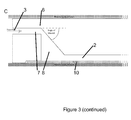
- the inlet flow distributor or part thereof slopes downward relative to the horizontal position of the fluidic chamber. More particularly, the slope angle relative to the direction of the inlet port or the fluidic chamber ranges between 15° and 75°, more particularly between 30° and 60°, more particularly between 40° and 50° and more particularly, about 45°.
- the slope angle relative to the direction of the inlet port or the fluidic chamber of the bottom surface is larger compared to the slope angle relative to the direction of the inlet port or the fluidic chamber of the top surface. More particularly, the slope angle relative to the direction of the inlet port or the fluidic chamber of the top surface ranges between 15° and 75°, more particularly between 30° and 60°, more particularly between 40° and 50° and more particularly, about 45°, whereas the slope angle relative to the direction of the inlet port or the fluidic chamber of the bottom surface is larger than 50°, 60°, 75°, 80°, 85° and more particularly, about 90°.
- the slope angle relative to the direction of the inlet port or the fluidic chamber of the top surface is 45 °, while the slope angle relative to the direction of the inlet port or the fluidic chamber of the bottom surface is 90°.
- angles of the top and bottom surfaces of the flow distributor are chosen to allow an even and efficiently spread of the liquid in the fluidic chamber, while maintaining a good hydrodynamic profile without the need to lengthen the device.
- the fluidic device according to the present invention provides that the depth of the fluidic chamber ranges between 0.1 and 5 mm.
- the fluidic device according to the present invention provides that said fluidic device is made from a polymeric material and wherein said detachable and/or removable surface wall of said fluidic device is made from a material other than said polymeric material. More particularly, said polymeric material is PDMS.
- the present invention further provides in a method for cultivating and monitoring surface-dwelling multicellular layers comprising:
- said surface-dwelling multicellular layer composed of microbial cells is a biofilm.
- the method according to the present invention provides that said varying conditions comprise different types of fluid media, different fluid flow rates, different temperatures, different compounds and/or combinations thereof.
- the monitoring of the multicellular layer may occur upon challenging the multicellular layer with a varying set of conditions.
- These conditions may be physical conditions such as the temperature or fluid flow rates, and/or chemical conditions where the multicellular layer is submitted to different types of fluid media and/or compounds such as for instance antibiotics, viruses which may be introduced into the flow cell after or at the same time as the growth medium.
- an operator is able to tune several conditions in the device, which may influence the formation and/or cultivation of a surface-dwelling multicellular layer.
- several parameters can be varied in the devices according to the present invention including for instance:
- the cleaning of the device according to the present invention is also an important aspect as cleaning methods such as autoclaving kill all living organisms dwelling in the device. After autoclaving all the parts of the system are removed and washed with mild detergent and distilled water, optionally an ultrasonic treatment followed by extensive cleaning with distilled water can be used to remove any remaining adherent particles in tubes and on fluidic device.
- This cleaning method is fast and severe and is the safest regarding biosafety issues. Cleaning allows the device to be reused with a new removable surface after cleaning.
- the device according to the present invention allows such severe cleaning methods. While other, less efficient cleaning methods may be used as well (e.g.
- the present invention also relates to a flow distributor for distributing a fluidic flow from a narrow inlet channel to a wider fluidic channel, wherein said flow distributor comprises a first distribution region shaped as an isosceles trapezoid fluidically connected through the larger of the two parallel sides of said isosceles trapezoid to a second rectangular shaped distribution region, wherein the narrow inlet channel is fluidically connected to the smaller of the two parallel sides of said first distribution region and said wider fluidic channel is fluidically connected to the second distribution region, characterized in that said second distribution region slopes downward relative to the horizontal position of said wider fluidic channel.
- the second distribution region slopes downward relative to the horizontal position of the first distribution region. More particularly, the slope angle relative to the direction of the first distribution region ranges between 15° and 75°, more particularly between 30° and 60°, more particularly between 40° and 50° and more particularly, about 45°.
- the slope angle relative to the direction of the first distribution region of the bottom surface of the second distribution region is larger compared to the slope angle relative to the direction of the first distribution region of the top surface of the second distribution region. More particularly, the slope angle relative to the direction of the first distribution region of the top surface of the second distribution region ranges between 15° and 75°, more particularly between 30° and 60°, more particularly between 40° and 50° and more particularly, about 45°, whereas the slope angle relative to the direction of the first distribution region of the bottom surface of the second distribution region is larger than 50°, 60°, 75°, 80°, 85° and more particularly, about 90°.
- the slope angle relative to the direction of the first distribution region of the top surface of the second distribution region is 45°, while the slope angle relative to the direction of the first distribution region of the bottom surface of the second distribution region is 90°.
- angles of the top and bottom surfaces of the of the second distribution region are chosen to allow an even and efficiently spread of the liquid, while maintaining a good hydrodynamic profile.
Landscapes
- Health & Medical Sciences (AREA)
- Chemical & Material Sciences (AREA)
- Organic Chemistry (AREA)
- Life Sciences & Earth Sciences (AREA)
- Wood Science & Technology (AREA)
- Engineering & Computer Science (AREA)
- Zoology (AREA)
- Bioinformatics & Cheminformatics (AREA)
- Biochemistry (AREA)
- Microbiology (AREA)
- Biotechnology (AREA)
- General Engineering & Computer Science (AREA)
- General Health & Medical Sciences (AREA)
- Genetics & Genomics (AREA)
- Sustainable Development (AREA)
- Biomedical Technology (AREA)
- Clinical Laboratory Science (AREA)
- Immunology (AREA)
- Proteomics, Peptides & Aminoacids (AREA)
- Dispersion Chemistry (AREA)
- Physics & Mathematics (AREA)
- Analytical Chemistry (AREA)
- Biophysics (AREA)
- Molecular Biology (AREA)
- Apparatus Associated With Microorganisms And Enzymes (AREA)
Abstract
The present invention relates to a fluidic device that can be used for the analysis of +surface-dwelling multicellular layers, some of which comprise biofilm and can be referred to as biofilms, and their formation under controlled dynamic conditions. More particularly, the surface in the fluidic chamber on which the multicellular layer is grown is detachable and/or removable from the fluidic chamber, thereby providing a highly versatile device.
Description
- The present invention relates to a fluidic device that can be used for the analysis of surface-dwelling multicellular layers and their formation under controlled dynamic conditions. More particularly, the surface in the fluidic chamber on which the multicellular layer is grown is detachable and/or removable from the fluidic chamber, thereby providing a highly versatile device.
- Surface dwelling multicellular layers such as for instance Biofilms are complex communities enmeshed in a self-produced matrix. In nature, biofilms represent about 90% of the bacterial lifestyle since it offers protection against all types of environmental threats (e.g. antibiotics, sanitizing agents). Biofilms are also intimately bound to human activities with both desired (wastewater treatment and gasification) and undesired aspects (corrosion, food intoxication or chronic infections). Biofilm research has gained increasing attention over the past years and this trend will certainly continue in the following years.
- For observing and monitoring cellular biological processes (e.g. biofilms), cell-based assays are required where the behavior of living cells and changes in cell behavior in response to various conditions and agents may be observed, for instance through imaging techniques (visualization of microscopic processes through the use of agents that provide detectable signals representative of cellular components or events). Typically, these observations are performed in microtiter plates that contain the cells that can be observed through a microscope. However, these stationary conditions only offer a very narrow range of settings to observe biofilms and hence they do not provide a realistic image when it comes to monitoring biofilms because in nature these systems are usually formed in more dynamic environments, which require simulation of the actual real-life situations.
- Formation and monitoring of a multicellular layer is a complex process where many factors (e.g. microorganisms, fluid flow and type, surface material and structure) play a role. Therefore, it is critical to perform the growth of multicellular layers in a versatile device that allows all these factors to be included into the simulation.
- In view of the foregoing, there is a need for devices to perform assays, such as biochemical and/or cellular assays that provide for flow of fluid throughout the device so that nominally adhering substances, such as the cells in the multicellular layers can be monitored in in vitro conditions close to actual real-life situations.
- While several tools enabling the analysis and study of multicellular layers are available, there seems to be a need for tools that act in a more accurate and more versatile manner.
- The present invention relates to a fluidic device for cultivation and/or analysis of surface dwelling multicellular layers comprising:
- a fluidic chamber comprising one or more surfaces enclosing the fluidic chamber through which fluid can flow along a flow path, wherein said fluidic chamber is characterized by having a Young's Modulus [E] ranging between 500 kPa and 1 MPa;
- an inlet port fluidically connected to said fluidic chamber;
- an outlet port fluidically connected to said fluidic chamber;
- More particularly, the flow of the fluid through said fluidic chamber is laminar, preferably having a Reynolds number smaller than 100. More particularly, the flow of the fluid through said fluidic chamber provides a linear flow profile over the entire width of the fluidic chamber, with the exception of the area (10%) adjacent to the side walls.
- In a particular embodiment, the fluidic device according to the present invention provides in a device wherein said fluidic chamber comprises a bottom surface, two side surfaces and a top surface, wherein at least part of said top or bottom surface are detachable and/or removable. More particularly, at least part of said fluidic chamber is transparent for optical imaging, for microscopy, and/or for fluorescence imaging, thereby providing an imaging observation site. More particularly, the fluidic device further comprising observation zones and/or sensors located on or in one or more surface enclosing said fluidic chamber, for observing and/or monitoring the formation and/or cultivation of surface-dwelling multicellular layers on said detachable and/or removable surface. More particularly, said detachable and/or removable surface is made from or provided with an adherent surface material suitable for the adherence of the multicellular layer, wherein said surface material models a surface likely to be involved in cell adhesion and/or multicellular layer formation.
- In a particular embodiment, the fluidic device according to the present invention provides that said surface-dwelling multicellular layer adherent surface material is chosen from the group comprising aluminum, stainless steel, silver, copper, hydroaxyapatite, silicon, latex, urethane, PVC, ceramic, steel, gold, titanium, polyethylene, polysiloxanes, biocompatible glasses, poly-methylmethacrylate, Teflon (or PTFE), polypropylene, polystyrene, polyamides, polyethers, polyesters, coated block polymers of polyethylene oxide (PEO), polypropylene oxide (PPO), polybutylene oxide (PBO), food film polymers polycarbonate filters and minerals.
- In a further particular embodiment, the fluidic device according to the present invention provides that said fluidic device further comprising an inlet flow distributor for distributing incoming fluid over the fluidic chamber and optionally an outlet flow distributor for guiding the outflowing fluid from the fluidic chamber to the outlet. More particularly, said inlet flow distributor or part thereof slopes downward relative to the horizontal position of the fluidic chamber.
- In a further particular embodiment, the fluidic device according to the present invention provides that the depth of the fluidic chamber ranges between 0.1 and 5 mm. More particularly, said fluidic device is made from a polymeric material and wherein said detachable and/or removable surface wall of said fluidic device is made from a material other than said polymeric material.
- In a further embodiment, the present invention relates to a method for cultivating and monitoring surface-dwelling multicellular layers, comprising:
- a) providing a fluidic device comprising:
- a fluidic chamber comprising one or more surfaces enclosing the fluidic chamber through which fluid can flow along a flow path, said fluidic chamber comprising at least one detachable and/or removable surface for cultivating multicellular layers;
- an inlet port fluidically connected to said fluidic chamber;
- an outlet port fluidically connected to said fluidic chamber;
- b) dispensing a flowing liquid growth medium, optionally comprising microorganisms, animal cells, plant cells or fungi cells, into said fluidic chamber, said growth medium flowing across said detachable and/or removable surface, thereby generating a surface-dwelling multicellular layer on said detachable and/or removable surface; and
- c) monitoring the multicellular layer on said detachable and/or removable surface under varying conditions.
- In particular embodiments said surface dwelling multicellular layer composed of unicellular organism cells (e.g. microbes) is a biofilm.
- More particularly the method provides that said varying conditions comprise different types of fluid media, different fluid flow rates, different temperatures and/or combinations thereof.
- In a further embodiment, the present invention relates to a flow distributor for distributing a fluidic flow from a narrow inlet channel to a wider fluidic channel, wherein said flow distributor comprises a first distribution region shaped as an isosceles trapezoid fluidically connected through the larger of the two parallel sides of said isosceles trapezoid to a second rectangular shaped distribution region, wherein the narrow inlet channel is fluidically connected to the smaller of the two parallel sides of said first distribution region and said wider fluidic channel is fluidically connected to the second distribution region, characterized in that said second distribution region slopes downward relative to the horizontal position of said wider fluidic channel.
- The following description of a specific embodiment of the invention is merely exemplary in nature and is not intended to limit the present teachings, their application or uses.
-
Figure 1 Figure 1 illustrates a specific embodiment of the fluidic device according to the present invention. -
Figure 2 Figure 2 illustrates fluidic simulations (Fluent) in a fluidic device according to an embodiment of the present invention -
Figure 3 Figure 3 illustrates a specific embodiment of the fluidic device according to the present invention. - The present invention will be described with respect to particular embodiments but the invention is not limited thereto.
- As used herein, the singular forms "a", "an", and "the" include both singular and plural referents unless the context clearly dictates otherwise.
- The terms "comprising", "comprises" and "comprised of" as used herein are synonymous with "including", "includes" or "containing", "contains", and are inclusive or openended and do not exclude additional, non-recited members, elements or method steps. The terms "comprising", "comprises" and "comprised of" when referring to recited members, elements or method steps also include embodiments, which "consist of" said recited members, elements or method steps.
- Furthermore, the terms first, second, third and the like in the description, are used for distinguishing between similar elements and not necessarily for describing a sequential or chronological order, unless specified. It is to be understood that the terms so used are interchangeable under appropriate circumstances and that the embodiments described herein are capable of operation in other sequences than described or illustrated herein.
- All documents cited in the present specification are hereby incorporated by reference in their entirety.
- Unless otherwise defined, all terms used in disclosing the invention, including technical and scientific terms, have the meaning as commonly understood by one of ordinary skill in the art to which this invention belongs. By means of further guidance, definitions for the terms used in the description are included to better appreciate the teaching of the present invention. The terms or definitions used herein are provided solely to aid in the understanding of the invention.
- Reference throughout this specification to "one embodiment" or "an embodiment" means that a particular feature, structure or characteristic described in connection with the embodiment is included in at least one embodiment of the present invention. Thus, appearances of the phrases "in one embodiment" or "in an embodiment" in various places throughout this specification are not necessarily all referring to the same embodiment, but may. Furthermore, the particular features, structures or characteristics may be combined in any suitable manner, as would be apparent to a person skilled in the art from this disclosure, in one or more embodiments. Furthermore, while some embodiments described herein include some but not other features included in other embodiments, combinations of features of different embodiments are meant to be within the scope of the invention, and form different embodiments, as would be understood by those in the art.
- The present invention provides in a fluidic device providing in the growth of a surface-dwelling multicellular layer under controlled dynamic conditions. The device allows the cultivation and growth of a multicellular layer on a surface adherent material, but also offers the possibility to monitor and analyze the multicellular layer under changing and controlled conditions. The contact interface on which the multicellular layer is grown is removable and/or detachable from the fluidic chamber, thereby being adaptable and allowing alteration. Also the control of the fluid flow is highly regulated throughout the fluid cell and the device offers a high flexibility in analysis possibilities. In addition, all system parts of the fluidic device are autoclavable, a property of major importance with regard to biosafety and environmental issues. In particular embodiments said multicellular layer is a biofilm.
- Surface-dwelling multicellular layers as referred to herein relate to biological monolayer or multilayer structures comprising one or more types of mammalian cells, insect cells, yeast cells, fungal cells, plant cells microbial cells, bacterial cells, cellular vesicles, cellular organelles or tissue sections. Typically, the cultivation and/or growth of surface-dwelling multicellular layers is typically known for the growth of bacterial, archaeal or yeast cells in the form of biofilms. However, also other cell type growth and adhesion may be assessed such as for instance in a particular embodiment the adhesion of animal cells upon a layer of a chosen compound (i.e. antibodies, receptors, extracellular matrix molecules, biomaterial...). Also, in another particular embodiment fungi and/or plant cells could also be used in the devices according to the present invention.
- Accordingly, useful cells include prokaryotes and eukaryotes such as mammalian cells including hybridoma cells, insect cells, yeast cells, fungal cells, plant cells, microbial cells, bacterial cells, tissue sections and/or protist cells comprising protozoa, algae and fungal cells. Mammalian cells may be derived from any recognized source with respect to species (e.g. human, rodent, simian), tissue source (brain, liver, lung, heart, kidney, skin, muscle) and cell type (e.g. epithelial, endothelial). In addition, cells which have been transfected with recombinant genes may also be cultured using the present invention.
- Suitable cell lines may be comprised within e.g. the American Type Culture Collection and the German Collection of Microorganisms and Cell Cultures.
- Non-limiting examples of useful mammalian cell lines include animal and human cell lines such as Chinese hamster ovary (CHO) cells, Chinese hamster lung (CHL) cells, baby hamster kidney (BHK) cells, COS cells, HeLa cells, THP cell lines, Jurkat cells, hybridoma cells, carcinoma cell lines, hepatocytes, primary fibroblasts, endothelial cells, tumor cell lines and the like. In particular embodiments tumor cell lines or carcinoma cell lines are envisaged.
- Suitable insect cell lines include but are not limited to Lepidoptera cell lines such as Spodoptera frugiperda cells and Trichoplusia ni cells.
- Non-limiting examples of fungal cells useful in the present invention include the phyla Ascomycota, Basidiomycota, Chytridiomycota, and Zygomycota as well as the Oomycota and all mitosporic fungi. Representative groups of Ascomycota include, e.g., Neurospora spp., Eupenicillium (or Penicillium) spp., Emericella (or Aspergillus) spp., Eurotium (or Aspergillus) spp., and the true yeasts listed above. Examples of Basidiomycota include mushrooms, rusts, and smuts. Representative groups of Chytridiomycota include, e.g., Allomyces spp., Blastocladiella spp., Coelomomyces spp., and aquatic fungi. Representative groups of Oomycota include, e.g. saprolegniomycetous aquatic fungi (water molds) such as Achlya spp.. Examples of mitosporic fungi include Aspergillus spp., Penicillium spp., Candida spp. and Altemaria spp.. Representative groups of Zygomycota include, e.g., Rhizopus spp. and Mucor spp..
- Fungal cells may be yeast cells. Non-limiting examples of useful yeast cells include ascosporogenous yeast (Endomycetales), basidiosporogenous yeast, and yeast belonging to the Fungi Impeffecti or Deuteromycota (Blastomycetes). The ascosporogenous yeasts are divided into the families Spermophthoraceae and Saccharomycetaceae. The latter is comprised of four sub-families, Schizosaccharomycoideae (e.g., genus Schizosaccharomyces including S. pombe), Nadsonioideae, Lipomycoideae, and Saccharomycoideae (e.g., genera Pichia including P. pastoris, P. guillermondii and P. methanolio), Kluyveromyces including K. lactis, K. fragilis and Saccharomyces including S. carlsbergensis, S. cerevisiae, S. diastaticus, S. douglasii, S. klayveri, S. norbensis or S. oviformis). The basidiosporogenous yeasts include the genera Leucosporidim, Rhodosporidium, Sporidiobolus, Filobasidium, and Filobasidiella. Yeasts belonging to the Fungi Impeffecti are divided into two families, Sporobolomycetaceae (e.g., genera Sporobolomyces and Bullera) and Cryptococcaceae (e.g., genus Candida including C. maltose). Other useful yeast host cells are Hansehula polymorpha, Yarrowia lipolytica, Ustilgo maylis.
- Fungal cells may be filamentous fungal cells including all filamentous forms of the subdivision Eumycota and Oomycota. Filamentous fungi are characterized by a vegetative mycelium composed of chitin, cellulose, glucan, chitosan, mannan, and other complex polysaccharides. Vegetative growth is by hyphal elongation and carbon catabolism is obligatory aerobic. In contrast, vegetative growth by yeasts such as Saccharomyces cerevisiae is by budding of a unicellular thallus and carbon catabolism may be fermentative. In a more preferred embodiment, the filamentous fungal host cell is a cell of a species of, but not limited to the genera, Acremonium, Aspergillus, Fusarium, Humicola, Mucor, MyceliopHthora, Neurospora, Penicillium, Thielavia, Tolypocladium, and Trichoderma or a teleomorph or synonym thereof.
- Suitable plant cells for use in the present invention include dicotyledonous plant cells, examples of which are Arabidopsis thaliana, tobacco, potato, tomato, and leguminous (e.g. bean, pea, soy, alfalfa) cells. It is, however, contemplated that monocotyledonous plant cells, e.g. monocotyledonous cereal plant cells such as for example rice, rye, barley and wheat, may be equally suitable.
- A multicellular layer of adherent microorganisms is often referred to as a biofilm. The microorganisms in the biofilm may include a mixture of bacteria, for example, including Gram-positive, Gram-negative bacteria, anaerobic bacteria, aerobic bacteria, and any combination thereof. The Gram-positive bacteria includes without limitation to Enterococcus faecalis, Staphylococcus aureus, Staphylococcus epidermidis, Streptococcus viridans, Listeria monocytogenes, Bacillus cereus or any combination thereof. The Gram-negative bacteria includes without limitation to Escherichia coli, Klebsiella pneumoniae, Proteus mirabilis, Pseudomonas aeruginosa and any combination thereof. Bacteria may be aerobic or anaerobic, the anaerobic bacteria is Streptococcus anginosus, Streptococcus australis, Streptococcus constellatus, Streptococcus mitis, Enterobacter spp., Actinomyces spp., Veillonella spp., Prevotella melaninogenica, Fusobacterium periodonticum or any combination thereof. The aerobic bacteria includes without limitation to strains fo the following genera Aeromonas, Bacillus, Burkholderia, Flavobacterium, Listeria, Microbacterium, Pseudomonas, Salmonella, Staphylococcus or any combination thereof. In certain embodiments, the biofilm includes oral bacteria. The oral bacteria includes without limitation to Actinomyces viscosus, Actinomyces naselundii, Streptococcus mutans, Streptococcus sanguis, Streptococcus sobrinus, Lactobacillus casei, Lactobacillus acidophilius, Candida albicans, Actinobacillus actinomycetemcomitans, Veillonella parvula, Fusobacterium nucleatum subsp. polymorphum, Porphyromonas gingivalis, Neisseria spp., and any combination thereof.
- In particular embodiments said multicellular layers as referred to herein comprise a combination of two or more different types of organisms such as for instance the combination of bacteria with yeast or the combination of human cell lines with bacteria.
- The removable and/or detachable contact interface in the fluidic chamber provides that the contact surface can be removed from the fluidic chamber without the necessity to break parts of it or without having to apply forces that could disrupt the fore grown multicellular layer.
- The devices and methods according to the present invention accordingly allow the cultivation of surface-dwelling multicellular layers under controlled dynamic flow conditions where these parameters are controlled over the entire scan observation area, thereby assuring a laminar flow parabolic velocity profile and constant shear forces over this area. The contact interface on which the multicellular layer is grown is removable and/or detachable from the fluidic chamber and is pressed against the fluidic chamber without the requirement of any other seals. Accordingly, only the contact interface on which the multicellular layer is grown is contaminated by the culture medium. The removable character of this contact interface also allows fast and easy adaptation depending on the needs and the type of multicellular layer to be analyzed. A surface of hydroxyapatite may for instance be used for experimenting with dental biofilms, a stainless steel plate may be used to simulate behavior in industry applications and silicone can be used to mimic the attachment of bacteria (biofilms) on biomaterials. When using observations zones for monitoring the multicellular layer, the observation may occur in real time depending on the properties of the surface to be used. Also, once the experiments are performed, the biomass of the surface-dwelling multicellular layer can easily be recovered as the surface can be removed and subjected to further surface analysis. Also, the temperature in the growth chamber is kept constant through good heat diffusion. If accurately calibrated, a simple equipment such as a Peltier or a hot plate is sufficient to maintain an optimized temperature control. The medium passing through the flow chamber is heated at the desired temperature.
- In a first aspect, the present invention relates to a fluidic device for cultivation and/or analysis of surface-dwelling multicellular layers comprising:
- a fluidic chamber comprising one or more surfaces enclosing the fluidic chamber through which fluid can flow along a flow path;
- an inlet port fluidically connected to said fluidic chamber;
- an outlet port fluidically connected to said fluidic chamber;
- In particular embodiments said multicellular layer composed of microbial cells is a biofilm.
- Compared to other flow cell systems for growing multicellular layers such as biofilms in dynamic conditions, the fluidic device according to the present invention is characterized by having at least one interchangeable contact surface for the growth of the multicellular layer. Indeed the surface, on which the multicellular layer is cultivated, is removable and/or detachable from the fluidic device. This allows the user to change the cultivation surface depending on the type of surfaces one wants to study the multicellular layer formation on. Accordingly, the surface-dwelling multicellular layer formation is not limited to the type of material the fluidic chamber is made of. As one of the surfaces is detachable, the material from which this surface is made can be chosen by the user. Also, the detachable and/or removable surface for the cultivation and/or analysis of multicellular layers does not compromise the type of analysis options using for instance microscopy, spectroscopy or the recovery of biomass.
- Also, the fluidic device according to the present invention offers the possibility to grow surface-dwelling multicellular layers in dynamic conditions under controlled conditions of the fluidic flux inside the fluidic chamber, thereby obtain the desired accuracy and reproducibility.
- Alternatively, the devices according to the present invention may also be used to test the anti-fouling properties of a surface. Here fouling on the detachable and/or removable surface can be assessed. As the formation of fouling on a surface is correlated with biofilm formation on that surface, both uses of the devices according to the present invention are closely related.
- As used herein, the term "fluidic chamber" refers to an enclosure that defines an interior space or cavity which can contain a fluid and through which a fluid can flow. The fluid is referred to as a substance that has the ability to flow and to conform to the boundaries of a container in which the substance is placed. Fluids include liquid and gas substances, and preferably liquid substances. Fluids include, but are not limited to, water, buffer, blood, preparative fluids, culture medium, reagents, organic solutions, inorganic solutions, and any fluid that can be used to conduct an assay.
- The fluid in the fluidic device according to the present invention flows through the fluidic chamber according to a flow path (the path of flow of a fluid). A flow path can be the path of flow of a fluid through a flow chamber. For example, a flow path can be the path of flow of a fluid from an inlet port, through the interior of a chamber and to an outlet port. As used herein "inlet port" refers to a port through which a substance, e.g., a fluid, is introduced into a chamber, whereas "outlet port" refers to a port through which a substance, e.g., a fluid, is removed from a chamber. As used herein "fluidically connected" indicates that the items referred to are in fluid communication with each other.
- In a particular embodiment, the fluidic device according to the present invention provides that the flow of the fluid through said fluidic chamber is laminar. More particularly, the Reynolds number of the flow of the fluid through said fluidic chamber is smaller than 100.
- As used herein, the term "laminar" or "laminar flow", with reference to a fluid, refers to the fluid flow being substantially non-turbulent. The degree of laminar flow can be characterized by the Reynolds number, which is a measurement of the tendency for turbulence to occur as described by the equation:

wherein Re is a Reynolds number, v is the average linear flow rate, L is a unit of length, ρ is the density of the fluid and µ is dynamic viscosity of the fluid (µ/ρ being the kinematic viscosity of the fluid). Turbulence in fluid flow occurs in flows characterized by high Reynolds (Re) numbers. Thus, laminar flow generally can be characterized by a Re less than about 100. In particular embodiments, laminar flow can be characterized by a Re less than about 90, or less than about 80, or less than about 70, or less than about 60, or less than about 50, or less than about 40, or less than about 30, or less than about 20 or less than about 10. Laminar flow can also be referred to as a streamlined, uniform flow of fluid near a solid boundary without any significant turbulence. A fluid path that has little to no bending, little to no sharp turns, little to no steep slopes, little to no recirculation paths, little to no retroflow, little to no eddy currents, and little to no whorls generally can provide for substantially laminar flow. The term is also used to describe a linear flow of fluid that has a controllable linear velocity at the surface of a flow chamber provided and that is non-disruptive to an element (e.g., a living cell or an analyte) of a process, e.g., a biological or biochemical process, in the flow chamber. - As used herein, substantially laminar flow inside the fluidic chamber, with reference to a fluid, is a flow of fluid that is at least about 80% laminar, at least about 85% laminar, at least about 90% laminar, at least about 95% laminar, at least about 96% laminar, at least about 97% laminar, at least about 98% laminar, at least about 99% laminar, or at least about 100% laminar. The laminar flow in the fluidic chamber avoids the occurrence of dead zones in the chamber. Accordingly, any non attached cells of the multicellular layer are cleared from the fluidic chamber through the constant laminar flow prohibiting them from interfering with the analysis.
- For instance, for the flow of water at 30°C in the fluidic chamber of the device according to the present invention (with for instance a characteristic length of 0.001 m and a fluid velocity of 0.001m/s) the calculated Reynolds Number is about 1.3. Since the speed of the liquid has a plain linear contribution to Re (Reynolds Number). Typical fluid flow velocities in the devices according to the present invention do not exceed 0.01 m/s for multicellular layer growth to occur and the density of medium used for the multicellular layer growth about 1000 kg/m3.
- In a particular embodiment, the fluidic device according to the present invention provides that the flow in the fluidic chamber has a Hydraulic Retention Time (HRT = Volume [m3]/Flow [m3/s]) ranging between 5 seconds and 30 minutes, more particularly, between 10 seconds and 15 minutes, more particularly, between 15 seconds and 5 minutes, more particularly, between 20 seconds and 60 seconds and more particularly, about 30 seconds. Typical fluid flow rates through the fluidic device range between 0.05 ml/min and 10 ml/min.
- In a particular embodiment, the fluidic device according to the present invention provides that the flow of the fluid through said fluidic chamber provides a linear flow profile over the entire width of the fluidic chamber, with the exception of the
area 10% from the side walls. More particularly, the present invention provides that the flow of the fluid through said fluidic chamber provides a linear flow profile over the entire width of the fluidic chamber, with the exception of the area at a distance from the side walls which is smaller than 10%, 9%, 8%, 7.5%, 7%, 6.5%, 6.25% or 6% of the total width of the fluidic chamber. Accordingly, the present invention provides that the flow of the fluid through said fluidic chamber provides a linear flow profile over at least 80% of the total width of the fluidic chamber, more particularly, a linear or laminar flow profile is provided over at least 80%, 82%, 84%, 85%, 86%, 87%, 87.5% or 88% of the total width of the fluidic chamber. Accordingly, the fluid passes through the fluidic chamber in a laminar manner thereby generating a fluid flow which provides an equal velocity over the entire width of the fluidic chamber, the only deviation from this occurring in the area near the side walls. Typically the area where the deviation occurs is located in the area from the side walls which is smaller than 10%, 9%, 8%, 7.5%, 7%, 6.5%, 6.25% or 6% of the total width of the fluidic chamber. For instance, when the chamber is 15 mm wide, the area where the deviation occurs is in the 1.5 mm area or less from the side walls. - In a particular embodiment, the fluidic device according to the present invention provides that said fluidic chamber comprises a bottom surface, two side surfaces and a top surface, wherein at least part of said top or bottom surface are detachable and/or removable. More particularly, the detachable and/or removable surface is the bottom surface.
- In a particular embodiment, the fluidic device according to the present invention provides that at least part of said fluidic chamber is transparent for optical imaging, for microscopy, and/or for fluorescence imaging, thereby providing an imaging observation site. For instance at least part of the fluidic chamber is made transparent for observation and/or monitoring of the surface-dwelling multicellular layer through classical light microscopy. The fluidic chamber typically provides a sufficient optical transparency and clarity to permit observation of the multicellular layer and the cells thereof. The transparent characteristic of part of the fluidic chamber is especially useful for real time imaging of the multicellular layer.
- In a particular embodiment the imaging of the surface-dwelling multicellular layer occurs using a confocal microscope thereby permitting 3D images to be made.
- More particularly, at least part of the fluidic chamber is casted in a transparent or translucid, heat-resistant, polymeric material which Young's Modulus [E] is comprised between 500 kPa and 1 MPa. The rigidity is an important parameter for the device according to the present invention as the removable surface of the fluidic chamber is pressed against the rest of the device to ensure complete sealing of the fluidic chamber. This makes materials with a too low Young's modulus unsuitable because the open flow chamber inside the material would lose its shape under pressure applied to seal the device. Accordingly, materials such as PDMS (Poly-dimethylsiloxane) (good rigidity, transparency and heat-resistance up to 300°C) are used.
- The plates ensuring the pressure that maintains the removable surface and the fluidic chamber together can be made of any hard (Young modulus superior to 10 GPa), heat resistant material such as steel, aluminum or plastic polymer. The pressure can be provided through any commonly known method in the art.
- In a particular embodiment, the fluidic device according to the present invention further comprises observation zones and/or sensors located on or in one or more surface enclosing said fluidic chamber, for observing and/or monitoring the formation and/or cultivation of the surface-dwelling multicellular layer on said detachable and/or removable surface.
- As referred herein the "observation zones" and/or "sensors" are defined features in the walls of the fluidic chamber that allow observation using commonly known detection methods, such as for instance observation through (real-time) light microscopy. More particularly, one of the walls of the fluidic chamber is provided with an array of "observation fields" displaying the same set of conditions. Pictures taken from various observation fields can be statistically treated as repetitions of the same experiment. Observation fields positioned along different flow path lines can be considered independent repetitions of the same experiment.
- In a particular embodiment of the present invention the sensors are crafted on the surface, said sensors being chosen from, but not limited to, for example, microelectrodes measuring gas concentration, pH, nutrient levels and redox potential of the local environment.
- Another advantage of the removable and/or detachable surface is that upon finalization of the experiment, the surface on which the multicellular layer has grown may be detached and recovered, preferably sterilely, for further analysis. Accordingly, of the detached surface properties such as surface composition, biomass recovery, and mechanical properties assessment (rheometry) can be assessed using adequate methods and techniques such as XPS or mass spectrometry (for analysis of the surface composition), Rheometer electron microscopy (for assessment the mechanical properties). The detached surface may also be treated in various ways to assess the resistance of multicellular layers towards a certain set of conditions, an aspect which is useful when the treatment conditions are unsuitable for passing through the fluidic device.
- In a particular embodiment, the fluidic device according to the present invention provides that said detachable and/or removable surface is made from or provided with a surface-dwelling multicellular layer adherent surface material, wherein said surface material models a surface likely to be involved in cell adhesion and/or formation of a surface-dwelling multicellular layer. As multicellular layer formation on a surface is closely linked to the formation of fouling, the devices according to the present invention also envisage the analysis of the anti-fouling properties of a surface. Therefore fouling on the detachable and/or removable surface can be assessed by using a surface material likely to reject and withhold cell adhesion and/or multicellular layer formation (e.g Pluronics coatings (brush polymers)).
- In a particular embodiment, the fluidic device according to the present invention provides that said adherent surface material is chosen from the group comprising aluminum, stainless steel, silver, copper, hydroaxyapatite, silicon, latex, urethane, PVC, and ceramic, steel, gold, titanium, polyethylene, polysiloxanes, biocompatible glasses, poly-methylmethacrylate (PMMA-contact lenses material), Teflon (or PTFE), polypropylene, polystyrene, polyamides, polyethers, polyesters, coated block polymers of polyethylene oxide (PEO), polypropylene oxide (PPO), polybutylene oxide (PBO) known to be pluronics used as anti-adhesive coatings, hydrogels, food film polymers, polycarbonate filters (to study the effect of the diffusion of a molecule on the multicellular layer coming from an underlying solution or agar medium) or minerals (to study biofilm formation on river rocks).
- Alternatively, the fluidic device according to the present invention provides that said detachable and/or removable surface is provided with an adherent surface material comprising proteins, glycoproteins (e.g. mucins) antibodies, DNA, polysaccharides, lipids or other biomolecules for the purpose of adhering cells and/or other components.
- The type of surface material is typically dependant on the type of sterilization that is required. For sterilization through autoclaving, envisaged surfaces are surfaces resistant to humid heat (121°C for at least 20 minutes) such as for instance glass surfaces topped with all sorts of coatings such as for instance metal deposited by CVD (chemical vapor deposition), polymers layered thereupon, sprayed ions, mineral layers (hydroxyapatite) or other bulk materials such as steel, alloys, metals, mineral rocky materials and polymers so long as their mechanical rigidity is sufficient (Young modulus [E] above 10 GPa).
- For other sterilization methods (e.g. Gamma rays, electron beams, UV, ethylene oxide, ...) only the mechanical rigidity (E>10GPa) forms a structural limit. Alternatively, the surface material is backed up by a more resistant supporting material providing the structure with the required mechanical rigidity.
- In a particular embodiment, the fluidic device according to the present invention further comprises an inlet flow distributor for distributing incoming fluid over the fluidic chamber and optionally an outlet flow distributor for guiding the outflowing fluid from the fluidic chamber to the outlet. More particularly, the flow distributor distributes the incoming fluid flow evenly over the fluidic chamber.
- More particularly, the inlet flow distributor or part thereof slopes downward relative to the horizontal position of the fluidic chamber. More particularly, the slope angle relative to the direction of the inlet port or the fluidic chamber ranges between 15° and 75°, more particularly between 30° and 60°, more particularly between 40° and 50° and more particularly, about 45°.
- In a particular embodiment the slope angle relative to the direction of the inlet port or the fluidic chamber of the bottom surface is larger compared to the slope angle relative to the direction of the inlet port or the fluidic chamber of the top surface. More particularly, the slope angle relative to the direction of the inlet port or the fluidic chamber of the top surface ranges between 15° and 75°, more particularly between 30° and 60°, more particularly between 40° and 50° and more particularly, about 45°, whereas the slope angle relative to the direction of the inlet port or the fluidic chamber of the bottom surface is larger than 50°, 60°, 75°, 80°, 85° and more particularly, about 90°.
- In a particular embodiment the slope angle relative to the direction of the inlet port or the fluidic chamber of the top surface is 45 °, while the slope angle relative to the direction of the inlet port or the fluidic chamber of the bottom surface is 90°.
- The angles of the top and bottom surfaces of the flow distributor are chosen to allow an even and efficiently spread of the liquid in the fluidic chamber, while maintaining a good hydrodynamic profile without the need to lengthen the device.
- In a particular embodiment, the fluidic device according to the present invention provides that the depth of the fluidic chamber ranges between 0.1 and 5 mm.
- In a particular embodiment, the fluidic device according to the present invention provides that said fluidic device is made from a polymeric material and wherein said detachable and/or removable surface wall of said fluidic device is made from a material other than said polymeric material. More particularly, said polymeric material is PDMS.
- The present invention further provides in a method for cultivating and monitoring surface-dwelling multicellular layers comprising:
- a) providing a fluidic device comprising:
- a fluidic chamber comprising one or more surfaces enclosing the fluidic chamber through which fluid can flow along a flow path, said fluidic chamber comprising at least one detachable and/or removable surface for the cultivating surface-dwelling multicellular layers;
- an inlet port fluidically connected to said fluidic chamber;
- an outlet port fluidically connected to said fluidic chamber;
- b) dispensing a flowing liquid growth medium, optionally comprising microorganisms, animal cells, plant cells or fungi cells, into said fluidic chamber, said growth medium flowing across said detachable and/or removable surface, thereby generating a surface-dwelling multicellular layer on said detachable and/or removable surface; and
- c) monitoring the surface-dwelling multicellular layer on said detachable and/or removable surface under varying conditions.
- In particular embodiments said surface-dwelling multicellular layer composed of microbial cells is a biofilm.
- More particularly, the method according to the present invention provides that said varying conditions comprise different types of fluid media, different fluid flow rates, different temperatures, different compounds and/or combinations thereof. In particularly, the monitoring of the multicellular layer may occur upon challenging the multicellular layer with a varying set of conditions. These conditions may be physical conditions such as the temperature or fluid flow rates, and/or chemical conditions where the multicellular layer is submitted to different types of fluid media and/or compounds such as for instance antibiotics, viruses which may be introduced into the flow cell after or at the same time as the growth medium.
- Using the device according to the present invention and associated methods for using these, an operator is able to tune several conditions in the device, which may influence the formation and/or cultivation of a surface-dwelling multicellular layer. Several parameters can be varied in the devices according to the present invention including for instance:
- a) the contact surface, either the bulk surface material or the coating thereon of the removable surface as already detailed above;
- b) the type of fluid medium used to grow the surface-dwelling multicellular layers, which can be any type of liquid characterized by a moderate viscosity such as for instance water, liquid food (e.g. milk), human or animal fluids, laboratory media, wastewater, vegetal extracts, cell extracts, solvents, etc.;
- c) the fluid flow typically ranging between 0.1 and 10 ml/min (HRT: ranging between 5 minutes and a few seconds);
- d) the temperature for growth of the surface-dwelling multicellular layer, typically ranging between 0°C and 99°C;
- e) the type of inoculums used, typically the type of suspension of cells of any concentration injected for a chosen period of time. Also a co-injection of inoculum and medium and/or buffer solution may be envisaged;
- f) the sequence of injection of various inoculi and media in different orders;
- g) either a unidirectional mode where fresh medium is injected and waste is discarded or a (partial) circular mode where a fixed quantity of medium is circulating during the time of the experiment and is not discarded in a waste bottle may be envisaged.
- The cleaning of the device according to the present invention is also an important aspect as cleaning methods such as autoclaving kill all living organisms dwelling in the device. After autoclaving all the parts of the system are removed and washed with mild detergent and distilled water, optionally an ultrasonic treatment followed by extensive cleaning with distilled water can be used to remove any remaining adherent particles in tubes and on fluidic device. This cleaning method is fast and severe and is the safest regarding biosafety issues. Cleaning allows the device to be reused with a new removable surface after cleaning. The device according to the present invention allows such severe cleaning methods. While other, less efficient cleaning methods may be used as well (e.g. using sodium hypochlorite to kill bacteria and sterilize the system, UV or ethanol treatment), these methods are considered less severe compared to autoclaving. Moreover, such less efficient methods may lead to extensive use of potentially harmful oxidizing chlorinated substances which can be avoided with autoclaving.
- In yet another embodiment the present invention also relates to a flow distributor for distributing a fluidic flow from a narrow inlet channel to a wider fluidic channel, wherein said flow distributor comprises a first distribution region shaped as an isosceles trapezoid fluidically connected through the larger of the two parallel sides of said isosceles trapezoid to a second rectangular shaped distribution region, wherein the narrow inlet channel is fluidically connected to the smaller of the two parallel sides of said first distribution region and said wider fluidic channel is fluidically connected to the second distribution region, characterized in that said second distribution region slopes downward relative to the horizontal position of said wider fluidic channel.
- More particularly, the second distribution region slopes downward relative to the horizontal position of the first distribution region. More particularly, the slope angle relative to the direction of the first distribution region ranges between 15° and 75°, more particularly between 30° and 60°, more particularly between 40° and 50° and more particularly, about 45°.
- In a particular embodiment the slope angle relative to the direction of the first distribution region of the bottom surface of the second distribution region is larger compared to the slope angle relative to the direction of the first distribution region of the top surface of the second distribution region. More particularly, the slope angle relative to the direction of the first distribution region of the top surface of the second distribution region ranges between 15° and 75°, more particularly between 30° and 60°, more particularly between 40° and 50° and more particularly, about 45°, whereas the slope angle relative to the direction of the first distribution region of the bottom surface of the second distribution region is larger than 50°, 60°, 75°, 80°, 85° and more particularly, about 90°.
- In a particular embodiment the slope angle relative to the direction of the first distribution region of the top surface of the second distribution region is 45°, while the slope angle relative to the direction of the first distribution region of the bottom surface of the second distribution region is 90°.
- The angles of the top and bottom surfaces of the of the second distribution region are chosen to allow an even and efficiently spread of the liquid, while maintaining a good hydrodynamic profile.
-
-
Figure 1 illustrates a specific embodiment of the fluidic device according to the present invention. The fluidic device (1) is incorporated into a fluid flow system (Fig. 1A ) where fresh medium is flown through the fluidic device using a pumping system. The fluidic device (1) comprises a fluidic chamber (2), an inlet (3) and an outlet (4). One of the surfaces of the fluidic chamber is removable and on this removable surface (10) formation of the surface-dwelling multicellular layer is monitored through an array of observation zones (5) as shown inFig. 1B . -
Figure 2 shows fluidic simulations (Fluent) in a fluidic device (1) according to an embodiment of the present invention comprising a fluidic chamber (2), an inlet (3) and an outlet (4). The fluidic device is also provided with an inlet flow distributor (6) and an outlet flow distributor (9). The simulations show that the fluid flow is spread evenly in the fluidic chamber so that there is no dead zone in the chamber. The numerical analysis also shows that both speed profile and shear forces are constant on the entirety of the zone where the analysis of the multicellular layer occurs (a 25 x 15mm zone in the center of the fluidic chamber). This ensures a fine-tuned control over experimental conditions in order to yield reproducible formation of the multicellular layer. In addition, the whole analysis area can be divided into a number of observation spots (as shown infigure 1B ) considered to be repetitions from one another which makes the system interesting from the statistical point of view. -
Figure 3A, 3B and3C illustrate a specific embodiment of the fluidic device according to the present invention. The fluidic device (1) comprises a fluidic chamber (2), an inlet (3) and an outlet (4). The fluidic device is also provided with an inlet flow distributor (6) and an outlet flow distributor (9). One of the surfaces of the fluidic chamber is removable and on this removable surface (10) formation of the surface-dwelling multicellular layer is monitored. The inlet flow distributor (6) comprises a first distribution region (7) shaped as an isosceles trapezoid fluidically connected through the larger of the two parallel sides of said isosceles trapezoid to a second rectangular shaped distribution region (8), wherein the narrow inlet channel is fluidically connected to the smaller of the two parallel sides of said first distribution region and said wider fluidic channel is fluidically connected to the second distribution region, characterized in that said second distribution region slopes downward relative to the horizontal position of said wider fluidic channel. More particularly, the slope angle relative to the direction of the first distribution region of the top surface of the second distribution region is 45°, while the slope angle relative to the direction of the first distribution region of the bottom surface of the second distribution region is 90°.
Claims (15)
- A fluidic device for cultivation and/or analysis of surface-dwelling multicellular layers comprising:- a fluidic chamber comprising one or more surfaces enclosing the fluidic chamber through which fluid can flow along a flow path, wherein said fluidic chamber is characterized by having a Young's Modulus [E] ranging between 500 kPa and 1 MPa;- an inlet port fluidically connected to said fluidic chamber;- an outlet port fluidically connected to said fluidic chamber;
characterized therein that said fluidic chamber comprises at least one detachable and/or removable surface for the cultivation and/or analysis of surface-dwelling multicellular layers. - A fluidic device according to claim 1, wherein the flow of the fluid through said fluidic chamber is laminar.
- A fluidic device according to claim 1 or 2, wherein the flow of the fluid through said fluidic chamber provides a linear flow profile over the entire width of the fluidic chamber, with the exception of the area 10% from the side walls.
- A fluidic device according to any of claims 1 to 3, wherein said fluidic chamber comprises a bottom surface, two side surfaces and a top surface, wherein at least part of said top or bottom surface are detachable and/or removable.
- A fluidic device according to any of claims 1 to 4, wherein at least part of said fluidic chamber is transparent for optical imaging, for microscopy, and/or for fluorescence imaging, thereby providing an imaging observation site.
- A fluidic device according to any of claims 1 to 5, further comprising observation zones and/or sensors located on or in one or more surface enclosing said fluidic chamber, for observing and/or monitoring the formation and/or cultivation of the surface-dwelling multicellular layer on said detachable and/or removable surface.
- A fluidic device according to any of claims 1 to 6, wherein said detachable and/or removable surface is made from or provided with an adherent surface material suitable for adhering a surface-dwelling multicellular layer, wherein said surface material models a surface likely to be involved in cell adhesion and/or formation of the multicellular layer.
- A fluidic device according to any of claims 1 to 7, wherein said adherent surface material is chosen from the group comprising aluminum, stainless steel, silver, copper, hydroaxyapatite, silicon, latex, urethane, PVC, ceramic, steel, gold, titanium, polyethylene, polysiloxanes, biocompatible glasses, poly-methylmethacrylate, Teflon (or PTFE), polypropylene, polystyrene, polyamides, polyethers, polyesters, coated block polymers of polyethylene oxide (PEO), polypropylene oxide (PPO), polybutylene oxide (PBO), hydrogels, food film polymers, polycarbonate filters and minerals.
- A fluidic device according to any of claims 1 to 8, wherein said fluidic device further comprising an inlet flow distributor for distributing incoming fluid over the fluidic chamber and optionally an outlet flow distributor for guiding the outflowing fluid from the fluidic chamber to the outlet.
- A fluidic device according to claim 9, wherein said inlet flow distributor or part thereof slopes downward relative to the horizontal position of the fluidic chamber.
- A fluidic device according to any of claims 1 to 10, wherein the depth of the fluidic chamber ranges between 0.1 and 5 mm.
- A fluidic device according to any of claims 1 to 10, wherein said fluidic device is made from a polymeric material and wherein said detachable and/or removable surface wall of said fluidic device is made from a material other than said polymeric material.
- A method for cultivating and monitoring surface-dwelling multicellular layers, comprising:a) providing a fluidic device comprising:- a fluidic chamber comprising one or more surfaces enclosing the fluidic chamber through which fluid can flow along a flow path, said fluidic chamber comprising at least one detachable and/or removable surface for the cultivating multicellular layers;- an inlet port fluidically connected to said fluidic chamber;- an outlet port fluidically connected to said fluidic chamber;b) dispensing a flowing liquid growth medium, optionally comprising microorganisms, animal cells, plant cells or fungi cells, into said fluidic chamber, said growth medium flowing across said detachable and/or removable surface, thereby generating a surface-dwelling multicellular layer on said detachable and/or removable surface; andc) monitoring the multicellular layer on said detachable and/or removable surface under varying conditions.
- Method according to claim 13, wherein said varying conditions comprise different types of fluid media, different fluid flow rates, different temperatures, different compounds and/or combinations thereof.
- A flow distributor for distributing a fluidic flow from a narrow inlet channel to a wider fluidic channel, wherein said flow distributor comprises a first distribution region shaped as an isosceles trapezoid fluidically connected through the larger of the two parallel sides of said isosceles trapezoid to a second rectangular shaped distribution region, wherein the narrow inlet channel is fluidically connected to the smaller of the two parallel sides of said first distribution region and said wider fluidic channel is fluidically connected to the second distribution region, characterized in that said second distribution region slopes downward relative to the horizontal position of said wider fluidic channel.
Priority Applications (4)
| Application Number | Priority Date | Filing Date | Title |
|---|---|---|---|
| EP12183279.4A EP2706112A1 (en) | 2012-09-06 | 2012-09-06 | Fluidic device for studying of surface-dwelling multicellular layers and microbial biofilms |
| PCT/EP2013/068427 WO2014037479A1 (en) | 2012-09-06 | 2013-09-06 | Fluidic device for studying of surface-dwelling multicellular layers and microbial biofilms |
| US14/426,177 US20150218502A1 (en) | 2012-09-06 | 2013-09-06 | Fluidic device for studying of surface-dwelling multicellular layers and microbial biofilms |
| EP13766916.4A EP2892995A1 (en) | 2012-09-06 | 2013-09-06 | Fluidic device for studying of surface-dwelling multicellular layers and microbial biofilms |
Applications Claiming Priority (1)
| Application Number | Priority Date | Filing Date | Title |
|---|---|---|---|
| EP12183279.4A EP2706112A1 (en) | 2012-09-06 | 2012-09-06 | Fluidic device for studying of surface-dwelling multicellular layers and microbial biofilms |
Publications (1)
| Publication Number | Publication Date |
|---|---|
| EP2706112A1 true EP2706112A1 (en) | 2014-03-12 |
Family
ID=46826289
Family Applications (2)
| Application Number | Title | Priority Date | Filing Date |
|---|---|---|---|
| EP12183279.4A Withdrawn EP2706112A1 (en) | 2012-09-06 | 2012-09-06 | Fluidic device for studying of surface-dwelling multicellular layers and microbial biofilms |
| EP13766916.4A Withdrawn EP2892995A1 (en) | 2012-09-06 | 2013-09-06 | Fluidic device for studying of surface-dwelling multicellular layers and microbial biofilms |
Family Applications After (1)
| Application Number | Title | Priority Date | Filing Date |
|---|---|---|---|
| EP13766916.4A Withdrawn EP2892995A1 (en) | 2012-09-06 | 2013-09-06 | Fluidic device for studying of surface-dwelling multicellular layers and microbial biofilms |
Country Status (3)
| Country | Link |
|---|---|
| US (1) | US20150218502A1 (en) |
| EP (2) | EP2706112A1 (en) |
| WO (1) | WO2014037479A1 (en) |
Cited By (3)
| Publication number | Priority date | Publication date | Assignee | Title |
|---|---|---|---|---|
| WO2019202334A1 (en) * | 2018-04-18 | 2019-10-24 | University Of Leeds | Device for supporting development of a cell or tissue derived from the ovary |
| CN114410470A (en) * | 2022-01-19 | 2022-04-29 | 大连理工大学 | Plug-in type bionic physiological barrier dynamic culture device |
| FR3121452A1 (en) * | 2021-03-31 | 2022-10-07 | IFP Energies Nouvelles | Biofilm analysis process with flow rate and pressure gradient control in an enclosure |
Families Citing this family (2)
| Publication number | Priority date | Publication date | Assignee | Title |
|---|---|---|---|---|
| GB2560290B (en) | 2015-12-04 | 2022-03-09 | Emulate Inc | Open-Top Microfluidic Device With Structural Anchors |
| WO2020005150A1 (en) | 2018-06-29 | 2020-01-02 | Johan Kreuger | Biofilm culturing |
Citations (7)
| Publication number | Priority date | Publication date | Assignee | Title |
|---|---|---|---|---|
| EP0060509A2 (en) * | 1981-03-12 | 1982-09-22 | Anders Peterson | Perfusion-cultivation of animal cells and equipment therefor |
| US5565353A (en) * | 1994-06-22 | 1996-10-15 | Board Of Regents, The University Of Texas System | Perfusable culture device |
| EP0747475A2 (en) * | 1995-06-06 | 1996-12-11 | Becton, Dickinson and Company | Culture slide assembly |
| DE19933018A1 (en) * | 1999-07-15 | 2001-01-18 | Universitaetsklinikum Freiburg | Flooding apparatus for dental samples has a controlled flooding channels to give a consistent laminar flow over their surfaces for the cultivation of bacterial lesions at dentine in vitro |
| DE202006012978U1 (en) * | 2006-08-23 | 2006-12-07 | Forschungszentrum Karlsruhe Gmbh | Bioreactor for prolonged microscopic observation of cell cultures, consists of base plate, cell culture supporting carrier and covering films, with channels and holes for supplying the supported cells |
| US20110212493A1 (en) * | 2008-10-22 | 2011-09-01 | Biovest International, Inc. | Perfusion bioreactors, cell culture systems, and methods for production of cells and cell-derived products |
| EP2468846A1 (en) * | 2010-12-22 | 2012-06-27 | Ludwig-Maximilians-Universität München | A method of examining tissue growth and conditioning of cells on a scaffold and a perfusion bioreactor |
Family Cites Families (1)
| Publication number | Priority date | Publication date | Assignee | Title |
|---|---|---|---|---|
| US9023642B2 (en) * | 2006-07-07 | 2015-05-05 | The University Of Houston System | Method and apparatus for a miniature bioreactor system for long-term cell culture |
-
2012
- 2012-09-06 EP EP12183279.4A patent/EP2706112A1/en not_active Withdrawn
-
2013
- 2013-09-06 EP EP13766916.4A patent/EP2892995A1/en not_active Withdrawn
- 2013-09-06 US US14/426,177 patent/US20150218502A1/en not_active Abandoned
- 2013-09-06 WO PCT/EP2013/068427 patent/WO2014037479A1/en not_active Ceased
Patent Citations (7)
| Publication number | Priority date | Publication date | Assignee | Title |
|---|---|---|---|---|
| EP0060509A2 (en) * | 1981-03-12 | 1982-09-22 | Anders Peterson | Perfusion-cultivation of animal cells and equipment therefor |
| US5565353A (en) * | 1994-06-22 | 1996-10-15 | Board Of Regents, The University Of Texas System | Perfusable culture device |
| EP0747475A2 (en) * | 1995-06-06 | 1996-12-11 | Becton, Dickinson and Company | Culture slide assembly |
| DE19933018A1 (en) * | 1999-07-15 | 2001-01-18 | Universitaetsklinikum Freiburg | Flooding apparatus for dental samples has a controlled flooding channels to give a consistent laminar flow over their surfaces for the cultivation of bacterial lesions at dentine in vitro |
| DE202006012978U1 (en) * | 2006-08-23 | 2006-12-07 | Forschungszentrum Karlsruhe Gmbh | Bioreactor for prolonged microscopic observation of cell cultures, consists of base plate, cell culture supporting carrier and covering films, with channels and holes for supplying the supported cells |
| US20110212493A1 (en) * | 2008-10-22 | 2011-09-01 | Biovest International, Inc. | Perfusion bioreactors, cell culture systems, and methods for production of cells and cell-derived products |
| EP2468846A1 (en) * | 2010-12-22 | 2012-06-27 | Ludwig-Maximilians-Universität München | A method of examining tissue growth and conditioning of cells on a scaffold and a perfusion bioreactor |
Cited By (5)
| Publication number | Priority date | Publication date | Assignee | Title |
|---|---|---|---|---|
| WO2019202334A1 (en) * | 2018-04-18 | 2019-10-24 | University Of Leeds | Device for supporting development of a cell or tissue derived from the ovary |
| CN111989394A (en) * | 2018-04-18 | 2020-11-24 | 利兹大学 | Device for supporting the development of cells or tissues derived from the ovary |
| FR3121452A1 (en) * | 2021-03-31 | 2022-10-07 | IFP Energies Nouvelles | Biofilm analysis process with flow rate and pressure gradient control in an enclosure |
| CN114410470A (en) * | 2022-01-19 | 2022-04-29 | 大连理工大学 | Plug-in type bionic physiological barrier dynamic culture device |
| CN114410470B (en) * | 2022-01-19 | 2024-05-24 | 大连理工大学 | Plug-in bionic physiological barrier dynamic culture device |
Also Published As
| Publication number | Publication date |
|---|---|
| WO2014037479A1 (en) | 2014-03-13 |
| US20150218502A1 (en) | 2015-08-06 |
| EP2892995A1 (en) | 2015-07-15 |
Similar Documents
| Publication | Publication Date | Title |
|---|---|---|
| Cattò et al. | Testing anti-biofilm polymeric surfaces: where to start? | |
| Anggraini et al. | Recent advances in microfluidic devices for single-cell cultivation: methods and applications | |
| Gomes et al. | A selection of platforms to evaluate surface adhesion and biofilm formation in controlled hydrodynamic conditions | |
| Stanley et al. | Probing bacterial–fungal interactions at the single cell level | |
| Thomen et al. | Bacterial biofilm under flow: First a physical struggle to stay, then a matter of breathing | |
| Kim et al. | In situ monitoring of antibiotic susceptibility of bacterial biofilms in a microfluidic device | |
| Pousti et al. | Linear scanning ATR-FTIR for chemical mapping and high-throughput studies of Pseudomonas sp. biofilms in microfluidic channels | |
| US20150218502A1 (en) | Fluidic device for studying of surface-dwelling multicellular layers and microbial biofilms | |
| Ahmed et al. | Advancements and potential applications of microfluidic approaches—a review | |
| Yanagisawa et al. | Microfluidics-based bioassays and imaging of plant cells | |
| Sun et al. | Cell-on-hydrogel platform made of agar and alginate for rapid, low-cost, multidimensional test of antimicrobial susceptibility | |
| Purevdorj-Gage et al. | The role of FLO11 in Saccharomyces cerevisiae biofilm development in a laboratory based flow-cell system | |
| Wang et al. | Cell microarray chip system for accurate, rapid diagnosis and target treatment of breast cancer cells SK-BR-3 | |
| Tubia et al. | Brettanomyces bruxellensis growth detection using interdigitated microelectrode based sensors by means of impedance analysis | |
| EP2609189A1 (en) | Methods, devices and uses related to biofilms | |
| Wen et al. | Microfluidic platform with precisely controlled hydrodynamic parameters and integrated features for generation of microvortices to accurately form and monitor biofilms in flow | |
| Chu et al. | Development of a tomato xylem-mimicking microfluidic system to study Ralstonia pseudosolanacearum biofilm formation | |
| Prabhukhot et al. | Multispecies bacterial biofilms and their evaluation using bioreactors | |
| Kim et al. | Biofilm modeling systems | |
| Yang et al. | Classical and modern models for biofilm studies: A comprehensive review | |
| Hadi et al. | Enhanced gene delivery in tumor cells using chemical carriers and mechanical loadings | |
| Lee et al. | Dynamic culture and selective extraction of target microbial cells in self-assembled particle membrane-integrated microfluidic bioreactor array | |
| Colon-Ascanio et al. | Probing mutual interactions between Pseudomonas aeruginosa and Candida albicans in a biofabricated membrane-based microfluidic platform | |
| Wagner et al. | Initial phases of microbial biofilm formation on opaque, innovative anti‐adhesive surfaces using a modular microfluidic system | |
| Rieder et al. | The impact of recombinant fusion-hydrophobin coated surfaces on E. coli and natural mixed culture biofilm formation |
Legal Events
| Date | Code | Title | Description |
|---|---|---|---|
| PUAI | Public reference made under article 153(3) epc to a published international application that has entered the european phase |
Free format text: ORIGINAL CODE: 0009012 |
|
| AK | Designated contracting states |
Kind code of ref document: A1 Designated state(s): AL AT BE BG CH CY CZ DE DK EE ES FI FR GB GR HR HU IE IS IT LI LT LU LV MC MK MT NL NO PL PT RO RS SE SI SK SM TR |
|
| AX | Request for extension of the european patent |
Extension state: BA ME |
|
| STAA | Information on the status of an ep patent application or granted ep patent |
Free format text: STATUS: THE APPLICATION IS DEEMED TO BE WITHDRAWN |
|
| 18D | Application deemed to be withdrawn |
Effective date: 20140913 |