EP2705047B1 - Bioactive fractions and compounds from dalbergia sissoo for the prevention or treatment of osteo-health related disorders - Google Patents
Bioactive fractions and compounds from dalbergia sissoo for the prevention or treatment of osteo-health related disorders Download PDFInfo
- Publication number
- EP2705047B1 EP2705047B1 EP12729239.9A EP12729239A EP2705047B1 EP 2705047 B1 EP2705047 B1 EP 2705047B1 EP 12729239 A EP12729239 A EP 12729239A EP 2705047 B1 EP2705047 B1 EP 2705047B1
- Authority
- EP
- European Patent Office
- Prior art keywords
- compound
- range
- fraction
- treatment
- bone
- Prior art date
- Legal status (The legal status is an assumption and is not a legal conclusion. Google has not performed a legal analysis and makes no representation as to the accuracy of the status listed.)
- Active
Links
Images





Classifications
-
- A—HUMAN NECESSITIES
- A61—MEDICAL OR VETERINARY SCIENCE; HYGIENE
- A61K—PREPARATIONS FOR MEDICAL, DENTAL OR TOILETRY PURPOSES
- A61K31/00—Medicinal preparations containing organic active ingredients
- A61K31/70—Carbohydrates; Sugars; Derivatives thereof
- A61K31/7042—Compounds having saccharide radicals and heterocyclic rings
- A61K31/7048—Compounds having saccharide radicals and heterocyclic rings having oxygen as a ring hetero atom, e.g. leucoglucosan, hesperidin, erythromycin, nystatin, digitoxin or digoxin
-
- A—HUMAN NECESSITIES
- A61—MEDICAL OR VETERINARY SCIENCE; HYGIENE
- A61K—PREPARATIONS FOR MEDICAL, DENTAL OR TOILETRY PURPOSES
- A61K31/00—Medicinal preparations containing organic active ingredients
- A61K31/33—Heterocyclic compounds
- A61K31/335—Heterocyclic compounds having oxygen as the only ring hetero atom, e.g. fungichromin
- A61K31/35—Heterocyclic compounds having oxygen as the only ring hetero atom, e.g. fungichromin having six-membered rings with one oxygen as the only ring hetero atom
- A61K31/352—Heterocyclic compounds having oxygen as the only ring hetero atom, e.g. fungichromin having six-membered rings with one oxygen as the only ring hetero atom condensed with carbocyclic rings, e.g. methantheline
-
- A—HUMAN NECESSITIES
- A61—MEDICAL OR VETERINARY SCIENCE; HYGIENE
- A61K—PREPARATIONS FOR MEDICAL, DENTAL OR TOILETRY PURPOSES
- A61K36/00—Medicinal preparations of undetermined constitution containing material from algae, lichens, fungi or plants, or derivatives thereof, e.g. traditional herbal medicines
- A61K36/18—Magnoliophyta (angiosperms)
- A61K36/185—Magnoliopsida (dicotyledons)
- A61K36/48—Fabaceae or Leguminosae (Pea or Legume family); Caesalpiniaceae; Mimosaceae; Papilionaceae
-
- A—HUMAN NECESSITIES
- A61—MEDICAL OR VETERINARY SCIENCE; HYGIENE
- A61P—SPECIFIC THERAPEUTIC ACTIVITY OF CHEMICAL COMPOUNDS OR MEDICINAL PREPARATIONS
- A61P19/00—Drugs for skeletal disorders
- A61P19/08—Drugs for skeletal disorders for bone diseases, e.g. rachitism, Paget's disease
- A61P19/10—Drugs for skeletal disorders for bone diseases, e.g. rachitism, Paget's disease for osteoporosis
-
- C—CHEMISTRY; METALLURGY
- C07—ORGANIC CHEMISTRY
- C07D—HETEROCYCLIC COMPOUNDS
- C07D311/00—Heterocyclic compounds containing six-membered rings having one oxygen atom as the only hetero atom, condensed with other rings
- C07D311/02—Heterocyclic compounds containing six-membered rings having one oxygen atom as the only hetero atom, condensed with other rings ortho- or peri-condensed with carbocyclic rings or ring systems
- C07D311/04—Benzo[b]pyrans, not hydrogenated in the carbocyclic ring
- C07D311/22—Benzo[b]pyrans, not hydrogenated in the carbocyclic ring with oxygen or sulfur atoms directly attached in position 4
- C07D311/26—Benzo[b]pyrans, not hydrogenated in the carbocyclic ring with oxygen or sulfur atoms directly attached in position 4 with aromatic rings attached in position 2 or 3
- C07D311/34—Benzo[b]pyrans, not hydrogenated in the carbocyclic ring with oxygen or sulfur atoms directly attached in position 4 with aromatic rings attached in position 2 or 3 with aromatic rings attached in position 3 only
- C07D311/36—Benzo[b]pyrans, not hydrogenated in the carbocyclic ring with oxygen or sulfur atoms directly attached in position 4 with aromatic rings attached in position 2 or 3 with aromatic rings attached in position 3 only not hydrogenated in the hetero ring, e.g. isoflavones
-
- C—CHEMISTRY; METALLURGY
- C07—ORGANIC CHEMISTRY
- C07H—SUGARS; DERIVATIVES THEREOF; NUCLEOSIDES; NUCLEOTIDES; NUCLEIC ACIDS
- C07H17/00—Compounds containing heterocyclic radicals directly attached to hetero atoms of saccharide radicals
- C07H17/04—Heterocyclic radicals containing only oxygen as ring hetero atoms
- C07H17/06—Benzopyran radicals
- C07H17/065—Benzo[b]pyrans
- C07H17/07—Benzo[b]pyran-4-ones
Definitions
- the present invention relates to bioactive fractions and compounds from Dalbergia sissoo for the prevention or treatment of osteo-health related disorders.
- the present invention relates in the field of pharmaceutical composition that provides new plant extracts, their fractions and pure compound isolated from natural sources that are useful for the prevention and/or treatment of various medical indications associated with estrogen dependent or independent diseases or syndromes or disorders preferably in the prevention or treatment of estrogen dependent or independent diseases or syndromes or disorders caused in humans and animals, and achievement of peak bone mass during skeletal growth and health in humans and animals.
- the present invention further relates to the processes for the preparation of biologically active extracts, fractions, and isolation of pure compounds, from Dalbergia sissoo plant from the family Fabaceae their pharmaceutically acceptable salts and compositions of the principal aspect of the present invention.
- Osteoporosis which has been defined as a "state of low bone mass" is one of the major aging problems of the society. Osteoporosis is a metabolic disorder characterized by microarchitectural deterioration of bone tissue leading to enhanced bone fragility and consequent increase in fracture risk in older members of the population. Osteoporosis fractures occur most commonly in the spine, hip, distal radius and ribs. The risk is high in women as compared to men and increases sharply after 50 years of age. Factors predisposing towards osteoporosis include family history, genetic factors, hormonal factors, inadequate nutrition, and intake of certain medications, immobility and disease.
- the quality of life is greatly impaired in persons with sever osteoporosis. It is known to affect >50% of women and 30% men over the age of 50 years. In women, there is also an accelerated rate of bone loss immediately and for variable number of years following menopause.
- Hormone replacement therapy though effective in preventing bone loss following ovariectomy or menopause in women, is associated with increased risk of endometrial hyperplasia and carcinoma [ Grady, D. Grebretsadik, T. Ernestwr, V. Petitti, D. Gynecol. 85, 304-313 (1995 ), Beresford S. A. Weiss, N. S. Voigt, L. F. McKnight, B. Lancet 349, 458-461 (1997 )], breast cancer [ Riggs, L. Hartmann, L. C. J. Med. 348, 618-629, (2003 )], and thromboembolic diseases [ Delmas, P. D. Lancet 359, 2018-2026 (2002 )].
- PBM low peak bone mass
- Adolescence is the most critical period across the life span for bone health because more than half of PBM is accumulated during the teenage years. During these early years of life, bone formation is greater than bone resorption and the bone mass increases. PBM attained in early adult life is an important determinant of skeletal fragility at least until the age of 70 years (Ref). Following the attainment of PBM, resorption is faster than formation and the bone mass decreases.
- PBM occurs several years after the completion of linear growth as bone mineral accretion continues after this time, although the precise timing of the attainment of PBM is not certain and varies between skeletal sites.
- a real BMD at the femur peaks around the age of 20 yr, whereas maximum total skeletal mass occurs 6-10 yr later, well after the cessation of the anabolic action of growth hormone (GH).
- GH growth hormone
- a therapeutic intervention aimed at increasing PBM has remained limited only to controlling factors such as estrogen status, dietary calcium intake and physical activity. Calcium intake appears to be relevant up to the so-called threshold intake (1000 mg/day), but higher allowances do not seem to offer additive advantages. Exercise affects only the regions of the skeleton under mechanical stress. Estrogen administration is realistic only in conditions characterized by severe hypoestrogenism. Clearly, nutritional deficiency is one of the major reasons for lack of PBM among South Asians, particularly among females those who are much more prone to bone loss at later stages of life. Therefore, agents that promote PBM have therapeutic implication for bone loss disorders.
- Dalbergia sissoo Roxb. belongs to the family Fabaceae, is distributed throughout sub-Himalayan tract from Ravi to Assam ascending up to 5000 ft in India, Pakistan, Bangladesh and Afghanistan. Dalbergia sissoo, commonly known as "Shisham” in India, is deciduous tree, having crooked trunk and light crown [ Wealth of India. Raw materials, vol 3. CSIR, New Delhi, 1950 .] An aqueous extract of the leaves of Dalbergia sissoo has been used for the treatment of gonorrhoea [ Medicinal plants of India; S. K. Jain, Roberts A. Defilipps; 1991. vol-1,325 ].
- the methylene chloride extract of the heart wood of Dalbergia sissoo inhibited the production of ⁇ -amyloid peptides (A ⁇ ) so it may have therapeutic potential in the treatment of Alzheiner's disease.
- Acompound latifolin, isolated from the crude extract of the heart wood also inhibits ⁇ -amyloid production [ Ramakrishna, N.V.S., Kumar Vijaya, E.K.S., Kulkarni, A.S., Jain, A.K., Bhat, R.G., Parikh, S., Quadros, A., deuskar, N., Kalakoti, B.S., Indian Journal of Chemistry 40B, 539-540, 2001 ].
- Heartwood of the plant has also been reported to have anthelmintic activity [ Manandhar, N.P., Fitorick 2, 149, 1995 ].
- the ethanolic extract of the leaves of Dalbergia sissoo has anti-inflammatory activity [ Hajare, S. W., Chandra, S., Sharma, J., Tandan, S.K., Lal, J., Telang, A. G., Fitorick 72 (2), 131-139, 2001 ] and petroleum ether extract also display the same activity due to a sterol i.e. sissosterol [ Abdel-Ghani, Afaf, E.,Dora, Gamal A., Mansoura journal of pharmaceutical science, 20(1), 104-113, 2004 ]. It has also been reported to possess antidiabetic property in alloxan-induced diabatic rats [ Niranjan, P.
- Dalbergia sissoo leaves has been used as an alternative herbal treatment for antimicrobial property [ Yadav, H., Yadav, M., Jain, S., Bhardwaj, A., Shing, V., Parkash, O., Marotta, F., International Journal of Immunopathology and Pharmocology 21 (4), 1013-1020, 2008 ].
- An methanolic extract from the roots of Dalbergia sissoo has been reported to have anti-inflammatory activity in carrageenan-induced paw edema in rats [ Kumar, S. M., Kumud, U., Pharmacognosy journal 2(11), 427-430, 2010 ].
- the alcoholic extract of green branches of aerial showed a dose dependent inhibitory effect on the motility of isolated rabbit duodenum or bronchodilation and significant anti-inflammatory, antipyretic, analgesic, estrogenic activities [ Sarg, T., Ateya, Abdel-Monem, Abdel-Ghani, A., Badr, W., Shams, G., Pharmaceutical Biology 37(1), 54-62, 1999 ].
- the alcoholic and chloroform extract of the bark of Dalbergia sissoo have been reported for anti-inflammatory, anti-ulcerogenic and antioxidant activities and the compound dalbergin isolated from the bark is found to possess same activities [ Khaleel, A. E., El-Gayed, S. H., Ameen, A., Al-Azhar Journal of Pharmaceutical Sciences 28, 285-299, 2001 ].
- the bark has been also tested for antioxidant potential in an in vitro assay [ Kumari, A., Kakkar, P., Biomedical and Environmental sciences 21(1), 24-29, 2008 ].
- Biochenin A a potent cancer preventive agent with estrogenic activity has been isolated in good yield from the fresh flower of Dalbergia sissoo [ Asaab, Aya M., El-Shaer, Nagwa, S., Darwish, F., Alexandria Journal of Pharmaceutical Science 14(2), 103-105, 2000 ]. 7,4'-Dimethyltectorigenin has also been isolated from the flowers of Dalbergia sissoo [ Banerji, A., Murti, V. V. S., Seshadri, T. R., Current Science 34(14), 431, 1966 ].
- a chalcone 2,3-dimethoxy-4'- ⁇ , ⁇ -dimethylallyloxy-2'-hydroxychalcone, two isoflavone 7- ⁇ , ⁇ -dimethylallyloxy-5-hydroxy-4'methoxyisoflavone and biochenin, a flavone, 7-hydroxy-6-methoxyflavone and a rotenoid have been isolated from the root bark of Dalbergia sissoo [ Reddy, R. V. N., Reddy, N. P., Khalivulla, S. I., Reddy, M. V. B., Gunasekar, D., Blond, A., Bodo, B., Phytochemistry Letters 1(1), 23-26, 2008 ].
- the chloroform extract of bark of Dalbergia sissoo contain dalbergin while ethyle acetate extract shown the presence of tectorigenin, tectorigenin-7-O-apioglucoside, tectorigenin-4'-O-apioglucoside, stearic acid and palmitic acid [ Ragab, A., Mostafa, S. M. I., El-Shami, I., (2004), Abdel-Rahim S., Mansoura Journal of Pharmaceutical Science 22(2), 176-194, 2006 ].
- Dalbergin has significant anti-inflammatory activity, anti- ulcerogenic antioxidant activity [ Khaleel, A. E., El-Gayed, S. H., Ameen, A., Al-Azhar Journal of Pharmaceutical Science 28, 285-299, 2001 ]. 4-Arylcoumarin and fisetin have also been isolated from the bark [ Khaleel, A. E., El-Gayed, S. H., Ameen, A., Al-Azhar Journal of Pharmaceutical Science 28, 285-299, 2001 ]. Isotectorigenin was isolated from the bark of Dalbergia sissoo [ Dhingra, V. K., Seshadri, T. R., Mukerjee, S. K., Indian Journal of Chemistry 12(10), 1118, 1974 ]. Dalbergenone, methyldalbergin, dalbergichromene were also known constituent of bark of Dalbergia sissoo.
- Irisolidone, biochenin-A, muningin, tectirigenin, prunetin, genistein, sissotrin, prunetin-4-O-galactoside, norartocarpetin, ⁇ -amyrin, ⁇ -sitosterol, and stigmasterol along with 13 fatty acids were isolated from the green branches of aerial parts of Dalbergia sissoo Roxb [ Sarg, T., Ateya, Abdel-Monem, Abdel-Ghani, A., Badr, W., Shams, G., Pharmaceutical biology, 37(1), 54-62, 1999 ].
- Biochenin A, kaempferol, quercetin, kamempferol-3-O- ⁇ -D-glucoside, quercetin-3- ⁇ -L-rhamnoside, rutin, ⁇ -sitosterol were isolated from the leaves of Dalbergia Sissoo [ Ragab, A., Mostafa, S. M. I., El-Shami, I., (2004), Abdel-Rahim S., Mansoura journal of Pharmaceutical Science 22(2), 176-194, 2006 ].
- the Oligosaccharides were also isolated from the leaves of Dalbergia sissoo [ Rana, V., Kumar, V., Soli, P. L., Carbohydrate polymers 78(3), 520-525, 2009 ].
- Sissosterol isolated from petroleum ether extract of Dalbergia sissoo leaves has also been reported to show significant antiinflmmatory activity [ Abdel-Ghani, Afaf, E.,Dora, Gamal A., Mansoura journal of pharmaceutical science, 20(1), 104-113, 2004 ].
- Trunk exudates of Dalbergia sissoo contain S-4'-hydroxy-4-methoxy-dalbergione, S-4-methoxydelbergone, S-dalbergion, S-4-methoxydelbergiqninol, 4-[(1 S )-1-phenyl-2-propenyl]-1,3-benzenediol, (4 S ,6 S )-4-hydroxy-3-methoxy-6-(1-phenyl-2-propenyl)-2-cyclohaxene-1-one, (4 S ,6 S )-4-hydroxy-6-(1-phenyl-2-propenyl)-2-cyclohaxene-1-one, (2S,4R,5S)-4-hydroxy-5-methoxy-2-[(1S)-1-phenyl-2-propenyl)] cyclohaxanone, (2S,4R,6S)-4-hydroxy-2-methoxy-6-(1-phenyl-2-propeny
- One of the main object of the present invention is to provide bioactive fractions and compounds from Dalbergia sissoo for the prevention or treatment of osteo-health related disorders.
- Another object of the present invention is to provide the crude extract derived from Dalbergia sissoo in pharmaceutically acceptable form in order to enhance its application potential for the management or prevention or treatment or cure of estrogen dependent or independent diseases or syndromes or disorders preferably in the prevention or treatment of estrogen dependent or independent diseases or syndromes or disorders caused in humans and animals, and achievement of PBM during skeletal growth and health in humans and animals.
- Yet another object of the present invention is to provide the n-butanol soluble fraction derived from Dalbergia sissoo in pharmaceutically acceptable form in order to enhance its application potential for the management or prevention or treatment or cure of estrogen dependent or independent diseases or syndromes or disorders preferably in the prevention or treatment of estrogen dependent or independent diseases or syndromes or disorders caused in humans and animals, and achievement of PBM during skeletal growth and health in humans and animals.
- Still another object of the invention is to provide individual pure compounds derived from Dalbergia sissoo in pharmaceutically acceptable form in order to enhance their application potential for the management or prevention or treatment or cure of estrogen dependent or independent diseases or syndromes or disorders preferably in the prevention or treatment of estrogen dependent or independent diseases or syndromes or disorders caused in humans and animals, and achievement of PBM during skeletal growth and health in humans and animals.
- Yet another object of the invention is to provide a cocktail of two or more than two pure compounds derived from Dalbergia sissoo, in a suitable ratio or ratios, in pharmaceutically acceptable form in order to enhance their application potential for the management or prevention or treatment or cure of estrogen dependent or independent diseases or syndromes or disorders preferably in the prevention or treatment of estrogen dependent or independent diseases or syndromes or disorders caused in humans and animals, and achievement of PBM during skeletal growth and health in humans and animals.
- Still another object of the present invention is to provide the n-butanol soluble fraction derived from Dalbergia sissoo A-4744 / F004 having bone anabolic (i.e. new bone formation) effect rather than anti-resorptive (stopping further bone loss) effect.
- Yet another object of the present invention is to provide, a composition devoid of uterine estrogenicity.
- One more objective of the invention is to provide compounds which are non toxic to the cells.
- the present invention provides a compound Caviunin 7-O- [ ⁇ -D-apiofuranosyl-(1 ⁇ 6)- ⁇ -D-glucopyranoside] of formula 10 and discloses a pharmaceutically acceptable salt thereof,
- the pharmaceutically acceptable salts may be selected from the group consisting of hydrochloride, formate, acetate, phenyl acetate, trifluroacetate, acrylate, ascorbate, benzoate, chlorobenzoates, bromobezoates, iodobenzoates, nitrobenzoates, hydroxybenzoates, alkylbenzoates, alkyloxybenzoates, alkoxycarbonylbenzoates, naphthalene-2 benzoate, butyrates, phenylbutyrates, hydroxybutyrates, caprate, caprylate, cinnamate, mandelate, mesylate, citrate, tartarate, fumerate, heptanoate, hippurate, lactate, malate, maleate, malonate, nicotinate, isonicotinate, oxalate, phthalate, terephthalate, phosphate, monohydrogen phosphate, dihydrogen phosphate, metaphosphate,
- the compound Caviunin 7-O- [ ⁇ -D-apiofuranosyl-(1 ⁇ 6)- ⁇ -D-glucopyranoside] is useful for the treatment of bone disorder.
- the compound Caviunin 7-0- [ ⁇ -D-apiofuranosyl-(1 ⁇ 6)- ⁇ -D-glucopyranoside] given to estrogen deficient rats induced significantly greater mineralization of the bone marrow stromal cells than the OVx rats treated with vehicle.
- effective dose of compound Caviunin 7-O- [ ⁇ -D-apiofuranosyl-(1 ⁇ 6) ⁇ -D-glucopyranoside] is in the range of 1 to 5mg/kg/day.
- BMP-2 bone Morphogenic protein
- the compound is non toxic to the cells at concentration ranging between 1 pM to 1 ⁇ M for 48 h.
- the compound showed normal growth of the osteoblastic cells at concentration ranging between 1 pM to 1 ⁇ M and do not cause cell growth arrest.
- the said compound exhibits osteogenic effect on bone marrow stromal cells at the levels ranging between 1 and 5mg/kg/day.
- compound (Caviunin 7-O- [ ⁇ -D-apiofuranosyl-(1 ⁇ 6)- ⁇ -D-glucopyranoside] is isolated from the leaves of plant "Dalbergia sissoo".
- said compound may be isolated from alcoholic extract A001 or bioactive fraction F004 obtained from the leaves of plant "Dalbergia sissoo".
- fraction F004 significantly protects the microarchitectural features of the tibial trabecular bones of OVx rats at a dose ranging between 50 to 100mg.kg - 1 day -1
- the present invention provides a process for preparation of bioactive fractions from the plant Dalbergia sissoo, wherein the process steps comprises:
- step (b) wherein the alcohol used in step (b) may be selected from the group consisting of methanol, ethanol, propanol or suitable combination thereof.
- the compounds 1 to 13 may be isolated from the alcoholic extract A001 or fraction F004 by chromatographic methods selected from the group consisting of column chromatography, flash chromatography, medium pressure liquid chromatography, high performance liquid chromatography, gel filtration.
- the compound is selected from a group consisting of 1,3, 4, and 6 are non toxic to the cells at concentration ranging between 1 pM to 1 ⁇ M for 48 h.
- One more embodiment of the invention wherein the compound is selected from a group consisting of 1,3, 4, and 6 showed proliferation of the osteoblastic cells at concentration ranging between 1 pM to 1 ⁇ M and do not cause cell growth arrest.
- a pharmaceutical composition comprising compounds, selected from the group consisting of compounds 1, 3, 4, 6 or 10, in any combination optionally along with pharmaceutically acceptable carrier and additives.
- combination of compounds 1, 3, 4, 6 and 10 in pharmaceutical composition may be in the ratio of 22.6:2:1:2:2.5 respectively
- the combination of compounds 1, 3, 4 and 10 in pharmaceutical composition may be in the ratio of 1:6:11:54 respectively.
- the carrier used in pharmaceutical composition may be selected from the group consisting of gum acacia, carboxy methyl cellulose or any other known pharmaceutically acceptable carrier.
- the pharmaceutical diluent used for the preparation of pharmaceutical may be selected from the group consisting of lactose, mannitol, sorbitol, microcrystalline cellulose, sucrose, sodium citrate, dicalcium phosphate, or any other ingredient of the similar nature alone or in a suitable combination thereof.
- the effective dose of the pharmaceutical composition is ranging between 0.1 to 5000 mg per kg body weight preferably 1 mg to 500 mg per kg body weight, daily, bi-weekly, weekly or in more divided doses.
- Disclosed is method for prevention or treatment of bone disorders comprising the steps of administering a pharmaceutical composition to the subject in need optionally along with pharmaceutically acceptable excipients.
- the pharmaceutical composition is to be administered by the route selected from oral, percutaneous, intramuscular, intraperitoneal, intravenous and local.
- the pharmaceutical composition may be used in a dose ranging between 1 to 5000 mg/kg body weight.
- the pharmaceutical composition may be used in the form of tablet, syrup, powder, capsule, suspension, solution, ointment and mixture.
- a pharmaceutical composition comprising compound 10, optionally along with pharmaceutically acceptable carrier, diluent and additives.
- the pharmaceutical composition comprising compound 10
- optionally along with pharmaceutically acceptable carrier, diluent and additives for the prevention or treatment of bone-joint disorder or osteo-health related disorder.
- a method for prevention or treatment of bone disorders comprising the steps of administering to the subject in need a pharmaceutical composition comprising compounds selected from the group consisting of 1, 3, 4, 6 or 10 optionally along with pharmaceutically acceptable carrier, diluent and additives.
- the present invention provides a process for the extraction and isolation and quantification of compounds of the formula 1-13 shown in the drawing accompanying this specification, which comprises:
- Methods of preventing or treating disorders or disease conditions mentioned herein comprise administering to an individual human being or any other mammal or any other animal in need of such treatment a therapeutically effective amount of one or more of the agents of this invention.
- the dosage regimen and the mode of administration of the agents of this invention or a pharmaceutically acceptable salt or a pharmaceutically acceptable composition thereof with one or more of the pharmaceutically acceptable carriers, excipients etc. will vary according to the type of disorder or disease conditions described herein and will be subject to the judgment of the medical practitioner involved.
- the agent of this invention or a pharmaceutically acceptable salt or a pharmaceutically acceptable composition thereof with one or more of the pharmaceutically acceptable carriers, excipients etc. may be effectively administered in doses ranging from 0.1 mg to 5000 mg, more preferably in doses ranging from 0.5 to 1000 or still more preferably in the doses ranging from 1 mg to 500 mg weekly or bi-weekly or daily or twice a day or three times a day or in still more divided doses.
- Such doses may be administered by any appropriate route for example, oral, systemic, local or topical delivery for example, intravenous, intra-arterial, intra-muscular, subcutaneous, intra-peritoneal, intra-dermal, buccal, intranasal, inhalation, vaginal, rectal, transdermal or any other suitable means in any conventional liquid or solid dosage form to achieve, conventional delivery, controlled delivery or targeted delivery of the compounds of this invention or a pharmaceutically acceptable salt or a pharmaceutically acceptable composition thereof with one or more of the pharmaceutically acceptable carriers, excipients etc.
- a preferred mode of administration of agents of the present invention or a pharmaceutically acceptable salt or a pharmaceutically acceptable composition thereof is oral.
- Oral compositions will generally comprise of agents of the present invention or a pharmaceutically acceptable composition thereof and one or more of the pharmaceutically acceptable excipients.
- compositions such as tablets, pills, capsules, powders, granules, and the likes may contain any of the following pharmaceutically acceptable excipients:
- the present invention seeks to overcome prior problems associated with the cure and the management associated with estrogen dependent or independent diseases or syndromes or disorders preferably in the prevention or treatment of estrogen dependent or independent diseases caused in humans and animals and more particularly the bone health disorders and syndromes.
- the invention also seeks to promote peak bone mass achievement during skeletal growth as occurs in adolescence.
- the n-butanol soluble fraction and the pure compounds 1-13 from Dalbergia sissoo described in the present invention are useful in the management, prevention treatment, and cure of estrogen dependent or independent diseases or syndromes or disorders preferably in the prevention or treatment of estrogen dependent or independent diseases or syndromes or disorders caused in humans and animals, and achievement of PBM during skeletal growth and health in humans and animals.
- the present invention provides a crude extract or n-butanol soluble fraction or individual pure compounds or cocktail of suitable ratio or ratios of two or more than two pure compounds derived from Dalbergia sissoo in pharmaceutically acceptable form to enhance their application potential for the management or prevention or treatment or cure of estrogen dependent or independent diseases or syndromes or disorders preferably in the prevention or treatment of estrogen dependent or independent diseases or syndromes or disorders caused in humans and animals, and achievement of PBM during skeletal growth and health in humans and animals, by the process and the methods described in the present invention.
- the invention discloses the crude extract useful for management or prevention or treatment or cure of estrogen dependent or independent diseases or syndromes or disorders preferably in the prevention or treatment of estrogen dependent or independent diseases or syndromes or disorders caused in humans and animals, and achievement of PBM during skeletal growth and health in humans and animals, is prepared from the leaves of the plant Dalbergia sissoo.
- the invention also discloses the n-butanol soluble fraction, useful for management or prevention or treatment or cure of estrogen dependent or independent diseases or syndromes or disorders preferably in the prevention or treatment of estrogen dependent or independent diseases or syndromes or disorders preferably in the prevention or treatment of estrogen dependent or independent diseases or syndromes or disorders caused in humans and animals, and achievement of PBM during skeletal growth and health in humans and animals, is prepared from the crude extract of the leaves of the plant Dalbergia sissoo.
- the invention discusses the individual pure compounds, useful for management or prevention or treatment or cure of estrogen dependent or independent diseases or syndromes or disorders preferably in the prevention or treatment of estrogen dependent or independent diseases or syndromes or disorders preferably in the prevention or treatment of estrogen dependent or independent diseases or syndromes or disorders caused in humans and animals, and achievement of PBM during skeletal growth and health in humans and animals, are derived from the crude extract or n-butanol soluble fraction of the leaves of the plant Dalbergia sissoo.
- the invention shows the ratios and absolute concentration of the individual pure compounds in the crude extract or n-butanol soluble fraction of Dalbergia sissoo and useful for management or prevention or treatment or cure of estrogen dependent or independent diseases or syndromes or disorders preferably in the prevention or treatment of estrogen dependent or independent diseases or syndromes or disorders caused in humans and animals, and achievement of PBM during skeletal growth and health in humans and animals.
- the invention exhibits the individual pure compounds in the crude extract or n-butanol soluble fraction of Dalbergia sissoo were evaluated in-vitro and vivo using well established protocols and procedures to establish and demonstrate their usefulness in management or prevention or treatment or cure of estrogen dependent or independent diseases or syndromes or disorders preferably in the prevention or treatment of estrogen dependent or independent diseases or syndromes or disorders caused in humans and animals, and achievement of PBM during skeletal growth and health in humans and animals.
- Dalbergia sissoo Roxb. belongs to the family Fabaceae, is distributed throughout sub-Himalayan tract from Ravi to Assam ascending up to 5000 ft in India, Pakistan, Bangladesh and Afghanistan. Dalbergia sissoo, commonly known as "Shisham” in India, Dalbergia sissoo was collected from Lucknow, U. P. India. Lucknow is located at 26° 48' North and 80° 54' East. Powdered leaves of Dalbergia sissoo (Plant code No. 4744, 18 kg) were placed in glass percolator with ethanol (40 L) and are allowed to stand at room temperature for about 16 hours (overnight). The percolate was collected. This process of extraction was repeated for five times. The combined extract was filtered, concentrated at 45 °C; weight of extract obtained 2.00 kg (11.1 %, 4744-A001).
- Ethanolic extract (4744-A001, 1.80 kg) was triturated with hexane (1000 ml X 8). The hexane soluble fraction was then concentrated under the reduced pressure at 40°C, weight of hexane fraction obtained 427.0 g (23.7%, F002). Residue obtained after triturating with hexane was again triturated with chloroform (1000 ml X 8). The chloroform soluble fraction was then concentrated under the reduced pressure at 40°C, weight of chloroform fraction obtained 333.0 g (18.5%, F003). The insoluble residue was suspended in water (2500 ml), extracted with n-butanol saturated with water ((1500 ml X 7) ml). The combined n-butanol soluble fraction was concentrated under the reduced pressure at 45°C, weight of n-butanol soluble fraction 740.0 g (41.1%, F004).
- n-BuOH fraction 600.0 g was subjected to silica gel column chromatography (100-200 mesh), with the gradient of CHCl 3 -MeOH (90:10, 90:20, 70:30, 50:40, 50:50 and MeOH) as eluent.
- Six fractions (F1-F6) were collected according to TLC analysis.
- Fraction F1 was purified on silica gel column chromatography eluted with pure CHCl 3 afforded 13 and CHCl 3 -MeOH (95:5) to afforded compounds 1, 4 and compound 3 successively.
- butanol fraction afforded 13 compounds designated as 1-13. These compounds were characterized from detailed spectroscopic studies. The compound 10 is new reported for the first time from natural source. We have given the common name to 10 (Dalsissooside). The compounds 1-9 and 11-13 are known.
- the mother stock solution of the extracts was prepared by dissolving 2mg of each dried extract (F004 and A001) in 50 ⁇ L dimethyl sulfoxide and volume than made up to 1 mL using methanol to get a solution of 2mg/mL.
- the mother stock solutions of the active principles namely 1, 3-5 and 10-12, were prepared by dissolving 1 mg of each compound in 50 ⁇ L DMSO and than volume made up to 1 mL using methanol to give a solutions of 1.0 mg/mL.
- Working standard solutions of all analytes were prepared by combining the aliquots of each mother stock solution and diluting with methanol.
- the samples were analyzed by injecting 50 ⁇ L of each sample on HPLC. The separation was achieved on C18 column using 0.2% acetic acid (A) and acetonitrile (B) as a mobile phase at a flow rate of 1 ml per minute.
- the plant extracts and isolated pure compounds thereof were evaluated for the use of estrogen dependent or independent diseases or syndromes or diseases preferably in the prevention or treatment of estrogen dependent or independent diseases or syndromes or diseases caused in humans and animals, and achievement of PBM during skeletal growth and health in mammals.
- the activity testing illustrated in the following examples should, however, not be construed to limit the scope of invention.
- Equal numbers of OVx and sham operated rats served as the control, and were given vehicle (20% ethanol). The rats were weighed each week. At the end of 12 weeks, urine was to be collected for biochemical assessment therefore the rats were caged individually in plastic cages fitted with steel mesh for a total period of 48 h preceding autopsy and had free access to normal chow diet and water for the first 24 h initially for of acclimatization and then during the next 24 h, animals received only water ad libitum. After twenty-four hours of fasting urine samples were collected in fresh containers, centrifuged at 2000rpm at room temperature and stored at -20°C until analyzed. Rats were then euthanized.
- ⁇ CT both 2-D and 3-D determination of excised bones was carried out using the Sky Scan 1076 ⁇ CT scanner (Aartselaar, Belgium) using the cone-beam reconstruction software version 2.6 based on the Feldkamp algorithm (Skyscan).
- the bone marrow was harvested for ex vivo experiments. Both femora were dissected and separated from adjacent tissue, cleaned, and used for RNA isolation and also micro measurements.
- Trabecular response to A-4744/F004 treatment of OVx rats was quantified at the femur epiphysis and tibial proximal metaphysis. Femoral data show (table below) that compared with the sham group, the OVx + vehicle group had reduced BV/TV, Tb.No and Tb.Th, and increased Tb.sp and SMI. Comparison of the A-4744/F004 treatment group with the OVx +vehicle group revealed significant increase in BV/TV and Tb.Th., and decrease in Tb.sp and SMI, suggesting that the microarchitectural features of the femoral trabecular bones are significantly protected by A-4744/F004 treatment of OVx rats.
- Table 2 ⁇ CT data of femur after 12 weeks of treatment of OVx rats with A-4744/F004 Trabecular Parameters SHAM OVX 50 100 ES TRADIOL (E2) (Femur mg.kg -1 .day -1 mg.kg -1 .day -1 2.5 ⁇ g.kg -1 .day -1 BV/TV (%) 64.07 ⁇ 1.18*** 52.98 ⁇ 1.30 57.30 ⁇ 068** 57.46 ⁇ 0.94** 59.23 ⁇ 30.19*** Tb. Th. 0.87 ⁇ 0.02*** 0.75 ⁇ 0.01 0.83 ⁇ 0.02** 0.88 ⁇ 0.005*** a 0.78 ⁇ 0.01 Tb. Sp.
- Tibial trabecular data show that compared with the sham group, the OVx + vehicle group had significantly reduced BV/TV and Tb.No, and increased Tb.sp and SMI.
- Comparison of the A-4744/F004 treatment group with the OVx +vehicle group revealed significant increase in BV/TV and Tb.Th., and decrease in Tb.sp and SMI, suggesting that the microarchitectural features of the tibial trabecular bones are significantly protected by A-4744/F004 treatment of OVx rats.
- Table 3 ⁇ CT data of tibia after 12 weeks of treatment of OVx rats with A-4744/F004 Trabecular Parameters SHAM OVX 50 100 ESTRADIOL (E2) (Tibia) mg.kg -1 .day -1 mg.kg -1 .day -1 2.5 Ng.kg -1 .day - 1 BV/TV (%) 5.18 ⁇ 0.63*** 1.08 ⁇ 0.18 1.68 ⁇ 0.31 2.60 ⁇ 0.21* a 3.04 ⁇ 0.24** Tb. Th. 0.097 ⁇ 0.002 010 ⁇ 0.003 0.11 ⁇ 0.002 0.10 ⁇ 0.004 0.10 ⁇ 0.004 Tb. Sp.
- Estogenicity of the compound A-4744 / F004 was evaluated in female Sprague Dawley rats.
- Figure represents the comparative data of the uterine weight of various groups including OVx and sham. It was observed that rats treated with the extract/compound had no estrogenic effect as uterine weights were comparable to OVx + vehicle group (see figure 2 ).
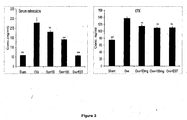
- Figure 3 shows that serum osteocalcin (assayed for more reliable mid portion of osteocalcin) and urinary CTX levels are elevated in OVx + vehicle group compared with sham + vehicle group.
- Treatment of A-4744 / F004 for 12 weeks to OVx rats resulted in significant reduction in the levels of both these bone turnover markers compared with OVx + vehicle group.
- BMCs bone marrow cells
- Bone marrow cells from female Sprague Dawley rats weighing ⁇ 100-180 were isolated at the end of the treatment (12 weeks) and cultures prepared according to a previously published protocol (Maniatopoulos et al., 1988). Briefly, the femora were excised aseptically, cleaned of soft tissues, and washed 3 times, 15 min each, in a culture medium containing 10 times the usual concentration of antibiotics as mentioned above.
- the epiphyses of femora were cut and the marrow flushed out in 20 ml of culture medium consisting of ⁇ -MEM, supplemented with 15% fetal bovine serum, 10 -7 M dexamethasone, 50 ⁇ g/ml ascorbic acid, and 10mM ⁇ -glycerophosphate.
- Released BMCs were collected and plated (2 ⁇ 10 6 cells/well of 12-well plate for mineralization assay and 10 6 cells/well of 48- well plate for ALP assay) in the culture medium, consisting of ⁇ -MEM, supplemented with 15% fetal bovine serum, 10 -7 M dexamethazone, 50 ⁇ g/ml ascorbic acid and 10mM ⁇ -glycerophosphate.
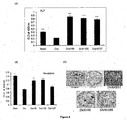
- BMCs were cultured from the animals that were given treatment or otherwise for 11 days for' ALP production and 21 days for mineralization, and the medium was changed every 48 h. After 21 days, the attached cells were fixed in 4% formaldehyde for 20 min at room temperature and rinsed once in PBS. After fixation, the specimens were processed for staining with 40mM Alizarin Red-S, which stains areas rich in nascent calcium. Determination of ALP activity by osteoblast cells was done after 11 days of culture. Data show that A-4744 / F004 treatment enhanced ALP production and mineralization by BMCs when compared with either OVx + vehicle or sham + vehicle groups (please see figure 4 ).
- New bone formation during the period of administration of A- 4744 / F004 was assessed by double fluorochrome (tetracycline & calcein) labeling (representative photomicrograph below).
- Figure 5 shows that there was no statistically significant change in mineral apposition rate (MAR) and bone formation rate (BFR) between OVx + vehicle, sham + vehicle groups in the femurs.
- MAR mineral apposition rate
- BFR bone formation rate
- treatment of OVx rats with A- 4744 / F004 resulted in significant increase in both MAR and BFR compared with other two groups.
- Neonatal rat calvarial cell cultures are prepared as described previously ( Chattopadhyay et al., Endocrinology 145:3451-62, 2004 ) using slight modification. Briefly, for calvarial osteoblast cultures, frontal and parietal bones from neonatal Sprague-Dawley rats (1-3 day old) were digested in 0.1% collagenase/0.1% dispase in ⁇ -MEM to obtain 5 sequential digests.
- the second through fifth digests are combined and grown to confluence at 37°C and 5% CO 2 in air in ⁇ -MEM, supplemented with 10% fetal bovine serum (FBS), 2 mM glutamine, 100 U/ml penicillin-streptomycin, non-essential amino acid solution and sodium pyruvate.
- FBS fetal bovine serum
- 2 mM glutamine 100 U/ml penicillin-streptomycin
- non-essential amino acid solution pyruvate.
- These osteoblast cells were further used to test thirteen pure compounds designated as 1-13.
- pre-osteoblasts undergo three characteristic stages of osteoblasts with the expression of stage specific genes. These are:
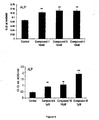
- Calvarial osteoblasts cells were plated (1500 cells/well in 12 well plate) in the osteoblast differentiation medium and the culture was continued for 10 days with or without treatment with these compounds. This is the time when the ALP levels peak, and serves as an osteoblast differentiation marker. The cells at this point were washed twice with PBS and then plates were fixed by keeping them at -70 °C for 1 h, and then brought to room temperature to determine ALP activity. The rate of the reaction here is directly proportional to the enzyme activity, which itself is proportional to osteoblast differentiation. The O.D. was measured at 405nm with a microplate reader. Out of all the compounds 1, 3, 4, 6 and 10 showed significantly increased ALP activity ( figure 6 ).
- osteoblasts The ability of osteoblasts to replicate in the presence of the compounds (1,3,4,6 and 10) is indicative of safety. Many isoflavonoids at micromolar concentrations are known to inhibit osteoblast cell growth. Osteoblasts were cultured in the absence or presence of compounds (dissolved in 0.01% DMSO final concentration) at various concentrations (1 pM to 1 ⁇ M) for 48 h. Cells receiving vehicle (0.01% DMSO) served as control. After incubation, the cells were washed with PBS. Then, cells were treated with MTT solution (5 mg/10 mL in DMEM devoid of Phenol Red) for 4 h. Formazon crystals formed were dissolved in DMSO and O.D. was taken at 540 nm. All the compounds were not toxic to the cells when compared to the control group, and they showed proliferation of the osteoblastic cells at some concentrations( Figure 8 ).
- mice weighing ⁇ 25-30gm were either bilaterally ovariectomized (OVx) or exposed to a sham surgical procedure. After ovariectomy, mice were left for 30 days for osteopenia to develop. Mice were individually housed at 21°C, in 12-h light:12-h dark cycles. All mice had excess to normal chow diet and water ad libitum. After 8 weeks, treatment in the form of gavage (1.0 mg and 5.0 mg/kg body weight) was given daily. Equal numbers of OVx and sham operated mice served as the control, and were given vehicle. At the end of 8 weeks, mice were euthanized. At autopsy, both femur and tibia were dissected and separated from adjacent tissue, cleaned, and used for ⁇ CT measurements.
- OVx + vehicle group had significant microarchitectural deteriorations in the femur epiphysis as indicated by reduced BV/TV, Tb.Th and Tb.N compared with the sham group.
- Compound 10 treatment to OVx mice resulted in increased BV/TV, Tb.Th and Tb.N compared with OVx + vehicle group.
- Tb.sp and SMI were increased in OVx + vehicle group compared with sham, and compound 10 treatment to OVx mice increased both parameters compared to OVx + vehicle mice.
- Table 4 ⁇ CT data of femur after 8 weeks of treatment of osteopenic mice with compound 10 Trabecular Parameters SHAM OVX Comp 10 Comp 10 (Femur) (1mg.kg 1 .day 1 ) (5mg.kg 1 .day 1 ) BV/TV (%) 6.37 ⁇ 0.28*** 2.91 ⁇ 0.152 4.10 ⁇ 0.253 ** 5.54 ⁇ 0.739*** a Tb.Th. 0.072 ⁇ 0.002** 0.059 ⁇ 0.003 0.069 ⁇ 0.002** 0.070 ⁇ 0.001** Tb.Sp. 0.445 ⁇ 0.014** * 0.618 ⁇ 0.039 0.529 ⁇ 0.022* 0.502 ⁇ 0.023 Tb.No.
Landscapes
- Health & Medical Sciences (AREA)
- Chemical & Material Sciences (AREA)
- Life Sciences & Earth Sciences (AREA)
- Organic Chemistry (AREA)
- General Health & Medical Sciences (AREA)
- Animal Behavior & Ethology (AREA)
- Pharmacology & Pharmacy (AREA)
- Veterinary Medicine (AREA)
- Public Health (AREA)
- Medicinal Chemistry (AREA)
- Epidemiology (AREA)
- Natural Medicines & Medicinal Plants (AREA)
- Molecular Biology (AREA)
- Engineering & Computer Science (AREA)
- Biotechnology (AREA)
- Physical Education & Sports Medicine (AREA)
- Biochemistry (AREA)
- Genetics & Genomics (AREA)
- Orthopedic Medicine & Surgery (AREA)
- Rheumatology (AREA)
- Alternative & Traditional Medicine (AREA)
- Botany (AREA)
- Medical Informatics (AREA)
- Microbiology (AREA)
- Mycology (AREA)
- Bioinformatics & Cheminformatics (AREA)
- Chemical Kinetics & Catalysis (AREA)
- General Chemical & Material Sciences (AREA)
- Nuclear Medicine, Radiotherapy & Molecular Imaging (AREA)
- Medicines Containing Plant Substances (AREA)
- Pharmaceuticals Containing Other Organic And Inorganic Compounds (AREA)
Description
- The present invention relates to bioactive fractions and compounds from Dalbergia sissoo for the prevention or treatment of osteo-health related disorders. The present invention relates in the field of pharmaceutical composition that provides new plant extracts, their fractions and pure compound isolated from natural sources that are useful for the prevention and/or treatment of various medical indications associated with estrogen dependent or independent diseases or syndromes or disorders preferably in the prevention or treatment of estrogen dependent or independent diseases or syndromes or disorders caused in humans and animals, and achievement of peak bone mass during skeletal growth and health in humans and animals. Particularly the present invention further relates to the processes for the preparation of biologically active extracts, fractions, and isolation of pure compounds, from Dalbergia sissoo plant from the family Fabaceae their pharmaceutically acceptable salts and compositions of the principal aspect of the present invention.
- Osteoporosis, which has been defined as a "state of low bone mass" is one of the major aging problems of the society. Osteoporosis is a metabolic disorder characterized by microarchitectural deterioration of bone tissue leading to enhanced bone fragility and consequent increase in fracture risk in older members of the population. Osteoporosis fractures occur most commonly in the spine, hip, distal radius and ribs. The risk is high in women as compared to men and increases sharply after 50 years of age. Factors predisposing towards osteoporosis include family history, genetic factors, hormonal factors, inadequate nutrition, and intake of certain medications, immobility and disease.
- The quality of life is greatly impaired in persons with sever osteoporosis. It is known to affect >50% of women and 30% men over the age of 50 years. In women, there is also an accelerated rate of bone loss immediately and for variable number of years following menopause.
- Most of the pharmacological agents available for clinical use such as calcium, vitamin D and its analogue, calcitonin, bisphosphonates, raloxifene, hormone replacement therapy (HRT) etc. act by decreasing the rate of bone resorption, thereby slowing the rate of bone loss. Timely administration of such antiresorptive agents prevents bone loss.
- Hormone replacement therapy, though effective in preventing bone loss following ovariectomy or menopause in women, is associated with increased risk of endometrial hyperplasia and carcinoma [Grady, D. Grebretsadik, T. Ernestwr, V. Petitti, D. Gynecol. 85, 304-313 (1995), Beresford S. A. Weiss, N. S. Voigt, L. F. McKnight, B. Lancet 349, 458-461 (1997)], breast cancer [Riggs, L. Hartmann, L. C. J. Med. 348, 618-629, (2003)], and thromboembolic diseases [Delmas, P. D. Lancet 359, 2018-2026 (2002)].
- The only side effect of calcium therapy is development of renal stones. The major disadvantage in calcitonin use is its high cost. Tachyphylaxis can develop in some individuals under calcitonin treatment. Bisphosphonates are poorly absorbed and may cause gastrointestinal irritation, diarrhoea and constipation. Raloxifene has been reported to increase incidence of hot flashes, deep vein thrombosis, pulmonary embolism and leg cramps [Clemett, D.; Spencer, C. M. )].
- In view of the use of these therapies and their associated side effects indicate a need for the alternative options in the prevention and treatment of osteoporosis.
- Traditional medicine is an ancient medical practice that existed in human societies before the application of modern science to health. The importance of traditional medicine as a source of primary health care was first officially recognized by the World Health Organization (WHO) in 1976 by globally addressing its Traditional Medicine Programme. In traditional medicine, there are many natural crude drugs that have the potential to treat bone diseases. However, not much laboratory work has been reported evaluating their possible development and use, except ipriflavone, a natural product derivative, which has been used clinically for such indications [Fujita, T.; Yoshikawa, S.; Ono, K.; Inoue, T.; Orimo, H. J. Clin. Exp. Med. 138, 113-141 (1986), Passeri, M.; Biondi, M.; Costi, D.; Bufalino, L.; Castiglione, g. N.; DiPeppe, C.; Abate, G. Bone Miner. 19 (Suppl. 1), S57-62 (1992)]. It is believed that herbal medicines are easily available, less expensive, and safer than chemically synthesized drugs. In India Ayurvedic medicine emerged during the rise of the philosophies of the Upanishads, Buddhism, and other schools of thought in India. Herbs played an important role in Ayurvedic medicine. In our program search for natural osteogenic plant, n-butanol soluble fraction of ethanol extract of Dalbergia sissoo aerial part which is renewable source exhibited osteogenic activity in our test model. Thus, the plant extract might possess bioactive ingredients that could promote bone formation. The effects on osteoporosis and total osteo-health and related disorders and has not been explored.
- There is a well-recognized link between the prevalence of low peak bone mass (PBM) attainment and osteoporosis among South Asian women [Adami, S.; Osteoporos Int, )]. PBM is defined as the highest level of bone mass achieved as a result of normal growth. Adolescence is the most critical period across the life span for bone health because more than half of PBM is accumulated during the teenage years. During these early years of life, bone formation is greater than bone resorption and the bone mass increases. PBM attained in early adult life is an important determinant of skeletal fragility at least until the age of 70 years (Ref). Following the attainment of PBM, resorption is faster than formation and the bone mass decreases. While gradual bone loss is normal to aging, it is those who fail to achieve optimal PBM and/or those with accelerated bone loss who are at the greatest risk of osteoporosis. In addition, low PBM predisposes to increased fragility fracture risk (Bonjour, J.P.; Chevalley, T.; Ferrari, S.; Rizzoli, R. SaludPublica Mex. 51 Suppl 1:S5-S17 (2009)].
- Therefore, since individuals with a high PBM at a young age are likely to have a high bone mass in old age, agents increasing PBM during skeletal growth is a desirable goal towards prevention of osteoporosis. PBM occurs several years after the completion of linear growth as bone mineral accretion continues after this time, although the precise timing of the attainment of PBM is not certain and varies between skeletal sites. A real BMD at the femur peaks around the age of 20 yr, whereas maximum total skeletal mass occurs 6-10 yr later, well after the cessation of the anabolic action of growth hormone (GH). Factors relating to the attainment of PBM include congenital, dietary, hormonal, physical activity, lifestyle, drugs and diseases. A therapeutic intervention aimed at increasing PBM has remained limited only to controlling factors such as estrogen status, dietary calcium intake and physical activity. Calcium intake appears to be relevant up to the so-called threshold intake (1000 mg/day), but higher allowances do not seem to offer additive advantages. Exercise affects only the regions of the skeleton under mechanical stress. Estrogen administration is realistic only in conditions characterized by severe hypoestrogenism. Clearly, nutritional deficiency is one of the major reasons for lack of PBM among South Asians, particularly among females those who are much more prone to bone loss at later stages of life. Therefore, agents that promote PBM have therapeutic implication for bone loss disorders.
- There is, thus, an urgent need to discover and develop a promising herbal product or a single biologically active molecule based drug or a cocktail of the pure and biologically active molecules of the plant origin that exhibit promising bone anabolic or for bone forming activity in experimental animals and human beings. The Dalbergia sissoo was a fit case to study and explore its true potential with respect to its bone forming response of its extract, fraction and pure biologically active marker components. The experiments have shown that its n-butanol soluble fraction and pure compounds isolated from the extract and the fraction exhibit promising bone forming activity.
- Dalbergia sissoo Roxb. belongs to the family Fabaceae, is distributed throughout sub-Himalayan tract from Ravi to Assam ascending up to 5000 ft in India, Pakistan, Bangladesh and Afghanistan. Dalbergia sissoo, commonly known as "Shisham" in India, is deciduous tree, having crooked trunk and light crown [Wealth of India. Raw materials, .] An aqueous extract of the leaves of Dalbergia sissoo has been used for the treatment of gonorrhoea [Medicinal plants of India; S. K. Jain, Roberts A. Defilipps; 1991. vol-1,325]. Leaves of the plant are bitter and stimulant and also used as fodder. Wood of Dalbergia sissoo was used for leprosy [R. N. Chopra, S. L. Nayar, I. C. Chopra. Glossary of Indian Medicinal Plants, 1956, page 90].
- The methylene chloride extract of the heart wood of Dalbergia sissoo inhibited the production of β-amyloid peptides (Aβ) so it may have therapeutic potential in the treatment of Alzheiner's disease. Acompound latifolin, isolated from the crude extract of the heart wood also inhibits β-amyloid production [Ramakrishna, N.V.S., Kumar Vijaya, E.K.S., Kulkarni, A.S., Jain, A.K., Bhat, R.G., Parikh, S., Quadros, A., deuskar, N., Kalakoti, B.S., Indian Journal of Chemistry 40B, 539-540, 2001]. Heartwood of the plant has also been reported to have anthelmintic activity [Manandhar, N.P., ].
- The ethanolic extract of the leaves of Dalbergia sissoo has anti-inflammatory activity [Hajare, S. W., Chandra, S., Sharma, J., Tandan, S.K., Lal, J., Telang, A. G., Fitoterapia 72 (2), 131-139, 2001] and petroleum ether extract also display the same activity due to a sterol i.e. sissosterol [Abdel-Ghani, Afaf, E.,Dora, Gamal A., Mansoura journal of pharmaceutical science, 20(1), 104-113, 2004]. It has also been reported to possess antidiabetic property in alloxan-induced diabatic rats [Niranjan, P. K., Singh, D., Prajapati, K., Jain, S. K., International Journal of Current Pharmaceutical Science 2(2), 24-27, 2010]. The leaves of Dalbergia sissoo exhibit antipyretic, analgesic properties [Hajare, S. W., Chandra, S., Tandan, S. K., Sharma, J., Lal, J., International Journal of Pharmacology 32, 357-360, 2000] and also acts against diarrhea [Brijesh, S., Deswani, P. G., Tetall, P., Antia, N.H., Birdl, T.J., Indian J. Pharmocol. 38(2), 120-124, 2006]. The preparation of Dalbergia sissoo leaves has been used as an alternative herbal treatment for antimicrobial property [Yadav, H., Yadav, M., Jain, S., Bhardwaj, A., Shing, V., Parkash, O., Marotta, F., International Journal of Immunopathology and Pharmocology 21 (4), 1013-1020, 2008]. An methanolic extract from the roots of Dalbergia sissoo has been reported to have anti-inflammatory activity in carrageenan-induced paw edema in rats [Kumar, S. M., Kumud, U., Pharmacognosy journal 2(11), 427-430, 2010]. The alcoholic extract of green branches of aerial showed a dose dependent inhibitory effect on the motility of isolated rabbit duodenum or bronchodilation and significant anti-inflammatory, antipyretic, analgesic, estrogenic activities [Sarg, T., Ateya, Abdel-Monem, Abdel-Ghani, A., Badr, W., Shams, G., Pharmaceutical Biology 37(1), 54-62, 1999].
- The alcoholic and chloroform extract of the bark of Dalbergia sissoo have been reported for anti-inflammatory, anti-ulcerogenic and antioxidant activities and the compound dalbergin isolated from the bark is found to possess same activities [Khaleel, A. E., El-Gayed, S. H., Ameen, A., Al-Azhar Journal of Pharmaceutical Sciences 28, 285-299, 2001]. The bark has been also tested for antioxidant potential in an in vitro assay [Kumari, A., Kakkar, P., Biomedical and Environmental sciences 21(1), 24-29, 2008].
- The anti-inflammatory, anti-ulcerogenic and antioxidant activities have been reported in alcoholic and chloroform extract of flowers of Dalbergia sissoo and the 7-metyltectorigenin, was found to have active constituent for these activities [Khaleel, A. E., El-Gayed, S. H., Ameen, A., Al-Azhar Journal of Pharmaceutical Sciences 28, 285-299, 2001].
- A variety of compounds have been isolated from different parts of Dalbergia sissoo. The mature pod of Dalbergia sissoo contains isocaviunin and 7-hydroxy-4-methyl coumarin [Sharma, A., Chibber, S. S., Chawla, H. M., Indian Journal of Chemistry 18B, 472-473, 1979]. 4'-Rhamnoglucoside of 7-methyltectorigenin and meso-inasitol has been isolated from immature pods of Dalbergia sissoo [Ahluwalia, V. K., Sachdev, G. P., Seshadri, T. R., Indian Journal of ]. A new isoflavane glucoside, isocaviudin among with tectoridin and caviunin 7-O- β-glucoside has been found as constituent of immature pods of Dalbergia sissoo [Sharma, A., Chibber, S. S., Chawla, H. M., Indian Journal of Chemistry 19B, 237-238, 1980]. Two isoflavone glycosides caviunin 7-O-gentiobioside and isocaviunin 7-O-gentiobioside has been isolated from the mature pods of Dalbergia sissoo. [Sharma, A., Chibber, S. S., Chawla, H. M., Phytochemistry 18, 1253, 1979; Sharma, A., Chibber, S. S., Chawla, H. M., Phytochemistry 19, 715, 1980].
- From the flowers of Dalbergia sissoo, isoflavones, 7-methyltectorigenin along with tectorigenin, prunetin, kaempferol have been isolated and compound 7-methyltectorigenin has shown anti-inflammatory, anti-ulcerogenic and antioxidant activities [Banerji, A., Murti, V. V. S., Seshadri, T. R., Indian Journal of ; Khaleel, A. E., El-Gayed, S. H., Ameen, A., Al-Azhar Journal of Pharmaceutical Science 28, 285-299, 2001]. Biochenin A, a potent cancer preventive agent with estrogenic activity has been isolated in good yield from the fresh flower of Dalbergia sissoo [Asaab, Aya M., El-Shaer, Nagwa, S., Darwish, F., Alexandria Journal of Pharmaceutical Science 14(2), 103-105, 2000]. 7,4'-Dimethyltectorigenin has also been isolated from the flowers of Dalbergia sissoo [Banerji, A., Murti, V. V. S., Seshadri, T. R., Current Science 34(14), 431, 1966].
- A
chalcone 2,3-dimethoxy-4'-γ,γ-dimethylallyloxy-2'-hydroxychalcone, two isoflavone 7-γ,γ-dimethylallyloxy-5-hydroxy-4'methoxyisoflavone and biochenin, a flavone, 7-hydroxy-6-methoxyflavone and a rotenoid have been isolated from the root bark of Dalbergia sissoo [Reddy, R. V. N., Reddy, N. P., Khalivulla, S. I., Reddy, M. V. B., Gunasekar, D., Blond, A., Bodo, B., Phytochemistry Letters 1(1), 23-26, 2008]. The chloroform extract of bark of Dalbergia sissoo contain dalbergin while ethyle acetate extract shown the presence of tectorigenin, tectorigenin-7-O-apioglucoside, tectorigenin-4'-O-apioglucoside, stearic acid and palmitic acid [Ragab, A., Mostafa, S. M. I., El-Shami, I., Ibrahim, Abdel-Rahim S., Mansoura Journal of Pharmaceutical Science 22(2), 176-194, 2006]. Two aliphatic esters, n-hexacosan-5-ol-1-yl-propionate, n-teracosan-5-ol-yl-propionate and two pyran 7-hydroxy-8-methoxy-4-(2'-hydroxyphenyl)[4H] benzopyran, 10,12,13,trihydroxy-11-methoxyanthracenyl-15-18[2H] pyran have been isolated from ethanolic extract of stem bark of Dalbergia sissoo Roxb [Trag, A. R., Ali, M., Siddiqui, T. O., Mahmooduzzafar, Iqbal, M., Journal of Saudi Chemical Society 9(2), 341-345, 2005]. Dalbergin has significant anti-inflammatory activity, anti- ulcerogenic antioxidant activity [Khaleel, A. E., El-Gayed, S. H., Ameen, A., Al-Azhar Journal of Pharmaceutical Science 28, 285-299, 2001]. 4-Arylcoumarin and fisetin have also been isolated from the bark [Khaleel, A. E., El-Gayed, S. H., Ameen, A., Al-Azhar Journal of Pharmaceutical Science 28, 285-299, 2001]. Isotectorigenin was isolated from the bark of Dalbergia sissoo [Dhingra, V. K., Seshadri, T. R., Mukerjee, S. K., Indian Journal of Chemistry 12(10), 1118, 1974]. Dalbergenone, methyldalbergin, dalbergichromene were also known constituent of bark of Dalbergia sissoo. - Irisolidone, biochenin-A, muningin, tectirigenin, prunetin, genistein, sissotrin, prunetin-4-O-galactoside, norartocarpetin, β-amyrin, β-sitosterol, and stigmasterol along with 13 fatty acids were isolated from the green branches of aerial parts of Dalbergia sissoo Roxb [Sarg, T., Ateya, Abdel-Monem, Abdel-Ghani, A., Badr, W., Shams, G., Pharmaceutical biology, 37(1), 54-62, 1999].
- Biochenin A, kaempferol, quercetin, kamempferol-3-O-β-D-glucoside, quercetin-3-α-L-rhamnoside, rutin, β -sitosterol were isolated from the leaves of Dalbergia Sissoo [Ragab, A., Mostafa, S. M. I., El-Shami, I., Ibrahim, Abdel-Rahim S., Mansoura journal of Pharmaceutical Science 22(2), 176-194, 2006].
- The Oligosaccharides were also isolated from the leaves of Dalbergia sissoo [Rana, V., Kumar, V., Soli, P. L., Carbohydrate polymers 78(3), 520-525, 2009]. Sissosterol isolated from petroleum ether extract of Dalbergia sissoo leaves has also been reported to show significant antiinflmmatory activity [Abdel-Ghani, Afaf, E.,Dora, Gamal A., Mansoura journal of pharmaceutical science, 20(1), 104-113, 2004]. Biochenin A 7-O-[β-D-apiofuranosyl-(1→6)-β-D-glucopyranoside, Biochenin A 7-O-[β-D-apiofuranosyl-(1→5)-β-D- apiofuranosyl (1→6)-β-D- glucopyranoside], tectorigenin 7-0-[β-D-apiofuranosyl (1→6)-β-D- glucopyranoside], prunetin 4'-O-[β-D-apiofuranosyl-(1→6)-β-D- glucopyranoside], 7-methyltectorigenin 4'-O-[β-D-apiofuranosyl-(1→6)-β-D-glucopyranoside], genistein 8-C-[β-D- glucopyranoside] and prunetin 4'-O-[β-D-glucopyranoside] have also been isolated from the leaves of Dalbergia sissoo [Farag, S. F., Ahmed, A. S., Terashima, K., Takaya, Y., Niwa, M., Phytochemistry 57(8), 1263-1268, 2001]. Sissotrin has been reported from the leaves [Banerji, A., Murti, V. V. S., Seshadri, T. R., Indian Journal of Chemistry, 4(2), 70-72, 1966].
- Trunk exudates of Dalbergia sissoo contain S-4'-hydroxy-4-methoxy-dalbergione, S-4-methoxydelbergone, S-dalbergion, S-4-methoxydelbergiqninol, 4-[(1S)-1-phenyl-2-propenyl]-1,3-benzenediol, (4S,6S)-4-hydroxy-3-methoxy-6-(1-phenyl-2-propenyl)-2-cyclohaxene-1-one, (4S,6S)-4-hydroxy-6-(1-phenyl-2-propenyl)-2-cyclohaxene-1-one, (2S,4R,5S)-4-hydroxy-5-methoxy-2-[(1S)-1-phenyl-2-propenyl)] cyclohaxanone, (2S,4R,6S)-4-hydroxy-2-methoxy-6-(1-phenyl-2-propenyl) cyclohaxanone, (1S,2S,4S,5S)-2-methoxy-5-[(1R)(1-phenyl-2-propenyl)-1,4- cyclohaxanediol, cearoin, 4-hydroxy-3-methoxy-4-(3-phenyl-2-propenyl)-2- cyclohaxen-1-one, isoliquiritigenin, butein, 2'-hydroxy-4'-methoxychalcone, hydroxyobtustyrene, (2S)-7-hydroxyflavanone, (+)-pinocembrin, plathymenin, (±)-vestitol, dihydrosepiol, formononetin, zenognosin B, 4-hydroxymedicarpin, (+)-medicarpin, (+)-vesticarpan [Shrestha, S. P., Amano, Y.,
- Narukawa, Y., Takeda, T., Journal of Natural Product, 71, 98-101, 2008].
- One of the main object of the present invention is to provide bioactive fractions and compounds from Dalbergia sissoo for the prevention or treatment of osteo-health related disorders.
- Another object of the present invention is to provide the crude extract derived from Dalbergia sissoo in pharmaceutically acceptable form in order to enhance its application potential for the management or prevention or treatment or cure of estrogen dependent or independent diseases or syndromes or disorders preferably in the prevention or treatment of estrogen dependent or independent diseases or syndromes or disorders caused in humans and animals, and achievement of PBM during skeletal growth and health in humans and animals.
- Yet another object of the present invention is to provide the n-butanol soluble fraction derived from Dalbergia sissoo in pharmaceutically acceptable form in order to enhance its application potential for the management or prevention or treatment or cure of estrogen dependent or independent diseases or syndromes or disorders preferably in the prevention or treatment of estrogen dependent or independent diseases or syndromes or disorders caused in humans and animals, and achievement of PBM during skeletal growth and health in humans and animals.
- Still another object of the invention is to provide individual pure compounds derived from Dalbergia sissoo in pharmaceutically acceptable form in order to enhance their application potential for the management or prevention or treatment or cure of estrogen dependent or independent diseases or syndromes or disorders preferably in the prevention or treatment of estrogen dependent or independent diseases or syndromes or disorders caused in humans and animals, and achievement of PBM during skeletal growth and health in humans and animals.
- Yet another object of the invention is to provide a cocktail of two or more than two pure compounds derived from Dalbergia sissoo, in a suitable ratio or ratios, in pharmaceutically acceptable form in order to enhance their application potential for the management or prevention or treatment or cure of estrogen dependent or independent diseases or syndromes or disorders preferably in the prevention or treatment of estrogen dependent or independent diseases or syndromes or disorders caused in humans and animals, and achievement of PBM during skeletal growth and health in humans and animals.
- Still another object of the present invention is to provide the n-butanol soluble fraction derived from Dalbergia sissoo A-4744/F004 having bone anabolic (i.e. new bone formation) effect rather than anti-resorptive (stopping further bone loss) effect.
- Yet another object of the present invention is to provide, a composition devoid of uterine estrogenicity.
- One more objective of the invention is to provide compounds which are non toxic to the cells.
- Accordingly, the present invention provides a compound Caviunin 7-O- [β-D-apiofuranosyl-(1→6)-β-D-glucopyranoside] of
formula 10 and discloses a pharmaceutically acceptable salt thereof,
- The pharmaceutically acceptable salts may be selected from the group consisting of hydrochloride, formate, acetate, phenyl acetate, trifluroacetate, acrylate, ascorbate, benzoate, chlorobenzoates, bromobezoates, iodobenzoates, nitrobenzoates, hydroxybenzoates, alkylbenzoates, alkyloxybenzoates, alkoxycarbonylbenzoates, naphthalene-2 benzoate, butyrates, phenylbutyrates, hydroxybutyrates, caprate, caprylate, cinnamate, mandelate, mesylate, citrate, tartarate, fumerate, heptanoate, hippurate, lactate, malate, maleate, malonate, nicotinate, isonicotinate, oxalate, phthalate, terephthalate, phosphate, monohydrogen phosphate, dihydrogen phosphate, metaphosphate, pyrophosphate, propiolate, propionate, phenylpropionate, salicylate, sebacte, succinate, suberate, sulphate, bisulphate, pyrosulphate, sulphite, bisulphate, sulphonate, benzene sulphonate, bromobenzene sulphonates, chlorobenzene sulphonates, ethane sulphonates, methane sulphonates, naphthalene sulphonates, toluene sulphonates.
- In another embodiment of the present invention, the compound Caviunin 7-O- [β-D-apiofuranosyl-(1→6)-β-D-glucopyranoside] is useful for the treatment of bone disorder.
- In yet another embodiment of the present invention, wherein the compound Caviunin 7-O- [β-D-apiofuranosyl-(1→6)-β-D-glucopyranoside] exhibits >1.0-fold increase in osteoblast differentiation over the control, assessed by ALP production.
- In yet another embodiment of the present invention, wherein the compound Caviunin 7-O-[β-D-apiofuranosyl-(1→6)-β-D-glucopyranoside] exhibits 1.0 to 3.0-fold increase in osteoblast differentiation over the control, assessed by ALP production.
- In yet another embodiment, the compound Caviunin 7-0- [β-D-apiofuranosyl-(1→6)-β-D-glucopyranoside] given to estrogen deficient rats induced significantly greater mineralization of the bone marrow stromal cells than the OVx rats treated with vehicle. Estrogen supplementation to OVx rats at the dose (2.5µg/kg) that fully stimulated uterine estrogenicity, was unable to increase mineralization of the bone marrow stromal cells.
- In yet another embodiment of the present invention, effective dose of compound Caviunin 7-O- [β-D-apiofuranosyl-(1→6) β-D-glucopyranoside] is in the range of 1 to 5mg/kg/day.
- In still another embodiment of the invention, wherein the said compound exhibits 15 fold increase in bone Morphogenic protein (BMP-2) expression in calvaria (rich in preosteoblasts) in rats over that of vehicle treated rats at a dose of 5.0 mg.kg-1.day-1 for 3 consecutive days.
- In a further embodiment of the invention, wherein the compound is non toxic to the cells at concentration ranging between 1 pM to 1 µM for 48 h.
- In one more embodiment of the invention, wherein the compound showed normal growth of the osteoblastic cells at concentration ranging between 1 pM to 1 µM and do not cause cell growth arrest.
- In another embodiment of the invention, wherein the said compound exhibits osteogenic effect on bone marrow stromal cells at the levels ranging between 1 and 5mg/kg/day.
- In still another embodiment of the present invention, compound (Caviunin 7-O- [β-D-apiofuranosyl-(1→6)-β-D-glucopyranoside] is isolated from the leaves of plant "Dalbergia sissoo".
- In still another embodiment of the invention, wherein said compound may be isolated from alcoholic extract A001 or bioactive fraction F004 obtained from the leaves of plant "Dalbergia sissoo".
- A bioactive fraction F004 from the plant "Dalbergia sissoo" wherein the fraction comprising;
-
Compound 1 Biochanin A in the range of 1.5% to 3.47 %; - Compound 2 (Caviunin 7-O-β-D-glycopyranoside)
-
Compound 3 Pratensein or 3'-methoxygenistein in the range of 0.1 % to 0.5 %; -
Compound 4 Genstein in the range of 0.02 % to 0.2 % -
Compound 5 Quercetin 3-O-rutinoside in the range of 1.0 % to 3.5 % -
Compound 6 Biochanin 7 -O- β-D-glucopyranoside in the range of 0.2% to 1.0% - Compound 7 (Kampferol-3-O- rutinoside)
- Compound 8 (Kaempferol 3-O-β-D-glucopyranoside)
- Compound 9 (Quercetin 3-O-β-D-glucopyranoside)
-
Compound 10 Caviunin 7-O- [β-D-apiofuranosyl-(1→6)-β-D-glucopyranoside in the range of 1.5 % to 5.0 % - Compound 11 Biochanin A 7-O-[β-D-apiofuranosyl-(1→6)-β-D-glycopyranoside in the range of 2.0 % to 5.5 %
- Compound 12 Biochanin A 7-O[β-D-apiofuranosyl-(1→5) β-D-apiofuranosyl-(1→6) -β- D-glycopyranoside in the range of 15.0 % to 22.0 %
- Compound 13 (Caviunin)
- In an embodiment of the invention, wherein the fraction F004 significantly protects the microarchitectural features of the tibial trabecular bones of OVx rats at a dose ranging between 50 to 100mg.kg- 1day-1
- Accordingly the present invention provides a process for preparation of bioactive fractions from the plant Dalbergia sissoo, wherein the process steps comprises:
- a. powdering the leaves of the plant Dalbergia sissoo;
- b. percolating the powder obtained in step (a) with alcohol for a period ranging between 14 to 17 hrs followed by collecting the percolate ;
- c. repeating the step (b) for 4 to 5 times to obtain the alcoholic extract A001;
- d. fractioning the alcoholic extract as obtained in step (c) with n-hexane to obtain hexane soluble fraction and hexane insoluble residue;
- e. triturating the hexane insoluble residue as obtained in step(d) with chloroform to obtain chloroform soluble fraction and chloroform insoluble residue;
- f. suspending the chloroform insoluble residue as obtained in step (e) with water followed by extracting with n-butanol to obtain n-butanol soluble fraction F004;
- g. isolating the
compounds 1 to 13 from fraction F004 by chromatographic methods. - In an embodiment of theinventio, wherein the alcohol used in step (b) may be selected from the group consisting of methanol, ethanol, propanol or suitable combination thereof.
- In another embodiment of the invention, wherein the
compounds 1 to 13 may be isolated from n-butanol soluble fraction F004 having the following formulae:
- 1: R1=R3=R4=H, R2: R7=R9=H, R8=OCH3
- 2: R1=H, R3=OCH3, R4=Glc, R2: R7=R8=R9=OCH3
- 3: R1=R3=R4=H, R2: R7=H, R8=OH, R9=OCH3
- 4: R1=R3=R4=H, R2: R7=R9=H, R8=OH
- 5: R3=R4=H, R1: R5=R6=OH, R2: ORutinosyl
- 6: R1=R3=H, R4=Glc. R2: R7=R9=H, R8=OCH3
- 7: R3=R4=H, R1: R5=H, R6=OH, R2: ORutinosyl
- 8: R3=R4=H, R1: R5=R6=OH, R2: OGlc
- 9: R3=R4=H, R1: R5=H, R6=OH, R2: OGlc
- 10: R1=H, R3=OCH3, R4 Apio(1→6)-Glc, R2: R7=R8=R9=OCH3
- 11: R1=R3=H, R4=Apio(1→6)-Glc, R2: R7=R9=H, R8=OCH3
- 12: R1=R3=H, R4=Apio(1-5)-Apio(1→6)-Glc, R2: R7=R9=H, R8=OCH3
- 13: R1=R4=H, R3=OCH3, R2: R7-R8=R9=OCH3
- In still another embodiment of the invention, wherein the alcoholic extract A001 obtained in step (c) comprising
-
Compound 1 Biochanin A in the range of 1.0% to 3.0%, - Compound 2 (Caviunin 7-O-β-D-glycopyranoside)
-
Compound 3 Pratensein or 3'-methoxygenistein in the range of 0.1 % to 0.5 %, -
Compound 4 Genstein in the range of 0.02 % to 0.2 %, -
Compound 5 Quercetin 3-O-rutinoside in the range of 0.2% to 1.5% , -
Compound 6 Biochanin 7 -O- β-D-glucopyranoside in the range of 0.1 % to 0.4 %, - Compound 7 (Kampferol-3-O- rutinoside)
- Compound 8 (Kaempferol 3-O-β-D-glucopyranoside)
- Compound 9 (Quercetin 3-O-β-D-glucopyranoside)
-
Compound 10 Caviunin 7-O- [β-D-apiofuranosyl-(1→6)-β-D-glucopyranoside] in the range of 0.1 % to 0.5%, - Compound 11 Biochanin A 7-O[β-D-apiofuranosyl-(1→6)-β-D-glycopyranoside in the range of 0.5% to 2.0%
- Compound 12 Biochanin A 7-O[β-D-apiofuranosyl-(1→5) β-D-apiofuranosyl-(1→6) -β-D-glycopyranoside] in the range of 1.0% to 5.0%
- Compound 13 (Caviunin)
- In an embodiment of the invention wherein the
compounds 1 to 13 may be isolated from the alcoholic extract A001 or fraction F004 by chromatographic methods selected from the group consisting of column chromatography, flash chromatography, medium pressure liquid chromatography, high performance liquid chromatography, gel filtration. - In a further embodiment of the invention wherein the
compound - In yet another embodiment of the invention wherein the
compound 4 showed in vivo osteogenic activity in rats at a dose each 5.0 mg.kg-1.day-1 for 3 consecutive days and showed 5-fold increase in BMP-2 expression in primary calvarial osteoblast cells. - In still another embodiment of the invention wherein the compound is selected from a group consisting of 1,3, 4, and 6 are non toxic to the cells at concentration ranging between 1 pM to 1 µM for 48 h.
- One more embodiment of the invention, wherein the compound is selected from a group consisting of 1,3, 4, and 6 showed proliferation of the osteoblastic cells at concentration ranging between 1 pM to 1 µM and do not cause cell growth arrest.
- A pharmaceutical composition comprising compounds, selected from the group consisting of
compounds - In another embodiment of the present invention, wherein the combination of
compounds - In another embodiment of the present invention, wherein the combination of
compounds - In yet another embodiment of the present invention, the pharmaceutical diluent used for the preparation of pharmaceutical may be selected from the group consisting of lactose, mannitol, sorbitol, microcrystalline cellulose, sucrose, sodium citrate, dicalcium phosphate, or any other ingredient of the similar nature alone or in a suitable combination thereof.
- In still another embodiment of the present invention, the effective dose of the pharmaceutical composition is ranging between 0.1 to 5000 mg per kg body weight preferably 1 mg to 500 mg per kg body weight, daily, bi-weekly, weekly or in more divided doses.
- In yet another embodiment of the present invention, the pharmaceutical composition is useful for the prevention or treatment of bone disorders may be any diseases and syndromes caused by osteoporosis, bone loss, bone formation, bone fracture healing, attainment of higher peak bone mass when administered during the period of growth, and promotion of new bone formation in vitro / in vivo.
- Disclosed is method for prevention or treatment of bone disorders comprising the steps of administering a pharmaceutical composition to the subject in need optionally along with pharmaceutically acceptable excipients.
- In yet another embodiment of the present invention, the pharmaceutical composition is to be administered by the route selected from oral, percutaneous, intramuscular, intraperitoneal, intravenous and local.
- In still another embodiment of the present invention, the pharmaceutical composition may be used in a dose ranging between 1 to 5000 mg/kg body weight.
- In yet another embodiment of the present invention, the pharmaceutical composition may be used in the form of tablet, syrup, powder, capsule, suspension, solution, ointment and mixture.
- A pharmaceutical
composition comprising compound 10, optionally along with pharmaceutically acceptable carrier, diluent and additives. - In an embodiment of the invention wherein the pharmaceutical
composition comprising compound 10, optionally along with pharmaceutically acceptable carrier, diluent and additives for the prevention or treatment of bone-joint disorder or osteo-health related disorder. - A method for prevention or treatment of bone disorders wherein the said method comprising the steps of administering to the subject in need a pharmaceutical composition comprising compounds selected from the group consisting of 1, 3, 4, 6 or 10 optionally along with pharmaceutically acceptable carrier, diluent and additives.
-
- A001:
- Ethanolic extract of Dalbergia sissoo leaves
- ALP:
- Alkaline Phosphatase
- α-MEM
- : Alpha-minimum essential medium
- Aβ:
- β-amyloid peptides
- BFR:
- Bone formation rate
- BMCs:
- Bone marrow cells
- BV/TV:
- Bone Volume / Tissue Volume
- cbfa1:
- Core Binding factor α1
- CDRI:
- Central Drug Research Institute
- CO2:
- Carbon di-oxide
- CTX:
- Carboxyterminal telopeptide
- CC
- : column chromatography
- CD3OD
- : deuterated methanol
- CDCl3
- : deuterated chloroform
- CHCl3
- : chloroform
- COSY
- : correlation spectroscopy
- d
- : doublet
- dd
- : doublet of doublet
- DMSO
- : Dimethyl Sulfoxide
- DMSO-d6
- : dutrated dimethyl sulphoxide
- ESIMS
- : electrospray ionization mass spectrometry
- ft
- : foot
- E2
- : Estradiol
- EST
- : Estradiol
- F002
- : n-hexene fraction of ethanolic extract Dalbergia sissoo leaves
- F003
- : Chloroform fraction of ethanolic extract Dalbergia sissoo leaves
- F004
- : n-butanol fraction of ethanolic extract Dalbergia sissoo leaves
- F005
- : Aqueous fraction of ethanolic extract Dalbergia sissoo leaves
- FBS
- : Fetal Bovine Serum
- g
- :gram
- GH:
- : Growth Hormone
- H&E staining
- : Hemotoxin & Eosin staining
- h.
- : hour
- HPLC
- : High Performance Liquid Chromatography
- HRT
- : Hormone Replacement Therapy
- Hz
- : hertz
- IAEC
- : Institutional Animal Ethical Committee
- J
- : coupling constant
- kg
- : kilogram
- I
- : liter
- m
- : multiplet.
- MAR
- : Mineral Apposition Rate
- MeOH
- : methanol
- MHz
- : megahertz
- mg
- : milligram
- min
- : minutes
- mM
- : mill Molar
- mm
- : millimeter
- ml
- : milliliter
- mp
- : melting point
- m/z
- : mass number to charge ratio
- n-BuOH
- : n-butanol
- nM
- : nano Molar
- NMR
- : nuclear magnetic resonance
- s
- : singlet
- TLC
- : thin layer chromatography
- U. P.
- : Uttar Pradesh
- µCT
- : Micro Computational Tomography
- µL
- : Micro Litter
- µm
- : Micro meters
- µM
- : Micromolar
- O.D.
- : Optical Density
- OVx
- : Overiectomized
- P
- : Probability
- PB
- : Peak Bone Mass
- PBS
- : Phosphate Buffer Salaine
- pM
- : pico Molar
- RNA
- : Ribo nucleic Acid
- rpm
- : revolution per minute
- S.D.
- : Standard Deviation
- S.E.M.
- : Standard Error Mean
- SMI
- : Structural Model Index
- Tb. No.
- : Trabacular Numbers
- Tb. Sp.
- : Trabacular separation
- Tb. Th.
- : Trabacular thickness
- TLC
- : Thin Layer Chromatography
- U.P.
- : Uttar Pradesh
- U/ml
- : Unit /milliliter
- WHO
- : World Health Organization
-
-
Figure 1 : Flow chart for preparation of compounds. -
Figure 2 : Effect of A-4744/F004 extract on uterine weight -
Figure 3 : Effect of A-4744/F004 on bone turnover markers, i.e serum osteocalcin and CTX -
Figure 4 : ALP production (A) and mineralization (B, C) of BMCs in rats treated with A-4744/F004 -
Figure 5 : Effect of A- 4744/F004 extract on Bone histomorphometry -
Figure 6 : Alkaline phosphatase activity of isolatedpure compounds -
Figure 7 : Comparison of in vivo osteogenic efficacy betweencompound 4 andcompound 10 -
Figure 8 : Effect of thebioactive compounds - Accordingly, the present invention provides a process for the extraction and isolation and quantification of compounds of the formula 1-13 shown in the drawing accompanying this specification, which comprises:
- (a) providing plant component part(leaves) of the Dalbergia sissoo;
- (b) powdering of the plant material,
- (c) extracting the powdered plant material with protic solvent at room temperature,
- (d) filtering the extract,
- (e) concentrating the extract under reduced pressure,
- (f) triturating the extract with hexane and chloroform to remove the nonpolar constituents,
- (g) dissolving the extract in water,
- (h) partitioning with n-butanol saturated with water,
- (i) concentrating n-butanol soluble portion under vacuum to obtain free flowing powder to form the product with the desired composition designated as "osteoNATURALcare",
- (j) isolating the compounds including but not limiting to 1-13 from the n-butanol soluble fraction by conventional chromatographic methods,
- (k) quantifying the active compounds including but not limiting to 1, 3-5 and 10- 12 in n-butanol soluble fraction or in any other fraction derived from Dalbergia sissoo.
- Methods of preventing or treating disorders or disease conditions mentioned herein comprise administering to an individual human being or any other mammal or any other animal in need of such treatment a therapeutically effective amount of one or more of the agents of this invention.
- The dosage regimen and the mode of administration of the agents of this invention or a pharmaceutically acceptable salt or a pharmaceutically acceptable composition thereof with one or more of the pharmaceutically acceptable carriers, excipients etc. will vary according to the type of disorder or disease conditions described herein and will be subject to the judgment of the medical practitioner involved.
- The agent of this invention or a pharmaceutically acceptable salt or a pharmaceutically acceptable composition thereof with one or more of the pharmaceutically acceptable carriers, excipients etc. may be effectively administered in doses ranging from 0.1 mg to 5000 mg, more preferably in doses ranging from 0.5 to 1000 or still more preferably in the doses ranging from 1 mg to 500 mg weekly or bi-weekly or daily or twice a day or three times a day or in still more divided doses.
- Such doses may be administered by any appropriate route for example, oral, systemic, local or topical delivery for example, intravenous, intra-arterial, intra-muscular, subcutaneous, intra-peritoneal, intra-dermal, buccal, intranasal, inhalation, vaginal, rectal, transdermal or any other suitable means in any conventional liquid or solid dosage form to achieve, conventional delivery, controlled delivery or targeted delivery of the compounds of this invention or a pharmaceutically acceptable salt or a pharmaceutically acceptable composition thereof with one or more of the pharmaceutically acceptable carriers, excipients etc.
- A preferred mode of administration of agents of the present invention or a pharmaceutically acceptable salt or a pharmaceutically acceptable composition thereof is oral. Oral compositions will generally comprise of agents of the present invention or a pharmaceutically acceptable composition thereof and one or more of the pharmaceutically acceptable excipients.
- The oral compositions such as tablets, pills, capsules, powders, granules, and the likes may contain any of the following pharmaceutically acceptable excipients:
- 1. a diluent such as lactose, mannitol, sorbitol, microcrystalline cellulose, sucrose, sodium citrate, dicalcium phosphate, or any other ingredient of the similar nature alone or in a suitable combination thereof;
- 2. a binder such as gum tragacanth, gum acacia, methyl cellulose, gelatin, polyvinyl pyrrolidone, starch or any other ingredient of the similar nature alone or in a suitable combination thereof;
- 3. a disintegrating agent such as agar-agar, calcium carbonate, sodium carbonate, silicates, alginic acid, corn starch, potato tapioca starch, primogel or any other ingredient of the similar nature alone or in a suitable combination thereof;
- 4. a lubricant such as magnesium stearate, calcium stearate or steorotes, talc, solid polyethylene glycols, sodium lauryl sulphate or any other ingredient of the similar nature alone or in a suitable combination thereof;
- 5. a glidant such as colloidal silicon dioxide or any other ingredient of the similar nature alone or in a suitable combination thereof;
- 6. a sweetening agent such as sucrose, saccharin or any other ingredient of the similar nature alone or in a suitable combination thereof;
- 7. a flavoring agent such as peppermint, methyl salicylate, orange flavor, vanilla flavor, or any other pharmaceutically acceptable flavor alone or in a suitable combination thereof;
- 8. wetting agents such as cetyl alcohol, glyceryl monostearate or any other pharmaceutically acceptable flavor alone or in a suitable combination thereof;
- 9. absorbents such as kaolin, bentonite clay or any other pharmaceutically acceptable flavor alone or in a suitable combination thereof;
- 10. solution retarding agents such as wax, paraffin or any other pharmaceutically acceptable flavor alone or in a suitable combination thereof.
- Therefore, the present invention seeks to overcome prior problems associated with the cure and the management associated with estrogen dependent or independent diseases or syndromes or disorders preferably in the prevention or treatment of estrogen dependent or independent diseases caused in humans and animals and more particularly the bone health disorders and syndromes. The invention also seeks to promote peak bone mass achievement during skeletal growth as occurs in adolescence. The n-butanol soluble fraction and the pure compounds 1-13 from Dalbergia sissoo described in the present invention are useful in the management, prevention treatment, and cure of estrogen dependent or independent diseases or syndromes or disorders preferably in the prevention or treatment of estrogen dependent or independent diseases or syndromes or disorders caused in humans and animals, and achievement of PBM during skeletal growth and health in humans and animals.
- Accordingly the present invention provides a crude extract or n-butanol soluble fraction or individual pure compounds or cocktail of suitable ratio or ratios of two or more than two pure compounds derived from Dalbergia sissoo in pharmaceutically acceptable form to enhance their application potential for the management or prevention or treatment or cure of estrogen dependent or independent diseases or syndromes or disorders preferably in the prevention or treatment of estrogen dependent or independent diseases or syndromes or disorders caused in humans and animals, and achievement of PBM during skeletal growth and health in humans and animals, by the process and the methods described in the present invention..
- The invention discloses the crude extract useful for management or prevention or treatment or cure of estrogen dependent or independent diseases or syndromes or disorders preferably in the prevention or treatment of estrogen dependent or independent diseases or syndromes or disorders caused in humans and animals, and achievement of PBM during skeletal growth and health in humans and animals, is prepared from the leaves of the plant Dalbergia sissoo.
- The invention also discloses the n-butanol soluble fraction, useful for management or prevention or treatment or cure of estrogen dependent or independent diseases or syndromes or disorders preferably in the prevention or treatment of estrogen dependent or independent diseases or syndromes or disorders preferably in the prevention or treatment of estrogen dependent or independent diseases or syndromes or disorders caused in humans and animals, and achievement of PBM during skeletal growth and health in humans and animals, is prepared from the crude extract of the leaves of the plant Dalbergia sissoo.
- The invention discusses the individual pure compounds, useful for management or prevention or treatment or cure of estrogen dependent or independent diseases or syndromes or disorders preferably in the prevention or treatment of estrogen dependent or independent diseases or syndromes or disorders preferably in the prevention or treatment of estrogen dependent or independent diseases or syndromes or disorders caused in humans and animals, and achievement of PBM during skeletal growth and health in humans and animals, are derived from the crude extract or n-butanol soluble fraction of the leaves of the plant Dalbergia sissoo.
- The invention shows the ratios and absolute concentration of the individual pure compounds in the crude extract or n-butanol soluble fraction of Dalbergia sissoo and useful for management or prevention or treatment or cure of estrogen dependent or independent diseases or syndromes or disorders preferably in the prevention or treatment of estrogen dependent or independent diseases or syndromes or disorders caused in humans and animals, and achievement of PBM during skeletal growth and health in humans and animals.
- The invention exhibits the individual pure compounds in the crude extract or n-butanol soluble fraction of Dalbergia sissoo were evaluated in-vitro and vivo using well established protocols and procedures to establish and demonstrate their usefulness in management or prevention or treatment or cure of estrogen dependent or independent diseases or syndromes or disorders preferably in the prevention or treatment of estrogen dependent or independent diseases or syndromes or disorders caused in humans and animals, and achievement of PBM during skeletal growth and health in humans and animals.
- The invention is described by way of illustrative examples and should not be construed to limit the scope of the invention to the accompanying formula drawings.
- Following examples are given by way of illustration of the invention and should not be construed to limit the scope of the present invention
- Dalbergia sissoo Roxb. belongs to the family Fabaceae, is distributed throughout sub-Himalayan tract from Ravi to Assam ascending up to 5000 ft in India, Pakistan, Bangladesh and Afghanistan. Dalbergia sissoo, commonly known as "Shisham" in India, Dalbergia sissoo was collected from Lucknow, U. P. India. Lucknow is located at 26° 48' North and 80° 54' East. Powdered leaves of Dalbergia sissoo (Plant code No. 4744, 18 kg) were placed in glass percolator with ethanol (40 L) and are allowed to stand at room temperature for about 16 hours (overnight). The percolate was collected. This process of extraction was repeated for five times. The combined extract was filtered, concentrated at 45 °C; weight of extract obtained 2.00 kg (11.1 %, 4744-A001).
- Ethanolic extract (4744-A001, 1.80 kg) was triturated with hexane (1000 ml X 8). The hexane soluble fraction was then concentrated under the reduced pressure at 40°C, weight of hexane fraction obtained 427.0 g (23.7%, F002). Residue obtained after triturating with hexane was again triturated with chloroform (1000 ml X 8). The chloroform soluble fraction was then concentrated under the reduced pressure at 40°C, weight of chloroform fraction obtained 333.0 g (18.5%, F003). The insoluble residue was suspended in water (2500 ml), extracted with n-butanol saturated with water ((1500 ml X 7) ml). The combined n-butanol soluble fraction was concentrated under the reduced pressure at 45°C, weight of n-butanol soluble fraction 740.0 g (41.1%, F004).
- The n-BuOH fraction (600.0 g) was subjected to silica gel column chromatography (100-200 mesh), with the gradient of CHCl3-MeOH (90:10, 90:20, 70:30, 50:40, 50:50 and MeOH) as eluent. Six fractions (F1-F6) were collected according to TLC analysis. Fraction F1 was purified on silica gel column chromatography eluted with pure CHCl3 afforded 13 and CHCl3-MeOH (95:5) to afforded
compounds compound 3 successively. Purification of F2 fraction by repeated column chromatography on silica gel eluted with CHCl3-MeOH (90:10 to 85:15) to affordedcompounds compounds 9, 7compound 10 and compound 11. Fraction F4 afforded compound 12, compound 8 andcompound 5 by CC over Sephadex-LH-25 eluted with MeOH- H2O (30:70), followed by repeated C18 CC eluted with MeOH- H2O. The flow chart for the isolation procedure is provided infigure 1 . Accordingly butanol fraction afforded 13 compounds designated as 1-13. These compounds were characterized from detailed spectroscopic studies. Thecompound 10 is new reported for the first time from natural source. We have given the common name to 10 (Dalsissooside). The compounds 1-9 and 11-13 are known. -


- Yield: 7.8 g. (1.3%); light yellow needle shape crystals; mp: 214-216°C; ESIMS: m/z 285[M+1]+; C16H12O5; 1H NMR: (DMSO-d6, 300 MHz) δ: 8.22 (1H, s, H-2), 6.22 (1H, d, J=2.0Hz, H-6), 6.34 (1H, d, J=2.0Hz, H-8), 7.45 (2H, d, J=8.7Hz, H-2', 6'), 6.95 (2H, d, J=8.7Hz, H-3', 5'), 12.89 (1H, s, OH-5), 3.79 (3H, s, 4'-OCH3); 13C NMR: (DMSO-d6, 75 MHz) δ: 153.6 (C-2), 121.6 (C-3), 179.7 (C-4), 161.7 (C-5), 98.7 (C-6), 163.9 (C-7), 93.4 (C-8), 157.2 (C-9), 104.1 (C-10), 122.6 (C-1'), 129.8 (C-2',6'), 113.3 (C-3',5'), 158.8 (C-4'), 55.1 (3H, s, 4'-OCH3).
- Yield: 2 g. (0.33 %); light yellow coloured needle shape crystals; mp: 235-236°C; ESIMS: m/z 559 [M+Na+1]+, 537 [M+1]+; C25H28O13; 1H NMR: (DMSO-d6, 300 MHz) δ 8.29 (1H, s, H-2), 6.88 (1H, s, H-8), 6.78 (1 H, s, H- 3'), 6.90 (1 H, s, H-6'), 5.07 (1 H, d, J=4.83 Hz, H-1"), and other suger protons are at 3.60-3.10 (5H, m, H-2"-6"), 12.87 (1H, s, OH-5), 5.45 (1H, s, OH-2") 5.14 (2H, s, OH-3",4") 4.63 (1H, m, OH-6"), 3.77 (3H, s, 6-OCH3) 3.72 (3H, s, 2'-OCH3) 3.83 (3H, s, 4'-OCH3) 3.70 (3H, s, 5'-OCH3). 13C NMR: (DMSO-d6, 75 MHz) δ: 156.1 (C-2), 120.0 (C-3), 180.6 (C-4), 152.8 (C-5), 132.6 (C-6), 156.6 (C-7), 94.2 (C-8), 152.1 (C-9), 106.4 (C-10), 110.5 (C-1'), 152.5 (C-2'), 98.6 (C-3'), 150.0 (C-4'), 142.4 (C-5'), 116.1 (C-6'), 100.2 (C-1"), 73.2 (C-2"), 76.7 (C-3"), 69.7 (C-4"), 77.3 (C-5"), 60.4 (C-6"), 60.0 (6-OCH3), 56.5 (2'-OCH3), 55.9 (4'-OCH3), 56.5 (5'-OCH3).
- Yield: 300 mg. (0.05 %); ligtht yellow crystals; mp: 273-274°C; ESIMS: m/z 301[M+1]+; C16H12O6; 1H NMR: (DMSO-d6, 300 MHz) δ: 8.30 (1 H, s, H-2), 6.22 (1H, dd, J=1.9 Hz, H-6), 6.38 (1 H, d, J=2 Hz, H-8), 6.95 (2H, s, H-2',6'), 7.03 (1H, s, H-5'), 3.79 (3'-OCH3); 13C NMR: (DMSO-d6, 75 MHz) δ: 154.3 (C-2), 123.4 (C-3), 180.3(C-4), 162.1 (C-5), 99.1 (C-6), 164.4 (C-7), 93.8 (C-8), 157.6 (C-9), 104.6 (C-10), 122.2 (C-1'), 112.0 (C-2'), 147.8 (C-3'), 146.2 (C-4'), 116.5 (C-5'), 119.9 (C-6'), 55.7 (3'-OCH3).
- Yield: 0.5 g. (0.083 %); light yellow crystals; mp: 299-302°C; ESIMS: m/z 271[M+1]+; C15H10O5; 1H NMR: (CD3OD, 300 MHz) δ: 8.01 (1H, s, H-2), 6.21 (1H, d, J=2.0Hz, H-6), 6.32 (1H, d, J=2.0Hz, H-8), 7.35 (2H, d, J=8.5Hz, H-2', 6'), 6.85 (2H, d, J=8.5Hz, H-3', 5'); 13C NMR: (CD3OD, 75 MHz) δ: 154.9 (C-2), 124.8 (C-3), 182.4 (C-4), 163.9 (C-5), 100.3 (C-6), 166.0 (C-7), 94.9 (C-8), 158.9(C-9), 106.4 (C-10), 123.4 (C-1'), 131.6 (C-2',6'), 116.5 (C-3',5'), 159.8 (C-4').
- Yield: 2.0 g. (0.33%); yellow crystelline solid; mp: 213-215°C; ESIMS: m/z 633[M+Na]+; C27H30O16; 1H NMR: (Pyridine-d5, 300 MHz) δ 6.71(1H, d, J=1.2 Hz, H-6), 6.67 (1H, d, J=1.2 Hz, H-8), 8.41 (1H, d, J=2.0 Hz H- 2'), 7.28 (1H, d, J=8.2 Hz H-5'), 8.14 (1H, dd, J=8.2, 2.0 Hz, H-6'), 5:95 (1H, d, J=7.7 Hz, H-1") 5.28 (1H, s, H-1"') and other suger protons are at 4.80-4.02 (10H, m, H-2"-6"and 2"'-5"'), 1.53 (3H, d, J=5.5 Hz, H-6"'), 13.12 (1H, s, OH-5); 13C NMR: (DMSO-d6, 75 MHz) δ: 158.6 (C-2), 135.5 (C-3), 179.2 (C-4), 163.1 (C-5), 100.3 (C-6), 166.5 (C-7), 95.1 (C-8), 158.1 (C-9), 105.6 (C-10), 122.8 (C-1'), 118.4 (C-2'), 147.4 (C-3'), 151.5 (C-4'), 116.7 (C-5'), 123.4 (C-6'), 106.2 (C-1"), 74.4 (C-2"), 75.8 (C-3"), 70.2 (C-4"), 75.8 (C-5"), 67.6 (C-6"), 102.6 (C-1"'), 72.7 (C-2"'), 73.2 (C-3"'), 73.8 (C-4"'), 70.2 (C-5"'), 19.1(C-6"').
- Yield: 0.753 g. (0.125 %); light yellow crystals; mp: 206-208°C; ESIMS: m/z 447 [M+1]+; C22H22O10; 1H NMR: (DMSO-d6, 300 MHz) δ: 8.44 (1H, s, H-2), 6.48 (1H, s, H-6), 6.72 (1H, s, H-8), 7.53 (2H, d, J=6.4 Hz, H-2', 6'), 7.01 (2H, d, J=6.4 Hz, H-3', 5'), 5.07 (1H, d, J=4.83 Hz, H-1"), and other suger protons are at 3.79-3.19 (5H, m, H-2"-6"), 12.89 (1H, s, OH-5), 5.43 (1H, s, OH-2") 5.13 (2H, s, OH-3",4") 4.62 (1H, m, OH-6"), 3.79 (3H, s, 4'-OCH3); 13C NMR: (DMSO-d6, 75 MHz) δ: 153.6 (C-2), 123.2 (C-3), 180.9 (C-4), 162.1 (C-5), 100.1 (C-6), 163.5 (C-7), 95.0 (C-8), 157.7 (C-9), 106.5 (C-10), 122.7 (C-1'), 130.6 (C-2',6'), 114.2 (C-3',5'), 159.7 (C-4'), 100.3 (C-1"), 73.5 (C-2"), 76.8 (C-3"), 70.0 (C-4"), 77.6 (C-5"), 61.1 (C-6"), 55.6 (3H, s, 4'-OCH3).
- Yield: 0.70 g. (0.117%); yellowish needle shape crystals; m.p. 186-188°C; ESIMS: m/z 617 [M+Na]+; C27H30O15; 1H NMR: (CD3OD, 300 MHz) δ 6.17 (1H, d, J=2.0 Hz H-6), 6.37 (1H, d, J=2.0 Hz H- 8), 8.08 (1H, d, J=8.7 Hz, H-2', 6'), 6.88 (1H, d, J=8.7 Hz, H-3', 5'), 5.03 (1H, d, J=7.9 Hz, H-1") 4.52 (1H, s, H-1"') and other suger protons are at 4.21-3.02 (10H, m, H-2"-6"and 2"'-5"', merged with methanol), 1.26 (3H, d, H-6"'); 13C NMR: (CD3OD-d6, 75 MHz) δ: 160.4 (C-2), 133.7 (C-3), 177.9 (C-4), 161.6 (C-5), 98.9 (C-6), 164.9 (C-7), 93.7 (C-8), 157.4 (C-9), 103.4 (C-10), 121.3 (C-1'), 131.4 (C-2', 6'), 115.5 (C-3', 5'), 160.4 (C-4'), 102.5 (C-1"), 73.23(C-2"), 74.0 (C-3"), 68.7 (C-4"), 73.5 (C-5"), 65.8 (C-6"), 100.5 (C-1"'), 70.9 (C-2"'), 71.6 (C-3"'), 72.4 (C-4"'), 68.5 (C-5"'), 18.3(C-6"').
- Yield: .055g. (.009%); yellow amorphous solid; ESIMS: m/z 449 [M+H]+; C21H20O11; 1H NMR: (CD3OD, 300 MHz) δ 6.19 (1H, s, H-6), 6.39 (1H, s, H- 8), 8.04 (1H, d, J=8.7 Hz, H-2', 6'), 6.88 (1H, d, J=8.7 Hz, H-3', 5'), 5.24 (1H, d, J=7.9 Hz, H-1") and other suger protons are at 3.87-3.10 (5H, m, H-2"-6", merged with methanol); 13C NMR: (DMSO-d6, 75 MHz) δ: 161.6 (C-2), 135.6 (C-3), 179.6 (C-4), 161.6 (C-5), 99.9 (C-6), 166.0 (C-7), 94.9 (C-8), 158.5 (C-9), 104.2 (C-10), 122.9 (C-1'), 132.4 (C-2', 6'), 116.2 (C-3', 5'), 161.6 (C-4'), 100.0 (C-1"), 75.8(C-2"), 78.5 (C-3"), 71.4 (C-4"), 79.2 (C-5"), 62.7 (C-6").
- Yield: 0.05 g. (0.008%); yellowish white powder; ESIMS: m/z 465 [M+H]+; C21H20O12; 1H NMR: (DMSO-d6, 300 MHz) δ 6.21 (1H, d, J=1.6, H-6), 6.42 (1H, d, J=1.6, H- 8), 7.60 (1H, m, H-2'), 6.86 (1H, d, J=8.7 Hz, H-5'), 7.60 (1H. m, 6'), 5.45 (1H, d, J=7.9 Hz, H-1") and other suger protons are at 3.77-3.11 (5H, m, H-2"-6"); 13C NMR: (DMSO-d6, 75 MHz) δ: 156.6 (C-2), 133.6 (C-3), 177.7 (C-4), 161.4 (C-5), 99.0 (C-6), 164.4 (C-7), 93.8 (C-8), 156.5 (C-9), 104.2 (C-10), 121.9 (C-1'), 115.5 (C-2'), 145.0 (C-3'), 148.7 (C-4'), 116.5 (C-5'), 121.4 (C-6'), 101.2 (C-1"), 75.9 (C-2"), 76.7 (C-3"), 70.1 (C-4"), 77.7 (C-5"), 61.2 (C-6").
- Yield: 0.20 g. (0.033%); brown fine crystals; m.p. 135-138°C; ESIMS: m/z 669 [M+1]+; C30H36O17; 1H NMR: (DMSO-d6, 300 MHz) δ 8.21 (1H, s, H-2), 6.90 (1H, s, H-8), 6.76 (1H, s, H- 3'), 6.90 (1H, s, H-6'), 5.06 (1H, d, J=4.83 Hz, H-1"), 4.85 (1H, d, J=4.83 Hz, H-1"'), and other suger protons are at 3.97-3.19 (11H, m, H-2"-6" and H-2"'-5"'), 12.88 (1H, s, OH-5), 5. 54, 5.27, 5.06 and 4.54 (6H, s, OH-2", 3", 4", 2"',3"', and 5"'), 3.79 (3H, s, 6=OCH3) 3.72 (3H, s, 2'-OCH3) 3.83 (3H, s, 4'-OCH3) 3.72 (3H, s, 5'-OCH3). 13C NMR: (DMSO-d6, 75 MHz) δ: 156.3 (C-2), 120.2 (C-3), 180.8 (C-4), 153.0 (C-5), 132.8 (C-6), 156.7 (C-7), 94.7 (C-8), 152.3 (C-9), 106.8 (C-10), 110.7 (C-1'), 152.8 (C-2'), 98.7 (C-3'), 150.3 (C-4'), 142.7 (C-5'), 116.2 (C-6'), 100.6 (C-1"), 73.6 (C-2"), 78.9 (C-3"), 70.2 (C-4"), 76.3 (C-5"), 68.1 (C-6"), 109.7 (C-1"'), 76.9 (C-2"'), 79.3 (C-3"'), 75.9 (C-4"'), 63.5 (C-5"'), 60.6 (6-OCH3), 56.6 (2'-OCH3), 56.1 (4'-OCH3), 56.6 (5'-OCH3).
- Yield: 0.05g. (0.008 %); light yellow crystals; m.p. 168-170°C; ESIMS: m/z 579[M+1]+; C27H30O14; 1H NMR: (DMSO-d6, 300 MHz) δ: 8.09 (1H, s, H-2), 6.45 (1H, s, H-6), 6.65 (1H, s, H-8), 7.45 (2H, d, J=7.7 Hz, H-2', 6'), 6.94 (2H, d, J=7.8 Hz, H-3', 5'), 4.91 (1H, d, J=7.4 Hz, H-1"), 4.98 (1H, d, J=2.4 Hz, H-1"'), and other suger protons are at 4.05-3.35 (11H, m, H-2"-6" and H-2"-5"), 3.80 (3H, s, 4'-OCH3); 13C NMR: (DMSO-d6, 75 MHz) δ: 155.7 (C-2), 124.5 (C-3), 182.4 (C-4), 163.5 (C-5), 101.3 (C-6), 164.7 (C-7), 96.2 (C-8), 159.1 (C-9), 108.1 (C-10), 124.5 (C-1'), 131.4 (C-2',6'), 115.0 (C-3',5'), 161.3 (C-4'), 101.7 (C-1"), 74.7 (C-2"), 78.3 (C-3"), 71.7 (C-4"), 77.3 (C-5"), 69.2 (C-6"), 111.3 (C-1"'), 77.9 (C-2"'), 80.0 (C-3"'), 75.2 (C-4"'), 65.9 (C-5"'), 55.9 (3H, s, 4'-OCH3).
- Yield: 1.0 g. (0.166 %); yellow needle shape crystals; ESIMS: m/z 733[M+Na]+; C32H38O18; 1H NMR: (CD3OD, 300 MHz) δ: 8.08 (1 H, s, H-2), 6.45 (1H, s, H-6), 6.61 (1H, s, H-8), 7.45 (2H, d, J=7.7 Hz, H-2', 6'), 6.94 (2H, d, J=7.8 Hz, H-3', 5'), 4.91 (1H, d, J=7.4 Hz, H-1"), 4.98 (1H, d, J=2.4 Hz, H-1"'), 4.97 (1H, d, J=2.4 Hz, H-1"") and other sugar protons are at 4.05-3.35 (16H, m, H-2"-6" H-2"'-5"' and H-2""-5"" merged with methanol), 3.80 (3H, s, 4'-OCH3); 13C NMR: (CD3OD-d6, 75 MHz) δ: 155.7 (C-2), 124.5 (C-3), 182.3 (C-4), 163.4 (C-5), 101.3 (C-6), 164.6 (C-7), 96.2 (C-8), 159.0 (C-9), 108.1 (C-10), 124.5 (C-1'), 131.4 (C-2',6'), 115.0 (C-3',5'), 161.3 (C-4'), 101.6 (C-1"), 74.7 (C-2"), 78.0 (C-3"), 71.9 (C-4"), 77.1 (C-5"), 69.1 (C-6"), 111.0 (C-1"'), 78.7 (C-2"'), 79.5 (C-3"'), 75.3 (C-4"'), 71.6 (C-5"'), 110.9 (C-1""), 77.1 (C-2""), 80.6 (C-3""), 75.2 (C-4""), 65.6 (C-5""), 55.9 (3H, s, 4'-OCH3).
- Yield: 1.0 g. (0.166 %); light yellow neddle; m.p. 192-193°C; ESIMS: m/z 374 [M+1]+; C19H18O8; 1H NMR: (DMSO-d6, 300 MHz) δ 8.20 (1H, s, H-2), 6.88 (1H, s, H-8), 6.78 (1 H, s, H- 3'), 6.56 (1 H, s, H-6'), 13.01 (1H, s, OH-5), 10.8 (1 H, s, OH-7'). 13C NMR: (DMSO-d6, 75 MHz) δ: 155.5 (C-2), 119.6 (C-3), 180.6 (C-4), 152.8 (C-5), 131.4 (C-6), 157.4 (C-7), 93.9 (C-8), 153.1 (C-9), 104.8 (C-10), 110.7 (C-1'), 152.0 (C-2'), 98.6 (C-3'), 150.0 (C-4'), 142.4 (C-5'), 116.1 (C-6'), 59.9 (6-OCH3), 56.5 (2'-OCH3), 55.9 (4'-OCH3), 56.5 (5'-OCH3).
- The mother stock solution of the extracts was prepared by dissolving 2mg of each dried extract (F004 and A001) in 50 µL dimethyl sulfoxide and volume than made up to 1 mL using methanol to get a solution of 2mg/mL.
- The mother stock solutions of the active principles, namely 1, 3-5 and 10-12, were prepared by dissolving 1 mg of each compound in 50µL DMSO and than volume made up to 1 mL using methanol to give a solutions of 1.0 mg/mL. Working standard solutions of all analytes were prepared by combining the aliquots of each mother stock solution and diluting with methanol.
- The samples were analyzed by injecting 50µL of each sample on HPLC. The separation was achieved on C18 column using 0.2% acetic acid (A) and acetonitrile (B) as a mobile phase at a flow rate of 1 ml per minute.
- The concentration of
components 1, 3-5 and 10-12 in n-butanol fraction (F004) and aqueous extract (A001) is given in following table-1Table 1: Contents (mg/g) of investigated compounds in Dalbergia extract S.N. Compounds F004 A001 Mean±S.D (mg/g) % content Mean±S.D (mg/g) % content 1 1 7.72±0.04 0.78 22.603±0.89 2.26 2 3 3.92±0.48 0.39 2.17±0.13 0.22 3 4 0.70±0.152 0.07 1.01±0.37 0.10 4 5 24.67±1.03 2.47 7.68±0.13 0.77 5 6 4.00±0.50 0.40 2.13±0.12 0.20 6 10 37.59±5.97 3.76 2.41±0.14 0.24 7 11 42.87±1.09 4.3 10.82±0.76 1.08 8 12 194.45±5.76 19.44 37.59±4.08 3.76 - The plant extracts and isolated pure compounds thereof were evaluated for the use of estrogen dependent or independent diseases or syndromes or diseases preferably in the prevention or treatment of estrogen dependent or independent diseases or syndromes or diseases caused in humans and animals, and achievement of PBM during skeletal growth and health in mammals. The activity testing illustrated in the following examples should, however, not be construed to limit the scope of invention.
- The study was conducted in accordance with current legislation on animal experiments [Institutional Animal Ethical Committee (IAEC)] at C.D.R.I. Immature Sprague Dawley rats weighing ∼180-200 gm were either bilaterally ovariectomized (OVx) or exposed to a sham surgical procedure. All rats were individually housed at 21°C, in 12-h light:12-h dark cycles. All rats had excess to normal chow diet and water ad libitum. After OVx; the rats were left for 12 weeks to develop osteopenia. After 12 weeks, extract treatment in the form of gavage (50.0 mg and 100 mg/kg body weight) and estradiol (EST) at a dose of 2.5mg/kg bodyweight) was given daily. Equal numbers of OVx and sham operated rats served as the control, and were given vehicle (20% ethanol). The rats were weighed each week. At the end of 12 weeks, urine was to be collected for biochemical assessment therefore the rats were caged individually in plastic cages fitted with steel mesh for a total period of 48 h preceding autopsy and had free access to normal chow diet and water for the first 24 h initially for of acclimatization and then during the next 24 h, animals received only water ad libitum. After twenty-four hours of fasting urine samples were collected in fresh containers, centrifuged at 2000rpm at room temperature and stored at -20°C until analyzed. Rats were then euthanized. At autopsy, blood samples were collected by cardiac puncture in tubes, and serum samples collected and frozen until analysis. Uteri were carefully excised, gently blotted, weighed, and fixed for histology and histomorphometry. About 5mm pieces from the middle segment of each uterus were dehydrated in ascending grades of ethanol, cleared in xylene, and embedded in paraffin wax using standard procedures. Representative transverse sections (5µm) were stained with H&E stain. Photomicrographs of sections were obtained using a
Leica DC 300 camera and Leica IM50 Image Acquisition software fitted to a Leica DMLB microscope. Histomorphometric measurements were done using Leica Qwin-Semiautomatic image Analysis software. µCT (both 2-D and 3-D) determination of excised bones was carried out using the Sky Scan 1076 µCT scanner (Aartselaar, Belgium) using the cone-beam reconstruction software version 2.6 based on the Feldkamp algorithm (Skyscan). The bone marrow was harvested for ex vivo experiments. Both femora were dissected and separated from adjacent tissue, cleaned, and used for RNA isolation and also micro measurements. - Trabecular response to A-4744/F004 treatment of OVx rats was quantified at the femur epiphysis and tibial proximal metaphysis. Femoral data show (table below) that compared with the sham group, the OVx + vehicle group had reduced BV/TV, Tb.No and Tb.Th, and increased Tb.sp and SMI. Comparison of the A-4744/F004 treatment group with the OVx +vehicle group revealed significant increase in BV/TV and Tb.Th., and decrease in Tb.sp and SMI, suggesting that the microarchitectural features of the femoral trabecular bones are significantly protected by A-4744/F004 treatment of OVx rats.
Table 2: µCT data of femur after 12 weeks of treatment of OVx rats with A-4744/F004 Trabecular Parameters SHAM OVX 50 100 ES TRADIOL (E2) (Femur mg.kg-1.day-1 mg.kg-1.day-1 2.5 µg.kg-1.day-1 BV/TV (%) 64.07±1.18*** 52.98±1.30 57.30±068** 57.46±0.94** 59.23±30.19*** Tb. Th. 0.87±0.02*** 0.75±0.01 0.83±0.02** 0.88±0.005***a 0.78±0.01 Tb. Sp. 0.50±0.02*** 1.12±0.03 0.92±0.08*** 0.87±0.041*** 0.86±0.004*** Tb. No. 0.721±0.038 0.661±0.023 0.641±0.020 0.673±0.024 0.725±0.024 SMI 1.51±0.14*** 2.84±0.17 2.13±0.20** 1.59±0.12*** a 2.41±0.13 Values expressed as mean ±S.D. BV/TV, bone volume fraction; Tb. Th, trabecular thickness; Tb. Sp, trabecular separation; Tb.No, trabecular number; SMI, structural model index. *P<0.05, **P<0.01, ***P<0.001 as compared to the OVX (vehicle) group
aP<0.05 where 100mg/kg dose is significantly better as compared to 50mg/kg dose. - Tibial trabecular data (table below) show that compared with the sham group, the OVx + vehicle group had significantly reduced BV/TV and Tb.No, and increased Tb.sp and SMI. Comparison of the A-4744/F004 treatment group with the OVx +vehicle group revealed significant increase in BV/TV and Tb.Th., and decrease in Tb.sp and SMI, suggesting that the microarchitectural features of the tibial trabecular bones are significantly protected by A-4744/F004 treatment of OVx rats.
Table 3: µCT data of tibia after 12 weeks of treatment of OVx rats with A-4744/F004 Trabecular Parameters SHAM OVX 50 100 ESTRADIOL (E2) (Tibia) mg.kg-1.day-1 mg.kg-1.day-1 2.5 Ng.kg-1.day- 1 BV/TV (%) 5.18±0.63*** 1.08±0.18 1.68±0.31 2.60±0.21* a 3.04±0.24** Tb. Th. 0.097±0.002 010±0.003 0.11±0.002 0.10±0.004 0.10±0.004 Tb. Sp. 1.02±0.013*** 1.42±0.029 11.32±0.044*** 1.27±0.0111*** 1.29±0.029*** Tb. No. 0.77±0.04*** 0.13±0.01 0.20±0.03*** 10.25±0.02*** 0.30±0.02*** SMI 1.62±0.088*** . 2.58±0.078 2.25±0.096*** 2.21± 0.011** 2.24±0.021*** Values expressed as mean ±S.D. BV/TV,bone volume fraction; Tb.Th, trabecular thickness; Tb.Sp, trabecular separation; Tb. N, trabecular number; SMI, structural model index. *P<0.05, **P<0.01, ***P<0.001 as compared to the OVX (vehicle) group.
aP<0.05 where 100mg/kg bodyweight dose is significantly better as compared to 50mg/kg bodyweight. bP<0.05 where 50mg/kg bodyweight dose is significantly better as compared to 100mg/kg bodyweight. - Estogenicity of the compound A-4744/F004 was evaluated in female Sprague Dawley rats. Figure represents the comparative data of the uterine weight of various groups including OVx and sham. It was observed that rats treated with the extract/compound had no estrogenic effect as uterine weights were comparable to OVx + vehicle group (see
figure 2 ). -
Figure 3 shows that serum osteocalcin (assayed for more reliable mid portion of osteocalcin) and urinary CTX levels are elevated in OVx + vehicle group compared with sham + vehicle group. Treatment of A-4744/F004 for 12 weeks to OVx rats resulted in significant reduction in the levels of both these bone turnover markers compared with OVx + vehicle group. These data suggest that A-4744/F004 inhibits bone turnover rate that is characteristically elevated under estrogen deficiency. - Bone marrow cells (BMCs) from female Sprague Dawley rats weighing ∼100-180 were isolated at the end of the treatment (12 weeks) and cultures prepared according to a previously published protocol (Maniatopoulos et al., 1988). Briefly, the femora were excised aseptically, cleaned of soft tissues, and washed 3 times, 15 min each, in a culture medium containing 10 times the usual concentration of antibiotics as mentioned above. The epiphyses of femora were cut and the marrow flushed out in 20 ml of culture medium consisting of α-MEM, supplemented with 15% fetal bovine serum, 10-7 M dexamethasone, 50µg/ml ascorbic acid, and 10mM β-glycerophosphate. Released BMCs were collected and plated (2×10⁶ cells/well of 12-well plate for mineralization assay and 106 cells/well of 48- well plate for ALP assay) in the culture medium, consisting of α-MEM, supplemented with 15% fetal bovine serum, 10-7 M dexamethazone, 50µg/ml ascorbic acid and 10mM β-glycerophosphate. BMCs were cultured from the animals that were given treatment or otherwise for 11 days for' ALP production and 21 days for mineralization, and the medium was changed every 48 h. After 21 days, the attached cells were fixed in 4% formaldehyde for 20 min at room temperature and rinsed once in PBS. After fixation, the specimens were processed for staining with 40mM Alizarin Red-S, which stains areas rich in nascent calcium. Determination of ALP activity by osteoblast cells was done after 11 days of culture. Data show that A-4744/F004 treatment enhanced ALP production and mineralization by BMCs when compared with either OVx + vehicle or sham + vehicle groups (please see
figure 4 ). - New bone formation during the period of administration of A- 4744/F004 was assessed by double fluorochrome (tetracycline & calcein) labeling (representative photomicrograph below).
Figure 5 shows that there was no statistically significant change in mineral apposition rate (MAR) and bone formation rate (BFR) between OVx + vehicle, sham + vehicle groups in the femurs. On the other hand, treatment of OVx rats with A-4744/F004 resulted in significant increase in both MAR and BFR compared with other two groups. - Neonatal rat calvarial cell cultures are prepared as described previously (Chattopadhyay et al., Endocrinology 145:3451-62, 2004) using slight modification. Briefly, for calvarial osteoblast cultures, frontal and parietal bones from neonatal Sprague-Dawley rats (1-3 day old) were digested in 0.1% collagenase/0.1% dispase in α-MEM to obtain 5 sequential digests. The second through fifth digests are combined and grown to confluence at 37°C and 5% CO2 in air in α-MEM, supplemented with 10% fetal bovine serum (FBS), 2 mM glutamine, 100 U/ml penicillin-streptomycin, non-essential amino acid solution and sodium pyruvate. These osteoblast cells were further used to test thirteen pure compounds designated as 1-13. During the course of culture, pre-osteoblasts undergo three characteristic stages of osteoblasts with the expression of stage specific genes. These are:
- ▪ Proliferation & differentiation : Days 1-12
Genes - cbfa1, Osterix, Alkaline phosphatase,
Collagen-I - ▪ Extra-cellular matrix maturation : Days 12-18
Genes - Osteocalcin, Osteopontin, Fibronectin - ▪ Mineralization : Days 14-35
Feature - Calcification (nodule formation) - Calvarial osteoblasts cells were plated (1500 cells/well in 12 well plate) in the osteoblast differentiation medium and the culture was continued for 10 days with or without treatment with these compounds. This is the time when the ALP levels peak, and serves as an osteoblast differentiation marker. The cells at this point were washed twice with PBS and then plates were fixed by keeping them at -70 °C for 1 h, and then brought to room temperature to determine ALP activity. The rate of the reaction here is directly proportional to the enzyme activity, which itself is proportional to osteoblast differentiation. The O.D. was measured at 405nm with a microplate reader. Out of all the
compounds figure 6 ). - Ten 1- to 2-day-old rats were divided into two equal groups and given subcutaneous injection of either
compound 4 or 10 (each 5.0 mg.kg-1.day-1 dose in 50µl or equal volume of vehicle (normal saline, control) for 3 consecutive days. At the end of the treatment, pups were euthanized, individual calvaria harvested and cleaned of adherent tissue materials by gentle scrapping. Total RNA was isolated and qPCR for BUMP-2 performed. - For the comparison of osteogenic activity of the
new compound 10, withcompound 4, we studied the effect ofcompound 10 on the relative expression of the osteogenic gene, bone morphogenetic
protein (BMP-2) in primary calvarial osteoblast cells by qPCR. The transcript levels of BMP-2 were significantly increased after treatment with both the compounds (p <0.001). Whereascompound 4 showed 5-fold increase in BMP-2 expression,compound 10 induced it by 15-folds. The results are expressed as fold change over untreated cells (Figure 7 ). - The ability of osteoblasts to replicate in the presence of the compounds (1,3,4,6 and 10) is indicative of safety. Many isoflavonoids at micromolar concentrations are known to inhibit osteoblast cell growth. Osteoblasts were cultured in the absence or presence of compounds (dissolved in 0.01% DMSO final concentration) at various concentrations (1 pM to 1 µM) for 48 h. Cells receiving vehicle (0.01% DMSO) served as control. After incubation, the cells were washed with PBS. Then, cells were treated with MTT solution (5 mg/10 mL in DMEM devoid of Phenol Red) for 4 h. Formazon crystals formed were dissolved in DMSO and O.D. was taken at 540 nm. All the compounds were not toxic to the cells when compared to the control group, and they showed proliferation of the osteoblastic cells at some concentrations(
Figure 8 ). - The study was conducted in accordance with current legislation on animal experiments [Institutional Animal Ethical Committee (IAEC)] at C.D.R.I. Balb/c mice weighing ∼25-30gm were either bilaterally ovariectomized (OVx) or exposed to a sham surgical procedure. After ovariectomy, mice were left for 30 days for osteopenia to develop. Mice were individually housed at 21°C, in 12-h light:12-h dark cycles. All mice had excess to normal chow diet and water ad libitum. After 8 weeks, treatment in the form of gavage (1.0 mg and 5.0 mg/kg body weight) was given daily. Equal numbers of OVx and sham operated mice served as the control, and were given vehicle. At the end of 8 weeks, mice were euthanized. At autopsy, both femur and tibia were dissected and separated from adjacent tissue, cleaned, and used for µCT measurements.
- As shown in the table below, OVx + vehicle group had significant microarchitectural deteriorations in the femur epiphysis as indicated by reduced BV/TV, Tb.Th and Tb.N compared with the sham group.
Compound 10 treatment to OVx mice resulted in increased BV/TV, Tb.Th and Tb.N compared with OVx + vehicle group. Tb.sp and SMI were increased in OVx + vehicle group compared with sham, andcompound 10 treatment to OVx mice increased both parameters compared to OVx + vehicle mice.Table 4: µCT data of femur after 8 weeks of treatment of osteopenic mice with compound 10Trabecular Parameters SHAM OVX Comp 10 Comp 10 (Femur) (1mg.kg1.day1) (5mg.kg1.day1) BV/TV (%) 6.37±0.28*** 2.91±0.152 4.10±0.253 ** 5.54±0.739*** a Tb.Th. 0.072±0.002** 0.059±0.003 0.069±0.002** 0.070±0.001** Tb.Sp. 0.445±0.014*** 0.618±0.039 0.529±0.022* 0.502±0.023 Tb.No. 1.029±0.050*** 0.444±0.038 0.588±0.034* 0.759±0.061***b SMI 1.834±0.01077*** 2.191±0.0132 1.992±0.0382*** 1.615±0.0434***a Values expressed as mean ±S.D. BV/TV,bone volume fraction; Tb.Th, Trabecular thickness; Tb.Sp, trabecular separation; Tb.N, trabecular number; SMI, structural model index.*P<0.05, **P<0.01, ***P<0.001 as compared to the OVX + vehicle group. aP<0.001, b P<0.05 where 5mg/kg bodyweight dose is significantly better as compared to 1 mg/kg bodyweight. - In tibia metaphysis,
compound 10 treatment significantly restored trabecular bone in OVx mice (table 5).Table 5: µCT data of tibia after 8 weeks of treatment of osteopenic mice with comp 10Trabecular Parameters SHAM OVX Comp 10 Comp 10 (Tibia) (1mg.kg1.day1) (5mg.kg 1.day1) BV/TV (%) 2.89±0.198*** 0. 527±0.106 1.67±0.086*** 1.701 ±0.120*** Tb.Th. 0.065±0.0009** 0.057±0.002 0.064±0.0015* 0.065±0.001** Tb.Sp. 0.656±0.017* 0.755±0.018 0.690±0.013 0.671±0.040 Tb.No. 0.487±0.027*** 0.164±0.009 0.222±0.018 0.266±0.014* SMI 2.08±0.055*** 2.68±0.057 2.46±0.051*** 2.43±0.072*** Values expressed as mean ±S.D. BV/TV,bone volume fraction; Tb.Th, trabecular thickness; Tb.Sp, trabecular separation; Tb. N, trabecular number; SMI, structural model index. *P<0.05, **P<0.01, ***P<0.001 as compared to the OVX + vehicle group. -
- A-4744/F004 has bone anabolic (i.e. new bone formation) effect rather than antiresorptive (stopping further bone loss) effect of the majority of the anti-osteoporotic agents.
- Unlike raloxifene, an agent of the present invention is devoid of uterine estrogenicity, which is an important safety parameter.
- All the compounds exhibited no cytotoxicity on osteoblast cells as cell viability was comparable to the control cells (cells receiving vehicle).
Claims (20)
- A compound of formula 10,

- The compound as claimed in claim 1, for use in treatment of bone disorder or osteo health related disorder.
- The compound as claimed in claim 1, wherein the compound exhibits 1.0 to 3.0-fold increase in osteoblast differentiation.
- The compound as claimed in claim 1, wherein the compound exhibits 15 fold increase in bone morphogenic protein (BMP-2) expression in calvaria (rich in pre-osteoblasts) in rats over that of vehicle treated rats at a dose of 5.0 mg.kg-1day-1 for 3 consecutive days.
- The compound as claimed in claim 1, wherein the compound is non toxic to the cells at concentration ranging between 1 pM to 1 µM for 48 h.
- The compound as claimed in claim 1, wherein the compound showed normal growth of the osteoblastic cells at concentration ranging between 1 pM to 1 µM without causing cell growth arrest.
- The compound as claimed in claim 1, wherein the compound exhibits osteogenic effect on bone marrow stromal cells at the levels ranging between 1 and 5mg/kg/day.
- The compound as claimed in claim 1, wherein the compound is isolated from bioactive fraction (F004) obtained from the leaves of plant Dalbergia sissoo.
- A bioactive fraction (F004) obtained from plant Dalbergia sissoo wherein the fraction comprises;

 wherein compound 1 is in the range of 1.5% to 3.47 %;compound 3 is in the range of 0.1 % to 0.5 %;compound 4 is in the range of 0.02 % to 0.2 %compound 5 is in the range of 1.0 % to 3.5 %compound 6 is in the range of 0.2% to 1.0%compound 10 is in the range of 1.5 % to 5.0 %compound 11 is in the range of 2.0 % to 5.5 %compound 12 is in the range of 15.0 % to 22.0 %.
 - A bioactive fraction (F004) as claimed in claim 9, wherein the fraction protects the microarchitectural features of the tibial trabecular bones of OVx rats at a dose ranging between 50 to 100mg.kg-1day-1
- A process for preparation of bioactive fraction F004 comprising compounds 1-13 as claimed in claim 9 from plant Dalbergia sissoo, wherein the process steps comprises:a. powdering the leaves of the plant Dalbergia sissoo;b. percolating the powder as obtained in step (a) with alcohol for a period ranging between 14 to 17 hrs followed by collecting the percolate ;c. repeating the step (b) for 4 to 5 times to obtain the alcoholic extract A001;d. fractioning the alcoholic extract as obtained in step (c) with n-hexane to obtain hexane soluble fraction and hexane insoluble residue;e. triturating the hexane insoluble residue as obtained in step(d) with chloroform to obtain chloroform soluble fraction and chloroform insoluble residue;f. suspending the chloroform insoluble residue as obtained in step (e) with water followed by extracting with n-butanol to obtain n-butanol soluble fraction F004.
- The process for preparation of bioactive fractions from plant Dalbergia sissoo, as claimed in claim 11, wherein the process steps further comprise isolating compounds 1 to 13 from fraction F004 by chromatographic methods.
- The process of preparation of bioactive fraction as claimed in any of the claim 11 or 12, wherein the alcohol used in step (b) is selected from the group consisting of methanol, ethanol, propanol and combination thereof.
- The process as claimed in claim 12, wherein the compounds 1 to 13 isolated from n-butanol soluble fraction F004 are having the following formulae:


- The process of preparation of bioactive fraction as claimed in any of the claims 11 or 12, wherein the alcoholic extract A001 obtained in step (c) comprises the compounds of following formula:

 wherein compound 1 is in the range of 1.0% to 3.0%,compound 3 is in the range of 0.1 % to 0.5 %,compound 4 is in the range of 0.02 % to 0.2 %,compound 5 is in the range of 0.2% to 1.5%,compound 6 is in the range of 0.1 % to 0.4 %,compound 10 is in the range of 0.1% to 0.5%,compound 11 is in the range of 0.5% to 2.0%compound 12 is in the range of 1.0% to 5.0%.
 - A pharmaceutical composition comprising compound 10 having formula
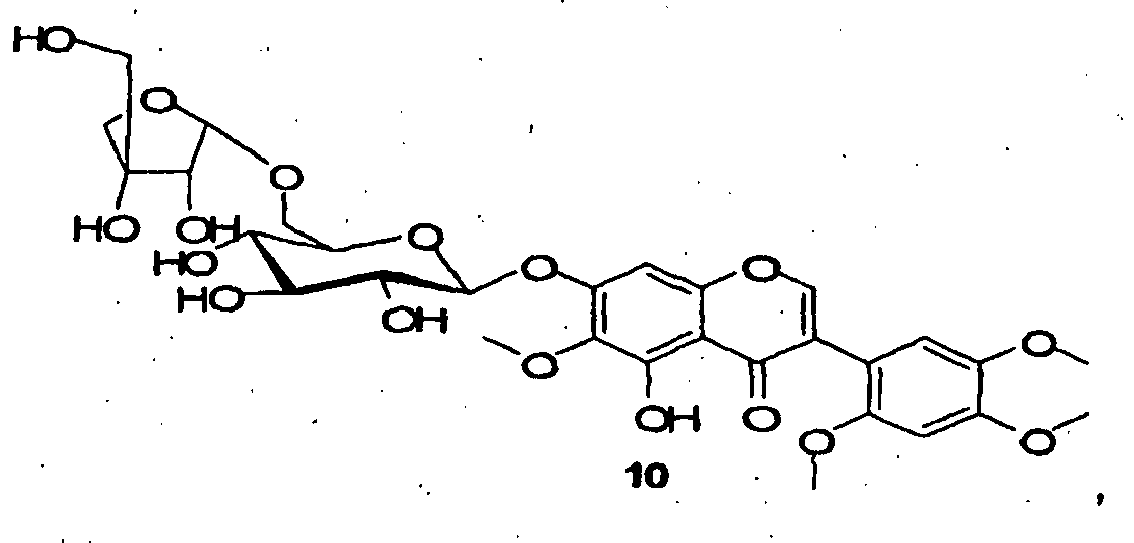
- A pharmaceutical composition as claimed in claim 16, wherein the pharmaceutical diluent used is selected from the group consisting of lactose, mannitol, sorbitol, microcrystalline cellulose, sucrose, sodium citrate, dicalcium phosphate, or any other ingredient of the similar nature alone or in combination thereof.
- A pharmaceutical composition as claimed in claim 16 wherein the effective dose of the composition is ranging between 0.1 to 5000 mg per kg body weight, preferably 1 mg to 500 mg per kg body weight, daily, bi-weekly, weekly or in more divided doses.
- A pharmaceutical composition as claimed in claim 16 for use in the prevention or treatment of bone-joint disorder or osteo-health related disorder.
- The pharmaceutical composition of claim 16 for use in the prevention or treatment of bone disorders wherein the prevention or treatment comprises the steps of administering to the subject said pharmaceutical composition comprising compound of Formula 10.
Applications Claiming Priority (2)
| Application Number | Priority Date | Filing Date | Title |
|---|---|---|---|
| IN1206DE2011 | 2011-04-25 | ||
| PCT/IN2012/000301 WO2012147102A1 (en) | 2011-04-25 | 2012-04-25 | Bioactive fractions and compounds from dalbergia sissoo for the prevention or treatment of osteo-health related disorders |
Publications (2)
| Publication Number | Publication Date |
|---|---|
| EP2705047A1 EP2705047A1 (en) | 2014-03-12 |
| EP2705047B1 true EP2705047B1 (en) | 2015-08-05 |
Family
ID=46331657
Family Applications (1)
| Application Number | Title | Priority Date | Filing Date |
|---|---|---|---|
| EP12729239.9A Active EP2705047B1 (en) | 2011-04-25 | 2012-04-25 | Bioactive fractions and compounds from dalbergia sissoo for the prevention or treatment of osteo-health related disorders |
Country Status (3)
| Country | Link |
|---|---|
| US (1) | US10292994B2 (en) |
| EP (1) | EP2705047B1 (en) |
| WO (1) | WO2012147102A1 (en) |
Families Citing this family (3)
| Publication number | Priority date | Publication date | Assignee | Title |
|---|---|---|---|---|
| CN103923138B (en) * | 2014-05-08 | 2016-03-23 | 江西天施康中药股份有限公司 | A kind of preparation method of Nicotifiorin and application thereof |
| JP6824521B2 (en) * | 2016-11-18 | 2021-02-03 | 株式会社東洋新薬 | New compound |
| CN119804681B (en) * | 2024-11-28 | 2025-11-21 | 复旦大学 | Method for simultaneously detecting contents of 16 novel brominated flame retardants in human serum |
Family Cites Families (3)
| Publication number | Priority date | Publication date | Assignee | Title |
|---|---|---|---|---|
| FR2483228A1 (en) * | 1980-05-28 | 1981-12-04 | Fabre Sa Pierre | Natural colourant prepd. by solvent extn. of leguminous plants - of specified Pterocarpus and Dalbergia species, used as hair dyes |
| TR200102992T2 (en) | 1999-04-16 | 2004-12-21 | Astrazeneca Ab | ß estrogen receptor ligands. |
| EP1986634A2 (en) | 2005-10-12 | 2008-11-05 | Trojanon GmbH & Co. KG | Synergistic pharmaceutical composition containing a peptide with 2 to 5 amino acids |
-
2012
- 2012-04-25 WO PCT/IN2012/000301 patent/WO2012147102A1/en not_active Ceased
- 2012-04-25 EP EP12729239.9A patent/EP2705047B1/en active Active
- 2012-04-25 US US14/113,561 patent/US10292994B2/en active Active
Also Published As
| Publication number | Publication date |
|---|---|
| US20140079834A1 (en) | 2014-03-20 |
| EP2705047A1 (en) | 2014-03-12 |
| US10292994B2 (en) | 2019-05-21 |
| WO2012147102A4 (en) | 2012-12-27 |
| WO2012147102A1 (en) | 2012-11-01 |
Similar Documents
| Publication | Publication Date | Title |
|---|---|---|
| KR101135824B1 (en) | Composition comprising xanthoceras sorbifolia extracts, compounds isolated from same, methods for preparing same and uses thereof | |
| US8859012B2 (en) | Composition comprising Xanthoceras sorbifolia extracts, compounds isolated from same, methods for preparing same and uses thereof | |
| US8334269B2 (en) | Composition comprising Xanthoceras sorbifolia extracts, compounds isolated from same, methods for preparing same and uses thereof | |
| US20090221690A1 (en) | Pharmaceutical Composition for the Prevention/Treatment of Bone Disorders and a Process for the Preparation Thereof | |
| JP5957058B2 (en) | Novel flavonol compounds, bioactive extracts / fractions isolated from Ulmswarichiana, and compounds for the prevention and treatment of bone diseases | |
| JP5038310B2 (en) | Pharmaceutical composition for prevention and / or treatment of bone disease, functional food or health food containing the composition, and pharmaceutical preparation comprising the composition as an active ingredient | |
| KR20030035974A (en) | Neuroprotective composition comprising an extract from opuntia ficus-indica and compounds isolated therefrom | |
| US10292994B2 (en) | Bioactive fractions and compounds from Dalbergia sissoo for the prevention or treatment of osteo-health related disorders | |
| CA2754748A1 (en) | Estrogenic compounds and their methods of use | |
| KR101164020B1 (en) | Pharmaceutical composition comprising an extract from Opuntia ficus-indica | |
| US10265297B2 (en) | Formulation for the prevention and treatment of bone related disorders | |
| CN119139288B (en) | Application of flavonoid compounds in fructus aurantii | |
| Akter | Isolation and structural elucidation of bioactive compounds from Bangladeshi medicinal plants with a focus on novel anticancer compounds | |
| CN102228456A (en) | Novel * ketone compound and its protection effect on nerve cell | |
| CN101967152A (en) | New methylenedioxy xanthone compound and anti-tumor effect thereof | |
| 김정화 | Hepatoprotective constituents of Opuntia ficus-indica seeds against ethanol-intoxicated rat primary hepatocytes | |
| CN108083988A (en) | The extracting method of resveratrol compounds and its application in green plum | |
| KR20180112315A (en) | rubus coreanus and sanguiin H-6 having estrogenic activity and anti-cancer activity against breast cancer and menopausal or hormonal disorder | |
| KR20020000274A (en) | Novel compound from Chimaphila umbellata and pharmaceutical compositions thereof | |
| KR20040077083A (en) | Compound for the prevention or treatment of osteoporosis | |
| HK1094868B (en) | Use of an opuntia ficus-indica extract and compounds isolated therefrom for protecting nerve cells |
Legal Events
| Date | Code | Title | Description |
|---|---|---|---|
| PUAI | Public reference made under article 153(3) epc to a published international application that has entered the european phase |
Free format text: ORIGINAL CODE: 0009012 |
|
| 17P | Request for examination filed |
Effective date: 20131022 |
|
| AK | Designated contracting states |
Kind code of ref document: A1 Designated state(s): AL AT BE BG CH CY CZ DE DK EE ES FI FR GB GR HR HU IE IS IT LI LT LU LV MC MK MT NL NO PL PT RO RS SE SI SK SM TR |
|
| DAX | Request for extension of the european patent (deleted) | ||
| RAP1 | Party data changed (applicant data changed or rights of an application transferred) |
Owner name: COUNCIL OF SCIENTIFIC & INDUSTRIAL RESEARCH |
|
| RIN1 | Information on inventor provided before grant (corrected) |
Inventor name: KUMAR, AVINASH Inventor name: JAIN, GIRISH, KUMAR Inventor name: SINGH, SHEELENDRA, PRATAP Inventor name: TRIVEDI, RITU Inventor name: DIXIT, PREETY Inventor name: MAURYA, RAKESH Inventor name: CHATTOPADHYAY, NAIBEDYA Inventor name: SINGH, DIVYA Inventor name: WAHAJUDDIN Inventor name: KHEDGIKAR, VIKRAM Inventor name: GAUTAM, JYOTI |
|
| GRAP | Despatch of communication of intention to grant a patent |
Free format text: ORIGINAL CODE: EPIDOSNIGR1 |
|
| INTG | Intention to grant announced |
Effective date: 20150309 |
|
| GRAS | Grant fee paid |
Free format text: ORIGINAL CODE: EPIDOSNIGR3 |
|
| GRAA | (expected) grant |
Free format text: ORIGINAL CODE: 0009210 |
|
| AK | Designated contracting states |
Kind code of ref document: B1 Designated state(s): AL AT BE BG CH CY CZ DE DK EE ES FI FR GB GR HR HU IE IS IT LI LT LU LV MC MK MT NL NO PL PT RO RS SE SI SK SM TR |
|
| REG | Reference to a national code |
Ref country code: GB Ref legal event code: FG4D |
|
| REG | Reference to a national code |
Ref country code: CH Ref legal event code: EP |
|
| REG | Reference to a national code |
Ref country code: AT Ref legal event code: REF Ref document number: 740671 Country of ref document: AT Kind code of ref document: T Effective date: 20150815 |
|
| REG | Reference to a national code |
Ref country code: IE Ref legal event code: FG4D |
|
| REG | Reference to a national code |
Ref country code: DE Ref legal event code: R096 Ref document number: 602012009349 Country of ref document: DE |
|
| REG | Reference to a national code |
Ref country code: AT Ref legal event code: MK05 Ref document number: 740671 Country of ref document: AT Kind code of ref document: T Effective date: 20150805 |
|
| REG | Reference to a national code |
Ref country code: LT Ref legal event code: MG4D |
|
| REG | Reference to a national code |
Ref country code: NL Ref legal event code: MP Effective date: 20150805 |
|
| PG25 | Lapsed in a contracting state [announced via postgrant information from national office to epo] |
Ref country code: LT Free format text: LAPSE BECAUSE OF FAILURE TO SUBMIT A TRANSLATION OF THE DESCRIPTION OR TO PAY THE FEE WITHIN THE PRESCRIBED TIME-LIMIT Effective date: 20150805 Ref country code: FI Free format text: LAPSE BECAUSE OF FAILURE TO SUBMIT A TRANSLATION OF THE DESCRIPTION OR TO PAY THE FEE WITHIN THE PRESCRIBED TIME-LIMIT Effective date: 20150805 Ref country code: NO Free format text: LAPSE BECAUSE OF FAILURE TO SUBMIT A TRANSLATION OF THE DESCRIPTION OR TO PAY THE FEE WITHIN THE PRESCRIBED TIME-LIMIT Effective date: 20151105 Ref country code: LV Free format text: LAPSE BECAUSE OF FAILURE TO SUBMIT A TRANSLATION OF THE DESCRIPTION OR TO PAY THE FEE WITHIN THE PRESCRIBED TIME-LIMIT Effective date: 20150805 Ref country code: GR Free format text: LAPSE BECAUSE OF FAILURE TO SUBMIT A TRANSLATION OF THE DESCRIPTION OR TO PAY THE FEE WITHIN THE PRESCRIBED TIME-LIMIT Effective date: 20151106 |
|
| PG25 | Lapsed in a contracting state [announced via postgrant information from national office to epo] |
Ref country code: AT Free format text: LAPSE BECAUSE OF FAILURE TO SUBMIT A TRANSLATION OF THE DESCRIPTION OR TO PAY THE FEE WITHIN THE PRESCRIBED TIME-LIMIT Effective date: 20150805 Ref country code: PT Free format text: LAPSE BECAUSE OF FAILURE TO SUBMIT A TRANSLATION OF THE DESCRIPTION OR TO PAY THE FEE WITHIN THE PRESCRIBED TIME-LIMIT Effective date: 20151207 Ref country code: HR Free format text: LAPSE BECAUSE OF FAILURE TO SUBMIT A TRANSLATION OF THE DESCRIPTION OR TO PAY THE FEE WITHIN THE PRESCRIBED TIME-LIMIT Effective date: 20150805 Ref country code: ES Free format text: LAPSE BECAUSE OF FAILURE TO SUBMIT A TRANSLATION OF THE DESCRIPTION OR TO PAY THE FEE WITHIN THE PRESCRIBED TIME-LIMIT Effective date: 20150805 Ref country code: SE Free format text: LAPSE BECAUSE OF FAILURE TO SUBMIT A TRANSLATION OF THE DESCRIPTION OR TO PAY THE FEE WITHIN THE PRESCRIBED TIME-LIMIT Effective date: 20150805 Ref country code: IS Free format text: LAPSE BECAUSE OF FAILURE TO SUBMIT A TRANSLATION OF THE DESCRIPTION OR TO PAY THE FEE WITHIN THE PRESCRIBED TIME-LIMIT Effective date: 20151205 Ref country code: PL Free format text: LAPSE BECAUSE OF FAILURE TO SUBMIT A TRANSLATION OF THE DESCRIPTION OR TO PAY THE FEE WITHIN THE PRESCRIBED TIME-LIMIT Effective date: 20150805 Ref country code: RS Free format text: LAPSE BECAUSE OF FAILURE TO SUBMIT A TRANSLATION OF THE DESCRIPTION OR TO PAY THE FEE WITHIN THE PRESCRIBED TIME-LIMIT Effective date: 20150805 |
|
| PG25 | Lapsed in a contracting state [announced via postgrant information from national office to epo] |
Ref country code: NL Free format text: LAPSE BECAUSE OF FAILURE TO SUBMIT A TRANSLATION OF THE DESCRIPTION OR TO PAY THE FEE WITHIN THE PRESCRIBED TIME-LIMIT Effective date: 20150805 |
|
| REG | Reference to a national code |
Ref country code: FR Ref legal event code: PLFP Year of fee payment: 5 |
|
| PG25 | Lapsed in a contracting state [announced via postgrant information from national office to epo] |
Ref country code: EE Free format text: LAPSE BECAUSE OF FAILURE TO SUBMIT A TRANSLATION OF THE DESCRIPTION OR TO PAY THE FEE WITHIN THE PRESCRIBED TIME-LIMIT Effective date: 20150805 Ref country code: SK Free format text: LAPSE BECAUSE OF FAILURE TO SUBMIT A TRANSLATION OF THE DESCRIPTION OR TO PAY THE FEE WITHIN THE PRESCRIBED TIME-LIMIT Effective date: 20150805 Ref country code: CZ Free format text: LAPSE BECAUSE OF FAILURE TO SUBMIT A TRANSLATION OF THE DESCRIPTION OR TO PAY THE FEE WITHIN THE PRESCRIBED TIME-LIMIT Effective date: 20150805 Ref country code: IT Free format text: LAPSE BECAUSE OF FAILURE TO SUBMIT A TRANSLATION OF THE DESCRIPTION OR TO PAY THE FEE WITHIN THE PRESCRIBED TIME-LIMIT Effective date: 20150805 Ref country code: DK Free format text: LAPSE BECAUSE OF FAILURE TO SUBMIT A TRANSLATION OF THE DESCRIPTION OR TO PAY THE FEE WITHIN THE PRESCRIBED TIME-LIMIT Effective date: 20150805 |
|
| REG | Reference to a national code |
Ref country code: DE Ref legal event code: R097 Ref document number: 602012009349 Country of ref document: DE |
|
| PG25 | Lapsed in a contracting state [announced via postgrant information from national office to epo] |
Ref country code: RO Free format text: LAPSE BECAUSE OF FAILURE TO SUBMIT A TRANSLATION OF THE DESCRIPTION OR TO PAY THE FEE WITHIN THE PRESCRIBED TIME-LIMIT Effective date: 20150805 |
|
| PLBE | No opposition filed within time limit |
Free format text: ORIGINAL CODE: 0009261 |
|
| STAA | Information on the status of an ep patent application or granted ep patent |
Free format text: STATUS: NO OPPOSITION FILED WITHIN TIME LIMIT |
|
| 26N | No opposition filed |
Effective date: 20160509 |
|
| PG25 | Lapsed in a contracting state [announced via postgrant information from national office to epo] |
Ref country code: BE Free format text: LAPSE BECAUSE OF NON-PAYMENT OF DUE FEES Effective date: 20160430 Ref country code: SI Free format text: LAPSE BECAUSE OF FAILURE TO SUBMIT A TRANSLATION OF THE DESCRIPTION OR TO PAY THE FEE WITHIN THE PRESCRIBED TIME-LIMIT Effective date: 20150805 |
|
| REG | Reference to a national code |
Ref country code: CH Ref legal event code: PL |
|
| PG25 | Lapsed in a contracting state [announced via postgrant information from national office to epo] |
Ref country code: LU Free format text: LAPSE BECAUSE OF FAILURE TO SUBMIT A TRANSLATION OF THE DESCRIPTION OR TO PAY THE FEE WITHIN THE PRESCRIBED TIME-LIMIT Effective date: 20160425 Ref country code: BE Free format text: LAPSE BECAUSE OF FAILURE TO SUBMIT A TRANSLATION OF THE DESCRIPTION OR TO PAY THE FEE WITHIN THE PRESCRIBED TIME-LIMIT Effective date: 20150805 |
|
| REG | Reference to a national code |
Ref country code: IE Ref legal event code: MM4A |
|
| PG25 | Lapsed in a contracting state [announced via postgrant information from national office to epo] |
Ref country code: LI Free format text: LAPSE BECAUSE OF NON-PAYMENT OF DUE FEES Effective date: 20160430 Ref country code: CH Free format text: LAPSE BECAUSE OF NON-PAYMENT OF DUE FEES Effective date: 20160430 |
|
| REG | Reference to a national code |
Ref country code: FR Ref legal event code: PLFP Year of fee payment: 6 |
|
| PG25 | Lapsed in a contracting state [announced via postgrant information from national office to epo] |
Ref country code: IE Free format text: LAPSE BECAUSE OF NON-PAYMENT OF DUE FEES Effective date: 20160425 |
|
| REG | Reference to a national code |
Ref country code: FR Ref legal event code: PLFP Year of fee payment: 7 |
|
| PG25 | Lapsed in a contracting state [announced via postgrant information from national office to epo] |
Ref country code: CY Free format text: LAPSE BECAUSE OF FAILURE TO SUBMIT A TRANSLATION OF THE DESCRIPTION OR TO PAY THE FEE WITHIN THE PRESCRIBED TIME-LIMIT Effective date: 20150805 Ref country code: HU Free format text: LAPSE BECAUSE OF FAILURE TO SUBMIT A TRANSLATION OF THE DESCRIPTION OR TO PAY THE FEE WITHIN THE PRESCRIBED TIME-LIMIT; INVALID AB INITIO Effective date: 20120425 Ref country code: SM Free format text: LAPSE BECAUSE OF FAILURE TO SUBMIT A TRANSLATION OF THE DESCRIPTION OR TO PAY THE FEE WITHIN THE PRESCRIBED TIME-LIMIT Effective date: 20150805 |
|
| PG25 | Lapsed in a contracting state [announced via postgrant information from national office to epo] |
Ref country code: MK Free format text: LAPSE BECAUSE OF FAILURE TO SUBMIT A TRANSLATION OF THE DESCRIPTION OR TO PAY THE FEE WITHIN THE PRESCRIBED TIME-LIMIT Effective date: 20150805 Ref country code: MC Free format text: LAPSE BECAUSE OF FAILURE TO SUBMIT A TRANSLATION OF THE DESCRIPTION OR TO PAY THE FEE WITHIN THE PRESCRIBED TIME-LIMIT Effective date: 20150805 Ref country code: TR Free format text: LAPSE BECAUSE OF FAILURE TO SUBMIT A TRANSLATION OF THE DESCRIPTION OR TO PAY THE FEE WITHIN THE PRESCRIBED TIME-LIMIT Effective date: 20150805 Ref country code: MT Free format text: LAPSE BECAUSE OF NON-PAYMENT OF DUE FEES Effective date: 20160430 |
|
| PG25 | Lapsed in a contracting state [announced via postgrant information from national office to epo] |
Ref country code: BG Free format text: LAPSE BECAUSE OF FAILURE TO SUBMIT A TRANSLATION OF THE DESCRIPTION OR TO PAY THE FEE WITHIN THE PRESCRIBED TIME-LIMIT Effective date: 20150805 |
|
| PG25 | Lapsed in a contracting state [announced via postgrant information from national office to epo] |
Ref country code: AL Free format text: LAPSE BECAUSE OF FAILURE TO SUBMIT A TRANSLATION OF THE DESCRIPTION OR TO PAY THE FEE WITHIN THE PRESCRIBED TIME-LIMIT Effective date: 20150805 |
|
| P01 | Opt-out of the competence of the unified patent court (upc) registered |
Effective date: 20230529 |
|
| PGFP | Annual fee paid to national office [announced via postgrant information from national office to epo] |
Ref country code: GB Payment date: 20260420 Year of fee payment: 15 |
|
| PGFP | Annual fee paid to national office [announced via postgrant information from national office to epo] |
Ref country code: DE Payment date: 20260526 Year of fee payment: 15 |
|
| PGFP | Annual fee paid to national office [announced via postgrant information from national office to epo] |
Ref country code: FR Payment date: 20260430 Year of fee payment: 15 |