EP2704396A1 - System and method facilitating communication in an adaptive virtual environment - Google Patents
System and method facilitating communication in an adaptive virtual environment Download PDFInfo
- Publication number
- EP2704396A1 EP2704396A1 EP13182855.0A EP13182855A EP2704396A1 EP 2704396 A1 EP2704396 A1 EP 2704396A1 EP 13182855 A EP13182855 A EP 13182855A EP 2704396 A1 EP2704396 A1 EP 2704396A1
- Authority
- EP
- European Patent Office
- Prior art keywords
- communication device
- virtual
- virtual network
- user
- features
- Prior art date
- Legal status (The legal status is an assumption and is not a legal conclusion. Google has not performed a legal analysis and makes no representation as to the accuracy of the status listed.)
- Granted
Links
Images

Classifications
-
- H—ELECTRICITY
- H04—ELECTRIC COMMUNICATION TECHNIQUE
- H04W—WIRELESS COMMUNICATION NETWORKS
- H04W8/00—Network data management
- H04W8/18—Processing of user or subscriber data, e.g. subscribed services, user preferences or user profiles; Transfer of user or subscriber data
- H04W8/20—Transfer of user or subscriber data
- H04W8/205—Transfer to or from user equipment or user record carrier
-
- H—ELECTRICITY
- H04—ELECTRIC COMMUNICATION TECHNIQUE
- H04L—TRANSMISSION OF DIGITAL INFORMATION, e.g. TELEGRAPHIC COMMUNICATION
- H04L67/00—Network arrangements or protocols for supporting network services or applications
- H04L67/01—Protocols
- H04L67/08—Protocols specially adapted for terminal emulation, e.g. Telnet
-
- H—ELECTRICITY
- H04—ELECTRIC COMMUNICATION TECHNIQUE
- H04L—TRANSMISSION OF DIGITAL INFORMATION, e.g. TELEGRAPHIC COMMUNICATION
- H04L41/00—Arrangements for maintenance, administration or management of data switching networks, e.g. of packet switching networks
- H04L41/08—Configuration management of networks or network elements
- H04L41/0803—Configuration setting
- H04L41/084—Configuration by using pre-existing information, e.g. using templates or copying from other elements
-
- H—ELECTRICITY
- H04—ELECTRIC COMMUNICATION TECHNIQUE
- H04L—TRANSMISSION OF DIGITAL INFORMATION, e.g. TELEGRAPHIC COMMUNICATION
- H04L67/00—Network arrangements or protocols for supporting network services or applications
- H04L67/01—Protocols
- H04L67/10—Protocols in which an application is distributed across nodes in the network
- H04L67/1095—Replication or mirroring of data, e.g. scheduling or transport for data synchronisation between network nodes
-
- H—ELECTRICITY
- H04—ELECTRIC COMMUNICATION TECHNIQUE
- H04L—TRANSMISSION OF DIGITAL INFORMATION, e.g. TELEGRAPHIC COMMUNICATION
- H04L67/00—Network arrangements or protocols for supporting network services or applications
- H04L67/50—Network services
- H04L67/56—Provisioning of proxy services
- H04L67/59—Providing operational support to end devices by off-loading in the network or by emulation, e.g. when they are unavailable
-
- H—ELECTRICITY
- H04—ELECTRIC COMMUNICATION TECHNIQUE
- H04L—TRANSMISSION OF DIGITAL INFORMATION, e.g. TELEGRAPHIC COMMUNICATION
- H04L67/00—Network arrangements or protocols for supporting network services or applications
- H04L67/34—Network arrangements or protocols for supporting network services or applications involving the movement of software or configuration parameters
Definitions
- the present invention in general relates to a system and method facilitating communication in a virtual environment. More particularly, the system method facilitates communication by creating multiple virtual images of the communication device and executing said virtual images on the communication device.
- this feature is dependent on service providers and number of SIM slots in the hardware and also user has to maintain and distribute more than one contact number, which is troublesome. Also, in a case when there is low battery situation, use of more than one SIM cards is also not a feasible solution to remain in contact. Moreover, usage of two SIM cards in a single handset is a feature which is not always supported by all the mobile handsets and user is forced to select such a handset which is capable of providing this facility.
- the solution should provide a feature where a user may communicate without being completely dependent on telecom service providers.
- the present invention provides a system facilitating communication in an adaptive virtual environment.
- the system comprises of a virtual network configured to create one or more images of one or more communication devices.
- the virtual network comprises of an emulation module to emulate one or more features of one or more communication devices and store them in a memory storage unit and a synchronization module configured to synchronize the emulated features in real-time by receiving data from the communication device at a regular interval of time.
- the synchronization module is further configured to allow a user of the communication device to customize the features stored in the virtual network.
- the system further comprises of a first communication device communicating with the virtual network for supporting the execution of one or more images thus created by means of a virtual interface.
- the first communication device comprises of an execution odule configured to first install and later run one or more virtual images thus created over the virtual network and a processing device configured to generate a unique number for each user irrespective of virtual images owned by the user.
- the unique number provides an uninterrupted connectivity with people in contact list irrespective of a particular telecom service provider.
- the system facilitates the communication in the adaptive virtual network such that the virtual network remotely manages the connectivity of the first communication device with one or more telecom service providers by using the respective virtual image.
- the present invention also provides a method facilitating communication in a virtual environment.
- the method comprises of steps of creating one or more virtual images of one or more communication devices in a virtual network, emulating one or more features of one or more communication devices and storing them in the virtual network and synchronizing the emulated features in real-time by receiving data from the communication device at a regular interval of time.
- the method further comprises of first installing and later running one or more virtual devices in a first communication device, generating a unique number for each user irrespective of virtual images to provide connectivity with all people without depending on the particular telecom service provider and remotely managing the connectivity of the first communication device with one or more telecom service providers by using the respective virtual image.
- the invention in its various preferred embodiments may provide a system and method for enabling communication in a virtual environment.
- Embodiments of the invention may also provide a system and method for emulating one or more features of the communication device and store them in the virtual network.
- Embodiments of the invention may further create a universal number for a particular communication device and to provide services of plurality of service providers by using that universal number,
- Embodiments of the invention may provide a billing and call routing features with respect to a communication device by using the universal number in the virtual environment.
- Embodiments of the invention may provide a virtual interface in the communication device for accessing the information stored in the virtual network by running the virtual images.
- modules may include self-contained component in a hardware circuit comprising of logical gate, semiconductor device, integrated circuits or any other discrete component.
- the module may also be a part of any software programme executed by any hardware entity for example processor.
- the implementation of module as a software programme may include a set of logical instructions to be executed by the processor or any other hardware entity.
- a module may be incorporated with the set of instructions or a programme by means of an interface.
- the present invention relates to a system and method for facilitating communication in an adaptive virtual environment.
- the system and method creates one or more virtual images of one or more communication devices by emulating one or more features of the communication device.
- the virtual images created on a virtual network are executed on the communication device by first installing them and later running them.
- a unique number is generated for each user in the virtual network itself.
- the unique number could be provisioned and dynamically commissioned by any of the telecom service provider.
- AADHAR UID
- the system (100) comprises of a virtual network (102) which is configured to create one or more virtual images of one or more communication devices (104).
- the virtual network (102) further comprises of an emulation module (106) and a synchronization module (108).
- the system (100) further comprises of a first communication device (104) communicating with the virtual network (102) for supporting the execution of one or more images thus creating a virtual interface in the first communication device itself for supporting the communication in a virtual environment.
- the first communication device (104) further comprises of an execution module (112) and a processing device (114).
- the virtual network (102) is configured to create one or more images of one or more communication devices.
- the virtual network (102) may include but is not limited to internet cloud like AWS, GAE etc.
- the communication device may include but is not limited to a cell phone, laptop etc.
- the virtual network (102) further comprises of the emulation module (106) which is configured to emulate one or more features of one or more communication devices and store them in a memory storage unit.
- the virtual network (102) is further provided with a plurality of servers (103) with one or more databases having large data storage capacity. All the data emulated by emulation module (106) is further saved in these databases.
- the emulation odule (106) is capable of emulating hardware components (like antennas) via parameterization and configuration of the underline ways physical hardware and also software applications (like call dialing and receiving application). This emulation further supports the configuration of a virtual image in this virtual network where the user can access all his features in the virtual network (102).
- One or more features of the communication device emulated by the emulation module (106) may include but is not limited to the application for making or receiving a call, application for browsing internet etc.
- the virtual network (102) further comprises of the synchronization module (108) which is configured to synchronize the emulated features in real-time by receiving data from the communication device (104) at a regular interval of time.
- Data received from the communication device (104) may include but is not limited to contact details stored in a cell phone, image files, text files etc.
- the synchronization module (108) acts like a bridge between the virtual network (102) and the communication devices (104).
- the synchronization module (108) is further configured to allow a user of the communication device to customize the features stored in the virtual network (102). By this, the user may instruct the emulation module (106) to emulate only the features as desired by the user rather emulating all the features.
- the synchronization module (108) also allows the user to choose various predesigned applications/features present in the virtual image.
- the user can choose to have various programs, utility and games prebuilt onto that image.
- the user can also choose look and feel, skin and customize everything on each virtual image.
- the system (100) further comprises of the first communication device (104) communicating with the virtual network (102) for supporting the execution of one or more images thus creating the virtual interface (105) inside the first communication device (104) to run and execute the virtual images thus created.
- the first communication device (104) further comprises of the execution module (112) which is configured to first install and later run one or more virtual images created over the virtual network (102).
- the first communication device (104) is fundamentally capable, like most of the modern smart-phone based devices, to have connectivity via wireless network.
- the device then connects over wireless network connectivity to the virtual network (102) and upon transactions which are based on credential based access, downloads any of the existing virtual image existing in the virtual image storage path, to the first communication device (104) over wireless network which is essentially an internet or TCPIP connectivity. Once it gets downloaded the entire virtual image runs on the first communication device (104). For the running or execution of the virtual image thus installed, connectivity via internet is not essential.
- the communication device (104) would now act as a normal mobile device.
- the first communication device (104) further comprises of the processing device (114) or agent which is configured to generate a unique number for each user irrespective of number of virtual images owned by the user.
- This unique number provides an uninterrupted connectivity with people in the contact list irrespective of a particular telecom service provider such that the virtual network (102) remotely manages the connectivity of the first communication device (104) with one or more telecom service providers by using the respective virtual image.
- This unique number is the identity of a particular communication device, and is generated or provided by any of the service provider.
- the user will be registered with all the service providers. However, the unique number will be commissioned based on the user requirement. If the user does not immediately associate the unique number with any of the service provider after generation, then it can be forfeited by the provisioning service provider and recycled to be used for another user.
- the telecom service providers like Airtel, SNL
- PSTN may also be communicated and the information will be provided by the first communication device (104) and the servers (103) for one or more utility purpose and for security protocols.
- the user communicates with the virtual network (102) for the first time and selects the features to be emulated and stored in the virtual network and creates a virtual image. It's a mandatory step to select at least one telecom service provider along with the data or calling plan so that the user may start his communication in the virtual environment. Along with this, while creating the virtual image for the first time or choosing the first telecom service provider a unique number is also generated which will be linked to all the telecom service providers in a case when user selects more than one telecom service provider. The user then share this unique number as his contact number and also use services of all the telecom service providers under this unique number.
- the switching module (115) of the first communication device (104) is further configured to select one or more telecom service provider from a list stored in the virtual network (104). This selection is performed by log in into the virtual image storage using the credentials.
- the first communication device (104) further comprises of a switching module (115) which is configured to support a feature of switching from one telecom service provider to other.
- a switching module 115
- the user can switch from one telecom service provider to another telecom service provider by selecting the respective virtual image linked with the corresponding telecom service provider.
- This switching from one telecom service provider to another occurs without any time delay, as user is registered with all telecom service providers and number commissioning could be done dynamically.
- the user has no burden of maintaining of the plurality of contact numbers because, he can use the unique number as his universal contact number. This universal number will be responsible for other specific purposes like billing etc.
- the system (100) further comprises of a backend server (103) to support the communication between the virtual network (102) and the first communication device (104).
- the virtual network (102) further comprises of a call routing module (120) to enable a feature of call routing by using the virtual image and a bill generating module (118) to generate bill for the first communication device (104) with respect to the service provided by one or more telecom service providers.
- the bill generated by the bill generating module (118) can be in a consolidated form, i.e. a single bill for all the service providers or a different bill for each service provider.
- a user 'A' purchases a communication device say a mobile device (as shown in step 502). Since, the mobile phone is compatible, user 'A' connects to a wireless network in order to browse the internet (as shown in step 504). The user 'A' then enters the virtual image store path (as shown in step 506) where created virtual images of his mobile phones are stored. Here, the user is asked to provide his login credentials in order to initiate the process of download of virtual image (as shown in step 508). The user 'A' then checks the virtual image storage system whether virtual image which the user wants to create already exists or not.
- user 'A' then starts creating the virtual image of his mobile phone.
- the virtual image is created by selecting mobile phone's features, wallpaper, interface and service provider along with the data plan (as shown in step 510).
- the emulation module emulates all the features selected by the user 'A'.
- the user A can download it over his mobile phone (as shown in step 512). This will also create a virtual interface on the user A's mobile phone, by which he can run the virtual image (as shown in step 514). Also, the user A's mobile device will be provided with either a switch, a dial mechanism or a key for connecting to the virtual image repository for switching the virtual image or user A can use wireless network to again connect to the virtual image repository.
- user A can use the mobile phone and can use various features like call dialing, receiving, browsing internet, chatting, sending messages etc which are there in the configured virtual image (as shown in step 516).
Landscapes
- Engineering & Computer Science (AREA)
- Computer Networks & Wireless Communication (AREA)
- Signal Processing (AREA)
- Databases & Information Systems (AREA)
- Telephonic Communication Services (AREA)
Abstract
Description
- The present invention in general relates to a system and method facilitating communication in a virtual environment. More particularly, the system method facilitates communication by creating multiple virtual images of the communication device and executing said virtual images on the communication device.
- In today's age of wireless communication, communication through mobile device is indispensible. Now a days, mobile phones, basically smart phones facilitates a memory with large storage capacity, which allows a user to not only store a large amount of data in it but it also makes a user to maintain all his day-to-day tasks with the help of this small hardware device with magical technical features. This is one of the major reasons why people are extremely dependent on the data stored in the phone.
- Loss of the mobile device, loss of the network or discharge of the battery of mobile phone poses a great problem for the mobile phone users as the user is not able to access the data stored in the mobile phone or remain connected with others. Under the above mentioned circumstances the privacy of data stored in the mobile phone is also at a risk in case of loss.
- One of the ways to avoid the above mentioned problems is to maintain an offline copy of the data by synchronizing it with a computer, jotting it down somewhere or by simply asking others. However, all the solutions presented above are neither convenient nor scalable and elegant. Moreover, these solutions are very much time consuming.
- Since now with the advancement in technology, smart phones have made it possible to enjoy services of two service provider by using dual SIM cards in a single handset. By this, user can communicate economically at the time of roaming and can also choose best data plans.
- But again, this feature is dependent on service providers and number of SIM slots in the hardware and also user has to maintain and distribute more than one contact number, which is troublesome. Also, in a case when there is low battery situation, use of more than one SIM cards is also not a feasible solution to remain in contact. Moreover, usage of two SIM cards in a single handset is a feature which is not always supported by all the mobile handsets and user is forced to select such a handset which is capable of providing this facility.
- Therefore, there is a need of a solution which is capable of reducing the dependency of a user on a mobile phone in case of data loss, network loss or loss of mobile phone. Also, the solution should provide a feature where a user may communicate without being completely dependent on telecom service providers.
- The invention is defined in the independent claims, to which reference is now directed. Preferred features are set forth in dependent claims.
- The present invention provides a system facilitating communication in an adaptive virtual environment. The system comprises of a virtual network configured to create one or more images of one or more communication devices. The virtual network comprises of an emulation module to emulate one or more features of one or more communication devices and store them in a memory storage unit and a synchronization module configured to synchronize the emulated features in real-time by receiving data from the communication device at a regular interval of time. The synchronization module is further configured to allow a user of the communication device to customize the features stored in the virtual network. The system further comprises of a first communication device communicating with the virtual network for supporting the execution of one or more images thus created by means of a virtual interface. The first communication device comprises of an execution odule configured to first install and later run one or more virtual images thus created over the virtual network and a processing device configured to generate a unique number for each user irrespective of virtual images owned by the user. The unique number provides an uninterrupted connectivity with people in contact list irrespective of a particular telecom service provider. The system facilitates the communication in the adaptive virtual network such that the virtual network remotely manages the connectivity of the first communication device with one or more telecom service providers by using the respective virtual image.
- The present invention also provides a method facilitating communication in a virtual environment. The method comprises of steps of creating one or more virtual images of one or more communication devices in a virtual network, emulating one or more features of one or more communication devices and storing them in the virtual network and synchronizing the emulated features in real-time by receiving data from the communication device at a regular interval of time. The method further comprises of first installing and later running one or more virtual devices in a first communication device, generating a unique number for each user irrespective of virtual images to provide connectivity with all people without depending on the particular telecom service provider and remotely managing the connectivity of the first communication device with one or more telecom service providers by using the respective virtual image.
- The invention in its various preferred embodiments may provide a system and method for enabling communication in a virtual environment.
- Embodiments of the invention may also provide a system and method for emulating one or more features of the communication device and store them in the virtual network.
- Embodiments of the invention may further create a universal number for a particular communication device and to provide services of plurality of service providers by using that universal number,
- Embodiments of the invention may provide a billing and call routing features with respect to a communication device by using the universal number in the virtual environment.
- Embodiments of the invention may provide a virtual interface in the communication device for accessing the information stored in the virtual network by running the virtual images.
- Embodiments of the invention will now be described, by way of example only, with reference to the accompanying drawings, in which:
-
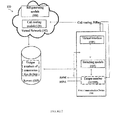
Figure 1 illustrates the architecture of system facilitating communication in a virtual environment in accordance with an embodiment of the invention. -
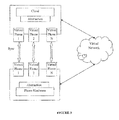
Figure 2 illustrates the detailed architecture of the system facilitating unique number generation and communication in a virtual environment in accordance with an alternate embodiment of the invention. -
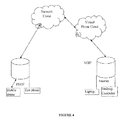
Figure 3 illustrates the flow of communication in a virtual environment in accordance with an exemplary embodiment of the invention. -
Figure 4 illustrates the call routing in accordance with an exemplary embodiment of the invention. -
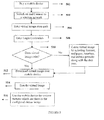
Figure 5 illustrates the flow chart illustrating the steps involved for creating and running a virtual image in an exemplary embodiment of the invention. - Some embodiments of this invention, illustrating its features, will now be discussed:
- The words "comprising", "having", "containing", and "including", and other forms thereof, are intended to be equivalent in meaning and be open ended in that an item or items following any one of these words is not meant to be an exhaustive listing of such item or items, or meant to be limited to only the listed item or items.
- It must also be noted that as used herein and in the appended claims, the singular forms "a", "an", and "the" include plural references unless the context clearly dictates otherwise. Although any systems, methods, apparatuses, and devices similar or equivalent to those described herein can be used in the practice or testing of embodiments of the present invention, the preferred, systems and parts are now described. In the following description for the purpose of explanation and understanding reference has been made to numerous embodiments for which the intent is not to limit the scope of the invention.
- One or more components of the invention are described as module for the understanding of the specification. For example, a module may include self-contained component in a hardware circuit comprising of logical gate, semiconductor device, integrated circuits or any other discrete component. The module may also be a part of any software programme executed by any hardware entity for example processor. The implementation of module as a software programme may include a set of logical instructions to be executed by the processor or any other hardware entity. Further a module may be incorporated with the set of instructions or a programme by means of an interface.
- The disclosed embodiments are merely exemplary of the invention, which may be embodied in various forms.
- The present invention relates to a system and method for facilitating communication in an adaptive virtual environment. The system and method creates one or more virtual images of one or more communication devices by emulating one or more features of the communication device. The virtual images created on a virtual network are executed on the communication device by first installing them and later running them. A unique number is generated for each user in the virtual network itself. The unique number could be provisioned and dynamically commissioned by any of the telecom service provider. We can also try to make the UID (AADHAR) number of a user, provided by Authority of India, a unique number or the user can get the unique universal number along with his UID number, User can maintain plurality of virtual images for utilizing the services of more than one telecom service providers by using this unique number.
- In accordance with an embodiment, referring to
figure 1 , the system (100) comprises of a virtual network (102) which is configured to create one or more virtual images of one or more communication devices (104). The virtual network (102) further comprises of an emulation module (106) and a synchronization module (108). The system (100) further comprises of a first communication device (104) communicating with the virtual network (102) for supporting the execution of one or more images thus creating a virtual interface in the first communication device itself for supporting the communication in a virtual environment. The first communication device (104) further comprises of an execution module (112) and a processing device (114). - In accordance with an embodiment, still referring to
figure 1 , the virtual network (102) is configured to create one or more images of one or more communication devices. The virtual network (102) may include but is not limited to internet cloud like AWS, GAE etc. The communication device may include but is not limited to a cell phone, laptop etc. - The virtual network (102) further comprises of the emulation module (106) which is configured to emulate one or more features of one or more communication devices and store them in a memory storage unit. The virtual network (102) is further provided with a plurality of servers (103) with one or more databases having large data storage capacity. All the data emulated by emulation module (106) is further saved in these databases. The emulation odule (106) is capable of emulating hardware components (like antennas) via parameterization and configuration of the underline ways physical hardware and also software applications (like call dialing and receiving application). This emulation further supports the configuration of a virtual image in this virtual network where the user can access all his features in the virtual network (102).
- One or more features of the communication device emulated by the emulation module (106) may include but is not limited to the application for making or receiving a call, application for browsing internet etc.
- The virtual network (102) further comprises of the synchronization module (108) which is configured to synchronize the emulated features in real-time by receiving data from the communication device (104) at a regular interval of time. Data received from the communication device (104) may include but is not limited to contact details stored in a cell phone, image files, text files etc. By way of a specific example, let us consider a case, when a user's memory card gets corrupted and he loses all his data. Since the user has already created the virtual image of his mobile phone, he can now access his lost data by using the virtual interface present in his mobile phone. He simply has to run the virtual image which is present in his mobile phone (in the form of set of programing instructions) which can never be lost/deleted without the user's consent and will remain in the user's mobile phone. When the user is communicating by using this virtual image, he may add new contact details or text or image files in his mobile phone. This newly added data will automatically be saved in the virtual network (102) by means of this synchronization module (108). This process will be done by the system (100) in a continuous manner till the user himself quits or closes the use of virtual image by using the virtual interface. This feature makes the virtual environment adaptive in nature.
- The synchronization module (108) acts like a bridge between the virtual network (102) and the communication devices (104). The synchronization module (108) is further configured to allow a user of the communication device to customize the features stored in the virtual network (102). By this, the user may instruct the emulation module (106) to emulate only the features as desired by the user rather emulating all the features.
- On the other hand, the synchronization module (108) also allows the user to choose various predesigned applications/features present in the virtual image. The user can choose to have various programs, utility and games prebuilt onto that image. The user can also choose look and feel, skin and customize everything on each virtual image.
- Referring to
figure 1 and2 , the system (100) further comprises of the first communication device (104) communicating with the virtual network (102) for supporting the execution of one or more images thus creating the virtual interface (105) inside the first communication device (104) to run and execute the virtual images thus created. The first communication device (104) further comprises of the execution module (112) which is configured to first install and later run one or more virtual images created over the virtual network (102). By way of a specific example, the first communication device (104) is fundamentally capable, like most of the modern smart-phone based devices, to have connectivity via wireless network. The device then connects over wireless network connectivity to the virtual network (102) and upon transactions which are based on credential based access, downloads any of the existing virtual image existing in the virtual image storage path, to the first communication device (104) over wireless network which is essentially an internet or TCPIP connectivity. Once it gets downloaded the entire virtual image runs on the first communication device (104). For the running or execution of the virtual image thus installed, connectivity via internet is not essential. The communication device (104) would now act as a normal mobile device. - Still referring to
figure 1 and2 , the first communication device (104) further comprises of the processing device (114) or agent which is configured to generate a unique number for each user irrespective of number of virtual images owned by the user. This unique number provides an uninterrupted connectivity with people in the contact list irrespective of a particular telecom service provider such that the virtual network (102) remotely manages the connectivity of the first communication device (104) with one or more telecom service providers by using the respective virtual image. - There could be multiple ways to generate the unique number which would be used as a universal communication number for the user.. This unique number is the identity of a particular communication device, and is generated or provided by any of the service provider. The user will be registered with all the service providers. However, the unique number will be commissioned based on the user requirement. If the user does not immediately associate the unique number with any of the service provider after generation, then it can be forfeited by the provisioning service provider and recycled to be used for another user. The telecom service providers (like Airtel, SNL) and PSTN may also be communicated and the information will be provided by the first communication device (104) and the servers (103) for one or more utility purpose and for security protocols.
- By way of specific example, let us assume that the user communicates with the virtual network (102) for the first time and selects the features to be emulated and stored in the virtual network and creates a virtual image. It's a mandatory step to select at least one telecom service provider along with the data or calling plan so that the user may start his communication in the virtual environment. Along with this, while creating the virtual image for the first time or choosing the first telecom service provider a unique number is also generated which will be linked to all the telecom service providers in a case when user selects more than one telecom service provider. The user then share this unique number as his contact number and also use services of all the telecom service providers under this unique number.
- The switching module (115) of the first communication device (104) is further configured to select one or more telecom service provider from a list stored in the virtual network (104). This selection is performed by log in into the virtual image storage using the credentials.
- Again referring to
figure 2 , the first communication device (104) further comprises of a switching module (115) which is configured to support a feature of switching from one telecom service provider to other. Thus, according to the requirement, the user can switch from one telecom service provider to another telecom service provider by selecting the respective virtual image linked with the corresponding telecom service provider. This switching from one telecom service provider to another occurs without any time delay, as user is registered with all telecom service providers and number commissioning could be done dynamically. Also, the user has no burden of maintaining of the plurality of contact numbers because, he can use the unique number as his universal contact number. This universal number will be responsible for other specific purposes like billing etc. - Again referring to
figure 2 , the system (100) further comprises of a backend server (103) to support the communication between the virtual network (102) and the first communication device (104). - The virtual network (102) further comprises of a call routing module (120) to enable a feature of call routing by using the virtual image and a bill generating module (118) to generate bill for the first communication device (104) with respect to the service provided by one or more telecom service providers. The bill generated by the bill generating module (118) can be in a consolidated form, i.e. a single bill for all the service providers or a different bill for each service provider. These features of generating a bill or routing a call are further performed by using the universal number.
- The system and method illustrated to facilitate a communication in an adaptive virtual network may be illustrated by working example stated in the following paragraph; the process is not restricted to the said example only:
- Referring to
figure 3 and4 , all the virtual images thus created over the virtual network are stored in cloud (backend internet server). The emulated features are stored in the virtual network are synchronized with that of stored in the phone hardware, laptop desktop etc. - When someone calls on the unique number, generated by the processing device (114), and
- if the person doesn't pickup or activate voice message then the call it will land up as a voice message over cloud (virtual network) and the voice call gets recorded and stored in the cloud account of (virtual network) the user. The user can further setup a routing table or a forwarding address (call routing module) for this unique number which has been configured and can be locally routed. Like if the user knows that he is in US then any call which originates from India gets routed over VOIP and gets terminated in a local call and
- user has access to it via voice mail. The call routing and bill generating feature are supported by connecting to the respective PSTN (Public Switched Telephone Network).
- Moreover, the unique number is also provided a link with the reference numbers of the said PSTN for supporting all calling features.
- Referring to
figure 5 , let us consider a user 'A' purchases a communication device say a mobile device (as shown in step 502). Since, the mobile phone is compatible, user 'A' connects to a wireless network in order to browse the internet (as shown in step 504). The user 'A' then enters the virtual image store path (as shown in step 506) where created virtual images of his mobile phones are stored. Here, the user is asked to provide his login credentials in order to initiate the process of download of virtual image (as shown in step 508). The user 'A' then checks the virtual image storage system whether virtual image which the user wants to create already exists or not. - If the image does not exist, user 'A' then starts creating the virtual image of his mobile phone. The virtual image is created by selecting mobile phone's features, wallpaper, interface and service provider along with the data plan (as shown in step 510). The emulation module emulates all the features selected by the user 'A'.
- In case, the virtual image existed there, the user A can download it over his mobile phone (as shown in step 512). This will also create a virtual interface on the user A's mobile phone, by which he can run the virtual image (as shown in step 514). Also, the user A's mobile device will be provided with either a switch, a dial mechanism or a key for connecting to the virtual image repository for switching the virtual image or user A can use wireless network to again connect to the virtual image repository.
- Once, the image is successfully downloaded and run, user A can use the mobile phone and can use various features like call dialing, receiving, browsing internet, chatting, sending messages etc which are there in the configured virtual image (as shown in step 516).
Claims (14)
- A system facilitating communication in an adaptive virtual environment, the system comprising:a virtual network configured to create one or more images of one or more communication devices, the virtual network comprising:an emulation module to emulate one or more features of one or more communication devices and store them in a memory storage unit; anda synchronization module configured to synchronize the emulated features in real-time by receiving data from the communication device at a regular interval of time, the synchronization module is further configured to allow a user of the communication device to customize the features stored in the virtual network;the system further comprising:a first communication device communicating with the virtual network for supporting the execution of one or more images thus created by means of a virtual interface, the first communication device comprising:an execution module configured to first install and later run one or more virtual images thus created over the virtual network; anda processing device configured to generate a unique number for each user irrespective of virtual images owned by the user., the unique number provides an uninterrupted connectivity with people in contact list irrespective of a particular telecom service provider;such that the virtual network remotely manages the connectivity of the first communication device with one or more telecom service providers by using the respective virtual image.
- The system as claimed in claim 1, wherein the communication device may include but is not limited to a cell phone, laptop etc.
- The system as claimed in claim 1, wherein one or more features of communication device may include but is not limited to the application for making or receiving a call, application for browsing internet etc.
- The system as claimed in claim 1, wherein the data received from communication device may include but is not limited to contact details stored in a cell phone, image files, text files.
- The system as claimed in claim 1, wherein the system further comprises of backend server to support the communication between the virtual network and the first communication device.
- The system as claimed in claim 1, wherein the virtual network further comprises of a call routing odule to enable a feature of call routing by using the virtual image and a bill generating module to generate bill for the first communication device with respect to the service provided by one or more telecom service providers.
- The system as claimed in claim 1, wherein the virtual network may include but is not limited to internet cloud like AWS, GAE etc.
- The system as claimed in claim 1, wherein the first communication device further comprises of a switching module configured to support a feature of switching from one telecom service provider to other.
- A method facilitating communication in a virtual environment, the method comprising steps of:creating one or more virtual images of one or more communication devices in a virtual network;emulating one or more features of one or more communication devices and storing them in the virtual network;synchronizing the emulated features in real-time by receiving data from the communication device at a regular interval of time;first installing and later running one or more virtual devices in a first communication device;generating a unique number for each user irrespective of virtual images to provide connectivity with all people without depending on the particular telecom service provider;remotely managing the connectivity of the first communication device with one ormore telecom service providers by using the respective virtual image.
- The method as claimed in claim 9, wherein the method further comprises of enabling a feature of call routing and generating bills with respect to services provided by one or more telecom service providers in the virtual environment.
- The method as claimed in claim 9, wherein the method further comprises of selecting one or more telecom service provider from a list thus stored in the virtual network.
- The method as claimed in claim 9, wherein the method further comprises of providing a feature of switching from one telecom service provider to other in the virtual network.
- A virtual network for use with a system according to claim 1, the virtual network comprising:an emulation device to emulate one or more features of one or more communication devices and store them in a memory storage unit; anda synchronization module configured to synchronize the emulated features in real-time by receiving data from the communication device at a regular interval of time, the synchronization module is further configured to allow a user of a communication device to customize the features stored in the virtual network.
- A communication device for use with a system according to claim 1, the communication device comprising:an execution module configured to first install and later run one or more virtual images thus created over the virtual network; anda processing device configured to generate a unique number for each user irrespective of a particular telecom service provider.
Applications Claiming Priority (1)
| Application Number | Priority Date | Filing Date | Title |
|---|---|---|---|
| IN2565MU2012 | 2012-09-04 |
Publications (2)
| Publication Number | Publication Date |
|---|---|
| EP2704396A1 true EP2704396A1 (en) | 2014-03-05 |
| EP2704396B1 EP2704396B1 (en) | 2019-07-31 |
Family
ID=49161968
Family Applications (1)
| Application Number | Title | Priority Date | Filing Date |
|---|---|---|---|
| EP13182855.0A Active EP2704396B1 (en) | 2012-09-04 | 2013-09-03 | System and method facilitating communication in an adaptive virtual environment |
Country Status (2)
| Country | Link |
|---|---|
| US (1) | US9100811B2 (en) |
| EP (1) | EP2704396B1 (en) |
Cited By (1)
| Publication number | Priority date | Publication date | Assignee | Title |
|---|---|---|---|---|
| EP4489450A1 (en) * | 2023-07-07 | 2025-01-08 | Deutsche Telekom AG | Ue-substitute-unit of a communication network |
Citations (3)
| Publication number | Priority date | Publication date | Assignee | Title |
|---|---|---|---|---|
| US20080120362A1 (en) * | 2006-11-20 | 2008-05-22 | Microsoft Corporation | Single virtual client for multiple client access and equivalency |
| US20110145272A1 (en) * | 2009-12-16 | 2011-06-16 | Grzybowski Carl E | Adaptive virtual environment management system |
| US7987471B2 (en) * | 2007-01-26 | 2011-07-26 | Microsoft Corporation | Mobile device management proxy system |
Family Cites Families (10)
| Publication number | Priority date | Publication date | Assignee | Title |
|---|---|---|---|---|
| WO2006094564A1 (en) * | 2005-03-09 | 2006-09-14 | Telecom En Consulting | Method for rerouting mobile phone communications |
| US9317259B2 (en) * | 2005-05-12 | 2016-04-19 | International Business Machines Corporation | Apparatus, system, and method for automatically generating a reusable software component for interfacing with a web service |
| US7664626B1 (en) * | 2006-03-24 | 2010-02-16 | Symantec Corporation | Ambiguous-state support in virtual machine emulators |
| US8060074B2 (en) * | 2007-07-30 | 2011-11-15 | Mobile Iron, Inc. | Virtual instance architecture for mobile device management systems |
| EP2238535A4 (en) | 2007-12-20 | 2011-03-09 | Virtual Computer Inc | Virtual computing management systems and methods |
| US9087308B2 (en) | 2008-07-25 | 2015-07-21 | Appirio, Inc. | System and method for conducting competitions |
| US8898668B1 (en) * | 2010-03-31 | 2014-11-25 | Netapp, Inc. | Redeploying baseline virtual machine to update a child virtual machine by creating and swapping a virtual disk comprising a clone of the baseline virtual machine |
| US10037443B2 (en) * | 2011-03-07 | 2018-07-31 | Rockwell Automation Technologies, Inc. | Industrial simulation using redirected I/O module configurations |
| US9514507B2 (en) * | 2011-11-29 | 2016-12-06 | Citrix Systems, Inc. | Methods and systems for maintaining state in a virtual machine when disconnected from graphics hardware |
| US20130183949A1 (en) * | 2012-01-13 | 2013-07-18 | Hotlynx Llc | Systems and methods for hosting anonymous virtual phone calls, text (sms) messages, and multi-media (mms) messages |
-
2013
- 2013-09-03 EP EP13182855.0A patent/EP2704396B1/en active Active
- 2013-09-04 US US14/017,477 patent/US9100811B2/en active Active
Patent Citations (3)
| Publication number | Priority date | Publication date | Assignee | Title |
|---|---|---|---|---|
| US20080120362A1 (en) * | 2006-11-20 | 2008-05-22 | Microsoft Corporation | Single virtual client for multiple client access and equivalency |
| US7987471B2 (en) * | 2007-01-26 | 2011-07-26 | Microsoft Corporation | Mobile device management proxy system |
| US20110145272A1 (en) * | 2009-12-16 | 2011-06-16 | Grzybowski Carl E | Adaptive virtual environment management system |
Cited By (2)
| Publication number | Priority date | Publication date | Assignee | Title |
|---|---|---|---|---|
| EP4489450A1 (en) * | 2023-07-07 | 2025-01-08 | Deutsche Telekom AG | Ue-substitute-unit of a communication network |
| WO2025012087A1 (en) * | 2023-07-07 | 2025-01-16 | Deutsche Telekom Ag | Ue-substitute-unit of a communication network |
Also Published As
| Publication number | Publication date |
|---|---|
| US20140066041A1 (en) | 2014-03-06 |
| US9100811B2 (en) | 2015-08-04 |
| EP2704396B1 (en) | 2019-07-31 |
Similar Documents
| Publication | Publication Date | Title |
|---|---|---|
| US11917508B2 (en) | Electronic subscriber identity module (eSIM) management platform | |
| US10382920B2 (en) | Delivery of branding content and customizations to a mobile communication device | |
| US11716612B1 (en) | Bootstrap electronic subscriber identity module configuration | |
| US9043936B2 (en) | Communications device | |
| US10506398B2 (en) | Implementation of remotely hosted branding content and customizations | |
| US10433156B1 (en) | Adapting subscriber identity module (SIM) card | |
| CN106716956B (en) | A method, related equipment and system for sharing a cloud operation interface | |
| TW200524394A (en) | Dynamically distributed portal-based application processing system | |
| WO2015060965A2 (en) | Delivery of branding content and customizations to a mobile communication device | |
| CN111797173B (en) | Alliance chain sharing system, method and device, electronic equipment and storage medium | |
| US9363663B2 (en) | Method and apparatus for providing cellphone service from any device | |
| US8244215B1 (en) | Method and apparatus for communicating using a plurality of identities | |
| JP2010521019A (en) | Device identification method in mobile and desktop environments | |
| US10805780B1 (en) | Mobile phone differentiated user set-up | |
| CN109889468A (en) | Transmission method, system, device, equipment and the storage medium of network data | |
| CN105827740A (en) | A contact information backup method, device and system | |
| US11259160B1 (en) | Provisioning a voicemail platform | |
| US9264843B2 (en) | Simple communication system and method thereof | |
| US9609457B2 (en) | Mobile application procurement and configuration options for VOIP service | |
| EP1808002A1 (en) | On-demand activation of bluetooth sap | |
| EP2704396B1 (en) | System and method facilitating communication in an adaptive virtual environment | |
| US11190523B1 (en) | Post-activation installation of custom applications with system privileges | |
| Mishra et al. | Mobile-cloud: A framework of cloud computing for mobile application | |
| WO2017076258A1 (en) | Smart card and application downloading method thereof | |
| WO2012018292A1 (en) | A media means for a telephone device |
Legal Events
| Date | Code | Title | Description |
|---|---|---|---|
| 17P | Request for examination filed |
Effective date: 20131001 |
|
| AK | Designated contracting states |
Kind code of ref document: A1 Designated state(s): AL AT BE BG CH CY CZ DE DK EE ES FI FR GB GR HR HU IE IS IT LI LT LU LV MC MK MT NL NO PL PT RO RS SE SI SK SM TR |
|
| AX | Request for extension of the european patent |
Extension state: BA ME |
|
| PUAI | Public reference made under article 153(3) epc to a published international application that has entered the european phase |
Free format text: ORIGINAL CODE: 0009012 |
|
| STAA | Information on the status of an ep patent application or granted ep patent |
Free format text: STATUS: EXAMINATION IS IN PROGRESS |
|
| 17Q | First examination report despatched |
Effective date: 20170512 |
|
| REG | Reference to a national code |
Ref country code: DE Ref legal event code: R079 Ref document number: 602013058424 Country of ref document: DE Free format text: PREVIOUS MAIN CLASS: H04L0029060000 Ipc: H04L0029080000 |
|
| RIC1 | Information provided on ipc code assigned before grant |
Ipc: H04L 29/08 20060101AFI20190108BHEP Ipc: H04L 12/24 20060101ALI20190108BHEP |
|
| GRAP | Despatch of communication of intention to grant a patent |
Free format text: ORIGINAL CODE: EPIDOSNIGR1 |
|
| STAA | Information on the status of an ep patent application or granted ep patent |
Free format text: STATUS: GRANT OF PATENT IS INTENDED |
|
| INTG | Intention to grant announced |
Effective date: 20190219 |
|
| GRAS | Grant fee paid |
Free format text: ORIGINAL CODE: EPIDOSNIGR3 |
|
| GRAA | (expected) grant |
Free format text: ORIGINAL CODE: 0009210 |
|
| STAA | Information on the status of an ep patent application or granted ep patent |
Free format text: STATUS: THE PATENT HAS BEEN GRANTED |
|
| AK | Designated contracting states |
Kind code of ref document: B1 Designated state(s): AL AT BE BG CH CY CZ DE DK EE ES FI FR GB GR HR HU IE IS IT LI LT LU LV MC MK MT NL NO PL PT RO RS SE SI SK SM TR |
|
| REG | Reference to a national code |
Ref country code: CH Ref legal event code: EP Ref country code: GB Ref legal event code: FG4D |
|
| REG | Reference to a national code |
Ref country code: AT Ref legal event code: REF Ref document number: 1162218 Country of ref document: AT Kind code of ref document: T Effective date: 20190815 |
|
| REG | Reference to a national code |
Ref country code: IE Ref legal event code: FG4D |
|
| REG | Reference to a national code |
Ref country code: DE Ref legal event code: R096 Ref document number: 602013058424 Country of ref document: DE |
|
| REG | Reference to a national code |
Ref country code: NL Ref legal event code: FP |
|
| REG | Reference to a national code |
Ref country code: CH Ref legal event code: NV Representative=s name: DENNEMEYER AG, CH |
|
| REG | Reference to a national code |
Ref country code: LT Ref legal event code: MG4D |
|
| REG | Reference to a national code |
Ref country code: AT Ref legal event code: MK05 Ref document number: 1162218 Country of ref document: AT Kind code of ref document: T Effective date: 20190731 |
|
| PG25 | Lapsed in a contracting state [announced via postgrant information from national office to epo] |
Ref country code: FI Free format text: LAPSE BECAUSE OF FAILURE TO SUBMIT A TRANSLATION OF THE DESCRIPTION OR TO PAY THE FEE WITHIN THE PRESCRIBED TIME-LIMIT Effective date: 20190731 Ref country code: SE Free format text: LAPSE BECAUSE OF FAILURE TO SUBMIT A TRANSLATION OF THE DESCRIPTION OR TO PAY THE FEE WITHIN THE PRESCRIBED TIME-LIMIT Effective date: 20190731 Ref country code: LT Free format text: LAPSE BECAUSE OF FAILURE TO SUBMIT A TRANSLATION OF THE DESCRIPTION OR TO PAY THE FEE WITHIN THE PRESCRIBED TIME-LIMIT Effective date: 20190731 Ref country code: HR Free format text: LAPSE BECAUSE OF FAILURE TO SUBMIT A TRANSLATION OF THE DESCRIPTION OR TO PAY THE FEE WITHIN THE PRESCRIBED TIME-LIMIT Effective date: 20190731 Ref country code: NO Free format text: LAPSE BECAUSE OF FAILURE TO SUBMIT A TRANSLATION OF THE DESCRIPTION OR TO PAY THE FEE WITHIN THE PRESCRIBED TIME-LIMIT Effective date: 20191031 Ref country code: BG Free format text: LAPSE BECAUSE OF FAILURE TO SUBMIT A TRANSLATION OF THE DESCRIPTION OR TO PAY THE FEE WITHIN THE PRESCRIBED TIME-LIMIT Effective date: 20191031 Ref country code: AT Free format text: LAPSE BECAUSE OF FAILURE TO SUBMIT A TRANSLATION OF THE DESCRIPTION OR TO PAY THE FEE WITHIN THE PRESCRIBED TIME-LIMIT Effective date: 20190731 Ref country code: PT Free format text: LAPSE BECAUSE OF FAILURE TO SUBMIT A TRANSLATION OF THE DESCRIPTION OR TO PAY THE FEE WITHIN THE PRESCRIBED TIME-LIMIT Effective date: 20191202 |
|
| PG25 | Lapsed in a contracting state [announced via postgrant information from national office to epo] |
Ref country code: AL Free format text: LAPSE BECAUSE OF FAILURE TO SUBMIT A TRANSLATION OF THE DESCRIPTION OR TO PAY THE FEE WITHIN THE PRESCRIBED TIME-LIMIT Effective date: 20190731 Ref country code: ES Free format text: LAPSE BECAUSE OF FAILURE TO SUBMIT A TRANSLATION OF THE DESCRIPTION OR TO PAY THE FEE WITHIN THE PRESCRIBED TIME-LIMIT Effective date: 20190731 Ref country code: GR Free format text: LAPSE BECAUSE OF FAILURE TO SUBMIT A TRANSLATION OF THE DESCRIPTION OR TO PAY THE FEE WITHIN THE PRESCRIBED TIME-LIMIT Effective date: 20191101 Ref country code: RS Free format text: LAPSE BECAUSE OF FAILURE TO SUBMIT A TRANSLATION OF THE DESCRIPTION OR TO PAY THE FEE WITHIN THE PRESCRIBED TIME-LIMIT Effective date: 20190731 Ref country code: LV Free format text: LAPSE BECAUSE OF FAILURE TO SUBMIT A TRANSLATION OF THE DESCRIPTION OR TO PAY THE FEE WITHIN THE PRESCRIBED TIME-LIMIT Effective date: 20190731 Ref country code: IS Free format text: LAPSE BECAUSE OF FAILURE TO SUBMIT A TRANSLATION OF THE DESCRIPTION OR TO PAY THE FEE WITHIN THE PRESCRIBED TIME-LIMIT Effective date: 20191130 |
|
| PG25 | Lapsed in a contracting state [announced via postgrant information from national office to epo] |
Ref country code: TR Free format text: LAPSE BECAUSE OF FAILURE TO SUBMIT A TRANSLATION OF THE DESCRIPTION OR TO PAY THE FEE WITHIN THE PRESCRIBED TIME-LIMIT Effective date: 20190731 |
|
| PG25 | Lapsed in a contracting state [announced via postgrant information from national office to epo] |
Ref country code: RO Free format text: LAPSE BECAUSE OF FAILURE TO SUBMIT A TRANSLATION OF THE DESCRIPTION OR TO PAY THE FEE WITHIN THE PRESCRIBED TIME-LIMIT Effective date: 20190731 Ref country code: IT Free format text: LAPSE BECAUSE OF FAILURE TO SUBMIT A TRANSLATION OF THE DESCRIPTION OR TO PAY THE FEE WITHIN THE PRESCRIBED TIME-LIMIT Effective date: 20190731 Ref country code: DK Free format text: LAPSE BECAUSE OF FAILURE TO SUBMIT A TRANSLATION OF THE DESCRIPTION OR TO PAY THE FEE WITHIN THE PRESCRIBED TIME-LIMIT Effective date: 20190731 Ref country code: PL Free format text: LAPSE BECAUSE OF FAILURE TO SUBMIT A TRANSLATION OF THE DESCRIPTION OR TO PAY THE FEE WITHIN THE PRESCRIBED TIME-LIMIT Effective date: 20190731 Ref country code: EE Free format text: LAPSE BECAUSE OF FAILURE TO SUBMIT A TRANSLATION OF THE DESCRIPTION OR TO PAY THE FEE WITHIN THE PRESCRIBED TIME-LIMIT Effective date: 20190731 |
|
| PG25 | Lapsed in a contracting state [announced via postgrant information from national office to epo] |
Ref country code: CZ Free format text: LAPSE BECAUSE OF FAILURE TO SUBMIT A TRANSLATION OF THE DESCRIPTION OR TO PAY THE FEE WITHIN THE PRESCRIBED TIME-LIMIT Effective date: 20190731 Ref country code: MC Free format text: LAPSE BECAUSE OF FAILURE TO SUBMIT A TRANSLATION OF THE DESCRIPTION OR TO PAY THE FEE WITHIN THE PRESCRIBED TIME-LIMIT Effective date: 20190731 Ref country code: SM Free format text: LAPSE BECAUSE OF FAILURE TO SUBMIT A TRANSLATION OF THE DESCRIPTION OR TO PAY THE FEE WITHIN THE PRESCRIBED TIME-LIMIT Effective date: 20190731 Ref country code: SK Free format text: LAPSE BECAUSE OF FAILURE TO SUBMIT A TRANSLATION OF THE DESCRIPTION OR TO PAY THE FEE WITHIN THE PRESCRIBED TIME-LIMIT Effective date: 20190731 Ref country code: IS Free format text: LAPSE BECAUSE OF FAILURE TO SUBMIT A TRANSLATION OF THE DESCRIPTION OR TO PAY THE FEE WITHIN THE PRESCRIBED TIME-LIMIT Effective date: 20200224 |
|
| REG | Reference to a national code |
Ref country code: DE Ref legal event code: R097 Ref document number: 602013058424 Country of ref document: DE |
|
| PLBE | No opposition filed within time limit |
Free format text: ORIGINAL CODE: 0009261 |
|
| STAA | Information on the status of an ep patent application or granted ep patent |
Free format text: STATUS: NO OPPOSITION FILED WITHIN TIME LIMIT |
|
| PG2D | Information on lapse in contracting state deleted |
Ref country code: IS |
|
| PG25 | Lapsed in a contracting state [announced via postgrant information from national office to epo] |
Ref country code: IE Free format text: LAPSE BECAUSE OF NON-PAYMENT OF DUE FEES Effective date: 20190903 Ref country code: LU Free format text: LAPSE BECAUSE OF NON-PAYMENT OF DUE FEES Effective date: 20190903 Ref country code: IS Free format text: LAPSE BECAUSE OF FAILURE TO SUBMIT A TRANSLATION OF THE DESCRIPTION OR TO PAY THE FEE WITHIN THE PRESCRIBED TIME-LIMIT Effective date: 20191030 |
|
| REG | Reference to a national code |
Ref country code: BE Ref legal event code: MM Effective date: 20190930 |
|
| 26N | No opposition filed |
Effective date: 20200603 |
|
| PG25 | Lapsed in a contracting state [announced via postgrant information from national office to epo] |
Ref country code: BE Free format text: LAPSE BECAUSE OF NON-PAYMENT OF DUE FEES Effective date: 20190930 Ref country code: SI Free format text: LAPSE BECAUSE OF FAILURE TO SUBMIT A TRANSLATION OF THE DESCRIPTION OR TO PAY THE FEE WITHIN THE PRESCRIBED TIME-LIMIT Effective date: 20190731 |
|
| PG25 | Lapsed in a contracting state [announced via postgrant information from national office to epo] |
Ref country code: CY Free format text: LAPSE BECAUSE OF FAILURE TO SUBMIT A TRANSLATION OF THE DESCRIPTION OR TO PAY THE FEE WITHIN THE PRESCRIBED TIME-LIMIT Effective date: 20190731 |
|
| PG25 | Lapsed in a contracting state [announced via postgrant information from national office to epo] |
Ref country code: MT Free format text: LAPSE BECAUSE OF FAILURE TO SUBMIT A TRANSLATION OF THE DESCRIPTION OR TO PAY THE FEE WITHIN THE PRESCRIBED TIME-LIMIT Effective date: 20190731 Ref country code: HU Free format text: LAPSE BECAUSE OF FAILURE TO SUBMIT A TRANSLATION OF THE DESCRIPTION OR TO PAY THE FEE WITHIN THE PRESCRIBED TIME-LIMIT; INVALID AB INITIO Effective date: 20130903 |
|
| REG | Reference to a national code |
Ref country code: DE Ref legal event code: R079 Ref document number: 602013058424 Country of ref document: DE Free format text: PREVIOUS MAIN CLASS: H04L0029080000 Ipc: H04L0065000000 |
|
| PG25 | Lapsed in a contracting state [announced via postgrant information from national office to epo] |
Ref country code: MK Free format text: LAPSE BECAUSE OF FAILURE TO SUBMIT A TRANSLATION OF THE DESCRIPTION OR TO PAY THE FEE WITHIN THE PRESCRIBED TIME-LIMIT Effective date: 20190731 |
|
| P01 | Opt-out of the competence of the unified patent court (upc) registered |
Effective date: 20230526 |
|
| REG | Reference to a national code |
Ref country code: CH Ref legal event code: U11 Free format text: ST27 STATUS EVENT CODE: U-0-0-U10-U11 (AS PROVIDED BY THE NATIONAL OFFICE) Effective date: 20260227 |
|
| PGFP | Annual fee paid to national office [announced via postgrant information from national office to epo] |
Ref country code: NL Payment date: 20260227 Year of fee payment: 13 |
|
| PGFP | Annual fee paid to national office [announced via postgrant information from national office to epo] |
Ref country code: GB Payment date: 20260227 Year of fee payment: 13 |
|
| PGFP | Annual fee paid to national office [announced via postgrant information from national office to epo] |
Ref country code: DE Payment date: 20260227 Year of fee payment: 13 |
|
| PGFP | Annual fee paid to national office [announced via postgrant information from national office to epo] |
Ref country code: FR Payment date: 20260227 Year of fee payment: 13 |
|
| PGFP | Annual fee paid to national office [announced via postgrant information from national office to epo] |
Ref country code: CH Payment date: 20260227 Year of fee payment: 13 |