EP2704079A1 - Checkout security using video surveillance - Google Patents
Checkout security using video surveillance Download PDFInfo
- Publication number
- EP2704079A1 EP2704079A1 EP13176574.5A EP13176574A EP2704079A1 EP 2704079 A1 EP2704079 A1 EP 2704079A1 EP 13176574 A EP13176574 A EP 13176574A EP 2704079 A1 EP2704079 A1 EP 2704079A1
- Authority
- EP
- European Patent Office
- Prior art keywords
- store
- shopper
- audit
- items
- expected
- Prior art date
- Legal status (The legal status is an assumption and is not a legal conclusion. Google has not performed a legal analysis and makes no representation as to the accuracy of the status listed.)
- Withdrawn
Links
Images



Classifications
-
- G—PHYSICS
- G06—COMPUTING OR CALCULATING; COUNTING
- G06Q—INFORMATION AND COMMUNICATION TECHNOLOGY [ICT] SPECIALLY ADAPTED FOR ADMINISTRATIVE, COMMERCIAL, FINANCIAL, MANAGERIAL OR SUPERVISORY PURPOSES; SYSTEMS OR METHODS SPECIALLY ADAPTED FOR ADMINISTRATIVE, COMMERCIAL, FINANCIAL, MANAGERIAL OR SUPERVISORY PURPOSES, NOT OTHERWISE PROVIDED FOR
- G06Q30/00—Commerce
- G06Q30/018—Certifying business or products
-
- G—PHYSICS
- G06—COMPUTING OR CALCULATING; COUNTING
- G06Q—INFORMATION AND COMMUNICATION TECHNOLOGY [ICT] SPECIALLY ADAPTED FOR ADMINISTRATIVE, COMMERCIAL, FINANCIAL, MANAGERIAL OR SUPERVISORY PURPOSES; SYSTEMS OR METHODS SPECIALLY ADAPTED FOR ADMINISTRATIVE, COMMERCIAL, FINANCIAL, MANAGERIAL OR SUPERVISORY PURPOSES, NOT OTHERWISE PROVIDED FOR
- G06Q20/00—Payment architectures, schemes or protocols
- G06Q20/08—Payment architectures
- G06Q20/20—Point-of-sale [POS] network systems
-
- G—PHYSICS
- G06—COMPUTING OR CALCULATING; COUNTING
- G06Q—INFORMATION AND COMMUNICATION TECHNOLOGY [ICT] SPECIALLY ADAPTED FOR ADMINISTRATIVE, COMMERCIAL, FINANCIAL, MANAGERIAL OR SUPERVISORY PURPOSES; SYSTEMS OR METHODS SPECIALLY ADAPTED FOR ADMINISTRATIVE, COMMERCIAL, FINANCIAL, MANAGERIAL OR SUPERVISORY PURPOSES, NOT OTHERWISE PROVIDED FOR
- G06Q20/00—Payment architectures, schemes or protocols
- G06Q20/38—Payment protocols; Details thereof
- G06Q20/40—Authorisation, e.g. identification of payer or payee, verification of customer or shop credentials; Review and approval of payers, e.g. check credit lines or negative lists
- G06Q20/401—Transaction verification
- G06Q20/4016—Transaction verification involving fraud or risk level assessment in transaction processing
-
- G—PHYSICS
- G07—CHECKING-DEVICES
- G07G—REGISTERING THE RECEIPT OF CASH, VALUABLES, OR TOKENS
- G07G1/00—Cash registers
- G07G1/0036—Checkout procedures
- G07G1/0045—Checkout procedures with a code reader for reading of an identifying code of the article to be registered, e.g. barcode reader or radio-frequency identity [RFID] reader
- G07G1/0054—Checkout procedures with a code reader for reading of an identifying code of the article to be registered, e.g. barcode reader or radio-frequency identity [RFID] reader with control of supplementary check-parameters, e.g. weight or number of articles
-
- G—PHYSICS
- G08—SIGNALLING
- G08B—SIGNALLING SYSTEMS, e.g. PERSONAL CALLING SYSTEMS; ORDER TELEGRAPHS; ALARM SYSTEMS
- G08B13/00—Burglar, theft or intruder alarms
- G08B13/18—Actuation by interference with heat, light, or radiation of shorter wavelength; Actuation by intruding sources of heat, light, or radiation of shorter wavelength
- G08B13/189—Actuation by interference with heat, light, or radiation of shorter wavelength; Actuation by intruding sources of heat, light, or radiation of shorter wavelength using passive radiation detection systems
- G08B13/194—Actuation by interference with heat, light, or radiation of shorter wavelength; Actuation by intruding sources of heat, light, or radiation of shorter wavelength using passive radiation detection systems using image scanning and comparing systems
- G08B13/196—Actuation by interference with heat, light, or radiation of shorter wavelength; Actuation by intruding sources of heat, light, or radiation of shorter wavelength using passive radiation detection systems using image scanning and comparing systems using television cameras
- G08B13/19602—Image analysis to detect motion of the intruder, e.g. by frame subtraction
- G08B13/19613—Recognition of a predetermined image pattern or behaviour pattern indicating theft or intrusion
-
- G—PHYSICS
- G08—SIGNALLING
- G08B—SIGNALLING SYSTEMS, e.g. PERSONAL CALLING SYSTEMS; ORDER TELEGRAPHS; ALARM SYSTEMS
- G08B13/00—Burglar, theft or intruder alarms
- G08B13/22—Electrical actuation
- G08B13/24—Electrical actuation by interference with electromagnetic field distribution
- G08B13/2402—Electronic Article Surveillance [EAS], i.e. systems using tags for detecting removal of a tagged item from a secure area, e.g. tags for detecting shoplifting
- G08B13/2451—Specific applications combined with EAS
- G08B13/2462—Asset location systems combined with EAS
Definitions
- the kiosks come in a variety of sizes and are used for a variety of purposes. Some kiosks are drive through, such as fast food establishments, pharmacies, banks, and the like. Other kiosks are stationary located in gas stations, airlines, grocery stores, department stores, and the like.
- Transaction audits are thought to be effective in preventing theft with in-aisle scanning systems.
- the audit strategy is commonly based on a combination of shopping and audit history, together with various probability models. When an audit is indicated, it can be either partial or full. A partial audit verifies that certain items selected randomly from the cart are in fact entered into the transaction. Other strategies, such as ones based on selecting the items by value are also common.
- a full audit has the attendant re-itemize the entire transaction, which is then compared to the in-aisle version of the transaction to identify attempted theft.
- techniques for achieving checkout security using in-store video surveillance are presented.
- a method for determining a checkout audit is provided.
- a processor-implemented method programmed in a non-transitory processor-readable medium and to execute on one or more processors of a machine configured to execute the method, comprising: receiving, at the machine, in-store tracking information for a shopper; correlating, at the machine, aspects of the in-store tracking information with known products of a store; comparing, at the machine, purchased items with expected items when the shopper checks out of the store; and making, at the machine, a decision as to whether to audit the shopper before the shopper exits the store.
- receiving further includes acquiring the in-store tracking information as data showing movements of the shopper through the store, pauses of the shopper in known areas of the store, and item identifiers in the known areas of the store.
- acquiring further includes identifying in the pauses data points for arm movements of the shopper to restrict the item identifiers.
- receiving further includes obtaining the in-store tracking information initially as video data of the shopper traversing the store and captured by multiple cameras dispersed throughout the store.
- obtaining further includes passing the video data to a decision agent that returns data representing movements of the shopper through the store, pauses of the shopper in known areas of the store, arm movements of the shopper during the pauses, and item identifiers in the known areas of the store having the arm movements.
- correlating further includes accessing a store item database to resolve the expected items based on the in-store tracking information.
- comparing further includes receiving the purchased items in real time from a kiosk or cashier manned device when the shopper checks out.
- comparing further includes identifying at least one purchased item as being of a same type as an expected item indicating that the shopper misidentified the at least one purchased item.
- making further includes evaluating a variety of additional heuristics before making the decision.
- making further includes deciding to request an audit when at least one expected item is missing from the purchased items.
- deciding further includes sending an alert to in-store personnel to immediately visit the shopper and perform the requested audit.
- a processor-implemented method programmed in a non-transitory processor-readable medium and to execute on one or more processors of a machine configured to execute the method, comprising: receiving, at the machine, a list of expected items that a shopper within a store is expected to have at a checkout; identifying, at the machine, purchased items that the shopper claims at the checkout; and deciding, at the machine, whether to perform an audit of the shopper when at least one of the expected items does not exist in the purchased items at the conclusion of the checkout.
- receiving further includes acquiring the expected items from an in-store person tracking system that tracked the shopper throughout the store.
- identifying further includes acquiring the purchased items from the shopper at a self-service checkout station.
- identifying further includes acquiring the purchased items from a cashier at a cashier manned checkout station.
- deciding further includes sending an alert to someone other than a cashier involved in the checkout when the audit was decided to be performed.
- the method further comprises, recording the decision to audit as being associated with the cashier.
- a system comprising: a machine configured with an audit manager that executes on one or more processors of the machine, and the audit manager is implemented and resides in a non-transitory computer-readable storage medium; wherein the audit manager resolves expected items that a shopper within a store is expected to have and compares those expected items against actual purchased items at a checkout for the shopper to determine whether a transaction for the shopper is to be audited.
- the audit manager is configured to interact with an in-store people tracking system to resolve the expected items.
- the audit manager is configured to interact with an in-store product database to resolve the expected items.
- in-store tracking information for a shopper is received. Aspects of the in-store tracking information are correlated with known products of a store. Next, purchased items are compared against expected items when the shopper checks out of the store. Finally, a decision is made as to whether to audit the shopper before the shopper exits the store.
- FIG. 1 is a diagram of a chart formed to monitor a customer for purposes of determining whether a checkout audit is need with that customer, according to an example situation.
- FIG. 2 is a diagram of a method for determining a checkout audit, according to an example embodiment.
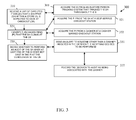
- FIG. 3 is a diagram of another method for determining a checkout audit, according to an example embodiment.
- FIG. 4 is a diagram of checkout audit system, according to an example embodiment.
- FIG. 1 is a diagram of a chart formed to monitor a customer for purposes of determining whether a checkout audit is need with that customer, according to an example situation. It is noted that the chart of the FIG. 1 shows but one example with some data points and is presented for purposes of illustration.
- the techniques presented herein accept that the audit is a deterrent to theft and seek to optimize the trigger of audits to only those transactions that exhibit characteristics consistent with theft.
- the location of the shopper is tracked and recorded as he/she traverses the store aisles using standard people tracking algorithms or products.
- the resultant track provides information on what aisles the shopper visited, his/her velocity, or more importantly where he/she paused in the aisle and for how long.
- the item list from the shopper's in-aisle scanning activity is correlated against the transaction eReceipt (electronic receipt) and a probability of theft metric is generated that is then compared against a threshold to trigger the transaction audit (at the self-checkout or at the door (continuing the people tracking) for mobile tender).
- eReceipt electronic receipt
- a probability of theft metric is generated that is then compared against a threshold to trigger the transaction audit (at the self-checkout or at the door (continuing the people tracking) for mobile tender).
- the theft probability is determined by examining where in the store the shopper paused his/her travel long enough to select an item. The detection of a "pause” must consider that sometimes shoppers are blocked because of cart traffic or other temporary obstacles.
- the people tracking system is smart enough and calibrated to differentiate these secondary causes from pausing to pick item(s) off the shelf and placing them into a cart or hand basket.
- the shopper's track information is bound to the particular transaction of that shopper, where ever it occurs.
- this can be done assuming that we have supplied the base mobile application using in-aisle for scanning.
- the least intrusive approach is to perform a correlation between all the completed tracks and the transaction item list when tender is requested.
- the correlation then becomes a match of the item location profiles with the scan times, matched against the shopper track information. This should be completely effective for large transactions (for example, more than five items) because the correlation length is sufficient to eliminate ambiguity.
- the people tracking system can also be leveraged to monitor the travel of a shopper to a specific lane or other checkout point, further reducing the ambiguity.
- the x axis represents aisles and the y axis the position down the aisle; essentially a grid floor plan of the store.
- the track is shown in solid lines and pauses with diamond symbols along the track. (The actual track would extend to the ends of the aisles).
- 11 items are in the transaction and they have been mapped by time stamp and an in-store product location database to correspond to the places in the store where the shopper paused. No items on the transaction are available at the site of pause 5 leading one to suspect that a theft might have occurred at this point.
- Advanced video processing can be further exploited to monitor the actions of the shopper's arms reaching to the shelves to reduce the false alarm rate.
- This measure of theft probability can then be combined with other measures such as shopping history, etc. to render a final audit decision.
- the proposed techniques can greatly reduce the false alarm rate for in-aisle scanning audits and only request audits when reasonable suspicion that the shopper has un-purchased items.
- the techniques are highly effective in recognizing theft of high value meat/seafood products because they are located in physically separate areas from other store items.
- the ability to detect arm motion greatly reduces the false alarm rate.
- FIGS. 2-4 It is now within this context that specific embodiments of the invention are presented with reference to the FIGS. 2-4 .
- FIG. 2 is a diagram of a method 200 for determining a checkout audit, according to an example embodiment.
- the method 200 (hereinafter "audit manager") is implemented as instructions programmed and residing on a non-transitory computer-readable (processor-readable) storage medium and executed by one or more processors.
- the processors are specifically configured and programmed to process the audit manager.
- the audit manager may also operate over a network.
- the network is wired, wireless, or a combination of wired and wireless.
- the audit manager executes on one or more processors of a kiosk system.
- a kiosk system includes a variety of devices, such as display, perhaps touch screen, scanner, card swipe device, and cash/coin accepter device.
- the audit manager executes on a server within a store that is in communication with the kiosk system.
- the audit manager executes on a cashier manned station used for checkouts.
- the audit manager receives in-store tracking information for a shopper that is traversing the store. This can be received and can include a variety of information.
- the audit manager acquires the in-store tracking information as data showing movements of the shopper throughout the store, pauses of the shopper in known areas of the store, and item identifiers in the known areas of the store for known products of the store. This can be achieved via maps and plot data for the store as discussed above with reference to the FIG. 1 .
- the audit manager identifies in the pauses data points for arm movements of the shopper to restrict the item identifiers for the known products. So, when the arm is moved during a pause this is a good indication a product was selected and not a situation during a pause with no arm movement where there is simply a backup in the store that caused the shopper to pause.
- the audit manager obtains the in-store tracking information initially as video data of the shopper traversing the store and captured by multiple cameras dispersed throughout the store.
- the audit manager passes the video data to a decision agent that returns data representing movements of the shopper through the store, pauses of the shopper in known areas of the store, arm movements of the shopper during those pauses, and item identifiers in the known areas of the store having the arm movements for the known products of the store.
- the processing of 211-214 demonstrates that a variety of architectural arrangements can be afforded to process in-store video data some by the audit manager or by other entities of the enterprise (store) or even other third-party services.
- the audit manager correlates aspects of the in-store tracking information with known products of the store. That is, determinations are made as to what the expected items of the shopper should be based on the correlation with the in-store tracking information.
- the audit manager accesses a store product database to resolve the expected items based on the in-store tracking information. So, a backend database can be used to resolve the known products and the expected items.
- the audit manager compares purchased items with expected items when the shopper checks out of the store.
- the audit manager receives the purchased items in real time from a kiosk or a cashier manned device when the shopper checks outs.
- the audit manager identifies at least one purchased item as being a same type as an expected item indicating that the shopper misidentified the at least one purchase item. This may be a situation where an orange was identified but not identified as being organic when in fact it was based on the analysis. So, suppose an item is of a given type (produce) or even a shirt, this situation can detect when the shopper is trying to pass off a different brand for that type of item from what is expected based on the analysis.
- the audit manager makes a decision as to whether to audit the shopper before the shopper exits the store.
- the audit manager evaluates a variety of additional configured heuristics before making the decision.
- the audit manager decides to request an audit when at least one expected item is missing from the purchased items.
- the audit manager automatically sends an alert to in-store personnel to immediately visit the shopper and perform the requested audit.
- the audit manager also includes selected extracted images of suspicious events to the store personnel, which allows them to identify the shopper in question, if the shopper is not at a non-movable terminal making payment.
- the image, if extracted at the point of handling the item in question, can also serve to indicate to the store personnel the particular item of the card to audit, thereby making the audit operation much more efficient than rescanning the entire transaction or otherwise randomly auditing a portion of all the items in the cart.
- FIG. 3 is a diagram of another method 300 for determining a checkout audit, according to an example embodiment.
- the method 300 (hereinafter “audit controller") is implemented as instruction and programmed within a non-transitory computer-readable (processor-readable) storage medium that executes on one or more processors of a kiosk system (e.g., display, perhaps touch screen, card swipe device, a cash/coin accepter device, etc.); the processors of the kiosk system are specifically configured to execute the audit controller.
- the audit controller is implemented on a server within a store and is in communication with both kiosk systems and cashier-manned systems.
- the audit controller is implemented within cashier-manned systems within the store.
- the audit controller may also be operational over a network; the network is wired, wireless, or a combination of wired and wireless.
- the audit controller presents another and in some ways enhanced processing perspective of the audit manager represented by the method 200 and discussed above with reference to the FIG. 2 .
- the audit controller receives a list of expected items that a shopper within a store is expected to have at checkout.
- the audit controller acquires the expected items from an in-store person tracking system that tracked the shopper throughout the store.
- the audit controller identifies purchased items that the shopper claims at the checkout.
- the audit controller acquires the purchased items from the shopper at a self-service checkout station.
- the audit controller acquires the purchased items from a cashier at a cashier manned checkout station.
- the audit controller decides whether to perform an audit of the shopper when at least one of the expected items does not exist in the purchased items at the conclusion of the checkout.
- the audit controller sends an alert to someone other than the cashier involved in the checkout when the audit was decided to be performed. This is useful in case the cashier is part of the theft problem, such as when the shopper is a friend of the cashier.
- the audit controller records the decision to audit as being associated with the cashier. So, counts can be automatically performed to be used in cashier performance evaluations.
- FIG. 4 is a diagram of checkout audit system 400, according to an example embodiment.
- the components of the checkout audit system 400 are implemented as executable instructions and programmed within a non-transitory computer-readable (processor-readable) storage medium that execute on one or more processors of a kiosk system (e.g., self-service kiosk and component devices, etc.) or server; the processors of the kiosk system or server are specifically configured to execute the components of the checkout audit system 400.
- the checkout audit system 400 may also be operational over a network; the network is wired, wireless, or a combination of wired and wireless.
- the checkout audit system 400 includes an audit manager 401.
- the checkout audit system 400 includes a kiosk system, cashier manned system, or server having one or more processors that execute the audit manager 401, which is implemented, programmed, and resides within a non-transitory computer-readable storage medium. Example processing associated with the audit manager 401 was presented above in detail with reference to the FIGS. 1-3 .
- the audit manager 401 is configured to resolve expected items that a shopper within a store is expected to have and compares those expected items at a checkout for the shopper to determine whether a transaction for the shopper is to be audited. This was explained in great detail above with reference to the FIGS. 1-3 .
- the audit manager 401 is configured to interact with an in-store people tracking system to resolve the expected items.
- the audit manager 401 is further configured to interact with an in-store product database to resolve the expected items as well.
- Various embodiments herein have described a real-time detection/analysis of shopper movements within a store based on pauses and arm movements during those pauses to drive audit decisions.
- An alternative embodiment is foreseen where the declaration of a suspicious event is subjected to further analysis by humans to confirm that the video sample in fact represents moving an item from the shelf into the cart without scanning.
- the non-real time analysis can be used to update a shopper "trust level" that applies to subsequent visits to the store rather than the current transaction.
Landscapes
- Business, Economics & Management (AREA)
- Accounting & Taxation (AREA)
- Physics & Mathematics (AREA)
- Engineering & Computer Science (AREA)
- General Physics & Mathematics (AREA)
- Theoretical Computer Science (AREA)
- Strategic Management (AREA)
- Finance (AREA)
- General Business, Economics & Management (AREA)
- Marketing (AREA)
- Economics (AREA)
- Development Economics (AREA)
- Entrepreneurship & Innovation (AREA)
- Computer Security & Cryptography (AREA)
- Computer Vision & Pattern Recognition (AREA)
- Management, Administration, Business Operations System, And Electronic Commerce (AREA)
- Cash Registers Or Receiving Machines (AREA)
Abstract
Description
- Consumers are increasingly using kiosks to conduct business with enterprises. The kiosks come in a variety of sizes and are used for a variety of purposes. Some kiosks are drive through, such as fast food establishments, pharmacies, banks, and the like. Other kiosks are stationary located in gas stations, airlines, grocery stores, department stores, and the like.
- In addition, what is considered a kiosk is evolving with today's technology. For example, digital signs now provide advertisements and mechanisms for users to interact with the displays to perform transactions. Such mechanisms include blue tooth communication, Near Field Communication (NFC), Quick Response (QR) code scanning, WiFi communication, and the like.
- Traditional self-checkout systems employ item level security through weight, dimensions, colors, etc. While not completely effective, the net effect is that shoppers are inclined to scan and then bag each item progressing through the cart until all items are entered into the transaction.
- Recent advances in handheld technology, notably mobile devices, have introduced new challenges for retailers to implement adequate forms of security while the shopper controls scanning of items in the aisle and makes payment either at a self-service lane, assisted lane, or fully from the mobile device using eWallet technologies (e.g. PayPal®, etc.).
- Transaction audits are thought to be effective in preventing theft with in-aisle scanning systems. The audit strategy is commonly based on a combination of shopping and audit history, together with various probability models. When an audit is indicated, it can be either partial or full. A partial audit verifies that certain items selected randomly from the cart are in fact entered into the transaction. Other strategies, such as ones based on selecting the items by value are also common.
- A full audit has the attendant re-itemize the entire transaction, which is then compared to the in-aisle version of the transaction to identify attempted theft.
- While effective, the audit is highly disruptive to the checkout activity often slowing throughput during peak store hours as attendants have multiple audits queued up. This greatly frustrates shoppers as well, because they are delayed from finalizing the transaction for seemingly no reason at all (from the perspective of the shoppers).
- In various embodiments, techniques for achieving checkout security using in-store video surveillance are presented. According to an embodiment, a method for determining a checkout audit is provided.
- According to a first aspect of the present invention there is provided a processor-implemented method programmed in a non-transitory processor-readable medium and to execute on one or more processors of a machine configured to execute the method, comprising: receiving, at the machine, in-store tracking information for a shopper; correlating, at the machine, aspects of the in-store tracking information with known products of a store; comparing, at the machine, purchased items with expected items when the shopper checks out of the store; and making, at the machine, a decision as to whether to audit the shopper before the shopper exits the store.
- Optionally, receiving further includes acquiring the in-store tracking information as data showing movements of the shopper through the store, pauses of the shopper in known areas of the store, and item identifiers in the known areas of the store.
- Optionally, acquiring further includes identifying in the pauses data points for arm movements of the shopper to restrict the item identifiers.
- Optionally, receiving further includes obtaining the in-store tracking information initially as video data of the shopper traversing the store and captured by multiple cameras dispersed throughout the store.
- Optionally, obtaining further includes passing the video data to a decision agent that returns data representing movements of the shopper through the store, pauses of the shopper in known areas of the store, arm movements of the shopper during the pauses, and item identifiers in the known areas of the store having the arm movements.
- Optionally, correlating further includes accessing a store item database to resolve the expected items based on the in-store tracking information.
- Optionally, comparing further includes receiving the purchased items in real time from a kiosk or cashier manned device when the shopper checks out.
- Optionally, comparing further includes identifying at least one purchased item as being of a same type as an expected item indicating that the shopper misidentified the at least one purchased item.
- Optionally, making further includes evaluating a variety of additional heuristics before making the decision.
- Optionally, making further includes deciding to request an audit when at least one expected item is missing from the purchased items.
- Optionally, deciding further includes sending an alert to in-store personnel to immediately visit the shopper and perform the requested audit.
- According to a second aspect of the present invention there is provided a processor-implemented method programmed in a non-transitory processor-readable medium and to execute on one or more processors of a machine configured to execute the method, comprising: receiving, at the machine, a list of expected items that a shopper within a store is expected to have at a checkout; identifying, at the machine, purchased items that the shopper claims at the checkout; and deciding, at the machine, whether to perform an audit of the shopper when at least one of the expected items does not exist in the purchased items at the conclusion of the checkout.
- Optionally, receiving further includes acquiring the expected items from an in-store person tracking system that tracked the shopper throughout the store.
- Optionally, identifying further includes acquiring the purchased items from the shopper at a self-service checkout station.
- Optionally, identifying further includes acquiring the purchased items from a cashier at a cashier manned checkout station.
- Optionally, deciding further includes sending an alert to someone other than a cashier involved in the checkout when the audit was decided to be performed.
- Optionally, the method further comprises, recording the decision to audit as being associated with the cashier.
- According to a third aspect of the present invention there is provided a system comprising: a machine configured with an audit manager that executes on one or more processors of the machine, and the audit manager is implemented and resides in a non-transitory computer-readable storage medium; wherein the audit manager resolves expected items that a shopper within a store is expected to have and compares those expected items against actual purchased items at a checkout for the shopper to determine whether a transaction for the shopper is to be audited.
- Optionally, the audit manager is configured to interact with an in-store people tracking system to resolve the expected items.
- Optionally, the audit manager is configured to interact with an in-store product database to resolve the expected items.
- Specifically, in-store tracking information for a shopper is received. Aspects of the in-store tracking information are correlated with known products of a store. Next, purchased items are compared against expected items when the shopper checks out of the store. Finally, a decision is made as to whether to audit the shopper before the shopper exits the store.
- These and other aspects will be apparent from the following specific description, given by way of example, with reference to the accompanying drawings, in which:
-
FIG. 1 is a diagram of a chart formed to monitor a customer for purposes of determining whether a checkout audit is need with that customer, according to an example situation. -
FIG. 2 is a diagram of a method for determining a checkout audit, according to an example embodiment. -
FIG. 3 is a diagram of another method for determining a checkout audit, according to an example embodiment. -
FIG. 4 is a diagram of checkout audit system, according to an example embodiment. -
FIG. 1 is a diagram of a chart formed to monitor a customer for purposes of determining whether a checkout audit is need with that customer, according to an example situation. It is noted that the chart of theFIG. 1 shows but one example with some data points and is presented for purposes of illustration. - The techniques presented herein accept that the audit is a deterrent to theft and seek to optimize the trigger of audits to only those transactions that exhibit characteristics consistent with theft. Specifically, the location of the shopper is tracked and recorded as he/she traverses the store aisles using standard people tracking algorithms or products. The resultant track provides information on what aisles the shopper visited, his/her velocity, or more importantly where he/she paused in the aisle and for how long.
- When the in-aisle shopper then goes to tender (via mobile device or payment station such as self-checkout or assisted lane) the item list from the shopper's in-aisle scanning activity is correlated against the transaction eReceipt (electronic receipt) and a probability of theft metric is generated that is then compared against a threshold to trigger the transaction audit (at the self-checkout or at the door (continuing the people tracking) for mobile tender).
- The theft probability is determined by examining where in the store the shopper paused his/her travel long enough to select an item. The detection of a "pause" must consider that sometimes shoppers are blocked because of cart traffic or other temporary obstacles. The people tracking system is smart enough and calibrated to differentiate these secondary causes from pausing to pick item(s) off the shelf and placing them into a cart or hand basket.
- Assuming now we have the shopper's track information and the transaction item list and knowledge of where in the store each item is located, we can now test the location where each pause in movement occurred with the items on the receipt that could have been picked at that place. After all items are matched to pauses (corresponding to picking that item from its shelf location), any unmatched pauses (with no matching transaction item) are suspects for theft. The theft being the picking of an item and placing it in the cart but not scanning it into the final checkout transaction.
- In order to perform this correlation, the shopper's track information is bound to the particular transaction of that shopper, where ever it occurs. There are a number of ways this can be done assuming that we have supplied the base mobile application using in-aisle for scanning. The least intrusive approach is to perform a correlation between all the completed tracks and the transaction item list when tender is requested. The correlation then becomes a match of the item location profiles with the scan times, matched against the shopper track information. This should be completely effective for large transactions (for example, more than five items) because the correlation length is sufficient to eliminate ambiguity.
- The people tracking system can also be leveraged to monitor the travel of a shopper to a specific lane or other checkout point, further reducing the ambiguity.
- In the
FIG. 1 , the x axis represents aisles and the y axis the position down the aisle; essentially a grid floor plan of the store. The track is shown in solid lines and pauses with diamond symbols along the track. (The actual track would extend to the ends of the aisles). In this example case, 11 items are in the transaction and they have been mapped by time stamp and an in-store product location database to correspond to the places in the store where the shopper paused. No items on the transaction are available at the site ofpause 5 leading one to suspect that a theft might have occurred at this point. - Advanced video processing can be further exploited to monitor the actions of the shopper's arms reaching to the shelves to reduce the false alarm rate.
- This measure of theft probability can then be combined with other measures such as shopping history, etc. to render a final audit decision.
- The proposed techniques can greatly reduce the false alarm rate for in-aisle scanning audits and only request audits when reasonable suspicion that the shopper has un-purchased items.
- The techniques are highly effective in recognizing theft of high value meat/seafood products because they are located in physically separate areas from other store items. The ability to detect arm motion (also readily available in today's people tracking technology) greatly reduces the false alarm rate.
- One of the hardest issues to prevent is the shopper selecting organic produce but paying only for non-organic equivalents. The locational awareness can readily detect if the shopper paused significantly at the organic vegetable area but is telling the self-checkout system that non-organic vegetables are being purchased.
- It is now within this context that specific embodiments of the invention are presented with reference to the
FIGS. 2-4 . -
FIG. 2 is a diagram of amethod 200 for determining a checkout audit, according to an example embodiment. The method 200 (hereinafter "audit manager") is implemented as instructions programmed and residing on a non-transitory computer-readable (processor-readable) storage medium and executed by one or more processors. The processors are specifically configured and programmed to process the audit manager. The audit manager may also operate over a network. The network is wired, wireless, or a combination of wired and wireless. - The audit manager executes on one or more processors of a kiosk system. A kiosk system includes a variety of devices, such as display, perhaps touch screen, scanner, card swipe device, and cash/coin accepter device. In another case, the audit manager executes on a server within a store that is in communication with the kiosk system. In still another situation, the audit manager executes on a cashier manned station used for checkouts.
- At 210, the audit manager receives in-store tracking information for a shopper that is traversing the store. This can be received and can include a variety of information.
- According to an embodiment, at 211, the audit manager acquires the in-store tracking information as data showing movements of the shopper throughout the store, pauses of the shopper in known areas of the store, and item identifiers in the known areas of the store for known products of the store. This can be achieved via maps and plot data for the store as discussed above with reference to the
FIG. 1 . - Continuing with the embodiment of 211 and at 212, the audit manager identifies in the pauses data points for arm movements of the shopper to restrict the item identifiers for the known products. So, when the arm is moved during a pause this is a good indication a product was selected and not a situation during a pause with no arm movement where there is simply a backup in the store that caused the shopper to pause.
- In an embodiment, at 213, the audit manager obtains the in-store tracking information initially as video data of the shopper traversing the store and captured by multiple cameras dispersed throughout the store.
- Continuing with the embodiment of 213 and at 214, the audit manager passes the video data to a decision agent that returns data representing movements of the shopper through the store, pauses of the shopper in known areas of the store, arm movements of the shopper during those pauses, and item identifiers in the known areas of the store having the arm movements for the known products of the store.
- The processing of 211-214 demonstrates that a variety of architectural arrangements can be afforded to process in-store video data some by the audit manager or by other entities of the enterprise (store) or even other third-party services.
- At 220, the audit manager correlates aspects of the in-store tracking information with known products of the store. That is, determinations are made as to what the expected items of the shopper should be based on the correlation with the in-store tracking information.
- According to an embodiment, at 221, the audit manager accesses a store product database to resolve the expected items based on the in-store tracking information. So, a backend database can be used to resolve the known products and the expected items.
- At 230, the audit manager compares purchased items with expected items when the shopper checks out of the store.
- According to an embodiment, at 231, the audit manager receives the purchased items in real time from a kiosk or a cashier manned device when the shopper checks outs.
- In another case, at 232, the audit manager identifies at least one purchased item as being a same type as an expected item indicating that the shopper misidentified the at least one purchase item. This may be a situation where an orange was identified but not identified as being organic when in fact it was based on the analysis. So, suppose an item is of a given type (produce) or even a shirt, this situation can detect when the shopper is trying to pass off a different brand for that type of item from what is expected based on the analysis.
- At 240, the audit manager makes a decision as to whether to audit the shopper before the shopper exits the store.
- In an embodiment, at 241, the audit manager evaluates a variety of additional configured heuristics before making the decision.
- In an alternative case, at 242, the audit manager decides to request an audit when at least one expected item is missing from the purchased items.
- Continuing with the embodiment of 242 and at 243, the audit manager automatically sends an alert to in-store personnel to immediately visit the shopper and perform the requested audit. In some cases, the audit manager also includes selected extracted images of suspicious events to the store personnel, which allows them to identify the shopper in question, if the shopper is not at a non-movable terminal making payment. The image, if extracted at the point of handling the item in question, can also serve to indicate to the store personnel the particular item of the card to audit, thereby making the audit operation much more efficient than rescanning the entire transaction or otherwise randomly auditing a portion of all the items in the cart.
-
FIG. 3 is a diagram of anothermethod 300 for determining a checkout audit, according to an example embodiment. The method 300 (hereinafter "audit controller") is implemented as instruction and programmed within a non-transitory computer-readable (processor-readable) storage medium that executes on one or more processors of a kiosk system (e.g., display, perhaps touch screen, card swipe device, a cash/coin accepter device, etc.); the processors of the kiosk system are specifically configured to execute the audit controller. In another case, the audit controller is implemented on a server within a store and is in communication with both kiosk systems and cashier-manned systems. In still other situations, the audit controller is implemented within cashier-manned systems within the store. The audit controller may also be operational over a network; the network is wired, wireless, or a combination of wired and wireless. - The audit controller presents another and in some ways enhanced processing perspective of the audit manager represented by the
method 200 and discussed above with reference to theFIG. 2 . - At 310, the audit controller receives a list of expected items that a shopper within a store is expected to have at checkout.
- According to an embodiment, at 311, the audit controller acquires the expected items from an in-store person tracking system that tracked the shopper throughout the store.
- At 320, the audit controller identifies purchased items that the shopper claims at the checkout.
- In an embodiment, at 321, the audit controller acquires the purchased items from the shopper at a self-service checkout station.
- In an alternative situation, at 322, the audit controller acquires the purchased items from a cashier at a cashier manned checkout station.
- At 330, the audit controller decides whether to perform an audit of the shopper when at least one of the expected items does not exist in the purchased items at the conclusion of the checkout.
- In an embodiment, at 331, the audit controller sends an alert to someone other than the cashier involved in the checkout when the audit was decided to be performed. This is useful in case the cashier is part of the theft problem, such as when the shopper is a friend of the cashier.
- Continuing with the embodiment of 331 and at 332, the audit controller records the decision to audit as being associated with the cashier. So, counts can be automatically performed to be used in cashier performance evaluations.
-
FIG. 4 is a diagram ofcheckout audit system 400, according to an example embodiment. The components of thecheckout audit system 400 are implemented as executable instructions and programmed within a non-transitory computer-readable (processor-readable) storage medium that execute on one or more processors of a kiosk system (e.g., self-service kiosk and component devices, etc.) or server; the processors of the kiosk system or server are specifically configured to execute the components of thecheckout audit system 400. Thecheckout audit system 400 may also be operational over a network; the network is wired, wireless, or a combination of wired and wireless. - The
checkout audit system 400 includes anaudit manager 401. - The
checkout audit system 400 includes a kiosk system, cashier manned system, or server having one or more processors that execute theaudit manager 401, which is implemented, programmed, and resides within a non-transitory computer-readable storage medium. Example processing associated with theaudit manager 401 was presented above in detail with reference to theFIGS. 1-3 . - The
audit manager 401 is configured to resolve expected items that a shopper within a store is expected to have and compares those expected items at a checkout for the shopper to determine whether a transaction for the shopper is to be audited. This was explained in great detail above with reference to theFIGS. 1-3 . - According to an embodiment, the
audit manager 401 is configured to interact with an in-store people tracking system to resolve the expected items. - Continuing with the previous embodiment, the
audit manager 401 is further configured to interact with an in-store product database to resolve the expected items as well. - Various embodiments herein have described a real-time detection/analysis of shopper movements within a store based on pauses and arm movements during those pauses to drive audit decisions. An alternative embodiment is foreseen where the declaration of a suspicious event is subjected to further analysis by humans to confirm that the video sample in fact represents moving an item from the shelf into the cart without scanning. The non-real time analysis can be used to update a shopper "trust level" that applies to subsequent visits to the store rather than the current transaction.
- In addition, special considerations may be used for handling common shopper activities such as performance for a shopper product nutrition or price comparison. Here, one expects the "arm" events in the same product area to result in a single item scan without affecting the audit probability.
- In still another consideration, there can be transactions with multiple humans where one shopper gathers items from the store shelves and brings them to another shopper who scans them or places them in a cart. This can be accounted for as well.
- The above description is illustrative, and not restrictive. Many other embodiments will be apparent to those of skill in the art upon reviewing the above description. The scope of embodiments should therefore be determined with reference to the appended claims, along with the full scope of equivalents to which such claims are entitled.
- In the foregoing description of the embodiments, various features are grouped together in a single embodiment for the purpose of streamlining the disclosure. This method of disclosure is not to be interpreted as reflecting that the claimed embodiments have more features than are expressly recited in each claim. Rather, as the following claims reflect, inventive subject matter lies in less than all features of a single disclosed embodiment.
Claims (15)
- A processor implemented method of deciding whether to audit a shopper, the method comprising:receiving electronic in-store tracking information for a shopper (210);correlating aspects of the in-store tracking information with known products of a store (220);comparing purchased items with expected items when the shopper checks out of the store (230); andmaking a decision as to whether to audit the shopper before the shopper exits the store (240).
- The method of claim 1, wherein receiving in-store tracking information for a shopper further includes acquiring the in-store tracking information as data showing movements of the shopper through the store, pauses of the shopper in known areas of the store, and item identifiers in the known areas of the store (211).
- The method of claim 2, wherein acquiring the in-store tracking information further includes identifying in the pauses data points for arm movements of the shopper to restrict the item identifiers (212).
- The method of any preceding claim, wherein receiving in-store tracking information for a shopper further includes obtaining the in-store tracking information initially as video data of the shopper traversing the store and captured by multiple cameras dispersed throughout the store (213).
- The method of claim 4, wherein obtaining the in-store tracking information initially as video data further includes passing the video data to an electronic decision agent that returns data representing movements of the shopper through the store, pauses of the shopper in known areas of the store, arm movements of the shopper during the pauses, and item identifiers in the known areas of the store having the arm movements (214).
- The method of any preceding claim, wherein correlating aspects of the in-store tracking information with known products of a store further includes accessing a store item database to resolve the expected items based on the in-store tracking information (221).
- The method of any preceding claim, wherein comparing purchased items with expected items when the shopper checks out of the store further includes receiving the purchased items in real time from a kiosk or cashier manned device when the shopper checks out (222).
- The method of any preceding claim, wherein comparing purchased items with expected items when the shopper checks out of the store further includes identifying at least one purchased item as being of a same type as an expected item indicating that the shopper misidentified the at least one purchased item (231).
- The method of any preceding claim, wherein making a decision as to whether to audit the shopper before the shopper exits the store further includes evaluating a variety of additional heuristics before making the decision (241).
- The method of any preceding claim, wherein making a decision as to whether to audit the shopper before the shopper exits the store further includes deciding to request an audit when at least one expected item is missing from the purchased items (242).
- The method of claim 10, wherein deciding to request an audit when at least one expected item is missing from the purchased items further includes sending an alert to in-store personnel to visit the shopper and perform the requested audit (243).
- A system (400) comprising:a machine configured with an audit manager (401) that implements the steps of any preceding claim so that the audit manager (401) resolves expected items that a shopper within a store is expected to have and compares those expected items against actual purchased items at a checkout for the shopper to determine whether a transaction for the shopper is to be audited.
- The system of claim 12, wherein the audit manager (401) is configured to interact with an in-store people tracking system to resolve the expected items.
- The system of claim 12 or 13, wherein the audit manager (401) is configured to interact with an in-store product database to resolve the expected items.
- A system according to any of claims 12 to 14, wherein the machine comprises a checkout terminal for paying for retail purchases.
Priority Applications (1)
| Application Number | Priority Date | Filing Date | Title |
|---|---|---|---|
| EP19165821.0A EP3525151A1 (en) | 2012-08-31 | 2013-07-15 | Checkout security using video surveillance |
Applications Claiming Priority (1)
| Application Number | Priority Date | Filing Date | Title |
|---|---|---|---|
| US13/600,913 US9311645B2 (en) | 2012-08-31 | 2012-08-31 | Techniques for checkout security using video surveillance |
Related Child Applications (1)
| Application Number | Title | Priority Date | Filing Date |
|---|---|---|---|
| EP19165821.0A Division EP3525151A1 (en) | 2012-08-31 | 2013-07-15 | Checkout security using video surveillance |
Publications (1)
| Publication Number | Publication Date |
|---|---|
| EP2704079A1 true EP2704079A1 (en) | 2014-03-05 |
Family
ID=48832755
Family Applications (2)
| Application Number | Title | Priority Date | Filing Date |
|---|---|---|---|
| EP13176574.5A Withdrawn EP2704079A1 (en) | 2012-08-31 | 2013-07-15 | Checkout security using video surveillance |
| EP19165821.0A Pending EP3525151A1 (en) | 2012-08-31 | 2013-07-15 | Checkout security using video surveillance |
Family Applications After (1)
| Application Number | Title | Priority Date | Filing Date |
|---|---|---|---|
| EP19165821.0A Pending EP3525151A1 (en) | 2012-08-31 | 2013-07-15 | Checkout security using video surveillance |
Country Status (4)
| Country | Link |
|---|---|
| US (1) | US9311645B2 (en) |
| EP (2) | EP2704079A1 (en) |
| CN (1) | CN103679471B (en) |
| AU (1) | AU2013207607A1 (en) |
Cited By (3)
| Publication number | Priority date | Publication date | Assignee | Title |
|---|---|---|---|---|
| EP3447708A1 (en) * | 2017-08-21 | 2019-02-27 | Toshiba TEC Kabushiki Kaisha | Sales management system and sales management method |
| EP3748594A1 (en) * | 2019-06-06 | 2020-12-09 | Toshiba TEC Kabushiki Kaisha | Store management system and method |
| IT202200007865A1 (en) * | 2022-04-21 | 2023-10-21 | Intent Tech Srl | ANTI-THEFT SYSTEM FOR ITEMS IN AUTOMATIC CHECKOUTS AND SIMILAR |
Families Citing this family (30)
| Publication number | Priority date | Publication date | Assignee | Title |
|---|---|---|---|---|
| US9165276B2 (en) * | 2012-08-31 | 2015-10-20 | Wal-Mart Stores, Inc. | Locating and organizing digital receipt data for use in in-store audits |
| US9236911B2 (en) * | 2012-12-28 | 2016-01-12 | Intel Corporation | Secure transfer of whiteboard content |
| US20140222680A1 (en) * | 2013-02-07 | 2014-08-07 | Securecheck, Llc | Apparatus, system and method for secure transactions and monitoring in a retail environment |
| JP6172380B2 (en) * | 2014-03-20 | 2017-08-02 | 日本電気株式会社 | POS terminal device, POS system, product recognition method and program |
| CN104766225B (en) * | 2015-04-14 | 2018-07-13 | 孙晞红 | A kind of self-help shopping device and method of the improper Shopping Behaviors in recognizable sales field |
| US10262312B2 (en) * | 2015-06-19 | 2019-04-16 | Ncr Corporation | Point-of-sale terminal and method of operating same |
| JP6730079B2 (en) * | 2016-04-28 | 2020-07-29 | 東芝テック株式会社 | Monitoring device and program |
| US11080976B2 (en) * | 2017-06-15 | 2021-08-03 | Ncr Corporation | Real time bypass detection in scanner |
| CN112184205B (en) * | 2017-08-25 | 2024-01-05 | 创新先进技术有限公司 | A method, device, system and smart device for detecting whether a user has stolen items |
| US11961083B2 (en) * | 2018-04-10 | 2024-04-16 | Ncr Voyix Corporation | Alert controller for loss prevention |
| US11836752B2 (en) * | 2018-07-30 | 2023-12-05 | Ncr Corporation | Consumer tracking and engagement processing |
| US10943128B2 (en) * | 2018-11-01 | 2021-03-09 | Ncr Corporation | Constructing shopper carts using video surveillance |
| EP3924919A1 (en) * | 2019-02-11 | 2021-12-22 | Everseen Limited | System and method for operating an sco surface area of a retail store |
| US11501346B2 (en) | 2019-03-26 | 2022-11-15 | Toshiba Global Commerce Solutions Holdings Corporation | System and method for facilitating seamless commerce |
| US20200380252A1 (en) | 2019-05-29 | 2020-12-03 | Walmart Apollo, Llc | Systems and methods for detecting egress at an entrance of a retail facility |
| US11966900B2 (en) | 2019-07-19 | 2024-04-23 | Walmart Apollo, Llc | System and method for detecting unpaid items in retail store transactions |
| US12002080B2 (en) * | 2019-11-12 | 2024-06-04 | Walmart Apollo, Llc | Systems and methods for checking and confirming the purchase of merchandise items |
| JP7483365B2 (en) * | 2019-12-17 | 2024-05-15 | 東芝テック株式会社 | Shopper management device, information processing program, information processing method, and shopper management system |
| US11208134B2 (en) * | 2020-03-11 | 2021-12-28 | Gatekeeper Systems, Inc. | Monitoring system capable of classifying items added to a shopping cart |
| US11948375B2 (en) | 2020-11-09 | 2024-04-02 | Walmart Apollo, Llc | System and method for optimizing container contents |
| US12014375B2 (en) | 2021-07-02 | 2024-06-18 | Target Brands, Inc. | Generating security event case files from disparate unstructured data |
| US12100274B2 (en) * | 2021-07-02 | 2024-09-24 | Target Brands, Inc. | Generating watch lists for retail stores based on unstructured data and system-based inferences |
| CA3231848A1 (en) | 2021-09-17 | 2023-03-23 | Kevin MALGARINI | Contactless checkout system with theft detection |
| WO2023049250A1 (en) | 2021-09-27 | 2023-03-30 | Walmart Apollo, Llc | Checkout terminal |
| US12468990B2 (en) | 2022-03-18 | 2025-11-11 | Toshiba Global Commerce Solutions Holdings Corporation | Auditing purchasing system |
| CN116935298B (en) * | 2022-03-29 | 2026-03-03 | 富士通株式会社 | Method for monitoring abnormality in self-help shopping and self-help shopping abnormality monitoring device |
| US20230386306A1 (en) * | 2022-05-27 | 2023-11-30 | Target Brands, Inc. | Trust-based bag checks in a retail environment |
| USD1090140S1 (en) | 2023-01-31 | 2025-08-26 | Walmart Apollo, Llc | Checkout station |
| USD1097663S1 (en) | 2023-01-31 | 2025-10-14 | Walmart Apollo, Llc | Checkout station |
| US20260046377A1 (en) * | 2024-08-07 | 2026-02-12 | Toshiba Global Commerce Solutions, Inc. | Image data retention associated with a computer vision system |
Citations (3)
| Publication number | Priority date | Publication date | Assignee | Title |
|---|---|---|---|---|
| US20070279214A1 (en) * | 2006-06-02 | 2007-12-06 | Buehler Christopher J | Systems and methods for distributed monitoring of remote sites |
| US20080018738A1 (en) * | 2005-05-31 | 2008-01-24 | Objectvideo, Inc. | Video analytics for retail business process monitoring |
| US20120169879A1 (en) * | 2010-12-30 | 2012-07-05 | Honeywell International Inc. | Detecting retail shrinkage using behavioral analytics |
Family Cites Families (32)
| Publication number | Priority date | Publication date | Assignee | Title |
|---|---|---|---|---|
| US5877485A (en) | 1996-01-25 | 1999-03-02 | Symbol Technologies, Inc. | Statistical sampling security methodology for self-scanning checkout system |
| US6092725A (en) | 1997-01-24 | 2000-07-25 | Symbol Technologies, Inc. | Statistical sampling security methodology for self-scanning checkout system |
| US6837436B2 (en) | 1996-09-05 | 2005-01-04 | Symbol Technologies, Inc. | Consumer interactive shopping system |
| US5965861A (en) * | 1997-02-07 | 1999-10-12 | Ncr Corporation | Method and apparatus for enhancing security in a self-service checkout terminal |
| US7016862B1 (en) * | 1997-02-07 | 2006-03-21 | Ncr Corporation | Method for enhancing security and providing assistance in the operation of a self-service checkout terminal |
| US7868912B2 (en) * | 2000-10-24 | 2011-01-11 | Objectvideo, Inc. | Video surveillance system employing video primitives |
| US20050146605A1 (en) * | 2000-10-24 | 2005-07-07 | Lipton Alan J. | Video surveillance system employing video primitives |
| US8564661B2 (en) * | 2000-10-24 | 2013-10-22 | Objectvideo, Inc. | Video analytic rule detection system and method |
| US6633232B2 (en) * | 2001-05-14 | 2003-10-14 | Koninklijke Philips Electronics N.V. | Method and apparatus for routing persons through one or more destinations based on a least-cost criterion |
| US20030098910A1 (en) * | 2001-11-29 | 2003-05-29 | Pilsoo Kim | Apparatus and method of providing point-of-sale surveillance and auditing of sale transactions of goods |
| US6847393B2 (en) * | 2002-04-19 | 2005-01-25 | Wren Technology Group | Method and system for monitoring point of sale exceptions |
| US20040111324A1 (en) * | 2002-12-06 | 2004-06-10 | Kim Jeong T. | Integrated point-of-sale and surveillance system |
| US7081818B2 (en) * | 2003-05-19 | 2006-07-25 | Checkpoint Systems, Inc. | Article identification and tracking using electronic shadows created by RFID tags |
| US7631808B2 (en) * | 2004-06-21 | 2009-12-15 | Stoplift, Inc. | Method and apparatus for detecting suspicious activity using video analysis |
| US20060010027A1 (en) * | 2004-07-09 | 2006-01-12 | Redman Paul J | Method, system and program product for measuring customer preferences and needs with traffic pattern analysis |
| KR20040078636A (en) * | 2004-08-23 | 2004-09-10 | 안재명 | Store management system |
| US20070194112A1 (en) * | 2006-02-23 | 2007-08-23 | Petroskey Steven M | Security summary for retail receipt |
| WO2007139994A2 (en) * | 2006-05-25 | 2007-12-06 | Objectvideo, Inc. | Intelligent video verification of point of sale (pos) transactions |
| US8452660B2 (en) * | 2006-06-06 | 2013-05-28 | Fujitsu Frontech North America Inc. | Self-checkout security system and method therefor |
| US7974869B1 (en) * | 2006-09-20 | 2011-07-05 | Videomining Corporation | Method and system for automatically measuring and forecasting the behavioral characterization of customers to help customize programming contents in a media network |
| US8665333B1 (en) * | 2007-01-30 | 2014-03-04 | Videomining Corporation | Method and system for optimizing the observation and annotation of complex human behavior from video sources |
| JP5141048B2 (en) * | 2007-03-05 | 2013-02-13 | オムロン株式会社 | Risk monitoring device, risk monitoring system, and risk monitoring method |
| US9269244B2 (en) * | 2007-03-06 | 2016-02-23 | Verint Systems Inc. | Event detection based on video metadata |
| US8812355B2 (en) * | 2007-04-03 | 2014-08-19 | International Business Machines Corporation | Generating customized marketing messages for a customer using dynamic customer behavior data |
| CN101098465A (en) * | 2007-07-20 | 2008-01-02 | 哈尔滨工程大学 | A method for detecting and tracking moving objects in video surveillance |
| CN101577653A (en) * | 2008-05-08 | 2009-11-11 | 韩军 | System and method using positioning technique to carry out vehicle insurance claim assistant authentification |
| CA2672511A1 (en) * | 2008-07-16 | 2010-01-16 | Verint Systems Inc. | A system and method for capturing, storing, analyzing and displaying data relating to the movements of objects |
| JP2011118583A (en) * | 2009-12-02 | 2011-06-16 | Seiko Epson Corp | Injustice degree calculation device, method for controlling injustice degree calculation device and program |
| US8457354B1 (en) * | 2010-07-09 | 2013-06-04 | Target Brands, Inc. | Movement timestamping and analytics |
| US8610766B2 (en) * | 2010-09-24 | 2013-12-17 | International Business Machines Corporation | Activity determination as function of transaction log |
| US10592944B2 (en) * | 2011-06-06 | 2020-03-17 | Ncr Corporation | Notification system and methods for use in retail environments |
| US9195883B2 (en) * | 2012-04-09 | 2015-11-24 | Avigilon Fortress Corporation | Object tracking and best shot detection system |
-
2012
- 2012-08-31 US US13/600,913 patent/US9311645B2/en active Active
-
2013
- 2013-07-15 EP EP13176574.5A patent/EP2704079A1/en not_active Withdrawn
- 2013-07-15 EP EP19165821.0A patent/EP3525151A1/en active Pending
- 2013-07-18 AU AU2013207607A patent/AU2013207607A1/en not_active Abandoned
- 2013-08-29 CN CN201310385279.5A patent/CN103679471B/en active Active
Patent Citations (3)
| Publication number | Priority date | Publication date | Assignee | Title |
|---|---|---|---|---|
| US20080018738A1 (en) * | 2005-05-31 | 2008-01-24 | Objectvideo, Inc. | Video analytics for retail business process monitoring |
| US20070279214A1 (en) * | 2006-06-02 | 2007-12-06 | Buehler Christopher J | Systems and methods for distributed monitoring of remote sites |
| US20120169879A1 (en) * | 2010-12-30 | 2012-07-05 | Honeywell International Inc. | Detecting retail shrinkage using behavioral analytics |
Non-Patent Citations (1)
| Title |
|---|
| EPO: "Mitteilung des Europäischen Patentamts vom 1. Oktober 2007 über Geschäftsmethoden = Notice from the European Patent Office dated 1 October 2007 concerning business methods = Communiqué de l'Office européen des brevets,en date du 1er octobre 2007, concernant les méthodes dans le domaine des activités", JOURNAL OFFICIEL DE L'OFFICE EUROPEEN DES BREVETS.OFFICIAL JOURNAL OF THE EUROPEAN PATENT OFFICE.AMTSBLATTT DES EUROPAEISCHEN PATENTAMTS, OEB, MUNCHEN, DE, vol. 30, no. 11, 1 November 2007 (2007-11-01), pages 592 - 593, XP007905525, ISSN: 0170-9291 * |
Cited By (5)
| Publication number | Priority date | Publication date | Assignee | Title |
|---|---|---|---|---|
| EP3447708A1 (en) * | 2017-08-21 | 2019-02-27 | Toshiba TEC Kabushiki Kaisha | Sales management system and sales management method |
| EP3748594A1 (en) * | 2019-06-06 | 2020-12-09 | Toshiba TEC Kabushiki Kaisha | Store management system and method |
| US20220366423A1 (en) * | 2019-06-06 | 2022-11-17 | Toshiba Tec Kabushiki Kaisha | Store management system and store management method |
| IT202200007865A1 (en) * | 2022-04-21 | 2023-10-21 | Intent Tech Srl | ANTI-THEFT SYSTEM FOR ITEMS IN AUTOMATIC CHECKOUTS AND SIMILAR |
| EP4266279A1 (en) * | 2022-04-21 | 2023-10-25 | Intent-Tech Srl | Antitheft system for items in automatic checkouts and the like |
Also Published As
| Publication number | Publication date |
|---|---|
| US9311645B2 (en) | 2016-04-12 |
| US20140063262A1 (en) | 2014-03-06 |
| CN103679471A (en) | 2014-03-26 |
| CN103679471B (en) | 2017-06-30 |
| EP3525151A1 (en) | 2019-08-14 |
| AU2013207607A1 (en) | 2014-03-20 |
Similar Documents
| Publication | Publication Date | Title |
|---|---|---|
| US9311645B2 (en) | Techniques for checkout security using video surveillance | |
| US11676387B2 (en) | Method and apparatus for detecting suspicious activity using video analysis | |
| US11823459B2 (en) | Monitoring and tracking interactions with inventory in a retail environment | |
| US8448858B1 (en) | Method and apparatus for detecting suspicious activity using video analysis from alternative camera viewpoint | |
| US11416902B2 (en) | Notification system and methods for use in retail environments | |
| US20200279310A1 (en) | Notification system and methods for use in retail environments | |
| US8104680B2 (en) | Method and apparatus for auditing transaction activity in retail and other environments using visual recognition | |
| EP2519935B1 (en) | Auditing video analytics | |
| EP1872307A2 (en) | Method and apparatus for detecting suspicious activity using video analysis | |
| TW200822751A (en) | Video analytics for retail business process monitoring | |
| EP4113458B1 (en) | Information processing program, information processing method, and information processing apparatus | |
| JP2019053735A (en) | Information processing device | |
| JP7318753B2 (en) | Information processing program, information processing method, and information processing apparatus | |
| US20230394555A1 (en) | Information processing method, information processing device, and recording medium | |
| US20230035227A1 (en) | Computer-readable recording medium, information processing method, and information processing apparatus | |
| US12230034B2 (en) | Method executed by an information processing device for performing an authentication of commodity products | |
| US20240177576A1 (en) | Imaging Systems and Methods for Monitoring Items in Predetermined Areas |
Legal Events
| Date | Code | Title | Description |
|---|---|---|---|
| AK | Designated contracting states |
Kind code of ref document: A1 Designated state(s): AL AT BE BG CH CY CZ DE DK EE ES FI FR GB GR HR HU IE IS IT LI LT LU LV MC MK MT NL NO PL PT RO RS SE SI SK SM TR |
|
| AX | Request for extension of the european patent |
Extension state: BA ME |
|
| PUAI | Public reference made under article 153(3) epc to a published international application that has entered the european phase |
Free format text: ORIGINAL CODE: 0009012 |
|
| 17P | Request for examination filed |
Effective date: 20140905 |
|
| RBV | Designated contracting states (corrected) |
Designated state(s): AL AT BE BG CH CY CZ DE DK EE ES FI FR GB GR HR HU IE IS IT LI LT LU LV MC MK MT NL NO PL PT RO RS SE SI SK SM TR |
|
| STAA | Information on the status of an ep patent application or granted ep patent |
Free format text: STATUS: EXAMINATION IS IN PROGRESS |
|
| 17Q | First examination report despatched |
Effective date: 20161024 |
|
| RAP1 | Party data changed (applicant data changed or rights of an application transferred) |
Owner name: NCR CORPORATION |
|
| APBK | Appeal reference recorded |
Free format text: ORIGINAL CODE: EPIDOSNREFNE |
|
| APBN | Date of receipt of notice of appeal recorded |
Free format text: ORIGINAL CODE: EPIDOSNNOA2E |
|
| APBR | Date of receipt of statement of grounds of appeal recorded |
Free format text: ORIGINAL CODE: EPIDOSNNOA3E |
|
| APAF | Appeal reference modified |
Free format text: ORIGINAL CODE: EPIDOSCREFNE |
|
| APAF | Appeal reference modified |
Free format text: ORIGINAL CODE: EPIDOSCREFNE |
|
| APBT | Appeal procedure closed |
Free format text: ORIGINAL CODE: EPIDOSNNOA9E |
|
| STAA | Information on the status of an ep patent application or granted ep patent |
Free format text: STATUS: THE APPLICATION HAS BEEN WITHDRAWN |
|
| 18W | Application withdrawn |
Effective date: 20220921 |