EP2701422A1 - P-CPICH scrambling code collision detection - Google Patents
P-CPICH scrambling code collision detection Download PDFInfo
- Publication number
- EP2701422A1 EP2701422A1 EP20130167570 EP13167570A EP2701422A1 EP 2701422 A1 EP2701422 A1 EP 2701422A1 EP 20130167570 EP20130167570 EP 20130167570 EP 13167570 A EP13167570 A EP 13167570A EP 2701422 A1 EP2701422 A1 EP 2701422A1
- Authority
- EP
- European Patent Office
- Prior art keywords
- pccpch
- cell
- scrambling code
- sequence
- channel estimation
- Prior art date
- Legal status (The legal status is an assumption and is not a legal conclusion. Google has not performed a legal analysis and makes no representation as to the accuracy of the status listed.)
- Granted
Links
- 238000001514 detection method Methods 0.000 title abstract description 11
- 238000000034 method Methods 0.000 claims abstract description 28
- 230000006870 function Effects 0.000 claims description 8
- 238000012544 monitoring process Methods 0.000 claims description 6
- 230000008859 change Effects 0.000 claims description 4
- 238000001914 filtration Methods 0.000 claims description 4
- 230000008569 process Effects 0.000 abstract description 2
- 238000005259 measurement Methods 0.000 description 31
- 230000011664 signaling Effects 0.000 description 5
- 230000015556 catabolic process Effects 0.000 description 2
- 238000004891 communication Methods 0.000 description 2
- 238000006731 degradation reaction Methods 0.000 description 2
- 238000010586 diagram Methods 0.000 description 2
- 108010003272 Hyaluronate lyase Proteins 0.000 description 1
- 230000004913 activation Effects 0.000 description 1
- 238000013459 approach Methods 0.000 description 1
- 230000001413 cellular effect Effects 0.000 description 1
- 125000004122 cyclic group Chemical group 0.000 description 1
- 238000005516 engineering process Methods 0.000 description 1
- 238000005562 fading Methods 0.000 description 1
- 230000002452 interceptive effect Effects 0.000 description 1
Images


Classifications
-
- H—ELECTRICITY
- H04—ELECTRIC COMMUNICATION TECHNIQUE
- H04W—WIRELESS COMMUNICATION NETWORKS
- H04W16/00—Network planning, e.g. coverage or traffic planning tools; Network deployment, e.g. resource partitioning or cells structures
- H04W16/02—Resource partitioning among network components, e.g. reuse partitioning
-
- H—ELECTRICITY
- H04—ELECTRIC COMMUNICATION TECHNIQUE
- H04W—WIRELESS COMMUNICATION NETWORKS
- H04W72/00—Local resource management
- H04W72/20—Control channels or signalling for resource management
-
- H—ELECTRICITY
- H04—ELECTRIC COMMUNICATION TECHNIQUE
- H04B—TRANSMISSION
- H04B1/00—Details of transmission systems, not covered by a single one of groups H04B3/00 - H04B13/00; Details of transmission systems not characterised by the medium used for transmission
- H04B1/69—Spread spectrum techniques
- H04B1/707—Spread spectrum techniques using direct sequence modulation
- H04B1/7073—Synchronisation aspects
- H04B1/7083—Cell search, e.g. using a three-step approach
-
- H—ELECTRICITY
- H04—ELECTRIC COMMUNICATION TECHNIQUE
- H04L—TRANSMISSION OF DIGITAL INFORMATION, e.g. TELEGRAPHIC COMMUNICATION
- H04L25/00—Baseband systems
- H04L25/02—Details ; arrangements for supplying electrical power along data transmission lines
- H04L25/0202—Channel estimation
-
- H—ELECTRICITY
- H04—ELECTRIC COMMUNICATION TECHNIQUE
- H04L—TRANSMISSION OF DIGITAL INFORMATION, e.g. TELEGRAPHIC COMMUNICATION
- H04L25/00—Baseband systems
- H04L25/02—Details ; arrangements for supplying electrical power along data transmission lines
- H04L25/03—Shaping networks in transmitter or receiver, e.g. adaptive shaping networks
- H04L25/03828—Arrangements for spectral shaping; Arrangements for providing signals with specified spectral properties
- H04L25/03866—Arrangements for spectral shaping; Arrangements for providing signals with specified spectral properties using scrambling
-
- H—ELECTRICITY
- H04—ELECTRIC COMMUNICATION TECHNIQUE
- H04B—TRANSMISSION
- H04B2201/00—Indexing scheme relating to details of transmission systems not covered by a single group of H04B3/00 - H04B13/00
- H04B2201/69—Orthogonal indexing scheme relating to spread spectrum techniques in general
- H04B2201/707—Orthogonal indexing scheme relating to spread spectrum techniques in general relating to direct sequence modulation
- H04B2201/70701—Orthogonal indexing scheme relating to spread spectrum techniques in general relating to direct sequence modulation featuring pilot assisted reception
-
- H—ELECTRICITY
- H04—ELECTRIC COMMUNICATION TECHNIQUE
- H04B—TRANSMISSION
- H04B2201/00—Indexing scheme relating to details of transmission systems not covered by a single group of H04B3/00 - H04B13/00
- H04B2201/69—Orthogonal indexing scheme relating to spread spectrum techniques in general
- H04B2201/707—Orthogonal indexing scheme relating to spread spectrum techniques in general relating to direct sequence modulation
- H04B2201/70702—Intercell-related aspects
-
- H—ELECTRICITY
- H04—ELECTRIC COMMUNICATION TECHNIQUE
- H04W—WIRELESS COMMUNICATION NETWORKS
- H04W48/00—Access restriction; Network selection; Access point selection
- H04W48/20—Selecting an access point
Definitions
- the invention relates to the field of wireless communication and more particularly to a process for P-CPICH (Primary Common Pilot Channel) scrambling code collision detection and PCCPCH (Primary Common Control Physical Channel) decoding of cells with a colliding scrambling code, and a receiver for doing the same.
- P-CPICH Primary Common Pilot Channel
- PCCPCH Primary Common Control Physical Channel
- the UMTS (Universal Mobile Telecommunications Service) system is a cellular system and as such its UE (User Equipment) allows mobility inside the network coverage. The UE can then move from one cell to another and thereby change the reference NodeB. When the UE does not have a dedicated connection established with the reference NodeB, the UE can switch from one NodeB to another in function of its measurements. When the UE has an ongoing dedicated connection with the reference NodeB, the handover procedures based on the UE measurements allow the communication to switch from the vanishing reference NodeB to the new reference NodeB without the user noticing it.
- UE User Equipment
- the UE measurements performed by the network to insure mobility can be separated into the following categories:
- a measurement object corresponds to one cell.
- the UE measurement report to the NodeB is based on P-CPICH timing detection and power measurement.
- the P-CPICHs associated with the different NodeBs, are distinguished by a different scrambling code which is acting as an orthogonal signature.
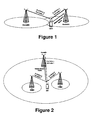
- Figure 1 shows a scenario with one UE performing measurements on the neighbor cell NodeB 2 while being connected and reporting to the reference NodeB 1.
- the UE should also decode the PCCPCH for reporting the SFN-SFN timing difference.
- a UE legacy receiver cannot identify a neighbor P-CPICH nor PCCPCH with identical scrambling code if the timing collision corresponds to the following conditions:
- the invention suggests a method for a PCCPCH decoder to detect cells with colliding scrambling codes comprising the steps of monitoring the scrambling code of a cell, synchronizing with a neighbor cell, detecting a scrambling code collision and flagging it, wherein the method further comprises the step of checking the PCCPCH decoder to determine if correct broadcast information has been applied on the monitored cell.
- the method further comprises the step of reconstructing the transmitted PCCPCH sequence to create a new pilot channel estimation to be used for computing the channel estimation on the monitored cell.
- the channel estimation of the P-CPICH and the channel estimation of the reconstructed PCCPCH sequence of the monitored cell are combined in order to compute the channel estimation of the newly appearing cell with a colliding scrambling code.
- the reconstruction of the transmitted PCCPCH sequence can be performed by using a previously recently decoded PCCPCH sequence saved in a memory.
- the algorithm for combining the two input channel estimations may consist of subtracting their two inputs with a defined weight for each.
- the algorithm for combining the two input channel estimations may further comprise a filtering operation.
- the weights and filters are configured to be able to change over time in function of specific parameters such as speed estimation, noise estimation and delay spread estimation.
- the reconstruction of the transmitted PCCPCH sequence is performed by starting either from the hard decision at the output of the Viterbi decoder or by using the soft decision extracted from the Viterbi metrics as basis.
- the computed channel estimation for the reconstructed PCCPCH transmitted sequence may be performed by means of an algorithm.
- the invention further comprises the step of using the computed channel estimation for equalizing the input I, Q data and decoding the PCCPCH of the newly detected cell.
- the proposed invention allows the UE receiver to detect and then report the scrambling code collision to the network.
- scrambling code collision it is meant that two neighbor cells are transmitting with the same scrambling code and that their timing is aligned.
- the UE receiver is allowed to decode the PCCPCH physical channel with all the associated broadcast information in presence of a scrambling code collision at the UE. It then also allows the UE to report to the network SFN-SFN information, which is necessary to insure the UE mobility and prepare the handover to a new detected cell.
- the proposed invention is applicable to the presence of MIMO. It further improves the detection of the scrambling code collision using the presence of MIMO.
- a heterogeneous network consists of a specific network deployment where low power nodes (also called Home NodeB HNB) are inserted into a macro cell in order to generally improve throughput and coverage performance.
- low power nodes also called Home NodeB HNB
- FIG 2 an example of a heterogeneous network is shown, where two Home NodeBs (HNB2 and HNB3) are deployed inside a macro cell NodeB1. Both the HNB2 and HNB3 are using the same frequency as the main cell while using different codes, which respectively are scrambling code 2 and 3. Scrambling code 2 and 3 are orthogonal. They are also individually orthogonal on the scrambling code 1 used by the NodeB1.
- the UE is reporting intra-frequency measurements of main cells as well as of HNBs to ensure mobility.
- the UE measurement reporting to the NodeB is normally based on P-CPICH detection, power measurement and PCCPCH decoding.
- the P-CPICHs associated with the different NodeBs are distinguished by a different scrambling code which is acting as an orthogonal signature. The same applies to the PCCPCH.
- the UE is executing and reporting three P-CPICH based measurements to the reference base station (NodeB 1).
- the UE should be capable of reporting the intra-frequency measurements in order to insure the mobility.
- the UE For reporting the intra-frequency measurements, the UE should be capable of receiving the P-CPICH as well as the PCCPCH on the same scrambling code transmitted by two or more neighbor cells HNBs.
- a heterogeneous network example is shown in Figure 3 where the HNB3 is using the same scrambling code as for the macro cell NodeB1.
- a second scenario and embodiment comprises neighbor cell measurements in HetNet with colliding scrambling codes with MIMO deployment.
- a MIMO activated user can be present.
- an S-CPICH Secondary Common Pilot channel
- the OVSF (Orthogonal Variable Spreading Factor) code associated with the S-CPICH is not specified and it is a reasonable assumption to consider that the S-CPICH associated with a different cell is transmitted with a different OVSF code.
- FIG. 4 A deployment scenario example is shown in Figure 4 where the HNB2 and HNB3 have an established MIMO dedicated connection respectively to the UE2 and UE3.
- an S-CPICH pilot channel is transmitted over the HNB2 and HNB3 cells.
- the S-CPICH2 and S-CPICH3 are then possibly received by the reference UE.
- a UE legacy receiver can identify neighbor P-CPICH and PCCPCH with the same scrambling code and then report intra-frequency measurements only when the timings of the neighbor cells at the UE receiver satisfy the following conditions:
- a UE legacy receiver cannot identify a neighbor P-CPICH nor PCCPCH with identical scrambling code in case of timing collision corresponding to the following conditions:
- the monitored NodeB or HNB with colliding scrambling code is already monitored by the UE. Since that the UE is already monitoring the cell, the P-CPICH and the PCCPCH are continuously monitored.
- the newly proposed approach for detecting the scrambling code collision consists of the two following functions: firstly, detecting if a S-CPICH with a colliding scrambling code is deployed in the neighbor cell in case of MIMO deployment (scenario 2), and secondly, in the more general scenario 1, detecting by means of the PCCPCH soft metrics, if a new cell with a colliding scrambling code is interfering with the monitored cell.
- This information could then be reported to the network via a specific signaling scheme.
- this information may be used by the UE for enabling an improved receiver.
- the scheme is applied to the detection of new cells using the same scrambling code as already monitored cells and the possible signaling to the network.
- the first step is synchronization with one or more neighbor cells.
- This step is well known by the state of the art and is executed as follows:
- the UE gets the slot and frame timing of the neighbor cell using the well-known R99 channels P-SCH and S-SCH.
- SSCH also provides scrambling code group.
- the UE checks the 8 primary scrambling codes with the detected S-SCH scrambling code group. This can be done using correlation techniques based on P-CPICH. These techniques are well known in the art.
- the output of this block, a primary scrambling code is then used in the following blocks (see drawing 5).
- the second step is represented in figure 5 by the second block labeled "S-CPICH detection block for new cell with same scrambling code".
- the goal of this block is to detect whether SCPICH is sent to a neighbor cell with a colliding scrambling code.
- the scrambling code is known as an output of a cell search/monitoring procedure continuously performed at the UE side.
- S-CPICH is detected by the generic detector on an already monitored cell, then a second stage detection is launched in order to detect if a new neighbor cell with MIMO session is activated with the same scrambling code.
- Such detector should be capable to distinguish between a new cell with MIMO activated and a new user inside the monitored cell with MIMO activation.
- the ratio of the energy on the SCPICH called RSCP SCPICH and the PCPICH RSCP is compared to a threshold. If the SCPICH is activated inside the monitored cell to support a new user request, the power allocated to the SCPICH will be the same as the PCPICH. Contrarily, if the SCPICH of a neighbor cell is detected for the first time, then the associated power will be much smaller than the power serving the reference cell.
- a threshold is smaller than 1 and can be determined based on measurement accuracy which is related to the measurement filtering and the fading environment.
- PCCPCH detection for new cell with same scrambling code The goal of this block is to confirm, following the previous functions indication, or to detect, in case no S-CPICH is detected, if a new neighbor cell with a colliding scrambling code is visible at the UE.
- the scrambling code is known as the output of the cell search/monitoring procedure, continuously performed at the UE side and a PCCPCH decoding is continuously done on monitored cells to read the BCH broadcast channel information.
- a comparison of the soft metrics output of the Viterbi decoder of the PCCPCH in case of a correctly decoded block, i.e. correct CRC (Cyclic Redundancy Code) indication with the P-CPICH RSCP, is performed.
- the SNR Signal to Noise Ratio
- the energy computed by the P-CPICH RSCP will increase or remain constant due to the newly appearing neighbor cell with the same scrambling code.
- the decision is based on the analysis of the relative variations in time of the P-CPICH RSCP and of the PCCPCH Viterbi decoder output soft metrics. As possible implementation, the comparison of a filtered version of the P-CPICH RSCP derivative and of the PCCPCH Viterbi decoder output soft metrics derivative is considered.
- the last block in figure 5 is labeled "Signaling to the network".
- the above-mentioned information can be reported to the network via a specific signaling scheme.
- Such signaling scheme can simply consist of one bit of information associated with the monitored cell (Cell ID) indicating that a new detected cell has a scrambling code colliding with it or more information bits to indicate the combination of colliding scrambling code cells.
- Cell ID information associated with the monitored cell
- the network may change the timing of the monitored cell to avoid the collision at the UE side.
- the monitored NodeB or HNB having a colliding scrambling code is already monitored by the UE. Since the UE is already monitoring the cell, the P-CPICH and the PCCPCH of the dominant cell are continuously monitored.
- the innovative proposal exploits this property to reconstruct the channel estimation associated with the dominant cell.
- the UE is subtracting the channel estimation computed on the dominant cell from the channel estimation computed on the P-CPICH in order to recover the channel estimation of the newly appearing cell.
- the PCCPCH associated with the newly appearing cell is then decoded using the said reconstructed channel estimation.
- the scheme is applied to decoding of PCCPCH associated with new cells using the same scrambling code as an already monitored cell.
- the first step is synchronization with a neighbor cell.
- This step is executed as follows.
- the UE acquires the slot and frame timing of the neighbor cell using the well-known R99 channels P-SCH and S-SCH.
- SSCH also provides the scrambling code group.
- the UE checks the 8 primary scrambling codes with the detected S-SCH scrambling code group. This can be done by means of correlation techniques based on P-CPICH. These techniques are well known.
- the scrambling code collision is detected and signaled to activate the next steps as. If the collision is detected, then the PCCPCH decoding is checked to determine if the correct broadcast information of the dominant cell has been used. If it has, then the following innovative functions are activated. If not, the operation is repeated until a good PCCPCH decoding is reached or a previously recently decoded PCCPCH sequence saved in a memory.
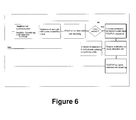
- FIG 6 after a correct CRC, a block labeled "Channel estimation on reconstructed input PCCPCH sequence" is shown.
- the goal of this block is to reconstruct the PCCPCH transmitted sequence to create a new pilot channel to be used for computing the channel estimation on the monitored cell, also considered to be the dominant cell.
- the PCCPCH reconstructed sequence is then used instead of the PCPICH to reduce cell interference of the newly detected same scrambling code.
- the reconstruction of the transmitted PCCPCH sequence may be done by starting either from the hard decision at the output of the Viterbi decoder or a previously recently decoded PCCPCH sequence saved in a memory or by using the soft decision extracted from the Viterbi metrics as basis.
- the PCCPCH reconstructed sequence is best used for channel estimation instead of the PCPICH because of the different information transmitted on the two physical channels allowing the UE to distinguish between the two cells sources. This is not possible for the CPICH since the information transmitted in the physical channels is the same from both cells sources which makes it nearly impossible to separate the information.
- the channel estimation is done for the reconstructed PCCPCH transmitted sequence using a generic state of the art algorithm.
- This block is to estimate the channel estimation of the newly detected cell with a colliding scrambling code.
- the channel estimation on the P-CPICH is done using a state of the art algorithm. Possibly the same algorithm used on the reconstructed PCCPCH sequence to simplify the combining procedure.
- the channel estimation of the P-CPICH and the channel estimation of the reconstructed PCCPCH sequence of the monitored cell are combined in order to compute the channel estimation of the newly appearing cell with a colliding scrambling code.
- the algorithm for combining the two input channel estimations consists for example of subtracting the two inputs with a specific weight for each and with a filtering operation. Weights and filters may be changed over time following specific parameters like speed estimation, noise estimation and delay spread estimation.
- PCCPCH on newly detected cell decoding
- the purpose of this block is to decode the newly detected cell PCCPCH in order to read the new cell broadcast information and compute the SFN-SFN, which is reported to the serving cell to insure the UE mobility in the network.
- the channel estimation computed by the previous block is used for equalizing the input I, Q data and then allowing decoding of the PCCPCH.
- the equalizer used for receiving the PCCPCH sequence may be a classical state of the art equalizer.
- the invention allows detecting of a cell with an identical scrambling code, in an open and hybrid HNB cell deployment with a given reuse of scrambling codes.
- the method works both in case of MIMO enabled cells as well as normal cells and allows more robust cell deployment in a HetNet open network as well as user mobility to be insured in an independent manner in relation to the scrambling code reuse factor.
- the invention further allows decoding of the PCCPCH of a cell with a colliding scrambling code in an open and hybrid HNB cell deployment with a given reuse of scrambling code.
Landscapes
- Engineering & Computer Science (AREA)
- Computer Networks & Wireless Communication (AREA)
- Signal Processing (AREA)
- Power Engineering (AREA)
- Physics & Mathematics (AREA)
- Spectroscopy & Molecular Physics (AREA)
- Mobile Radio Communication Systems (AREA)
Abstract
Description
- The invention relates to the field of wireless communication and more particularly to a process for P-CPICH (Primary Common Pilot Channel) scrambling code collision detection and PCCPCH (Primary Common Control Physical Channel) decoding of cells with a colliding scrambling code, and a receiver for doing the same.
- The UMTS (Universal Mobile Telecommunications Service) system is a cellular system and as such its UE (User Equipment) allows mobility inside the network coverage. The UE can then move from one cell to another and thereby change the reference NodeB. When the UE does not have a dedicated connection established with the reference NodeB, the UE can switch from one NodeB to another in function of its measurements. When the UE has an ongoing dedicated connection with the reference NodeB, the handover procedures based on the UE measurements allow the communication to switch from the vanishing reference NodeB to the new reference NodeB without the user noticing it.
- The UE measurements performed by the network to insure mobility can be separated into the following categories:
- Intra-frequency measurements which are measurements of downlink physical channels at the same frequency as the active set.
- Inter-frequency measurements which are measurements of downlink physical channels at frequencies that differ from the frequency of the active set.
- Inter-RAT measurements: measurements of downlink physical channels belonging to another radio access technology than UTRAN, e.g. GSM.
- In all the three above-mentioned cases, a measurement object corresponds to one cell.
- Considering the Intra-frequency measurements, the UE measurement report to the NodeB is based on P-CPICH timing detection and power measurement. The P-CPICHs associated with the different NodeBs, are distinguished by a different scrambling code which is acting as an orthogonal signature.
-
Figure 1 shows a scenario with one UE performing measurements on theneighbor cell NodeB 2 while being connected and reporting to thereference NodeB 1. - To insure the mobility, the P-CPICH associated measurements are not enough. The UE should also decode the PCCPCH for reporting the SFN-SFN timing difference.
- However, due to the CDMA properties, information sent from different cells using the same scrambling code are orthogonal in relation to each other if the received sequences at the UE are not time aligned. On the other hand, in case of time alignment, the sequences are not orthogonal which is considered as a scrambling code collision.
- Also, a UE legacy receiver cannot identify a neighbor P-CPICH nor PCCPCH with identical scrambling code if the timing collision corresponds to the following conditions:
- Neighbor cells are close to each other in time and are received with overlapping delay spread at the UE receiver.
- Neighbor cells are received with identical time at the UE receiver
- Also, associated with the two cells with the same scrambling code received at the UE with colliding timing, it will be correctly assumed that the transmitted cells information is completely different at the different PCCPCH.
- It is an object of the present invention to provide a solution to the above-mentioned problems with the known prior art.
- The invention suggests a method for a PCCPCH decoder to detect cells with colliding scrambling codes comprising the steps of monitoring the scrambling code of a cell, synchronizing with a neighbor cell, detecting a scrambling code collision and flagging it, wherein the method further comprises the step of checking the PCCPCH decoder to determine if correct broadcast information has been applied on the monitored cell.
- If the correct broadcast information has been applied on said monitored cell, the method further comprises the step of reconstructing the transmitted PCCPCH sequence to create a new pilot channel estimation to be used for computing the channel estimation on the monitored cell.
- The channel estimation of the P-CPICH and the channel estimation of the reconstructed PCCPCH sequence of the monitored cell are combined in order to compute the channel estimation of the newly appearing cell with a colliding scrambling code. The reconstruction of the transmitted PCCPCH sequence can be performed by using a previously recently decoded PCCPCH sequence saved in a memory.
- The algorithm for combining the two input channel estimations may consist of subtracting their two inputs with a defined weight for each.
- The algorithm for combining the two input channel estimations may further comprise a filtering operation.
- The weights and filters are configured to be able to change over time in function of specific parameters such as speed estimation, noise estimation and delay spread estimation.
- The reconstruction of the transmitted PCCPCH sequence is performed by starting either from the hard decision at the output of the Viterbi decoder or by using the soft decision extracted from the Viterbi metrics as basis.
- The computed channel estimation for the reconstructed PCCPCH transmitted sequence may be performed by means of an algorithm.
- The invention further comprises the step of using the computed channel estimation for equalizing the input I, Q data and decoding the PCCPCH of the newly detected cell.
- Considering a
general scenario 1 deployment, the proposed invention allows the UE receiver to detect and then report the scrambling code collision to the network. By scrambling code collision, it is meant that two neighbor cells are transmitting with the same scrambling code and that their timing is aligned. - Furthermore, the UE receiver is allowed to decode the PCCPCH physical channel with all the associated broadcast information in presence of a scrambling code collision at the UE. It then also allows the UE to report to the network SFN-SFN information, which is necessary to insure the UE mobility and prepare the handover to a new detected cell.
- Considering a
scenario 2 deployment, the proposed invention is applicable to the presence of MIMO. It further improves the detection of the scrambling code collision using the presence of MIMO. - Other features of one or more embodiments of the invention will appear from the following description of the embodiments of the invention, with reference to the accompanying drawings.
-
Figure 1 illustrates the general principle of WVCDMA UE neighbor cell measurements. -
Figure 2 illustrates the principle of Neighbor cells measurements in HetNet. -
Figure 3 illustrates a heterogeneous network example, where the HNB3 is using the same scrambling code as of the macro cell NodeB1. -
Figure 4 illustrates a deployment scenario example where the HNB2 and HNB3 have an established MIMO dedicated connection respectively to the UE2 and UE3. -
Figure 5 illustrates the general principle of neighbor cells in HetNet with colliding scrambling codes: UE collision detection and measurements. -
Figure 6 illustrates the general principle of PCCPCH decoding of newly detected cells in HetNet with colliding scrambling codes. - A heterogeneous network consists of a specific network deployment where low power nodes (also called Home NodeB HNB) are inserted into a macro cell in order to generally improve throughput and coverage performance.
- In
Figure 2 , an example of a heterogeneous network is shown, where two Home NodeBs (HNB2 and HNB3) are deployed inside a macro cell NodeB1. Both the HNB2 and HNB3 are using the same frequency as the main cell while using different codes, which respectively are scramblingcode code scrambling code 1 used by the NodeB1. In heterogeneous networks, the UE is reporting intra-frequency measurements of main cells as well as of HNBs to ensure mobility. - The UE measurement reporting to the NodeB is normally based on P-CPICH detection, power measurement and PCCPCH decoding. The P-CPICHs associated with the different NodeBs are distinguished by a different scrambling code which is acting as an orthogonal signature. The same applies to the PCCPCH. As shown in the example of
Figure 2 , the UE is executing and reporting three P-CPICH based measurements to the reference base station (NodeB 1). - A first scenario and embodiment comprises neighbor cell measurements in HetNet with colliding scrambling codes
- In the deployment of open and hybrid HNB cells with a given reuse of scrambling code, it may, in some scenarios, happen that the same scrambling code from two or more neighbor HNB cells can be reused.
- It is well-known for a person skilled in the art that the UE should be capable of reporting the intra-frequency measurements in order to insure the mobility.
- For reporting the intra-frequency measurements, the UE should be capable of receiving the P-CPICH as well as the PCCPCH on the same scrambling code transmitted by two or more neighbor cells HNBs.
- Due to the CDMA properties, information sent from different cells using the same scrambling code are orthogonal in relation to each other if the received sequences at the UE are not time aligned. On the other hand, in case of time alignment, the sequences are not orthogonal which is considered as a scrambling code collision.
- A heterogeneous network example is shown in
Figure 3 where the HNB3 is using the same scrambling code as for the macro cell NodeB1. - A second scenario and embodiment comprises neighbor cell measurements in HetNet with colliding scrambling codes with MIMO deployment.
- As a specific case of classical deployment in the neighbor cells HNBs or the main cells, a MIMO activated user can be present. In such scenario, in addition to the normally scheduled P-CPICH pilot channel, an S-CPICH (Secondary Common Pilot channel) is transmitted by the base station in the cell.
- The OVSF (Orthogonal Variable Spreading Factor) code associated with the S-CPICH is not specified and it is a reasonable assumption to consider that the S-CPICH associated with a different cell is transmitted with a different OVSF code.
- A deployment scenario example is shown in
Figure 4 where the HNB2 and HNB3 have an established MIMO dedicated connection respectively to the UE2 and UE3. As a consequence, an S-CPICH pilot channel is transmitted over the HNB2 and HNB3 cells. The S-CPICH2 and S-CPICH3 are then possibly received by the reference UE. - In these scenarios, a UE legacy receiver can identify neighbor P-CPICH and PCCPCH with the same scrambling code and then report intra-frequency measurements only when the timings of the neighbor cells at the UE receiver satisfy the following conditions:
- The P-CPICH and PCCPCH of the neighbor cells are well timely separated if these have the same scrambling code. The time between them should be much larger than the channel delay spread and could for example be a multiple of the channel delay spread time difference.
- On the other hand, a UE legacy receiver cannot identify a neighbor P-CPICH nor PCCPCH with identical scrambling code in case of timing collision corresponding to the following conditions:
- Neighbor cells close to each other in time with overlapping delay spread at the UE receiver.
- Neighbor cells are received with identical sequences at the UE receiver
- Also, associated with the two cells with the same scrambling code received at the UE with colliding timing, it will be correctly assumed that the transmitted cells information is completely different at the different PCCPCH.
- Assuming that the UE is continuously searching for new neighbor cells and performing measurements, both on new cells and already identified cells: under this assumption we can consider that the scrambling code collision will happen between an already identified cell and a newly detected cell.
- As a consequence, the monitored NodeB or HNB with colliding scrambling code is already monitored by the UE. Since that the UE is already monitoring the cell, the P-CPICH and the PCCPCH are continuously monitored.
- The newly proposed approach for detecting the scrambling code collision consists of the two following functions: firstly, detecting if a S-CPICH with a colliding scrambling code is deployed in the neighbor cell in case of MIMO deployment (scenario 2), and secondly, in the more
general scenario 1, detecting by means of the PCCPCH soft metrics, if a new cell with a colliding scrambling code is interfering with the monitored cell. - These functions are detailed in the following paragraph.
- This information could then be reported to the network via a specific signaling scheme. In another embodiment, this information may be used by the UE for enabling an improved receiver.
- One preferred embodiment of the invention will now be described through the following steps illustrated with the diagram of
figure 5 . - In the main embodiment, the scheme is applied to the detection of new cells using the same scrambling code as already monitored cells and the possible signaling to the network.
- The first step is synchronization with one or more neighbor cells. Usually this step is well known by the state of the art and is executed as follows: The UE gets the slot and frame timing of the neighbor cell using the well-known R99 channels P-SCH and S-SCH. SSCH also provides scrambling code group. The UE checks the 8 primary scrambling codes with the detected S-SCH scrambling code group. This can be done using correlation techniques based on P-CPICH. These techniques are well known in the art. The output of this block, a primary scrambling code, is then used in the following blocks (see drawing 5).
- The second step is represented in
figure 5 by the second block labeled "S-CPICH detection block for new cell with same scrambling code". The goal of this block is to detect whether SCPICH is sent to a neighbor cell with a colliding scrambling code. The scrambling code is known as an output of a cell search/monitoring procedure continuously performed at the UE side. - If S-CPICH is detected by the generic detector on an already monitored cell, then a second stage detection is launched in order to detect if a new neighbor cell with MIMO session is activated with the same scrambling code.
- Such detector should be capable to distinguish between a new cell with MIMO activated and a new user inside the monitored cell with MIMO activation.
- In one embodiment, the ratio of the energy on the SCPICH called RSCP SCPICH and the PCPICH RSCP is compared to a threshold. If the SCPICH is activated inside the monitored cell to support a new user request, the power allocated to the SCPICH will be the same as the PCPICH. Contrarily, if the SCPICH of a neighbor cell is detected for the first time, then the associated power will be much smaller than the power serving the reference cell. Such threshold is smaller than 1 and can be determined based on measurement accuracy which is related to the measurement filtering and the fading environment.
- The decision is then defined as:
- If the ratio SCPICH RSCP/PCPICH RSCP is bigger than the threshold, then a new MIMO user is enabled in the monitored cell.
- If the ratio SCPICH RSCP/PCPICH RSCP is smaller than the threshold, then a new cell MIMO is visible at the UE.
- The next step illustrated in
figure 5 is labeled "PCCPCH detection for new cell with same scrambling code". The goal of this block is to confirm, following the previous functions indication, or to detect, in case no S-CPICH is detected, if a new neighbor cell with a colliding scrambling code is visible at the UE. The scrambling code is known as the output of the cell search/monitoring procedure, continuously performed at the UE side and a PCCPCH decoding is continuously done on monitored cells to read the BCH broadcast channel information. - In one embodiment, a comparison of the soft metrics output of the Viterbi decoder of the PCCPCH in case of a correctly decoded block, i.e. correct CRC (Cyclic Redundancy Code) indication with the P-CPICH RSCP, is performed.
- In case a new neighbor cell appears with the same scrambling code as the monitored cell, the SNR (Signal to Noise Ratio) of the decoded signal is degraded due to the non-orthogonal interference on the received signal. Such a degradation will be visible on the PCCPCH with a corresponding degradation of the received BER (Bit Error Rate) and then of the Viterbi decoder output soft metrics.
- On the other hand, the energy computed by the P-CPICH RSCP will increase or remain constant due to the newly appearing neighbor cell with the same scrambling code.
- The decision is based on the analysis of the relative variations in time of the P-CPICH RSCP and of the PCCPCH Viterbi decoder output soft metrics. As possible implementation, the comparison of a filtered version of the P-CPICH RSCP derivative and of the PCCPCH Viterbi decoder output soft metrics derivative is considered.
- The decision is more generally defined as hereafter:
- If the PCPICH RSCP variation is going in the opposite direction of the PCCPCH Viterbi decoder output soft metrics then a new cell with same scrambling code is visible at the UE.
- If the PCPICH RSCP variation is going in the same direction of the PCCPCH Viterbi decoder output soft metrics, then no new cell with the same scrambling code is visible at the UE.
- The last block in
figure 5 is labeled "Signaling to the network". In this step, the above-mentioned information can be reported to the network via a specific signaling scheme. Such signaling scheme can simply consist of one bit of information associated with the monitored cell (Cell ID) indicating that a new detected cell has a scrambling code colliding with it or more information bits to indicate the combination of colliding scrambling code cells. The network may change the timing of the monitored cell to avoid the collision at the UE side. - Let's consider PCCPCH decoding of one or more newly detected cells in a HetNet with colliding scrambling codes. Assuming again that the UE is continuously searching for new neighbor cells and performing measurements both of new cells and already identified cells, then we can conclude that the scrambling code collision will happen between an already identified cell and newly detected cell.
- As a consequence, the monitored NodeB or HNB having a colliding scrambling code is already monitored by the UE. Since the UE is already monitoring the cell, the P-CPICH and the PCCPCH of the dominant cell are continuously monitored.
- It is correct to assume that the information transmitted on the two different PCCPCHs corresponding to the two cells is not the same. The innovative proposal exploits this property to reconstruct the channel estimation associated with the dominant cell. As a second innovative step, the UE is subtracting the channel estimation computed on the dominant cell from the channel estimation computed on the P-CPICH in order to recover the channel estimation of the newly appearing cell. The PCCPCH associated with the newly appearing cell is then decoded using the said reconstructed channel estimation.
- These functions are detailed in the following chapter.
- The preferred embodiment of the invention can be described through the following steps (general description of the algorithm based on the flow diagram in
Figure 6 ). - In this embodiment, the scheme is applied to decoding of PCCPCH associated with new cells using the same scrambling code as an already monitored cell.
- The first step is synchronization with a neighbor cell. Usually this step, well known by state-of the art, is executed as follows. The UE acquires the slot and frame timing of the neighbor cell using the well-known R99 channels P-SCH and S-SCH. SSCH also provides the scrambling code group. The UE checks the 8 primary scrambling codes with the detected S-SCH scrambling code group. This can be done by means of correlation techniques based on P-CPICH. These techniques are well known.
- As a second step, the scrambling code collision is detected and signaled to activate the next steps as. If the collision is detected, then the PCCPCH decoding is checked to determine if the correct broadcast information of the dominant cell has been used. If it has, then the following innovative functions are activated. If not, the operation is repeated until a good PCCPCH decoding is reached or a previously recently decoded PCCPCH sequence saved in a memory.
- In
figure 6 , after a correct CRC, a block labeled "Channel estimation on reconstructed input PCCPCH sequence" is shown. The goal of this block is to reconstruct the PCCPCH transmitted sequence to create a new pilot channel to be used for computing the channel estimation on the monitored cell, also considered to be the dominant cell. The PCCPCH reconstructed sequence is then used instead of the PCPICH to reduce cell interference of the newly detected same scrambling code. - In one embodiment, the reconstruction of the transmitted PCCPCH sequence may be done by starting either from the hard decision at the output of the Viterbi decoder or a previously recently decoded PCCPCH sequence saved in a memory or by using the soft decision extracted from the Viterbi metrics as basis.
- The PCCPCH reconstructed sequence is best used for channel estimation instead of the PCPICH because of the different information transmitted on the two physical channels allowing the UE to distinguish between the two cells sources. This is not possible for the CPICH since the information transmitted in the physical channels is the same from both cells sources which makes it nearly impossible to separate the information.
- In one embodiment the channel estimation is done for the reconstructed PCCPCH transmitted sequence using a generic state of the art algorithm.
- The next block in
figure 6 is labeled "Channel estimation on a newly detected cell". - The purpose of this block is to estimate the channel estimation of the newly detected cell with a colliding scrambling code. First of all, the channel estimation on the P-CPICH is done using a state of the art algorithm. Possibly the same algorithm used on the reconstructed PCCPCH sequence to simplify the combining procedure.
- In one embodiment, the channel estimation of the P-CPICH and the channel estimation of the reconstructed PCCPCH sequence of the monitored cell are combined in order to compute the channel estimation of the newly appearing cell with a colliding scrambling code.
- The algorithm for combining the two input channel estimations consists for example of subtracting the two inputs with a specific weight for each and with a filtering operation. Weights and filters may be changed over time following specific parameters like speed estimation, noise estimation and delay spread estimation.
- The last block in
figure 6 and according to the preferred embodiment of the invention is labeled "PCCPCH on newly detected cell decoding". The purpose of this block is to decode the newly detected cell PCCPCH in order to read the new cell broadcast information and compute the SFN-SFN, which is reported to the serving cell to insure the UE mobility in the network. - In one embodiment, the channel estimation computed by the previous block is used for equalizing the input I, Q data and then allowing decoding of the PCCPCH.
- The equalizer used for receiving the PCCPCH sequence may be a classical state of the art equalizer.
- The invention allows detecting of a cell with an identical scrambling code, in an open and hybrid HNB cell deployment with a given reuse of scrambling codes. The method works both in case of MIMO enabled cells as well as normal cells and allows more robust cell deployment in a HetNet open network as well as user mobility to be insured in an independent manner in relation to the scrambling code reuse factor. The invention further allows decoding of the PCCPCH of a cell with a colliding scrambling code in an open and hybrid HNB cell deployment with a given reuse of scrambling code.
Claims (11)
- A method for a PCCPCH decoder to detect cells with colliding scrambling codes comprising the steps of:- Monitoring the scrambling code of a cell,- Synchronizing with a neighbor cell,- Detecting a scrambling code collision and flagging it, Characterized in that, the method further comprises the step of checking the PCCPCH decoder to determine if correct broadcast information has been applied on the monitored cell.
- A method according to claim 1, wherein if the correct broadcast information has been applied on said monitored cell, the method further comprises the step of reconstructing the transmitted PCCPCH sequence to create a new pilot channel estimation to be used for computing the channel estimation on the monitored cell.
- A method according to claim 2, wherein the channel estimation of the P-CPICH and the channel estimation of the reconstructed PCCPCH sequence of the monitored cell are combined in order to compute the channel estimation of the newly appearing cell with a colliding scrambling code.
- A method according to claim 3, wherein the algorithm for combining the two input channel estimations consists of subtracting their two inputs with a defined weight for each.
- A method according to claim 4, wherein the algorithm for combining the two input channel estimations further comprises a filtering operation.
- A method according to claim 4, wherein the weights and filters are configured to be able to change over time in function of specific parameters such as speed estimation, noise estimation and delay spread estimation.
- A method according to claim 2, wherein the reconstruction of the transmitted PCCPCH sequence is performed by starting either from the hard decision at the output of the Viterbi decoder.
- A method according to claim 2, wherein the reconstruction of the transmitted PCCPCH sequence is performed by using the soft decision extracted from the Viterbi metrics as basis.
- A method according to claim 2, wherein the reconstruction of the transmitted PCCPCH sequence is performed by using a previously decoded PCCPCH sequence saved in a memory.
- A method according to claim 2, wherein the computed channel estimation for the reconstructed PCCPCH transmitted sequence is performed by means of an algorithm.
- A method according to claim 2, further comprising the step of using the computed channel estimation for equalizing the input I, Q data and decoding the PCCPCH.
Priority Applications (3)
| Application Number | Priority Date | Filing Date | Title |
|---|---|---|---|
| EP13167570.4A EP2701422B8 (en) | 2012-08-22 | 2013-05-13 | P-CPICH scrambling code collision detection |
| PCT/EP2013/063036 WO2014029526A1 (en) | 2012-08-22 | 2013-06-21 | P-CPICH Scrambling Code Collision Detection |
| US14/416,666 US9591620B2 (en) | 2012-08-22 | 2013-06-21 | P-CPICH scrambling code collision detection |
Applications Claiming Priority (2)
| Application Number | Priority Date | Filing Date | Title |
|---|---|---|---|
| EP12290278 | 2012-08-22 | ||
| EP13167570.4A EP2701422B8 (en) | 2012-08-22 | 2013-05-13 | P-CPICH scrambling code collision detection |
Publications (3)
| Publication Number | Publication Date |
|---|---|
| EP2701422A1 true EP2701422A1 (en) | 2014-02-26 |
| EP2701422B1 EP2701422B1 (en) | 2017-01-04 |
| EP2701422B8 EP2701422B8 (en) | 2017-04-19 |
Family
ID=47189843
Family Applications (1)
| Application Number | Title | Priority Date | Filing Date |
|---|---|---|---|
| EP13167570.4A Not-in-force EP2701422B8 (en) | 2012-08-22 | 2013-05-13 | P-CPICH scrambling code collision detection |
Country Status (3)
| Country | Link |
|---|---|
| US (1) | US9591620B2 (en) |
| EP (1) | EP2701422B8 (en) |
| WO (1) | WO2014029526A1 (en) |
Citations (2)
| Publication number | Priority date | Publication date | Assignee | Title |
|---|---|---|---|---|
| WO2010105228A1 (en) * | 2009-03-13 | 2010-09-16 | Qualcomm Incorporated | Systems, apparatus and methods to facilitate physical cell identifier collision detection |
| US20110274097A1 (en) * | 2010-05-07 | 2011-11-10 | Qualcomm Incorporated | Detecting and reporting physical-layer cell identifier collisions in wireless networks |
Family Cites Families (5)
| Publication number | Priority date | Publication date | Assignee | Title |
|---|---|---|---|---|
| US6657949B1 (en) * | 1999-07-06 | 2003-12-02 | Cisco Technology, Inc. | Efficient request access for OFDM systems |
| US7551937B2 (en) * | 2003-07-18 | 2009-06-23 | Electronics And Telecommunications Research Institute | Method and device for allocating radio resources in wireless portable network system |
| US20060209892A1 (en) * | 2005-03-15 | 2006-09-21 | Radiospire Networks, Inc. | System, method and apparatus for wirelessly providing a display data channel between a generalized content source and a generalized content sink |
| US8185726B2 (en) * | 2006-04-27 | 2012-05-22 | Qualcomm Incorporated | Sleep optimization based on system information block scheduling |
| US8582505B2 (en) * | 2010-05-28 | 2013-11-12 | Qualcomm Incorporated | Apparatus and method for physical broadcast channel (PBCH) decoding for multiple cells |
-
2013
- 2013-05-13 EP EP13167570.4A patent/EP2701422B8/en not_active Not-in-force
- 2013-06-21 WO PCT/EP2013/063036 patent/WO2014029526A1/en not_active Ceased
- 2013-06-21 US US14/416,666 patent/US9591620B2/en not_active Expired - Fee Related
Patent Citations (2)
| Publication number | Priority date | Publication date | Assignee | Title |
|---|---|---|---|---|
| WO2010105228A1 (en) * | 2009-03-13 | 2010-09-16 | Qualcomm Incorporated | Systems, apparatus and methods to facilitate physical cell identifier collision detection |
| US20110274097A1 (en) * | 2010-05-07 | 2011-11-10 | Qualcomm Incorporated | Detecting and reporting physical-layer cell identifier collisions in wireless networks |
Non-Patent Citations (4)
| Title |
|---|
| "3rd Generation Partnership Project; Technical Specification Group Radio Access Network; Universal Mobile Telecommunications System (UMTS) and LTE; Mobility enhancements for Home Node B (HNB) and Home enhanced Node B (HeNB) (Release 11)", 3GPP STANDARD; 3GPP TR 37.803, 3RD GENERATION PARTNERSHIP PROJECT (3GPP), MOBILE COMPETENCE CENTRE ; 650, ROUTE DES LUCIOLES ; F-06921 SOPHIA-ANTIPOLIS CEDEX ; FRANCE, vol. RAN WG3, no. V11.0.0, 3 July 2012 (2012-07-03), pages 1 - 120, XP050581186 * |
| "LTE for UMTS: Evolution to LTE-Advanced", 1 January 2011, WILEY, article HOLMA HARRI ET AL: "LTE for UMTS: Evolution to LTE-Advanced", pages: 120 - 120, XP055085984 * |
| "WCDMA for UMTS - Radio Access for Third Generation Mobile Communications", 1 January 2001, article HOLMA HARRI ET AL: "WCDMA for UMTS - Radio Access for Third Generation Mobile COmmunications", pages: 103 - 108, XP055085654 * |
| QUALCOMM EUROPE: "UE-assisted heuristic detection of PCI collision", 3GPP DRAFT; R2-085380 UE ASSISTED HEURISTIC COLLISION DETECTION, 3RD GENERATION PARTNERSHIP PROJECT (3GPP), MOBILE COMPETENCE CENTRE ; 650, ROUTE DES LUCIOLES ; F-06921 SOPHIA-ANTIPOLIS CEDEX ; FRANCE, no. Prague, Czech Republic; 20080923, 23 September 2008 (2008-09-23), XP050320229 * |
Also Published As
| Publication number | Publication date |
|---|---|
| EP2701422B1 (en) | 2017-01-04 |
| WO2014029526A1 (en) | 2014-02-27 |
| EP2701422B8 (en) | 2017-04-19 |
| US20150208399A1 (en) | 2015-07-23 |
| US9591620B2 (en) | 2017-03-07 |
Similar Documents
| Publication | Publication Date | Title |
|---|---|---|
| KR101615836B1 (en) | Initial acquisition and neighbor search algorithms for wireless networks | |
| DK2387856T3 (en) | A method and device for cell search | |
| KR101561363B1 (en) | Methods for cell search in synchronous interference limited channels | |
| CN102165706B (en) | Cell timing acquisition in a W-CDMA hard handover | |
| US9178640B2 (en) | Determination of network synchronization | |
| US7369534B2 (en) | Reducing search time using known scrambling code offsets | |
| US20100035610A1 (en) | Method and Apparatus for Selecting a Best Cell During Inter-Radio Access Technology Transition | |
| US20130121188A1 (en) | Method and apparatus for frequency offset estimation | |
| KR101607630B1 (en) | Secondary synchronization signal (sss) post-processing to eliminate short code collision induced false cells | |
| WO2017172077A1 (en) | Devices and method for cell search and detection | |
| US10243683B2 (en) | Interference cancellation technique | |
| WO2002049229A2 (en) | Fast decoding of long codes | |
| US9591620B2 (en) | P-CPICH scrambling code collision detection | |
| KR20110017438A (en) | Apparatus and method for cell-based high detection pilot multiplexing | |
| US20200154441A1 (en) | Interference Mitigation Control | |
| WO2013119991A1 (en) | Interference suppression apparatus and method for femtocell |
Legal Events
| Date | Code | Title | Description |
|---|---|---|---|
| PUAI | Public reference made under article 153(3) epc to a published international application that has entered the european phase |
Free format text: ORIGINAL CODE: 0009012 |
|
| AK | Designated contracting states |
Kind code of ref document: A1 Designated state(s): AL AT BE BG CH CY CZ DE DK EE ES FI FR GB GR HR HU IE IS IT LI LT LU LV MC MK MT NL NO PL PT RO RS SE SI SK SM TR |
|
| AX | Request for extension of the european patent |
Extension state: BA ME |
|
| 17P | Request for examination filed |
Effective date: 20140825 |
|
| RBV | Designated contracting states (corrected) |
Designated state(s): AL AT BE BG CH CY CZ DE DK EE ES FI FR GB GR HR HU IE IS IT LI LT LU LV MC MK MT NL NO PL PT RO RS SE SI SK SM TR |
|
| 17Q | First examination report despatched |
Effective date: 20151208 |
|
| REG | Reference to a national code |
Ref country code: DE Ref legal event code: R079 Ref document number: 602013016074 Country of ref document: DE Free format text: PREVIOUS MAIN CLASS: H04W0024020000 Ipc: H04W0016020000 |
|
| GRAP | Despatch of communication of intention to grant a patent |
Free format text: ORIGINAL CODE: EPIDOSNIGR1 |
|
| RIC1 | Information provided on ipc code assigned before grant |
Ipc: H04W 48/20 20090101ALN20160616BHEP Ipc: H04B 1/7083 20110101ALI20160616BHEP Ipc: H04W 84/04 20090101ALN20160616BHEP Ipc: H04W 16/02 20090101AFI20160616BHEP |
|
| INTG | Intention to grant announced |
Effective date: 20160712 |
|
| GRAS | Grant fee paid |
Free format text: ORIGINAL CODE: EPIDOSNIGR3 |
|
| GRAA | (expected) grant |
Free format text: ORIGINAL CODE: 0009210 |
|
| GRAT | Correction requested after decision to grant or after decision to maintain patent in amended form |
Free format text: ORIGINAL CODE: EPIDOSNCDEC |
|
| AK | Designated contracting states |
Kind code of ref document: B1 Designated state(s): AL AT BE BG CH CY CZ DE DK EE ES FI FR GB GR HR HU IE IS IT LI LT LU LV MC MK MT NL NO PL PT RO RS SE SI SK SM TR |
|
| REG | Reference to a national code |
Ref country code: GB Ref legal event code: FG4D |
|
| REG | Reference to a national code |
Ref country code: CH Ref legal event code: EP |
|
| REG | Reference to a national code |
Ref country code: AT Ref legal event code: REF Ref document number: 860305 Country of ref document: AT Kind code of ref document: T Effective date: 20170115 |
|
| RAP2 | Party data changed (patent owner data changed or rights of a patent transferred) |
Owner name: OCT CIRCUIT TECHNOLOGIES INTERNATIONAL LIMITED |
|
| REG | Reference to a national code |
Ref country code: IE Ref legal event code: FG4D |
|
| REG | Reference to a national code |
Ref country code: DE Ref legal event code: R096 Ref document number: 602013016074 Country of ref document: DE |
|
| REG | Reference to a national code |
Ref country code: FR Ref legal event code: PLFP Year of fee payment: 5 |
|
| REG | Reference to a national code |
Ref country code: LT Ref legal event code: MG4D Ref country code: NL Ref legal event code: MP Effective date: 20170104 |
|
| REG | Reference to a national code |
Ref country code: AT Ref legal event code: MK05 Ref document number: 860305 Country of ref document: AT Kind code of ref document: T Effective date: 20170104 |
|
| PG25 | Lapsed in a contracting state [announced via postgrant information from national office to epo] |
Ref country code: NL Free format text: LAPSE BECAUSE OF FAILURE TO SUBMIT A TRANSLATION OF THE DESCRIPTION OR TO PAY THE FEE WITHIN THE PRESCRIBED TIME-LIMIT Effective date: 20170104 |
|
| PG25 | Lapsed in a contracting state [announced via postgrant information from national office to epo] |
Ref country code: LT Free format text: LAPSE BECAUSE OF FAILURE TO SUBMIT A TRANSLATION OF THE DESCRIPTION OR TO PAY THE FEE WITHIN THE PRESCRIBED TIME-LIMIT Effective date: 20170104 Ref country code: IS Free format text: LAPSE BECAUSE OF FAILURE TO SUBMIT A TRANSLATION OF THE DESCRIPTION OR TO PAY THE FEE WITHIN THE PRESCRIBED TIME-LIMIT Effective date: 20170504 Ref country code: NO Free format text: LAPSE BECAUSE OF FAILURE TO SUBMIT A TRANSLATION OF THE DESCRIPTION OR TO PAY THE FEE WITHIN THE PRESCRIBED TIME-LIMIT Effective date: 20170404 Ref country code: HR Free format text: LAPSE BECAUSE OF FAILURE TO SUBMIT A TRANSLATION OF THE DESCRIPTION OR TO PAY THE FEE WITHIN THE PRESCRIBED TIME-LIMIT Effective date: 20170104 Ref country code: GR Free format text: LAPSE BECAUSE OF FAILURE TO SUBMIT A TRANSLATION OF THE DESCRIPTION OR TO PAY THE FEE WITHIN THE PRESCRIBED TIME-LIMIT Effective date: 20170405 Ref country code: FI Free format text: LAPSE BECAUSE OF FAILURE TO SUBMIT A TRANSLATION OF THE DESCRIPTION OR TO PAY THE FEE WITHIN THE PRESCRIBED TIME-LIMIT Effective date: 20170104 |
|
| PGFP | Annual fee paid to national office [announced via postgrant information from national office to epo] |
Ref country code: DE Payment date: 20170420 Year of fee payment: 5 Ref country code: GB Payment date: 20170426 Year of fee payment: 5 Ref country code: FR Payment date: 20170421 Year of fee payment: 5 |
|
| PG25 | Lapsed in a contracting state [announced via postgrant information from national office to epo] |
Ref country code: BG Free format text: LAPSE BECAUSE OF FAILURE TO SUBMIT A TRANSLATION OF THE DESCRIPTION OR TO PAY THE FEE WITHIN THE PRESCRIBED TIME-LIMIT Effective date: 20170404 Ref country code: LU Free format text: LAPSE BECAUSE OF NON-PAYMENT OF DUE FEES Effective date: 20170531 Ref country code: AT Free format text: LAPSE BECAUSE OF FAILURE TO SUBMIT A TRANSLATION OF THE DESCRIPTION OR TO PAY THE FEE WITHIN THE PRESCRIBED TIME-LIMIT Effective date: 20170104 Ref country code: LV Free format text: LAPSE BECAUSE OF FAILURE TO SUBMIT A TRANSLATION OF THE DESCRIPTION OR TO PAY THE FEE WITHIN THE PRESCRIBED TIME-LIMIT Effective date: 20170104 Ref country code: PT Free format text: LAPSE BECAUSE OF FAILURE TO SUBMIT A TRANSLATION OF THE DESCRIPTION OR TO PAY THE FEE WITHIN THE PRESCRIBED TIME-LIMIT Effective date: 20170504 Ref country code: RS Free format text: LAPSE BECAUSE OF FAILURE TO SUBMIT A TRANSLATION OF THE DESCRIPTION OR TO PAY THE FEE WITHIN THE PRESCRIBED TIME-LIMIT Effective date: 20170104 Ref country code: PL Free format text: LAPSE BECAUSE OF FAILURE TO SUBMIT A TRANSLATION OF THE DESCRIPTION OR TO PAY THE FEE WITHIN THE PRESCRIBED TIME-LIMIT Effective date: 20170104 Ref country code: ES Free format text: LAPSE BECAUSE OF FAILURE TO SUBMIT A TRANSLATION OF THE DESCRIPTION OR TO PAY THE FEE WITHIN THE PRESCRIBED TIME-LIMIT Effective date: 20170104 Ref country code: SE Free format text: LAPSE BECAUSE OF FAILURE TO SUBMIT A TRANSLATION OF THE DESCRIPTION OR TO PAY THE FEE WITHIN THE PRESCRIBED TIME-LIMIT Effective date: 20170104 |
|
| REG | Reference to a national code |
Ref country code: DE Ref legal event code: R097 Ref document number: 602013016074 Country of ref document: DE |
|
| PG25 | Lapsed in a contracting state [announced via postgrant information from national office to epo] |
Ref country code: CZ Free format text: LAPSE BECAUSE OF FAILURE TO SUBMIT A TRANSLATION OF THE DESCRIPTION OR TO PAY THE FEE WITHIN THE PRESCRIBED TIME-LIMIT Effective date: 20170104 Ref country code: IT Free format text: LAPSE BECAUSE OF FAILURE TO SUBMIT A TRANSLATION OF THE DESCRIPTION OR TO PAY THE FEE WITHIN THE PRESCRIBED TIME-LIMIT Effective date: 20170104 Ref country code: SK Free format text: LAPSE BECAUSE OF FAILURE TO SUBMIT A TRANSLATION OF THE DESCRIPTION OR TO PAY THE FEE WITHIN THE PRESCRIBED TIME-LIMIT Effective date: 20170104 Ref country code: EE Free format text: LAPSE BECAUSE OF FAILURE TO SUBMIT A TRANSLATION OF THE DESCRIPTION OR TO PAY THE FEE WITHIN THE PRESCRIBED TIME-LIMIT Effective date: 20170104 Ref country code: RO Free format text: LAPSE BECAUSE OF FAILURE TO SUBMIT A TRANSLATION OF THE DESCRIPTION OR TO PAY THE FEE WITHIN THE PRESCRIBED TIME-LIMIT Effective date: 20170104 |
|
| PLBE | No opposition filed within time limit |
Free format text: ORIGINAL CODE: 0009261 |
|
| STAA | Information on the status of an ep patent application or granted ep patent |
Free format text: STATUS: NO OPPOSITION FILED WITHIN TIME LIMIT |
|
| PG25 | Lapsed in a contracting state [announced via postgrant information from national office to epo] |
Ref country code: DK Free format text: LAPSE BECAUSE OF FAILURE TO SUBMIT A TRANSLATION OF THE DESCRIPTION OR TO PAY THE FEE WITHIN THE PRESCRIBED TIME-LIMIT Effective date: 20170104 Ref country code: SM Free format text: LAPSE BECAUSE OF FAILURE TO SUBMIT A TRANSLATION OF THE DESCRIPTION OR TO PAY THE FEE WITHIN THE PRESCRIBED TIME-LIMIT Effective date: 20170104 |
|
| 26N | No opposition filed |
Effective date: 20171005 |
|
| REG | Reference to a national code |
Ref country code: CH Ref legal event code: PL |
|
| PG25 | Lapsed in a contracting state [announced via postgrant information from national office to epo] |
Ref country code: MC Free format text: LAPSE BECAUSE OF FAILURE TO SUBMIT A TRANSLATION OF THE DESCRIPTION OR TO PAY THE FEE WITHIN THE PRESCRIBED TIME-LIMIT Effective date: 20170104 |
|
| REG | Reference to a national code |
Ref country code: IE Ref legal event code: MM4A |
|
| PG25 | Lapsed in a contracting state [announced via postgrant information from national office to epo] |
Ref country code: SI Free format text: LAPSE BECAUSE OF FAILURE TO SUBMIT A TRANSLATION OF THE DESCRIPTION OR TO PAY THE FEE WITHIN THE PRESCRIBED TIME-LIMIT Effective date: 20170104 Ref country code: CH Free format text: LAPSE BECAUSE OF NON-PAYMENT OF DUE FEES Effective date: 20170531 Ref country code: LI Free format text: LAPSE BECAUSE OF NON-PAYMENT OF DUE FEES Effective date: 20170531 |
|
| PG25 | Lapsed in a contracting state [announced via postgrant information from national office to epo] |
Ref country code: LU Free format text: LAPSE BECAUSE OF NON-PAYMENT OF DUE FEES Effective date: 20170513 |
|
| REG | Reference to a national code |
Ref country code: BE Ref legal event code: MM Effective date: 20170531 |
|
| PG25 | Lapsed in a contracting state [announced via postgrant information from national office to epo] |
Ref country code: IE Free format text: LAPSE BECAUSE OF NON-PAYMENT OF DUE FEES Effective date: 20170513 |
|
| PG25 | Lapsed in a contracting state [announced via postgrant information from national office to epo] |
Ref country code: BE Free format text: LAPSE BECAUSE OF NON-PAYMENT OF DUE FEES Effective date: 20170531 |
|
| PG25 | Lapsed in a contracting state [announced via postgrant information from national office to epo] |
Ref country code: MT Free format text: LAPSE BECAUSE OF NON-PAYMENT OF DUE FEES Effective date: 20170513 |
|
| REG | Reference to a national code |
Ref country code: DE Ref legal event code: R119 Ref document number: 602013016074 Country of ref document: DE |
|
| GBPC | Gb: european patent ceased through non-payment of renewal fee |
Effective date: 20180513 |
|
| PG25 | Lapsed in a contracting state [announced via postgrant information from national office to epo] |
Ref country code: FR Free format text: LAPSE BECAUSE OF NON-PAYMENT OF DUE FEES Effective date: 20180531 Ref country code: GB Free format text: LAPSE BECAUSE OF NON-PAYMENT OF DUE FEES Effective date: 20180513 Ref country code: DE Free format text: LAPSE BECAUSE OF NON-PAYMENT OF DUE FEES Effective date: 20181201 |
|
| PG25 | Lapsed in a contracting state [announced via postgrant information from national office to epo] |
Ref country code: HU Free format text: LAPSE BECAUSE OF FAILURE TO SUBMIT A TRANSLATION OF THE DESCRIPTION OR TO PAY THE FEE WITHIN THE PRESCRIBED TIME-LIMIT; INVALID AB INITIO Effective date: 20130513 |
|
| PG25 | Lapsed in a contracting state [announced via postgrant information from national office to epo] |
Ref country code: CY Free format text: LAPSE BECAUSE OF NON-PAYMENT OF DUE FEES Effective date: 20170104 |
|
| PG25 | Lapsed in a contracting state [announced via postgrant information from national office to epo] |
Ref country code: MK Free format text: LAPSE BECAUSE OF FAILURE TO SUBMIT A TRANSLATION OF THE DESCRIPTION OR TO PAY THE FEE WITHIN THE PRESCRIBED TIME-LIMIT Effective date: 20170104 |
|
| PG25 | Lapsed in a contracting state [announced via postgrant information from national office to epo] |
Ref country code: TR Free format text: LAPSE BECAUSE OF FAILURE TO SUBMIT A TRANSLATION OF THE DESCRIPTION OR TO PAY THE FEE WITHIN THE PRESCRIBED TIME-LIMIT Effective date: 20170104 |
|
| PG25 | Lapsed in a contracting state [announced via postgrant information from national office to epo] |
Ref country code: AL Free format text: LAPSE BECAUSE OF FAILURE TO SUBMIT A TRANSLATION OF THE DESCRIPTION OR TO PAY THE FEE WITHIN THE PRESCRIBED TIME-LIMIT Effective date: 20170104 |