EP2698642A2 - "Fault analysis in electric networks having a plurality of multi-phase buses" - Google Patents
"Fault analysis in electric networks having a plurality of multi-phase buses" Download PDFInfo
- Publication number
- EP2698642A2 EP2698642A2 EP13179216.0A EP13179216A EP2698642A2 EP 2698642 A2 EP2698642 A2 EP 2698642A2 EP 13179216 A EP13179216 A EP 13179216A EP 2698642 A2 EP2698642 A2 EP 2698642A2
- Authority
- EP
- European Patent Office
- Prior art keywords
- fault
- matrix
- phase
- phase bus
- vector
- Prior art date
- Legal status (The legal status is an assumption and is not a legal conclusion. Google has not performed a legal analysis and makes no representation as to the accuracy of the status listed.)
- Granted
Links
Images




Classifications
-
- G—PHYSICS
- G01—MEASURING; TESTING
- G01R—MEASURING ELECTRIC VARIABLES; MEASURING MAGNETIC VARIABLES
- G01R31/00—Arrangements for testing electric properties; Arrangements for locating electric faults; Arrangements for electrical testing characterised by what is being tested not provided for elsewhere
- G01R31/08—Locating faults in cables, transmission lines, or networks
- G01R31/088—Aspects of digital computing
-
- G—PHYSICS
- G01—MEASURING; TESTING
- G01R—MEASURING ELECTRIC VARIABLES; MEASURING MAGNETIC VARIABLES
- G01R21/00—Arrangements for measuring electric power or power factor
- G01R21/06—Arrangements for measuring electric power or power factor by measuring current and voltage
-
- G—PHYSICS
- G01—MEASURING; TESTING
- G01R—MEASURING ELECTRIC VARIABLES; MEASURING MAGNETIC VARIABLES
- G01R31/00—Arrangements for testing electric properties; Arrangements for locating electric faults; Arrangements for electrical testing characterised by what is being tested not provided for elsewhere
- G01R31/08—Locating faults in cables, transmission lines, or networks
- G01R31/081—Locating faults in cables, transmission lines, or networks according to type of conductors
- G01R31/086—Locating faults in cables, transmission lines, or networks according to type of conductors in power transmission or distribution networks, i.e. with interconnected conductors
-
- G—PHYSICS
- G06—COMPUTING OR CALCULATING; COUNTING
- G06F—ELECTRIC DIGITAL DATA PROCESSING
- G06F30/00—Computer-aided design [CAD]
- G06F30/30—Circuit design
- G06F30/36—Circuit design at the analogue level
- G06F30/367—Design verification, e.g. using simulation, simulation program with integrated circuit emphasis [SPICE], direct methods or relaxation methods
-
- H—ELECTRICITY
- H02—GENERATION; CONVERSION OR DISTRIBUTION OF ELECTRIC POWER
- H02J—ELECTRIC POWER NETWORKS; CIRCUIT ARRANGEMENTS OR SYSTEMS FOR SUPPLYING OR DISTRIBUTING ELECTRIC POWER; SYSTEMS FOR STORING ELECTRIC ENERGY
- H02J2103/00—Details of circuit arrangements for mains or AC distribution networks
- H02J2103/30—Simulating, planning, modelling, reliability check or computer assisted design [CAD] of electric power networks
Definitions
- the instant application relates to electric networks, and more particularly to fault analysis for electric networks.
- a distribution management system (DMS) for an electric power distribution system identifies fault locations by pattern matching between measured fault current(s) and predicted fault currents using a system model of the distribution network and hypothesized fault location, types, and fault impedances.
- Conventional symmetrical component-based methods are not suitable for distribution systems that are unbalanced in both build and operation. Phase-based methods are needed for accurate analysis. However, the resulting system can be very large, even for average feeders, because of the large number of nodes resulting from explicit representation of individual phases. Impedance based methods are both memory-intensive and time-consuming. Admittance matrix-based methods are much more memory efficient, but time-consuming.
- Compensation-based and matrix inversion lemma-based methods purportedly reduce the computation burden associated with inverting the admittance matrix repeatedly.
- these conventional methods are computationally intensive for repeated fault analysis at many bus locations with various fault types and involve building and factorizing the admittance matrix, or even inverting the admittance matrix for each fault location and fault types.
- traditional methods using symmetrical components can handle unbalanced fault, but not unbalanced network modeling.
- repeated fault analysis can be performed in a very efficient process at many locations in an electric network, such as in an electric power transmission or distribution system, with only a single factorization of the pre-fault admittance matrix and without subsequent updating of the factorization.
- Both the system under study and the faults analyzed can be balanced or unbalanced. Sparse admittance modeling of the pre-fault system is employed to perform the fault analysis, which uses the same factorized pre-fault admittance matrix regardless of the number of fault types and locations being analyzed.
- the method comprises: computing equivalent circuits for the multi-phase buses of interest, each equivalent circuit including an NxN impedance matrix where N corresponds to the number of phases of the multi-phase bus for which that equivalent circuit is computed; determining elements of the impedance matrices based on voltages resulting from a plurality of experimental current injection vectors and a factorized pre-fault admittance matrix, the pre-fault admittance matrix representing nodal admittance of the multi-phase buses without faults; determining a fault current injection vector for each multi-phase bus and fault type of interest based on the equivalent circuit determined for that multi-phase bus; and determining a fault voltage vector for each multi-phase bus and fault type of interest based on the factorized pre-fault admittance matrix and the fault current injection vector determined for that multi-phase bus and fault type.
- the computer program comprises program instructions to compute equivalent circuits for the multi-phase buses of interest, each equivalent circuit including an NxN impedance matrix where N corresponds to the number of phases of the multi-phase bus for which that equivalent circuit is computed.
- the computer program further comprises program instructions to determine elements of the impedance matrices based on voltages resulting from a plurality of experimental current injection vectors and a factorized pre-fault admittance matrix, the pre-fault admittance matrix representing nodal admittance of the multi-phase buses without faults.
- the computer program also comprises program instructions to determine a fault current injection vector for each multi-phase bus and fault type of interest based on the equivalent circuit determined for that multi-phase bus, and program instructions to determine a fault voltage vector for each multi-phase bus and fault type of interest based on the factorized pre-fault admittance matrix and the fault current injection vector determined for that multi-phase bus and fault type.
- the computer system comprises a processing circuit operable to compute equivalent circuits for the multi-phase buses of interest, each equivalent circuit including an NxN impedance matrix where N corresponds to the number of phases of the multi-phase bus for which that equivalent circuit is computed.
- the processing circuit is further operable to determine elements of the impedance matrices based on voltages resulting from a plurality of experimental current injection vectors and a factorized pre-fault admittance matrix, the pre-fault admittance matrix representing nodal admittance of the multi-phase buses without faults.
- the processing circuit is also operable to determine a fault current injection vector for each multi-phase bus and fault type of interest based on the equivalent circuit determined for that multi-phase bus, and to determine a fault voltage vector for each multi-phase bus and fault type of interest based on the factorized pre-fault admittance matrix and the fault current injection vector determined for that multi-phase bus and fault type.
- Figure 1 illustrates a schematic diagram of an electric network including a plurality of multi-phase buses and a control system for implementing fault analysis for the network.
- Figure 2 illustrates a schematic diagram of various phase connections between different buses of the electric network.
- Figure 3 illustrates a schematic diagram of a line model between nodes k and I of an exemplary three-phase bus of the electric network.
- FIGS 4A through 4D illustrate schematic diagrams of various fault types for the electric network.
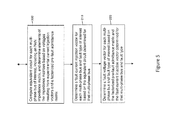
- Figure 5 illustrates a flow diagram of an embodiment of a method of fault analysis for an electric network including a plurality of multi-phase buses.
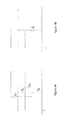
- Figure 6 illustrates a schematic diagram of a fault bus of interest modeled as a multi-phase Thevenin equivalent (TE) circuit.
- TE venin equivalent
- Figure 7 illustrates a flow diagram of another embodiment of a method of fault analysis for an electric network including a plurality of multi-phase buses.
- Figure 1 illustrates a non-limiting exemplary embodiment of an electric network such as an electric power transmission or distribution system, which can have a meshed or radial architecture.
- the electric network has one or more substations 100 and a plurality of buses 102 connected to the substation(s) 100 for providing power.
- Some of the buses 102 are multi-phase i.e. three-phase or two-phase. Other ones of the buses 102 can be single-phase.
- Laterals, represented by lines with single-ended arrows in Figure 1 can be connected to the buses 102 for distributing power to various service transformers (not shown for ease of illustration).
- Repeated fault analysis is performed at many locations in the electric network. Sparse admittance modeling of the pre-fault system is employed to perform the fault analysis, which uses the same factorized pre-fault admittance matrix regardless of the number of fault types and locations analyzed.
- the fault analysis method described herein can be used as a supporting function for online fault location analysis and protection coordination analysis. Both the network and faults under analysis can be balanced or unbalanced. The method can also be applied to transmission systems where the systems are balanced among the phases except at the point of fault.
- the fault analysis process is described herein in terms of single location shunt faults (shunt faults of various types at a specified bus), the process can also be applied to simultaneous faults at multiple locations and series faults with straightforward extension.
- the method described herein reduces the computational effort of the fault analysis at each location.
- the method performs minimal incremental operations using a factorized pre-fault admittance matrix, which is either already available from another application or calculated once and reused. Accordingly, the fault analysis performed at many different locations within the electric network is reduced to a repeated operation, once for each fault location, of a very streamlined procedure involving a very limited number of simple computations.
- the process can thus perform fault analysis at numerous system locations very efficiently.
- the process is similarly efficient for simultaneous faults at multiple locations.
- a control system 104 is provided for monitoring and controlling operation of the electric network, including fault analysis.
- the control system 104 can be connected to the electric network via a wired or wireless connection as indicated by the dashed line connection shown in Figure 1 , or included in one of the substations 100.
- the control system 104 includes a processing circuit 106 which can include digital and/or analog circuitry such as one or more controllers, processors, ASICs (application-specific integrated circuits), etc. for executing program code which performs network control functions such as fault analysis.
- the control system 104 includes a fault analyzer 108 included in or associated with the processing circuit 106 for performing the fault analysis procedures and corresponding calculations described herein.
- the control system 104 also has memory 110 such as DRAM (dynamic random access memory) and an HDD (hard disk drive) 112 for storing the program code and related data processed and accessed by the processing circuit 106 and fault analyzer 108 during execution of program code.
- the control system 104 also has I/O (input/output) circuitry 114 for sending and receiving information, including receiving voltage and current measurement information from the electric network which can be used in the fault analysis process to identify likely faults in the network.
- the fault analysis method implemented by the control system 104 can model individual phases of the buses 102, e.g., because of phase unbalance in system build, operation, or faults.
- Figure 2 shows various phase connections (phase a, phase b, phase c) between different buses (Bus i, Bus j, Bus k, Bus I, etc.) of the electric network, and the corresponding self-impedance models for each individual line section Z ij aa , Z ij bb , Z ij cc , etc . and mutual coupling between phases of the same multi-phase line section Z ij ab , Z ij bc , Z jk ca , etc . .
- Figure 3 shows a corresponding line model between nodes k and I of an exemplary three-phase bus.
- Each phase has a voltage ( ⁇ ak , ⁇ bk , ⁇ ck ) and current ( ⁇ ak , ⁇ bk , ⁇ ck ) at node k, and a voltage ( ⁇ al , ⁇ bl , ⁇ cl ) and current ( ⁇ al , ⁇ bl , ⁇ cl ) at node I.
- Line impedances can be modeled between nodes k and I of the bus as Z ⁇ aa , Z ⁇ bb and Z ⁇ cc with corresponding phase currents ⁇ a , ⁇ b and ⁇ c .
- the mutual impedance between phases a and b is modeled as Z ⁇ ab
- the mutual impedance between phases b and c is modeled as Z ⁇ bc
- the mutual impedance between phases a and c is modeled as Z ⁇ ac
- An equivalent admittance (Y) and current ⁇ abcsx between the phases and ground can also be modeled for each node.
- the fault analysis method implemented by the control system 104 can model various types of shunt faults for the individual phases of the buses 102 of the electric network.
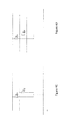
- Figures 4A through 4D illustrate various types of shunt faults which can occur on three-phase buses where Z f 1 , Z f 2 , Z f 3 , and Z e , represent the fault impedances.
- Figure 4A shows a three-phase to ground short circuit
- Figure 4B shows a single line-to-ground fault
- Figure 4C shows a double line-to-ground fault
- Figure 4D shows a line-to-line fault.
- Figure 5 illustrates an embodiment of fault analysis performed by the control system 104.
- the method includes computing equivalent circuits for the multi-phase buses 102 of interest, each equivalent circuit including an NX1 voltage source vector and an NxN impedance matrix Z TE where N corresponds to the number of phases of the multi-phase bus 102 for which that equivalent circuit is computed (Block 200).
- the equivalent circuits are Thevenin equivalent circuits. With straightforward transformation, a multi-phase Norton equivalent can be constructed and used in the subsequent fault calculations based on the Norton equivalent circuit if so doing is expedient or otherwise more advantageous.
- FIG. 6 shows the system behavior characterized by a multi-phase Thevenin equivalent (TE) circuit at a fault bus of interest.
- Each diagonal element of Z TE represents a self-impedance and each off-diagonal element represents a phase-to-phase mutual impedance of the Thevenin equivalent for the fault bus of interest.
- Zaa represents the self-impedance for phase a
- Zbb represents the self-impedance for phase b
- Zcc represents the self-impedance for phase c
- Zab represents the mutual impedance between phases a and b
- Zac represents the mutual impedance between phases a and c
- Vector E is the Thevinin equivalent voltage source, and is obtained from the pre-fault condition and does not change with fault locations.
- the fault analysis method further includes determining elements of the impedance matrix ( Z TE ) for each fault bus 102 of interest based on voltages resulting from a plurality of experimental current injection vectors for that bus 102 and a factorized pre-fault admittance matrix Y pre (Block 200).
- These current injection vectors are experimental in that no actual current is injected into the electric network. Instead, these current injection vectors are hypothesized or simulated current injection vectors for modeling network behavior (as equivalent circuits) under certain nodal current conditions.
- An admittance matrix in power engineering is an NxN matrix describing a power system with n buses, and represents the nodal admittance of the buses without faults. In practical electric networks which contain many buses, the admittance matrix is quite sparse.
- I pre is a complex nodal source current vector and V pre denotes a complex pre-fault nodal voltage vector.
- the source current vector I pre represents the current source nodes of the electric network e.g. the substation nodes.
- the pre-fault complex admittance matrix Y pre can be calculated by the control system 104 using any suitable conventional technique, or provided to the control system 104 for use in implementing the fault analysis method. The computation of an admittance matrix for an electric network is known by those skilled in the power engineering arts, and therefore no further explanation is provided herein.
- the pre-fault admittance matrix Y pre is either already available from another application or calculated once and reused by the control system 104 to perform fault analysis for the electric network.
- all source nodes e.g., the sub-station nodes
- phase a, b, etc.
- the control system 104 can factorize the pre-fault admittance matrix Y pre , or such factorization can already be complete.
- an LU factorization of Y pre yields a lower triangular matrix L, an upper triangular matrix U, a permutation matrix P, and a column reordering matrix Q each factored from the pre-fault admittance matrix Y pre .
- Solve ( L,U,P,Q,I a ) represents solving for a voltage vector V using the already factorized admittance matrix Y pre for a specified experimental current injection vector I a .
- the voltage vector V is a function of the factorized components L, U, P, Q of the pre-fault admittance matrix Y pre
- I a denotes the experimental current injection vector for the phase a node of the fault bus 102 under analysis.
- the voltage vector V is a function of the factorized components L, U, P, Q of the pre-fault admittance matrix Y pre , and I x , which has unit current injection at the phase x node of the fault bus under analysis and zero injection at all other nodes. That is, the experimental current injection vector I x determined for each multi-phase bus 102 of interest has a unit value element corresponding to each phase of that bus 102 and zero value elements elsewhere.
- a fault current injection vector I f can be determined for each multi-phase bus 102 and fault type of interest based on the equivalent circuit determined for that multi-phase bus 102 (Block 210).
- the fault current for the different fault types of interest can be calculated using any known method. For many of the fault types, an analytic expression can be readily derived. Further details of the calculation procedure for the node fault currents is omitted here because many approaches can be used, each of which is well known to those with a basic engineering background and given the equivalent circuits previously determined.
- the fault current vector from equation (16) is used construct a post-fault current injection vector I f applied to the pre-fault admittance matrix.
- the fault current injection vector I f determined for each multi-phase bus 102 and fault type of interest has non-zero value elements corresponding to the source buses in the pre-fault condition and to the phases of that fault bus and zero value elements elsewhere.
- the fault analysis method continues with the control system 104 determining a fault voltage vector V f for each multi-phase bus 102 and fault type of interest, based on the fault current injection vector I f determined for that multi-phase bus 102 and fault type and the factorized pre-fault admittance matrix Y pre (Block 220).
- the fault current on any branch of interest within the electric network can be calculated using the fundamental equations for the branch.
- Fault location analysis can be performed by the control system 104 based on pattern matching between measured fault current and the calculated fault current at a hypothesized fault location and for different fault types.
- one or more fault currents are measured in the electric network and reported to the control system 104 via the I/O circuitry 114.
- the processing circuit 106 compares the one or more measured fault currents with the calculated fault currents determined by the fault analyzer 108 to identify one or more likely fault conditions in the electric network. Such an approach is particularly advantageous in online applications where speed is important.
- FIG. 7 illustrates a more detailed flow chart of the fault analysis method described herein.
- the pre-fault admittance matrix Y pre is computed or ascertained at Block 300 and factorized at Block 302.
- the pre-fault voltage vector V pre is calculated based on the pre-fault source current vector I pre and the pre-fault admittance matrix Y pre at Block 304 in accordance with equation (5).
- the control system 104 then iterates the fault analysis procedure over all buses 102 of interest (Block 306).
- Iteration over all buses of interest involves calculating a pre-fault voltage for each bus 102 of interest in accordance with equations (6) and (7) at Block 308, and then iterating over all columns of the impedance matrix Z TE for each fault bus 102 of interest (Block 310). Iterating over all columns of the impedance matrix Z TE for each fault bus 102 of interest includes setting a current injection vector I x for each phase node of the fault bus 102 under analysis at Block 312 in accordance with equation (8), and solving for the corresponding nodal voltages at Block 314 in accordance with equation (8). At this point, equivalent circuits ( E, Z TE ) are obtained for the multi-phase buses 102 of interest.
- the fault analysis process then iterates through all fault types of interest to complete the process (Block 316). Iterating through all fault types of interest includes solving for the fault currents at each fault node (Block 318) in accordance with equation (16), setting the post-fault current injection vector I f (Block 320) in accordance with equation (17) and solving for the corresponding post-fault voltages (Block 322) in accordance with equation (18). With the post-fault voltages known at all buses 102 of interest, the fault current on any branch of interest within the electric network can be calculated using fundamental equations of the branch.
Landscapes
- Physics & Mathematics (AREA)
- General Physics & Mathematics (AREA)
- Engineering & Computer Science (AREA)
- Mathematical Physics (AREA)
- Theoretical Computer Science (AREA)
- Power Engineering (AREA)
- Supply And Distribution Of Alternating Current (AREA)
- Testing Electric Properties And Detecting Electric Faults (AREA)
Abstract
Description
- The instant application relates to electric networks, and more particularly to fault analysis for electric networks.
- A distribution management system (DMS) for an electric power distribution system identifies fault locations by pattern matching between measured fault current(s) and predicted fault currents using a system model of the distribution network and hypothesized fault location, types, and fault impedances. Conventional symmetrical component-based methods are not suitable for distribution systems that are unbalanced in both build and operation. Phase-based methods are needed for accurate analysis. However, the resulting system can be very large, even for average feeders, because of the large number of nodes resulting from explicit representation of individual phases. Impedance based methods are both memory-intensive and time-consuming. Admittance matrix-based methods are much more memory efficient, but time-consuming. Compensation-based and matrix inversion lemma-based methods purportedly reduce the computation burden associated with inverting the admittance matrix repeatedly. However, these conventional methods are computationally intensive for repeated fault analysis at many bus locations with various fault types and involve building and factorizing the admittance matrix, or even inverting the admittance matrix for each fault location and fault types. Also, traditional methods using symmetrical components can handle unbalanced fault, but not unbalanced network modeling.
- According to the exemplary embodiments described herein, repeated fault analysis can be performed in a very efficient process at many locations in an electric network, such as in an electric power transmission or distribution system, with only a single factorization of the pre-fault admittance matrix and without subsequent updating of the factorization. Both the system under study and the faults analyzed can be balanced or unbalanced. Sparse admittance modeling of the pre-fault system is employed to perform the fault analysis, which uses the same factorized pre-fault admittance matrix regardless of the number of fault types and locations being analyzed.
- According to an embodiment of a method of fault analysis for an electric network having a plurality of multi-phase buses, the method comprises: computing equivalent circuits for the multi-phase buses of interest, each equivalent circuit including an NxN impedance matrix where N corresponds to the number of phases of the multi-phase bus for which that equivalent circuit is computed; determining elements of the impedance matrices based on voltages resulting from a plurality of experimental current injection vectors and a factorized pre-fault admittance matrix, the pre-fault admittance matrix representing nodal admittance of the multi-phase buses without faults; determining a fault current injection vector for each multi-phase bus and fault type of interest based on the equivalent circuit determined for that multi-phase bus; and determining a fault voltage vector for each multi-phase bus and fault type of interest based on the factorized pre-fault admittance matrix and the fault current injection vector determined for that multi-phase bus and fault type.
- According to an embodiment of a non-transitory computer readable medium storing a computer program operable to perform fault analysis for an electric network having a plurality of multi-phase buses, the computer program comprises program instructions to compute equivalent circuits for the multi-phase buses of interest, each equivalent circuit including an NxN impedance matrix where N corresponds to the number of phases of the multi-phase bus for which that equivalent circuit is computed. The computer program further comprises program instructions to determine elements of the impedance matrices based on voltages resulting from a plurality of experimental current injection vectors and a factorized pre-fault admittance matrix, the pre-fault admittance matrix representing nodal admittance of the multi-phase buses without faults. The computer program also comprises program instructions to determine a fault current injection vector for each multi-phase bus and fault type of interest based on the equivalent circuit determined for that multi-phase bus, and program instructions to determine a fault voltage vector for each multi-phase bus and fault type of interest based on the factorized pre-fault admittance matrix and the fault current injection vector determined for that multi-phase bus and fault type.
- According to an embodiment of a computer system in communication with an electric network having a plurality of multi-phase buses, the computer system comprises a processing circuit operable to compute equivalent circuits for the multi-phase buses of interest, each equivalent circuit including an NxN impedance matrix where N corresponds to the number of phases of the multi-phase bus for which that equivalent circuit is computed. The processing circuit is further operable to determine elements of the impedance matrices based on voltages resulting from a plurality of experimental current injection vectors and a factorized pre-fault admittance matrix, the pre-fault admittance matrix representing nodal admittance of the multi-phase buses without faults. The processing circuit is also operable to determine a fault current injection vector for each multi-phase bus and fault type of interest based on the equivalent circuit determined for that multi-phase bus, and to determine a fault voltage vector for each multi-phase bus and fault type of interest based on the factorized pre-fault admittance matrix and the fault current injection vector determined for that multi-phase bus and fault type.
- Those skilled in the art will recognize additional features and advantages upon reading the following detailed description, and upon viewing the accompanying drawings.
- The components in the figures are not necessarily to scale, emphasis instead being placed upon illustrating the principles of the invention. Moreover, in the figures, like reference numerals designate corresponding parts. In the drawings:
-
Figure 1 illustrates a schematic diagram of an electric network including a plurality of multi-phase buses and a control system for implementing fault analysis for the network. -
Figure 2 illustrates a schematic diagram of various phase connections between different buses of the electric network. -
Figure 3 illustrates a schematic diagram of a line model between nodes k and I of an exemplary three-phase bus of the electric network. -
Figures 4A through 4D illustrate schematic diagrams of various fault types for the electric network. -
Figure 5 illustrates a flow diagram of an embodiment of a method of fault analysis for an electric network including a plurality of multi-phase buses. -
Figure 6 illustrates a schematic diagram of a fault bus of interest modeled as a multi-phase Thevenin equivalent (TE) circuit. -
Figure 7 illustrates a flow diagram of another embodiment of a method of fault analysis for an electric network including a plurality of multi-phase buses. -
Figure 1 illustrates a non-limiting exemplary embodiment of an electric network such as an electric power transmission or distribution system, which can have a meshed or radial architecture. The electric network has one ormore substations 100 and a plurality ofbuses 102 connected to the substation(s) 100 for providing power. Some of thebuses 102 are multi-phase i.e. three-phase or two-phase. Other ones of thebuses 102 can be single-phase. Laterals, represented by lines with single-ended arrows inFigure 1 , can be connected to thebuses 102 for distributing power to various service transformers (not shown for ease of illustration). Repeated fault analysis is performed at many locations in the electric network. Sparse admittance modeling of the pre-fault system is employed to perform the fault analysis, which uses the same factorized pre-fault admittance matrix regardless of the number of fault types and locations analyzed. - The fault analysis method described herein can be used as a supporting function for online fault location analysis and protection coordination analysis. Both the network and faults under analysis can be balanced or unbalanced. The method can also be applied to transmission systems where the systems are balanced among the phases except at the point of fault. Although the fault analysis process is described herein in terms of single location shunt faults (shunt faults of various types at a specified bus), the process can also be applied to simultaneous faults at multiple locations and series faults with straightforward extension.
- The method described herein reduces the computational effort of the fault analysis at each location. The method performs minimal incremental operations using a factorized pre-fault admittance matrix, which is either already available from another application or calculated once and reused. Accordingly, the fault analysis performed at many different locations within the electric network is reduced to a repeated operation, once for each fault location, of a very streamlined procedure involving a very limited number of simple computations. The process can thus perform fault analysis at numerous system locations very efficiently. The process is similarly efficient for simultaneous faults at multiple locations.
- In more detail, a
control system 104 is provided for monitoring and controlling operation of the electric network, including fault analysis. Thecontrol system 104 can be connected to the electric network via a wired or wireless connection as indicated by the dashed line connection shown inFigure 1 , or included in one of thesubstations 100. Thecontrol system 104 includes aprocessing circuit 106 which can include digital and/or analog circuitry such as one or more controllers, processors, ASICs (application-specific integrated circuits), etc. for executing program code which performs network control functions such as fault analysis. To this end, thecontrol system 104 includes afault analyzer 108 included in or associated with theprocessing circuit 106 for performing the fault analysis procedures and corresponding calculations described herein. Thecontrol system 104 also hasmemory 110 such as DRAM (dynamic random access memory) and an HDD (hard disk drive) 112 for storing the program code and related data processed and accessed by theprocessing circuit 106 andfault analyzer 108 during execution of program code. Thecontrol system 104 also has I/O (input/output)circuitry 114 for sending and receiving information, including receiving voltage and current measurement information from the electric network which can be used in the fault analysis process to identify likely faults in the network. - The fault analysis method implemented by the
control system 104 can model individual phases of thebuses 102, e.g., because of phase unbalance in system build, operation, or faults. -
Figure 2 shows various phase connections (phase a, phase b, phase c) between different buses (Bus i, Bus j, Bus k, Bus I, etc.) of the electric network, and the corresponding self-impedance models for each individual line section

Figure 3 shows a corresponding line model between nodes k and I of an exemplary three-phase bus. Each phase has a voltage (Ṽak,Ṽbk,Ṽck ) and current (Ĩak,Ĩbk,Ĩck ) at node k, and a voltage (Ṽal, Ṽbl, Ṽcl ) and current (Ĩal,Ĩbl,Ĩcl ) at node I. Line impedances can be modeled between nodes k and I of the bus as Z̃aa , Z̃bb and Z̃cc with corresponding phase currents Ĩa , Ĩb and Ĩc . The mutual impedance between phases a and b is modeled as Z̃ab , the mutual impedance between phases b and c is modeled as Z̃bc and the mutual impedance between phases a and c is modeled as Z̃ac . An equivalent admittance (Y) and current Ĩabcsx between the phases and ground can also be modeled for each node. - The fault analysis method implemented by the
control system 104 can model various types of shunt faults for the individual phases of thebuses 102 of the electric network. For example,Figures 4A through 4D illustrate various types of shunt faults which can occur on three-phase buses where Z f1, Z f2 , Z f3, and Ze , represent the fault impedances.Figure 4A shows a three-phase to ground short circuit,Figure 4B shows a single line-to-ground fault,Figure 4C shows a double line-to-ground fault, andFigure 4D shows a line-to-line fault. -
Figure 5 illustrates an embodiment of fault analysis performed by thecontrol system 104. The method includes computing equivalent circuits for themulti-phase buses 102 of interest, each equivalent circuit including an NX1 voltage source vector and an NxN impedance matrix ZTE where N corresponds to the number of phases of themulti-phase bus 102 for which that equivalent circuit is computed (Block 200). In one embodiment, the equivalent circuits are Thevenin equivalent circuits. With straightforward transformation, a multi-phase Norton equivalent can be constructed and used in the subsequent fault calculations based on the Norton equivalent circuit if so doing is expedient or otherwise more advantageous. -
Figure 6 shows the system behavior characterized by a multi-phase Thevenin equivalent (TE) circuit at a fault bus of interest. The TE circuit is represented by a three-phase voltage source vector given by:
and an NxN impedance matrix given by:
where N corresponds to the number of phases. Each diagonal element of ZTE represents a self-impedance and each off-diagonal element represents a phase-to-phase mutual impedance of the Thevenin equivalent for the fault bus of interest. For example, Zaa represents the self-impedance for phase a, Zbb represents the self-impedance for phase b, Zcc represents the self-impedance for phase c, Zab represents the mutual impedance between phases a and b, Zac represents the mutual impedance between phases a and c, etc. Vector E is the Thevinin equivalent voltage source, and is obtained from the pre-fault condition and does not change with fault locations. - Returning to
Figure 5 , the fault analysis method further includes determining elements of the impedance matrix (ZTE ) for eachfault bus 102 of interest based on voltages resulting from a plurality of experimental current injection vectors for thatbus 102 and a factorized pre-fault admittance matrix Ypre (Block 200). These current injection vectors are experimental in that no actual current is injected into the electric network. Instead, these current injection vectors are hypothesized or simulated current injection vectors for modeling network behavior (as equivalent circuits) under certain nodal current conditions. An admittance matrix in power engineering is an NxN matrix describing a power system with n buses, and represents the nodal admittance of the buses without faults. In practical electric networks which contain many buses, the admittance matrix is quite sparse. - In more detail, Ipre is a complex nodal source current vector and Vpre denotes a complex pre-fault nodal voltage vector. The source current vector Ipre represents the current source nodes of the electric network e.g. the substation nodes. The pre-fault complex admittance matrix Ypre can be calculated by the
control system 104 using any suitable conventional technique, or provided to thecontrol system 104 for use in implementing the fault analysis method. The computation of an admittance matrix for an electric network is known by those skilled in the power engineering arts, and therefore no further explanation is provided herein. - The pre-fault admittance matrix Ypre is either already available from another application or calculated once and reused by the
control system 104 to perform fault analysis for the electric network. For notational convenience, all source nodes (e.g., the sub-station nodes) can be numbered first and in order of phase (a, b, etc.) for thesame bus 102. For a network with only a single three-phase source, Ipre and Vpre are given by:

which satisfy:

and
- The
control system 104 can factorize the pre-fault admittance matrix Ypre , or such factorization can already be complete. In one embodiment, an LU factorization of Ypre yields a lower triangular matrix L, an upper triangular matrix U, a permutation matrix P, and a column reordering matrix Q each factored from the pre-fault admittance matrix Ypre. The first column of the impedance matrix ZTE can then be obtained for thefault bus 102 of interest in general by solving:
and more specifically in one embodiment by solving:
where Solve(L,U,P,Q,Ia ) represents solving for a voltage vector V using the already factorized admittance matrix Ypre for a specified experimental current injection vector Ia . The voltage vector V is a function of the factorized components L, U, P, Q of the pre-fault admittance matrix Ypre , and Ia denotes the experimental current injection vector for the phase a node of thefault bus 102 under analysis. - For the first column of ZTE , the experimental current injection vector Ia has unit current injection at the phase a node of the
fault bus 102 under analysis and zero injection at all other nodes as given by:
- Using such an experimental current injection vector with unit current injection yields the following for the first column of ZTE :

- The other two columns of ZTE for each
fault bus 102 under analysis can be obtained in similar fashion with unit current injection at node b and node c, respectively, as given by:





where Solve(L,U,P,Q,Ix ) represents solving for a voltage vector V using the already factorized admittance matrix for a specified experimental current injection vector. The voltage vector V is a function of the factorized components L, U, P, Q of the pre-fault admittance matrix Ypre, and Ix , which has unit current injection at the phase x node of the fault bus under analysis and zero injection at all other nodes. That is, the experimental current injection vector Ix determined for eachmulti-phase bus 102 of interest has a unit value element corresponding to each phase of thatbus 102 and zero value elements elsewhere. - Again returning to
Figure 5 , once the equivalent circuit (ZTE ) is obtained for themulti-phase buses 102 of interest, a fault current injection vector If can be determined for eachmulti-phase bus 102 and fault type of interest based on the equivalent circuit determined for that multi-phase bus 102 (Block 210). The fault current for the different fault types of interest can be calculated using any known method. For many of the fault types, an analytic expression can be readily derived. Further details of the calculation procedure for the node fault currents is omitted here because many approaches can be used, each of which is well known to those with a basic engineering background and given the equivalent circuits previously determined. The fault currents calculated based on the equivalent circuits can be represented in a 3X1 vector as given by:
- The fault current vector from equation (16) is used construct a post-fault current injection vector If applied to the pre-fault admittance matrix. If is calculated for each
multi-phase bus 102 and fault type of interest and is the sum of the post-fault current vector (expanded to the right dimension) If,eq . represented by equation (16) and the pre-fault source current injection vector Ipre represented by equation (3), as given by:
The fault current injection vector If determined for eachmulti-phase bus 102 and fault type of interest has non-zero value elements corresponding to the source buses in the pre-fault condition and to the phases of that fault bus and zero value elements elsewhere. - The fault analysis method continues with the
control system 104 determining a fault voltage vector Vf for eachmulti-phase bus 102 and fault type of interest, based on the fault current injection vector If determined for thatmulti-phase bus 102 and fault type and the factorized pre-fault admittance matrix Ypre (Block 220). The fault voltage vector Vf for eachmulti-phase bus 102 and fault type of interest can be determined as given by:
where Solve(L,U,P,Q,If ) represents solving for Vf as a function of the factorized components L, U, P, Q of the pre-fault admittance matrix Ypre, and the fault current injection vector If determined for thefault node bus 102 under analysis. - With the post-fault voltages known at all
buses 102 of interest, the fault current on any branch of interest within the electric network can be calculated using the fundamental equations for the branch. Fault location analysis can be performed by thecontrol system 104 based on pattern matching between measured fault current and the calculated fault current at a hypothesized fault location and for different fault types. In one embodiment, one or more fault currents are measured in the electric network and reported to thecontrol system 104 via the I/O circuitry 114. Theprocessing circuit 106 compares the one or more measured fault currents with the calculated fault currents determined by thefault analyzer 108 to identify one or more likely fault conditions in the electric network. Such an approach is particularly advantageous in online applications where speed is important. -
Figure 7 illustrates a more detailed flow chart of the fault analysis method described herein. The pre-fault admittance matrix Ypre is computed or ascertained atBlock 300 and factorized atBlock 302. The pre-fault voltage vector Vpre is calculated based on the pre-fault source current vector Ipre and the pre-fault admittance matrix Ypre atBlock 304 in accordance with equation (5). Thecontrol system 104 then iterates the fault analysis procedure over allbuses 102 of interest (Block 306). Iteration over all buses of interest involves calculating a pre-fault voltage for eachbus 102 of interest in accordance with equations (6) and (7) atBlock 308, and then iterating over all columns of the impedance matrix ZTE for eachfault bus 102 of interest (Block 310). Iterating over all columns of the impedance matrix ZTE for eachfault bus 102 of interest includes setting a current injection vector Ix for each phase node of thefault bus 102 under analysis atBlock 312 in accordance with equation (8), and solving for the corresponding nodal voltages atBlock 314 in accordance with equation (8). At this point, equivalent circuits (E, ZTE ) are obtained for themulti-phase buses 102 of interest. - The fault analysis process then iterates through all fault types of interest to complete the process (Block 316). Iterating through all fault types of interest includes solving for the fault currents at each fault node (Block 318) in accordance with equation (16), setting the post-fault current injection vector If (Block 320) in accordance with equation (17) and solving for the corresponding post-fault voltages (Block 322) in accordance with equation (18). With the post-fault voltages known at all
buses 102 of interest, the fault current on any branch of interest within the electric network can be calculated using fundamental equations of the branch. - Terms such as "first", "second", and the like, are used to describe various elements, regions, sections, etc. and are not intended to be limiting. Like terms refer to like elements throughout the description.
- As used herein, the terms "having", "containing", "including", "comprising" and the like are open ended terms that indicate the presence of stated elements or features, but do not preclude additional elements or features. The articles "a", "an" and "the" are intended to include the plural as well as the singular, unless the context clearly indicates otherwise.
- With the above range of variations and applications in mind, it should be understood that the present invention is not limited by the foregoing description, nor is it limited by the accompanying drawings. Instead, the present invention is limited only by the following claims and their legal equivalents.
Claims (20)
- A method of fault analysis for an electric network having a plurality of multi-phase buses, the method comprising:computing equivalent circuits for the multi-phase buses of interest, each equivalent circuit including an NxN impedance matrix where N corresponds to the number of phases of the multi-phase bus for which that equivalent circuit is computed;determining elements of the impedance matrices based on voltages resulting from a plurality of experimental current injection vectors and a factorized pre-fault admittance matrix, the pre-fault admittance matrix representing nodal admittance of the multi-phase buses without faults;determining a fault current injection vector for each multi-phase bus and fault type of interest based on the equivalent circuit determined for that multi-phase bus; anddetermining a fault voltage vector for each multi-phase bus and fault type of interest based on the factorized pre-fault admittance matrix and the fault current injection vector determined for that multi-phase bus and fault type.
- The method according to claim 1, wherein the equivalent circuits are Thevenin equivalent circuits, each Thevenin equivalent circuit further including an Nx1 voltage source vector having elements determined as pre-fault voltages at the corresponding bus under analysis.
- The method according to claim 1, wherein the experimental current injection vectors determined for each multi-phase bus of interest have a unit value element corresponding to each phase of that bus and zero value elements elsewhere.
- The method according to claim 3, wherein determining the elements of the impedance matrices comprises, for each impedance matrix, solving the elements of the impedance matrix as a function of a lower triangular matrix factored from the pre-fault admittance matrix, an upper triangular matrix factored from the pre-fault admittance matrix, a permutation matrix factored from the pre-fault admittance matrix, a column reordering matrix factored from the pre-fault admittance matrix, and the experimental current injection vectors determined for the multi-phase bus for which the impedance matrix is computed.
- The method according to claim 1, wherein the fault current injection vectors determined for each multi-phase bus and fault type of interest has non-zero value elements corresponding to the phases of that bus and zero value elements elsewhere.
- The method according to claim 5, wherein determining the fault voltage vector for each multi-phase bus and fault type of interest comprises, for each multi-phase bus and fault type of interest, solving each element of the fault voltage vector as a function of a lower triangular matrix factored from the pre-fault admittance matrix, an upper triangular matrix factored from the pre-fault admittance matrix, a permutation matrix factored from the pre-fault admittance matrix, a column reordering matrix factored from the pre-fault admittance matrix, and the fault current injection vector determined for that multi-phase bus and fault type.
- The method according to claim 1, wherein determining the fault current injection vector for each multi-phase bus and fault type of interest comprises:calculating a post-fault current vector for each multi-phase bus and fault type of interest based on the equivalent circuit determined for that multi-phase bus; andadding each post-fault current vector to a complex source current vector representing current source nodes of the electric network to determine the fault current vector for each multi-phase bus and fault type of interest.
- The method according to claim 1, further comprising calculating a fault current on each multi-phase bus of interest based on the pre-fault admittance matrix and the fault voltage vector determined for that multi-phase bus.
- The method according to claim 8, further comprising:measuring one or more fault currents in the electric network; andcomparing the one or more measured fault currents with the calculated fault currents to identify one or more likely fault conditions in the electric network.
- A non-transitory computer-readable medium storing a computer program operable to perform fault analysis for an electric network having a plurality of multi-phase buses, the computer program comprising:program instructions to compute equivalent circuits for the multi-phase buses of interest, each equivalent circuit including an NxN impedance matrix where N corresponds to the number of phases of the multi-phase bus for which that equivalent circuit is computed;programs instructions to determine elements of the voltage source vector as pre-fault voltages at each bus under fault analysis;program instructions to determine elements of the impedance matrices based on voltages resulting from a plurality of experimental current injection vectors and a factorized pre-fault admittance matrix, the pre-fault admittance matrix representing nodal admittance of the multi-phase buses without faults;program instructions to determine a fault current injection vector for each multi-phase bus and fault type of interest based on the equivalent circuit determined for that multi-phase bus; andprogram instructions to determine a fault voltage vector for each multi-phase bus and fault type of interest based on the factorized pre-fault admittance matrix and the fault current injection vector determined for that multi-phase bus and fault type.
- The non-transitory computer readable medium according to claim 10, further comprising program instructions to calculate a fault current on each multi-phase bus of interest based on the pre-fault admittance matrix and the fault voltage vector determined for that multi-phase bus, and compare one or more measured fault currents in the electric network with the calculated fault currents to identify one or more likely fault conditions in the electric network.
- A computer system in communication with an electric network having a plurality of multi-phase buses, the computer system comprising a processing circuit operable to:compute equivalent circuits for the multi-phase buses of interest, each equivalent circuit including an NxN impedance matrix where N corresponds to the number of phases of the multi-phase bus for which that equivalent circuit is computed;determine elements of the impedance matrices based on voltages resulting from a plurality of experimental current injection vectors and a factorized pre-fault admittance matrix, the pre-fault admittance matrix representing nodal admittance of the multi-phase buses without faults;determine a fault current injection vector for each multi-phase bus and fault type of interest based on the equivalent circuit determined for that multi-phase bus; anddetermine a fault voltage vector for each multi-phase bus and fault type of interest based on the factorized pre-fault admittance matrix and the fault current injection vector determined for that multi-phase bus and fault type.
- The computer system according to claim 12, wherein the processing circuit is operable to model the multi-phase buses of interest as Thevenin equivalent circuits, each Thevenin equivalent circuit further including an Nx1 voltage source vector having elements determined by the processing circuit as pre-fault voltages at the corresponding bus under analysis.
- The computer system according to claim 12, wherein the processing circuit is operable to determine the experimental current injection vectors for each multi-phase bus of interest as a unit value element corresponding to each phase of that bus and zero value elements elsewhere.
- The computer system according to claim 14, wherein for each impedance matrix, the processing circuit is operable to solve each element of the impedance matrix as a function of a lower triangular matrix factored from the pre-fault admittance matrix, an upper triangular matrix factored from the pre-fault admittance matrix, a permutation matrix factored from the pre-fault admittance matrix, a column reordering matrix factored from the pre-fault admittance matrix, and the experimental current injection vectors determined for the multi-phase bus for which the impedance matrix is computed.
- The computer system according to claim 12, wherein the processing circuit is operable to determine the fault current injection vector for each multi-phase bus and fault type of interest as non-zero value elements corresponding to the phases of that bus and zero value elements elsewhere.
- The computer system according to claim 16, wherein for each multi-phase bus and fault type of interest, the processing circuit is operable to solve each element of the fault voltage vector as a function of a lower triangular matrix factored from the pre-fault admittance matrix, an upper triangular matrix factored from the pre-fault admittance matrix, a permutation matrix factored from the pre-fault admittance matrix, a column reordering matrix factored from the pre-fault admittance matrix, and the fault current injection vector determined for that multi-phase bus and fault type.
- The computer system according to claim 12, wherein the processing circuit is operable to calculate a post-fault current vector for each multi-phase bus and fault type of interest based on the equivalent circuit determined for that multi-phase bus, and add each post-fault current vector to a complex source current vector representing current source nodes of the electric network to determine the fault current vector for each multi-phase bus and fault type of interest.
- The computer system according to claim 12, wherein the processing circuit is further operable to calculate a fault current on each multi-phase bus of interest based on the pre-fault admittance matrix and the fault voltage vector determined for that multi-phase bus.
- The computer system according to claim 19, wherein the processing circuit is further operable to compare one or more measured fault currents in the electric network with the calculated fault currents to identify one or more likely fault conditions in the electric network.
Applications Claiming Priority (2)
| Application Number | Priority Date | Filing Date | Title |
|---|---|---|---|
| US201261682857P | 2012-08-14 | 2012-08-14 | |
| US13/946,644 US9989580B2 (en) | 2012-08-14 | 2013-07-19 | Fault analysis in electric networks having a plurality of multi-phase buses |
Publications (3)
| Publication Number | Publication Date |
|---|---|
| EP2698642A2 true EP2698642A2 (en) | 2014-02-19 |
| EP2698642A3 EP2698642A3 (en) | 2015-08-05 |
| EP2698642B1 EP2698642B1 (en) | 2019-10-02 |
Family
ID=49000768
Family Applications (1)
| Application Number | Title | Priority Date | Filing Date |
|---|---|---|---|
| EP13179216.0A Active EP2698642B1 (en) | 2012-08-14 | 2013-08-05 | "Fault analysis in electric networks having a plurality of multi-phase buses" |
Country Status (3)
| Country | Link |
|---|---|
| US (1) | US9989580B2 (en) |
| EP (1) | EP2698642B1 (en) |
| CN (1) | CN104049175B (en) |
Cited By (8)
| Publication number | Priority date | Publication date | Assignee | Title |
|---|---|---|---|---|
| CN104316792A (en) * | 2014-10-20 | 2015-01-28 | 国家电网公司 | Dead zone fault simulation method based on integrated friend model |
| WO2019087101A1 (en) * | 2017-11-03 | 2019-05-09 | 3M Innovative Properties Company | System and method for anomaly detection in an electrical network |
| CN111766475A (en) * | 2020-07-14 | 2020-10-13 | 国网江苏省电力有限公司泗洪县供电分公司 | A Matrix Algorithm for Broken Line Fault Location |
| EP3770615A1 (en) * | 2019-07-26 | 2021-01-27 | Analog Devices International Unlimited Company | Electrical network impedance determination |
| CN112731150A (en) * | 2020-12-08 | 2021-04-30 | 深圳供电局有限公司 | Voltage sag state estimation method and device, computer equipment and storage medium |
| CN113419133A (en) * | 2021-04-02 | 2021-09-21 | 国网浙江省电力有限公司经济技术研究院 | Power transmission line fault positioning method and device based on dynamic equivalent model |
| CN114578186A (en) * | 2022-02-28 | 2022-06-03 | 四川大学 | Cable early fault severity evaluation method based on volt-ampere characteristic analysis |
| CN115173416A (en) * | 2022-09-08 | 2022-10-11 | 国网江西省电力有限公司电力科学研究院 | Distribution network short circuit total current calculation method and system considering distributed power supply |
Families Citing this family (12)
| Publication number | Priority date | Publication date | Assignee | Title |
|---|---|---|---|---|
| US9835673B2 (en) * | 2013-04-12 | 2017-12-05 | Mitsubishi Electric Research Laboratories, Inc. | Method for analyzing faults in ungrounded power distribution systems |
| CA2932899C (en) * | 2013-12-06 | 2019-06-18 | Abb Inc. | Systems and methods for identifying faulted segments in multiphase power networks |
| FR3021817B1 (en) * | 2014-06-03 | 2016-07-01 | Inst Mines Telecom | METHOD AND DEVICE FOR DETERMINING VOLTAGES AND / OR POWER AVAILABLE IN AN ELECTRIC RECHARGE NETWORK |
| CN106056265B (en) * | 2016-04-28 | 2022-09-09 | 国家电网公司 | A Method for Screening and Ranking of Voltage Stability Faults Based on Grey Correlation Analysis |
| CN105974271B (en) * | 2016-07-25 | 2018-09-25 | 山东理工大学 | A kind of nodal impedance matrix computational methods of distribution line failure port |
| CN108090272B (en) * | 2017-12-13 | 2020-11-17 | 广东电网有限责任公司电力科学研究院 | Modeling simulation method and device for modular multilevel converter |
| CN110503274A (en) * | 2018-05-16 | 2019-11-26 | 中国电力科学研究院有限公司 | A kind of appraisal procedure and system of direct current system commutation failure risk |
| US10742068B2 (en) * | 2018-12-31 | 2020-08-11 | PXiSE Energy Solutions, LLC | Real-time deviation detection of power system electrical characteristics using time-synchronized measurements |
| US11544061B2 (en) * | 2020-12-22 | 2023-01-03 | International Business Machines Corporation | Analog hardware matrix computation |
| CN113009276B (en) * | 2021-03-04 | 2022-05-31 | 国网宁夏电力有限公司电力科学研究院 | Intelligent power distribution network fault positioning method based on impedance matrix |
| CN116338379B (en) * | 2023-03-24 | 2026-04-28 | 国网经济技术研究院有限公司 | A method and system for rapid calculation of grid fault voltage distribution under renewable energy integration |
| CN119961776B (en) * | 2025-04-09 | 2025-07-01 | 大连发电有限责任公司 | A fault identification and inspection method and system for a 220kV substation busbar |
Family Cites Families (14)
| Publication number | Priority date | Publication date | Assignee | Title |
|---|---|---|---|---|
| US4589073A (en) | 1982-05-05 | 1986-05-13 | Dorman Smith Switchgear Limited | Apparatus for determining prospective short circuit current |
| US5359711A (en) | 1992-12-18 | 1994-10-25 | Vectra Technologies, Inc. | Determination of load flow in direct current electrical systems |
| FR2756051B1 (en) * | 1996-11-19 | 1999-01-29 | Ampico | DEVICE AND METHOD FOR ANALYZING FAULTS ON ELECTRICAL DISTRIBUTION NETWORKS |
| DE10139318C2 (en) * | 2001-08-09 | 2003-06-18 | Siemens Ag | Method for error detection in an electrical radiation network, an application of the method and an arrangement for error detection in an electrical radiation network |
| US7746080B2 (en) | 2008-03-31 | 2010-06-29 | Consolidated Edison Company Of New York, Inc. | System and method for determining a position of a single phase fault to ground in a feeder line |
| CN101539606B (en) * | 2009-04-08 | 2010-10-27 | 烟台东方电子信息产业股份有限公司 | Method for determining fault direction for relay protection of electric power system |
| CN101661069B (en) * | 2009-09-25 | 2011-07-20 | 北京四方继保自动化股份有限公司 | Dynamic process real-time estimation method of weak observable non-PMU measuring point independent of state matrix |
| US8810253B2 (en) * | 2010-09-20 | 2014-08-19 | Thomas L. Marzetta | Characterization of electrical power distribution systems using characterization matrices |
| CN101968525B (en) * | 2010-10-09 | 2013-05-08 | 杭州市电力局 | Fault positioning method for power distribution network by combining simulation calculation and real-time monitoring |
| CN102608493B (en) * | 2011-01-25 | 2014-02-26 | 华北电力科学研究院有限责任公司 | Method and device for positioning voltage sag source |
| WO2012163979A2 (en) * | 2011-05-30 | 2012-12-06 | Danmarks Tekniske Universitet | Assessment of power systems |
| CN102565623A (en) * | 2011-12-21 | 2012-07-11 | 北京交通大学 | Method and device for online fault search positioning of multi-branch complex distribution network |
| US9640994B2 (en) * | 2012-02-24 | 2017-05-02 | Mitsubishi Electric Research Laboratories, Inc. | Decoupled three-phase power flow analysis method for unbalanced power distribution systems |
| EP2677619A1 (en) * | 2012-06-20 | 2013-12-25 | Institute of Nuclear Energy Research Atomic Energy Council, Executive Yuan | Microgrid power distribution system and power flow asymmetrical fault analysis method therefor |
-
2013
- 2013-07-19 US US13/946,644 patent/US9989580B2/en active Active
- 2013-08-05 EP EP13179216.0A patent/EP2698642B1/en active Active
- 2013-08-14 CN CN201310355811.9A patent/CN104049175B/en active Active
Non-Patent Citations (1)
| Title |
|---|
| None |
Cited By (11)
| Publication number | Priority date | Publication date | Assignee | Title |
|---|---|---|---|---|
| CN104316792A (en) * | 2014-10-20 | 2015-01-28 | 国家电网公司 | Dead zone fault simulation method based on integrated friend model |
| WO2019087101A1 (en) * | 2017-11-03 | 2019-05-09 | 3M Innovative Properties Company | System and method for anomaly detection in an electrical network |
| US11143685B2 (en) | 2017-11-03 | 2021-10-12 | 3M Innovative Properties Company | System and method for anomaly detection in an electrical network |
| EP3770615A1 (en) * | 2019-07-26 | 2021-01-27 | Analog Devices International Unlimited Company | Electrical network impedance determination |
| US11366149B2 (en) | 2019-07-26 | 2022-06-21 | Analog Devices International Unlimited Company | Electrical network impedance determination |
| CN111766475A (en) * | 2020-07-14 | 2020-10-13 | 国网江苏省电力有限公司泗洪县供电分公司 | A Matrix Algorithm for Broken Line Fault Location |
| CN112731150A (en) * | 2020-12-08 | 2021-04-30 | 深圳供电局有限公司 | Voltage sag state estimation method and device, computer equipment and storage medium |
| CN113419133A (en) * | 2021-04-02 | 2021-09-21 | 国网浙江省电力有限公司经济技术研究院 | Power transmission line fault positioning method and device based on dynamic equivalent model |
| CN114578186A (en) * | 2022-02-28 | 2022-06-03 | 四川大学 | Cable early fault severity evaluation method based on volt-ampere characteristic analysis |
| CN114578186B (en) * | 2022-02-28 | 2023-03-31 | 四川大学 | Cable early fault severity evaluation method based on volt-ampere characteristic analysis |
| CN115173416A (en) * | 2022-09-08 | 2022-10-11 | 国网江西省电力有限公司电力科学研究院 | Distribution network short circuit total current calculation method and system considering distributed power supply |
Also Published As
| Publication number | Publication date |
|---|---|
| US9989580B2 (en) | 2018-06-05 |
| CN104049175B (en) | 2017-04-12 |
| CN104049175A (en) | 2014-09-17 |
| US20140052391A1 (en) | 2014-02-20 |
| EP2698642A3 (en) | 2015-08-05 |
| EP2698642B1 (en) | 2019-10-02 |
Similar Documents
| Publication | Publication Date | Title |
|---|---|---|
| EP2698642B1 (en) | "Fault analysis in electric networks having a plurality of multi-phase buses" | |
| Soysal et al. | Practical transfer function estimation and its application to wide frequency range representation of transformers | |
| Sodhi et al. | Optimal PMU placement method for complete topological and numerical observability of power system | |
| Zhang et al. | A distribution short circuit analysis approach using hybrid compensation method | |
| US9835673B2 (en) | Method for analyzing faults in ungrounded power distribution systems | |
| Gopalakrishnan et al. | Global optimization of optimal power flow using a branch & bound algorithm | |
| EP2682768B1 (en) | Method and apparatus for determining the distance to phase-to-earth fault | |
| CN112149554A (en) | Fault classification model training method, fault detection method and related device | |
| Korres et al. | A hybrid method for observability analysis using a reduced network graph theory | |
| Ramar et al. | One-end impedance based fault location in double-circuit transmission lines with different configurations | |
| Wu et al. | Synchrophasor measurement‐based fault location technique for multi‐terminal multi‐section non‐homogeneous transmission lines | |
| CN108983046A (en) | A kind of voltage dip situation estimation method and system based on singular value decomposition method | |
| Watson et al. | Harmonics in large systems | |
| Ramos-Leaños et al. | for the Simulation of Power-System Transients | |
| CN120357472B (en) | Distribution area three-phase impedance matrix identification method based on self-supervision graph attention network | |
| Watson et al. | Modified symbolic observability for harmonic state estimation | |
| Andreoli et al. | Topology validation via simultaneous state & topology estimation with phasor data processing capability | |
| Liu et al. | Development of phase domain frequency-dependent transmission line model on FPGA for real-time digital simulator | |
| JP3756026B2 (en) | Fault location method for transmission lines | |
| da Costa et al. | Real-time evaluation of impedance-based fault location algorithms | |
| García-Blanco et al. | Algebraic and parametric solvers for the power flow problem: towards real-time and accuracy-guaranteed simulation of electric systems | |
| Dzafic et al. | Asymmetrical distribution power flow algorithm in fortescue coordinates | |
| Liao | Electric distribution system fault location considering shunt capacitances | |
| US20050114048A1 (en) | Method for detecting line-to-line fault location in power network | |
| Katsikas et al. | Unified observability analysis and measurement placement in generalized state estimation |
Legal Events
| Date | Code | Title | Description |
|---|---|---|---|
| 17P | Request for examination filed |
Effective date: 20130805 |
|
| AK | Designated contracting states |
Kind code of ref document: A2 Designated state(s): AL AT BE BG CH CY CZ DE DK EE ES FI FR GB GR HR HU IE IS IT LI LT LU LV MC MK MT NL NO PL PT RO RS SE SI SK SM TR |
|
| AX | Request for extension of the european patent |
Extension state: BA ME |
|
| PUAI | Public reference made under article 153(3) epc to a published international application that has entered the european phase |
Free format text: ORIGINAL CODE: 0009012 |
|
| PUAL | Search report despatched |
Free format text: ORIGINAL CODE: 0009013 |
|
| AK | Designated contracting states |
Kind code of ref document: A3 Designated state(s): AL AT BE BG CH CY CZ DE DK EE ES FI FR GB GR HR HU IE IS IT LI LT LU LV MC MK MT NL NO PL PT RO RS SE SI SK SM TR |
|
| AX | Request for extension of the european patent |
Extension state: BA ME |
|
| RIC1 | Information provided on ipc code assigned before grant |
Ipc: G01R 31/08 20060101AFI20150702BHEP |
|
| RBV | Designated contracting states (corrected) |
Designated state(s): AL AT BE BG CH CY CZ DE DK EE ES FI FR GB GR HR HU IE IS IT LI LT LU LV MC MK MT NL NO PL PT RO RS SE SI SK SM TR |
|
| GRAP | Despatch of communication of intention to grant a patent |
Free format text: ORIGINAL CODE: EPIDOSNIGR1 |
|
| STAA | Information on the status of an ep patent application or granted ep patent |
Free format text: STATUS: GRANT OF PATENT IS INTENDED |
|
| INTG | Intention to grant announced |
Effective date: 20190510 |
|
| GRAS | Grant fee paid |
Free format text: ORIGINAL CODE: EPIDOSNIGR3 |
|
| RAP1 | Party data changed (applicant data changed or rights of an application transferred) |
Owner name: ABB SCHWEIZ AG |
|
| GRAA | (expected) grant |
Free format text: ORIGINAL CODE: 0009210 |
|
| STAA | Information on the status of an ep patent application or granted ep patent |
Free format text: STATUS: THE PATENT HAS BEEN GRANTED |
|
| AK | Designated contracting states |
Kind code of ref document: B1 Designated state(s): AL AT BE BG CH CY CZ DE DK EE ES FI FR GB GR HR HU IE IS IT LI LT LU LV MC MK MT NL NO PL PT RO RS SE SI SK SM TR |
|
| REG | Reference to a national code |
Ref country code: GB Ref legal event code: FG4D |
|
| REG | Reference to a national code |
Ref country code: CH Ref legal event code: EP Ref country code: AT Ref legal event code: REF Ref document number: 1186789 Country of ref document: AT Kind code of ref document: T Effective date: 20191015 |
|
| REG | Reference to a national code |
Ref country code: DE Ref legal event code: R096 Ref document number: 602013061179 Country of ref document: DE |
|
| REG | Reference to a national code |
Ref country code: IE Ref legal event code: FG4D |
|
| REG | Reference to a national code |
Ref country code: NL Ref legal event code: MP Effective date: 20191002 |
|
| REG | Reference to a national code |
Ref country code: LT Ref legal event code: MG4D |
|
| REG | Reference to a national code |
Ref country code: AT Ref legal event code: MK05 Ref document number: 1186789 Country of ref document: AT Kind code of ref document: T Effective date: 20191002 |
|
| PG25 | Lapsed in a contracting state [announced via postgrant information from national office to epo] |
Ref country code: LT Free format text: LAPSE BECAUSE OF FAILURE TO SUBMIT A TRANSLATION OF THE DESCRIPTION OR TO PAY THE FEE WITHIN THE PRESCRIBED TIME-LIMIT Effective date: 20191002 Ref country code: PL Free format text: LAPSE BECAUSE OF FAILURE TO SUBMIT A TRANSLATION OF THE DESCRIPTION OR TO PAY THE FEE WITHIN THE PRESCRIBED TIME-LIMIT Effective date: 20191002 Ref country code: NO Free format text: LAPSE BECAUSE OF FAILURE TO SUBMIT A TRANSLATION OF THE DESCRIPTION OR TO PAY THE FEE WITHIN THE PRESCRIBED TIME-LIMIT Effective date: 20200102 Ref country code: NL Free format text: LAPSE BECAUSE OF FAILURE TO SUBMIT A TRANSLATION OF THE DESCRIPTION OR TO PAY THE FEE WITHIN THE PRESCRIBED TIME-LIMIT Effective date: 20191002 Ref country code: LV Free format text: LAPSE BECAUSE OF FAILURE TO SUBMIT A TRANSLATION OF THE DESCRIPTION OR TO PAY THE FEE WITHIN THE PRESCRIBED TIME-LIMIT Effective date: 20191002 Ref country code: SE Free format text: LAPSE BECAUSE OF FAILURE TO SUBMIT A TRANSLATION OF THE DESCRIPTION OR TO PAY THE FEE WITHIN THE PRESCRIBED TIME-LIMIT Effective date: 20191002 Ref country code: PT Free format text: LAPSE BECAUSE OF FAILURE TO SUBMIT A TRANSLATION OF THE DESCRIPTION OR TO PAY THE FEE WITHIN THE PRESCRIBED TIME-LIMIT Effective date: 20200203 Ref country code: FI Free format text: LAPSE BECAUSE OF FAILURE TO SUBMIT A TRANSLATION OF THE DESCRIPTION OR TO PAY THE FEE WITHIN THE PRESCRIBED TIME-LIMIT Effective date: 20191002 Ref country code: AT Free format text: LAPSE BECAUSE OF FAILURE TO SUBMIT A TRANSLATION OF THE DESCRIPTION OR TO PAY THE FEE WITHIN THE PRESCRIBED TIME-LIMIT Effective date: 20191002 Ref country code: BG Free format text: LAPSE BECAUSE OF FAILURE TO SUBMIT A TRANSLATION OF THE DESCRIPTION OR TO PAY THE FEE WITHIN THE PRESCRIBED TIME-LIMIT Effective date: 20200102 Ref country code: GR Free format text: LAPSE BECAUSE OF FAILURE TO SUBMIT A TRANSLATION OF THE DESCRIPTION OR TO PAY THE FEE WITHIN THE PRESCRIBED TIME-LIMIT Effective date: 20200103 Ref country code: ES Free format text: LAPSE BECAUSE OF FAILURE TO SUBMIT A TRANSLATION OF THE DESCRIPTION OR TO PAY THE FEE WITHIN THE PRESCRIBED TIME-LIMIT Effective date: 20191002 |
|
| PG25 | Lapsed in a contracting state [announced via postgrant information from national office to epo] |
Ref country code: IS Free format text: LAPSE BECAUSE OF FAILURE TO SUBMIT A TRANSLATION OF THE DESCRIPTION OR TO PAY THE FEE WITHIN THE PRESCRIBED TIME-LIMIT Effective date: 20200224 Ref country code: HR Free format text: LAPSE BECAUSE OF FAILURE TO SUBMIT A TRANSLATION OF THE DESCRIPTION OR TO PAY THE FEE WITHIN THE PRESCRIBED TIME-LIMIT Effective date: 20191002 Ref country code: CZ Free format text: LAPSE BECAUSE OF FAILURE TO SUBMIT A TRANSLATION OF THE DESCRIPTION OR TO PAY THE FEE WITHIN THE PRESCRIBED TIME-LIMIT Effective date: 20191002 Ref country code: RS Free format text: LAPSE BECAUSE OF FAILURE TO SUBMIT A TRANSLATION OF THE DESCRIPTION OR TO PAY THE FEE WITHIN THE PRESCRIBED TIME-LIMIT Effective date: 20191002 |
|
| PG25 | Lapsed in a contracting state [announced via postgrant information from national office to epo] |
Ref country code: AL Free format text: LAPSE BECAUSE OF FAILURE TO SUBMIT A TRANSLATION OF THE DESCRIPTION OR TO PAY THE FEE WITHIN THE PRESCRIBED TIME-LIMIT Effective date: 20191002 |
|
| REG | Reference to a national code |
Ref country code: DE Ref legal event code: R097 Ref document number: 602013061179 Country of ref document: DE |
|
| RAP2 | Party data changed (patent owner data changed or rights of a patent transferred) |
Owner name: ABB POWER GRIDS SWITZERLAND AG |
|
| PG2D | Information on lapse in contracting state deleted |
Ref country code: IS |
|
| PG25 | Lapsed in a contracting state [announced via postgrant information from national office to epo] |
Ref country code: RO Free format text: LAPSE BECAUSE OF FAILURE TO SUBMIT A TRANSLATION OF THE DESCRIPTION OR TO PAY THE FEE WITHIN THE PRESCRIBED TIME-LIMIT Effective date: 20191002 Ref country code: EE Free format text: LAPSE BECAUSE OF FAILURE TO SUBMIT A TRANSLATION OF THE DESCRIPTION OR TO PAY THE FEE WITHIN THE PRESCRIBED TIME-LIMIT Effective date: 20191002 Ref country code: DK Free format text: LAPSE BECAUSE OF FAILURE TO SUBMIT A TRANSLATION OF THE DESCRIPTION OR TO PAY THE FEE WITHIN THE PRESCRIBED TIME-LIMIT Effective date: 20191002 Ref country code: IS Free format text: LAPSE BECAUSE OF FAILURE TO SUBMIT A TRANSLATION OF THE DESCRIPTION OR TO PAY THE FEE WITHIN THE PRESCRIBED TIME-LIMIT Effective date: 20200202 |
|
| PLBE | No opposition filed within time limit |
Free format text: ORIGINAL CODE: 0009261 |
|
| STAA | Information on the status of an ep patent application or granted ep patent |
Free format text: STATUS: NO OPPOSITION FILED WITHIN TIME LIMIT |
|
| PG25 | Lapsed in a contracting state [announced via postgrant information from national office to epo] |
Ref country code: IT Free format text: LAPSE BECAUSE OF FAILURE TO SUBMIT A TRANSLATION OF THE DESCRIPTION OR TO PAY THE FEE WITHIN THE PRESCRIBED TIME-LIMIT Effective date: 20191002 Ref country code: SM Free format text: LAPSE BECAUSE OF FAILURE TO SUBMIT A TRANSLATION OF THE DESCRIPTION OR TO PAY THE FEE WITHIN THE PRESCRIBED TIME-LIMIT Effective date: 20191002 Ref country code: SK Free format text: LAPSE BECAUSE OF FAILURE TO SUBMIT A TRANSLATION OF THE DESCRIPTION OR TO PAY THE FEE WITHIN THE PRESCRIBED TIME-LIMIT Effective date: 20191002 |
|
| 26N | No opposition filed |
Effective date: 20200703 |
|
| PG25 | Lapsed in a contracting state [announced via postgrant information from national office to epo] |
Ref country code: SI Free format text: LAPSE BECAUSE OF FAILURE TO SUBMIT A TRANSLATION OF THE DESCRIPTION OR TO PAY THE FEE WITHIN THE PRESCRIBED TIME-LIMIT Effective date: 20191002 |
|
| PG25 | Lapsed in a contracting state [announced via postgrant information from national office to epo] |
Ref country code: MC Free format text: LAPSE BECAUSE OF FAILURE TO SUBMIT A TRANSLATION OF THE DESCRIPTION OR TO PAY THE FEE WITHIN THE PRESCRIBED TIME-LIMIT Effective date: 20191002 |
|
| REG | Reference to a national code |
Ref country code: CH Ref legal event code: PL |
|
| PG25 | Lapsed in a contracting state [announced via postgrant information from national office to epo] |
Ref country code: LI Free format text: LAPSE BECAUSE OF NON-PAYMENT OF DUE FEES Effective date: 20200831 Ref country code: CH Free format text: LAPSE BECAUSE OF NON-PAYMENT OF DUE FEES Effective date: 20200831 Ref country code: LU Free format text: LAPSE BECAUSE OF NON-PAYMENT OF DUE FEES Effective date: 20200805 |
|
| REG | Reference to a national code |
Ref country code: DE Ref legal event code: R081 Ref document number: 602013061179 Country of ref document: DE Owner name: HITACHI ENERGY SWITZERLAND AG, CH Free format text: FORMER OWNER: ABB SCHWEIZ AG, BADEN, CH Ref country code: DE Ref legal event code: R082 Ref document number: 602013061179 Country of ref document: DE Representative=s name: DENNEMEYER & ASSOCIATES RECHTSANWALTSGESELLSCH, DE Ref country code: DE Ref legal event code: R081 Ref document number: 602013061179 Country of ref document: DE Owner name: HITACHI ENERGY LTD, CH Free format text: FORMER OWNER: ABB SCHWEIZ AG, BADEN, CH Ref country code: DE Ref legal event code: R082 Ref document number: 602013061179 Country of ref document: DE Representative=s name: DENNEMEYER & ASSOCIATES S.A., DE Ref country code: DE Ref legal event code: R081 Ref document number: 602013061179 Country of ref document: DE Owner name: ABB POWER GRIDS SWITZERLAND AG, CH Free format text: FORMER OWNER: ABB SCHWEIZ AG, BADEN, CH |
|
| REG | Reference to a national code |
Ref country code: BE Ref legal event code: MM Effective date: 20200831 |
|
| PG25 | Lapsed in a contracting state [announced via postgrant information from national office to epo] |
Ref country code: IE Free format text: LAPSE BECAUSE OF NON-PAYMENT OF DUE FEES Effective date: 20200805 Ref country code: BE Free format text: LAPSE BECAUSE OF NON-PAYMENT OF DUE FEES Effective date: 20200831 |
|
| REG | Reference to a national code |
Ref country code: GB Ref legal event code: 732E Free format text: REGISTERED BETWEEN 20211104 AND 20211110 |
|
| PG25 | Lapsed in a contracting state [announced via postgrant information from national office to epo] |
Ref country code: TR Free format text: LAPSE BECAUSE OF FAILURE TO SUBMIT A TRANSLATION OF THE DESCRIPTION OR TO PAY THE FEE WITHIN THE PRESCRIBED TIME-LIMIT Effective date: 20191002 Ref country code: MT Free format text: LAPSE BECAUSE OF FAILURE TO SUBMIT A TRANSLATION OF THE DESCRIPTION OR TO PAY THE FEE WITHIN THE PRESCRIBED TIME-LIMIT Effective date: 20191002 Ref country code: CY Free format text: LAPSE BECAUSE OF FAILURE TO SUBMIT A TRANSLATION OF THE DESCRIPTION OR TO PAY THE FEE WITHIN THE PRESCRIBED TIME-LIMIT Effective date: 20191002 |
|
| REG | Reference to a national code |
Ref country code: DE Ref legal event code: R081 Ref document number: 602013061179 Country of ref document: DE Owner name: HITACHI ENERGY SWITZERLAND AG, CH Free format text: FORMER OWNER: ABB POWER GRIDS SWITZERLAND AG, BADEN, CH Ref country code: DE Ref legal event code: R081 Ref document number: 602013061179 Country of ref document: DE Owner name: HITACHI ENERGY LTD, CH Free format text: FORMER OWNER: ABB POWER GRIDS SWITZERLAND AG, BADEN, CH |
|
| PG25 | Lapsed in a contracting state [announced via postgrant information from national office to epo] |
Ref country code: MK Free format text: LAPSE BECAUSE OF FAILURE TO SUBMIT A TRANSLATION OF THE DESCRIPTION OR TO PAY THE FEE WITHIN THE PRESCRIBED TIME-LIMIT Effective date: 20191002 |
|
| P01 | Opt-out of the competence of the unified patent court (upc) registered |
Effective date: 20230527 |
|
| REG | Reference to a national code |
Ref country code: DE Ref legal event code: R082 Ref document number: 602013061179 Country of ref document: DE Representative=s name: DENNEMEYER & ASSOCIATES RECHTSANWALTSGESELLSCH, DE Ref country code: DE Ref legal event code: R082 Ref document number: 602013061179 Country of ref document: DE Representative=s name: DENNEMEYER & ASSOCIATES S.A., DE Ref country code: DE Ref legal event code: R081 Ref document number: 602013061179 Country of ref document: DE Owner name: HITACHI ENERGY LTD, CH Free format text: FORMER OWNER: HITACHI ENERGY SWITZERLAND AG, BADEN, CH |
|
| REG | Reference to a national code |
Ref country code: GB Ref legal event code: 732E Free format text: REGISTERED BETWEEN 20240718 AND 20240724 |
|
| REG | Reference to a national code |
Ref country code: DE Ref legal event code: R082 Ref document number: 602013061179 Country of ref document: DE Representative=s name: DENNEMEYER & ASSOCIATES RECHTSANWALTSGESELLSCH, DE |
|
| PGFP | Annual fee paid to national office [announced via postgrant information from national office to epo] |
Ref country code: DE Payment date: 20250820 Year of fee payment: 13 |
|
| PGFP | Annual fee paid to national office [announced via postgrant information from national office to epo] |
Ref country code: GB Payment date: 20250820 Year of fee payment: 13 |
|
| PGFP | Annual fee paid to national office [announced via postgrant information from national office to epo] |
Ref country code: FR Payment date: 20250829 Year of fee payment: 13 |