EP2696872B1 - Treatment of glaucoma - Google Patents
Treatment of glaucoma Download PDFInfo
- Publication number
- EP2696872B1 EP2696872B1 EP12764692.5A EP12764692A EP2696872B1 EP 2696872 B1 EP2696872 B1 EP 2696872B1 EP 12764692 A EP12764692 A EP 12764692A EP 2696872 B1 EP2696872 B1 EP 2696872B1
- Authority
- EP
- European Patent Office
- Prior art keywords
- orexin
- composition
- inhibitor
- intraocular pressure
- administered
- Prior art date
- Legal status (The legal status is an assumption and is not a legal conclusion. Google has not performed a legal analysis and makes no representation as to the accuracy of the status listed.)
- Active
Links
- 208000010412 Glaucoma Diseases 0.000 title claims description 30
- 238000011282 treatment Methods 0.000 title claims description 16
- 108060005714 orexin Proteins 0.000 claims description 107
- 102000002512 Orexin Human genes 0.000 claims description 106
- 230000004410 intraocular pressure Effects 0.000 claims description 87
- 239000003112 inhibitor Substances 0.000 claims description 47
- 239000000203 mixture Substances 0.000 claims description 41
- 230000000694 effects Effects 0.000 claims description 34
- AKMNUCBQGHFICM-UHFFFAOYSA-N 1-(2-methyl-1,3-benzoxazol-6-yl)-3-(1,5-naphthyridin-4-yl)urea Chemical group C1=CN=C2C(NC(=O)NC3=CC=C4N=C(OC4=C3)C)=CC=NC2=C1 AKMNUCBQGHFICM-UHFFFAOYSA-N 0.000 claims description 26
- 210000001328 optic nerve Anatomy 0.000 claims description 14
- 208000028389 Nerve injury Diseases 0.000 claims description 8
- 230000008764 nerve damage Effects 0.000 claims description 8
- 229940123730 Orexin receptor antagonist Drugs 0.000 claims description 5
- 206010047555 Visual field defect Diseases 0.000 claims description 5
- 238000002347 injection Methods 0.000 claims description 5
- 239000007924 injection Substances 0.000 claims description 5
- 210000002569 neuron Anatomy 0.000 description 21
- 238000000034 method Methods 0.000 description 16
- 230000002060 circadian Effects 0.000 description 14
- 101000986786 Homo sapiens Orexin/Hypocretin receptor type 1 Proteins 0.000 description 13
- 102100028141 Orexin/Hypocretin receptor type 1 Human genes 0.000 description 13
- OFNHNCAUVYOTPM-IIIOAANCSA-N orexin-a Chemical compound C([C@@H](C(=O)N[C@@H](C)C(=O)N[C@@H](C)C(=O)NCC(=O)N[C@@H]([C@@H](C)CC)C(=O)N[C@@H](CC(C)C)C(=O)N[C@@H]([C@@H](C)O)C(=O)N[C@@H](CC(C)C)C(N)=O)NC(=O)[C@H](CC(N)=O)NC(=O)CNC(=O)[C@H](C)NC(=O)CNC(=O)[C@H](CC=1N=CNC=1)NC(=O)[C@H](CC(C)C)NC(=O)[C@H](CC(C)C)NC(=O)[C@H](CCC(O)=O)NC(=O)[C@H](CC=1C=CC(O)=CC=1)NC(=O)[C@H](CC(C)C)NC(=O)[C@H](CCCN=C(N)N)NC(=O)[C@H]1NC(=O)[C@H](CO)NC(=O)[C@@H]2CSSC[C@@H](C(=O)N[C@H](C(N[C@@H](CCCN=C(N)N)C(=O)N[C@@H](CCC(N)=O)C(=O)N[C@@H](CCCCN)C(=O)N[C@H](C(=O)N2)[C@@H](C)O)=O)CSSC1)NC(=O)[C@H](CC(O)=O)NC(=O)[C@H]1N(CCC1)C(=O)[C@H](CC(C)C)NC(=O)[C@H]1N(CCC1)C(=O)[C@H]1NC(=O)CC1)C1=CNC=N1 OFNHNCAUVYOTPM-IIIOAANCSA-N 0.000 description 13
- 210000000221 suprachiasmatic nucleus Anatomy 0.000 description 12
- 108050000742 Orexin Receptor Proteins 0.000 description 11
- 102000008834 Orexin receptor Human genes 0.000 description 11
- 239000005557 antagonist Substances 0.000 description 11
- OHOWSYIKESXDMN-WMQZXSDYSA-N orexin-b Chemical compound C([C@H](NC(=O)[C@H](C)NC(=O)[C@H](C)NC(=O)CNC(=O)[C@@H](NC(=O)[C@H](CC(C)C)NC(=O)[C@@H](NC(=O)[C@@H](N)CCSC)[C@@H](C)O)[C@@H](C)CC)C(=O)N[C@@H](CC(N)=O)C(=O)NCC(=O)N[C@@H](CO)C(=O)N[C@@H](C)C(=O)N[C@@H](CCC(N)=O)C(=O)N[C@@H](CC(C)C)C(=O)N[C@@H](CC(C)C)C(=O)N[C@@H](CCCN=C(N)N)C(=O)N[C@@H](CCC(N)=O)C(=O)N[C@@H](CC(C)C)C(=O)N[C@@H](CCCN=C(N)N)C(=O)NCC(=O)N[C@@H](CCC(N)=O)C(=O)N[C@@H](CC(C)C)C(=O)NCC(=O)N1[C@@H](CCC1)C(=O)N1[C@@H](CCC1)C(=O)NCC(=O)N[C@@H](CO)C(=O)N[C@@H](CCCN=C(N)N)C(N)=O)C1=CNC=N1 OHOWSYIKESXDMN-WMQZXSDYSA-N 0.000 description 11
- 241000700159 Rattus Species 0.000 description 10
- 210000003016 hypothalamus Anatomy 0.000 description 10
- 108050001089 Orexin receptor 2 Proteins 0.000 description 9
- 230000004044 response Effects 0.000 description 9
- 208000019901 Anxiety disease Diseases 0.000 description 7
- 230000036506 anxiety Effects 0.000 description 7
- 102000005962 receptors Human genes 0.000 description 7
- 108020003175 receptors Proteins 0.000 description 7
- 230000001105 regulatory effect Effects 0.000 description 7
- 230000036772 blood pressure Effects 0.000 description 6
- 150000001875 compounds Chemical class 0.000 description 6
- 108090000765 processed proteins & peptides Proteins 0.000 description 6
- 239000003981 vehicle Substances 0.000 description 6
- CYDQOEWLBCCFJZ-UHFFFAOYSA-N 4-(4-fluorophenyl)oxane-4-carboxylic acid Chemical compound C=1C=C(F)C=CC=1C1(C(=O)O)CCOCC1 CYDQOEWLBCCFJZ-UHFFFAOYSA-N 0.000 description 5
- 238000001802 infusion Methods 0.000 description 5
- 238000005259 measurement Methods 0.000 description 5
- 229940044551 receptor antagonist Drugs 0.000 description 5
- 239000002464 receptor antagonist Substances 0.000 description 5
- 229940005581 sodium lactate Drugs 0.000 description 5
- 235000011088 sodium lactate Nutrition 0.000 description 5
- 239000001540 sodium lactate Substances 0.000 description 5
- 241000282412 Homo Species 0.000 description 4
- 230000006399 behavior Effects 0.000 description 4
- 230000036757 core body temperature Effects 0.000 description 4
- 230000006378 damage Effects 0.000 description 4
- 230000002267 hypothalamic effect Effects 0.000 description 4
- 229940125636 orexin 1 receptor antagonist Drugs 0.000 description 4
- IAZDPXIOMUYVGZ-UHFFFAOYSA-N Dimethylsulphoxide Chemical compound CS(C)=O IAZDPXIOMUYVGZ-UHFFFAOYSA-N 0.000 description 3
- 241000282414 Homo sapiens Species 0.000 description 3
- JVTAAEKCZFNVCJ-UHFFFAOYSA-M Lactate Chemical compound CC(O)C([O-])=O JVTAAEKCZFNVCJ-UHFFFAOYSA-M 0.000 description 3
- 241001465754 Metazoa Species 0.000 description 3
- 230000004913 activation Effects 0.000 description 3
- 238000000540 analysis of variance Methods 0.000 description 3
- 230000001684 chronic effect Effects 0.000 description 3
- 208000037265 diseases, disorders, signs and symptoms Diseases 0.000 description 3
- 239000003937 drug carrier Substances 0.000 description 3
- 230000004406 elevated intraocular pressure Effects 0.000 description 3
- 238000002474 experimental method Methods 0.000 description 3
- BTCSSZJGUNDROE-UHFFFAOYSA-N gamma-aminobutyric acid Chemical compound NCCCC(O)=O BTCSSZJGUNDROE-UHFFFAOYSA-N 0.000 description 3
- 230000002401 inhibitory effect Effects 0.000 description 3
- 238000001990 intravenous administration Methods 0.000 description 3
- 229940001447 lactate Drugs 0.000 description 3
- 238000000520 microinjection Methods 0.000 description 3
- 208000019906 panic disease Diseases 0.000 description 3
- 230000006461 physiological response Effects 0.000 description 3
- 230000000638 stimulation Effects 0.000 description 3
- 208000024891 symptom Diseases 0.000 description 3
- 238000012360 testing method Methods 0.000 description 3
- 230000001550 time effect Effects 0.000 description 3
- XLYOFNOQVPJJNP-UHFFFAOYSA-N water Substances O XLYOFNOQVPJJNP-UHFFFAOYSA-N 0.000 description 3
- HKJKCPKPSSVUHY-GRTNUQQKSA-M (6r)-6-[(5s)-6,6-dimethyl-7,8-dihydro-5h-[1,3]dioxolo[4,5-g]isoquinolin-6-ium-5-yl]-6h-furo[3,4-g][1,3]benzodioxol-8-one;iodide Chemical compound [I-].O([C@H]1[C@@H]2C3=CC=4OCOC=4C=C3CC[N+]2(C)C)C(=O)C2=C1C=CC1=C2OCO1 HKJKCPKPSSVUHY-GRTNUQQKSA-M 0.000 description 2
- 108091032973 (ribonucleotides)n+m Proteins 0.000 description 2
- 241000282472 Canis lupus familiaris Species 0.000 description 2
- PIWKPBJCKXDKJR-UHFFFAOYSA-N Isoflurane Chemical compound FC(F)OC(Cl)C(F)(F)F PIWKPBJCKXDKJR-UHFFFAOYSA-N 0.000 description 2
- 238000012228 RNA interference-mediated gene silencing Methods 0.000 description 2
- 108091027967 Small hairpin RNA Proteins 0.000 description 2
- FAPWRFPIFSIZLT-UHFFFAOYSA-M Sodium chloride Chemical compound [Na+].[Cl-] FAPWRFPIFSIZLT-UHFFFAOYSA-M 0.000 description 2
- 238000000692 Student's t-test Methods 0.000 description 2
- 238000010171 animal model Methods 0.000 description 2
- 230000000692 anti-sense effect Effects 0.000 description 2
- 238000013459 approach Methods 0.000 description 2
- 210000004899 c-terminal region Anatomy 0.000 description 2
- 239000003246 corticosteroid Substances 0.000 description 2
- 230000003247 decreasing effect Effects 0.000 description 2
- 208000035475 disorder Diseases 0.000 description 2
- 239000003814 drug Substances 0.000 description 2
- 229940079593 drug Drugs 0.000 description 2
- 239000000839 emulsion Substances 0.000 description 2
- 230000000763 evoking effect Effects 0.000 description 2
- 230000006870 function Effects 0.000 description 2
- 230000003371 gabaergic effect Effects 0.000 description 2
- 229960003692 gamma aminobutyric acid Drugs 0.000 description 2
- 230000030279 gene silencing Effects 0.000 description 2
- 230000009368 gene silencing by RNA Effects 0.000 description 2
- 238000001727 in vivo Methods 0.000 description 2
- 230000002452 interceptive effect Effects 0.000 description 2
- 238000010253 intravenous injection Methods 0.000 description 2
- 229960002725 isoflurane Drugs 0.000 description 2
- 210000003796 lateral hypothalamic area Anatomy 0.000 description 2
- 230000003902 lesion Effects 0.000 description 2
- 230000006742 locomotor activity Effects 0.000 description 2
- 238000013105 post hoc analysis Methods 0.000 description 2
- 102000004196 processed proteins & peptides Human genes 0.000 description 2
- 230000009467 reduction Effects 0.000 description 2
- 210000003994 retinal ganglion cell Anatomy 0.000 description 2
- 150000003839 salts Chemical class 0.000 description 2
- 239000004055 small Interfering RNA Substances 0.000 description 2
- 239000011780 sodium chloride Substances 0.000 description 2
- 239000000126 substance Substances 0.000 description 2
- 230000002889 sympathetic effect Effects 0.000 description 2
- 238000007910 systemic administration Methods 0.000 description 2
- 230000009885 systemic effect Effects 0.000 description 2
- 238000012353 t test Methods 0.000 description 2
- 230000000007 visual effect Effects 0.000 description 2
- OGNSCSPNOLGXSM-UHFFFAOYSA-N (+/-)-DABA Natural products NCCC(N)C(O)=O OGNSCSPNOLGXSM-UHFFFAOYSA-N 0.000 description 1
- 206010003694 Atrophy Diseases 0.000 description 1
- 201000004569 Blindness Diseases 0.000 description 1
- 241000283690 Bos taurus Species 0.000 description 1
- 241000283086 Equidae Species 0.000 description 1
- 241000282326 Felis catus Species 0.000 description 1
- 108091006027 G proteins Proteins 0.000 description 1
- 102000003688 G-Protein-Coupled Receptors Human genes 0.000 description 1
- 108090000045 G-Protein-Coupled Receptors Proteins 0.000 description 1
- 102000030782 GTP binding Human genes 0.000 description 1
- 108091000058 GTP-Binding Proteins 0.000 description 1
- 101000598921 Homo sapiens Orexin Proteins 0.000 description 1
- 206010027304 Menopausal symptoms Diseases 0.000 description 1
- 108700011259 MicroRNAs Proteins 0.000 description 1
- 241000699666 Mus <mouse, genus> Species 0.000 description 1
- 241000699670 Mus sp. Species 0.000 description 1
- 108090000189 Neuropeptides Proteins 0.000 description 1
- 206010067013 Normal tension glaucoma Diseases 0.000 description 1
- 206010061323 Optic neuropathy Diseases 0.000 description 1
- 102100037757 Orexin Human genes 0.000 description 1
- 206010033664 Panic attack Diseases 0.000 description 1
- 241001494479 Pecora Species 0.000 description 1
- 229940083963 Peptide antagonist Drugs 0.000 description 1
- 206010062519 Poor quality sleep Diseases 0.000 description 1
- 101000598922 Rattus norvegicus Orexin Proteins 0.000 description 1
- 241000283984 Rodentia Species 0.000 description 1
- 241000282898 Sus scrofa Species 0.000 description 1
- 208000001871 Tachycardia Diseases 0.000 description 1
- 241000251539 Vertebrata <Metazoa> Species 0.000 description 1
- 230000002159 abnormal effect Effects 0.000 description 1
- 230000003044 adaptive effect Effects 0.000 description 1
- 230000004075 alteration Effects 0.000 description 1
- 230000009435 amidation Effects 0.000 description 1
- 238000007112 amidation reaction Methods 0.000 description 1
- 150000001413 amino acids Chemical class 0.000 description 1
- 230000003466 anti-cipated effect Effects 0.000 description 1
- 239000007864 aqueous solution Substances 0.000 description 1
- 230000037444 atrophy Effects 0.000 description 1
- 230000002238 attenuated effect Effects 0.000 description 1
- 230000002567 autonomic effect Effects 0.000 description 1
- 210000003050 axon Anatomy 0.000 description 1
- 230000009286 beneficial effect Effects 0.000 description 1
- 230000008901 benefit Effects 0.000 description 1
- 230000004071 biological effect Effects 0.000 description 1
- 230000015572 biosynthetic process Effects 0.000 description 1
- 230000008499 blood brain barrier function Effects 0.000 description 1
- 210000001218 blood-brain barrier Anatomy 0.000 description 1
- 230000001198 cardioexcitatory effect Effects 0.000 description 1
- 230000002802 cardiorespiratory effect Effects 0.000 description 1
- 239000003795 chemical substances by application Substances 0.000 description 1
- 239000002299 complementary DNA Substances 0.000 description 1
- 210000004087 cornea Anatomy 0.000 description 1
- 230000004665 defense response Effects 0.000 description 1
- 238000011161 development Methods 0.000 description 1
- 230000003292 diminished effect Effects 0.000 description 1
- LOKCTEFSRHRXRJ-UHFFFAOYSA-I dipotassium trisodium dihydrogen phosphate hydrogen phosphate dichloride Chemical compound P(=O)(O)(O)[O-].[K+].P(=O)(O)([O-])[O-].[Na+].[Na+].[Cl-].[K+].[Cl-].[Na+] LOKCTEFSRHRXRJ-UHFFFAOYSA-I 0.000 description 1
- 201000010099 disease Diseases 0.000 description 1
- 230000009977 dual effect Effects 0.000 description 1
- 230000002996 emotional effect Effects 0.000 description 1
- 239000006274 endogenous ligand Substances 0.000 description 1
- 230000024703 flight behavior Effects 0.000 description 1
- 230000004179 hypothalamic–pituitary–adrenal axis Effects 0.000 description 1
- 230000003993 interaction Effects 0.000 description 1
- 238000007918 intramuscular administration Methods 0.000 description 1
- 229940090046 jet injector Drugs 0.000 description 1
- 244000144972 livestock Species 0.000 description 1
- 201000002978 low tension glaucoma Diseases 0.000 description 1
- 239000000463 material Substances 0.000 description 1
- 230000007246 mechanism Effects 0.000 description 1
- 238000002483 medication Methods 0.000 description 1
- QSHDDOUJBYECFT-UHFFFAOYSA-N mercury Chemical compound [Hg] QSHDDOUJBYECFT-UHFFFAOYSA-N 0.000 description 1
- 229910052753 mercury Inorganic materials 0.000 description 1
- 239000002679 microRNA Substances 0.000 description 1
- 230000001537 neural effect Effects 0.000 description 1
- 231100000252 nontoxic Toxicity 0.000 description 1
- 230000003000 nontoxic effect Effects 0.000 description 1
- 108020004707 nucleic acids Proteins 0.000 description 1
- 102000039446 nucleic acids Human genes 0.000 description 1
- 150000007523 nucleic acids Chemical class 0.000 description 1
- 208000020911 optic nerve disease Diseases 0.000 description 1
- 229940126701 oral medication Drugs 0.000 description 1
- 230000003204 osmotic effect Effects 0.000 description 1
- 230000008289 pathophysiological mechanism Effects 0.000 description 1
- 230000037361 pathway Effects 0.000 description 1
- 239000002953 phosphate buffered saline Substances 0.000 description 1
- 229920001184 polypeptide Polymers 0.000 description 1
- 230000016833 positive regulation of signal transduction Effects 0.000 description 1
- 239000002243 precursor Substances 0.000 description 1
- 230000008569 process Effects 0.000 description 1
- 238000011321 prophylaxis Methods 0.000 description 1
- 108090000623 proteins and genes Proteins 0.000 description 1
- 238000011552 rat model Methods 0.000 description 1
- 230000002829 reductive effect Effects 0.000 description 1
- 208000019116 sleep disease Diseases 0.000 description 1
- 208000022925 sleep disturbance Diseases 0.000 description 1
- 150000003384 small molecules Chemical class 0.000 description 1
- 230000003997 social interaction Effects 0.000 description 1
- 239000007909 solid dosage form Substances 0.000 description 1
- 239000000243 solution Substances 0.000 description 1
- 241000894007 species Species 0.000 description 1
- 238000010561 standard procedure Methods 0.000 description 1
- 238000007920 subcutaneous administration Methods 0.000 description 1
- 210000002820 sympathetic nervous system Anatomy 0.000 description 1
- 208000011580 syndromic disease Diseases 0.000 description 1
- 238000003786 synthesis reaction Methods 0.000 description 1
- 230000006794 tachycardia Effects 0.000 description 1
- 238000002560 therapeutic procedure Methods 0.000 description 1
- 230000035924 thermogenesis Effects 0.000 description 1
- 230000000476 thermogenic effect Effects 0.000 description 1
- 239000000080 wetting agent Substances 0.000 description 1
Images


Classifications
-
- A—HUMAN NECESSITIES
- A61—MEDICAL OR VETERINARY SCIENCE; HYGIENE
- A61K—PREPARATIONS FOR MEDICAL, DENTAL OR TOILETRY PURPOSES
- A61K31/00—Medicinal preparations containing organic active ingredients
- A61K31/33—Heterocyclic compounds
- A61K31/395—Heterocyclic compounds having nitrogen as a ring hetero atom, e.g. guanethidine or rifamycins
- A61K31/435—Heterocyclic compounds having nitrogen as a ring hetero atom, e.g. guanethidine or rifamycins having six-membered rings with one nitrogen as the only ring hetero atom
- A61K31/4353—Heterocyclic compounds having nitrogen as a ring hetero atom, e.g. guanethidine or rifamycins having six-membered rings with one nitrogen as the only ring hetero atom ortho- or peri-condensed with heterocyclic ring systems
- A61K31/4375—Heterocyclic compounds having nitrogen as a ring hetero atom, e.g. guanethidine or rifamycins having six-membered rings with one nitrogen as the only ring hetero atom ortho- or peri-condensed with heterocyclic ring systems the heterocyclic ring system containing a six-membered ring having nitrogen as a ring heteroatom, e.g. quinolizines, naphthyridines, berberine, vincamine
-
- A—HUMAN NECESSITIES
- A61—MEDICAL OR VETERINARY SCIENCE; HYGIENE
- A61K—PREPARATIONS FOR MEDICAL, DENTAL OR TOILETRY PURPOSES
- A61K31/00—Medicinal preparations containing organic active ingredients
- A61K31/33—Heterocyclic compounds
- A61K31/395—Heterocyclic compounds having nitrogen as a ring hetero atom, e.g. guanethidine or rifamycins
- A61K31/435—Heterocyclic compounds having nitrogen as a ring hetero atom, e.g. guanethidine or rifamycins having six-membered rings with one nitrogen as the only ring hetero atom
- A61K31/47—Quinolines; Isoquinolines
- A61K31/472—Non-condensed isoquinolines, e.g. papaverine
-
- A—HUMAN NECESSITIES
- A61—MEDICAL OR VETERINARY SCIENCE; HYGIENE
- A61K—PREPARATIONS FOR MEDICAL, DENTAL OR TOILETRY PURPOSES
- A61K31/00—Medicinal preparations containing organic active ingredients
- A61K31/33—Heterocyclic compounds
- A61K31/395—Heterocyclic compounds having nitrogen as a ring hetero atom, e.g. guanethidine or rifamycins
- A61K31/55—Heterocyclic compounds having nitrogen as a ring hetero atom, e.g. guanethidine or rifamycins having seven-membered rings, e.g. azelastine, pentylenetetrazole
- A61K31/551—Heterocyclic compounds having nitrogen as a ring hetero atom, e.g. guanethidine or rifamycins having seven-membered rings, e.g. azelastine, pentylenetetrazole having two nitrogen atoms, e.g. dilazep
-
- A—HUMAN NECESSITIES
- A61—MEDICAL OR VETERINARY SCIENCE; HYGIENE
- A61P—SPECIFIC THERAPEUTIC ACTIVITY OF CHEMICAL COMPOUNDS OR MEDICINAL PREPARATIONS
- A61P27/00—Drugs for disorders of the senses
- A61P27/02—Ophthalmic agents
- A61P27/06—Antiglaucoma agents or miotics
-
- A—HUMAN NECESSITIES
- A61—MEDICAL OR VETERINARY SCIENCE; HYGIENE
- A61P—SPECIFIC THERAPEUTIC ACTIVITY OF CHEMICAL COMPOUNDS OR MEDICINAL PREPARATIONS
- A61P9/00—Drugs for disorders of the cardiovascular system
- A61P9/10—Drugs for disorders of the cardiovascular system for treating ischaemic or atherosclerotic diseases, e.g. antianginal drugs, coronary vasodilators, drugs for myocardial infarction, retinopathy, cerebrovascula insufficiency, renal arteriosclerosis
Definitions
- Glaucoma is one of the leading causes of blindness worldwide. However, a fundamental understanding is still lacking regarding the pathophysiologic mechanisms underlying the optic nerve damage that occurs at the level of the lamina cribrosa. Elevated intraocular pressure (IOP) is known to be the primary cause of glaucoma, but there has been a great deal of debate over the role of IOP fluctuation in the development and progression of the glaucomatous optic neuropathy.
- IOP intraocular pressure
- IOP varies in a cyclical manner over a 24-hour period in humans (Wilensky, 1991; Liu et al., 1999; Liu et al., 2003), and this circadian variation is conserved in rodents (Valderrama et al., 2005).
- SCN suprachiasmatic nucleus
- the SCN has a variety of functions in regulating circadian activities, including corticosteroid release (Moore and Eichler, 1972; and Cascio et al., 1987) and sleep (Mouret et al., 1978).
- the SCN also appears to play a role in IOP fluctuations as well. Liu and Shieh have shown that SCN lesions alter circadian fluctuations in IOP (Liu and Shieh, 1995), yet the downstream circuitry mediating this effect is unknown.
- orexin containing neurons located in the dorsornedial hypothalamus (DMH) and/or the perifornical hypothalamus (PeF) are believed to play a role in mediating these circadian fluctuations in IOP.
- Orexins also called hypocretins
- Orexins are neuropeptides first discovered in the late 1990's.
- Orexin A and orexin B were initially identified as endogenous ligands for two orphan G-protein-coupled receptors, now known as orexin receptor-1 (ORX1) and orexin receptor-2 (ORX2).
- ORX1 has greater affinity for orexin A than orexin B by 1 order of magnitude.
- ORX2 has similar affinity for both orexin A and orexin B.
- Orexins constitute a novel peptide family with no significant structural similarities to known families of regulatory peptides.
- Orexin A is a 33-amino acid peptide of 3562 Da with two sets of intrachain disulfide bonds. It has an N-terminal pyroglutamyl residue and C-terminal amidation.
- the primary structure of orexin A predicted from the cDNA sequences is completely conserved among several mammalian species (human, rat, mouse, cow, sheep, dog, and pig).
- rat orexin B is a 28-amino acid, C-terminally amidated linear peptide of 2937 Da that is 46% (13/28) identical in sequence to orexin A.
- the C-terminal half of orexin B is very similar to that of orexin A (73%; 11/15), whereas the N-terminal half is variable.
- Orexin A and B are produced from a common precursor polypeptide, prepro-orexin.
- the DMH has been recognized as a regulator of the behavioral and physiological responses to emotional stress that includes anxiety-associated behavior (Shekhar, 1993), tachycardia (DeNovellis et al., 1995; Samuels et al., 2002; and Zaretsky et al., 2003), thermogenesis (Zaretskaia et al., 2003; and Madden and Morrison, 2004), and activation of the hypothalamic-pituitary-adrenal axis (Keim and Shekhar, 1996; Stotz-Potter et al., 1996). Recently, Dr.
- the DMH and orexin containing neurons are ideally situated to modulate the fluctuations in IOP evoked by circadian activity of SCN neurons.
- IOP intraocular pressure
- DMH dorsomedial hypothalamus
- PeF perifornical region
- a method for treating glaucoma comprising the step of administering an orexin inhibitor.
- orexin neurons and other neurons in the region of the dorsornedial hypothalamus receive strong direct and indirect projections from the suprachiasmatic nucleus (SCN).
- administration of an orexin antagonist to the DMH region can attenuate physiological responses resulting from stimulation of the DMH by SCN neurons as a result of circadian activation by the SCN.
- an orexin antagonist could be used to attenuate the circadian fluctuations in intraocular pressure (IOP) that are regulated in part by orexin containing neurons located in the dorsomedial hypothalamus (DMH) and perifornical (PeF) region.
- IOP intraocular pressure
- PeF perifornical
- inhibiting fluctuations in intraocular pressure provides a novel approach for the treatment of glaucoma even in patients having IOP within normal ranges.
- composition comprising an inhibitor of orexin activity, for use in lowering intraocular pressure, for maintaining intraocular pressure at target treatment levels or for lowering intraocular pressure fluctuations, wherein the orexin inhibitor is 1-(2-methylbenzoxazol-6-yl)-3-[1,5]naphthyridin-4-yl urea (SB334867).
- composition comprising an inhibitor of orexin activity, for use in treating glaucoma in a patient suffering from glaucomatous optic nerve damage and corresponding visual field defects, with or without an increase in intraocular pressure, wherein the orexin inhibitor is 1-(2-methylbenzoxazol-6-yl)-3-[1,5]naphthyridin-4-yl urea (SB334867).
- the orexin inhibitor is 1-(2-methylbenzoxazol-6-yl)-3-[1,5]naphthyridin-4-yl urea (SB334867).
- the composition can be administered prophylactically (e.g., based on family history or detected physical changes associated with glaucoma) or can be administered after the onset of the excessive IOP, the documentation of excessive IOP fluctuations, or progression of glaucoma.
- Inhibitors of orexin activity are known to those skilled in the art and include the use of interfering RNA, anti-sense nucleic acids and peptide or other small molecules. Such inhibitors may be an orexin 1 receptor (ORX1) antagonist/inhibitors, antagonist/inhibitors selective for the orexin 2 receptor (ORX2), or dual orexin receptor antagonist (DORAs).
- ORX1 orexin 1 receptor
- ORX2 antagonist/inhibitors selective for the orexin 2 receptor
- DORAs dual orexin receptor antagonist
- the orexin inhibitor used in the present invention is SB334867.
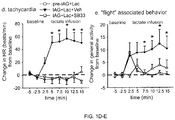
- Fig. 1A-E presents data from an experiment where a panic prone rat model system is used to test the ability of an orexin 1 receptor (ORX1) antagonist SB334867 to ameliorate the panic response.
- the rats were initially made panic prone by a chronic infusion of a GABA synthesis inhibitor: 1-allylglycine [(1-AG; directed at orexin neurons that are exclusive to the dorsomedial and lateral hypothalamus (DMH and LH) (Peyron et al., 1998): see orexin immunoreactive neurons in Fig. 1A ].
- a GABA synthesis inhibitor 1-allylglycine [(1-AG; directed at orexin neurons that are exclusive to the dorsomedial and lateral hypothalamus (DMH and LH) (Peyron et al., 1998): see orexin immunoreactive neurons in Fig. 1A ].
- mice were then systemically injected with either the orexin 1 receptor (ORX1) antagonist [SB334867, 30mg/kg i.p., Tocris Bioscience, Bristol, UK, in 0.2 ml/100 g volume DMSO, i.p.] or vehicle control, prior to an ordinarily mild interoceptive stressor (i.e., 15 min i.v. infusion of 0.5M sodium lactate challenge).
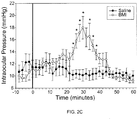
- * indicates a significant difference (p ⁇ 0.05) between the vehicle treated and the BMI treated group using a repeated measures ANOVA followed by post-hoc analysis for differences between timepoints using a t-test.
- Fig. 3 Continuous and simultaneous measurement of blood pressure, heart rate, and core body temperature in an isoflurane anesthetized rat after identical microinjections of BMI (20 pmol/50 nL) into the DMH (time marks 1 and 3) before and after systemic administration of the orexin- 1 receptor antagonist SB334861 (30 mg/kg i.p.; time mark 2). Note attenuation of all three measures after the administration of the orexin receptor antagonist.
- the term "pharmaceutically acceptable carrier” includes any of the standard pharmaceutical carriers, such as a phosphate buffered saline solution, water, emulsions such as an oil/water or water/oil emulsion, and various types of wetting agents.
- the term also encompasses any of the agents approved by a regulatory agency of the US Federal government or listed in the US Pharmacopeia for use in animals, including humans.
- pharmaceutically acceptable salt refers to salts of compounds that retain the biological activity of the parent compound, and which are not biologically or otherwise undesirable.
- treating includes prophylaxis of the specific disorder or condition, or alleviation of the symptoms associated with a specific disorder or condition and/or preventing or eliminating said symptoms.
- treating glaucoma may include inhibiting fluctuations in intraocular pressure, lowering IOP, maintaining IOP at target treatment levels, or any combination thereof.
- target treatment levels of IOP include iOP values anywhere from 10-21 mm Hg (1.3 to 2.8 kPa).
- inhibitor of orexin activity is intended to encompass any safe and effective compound or treatment that can be administered to a patient to inhibit orexin activity in vivo.
- Orexin activity includes binding of an orexin (i.e., orexin A or orexin B) to one of its corresponding G-protein coupled orexin receptors, ORX1 and ORX2 and activation of signal transduction pathways.
- the phrase "elevated intraocular pressure” relates to any situation in which the pressure inside one or both eyes is higher than the goal intraocular pressure set by one skilled in the art of treating such eye problems.
- Eye pressure is typically measured in millimeters of mercury (mm Hg). Normal human eye pressure ranges from 10-21 mm Hg (1.3 to 2.8 kPa). Eye pressure of greater than 21 mm Hg (2.8 kPa) is considered elevated in humans; however, there are conditions such as "normal tension glaucoma" in which the phenotype of glaucoma which includes visual field loss and damage to the optic nerve occur at pressures below 21 mmHg (2.8 kPa).
- glaucoma refers to any condition of the eye that is associated with stereotypical glaucomatous optic nerve damage (e.g., acquired atrophy of the optic nerve and loss of retinal ganglion cells and their axons) and corresponding visual field loss with or without the presence of elevated intraocular pressure.
- stereotypical glaucomatous optic nerve damage e.g., acquired atrophy of the optic nerve and loss of retinal ganglion cells and their axons
- an "effective" amount or a “therapeutically effective amount” of an orexin inhibitor refers to a nontoxic but sufficient amount of an inhibitor to provide the desired effect. For example one desired effect would be preventing the onset, or reducing the severity, frequency or duration of increased intraocular pressure (IOP) events.
- the amount that is “effective” will vary from subject to subject, depending on the age and general condition of the individual, mode of administration, the extent of the disease process and the like. Thus, it is not always possible to specify an exact “effective amount.” However, an appropriate “effective” amount in any individual case may be determined by one of ordinary skill in the art using routine experimentation.
- parenteral means not through the alimentary canal but by some other route such as intranasal, inhalation, subcutaneous, intramuscular, intraspinal, or intravenous.
- patient without further designation is intended to encompass any warm blooded vertebrate domesticated animal (including for example, but not limited to livestock, horses, cats, dogs and other pets) and humans.
- a composition for use in a method for lowering intraocular pressure and/or intraocular pressure fluctuations in a patient, said method comprising the step of administering to a patient a composition comprising an inhibitor of orexin activity which is SB334867.
- an inhibitor of orexin activity which is SB334867.
- racial groups i.e. those of African or African American decent or Latino/Hispanic decent
- individuals with a family history of glaucoma thinness of the cornea, and abnormal optic nerve anatomy.
- patients at risk of developing glaucoma are administered a composition comprising an inhibitor of orexin activity in an amount effective to reduce their intraocular pressure or fluctuations in their intraocular pressure over time. Any reduction in intraocular pressure resulting from the administration of the inhibitor of orexin activity is believed to be beneficial.
- the inhibitor of orexin activity is administered in an amount to reduce intraocular pressures to less than 21 mm Hg (2.8 kPa), 20 mm Hg (2.7 kPa), 19 mm Hg (2.5 kPa), 18 mm Hg (2.4 kPa), 17 mm Hg (2.3 kPa), 16 mm Hg (2.1 kPa), 15 mm Hg (2.0 kPa), 14 mm Hg (1.9 kPa), 13 mm Hg (1.7 kPa), or 12 mm Hg (1.6 kPa).
- a composition comprising an inhibitor of orexin activity is administered to reduce the patient's IOP by 20%, 15%, 10%, or 5%.
- the inhibitor of orexin activity is administered in an amount to reduce changes in pressure (i.e. the IOP fluctuation), measured by one skilled in the art of determining intraocular pressure, over the time period of hours, days, weeks, months or years.
- a composition comprising an inhibitor of orexin activity is administered to maintain fluctuation of IOP to within 20%, 15%, 10%, or 5% of the patient's average measured IOP as measured over the time period of hours, days, weeks, months or years.
- a composition comprising an inhibitor of orexin activity is administered to maintain fluctuation of IOP to within 10% of the patient's average measured IOP as measured over a time period of hours, days, weeks, months or years.
- patients administered a composition comprising an inhibitor of orexin activity will experience a reduction of IOP and decreased fluctuations in IOP as measured over the time period of hours, days, weeks, months or years.
- composition comprising the inhibitor of orexin activity is administered by injection.
- composition comprises the orexin inhibitor SB334867 administered at a dosage of 24 mg/kg to 36 mg/kg.
- the composition of the invention may be used in a method for treating glaucoma.
- the method may comprise the step of administering to a patient suffering from an undesirable intraocular pressure (IOP) or an undesirable fluctuation in the IOP, a composition comprising the inhibitor of orexin activity.
- IOP intraocular pressure
- the composition can be administered prophylactically (e.g., based on family history or detected physical changes associated with glaucoma) or can be administered at the onset of the excessive IOP or excessive IOP fluctuation.
- Reducing orexin activity can be accomplished by interfering with the expression of orexin A and/or orexin B through standard techniques known to those skilled in the art including for example the use of a short hairpin RNA (shRNA), microRNA, antisense molecule, a small double stranded interference RNA (siRNA) directed to at least one of the genes that codes for orexin.
- shRNA short hairpin RNA
- siRNA small double stranded interference RNA
- the activity of orexins can be reduced by an antibody or other molecule that binds to orexin A and/or orexin B or their receptors, or otherwise interferes with the interaction of orexin A and/or orexin B with one or more of the ORX 1 or 2 receptors.
- the term "inhibitor of orexin activity” is intended to encompass any safe and effective compound or treatment that can be administered to a patient to inhibit orexin activity in vivo.
- SB334867 The inhibitor of orexin activity used in the compositions is SB334867. This compound can penetrate the blood brain barrier.
- SB334867 is 1-(2-methylbenzoxazol-6-yl)-3-[1,5]naphthyridin-4-yl urea:
- SB334867 is a drug which was the first non-peptide antagonist developed that is selective for the orexin receptor subtype ORX1, with around 100x selectivity for ORX1 over ORX2 receptors.
- Compositions comprising SB334867 may be administered to a patient suffering from glaucoma and/or an undesirable intraocular pressure (IOP) in an amount sufficient to maintain low or baseline intraocular pressure (IOP), reduce intraocular pressure (IOP) or reduce or prevent an undesirable fluctuation in intraocular pressure (IOP).
- the patient may be administered a composition comprising the orexin inhibitor in a standard pharmaceutically acceptable carrier using any of the standard routes of administration known those skilled in the art.
- the composition is administered by injection, and more particularly, by intravenous injection.
- kits for administering the orexin inhibitor SB334867 to a patient comprises SB334867 and instructional materials.
- the kit is provided with a device for administering an SB334867 composition to a patient, e.g. syringe needle, pen device, jet injector or other needle-free injector.
- the kit may alternatively or in addition include one or more containers, e.g., vials, tubes, bottles, single or multi-chambered pre-filled syringes, cartridges, infusion pumps (external or implantable), jet injectors, pre-filled pen devices and the like, optionally containing the orexin inhibitor in a lyophilized form or in an aqueous solution.
- the SB334867 is provided in a solid dosage form.
- the kits will also include instructions for use.
- the device for administering the inhibitor is a syringe.
- compositions comprising SB334867 may be used in a method of treating a patient suffering from
- the compound SB334867 is typically administered by intravenous injection at a dosage of 20 mg/kg to 50 mg/kg, more typically at 24 mg/kg to 36 mg/kg. In one embodiment the orexin receptor antagonist is administered at a dosage of 27 mg/kg to 33 mg/kg or at a dosage of 30 mg/kg.
- a method of lowering intraocular pressure or intraocular pressure fluctuations in a patient comprises the step of administering to the patient a composition comprising an inhibitor of orexin activity.
- the composition may be administered by injection, optionally with the composition comprising an ORX1 receptor antagonist and/or an ORX2 receptor antagonist.
- the composition is optionally administered orally.
- a method of treating glaucoma comprising administering to a patient suffering from glaucomatous optic nerve damage and/or corresponding visual field defects, with or without an increase in intraocular pressure, a composition comprising an inhibitor of orexin activity.
- a composition comprising an orexin inhibitor, said inhibitor being SB334867, wherein the composition is optionally administered orally.
- the composition may be administered by injection or orally, optionally with the composition comprising an ORX1 receptor antagonist and/or an ORX2 receptor antagonist.
- the composition is optionally administered orally.
- Panic disorder is associated with disruption of central inhibitory gamma-aminobutyric acid (GABAergic) tone, and may contribute to panic attacks which are consistently provoked by ordinarily mild physical stressors such as mild osmotic disturbances (e.g., intravenous sodium lactate challenges).
- GABAergic central inhibitory gamma-aminobutyric acid
- chronic disruption of GABAergic tone in the dorsomedial hypothalamus (a site that is critical for regulating adaptive panic/defense responses) of rats produces a vulnerability to panic-like anxiety and flight associated behavior and cardiorespiratory responses following intravenous 0.5 M sodium lactate, ⁇ Shekhar, 1997; Shekhar, 1996 ⁇ ⁇ Shekhar, 2006 ⁇ ⁇ Johnson, 2006; Johnson, 2007 ⁇ providing an animal model of panic disorder.
- Orexin/hypocretin producing neurons are almost exclusive to dorsomedial hypothalamus/perifornical area and adjacent lateral hypothalamus, and play a critical role in maintaining wakefulness, vigilance and central sympathetic mobilization, which are key components of panic and anxiety.
- Experiments were conducted to investigate whether the administration of either a systemic orexin 1 antagonist or silencing the hypothalamic orexin gene product with RNA interference could block lactate-induced panic responses.
- the resulting data supports the hypotheses that panic-prone states in the animal model of panic are associated with selective activation of orexin-containing neurons.
- either systemic orexin 1 antagonists or silencing the hypothalamic orexin gene product with RNA interference blocked lactate-induced panic responses.
- Graphs in Figs lb-e demonstrate that systemically injecting panic-prone rats with an orexin 1 receptor antagonist blocks sodium lactate induced increases in anxiety ( Fig. 1b ) and flight behavior ( Fig. 1e ) as well as thermogenic ( Fig. 1c ) and cardioexcitatory ( Fig. 1d ) responses.
- the data provides supports that aberrations of the hypothalamic orexin system underlie vulnerability to panic and potentially menopausal symptom clusters (e.g., sleep disturbance, anxiety, and depression). Accordingly orexin antagonists should provide a novel approach to treating these symptoms/symptom clusters.
- BMI bicuculline methiodide
Landscapes
- Health & Medical Sciences (AREA)
- Veterinary Medicine (AREA)
- Public Health (AREA)
- General Health & Medical Sciences (AREA)
- Chemical & Material Sciences (AREA)
- Animal Behavior & Ethology (AREA)
- Life Sciences & Earth Sciences (AREA)
- Medicinal Chemistry (AREA)
- Pharmacology & Pharmacy (AREA)
- Epidemiology (AREA)
- Engineering & Computer Science (AREA)
- Bioinformatics & Cheminformatics (AREA)
- Organic Chemistry (AREA)
- Nuclear Medicine, Radiotherapy & Molecular Imaging (AREA)
- General Chemical & Material Sciences (AREA)
- Chemical Kinetics & Catalysis (AREA)
- Ophthalmology & Optometry (AREA)
- Heart & Thoracic Surgery (AREA)
- Cardiology (AREA)
- Vascular Medicine (AREA)
- Urology & Nephrology (AREA)
- Medicines That Contain Protein Lipid Enzymes And Other Medicines (AREA)
- Pharmaceuticals Containing Other Organic And Inorganic Compounds (AREA)
- Acyclic And Carbocyclic Compounds In Medicinal Compositions (AREA)
Description
- Glaucoma is one of the leading causes of blindness worldwide. However, a fundamental understanding is still lacking regarding the pathophysiologic mechanisms underlying the optic nerve damage that occurs at the level of the lamina cribrosa. Elevated intraocular pressure (IOP) is known to be the primary cause of glaucoma, but there has been a great deal of debate over the role of IOP fluctuation in the development and progression of the glaucomatous optic neuropathy.
- There is ample evidence demonstrating circadian IOP fluctuations, with the peak pressure occurring in the morning upon awakening (Wilensky, 1991; Liu et al., 1999; and Liu et al., 2003). Recently, a variety of studies, including the Advanced Glaucoma Intervention Study (AGIS) have identified IOP fluctuation as an independent risk factor for progression of glaucoma (Asrani et al., 2000; Lee el al, 2003; Hong el al., 2007; and Caprioli and Coleman, 2008). Identifying the neurophysiologic basis of IOP fluctuation and its role in glaucoma progression could profoundly impact the way patients with glaucoma are treated.
- IOP varies in a cyclical manner over a 24-hour period in humans (Wilensky, 1991; Liu et al., 1999; Liu et al., 2003), and this circadian variation is conserved in rodents (Valderrama et al., 2005). Applicants hypothesized that the suprachiasmatic nucleus (SCN), which receives direct projections from retinal ganglion cells, may serve as a central control mechanism for these fluctuations. Known as the body's "master time-clock", the SCN has a variety of functions in regulating circadian activities, including corticosteroid release (Moore and Eichler, 1972; and Cascio et al., 1987) and sleep (Mouret et al., 1978). The SCN also appears to play a role in IOP fluctuations as well. Liu and Shieh have shown that SCN lesions alter circadian fluctuations in IOP (Liu and Shieh, 1995), yet the downstream circuitry mediating this effect is unknown.
- As disclosed herein orexin containing neurons located in the dorsornedial hypothalamus (DMH) and/or the perifornical hypothalamus (PeF) are believed to play a role in mediating these circadian fluctuations in IOP. Orexins (also called hypocretins) are neuropeptides first discovered in the late 1990's. There are two forms of orexins, orexin A and orexin B (also known as hypocretin 1 and
hypocretin 2, respectively), that are exclusively produced in hypothalamic neurons in the perifornical region (PeF) and lateral hypothalamic area (LHA1). Orexin A and orexin B were initially identified as endogenous ligands for two orphan G-protein-coupled receptors, now known as orexin receptor-1 (ORX1) and orexin receptor-2 (ORX2). The amino acid identity between the full length human ORX1 and ORX2 sequences is 64%. ORX1 has greater affinity for orexin A than orexin B by 1 order of magnitude. In contrast, ORX2 has similar affinity for both orexin A and orexin B. - Orexins constitute a novel peptide family with no significant structural similarities to known families of regulatory peptides. Orexin A is a 33-amino acid peptide of 3562 Da with two sets of intrachain disulfide bonds. It has an N-terminal pyroglutamyl residue and C-terminal amidation. The primary structure of orexin A predicted from the cDNA sequences is completely conserved among several mammalian species (human, rat, mouse, cow, sheep, dog, and pig). On the other hand, rat orexin B is a 28-amino acid, C-terminally amidated linear peptide of 2937 Da that is 46% (13/28) identical in sequence to orexin A. The C-terminal half of orexin B is very similar to that of orexin A (73%; 11/15), whereas the N-terminal half is variable. Orexin A and B are produced from a common precursor polypeptide, prepro-orexin.
- Classically, the DMH has been recognized as a regulator of the behavioral and physiological responses to emotional stress that includes anxiety-associated behavior (Shekhar, 1993), tachycardia (DeNovellis et al., 1995; Samuels et al., 2002; and Zaretsky et al., 2003), thermogenesis (Zaretskaia et al., 2003; and Madden and Morrison, 2004), and activation of the hypothalamic-pituitary-adrenal axis (Keim and Shekhar, 1996; Stotz-Potter et al., 1996). Recently, Dr. Anantha Shekhar's laboratory has shown that orexin containing neurons, which are concentrated in the region of the DMH and PeF, play a profound role in mediating the physiologic and behavioral responses to panic (Johnson et al., 2010). Further, Chou and colleagues determined that orexin neurons and other neurons in the DMH receive strong direct and indirect projections from the SCN, and similar to the SCN, lesions in the orexin region affects the circadian pattern of corticosteroid release, sleep, locomotor activity, and feeding (Chou et al., 2003). With a broad array of efferent projections to autonomic sympathetic relays (ter Horst and Luiten, 1986), the DMH and orexin containing neurons are ideally situated to modulate the fluctuations in IOP evoked by circadian activity of SCN neurons.
- Consistent with these observations applicants have proposed that the circadian fluctuations in intraocular pressure (IOP) are regulated in part by orexin containing neurons located in the dorsomedial hypothalamus (DMH) and perifornical region (PeF). Furthermore, applicants anticipate that an orexin antagonist could be used to attenuate these fluctuations, making it the first oral medication developed for the chronic treatment of glaucoma.
- As disclosed herein, a method is provided for treating glaucoma, comprising the step of administering an orexin inhibitor.
- As disclosed herein orexin neurons and other neurons in the region of the dorsornedial hypothalamus (DMH) receive strong direct and indirect projections from the suprachiasmatic nucleus (SCN). Furthermore, administration of an orexin antagonist to the DMH region can attenuate physiological responses resulting from stimulation of the DMH by SCN neurons as a result of circadian activation by the SCN. Accordingly, applicants anticipate that an orexin antagonist could be used to attenuate the circadian fluctuations in intraocular pressure (IOP) that are regulated in part by orexin containing neurons located in the dorsomedial hypothalamus (DMH) and perifornical (PeF) region. Furthermore, inhibiting fluctuations in intraocular pressure provides a novel approach for the treatment of glaucoma even in patients having IOP within normal ranges.
- In accordance with one embodiment there is provided a composition comprising an inhibitor of orexin activity, for use in lowering intraocular pressure, for maintaining intraocular pressure at target treatment levels or for lowering intraocular pressure fluctuations, wherein the orexin inhibitor is 1-(2-methylbenzoxazol-6-yl)-3-[1,5]naphthyridin-4-yl urea (SB334867). Also provided is a composition comprising an inhibitor of orexin activity, for use in treating glaucoma in a patient suffering from glaucomatous optic nerve damage and corresponding visual field defects, with or without an increase in intraocular pressure, wherein the orexin inhibitor is 1-(2-methylbenzoxazol-6-yl)-3-[1,5]naphthyridin-4-yl urea (SB334867). Lowering IOP or maintaining IOP at target treatment levels (i.e., suppressing an increase in IOP when the sympathetic nervous system is activated each morning in a circadian manner) is useful as a method of treating glaucoma or other elevated IOP related conditions. Reducing IOP fluctuations in patients is useful as a means for treating glaucoma and reducing damage to the optic nerve. The composition can be administered prophylactically (e.g., based on family history or detected physical changes associated with glaucoma) or can be administered after the onset of the excessive IOP, the documentation of excessive IOP fluctuations, or progression of glaucoma.
- Inhibitors of orexin activity are known to those skilled in the art and include the use of interfering RNA, anti-sense nucleic acids and peptide or other small molecules. Such inhibitors may be an orexin 1 receptor (ORX1) antagonist/inhibitors, antagonist/inhibitors selective for the
orexin 2 receptor (ORX2), or dual orexin receptor antagonist (DORAs). The orexin inhibitor used in the present invention is SB334867. -
Fig. 1A-E . presents data from an experiment where a panic prone rat model system is used to test the ability of an orexin 1 receptor (ORX1) antagonist SB334867 to ameliorate the panic response. The rats were initially made panic prone by a chronic infusion of a GABA synthesis inhibitor: 1-allylglycine [(1-AG; directed at orexin neurons that are exclusive to the dorsomedial and lateral hypothalamus (DMH and LH) (Peyron et al., 1998): see orexin immunoreactive neurons inFig. 1A ]. The panic prone mice were then systemically injected with either the orexin 1 receptor (ORX1) antagonist [SB334867, 30mg/kg i.p., Tocris Bioscience, Bristol, UK, in 0.2 ml/100 g volume DMSO, i.p.] or vehicle control, prior to an ordinarily mild interoceptive stressor (i.e., 15 min i.v. infusion of 0.5M sodium lactate challenge). Administration of the orexin 1 receptor (ORX1) antagonist attenuated "anxiety"-like responses [social interaction (SI) duration; n=14,8,11,12,6; treatment effect F(4,36)=17.8, p=0.001], seeFig. 1B ; and lactate induced increases in core body temperature (Fig. 1C ; n=6/group, treatment x time effect F(14,98)=1.9, p<0.04); heart rate (Fig. 1D ; HR, n=6/group; treatment x time effect F(14,98)=5.4, p<0.001) and general locomotor activity (Fig. IE; n=6/group; treatment x time effect F(14,98)=1.8, p<0.05), * indicate significant differences between Vehicle treated groups and SB33 treatment group using Fisher's LSD poshoc tests that are protected with an ANOVA at each time point with p<0.05. Mean values of baseline temperature, HR and activity were not significantly different. -
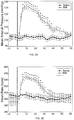
Fig. 2A-C Simultaneous measurement of blood pressure (Fig. 2A ), heart rate (Fig. 2B ), and IOP (Fig. 2C ) in a series of isoflurane-anesthetized rats after infusion of bicuculline methiodide (30pmol/75nL; n=9) or saline vehicle (75nL; n=10) into the region of the DMH. * indicates a significant difference (p<0.05) between the vehicle treated and the BMI treated group using a repeated measures ANOVA followed by post-hoc analysis for differences between timepoints using a t-test. -
Fig. 3 Continuous and simultaneous measurement of blood pressure, heart rate, and core body temperature in an isoflurane anesthetized rat after identical microinjections of BMI (20 pmol/50 nL) into the DMH (time marks 1 and 3) before and after systemic administration of the orexin- 1 receptor antagonist SB334861 (30 mg/kg i.p.; time mark 2). Note attenuation of all three measures after the administration of the orexin receptor antagonist. - In describing and claiming the invention, the following terminology will be used in accordance with the definitions set forth below.
- The term "about" as used herein means greater or lesser than the value or range of values stated by 10 percent, but is not intended to designate any value or range of values to only this broader definition. Each value or range of values preceded by the term "about" is also intended to encompass the embodiment of the stated absolute value or range of values.
- As used herein, the term "pharmaceutically acceptable carrier" includes any of the standard pharmaceutical carriers, such as a phosphate buffered saline solution, water, emulsions such as an oil/water or water/oil emulsion, and various types of wetting agents. The term also encompasses any of the agents approved by a regulatory agency of the US Federal government or listed in the US Pharmacopeia for use in animals, including humans.
- As used herein the term "pharmaceutically acceptable salt" refers to salts of compounds that retain the biological activity of the parent compound, and which are not biologically or otherwise undesirable.
- As used herein, the term "treating" includes prophylaxis of the specific disorder or condition, or alleviation of the symptoms associated with a specific disorder or condition and/or preventing or eliminating said symptoms. For example treating glaucoma may include inhibiting fluctuations in intraocular pressure, lowering IOP, maintaining IOP at target treatment levels, or any combination thereof. As used herein target treatment levels of IOP include iOP values anywhere from 10-21 mm Hg (1.3 to 2.8 kPa).
- As used herein the term "inhibitor of orexin activity" is intended to encompass any safe and effective compound or treatment that can be administered to a patient to inhibit orexin activity in vivo. Orexin activity includes binding of an orexin (i.e., orexin A or orexin B) to one of its corresponding G-protein coupled orexin receptors, ORX1 and ORX2 and activation of signal transduction pathways.
- As used herein, the phrase "elevated intraocular pressure" relates to any situation in which the pressure inside one or both eyes is higher than the goal intraocular pressure set by one skilled in the art of treating such eye problems. Eye pressure is typically measured in millimeters of mercury (mm Hg). Normal human eye pressure ranges from 10-21 mm Hg (1.3 to 2.8 kPa). Eye pressure of greater than 21 mm Hg (2.8 kPa) is considered elevated in humans; however, there are conditions such as "normal tension glaucoma" in which the phenotype of glaucoma which includes visual field loss and damage to the optic nerve occur at pressures below 21 mmHg (2.8 kPa).
- As used herein, the term "glaucoma" refers to any condition of the eye that is associated with stereotypical glaucomatous optic nerve damage (e.g., acquired atrophy of the optic nerve and loss of retinal ganglion cells and their axons) and corresponding visual field loss with or without the presence of elevated intraocular pressure.
- As used herein an "effective" amount or a "therapeutically effective amount" of an orexin inhibitor refers to a nontoxic but sufficient amount of an inhibitor to provide the desired effect. For example one desired effect would be preventing the onset, or reducing the severity, frequency or duration of increased intraocular pressure (IOP) events. The amount that is "effective" will vary from subject to subject, depending on the age and general condition of the individual, mode of administration, the extent of the disease process and the like. Thus, it is not always possible to specify an exact "effective amount." However, an appropriate "effective" amount in any individual case may be determined by one of ordinary skill in the art using routine experimentation.
- The term, "parenteral" means not through the alimentary canal but by some other route such as intranasal, inhalation, subcutaneous, intramuscular, intraspinal, or intravenous.
- As used herein the term "patient" without further designation is intended to encompass any warm blooded vertebrate domesticated animal (including for example, but not limited to livestock, horses, cats, dogs and other pets) and humans.
- As disclosed herein, a composition is provided for use in a method for lowering intraocular pressure and/or intraocular pressure fluctuations in a patient, said method comprising the step of administering to a patient a composition comprising an inhibitor of orexin activity which is SB334867. Studies have shown that reducing intraocular pressure reduces the incidence of damage to the optic nerve. In particular individuals having intraocular pressures of greater than 21 mm Hg (2.8 kPa), have an average estimated risk of 10% of developing glaucoma over 5 years. This risk may be decreased to 5% (a 50% decrease in risk) if eye pressure is lowered by medications. Furthermore, for patients at risk of developing glaucoma, even those having intraocular pressures within the normal range, there may be benefits to prophylactically treat patients to maintain or further reduce their intraocular pressures, or reduce intraocular pressure fluctuation, to delay or prevent damage to the optic nerve. Individuals at risk of developing glaucoma include some racial groups (i.e. those of African or African American decent or Latino/Hispanic decent), individuals with a family history of glaucoma, thinness of the cornea, and abnormal optic nerve anatomy.
- In accordance with one embodiment patients at risk of developing glaucoma are administered a composition comprising an inhibitor of orexin activity in an amount effective to reduce their intraocular pressure or fluctuations in their intraocular pressure over time. Any reduction in intraocular pressure resulting from the administration of the inhibitor of orexin activity is believed to be beneficial. In one embodiment the inhibitor of orexin activity is administered in an amount to reduce intraocular pressures to less than 21 mm Hg (2.8 kPa), 20 mm Hg (2.7 kPa), 19 mm Hg (2.5 kPa), 18 mm Hg (2.4 kPa), 17 mm Hg (2.3 kPa), 16 mm Hg (2.1 kPa), 15 mm Hg (2.0 kPa), 14 mm Hg (1.9 kPa), 13 mm Hg (1.7 kPa), or 12 mm Hg (1.6 kPa). In one embodiment a composition comprising an inhibitor of orexin activity is administered to reduce the patient's IOP by 20%, 15%, 10%, or 5%. In another embodiment the inhibitor of orexin activity is administered in an amount to reduce changes in pressure (i.e. the IOP fluctuation), measured by one skilled in the art of determining intraocular pressure, over the time period of hours, days, weeks, months or years. In accordance with one embodiment a composition comprising an inhibitor of orexin activity is administered to maintain fluctuation of IOP to within 20%, 15%, 10%, or 5% of the patient's average measured IOP as measured over the time period of hours, days, weeks, months or years. In one embodiment a composition comprising an inhibitor of orexin activity is administered to maintain fluctuation of IOP to within 10% of the patient's average measured IOP as measured over a time period of hours, days, weeks, months or years. In one embodiment, patients administered a composition comprising an inhibitor of orexin activity will experience a reduction of IOP and decreased fluctuations in IOP as measured over the time period of hours, days, weeks, months or years.
- In one embodiment the composition comprising the inhibitor of orexin activity is administered by injection. In one embodiment the composition comprises the orexin inhibitor SB334867 administered at a dosage of 24 mg/kg to 36 mg/kg.
- The composition of the invention may be used in a method for treating glaucoma. The method may comprise the step of administering to a patient suffering from an undesirable intraocular pressure (IOP) or an undesirable fluctuation in the IOP, a composition comprising the inhibitor of orexin activity. The composition can be administered prophylactically (e.g., based on family history or detected physical changes associated with glaucoma) or can be administered at the onset of the excessive IOP or excessive IOP fluctuation.
- Reducing orexin activity can be accomplished by interfering with the expression of orexin A and/or orexin B through standard techniques known to those skilled in the art including for example the use of a short hairpin RNA (shRNA), microRNA, antisense molecule, a small double stranded interference RNA (siRNA) directed to at least one of the genes that codes for orexin. Alternatively, the activity of orexins can be reduced by an antibody or other molecule that binds to orexin A and/or orexin B or their receptors, or otherwise interferes with the interaction of orexin A and/or orexin B with one or more of the
ORX 1 or 2 receptors. As used herein the term "inhibitor of orexin activity" is intended to encompass any safe and effective compound or treatment that can be administered to a patient to inhibit orexin activity in vivo. - The inhibitor of orexin activity used in the compositions is SB334867. This compound can penetrate the blood brain barrier. SB334867 is 1-(2-methylbenzoxazol-6-yl)-3-[1,5]naphthyridin-4-yl urea:

- SB334867 is a drug which was the first non-peptide antagonist developed that is selective for the orexin receptor subtype ORX1, with around 100x selectivity for ORX1 over ORX2 receptors. Compositions comprising SB334867 may be administered to a patient suffering from glaucoma and/or an undesirable intraocular pressure (IOP) in an amount sufficient to maintain low or baseline intraocular pressure (IOP), reduce intraocular pressure (IOP) or reduce or prevent an undesirable fluctuation in intraocular pressure (IOP). The patient may be administered a composition comprising the orexin inhibitor in a standard pharmaceutically acceptable carrier using any of the standard routes of administration known those skilled in the art. Preferably the composition is administered by injection, and more particularly, by intravenous injection.
- Also disclosed is a kit for administering the orexin inhibitor SB334867 to a patient. The kit comprises SB334867 and instructional materials. In one embodiment the kit is provided with a device for administering an SB334867 composition to a patient, e.g. syringe needle, pen device, jet injector or other needle-free injector. The kit may alternatively or in addition include one or more containers, e.g., vials, tubes, bottles, single or multi-chambered pre-filled syringes, cartridges, infusion pumps (external or implantable), jet injectors, pre-filled pen devices and the like, optionally containing the orexin inhibitor in a lyophilized form or in an aqueous solution. In another embodiment the SB334867 is provided in a solid dosage form. Preferably, the kits will also include instructions for use. Preferably, the device for administering the inhibitor is a syringe.
- The compositions comprising SB334867 may be used in a method of treating a patient suffering from
- a) glaucomatous optic nerve damage;
- b) visual field defects associated with glaucomatous optic nerve damage;
- c) an increase in intraocular pressure;
- d) intraocular pressure fluctuations or
- e) any combination of a) through e).
- The compound SB334867 is typically administered by intravenous injection at a dosage of 20 mg/kg to 50 mg/kg, more typically at 24 mg/kg to 36 mg/kg. In one embodiment the orexin receptor antagonist is administered at a dosage of 27 mg/kg to 33 mg/kg or at a dosage of 30 mg/kg.
- In exemplified embodiment 1 a method of lowering intraocular pressure or intraocular pressure fluctuations in a patient is described, wherein the method comprises the step of administering to the patient a composition comprising an inhibitor of orexin activity. In the method of exemplified embodiment 1, the composition may be administered by injection, optionally with the composition comprising an ORX1 receptor antagonist and/or an ORX2 receptor antagonist. In one embodiment, in the method of exemplified embodiment 1 the composition is optionally administered orally.
- In exemplified
embodiment 2, a method of treating glaucoma is described wherein the method comprises administering to a patient suffering from glaucomatous optic nerve damage and/or corresponding visual field defects, with or without an increase in intraocular pressure, a composition comprising an inhibitor of orexin activity. Optionally, said patient suffering from glaucomatous optic nerve damage and/or corresponding visual field defects is experiencing intraocular pressure fluctuations which are diminished by the administration of a composition comprising an orexin inhibitor, said inhibitor being SB334867, wherein the composition is optionally administered orally. In the method of exemplifiedembodiment 2 the composition may be administered by injection or orally, optionally with the composition comprising an ORX1 receptor antagonist and/or an ORX2 receptor antagonist. In one embodiment, in the method of exemplifiedembodiment 2 the composition is optionally administered orally. - Administration of orexin 1 receptor antagonist (SB334867) blocks sodium lactate induced increases in anxiety
- Panic disorder is associated with disruption of central inhibitory gamma-aminobutyric acid (GABAergic) tone, and may contribute to panic attacks which are consistently provoked by ordinarily mild physical stressors such as mild osmotic disturbances (e.g., intravenous sodium lactate challenges). Similarly, chronic disruption of GABAergic tone in the dorsomedial hypothalamus (a site that is critical for regulating adaptive panic/defense responses) of rats produces a vulnerability to panic-like anxiety and flight associated behavior and cardiorespiratory responses following intravenous 0.5 M sodium lactate, {Shekhar, 1997; Shekhar, 1996} {Shekhar, 2006} {Johnson, 2006; Johnson, 2007} providing an animal model of panic disorder. Orexin/hypocretin producing neurons are almost exclusive to dorsomedial hypothalamus/perifornical area and adjacent lateral hypothalamus, and play a critical role in maintaining wakefulness, vigilance and central sympathetic mobilization, which are key components of panic and anxiety. Experiments were conducted to investigate whether the administration of either a systemic orexin 1 antagonist or silencing the hypothalamic orexin gene product with RNA interference could block lactate-induced panic responses. The resulting data supports the hypotheses that panic-prone states in the animal model of panic are associated with selective activation of orexin-containing neurons. Furthermore, either systemic orexin 1 antagonists or silencing the hypothalamic orexin gene product with RNA interference blocked lactate-induced panic responses. Graphs in Figs lb-e demonstrate that systemically injecting panic-prone rats with an orexin 1 receptor antagonist blocks sodium lactate induced increases in anxiety (
Fig. 1b ) and flight behavior (Fig. 1e ) as well as thermogenic (Fig. 1c ) and cardioexcitatory (Fig. 1d ) responses. Thus, the data provides supports that aberrations of the hypothalamic orexin system underlie vulnerability to panic and potentially menopausal symptom clusters (e.g., sleep disturbance, anxiety, and depression). Accordingly orexin antagonists should provide a novel approach to treating these symptoms/symptom clusters. - To investigate whether orexin containing neurons located in the dorsomedial hypothalamus (DMH) and/or perifornical (PeF) area play a role in mediating the circadian fluctuations in IOP, isoflurane-anesthetized rats were administered orexin inhibitors and their vital functions were monitored. More particularly, simultaneous measurement of blood pressure(top panel), heart rate (middle panel), and intraocular pressure (bottom panel) in a series of isoflurane-anesthetized rats was measured after infusion of bicuculline methiodide (BMI; 30pmol/75nL; n=10or saline vehicle (75nL; n-9)into the region of the DMH. * indicates a significant difference (p<0.05) between the vehicle treated and the BMI treated group using a repeated measures ANOVA followed by post-hoc analysis for differences between timepoints using a t-test. As shown in
Fig. 2 , in addition to the expected increases in heart rate and blood pressure, chemical stimulation of the DMH also evoked an increase in IOP. - Experiments were then conducted to determine whether an orexin- I receptor antagonist (SB334861) could attenuate the physiologic responses to chemical stimulation of the DMH. To test orexin inhibitors ability to attenuate the BMI stimulated response, BMI was administered to an isoflurane-anesthetized rat both before and after administration of the orexin inhibitor and the responses were monitored. The results are shown in
Fig. 3 where continuous and simultaneous measurement of blood pressure (top panel), heart rate (middle panel), and core body temperature (bottom panel) were taken in an isoflurane anesthetized rat after identical microinjections of BMI (20 pmol/50 nL) into the DMH (time marks 1 and 3) before and after systemic administration of the orexin- 1 receptor antagonist SB334861 (30 mg/kg i.p.; time mark 2). Note the significant attenuation of increased heart rate, blood pressure, and core body temperature that would normally occur after microinjection of BMI. This attenuation of all three measurements is the result of administration of the orexin receptor antagonist. It is anticipated that a similar attenuation of intraocular pressure will be obtained and the intraocular pressures can be lowered in animals receiving an inhibitor of orexin activity. Applicants believe orexin neurons mediate the circadian fluctuations in intraocular pressure that lead to the progression of glaucoma. With orexin neurons concentrated exclusively in the DMH, these neurons likely provide a novel target for future glaucoma therapies.
Claims (9)
- A composition comprising an inhibitor of orexin activity, for use in lowering intraocular pressure, for maintaining intraocular pressure at target treatment levels or for lowering intraocular pressure fluctuations, wherein the orexin inhibitor is 1-(2-methylbenzoxazol-6-yl)-3-[1,5]naphthyridin- 4-yl urea (SB334867).
- The composition for use of claim 1, wherein the composition is administered by injection.
- The composition for use of claim 1 or 2, wherein the orexin inhibitor is administered at a dosage of 24 mg/kg to 36 mg/kg.
- The composition for use of claim 1 or 2, wherein the orexin inhibitor is administered at a dosage of 27 mg/kg to 33 mg/kg.
- The composition for use of claim 1, wherein the intraocular pressure is lowered and/or maintained at less than 21 mmHg (2.8 kPa).
- A composition for use of claim 1, wherein the intraocular pressure is maintained at a target treatment level of 10-21 mmHg (1.3 - 2.8 kPa).
- A composition comprising an inhibitor of orexin activity, for use in treating glaucoma in a patient suffering from glaucomatous optic nerve damage and corresponding visual field defects, with or without an increase in intraocular pressure, wherein the orexin inhibitor is 1-(2-methylbenzoxazol-6-yl)-3-[1,5]naphthyridin-4-yl urea (SB334867).
- The composition for use of claim 7, wherein the orexin inhibitor is administered at a dosage of 24 mg/kg to 36 mg/kg.
- The composition for use of claim 7, wherein the orexin receptor antagonist is administered at a dosage of 27 mg/kg to 33 mg/kg.
Applications Claiming Priority (2)
| Application Number | Priority Date | Filing Date | Title |
|---|---|---|---|
| US201161470850P | 2011-04-01 | 2011-04-01 | |
| PCT/US2012/031160 WO2012135465A2 (en) | 2011-04-01 | 2012-03-29 | Treatment of glaucoma |
Publications (3)
| Publication Number | Publication Date |
|---|---|
| EP2696872A2 EP2696872A2 (en) | 2014-02-19 |
| EP2696872A4 EP2696872A4 (en) | 2015-03-11 |
| EP2696872B1 true EP2696872B1 (en) | 2019-01-16 |
Family
ID=46932338
Family Applications (1)
| Application Number | Title | Priority Date | Filing Date |
|---|---|---|---|
| EP12764692.5A Active EP2696872B1 (en) | 2011-04-01 | 2012-03-29 | Treatment of glaucoma |
Country Status (3)
| Country | Link |
|---|---|
| US (1) | US8980910B2 (en) |
| EP (1) | EP2696872B1 (en) |
| WO (1) | WO2012135465A2 (en) |
Family Cites Families (7)
| Publication number | Priority date | Publication date | Assignee | Title |
|---|---|---|---|---|
| DE69634414T2 (en) * | 1995-12-21 | 2005-11-17 | Alcon Laboratories, Inc., Fort Worth | USE OF SUBSTITUTED ISOCHINOLINSULFONYL COMPOUNDS FOR THE MANUFACTURE OF A MEDICAMENT FOR THE TREATMENT OF GLUCKOM AND OKULAR ISCHEMIA |
| JP4094050B2 (en) * | 2004-03-01 | 2008-06-04 | アクテリオン ファーマシューティカルズ リミテッド | Substituted 1,2,3,4-tetrahydroisoquinoline derivatives |
| WO2006081522A2 (en) * | 2005-01-26 | 2006-08-03 | The Regents Of The Unversity Of California | Modulation of nmda receptor currents via orexin receptor and/or crf receptor |
| US20060211662A1 (en) * | 2005-03-02 | 2006-09-21 | Du Mee Charles P | Combination therapy for topical application in the treatment of age-related macular degeneration and ocular hypertension |
| JP2010527924A (en) * | 2007-05-18 | 2010-08-19 | メルク・シャープ・エンド・ドーム・コーポレイション | Oxo-bridged diazepan orexin receptor antagonist |
| WO2009079637A1 (en) * | 2007-12-18 | 2009-06-25 | Concert Pharmaceuticals, Inc. | Tetrahydroisoquinoline derivatives |
| US20100196286A1 (en) * | 2008-12-01 | 2010-08-05 | Armer Thomas A | Inhalation delivery methods and devices |
-
2012
- 2012-03-29 US US14/009,294 patent/US8980910B2/en active Active
- 2012-03-29 WO PCT/US2012/031160 patent/WO2012135465A2/en not_active Ceased
- 2012-03-29 EP EP12764692.5A patent/EP2696872B1/en active Active
Non-Patent Citations (1)
| Title |
|---|
| None * |
Also Published As
| Publication number | Publication date |
|---|---|
| WO2012135465A3 (en) | 2014-05-01 |
| US20140039003A1 (en) | 2014-02-06 |
| US8980910B2 (en) | 2015-03-17 |
| EP2696872A4 (en) | 2015-03-11 |
| EP2696872A2 (en) | 2014-02-19 |
| WO2012135465A2 (en) | 2012-10-04 |
Similar Documents
| Publication | Publication Date | Title |
|---|---|---|
| Calcagnoli et al. | Antiaggressive activity of central oxytocin in male rats | |
| Bahi | The oxytocin receptor impairs ethanol reward in mice | |
| US9248128B2 (en) | Method for enhancing remyelination using GLI1 inhibitors | |
| Xia et al. | The involvement of transient receptor potential canonical type 1 in skeletal muscle regrowth after unloading‐induced atrophy | |
| Faingold et al. | Serotonergic agents act on 5-HT3 receptors in the brain to block seizure-induced respiratory arrest in the DBA/1 mouse model of SUDEP | |
| US12077610B2 (en) | Peptides and other agents for treating pain and increasing pain sensitivity | |
| JP2017524382A (en) | MRGPRX2 / MRGPRB2-expressing cell-based assay to detect pseudoallergic drug reactions and to identify blocking agents that prevent adverse reactions | |
| Morin et al. | Injection of muscimol in dorsomedial hypothalamus and stress-induced Fos expression in paraventricular nucleus | |
| Lamtahri et al. | The gliopeptide ODN, a ligand for the benzodiazepine site of GABAA receptors, boosts functional recovery after stroke | |
| JP2021525707A (en) | Methods for treating spinal cord injury | |
| Hou et al. | The involvement of oxytocin in the effects of chronic social defeat stress on emotional behaviours in adult female mandarin voles | |
| Saggu et al. | A peptide blocking the ADORA1-neurabin interaction is anticonvulsant and inhibits epilepsy in an Alzheimer’s model | |
| US20220372492A1 (en) | Compounds for modulating fc-epsilon-ri-beta expression and uses thereof | |
| US8980910B2 (en) | Treatment of glaucoma | |
| Buffel et al. | Neuropeptide FF and prolactin‐releasing peptide decrease cortical excitability through activation of NPFF receptors | |
| US20250177478A1 (en) | G alpha q/11 inhibitors for use as an analgesic | |
| HK1250243A1 (en) | A method of treatment | |
| US20110150769A1 (en) | Identification and use of compounds for treating persistent pain | |
| Diaz‐Aguilar et al. | Transcriptomic Profiling of Small Molecule Atf6 Modulators in the Retina | |
| JP2008542385A (en) | Suppression of nerve damage | |
| WO2026056985A1 (en) | Method for treating depression and pharmaceutical composition | |
| HK40037093B (en) | Peptides and other agents for treating pain and increasing pain sensitivity | |
| HK40037093A (en) | Peptides and other agents for treating pain and increasing pain sensitivity | |
| WO2012126472A1 (en) | Gaba-c receptor agonists or antagonists for use in the treatment of vascular diseases | |
| Fanous | BDNF and the mesocorticolimbic dopamine system: Social stress-induced psychomotor sensitization and social behaviors |
Legal Events
| Date | Code | Title | Description |
|---|---|---|---|
| PUAI | Public reference made under article 153(3) epc to a published international application that has entered the european phase |
Free format text: ORIGINAL CODE: 0009012 |
|
| 17P | Request for examination filed |
Effective date: 20131101 |
|
| AK | Designated contracting states |
Kind code of ref document: A2 Designated state(s): AL AT BE BG CH CY CZ DE DK EE ES FI FR GB GR HR HU IE IS IT LI LT LU LV MC MK MT NL NO PL PT RO RS SE SI SK SM TR |
|
| R17D | Deferred search report published (corrected) |
Effective date: 20140501 |
|
| A4 | Supplementary search report drawn up and despatched |
Effective date: 20150205 |
|
| RIC1 | Information provided on ipc code assigned before grant |
Ipc: A61K 31/472 20060101ALI20150130BHEP Ipc: A61K 31/4375 20060101ALI20150130BHEP Ipc: A61K 31/4745 20060101AFI20150130BHEP Ipc: A61K 31/551 20060101ALI20150130BHEP Ipc: A61P 27/06 20060101ALI20150130BHEP |
|
| DAX | Request for extension of the european patent (deleted) | ||
| RAP1 | Party data changed (applicant data changed or rights of an application transferred) |
Owner name: INDIANA UNIVERSITY RESEARCH AND TECHNOLOGY CORPORA |
|
| STAA | Information on the status of an ep patent application or granted ep patent |
Free format text: STATUS: EXAMINATION IS IN PROGRESS |
|
| 17Q | First examination report despatched |
Effective date: 20170816 |
|
| GRAP | Despatch of communication of intention to grant a patent |
Free format text: ORIGINAL CODE: EPIDOSNIGR1 |
|
| STAA | Information on the status of an ep patent application or granted ep patent |
Free format text: STATUS: GRANT OF PATENT IS INTENDED |
|
| INTG | Intention to grant announced |
Effective date: 20180723 |
|
| GRAS | Grant fee paid |
Free format text: ORIGINAL CODE: EPIDOSNIGR3 |
|
| GRAA | (expected) grant |
Free format text: ORIGINAL CODE: 0009210 |
|
| STAA | Information on the status of an ep patent application or granted ep patent |
Free format text: STATUS: THE PATENT HAS BEEN GRANTED |
|
| AK | Designated contracting states |
Kind code of ref document: B1 Designated state(s): AL AT BE BG CH CY CZ DE DK EE ES FI FR GB GR HR HU IE IS IT LI LT LU LV MC MK MT NL NO PL PT RO RS SE SI SK SM TR |
|
| REG | Reference to a national code |
Ref country code: GB Ref legal event code: FG4D |
|
| REG | Reference to a national code |
Ref country code: CH Ref legal event code: EP |
|
| REG | Reference to a national code |
Ref country code: IE Ref legal event code: FG4D |
|
| REG | Reference to a national code |
Ref country code: DE Ref legal event code: R096 Ref document number: 602012056017 Country of ref document: DE |
|
| REG | Reference to a national code |
Ref country code: AT Ref legal event code: REF Ref document number: 1089175 Country of ref document: AT Kind code of ref document: T Effective date: 20190215 |
|
| REG | Reference to a national code |
Ref country code: NL Ref legal event code: MP Effective date: 20190116 |
|
| REG | Reference to a national code |
Ref country code: LT Ref legal event code: MG4D |
|
| PG25 | Lapsed in a contracting state [announced via postgrant information from national office to epo] |
Ref country code: NL Free format text: LAPSE BECAUSE OF FAILURE TO SUBMIT A TRANSLATION OF THE DESCRIPTION OR TO PAY THE FEE WITHIN THE PRESCRIBED TIME-LIMIT Effective date: 20190116 |
|
| REG | Reference to a national code |
Ref country code: AT Ref legal event code: MK05 Ref document number: 1089175 Country of ref document: AT Kind code of ref document: T Effective date: 20190116 |
|
| PG25 | Lapsed in a contracting state [announced via postgrant information from national office to epo] |
Ref country code: ES Free format text: LAPSE BECAUSE OF FAILURE TO SUBMIT A TRANSLATION OF THE DESCRIPTION OR TO PAY THE FEE WITHIN THE PRESCRIBED TIME-LIMIT Effective date: 20190116 Ref country code: PT Free format text: LAPSE BECAUSE OF FAILURE TO SUBMIT A TRANSLATION OF THE DESCRIPTION OR TO PAY THE FEE WITHIN THE PRESCRIBED TIME-LIMIT Effective date: 20190516 Ref country code: SE Free format text: LAPSE BECAUSE OF FAILURE TO SUBMIT A TRANSLATION OF THE DESCRIPTION OR TO PAY THE FEE WITHIN THE PRESCRIBED TIME-LIMIT Effective date: 20190116 Ref country code: FI Free format text: LAPSE BECAUSE OF FAILURE TO SUBMIT A TRANSLATION OF THE DESCRIPTION OR TO PAY THE FEE WITHIN THE PRESCRIBED TIME-LIMIT Effective date: 20190116 Ref country code: NO Free format text: LAPSE BECAUSE OF FAILURE TO SUBMIT A TRANSLATION OF THE DESCRIPTION OR TO PAY THE FEE WITHIN THE PRESCRIBED TIME-LIMIT Effective date: 20190416 Ref country code: LT Free format text: LAPSE BECAUSE OF FAILURE TO SUBMIT A TRANSLATION OF THE DESCRIPTION OR TO PAY THE FEE WITHIN THE PRESCRIBED TIME-LIMIT Effective date: 20190116 Ref country code: PL Free format text: LAPSE BECAUSE OF FAILURE TO SUBMIT A TRANSLATION OF THE DESCRIPTION OR TO PAY THE FEE WITHIN THE PRESCRIBED TIME-LIMIT Effective date: 20190116 |
|
| PG25 | Lapsed in a contracting state [announced via postgrant information from national office to epo] |
Ref country code: BG Free format text: LAPSE BECAUSE OF FAILURE TO SUBMIT A TRANSLATION OF THE DESCRIPTION OR TO PAY THE FEE WITHIN THE PRESCRIBED TIME-LIMIT Effective date: 20190416 Ref country code: IS Free format text: LAPSE BECAUSE OF FAILURE TO SUBMIT A TRANSLATION OF THE DESCRIPTION OR TO PAY THE FEE WITHIN THE PRESCRIBED TIME-LIMIT Effective date: 20190516 Ref country code: GR Free format text: LAPSE BECAUSE OF FAILURE TO SUBMIT A TRANSLATION OF THE DESCRIPTION OR TO PAY THE FEE WITHIN THE PRESCRIBED TIME-LIMIT Effective date: 20190417 Ref country code: HR Free format text: LAPSE BECAUSE OF FAILURE TO SUBMIT A TRANSLATION OF THE DESCRIPTION OR TO PAY THE FEE WITHIN THE PRESCRIBED TIME-LIMIT Effective date: 20190116 Ref country code: LV Free format text: LAPSE BECAUSE OF FAILURE TO SUBMIT A TRANSLATION OF THE DESCRIPTION OR TO PAY THE FEE WITHIN THE PRESCRIBED TIME-LIMIT Effective date: 20190116 Ref country code: RS Free format text: LAPSE BECAUSE OF FAILURE TO SUBMIT A TRANSLATION OF THE DESCRIPTION OR TO PAY THE FEE WITHIN THE PRESCRIBED TIME-LIMIT Effective date: 20190116 |
|
| REG | Reference to a national code |
Ref country code: DE Ref legal event code: R097 Ref document number: 602012056017 Country of ref document: DE |
|
| PG25 | Lapsed in a contracting state [announced via postgrant information from national office to epo] |
Ref country code: IT Free format text: LAPSE BECAUSE OF FAILURE TO SUBMIT A TRANSLATION OF THE DESCRIPTION OR TO PAY THE FEE WITHIN THE PRESCRIBED TIME-LIMIT Effective date: 20190116 Ref country code: CZ Free format text: LAPSE BECAUSE OF FAILURE TO SUBMIT A TRANSLATION OF THE DESCRIPTION OR TO PAY THE FEE WITHIN THE PRESCRIBED TIME-LIMIT Effective date: 20190116 Ref country code: RO Free format text: LAPSE BECAUSE OF FAILURE TO SUBMIT A TRANSLATION OF THE DESCRIPTION OR TO PAY THE FEE WITHIN THE PRESCRIBED TIME-LIMIT Effective date: 20190116 Ref country code: AT Free format text: LAPSE BECAUSE OF FAILURE TO SUBMIT A TRANSLATION OF THE DESCRIPTION OR TO PAY THE FEE WITHIN THE PRESCRIBED TIME-LIMIT Effective date: 20190116 Ref country code: DK Free format text: LAPSE BECAUSE OF FAILURE TO SUBMIT A TRANSLATION OF THE DESCRIPTION OR TO PAY THE FEE WITHIN THE PRESCRIBED TIME-LIMIT Effective date: 20190116 Ref country code: EE Free format text: LAPSE BECAUSE OF FAILURE TO SUBMIT A TRANSLATION OF THE DESCRIPTION OR TO PAY THE FEE WITHIN THE PRESCRIBED TIME-LIMIT Effective date: 20190116 Ref country code: MC Free format text: LAPSE BECAUSE OF FAILURE TO SUBMIT A TRANSLATION OF THE DESCRIPTION OR TO PAY THE FEE WITHIN THE PRESCRIBED TIME-LIMIT Effective date: 20190116 Ref country code: SK Free format text: LAPSE BECAUSE OF FAILURE TO SUBMIT A TRANSLATION OF THE DESCRIPTION OR TO PAY THE FEE WITHIN THE PRESCRIBED TIME-LIMIT Effective date: 20190116 Ref country code: AL Free format text: LAPSE BECAUSE OF FAILURE TO SUBMIT A TRANSLATION OF THE DESCRIPTION OR TO PAY THE FEE WITHIN THE PRESCRIBED TIME-LIMIT Effective date: 20190116 |
|
| REG | Reference to a national code |
Ref country code: CH Ref legal event code: PL |
|
| PLBE | No opposition filed within time limit |
Free format text: ORIGINAL CODE: 0009261 |
|
| STAA | Information on the status of an ep patent application or granted ep patent |
Free format text: STATUS: NO OPPOSITION FILED WITHIN TIME LIMIT |
|
| PG25 | Lapsed in a contracting state [announced via postgrant information from national office to epo] |
Ref country code: LU Free format text: LAPSE BECAUSE OF NON-PAYMENT OF DUE FEES Effective date: 20190329 Ref country code: SM Free format text: LAPSE BECAUSE OF FAILURE TO SUBMIT A TRANSLATION OF THE DESCRIPTION OR TO PAY THE FEE WITHIN THE PRESCRIBED TIME-LIMIT Effective date: 20190116 |
|
| REG | Reference to a national code |
Ref country code: BE Ref legal event code: MM Effective date: 20190331 |
|
| 26N | No opposition filed |
Effective date: 20191017 |
|
| PG25 | Lapsed in a contracting state [announced via postgrant information from national office to epo] |
Ref country code: CH Free format text: LAPSE BECAUSE OF NON-PAYMENT OF DUE FEES Effective date: 20190331 Ref country code: LI Free format text: LAPSE BECAUSE OF NON-PAYMENT OF DUE FEES Effective date: 20190331 Ref country code: IE Free format text: LAPSE BECAUSE OF NON-PAYMENT OF DUE FEES Effective date: 20190329 |
|
| PG25 | Lapsed in a contracting state [announced via postgrant information from national office to epo] |
Ref country code: SI Free format text: LAPSE BECAUSE OF FAILURE TO SUBMIT A TRANSLATION OF THE DESCRIPTION OR TO PAY THE FEE WITHIN THE PRESCRIBED TIME-LIMIT Effective date: 20190116 Ref country code: BE Free format text: LAPSE BECAUSE OF NON-PAYMENT OF DUE FEES Effective date: 20190331 |
|
| PG25 | Lapsed in a contracting state [announced via postgrant information from national office to epo] |
Ref country code: TR Free format text: LAPSE BECAUSE OF FAILURE TO SUBMIT A TRANSLATION OF THE DESCRIPTION OR TO PAY THE FEE WITHIN THE PRESCRIBED TIME-LIMIT Effective date: 20190116 |
|
| PG25 | Lapsed in a contracting state [announced via postgrant information from national office to epo] |
Ref country code: MT Free format text: LAPSE BECAUSE OF NON-PAYMENT OF DUE FEES Effective date: 20190329 |
|
| PG25 | Lapsed in a contracting state [announced via postgrant information from national office to epo] |
Ref country code: CY Free format text: LAPSE BECAUSE OF FAILURE TO SUBMIT A TRANSLATION OF THE DESCRIPTION OR TO PAY THE FEE WITHIN THE PRESCRIBED TIME-LIMIT Effective date: 20190116 |
|
| PG25 | Lapsed in a contracting state [announced via postgrant information from national office to epo] |
Ref country code: HU Free format text: LAPSE BECAUSE OF FAILURE TO SUBMIT A TRANSLATION OF THE DESCRIPTION OR TO PAY THE FEE WITHIN THE PRESCRIBED TIME-LIMIT; INVALID AB INITIO Effective date: 20120329 |
|
| PG25 | Lapsed in a contracting state [announced via postgrant information from national office to epo] |
Ref country code: MK Free format text: LAPSE BECAUSE OF FAILURE TO SUBMIT A TRANSLATION OF THE DESCRIPTION OR TO PAY THE FEE WITHIN THE PRESCRIBED TIME-LIMIT Effective date: 20190116 |
|
| P01 | Opt-out of the competence of the unified patent court (upc) registered |
Effective date: 20230426 |
|
| PGFP | Annual fee paid to national office [announced via postgrant information from national office to epo] |
Ref country code: DE Payment date: 20250327 Year of fee payment: 14 |
|
| PGFP | Annual fee paid to national office [announced via postgrant information from national office to epo] |
Ref country code: FR Payment date: 20250325 Year of fee payment: 14 |
|
| PGFP | Annual fee paid to national office [announced via postgrant information from national office to epo] |
Ref country code: GB Payment date: 20250327 Year of fee payment: 14 |