EP2696623A1 - Methods of monitoring a call state over a single radio voice call continuity handover - Google Patents
Methods of monitoring a call state over a single radio voice call continuity handover Download PDFInfo
- Publication number
- EP2696623A1 EP2696623A1 EP13020039.7A EP13020039A EP2696623A1 EP 2696623 A1 EP2696623 A1 EP 2696623A1 EP 13020039 A EP13020039 A EP 13020039A EP 2696623 A1 EP2696623 A1 EP 2696623A1
- Authority
- EP
- European Patent Office
- Prior art keywords
- call
- type
- srvcc handover
- modem
- processor
- Prior art date
- Legal status (The legal status is an assumption and is not a legal conclusion. Google has not performed a legal analysis and makes no representation as to the accuracy of the status listed.)
- Granted
Links
Images




Classifications
-
- H—ELECTRICITY
- H04—ELECTRIC COMMUNICATION TECHNIQUE
- H04W—WIRELESS COMMUNICATION NETWORKS
- H04W24/00—Supervisory, monitoring or testing arrangements
- H04W24/08—Testing, supervising or monitoring using real traffic
-
- H—ELECTRICITY
- H04—ELECTRIC COMMUNICATION TECHNIQUE
- H04W—WIRELESS COMMUNICATION NETWORKS
- H04W36/00—Hand-off or reselection arrangements
- H04W36/0005—Control or signalling for completing the hand-off
- H04W36/0011—Control or signalling for completing the hand-off for data sessions of end-to-end connection
- H04W36/0022—Control or signalling for completing the hand-off for data sessions of end-to-end connection for transferring data sessions between adjacent core network technologies
- H04W36/00224—Control or signalling for completing the hand-off for data sessions of end-to-end connection for transferring data sessions between adjacent core network technologies between packet switched [PS] and circuit switched [CS] network technologies, e.g. circuit switched fallback [CSFB]
- H04W36/00226—Control or signalling for completing the hand-off for data sessions of end-to-end connection for transferring data sessions between adjacent core network technologies between packet switched [PS] and circuit switched [CS] network technologies, e.g. circuit switched fallback [CSFB] wherein the core network technologies comprise IP multimedia system [IMS], e.g. single radio voice call continuity [SRVCC]
Definitions
- the present invention relates to a method used in a communication device in a wireless communication system, and more particularly, to a method of monitoring a call state over a single radio voice call continuity.
- IMS Internet-Protocol (IP) Multimedia Subsystem
- NTN Next Generation Networking
- IMS defines a complete architecture and framework, which enables a convergence of voice, video, data and mobile network technology over an IP-based infrastructure.
- Session Initiated Protocol (SIP), Session Description Protocol (SDP), and Real-Time Transport Protocol (RTP) defined by the Internet Engineering Task Force (IETF) are chosen as main protocols for IMS.
- SIP Session Initiated Protocol
- SDP Session Description Protocol
- RTP Real-Time Transport Protocol
- IMS fills a gap between the two most successful communication paradigms, cellular and Internet technology, and thereby enables users to surf Webs, play online games or join a videoconference through 3G handheld devices, i.e.
- IMS user equipments
- UEs user equipments
- LTE Long Term Evolution
- HSPA High Speed Packet Access
- PS packet-switched
- VoIP Voice over IP
- a Single Radio Voice Call Continuity refers to a voice call continuity between IMS over PS (packet-switched) access and CS (circuit-switched) access for calls which are anchored in IMS when a user equipment (UE) is capable of transmitting/receiving on only one of PS and CS access networks at a given time.
- a Single Radio Video Call Continuity refers to a video call continuity from an Evolved Universal Terrestrial Radio Access Network (E-UTRAN) to a UTRAN-CS for calls which are anchored in IMS when the UE is capable of transmitting/receiving on only one of the E-UTRAN and UTRAN-CS at a given time.
- the wireless communication system 10 may include a PS network, a CS network and a UE.
- the PS network may be an LTE or HSPA network, and may include a plurality of LTE/HSPA base stations to provide IMS calls.
- the CS network may be a Mobile communications (GSM), Universal Mobile Telecommunications System (UMTS), or Code Division Multiple Access 2000 (CDMA2000) network, and may include a plurality of GSM/UMTS/CDMA2000 base stations to provide CS calls.
- the UE may be a device such as a mobile phone, a computer system, etc.
- the network and the UE can be seen as a transmitter or receiver according to transmission direction, e.g., for uplink (UL), the UE is the transmitter and the network is the receiver, and for downlink (DL), the network is the transmitter and the UE is the receiver.
- UL uplink
- DL downlink
- the UE may establish an IMS call with the PS network or establish a CS call with the CS network, and demonstrate a call state of the IMS/CS call on a user interface (not shown in FIG. 1 ) to its user.
- the PS network may request the UE to perform SRVCC handover for the IMS call from the PS network to the CS network by sending an SRVCC handover command
- the CS network may request the UE to perform SRVCC handover for the CS call from the CS network to the PS network by sending an SRVCC handover command.
- the UE may physically be composed of two operating environments, one is called application side for running an operating system, providing the user interface (UI) and showing the call state on the UI, and the other is called modem side to perform wireless communication based on 3GPP/3GPP2 stacks.
- the IMS call may be implemented similar to some VoIP applications (e.g. Skype TM ), such that an IMS operation based on RTP, SIP, UDP, and IP protocol stacks, may be performed by the application side.
- VoIP applications e.g. Skype TM
- the IMS operation may be performed by the modem side.
- Applicant notices that the application side may have a difficulty to monitor a call state of a call over an SRVCC handover.
- a call state of the CS call may be initialized according to 3GPP/3GPP2 specification in the modem side.
- the application side does not get the call sate of the CS call since the call sate of the CS call is maintained in the modem side (e. g. different processors and different storages).
- the application side may keep running IMS protocol stack and encoding voice packets, which consumes power since the application side cannot enter a sleep mode (e.g. application processor cannot run in a lower clock). Similar issue also happens in SRVCC handover from the CS network to the PS network.
- the present invention discloses a method of monitoring a call state over an SRVCC handover, for a communication device in a wireless communication system.
- the method includes performing, by a modem processor of the communication device, the SRVCC handover from a first type call to a second type call when an SRVCC handover command is received from a network of the wireless communication system; sending, by the modem processor, a first indication for notifying an occurrence of SRVCC handover to an application processor of the communication device; and monitoring, by the application processor, a call state of the second type call maintained in the modem processor after the first indication is received.
- the present invention further discloses a method of monitoring a call state over an SRVCC handover, for a communication device in a wireless communication system.
- the method includes performing, by a modem processor of the communication device, the SRVCC handover from a first type call to a second type call when an SRVCC handover command is received from a network of the wireless communication system; sending, by an application processor of the communication device, a query message to the modem processor to query the call state of the second type call; and sending, by the modem processor, a response message corresponding to the query message containing the call state of the second type call, to the application processor after the SRVCC handover is performed successfully.
- the present invention further discloses a method of monitoring a call state over an SRVCC handover, for a communication device in a wireless communication system.
- the method includes performing, by a modem processor of the communication device, handover from a first type call to a second type call when an SRVCC handover command is received from a network of the wireless communication system; and sending, by the modem processor, an first indication for indicating a call state of the second type call to an application processor of the communication device after the SRVCC handover.
- FIG. 1 is a schematic diagram of a wireless communication system.
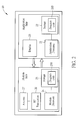
- FIG. 2 illustrates an architecture of a communication device according to an embodiment of the present invention.
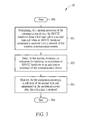
- FIG. 3 is a flowchart of a process according to an embodiment of the present invention.
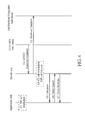
- FIG. 4 illustrates a sequence diagram of monitoring a call state over an SRVCC handover according to an embodiment of the present invention.
- FIG. 5 is a flowchart of a process according to an embodiment of the present invention.
- FIG. 6 illustrates a sequence diagram of monitoring a call state over an SRVCC handover according to an embodiment of the present invention.
- FIG. 7 is a flowchart of a process according to an embodiment of the present invention.
- FIG. 8 illustrates a sequence diagram of monitoring a call state over an SRVCC handover according to an embodiment of the present invention.
- FIG. 9 is a flowchart of a process according to an embodiment of the present invention.
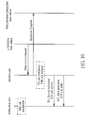
- FIG. 10 illustrates a sequence diagram of monitoring a call state over an SRVCC handover according to an embodiment of the present invention.
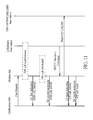
- FIG. 11 illustrates a sequence diagram of monitoring a call state over an SRVCC handover according to an embodiment of the present invention.
- FIG. 2 illustrates an architecture of a communication device 20 according to an embodiment of the present invention.
- the communication device 20 may be the user equipment shown in FIG. 1 .
- the communication device 20 may be separated into two operating environments, one is called an application side and the other is called a modem side.
- the application side may include an application processor 21, an application storage 22, and a display 23.
- the modem side may include a modem processor 24, a modem storage 25, a radio-frequency (RF) transceiver 26 and an antenna 27.
- RF radio-frequency
- the application processor 21 may be an ARM (Advanced RISC Machine) based processor, a MIPS (Microprocessor without Interlocked Pipeline Stages) based processor or an x86 based processor, and the application processor 21 may run an operating system (OS), e.g. Android, Windows phone 7, iPhone OS (iOS), to provide software applications and user interface (UI) on the display 23, as well as perform IMS operation based on RTP, SIP, UDP, and IP protocol stacks.
- the modem processor 24 may be an ARM based processor, and be able to run communication protocol software including 3GPP/3GPP2 protocol stacks to support LTE/HSPA/UMTS/GSM/CDMA2000 wireless communication technologies. The modem processor 24 may also perform IMS operation based on RTP, SIP, UDP, and IP protocol stacks according to practical requirement.
- the application storage 22 and the modem storage 25 may be any data storage device that stores data including program codes 220 and 250, thereafter read and processed by the application processor 21 and modem processor 24, respectively.
- Examples of the application storage 22 and the modem storage 25 include a subscriber identity module (SIM), read-only memory (ROM), random-access memory (RAM), CD-ROMs, magnetic tapes, hard disks, optical data storage devices, and carrier waves (such as data transmission through the Internet).
- SIM subscriber identity module
- ROM read-only memory
- RAM random-access memory
- CD-ROMs compact discs, digital versatile discs, digital versatile discs, and Blu-rays, and Blu-rays, etc.
- FIG. 3 is a flowchart of a process 30 according to an embodiment of the present invention.
- the process 30 is utilized in the communication device 20 for maintaining a call state over an SRVCC handover.
- the process 30 may be compiled into the program code 220 or 250 to be stored in both or one of the application storage 22 and the modem storage 25, and the process 30 may include the following steps:
- Step 300 Start.
- Step 301 Performing, by a modem processor of the communication device, the SRVCC handover from a first type call to a second type call when an SRVCC handover command is received from a network of the wireless communication system.
- Step 302 Send, by the modem processor, an indication for notifying an occurrence of SRVCC handover to an application processor of the communication device.
- Step 303 Monitor, by the application processor, a call state of the second type call type maintained in the modem processor after the indication is received.
- Step 304 End.
- the modem side i.e. the modem processor 24, sends an indication to the application side, i.e. the application processor 21, to notify an occurrence of the SRVCC handover before or after the SRVCC handover is completely finished, thereby the application side goes to monitor the call state of the second type call, so as to demonstrate the call state of the second type call on the user interface of the display 23.
- the first type call is an IMS call and the second type call is a CS call, i.e. the IMS call is handed over to the CS call.
- the application side is notified the occurrence of the SRVCC handover according to the indication sent by the modem side after the SRVCC handover is performed successfully, and knows that the IMS call is switched to the CS call. Therefore, the application side may go to monitor the call state of the CS call maintained in the modem side to demonstrate the call state of the CS call on the user interface of the display 23.
- the application side stops operation for the IMS call to enter a sleep mode or run with a lower clock to save power consumption because the IMS call would be released after the SRVCC handover is completed.
- the modem side may start the CS call and the CS operation after the SRVCC handover command is received.
- the first type call is a CS call and the second type call is an IMS call, i.e. the CS call is handed over to the IMS call.
- the modem side may stop operation for the CS call after the SRVCC handover command is received.
- the application side may be notified the occurrence of the SRVCC handover according to the indication to know that the CS call is switched to the IMS call. Therefore, the application side may initiate the IMS call, start operation for the IMS call, maintain the call state of the IMS call, as well as demonstrate the call state of the IMS call on the user interface of the display 23.
- the application side monitors and access the call state maintained in the modem side.
- the application side sends a query message to the modem side, and receives a response message corresponding to the query message and containing the call state of the second type call, from the modem processor.
- the application side may monitor the call state of the second type call by actively sending the request message to the modem side and receiving the response message corresponding to the query message from the modem side.
- the modem side shall not send the response message corresponding to the query message if the query message is received during the SRVCC handover.
- the modem side may send the response message corresponding to the query message after the SRVCC handover is performed successfully.
- the modem side receives the query message during the SRVCC handover (i.e. the SRVCC handover has not finished and IMS call is released).
- the modem side does not return the response message indicating the IMS call is released to the application side. From a user perspective, the user should not be aware of an active call is switched between different network domains.
- the first type call may be released and disconnected during the SRVCC handover procedure.
- the modem side shall not send any messages indicating the first type call is released during SRVCC handover, which may avoid confusing the application side that the first type call is released suddenly and may prevent the user interface from showing the first type call is disconnected.
- the modem side shall not, is forbidden to, to send any response messages containing the call state of the first type call after the SRVCC handover command is received to avoid the application side from showing the first type call is disconnected on the user interface.
- FIG. 4 illustrates a sequence diagram of monitoring a call state over an SRVCC handover according to an embodiment of the present invention.
- step A1 it is assumed that an IMS call is established and a call state and an IMS operation of the IMS call are handled by the application side.
- the application side may handle voice/video coding/decoding of voice/video packets and maintain the call state of the IMS call, so as to demonstrate the call state of the IMS call on the user interface of the display 23.
- the call state may be active, held, dialing, alerting, incoming, or waiting.
- the modem side may perform 3GPP/3GPP2 stacks for wireless communication to deliver voice/video packets generated by the application side.
- an LTE/HSPA base station may send an SRVCC handover command to instruct the communication device 20 to handover the IMS call in the PS network to a CS call in the CS network.
- the modem side may perform SRVCC handover in response to the SRVCC handover command.
- the CS call may be established with the GSM/UMTS/CDMA2000 base station and a call state of the CS call may be initialized and maintained by modem side, and the IMS call may be released afterwards.
- step A5 the modem side sends the indication to the application side after the SRVCC handover is completed, i.e. the indication is sent after a Handover Complete message (not shown in FIG. 4 ).
- the application side may send a query message to the modem side to request the call state of the CS call.
- the modem side may send a response message containing the call state of the CS call in response to the query message, such that the application side may monitor and demonstrate the call state of the CS call on the user interface according to the response message.
- the query and response messages may correspond to specific types to indicate a call type of a call currently established or currently in use.
- the query message sent by the application side Before the indication for notifying the occurrence of SRVCC handover is received, the query message sent by the application side may be mapped into a first type and the response message sent by the modem side may be also mapped into the first type to indicate the call currently established or currently in use is the first type call.
- the query message sent by the application side may be mapped into a second type and the response message sent by the modem side may be also mapped into the second type to indicate the call currently established or currently in use is the second type call.
- the modem side sends the response message being mapped into the second type which is different from the response message being mapped into the first type, such that the application side may be notified that the call type of the call currently established is changed.
- the application side may be notified that the call currently established or currently in used is a CS call or an IMS call according to the type of the response message from the modem side.
- the modem side may automatically send an indication for indicating the call state of the second type call to the application side after the SRVCC handover. Moreover, the mode side sends another indication for indicating the call state of the second type call to the application side only when the call state of the second type changes.
- the other indication may contain a call state, e.g. held or disconnect, which is different from the call stat contained in the indication, e.g. active.
- FIG. 5 is a flowchart of a process 50 according to an embodiment of the present invention.
- the process 50 is utilized in the communication device 20 for monitoring a call state over an SRVCC handover.
- the process 50 may be compiled into a program code to be stored in both or one of the application storage 22 and the modem storage 25, and the process 50 may include the following steps:
- Step 500 Start.
- Step 501 Perform, by a modem processor of the communication device, the SRVCC handover when an SRVCC handover command is received from a network of the wireless communication system.
- Step 502 Send, by an application processor of the communication device, a query message to the modem processor to query a call state of a call.
- Step 503 Send, by the modem processor, the response message corresponding to the query message and containing the call state of the call after the SRVCC handover is performed successfully.
- Step 504 End.
- the application side may periodically send a query message to the modem side to query the call state, and the modem side may send a response message corresponding to the query message and containing the call state to the application side.
- the modem side does not return the response message to the application side if the query message is received during the SRVCC handover.
- the modem side sends the response message after the SRVCC handover is completed, which may avoid confusing the application side that the call is suddenly released during the SRVCC handover.
- the user should not be aware of the call currently established is switched between different network domains.
- the IMS/CS call may be released to disconnect from the PS or CS network during the SRVCC handover.
- the modem side shall not send any message indicating the IMS/CS call is released during the SRVCC handover, which may avoid confusing the application side that the call currently established is released suddenly and prevent the user interface from showing the call currently established is disconnected.
- the modem side returns the response message indicating the call state before the SRVCC handover is occurred to the application side if the query message is received during the SRVCC handover.
- the modem side returns the response message containing a previous call state of the first type call.
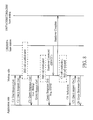
- FIG. 6 illustrates a sequence diagram of monitoring a call state over an SRVCC handover according to another embodiment of the present invention.
- the application side may send a dial request for instructing the modem side to initiate a call which is assumed an IMS call.
- the application side may periodically send a query message to the modem side to query the call state.
- the modem side may send a response message corresponding to the query message and containing the call state.
- the modem side may establish the call with the LTE/HSPA base station according to the dial request. After the call is established, the modem side may send a response message containing the call state, e.g. active, to the application side.
- the modem side does not send any response message to avoid confusing the application side that the call is suddenly released.
- the application side just keeps sending the query message to the modem in order to monitor the call state.
- the modem side may send a response message corresponding to the query message and containing the call state of the call, which is a CS call, to the application processor.
- FIG. 7 is a flowchart of a process 70 according to an embodiment of the present invention.
- the process 70 is utilized in the communication device 20 for monitoring a call state over an SRVCC handover.
- the process 70 may be compiled into a program code to be stored in both or one of the application storage 22 and the modem storage 25, and the process 70 may include the following steps:
- Step 700 Start.
- Step 701 Perform, by a modem processor of the communication device, the SRVCC handover from a first type call to a second type call when an SRVCC handover command is received from a network of the wireless communication system.
- Step 702 Send, by an application processor of the communication device, a specific type query message to the modem processor to query the call state of the second type call.
- Step 703 Send, by the modem processor, a specific type response message corresponding to the query message and containing the call state of the second type call, to the application processor.
- Step 704 End.
- the application side may send a specific type query message to the modem side to query the call state of the second type call, and the modem side may send a specific type response message corresponding to the query message and containing the call state of the second type call, to the application side.
- the specific type of the query and response messages may be mapped into a call type, which may be recognized by the application side and the modem side to indicate a call type of the call currently established or currently in use.
- a query message may be CS_call_query and a response message may be CS_call_response
- a query message may be IMS_call_query and a response message may be IMS_call_response.
- the modem side further sends an indication for notifying an occurrence of SRVCC handover to the application side, such that the application side is notified that the call type of the call currently established or currently in use is changed. In this situation, the application side sends a query message corresponding to another type to the modem side.
- FIG. 8 illustrates a sequence diagram of monitoring a call state over an SRVCC handover according to another embodiment of the present invention.
- a dial request is sent by the application side because a user dials a phone number.
- the modem side initiates IMS call establishment.
- a query message sent by the application side may correspond to a first type and a response message sent by the modem side may correspond to the first type to indicate a call currently state.
- the modem side may send an indication to the application side for notifying an occurrence of the SRVCC handover, such that the application side may know that the IMS call is handed over to a CS call.
- the application side may send a query message corresponding to a second type to query the call state of the CS call, and the modem side may send a response message corresponding to a second type and containing the call state of the CS call to the application side.
- the application side stops sending the first format query message and sends the second format query message (e.g. periodically) for the call state of the CS call, and thereby the modem side knows to returns the call state of the CS call according to the format of the query message from the application.
- FIG. 9 is a flowchart of a process 90 according to an embodiment of the present invention.
- the process 90 is utilized in the communication device 20 for monitoring a call state over an SRVCC handover.
- the process 90 may be compiled into a program code to be stored in both or one of the application storage 22 and the modem storage 25, and the process 90 may include the following steps:
- Step 900 Start.
- Step 901 Perform, by a modem processor of the communication device, handover from a first type call to a second type call when an SRVCC handover command is received from a network of the wireless communication system.
- Step 902 Send, by the modem processor, an indication for indicating a call state of the second type call to an application processor of the communication device after the SRVCC handover.
- Step 903 End.
- the modem side automatically sends an indication for indicating a call state of the second type call to the application side after the SRVCC handover, such that the application side may demonstrate the call state of the second type call on the user interface according to the indication.
- the modem side may send another indication for indicating the call state of the second type call when the call state of the second type call changes. In other words, the modem side may actively update the call state of the second type call.
- FIG. 10 illustrates a sequence diagram of monitoring a call state over an SRVCC handover according to another embodiment of the present invention.
- the application side performs IMS operation.
- the modem side actively provides the call state of the second type call to the application side without query from application side.
- the modem side sends a second indication for indicating the call state of the CS call to the application after SRVCC handover (step D1).
- the modem side may send a third indication for indicating the call state of the CS call to the application processor only when the call state of the CS call changes (step D2).
- the modem side may actively update the call state of the CS call if the call state of the CS call is changed from a first state, e.g. active, to a second state, e.g. held. It is noted that step D1 may be omitted if the modem side sends an indication for notifying the occurrence of SRVCC handover to the application processor.
- FIG. 11 illustrates a sequence diagram of monitoring a call state over an SRVCC handover according to another embodiment of the present invention.
- the modem side performs IMS operation.
- the modem side initiates IMS call establishment upon receiving a dial request from the application side.
- the modem side actively provides the call state of the second type call to the application side without query from application side.
- the modem side sends a first indication for indicating the call state of the IMS call, e.g. dialing (step E1).
- the modem side sends a second indication for updating the call state of the IMS call, e.g. active after the IMS is established (step E2).
- the modem side sends a third indication for indicating the call state of the CS call to the application after SRVCC handover (step E3). Moreover, the modem side may send a fourth indication for indicating the call state of the CS call to the application processor only when the call state of the CS call changes (step E4). In other words, the modem side may actively update the call state of the CS call if the call state of the CS call is changed from a first state, e.g. active, to a second state, e.g. held. It is noted that step E3 may be omitted if the modem side sends an indication for notifying the occurrence of SRVCC handover to the application processor.
- the abovementioned operations and processes may be applied to the SRVCC handover from the CS call to the IMS call, and it is assumed that operation for the IMS call is handled by the modem side.
- the modem side sends SRVCC handover occurrence indication to the application side.
- the application side may monitor the call state of the IMS call by sending the query messages and receiving the response messages to and from the modem side.
- the modem side shall not send the response message indicating the call state of the CS call if the query message is received during the SRVCC handover, which may avoid the confusing the application side that the CS call is released suddenly and prevent the user interface from showing a warning message indicating the CS call is disconnected.
- the detailed description can be referred from above, so it is omitted herein.
- the abovementioned steps of the processes including suggested steps can be realized by means that could be a hardware, a firmware known as a combination of a hardware device and computer instructions and data that reside as read-only software on the hardware device or an electronic system.
- hardware can include analog, digital and mixed circuits known as microcircuit, microchip, or silicon chip.
- the electronic system can include a system on chip (SOC), system in package (SiP), a computer on module (COM) and the communication device 20.
- SOC system on chip
- SiP system in package
- COM computer on module
Landscapes
- Engineering & Computer Science (AREA)
- Computer Networks & Wireless Communication (AREA)
- Signal Processing (AREA)
- Multimedia (AREA)
- Mobile Radio Communication Systems (AREA)
Abstract
Description
- This application claims the benefit of
U.S. Provisional Application No. 61/659,437, filed on June 14, 2012 - The present invention relates to a method used in a communication device in a wireless communication system, and more particularly, to a method of monitoring a call state over a single radio voice call continuity.
- Internet-Protocol (IP) Multimedia Subsystem, hereafter called IMS, is a set of specifications that describes the Next Generation Networking (NGN) architecture for implementing IP based telephony and multimedia services. IMS defines a complete architecture and framework, which enables a convergence of voice, video, data and mobile network technology over an IP-based infrastructure. Session Initiated Protocol (SIP), Session Description Protocol (SDP), and Real-Time Transport Protocol (RTP) defined by the Internet Engineering Task Force (IETF), are chosen as main protocols for IMS. IMS fills a gap between the two most successful communication paradigms, cellular and Internet technology, and thereby enables users to surf Webs, play online games or join a videoconference through 3G handheld devices, i.e. user equipments (UEs). In short, IMS provides cellular access to all the services that the Internet provides. However, Long Term Evolution (LTE) / High Speed Packet Access (HSPA) only provide PS (packet-switched) services. Voice over IP (VoIP) is the only solution to support voice calls in an LTE/HSPA network.
- A Single Radio Voice Call Continuity (SRVCC) refers to a voice call continuity between IMS over PS (packet-switched) access and CS (circuit-switched) access for calls which are anchored in IMS when a user equipment (UE) is capable of transmitting/receiving on only one of PS and CS access networks at a given time. On the other hand, a Single Radio Video Call Continuity (vSRVCC) refers to a video call continuity from an Evolved Universal Terrestrial Radio Access Network (E-UTRAN) to a UTRAN-CS for calls which are anchored in IMS when the UE is capable of transmitting/receiving on only one of the E-UTRAN and UTRAN-CS at a given time.
- Please refer to
FIG. 1 , which is a schematic diagram of awireless communication system 10. Thewireless communication system 10 may include a PS network, a CS network and a UE. The PS network may be an LTE or HSPA network, and may include a plurality of LTE/HSPA base stations to provide IMS calls. The CS network may be a Mobile communications (GSM), Universal Mobile Telecommunications System (UMTS), or Code Division Multiple Access 2000 (CDMA2000) network, and may include a plurality of GSM/UMTS/CDMA2000 base stations to provide CS calls. The UE may be a device such as a mobile phone, a computer system, etc. Besides, the network and the UE can be seen as a transmitter or receiver according to transmission direction, e.g., for uplink (UL), the UE is the transmitter and the network is the receiver, and for downlink (DL), the network is the transmitter and the UE is the receiver. - The UE may establish an IMS call with the PS network or establish a CS call with the CS network, and demonstrate a call state of the IMS/CS call on a user interface (not shown in
FIG. 1 ) to its user. The PS network may request the UE to perform SRVCC handover for the IMS call from the PS network to the CS network by sending an SRVCC handover command, and the CS network may request the UE to perform SRVCC handover for the CS call from the CS network to the PS network by sending an SRVCC handover command. - However, the UE may physically be composed of two operating environments, one is called application side for running an operating system, providing the user interface (UI) and showing the call state on the UI, and the other is called modem side to perform wireless communication based on 3GPP/3GPP2 stacks. Besides, the IMS call may be implemented similar to some VoIP applications (e.g. Skype™), such that an IMS operation based on RTP, SIP, UDP, and IP protocol stacks, may be performed by the application side. Of course, the IMS operation may be performed by the modem side.
- Applicant notices that the application side may have a difficulty to monitor a call state of a call over an SRVCC handover. After an SRVCC handover, assume that an IMS call is handed over to a CS call. A call state of the CS call may be initialized according to 3GPP/3GPP2 specification in the modem side. However, the application side does not get the call sate of the CS call since the call sate of the CS call is maintained in the modem side (e. g. different processors and different storages). Besides, the application side may keep running IMS protocol stack and encoding voice packets, which consumes power since the application side cannot enter a sleep mode (e.g. application processor cannot run in a lower clock). Similar issue also happens in SRVCC handover from the CS network to the PS network.
- Therefore, there is a need to solve the above problems.
- It is there for an objective to provide a method of monitoring call state over single radio voice call continuity to solve the above problems.
- The present invention discloses a method of monitoring a call state over an SRVCC handover, for a communication device in a wireless communication system. The method includes performing, by a modem processor of the communication device, the SRVCC handover from a first type call to a second type call when an SRVCC handover command is received from a network of the wireless communication system; sending, by the modem processor, a first indication for notifying an occurrence of SRVCC handover to an application processor of the communication device; and monitoring, by the application processor, a call state of the second type call maintained in the modem processor after the first indication is received.
- The present invention further discloses a method of monitoring a call state over an SRVCC handover, for a communication device in a wireless communication system. The method includes performing, by a modem processor of the communication device, the SRVCC handover from a first type call to a second type call when an SRVCC handover command is received from a network of the wireless communication system; sending, by an application processor of the communication device, a query message to the modem processor to query the call state of the second type call; and sending, by the modem processor, a response message corresponding to the query message containing the call state of the second type call, to the application processor after the SRVCC handover is performed successfully.
- The present invention further discloses a method of monitoring a call state over an SRVCC handover, for a communication device in a wireless communication system. The method includes performing, by a modem processor of the communication device, handover from a first type call to a second type call when an SRVCC handover command is received from a network of the wireless communication system; and sending, by the modem processor, an first indication for indicating a call state of the second type call to an application processor of the communication device after the SRVCC handover.
- These and other objectives of the present invention will no doubt become obvious to those of ordinary skill in the art after reading the following detailed description of the preferred embodiment that is illustrated in the various figures and drawings.
-
FIG. 1 is a schematic diagram of a wireless communication system. -
FIG. 2 illustrates an architecture of a communication device according to an embodiment of the present invention. -
FIG. 3 is a flowchart of a process according to an embodiment of the present invention. -
FIG. 4 illustrates a sequence diagram of monitoring a call state over an SRVCC handover according to an embodiment of the present invention. -
FIG. 5 is a flowchart of a process according to an embodiment of the present invention. -
FIG. 6 illustrates a sequence diagram of monitoring a call state over an SRVCC handover according to an embodiment of the present invention. -
FIG. 7 is a flowchart of a process according to an embodiment of the present invention. -
FIG. 8 illustrates a sequence diagram of monitoring a call state over an SRVCC handover according to an embodiment of the present invention. -
FIG. 9 is a flowchart of a process according to an embodiment of the present invention. -
FIG. 10 illustrates a sequence diagram of monitoring a call state over an SRVCC handover according to an embodiment of the present invention. -
FIG. 11 illustrates a sequence diagram of monitoring a call state over an SRVCC handover according to an embodiment of the present invention. - Please refer to
FIG. 2 , which illustrates an architecture of acommunication device 20 according to an embodiment of the present invention. Thecommunication device 20 may be the user equipment shown inFIG. 1 . Thecommunication device 20 may be separated into two operating environments, one is called an application side and the other is called a modem side. The application side may include anapplication processor 21, anapplication storage 22, and adisplay 23. The modem side may include amodem processor 24, amodem storage 25, a radio-frequency (RF)transceiver 26 and anantenna 27. Theapplication processor 21 may be an ARM (Advanced RISC Machine) based processor, a MIPS (Microprocessor without Interlocked Pipeline Stages) based processor or an x86 based processor, and theapplication processor 21 may run an operating system (OS), e.g. Android, Windows phone 7, iPhone OS (iOS), to provide software applications and user interface (UI) on thedisplay 23, as well as perform IMS operation based on RTP, SIP, UDP, and IP protocol stacks. Themodem processor 24 may be an ARM based processor, and be able to run communication protocol software including 3GPP/3GPP2 protocol stacks to support LTE/HSPA/UMTS/GSM/CDMA2000 wireless communication technologies. Themodem processor 24 may also perform IMS operation based on RTP, SIP, UDP, and IP protocol stacks according to practical requirement. - The
application storage 22 and themodem storage 25 may be any data storage device that stores data includingprogram codes application processor 21 andmodem processor 24, respectively. Examples of theapplication storage 22 and themodem storage 25 include a subscriber identity module (SIM), read-only memory (ROM), random-access memory (RAM), CD-ROMs, magnetic tapes, hard disks, optical data storage devices, and carrier waves (such as data transmission through the Internet). TheRF transceiver 26 may be used for wirelessly communicating with other communication devices and can transform process results from themodem processor 24 into radio signals. - Please refer to
FIG. 3 , which is a flowchart of aprocess 30 according to an embodiment of the present invention. Theprocess 30 is utilized in thecommunication device 20 for maintaining a call state over an SRVCC handover. Theprocess 30 may be compiled into theprogram code application storage 22 and themodem storage 25, and theprocess 30 may include the following steps: - Step 300: Start.
- Step 301: Performing, by a modem processor of the communication device, the SRVCC handover from a first type call to a second type call when an SRVCC handover command is received from a network of the wireless communication system.
- Step 302: Send, by the modem processor, an indication for notifying an occurrence of SRVCC handover to an application processor of the communication device.
- Step 303: Monitor, by the application processor, a call state of the second type call type maintained in the modem processor after the indication is received.
- Step 304: End.
- In
process 30, the modem side, i.e. themodem processor 24, sends an indication to the application side, i.e. theapplication processor 21, to notify an occurrence of the SRVCC handover before or after the SRVCC handover is completely finished, thereby the application side goes to monitor the call state of the second type call, so as to demonstrate the call state of the second type call on the user interface of thedisplay 23. - In an embodiment, the first type call is an IMS call and the second type call is a CS call, i.e. the IMS call is handed over to the CS call. The application side is notified the occurrence of the SRVCC handover according to the indication sent by the modem side after the SRVCC handover is performed successfully, and knows that the IMS call is switched to the CS call. Therefore, the application side may go to monitor the call state of the CS call maintained in the modem side to demonstrate the call state of the CS call on the user interface of the
display 23. In addition, after the indication is received, the application side stops operation for the IMS call to enter a sleep mode or run with a lower clock to save power consumption because the IMS call would be released after the SRVCC handover is completed. The modem side may start the CS call and the CS operation after the SRVCC handover command is received. - In another embodiment, the first type call is a CS call and the second type call is an IMS call, i.e. the CS call is handed over to the IMS call. The modem side may stop operation for the CS call after the SRVCC handover command is received. The application side may be notified the occurrence of the SRVCC handover according to the indication to know that the CS call is switched to the IMS call. Therefore, the application side may initiate the IMS call, start operation for the IMS call, maintain the call state of the IMS call, as well as demonstrate the call state of the IMS call on the user interface of the
display 23. - There are several ways for the application side to monitor and access the call state maintained in the modem side. In the first embodiment, after the application side receives the indication, the application side sends a query message to the modem side, and receives a response message corresponding to the query message and containing the call state of the second type call, from the modem processor. As a result, the application side may monitor the call state of the second type call by actively sending the request message to the modem side and receiving the response message corresponding to the query message from the modem side.
- Noticeably, the modem side shall not send the response message corresponding to the query message if the query message is received during the SRVCC handover. In other words, the modem side may send the response message corresponding to the query message after the SRVCC handover is performed successfully. For example, the modem side receives the query message during the SRVCC handover (i.e. the SRVCC handover has not finished and IMS call is released). In this situation, the modem side does not return the response message indicating the IMS call is released to the application side. From a user perspective, the user should not be aware of an active call is switched between different network domains. The first type call may be released and disconnected during the SRVCC handover procedure. In such a situation, the modem side shall not send any messages indicating the first type call is released during SRVCC handover, which may avoid confusing the application side that the first type call is released suddenly and may prevent the user interface from showing the first type call is disconnected. In other words, the modem side shall not, is forbidden to, to send any response messages containing the call state of the first type call after the SRVCC handover command is received to avoid the application side from showing the first type call is disconnected on the user interface.
- Specifically, please refer to
FIG. 4 , which illustrates a sequence diagram of monitoring a call state over an SRVCC handover according to an embodiment of the present invention. As shown inFIG. 4 , in step A1, it is assumed that an IMS call is established and a call state and an IMS operation of the IMS call are handled by the application side. In operation, the application side may handle voice/video coding/decoding of voice/video packets and maintain the call state of the IMS call, so as to demonstrate the call state of the IMS call on the user interface of thedisplay 23. For example, the call state may be active, held, dialing, alerting, incoming, or waiting. The modem side may perform 3GPP/3GPP2 stacks for wireless communication to deliver voice/video packets generated by the application side. In step A2, an LTE/HSPA base station may send an SRVCC handover command to instruct thecommunication device 20 to handover the IMS call in the PS network to a CS call in the CS network. In step A3, the modem side may perform SRVCC handover in response to the SRVCC handover command. After the SRVCC handover is completed, in step A4, the CS call may be established with the GSM/UMTS/CDMA2000 base station and a call state of the CS call may be initialized and maintained by modem side, and the IMS call may be released afterwards. - In step A5, the modem side sends the indication to the application side after the SRVCC handover is completed, i.e. the indication is sent after a Handover Complete message (not shown in
FIG. 4 ). In order to monitor the call state of the CS call maintained in the modem side, in step A6, the application side may send a query message to the modem side to request the call state of the CS call. In step A7, the modem side may send a response message containing the call state of the CS call in response to the query message, such that the application side may monitor and demonstrate the call state of the CS call on the user interface according to the response message. - In the second embodiment, the query and response messages may correspond to specific types to indicate a call type of a call currently established or currently in use. Before the indication for notifying the occurrence of SRVCC handover is received, the query message sent by the application side may be mapped into a first type and the response message sent by the modem side may be also mapped into the first type to indicate the call currently established or currently in use is the first type call. After the indication for notifying the occurrence of SRVCC handover is received, the query message sent by the application side may be mapped into a second type and the response message sent by the modem side may be also mapped into the second type to indicate the call currently established or currently in use is the second type call.
- In a word, the modem side sends the response message being mapped into the second type which is different from the response message being mapped into the first type, such that the application side may be notified that the call type of the call currently established is changed. As a result, the application side may be notified that the call currently established or currently in used is a CS call or an IMS call according to the type of the response message from the modem side.
- In the third embodiment, the modem side may automatically send an indication for indicating the call state of the second type call to the application side after the SRVCC handover. Moreover, the mode side sends another indication for indicating the call state of the second type call to the application side only when the call state of the second type changes. The other indication may contain a call state, e.g. held or disconnect, which is different from the call stat contained in the indication, e.g. active.
- Please refer to
FIG. 5 , which is a flowchart of aprocess 50 according to an embodiment of the present invention. Theprocess 50 is utilized in thecommunication device 20 for monitoring a call state over an SRVCC handover. Theprocess 50 may be compiled into a program code to be stored in both or one of theapplication storage 22 and themodem storage 25, and theprocess 50 may include the following steps: - Step 500: Start.
- Step 501: Perform, by a modem processor of the communication device, the SRVCC handover when an SRVCC handover command is received from a network of the wireless communication system.
- Step 502: Send, by an application processor of the communication device, a query message to the modem processor to query a call state of a call.
- Step 503: Send, by the modem processor, the response message corresponding to the query message and containing the call state of the call after the SRVCC handover is performed successfully.
- Step 504: End.
- In
process 50, the application side may periodically send a query message to the modem side to query the call state, and the modem side may send a response message corresponding to the query message and containing the call state to the application side. - Noticeably, the modem side does not return the response message to the application side if the query message is received during the SRVCC handover. In other words, the modem side sends the response message after the SRVCC handover is completed, which may avoid confusing the application side that the call is suddenly released during the SRVCC handover. In addition, from a user perspective, the user should not be aware of the call currently established is switched between different network domains. The IMS/CS call may be released to disconnect from the PS or CS network during the SRVCC handover. In such a situation, the modem side shall not send any message indicating the IMS/CS call is released during the SRVCC handover, which may avoid confusing the application side that the call currently established is released suddenly and prevent the user interface from showing the call currently established is disconnected. Alternatively the modem side returns the response message indicating the call state before the SRVCC handover is occurred to the application side if the query message is received during the SRVCC handover. In a word, the modem side returns the response message containing a previous call state of the first type call.
- Specifically, please refer to
FIG. 6 , which illustrates a sequence diagram of monitoring a call state over an SRVCC handover according to another embodiment of the present invention. As shown inFIG. 6 , in step B1, the application side may send a dial request for instructing the modem side to initiate a call which is assumed an IMS call. In step B2, the application side may periodically send a query message to the modem side to query the call state. In step B3, the modem side may send a response message corresponding to the query message and containing the call state. Meanwhile, in step B4, the modem side may establish the call with the LTE/HSPA base station according to the dial request. After the call is established, the modem side may send a response message containing the call state, e.g. active, to the application side. - During the SRVCC handover, the modem side does not send any response message to avoid confusing the application side that the call is suddenly released. In step B5, the application side just keeps sending the query message to the modem in order to monitor the call state. After the SRVCC handover is performed successfully and the call is established with the GSM/UMTS/CDMA2000 base station, in step B6, the modem side may send a response message corresponding to the query message and containing the call state of the call, which is a CS call, to the application processor.
- Please refer to
FIG. 7 , which is a flowchart of aprocess 70 according to an embodiment of the present invention. Theprocess 70 is utilized in thecommunication device 20 for monitoring a call state over an SRVCC handover. Theprocess 70 may be compiled into a program code to be stored in both or one of theapplication storage 22 and themodem storage 25, and theprocess 70 may include the following steps: - Step 700: Start.
- Step 701: Perform, by a modem processor of the communication device, the SRVCC handover from a first type call to a second type call when an SRVCC handover command is received from a network of the wireless communication system.
- Step 702: Send, by an application processor of the communication device, a specific type query message to the modem processor to query the call state of the second type call.
- Step 703: Send, by the modem processor, a specific type response message corresponding to the query message and containing the call state of the second type call, to the application processor.
- Step 704: End.
- According to
process 70, the application side may send a specific type query message to the modem side to query the call state of the second type call, and the modem side may send a specific type response message corresponding to the query message and containing the call state of the second type call, to the application side. In other words, the specific type of the query and response messages may be mapped into a call type, which may be recognized by the application side and the modem side to indicate a call type of the call currently established or currently in use. For example for a CS call, a query message may be CS_call_query and a response message may be CS_call_response, and for a IMS call, a query message may be IMS_call_query and a response message may be IMS_call_response. - In another embodiment, the modem side further sends an indication for notifying an occurrence of SRVCC handover to the application side, such that the application side is notified that the call type of the call currently established or currently in use is changed. In this situation, the application side sends a query message corresponding to another type to the modem side.
- Specifically, please refer to
FIG. 8 , which illustrates a sequence diagram of monitoring a call state over an SRVCC handover according to another embodiment of the present invention. For example, it is assumed that an IMS operation is handled by the modem side. In step C1, a dial request is sent by the application side because a user dials a phone number. When the modem side receives the dial request, the modem side initiates IMS call establishment. In steps C2 to C3, a query message sent by the application side may correspond to a first type and a response message sent by the modem side may correspond to the first type to indicate a call currently state. In step C4, the modem side may send an indication to the application side for notifying an occurrence of the SRVCC handover, such that the application side may know that the IMS call is handed over to a CS call. Accordingly, in step C5-C6, the application side may send a query message corresponding to a second type to query the call state of the CS call, and the modem side may send a response message corresponding to a second type and containing the call state of the CS call to the application side. In a word, after receiving the SRVCC handover occurrence indication, the application side stops sending the first format query message and sends the second format query message (e.g. periodically) for the call state of the CS call, and thereby the modem side knows to returns the call state of the CS call according to the format of the query message from the application. - Please refer to
FIG. 9 , which is a flowchart of aprocess 90 according to an embodiment of the present invention. Theprocess 90 is utilized in thecommunication device 20 for monitoring a call state over an SRVCC handover. Theprocess 90 may be compiled into a program code to be stored in both or one of theapplication storage 22 and themodem storage 25, and theprocess 90 may include the following steps: - Step 900: Start.
- Step 901: Perform, by a modem processor of the communication device, handover from a first type call to a second type call when an SRVCC handover command is received from a network of the wireless communication system.
- Step 902: Send, by the modem processor, an indication for indicating a call state of the second type call to an application processor of the communication device after the SRVCC handover.
- Step 903: End.
- According to
process 90, the modem side automatically sends an indication for indicating a call state of the second type call to the application side after the SRVCC handover, such that the application side may demonstrate the call state of the second type call on the user interface according to the indication. Moreover, the modem side may send another indication for indicating the call state of the second type call when the call state of the second type call changes. In other words, the modem side may actively update the call state of the second type call. - Specifically, please refer to
FIG. 10 , which illustrates a sequence diagram of monitoring a call state over an SRVCC handover according to another embodiment of the present invention. It is assumed that the application side performs IMS operation. InFIG. 10 , the modem side actively provides the call state of the second type call to the application side without query from application side. In detail, the modem side sends a second indication for indicating the call state of the CS call to the application after SRVCC handover (step D1). Moreover, the modem side may send a third indication for indicating the call state of the CS call to the application processor only when the call state of the CS call changes (step D2). In other words, the modem side may actively update the call state of the CS call if the call state of the CS call is changed from a first state, e.g. active, to a second state, e.g. held. It is noted that step D1 may be omitted if the modem side sends an indication for notifying the occurrence of SRVCC handover to the application processor. - Alternatively, please refer to
FIG. 11 , which illustrates a sequence diagram of monitoring a call state over an SRVCC handover according to another embodiment of the present invention. InFIG. 11 , it is assumed that the modem side performs IMS operation. The modem side initiates IMS call establishment upon receiving a dial request from the application side. The modem side actively provides the call state of the second type call to the application side without query from application side. In detail, the modem side sends a first indication for indicating the call state of the IMS call, e.g. dialing (step E1). Then, the modem side sends a second indication for updating the call state of the IMS call, e.g. active after the IMS is established (step E2). The modem side sends a third indication for indicating the call state of the CS call to the application after SRVCC handover (step E3). Moreover, the modem side may send a fourth indication for indicating the call state of the CS call to the application processor only when the call state of the CS call changes (step E4). In other words, the modem side may actively update the call state of the CS call if the call state of the CS call is changed from a first state, e.g. active, to a second state, e.g. held. It is noted that step E3 may be omitted if the modem side sends an indication for notifying the occurrence of SRVCC handover to the application processor. - Note that, the abovementioned operations and processes may be applied to the SRVCC handover from the CS call to the IMS call, and it is assumed that operation for the IMS call is handled by the modem side. For example, the modem side sends SRVCC handover occurrence indication to the application side. In addition, the application side may monitor the call state of the IMS call by sending the query messages and receiving the response messages to and from the modem side. Further, the modem side shall not send the response message indicating the call state of the CS call if the query message is received during the SRVCC handover, which may avoid the confusing the application side that the CS call is released suddenly and prevent the user interface from showing a warning message indicating the CS call is disconnected. The detailed description can be referred from above, so it is omitted herein.
- The abovementioned steps of the processes including suggested steps can be realized by means that could be a hardware, a firmware known as a combination of a hardware device and computer instructions and data that reside as read-only software on the hardware device or an electronic system. Examples of hardware can include analog, digital and mixed circuits known as microcircuit, microchip, or silicon chip. Examples of the electronic system can include a system on chip (SOC), system in package (SiP), a computer on module (COM) and the
communication device 20. - In conclusion, various methods of monitoring call states over an SRVCC handover are provided, so that the application side may monitor the call state of the call maintained by modem side.
- Those skilled in the art will readily observe that numerous modifications and alterations of the device and method may be made while retaining the teachings of the invention. Accordingly, the above disclosure should be construed as limited only by the metes and bounds of the appended claims.
Claims (15)
- A method of monitoring a call state over a single radio voice call continuity (SRVCC) handover, for a communication device in a wireless communication system, comprising:performing, by a modem processor of the communication device, the SRVCC handover from a first type call to a second type call when an SRVCC handover command is received from a network of the wireless communication system;sending, by the modem processor, a first indication for notifying an occurrence of SRVCC handover to an application processor of the communication device; andmonitoring, by the application processor, a call state of the second type call maintained in the modem processor after the first indication is received.
- The method of claim 1, wherein sending, by the modem processor, the first indication for notifying the occurrence of SRVCC handover to the application processor of the communication device comprises:sending, by the modem processor, the first indication for notifying the occurrence of SRVCC handover to the application processor when the SRVCC handover is performed successfully.
- The method of claim 1, further comprising:stopping, by the application processor, operation for the first type call after the first indication is received.
- The method of claim 1, wherein the monitoring step comprises:sending a query message to the modem processor to query the call state of the second type call; andreceiving a response message corresponding to the query message and containing the call state of the second type call, from the modem processor.
- The method of claim 1, further comprising:sending, by the application processor, a query message to the modem processor to query a call state of the first type call; andsending, by the modem processor, the response message corresponding to the query message if the query message is received during the SRVCC handover wherein the response message contains a previous call state of the first type call.
- The method of claim 1, wherein the monitoring step comprises:sending a specific type query message to the modem processor to query the call state of the second type call; andreceiving a specific type response message corresponding to the query message containing the call state of the second type call, from the modem processor.
- The method of claim 1, further comprising:sending, by the modem processor, a second indication for indicating the call state of the second type call to the application processor.
- A method of monitoring a call state over a single radio voice call continuity (SRVCC) handover, for a communication device in a wireless communication system, comprising:performing, by a modem processor of the communication device, the SRVCC handover from a first type call to a second type call when an SRVCC handover command is received from a network of the wireless communication system;sending, by an application processor of the communication device, a query message to the modem processor to query the call state of the second type call; andsending, by the modem processor, a response message corresponding to the query message containing the call state of the second type call, to the application processor after the SRVCC handover is performed successfully.
- The method of claim 8, further comprising:performing operation, by the application processor, for the first type call;sending, by the modem processor, a indication for notifying an occurrence of SRVCC handover to the application processor; andstopping the operation, by the application processor, for the first type call after the indication is received.
- The method of claim 9, wherein the step of sending, by the modem processor, the indication for notifying the occurrence of SRVCC handover to the application processor comprises:sending, by the modem processor, the indication for notifying the occurrence of SRVCC handover to the application processor when the SRVCC handover is performed successfully.
- The method of claim 8, further comprising:sending, by the application processor, a query message to the modem processor to query a call state of the first type call;sending, by the modem processor, a response message corresponding to the query message and containing a previous call state of the first type call if the query message is received during the SRVCC handover.
- A method of monitoring a call state over a single radio voice call continuity (SRVCC) handover, for a communication device in a wireless communication system, comprising:performing, by a modem processor of the communication device, handover from a first type call to a second type call when an SRVCC handover command is received from a network of the wireless communication system; andsending, by the modem processor, an first indication for indicating a call state of the second type call to an application processor of the communication device after the SRVCC handover.
- The method of claim 12, further comprising:performing operation, by the application processor, for the first type call;sending, by the modem processor, a second indication for notifying an occurrence of SRVCC handover to the application processor; andstopping the operation, by the application processor, for the first type call after the first indication is received.
- The method of claim 12, further comprising:sending, by the modem processor, a third indication for indicating the call state of the second type call to the application processor only when the call state of the second type call changes.
- The method of claim 12, further comprising:sending, by the modem processor, the first indication for indicating the call state of the second type call after the SRVCC handover is performed successfully.
Applications Claiming Priority (1)
| Application Number | Priority Date | Filing Date | Title |
|---|---|---|---|
| US201261659437P | 2012-06-14 | 2012-06-14 |
Publications (2)
| Publication Number | Publication Date |
|---|---|
| EP2696623A1 true EP2696623A1 (en) | 2014-02-12 |
| EP2696623B1 EP2696623B1 (en) | 2016-08-10 |
Family
ID=48670335
Family Applications (1)
| Application Number | Title | Priority Date | Filing Date |
|---|---|---|---|
| EP13020039.7A Active EP2696623B1 (en) | 2012-06-14 | 2013-06-14 | Methods and apparatus of monitoring a call state over a single radio voice call continuity handover |
Country Status (4)
| Country | Link |
|---|---|
| US (1) | US9872186B2 (en) |
| EP (1) | EP2696623B1 (en) |
| CN (1) | CN103517306B (en) |
| TW (1) | TWI481269B (en) |
Cited By (2)
| Publication number | Priority date | Publication date | Assignee | Title |
|---|---|---|---|---|
| CN105392165A (en) * | 2014-08-26 | 2016-03-09 | 三星电子株式会社 | Communication method using multiple networks and devices supporting it |
| CN107333304A (en) * | 2016-04-28 | 2017-11-07 | 展讯通信(上海)有限公司 | Terminal and its processing method for voice and video service switching |
Families Citing this family (8)
| Publication number | Priority date | Publication date | Assignee | Title |
|---|---|---|---|---|
| JP5433062B1 (en) * | 2012-09-07 | 2014-03-05 | 株式会社Nttドコモ | Mobile station and mobile communication method |
| US9363715B2 (en) * | 2013-09-12 | 2016-06-07 | Nvidia Corporation | Modem and method for handing over IP multimedia subsystem sessions from a packet-switched network to a circuit-switched network |
| WO2015047606A1 (en) | 2013-09-30 | 2015-04-02 | Apple Inc. | Keycaps having reduced thickness |
| KR102205907B1 (en) | 2014-02-07 | 2021-01-21 | 삼성전자주식회사 | Apparatus and method for providing service in mobile communication system |
| WO2015169210A1 (en) * | 2014-05-05 | 2015-11-12 | Mediatek Inc. | Method and apparatus for managing a call during a handover procedure in a communications system |
| CN109511108B (en) * | 2017-09-15 | 2020-11-17 | 中国移动通信集团公司 | eSRVCC switching monitoring method, device and storage medium |
| RU2734827C1 (en) * | 2020-03-13 | 2020-10-23 | Общество с ограниченной ответственностью "КВАНТУМ А РУС" | Method of notifying an incoming call |
| CN116052668B (en) * | 2023-03-28 | 2023-06-02 | 北京集度科技有限公司 | Speech recognition processing method, device, vehicle and computer program product |
Citations (3)
| Publication number | Priority date | Publication date | Assignee | Title |
|---|---|---|---|---|
| US20050073977A1 (en) * | 2003-10-02 | 2005-04-07 | Vieri Vanghi | Inter-system handoff between wireless communication networks of different radio access technologies |
| US20090232097A1 (en) * | 2008-03-13 | 2009-09-17 | Freescale Semiconductor, Inc | Method and apparatus for performing handover in a wireless communication system |
| US20110206003A1 (en) * | 2010-02-22 | 2011-08-25 | Htc Corporation | Method and apparatus for handling srvcc in an inter radio access technology handover |
Family Cites Families (13)
| Publication number | Priority date | Publication date | Assignee | Title |
|---|---|---|---|---|
| US8203589B2 (en) * | 2007-09-07 | 2012-06-19 | AT&T International Property I, LP | System for managing video voicemail |
| CN100589504C (en) * | 2007-09-18 | 2010-02-10 | 中兴通讯股份有限公司 | A method for monitoring activity events after inter-office switching in a call |
| US8711846B2 (en) * | 2008-09-18 | 2014-04-29 | Futurewei Technologies, Inc. | Network attachment for IMS systems for legacy CS UE with home node B access |
| CN101924751B (en) * | 2009-05-22 | 2013-11-06 | 中兴通讯股份有限公司 | Single-mode service continuity implementation method and single-mode service continuity system |
| CN102045299B (en) * | 2009-10-19 | 2014-02-05 | 中兴通讯股份有限公司 | Method and system for realizing service continuity of simple module |
| CN102158923B (en) * | 2010-02-12 | 2014-12-10 | 中兴通讯股份有限公司 | Method and system for realizing single radio voice call continuity (SRVCC) |
| CN102754483B (en) * | 2010-02-12 | 2016-08-10 | 瑞典爱立信有限公司 | Switching from Circuit Switching to Packet Switching |
| CN102223348B (en) * | 2010-04-13 | 2014-04-09 | 中兴通讯股份有限公司 | Method and system for realizing session keep-alive of single radio voice call continuity |
| WO2011132927A2 (en) * | 2010-04-21 | 2011-10-27 | Lg Electronics Inc. | Device and method for performing an rsrvcc procedure |
| JP5560120B2 (en) * | 2010-06-30 | 2014-07-23 | 株式会社Nttドコモ | Mobile communication method |
| WO2011110001A1 (en) * | 2010-08-20 | 2011-09-15 | 华为技术有限公司 | Bearer establishment method, system and gateway equipment |
| US8374173B2 (en) * | 2010-11-12 | 2013-02-12 | Telefonaktiebolaget L M Ericsson (Publ) | Packet switched to circuit switched access handovers in an IMS architecture |
| US20120213197A1 (en) * | 2011-02-21 | 2012-08-23 | Renesas Mobile Corporation | Methods and Apparatuses for Managing Multiple Call Sessions During a Transfer |
-
2013
- 2013-06-14 TW TW102121271A patent/TWI481269B/en active
- 2013-06-14 EP EP13020039.7A patent/EP2696623B1/en active Active
- 2013-06-14 US US13/917,660 patent/US9872186B2/en active Active
- 2013-06-14 CN CN201310259252.1A patent/CN103517306B/en active Active
Patent Citations (3)
| Publication number | Priority date | Publication date | Assignee | Title |
|---|---|---|---|---|
| US20050073977A1 (en) * | 2003-10-02 | 2005-04-07 | Vieri Vanghi | Inter-system handoff between wireless communication networks of different radio access technologies |
| US20090232097A1 (en) * | 2008-03-13 | 2009-09-17 | Freescale Semiconductor, Inc | Method and apparatus for performing handover in a wireless communication system |
| US20110206003A1 (en) * | 2010-02-22 | 2011-08-25 | Htc Corporation | Method and apparatus for handling srvcc in an inter radio access technology handover |
Non-Patent Citations (1)
| Title |
|---|
| "3rd Generation Partnership Project; Technical Specification Group Services and System Aspects; Single Radio Voice Call Continuity (SRVCC); Stage 2 (Release 11)", 3GPP STANDARD; 3GPP TS 23.216, 3RD GENERATION PARTNERSHIP PROJECT (3GPP), MOBILE COMPETENCE CENTRE ; 650, ROUTE DES LUCIOLES ; F-06921 SOPHIA-ANTIPOLIS CEDEX ; FRANCE, vol. SA WG2, no. V11.4.0, 8 March 2012 (2012-03-08), pages 1 - 64, XP050555332 * |
Cited By (5)
| Publication number | Priority date | Publication date | Assignee | Title |
|---|---|---|---|---|
| CN105392165A (en) * | 2014-08-26 | 2016-03-09 | 三星电子株式会社 | Communication method using multiple networks and devices supporting it |
| US10142891B2 (en) | 2014-08-26 | 2018-11-27 | Samsung Electronics Co., Ltd. | Communication method using plurality of networks and device supporting the same |
| CN105392165B (en) * | 2014-08-26 | 2019-03-12 | 三星电子株式会社 | Communication method using multiple networks and devices supporting the same |
| CN107333304A (en) * | 2016-04-28 | 2017-11-07 | 展讯通信(上海)有限公司 | Terminal and its processing method for voice and video service switching |
| CN107333304B (en) * | 2016-04-28 | 2019-12-03 | 展讯通信(上海)有限公司 | Terminal and its processing method for voice and video service switching |
Also Published As
| Publication number | Publication date |
|---|---|
| US9872186B2 (en) | 2018-01-16 |
| CN103517306A (en) | 2014-01-15 |
| TWI481269B (en) | 2015-04-11 |
| US20130336127A1 (en) | 2013-12-19 |
| CN103517306B (en) | 2017-04-12 |
| TW201352022A (en) | 2013-12-16 |
| EP2696623B1 (en) | 2016-08-10 |
Similar Documents
| Publication | Publication Date | Title |
|---|---|---|
| US9872186B2 (en) | Method of monitoring call state over single radio voice call continuity and related communication device | |
| KR101353015B1 (en) | Apparatus and method to perform fast neighbor list search during a transfer to a different rat target system | |
| EP3761704A1 (en) | Method and device for circuit switched fallback | |
| US9661532B2 (en) | Apparatuses and methods for handling inter-Radio Access Technology (inter-RAT) mobility | |
| US20190281647A1 (en) | Fallback indicators in session initiation protocol (sip) signaling | |
| US8644218B1 (en) | Reconnecting dropped calls using an internet protocol multimedia subsystem | |
| JP6101304B2 (en) | System and method for network selection for transitioning call sessions | |
| US11064383B2 (en) | Intelligent IMS based on real-time baseband feedback | |
| US10098021B2 (en) | VoLTE quality of service enhancement with preconditions | |
| EP3497914A1 (en) | Last come, first served treatment of communication session requests | |
| US10750355B2 (en) | Method and system for managing session across multiple electronic devices in network system | |
| TW202245532A (en) | Methods and user equipment for mobile communications | |
| US11792694B2 (en) | Packet-switched to circuit-switched handover during VOIP call initiation | |
| WO2019094212A1 (en) | Increasing network coverage using rate adaptation | |
| US20180337961A1 (en) | Synchronization of UE Capability and Registration Status for SIP-Based Application Services | |
| TWI771176B (en) | User equipment and methods for providing reliable delivery of application data | |
| US20160150444A1 (en) | Method and Apparatus for Managing a Call During a Handover Procedure in a Communications System | |
| CN108430078B (en) | SRVCC handover resource reservation processing method and access handover function device | |
| EP4366273A1 (en) | Call exception processing method and apparatus, and electronic device | |
| US9319974B2 (en) | Communication transmission methods and systems | |
| US12609973B2 (en) | Method for handling calls with sessions initiation protocol | |
| WO2024246725A1 (en) | Method and system for reducing a call setup time | |
| WO2009108539A2 (en) | Method and system for maintaining communication |
Legal Events
| Date | Code | Title | Description |
|---|---|---|---|
| 17P | Request for examination filed |
Effective date: 20130614 |
|
| AK | Designated contracting states |
Kind code of ref document: A1 Designated state(s): AL AT BE BG CH CY CZ DE DK EE ES FI FR GB GR HR HU IE IS IT LI LT LU LV MC MK MT NL NO PL PT RO RS SE SI SK SM TR |
|
| AX | Request for extension of the european patent |
Extension state: BA ME |
|
| PUAI | Public reference made under article 153(3) epc to a published international application that has entered the european phase |
Free format text: ORIGINAL CODE: 0009012 |
|
| 17Q | First examination report despatched |
Effective date: 20140116 |
|
| 17Q | First examination report despatched |
Effective date: 20140211 |
|
| RBV | Designated contracting states (corrected) |
Designated state(s): AL AT BE BG CH CY CZ DE DK EE ES FI FR GB GR HR HU IE IS IT LI LT LU LV MC MK MT NL NO PL PT RO RS SE SI SK SM TR |
|
| RAP1 | Party data changed (applicant data changed or rights of an application transferred) |
Owner name: HTC CORPORATION |
|
| GRAP | Despatch of communication of intention to grant a patent |
Free format text: ORIGINAL CODE: EPIDOSNIGR1 |
|
| INTG | Intention to grant announced |
Effective date: 20160108 |
|
| GRAS | Grant fee paid |
Free format text: ORIGINAL CODE: EPIDOSNIGR3 |
|
| GRAA | (expected) grant |
Free format text: ORIGINAL CODE: 0009210 |
|
| AK | Designated contracting states |
Kind code of ref document: B1 Designated state(s): AL AT BE BG CH CY CZ DE DK EE ES FI FR GB GR HR HU IE IS IT LI LT LU LV MC MK MT NL NO PL PT RO RS SE SI SK SM TR |
|
| REG | Reference to a national code |
Ref country code: GB Ref legal event code: FG4D |
|
| REG | Reference to a national code |
Ref country code: CH Ref legal event code: EP Ref country code: AT Ref legal event code: REF Ref document number: 820058 Country of ref document: AT Kind code of ref document: T Effective date: 20160815 |
|
| REG | Reference to a national code |
Ref country code: IE Ref legal event code: FG4D |
|
| REG | Reference to a national code |
Ref country code: NL Ref legal event code: FP |
|
| REG | Reference to a national code |
Ref country code: DE Ref legal event code: R096 Ref document number: 602013010170 Country of ref document: DE |
|
| REG | Reference to a national code |
Ref country code: LT Ref legal event code: MG4D |
|
| REG | Reference to a national code |
Ref country code: AT Ref legal event code: MK05 Ref document number: 820058 Country of ref document: AT Kind code of ref document: T Effective date: 20160810 |
|
| PG25 | Lapsed in a contracting state [announced via postgrant information from national office to epo] |
Ref country code: RS Free format text: LAPSE BECAUSE OF FAILURE TO SUBMIT A TRANSLATION OF THE DESCRIPTION OR TO PAY THE FEE WITHIN THE PRESCRIBED TIME-LIMIT Effective date: 20160810 Ref country code: FI Free format text: LAPSE BECAUSE OF FAILURE TO SUBMIT A TRANSLATION OF THE DESCRIPTION OR TO PAY THE FEE WITHIN THE PRESCRIBED TIME-LIMIT Effective date: 20160810 Ref country code: IS Free format text: LAPSE BECAUSE OF FAILURE TO SUBMIT A TRANSLATION OF THE DESCRIPTION OR TO PAY THE FEE WITHIN THE PRESCRIBED TIME-LIMIT Effective date: 20161210 Ref country code: HR Free format text: LAPSE BECAUSE OF FAILURE TO SUBMIT A TRANSLATION OF THE DESCRIPTION OR TO PAY THE FEE WITHIN THE PRESCRIBED TIME-LIMIT Effective date: 20160810 Ref country code: LT Free format text: LAPSE BECAUSE OF FAILURE TO SUBMIT A TRANSLATION OF THE DESCRIPTION OR TO PAY THE FEE WITHIN THE PRESCRIBED TIME-LIMIT Effective date: 20160810 Ref country code: NO Free format text: LAPSE BECAUSE OF FAILURE TO SUBMIT A TRANSLATION OF THE DESCRIPTION OR TO PAY THE FEE WITHIN THE PRESCRIBED TIME-LIMIT Effective date: 20161110 Ref country code: IT Free format text: LAPSE BECAUSE OF FAILURE TO SUBMIT A TRANSLATION OF THE DESCRIPTION OR TO PAY THE FEE WITHIN THE PRESCRIBED TIME-LIMIT Effective date: 20160810 |
|
| PG25 | Lapsed in a contracting state [announced via postgrant information from national office to epo] |
Ref country code: ES Free format text: LAPSE BECAUSE OF FAILURE TO SUBMIT A TRANSLATION OF THE DESCRIPTION OR TO PAY THE FEE WITHIN THE PRESCRIBED TIME-LIMIT Effective date: 20160810 Ref country code: AT Free format text: LAPSE BECAUSE OF FAILURE TO SUBMIT A TRANSLATION OF THE DESCRIPTION OR TO PAY THE FEE WITHIN THE PRESCRIBED TIME-LIMIT Effective date: 20160810 Ref country code: SE Free format text: LAPSE BECAUSE OF FAILURE TO SUBMIT A TRANSLATION OF THE DESCRIPTION OR TO PAY THE FEE WITHIN THE PRESCRIBED TIME-LIMIT Effective date: 20160810 Ref country code: PT Free format text: LAPSE BECAUSE OF FAILURE TO SUBMIT A TRANSLATION OF THE DESCRIPTION OR TO PAY THE FEE WITHIN THE PRESCRIBED TIME-LIMIT Effective date: 20161212 Ref country code: GR Free format text: LAPSE BECAUSE OF FAILURE TO SUBMIT A TRANSLATION OF THE DESCRIPTION OR TO PAY THE FEE WITHIN THE PRESCRIBED TIME-LIMIT Effective date: 20161111 Ref country code: LV Free format text: LAPSE BECAUSE OF FAILURE TO SUBMIT A TRANSLATION OF THE DESCRIPTION OR TO PAY THE FEE WITHIN THE PRESCRIBED TIME-LIMIT Effective date: 20160810 Ref country code: PL Free format text: LAPSE BECAUSE OF FAILURE TO SUBMIT A TRANSLATION OF THE DESCRIPTION OR TO PAY THE FEE WITHIN THE PRESCRIBED TIME-LIMIT Effective date: 20160810 |
|
| PG25 | Lapsed in a contracting state [announced via postgrant information from national office to epo] |
Ref country code: EE Free format text: LAPSE BECAUSE OF FAILURE TO SUBMIT A TRANSLATION OF THE DESCRIPTION OR TO PAY THE FEE WITHIN THE PRESCRIBED TIME-LIMIT Effective date: 20160810 Ref country code: RO Free format text: LAPSE BECAUSE OF FAILURE TO SUBMIT A TRANSLATION OF THE DESCRIPTION OR TO PAY THE FEE WITHIN THE PRESCRIBED TIME-LIMIT Effective date: 20160810 |
|
| REG | Reference to a national code |
Ref country code: FR Ref legal event code: PLFP Year of fee payment: 5 Ref country code: DE Ref legal event code: R097 Ref document number: 602013010170 Country of ref document: DE |
|
| PG25 | Lapsed in a contracting state [announced via postgrant information from national office to epo] |
Ref country code: CZ Free format text: LAPSE BECAUSE OF FAILURE TO SUBMIT A TRANSLATION OF THE DESCRIPTION OR TO PAY THE FEE WITHIN THE PRESCRIBED TIME-LIMIT Effective date: 20160810 Ref country code: DK Free format text: LAPSE BECAUSE OF FAILURE TO SUBMIT A TRANSLATION OF THE DESCRIPTION OR TO PAY THE FEE WITHIN THE PRESCRIBED TIME-LIMIT Effective date: 20160810 Ref country code: BE Free format text: LAPSE BECAUSE OF FAILURE TO SUBMIT A TRANSLATION OF THE DESCRIPTION OR TO PAY THE FEE WITHIN THE PRESCRIBED TIME-LIMIT Effective date: 20160810 Ref country code: SK Free format text: LAPSE BECAUSE OF FAILURE TO SUBMIT A TRANSLATION OF THE DESCRIPTION OR TO PAY THE FEE WITHIN THE PRESCRIBED TIME-LIMIT Effective date: 20160810 Ref country code: BG Free format text: LAPSE BECAUSE OF FAILURE TO SUBMIT A TRANSLATION OF THE DESCRIPTION OR TO PAY THE FEE WITHIN THE PRESCRIBED TIME-LIMIT Effective date: 20161110 Ref country code: SM Free format text: LAPSE BECAUSE OF FAILURE TO SUBMIT A TRANSLATION OF THE DESCRIPTION OR TO PAY THE FEE WITHIN THE PRESCRIBED TIME-LIMIT Effective date: 20160810 |
|
| PLBE | No opposition filed within time limit |
Free format text: ORIGINAL CODE: 0009261 |
|
| STAA | Information on the status of an ep patent application or granted ep patent |
Free format text: STATUS: NO OPPOSITION FILED WITHIN TIME LIMIT |
|
| 26N | No opposition filed |
Effective date: 20170511 |
|
| PG25 | Lapsed in a contracting state [announced via postgrant information from national office to epo] |
Ref country code: SI Free format text: LAPSE BECAUSE OF FAILURE TO SUBMIT A TRANSLATION OF THE DESCRIPTION OR TO PAY THE FEE WITHIN THE PRESCRIBED TIME-LIMIT Effective date: 20160810 |
|
| PG25 | Lapsed in a contracting state [announced via postgrant information from national office to epo] |
Ref country code: MC Free format text: LAPSE BECAUSE OF FAILURE TO SUBMIT A TRANSLATION OF THE DESCRIPTION OR TO PAY THE FEE WITHIN THE PRESCRIBED TIME-LIMIT Effective date: 20160810 |
|
| REG | Reference to a national code |
Ref country code: CH Ref legal event code: PL |
|
| REG | Reference to a national code |
Ref country code: IE Ref legal event code: MM4A |
|
| PG25 | Lapsed in a contracting state [announced via postgrant information from national office to epo] |
Ref country code: LU Free format text: LAPSE BECAUSE OF NON-PAYMENT OF DUE FEES Effective date: 20170614 Ref country code: LI Free format text: LAPSE BECAUSE OF NON-PAYMENT OF DUE FEES Effective date: 20170630 Ref country code: CH Free format text: LAPSE BECAUSE OF NON-PAYMENT OF DUE FEES Effective date: 20170630 Ref country code: IE Free format text: LAPSE BECAUSE OF NON-PAYMENT OF DUE FEES Effective date: 20170614 |
|
| REG | Reference to a national code |
Ref country code: FR Ref legal event code: PLFP Year of fee payment: 6 |
|
| PG25 | Lapsed in a contracting state [announced via postgrant information from national office to epo] |
Ref country code: MT Free format text: LAPSE BECAUSE OF NON-PAYMENT OF DUE FEES Effective date: 20170614 |
|
| PG25 | Lapsed in a contracting state [announced via postgrant information from national office to epo] |
Ref country code: AL Free format text: LAPSE BECAUSE OF FAILURE TO SUBMIT A TRANSLATION OF THE DESCRIPTION OR TO PAY THE FEE WITHIN THE PRESCRIBED TIME-LIMIT Effective date: 20160810 |
|
| PG25 | Lapsed in a contracting state [announced via postgrant information from national office to epo] |
Ref country code: HU Free format text: LAPSE BECAUSE OF FAILURE TO SUBMIT A TRANSLATION OF THE DESCRIPTION OR TO PAY THE FEE WITHIN THE PRESCRIBED TIME-LIMIT; INVALID AB INITIO Effective date: 20130614 |
|
| PG25 | Lapsed in a contracting state [announced via postgrant information from national office to epo] |
Ref country code: CY Free format text: LAPSE BECAUSE OF NON-PAYMENT OF DUE FEES Effective date: 20160810 |
|
| PG25 | Lapsed in a contracting state [announced via postgrant information from national office to epo] |
Ref country code: MK Free format text: LAPSE BECAUSE OF FAILURE TO SUBMIT A TRANSLATION OF THE DESCRIPTION OR TO PAY THE FEE WITHIN THE PRESCRIBED TIME-LIMIT Effective date: 20160810 |
|
| PG25 | Lapsed in a contracting state [announced via postgrant information from national office to epo] |
Ref country code: TR Free format text: LAPSE BECAUSE OF FAILURE TO SUBMIT A TRANSLATION OF THE DESCRIPTION OR TO PAY THE FEE WITHIN THE PRESCRIBED TIME-LIMIT Effective date: 20160810 |
|
| REG | Reference to a national code |
Ref country code: FR Ref legal event code: PLFP Year of fee payment: 11 |
|
| P01 | Opt-out of the competence of the unified patent court (upc) registered |
Effective date: 20230602 |
|
| PGFP | Annual fee paid to national office [announced via postgrant information from national office to epo] |
Ref country code: NL Payment date: 20250409 Year of fee payment: 13 |
|
| PGFP | Annual fee paid to national office [announced via postgrant information from national office to epo] |
Ref country code: DE Payment date: 20250402 Year of fee payment: 13 |
|
| PGFP | Annual fee paid to national office [announced via postgrant information from national office to epo] |
Ref country code: GB Payment date: 20250401 Year of fee payment: 13 |
|
| PGFP | Annual fee paid to national office [announced via postgrant information from national office to epo] |
Ref country code: FR Payment date: 20250401 Year of fee payment: 13 |