EP2690804A2 - High voltage interface device and method based on ultrasound - Google Patents
High voltage interface device and method based on ultrasound Download PDFInfo
- Publication number
- EP2690804A2 EP2690804A2 EP20130178210 EP13178210A EP2690804A2 EP 2690804 A2 EP2690804 A2 EP 2690804A2 EP 20130178210 EP20130178210 EP 20130178210 EP 13178210 A EP13178210 A EP 13178210A EP 2690804 A2 EP2690804 A2 EP 2690804A2
- Authority
- EP
- European Patent Office
- Prior art keywords
- ultrasonic transducer
- transducer element
- high voltage
- ultrasonic
- insulation device
- Prior art date
- Legal status (The legal status is an assumption and is not a legal conclusion. Google has not performed a legal analysis and makes no representation as to the accuracy of the status listed.)
- Granted
Links
Images

Classifications
-
- H—ELECTRICITY
- H02—GENERATION; CONVERSION OR DISTRIBUTION OF ELECTRIC POWER
- H02G—INSTALLATION OF ELECTRIC CABLES OR LINES, OR OF COMBINED OPTICAL AND ELECTRIC CABLES OR LINES
- H02G1/00—Methods or apparatus specially adapted for installing, maintaining, repairing or dismantling electric cables or lines
- H02G1/02—Methods or apparatus specially adapted for installing, maintaining, repairing or dismantling electric cables or lines for overhead lines or cables
-
- B—PERFORMING OPERATIONS; TRANSPORTING
- B06—GENERATING OR TRANSMITTING MECHANICAL VIBRATIONS IN GENERAL
- B06B—METHODS OR APPARATUS FOR GENERATING OR TRANSMITTING MECHANICAL VIBRATIONS OF INFRASONIC, SONIC, OR ULTRASONIC FREQUENCY, e.g. FOR PERFORMING MECHANICAL WORK IN GENERAL
- B06B3/00—Methods or apparatus specially adapted for transmitting mechanical vibrations of infrasonic, sonic, or ultrasonic frequency
-
- H—ELECTRICITY
- H02—GENERATION; CONVERSION OR DISTRIBUTION OF ELECTRIC POWER
- H02J—ELECTRIC POWER NETWORKS; CIRCUIT ARRANGEMENTS OR SYSTEMS FOR SUPPLYING OR DISTRIBUTING ELECTRIC POWER; SYSTEMS FOR STORING ELECTRIC ENERGY
- H02J50/00—Circuit arrangements or systems for wireless supply or distribution of electric power
- H02J50/15—Circuit arrangements or systems for wireless supply or distribution of electric power using ultrasonic waves
-
- H—ELECTRICITY
- H10—SEMICONDUCTOR DEVICES; ELECTRIC SOLID-STATE DEVICES NOT OTHERWISE PROVIDED FOR
- H10N—ELECTRIC SOLID-STATE DEVICES NOT OTHERWISE PROVIDED FOR
- H10N30/00—Piezoelectric or electrostrictive devices
- H10N30/40—Piezoelectric or electrostrictive devices with electrical input and electrical output, e.g. functioning as transformers
-
- H—ELECTRICITY
- H10—SEMICONDUCTOR DEVICES; ELECTRIC SOLID-STATE DEVICES NOT OTHERWISE PROVIDED FOR
- H10N—ELECTRIC SOLID-STATE DEVICES NOT OTHERWISE PROVIDED FOR
- H10N39/00—Integrated devices, or assemblies of multiple devices, comprising at least one piezoelectric, electrostrictive or magnetostrictive element covered by groups H10N30/00 – H10N35/00
Definitions
- the present invention relates to high voltage interface technology, in particular to a high voltage interface device based on ultrasound.
- a sensor assembly In high voltage or ultra-high voltage fields such as power delivery or power distribution, it is generally necessary to sample electrical parameters in a trunk line in real time, for the purpose of automatic control.
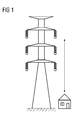
- a sensor assembly As shown in Fig. 1 , a sensor assembly is usually fitted to a trunk line attachment while a controller is installed on the ground, so that the potential difference between the sensor assembly and the controller may reach the range of thousands of volts to tens of thousands of volts. Therefore it is difficult to supply electricity from the controller to the sensor assembly and at the same time obtain sample data from the sensor assembly.
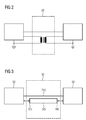
- Fig. 2 shows the high voltage interface device 20 which is most commonly used at present; this consists of two parts, namely an isolating transformer and optical fiber.
- the isolating transformer has relatively high isolating capability and can transmit electrical power from the controller on the low voltage side to the sensor assembly on the high voltage side effectively, while the optical fiber enables reliable communication between the two.
- the present invention provides a high voltage interface device and method, which have such advantages as good high voltage isolation capability, relatively low weight and volume, and a comparatively low cost.
- a high voltage interface device comprising: an optical fiber for communication; an insulation device for transmitting ultrasonic waves; a first ultrasonic transducer element, positioned at one end of the insulation device; and a second ultrasonic transducer element, positioned at the other end of the insulation device; wherein the first ultrasonic transducer element is used for converting an inputted electrical power signal to an ultrasonic wave and transmitting the same to the insulation device, and the second ultrasonic transducer element is used for converting the ultrasonic wave from the insulation device to an electrical power signal to be outputted.
- a high voltage interface device comprising: an insulation device for transmitting ultrasonic waves; a first ultrasonic transducer element, one end of which is positioned at one end of the insulation device; and a second ultrasonic transducer element, one end of which is positioned at the other end of the insulation device; wherein the first ultrasonic transducer element is used for converting an inputted electrical power signal to a first ultrasonic wave and transmitting the same to the insulation device, and the second ultrasonic transducer element is used for converting the first ultrasonic wave from the insulation device to an electrical power signal to be outputted; the first ultrasonic transducer element is further used for converting an inputted electrical modulation signal to a second ultrasonic wave and transmitting the same to the insulation device, and the second ultrasonic transducer element is used for converting the second ultrasonic wave from the insulation device to an electrical modulation signal to be outputted; the second ultrasonic transducer element is further used for converting an inputted
- a first ultrasonic transducer element array is used for converting an inputted electrical power signal to an ultrasonic wave
- a second ultrasonic transducer element array is used for receiving an ultrasonic wave from the first ultrasonic transducer element array via the insulation device and converting the same to an electrical power signal to be outputted
- the second ultrasonic transducer element array is used for converting an inputted electrical modulation signal to an ultrasonic wave
- the first ultrasonic transducer element array is used for receiving an ultrasonic wave from the second ultrasonic transducer element array via the insulation device and converting the same to an electrical modulation signal to be outputted.
- a portion of the ultrasonic transducer elements in the first ultrasonic transducer element array is used for converting an inputted electrical power signal to an ultrasonic wave
- a portion of the ultrasonic transducer elements in the second ultrasonic transducer element array is used for receiving an ultrasonic wave from a portion of the ultrasonic transducer elements in the first ultrasonic transducer element array via the insulation device and converting the same to an electrical power signal to be outputted
- the remaining portion of the ultrasonic transducer elements in the second ultrasonic transducer element array is used for converting an inputted electrical modulation signal to an ultrasonic wave
- the remaining portion of the ultrasonic transducer elements in the first ultrasonic transducer element array is used for receiving an ultrasonic wave from the remaining portion of the ultrasonic transducer elements in the second ultrasonic transducer element array via the insulation device and converting the same to an electrical modulation signal to be outputted.
- the insulation device comprises a glass tube filled with distilled water.
- the first and second ultrasonic transducer element arrays are piezoelectric ceramic element arrays.
- the piezoelectric ceramic elements in the piezoelectric ceramic element arrays are identical, and the resonant frequency of the piezoelectric ceramic elements is equal to the frequency of the electrical power signal and electrical modulation signal.
- An ultrasonic wave emitted by an ultrasonic transducer element located at one end of the insulation device can be focused on the surface of a corresponding ultrasonic transducer element located at the other end of the insulation device by phased array technology.
- a method for interacting under high voltage conditions comprising: coupling a high voltage interface device as described above between a controller on a low voltage side and a sensor assembly on a high voltage side, wherein the first ultrasonic transducer element array is coupled to the controller, and the second ultrasonic transducer element array is coupled to the sensor assembly.
- Fig. 3 shows a schematic diagram of a high voltage interface device according to one embodiment of the present invention.
- the high voltage interface device 30 shown in Fig. 3 may comprise an optical fiber 310, an insulation device 320 suitable for transmitting ultrasonic waves, and first ultrasonic transducer elements 330 and second ultrasonic transducer elements 340 disposed at either end of the insulation device 320.
- the high voltage interface device 30 can serve the function of supplying electricity from a low voltage side to a high voltage side, the two sides being isolated from each other, to supply electricity to an apparatus with micro-power consumption.
- the high voltage interface device 30 can be coupled between a controller 50 on the low voltage side and a sensor assembly 60 on the high voltage side, transmitting electrical energy from the controller 50 into the sensor assembly 60.
- the optical fiber 310 may be used for communication between the two.
- the first ultrasonic transducer elements 330 are used for converting electrical energy inputted from the controller 50, i.e. an electrical power signal, to an ultrasonic wave; the ultrasonic wave is transmitted along the insulation device 320 to the second ultrasonic transducer elements 340, which convert the ultrasonic wave received to a corresponding electrical power signal, i.e. electrical energy, and output this signal to the sensor assembly 60.
- Generally known technology may be used to enable the sensor assembly 60 to convert the electrical power signal received thereby to a supply voltage capable of allowing the various components thereof to operate normally.
- the high voltage interface device is not only capable of high voltage isolation, but is of light weight and small volume. In addition, the production cost thereof is relatively low.
- Fig. 4 shows a schematic diagram of a high voltage interface device according to another embodiment of the present invention.
- a high voltage interface device 40 may comprise an insulation device 410 suitable for transmitting ultrasonic waves, and ultrasonic transducer elements 420 and 430 disposed at either end of the insulation device 410.
- the high voltage interface device 40 can serve the function of supplying electricity from a low voltage side to a high voltage side, the two sides being isolated from each other, to supply electricity to an apparatus with micro-power consumption.
- the high voltage interface device 40 can also be coupled between a controller 50 and a sensor assembly 60 .
- the first ultrasonic transducer elements 420 are used for converting an electrical power signal inputted from the controller 50 to an ultrasonic wave; the ultrasonic wave is transmitted along the insulation device 410 to the second ultrasonic transducer elements 430, which convert the ultrasonic wave received to a corresponding electrical power signal and output this signal to the sensor assembly 60.
- Generally known technology may be used to enable the sensor assembly 60 to convert the electrical power signal received thereby to a supply voltage capable of allowing the various components thereof to operate normally.
- first ultrasonic transducer elements 420 and second ultrasonic transducer elements 430 may also transmit electrical modulation signals to each other.
- An electrical modulation signal from the controller 50 is converted to an ultrasonic wave by the first ultrasonic transducer elements 420; the ultrasonic wave is transmitted via the insulation device 410 to the second ultrasonic transducer elements 430, which convert the ultrasonic wave to an electrical modulation signal to be outputted and delivered to the sensor assembly 60.
- This electrical modulation signal may contain some initialization information.
- an electrical modulation signal from the sensor assembly 60 is converted to an ultrasonic wave by the second ultrasonic transducer elements 430; the ultrasonic wave is transmitted via the insulation device 410 to the first ultrasonic transducer elements 420, which convert the ultrasonic wave to an electrical modulation signal to be delivered to the controller 50.
- the above electrical modulation signal may include sampling information from the sensor assembly 60, e.g. current and voltage at the high voltage side end.
- the first ultrasonic transducer elements 420 convert an electrical power signal inputted from the controller 50 to an ultrasonic wave; the ultrasonic wave is transmitted along the insulation device 410 to the second ultrasonic transducer elements 430, which convert the ultrasonic wave received to a corresponding electrical power signal and output this signal to the sensor assembly 60.
- the sensor assembly 60 may convert the electrical power signal received thereby to a supply voltage capable of allowing the various components thereof to operate normally.
- the first ultrasonic transducer elements 420 convert an electrical modulation signal inputted from the controller 50 to an ultrasonic wave, wherein the electrical modulation signal can be generated using generally known technology and may contain initialization information in the controller 50.
- the ultrasonic wave is transmitted along the insulation device 410 to the second ultrasonic transducer elements 430, which convert the ultrasonic wave received to a corresponding electrical modulation signal and output this signal to the sensor assembly 60.
- Generally used technology may be used to enable the sensor assembly 60 to demodulate the electrical modulation signal received, in order to obtain the initialization information.
- the second ultrasonic transducer elements 430 convert an electrical modulation signal inputted from the sensor assembly 60 to an ultrasonic wave, wherein the electrical modulation signal may be generated using generally known technology and may contain information sampled by the sensor assembly 60.
- the ultrasonic wave is transmitted along the insulation device 410 to the first ultrasonic transducer elements 420, which convert the ultrasonic wave received to a corresponding electrical modulation signal and output this signal to the controller 50.
- Generally used technology may be used to enable the controller 50 to demodulate the electrical modulation signal received, in order to obtain the information sampled by the sensor assembly 60.
- a portion of the first ultrasonic transducer elements 420 converts an electrical power signal inputted from the controller 50 to an ultrasonic wave; the ultrasonic wave is transmitted along the insulation device 410 to a portion of the second ultrasonic transducer elements 430, which converts an ultrasonic wave received to a corresponding electrical power signal and outputs this signal to the sensor assembly 60.
- another portion of the first ultrasonic transducer elements 420 and another portion of the second ultrasonic transducer elements 430 transfer information to each other.
- the first ultrasonic transducer element(s) 420 convert(s) an electrical modulation signal inputted from the controller 50 to an ultrasonic wave, wherein the electrical modulation signal may be generated using generally known technology and may contain initialization information from the controller 50.
- the ultrasonic wave is transmitted along the insulation device 410 to the second ultrasonic transducer element(s) 430, which convert(s) the ultrasonic wave received to a corresponding electrical modulation signal and output(s) this signal to the sensor assembly 60.
- Generally used technology may be used to enable the sensor assembly 60 to demodulate the electrical modulation signal received, in order to obtain the initialization information.
- the other portion of the second ultrasonic transducer elements 430 converts an electrical modulation signal inputted from the sensor assembly 40 to an ultrasonic wave, wherein the electrical modulation signal may be generated using generally known technology and may contain sampled information from the sensor assembly 40.
- the ultrasonic wave is transmitted along the insulation device 410 to the other portion of the first ultrasonic transducer elements 420, which converts the ultrasonic wave received to a corresponding electrical modulation signal and outputs this signal to the controller 50.
- Generally used technology may be used to enable the controller 50 to demodulate the electrical modulation signal received, in order to obtain the sampled information.
- the first ultrasonic transducer elements or second ultrasonic transducer elements may be an array composed of multiple piezoelectric ceramic elements.
- the piezoelectric ceramic elements can convert electrical energy to mechanical energy and vice versa.
- ultrasonic transducer elements of other types can of course also be used, for example: an electrostatic ultrasonic transducer element array, an electromagnetic ultrasonic transducer element array, a magnetostrictive transducer, an electrodynamic transducer, an electromagnetic transducer, or a capacitive transducer, etc.
- the frequency of the signal inputted to the piezoelectric ceramic element may be equal to the resonant frequency of the piezoelectric ceramic element, which maximizes the strength of the ultrasonic wave emitted and the efficiency of transmission.
- the piezoelectric ceramic element which receives an ultrasonic wave can be identical to the piezoelectric ceramic element which emits an ultrasonic wave, so that the piezoelectric ceramic element receiving an ultrasonic wave is also in a resonant state, and is thus able to recover the maximum amount of energy.
- Fig. 5 which shows a schematic diagram of the microstructure of the ultrasonic transducer element array according to the present invention.
- phased array technology may be used to focus an ultrasonic wave emitted by an ultrasonic transducer element at one side on the surface of a corresponding ultrasonic transducer element at the other side.
- the insulating medium in the insulation device 410 is distilled water.
- An ultrasonic wave emitted by a piezoelectric ceramic element may be transmitted along a glass tube filled with distilled water.
- Distilled water is an insulating material; moreover, the attenuation rate of ultrasonic waves in distilled water is lower than in air.
- the insulation device may also be insulating oil/fat, insulating gel, a ceramic rod, a glass rod, or another insulating material which provides a high level of insulation and in which ultrasonic waves have a low attenuation rate.
Landscapes
- Engineering & Computer Science (AREA)
- Mechanical Engineering (AREA)
- Computer Networks & Wireless Communication (AREA)
- Power Engineering (AREA)
- Transducers For Ultrasonic Waves (AREA)
- Optical Communication System (AREA)
Abstract
Description
- The present invention relates to high voltage interface technology, in particular to a high voltage interface device based on ultrasound.
- In high voltage or ultra-high voltage fields such as power delivery or power distribution, it is generally necessary to sample electrical parameters in a trunk line in real time, for the purpose of automatic control. As shown in
Fig. 1 , a sensor assembly is usually fitted to a trunk line attachment while a controller is installed on the ground, so that the potential difference between the sensor assembly and the controller may reach the range of thousands of volts to tens of thousands of volts. Therefore it is difficult to supply electricity from the controller to the sensor assembly and at the same time obtain sample data from the sensor assembly. -
Fig. 2 shows the highvoltage interface device 20 which is most commonly used at present; this consists of two parts, namely an isolating transformer and optical fiber. The isolating transformer has relatively high isolating capability and can transmit electrical power from the controller on the low voltage side to the sensor assembly on the high voltage side effectively, while the optical fiber enables reliable communication between the two. - However, since such a high voltage interface device uses an isolating transformer, the weight and volume thereof will increase steadily as the insulation level of the isolating transformer increases, as will the cost.
- In view of the above problem, the present invention provides a high voltage interface device and method, which have such advantages as good high voltage isolation capability, relatively low weight and volume, and a comparatively low cost.
- According to one aspect of the present invention, a high voltage interface device is provided, comprising: an optical fiber for communication; an insulation device for transmitting ultrasonic waves; a first ultrasonic transducer element, positioned at one end of the insulation device; and a second ultrasonic transducer element, positioned at the other end of the insulation device; wherein the first ultrasonic transducer element is used for converting an inputted electrical power signal to an ultrasonic wave and transmitting the same to the insulation device, and the second ultrasonic transducer element is used for converting the ultrasonic wave from the insulation device to an electrical power signal to be outputted.
- According to another aspect of the present invention, a high voltage interface device is provided, comprising: an insulation device for transmitting ultrasonic waves; a first ultrasonic transducer element, one end of which is positioned at one end of the insulation device; and a second ultrasonic transducer element, one end of which is positioned at the other end of the insulation device; wherein the first ultrasonic transducer element is used for converting an inputted electrical power signal to a first ultrasonic wave and transmitting the same to the insulation device, and the second ultrasonic transducer element is used for converting the first ultrasonic wave from the insulation device to an electrical power signal to be outputted; the first ultrasonic transducer element is further used for converting an inputted electrical modulation signal to a second ultrasonic wave and transmitting the same to the insulation device, and the second ultrasonic transducer element is used for converting the second ultrasonic wave from the insulation device to an electrical modulation signal to be outputted; the second ultrasonic transducer element is further used for converting an inputted electrical modulation signal to a third ultrasonic wave and transmitting the same to the insulation device, and the first ultrasonic transducer element is used for converting the third ultrasonic wave from the insulation device to an electrical modulation signal to be outputted.
- Within a first time period, a first ultrasonic transducer element array is used for converting an inputted electrical power signal to an ultrasonic wave, and a second ultrasonic transducer element array is used for receiving an ultrasonic wave from the first ultrasonic transducer element array via the insulation device and converting the same to an electrical power signal to be outputted; within a second period of time, the second ultrasonic transducer element array is used for converting an inputted electrical modulation signal to an ultrasonic wave, and the first ultrasonic transducer element array is used for receiving an ultrasonic wave from the second ultrasonic transducer element array via the insulation device and converting the same to an electrical modulation signal to be outputted.
- A portion of the ultrasonic transducer elements in the first ultrasonic transducer element array is used for converting an inputted electrical power signal to an ultrasonic wave, and a portion of the ultrasonic transducer elements in the second ultrasonic transducer element array is used for receiving an ultrasonic wave from a portion of the ultrasonic transducer elements in the first ultrasonic transducer element array via the insulation device and converting the same to an electrical power signal to be outputted; the remaining portion of the ultrasonic transducer elements in the second ultrasonic transducer element array is used for converting an inputted electrical modulation signal to an ultrasonic wave, and the remaining portion of the ultrasonic transducer elements in the first ultrasonic transducer element array is used for receiving an ultrasonic wave from the remaining portion of the ultrasonic transducer elements in the second ultrasonic transducer element array via the insulation device and converting the same to an electrical modulation signal to be outputted.
- The insulation device comprises a glass tube filled with distilled water.
- The first and second ultrasonic transducer element arrays are piezoelectric ceramic element arrays.
- The piezoelectric ceramic elements in the piezoelectric ceramic element arrays are identical, and the resonant frequency of the piezoelectric ceramic elements is equal to the frequency of the electrical power signal and electrical modulation signal.
- An ultrasonic wave emitted by an ultrasonic transducer element located at one end of the insulation device can be focused on the surface of a corresponding ultrasonic transducer element located at the other end of the insulation device by phased array technology.
- According to another aspect of the present invention, a method for interacting under high voltage conditions is provided, comprising: coupling a high voltage interface device as described above between a controller on a low voltage side and a sensor assembly on a high voltage side, wherein the first ultrasonic transducer element array is coupled to the controller, and the second ultrasonic transducer element array is coupled to the sensor assembly.
- The following detailed description of the present invention with reference to the accompanying drawings will make the above and other objects, features, solutions and advantages of the present invention more obvious.
- Preferred embodiments of the present invention will be described in detail below with reference to the accompanying drawings, to give those skilled in the art a clearer understanding of the above and other features and advantages of the present invention. In the drawings:
-
Fig. 1 shows a schematic diagram of the high potential difference between a sensor assembly and a controller; -
Fig. 2 shows a schematic diagram of a conventional high voltage interface device; -
Fig. 3 shows a schematic diagram of a high voltage interface device according to one embodiment of the present invention; -
Fig. 4 shows a schematic diagram of a high voltage interface device according to another embodiment of the present invention; and -
Fig. 5 shows a schematic diagram of the microstructure of the ultrasonic transducer element array according to the present invention. - The present invention is described in further detail below by way of embodiments, in order to clarify the object, technical solution and advantages thereof.
-
Fig. 3 shows a schematic diagram of a high voltage interface device according to one embodiment of the present invention. The highvoltage interface device 30 shown inFig. 3 may comprise anoptical fiber 310, aninsulation device 320 suitable for transmitting ultrasonic waves, and firstultrasonic transducer elements 330 and secondultrasonic transducer elements 340 disposed at either end of theinsulation device 320. The highvoltage interface device 30 can serve the function of supplying electricity from a low voltage side to a high voltage side, the two sides being isolated from each other, to supply electricity to an apparatus with micro-power consumption. For instance, the highvoltage interface device 30 can be coupled between acontroller 50 on the low voltage side and asensor assembly 60 on the high voltage side, transmitting electrical energy from thecontroller 50 into thesensor assembly 60. Theoptical fiber 310 may be used for communication between the two. In addition, the firstultrasonic transducer elements 330 are used for converting electrical energy inputted from thecontroller 50, i.e. an electrical power signal, to an ultrasonic wave; the ultrasonic wave is transmitted along theinsulation device 320 to the secondultrasonic transducer elements 340, which convert the ultrasonic wave received to a corresponding electrical power signal, i.e. electrical energy, and output this signal to thesensor assembly 60. Generally known technology may be used to enable thesensor assembly 60 to convert the electrical power signal received thereby to a supply voltage capable of allowing the various components thereof to operate normally. In this embodiment, since an isolating transformer is replaced by ultrasonic transducer elements and an insulation device suitable for transmitting ultrasonic waves, the high voltage interface device is not only capable of high voltage isolation, but is of light weight and small volume. In addition, the production cost thereof is relatively low. -
Fig. 4 shows a schematic diagram of a high voltage interface device according to another embodiment of the present invention. AsFig. 4 shows, a highvoltage interface device 40 may comprise aninsulation device 410 suitable for transmitting ultrasonic waves, andultrasonic transducer elements insulation device 410. The highvoltage interface device 40 can serve the function of supplying electricity from a low voltage side to a high voltage side, the two sides being isolated from each other, to supply electricity to an apparatus with micro-power consumption. For instance, the highvoltage interface device 40 can also be coupled between acontroller 50 and asensor assembly 60. The firstultrasonic transducer elements 420 are used for converting an electrical power signal inputted from thecontroller 50 to an ultrasonic wave; the ultrasonic wave is transmitted along theinsulation device 410 to the secondultrasonic transducer elements 430, which convert the ultrasonic wave received to a corresponding electrical power signal and output this signal to thesensor assembly 60. Generally known technology may be used to enable thesensor assembly 60 to convert the electrical power signal received thereby to a supply voltage capable of allowing the various components thereof to operate normally. - In addition, the first
ultrasonic transducer elements 420 and secondultrasonic transducer elements 430 may also transmit electrical modulation signals to each other. An electrical modulation signal from thecontroller 50 is converted to an ultrasonic wave by the firstultrasonic transducer elements 420; the ultrasonic wave is transmitted via theinsulation device 410 to the secondultrasonic transducer elements 430, which convert the ultrasonic wave to an electrical modulation signal to be outputted and delivered to thesensor assembly 60. This electrical modulation signal may contain some initialization information. In addition, an electrical modulation signal from thesensor assembly 60 is converted to an ultrasonic wave by the secondultrasonic transducer elements 430; the ultrasonic wave is transmitted via theinsulation device 410 to the firstultrasonic transducer elements 420, which convert the ultrasonic wave to an electrical modulation signal to be delivered to thecontroller 50. The above electrical modulation signal may include sampling information from thesensor assembly 60, e.g. current and voltage at the high voltage side end. - In one example, within one time period, the first
ultrasonic transducer elements 420 convert an electrical power signal inputted from thecontroller 50 to an ultrasonic wave; the ultrasonic wave is transmitted along theinsulation device 410 to the secondultrasonic transducer elements 430, which convert the ultrasonic wave received to a corresponding electrical power signal and output this signal to thesensor assembly 60. Generally known technology may be used to enable thesensor assembly 60 to convert the electrical power signal received thereby to a supply voltage capable of allowing the various components thereof to operate normally. - Within another time period, the first
ultrasonic transducer elements 420 convert an electrical modulation signal inputted from thecontroller 50 to an ultrasonic wave, wherein the electrical modulation signal can be generated using generally known technology and may contain initialization information in thecontroller 50. The ultrasonic wave is transmitted along theinsulation device 410 to the secondultrasonic transducer elements 430, which convert the ultrasonic wave received to a corresponding electrical modulation signal and output this signal to thesensor assembly 60. Generally used technology may be used to enable thesensor assembly 60 to demodulate the electrical modulation signal received, in order to obtain the initialization information. The secondultrasonic transducer elements 430 convert an electrical modulation signal inputted from thesensor assembly 60 to an ultrasonic wave, wherein the electrical modulation signal may be generated using generally known technology and may contain information sampled by thesensor assembly 60. The ultrasonic wave is transmitted along theinsulation device 410 to the firstultrasonic transducer elements 420, which convert the ultrasonic wave received to a corresponding electrical modulation signal and output this signal to thecontroller 50. Generally used technology may be used to enable thecontroller 50 to demodulate the electrical modulation signal received, in order to obtain the information sampled by thesensor assembly 60. - In another example, a portion of the first
ultrasonic transducer elements 420 converts an electrical power signal inputted from thecontroller 50 to an ultrasonic wave; the ultrasonic wave is transmitted along theinsulation device 410 to a portion of the secondultrasonic transducer elements 430, which converts an ultrasonic wave received to a corresponding electrical power signal and outputs this signal to thesensor assembly 60. At the same time, another portion of the firstultrasonic transducer elements 420 and another portion of the secondultrasonic transducer elements 430 transfer information to each other. The first ultrasonic transducer element(s) 420 convert(s) an electrical modulation signal inputted from thecontroller 50 to an ultrasonic wave, wherein the electrical modulation signal may be generated using generally known technology and may contain initialization information from thecontroller 50. The ultrasonic wave is transmitted along theinsulation device 410 to the second ultrasonic transducer element(s) 430, which convert(s) the ultrasonic wave received to a corresponding electrical modulation signal and output(s) this signal to thesensor assembly 60. Generally used technology may be used to enable thesensor assembly 60 to demodulate the electrical modulation signal received, in order to obtain the initialization information. The other portion of the secondultrasonic transducer elements 430 converts an electrical modulation signal inputted from thesensor assembly 40 to an ultrasonic wave, wherein the electrical modulation signal may be generated using generally known technology and may contain sampled information from thesensor assembly 40. The ultrasonic wave is transmitted along theinsulation device 410 to the other portion of the firstultrasonic transducer elements 420, which converts the ultrasonic wave received to a corresponding electrical modulation signal and outputs this signal to thecontroller 50. Generally used technology may be used to enable thecontroller 50 to demodulate the electrical modulation signal received, in order to obtain the sampled information. - In one embodiment of the present invention, the first ultrasonic transducer elements or second ultrasonic transducer elements may be an array composed of multiple piezoelectric ceramic elements. The piezoelectric ceramic elements can convert electrical energy to mechanical energy and vice versa. In addition to piezoelectric transducers, ultrasonic transducer elements of other types can of course also be used, for example: an electrostatic ultrasonic transducer element array, an electromagnetic ultrasonic transducer element array, a magnetostrictive transducer, an electrodynamic transducer, an electromagnetic transducer, or a capacitive transducer, etc. Optionally, the frequency of the signal inputted to the piezoelectric ceramic element may be equal to the resonant frequency of the piezoelectric ceramic element, which maximizes the strength of the ultrasonic wave emitted and the efficiency of transmission. Moreover, the piezoelectric ceramic element which receives an ultrasonic wave can be identical to the piezoelectric ceramic element which emits an ultrasonic wave, so that the piezoelectric ceramic element receiving an ultrasonic wave is also in a resonant state, and is thus able to recover the maximum amount of energy. Refer to
Fig. 5 , which shows a schematic diagram of the microstructure of the ultrasonic transducer element array according to the present invention. To further increase the efficiency of ultrasonic wave transmission, phased array technology may be used to focus an ultrasonic wave emitted by an ultrasonic transducer element at one side on the surface of a corresponding ultrasonic transducer element at the other side. - In one embodiment of the present invention, the insulating medium in the
insulation device 410 is distilled water. An ultrasonic wave emitted by a piezoelectric ceramic element may be transmitted along a glass tube filled with distilled water. Distilled water is an insulating material; moreover, the attenuation rate of ultrasonic waves in distilled water is lower than in air. However, the present invention is not limited to this, and the insulation device may also be insulating oil/fat, insulating gel, a ceramic rod, a glass rod, or another insulating material which provides a high level of insulation and in which ultrasonic waves have a low attenuation rate. - The present invention has been presented and explained in detail above by way of the accompanying drawings and embodiments. However, the present invention is not limited to these disclosed embodiments, and other solutions derived therefrom by those skilled in the art shall also fall within the scope of protection of the present invention. Therefore the scope of protection of the present invention should be defined by the attached claims.
Claims (14)
- A high voltage interface device, comprising:an optical fiber for communication;an insulation device for transmitting ultrasonic waves;a first ultrasonic transducer element, positioned at one end of the insulation device; anda second ultrasonic transducer element, positioned at the other end of the insulation device;wherein the first ultrasonic transducer element is used for converting an inputted electrical power signal to an ultrasonic wave and transmitting the same to the insulation device, and the second ultrasonic transducer element is used for converting the ultrasonic wave from the insulation device to an electrical power signal to be outputted.
- The high voltage interface device as claimed in claim 1, characterized in that the insulating medium in the insulation device is distilled water.
- The high voltage interface device as claimed in claim 1, characterized in that the frequency of the electrical power signal, the resonant frequency of the first ultrasonic transducer element and the resonant frequency of the second ultrasonic transducer element are the same.
- The high voltage interface device as claimed in claim 1, characterized in that the first ultrasonic transducer element or the second ultrasonic transducer element is a piezoelectric ceramic element.
- The high voltage interface device as claimed in claim 1, characterized in that an ultrasonic wave emitted by the first ultrasonic transducer element can be focused on the surface of the second ultrasonic transducer element by phased array technology.
- A high voltage interface device, comprising:an insulation device for transmitting ultrasonic waves;a first ultrasonic transducer element, one end of which is positioned at one end of the insulation device; anda second ultrasonic transducer element, one end of which is positioned at the other end of the insulation device;wherein the first ultrasonic transducer element is used for converting an inputted electrical power signal to a first ultrasonic wave and transmitting the same to the insulation device, and the second ultrasonic transducer element is used for converting the first ultrasonic wave from the insulation device to an electrical power signal to be outputted;the first ultrasonic transducer element is further used for converting an inputted electrical modulation signal to a second ultrasonic wave and transmitting the same to the insulation device, and the second ultrasonic transducer element is used for converting the second ultrasonic wave from the insulation device to an electrical modulation signal to be outputted;the second ultrasonic transducer element is further used for converting an inputted electrical modulation signal to a third ultrasonic wave and transmitting the same to the insulation device, and the first ultrasonic transducer element is used for converting the third ultrasonic wave from the insulation device to an electrical modulation signal to be outputted.
- The high voltage interface device as claimed in claim 6, characterized in that within one time period, the first ultrasonic transducer element and the second ultrasonic transducer element are used for transmitting an electrical power signal, and within another time period, the first ultrasonic transducer element and second ultrasonic transducer element are used for transmitting electrical modulation signals to each other.
- The high voltage interface device as claimed in claim 6, characterized in that a portion of the first ultrasonic transducer elements and the second ultrasonic transducer elements is used for transmitting an electrical power signal, while another portion of the first ultrasonic transducer elements and the second ultrasonic transducer elements is used for transmitting an electrical modulation signal simultaneously.
- The high voltage interface device as claimed in claim 6, characterized in that the insulating medium in the insulation device is distilled water.
- The high voltage interface device as claimed in claim 6, characterized in that the first ultrasonic transducer element or the second ultrasonic transducer element is a piezoelectric ceramic element.
- The high voltage interface device as claimed in claim 6, characterized in that the frequency of the electrical power signal, the resonant frequency of the first ultrasonic transducer element and the resonant frequency of the second ultrasonic transducer element are the same, and the frequency of the electrical modulation signal, the resonant frequency of the first ultrasonic transducer element and the resonant frequency of the second ultrasonic transducer element are the same.
- The high voltage interface device as claimed in claim 6, characterized in that an ultrasonic wave emitted by the first ultrasonic transducer element can be focused on the surface of the second ultrasonic transducer element by phased array technology.
- A system: comprising the high voltage interface device as claimed in any one of claims 1 - 5, a controller and a sensor, the controller being electrically connected to the first ultrasonic transducer element, the sensor being electrically connected to the second ultrasonic transducer element, and the controller and the sensor each being connected to the optical fiber.
- A system: comprising the high voltage interface device as claimed in any one of claims 6 - 12, a controller and a sensor, the controller being electrically connected to the first ultrasonic transducer element, the sensor being electrically connected to the second ultrasonic transducer element, and the controller and the sensor each being connected to the optical fiber.
Applications Claiming Priority (1)
| Application Number | Priority Date | Filing Date | Title |
|---|---|---|---|
| CN201210264264.9A CN103580295A (en) | 2012-07-27 | 2012-07-27 | High-voltage interface device and method based on ultrasonic waves |
Publications (3)
| Publication Number | Publication Date |
|---|---|
| EP2690804A2 true EP2690804A2 (en) | 2014-01-29 |
| EP2690804A3 EP2690804A3 (en) | 2018-03-07 |
| EP2690804B1 EP2690804B1 (en) | 2020-02-05 |
Family
ID=49035268
Family Applications (1)
| Application Number | Title | Priority Date | Filing Date |
|---|---|---|---|
| EP13178210.4A Active EP2690804B1 (en) | 2012-07-27 | 2013-07-26 | High voltage interface device and method based on ultrasound |
Country Status (2)
| Country | Link |
|---|---|
| EP (1) | EP2690804B1 (en) |
| CN (1) | CN103580295A (en) |
Cited By (1)
| Publication number | Priority date | Publication date | Assignee | Title |
|---|---|---|---|---|
| CN107947387A (en) * | 2017-12-25 | 2018-04-20 | 南京邮电大学 | A kind of energy supplementing system of the underwater Internet of things node based on ultrasonic wave |
Families Citing this family (3)
| Publication number | Priority date | Publication date | Assignee | Title |
|---|---|---|---|---|
| CN107302402A (en) * | 2017-06-23 | 2017-10-27 | 杭州宜清自动化控制技术有限公司 | A kind of wisdom power plant wireless messages monitoring system and method based on sound communication |
| CN114142628B (en) * | 2021-12-06 | 2024-05-28 | 西安交通大学 | An ultrasonically isolated power supply device for high voltage power system |
| US20240148947A1 (en) * | 2022-11-03 | 2024-05-09 | Fresenius Medical Care Holdings, Inc. | Ultrasonically powered sensing device |
Family Cites Families (7)
| Publication number | Priority date | Publication date | Assignee | Title |
|---|---|---|---|---|
| DE3006102A1 (en) * | 1979-02-19 | 1980-08-28 | Ricoh Kk | OPTICAL CONTROL DEVICE |
| CN2151470Y (en) * | 1992-11-19 | 1993-12-29 | 上海交通大学 | Supersonic insulator inspector |
| EP1396172A2 (en) * | 2001-01-05 | 2004-03-10 | ANGELSEN, Bjorn A. J. | Wideband transducer |
| CN101309057B (en) * | 2008-06-19 | 2011-04-06 | 西安交通大学 | Ultrasonic energy supply apparatus of photoelectric current inductor |
| CN101726540A (en) * | 2009-12-23 | 2010-06-09 | 哈尔滨工业大学 | Portable ultraphonic phased array detection imager |
| CN101950660B (en) * | 2010-09-15 | 2012-11-28 | 西安交通大学 | Active photoelectric current transformer power-supplied by ultrasonic wave |
| CN101937764B (en) * | 2010-09-15 | 2012-07-04 | 西安交通大学 | Active photoelectric current transformermutual inductor by mixed power supply of ultrasound and induction |
-
2012
- 2012-07-27 CN CN201210264264.9A patent/CN103580295A/en active Pending
-
2013
- 2013-07-26 EP EP13178210.4A patent/EP2690804B1/en active Active
Non-Patent Citations (1)
| Title |
|---|
| None |
Cited By (2)
| Publication number | Priority date | Publication date | Assignee | Title |
|---|---|---|---|---|
| CN107947387A (en) * | 2017-12-25 | 2018-04-20 | 南京邮电大学 | A kind of energy supplementing system of the underwater Internet of things node based on ultrasonic wave |
| CN107947387B (en) * | 2017-12-25 | 2023-07-04 | 南京邮电大学 | Energy supply system of underwater Internet of things node based on ultrasonic waves |
Also Published As
| Publication number | Publication date |
|---|---|
| EP2690804B1 (en) | 2020-02-05 |
| EP2690804A3 (en) | 2018-03-07 |
| CN103580295A (en) | 2014-02-12 |
Similar Documents
| Publication | Publication Date | Title |
|---|---|---|
| US9810059B2 (en) | Wireless power transmission to downhole well equipment | |
| CN106981934B (en) | A kind of system and method carrying out wireless power transfer for closed metal container | |
| EP2690804B1 (en) | High voltage interface device and method based on ultrasound | |
| US9774277B2 (en) | Energy harvesting | |
| CN102577436B (en) | Ultrasound probe and ultrasound imaging device | |
| WO2008060420A8 (en) | Transducer array imaging system | |
| SE465946B (en) | DEVICE FOR TRANSFER OF ELECTRICAL ENERGY TO ELECTRICAL EQUIPMENT THROUGH OMAGNETIC AND ELECTRICALLY INSULATING MATERIALS | |
| WO2008066682A3 (en) | Transducer array imaging system | |
| WO2008060438A8 (en) | Transducer array imaging system | |
| WO2008060422A3 (en) | Transducer array imaging system | |
| WO2008066681A3 (en) | Transducer array imaging system | |
| WO2008060425A3 (en) | Transducer array imaging system | |
| CN101335573A (en) | A broadband adaptive matching method and device for an underwater acoustic signal transmitter | |
| WO2014035785A1 (en) | Method and apparatus for acoustical power transfer and communication | |
| EP3485325B1 (en) | Coupling sensor information to an optical cable using ultrasonic vibrations | |
| CN107528390A (en) | A kind of device for the charging of closed metal container built-in device | |
| CN105356950B (en) | Hydrology binary channels underwater communications system | |
| CN105662465B (en) | Ultrasonic probe and supersonic detection method | |
| CN101750609A (en) | Capacitance type micromachined ultrasonic transducer capable of performing wireless telemetric sensing operation | |
| CN202975321U (en) | Multi-beam acoustic measuring system | |
| JPH0865220A (en) | Underwater telemetry device | |
| CN204216867U (en) | An electronic switch for switching high-power sonar transmitting transducers | |
| CN203132685U (en) | Detachable acoustic emission sensor | |
| CN203506755U (en) | Ultrasonic equipment | |
| JPS60211811A (en) | Non-contact coupling system |
Legal Events
| Date | Code | Title | Description |
|---|---|---|---|
| PUAI | Public reference made under article 153(3) epc to a published international application that has entered the european phase |
Free format text: ORIGINAL CODE: 0009012 |
|
| AK | Designated contracting states |
Kind code of ref document: A2 Designated state(s): AL AT BE BG CH CY CZ DE DK EE ES FI FR GB GR HR HU IE IS IT LI LT LU LV MC MK MT NL NO PL PT RO RS SE SI SK SM TR |
|
| AX | Request for extension of the european patent |
Extension state: BA ME |
|
| RAP1 | Party data changed (applicant data changed or rights of an application transferred) |
Owner name: SIEMENS AKTIENGESELLSCHAFT |
|
| RAP1 | Party data changed (applicant data changed or rights of an application transferred) |
Owner name: SIEMENS AKTIENGESELLSCHAFT |
|
| PUAL | Search report despatched |
Free format text: ORIGINAL CODE: 0009013 |
|
| AK | Designated contracting states |
Kind code of ref document: A3 Designated state(s): AL AT BE BG CH CY CZ DE DK EE ES FI FR GB GR HR HU IE IS IT LI LT LU LV MC MK MT NL NO PL PT RO RS SE SI SK SM TR |
|
| AX | Request for extension of the european patent |
Extension state: BA ME |
|
| RIC1 | Information provided on ipc code assigned before grant |
Ipc: H04B 11/00 20060101AFI20180130BHEP Ipc: B06B 1/06 20060101ALI20180130BHEP Ipc: G01R 15/26 20060101ALI20180130BHEP Ipc: B06B 3/00 20060101ALI20180130BHEP Ipc: H02G 1/02 20060101ALI20180130BHEP Ipc: H02N 2/18 20060101ALI20180130BHEP |
|
| STAA | Information on the status of an ep patent application or granted ep patent |
Free format text: STATUS: REQUEST FOR EXAMINATION WAS MADE |
|
| 17P | Request for examination filed |
Effective date: 20180907 |
|
| RBV | Designated contracting states (corrected) |
Designated state(s): AL AT BE BG CH CY CZ DE DK EE ES FI FR GB GR HR HU IE IS IT LI LT LU LV MC MK MT NL NO PL PT RO RS SE SI SK SM TR |
|
| STAA | Information on the status of an ep patent application or granted ep patent |
Free format text: STATUS: EXAMINATION IS IN PROGRESS |
|
| 17Q | First examination report despatched |
Effective date: 20181220 |
|
| GRAP | Despatch of communication of intention to grant a patent |
Free format text: ORIGINAL CODE: EPIDOSNIGR1 |
|
| STAA | Information on the status of an ep patent application or granted ep patent |
Free format text: STATUS: GRANT OF PATENT IS INTENDED |
|
| RIC1 | Information provided on ipc code assigned before grant |
Ipc: B06B 1/06 20060101ALI20190918BHEP Ipc: H02N 2/18 20060101ALI20190918BHEP Ipc: G01R 15/26 20060101ALI20190918BHEP Ipc: H01L 27/20 20060101ALN20190918BHEP Ipc: H02J 50/15 20160101ALI20190918BHEP Ipc: H04B 11/00 20060101AFI20190918BHEP Ipc: H02G 1/02 20060101ALI20190918BHEP Ipc: B06B 3/00 20060101ALI20190918BHEP |
|
| INTG | Intention to grant announced |
Effective date: 20191004 |
|
| GRAJ | Information related to disapproval of communication of intention to grant by the applicant or resumption of examination proceedings by the epo deleted |
Free format text: ORIGINAL CODE: EPIDOSDIGR1 |
|
| STAA | Information on the status of an ep patent application or granted ep patent |
Free format text: STATUS: EXAMINATION IS IN PROGRESS |
|
| GRAR | Information related to intention to grant a patent recorded |
Free format text: ORIGINAL CODE: EPIDOSNIGR71 |
|
| GRAS | Grant fee paid |
Free format text: ORIGINAL CODE: EPIDOSNIGR3 |
|
| STAA | Information on the status of an ep patent application or granted ep patent |
Free format text: STATUS: GRANT OF PATENT IS INTENDED |
|
| GRAA | (expected) grant |
Free format text: ORIGINAL CODE: 0009210 |
|
| STAA | Information on the status of an ep patent application or granted ep patent |
Free format text: STATUS: THE PATENT HAS BEEN GRANTED |
|
| INTC | Intention to grant announced (deleted) | ||
| INTG | Intention to grant announced |
Effective date: 20191219 |
|
| RIC1 | Information provided on ipc code assigned before grant |
Ipc: H01L 27/20 20060101ALN20191213BHEP Ipc: H02G 1/02 20060101ALI20191213BHEP Ipc: B06B 3/00 20060101ALI20191213BHEP Ipc: G01R 15/26 20060101ALI20191213BHEP Ipc: H02J 50/15 20160101ALI20191213BHEP Ipc: B06B 1/06 20060101ALI20191213BHEP Ipc: H02N 2/18 20060101ALI20191213BHEP Ipc: H04B 11/00 20060101AFI20191213BHEP |
|
| AK | Designated contracting states |
Kind code of ref document: B1 Designated state(s): AL AT BE BG CH CY CZ DE DK EE ES FI FR GB GR HR HU IE IS IT LI LT LU LV MC MK MT NL NO PL PT RO RS SE SI SK SM TR |
|
| REG | Reference to a national code |
Ref country code: GB Ref legal event code: FG4D |
|
| REG | Reference to a national code |
Ref country code: AT Ref legal event code: REF Ref document number: 1230607 Country of ref document: AT Kind code of ref document: T Effective date: 20200215 |
|
| REG | Reference to a national code |
Ref country code: DE Ref legal event code: R096 Ref document number: 602013065449 Country of ref document: DE |
|
| REG | Reference to a national code |
Ref country code: IE Ref legal event code: FG4D |
|
| REG | Reference to a national code |
Ref country code: CH Ref legal event code: EP |
|
| REG | Reference to a national code |
Ref country code: NL Ref legal event code: MP Effective date: 20200205 |
|
| PG25 | Lapsed in a contracting state [announced via postgrant information from national office to epo] |
Ref country code: RS Free format text: LAPSE BECAUSE OF FAILURE TO SUBMIT A TRANSLATION OF THE DESCRIPTION OR TO PAY THE FEE WITHIN THE PRESCRIBED TIME-LIMIT Effective date: 20200205 Ref country code: FI Free format text: LAPSE BECAUSE OF FAILURE TO SUBMIT A TRANSLATION OF THE DESCRIPTION OR TO PAY THE FEE WITHIN THE PRESCRIBED TIME-LIMIT Effective date: 20200205 Ref country code: NO Free format text: LAPSE BECAUSE OF FAILURE TO SUBMIT A TRANSLATION OF THE DESCRIPTION OR TO PAY THE FEE WITHIN THE PRESCRIBED TIME-LIMIT Effective date: 20200505 Ref country code: PT Free format text: LAPSE BECAUSE OF FAILURE TO SUBMIT A TRANSLATION OF THE DESCRIPTION OR TO PAY THE FEE WITHIN THE PRESCRIBED TIME-LIMIT Effective date: 20200628 |
|
| REG | Reference to a national code |
Ref country code: LT Ref legal event code: MG4D |
|
| PG25 | Lapsed in a contracting state [announced via postgrant information from national office to epo] |
Ref country code: SE Free format text: LAPSE BECAUSE OF FAILURE TO SUBMIT A TRANSLATION OF THE DESCRIPTION OR TO PAY THE FEE WITHIN THE PRESCRIBED TIME-LIMIT Effective date: 20200205 Ref country code: LV Free format text: LAPSE BECAUSE OF FAILURE TO SUBMIT A TRANSLATION OF THE DESCRIPTION OR TO PAY THE FEE WITHIN THE PRESCRIBED TIME-LIMIT Effective date: 20200205 Ref country code: BG Free format text: LAPSE BECAUSE OF FAILURE TO SUBMIT A TRANSLATION OF THE DESCRIPTION OR TO PAY THE FEE WITHIN THE PRESCRIBED TIME-LIMIT Effective date: 20200505 Ref country code: IS Free format text: LAPSE BECAUSE OF FAILURE TO SUBMIT A TRANSLATION OF THE DESCRIPTION OR TO PAY THE FEE WITHIN THE PRESCRIBED TIME-LIMIT Effective date: 20200605 Ref country code: GR Free format text: LAPSE BECAUSE OF FAILURE TO SUBMIT A TRANSLATION OF THE DESCRIPTION OR TO PAY THE FEE WITHIN THE PRESCRIBED TIME-LIMIT Effective date: 20200506 Ref country code: HR Free format text: LAPSE BECAUSE OF FAILURE TO SUBMIT A TRANSLATION OF THE DESCRIPTION OR TO PAY THE FEE WITHIN THE PRESCRIBED TIME-LIMIT Effective date: 20200205 |
|
| PG25 | Lapsed in a contracting state [announced via postgrant information from national office to epo] |
Ref country code: NL Free format text: LAPSE BECAUSE OF FAILURE TO SUBMIT A TRANSLATION OF THE DESCRIPTION OR TO PAY THE FEE WITHIN THE PRESCRIBED TIME-LIMIT Effective date: 20200205 |
|
| PG25 | Lapsed in a contracting state [announced via postgrant information from national office to epo] |
Ref country code: SK Free format text: LAPSE BECAUSE OF FAILURE TO SUBMIT A TRANSLATION OF THE DESCRIPTION OR TO PAY THE FEE WITHIN THE PRESCRIBED TIME-LIMIT Effective date: 20200205 Ref country code: SM Free format text: LAPSE BECAUSE OF FAILURE TO SUBMIT A TRANSLATION OF THE DESCRIPTION OR TO PAY THE FEE WITHIN THE PRESCRIBED TIME-LIMIT Effective date: 20200205 Ref country code: EE Free format text: LAPSE BECAUSE OF FAILURE TO SUBMIT A TRANSLATION OF THE DESCRIPTION OR TO PAY THE FEE WITHIN THE PRESCRIBED TIME-LIMIT Effective date: 20200205 Ref country code: DK Free format text: LAPSE BECAUSE OF FAILURE TO SUBMIT A TRANSLATION OF THE DESCRIPTION OR TO PAY THE FEE WITHIN THE PRESCRIBED TIME-LIMIT Effective date: 20200205 Ref country code: ES Free format text: LAPSE BECAUSE OF FAILURE TO SUBMIT A TRANSLATION OF THE DESCRIPTION OR TO PAY THE FEE WITHIN THE PRESCRIBED TIME-LIMIT Effective date: 20200205 Ref country code: CZ Free format text: LAPSE BECAUSE OF FAILURE TO SUBMIT A TRANSLATION OF THE DESCRIPTION OR TO PAY THE FEE WITHIN THE PRESCRIBED TIME-LIMIT Effective date: 20200205 Ref country code: RO Free format text: LAPSE BECAUSE OF FAILURE TO SUBMIT A TRANSLATION OF THE DESCRIPTION OR TO PAY THE FEE WITHIN THE PRESCRIBED TIME-LIMIT Effective date: 20200205 Ref country code: LT Free format text: LAPSE BECAUSE OF FAILURE TO SUBMIT A TRANSLATION OF THE DESCRIPTION OR TO PAY THE FEE WITHIN THE PRESCRIBED TIME-LIMIT Effective date: 20200205 |
|
| REG | Reference to a national code |
Ref country code: DE Ref legal event code: R097 Ref document number: 602013065449 Country of ref document: DE |
|
| REG | Reference to a national code |
Ref country code: AT Ref legal event code: MK05 Ref document number: 1230607 Country of ref document: AT Kind code of ref document: T Effective date: 20200205 |
|
| PLBE | No opposition filed within time limit |
Free format text: ORIGINAL CODE: 0009261 |
|
| STAA | Information on the status of an ep patent application or granted ep patent |
Free format text: STATUS: NO OPPOSITION FILED WITHIN TIME LIMIT |
|
| REG | Reference to a national code |
Ref country code: DE Ref legal event code: R081 Ref document number: 602013065449 Country of ref document: DE Owner name: SIEMENS ENERGY GLOBAL GMBH & CO. KG, DE Free format text: FORMER OWNER: SIEMENS AKTIENGESELLSCHAFT, 80333 MUENCHEN, DE |
|
| 26N | No opposition filed |
Effective date: 20201106 |
|
| PG25 | Lapsed in a contracting state [announced via postgrant information from national office to epo] |
Ref country code: AT Free format text: LAPSE BECAUSE OF FAILURE TO SUBMIT A TRANSLATION OF THE DESCRIPTION OR TO PAY THE FEE WITHIN THE PRESCRIBED TIME-LIMIT Effective date: 20200205 Ref country code: IT Free format text: LAPSE BECAUSE OF FAILURE TO SUBMIT A TRANSLATION OF THE DESCRIPTION OR TO PAY THE FEE WITHIN THE PRESCRIBED TIME-LIMIT Effective date: 20200205 |
|
| PG25 | Lapsed in a contracting state [announced via postgrant information from national office to epo] |
Ref country code: MC Free format text: LAPSE BECAUSE OF FAILURE TO SUBMIT A TRANSLATION OF THE DESCRIPTION OR TO PAY THE FEE WITHIN THE PRESCRIBED TIME-LIMIT Effective date: 20200205 Ref country code: SI Free format text: LAPSE BECAUSE OF FAILURE TO SUBMIT A TRANSLATION OF THE DESCRIPTION OR TO PAY THE FEE WITHIN THE PRESCRIBED TIME-LIMIT Effective date: 20200205 Ref country code: PL Free format text: LAPSE BECAUSE OF FAILURE TO SUBMIT A TRANSLATION OF THE DESCRIPTION OR TO PAY THE FEE WITHIN THE PRESCRIBED TIME-LIMIT Effective date: 20200205 |
|
| REG | Reference to a national code |
Ref country code: CH Ref legal event code: PL |
|
| REG | Reference to a national code |
Ref country code: BE Ref legal event code: MM Effective date: 20200731 |
|
| PG25 | Lapsed in a contracting state [announced via postgrant information from national office to epo] |
Ref country code: LU Free format text: LAPSE BECAUSE OF NON-PAYMENT OF DUE FEES Effective date: 20200726 Ref country code: CH Free format text: LAPSE BECAUSE OF NON-PAYMENT OF DUE FEES Effective date: 20200731 Ref country code: LI Free format text: LAPSE BECAUSE OF NON-PAYMENT OF DUE FEES Effective date: 20200731 |
|
| PG25 | Lapsed in a contracting state [announced via postgrant information from national office to epo] |
Ref country code: BE Free format text: LAPSE BECAUSE OF NON-PAYMENT OF DUE FEES Effective date: 20200731 |
|
| PG25 | Lapsed in a contracting state [announced via postgrant information from national office to epo] |
Ref country code: IE Free format text: LAPSE BECAUSE OF NON-PAYMENT OF DUE FEES Effective date: 20200726 |
|
| REG | Reference to a national code |
Ref country code: GB Ref legal event code: 732E Free format text: REGISTERED BETWEEN 20211202 AND 20211209 |
|
| PG25 | Lapsed in a contracting state [announced via postgrant information from national office to epo] |
Ref country code: TR Free format text: LAPSE BECAUSE OF FAILURE TO SUBMIT A TRANSLATION OF THE DESCRIPTION OR TO PAY THE FEE WITHIN THE PRESCRIBED TIME-LIMIT Effective date: 20200205 Ref country code: MT Free format text: LAPSE BECAUSE OF FAILURE TO SUBMIT A TRANSLATION OF THE DESCRIPTION OR TO PAY THE FEE WITHIN THE PRESCRIBED TIME-LIMIT Effective date: 20200205 Ref country code: CY Free format text: LAPSE BECAUSE OF FAILURE TO SUBMIT A TRANSLATION OF THE DESCRIPTION OR TO PAY THE FEE WITHIN THE PRESCRIBED TIME-LIMIT Effective date: 20200205 |
|
| PG25 | Lapsed in a contracting state [announced via postgrant information from national office to epo] |
Ref country code: MK Free format text: LAPSE BECAUSE OF FAILURE TO SUBMIT A TRANSLATION OF THE DESCRIPTION OR TO PAY THE FEE WITHIN THE PRESCRIBED TIME-LIMIT Effective date: 20200205 Ref country code: AL Free format text: LAPSE BECAUSE OF FAILURE TO SUBMIT A TRANSLATION OF THE DESCRIPTION OR TO PAY THE FEE WITHIN THE PRESCRIBED TIME-LIMIT Effective date: 20200205 |
|
| P01 | Opt-out of the competence of the unified patent court (upc) registered |
Effective date: 20231222 |
|
| PGFP | Annual fee paid to national office [announced via postgrant information from national office to epo] |
Ref country code: DE Payment date: 20250728 Year of fee payment: 13 |
|
| PGFP | Annual fee paid to national office [announced via postgrant information from national office to epo] |
Ref country code: GB Payment date: 20250722 Year of fee payment: 13 |
|
| PGFP | Annual fee paid to national office [announced via postgrant information from national office to epo] |
Ref country code: FR Payment date: 20250725 Year of fee payment: 13 |