EP2689769A1 - Ultraviolet absorbent and cosmetic preparation using same - Google Patents
Ultraviolet absorbent and cosmetic preparation using same Download PDFInfo
- Publication number
- EP2689769A1 EP2689769A1 EP12760163.1A EP12760163A EP2689769A1 EP 2689769 A1 EP2689769 A1 EP 2689769A1 EP 12760163 A EP12760163 A EP 12760163A EP 2689769 A1 EP2689769 A1 EP 2689769A1
- Authority
- EP
- European Patent Office
- Prior art keywords
- ultraviolet light
- intao
- light absorber
- doping
- substituted
- Prior art date
- Legal status (The legal status is an assumption and is not a legal conclusion. Google has not performed a legal analysis and makes no representation as to the accuracy of the status listed.)
- Withdrawn
Links
- 239000002537 cosmetic Substances 0.000 title claims abstract description 31
- 230000002745 absorbent Effects 0.000 title 1
- 239000002250 absorbent Substances 0.000 title 1
- 229940124543 ultraviolet light absorber Drugs 0.000 claims abstract description 63
- 239000006097 ultraviolet radiation absorber Substances 0.000 claims abstract description 58
- 229910052738 indium Inorganic materials 0.000 claims abstract description 46
- 229910052715 tantalum Inorganic materials 0.000 claims abstract description 32
- 239000000463 material Substances 0.000 claims abstract description 30
- 229910052725 zinc Inorganic materials 0.000 claims abstract description 26
- 150000001875 compounds Chemical class 0.000 claims abstract description 25
- 229910052758 niobium Inorganic materials 0.000 claims abstract description 25
- 229910052688 Gadolinium Inorganic materials 0.000 claims abstract description 15
- 229910052796 boron Inorganic materials 0.000 claims abstract description 13
- 229910052732 germanium Inorganic materials 0.000 claims abstract description 13
- 229910052720 vanadium Inorganic materials 0.000 claims abstract description 13
- 229910052804 chromium Inorganic materials 0.000 claims abstract description 12
- 229910052733 gallium Inorganic materials 0.000 claims abstract description 12
- 229910052719 titanium Inorganic materials 0.000 claims abstract description 12
- 229910052802 copper Inorganic materials 0.000 claims abstract description 11
- 229910052746 lanthanum Inorganic materials 0.000 claims abstract description 11
- 229910052748 manganese Inorganic materials 0.000 claims abstract description 11
- 229910052750 molybdenum Inorganic materials 0.000 claims abstract description 11
- 229910052787 antimony Inorganic materials 0.000 claims abstract description 10
- 229910052785 arsenic Inorganic materials 0.000 claims abstract description 10
- 229910052793 cadmium Inorganic materials 0.000 claims abstract description 10
- 229910052737 gold Inorganic materials 0.000 claims abstract description 10
- 229910052735 hafnium Inorganic materials 0.000 claims abstract description 10
- 229910052741 iridium Inorganic materials 0.000 claims abstract description 10
- 229910052753 mercury Inorganic materials 0.000 claims abstract description 10
- 229910052762 osmium Inorganic materials 0.000 claims abstract description 10
- 229910052763 palladium Inorganic materials 0.000 claims abstract description 10
- 229910052697 platinum Inorganic materials 0.000 claims abstract description 10
- 229910052702 rhenium Inorganic materials 0.000 claims abstract description 10
- 229910052703 rhodium Inorganic materials 0.000 claims abstract description 10
- 229910052707 ruthenium Inorganic materials 0.000 claims abstract description 10
- 229910052706 scandium Inorganic materials 0.000 claims abstract description 10
- 229910052709 silver Inorganic materials 0.000 claims abstract description 10
- 229910052713 technetium Inorganic materials 0.000 claims abstract description 10
- 229910052718 tin Inorganic materials 0.000 claims abstract description 10
- 229910052721 tungsten Inorganic materials 0.000 claims abstract description 10
- 229910052727 yttrium Inorganic materials 0.000 claims abstract description 10
- 229910052726 zirconium Inorganic materials 0.000 claims abstract description 10
- 229910052742 iron Inorganic materials 0.000 abstract description 26
- 230000000694 effects Effects 0.000 abstract description 17
- 229910052759 nickel Inorganic materials 0.000 abstract description 16
- 239000003086 colorant Substances 0.000 abstract description 5
- XEEYBQQBJWHFJM-UHFFFAOYSA-N Iron Chemical compound [Fe] XEEYBQQBJWHFJM-UHFFFAOYSA-N 0.000 description 46
- 239000011701 zinc Substances 0.000 description 42
- GWEVSGVZZGPLCZ-UHFFFAOYSA-N Titan oxide Chemical compound O=[Ti]=O GWEVSGVZZGPLCZ-UHFFFAOYSA-N 0.000 description 26
- PXHVJJICTQNCMI-UHFFFAOYSA-N nickel Substances [Ni] PXHVJJICTQNCMI-UHFFFAOYSA-N 0.000 description 24
- 238000000034 method Methods 0.000 description 18
- 239000010955 niobium Substances 0.000 description 18
- OGIDPMRJRNCKJF-UHFFFAOYSA-N titanium oxide Inorganic materials [Ti]=O OGIDPMRJRNCKJF-UHFFFAOYSA-N 0.000 description 18
- 230000015572 biosynthetic process Effects 0.000 description 15
- 238000004364 calculation method Methods 0.000 description 12
- 238000002474 experimental method Methods 0.000 description 11
- APFVFJFRJDLVQX-UHFFFAOYSA-N indium atom Chemical compound [In] APFVFJFRJDLVQX-UHFFFAOYSA-N 0.000 description 11
- GUVRBAGPIYLISA-UHFFFAOYSA-N tantalum atom Chemical compound [Ta] GUVRBAGPIYLISA-UHFFFAOYSA-N 0.000 description 11
- 239000010936 titanium Substances 0.000 description 11
- 239000011651 chromium Substances 0.000 description 10
- 239000010949 copper Substances 0.000 description 10
- 239000011572 manganese Substances 0.000 description 10
- KDLHZDBZIXYQEI-UHFFFAOYSA-N palladium Substances [Pd] KDLHZDBZIXYQEI-UHFFFAOYSA-N 0.000 description 10
- BASFCYQUMIYNBI-UHFFFAOYSA-N platinum Substances [Pt] BASFCYQUMIYNBI-UHFFFAOYSA-N 0.000 description 10
- 238000006467 substitution reaction Methods 0.000 description 10
- 239000010419 fine particle Substances 0.000 description 9
- 239000010931 gold Substances 0.000 description 9
- 239000007788 liquid Substances 0.000 description 9
- 239000010948 rhodium Substances 0.000 description 9
- 239000002245 particle Substances 0.000 description 8
- 238000002156 mixing Methods 0.000 description 7
- 239000010944 silver (metal) Substances 0.000 description 7
- QTBSBXVTEAMEQO-UHFFFAOYSA-N Acetic acid Chemical compound CC(O)=O QTBSBXVTEAMEQO-UHFFFAOYSA-N 0.000 description 6
- 239000000203 mixture Substances 0.000 description 6
- 238000003980 solgel method Methods 0.000 description 6
- 238000000862 absorption spectrum Methods 0.000 description 5
- 238000006243 chemical reaction Methods 0.000 description 5
- 235000019646 color tone Nutrition 0.000 description 5
- LFQSCWFLJHTTHZ-UHFFFAOYSA-N Ethanol Chemical compound CCO LFQSCWFLJHTTHZ-UHFFFAOYSA-N 0.000 description 4
- XUIMIQQOPSSXEZ-UHFFFAOYSA-N Silicon Chemical compound [Si] XUIMIQQOPSSXEZ-UHFFFAOYSA-N 0.000 description 4
- 239000006096 absorbing agent Substances 0.000 description 4
- YRKCREAYFQTBPV-UHFFFAOYSA-N acetylacetone Chemical compound CC(=O)CC(C)=O YRKCREAYFQTBPV-UHFFFAOYSA-N 0.000 description 4
- 238000004040 coloring Methods 0.000 description 4
- GNPVGFCGXDBREM-UHFFFAOYSA-N germanium atom Chemical compound [Ge] GNPVGFCGXDBREM-UHFFFAOYSA-N 0.000 description 4
- 239000000049 pigment Substances 0.000 description 4
- 238000001055 reflectance spectroscopy Methods 0.000 description 4
- 229910052710 silicon Inorganic materials 0.000 description 4
- 239000010703 silicon Substances 0.000 description 4
- 238000004088 simulation Methods 0.000 description 4
- 239000007787 solid Substances 0.000 description 4
- GRYLNZFGIOXLOG-UHFFFAOYSA-N Nitric acid Chemical compound O[N+]([O-])=O GRYLNZFGIOXLOG-UHFFFAOYSA-N 0.000 description 3
- 206010048245 Yellow skin Diseases 0.000 description 3
- HUUOUJVWIOKBMD-UHFFFAOYSA-N bismuth;oxygen(2-);vanadium Chemical compound [O-2].[O-2].[O-2].[O-2].[V].[Bi+3] HUUOUJVWIOKBMD-UHFFFAOYSA-N 0.000 description 3
- 229940044927 ceric oxide Drugs 0.000 description 3
- 229910000422 cerium(IV) oxide Inorganic materials 0.000 description 3
- 239000006071 cream Substances 0.000 description 3
- 238000001035 drying Methods 0.000 description 3
- 238000010438 heat treatment Methods 0.000 description 3
- 229910052751 metal Inorganic materials 0.000 description 3
- 239000002184 metal Substances 0.000 description 3
- 229910017604 nitric acid Inorganic materials 0.000 description 3
- -1 octyl paramethoxy cinnamate Chemical compound 0.000 description 3
- 238000007254 oxidation reaction Methods 0.000 description 3
- 238000010979 pH adjustment Methods 0.000 description 3
- 230000002265 prevention Effects 0.000 description 3
- 230000004224 protection Effects 0.000 description 3
- NGCRLFIYVFOUMZ-UHFFFAOYSA-N 2,3-dichloroquinoxaline-6-carbonyl chloride Chemical compound N1=C(Cl)C(Cl)=NC2=CC(C(=O)Cl)=CC=C21 NGCRLFIYVFOUMZ-UHFFFAOYSA-N 0.000 description 2
- 229910016318 BiTaO4 Inorganic materials 0.000 description 2
- QFOHBWFCKVYLES-UHFFFAOYSA-N Butylparaben Chemical compound CCCCOC(=O)C1=CC=C(O)C=C1 QFOHBWFCKVYLES-UHFFFAOYSA-N 0.000 description 2
- GYHNNYVSQQEPJS-UHFFFAOYSA-N Gallium Chemical compound [Ga] GYHNNYVSQQEPJS-UHFFFAOYSA-N 0.000 description 2
- PEDCQBHIVMGVHV-UHFFFAOYSA-N Glycerine Chemical compound OCC(O)CO PEDCQBHIVMGVHV-UHFFFAOYSA-N 0.000 description 2
- UQSXHKLRYXJYBZ-UHFFFAOYSA-N Iron oxide Chemical compound [Fe]=O UQSXHKLRYXJYBZ-UHFFFAOYSA-N 0.000 description 2
- XUMBMVFBXHLACL-UHFFFAOYSA-N Melanin Chemical compound O=C1C(=O)C(C2=CNC3=C(C(C(=O)C4=C32)=O)C)=C2C4=CNC2=C1C XUMBMVFBXHLACL-UHFFFAOYSA-N 0.000 description 2
- XURCIPRUUASYLR-UHFFFAOYSA-N Omeprazole sulfide Chemical compound N=1C2=CC(OC)=CC=C2NC=1SCC1=NC=C(C)C(OC)=C1C XURCIPRUUASYLR-UHFFFAOYSA-N 0.000 description 2
- 238000010521 absorption reaction Methods 0.000 description 2
- 238000004458 analytical method Methods 0.000 description 2
- 229910052797 bismuth Inorganic materials 0.000 description 2
- JCXGWMGPZLAOME-UHFFFAOYSA-N bismuth atom Chemical compound [Bi] JCXGWMGPZLAOME-UHFFFAOYSA-N 0.000 description 2
- 229910000420 cerium oxide Inorganic materials 0.000 description 2
- HVYWMOMLDIMFJA-DPAQBDIFSA-N cholesterol Chemical compound C1C=C2C[C@@H](O)CC[C@]2(C)[C@@H]2[C@@H]1[C@@H]1CC[C@H]([C@H](C)CCCC(C)C)[C@@]1(C)CC2 HVYWMOMLDIMFJA-DPAQBDIFSA-N 0.000 description 2
- 239000002131 composite material Substances 0.000 description 2
- 229940079593 drug Drugs 0.000 description 2
- 239000003814 drug Substances 0.000 description 2
- 238000011156 evaluation Methods 0.000 description 2
- UIWYJDYFSGRHKR-UHFFFAOYSA-N gadolinium atom Chemical compound [Gd] UIWYJDYFSGRHKR-UHFFFAOYSA-N 0.000 description 2
- 239000012535 impurity Substances 0.000 description 2
- 150000002471 indium Chemical class 0.000 description 2
- 230000031700 light absorption Effects 0.000 description 2
- LXCFILQKKLGQFO-UHFFFAOYSA-N methylparaben Chemical compound COC(=O)C1=CC=C(O)C=C1 LXCFILQKKLGQFO-UHFFFAOYSA-N 0.000 description 2
- GUCVJGMIXFAOAE-UHFFFAOYSA-N niobium atom Chemical compound [Nb] GUCVJGMIXFAOAE-UHFFFAOYSA-N 0.000 description 2
- 230000003287 optical effect Effects 0.000 description 2
- BMMGVYCKOGBVEV-UHFFFAOYSA-N oxo(oxoceriooxy)cerium Chemical compound [Ce]=O.O=[Ce]=O BMMGVYCKOGBVEV-UHFFFAOYSA-N 0.000 description 2
- 239000002994 raw material Substances 0.000 description 2
- 239000007858 starting material Substances 0.000 description 2
- 150000003481 tantalum Chemical class 0.000 description 2
- 229910001936 tantalum oxide Inorganic materials 0.000 description 2
- GPPXJZIENCGNKB-UHFFFAOYSA-N vanadium Chemical compound [V]#[V] GPPXJZIENCGNKB-UHFFFAOYSA-N 0.000 description 2
- YYGNTYWPHWGJRM-UHFFFAOYSA-N (6E,10E,14E,18E)-2,6,10,15,19,23-hexamethyltetracosa-2,6,10,14,18,22-hexaene Chemical compound CC(C)=CCCC(C)=CCCC(C)=CCCC=C(C)CCC=C(C)CCC=C(C)C YYGNTYWPHWGJRM-UHFFFAOYSA-N 0.000 description 1
- DSSYKIVIOFKYAU-XCBNKYQSSA-N (R)-camphor Chemical class C1C[C@@]2(C)C(=O)C[C@@H]1C2(C)C DSSYKIVIOFKYAU-XCBNKYQSSA-N 0.000 description 1
- ALYNCZNDIQEVRV-UHFFFAOYSA-N 4-aminobenzoic acid Chemical class NC1=CC=C(C(O)=O)C=C1 ALYNCZNDIQEVRV-UHFFFAOYSA-N 0.000 description 1
- QGZKDVFQNNGYKY-UHFFFAOYSA-O Ammonium Chemical compound [NH4+] QGZKDVFQNNGYKY-UHFFFAOYSA-O 0.000 description 1
- VHUUQVKOLVNVRT-UHFFFAOYSA-N Ammonium hydroxide Chemical compound [NH4+].[OH-] VHUUQVKOLVNVRT-UHFFFAOYSA-N 0.000 description 1
- VYZAMTAEIAYCRO-UHFFFAOYSA-N Chromium Chemical compound [Cr] VYZAMTAEIAYCRO-UHFFFAOYSA-N 0.000 description 1
- RYGMFSIKBFXOCR-UHFFFAOYSA-N Copper Chemical compound [Cu] RYGMFSIKBFXOCR-UHFFFAOYSA-N 0.000 description 1
- 206010014970 Ephelides Diseases 0.000 description 1
- 206010015150 Erythema Diseases 0.000 description 1
- PWHULOQIROXLJO-UHFFFAOYSA-N Manganese Chemical compound [Mn] PWHULOQIROXLJO-UHFFFAOYSA-N 0.000 description 1
- 208000003351 Melanosis Diseases 0.000 description 1
- ZOKXTWBITQBERF-UHFFFAOYSA-N Molybdenum Chemical compound [Mo] ZOKXTWBITQBERF-UHFFFAOYSA-N 0.000 description 1
- 229910002651 NO3 Inorganic materials 0.000 description 1
- CBENFWSGALASAD-UHFFFAOYSA-N Ozone Chemical compound [O-][O+]=O CBENFWSGALASAD-UHFFFAOYSA-N 0.000 description 1
- 208000012641 Pigmentation disease Diseases 0.000 description 1
- KJTLSVCANCCWHF-UHFFFAOYSA-N Ruthenium Chemical compound [Ru] KJTLSVCANCCWHF-UHFFFAOYSA-N 0.000 description 1
- HVUMOYIDDBPOLL-XWVZOOPGSA-N Sorbitan monostearate Chemical compound CCCCCCCCCCCCCCCCCC(=O)OC[C@@H](O)[C@H]1OC[C@H](O)[C@H]1O HVUMOYIDDBPOLL-XWVZOOPGSA-N 0.000 description 1
- 235000021355 Stearic acid Nutrition 0.000 description 1
- 229910004440 Ta(OCH3)5 Inorganic materials 0.000 description 1
- BHEOSNUKNHRBNM-UHFFFAOYSA-N Tetramethylsqualene Natural products CC(=C)C(C)CCC(=C)C(C)CCC(C)=CCCC=C(C)CCC(C)C(=C)CCC(C)C(C)=C BHEOSNUKNHRBNM-UHFFFAOYSA-N 0.000 description 1
- ATJFFYVFTNAWJD-UHFFFAOYSA-N Tin Chemical compound [Sn] ATJFFYVFTNAWJD-UHFFFAOYSA-N 0.000 description 1
- RTAQQCXQSZGOHL-UHFFFAOYSA-N Titanium Chemical compound [Ti] RTAQQCXQSZGOHL-UHFFFAOYSA-N 0.000 description 1
- 230000006750 UV protection Effects 0.000 description 1
- HCHKCACWOHOZIP-UHFFFAOYSA-N Zinc Chemical compound [Zn] HCHKCACWOHOZIP-UHFFFAOYSA-N 0.000 description 1
- QCWXUUIWCKQGHC-UHFFFAOYSA-N Zirconium Chemical compound [Zr] QCWXUUIWCKQGHC-UHFFFAOYSA-N 0.000 description 1
- CIONEUHLYLFGAT-UHFFFAOYSA-N [O--].[O--].[O--].[O--].[Nb+5].[Bi+3] Chemical compound [O--].[O--].[O--].[O--].[Nb+5].[Bi+3] CIONEUHLYLFGAT-UHFFFAOYSA-N 0.000 description 1
- NJDGWMLMQLGHPA-UHFFFAOYSA-N [O--].[O--].[O--].[O--].[Nb+5].[In+3] Chemical compound [O--].[O--].[O--].[O--].[Nb+5].[In+3] NJDGWMLMQLGHPA-UHFFFAOYSA-N 0.000 description 1
- XLIXIZFRMFEDKT-UHFFFAOYSA-N [O-2].[Ta+5].[Gd+3].[O-2].[O-2].[O-2] Chemical compound [O-2].[Ta+5].[Gd+3].[O-2].[O-2].[O-2] XLIXIZFRMFEDKT-UHFFFAOYSA-N 0.000 description 1
- 238000002835 absorbance Methods 0.000 description 1
- 150000004703 alkoxides Chemical class 0.000 description 1
- WATWJIUSRGPENY-UHFFFAOYSA-N antimony atom Chemical compound [Sb] WATWJIUSRGPENY-UHFFFAOYSA-N 0.000 description 1
- RQNWIZPPADIBDY-UHFFFAOYSA-N arsenic atom Chemical compound [As] RQNWIZPPADIBDY-UHFFFAOYSA-N 0.000 description 1
- 150000008366 benzophenones Chemical class 0.000 description 1
- ZEWOFGOPKLRYGR-UHFFFAOYSA-N bismuth oxygen(2-) tantalum(5+) Chemical compound [O--].[O--].[O--].[O--].[Ta+5].[Bi+3] ZEWOFGOPKLRYGR-UHFFFAOYSA-N 0.000 description 1
- 229940067596 butylparaben Drugs 0.000 description 1
- BDOSMKKIYDKNTQ-UHFFFAOYSA-N cadmium atom Chemical compound [Cd] BDOSMKKIYDKNTQ-UHFFFAOYSA-N 0.000 description 1
- 239000004359 castor oil Substances 0.000 description 1
- 235000019438 castor oil Nutrition 0.000 description 1
- CETPSERCERDGAM-UHFFFAOYSA-N ceric oxide Chemical compound O=[Ce]=O CETPSERCERDGAM-UHFFFAOYSA-N 0.000 description 1
- 229960000541 cetyl alcohol Drugs 0.000 description 1
- 235000012000 cholesterol Nutrition 0.000 description 1
- 150000001851 cinnamic acid derivatives Chemical class 0.000 description 1
- 229910017052 cobalt Inorganic materials 0.000 description 1
- 239000010941 cobalt Substances 0.000 description 1
- GUTLYIVDDKVIGB-UHFFFAOYSA-N cobalt atom Chemical compound [Co] GUTLYIVDDKVIGB-UHFFFAOYSA-N 0.000 description 1
- NZZIMKJIVMHWJC-UHFFFAOYSA-N dibenzoylmethane Chemical class C=1C=CC=CC=1C(=O)CC(=O)C1=CC=CC=C1 NZZIMKJIVMHWJC-UHFFFAOYSA-N 0.000 description 1
- PRAKJMSDJKAYCZ-UHFFFAOYSA-N dodecahydrosqualene Natural products CC(C)CCCC(C)CCCC(C)CCCCC(C)CCCC(C)CCCC(C)C PRAKJMSDJKAYCZ-UHFFFAOYSA-N 0.000 description 1
- 231100000321 erythema Toxicity 0.000 description 1
- DPANTMKNJKZCOY-UHFFFAOYSA-N gallium tantalum Chemical compound [Ga][Ta] DPANTMKNJKZCOY-UHFFFAOYSA-N 0.000 description 1
- 235000011187 glycerol Nutrition 0.000 description 1
- ZEMPKEQAKRGZGQ-XOQCFJPHSA-N glycerol triricinoleate Natural products CCCCCC[C@@H](O)CC=CCCCCCCCC(=O)OC[C@@H](COC(=O)CCCCCCCC=CC[C@@H](O)CCCCCC)OC(=O)CCCCCCCC=CC[C@H](O)CCCCCC ZEMPKEQAKRGZGQ-XOQCFJPHSA-N 0.000 description 1
- PCHJSUWPFVWCPO-UHFFFAOYSA-N gold Chemical compound [Au] PCHJSUWPFVWCPO-UHFFFAOYSA-N 0.000 description 1
- 238000000227 grinding Methods 0.000 description 1
- VBJZVLUMGGDVMO-UHFFFAOYSA-N hafnium atom Chemical compound [Hf] VBJZVLUMGGDVMO-UHFFFAOYSA-N 0.000 description 1
- BXWNKGSJHAJOGX-UHFFFAOYSA-N hexadecan-1-ol Chemical compound CCCCCCCCCCCCCCCCO BXWNKGSJHAJOGX-UHFFFAOYSA-N 0.000 description 1
- WMCMKBBLRYJDNO-UHFFFAOYSA-N indium(3+) oxygen(2-) tantalum(5+) Chemical compound [O--].[O--].[O--].[O--].[In+3].[Ta+5] WMCMKBBLRYJDNO-UHFFFAOYSA-N 0.000 description 1
- 230000003993 interaction Effects 0.000 description 1
- 150000002500 ions Chemical class 0.000 description 1
- GKOZUEZYRPOHIO-UHFFFAOYSA-N iridium atom Chemical compound [Ir] GKOZUEZYRPOHIO-UHFFFAOYSA-N 0.000 description 1
- 229940119170 jojoba wax Drugs 0.000 description 1
- FZLIPJUXYLNCLC-UHFFFAOYSA-N lanthanum atom Chemical compound [La] FZLIPJUXYLNCLC-UHFFFAOYSA-N 0.000 description 1
- 239000006210 lotion Substances 0.000 description 1
- 238000004519 manufacturing process Methods 0.000 description 1
- QSHDDOUJBYECFT-UHFFFAOYSA-N mercury Chemical compound [Hg] QSHDDOUJBYECFT-UHFFFAOYSA-N 0.000 description 1
- LVNAMAOHFNPWJB-UHFFFAOYSA-N methanol;tantalum Chemical compound [Ta].OC.OC.OC.OC.OC LVNAMAOHFNPWJB-UHFFFAOYSA-N 0.000 description 1
- 239000004292 methyl p-hydroxybenzoate Substances 0.000 description 1
- 235000010270 methyl p-hydroxybenzoate Nutrition 0.000 description 1
- 229960002216 methylparaben Drugs 0.000 description 1
- 239000011733 molybdenum Substances 0.000 description 1
- QIQXTHQIDYTFRH-UHFFFAOYSA-N octadecanoic acid Chemical compound CCCCCCCCCCCCCCCCCC(O)=O QIQXTHQIDYTFRH-UHFFFAOYSA-N 0.000 description 1
- OQCDKBAXFALNLD-UHFFFAOYSA-N octadecanoic acid Natural products CCCCCCCC(C)CCCCCCCCC(O)=O OQCDKBAXFALNLD-UHFFFAOYSA-N 0.000 description 1
- SYQBFIAQOQZEGI-UHFFFAOYSA-N osmium atom Chemical compound [Os] SYQBFIAQOQZEGI-UHFFFAOYSA-N 0.000 description 1
- BPUBBGLMJRNUCC-UHFFFAOYSA-N oxygen(2-);tantalum(5+) Chemical compound [O-2].[O-2].[O-2].[O-2].[O-2].[Ta+5].[Ta+5] BPUBBGLMJRNUCC-UHFFFAOYSA-N 0.000 description 1
- SOQBVABWOPYFQZ-UHFFFAOYSA-N oxygen(2-);titanium(4+) Chemical class [O-2].[O-2].[Ti+4] SOQBVABWOPYFQZ-UHFFFAOYSA-N 0.000 description 1
- 239000002304 perfume Substances 0.000 description 1
- 239000000825 pharmaceutical preparation Substances 0.000 description 1
- 229940127557 pharmaceutical product Drugs 0.000 description 1
- 230000019612 pigmentation Effects 0.000 description 1
- 210000002826 placenta Anatomy 0.000 description 1
- 238000006116 polymerization reaction Methods 0.000 description 1
- 239000002243 precursor Substances 0.000 description 1
- 239000008213 purified water Substances 0.000 description 1
- WUAPFZMCVAUBPE-UHFFFAOYSA-N rhenium atom Chemical compound [Re] WUAPFZMCVAUBPE-UHFFFAOYSA-N 0.000 description 1
- MHOVAHRLVXNVSD-UHFFFAOYSA-N rhodium atom Chemical compound [Rh] MHOVAHRLVXNVSD-UHFFFAOYSA-N 0.000 description 1
- 229940058287 salicylic acid derivative anticestodals Drugs 0.000 description 1
- 150000003872 salicylic acid derivatives Chemical class 0.000 description 1
- 150000003839 salts Chemical class 0.000 description 1
- SIXSYDAISGFNSX-UHFFFAOYSA-N scandium atom Chemical compound [Sc] SIXSYDAISGFNSX-UHFFFAOYSA-N 0.000 description 1
- 230000009758 senescence Effects 0.000 description 1
- 239000004332 silver Substances 0.000 description 1
- 235000011076 sorbitan monostearate Nutrition 0.000 description 1
- 229940035048 sorbitan monostearate Drugs 0.000 description 1
- 239000001587 sorbitan monostearate Substances 0.000 description 1
- 229940031439 squalene Drugs 0.000 description 1
- TUHBEKDERLKLEC-UHFFFAOYSA-N squalene Natural products CC(=CCCC(=CCCC(=CCCC=C(/C)CCC=C(/C)CC=C(C)C)C)C)C TUHBEKDERLKLEC-UHFFFAOYSA-N 0.000 description 1
- 239000008117 stearic acid Substances 0.000 description 1
- 238000003756 stirring Methods 0.000 description 1
- 238000003786 synthesis reaction Methods 0.000 description 1
- 230000002194 synthesizing effect Effects 0.000 description 1
- GKLVYJBZJHMRIY-UHFFFAOYSA-N technetium atom Chemical compound [Tc] GKLVYJBZJHMRIY-UHFFFAOYSA-N 0.000 description 1
- 239000004408 titanium dioxide Substances 0.000 description 1
- LOIYMIARKYCTBW-OWOJBTEDSA-N trans-urocanic acid Chemical class OC(=O)\C=C\C1=CNC=N1 LOIYMIARKYCTBW-OWOJBTEDSA-N 0.000 description 1
- WFKWXMTUELFFGS-UHFFFAOYSA-N tungsten Chemical compound [W] WFKWXMTUELFFGS-UHFFFAOYSA-N 0.000 description 1
- 239000010937 tungsten Substances 0.000 description 1
- 239000011882 ultra-fine particle Substances 0.000 description 1
- XLYOFNOQVPJJNP-UHFFFAOYSA-N water Chemical compound O XLYOFNOQVPJJNP-UHFFFAOYSA-N 0.000 description 1
- VWQVUPCCIRVNHF-UHFFFAOYSA-N yttrium atom Chemical compound [Y] VWQVUPCCIRVNHF-UHFFFAOYSA-N 0.000 description 1
Images





Classifications
-
- A—HUMAN NECESSITIES
- A61—MEDICAL OR VETERINARY SCIENCE; HYGIENE
- A61K—PREPARATIONS FOR MEDICAL, DENTAL OR TOILETRY PURPOSES
- A61K8/00—Cosmetics or similar toiletry preparations
- A61K8/18—Cosmetics or similar toiletry preparations characterised by the composition
- A61K8/19—Cosmetics or similar toiletry preparations characterised by the composition containing inorganic ingredients
- A61K8/27—Zinc; Compounds thereof
-
- A—HUMAN NECESSITIES
- A61—MEDICAL OR VETERINARY SCIENCE; HYGIENE
- A61K—PREPARATIONS FOR MEDICAL, DENTAL OR TOILETRY PURPOSES
- A61K8/00—Cosmetics or similar toiletry preparations
- A61K8/18—Cosmetics or similar toiletry preparations characterised by the composition
- A61K8/19—Cosmetics or similar toiletry preparations characterised by the composition containing inorganic ingredients
-
- A—HUMAN NECESSITIES
- A61—MEDICAL OR VETERINARY SCIENCE; HYGIENE
- A61Q—SPECIFIC USE OF COSMETICS OR SIMILAR TOILETRY PREPARATIONS
- A61Q17/00—Barrier preparations; Preparations brought into direct contact with the skin for affording protection against external influences, e.g. sunlight, X-rays or other harmful rays, corrosive materials, bacteria or insect stings
- A61Q17/04—Topical preparations for affording protection against sunlight or other radiation; Topical sun tanning preparations
Definitions
- the present invention relates to a cosmetic material having ultraviolet absorbing property and a method for producing the cosmetic material.
- UV light causes various changes to the skin. Dermatologically, working wavelengths of the ultraviolet light are classified into long-wavelength ultraviolet light of 400 nm to 320nm, mid-wavelength ultraviolet light of 320 nm to 290 nm, and short wavelength ultraviolet light of 290 nm or lower and these groups of light are called UV-A, UV-B, and UV-C, respectively.
- UV-A and UV-B ultraviolet light that reaches the ground
- UV-C hardly reaches the ground because the UV-C is absorbed in an ozone layer.
- the skin is exposed to a certain light quantity or more of the UV-A and UV-B of the ultraviolet light which reaches the ground, that causes erythema or blisters, also promotes the formation of melanin, and causes changes such as occurrence of pigmentation. Therefore, it is very important to protect the skin against the UV-A and UV-B in terms of the prevention of accelerated skin senescence and the prevention of occurrence of blemishes and freckles.
- various UV-A and UV-B absorbers have been developed.
- Dibenzoyl-methane derivatives are known as existing UV-A absorbers. (For example, see Patent Literature 1).
- UV-B absorbers PABA derivatives, cinnamic acid derivatives, salicylic acid derivatives, camphor derivatives, urocanic acid derivatives, benzophenone derivatives, and heterocyle derivatives are known as UV-B absorbers.
- PABA derivatives, cinnamic acid derivatives, salicylic acid derivatives, camphor derivatives, urocanic acid derivatives, benzophenone derivatives, and heterocyle derivatives are known as UV-B absorbers. (For example, see Patent Literature 2).
- UV-A and UV-B absorbers are blended with skin drugs for external treatment such as cosmetic materials and quasi-pharmaceutical products and then used.
- fine-particle titanium oxide is blended with, for examples, cosmetic materials intended for UV protection by utilizing ultraviolet light shielding power of the fine-particle titanium oxide; however, its protection effect is weaker than that of organic ultraviolet light absorbers used for the same purpose and a large blending quantity is required to have a high ultraviolet light protection effect. Accordingly, if an ultraviolet light protection cosmetic material in which the fine-particle titanium oxide conventionally sold in the market is blended is applied to the skin, there is fear, for example, that unnatural paleness will occur. Also, the conventional fine-particle titanium oxide shields the wavelength of the UV-B area (320 nm to 290nm), but does not shield the UV-A area (400 nm to 320nm) sufficiently.
- iron-containing ultrafine-particle rutile-type titanium oxide and iron-containing titanium dioxide, and so on are suggested as titanium oxides which have superior ultraviolet light shielding effects and do not result in unnatural whiteness.
- Patent Literature 3 and 4 See Patent Literature 3 and 4).
- titanium oxide - ceric oxide composite sol is also suggested as a combination of titanium oxide and ceric oxide. (For example, see Patent Literature 5).
- an ultraviolet light absorber which contains at least one type of silicon oligomer with n being 2 to 5 in the following formula (I), and a skin drug for external treatment, in which the above-described ultraviolet light absorber is combined, are introduced.
- a skin drug for external treatment in which the above-described ultraviolet light absorber is combined.
- iron-containing titanium oxide is superior in prevention of a non-powdery finish caused by the titanium oxide and in the UV-A area shielding property, but its red color because of the iron oxide is so strong that it is difficult to adjust the color tone.
- the iron-containing titanium oxide becomes orange when blended with cosmetic materials and its color tone is closer to a foundation than to a general milky lotion. If the iron-containing titanium oxide is used as a cosmetic foundation, there is fear that it will affect the color tone of the foundation or might result in a somber makeup.
- titanium oxide - ceric oxide composite sol is sol, there are limitations on blending with cosmetic materials and there is still room for improvement in terms of durability.
- combinations of titanium oxide and cerium oxide are not actually used for cosmetic materials which are not intended for coloring, because lower-level titanium oxide is a black pigment; and an ultraviolet light absorber made of a silicon cluster or germanium cluster is not actually used for cosmetic materials which are not intended for coloring, because the silicon cluster and the germanium cluster are black pigments.
- these black pigments do not sufficiently absorb light of the UV-A area (400 nm to 320 nm) according to their light absorption spectra.
- the cosmetic material according to Patent Literature 8 does not cause a non-powdery finish after applied to the skin; or is not colored naturally to suit the color of the skin. Also, it cannot obtain the sufficient effect of absorbing ultraviolet light.
- the ultraviolet light absorber according to Patent Literature 9 becomes black and, therefore, is not suited for a cosmetic material.
- the present invention was devised in light of the circumstances described above and it is an object of the invention to provide: an ultraviolet light absorber that has a sufficient UV-A and UV-B shielding effect, can be colored naturally to suit the color of the skin when applied to the skin, and can be favorably applied even to races with dark skin colors; and a cosmetic material using the ultraviolet light absorber.
- the present invention provides an ultraviolet light absorber produced by substituting, at 10% or less, at least one element selected from the group consisting of Sc (scandium), Ti (titanium), V, Cr (chromium), Mn (manganese), Co (cobalt), Cu (copper), Ga, Ge (germanium), As (arsenic), Y (yttrium), Zr (zirconium), Nb, Mo (molybdenum), Tc (technetium), Ru (ruthenium), Rh (rhodium), Pd (palladium), Ag (silver), Cd (cadmium), Sn (tin), Sb (antimony), Hf (hafnium), W (tungsten), Re (rhenium), Os (osmium), Ir (iridium), Pt (platinum), Au (gold), Hg (mercury), and La (lanthanum) into either A or B, or both of them, in a compound expressed by a general
- a white compound can be colored by substituting, at 10% or less, at least one element selected from the above-listed group into either A or B, or both of them, in the compound expressed by the aforementioned general formula ABO 4 . Therefore, it is possible to provide an ultraviolet light absorber which has the sufficient UV-A and UV-B shielding effect and can be colored naturally to suit the color of the skin when applied to the skin.
- At least one element selected from the above-listed group can be substituted at 1 % or more.
- the present invention provides an ultraviolet light absorber produced by substituting Fe (iron) at 1% or more to 10% or less and Zn at 1% or more to 10% or less into either A or B, or both of them, in a compound expressed by the general formula ABO 4 (where A represents In, Bi, Ga, or Gd and B represents Ta, Nb, or V).
- This ultraviolet light absorber causes a white compound to become brown, so that it has a sufficient UV-A and UV-B shielding effect and can be colored naturally to suit the color of brown skin.
- Fe and Zn should more preferably be substituted at 5%, respectively.
- the present invention provides an ultraviolet light absorber produced by substituting Fe at 1 % or more to 10% or less into either A or B, or both of them, in a compound expressed by the general formula ABO 4 (where A represents In, Bi, Ga, or Gd and B represents Ta, Nb, or V).
- This ultraviolet light absorber causes a white compound to become light brown, so that it has a sufficient UV-A and UV-B shielding effect and can be colored naturally to suit the color of light brown skin.
- Fe should more preferably be substituted at 10%.
- the present invention provides an ultraviolet light absorber produced by substituting Zn (zinc) at 1% or more to 10% or less into either A or B, or both of them, in a compound expressed by the general formula ABO 4 (where A represents In, Bi, Ga, or Gd and B represents Ta, Nb, or V).
- This ultraviolet light absorber causes a white compound to become yellow, so that it has a sufficient UV-A and UV-B shielding effect and can be colored naturally to suit the color of yellow skin.
- Zn should more preferably be substituted at 10%.
- the present invention provides an ultraviolet light absorber produced by substituting Ni (nickel) at 1% or more to 10% or less into either A or B, or both of them, in a compound expressed by the general formula ABO 4 (where A represents In, Bi, Ga, or Gd and B represents Ta, Nb, or V).
- This ultraviolet light absorber causes a white compound to become light yellow, so that it has a sufficient UV-A and UV-B shielding effect and can be colored naturally to suit the color of light yellow skin.
- Ni should more preferably be substituted at 10%.
- the present invention provides an ultraviolet light absorber produced by substituting In at 1% or more to 10% or less excessively into a compound expressed by the general formula ABO 4 (where A represents In, Bi, Ga, or Gd and B represents Ta, Nb, or V).
- This ultraviolet light absorber causes a white compound to become yellow, so that it has a sufficient UV-A and UV-B shielding effect and can be colored naturally to suit the color of yellow skin.
- In should more preferably be substituted at 10% excessively.
- the present invention can provide a cosmetic material containing the aforementioned ultraviolet light absorber.
- examples of the compound expressed by the general formula ABO 4 include InTaO 4 (indium tantalum oxide), InNbO 4 (indium niobium oxide), BiTaO 4 (bismuth tantalum oxide), BiNbO 4 (bismuth niobium oxide), BiVO 4 (bismuth vanadium oxide), GaTaO 4 (gallium tantalum oxide), and GdTaO 4 (gadolinium tantalum oxide).
- the ultraviolet light absorber and the cosmetic material according to the present invention can absorb UV-A and UV-B effectively, they can demonstrate a sufficient UV-A and UV-B shielding effect. Moreover, they can be colored naturally to suit the color of the skin when applied to the skin; and can be favorably applied even to races with dark skin colors.
- this embodiment will describe a case where InTaO 4 is used as a compound expressed by a general formula ABO 4 (where A represents In, Bi, Ga, or Gd and B represents Ta, Nb, or V). Also, to substitute an element(s) to InTaO 4 and substitute part of either In or Ta or both of them in InTaO 4 with the element is called “dope" and an element (s) which is used to substitute at least part of InTaO 4 may be sometimes called the "doping element(s).
- the ultraviolet light absorber according to the embodiment of the present invention is produced by substituting at least one element selected from the group consisting of Sc, Ti, V, Cr, Mn, Fe, Co, Ni, Cu, Zn, Ga, Ge, As, Y, Zr, Nb, Mo, Tc, Ru, Rh, Pd, Ag, Cd, Sn, Sb, Hf, W, Re, Os, Ir, Pt, Au, Hg, La, Fe, Zn, and Ni into either In or Ta, or both of them, in InTaO 4 and substituting the part of InTaO 4 with the element (doping element).
- This ultraviolet light absorber may be one with only part of In of InTaO 4 substituted with the doping element or one with only part of Ta of InTaO 4 substituted with the doping element.
- the cosmetic material may be one with part of both In and Ta substituted with the doping element(s).
- the ultraviolet light absorber according to the present invention is produced by excessively substituting In into InTaO 4 and substituting part of Ta with In.
- a doping element is selected from a multiplicity of elements existing on earth by performing simulations based on a first principle calculation. All analysis methods used for this analysis are based on density functional formalism. Norm-conserving pseudopotential that uses Kleinman-Bylander form ( L. Kleinman and D. M. Bylander, Phys. Rev. Lett. 48 (1982) 425 ) is used for interactions between electrons and ions. A method of Troullier and Martins ( N. Troullier and J. L. Martins, Phys. Rev. B. 43 (1991) 1993 ) is used for a pseudo-wave function and pseudopotential; and a method of Perdew and Zunger ( J. P. Perdew and A. Zunger, Phys. Rev. B. 23 (1981) 5048 ) is used for exchange correlation energy.
- Cutoff energy by plane wave energy is set so that an error between a value of a lattice constant, which corresponds to a minimum value of entire energy when calculating the entire energy of an electronic system by using the lattice constant as a function, and an experimental value becomes 5% or less.
- a method of selecting the doping element through a trial and error process by repeating sample creation and evaluation experiments.
- the doping element is selected by a method including mainly the following two steps (a first step and a second step).
- the derived bond energy is equal to or less than the above-mentioned permitted value according to a simulation result based on the first principle calculation, it is determined that the relevant molecules can exist as molecules (they are stable molecule); and if the derived bond energy is more than the permitted value, it is determined that the relevant molecules cannot exist as molecules (they are unstable molecule).
- an element whose molecules after doping InTaO 4 become stable molecules is selected as an element capable of doping InTaO 4 (doping element) from among a large number of elements existing on earth.
- Fig. 1 illustrates the relationship between doping elements derived based on the first principle calculation, and their bond energy.
- the horizontal axis of a graph illustrated in Fig. 1 represents the elements for doping InTaO 4 and the vertical axis represents a value obtained by normalizing a bond energy value of molecules generated after doping InTaO 4 with the element indicated on the horizontal axis, by using a bond energy value of InTaO 4 which is not doped.
- These bond energy values are derived based on the first principle calculation.
- Fig. 1 shows that when any element of Sc, Ti, V, Cr, Mn, Fe, Co, Ni, Cu, Zn, Ga, Ge, As, Y, Zr, Nb, Mo, Tc, Ru, Rh, Pd, Ag, Cd, Sn, Sb, Hf, W, Re, Os, Ir, Pt, Au, and Hg is used to dope InTaO 4 , its bond energy is equivalent to or higher than that of InTaO 4 which is a starting material (InTaO 4 which is not doped).
- Fig. 1 also shows that there is no large difference in the bond energy when the In atoms of InTaO 4 were substituted with the doping element and when the Ta atoms were substituted with the doping element.
- each of the doping elements which are capable of doping InTaO 4 and selected in the first step whether molecules formed after doping InTaO 4 with the relevant doping element can be effective as an ultraviolet light absorber is judged based on the first principle calculation. Then, the doping element which can be used as the ultraviolet light absorber is selected based on that judgment result. Specifically speaking, when a certain doping element from among the plurality of doping elements selected in the first step is used to dope InTaO 4 , whether molecules formed after that doping absorb the ultraviolet light or not is selected in consideration of a band gap. Incidentally, the first principle calculation is also used for this selection.
- Fig. 2 to Fig. 5 illustrate the relationship between electron energy and electron density when part of InTaO 4 is substituted with the doping element.
- the horizontal axis represents the electron energy
- the vertical axis represents the electron density.
- Fig. 2(a) indicates data about InTaO 4 which was not doped with the doping element; and Fig. 2(b) to Fig. 2(e) indicate data when 6.25% In of InTaO 4 was substituted with Cu, Ni, Fe, and Zn, respectively.
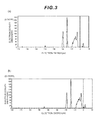
- Fig. 3(a) and Fig. 3(b) indicate data when 1% In in InTaO 4 was substituted with V and Cr, respectively.
- Fig. 4(a) and Fig. 4(b) indicate data when 1% In was substituted with Mn and Co, respectively.
- Fig. 5(a) and Fig. 5(b) indicate data when 1% In was substituted with Ti and Ga, respectively.
- Fig. 2(c) to Fig. 2(e) show that a conduction band shifts to a lower energy side and a band gap reduces by doping InTaO 4 with Ni, Fe, and Zn, respectively. Moreover, Fig. 2(c) to Fig. 2(e) also show that the electron density of the conduction band has increased. As a result, it is found that efficient optical absorption can be performed by doping InTaO 4 with Ni, Fe, and Zn, respectively.
- Fig. 2(e) shows that when the doping element is Zn, a new electron level (impurity level) is not formed near a valence band. Specifically speaking, it shows that when the doping element is Zn, the band gap reduces by doping the doping element and the impurity level is not formed; and, therefore, optical absorption can be performed with better efficiency. Furthermore, Fig. 5(a) and Fig. 5(b) show that the same results as in the case of Zn are obtained when Ti, Ga, or the like is used as the doping element.
- Fig. 2 to Fig. 5 show that, for example, the size of the band gap, which affects light absorption property, and the electron density change considerably depending on the type of the doping element used to substitute part of InTaO 4 . Then, Fig. 2 to Fig.
- each of Sc, Ti, V, Cr, Mn, Fe, Co, Ni, Cu, Zn, Ga, Ge, As, Y, Zr, Nb, Mo, Tc, Ru, Rh, Pd, Ag, Cd, Sn, Sb, Hf, W, Re, Os, Ir, Pt, Au, Hg, La, and In can be used as the doping element in order to absorb the ultraviolet light; and particularly, it is desirable to use Ni, Fe, Zn, Ti, or Ga as the doping element for the ultraviolet light absorber; and of the above-listed doping elements, Zn, Ti, or Ga should preferably be used.
- An ultraviolet light absorber according to this embodiment can be synthesized by a normal solid reaction method, that is, by mixing respective metal components, which are raw materials, at target composition rates and then burning the obtained mixture in air under normal atmospheric pressure. Moreover, various methods such as various sol-gel methods and complex polymerization methods using metal alkoxides and metal salts as raw materials can be used. In this case, the solid reaction method was used to create samples of the ultraviolet light absorber. The amount of the doping element was set so that 10% substitution would be performed relative to In or Ta; and the mixture was burnt at 1150 degrees Celsius for 48 hours.
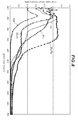
- Fig. 6 illustrates absorption spectra of the ultraviolet light absorbers (samples) produced by the diffuse reflectance spectroscopy method in Example 1.
- Fig. 6 shows that when Fe is used as the doping element, the ultraviolet light absorber exhibits particularly large absorbance in the ultraviolet light area.
- the shape of the ultraviolet light absorber according to the present invention it is desirable that it is composed of fine particles and has a large surface area in order to effectively absorb light.
- An oxide prepared by the solid reaction method has large particles and a small surface area; however, the particle size can be reduced by grinding the particles with, for example, a ball mill.
- the fine particles can be molded into a desired shape and used.
- non indicates a sample of InTaO 4 which was not doped with the doping element
- TiO 2 indicates a sample of titanium oxide with anatase structure
- Fe indicates a sample in which Fe was substituted at 10% as a substitution element into InTaO 4
- Zn indicates a sample in which Zn was substituted at 10% as a substitution element into InTaO 4
- Ni indicates a sample in which Ni was substituted at 10% as a substitution element into InTaO 4 .
- Fig. 6 shows that "non” and “TiO 2 " absorbed light of a wavelength of 400 nm or less, but hardly absorbed light of a wavelength of 400 nm or more.
- Fig. 6 shows that "Fe,” “Zn,” and “Ni” absorbed both the light of the wavelength of 400 nm or less and the light of the wavelength of 400 nm or more which causes coloring. Incidentally, “Fe” was light brown, “Zn” was yellow, and “Ni” was light yellow.
- Fig. 7 illustrates the relationship between electron state density and electron energy by the first principle calculation corresponding to "non,” “Ni,” “Fe,” and “Zn.” Since the doping element is not substituted into InTaO 4 in the case of “non,” “non” has a wide band gap; however, in the cases of “Ni,” “Fe,” and “Zn,” Fig. 7 shows that their band gaps are narrow as a result of coloring of the samples.
- Fig. 8 illustrates absorption spectra of ultraviolet light absorbers (samples) produced in Example 2 by the diffuse reflectance spectroscopy method.
- “non” indicates a sample of InTaO 4 which was not doped with the doping element;
- Mo indicates a sample in which Mo was substituted at 10% as a substitution element into InTaO 4 ;
- “La” indicates a sample in which La was substituted at 10% as a substitution element into InTaO 4 ;
- Zn+Fe indicates a sample in which Zn and Fe were substituted at 5%, respectively, as substitution elements into InTaO 4 ;
- “Zn+In” indicates a sample in which Zn and In were substituted at 5%, respectively, as substitution elements into InTaO 4 .
- Fig. 8 shows that "non” absorbed the light of the wavelength of 400 nm or less, but hardly absorbed the light of the wavelength of 400 nm or more.
- Fig. 6 shows that "Mo,” “La,” “Zn+Fe,” and “Zn+In” absorbed both the light of the wavelength of 400 nm or less and the light of the wavelength of 400 nm or more.
- “Mo” was light brown
- “La” was gray
- “Zn+Fe” was gray
- “Zn+In” was light gray.
- Example 2 Furthermore, an experiment was conducted by using an experiment object produced by doping InTaO 4 with In by the same method as in Example 1 and Example 2. As a result, it was found that the obtained sample absorbed both the light of the wavelength of 400 nm or less and the light of the wavelength of 400 nm or more. Incidentally, this sample was light yellow.
- sun-block cream is shown below as an example of a cosmetic material using a sample of the ultraviolet light absorber according to the present invention, in which Fe is substituted at 10% as a substitution element into InTaO 4 .
- This cosmetic material absorbed both the light of the wavelength of 400 nm or less and the light of the wavelength of 400 nm or more and has a sufficient UV-A and UV-B shielding effect as sun-block cream; and when the cosmetic material was used on races with relatively dark skin colors, it was colored naturally so as to suit the color of the skin.
- the ultraviolet light absorber according to this embodiment can also be produced by various sol-gel methods as mentioned above.
- the sol-gel methods can include a method including tantalum sol formation step S1, indium sol formation step S2, doping element dope step S3, mixed liquid formation step S4, PH adjustment step S5, gel formation step S6, heating and drying step S7, and oxidation reaction step S8 as shown in Fig. 9 .
- tantalum sol containing fine particles of tantalum in a colloidal state is synthesized by a chemical reaction.
- 0 to 10 mol of acetyl acetone and 0 to 10 mol of acetic acid are mixed with 1 mol of tantalum. More specifically, firstly tantalum oxide sol (0.005 mol of tantalum ethoxide + 10 ml of acetic acid + 10 ml of acetyl acetone) is prepared by stirring it with a stirrer overnight.
- indium sol formation step S2 indium sol containing fine particles of indium in a colloidal state is synthesized by a chemical reaction.
- 0.1 to 10 mol of anhydrous ethanol, 0.1 to 10 mol of nitric acid, and 0.1 to 10 mol of ammonium are mixed with 1 mol of indium.
- the sol obtained above is substituted with at least one element of Sc, Ti, V, Cr, Mn, Fe, Co, Ni, Cu, Zn, Ga, Ge, As, Y, Zr, Nb, Mo, Tc, Ru, Rh, Pd, Ag, Cd, Sn, Sb, Hf, W, Re, Os, Ir, Pt, Au, Hg, La, and In.
- the tantalum sol, the indium sol, and the doping element are mixed, thereby forming a mixed liquid.
- nitric acid is added as appropriate to the mixed liquid obtained in the mixed liquid formation step S4, thereby adjusting PH of the mixed liquid to become 6 to 7.
- the mixed liquid obtained in the PH adjustment step S5 is stirred with a stirrer overnight while maintaining the temperature of the mixed liquid at 50 to 70 degrees Celsius, thereby allowing the mixed liquid to gradually evaporate and enter a gel state.
- the precursor gel obtained in the gel formation step S6 is further dried overnight at 120 degrees Celsius.
- an oxidation reaction of the gel dried in the heating and drying step S7 is performed at a temperature within the range from 500 to 1000 degrees Celsius, thereby forming solid InTaO 4 .
- the ultraviolet light absorber is obtained.
- a specific surface area of particles can be increased by atomizing the particles by the sol-gel method by using the tantalum sol, which contains the tantalum particles in the colloidal state, the indium sol, which contains the fine particles of indium in the colloidal state, and the doping element; and, therefore, the cosmetic material of nano-order grain size can be produced (synthesized).
- the cosmetic material obtained by using the sol-gel method can also absorb the ultraviolet light well.
- the grain size of this cosmetic material is constant; and when this cosmetic material is applied to (or is fitted tightly to) the bare skin, it also has the effects of making the skin look fine-textured, transparent, natural, and beautiful.
- the ultraviolet light absorber according to the present invention can produce color tones corresponding to skin colors of all races by selecting the doping element and its substitution rate (introduction rate). For example, it is possible to produce color tones close to ocher, medium brown, or black by substituting Fe within the range of 1 % to 10% into (or with) either In or Ta, or both of them, in InTaO 4 .
- this embodiment has described the case where samples in which Cu, Ni, Fe, Zn, V, Cr, Ti, Ga, Mn, Co, Mo, La, Zn+Fe, and Zn+In were substituted into InTaO 4 were assessed; and when samples produced by substituting at least one element selected from the group consisting of Sc, Ge, As, Y, Zr, Nb, Tc, Ru, Rh, Pd, Ag, Cd, Sn, Sb, Hf, W, Re, Os, Ir, Pt, Au, Hg, and In within the range from 1% to 10% were assessed in the same manner, the samples absorbed both the light of the wavelength of 400 nm or less and the light of the wavelength of 400 nm or more and these samples were colored depending on the type of a doping element and its blending quantity.
- this embodiment has described the case where InTaO 4 is used as the compound expressed by the general formula ABO 4 ; however, the invention is not limited to this example.
- InNbO 4 , BiTaO 4 , BiNbO 4 , BiVO 4 , GaTaO 4 , or GdTaO 4 was used as the compound expressed by the general formula ABO 4 and samples were produced by substituting at least one element selected from the group consisting of Sc, Ti, V, Cr, Mn, Fe, Co, Ni, Cu, Zn, Ga, Ge, As, Y, Zr, Nb, Mo, Tc, Ru, Rh, Pd, Ag, Cd, Sn, Sb, Hf, W, Re, Os, Ir, Pt, Au, Hg, La, and In within the range from 1% to 10% into each of the above-listed compounds and the obtained samples were assessed in the same manner, the samples absorbed both the light of the wavelength of 400 nm or less and the light of the wavelength of 400 n
Landscapes
- Health & Medical Sciences (AREA)
- Life Sciences & Earth Sciences (AREA)
- Animal Behavior & Ethology (AREA)
- General Health & Medical Sciences (AREA)
- Public Health (AREA)
- Veterinary Medicine (AREA)
- Chemical & Material Sciences (AREA)
- Inorganic Chemistry (AREA)
- Birds (AREA)
- Epidemiology (AREA)
- Dermatology (AREA)
- Cosmetics (AREA)
Abstract
There are provided: an ultraviolet light absorber that has a sufficient UV-A and UV-B shielding effect, can be colored naturally to suit the color of the skin when applied to the skin, and can be favorably applied even to races with dark skin colors; and a cosmetic material using such an ultraviolet light absorber. The ultraviolet light absorber is one produced by substituting, at 10% or less, at least one element selected from the group consisting of Sc, Ti, V, Cr, Mn, Fe, Co, Ni, Cu, Zn, Ga, Ge, As, Y, Zr, Nb, Mo, Tc, Ru, Rh, Pd, Ag, Cd, Sn, Sb, Hf, W, Re, Os, Ir, Pt, Au, Hg, La, and In into either A or B, or both of them, in a compound expressed by a general formula ABO4 (where A represents In, Bi, Ga, or Gd and B represents Ta, Nb, or V).
Description
- The present invention relates to a cosmetic material having ultraviolet absorbing property and a method for producing the cosmetic material.
- It has been conventionally known that ultraviolet light causes various changes to the skin. Dermatologically, working wavelengths of the ultraviolet light are classified into long-wavelength ultraviolet light of 400 nm to 320nm, mid-wavelength ultraviolet light of 320 nm to 290 nm, and short wavelength ultraviolet light of 290 nm or lower and these groups of light are called UV-A, UV-B, and UV-C, respectively.
- Normally, most of the ultraviolet light to which humans are exposed is sunlight; and of such ultraviolet light, ultraviolet light that reaches the ground is the UV-A and UV-B, while the UV-C hardly reaches the ground because the UV-C is absorbed in an ozone layer. If the skin is exposed to a certain light quantity or more of the UV-A and UV-B of the ultraviolet light which reaches the ground, that causes erythema or blisters, also promotes the formation of melanin, and causes changes such as occurrence of pigmentation. Therefore, it is very important to protect the skin against the UV-A and UV-B in terms of the prevention of accelerated skin senescence and the prevention of occurrence of blemishes and freckles. In view of the above, various UV-A and UV-B absorbers have been developed.
- Dibenzoyl-methane derivatives are known as existing UV-A absorbers. (For example, see Patent Literature 1).
- Furthermore, PABA derivatives, cinnamic acid derivatives, salicylic acid derivatives, camphor derivatives, urocanic acid derivatives, benzophenone derivatives, and heterocyle derivatives are known as UV-B absorbers. (For example, see Patent Literature 2).
- These UV-A and UV-B absorbers are blended with skin drugs for external treatment such as cosmetic materials and quasi-pharmaceutical products and then used.
- On the other hand, fine-particle titanium oxide is blended with, for examples, cosmetic materials intended for UV protection by utilizing ultraviolet light shielding power of the fine-particle titanium oxide; however, its protection effect is weaker than that of organic ultraviolet light absorbers used for the same purpose and a large blending quantity is required to have a high ultraviolet light protection effect. Accordingly, if an ultraviolet light protection cosmetic material in which the fine-particle titanium oxide conventionally sold in the market is blended is applied to the skin, there is fear, for example, that unnatural paleness will occur. Also, the conventional fine-particle titanium oxide shields the wavelength of the UV-B area (320 nm to 290nm), but does not shield the UV-A area (400 nm to 320nm) sufficiently.
- So, for example, iron-containing ultrafine-particle rutile-type titanium oxide and iron-containing titanium dioxide, and so on are suggested as titanium oxides which have superior ultraviolet light shielding effects and do not result in unnatural whiteness. (For example, see
Patent Literature 3 and 4). - Moreover, titanium oxide - ceric oxide composite sol is also suggested as a combination of titanium oxide and ceric oxide. (For example, see Patent Literature 5).
- Furthermore, a combination of a lower-level titanium oxide pigment, titanium oxide, and cerium oxide is also suggested. (For example, see Patent Literature 6).
- Furthermore, an ultraviolet light absorber made of a silicon cluster or a germanium cluster is also suggested. (For example, see Patent Literature 7).
- A cosmetic material that has UV-A and UV-B shielding effects and will not color a cosmetic material even when mixed into the cosmetic material is introduced. (For example, see Patent Literature 8).
- Then, an ultraviolet light absorber, which contains at least one type of silicon oligomer with n being 2 to 5 in the following formula (I), and a skin drug for external treatment, in which the above-described ultraviolet light absorber is combined, are introduced. (For example, see Patent Literature 9).
Formula (I) - (Si)n-N<
-
- [Patent Literature 1] Japanese Patent Application Laid-Open (Kokai) Publication No.
05-247063 - [Patent Literature 2] Japanese Patent Application Laid-Open (Kokai) Publication No.
2003-212711 - [Patent Literature 3] Japanese Patent Application Laid-Open (Kokai) Publication No.
05-330825 - [Patent Literature 4] Japanese Patent Application Laid-Open (Kokai) Publication No.
07-69636 - [Patent Literature 5] Japanese Examined Patent Publication (Kokoku) No.
06-650 - [Patent Literature 6] Japanese Patent Application Laid-Open (Kokai) Publication No.
60-245671 - [Patent Literature 7] Japanese Patent Application Laid-Open (Kokai) Publication No.
2005-314408 - [Patent Literature 8] Japanese Patent Application Laid-Open (Kokai) Publication No.
11-180829 - [Patent Literature 9] Japanese Patent Application Laid-Open (Kokai) Publication No.
2006-27917 - However, iron-containing titanium oxide is superior in prevention of a non-powdery finish caused by the titanium oxide and in the UV-A area shielding property, but its red color because of the iron oxide is so strong that it is difficult to adjust the color tone. The iron-containing titanium oxide becomes orange when blended with cosmetic materials and its color tone is closer to a foundation than to a general milky lotion. If the iron-containing titanium oxide is used as a cosmetic foundation, there is fear that it will affect the color tone of the foundation or might result in a somber makeup.
- Moreover, since the form of titanium oxide - ceric oxide composite sol is sol, there are limitations on blending with cosmetic materials and there is still room for improvement in terms of durability.
- Furthermore, combinations of titanium oxide and cerium oxide are not actually used for cosmetic materials which are not intended for coloring, because lower-level titanium oxide is a black pigment; and an ultraviolet light absorber made of a silicon cluster or germanium cluster is not actually used for cosmetic materials which are not intended for coloring, because the silicon cluster and the germanium cluster are black pigments. Also, these black pigments do not sufficiently absorb light of the UV-A area (400 nm to 320 nm) according to their light absorption spectra.
- Furthermore, the cosmetic material according to Patent Literature 8 does not cause a non-powdery finish after applied to the skin; or is not colored naturally to suit the color of the skin. Also, it cannot obtain the sufficient effect of absorbing ultraviolet light.
- Moreover, in fact, the ultraviolet light absorber according to Patent Literature 9 becomes black and, therefore, is not suited for a cosmetic material.
- The present invention was devised in light of the circumstances described above and it is an object of the invention to provide: an ultraviolet light absorber that has a sufficient UV-A and UV-B shielding effect, can be colored naturally to suit the color of the skin when applied to the skin, and can be favorably applied even to races with dark skin colors; and a cosmetic material using the ultraviolet light absorber.
- In order to achieve the above-described object, the present invention provides an ultraviolet light absorber produced by substituting, at 10% or less, at least one element selected from the group consisting of Sc (scandium), Ti (titanium), V, Cr (chromium), Mn (manganese), Co (cobalt), Cu (copper), Ga, Ge (germanium), As (arsenic), Y (yttrium), Zr (zirconium), Nb, Mo (molybdenum), Tc (technetium), Ru (ruthenium), Rh (rhodium), Pd (palladium), Ag (silver), Cd (cadmium), Sn (tin), Sb (antimony), Hf (hafnium), W (tungsten), Re (rhenium), Os (osmium), Ir (iridium), Pt (platinum), Au (gold), Hg (mercury), and La (lanthanum) into either A or B, or both of them, in a compound expressed by a general formula ABO4 (where A represents In (indium), Bi (bismuth), Ga (gallium), or Gd (gadolinium) and B represents Ta (tantalum), Nb (niobium), or V (vanadium)).
- In this way, a white compound can be colored by substituting, at 10% or less, at least one element selected from the above-listed group into either A or B, or both of them, in the compound expressed by the aforementioned general formula ABO4. Therefore, it is possible to provide an ultraviolet light absorber which has the sufficient UV-A and UV-B shielding effect and can be colored naturally to suit the color of the skin when applied to the skin.
- Moreover, with the ultraviolet light absorber according to the present invention, at least one element selected from the above-listed group can be substituted at 1 % or more.
- Furthermore, the present invention provides an ultraviolet light absorber produced by substituting Fe (iron) at 1% or more to 10% or less and Zn at 1% or more to 10% or less into either A or B, or both of them, in a compound expressed by the general formula ABO4 (where A represents In, Bi, Ga, or Gd and B represents Ta, Nb, or V). This ultraviolet light absorber causes a white compound to become brown, so that it has a sufficient UV-A and UV-B shielding effect and can be colored naturally to suit the color of brown skin. Also, with this ultraviolet light absorber, Fe and Zn should more preferably be substituted at 5%, respectively.
- Furthermore, the present invention provides an ultraviolet light absorber produced by substituting Fe at 1 % or more to 10% or less into either A or B, or both of them, in a compound expressed by the general formula ABO4 (where A represents In, Bi, Ga, or Gd and B represents Ta, Nb, or V). This ultraviolet light absorber causes a white compound to become light brown, so that it has a sufficient UV-A and UV-B shielding effect and can be colored naturally to suit the color of light brown skin. Also, with this ultraviolet light absorber, Fe should more preferably be substituted at 10%.
- Furthermore, the present invention provides an ultraviolet light absorber produced by substituting Zn (zinc) at 1% or more to 10% or less into either A or B, or both of them, in a compound expressed by the general formula ABO4 (where A represents In, Bi, Ga, or Gd and B represents Ta, Nb, or V). This ultraviolet light absorber causes a white compound to become yellow, so that it has a sufficient UV-A and UV-B shielding effect and can be colored naturally to suit the color of yellow skin. Also, with this ultraviolet light absorber, Zn should more preferably be substituted at 10%.
- Furthermore, the present invention provides an ultraviolet light absorber produced by substituting Ni (nickel) at 1% or more to 10% or less into either A or B, or both of them, in a compound expressed by the general formula ABO4 (where A represents In, Bi, Ga, or Gd and B represents Ta, Nb, or V). This ultraviolet light absorber causes a white compound to become light yellow, so that it has a sufficient UV-A and UV-B shielding effect and can be colored naturally to suit the color of light yellow skin. Also, with this ultraviolet light absorber, Ni should more preferably be substituted at 10%.
- Furthermore, the present invention provides an ultraviolet light absorber produced by substituting In at 1% or more to 10% or less excessively into a compound expressed by the general formula ABO4 (where A represents In, Bi, Ga, or Gd and B represents Ta, Nb, or V). This ultraviolet light absorber causes a white compound to become yellow, so that it has a sufficient UV-A and UV-B shielding effect and can be colored naturally to suit the color of yellow skin. Also, with this ultraviolet light absorber, In should more preferably be substituted at 10% excessively.
- Furthermore, the present invention can provide a cosmetic material containing the aforementioned ultraviolet light absorber.
- Incidentally, examples of the compound expressed by the general formula ABO4 (where A represents In (indium), Bi (bismuth), Ga (gallium), or Gd (gadolinium) and B represents Ta (tantalum), Nb (niobium), or V (vanadium)) include InTaO4 (indium tantalum oxide), InNbO4 (indium niobium oxide), BiTaO4 (bismuth tantalum oxide), BiNbO4 (bismuth niobium oxide), BiVO4 (bismuth vanadium oxide), GaTaO4 (gallium tantalum oxide), and GdTaO4 (gadolinium tantalum oxide).
- Since the ultraviolet light absorber and the cosmetic material according to the present invention can absorb UV-A and UV-B effectively, they can demonstrate a sufficient UV-A and UV-B shielding effect. Moreover, they can be colored naturally to suit the color of the skin when applied to the skin; and can be favorably applied even to races with dark skin colors.
-
- [
Fig. 1] Fig. 1 illustrates the relationship between doping elements (substitutable elements), which are derived based on a first principle calculation, and their bond energy according to an embodiment of the present invention. - [
Fig. 2] Fig. 2 illustrates the relationship between electron energy and electron density when part of InTaO4 is substituted with a doping element in the embodiment of the present invention. - [
Fig. 3] Fig. 3 illustrates the relationship between the electron energy and the electron density when part of InTaO4 is substituted with a doping element in the embodiment of the present invention. - [
Fig. 4] Fig. 4 illustrates the relationship between the electron energy and the electron density when part of InTaO4 is substituted with a doping element in the embodiment of the present invention. - [
Fig. 5] Fig. 5 illustrates the relationship between the electron energy and the electron density when part of InTaO4 is substituted with a doping element in the embodiment of the present invention. - [
Fig. 6] Fig. 6 illustrates absorption spectra of ultraviolet light absorbers (samples) produced in Example 1 of the embodiment of the present invention by a diffuse reflectance spectroscopy method. - [
Fig. 7] Fig. 7 illustrates the relationship between the electron energy and the electron density when part of InTaO4 is substituted with a doping element in the embodiment of the present invention. - [
Fig. 8] Fig. 8 illustrates absorption spectra of ultraviolet light absorbers (samples) produced in Example 2 of the embodiment of the present invention by the diffuse reflectance spectroscopy method. - [
Fig. 9] Fig. 9 is a flowchart illustrating steps of producing the cosmetic material according to the present invention by a sol-gel method. - Next, an ultraviolet light absorber according to an embodiment of the present invention will be explained. Incidentally, this embodiment will describe a case where InTaO4 is used as a compound expressed by a general formula ABO4 (where A represents In, Bi, Ga, or Gd and B represents Ta, Nb, or V). Also, to substitute an element(s) to InTaO4 and substitute part of either In or Ta or both of them in InTaO4 with the element is called "dope" and an element (s) which is used to substitute at least part of InTaO4 may be sometimes called the "doping element(s).
- The ultraviolet light absorber according to the embodiment of the present invention is produced by substituting at least one element selected from the group consisting of Sc, Ti, V, Cr, Mn, Fe, Co, Ni, Cu, Zn, Ga, Ge, As, Y, Zr, Nb, Mo, Tc, Ru, Rh, Pd, Ag, Cd, Sn, Sb, Hf, W, Re, Os, Ir, Pt, Au, Hg, La, Fe, Zn, and Ni into either In or Ta, or both of them, in InTaO4 and substituting the part of InTaO4 with the element (doping element). This ultraviolet light absorber may be one with only part of In of InTaO4 substituted with the doping element or one with only part of Ta of InTaO4 substituted with the doping element. Furthermore, the cosmetic material may be one with part of both In and Ta substituted with the doping element(s). Furthermore, there may be one type of doping element or multiple types of doping elements to substitute part of InTaO4.
- Furthermore, the ultraviolet light absorber according to the present invention is produced by excessively substituting In into InTaO4 and substituting part of Ta with In.
- In this embodiment, a doping element is selected from a multiplicity of elements existing on earth by performing simulations based on a first principle calculation. All analysis methods used for this analysis are based on density functional formalism. Norm-conserving pseudopotential that uses Kleinman-Bylander form (L. Kleinman and D. M. Bylander, Phys. Rev. Lett. 48 (1982) 425) is used for interactions between electrons and ions. A method of Troullier and Martins (N. Troullier and J. L. Martins, Phys. Rev. B. 43 (1991) 1993) is used for a pseudo-wave function and pseudopotential; and a method of Perdew and Zunger (J. P. Perdew and A. Zunger, Phys. Rev. B. 23 (1981) 5048) is used for exchange correlation energy.
- Cutoff energy by plane wave energy is set so that an error between a value of a lattice constant, which corresponds to a minimum value of entire energy when calculating the entire energy of an electronic system by using the lattice constant as a function, and an experimental value becomes 5% or less. When selecting the doping element, a method of selecting the doping element through a trial and error process by repeating sample creation and evaluation experiments. However, since it can be assumed that a very large number of doping elements capable of substituting at least part of InTaO4, and a very large number of combinations of such doping elements may exist, the efficiency of the method of repeating sample creation and evaluation experiments when selecting the doping element is very low. So, in this embodiment, the doping element is selected by a method including mainly the following two steps (a first step and a second step).
- Firstly, whether molecules which are formed after doping InTaO4, from among a large number of elements that can be considered to be available as doping elements for doping InTaO4,, can exist as molecules or not (whether they are stable molecules or not) is judged based on the first principle calculation. Then, the element that can be used as the doping element is selected (screened) based on the judgment result. Whether the molecules formed after doping are stable molecules or not is judged in consideration of bond energy of the formed molecules. Specifically speaking, a permitted value of the bond energy is set in advance and then whether the bond energy of the molecules generated when at least part of InTaO4 is substituted with a specified element becomes the permitted value or less is judged. The first principle calculation is used to derive this bond energy. Then, if the derived bond energy is equal to or less than the above-mentioned permitted value according to a simulation result based on the first principle calculation, it is determined that the relevant molecules can exist as molecules (they are stable molecule); and if the derived bond energy is more than the permitted value, it is determined that the relevant molecules cannot exist as molecules (they are unstable molecule). In other words, an element whose molecules after doping InTaO4 become stable molecules is selected as an element capable of doping InTaO4 (doping element) from among a large number of elements existing on earth.
-
Fig. 1 illustrates the relationship between doping elements derived based on the first principle calculation, and their bond energy. The horizontal axis of a graph illustrated inFig. 1 represents the elements for doping InTaO4 and the vertical axis represents a value obtained by normalizing a bond energy value of molecules generated after doping InTaO4 with the element indicated on the horizontal axis, by using a bond energy value of InTaO4 which is not doped. Incidentally, These bond energy values are derived based on the first principle calculation. Moreover, data indicated as "In site" inFig. 1 are simulation results when In atoms of InTaO4 were substituted with the doping element; and data indicated as "Ta site" are simulation results when Ta atoms of InTaO4 were substituted with the doping element. -
Fig. 1 shows that when any element of Sc, Ti, V, Cr, Mn, Fe, Co, Ni, Cu, Zn, Ga, Ge, As, Y, Zr, Nb, Mo, Tc, Ru, Rh, Pd, Ag, Cd, Sn, Sb, Hf, W, Re, Os, Ir, Pt, Au, and Hg is used to dope InTaO4, its bond energy is equivalent to or higher than that of InTaO4 which is a starting material (InTaO4 which is not doped).Fig. 1 also shows that there is no large difference in the bond energy when the In atoms of InTaO4 were substituted with the doping element and when the Ta atoms were substituted with the doping element. When energy values were derived with respect to La and In in the same manner based on the first principle calculation, it was acknowledged that La and In have bond energy equivalent to or more than that of InTaO4 which is the starting material (InTaO4 which is not doped). Accordingly, it is acknowledged that even when InTaO4 is doped with each of Sc, Ti, V, Cr, Mn, Fe, Co, Ni, Cu, Zn, Ga, Ge, As, Y, Zr, Nb, Mo, Tc, Ru, Rh, Pd, Ag, Cd, Sn, Sb, Hf, W, Re, Os, Ir, Pt, Au, Hg, La, and In, the molecules formed after doping become stable molecules and these elements are the doping elements capable of doping InTaO4. - Next, regarding each of the doping elements which are capable of doping InTaO4 and selected in the first step, whether molecules formed after doping InTaO4 with the relevant doping element can be effective as an ultraviolet light absorber is judged based on the first principle calculation. Then, the doping element which can be used as the ultraviolet light absorber is selected based on that judgment result. Specifically speaking, when a certain doping element from among the plurality of doping elements selected in the first step is used to dope InTaO4, whether molecules formed after that doping absorb the ultraviolet light or not is selected in consideration of a band gap. Incidentally, the first principle calculation is also used for this selection.
-
Fig. 2 to Fig. 5 illustrate the relationship between electron energy and electron density when part of InTaO4 is substituted with the doping element. With a graph in each ofFig. 2 to Fig. 5 , the horizontal axis represents the electron energy and the vertical axis represents the electron density. - Specifically,
Fig. 2(a) indicates data about InTaO4 which was not doped with the doping element; andFig. 2(b) to Fig. 2(e) indicate data when 6.25% In of InTaO4 was substituted with Cu, Ni, Fe, and Zn, respectively. Moreover,Fig. 3(a) and Fig. 3(b) indicate data when 1% In in InTaO4 was substituted with V and Cr, respectively. Furthermore,Fig. 4(a) and Fig. 4(b) indicate data when 1% In was substituted with Mn and Co, respectively. Furthermore,Fig. 5(a) and Fig. 5(b) indicate data when 1% In was substituted with Ti and Ga, respectively. -
Fig. 2(c) to Fig. 2(e) show that a conduction band shifts to a lower energy side and a band gap reduces by doping InTaO4 with Ni, Fe, and Zn, respectively. Moreover,Fig. 2(c) to Fig. 2(e) also show that the electron density of the conduction band has increased. As a result, it is found that efficient optical absorption can be performed by doping InTaO4 with Ni, Fe, and Zn, respectively. - Furthermore,
Fig. 2(e) shows that when the doping element is Zn, a new electron level (impurity level) is not formed near a valence band. Specifically speaking, it shows that when the doping element is Zn, the band gap reduces by doping the doping element and the impurity level is not formed; and, therefore, optical absorption can be performed with better efficiency. Furthermore,Fig. 5(a) and Fig. 5(b) show that the same results as in the case of Zn are obtained when Ti, Ga, or the like is used as the doping element. - As a result,
Fig. 2 to Fig. 5 show that, for example, the size of the band gap, which affects light absorption property, and the electron density change considerably depending on the type of the doping element used to substitute part of InTaO4. Then,Fig. 2 to Fig. 5 also show that each of Sc, Ti, V, Cr, Mn, Fe, Co, Ni, Cu, Zn, Ga, Ge, As, Y, Zr, Nb, Mo, Tc, Ru, Rh, Pd, Ag, Cd, Sn, Sb, Hf, W, Re, Os, Ir, Pt, Au, Hg, La, and In can be used as the doping element in order to absorb the ultraviolet light; and particularly, it is desirable to use Ni, Fe, Zn, Ti, or Ga as the doping element for the ultraviolet light absorber; and of the above-listed doping elements, Zn, Ti, or Ga should preferably be used. - Experiments were conducted with respect to Zn, Fe, and Ni from among the plurality of doping elements selected based on the first principle calculation including the first step and the second step as described earlier. Specifically speaking, experiment objects were prepared by doping InTaO4 with Zn, Fe, and Ni, respectively and the experiments described below were conducted. Furthermore, the same experiments were also conducted with respect to InTaO4 and TiO2 which were not doped as a comparison.
- An ultraviolet light absorber according to this embodiment can be synthesized by a normal solid reaction method, that is, by mixing respective metal components, which are raw materials, at target composition rates and then burning the obtained mixture in air under normal atmospheric pressure. Moreover, various methods such as various sol-gel methods and complex polymerization methods using metal alkoxides and metal salts as raw materials can be used. In this case, the solid reaction method was used to create samples of the ultraviolet light absorber. The amount of the doping element was set so that 10% substitution would be performed relative to In or Ta; and the mixture was burnt at 1150 degrees Celsius for 48 hours.
-
Fig. 6 illustrates absorption spectra of the ultraviolet light absorbers (samples) produced by the diffuse reflectance spectroscopy method in Example 1.Fig. 6 shows that when Fe is used as the doping element, the ultraviolet light absorber exhibits particularly large absorbance in the ultraviolet light area. Incidentally, regarding the shape of the ultraviolet light absorber according to the present invention, it is desirable that it is composed of fine particles and has a large surface area in order to effectively absorb light. An oxide prepared by the solid reaction method has large particles and a small surface area; however, the particle size can be reduced by grinding the particles with, for example, a ball mill. Moreover, the fine particles can be molded into a desired shape and used. - Moreover, referring to
Fig. 6 , "non" indicates a sample of InTaO4 which was not doped with the doping element; "TiO2" indicates a sample of titanium oxide with anatase structure; "Fe" indicates a sample in which Fe was substituted at 10% as a substitution element into InTaO4; "Zn" indicates a sample in which Zn was substituted at 10% as a substitution element into InTaO4; and "Ni" indicates a sample in which Ni was substituted at 10% as a substitution element into InTaO4. -
Fig. 6 shows that "non" and "TiO2" absorbed light of a wavelength of 400 nm or less, but hardly absorbed light of a wavelength of 400 nm or more. On the other hand,Fig. 6 shows that "Fe," "Zn," and "Ni" absorbed both the light of the wavelength of 400 nm or less and the light of the wavelength of 400 nm or more which causes coloring. Incidentally, "Fe" was light brown, "Zn" was yellow, and "Ni" was light yellow. - Furthermore,
Fig. 7 illustrates the relationship between electron state density and electron energy by the first principle calculation corresponding to "non," "Ni," "Fe," and "Zn." Since the doping element is not substituted into InTaO4 in the case of "non," "non" has a wide band gap; however, in the cases of "Ni," "Fe," and "Zn,"Fig. 7 shows that their band gaps are narrow as a result of coloring of the samples. - Next, experiments were conducted by using experiment objects produced by doping InTaO4 with Mo and La, respectively, doping InTaO4 with Zn and Fe, doping InTaO4 with Zn and Fe, and doping InTaO4 with Zn and In by the same method used as in Example 1. Also, the same experiment was conducted on InTaO4 which was not doped, as a comparison. Incidentally, the doping element was substituted at 10%.
-
Fig. 8 illustrates absorption spectra of ultraviolet light absorbers (samples) produced in Example 2 by the diffuse reflectance spectroscopy method. Referring toFig. 8 , "non" indicates a sample of InTaO4 which was not doped with the doping element; "Mo" indicates a sample in which Mo was substituted at 10% as a substitution element into InTaO4; "La" indicates a sample in which La was substituted at 10% as a substitution element into InTaO4; "Zn+Fe" indicates a sample in which Zn and Fe were substituted at 5%, respectively, as substitution elements into InTaO4; and "Zn+In" indicates a sample in which Zn and In were substituted at 5%, respectively, as substitution elements into InTaO4. -
Fig. 8 shows that "non" absorbed the light of the wavelength of 400 nm or less, but hardly absorbed the light of the wavelength of 400 nm or more. On the other hand,Fig. 6 shows that "Mo," "La," "Zn+Fe," and "Zn+In" absorbed both the light of the wavelength of 400 nm or less and the light of the wavelength of 400 nm or more. Incidentally, "Mo" was light brown, "La" was gray, "Zn+Fe" was gray, and "Zn+In" was light gray. - Furthermore, an experiment was conducted by using an experiment object produced by doping InTaO4 with In by the same method as in Example 1 and Example 2. As a result, it was found that the obtained sample absorbed both the light of the wavelength of 400 nm or less and the light of the wavelength of 400 nm or more. Incidentally, this sample was light yellow.
- Next, a blending example of sun-block cream is shown below as an example of a cosmetic material using a sample of the ultraviolet light absorber according to the present invention, in which Fe is substituted at 10% as a substitution element into InTaO4.
-
- cetanol 1.0 wt%
- stearic acid 2.0 wt%
- cholesterol 1.0 wt%
- squalene 5.0 wt%
- jojoba oil 4.0 wt%
- octyl paramethoxy cinnamate 4.0 wt%
- polyethoxylated (40) hydrogenated castor oil 1.0 wt%
- sorbitan monostearate 2.0 wt%
- product of the present invention 7.0 wt%
- butylparaben 0.1 wt%
- methylparaben 0.1 wt%
- ethanol 3.0 wt%
- glycerin 10.0 wt%
- cow placenta extract 1.0 wt%
- perfume material 0.05 wt%
- purified water balance
- This cosmetic material absorbed both the light of the wavelength of 400 nm or less and the light of the wavelength of 400 nm or more and has a sufficient UV-A and UV-B shielding effect as sun-block cream; and when the cosmetic material was used on races with relatively dark skin colors, it was colored naturally so as to suit the color of the skin.
- Incidentally, the ultraviolet light absorber according to this embodiment can also be produced by various sol-gel methods as mentioned above. Examples of the sol-gel methods can include a method including tantalum sol formation step S1, indium sol formation step S2, doping element dope step S3, mixed liquid formation step S4, PH adjustment step S5, gel formation step S6, heating and drying step S7, and oxidation reaction step S8 as shown in
Fig. 9 . - In the tantalum sol formation step S1, tantalum sol containing fine particles of tantalum in a colloidal state is synthesized by a chemical reaction. In this tantalum sol synthesis step S1, for example, tantalum ethoxide (Ta(OC2H5)5), tantalum methoxide (Ta(OCH3)5), or tantalum alkoxide (Ta(OCnH2n+1)5, n=1 to 6) is used as a tantalum particle source. Moreover, in this tantalum sol formation step S1, 0 to 10 mol of acetyl acetone and 0 to 10 mol of acetic acid are mixed with 1 mol of tantalum. More specifically, firstly tantalum oxide sol (0.005 mol of tantalum ethoxide + 10 ml of acetic acid + 10 ml of acetyl acetone) is prepared by stirring it with a stirrer overnight.
- Next, in the indium sol formation step S2, indium sol containing fine particles of indium in a colloidal state is synthesized by a chemical reaction. In this indium sol formation step S2, indium nitrate (In(NO3)3·nH2O, n=0 to 6) or indium alkoxide (In(OCnH2n+1)3, n=1 to 6) is used as an indium particle source. Moreover, in this indium sol formation step S2, 0.1 to 10 mol of anhydrous ethanol, 0.1 to 10 mol of nitric acid, and 0.1 to 10 mol of ammonium are mixed with 1 mol of indium. More specifically, a mixture of 0.005 mol of indium nitrate + 20 ml of anhydrous ethanol is prepared; and then 1.5 ml of 25% NH3-H2O (approximately 0.01 mol) is slowly added to the above-obtained mixture while being stirred; and a HNO3 solution (approximately 0.2 ml) is added to the above-obtained mixture, thereby synthesizing transparent sol.
- Next, in the doping element dope step S3, the sol obtained above is substituted with at least one element of Sc, Ti, V, Cr, Mn, Fe, Co, Ni, Cu, Zn, Ga, Ge, As, Y, Zr, Nb, Mo, Tc, Ru, Rh, Pd, Ag, Cd, Sn, Sb, Hf, W, Re, Os, Ir, Pt, Au, Hg, La, and In.
- Then, in the mixed liquid formation step S4, the tantalum sol, the indium sol, and the doping element are mixed, thereby forming a mixed liquid.
- Subsequently, in the PH adjustment step S5, nitric acid is added as appropriate to the mixed liquid obtained in the mixed liquid formation step S4, thereby adjusting PH of the mixed liquid to become 6 to 7.
- Next, in the gel formation step S6, the mixed liquid obtained in the PH adjustment step S5 is stirred with a stirrer overnight while maintaining the temperature of the mixed liquid at 50 to 70 degrees Celsius, thereby allowing the mixed liquid to gradually evaporate and enter a gel state.
- Then, in the heating and drying step S7, the precursor gel obtained in the gel formation step S6 is further dried overnight at 120 degrees Celsius.
- Subsequently, in the oxidation reaction step S8, an oxidation reaction of the gel dried in the heating and drying step S7 is performed at a temperature within the range from 500 to 1000 degrees Celsius, thereby forming solid InTaO4. As a result, the ultraviolet light absorber is obtained.
- Accordingly, a specific surface area of particles can be increased by atomizing the particles by the sol-gel method by using the tantalum sol, which contains the tantalum particles in the colloidal state, the indium sol, which contains the fine particles of indium in the colloidal state, and the doping element; and, therefore, the cosmetic material of nano-order grain size can be produced (synthesized). The cosmetic material obtained by using the sol-gel method can also absorb the ultraviolet light well. Moreover, the grain size of this cosmetic material is constant; and when this cosmetic material is applied to (or is fitted tightly to) the bare skin, it also has the effects of making the skin look fine-textured, transparent, natural, and beautiful.
- Incidentally, the ultraviolet light absorber according to the present invention can produce color tones corresponding to skin colors of all races by selecting the doping element and its substitution rate (introduction rate). For example, it is possible to produce color tones close to ocher, medium brown, or black by substituting Fe within the range of 1 % to 10% into (or with) either In or Ta, or both of them, in InTaO4.
- Moreover, this embodiment has described the case where samples in which Cu, Ni, Fe, Zn, V, Cr, Ti, Ga, Mn, Co, Mo, La, Zn+Fe, and Zn+In were substituted into InTaO4 were assessed; and when samples produced by substituting at least one element selected from the group consisting of Sc, Ge, As, Y, Zr, Nb, Tc, Ru, Rh, Pd, Ag, Cd, Sn, Sb, Hf, W, Re, Os, Ir, Pt, Au, Hg, and In within the range from 1% to 10% were assessed in the same manner, the samples absorbed both the light of the wavelength of 400 nm or less and the light of the wavelength of 400 nm or more and these samples were colored depending on the type of a doping element and its blending quantity.
- Furthermore, this embodiment has described the case where InTaO4 is used as the compound expressed by the general formula ABO4; however, the invention is not limited to this example. When, for example, InNbO4, BiTaO4, BiNbO4, BiVO4, GaTaO4, or GdTaO4 was used as the compound expressed by the general formula ABO4 and samples were produced by substituting at least one element selected from the group consisting of Sc, Ti, V, Cr, Mn, Fe, Co, Ni, Cu, Zn, Ga, Ge, As, Y, Zr, Nb, Mo, Tc, Ru, Rh, Pd, Ag, Cd, Sn, Sb, Hf, W, Re, Os, Ir, Pt, Au, Hg, La, and In within the range from 1% to 10% into each of the above-listed compounds and the obtained samples were assessed in the same manner, the samples absorbed both the light of the wavelength of 400 nm or less and the light of the wavelength of 400 nm or more and these samples were colored depending on the type of the doping element and its blending quantity.
Claims (13)
- An ultraviolet light absorber produced by substituting, at 10% or less, at least one element selected from the group consisting of Sc, Ti, V, Cr, Mn, Co, Cu, Ga, Ge, As, Y, Zr, Nb, Mo, Tc, Ru, Rh, Pd, Ag, Cd, Sn, Sb, Hf, W, Re, Os, Ir, Pt, Au, Hg, and La into either A or B, or both of them, in a compound expressed by a general formula ABO4 (where A represents In, Bi, Ga, or Gd and B represents Ta, Nb, or V).
- The ultraviolet light absorber according to claim 1, wherein at least one element selected from the above-listed group can be substituted at 1% or more.
- An ultraviolet light absorber produced by substituting Fe at 1% or more to 10% or less and Zn at 1 % or more to 10% or less into either A or B, or both of them, in a compound expressed by a general formula ABO4 (where A represents In, Bi, Ga, or Gd and B represents Ta, Nb, or V).
- The ultraviolet light absorber according to claim 3, wherein Fe is substituted at 5% and Zn is substituted at 5%.
- An ultraviolet light absorber produced by substituting Fe at 1% or more to 10% or less into either A or B, or both of them, in a compound expressed by a general formula ABO4 (where A represents In, Bi, Ga, or Gd and B represents Ta, Nb, or V).
- The ultraviolet light absorber according to claim 5, wherein Fe is substituted at 10%.
- An ultraviolet light absorber produced by substituting Zn at 1% or more to 10% or less into either A or B, or both of them, in a compound expressed by a general formula ABO4 (where A represents In, Bi, Ga, or Gd and B represents Ta, Nb, or V).
- The ultraviolet light absorber according to claim 7, wherein Zn is substituted at 10%.
- An ultraviolet light absorber produced by substituting Ni at 1% or more to 10% or less into either A or B, or both of them, in a compound expressed by a general formula ABO4 (where A represents In, Bi, Ga, or Gd and B represents Ta, Nb, or V).
- The ultraviolet light absorber according to claim 9, wherein Ni is substituted at 10%.
- An ultraviolet light absorber produced by substituting In at 1% or more to 10% or less excessively into a compound expressed by a general formula ABO4 (where A represents In, Bi, Ga, or Gd and B represents Ta, Nb, or V).
- The ultraviolet light absorber according to claim 11, wherein In is substituted at 10% excessively.
- A cosmetic material containing the ultraviolet light absorber stated in any one of claim 1 to claim 12.
Applications Claiming Priority (2)
| Application Number | Priority Date | Filing Date | Title |
|---|---|---|---|
| JP2011063542A JP2012197255A (en) | 2011-03-23 | 2011-03-23 | Ultraviolet absorbent, and cosmetic using the same |
| PCT/JP2012/056459 WO2012128131A1 (en) | 2011-03-23 | 2012-03-13 | Ultraviolet absorbent and cosmetic preparation using same |
Publications (1)
| Publication Number | Publication Date |
|---|---|
| EP2689769A1 true EP2689769A1 (en) | 2014-01-29 |
Family
ID=46879283
Family Applications (1)
| Application Number | Title | Priority Date | Filing Date |
|---|---|---|---|
| EP12760163.1A Withdrawn EP2689769A1 (en) | 2011-03-23 | 2012-03-13 | Ultraviolet absorbent and cosmetic preparation using same |
Country Status (5)
| Country | Link |
|---|---|
| US (1) | US20140112876A1 (en) |
| EP (1) | EP2689769A1 (en) |
| JP (1) | JP2012197255A (en) |
| CN (1) | CN103547248A (en) |
| WO (1) | WO2012128131A1 (en) |
Families Citing this family (5)
| Publication number | Priority date | Publication date | Assignee | Title |
|---|---|---|---|---|
| JP2018514509A (en) * | 2015-03-24 | 2018-06-07 | ランダ ラブス(2012)リミテッド | UV protection compositions and their use |
| US9570392B2 (en) | 2015-04-30 | 2017-02-14 | Kabushiki Kaisha Toshiba | Memory device and method for manufacturing the same |
| KR101835214B1 (en) | 2016-05-11 | 2018-03-06 | 전인덕 | Uv blocking composition, cosmetic composition and method of preparing uv blocking composition |
| CN107643228B (en) * | 2017-08-31 | 2021-04-27 | 中国船舶重工集团公司第七一九研究所 | Preparation method of chip for measuring mercury vapor and use method of sensor |
| CN117363350B (en) * | 2023-10-24 | 2025-02-14 | 昆明理工大学 | Tantalate near-infrared fluorescent material and preparation method thereof |
Family Cites Families (13)
| Publication number | Priority date | Publication date | Assignee | Title |
|---|---|---|---|---|
| JPS60245671A (en) | 1984-05-21 | 1985-12-05 | Ishihara Sangyo Kaisha Ltd | Lower titanium oxide pigment |
| JPH05247063A (en) | 1990-10-01 | 1993-09-24 | Shiseido Co Ltd | Dibenzoylmethane silicone derivative and external agent for skin containing the derivative |
| JPH06650B2 (en) | 1991-01-29 | 1994-01-05 | 触媒化成工業株式会社 | Titanium oxide / cerium oxide composite sol and transparent thin film formed from this sol |
| JP2717904B2 (en) | 1992-06-04 | 1998-02-25 | 石原産業株式会社 | Iron-containing ultrafine rutile titanium dioxide and method for producing the same |
| JP2852482B2 (en) | 1993-08-24 | 1999-02-03 | 石原産業株式会社 | Iron-containing titanium dioxide and method for producing the same |
| JPH11180829A (en) | 1997-12-19 | 1999-07-06 | Kao Corp | Titanium oxide-cerium oxide composite powder and cosmetic containing the same |
| JP3742873B2 (en) * | 2001-07-10 | 2006-02-08 | 独立行政法人産業技術総合研究所 | Photocatalyst, method for producing hydrogen using the same, and method for decomposing toxic substances |
| JP2003212711A (en) | 2002-01-24 | 2003-07-30 | Shiseido Co Ltd | Make-up cosmetic |
| JP2005126296A (en) * | 2003-10-24 | 2005-05-19 | National Institute For Materials Science | Indium-containing semiconductor metal oxide and method for producing the same |
| JP4750447B2 (en) | 2004-03-31 | 2011-08-17 | 株式会社 資生堂 | Ultraviolet absorber and luminescent agent containing silicon cluster or germanium cluster, and external preparation for skin using the cluster |
| JP2006027917A (en) | 2004-07-12 | 2006-02-02 | Shiseido Co Ltd | Silicon oligomer consisting of SP2 hybrid orbital |
| JP2006122777A (en) * | 2004-10-27 | 2006-05-18 | Ishikawajima Harima Heavy Ind Co Ltd | Photocatalyst, method for producing hydrogen, method for treating harmful substances, method for producing photocatalyst |
| JP5262560B2 (en) * | 2008-10-17 | 2013-08-14 | 株式会社Ihi | Cosmetics and method for producing cosmetics |
-
2011
- 2011-03-23 JP JP2011063542A patent/JP2012197255A/en active Pending
-
2012
- 2012-03-13 EP EP12760163.1A patent/EP2689769A1/en not_active Withdrawn
- 2012-03-13 US US14/006,748 patent/US20140112876A1/en not_active Abandoned
- 2012-03-13 WO PCT/JP2012/056459 patent/WO2012128131A1/en not_active Ceased
- 2012-03-13 CN CN201280014745.2A patent/CN103547248A/en active Pending
Non-Patent Citations (1)
| Title |
|---|
| See references of WO2012128131A1 * |
Also Published As
| Publication number | Publication date |
|---|---|
| JP2012197255A (en) | 2012-10-18 |
| US20140112876A1 (en) | 2014-04-24 |
| WO2012128131A1 (en) | 2012-09-27 |
| CN103547248A (en) | 2014-01-29 |
Similar Documents
| Publication | Publication Date | Title |
|---|---|---|
| Miri et al. | Nickel-doped cerium oxide nanoparticles: biosynthesis, cytotoxicity and UV protection studies | |
| Moradnia et al. | A novel green synthesis and characterization of tetragonal-spinel MgMn2O4 nanoparticles by tragacanth gel and studies of its photocatalytic activity for degradation of reactive blue 21 dye under visible light | |
| Li et al. | Synthesis and characterization of Zn-Ti layered double hydroxide intercalated with cinnamic acid for cosmetic application | |
| Sharma et al. | Tailoring of structural, optical and electrical properties of anatase TiO2 via doping of cobalt and nitrogen ions | |
| DE69700137T2 (en) | S-triazine derivatives as UV filters | |
| Vento-Lujano et al. | Defect-induced modification of band structure by the insertion of Ce3+ and Ce4+ in SrTiO3: a high-performance sunlight-driven photocatalyst | |
| US20140112876A1 (en) | Ultraviolet light absorber and cosmetic material using the same | |
| WO2008092590A2 (en) | Particulate uv protection agent | |
| EP0786982A1 (en) | Topical ultra-violet radiation protectants | |
| Korde et al. | Neem gum (Azadirachta indicia) facilitated green synthesis of TiO2 and ZrO2 nanoparticles as antimicrobial agents | |
| Matussin et al. | Effect of Co2+ and Ni2+ co-doping on SnO2 synthesized via phytogenic method for photoantioxidant studies and photoconversion of 4-nitrophenol | |
| KR102074136B1 (en) | Functional titanium oxide nanoparticle customized by skin color and capable of preventing whitening and manufacturing method of the same | |
| Rabani et al. | Titanium dioxide incorporated in cellulose nanofibers with enhanced UV blocking performance by eliminating ROS generation | |
| Yulizar et al. | Formation of Co3O4 nanoparticles using moringa oleifera leaves extract through two phases system of hexane-water and their photocatalytic activity | |
| Mahmoud et al. | Modified anatase phase of TiO2 by WO3 nanoparticles: structural, morphology and spectral evaluations | |
| CN102813609B (en) | Organic-inorganic material modified titanium dioxide (TiO2) nano composite combining sun protection factor strengthening agent and preparation method | |
| DE10327728A1 (en) | Nanoparticulate redispersible zinc oxide powder III | |
| EP2659875A1 (en) | Cosmetic material and method for preparing same | |
| WO2023117902A1 (en) | Use of bismuth oxycarbonate particles for filtering ultraviolet radiation | |
| KR101835214B1 (en) | Uv blocking composition, cosmetic composition and method of preparing uv blocking composition | |
| JP2001130912A (en) | Porous titanium oxide, method for producing the same, and cosmetic containing the same | |
| JP4100898B2 (en) | Method for producing titanium dioxide cerium oxide composite | |
| KR101822557B1 (en) | Metal-doped UV-protective inorganic pigment and mill base comprising the same | |
| KR20130030521A (en) | Mesoporous inorganic composite powder of titanium dioxide | |
| JP2000086210A (en) | Boron nitride-oxide composite particles, their production and ultraviolet ray cut-off agent using same |
Legal Events
| Date | Code | Title | Description |
|---|---|---|---|
| PUAI | Public reference made under article 153(3) epc to a published international application that has entered the european phase |
Free format text: ORIGINAL CODE: 0009012 |
|
| 17P | Request for examination filed |
Effective date: 20130919 |
|
| AK | Designated contracting states |
Kind code of ref document: A1 Designated state(s): AL AT BE BG CH CY CZ DE DK EE ES FI FR GB GR HR HU IE IS IT LI LT LU LV MC MK MT NL NO PL PT RO RS SE SI SK SM TR |
|
| DAX | Request for extension of the european patent (deleted) | ||
| STAA | Information on the status of an ep patent application or granted ep patent |
Free format text: STATUS: THE APPLICATION HAS BEEN WITHDRAWN |
|
| 18W | Application withdrawn |
Effective date: 20141024 |