EP2688065A1 - Method and apparatus for avoiding unmasking of coding noise when mixing perceptually coded multi-channel audio signals - Google Patents
Method and apparatus for avoiding unmasking of coding noise when mixing perceptually coded multi-channel audio signals Download PDFInfo
- Publication number
- EP2688065A1 EP2688065A1 EP12305860.4A EP12305860A EP2688065A1 EP 2688065 A1 EP2688065 A1 EP 2688065A1 EP 12305860 A EP12305860 A EP 12305860A EP 2688065 A1 EP2688065 A1 EP 2688065A1
- Authority
- EP
- European Patent Office
- Prior art keywords
- channel audio
- audio signals
- correlated
- perceptually
- channel
- Prior art date
- Legal status (The legal status is an assumption and is not a legal conclusion. Google has not performed a legal analysis and makes no representation as to the accuracy of the status listed.)
- Withdrawn
Links
- 230000005236 sound signal Effects 0.000 title claims abstract description 171
- 238000000034 method Methods 0.000 title claims description 37
- 239000011159 matrix material Substances 0.000 claims abstract description 76
- 238000009877 rendering Methods 0.000 claims abstract description 10
- 230000011218 segmentation Effects 0.000 claims description 14
- 238000009432 framing Methods 0.000 claims description 12
- 238000013507 mapping Methods 0.000 claims description 5
- 230000001131 transforming effect Effects 0.000 claims description 3
- 238000001228 spectrum Methods 0.000 description 11
- 230000000875 corresponding effect Effects 0.000 description 7
- 238000013139 quantization Methods 0.000 description 7
- 230000002596 correlated effect Effects 0.000 description 5
- 238000013459 approach Methods 0.000 description 4
- 230000005540 biological transmission Effects 0.000 description 4
- 230000008859 change Effects 0.000 description 3
- 230000008447 perception Effects 0.000 description 3
- 230000008569 process Effects 0.000 description 3
- 230000017105 transposition Effects 0.000 description 3
- 238000007906 compression Methods 0.000 description 2
- 230000006835 compression Effects 0.000 description 2
- 230000021615 conjugation Effects 0.000 description 2
- 238000000354 decomposition reaction Methods 0.000 description 2
- 230000001419 dependent effect Effects 0.000 description 2
- 230000006870 function Effects 0.000 description 2
- 230000000873 masking effect Effects 0.000 description 2
- 238000006467 substitution reaction Methods 0.000 description 2
- 239000013598 vector Substances 0.000 description 2
- 230000009286 beneficial effect Effects 0.000 description 1
- 230000008901 benefit Effects 0.000 description 1
- 238000002592 echocardiography Methods 0.000 description 1
- 230000000694 effects Effects 0.000 description 1
- 238000009472 formulation Methods 0.000 description 1
- 230000037433 frameshift Effects 0.000 description 1
- 230000000670 limiting effect Effects 0.000 description 1
- 239000000203 mixture Substances 0.000 description 1
- 238000012986 modification Methods 0.000 description 1
- 230000004048 modification Effects 0.000 description 1
- 230000000717 retained effect Effects 0.000 description 1
- 230000009466 transformation Effects 0.000 description 1
- 230000007704 transition Effects 0.000 description 1
Images


Classifications
-
- G—PHYSICS
- G10—MUSICAL INSTRUMENTS; ACOUSTICS
- G10L—SPEECH ANALYSIS TECHNIQUES OR SPEECH SYNTHESIS; SPEECH RECOGNITION; SPEECH OR VOICE PROCESSING TECHNIQUES; SPEECH OR AUDIO CODING OR DECODING
- G10L19/00—Speech or audio signals analysis-synthesis techniques for redundancy reduction, e.g. in vocoders; Coding or decoding of speech or audio signals, using source filter models or psychoacoustic analysis
- G10L19/008—Multichannel audio signal coding or decoding using interchannel correlation to reduce redundancy, e.g. joint-stereo, intensity-coding or matrixing
-
- H—ELECTRICITY
- H04—ELECTRIC COMMUNICATION TECHNIQUE
- H04S—STEREOPHONIC SYSTEMS
- H04S3/00—Systems employing more than two channels, e.g. quadraphonic
- H04S3/02—Systems employing more than two channels, e.g. quadraphonic of the matrix type, i.e. in which input signals are combined algebraically, e.g. after having been phase shifted with respect to each other
Definitions
- This invention relates to a method and an apparatus for avoiding an unmasking of coding noise when mixing perceptually coded and decoded multi-channel audio signals.
- Fig. 1 A known approach, which is e.g. pursued in [1] with respect to HOA representations, is illustrated in Fig. 1 .
- the term matrixing means adding or mixing the decoded signals x ⁇ ⁇ i l in a weighted manner.
- the problem of noise unmasking when matrixing perceptually decoded multi-channel signals was addressed in [7] and [8].
- the input signals x ⁇ i ( l ) for perceptual coding are assumed to be a downmix of multi-channel audio signals, e.g. stereo or surround signals.
- the goal for matrixing of the perceptually decoded signals x ⁇ ⁇ i l is the reconstruction of the original multi-channel audio signal from the downmix signals.
- the proposed two step technique should solve the noise unmasking problem, which consisted of an appropriate quantization and choice of the masking thresholds.
- channel independent perceptual encoding 20 and successive decoding 30 introduces quantization noise into the individual channel audio signals.
- the introduced quantization noise remains unnoticed by the human ear because of a masking effect that is caused by the audio signal x i ( l ).
- the audio signal part and the quantization noise can get separated and partially routed to different new signals y ⁇ ⁇ j l . This may result in the appearance of audible artifacts.
- the present invention is based on the recognition of the fact that at least the above-mentioned problems can be solved by decorrelating the individual audio channel signals before perceptual encoding and recorrelating them after the perceptual decoding, as shown in Fig.2 .
- Such decorrelation and recorrelation has the advantage that noise unmasking at matrixing is avoided, even for arbitrary mixing matrices which are not yet known at the perceptual encoding stage. That is, the disclosed decorrelating of individual audio channel signals before perceptual encoding and recorrelating them after the perceptual decoding is suitable for achieving any arbitrary matrixing/mixing without unmasking of noise that is masked during the perceptual encoding and perceprual decoding.
- the method and apparatus proposed herein does not suffer from the restriction that the loudspeaker set-up must be known in advance at the perceptual coding stage.
- a method for avoiding the unmasking of coding noise when mixing perceptually coded multi-channel audio signals comprises steps of de-correlating the multi-channel audio signals, wherein de-correlated multi-channel audio signals and correlation information are obtained, perceptually encoding the de-correlated multi-channel audio signals, perceptually decoding the perceptually encoded, de-correlated multi-channel audio signals, wherein perceptually decoded, de-correlated multi-channel audio signals are obtained, re-correlating the perceptually decoded, de-correlated multi-channel audio signals according to the correlation information, wherein re-correlated, perceptually decoded multi-channel audio signals are obtained, and mixing the re-correlated, perceptually decoded multi-channel audio signals, wherein at least two of the re-correlated, perceptually decoded multi-channel audio signals are combined to obtain at least one audio output signal, and wherein a mixing scheme is used that is independent from (e.g. unknown in) said step of en
- a corresponding decoding method comprises a method for avoiding the unmasking of coding noise when mixing perceptually coded multi-channel audio signals within a decoder, comprising steps of receiving through a connection, or retrieving from a storage, perceptually encoded, de-correlated multi-channel audio signals and correlation information, perceptually decoding the perceptually encoded, de-correlated multi-channel audio signals, wherein perceptually decoded, de-correlated multi-channel audio signals are obtained, re-correlating the perceptually decoded, de-correlated multi-channel audio signals according to the correlation information, wherein re-correlated, perceptually decoded multi-channel audio signals are obtained, and mixing the re-correlated, perceptually decoded multi-channel audio signals, wherein at least two of the re-correlated, perceptually decoded multi-channel audio signals are combined to obtain at least one audio output signal.
- the method relates to perceptually coded time-frequency transformed multi-channel audio signals.
- a method for avoiding any unmasking of coding noise when mixing multi-channel audio signals that have been perceptually coded by using a time-frequency transform comprises perceptual encoding, perceptual decoding and mixing, and the perceptual encoding comprising steps of time-frequency transform framing and time-frequency transforming the multi-channel audio signals, wherein time-frequency transformed multi-channel audio signals are obtained, segmenting (i.e.
- the perceptual decoding comprises steps of channel independent decoding without inverse time-frequency transform, wherein a channel independent decoded signal is obtained, re-correlating the channel independent decoded signal with a KLT, wherein re-correlated signals are obtained, performing a transform de-segmentation on the re-correlated signals, wherein time-frequency transformed multi-channel audio signals are obtained, performing inverse time-frequency transform with overlap add on the time-frequency transformed multi-channel audio signals, wherein framed time-domain multi-channel audio signals are obtained, and de-framing the framed time-domain multi-channel audio signals, wherein the re-correlated, perceptually decoded multi-channel audio signals are obtained; and the mixing comprises mixing the re-correlated, perceptually decoded multi-channel audio signals, wherein at least two of the
- a corresponding decoding method comprises a method for avoiding the unmasking of coding noise when mixing, in a perceptual decoder, multi-channel audio signals that have been perceptually coded by using a time-frequency transform, comprising steps of channel independent decoding without inverse time-frequency transform, wherein channel independent decoded signals are obtained, re-correlating the channel independent decoded signals with a KLT, wherein re-correlated signals are obtained, performing a transform de-segmentation of the re-correlated signals, wherein time-frequency transformed multi-channel audio signals are obtained, performing inverse time-frequency transform with overlap add on the time-frequency transformed multi-channel audio signals, wherein framed time-domain multi-channel audio signals are obtained, de-framing the framed time-domain multi-channel audio signals, wherein the re-correlated, perceptually decoded multi-channel audio signals are obtained, and mixing the re-correlated, perceptually decoded multi-channel audio signals, wherein at least two of the
- a computer readable storage medium has executable instructions to cause a computer to perform a method comprising steps as disclosed in one of the claims 1-14.
- the decorrelation is accomplished with the Karhunen-Loève Transform (KLT), which is also known as Principle Component Analysis (PCA) [3].
- KLT Karhunen-Loève Transform
- PCA Principle Component Analysis
- Fig.3 shows, in an embodiment of the present invention, a conceptual scheme for a KLT based perceptual encoder for multi-channel audio signals. It comprises steps of performing a segmentation 110 of the input signals, decorrelation 120 with a KLT, and channel independent perceptual coding 130.
- the decorrelation comprises following steps: A first step is computing 1210 the inter-channel correlation matrix for each segment. Subsequently, the inter-channel correlation matrix is quantized 1220, rescaled (e.g. inverse quantized) 1230, and the rescaled version of the correlation matrix is employed for the computation 1240 of the KLT transform matrix B KLT (m). Finally, the KLT is applied 1250 to the signals within each respective segment, before the individual transformed signals Z(m) are independently perceptually coded 130.
- a first step is computing 1210 the inter-channel correlation matrix for each segment.
- the inter-channel correlation matrix is quantized 1220, rescaled (e.g. inverse quantized) 1230, and the re
- the coded quantized correlation matrix is transmitted as side information.
- it is losslessly encoded 1260.
- the losslessly encoded quantized correlation matrix is transmitted instead of the KLT transform matrix, since it is always symmetric, and therefore only a portion thereof (the upper or lower half, including the diagonal) needs to be transmitted.
- the quantized and encoded inter-channel correlation matrix is used for transmission, in order to reduce the amount of side information.
- the first step 110 concerns the segmentation.
- the indices l m -1 + 1 and l m corresponding to the left and right border of the m-th segment are chosen to obtain constant inter-channel correlations within the segment.
- the inter-channel correlation matrix ⁇ X ( m ) is quantized (e.g. element-wise) 1220 to obtain the quantized inter-channel correlation matrix ⁇ X ( m ).
- the quantization can be accomplished e.g. as proposed in [6].
- the quantized inter-channel correlation matrix ⁇ X ( m ) is rescaled 1230 to obtain the approximate correlation matrix ⁇ X ( m ). It has to be ensured that the hermitian symmetry of the correlation matrix is retained after the rescaling.
- the coded representation of all channels within the segment m is denoted by ( m ).
- the quantized inter-channel correlation matrix ⁇ X ( m ) is losslessly encoded 1260 to obtain the coded representation
- the symmetry of the quantized inter-channel correlation matrix ⁇ X ( m ) can be exploited by coding only the upper (or lower) triangular part and the diagonal.
- a conceptual scheme of the KLT based perceptual decoder for multi-channel signals is depicted in Fig.4 , and comprises channel independent perceptual decoding 210, re-correlation with an IKLT 220 and desegmentation 230.
- the inter-channel correlation matrix is decoded 2210 and the decorrelated signals are decoded 210, using a channel independent perceptual decoding.
- the KL transform matrix is computed 2220 in the same way as in the encoder.
- the inverse KL transformation is applied 2230 to the decoded decorrelated signals, and the segments are de-segmented (i.e. combined) 230 to continuous streams of individual channel signals.
- the coded quantized inter-channel correlation matrix is decoded and rescaled (e.g. inverse quantized) to obtain ⁇ X ( m ). Note that since the coding of the correlation matrix is lossless, the decoded matrix ⁇ X ( m ) corresponds exactly to the one which was coded.
- the segments ( m ) of the coded decorrelated signals are perceptually decoded, where each channel is decoded independently.
- the decoded representation of all channel signals within the segment m is denoted by ⁇ ( m ).
- the KLT matrix B KLT ( m ) is computed 2220 from the inter-channel correlation matrix ⁇ X ( m ) in the same way as it is done in the KLT based perceptual encoder.
- transform coders are particularly suitable for being used together with transform coders.
- Many perceptual coders transform the time domain signal to the frequency domain to better adapt the coding to the human psychoacoustics.
- a prominent example is Advanced Audio Coding (AAC) where the transform is accomplished using a Modified Discrete Fourier Transform (MDCT).
- MDCT Modified Discrete Fourier Transform
- the time domain signal is usually processed frame-wise, where successive frames overlap.
- the proposed encoders and decoders may be slightly modified in order to solve a problem that has been found to occur for the following reason (cf. Fig.5 ).
- TFT time-frequency transform
- the TFT can often be regarded as a linear mapping to a space of minor dimension.
- the MDCT maps a time domain frame of N samples to a frame of N /2 frequency bin values. Since this mapping, with respect to this single frame, is not invertible, the cross-correlations between the time domain and frequency domain representations of the respective frame are different. Consequently, using a KLT matrix computed based on the time domain signals does not assure that the frequency domain signals, which are actually coded, are properly decorrelated.
- At least one embodiment of the presently disclosed solution is suitable for preventing all the above mentioned problems for TFT coders.
- the TFT is performed before carrying out the KLT segmentation in the encoder.
- the inverse TFT is performed after the inverse KLT (IKLT), and not before the IKLT.
- TFT time-frequency transform
- the resulting short-time spectra S320 are denoted by X i ( k, n ), where k denotes the frequency bin index and n denotes the TFT frame index. If, for simplicity, we assume that e.g. an MDCT is used as TFT, there are N /2 frequency bins and k ⁇ ⁇ 0,..., N /2 - 1 ⁇ .
- the short-time spectra of the individual channels within the KLT segment are decorrelated 120 using the KLT to obtain the segments V(m) of decorrelated short-time spectra S122 and the respective losslessly encoded quantized inter-channel correlation matrix S121.
- the individual decorrelated short-time spectra within the segment V(m) S122 are individually perceptually coded 130 directly in the frequency domain (i.e., without using a TFT) to obtain the coded representation S130.
- the KLT based encoder outputs the losslessly encoded quantized inter-channel correlation matrix S121 and the coded segment S130 of decorrelated short-time spectra, which can then be transmitted or stored, and subsequently received or retrieved from storage (not shown in Fig.6 ).
- the frames with the encoded short-time spectra are perceptually decoded 210 to the frequency domain without using an inverse TFT (ITFT) to obtain the segments V ⁇ ( m ) S210 of decoded short-time spectra. These are correlated 220 with the inverse KLT (IKLT), using the coded quantized inter-channel correlation matrix S121.
- IKLT inverse KLT
- the above description relates to broadband signals, i.e. full bandwidth.
- the decorrelation and respective correlation may be performed on frequency bands that are related to e.g. the human perception, rather than on the broadband signals.
- a number of losslessly encoded quantized frequency-band related correlation matrices are included into the side information.
- a further essential assumption is that the coding is performed such that a predefined signal-to-noise ratio (SNR) is satisfied for each channel.
- SNR signal-to-noise ratio
- ⁇ n j 2 a j H ⁇ ⁇ E ⁇ a j
- this SNR is obtained from the predefined SNR, SNR x , by the multiplication with a term, which is dependent on the diagonal and non-diagonal component of the signal correlation matrix ⁇ X .
- KLT Karhunen-Loève Transform
- the correlation matrix is diagonal, i.e. all non-diagonal elements are zero.
- Perceptual coding of audio signals means a coding that is adapted to the human perception of audio. It should be noted that when perceptually coding the audio signals, a quantization is usually performed not on the broad-band audio signal samples, but rather in individual frequency bands related to the human perception. Hence, the ratio between the signal power and the quantization noise may vary between the individual frequency bands. To be precise, in order to completely avoid noise unmasking in these cases, it would be necessary to decorrelate the band-pass signals rather than the broad-band audio channel signals. This, however, increases the amount of side information to be transmitted by a factor equal to the number of frequency bands considered. Assuming a fixed given data rate, this reduces the total rate for the coded audio signals.
- an apparatus for avoiding the unmasking of coding noise when mixing perceptually coded multi-channel audio signals comprises a de-correlator 10 for de-correlating the multi-channel audio signals, wherein de-correlated multi-channel audio signals S10 and correlation information S11 are obtained; a perceptual encoder 20 for perceptually encoding the de-correlated multi-channel audio signals; a perceptual decoder 30 for perceptually decoding the perceptually encoded, de-correlated multi-channel audio signals, wherein perceptually decoded, de-correlated multi-channel audio signals S31 are obtained; a re-correlator 40 for re-correlating the perceptually decoded, de-correlated multi-channel audio signals according to the correlation information S11, wherein re-correlated, perceptually decoded multi-channel audio signals S40 are obtained; and a mixer 50 for mixing the re-correlated, perceptually
- an apparatus for avoiding the unmasking of coding noise when mixing perceptually coded time-frequency transformed multi-channel audio signals comprising a perceptual encoding unit and a perceptual decoding unit, and the perceptual encoding unit comprises
- ITFT units 440 for performing inverse time-frequency transform with overlap add on the time-frequency transformed multi-channel audio signals S230, wherein framed time-domain multi-channel audio signals S440 are obtained; and a de-framer 450 for de-framing the framed time-domain multi-channel audio signals S440, wherein the re-correlated, perceptually decoded multi-channel audio signals S40 are obtained; and a mixer 50 for mixing the re-correlated, perceptually decoded multi-channel audio signals S40, wherein at least two of the re-correlated, perceptually decoded multi-channel audio signals are combined to obtain at least one audio output signal ⁇ 1 (l) , and wherein a mixing scheme is used, wherein in said de-correlator 120 the de-correlating the segments obtained in the transform segmentation during encoding is independent from the mixing scheme that is used in the mixer 50.
- an apparatus for avoiding the unmasking of coding noise when mixing, in a perceptual decoder, multi-channel audio signals that have been perceptually coded by using a time-frequency transform comprises decoder 210 for channel independent decoding without inverse time-frequency transform, wherein channel independent decoded signals S21 0 are obtained; a correlation unit 220 for re-correlating the channel independent decoded signal S210 with a KLT, wherein re-correlated signals S220 are obtained; a de-segmenter 230 for performing a transform de-segmentation of the re-correlated signals S220, wherein time-frequency transformed multi-channel audio signals S230 are obtained; ITFT units 440 for performing inverse time-frequency transform with overlap add on the time-frequency transformed multi-channel audio signals S230, wherein framed time-domain multi-channel audio signals S440 are obtained; and a de-framing unit 450 for de-framing the framed time-domain multi-channel audio signals S440,
- an encoder and decoder are adapted for automatically switching between channel-based audio signals (i.e. loudspeaker channel related) and sound field audio signals, such as HOA. Both required different matrices in the matrixing block at the decoder. While input signals x i (l) have one particular format assigned (such as e.g. loudspeaker channel based format or HOA format), such information is transmitted or stored as side information S11, received or retrieved on the decoding side and used in the matrixing unit 50 to automatically adapt the matrix for the respective signal format (e.g. switch between loudspeaker channel based and HOA formats).
- a particular format assigned such as e.g. loudspeaker channel based format or HOA format
- KLT KLT
- other types of transforms may be constructed other than KLT, as would be apparent to those of ordinary skill in the art, all of which are contemplated within the spirit and scope of the invention.
Landscapes
- Engineering & Computer Science (AREA)
- Physics & Mathematics (AREA)
- Acoustics & Sound (AREA)
- Mathematical Physics (AREA)
- Signal Processing (AREA)
- Multimedia (AREA)
- Audiology, Speech & Language Pathology (AREA)
- Human Computer Interaction (AREA)
- Health & Medical Sciences (AREA)
- Computational Linguistics (AREA)
- Algebra (AREA)
- General Physics & Mathematics (AREA)
- Mathematical Analysis (AREA)
- Mathematical Optimization (AREA)
- Pure & Applied Mathematics (AREA)
- Theoretical Computer Science (AREA)
- Stereophonic System (AREA)
Abstract
Playback of certain multi-channel audio signal representations on a particular loudspeaker set-up requires a special rendering, which usually consists of a matrixing operation. If a particular individual loudspeaker set-up on which the matrix of the matrixing operation depends is not known at the perceptual coding stage, a noise unmasking problem occurs. According to the invention, this problem can be solved by decorrelating the individual audio channel signals before perceptual encoding and recorrelating them after the perceptual decoding.
Description
- This invention relates to a method and an apparatus for avoiding an unmasking of coding noise when mixing perceptually coded and decoded multi-channel audio signals.
- The playback of certain multi-channel audio signal representations on a particular loudspeaker set-up requires a special rendering, which usually consists of a matrixing operation. A prominent example is Higher Order Ambisonics (HOA), which is a multi-channel sound field representation [4]. The transmission or storage of such multi-channel audio signal representations usually demands for appropriate multi-channel compression techniques. A known approach, which is e.g. pursued in [1] with respect to HOA representations, is illustrated in
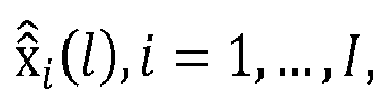
Fig. 1 . In a first step the I individual channel audio signals xi (l), i = 1, ..., I, are independently perceptually encoded for transmission or storage using e.g. mp3 (MPEG-1 Audio Layer III) or MPEG AAC. In a second step, a channel independent perceptual decoding is performed before finally matrixing the I decoded signals


the term "matrixing" origins from the fact that

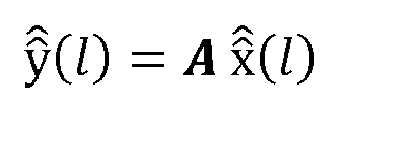
where A denotes a mixing matrix composed of mixing weights. The terms "mixing" and "matrixing" are used synonymously herein. Mixing/matrixing is used for the purpose of rendering audio signals for any particular loudspeaker setups. - It is important to note that the particular individual loudspeaker set-up on which the matrix depends, and thus the maxtrix that is used for matrixing during the rendering, is usually not known at the perceptual coding stage.
- The problem of noise unmasking when matrixing perceptually decoded multi-channel signals was addressed in [7] and [8]. In principle, the scenario considered in those publications is similar to that displayed in
Fig.1 . The input signals x̂ i (l) for perceptual coding are assumed to be a downmix of multi-channel audio signals, e.g. stereo or surround signals. The goal for matrixing of the perceptually decoded signals
- There is a fundamental problem with the prior art compression approach illustrated in
Fig. 1 : channel independentperceptual encoding 20 andsuccessive decoding 30 introduces quantization noise into the individual channel audio signals. Considering each decoded audio signal


- The present invention is based on the recognition of the fact that at least the above-mentioned problems can be solved by decorrelating the individual audio channel signals before perceptual encoding and recorrelating them after the perceptual decoding, as shown in
Fig.2 . Such decorrelation and recorrelation has the advantage that noise unmasking at matrixing is avoided, even for arbitrary mixing matrices which are not yet known at the perceptual encoding stage. That is, the disclosed decorrelating of individual audio channel signals before perceptual encoding and recorrelating them after the perceptual decoding is suitable for achieving any arbitrary matrixing/mixing without unmasking of noise that is masked during the perceptual encoding and perceprual decoding. - An apparatus that utilizes the method is disclosed in claim 15.
- Different from the systems described in [7] and [8], the method and apparatus proposed herein does not suffer from the restriction that the loudspeaker set-up must be known in advance at the perceptual coding stage.
- According to the invention, a method for avoiding the unmasking of coding noise when mixing perceptually coded multi-channel audio signals comprises steps of de-correlating the multi-channel audio signals, wherein de-correlated multi-channel audio signals and correlation information are obtained, perceptually encoding the de-correlated multi-channel audio signals, perceptually decoding the perceptually encoded, de-correlated multi-channel audio signals, wherein perceptually decoded, de-correlated multi-channel audio signals are obtained, re-correlating the perceptually decoded, de-correlated multi-channel audio signals according to the correlation information, wherein re-correlated, perceptually decoded multi-channel audio signals are obtained, and mixing the re-correlated, perceptually decoded multi-channel audio signals, wherein at least two of the re-correlated, perceptually decoded multi-channel audio signals are combined to obtain at least one audio output signal, and wherein a mixing scheme is used that is independent from (e.g. unknown in) said step of encoding.
- In one embodiment, a corresponding decoding method comprises a method for avoiding the unmasking of coding noise when mixing perceptually coded multi-channel audio signals within a decoder, comprising steps of receiving through a connection, or retrieving from a storage, perceptually encoded, de-correlated multi-channel audio signals and correlation information, perceptually decoding the perceptually encoded, de-correlated multi-channel audio signals, wherein perceptually decoded, de-correlated multi-channel audio signals are obtained, re-correlating the perceptually decoded, de-correlated multi-channel audio signals according to the correlation information, wherein re-correlated, perceptually decoded multi-channel audio signals are obtained, and mixing the re-correlated, perceptually decoded multi-channel audio signals, wherein at least two of the re-correlated, perceptually decoded multi-channel audio signals are combined to obtain at least one audio output signal.
- In one embodiment, the method relates to perceptually coded time-frequency transformed multi-channel audio signals. A method for avoiding any unmasking of coding noise when mixing multi-channel audio signals that have been perceptually coded by using a time-frequency transform comprises perceptual encoding, perceptual decoding and mixing, and the perceptual encoding comprising steps of time-frequency transform framing and time-frequency transforming the multi-channel audio signals, wherein time-frequency transformed multi-channel audio signals are obtained, segmenting (i.e. performing a transform segmentation) on the time-frequency transformed multi-channel audio signals, and de-correlating with a Karhunen-Loève Transform (KLT) the segments obtained in the transform segmentation, and the perceptual decoding comprises steps of
channel independent decoding without inverse time-frequency transform, wherein a channel independent decoded signal is obtained,
re-correlating the channel independent decoded signal with a KLT, wherein re-correlated signals are obtained,
performing a transform de-segmentation on the re-correlated signals, wherein time-frequency transformed multi-channel audio signals are obtained,
performing inverse time-frequency transform with overlap add on the time-frequency transformed multi-channel audio signals, wherein framed time-domain multi-channel audio signals are obtained, and
de-framing the framed time-domain multi-channel audio signals, wherein the re-correlated, perceptually decoded multi-channel audio signals are obtained;
and the mixing comprises
mixing the re-correlated, perceptually decoded multi-channel audio signals, wherein at least two of the re-correlated, perceptually decoded multi-channel audio signals are combined to obtain at least one audio output signal, and wherein a mixing scheme is used,
wherein said step of de-correlating with a KLT the segments obtained in the transform segmentation during encoding is independent from the mixing scheme that is used in the step of mixing. - In one embodiment, a corresponding decoding method comprises a method for avoiding the unmasking of coding noise when mixing, in a perceptual decoder, multi-channel audio signals that have been perceptually coded by using a time-frequency transform, comprising steps of channel independent decoding without inverse time-frequency transform, wherein channel independent decoded signals are obtained, re-correlating the channel independent decoded signals with a KLT, wherein re-correlated signals are obtained, performing a transform de-segmentation of the re-correlated signals, wherein time-frequency transformed multi-channel audio signals are obtained, performing inverse time-frequency transform with overlap add on the time-frequency transformed multi-channel audio signals, wherein framed time-domain multi-channel audio signals are obtained, de-framing the framed time-domain multi-channel audio signals, wherein the re-correlated, perceptually decoded multi-channel audio signals are obtained, and mixing the re-correlated, perceptually decoded multi-channel audio signals, wherein at least two of the re-correlated, perceptually decoded multi-channel audio signals are combined to obtain at least one audio output signal, and wherein a mixing scheme is used.
- In one aspect of the invention, a computer readable storage medium has executable instructions to cause a computer to perform a method comprising steps as disclosed in one of the claims 1-14.
- Advantageous embodiments of the invention are disclosed in the dependent claims, the following description and the figures.
- Exemplary embodiments of the invention are described with reference to the accompanying drawings, which show in
-
Fig.1 a conventional process of perceptual encoding and perceptual decoding of multi-channel audio signal representations that are mixed during rendering; -
Fig.2 an improved process of perceptual encoding and perceptual decoding of multi-channel audio signal representations that are mixed during rendering; -
Fig.3 a KLT based perceptual encoder for multi-channel audio signals; -
Fig.4 a KLT based perceptual decoder for multi-channel audio signals; -
Fig.5 an exemplary framing scheme used for frequency domain transforms; and -
Fig.6 the structure of an improved KLT based encoding and decoding scheme for TFT based perceptual coding. - In order to avoid noise unmasking at matrixing, even for arbitrary mixing matrices that are unknown at the perceptual encoding stage, the present invention decorrelates the individual audio channel signals before perceptual encoding, as shown in
Fig.2 . InFig.2 , an improved process of perceptual encoding and perceptual decoding of multi-channel audio signal representations that are mixed during rendering comprises a de-correlation 10 of audio signals x i (l), i = 1,..., I,perceptual encoding 20 of the de-correlated multi-channel audio signals, transmission and/or storage (not shown) of the perceptually encoded de-correlated multi-channel audio signals S21, perceptually decoding 30 the perceptually encoded, de-correlated multi-channel audio signals, wherein perceptually decoded, de-correlated multi-channel audio signals S31 are obtained, re-correlating 40 the perceptually decoded, de-correlated multi-channel audio signals according to the correlation information S11, wherein re-correlated, perceptually decoded multi-channel audio signals S40 are obtained, and mixing 50 the re-correlated, perceptually decoded multi-channel audio signals S40, wherein at least two of the re-correlated, perceptually decoded multi-channel audio signals are combined to obtain at least one audio output signal ŷ1(1). Advantageously, a mixing scheme that is used in the step of mixing needs not be known during the encoding, since the de-correlation is independent from the mixing scheme. - The decorrelation is accomplished with the Karhunen-Loève Transform (KLT), which is also known as Principle Component Analysis (PCA) [3]. After perceptual decoding, the decorrelated audio channel signals are correlated (to revert the decorrelation in the encoder) before any arbitrary matrixing is performed. To be able to revert to decorrelation in the decoder, some extra side information S11 is transmitted alongside with the perceptually coded audio channels S21. An analytical justification for this approach is provided further below.
- It should be noted that applying a KLT for the decorrelation of multi-channel signals before the independent perceptual coding of individual channel signals is generally known, e.g. in [6] and [5], only for the purpose of reducing the data rate and, hence, for achieving an improved coding efficiency.
-
Fig.3 shows, in an embodiment of the present invention, a conceptual scheme for a KLT based perceptual encoder for multi-channel audio signals. It comprises steps of performing asegmentation 110 of the input signals,decorrelation 120 with a KLT, and channel independentperceptual coding 130. The decorrelation comprises following steps: A first step is computing 1210 the inter-channel correlation matrix for each segment. Subsequently, the inter-channel correlation matrix is quantized 1220, rescaled (e.g. inverse quantized) 1230, and the rescaled version of the correlation matrix is employed for thecomputation 1240 of the KLT transform matrix BKLT(m). Finally, the KLT is applied 1250 to the signals within each respective segment, before the individual transformed signals Z(m) are independently perceptually coded 130. - In order to be able to invert the KLT in the decoder, the coded quantized correlation matrix is transmitted as side information. For this purpose, it is losslessly encoded 1260. The losslessly encoded quantized correlation matrix is transmitted instead of the KLT transform matrix, since it is always symmetric, and therefore only a portion thereof (the upper or lower half, including the diagonal) needs to be transmitted. The quantized and encoded inter-channel correlation matrix is used for transmission, in order to reduce the amount of side information.
- The reason why the KLT matrix is computed from the rescaled inter-channel correlation matrix, not from the original correlation matrix, is to achieve a perfect KLT inversion in the decoder. This requires the
additional coding 1260 of the quantized inter-channel correlation matrix to be lossless. - In the following, the individual steps of the encoding are described in detail. Note that the steps can also be understood as functions of parts of an encoder.
- The
first step 110 concerns the segmentation. The multi-channel signal consisting of I channels is segmented into frames according to
- The indices l m-1 + 1 and lm corresponding to the left and right border of the m-th segment are chosen to obtain constant inter-channel correlations within the segment.
- Concerning the computation of the
inter-channel correlation matrix 1210, it is computed by
where (·) H denotes the joint transposition and complex conjugation. - Then, the inter-channel correlation matrix Σ X (m) is quantized (e.g. element-wise) 1220 to obtain the quantized inter-channel correlation matrix Σ X (m). The quantization can be accomplished e.g. as proposed in [6].
- Concerning rescaling of quantized inter-channel correlation matrix, the quantized inter-channel correlation matrix Σ X (m) is rescaled 1230 to obtain the approximate correlation matrix Σ̂ X (m). It has to be ensured that the hermitian symmetry of the correlation matrix is retained after the rescaling.
- The KLT matrix B KLT(m) may e.g. be obtained from an eigenvalue decomposition of the quantized correlation matrix

where VX (m) denotes the matrix composed from the eigenvectors of Σ̂ X (m) as its columns and where Λ X (m) denotes a diagonal matrix with the corresponding eigenvalues of Σ̂ X (m) on its diagonal. The KLT matrix is then computed by
- For the KLT, the multi-channel signal segments X(m) are transformed to segments Z(m) of decorrelated channel signals z i (l), i = 1, ..., I, i.e.,

by multiplication with the KLT matrix as
- In the channel independent perceptual coding, the segments of the individual decorrelated signals z i (l), i = 1,..., I are individually perceptually coded 130. The coded representation of all channels within the segment m is denoted by(m).

- The quantized inter-channel correlation matrix
Σ X (m) is losslessly encoded 1260 to obtain the coded representation
Σ X (m) can be exploited by coding only the upper (or lower) triangular part and the diagonal. - In the following, a proposed KLT based perceptual decoding method is described. A conceptual scheme of the KLT based perceptual decoder for multi-channel signals is depicted in
Fig.4 , and comprises channel independentperceptual decoding 210, re-correlation with anIKLT 220 anddesegmentation 230. First, the inter-channel correlation matrix is decoded 2210 and the decorrelated signals are decoded 210, using a channel independent perceptual decoding. Second, the KL transform matrix is computed 2220 in the same way as in the encoder. Finally, the inverse KL transformation is applied 2230 to the decoded decorrelated signals, and the segments are de-segmented (i.e. combined) 230 to continuous streams of individual channel signals. - In the following, the individual parts of the decoding are described in detail.
- In a lossless decoding and rescaling of inter-channel correlation matrix step 2210, the coded quantized inter-channel correlation matrix

- In the channel independent
perceptual decoding step 210, the segments(m) of the coded decorrelated signals are perceptually decoded, where each channel is decoded independently. The decoded representation of all channel signals within the segment m is denoted by Ẑ(m).
- The KLT matrix B KLT(m) is computed 2220 from the inter-channel correlation matrix Σ̂X(m) in the same way as it is done in the KLT based perceptual encoder.
- In the inverse KLT (IKLT), the multi-channel signal segments Z(m) are transformed to segments X̂(m) of correlated channel signals x̂i (l), i = 1, ..., I, i.e.,

by multiplication with the inverse KLT matrix

- In the
Desegmentation step 230, the segments X̂(m) are combined to continuous streams of individual channel signals x̂i (l), i = 1, ..., I. - In the following, an embodiment is described that is particularly suitable for being used together with transform coders. Many perceptual coders transform the time domain signal to the frequency domain to better adapt the coding to the human psychoacoustics. A prominent example is Advanced Audio Coding (AAC) where the transform is accomplished using a Modified Discrete Fourier Transform (MDCT). For that purpose, the time domain signal is usually processed frame-wise, where successive frames overlap. For this kind of transform coders the proposed encoders and decoders may be slightly modified in order to solve a problem that has been found to occur for the following reason (cf.
Fig.5 ). - Consider a segmentation of the multi-channel signal as proposed in the KLT based perceptual encoder, as shown in
Fig.5 , so that several overlapping segments F1,...,F5 are obtained. At the transition between two successive segments, e.g. m and m + 1, the properties within the individual decorrelated signals zi (l) may abruptly change due to the change of the KLT matrix from B KLT(m) to B KLT(m + 1). This situation is illustrated inFig. 5 , where for simplicity it has been assumed that the length of the segment used for the KLT is three times as large as the frame shift used for the frequency transform. InFig.5 , the frequency transform frame with changing signal properties F3 is drawn in bold lines. - There are two major problems resulting from changing signal properties within a single frame used for the time-frequency transform (TFT). First, since the perceptual coder assumes the signal within a single frame to be stationary, this assumption is violated. Consequently, at decoding pre- and post-echoes may occur. Second, including two different signal properties within a single frame makes the corresponding spectrum become more dense. As a result, the coding efficiency is reduced since a more dense spectrum has to be encoded.
- A further aspect is that the TFT can often be regarded as a linear mapping to a space of minor dimension. For example, the MDCT maps a time domain frame of N samples to a frame of N/2 frequency bin values. Since this mapping, with respect to this single frame, is not invertible, the cross-correlations between the time domain and frequency domain representations of the respective frame are different. Consequently, using a KLT matrix computed based on the time domain signals does not assure that the frequency domain signals, which are actually coded, are properly decorrelated.
- At least one embodiment of the presently disclosed solution is suitable for preventing all the above mentioned problems for TFT coders. For this purpose, the TFT is performed before carrying out the KLT segmentation in the encoder. Respectively, in the decoder the inverse TFT (ITFT) is performed after the inverse KLT (IKLT), and not before the IKLT. With this approach, changing signal conditions within a single frame employed for the TFT, which are due to changing KLT matrices, are avoided. It is further guaranteed that those signals are decorrelated which are actually used for perceptual encoding. The scheme of the modified KLT based encoding and decoding for TFT based perceptual encoders is illustrated in
Fig.6 . - In the KLT based encoder according to one embodiment, the individual time domain signals xi (l), i = 1,..., I are framed 310 into overlapping frames of N samples before each frame is transformed 320 to the frequency domain by a time-frequency transform (TFT). The resulting short-time spectra S320 are denoted by Xi (k, n), where k denotes the frequency bin index and n denotes the TFT frame index. If, for simplicity, we assume that e.g. an MDCT is used as TFT, there are N/2 frequency bins and k ∈ {0,...,N/2 - 1}.
- Successively, the short-time spectra are segmented 110 into KLT segments W(m) as

where m denotes the KLT segment index and where n m-1 and nm indicate the indices of the first and last TFT frame included into the m-th KLT segment. The short-time spectra of the individual channels within the KLT segment are decorrelated 120 using the KLT to obtain the segments V(m) of decorrelated short-time spectra S122 and the respective losslessly encoded quantized inter-channel correlation matrix


Fig.6 ). - In the KLT based
decoder 400, the frames

- It should be noted that the above description relates to broadband signals, i.e. full bandwidth. However, in an alternative embodiment, the decorrelation and respective correlation may be performed on frequency bands that are related to e.g. the human perception, rather than on the broadband signals. In that case, instead of a single losslessly encoded quantized inter-channel correlation matrix, a number of losslessly encoded quantized frequency-band related correlation matrices are included into the side information.
- In the following, it will be shown analytically why noise unmasking may occur after matrixing the perceptually decoded individual channel signals. Further, it will be shown that the signal decorrelation applied before perceptual encoding is suitable for avoiding this problem. A mathematical problem formulation is as follows.
- Assume that a discrete-time multi-channel signal consisting of I signals xi (l), i = 1,..., I is given, where l denotes the sample index. The individual signals may be real or complex valued. We consider a frame of L samples beginning at the sample index l START + 1, in which the individual signals are assumed to be stationary. The corresponding samples are arranged within the matrix X ∈ C I×L according to

where
with (·) T denoting transposition. The corresponding empirical correlation matrix is given by
where (·) H denotes the joint complex conjugation and transposition. - Now we assume that the multi-channel signal frame is coded, thereby introducing coding error noise at reconstruction. Thus the matrix of the reconstructed frame samples, which is denoted byis composed of the true sample matrix X and a coding noise component E according to


with
and
- Since it can be assumed that each channel has been coded independently, the coding noise signals ei (l) can be assumed to be independent of each other for i = 1,..., I. Exploiting this property and the assumption, that the noise signals are zero-mean, the empirical correlation matrix of the noise signals is given by a diagonal matrix as

- Here,


on its diagonal. A further essential assumption is that the coding is performed such that a predefined signal-to-noise ratio (SNR) is satisfied for each channel. Without loss of generality, we assume that the predefined SNR is equal for each channel, i.e.,
with
- From now on we consider the matrixing of the reconstructed signals into J new signals yj (l), j = 1, ..., J. Without introducing any coding error the sample matrix of the matrixed signals may be expressed by

where A ∈ C J×I denotes the mixing matrix and where
with
- However, due to coding noise the sample matrix of the matrixed signals is given by

with N being the matrix containing the samples of the matrixed noise signals. It can be expressed as

where
is the vector of all matrixed noise signals at the sample index l. - Exploiting equation (11), the empirical correlation matrix of the matrixed noise-free signals can be formulated as

- Thus, the empirical power of the j-th matrixed noise-free signal, which is the j-th element on the diagonal of Σ Y , may be written as

where a j is the j-th column of A H according to
- Similarly, with equation (15), the empirical correlation matrix of the matrixed noise signals can be written as

- The empirical power of the j-th matrixed noise signal, which is the j-th element on the diagonal of Σ N , is given by

- Consequently, the empirical SNR of the matrixed signals, which is defined by

- can be reformulated using equations (19) and (22) as

- By decomposing Σ X into its diagonal and non-diagonal component as

with
and by exploiting the property
resulting from the assumptions (7) and (9) (recall that the predefined coding SNR has been assumed to be equal for each channel), we finally obtain the desired expression for the empirical SNR of the matrixed signals:

- From this expression it can be seen that this SNR is obtained from the predefined SNR, SNR x , by the multiplication with a term, which is dependent on the diagonal and non-diagonal component of the signal correlation matrix Σ X . Thus, the empirical SNR of the matrixed signals is equal to the predefined SNR if the signals xi (l) are uncorrelated to each other such that Σ X,NG becomes a zero matrix, i.e.,

with 0 I×I denoting a zero matrix with I rows and columns. - However, if the signals xi (l) are correlated, the empirical SNR of the matrixed signals may deviate from the predefined SNR. In the worst case, SNR yj can be much lower than SNR x , which means a potential unmasking of coding noise.
- The proposed solution according to the present invention is based on the following. As has been shown above, noise unmasking at matrixing happens if the signals xi (l) are correlated. Hence, in one embodiment of the present invention, a Karhunen-Loève Transform (KLT) is applied for decorrelating the signals xi (l) before coding, and an inverse KLT for re-correlating the decorrelated signals is applied after decoding. In particular, the matrix Z containing the samples of the transformed signals zi (l), i = 1,..., I as

can be expressed by
where B KLT denotes the KLT matrix. It can be obtained from the following eigenvalue decomposition of the correlation matrix Σ X
- In (33), VX denotes a unitary matrix containing the eigenvectors as columns and satisfying the property

with I being the identity matrix. Further, Λ X denotes a diagonal matrix containing the respective eigenvalues on its diagonal. The KLT matrix is then given by
- It can be verified with equations (32), (35) and (34) that the correlation matrix of the transformed signals is given by

- In particular, the correlation matrix is diagonal, i.e. all non-diagonal elements are zero. Hence, as shown in the previous subsection, if the transformed signals z i(l) are coded instead of the original signals x i(1), any matrixing of the decoded transformed signals will not change the SNR in the matrixed signals. That means that any noise unmasking can be avoided.
- Perceptual coding of audio signals means a coding that is adapted to the human perception of audio. It should be noted that when perceptually coding the audio signals, a quantization is usually performed not on the broad-band audio signal samples, but rather in individual frequency bands related to the human perception. Hence, the ratio between the signal power and the quantization noise may vary between the individual frequency bands. To be precise, in order to completely avoid noise unmasking in these cases, it would be necessary to decorrelate the band-pass signals rather than the broad-band audio channel signals. This, however, increases the amount of side information to be transmitted by a factor equal to the number of frequency bands considered. Assuming a fixed given data rate, this reduces the total rate for the coded audio signals. If the decorrelation effect compared to the case of a single broad-band signal decorrelation matrix is distinctly better, than it might be reasonable to prefer this decorrelation method. However, which of the decorrelation methods (either broadband signal decorrelation or decorrelation in frequency bands,) is most beneficial depends on the correlation properties of the input audio signals xi (l).
- In one embodiment, an apparatus for avoiding the unmasking of coding noise when mixing perceptually coded multi-channel audio signals (x1(l) ,..., xI(l)), comprises a de-correlator 10 for de-correlating the multi-channel audio signals, wherein de-correlated multi-channel audio signals S10 and correlation information S11 are obtained;
aperceptual encoder 20 for perceptually encoding the de-correlated multi-channel audio signals;
aperceptual decoder 30 for perceptually decoding the perceptually encoded, de-correlated multi-channel audio signals, wherein perceptually decoded, de-correlated multi-channel audio signals S31 are obtained;
a re-correlator 40 for re-correlating the perceptually decoded, de-correlated multi-channel audio signals according to the correlation information S11, wherein re-correlated, perceptually decoded multi-channel audio signals S40 are obtained; and amixer 50 for mixing the re-correlated, perceptually decoded multi-channel audio signals S40, wherein at least two of the re-correlated, perceptually decoded multi-channel audio signals are combined to obtain at least one audio output signal ŷ1(l), and wherein a mixing scheme is used that is unknown in said perceptual encoder. - In one embodiment, an apparatus for avoiding the unmasking of coding noise when mixing perceptually coded time-frequency transformed multi-channel audio signals, comprising a perceptual encoding unit and a perceptual decoding unit, and the perceptual encoding unit comprises
-
TFT framing units 310 for time-frequency transform framing andTFT units 320 for time-frequency transforming the multi-channel audio signals x1(l),..., xI(l), wherein time-frequency transformed multi-channel audio signals X1(k,n),...,XI(k,n) S320 are obtained; asegmentation unit 110 for performing a transform segmentation on the time-frequency transformed multi-channel audio signals S320; and a de-correlator 120 for de-correlating with a KLT the segments obtained in the transform segmentation;
and theperceptual decoding unit 400 comprises
adecoder 210 for channel independent decoding without inverse time-frequency transform, wherein a channel independent decodedsignal S21 0 is obtained;
acorrelator 220 for re-correlating the channel independent decodedsignal S21 0 with a KLT, wherein re-correlated signals S220 are obtained;
ade-segmentation unit 230 performing a transform de-segmentation on the re-correlated signals S220, wherein time-frequency transformed multi-channel audio signals S230 are obtained; -
ITFT units 440 for performing inverse time-frequency transform with overlap add on the time-frequency transformed multi-channel audio signals S230, wherein framed time-domain multi-channel audio signals S440 are obtained; and a de-framer 450 for de-framing the framed time-domain multi-channel audio signals S440, wherein the re-correlated, perceptually decoded multi-channel audio signals S40 are obtained; and
amixer 50 for mixing the re-correlated, perceptually decoded multi-channel audio signals S40, wherein at least two of the re-correlated, perceptually decoded multi-channel audio signals are combined to obtain at least one audio output signal ŷ 1(l), and wherein a mixing scheme is used,
wherein in said de-correlator 120 the de-correlating the segments obtained in the transform segmentation during encoding is independent from the mixing scheme that is used in themixer 50. - In one embodiment, an apparatus for avoiding the unmasking of coding noise when mixing, in a perceptual decoder, multi-channel audio signals that have been perceptually coded by using a time-frequency transform, comprises
decoder 210 for channel independent decoding without inverse time-frequency transform, wherein channel independent decodedsignals S21 0 are obtained;
acorrelation unit 220 for re-correlating the channel independent decoded signal S210 with a KLT, wherein re-correlated signals S220 are obtained;
a de-segmenter 230 for performing a transform de-segmentation of the re-correlated signals S220, wherein time-frequency transformed multi-channel audio signals S230 are obtained;ITFT units 440 for performing inverse time-frequency transform with overlap add on the time-frequency transformed multi-channel audio signals S230, wherein framed time-domain multi-channel audio signals S440 are obtained; and ade-framing unit 450 for de-framing the framed time-domain multi-channel audio signals S440, wherein the re-correlated, perceptually decoded multi-channel audio signals S40 are obtained; and amixer 50 for mixing the re-correlated, perceptually decoded multi-channel audio signals S40 according to a mixing scheme, wherein at least two of the re-correlated, perceptually decoded multi-channel audio signals are combined to obtain at least one audio output signal ŷ1(l). - In one embodiment similar to the one shown in
Fig.2 , an encoder and decoder are adapted for automatically switching between channel-based audio signals (i.e. loudspeaker channel related) and sound field audio signals, such as HOA. Both required different matrices in the matrixing block at the decoder. While input signals xi(l) have one particular format assigned (such as e.g. loudspeaker channel based format or HOA format), such information is transmitted or stored as side information S11, received or retrieved on the decoding side and used in thematrixing unit 50 to automatically adapt the matrix for the respective signal format (e.g. switch between loudspeaker channel based and HOA formats). - It should be noted that although shown simply as KLT, other types of transforms may be constructed other than KLT, as would be apparent to those of ordinary skill in the art, all of which are contemplated within the spirit and scope of the invention.
- While there has been shown, described, and pointed out fundamental novel features of the present invention as applied to preferred embodiments thereof, it will be understood that various omissions and substitutions and changes in the apparatus and method described, in the form and details of the devices disclosed, and in their operation, may be made by those skilled in the art without departing from the spirit of the present invention. It is expressly intended that all combinations of those elements that perform substantially the same function in substantially the same way to achieve the same results are within the scope of the invention. Substitutions of elements from one described embodiment to another are also fully intended and contemplated.
- It will be understood that the present invention has been described purely by way of example, and modifications of detail can be made without departing from the scope of the invention.
- Each feature disclosed in the description and (where appropriate) the claims and drawings may be provided independently or in any appropriate combination. Features may, where appropriate be implemented in hardware, software, or a combination of the two. Connections may, where applicable, be implemented as wireless connections or wired, not necessarily direct or dedicated, connections. Reference numerals appearing in the claims are by way of illustration only and shall have no limiting effect on the scope of the claims.
-
- [1] Erik Hellerud and lan Burnett and Audun Solvang and U. Peter Svensson. Encoding Higher Order Ambisonics with AAC. 124th AES Convention, Amsterdam, 2008.
- [2] Peter Jax and Jan-Mark Batke and Johannes Boehm and Sven Kordon. Perceptual Coding of HOA Signals in Spatial Domain. Patent application (Technicolor Internal Reference: PD100051), 2010.
- [3] Jolliffe, I. T. Principal Component Analysis. Springer, Second edition, 2002.
- [4] M. A. Poletti. Three-Dimensional Surround Sound Systems Based on Spherical Harmonics. J. Audio Eng. Soc., 53(11):1004-1025, 2005.
- [5] Soledad Torres-Guijarro and Jon A. Beracoechea-Álava and Luis I. Ortiz-Berenguer and F. Javier Casajús-Quirós. Inter-channel de-correlation for perceptual audio coding. Applied Acoustics, 66(8):889 - 901, 2005.
- [6] Yang, Dai and Ai, Hongmei and Kyriakakis, C. and Kuo, C. -C. J. High-fidelity multichannel audio coding with Karhunen-Loeve transform. IEEE Transactions on Speech and Audio Processing, 11 (4):365--380, 2003.
- [7] Kate, W.R.T. ten ; Boers, P.M. ; Makivirta, A. ; Kuusama, J. ; Christensen, K.E. ; Sorensen, E.: Matrixing of bit rate reduced audio signals. Proc. of the ICASSP, (2), 205-208, March 1992.
- [8] Kate, Warner R. ten: Compatibility Matrixing of Multichannel Bit-Rate Reduced Audio Signals. 96th Convention of the Audio Eng. Soc., Feb. 1994.
Claims (16)
- A method for avoiding the unmasking of coding noise when mixing perceptually coded multi-channel audio signals (x1(l) ,..., xI(l)), comprising steps of- de-correlating (10) the multi-channel audio signals, wherein de-correlated multi-channel audio signals (S10) and correlation information (S11) are obtained;- perceptually encoding (20) the de-correlated multi-channel audio signals;- perceptually decoding (30) the perceptually encoded, de-correlated multi-channel audio signals, wherein perceptually decoded, de-correlated multi-channel audio signals (S31) are obtained;- re-correlating (40) the perceptually decoded, de-correlated multi-channel audio signals according to the correlation information (S11), wherein re-correlated, perceptually decoded multi-channel audio signals (S40) are obtained; and- mixing (50) the re-correlated, perceptually decoded multi-channel audio signals (S40), wherein at least two of the re-correlated, perceptually decoded multi-channel audio signals are combined to obtain at least one audio output signal (ŷ1(l)), and wherein a mixing scheme is used that is unknown in said step of encoding.
- Method according to claim 1, wherein the mixing (50) of the re-correlated, perceptually decoded multi-channel audio signals (S40) comprises mapping multi-channel audio signals (S40) of a first multi-channel audio format to multi-channel audio signals (S51) of a second multi-channel audio format.
- Method according to claim 1 or 2, wherein a plurality (J) of output signals (S51) are obtained in the step of mixing (50), at least one of the output signals (S51) being a combination of at least two of the re-correlated, perceptually decoded multi-channel audio signals (S40), and wherein the step of mixing (50) the re-correlated, perceptually decoded multi-channel audio signals (S40) comprises modifying the number of channels.
- Method according to any of the claims 1-3, wherein the mixing is performed by a matrix operation according to loudspeaker positions.
- Method according to any of the claims 1-4, wherein a KLT is used in the step of de-correlating (10), and an iKLT is used in the step of re-correlating (40), and said correlation information (S11) comprises coefficients of a symmetric inter-channel correlation matrix.
- Method for avoiding the unmasking of coding noise when mixing multi-channel audio signals that have been perceptually coded by using a time-frequency transform, comprising perceptual encoding and perceptual decoding, and the perceptual encoding comprising steps of- time-frequency transform framing (310) and time-frequency transforming (320) the multi-channel audio signals (x1(l) ,..., xI(l)), wherein time-frequency transformed multi-channel audio signals (X1(k,n),...,XI(k,n)) (S320) are obtained;- performing a transform segmentation (110) on the time-frequency transformed multi-channel audio signals (S320); and- de-correlating (120) with a KLT the segments obtained in the transform segmentation;
and the perceptual decoding (400) comprising steps of- channel independent decoding without inverse time-frequency transform (210), wherein channel independent decoded signals (S21 0) are obtained;- re-correlating (220) the channel independent decoded signals (S21 0) with a KLT, wherein re-correlated signals (S220) are obtained;- performing a transform de-segmentation (230) on the re-correlated signals (S220), wherein time-frequency transformed multi-channel audio signals (S230) are obtained;- performing inverse time-frequency transform with overlap add (440) on the time-frequency transformed multi-channel audio signals (S230), wherein framed time-domain multi-channel audio signals (S440) are obtained; and- de-framing (450) the framed time-domain multi-channel audio signals (S440), wherein the re-correlated, perceptually decoded multi-channel audio signals (S40) are obtained; and- mixing (50) the re-correlated, perceptually decoded multi-channel audio signals (S40), wherein at least two of the re-correlated, perceptually decoded multi-channel audio signals are combined to obtain at least one audio output signal (ŷ1(l)), and wherein a mixing scheme is used,
wherein said step of de-correlating (120) with a KLT the segments obtained in the transform segmentation during encoding is independent from the mixing scheme that is used in the step of mixing (50). - Method according to one of the claims 1-6, wherein the step of mixing (50) the re-correlated, perceptually decoded multi-channel audio signals (S40) comprises mapping the encoded multi-channel audio signal to a channel-based audio format with a different number of channels.
- Method according to any of claims 1-6, wherein the multi-channel audio signal is a soundfield description, and the step of mixing (50) the re-correlated, perceptually decoded multi-channel audio signals (S40) comprises rendering the soundfield description to a loudspeaker related channel-based audio format according to loudspeaker positions.
- Method according to claim 8, wherein the soundfield description is given by a Higher Order Ambisonics representation, and the step of mixing (50) the re-correlated, perceptually decoded multi-channel audio signals (S40) comprises mapping the soundfield description to a plurality of loudspeaker signals.
- Method according to any of claims 1-9, further comprising a step of transmitting, and/or steps of storing and retrieving, the perceptually encoded multi-channel audio signals (S21) and the correlation information (S11) before the perceptual decoding (30, 400).
- A method for avoiding the unmasking of coding noise when mixing perceptually coded multi-channel audio signals (x1(l) ,...,xI(l)) within a decoder, comprising steps of- receiving through a connection, or retrieving from a storage, perceptually encoded, de-correlated multi-channel audio signals (S21) and correlation information (S11);- perceptually decoding (30) the perceptually encoded, de-correlated multi-channel audio signals, wherein perceptually decoded, de-correlated multi-channel audio signals (S31) are obtained;- re-correlating (40) the perceptually decoded, de-correlated multi-channel audio signals according to the correlation information (S11), wherein re-correlated, perceptually decoded multi-channel audio signals (S40) are obtained; and- mixing (50) the re-correlated, perceptually decoded multi-channel audio signals (S40), wherein at least two of the re-correlated, perceptually decoded multi-channel audio signals are combined to obtain at least one audio output signal (ŷ1(l)).
- A method (400) for avoiding the unmasking of coding noise when mixing in a perceptual decoder multi-channel audio signals that have been perceptually coded by using a time-frequency transform, comprising steps of- channel independent decoding without inverse time-frequency transform (210), wherein channel independent decoded signals (S21 0) are obtained;- re-correlating (220) the channel independent decoded signals (S21 0) with a KLT, wherein re-correlated signals (S220) are obtained;- performing a transform de-segmentation (230) the re-correlated signals (S220), wherein time-frequency transformed multi-channel audio signals (S230) are obtained;- performing inverse time-frequency transform with overlap add (440) on the time-frequency transformed multi-channel audio signals (S230), wherein framed time-domain multi-channel audio signals (S440) are obtained; and- de-framing (450) the framed time-domain multi-channel audio signals (S440), wherein the re-correlated, perceptually decoded multi-channel audio signals (S40) are obtained; and- mixing (50) the re-correlated, perceptually decoded multi-channel audio signals (S40) according to a mixing scheme, wherein at least two of the re-correlated, perceptually decoded multi-channel audio signals are combined to obtain at least one audio output signal (ŷ1(l)).
- Method according to claim 12, wherein in the step of re-correlating (220) the channel independent decoded signal (S21 0) with a KLT, re-correlation is independent from the mixing scheme that is used in the step of mixing (50).
- Method according to any one of the claims 1-13, wherein the decoding receives side information from the encoding, the side information defining an encoding mode of the encoded multi-channel audio signals, wherein the encoding mode comprises at least one of channel-based mode and soundfield representation mode, and wherein a decoding mode according to the side information is set for the decoding.
- An apparatus being adapted for avoiding the unmasking of coding noise when mixing perceptually coded multi-channel audio signals (x1(l) ,...,xI(l)), comprising- de-correlator (10) for de-correlating the multi-channel audio signals,
wherein de-correlated multi-channel audio signals (S10) and correlation information (S11) are obtained; and- perceptual encoder (20) for perceptually encoding the de-correlated multi-channel audio signals;- perceptual decoder (30) for perceptually decoding the perceptually encoded, de-correlated multi-channel audio signals, wherein perceptually decoded, de-correlated multi-channel audio signals (S31) are obtained;- re-correlator (40) for re-correlating the perceptually decoded, de-correlated multi-channel audio signals according to the correlation information (S11), wherein re-correlated, perceptually decoded multi-channel audio signals (S40) are obtained; and- mixer (50) for mixing the re-correlated, perceptually decoded multi-channel audio signals (S40), wherein at least two of the re-correlated, perceptually decoded multi-channel audio signals are combined to obtain at least one audio output signal (ŷ1(l)). - Decoder being adapted for avoiding the unmasking of coding noise when mixing perceptually coded multi-channel audio signals (x1(l) ,...,xI(l)), comprising- interface for receiving through a connection, or retrieving from a storage, perceptually encoded, de-correlated multi-channel audio signals (S21) and correlation information (S11);- perceptual decoder (30) for perceptually decoding the perceptually encoded, de-correlated multi-channel audio signals, wherein perceptually decoded, de-correlated multi-channel audio signals (S31) are obtained;- re-correlator (40) for re-correlating the perceptually decoded, de-correlated multi-channel audio signals according to the correlation information (S11), wherein re-correlated, perceptually decoded multi-channel audio signals (S40) are obtained; and- mixer (50) for mixing the re-correlated, perceptually decoded multi-channel audio signals (S40), wherein at least two of the re-correlated, perceptually decoded multi-channel audio signals are combined to obtain at least one audio output signal (ŷ1(l)).
Priority Applications (1)
| Application Number | Priority Date | Filing Date | Title |
|---|---|---|---|
| EP12305860.4A EP2688065A1 (en) | 2012-07-16 | 2012-07-16 | Method and apparatus for avoiding unmasking of coding noise when mixing perceptually coded multi-channel audio signals |
Applications Claiming Priority (1)
| Application Number | Priority Date | Filing Date | Title |
|---|---|---|---|
| EP12305860.4A EP2688065A1 (en) | 2012-07-16 | 2012-07-16 | Method and apparatus for avoiding unmasking of coding noise when mixing perceptually coded multi-channel audio signals |
Publications (1)
| Publication Number | Publication Date |
|---|---|
| EP2688065A1 true EP2688065A1 (en) | 2014-01-22 |
Family
ID=46583919
Family Applications (1)
| Application Number | Title | Priority Date | Filing Date |
|---|---|---|---|
| EP12305860.4A Withdrawn EP2688065A1 (en) | 2012-07-16 | 2012-07-16 | Method and apparatus for avoiding unmasking of coding noise when mixing perceptually coded multi-channel audio signals |
Country Status (1)
| Country | Link |
|---|---|
| EP (1) | EP2688065A1 (en) |
Cited By (6)
| Publication number | Priority date | Publication date | Assignee | Title |
|---|---|---|---|---|
| JP2017525318A (en) * | 2014-07-02 | 2017-08-31 | クゥアルコム・インコーポレイテッドQualcomm Incorporated | Reduction of correlation between higher order ambisonic (HOA) background channels |
| US9818413B2 (en) | 2014-03-21 | 2017-11-14 | Dolby Laboratories Licensing Corporation | Method for compressing a higher order ambisonics signal, method for decompressing (HOA) a compressed HOA signal, apparatus for compressing a HOA signal, and apparatus for decompressing a compressed HOA signal |
| WO2018001500A1 (en) * | 2016-06-30 | 2018-01-04 | Huawei Technologies Duesseldorf Gmbh | Apparatuses and methods for encoding and decoding a multichannel audio signal |
| US9930464B2 (en) | 2014-03-21 | 2018-03-27 | Dolby Laboratories Licensing Corporation | Method for compressing a higher order ambisonics (HOA) signal, method for decompressing a compressed HOA signal, apparatus for compressing a HOA signal, and apparatus for decompressing a compressed HOA signal |
| US10127914B2 (en) | 2014-03-21 | 2018-11-13 | Dolby Laboratories Licensing Corporation | Method for compressing a higher order ambisonics (HOA) signal, method for decompressing a compressed HOA signal, apparatus for compressing a HOA signal, and apparatus for decompressing a compressed HOA signal |
| CN110827840A (en) * | 2014-01-30 | 2020-02-21 | 高通股份有限公司 | Decoding independent frames of ambient higher order ambisonic coefficients |
-
2012
- 2012-07-16 EP EP12305860.4A patent/EP2688065A1/en not_active Withdrawn
Non-Patent Citations (11)
| Title |
|---|
| "Three-Dimensional Surround Sound Systems Based on Spherical Harmonics", J. AUDIO ENG. SOC., vol. 53, no. 11, 2005, pages 1004 - 1025 |
| BURNETT IAN ET AL: "Encoding Higher Order Ambisonics with AAC", AES CONVENTION 124; MAY 2008, AES, 60 EAST 42ND STREET, ROOM 2520 NEW YORK 10165-2520, USA, 1 May 2008 (2008-05-01), XP040508582 * |
| ERIK HELLERUD; TAN BURNETT; AUDUN SOLVANG; U. PETER SVENSSON: "Encoding Higher Order Ambisonics with AAC", 124TH AES CONVENTION, 2008 |
| JOLLIFFE, I. T.: "Principal Component Analysis", 2002, SPRINGER |
| KATE, W.R.T. TEN; BOERS, P.M.; MAKIVIRTA, A.; KUUSAMA, J.; CHRISTENSEN, K.E.; SORENSEN, E.: "Matrixing of bit rate reduced audio signals", PROC. OF THE ICASSP, no. 2, March 1992 (1992-03-01), pages 205 - 208, XP000356973, DOI: doi:10.1109/ICASSP.1992.226084 |
| KATE, WARNER R.: "Compatibility Matrixing of Multichannel Bit-Rate Reduced Audio Signals", 96TH CONVENTION OF THE AUDIO ENG. SOC., February 1994 (1994-02-01) |
| MAURI VÄÄNÄNEN: "Robustness Issues in Multi-View Audio Coding", AES CONVENTION 125; OCTOBER 2008, AES, 60 EAST 42ND STREET, ROOM 2520 NEW YORK 10165-2520, USA, 1 October 2008 (2008-10-01), XP040508860 * |
| POLETTI M A: "THREE-DIMENSIONAL SURROUND SOUND SYSTEMS", JOURNAL OF THE AUDIO ENGINEERING SOCIETY, AUDIO ENGINEERING SOCIETY, NEW YORK, NY, US, vol. 53, no. 11, 1 November 2005 (2005-11-01), pages 1004 - 1025, XP001243400, ISSN: 1549-4950 * |
| SOLEDAD TORRES-GUIJARRO; JON A. BERACOECHEA-ALAVA; LUIS I. ORTIZ-BERENGUER; F. JAVIER CASAJUS-QUIROS: "Inter-channel de-correlation for perceptual audio coding", APPLIED ACOUSTICS, vol. 66, no. 8, 2005, pages 889 - 901 |
| YANG DAI ET AL: "An Inter-Channel Redundancy Removal Approach for High-Quality Multichannel Audio Compression", 22 September 2000 (2000-09-22), pages 1 - 14, XP002517098, Retrieved from the Internet <URL:http://www.aes.org/tmpFiles/elib/20090227/9100.pdf> [retrieved on 20000901] * |
| YANG, DAI; AI, HONGMEI; KYRIAKAKIS, C.; KUO, C. -C.: "J. High-fidelity multichannel audio coding with Karhunen-Loeve transform", IEEE TRANSACTIONS ON SPEECH AND AUDIO PROCESSING, vol. 11, no. 4, 2003, pages 365 - 380, XP011099062, DOI: doi:10.1109/TSA.2003.814375 |
Cited By (24)
| Publication number | Priority date | Publication date | Assignee | Title |
|---|---|---|---|---|
| CN110827840A (en) * | 2014-01-30 | 2020-02-21 | 高通股份有限公司 | Decoding independent frames of ambient higher order ambisonic coefficients |
| CN110827840B (en) * | 2014-01-30 | 2023-09-12 | 高通股份有限公司 | Coding independent frames of ambient higher order ambisonic coefficients |
| US10629212B2 (en) | 2014-03-21 | 2020-04-21 | Dolby Laboratories Licensing Corporation | Methods and apparatus for decompressing a compressed HOA signal |
| US10679634B2 (en) | 2014-03-21 | 2020-06-09 | Dolby Laboratories Licensing Corporation | Methods and apparatus for decoding a compressed HOA signal |
| US10089992B2 (en) | 2014-03-21 | 2018-10-02 | Dolby Laboratories Licensing Corporation | Methods and apparatus for decompressing a compressed HOA signal |
| US10127914B2 (en) | 2014-03-21 | 2018-11-13 | Dolby Laboratories Licensing Corporation | Method for compressing a higher order ambisonics (HOA) signal, method for decompressing a compressed HOA signal, apparatus for compressing a HOA signal, and apparatus for decompressing a compressed HOA signal |
| US10192559B2 (en) | 2014-03-21 | 2019-01-29 | Dolby Laboratories Licensing Corporation | Methods and apparatus for decompressing a compressed HOA signal |
| CN109410960A (en) * | 2014-03-21 | 2019-03-01 | 杜比国际公司 | Method, apparatus and storage medium for being decoded to the HOA signal of compression |
| US10334382B2 (en) | 2014-03-21 | 2019-06-25 | Dolby Laboratories Licensing Corporation | Methods, apparatus and systems for decompressing a higher order ambisonics (HOA) signal |
| US10388292B2 (en) | 2014-03-21 | 2019-08-20 | Dolby Laboratories Licensing Corporation | Methods and apparatus for decompressing a compressed HOA signal |
| US10542364B2 (en) | 2014-03-21 | 2020-01-21 | Dolby Laboratories Licensing Corporation | Methods, apparatus and systems for decompressing a higher order ambisonics (HOA) signal |
| US10779104B2 (en) | 2014-03-21 | 2020-09-15 | Dolby Laboratories Licensing Corporation | Methods, apparatus and systems for decompressing a higher order ambisonics (HOA) signal |
| US9930464B2 (en) | 2014-03-21 | 2018-03-27 | Dolby Laboratories Licensing Corporation | Method for compressing a higher order ambisonics (HOA) signal, method for decompressing a compressed HOA signal, apparatus for compressing a HOA signal, and apparatus for decompressing a compressed HOA signal |
| US12236962B2 (en) | 2014-03-21 | 2025-02-25 | Dolby Laboratories Licensing Corporation | Methods and apparatus for decoding a compressed HOA signal |
| US12069465B2 (en) | 2014-03-21 | 2024-08-20 | Dolby Laboratories Licensing Corporation | Methods, apparatus and systems for decompressing a Higher Order Ambisonics (HOA) signal |
| US11830504B2 (en) | 2014-03-21 | 2023-11-28 | Dolby Laboratories Licensing Corporation | Methods and apparatus for decoding a compressed HOA signal |
| US11395084B2 (en) | 2014-03-21 | 2022-07-19 | Dolby Laboratories Licensing Corporation | Methods, apparatus and systems for decompressing a higher order ambisonics (HOA) signal |
| US11462222B2 (en) | 2014-03-21 | 2022-10-04 | Dolby Laboratories Licensing Corporation | Methods and apparatus for decoding a compressed HOA signal |
| US11722830B2 (en) | 2014-03-21 | 2023-08-08 | Dolby Laboratories Licensing Corporation | Methods, apparatus and systems for decompressing a Higher Order Ambisonics (HOA) signal |
| CN109410960B (en) * | 2014-03-21 | 2023-08-29 | 杜比国际公司 | Method, apparatus and storage medium for decoding compressed HOA signal |
| US9818413B2 (en) | 2014-03-21 | 2017-11-14 | Dolby Laboratories Licensing Corporation | Method for compressing a higher order ambisonics signal, method for decompressing (HOA) a compressed HOA signal, apparatus for compressing a HOA signal, and apparatus for decompressing a compressed HOA signal |
| RU2741763C2 (en) * | 2014-07-02 | 2021-01-28 | Квэлкомм Инкорпорейтед | Reduced correlation between background channels of high-order ambiophony (hoa) |
| JP2017525318A (en) * | 2014-07-02 | 2017-08-31 | クゥアルコム・インコーポレイテッドQualcomm Incorporated | Reduction of correlation between higher order ambisonic (HOA) background channels |
| WO2018001500A1 (en) * | 2016-06-30 | 2018-01-04 | Huawei Technologies Duesseldorf Gmbh | Apparatuses and methods for encoding and decoding a multichannel audio signal |
Similar Documents
| Publication | Publication Date | Title |
|---|---|---|
| US10614821B2 (en) | Methods and apparatus for encoding and decoding multi-channel HOA audio signals | |
| US6934676B2 (en) | Method and system for inter-channel signal redundancy removal in perceptual audio coding | |
| AU2014295167B2 (en) | In an reduction of comb filter artifacts in multi-channel downmix with adaptive phase alignment | |
| US9774975B2 (en) | Method and apparatus for decoding a compressed HOA representation, and method and apparatus for encoding a compressed HOA representation | |
| US9257128B2 (en) | Apparatus and method for coding and decoding multi object audio signal with multi channel | |
| US20140355767A1 (en) | Method and apparatus for performing an adaptive down- and up-mixing of a multi-channel audio signal | |
| US10403292B2 (en) | Method and apparatus for encoding/decoding of directions of dominant directional signals within subbands of a HOA signal representation | |
| US10194257B2 (en) | Method and apparatus for encoding/decoding of directions of dominant directional signals within subbands of a HOA signal representation | |
| US9794714B2 (en) | Method and apparatus for decoding a compressed HOA representation, and method and apparatus for encoding a compressed HOA representation | |
| KR102856247B1 (en) | Method and device for processing internal channels for low complexity format conversion | |
| EP3061088B1 (en) | Decorrelator structure for parametric reconstruction of audio signals | |
| US20120093321A1 (en) | Apparatus and method for encoding and decoding spatial parameter | |
| US20240395263A1 (en) | Apparatus and method to transform an audio stream | |
| US12051427B2 (en) | Determining corrections to be applied to a multichannel audio signal, associated coding and decoding | |
| US9800986B2 (en) | Method and apparatus for encoding/decoding of directions of dominant directional signals within subbands of a HOA signal representation | |
| EP2770505B1 (en) | Audio coding device and method | |
| US20150170656A1 (en) | Audio encoding device, audio coding method, and audio decoding device | |
| US20250210048A1 (en) | Methods, apparatus and systems for directional audio coding-spatial reconstruction audio processing | |
| US20250210051A1 (en) | Encoder and encoding method for discontinuous transmission of parametrically coded independent streams with metadata | |
| HK40128533A (en) | Data rate compression of higher order ambisonics audio based on decorrelation by adaptive discrete spherical transform | |
| HK1242833A1 (en) | Method, apparatus and computer readable medium for decoding hoa audio signals | |
| HK1242835A1 (en) | Method, apparatus and computer readable medium for decoding hoa audio signals | |
| HK1241131A1 (en) | Method, apparatus and computer readable medium for decoding hoa audio signals |
Legal Events
| Date | Code | Title | Description |
|---|---|---|---|
| PUAI | Public reference made under article 153(3) epc to a published international application that has entered the european phase |
Free format text: ORIGINAL CODE: 0009012 |
|
| AK | Designated contracting states |
Kind code of ref document: A1 Designated state(s): AL AT BE BG CH CY CZ DE DK EE ES FI FR GB GR HR HU IE IS IT LI LT LU LV MC MK MT NL NO PL PT RO RS SE SI SK SM TR |
|
| AX | Request for extension of the european patent |
Extension state: BA ME |
|
| STAA | Information on the status of an ep patent application or granted ep patent |
Free format text: STATUS: THE APPLICATION IS DEEMED TO BE WITHDRAWN |
|
| 18D | Application deemed to be withdrawn |
Effective date: 20140723 |