EP2685979B1 - Injectable pharmaceutical compositions comprising a water-insoluble anti-psychotic, sorbitan laurate and polysorbate 20 - Google Patents
Injectable pharmaceutical compositions comprising a water-insoluble anti-psychotic, sorbitan laurate and polysorbate 20 Download PDFInfo
- Publication number
- EP2685979B1 EP2685979B1 EP12712189.5A EP12712189A EP2685979B1 EP 2685979 B1 EP2685979 B1 EP 2685979B1 EP 12712189 A EP12712189 A EP 12712189A EP 2685979 B1 EP2685979 B1 EP 2685979B1
- Authority
- EP
- European Patent Office
- Prior art keywords
- composition
- polysorbate
- compound
- sorbitan laurate
- weight percent
- Prior art date
- Legal status (The legal status is an assumption and is not a legal conclusion. Google has not performed a legal analysis and makes no representation as to the accuracy of the status listed.)
- Active
Links
- 0 CCC(C)(CC(C(C)(C)OC*CC(*)C(C)(C)O)C(C1C(C)(C)OC**)=[O+]CC1OC)OCC(C)(C)OC(CC)=O Chemical compound CCC(C)(CC(C(C)(C)OC*CC(*)C(C)(C)O)C(C1C(C)(C)OC**)=[O+]CC1OC)OCC(C)(C)OC(CC)=O 0.000 description 2
- FEYGGQKPKNCOPW-UHFFFAOYSA-N CC(OCN(C(CC1)=O)c2c1ccc(OCCCCN(CC1)CCN1c(cccc1Cl)c1Cl)c2)=O Chemical compound CC(OCN(C(CC1)=O)c2c1ccc(OCCCCN(CC1)CCN1c(cccc1Cl)c1Cl)c2)=O FEYGGQKPKNCOPW-UHFFFAOYSA-N 0.000 description 1
Images


Classifications
-
- A—HUMAN NECESSITIES
- A61—MEDICAL OR VETERINARY SCIENCE; HYGIENE
- A61K—PREPARATIONS FOR MEDICAL, DENTAL OR TOILETRY PURPOSES
- A61K31/00—Medicinal preparations containing organic active ingredients
- A61K31/33—Heterocyclic compounds
- A61K31/395—Heterocyclic compounds having nitrogen as a ring hetero atom, e.g. guanethidine or rifamycins
- A61K31/495—Heterocyclic compounds having nitrogen as a ring hetero atom, e.g. guanethidine or rifamycins having six-membered rings with two or more nitrogen atoms as the only ring heteroatoms, e.g. piperazine or tetrazines
- A61K31/496—Non-condensed piperazines containing further heterocyclic rings, e.g. rifampin, thiothixene or sparfloxacin
-
- A—HUMAN NECESSITIES
- A61—MEDICAL OR VETERINARY SCIENCE; HYGIENE
- A61K—PREPARATIONS FOR MEDICAL, DENTAL OR TOILETRY PURPOSES
- A61K31/00—Medicinal preparations containing organic active ingredients
- A61K31/33—Heterocyclic compounds
- A61K31/38—Heterocyclic compounds having sulfur as a ring hetero atom
- A61K31/381—Heterocyclic compounds having sulfur as a ring hetero atom having five-membered rings
-
- A—HUMAN NECESSITIES
- A61—MEDICAL OR VETERINARY SCIENCE; HYGIENE
- A61K—PREPARATIONS FOR MEDICAL, DENTAL OR TOILETRY PURPOSES
- A61K31/00—Medicinal preparations containing organic active ingredients
- A61K31/33—Heterocyclic compounds
- A61K31/395—Heterocyclic compounds having nitrogen as a ring hetero atom, e.g. guanethidine or rifamycins
- A61K31/495—Heterocyclic compounds having nitrogen as a ring hetero atom, e.g. guanethidine or rifamycins having six-membered rings with two or more nitrogen atoms as the only ring heteroatoms, e.g. piperazine or tetrazines
- A61K31/4965—Non-condensed pyrazines
-
- A—HUMAN NECESSITIES
- A61—MEDICAL OR VETERINARY SCIENCE; HYGIENE
- A61K—PREPARATIONS FOR MEDICAL, DENTAL OR TOILETRY PURPOSES
- A61K31/00—Medicinal preparations containing organic active ingredients
- A61K31/33—Heterocyclic compounds
- A61K31/395—Heterocyclic compounds having nitrogen as a ring hetero atom, e.g. guanethidine or rifamycins
- A61K31/495—Heterocyclic compounds having nitrogen as a ring hetero atom, e.g. guanethidine or rifamycins having six-membered rings with two or more nitrogen atoms as the only ring heteroatoms, e.g. piperazine or tetrazines
- A61K31/4965—Non-condensed pyrazines
- A61K31/497—Non-condensed pyrazines containing further heterocyclic rings
-
- A—HUMAN NECESSITIES
- A61—MEDICAL OR VETERINARY SCIENCE; HYGIENE
- A61K—PREPARATIONS FOR MEDICAL, DENTAL OR TOILETRY PURPOSES
- A61K31/00—Medicinal preparations containing organic active ingredients
- A61K31/33—Heterocyclic compounds
- A61K31/395—Heterocyclic compounds having nitrogen as a ring hetero atom, e.g. guanethidine or rifamycins
- A61K31/55—Heterocyclic compounds having nitrogen as a ring hetero atom, e.g. guanethidine or rifamycins having seven-membered rings, e.g. azelastine, pentylenetetrazole
- A61K31/551—Heterocyclic compounds having nitrogen as a ring hetero atom, e.g. guanethidine or rifamycins having seven-membered rings, e.g. azelastine, pentylenetetrazole having two nitrogen atoms, e.g. dilazep
-
- A—HUMAN NECESSITIES
- A61—MEDICAL OR VETERINARY SCIENCE; HYGIENE
- A61K—PREPARATIONS FOR MEDICAL, DENTAL OR TOILETRY PURPOSES
- A61K31/00—Medicinal preparations containing organic active ingredients
- A61K31/33—Heterocyclic compounds
- A61K31/395—Heterocyclic compounds having nitrogen as a ring hetero atom, e.g. guanethidine or rifamycins
- A61K31/55—Heterocyclic compounds having nitrogen as a ring hetero atom, e.g. guanethidine or rifamycins having seven-membered rings, e.g. azelastine, pentylenetetrazole
- A61K31/551—Heterocyclic compounds having nitrogen as a ring hetero atom, e.g. guanethidine or rifamycins having seven-membered rings, e.g. azelastine, pentylenetetrazole having two nitrogen atoms, e.g. dilazep
- A61K31/5513—1,4-Benzodiazepines, e.g. diazepam or clozapine
-
- A—HUMAN NECESSITIES
- A61—MEDICAL OR VETERINARY SCIENCE; HYGIENE
- A61K—PREPARATIONS FOR MEDICAL, DENTAL OR TOILETRY PURPOSES
- A61K45/00—Medicinal preparations containing active ingredients not provided for in groups A61K31/00 - A61K41/00
-
- A—HUMAN NECESSITIES
- A61—MEDICAL OR VETERINARY SCIENCE; HYGIENE
- A61K—PREPARATIONS FOR MEDICAL, DENTAL OR TOILETRY PURPOSES
- A61K47/00—Medicinal preparations characterised by the non-active ingredients used, e.g. carriers or inert additives; Targeting or modifying agents chemically bound to the active ingredient
- A61K47/06—Organic compounds, e.g. natural or synthetic hydrocarbons, polyolefins, mineral oil, petrolatum or ozokerite
- A61K47/08—Organic compounds, e.g. natural or synthetic hydrocarbons, polyolefins, mineral oil, petrolatum or ozokerite containing oxygen, e.g. ethers, acetals, ketones, quinones, aldehydes, peroxides
- A61K47/14—Esters of carboxylic acids, e.g. fatty acid monoglycerides, medium-chain triglycerides, parabens or PEG fatty acid esters
-
- A—HUMAN NECESSITIES
- A61—MEDICAL OR VETERINARY SCIENCE; HYGIENE
- A61K—PREPARATIONS FOR MEDICAL, DENTAL OR TOILETRY PURPOSES
- A61K47/00—Medicinal preparations characterised by the non-active ingredients used, e.g. carriers or inert additives; Targeting or modifying agents chemically bound to the active ingredient
- A61K47/06—Organic compounds, e.g. natural or synthetic hydrocarbons, polyolefins, mineral oil, petrolatum or ozokerite
- A61K47/26—Carbohydrates, e.g. sugar alcohols, amino sugars, nucleic acids, mono-, di- or oligo-saccharides; Derivatives thereof, e.g. polysorbates, sorbitan fatty acid esters or glycyrrhizin
-
- A—HUMAN NECESSITIES
- A61—MEDICAL OR VETERINARY SCIENCE; HYGIENE
- A61K—PREPARATIONS FOR MEDICAL, DENTAL OR TOILETRY PURPOSES
- A61K47/00—Medicinal preparations characterised by the non-active ingredients used, e.g. carriers or inert additives; Targeting or modifying agents chemically bound to the active ingredient
- A61K47/30—Macromolecular organic or inorganic compounds, e.g. inorganic polyphosphates
-
- A—HUMAN NECESSITIES
- A61—MEDICAL OR VETERINARY SCIENCE; HYGIENE
- A61K—PREPARATIONS FOR MEDICAL, DENTAL OR TOILETRY PURPOSES
- A61K9/00—Medicinal preparations characterised by special physical form
- A61K9/0012—Galenical forms characterised by the site of application
- A61K9/0019—Injectable compositions; Intramuscular, intravenous, arterial, subcutaneous administration; Compositions to be administered through the skin in an invasive manner
-
- A—HUMAN NECESSITIES
- A61—MEDICAL OR VETERINARY SCIENCE; HYGIENE
- A61K—PREPARATIONS FOR MEDICAL, DENTAL OR TOILETRY PURPOSES
- A61K9/00—Medicinal preparations characterised by special physical form
- A61K9/10—Dispersions; Emulsions
-
- A—HUMAN NECESSITIES
- A61—MEDICAL OR VETERINARY SCIENCE; HYGIENE
- A61P—SPECIFIC THERAPEUTIC ACTIVITY OF CHEMICAL COMPOUNDS OR MEDICINAL PREPARATIONS
- A61P25/00—Drugs for disorders of the nervous system
-
- A—HUMAN NECESSITIES
- A61—MEDICAL OR VETERINARY SCIENCE; HYGIENE
- A61P—SPECIFIC THERAPEUTIC ACTIVITY OF CHEMICAL COMPOUNDS OR MEDICINAL PREPARATIONS
- A61P25/00—Drugs for disorders of the nervous system
- A61P25/18—Antipsychotics, i.e. neuroleptics; Drugs for mania or schizophrenia
-
- A—HUMAN NECESSITIES
- A61—MEDICAL OR VETERINARY SCIENCE; HYGIENE
- A61P—SPECIFIC THERAPEUTIC ACTIVITY OF CHEMICAL COMPOUNDS OR MEDICINAL PREPARATIONS
- A61P25/00—Drugs for disorders of the nervous system
- A61P25/24—Antidepressants
-
- A—HUMAN NECESSITIES
- A61—MEDICAL OR VETERINARY SCIENCE; HYGIENE
- A61K—PREPARATIONS FOR MEDICAL, DENTAL OR TOILETRY PURPOSES
- A61K2121/00—Preparations for use in therapy
Definitions
- the present invention relates to an injectable, pharmaceutical composition
- an injectable, pharmaceutical composition comprising sorbitan esters of carboxylic acids that are useful for the delivery of anti-psychotic drugs.
- U.S. patent Nos. 4,734,416 and 5,006,528 discloses aripiprazole, 7- ⁇ 4-[4-(2,3-dichlorophenyl)-1-piperazinyl]butoxy ⁇ -3,4-dihydro-2(1H)-quinolinone or 7- ⁇ 4-[4-(2,3-dichlorophenyl)-1-piperazinyl]butoxy ⁇ -3,4-dihydro carbostyril, as an atypical antipsychotic agent useful in the treatment of schizophrenia, bipolar disease, depression and other CNS disorders.
- Aripiprazole has the following chemical structure:
- Aripiprazole is sold under the tradename Abilify®. It acts as a dopamine D 2 partial agonist, serotonin 5-HT 1A receptor agonist and is an antagonist of the serotonin 5-HT 2A receptor.
- Abilify® is currently administered orally on a once-a-day dosing schedule as Abilify® (aripiprazole) Tablets, Abilify Discmelt® (aripiprazole) Orally Disintegrating Tablets and Abilify® (aripiprazole) Oral Solution.
- Abilify® Injection for intramuscular use is a rapid-acting solution product for treating agitation associated with schizophrenia and bipolar disease. Poor and variable patient compliance with a once-a-day dosing schedule of psychiatric drugs has been reported.
- U.S. Patent No. 7,115,587 discloses an injectable formulation that delivers an aripiprazole solution complexed with a substituted ⁇ -cyclodextrin to the muscular site with diminished irritation as compared to injectable suspensions containing uncomplexed aripiprazole.
- the Abilify® injection for intramuscular use is a single-dose, ready to use vial consisting of 9.75 mg/1.3ml of aripiprazole and 150 mg/ml of sulfobutylether ⁇ -cyclodextrin.
- Formulation challenges due to drug loading and poor solubility of aripiprazole in ⁇ -cyclodextrin at neutral pH have been reported.
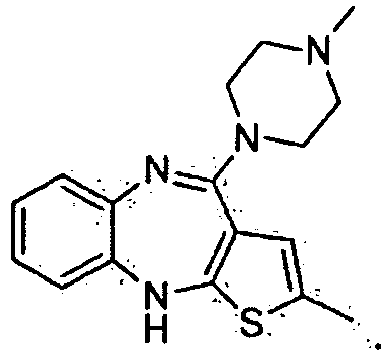
- Olanzapine (1,2-methyl-4-(4-methyl-1-piperazinyl)-10H-thieno[2,3-b][1,5]benzodiazepine) is a second generation antipsychotic drug marketed as Zyprexa®. It is useful for the treatment of disorders such as schizophrenia, bipolar disorder, psychotic depression and Tourette syndrome. This active pharmaceutical ingredient acts as an antagonist on 5-HT 2 serotonin receptors as well as the D 1 /D 2 dopamine receptors, while also exhibiting anticholinergic and antimuscarinic properties. Olanzapine belongs to the benzodiazepine family, and has the following structure:
- the invention provides a pharmaceutical composition comprising:
- compositions can take a variety of forms. Such forms include, but are not limited to, completely dispersed and flocculated systems.
- the pharmaceutical compositions described herein have a number of advantages.
- the compositions can be easily resuspended by the user, e.g., through handshaking, in a short time prior to administration.
- the pharmaceutical compositions e.g., flocculated systems, can be used to improve the local tissue reaction of antipsychotic drugs in extended release formulations. By mitigating the adverse results associated with the injection of these drugs, drug compliance will be greatly improved.
- the composition comprising components (a) - (d) can have components at varying ratios.
- the composition comprises components (b) and (c) at a ratio that results in flocs comprising component (a), wherein the flocs settle to a predetermined sediment bed height, such that components (a), (b) and (c) can be resuspended for injection.
- the bed height is comprised of at least a 20 to 80% increase in sediment height compared to a non-flocculated suspension after 24 hours of undisturbed sitting, and, in another embodiment, components (a), (b) and (c) can be resuspended for injection within 1-60 seconds of handshaking.
- the ratio of components (b) to (c) is such that the composition can be injected using a 20 to 25 gauge needle.
- the ratio of components (b) to (c) is approximately 5 to 2, by weight.
- the composition can comprise about 0.2 -1 weight percent, about 0.4 - 0.7 weight percent or about 0.5 weight percent sorbitan laurate.
- component (c) is polysorbate 20
- the composition can comprise about 0.05 - 0.8 weight percent polysorbate 20, about 0.1 - 0.3 weight percent polysorbate 20, or about 0.2 weight percent polysorbate 20.
- the flocs of the pharmaceutical composition have the following sizes: Dv[10]: 2-10 ⁇ m, Dv[50]: 10-30 ⁇ m, and Dv[90]: less than 80 ⁇ m ( e.g., approximately 65 um). In another embodiment, the flocs are Dv[10]: 1-10 ⁇ m, Dv[50]: 5-3 ⁇ m, and Dv[90]: less than 65 ⁇ m.
- compositions can have varying amounts of antipsychotic agent in the pharmaceutical composition.
- the composition can be comprised of 15-35 weight percent, e.g ., 20-30 weight percent, e.g ., 20 - 26 weight percent of compound A-7.
- an injectable pharmaceutical composition comprising:
- the pharmaceutical composition is formulated for use in delivering a water-insoluble antipsychotic agent into a host.
- the host is human.
- the composition can be intended for parenteral (e.g., intramuscular, intradermal or subcutaneous) administration.
- the composition is formulated for delivery through a needle into a host. Accordingly, the composition may be formulated for delivery for injection through a syringe equipped with a needle, where the end-user resuspends the composition prior to use.
- the antipsychotic agent can be formulated for modulating tissue reaction associated with the delivery of a water-insoluble antipsychotic agent.
- the modulation of the tissue reaction is a reduction in the irritation at the site of injection. In another embodiment, the modulation of the tissue reaction is a reduction in the irritation following IM or SC injection. In certain embodiments, the tissue reaction is reduced by at least about 20 percent by weight. In other embodiments, the tissue reaction is reduced by at least about 10 percent by weight.
- the pharmaceutical composition for injection site reaction modulation further comprises a buffer.
- the buffer may be selected from a phosphate, citrate, tartrate or acetate buffer.
- the buffer is a phosphate buffer.
- composition comprising:
- an injectable pharmaceutical composition comprising compound A-7 and sorbitan laurate.
- This composition is particularly useful for the formulation of a water-insoluble antipsychotic agent into an injectable pharmaceutical composition.
- the pharmaceutical composition further comprises polysorbate 20.
- the pharmaceutical composition can further comprise an aqueous vehicle, such as phosphate buffered saline, as well as any of the pharmaceutical components described herein.
- compositions described herein possess a number of advantages.
- the compositions offer minimized excipient levels while co-optimizing both resuspendability and acceptable injectability, and maintain good physiochemical attributes of the antipsychotic agent.
- these properties were discovered based on comparisons of vehicle performance based on settled bed height and qualitative ease of resuspension. Briefly, the redispersibility of the pharmaceutical compositions were assessed by preparing a number of different formulations (antipsychotic agent with a variety of excipients), and comparing the relative height of the settled beds. In general, higher settled bed heights are indicative of flocculated, or loosely aggregated, particles.
- the pharmaceutical compositions e.g., a pharmaceutical composition of components (a), (b) and (c), can be resuspended for injection within 1-60 seconds of handshaking.
- locculation refers to the formation of a loose aggregation of discrete particles held together in a network-like structure by physical adsorption of macromolecules, bridging during chemical interaction (precipitation), or when the longer range van der Waals forces of attraction exceed the shorter range forces of attraction.
- frlocs The "loose aggregation of discrete particles” can be referred to herein as "flocs.”
- compositions containing component (b) (e.g., sorbitan laurate) and component (c) (e.g. , polysorbate 20) have significantly higher settled bed heights than compositions without component (b), regardless of the presence of additional additives (e.g., polymers) or salts (e.g., phosphate buffer, saline).
- additional additives e.g., polymers
- salts e.g., phosphate buffer, saline
- the flocculation induced is unique to component (b) / component (c), as evidenced by comparison to compositions containing sorbitan monopalmitate, docusate sodium, or polysorbate 20 alone.
- the flocculation phenomenon is uniquely attributed to the additional influence of component (b), e.g., sorbitan laurate.
- compositions comprising components (a), (b) and (c) at a ratio that results in flocs comprising component (a), wherein the flocs settle to greater than a predetermined sediment bed height, such that components (a), (b) and (c) can be resuspended for injection.
- the flocs can comprise components (a), (b) and (c).
- a predetermined sediment bed height refers to a bed height that is higher than the bed height of a comparative pharmaceutical composition that has none of component (b), or none of components (b) or (c).
- the bed height is comprised of at least a 10, 20, 30, 40, 50, 60, 70 or 80% increase in sediment height compared to a non flocculated pharmaceutical composition after 24 hours of undisturbed sitting. In another embodiment, the bed height is comprised of at least a 20 to 80% increase in sediment height compared to a non flocculated pharmaceutical composition after 24 hours of undisturbed sitting.
- the formed flocs can be any number of sizes. Non-limiting examples of sizes include Dv[10]: 2-10 ⁇ m, Dv[50]: 10-30 ⁇ m, and Dv[90]: less than 80 ⁇ m (e.g., approximately 65 ⁇ m). In another embodiment, the flocs are Dv[10]: 1-10 ⁇ m, Dv[50]: 5-30 ⁇ m, and Dv[90]: less than 65 ⁇ m.
- the pharmaceutical compositions provided herein result in reduced tissue reactions.
- flocculated pharmaceutical suspensions have an increased viscosity and reduced flow properties, which impact the ability to inject or administer the product to the patient. This in turn may negatively impact the local tissue response; therefore it is surprising that the formulations described herein result in improved tissue response.
- compositions described herein are useful in methods for modulating tissue reactions associated with delivering a water-insoluble antipsychotic agent into a host, comprising the water-insoluble antipsychotic agent, component (b) sorbitan laurate and component (c) polysorbate 20.
- the antipsychotic agent/component (b) /component (c) composition is delivered to the host through a needle.
- composition provided herein results in a decreased tissue reaction normally associated with an antipsychotic agent.
- an injectable composition comprising an antipsychotic agent and a sorbitan ester of a carboxylic acid, wherein the carboxylic acid comprises 8-14 carbon atoms (e.g., sorbitan laurate)
- tissue reaction compared to a similar compositions comprising a sorbitan ester of a carboxylic acid falling outside of this range (e.g. , sorbitan monopalmitate).
- the injectable composition provided herein can be formulated and maintained in suspension with ease. Surprisingly, it was found that it was easier to formulate the antipsychotic drug described herein using a sorbitan ester of a carboxylic acid, wherein the carboxylic acid comprises 8-14 carbon atoms ( e.g. , sorbitan laurate) compared with other sorbitan esters falling outside of this range ( e.g. , sorbitan monopalmitate). This was also unexpected. Without being bound by theory, it is believed that the sorbitan ester component of the injectable composition provided herein improves the hydrophilicity of the drug through surface interactions of the various components.
- formulation vehicles containing sorbitan laurate and polysorbate 20 formed visible emulsions with no oiling out of either surfactant.
- formulations containing sorbitan palmitate did not form consistent emulsions, even with the addition of a second non-ionic surfactant, with visible undissolved material at the bottom of the material.
- tissue reaction refers to foreign body responses to a drug product (active agent and/or vehicle used for administration).
- tissue reaction refers to foreign body responses to a drug product (active agent and/or vehicle used for administration).
- tissue reaction results in the influx of immune cells, the subsequent encapsulation of the drug product and usually the development of a fluid filled central cavity. The presence of fibroblasts, neutrophils, macrophages and giant cells are often observed via histological examination.
- the term “undue TR” or “unacceptable TR” refers to moderate to severe TR which is unacceptable to the patient and thereby impacts unfavorably on patient comfort and compliance.
- reduced TR refers to generally minimal to mild TR which is acceptable to the patient and therefore does not engender an adverse event related nor impact unfavorably on patient compliance.
- the injectable composition provided herein is characterized by a decreased undue TR and a more acceptable TR following injection of drug product.
- tissue reaction can also be referred to as "injection site reaction.”
- the modulation of tissue response following SC administration is described by the reduction of the injection site weight (comprising the drug depot and surrounding tissue) which provides a quantitative assessment of the severity of the response.
- the modulation of the tissue response following IM administration is described by the spreadability of the drug and resulting depot morphology; spreading of the drug along the fascial planes of muscle is desirable rather than the formation of a concentrated mass of drug in a small area.
- the modulation of the tissue reaction is the reduction in tissue reaction at the site of injection.
- the injection site reaction is reduced by a particular amount, e.g., about 90%, 80%, 70%, 60%, 50%, 40%, 30%, 20%, 10%, 5%, etc.
- the antipsychotic agent/sorbitan ester /polysorbate 20 composition When the antipsychotic agent/sorbitan ester /polysorbate 20 composition is to be used as an injectable composition, including but not limited to injection through a needle or needleless injection, it can be formulated into a conventional injectable carrier. Suitable carriers include biocompatible and pharmaceutically acceptable solutions.
- Sorbitan laurate can also be referred to as "sorbitan monolaurate":
- the pharmaceutical composition comprising components (a) and (b) further comprises component (c): a polyoxyethylene derivative of a sorbitan ester of a carboxylic acid, wherein the carboxylic acid comprises 8-14 carbon atoms.
- component (c) is polysorbate 20, sold under the trademark TWEEN ® .
- the polysorbate can be added in an amount that reduces surface tension of a drug product or aids in suspension stability of the drug product.
- the ratios of (b) and (c) can vary.
- the ratio of components (b) to (c) is approximately 10 to 0.5, e.g., 10 to 1, e.g., 8 to 1, e.g., 5:2, by weight.
- the ratio of components (b) to (c) is approximately 5 to 2, by weight.
- the composition comprises component (a), sorbitan laurate, and polysorbate 20, wherein the ratio of sorbitan laurate and polysorbate 20 is approximately 5 to 2, by weight.
- the composition comprises component (a), sorbitan laurate, and polysorbate 20, wherein the ratio of sorbitan laurate and polysorbate 20 is approximately 3 to 1, by weight.
- the composition comprises component (a), sorbitan laurate, and polysorbate 20, wherein the ratio of sorbitan laurate and polysorbate 20 is approximately 2 to 1, by weight.
- the composition comprises component (a), sorbitan laurate, and polysorbate 20, wherein the ratio of sorbitan laurate and polysorbate 20 is within the range of approximately 3 to 1 - 2 to 1, by weight.
- the sorbitan laurate/polysorbate 20 ratio can be approximately 0.625, 1, 1.25, 2, 2.5, or 5, representing a range of 0.625 - 5.
- the weight percent of (b) and (c) can vary.
- the composition comprises about 0.2 - 1 weight percent component (b), e.g., sorbitan laurate.
- the composition comprises about 0.4 - 0.7 weight percent component (b), e.g ., sorbitan laurate.
- the composition comprises about 0.5 weight percent component (b), e.g. , sorbitan laurate.
- the composition comprises about 0.05 - 0.8 weight percent component (c), e.g. , polysorbate 20. In yet another embodiment, the composition comprises about 0.1 - 0.3 weight percent component (c), e.g. , polysorbate 20. In still another embodiment, the composition comprises about 0.2 weight percent polysorbate 20.
- the ratio of components (b) to (c) is such that the composition can be injected using a 20-25 gauge needle.
- the needle can be a 20, 21, or 23.5 gauge needle.
- compositions provided herein can also have varying amounts of the antipsychosis agent compound A-7.
- the composition comprises approximately 15 - 35 weight percent of compound A-7 or pharmaceutically acceptable salts, hydrates, or solvates thereof.
- the composition comprises approximately 20 - 30 weight of compound A-7 or pharmaceutically acceptable salts, hydrates, or solvates thereof.
- the composition comprises approximately 20 - 26 weight of compound A-7 or pharmaceutically acceptable salts, hydrates, or solvates thereof.
- the composition comprises approximately 24-26 weight percent of compound A-7 or pharmaceutically acceptable salts, hydrates, or solvates thereof.
- the aqueous vehicle of the pharmaceutical compositions provided herein can be a buffer.
- the buffer may be selected from a phosphate, citrate, tartrate or acetate buffer.
- the buffer is a phosphate buffer.
- compositions provided herein can further comprise additional components.
- additional wetting agents or surfactants in a pharmaceutical composition may promote one or more of the following:
- the pharmaceutical compositions also contains an aqueous vehicle, which is a vehicle that dilutes and suspends the drug.
- the diluent of interest herein is one which is pharmaceutically acceptable (safe and non-toxic for administration to a human) and is useful for the preparation of a reconstituted formulation.
- Exemplary diluents include sterile water, sterile water for injection (WFI), bacteriostatic water for injection (BWFI), a pH buffered solution (e.g. , phosphate-buffered saline), sterile saline solution, Ringer's solution or dextrose solution.
- the buffer can be phosphate, citrate, tartrate or acetate.
- the diluent is phosphate-buffered saline, which is a water-based salt solution containing either sodium chloride or potassium chloride, and sodium phosphate or potassium phosphate.
- the phosphate buffer comprises isotonic saline with 5-50 mM phosphate buffer at pH 4.0 - 9.0, e.g., 5.0 - 8.0, e.g., 5.0 - 7.5.
- the pharmaceutical compositions can further contain an additional surfactant that preferentially adsorbs to an interface between two immiscible phases, such as the interface between water and an organic polymer solution, a water/air interface or organic solvent/air interface.
- additional surfactant include but are not limited to fatty alcohols such as polyethylene glycols (PEGs) and cetyl alcohol.
- the pharmaceutical compositions can further comprise a dispersant, such as, for example, carboxymethyl cellulose (CMC), carboxymethyl cellulose sodium, cross-linked sodium carboxymethyl cellulose, calcium carboxymethyl cellulose, and low substituted hydroxypropyl cellulose magnesium aluminum silicate, or a mixture thereof.
- a dispersant such as, for example, carboxymethyl cellulose (CMC), carboxymethyl cellulose sodium, cross-linked sodium carboxymethyl cellulose, calcium carboxymethyl cellulose, and low substituted hydroxypropyl cellulose magnesium aluminum silicate, or a mixture thereof.
- the pharmaceutical composition comprises carboxymethyl cellulose.
- the pharmaceutical compositions may also optionally comprise an antioxidant to inhibit the oxidation of ingredients.
- antioxidants include, but are not limited to, ascorbic acid, ascorbyl palmitate, butylated hydroxyanisole, a mixture of 2 and 3 tertiary-butyl-4-hydroxyanisole, butylated hydroxytoluene, sodium iso-ascorbate, dihydroguaretic acid, potassium sorbate, sodium bisulfate, sodium metabisulfate, sorbic acid, potassium ascorbate, vitamin E, 4-chloro-2,6-ditertiary butylphenol, alpha-tocopherol, and propylgallate.
- the pharmaceutical compositions can further include a lipid, e.g., a neutral lipid.
- Neutral lipids include any lipid that remains neutrally charged at a pH between about 4 and 9.
- Neutral lipids include, without limitation, cholesterol, other sterols and derivatives thereof, phospholipids, and combinations thereof and other neutral lipids.
- the phospholipids include any one phospholipid or combination of phospholipids capable of forming liposomes.
- phosphatidylcholines include phosphatidylcholines, phosphatidylethanolamines, lecithin and fractions thereof, phosphatidic acid, phosphatidylglycerols, phosphatidylinositols, phosphatidylserines, plasmalogens and sphingomyelins.
- the phosphatidylcholines include, without limitation, those obtained from egg, soy beans or other plant sources or those that are partially or wholly synthetic or of variable lipid chain length and unsaturation, POPC, OPPC, natural or hydrogenated soy bean PC, natural or hydrogenated egg PC, DMPC, DPPC, DSPC, DOPC and derivatives thereof.
- phosphatidylcholines are POPC, non-hydrogenated soy bean PC and non-hydrogenated egg PC.
- Phosphatidylethanolamines include, without limitation, DOPE, DMPE and DPPE and derivatives thereof.
- Phosphatidylglycerols include, without limitation, DMPG, DLPG, DPPG, and DSPG.
- Phosphatidic acids include, without limitation, DSPA, DMPA, DLPA and DPPA.
- compositions can also advantageously employ a density enhancing agent, such as a sugar, e.g. , mannitol, or sorbitol and/or a tonicity adjusting agent, such as sodium chloride or glycerol.
- a density enhancing agent such as a sugar, e.g. , mannitol, or sorbitol
- a tonicity adjusting agent such as sodium chloride or glycerol.
- compositions provided herein also include water, aqueous methylcellulose solutions, saline, dextrose solutions, fructose solutions, ethanol, or oils of animal, vegetative, or synthetic origin.
- the pharmaceutical carrier may also contain preservatives, and buffers as are known in the art.
- compositions described herein may also be in the form of an emulsion.
- emulsion as used in this specification denotes a two-phase system in which one phase is finely dispersed in the other phase.
- An emulsifier can be used in the pharmaceutical compositions to form the emulsion.
- emulsifier denotes an agent that can reduce and/or eliminate the surface and the interfacial tension in two-phase system. Such an agent possesses both hydrophilic and lipophilic groups in the emulsifier agent.
- compositions described herein may also be in the form of a dispersion.
- dispersion is to be understood as a mixture in which fine particles of one substance (e.g. , a drug) are scattered throughout another substance (e.g. , a liquid).
- Dispersions include suspensions, and colloids.
- the methods described herein include administering the compositions described herein, thereby obtaining an extended release or sustained release profile in the patient.
- Extended-release or “sustained-release” includes dosage forms whose drug-release characteristics of time course and/or location are chosen to accomplish therapeutic or convenience objectives not offered by conventional dosage forms such as a solution or an immediate release dosage form.
- An extended release profile includes deliveries that achieve a therapeutically effective amount of the antipsychotic agent, Compound A- 7 to be present in the plasma of the individual for at least about 7 days, preferably at least about 14 days, or more preferably at least about 21 days alternatively for at least 2, 3, 4, 6 or 8 weeks or as much as three months.
- the pharmaceutical compositions can be administered as a single or sole (undivided) dose.
- the composition is also useful for those individuals that require constant or chronic therapy, such as those that receive repeated doses over several hours, days, weeks, months, or more.
- the method can comprise a first administration of a first extended release composition and a second administration of a second extended release composition.
- the second composition can be the same, substantially the same or different as the first and can include the same active agent or a different active agent.
- the second composition can be administered at about 7 days, or more, such as at least about 14 days, or at least about 17 days, after the first administration, where the first administration results in the release of agent for a period of 1, 2, 3, 4, 5, 6, 7, 8, 9, 10, 11, 12, 13, 14 days, or more.
- injectable, pharmaceutical compositions described herein can be injected into a patient in any number of ways.
- injectable refers to a composition that is suitable to be delivered to an individual in an injection, such as with an injection device, including one that employs a syringe or a cartridge, which may be housed in a manual injection device or an auto-injection device, for example.
- the injectable composition is suitable for parenteral administration.
- parenteral administration refers to administration through injection or infusion. Parenteral administration includes, but is not limited to, intravenous administration, intradermal administration, subcutaneous administration or intramuscular administration.
- intravenous administration means administration into a vein.
- “Intradermal administration” is injection into the upper layer of skin (i.e., the dermis), just beneath the epidermis. "Subcutaneous administration” refers to administration just below the skin. “Intramuscular administration” is the injection directly into a muscle.
- the pharmaceutical compositions provided herein are useful for the administration of an antipsychotic drug to a subject.
- antipsychotic refers to all drugs used to treat psychosis. Common conditions for which antipsychotics are prescribed include schizophrenia, mania and delusional disorder, although antipsychotics are also used to counter psychosis associated with a wide range of other diagnoses. Antipsychotics also act as mood stabilizers making them suitable for the treatment of bipolar disorde (even when no symptoms of psychosis are present).
- the pharmaceutical compositions provided herein are particularly useful for formulating a water-insoluble antipsychotic into an injectable composition.
- a water-insoluble antipsychotic agent is one that dissolves in a quantity of water to an extent of less than 100%.
- water-insoluble does not necessarily refer to complete or 100% water-insolubility.
- the water-insoluble material dissolves to an extent of less than 50%.
- the water-insoluble material dissolves to an extent of less than 10%.
- the water-insoluble material dissolves to an extent of less than 1%.
- water-insoluble can refer to solubility as prescribed in the United States Pharmacopoeia.
- compositions provided herein can be used in the treatment of a variety of disorders in a subject in need thereof.
- the disclosed compositions may be used to treat conditions selected from: disorders such as cerebral deficit subsequent to cardiac bypass surgery and grafting, stroke, cerebral ischemia, spinal cord trauma, head trauma, perinatal hypoxia, cardiac arrest, hypoglycemic neuronal damage, dementia (including AIDS-induced dementia), Alzheimer's disease, Huntington's Chorea, amyotrophic lateral sclerosis, ocular damage, retinopathy, cognitive disorders, idiopathic and drug-induced Parkinson's disease, muscular spasms and disorders associated with muscular spasticity including tremors, epilepsy, convulsions, cerebral deficits secondary to prolonged status epilepticus, migraine (including migraine headache), urinary incontinence, substance tolerance, substance withdrawal (including, substances such as opiates, nicotine, tobacco products, alcohol, benzodiazepines, cocaine, sedatives, hypnotics, etc.), psychosis, schizophrenia, anxiety
- the present invention describes a method of treating cardiac and cardiovascular disorders such as angina, arrhythmia, and hypertension, in a patient in need thereof.
- the method comprises administering to the subject a therapeutically effective amount of a composition of the invention or a pharmaceutically acceptable salt thereof.
- the invention further describes the treatment of fever, diabetes, allergy, asthma, infection, inflammation, and ulcers in a patient in need thereof, comprising administering to the subject a therapeutically effective amount of a composition of the invention or a pharmaceutically acceptable salt thereof.
- the invention further describes the treatment of sleep modulation comprising administration of a composition of the invention.
- Sleep modulation includes decreasing the time to sleep onset, increasing the average sleep bout length, and increasing the maximum sleep bout length.
- compositions described herein can be used to treat anxiety, depression, bipolar disorder, autism-related irritability, and psychotic conditions including acute mania, schizophrenia and schizophreniform diseases in a subject.
- treated includes the diminishment or alleviation of at least one symptom associated with psychosis or a related CNS disorder.
- the term “treated,” “treating” or “treatment” as used in reference to a disease or condition shall mean to intervene in such disease or condition so as to prevent or slow the development of, prevent or slow the progression of, halt the progression of, or eliminate the disease or condition.
- modulating refers to an effect of altering a biological activity, especially a biological activity associated with an injection site reaction.
- subject is intended to include animals, which are capable of suffering from or afflicted with dementia associated with psychosis or a related CNS disorder, including, without limitation, psychotic conditions including acute mania, schizophrenia and schizophreniform disorders, bipolar disorder, anxiety and depression.
- subjects include mammals, e.g ., humans, dogs, cows, horses, pigs, sheep, goats, cats, mice, rabbits, rats, and transgenic non-human animals.
- the subject is a human, e.g., a human suffering from, at risk of suffering from, or potentially capable of suffering from any of the diseases described herein.
- the term “about” or “approximately” usually means within 20%, more preferably within 10%, and most preferably still within 5% of a given value or range. Alternatively, especially in biological systems, the term “about” means within about a log ( i.e ., an order of magnitude), preferably within a factor of two of a given value.
- a therapeutically effective amount of the agent is given to a subject using the pharmaceutical compositions provided herein.
- the term "therapeutically effective amount” is further meant to define an amount resulting in the improvement of any parameters or clinical symptoms.
- the actual dose may vary with each patient and does not necessarily indicate a total elimination of all disease symptoms.
- the management of exacerbations and maintenance of remission of psychiatric symptoms are main goals of therapy, and selection of the appropriate drug and dosage in a particular disease balances these goals with the minimization of adverse events attributable to the drug.
- a therapeutically effective amount of the compound used in the treatment described herein can be readily determined by the attending diagnostician, as one skilled in the art, by the use of conventional techniques and by observing results obtained under analogous circumstances.
- determining the therapeutically effective dose a number of factors are considered by the attending diagnostician, including, but not limited to: the species of mammal; its size, age, and general health; the specific disease involved; the degree of or involvement or the severity of the disease; the response of the individual patient; the particular compound administered; the mode of administration; the bioavailability characteristic of the preparation administered; the dose regimen selected; the use of concomitant medication; and other relevant circumstances.
- Preferred suitable dosages for the compound used in the treatment described herein are on the order of about 1 mg to about 600 mg, preferably about 3, 5, 10, 15, 20, 25, 30, 35, 40, 45, 50, 55, 60, 65, 70, 75, 80, 90, 95, 100, 120, 140, 160, 180, 200, 220, 240, 260, 280, 300, 320, 340, 360, 380, 400, 420, 440, 460, 480, 500, 520, 540, 560, 580 to about 600 mgs total of active agent. Dosing schedules may be adjusted to provide the optimal therapeutic response.
- administration can be one to three times daily for a time course of one day to several days, weeks, months, and even years, and may even be for the life of the patient.
- a unit dose of any given composition used in the treatment described herein can be administered in a variety of dosing schedules, depending on the judgment of the clinician, needs of the patient, and so forth.
- the specific dosing schedule will be known by those of ordinary skill in the art or can be determined experimentally using routine methods.
- Exemplary dosing schedules include, without limitation, administration five times a day, four times a day, three times a day, twice daily, once daily, every other day, three times weekly, twice weekly, once weekly, twice monthly, once monthly, and so forth.
- Unit dose preparations provided herein can contain compound A-7 in the range of about 20 to about 900, e.g., 60 to about 800, mgs.
- compositions can be manufactured utilizing techniques known in the art. Typically the therapeutically effective amount of the compound will be admixed with a pharmaceutically acceptable carrier.
- This study describes the formulation development of the Compound A-7 drug product for use in further studies. Development was focused on improving the wettability and redispersibility characteristics of the injection vehicle, with the ultimate intent of increasing the physical stability of the suspension.
- the optimization experiments identified a formulation comprising Compound A-7 recrystallized bulk drug substance (256 mg/mL) suspended in an 10 mM phosphate buffer injection vehicle containing sorbitan laurate (0.5 wt%), polysorbate 20 (0.2 wt%), and sodium chloride, (0.8 wt%).
- the immersional free energy in this solid/liquid/air system describes how thermodynamically favorable (or unfavorable) exchange of these interfaces is.
- the spreading coefficient predicts whether this exchange will occur spontaneously, or will require additional energy input.
- these parameters were selected for study since they would be good indicators of the favorability of the vehicles to wet the hydrophobic drug substance, and the relative difficulty of doing so.
- the excipients screened were primarily limited to materials that have been used in approved drug products (although not necessarily limited to parenteral routes of administration) with acceptable safety profiles [ Rowe, Raymond C., Paul J. Sheskey, and Paul J Weller. Handbook of Pharmaceutical Excipients, 4th Ed. New York, Pharmaceutical Press. 2003 ].
- excipients screened represent a number of functionalities in the formulation of stable suspensions, including suspending agents, surfactants/wetting agents, viscosity modifiers, co-solvents and flocculants.
- the injection vehicles that were found to have favorable wetting characteristics with Compound A-7 were then advanced to the second tier of experiments.
- Injection vehicles were made by weighing the appropriate mass of excipient into a metered volume of water for injection (WFI) to give the desired weight percentage by volume. Since the excipient quantities were typically low ( ⁇ 1%), the volume change from addition was considered negligible. In the cases where multiple surfactants were added, the more water-soluble surfactant was added first to aid in dispersion of the less soluble surfactant. The vehicle formulations were then stirred with a magnetic stir plate until all solids were dissolved and the vehicle appeared visually homogeneous.
- WFI water for injection
- the suspension was formed by adding recrystallized Compound A-7 to the formulated injection vehicle with mixing to achieve the target drug concentration. At the bench scale, this was done on a vial-by-vial basis. The appropriate mass of Compound A-7 was weighed into a 5 mL siliconized glass vial and the appropriate volume of vehicle was added to achieve the desired suspension concentration. The vial was then stoppered/sealed and mixed by alternating between a vortex mixer and a 60 second sonication bath. This procedure was typically repeated 7 times (total of 7 minutes). After compounding, the absence of aggregates or unincorporated powder was visually confirmed.
- a surface energy measurement methodology was developed that would allow for facile screening of formulation candidates with minimal use of drug substance. These experiments utilize the surface tension of the injection vehicle and surface energy of the solid to predict the immersional free energy and spreading coefficient between the liquid and the solid.
- a force-balance tensiometer (Attension Sigma® 701) with a platinum Wilhelmy plate was used to measure the surface energy (tension) of the vehicle of interest. This was done using a 30 mL sample of the vehicle of interest and taking 8 individual surface tension measurements. The first 3 measurements were discarded as being non-representative of equilibrium conditions, and the remaining measurements were averaged to give the surface tension value.
- the vehicle sample contained a small (approx. 10 mm) stir bar and the magnetic stir plate in the tensiometer was turned to the lowest setting to allow for mixing without significant disruption of the measurement. All measurements were taken at ambient conditions.
- a polytetrafluoroethylene (PTFE) contact angle standard (Rame-Hart) was affixed to the tensiometer and the dynamic contact angle was measured. Since the desired measurement was the static contact angle, a very slow measurement speed was used (0.001 m/min) which allowed for approximation of the t ⁇ ⁇ (infinite time) condition. This was done using a 30 mL sample of the vehicle of interest and taking the average of 3 individual contact angle measurements. The vehicle sample contained a small (approx. 10 mm) stir bar and the magnetic stir plate in the tensiometer was turned to the lowest setting to allow for mixing without significant disruption of the measurement. All measurements were taken at ambient conditions.
- PTFE polytetrafluoroethylene
- a force balance tensiometer Kruss K100
- a Washburn-type powder measurement apparatus Kruss FL12
- the contact angle experiments were performed on the samples according to the Washburn method for the determination of contact angles for liquids wetting porous materials.
- the contact angle data with diiodomethane and ethylene glycol were used along with the Fowkes theory to obtain the surface energy data.
- the redispersibility of the drug products were assessed by creating low concentration suspensions and comparing the relative height of the settled beds. Higher settled bed heights are indicative of flocculated, or loosely aggregated, particles. These suspensions settle faster initially, but their loosely aggregated state allows for easier redispersion and better physical stability as the particles cannot pack as tightly as fully dispersed suspensions.
- Settled bed heights were assessed by qualitatively recording the height of the undisturbed bed and total height of the liquid using the graduations on the 3 mL syringes. Formulations that looked promising (highest bed heights) at lower concentrations were also screened at full concentration (810 mg in 3 mL - equivalent to 270 mg per mL vehicle) to qualitatively assess redispersibility.
- Table 1 Free Energy of Immersion and Spreading Coefficient of Compound A-7 in Various Formulations FORMULATION FREE ENERGY OF IMMERSION (mN/m) SPREADING COEFFICIENT (mN/m) 2% CMC - 0.2% PS 20 -30 -0.6 2% PEG3350 - 0.2% PS 20 - 2% Eth -30 -3.8 0.2% Docusate Sodium -30 1.2 4% PEG3350 - 0.8% SML - 0.5% PS 20 -29 2.6 0.8% SML - 0.5% PS 20 -29 2.3 4% PEG 3350 - 0.2% PS 20 -29 -6.1 2% PEG 3350 - 0.2% PS 20 -28 -5.6 2% PEG3350 - 0.2% PS 20 - 1% Eth -29 -6.1 2% CMC - 0.2% PS 20 - PBS - (SAD) -28 -5.5 6% PEG3350 - 0.2% PS 20 -28 -6.6 2% CMC -
- the sorbitan laurate/polysorbate 20 formulations resuspend more easily after settling, and as such these suspensions were made at the full concentration of 21 wt%. At full concentration settled bed heights could not be measured as the flocculated bed filled the entirety of the syringe volume. Qualitative assessment of redispersibility showed the settled bed to be easily disrupted with moderate hand shaking of the vials.
- the 10 mM phosphate buffer injection vehicle containing sorbitan laurate (0.5 wt%), polysorbate 20 (0.2 wt%), and sodium chloride, (0.8 wt%) was selected as the lead candidate and advanced into further studies.
- the optimized Compound A-7 drug product (Compound A-7 recrystallized bulk drug substance suspended in an 10 mM phosphate buffer injection vehicle containing sorbitan laurate (0.5 wt%), polysorbate 20 (0.2 wt%), and sodium chloride, (0.8 wt%)) was found to meet all target criteria and exhibits improved physical attributes (redispersibility, ease of wetting) when compared to the Compound A-7 recrystallized bulk drug substance (21 wt%) suspended in an 5 mM phosphate buffer injection vehicle containing sodium carboxymethyl cellulose (2 wt%), polysorbate 20 (0.2 wt%), and sodium chloride, (0.7 wt%).
- the optimized formulation is physically and chemically stable when compounded as a 21 wt% suspension (approximately 221 mg/mL) and as a 25.6 wt% suspension (approximately 270 mg/mL).
- the objective of this study was to evaluate formulation performance of Compound A-7 suspensions containing varied amounts and ratios of sorbitan laurate and polysorbate 20 in an effort to establish a robust region for the drug product which meets all target product attributes.
- Flocculation refers to the formation of loose aggregates held together by interparticular forces.
- the sediment layer in a flocculated suspension is loosely packed and more easily redispersed compared to non-flocculated formulations in which a dense cake can form.
- Further experiments to quantify flocculation and formulation performance with vehicles containing varied amounts of sorbitan laurate and polysorbate 20 were designed, executed and analyzed. These follow-on experiments are detailed below.
- Table 2 Amounts and Ratios of Surfactanct Components in Vehicles Examined Vehicle Sorbitan Monolaurate (g/100 mL) Polysorbate 20 (g/100 mL) Nominal Mass Ratio SML/PS20 A 0 0.1 0 B 0 0.2 0 C 0 0.5 0 D 0 0.8 0 E 0.5 0.1 5 F 0.5 0.2 2.5 G 0.5 0.5 1 H 0.5 0.8 0.625 I 1 0.2 5 J 1 0.5 0.625 K 1 0.8 1.25
- Compound A-7 suspensions (265 mg/mL ⁇ 10 %) were prepared by adding 3 mL of injection vehicles listed in Table 1 to 1032 mg of Compound A-7 bulk recrystallized drug substance in a 5ml siliconized glass vial. Each vial was sealed with a rubber stopper and an aluminum seal. Suspensions vials were roughly mixed by vortexing and tapping to facilitate initial wetting of the solids. Each vial was then sonicated in a bath sonicator for 10 minutes, with ⁇ 5 second vortexing every minute.
- Particle size distribution of formulated suspension was measured on a Horiba LA910 laser diffraction particle size analyzer equipped with a flow through sample cell using 0.1% polysorbate 20 solution as measurement media. Suspension samples were prepared for measurement by re-suspending the vial containing drug product and then adding 0.1 mL of suspension to 10 mL of 0.1 % polysorbate 20 solution. A sample was then added dropwise to the Horiba flow-through sample cell until dispersion transmittance drops below 95%. The particle size metrics examined were volume diameter where 10%, 50%, and 90% of the particle size distribution was smaller than that diameter (Dv[10]. Dv[50], and Dv[90]).
- Sediment height was measured after allowing vials sit undisturbed for at least 24 hours. A close up picture of all vials together was taken using a digital camera, with lighting such that the sediment layer could clearly be seen in the picture. The distance from the bottom of the vial to the surface of liquid layer and to the surface of sediment layer was measured from each picture. The ratio of line lengths from each vial were calculated and reported as sediment height in percentage, as shown in Figure 3 . A sediment height of 100% would indicate that no sediment layer is visible.
- Injectability was conducted to assess the ability of the suspension to be passed through a 20 G or greater needle without clogging, with minimal resistance applied through use of a mesh screen.
- Re-suspension time was measured using a Burrel wrist action shaker. Vials were shaken at max amplitude on the wrist action shaker in an inverted orientation (cap down) for 5 second intervals. Re-suspension time was recorded when no visual clumps or caked material was observed at the bottom of the vial.
- Table 3 Design of Experiment Factors to look at varied concentrations of SML and polysorbate 20 Sample SML % Polysorbate 20 % SML/Polysorbate 20 Ratio 1 0 0.8 0 2 0 0.5 0 3 1 0.8 1.25 4 0 0.2 0 5 0.5 0.5 1 6 0.5 0.5 1 7 0.5 0.2 2.5 8 0.5 0.5 1 9 1 0.5 2 10 0.5 0.8 0.625 11 1 0.2 5 12 0.5 0.1 5 13 0 0.1 0
- the measured responses were: sediment height, re-suspension time, particle size distribution (Dv[10], Dv[50], and Dv[90]), and injectability. Microscopy was also performed on each sample.
- the desired Compound A-7 drug product formulation attributes include maximum ease of resuspension and injectability, the ability of the suspension to be passed through a 20 or greater gauge needle without clogging with minimal resistance applied through use of a mesh screen.
- Re-suspension time, sediment height, and suspension particle size distribution are all physical measurements of the formulated suspension used to assess ease of re-suspension. These responses are related since particle size of the suspension can be a measure of flocculation, which increases the sediment height and decreases re-suspension time. A summary of all responses measured is listed in Table 4.
- FIG. 5 A photograph of vials containing suspension after sedimentation with sediment height calculations is shown in Figure 5 .
- the two panels of Figure 6 are plotted the observed re-suspension time vs. Dv[10] and Dv[50] values for each suspension.
- the measured re-suspension time and particle size metrics exhibit an inverse relationship for the suspensions with smaller measured particle size (below 11 and 32 microns for Dv[10] and Dv[50], respectively). Larger measured suspension particle sizes, likely caused by flocculation, facilitate faster re-suspension than smaller ones.
- the desired Compound A-7 drug product is comprised of an injection vehicle which facilitates re-suspension with optimal ease without decreasing injectability of the suspension to an unacceptable level. Increases in measured suspension particle size parameters directly correlate to ease of re-suspension but inversely correlate with injectability. Hence, a formulation with high SML wt % and low polysorbate 20 wt % would have the shortest re-suspension time but would also have the worst injectability.
- the optimal vehicle composition is one where a balance between ease of resuspension and injectability is achieved through a balance in the amounts and ratios of SML and polysorbate 20.
- the profiles in Figure 6 show that when the measured suspension Dv[10] is greater than 11 ⁇ m or the measured suspension Dv[50] is greater than 32 microns, optimal re-suspension time is achieved.
- the values of 11 and 32 microns for Dv[10] and Dv[50], respectively, were used to set limits within the modeled data in order to define the acceptable formulation space.
- Compound A-7 suspensions containing varying amounts and ratios of SML and polysorbate 20 were evaluated and a robust region for the drug product which meets all target product attributes was established.
- Compound A-7 suspension drug product formulated in an injection vehicle containing 0.5% SML and 0.2% polysorbate 20 is within the robust region of the formulation space, as derived from analysis of the DOE executed. This vehicle composition minimizes excipient levels while co-optimizing resuspendabilty and acceptable injectability.
- the following experimental protocol and data relate to the effect of vehicle on the ISRs caused by subcutaneous (SC) administration of aripiprazole (ARP) free base to rats.
- SC subcutaneous
- ARP aripiprazole
- Test Period Procedures Animals were dosed with ARP on Day 0. On Study Day 10, all animals were euthanized, and the injection site reaction tissue/material was retrieved surgically and weighed immediately.
- Figures 8A and 8B demonstrate that formulations comprising sorbitan laurate demonstrated a significant reduction in injection site reaction compared to formulations with no sorbitan laurate.
- Figure 8A shows results from experiments with aripiprazole (free base), and
- Figure 8B shows results from experiments with olanzapine pamoate.
- a mixture of Aripiprazole (20g, 45 mmol), triethylamine (1mL, 7.1 mmol), formaldehyde (37% aqueous solution, 70 mL) and dimethylformamide (200 mL) was heated to 80°C for 20 h.
- the reaction mixture was cooled, diluted with ethyl acetate (400 mL) and washed with water/brine (1:1, 3 x 500 mL).
- the organic phase was dried over MgSO 4 , filtered and evaporated to dryness under vacuum to give hemi-aminal A-1 as a white solid (18.6 g, containing 25% Aripiprazole, 65% yield based on A-1).
- Compound A-7 (7-(4-(4-(2,3-dichlorophenyl)piperazin-1-yl)butoxy)-2-oxo-3,4-dihydroquinolin-1(2H)-yl)methyl dodecanoate
- Compound A-7 was prepared in an analogous fashion to Compound 1.
- the desired product was isolated as a crystalline solid (0.3 g, 21 % yield).
- the molecular weight was confirmed by mass spectrometer analysis.
- Figure 2-6 shows the PXRD, IR, Raman, TGA spectrum of the desired product.
Landscapes
- Health & Medical Sciences (AREA)
- Chemical & Material Sciences (AREA)
- Life Sciences & Earth Sciences (AREA)
- Veterinary Medicine (AREA)
- Medicinal Chemistry (AREA)
- Pharmacology & Pharmacy (AREA)
- Animal Behavior & Ethology (AREA)
- General Health & Medical Sciences (AREA)
- Public Health (AREA)
- Epidemiology (AREA)
- Engineering & Computer Science (AREA)
- Chemical Kinetics & Catalysis (AREA)
- General Chemical & Material Sciences (AREA)
- Bioinformatics & Cheminformatics (AREA)
- Neurosurgery (AREA)
- Organic Chemistry (AREA)
- Nuclear Medicine, Radiotherapy & Molecular Imaging (AREA)
- Neurology (AREA)
- Biomedical Technology (AREA)
- Psychiatry (AREA)
- Oil, Petroleum & Natural Gas (AREA)
- Dermatology (AREA)
- Dispersion Chemistry (AREA)
- Biochemistry (AREA)
- Molecular Biology (AREA)
- Pain & Pain Management (AREA)
- Inorganic Chemistry (AREA)
- Pharmaceuticals Containing Other Organic And Inorganic Compounds (AREA)
- Medicinal Preparation (AREA)
- Acyclic And Carbocyclic Compounds In Medicinal Compositions (AREA)
- Medicines That Contain Protein Lipid Enzymes And Other Medicines (AREA)
Description
- The present invention relates to an injectable, pharmaceutical composition comprising sorbitan esters of carboxylic acids that are useful for the delivery of anti-psychotic drugs.
-
U.S. patent Nos. 4,734,416 and5,006,528 discloses aripiprazole, 7-{4-[4-(2,3-dichlorophenyl)-1-piperazinyl]butoxy}-3,4-dihydro-2(1H)-quinolinone or 7-{4-[4-(2,3-dichlorophenyl)-1-piperazinyl]butoxy}-3,4-dihydro carbostyril, as an atypical antipsychotic agent useful in the treatment of schizophrenia, bipolar disease, depression and other CNS disorders. Aripiprazole has the following chemical structure:
- Aripiprazole is sold under the tradename Abilify®. It acts as a dopamine D2 partial agonist, serotonin 5-HT1A receptor agonist and is an antagonist of the serotonin 5-HT2A receptor. Abilify® is currently administered orally on a once-a-day dosing schedule as Abilify® (aripiprazole) Tablets, Abilify Discmelt® (aripiprazole) Orally Disintegrating Tablets and Abilify® (aripiprazole) Oral Solution. In one embodiment, Abilify® Injection for intramuscular use is a rapid-acting solution product for treating agitation associated with schizophrenia and bipolar disease. Poor and variable patient compliance with a once-a-day dosing schedule of psychiatric drugs has been reported.
- Efforts have been made to provide drug dosage forms that may increase the compliance of patients and thereby lower the rate of relapse in the treatment of schizophrenia.
U.S. Patent No. 7,807,680 andU.S. Publication No. 2005/0032811 describe long-acting aripiprazole sterile injectable formulations. Studies on aripiprazole free base injections showed a prolonged pharmacokinetic profile, but incidents of unacceptable (moderate to severe) tissue irritation following IM and SC injection were also reported. -
U.S. Patent No. 7,115,587 discloses an injectable formulation that delivers an aripiprazole solution complexed with a substituted β-cyclodextrin to the muscular site with diminished irritation as compared to injectable suspensions containing uncomplexed aripiprazole. The Abilify® injection for intramuscular use is a single-dose, ready to use vial consisting of 9.75 mg/1.3ml of aripiprazole and 150 mg/ml of sulfobutylether β-cyclodextrin. Formulation challenges due to drug loading and poor solubility of aripiprazole in β-cyclodextrin at neutral pH have been reported. - Olanzapine (1,2-methyl-4-(4-methyl-1-piperazinyl)-10H-thieno[2,3-b][1,5]benzodiazepine) is a second generation antipsychotic drug marketed as Zyprexa®. It is useful for the treatment of disorders such as schizophrenia, bipolar disorder, psychotic depression and Tourette syndrome. This active pharmaceutical ingredient acts as an antagonist on 5-HT2 serotonin receptors as well as the D1/D2 dopamine receptors, while also exhibiting anticholinergic and antimuscarinic properties. Olanzapine belongs to the benzodiazepine family, and has the following structure:
- This compound is disclosed, for example, in
U.S. Patent Nos. 5,229,382 and6,169,084 . An extended release intramuscular injection product containing the water-insoluble salt olanzapine pamoate monohydrate is approved for use in schizophrenia. Like aripiprazole, olanzapine can cause adverse site reactions when injected into a subject. - There exists a need for improved pharmaceutical compositions of aripiprazole, olanzapine, prodrugs thereof, and other anti-psychotic agents, for extended release use, thereby improving patient compliance and optimizing the pharmacological profile of the active agent.
- The invention provides a pharmaceutical composition comprising:
- (a) compound A-7

- (b) sorbitan laurate;
- (c)
polysorbate 20; and - (d) an aqueous vehicle;
- These pharmaceutical compositions can take a variety of forms. Such forms include, but are not limited to, completely dispersed and flocculated systems.
- As described below, the pharmaceutical compositions described herein have a number of advantages. For example, the compositions can be easily resuspended by the user, e.g., through handshaking, in a short time prior to administration. In another example, the pharmaceutical compositions, e.g., flocculated systems, can be used to improve the local tissue reaction of antipsychotic drugs in extended release formulations. By mitigating the adverse results associated with the injection of these drugs, drug compliance will be greatly improved.
- The composition comprising components (a) - (d) can have components at varying ratios. For example, in one embodiment of the composition comprising components (a) - (d), the composition comprises components (b) and (c) at a ratio that results in flocs comprising component (a), wherein the flocs settle to a predetermined sediment bed height, such that components (a), (b) and (c) can be resuspended for injection. In an embodiment, the bed height is comprised of at least a 20 to 80% increase in sediment height compared to a non-flocculated suspension after 24 hours of undisturbed sitting, and, in another embodiment, components (a), (b) and (c) can be resuspended for injection within 1-60 seconds of handshaking. In another embodiment, the ratio of components (b) to (c) is such that the composition can be injected using a 20 to 25 gauge needle.
- In a particular embodiment, the ratio of components (b) to (c) is approximately 5 to 2, by weight.
- When component (b) is sorbitan laurate, the composition can comprise about 0.2 -1 weight percent, about 0.4 - 0.7 weight percent or about 0.5 weight percent sorbitan laurate.
- When component (c) is
polysorbate 20, the composition can comprise about 0.05 - 0.8weight percent polysorbate 20, about 0.1 - 0.3weight percent polysorbate 20, or about 0.2weight percent polysorbate 20. - In an embodiment, the flocs of the pharmaceutical composition have the following sizes: Dv[10]: 2-10µm, Dv[50]: 10-30µm, and Dv[90]: less than 80 µm (e.g., approximately 65 um). In another embodiment, the flocs are Dv[10]: 1-10µm, Dv[50]: 5-3µm, and Dv[90]: less than 65 µm.
- The compositions can have varying amounts of antipsychotic agent in the pharmaceutical composition. For example, the composition can be comprised of 15-35 weight percent, e.g., 20-30 weight percent, e.g., 20 - 26 weight percent of compound A-7.
- In another aspect the invention provides an injectable pharmaceutical composition comprising:
- (a) compound A-7:

- (b) sorbitan laurate in a weight ratio of approximately 0.2 - 1%
- (c)
polysorbate 20 in a weight ratio of approximately 0.05 - 0.8%; and - (d) an aqueous carrier.
- In one embodiment, the pharmaceutical composition is formulated for use in delivering a water-insoluble antipsychotic agent into a host. In a preferred embodiment, the host is human. The composition can be intended for parenteral (e.g., intramuscular, intradermal or subcutaneous) administration. In certain embodiments, the composition is formulated for delivery through a needle into a host. Accordingly, the composition may be formulated for delivery for injection through a syringe equipped with a needle, where the end-user resuspends the composition prior to use.
- In an embodiment, the antipsychotic agent can be formulated for modulating tissue reaction associated with the delivery of a water-insoluble antipsychotic agent.
- In another embodiment, the modulation of the tissue reaction is a reduction in the irritation at the site of injection. In another embodiment, the modulation of the tissue reaction is a reduction in the irritation following IM or SC injection. In certain embodiments, the tissue reaction is reduced by at least about 20 percent by weight. In other embodiments, the tissue reaction is reduced by at least about 10 percent by weight.
- In certain embodiments, the pharmaceutical composition for injection site reaction modulation further comprises a buffer. The buffer may be selected from a phosphate, citrate, tartrate or acetate buffer. In a particular embodiment, the buffer is a phosphate buffer.
- In a further aspect the invention provides a pharmaceutical composition comprising:
- (a) 24 - 30 weight percent compound A-7:

- (b) 0.2 - 1 weight percent sorbitan laurate;
- (c) 0.1 - 0.3
weight percent polysorbate 20; and - (d) an aqueous vehicle.
-
-
Figure 1 shows results from the settled bed height assessments described in the experimental section. The data indicate that pharmaceutical compositions containing sorbitan laurate andpolysorbate 20 have significantly higher settled bed heights than compositions without sorbitan laurate. -
Figure 2 shows sorbitan laurate's positive effect on settled bed height in pharmaceutical compositions of antipsychotic drugs. -
Figure 3 shows an example photograph illustrating the sediment height measurement on a vial for the pharmaceutical compositions described herein. -
Figure 4 shows microscopy images of three suspensions made with pharmaceuticalcompositions containing polysorbate 20 and increasing amounts of sorbitan laurate. It is visually clear that flocculation is occurring as SML content in the vehicle increases. -
Figure 5 shows vials containing pharmaceutical compositions after sedimentation with sediment height calculations. -
Figure 6 shows plots of pharmaceutical composition re-suspension time vs. drug particle size. Larger measured suspension particle sizes, caused by flocculation, facilitate faster re-suspension than smaller ones. -
Figure 7 is a contour plot showing amounts ofpolysorbate 20 and sorbitan laurate necessary for adequate wetting and re-suspendability. -
Figures 8A and 8B demonstrate the reduction of tissue reaction associated with antipsychotic drugs when the drugs are formulated with sorbitan laurate. -
Figure 9 demonstrates the results of solubility studies comprising varying ratios of active agent, component (b), and component (c). - Provided herein is an injectable pharmaceutical composition comprising compound A-7 and sorbitan laurate. This composition is particularly useful for the formulation of a water-insoluble antipsychotic agent into an injectable pharmaceutical composition. In addition to sorbitan laurate, the pharmaceutical composition further comprises
polysorbate 20. The pharmaceutical composition can further comprise an aqueous vehicle, such as phosphate buffered saline, as well as any of the pharmaceutical components described herein. - The compositions described herein possess a number of advantages. For example, the compositions offer minimized excipient levels while co-optimizing both resuspendability and acceptable injectability, and maintain good physiochemical attributes of the antipsychotic agent. As described in the experimental section, these properties were discovered based on comparisons of vehicle performance based on settled bed height and qualitative ease of resuspension. Briefly, the redispersibility of the pharmaceutical compositions were assessed by preparing a number of different formulations (antipsychotic agent with a variety of excipients), and comparing the relative height of the settled beds. In general, higher settled bed heights are indicative of flocculated, or loosely aggregated, particles. These suspensions settle faster initially, but their loosely aggregated state allows for easier redispersion and better physical stability as the particles cannot pack as tightly as fully dispersed suspensions, thereby leading to reduced resuspension times using, for example, hand shaking. In one embodiment, the pharmaceutical compositions, e.g., a pharmaceutical composition of components (a), (b) and (c), can be resuspended for injection within 1-60 seconds of handshaking.
- As used herein, the term "flocculation" refers to the formation of a loose aggregation of discrete particles held together in a network-like structure by physical adsorption of macromolecules, bridging during chemical interaction (precipitation), or when the longer range van der Waals forces of attraction exceed the shorter range forces of attraction. (See Pharmaceutical dosage forms: Disperse ). The "loose aggregation of discrete particles" can be referred to herein as "flocs."
- As shown in
Figure 1 , pharmaceutical compositions containing component (b) (e.g., sorbitan laurate) and component (c) (e.g., polysorbate 20) have significantly higher settled bed heights than compositions without component (b), regardless of the presence of additional additives (e.g., polymers) or salts (e.g., phosphate buffer, saline). Additionally, the flocculation induced is unique to component (b) / component (c), as evidenced by comparison to compositions containing sorbitan monopalmitate, docusate sodium, orpolysorbate 20 alone. As described below, the flocculation phenomenon is uniquely attributed to the additional influence of component (b), e.g., sorbitan laurate. - Accordingly, provided herein are compositions comprising components (a), (b) and (c) at a ratio that results in flocs comprising component (a), wherein the flocs settle to greater than a predetermined sediment bed height, such that components (a), (b) and (c) can be resuspended for injection. The flocs can comprise components (a), (b) and (c). A predetermined sediment bed height refers to a bed height that is higher than the bed height of a comparative pharmaceutical composition that has none of component (b), or none of components (b) or (c). In one embodiment, the bed height is comprised of at least a 10, 20, 30, 40, 50, 60, 70 or 80% increase in sediment height compared to a non flocculated pharmaceutical composition after 24 hours of undisturbed sitting. In another embodiment, the bed height is comprised of at least a 20 to 80% increase in sediment height compared to a non flocculated pharmaceutical composition after 24 hours of undisturbed sitting.
- The formed flocs can be any number of sizes. Non-limiting examples of sizes include Dv[10]: 2-10µm, Dv[50]: 10-30µm, and Dv[90]: less than 80 µm (e.g., approximately 65 µm). In another embodiment, the flocs are Dv[10]: 1-10µm, Dv[50]: 5-30µm, and Dv[90]: less than 65 µm.
- In addition to the re-suspendability and injectability advantages described above, the pharmaceutical compositions provided herein result in reduced tissue reactions. Typically, flocculated pharmaceutical suspensions have an increased viscosity and reduced flow properties, which impact the ability to inject or administer the product to the patient. This in turn may negatively impact the local tissue response; therefore it is surprising that the formulations described herein result in improved tissue response.
- Accordingly, the compositions described herein are useful in methods for modulating tissue reactions associated with delivering a water-insoluble antipsychotic agent into a host, comprising the water-insoluble antipsychotic agent, component (b) sorbitan laurate and component (c)
polysorbate 20. - In another embodiment, the antipsychotic agent/component (b) /component (c) composition is delivered to the host through a needle.
- Surprisingly, it has been discovered that the composition provided herein results in a decreased tissue reaction normally associated with an antipsychotic agent. As demonstrated in the experimental section, an injectable composition comprising an antipsychotic agent and a sorbitan ester of a carboxylic acid, wherein the carboxylic acid comprises 8-14 carbon atoms (e.g., sorbitan laurate), demonstrated an unexpected improvement in tissue reaction compared to a similar compositions comprising a sorbitan ester of a carboxylic acid falling outside of this range (e.g., sorbitan monopalmitate). Without being bound by theory, it is believed that a favorable surface interaction between the sorbitan ester of a carboxylic acid (e.g., sorbitan laurate) and the antipsychotic drug reduces tissue reaction.
- Moreover, due to the maximized interaction between these components, the injectable composition provided herein can be formulated and maintained in suspension with ease. Surprisingly, it was found that it was easier to formulate the antipsychotic drug described herein using a sorbitan ester of a carboxylic acid, wherein the carboxylic acid comprises 8-14 carbon atoms (e.g., sorbitan laurate) compared with other sorbitan esters falling outside of this range (e.g., sorbitan monopalmitate). This was also unexpected. Without being bound by theory, it is believed that the sorbitan ester component of the injectable composition provided herein improves the hydrophilicity of the drug through surface interactions of the various components. It is additionally noted that formulation vehicles containing sorbitan laurate and
polysorbate 20 formed visible emulsions with no oiling out of either surfactant. In contrast, formulations containing sorbitan palmitate, did not form consistent emulsions, even with the addition of a second non-ionic surfactant, with visible undissolved material at the bottom of the material. - As used herein, the term "tissue reaction" (TR) refers to foreign body responses to a drug product (active agent and/or vehicle used for administration). For example, local tissue reaction to drug product results in the influx of immune cells, the subsequent encapsulation of the drug product and usually the development of a fluid filled central cavity. The presence of fibroblasts, neutrophils, macrophages and giant cells are often observed via histological examination. The term "undue TR" or "unacceptable TR" refers to moderate to severe TR which is unacceptable to the patient and thereby impacts unfavorably on patient comfort and compliance. The term "reduced TR" refers to generally minimal to mild TR which is acceptable to the patient and therefore does not engender an adverse event related nor impact unfavorably on patient compliance. As such, the injectable composition provided herein is characterized by a decreased undue TR and a more acceptable TR following injection of drug product. As used herein, "tissue reaction" can also be referred to as "injection site reaction."
- The modulation of tissue response following SC administration is described by the reduction of the injection site weight (comprising the drug depot and surrounding tissue) which provides a quantitative assessment of the severity of the response. The modulation of the tissue response following IM administration is described by the spreadability of the drug and resulting depot morphology; spreading of the drug along the fascial planes of muscle is desirable rather than the formation of a concentrated mass of drug in a small area.
- Depot morphology resulting from IM injection of aripiprazole and aripiprazole prodrugs has been described. Injections of slow-releasing formulations of drugs, including aripiprazole commonly result in the formation of "cyst-like structures", characterized by a vascularized capsule of roughly spherical shape and comprising various cell types, with or without and a central serous fluid compartment. Tissue responses to slow-releasing formulations occur as the body mounts an immune response to clear the material from the injection site; this reaction is commonly referred to as a foreign body response. The spherical nature of these reactions can result in localized discomfort and pain, as the FBR increases in size compressing on nerve fibers innervating muscle tissue and with the release of pro-inflammatory cytokines from the site.
- In a particular embodiment, the modulation of the tissue reaction is the reduction in tissue reaction at the site of injection. In one embodiment, the injection site reaction is reduced by a particular amount, e.g., about 90%, 80%, 70%, 60%, 50%, 40%, 30%, 20%, 10%, 5%, etc.
- When the antipsychotic agent/sorbitan ester /
polysorbate 20 composition is to be used as an injectable composition, including but not limited to injection through a needle or needleless injection, it can be formulated into a conventional injectable carrier. Suitable carriers include biocompatible and pharmaceutically acceptable solutions. - Provided below are representative drawings of the sorbitan esters used in the pharmaceutical compositions described herein. Sorbitan laurate can also be referred to as "sorbitan monolaurate":

- As described above, the pharmaceutical composition comprising components (a) and (b) further comprises component (c): a polyoxyethylene derivative of a sorbitan ester of a carboxylic acid, wherein the carboxylic acid comprises 8-14 carbon atoms. In a particular embodiment, component (c) is
polysorbate 20, sold under the trademark TWEEN®. The polysorbate can be added in an amount that reduces surface tension of a drug product or aids in suspension stability of the drug product. - Provided below are representative drawings of the polyoxyethylene derivative of a sorbitan ester of a carboxylic acid used in the pharmaceutical compositions:

- In the compositions comprising components (a), (b), (c) and (d), the ratios of (b) and (c) can vary. In one embodiment, the ratio of components (b) to (c) is approximately 10 to 0.5, e.g., 10 to 1, e.g., 8 to 1, e.g., 5:2, by weight. In another embodiment, the ratio of components (b) to (c) is approximately 5 to 2, by weight. In still another embodiment, the composition comprises component (a), sorbitan laurate, and
polysorbate 20, wherein the ratio of sorbitan laurate andpolysorbate 20 is approximately 5 to 2, by weight. In still another embodiment, the composition comprises component (a), sorbitan laurate, andpolysorbate 20, wherein the ratio of sorbitan laurate andpolysorbate 20 is approximately 3 to 1, by weight. In another embodiment, the composition comprises component (a), sorbitan laurate, andpolysorbate 20, wherein the ratio of sorbitan laurate andpolysorbate 20 is approximately 2 to 1, by weight. In yet another embodiment, the composition comprises component (a), sorbitan laurate, andpolysorbate 20, wherein the ratio of sorbitan laurate andpolysorbate 20 is within the range of approximately 3 to 1 - 2 to 1, by weight. - As described in Table 3, the sorbitan laurate/
polysorbate 20 ratio can be approximately 0.625, 1, 1.25, 2, 2.5, or 5, representing a range of 0.625 - 5. - In the compositions comprising components (a), (b), (c) and (d), the weight percent of (b) and (c) can vary. In one embodiment, the composition comprises about 0.2 - 1 weight percent component (b), e.g., sorbitan laurate. In another embodiment, the composition comprises about 0.4 - 0.7 weight percent component (b), e.g., sorbitan laurate. In still another embodiment, the composition comprises about 0.5 weight percent component (b), e.g., sorbitan laurate.
- In another embodiment, the composition comprises about 0.05 - 0.8 weight percent component (c), e.g.,
polysorbate 20. In yet another embodiment, the composition comprises about 0.1 - 0.3 weight percent component (c), e.g.,polysorbate 20. In still another embodiment, the composition comprises about 0.2weight percent polysorbate 20. - In an embodiment, the ratio of components (b) to (c) is such that the composition can be injected using a 20-25 gauge needle. For example, the needle can be a 20, 21, or 23.5 gauge needle.
- The compositions provided herein can also have varying amounts of the antipsychosis agent compound A-7. In one embodiment, the composition comprises approximately 15 - 35 weight percent of compound A-7 or pharmaceutically acceptable salts, hydrates, or solvates thereof. In another embodiment, the composition comprises approximately 20 - 30 weight of compound A-7 or pharmaceutically acceptable salts, hydrates, or solvates thereof. In still another embodiment, the composition comprises approximately 20 - 26 weight of compound A-7 or pharmaceutically acceptable salts, hydrates, or solvates thereof. In another embodiment, the composition comprises approximately 24-26 weight percent of compound A-7 or pharmaceutically acceptable salts, hydrates, or solvates thereof.
- The aqueous vehicle of the pharmaceutical compositions provided herein can be a buffer. The buffer may be selected from a phosphate, citrate, tartrate or acetate buffer. In a particular embodiment, the buffer is a phosphate buffer.
- The pharmaceutical compositions provided herein can further comprise additional components. For example, the use of additional wetting agents or surfactants in a pharmaceutical composition may promote one or more of the following:
- (1) Surface tension reduction, which may aid in wetting, since a 'lower surface tension' liquid will wet surfaces or particles more readily than a 'high surface tension' liquid. Lowering the surface tension of a liquid may also decrease the incidence of foaming. The surface tension of a liquid will be lower as more surfactant is added;
- (2) Formation of micelles (i.e., spherical or non-spherical surfactant structures in solution that have the capability to dissolve non-soluble components); and/or
- (3) Increase of suspension physical stability.
- The pharmaceutical compositions also contains an aqueous vehicle, which is a vehicle that dilutes and suspends the drug. The diluent of interest herein is one which is pharmaceutically acceptable (safe and non-toxic for administration to a human) and is useful for the preparation of a reconstituted formulation. Exemplary diluents include sterile water, sterile water for injection (WFI), bacteriostatic water for injection (BWFI), a pH buffered solution (e.g., phosphate-buffered saline), sterile saline solution, Ringer's solution or dextrose solution. The buffer can be phosphate, citrate, tartrate or acetate. In a particular embodiment, the diluent is phosphate-buffered saline, which is a water-based salt solution containing either sodium chloride or potassium chloride, and sodium phosphate or potassium phosphate. In one embodiment, the phosphate buffer comprises isotonic saline with 5-50 mM phosphate buffer at pH 4.0 - 9.0, e.g., 5.0 - 8.0, e.g., 5.0 - 7.5.
- The pharmaceutical compositions can further contain an additional surfactant that preferentially adsorbs to an interface between two immiscible phases, such as the interface between water and an organic polymer solution, a water/air interface or organic solvent/air interface. Suitable surfactants include but are not limited to fatty alcohols such as polyethylene glycols (PEGs) and cetyl alcohol.
- Optionally, the pharmaceutical compositions can further comprise a dispersant, such as, for example, carboxymethyl cellulose (CMC), carboxymethyl cellulose sodium, cross-linked sodium carboxymethyl cellulose, calcium carboxymethyl cellulose, and low substituted hydroxypropyl cellulose magnesium aluminum silicate, or a mixture thereof. In a particular embodiment, the pharmaceutical composition comprises carboxymethyl cellulose.
- The pharmaceutical compositions may also optionally comprise an antioxidant to inhibit the oxidation of ingredients. Some examples of antioxidants include, but are not limited to, ascorbic acid, ascorbyl palmitate, butylated hydroxyanisole, a mixture of 2 and 3 tertiary-butyl-4-hydroxyanisole, butylated hydroxytoluene, sodium iso-ascorbate, dihydroguaretic acid, potassium sorbate, sodium bisulfate, sodium metabisulfate, sorbic acid, potassium ascorbate, vitamin E, 4-chloro-2,6-ditertiary butylphenol, alpha-tocopherol, and propylgallate.
- The pharmaceutical compositions can further include a lipid, e.g., a neutral lipid. Neutral lipids include any lipid that remains neutrally charged at a pH between about 4 and 9. Neutral lipids include, without limitation, cholesterol, other sterols and derivatives thereof, phospholipids, and combinations thereof and other neutral lipids. The phospholipids include any one phospholipid or combination of phospholipids capable of forming liposomes. They include phosphatidylcholines, phosphatidylethanolamines, lecithin and fractions thereof, phosphatidic acid, phosphatidylglycerols, phosphatidylinositols, phosphatidylserines, plasmalogens and sphingomyelins. The phosphatidylcholines include, without limitation, those obtained from egg, soy beans or other plant sources or those that are partially or wholly synthetic or of variable lipid chain length and unsaturation, POPC, OPPC, natural or hydrogenated soy bean PC, natural or hydrogenated egg PC, DMPC, DPPC, DSPC, DOPC and derivatives thereof. In one embodiment, phosphatidylcholines are POPC, non-hydrogenated soy bean PC and non-hydrogenated egg PC. Phosphatidylethanolamines include, without limitation, DOPE, DMPE and DPPE and derivatives thereof. Phosphatidylglycerols include, without limitation, DMPG, DLPG, DPPG, and DSPG. Phosphatidic acids include, without limitation, DSPA, DMPA, DLPA and DPPA.
- The pharmaceutical compositions can also advantageously employ a density enhancing agent, such as a sugar, e.g., mannitol, or sorbitol and/or a tonicity adjusting agent, such as sodium chloride or glycerol.
- Other pharmaceutical carriers that could be used in the pharmaceutical compositions provided herein also include water, aqueous methylcellulose solutions, saline, dextrose solutions, fructose solutions, ethanol, or oils of animal, vegetative, or synthetic origin. The pharmaceutical carrier may also contain preservatives, and buffers as are known in the art.
- The term "pharmaceutical composition", "formulation", "injectable composition," etc. are used synonymously throughout the application.
- The pharmaceutical compositions described herein may also be in the form of an emulsion. The term "emulsion" as used in this specification denotes a two-phase system in which one phase is finely dispersed in the other phase. An emulsifier can be used in the pharmaceutical compositions to form the emulsion. The term emulsifier, as used by this invention, denotes an agent that can reduce and/or eliminate the surface and the interfacial tension in two-phase system. Such an agent possesses both hydrophilic and lipophilic groups in the emulsifier agent.
- The pharmaceutical compositions described herein may also be in the form of a dispersion. As used herein, the term "dispersion" is to be understood as a mixture in which fine particles of one substance (e.g., a drug) are scattered throughout another substance (e.g., a liquid). Dispersions include suspensions, and colloids.
- The methods described herein include administering the compositions described herein, thereby obtaining an extended release or sustained release profile in the patient. "Extended-release" or "sustained-release" includes dosage forms whose drug-release characteristics of time course and/or location are chosen to accomplish therapeutic or convenience objectives not offered by conventional dosage forms such as a solution or an immediate release dosage form. An extended release profile includes deliveries that achieve a therapeutically effective amount of the antipsychotic agent, Compound A-7 to be present in the plasma of the individual for at least about 7 days, preferably at least about 14 days, or more preferably at least about 21 days alternatively for at least 2, 3, 4, 6 or 8 weeks or as much as three months.
- In one embodiment, the pharmaceutical compositions can be administered as a single or sole (undivided) dose. However, the composition is also useful for those individuals that require constant or chronic therapy, such as those that receive repeated doses over several hours, days, weeks, months, or more. In such dosing regimens, the method can comprise a first administration of a first extended release composition and a second administration of a second extended release composition. The second composition can be the same, substantially the same or different as the first and can include the same active agent or a different active agent. For example, the second composition can be administered at about 7 days, or more, such as at least about 14 days, or at least about 17 days, after the first administration, where the first administration results in the release of agent for a period of 1, 2, 3, 4, 5, 6, 7, 8, 9, 10, 11, 12, 13, 14 days, or more.
- The injectable, pharmaceutical compositions described herein can be injected into a patient in any number of ways. The term "injectable" as used herein refers to a composition that is suitable to be delivered to an individual in an injection, such as with an injection device, including one that employs a syringe or a cartridge, which may be housed in a manual injection device or an auto-injection device, for example. Specifically, the injectable composition is suitable for parenteral administration. As used herein, the term "parenteral administration" refers to administration through injection or infusion. Parenteral administration includes, but is not limited to, intravenous administration, intradermal administration, subcutaneous administration or intramuscular administration. The term "intravenous administration" means administration into a vein. "Intradermal administration" is injection into the upper layer of skin (i.e., the dermis), just beneath the epidermis. "Subcutaneous administration" refers to administration just below the skin. "Intramuscular administration" is the injection directly into a muscle.
- As discussed above, the pharmaceutical compositions provided herein are useful for the administration of an antipsychotic drug to a subject. As used herein the term "antipsychotic" refers to all drugs used to treat psychosis. Common conditions for which antipsychotics are prescribed include schizophrenia, mania and delusional disorder, although antipsychotics are also used to counter psychosis associated with a wide range of other diagnoses. Antipsychotics also act as mood stabilizers making them suitable for the treatment of bipolar disorde (even when no symptoms of psychosis are present). The pharmaceutical compositions provided herein are particularly useful for formulating a water-insoluble antipsychotic into an injectable composition.
- The pharmaceutical compositions described herein are useful for administration of a water-insoluble antipsychotic agent. As used herein, a water-insoluble antipsychotic agent is one that dissolves in a quantity of water to an extent of less than 100%. The term "water-insoluble" does not necessarily refer to complete or 100% water-insolubility. In certain embodiments, the water-insoluble material dissolves to an extent of less than 50%. In other embodiments, the water-insoluble material dissolves to an extent of less than 10%. In a particular embodiment, the water-insoluble material dissolves to an extent of less than 1%. The term "water-insoluble" can refer to solubility as prescribed in the United States Pharmacopoeia.
-

- The pharmaceutical compositions provided herein can be used in the treatment of a variety of disorders in a subject in need thereof. For example, the disclosed compositions may be used to treat conditions selected from: disorders such as cerebral deficit subsequent to cardiac bypass surgery and grafting, stroke, cerebral ischemia, spinal cord trauma, head trauma, perinatal hypoxia, cardiac arrest, hypoglycemic neuronal damage, dementia (including AIDS-induced dementia), Alzheimer's disease, Huntington's Chorea, amyotrophic lateral sclerosis, ocular damage, retinopathy, cognitive disorders, idiopathic and drug-induced Parkinson's disease, muscular spasms and disorders associated with muscular spasticity including tremors, epilepsy, convulsions, cerebral deficits secondary to prolonged status epilepticus, migraine (including migraine headache), urinary incontinence, substance tolerance, substance withdrawal (including, substances such as opiates, nicotine, tobacco products, alcohol, benzodiazepines, cocaine, sedatives, hypnotics, etc.), psychosis, schizophrenia, anxiety (including generalized anxiety disorder, panic disorder, social phobia, obsessive compulsive disorder, and post-traumatic stress disorder (PTSD)), attention deficit disorder (ADD), attention deficit hyperactivity disorder (ADHD), mood disorders (including depression, mania, bipolar disorders), circadian rhythm disorders (including jet lag and shift work), trigeminal neuralgia, hearing loss, tinnitus, macular degeneration of the eye, emesis, brain edema, pain (including acute and chronic pain states, severe pain, intractable pain, neuropathic pain, inflammatory pain, and post-traumatic pain), tardive dyskinesia, sleep disorders (including narcolepsy), attention deficit/hyperactivity disorder, and conduct disorder.
- In another embodiment, the present invention describes a method of treating cardiac and cardiovascular disorders such as angina, arrhythmia, and hypertension, in a patient in need thereof. The method comprises administering to the subject a therapeutically effective amount of a composition of the invention or a pharmaceutically acceptable salt thereof.
- The invention further describes the treatment of fever, diabetes, allergy, asthma, infection, inflammation, and ulcers in a patient in need thereof, comprising administering to the subject a therapeutically effective amount of a composition of the invention or a pharmaceutically acceptable salt thereof.
- The invention further describes the treatment of sleep modulation comprising administration of a composition of the invention. Sleep modulation includes decreasing the time to sleep onset, increasing the average sleep bout length, and increasing the maximum sleep bout length.
- In particular, the pharmaceutical compositions described herein can be used to treat anxiety, depression, bipolar disorder, autism-related irritability, and psychotic conditions including acute mania, schizophrenia and schizophreniform diseases in a subject.
- The term "treated," "treating" or "treatment" includes the diminishment or alleviation of at least one symptom associated with psychosis or a related CNS disorder. The term "treated," "treating" or "treatment" as used in reference to a disease or condition shall mean to intervene in such disease or condition so as to prevent or slow the development of, prevent or slow the progression of, halt the progression of, or eliminate the disease or condition.
- As used herein, the term "modulating" or "modulate" refers to an effect of altering a biological activity, especially a biological activity associated with an injection site reaction.
- The term "subject" is intended to include animals, which are capable of suffering from or afflicted with dementia associated with psychosis or a related CNS disorder, including, without limitation, psychotic conditions including acute mania, schizophrenia and schizophreniform disorders, bipolar disorder, anxiety and depression. Examples of subjects include mammals, e.g., humans, dogs, cows, horses, pigs, sheep, goats, cats, mice, rabbits, rats, and transgenic non-human animals. In certain embodiments, the subject is a human, e.g., a human suffering from, at risk of suffering from, or potentially capable of suffering from any of the diseases described herein.
- The term "about" or "approximately" usually means within 20%, more preferably within 10%, and most preferably still within 5% of a given value or range. Alternatively, especially in biological systems, the term "about" means within about a log (i.e., an order of magnitude), preferably within a factor of two of a given value.
- In particular, a therapeutically effective amount of the agent is given to a subject using the pharmaceutical compositions provided herein. The term "therapeutically effective amount" is further meant to define an amount resulting in the improvement of any parameters or clinical symptoms. The actual dose may vary with each patient and does not necessarily indicate a total elimination of all disease symptoms. In the case of antipsychotics, the management of exacerbations and maintenance of remission of psychiatric symptoms are main goals of therapy, and selection of the appropriate drug and dosage in a particular disease balances these goals with the minimization of adverse events attributable to the drug.
- A therapeutically effective amount of the compound used in the treatment described herein can be readily determined by the attending diagnostician, as one skilled in the art, by the use of conventional techniques and by observing results obtained under analogous circumstances. In determining the therapeutically effective dose, a number of factors are considered by the attending diagnostician, including, but not limited to: the species of mammal; its size, age, and general health; the specific disease involved; the degree of or involvement or the severity of the disease; the response of the individual patient; the particular compound administered; the mode of administration; the bioavailability characteristic of the preparation administered; the dose regimen selected; the use of concomitant medication; and other relevant circumstances.
- Preferred suitable dosages for the compound used in the treatment described herein are on the order of about 1 mg to about 600 mg, preferably about 3, 5, 10, 15, 20, 25, 30, 35, 40, 45, 50, 55, 60, 65, 70, 75, 80, 90, 95, 100, 120, 140, 160, 180, 200, 220, 240, 260, 280, 300, 320, 340, 360, 380, 400, 420, 440, 460, 480, 500, 520, 540, 560, 580 to about 600 mgs total of active agent. Dosing schedules may be adjusted to provide the optimal therapeutic response. For example, administration can be one to three times daily for a time course of one day to several days, weeks, months, and even years, and may even be for the life of the patient. Practically speaking, a unit dose of any given composition used in the treatment described herein can be administered in a variety of dosing schedules, depending on the judgment of the clinician, needs of the patient, and so forth. The specific dosing schedule will be known by those of ordinary skill in the art or can be determined experimentally using routine methods. Exemplary dosing schedules include, without limitation, administration five times a day, four times a day, three times a day, twice daily, once daily, every other day, three times weekly, twice weekly, once weekly, twice monthly, once monthly, and so forth. Unit dose preparations provided herein can contain compound A-7 in the range of about 20 to about 900, e.g., 60 to about 800, mgs.
- Preferred amounts according to the selected mode of administration are able to be determined by one skilled in the art. Pharmaceutical compositions can be manufactured utilizing techniques known in the art. Typically the therapeutically effective amount of the compound will be admixed with a pharmaceutically acceptable carrier.
- The invention is further illustrated by the following examples. The examples should not be construed as further limiting.
- This study describes the formulation development of the Compound A-7 drug product for use in further studies. Development was focused on improving the wettability and redispersibility characteristics of the injection vehicle, with the ultimate intent of increasing the physical stability of the suspension. The optimization experiments identified a formulation comprising Compound A-7 recrystallized bulk drug substance (256 mg/mL) suspended in an 10 mM phosphate buffer injection vehicle containing sorbitan laurate (0.5 wt%), polysorbate 20 (0.2 wt%), and sodium chloride, (0.8 wt%).
- While the early clinical formulation was deemed acceptable for short-term study, there was a desire to improve the physical properties of the drug product suspension (namely ease of manufacturing, and resuspendability with increased drug loads) for long term use. Optimization of these properties would also improve the likelihood of success in a prefilled syringe, in the event such a system becomes a desired container closure configuration. The strategy for formulation development consisted of a two-tiered approach designed to screen a wide array of injection vehicles and identify promising candidates for further optimization. The first round of experiments assessed wettability characteristics, specifically free energy of immersion and spreading coefficient, of various vehicles with Compound A-7. Immersion of a solid in a liquid (wetting) begins with displacement of the solid-air interface with a solid-liquid interface. The immersional free energy in this solid/liquid/air system describes how thermodynamically favorable (or unfavorable) exchange of these interfaces is. The spreading coefficient predicts whether this exchange will occur spontaneously, or will require additional energy input. Thus, these parameters were selected for study since they would be good indicators of the favorability of the vehicles to wet the hydrophobic drug substance, and the relative difficulty of doing so. The excipients screened were primarily limited to materials that have been used in approved drug products (although not necessarily limited to parenteral routes of administration) with acceptable safety profiles [Rowe, Raymond C., Paul J. Sheskey, and Paul J Weller. Handbook of Pharmaceutical Excipients, 4th Ed. New York, Pharmaceutical Press. 2003]. The excipients screened represent a number of functionalities in the formulation of stable suspensions, including suspending agents, surfactants/wetting agents, viscosity modifiers, co-solvents and flocculants. The injection vehicles that were found to have favorable wetting characteristics with Compound A-7 were then advanced to the second tier of experiments.
Description of Excipients Utilized MATERIAL ABBREVIATION TRADE NAME(S) MANUFACTURER Sodium carboxymethyl cellulose CMC N/A Spectrum Poloxamer 188 P188 Pluronic® F68 Spectrum Polyvinylpyrrolidone K15 PVP, Povidone Plasdone® K-15 Polyvinylpyrrolidone K30 N/A Plasdone® K-30 Sigma USP Polyethylene glycol 3350 PEG3350 N/A Sigma Polyethylene glycol 300 PEG 300 N/A Emerald Bio Polysorbate 20 PS 20Tween® 20Sigma Polysorbate 80 PS 80 Tween® 80 EMD Sorbitan monolaurate SML Span® 20, Montane® 20Sigma-Aldrich Sorbitan monopalmitate SMP Span® 40 Aldrich Sodium chloride NaCl N/A EMD Mannitol N/A N/A Merck Dextrose N/A N/A Sigma-Aldrich Monobasic sodium phosphate (dihydrate) N/A N/A EMD Dibasic sodium phosphate (anhydrous) N/A N/A J.T. Baker Phosphate buffered saline tablets* PBS N/A Sigma Docusate sodium N/A N/A Sigma *One tablet dissolved in 200 mL of deionized water yields 0.01 M phosphate buffer, 0.0027 M potassium chloride and 0.137 M sodium chloride, pH 7.4, at 25 °C. - Injection vehicles were made by weighing the appropriate mass of excipient into a metered volume of water for injection (WFI) to give the desired weight percentage by volume. Since the excipient quantities were typically low (<1%), the volume change from addition was considered negligible. In the cases where multiple surfactants were added, the more water-soluble surfactant was added first to aid in dispersion of the less soluble surfactant. The vehicle formulations were then stirred with a magnetic stir plate until all solids were dissolved and the vehicle appeared visually homogeneous.
- The suspension was formed by adding recrystallized Compound A-7 to the formulated injection vehicle with mixing to achieve the target drug concentration. At the bench scale, this was done on a vial-by-vial basis. The appropriate mass of Compound A-7 was weighed into a 5 mL siliconized glass vial and the appropriate volume of vehicle was added to achieve the desired suspension concentration. The vial was then stoppered/sealed and mixed by alternating between a vortex mixer and a 60 second sonication bath. This procedure was typically repeated 7 times (total of 7 minutes). After compounding, the absence of aggregates or unincorporated powder was visually confirmed.
- A surface energy measurement methodology was developed that would allow for facile screening of formulation candidates with minimal use of drug substance. These experiments utilize the surface tension of the injection vehicle and surface energy of the solid to predict the immersional free energy and spreading coefficient between the liquid and the solid.
- A force-balance tensiometer (Attension Sigma® 701) with a platinum Wilhelmy plate was used to measure the surface energy (tension) of the vehicle of interest. This was done using a 30 mL sample of the vehicle of interest and taking 8 individual surface tension measurements. The first 3 measurements were discarded as being non-representative of equilibrium conditions, and the remaining measurements were averaged to give the surface tension value. The vehicle sample contained a small (approx. 10 mm) stir bar and the magnetic stir plate in the tensiometer was turned to the lowest setting to allow for mixing without significant disruption of the measurement. All measurements were taken at ambient conditions. To then obtain the polar and non-polar (dispersive) components of the surface tension, a polytetrafluoroethylene (PTFE) contact angle standard (Rame-Hart) was affixed to the tensiometer and the dynamic contact angle was measured. Since the desired measurement was the static contact angle, a very slow measurement speed was used (0.001 m/min) which allowed for approximation of the t → ∞ (infinite time) condition. This was done using a 30 mL sample of the vehicle of interest and taking the average of 3 individual contact angle measurements. The vehicle sample contained a small (approx. 10 mm) stir bar and the magnetic stir plate in the tensiometer was turned to the lowest setting to allow for mixing without significant disruption of the measurement. All measurements were taken at ambient conditions.
- With the total surface tension of the liquid, and the contact angle of the liquid on a non-polar surface with known surface energy attributes, the polar and dispersive components of the surface tension were calculated.
- A force balance tensiometer (Kruss K100) with a Washburn-type powder measurement apparatus (Kruss FL12) was used to obtain the polar and dispersive surface energy components of the Compound A-7 sample. This was done by using probe liquids with precisely characterized surface tensions (diiodomethane and ethylene glycol) and measuring the rate at which the probe liquids wick up into a packed, 125 mg bed of the powder by capillary action. The contact angle experiments were performed on the samples according to the Washburn method for the determination of contact angles for liquids wetting porous materials. The contact angle data with diiodomethane and ethylene glycol were used along with the Fowkes theory to obtain the surface energy data.
- The redispersibility of the drug products were assessed by creating low concentration suspensions and comparing the relative height of the settled beds. Higher settled bed heights are indicative of flocculated, or loosely aggregated, particles. These suspensions settle faster initially, but their loosely aggregated state allows for easier redispersion and better physical stability as the particles cannot pack as tightly as fully dispersed suspensions.
- The experiments were made using a concentration of 220±22 mg of Compound A-7 in 3 mL of the vehicle of interest (73.3 mg/mL). The lower concentration was used to allow for easier rank ordering of settled bed heights as well as for material conservation. A key assumption was that this rank ordering would be the same at full concentration. This suspension was compounded in a 5 mL vial, drawn into a 3 mL BD plastic syringe using an 18G needle, capped, placed upright and allowed to settle. Early experiments showed that suspensions were fully settled after approximately 10 hours, and that subsequent time did not result in any discernable amount of further bed packing. As such, all suspensions tested were allowed to settle for a minimum of 16 h and a maximum of 48 h prior to being characterized.
- Settled bed heights were assessed by qualitatively recording the height of the undisturbed bed and total height of the liquid using the graduations on the 3 mL syringes. Formulations that looked promising (highest bed heights) at lower concentrations were also screened at full concentration (810 mg in 3 mL - equivalent to 270 mg per mL vehicle) to qualitatively assess redispersibility.
-
Table 1: Free Energy of Immersion and Spreading Coefficient of Compound A-7 in Various Formulations FORMULATION FREE ENERGY OF IMMERSION (mN/m) SPREADING COEFFICIENT (mN/m) 2% CMC - 0.2% PS 20 -30 -0.6 2% PEG3350 - 0.2% PS 20 - 2% Eth -30 -3.8 0.2% Docusate Sodium -30 1.2 4% PEG3350 - 0.8% SML - 0.5% PS 20 -29 2.6 0.8% SML - 0.5% PS 20 -29 2.3 4% PEG 3350 - 0.2% PS 20 -29 -6.1 2% PEG 3350 - 0.2% PS 20 -28 -5.6 2% PEG3350 - 0.2% PS 20 - 1% Eth -29 -6.1 2% CMC - 0.2% PS 20 - PBS - (SAD) -28 -5.5 6% PEG3350 - 0.2% PS 20 -28 -6.6 2% CMC - 0.2% PS 80 -28 -6.7 4% PEG 3350 - 0.5% PS 20 -27 -6.5 1% CMC - 0.8% SML - 0.5% PS 20 -27 0.8 2% CMC - 0.5% PS 20 -26 -7.3 40% PEG 300 -23 -19.6 4% PEG 3350 -23 -37.5 2% PEG 3350 -22 -34.8 2% CMC - 0.2% Poloxamer 188 -21 -25.2 0.8% SMP- 0.5% PS 20 -19 -13.1 1% CMC - 0.8% SMP- 0.5% PS 20 -17 -14.6 2% PVP K30 -12 -47.5 2% PVP K15 -8 -60.0 Water 10 -83.3 - As shown in Table 1, the free energy of immersion for all formulations tested against all recrystallized Compound A-7 samples was found to be negative, with the exception of pure water. Free energy of immersion describes the energy gained or lost when displacing the air-solid interface with a liquid-solid interface. If the sign is negative, the liquid-solid interface (created by wetting) is more energetically favorable, and if the sign is positive, the air-solid interface is more energetically favorable. Examination of the data shows that formulations containing sorbitan laurate,
polysorbate 20 and polysorbate 80 are the most favored (most negative free energy of immersion value). - While all vehicle formulations tested have thermodynamically favorable immersional free energies, the data in Table 1 illustrate that formulations are differentiated by their spreading coefficients. The value of spreading coefficient indicates whether the replacement of the air-solid interface by the liquid-solid interface will occur spontaneously. The results show that vehicle formulations containing docusate sodium and sorbitan laurate/
polysorbate 20 combinations have positive spreading coefficients, which means they will replace the solid-air interface with the solid-liquid interface without the addition of work (i.e. spreading occurs spontaneously). A positive spreading coefficient is desirable because of an increased likelihood of complete deaggregation/wetting of the powder during suspension compounding leading to an overall ease of processing. - In summary, while analysis of the wetting data show that practically all formulations are predicted to wet, with the most favored formulations containing a surfactant such as
polysorbate 20, polysorbate 80, sorbitan laurate or docusate sodium, review of the spreading coefficient data identified formulations that are spontaneously wetting. The latter has positive implications for processing ease and robustness. As such, these materials were selected as the area of focus in the subsequent redispersibility studies discussed in Section 6.4. - The results from the settled bed height assessments are presented in
Figure 1 . The data indicate that formulations containing sorbitan laurate andpolysorbate 20 have significantly higher settled bed heights than formulations without sorbitan laurate, regardless of the presence of additional polymers (CMC, PEG 3350) or salts (phosphate buffer, saline). Additionally, the flocculation induced is unique to sorbitan laurate/polysorbate 20, as evidenced by comparison to formulations containing sorbitan monopalmitate, docusate sodium, orpolysorbate 20 alone. - Experiments were also performed to assess whether the induced flocculation could be uniquely attributed to the presence of sorbitan laurate, or whether it was the result of an increase in total surfactant load. Suspensions were made with an equivalent mass load of
polysorbate 20 and polysorbate 80 (1.3 wt%) and an equivalent molar content load of polysorbate 20 (3.1 wt%) to the total surfactant load of a 0.5% sorbitan laurate/0.2% polysorbate 20 suspension. The suspensions with increasedpolysorbate 20 were found to have similar settled bed heights to 0.2 wt% polysorbate formulations, showing the flocculation phenomenon to be uniquely attributed to the additional influence of sorbitan laurate. - Compared with other formulations, the sorbitan laurate/
polysorbate 20 formulations resuspend more easily after settling, and as such these suspensions were made at the full concentration of 21 wt%. At full concentration settled bed heights could not be measured as the flocculated bed filled the entirety of the syringe volume. Qualitative assessment of redispersibility showed the settled bed to be easily disrupted with moderate hand shaking of the vials. - In an effort to optimize the ratio between sorbitan laurate and
polysorbate 20, suspensions were made in 0.2% polysorbate 20 with phosphate buffered saline and the amount of sorbitan laurate varied between 0.2% and 0.6% (representing sorbitan laurate:polysorbate 20 ratios from 1:1 to 3:1). The results are shown inFigure 2 . The settled bed height increases to a maximum at a 2:1 ratio, after which, increasing sorbitan laurate concentration has no further effect on bed height. In order to select a formulation in a robust formulation space, the 10 mM phosphate buffer injection vehicle containing sorbitan laurate (0.5 wt%), polysorbate 20 (0.2 wt%), and sodium chloride, (0.8 wt%) was selected as the lead candidate and advanced into further studies. - The optimized Compound A-7 drug product (Compound A-7 recrystallized bulk drug substance suspended in an 10 mM phosphate buffer injection vehicle containing sorbitan laurate (0.5 wt%), polysorbate 20 (0.2 wt%), and sodium chloride, (0.8 wt%)) was found to meet all target criteria and exhibits improved physical attributes (redispersibility, ease of wetting) when compared to the Compound A-7 recrystallized bulk drug substance (21 wt%) suspended in an 5 mM phosphate buffer injection vehicle containing sodium carboxymethyl cellulose (2 wt%), polysorbate 20 (0.2 wt%), and sodium chloride, (0.7 wt%). The optimized formulation is physically and chemically stable when compounded as a 21 wt% suspension (approximately 221 mg/mL) and as a 25.6 wt% suspension (approximately 270 mg/mL).
- The objective of this study was to evaluate formulation performance of Compound A-7 suspensions containing varied amounts and ratios of sorbitan laurate and
polysorbate 20 in an effort to establish a robust region for the drug product which meets all target product attributes. - An array of vehicle formulations were evaluated and a lead drug product candidate consisting of Compound A-7 bulk recrystallized drug substance (25.6 wt%) suspended in an 10 mM phosphate buffer injection vehicle containing sorbitan laurate (0.5 wt%), polysorbate 20 (0.2 wt%), and sodium chloride, (0.8 wt%) was identified.
- During development, settled bed height and qualitative ease of re-suspension were assessed and utilized to identify a lead formulation. Increases in these properties are associated with flocculation, a common mechanism used to increase physical stability of pharmaceutical suspensions [Akers, M., Fites, A. and Robison, R. Formulation Design and Development of Parenteral Suspensions. Journal of Parenteral Science and Technology Vol. 41, No.3 (pp. 88-96), 1987; and Lieberman, Herbert A., Martin M. Reiger and Gilbert S. Banker. Pharmaceutical Dosage Forms: Disperse .]. Flocculation refers to the formation of loose aggregates held together by interparticular forces. The sediment layer in a flocculated suspension is loosely packed and more easily redispersed compared to non-flocculated formulations in which a dense cake can form. Further experiments to quantify flocculation and formulation performance with vehicles containing varied amounts of sorbitan laurate and
polysorbate 20 were designed, executed and analyzed. These follow-on experiments are detailed below. -
Table 2: Amounts and Ratios of Surfactanct Components in Vehicles Examined Vehicle Sorbitan Monolaurate (g/100 mL) Polysorbate 20 (g/100 mL) Nominal Mass Ratio SML/ PS20 A 0 0.1 0 B 0 0.2 0 C 0 0.5 0 D 0 0.8 0 E 0.5 0.1 5 F 0.5 0.2 2.5 G 0.5 0.5 1 H 0.5 0.8 0.625 I 1 0.2 5 J 1 0.5 0.625 K 1 0.8 1.25 - Compound A-7 suspensions (265 mg/mL±10 %) were prepared by adding 3 mL of injection vehicles listed in Table 1 to 1032 mg of Compound A-7 bulk recrystallized drug substance in a 5ml siliconized glass vial. Each vial was sealed with a rubber stopper and an aluminum seal. Suspensions vials were roughly mixed by vortexing and tapping to facilitate initial wetting of the solids. Each vial was then sonicated in a bath sonicator for 10 minutes, with ~5 second vortexing every minute.
- Particle size distribution of formulated suspension was measured on a Horiba LA910 laser diffraction particle size analyzer equipped with a flow through sample cell using 0.1
% polysorbate 20 solution as measurement media. Suspension samples were prepared for measurement by re-suspending the vial containing drug product and then adding 0.1 mL of suspension to 10 mL of 0.1% polysorbate 20 solution. A sample was then added dropwise to the Horiba flow-through sample cell until dispersion transmittance drops below 95%. The particle size metrics examined were volume diameter where 10%, 50%, and 90% of the particle size distribution was smaller than that diameter (Dv[10]. Dv[50], and Dv[90]). - Sediment height was measured after allowing vials sit undisturbed for at least 24 hours. A close up picture of all vials together was taken using a digital camera, with lighting such that the sediment layer could clearly be seen in the picture. The distance from the bottom of the vial to the surface of liquid layer and to the surface of sediment layer was measured from each picture. The ratio of line lengths from each vial were calculated and reported as sediment height in percentage, as shown in
Figure 3 . A sediment height of 100% would indicate that no sediment layer is visible. - Injectability was conducted to assess the ability of the suspension to be passed through a 20 G or greater needle without clogging, with minimal resistance applied through use of a mesh screen.
- Re-suspension time was measured using a Burrel wrist action shaker. Vials were shaken at max amplitude on the wrist action shaker in an inverted orientation (cap down) for 5 second intervals. Re-suspension time was recorded when no visual clumps or caked material was observed at the bottom of the vial.
- For microscopic analysis, 5 µL of suspension was placed on a glass slide and then diluted with 20 µL of same vehicle used to make the suspension. The sample was covered with a coverslip and examined at 10x magnification using an Olympus BX60 microscope. Pictures were taken using an AxioCam MRc camera.
- Using
JMP 9 software, a central composite design of experiment (DOE) was initiated with the factors of SML (0 - 1% w/v) and polysorbate 20 (0.1 - 0.8% w/v) concentrations. Previous experiments showed that at least 0.1% polysorbate 20 is required to adequately wet a 25.6 wt % solids load of Compound A-7 bulk recrystallized drug substance therefore the lower limit of 0.1% is deemed to be the lowest possible level of the surfactant required to achieve wetting of the highly hydrophobic Compound A-7 crystals. The final DOE factors are summarized in Table 3.Table 3: Design of Experiment Factors to look at varied concentrations of SML and polysorbate 20Sample SML % Polysorbate 20 % SML/ Polysorbate 20Ratio 1 0 0.8 0 2 0 0.5 0 3 1 0.8 1.25 4 0 0.2 0 5 0.5 0.5 1 6 0.5 0.5 1 7 0.5 0.2 2.5 8 0.5 0.5 1 9 1 0.5 2 10 0.5 0.8 0.625 11 1 0.2 5 12 0.5 0.1 5 13 0 0.1 0 - The measured responses were: sediment height, re-suspension time, particle size distribution (Dv[10], Dv[50], and Dv[90]), and injectability. Microscopy was also performed on each sample.
- Microscopy of three suspensions made with vehicle containing 0.2
% polysorbate 20 and increasing amounts of SML are shown inFigure 4 . It is visually clear that flocculation is occurring as SML content in the vehicle increases. Measured suspension PSD, listed below each image in units of microns, increases relative to the PSD method variability (approx. 2-3 microns) with increased degree of flocculation. This observation supports using suspension particle size measurements to quantify flocculation in that the method preparation maintains flocculation induced by the vehicle. The methodologies established by this type of pilot experiment facilitated the initiation of DOE experimentation. - The desired Compound A-7 drug product formulation attributes include maximum ease of resuspension and injectability, the ability of the suspension to be passed through a 20 or greater gauge needle without clogging with minimal resistance applied through use of a mesh screen. Re-suspension time, sediment height, and suspension particle size distribution are all physical measurements of the formulated suspension used to assess ease of re-suspension. These responses are related since particle size of the suspension can be a measure of flocculation, which increases the sediment height and decreases re-suspension time. A summary of all responses measured is listed in Table 4.
Table 4 SML % Polysorbate 20% Sediment Height Injectable (20-25 gauge needle) Dv[10] (µm) Dv[50] (µm) Dv[90] (µm) Resuspension Time (s) 1 0 0.8 39% Yes 8.7 25.2 53.8 15 2 0 0.5 34% Yes 8.6 24.5 51.2 20 3 1 0.8 68% Yes 10.9 28.3 57 10 4 0 0.2 34% Yes 8.5 24 51.3 20 5 0.5 0.5 50% Yes 10.3 29.4 62.1 10 6 0.5 0.5 48% Yes 11 31.9 65.9 5 7 0.5 0.2 80% Yes 14.4 33.6 61.6 5 8 0.5 0.5 48% Yes 10.4 30.4 62.7 10 9 1 0.5 73% No 15.9 36.3 66.2 5 10 0.5 0.8 34% Yes 8.7 24.8 55.8 20 11 1 0.2 84% No 20.1 41 70.8 5 12 0.5 0.1 88% No 8.7 24 51.8 5 13 0 0.1 38% Yes 14.5 34.7 66.7 20 - A photograph of vials containing suspension after sedimentation with sediment height calculations is shown in
Figure 5 . In the two panels ofFigure 6 are plotted the observed re-suspension time vs. Dv[10] and Dv[50] values for each suspension. The measured re-suspension time and particle size metrics exhibit an inverse relationship for the suspensions with smaller measured particle size (below 11 and 32 microns for Dv[10] and Dv[50], respectively). Larger measured suspension particle sizes, likely caused by flocculation, facilitate faster re-suspension than smaller ones. - Trends of particle size (Dv[10] and Dv[50]) with vehicle composition were modeled resulting in surface plots (not shown). As SML concentration increased and
polysorbate 20 concentration decreased, suspension particle size reflected by Dv[10] and Dv[50] increased. The smallest Dv[10] and Dv[50] were measured fromsuspensions containing polysorbate 20 with no addition of SML. For suspensions containing 0.1% polysorbate 20, Dv[10] and Dv[50] increased rapidly with increasing SML. These data are consistent with the understanding that SML is required for the flocculation of the drug product, which results in an increase in apparent suspension particle size and therefore a decrease in re-suspension time. - The desired Compound A-7 drug product is comprised of an injection vehicle which facilitates re-suspension with optimal ease without decreasing injectability of the suspension to an unacceptable level. Increases in measured suspension particle size parameters directly correlate to ease of re-suspension but inversely correlate with injectability. Hence, a formulation with high SML wt % and
low polysorbate 20 wt % would have the shortest re-suspension time but would also have the worst injectability. The optimal vehicle composition is one where a balance between ease of resuspension and injectability is achieved through a balance in the amounts and ratios of SML andpolysorbate 20. The profiles inFigure 6 show that when the measured suspension Dv[10] is greater than 11 µm or the measured suspension Dv[50] is greater than 32 microns, optimal re-suspension time is achieved. The values of 11 and 32 microns for Dv[10] and Dv[50], respectively, were used to set limits within the modeled data in order to define the acceptable formulation space. - Previous experiments showed that at least 0.1
% polysorbate 20 is required to adequately wet a 25.6 wt % 256 mg/mL ± 10% concentration of Compound A-7 bulk recrystallized drug substance. In order to account for small changes in Compound A-7 bulk recrystallized drug substance surface area as well as potential loss ofpolysorbate 20 on stability, at least 0.2% polysorbate 20 is recommended for the vehicle composition. At thispolysorbate 20 concentration, 0.5% SML concentration minimizes excipient levels while still maximizing re-suspendability with acceptable injectability. This surfactant combination is indicated inFigure 7 by the intersection of the horizontal and vertical lines. - Formulation performance of Compound A-7 suspensions containing varying amounts and ratios of SML and
polysorbate 20 were evaluated and a robust region for the drug product which meets all target product attributes was established. Compound A-7 suspension drug product formulated in an injection vehicle containing 0.5% SML and 0.2% polysorbate 20 is within the robust region of the formulation space, as derived from analysis of the DOE executed. This vehicle composition minimizes excipient levels while co-optimizing resuspendabilty and acceptable injectability. - The following experimental protocol and data relate to the effect of vehicle on the ISRs caused by subcutaneous (SC) administration of aripiprazole (ARP) free base to rats.
- Overview of experimental design: There were 7 groups (n=6) in this study evaluating ISRs caused by ARP formulated in 7 different vehicles; a standard vehicle was used as the control to which other compositions of vehicle were compared. All groups received a single SC injection of ARP at a dose of 30 mg in a 1 mL dose volume. A 21- gauge, 1 inch needle attached to a 1 cc syringe was used to administer the drug. Ten days following injection with ARP, animals were euthanized by CO2 asphyxiation, and the ISR was excised and weighed. Weights of the ISRs were plotted against dose administered.
-
- Aripiprazole (ARP)
dose 30 mgs; - Control Vehicle: 0.1% Polysorbate 20 (Tween® 20)/, 3% CMC, 0.9% NaCl in water
- Vehicle A: 0.2% Polysorbate 20 (Tween® 20)/ 0.5% sorbitan laurate (Span® 20) in PBS buffer (10 mM, pH ~7)
- Vehicle F: 0.2% Polysorbate 40 (Tween® 40)/ 0.5% sorbitan monopalmitate (Span® 40) in PBS buffer (10 mM, pH ~7)
- RELPREVV® Vehicle: CMC, mannitol, polysorbate 80, sodium hydroxide and/or hydrochloric acid for pH adjustment, and water for injection
- Number of study animals: 42; Age: at least 6 - 8 weeks; Body weight range: 300-350 grams upon receipt from supplier.
- Test Period Procedures: Animals were dosed with ARP on
Day 0. OnStudy Day 10, all animals were euthanized, and the injection site reaction tissue/material was retrieved surgically and weighed immediately. -
Figures 8A and 8B demonstrate that formulations comprising sorbitan laurate demonstrated a significant reduction in injection site reaction compared to formulations with no sorbitan laurate.Figure 8A shows results from experiments with aripiprazole (free base), andFigure 8B shows results from experiments with olanzapine pamoate. - Sample preparation:
- a. Injection vehicles comprised of ca. 10 mM phosphate buffer, 0.2
% polysorbate 20, saline and various amount of sorbitan laurate (0%-0.75%) were prepared. The injection vehicles were stirred for 4 hours before preparing suspension preparation. - b. Approximately 1.25±0.05 g of Compound A-7 were added to 15 mL injection vehicles in a 20-mL glass scintillation vial with a 7/8"
X 5/16" stirring bar. The suspension was vigorously stirred on Chemglass CG-1990-T-50 hotplate at 25 °C which was controlled using a thermal sensor. - c. At each time point, a total of 3 mL of -mixed suspension were transferred into two 1.5-mL centrifuge tubes using a plastic pipette. The tubes were centrifuged at 14,000 rpm for 4 minutes. The supernatant of both tubes were combined and centrifuged again at 14,000 rpm for 4 minutes. The HPLC sample was then prepared with final (2nd) centrifuged supernatant by diluting 0.4 mL supernatant with 0.6 mL THF.
- d. Concentration of dissolved Compound A-7 was determined using HPLC.
- The data illustrated in
Figure 9 highlight the trends in Compound A-7 concentration in solution as a function of SML content in the injection vehicle. Surprisingly, the addition of a second surfactant, SML, decreases solubility up to 0.5 wt % SML with solubility increasing again above 0.5 wt.% (e.g. 0.75 wt%) (middle line). -

- A mixture of Aripiprazole (20g, 45 mmol), triethylamine (1mL, 7.1 mmol), formaldehyde (37% aqueous solution, 70 mL) and dimethylformamide (200 mL) was heated to 80°C for 20 h. The reaction mixture was cooled, diluted with ethyl acetate (400 mL) and washed with water/brine (1:1, 3 x 500 mL). The organic phase was dried over MgSO4, filtered and evaporated to dryness under vacuum to give hemi-aminal A-1 as a white solid (18.6 g, containing 25% Aripiprazole, 65% yield based on A-1).
-
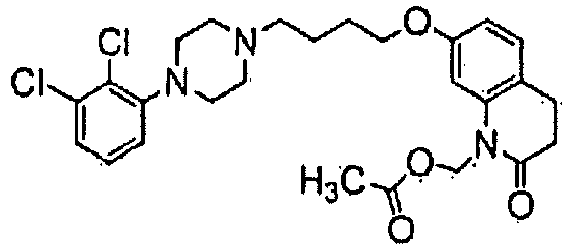
- A solution of Compound A-1 (50.63 g, 0.105 mol) in anhydrous tetrahydrofuran (THF, 80 mL) was treated with acetic anhydride (15.3 mL, 0.16 mol) and heated for 2.0 hours at 60°C (oil-bath). To the above solution, triethylamine (2.0 mL, 0.014 mol) was added and stirred for 16 hours at 60°C. The solvent was removed using a rotator evaporator. To the resulting crude mixture, ethyl acetate (150 mL) and heptane (50 mL) was added. The solution was washed with NaHCO3 (5% aqueous solution, 250 mL,). After separation of the two layers, pH of the aqueous layer was adjusted to above 7. The aqueous layer was further extracted using the organic mixture. The organic layer was separated and washed with 5% NaHCO3 solution, followed by deionized water, and brine. The solution was dried using anhydrous MgSO4, filtered and evaporated under vacuum. The resulting product was purified using silica gel column chromatography using ethanol: ethyl acetate (5:95) as the eluent. Fractions containing the desired product were combined and d-tartaric acid (12.5 g dissolved in 60:5 ethanol: water) was added, resulting in the precipitation of the desired product (48.78 g, 89% yield). 1H NMR (CDC13, 300MHz) δ 1.73 (m, 2H), 1.84 (m, 2H), 2.12 (s, 3H), 2.50 (t, 2H), 2.68 (m, 6H), 2.87 (dd, 2H), 3.08 (m, 4H), 3.98 (t, 2H), 5.91 (s, 2H), 6.59 (m, 2H), 6.96 (dd, 1H), 7.08 (dd, 1H), 7.15 (m, 2H).
-

- Compound A-7 was prepared in an analogous fashion to
Compound 1. The desired product was isolated as a crystalline solid (0.3 g, 21 % yield). The molecular weight was confirmed by mass spectrometer analysis.Figure 2-6 shows the PXRD, IR, Raman, TGA spectrum of the desired product. 1H NMR (CDC13, 300MHz) δ 0.87 (t, 3H), 1.24 (m, 16H), 1.62 (m, 2H), 1.83 (m, 2H), 1.86 (m, 2H), 2.36 (t, 2H), 2.49 (t, 2H), 2.68 (m, 6H), 2.86 (dd, 2H), 3.08 (m, 4H), 3.97 (t, 2H), 5.91 (s, 2H), 6.59 (m, 2H), 6.96 (dd, 1H), 7.07 (dd, 1H), 7.14 (m, 2H).
Claims (23)
- A pharmaceutical composition comprising:(a) compound A-7
 (b) sorbitan laurate;(c) polysorbate 20; and(d) an aqueous vehicle;wherein the composition forms an aqueous, flocculated, injectable suspension.
 - The composition of any claim 1, wherein the composition comprises components (b) and (c) at a ratio that results in flocs comprising component (a), wherein the flocs settle to greater than a predetermined sediment bed height, such that components (a), (b) and (c) can be resuspended for injection.
- The composition of claim 2, wherein the bed height is comprised of at least a 20 to 80% increase in sediment height compared to a non flocculated composition after 24 hours of undisturbed sitting.
- The composition of claim 2, wherein components (a), (b) and (c) can be resuspended for injection within 1-60 seconds of handshaking.
- The composition of any of the above claims, wherein the ratio of components (b) to (c) is such that the composition can be injected using a 20 to 25 gauge needle.
- The composition of claim 2, wherein (a), (b), and (c) form flocs having the following sizes: Dv[10]: 2-10µm, Dv[50]: 10-30µm, and Dv[90]: less than 65 µmM.
- The composition of any of the above claims, wherein the ratio of components (b) to (c) is approximately 5 to 2, by weight.
- The composition of any of the above claims, comprising about 0.2 - 1 weight percent sorbitan laurate.
- The composition of claim 1, comprising about 0.05 - 0.8 weight percent polysorbate 20.
- The composition of claim 1, comprising about 0.1 - 0.3 weight percent polysorbate 20.
- The composition of any of the above claims, comprising approximately 15 - 35 weight percent compound A-7.
- The composition of any of the above claims, comprising approximately 20 - 30 weight percent compound A-7.
- An injectable pharmaceutical composition comprising:(a) compound A-7:
 (b) sorbitan laurate in a weight ratio of approximately 0.2 - 1%(c) polysorbate 20 in a weight ratio of approximately 0.05 - 0.8%; and(d) an aqueous carrier.
 - An injectable composition comprising:(a) compound A-7:
 (b) sorbitan laurate;(c) polysorbate 20; and(d) an aqueous vehicle..
 - The composition of claim 14, wherein the composition is formulated for modulating tissue reaction associated with the delivery of a water-insoluble antipsychotic agent.
- The composition of claim 15, wherein the modulation of the tissue reaction is a reduction in the irritation at the site of injection.
- The composition of any one of claims 1 to 16 for use in a method for treating disorders of the central nervous system
- The composition for use of claim 17, wherein the disorder is a psychotic condition.
- The composition for use of claim 18, wherein the psychotic condition is schizophrenia or schizophreniform diseases.
- A pharmaceutical composition comprising:(a) 24 - 30 weight percent compound A-7:
 (b) 0.2 - 1 weight percent sorbitan laurate;(c) 0.1 - 0.3 weight percent polysorbate 20; and(d) an aqueous vehicle.
 - The composition of any of claims 1, 13, 14 or 20, wherein the aqueous vehicle is a buffer.
- The composition of claim 21, wherein the buffer is a phosphate, citrate, tartrate or acetate buffer.
- The composition of claim 21 or 22, wherein the aqueous vehicle is phosphate-buffered saline.
Priority Applications (6)
| Application Number | Priority Date | Filing Date | Title |
|---|---|---|---|
| DK16185202.5T DK3156056T3 (en) | 2011-03-18 | 2012-03-19 | PHARMACEUTICAL COMPOSITIONS CONSISTING OF SORBITANESTES |
| EP23209447.4A EP4327872B1 (en) | 2011-03-18 | 2012-03-19 | Pharmaceutical compositions comprising sorbitan esters |
| SI201230779A SI2685979T1 (en) | 2011-03-18 | 2012-03-19 | Injectable pharmaceutical compositions comprising a water-insoluble anti-psychotic, sorbitan laurate and polysorbate 20 |
| EP16185202.5A EP3156056B1 (en) | 2011-03-18 | 2012-03-19 | Pharmaceutical compositions comprising sorbitan esters |
| HRP20161549TT HRP20161549T1 (en) | 2011-03-18 | 2012-03-19 | Injectable pharmaceutical compositions comprising a water-insoluble anti-psychotic, sorbitan laurate and polysorbate 20 |
| RS20161015A RS55434B1 (en) | 2011-03-18 | 2012-03-19 | INJECTABLE PHARMACEUTICAL COMPOSITIONS CONTAINING ANTHYPSYPHOTIC INSULATABLE IN WATER, SORBITAN LAURATE AND POLYSORBATE 20 |
Applications Claiming Priority (2)
| Application Number | Priority Date | Filing Date | Title |
|---|---|---|---|
| US201161454008P | 2011-03-18 | 2011-03-18 | |
| PCT/US2012/029625 WO2012129156A1 (en) | 2011-03-18 | 2012-03-19 | Pharmaceutical compositions comprising sorbitan esters |
Related Child Applications (2)
| Application Number | Title | Priority Date | Filing Date |
|---|---|---|---|
| EP16185202.5A Division EP3156056B1 (en) | 2011-03-18 | 2012-03-19 | Pharmaceutical compositions comprising sorbitan esters |
| EP23209447.4A Division EP4327872B1 (en) | 2011-03-18 | 2012-03-19 | Pharmaceutical compositions comprising sorbitan esters |
Publications (2)
| Publication Number | Publication Date |
|---|---|
| EP2685979A1 EP2685979A1 (en) | 2014-01-22 |
| EP2685979B1 true EP2685979B1 (en) | 2016-08-24 |
Family
ID=45929620
Family Applications (3)
| Application Number | Title | Priority Date | Filing Date |
|---|---|---|---|
| EP12712189.5A Active EP2685979B1 (en) | 2011-03-18 | 2012-03-19 | Injectable pharmaceutical compositions comprising a water-insoluble anti-psychotic, sorbitan laurate and polysorbate 20 |
| EP16185202.5A Active EP3156056B1 (en) | 2011-03-18 | 2012-03-19 | Pharmaceutical compositions comprising sorbitan esters |
| EP23209447.4A Active EP4327872B1 (en) | 2011-03-18 | 2012-03-19 | Pharmaceutical compositions comprising sorbitan esters |
Family Applications After (2)
| Application Number | Title | Priority Date | Filing Date |
|---|---|---|---|
| EP16185202.5A Active EP3156056B1 (en) | 2011-03-18 | 2012-03-19 | Pharmaceutical compositions comprising sorbitan esters |
| EP23209447.4A Active EP4327872B1 (en) | 2011-03-18 | 2012-03-19 | Pharmaceutical compositions comprising sorbitan esters |
Country Status (23)
| Country | Link |
|---|---|
| US (6) | US9034867B2 (en) |
| EP (3) | EP2685979B1 (en) |
| JP (3) | JP6138703B2 (en) |
| CN (3) | CN112451477B (en) |
| AU (4) | AU2012231160B2 (en) |
| BR (1) | BR112013023847B1 (en) |
| CA (1) | CA2830511C (en) |
| CY (1) | CY1118252T1 (en) |
| DK (2) | DK3156056T3 (en) |
| ES (2) | ES2972387T3 (en) |
| FI (1) | FI3156056T3 (en) |
| HR (2) | HRP20240285T1 (en) |
| HU (2) | HUE032109T2 (en) |
| IL (4) | IL296695B2 (en) |
| LT (2) | LT2685979T (en) |
| MX (1) | MX358344B (en) |
| PL (2) | PL3156056T3 (en) |
| PT (2) | PT3156056T (en) |
| RS (2) | RS55434B1 (en) |
| RU (2) | RU2757859C2 (en) |
| SI (2) | SI3156056T1 (en) |
| SM (2) | SMT202400082T1 (en) |
| WO (1) | WO2012129156A1 (en) |
Families Citing this family (29)
| Publication number | Priority date | Publication date | Assignee | Title |
|---|---|---|---|---|
| ES3031438T3 (en) | 2009-06-25 | 2025-07-08 | Alkermes Pharma Ireland Ltd | Heterocyclic compounds for the treatment of neurological and psychological disorders |
| US9034867B2 (en) * | 2011-03-18 | 2015-05-19 | Alkermes Pharma Ireland Limited | Pharmaceutical compositions comprising sorbitan esters |
| JO3227B1 (en) | 2011-09-08 | 2018-03-08 | Otsuka Pharma Co Ltd | Piperazine-substituted benzothiophene deriveatives as antipsychotic agents |
| WO2013142205A1 (en) | 2012-03-19 | 2013-09-26 | Alkermes Pharma Ireland Limited | Pharmaceutical compositions comprising benzyl alcohol |
| JP6219918B2 (en) | 2012-03-19 | 2017-10-25 | アルカームス ファーマ アイルランド リミテッド | Pharmaceutical composition comprising glycerol ester |
| WO2013142198A1 (en) | 2012-03-19 | 2013-09-26 | Alkermes Pharma Ireland Limited | Pharmaaceutical compositions comprising fatty acid esters |
| TWI562991B (en) * | 2012-04-23 | 2016-12-21 | Otsuka Pharma Co Ltd | Dihydrate of benzothiophene compound or of a salt thereof, and process for producing the same |
| AR090775A1 (en) * | 2012-04-23 | 2014-12-03 | Otsuka Pharma Co Ltd | INJECTABLE PREPARATION |
| US10052319B2 (en) | 2012-04-26 | 2018-08-21 | Sumitomo Dainippon Pharma Co., Ltd. | Medicament for treating mental and behavioural disorders |
| EP3718536A1 (en) * | 2012-09-19 | 2020-10-07 | Alkermes Pharma Ireland Limited | Pharmaceutical compositions having improved storage stability |
| CA2942638C (en) | 2013-03-15 | 2026-03-10 | Demerx, Inc. | Method for noribogaine treatment of addiction in patients on methadone |
| US9561232B2 (en) | 2014-02-18 | 2017-02-07 | Demerx, Inc. | Low dose noribogaine for treating nicotine addiction and preventing relapse of nicotine use |
| US9591978B2 (en) | 2014-03-13 | 2017-03-14 | Demerx, Inc. | Methods and compositions for pre-screening patients for treatment with noribogaine |
| EP3119399A4 (en) | 2014-03-20 | 2017-09-27 | Alkermes Pharma Ireland Limited | Aripiprazole formulations having increased injection speeds |
| US9549935B2 (en) | 2014-07-14 | 2017-01-24 | Demerx, Inc. | Methods and compositions for treating migraines using noribogaine |
| HRP20211271T1 (en) * | 2014-08-18 | 2022-01-07 | Alkermes Pharma Ireland Limited | Aripiprazole prodrug compositions |
| US10016415B2 (en) | 2014-08-18 | 2018-07-10 | Alkermes Pharma Ireland Limited | Aripiprazole prodrug compositions |
| LT3182958T (en) * | 2014-08-18 | 2019-06-25 | Alkermes Pharma Ireland Limited | Aripiprazole prodrug compositions |
| PL3185867T3 (en) | 2014-08-25 | 2021-11-22 | Alkermes Pharma Ireland Limited | Crystallization process of aripiprazole derivatives in extended release formulations for treatment of schizophrenia |
| ES2867174T3 (en) | 2014-11-26 | 2021-10-20 | Demerx Inc | Methods and compositions to enhance the action of opioid analgesics through the use of iboga alkaloids |
| WO2016200830A1 (en) * | 2015-06-08 | 2016-12-15 | Corium International, Inc. | Formulations for aripiprazole delivery transdermally |
| WO2017119928A1 (en) * | 2016-01-08 | 2017-07-13 | Abon Pharmaceuticals, Llc | Long acting injectable formulations |
| ES2893973T3 (en) * | 2016-02-17 | 2022-02-10 | Alkermes Pharma Ireland Ltd | Aripiprazole Multiple Prodrug Compositions |
| EP3448387A4 (en) * | 2016-04-25 | 2019-12-11 | Otsuka Pharmaceutical Co., Ltd. | PHARMACEUTICAL PRODUCT COMPOSITIONS COMPRISING AN INGREDIENT EVENT MARKER |
| WO2019020821A1 (en) * | 2017-07-28 | 2019-01-31 | Interquim, S.A. | Process for the preparation of aripiprazole lauroxil |
| CN110025572A (en) * | 2018-01-11 | 2019-07-19 | 四川科伦药物研究院有限公司 | Lauroyl Aripiprazole suspension and preparation method thereof |
| CA3092335A1 (en) | 2018-03-05 | 2019-09-12 | Alkermes Pharma Ireland Limited | Aripiprazole dosing strategy |
| CN109984999B (en) * | 2019-04-28 | 2021-12-24 | 重庆仁泽医药科技有限公司 | Pharmaceutical composition and preparation method and application thereof |
| CN115364049B (en) * | 2021-05-18 | 2026-04-10 | 苏州恩华生物医药科技有限公司 | A method for preparing a lauroyl aripiprazole suspension |
Citations (4)
| Publication number | Priority date | Publication date | Assignee | Title |
|---|---|---|---|---|
| GB2017701A (en) | 1978-03-30 | 1979-10-10 | Otsuka Pharma Co Ltd | Carbostyril derivatives |
| US20050032811A1 (en) | 2003-08-06 | 2005-02-10 | Josiah Brown | Methods for administering aripiprazole |
| US20090163519A1 (en) | 2007-12-19 | 2009-06-25 | An Vermeulen | Dosing regimen associated with long acting injectable paliperidone esters |
| WO2010151711A1 (en) | 2009-06-25 | 2010-12-29 | Alkermes, Inc. | Prodrugs of nh-acidic compounds |
Family Cites Families (126)
| Publication number | Priority date | Publication date | Assignee | Title |
|---|---|---|---|---|
| US2418499A (en) | 1944-06-20 | 1947-04-08 | Du Pont | 2-alkoxymethylmercapto-thiazoles and thiazolines and a process for preparing the same |
| GB849541A (en) | 1956-02-23 | 1960-09-28 | Rohm & Haas | Preparation of unsaturated cyclic urea derivatives |
| DE1273533B (en) | 1962-09-08 | 1968-07-25 | Hoechst Ag | Process for the preparation of N- (ª ‡ -alkoxy-alkyl) -carboxylic acid amides |
| NL128370C (en) | 1964-08-28 | |||
| US3523121A (en) | 1967-03-09 | 1970-08-04 | Rohm & Haas | Certain 2-carbamoyl-3-isothiazolenes |
| US3573308A (en) | 1969-04-03 | 1971-03-30 | Hoffmann La Roche | 3-lower alkoxy methyl-3,4-dihydro-4-hydroxy-4-aryl quinazolin-2(1h) ones and related compounds |
| US3957808A (en) | 1969-09-03 | 1976-05-18 | Rohm And Haas Company | 3-alkoxyisothiazoles |
| US4727151A (en) | 1974-06-24 | 1988-02-23 | Interx Research Corporation | Labile quaternary ammonium salts as prodrugs |
| US3998815A (en) | 1974-06-24 | 1976-12-21 | Interx Research Corporation | 1-hydrocarbonoyloxymethyl-3-carbamoyl or 3-carboethoxy-pyridinium salts |
| US4204065A (en) | 1975-09-22 | 1980-05-20 | Interx Research Corporation | Soft quaternary surface active agents and method of using same |
| US4260769A (en) | 1977-04-22 | 1981-04-07 | Interx Research Corporation | 5,5-Diphenylhydantoins |
| JPS568318A (en) | 1979-06-28 | 1981-01-28 | Janssen Pharmaceutica Nv | Non oral long acting composition of haloperidol and bromperidol derivative |
| DE3149010A1 (en) | 1981-12-10 | 1983-07-07 | A. Nattermann & Cie GmbH, 5000 Köln | (+) - 2- (1- (2,6-DICHLORPHENOXY) -ETHYL) -1,3- DIAZACYCLOPENT-2-EN, THE PRODUCTION AND THEIR USE IN PHARMACEUTICAL PREPARATIONS |
| US4428935A (en) | 1982-05-24 | 1984-01-31 | Pfizer Inc. | Penicillanic acid dioxide prodrug |
| IT1212743B (en) | 1983-05-17 | 1989-11-30 | Dompe Farmaceutici Spa | QUATERNARY SALTS OF BENZO DERIVATIVES [1,4] DIAZEPINONICS, PYRID [1,4] BENZODIAZEPINONICS, PRIDO [1,5] BENZODIAZEPINONICS AND THEIR PHARMACOLOGICAL LIFE ACTS |
| JPS602331A (en) | 1983-06-20 | 1985-01-08 | Yoshino Kogyosho Co Ltd | Method of molding bottle of saturated polyester resin |
| US4760057A (en) | 1983-06-23 | 1988-07-26 | Merck & Co., Inc. | (Acyloxyalkoxy)carbonyl derivatives as bioreversible prodrug moieties for primary and secondary amine functions in drugs |
| DK302883D0 (en) | 1983-06-30 | 1983-06-30 | Hans Bundgaard | ALLOPURINOL PRODUCTS |
| DE3544134A1 (en) | 1984-12-15 | 1986-06-19 | Mitsubishi Chemical Industries Ltd., Tokio/Tokyo | METHOD FOR PRODUCING N - ((ALPHA) -ALKOXYETHYL) PYRROLIDONE |
| GB8513754D0 (en) | 1985-05-31 | 1985-07-03 | Jones T R | Anti-cancer quinazoline derivatives |
| DK588486A (en) | 1985-12-09 | 1987-06-10 | Otsuka Pharma Co Ltd | USE OF A COMPOUND TO TREAT HYPOXY |
| GB8607683D0 (en) | 1986-03-27 | 1986-04-30 | Ici Plc | Anti-tumor agents |
| US4925860A (en) | 1987-08-05 | 1990-05-15 | E. I. Du Pont De Nemours And Company | Stable pharmaceutical composition of 3-(hydroxymethyl)-5,5-diphenylhydantoin disodium phosphate ester |
| US5006528A (en) | 1988-10-31 | 1991-04-09 | Otsuka Pharmaceutical Co., Ltd. | Carbostyril derivatives |
| WO1991000863A1 (en) | 1989-07-07 | 1991-01-24 | Pfizer Inc. | Heteroaryl piperazine antipsychotic agents |
| US5350747A (en) | 1989-07-07 | 1994-09-27 | Pfizer Inc | Heteroaryl piperazine antipsychotic agents |
| US5229382A (en) | 1990-04-25 | 1993-07-20 | Lilly Industries Limited | 2-methyl-thieno-benzodiazepine |
| JP2800953B2 (en) | 1990-07-06 | 1998-09-21 | 住友製薬株式会社 | New imide derivatives |
| US5206386A (en) | 1991-03-20 | 1993-04-27 | Isp Investments Inc. | Controlled release N-substituted pyrrolidone esters and process for the use thereof |
| IL101722A (en) | 1991-05-02 | 1996-05-14 | Wyeth John & Brother Ltd | Piperazine derivatives their preparation and pharmaceutical compositions containing them |
| TW226016B (en) | 1991-12-30 | 1994-07-01 | Sterling Winthrop Inc | |
| US5462934A (en) | 1992-03-09 | 1995-10-31 | Takeda Chemical Industries | Condensed heterocyclic ketone derivatives and their use |
| WO1993025197A1 (en) | 1992-06-12 | 1993-12-23 | Affymax Technologies N.V. | Compositions and methods for enhanced drug delivery |
| AU6156494A (en) | 1993-03-08 | 1994-09-26 | Eisai Co. Ltd. | Phosphonic acid derivatives |
| TW376319B (en) | 1993-04-28 | 1999-12-11 | Janssen Pharmaceutica Nv | Pharmaceutical composition containing risperidone pamoate and having a long acting activity for treating psychoses induced by the release of dopamine |
| DE4439493A1 (en) | 1994-10-25 | 1996-05-02 | Schering Ag | New quinoxalinedione derivatives, their production and use in pharmaceuticals |
| JP3571795B2 (en) | 1995-04-18 | 2004-09-29 | 株式会社日本触媒 | Catalyst for gas-phase intramolecular dealcoholation reaction of N- (1-alkyloxyalkyl) carbamates and method for producing N-vinyl carbamates |
| US7833543B2 (en) | 1995-06-07 | 2010-11-16 | Durect Corporation | High viscosity liquid controlled delivery system and medical or surgical device |
| CN1494907A (en) | 1996-03-25 | 2004-05-12 | Drug composition for curing pain | |
| DE19619819A1 (en) | 1996-05-16 | 1997-11-20 | Boehringer Mannheim Gmbh | New thiazolidinediones, process for their preparation and medicaments containing them |
| CZ299790B6 (en) | 1996-08-22 | 2008-11-26 | Skyepharma Canada Inc. | Composition of microparticles of water-insoluble substance, pharmaceutical composition, process for preparing stable particles, microparticles of water-insoluble or poorly soluble substance per se, composition containing such microparticles and proce |
| WO1998056422A1 (en) | 1997-06-13 | 1998-12-17 | The University Of Kansas | Polar drug or prodrug compositions with extended shelf-life storage and a method of making thereof |
| CA2304568C (en) | 1997-09-30 | 2008-08-12 | Eli Lilly And Company | Olanzapine pamoate formulations |
| UA72189C2 (en) | 1997-11-17 | 2005-02-15 | Янссен Фармацевтика Н.В. | Aqueous suspensions of 9-hydroxy-risperidone fatty acid esters provided in submicron form |
| US6180095B1 (en) | 1997-12-17 | 2001-01-30 | Enzon, Inc. | Polymeric prodrugs of amino- and hydroxyl-containing bioactive agents |
| US5985856A (en) | 1997-12-31 | 1999-11-16 | University Of Kansas | Water soluble prodrugs of secondary and tertiary amine containing drugs and methods of making thereof |
| SK2612001A3 (en) | 1998-08-26 | 2001-11-06 | Aventis Pharma Ltd | Aza-bicycles which modulate the inhibition of cell adhesion |
| FR2783519B1 (en) | 1998-09-23 | 2003-01-24 | Sod Conseils Rech Applic | NOVEL AMIDINE DERIVATIVES, THEIR PREPARATION, THEIR USE AS MEDICAMENTS AND THE PHARMACEUTICAL COMPOSITIONS CONTAINING THEM |
| US7374779B2 (en) * | 1999-02-26 | 2008-05-20 | Lipocine, Inc. | Pharmaceutical formulations and systems for improved absorption and multistage release of active agents |
| US20060034937A1 (en) | 1999-11-23 | 2006-02-16 | Mahesh Patel | Solid carriers for improved delivery of active ingredients in pharmaceutical compositions |
| CA2311734C (en) | 2000-04-12 | 2011-03-08 | Bristol-Myers Squibb Company | Flash-melt oral dosage formulation |
| MY128449A (en) | 2000-05-24 | 2007-02-28 | Sugen Inc | Prodrugs of 3-(pyrrol-2-ylmethylidene)-2-indolinone derivatives |
| US6656505B2 (en) * | 2000-07-21 | 2003-12-02 | Alpharma Uspd Inc. | Method for forming an aqueous flocculated suspension |
| US20030049320A1 (en) | 2000-12-18 | 2003-03-13 | Wockhardt Limited | Novel in-situ forming controlled release microcarrier delivery system |
| US7053092B2 (en) | 2001-01-29 | 2006-05-30 | Otsuka Pharmaceutical Co., Ltd. | 5-HT1a receptor subtype agonist |
| WO2002064578A1 (en) | 2001-02-14 | 2002-08-22 | Warner-Lambert Company Llc | Benzo thiadiazine matrix metalloproteinase inhibitors |
| US20060293217A1 (en) | 2001-03-19 | 2006-12-28 | Praecis Pharmaceuticals, Inc. | Pharmaceutical formulations for sustained release |
| EP1383376A4 (en) | 2001-03-19 | 2006-03-08 | Praecis Pharm Inc | Pharmaceutical formulations for sustained release |
| CA2443350A1 (en) | 2001-04-03 | 2002-12-05 | Aryx Therapeutics | Ultrashort-acting opioids for transdermal application |
| MY129350A (en) | 2001-04-25 | 2007-03-30 | Bristol Myers Squibb Co | Aripiprazole oral solution |
| AR033485A1 (en) | 2001-09-25 | 2003-12-26 | Otsuka Pharma Co Ltd | MEDICINAL SUBSTANCE OF ARIPIPRAZOL OF LOW HYGROSCOPICITY AND PROCESS FOR THE PREPARATION OF THE SAME |
| AR038420A1 (en) | 2002-02-15 | 2005-01-12 | Glaxo Group Ltd | AMIDA COMPOSITE, PROCEDURE FOR THE PREPARATION OF THE SAME, ITS USE FOR THE MANUFACTURE OF A MEDICINAL PRODUCT AND PHARMACEUTICAL COMPOSITION THAT INCLUDES IT |
| US7091216B2 (en) | 2002-08-02 | 2006-08-15 | Merck & Co., Inc. | Substituted furo[2,3-b]pyridine derivatives |
| DE60327225D1 (en) | 2002-08-20 | 2009-05-28 | Bristol Myers Squibb Co | ARIPIPRAZOL COMPLEX FORMULATION AND METHOD |
| AU2003263413A1 (en) | 2002-09-17 | 2004-04-08 | Warner-Lambert Company Llc | Heterocyclic substituted piperazines for the treatment of schizophrenia |
| US7148211B2 (en) | 2002-09-18 | 2006-12-12 | Genzyme Corporation | Formulation for lipophilic agents |
| US20040191338A1 (en) * | 2002-12-18 | 2004-09-30 | Algorx | Administration of capsaicinoids |
| CN102205127A (en) | 2002-12-18 | 2011-10-05 | 阿尔乔医疗公司 | Administration of capsaicinoids |
| DE10303669A1 (en) | 2003-01-28 | 2004-07-29 | Hans-Knöll-Institut für Naturstoff-Forschung e.V. | New quaternary ammonioalkyl carbonate esters useful for treating bacterial and fungal infections and potentially useful for regulating cholesterol biosynthesis |
| JP2006523237A (en) | 2003-04-03 | 2006-10-12 | セマフォア ファーマシューティカルズ, インコーポレイテッド | PI-3 kinase inhibitor prodrug |
| MXPA05012538A (en) | 2003-05-23 | 2006-02-22 | Otsuka Pharma Co Ltd | Carbostyril derivatives and mood stabilizers for treating mood disorders. |
| ATE392905T1 (en) * | 2003-07-24 | 2008-05-15 | Merial Ltd | VACCINE FORMULATIONS WITH AN OIL-IN-WATER EMULSION |
| US6987111B2 (en) | 2003-08-06 | 2006-01-17 | Alkermes Controlled Therapeutics, Ii | Aripiprazole, olanzapine and haloperidol pamoate salts |
| US7160888B2 (en) | 2003-08-22 | 2007-01-09 | Warner Lambert Company Llc | [1,8]naphthyridin-2-ones and related compounds for the treatment of schizophrenia |
| CN100559182C (en) | 2003-08-29 | 2009-11-11 | 株式会社东芝 | Chromogenic reagent, concentration measuring kit, concentration measuring method and sensor chip used in the method |
| BRPI0415531B8 (en) | 2003-10-23 | 2021-05-25 | Otsuka Pharma Co Ltd | formulation of sterile injectable controlled-release aripiprazole and method for its preparation |
| JP2007517014A (en) | 2003-12-31 | 2007-06-28 | ワーナー−ランバート カンパニー リミテッド ライアビリティー カンパニー | N-substituted piperidine and piperazine derivatives |
| AU2005215257A1 (en) | 2004-02-13 | 2005-09-01 | Pfizer Products Inc. | Therapeutic combinations of atypical antipsychotics with corticotropin releasing factor antagonists |
| US7169803B2 (en) | 2004-03-15 | 2007-01-30 | Bristol-Myers Squibb Company | N-substituted prodrugs of fluorooxindoles |
| US7119214B2 (en) | 2004-04-13 | 2006-10-10 | Cephalon France | Thio-substituted tricyclic and bicyclic aromatic methanesulfinyl derivatives |
| GB2413795A (en) | 2004-05-05 | 2005-11-09 | Cipla Ltd | Process for the preparation of rosiglitazone |
| WO2006037090A2 (en) | 2004-09-28 | 2006-04-06 | Purdue Research Foundation | Drug-phosphate conjugates as prodrugs |
| AU2005307797B2 (en) * | 2004-11-16 | 2011-06-02 | Alkermes Pharma Ireland Limited | Injectable nanoparticulate olanzapine formulations |
| US20080233053A1 (en) | 2005-02-07 | 2008-09-25 | Pharmalight Inc. | Method and Device for Ophthalmic Administration of Active Pharmaceutical Ingredients |
| WO2006090273A2 (en) | 2005-02-22 | 2006-08-31 | Warner-Lambert Company Llc | [1,8]naphthyridin-2-ones and related compounds with keto or hydroxyl linkers for the treatment of schizophrenia |
| WO2006134864A1 (en) * | 2005-06-13 | 2006-12-21 | Dainippon Sumitomo Pharma Co., Ltd. | Solubilization preparation |
| CA2622758A1 (en) | 2005-09-15 | 2007-03-29 | Elan Pharma International, Limited | Nanoparticulate aripiprazole formulations |
| EP1777222A1 (en) | 2005-09-22 | 2007-04-25 | Galantos Pharma GmbH | Cholinergic enhancers with improved blood-brain barrier permeability for the treatment of diseases accompanied by cognitive impairment |
| WO2007059111A2 (en) | 2005-11-14 | 2007-05-24 | Entremed, Inc. | Anti-angiogenic activity of 2-methoxyestradiol in combination with anti-cancer agents |
| US20090068290A1 (en) | 2006-08-31 | 2009-03-12 | Michel Bourin | Bifeprunox doses for treating schizophrenia |
| AR062860A1 (en) | 2006-09-15 | 2008-12-10 | Astrazeneca Ab | THERAPEUTIC COMBINATIONS 482 |
| CA2665101A1 (en) * | 2006-10-05 | 2008-04-10 | Panacea Biotec Ltd. | Injectable depot composition and it's process of preparation |
| US20090291134A1 (en) | 2006-11-21 | 2009-11-26 | Jina Pharmaceuticals, Inc. | Endoxifen methods and compositions in the treatment of psychiatric and neurodegenerative diseases |
| JP2010511717A (en) | 2006-12-05 | 2010-04-15 | ニューロジェシックス, インコーポレイテッド | Prodrugs and how to create and use them |
| AU2007334343A1 (en) | 2006-12-15 | 2008-06-26 | Ordway Research Institute, Inc. | Treatments of therapy-resistant diseases comprising drug combinations |
| EP1961412A1 (en) | 2006-12-27 | 2008-08-27 | LEK Pharmaceuticals D.D. | Self-microemulsifying drug delivery systems |
| US20080186971A1 (en) | 2007-02-02 | 2008-08-07 | Tarari, Inc. | Systems and methods for processing access control lists (acls) in network switches using regular expression matching logic |
| ES2423485T3 (en) | 2007-03-19 | 2013-09-20 | Acadia Pharmaceuticals Inc. | Associations of 5-HT2A inverse agonists and antagonists with antipsychotics |
| AU2008236705B2 (en) | 2007-04-04 | 2014-01-23 | Merck Sharp & Dohme Corp. | Therapeutic agents |
| US20100292316A1 (en) | 2007-07-18 | 2010-11-18 | Research Development Foundation | Improved therapeutic methods and compositions comprising chroman ring compounds |
| SA08290475B1 (en) | 2007-08-02 | 2013-06-22 | Targacept Inc | (2S,3R)-N-(2-((3-pyrdinyl)methyl)-1-aza bicyclo[2,2,2]oct-3-yl)benzofuran-2-carboxamide, its new salt forms and methods of use |
| WO2009052467A1 (en) | 2007-10-19 | 2009-04-23 | Board Of Regents Of The University Of Texas System | Methods of identifying pi-3-kinase inhibitor resistance |
| CL2008003305A1 (en) | 2007-11-06 | 2009-06-05 | M/S Panacea Biotec Ltd | Injectable composition comprising an active agent selected from a defined group; at least one bioerodible polymer, at least one non-toxic solvent and optionally one or more excipients; Preparation process; use to treat mental illness or cancer. |
| US8642660B2 (en) | 2007-12-21 | 2014-02-04 | The University Of Rochester | Method for altering the lifespan of eukaryotic organisms |
| US9161943B2 (en) | 2007-12-31 | 2015-10-20 | Industrial Technology Research Institute | Sustained release composition and manufacturing method thereof |
| US8138169B2 (en) | 2008-04-11 | 2012-03-20 | Comgenrx, Inc. | Combination therapy for bipolar disorder |
| CN101345838A (en) * | 2008-08-04 | 2009-01-14 | 华为技术有限公司 | TV program navigation method, device and system |
| KR20110050549A (en) * | 2008-09-03 | 2011-05-13 | 버텍스 파마슈티칼스 인코포레이티드 | Co-crystals and pharmaceutical formulations comprising the same |
| AU2010206376B2 (en) | 2009-01-26 | 2012-10-18 | Egalet Ltd. | Controlled release formulations with continuous efficacy |
| TW201105667A (en) | 2009-05-08 | 2011-02-16 | Cytopathfinder Inc | Dihydronaphthyridinyl and related compounds for use in treating ophthalmological disorders |
| ES3031438T3 (en) | 2009-06-25 | 2025-07-08 | Alkermes Pharma Ireland Ltd | Heterocyclic compounds for the treatment of neurological and psychological disorders |
| KR20120116401A (en) | 2009-10-30 | 2012-10-22 | 얀센 파마슈티카 엔.브이. | Dosing regimen associated with long-acting injectable paliperidone esters |
| US20110166194A1 (en) | 2010-01-07 | 2011-07-07 | Alkermes, Inc. | Asenapine Prodrugs |
| AU2010339689B2 (en) | 2010-01-07 | 2015-02-19 | Alkermes Pharma Ireland Limited | Quaternary ammonium salt prodrugs |
| ES2768295T3 (en) | 2010-01-07 | 2020-06-22 | Alkermes Pharma Ireland Ltd | Prodrugs of heteroaromatic compounds |
| US20110166128A1 (en) | 2010-01-07 | 2011-07-07 | Alkermes, Inc. | Diaryldiazepine Prodrugs for the Treatment of Neurological and Psychological Disorders |
| US20110166156A1 (en) | 2010-01-07 | 2011-07-07 | Alkermes, Inc. | Prodrugs for the Treatment of Schizophrenia and Bipolar Disease |
| EP2538202A4 (en) | 2010-02-16 | 2018-03-21 | Hamamatsu Photonics K.K. | Gas concentration calculation device and gas concentration measurement module |
| CA2797708C (en) | 2010-05-04 | 2016-08-16 | Alkermes Pharma Ireland Limited | Process for synthesizing oxidized lactam compounds |
| WO2011163594A2 (en) | 2010-06-24 | 2011-12-29 | Alkermes, Inc. | Prodrugs of nh-acidic compounds: ester, carbonate, carbamate and phosphonate derivatives |
| US9034867B2 (en) | 2011-03-18 | 2015-05-19 | Alkermes Pharma Ireland Limited | Pharmaceutical compositions comprising sorbitan esters |
| JP6219918B2 (en) | 2012-03-19 | 2017-10-25 | アルカームス ファーマ アイルランド リミテッド | Pharmaceutical composition comprising glycerol ester |
| WO2013142198A1 (en) | 2012-03-19 | 2013-09-26 | Alkermes Pharma Ireland Limited | Pharmaaceutical compositions comprising fatty acid esters |
| WO2013142205A1 (en) | 2012-03-19 | 2013-09-26 | Alkermes Pharma Ireland Limited | Pharmaceutical compositions comprising benzyl alcohol |
| EP3718536A1 (en) | 2012-09-19 | 2020-10-07 | Alkermes Pharma Ireland Limited | Pharmaceutical compositions having improved storage stability |
| EP3119399A4 (en) | 2014-03-20 | 2017-09-27 | Alkermes Pharma Ireland Limited | Aripiprazole formulations having increased injection speeds |
-
2012
- 2012-03-19 US US13/423,606 patent/US9034867B2/en active Active
- 2012-03-19 HU HUE12712189A patent/HUE032109T2/en unknown
- 2012-03-19 PL PL16185202.5T patent/PL3156056T3/en unknown
- 2012-03-19 EP EP12712189.5A patent/EP2685979B1/en active Active
- 2012-03-19 RU RU2017126606A patent/RU2757859C2/en active
- 2012-03-19 ES ES16185202T patent/ES2972387T3/en active Active
- 2012-03-19 HU HUE16185202A patent/HUE065359T2/en unknown
- 2012-03-19 PT PT161852025T patent/PT3156056T/en unknown
- 2012-03-19 RU RU2013146542A patent/RU2627469C2/en active
- 2012-03-19 WO PCT/US2012/029625 patent/WO2012129156A1/en not_active Ceased
- 2012-03-19 LT LTEP12712189.5T patent/LT2685979T/en unknown
- 2012-03-19 CN CN202011298067.XA patent/CN112451477B/en active Active
- 2012-03-19 AU AU2012231160A patent/AU2012231160B2/en active Active
- 2012-03-19 MX MX2013010471A patent/MX358344B/en active IP Right Grant
- 2012-03-19 DK DK16185202.5T patent/DK3156056T3/en active
- 2012-03-19 RS RS20161015A patent/RS55434B1/en unknown
- 2012-03-19 HR HRP20240285TT patent/HRP20240285T1/en unknown
- 2012-03-19 PL PL12712189T patent/PL2685979T3/en unknown
- 2012-03-19 RS RS20240242A patent/RS65237B1/en unknown
- 2012-03-19 CA CA2830511A patent/CA2830511C/en active Active
- 2012-03-19 CN CN201710513932.XA patent/CN107252414B/en active Active
- 2012-03-19 JP JP2013558232A patent/JP6138703B2/en active Active
- 2012-03-19 EP EP16185202.5A patent/EP3156056B1/en active Active
- 2012-03-19 LT LTEP16185202.5T patent/LT3156056T/en unknown
- 2012-03-19 BR BR112013023847-0A patent/BR112013023847B1/en active IP Right Grant
- 2012-03-19 ES ES12712189.5T patent/ES2604558T3/en active Active
- 2012-03-19 SM SM20240082T patent/SMT202400082T1/en unknown
- 2012-03-19 FI FIEP16185202.5T patent/FI3156056T3/en active
- 2012-03-19 HR HRP20161549TT patent/HRP20161549T1/en unknown
- 2012-03-19 SI SI201232052T patent/SI3156056T1/en unknown
- 2012-03-19 IL IL296695A patent/IL296695B2/en unknown
- 2012-03-19 PT PT127121895T patent/PT2685979T/en unknown
- 2012-03-19 CN CN201280020999.5A patent/CN103561746B/en active Active
- 2012-03-19 DK DK12712189.5T patent/DK2685979T3/en active
- 2012-03-19 SI SI201230779A patent/SI2685979T1/en unknown
- 2012-03-19 EP EP23209447.4A patent/EP4327872B1/en active Active
-
2013
- 2013-09-08 IL IL228298A patent/IL228298B/en active IP Right Grant
-
2015
- 2015-04-16 US US14/688,050 patent/US20160038508A1/en not_active Abandoned
- 2015-05-18 US US14/714,621 patent/US9351976B2/en active Active
-
2016
- 2016-11-22 SM SM201600423T patent/SMT201600423B/en unknown
- 2016-11-23 CY CY20161101213T patent/CY1118252T1/en unknown
- 2016-12-22 US US15/388,554 patent/US10226458B2/en active Active
-
2017
- 2017-04-26 JP JP2017087067A patent/JP2017141292A/en active Pending
- 2017-06-28 IL IL253221A patent/IL253221B/en active IP Right Grant
- 2017-06-30 AU AU2017204486A patent/AU2017204486B2/en active Active
-
2019
- 2019-01-15 US US16/248,259 patent/US20190216805A1/en not_active Abandoned
- 2019-02-15 JP JP2019025516A patent/JP6765464B2/en active Active
- 2019-04-16 AU AU2019202633A patent/AU2019202633A1/en not_active Abandoned
-
2020
- 2020-07-13 IL IL276012A patent/IL276012B2/en unknown
- 2020-10-09 AU AU2020250309A patent/AU2020250309B2/en active Active
-
2023
- 2023-03-14 US US18/183,257 patent/US20240058327A1/en active Pending
Patent Citations (4)
| Publication number | Priority date | Publication date | Assignee | Title |
|---|---|---|---|---|
| GB2017701A (en) | 1978-03-30 | 1979-10-10 | Otsuka Pharma Co Ltd | Carbostyril derivatives |
| US20050032811A1 (en) | 2003-08-06 | 2005-02-10 | Josiah Brown | Methods for administering aripiprazole |
| US20090163519A1 (en) | 2007-12-19 | 2009-06-25 | An Vermeulen | Dosing regimen associated with long acting injectable paliperidone esters |
| WO2010151711A1 (en) | 2009-06-25 | 2010-12-29 | Alkermes, Inc. | Prodrugs of nh-acidic compounds |
Non-Patent Citations (3)
| Title |
|---|
| "CALCULATING RATIO OF EMULSIFIERS TO REACH ANY DESIRED HLB", THE HLB SYSTEM A TIME-SAVING GUIDE TO EMULSIFIER SELECTION, pages 10 - 13 |
| "Handbook of Pharmaceutical Excipients", EXTRACT FOR SORBITAN ESTERS |
| SHINTANI S ET AL.: "A new method to determine the irritation of drugs after intramuscular injection in rabbits", TOXICOLOGY AND APPLIED PHARMACOLOGY, vol. 11, no. 2, 1 September 1967 (1967-09-01), pages 293 - 295, XP024883173 |
Also Published As
Similar Documents
| Publication | Publication Date | Title |
|---|---|---|
| US20240058327A1 (en) | Pharmaceutical Compositions Comprising Sorbitan Esters | |
| US12629366B2 (en) | Pharmaceutical compositions comprising sorbitan esters | |
| HK40109070A (en) | Pharmaceutical compositions comprising sorbitan esters | |
| HK1236809B (en) | Pharmaceutical compositions comprising sorbitan esters | |
| HK1188935B (en) | Injectable pharmaceutical compositions comprising a water-insoluble anti-psychotic, sorbitan laurate and polysorbate 20 | |
| AU2022263543A1 (en) | Pharmaceutical compositions comprising sorbitan esters | |
| HK1236809A1 (en) | Pharmaceutical compositions comprising sorbitan esters | |
| NZ713984B2 (en) | Pharmaceutical compositions comprising sorbitan esters | |
| NZ733047B2 (en) | Pharmaceutical compositions comprising sorbitan esters | |
| NZ615513B2 (en) | Pharmaceutical compositions comprising sorbitan esters |
Legal Events
| Date | Code | Title | Description |
|---|---|---|---|
| PUAI | Public reference made under article 153(3) epc to a published international application that has entered the european phase |
Free format text: ORIGINAL CODE: 0009012 |
|
| 17P | Request for examination filed |
Effective date: 20131018 |
|
| AK | Designated contracting states |
Kind code of ref document: A1 Designated state(s): AL AT BE BG CH CY CZ DE DK EE ES FI FR GB GR HR HU IE IS IT LI LT LU LV MC MK MT NL NO PL PT RO RS SE SI SK SM TR |
|
| REG | Reference to a national code |
Ref country code: HK Ref legal event code: DE Ref document number: 1188935 Country of ref document: HK |
|
| DAX | Request for extension of the european patent (deleted) | ||
| 17Q | First examination report despatched |
Effective date: 20141118 |
|
| GRAP | Despatch of communication of intention to grant a patent |
Free format text: ORIGINAL CODE: EPIDOSNIGR1 |
|
| INTG | Intention to grant announced |
Effective date: 20150923 |
|
| GRAP | Despatch of communication of intention to grant a patent |
Free format text: ORIGINAL CODE: EPIDOSNIGR1 |
|
| INTG | Intention to grant announced |
Effective date: 20160314 |
|
| GRAS | Grant fee paid |
Free format text: ORIGINAL CODE: EPIDOSNIGR3 |
|
| GRAA | (expected) grant |
Free format text: ORIGINAL CODE: 0009210 |
|
| AK | Designated contracting states |
Kind code of ref document: B1 Designated state(s): AL AT BE BG CH CY CZ DE DK EE ES FI FR GB GR HR HU IE IS IT LI LT LU LV MC MK MT NL NO PL PT RO RS SE SI SK SM TR |
|
| REG | Reference to a national code |
Ref country code: GB Ref legal event code: FG4D |
|
| REG | Reference to a national code |
Ref country code: CH Ref legal event code: EP |
|
| REG | Reference to a national code |
Ref country code: AT Ref legal event code: REF Ref document number: 822439 Country of ref document: AT Kind code of ref document: T Effective date: 20160915 |
|
| REG | Reference to a national code |
Ref country code: IE Ref legal event code: FG4D |
|
| REG | Reference to a national code |
Ref country code: DE Ref legal event code: R096 Ref document number: 602012022167 Country of ref document: DE |
|
| REG | Reference to a national code |
Ref country code: CH Ref legal event code: NV Representative=s name: FIAMMENGHI-FIAMMENGHI, CH |
|
| REG | Reference to a national code |
Ref country code: HR Ref legal event code: TUEP Ref document number: P20161549 Country of ref document: HR |
|
| REG | Reference to a national code |
Ref country code: SE Ref legal event code: TRGR |
|
| REG | Reference to a national code |
Ref country code: NL Ref legal event code: FP |
|
| REG | Reference to a national code |
Ref country code: PT Ref legal event code: SC4A Ref document number: 2685979 Country of ref document: PT Date of ref document: 20161202 Kind code of ref document: T Free format text: AVAILABILITY OF NATIONAL TRANSLATION Effective date: 20161121 |
|
| REG | Reference to a national code |
Ref country code: DK Ref legal event code: T3 Effective date: 20161218 |
|
| REG | Reference to a national code |
Ref country code: HR Ref legal event code: T1PR Ref document number: P20161549 Country of ref document: HR |
|
| REG | Reference to a national code |
Ref country code: NO Ref legal event code: T2 Effective date: 20160824 |
|
| REG | Reference to a national code |
Ref country code: EE Ref legal event code: FG4A Ref document number: E012778 Country of ref document: EE Effective date: 20161116 |
|
| REG | Reference to a national code |
Ref country code: ES Ref legal event code: FG2A Ref document number: 2604558 Country of ref document: ES Kind code of ref document: T3 Effective date: 20170307 |
|
| REG | Reference to a national code |
Ref country code: FR Ref legal event code: PLFP Year of fee payment: 6 |
|
| REG | Reference to a national code |
Ref country code: GR Ref legal event code: EP Ref document number: 20160402890 Country of ref document: GR Effective date: 20170222 |
|
| REG | Reference to a national code |
Ref country code: DE Ref legal event code: R026 Ref document number: 602012022167 Country of ref document: DE |
|
| REG | Reference to a national code |
Ref country code: SK Ref legal event code: T3 Ref document number: E 22779 Country of ref document: SK |
|
| PLBI | Opposition filed |
Free format text: ORIGINAL CODE: 0009260 |
|
| PLAX | Notice of opposition and request to file observation + time limit sent |
Free format text: ORIGINAL CODE: EPIDOSNOBS2 |
|
| 26 | Opposition filed |
Opponent name: GENERICS (UK) LTD Effective date: 20170524 |
|
| REG | Reference to a national code |
Ref country code: HU Ref legal event code: AG4A Ref document number: E032109 Country of ref document: HU |
|
| REG | Reference to a national code |
Ref country code: HK Ref legal event code: GR Ref document number: 1188935 Country of ref document: HK |
|
| PLBB | Reply of patent proprietor to notice(s) of opposition received |
Free format text: ORIGINAL CODE: EPIDOSNOBS3 |
|
| REG | Reference to a national code |
Ref country code: FR Ref legal event code: PLFP Year of fee payment: 7 |
|
| PLAB | Opposition data, opponent's data or that of the opponent's representative modified |
Free format text: ORIGINAL CODE: 0009299OPPO |
|
| REG | Reference to a national code |
Ref country code: CH Ref legal event code: PK Free format text: BERICHTIGUNGEN |
|
| R26 | Opposition filed (corrected) |
Opponent name: GENERICS (UK) LTD Effective date: 20170524 |
|
| RIC2 | Information provided on ipc code assigned after grant |
Ipc: A61P 25/18 20060101ALI20181119BHEP Ipc: A61P 25/24 20060101ALI20181119BHEP Ipc: A61P 25/00 20060101AFI20181119BHEP |
|
| APAH | Appeal reference modified |
Free format text: ORIGINAL CODE: EPIDOSCREFNO |
|
| APBM | Appeal reference recorded |
Free format text: ORIGINAL CODE: EPIDOSNREFNO |
|
| APBP | Date of receipt of notice of appeal recorded |
Free format text: ORIGINAL CODE: EPIDOSNNOA2O |
|
| APBM | Appeal reference recorded |
Free format text: ORIGINAL CODE: EPIDOSNREFNO |
|
| APBP | Date of receipt of notice of appeal recorded |
Free format text: ORIGINAL CODE: EPIDOSNNOA2O |
|
| REG | Reference to a national code |
Ref country code: HR Ref legal event code: ODRP Ref document number: P20161549 Country of ref document: HR Payment date: 20190306 Year of fee payment: 8 |
|
| APBQ | Date of receipt of statement of grounds of appeal recorded |
Free format text: ORIGINAL CODE: EPIDOSNNOA3O |
|
| APBQ | Date of receipt of statement of grounds of appeal recorded |
Free format text: ORIGINAL CODE: EPIDOSNNOA3O |
|
| APAH | Appeal reference modified |
Free format text: ORIGINAL CODE: EPIDOSCREFNO |
|
| REG | Reference to a national code |
Ref country code: AT Ref legal event code: UEP Ref document number: 822439 Country of ref document: AT Kind code of ref document: T Effective date: 20160824 |
|
| REG | Reference to a national code |
Ref country code: HR Ref legal event code: ODRP Ref document number: P20161549 Country of ref document: HR Payment date: 20200311 Year of fee payment: 9 |
|
| REG | Reference to a national code |
Ref country code: HR Ref legal event code: ODRP Ref document number: P20161549 Country of ref document: HR Payment date: 20210304 Year of fee payment: 10 |
|
| REG | Reference to a national code |
Ref country code: DE Ref legal event code: R100 Ref document number: 602012022167 Country of ref document: DE |
|
| APBU | Appeal procedure closed |
Free format text: ORIGINAL CODE: EPIDOSNNOA9O |
|
| PLCK | Communication despatched that opposition was rejected |
Free format text: ORIGINAL CODE: EPIDOSNREJ1 |
|
| STAA | Information on the status of an ep patent application or granted ep patent |
Free format text: STATUS: OPPOSITION REJECTED |
|
| PLBN | Opposition rejected |
Free format text: ORIGINAL CODE: 0009273 |
|
| 27O | Opposition rejected |
Effective date: 20211123 |
|
| REG | Reference to a national code |
Ref country code: HR Ref legal event code: ODRP Ref document number: P20161549 Country of ref document: HR Payment date: 20220314 Year of fee payment: 11 |
|
| REG | Reference to a national code |
Ref country code: HR Ref legal event code: ODRP Ref document number: P20161549 Country of ref document: HR Payment date: 20230309 Year of fee payment: 12 |
|
| P01 | Opt-out of the competence of the unified patent court (upc) registered |
Effective date: 20230518 |
|
| REG | Reference to a national code |
Ref country code: HR Ref legal event code: ODRP Ref document number: P20161549 Country of ref document: HR Payment date: 20240306 Year of fee payment: 13 |
|
| PGFP | Annual fee paid to national office [announced via postgrant information from national office to epo] |
Ref country code: AL Payment date: 20240305 Year of fee payment: 13 |
|
| REG | Reference to a national code |
Ref country code: HR Ref legal event code: ODRP Ref document number: P20161549 Country of ref document: HR Payment date: 20250307 Year of fee payment: 14 |
|
| PGFP | Annual fee paid to national office [announced via postgrant information from national office to epo] |
Ref country code: ES Payment date: 20250401 Year of fee payment: 14 |
|
| PGFP | Annual fee paid to national office [announced via postgrant information from national office to epo] |
Ref country code: CH Payment date: 20250401 Year of fee payment: 14 |
|
| REG | Reference to a national code |
Ref country code: CH Ref legal event code: U11 Free format text: ST27 STATUS EVENT CODE: U-0-0-U10-U11 (AS PROVIDED BY THE NATIONAL OFFICE) Effective date: 20260401 |
|
| PGFP | Annual fee paid to national office [announced via postgrant information from national office to epo] |
Ref country code: SM Payment date: 20260310 Year of fee payment: 15 |
|
| PGFP | Annual fee paid to national office [announced via postgrant information from national office to epo] |
Ref country code: SE Payment date: 20260327 Year of fee payment: 15 |
|
| PGFP | Annual fee paid to national office [announced via postgrant information from national office to epo] |
Ref country code: GB Payment date: 20260327 Year of fee payment: 15 Ref country code: LT Payment date: 20260303 Year of fee payment: 15 |
|
| PGFP | Annual fee paid to national office [announced via postgrant information from national office to epo] |
Ref country code: MC Payment date: 20260305 Year of fee payment: 15 |
|
| PGFP | Annual fee paid to national office [announced via postgrant information from national office to epo] |
Ref country code: NO Payment date: 20260327 Year of fee payment: 15 Ref country code: IE Payment date: 20260327 Year of fee payment: 15 Ref country code: DK Payment date: 20260325 Year of fee payment: 15 Ref country code: DE Payment date: 20260327 Year of fee payment: 15 |
|
| PGFP | Annual fee paid to national office [announced via postgrant information from national office to epo] |
Ref country code: HR Payment date: 20260319 Year of fee payment: 15 Ref country code: AT Payment date: 20260327 Year of fee payment: 15 |
|
| PGFP | Annual fee paid to national office [announced via postgrant information from national office to epo] |
Ref country code: FI Payment date: 20260325 Year of fee payment: 15 Ref country code: LU Payment date: 20260327 Year of fee payment: 15 Ref country code: RO Payment date: 20260304 Year of fee payment: 15 Ref country code: BE Payment date: 20260327 Year of fee payment: 15 Ref country code: IT Payment date: 20260319 Year of fee payment: 15 |
|
| PGFP | Annual fee paid to national office [announced via postgrant information from national office to epo] |
Ref country code: HU Payment date: 20260311 Year of fee payment: 15 Ref country code: NL Payment date: 20260326 Year of fee payment: 15 |
|
| PGFP | Annual fee paid to national office [announced via postgrant information from national office to epo] |
Ref country code: RS Payment date: 20260303 Year of fee payment: 15 |
|
| PGFP | Annual fee paid to national office [announced via postgrant information from national office to epo] |
Ref country code: IS Payment date: 20260320 Year of fee payment: 15 Ref country code: FR Payment date: 20260325 Year of fee payment: 15 |
|
| PGFP | Annual fee paid to national office [announced via postgrant information from national office to epo] |
Ref country code: TR Payment date: 20260309 Year of fee payment: 15 |
|
| PGFP | Annual fee paid to national office [announced via postgrant information from national office to epo] |
Ref country code: PT Payment date: 20260310 Year of fee payment: 15 Ref country code: CZ Payment date: 20260310 Year of fee payment: 15 |
|
| PGFP | Annual fee paid to national office [announced via postgrant information from national office to epo] |
Ref country code: GR Payment date: 20260326 Year of fee payment: 15 Ref country code: PL Payment date: 20260304 Year of fee payment: 15 Ref country code: CY Payment date: 20260309 Year of fee payment: 15 Ref country code: MT Payment date: 20260304 Year of fee payment: 15 |
|
| REG | Reference to a national code |
Ref country code: HR Ref legal event code: ODRP Ref document number: P20161549 Country of ref document: HR Payment date: 20260319 Year of fee payment: 15 |
|
| PGFP | Annual fee paid to national office [announced via postgrant information from national office to epo] |
Ref country code: SK Payment date: 20260304 Year of fee payment: 15 Ref country code: LV Payment date: 20260303 Year of fee payment: 15 Ref country code: EE Payment date: 20260306 Year of fee payment: 15 |
|
| PGFP | Annual fee paid to national office [announced via postgrant information from national office to epo] |
Ref country code: SI Payment date: 20260302 Year of fee payment: 15 |
|
| PGFP | Annual fee paid to national office [announced via postgrant information from national office to epo] |
Ref country code: BG Payment date: 20260309 Year of fee payment: 15 |
|
| PGFP | Annual fee paid to national office [announced via postgrant information from national office to epo] |
Ref country code: MK Payment date: 20260306 Year of fee payment: 15 |