EP2685064A2 - Power generation mounting system - Google Patents
Power generation mounting system Download PDFInfo
- Publication number
- EP2685064A2 EP2685064A2 EP13003306.1A EP13003306A EP2685064A2 EP 2685064 A2 EP2685064 A2 EP 2685064A2 EP 13003306 A EP13003306 A EP 13003306A EP 2685064 A2 EP2685064 A2 EP 2685064A2
- Authority
- EP
- European Patent Office
- Prior art keywords
- pair
- cross member
- mating surfaces
- side member
- power generation
- Prior art date
- Legal status (The legal status is an assumption and is not a legal conclusion. Google has not performed a legal analysis and makes no representation as to the accuracy of the status listed.)
- Withdrawn
Links
- 238000010248 power generation Methods 0.000 title claims abstract description 71
- 230000013011 mating Effects 0.000 claims abstract description 138
- 238000000034 method Methods 0.000 description 1
Images











Classifications
-
- F—MECHANICAL ENGINEERING; LIGHTING; HEATING; WEAPONS; BLASTING
- F02—COMBUSTION ENGINES; HOT-GAS OR COMBUSTION-PRODUCT ENGINE PLANTS
- F02B—INTERNAL-COMBUSTION PISTON ENGINES; COMBUSTION ENGINES IN GENERAL
- F02B63/00—Adaptations of engines for driving pumps, hand-held tools or electric generators; Portable combinations of engines with engine-driven devices
- F02B63/04—Adaptations of engines for driving pumps, hand-held tools or electric generators; Portable combinations of engines with engine-driven devices for electric generators
- F02B63/044—Adaptations of engines for driving pumps, hand-held tools or electric generators; Portable combinations of engines with engine-driven devices for electric generators the engine-generator unit being placed on a frame or in an housing
-
- F—MECHANICAL ENGINEERING; LIGHTING; HEATING; WEAPONS; BLASTING
- F02—COMBUSTION ENGINES; HOT-GAS OR COMBUSTION-PRODUCT ENGINE PLANTS
- F02B—INTERNAL-COMBUSTION PISTON ENGINES; COMBUSTION ENGINES IN GENERAL
- F02B63/00—Adaptations of engines for driving pumps, hand-held tools or electric generators; Portable combinations of engines with engine-driven devices
- F02B63/04—Adaptations of engines for driving pumps, hand-held tools or electric generators; Portable combinations of engines with engine-driven devices for electric generators
- F02B63/044—Adaptations of engines for driving pumps, hand-held tools or electric generators; Portable combinations of engines with engine-driven devices for electric generators the engine-generator unit being placed on a frame or in an housing
- F02B2063/045—Frames for generator-engine sets
Definitions
- Embodiments pertain to a power generation mounting system, and more particularly to a power generation mounting system that readily permits engines and/or alternators to be mounted to flat or angled surfaces.
- Some existing power generations systems include engines and/or alternators that are mounted to flat surfaces that are part of a support structure.
- Other existing power generations systems include engines and/or alternators that are mounted to angled surfaces that are part of a support structure (i.e., focused mounting).
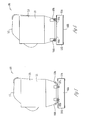
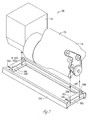
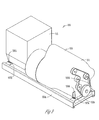
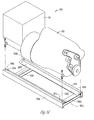
- FIGS. 1-9 illustrate an example power generation system where cross members include both flat and angled mounting surfaces.
- FIGS. 10-18 illustrate an example power generation system where side members include both flat and angled mounting surfaces.
- FIGS. 19-27 illustrate an example power generation system where example brackets are mounted to either the side members and/or the cross members and include both flat and angled mounting surfaces.
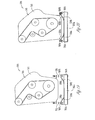
- FIG. 28 shows example brackets that may be used in the system shown in FIGS. 19-27 .
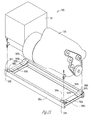
- FIGS. 1-9 illustrate a power generation system 100 that includes a first side member 101A and a second side member 101B that is parallel to the first side member 101A. At least one cross member 102 extends between the first side member 101A and the second side member 101B.
- the power generation system 100 include a first cross member 102A and a second cross member 102B.
- the first cross member 102A includes a pair of flat mating surfaces 103A, 103B that are parallel to the first cross member 102A.
- the first cross member 102A further includes a pair of angled mating surfaces 104A, 104B that are at an angle relative to the first cross member 102A.
- the power generation system 100 further includes a power source 110 that includes an alternator 111 and an engine 112 that drives the alternator 111 to generate power. At least one of the engine 112 and the alternator 111 is mounted to the pair of flat mating surfaces 103A, 103B or the pair of angled mating surfaces 104A, 104B.
- the engine 112 is mounted to the pair of flat mating surfaces 103A, 103B. In the example embodiment that is illustrated in FIGS. 3 and 9 , the engine 112 is mounted to the pair of angled mating surfaces 104A, 104B.
- the second cross member 102B includes a pair of flat mating surfaces 105A, 105B that are parallel to the second cross member 102B.
- the second cross member 102B further includes a pair of angled mating surfaces 106A, 106B that are at an angle relative to the second cross member 102B.
- the alternator 111 is mounted to the pair of flat mating surfaces 105A, 105B. In the example embodiment that is illustrated in FIGS. 6 and 9 , the alternator 111 is mounted to the pair of angled mating surfaces 106A, 106B.
- the ability to mount the engine 112 and/or alternator 111 to either a flat or angled mounting surface that is included as part of the first and second cross members 102A, 102B reduces the number of components (and therefore costs) that are associated with mounting the engine 112 and/or alternator 111 to separate support structures.
- Embodiments are also contemplated where power generation system 10 includes isolators 120.
- isolators 120 may be between the first cross member 102A and the engine 112.
- isolators 120 may be between the second cross member 102B and the alternator 111. It should be noted that isolators may be included between any of the flat or angled surfaces that are shown in FIGS. 1-9 .
- FIGS. 10-18 illustrate a power generation system 200 that includes a first side member 201A and a second side member 201B that is parallel to the first side member 201A. At least one cross member 202 extends between the first side member 201A and the second side member 201B.
- the power generation system 200 include a first cross member 202A and a second cross member 202B (shown most clearly in FIG. 16 ).
- the first side member 201A includes a first flat mating surface 203A that is parallel to the first cross member 202A and an angled mating surface 204A, that is at an angle relative to the first cross member 202A.
- the second side member 201B includes a first flat mating surface 203B that is parallel to the first cross member 202A and an angled mating surface 204B that is at an angle relative to the first cross member 202A.
- the power generation system 200 further includes a power source 210 that includes an alternator 211 and an engine 212 that drives the alternator 211 to generate power. At least one of the engine 212 and the alternator 211 is mounted to the pair of flat mating surfaces 203A, 203B or the pair of angled mating surfaces 204A, 204B.
- the engine 212 is mounted to the pair of flat mating surfaces 203A, 203B. In the example embodiment that is illustrated in FIGS. 12 and 18 , the engine 212 is mounted to the pair of angled mating surfaces 204A, 204B.
- the first side member 201A includes a second flat mating surface 205A that is parallel to the second cross member 202B.
- the first side member 201A further includes an angled mating surface 206A that is at an angle relative to the second cross member 202B.
- the second side member 201B includes a second flat mating surface 205B that is parallel to the second cross member 202B.
- the second side member 201B further includes an angled mating surface 206B that is at an angle relative to the second cross member 202B.
- the alternator 211 is mounted to the pair of flat mating surfaces 205A, 205B.
- the alternator 211 is mounted to the pair of angled mating surfaces 206A, 206B.
- the ability to mount the engine 212 and/or alternator 211 to either a flat or angled mounting surface that is included as part of the first and second side members 201A, 201B reduces the number of components (and therefore costs) that are associated with mounting the engine 212 and/or alternator 211 to separate support structures.
- power generation system 200 includes isolators 220 (shown most clearly in FIGS. 10 and 13 ).
- isolators 220 may be between the first side member 201A and the engine 212.
- isolators 220 may be between the second side member 201B and the alternator 211. It should be noted that isolators may be included between any of the flat or angled surfaces that are shown in FIGS. 10-18 .
- FIGS. 19-27 illustrate a power generation system 300 that includes a first side member 301A and a second side member 301B that is parallel to the first side member 301A. At least one cross member 302 extends between the first side member 301A and the second side member 301B. In the example embodiment that is illustrated in FIGS. 19-27 , the power generation system 300 includes a first cross member 302A and a second cross member 302B.
- the power generation system 300 further includes a first bracket 330A that is mounted to the first side member 301A and/or the first cross member 302A.
- the first bracket 330A includes a flat mating surface 307A that is parallel to the first cross member 302A and an angled mating surface 308A that is at an angle relative to the first cross member 302A.
- the power generation system 300 further includes a second bracket 330B that is mounted to the second side member 301B and/or the first cross member 302A.
- the second bracket 330B includes a flat mating surface 307B that is parallel to the first cross member 302A and an angled mating surface 308B that is at an angle relative to the first cross member 302A.
- the power generation system 300 further includes a power source 310 that includes an alternator 311 and an engine 312 that drives the alternator 311 to generate power. At least one of the engine 312 and the alternator 311 is mounted to the pair of flat mating surfaces 307A, 307B or the pair of angled mating surfaces 308A, 308B.
- the engine 312 is mounted to the pair of flat mating surfaces 307A, 307B. In the example embodiment that is illustrated in FIGS. 21 and 27 , the engine 312 is mounted to the pair of angled mating surfaces 308A, 308B.
- Embodiments are also contemplated where power generation system includes a third bracket 330C (shown most clearly in FIG. 25 ) that includes a flat mating surface 307C that is parallel to the second cross member 302B and an angled mating surface 308C that is at an angle relative to the second cross member 302B.
- the power generation system 300 may further include a fourth bracket 330D (shown most clearly in FIG. 25 ) that includes a flat mating surface 307D that is parallel to the second cross member 302B and an angled mating surface 308D that is at an angle relative to the second cross member 302B.
- the alternator 311 is mounted to the pair of flat mating surfaces 307C, 307D. In the example embodiment that is illustrated in FIGS. 24 and 27 , the alternator 311 is mounted to the pair of angled mating surfaces 308C, 308D.
- the ability to mount the engine 312 and/or alternator 311 to either a flat or angled mounting surface that is included as part of the first, second, third and/or fourth brackets 330A, 330B, 330C, 330D reduces the number of components (and therefore costs) that are associated with mounting the engine 312 and/or alternator 311 to separate support structures.
- power generation system 300 includes isolators 320 (shown most clearly in FIGS. 19 and 22 ).
- isolators 320 may be between the first and second brackets 330A, 330B and the engine 312.
- isolators 320 may be between the third and fourth brackets 330C, 330D and the alternator 311. It should be noted that isolators may be included between any of the flat or angled surfaces that are shown in FIGS. 19-27 .
- FIG. 28 shows example brackets 330B, 330D separate from the rest of the system 300. It should be noted that any of the brackets that are used in the system 300 may take a variety of shapes, sizes and points of attachment (including the flat and angled surfaces that are part of such brackets).
- the example power generation systems 100, 200, 300 described herein may be more suited for flat surface mounting while at other times the power generation systems 100, 200, 300 described herein may be more suited for angled surface mounting.
- the determination as to whether to utilize flat surface mounting or angled surface mounting will usually depend in part on the environment where the power generation systems 100, 200, 300 are to be located.
- example power generation systems 100, 200, 300 described herein provide manufacturers of such systems with the ability to readily change the mounting arrangement (flat or angled) that is required (and possibly changed) by a customer.
- the engines and/or generators in such systems may need to be changed between flat and angled mounting surfaces based on customer requests.
Landscapes
- Engineering & Computer Science (AREA)
- Chemical & Material Sciences (AREA)
- Combustion & Propulsion (AREA)
- Mechanical Engineering (AREA)
- General Engineering & Computer Science (AREA)
- Synchronous Machinery (AREA)
- Motor Or Generator Frames (AREA)
- Arrangement Or Mounting Of Propulsion Units For Vehicles (AREA)
Abstract
Some embodiments relate to a power generation system that includes a first side member and a second side member that is parallel to the first side member. At least one cross member extends between the first side member and the second side member. In some embodiments, the power generation system includes a first cross member and a second cross member. The first cross member includes a pair of flat mating surfaces that are parallel to the first cross member. The first cross member further includes a pair of angled mating surfaces that are at an angle relative to the first cross member. The power generation system further includes a power source that includes an alternator and an engine that drives the alternator to generate power. At least one of the engine and the alternator is mounted to the pair of flat mating surfaces or pair of angled mating surfaces.
Description
- Embodiments pertain to a power generation mounting system, and more particularly to a power generation mounting system that readily permits engines and/or alternators to be mounted to flat or angled surfaces.
- Some existing power generations systems include engines and/or alternators that are mounted to flat surfaces that are part of a support structure. Other existing power generations systems include engines and/or alternators that are mounted to angled surfaces that are part of a support structure (i.e., focused mounting).
- There are no existing systems that provide for the ability to mount engines and/or alternators to flat surfaces and/or angled surfaces that are part of the same support structure. Therefore, one of the drawbacks with these existing systems is the relatively large number of components (and therefore costs) that are required to mount the engine and/or alternator to separate support structures.
- Another drawback with these existing systems is that since the engines and/or alternators may only be flat mounted (or angled mounted), the systems may be inappropriately mounted for the particular environment (i.e., the system may be flat surface mounted when it is better suited to be angle surface mounted (or vice versa)).
-
FIGS. 1-9 illustrate an example power generation system where cross members include both flat and angled mounting surfaces. -
FIGS. 10-18 illustrate an example power generation system where side members include both flat and angled mounting surfaces. -
FIGS. 19-27 illustrate an example power generation system where example brackets are mounted to either the side members and/or the cross members and include both flat and angled mounting surfaces. -
FIG. 28 shows example brackets that may be used in the system shown inFIGS. 19-27 . - The following description and the drawings sufficiently illustrate specific embodiments to enable those skilled in the art to practice them. Other embodiments may incorporate structural, logical, electrical, process, and other changes. Portions and features of some embodiments may be included in, or substituted for, those of other embodiments. Embodiments set forth in the claims encompass all available equivalents of those claims.
-
FIGS. 1-9 illustrate apower generation system 100 that includes afirst side member 101A and asecond side member 101B that is parallel to thefirst side member 101A. At least one cross member 102 extends between thefirst side member 101A and thesecond side member 101B. In the example embodiment that is illustrated inFIGS. 1-9 , thepower generation system 100 include afirst cross member 102A and asecond cross member 102B. - The
first cross member 102A includes a pair offlat mating surfaces first cross member 102A. Thefirst cross member 102A further includes a pair ofangled mating surfaces first cross member 102A. - The
power generation system 100 further includes apower source 110 that includes analternator 111 and anengine 112 that drives thealternator 111 to generate power. At least one of theengine 112 and thealternator 111 is mounted to the pair offlat mating surfaces angled mating surfaces - In the example embodiment that is illustrated in
FIG. 2 and8 , theengine 112 is mounted to the pair offlat mating surfaces FIGS. 3 and9 , theengine 112 is mounted to the pair ofangled mating surfaces - In some embodiments, the
second cross member 102B includes a pair offlat mating surfaces second cross member 102B. Thesecond cross member 102B further includes a pair ofangled mating surfaces second cross member 102B. - In the example embodiment that is illustrated in
FIGS. 5 and8 , thealternator 111 is mounted to the pair offlat mating surfaces FIGS. 6 and9 , thealternator 111 is mounted to the pair ofangled mating surfaces - The ability to mount the
engine 112 and/oralternator 111 to either a flat or angled mounting surface that is included as part of the first andsecond cross members engine 112 and/oralternator 111 to separate support structures. - Embodiments are also contemplated where power generation system 10 includes
isolators 120. As an example, isolators 120 (shown most clearly inFIG. 1 ) may be between thefirst cross member 102A and theengine 112. As another example,isolators 120 may be between thesecond cross member 102B and thealternator 111. It should be noted that isolators may be included between any of the flat or angled surfaces that are shown inFIGS. 1-9 . -
FIGS. 10-18 illustrate apower generation system 200 that includes afirst side member 201A and asecond side member 201B that is parallel to thefirst side member 201A. At least one cross member 202 extends between thefirst side member 201A and thesecond side member 201B. In the example embodiment that is illustrated inFIGS. 10-18 , thepower generation system 200 include afirst cross member 202A and asecond cross member 202B (shown most clearly inFIG. 16 ). - The
first side member 201A includes a firstflat mating surface 203A that is parallel to thefirst cross member 202A and anangled mating surface 204A, that is at an angle relative to thefirst cross member 202A. Thesecond side member 201B includes a firstflat mating surface 203B that is parallel to thefirst cross member 202A and anangled mating surface 204B that is at an angle relative to thefirst cross member 202A. - The
power generation system 200 further includes apower source 210 that includes analternator 211 and anengine 212 that drives thealternator 211 to generate power. At least one of theengine 212 and thealternator 211 is mounted to the pair offlat mating surfaces angled mating surfaces - In the example embodiment that is illustrated in
FIGS. 11 and17 , theengine 212 is mounted to the pair offlat mating surfaces FIGS. 12 and18 , theengine 212 is mounted to the pair ofangled mating surfaces - In some embodiments, the
first side member 201A includes a secondflat mating surface 205A that is parallel to thesecond cross member 202B. Thefirst side member 201A further includes anangled mating surface 206A that is at an angle relative to thesecond cross member 202B. - In addition, the
second side member 201B includes a secondflat mating surface 205B that is parallel to thesecond cross member 202B. Thesecond side member 201B further includes anangled mating surface 206B that is at an angle relative to thesecond cross member 202B. - In the example embodiment that is illustrated in
FIG. 14 , thealternator 211 is mounted to the pair offlat mating surfaces FIG. 15 , thealternator 211 is mounted to the pair ofangled mating surfaces - The ability to mount the
engine 212 and/oralternator 211 to either a flat or angled mounting surface that is included as part of the first andsecond side members engine 212 and/oralternator 211 to separate support structures. - As discussed above, embodiments are also contemplated where
power generation system 200 includes isolators 220 (shown most clearly inFIGS. 10 and13 ). As an example,isolators 220 may be between thefirst side member 201A and theengine 212. As another example,isolators 220 may be between thesecond side member 201B and thealternator 211. It should be noted that isolators may be included between any of the flat or angled surfaces that are shown inFIGS. 10-18 . -
FIGS. 19-27 illustrate apower generation system 300 that includes afirst side member 301A and asecond side member 301B that is parallel to thefirst side member 301A. At least one cross member 302 extends between thefirst side member 301A and thesecond side member 301B. In the example embodiment that is illustrated inFIGS. 19-27 , thepower generation system 300 includes afirst cross member 302A and asecond cross member 302B. - The
power generation system 300 further includes afirst bracket 330A that is mounted to thefirst side member 301A and/or thefirst cross member 302A. Thefirst bracket 330A includes aflat mating surface 307A that is parallel to thefirst cross member 302A and anangled mating surface 308A that is at an angle relative to thefirst cross member 302A. - The
power generation system 300 further includes asecond bracket 330B that is mounted to thesecond side member 301B and/or thefirst cross member 302A. Thesecond bracket 330B includes aflat mating surface 307B that is parallel to thefirst cross member 302A and anangled mating surface 308B that is at an angle relative to thefirst cross member 302A. - The
power generation system 300 further includes apower source 310 that includes analternator 311 and anengine 312 that drives thealternator 311 to generate power. At least one of theengine 312 and thealternator 311 is mounted to the pair offlat mating surfaces angled mating surfaces - In the example embodiment that is illustrated in
FIGS. 20 and26 , theengine 312 is mounted to the pair offlat mating surfaces FIGS. 21 and27 , theengine 312 is mounted to the pair of angled mating surfaces 308A, 308B. - Embodiments are also contemplated where power generation system includes a
third bracket 330C (shown most clearly inFIG. 25 ) that includes aflat mating surface 307C that is parallel to thesecond cross member 302B and anangled mating surface 308C that is at an angle relative to thesecond cross member 302B. In addition, thepower generation system 300 may further include afourth bracket 330D (shown most clearly inFIG. 25 ) that includes aflat mating surface 307D that is parallel to thesecond cross member 302B and anangled mating surface 308D that is at an angle relative to thesecond cross member 302B. - In the example embodiment that is illustrated in
FIGS. 23 and26 , thealternator 311 is mounted to the pair of flat mating surfaces 307C, 307D. In the example embodiment that is illustrated inFIGS. 24 and27 , thealternator 311 is mounted to the pair of angled mating surfaces 308C, 308D. - The ability to mount the
engine 312 and/oralternator 311 to either a flat or angled mounting surface that is included as part of the first, second, third and/orfourth brackets engine 312 and/oralternator 311 to separate support structures. - Embodiments are also contemplated where
power generation system 300 includes isolators 320 (shown most clearly inFIGS. 19 and22 ). As an example,isolators 320 may be between the first andsecond brackets engine 312. As another example,isolators 320 may be between the third andfourth brackets alternator 311. It should be noted that isolators may be included between any of the flat or angled surfaces that are shown inFIGS. 19-27 . -
FIG. 28 showsexample brackets system 300. It should be noted that any of the brackets that are used in thesystem 300 may take a variety of shapes, sizes and points of attachment (including the flat and angled surfaces that are part of such brackets). - The example
power generation systems power generation systems power generation systems - In addition, the example
power generation systems - The Abstract is provided to comply with 37 C.F.R. Section 1.72(b) requiring an abstract that will allow the reader to ascertain the nature and gist of the technical disclosure. It is submitted with the understanding that it will not be used to limit or interpret the scope or meaning of the claims. The following claims are hereby incorporated into the detailed description, with each claim standing on its own as a separate embodiment.
The present invention can also be described by the following clauses: - 1. A power generation system comprising:
- a first side member;
- a second side member that is parallel to the first side member;
- at least one cross member extending between the first side member and the second side member, wherein the cross member includes a pair of flat mating surfaces that are parallel to the at least one cross member and a pair of angled mating surfaces that are at an angle relative to the at least one cross member; and
- a power source that includes an alternator and an engine that drives the alternator to generate power, wherein at least of the engine and the alternator is mounted to the pair of flat mating surfaces or the pair of angled mating surfaces.
- 2. The power generation system of clause 1, further comprising a pair of isolators, each of the isolators being between the at least one cross member and the power source.
- 3. The power generation system of clause 1, wherein the power generation system includes two cross members extending between the first side member and the second side member, wherein each cross member includes a pair of flat mating surfaces and a pair of angled mating surfaces, wherein the engine is mounted to the pair of flat mating surfaces or the pair of angled mating surfaces on one cross member, and the alternator is mounted to the pair of flat mating surfaces or the pair of angled mating surfaces on the other cross member.
- 4. The power generation system of clause 3, further comprising:
- a first pair of isolators, each of the isolators in the first pair of isolators being between the one of the cross members and the engine; and
- a second pair of isolators, each of the isolators in the second pair of isolators being between the other of the cross members and the alternator.
- 5. The power generation system of clause 3, wherein the engine is mounted to the pair of flat mating surfaces on one cross member, and the alternator is mounted to the pair of flat mating surfaces on the other cross member.
- 6. The power generation system of clause 3, wherein the engine is mounted to the pair of angled mating surfaces on one cross member and the alternator is mounted to the pair of angled mating surfaces on the other cross member.
- 7. A power generation system comprising:
- a first side member;
- a second side member that is parallel to the first side member;
- at least one cross member extending between the first side member and the second side member, wherein the first side member includes a flat mating surface that is parallel to the at least one cross member and an angled mating surface that is at an angle relative to the at least one cross member, and the second side member includes a flat mating surface that is parallel to the at least one cross member and an angled mating surface that is at an angle relative to the at least one cross member; and
- a power source that includes an alternator and an engine that drives the alternator to generate power, wherein at least of the engine and the alternator is mounted to the flat mating surfaces on the first and second side members or the angled mating surfaces on the first and second side members.
- 8. The power generation system of clause 1, further comprising a pair of isolators, one of the isolators being between the first side member and the power source and the other of isolator being between the second side member and the power source.
- 9. The power generation system of clause 1, wherein the power generation system includes two cross members extending between the first side member and the second side member, wherein the first side member includes a pair of flat mating surfaces and a pair of angled mating surfaces, and the second side member includes a pair of flat mating surfaces and a pair of angled mating surfaces, wherein the engine is mounted to one of the flat mating surfaces or one of the angled mating surfaces on the first side member and the second side member, and wherein the alternator is mounted to one of the flat mating surfaces or one of the angled mating surfaces on the first side member and the second side member.
- 10. The power generation system of clause 9, further comprising:
- a first pair of isolators, each of the isolators in the first pair of isolators being between the first side member and the engine; and
- a second pair of isolators, each of the isolators in the second pair of isolators being between the second member and the alternator.
- 11. The power generation system of clause 9, wherein the engine is mounted to the flat mating surfaces on the first side member and the second side member, and the alternator is mounted to the flat mating surfaces on the first side member and the second side member.
- 12. The power generation system of clause 9, wherein the engine is mounted to one of the angled mating surfaces on the first side member and the second side member, and the alternator is mounted to the angled mating surfaces on the first side member and the second side member.
- 13. A power generation system comprising:
- a first side member;
- a second side member that is parallel to the first side member;
- at least one cross member extending between the first side member and the second side member;
- a first bracket mounted to at least one of the first side member or the at least one cross member, the first bracket including a flat mating surface that is parallel to the at least one cross member and an angled mating surface that is at an angle relative to the at least one cross member;
- a second bracket mounted to at least one of the second side member or the at least one cross member, the second bracket including a flat mating surface that is parallel to the at least one cross member and an angled mating surface that is at an angle relative to the at least one cross member; and
- a power source that includes an alternator and an engine that drives the alternator to generate power, wherein at least of the engine and the alternator is mounted to the flat mating surfaces on the first and second brackets or the angled mating surfaces on the first and second brackets.
- 14. The power generation system of clause 13, further comprising a pair of isolators, one of the isolators being between the first bracket and the power source and the other of isolator being between the second bracket and the power source.
- 15. The power generation system of clause 13, wherein the power generation system includes two cross members extending between the first side member and the second side member, and further comprising:
- a third bracket that includes a flat mating surface that is parallel to the at least one cross member and an angled mating surface that is at an angle relative to the at least one cross member; and
- a fourth bracket that includes a flat mating surface that is parallel to the at least one cross member and an angled mating surface that is at an angle relative to the at least one cross member; and
- wherein first and second brackets are mounted the first cross member and the third and fourth brackets are mounted to the second cross member.
- 16. The power generation system of clause 15, wherein the alternator is mounted to the flat mating surfaces on the first and second brackets, and the engine is mounted to the flat mating surfaces on the third and fourth brackets.
- 17. The power generation system of clause 15, wherein the alternator is mounted to the angled mating surfaces on the first and second brackets, and the engine is mounted to the angled mating surfaces on the third and fourth brackets.
- 18. The power generation system of clause 13, further comprising:
- a third bracket that includes a flat mating surface that is parallel to the at least one cross member and an angled mating surface that is at an angle relative to the at least one cross member; and
- a fourth bracket that includes a flat mating surface that is parallel to the at least one cross member and an angled mating surface that is at an angle relative to the at least one cross member; and
- wherein first and third brackets are mounted the first side member and the second and fourth brackets are mounted to the second side member.
- 19. The power generation system of clause 18, wherein the alternator is mounted to the flat mating surfaces on the first and second brackets, and the engine is mounted to the flat mating surfaces on the third and fourth brackets.
- 20. The power generation system of clause 18, wherein the alternator is mounted to the angled mating surfaces on the first and second brackets, and the engine is mounted to the angled mating surfaces on the third and fourth brackets.
Claims (14)
- A power generation system comprising:a first side member;a second side member that is parallel to the first side member;at least one cross member extending between the first side member and the second side member, wherein the cross member includes a pair of flat mating surfaces that are parallel to the at least one cross member and a pair of angled mating surfaces that are at an angle relative to the at least one cross member; anda power source that includes an alternator and an engine that drives the alternator to generate power, wherein at least of the engine and the alternator is mounted to the pair of flat mating surfaces or the pair of angled mating surfaces.
- The power generation system of claim 1, further comprising a pair of isolators, each of the isolators being between the at least one cross member and the power source.
- The power generation system of claim 1, wherein the power generation system includes two cross members extending between the first side member and the second side member, wherein each cross member includes a pair of flat mating surfaces and a pair of angled mating surfaces, wherein the engine is mounted to the pair of flat mating surfaces or the pair of angled mating surfaces on one cross member, and the alternator is mounted to the pair of flat mating surfaces or the pair of angled mating surfaces on the other cross member.
- The power generation system of claim 3, further comprising:a first pair of isolators, each of the isolators in the first pair of isolators being between the one of the cross members and the engine; anda second pair of isolators, each of the isolators in the second pair of isolators being between the other of the cross members and the alternator.
- The power generation system of claim 3 or 4, wherein the engine is mounted to the pair of flat mating surfaces on one cross member, and the alternator is mounted to the pair of flat mating surfaces on the other cross member.
- The power generation system of claim 3 or 4, wherein the engine is mounted to the pair of angled mating surfaces on one cross member and the alternator is mounted to the pair of angled mating surfaces on the other cross member.
- The power generation system of claim 1, wherein the first side member includes a flat mating surface that is parallel to the at least one cross member and an angled mating surface that is at an angle relative to the at least one cross member, and the second side member includes a flat mating surface that is parallel to the at least one cross member and an angled mating surface that is at an angle relative to the at least one cross member; and
wherein at least of the engine and the alternator is mounted to the flat mating surfaces on the first and second side members or the angled mating surfaces on the first and second side members. - The power generation system of claim 7, further comprising a pair of isolators, one of the isolators being between the first side member and the power source and the other of isolator being between the second side member and the power source.
- The power generation system of claim 7 or 8, wherein the power generation system includes two cross members extending between the first side member and the second side member, wherein the first side member includes a pair of flat mating surfaces and a pair of angled mating surfaces, and the second side member includes a pair of flat mating surfaces and a pair of angled mating surfaces, wherein the engine is mounted to one of the flat mating surfaces or one of the angled mating surfaces on the first side member and the second side member, and wherein the alternator is mounted to one of the flat mating surfaces or one of the angled mating surfaces on the first side member and the second side member.
- The power generation system of claim 1, further comprising:a first bracket mounted to at least one of the first side member or the at least one cross member, the first bracket including a flat mating surface that is parallel to the at least one cross member and an angled mating surface that is at an angle relative to the at least one cross member;a second bracket mounted to at least one of the second side member or the at least one cross member, the second bracket including a flat mating surface that is parallel to the at least one cross member and an angled mating surface that is at an angle relative to the at least one cross member; andwherein at least of the engine and the alternator is mounted to the flat mating surfaces on the first and second brackets or the angled mating surfaces on the first and second brackets.
- The power generation system of claim 10, further comprising a pair of isolators, one of the isolators being between the first bracket and the power source and the other of isolator being between the second bracket and the power source.
- The power generation system of claim 10 or 11, wherein the power generation system includes two cross members extending between the first side member and the second side member, and further comprising:a third bracket that includes a flat mating surface that is parallel to the at least one cross member and an angled mating surface that is at an angle relative to the at least one cross member; anda fourth bracket that includes a flat mating surface that is parallel to the at least one cross member and an angled mating surface that is at an angle relative to the at least one cross member; andwherein first and second brackets are mounted the first cross member and the third and fourth brackets are mounted to the second cross member.
- The power generation system of claim 12, wherein the alternator is mounted to the flat mating surfaces on the first and second brackets, and the engine is mounted to the flat mating surfaces on the third and fourth brackets.
- The power generation system of claim 13, wherein the alternator is mounted to the angled mating surfaces on the first and second brackets, and the engine is mounted to the angled mating surfaces on the third and fourth brackets.
Applications Claiming Priority (1)
| Application Number | Priority Date | Filing Date | Title |
|---|---|---|---|
| US13/544,315 US8957534B2 (en) | 2012-07-09 | 2012-07-09 | Power generation mounting system |
Publications (1)
| Publication Number | Publication Date |
|---|---|
| EP2685064A2 true EP2685064A2 (en) | 2014-01-15 |
Family
ID=48782815
Family Applications (1)
| Application Number | Title | Priority Date | Filing Date |
|---|---|---|---|
| EP13003306.1A Withdrawn EP2685064A2 (en) | 2012-07-09 | 2013-06-28 | Power generation mounting system |
Country Status (3)
| Country | Link |
|---|---|
| US (1) | US8957534B2 (en) |
| EP (1) | EP2685064A2 (en) |
| CN (1) | CN103545991B (en) |
Families Citing this family (1)
| Publication number | Priority date | Publication date | Assignee | Title |
|---|---|---|---|---|
| CN111706429B (en) * | 2020-06-30 | 2021-06-18 | 潍柴动力股份有限公司 | Public base of diesel generating set |
Family Cites Families (15)
| Publication number | Priority date | Publication date | Assignee | Title |
|---|---|---|---|---|
| US2895695A (en) * | 1956-01-26 | 1959-07-21 | Samuel Stamping & Enameling Co | Crate bottom for recessed gas and electric ovens |
| US4089386A (en) * | 1977-05-20 | 1978-05-16 | Towmotor Corporation | Drive mount housing for a vehicle |
| DE3419437A1 (en) | 1984-05-24 | 1985-11-28 | Metzeler Kautschuk GmbH, 8000 München | TWO-CHAMBER ENGINE MOUNT WITH HYDRAULIC DAMPING |
| JP3418079B2 (en) | 1997-01-24 | 2003-06-16 | 澤藤電機株式会社 | Power generator |
| US6047942A (en) | 1998-09-21 | 2000-04-11 | Kennedy; Gino W. | Generator set bracket assembly |
| JP2000328957A (en) * | 1999-05-21 | 2000-11-28 | Honda Motor Co Ltd | Engine generator |
| DE60013690T2 (en) * | 1999-05-20 | 2005-02-10 | Honda Giken Kogyo K.K. | Internal combustion engine-generator assembly |
| JP3620368B2 (en) | 1999-09-17 | 2005-02-16 | 東海ゴム工業株式会社 | Fluid-filled active mount |
| US6677684B1 (en) | 2000-06-23 | 2004-01-13 | Gino W. Kennedy | Auxiliary power generator |
| JP3963346B2 (en) | 2001-07-17 | 2007-08-22 | 北辰工業株式会社 | Engine mount |
| US7082896B2 (en) | 2004-03-31 | 2006-08-01 | Kohler Co. | Mounting system allowing for thermal expansion of an engine of a generator set |
| US8546963B2 (en) * | 2009-04-21 | 2013-10-01 | Safecross Solutions, Llc | Generator frame with grappling attachment feature and theft deterring weight receptacle |
| CN201535230U (en) * | 2009-08-07 | 2010-07-28 | 李台 | Wind turbine generator |
| CN201563069U (en) * | 2009-11-10 | 2010-08-25 | 西安开天电力电子技术有限公司 | Element type horizontal transforming device for rectifying arm of railway internal combustion locomotive |
| CN202294887U (en) * | 2011-08-26 | 2012-07-04 | 天津市天发重型水电设备制造有限公司 | Novel platform hand truck for production order transfer of hydraulic generator coil |
-
2012
- 2012-07-09 US US13/544,315 patent/US8957534B2/en active Active
-
2013
- 2013-06-28 EP EP13003306.1A patent/EP2685064A2/en not_active Withdrawn
- 2013-07-08 CN CN201310284710.7A patent/CN103545991B/en not_active Expired - Fee Related
Non-Patent Citations (1)
| Title |
|---|
| None |
Also Published As
| Publication number | Publication date |
|---|---|
| US20140008918A1 (en) | 2014-01-09 |
| CN103545991A (en) | 2014-01-29 |
| CN103545991B (en) | 2015-12-23 |
| US8957534B2 (en) | 2015-02-17 |
Similar Documents
| Publication | Publication Date | Title |
|---|---|---|
| EP4234982A3 (en) | Axle assembly having axle housing | |
| WO2018126245A3 (en) | Adaptive polyphase motor | |
| EP2048928A3 (en) | Heat removal from electrical modules | |
| EP2522826A3 (en) | Tractor hood airflow system | |
| ATE462216T1 (en) | SYSTEMS FOR ELECTROMECHANICAL ENERGY CONVERSION | |
| EP1870990A3 (en) | Axial air-gap type motor | |
| EP2458717A3 (en) | Electric motor and electric vehicle having the same | |
| EP2293278A3 (en) | Light source device | |
| EP1951018A3 (en) | Hybrid electric drive cradle | |
| EA201071277A1 (en) | STRUCTURE DESIGN FOR THE CONTROL UNIT AND ELECTRIC POWER CONVERTER IN FRAME-PERFORMED ENGINE GENERATOR | |
| EP1944858A3 (en) | DC bus short circuit compliant power generation systems using induction machine | |
| WO2010143166A3 (en) | Small electrical appliance and electric motor drive unit for a small electrical appliance | |
| MXPA05012469A (en) | Multiple inverters for motors. | |
| EP2111939A3 (en) | Cutting machine | |
| EP2378716A3 (en) | Systems and methods for conducting communications among components of multidomain industrial automation system | |
| EP2587068A3 (en) | Cooling fan duct assembly | |
| WO2008123909A3 (en) | Fan with strut-mounted electronic components | |
| EP3029823A3 (en) | Power control unit | |
| EP1800934A3 (en) | Control apparatus for electric vehicles | |
| DE502005007573D1 (en) | SHELVING SYSTEM WITH ENERGY RECYCLING | |
| WO2012085421A3 (en) | Voltage regulator device for a rotary electric machine, bearing for such a machine equipped with such a device and such a machine comprising such a bearing | |
| EP2685064A2 (en) | Power generation mounting system | |
| EP2031735A3 (en) | Stator and electric motor | |
| EP2045910A3 (en) | Starter/generator system with control to address a voltage rise | |
| PL2197318T3 (en) | Floor-mounted domestic appliance with an anti-tilting apparatus |
Legal Events
| Date | Code | Title | Description |
|---|---|---|---|
| PUAI | Public reference made under article 153(3) epc to a published international application that has entered the european phase |
Free format text: ORIGINAL CODE: 0009012 |
|
| AK | Designated contracting states |
Kind code of ref document: A2 Designated state(s): AL AT BE BG CH CY CZ DE DK EE ES FI FR GB GR HR HU IE IS IT LI LT LU LV MC MK MT NL NO PL PT RO RS SE SI SK SM TR |
|
| AX | Request for extension of the european patent |
Extension state: BA ME |
|
| STAA | Information on the status of an ep patent application or granted ep patent |
Free format text: STATUS: THE APPLICATION IS DEEMED TO BE WITHDRAWN |
|
| 18D | Application deemed to be withdrawn |
Effective date: 20170103 |